• About

doubtfulsea

~ adventure fantasy

Category Archives: Films and Music

Rear Guard

18 Wednesday May 2016

Posted by Ollamh in Films and Music, J.R.R. Tolkien, Literary History, Maps, Military History, Military History of Middle-earth, Narrative Methods

≈ 1 Comment

Tags

66th Regiment, British Infantry, Denethor, Faramir, Gary Zaboly, Le Cateau, Maiwand, Nazgul, Osgiliath, Pelennor, Peter Jackson, Rammas Echor, Richard Caton Woodville, the Alamo, The Lord of the Rings, The Return of the King, The Siege of Gondor, Tolkien

Welcome, dear readers, as always.

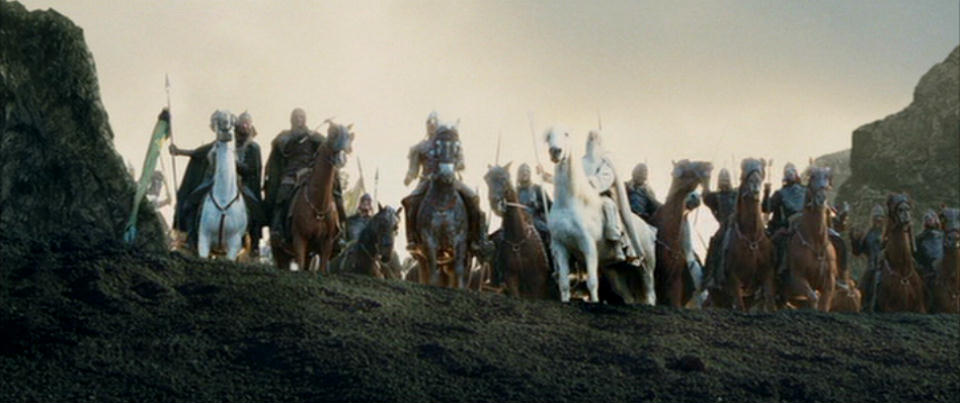
In a previous posting, we rolled our eyes verbally at a moment in P. Jackson’s The Return of the King in which Faramir, according to the script, was required to mount a double-rank cavalry charge against the west bank of Osgiliath.

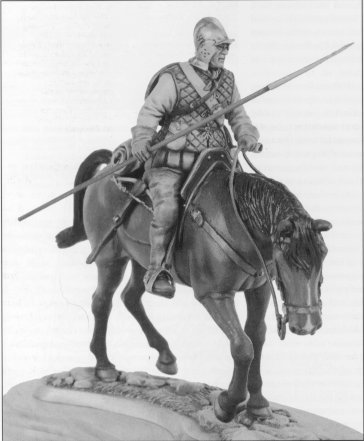
gondorianerritt-cb182208.jpg

To us, this was a clumsy attempt to convey the clash between Faramir and his father Denethor, derived from material in The Lord of the Rings, Book 5, Chapter IV, “The Siege of Gondor”, principally from this:

“ ‘Much must be risked in war,’ said Denethor. ‘Cair Andros is manned, and no more can be sent so far. But I will not yield the River and the Pelennor unfought—not if there is a captain here who has still the courage to do his lord’s will.’

Then all were silent. But at length Faramir said: ‘I do not oppose your will, sire. Since you are robbed of Boromir, I will go and do what I can in his stead—if you command it.’

‘I do so,’ said Denethor.

‘Then farewell!’ said Faramir. ‘But if I should return, think better of me!’

‘That depends on the manner of your return,’ said Denethor.

Gandalf it was that last spoke to Faramir ere he rode east. ‘Do you throw your life away rashly or in bitterness,’ he said. ‘You will be needed here, for other things than war. Your father loves you, Faramir, and will remember it ere the end. Farewell!’ “

In the text, Faramir then goes to Osgiliath, having “taken with him such strength of men as were willing to go or could be spared.” The tone here is hardly encouraging and, the following day, “The passage of Anduin was won by the Enemy. Faramir was retreating to the wall of the Pelennor, rallying his men to the Causeway Forts; but he was ten times outnumbered.”

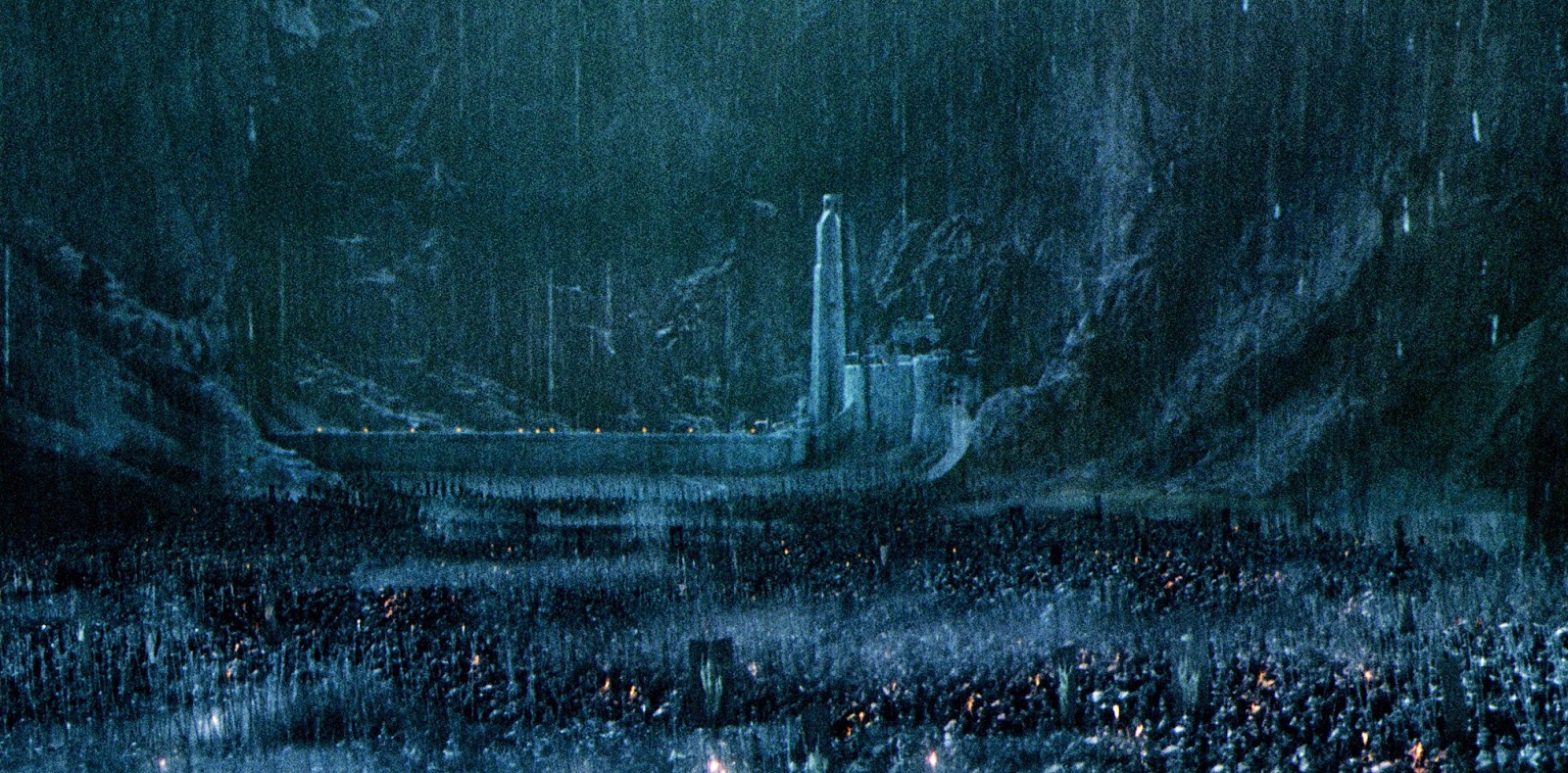
In an earlier posting, we have discussed the Rammas Echor, the wall which enclosed the farmland outside the walls of Minas Tirith.
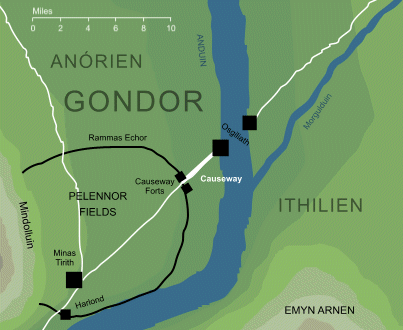
causeway.gif

We have also discussed the use by both Saruman and Sauron of what appears to be an early form of explosive—seen here in the following description of the fall of the Rammas:

“The bells of day had scarcely rung out again, a mockery in the unlightened dark, when far away he [Pippin] saw fires spring up, across in the dim spaces where the walls of the Pelennor stood. ..Now ever and anon there was a red flash, and slowly through the heavy air dull rumbles could be heard.

‘They have taken the wall!’ men cried. ‘They are blasting breeches in it. They are coming!’ “

Outnumbered and, with the fall of the wall in different locations, outflanked, the best that Faramir can do is to fall back towards Minas Tirith, as Gandalf says, “Yet he is resolved to stay with the rearguard, lest the retreat over the Pelennor become a rout. He may, perhaps, hold his men together long enough, but I doubt it.”

Unlike the silly—there’s really no other word for it—charge of P. Jackson—Faramir is a professional soldier, after all, much loved by his soldiers—we see what JRRT, having been a soldier himself, would have known was the military solution: a fighting retreat, led by a brave and capable leader.

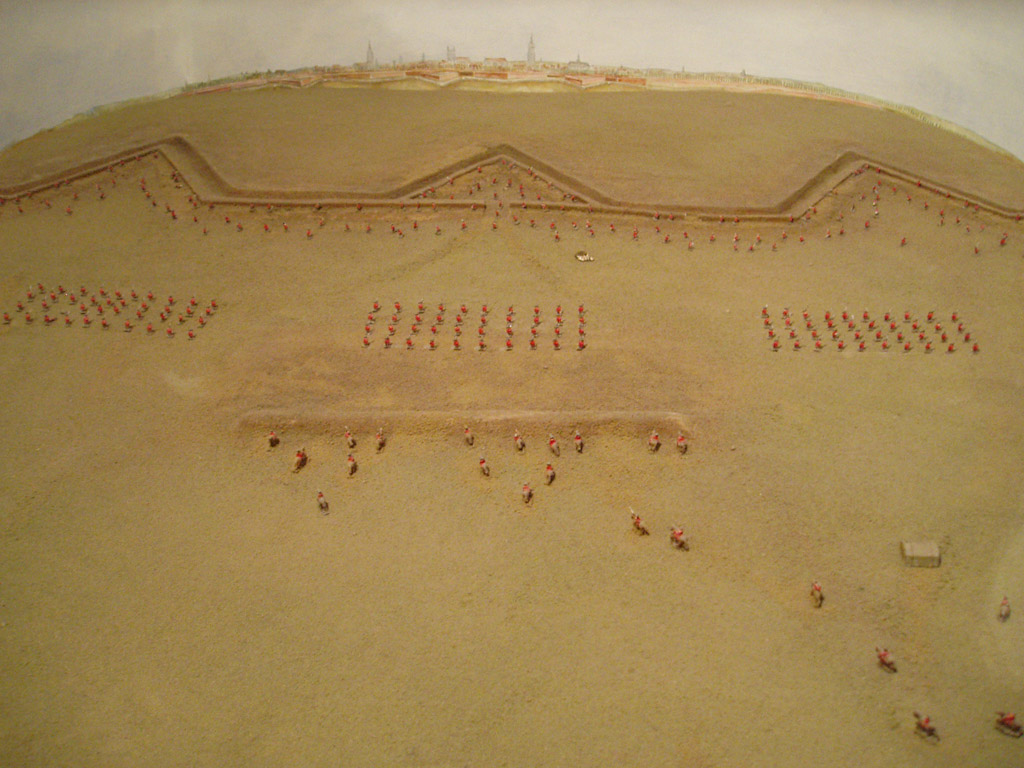
His task had been an impossible one to begin with and, properly understood and depicted on the screen, would not only have been powerful dramatically, but much more believable. It was an impossible task, however, against the odds of ten to one. (For a comparison, we offer the siege and fall of the Alamo, late February-early March, 1836. The garrison numbered about 180, the besiegers eventually approximately 3000. In the final assault, before dawn on 6 March, 1836, the four assaulting columns had about 1200 men, offering odds of roughly 6 to 1 and the entire garrison died, along with somewhere between 400 and 600 of the attackers.)
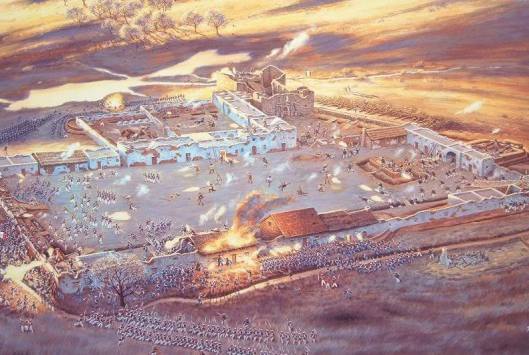
ALAMO_FORTRESS.jpg

(This is the work of the amazing Gary Zaboly– as an historical illustrator, he can’t be recommended highly enough. Much of his work concerns the 18th century, especially the 1740s and 50s, but he also has done some wonderful depictions of warfare in the American southwest in the 1830s and 40s.)

There are lots of examples of fighting retreats and we’ve picked two: a failure (Maiwand, Second Afghan War, 1880) and Le Cateau (The Great War, 1914).

At Maiwand, 27 July, 1880, a British-Indian brigade of 3 infantry units plus two cavalry units and a battery (6 guns) of horse artillery, anywhere from 1500 to 2000 soldiers, faced perhaps 12,000 Afghans with 6 batteries of guns.
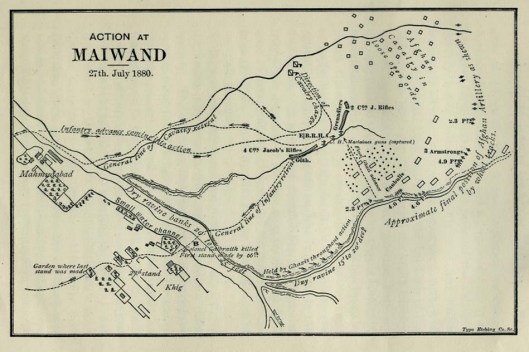
Action_at_Maiwand_map.jpg

Basically, the British were outflanked and their left-hand units began to buckle under the pressure of the attacks and the number of attackers which they had to face. As they gave way, the right hand end of the line began to move backwards, feeling increasingly in danger of being surrounded, just as Faramir’s men must have.

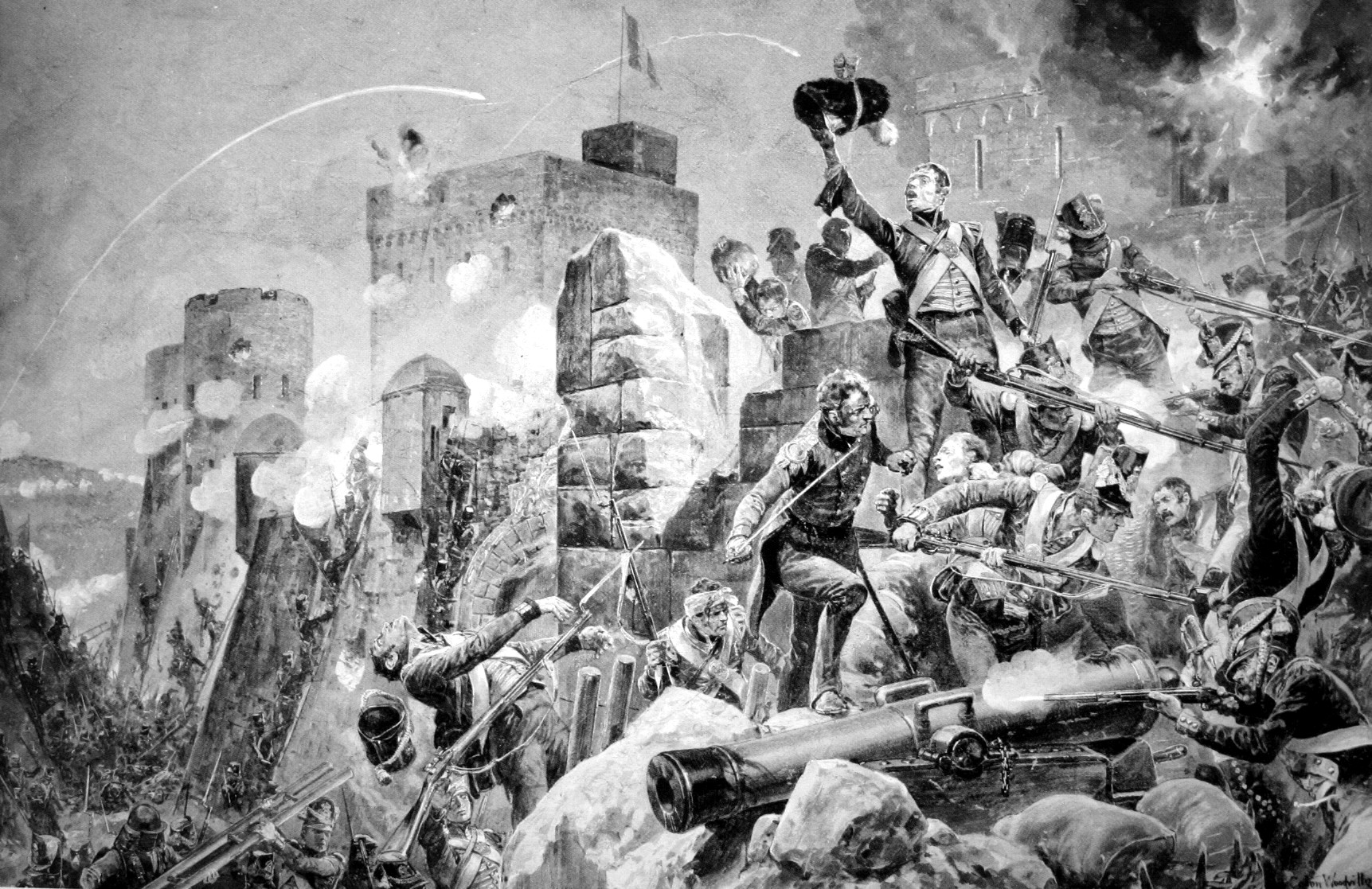
As the infantry retreated, the artillerymen used their guns to buy time for a general withdrawal, ending by losing a section (2 guns) to the enemy. There’s a famous painting of the withdrawal of the remaining guns by the late-Victorian artist, Richard Caton Woodville.
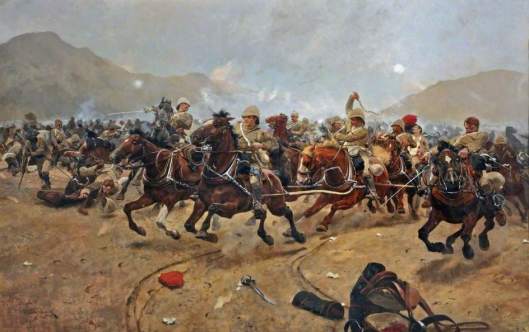
woodvillesavingtheguns.jpg

At the end of the withdrawal from the battle, a small group of British soldiers of the 66th Regiment took shelter inside an enclosure in a nearby village and fought it out to the end.
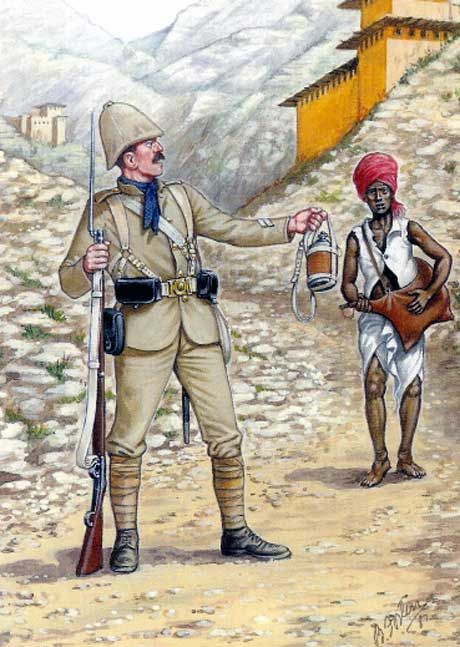
66thfootmaiwand.jpg

maiwand-66th.jpeg

Gandalf’s worry had been that Faramir couldn’t hold his men together and you can see here what happens when organized units come apart—they are defeated piecemeal, “in detail” is the military expression.

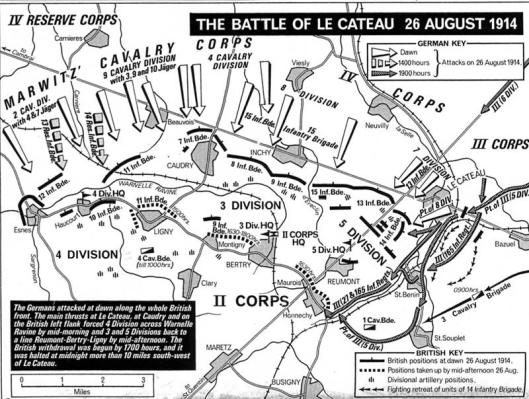
In contrast to this, we offer an action from Tolkien’s own time, the battle at Le Cateau, fought on 26 August, 1914. The British Expeditionary Force, facing superior numbers and in danger of being outflanked, particularly to the west, was engaged in a long retreat. Miraculously, unit cohesion was mostly maintained, although communications were often poor, causing confusion and, in one case, even in losing a unit, never notified of withdrawal.

The British Army was divided into two larger groupings, First and Second Corps, and it was Second Corps which turned to face its pursuers. During a long morning, the British, in hastily-dug trenches, fended off superior numbers of German infantry.
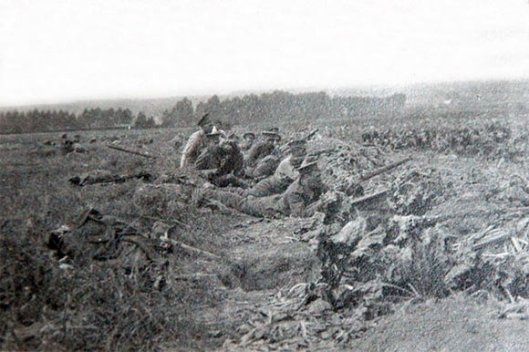
1st-east-lancs-regiment-s.jpg

LeCateauMAP1.jpg

Having lost heavily, but having given the enemy similar punishment, the British slowed German pursuit and were able to withdraw without being as closely pursued as they had been.

The difference here is in exactly what Gandalf was worried about. At Maiwand, the brigade fell apart and could easily be swept away by the enemy. At Le Cateau, although it was hardly a perfect affair, the British kept enough cohesion not only to withstand and defeat heavy attacks, but then to retreat in units, without ever collapsing into a fleeing mob.

What happens in that struggle in the fields behind the Rammas Echor is, in fact, a mixture of the two retreats described above. We see “Small bands of weary and often wounded men…some were running wildly as if pursued.” Then, “…less than a mile from the City, a more ordered mass of men came into view, marching not running, still holding together.” And then “Out of the gloom behind a small company of horsemen galloped, all that was left of the rearguard.”

So, it looks like Faramir had succeeded in maintaining that sense of order and purpose which is vital for a fighting retreat. It was not to last, however, as a mass of enemy horsemen on the causeway behind, as well as several Nazgul from above, threw all into confusion—which was stemmed, in turn, by the arrival of a rescue party, led by the Prince of Dol Amroth and accompanied by Gandalf arrived to drive back the attackers.

gandalf_to_the_rescue___speed_paint4_by_myworld1-d7wjv97.png

In that flurry, Faramir is struck by an arrow and has to be rescued and brought into the City, badly wounded.

Looking back, it is a very different scene from that preposterous cavalry charge, isn’t it? As our readers are probably also experienced watchers of the films, we wonder: which do you prefer, Jackson/writers or the author?

Thanks, as always, for reading.

MTCIDC

CD

Bolts and Arrows

06 Wednesday Apr 2016

Posted by Ollamh in Films and Music, Heroes, J.R.R. Tolkien, Military History, Military History of Middle-earth, Narrative Methods, Uncategorized

≈ Leave a comment

Tags

Agincourt, anti-aircraft gun, ballista, Bard the Bowman, Battle of Crecy, Battle of Poitiers, Border Reivers, Boromir, crossbow, Crossbow Bunnies, English Longbowmen, harpoon, Hundred Years War, John Singer Sargent, latch, Maximus, N.C. Wyeth, Peter Jackson, Richard the Lionheart, Robert Louis Stevenson, Robin Hood, Roman d'Alexandre, Siege of Chalus, Smaug, Tangled, The Black Arrow, The Hobbit, The Lord of the Rings, The Mary Rose, Tolkien, Towton

In our review of the third Hobbit film, we questioned the use by Bard of something a little larger in the way of a missile than Tolkien had intended:

“Then Bard drew his bow-string to his ear. The dragon was circling back, flying low, and as he came the moon rose above the eastern shore and silvered his great wings.

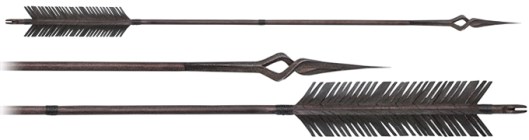
‘Arrow!’ said the bowman. ‘Black Arrow! I have saved you to the last. You have never failed me and always I have recovered you. I had you from my father and he from of old. If ever you come from the forges of the true king under the Mountain, go now and speed well!’ ” (TH 307).

As Bard was firing this himself, we always envisioned him as an English longbowman.

englishlongbowman1330-15151.jpg

And this led us to think a bit about Tolkien’s possible sources, not only for Bard and his bow, but for that arrow–the real one, not the monster dart used in the film.

From any children’s history of England, Tolkien would have learned that longbowmen like the one shown above destroyed three brave French armies in the Hundred Years War, at Crecy (1346), Poitiers (1356), and Agincourt (1415).

hf54d67201.jpg

In the film, however, although Bard was depicted as an archer,

Bard-the-Bowman-bard-the-bowman-37670604-1920-1200.jpg

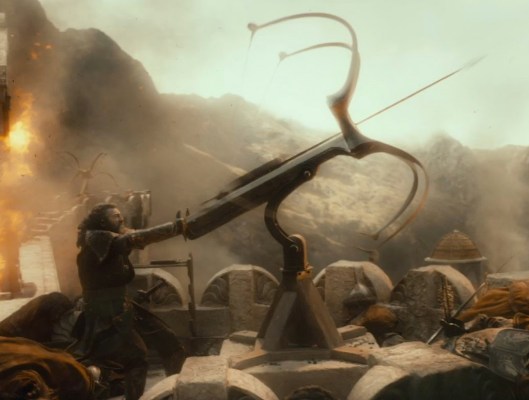
his weapon of choice looks like this.

bardwithharpoon.jpeg

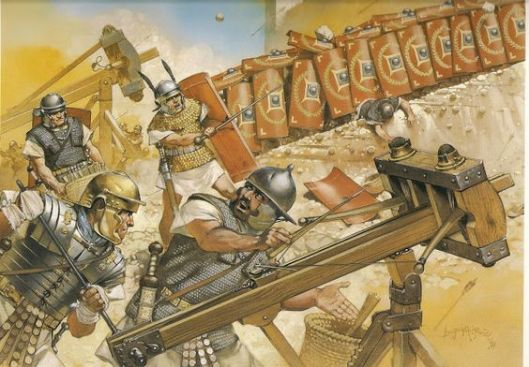
This reminds us of either a Roman ballista

b0370394e429c42631f520182c155a34.jpg

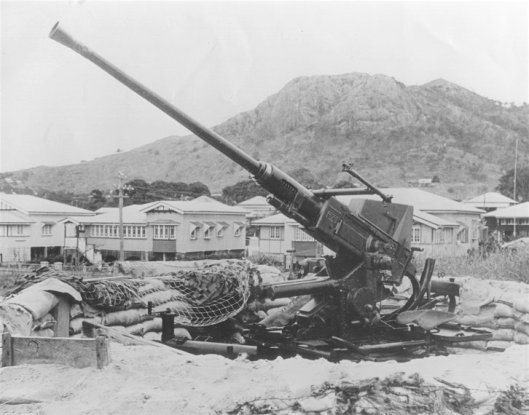
or an anti-aircraft gun

strandgun01.jpg

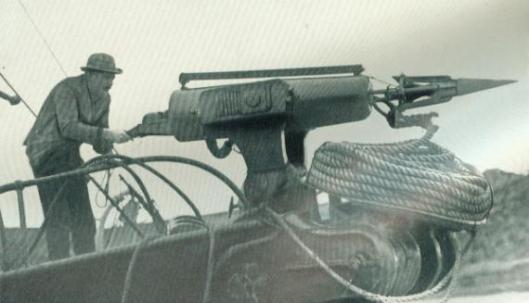
or, most especially,  a harpoon gun.

WhaleHarpGun1.jpg

Especially when you look at this Bard’s arrow.

bard.jpg

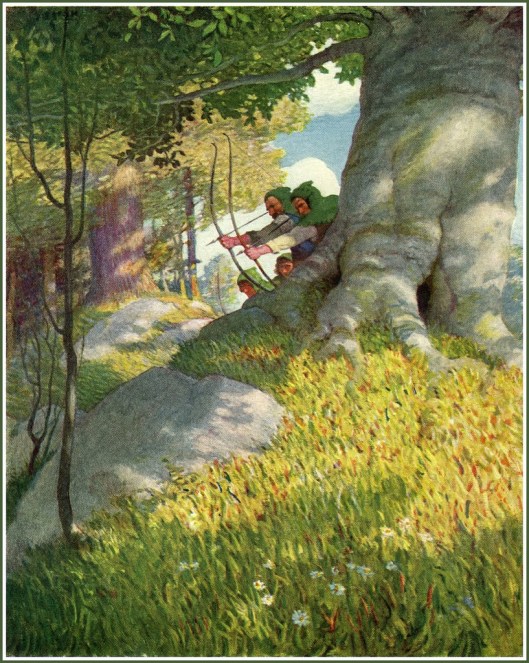
Although we currently have no evidence for Tolkien’s sources, we can imagine that they might have included, among others, Robin Hood,

5616567327_fc899be2f1_b.jpg

the actions of actual Medieval archers like those at Agincourt or Towton (1461),

towton3.jpg

and a book, perhaps from boyhood, Robert Louis Stevenson’s The Black Arrow (1883/1888).  Stevenson (here in an 1880s portrait by John Singer Sargent)

rlsjss2.jpg

had originally published the story serially in a children’s magazine in 1883

ba1.jpg

before its publication in book form in 1888.

Blackarrowcoverscribners1888.jpg

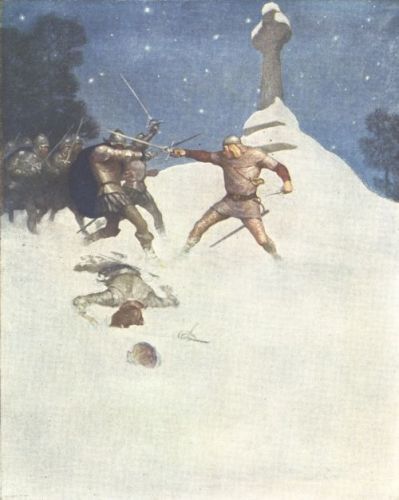
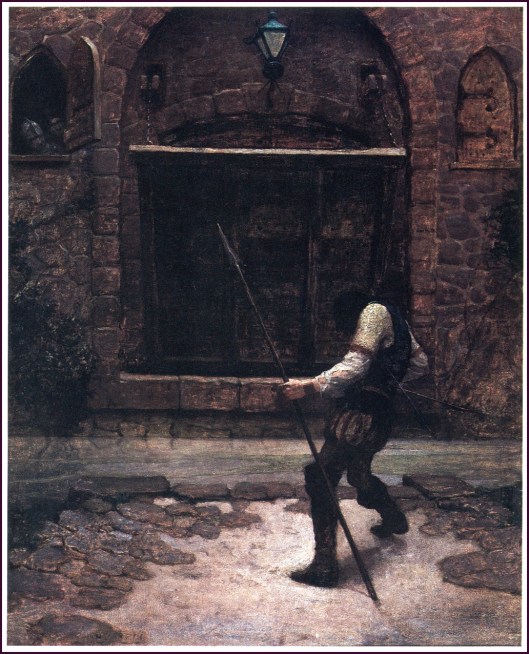
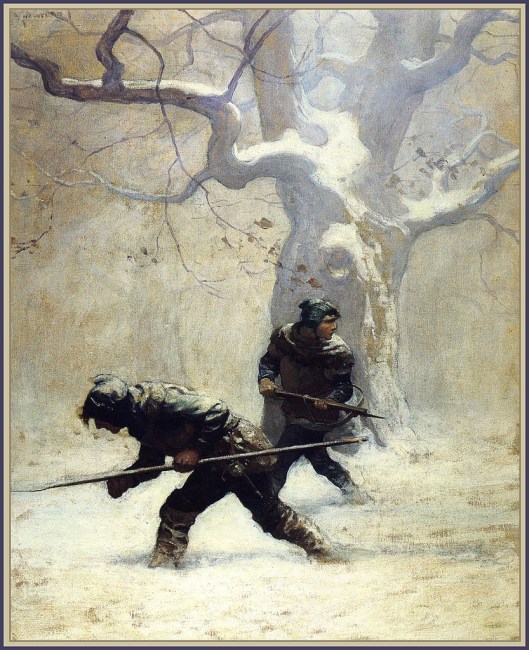
The classic illustrations are by one of our all-time favorite illustrators, NC Wyeth, from 1917.

309642.jpg

We can’t resist showing you a few:

tumblr_l4istbR1JZ1qamjklo1_1280.jpgillus08.jpg09_blackarrow_alittlebeforedawn_wyeth.jpg

Although the bow is the weapon of choice of those who use the black arrow of the title (it’s employed for revenge), the hero  in fact, has a crossbow.

5616566731_49d251a1fc_b.jpg

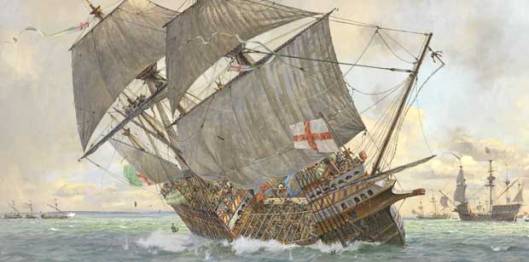
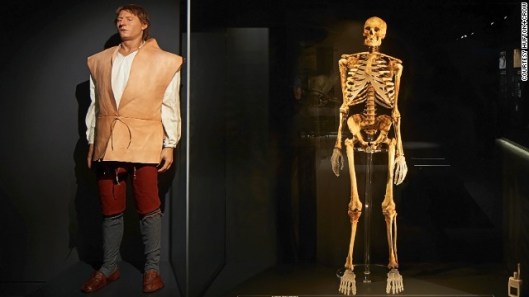
The longbow requires years of training and great upper-body strength, leaving its mark on bowmen, as can be seen from this skeleton (and its reconstruction) brought up from the English warship, the Mary Rose,

sinking_3.jpg

which sank with most of its crew in 1545 and was brought up from the mud of the ocean floor in 1982.

130530121104-mary-rose-skeleton-horizontal-gallery.jpg

The crossbow is a mechanical weapon, which uses much less strength to draw

the_old_crossbow_archer_by_renum63-d8aaovo.jpg

and, in the more developed versions, even uses a crank to produce the necessary string tension.

8f106fadbe86ed34e5567bc7a90b89e2.jpg

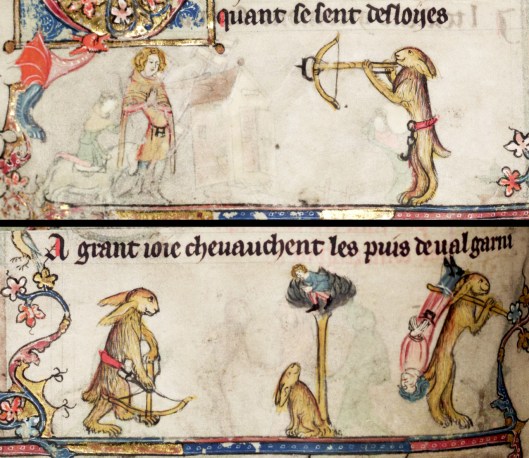
(And, just as in the case of NC Wyeth illustrations, we can’t resist medieval manuscript illustrations. Look at this pair of crossbow… bunnies from a copy of the Roman d’ Alexandre, circa 1340.)

romandalexandrec1340.jpg

This makes it a less romantic weapon, but equally deadly:  Richard the Lionheart was killed with a bolt/quarrel (what one calls a crossbow arrow) at the siege of Chalus in 1199.

Richard1TombFntrvd.jpg

(This creates another aside–about the hand weapon used as late as the 16th century by the Border Reivers of the land between northern England and southern Scotland–called a “latch”, it was the weapon of choice for those who couldn’t afford early hand guns but wanted to fire easily from the saddle.

Reiver-on-Horse.jpg

The soldiers in Disney’s wonderful movie, Tangled, carry them–notice the off-hand side pouch with a handful of bolts  for one on Maximus’ saddle–)

maxtangled.jpg

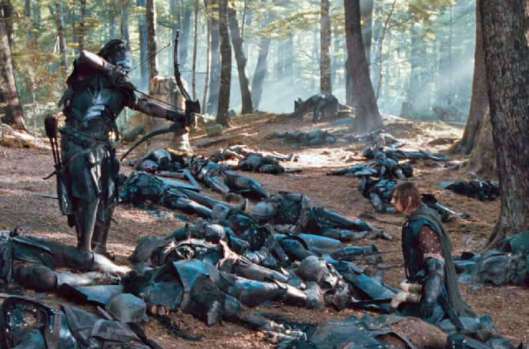
But we would  like to conclude with one more use of that black arrow.  A flight of them kills Boromir in The Lord of the Rings.

boromirarrows1.jpg

boromirearrows.png

Just as we began by pointing to the text and the actual bow and arrow which kill Smaug, and not the harpoon of the film, so we would criticize this scene.  In our opinion, it is stretched beyond believability, as well as beyond the text, taking away something of Boromir’s valor in combat with dozens of the enemy, in which he is gradually overcome.

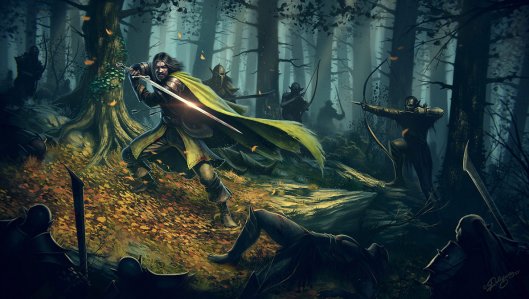
boromir_by_deligaris-d5po92u.jpg

This is just as true for the brief scene of Aragorn at Boromir’s death.  What was simple in the text, thus making it more moving–just Boromir’s confession and Aragorn’s comforting him–becomes a soppy scene in which Boromir swears loyalty and calls Aragorn “my brother”, a liberty Aragorn-the-king-t0-be, would hardly have welcomed.  In the theatrical world, this is called “milking the scene” and here, we think it curdled.

Thanks, as always, for reading.

MTCIDC,

CD

Plot or Blot?

23 Wednesday Dec 2015

Posted by Ollamh in Fairy Tales and Myths, Films and Music, J.R.R. Tolkien, Narrative Methods, Uncategorized

≈ Leave a comment

Tags

Adventure, An Unexpected Journey, Eagles, Gandalf, Gwaihir, His Dark Materials, Iofur Rakinson, Isengard, Manwe, Middle-earth, Mirkwood, Moth, Ornthanc, Peter Jackson, Philip Pullman, Radagast, Rohirrim, Saruman, Svalbard, The Battle of the Five Armies, The Council of Elrond, The eagles are coming, The Fellowship of the Ring, The Golden Compass, The Hobbit, The Lord of the Rings, The Return of the King, Tolkien, Wizard

Dear Readers,

Welcome, as always.

This posting is about a puzzle. Recently, while visiting Orthanc to write about Saruman, we bumped into the problem of how Gandalf escaped from there. Our memory was a little unclear about this—we knew that Gwaihir swooped down to rescue him, but why was Gwaihir there in the first place?

Eagles had appeared twice before in our experience of Gandalf, first when they rescued him and his companions from the goblins and Wargs in Chapter 6 of The Hobbit, “Out of the Frying-Pan into the Fire”. Here, the Lord of the Eagles hears the commotion as the Wargs struggle to overcome Gandalf’s fire magic and, gathering up some of his people, flies down to investigate.

6a00d8341dd88553ef015436529d30970c-pi.jpg

Something similar happens at the Battle of the Five Armies, explained in Chapter 18, “The Return Journey”:

“The Eagles had long had suspicion of the goblins’ mustering; from their watchfulness the movements in the mountains could not be altogether hid.” Thus, they appear self-bid, but, as they are ancient creatures, first made by Manwe and given the role of watchers from the time of the First Age, it’s not surprising that they would act as they did.

Battle of the Five Armies_Final Complete.jpg

In Jackson’s An Unexpected Journey and, again, in his The Fellowship of the Ring, an eagle appears after Gandalf has had a heart-to-heart with a moth.

gandmothhob.pngGandalf+moth.png

With a moth? We asked ourselves. We scratched our heads and wondered: does JRRT use a moth? And, if so, where did the moth come from?

In fact, what really happens is a very neatly constructed piece of plotting on the part of the author, all of which is very nicely laid out in a couple of pages of “The Council of Elrond” during Gandalf’s long narrative.

  1. Gandalf meets Radagast—who is identified, among other talents, as one for whom “birds are especially his friends”—and who says that, if Gandalf needs help with the Black Riders, he needs to apply to Saruman immediately.
  2. In return, Gandalf says to Radagast, “We shall need your help, and the help of all things that will give it. Send out messages to all the beasts and birds that are your friends. Tell them to bring news of anything that bears on this matter to Saruman and Gandalf. Let messages be sent to Orthanc.”
  3. Gandalf goes to Orthanc and, rejecting Saruman’s offer, is imprisoned at its top.
  4. Then, that which was set up in 1 and 2 comes to fruition:

“That was the undoing of Saruman’s plot. For Radagast knew no reason why he should not do as I asked; and he rode away towards Mirkwood where he had many friends of old. And the Eagles of the Mountains went far and wide, and they saw many things…And they sent a messenger to bring these tidings to me.

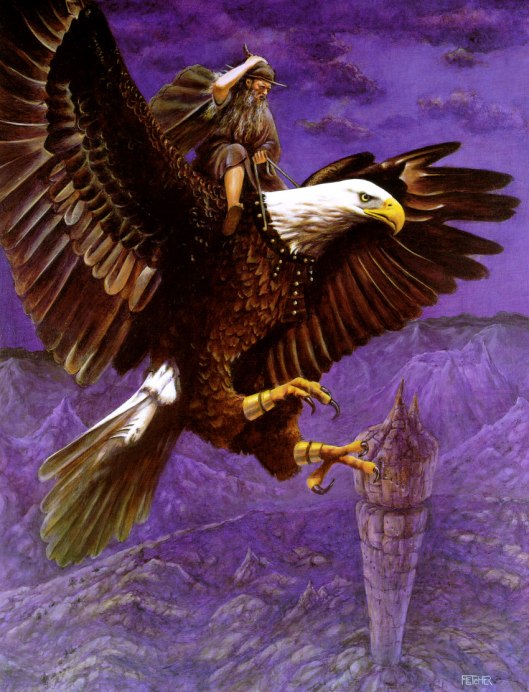
So it was that when summer waned, there came a night of moon, and Gwaihir the Windlord, swiftest of the Great Eagles, came unlooked-for to Orthanc; and he found me standing on the pinnacle. Then I spoke to him and he bore me away, before Saruman was aware.”

escape.jpg

Although we have solved the puzzle of Gandalf’s escape, we have no answer to why this natural and even elegant piece of plotting wasn’t used in the film any more than we understand why Radagast is turned into the horrible, clownish figure he is in the Hobbit films, having been described in “The Council of Elrond” simply as “a worthy Wizard, a master of shapes and changes of hue; and he has much lore of herbs and beasts, and birds are especially his friends.” And someone who could never be corrupted by Saruman, which is really, we think, why Saruman calls him a fool.

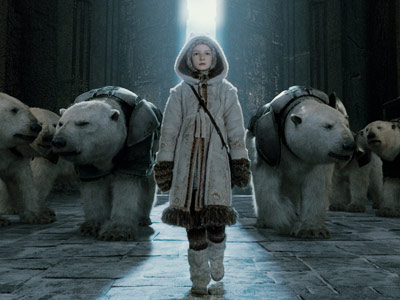
In an earlier posting, we suggested that Saruman, in his desire to ape Sauron, had created, in Isenguard, a mini-Mordor, just as Iofur Raknison, in Philip Pullman’s The Golden Compass, has turned Svalbard into a shabby ursine mockery of a human palace.

lyrasvalbard.jpg

We also suggested that the creators of the Tolkien-derived films, when they began to veer as far from the text as they appeared increasingly to do in the Hobbit films, had become a bit like Saruman themselves, and, like his master, “cannot make real new things of [their] own…” We hesitate to add this, but, could it be that, as in the case of the orcs, they “only ruined them and twisted them…”? (The Return of the King, “The Stairs of Cirith Ungol”). After all, instead of easy plot lines, we have moths, and, in place of worthy, incorruptible wizards, we have gross clowns.

We are reluctant to end on a negative note, however. After all, just as there are the Rohirrim in The Lord of the Rings films, there are those wonderful eagles at the end of An Unexpected Journey, so why not end with them?

taking-fan-theories-to-a-next-level-the-eagles-are-coming-434375.jpg

Thanks, as ever, for reading.

MTCIDC

CD

PS

If you don’t know Pullman’s His Dark Materials series, we very much recommend them—but with this proviso: in the first and second volumes (The Golden Compass, The Subtle Knife), Pullman’s antagonism towards organized religion is channeled into the “Magisterium”, a believable villainous organization in the world which he has so meticulously and powerfully created. In the third volume (The Amber Spyglass), we feel that that antagonism becomes all-too-apparent and it causes that volume—in our opinion—to lack the more human element and focus of the first two volumes. The first volume can certainly be read on its own and perhaps it says something about the trilogy as a whole that a planned project for filming all three books was eventually cut to a single film of the first book. We recommend this film, as well, but suggest that you read The Golden Compass before you see it.

Smoke and Mirror?

16 Wednesday Dec 2015

Posted by Ollamh in Fairy Tales and Myths, Films and Music, J.R.R. Tolkien, Narrative Methods, Villains

≈ Leave a comment

Tags

"Slave of the Mirror", acting, actor, Adventure, Aladdin, classical drama, classics, clowns, comedy, Commedia dell'Arte, Disney, drama, Evil Stepmother, Fiction, Galadriel, Genie, Hellenistic, histrio, Jumanji, Magic, Magic mirror, masks, Middle-earth, Moroni Olsen, persona, pretending, Snow White, The Lord of the Rings, theatre, Tolkien, tragedy

Dear Readers,

Welcome, as always.

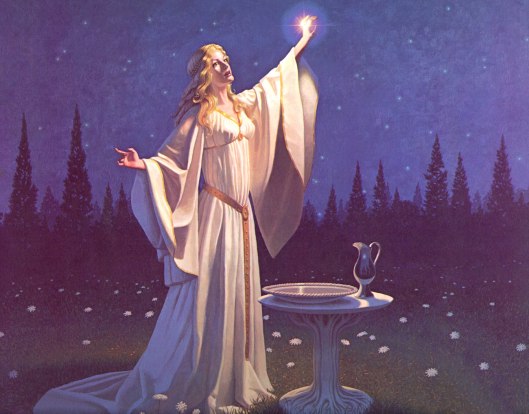
In our last posting, we thought about Galadriel’s mirror.

galadriel.jpg

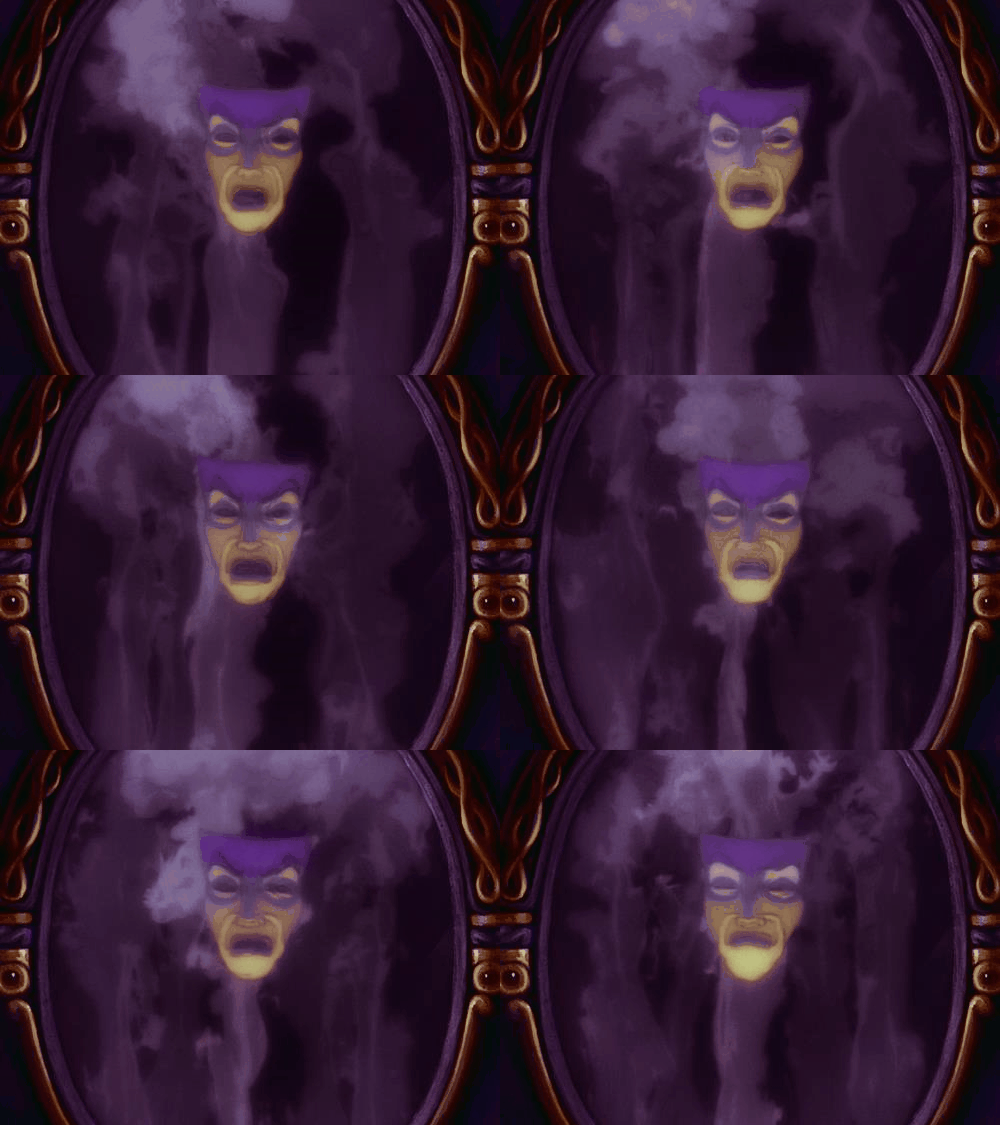
We began with the mirror in Disney’s 1937 Snow White, and it occurred to us that we have no backstory for this. Where did it come from? How did it know anything? And, perhaps more important for the story, why did the stepmother believe it?

Magic_Mirror_SnowWhite.jpg

We know how wary we would have been– that Snow White mirror freaked us out as children.

girmagicmirror.gif

Reconsidering it, we thought it was partially that smoke. But it was also that face. There was a real face behind that mirror, that of the actor Moroni Olsen (1889-1954).

There is also a history behind that face, which appears to be based upon the conventional mask of tragedy, which is often seen paired with that of comedy.

comedy_and_tragedy_masks_symbols_plays_hd-wallpaper-1888436.jpg

These masks might have come down to us most recently through the Italian Commedia dell’Arte, in which all the comic characters were masked.

commdance.jpg

The masks are much older, however, coming to us from ancient classical drama. The masks we usually see are later Roman versions,

Tragic_comic_masks_-_roman_mosaic.jpgof which there are seemingly many surviving in several media. Older yet are the Greek masks, the images of which survive in many fewer images, mostly on pots.

greekactorswithmasks.jpg

These Greeks masks suggest that the original idea was to make lifelike, if stylized, representations. Later ones– Hellenistic and Roman– are often much more distorted-looking, and it has been suggested that the masks were shaped as the equivalent of megaphones and resonators, and certainly the later ones at least suggest that possibility.

Sousse_mosaic_theatre_masks.JPG

Certainly, theatres got bigger and more complex after having begun as simple hillsides.

2007-05-10_Epidauros,_Greece_5.jpg

But we wonder as well about Romans, and earlier non-dramatic uses of masks, perhaps for religious purposes?

The Romans got at least some of their religion from their neighbors to the north, the Etruscans. They may have gotten some elements of their drama from them, as well. A Roman word for actor, histrio, they believed was an Etruscan word, as was the word for mask, persona.

images.jpg

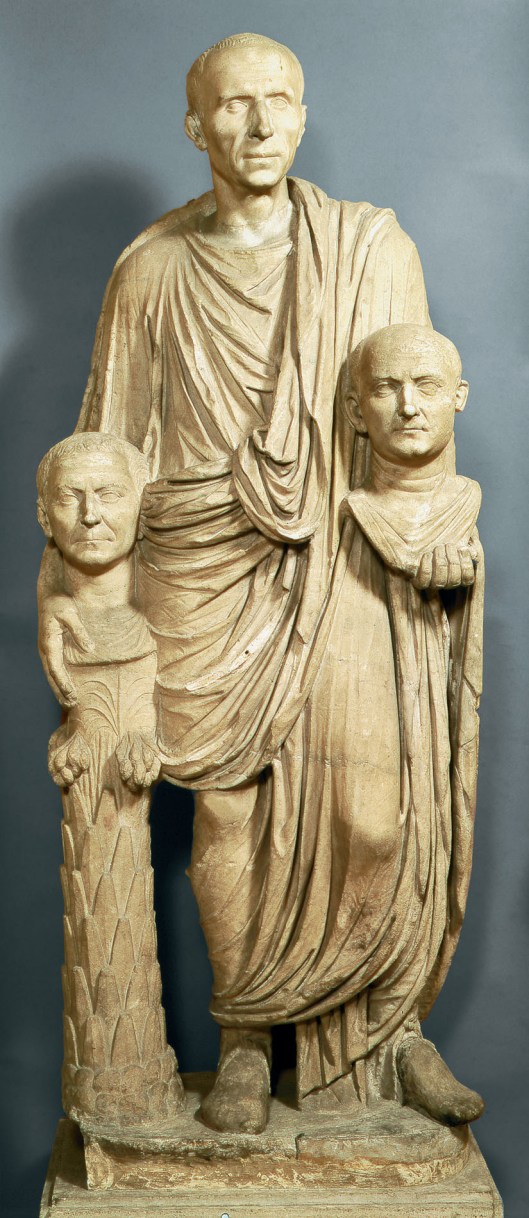
In their religion, the Romans practiced ancestor worship and used images of their ancestors as part of their ceremonies, perhaps even using masks to impersonate them.

13224081013_185a96cbd9_o_d.jpg

And there’s that word persona again, and perhaps that’s what masks are all about: impersonation, pretending to be someone you aren’t.

So, what’s spooky about that mask?

Magic_Mirror_SnowWhite.jpg

First, there are those empty eyes. Then, there’s that expression, if not fixed, at least limited.

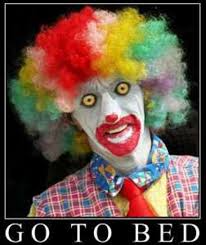
This makes us think about clowns.

images-1.jpg

We were frightened by clowns as children– maybe still are.

tvi061ab_wide-185b74c3460d303bcf13ff50d8db7d58e194c07c-s900-c85.jpgWhy are they so scary? Well, for one thing, the clothing is bright and festive, but the face is dead-white and corpse-like, therefore giving a mixed signal of merriment and death at the same time. Perhaps these contradictions should have made the stepmother less trusting (it certainly made us less trusting as children).

After all, this is an empty face– not even eyes behind it.

Magic_Mirror_SnowWhite.jpg

Why should it be telling the truth any more than a clown?

In the Disney movie, the face is referred to as the “slave of the mirror” and we can imagine that this was an attempt indirectly to suggest why the stepmother trusted the mirror. Presumably, it was like Aladdin’s genie–

genie_aladdinlamp.png

in control, at least temporarily, of its possessor– it’s a slave, after all.

Roman comedy, however, and Greek comedy before it, is full of tricky slaves out for their own profit…

AN00448728_001_l.jpg

What might it be like, we wonder, if the mirror, although saying “Madame Queen”, was actually stage managing the whole thing for his own sinister purposes? After all, the Snow White story always ends with the death of the stepmother. Does her death free the mirror?

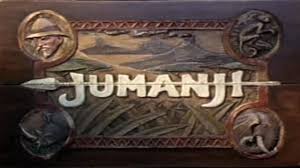
Or, as was once the custom, does a palace servant cover the mirror after the stepmother’s death, and, like Jumanji,

images-2.jpg

must it lie on the wall, waiting for its next victim?

Thanks, as always, for reading.

MTCIDC,

CD

Charge! The End?

14 Wednesday Oct 2015

Posted by Ollamh in Films and Music, J.R.R. Tolkien, Military History, Military History of Middle-earth

≈ Leave a comment

Tags

Adventure, Bataclava, Bigelow, British, British Heavy Brigade, Cavalry, Cawnpore, Charges, Chasseurs d'Afrique, Crimean War, French, Funckens, Gandalf, Helm's Deep, John Ford, Minas Tirith, Oliphaunts, Prussian, Remington, Rohirrim, Rossbach, Russian, Schreyvogel, seige, Stagecoach, surreneder, The Charge of the Light Brigade, The Lord of the Rings, Tolkien, Trostle Farm, Warhorse, Waterloo, Western, William Simpson

Dear Readers,

Welcome, as always.

In our last, we were discussing film music, where it comes from and what it does. This brought us, as always, it seems, back to JRRT. In that post, we talked about the “Shire theme”. In this, we want to talk not about a theme, but about a scene, one we have mentioned before, the charge of the Rohirrim and the attempted raising of the siege of Minas Tirith.

gondorattacked rohirrimformup

Although, strictly speaking, what is happening to Minas Tirith is simply a frontal assault, not a siege in the classic sense. Although, seen in this illustration (by the wonderful husband and wife team of the Funckens), they may look the same—

funckenssiegeupclose

in a formal siege, you surround a town/fortress

siegediggingin

call on the place to surrender

The-Entrance-Into-Belfort-Of-The-German-Commander-Bearing-The-Flag-Of-Truce-4th-November-1870-1884

use your heavy weapons to bombard the place

catapault42cm

Drive the defenders back from their outer works

William Simpson - The Attack on the Malakoff 1855

And then call upon the defenders to surrender—which, often they do (fewer Alamos than myth would tell you)

surrender4

But, if not, a final—usually costly—attackSiege_of_Badajoz,_by_Richard_Caton_Woodville_Jr

march6

and, potentially, the massacre of all—or at least all of the garrison–inside. (In Jackson’s LoTR, the Orcs are certainly not taking prisoners as they break into Minas Tirith).

The charge of the Rohirrim, though, brought to mind other charges, such as the charge of the Prussian cavalry against the French/Allied army at Rossbach, in 1757—

Schlacht_bei_Roßbach1

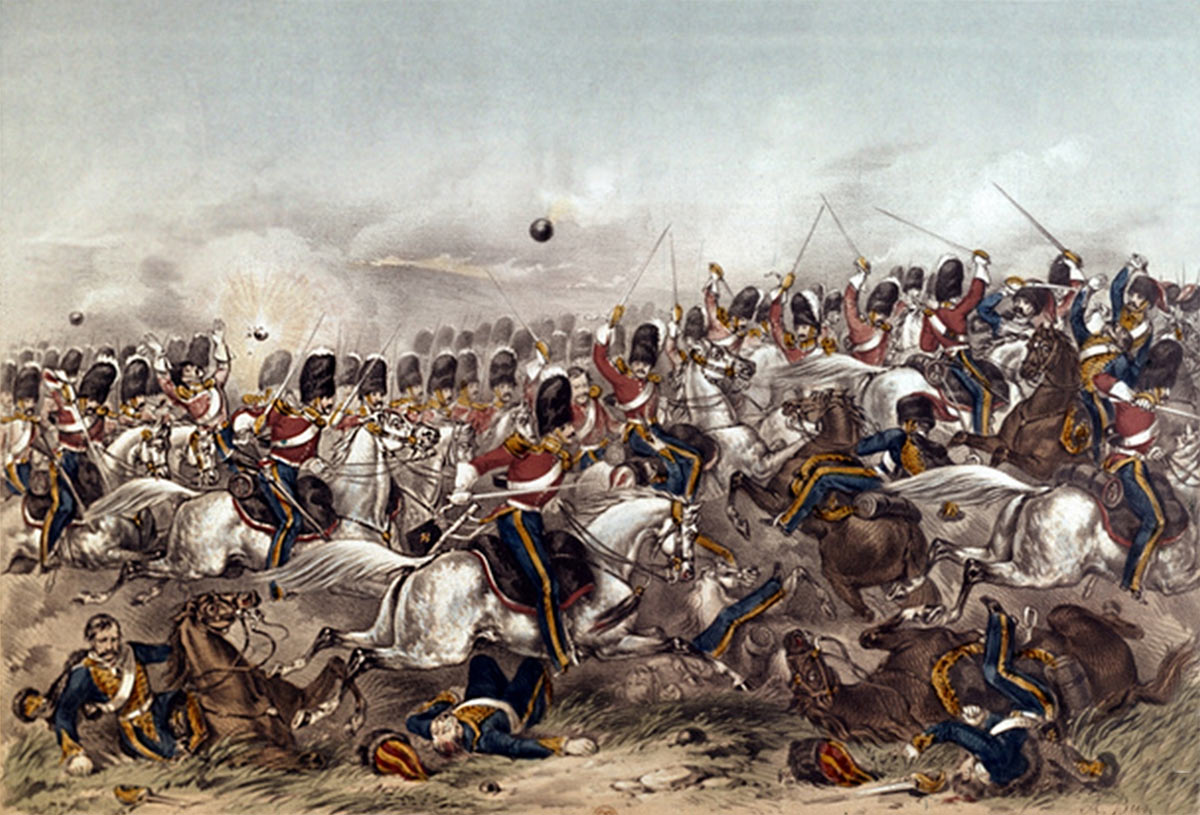
or the French and British cavalry charges at Waterloo, 1815—

cavwaterloo1 ChargeofthelightBrigade

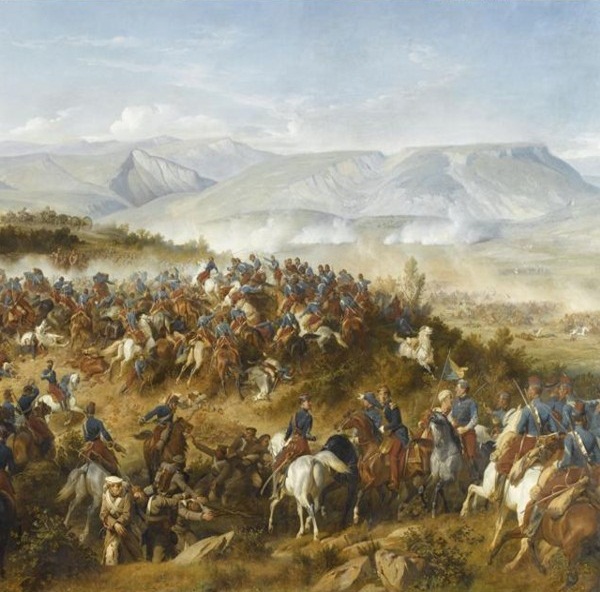
or those _other_ charges at the battle of Balaclava, 1854, that of the French 4th Chasseurs d’Afrique

Chasseurs_d'Afrique_à_Balaclava

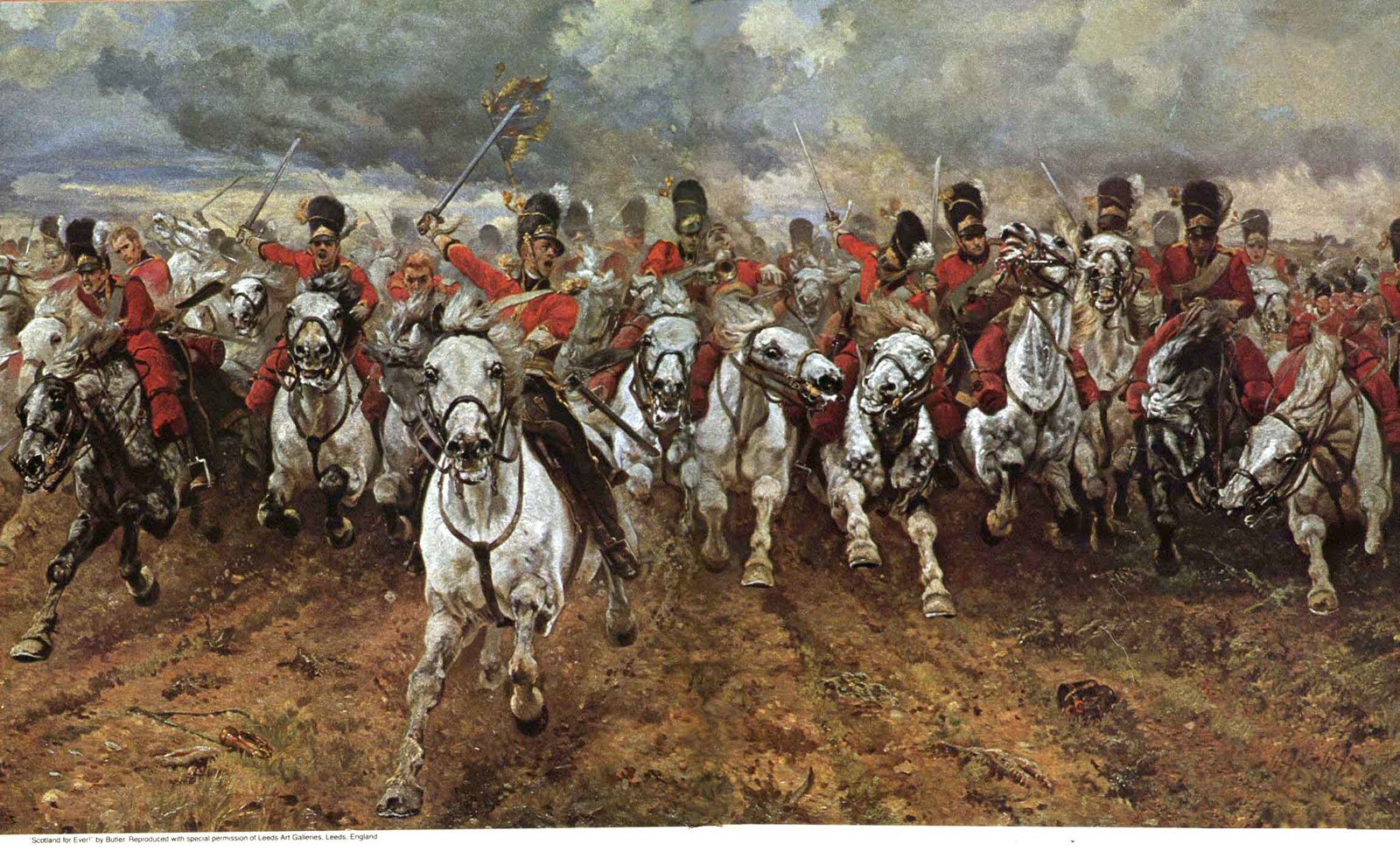
or of the British Heavy Brigade, which drove the Russian cavalry from the British camp.

balaclava-scots-greys-1200

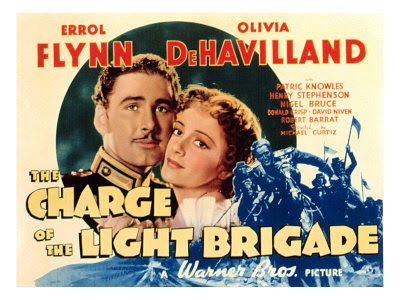
Those last two remind us, of course, of one of our favorite adventure movies, the 1936 The Charge of the Light Brigade

charge1

It is not so authentic in look as the 1968 movie of the same name,

Charge+of+the+Light+Brigade+movie+poster+2

and, in fact, the film states at its opening that it’s only loosely based on actual historical events (including not only the charge, but the 1857 massacre at Cawnpore—which, in reality, occurred some three years after the Crimean War battle). It also beefs up the Russian defense—adding non-existent earthworks, for instance. Here’s the movie’s view

1225664651_the-charge-of-the-light-brigade_00016

and here’s William Simpson’s near-contemporary illustration (Simpson arrived after the battle, but must have talked to survivors and certainly could have seen the terrain).

William_Simpson_-_Charge_of_the_light_cavalry_brigade,_25th_Oct._1854,_under_Major_General_the_Earl_of_Cardigan

All of these charges were directed at enemy forces on an open battlefield. The attack of the Rohirrim actually comes from a different scenario, one which is based upon a theme familiar to those who have seen American westerns: the arrival of the cavalry in the nick of time.

In this scenario, someone is trapped and surrounded—or at least persistently assaulted by a more numerous enemy—the classic is an attack upon circled wagons

frontier-wagon-circle

The crisis comes and it looks like those attacked are about to be overwhelmed

wagon-box-fight-1867-granger

but, at the last minute, help arrives—the cavalry, bugles sounding, guidons waving (although that illustrated in this vidcap is the 1885 pattern and the film from which this comes takes place in 1880—then again, the uniforms are a bit odd, too—here’s Remington’s and Schreyvogel’s more accurate views, as well) rides fearlessly to the rescue.

Stagecoach_216Pyxurz SCHREYVOGEL_Charles_Cavalry_Charge_1905_Wadsworth_Athenaeum_source_Sandstead_d2h_ remingtoncav

After sorting through more than 50 westerns, we believe that the movie from which our first image comes is probably the source of the modern idea of the arrival of the cavalry—see this clip from John Ford’s Stagecoach (1939)

CLIP

This happens twice, of course, in The Lord of the Rings, first at Helm’s deep, when Gandalf arrives—

helms-deep gandalfarrives

and again, as we began, at Minas Tirith. It’s interesting, however, to see that, in this second example, the cavalry rescue is not so successful, since there are those oliphaunts we discussed in an earlier posting—

mumakil_by_cg_warrior-d4muefu

In our world, it wasn’t giant oliphaunts who eventually defeated cavalry and drove them to the edges of the battlefield, where they lasted a little longer, but this

maximwarhorse

as you can see in this clip from Warhorse.

CLIP

And it’s for the best, really. It’s bad enough that we humans engage in violent actions without dragging the rest of the animal kingdom into it…

trostle-farm

(A few of the 80 horses lost by Bigelow’s 9th MA Battery at the Trostle Farm, 2 July, 1863—and, as a sad ps, 25 horses were killed or so badly injured that they were put down at the filming of the 1936 The Charge of the Light Brigade—this so shocked those in Congress that a law for the protection of animals in films was passed to prevent future harm).

Thanks, as always, for reading.

MTCIDC

CD

Music to Our Ears

07 Wednesday Oct 2015

Posted by Ollamh in Films and Music

≈ Leave a comment

Tags

Alexander Nevsky, Bag End, Birth of a Nation, Darth Vader, Film music, film score, Gilraen's Memorial, Howard Shore, Imperial March, Jaws, John Williams, Journey to the Grey Havens, melodrama, Mendelssohn, Midsumer Night's Dream, Prokofiev, Rivendell, Sergei Eisenstein, silent film, Star Wars, The Lord of the Rings, The Shire, The Tales That Really Matter, theme

Dear Readers,

Welcome, as always. In this posting, we’d like to talk a bit about film music.

We’re interested in all kinds—from classic 30s to more recent scores. We began by asking ourselves why is there film music? Where does it come from?

To begin, we looked back into the 19th century, where we found that music could be used underneath the action in plays—Mendelssohn’s Midsummer Night’s Dream being a good example. Mendelssohn wrote the overture as a teenager, and as a purely orchestral piece. The rest of the music was written for a performance of the play in Berlin in 1842. Some of it consists of settings for the songs from Shakespeare’s play, but other music is meant to be played during a scene to heighten tension or to release it. (This use of music was so common in the 19th century that we get the expression “melodrama” originally from plays with music. “Melos” is an ancient Greek word for “song”, which gets added to “drama”.)

Edwin_Landseer_-_Scene_from_A_Midsummer_Night's_Dream._Titania_and_Bottom_-_Google_Art_Project

When film began to take its place next to drama as a form of popular entertainment—sometimes in the same theatres—film was, of course, silent.

zorro-still

Without spoken dialogue or sound effects, as people were already used to the music played in dramas, it was natural to have music played under films, commonly using a piano or an organ.

3185_2

The music could be classical excerpts or popular music of the period, which would be improvised by the organist or pianist. For some films, music was even specially written. Birth of a Nation (1915) was one of these.

Sheet_music_for_'The_Perfect_Song'_from_The_Birth_of_a_Nation

Such music, as in plays, would underscore the action building or releasing the motion. This was true of early sound films—like Alexander Nevsky (1939).

PROKOFIEV , Sergei - with Sergei Eisenstein ( film director ) at film studios , 1943 working on film Alexander Nevsky . Russian composer , 27 April 1891 - 5 March 1953 .

PROKOFIEV , Sergei – with Sergei Eisenstein ( film director ) at film studios , 1943 working on film Alexander Nevsky . Russian composer , 27 April 1891 – 5 March 1953 .

And of more recent films. Think of the shark theme from Jaws

(Jaws theme)

2806004-jaws

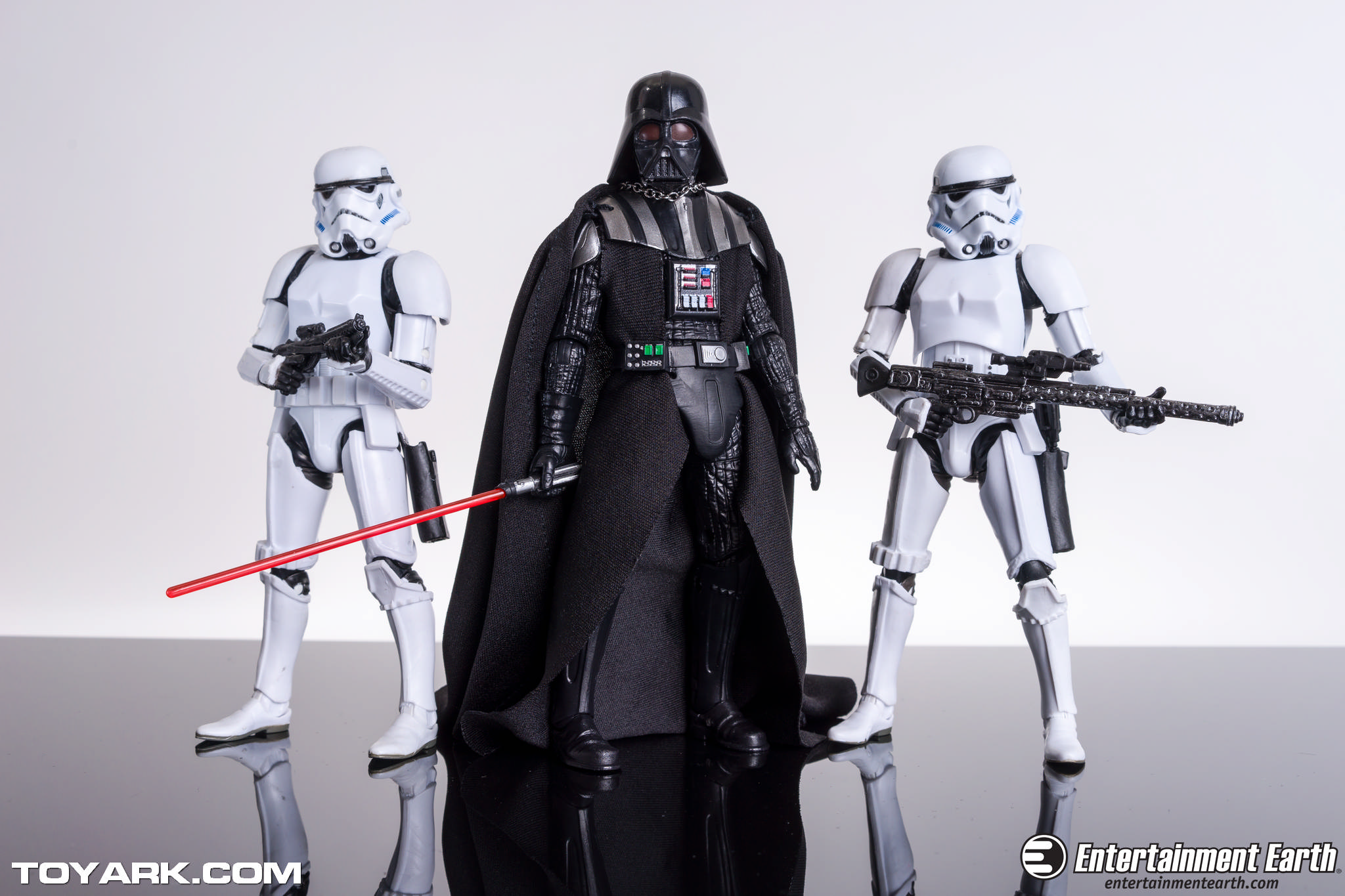
Or, Darth Vader

(Imperial March)

Black-Series-Darth-Vader-47

(And think of how the music change when Luke takes off his father’s helmet.)

(Imperial March– alternate version)

vader1983

A special favorite of ours is the Shire theme from The Lord of the Rings.

jrrt_12

In the theatrical version of the film, we hear this first when Gandalf visits Frodo.

(The Shire theme in “Bag End“, taken from the complete recordings)

gandalf-visiting-frodo

In this scene, we’re being told, just as in a silent movie, about a feeling—and only through music which accompanies the picture.

But when we hear the music return when Frodo and Sam have set out on their journey to Rivendell:

(“Rivendell”)

Leaving Rivendell, as a part of the Fellowship (and the theme here acts as a prelude to the Fellowship theme):

(“Gilraen’s Memorial“)

Sam’s speech, where the theme resides to accepting the journey but reminisces about home:

(“The Tales That Really Matter“)

And saying farewell before departing into the West:

(“Journey to the Grey Havens”)

And so we have an entirely different feeling each time we hear a variant of the theme– the Little People make their mark in the film not only by taking a part in the story, but also in the music, as it shifts through their adventure.

But try this for yourself, dear reader. Pick a favorite film, and try to focus less on the action and more on the music: are there recurring themes, for instance? And, if so, do they change? And if they do change, how does that affect the film and you?

Thanks, as ever, for reading,

MTCIDC,

CD

Seeing the Elephant– Oliphaunt

30 Wednesday Sep 2015

Posted by Ollamh in Films and Music, Heroes, J.R.R. Tolkien, Military History, Military History of Middle-earth

≈ 2 Comments

Tags

Adventure, Alps, ATAT, Elephants, Greeks, Hannibal, Hoth, Mammoth, Mumak of Harad, Napoleon, Oliphaunt, Peter Jackson, Pyrrhus of Epirus, Romans, Sam Gamgee, Star Wars, The Lord of the Rings, Tolkien, war

Grey as a mouse,
Big as a house,
Nose like a snake,
I make the earth shake,
As I tramp through the grass;
Trees crack as I pass.
With horns in my mouth
I walk in the South,
Flapping big ears.
Beyond count of years
I stump round and round,
Never lie on the ground,
Not even to die.
Oliphaunt am I,
Biggest of all,
Huge, old, and tall.
If ever you’d met me
You wouldn’t forget me.
If you never do,
You won’t think I’m true;
But old Oliphaunt am I,
And I never lie.

(“The Black Gate is Closed”, LOTR 646)

Dear Readers,

Welcome, as always.

Sam dearly wants to see an oliphaunt– and he will get his chance. Were he able to see the third part of Peter Jackson’s The Lord of the Rings, he would see many more than one.

Screen_Shot_2013-03-12_at_6.17.47_PM

Sam does see one, however:

To his astonishment and terror, and lasting delight, Sam saw a vast shape crash out of the trees and come careering down the slope. Big as a house, much bigger than a house, it looked to him, a grey-clad moving hill” (“Of Herbs and Stewed Rabbit”, LOTR 661).

Here’s how the film shows two of them:

oliphaunts_small

These are, of course, based upon real war elephants.

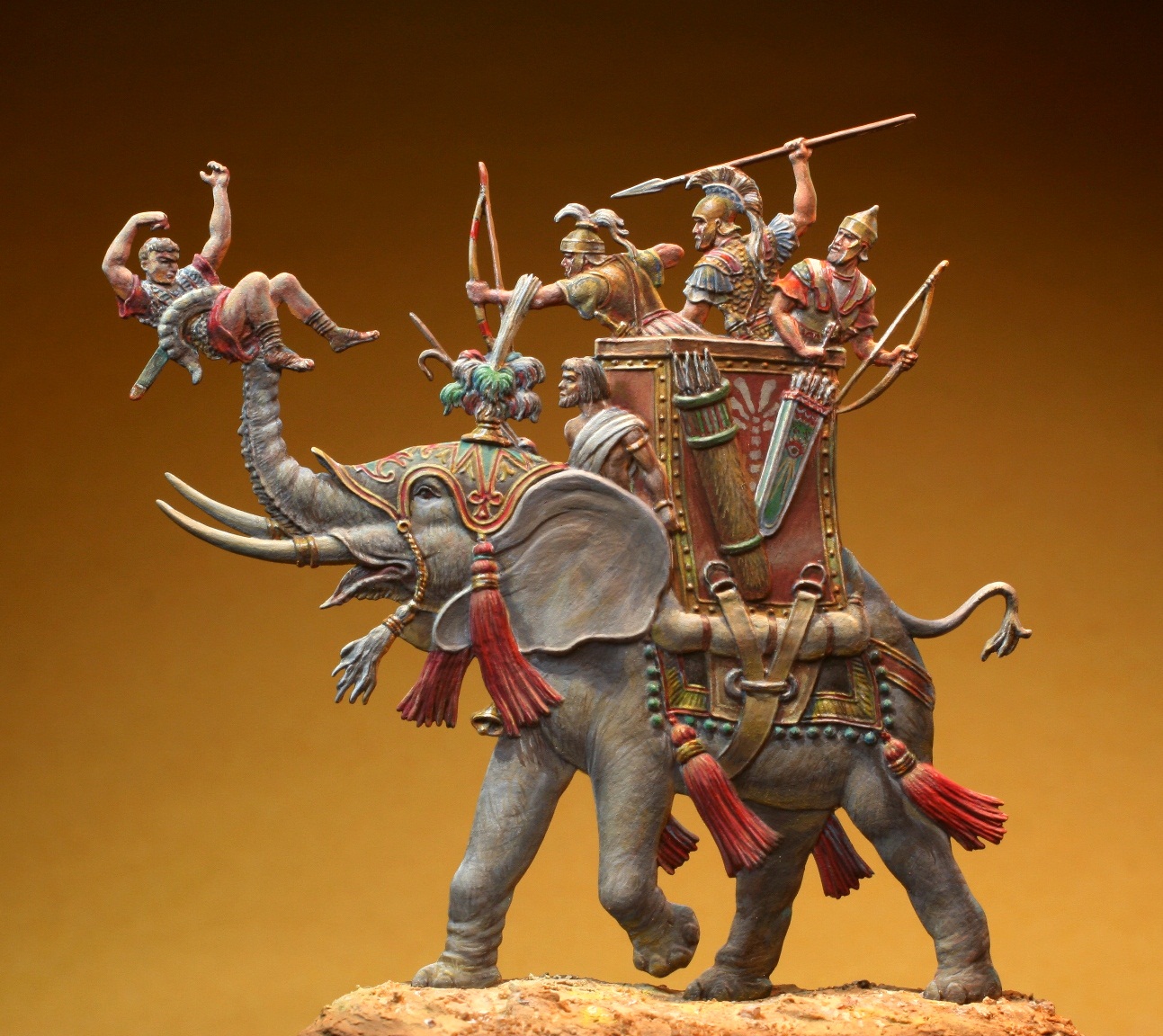
Carthaginian-War-Elephant-yellow-shrink

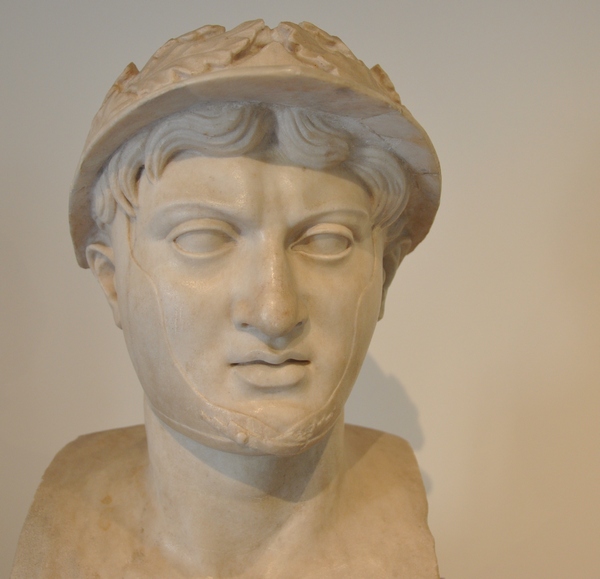
The west– our west– first saw such elephants in the 280s BC, in the army which Pyrrhus of Epirus brought from Greece to fight the Romans.

herculaneum_villa_papiri_pyrrhus_naples4elephant_dish

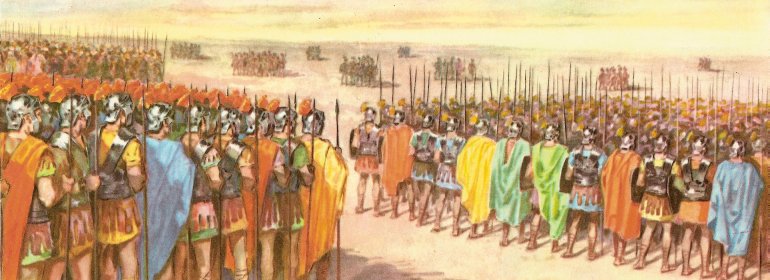
Such elephants were thought to be useful against great blocks of infantry.

phalanx phalanx1legion_in_battle_formation

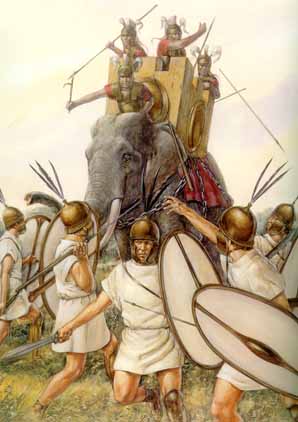
They could be used like tanks to knock holes in the formations.

Pyrhus_elephants2

To most people, the most familiar images, however, would be from Hannibal’s invasion of Italy in 218 BC.

Hannibal-2

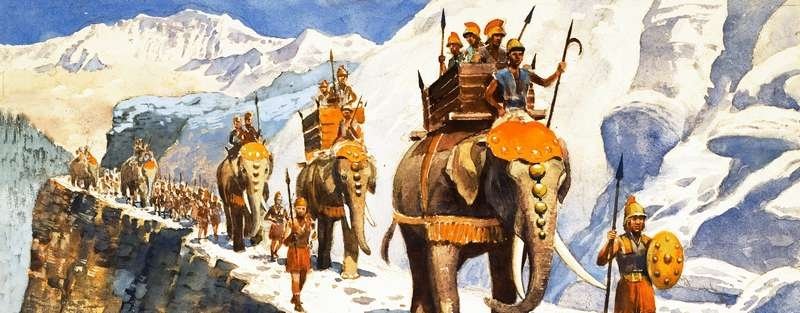
And, most famous of all, is his taking of the elephants across the Alps.

lal299613 lal319314

In fact, this did not end well for the elephants. Ancient accounts suggest that out of forty elephants, only one survived.

Crossing the Alps reminded us of Napoleon doing this in 1800. Here’s the heroic version:

Napoleon_at_the_Great_St._Bernard_-_Jacques-Louis_David_-_Google_Cultural_Institute

And this is what really happened (a little like Hannibal’s elephants):

Paul_Delaroche_-_Napoleon_Crossing_the_Alps_-_Google_Art_Project_2

JRRT says of the oliphaunt Sam saw that “…the Mûmak of Harad was indeed a beast of vast bulk, and the like of him does not walk now in Middle-earth” (“Of Herbs and Stewed Rabbit”, LOTR 661).

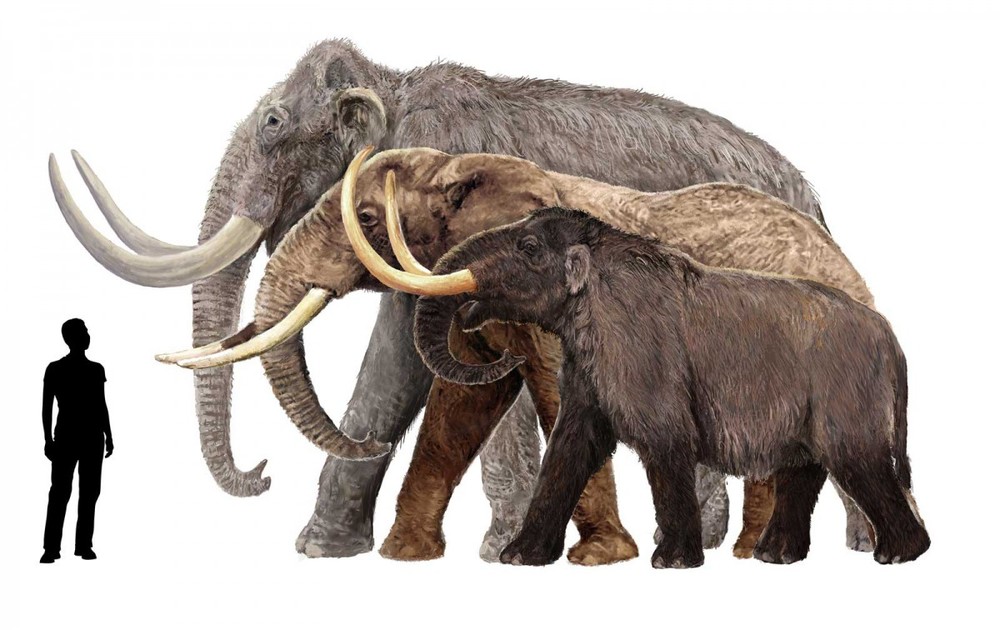
It’s unclear what he means by this, except perhaps that an oliphaunt was more like a mammoth

Mammoths_Man-1200x756.jpg format=1500w

Even so, we can only contrast an ancient war elephant (reconstructed)

dced00480c58b85786bee4bf212eb30d

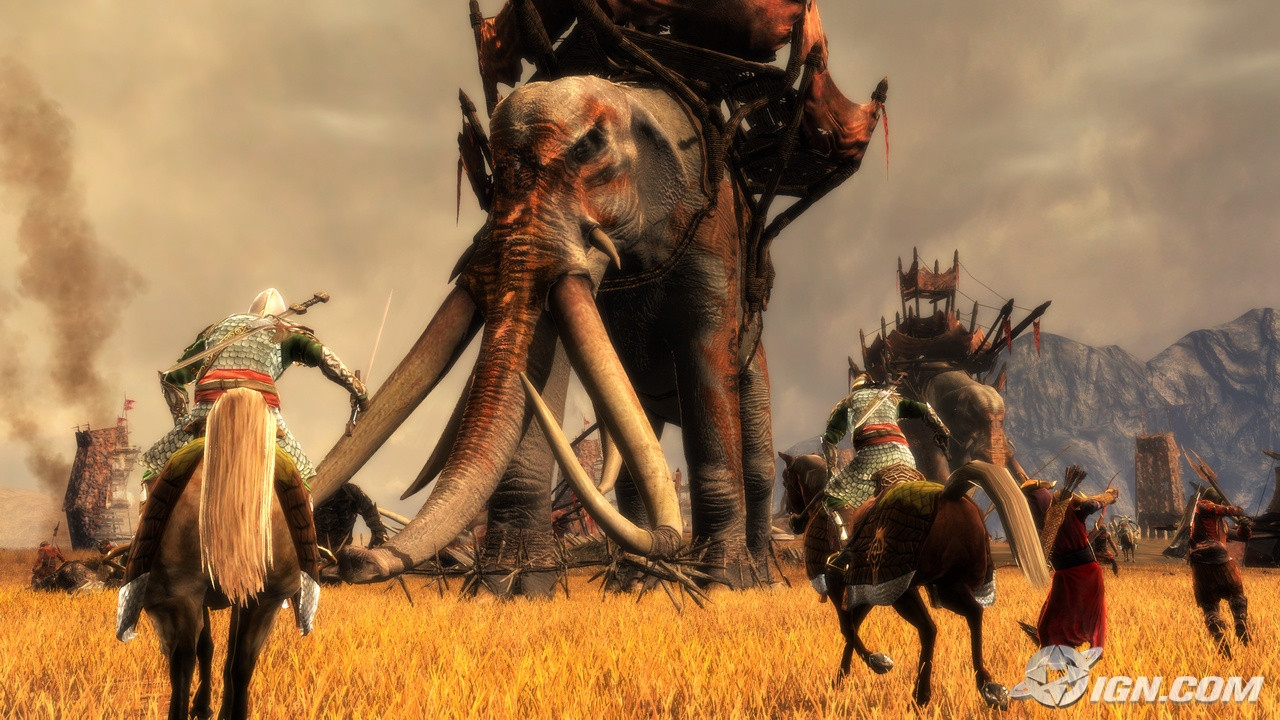
with those in the film

01IYPfe

and which reminded us strongly of ATATs from the assault upon Hoth,

atat

and think how disappointed Sam would be in what he would see in our world versus his!

Thanks, as always, for reading!

MTCIDC

CD

Newer posts →

The Doubtful Sea Series Facebook Page

The Doubtful Sea Series Facebook Page

  • Ollamh

Categories

  • Artists and Illustrators
  • Economics in Middle-earth
  • Fairy Tales and Myths
  • Films and Music
  • Games
  • Heroes
  • Imaginary History
  • J.R.R. Tolkien
  • Language
  • Literary History
  • Maps
  • Medieval Russia
  • Military History
  • Military History of Middle-earth
  • Narnia
  • Narrative Methods
  • Poetry
  • Research
  • Star Wars
  • Terra Australis
  • The Rohirrim
  • Theatre and Performance
  • Tolkien
  • Uncategorized
  • Villains
  • Writing as Collaborators
Follow doubtfulsea on WordPress.com

Across the Doubtful Sea

Recent Postings

  • Through a glass… January 7, 2026
  • Heffalumps? December 31, 2025
  • We Three Kings December 24, 2025
  • A Moon disfigured December 17, 2025
  • On the Roads Again—Once More December 10, 2025
  • (Not) Crossing Bridges December 3, 2025
  • On the Road(s) Again—Again November 26, 2025
  • On the Road(s) Again November 19, 2025
  • To Bree (Part 2) November 12, 2025

Blog Statistics

  • 104,228 Views

Posting Archive

  • January 2026 (1)
  • December 2025 (5)
  • November 2025 (4)
  • October 2025 (5)
  • September 2025 (4)
  • August 2025 (4)
  • July 2025 (5)
  • June 2025 (4)
  • May 2025 (4)
  • April 2025 (5)
  • March 2025 (4)
  • February 2025 (4)
  • January 2025 (5)
  • December 2024 (4)
  • November 2024 (4)
  • October 2024 (5)
  • September 2024 (4)
  • August 2024 (4)
  • July 2024 (5)
  • June 2024 (4)
  • May 2024 (5)
  • April 2024 (4)
  • March 2024 (4)
  • February 2024 (4)
  • January 2024 (5)
  • December 2023 (4)
  • November 2023 (5)
  • October 2023 (4)
  • September 2023 (4)
  • August 2023 (5)
  • July 2023 (4)
  • June 2023 (4)
  • May 2023 (5)
  • April 2023 (4)
  • March 2023 (5)
  • February 2023 (4)
  • January 2023 (4)
  • December 2022 (4)
  • November 2022 (5)
  • October 2022 (4)
  • September 2022 (4)
  • August 2022 (5)
  • July 2022 (4)
  • June 2022 (5)
  • May 2022 (4)
  • April 2022 (4)
  • March 2022 (5)
  • February 2022 (4)
  • January 2022 (4)
  • December 2021 (5)
  • November 2021 (4)
  • October 2021 (4)
  • September 2021 (5)
  • August 2021 (4)
  • July 2021 (4)
  • June 2021 (5)
  • May 2021 (4)
  • April 2021 (4)
  • March 2021 (5)
  • February 2021 (4)
  • January 2021 (4)
  • December 2020 (5)
  • November 2020 (4)
  • October 2020 (4)
  • September 2020 (5)
  • August 2020 (4)
  • July 2020 (5)
  • June 2020 (4)
  • May 2020 (4)
  • April 2020 (5)
  • March 2020 (4)
  • February 2020 (4)
  • January 2020 (6)
  • December 2019 (4)
  • November 2019 (4)
  • October 2019 (5)
  • September 2019 (4)
  • August 2019 (4)
  • July 2019 (5)
  • June 2019 (4)
  • May 2019 (5)
  • April 2019 (4)
  • March 2019 (4)
  • February 2019 (4)
  • January 2019 (5)
  • December 2018 (4)
  • November 2018 (4)
  • October 2018 (5)
  • September 2018 (4)
  • August 2018 (5)
  • July 2018 (4)
  • June 2018 (4)
  • May 2018 (5)
  • April 2018 (4)
  • March 2018 (4)
  • February 2018 (4)
  • January 2018 (5)
  • December 2017 (4)
  • November 2017 (4)
  • October 2017 (4)
  • September 2017 (4)
  • August 2017 (5)
  • July 2017 (4)
  • June 2017 (4)
  • May 2017 (5)
  • April 2017 (4)
  • March 2017 (5)
  • February 2017 (4)
  • January 2017 (4)
  • December 2016 (4)
  • November 2016 (5)
  • October 2016 (6)
  • September 2016 (5)
  • August 2016 (5)
  • July 2016 (5)
  • June 2016 (5)
  • May 2016 (4)
  • April 2016 (4)
  • March 2016 (5)
  • February 2016 (4)
  • January 2016 (4)
  • December 2015 (5)
  • November 2015 (5)
  • October 2015 (4)
  • September 2015 (5)
  • August 2015 (4)
  • July 2015 (5)
  • June 2015 (5)
  • May 2015 (4)
  • April 2015 (3)
  • March 2015 (4)
  • February 2015 (4)
  • January 2015 (4)
  • December 2014 (5)
  • November 2014 (4)
  • October 2014 (6)
  • September 2014 (1)

Blog at WordPress.com.

  • Subscribe Subscribed
    • doubtfulsea
    • Join 78 other subscribers
    • Already have a WordPress.com account? Log in now.
    • doubtfulsea
    • Subscribe Subscribed
    • Sign up
    • Log in
    • Report this content
    • View site in Reader
    • Manage subscriptions
    • Collapse this bar
 

Loading Comments...