• About

doubtfulsea

~ adventure fantasy

Category Archives: Films and Music

Lost in Space

24 Wednesday Jan 2018

Posted by Ollamh in Films and Music, Heroes, Narrative Methods

≈ Leave a comment

Tags

character development, Episode VIII, Film Review, Sam Gamgee, Star Wars, The Last Jedi, The Lord of the Rings

Welcome, as always, dear readers.
When you think about Sam, what do you know about him and how do you know?
The first mention of the character is almost a footnote. The narrator is actually talking about Ham Gamgee “commonly known as the Gaffer” (a dialect form of “grandfather”):
“Now that he was himself growing old and stiff in the joints, the job was mainly carried on by his youngest son, Sam Gamgee. Both father and son were on very friendly terms with Bilbo and Frodo. They lived on the Hill itself, in Number 3 Bagshot Row just below Bag End.” (The Fellowship of the Ring, Book One, Chapter 1, “A Long-Expected Party”)
The Gaffer has been gossiping in The Ivy Bush, mostly in response to conversation about Bilbo and Frodo and he’s attempting to quell a rumor that Bag End is stuffed with jewels and gold and says of its riches:
“But my lad Sam will know more about that. He’s in and out of Bag End. Crazy about stories of the old days, he is, and he listens to all Mr. Bilbo’s tales. Mr. Bilbo has learned him his letters—meaning no harm, mark you, and I hope no harm will come of it.

‘Elves and Dragons! I says to him. Cabbages and potatoes are better for me and you. Don’t go getting mixed up in the business of your betters or you’ll land in trouble too big for you, I says to him.’ ”
So, in about three pages we know:
1. a little about Sam’s family (he is unmarried and lives with an elderly father)
2. his job (assistant gardener)
3. his social class (lower—Gaffer’s speech pattern and word choices indicate “rustic”, as does his talking to Sam about his “betters”)
4. where he lives (as a servant in this semi-feudal world would be expected to, below his master, but near)
5. his interests (“the old days”)
6. his education (he’s literate—and The Gaffer’s “meaning no harm” suggests that this is unusual, at least among his social class)
7. his character (imaginative: “crazy about stories”; perhaps independent-minded—he continues to be enthusiastic about such things even though his father cautions him against them)
In the many chapters to come, we will learn much more about Sam—his practicality, his inner toughness, his flexibility, his ability to stay grounded in the worst circumstances, and that inner resolve which keeps the two hobbits going, even to what appeared to be a terrible end:
“ ‘So that was the job I felt I had to do when I started,’ thought Sam: ‘to help Mr. Frodo to the last step and then die with him. Well, if that is the job then I must do it.’
But even as hope died in Sam, or seemed to die, it was turned to a new strength. Sam’s plain hobbit-face grew stern, almost grim, as the will hardened in him, and he felt through all his limbs a thrill, as if he was turning into some creature of stone and steel that neither despair nor weariness nor endless barren miles could subdue.” (The Return of the King, Book Six, Chapter 3, “Mount Doom”)
It’s not surprising, then, that Galadriel, with an eerie foresight, has given him the means to help the Shire heal from the terrible industrializing wounds of Sharkey & Co.:
“So Sam planted saplings in all the places where specially beautiful or beloved trees had been destroyed, and he put a grain of the precious dust in the soil at the root of each. He went up and down the Shire in this labour…And at the end he found that he still had a little of the dust left; so he went to the Three-Farthing Stone, which is as near the centre of the Shire as no matter, and cast it in the air with his blessing…” (The Return of the King, Book Six, Chapter 9, “The Grey Havens”)
Recently, we’ve seen Star Wars 8: The Last Jedi. After 7, we were not eager. We are not among those who hold that 4, 5, and 6 are the canon, although we see characters there—particularly Luke and Han—grow over time into people we include in our list of adventure-friends, like Robin Hood and David Balfour and Indiana Jones. We think that George Lucas, having developed the story of Luke and his father, was curious to see if he could reach back in time and show how Anakin Skywalker became Darth Vader, a daring and ambitious project, since, until his attack on the Emperor, Vader seemed less than sympathetic as a character.
For us, the main problem with 7 was that there seemed to be too many characters constantly flying to to too many planets, with no real attempt to develop them. Granted, JRRT had hundreds of pages and as many hours as his readers were willing to grant him to turn out characters like Sam, luxuries a film-maker is denied. At the same time, consider the opening sequence: a mysterious pilot lands on a mysterious planet which is then attacked by people who resemble the storm troopers of 4/5/6. The mysterious pilot is given something by a mysterious elderly man. Then a storm trooper mysteriously deserts his companions after finding one a casualty. And so it goes on. By the end of the film, we had a cast which included (for a short time, at least) old friends: Chewy, Han, and Leia (with minor roles for droids), plus a number of new characters who did not appear to us to be anchored in anything, just there to sustain the action. Who were they? Who knew? And, sadly, for us, who then cared? We had hopes for Rey (although the joke that she is a “Rey/Ray of Hope” is pretty obvious) and still do, but, with nothing to ground them, why, we asked ourselves, should we invest emotionally in FN-2187 and Poe (whose name is just a little too close to “Pooh”—or “Poo” for our taste)?
And then there came 8. It began as 5—evacuation from a newly-discovered base, but without the wampa or those impressive ATATs (even if snow speeders can find weaknesses in them). And then we see the unexplained Poe (the mysterious pilot in 7) once more and soon the unexplained FN-2187 (the mysterious deserter in 7) who, in turn, is soon joined by the unexplained Rose. (In time, we’ll also see the unexplained DJ, although we can’t recall that we were ever given his name, which says something about his development in the story. Why is he in the lock-up? When he betrays FN-2187 and Rose, when did he have the occasion to have set up the betrayal beforehand? And why does he occasionally stutter?) To which we add the unexplained Captain Phasma, who had a brief unexplained appearance in the previous film. (And who in the world is Snoke? And how does he come to fill in for Palpatine? We also wonder, considering the condition of his face, what happens when he eats popcorn—does it get wedged in the cracks or does it all fall out of one cheek?)
We swear by 4/5/6 and, though they are weaker films, we still believe 1/2/3 to be an important part of the story, but what we feel has happened in 7 and even more so in 8, is that character development has been sacrificed for action: instead of seeing more of who they are and why, we are too often shown what they do and this is somehow thought to be the same. Perhaps part of the point of 9 will be to explain at least some of what’s missing from 7 and 8, but imagine seeing Sam through the first five books of The Lord of the Rings simply as somebody who carries the pots and pans (and rope), then, suddenly, in Book Six, becomes the figure we have watched grow through the first five—would you believe in him and would you care?
Thanks, as always, for reading!
MTCIDC
CD
ps
We’ve had so much discussion about this that we plan a second review to follow.
 

In the Future, Use the Past

13 Wednesday Sep 2017

Posted by Ollamh in Artists and Illustrators, Fairy Tales and Myths, Films and Music, Heroes, J.R.R. Tolkien, Literary History, Narrative Methods

≈ Leave a comment

Tags

A New Hope, A Princess of Mars, Ages of Middle-earth, Death Star, Edgar Rice Burroughs, Emperor Palpatine, Frank Schoonover, George Lucas, Hildebrandt, Mos Eisley, Oxford, Percival Lowell, Return of the Jedi, Sauron, science fiction, special effects, Star Wars, Stonehenge, Tatooine, The Empire Strikes Back, The History of Middle-earth, The Last Jedi, The Lord of the Rings, Tolkien, tower of St Michael

Welcome, as always, dear readers.

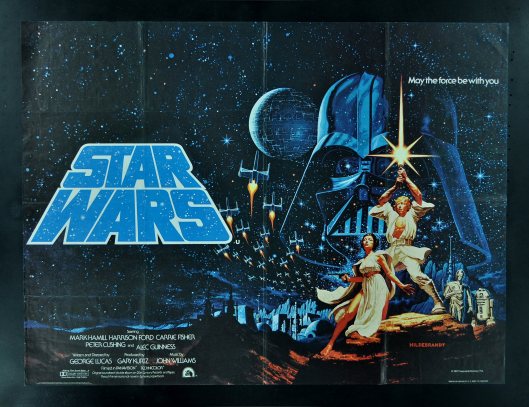
As The Last Jedi (Star Wars 8) approaches (and Star Wars Rebels, season 3 has appeared via the postman—season 4 premieres in mid-October—sadly the last season, as Disney has canceled season 5), we’ve been thinking about the original Star Wars of 1977.

image1poster.jpg

This poster—the second ever Star Wars poster, in fact (used by 20th Century Fox in the UK)– is a great link to JRRT—as if we don’t seem to make such links every time we write!  It’s by two of our favorite Tolkien illustrators, the Hildebrandt brothers.  Here’s a picture of the surviving twin, Greg, with that very poster (his brother, Tim, died in 2006).

image2gh.png

(Clink here for a LINK to an interesting little piece from 2010 about the Hildebrandts and George Lucas.)

We believe, however that there may be a deeper link.

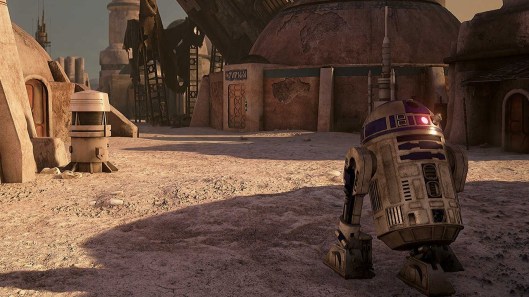
The original reviews (here’s a LINK to summaries of some of them) were a mixture, with some critics enthusiastic about what they saw and others (in our view the stodgier ones) calling the film things like “puerile”.  One element which was occasionally commented upon was the look of the picture—and not just the (for the time) dazzling special effects—but the fact that all the worlds depicted were lived-in, not shiny and new—well, almost.  Consider Mos Eisley, for example,

image3moseisley.jpg

which looks dusty and battered, suggesting the passage of time as well as the effects of the harsh desert climate of Tatooine.

Or the Jawa sandcrawler, old and clearly rusting–

image4jawasandcrawler.jpg

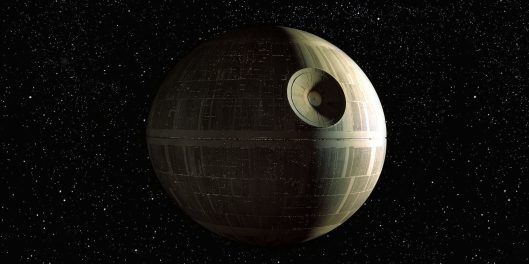
We said “almost” shiny and new because there’s one part of this galaxy with a different look:  the Death Star.

image5insidedeathstar.jpg

It looks like it’s dusted and waxed hourly, doesn’t it?  And the outside appears to be just as neat.

image6falconenteringdeathstar.jpg

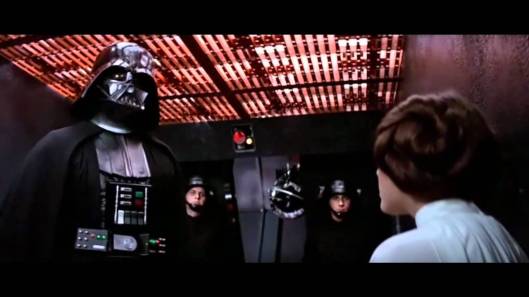
What does this say about the nature of those who inhabit it?  For us, thinking about the spotless Darth Vader,

image7vader.jpg

immediately suggests that the old proverb should be changed to “Cleanliness is next to Un-godliness”!  (Okay—we’re not the neatest and most organized people we know.)

It has been pointed out, more than once and beginning with the director himself, that George Lucas was influenced by Edgar Rice Burroughs’ John Carter series, beginning with A Princess of Mars (first published serially in The All-Story, February to July, 1912).

image8princess.jpg

(And here’s another connection—this cover and the illustrations for its first publication in book form, in 1917, were by Frank Schoonover, 1877-1972, who was the student of another of our favorite illustrators, Howard Pyle, whom we have occasionally mentioned in previous postings.  The convincing detail in this cover painting shows that, just like his teacher, Schoonover did his research—in his case, by very carefully going through the text and taking note of any technical information the author might have mentioned.)

In A Princess of Mars and subsequent books,  Mars has a civilization which is old and in decline (the inspiration for which, in turn, may have come from the work of the amateur astronomer, Percival Lowell, 1855-1916, whose telescopic observations of Mars had convinced him that the planet was—or had been—the home of a dying civilization which had constructed a vast network of canals to supply themselves with water from the polar ice caps—unfortunately, numerous NASA missions have found no evidence of the desperate Martians or their canals).   It would be easy, then, to say that Lucas was just following his source material, but we would suggest that there are two better explanations for showing wear.

The first comes from something Lucas is quoted as having said to his production designers:  “What is required for true credibility is a used future.” In Lucas’ view, then, the story’s believability comes in part from its look:  if things appeared not shiny, but worn, then viewers would be more likely to accept the narrative as somehow “true”, we presume because things in our world so often look used.

There is then, we think a further presumption:  if things look worn, then they have a past, which implies that the here-and-now of the story is a small part of bigger things and, certainly, just looking at the “crawl” at the beginning of the original Star Wars,

star-wars-crawl-163729.jpeg

which leads us to  our second explanation.  This one deals with something deeper, something which we would say might provide another possible link with JRRT and is, in fact, suggested by the titles of the first three Star Wars films made and even in their sequence:  A New Hope, The Empire Strikes Back, The Return of the Jedi.

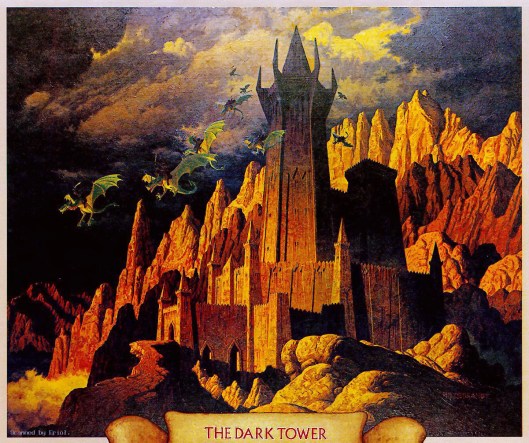
In two earlier postings, we talked about the condition of Middle-earth at the beginning of The Lord of the Rings, in which everything, from the trees to the houses of Minas Tirith, has grown old and weary—and even potentially hostile, in the case of the trees.  Part of this comes from the fact that Middle-earth is old:  one has only to turn to Appendix B, subtitled “The Tale of Years”, in The Lord of the Rings to see that, in the Second and Third Ages alone, nearly 6000 years have passed.   (In terms of our earth, that’s moving from the late Neolithic Era to modern times, 4000bc to 2017ad.)  This also emphasizes the age and depth of evil, as well as its power to corrupt in the present:  Sauron began to build Barad-dur c. SA1000—5000 years before the main narrative of The Lord of the Rings opens and, in the present, the world is crumbling.

Of course, JRRT lived surrounded by the past.  The oldest surviving building in his daily Oxford is the tower of St Michael at the North Gate, dating from 1040ad, nearly a thousand years before his time,

image9stmichaels.jpg

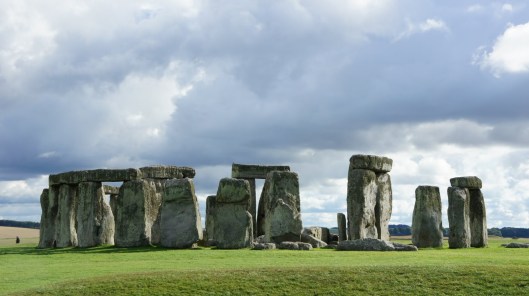
but Neolithic Stonehenge is only 58 miles (93km) southwest of the city and that’s 5000 years old, taking us back to the time when, in Middle-earth, Sauron had begun the Barad-dur.

image10stonehenge.JPG

image11baraddur.jpg

In contrast, Lucas was born in 1944 in Modesto, California, a town only founded in 1870, and grew up in a post-World War II world, where the key was “the future”.  It is a tribute, then, to his story-telling gift that he realized how useful in telling his story the past—even an imagined one—could be and it is interesting to see how he shares that understanding with JRRT and perhaps shares a goal, as well.

We’ve said that our second explanation may be seen in the titles of Lucas’ three films, so let’s consider them in comparison with the general shape of Tolkien’s work to see what that shared goal might be.   (In an interview, Lucas even described the three as being like a three-act play, suggesting the dramatic progress inherent in the movement from one to another.)

At the beginning of the first film, it is a dark time in the galaxy:  the repressive regime of the evil Emperor Palpatine dominates and resistance is confined to “The Rebel Alliance”, which has scraped together a fleet (and, presumably an army—we see elements in Rogue One, which takes place before this film) to resist, but seems to spend most of its time running and hiding.  The past is only implied, but the fact that there is an Empire and a resistance suggests much, just as the run-down condition of places like Tatooine might suggest both age and that the galaxy has become run-down because of that Empire.

image12palpatine.jpg

At the beginning of The Lord of the Rings, we find ourselves in a place with a long history, as we see from the many pages of the “Prologue”.  It has been a quiet place, but the world outside is becoming less so, with sinister forces growing, as Frodo hears from passing dwarves:

“They were troubled, and some spoke in whispers of the Enemy and of the Land of Mordor.” (The Fellowship of the Ring, Book One, Chapter 2, “The Shadow of the Past”)

In time, readers are brought to see that the dwarves are grossly understating the case:  the Enemy is real, Sauron, and that he has not only huge armies, but the Nazgul and a would-be ally in his enemies’ camp, Saruman.  The same may be said for the Empire:  not only do they have huge fleets and armies, but they have the “ultimate weapon”, the Death Star.

image13deathstar.jpeg

We will learn, as well, that, for all his great age and might, Sauron has an Achilles’ heel:  to give the One Ring its power, he has had to pour most of his power into it.  Thus, if he regains the ring, he will be much more powerful than he is at present, but, should the ring be destroyed, Sauron will be virtually destroyed with it.  As this struggle has been going on in Middle-earth for thousands of years, the idea that Sauron is vulnerable could easily be termed “a new hope”, just as Luke, the son of the Enforcer of the Galaxy, Darth Vader/Anakin Skywalker, will provide a new hope for the Rebels (especially when we are told about “the Chosen One”—for whom he can be taken).

For a time, things do not go well for those opposed to Sauron:  he combines psychological/meteorological attacks with the march of huge armies, and even pirate raids on Gondor’s south coast. Gondor is overrun and Minas Tirith is assaulted.  This is clearly The Empire Strikes Back, just as the pursuit of the Rebel fleet to Hoth and the destruction of Echo Base disperses the Rebels and casts a shadow over the hope felt after the destruction of the Death Star.

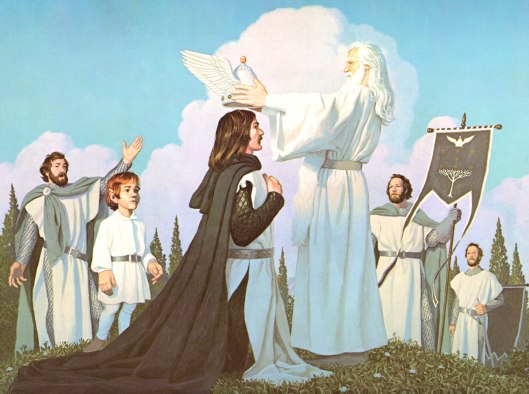
This is not the end, however, for the Rebels or for the good people of Middle-earth.  Not only is the Ring destroyed and Sauron disembodied, but this paves the way for The Return of the King, with all of the reflowering-to-come, as we have suggested in a previous posting.

image14crowning.jpg

And there is a strong echo in the title of Lucas’ third film, The Return of the Jedi, in which the Emperor is destroyed and balance brought back to the Force—and the galaxy.  (Of course, with Star Wars 7, we see that the happy ending is only temporary, but we have hopes that, by the conclusion of 9, there will come a final rebalancing and peace at last.)

image15return.jpg

Lucas’ acknowledges many sources but, so far, we have yet to locate a quotation from an interview or anywhere else in which he says, “Yes, I’ve read Tolkien closely and, indeed, there is a strong affinity between my work and his”, but we believe that we can suggest, at least, that he, like JRRT, is following the same path in creating a world in turmoil, a visibly-aging world.  Into this world, he places his protagonist who provides a new hope, faces the might of a not-easily-defeated enemy, but, by his bravery and determination, finally brings about the destruction of that enemy (interesting in both cases he does not do so himself—Gollum inadvertently destroys the ring, just as Anakin, not his son, kills the Emperor) and the promise of renewal in the return of the Jedi—and the King.

And what do you think, dear readers?

Thanks, as ever, for reading!

MTCIDC

CD

Which Witch

31 Monday Oct 2016

Posted by Ollamh in Artists and Illustrators, Fairy Tales and Myths, Films and Music, Literary History, Villains

≈ Leave a comment

Tags

Goya, Halloween, Holinshed's Chronicles, Istari, L. Frank Baum, Macbeth, Mother Goose, The Wizard of Oz, Theodore Chasseriau, W. W. Denslow, Welsh traditional clothing, Wicked Witch, William Shakespeare, Witch-King of Angmar, witches, Witches' Sabbath, wizards

Welcome, dear readers.

This is our annual Guy Fawkes’ Day/Halloween/Samain posting. Last year, we looked at GFD. This year, it’s Halloween—and a little puzzle from JRRT (how not?).

Magic and mystery—centered on witches—is a central theme for Halloween celebrations.   Just look at the variety of commercially-made costumes available.

deluxe-child-witch-costume.jpgwitch-costumes-blue-white-storybook-witch-costume-013639.jpg

1867366.jpg

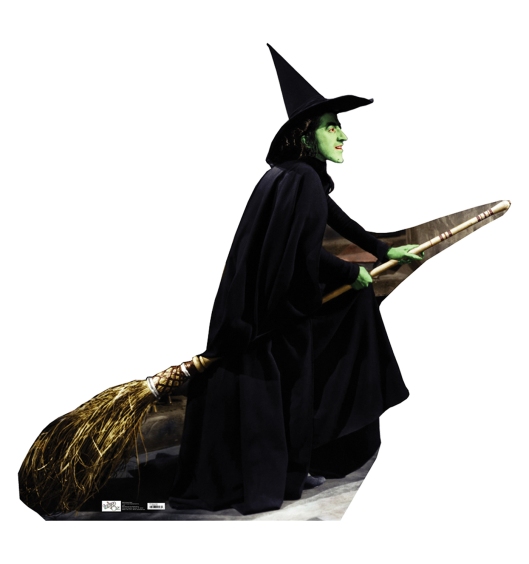
For many of us, our introduction to witches was probably in the person of the Wicked Witch of the West in the 1939 The Wizard of Oz.

The_Wicked_Witch_of_the_West.jpg

This is not quite what the witch in L. Frank Baum’s original book, The Wonderful Wizard of Oz (1900)

(illustrated by W.W. Denslow) looked like,

wicked_witch_of_the_west

but you can see, in her hat and dress, things which were already symbolic of witchery in popular culture: black cats, crescent moons, toads, some of it echoes from the words of the three Weird Sisters in Shakepeare’s Macbeth (1606), who meet the protagonist on the road after his victory over the enemies of Duncan the king of Scotland. (Theodore Chasseriau)

MacbethAndBanquo-Witches.jpg

A dark Cave. In the middle, a Caldron boiling. Thunder.

Enter the three Witches.

1 WITCH.  Thrice the brinded cat hath mew’d.
2 WITCH.  Thrice and once, the hedge-pig whin’d.
3 WITCH.  Harpier cries:—’tis time! ’tis time!
1 WITCH.  Round about the caldron go;
In the poison’d entrails throw.—
Toad, that under cold stone,
Days and nights has thirty-one;
Swelter’d venom sleeping got,
Boil thou first i’ the charmed pot!
ALL.  Double, double toil and trouble;
Fire burn, and caldron bubble.
2 WITCH.  Fillet of a fenny snake,
In the caldron boil and bake;
Eye of newt, and toe of frog,
Wool of bat, and tongue of dog,
Adder’s fork, and blind-worm’s sting,
Lizard’s leg, and owlet’s wing,—
For a charm of powerful trouble,
Like a hell-broth boil and bubble.
ALL.  Double, double toil and trouble;
Fire burn, and caldron bubble.

Somehow, somewhere, witches acquired those distinctive clothes and hat—especially the hat. The story of Macbeth and the witches comes from Holinshed’s Chronicles (1577/1587) and here is that scene illustrated from that first edition of 1577.

holinshed1575.jpg

As you can see, to the modern eye, there’s nothing “witchy” about these ladies. So where do those clothes and hat come from? We have no firm answer for this, just a guess—and from another literary tradition, Mother Goose.

RealMotherGoose1916.jpg

The first published version of stories (and, in time, rhymes) under that name dates from 1695. Here’s the frontispiece from the first English translation (1729).

Houghton_FC6.P4262.Eg729s_-_Perrault,_frontispiece.jpg

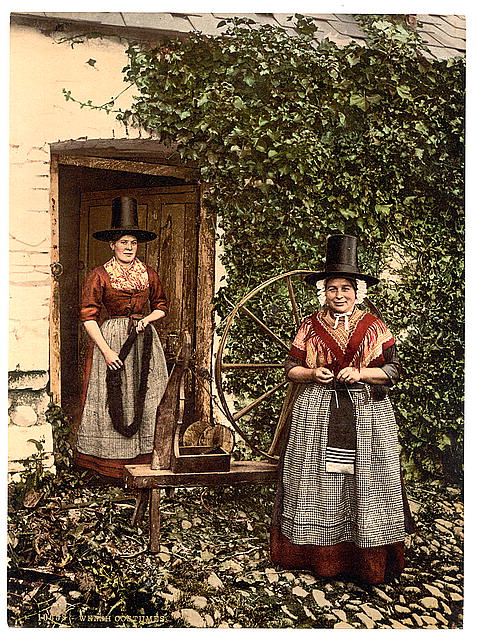
Mother Goose was supposed to be a country woman and, by the latter part of the 19th century, was dressed as one—but we think with a particular look, that of Welsh women in distinctive traditional clothing.

mother-goose.jpg

Welsh_spinnersc1900.jpeg

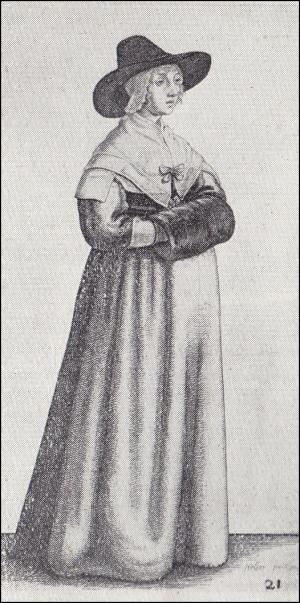
The style of hat is much older—here we have, in succession, three earlier versions from the 17th century—1610, 1640, 1676.

rubens_isabella_brant_c1610

woman21x300hollar1640.jpg

Mrs_Salesbury_-_wright.jpg

Country people tend to be conservative, so something worn in much of the UK in the 17th century appears to have existed, at least in modified form, in the depths of Wales long after then.

copy1-554-78-welsh-national-costume-1911-660x440.jpg

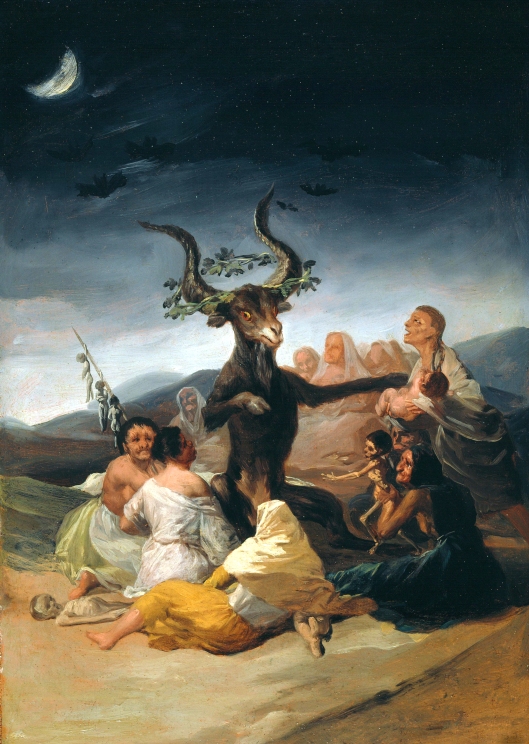
We wonder whether there hasn’t been a kind of cross-over effect: country women to Mother Goose to witches—all conservative dressers. There is also a long tradition in Wales of “wise women”—often mistaken in England for dealers-with-the-devil—those appear in this rather creepy painting by Goya of a witches’ Sabbath (1797-1798). (We note that there are no pointy hats here.) Perhaps the Welsh wise woman was consulted about wardrobe by Mother Goose?

GOYA_-_El_aquelarre_(Museo_Lázaro_Galdiano,_Madrid,_1797-98).jpg

Witches (as the “Harry Potter” books point out) aren’t and weren’t always just women.

hpetal.jpg

Men, too, could take part, sometimes called witches, sometimes warlocks or wizards. When we think wizard, of course, we immediately think of the 5 Istari—

310993_121176884650130_120725101361975_85832_1441609629_n.jpg

When we think of witch, however, in the context of LOTR, we can see that:

  1. In this respect, this is a different kind of culture—for instance, the only equivalent of a “wise woman” is Ioreth, in the “Houses of Healing”
  2. But there is a witch-king, that of Angmar, who is also the head of the Nazgul

eowynvswitchking.jpg

There is a puzzle here, however. In western tradition, witches are the servants of Satan, who spend their time, it seems, troubling humans at the daily level—making cows sick, tormenting babies, holding sabbbaths, casting spells.

witch_john_william_waterhouse_magic_circle_painting_casting_spells.jpg

In that tradition, the only ruler is Satan himself, as depicted in this second Goya painting of a sabbath (and we note here that most of the witches appear to be something between human and other—a great—but horrible—touch—and who is that girl sitting off to the right? This comes from a series of paintings done by Goya in the last years of his life and there is a certain mystery about why he painted them—they’re murals, in fact—and what they might mean.)

francisco_de_goya_y_lucientes_-_witches_sabbath_the_great_he-goat


As there are no other witches in Middle-earth, then, where are the witches for the witch-king to be monarch of?

And that, perhaps, is another mystery for Halloween…

Oh—and Happy Halloween, by the way!


Thanks, as ever, for reading.

MTCIDC

CD

ps

While gathering images for this posting, we happened upon this photograph. Is this a picture from Professor McGonagall’s 50th Hogwarts  reunion?

tumblr_nwrfedgPaR1sdzmuoo1_500.jpg

Infrastructure and Architecture in Rivendell

28 Wednesday Sep 2016

Posted by Ollamh in Artists and Illustrators, Films and Music, Imaginary History, J.R.R. Tolkien, Literary History, Narrative Methods

≈ 2 Comments

Tags

Alan Lee, architecture, bridge, Bruinen, footbridge, Illustration, Lauterbrunnental, Middle-earth, Ottoman, packhorse bridge, Peter Jackson, Ring of Silvianus, Rivendell, Roman Britain, Roman villa, Sir Mortimer Wheeler, Stari Most, Ted Nasmith, The Lord of the Rings, Tolkien, Wasdale

Welcome, dear readers, as ever. In our last posting, we looked at the Greenway from a comparative perspective. In this one, we’ve got an idea or two from having looked as closely as we could at one of JRRT’s illustrations of Rivendell, comparing it with various modern conceptions, including that in the films of P. Jackson.

Rivendell, Sindarin, Imladris, “deep valley in a cleft”, is located on the eastern edge of Eriador, at the foot of the Misty Mountains. Set in that deep valley, which was formed by the action of the river Bruinen (“Loudwater”), it was besieged on several occasions throughout its lifetime, but had survived to be the last refuge of the Elves on that side of the mountains.

mapofmewithrivendellpointedout

It is understood that Tolkien based it upon a Swiss valley, Lauterbrunnental, which he had visited on a hiking trip in 1911.

1_lauterbrunnen_valley_2012

(And maybe there’s an echo in the name—which is sometimes translated “Louder Springs”—in Bruinen, “Loudwater”?)

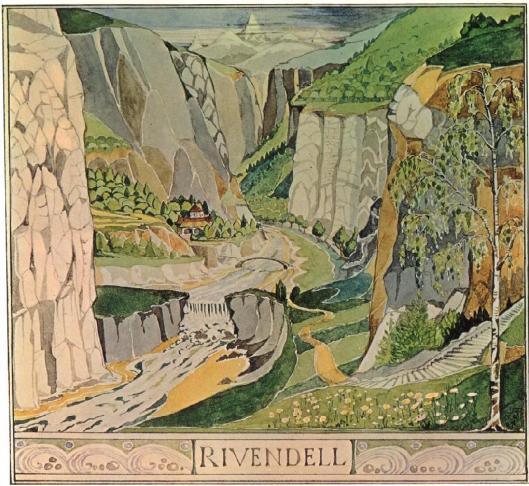
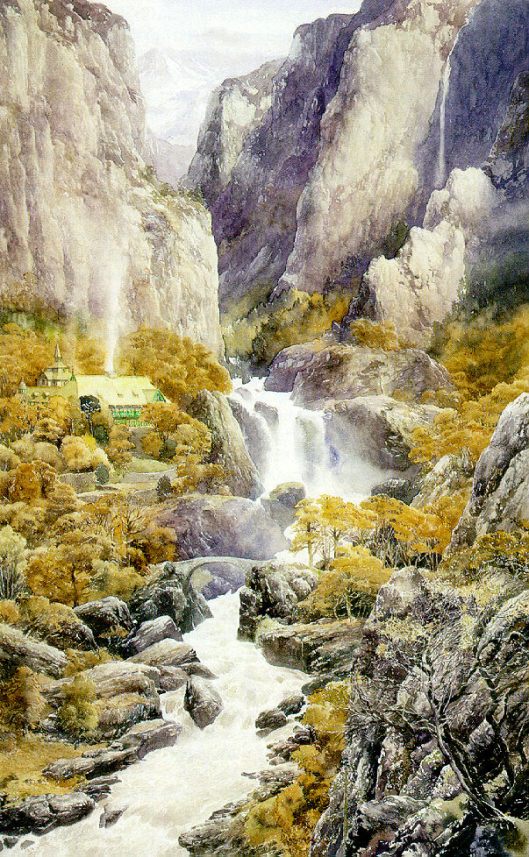
Here is the Tolkien illustration

rivjrrt2

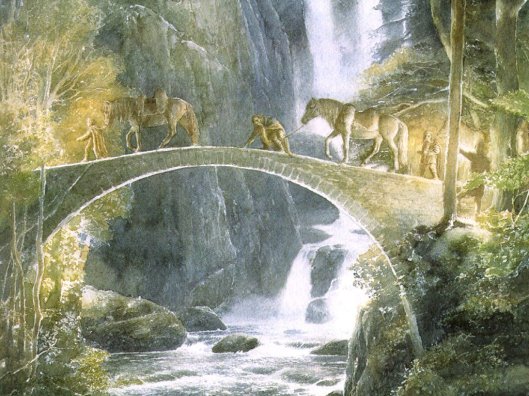
We want to look at two features here. First, in the middle ground, there is that bridge. Here is Alan Lee’s very beautiful version—although you will note that it’s been moved and shortened.The-Hobbit-and-dwarfts-on-the-bridge-alan-lee-18907573-1024-768

As we examined this bridge as closely as we could, we wondered, where had the idea come from for its shape? And two possibilities came to mind. First, because we’re very much World History people, we thought of those beautiful bridges from the Ottoman world. There are a number of surviving bridges which are more elaborate, but there are also single-arch bridges like these, which bear a strong resemblance to the bridge in Tolkien’s illustration.

otoman_era_bridge_gumushane_province_turkey_photo (1)

hemshin-bridge

1024px-ArchBridgeOverFirtinaDeresi@Rize-Turkey-1

4051359e3eb1f3e0a066f059868152c1

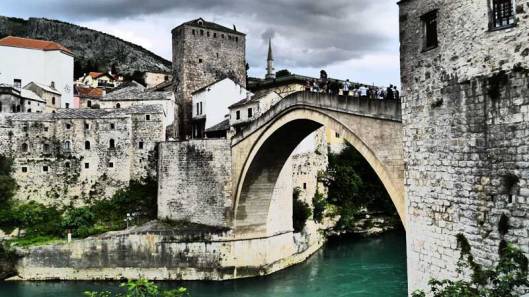
To us, one of the most beautiful is the Stari Most (Bosnian, “Old Bridge”), in Mostar (Bosnian, “Bridge Keeper”), which was built in the 16th century, destroyed in 1993, and rebuilt, and reopened in 2004.

Bosna-Mostar-Stari-Most-800

003

mostar_bg_1

Moving a little closer to home (England, that is, in the case of JRRT), another possibility for a model might be something mentioned in our last posting, when we talked about medieval English roads as mostly packhorse trails. Here’s a perfect example, from Wasdale in the Lake District of northern England, a packhorse bridge.

(n) The pack horse bridge behind the Wasdale Head Inn

Moving upstream from the bridge in Tolkien’s picture, we see a house depicted.

rivjrrt2

It’s hard to make it out, even under magnification, but, when we compare it with:

  1. the buildings in the Jackson films

12887381._SX540_.png

  1. Alan Lee’s Rivendell

leerivendell

  1. or even Ted Nasmith’s,

rivendellTN-Fair_Valley_of_Rivendell

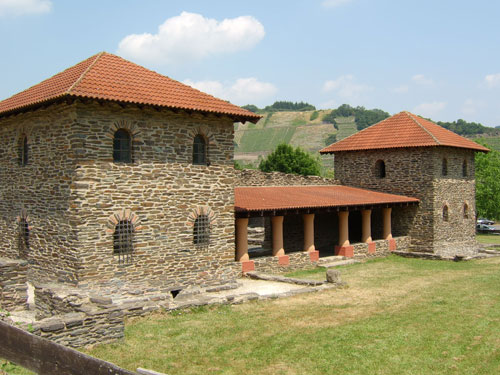
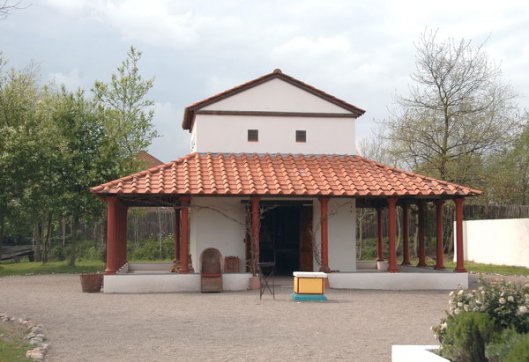
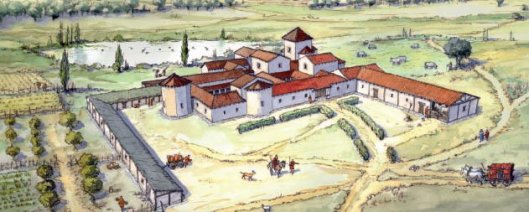
we personally don’t think anyone quite captures what Tolkien drew. To us, there appears to be, as we said before, something closer to home–in the reconstructions of Roman villas and their outbuildings. And, as we said in our last, so much of Roman Britain was still available, either above or below ground, that we can imagine JRRT  being aware of it.  (In fact, in 1929, the archaeologist, Sir Mortimer Wheeler actually consulted him on an ancient curse and the inscription on a Roman-British ring.  See the Ring of Silvianus wiki page).  Possible examples, some from reconstructed sites:

villa_mehring_01villaarcheon_temple_cuijk2delaguiaGayton-Villa-Colour-web

Blow up the Tolkien illustration for yourself, dear readers, and what do you think?

Thanks, as always, for reading.

MTCIDC

CD


Song in Darkness

14 Wednesday Sep 2016

Posted by Ollamh in Artists and Illustrators, Films and Music, Imaginary History, J.R.R. Tolkien, Narrative Methods

≈ Leave a comment

Tags

Ainur, Arda, Frodo, Iluvatar, In western lands beneath the Sun, Middle-earth, Morgoth, Music, Sam Gamgee, Song, The Lord of the Rings, The Silmarillion, The Tower of Cirith Ungol, Tolkien

Dear Readers,

Welcome, as always.

For this posting, we consulted the Sortes Tolkienses, and landed upon a particular passage which had us thinking about song in Middle-earth:

“It was quiet, horribly quiet. The torch, that was already burning low when he arrived, sputtered and went out; and he felt the darkness cover him like a tide. And then softly, to his own surprise, there at the vain end of his long journey and his grief, moved by what thought in his heart he could not tell, Sam began to sing. “

At this moment, Frodo has been taken by the enemy after the two Hobbits had been led into and escaped Shelob’s lair, and Sam, though only a simple gardener from the Shire, has resolved to carry Frodo’s burden and rescue him from the tower.

cirithungol

Along with carrying the Ring, which would have otherwise been taken from Frodo in the tower, Sam has also brought with him Sting, Frodo’s sword, and Galadriel’s phial, which she gave to Frodo as a gift upon their leave-taking from Lothlorien.

shelob Sam

The phial is used when the two Hobbits are pursued by Shelob, as a means both of light and of defense. Faced with a darkness he has never encountered before, however, but set on finding and rescuing Frodo, even if he’s not sure how, Sam has the option of pulling out the phial straight away when the lights in the tower of Cirith Ungol go out.

Instead, Sam sings—although he’s not quite sure why—and, in the shadow of Mordor, recalls home in the Shire:

“His voice sounded thin and quavering in the cold dark tower: the voice of a forlorn and weary hobbit that no listening orc could mistake for the clear song of an Elven-lord.  He murmured old tunes out of the Shire, and snatches of Mr. Bilbo’s rhymes that came into his mind like fleeting glimpses of the country of his home. And then suddenly new strength rose in him, and his voice rang out, while words of his own came unbidden to fit the simple tune.

            In western lands beneath the Sun

                        the flowers may rise in Spring,

            the trees may bud, the waters run,

                        the merry finches sing.

            Or there maybe ‘tis a cloudless night

                        and swaying beeches bear

            the Elven-stars as jewels white

                        amid their branching hair.


            Though here at journey’s end I lie

                        in darkness buried deep,

            beyond all towers strong and high,

                        beyond all mountains steep,

            above all shadows rides the Sun

                        and stars forever dwell:

            I will not say the Day is done,

                        nor bid the Stars farewell.”

(The talented Tolkien artist, Joe Gilronan, has illustrated what Sam would have imagined singing this song–  a clear contrast to the darkness surrounding him:)

b4d306be0fef7b0b9fdbc7daf47c4d35samwise-the-gardner-joe-gilronan

Why is this, which seems like a last, desperate gesture, successful?  After all, it not only revives Sam’s spirits, but it reaches Frodo who, badly injured as he has been, responds with the same song, enabling Sam to find him.

In Middle-earth, and in Arda more generally, song is both enjoyed and revered on a deeper level. The music of the creator Iluvatar is, as recounted in The Silmarillion, what brought the world into being, and it is such a strong force that Morgoth, the first dark lord, sought to challenge Iluvatar’s song and power with his own. Even here, however, music as a dark force failed.

“Then Iluvatar spoke, and he said: ‘Mighty are the Ainur, and mightiest among them is Melkor; but that he may know, and all the Ainur, that I am Iluvatar, those things that ye have sung, I will show them forth, that ye may see what ye have done. And thou, Melkor, shall see that no theme may be played that hath not its uttermost source in me, nor can any alter the music in my despite.’ ” (The Silmarillion)

180px-Ted_Nasmith_-_Melkor_Weaves_Opposing_Music

Thus in The Lord of the Rings, we never hear an orc song, nor do we see singing, marching uruk-hai. They are beings created by Sauron, who has not the spiritual authority of Iluvatar, and, as Iluvatar is the ultimate creator of all life, so is he the creator of all music in Arda.  In Middle-earth, besides the odd scene in The Hobbit in which the goblins sing in Goblin-town, we see only Elves singing (such as the Hymn to Elbereth), Hobbits (both snatches of Bilbo’s literary songs and drinking-songs), and Dwarves (it was their music which persuaded Bilbo to leave the Shire and join their journey).

Sam’s song, then, holds power in its own right—although it’s simply an old tune from home, its uttermost source is in Iluvatar and the first music, and it becomes clear why even a hobbit’s hum in the darkest of places can bring him comfort—it cannot be contested by darkness.

Thank you, as always, for  reading.

MTCIDC,

CD

Last Mohican, First Novelist

07 Wednesday Sep 2016

Posted by Ollamh in Artists and Illustrators, Films and Music, Heroes, Literary History, Military History, Narrative Methods

≈ Leave a comment

Tags

Baron Dieskau, British, Carillon, Daguerre, Deerfield, Fenimore Cooper's Literary Offenses, Fort Duquesne, Fort Edward, Fort Niagara, Fort St. Frederic, Fort William Henry, French, French and Indian War, General Webb, James Fenimore Cooper, Lake Champlain, Lake George, Lake Ontario, Lt. Col. Munro, Mark Twain, Marquis de Montcalm, Matthew Brady, N.C. Wyeth, Native Americans, Oswego, St. Frederic, The Last of the Mohicans, Ticonderoga

Welcome, dear readers, as always.

This is our 104th posting, making exactly 2 years of maintaining our blog, Doubtfulsea.com. When we began it, we had visited lots of other blogs, but we had no clear idea of what we wanted for ourselves. Our name came from our first novel, Across the Doubtful Sea, available from Amazon and Kindle, but we planned, from the beginning, to cover much more than the subject matter of our novel (among other things, French and English exploration of the Pacific in the 18th century, as well as Polynesian settlement). In consequence, during our two years, we have had postings on a variety of subjects, mostly about adventure/fantasy, often with an historical element, often with a focus upon the work of one of our favorite fantasy authors, JRR Tolkien.

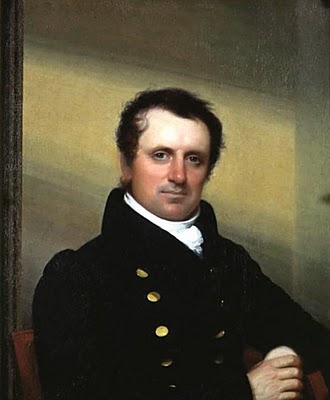
Now, in this last of our second year, we want to look at a person often viewed as the first important American novelist of the early 19th century, James Fenimore Cooper (1789-1851), and his most famous book, The Last of the Mohicans (1826).James-Fenimore-Cooper

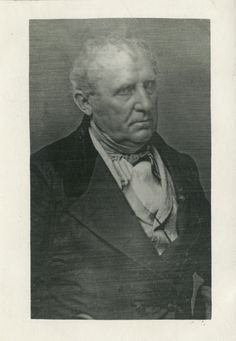
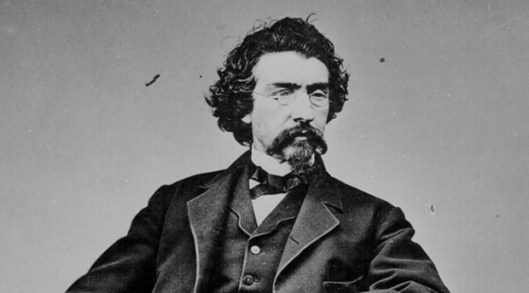
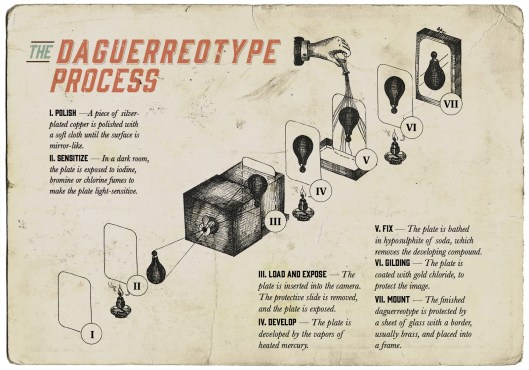
(A footnote: Cooper lived long enough that, the year before his death, he was the subject of an early photograph, using the Daguerre process, by Matthew Brady, 1822-1896, who, in a decade, would become the most famous photographer in the US because of his work documenting the American Civil War, 1861-1865.)

daguerreotypejfc

mathewbrady

DaguerreProcess4

Cooper had a long and very successful career as a novelist, beginning with a social novel, Precaution (1820), but his greatest fame came from his long series based upon US historical subjects and perhaps the most famous of all, that set in the world of the French and Indian War (1754-1763), and the book we want to focus upon,

French_and_indian_war_map_svg

The Last of the Mohicans.

lastofmofirsted

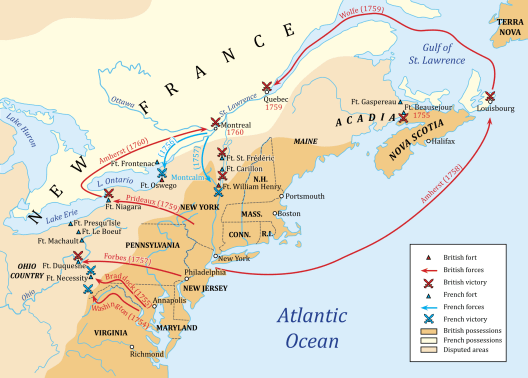
The subtitle, A Narrative of 1757, immediately suggests a specific event of the war, the siege and fall of the British Fort William Henry in August, 1757.

The fort had been built at the head of Lake George as a counterbalance to two French forts, Ticonderoga (called by the French, “Carillon”) and St. Frederic, on Lake Champlain, the lake to the north.

French_and_indian_war_map_svg

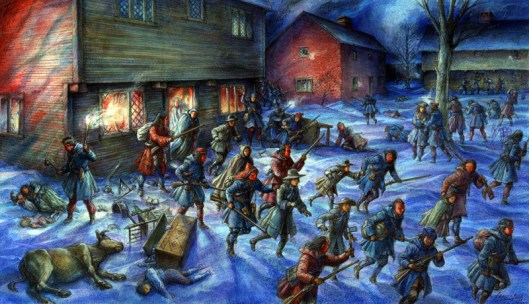
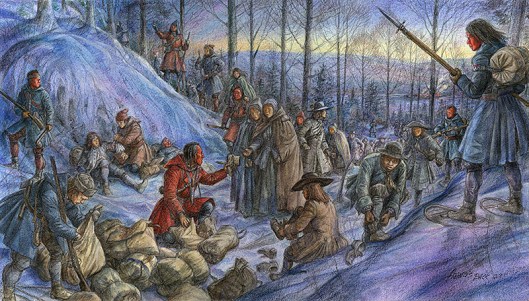
All of these forts—and more—were part of the competition between the British and French to control the northeastern part of North America. This struggle had begun in the later 17th century and had long been a proxy war in which colonial settlers and Native Americans had struggled across many miles of wilderness, raiding each other throughout the years. Here is one of the most famous raids, that of Deerfield in 1704.

deerfield1deerfield2deerfield3

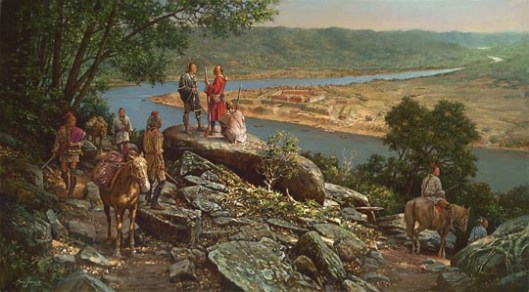
In the early 1750s, the French had increased the potential tension by building a new series of forts in what is now western Pennsylvania and eastern Ohio, soon to be countered by British forts.

French_British_Forts_1753_1758

In 1755, as the war heated up, the English planned a three-pronged attack against Ft. Duquesne, Ft. Niagara, and Ft. St. Frederic (called “Crown Point” by the English).

French_and_indian_war_map_svg

duquesne

ftniagaraftstfrederic

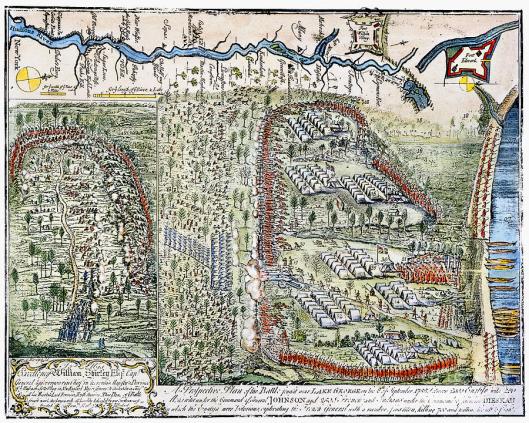
The advance against Ft. Duquesne was defeated, that against Niagara never took off, and that on St. Frederic was blocked by a French attack on the English (actually New England colonial) army at the head of Lake George.

1-battle-of-lake-george-1755-granger

This then became the site of Ft. William Henry.

Fort-William-Henry-Museum

Because the European population of New France was so small in contrast to that of the English colonies—about 70,000 versus more than a million—and because the royal government in Paris had little money to spend (or chose to spend) on the colony, the first two French military commanders, the Baron Dieskau (1701-1767) and the Marquis de Montcalm (1712-1759)

montcalm

chose an aggressive strategy, aiming to keep the British as far from the center of New France as possible. Although his men were eventually driven off and he was wounded and captured, Dieskau did halt the expedition against Ft. St. Frederic. The next year, 1756, Montcalm destroyed the English forts at Oswego, on the south shore of Lake Ontario, which could have served as staging areas for attacks east and west.

Lake_Ontario_map

Then, in 1757, he mounted the attack on Ft. William Henry which forms the background story for Cooper’s novel.

To do so, he stripped central New France of its regular troops and militia

Historex Card 862 French Infantry 1750 - 1760

and augmented them with Native Americans, for whom he felt no sympathy.

montcalmnatams

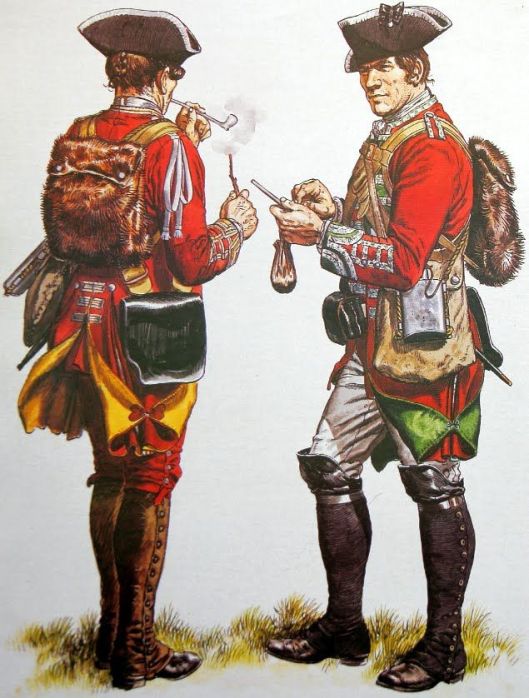
Against such a force, the English commander, Lt. Col. Munro, had a much smaller number of British regulars

brituniformsfiw

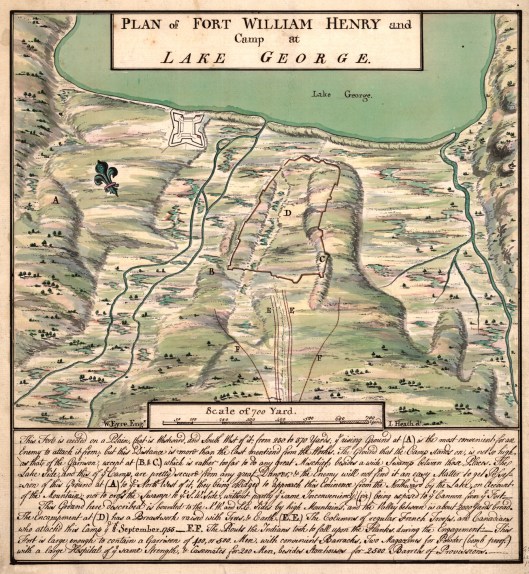
and colonial troops, based in the fort itself and in a nearby camp.

Plan_of_Fort_William_Henry_on_Lake_George

In the 18th century, besieging a town or a fort was a very formal endeavor. Forts and towns were constructed to resist attack, often having multiple walls, ditches, and outer forts, the walls being covered in earth to resist the destructive power of an enemy’s artillery.

fortress-cross-section

Before an attack, the attacker was required to send a messenger in, demanding surrender. In some cases, seeing overwhelming forces and having no promise of relief, a garrison surrendered.

surrender of detroit

To attack meant beginning with a series of trenches just outside the artillery range of the defenders, then, through zigzagging,06 Vauban's Siege Technique.pngto approach closer and closer until:

  1. the attacker’s artillery had knocked a big enough hole in the enemy’s walls that they were rapidly becoming defenseless

siege_image6

  1. there was the immediate danger of an assault

redoubt10

In the case of Ft. William Henry, there was only a dry ditch, then exposed timber walls.

Fort-William-Henry-Museum

The French summoned Munro to surrender, he refused, and the French began the siege.

frenchsiegeline

When the French guns had badly damaged the fort and there was no chance of help from General Webb, at Ft. Edward, to the south, Munro surrendered.

surrender of Ft. William Henry

Trouble then began when Montcalm’s Native Americans felt cheated of the plunder which they had expected and, when the paroled column of soldiers began to move southward, it was attacked by them. Montcalm and some of his officers intervened, but they were unable to do more than slow the plundering and killing before some 200 fell. (There has been a great deal of argument as to numbers—it appears, for example, that others had been carried away, either to be ransomed later, adopted into tribes, or ritually murdered, as was the custom among some Native American groups. For the best modern account, see Ian Steele, Betrayals, OUP, 1990.)

01french_lg

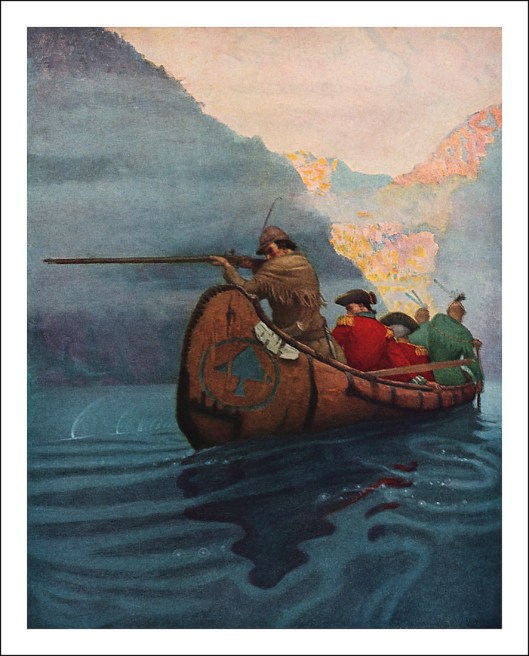
Cooper’s novel, an adventure/romance, uses the fort and siege as its center. Main characters move towards the fort, are in it at the time of the surrender, and are involved in the disaster after it. As might seem inevitable by now, our favorite edition is that illustrated by N. C. Wyeth in 1919.

51504

And here is a selection of the illustrations.

0_8f6d0_9b893fc5_orig0_8f6d2_797c6459_orig0_8f6d4_4ef48676_orig

the-last-of-the-mohicans-9781442481305.in02the-last-of-the-mohicans-9781442481305.in03titlepage

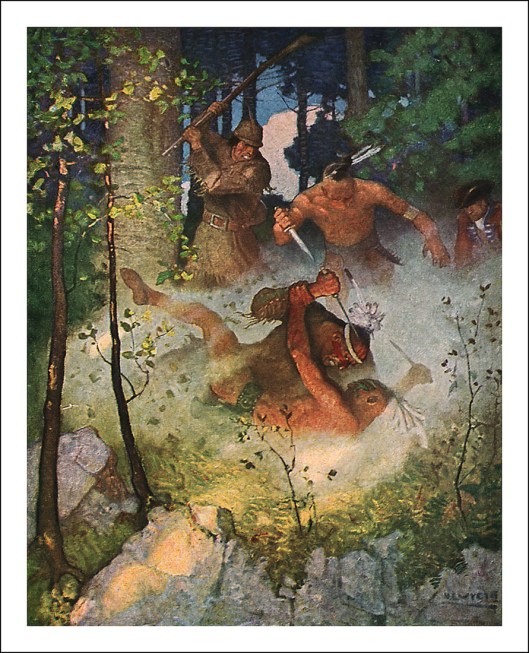
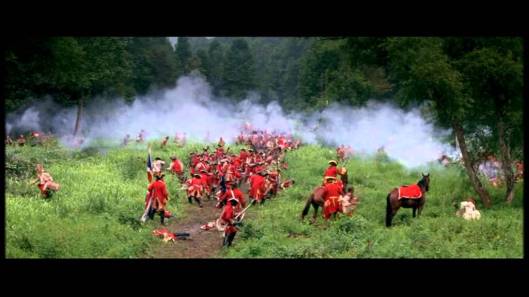
There have been numerous films made of the book, the earliest (at least US one) being a silent, dating from 1912. For us, the most colorful was the one which appeared in 1992, with Daniel Day Lewis as “Nathaniel Poe” (a slight change from the books’ Natty Bumpo). This version made many changes to the original story, including a love interest between Poe and one of Munro’s daughters, Cora, but, for us, it also had four rather spectacular scenes: the ambush of a company of redcoats in the forest by Native Americans,

ambushinforest

the French siege of Ft. William Henry,

frenchsiegeline

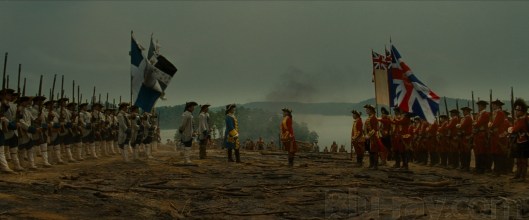
the British surrender,

surrender of Ft. William Henry

and the final “massacre”.

ambush2

And so we begin our third year of blogging with our next posting. We have, as always, lots of ideas for those postings, which we hope you will enjoy.

Thanks, as always, for reading!

MTCIDC

CD

PS

In 1895, Mark Twain published a comic critique of Cooper’s writing ticks. Entitled, “Fenimore Cooper’s Literary Offenses”, it can be read at http://twain.lib.virginia.edu/projects/rissetto/offense.html.

Dr. Smeagol and Mr. Gollum?

31 Wednesday Aug 2016

Posted by Ollamh in Films and Music, J.R.R. Tolkien, Literary History, Narrative Methods, Uncategorized

≈ Leave a comment

Tags

Deagol, Gollum, John Barrymore, Mark Twain, Robert Louis Stevenson, Sir Stanley Unwin, Smeagol, Stinker and Slinker, Strange Case of Doctor Jekyll and Mr. Hyde, The Eye of Sauron, The Facts Concerning the Recent Carnival of Crime in Connecticut, The Lord of the Rings, The Mirror of Galadriel, Tolkien

Dear readers, welcome, as ever.

In this posting, we are following a hint given us by JRRT. In a letter to Sir Stanley Unwin, 21 Sept, 1947, he says, “Hyde (or Jekyll) has had to have his way, and I have been obliged to devote myself mainly to philology…” (Letters, 124)

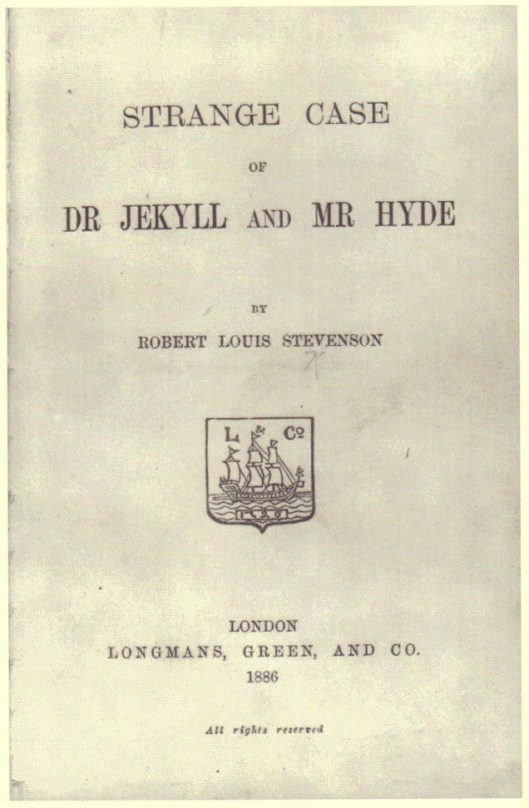
“Hyde (or Jekyll)” refers to the main character in Robert Louis Stevenson’s 1886 novella, Strange Case of Doctor Jekyll and Mr. Hyde.

rlsJekyll_and_Hyde_Title

This is often turned into The Strange Case… by editors, but, in fact, as can be seen from the title of the first edition, given above, there is no definite article. It seems clear to us that it has been omitted because Stevenson is imitating the shorthand methods of newspapers: the title is meant to sound like a headline, the sort of thing Sherlock Holmes’ observant eye would catch and he would then read to Watson.

The original story, if you’re not familiar with it, is about a doctor who leads two lives, one of service, the other of sensuality, and who wishes that he could separate them so that he could enjoy each without the influence of the other. He invents a drug, which, when consumed, turns the socially-responsible Dr. Jekyll (said “JEE-kull”, but often mispronounced)

John_Barrymore_as_Dr_Jekyll

into the loathsome Mr. Hyde.

hydejbarrymoor

The doctor runs into horrible difficulty when it gradually becomes clear that the Id-like Mr. Hyde is actually the dominant personality and the good Dr. Jekyll begins to turn into the fiendish Mr. Hyde even without the drug.

In JRRT’s case, it’s hardly sensuality—instead, it’s his academic life versus his creative one and the fact that he offers both as a possibility suggests that the difference between the two is hardly the glaring one we see in the Stevenson story.

The idea of the split personality in one person, however, leads us—well, if you’re a Tolkien fan, you know already, don’t you?

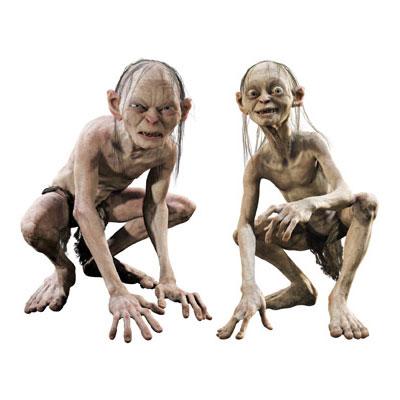
Gollum_Render

“Slinker and Stinker” Sam calls him, but it’s clear that, somewhere inside him, there are two much more distinctive personalities, just like Jekyll and Hyde.

269_gollum

The Dr. Jekyll is what must be almost a ghost of Smeagol, from his pre-Ring (and pre-murder of Deagol) days—ghost because near-constant exposure to the Ring has left him with only:

“…a little corner of his mind that was still his own…” (The Fellowship of the Ring, Book 1, Chapter 2, “The Shadow of the Past”)

But what is the Mr. Hyde?

Instead of a potion to break them apart, it has been the Ring which has caused the split and, in the process, as in the case of Dr. Jekyll, it has been the dark personality which has come to dominate. Unlike Mr. Hyde, however, there seems to be no pleasure to be had from being it:

“But the thing was eating up his mind, of course; and the torment had become almost unendurable.” (The Fellowship of the Ring, Book 1, Chapter 2, “The Shadow of the Past”)

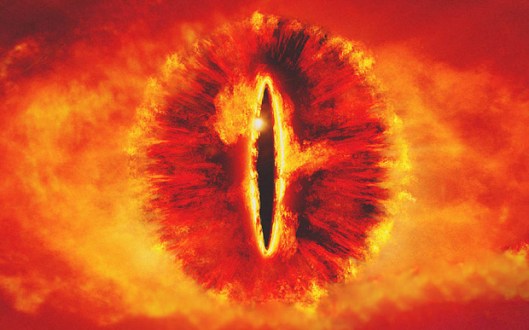
JRRT isn’t any clearer about what was “eating up his mind”, but we imagine that, because Sauron has put so much of himself into the ring, just as Dr. Jekyll/Smeagol has that little corner of his own mind, Mr. Hyde/Gollum has a little corner of Sauron’s, which is a really terrible thought. One has only to remember Frodo’s reaction to Sauron when he looks into Galadriel’s mirror to understand:

“In the black abyss there appeared a single Eye that slowly grew, until it filled nearly all the Mirror. So terrible was it that Frodo stood rooted, unable to cry out or to withdraw his gaze. The Eye was rimmed with fire, but was itself glazed, yellow as a cat’s, watchful and intent, and the black slit of its pupil opened on a pit, a window into nothing.” (The Fellowship of the Ring, Book 2, Chapter 7, “The Mirror of Galadriel”)

10b8f0b7ef05881c193c76dc38bac020the-eye-of-sauron_3133429b

Viewed this way, Mr. Hyde/Gollum is nothing more than a little Sauron.

There is another, more physical connection between Smeagol/Gollum and Jekyll/Hyde. Look at the narrator’s description of Hyde:

“Mr. Hyde was pale and dwarfish; he gave the impression of deformity without any namable malformation; he had a displeasing smile; he had borne himself to the lawyer with a sort of murderous mixture of timidity and boldness, and he spoke with a husky, whispering, and somewhat broken voice…”

(Strange Case of Dr. Jekyll and Mr. Hyde, “The Search for Mr. Hyde”)

Compare that with:

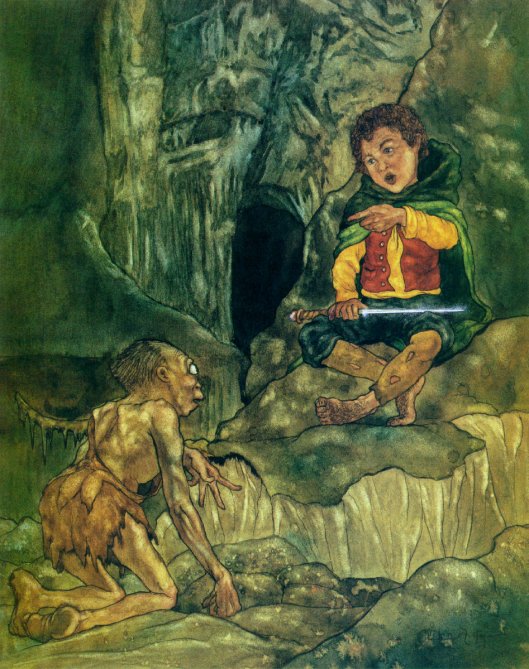
“Deep down here by the dark water lived old Gollum, a small slimy creature…” who often talks in hisses and whispers, like:

“Bless us and splash us, my precioussss!”

(The Hobbit, Chapter 5, “Riddles in the Dark”)

riddles

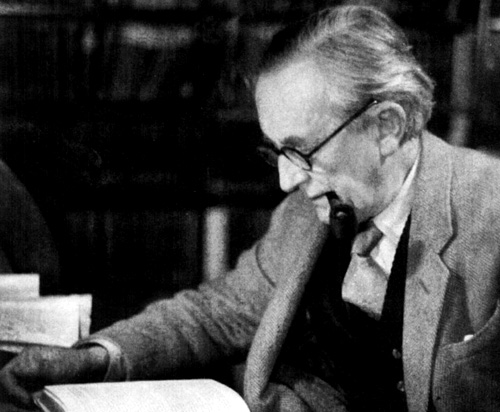
Is there a physical similarity here? Certainly there is the echo of split personalities, evil, and, maybe, someone caught between what he wants and what he does…

tolkientolkien-mortar-board-7-amazing-real-life-tolkien-facts-that-made-middle-earth-jpeg-77543

Thanks, as always, for reading.

MTCIDC

CD

ps

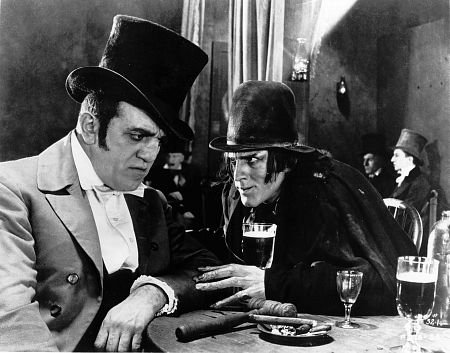
Our pictures of Jekyll and Hyde come from a famous 1920 film, in which John Barrymore transforms himself into Hyde on camera. Follow this link to the Internet Archive to see a full, free showing (80+ minutes) of that film.

pps

It just occurred to us to mention another story with a shrunken figure of the self– Mark Twain’s conscience in his “The Facts Concerning the Recent Carnival of Crime in Connecticut” (1876).


One for All…

24 Wednesday Aug 2016

Posted by Ollamh in Films and Music, Literary History, Military History, Narrative Methods

≈ Leave a comment

Tags

Alexandre Dumas, Aramis, Athos, battle of Fontenoy, Cardinal Richelieu, D'Artagnan, French Revolution, Garde Republicaine, Harpers Ferry, La Rochelle, Louis XIII, Louis XIV, Louis XV, Louis XVI, Louis XVIII, Musket, Musketeers, Porthos, Richard Lester, Royal Heralds, tabard, The Count of Monte Cristo, The Three Musketeers, Twenty Years After, Vicomte de Bragelonne

Dear Readers,

Welcome, as always.

In our last, we said that we were having a little holiday from the works of JRRT and we’re continuing that break in this posting, as well. After all, although we have a deep affection and admiration for them, we began this blog with the intention of focusing upon adventure in general.

In this, we want to look at musketeers—three, in fact, plus a fourth, who, although he lacks an official position in their company, has the heart of one.

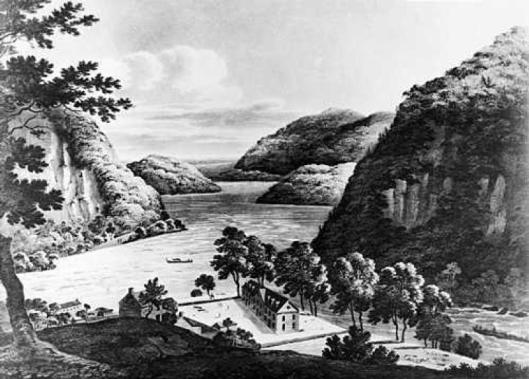
A musket is now a generic word for a pre-breech-loading long arm, like this one—

harpersferry1809

made at the Harpers Ferry arsenal in 1809.

harpersferryearly

Once upon a time, however, a musket was a specific weapon, a heavier firearm which was supported on a wooden rest.

Musketeer

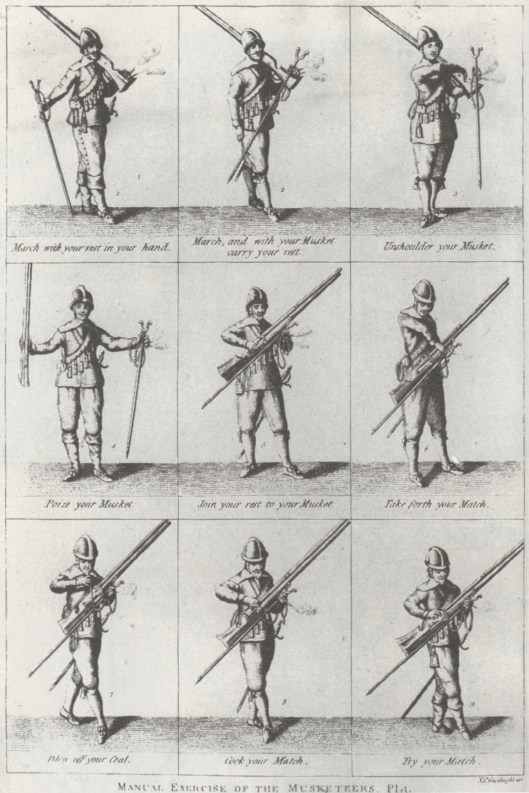
Such weapons were inaccurate at any distance and, in time, soldiers were gradually trained to load and fire in groups, to have more effect upon the enemy.

Manual_of_the_Musketeer,_17th_Century

military-musketeers-thirty-years-war-1618-1648-drawing-by-anton-hoffmann-bjn61w

Certain cavalry were issued lighter versions of such muskets and, in 1622, one company—later two—was formed as a bodyguard for the young Louis XIII.

0_Louis_XIII_en_costume_de_deuil_-_Frans_Pourbus_le_Jeune_(2)

At this time, the idea of uniforms was only beginning to appear and so these men would have worn whatever they wished (probably a fancier version of period civilian clothes—they were guarding the king, after all).

e7670396c9d2d92bdb277a8dd2fbfdc9

To identify them as belonging to the king’s household, however, they were issued with a kind of loose overgarment called a tabard, which we can still see today as worn by the Royal Heralds of Elizabeth II.

Pursuivant_tabardHeralds-at-the-Garter-Service-Julian-Calder-1024x681fae2a692a2dfd52e3931b64ed85bf5ab

One of these musketeers was named D’Artagnan (1611-1673)

invalides-mousquetaires-portrait-du-vrai-dartagnan-mais-aucune-preuve-dauthenticitc3a9

and, in 1700—27 years after his death at the siege of Maastricht in 1673—a well-known French author of the period, Courtilz de Sandras (1644-1712), published a semi-fictionalized “memoir” by D’Artagnan, supposedly based upon D’Artagnan’s papers.

Courtilz_Mémoires_titreWP

It depicted his adventures in a complex world of king and the man behind the king, Louis XIII and his prime minister, Cardinal Richelieu, and the court politics and foreign wars of the era.

Philippe_de_Champaigne_-_Louis_XIII_Crowned_by_Victory_(Siege_of_La_Rochelle,_1628)_-_WGA4712

index

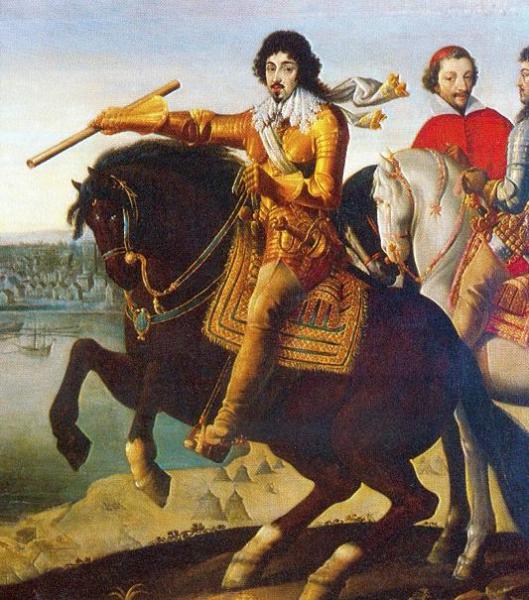
And, in this equestrian portrait, you can see the Cardinal literally behind the king.

Louis_XIII_Richelieu_devant_La_Rochelle

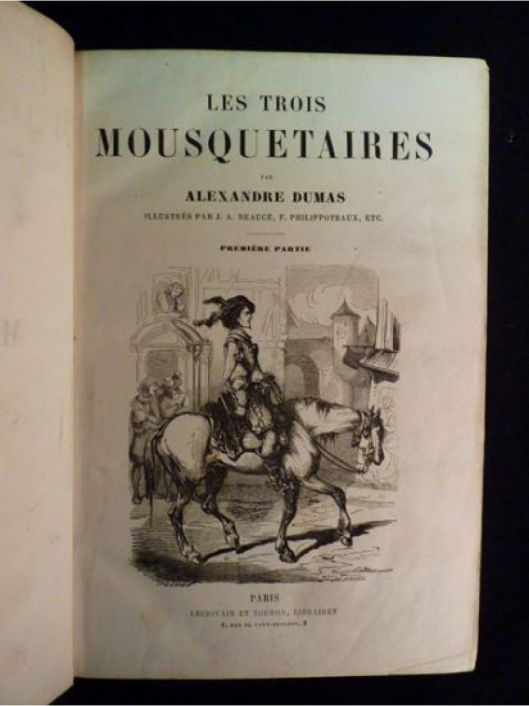
In 1844, there appeared a totally fictionalized account by Alexandre Dumas (1802-1870),

000101

The Three Musketeers,

h-1200-dumas_alexandre_les-trois-mousquetaires_1850_0_34725

which proved so successful that Dumas produced two sequels, Twenty Years After (1845), and The Vicomte de Bragelonne (1847). The success of the first book was such that, since its publication, well—just google “The Three Musketeers in film”! The story of a young man from an impoverished noble family coming to Paris and how, through luck and bravery, he becomes a musketeer, is clearly irresistible—certainly for us! (And Dumas had the gift to do this more than once—he is also the author of the equally-irresistible The Count of Monte Cristo—google that to see its history.)

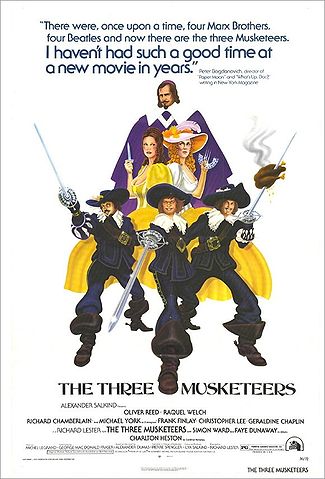
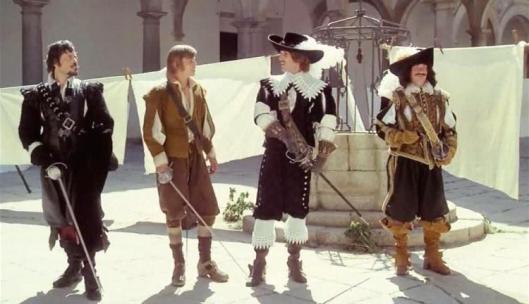
We have read various versions of this since childhood, from comic books to school texts in French, but, of all of the film versions, our favorite is the 2-part Richard Lester adaptation (script by one of our favorite historical novelists, George Macdonald Fraser—more about him in a future posting) of 1973-1974.

Three_Musketeers_1974

This is a version which keeps some of our favorite scenes—the duel in the convent courtyard, where D’Artagnan proves his courage to his new friends-to-be among the Musketeers, Athos, Porthos, and Aramis,

TheThreeMusketeers099

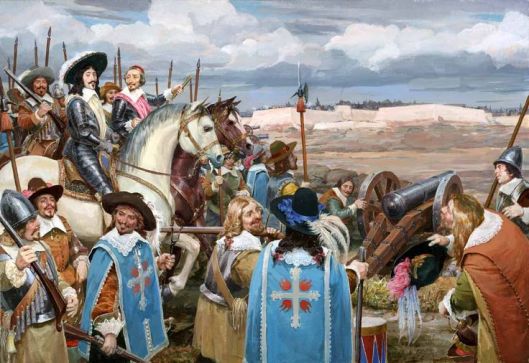
and the wager of the four friends to defend the bastion at the siege of La Rochelle while having breakfast there,

e988a9ce178db360466105fc18acd73d

but is, on the whole, a very light-hearted telling of the story (after all, Lester was famous for being the director of several earlier films starring the Beatles—the original idea even being that John, Paul, George, and Ringo were to be the Musketeers), set against a very grainy depiction of the world of the 1620s (which we find very convincing).

As for the real Musketeers, they had a long career as part of the King’s household guards, from the time of Louis XIII

68f4383f6ba85134f5c8c8b58a9d4613

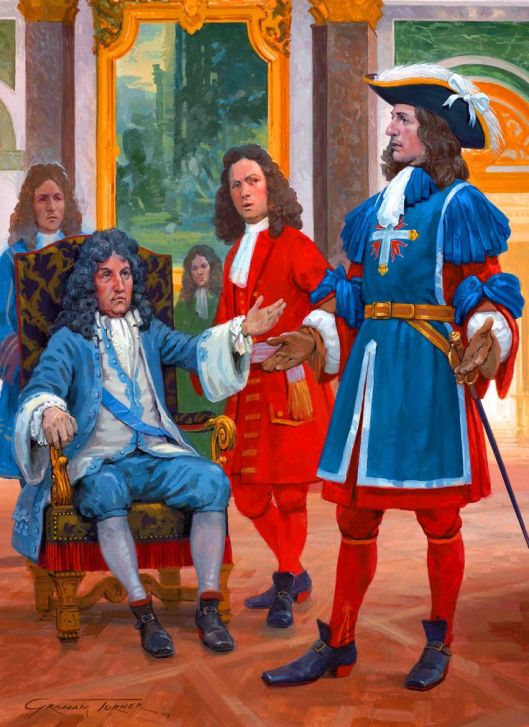
through that of Louis XIV

musketeerlouisxiv

through a famous charge at the battle of Fontenoy (1745) in the time of Louis XV.

15bba6ef186f1f2774c2be4c1f2761c2

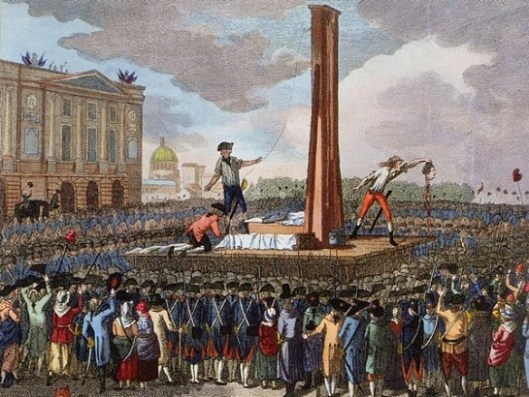
They were swept away at the time of the French Revolution, along with their master, Louis XVI,

executionlxvi

but restored in 1814 by his royal successor, Louis XVIII.

louisxviiimusket

In this new edition of the Musketeers, there appeared for a short time a recruit named Dumas,

Alexandre_Dumas_par_Achille_Devéria_(1829)

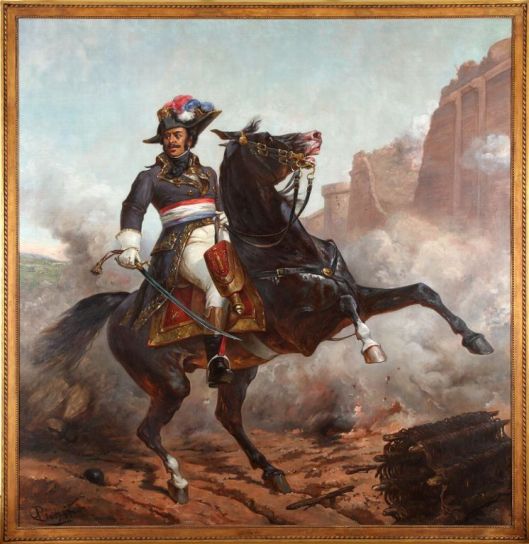
but, unlike his father (1762-1806), a famous general of the French revolutionary period,

generaldumas

he had another career waiting for him…

Thanks, as always, for reading.

MTCIDC

CD

PS

That last reincarnation of the Musketeers was a brief one: they were finally abolished in 1816. We can’t resist, in this ps, showing you a kind of descendant, however—at least in looking French and splendid. Here is the Garde republicaine in Paris. Its name tells you that, although monarchy might be dead in France, guards are certainly not.

la-musique-de-la-garde-republicaine


Ambiguity in Oz

06 Wednesday Jul 2016

Posted by Ollamh in Films and Music, Literary History, Narrative Methods, Theatre and Performance, Villains

≈ 1 Comment

Tags

Adventure, Aldus Manutius, Captain Cyril Turner, condensation trail, Epsom Downs, James Pollard, Let's eat grandma, Oz, punctuation, skywriting, Surrender Dorothy, The Wizard of Oz, the Wright brothers, Wicked Witch

Dear Readers,

Welcome, as always.

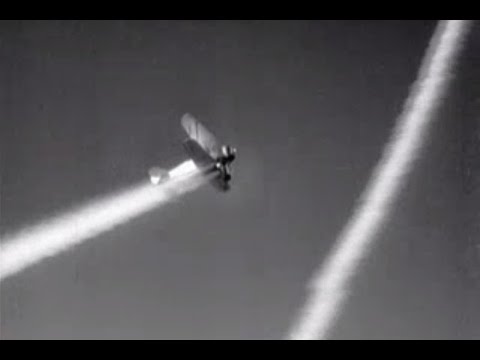
It was a bright, breezy morning yesterday and we were looking up at a contrail (short for “con(densation) trail”)

Contrail.jpg

which brought to mind this message:

surrender2.jpg

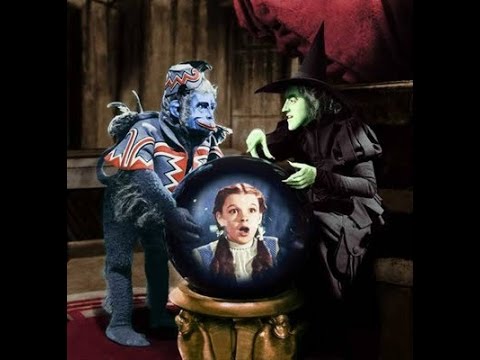
from the 1939 movie, The Wizard of Oz. At this moment in the movie, the four friends (and Toto),

dorothyandfriends.jpg

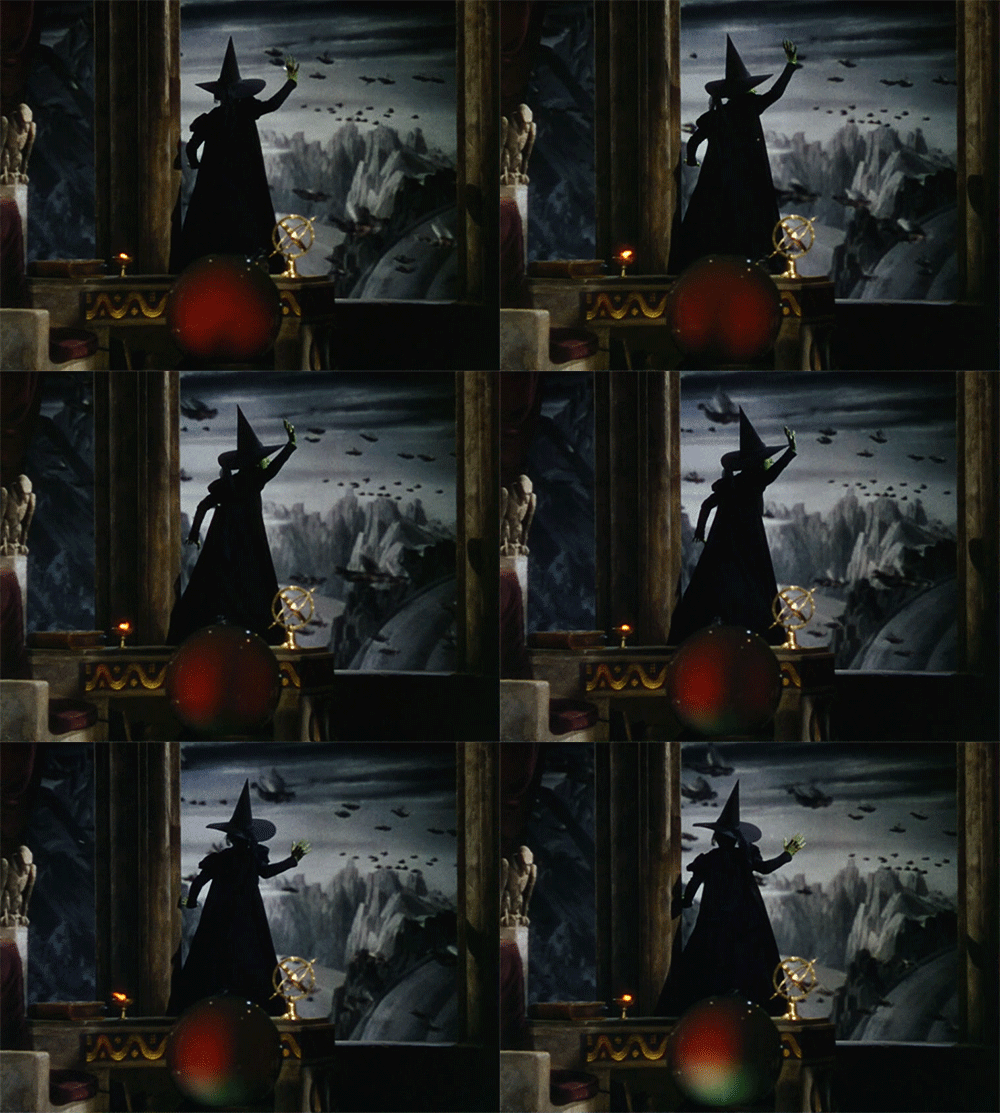
seemingly welcome in the Emerald City, have been enjoying their welcome when the happy music stops at a shriek, and they look up to see the Wicked Witch of the West skywriting.

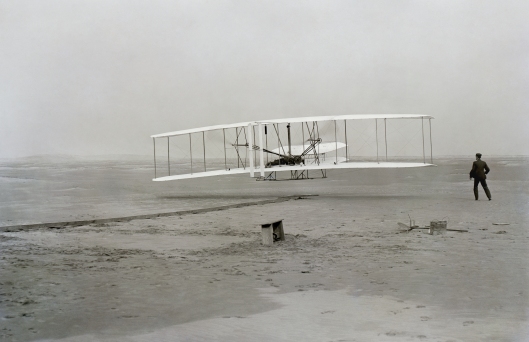
In the US in 1939, artificial flying objects would hardly have been a surprise. After 1903,

First_flight2.jpg

and certainly after the Great War

dogfight

aircraft were increasingly common—even up to massive dirigibles.

Hindenburg_over_New_York_1937

Skywriting—

aerialadvertising1930s

is said to have been first commercially employed in 1922 at Epsom Downs, in England,

horace-walter-nicholls-crowds-on-derby-day-epsom-downs-surre

where Captain Cyril Turner wrote “Daily Mail” over the race track.

James_Pollard_-_Epsom_Races-_The_Race_Over1835.jpg

(This is a painting by James Pollard from 1835, but we couldn’t resist its detail.)

It appeared over New York City for the first time shortly afterward.

In Oz, however, the usual airborne objects appear to have been:

  1. crows

crowsinoz

  1. witcheswitchflying

Glinda-Wizard-Oz

  1. monkeys

flyingmonkey1gifflyingmonkeys

(To which we might add 4. balloons—although there is only one and it’s not a native product.)

ballooninwizard

Thus, a thing like a flying house

Tornado-with-house

would have been more than a little disturbing (and still is, here in this world)—especially when it landed on a major political figure.

houseonwitch

As well, although witches fly in Oz, as far as we know, they are not given to delivering messages by air.

(This message, by the way, was:

  1. made by using a hypodermic needle filled with black ink to write on the bottom of a glass tank filled with colored water
  2. originally longer—here is what it first said:

extendedwwwskywriting)

Equally disturbing to us, however, is the ambiguous (from Latin amb-, “both” and ag- “to drive”—hence, “to go in two directions”) nature of the message—all due to a (potentially) missing comma.

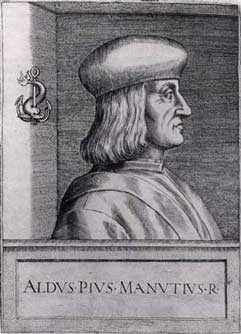
Modern western punctuation took several centuries to appear and mature, beginning with the work of the early printer, Aldus Manutius (the Elder—1449-1515) in the later 15th century.

Aldus_ManutiusAldo_Manuzio_Aristotele

On the whole, modern native English-speakers tend to use the same practices, although an inverted prepositional phrase in American English, for example, has a comma, where British English does not.

Uninverted: There were about twenty fresh crabs in the sink.

Inverted (US): In the sink, there were about twenty fresh crabs.

Inverted (UK): In the sink there were about twenty fresh crabs.

When this is spoken by any native-speaker, there is a slight pause after “sink” and the point of the comma (a point which goes back to 16th-century rhetorical texts, in which punctuation is intended to be used like rests in music, as a series of directional signals as to pauses) is to signal that natural pause.

There is no ambiguity either way in the model sentence, but what about in the Witch’s command?

As it stands, “Surrender Dorothy”, without a comma, is a kind of general imperative—it could perhaps be addressed to all of Oz—and thus easily explained in a longer construction, like “Oz! Surrender Dorothy”—perhaps with the original conclusion “or Die!”

But is this the Witch’s intention? Insert the comma and you have a command directed specifically—and solely–to Dorothy: “Surrender, Dorothy!”   (As we learn when Dorothy is in the hands of the Witch, the deleted part of the message “Or Die” is not quite accurate—the Witch wants the Ruby Slippers, but can’t get them without killing the wearer, so that the real message should be “Surrender, Dorothy—and Die!”—which is hardly likely to be persuasive!)

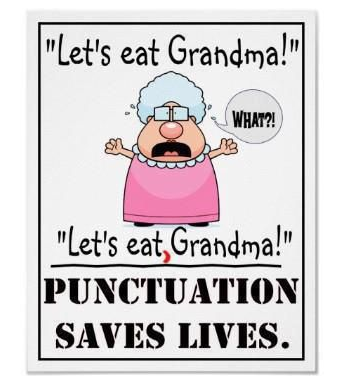
There is a cartoon about English punctuation which has circulated for some years:

letseatgrandmacorrection

In the version without the comma, it’s an invitation to eat grandma. With the comma, it’s an invitation to eat with grandma. In the case of the Witch’s message, what do you think: is it a command to Oz, or to Dorothy?

surrenderpartialview

Thanks, as always, for reading.

MTCIDC

CD

Evil Twin?

22 Wednesday Jun 2016

Posted by Ollamh in Films and Music, J.R.R. Tolkien, Narrative Methods, Villains

≈ Leave a comment

Tags

Bilbo, Deagol, Edgar Allen Poe, Frodo, Gandalf, Gollum, Isildur, Lon Chaney Sr., London After Midnight, Peter Jackson, Pity, Smeagol, The Lord of the Rings, The One Ring, The Phantom of the Opera, The Shadow of the Past, Tolkien, twins, William Wilson

Dear Readers,

Welcome, as always.

In Edgar Allen Poe’s short story, “William Wilson”, (1839) the protagonist is haunted by a double—not a genetic twin, but a kind of look-alike opposite—who acts upon the behavior of the debauched original. (He eventually murders the “twin”, only to discover that, in a sense, he’s murdered himself.)

Edgar_Allan_Poe_daguerreotype_crop.png

In this posting, we want to think about a relationship which, born in The Hobbit, grows over time until it, too, appears almost to be a pair of mirror opposites—who sometimes exchange their roles…

” ‘Gollum!’ cried Frodo. ‘Gollum? Do you mean that this is the very Gollum-creature that Bilbo met? How loathsome!’ ” (The Lord of the Rings, Book 1, The Fellowship of the Ring, Chapter Two, “The Shadow of the Past”).

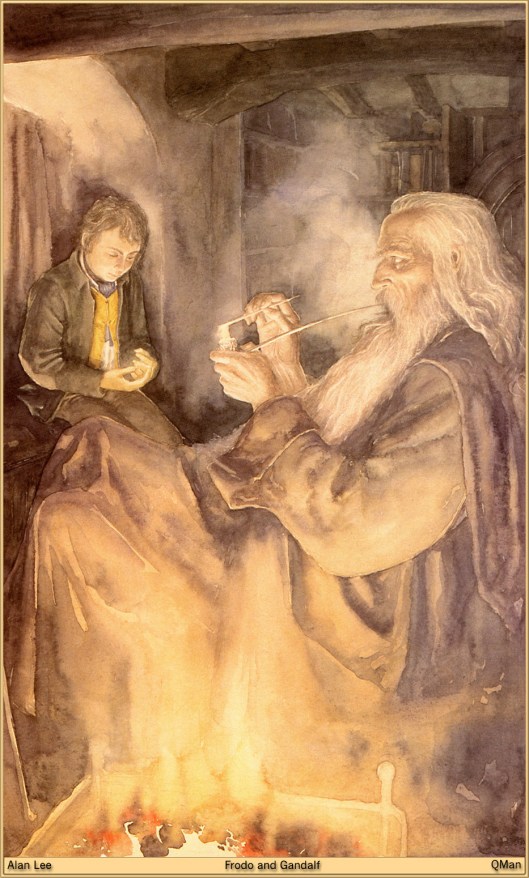
This is the moment in which Gandalf is beginning to explain the history of the Ring, first to Frodo, and then, in more detail, in the Council of Elrond.

lee-lotr_Frodo_and_Gandalf.jpg

When Gandalf reveals that a major force in that history has been Gollum, Frodo is both surprised and appalled.

Gandalf is not. In fact, he shows a kind of sympathy for Gollum which flickers throughout the whole of The Lord of the Rings and which might be best described as pity. When later in this chapter Frodo exclaims, “What a pity that Bilbo did not stab the creature when he had the chance”, Gandalf replies:

” ‘Pity? It was Pity that stayed his hand. Pity, and Mercy: not to strike without need. And he has been well rewarded, Frodo. Be sure that he took so little hurt from the evil, and escaped in the end, because he began his ownership of the Ring so. With Pity.’ ” (The Lord of the Rings, Book 1, The Fellowship of the Ring, Chapter Two, “The Shadow of the Past”).

This, of course, is in contrast to what happened when Gollum found the Ring– because, in fact, he didn’t, and he murdered his friend Deagol, who did.

Sauron, we are told, has put much of his power—and himself—into the Ring. That power is often talked about in The Lord of the Rings, but it seems abstract—power to do what? One aspect of Sauron’s personality—a deep greed—is easily seen, however, reflected in how the Ring brings out that same feeling in others, even to the point of violence. Yet, as Gandalf says:

” ‘The murder of Deagol haunted Gollum, and he had made up a defence, repeating it to his “Precious” over and over again, as he gnawed bones in the dark, until he almost believed it.’ ” (The Lord of the Rings, Book 1, The Fellowship of the Ring, Chapter Two, “The Shadow of the Past”).

[Is there a hint of cannibalism here? When we first meet Gollum, the narrator says of him: “He liked meat too. Goblin he thought good, when he could get it…” (The Hobbit, “Riddles in the Dark”) Whose bones might Smeagol have gnawed first?

“No one ever found out what had become of Deagol; he was murdered far from home, and his body was cunningly hidden.” ]

We might wonder, thinking of “William Wilson”, if Smeagol and Deagol were, in a sense, twins?

“He had a friend called Deagol, of similar sort, sharper-eyed but not so quick and strong.” (The Lord of the Rings, Book 1, The Fellowship of the Ring, Chapter Two, “The Shadow of the Past”)

And Smeagol’s torment has as much to do with the symbolic killing of the “good” self as it does the murder of a friend?

smeagol_und_deagol_by_williweissfuss-d7053ux.jpg

Smeagol and Deagol by Williweissfuss

There may be a moral element here, as well, and it’s interesting to think that, although infected with Sauron’s greed, this potential for knowing right from wrong remains, at least temporarily, in Gollum, making him lie to himself and to others about how he acquired the ring.  Bilbo must have felt this, too, even if he gained the Ring through non-violent means, this need for self-justification. And so he lies, but, to someone with a deeper knowledge, such behavior is all-too-transparent, as Gandalf says:

“Then I heard Bilbo’s strange story of how he had ‘won’ it, and I could not believe it. When I at last got the truth out of him, I saw at once that he had been trying to put his claim to the ring beyond doubt. Much like Gollum with his ‘birthday-present’. The lies were too much alike for my comfort.” (The Lord of the Rings, Book 1, The Fellowship of the Ring, Chapter Two, “The Shadow of the Past”).

Gandalf has seen the lie, but he has also seen something else, a kind of pattern in that lying and a worrying link between the liars, which he expresses in his response to Frodo’s disgust at the thought of Gollum with the Ring:

“ ‘I think that it is a sad story,’ said the wizard, ‘and it might have happened to others, even to some hobbits that I have known.’ “ (The Lord of the Rings, Book 1, The Fellowship of the Ring, Chapter 2, “The Shadow of the Past”)

Gandalf has also seen a deeper similarity between the two. When Frodo says that he can’t believe that Gollum has any connection with hobbits, Gandalf says:

“ ‘It is true all the same…About their origins, at any rate, I know more than hobbits do themselves. And even Bilbo’s story suggests the kinship. There was a great deal in the background of their minds and memories that was very similar. They understood one another remarkably well, very much better than a hobbit would understand, say, a Dwarf, or an Orc, or even an Elf. Think of the riddles they both knew, for one thing.’ “ (The Lord of the Rings, Book 1, The Fellowship of the Ring, Chapter 2, “The Shadow of the Past”)

Alan Lee - The Hobbit - 19 - Riddles in the dark.jpg

Alan Lee, “Riddles in the Dark”

This connection is not just with Bilbo—Frodo, too, appears to share it, as we see later in the story:

“For a moment it appeared to Sam that his master had grown and Gollum had shrunk: a tall stern shadow, a mighty lord who hid his brightness in grey cloud, and at his feet a little whining dog. Yet the two were in some way akin and not alien: they could reach one another’s minds.” (The Lord of the Rings, Book 4, The Two Towers, Chapter 1, “The Taming of Smeagol”)

But this is the behavior of a hobbit as the “good” twin, when he has the Ring and believes himself in control. Below it always lurks Sauron’s greed, and it can bring the “bad” twin to the surface very easily, as Frodo imagines when Bilbo says:

“ ‘Have you got it here?’ he asked in a whisper. ‘I can’t help feeling curious, you know, after all I’ve heard. I should very much like just to peep at it again.’

‘Yes, I’ve got it,’ answered Frodo, feeling a strange reluctance. ‘It looks just the same as it ever did.’

‘Well, I should just like to see it for a moment,’ said Bilbo.

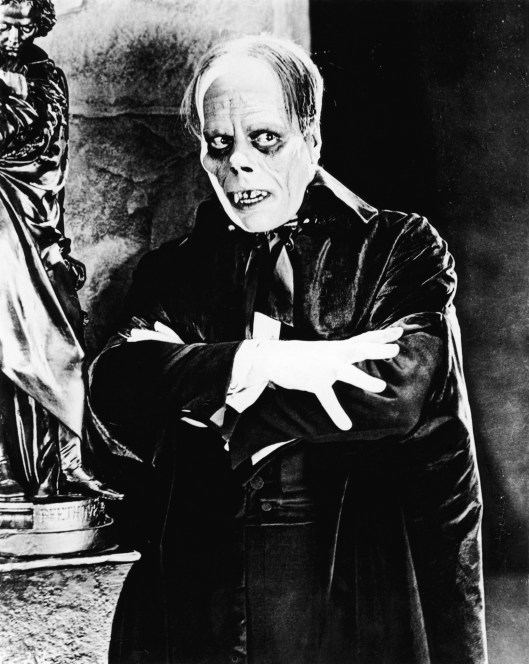
When he had dressed, Frodo found that while he slept the Ring had been hung about his neck on a new chain, light but strong. Slowly he drew it out. Bilbo put out his hand. But Frodo quickly drew back the Ring. To his distress and amazement he found that he was no longer looking at Bilbo; a shadow seemed to have fallen between them, and through it he found himself eyeing a little wrinkled creature with a hungry face and bony groping hands. He felt a desire to strike him.” (The Lord of the Rings, Book 2, The Fellowship of the Ring, Chapter 1, “Many Meetings”)

846d4cbb658e2420258640c4bda7319b
Lon-Chaney-in-London-After-Midnight-2

[Here we have included a second image which is, to our eyes, strikingly like the first. This is a picture of Lon Chaney, Sr., as Inspector Edward C. Burke of Scotland Yard, in the lost 1927 silent film London After Midnight. Chaney was a remarkable frightening presence on-screen, doing his own make-up, as in the 1925 The Phantom of the Opera, based upon Gaston Leroux’s 1910 novel of the same title—]

ChaneyPhantomoftheOpera

Of course, one might ask here, was this really Bilbo Frodo was seeing through that shadow, or was it Sauron’s greed, distorting Frodo’s vision? Certainly, this happens again, when in “The Tower of Cirith Ungol”, Sam offers to carry the Ring and Frodo thought that:

“Sam had changed before his very eyes into an orc again, leering and pawing at his treasure, a foul little creature with greedy eyes and slobbering mouth.” (The Lord of the Rings, Book 6, The Return of the King, Chapter One, “The Tower of Cirith Ungol”)

And then, just at the moment before the Ring’s final destruction, it’s Frodo who changes before Sam’s eyes:

“Then Frodo stirred and spoke in a clear voice, indeed with a voice clearer and more powerful than Sam had ever heard him use, and it rose above the throb and turmoil of Mount Doom, ringing in the roof and walls.

‘I have come,’ he said. ‘But I do not choose now to do what I came to do. I will not do this deed. The Ring is mine!’ “ (The Lord of the Rings, Book 6, The Return of the King, Chapter Three, “Mount Doom”)

At this moment, it seems horribly appropriate that he put on the Ring and disappear, as the Frodo who has gone through such terrible hardship has disappeared, replaced not by Gollum as twin, but, it seems, by Isildur, who, when urged by Cirdan and Elrond, that the Ring “should have been cast then into Orodruin’s fire nigh at hand where it was made”, refused, saying “This I will have as weregild for my father, and my brother…” (The Lord of the Rings, Book 2, The Fellowship of the Ring, Chapter Two, “The Council of Elrond”)

But Gollum does appear and fulfills Gandalf’s near-prophecy to Frodo of long before:

“…he is bound up with the fate of the Ring. My heart tells me that he has some part to play yet, for good or ill, before the end; and when that comes, the pity of Bilbo may rule the fate of many—yours not least.” (The Lord of the Rings, Book 1, The Fellowship of the Ring, Chapter Two, “The Shadow of the Past”)

Removing the Ring by removing the finger, Gollum continues the image of Isildur, who had done the same to Sauron to gain the Ring, and, at the same time, he releases Frodo from its spell, even as he falls to his death in the fires of Mount Doom. At the same time, Gollum also breaks the image of twins—and, unlike William Wilson, with the Ring gone and the bond, Frodo is maimed, but whole—and alone.

Thanks, as ever, for reading.

MTCIDC

CD

← Older posts
Newer posts →

The Doubtful Sea Series Facebook Page

The Doubtful Sea Series Facebook Page

  • Ollamh

Categories

  • Artists and Illustrators
  • Economics in Middle-earth
  • Fairy Tales and Myths
  • Films and Music
  • Games
  • Heroes
  • Imaginary History
  • J.R.R. Tolkien
  • Language
  • Literary History
  • Maps
  • Medieval Russia
  • Military History
  • Military History of Middle-earth
  • Narnia
  • Narrative Methods
  • Poetry
  • Research
  • Star Wars
  • Terra Australis
  • The Rohirrim
  • Theatre and Performance
  • Tolkien
  • Uncategorized
  • Villains
  • Writing as Collaborators
Follow doubtfulsea on WordPress.com

Across the Doubtful Sea

Recent Postings

  • Through a glass… January 7, 2026
  • Heffalumps? December 31, 2025
  • We Three Kings December 24, 2025
  • A Moon disfigured December 17, 2025
  • On the Roads Again—Once More December 10, 2025
  • (Not) Crossing Bridges December 3, 2025
  • On the Road(s) Again—Again November 26, 2025
  • On the Road(s) Again November 19, 2025
  • To Bree (Part 2) November 12, 2025

Blog Statistics

  • 104,148 Views

Posting Archive

  • January 2026 (1)
  • December 2025 (5)
  • November 2025 (4)
  • October 2025 (5)
  • September 2025 (4)
  • August 2025 (4)
  • July 2025 (5)
  • June 2025 (4)
  • May 2025 (4)
  • April 2025 (5)
  • March 2025 (4)
  • February 2025 (4)
  • January 2025 (5)
  • December 2024 (4)
  • November 2024 (4)
  • October 2024 (5)
  • September 2024 (4)
  • August 2024 (4)
  • July 2024 (5)
  • June 2024 (4)
  • May 2024 (5)
  • April 2024 (4)
  • March 2024 (4)
  • February 2024 (4)
  • January 2024 (5)
  • December 2023 (4)
  • November 2023 (5)
  • October 2023 (4)
  • September 2023 (4)
  • August 2023 (5)
  • July 2023 (4)
  • June 2023 (4)
  • May 2023 (5)
  • April 2023 (4)
  • March 2023 (5)
  • February 2023 (4)
  • January 2023 (4)
  • December 2022 (4)
  • November 2022 (5)
  • October 2022 (4)
  • September 2022 (4)
  • August 2022 (5)
  • July 2022 (4)
  • June 2022 (5)
  • May 2022 (4)
  • April 2022 (4)
  • March 2022 (5)
  • February 2022 (4)
  • January 2022 (4)
  • December 2021 (5)
  • November 2021 (4)
  • October 2021 (4)
  • September 2021 (5)
  • August 2021 (4)
  • July 2021 (4)
  • June 2021 (5)
  • May 2021 (4)
  • April 2021 (4)
  • March 2021 (5)
  • February 2021 (4)
  • January 2021 (4)
  • December 2020 (5)
  • November 2020 (4)
  • October 2020 (4)
  • September 2020 (5)
  • August 2020 (4)
  • July 2020 (5)
  • June 2020 (4)
  • May 2020 (4)
  • April 2020 (5)
  • March 2020 (4)
  • February 2020 (4)
  • January 2020 (6)
  • December 2019 (4)
  • November 2019 (4)
  • October 2019 (5)
  • September 2019 (4)
  • August 2019 (4)
  • July 2019 (5)
  • June 2019 (4)
  • May 2019 (5)
  • April 2019 (4)
  • March 2019 (4)
  • February 2019 (4)
  • January 2019 (5)
  • December 2018 (4)
  • November 2018 (4)
  • October 2018 (5)
  • September 2018 (4)
  • August 2018 (5)
  • July 2018 (4)
  • June 2018 (4)
  • May 2018 (5)
  • April 2018 (4)
  • March 2018 (4)
  • February 2018 (4)
  • January 2018 (5)
  • December 2017 (4)
  • November 2017 (4)
  • October 2017 (4)
  • September 2017 (4)
  • August 2017 (5)
  • July 2017 (4)
  • June 2017 (4)
  • May 2017 (5)
  • April 2017 (4)
  • March 2017 (5)
  • February 2017 (4)
  • January 2017 (4)
  • December 2016 (4)
  • November 2016 (5)
  • October 2016 (6)
  • September 2016 (5)
  • August 2016 (5)
  • July 2016 (5)
  • June 2016 (5)
  • May 2016 (4)
  • April 2016 (4)
  • March 2016 (5)
  • February 2016 (4)
  • January 2016 (4)
  • December 2015 (5)
  • November 2015 (5)
  • October 2015 (4)
  • September 2015 (5)
  • August 2015 (4)
  • July 2015 (5)
  • June 2015 (5)
  • May 2015 (4)
  • April 2015 (3)
  • March 2015 (4)
  • February 2015 (4)
  • January 2015 (4)
  • December 2014 (5)
  • November 2014 (4)
  • October 2014 (6)
  • September 2014 (1)

Blog at WordPress.com.

  • Subscribe Subscribed
    • doubtfulsea
    • Join 78 other subscribers
    • Already have a WordPress.com account? Log in now.
    • doubtfulsea
    • Subscribe Subscribed
    • Sign up
    • Log in
    • Report this content
    • View site in Reader
    • Manage subscriptions
    • Collapse this bar
 

Loading Comments...