Tags
Bilbo, Dwarves, Fantasy, Gandalf, map, teatime, The Hobbit, Thror's Map, Time, Tolkien
As always, welcome, dear readers.
The title of this posting comes from a mistake I’d recently read, but as I’m always a fan of creative misreading, I thought that it would make a good opening to a posting about Tolkien and time.
The expression should be “lost in the mists of time” and time is something about which Tolkien, as we know from The Lord of the Rings and its appendices, can be extremely careful in everything from registering events in all the ages of Middle-earth to the phases of the moon. In The Hobbit, however, we see both precise and imprecise time appear, as it seems that JRRT is only gradually coming to desire the precision we see time and again in the later work. This all begins when Bilbo, flustered by Gandalf,
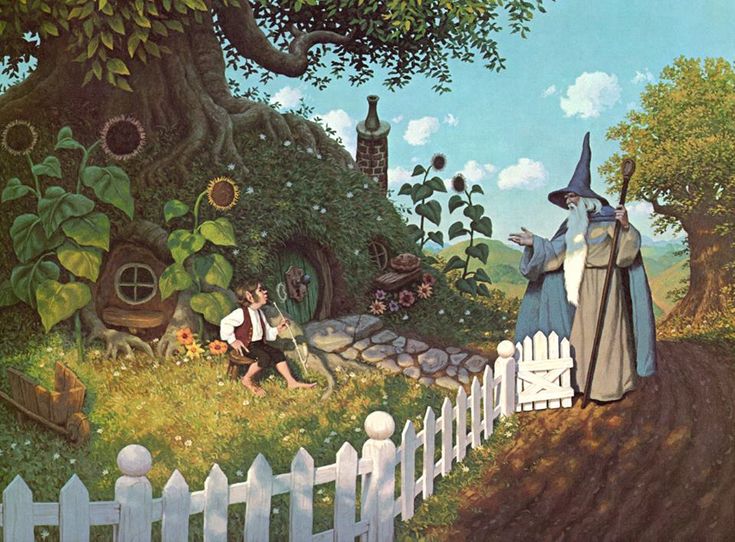
(the Hildebrandts)
says:
“ ‘But please come to tea—any time you like!’ “
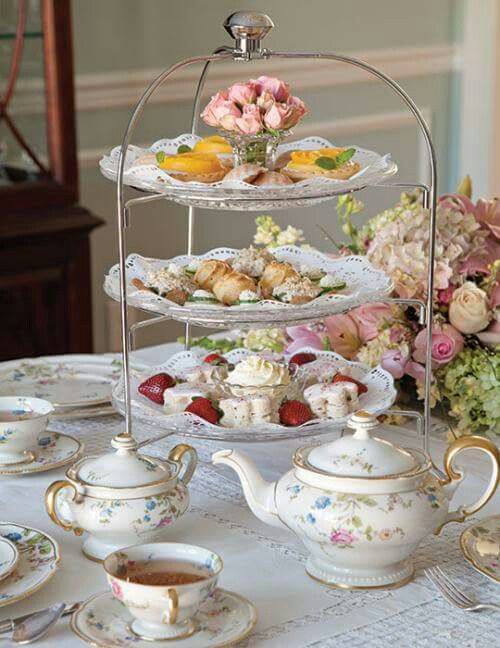
and then the narrator comments:
“The next day he had almost forgotten about Gandalf. He did not remember things very well unless he put them down on his Engagement Tablet: like this: Gandalf Tea Wednesday”. (The Hobbit, Chapter One, “An Unexpected Party”)
Tea time may be thought of as happening in later afternoon, and it will turn up in Chapter Two when Bilbo is struggling along a muddy track: “It was after tea-time…” but, as Bilbo doesn’t have a watch, this must be measured by his stomach rather than by a time piece. (For more on tea time, see: https://en.wikipedia.org/wiki/Tea_(meal)#Further_reading For even more on tea time, see the posting: “Tea Time”, 12 March, 2025)
Time, measured by the clock, will appear, however, in Gandalf’s speaking to Bilbo in the morning after his “unexpected party”:
“ ‘My dear fellow…whenever are you going to come? What about an early start?—and here you are having breakfast, or whatever you call it, at half past ten!’ “
And then there’s this in Thorin’s note to Bilbo (left on the mantlepiece “under the clock”):
“Thinking it unnecessary to disturb your esteemed repose, we have proceeded in advance to make requisite preparations, and shall await your respected person at the Green Dragon Inn, Bywater, at 11 a.m. sharp. Trusting that you will be punctual. (The Hobbit, Chapter Two, “Roast Mutton”)
And there’s a little more—
“ ‘That leaves you just ten minutes. You will have to run,’ said Gandalf.
‘But—,’ said Bilbo.
‘No time for it,’ said the wizard.” (The Hobbit, Chapter Two, “Roast Mutton”)
This all may be underlined by JRRT’s drawing of Bag-End—
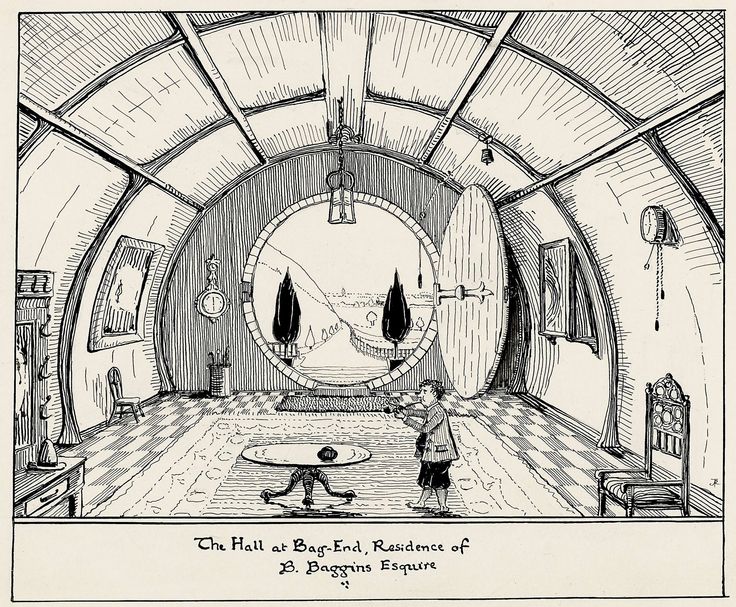
where we see, to the right, a wall clock (though no clock on the mantlepiece to the left—and that’s a barometer to the left of the door).
Bilbo arrives at the Green Dragon “just on the stroke of eleven”, and defends his near-lateness by the fact that “I didn’t get your [Thorin’s] note until after 10.45 to be precise.” (The Hobbit, Chapter Two, “Roast Mutton”—Gandalf has said, however, that Bilbo had 10 minutes to get to the Green Dragon and, if he arrived “punctually” at 11, five minutes have been lost somewhere in between—perhaps this suggests the inaccuracy of Shire clocks?)
Time then becomes more general, no one having pocket watches in Middle-earth, it would seem, so time is confined to the calendar—
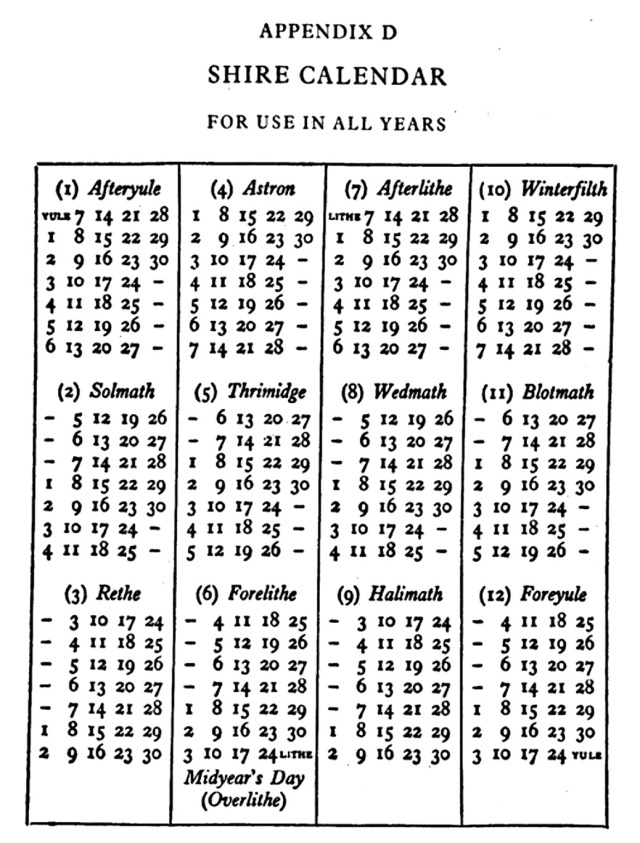
although, in The Hobbit, the month is either translated (for our convenience) into English, or Tolkien had yet to discover the Shire calendar depicted here, so, instead, we have:
“ ‘To think it will soon be June!’ grumbled Bilbo, as he splashed along behind the others in a very muddy track.”
Then we see:
“The next morning was a midsummer’s morning…” (The Hobbit, Chapter Three, “A Short Rest”)
when the dwarves, Bilbo, and Gandalf set off from Rivendell.
But, although time passes through the calendar, there is a seasonal reference in
“ ‘The summer is getting on down below,’ thought Bilbo, ‘and haymaking is going on…’ “ (The Hobbit, Chapter Four, “Over Hill and Under Hill”)
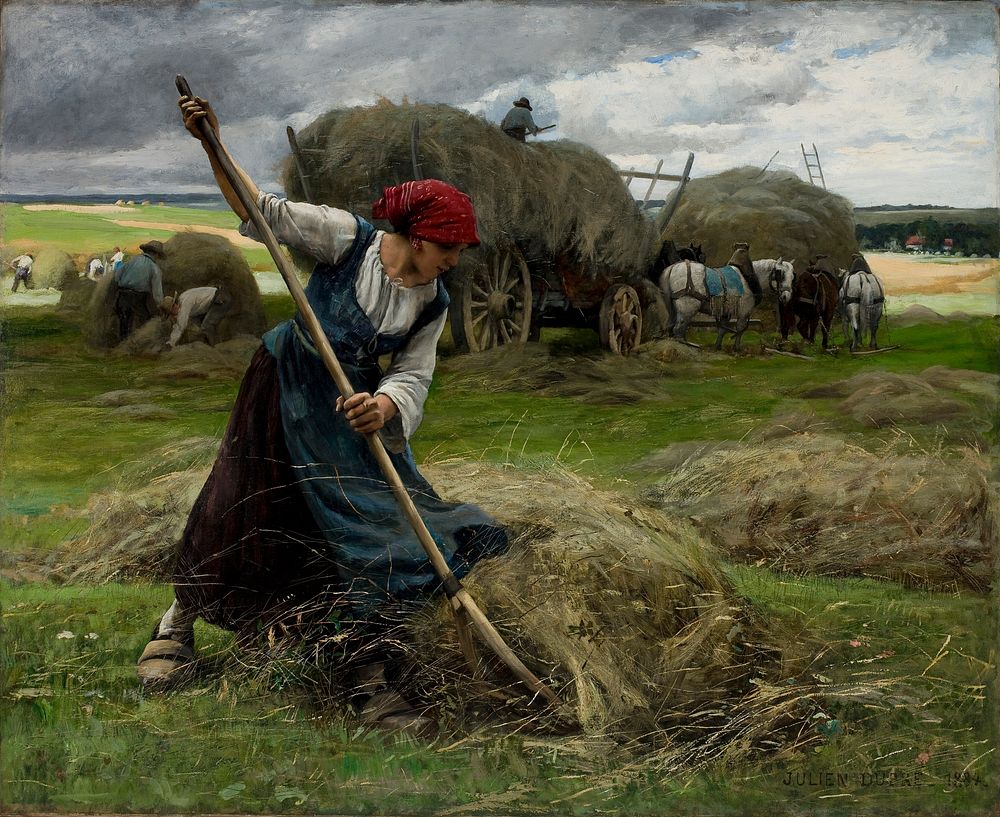
It’s unclear how long Bilbo and the dwarves travelled into the Misty Mountains, the narrator only saying “Long days after they had climbed out of the valley and left the Last Homely House miles behind…” (The Hobbit, Chapter Four, “Over Hill and Under Hill”), but the reference to hay-making might suggest that they were in the Mountains as early as it late-May early-June in Tolkien’s England, or perhaps a little later–JRRT’s use of “midsummer”, would make this later—although he wrote “a midsummer’s morning”, not “midsummer’s day”—which is between June 20 and 22. Later, the narrator tells us that “Only in June they had been guests in the fair house of Elrond…”, suggesting a slightly later date than late May. (The Hobbit, Chapter Eleven, “On the Doorstep”) (For more on Midsummer’s Day see: https://en.wikipedia.org/wiki/Midsummer For hay-making times, see: https://homeinthepastures.com/farming/when-is-the-best-time-to-make-hay-cutting-and-baling-guide/ For June hay-making, see: https://www.countryfile.com/wildlife/farming-calendar-a-year-in-the-life-of-a-british-farmer And for more, which suggests a later cutting: https://wildscythe.co.uk/haytime/ )
And here, just below Bilbo’s lament in the text, we find the theme of time as a pressure upon the story—
“They had thought of coming to the secret door in the Lonely Mountain, perhaps that very next last moon of Autumn ‘and perhaps it will be Durin’s Day’ they had said.” (The Hobbit, Chapter Four, “Over Hill and Under Hill”)
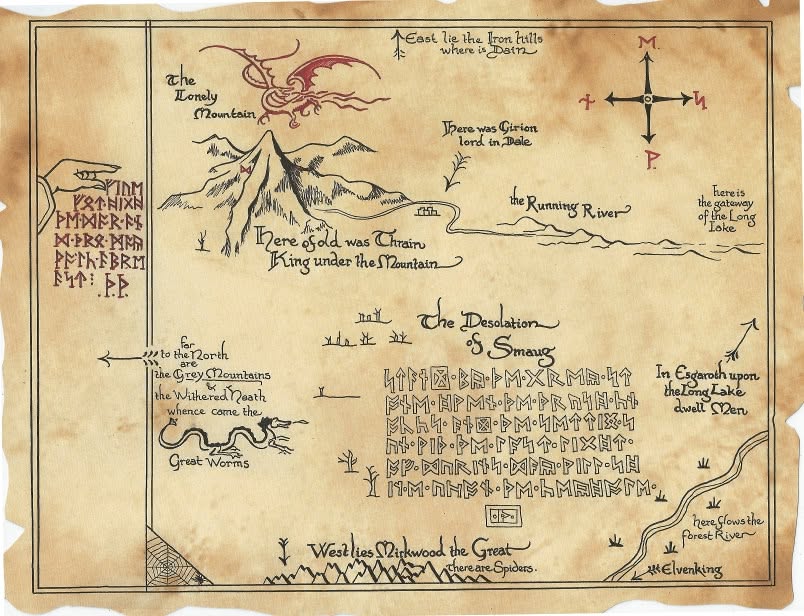
We had learned, in the previous chapter, from the moon letters on Thror’s map,
(JRRT)
as deciphered by Elrond, that, to reach the secret backdoor to the Lonely Mountain, the company must be there on a specific day, at a specific place, and even at a specific moment:
“ ‘Stand by the grey stone when the thrush knocks..and the setting sun with the last light of Durin’s Day will shine upon the key-hole.’ “ (The Hobbit, Chapter Three, “A Short Rest”)
Durin’s Day is then defined by Thorin:
“ ‘The first day of the dwarves’ New Year…is as all should know the first day of the last moon of Autumn on the threshold of Winter. We still call it Durin’s day when the last moon of Autumn and the sun are in the sky together.”
Because of this pressure, then, time has become, if not more precise, then more demanding, so that time passing in their journey eastwards, means time lost, unless they can arrive at their destination before that moment. Time still isn’t easily measured, however, as they make their way east, but, after their adventures in Mirkwood, first with the spiders, then with the Elves, (although, in the caves of the Elves, we are told that Bilbo found Thorin “…after a week or two…” The Hobbit, Chapter 9, “Barrels Out of Bond”), we know that they arrive at Lake-town, where we are told that they spend two weeks (“At the end of a fortnight Thorin began to think of departure.” The Hobbit, Chapter 10, “A Warm Welcome”) before setting out on the last leg of their journey when “autumn was now getting far on…”. In three days, they reach their dropping-off point (“At the end of the third day, some miles up the river, they drew in to the left or western bank…” The Hobbit, Chapter Eleven, “On the Doorstep”), spend some days establishing a camp, then moving their camp twice more before settling below the dell where the secret door is located—and now time grows short: “ ‘Tomorrow begins the last week of autumn,’ said Thorin.” (The Hobbit, Chapter Eleven, “On the Doorstep”). And then, of course, Bilbo puts things together and the message of the map falls into place, as does the key.
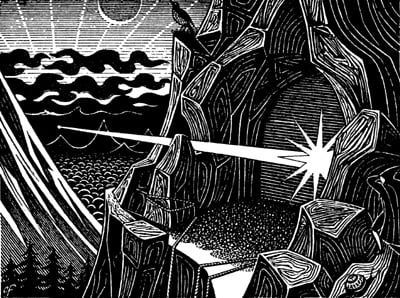
(Eric Fraser—for more of his work: https://www.chrisbeetles.com/artists/fraser-eric-fsia-1902-1983.html )
After this, time becomes hazy once more: “by mid-winter Gandalf and Bilbo had come all the way back…to the doors of Beorn’s house; and there for a while they both stayed…” and “It was spring…before Bilbo and Gandalf took their leave at last of Beorn…” (The Hobbit, Chapter Eighteen, “The Return Journey”), arriving at Rivendell and the calendar once more “on May the first” and reaching Bag-end at last on June 22 (the date given on the auction notice put up by “Messrs Grubb, Grubb, and Burrowes”) where we’re back to the clock again, as the auction of Bilbo’s goods is set for “ten o’clock sharp” (The Hobbit, Chapter Nineteen, “The Last Stage”), echoing Thorin’s “11 a.m. sharp” from the first chapter of the novel.
Although Bilbo and his companions are never lost—except perhaps in Mirkwood—they are always in the midst of time, and perhaps we could imagine that Bilbo’s later lines about Aragorn might also be true for them:
“All that is gold does not glitter,
Not all those who wander are lost…”
Thanks, as always, for reading,
I wonder if we might see this as a Hobbit bumper sticker—

And remember that, as always, there’s
MTCIDC
O
PS
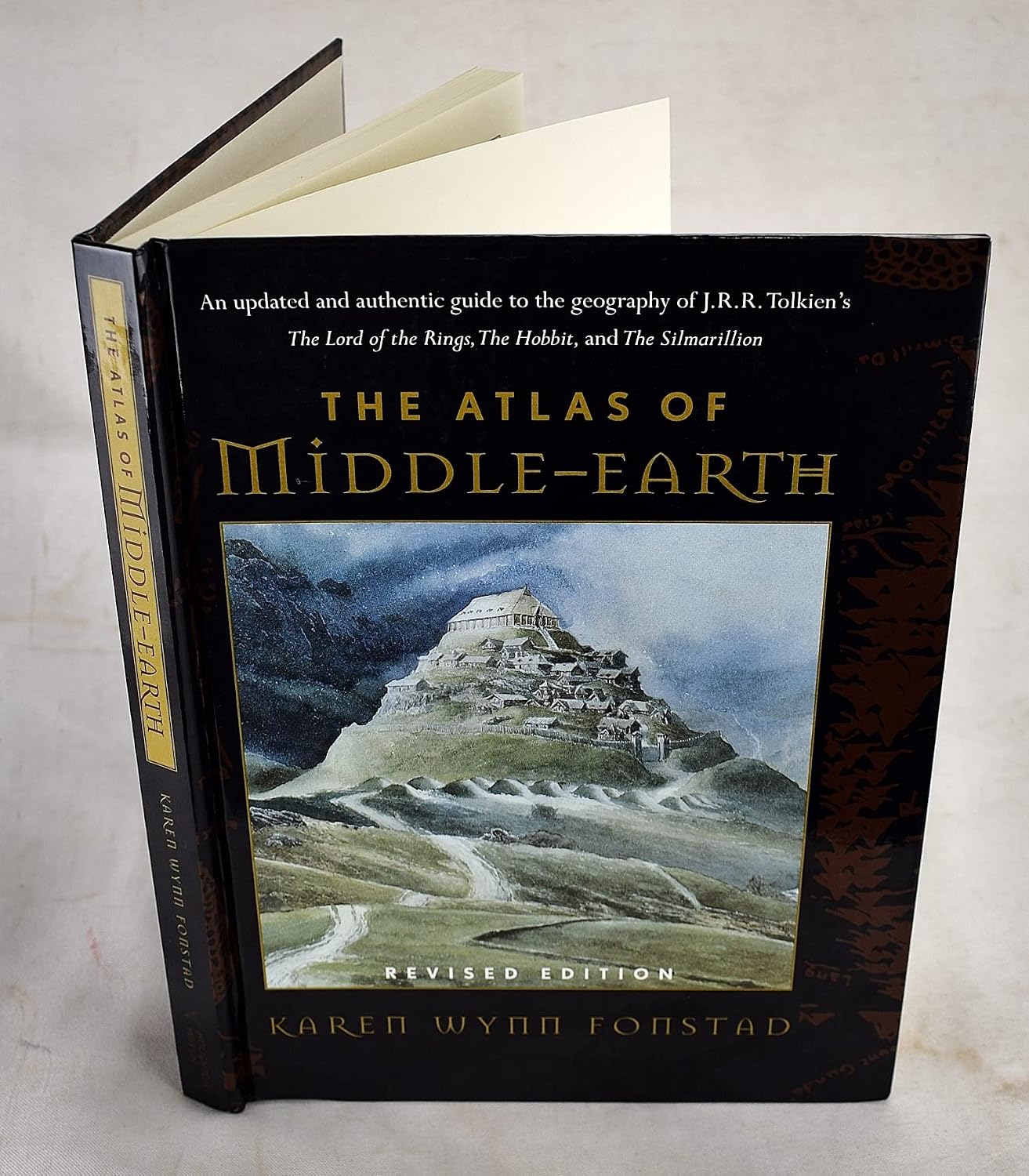
For a very creative version of the complete Hobbit timeline, see Karen Wynn Fonstad’s The Atlas of Middle-earth, 97-99.