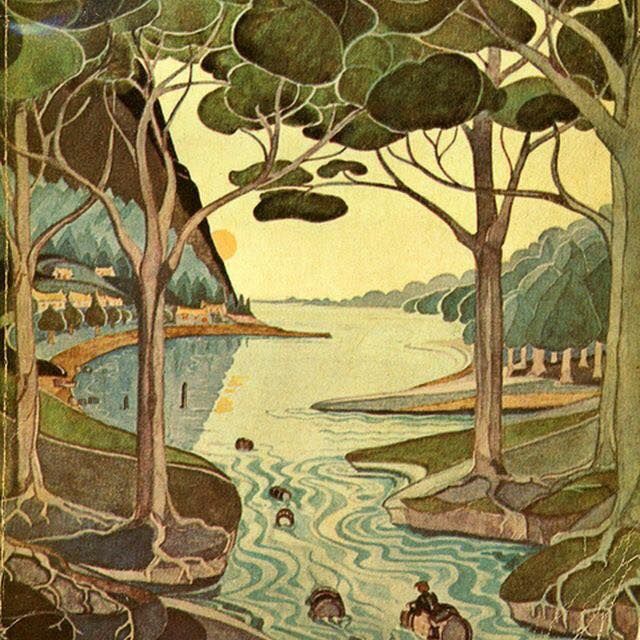
• About

doubtfulsea

~ adventure fantasy

Tag Archives: The Great War

A Moon disfigured

17 Wednesday Dec 2025

Posted by Ollamh in Uncategorized

≈ Leave a comment

Tags

Elizabeth I, herald, Heraldry, livery, Middle-earth, Minas Ithil, Minas Morgul, Orcs, puzzle, Sam, Saruman, Sauron, Sir Roger de Trumpington, The Great War, The Lord of the Rings, Tolkien, uniforms

As always, dear readers, welcome.  And perhaps welcome to a little Tolkien puzzle.

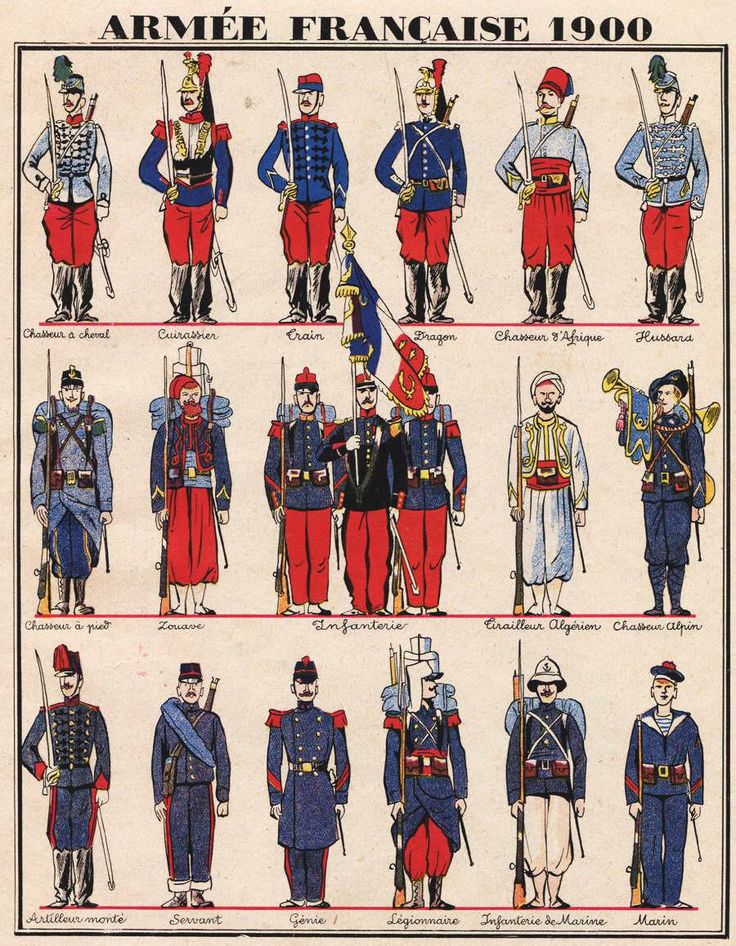
On parade, soldiers of the early 20th century could be peacocks for finery.

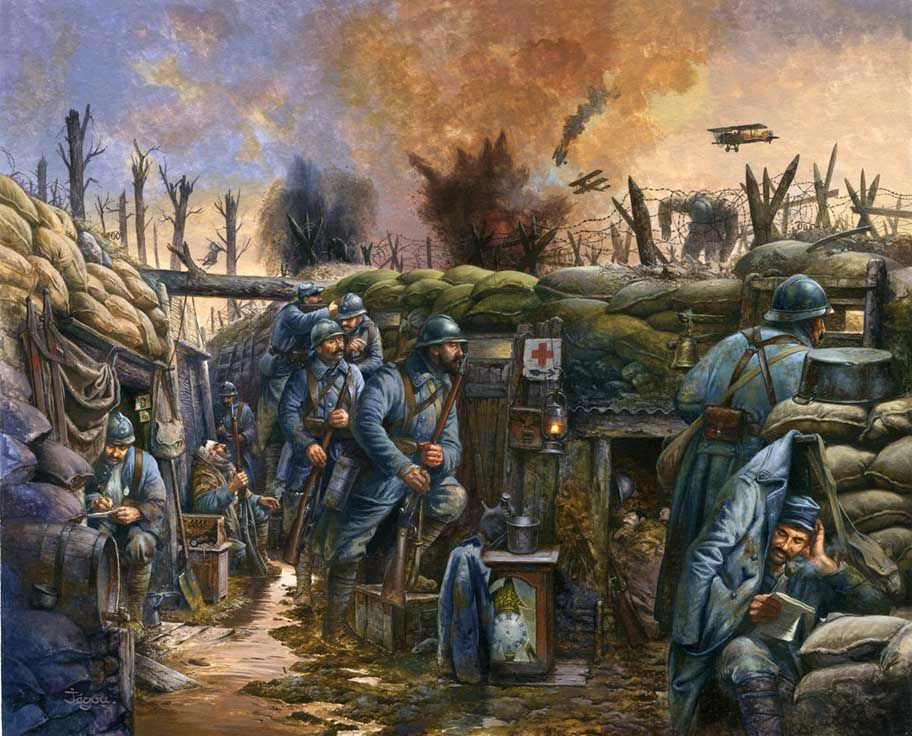
But then they met the new technological reality of heavy machine guns

and increasingly heavy artillery

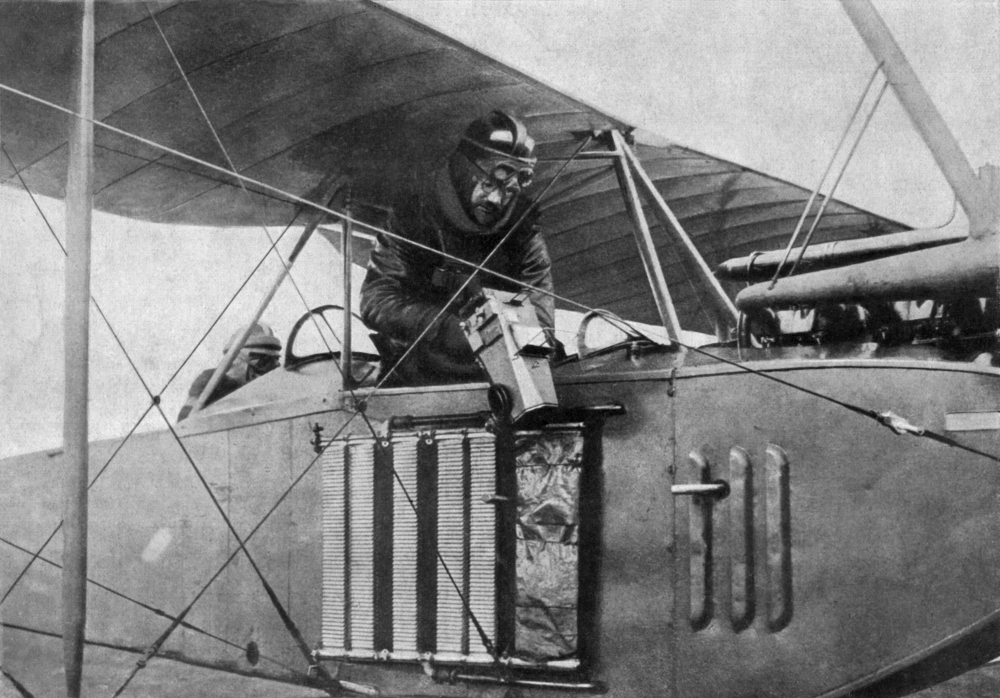
and, in time, even the danger of being spotted from the air,

so soldiers not only dug in,

but modified their uniforms, making themselves less visible.

(Gerry Embleton)

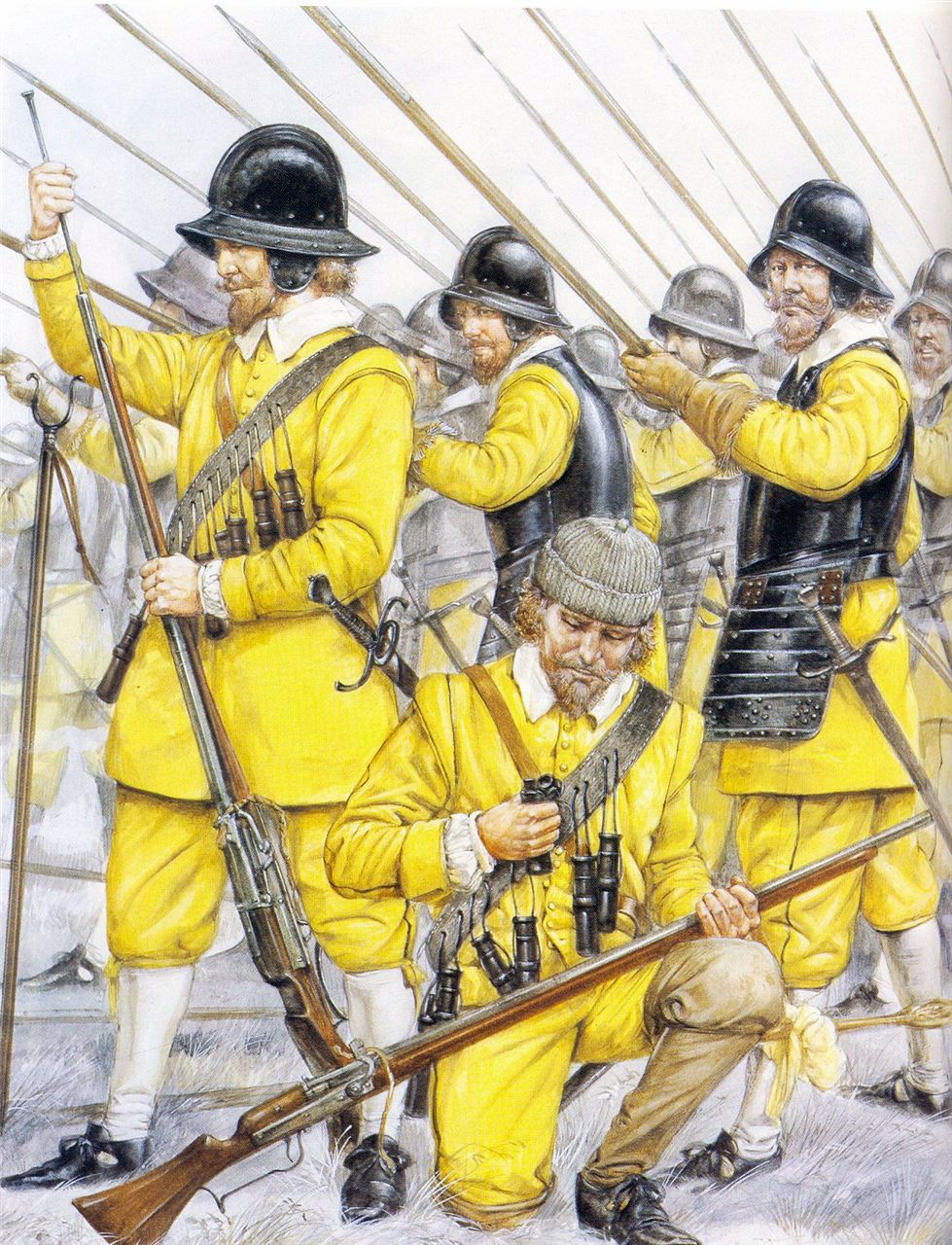
After the war, most armies, except for special guard units,

 never went back to being peacocks, abandoning a bright tradition which went back to the 17th century.

(Richard Hook)

Even in the 17th century, soldiers not wearing the same-colored clothing might distinguish themselves from their enemies by what would be called “field signs”, like wearing a strip of cloth on one arm, or sticking a particular piece of a plant or even a scrap of paper in your hatband.

(Henri IV, 1553-1610, king of France, was famous for the white plume he always wore in his hat.)

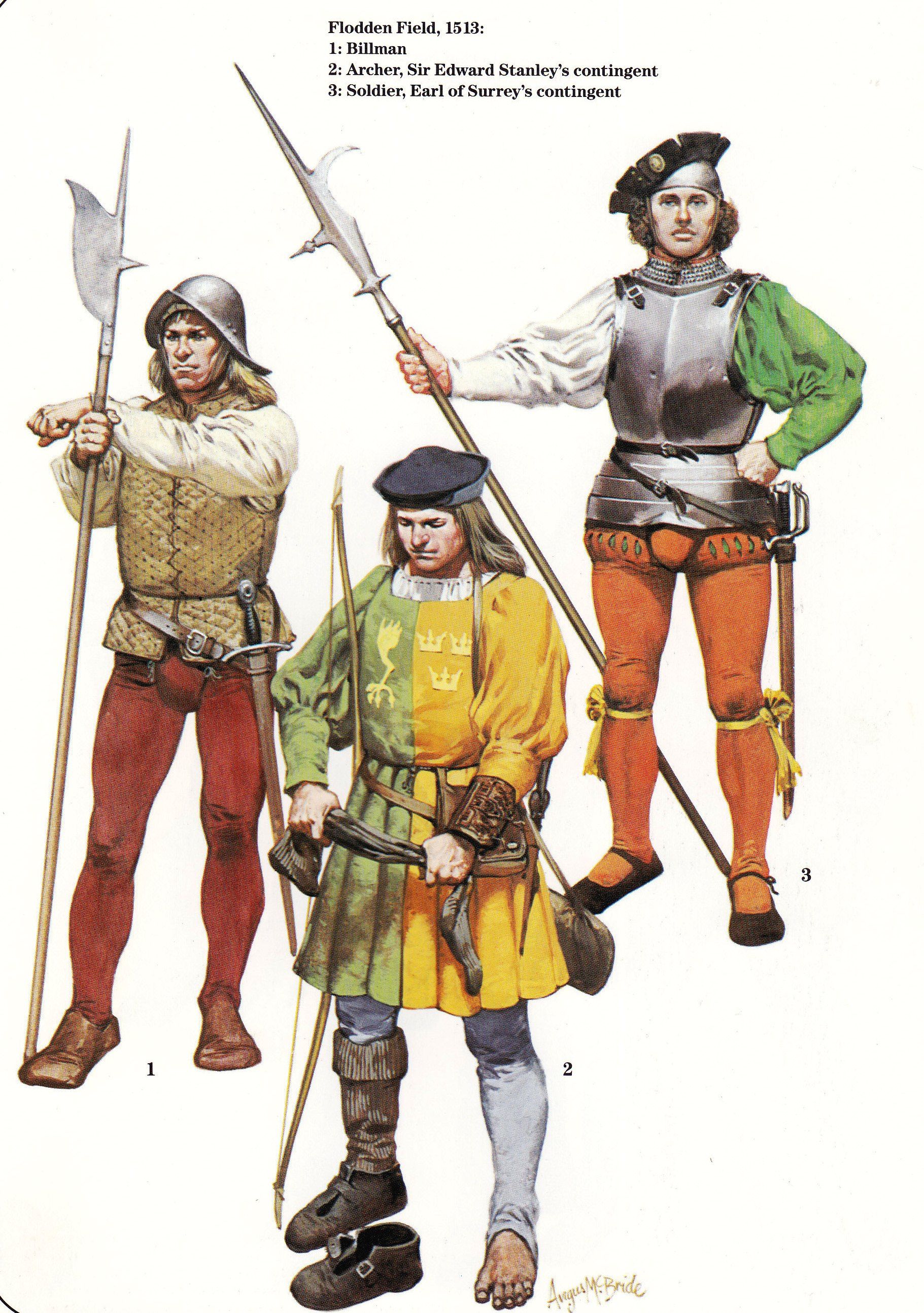
Before this, soldiers might wear the distinctive colors of their commanders (usually noblemen), called “livery”—

(Angus McBride)

Here we can see that Sir Edward Stanley has given this archer clothing in his colors of green and mustard-yellow, while the Earl of Surrey provided his soldiers with his colors of green and white.  You’ll also notice that the archer has some distinctive badges on the front of his coat—an eagle’s claw and crowns.  These are personal indicators of Sir Edward, heraldic markers to indicate to whom the archer belonged.

In the days before distinctive military dress, heraldry—the use of emblems to mark out one knight, and perhaps his followers, from another—had been developed to a high level.  When everyone was covered in metal,

such emblems were a way to identify a knight—and if he had issued similar emblems to his soldiers, a way to identify the troops he had brought and commanded at a battle.

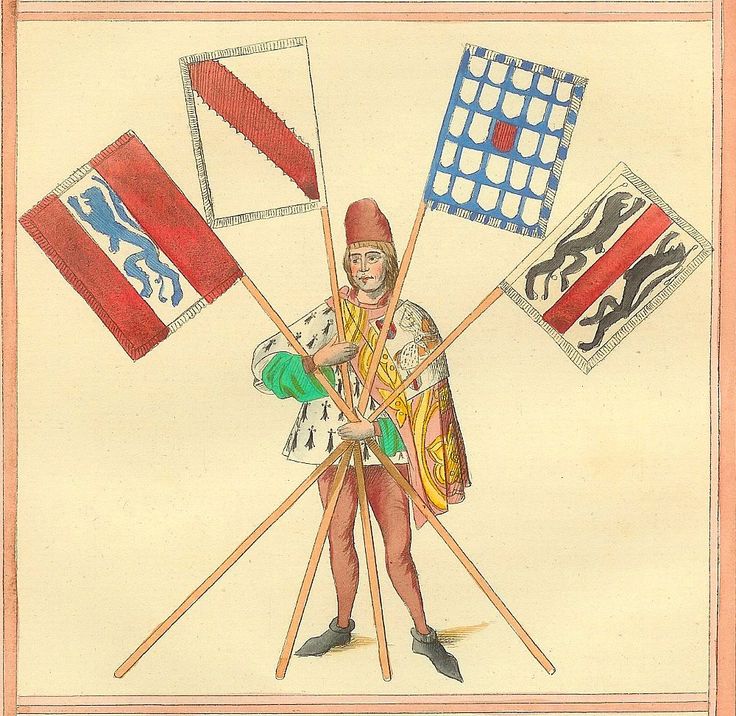
As emblems developed, there also developed a person with a specialized skill to identify them—a herald.

He himself, as you can see, wore distinctive clothing, which also helped him in his other role as messenger between military opponents—he was considered as a neutral and could therefore pass freely.  (For more on heralds, see “Herald-ry in Middle-Earth”, 30 March, 2016 here:  https://doubtfulsea.com//?s=herald&search=Go )

Tolkien himself belonged to the age of drab—

(Here’s what that uniform would have looked like in color—although this is a much higher level officer—looks to be a major—JRRT was commissioned as a second lieutenant and eventually promoted to first lieutenant )

but was well aware of earlier flashiness and we can see it in his description of the guards at Denethor’s gate—even though he sees their outfits as a throwback, just like British soldiers ever returning to bright red uniforms—except for the monarch’s guards:

“The Guards of the gate were robed in black, and their helmets were of strange shape, high-crowned, with long cheek-guards close-fitting to the face, and above the cheek-guards were set the white wings of sea-birds; but the helms gleamed with a flame of silver, for they were indeed wrought of mithril, heirlooms from the glory of old days.  Upon the black surcoats were embroidered in white a tree blossoming like snow beneath a silver crown and many-pointed stars.  This was the livery of the heirs of Elendil, and none wore it now in all Gondor, save the Guards of the Citadel before the Court of the Fountain where the White Tree had grown.”  (The Return of the King, Book Five, Chapter 1, “Minas Tirith”)

(from the Jackson films—as you can see, the helmet fits the description, but the surcoat has disappeared and, instead, the Tree, stars, and crown have been shifted to the breastplate, removing the dramatic contrast between the black cloth and white embroidered emblems which JRRT intended)

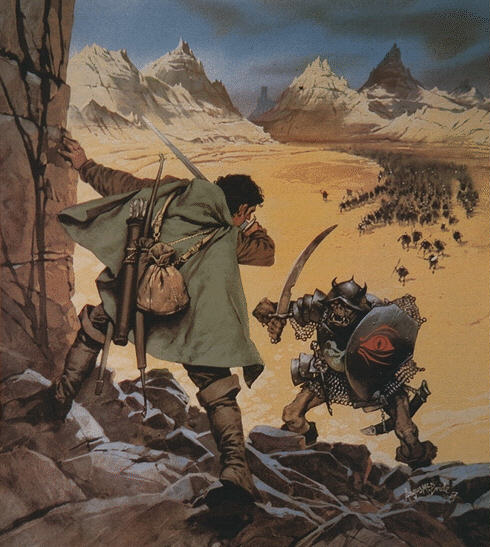
As well, although the orcs wear no livery—no uniforms or even part-colored clothing—they do have badges—the white hand of Saruman

(perhaps suggesting that he has his hand over everything?  I think of the “Armada Portrait” of Queen Elizabeth the First here—just look at the quiet statement in her hand)

and the red eye of Sauron,

(Angus McBride—perhaps implying that, like Big Brother, Sauron has his eye on you?)

but then there’s a new one, only mentioned once, which provided the title for this posting and the puzzle—

“Two liveries Sam noticed, one marked by the Red Eye, the other by a Moon disfigured with a ghastly face of death…” (The Return of the King, Book Six, Chapter 1, “The Tower of Cirith Ungol”)

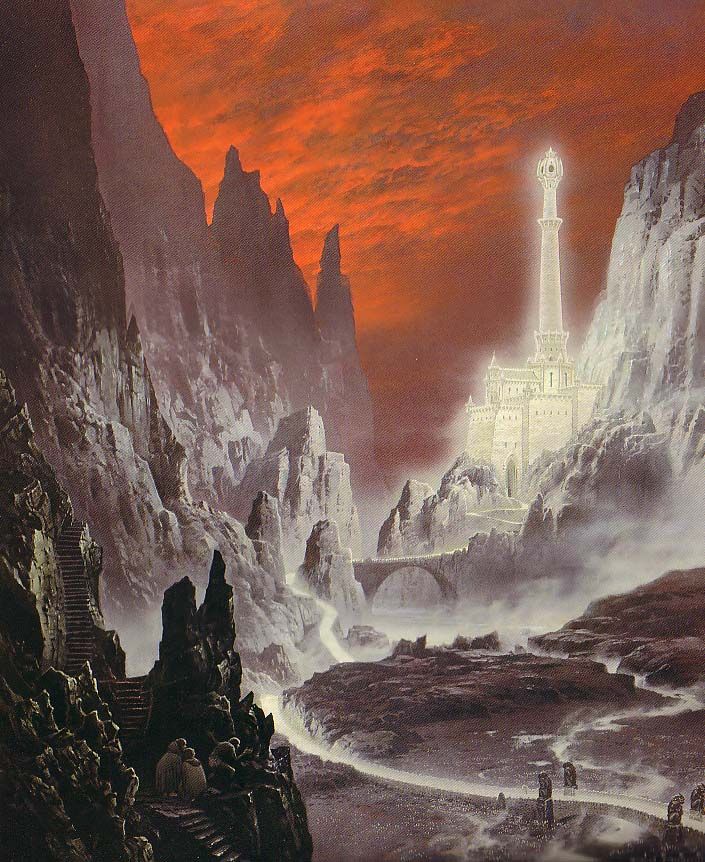
What is JRRT up to here?  Minas Morgul,  the “Tower of Black Sorcery”, the center of this gateway into Mordor,

(Ted Nasmith)

had been built as Minas Ithil, “the Tower of the Moon” and it’s clear that those having that badge must come specifically from that place, and a mockery of its previous Gondorian name, which is interesting because the rest of Sauron’s forces appear to wear only the Red Eye.  Yet, if we can trust an orc, we may have the sense that Sauron doesn’t appreciate deviation, as Grishnakh asks rhetorically of Ugluk:

“They might ask where his strange ideas came from.  Did they come from Saruman, perhaps?  Who does he think he is, setting up on his own with his filthy white badges?  They might agree with me, with Grishnakh their trusted messenger; and I Grishnakh say this:  Saruman is a fool, and a dirty treacherous fool.  But the Great Eye is on him.”  (The Two Towers, Book Three, Chapter 3, “The Uruk-hai”)

So what’s going on here?  Certainly there’s rivalry between Saruman’s orcs and Sauron’s, but just how deep does orc rivalry go?  When Sam arrives at the Tower of Cirith Ungol, he finds it a battleground and, climbing into the tower itself he hears two orcs arguing, Shagrat, the captain of the Tower, and Snaga, one of his men.  Snaga says:

“You won’t be a captain long when They hear about all these goings-on.  I’ve fought for the Tower against those stinking Morgul-rats, but a nice mess you two precious captains have made of things, fighting over the swag.” (The Return of the King, Book Six, Chapter 1, “The Tower of Cirith Ungol”)

So, seeing that emblem on a shield, with “a Moon disfigured with a ghastly face of death”, just whose face is that?  And whose death?

As ever, thanks for reading.

Stay well,

If you were to come up with your own livery, what would it be?—sometimes knights made visual puns—like Sir Roger de Trumpington—

Think about that, pencil in hand, and remember that there’s always

MTCIDC

O

PS

For more on livery, see:  https://en.wikipedia.org/wiki/Livery

There has been some wonderfully imaginative work done on heraldry in Tolkien.  Here’s a link to get you started:  https://en.wikipedia.org/wiki/Heraldry_of_Middle-earth   

Gobs and Hobs (1)

22 Wednesday Aug 2018

Posted by Ollamh in Fairy Tales and Myths, J.R.R. Tolkien, Literary History, Military History

≈ 2 Comments

Tags

A E Mason, A Midsummer Night's Dream, Brunhilde, cadet, cockfighting, Edith Bratt, Exeter College, Faeries, Fairies, Gilbert and Sullivan, Goblin Feet, Iolanthe, Oxford Poetry, Richard Doyle, Richard Wagner, The Four Feathers, The Great War, The Lord of the Rings, Tolkien, white feather, William Shakespeare, World War I, Yeats

As always, dear readers, welcome.

In 1915, Tolkien was

image1jrrt.jpg

scrambling to finish his BA at Exeter College

image2aexeter.jpg

before he was swept up into the war which was gradually devouring the younger male populations of much of western Europe

image2bcasualties.jpg

and would soon swallow him, as well.

image2jrrt.jpg

Although he had been a cadet in his earlier days,

image3cadet.jpg

he resisted the societal pressure to join up and that must have been difficult, as it was not uncommon in 1915 for young men not in uniform to be stopped in the street by civilians, particularly women, and asked why they hadn’t enlisted yet before being presented with a white feather as a symbol of cowardice.

image4feather.png

image5feather.jpg

The use of a white feather appears to have been derived from the old sport of cockfighting, in which it was believed that a rooster with a white tail feather would be a poor combatant.

image6cockfighting.jpg

For us, the image is directly related to a famous 1902 adventure novel, The Four Feathers

image7fourfeathers.jpg

by A E Mason (1865-1948).

image8aemason


In this book, the main character, Harry Feversham, is thought to be a coward by his brother officers and by his fiancé and goes to heroic lengths to prove otherwise (here’s a LINK so that you can enjoy the book for yourself, if you would like).

As well as the book, there have been a number of films made from it, including the one which we believe to be the best, from 1939.

image9fourfeathers.jpg

During this scramble to finish, Tolkien wrote a poem in late April for his wife-to-be, Edith Bratt (1889-1971).

image10edith.jpg

Called “Goblin Feet”, it was first published in Oxford Poetry 1915.  (Here’s a LINK so that you may have your own copy of the book.)

image11opo.jpg

Here’s the text:

I am off down the road
Where the fairy lanterns glowed
And the little pretty flitter-mice are flying;
A slender band of gray
It runs creepily away
And the hedges and the grasses are a-sighing.
The air is full of wings,
And of blundery beetle-things
That warn you with their whirring and their humming.
O! I hear the tiny horns
Of enchanted leprechauns
And the padded feet of many gnomes a-coming!
O! the lights! O! the gleams! O! the little twinkly sounds!
O! the rustle of their noiseless little robes!
O! the echo of their feet — of their happy little feet!
O! the swinging lamps in the starlit globes.

I must follow in their train
Down the crooked fairy lane
Where the coney-rabbits long ago have gone.
And where silvery they sing
In a moving moonlit ring
All a twinkle with the jewels they have on.
They are fading round the turn
Where the glow worms palely burn
And the echo of their padding feet is dying!
O! it’s knocking at my heart—

Let me go! let me start!
For the little magic hours are all a-flying.

O! the warmth! O! the hum! O! the colors in the dark!
O! the gauzy wings of golden honey-flies!
O! the music of their feet — of their dancing goblin feet!
O! the magic! O! the sorrow when it dies.

Two things strike us immediately about this text.  First, its tone of subdued longing for Otherness—“I must follow”, “O! it’s knocking at my heart”, “O! the sorrow when it dies”.  This reminded us of WB Yeats’  (1865-1939) “The Hosting of the Sidhe” (from the volume The Wind Among the Reeds, 1899)

The host is riding from Knocknarea
And over the grave of Clooth-na-Bare;
Caoilte tossing his burning hair,
And Niamh calling Away, come away:
Empty your heart of its mortal dream.
The winds awaken, the leaves whirl round,
Our cheeks are pale, our hair is unbound,
Our breasts are heaving, our eyes are agleam,
Our arms are waving, our lips are apart;
And if any gaze on our rushing band,
We come between him and the deed of his hand,
We come between him and the hope of his heart.
The host is rushing ‘twixt night and day,
And where is there hope or deed as fair?
Caoilte tossing his burning hair,
And Niamh calling Away, come away.

(Here, by the way, is the cover to the first edition of the volume, artwork by Yeats’ friend, Althea Giles.

image12windcover.jpg

And here’s a LINK to the earliest edition we can find on the internet—it’s the 4th, from 1903.)

Yeats, in this part of his creative life, was just leaving the late-Victorian era called the “Celtic Twilight”, in which Irish artists of all sorts were attempting to create a new art, independent of British art and literature and based upon what they conceived were “Old Irish models”.  To someone of late-Romantic temperament, like Tolkien, the attraction must have been very strong—note that leprechauns have somehow gotten mixed with the goblins!

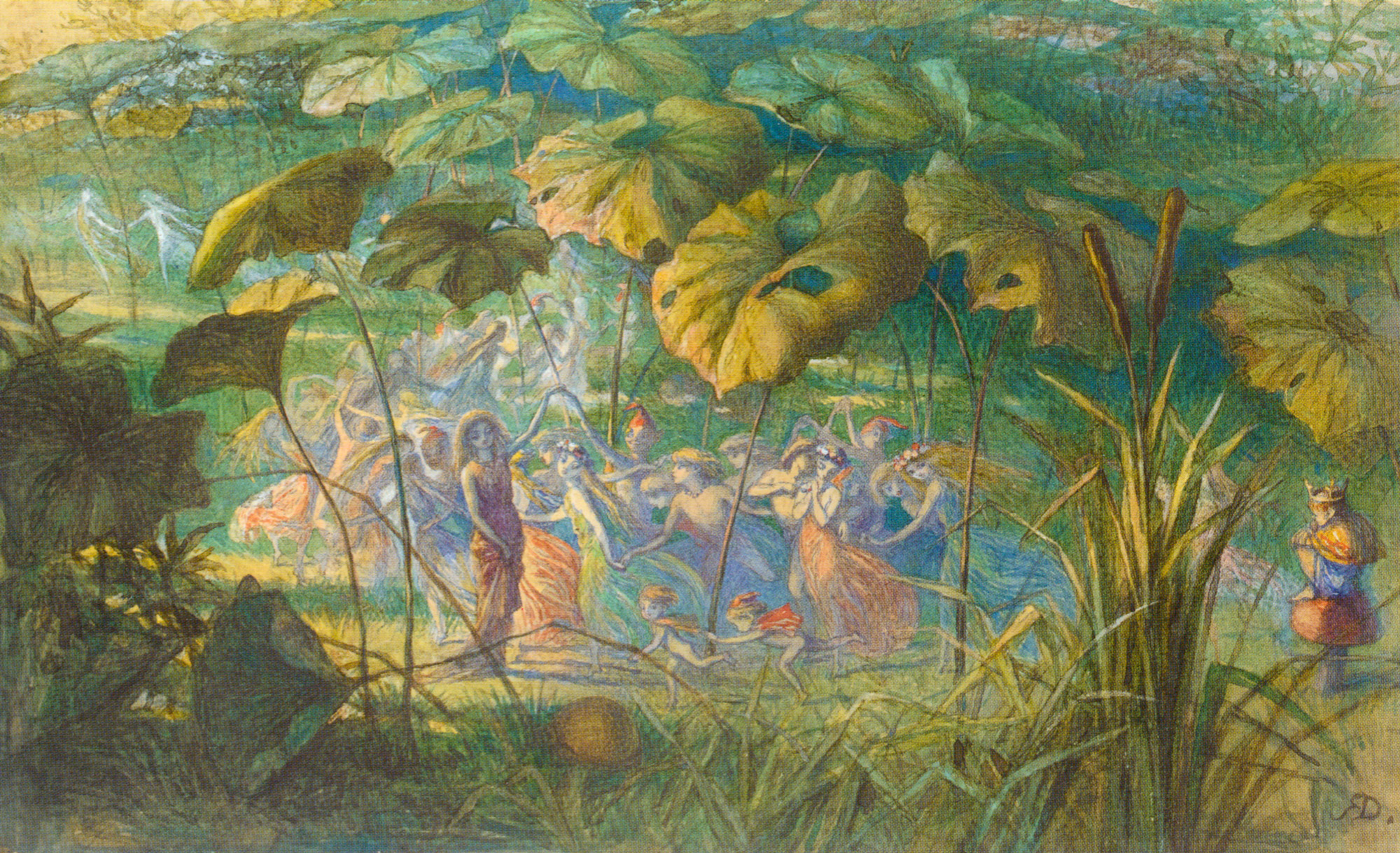
This mixing of all kinds of beings from Faerie—goblins, fairies, leprechauns, gnomes—and their diminutive size—note five uses of “little” and one “tiny” –is the second thing which strikes us. The shrinking of otherworld beings in English literature can be traced at least as far back as Shakespeare and A Midsummer Night’s Dream,

STC 22302, title page


but really catches hold in the 19th century, with the pictorial work of artists like Richard Doyle

image14doyle

image15fairyland

and which is parodied by WS Gilbert (1836-1911), in Iolanthe (1882), in which the human-sized (and often played by a stout woman) Queen of the Fairies talks all about curling “myself inside a buttercup”, all the while being costumed to look like a Valkyrie from Wagner’s operas—an extra visual joke (which is, in our Gilbert and Sullivan experience, no longer employed—a pity!).

image16queen

image17brunhilde

(Arthur Sullivan (1842-1900), who was the composer of Iolanthe, has left us a very beautiful overture for it.  Here’s a LINK so that you can hear it.)

JRRT seems, at the very beginning of his literary life, to have been caught up in this mixture of Shakespeare and Victoriana and Yeats’ “Celtic Twilight” mood and it’s perhaps for that reason that, later in life, looking back on it, he said of this early poem:

“I wish the unhappy little thing, representing all that I came (so soon after) to fervently dislike, could be buried forever.” (The Book of Lost Tales Part One, “The Cottage of Lost Play”, 32)

Was he embarrassed at his own youthful influences?  And there have certainly been later critics who have been hard upon the poem.

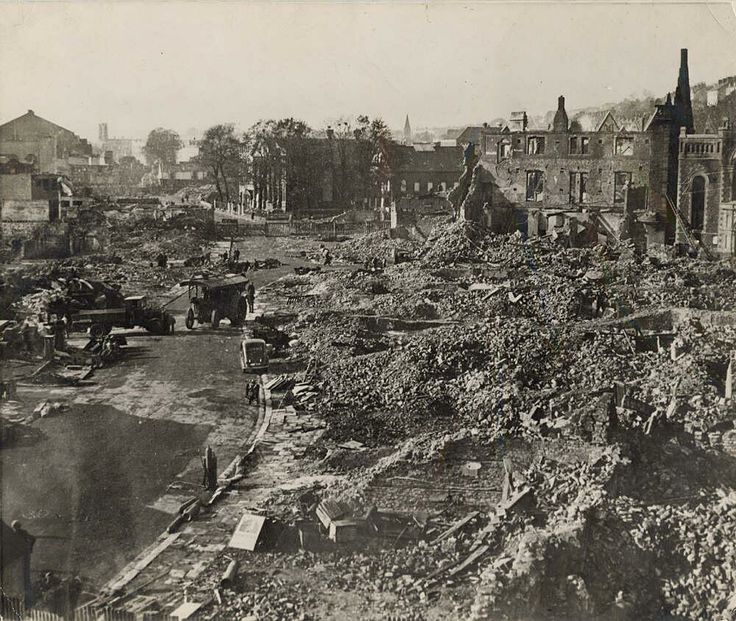
If we put it into the context of 1915, however, this longing to be anywhere but in wartime 1915 makes perfect sense, especially for a young, sensitive, highly-intelligent man deeply in love with a girl he’d worked so hard to be with. The real horrific violence of the Great War was kept hidden from the people of the UK by the Government.  Newspapers and magazines were censored, soldiers’ letters were censored (Tolkien and Edith developed a secret code in his letters to get around that censorship), soldiers were not allowed to keep diaries or have cameras (only official photographers were permitted to work at the Front—and their work was closely watched), but word still got back, mainly, we suspect, from those on leave, often wounded, who had experienced events which turned out like this—

image18casualties

Is it any wonder, with what he knew about and dreaded being part of, that JRRT would have wished to be on the road to Fairyland?

Thanks, as always, for reading.

MTCIDC

CD

ps

In our next, we want to think out loud a bit about the goblins whose feet JRRT wants so much to follow…

The Return of the King (Ludd)

19 Wednesday Oct 2016

Posted by Ollamh in Economics in Middle-earth, J.R.R. Tolkien, Literary History

≈ Leave a comment

Tags

allegory, anarchy, Boer War, bombing, Cold War, factories, Hitler, Labour Movement, Luddites, Monty Python and the Holy Grail, power-stations, Royal Air Force, Saruman, Second World War, Stalin, The Great War, The Lord of the Rings, The Scouring of the Shire, Theyocracy, Tolkien

Dear Readers, welcome, as always.

JRRT always actively denied that his work was allegorical, that somehow, for example, he meant Sauron to stand for Hitler (and why not Stalin?) and the Ring was the atomic bomb. In a draft of a letter from April, 1959, he wrote:

“I have no didactic purpose, and no allegorical intent. (I do not like allegory properly so called: most readers appear to confuse it with significance or applicability…” (Letters, 297-298)

And yet—

Well, someone born in 1892, who lived through everything from the Boer War (1899-1902) to the Great War (1914-1918) to the Second World War (1939-1945) and into the middle of the Cold War, with all of the proxy wars and wars for independence during the 1940s to 1970s, could not help being somehow at least affected by such large and dreadful events, particularly a man as sensitive and thoughtful as JRRT, and as historically-minded. Like it or not, Tolkien was entangled in contemporary history.

One way that this has struck us recently is rereading Letters and coming across this:

“There is only one bright spot and that is the growing habit of disgruntled men of dynamiting factories and power-stations; I hope that, encouraged now as ‘patriotism’, may remain a habit! But it won’t do any good, if it is not universal.” (JRRT to Christopher, 29 Nov 1943, Letters, 64)

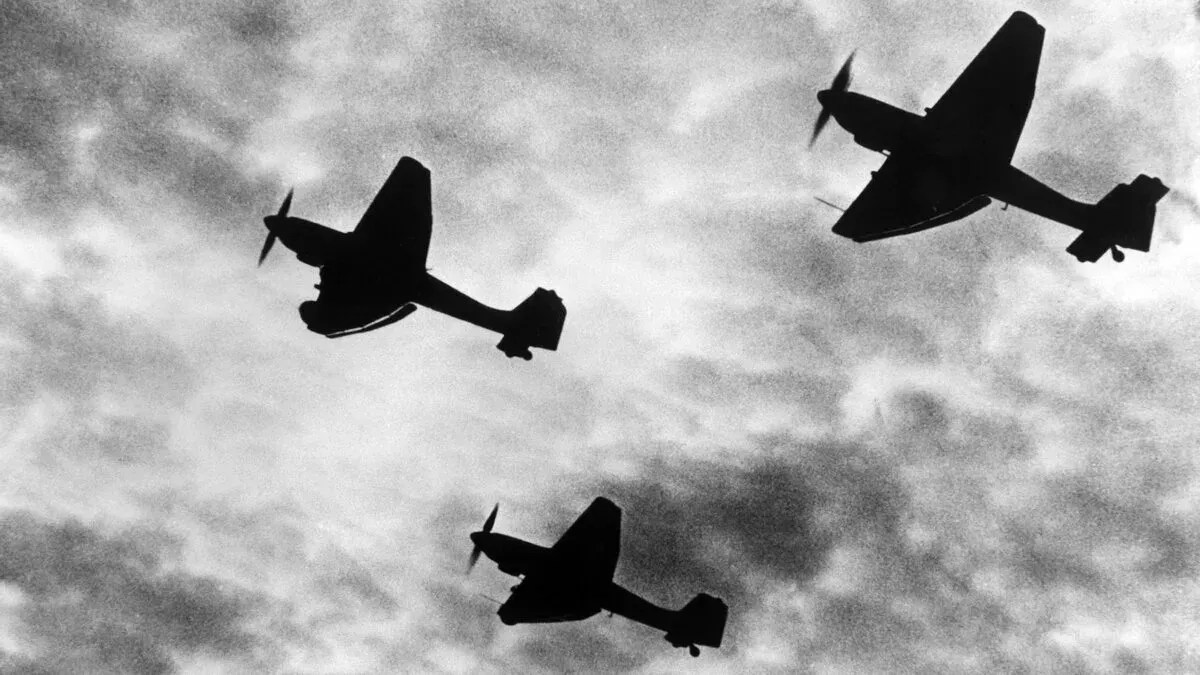
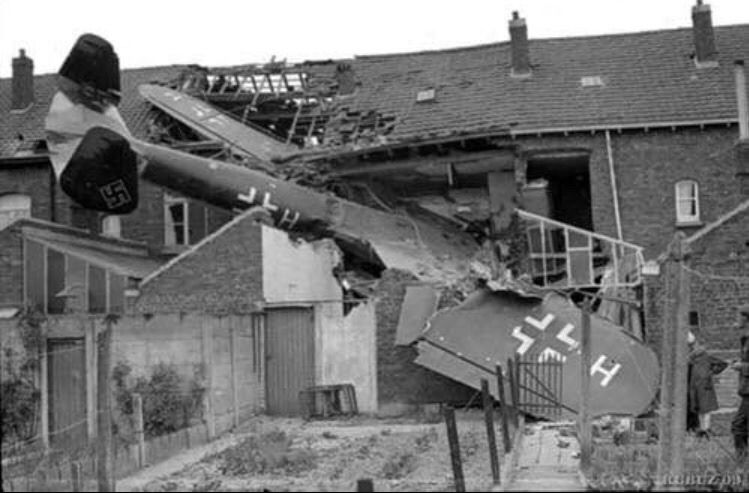
Looking at that date, it is clear that what he is referring to is, in fact, the Allied bombing campaigns against the Reich (and as his son was training in the RAF—Royal Air Force—at the time, perhaps some part of him was also dreading that Christopher might be part of future bombing runs. After all, a general consensus is that the RAF lost over 50,000 killed in its war against Germany. This is, of course, small in contrast to the 60,000 casualties incurred by the British Army on the first day of the Somme, 1 July, 1916, alone, but, with warfare having become much more mobile again in 1939-1945, these were significant losses.)

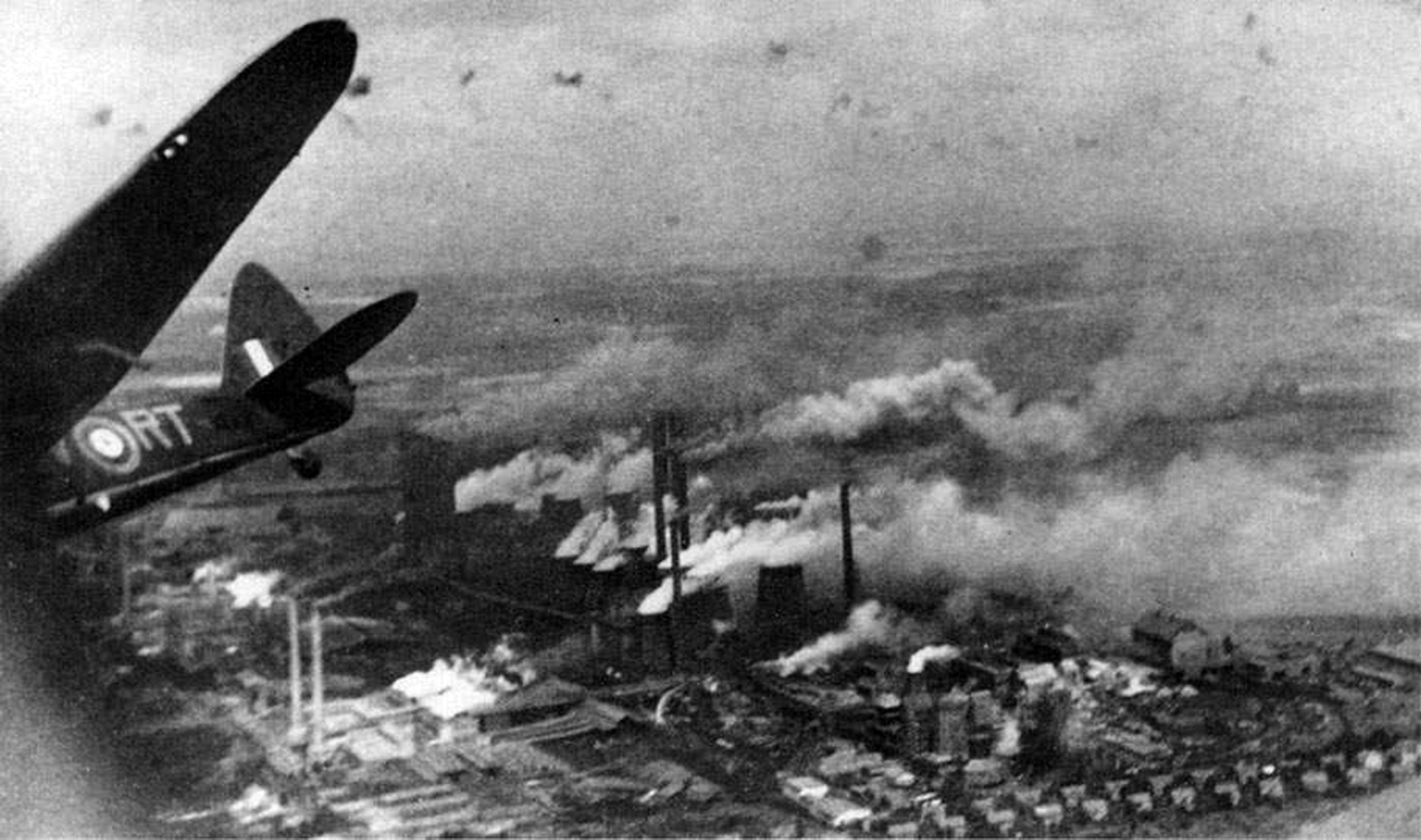
Here are, in fact, photos of the bombing of a German factory and a power station—the very sort of thing Tolkien is describing.

WAR & CONFLICT BOOK
ERA:  WORLD WAR II/WAR IN THE WEST/GERMANYCopy of RAF Blenheim V6391 After Bombing Goldenburg Power Station, Cologne

(Although, for the sake of our posting, we feel that it’s necessary to show illustrations like these, it’s hard for us to do so. In those smoke clouds are the lives of men, women, and children, with all of the loss and misery which war always brings. Yoda says, “Wars not make one great” and, when we think of the human cost, it’s hard for us to disagree. We only wish that all the violence in history was confined to adventure stories and that, in real life, people got along and there was no need ever for such awful behavior against fellow human beings.)

But why does Tolkien describe current events in such an odd way, in which the pilots of the British and US Air Forces are “disgruntled men” and their bombing raids are depicted as “the growing habit…of dynamiting factories and power-stations”? We would say that it’s because he is, in a way, turning current history around and looking at the past through it metaphorically.

The letter begins:

“My political opinions lean more and more to Anarchy (philosophically understood, meaning abolition of control not whiskered men with bombs…” (Letters, 63)

Anarchy, being about resistance to organized state control, has a very long history, both east and west. What JRRT is alluding to here is, rather, the late-19th, early 20th-century cartoon version of it—

bomb-throwing-cartoon

The real anarchists were deadly (pun intended) serious people, whose goal it was to criticize what they saw as the increasingly-intrusive top-down rule of the state and to suggest (and sometimes fight for) alternatives based upon loose associations of equals. If you know Monty Python’s Holy Grail, you’ll remember the scene in which King Arthur confronts someone who sounds at least like a Marxist, if not a full-fledged anarchist. (King Arthur and the Annoying Peasant from “Monty Python and the Holy Grail”) A central portion of the text includes this:

“WOMAN: I didn’t know we had a king. I thought that we were an autonomous collective.”

DENNIS: You’re fooling yourself. We’re living in a dictatorship…A self-perpetuating autocracy in which the working classes…”

Tolkien goes on to complain of what he believed was the growth and increasing facelessness of government, what he called the “Theyocracy” (63), but it’s clear from the later remark quoted above that what particularly disturbed him was the way in which he believed the state was involved in the ongoing Industrial Revolution, hence the focus upon “dynamiting factories and power-stations”.

JRRT’s objections to the ruination, as he saw it, of the world of his childhood run through all of his writings, but what we always think of first is its proxy version in “The Scouring of the Shire”, with its Saruman/Sharkey boss and everything from the wanton destruction of trees and the collectivization of the population to the building of what appear to be proto-factories.

scouring_the_shire.ingeredelfeldt

And his reaction reminds us immediately of an earlier reaction to industrialization, not for aesthetic or political reasons, but for economic, that movement in early 19th-century England called “the Luddites”. The name comes from, well, there are a number of explanations, none of them being particularly believable. We know, however, that it was a secret movement of very loosely-organized groups of cloth workers, but not one large body with complex plans to overthrow the system. Perhaps as a mockery of the perception that they were such a large body, they, over time, created a mysterious “General Ludd” or even “King Ludd” to suggest that that body not only existed, but had a sinister leader.

Luddite

The Luddites were made up of various segments of the traditional cloth-making industries who saw their livelihoods—and even their relative freedom—being destroyed by the introduction of large, water-powered mills filled with machinery which could do their jobs not only faster, but, as machines have no need for rest, also at a production level no human could ever match. Even if the workers kept to their trades, then, the mills and their output would simply swamp them.

quarrybanktextile-mill-cotton-1834-granger

This was also the time of the beginning of the Labo(u)r Movement in Britain and the government (not surprisingly, considering where the economic influences upon it might come from) had already begun to try to block it with the Combination Acts of 1799 and 1800, which placed severe penalties on workers attempting to form unions, or “combinations”.

When people tried simply to hold peaceful public meetings, the local authorities felt so threatened that they turned soldiers on the demonstrators, as here in Manchester, in August, 1819. 11 demonstrators were killed and several hundred were injured.

peterloo1

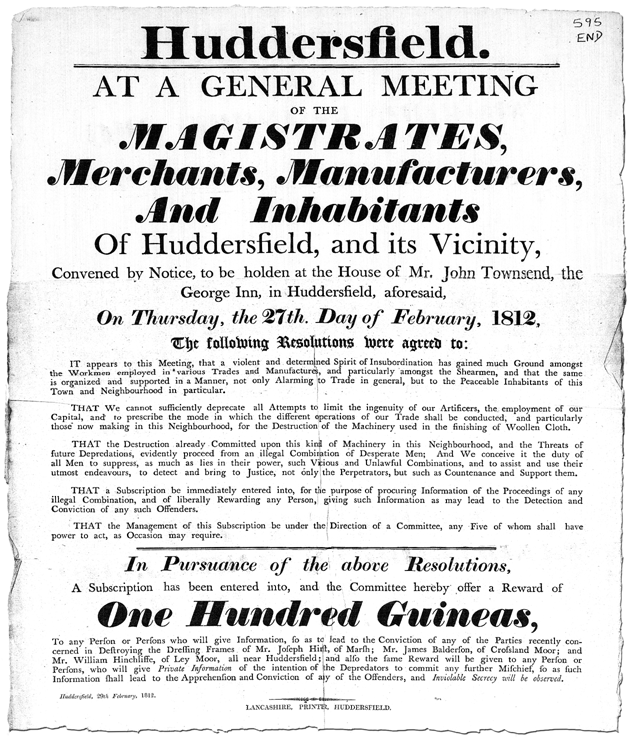
So much for peaceful demonstrations. The Luddites, seeing the attitude of the government, began to attack the mills and warehouses, as these posters show—

Radcliffe Arson Reward Poster, 21st March 1812 copyOates Wood Smithson & Dickinson Carr reward poster, 25th March 1812Cttee to Supress Outrages reward poster copyawsomne

as well as the machines themselves.

luddites1

Faced with the government, its laws, and its enforcement—which could even mean executing people, as was done at York in 1813—

executionofludditesatyork1813

the Luddites were a short-lived movement and had disappeared by about 1816.

Their idea about turning back the effects of the Industrial Revolution by violent means—at least in fantasy—however, clearly was still available, at least to JRRT in 1943.

Thanks, as always, for reading.

MTCIDC

CD

Sites and Vision

25 Wednesday Mar 2015

Posted by Ollamh in J.R.R. Tolkien, Military History, Military History of Middle-earth, Narrative Methods

≈ Leave a comment

Tags

Battle of Loos, John Garth, Morannon, Shell Holes, The Great War, Tolkien, World War I

Dear Readers,

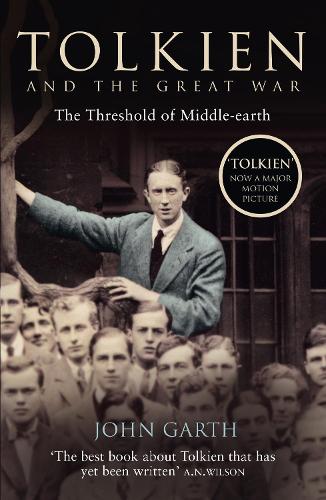
Although we said in our last that we were going to pursue further the subject of that post, recently, we’ve been readers of John Garth’s Tolkien and the Great War (2003—he has a new book we’re about to order– Tolkien at Exeter College. If this interests you, you should also check out his impressive website at http://www.johngarth.co.uk) and, thinking about JRRT’s time in the trenches brought us to the Morannon:

“Upon the west of Mordor marched the gloomy range of Ephel Duath, the Mountains of Shadow, and upon the north the broke peaks and barren ridges of Ered Lithui, grey as ash. But as these ranges approached one another, being indeed parts of one great wall about the mournful plains of Lithlad and of Gorgoroth, and the bitter inland sea of Nurnen amidmost, they swung out long arms northward; and between these arms there was a deep defile. This was Cirith Gorgor, the Haunted Pass, the entrance to the land of the Enemy. High cliffs lowered upon either side, and thrust forward from its mouth were two sheer hills, black-boned and bare. Upon them stood the Teeth of Mordor, two towers strong and tall…Stony-faced they were, with dark window-holes staring north and east and west, and each window was full of sleepless eyes.”

Although JRRT didn’t come to the Western Front until after the battle of Loos in September-October, 1915, that description reminded us of this:

loostourheader

This is the so-called “Tower Bridge” (actually the top structure of mine elevators), the most striking landmark of the long-drawn-out struggle by the British to push the Germans back from their defensive line. It was common for British soldiers to name local French and Belgian features after things from home. Hence, this

3643461875_39de460a0b

reminded them of this:

DSC_0015

The battlefield, however, also has more features similar to JRRT’s description of this bleak and ashy world in the artificial tailings (refuse heaps) from the coal mines which dotted the region.

15-blog-12

And, in the midst of this are Sam, Frodo, and Gollum:

“…lay now peering over the edge of a rocky hollow beneath the outstretched shadow of the northernmost buttress of Ephel Duath.”

Bomb-Hole

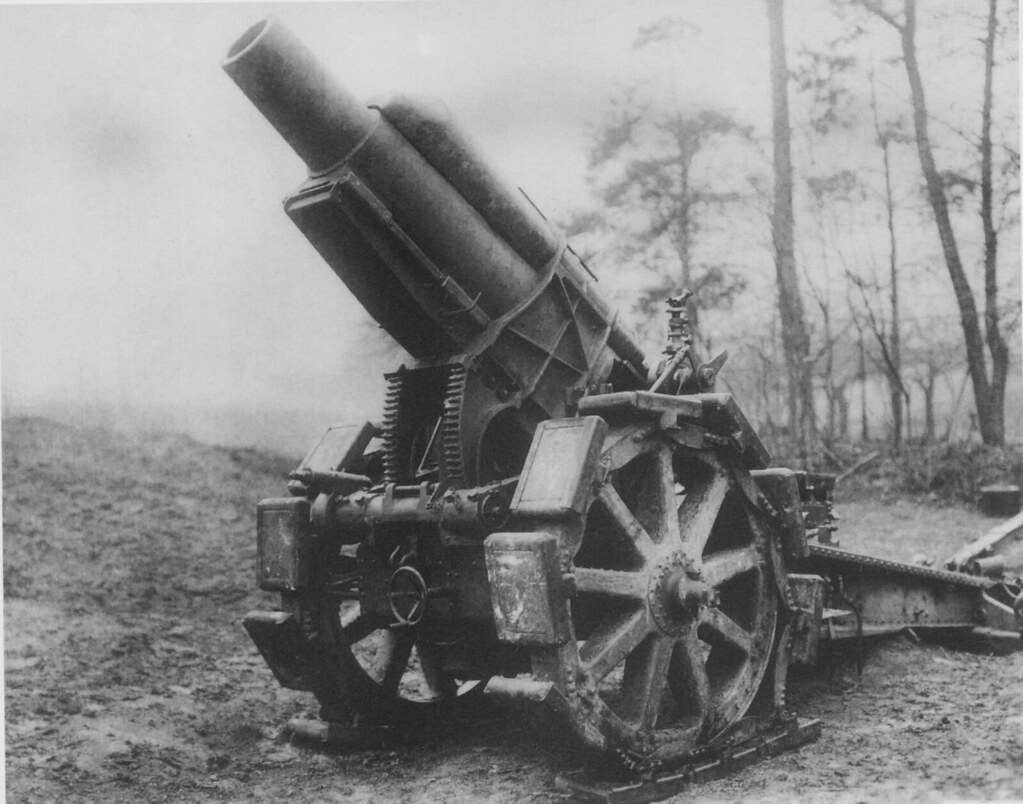
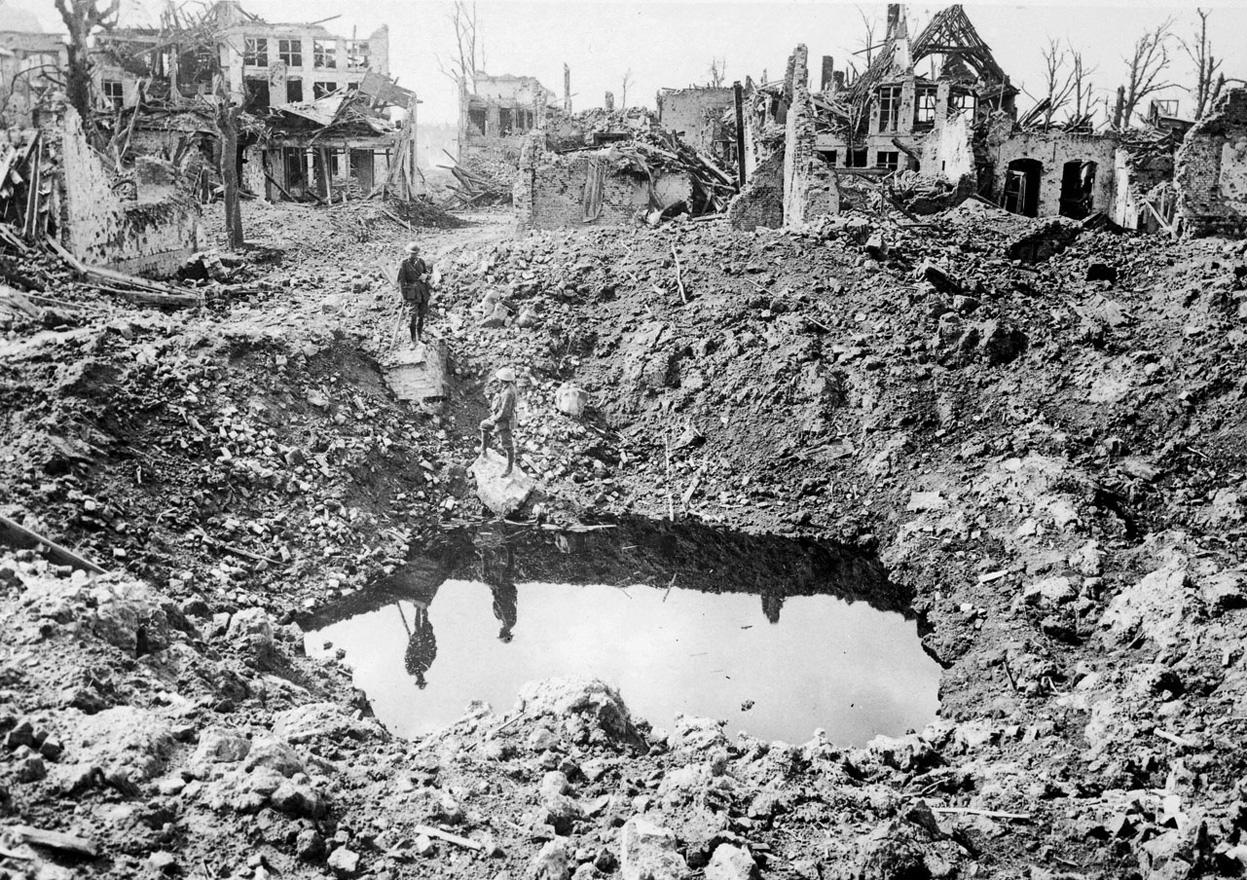
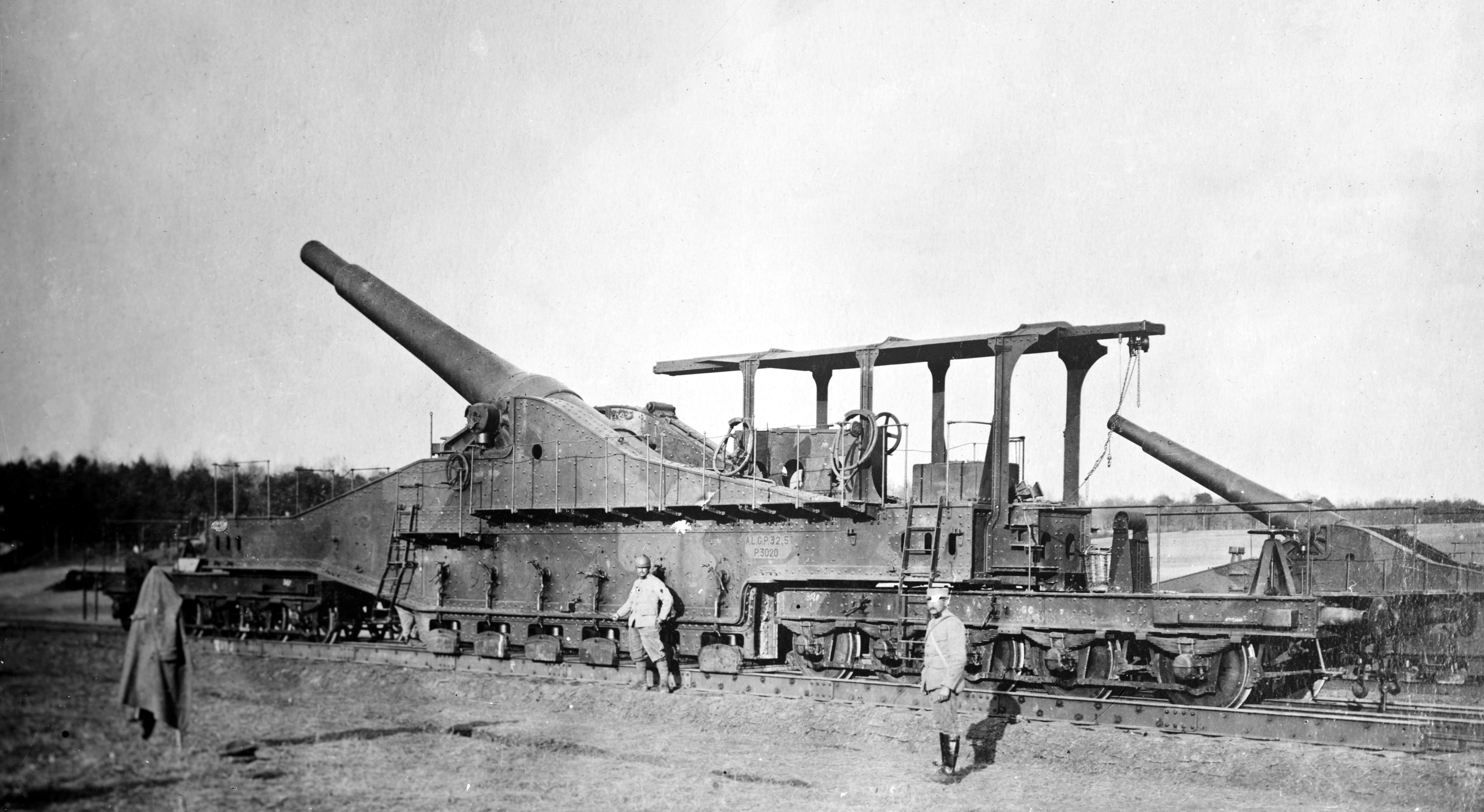
The area between British and German lines were pockmarked with holes blown in the earth by artillery shells,

French_Railway_Gun_27627u 

10x_dj2015_si-93-1530_live_jpg__600x0_q85_upscale

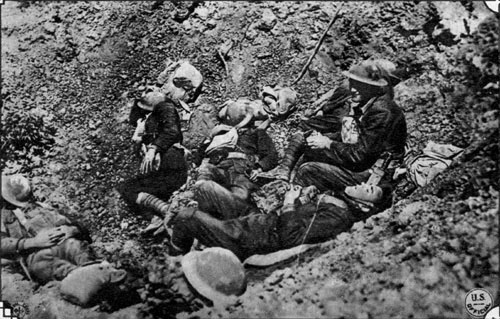
sometimes thousands of them, and soldiers advancing would use them as temporary shelters. 

121

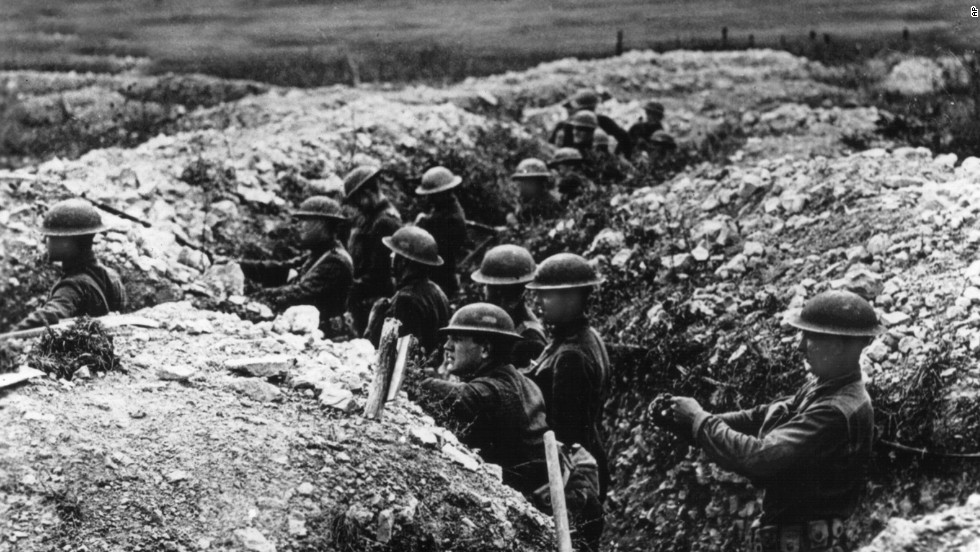
which could then be used as the basis of new trench systems. 

140606135336-21-wwi-main-timeline-0606-restricted-horizontal-large-gallery

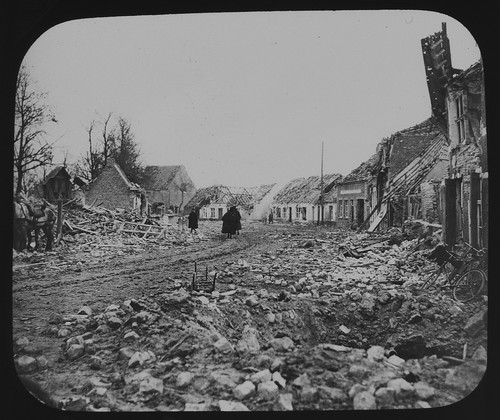
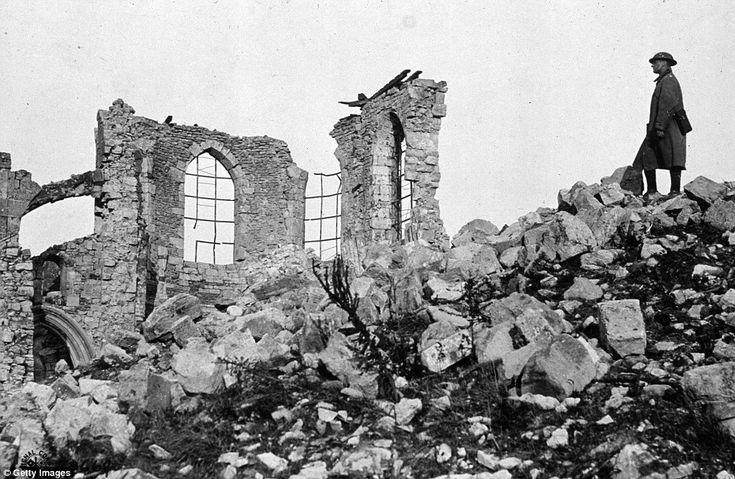
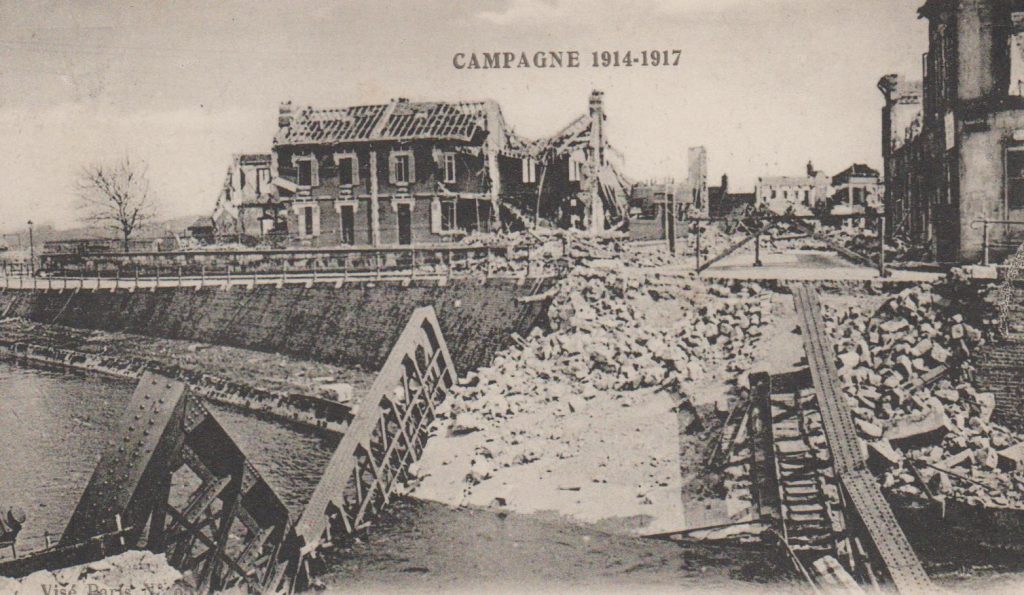
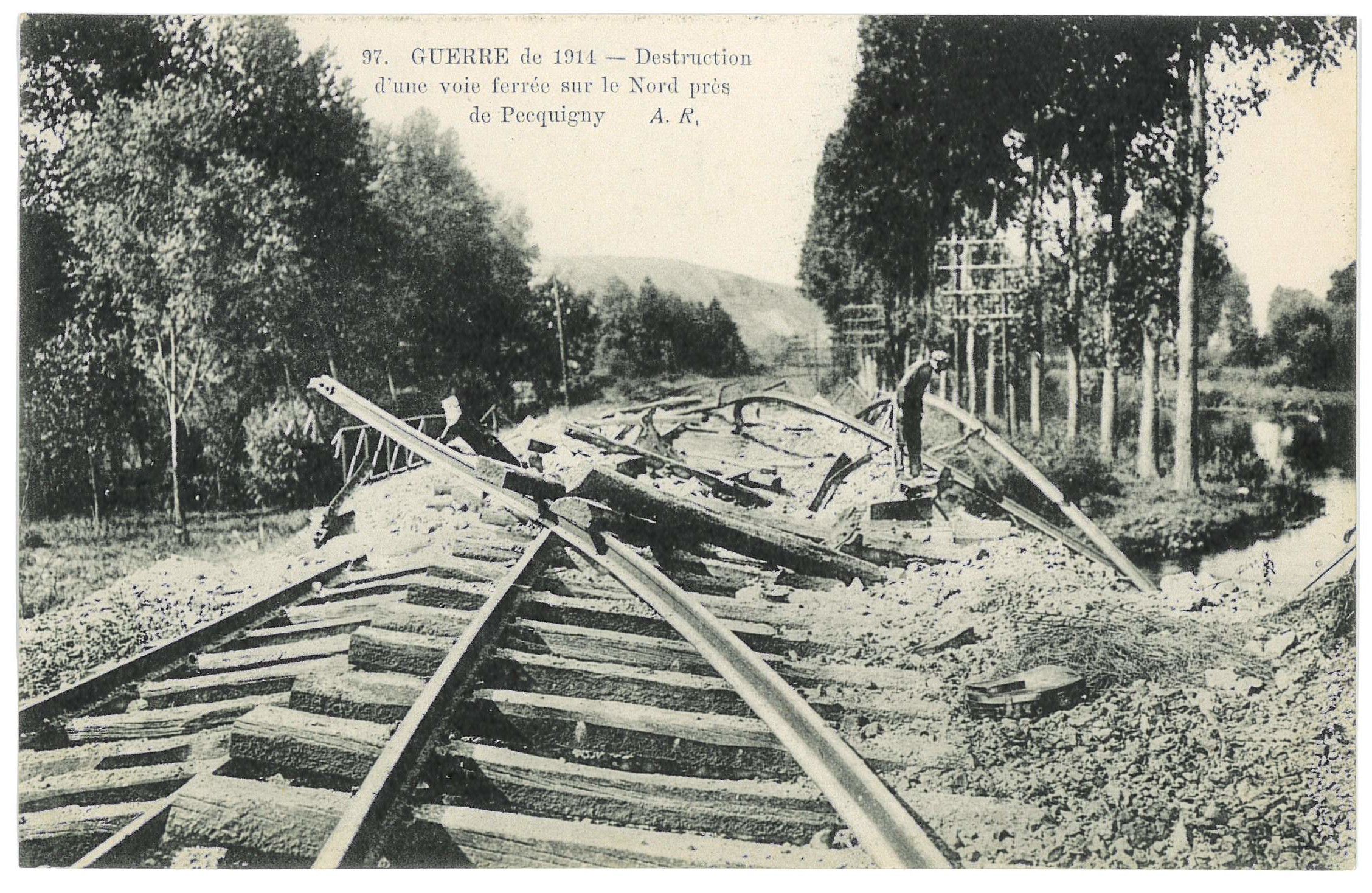
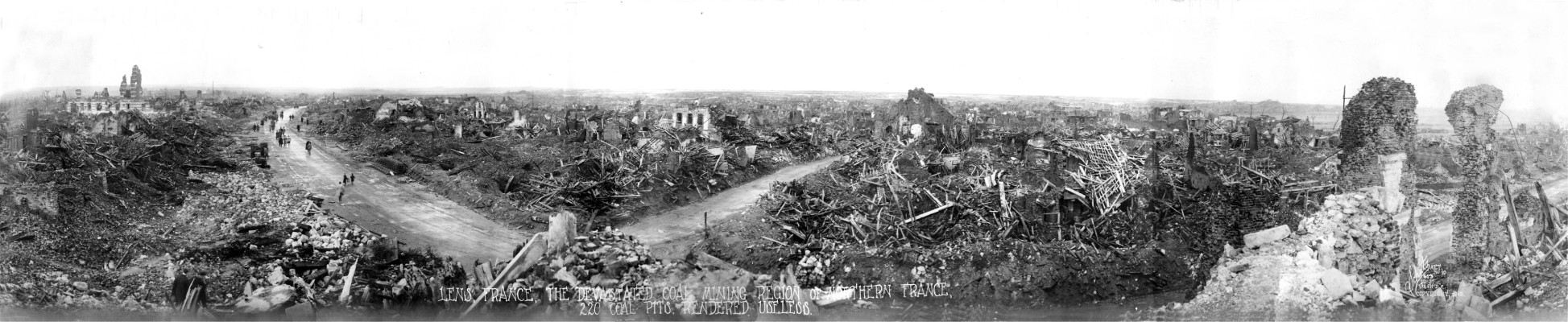
And, between those trench systems, was the area called “No Man’s Land “, in which whole villages and even forests could disappear into nothing but cellar holes and stumps:

damagefranceww1

HvAy67I

which look rather like the devastation described at the crossroads

“Presently, not far ahead, looming up like a black wall, they saw a belt of trees.  As they drew nearer they became aware that these were of vast size, very ancient it seemed, and still towering high, though their tops were gaunt and broken, as if tempest and lightning-blast had swept across them, but had failed to kill them or to shake their fathomless roots.”

JRRT strenuously objected to the idea that he was literally converting his thoughts and feelings and experiences in the two World Wars into Middle Earth prose, but he did say something about what he had seen:

“Personally I do not think that either war (and of course not the atomic bomb) had any influence upon either the plot or the manner of its unfolding.  Perhaps in landscape.  The Dead Marshes and the approaches to the Morannon owe something to Northern France after the Battle of the Somme…”

How could an intelligent, observant young man could live among such scenes and absorb them without finding some use for them—perhaps even as a kind of exorcism of the horrors he would rather not remember?

As ever, thanks for reading!

MTCIDC

The Doubtful Sea Series Facebook Page

The Doubtful Sea Series Facebook Page

  • Ollamh

Categories

  • Artists and Illustrators
  • Economics in Middle-earth
  • Fairy Tales and Myths
  • Films and Music
  • Games
  • Heroes
  • Imaginary History
  • J.R.R. Tolkien
  • Language
  • Literary History
  • Maps
  • Medieval Russia
  • Military History
  • Military History of Middle-earth
  • Narnia
  • Narrative Methods
  • Poetry
  • Research
  • Star Wars
  • Terra Australis
  • The Rohirrim
  • Theatre and Performance
  • Tolkien
  • Uncategorized
  • Villains
  • Writing as Collaborators
Follow doubtfulsea on WordPress.com

Across the Doubtful Sea

Recent Postings

  • A Moon disfigured December 17, 2025
  • On the Roads Again—Once More December 10, 2025
  • (Not) Crossing Bridges December 3, 2025
  • On the Road(s) Again—Again November 26, 2025
  • On the Road(s) Again November 19, 2025
  • To Bree (Part 2) November 12, 2025
  • To Bree (Part 1) November 5, 2025
  • A Plague o’ Both—No, o’ All Your Houses! October 29, 2025
  • It’s in Writing (2:  I’st a Prologue, or a Poesie for a Ring?) October 22, 2025

Blog Statistics

  • 103,201 Views

Posting Archive

  • December 2025 (3)
  • November 2025 (4)
  • October 2025 (5)
  • September 2025 (4)
  • August 2025 (4)
  • July 2025 (5)
  • June 2025 (4)
  • May 2025 (4)
  • April 2025 (5)
  • March 2025 (4)
  • February 2025 (4)
  • January 2025 (5)
  • December 2024 (4)
  • November 2024 (4)
  • October 2024 (5)
  • September 2024 (4)
  • August 2024 (4)
  • July 2024 (5)
  • June 2024 (4)
  • May 2024 (5)
  • April 2024 (4)
  • March 2024 (4)
  • February 2024 (4)
  • January 2024 (5)
  • December 2023 (4)
  • November 2023 (5)
  • October 2023 (4)
  • September 2023 (4)
  • August 2023 (5)
  • July 2023 (4)
  • June 2023 (4)
  • May 2023 (5)
  • April 2023 (4)
  • March 2023 (5)
  • February 2023 (4)
  • January 2023 (4)
  • December 2022 (4)
  • November 2022 (5)
  • October 2022 (4)
  • September 2022 (4)
  • August 2022 (5)
  • July 2022 (4)
  • June 2022 (5)
  • May 2022 (4)
  • April 2022 (4)
  • March 2022 (5)
  • February 2022 (4)
  • January 2022 (4)
  • December 2021 (5)
  • November 2021 (4)
  • October 2021 (4)
  • September 2021 (5)
  • August 2021 (4)
  • July 2021 (4)
  • June 2021 (5)
  • May 2021 (4)
  • April 2021 (4)
  • March 2021 (5)
  • February 2021 (4)
  • January 2021 (4)
  • December 2020 (5)
  • November 2020 (4)
  • October 2020 (4)
  • September 2020 (5)
  • August 2020 (4)
  • July 2020 (5)
  • June 2020 (4)
  • May 2020 (4)
  • April 2020 (5)
  • March 2020 (4)
  • February 2020 (4)
  • January 2020 (6)
  • December 2019 (4)
  • November 2019 (4)
  • October 2019 (5)
  • September 2019 (4)
  • August 2019 (4)
  • July 2019 (5)
  • June 2019 (4)
  • May 2019 (5)
  • April 2019 (4)
  • March 2019 (4)
  • February 2019 (4)
  • January 2019 (5)
  • December 2018 (4)
  • November 2018 (4)
  • October 2018 (5)
  • September 2018 (4)
  • August 2018 (5)
  • July 2018 (4)
  • June 2018 (4)
  • May 2018 (5)
  • April 2018 (4)
  • March 2018 (4)
  • February 2018 (4)
  • January 2018 (5)
  • December 2017 (4)
  • November 2017 (4)
  • October 2017 (4)
  • September 2017 (4)
  • August 2017 (5)
  • July 2017 (4)
  • June 2017 (4)
  • May 2017 (5)
  • April 2017 (4)
  • March 2017 (5)
  • February 2017 (4)
  • January 2017 (4)
  • December 2016 (4)
  • November 2016 (5)
  • October 2016 (6)
  • September 2016 (5)
  • August 2016 (5)
  • July 2016 (5)
  • June 2016 (5)
  • May 2016 (4)
  • April 2016 (4)
  • March 2016 (5)
  • February 2016 (4)
  • January 2016 (4)
  • December 2015 (5)
  • November 2015 (5)
  • October 2015 (4)
  • September 2015 (5)
  • August 2015 (4)
  • July 2015 (5)
  • June 2015 (5)
  • May 2015 (4)
  • April 2015 (3)
  • March 2015 (4)
  • February 2015 (4)
  • January 2015 (4)
  • December 2014 (5)
  • November 2014 (4)
  • October 2014 (6)
  • September 2014 (1)

Blog at WordPress.com.

  • Subscribe Subscribed
    • doubtfulsea
    • Join 78 other subscribers
    • Already have a WordPress.com account? Log in now.
    • doubtfulsea
    • Subscribe Subscribed
    • Sign up
    • Log in
    • Report this content
    • View site in Reader
    • Manage subscriptions
    • Collapse this bar
 

Loading Comments...