• About

doubtfulsea

~ adventure fantasy

Tag Archives: Rohirrim

It’s in Writing (1)

15 Wednesday Oct 2025

Posted by Ollamh in Uncategorized

≈ Leave a comment

Tags

augury, Belshazzar, class in the Shire, Daniel, Dwarves, Fantasy, Jerome, literacy in Middle-earth, reading, Rohirrim, Sam Gamgee, scribes, the handwriting on the wall, Tolkien, Writing

As always, dear readers, welcome.

Belshazzar, the king of the Babylonians, was having a lovely party—

“Baltassar rex fecit grande convivium optimatibus suis mille: et unusquisque secundum suam bibebat aetatem.”

“Belshazzar held a great banquet for a thousand of his elite and each one was drinking according to his time of life.”
But, wishing to up the fun, he decided to make the party a bit more lavish—

Praecepit ergo jam temulentus ut afferrentur vasa aurea et argentea, quae asportaverat Nabuchodonosor pater ejus de templo, quod fuit in Ierusalem, ut biberent in eis rex, et optimates ejus, uxoresque ejus, et concubinae.

“And so now, being drunk, he ordered that the golden and silver vessels which Nebuchadnezzar, his father, had carried away from the temple which had been in Jerusalem be brought in so that the king and his nobles and his wives and concubines might drink in them.”

[“fuit” here is the perfect form and might be translated “has been”, but that form can suggest a permanent state, the pluperfect, suggesting that there would be no more Jerusalem.]

and then things go very wrong–

“In eadem hora apparuerunt digiti, quasi manus hominis scribentis contra candelabrum in superficie parietis aulae regiae: et rex aspiciebat articulos manus scribentis.”

“In the same hour, there appeared fingers, like a man’s hand, opposite the lampstand, writing on the surface of the wall of the royal hall, and the king was staring at the joints of the hand writing.”
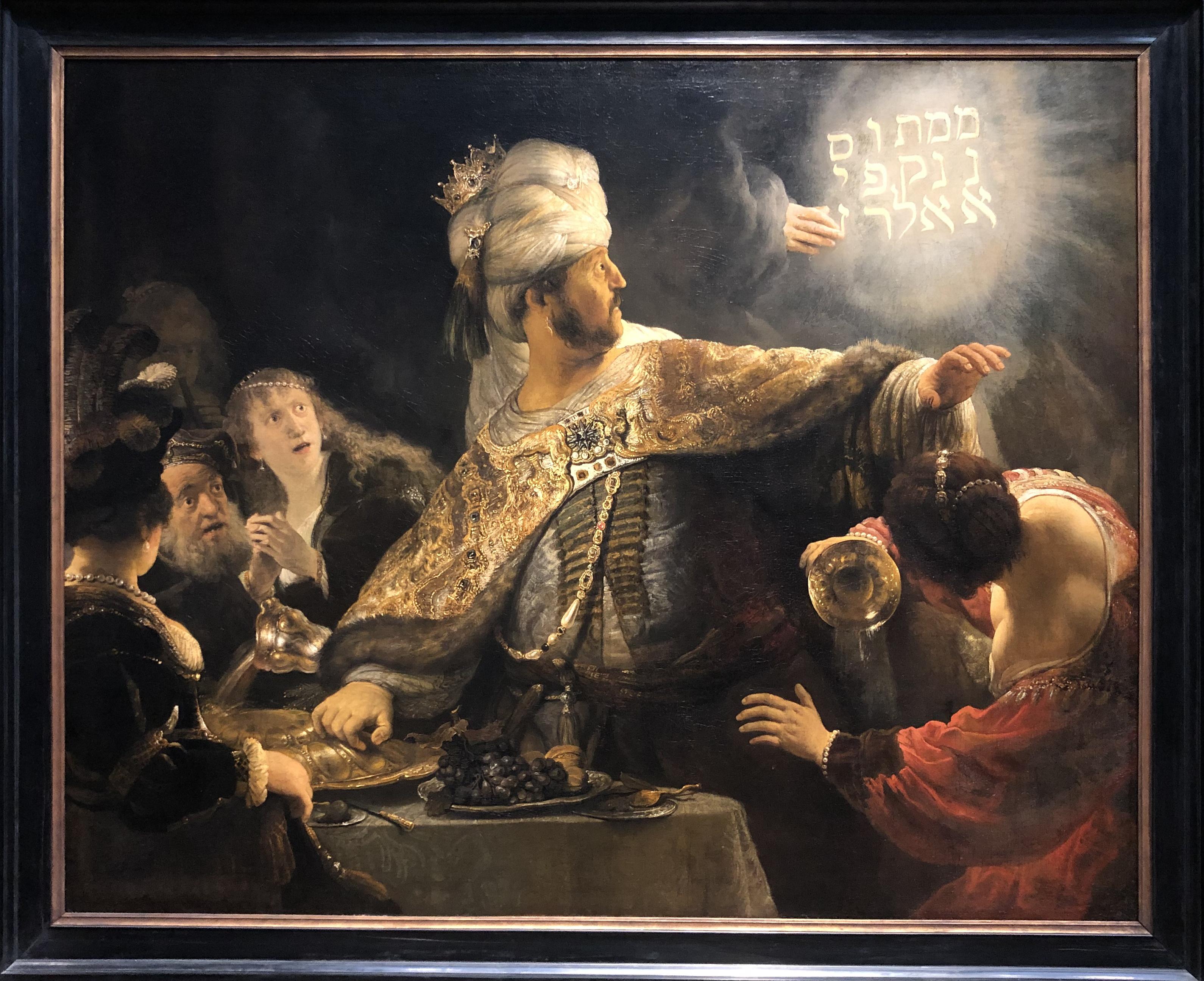
(Rembrandt—who clearly had no idea what the real Babylonian king would have worn, but settled for something right out of the visit of the Magi, which was undoubtedly good enough for his audience, who would have had no more idea than he did)

Needless to say, this was a bad omen, but one his own counselors couldn’t interpret, as the message was not in Babylonian.  His queen, however, recommended that a Jewish interpreter, Daniel, be summoned, who arrived and interpreted the writing, which may have included some rather fancy word-play, but which meant:  “You are not long on the throne and your kingdom is about to become the property of the Persians.”

(All Latin translations are mine from Section 5 of “The Book of Daniel”.  The Latin text is from Jerome’s 4th-century translation, which you can read, with an English translation, here:     https://vulgate.org/ot/daniel_5.htm  For more on the message, see:   https://www.christianitytoday.com/2024/11/andrew-wilson-spirited-life-daniel-writing-on-wall-babylon/   For more on the historic Belshazzar—an ironic name as far as the ancient Hebrews must have been concerned, as it means “[the god] Bel [aka Baal] protect the king” which the Book of Daniel indicates that he certainly didn’t!—see:  https://en.wikipedia.org/wiki/Belshazzar )

Behind this story lies not only the status of Daniel as prophet and interpreter, and the idea that the Hebrew God is not to be messed with, even by kings, but also, for this posting, the importance of writing—the omen isn’t, like so many others, based on the flight of birds or the liver of a sheep or the behavior of chickens,
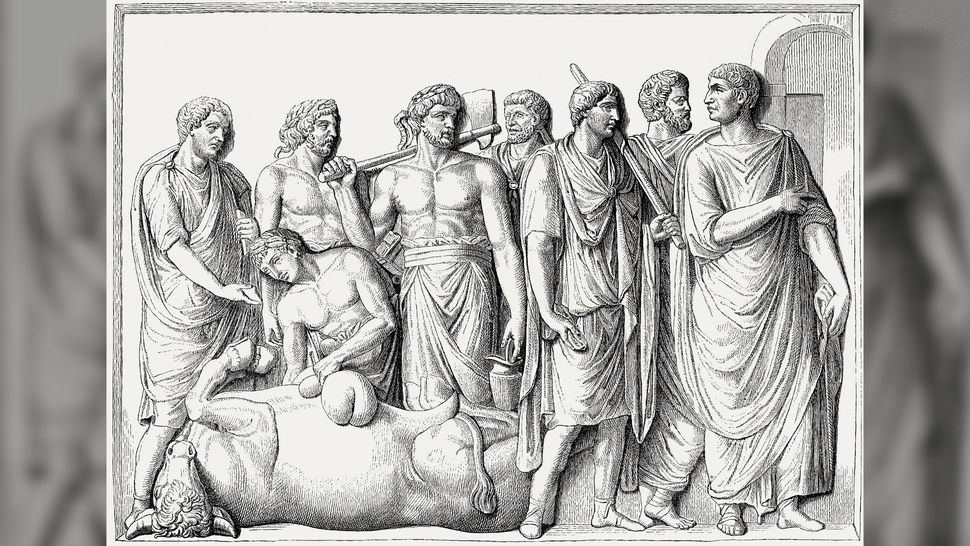
(for more on such practices see:  https://en.wikipedia.org/wiki/Augury )

all things which the ancient world would have thought significant–but on something handwritten (literally) on a palace wall.  This is clearly so unusual that its significance is immediately multiplied, and which, since Daniel can not only interpret it, but, to do so, he can read it, tells us something more about Daniel:   he is literate.

Because we in the modern West live in such a literate world ourselves, it’s sometimes hard to understand earlier worlds where literacy was not the norm.  Could Belshazzar read?  Probably not:  that was the job of technical people, scribes,
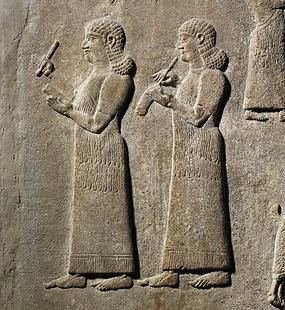
(These are actually Sumerians, but can stand in for Babylonian scribes, as the Babylonians used the writing system, cuneiform,

which the Sumerian scribes had invented.)

whom rulers could call upon when needed, as we see in ancient and medieval societies in general.  Literacy was a skill, like carpentry or masonry, and limited in the number of people who could practice it.  Could this have been true in Middle-earth, based as it is upon the medieval world of our Middle-earth, as well?

Gondor appears to have had a long tradition at least of extensive record-keeping, as we hear from Gandalf:

“And yet there lie in his hoards many records that few even of the lore-masters now can read, for their scripts and tongues have become dark to later men.” (The Fellowship of the Ring, Book Two, Chapter 2, “The Council of Elrond”)

As for the Rohirrim, I would guess that, although there may have been some literacy, much of their past—and possibly their present—was preserved in oral tradition, as Aragorn says of Meduseld:

“But to the Riders of the Mark it seems so long ago…that the raising of this house is but a memory of song.” (The Two Towers, Book Three, Chapter 6, “The King of the Golden Hall”)

And Theoden says to Aragorn:

“Will you ride with me then, son of Arathorn?  Maybe we shall cleave a road, or make an end as will be worth a song—if any be left to sing of us hereafter.”  (The Two Towers, Book Three, Chapter 7, “Helm’s Deep”)

In the Prologue to The Lord of the Rings, we are told that the Hobbits as a whole had had potential literacy for some time, in fact, from their days of moving westwards towards what would become the Shire:

“It was in these early days, doubtless, that the Hobbits learned their letters and began to write, after the manner of the Dunedain, who had in their turn long before learned the art from the Elves.”  (The Lord of the Rings, Prologue I, “Concerning Hobbits”)

As in the case of other medieval worlds, however, this was seemingly not general literacy, although rather than being the possession of a specialized class, as in Babylon or ancient Egypt,

it might, instead, have been a mark of class.

Consider Sam Gamgee.  His father is the gardener for Bilbo Baggins and Sam is his assistant.

(Robert Chronister)

From his position—and from the way he addresses his “betters” as “Mister”, while they address him by his first name—it’s clear that Sam and his father are not of the same social class as the Bagginses.   And so, when the Gaffer says:

“Mr. Bilbo has learned him his letters—meaning no harm, mark you, and I hope no harm will come of it.”  (The Fellowship of the Ring, Book One, Chapter 1, “A Long-Expected Party”)

This appears to be what we might call a mark of that class difference:  Bilbo, a ‘gentleman” can read, although, as we hear of no academies in the Shire, presumably through home-schooling, implying that there was at least one other person in his family’s household who could also read and who had taught him.  Considering the Gaffer’s potential uneasiness about it—why should there be harm in being able to read?—I think that we can imagine that the Gaffer himself could not—and himself was aware of the class distinction (Sam might get ideas “above his station”?).

And yet it’s to Sam that Frodo passes the book begun so long ago by Bilbo:

“ ‘Why, you have nearly finished it, Mr. Frodo!’ Sam exclaimed.  ‘Well, you have kept at it, I must say.’

‘I have quite finished, Sam,’ said Frodo.  ‘The last pages are for you.’ “ (The Return of the King, Book Six, Chapter 9, “The Grey Havens”)

Daniel’s literacy gives him the ability to read the Hebrew God’s warning to Belshazzar, establishing his importance in the story (which continues, as he becomes the confidant and friend of the new king, Darius.)

And here we see the real reason JRRT had given Sam literacy:  not that he might read Bilbo/Frodo’s efforts, but that he might write and therefore complete the story of The Lord of the Rings, and thus add one more element to his importance in the narrative.

In our next posting, however, we will examine another use of writing and reading—and a much less benign one.

Thanks, as always for reading.

Stay well,

Delight in the fact that you can read,

And remember that there’s always

MTCIDC

O

PS

As to evidence of general literacy in the Shire, we see, in “The Scouring of the Shire”, some public notices—a sign on the new gate on the bridge over the Brandywine (“No admittance between sundown and sunrise”) and an anonymous hobbit calls out “Can’t you read the notice?”  In the watch house just beyond we see:   “…on every wall there was a notice and list of Rules”. As far as I can tell, however, these are the only public signs we see in Middle-earth and seem to me more about Authority than literacy.   Just the fact that they’re there must have an effect upon cowed hobbits, even if they can’t read.

PPS

For completeness sake, although we have only bits and pieces of dwarvish, we can say that at least some dwarves were literate, evidence being the fragmentary account of the reworking of Moria which the Fellowship find in the Chamber of Records there,

as well as the inscription on Balin’s tomb. (for more on JRRT’s work on recreating that fragmentary record, the so-called Book of Mazarbul, see: “Aging Documents”, 31 July, 2024)

To Horse!

18 Wednesday Jun 2025

Posted by Ollamh in Uncategorized

≈ Leave a comment

Tags

Agincourt, bicycle, Boer War, cavalry charges, Charge of the Light Brigade, Cu Chulainn, Dwarves, Fredegunda, Gregory of Tours, heavy artillery, Historia Francorum, Hobbits, horses, King Edward's Horse, lotr, machine gun, machine-guns, Nazgul, Normans, Pegasus, Rohirrim, Russian Civil War, signals officer, Sleipnir, The Hobbit, Tolkien, Valkyries

In a colleague’s office, I once saw this on his wall—

“Proletariat, to horse!”

It’s a recruiting poster from the Russian civil war (1918-1922), showing the Reds trying to raise cavalry for their armies, but, at the time this call came, the military world was changing and, although horsemen would still appear, very sporadically, on battlefields, for some years to come, the day of events like this—

was rapidly coming to a close.

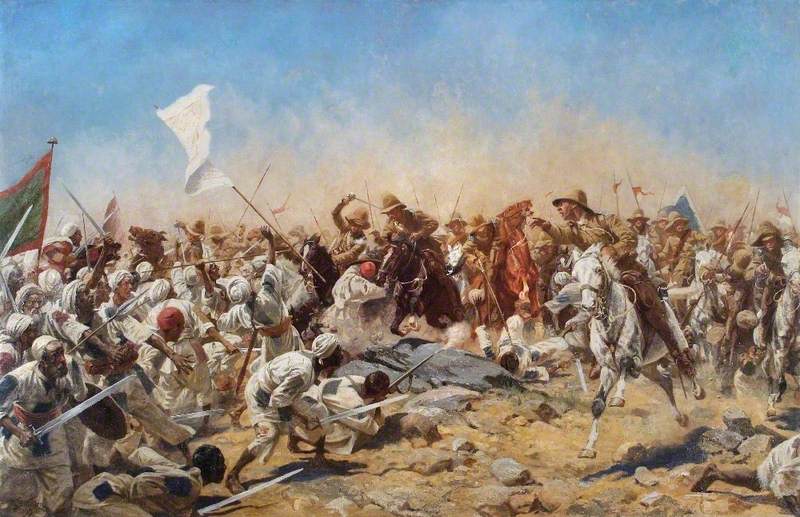
It didn’t happen all at once, however.  As you can imagine, traditional cavalrymen—those who believed that swinging a sword in a valiant charge was the point of cavalry—

fought back.  The evidence was against them, however, in two ways.

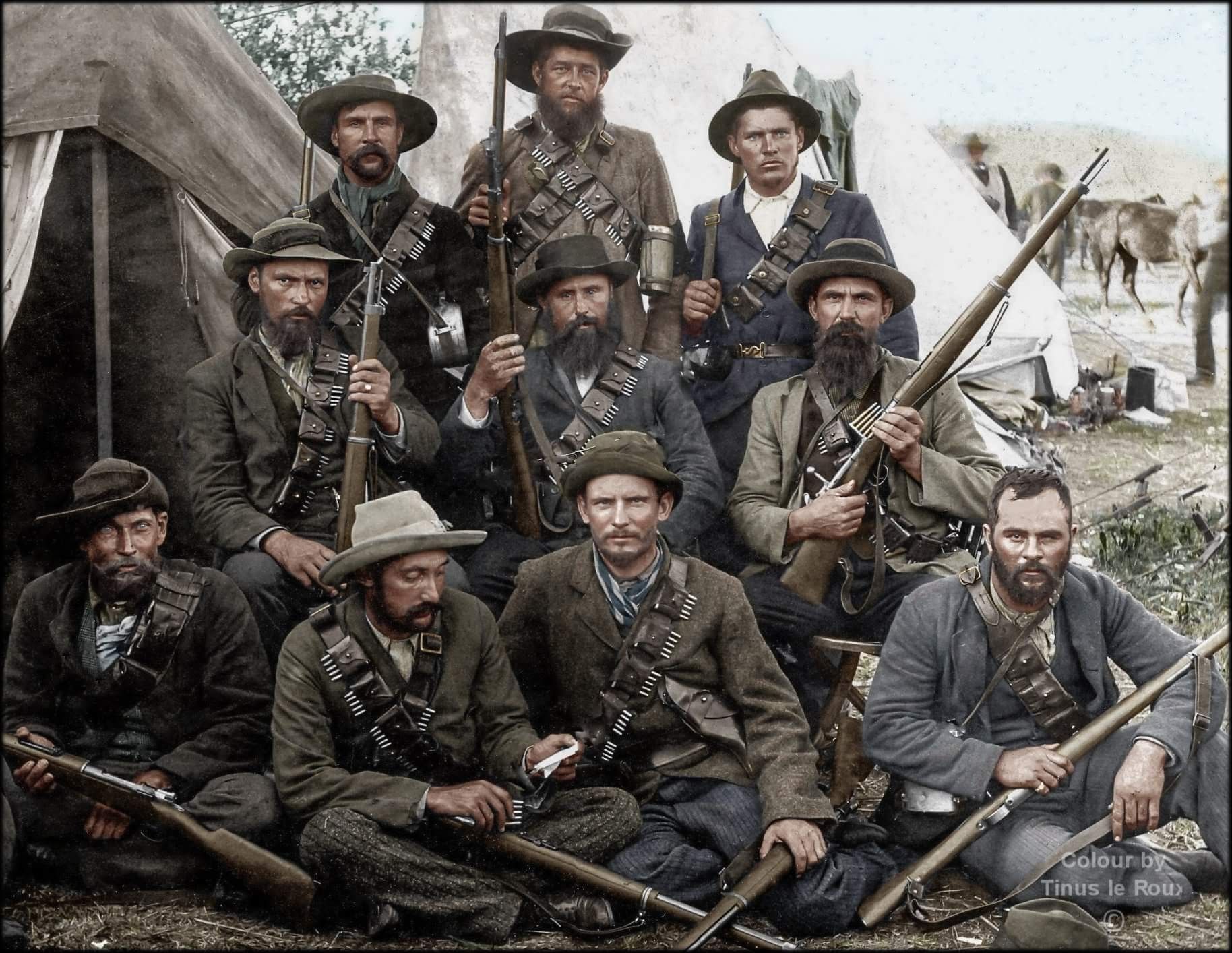
First, in the case of the British, there had been the Boers,

with whom the British had fought a war, from 1899-1902.  The Boers (Dutch for “farmers”) had been militia—men obliged by law to defend the state upon demand.  Across the wide open spaces of so much of South Africa, they had fought as mounted infantry, using horses as a means of moving from place to place, then dismounting for combat and, if things didn’t go their way, mounting up and escaping.

To counter this, especially in the later phases of the war, the British were forced to develop their own mounted infantry,

which suggested to some military theorists at the time that the wave of the future was not in sword-swingers, but in riflemen, who could rapidly move to where they were needed, but employ horses for transport, not for gallant charges.  (This also led to the rise of units mounted entirely on bicycles,

but we can imagine the off-road difficulties for early machines and, although there were bicycle units as late as WW2, they never had the popularity—or the dash—of horsemen.)

The second piece of evidence lies in technological change. 

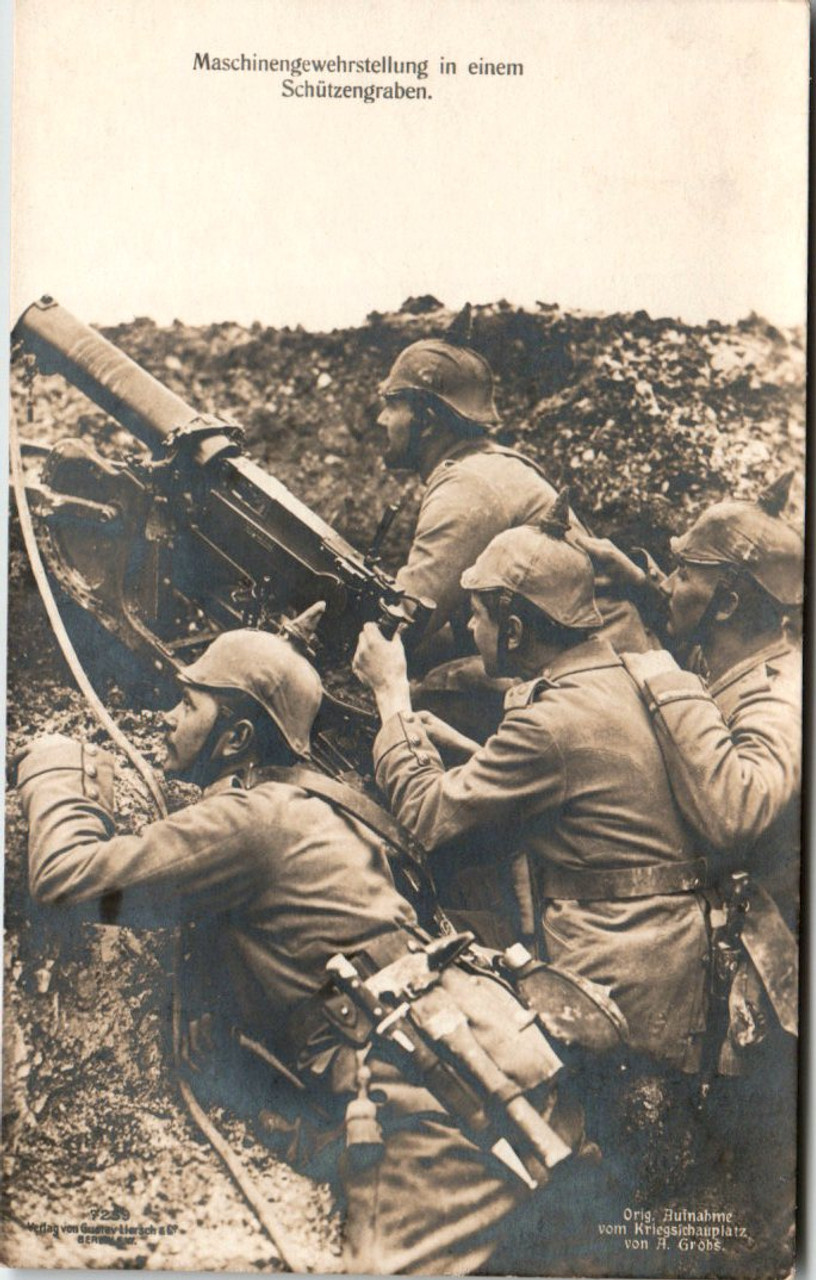
With the coming of the 20th century, machine guns, sometimes firing as many as 600 rounds (shots) per minute,

appeared in increasing numbers and artillery was developed to become more accurate at greater distances.

In self-defense, soldiers would be forced to take cover wherever they could,

at first in holes simply scraped out of the ground, but, in time, in very sophisticated lines, shored up with wood and metal and sandbags.

On the Western Front, where everyone was dug into the ground, and being in the open could mean instant destruction, there simply wasn’t a place for old-fashioned cavalry, for all that there were still lots of old-fashioned cavalrymen in the army—like the first commander of the British in France in 1914, Sir John French.

Imagine, then, that this was all happening when Tolkien was very young—when the Boer War ended, in 1902, for instance, he would have been only 10.

(JRRT and his brother, Hillary, in 1905)

His own military career had begun at King Edward’s School in Birmingham, when he entered the new Cadet Corps in 1907.

(For more, see this essay by John Garth: https://johngarth.wordpress.com/2014/03/05/tolkien-at-fifteen-a-warrior-to-be/ )

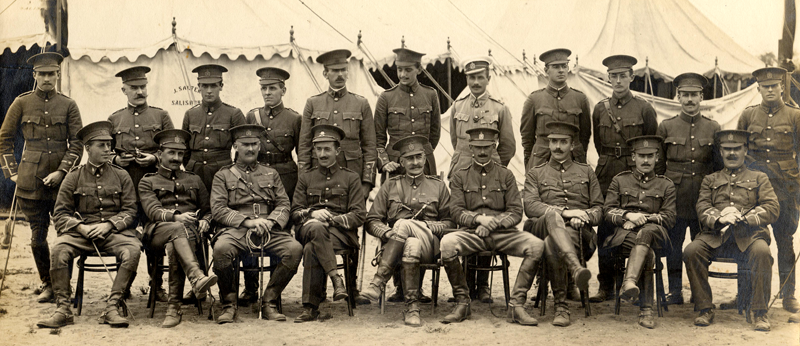
Then, in the summer of 1912, he was briefly a member of a territorial (a sort of national guard unit) cavalry regiment, King Edward’s Horse.  (The reference here is to Carpenter’s J.R.R.Tolkien, 66.  John Garth later added detail to this, but subsequently qualified it, saying that his evidence was faulty.  See:  https://oxfordinklings.blogspot.com/2009/06/tolkien-and-horses.html )

(Officers of the regiment about 1916)

It was clearly an indication of the drop in the use of cavalry, however, when JRRT began his second enlistment not in a cavalry, but an infantry regiment, the Lancashire Fusiliers, in which he was commissioned as a 2nd Lieutenant in 1915.

In his brief battlefield career, he was the signals officer for his battalion, the 11th.  In the advance into the Somme in July, 1916, Tolkien, although armed with a revolver,

would have been too busy to do any fighting as his work involved

“More code, flag and disc signaling, the transmission of messages by heliograph and lamp, the use of signal rockets and field-telephones, even how to handle carrier pigeons…” (Carpenter, 86)

To ask for reinforcements, as well as to avoid artillery fire which could be called in to fend off German counterattacks, but which might hit friendly troops instead, it was extremely necessary for attacking units to let their positions and situations be known as often as possible, so JRRT would have been more than a little occupied during the months (1 July-18 November, 1916) of the very costly (nearly 58,000 British casualties the first day alone) offensive.  Fortunately for him—and for us—he fell ill with so-called “trench fever” and left France for good early in November, going home to England and, ultimately, to Middle-earth.

Although his military service in the field was relatively brief, and his career with cavalry even briefer (he resigned from King Edward’s Horse in January, 1913), we see horses everywhere in Middle-earth, from the ponies of the dwarves in The Hobbit

(from Painting Valley—no artist listed)

to the horses of the Nazgul in The Lord of the Rings.

(with the Gaffer, one of my favorite illustrations by Denis Gordeev)

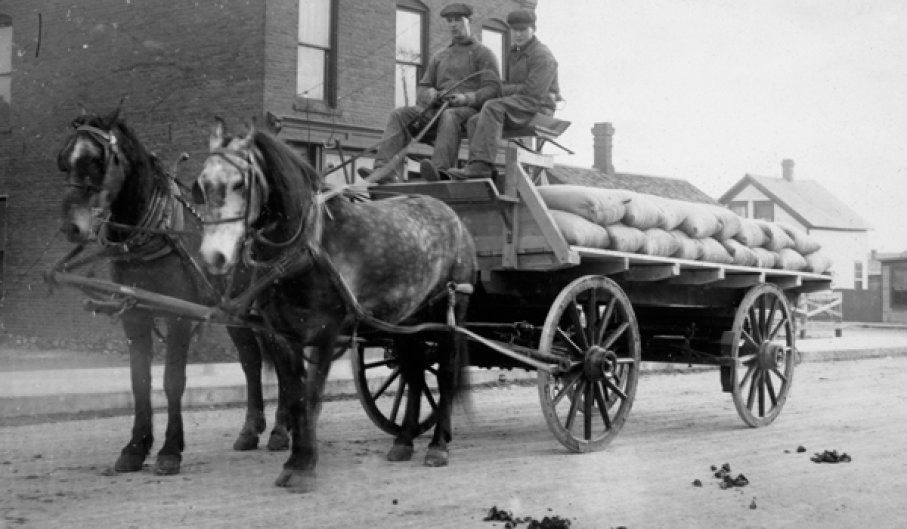
But, although cavalry might have been only a brief flirtation for Tolkien, horses had been part of his life since its beginnings.  Part of this would have been mundane—it was only after the Great War that the internal combustion engine really began to dominate the streets.  When JRRT was young, Birmingham and London, as well as Berlin, Paris, and New York, would have looked like this—

His early reading would have given him Bellerophon on Pegasus,

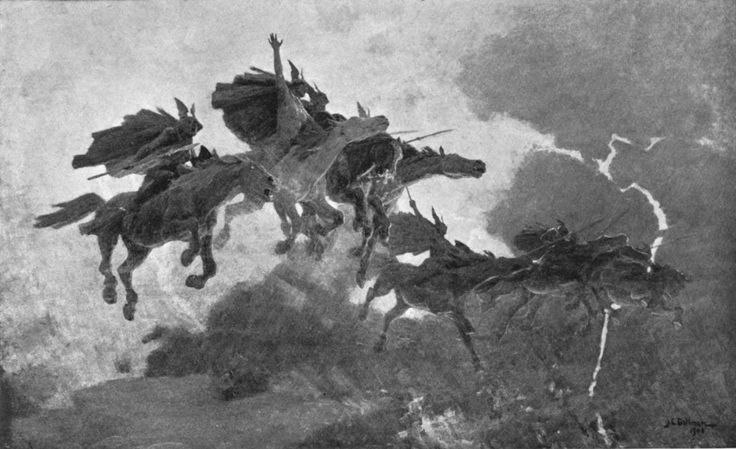
to which would have been added the Valkyries,

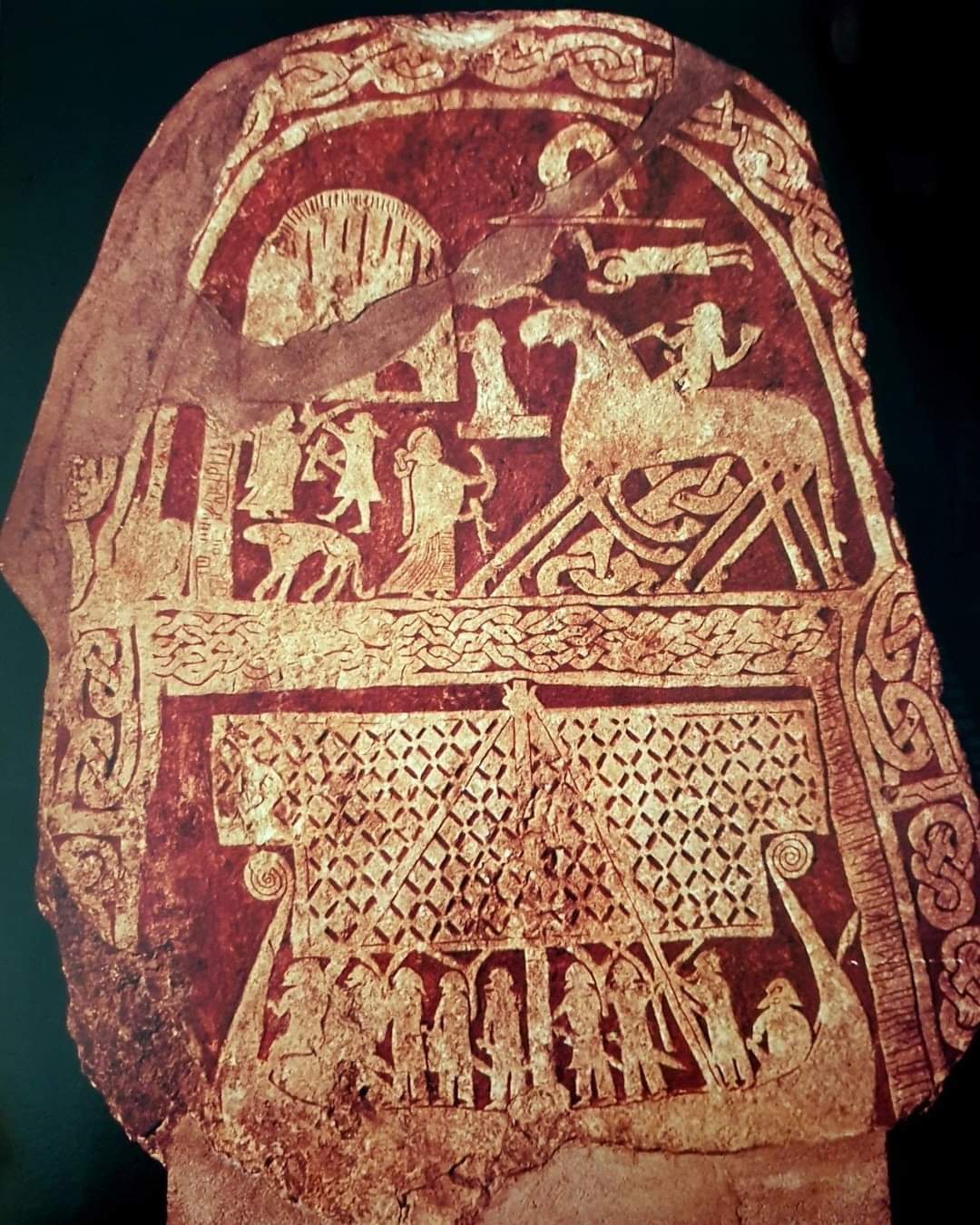
and, in time, Sleipnir, Odin’s 8-legged steed,

(This is the Tjaengvide image stone, one of a group of runic stones, called the “Sigurd stones”, found in Sweden and dated to between 700 and 1100AD.  You can read more about it here:  https://en.wikipedia.org/wiki/Tj%C3%A4ngvide_image_stone You can read about the other stones here:  https://en.wikipedia.org/wiki/Sigurd_stones  Tolkien would first have heard about Sigurd from Andrew Lang’s The Red Fairy Book, 1890, which you can find here:   https://archive.org/details/redfairybook00langiala/redfairybook00langiala/mode/2up  Sigurd himself possessed the offspring of Sleipnir, Grani, which you can read about here:  https://en.wikipedia.org/wiki/Grani )

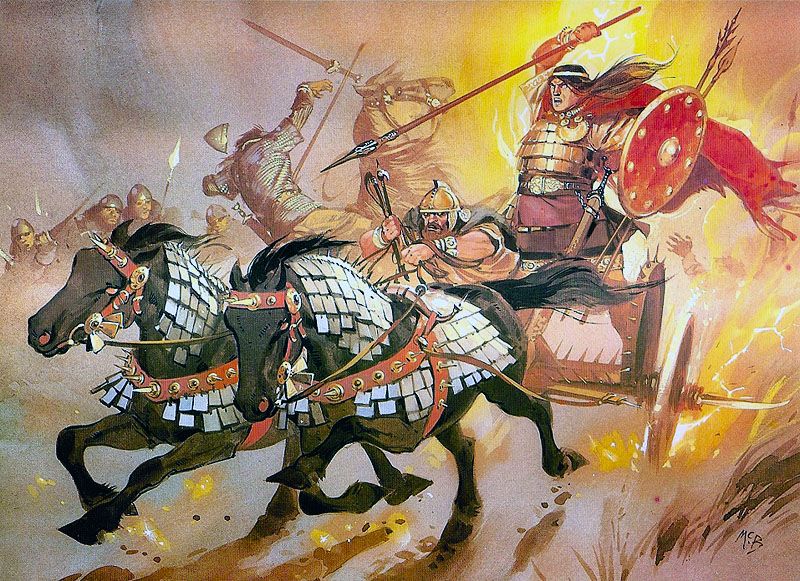
and further medieval reading would have filled his mind with mythic and magic horses, like Cu Chulainn, the Irish hero’s, chariot pair, water horses named Liath Macha and Dub Sainglend (although he wasn’t very enthusiastic about Old Irish literature which, I suspect, he found much wilder and stranger and more disturbing than, say, the Welsh Mabinogion, which you can read about here:    https://en.wikipedia.org/wiki/Mabinogion )

(a rather over-the-top image by the usually dependable Angus McBride—someone should have mentioned to him that, although “Dub” means “black”, Liath means “grey”.  Cu Chulainn is one of my favorite ancient berserkers—to mix cultures—and, if you don’t know him, you can begin to read about him here:  https://en.wikipedia.org/wiki/C%C3%BA_Chulainn )

But there are magical horses in many places—see https://en.wikipedia.org/wiki/List_of_horses_in_mythology_and_folklore for many more, with at least many of the medieval, he would have been familiar. 

And while we’re speaking of Middle-earth and horses, we need to mention the Normans, who, combined with the Anglo-Saxons for language, were the basis of the Rohirrim–

“The Rohirrim were not ‘medieval’ in our sense.  The styles of the Bayeux Tapestry…fit them well enough…” (letter to Rhona Beare, 14 October, 1958, Letters, 401)

The Rohirrim, in turn, lead us back to the opening of this posting.  Although, in Tolkien’s day, cavalry and glorious charges,

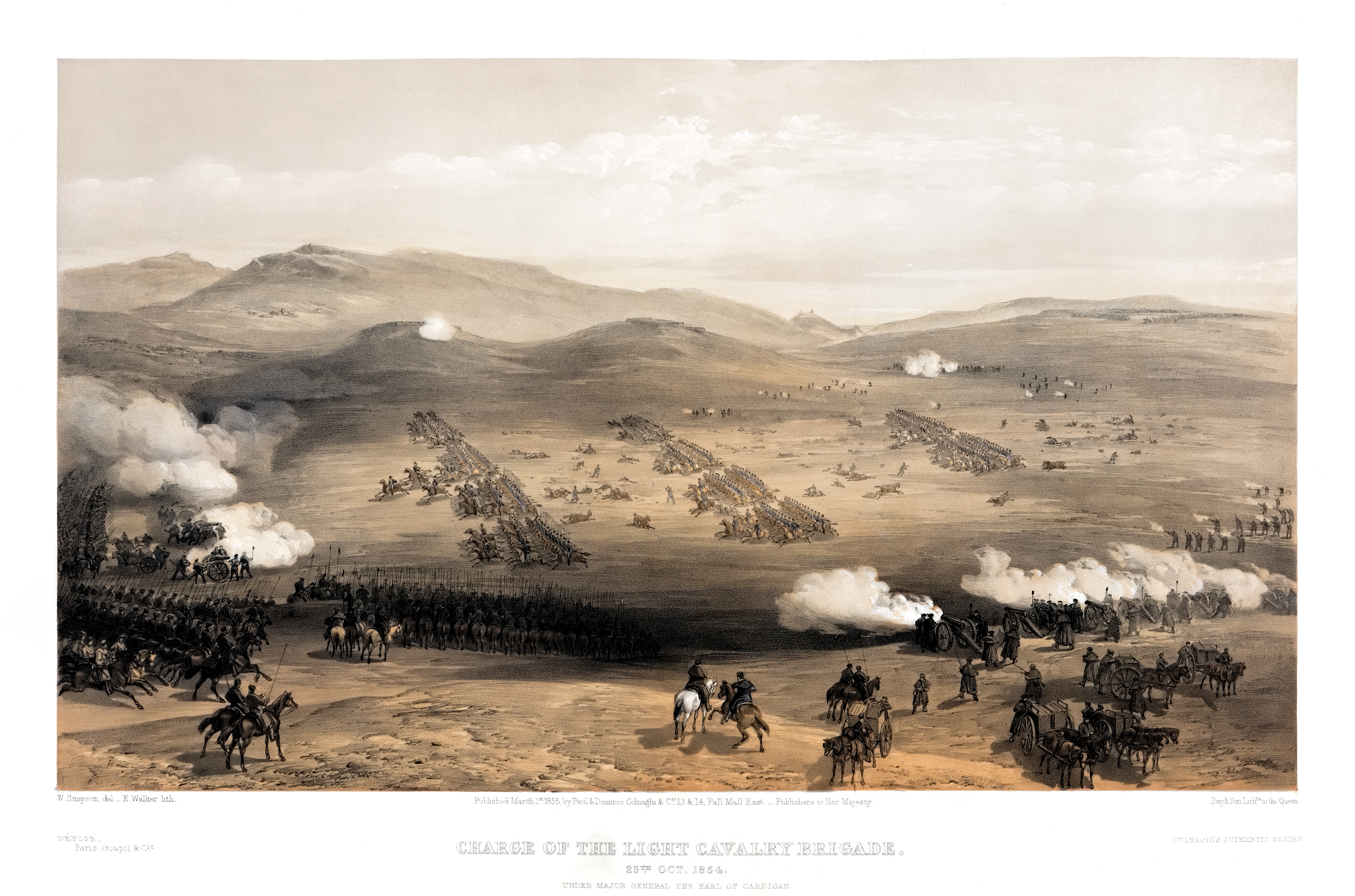
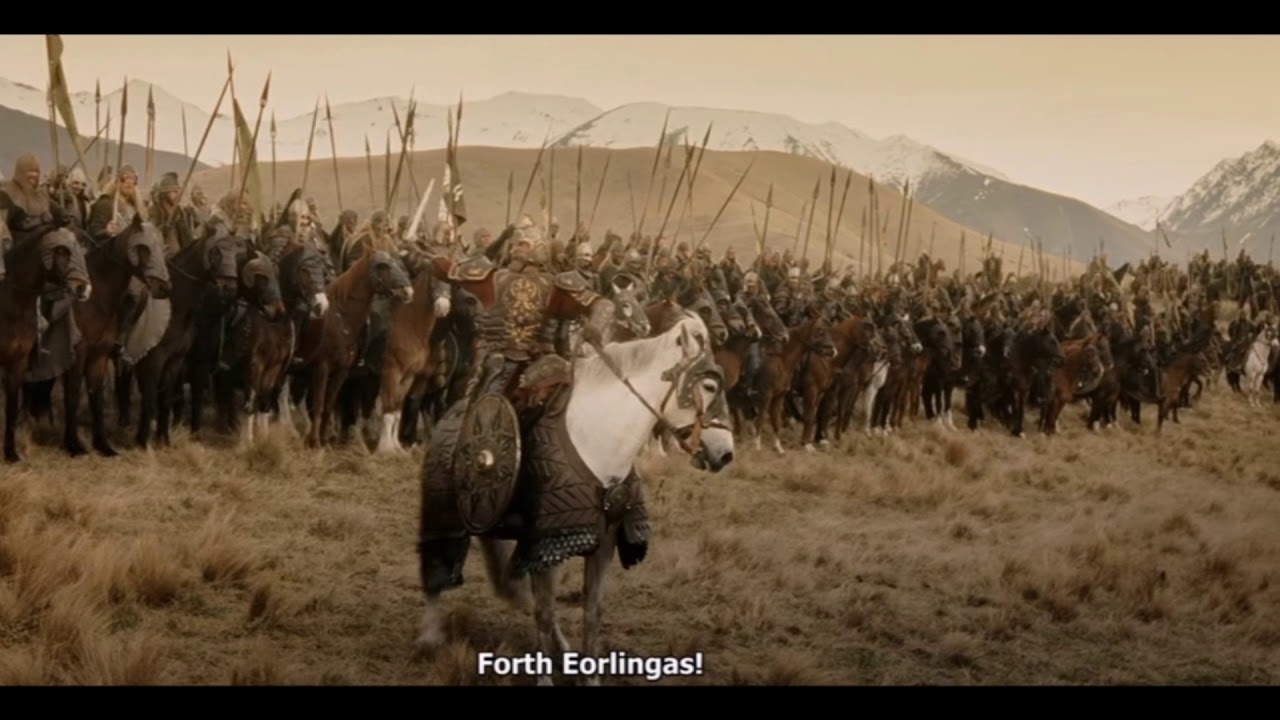
like that of the British Light Brigade at Balaclava in 1854, commemorated in Tennyson’s poem, were almost at the end of their military usefulness, for a Romantic, like Tolkien, the idea of such a charge was still a powerful image and one he couldn’t resist, depicting the heroic Rohirrim assembling

(from the Jackson film)

and roaring down on the unsuspecting orcs. 

(Abe Papakhian)

JRRT was writing medieval fantasy, however, but, as I’m always interested in “what if’s”, here I’m remembering what actually happened to that Light Brigade charge, an attack made in the teeth of Russia artillery.

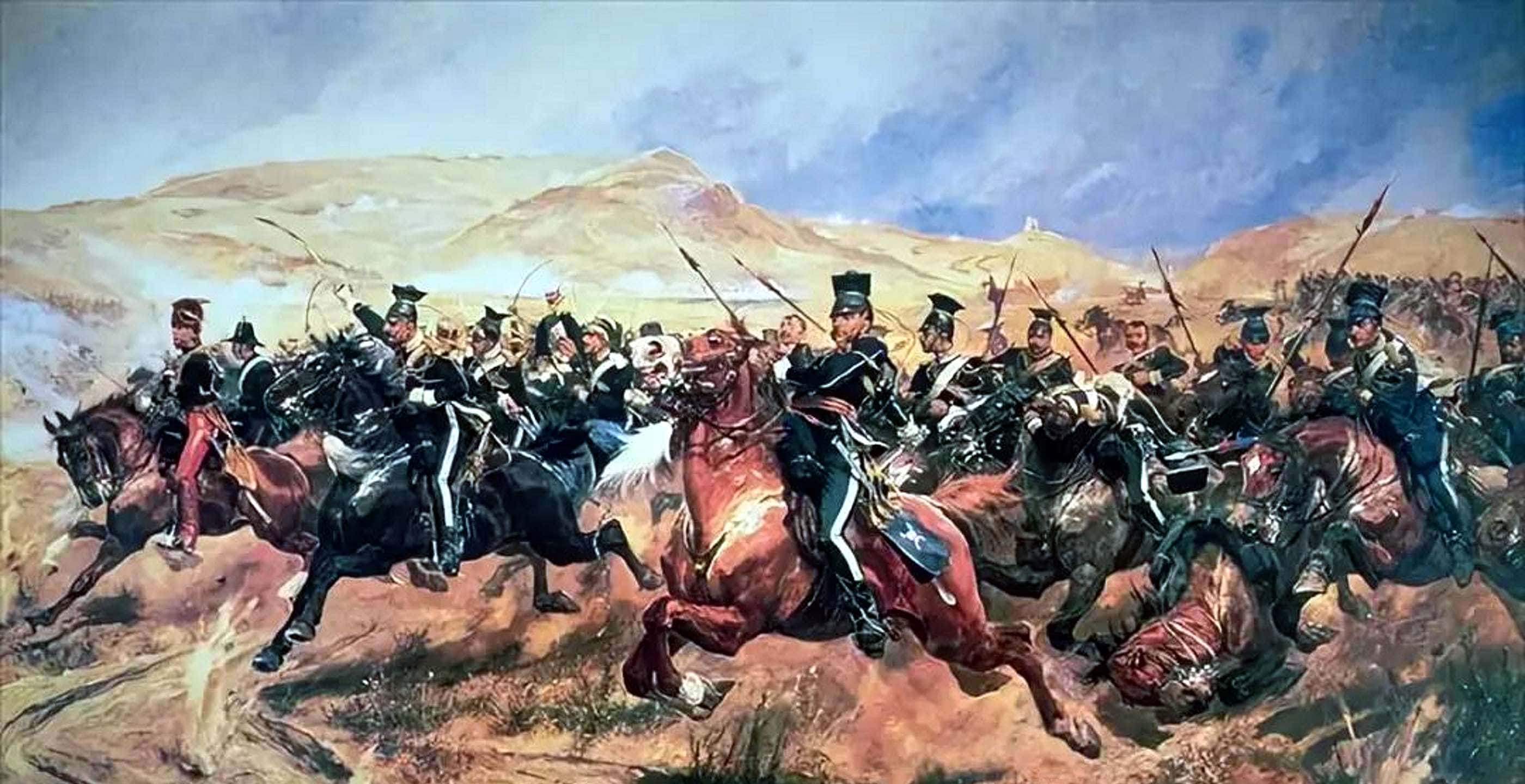
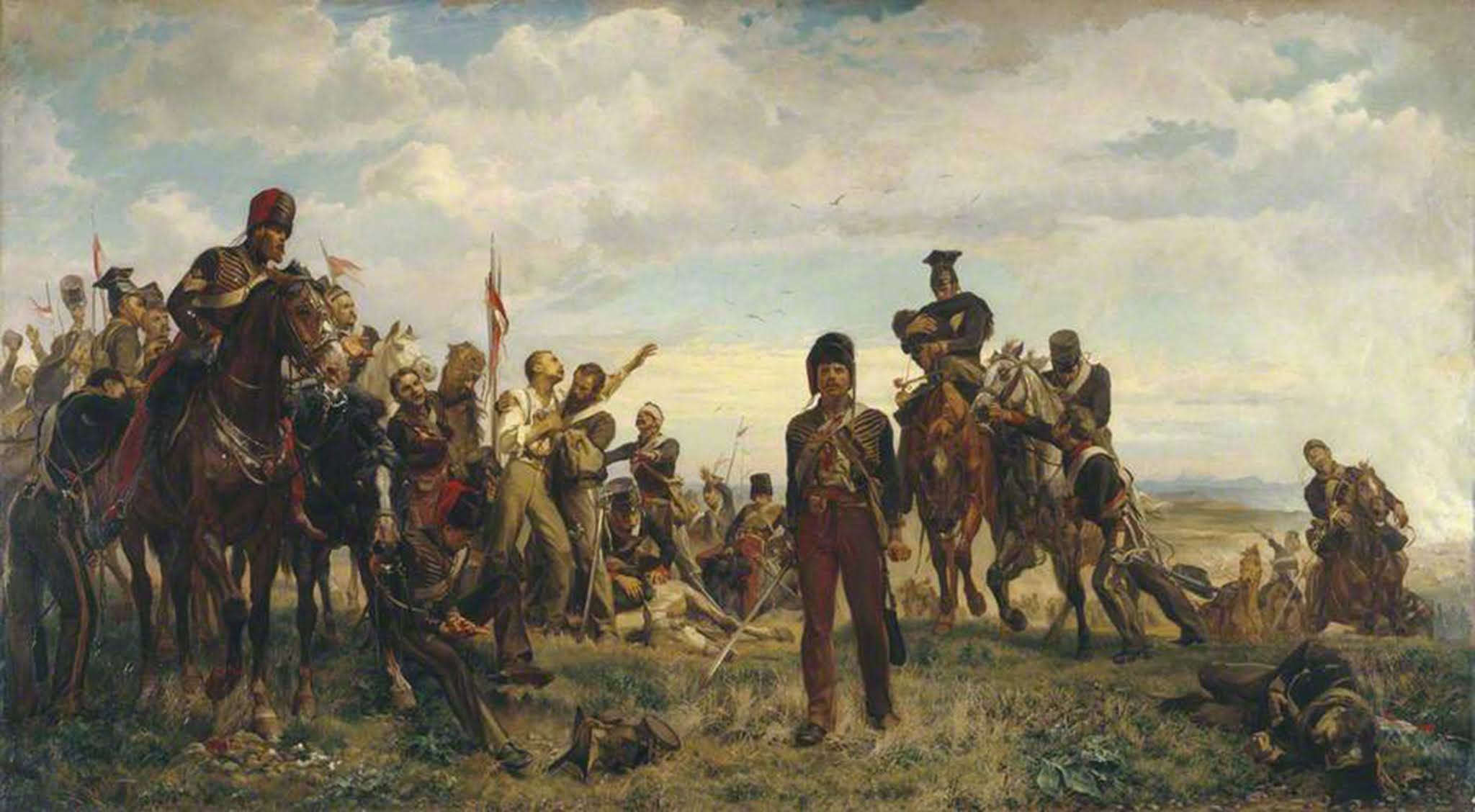
The consequence was that, out of 609 men who rode towards the Russians, only 198 returned, and Lady Butler’s picture, “Balaclava the Return 25 October 1854” (1911) sums up the actual aftermath of that charge.

There’s evidence in the destruction of the Causeway Forts that Sauron’s army had some sort of blasting powder—suppose, instead of using it just as a siege tool, it had been employed with some sort of projectile propelled by it out of a tube—what might that have done to the Rohirrim’s valiant attack? 

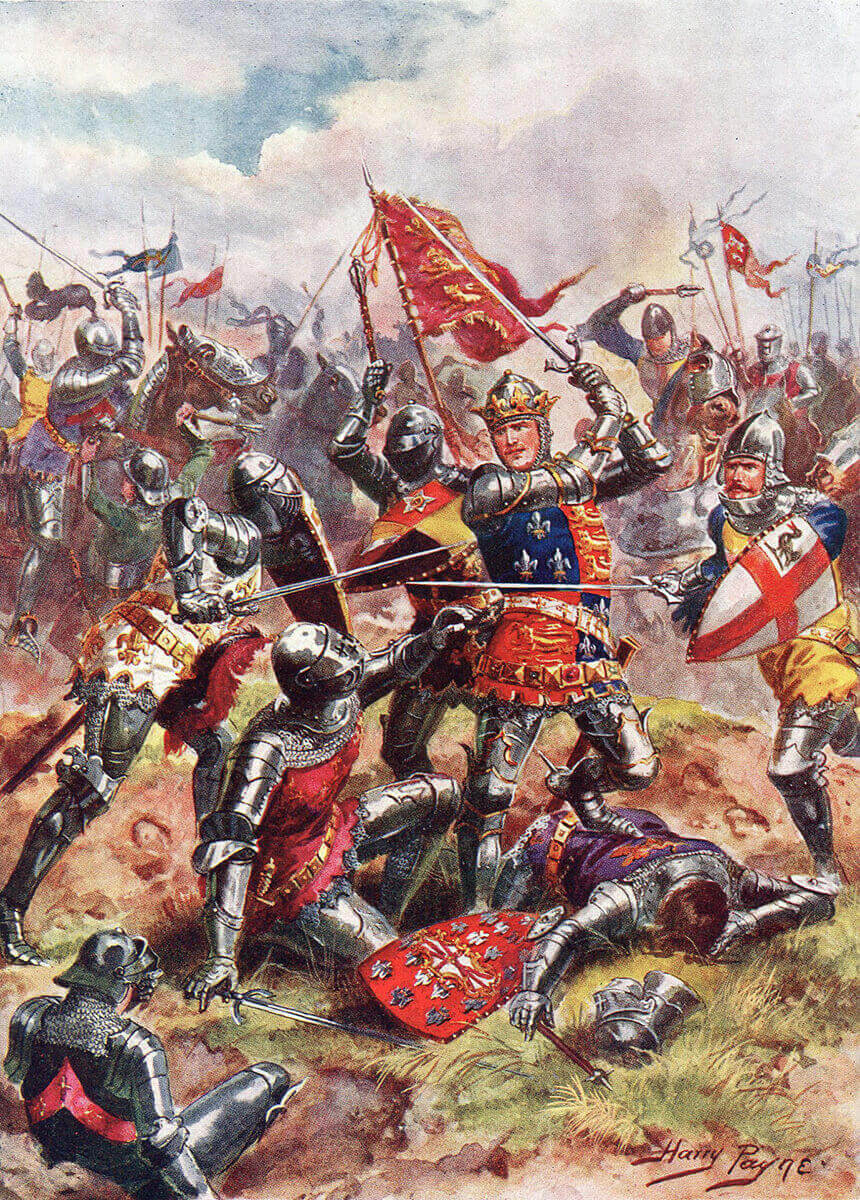
Or even using the technique of the English army against the French at Agincourt, in our medieval world of 1415AD:  pointed stakes to threaten horses, behind which stood massed bowmen:  what would have been the outcome of that?

(Angus Mcbride)

475 horses were lost in the Charge of the Light Brigade.  Military progress so often just means more killing, but the replacement of horses with machines seems to me, who loves horses, a turn for the better.   At the same time, with Tolkien, I can feel the attraction for wild charges with swords at top speed (although cavalry did better when, at most, it went in at the canter—galloping causes loss of formation which can blunt the effect of such an attack), but, as in the charge of the Rohirrim, I’m glad if they only appear in fiction—and far from modern weaponry.

Thanks, as ever, for reading,

Stay well,

Remember that there’s a special spot, just behind the poll (top of the head), which, if scratched in the right place, makes many horses happy,

And remember, as well, that there’s always

MTCIDC

O

PS

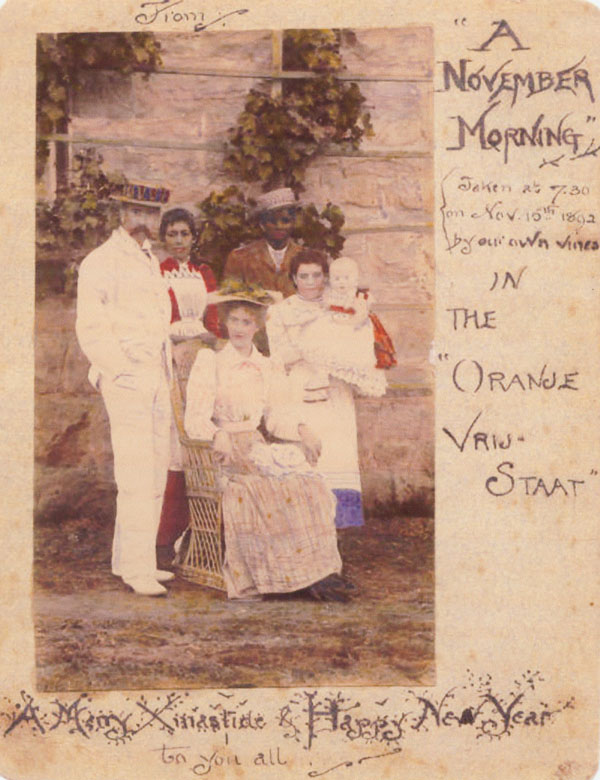
One of those little “what if” quirks of history–Tolkien’s immediate family had been in the Orange Free State at the time of his birth, in 1892.  Tolkien’s father, Arthur, was manager of the Bloemfontein branch there of the Bank of Africa.  The Orange Free State was one of the Boer republics attacked by Britain in the Boer War of 1899-1902. If Tolkien’s mother hadn’t brought JRRT and his brother, Hilary, back to England, in 1895, and Arthur hadn’t died of the effects of rheumatic fever in 1896,

Tolkien might have been in the Orange Free State when Bloemfontein was occupied by the British on 13 March, 1900.  (You can see early film of the Scots Guards marching in here:  https://www.youtube.com/watch?v=DHy2cEFwlIo )

PPS

In last week’s posting, I mentioned the story of the wonderfully bloodthirsty Frankish queen Fredegunda, as she appears in Gregory of Tours Historia Francorum.  I wrote there that you might read about her assassination of Bishop Praetextatus and her cold-blooded visit to him on his deathbed afterwards—but it required reading Gregory’s 6th-century Latin, as I didn’t provide a translation.  It seemed lazy of me not to include one of that scene, however, so here it is with the original Latin.  As always, I could smooth this out, but I prefer to stick as close as I can to the text, to give you a better feel for what’s actually been written.

Advenientem autem dominicae resurrectionis diae, cum sacerdos ad implenda aeclesiastica officia ad aeclesiam maturius properasset, antefanas iuxta consuetudinem incipere per ordinem coepit. Cumque inter psallendum formolae decumberet, crudelis adfuit homicida, qui episcopum super formolam quiescentem, extracto baltei cultro, sub ascella percutit. Ille vero vocem emittens, ut clerici qui aderant adiuvarent, nullius ope de tantis adstantibus est adiutus. At ille plenas sanguine manus super altarium extendens, orationem fundens et Deo gratias agens, in cubiculo suo inter manus fidelium deportatus et in suo lectulo collocatus est. Statimque Fredegundis cum Beppoleno duce et Ansovaldo adfuit, dicens: ‘Non oportuerat haec nobis ac reliquae plebi tuae, o sancte sacerdos, ut ista tuo cultui evenirent. Sed utinam indicaretur, qui talia ausus est perpetrare, ut digna pro hoc scelere supplicia susteneret’. Sciens autem ea sacerdos haec dolose proferre, ait: ‘Et quis haec fecit nisi his, qui reges interemit, qui saepius sanguinem innocentem effudit, qui diversa in hoc regno mala commisit?’ Respondit mulier: ‘Sunt aput nos peritissimi medici, qui hunc vulnere medere possint. Permitte, ut accedant ad te’. Et ille: ‘Iam’, inquid, ‘me Deus praecepit de hoc mundo vocare. Nam tu, qui his sceleribus princeps inventa es, eris maledicta in saeculo, et erit Deus ultur sanguinis mei de capite tuo’. Cumque illa discederit, pontifex, ordinata domo sua, spiritum exalavit. 

“However, with the coming of the day of [Our] Lord’s resurrection, when the priest [Praetextatus] had hurried early to the church to fulfill [his] ecclesiastical duties, he started to begin [the] antiphons according to custom [in their proper] order.  And when, between the psalms, he was lying on a bench, a cruel murderer appeared, who, when a knife had been pulled from [his] belt, struck the bishop, resting on the bench, under the armpit.  He [the bishop], however, [although] shouting so that the clergy who were present might help him, was aided with help of none from so many being present.  Yet he, stretching his hands, full of blood, above the altar, pouring [out] a prayer and thanking God, was carried off into his bedchamber by the hands of [his] faithful [followers] and placed on his bed.  And straightaway Fredegunda, with the Duke Beppolenus and Ansovaldus, appeared, saying, ‘Oh holy priest, this was not right for us and for the rest of your people that such things should happen in your worshipping.  But would that it would be revealed who had dared to carry out such things that he should suffer punishment worthy of this crime.’  The priest, knowing, however, that she was speaking of these things deceptively, said, ‘And who has done these things if not [the one] who has killed kings, who very often has poured out innocent blood, who has committed many evil deeds in this kingdom’  The woman replied:  ‘There are in our household highly experienced doctors who would be able to heal this wound.  Allow [it] that they may come to you.’  And he [said]:    ‘God has decreed to call me from this world.  On the other hand, you who have been exposed as chief in these crimes, you will be cursed in the future and God will be the avenger of my blood on your head.’  And when she had left, the bishop, affairs arranged in his house, breathed out his spirit.”

And how could I not include Alma-Tadema’s illustration?

Hybrids

01 Wednesday Jan 2025

Posted by Ollamh in Uncategorized

≈ Leave a comment

Tags

anglo-saxons, Boudica, chariots, eurasian-steppe, Huns, hybrds, Hybrids, Jacksons The Lord of the Rings, jacksons-lord-of-the-rings, Julius Caesar, Mongols, Normans, Rohirrim, Sarmatians, Scythians, Tacitus, Tolkien, Wainriders

As always, dear readers, welcome.

The title of this piece might suggest electric cars, and it definitely will mention several different wheeled vehicles, but it is actually what I hope is a little study in something Tolkien does wonderfully well:  taking different elements from different times and cultures and so blending them that they become believable new wholes.

Although I don’t always agree with elements in Jackson’s The Lord of the Rings, one thing has always given me pleasure:  the Rohirrim, whether en masse

or a small grouping.

And this is true for Edoras

as well as for Meduseld.

And yet they appear to be a kind of combination of peoples:  on the one hand, Tolkien imagined them to be Anglo-Saxons,

(Peter Dennis)

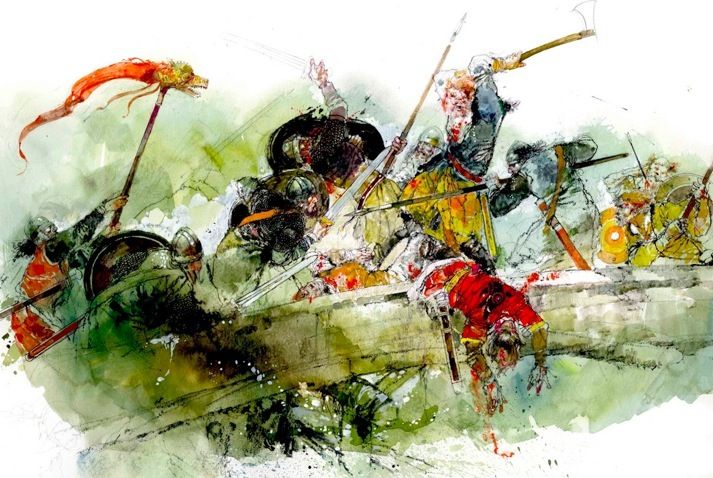
a people who primarily fought on foot, as at their last two major battles, Stamford Bridge,

(Victor Ambrus—who worked for years with the popular British archeology series, Time Team—which is available on YouTube and much recommended)

where they defeated another infantry force, the Vikings, and Hastings,

(Artist?)

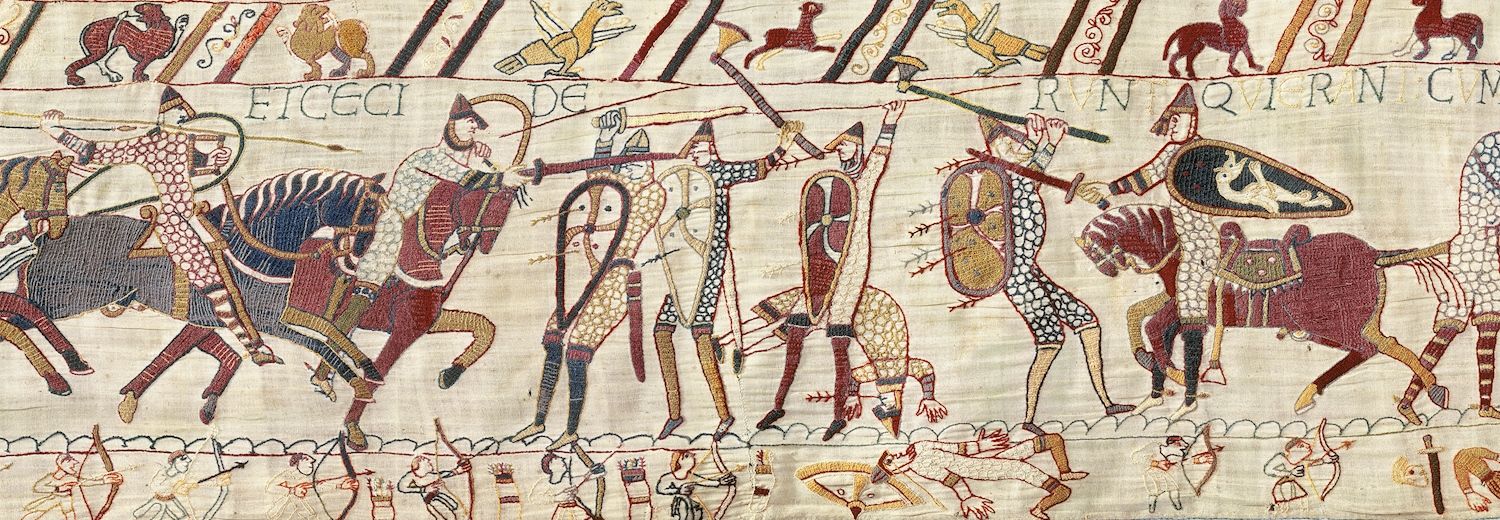
in which they were overwhelmed at the battle’s conclusion by Norman cavalry.

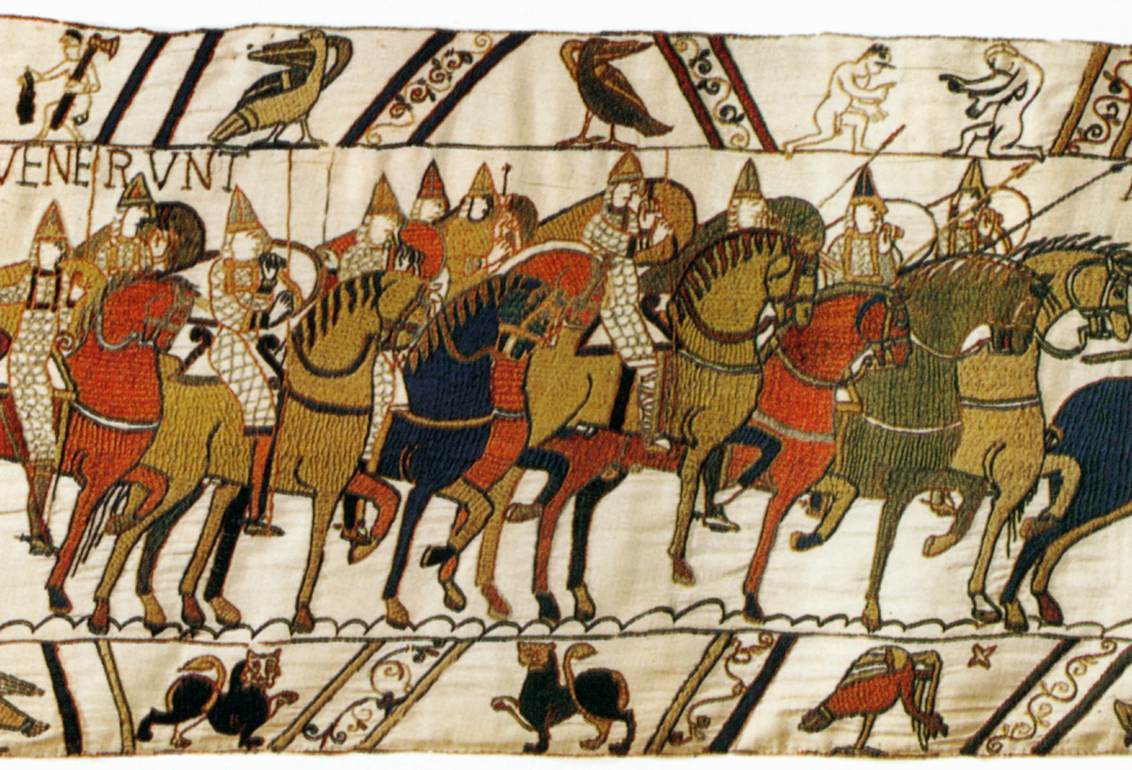
(From the wonderful “Bayeux Tapestry”—actually the “Bayeux Embroidery”—if you’d like to see the whole thing, look here:  https://www.bayeuxmuseum.com/en/the-bayeux-tapestry/discover-the-bayeux-tapestry/explore-online/  To my knowledge, there’s nothing like it from the Middle Ages for depicting a specific series of events in the medieval world.)

On the other hand, the Rohirrim were mounted, more like those Normans who defeated the Anglo-Saxons,

although the language they speak is, basically, a form of Old English, the language of the Anglo-Saxons.  Tolkien imagined them, in fact, as looking like the Normans, as well, describing them in a letter to Rhona Beare:

“The styles of the Bayeux Tapestry (made in England) fit them well enough, if one remembers that the kind of tennis-nets [the] soldiers seem to have on are only a clumsy conventional sign for chain-mail of small rings.”  (letter to Rhona Beare, 14 October, 1958, Letters, 401)

That is, their armor actually can look like this—

(By Angus McBride—and ironic, as, for all that McBride must have painted dozens of figures in chain mail, he once confessed in an interview that it was his least favorite part of illustrating, as the mail took so long to do.)

It’s also interesting to think about them as a people.  Anglo-Saxons were descended from a combination of locals (Romano-British) and various groups of west-Germanic tribesmen who had either been early post-Roman invaders of Britain or Germanic tribesmen brought to Britain to protect the locals from those invaders and who had become colonizers in turn.

But who were the Rohirrim and where did they come from?

“Eorl the Young was lord of the Men of Eotheod.  That land lay near the sources of Anduin, between the furthest ranges of the Misty Mountains and the northernmost parts of Mirkwood.”

(JRRT)

They had not always lived there, however:

“The Eotheod [from Old English, “Horsefolk”] had moved to those regions in the days of King Earnil II [TA 1945-2043] from lands in the vales of Anduin between the Carrock and the Gladden, and they were in origin close akin to the Beornings and the men of the west-eaves of the forest.  The forefathers of Eorl claimed descent from kings in Rhovanion, whose realm lay beyond Mirkwood before the invasions of the Wainriders…They loved best the plains and delighted in horses and in all feats of horsemanship…” (The Lord of the Rings, Appendix A II “The House of Eorl”)

The combination of “They loved best the plains and delighted in horses” makes perfect sense when one thinks about comparative history in our Middle-earth.  Consider the Eurasian Steppe, stretching from western China all the way to the Hungarian puszta.

This is an immense belt of grassland,

some 5000 miles (8000km) wide,

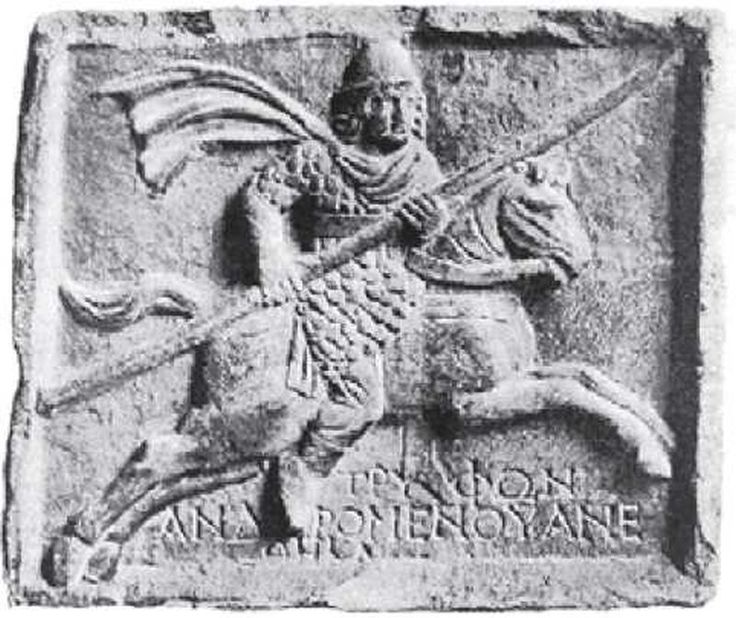
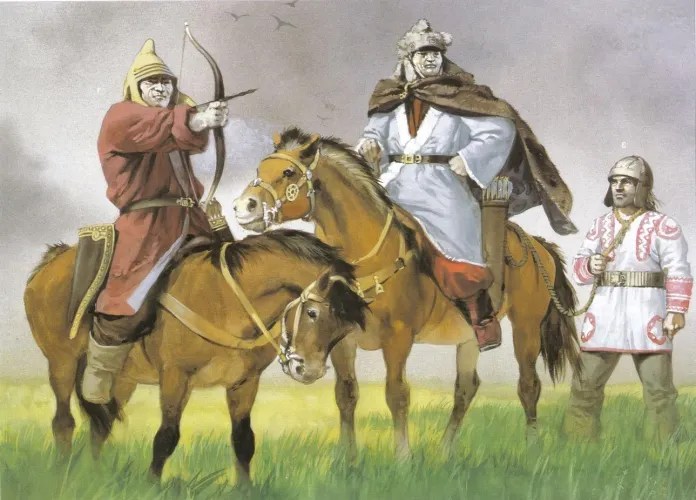
and has been the homeland of numerous horsefolk throughout history, from the Scythians

to the Sarmatians

to the Huns

(Angus McBride)

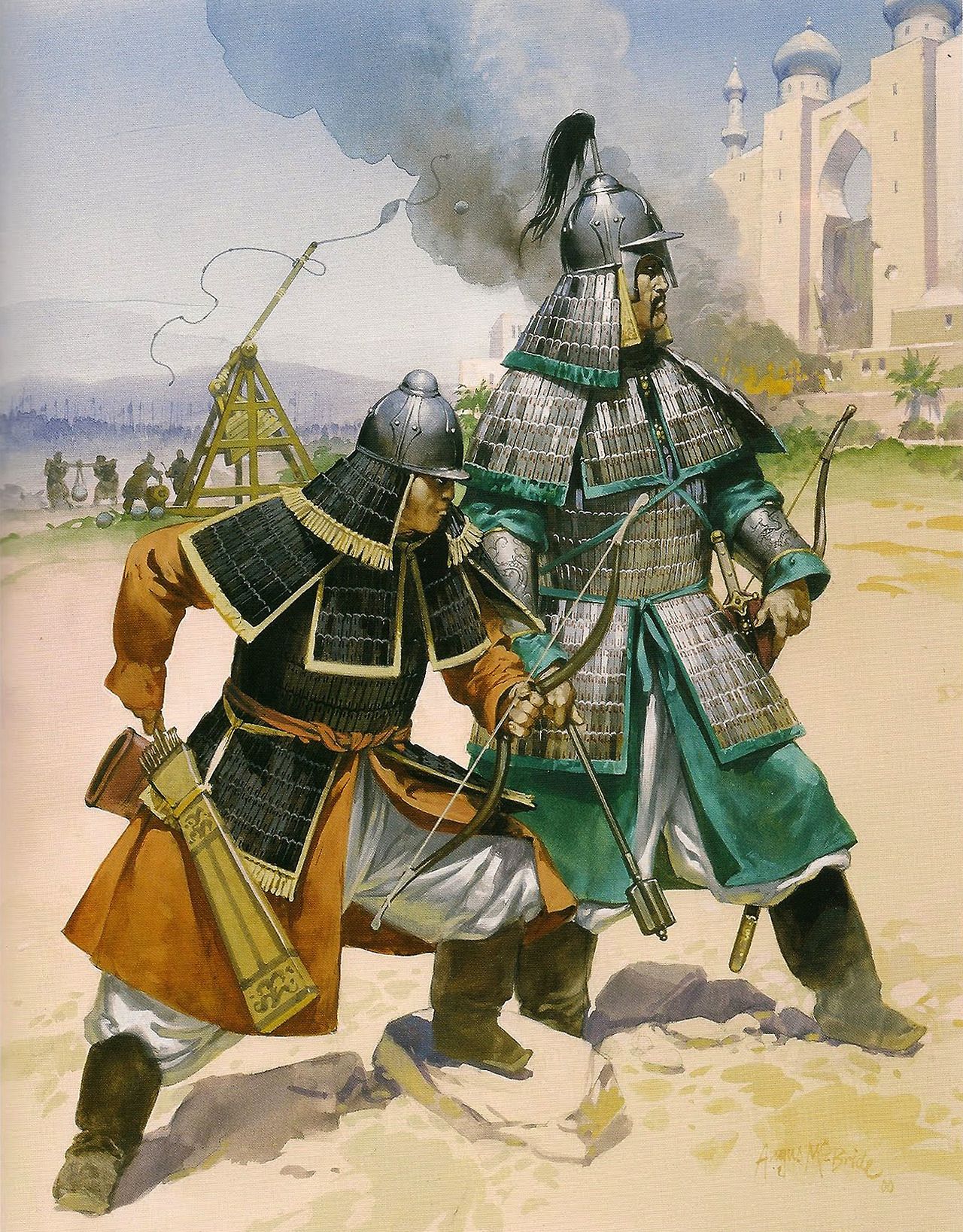
to the Mongols.

(another McBride)

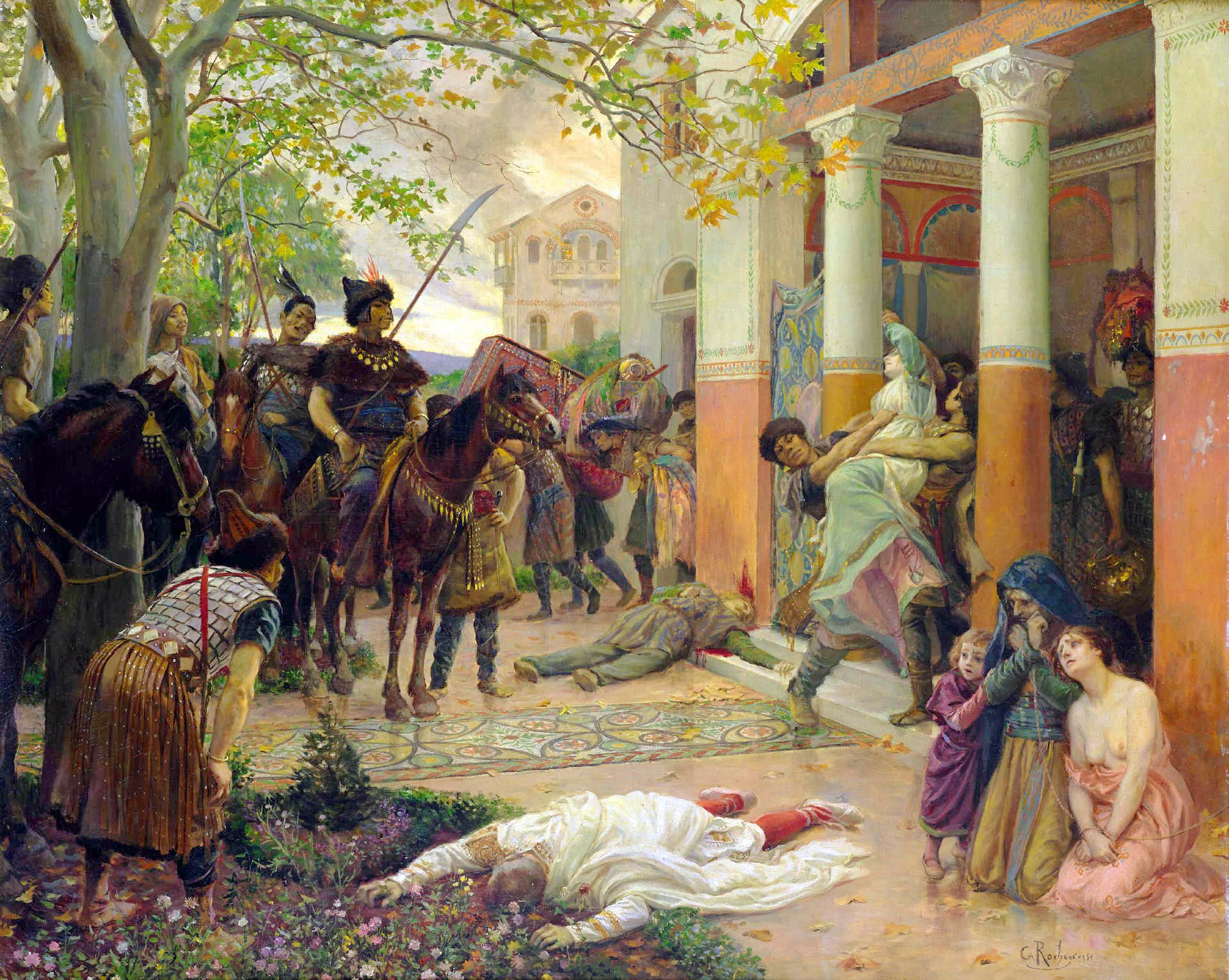
All of these peoples have used the Steppe to graze their herds of horses, sometimes moving west for grazing, sometimes moving west when pressured by others further east, and sometimes as predators, like the Huns, moving west to seek new plunder.

(I haven’t been able to identify an artist for this–it has the look of late-Victorian.)

In two of these cases, whole peoples might be on the move and this is perhaps where Tolkien has gotten part of his description of those Wainriders he mentions:

“The Wainriders were a people, or a confederacy of many peoples, that came from the East; but they were stronger and better armed than any that had appeared before.  They journeyed in great wains, and their chieftains fought in chariots…” 

So, we can imagine that the Eotheod, pressured by the Wainriders, were forced west, as one steppe people is pushed westward by another to the east. 

But Tolkien gives us another—or perhaps additional–possibility:

“Stirred up, as was afterwards seen, by the emissaries of Sauron, they made a sudden assault on Gondor…The people of eastern and southern Rhovanion were enslaved; and the frontiers of Gondor were for that time withdrawn to the Anduin and the Emyn Muil.” (The Lord of the Rings, Appendix A, IV “Gondor and the Heirs of Anarion”)

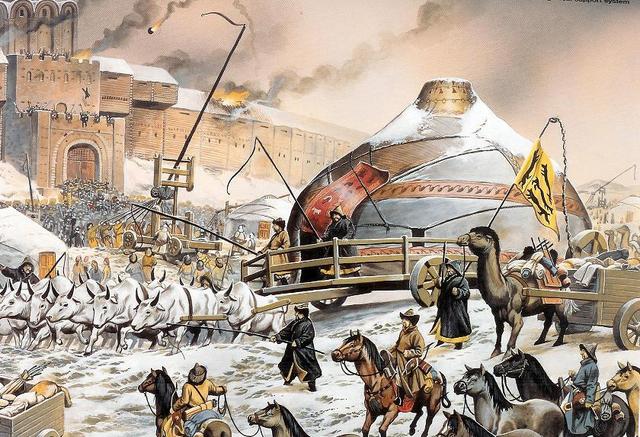
The Wainriders, then, might be both steppe peoples moving westwards, but also predators, like the Huns, or like the Mongols, who were both predators and empire-builders, and here we might see Mongols with their characteristic ger (a large round tent)—on a wagon—perhaps like the Wainriders?

(Wayne Reynolds)

Although there is no mention in our text of the Rohirrim migrating with wagons, it’s clear from parallels in our world that the peoples who crossed the Eurasian Steppe appear to have used them regularly.  But here, like the Rohirrim, we have another odd juxtaposition.  The Rohirrim are Anglo-Saxons on horseback:  cavalry, which was true for all of those migrants across the Steppe in our world.  Chariots, however, although Tolkien says that the Wainrider chiefs fought in them (of which fact this is the only mention) were not part of those other horsefolks’ arsenals.  Where did they come from?

The answer, I think, lies in the period of British history before the Anglo-Saxons and almost before the Romans, among the earlier Celtic settlers of England.  Julius Caesar encountered chariots there and described their use:

Genus hoc est ex essedis pugnae. Primo per omnes partes perequitant et tela coiciunt atque ipso terrore equorum et strepitu rotarum ordines plerumque perturbant, et cum se inter equitum turmas insinuaverunt, ex essedis desiliunt et pedibus proeliantur. 2 Aurigae interim paulatim ex proelio excedunt atque ita currus conlocant ut, si illi a multitudine hostium premantur, expeditum ad quos receptum habeant. 3 Ita mobilitatem equitum, stabilitatem peditum in proeliis praestant, ac tantum usu cotidiano et exercitatione efficiunt uti in declivi ac praecipiti loco incitatos equos sustinere et brevi moderari ac flectere et per temonem percurrere et in iugo insistere et se inde in currus citissime recipere consuerint.

“This is the kind of fighting from chariots.  At first, they ride around in all directions and throw spears and often, by the very frightfulness of the horses and the roar of the wheels, they shake the ranks [of the enemy] and, when they have slipped themselves among the troops of [enemy] cavalry, they leap from the chariots and fight on foot.  Meanwhile, the charioteers move out a little way from the fighting and so place their vehicles that, if they [the dismounted fighters] should be pressed by a large number of the enemy, they may have an easy retreat to them.  Thus, they provide the mobility of cavalry [as well as] the steadiness of infantry in [their] battles and they accomplish so much by daily practice and exercise that they are accustomed to control their stirred-up horses on a sloping and steep place and rein [them] in quickly and to turn [them] and to run along the yoke pole and to stand on the yoke and from there to take themselves back into the vehicles extremely speedily.”  (Caesar, De Bello Gallico, Book IV, Chapter 33—my translation)

(Angus McBride)

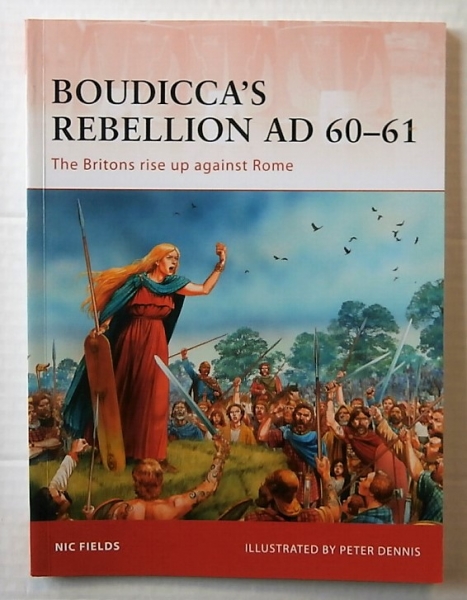
Tolkien may have remembered this from his schooldays, when he would first have encountered the text—and he might have found those wagons there, too, although slightly later.  When, in 60-61AD, the Iceni queen, Boudica, led a revolt against Roman rule,

(Peter Dennis)

in the final battle, when the tribesmen advanced towards the Roman formation, as Tacitus (c.56-c.120AD) tells us, their families watched from their wagons, placed behind the battle line (De Vita et Moribus Iulii Agricolae, Chapter 34).  And, as a prelude to the battle, Boudica had ridden among the ranks in a chariot (Chapter 35).

(another Peter Dennis—in fact, if you’d like to know more about this amazing woman, who, for a brief time, had been a real threat to the Romans, you might invest in: 

And so, as in combining Anglo-Saxon and Norman to create the Rohirrim, Tolkien may have taken Steppe people, added Celtic Britons, and produced the Wainriders. 

Thanks, as always for reading.

Stay well,

Remember that a horse will drink, on average, between 5 and 10 gallons (19-38 litres) of water a day,

And remember, as well, that there’s always

MTCIDC

O

Terrible as an Army with Banners

25 Wednesday Sep 2019

Posted by Ollamh in J.R.R. Tolkien, Military History, Military History of Middle-earth, The Rohirrim

≈ Leave a comment

Tags

banner, Captain Souter, color, Dol Amroth, ensign, Eye of Sauron, First Afghan War, flag, George Washington, Revolutionary War, Rohirrim, saltire, standard, The Lord of the Rings, The Song of Solomon, Tolkien, Trooping of the Colour, White Hand of Saruman, white horse of Hannover, White Tree of Gondor, WWI, WWII

Welcome, dear readers, as ever.

Our title comes from the Hebrew Bible, in the book entitled The Song of Solomon, Chapter 6, verses 4 and 10, where the speaker’s beloved’s beauty is likened to an army with banners.  Growing up, we always wondered about that word “terrible”.  We didn’t see why someone’s good looks could be frightening, but we could certainly see how an army with its flags could be scary.

image1ahussars


On the subject of banners, recently, we’ve been writing about 2nd Lieutenant JRR Tolkien.

image1jrrtlt.jpg

In an earlier posting, in fact, we mentioned that that rank of 2nd Lieutenant was a replacement for the earlier rank of “ensign”.  “Lieutenant” is just the English version of a French compound for “place-holder” (lieu + tenant), in this case meaning the person who will step into the captain’s shoes if necessary.  Instead of a compound with its implication of replacement, “ensign” is actually a job description.  An “ensign” is a flag (a “color”, if infantry, “standard”, if cavalry) and an “ensign” is also the person who carried it.

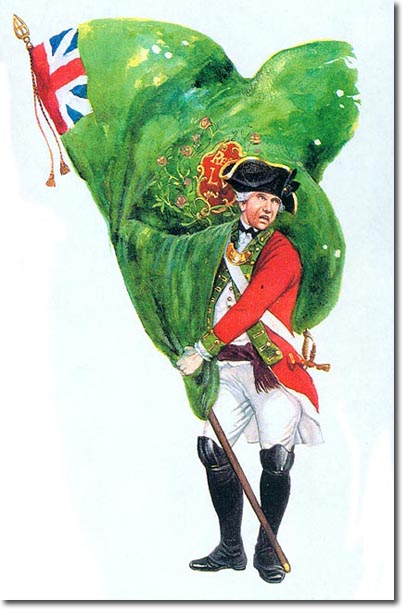
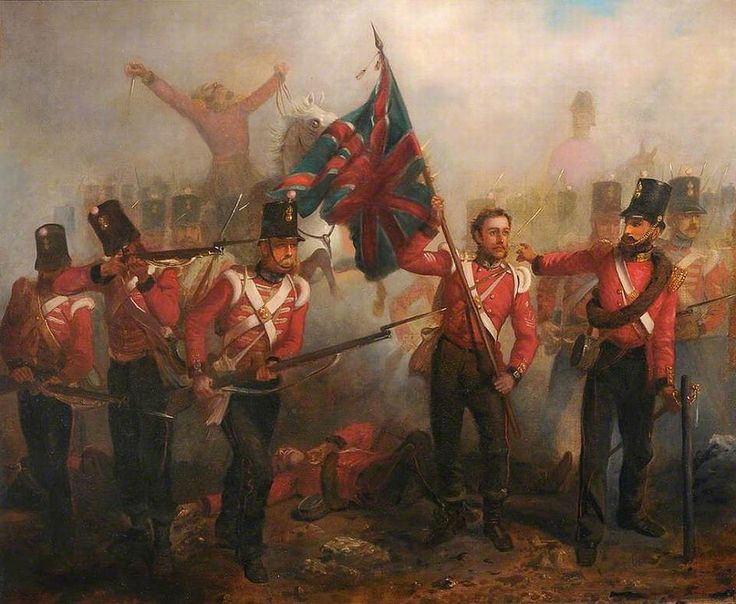
By 1916, when Tolkien became a 2nd Lieutenant, colors were no longer carried in battle, but only on parade, as this early-20th-century illustration demonstrates—

image2parade.jpg

and is still the case for the famous “Trooping of the Colour” for the Queen of England’s birthday parade, where her splendid footguards march with one of their colo(u)rs.

image3trooping.jpg

This is clearly all about show, now, but, once upon a time, colors—and their ensigns—had an important role in warfare.  Earlier colors were much bigger—in the 18th century, they were 6 feet by 6 feet square (1.82 metres by 1.82).

image4color.jpg

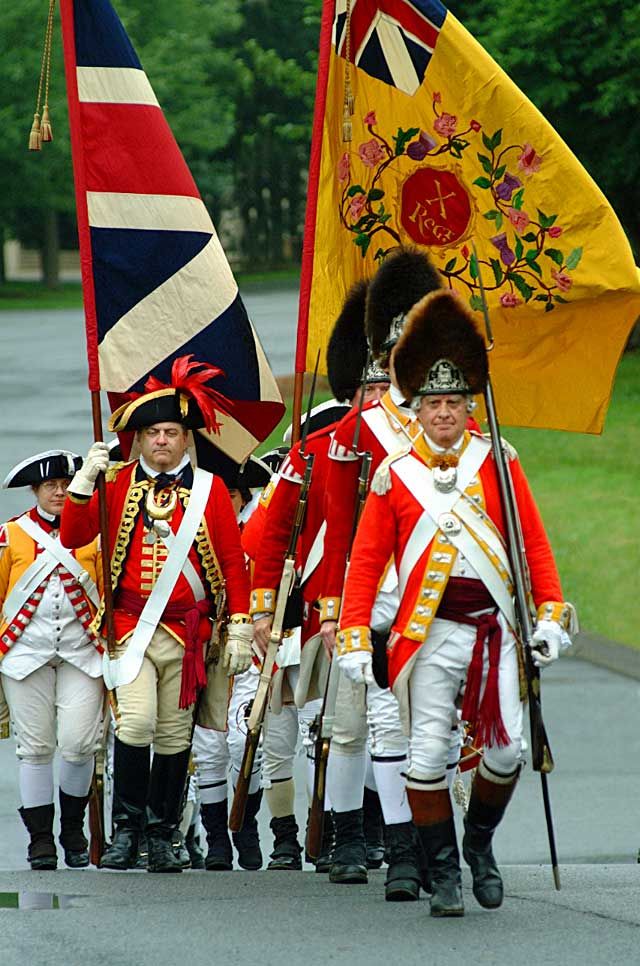
And here are some modern reenactors to help you to see just how big that really is.

image5color.jpg

The reasons for such a size (on a 9-foot pole, or “pike”—that’s 2.74m) are:

  1. units in earlier times (pre-late-19th-century, more or less) fought in long lines and, if you put the colors in the middle, everyone in a unit had a kind of fixed point to help them know where they—and their unit—were

image6nap.jpg

  1. as well, earlier firearms, which used black powder, put out enormous clouds of (white) smoke—

image7smoke.jpg

image8smoke.jpg

If colors were big and tall, they could still be made out in the midst of those clouds.

image9oconnor.jpg

They could also act as a rallying point.  When lines came apart and the order was Charge!  (Or when things were falling apart and the call was for Retreat!)

image10rally.jpg

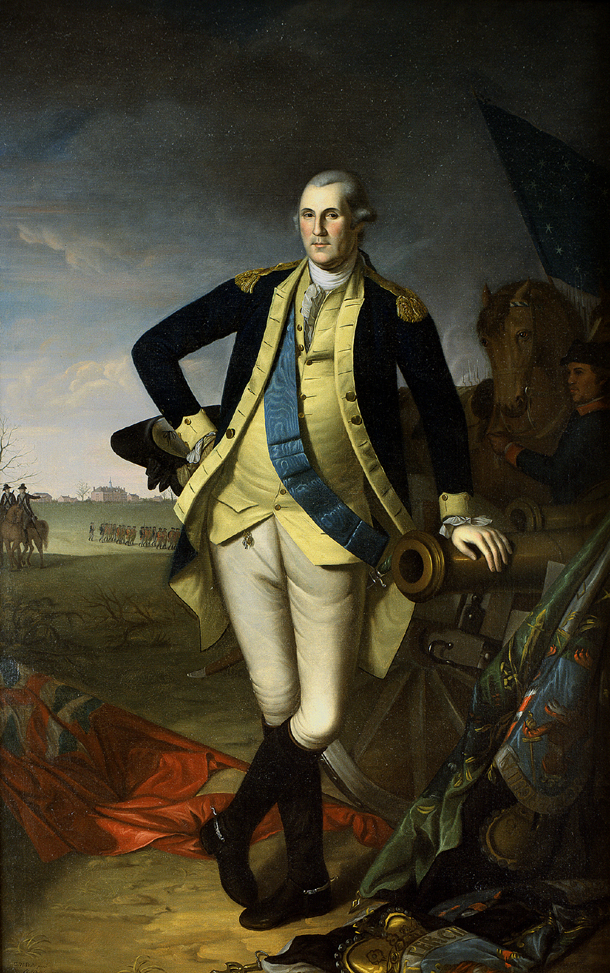
In time, colors came to be thought of as almost the physical representative of the spirit of a unit and being called upon to surrender them was looked upon as the worst disgrace.  This portrait of George Washington would have been thought particularly nasty by his British and German enemies because all around him are their colors, captured in two battles, Trenton and Princeton.  (His own headquarters flag—13 stars in a circle on a blue background—is in the upper right of the picture.)

image11gw.jpg

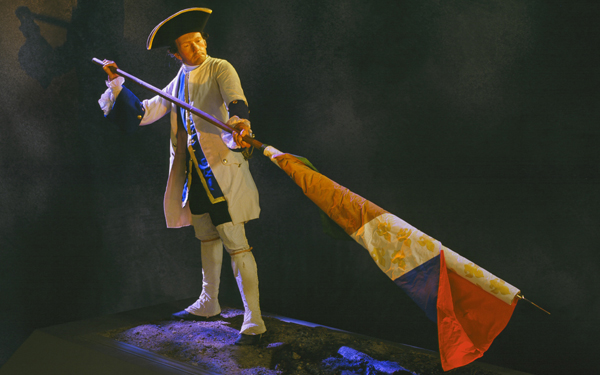
To escape surrendering their colors, soldiers would strip them from the poles/pikes and hide them in their clothes or, in real desperation, burn them, as the French did in 1760 when forced to surrender to the British at Montreal, in Canada (then New France).

image12burning.jpg

In earlier centuries, before gunpowder came to dominate battlefields, colors were already used as rallying points,

image13rally.jpg

but also, in the days before uniforms, colors—big or little—indicated who was fighting.  If you saw a figure bearing a flag with a white, angled cross (a “saltire” in heraldic terms) on a blue field (background), for example, you knew that the King of Scotland was on the battlefield.

image14bruce.jpg

Thus, although 2nd Lieutenant Tolkien would no longer carry one of his unit’s colors into battle, as previous ensigns had, he would have known the importance of their role—and especially of the role of what they carried, which is why, for example, we see that, when it comes to battle in Middie-earth, nearly everyone seems to have a distinctive flag:

  1. the Rohirrim have their running horse

image15ro.jpg

(which we think JRRT may have borrowed either from the chalk cutting known as the “White Horse of Uffington”

image16uff.jpg

or possibly from an emblem long-related to the British monarchy, the white horse of Hannover—as we can see on this 18th-century grenadier cap).

image17gren.jpg

  1. Gondor has its tree and stars

image18gon.jpg

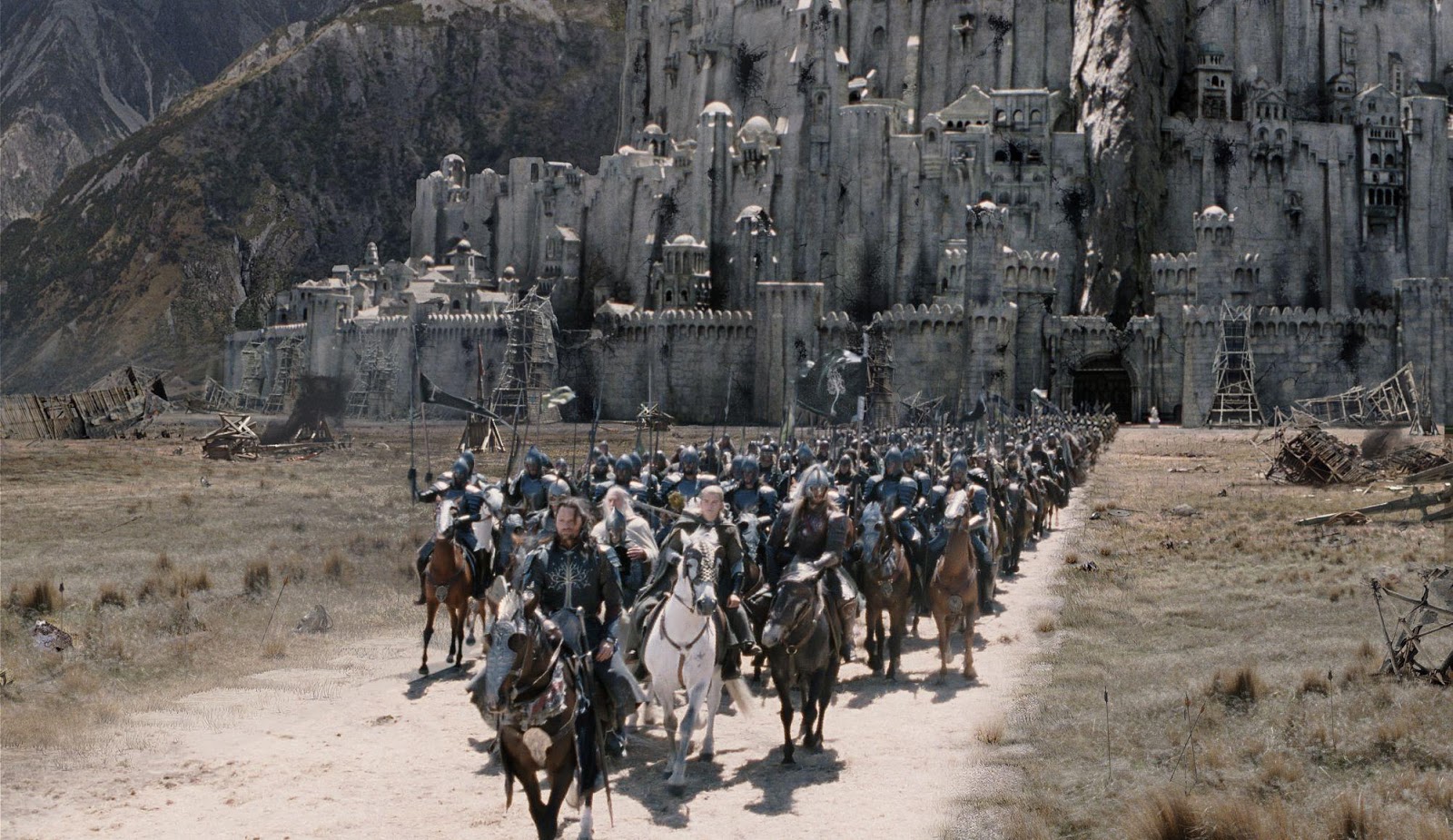
  1. and, when Aragorn marches out of Minas Tirith,


image19ara

it’s under his version of that banner–

image20a.png

which also boldly states his claim to be the rightful king—without actually coming out and saying it—compare the two banners–

  1. and the Prince of Dol Amroth has his flag, with “his token of the Ship and the Silver Swan” (The Return of the King, Book Five, Chapter 1, “Minas Tirith”).

image21dol.png

As for their opponents, we see Saruman’s white hand on armor,

image22arm.jpg

so we can presume, we think, that any banners carried would bear the same insignia and the same is true for Sauron’s orcs, which would have borne the lidless eye.

image23orc.gif

(We might also note that Southrons in the service of Mordor appear to carry red banners—as Gollum reports to Frodo and Sam in The Two Towers, Book Four, Chapter 3, “The Black Gate is Closed”.)

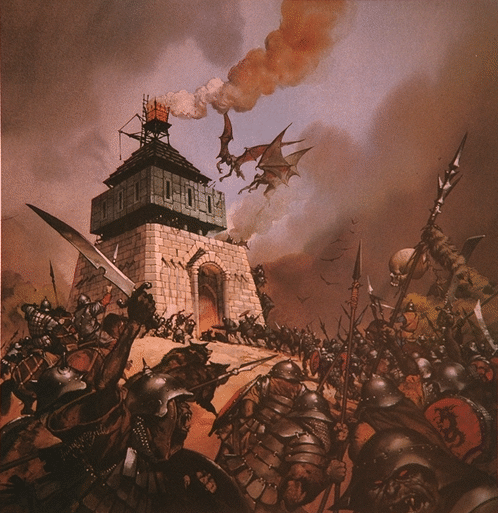
All of which made us wonder if Solomon would have been so eager to describe his beloved as he did if the army he saw looked like this?

image24orcs.png


As ever, thanks for reading and

MTCIDC


CD


ps

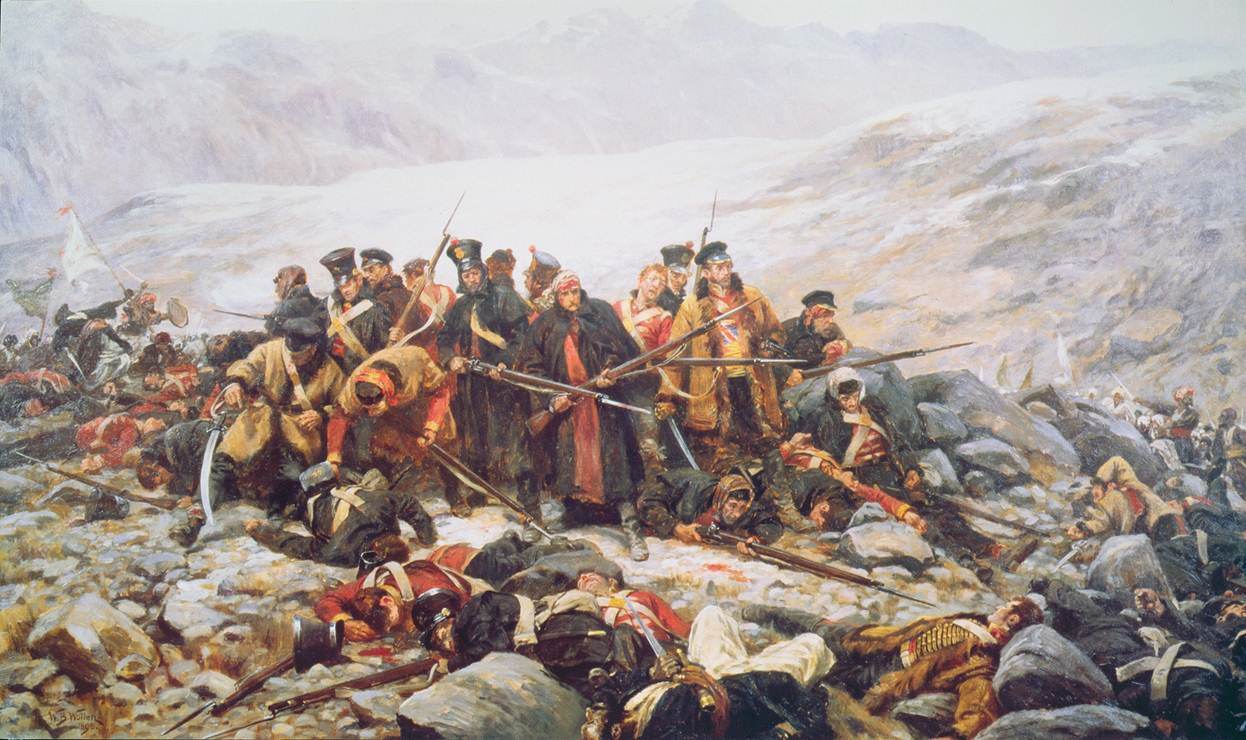
In an odd but fortunate use of a color, in 1842, during the First Afghan War, a Captain Souter was saved because he had hidden one of his regiment’s colors by wrapping it around his waist.  As the last members of his unit fell around him, his Afghan opponents saw what they believed to be a fancy waistcoat/vest and took him prisoner, hoping for a rich ransom.

image26gandamak.jpg

It’s a Long Way…

22 Wednesday May 2019

Posted by Ollamh in Films and Music, J.R.R. Tolkien, Literary History, Military History, Military History of Middle-earth

≈ Leave a comment

Tags

American Civil War, Aulos, Crusaders, Great War, Greek, Hoplites, Julius Caesar, Macbeth, Marching song, May 4th, Palestine Song, Rohirrim, Roman songs, songs, Star Wars, Star Wars Day, The Hobbit, The Lord of the Rings, Tolkien, Walter von der Vogelweide

Welcome, dear readers, as always.

Perhaps because we’re writing this on May the 4th, we’ve been in a musical mood—after all, there’s such a catchy tune involved with it—

image1vader

And we wondered if there were words to it?  Certainly soldiers have been singing songs seemingly forever.  Greek hoplites sang a hymn to Apollo before battle.

image2chigi

(They are accompanied by an aulos player here.  “Aulos” is sometimes mistranslated “flute”, but it’s not a kind of recorder.  Instead, it’s a member of the oboe family.)

Julius Caesar’s (100-44bc)

image3jc

soldiers, marching behind his chariot when he celebrated his triumph (formal victory parade) in Rome

image4triumph

sang an unprintable song about his sex life.  There’s only a fragment surviving and we’ll print it here—but in Latin—a typical Victorian thing to do.

“Urbani, servate uxores: moechum calvom adducimus.
Aurum in Gallia effutuisti, hic sumpsisti mutuum.”

(Here’s a LINK which we would recommend about reconstructing Roman soldiers’ songs.)

There’s a stirring piece by Walter von der Vogelweide (c.1170-c.1230),

image5walt

called the “Palestine Song”, supposedly sung by a crusader after reaching the Holy Land.  We can imagine later Crusaders singing it as they marched

image6cru

As in the case of the Caesar fragment, however, we won’t print the text—we aren’t enthusiastic about crusades, especially the medieval ones, believing them to have been the drawn-out attempt at a massive landgrab of places already long-inhabited.

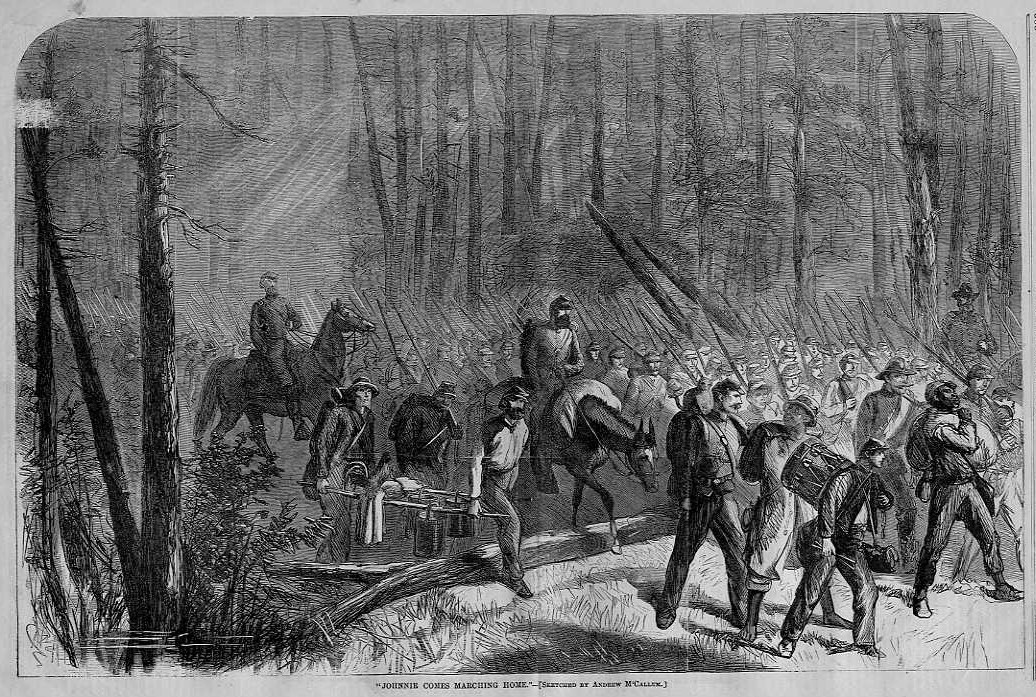
On long, monotonous marches, we imagine soldiers always sang.  The American Civil War was fought over hundreds of miles and, with the rare exception when trains could be used,

image7train

soldiers walked everywhere.

image8marching

That being the case, it’s no wonder that so many of their favorite songs had the word “marching” in the title.

image9marching

Marching Through Georgia Music and Lyrics

image11marchimage12

(And that last one’s chorus begins, “Tramp, tramp, tramp, the boys are marching…”)

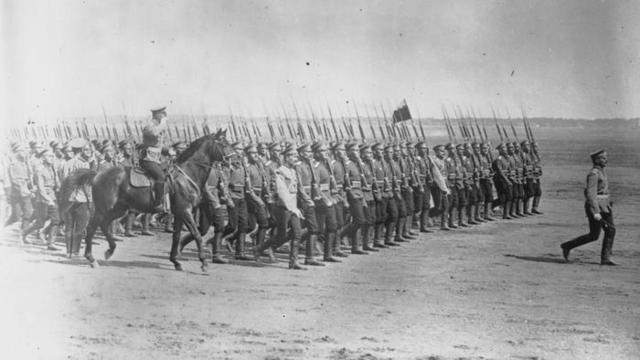
Russian soldiers appear to have had designated regimental singers, who, when called, hurried up to the front of the column and broke into choruses to keep up the men’s spirits on long journeys.

image13rus

(We apologize that these Russians aren’t singing—but this is, in fact, a film of the last czar, Nicholas II, reviewing his guards just before the Great War, so, at least, they’re marching.)

Which brings us to the Great War and our own officer in it, JRRT.

image14jrrt.jpg

Certainly, the soldiers in his battalion (13th, Lancashire Fusiliers)

image15lancs

would have sung—here are two popular favorites—

image16smile

image17tip

There were other songs, too, but not cheery at all, and officers were instructed to discourage their singing.  The words of one, sung to the tune of “Auld Lang Syne”,  expressed the terrible monotonous nature of trench warfare, being only “We’re here because we’re here because we’re here because we’re here”.  A second, “Hangin’ On the Old Barbed Wire”, as it was called, had a mocking little tune, like something from a music hall, but described the whereabouts of soldiers who, for various reasons, were out of the firing line—until it came to the last verse:

“If you want the old battalion,

I know where they are, I know where they are, I know where they are

If you want to find the old battalion, I know where they are,

They’re hanging on the old barbed wire,

I’ve seen ’em, I’ve seen ’em, hanging on the old barbed wire.

I’ve seen ’em, I’ve seen ’em, hanging on the old barbed wire.“


image17awire

Here’s a LINK, if you’d like to hear an abbreviated version.  In this , the group, Chumbawamba, uses an alternative line, “If you want to find the private”, but both versions are grim—and we presume that Tolkien knew all of these songs and many more, some, like the song about Julius Caesar, completely unprintable!

(Our image, by the way, is of a wiring party from the 1st Battalion, Lancashire Fusiliers.  Those curly things, called “screw pickets”,  you see resting on the front man’s right shoulder are the stakes which were twisted into the ground and then barbed wire was run through them and wrapped around them.   Here’s  an early US WW2 picture of a soldier working with the upper loops of one.)

gloves_barbedwire_ww2_375

As we’ve often discussed before, things from JRRT’s real life sometimes have a way of seeping into his fiction, and we can certainly see it here.

Although they’ve been silent on the march, on their way to the attack, the Rohirrim, for example, are far from that:

image19rohirrim.jpg

“And then all of the host of Rohan burst into song, and they sang as they slew, for the joy of battle was on them, and the sound of their singing that was fair and terrible came even to the City.”  (The Return of the King, Book Five, Chapter 5, “The Ride of the Rohirrim”)

Unfortunately, we have no idea what their songs might have been like—perhaps they would have resembled Theoden’s cry to the Rohirrim:

“Arise, arise, Riders of Theoden!

Fell deeds awake:  fire and slaughter!

Spear shall be shaken, shield be splintered,

A sword-day, a red day, ere the sun rises!

Ride now, ride now!  Ride to Gondor!”

Oddly, we do have two of what might be called Goblin marching songs,

image20goblins.jpg

both from The Hobbit.  The first is sung right after the dwarves are captured in a cave in which they’ve taken shelter in the Misty Mountains.

“Clap! Snap! the black crack!
Grip, grab! Pinch, nab!
And down down to Goblin-town
You go, my lad!

Clash, crash! Crush, smash!
Hammer and tongs! Knocker and gongs!
Pound, pound, far underground!
Ho, ho! my lad!

Swish, smack! Whip crack!
Batter and beat! Yammer and bleat!
Work, work! Nor dare to shirk,
While Goblins quaff, and Goblins laugh,
Round and round far underground
Below, my lad!”

(Chapter Four, “Over Hill and Under Hill”)

The second appears two chapters later, when the company is trapped in the pines and the Goblins and Wargs are below:

“Burn, burn tree and fern!
Shrivel and scorch! A fizzling torch
To light the night for our delight
Ya hey!

Bake and toast ’em, fry and roast ’em!
till beards blaze, and eyes glaze;
till hair smells and skins crack,
fat melts, and bones black
in cinders lie
beneath the sky!
So dwarves shall die,
and light the night for our delight,
Ya hey!
Ya-harri-hey!
Ya hoy!”

(Chapter Six, “Out of the Frying-pan Into the Fire”)

We notice that the opening of the second bears a certain resemblance to another song sung in a wild location—by wild people:

“First Witch
Round about the cauldron go;
In the poison’d entrails throw.
Toad, that under cold stone
Days and nights has thirty-one
Swelter’d venom sleeping got,
Boil thou first i’ the charmed pot.

All
Double, double, toil and trouble; (10)
Fire burn, and cauldron bubble.

Second Witch
Fillet of a fenny snake,
In the cauldron boil and bake;
Eye of newt and toe of frog,
Wool of bat and tongue of dog,
Adder’s fork and blind-worm’s sting,
Lizard’s leg and howlet’s wing,
For a charm of powerful trouble,
Like a hell-broth boil and bubble.”

(Macbeth, Act 4, Scene 1)

image21cauldron.jpg

In  The Lord of the Rings, JRRT blurs Goblins and orcs and, considering that we almost always see orcs as moving in companies, we’ll see them that way, too, marching across Rohan or on the stone roads of Mordor, and we’d like to imagine that they, too, have songs to make the way shorter.  But what do they sing about?  And, judging by the Goblin’s songs, do we want to know?

image22orcs.jpg

Thanks, as always, for reading and

MTCIDC

CD


ps

Another Great War soldiers’ song was more melancholy than sarcastic, although it still suggested marching,

image23songsheet.jpg

and, when you read the chorus, you’ll see why.

image24lyrics.jpg

Here’s a LINK of it sung by a famous tenor of that time, John McCormack (1884-1945) and here are soldiers at a happier moment and we hope that Tolkien sometimes saw them this way, too.

image25cheer.jpg


On the Horns

16 Wednesday Jan 2019

Posted by Ollamh in J.R.R. Tolkien, Military History, Military History of Middle-earth, The Rohirrim

≈ 2 Comments

Tags

Boromir, buccinae, Cavalry charge, Chanson de Roland, Charlemagne, cornet, Easterlings, Eorl the Young, Gondor, Greek, horn, Meduseld, Militari, Rohan, Rohirrim, Roman, The Lord of the Rings, Theoden, Tolkien, trumpet, Trumpeter, Vegetius, war-horn

Welcome, dear readers, as always.

Our friend, Erik, once said that one of his very favorite passages from The Lord of the Rings began with this:  “And as if in answer there came from far away another note.  Horns, horns, horns.  In dark Mindolluin’s sides they dimly echoed.  Great horns of the North, wildly blowing.  Rohan had come at last.” (The Return of the King, Book Five, Chapter 4, “The Siege of Gondor”)

Of course this brings on the charge of the Rohirrim, one of our own favorite moments in the Jackson films.

image1rohirrim.jpg

And what is more exciting than a cavalry charge (as long as you don’t think too hard about the fate of the horses)?

image2awing.jpg

Those horns begin blowing because Theoden:

“…seized a great horn from Guthlaf his banner-bearer, and he blew such a blast upon it that it burst asunder.  And straightaway all the horns in the host were lifted up in music, and the blowing of the horns of Rohan in that hour was like a storm upon the plain and a thunder in the mountains.” (The Return of the King, Book Five, Chapter 5, “The Ride of the Rohirrim”)

A number of images immediately come into our minds when reading this.

First, when Gandalf, Aragorn, Legolas, and Gimli initially come to Edoras and enter Meduseld,

image2meduseldInger-Edelfeldt-8.jpg

(This is a particularly fine possible Meduseld by Inger Edelfeldt.)

they look up to see:

“Many woven cloths were hung upon the walls, and over their wide spaces marched figures of ancient legend, some dim with years, some darkling in the shade.  But upon one form the sunlight fell:  a young man upon a white horse.  He was blowing a great horn, and his yellow hair was flying in the wind.  The horse’s head was lifted, and its nostrils were wide and red as it neighed, smelling battle afar.  Foaming water, green and white, rushed and curled about its knees.

‘Behold Eorl the Young!’ said Aragorn.  ‘Thus he rode out of the North to the Battle of the Field of Celebrant.’”  (The Two Towers, Book Three, Chapter 6, “The King of the Golden Hall”)

image3eorl.jpg

Thus, we’re reminded of an earlier rescue, when Eorl brought the Rohirrim out of the north in TA2510 to aid Gondor in defeating a combined army of orcs and Easterlings.

Second, anyone interested in Western medieval literature would be reminded of the early French poem, the Chanson de Roland (c1000AD),

image4chanson.jpg

in which Roland, a young warrior and leader of the rear guard of Charlemagne’s army, refuses to blow his horn for reinforcements when his men are ambushed in a pass, saying that to do so would be cowardice.

image5rol.jpg

Rather than his horn exploding, Roland’s head does, from the exertion, but the broken horn makes us think of Boromir’s last stand, where he blows his horn, but no help comes until it’s too late.

image6boromir.jpg

All that we know of the horn which Theoden blew was that it was “great”—that is, big—but perhaps it looked like Boromir’s?

“On a baldric he worn a great horn tipped with silver that was now laid upon his knees.” (The Fellowship of the Ring, Book Two, Chapter 2, “The Council of Elrond”)  Here’s a medieval one from the British Museum.

image7oliphant.jpg

It should be remembered, of all of these horns, that they have a military use, both in Middle-earth and in our world, as a method of transferring commands from officers to soldiers, both in and out of battle, and what Theoden is actually doing is the musical equivalent of shouting CHARGE! to his 6000-man eored.  Nowhere is the military use of horns made clearer for earlier warfare than in the writing of the late Roman (4th c. AD) author, Vegetius.  In Book II of his De Re Militari (“Concerning Military Affairs”) he describes the use of such instruments:

“The music of the legion consists of trumpets, cornets and buccinae. The trumpet sounds the charge and the retreat. The cornets are used only to regulate the motions of the colors; the trumpets serve when the soldiers are ordered out to any work without the colors; but in time of action, the trumpets and cornets sound together. The classicum, which is a particular sound of the buccina or horn, is appropriated to the commander-in-chief and is used in the presence of the general, or at the execution of a soldier, as a mark of its being done by his authority. The ordinary guards and outposts are always mounted and relieved by the sound of trumpet, which also directs the motions of the soldiers on working parties and on field days. The cornets sound whenever the colors are to be struck or planted. These rules must be punctually observed in all exercises and reviews so that the soldiers may be ready to obey them in action without hesitation according to the general’s orders either to charge or halt, to pursue the enemy or to retire. F or reason will convince us that what is necessary to be performed in the heat of action should constantly be practiced in the leisure of peace.” (This is taken from a 1944 digest of the 1767 translation by John Clarke—if you would like to see the Latin original, here’s a LINK to a text.  The relevant passage is:  “XXII. Quid inter tubicines et cornicines et classicum intersit.”)

The three Latin terms translated as “trumpets, cornets and buccinae” are actually, “tubicines cornicines bucinatores”, meaning “players of tubae, players of cornua, players of buccinae”.   In this ancient relief, we can see, on the left, tuba-players, and, in the center, either players of cornu, or the buccina, as the instruments appear to be rather hard to distinguish in shape.

image8.jpg

And here’s a modern reconstruction, by Peter Connolly.

image9.jpg

We live in a world of such rapid electronic communication

image10radio.jpg

that it might be easy to forget that, for centuries, any order beyond the sound of a general’s voice had to be transferred by other means.  Like Greek trumpeters,

image11salpinx.jpg

or Roman

image12buccinator.jpg

or medieval mounted messengers (the Latin says “messengers of William”).

image13mtdmess.jpg

Drums might be used—

image14rendrumimage15drum

and the early 18th-century British general, the Duke of Marlborough even had his own foot-messenger squad, wearing distinctive clothing (one, in blue, with a jockey cap, is just to the left of the Duke in this tapestry).

image16dukemess.jpg

But what, we asked above, is more exciting than a cavalry charge (we once did a posting devoted specifically to them)—and what makes that more exciting than the trumpeter at the front, sounding the charge?

image17friedland4


Thanks, as always, for reading.

MTCIDC

CD

Who Goes There? (3)

28 Wednesday Nov 2018

Posted by Ollamh in J.R.R. Tolkien, Military History, Military History of Middle-earth, The Rohirrim

≈ Leave a comment

Tags

Argonath, Common Tongue, Doorward Hama, Eomer, Ephraimites, Gileadites, Great War, language, Language of Rohan, patrol, Rohirrim, Shibboleth, The Lord of the Rings, Tolkien, Wulfgar

Welcome, as always, dear readers.

We’re in the third installment of a little series about sentries and patrols in Middle-earth.

We had begun in the first installment in the Shire, with the shirriffs, then the watchman in Bree, then the watcher in the lake at the western gates of Moria, then the Elves of Lorien under Haldir, finishing with the Argonath, the biggest sentries of all.

image1argonath.jpg

Now, as we move south, we encounter our first patrol.  From his experience in the Great War,

image2ltjrrt.jpg

JRRT would have been very familiar with groups of armed men spreading out across the countryside, either slipping into enemy territory or simply guarding the edges of their own.

image3patrol.jpg

And patrols could be on horseback, as well as on foot—and not necessarily friendly, either.

image4gpat.jpg

As Aragorn, Legolas, and Gimli cross northern Rohan in their attempt to rescue Merry and Pippin, they run into one of these patrols:  Eomer and his Rohirrim.

image5rohirrim


As we mentioned in our second installment, when it comes to The Lord of the Rings, encounters with watchers of any sort often lead to developments in the plot and this is certainly true when the three meet with Eomer.  They have pursued the Orcs for days in hopes of rescuing Merry and Pippin, only to be told that the band in which the two hobbits were being kept prisoner has been destroyed completely:

“ ‘Did you search the slain?’” Aragorn asks, explaining, “ ‘Were there no bodies other than those of orc-kind?  They would be small, only children to your eyes, unshod but clad in grey.’

‘There were no dwarves nor children,’ said Eomer.  ‘We counted all the slain and despoiled them, and then we piled the carcasses and burned them, as is our custom.  The ashes are smoking still.’” (The Two Towers, Book Three, Chapter 2, “The Riders of Rohan”)

Aragorn is unshaken in his belief that the two may still be alive, however, and the three will continue their search, but now, as Eomer has loaned them horses, so he has lain an obligation upon Aragorn:

“ ‘You may go; and what is more, I will lend you horses.  This only I ask:  when your quest is achieved, or is proved vain, return with the horses over the Entwade to Meduseld, the high house in Edoras where Theoden now sits.  Thus you shall prove to him that I have not misjudged.  In this I place myself, and maybe my very life, in the keeping of your good faith.  Do not fail.’ “

And so, rather than to continue to Minas Tirith, as Aragorn had planned, he and his two companions are to be diverted to the capital of Rohan, instead.  Meeting Gandalf in their search,

image6gandalf

they fulfill Aragorn’s promise and are met by two separate sets of watchmen.  First, at the gates of Edoras:

“There sat many men in bright mail, who sprang at once to their feet and barred the way with spears. ‘Stay, strangers here unknown!’ they cried in the tongue of the Riddermark, demanding the names and errand of the strangers.” (The Two Towers, Book Three, Chapter 6, “The King of the Golden Hall”)

In his reply, Gandalf speaks in the language of Rohan, but wonders “Why do you not speak in the Common Tongue, as is the custom in the West, if you wish to be answered?”

To which one of the guards replies:  “It is the will of Theoden King that none should enter his gates, save those who know our tongue and are our friends.”

[This use of language as a screening test, by the way, reminds us of a well-known story from the Hebrew Bible, in which, when the Ephraimites were defeated in battle and attempted to escape over the Jordan River, their opponents, the men of Gilead, stood at the crossings and, whenever a strange man tried to ford  the river, the Gileadites would demand that he pronounce the word “shibboleth” (which means “a stalk of grain”, among other things).  In the Ephraimite dialect of Hebrew, the consonant combination “sh” was said “s”, and so, at least as the story goes, every Ephraimite warrior who slipped and said “shibboleth” was immediately revealed to be an enemy soldier and was captured and killed.  (See The Book of Judges, Chapter 12)]

Aragorn has already been warned by Eomer that all is not well in Edoras, as he has said about Saruman, who has become an enemy of Rohan, “His spies slip through every net, and his birds of ill omen are abroad in the sky.  I do not know how it will all end, and my heart misgives me; for it seems to me that his friends do not all dwell in Isengard.”

This confrontation between guards and Gandalf immediately makes Gandalf wary, especially when he hears from one of the sentries that:

“It is but two nights ago that Wormtongue came to us and said that by the will of Theoden no stranger should pass these gates.”

Knowing from this that Wormtongue is inserting himself into Theoden’s actions prepares Gandalf to deal with the next sentry, the Doorward Hama.

“Then one of the guards stepped forward and spoke in the Common Speech.

‘I am the Doorward of Theoden…Hama is my name.  Here I must bid you lay aside your weapons before you enter.’ “

[If you read us regularly, you’ll recognize this figure from Beowulf.  There he is named Wulfgar, and he is the herald of King Hrothgar.  See Beowulf, 330-355.]

Although Legolas easily puts aside his weapons, Aragorn is a bit stiff-necked, refusing, at first, to put down Anduril until Gandalf offers his sword, Glamdring, followed by Gimli, who places his axe with the other weapons.  Hama hasn’t finished, however:

“The guard still hesitated.  ‘Your staff,’ he said to Gandalf.  ‘Forgive me, but that too must be left at the doors.’ “

Gandalf appears to object, on the grounds of his age:

“Foolishness!…Prudence is one thing, but discourtesy is another.  I am old.  If I may not lean on my stick as I go, then I will sit out here, until it pleases Theoden to hobble out himself to speak with me.”

Hama has a moment of proper doubt—“  ‘The staff in the hand of a wizard may be more than a prop for age.’ “—but he still allows Gandalf to carry his staff, which he then uses to disarm Grima Wormtongue and break the spell which has prematurely aged Theoden.

We have now added three more watchmen or groups to our growing list, all from Rohan and each meeting having had an effect upon those involved.  In the final installment of our series, we’ll leave the grassy plains of the Riddermark for Gondor, then cross the Anduin into a very different world.

Till then, thanks, as ever, for reading and

MTCIDC

CD

Orc Arsenal.2

03 Wednesday Oct 2018

Posted by Ollamh in Artists and Illustrators, J.R.R. Tolkien, Military History, Military History of Middle-earth

≈ Leave a comment

Tags

Anglo-Saxon, Angus McBride, Bayeux Tapestry, Celts, chain-mail, hauberk, lamellae, lorica segmentata, medieval Russians, Mordor, Mycenaeans, Orcs, Renaissance irish, Republican Romans, Rohirrim, sallet, spangenhelm, Star Wars, The Lord of the Rings, Tolkien, Zulus

So, dear readers, welcome, as always.  In this posting, we want to finish our brief overview of orc weaponry which we began in our last.

A famous military illustrator, Angus McBride, (1931-2007)

image1am.jpg

once said in an interview that there was one thing which he hated about doing such illustrations:  painting chain mail, which he said was the most tedious part of his work.  Considering that he painted it on early Celts

image2celts.jpg

and Renaissance Irish,

image3irish.jpg

and Republican Romans

image4romans.jpg

and medieval Russians,

image5russians.jpg

McBride must have suffered many hours of boredom!  It didn’t stop him, however, as we see in these illustrations for The Lord of the Rings,

image6lotr.jpg

image7lotr.gif

image8lotr.jpg

from putting armor on Rohirrim and orcs alike.

Chain mail—or simply mail—is made by linking together a series of metal rings.

image9amakingmail.jpg

image9bmail.jpg

This is, as you can imagine, a very time-consuming process, especially if you have to make the rings first.  (Here’s a LINK on mail manufacturing, in case you’d like to try it yourself.)

We have seen the number of rings used in a full mail hauberk to be over 20,000, so it’s also metal-consuming, as well as time-consuming.  It also appears to have been expensive.  We once heard an expert say something about the “same price as a two-bedroom house”, but that seems a little excessive.  The always-useful Regia Anglorum website gives the price of a mail shirt in Anglo-Saxon times at 529d (that’s 529 pence), or 10,580 pounds in modern UK money ($13,785.18 US at today’s current exchange rate).  Here’s a LINK to their web page to see the author’s reasoning for his equivalences.

McBride shows orcs wearing mail—does JRRT?   In fact, in the first scene in which we see orcs, we read:

“…a huge orc-chieftain, almost man-high, clad in black mail from head to foot…” (The Fellowship of the Ring, Book Two, Chapter 5, “The Bridge of Khazad-dum”

And, late in the story, when Sam and Frodo are in Mordor and Sam provides clothes for Frodo:

“There were long hairy breeches of some unclean beast-fell, and a tunic of dirty leather.  He drew them on.  Over the tunic went a coat of stout ring-mail, short for a full-sized orc, too long for Frodo and heavy.” (The Return of the King, Book Six, Chapter 1, “The Tower of Cirith Ungol”)

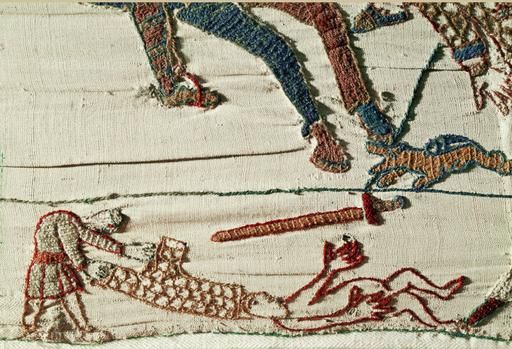
(We can attest to the weight of such a coat, by the way, having a modern reproduction ourselves.  It weighs 25 pounds or more—that’s 11.34 kilograms.  When it’s on your shoulders, the weight is displaced, so it doesn’t feel quite so heavy, but, if you have it piled in a box, you really feel the heft.  We would also add that, because of the cost, armor wasn’t commonly left on the battlefield.  This segment of the Bayeux Tapestry shows what must normally have happened.)

image9cstrip.jpg

McBride, in his illustrations, depicts two other types of body armor.  In these first two depictions, we see the kind of armor the Romans called lorica segmentata.

image9lorica.gif

image10lorica.gif

This is a system based upon a series of broad, overlapping iron strips.

image11lorica.jpg

image12lorica.gif

As far as we can tell, this is never mentioned in the text. There may be one mention of our third type:

image13lam.jpg

This is armor made up of a series of small plates, called lamellae, sewn in an overlapping fashion, rather like fish scales.

image14lam.jpg

There may be one mention of this:

“The orcs hindered by the mires that lay before the hills halted and poured their arrows into the defending ranks.  But through them came striding up, roaring like beasts, a great company of hill-trolls out of Gorgoroth.  Taller and broader than Men they were, and they were clad only in close-fitting mesh of horny scale, or maybe that was their hideous hide…” (The Return of the King, Book Five, Chapter 10, “The Black Gate Opens”)

But what about helmets?

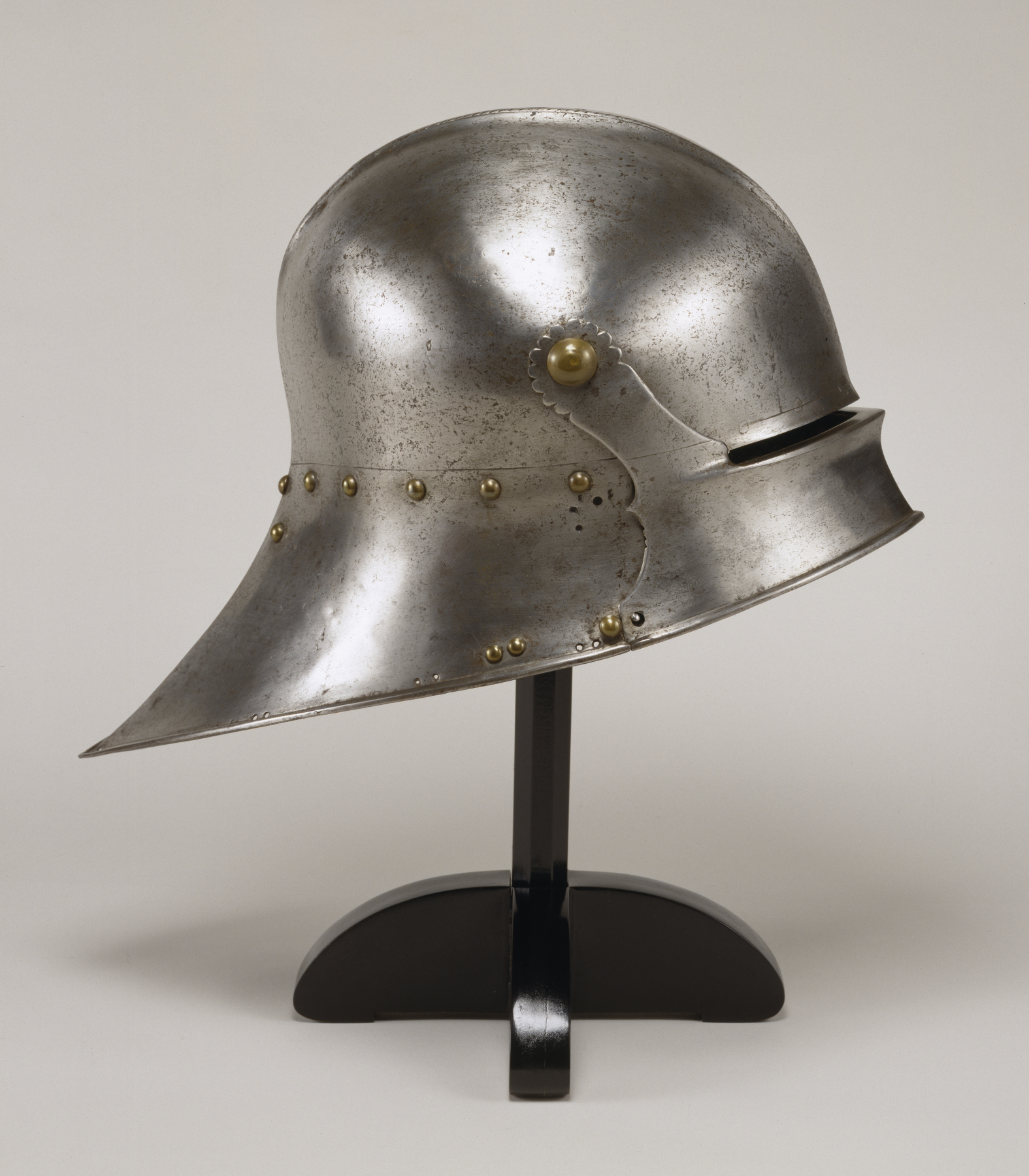
McBride depicts most of his orcs in something which might be described as wild variations on the later medieval helmet called a sallet.

image15aorcs.gif

image15bsallet.jpg

You can see John Mollo, a costume designer for Star Wars, having fun with this pattern, too.

image15cdarth.JPG

image15ddeathstar.jpg

In the text, in that first scene in which we see orcs, there is a mention of Aragorn’s sword, Anduril, which “came down upon [an orc’s] helm”, but nothing more specific—and that’s true for the second mention, when Aragorn examines the orcs killed by by Boromir:

“…on the front of their iron helms was set an S-rune, wrought of some white metal.” (The Two Towers, Book Three, Chapter 1, “The Departure of Boromir”)

There is a bit more detail in this description:

“Sam brought several orc-helmets.  One of them fitted Frodo well enough, a black cap with iron rim, and iron hoops covered with leather upon which the Evil Eye was painted in red above the beaklike nose-guard.” (The Return of the King, Book Six, Chapter 1, “The Tower of Cirith Ungol”)

To us, this sounds like a kind of spangenhelm, the sort of thing the Normans wear in the Bayeux Tapestry.

image15spangen.jpg

image16spangen.jpg

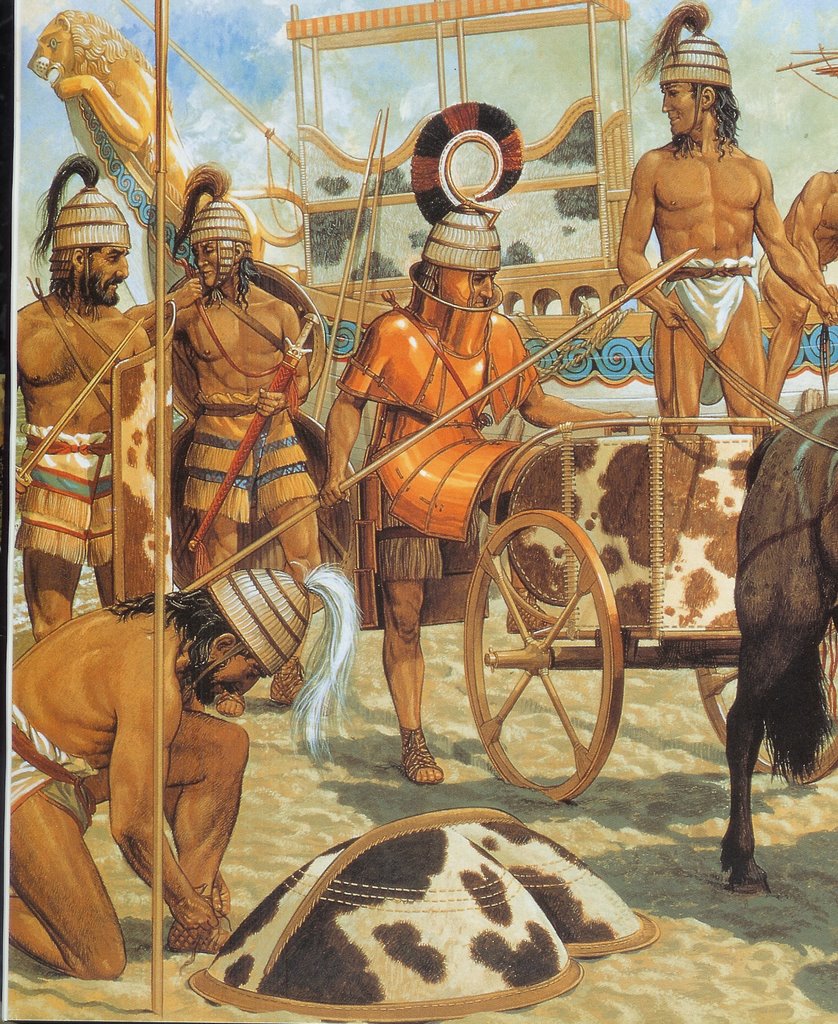
To which we can add a couple of types of shields.  The first we see—it’s that same “orc-chieftain”—carries “a huge hide shield” (The Fellowship of the Ring, Book Two, Chapter 5, “The Bridge of Khazad-dum”).  There is no further description.  If it’s only made of hide, this could resemble anything from a Mycenaean “figure-of-eight” shield

image17fig.jpeg

image18fig.jpg

to a Mycenaean “tower” shield

image19tower.png

to a Zulu shield.

image20zulu.JPG

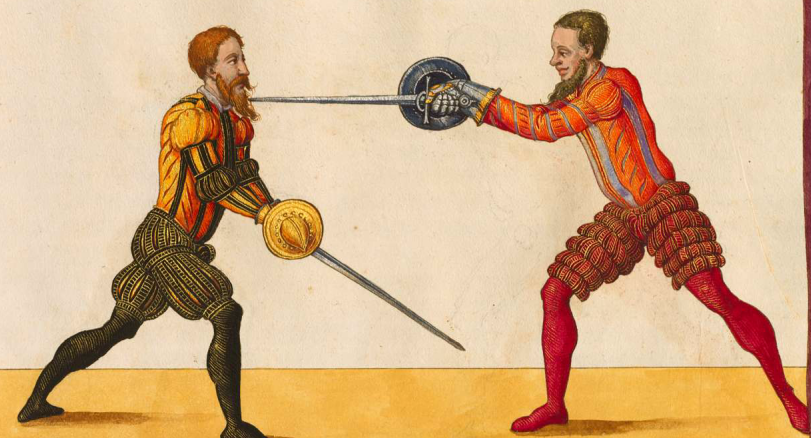
The hill-trolls of Gorgoroth, mentioned above for their possible lamellar armor, are said to carry “round bucklers huge and black” (The Return of the King, Book Five, Chapter 10, “The Black Gate Opens”).

A huge buckler, however, is a contradiction in terms, as bucklers are, by definition, small—more a kind of one-on-one fencing defense, as we see in this illustration.

image21buckler.png

Like their helmets, orc shields commonly carry the sign of their master, Saruman or Sauron—“Upon their shields they bore a strange device” (The Two Towers, Book Three, Chapter 1, “The Departure of Boromir”).  (Some of Saruman’s followers, however, seem to have unmarked shields, as the attackers of Helm’s Deep are described as “some squat and broad, some tall and grim, with high helms and sable shields”—The Two Towers, Book Three, Chapter 7, “Helm’s Deep”)  This can also be useful if you’re the authorities and you want to catch deserters, as Sam and Frodo find out when they’re trapped by a column of orcs on the road in Mordor:

“Then suddenly one of the slave-drivers spied the two figures by the road-side…He took a step towards them, and even in the gloom he recognized the devices on their shields.  ‘Deserting, eh?’ he snarled.” ( The Return of the King, Book Six, Chapter 2, “The Land of Shadow”)

image21shield.gif

This i.d.-ing leads us towards our next posting:  Heraldry and Serial Numbers, where we’ll see more of orcs and others, too.

Thanks, as always, for reading.

MTCIDC

CD

Orc Arsenal.1

26 Wednesday Sep 2018

Posted by Ollamh in Artists and Illustrators, Fairy Tales and Myths, Heroes, J.R.R. Tolkien, Literary History, Military History, Military History of Middle-earth, The Rohirrim

≈ Leave a comment

Tags

Alan Lee, And Inquiry Into Ancient Armour, Angus McBride, arming sword, Battle Axe, English Longbowmen, Eowyn, Falchion, Gladius, Gondor, Hildebrandts, Howard Pyle, John Howe, King Arthur, Longbow, Mace, Medieval, Mongols, Morning Star, Orcs, Pelennor, Pitt-Rivers Museum, Robert Louis Stevenson, Rohirrim, Scimitar, Sir Arthur Conan Doyle, Sir Samuel Meyrick, Ted Nasmith, The Black Arrow, The Lord of the Rings, The White Company, Tolkien, Victorian, Wallace Collection, War Hammer, Weaponry, Witch-King of Angmar

Welcome, dear readers, as always.

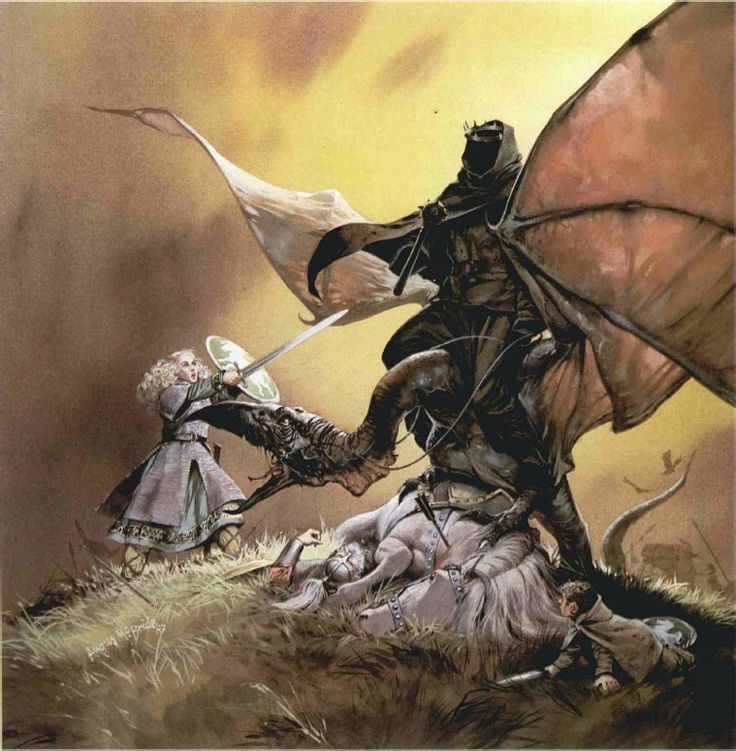
“The great shadow descended like a falling cloud.  And behold! It was a winged creature…

Upon it sat a shape, black-mantled, huge and threatening…A great black mace he wielded.”

(The Return of the King, Book Five, Chapter 6, “The Battle of the Pelennor Fields”)

This is clearly a scene which has caught the attention, over the years, of many artists, starting, we’d guess, with the Hildebrandts.

image1hild.jpg


Then others, like Angus McBride and Ted Nasmith,

image2am.jpg

image3nasmith.jpg

And Alan Lee and John Howe,


image4aleeimage4bhowe

as well as many very good artists whom we don’t know by name—

image4cimage5image6image7


Of these, all but Lee and the unknown sixth artist follow JRRT’s description more or less closely.  Number 6—it’s a little unclear– but he might be carrying a war hammer of some sort,

image8warhammer.jpg

rather than a mace.

image9mace.jpg

image10mace.jpg

(These last two are basic patterns of a mace.)

The Lee is, well, we’re not sure what it seems to be.  It sort of looks like a battle axe

image11battleaxe.jpg

but also like what was called a “morning star”,

image12mornin.jpg

which should, we think, belong to the flail family.


image13flail

This rather fits in with the P Jackson image, shown in this model (and note that sword—definitely not in the original description—which is in his other hand).

image14mace.jpg

This difference made us curious about the weapons the Rohirrim—and the Gondorians—face and, in particular, those of the orcs.  The Hildebrandts

image15captured


provide us with odd-looking spears and what might appear to be scimitars


image16scim

but might be the suggestion of a medieval sword called a falchion.

image17falchion

McBride, who spent much of his artistic career illustrating military subjects, gives us weapons (mostly) less fanciful.

image18mcbimage19mcb

Lee

image19lee

and Howe

image20howe

veer between the practical and the fantastic and the films clearly follow them—

image21orcimage22orcimage23orc

How does JRRT describe the orc weaponry?

The first armed orc we see appears in Moria:

“His broad flat face was swart, his eyes were like coals, and his tongue was red; he wielded a great spear…Sam, with a cry, hacked at the spear-shaft, and it broke.  But even as the orc flung down the truncheon and swept out his scimitar…” (The Fellowship of the Ring, Book Two, Chapter 5, “The Bridge of Khazad-dum”)

The orcs who pursue the Fellowship through Moria have similar weapons:

“Beyond the fire he saw swarming black figures:  there seemed to be hundreds of orcs.  They brandished spears and scimitars which shone red as blood in the firelight.”

After the death of Boromir, however, Aragorn, Gimli, and Legolas find a different kind of orc:

“There were four goblin-soldiers of greater stature, swart, slant-eyed, with thick legs and large hands.  They were armed with short broad-bladed swords, not with the curved scimitars usual with Orcs: and they had bows of yew, in length and shape like the bows of Men.” (The Two Towers, Book Three, Chapter 1, “The Departure of Boromir”)

So far, we’ve seen spears

image24spears

and scimitars

image25scim

and now we can add to that “short broad-bladed swords”.  Perhaps Tolkien is thinking of the medieval “arming sword”

image26arming

or even the Roman gladius?

image27gladius.jpg

When we add “bows of yew, in length and shape like the bows of Men”, we immediately see the classic English longbow.

image28longbowman.jpg

This doesn’t quite match with the first orc bowman we see in the films, however, “Lurtz”—

image29lurtz.jpg

image30lurtz.jpg

who appears to have some sort of recurved bow, possibly composite, of the sort the Mongols used

image31mongol

even though, from the white hand on his face, he is supposed to be one of those “goblin-soldiers” from Isengard.

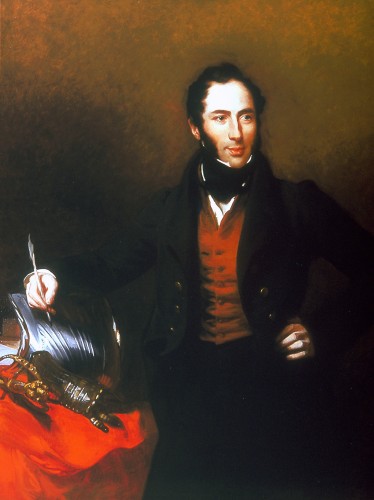
As we were looking through Tolkien’s text, we wondered where he would have gotten his ideas for weapons from.  If the basis, as we imagine it, would have been his background in medieval literature, then he might have gone to the library and found an old standard work, Sir Samuel Meyrick’s (1783-1848)

image32meyrick.jpg

An Inquiry Into Ancient Armour, As It Existed in Europe, Particularly in Great Britain, From the Norman Conquest to the Reign of Charles the Second, first published in 1824.  (Here’s a LINK if you’d like to look at this text for yourself.)

image33mey

Meyrick was the first great English specialist in armor and the later editions of his work (in 3 volumes) have wonderful early hand-colored plates, all based upon surviving armor, tombs, manuscripts, and any other period materials he could gather.

image34meyill.jpg

If JRRT wanted to see such things for himself, he would have found more exotic weapons in the Pitt-Rivers Museum in Oxford,

image35pittriversimage36pitt

or he could have traveled up to London to see the Wallace Collection

image37wallaceimage38wallace

or, best of all, he could have visited the Tower of London, with its massive collection (the organizing of which had earned Meyrick his knighthood in 1832) of medieval arms and armor, which had been available to the public in some form even before Meyrick’s time—here’s a Victorian tour.

image39tower

image40towerimage41tower

It could have been all of the above, of course, but it seems to us that the descriptions we’re reading are actually not really very specific—“mace”, “spear”, “scimitar”—only those short swords and bows suggest anything more detailed.  Perhaps, then, Tolkien was inspired by something else—perhaps he had read, perhaps even possessed, as a boy, books like Howard Pyle’s 1903 The Story of King Arthur and His Knights

image42pyle

and been inspired by its illustrations.

image43pyle

There were plenty of illustrated tales like this—Conan Doyle’s The White Company (first published in serial form in 1891),

image44whitecompany.jpg

or Robert Louis Stevenson’s The Black Arrow (serial 1883, book 1888).

image45blackarrow.jpg

With any and all of that background, we wonder what he might have made of this, however, an orc sword from the films which looks more like something manufactured from a car part than the product of a medieval armorer…

image46sword.jpg

Thanks, as ever, for reading.

MTCIDC

CD

ps

If car part weapons don’t bother you, you might be interested in this LINK—it’s an early article on ideas for weapons and armor for the Jackson films.

Green and Quiet.2

12 Wednesday Sep 2018

Posted by Ollamh in Heroes, J.R.R. Tolkien, Military History

≈ Leave a comment

Tags

21st Lancers, Bataclava, Cavalry, Charge of the Light Brigade, Edwardian, Great War, horses, King Edward, Medieval, Omdurman, Oxford, Pelennor, railways, Rohirrim, Romans, Scots Greys, Tolkien, Victorian, Waterloo

Welcome, as ever, dear readers.

The late-Victorian/Edwardian world of JRRT’s childhood and youth was full of stirring stories and illustrations of military adventure, from the 1815 charge of the Scots Greys at Waterloo

image1scot.jpg

to the disastrous (but glorious) charge of the Light Brigade at Balaclava in 1854

image2.jpg

to the near-disastrous (but also glorious) charge of the 21st Lancers at Omdurman (1898)

image3omdurman.jpg

to the expectation of more glorious attacks in the event of a Great War on the continent.

image4eleventhhus.jpg

Such images may have inspired him to join a volunteer cavalry unit at Oxford, King Edward’s Horse,

image5keh.jpg

and may even lie behind the charge of the Rohirrim at the Battle of the Pelennor Fields.

image6pel.jpg

To us, however, it also symbolizes something else:  the role of the horse in Tolkien’s world.  Its military role was more than simply carrying the glamorous cavalry, however.

image7hussars.jpg

It also pulled the guns,

image8rha.jpg

the supply wagons,

image9gsw.jpg

the ambulances,

image10ambulance.jpg

as well as carried those in control of it all, from the Kings (after 1901)

image11ed7.jpg

image12geo5.jpg

to the generals,

image13french.jpg

and it was the same for all of Europe and the US, as well.

image14kaiser.png

image15tr.jpg

image16pershing.jpg

All of which simply reflected that, for all that there were railroads

image17railway.jpg

and the West was crisscrossed with railway tracks,

image18rrmaps.jpg

horses still pulled the world,

image19plowing.jpg

as they had from Roman times

image20roman.jpg

through medieval

image21medplow.gif

and still did, even beyond the Great War.

image22london.jpg

In our last posting, we discussed a line from The Hobbit :  “By some curious chance one morning long ago in the quiet of the world, when there was less noise and more green…”

We suggested that, with that phrase “long ago” and that imperfect tense verb form, “was”, all was no longer so quiet or green and that goblins/orcs, or their modern equivalent in the Industrial Revolution, were eating up the green of the world, as well as the quiet, but we would like to add to that that a major change in transport, which removed the horse almost entirely from the picture, also contributed greatly.

First, of course, it was those railways which cut through everywhere, steaming and smoking and hooting.

image23rr.png

These greatly reduced the use of horses for carrying things—and people—over distances.

image24wagon.jpg

image25stage.jpg

At the turn of the century, however, a new invention would come to so diminish the employment of horses eventually to the point where they would be thought obsolete.

image26duryea.JPG

At first, they were few and far between, available only to the rich for personal use.

image27richcar.jpg

The massive production needed for the Great War (1914-1918),

image28atruck.jpg

however, encouraged both post-war demand and supply.

image28car.jpg

image29van.jpg

As we’ve discussed in previous postings, the Romans had been masters of the paved road.

image30romanroad


After the Romans, however, the secret (and the massive amounts of cash, as well as the numbers of workers) to such roads was lost and roads declined into, at best, wide paths—dust baths in summer, swamps in winter.

image31greatnorth.jpg

At best, a road might be “metalled”—that is, covered in loose stone (from Latin “metallum”—here, meaning “quarry”).

image32metalled.jpg

In the 1820s, the Scots engineer, JL McAdam, created roads with a crushed stone surface over larger inlaid stones.

image33mcadam


Each of these was an improvement over a dirt track,

image34track.jpg

but, about 1900, the next process arrived, with the use of bitumen and then various petroleum substances to cover the surface and, along with the use of concrete, these produced the roads we still drive on today.

image35highway.jpg

Unfortunately for green and quiet, this rapidly multiplied the decay of both, as cars and trucks and the roads they needed began to spread across the landscape.  Imagine, for a man who had been born into the greener and quieter and horsier world of 1892, what this 1930s traffic jam would have been like and you can easily see why he would have believed that goblins and orcs could so harm the peaceful world!

image36jam.jpg

Thanks, as ever, for reading.

MTCIDC

ps

Recently, we happened upon this very interesting story, which we had never seen before, from the online BBC New, 3 July, 2006.  The author mentions “Tolkien’s son” by whom he means JRRT’s second son, Michael.

Many years ago I corresponded with Tolkien’s son, a schoolmaster like myself. He said the Dark Riders in his novel were based on a real recurring nightmare from the Forst World War. Tolkien, riding a good cavlary horse, had somehow got lost behind the German lines,and, imagining he was behind his own trenches, rode towards a group of mounted cavalrymen standing in the shade of a coppice.

It was only when he drew nearer he realised his mistake for they German Ulhans, noted for their atrocities and taking no prisoners. When they saw him they set off in pursuit with their lances levelled at him. He swung his horse round and galloped off hotly pursued by the Germans. They had faster steeds but Tolkien’s horse was a big-boned hunter.

They got near enough for him to see their skull and crossbone helmet badges. Fortunately for Tolkien (and us, his readers)he raced towards some old trenches which his horse, used to hunting, took in its stride. The Uhlans’ horses weren’t up to it and they reined in leaving Tolkien to get away to his own side.

He was terrified and the cruel faces of those Uhlans and their badges haunted him in nightmares for a long time afterwards. Years later, when he was writing his novel, the Dark Riders were the result of that terrifying chase.
Revd John Waddington-Feather, Shrewsbury

There are some odd typos, but we think that the basic story might be true except for the details about the German cavalry.  Uhlans are lancers, but lancer cap badges looked like this.

image37czapska.jpg

German hussar busbies, however, could have the famous “death’s head” badge.

image38vonm.jpg

And German hussars also could carry lances as in this picture from 1915.

image39hussars.jpg

German cavalry went to war with covers over their headgear (as in the photo of the hussars), but, if the story is accurate, we might presume that the hussars, for some reason, have shed those covers.

← Older posts

The Doubtful Sea Series Facebook Page

The Doubtful Sea Series Facebook Page

  • Ollamh

Categories

  • Artists and Illustrators
  • Economics in Middle-earth
  • Fairy Tales and Myths
  • Films and Music
  • Games
  • Heroes
  • Imaginary History
  • J.R.R. Tolkien
  • Language
  • Literary History
  • Maps
  • Medieval Russia
  • Military History
  • Military History of Middle-earth
  • Narnia
  • Narrative Methods
  • Poetry
  • Research
  • Star Wars
  • Terra Australis
  • The Rohirrim
  • Theatre and Performance
  • Tolkien
  • Uncategorized
  • Villains
  • Writing as Collaborators
Follow doubtfulsea on WordPress.com

Across the Doubtful Sea

Recent Postings

  • A Moon disfigured December 17, 2025
  • On the Roads Again—Once More December 10, 2025
  • (Not) Crossing Bridges December 3, 2025
  • On the Road(s) Again—Again November 26, 2025
  • On the Road(s) Again November 19, 2025
  • To Bree (Part 2) November 12, 2025
  • To Bree (Part 1) November 5, 2025
  • A Plague o’ Both—No, o’ All Your Houses! October 29, 2025
  • It’s in Writing (2:  I’st a Prologue, or a Poesie for a Ring?) October 22, 2025

Blog Statistics

  • 103,221 Views

Posting Archive

  • December 2025 (3)
  • November 2025 (4)
  • October 2025 (5)
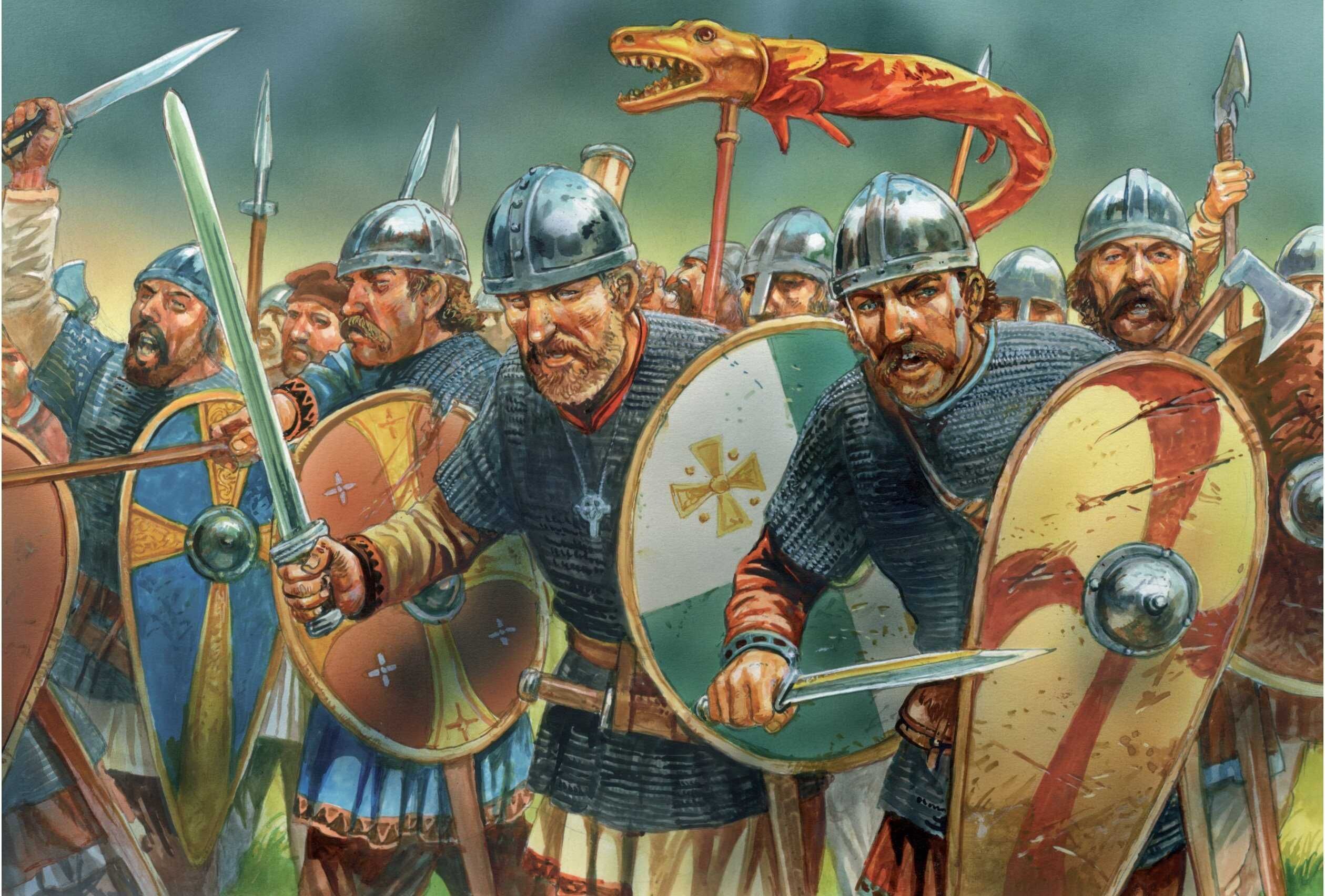
  • September 2025 (4)
  • August 2025 (4)
  • July 2025 (5)
  • June 2025 (4)
  • May 2025 (4)
  • April 2025 (5)
  • March 2025 (4)
  • February 2025 (4)
  • January 2025 (5)
  • December 2024 (4)
  • November 2024 (4)
  • October 2024 (5)
  • September 2024 (4)
  • August 2024 (4)
  • July 2024 (5)
  • June 2024 (4)
  • May 2024 (5)
  • April 2024 (4)
  • March 2024 (4)
  • February 2024 (4)
  • January 2024 (5)
  • December 2023 (4)
  • November 2023 (5)
  • October 2023 (4)
  • September 2023 (4)
  • August 2023 (5)
  • July 2023 (4)
  • June 2023 (4)
  • May 2023 (5)
  • April 2023 (4)
  • March 2023 (5)
  • February 2023 (4)
  • January 2023 (4)
  • December 2022 (4)
  • November 2022 (5)
  • October 2022 (4)
  • September 2022 (4)
  • August 2022 (5)
  • July 2022 (4)
  • June 2022 (5)
  • May 2022 (4)
  • April 2022 (4)
  • March 2022 (5)
  • February 2022 (4)
  • January 2022 (4)
  • December 2021 (5)
  • November 2021 (4)
  • October 2021 (4)
  • September 2021 (5)
  • August 2021 (4)
  • July 2021 (4)
  • June 2021 (5)
  • May 2021 (4)
  • April 2021 (4)
  • March 2021 (5)
  • February 2021 (4)
  • January 2021 (4)
  • December 2020 (5)
  • November 2020 (4)
  • October 2020 (4)
  • September 2020 (5)
  • August 2020 (4)
  • July 2020 (5)
  • June 2020 (4)
  • May 2020 (4)
  • April 2020 (5)
  • March 2020 (4)
  • February 2020 (4)
  • January 2020 (6)
  • December 2019 (4)
  • November 2019 (4)
  • October 2019 (5)
  • September 2019 (4)
  • August 2019 (4)
  • July 2019 (5)
  • June 2019 (4)
  • May 2019 (5)
  • April 2019 (4)
  • March 2019 (4)
  • February 2019 (4)
  • January 2019 (5)
  • December 2018 (4)
  • November 2018 (4)
  • October 2018 (5)
  • September 2018 (4)
  • August 2018 (5)
  • July 2018 (4)
  • June 2018 (4)
  • May 2018 (5)
  • April 2018 (4)
  • March 2018 (4)
  • February 2018 (4)
  • January 2018 (5)
  • December 2017 (4)
  • November 2017 (4)
  • October 2017 (4)
  • September 2017 (4)
  • August 2017 (5)
  • July 2017 (4)
  • June 2017 (4)
  • May 2017 (5)
  • April 2017 (4)
  • March 2017 (5)
  • February 2017 (4)
  • January 2017 (4)
  • December 2016 (4)
  • November 2016 (5)
  • October 2016 (6)
  • September 2016 (5)
  • August 2016 (5)
  • July 2016 (5)
  • June 2016 (5)
  • May 2016 (4)
  • April 2016 (4)
  • March 2016 (5)
  • February 2016 (4)
  • January 2016 (4)
  • December 2015 (5)
  • November 2015 (5)
  • October 2015 (4)
  • September 2015 (5)
  • August 2015 (4)
  • July 2015 (5)
  • June 2015 (5)
  • May 2015 (4)
  • April 2015 (3)
  • March 2015 (4)
  • February 2015 (4)
  • January 2015 (4)
  • December 2014 (5)
  • November 2014 (4)
  • October 2014 (6)
  • September 2014 (1)

Blog at WordPress.com.

  • Subscribe Subscribed
    • doubtfulsea
    • Join 78 other subscribers
    • Already have a WordPress.com account? Log in now.
    • doubtfulsea
    • Subscribe Subscribed
    • Sign up
    • Log in
    • Report this content
    • View site in Reader
    • Manage subscriptions
    • Collapse this bar
 

Loading Comments...