Tags
child-ballds, Eowyn, Gandalf, ghosts, Halloween, Hamlet, Nazgul, revenant, rooster, sweet-williams-ghost, The Lord of the Rings, Tolkien
Welcome, as always, dear readers.
There is an odd but powerful moment in The Lord of the Rings. In the vanguard of his invasion of Gondor, Sauron has cast a literal pall across the region:
“…The world was darkling. The very air seemed brown, and all things about were black and grey and shadowless; there was a great stillness. No shape of cloud could be seen, unless it were far away westward, where the furthest groping fingers of the great gloom still crawled onwards and a little light leaked through them. Overhead there hung a heavy roof, sombre and featureless, and light seemed rather to be failing than growing.” (The Return of the King, Book Five, Chapter 3, “The Muster of Rohan”)
In this gloom, the Lord of the Nazgul confronts Gandalf.
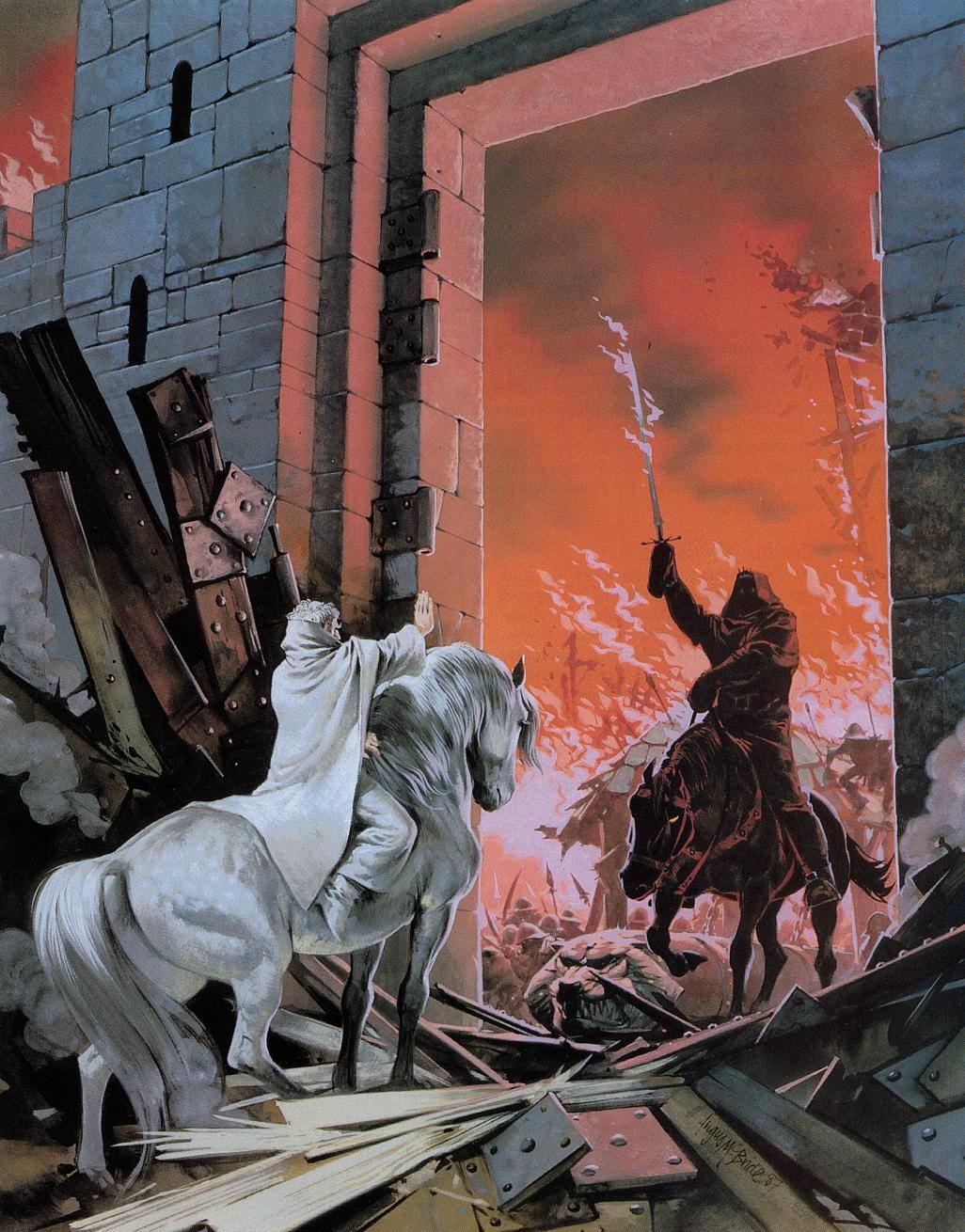
(Angus McBride)
“ ‘Old fool!’ he said. ‘Old fool! This is my hour. Do you not know Death when you see it? Die now and curse in vain!’ And with that he lifted high his sword and flames ran down the blade.
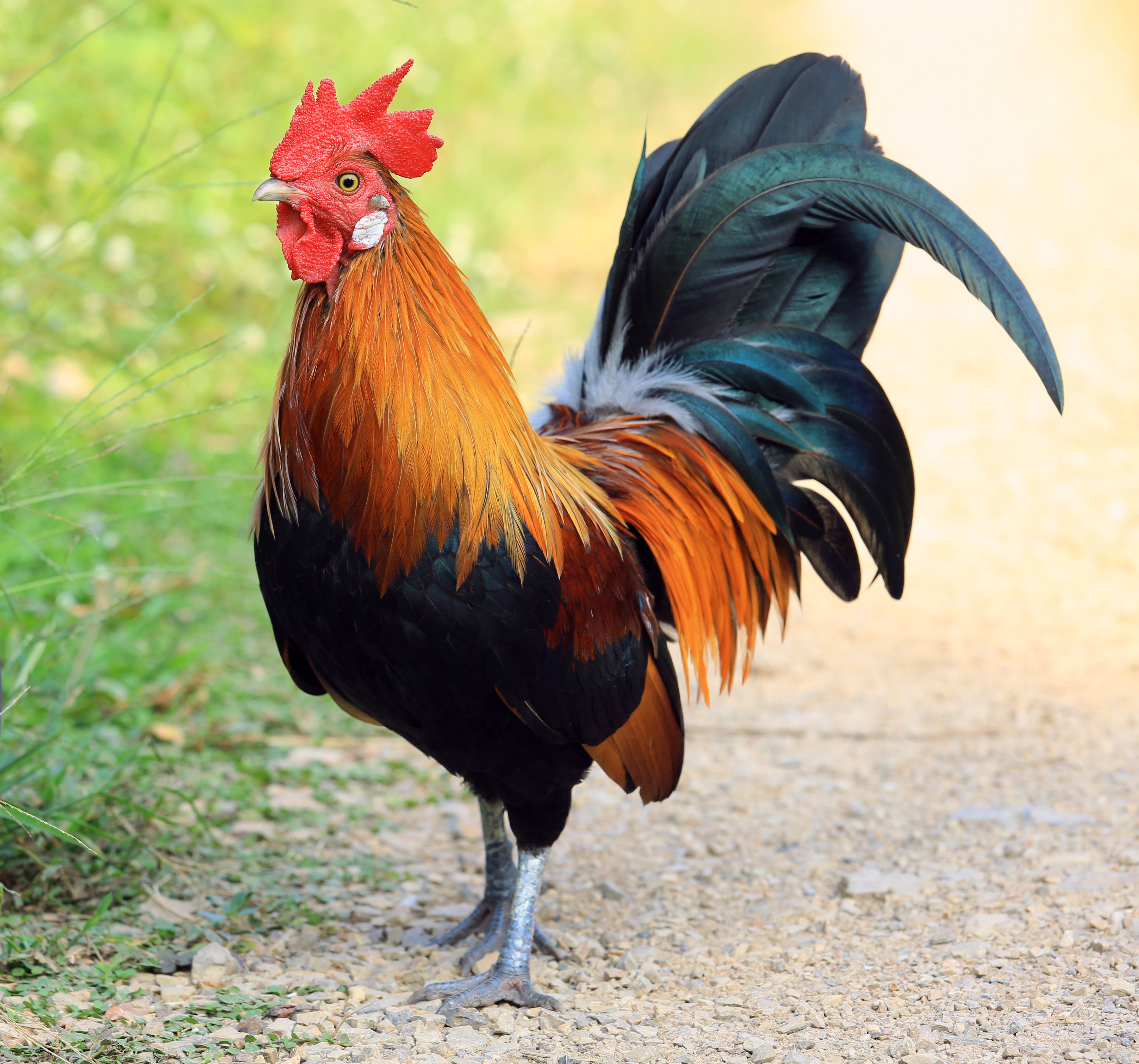
Gandalf did not move. And in that very moment, away behind in some courtyard of the City, a cock crowed. Shrill and clear he crowed, recking nothing of wizardry or war, welcoming only the morning that in the sky far above the shadows of death was coming with the dawn.” (The Return of the King, Book Five, Chapter 4, “The Siege of Gondor”)
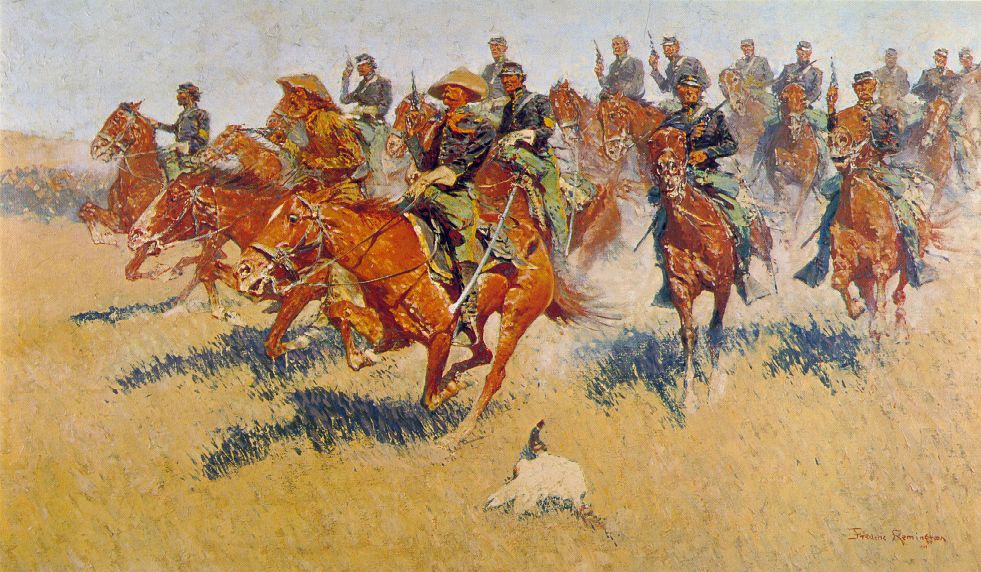
You know what comes next: like the US Cavalry in an old western,
the Rohirrim arrive to try to save Minas Tirith from Sauron’s armies.
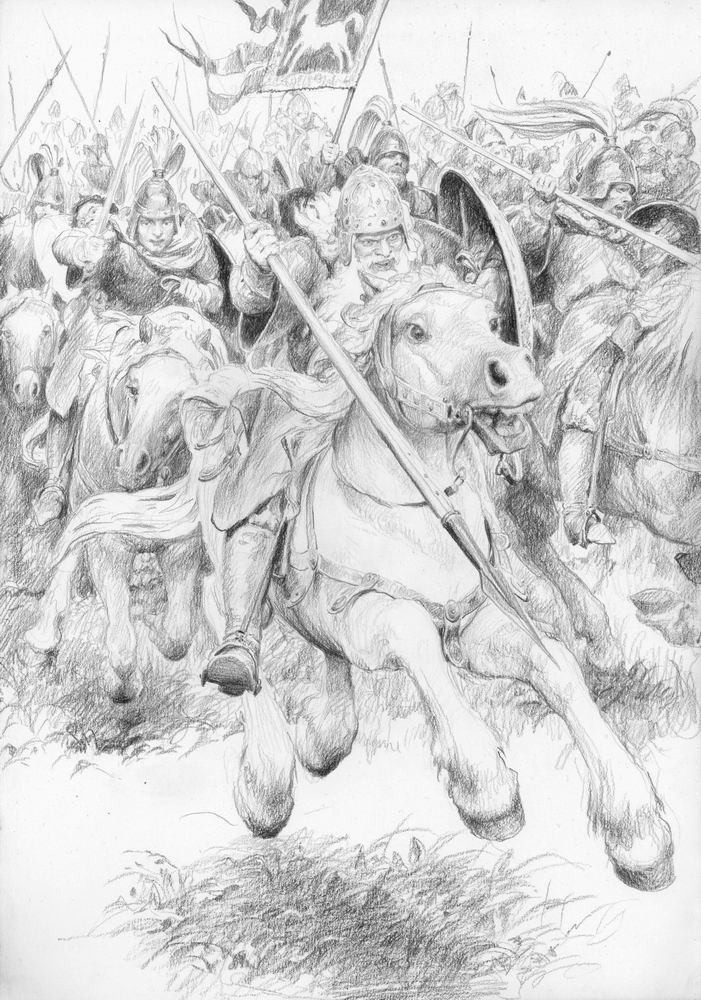
(Denis Gordeev)
But of all things which could have happened at this moment, why does a rooster appear?
As an active Christian, Tolkien might have been prompted by that moment in all four gospels when Peter is quoted as saying:
“respondens autem Petrus ait illi et si omnes scandalizati fuerint in te ego numquam scandalizabor”
“Replying, however, Peter says to him, ‘Even if all the others will have been tripped up in regard to you, I will never be tripped up.”
To which Jesus replies:
“ait illi Iesus amen dico tibi quia in hac nocte antequam gallus cantet ter me negabis”
“Jesus says to him, ‘I tell you truly that in this night, before the cock may crow, you will deny me [that is, deny being my follower] three times.’ “
(Matthew 26: 33-34 from my favorite translation, Jerome’s, with my English translation—the verb “scandalizo”, derived from Greek, has several meanings, including “to cause to stumble”—it’s in the passive, indicating that what Peter is saying is that, even if all of the other disciples might fall away from Jesus, being tripped up by fear or lack of faith, he, Peter, will remain faithful.)
Peter does, indeed, do this, and the crowing of the rooster has had all sorts of theological interpretations since then, although, at base, that crowing simply means “dawn”.
But, remembering that the sky over Gondor has been made unnaturally dark, and that the coming of the Rohirrim signals a break in that darkness, we can easily think of another influence on JRRT—Shakespeare. In my last, I had mentioned the appearance of the ghost of Hamlet’s father on the battlements of Elsinore castle.
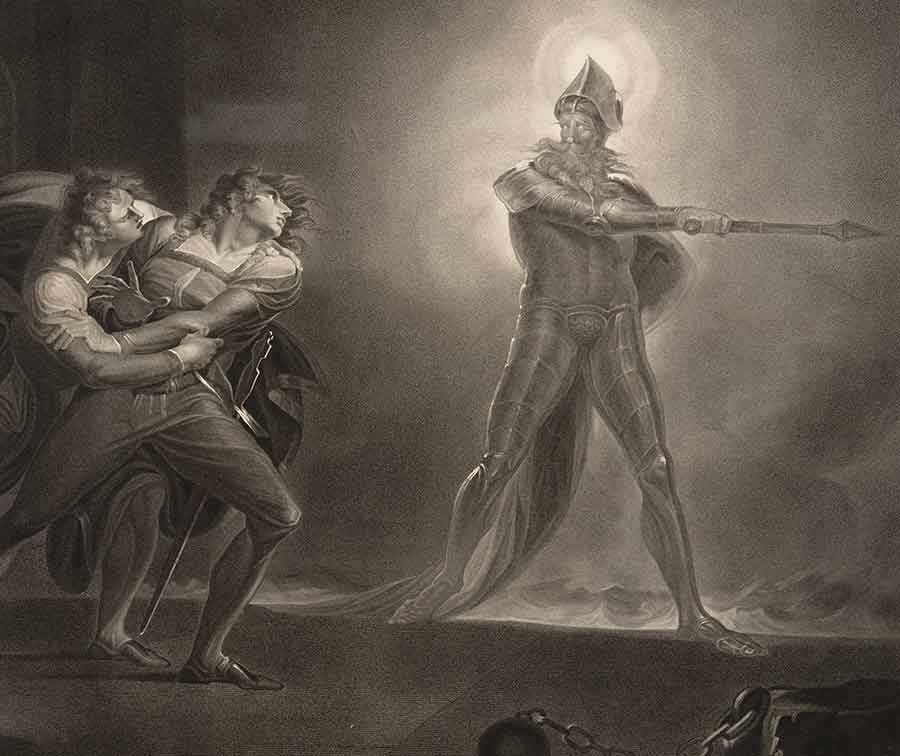
(Henry Fuseli—Heinrich Fuessli)
In Hamlet, Act One, Scene 2, Hamlet’s friend, Horatio, tells Hamlet that he’s seen that ghost, to which Hamlet replies:
“Ham. Did you not speake to it?”
To which Horatio replies:
“Hor. My Lord, I did;
But answere made it none: yet once me thought
It lifted vp its head, and did addresse
It selfe to motion, like as it would speake:
But euen then, the Morning Cocke crew lowd;
And at the sound it shrunke in hast away,
And vanisht from our sight.”
(from the First Folio—as always, I use an Elizabethan text, both because I like the fact that it’s closer to what Shakespeare himself wrote, and because it often reminds us, by its spelling, of the fact that Elizabethan English, although still comprehensible to us, sounded different. Here’s the First Folio for you so that you can read it: https://internetshakespeare.uvic.ca/doc/Ham_F1/scene/1.2/index.html And here’s a sample of what that English may have sounded like: https://www.youtube.com/watch?v=MAl3FnW3GnE This is from a series by the RSC’s Ben Crystal and I recommend the whole series as a good intro to an earlier form of English.)
In the previous scene, Horatio has said to one of the sentries, who had, with him, seen the ghost:
“Hor. And then it started, like a guilty thing
Vpon a fearfull Summons. I haue heard,
The Cocke that is the Trumpet to the day,
Doth with his lofty and shrill-sounding Throate
Awake the God of Day: and at his warning,
Whether in Sea, or Fire, in Earth, or Ayre,
Th’extrauagant, and erring Spirit, hyes
To his Confine. And of the truth heerein,
This present Obiect made probation.”
(“made probation”—said “pro-BAH-si-on”—here means “gives proof”)
The ghost, then, is what is called a “revenant”—that is, someone who has returned from the dead with a purpose, either to warn a living person, or, sometimes, in a more sinister move, to seduce a living person to join him/her in death. Daybreak—symbolized by the crowing of the rooster—signals the limit of the revenant’s time to accomplish that task, whatever it may be.
There are a number of ballads—traditional folk songs– in which a revenant appears and Tolkien, with his broad experience of literature, would have been aware of, such as “Sweet William’s Ghost” (Child Ballad 77—if you’re not familiar with this designation, F.J. Child, a late19th-century professor at Harvard University, created the standard ballad collection, entitled English and Scottish Popular Ballads, for the English-speaking world. You can read a digest version here: https://archive.org/details/englishscottishp1904chil/mode/2up ) in which the ghost of William visits Margaret, asking for her “faith and troth”, but, when Margaret replies that he must marry her, he admits that he is a spirit and
“14 Then up and crew the red, red cock.
And up then crew the gray:
‘Tis time, tis time, my dear Margret,
That you were going away.’
15 No more the ghost to Margret said.
But, with a grievous groan,
Evanishd in a cloud of mist.
And left her all alone.”
Just as the ghost of Hamlet’s father had.
In the The Lord of the Rings, the Lord of the Nazgul and his hordes aren’t ghosts, to vanish at cockcrow, but that crowing—and the appearance of the Rohirrim, signal the beginning of the end for Sauron’s forces, followed by the arrival of Aragorn and troops from the south in the ships of the corsairs, which does signal the final end for them.
And certainly one ghost was laid to rest when Eowyn and Merry gave a kind of death blow to the Lord of the Nazgul:
“Then tottering, struggling up, with her last strength she drove her sword between crown and mantle, as the great shoulders bowed before her. The sword broke sparkling into many shards. The crown rolled away with a clang. Eowyn fell forward upon her fallen foe. But lo! the mantle and hauberk were empty. Shapeless they lay now on the ground, torn and tumbled; and a cry went up into the shuddering air, and faded to a shrill wailing, passing with the wind, a voice bodiless and thin that died, and was swallowed up, and was never heard again in that age of this world.” (The Return of the King, Book Five, Chapter 6, “The Battle of the Pelennor Fields”)
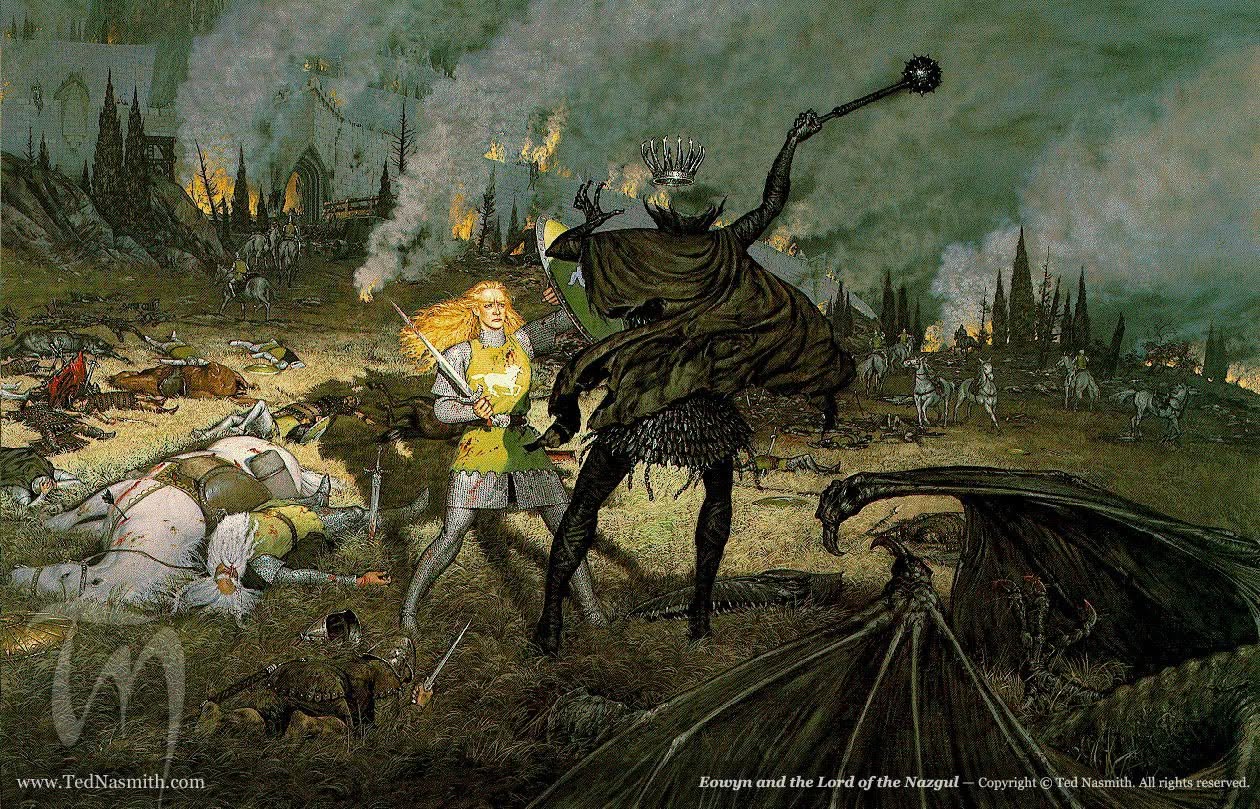
(Ted Nasmith)
As this posting will appear just before Halloween, it seemed, with its revenant, an appropriate one for the season. The second part of “Cap-a-Pie” will appear next week.
In the meantime, thanks for reading, as always.
Stay well,
Remember to placate ghosts who make come to your door shouting “Trick or Treat!”
And remember, as well, that there’s
MTCIDC
O
PS
In case you don’t have a nearby rooster to remind you of his song, here’s a medley: https://www.youtube.com/watch?v=K3CenN7d30Y

