• About

doubtfulsea

~ adventure fantasy

Tag Archives: Agincourt

Bard

09 Wednesday Jul 2025

Posted by Ollamh in Uncategorized

≈ Leave a comment

Tags

Agincourt, anti-aircraft gun, Archery, Arthur Machen, Bard, Bilbo, black arrow, Crecy, Dwarves, Fafnir, Fantasy, Howard Pyle, James Fenimore Cooper, Le Cateau, NC Wyeth, Poitiers, Robert Louis Stevenson, Robin Hood, Sigurd, Smaug, The Bowmen, The Hobbit, Tolkien

Welcome, as ever, dear readers,

When Bilbo and the dwarves

(the Hildebrandts)

set out on their quest, they’re aware that, at its end, they must face the reason the dwarves’ forebears died or fled Erebor, the “Lonely Mountain”.

(JRRT)

And yet they go, suggesting an almost foolhardy shrug of an attitude, particularly as Gandalf has suggested that they need someone right out of myth to help them:

“ ‘That would be no good…not without a mighty Warrior, even a Hero.’ “

But:

“ ‘I tried to find one; but warriors are busy fighting one another in distant lands, and in this neighbourhood heroes are scarce, or simply not to be found.’ “ (The Hobbit, Chapter 1, “An Unexpected Party”) 

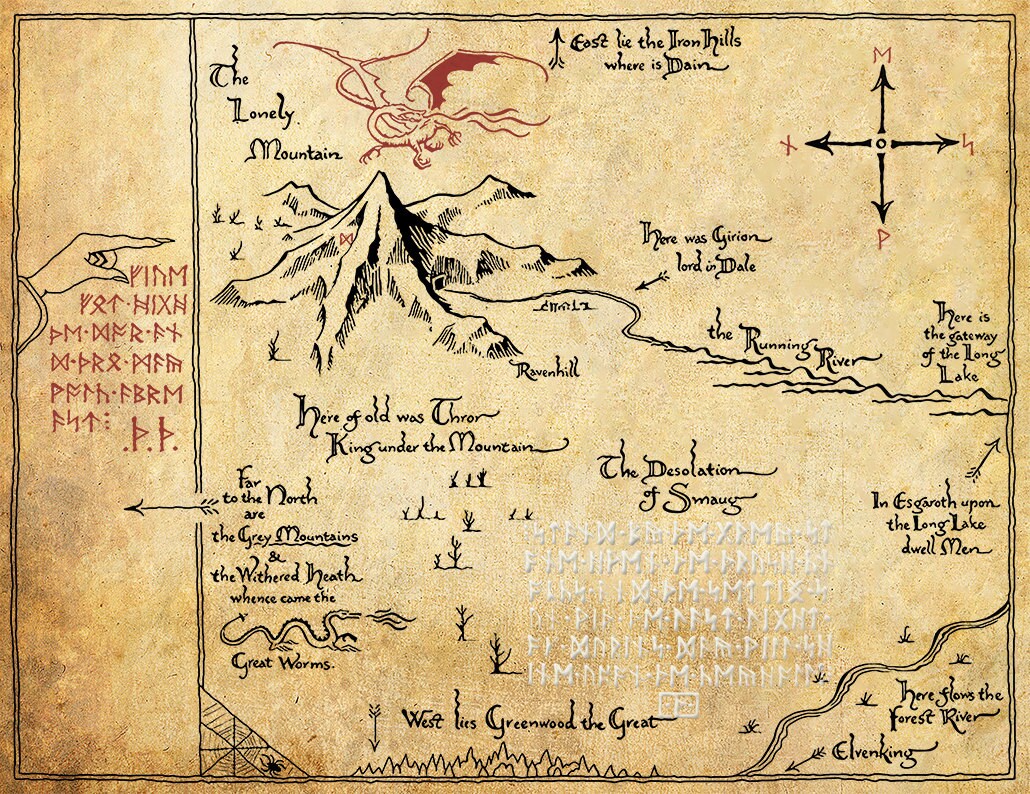
Everything about this trip already seems haphazard, having no map of their destination, till Gandalf furnishes them with one,
(JRRT)

and even then they have no idea of another, secret entrance until Elrond spots the inscription which describes it—and how to open it.  Clearly, then, this is a case of “we’ll cross that bridge when we come to it.”

Uh oh.

There’s also no clue in the text as to who or what may destroy the destroyer—until Bilbo, flattering Smaug, spots that fatal weak point:

“ ‘I’ve always understood…that dragons were softer underneath, especially in the region of the—er—chest…’ “

The dragon stopped short in his boasting.  ‘Your information is antiquated,’ he snapped.  ‘I am armoured above and below with iron scales and hard gems.  No blade can pierce me.’ “

There’s a clue here, if not for Bilbo, for readers who are aware of something in Tolkien’s own past reading: 

“Then Sigurd went down into that deep place, and dug many pits

in it, and in one of the pits he lay hidden with his sword drawn.

There he waited, and presently the earth began to shake with the

weight of the Dragon as he crawled to the water. And a cloud of

venom flew before him as he snorted and roared, so that it would

have been death to stand before him.

But Sigurd waited till half of him had crawled over the pit, and

then he thrust the sword Gram right into his very heart.”  (Andrew Lang, ed., The Red Fairy Book, 1890, “The Story of Sigurd”, page 360)

And Bilbo persists, goading Smaug to turn over, where Bilbo sees—and says:

“ ‘Old fool!  Why, there is a large patch in the hollow of his left breast as bare as a snail out of its shell!’ “ (The Hobbit, Chapter 12, “Inside Information”)

Still, although we might have a target now, who will make use of it and how and with what?  Sigurd is just what Gandalf says is not locally available, a Hero, and it’s clear that neither Bilbo nor the dwarves are capable of taking on that role.

And here we can bring in another clue from Tolkien’s past.

In “On Fairy-Stories”, he writes:

“I had very little desire to look for buried treasure or to fight pirates, and Treasure Island left me cool.  Red Indians were better:  there were bows and arrows (I had and have a wholly unsatisfied desire to shoot well with a bow)…”  (“On Fairy Stories”, 134)

This suggests that Tolkien may have been exposed to the works of James Fenimore Cooper, 1789-1851, who, beginning with The Pioneers, 1823, wrote a series of novels set on the 18th-century western Frontier (much of it what is now central and eastern New York State), called the “Leatherstocking Tales”,

the best known, even now, being The Last of the Mohegans, 1826. 
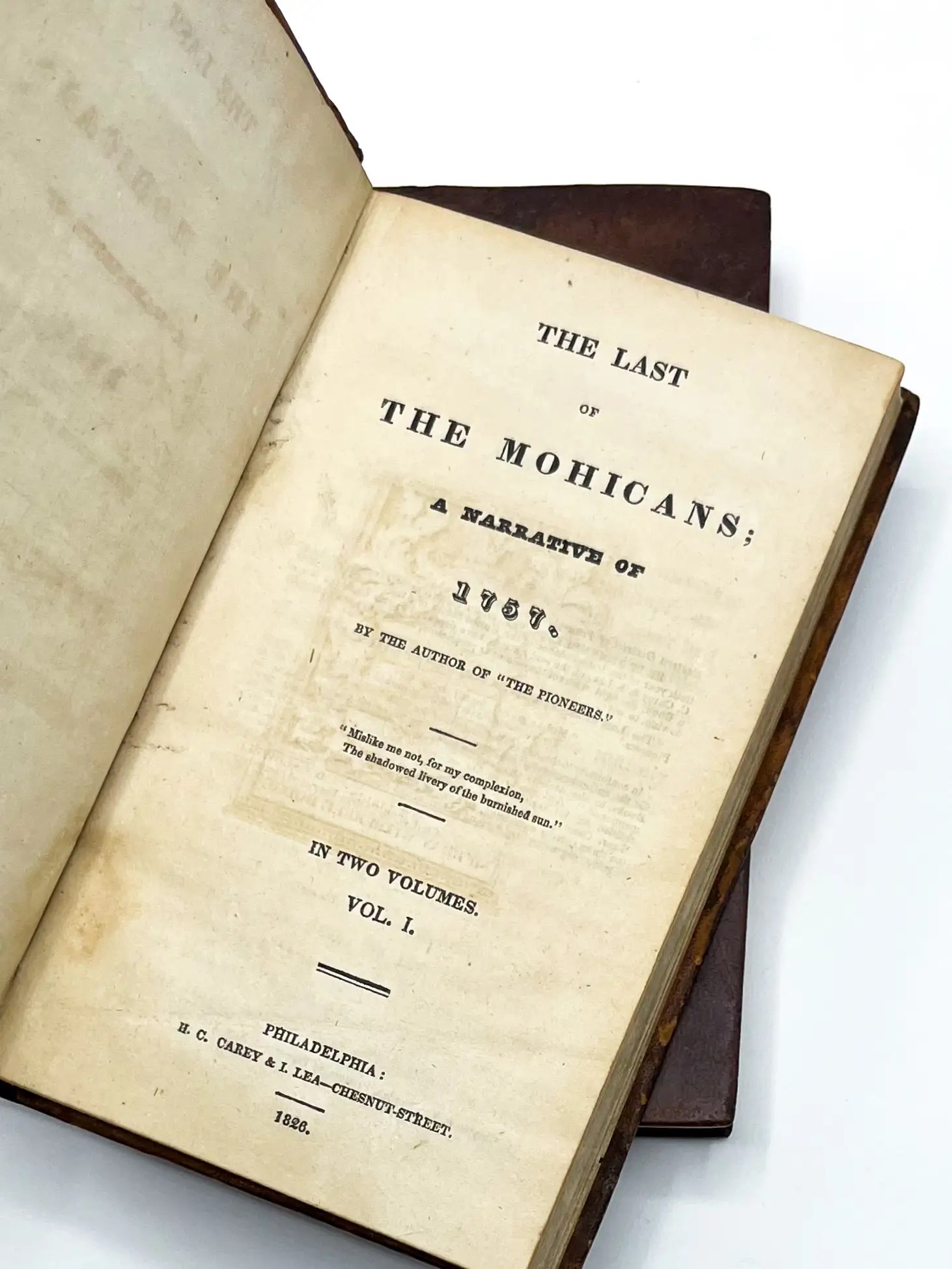
These books were filled with battles between the British and French, with Native Americans on both sides and I wonder if it’s from the adventures depicted there that JRRT was inspired with his passion for bows and arrows?

(artist?  A handsome depiction and I wish I could identify the painter.)

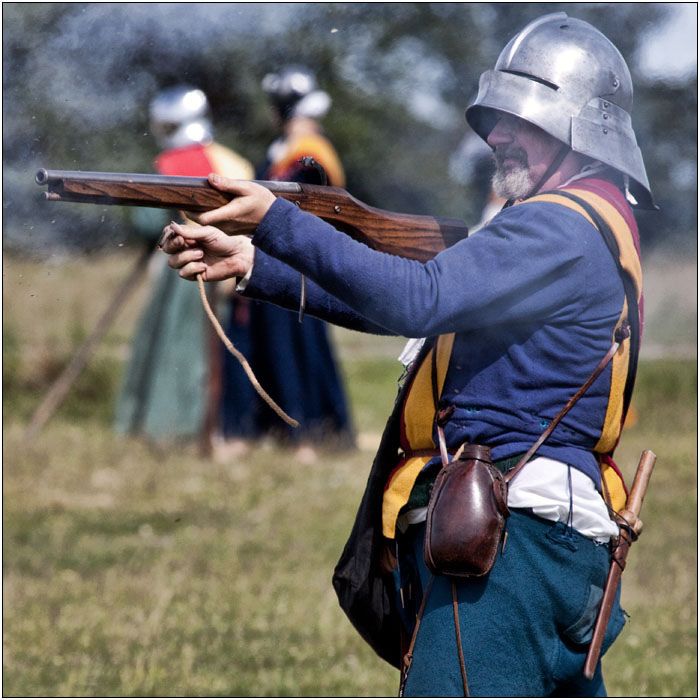
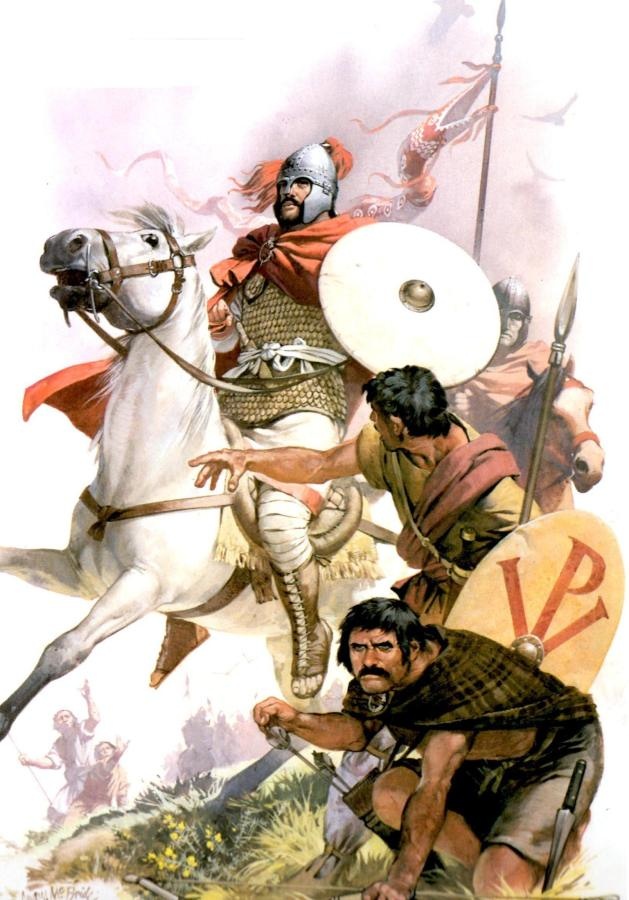
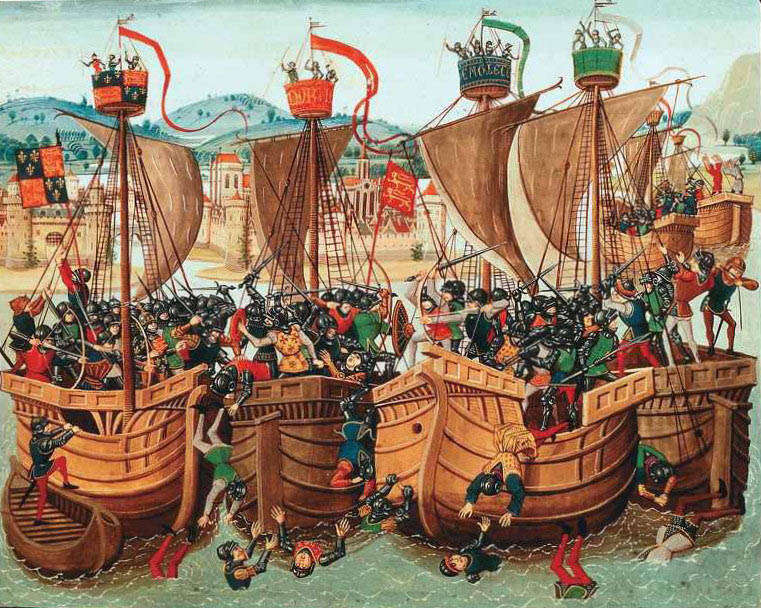
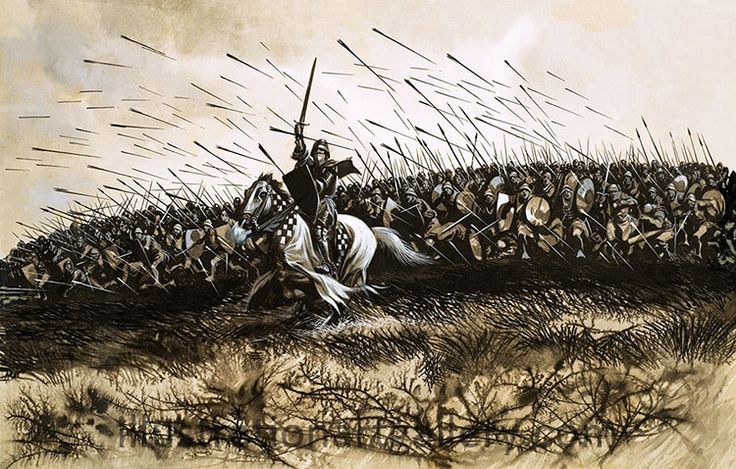
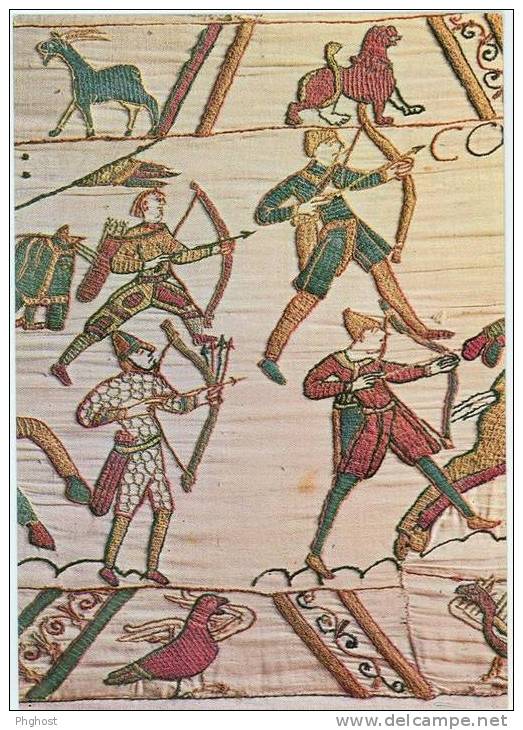
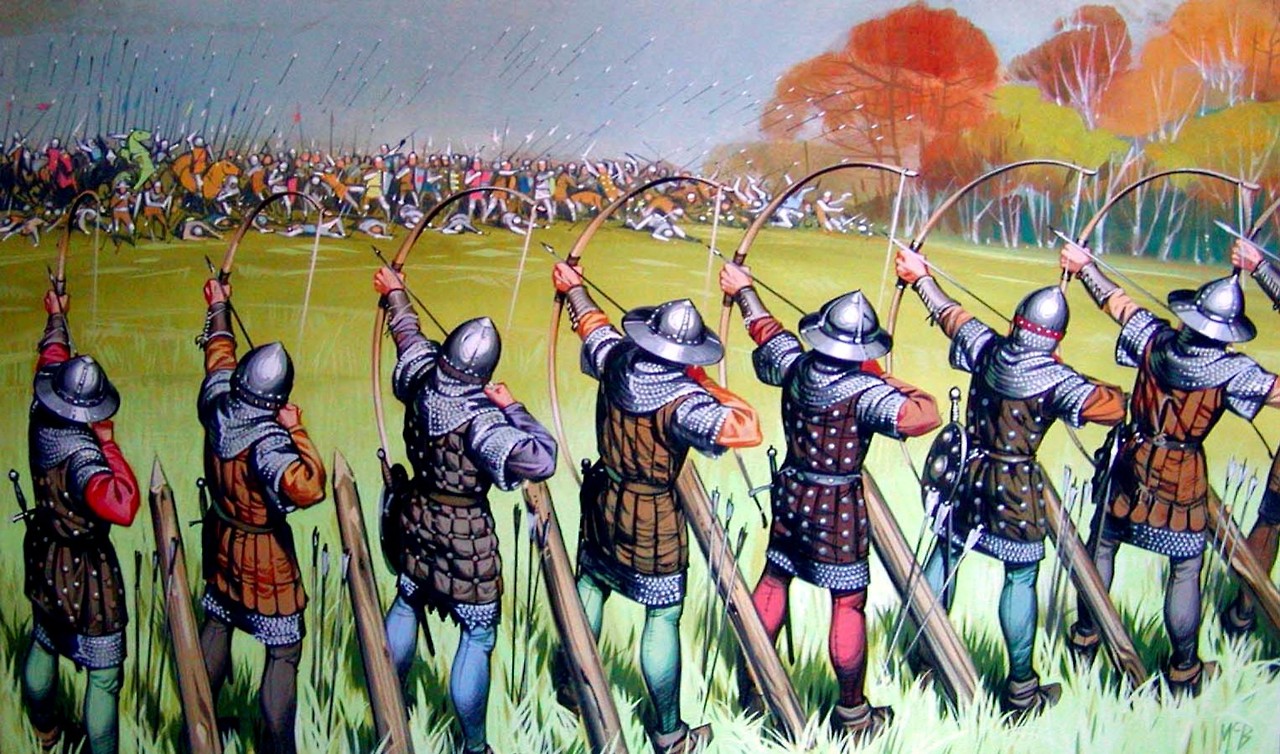
Another clue might lie in British history.  During the medieval struggle for English control of France, the so-called “Hundred Years War” (1337-1453), the English enjoyed three great victories, at Crecy (1346), Poitiers (1356), and Agincourt (1415), where companies of English longbowmen shot their French opponents to pieces.

(Angus McBride)

Tolkien would have read about this as a schoolboy, but, in an odd way, he might have had his knowledge of these long-ago events refreshed in 1914.

Outnumbered and in danger of being outflanked by massive German columns, the small BEF (British Expeditionary Force), in the early fall of 1914, retreated, one unit (2nd Corps) fighting a desperate battle to slow the Germans at Le Cateau.
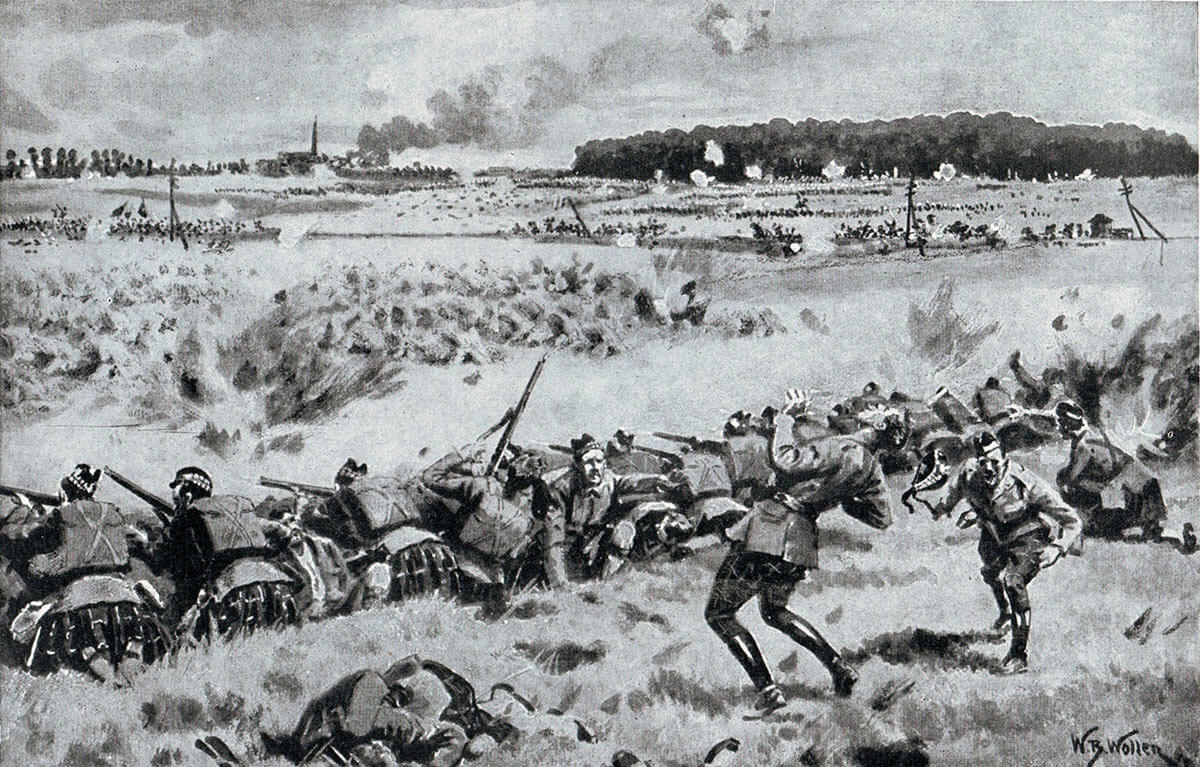
The British managed to fend off the enveloping Germans and, considering the odds against them, some might have believed their escape miraculous. 

Enter the fantasist Arthur Machen, 1863-1947. 

In the September 29th,  1914,  issue of The Evening News, Machen published a short story which he entitled “The Bowmen”.  This was a supposed first-hand account of a British soldier who had seen a line of ghostly British longbowmen shooting down German pursuers, just as they had shot down the French, centuries before.
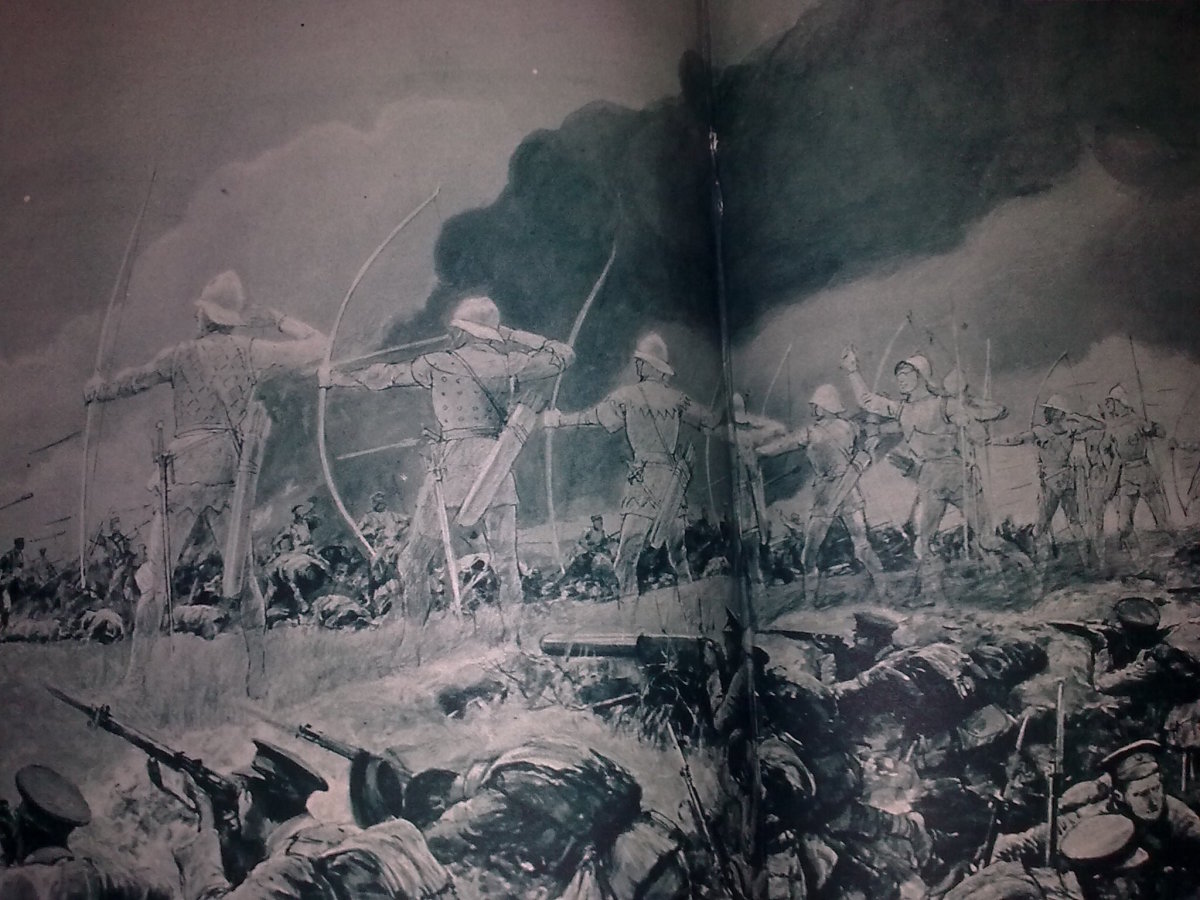
Machen subsequently republished it with other stories in 1915—

but was astonished when his fiction was believed to have been true, and widely circulated as such. We don’t have any evidence that JRRT actually read this story, but it was extremely widespread at the time and, once more, we see men with bows. (For more on this, see:  https://en.wikipedia.org/wiki/Angels_of_Mons And you can read the stories in Machen’s volume here:  https://en.wikipedia.org/wiki/Angels_of_Mons )

I think we can add to this the legends of Robin Hood, which could appear in any number of sources—our first known reference being in William Langland’s (c.1330-c.1386) late 14th-century Piers Plowman, where Sloth—a priest deserving of his name, doesn’t seem to have any religious knowledge, but says,

“Ich can rymes of Robyn Hode” (that is, “I know rhymes/songs about Robin Hood”—see the citation at:  https://robinhoodlegend.com/piers-plowman/ at the impressively rich Robin Hood site:  https://robinhoodlegend.com/ )

Then there is the collection of poems/songs from about 1500, A Gest of Robyn Hode,

which JRRT might have encountered in F.J. Child’s (1825-1896) The English and Scottish Popular Ballads, 1882-1898,

where it appears as #117.  (If you don’t know the so-called “Child Ballads”, here’s a beginning:  https://en.wikipedia.org/wiki/Child_Ballads  And, for a massive one-volume edition:  https://archive.org/details/englishscottishp1904chil/page/n11/mode/2up The texts are interesting in themselves, but, for me, they’re even better as songs.  To hear one, you might try one of my favorite folk singers, Ewan McColl’s version of “The Dowie Dens o’ Yarrow here:  https://www.youtube.com/watch?v=Vfsv8zUdqKM&list=RDVfsv8zUdqKM&start_radio=1 For more on Yarrow, see “Yarrow”, 10 April, 2024.

For lots more on Robin Hood, see:  https://en.wikipedia.org/wiki/Robin_Hood )

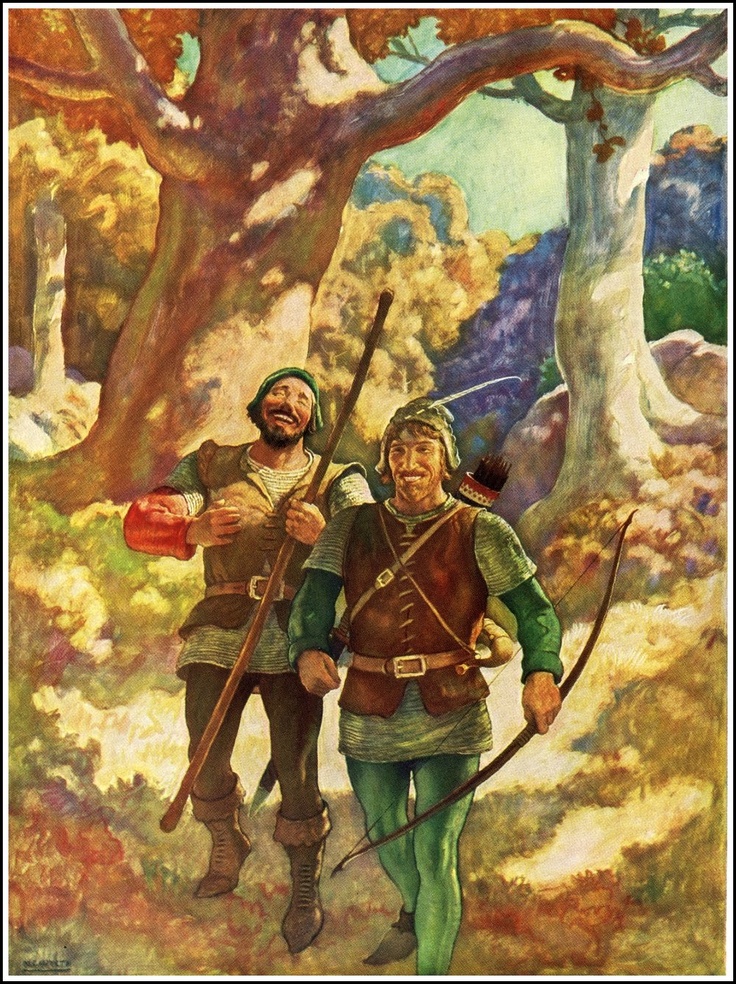
In more recent times, perhaps Tolkien had seen Howard Pyle’s (1853-1911) The Merry Adventures of Robin Hood, 1883,

 or Paul Creswick’s (1866-1947) 1917 Robin Hood,

with its wonderful illustrations by N.C.Wyeth (1882-1945).
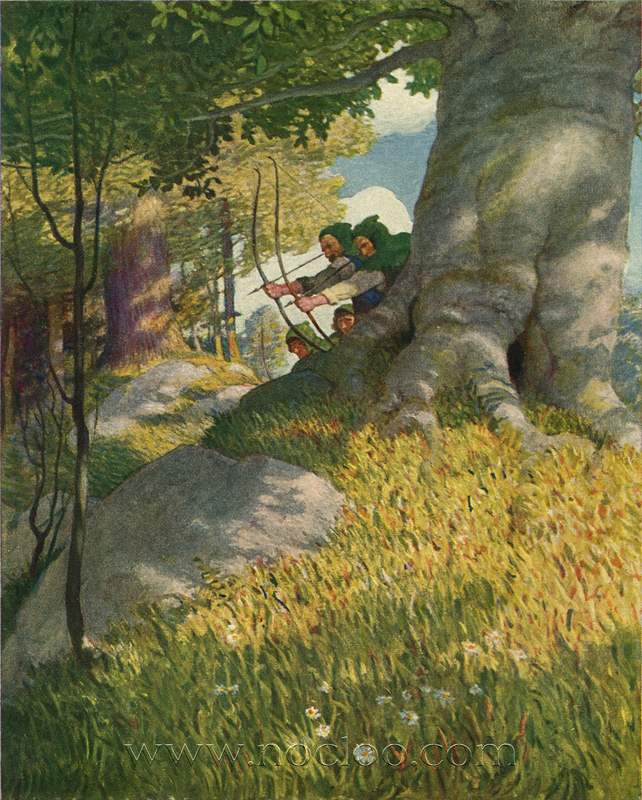
(If the Tolkien journal Amon Hen, is available to you–but, alas, not to me–you might also have a look at Alex Voglino’s “Middle-earth and the Legend of Robin Hood” in issue 284.)

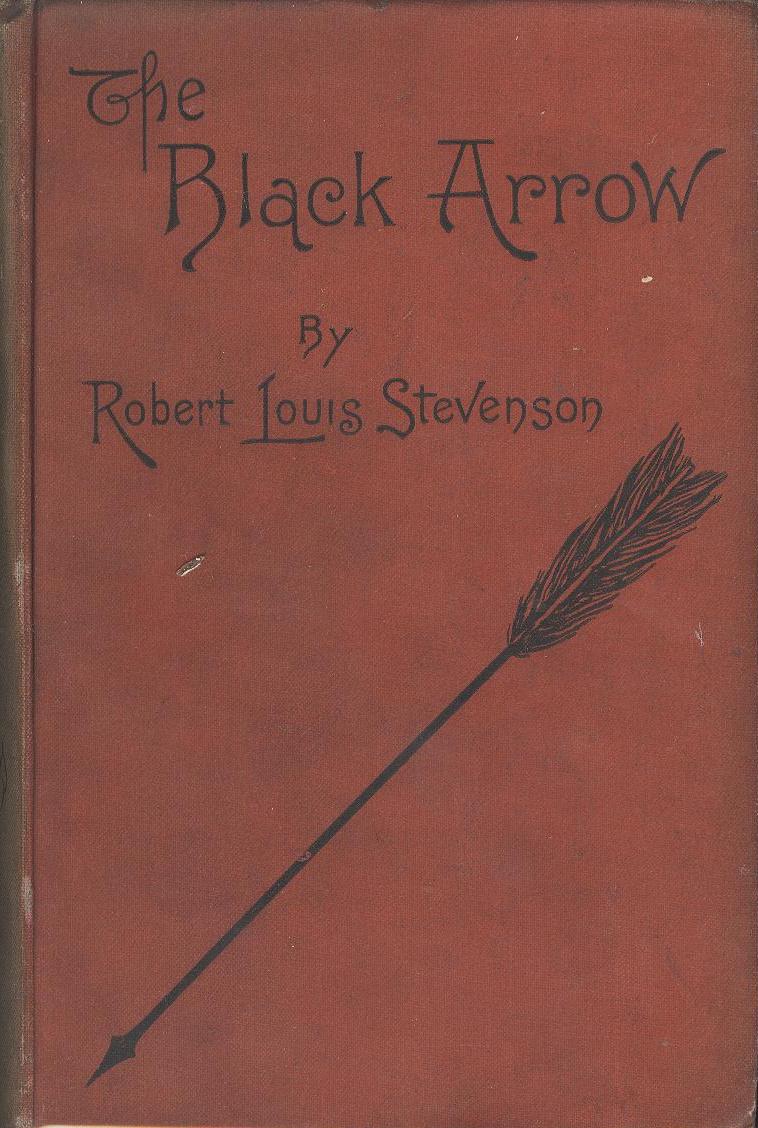
And, although Tolkien may not have liked Treasure Island, we might add to this possible influence Robert Louis Stevenson’s (1850-1894) The Black Arrow (serialized 1883, published as a book in 1888).

An adventure story set during the Wars of the Roses, you can read it here:  https://archive.org/details/blackarrowatale02stevgoog/page/n1/mode/2up

Although there are more possibilities (Tolkien might have read Sir Walter Scott’s (1771-1832) Ivanhoe, 1819, where Robin Hood makes an appearance, for instance—and here’s the book:  https://archive.org/details/ivanhoe-sir-walter-scott/page/n7/mode/2up )

that title suggests something else:

“ ‘Arrow!’ said the bowman.  ‘Black arrow!  I have saved you to the last.  You have never failed me and always I have recovered you.  I had you from my father and he from of old.  If ever you came from the forges of the true king under the Mountain, go now and speed well!’ “ (The Hobbit, Chapter 14, “Fire and Water”)

(Michael Hague, one of my favorite Hobbit illustrators)

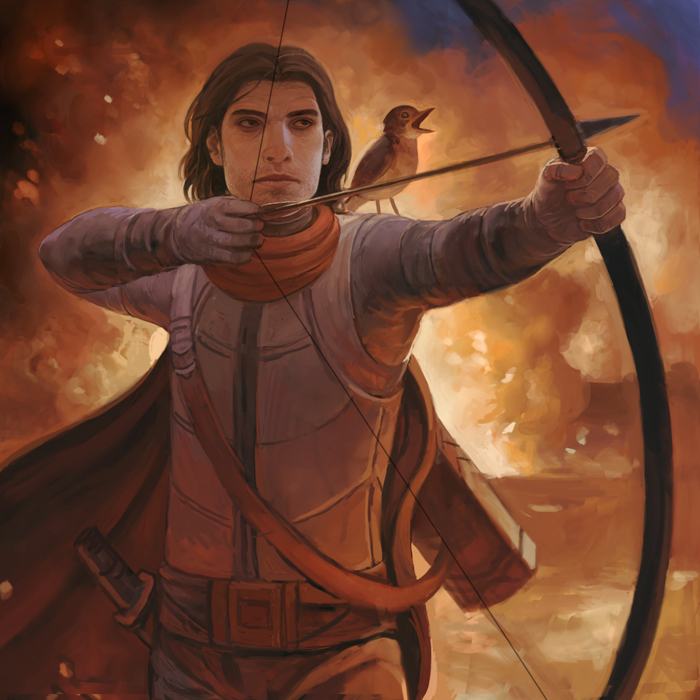
So, we’re about to see that the Hero to kill Smaug is a Lake-town local, Bard, and his weapon of choice is Tolkien’s special favorite, the bow.  But how to attack?

We first see Smaug on the ground, lying on his hoard.

(JRRT)

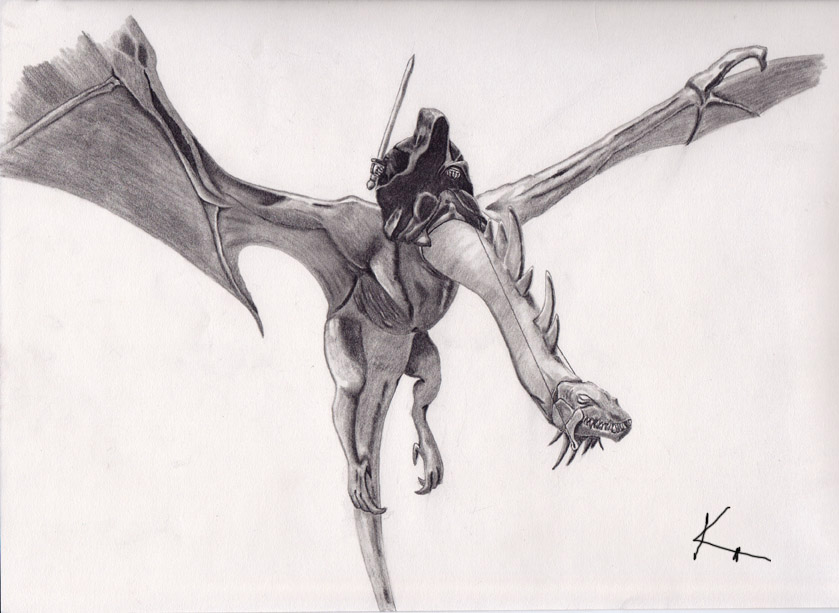
Angered at Bilbo’s teasing, he gets up long enough to attempt to flame him, but his real method of destruction is to take to the air.

(Ted Nasmith)

Fafnir was never airborne, dragging himself along the ground.  Sigurd solved the problem of his scaly protection by digging a pit and attacking him from below with his sword.  It makes good sense, then, with all of the possible bowman influences upon him, that Tolkien would imagine that the way to deal with a flying dragon would be an arrow from below.
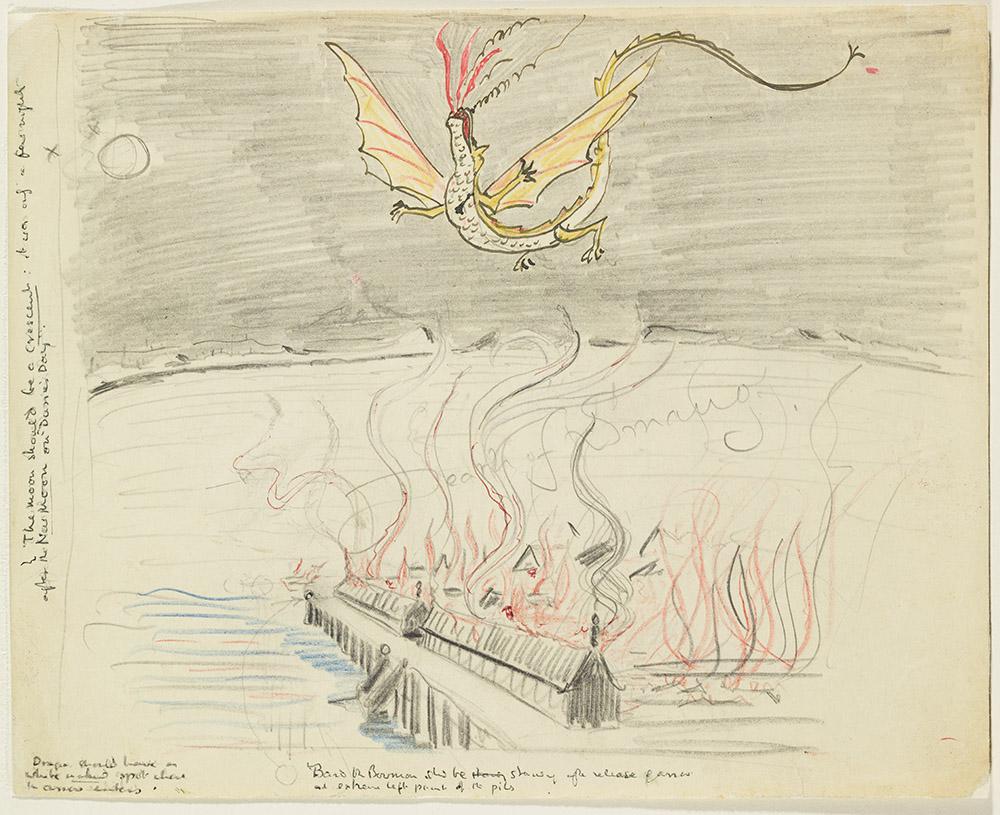
(JRRT)

To which we might add one more potential influence from JRRT’s own experience. 

In 1914, there were few military aircraft and their main task was reconnaissance.

By 1918, there were many different models, with different tasks, including heavy bombers.

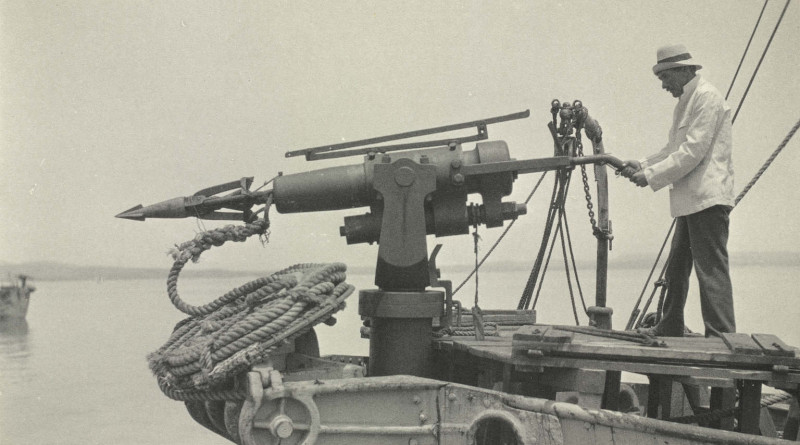
To protect their troops on the ground, all of the warring nations developed the first artillery defenses:  anti-aircraft guns, designed to shoot down threats from above. 
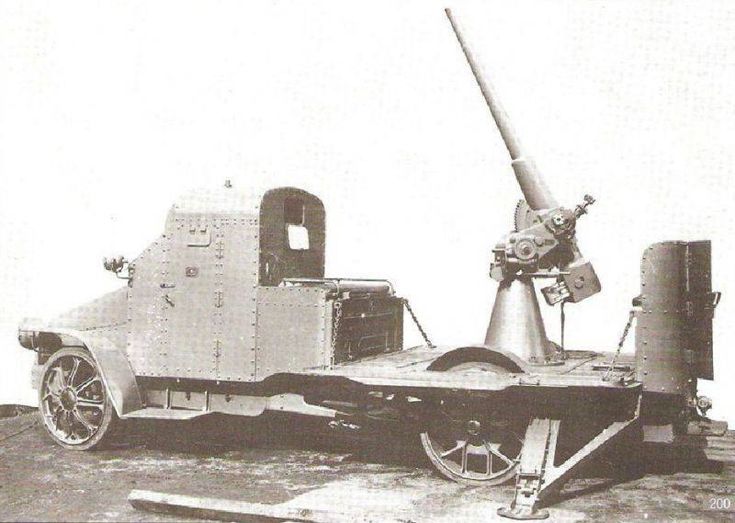
JRRT would certainly have seen such guns and possibly even in action, attempting to knock flying danger out of the sky.

Some of those guns were rapid-firing, spraying the air with metal, hoping to guarantee the success of their defense.  Bard, in turn, has his black arrow—and not just any black arrow, but one seemingly created perfectly for revenge:  “  ‘I had you from my father and he from of old.  If ever you came from the forges of the true king under the Mountain, go now and speed well.’ “

That is, this is an arrow created by the dwarves, whom Smaug had driven out or killed—or eaten—and it’s also an heirloom from the days before Smaug destroyed Dale:  what better weapon to deal vengeance to the wicked creature who had ruined so much?  To take out such a flying danger, but with a glaring vulnerability below, what means of propulsion, especially one known to have defeated whole medieval armies?  And, as the seemingly last descendant of the last lord of Dale, Girion, who better to take that revenge? 

As ever, thanks for reading.

Stay well,

Always monitor the skies—who knows what’s watching from above?

And remember that, as always, there’s

MTCIDC

O

PS

For more on birds, Bard, and Smaug, see “Why a Dragon?” 28 May, 2025.

PPS

While looking for just the right Smaug images, I came upon this, entitled, “Dante aka Smaug on his hoard” and couldn’t resist.

To Horse!

18 Wednesday Jun 2025

Posted by Ollamh in Uncategorized

≈ Leave a comment

Tags

Agincourt, bicycle, Boer War, cavalry charges, Charge of the Light Brigade, Cu Chulainn, Dwarves, Fredegunda, Gregory of Tours, heavy artillery, Historia Francorum, Hobbits, horses, King Edward's Horse, lotr, machine gun, machine-guns, Nazgul, Normans, Pegasus, Rohirrim, Russian Civil War, signals officer, Sleipnir, The Hobbit, Tolkien, Valkyries

In a colleague’s office, I once saw this on his wall—

“Proletariat, to horse!”

It’s a recruiting poster from the Russian civil war (1918-1922), showing the Reds trying to raise cavalry for their armies, but, at the time this call came, the military world was changing and, although horsemen would still appear, very sporadically, on battlefields, for some years to come, the day of events like this—

was rapidly coming to a close.

It didn’t happen all at once, however.  As you can imagine, traditional cavalrymen—those who believed that swinging a sword in a valiant charge was the point of cavalry—

fought back.  The evidence was against them, however, in two ways.

First, in the case of the British, there had been the Boers,

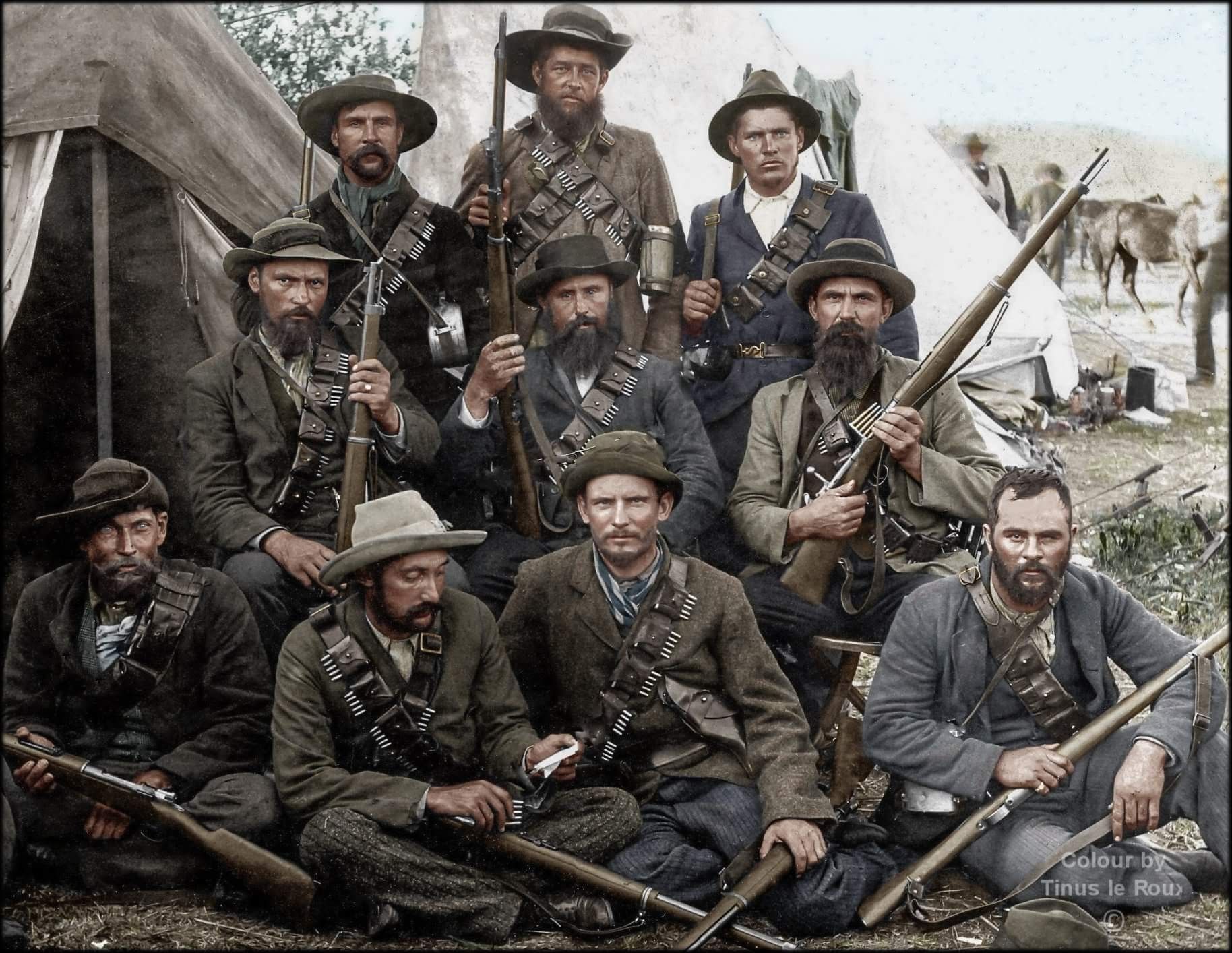
with whom the British had fought a war, from 1899-1902.  The Boers (Dutch for “farmers”) had been militia—men obliged by law to defend the state upon demand.  Across the wide open spaces of so much of South Africa, they had fought as mounted infantry, using horses as a means of moving from place to place, then dismounting for combat and, if things didn’t go their way, mounting up and escaping.

To counter this, especially in the later phases of the war, the British were forced to develop their own mounted infantry,

which suggested to some military theorists at the time that the wave of the future was not in sword-swingers, but in riflemen, who could rapidly move to where they were needed, but employ horses for transport, not for gallant charges.  (This also led to the rise of units mounted entirely on bicycles,

but we can imagine the off-road difficulties for early machines and, although there were bicycle units as late as WW2, they never had the popularity—or the dash—of horsemen.)

The second piece of evidence lies in technological change. 

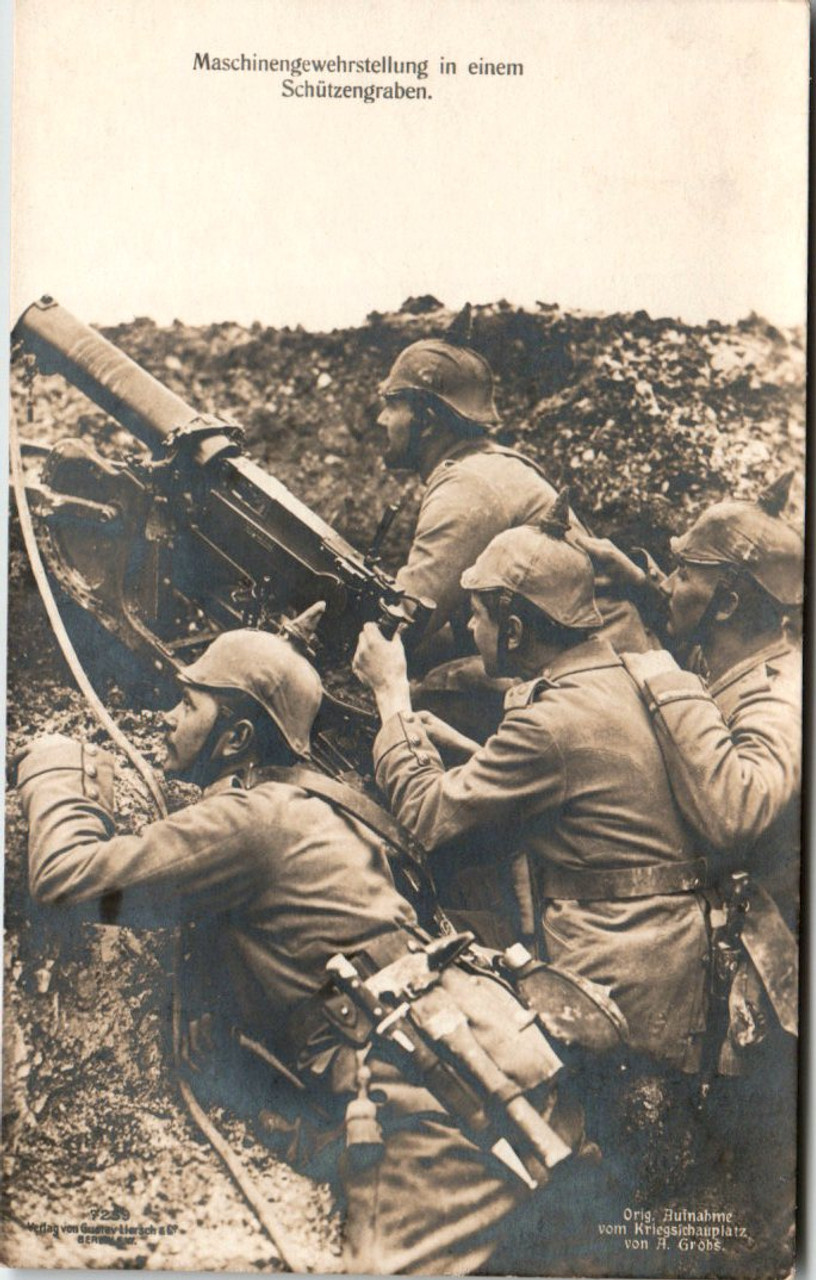
With the coming of the 20th century, machine guns, sometimes firing as many as 600 rounds (shots) per minute,

appeared in increasing numbers and artillery was developed to become more accurate at greater distances.

In self-defense, soldiers would be forced to take cover wherever they could,

at first in holes simply scraped out of the ground, but, in time, in very sophisticated lines, shored up with wood and metal and sandbags.

On the Western Front, where everyone was dug into the ground, and being in the open could mean instant destruction, there simply wasn’t a place for old-fashioned cavalry, for all that there were still lots of old-fashioned cavalrymen in the army—like the first commander of the British in France in 1914, Sir John French.

Imagine, then, that this was all happening when Tolkien was very young—when the Boer War ended, in 1902, for instance, he would have been only 10.

(JRRT and his brother, Hillary, in 1905)

His own military career had begun at King Edward’s School in Birmingham, when he entered the new Cadet Corps in 1907.

(For more, see this essay by John Garth: https://johngarth.wordpress.com/2014/03/05/tolkien-at-fifteen-a-warrior-to-be/ )

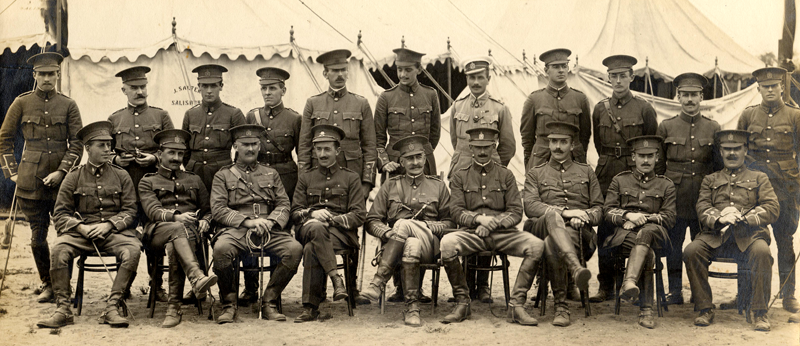
Then, in the summer of 1912, he was briefly a member of a territorial (a sort of national guard unit) cavalry regiment, King Edward’s Horse.  (The reference here is to Carpenter’s J.R.R.Tolkien, 66.  John Garth later added detail to this, but subsequently qualified it, saying that his evidence was faulty.  See:  https://oxfordinklings.blogspot.com/2009/06/tolkien-and-horses.html )

(Officers of the regiment about 1916)

It was clearly an indication of the drop in the use of cavalry, however, when JRRT began his second enlistment not in a cavalry, but an infantry regiment, the Lancashire Fusiliers, in which he was commissioned as a 2nd Lieutenant in 1915.

In his brief battlefield career, he was the signals officer for his battalion, the 11th.  In the advance into the Somme in July, 1916, Tolkien, although armed with a revolver,

would have been too busy to do any fighting as his work involved

“More code, flag and disc signaling, the transmission of messages by heliograph and lamp, the use of signal rockets and field-telephones, even how to handle carrier pigeons…” (Carpenter, 86)

To ask for reinforcements, as well as to avoid artillery fire which could be called in to fend off German counterattacks, but which might hit friendly troops instead, it was extremely necessary for attacking units to let their positions and situations be known as often as possible, so JRRT would have been more than a little occupied during the months (1 July-18 November, 1916) of the very costly (nearly 58,000 British casualties the first day alone) offensive.  Fortunately for him—and for us—he fell ill with so-called “trench fever” and left France for good early in November, going home to England and, ultimately, to Middle-earth.

Although his military service in the field was relatively brief, and his career with cavalry even briefer (he resigned from King Edward’s Horse in January, 1913), we see horses everywhere in Middle-earth, from the ponies of the dwarves in The Hobbit

(from Painting Valley—no artist listed)

to the horses of the Nazgul in The Lord of the Rings.

(with the Gaffer, one of my favorite illustrations by Denis Gordeev)

But, although cavalry might have been only a brief flirtation for Tolkien, horses had been part of his life since its beginnings.  Part of this would have been mundane—it was only after the Great War that the internal combustion engine really began to dominate the streets.  When JRRT was young, Birmingham and London, as well as Berlin, Paris, and New York, would have looked like this—

His early reading would have given him Bellerophon on Pegasus,

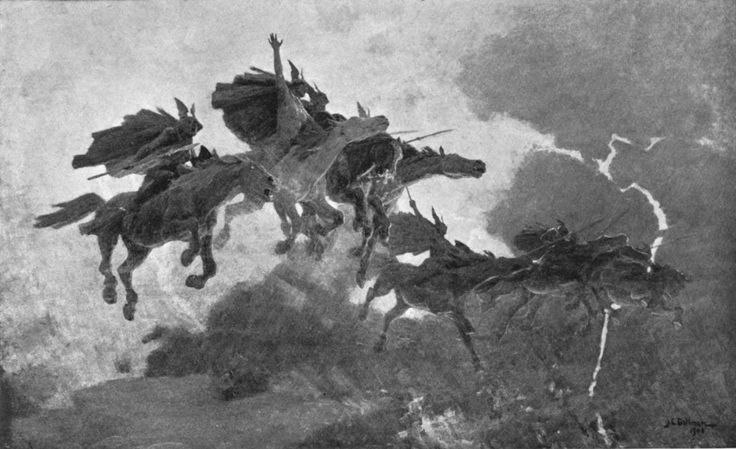
to which would have been added the Valkyries,

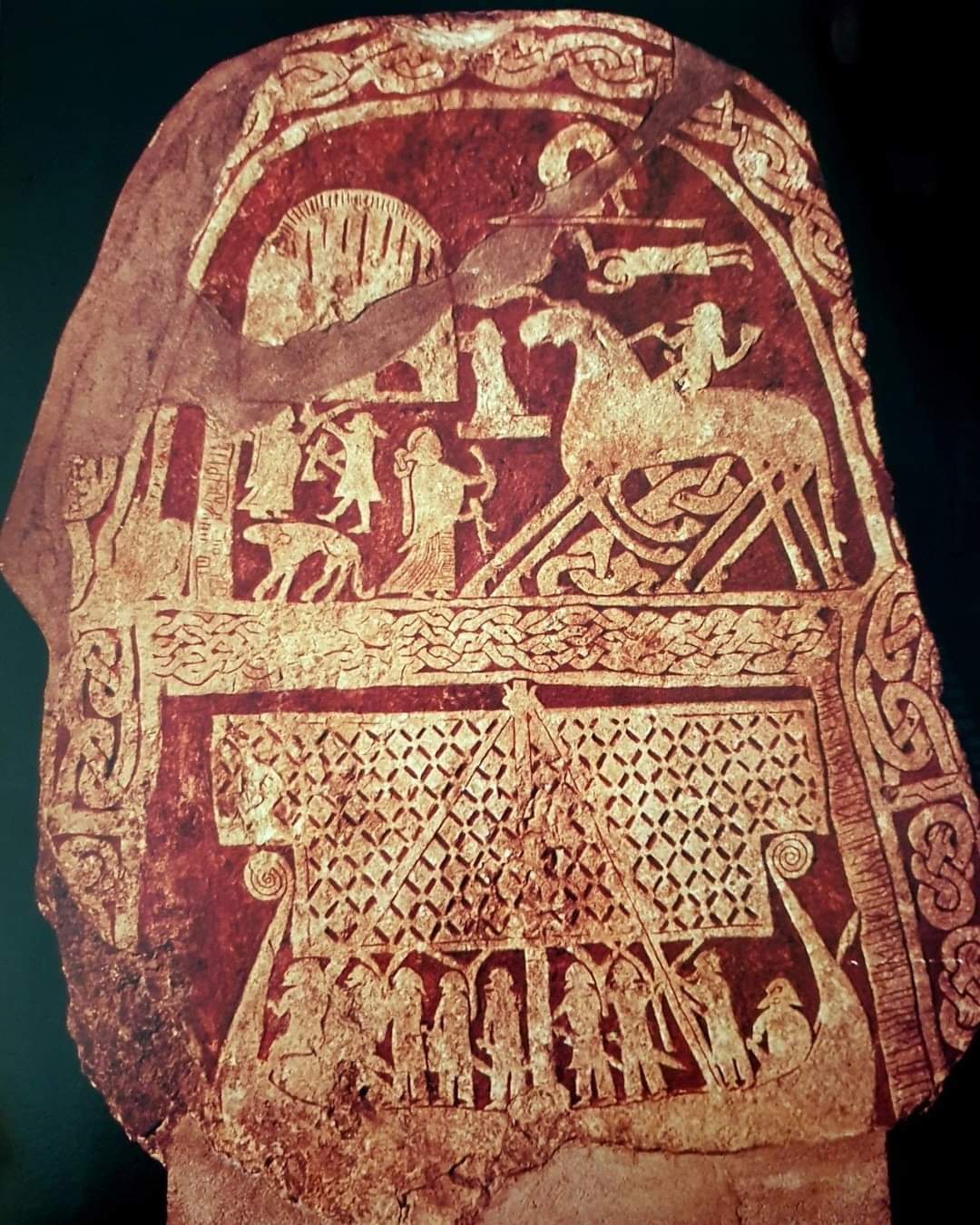
and, in time, Sleipnir, Odin’s 8-legged steed,

(This is the Tjaengvide image stone, one of a group of runic stones, called the “Sigurd stones”, found in Sweden and dated to between 700 and 1100AD.  You can read more about it here:  https://en.wikipedia.org/wiki/Tj%C3%A4ngvide_image_stone You can read about the other stones here:  https://en.wikipedia.org/wiki/Sigurd_stones  Tolkien would first have heard about Sigurd from Andrew Lang’s The Red Fairy Book, 1890, which you can find here:   https://archive.org/details/redfairybook00langiala/redfairybook00langiala/mode/2up  Sigurd himself possessed the offspring of Sleipnir, Grani, which you can read about here:  https://en.wikipedia.org/wiki/Grani )

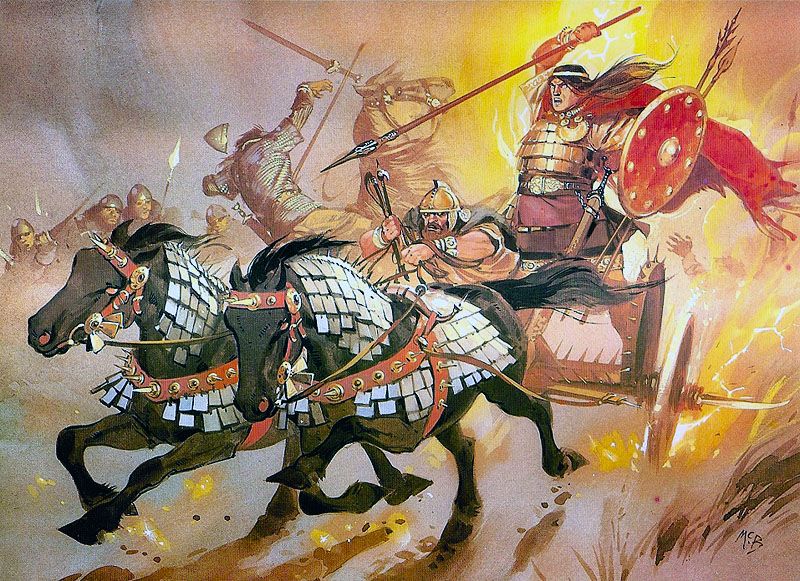
and further medieval reading would have filled his mind with mythic and magic horses, like Cu Chulainn, the Irish hero’s, chariot pair, water horses named Liath Macha and Dub Sainglend (although he wasn’t very enthusiastic about Old Irish literature which, I suspect, he found much wilder and stranger and more disturbing than, say, the Welsh Mabinogion, which you can read about here:    https://en.wikipedia.org/wiki/Mabinogion )

(a rather over-the-top image by the usually dependable Angus McBride—someone should have mentioned to him that, although “Dub” means “black”, Liath means “grey”.  Cu Chulainn is one of my favorite ancient berserkers—to mix cultures—and, if you don’t know him, you can begin to read about him here:  https://en.wikipedia.org/wiki/C%C3%BA_Chulainn )

But there are magical horses in many places—see https://en.wikipedia.org/wiki/List_of_horses_in_mythology_and_folklore for many more, with at least many of the medieval, he would have been familiar. 

And while we’re speaking of Middle-earth and horses, we need to mention the Normans, who, combined with the Anglo-Saxons for language, were the basis of the Rohirrim–

“The Rohirrim were not ‘medieval’ in our sense.  The styles of the Bayeux Tapestry…fit them well enough…” (letter to Rhona Beare, 14 October, 1958, Letters, 401)

The Rohirrim, in turn, lead us back to the opening of this posting.  Although, in Tolkien’s day, cavalry and glorious charges,

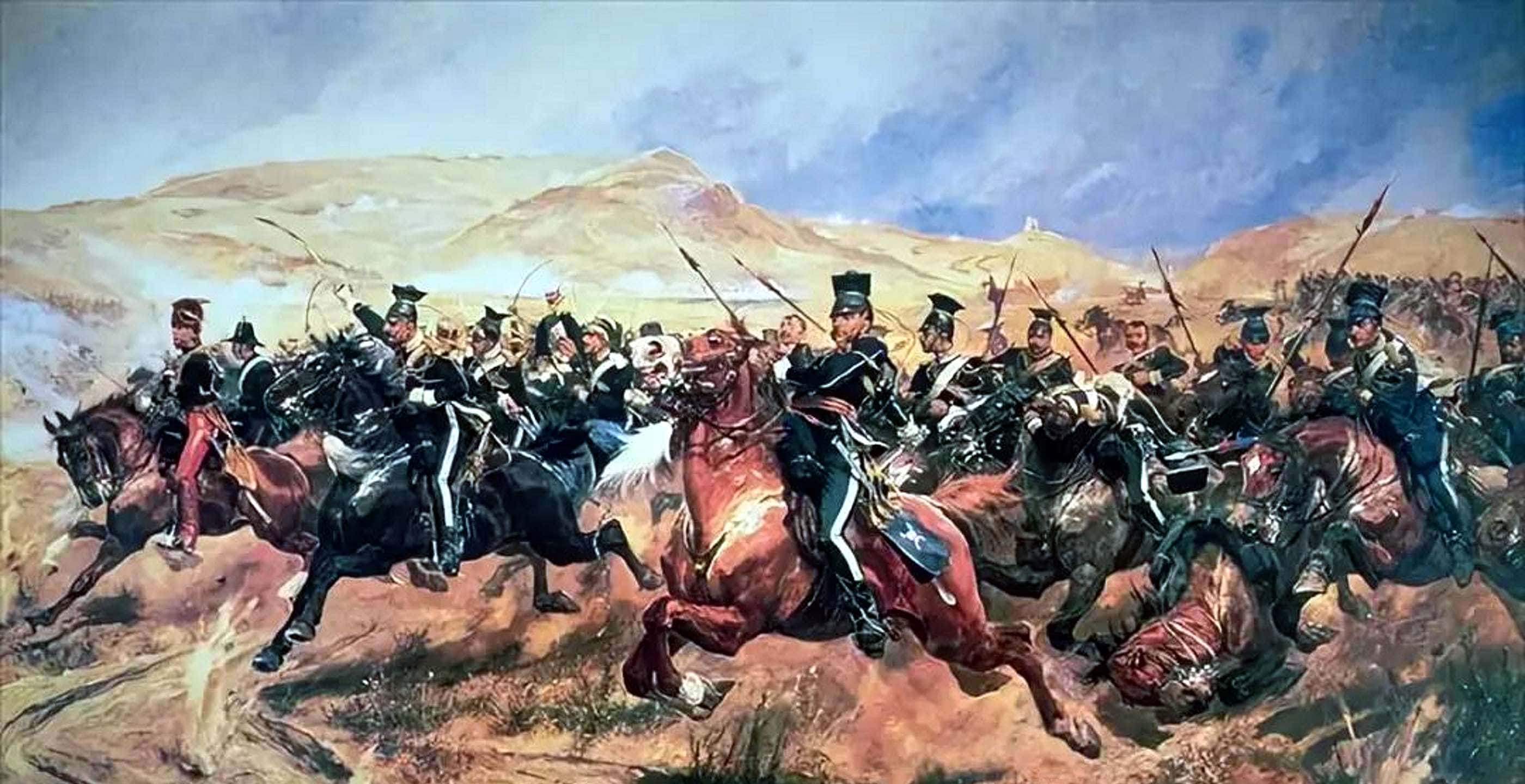
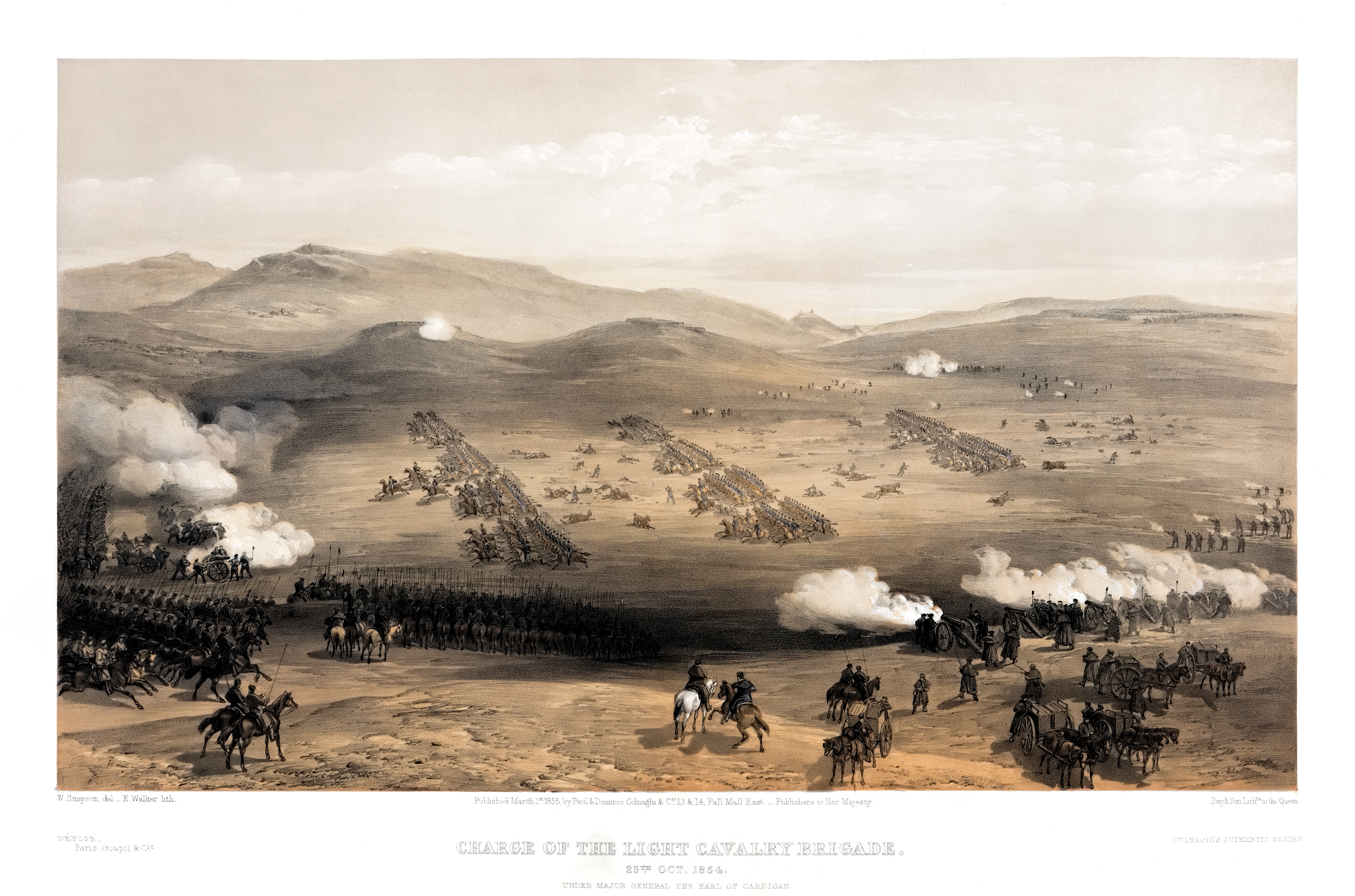
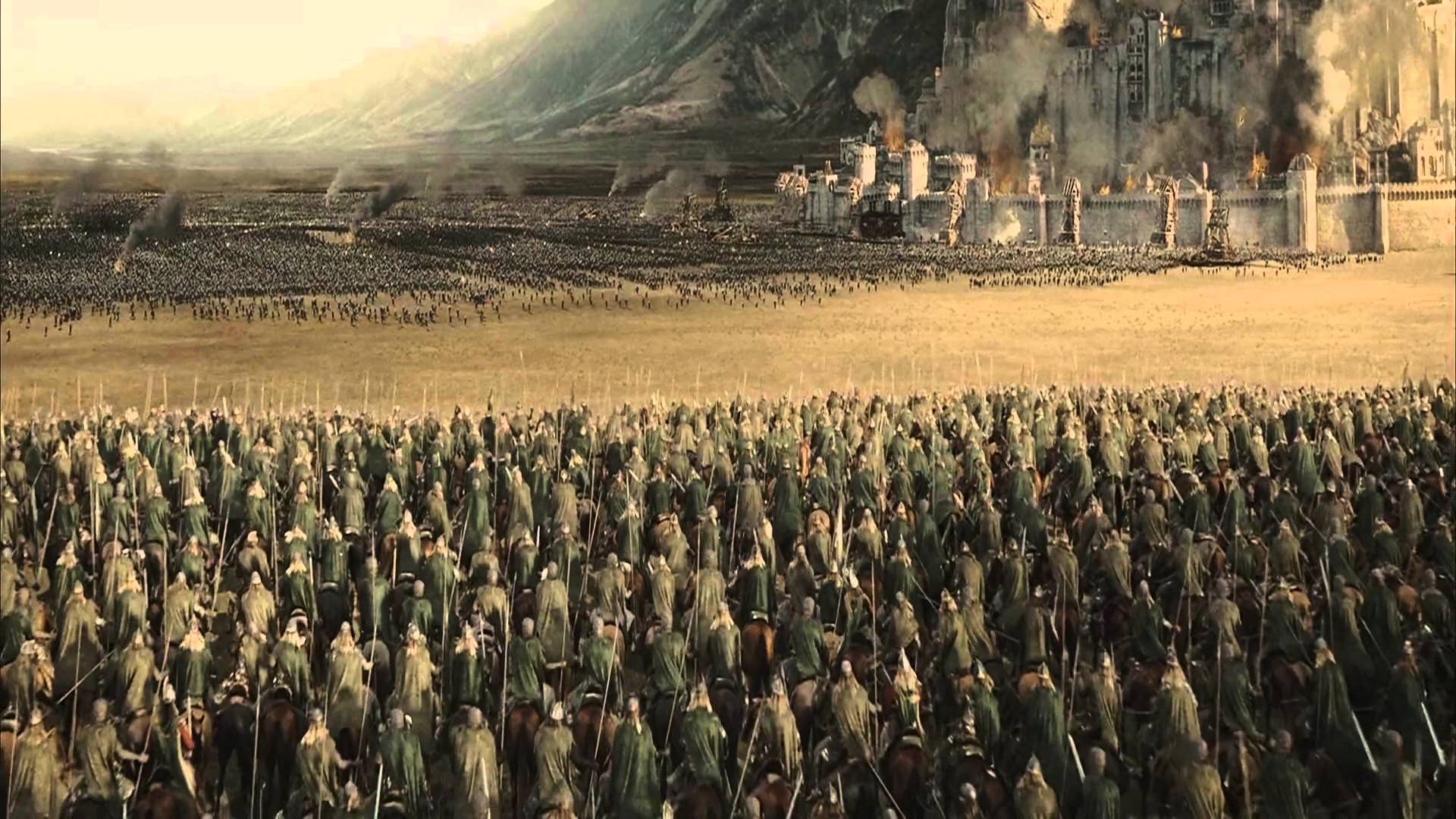
like that of the British Light Brigade at Balaclava in 1854, commemorated in Tennyson’s poem, were almost at the end of their military usefulness, for a Romantic, like Tolkien, the idea of such a charge was still a powerful image and one he couldn’t resist, depicting the heroic Rohirrim assembling

(from the Jackson film)

and roaring down on the unsuspecting orcs. 

(Abe Papakhian)

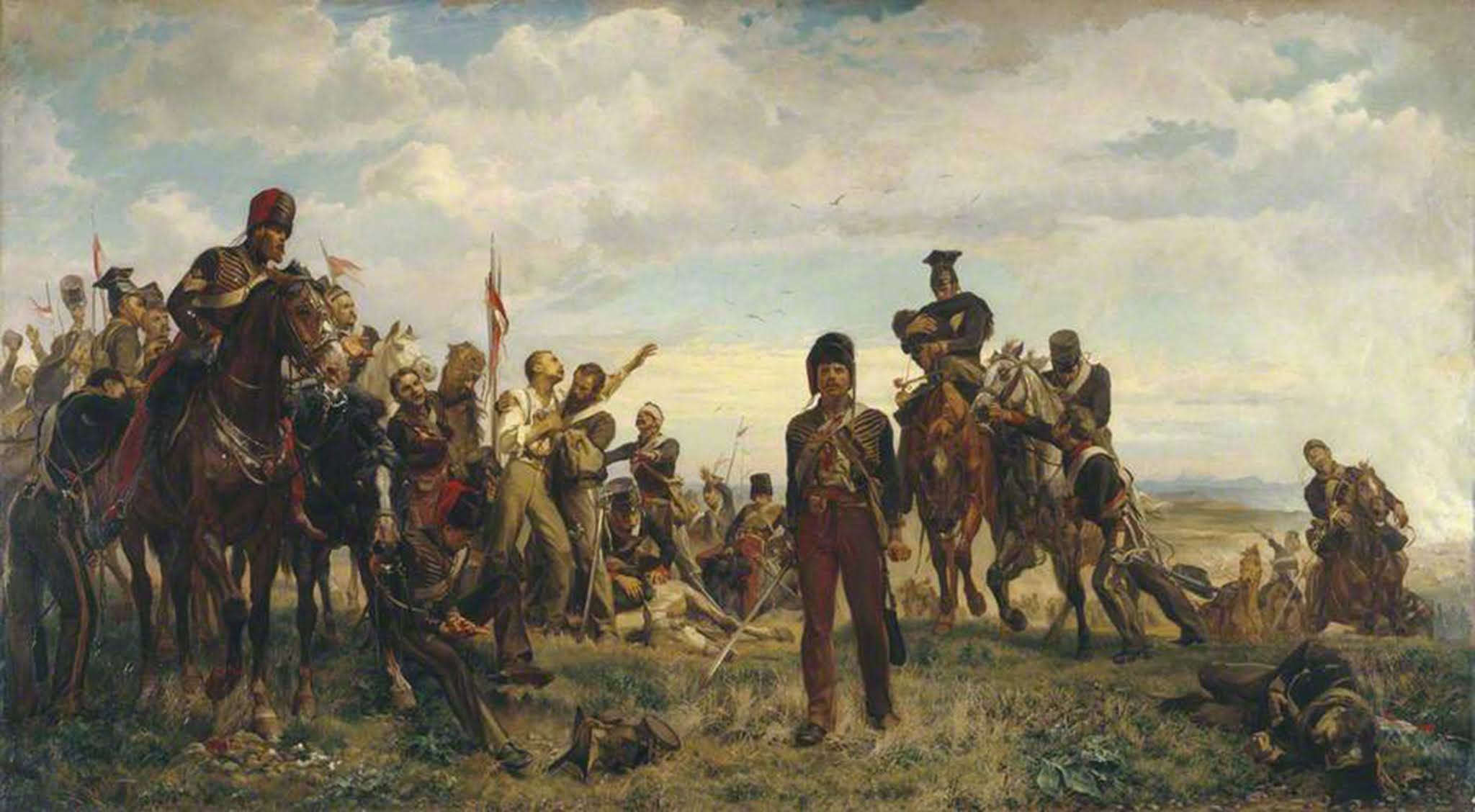
JRRT was writing medieval fantasy, however, but, as I’m always interested in “what if’s”, here I’m remembering what actually happened to that Light Brigade charge, an attack made in the teeth of Russia artillery.

The consequence was that, out of 609 men who rode towards the Russians, only 198 returned, and Lady Butler’s picture, “Balaclava the Return 25 October 1854” (1911) sums up the actual aftermath of that charge.

There’s evidence in the destruction of the Causeway Forts that Sauron’s army had some sort of blasting powder—suppose, instead of using it just as a siege tool, it had been employed with some sort of projectile propelled by it out of a tube—what might that have done to the Rohirrim’s valiant attack? 

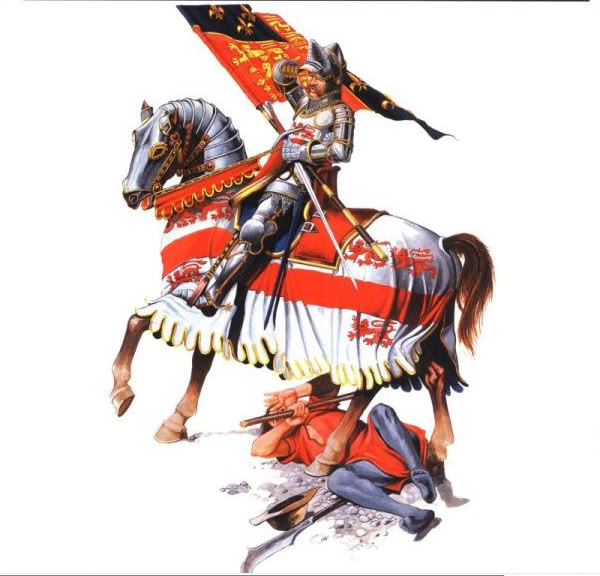
Or even using the technique of the English army against the French at Agincourt, in our medieval world of 1415AD:  pointed stakes to threaten horses, behind which stood massed bowmen:  what would have been the outcome of that?

(Angus Mcbride)

475 horses were lost in the Charge of the Light Brigade.  Military progress so often just means more killing, but the replacement of horses with machines seems to me, who loves horses, a turn for the better.   At the same time, with Tolkien, I can feel the attraction for wild charges with swords at top speed (although cavalry did better when, at most, it went in at the canter—galloping causes loss of formation which can blunt the effect of such an attack), but, as in the charge of the Rohirrim, I’m glad if they only appear in fiction—and far from modern weaponry.

Thanks, as ever, for reading,

Stay well,

Remember that there’s a special spot, just behind the poll (top of the head), which, if scratched in the right place, makes many horses happy,

And remember, as well, that there’s always

MTCIDC

O

PS

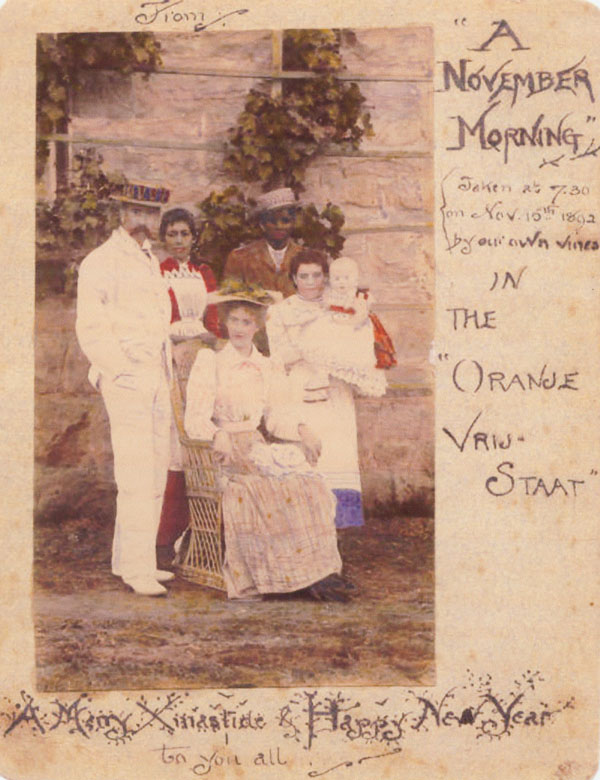
One of those little “what if” quirks of history–Tolkien’s immediate family had been in the Orange Free State at the time of his birth, in 1892.  Tolkien’s father, Arthur, was manager of the Bloemfontein branch there of the Bank of Africa.  The Orange Free State was one of the Boer republics attacked by Britain in the Boer War of 1899-1902. If Tolkien’s mother hadn’t brought JRRT and his brother, Hilary, back to England, in 1895, and Arthur hadn’t died of the effects of rheumatic fever in 1896,

Tolkien might have been in the Orange Free State when Bloemfontein was occupied by the British on 13 March, 1900.  (You can see early film of the Scots Guards marching in here:  https://www.youtube.com/watch?v=DHy2cEFwlIo )

PPS

In last week’s posting, I mentioned the story of the wonderfully bloodthirsty Frankish queen Fredegunda, as she appears in Gregory of Tours Historia Francorum.  I wrote there that you might read about her assassination of Bishop Praetextatus and her cold-blooded visit to him on his deathbed afterwards—but it required reading Gregory’s 6th-century Latin, as I didn’t provide a translation.  It seemed lazy of me not to include one of that scene, however, so here it is with the original Latin.  As always, I could smooth this out, but I prefer to stick as close as I can to the text, to give you a better feel for what’s actually been written.

Advenientem autem dominicae resurrectionis diae, cum sacerdos ad implenda aeclesiastica officia ad aeclesiam maturius properasset, antefanas iuxta consuetudinem incipere per ordinem coepit. Cumque inter psallendum formolae decumberet, crudelis adfuit homicida, qui episcopum super formolam quiescentem, extracto baltei cultro, sub ascella percutit. Ille vero vocem emittens, ut clerici qui aderant adiuvarent, nullius ope de tantis adstantibus est adiutus. At ille plenas sanguine manus super altarium extendens, orationem fundens et Deo gratias agens, in cubiculo suo inter manus fidelium deportatus et in suo lectulo collocatus est. Statimque Fredegundis cum Beppoleno duce et Ansovaldo adfuit, dicens: ‘Non oportuerat haec nobis ac reliquae plebi tuae, o sancte sacerdos, ut ista tuo cultui evenirent. Sed utinam indicaretur, qui talia ausus est perpetrare, ut digna pro hoc scelere supplicia susteneret’. Sciens autem ea sacerdos haec dolose proferre, ait: ‘Et quis haec fecit nisi his, qui reges interemit, qui saepius sanguinem innocentem effudit, qui diversa in hoc regno mala commisit?’ Respondit mulier: ‘Sunt aput nos peritissimi medici, qui hunc vulnere medere possint. Permitte, ut accedant ad te’. Et ille: ‘Iam’, inquid, ‘me Deus praecepit de hoc mundo vocare. Nam tu, qui his sceleribus princeps inventa es, eris maledicta in saeculo, et erit Deus ultur sanguinis mei de capite tuo’. Cumque illa discederit, pontifex, ordinata domo sua, spiritum exalavit. 
“However, with the coming of the day of [Our] Lord’s resurrection, when the priest [Praetextatus] had hurried early to the church to fulfill [his] ecclesiastical duties, he started to begin [the] antiphons according to custom [in their proper] order.  And when, between the psalms, he was lying on a bench, a cruel murderer appeared, who, when a knife had been pulled from [his] belt, struck the bishop, resting on the bench, under the armpit.  He [the bishop], however, [although] shouting so that the clergy who were present might help him, was aided with help of none from so many being present.  Yet he, stretching his hands, full of blood, above the altar, pouring [out] a prayer and thanking God, was carried off into his bedchamber by the hands of [his] faithful [followers] and placed on his bed.  And straightaway Fredegunda, with the Duke Beppolenus and Ansovaldus, appeared, saying, ‘Oh holy priest, this was not right for us and for the rest of your people that such things should happen in your worshipping.  But would that it would be revealed who had dared to carry out such things that he should suffer punishment worthy of this crime.’  The priest, knowing, however, that she was speaking of these things deceptively, said, ‘And who has done these things if not [the one] who has killed kings, who very often has poured out innocent blood, who has committed many evil deeds in this kingdom’  The woman replied:  ‘There are in our household highly experienced doctors who would be able to heal this wound.  Allow [it] that they may come to you.’  And he [said]:    ‘God has decreed to call me from this world.  On the other hand, you who have been exposed as chief in these crimes, you will be cursed in the future and God will be the avenger of my blood on your head.’  And when she had left, the bishop, affairs arranged in his house, breathed out his spirit.”

And how could I not include Alma-Tadema’s illustration?

I Love a Parade

28 Wednesday Feb 2018

Posted by Ollamh in Artists and Illustrators, J.R.R. Tolkien, Military History, Military History of Middle-earth, Terra Australis

≈ Leave a comment

Tags

Agincourt, Bayeux Tapestry, Dol Amroth, Forlong, Great Gate, Harold Godwinson, hauberk, Hirluin the Fair, Howard Pyle, huscarls, Imrahil, Langstrand, Lincoln Cathedral, livery, Lossarnach, Medieval, Minas Tirith, Morthond, N.C. Wyeth, Palermo, parade, Ringlo Vale, Robin Hood, spangenhelm, The Lord of the Rings, Tolkien, Tower of Gondor

“I love a parade, the tramping of feet,

I love every beat I hear of a drum.”

–Koehler/Arlen Rhythmania (1931)


Welcome, dear readers, as always.  In the past, we’ve spent a posting or two discussing military aspects of The Lord of the Rings, from the look of the Rohirrim to the attack on Minas Tirith.  In this posting, we would like to go back one step from that attack to consider what is a rather melancholy moment in the lead up to that assault.

Pippin and his newfound friend, Bergil, have come down to the Great Gate of Minas Tirith.

image1minastirith.jpg

Here’s the gate from the films.

image2mtgate.png

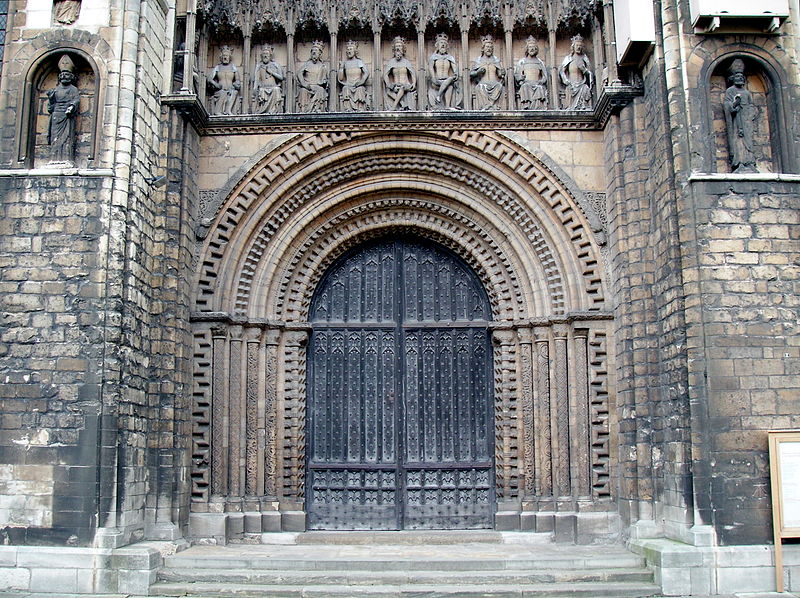
This immediately reminded us of places like the west door of Lincoln Cathedral.

image3linc.jpg

image4door.jpg

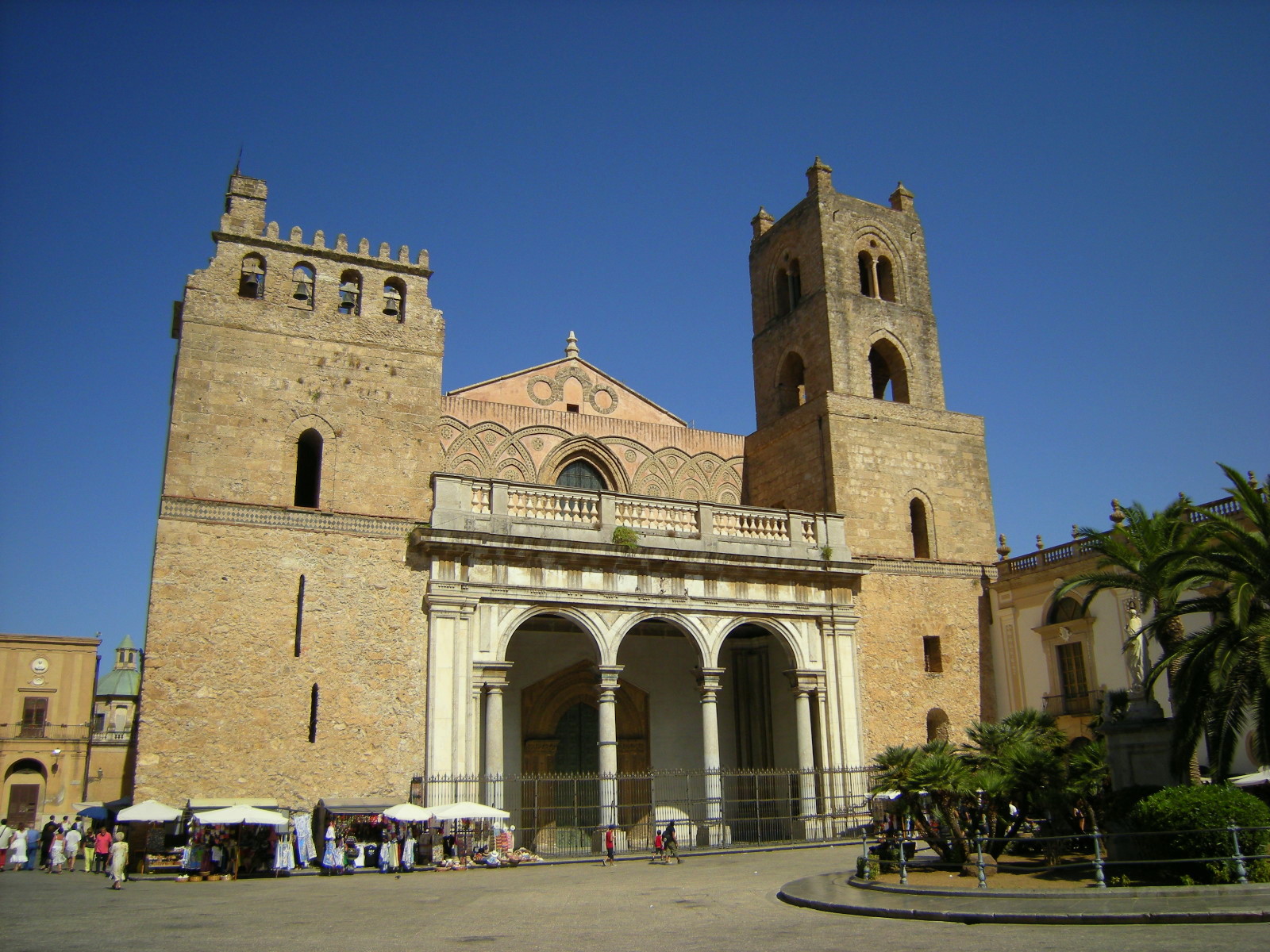
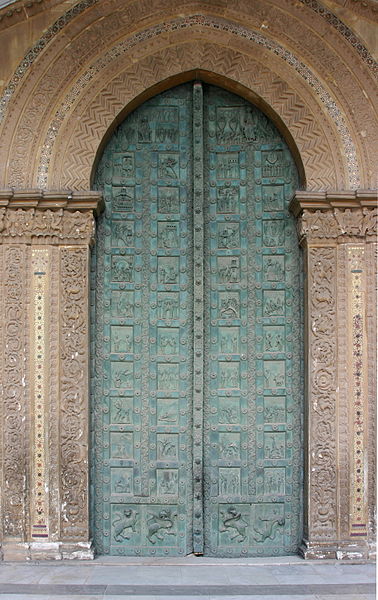
Or the main door of the cathedral of Palermo.

image5duomo.jpg

image6porta.JPG

Because he is now a member of the Guard of the Tower of Gondor, Pippin is allowed to pass through the Gate—and to take Bergil with him out to see and hear the following:

“Beyond the Gate there was a crowd of men along the verge of the road and of the great paved space into which all the ways to Minas Tirith ran.  All eyes were turned southwards, and soon a murmur rose:  ‘There is dust away there!  They are coming!’

Pippin and Bergil edged their way forward to the front of the crowd and waited.  Horns sounded at some distance, and the noise of cheering rolled towards them like a gathering wind.  There was a loud trumpet-blast, and all about them people were shouting.” (The Return of the King, Book Five, Chapter 1, “Minas Tirith”)

What happens then is a kind of parade.

When we see the defenders of Minas Tirith in the films, they are all uniformly clad.

image7gondorians.jpg


In our medieval world, this was highly unlikely, the best being that soldiers and servants might wear the colors/crest of the lord they served.  This was called “livery”.  Uniformity in clothing, weapons, and armor would be some time in the future.

image8livery.jpg

What is coming up the road from the south are reinforcements, marching in a long column of units, and those units differ greatly in look.  First are the men of Lossarnach, led by their lord, Forlong:

“Leading the line there came walking a big thick-limbed horse, and on it sat a man of wide shoulders and huge girth, but old and grey-bearded, yet mail-clad and black-helmed and bearing a long heavy spear.  Behind him marched proudly a dusty line of men, well-armed and bearing great battle-axes; grim-faced they were, and shorter and somewhat swarthier than any men Pippin had yet seen in Gondor.”

To us, those axes make the men of Lossarnach sound like the huscarls, the bodyguard of an Anglo-Saxon king, like Harold Godwinson, whom we see depicted on the “Bayeux Tapestry”.

image9huscarl.jpg

image10taphus.gif

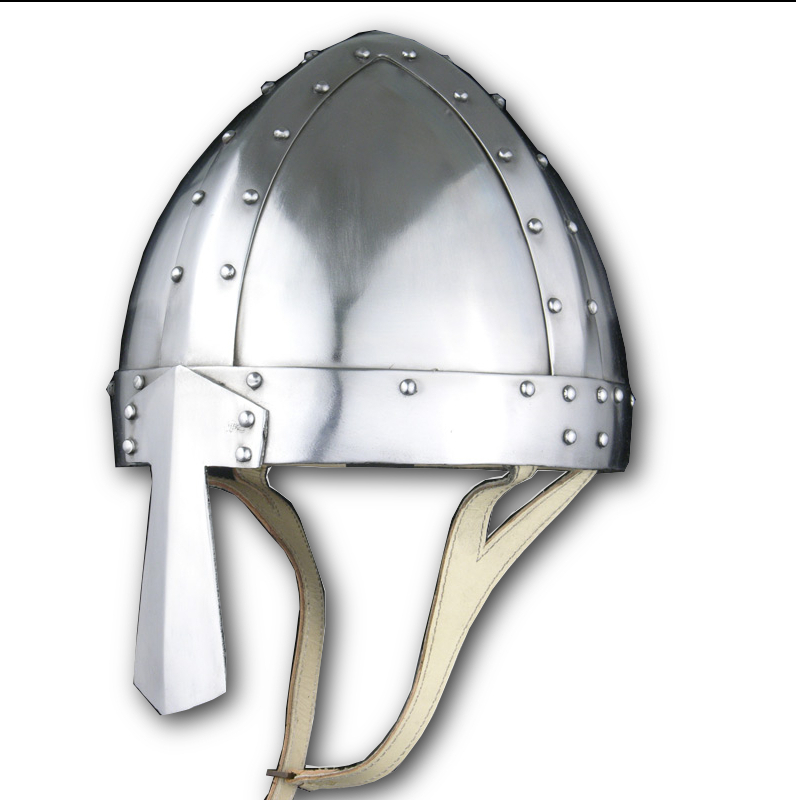
Their leader, Forlong, might be similar in appearance, wearing a type of helmet called a spangenhelm,

norman-spangenhelm-2.gif

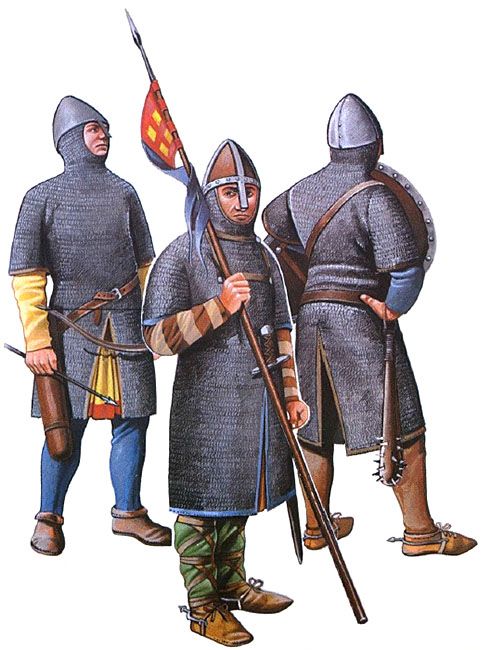
and protected by an early form of mail shirt called a hauberk.

image12hauberk.jpg

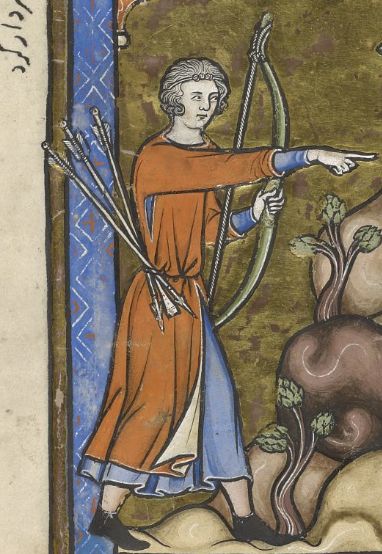
After these, we see more units, but with little description—the men of Ringlo Vale “striding on foot”, so infantry of some sort, five hundred bowmen from Morthond, from the Langstrand, “a long line of men of many sorts, hunters and herdsmen and men of little villages, scantily equipped save for the household of Golasgil their lord”.   After them, “a few grim hillmen without a captain”, and “fisher-folk of the Ethir”, all of which we imagine in their workaday clothes of hunters and shepherds and farmers and sailors, as depicted in medieval English and French manuscripts.

image13medhunter.jpg

image14shepherd.jpg

image15farmer.jpgimage16fishermen.jpg

Next comes a unit which is perhaps wearing livery:  “Hirluin the Fair of the Green Hills from Pinnath Gelin with three hundreds of gallant green-clad men.”  We aren’t told how they’re armed, but that they may be in livery suggests that they may be better armed than some of the earlier contingents.  (In fact, “gallant green-clad men” makes us think of Robin Hood—perhaps more archers?)

image17rhood.jpg

And, finally, folk we’ve discussed before:

“And last and proudest, Imrahil, Prince of Dol Amroth, kinsman of the Lord, with gilded banners bearing his token of the Ship and the Silver Swan, and a company of knights in full harness riding grey horses; and behind them seven hundreds of men at arms, tall as lords, grey-eyed, dark-haired, singing as they came.”

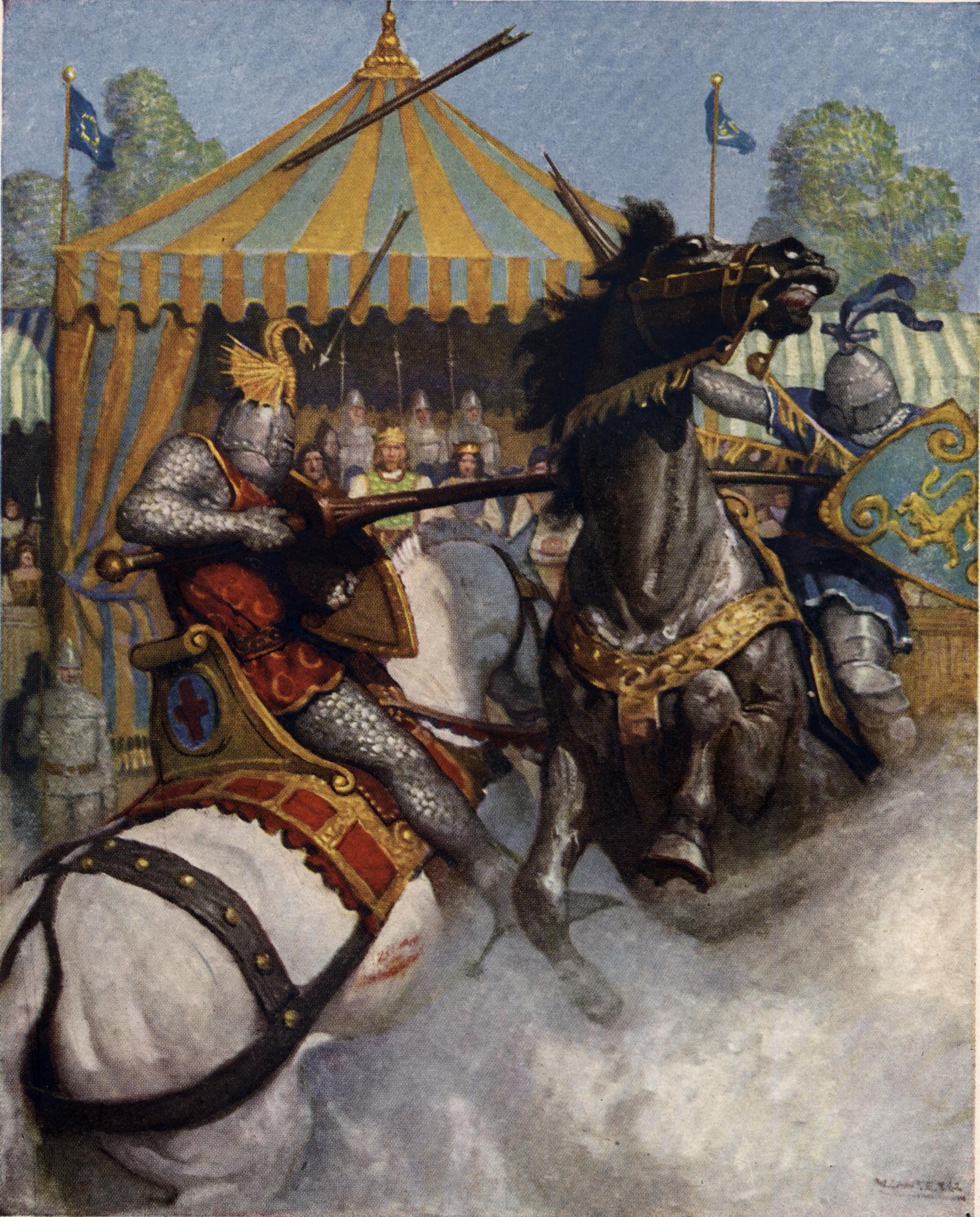
“knight in full harness”, as we talked about in an earlier post, probably meant, to JRRT, something from Howard Pyle or NC Wyeth, like this—

image18knight.JPG

As for those “men at arms”, if they appear to be “tall as lords”, we assume that they’re on foot, which puzzles us a bit.  “Men at arms” usually means “armored soldiers on horseback” in our world—perhaps with less armor than knights, but still cavalry (unless dismounted, to fight on foot, as the French did at Agincourt in 1415, for example).  We see them, then, as looking like those dismounted cavalry, like these—

image19menatarms.jpg

However they are armed and clothed, however, they are thought to be too few by those watching and, considering what Mordor eventually sends against them, they would not have been enough, if the brave Rohirrim and Aragorn’s reinforcement from the south hadn’t arrived in time.  What would have happened if they hadn’t?  A subject for very grim fan-fiction!

Thanks, as ever, for reading!

MTCIDC

CD

In Shining Armo(u)r

17 Wednesday Jan 2018

Posted by Ollamh in Artists and Illustrators, Heroes, J.R.R. Tolkien, Literary History, Military History, Military History of Middle-earth, Narrative Methods, The Rohirrim, Tolkien

≈ Leave a comment

Tags

Agincourt, Anglo-Saxon, armor, Bayeux Tapestry, chain-mail, Crecy, Dark Ages, Embroidery, Howard Pyle, knights of Dol Amroth, Medieval books, medieval manuscript drawings, N.C. Wyeth, Norman knight, Pauline Baynes, Romans, sub-Roman period, Sutton Hoo, The Lord of the Rings, The Rohirrim, The Story of King Arthur and His Knights, Tolkien

Welcome, as always, dear readers.

In a letter to Miss [Rhona] Beare, of 14 October, 1958, JRRT wrote to answer what was clearly a question about dress in The Lord of the Rings:

“Question 4.  I do not know the detail of clothing.  I visualize with great clarity and detail scenery and ‘natural’ objects, but not artefacts.  Pauline Baynes drew her inspiration for F. Giles largely from medieval MS drawings—except for the knights (who are a bit ‘King-Arthurish’)* the style seems to fit well enough.” (Letters, 280)

To which he adds this footnote:

“*Sc. [= “Know/understand”] belong to our ‘mythological’ Middle-Ages which blends unhistorically styles and details ranging over 500 years, and most of which did not of course exist in the Dark Ages of c. 500 A.D.”

In the next paragraph he adds:

“The Rohirrim were not ‘mediaeval’, in our sense.  The styles of the Bayeux Tapestry (made in England) fit them well enough, if one remembers that the kind of tennis-nets [the] soldiers seem to have on are only a clumsy conventional sign for chain-mail of small rings.” (Letters, 280-281)

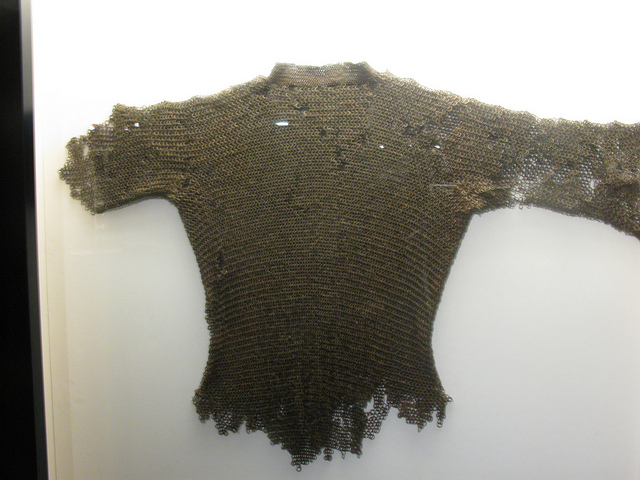
The Bayeux Tapestry (which should really be called the “Bayeux Embroidery”, since it’s actually a long piece of cloth with hundreds of figures and details stitched on to it, rather than woven into it) presents us with a detailed history of the invasion of England in 1066AD.  The soldiers Tolkien is talking about look like this:

image1knights.jpg

You can see what he means by “tennis-nets”—which should really look like this:

image2normans.jpg

That chain-mail, then, looks like this:

image3mailshirt.jpg

And, at the bottom of this next illustration, you can see how it’s made:

image4mailnorman.jpg

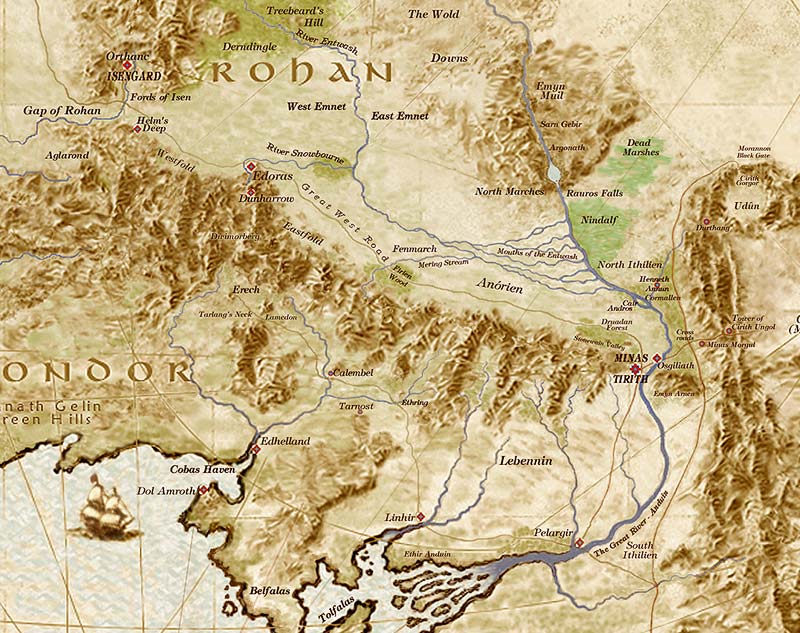
We know, then, how JRRT envisaged the Rohirrim in its eoreds, marching towards Minas Tirith, but how did he imagine other soldiers, we’ve asked ourselves, and, in particular, the knights of Dol Amroth—the only soldiers specifically described as such in The Lord of the Rings?

image5map.jpg

JRRT writes of them as they enter Minas Tirith:

“And last and proudest, Imrahil, Prince of Dol Amroth, kinsman of the Lord, with gilded banners bearing his token of the Ship and the Silver Swan, and a company of knights in full harness riding grey horses…”(The Return of the King, Book Five, Chapter 1, “Minas Tirith”)

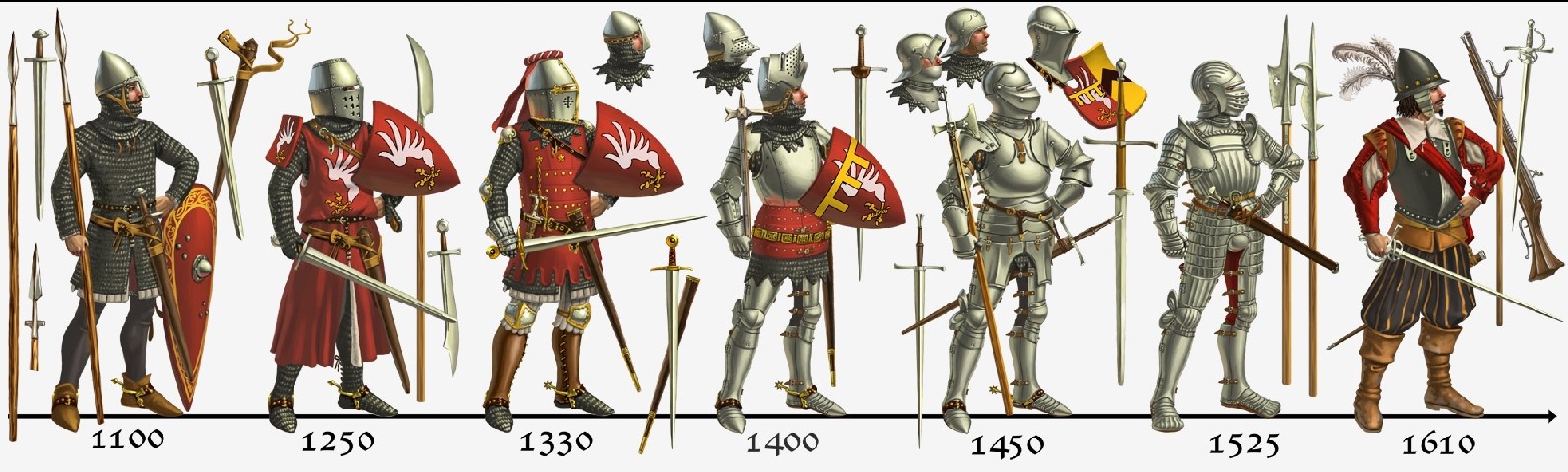
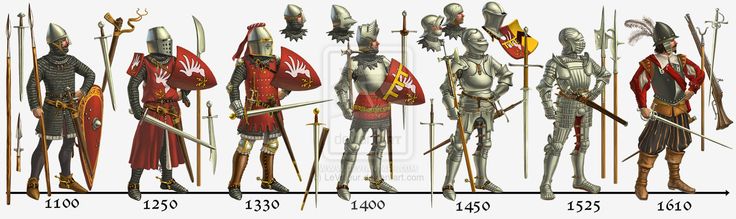
“Full harness” means “complete armor”.  When we think of the term, we think of something later than the Normans, who are, after all, just wearing a kind of very long ringed shirt.  Here’s a useful chart to give you of an idea of what we mean.

image6aarmorchart.jpg

So, since “full harness” doesn’t look like the Rohirrim, how might it look?

In Jackson’s films, we don’t believe that we ever see those knights singled out, as we see the Rohirrim.  The best we could find was this picture of Faramir’s men about to mount a cavalry charge against what appears to be Osgiliath.  (We’ve talked about this in a much earlier posting—one of the most unbelievable moments in the whole of Jackson’s work.)

image6knightsmt.jpg

This is a big picture, but the details, unfortunately, aren’t very clear.  There are a few things, however, which we found rather odd:

  1. although there appear to be a few lances with penons among them, most seem to be armed only with swords—a close-up weapon—which is why actual knights also carried lances—heavy cavalry came crashing down on infantry or slamming into enemy mounted men—or intended to—spearing right and left and then drawing swords (or using maces or battle axes)
  2. a minor detail, but everyone seems to be wearing his sword on the right-hand side, which would have made it very hard to draw, unless all were left-handed men!
  3. the helmets and armor seem very standardized, and we would believe that budgetary considerations probably influenced this uniformity—50 identical helmets were probably cheaper to make than 50 different ones—but such sameness reminds us more of Roman imperial troops than of any western medieval army we can think of.

image7romans.jpg

We assume, then, that this is the film’s view of soldiers at least like Imrahil’s men, but when Tolkien wrote “a company of knights in full harness”:  what might he have had in mind?  We think there is a clue in that adjective “King-Arthurish”, which he uses of Pauline Bayne’s illustrations and in his footnote, where he refers to “our ‘mythological Middle-Ages”. What does he mean?

JRRT would have been about ten when Howard Pyle published his The Story of King Arthur and His Knights in 1903.

image8pyle.png

Here is how Pyle saw Arthur’s knights.

image9aknightimage10asknights

Could this have inspired Tolkien’s view of Imrahil’s men?  (Judge for yourself by following this LINK.)

Tolkien would have been nearly 30 when The Boy’s King Arthur, illustrated by N.C. Wyeth, was published in 1922,

Image result for the boy's king arthur

but, if this were in among his children’s books, perhaps these illustrations might have given him ideas.  (And here’s a LINK to your own copy, from the Internet Archive.)

image12wyeth.jpgimage13wyeth.jpgimage14wyeth.jpg

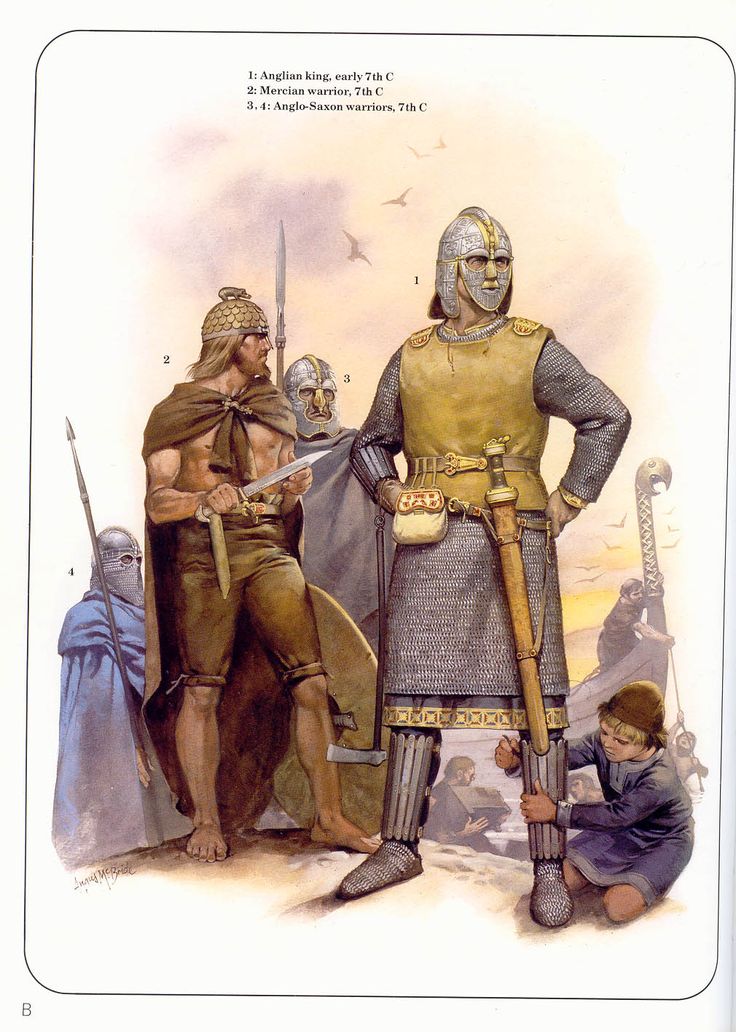
These are two well-known sets of illustrations of Arthurian figures, both available in Tolkien’s early lifetime.  If Arthur was real, of course, he would have lived, as JRRT was well aware, in what is called the “sub-Roman period”, c.500AD—at the beginning of the so-called “Dark Ages”– and he and his men would actually have looked like this:

image15arthur.jpg

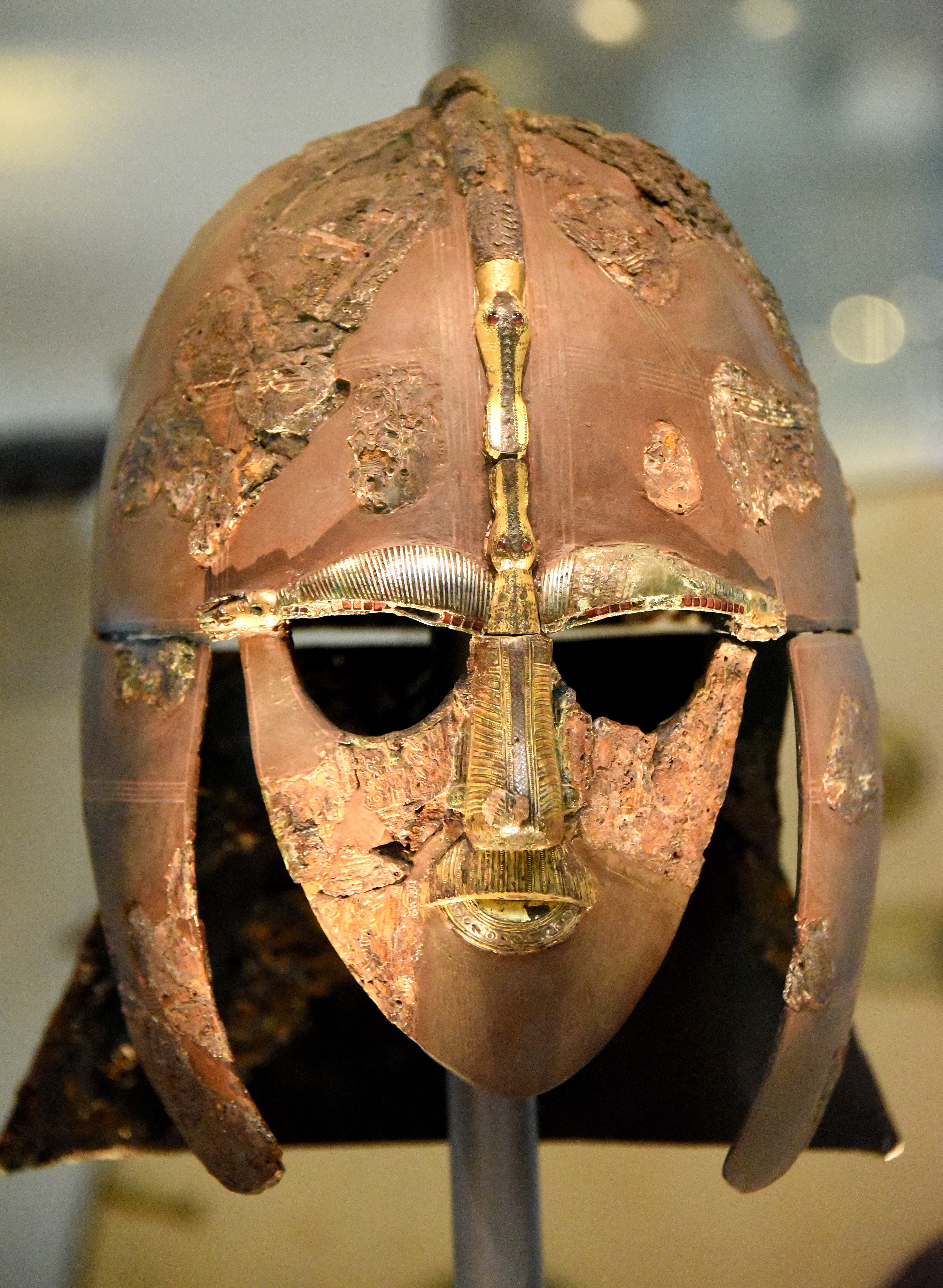
But this is where “our ‘mythological’ Middle-Ages” comes in—little would have been known, when JRRT was writing The Lord of the Rings, of what such warriors would have looked like, although the spectacular Sutton Hoo find of 1939, with its splendid helmet, would have given an inkling, once restored.

image16suttonhoo.jpg

image17suttonhoohelmet.jpg

image18mcbhelm.jpg

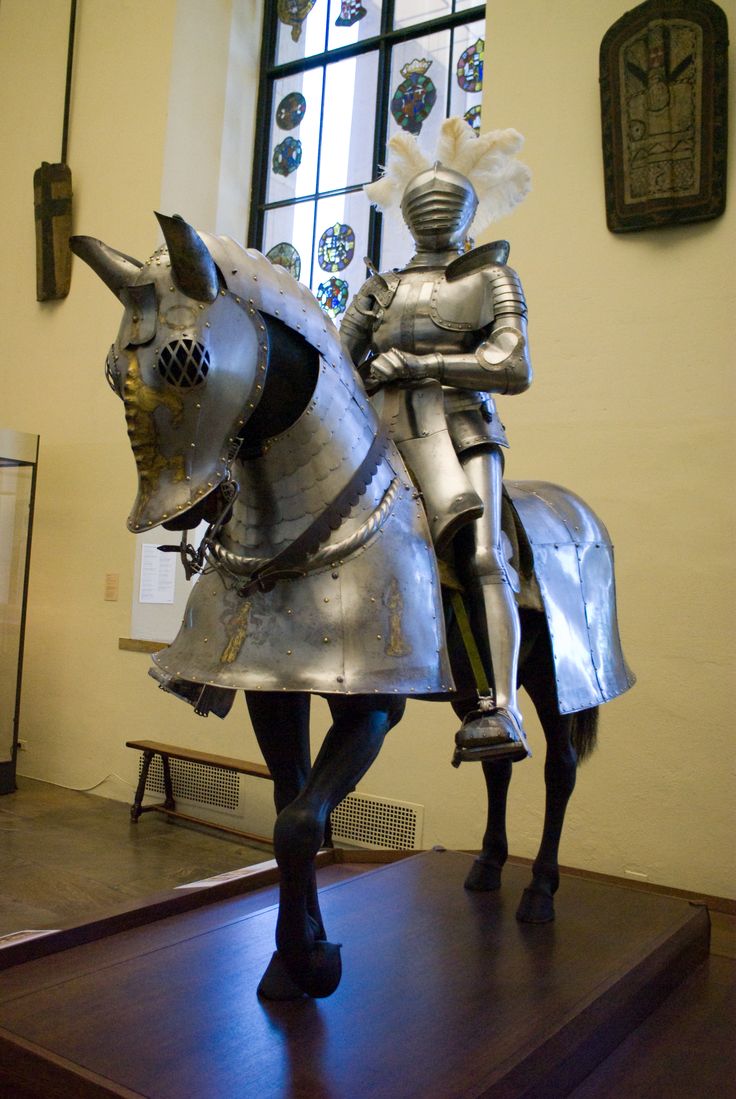
Because such knowledge was lacking, however, the historical Arthur (if there was one) had been moved to the Middle-Ages and re-equipped as a military figure of a much later era, and we believe that, when Tolkien wrote “Arthurish” and “knights”, this is what he meant—and how we’ve always seen Arthur, not only from books (and lots of films) but also from the armor galleries in a number of museums, from the Metropolitan Museum of Art in New York

image24.jpg

to the Higgins Armory in Massachusetts

image25.jpg

to the Philadelphia Museum of Fine Arts

image26.jpg

to the Tower of London.

image27tower.jpg

And, as we’ve discussed before, Prince Valiant, has been an influence from childhood (talk about ‘mythological’ Middle-Ages!).

image28val.jpg

And so, in turn, we imagine—and we think that JRRT did, too–the “company of knights in full harness” to have been individuals, brightly clothed in heraldic colors, their armor that, perhaps, of Crecy, in 1346—

image29crecy.jpg

or Agincourt, in 1415.

image30agincourt.jpg

And you, dear readers, what do you think?

Thanks, as ever, for reading!

MTCIDC

CD

A Long Stretch

12 Wednesday Jul 2017

Posted by Ollamh in Heroes, J.R.R. Tolkien, Literary History, Military History, Military History of Middle-earth

≈ Leave a comment

Tags

Agincourt, Archery, arrow bag, arrows, Bard the Bowman, Battle of Poitiers, Casula Mellita, Crecy, Edinburgh, English Longbowmen, Esgaroth, Greco-Roman, gunpowder, harpoon, Hundred Years War, Laketown, longbows, Medieval-Renaissance, Napoleonic Wars, Naval Warfare, Pinkie Cleugh, Roman, sailing, Smaug, The Hobbit, The Mary Rose, Tolkien

Welcome, as always, dear readers.

In the past, we had a posting on Bard the bowman

image1jeffchanbard.jpg

who rescued Esgaroth (Laketown)

image2esgaroth.jpg

from the attack by Smaug.

image3smaug.jpg

(We especially like this Jeff Chan Bard not only because Bard is depicted as he is in the book, as an archer, but also because it includes the thrush who tells him where he is to strike.)

In that previous posting, we suggested that JRRT pictured Bard as looking and acting like one of the English longbowmen of the Hundred Years War

image4longbowman.jpg

rather than as a harpooner, as in the film.

image5bard.jpg

image6aharpoongun.jpg

Since that posting, we did a second which included bowmen, just a few weeks ago, about Mogul-knife and arrow wound, and now we would like to add a third.

As we’ve mentioned before, one of us is preparing a new university course to be taught in the autumn on the history of warfare.  As you can imagine, this is a big subject, but, in the process of shaping it, we want to include a week on developments in naval warfare over the centuries.  So far, we’ve divided it into several parts:

a. Greco-Roman

image6agrknavbat.jpg

image6romannavbat.jpg

b. medieval-renaissance

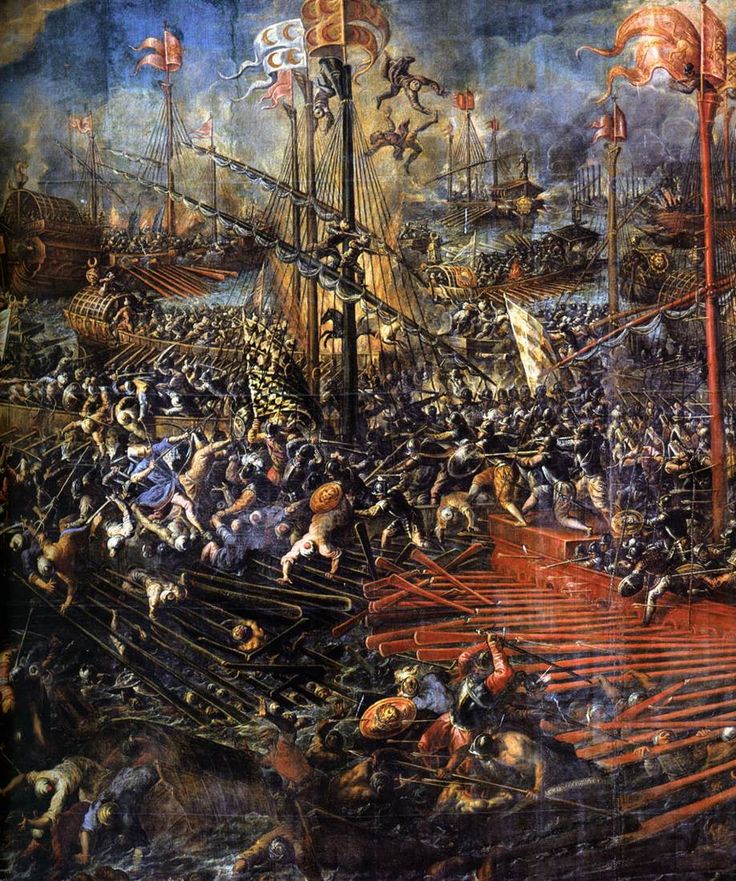
image7sluys.jpg

image8lepanto.jpg

c. the age of sail

image9glorious.jpg

d. ironclads

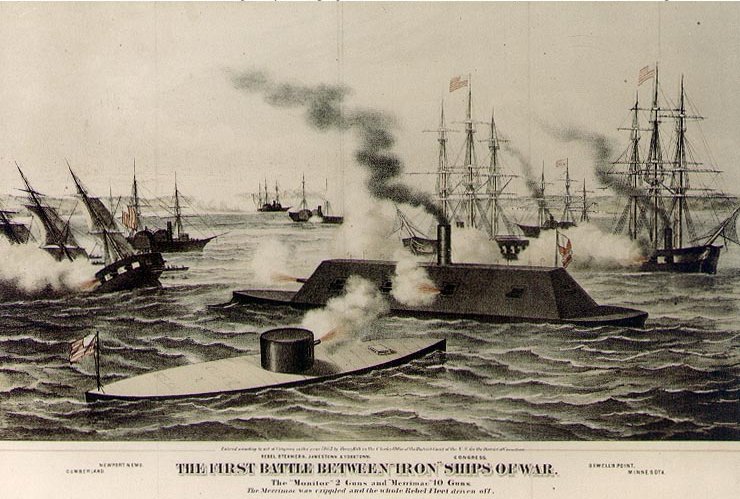
image10monitor.jpg

e. dreadnoughts

image11tsushima.jpg

While working on the Medieval/Renaissance section, we were reminded of what might be the most famous Renaissance shipwreck:  the sinking of The Mary Rose, 19 July, 1545.

image12mrsinks.jpg

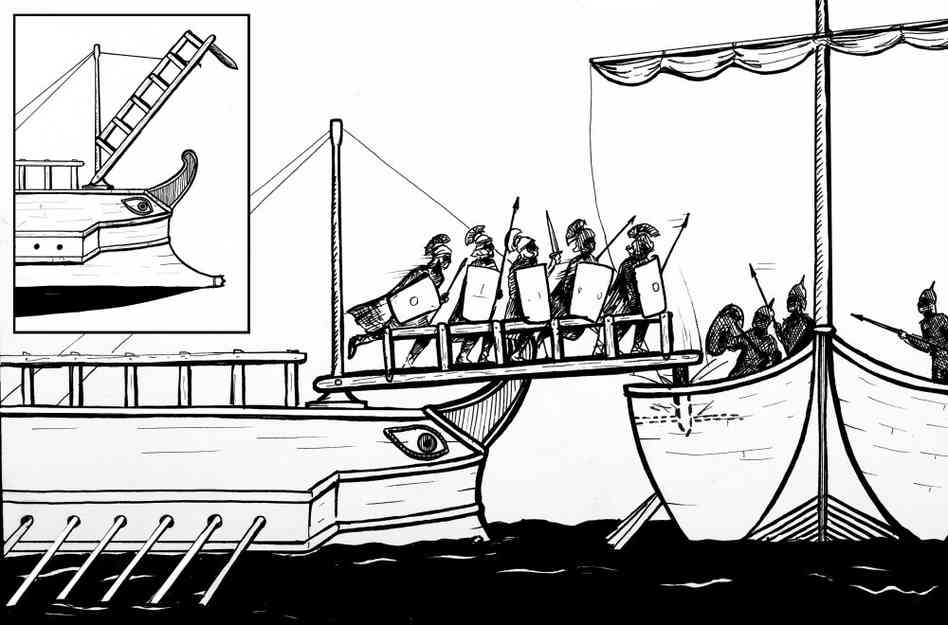
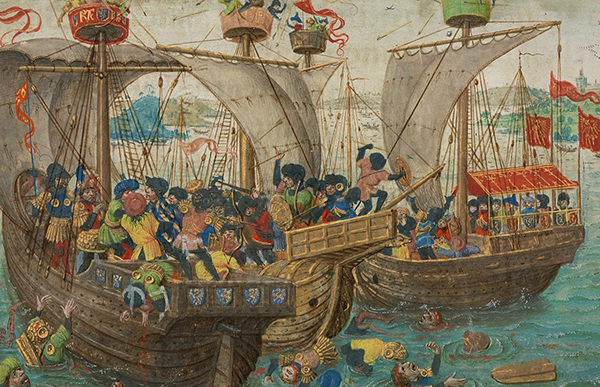
Medieval naval battles had been primarily infantry battles transferred to the sea, as had been Roman practice.  That practice was a story in itself—the traditional Roman explanation was that they were land-fighters and so had invented a device, called a “corvus”–that’s “crow” in English—probably because the point at the enemy’s end was a bit like a pecking beak.  This was a kind of gangplank which, dropped onto the enemy’s ship, stuck in place and allowed Roman marines to rush across and deal with their opposite numbers.

image13corvus.jpg

image14medbat.jpg

Things began to change with the invention of cannon in western Europe.  (The history of gunpowder in the Far East is its own subject—and one we urge those interested to have a look at.  Here’s a LINK to get you started.)  Used first on land perhaps by the 13th century, the first recorded use of cannon on a ship dates from 1338 (and here’s a LINK to naval artillery, in case you want to know more).

With cannon, you could stand off from an enemy ship and—your choice—cripple it by destroying its sails and rigging—or sink it with holes below the waterline.

image15renbat.jpg

Boarding, as the Romans had, was still a possibility, of course, and provided the extra benefit, if the boarding was successful, of allowing for the acquisition of an extra ship.  This could be added to your fleet or sold and the profits shared among the sailors—or, actually, if we go by Napoleonic British standards, the profits went to everybody at the top, including admirals who weren’t even present at the capture, with a teeny amount remaining for the seamen who’d actually taken the prize.

image16renbat1.jpg

To do that boarding, Romans—and medievals—had loaded their ships with soldiers, and the Mary Rose was no exception, its surviving records suggesting that there were about 200 soldiers in a crew of approximately 400-450.

As a number of longbows have been recovered from the wreck,

image17mrlongbows.jpg

this would suggest that many of those soldiers were archers.

These, along with the artillery (and perhaps a small number of arquebuses?  To our current knowledge, none has been recovered from the ship, but, certainly, by 1545, they were in common use—at the battle of Pinkie Cleugh, east of Edinburgh, in 1547, the English army had several hundred German mercenary arquebusiers),

image18grmarq.jpg

would have supplied the missile weapons of the ship.

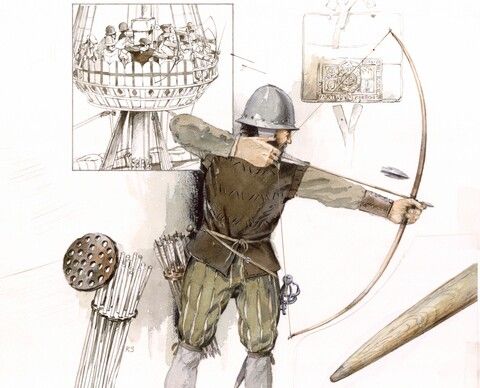
image19mrbowman.jpg

Not only were large numbers of artifacts discovered in the Mary Rose, but the skeletons of perhaps half its crew and about 90 of those were intact enough to warrant further study.  For our purpose, one, in particular is very interesting.

image20mrarcher.jpg

Discovered in the hold, he was a large man for his time, about 6 feet (about 183cm).  As well as revealing that he would have had a powerful build, his skeleton displayed repetitive stress injuries to his upper body.  There is discussion as to the pull-weight (how much muscle power it takes) of the longbow of the medieval/Renaissance period, estimates ranging from 90 to about 150 pounds (we’re sorry that we can’t readily convert this, as it isn’t pounds of weight, but pounds of force—the general idea is that it would have taken huge muscle power in either case), but, for a bow as tall as a bowman, this would have demanded great muscular strength—which would then have, over time, put huge stress upon an archer’s body.  This has then led archaeologists to suggest that he was a bowman.

And this brings us back to Bard, the actual archer, and a suggestion as to what he might have looked like.

JRRT only says:

“But there was still a company of archers that held their ground among the burning houses.  Their captain was Bard, grim-voiced and grim-faced…Now he shot with a great yew bow, till all his arrows but one were spent.”  (The Hobbit, Chapter 14, “Fire and Water”)

“a great yew bow” makes us think of the English bowmen we’ve mentioned before, and those we believe were in Tolkien’s mind, the victors at the battles of Crecy (1346), Poitiers (1356), and Agincourt (1415).

image21agincourt.jpg

To produce archers who could pull such powerful bows (and fire up to 10 arrows a minute, as we’ve mentioned in a previous posting), English archers began training as boys and continued throughout the years—as athletes of the bow, they had to keep in shape.  Such training and exercise would then have produced men like that discovered on the Mary Rose—big-shouldered, strong-armed—and given to the subsequent damage inflicted on the body by archery wear-and-tear.

So, might we then see Bard as not only “grim-voiced and grim-faced”, but “broad-shouldered and imposing”?  To which we can add this from The Hobbit:

“In the very midst of their talk, a tall figure stepped from the shadows.  He was drenched with water, his black hair hung wet over his face and shoulders, and a fierce light was in his eyes.”  (Chapter 14, “Fire and Water”)

All of which gives us:  “tall, black-haired, fierce, grim-voiced and grim-faced”—and, at our suggestion, “broad-shouldered and imposing”—a worthy portrait of Bard the Dragon-slayer.

Thanks, as ever, for reading!

MTCIDC

CD

PS

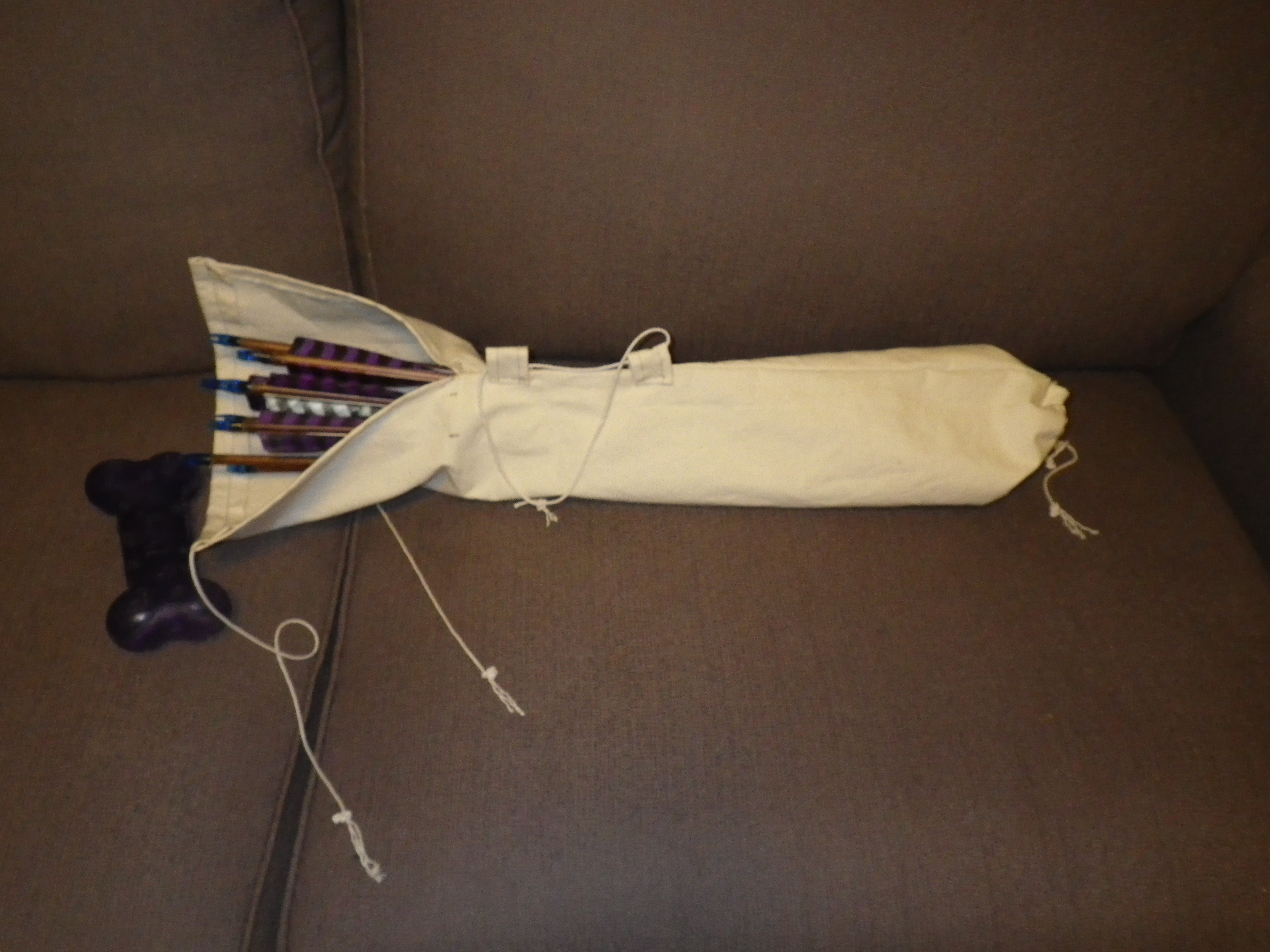
It’s not known what our Mary Rose archer was doing in the hold at the time the ship went down, but perhaps he was seeking to transfer extra ammunition to the main deck?  That ammunition would probably have been in the form of coarse linen bags carrying 24 arrows each—here’s a modern reconstruction

image22arrowbag.jpg

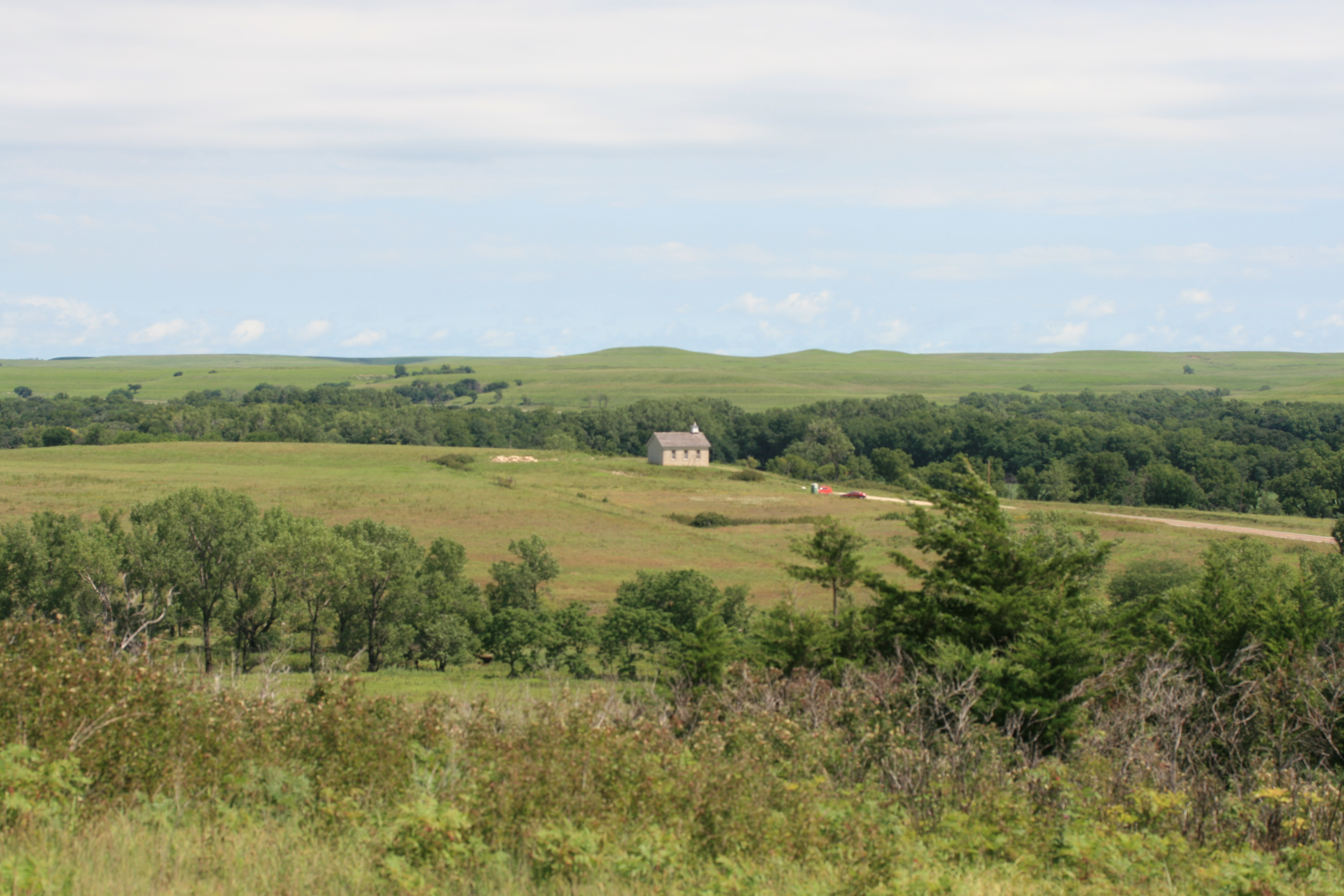
and here’s the LINK to the site from which it comes.  This belongs to an amazing woman whose website is full of her life on the edge of the Great Plains, in Kansas, USA—home of Dorothy of the OZ books, of course– as well as her photos of things like the reconstructed bag in the photo above.  Below is a picture of the Kansas tall grass prairie.

image23kansas.jpg

Too Narrow Escapes

05 Wednesday Jul 2017

Posted by Ollamh in Fairy Tales and Myths, J.R.R. Tolkien, Literary History, Narrative Methods

≈ Leave a comment

Tags

Abu al-Qasim Khalaf ibn al-Abbas al-Zahrawi, Agincourt, Albucasis, Anglo-Scots, arrow removal, arrows, bascinet, bodkin points, Dagger, David Gwillim, elf shot, Elverskud, English Longbowmen, healing, Henry V, John Bradmore, Kenneth Branagh, Laurence Olivier, Medieval, Morgul Knife, Nazgul, Neolithic, Niels W Gade, Otherworld, Philomena, poignard, Prince Henry, Renaissance, Shrewsbury, St Mary Magdalen, Tolkien, Two Men in a Trench, Weaponry, Weathertop, Wraiths

Welcome, dear readers, as ever.

We had what we thought was a very interesting idea for this posting—about the effect of a Morgul-knife and that of something from western European—perhaps specificially Germanic?—folk tradition, an “elf shot”.

“Elf shot” was once thought to be a condition in humans and animals, caused by an arrow fired by someone from the Otherworld. There was a long tradition of methods of healing, which could be a difficult problem because the entry wound might be nearly—if not completely—invisible and it took special skills to find it and to remove the arrowhead, while, in the meantime, the victim slowly withered away.

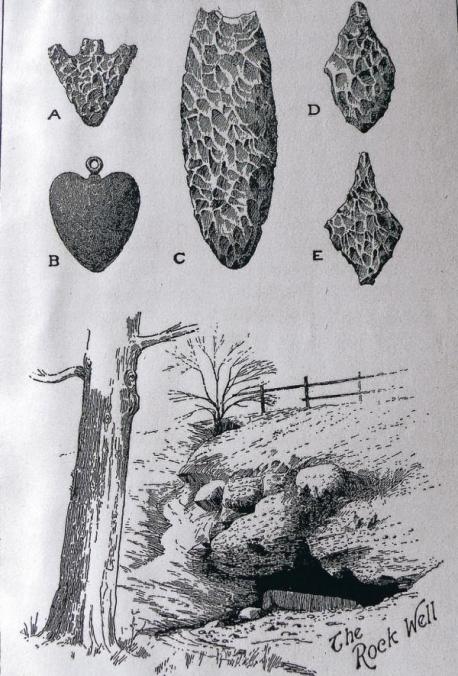
When it was supposedly removed, by someone who was believed to have competence in such matters, the arrowhead was probably actually a Neolithic point, like one of these—

image1elfshot.jpg

picked up from somewhere and whatever had actually caused the withering was a disease brought on in the natural order of things, but all of the stories we’ve read about the belief and cures appear to end with the point removed—and the sufferer in recovery.

Hmm—we thought. Something familiar about this. On Weathertop, Frodo is attacked by Nazgul.

image2weathertop.jpg

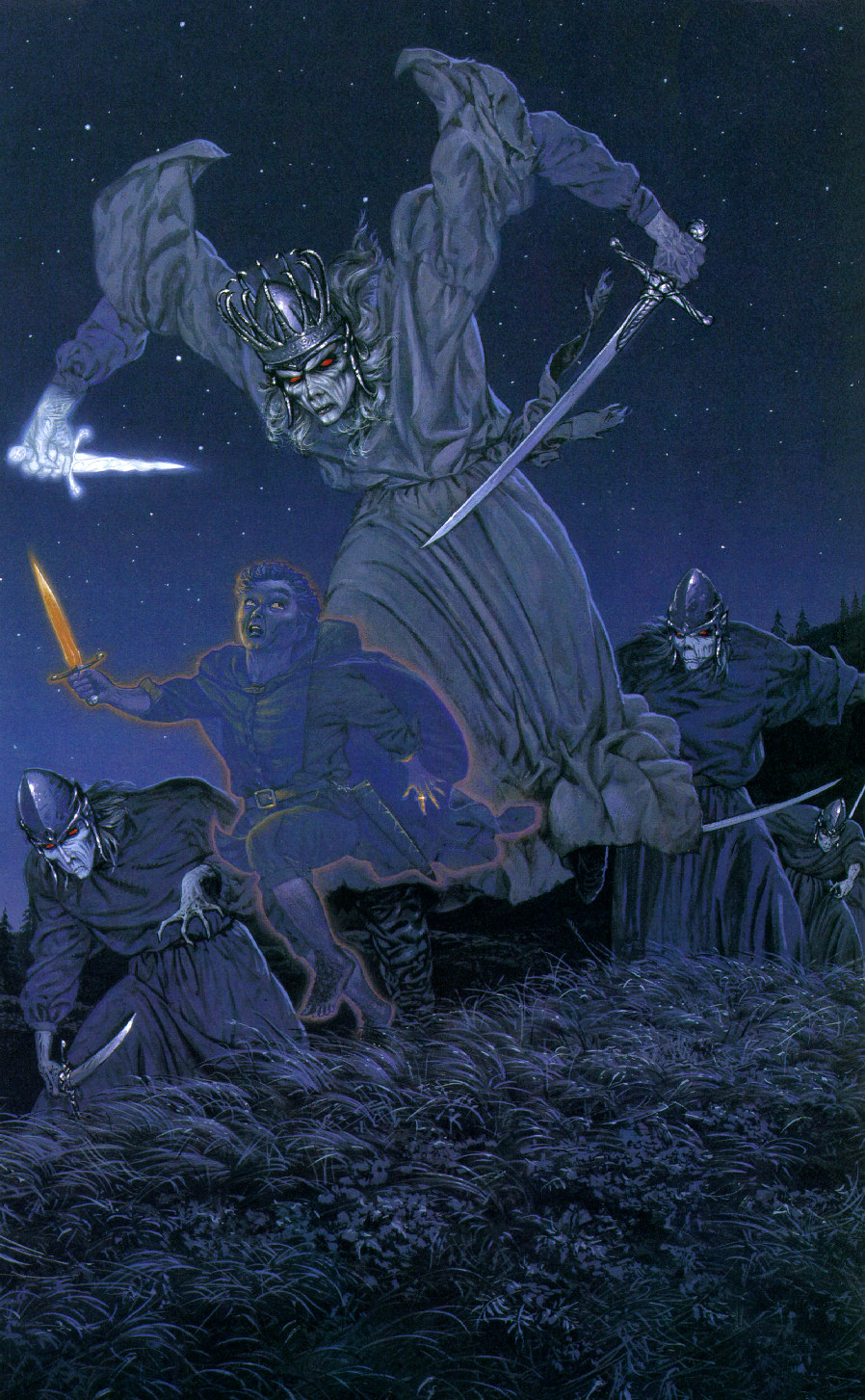
“The third was taller than the others: his hair was long and gleaming and on his helm was a crown. In one hand he held a long sword, and in the other a knife; both the knife and the hand that held it glowed with a pale light. He sprang forward and bore down on Frodo.” (The Fellowship of the Ring, Book One, Chapter 11, “ A Knife in the Dark”)

The figure stabs Frodo, but the weapon which did it was no ordinary one, as Strider indicates, lifting

“…up a long thin knife. There was a cold gleam in it. As Strider raised it they saw that near the end its edge was notched and the point was broken off. But even as he held it up in the growing light, they gazed in astonishment, for the blade seemed to melt, and vanished like a smoke in the air, leaving only the hilt in Strider’s hand.” (The Fellowship of the Ring, Book One, Chapter 12, “Flight to the Ford”)

In the film, this is represented by something which looks like a medieval fighting dagger.

image3morgula.jpg

It seems that its purpose was not to act as a secondary weapon in combat, however, but to inflict a fatal stabbing wound. As Gandalf says,

“They tried to pierce your heart with a Morgul-knife which remains in the wound.” (The Fellowship of the Ring, Book Two, Chapter 1, “Many Meetings”)

Thus, we could imagine it looking like a Renaissance poignard, like this one—

image4morgulb.jpg

Whatever its look, its point is embedded in Frodo’s shoulder and, like someone elf-shot, Frodo is fading and, also like the victim of elf-shot, the wound has changed.

“ ‘What is the matter with my master?’ asked Sam in a low voice, looking appealingly at Strider. ‘His wound was small, and it is already closed. There’s nothing to be seen but a cold white mark on his shoulder.; “ (The Fellowship of the Ring, Book One, Chapter 12, “The Flight to the Ford”)

Neither Strider nor, in turn, Glorfindel, can heal Frodo and even Gandalf was daunted:

“Elrond is a master of healing, but the weapons of our Enemy are deadly. To tell you the truth, I had very little hope; for I suspected that there was some fragment of the blade still in the closed wound. But it could not be found until last night. Then Elrond removed a splinter. It was deeply buried, and it was working inwards.” (The Fellowship of the Ring, Book Two, Chapter 1, “Many meetings”)

We thought, then, that we could write a very interesting post about the parallels between that knife and elf-shot—and then we found that it had already been done: see “Elf-shot” in Drout, Michael, ed., J.R.R. Tolkien Encyclopedia, London: RKP, 2006.

We are not given to despair, however, and something Gandalf said interested us: “Then Elrond removed the splinter.”

As our regular readers know, we take particular pleasure in linking things of Middle-earth with those of the medieval world in which JRRT spent his scholarly life. In this case, we were reminded of the removal of part of another weapon—the head of an arrow (just like elf-shot) from the head of a real person: Prince Henry of England—the future Henry V (1386-1422) of Shakespeare’s wonderful play. (We grew up on the 1944 Laurence Olivier version, which is full of color and action—the reconstruction of the Globe Theatre at the opening alone is worth watching—although, as we’ve gotten older, we’ve come to prefer both Kenneth Branagh’s 1989 filming and the 1979 David Gwillim version which we mentioned in our last posting.)

image5olivier.jpg

When he was fifteen, Prince Hal commanded the left wing of his father’s army at the battle of Shrewsbury, on 21 July, 1403.

image6shrewsmap.jpg

(Note: this is an old map, based upon the tradition that the church of St. Mary Magdalen was built on the site of the battle.

image7stmarymag.jpg

In 2006, the Anglo-Scots archaeologists, Tony Pollard and Neil Oliver, led a team to probe the churchyard, where it had long been held that there was a burial pit for some of the dead of the battle. After geophysical exploration and the digging of several test trenches, no trace of such a pit was found, leaving the tradition to remain, at least for the moment, just that. If you are interested to learn more, their visit to the site is from their 2-year series, Two Men in a Trench.  Here’s a LINK—you can watch the whole show—and we recommend the entire series for a combination of light-hearted looniness and serious archaeology.)

The battle began with a barrage of arrows from the longbowmen on each side.

image8longbowmen.jpg

The arrows had what were called bodkin points—

image9bodkin.jpg

which were specifically designed to penetrate plate armor of the very sort which the prince was wearing.

image10armor.jpg

A practiced longbowman could fire ten arrows a minute and his original battlefield issue would have been two 24-arrow linen bundles. We don’t know how many archers both sides had, but even if each had no more than a thousand, at the end of in a single minute, that would have meant 20,000 arrows in the air.

image11arrowstorm.jpg

If Hal was wearing a bascinet—as you see on the knight above–because of the shape of the helmet, many of the arrows might have glanced off. Perhaps Hal was wearing an open-face bascinet

image12openfacebasc.jpg

or had raised his visor, to give a command, say, but, instead of bouncing off, an arrow hit him in the face, below his eye (there is argument as to which eye) and penetrated his head. Had it gone all the way through, it might have been possible to saw off the arrow head and remove both arrow and shaft, but the arrow head had sunk into the bone at the back of the skull, instead. (Remarkably, it is reported that Hal continued to direct his troops, even in this condition. Tough people, those medievals!) And the first attempt at extraction had broken off the shaft, leaving the arrowhead still embedded. And this, of course, is what made us think of Elrond and the Morgul-knife splinter.

image13halarrow.jpg

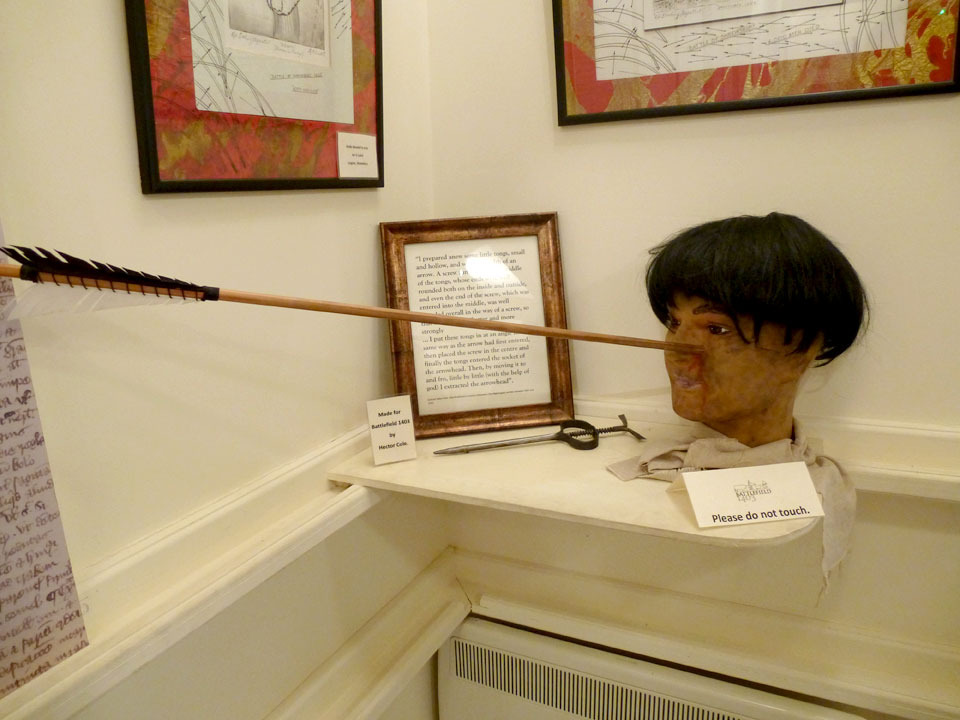
We aren’t told how Elrond found or removed it. A medieval tool for removing arrowheads had been invented by the brilliant Arab physician with the splendid name of Abu al-Qasim Khalaf ibn al-Abbas al-Zahrawi, reduced by westerners to “Albucasis” (936-1013). (Here’s a LINK—this is a man of science well worth knowing much more about!)

image14alzahrawispoon.jpg

This might have worked, had the arrow been in a less delicate place, as well as not barbed, but Hal’s wound was just below his brain stem and next to all sorts of delicate blood vessels and the arrowhead was a bodkin point.

At this point, John Bradmore appeared. Interestingly, he had been a goldsmith, as well as a practicing surgeon, and the two seem to have come together as he tackled the problem. First, while he considered the possibilities, he kept the wound open and cleaned. Then he invented this—

image15extractor.jpg

It’s a simple but cunning design: the two outer parts are gradually introduced into the wound and spread it gently open. In the middle is a screw mechanism which could insert itself into the socket of the arrowhead. When it is firmly in place, the outer parts are closed as far as possible and then the whole, with, Bradmore hoped, the arrowhead, could be extracted from the wound. And it was. And then Bradmore washed out the wound with wine and kept it clean during the healing process. A completely remarkable piece of work, from the use of antisepsis to the invention and manufacture of the necessary tool.

Hal not only survived the operation (he had reportedly been dosed with henbane, which would have stupefied him but, given the wrong dose, would have killed him within a couple of days), but lived another 19 years to beat the French at Agincourt, marry the daughter of the king of France, and, for a brief time, imagine seeing his son succeed him on the now-joint thrones.

As for Bradmore, he wrote a medical treatise, Philomena, the title being a learned joke– St. Philomena was an early Christian martyr, part of whose martyrdom included surviving arrow attacks—before dying, a very well-off man, in 1412.

(If you’d like to see a very well-done visual segment on Bradmore and Prince Hal, here’s a LINK for a NOVA program of some years ago.)

In both cases, the patient survived, although it would appear that Prince Hal had a better recovery than Frodo. Then again, Hal, for all that his wound was life-threatening, hadn’t been hit by an elf-shot, but only by a mortal arrow, while the hobbit was almost doomed to the Nazgul world by a Morgul-knife.

Thanks, as ever, for reading.

MTCIDC

CD

PS

One of our favorite Danish composers, Niels W. Gade (1817-1890), has left us a very beautiful dramatic cantata, Elverskud—“Elfshot” (1854). Based upon a Danish ballad, it’s the story of Sir Oluf, who prefers the Elf king’s daughter to his own human bride and the consequences of that preference. If you’d like to hear it—we recommend it and much other music by Gade, as well—here’s a LINK.

PPS

This posting is our 151st! Five more will make exactly three years of weekly postings. Thank you for reading, and we hope to keep you interested for another 150 postings at least.

Bolts and Arrows

06 Wednesday Apr 2016

Posted by Ollamh in Films and Music, Heroes, J.R.R. Tolkien, Military History, Military History of Middle-earth, Narrative Methods, Uncategorized

≈ Leave a comment

Tags

Agincourt, anti-aircraft gun, ballista, Bard the Bowman, Battle of Crecy, Battle of Poitiers, Border Reivers, Boromir, crossbow, Crossbow Bunnies, English Longbowmen, harpoon, Hundred Years War, John Singer Sargent, latch, Maximus, N.C. Wyeth, Peter Jackson, Richard the Lionheart, Robert Louis Stevenson, Robin Hood, Roman d'Alexandre, Siege of Chalus, Smaug, Tangled, The Black Arrow, The Hobbit, The Lord of the Rings, The Mary Rose, Tolkien, Towton

In our review of the third Hobbit film, we questioned the use by Bard of something a little larger in the way of a missile than Tolkien had intended:

“Then Bard drew his bow-string to his ear. The dragon was circling back, flying low, and as he came the moon rose above the eastern shore and silvered his great wings.

‘Arrow!’ said the bowman. ‘Black Arrow! I have saved you to the last. You have never failed me and always I have recovered you. I had you from my father and he from of old. If ever you come from the forges of the true king under the Mountain, go now and speed well!’ ” (TH 307).
As Bard was firing this himself, we always envisioned him as an English longbowman.

englishlongbowman1330-15151.jpg

And this led us to think a bit about Tolkien’s possible sources, not only for Bard and his bow, but for that arrow–the real one, not the monster dart used in the film.

From any children’s history of England, Tolkien would have learned that longbowmen like the one shown above destroyed three brave French armies in the Hundred Years War, at Crecy (1346), Poitiers (1356), and Agincourt (1415).

hf54d67201.jpg

In the film, however, although Bard was depicted as an archer,

Bard-the-Bowman-bard-the-bowman-37670604-1920-1200.jpg

his weapon of choice looks like this.

bardwithharpoon.jpeg

This reminds us of either a Roman ballista

b0370394e429c42631f520182c155a34.jpg

or an anti-aircraft gun

strandgun01.jpg

or, most especially,  a harpoon gun.

WhaleHarpGun1.jpg

Especially when you look at this Bard’s arrow.

bard.jpg

Although we currently have no evidence for Tolkien’s sources, we can imagine that they might have included, among others, Robin Hood,

5616567327_fc899be2f1_b.jpg

the actions of actual Medieval archers like those at Agincourt or Towton (1461),

towton3.jpg

and a book, perhaps from boyhood, Robert Louis Stevenson’s The Black Arrow (1883/1888).  Stevenson (here in an 1880s portrait by John Singer Sargent)

rlsjss2.jpg

had originally published the story serially in a children’s magazine in 1883

ba1.jpg

before its publication in book form in 1888.

Blackarrowcoverscribners1888.jpg

The classic illustrations are by one of our all-time favorite illustrators, NC Wyeth, from 1917.

309642.jpg

We can’t resist showing you a few:

tumblr_l4istbR1JZ1qamjklo1_1280.jpgillus08.jpg09_blackarrow_alittlebeforedawn_wyeth.jpg

Although the bow is the weapon of choice of those who use the black arrow of the title (it’s employed for revenge), the hero  in fact, has a crossbow.

5616566731_49d251a1fc_b.jpg

The longbow requires years of training and great upper-body strength, leaving its mark on bowmen, as can be seen from this skeleton (and its reconstruction) brought up from the English warship, the Mary Rose,

sinking_3.jpg

which sank with most of its crew in 1545 and was brought up from the mud of the ocean floor in 1982.

130530121104-mary-rose-skeleton-horizontal-gallery.jpg

The crossbow is a mechanical weapon, which uses much less strength to draw

the_old_crossbow_archer_by_renum63-d8aaovo.jpg

and, in the more developed versions, even uses a crank to produce the necessary string tension.

8f106fadbe86ed34e5567bc7a90b89e2.jpg

(And, just as in the case of NC Wyeth illustrations, we can’t resist medieval manuscript illustrations. Look at this pair of crossbow… bunnies from a copy of the Roman d’ Alexandre, circa 1340.)

romandalexandrec1340.jpg

This makes it a less romantic weapon, but equally deadly:  Richard the Lionheart was killed with a bolt/quarrel (what one calls a crossbow arrow) at the siege of Chalus in 1199.

Richard1TombFntrvd.jpg

(This creates another aside–about the hand weapon used as late as the 16th century by the Border Reivers of the land between northern England and southern Scotland–called a “latch”, it was the weapon of choice for those who couldn’t afford early hand guns but wanted to fire easily from the saddle.

Reiver-on-Horse.jpg

The soldiers in Disney’s wonderful movie, Tangled, carry them–notice the off-hand side pouch with a handful of bolts  for one on Maximus’ saddle–)

maxtangled.jpg

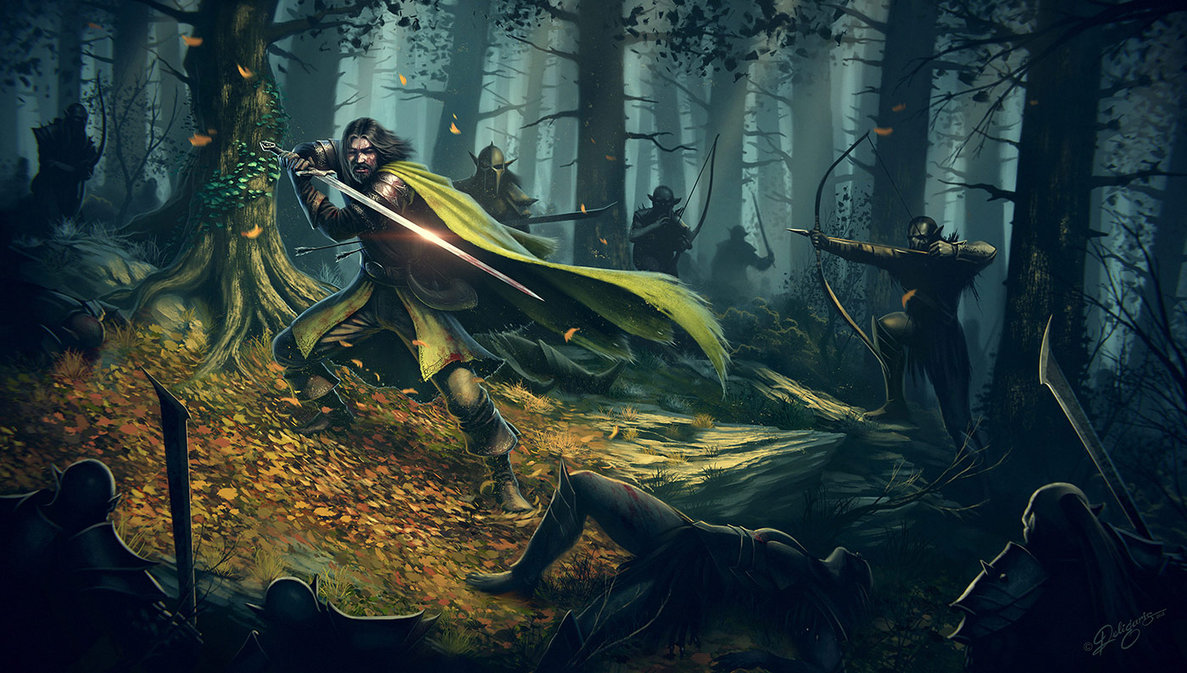
But we would  like to conclude with one more use of that black arrow.  A flight of them kills Boromir in The Lord of the Rings.

boromirarrows1.jpg

boromirearrows.png

Just as we began by pointing to the text and the actual bow and arrow which kill Smaug, and not the harpoon of the film, so we would criticize this scene.  In our opinion, it is stretched beyond believability, as well as beyond the text, taking away something of Boromir’s valor in combat with dozens of the enemy, in which he is gradually overcome.

boromir_by_deligaris-d5po92u.jpg

This is just as true for the brief scene of Aragorn at Boromir’s death.  What was simple in the text, thus making it more moving–just Boromir’s confession and Aragorn’s comforting him–becomes a soppy scene in which Boromir swears loyalty and calls Aragorn “my brother”, a liberty Aragorn-the-king-t0-be, would hardly have welcomed.  In the theatrical world, this is called “milking the scene” and here, we think it curdled.

Thanks, as always, for reading.

MTCIDC,

CD

The Fall of Two Cities?

09 Wednesday Mar 2016

Posted by Ollamh in Economics in Middle-earth, Imaginary History, J.R.R. Tolkien, Language, Maps, Military History, Military History of Middle-earth, Narrative Methods

≈ Leave a comment

Tags

Agincourt, Anadoluhisari, Anatolia, Asia Minor, Bayezid I, Bosphorus, Byzantium, Constantine I, Constantinople, Crecy, English Civil Wars, Eowyn, Gondor, map, Mehmet II, Minas Tirith, motte and bailey, Newark, Normans, Osgiliath, Ottoman Empire, Poitiers, Rumelihisari, siege, The Lord of the Rings, Tolkien, Witch-King of Angmar

Dear Readers,

Welcome, as always. A little while ago, we talked about the “siege of Gondor”, which really wasn’t a siege in the formal sense, at all, but rather an assault. (We suspect that JRRT liked the sound of “siege” and so used it, not caring if it were strictly accurate or not.) In this posting, we want to look at a real siege and examine what might be parallels with events in Middle Earth.

Before we do, we want to take a moment to talk about the word “siege”. It comes into English through Old French asegier, which comes from Latin ad + sedeo > adsideo, adsidere , literally, “to sit down at”. The northern French who passed the word on to England must have liked to say what’s called a y-glide when certain consonants came before e, so, though it was spelled asegier, it would have been said “ah-see-YED-jier”. And that’s why English today has what can be a confusing spelling. (In our experience, lots of native speakers have trouble distinguishing between the ie of “siege” and the ei of “seize”). The stress on the word in English would have been away from the initial a, and so that would have disappeared from the word as it moved from being a borrowing.

[As what we think is a cool footnote, Latin also has the verb obsideo “to sit down right before=to besiege” and we can see that used in English in the word “obsession”, with the idea that something bothers you so much that it’s like you’re being besieged by it. You can also see it on this wonderful bit of 17th-c. English history.

obsidionalmoney.jpg

Although it doesn’t look like a modern coin, this is a form which used to be called “half-a-crown”—that is, 30 pennies (that’s what those three xses mean), or two shillings, sixpence.   This coin was struck in the town of Newark-upon-Trent, when it was besieged during the English Civil Wars (1642-1651).

_82601862_newark-1646map.jpg

And that’s where obsideo comes in. The back (the “reverse” in coin language—the front is called the “obverse”) says:

OBS: Newark (with a date, either 1645 or 1646, depending on when the coin was struck)

OBS = Obsessa Newark = “Newark Besieged”

There were a lot of coin-substitutes struck by various besieged towns, but, apparently, those from Newark are the most numerous.]

In the medieval western military world, sieges were more common, it seems, than pitched battles. As castles and towns were focal points for the possession and control of land—think of the hundreds of early castles, called “motte and bailey”, which the Normans built all across England in the first years after their conquest–it’s not surprising that they would have been a focus of attack.

motteandbailey.jpg Tapisserie_motte_dinan 704.jpg

As well, we can imagine that, ultimately, they would have been cheaper, in terms of the most irreplaceable manpower, sparing the highly-trained, hard-to-replace, knights and men-at-arms.

knights.jpg

Battles like Crecy (1346), Poitiers (1356), and Agincourt (1415), cost the French dearly as their brave knights threw themselves at their English opponents, whose longbows shot them and their horses down.

agincourt.jpg

In a siege, although there was the occasional combat, including the exploitation of a break in the enemy’s defenses,

Edward-III-takes-Poix-Castle.jpg

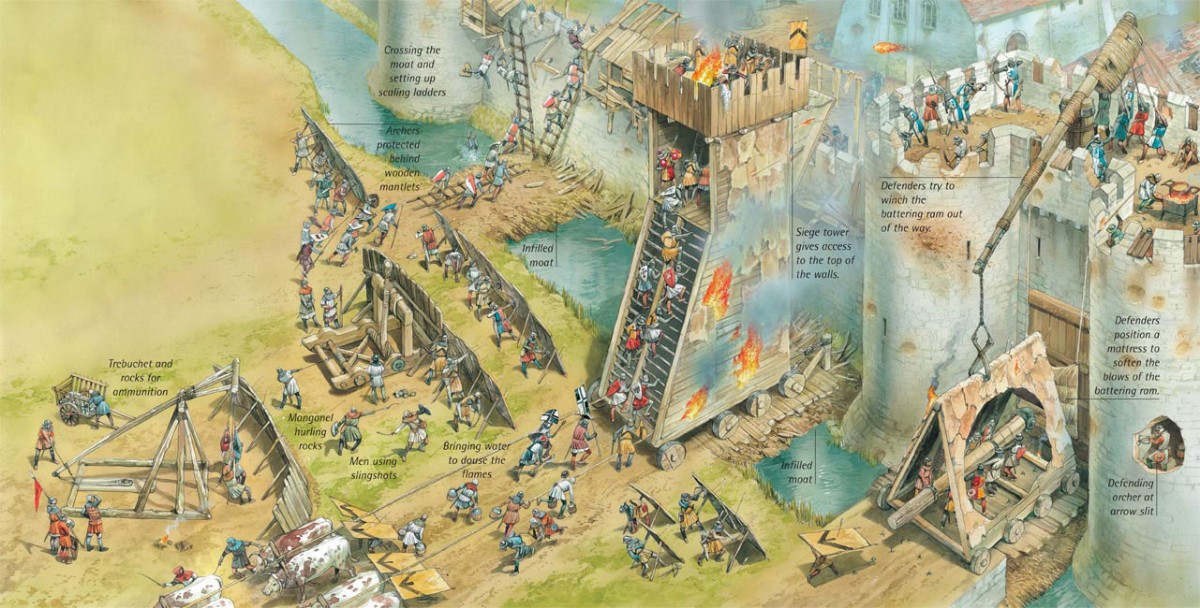
most of a siege would be spent in using machinery of various sorts to aid you in breaking down the walls—and the resistance of the defenders, as well.

castles-and-knights-2-with-labels.jpg

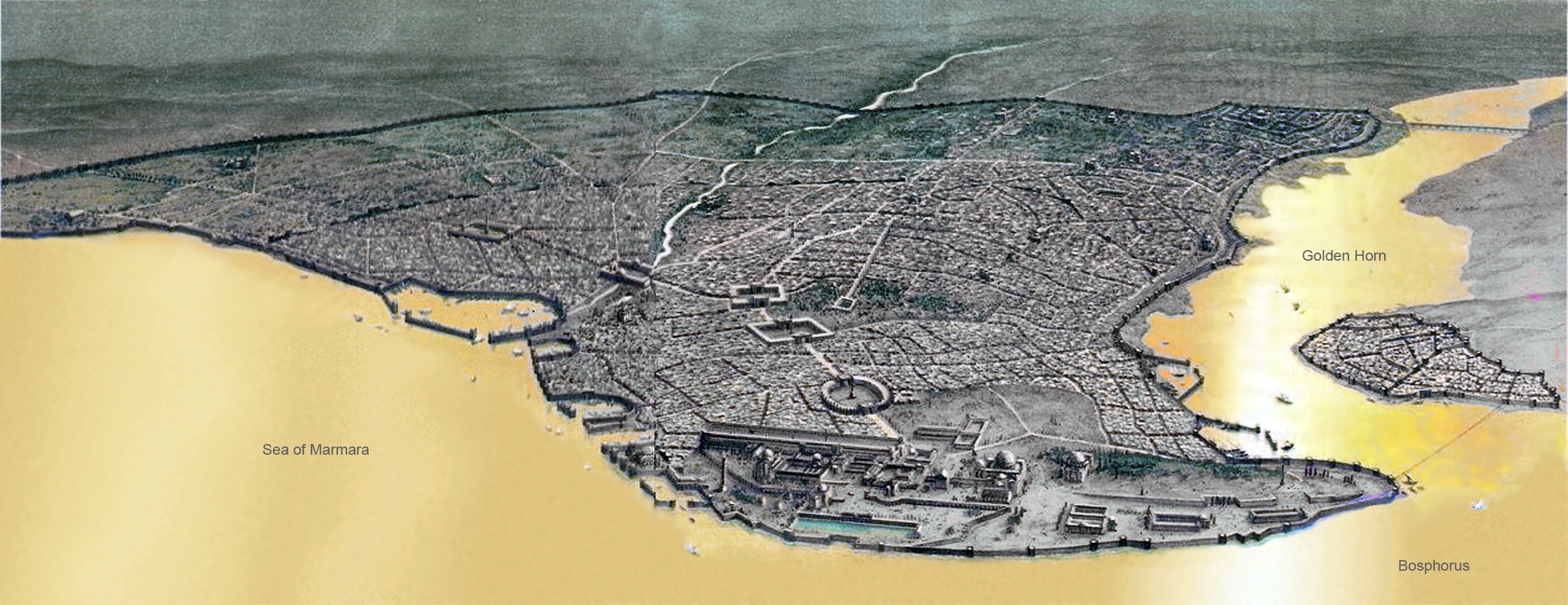
This brings us to the real, historical siege we want to examine: Constantinople, 1453.

Bizansist_touchup.jpg

Constantinople had begun life as a Greek colony, called Byzantium, on the European side of the narrow passageway between the Black Sea and the northeastern Mediterranean.

byzempmap.gif

It had been refounded and greatly expanded by the Roman emperor, Constantine I, to be a new capital in the east.

Constantine-I-Face.jpg

Although it was supposed to be called “New Rome”, everyone in the east called it after its refounder, and so it was “Constantinople”, becoming the capital of an eastern empire which we call “Byzantine”. Even with setbacks and a number of unsuccessful attacks over the centuries, it was, for a long time, a very wealthy and powerful city.

1-reconstruccion-de-bizancio.jpg

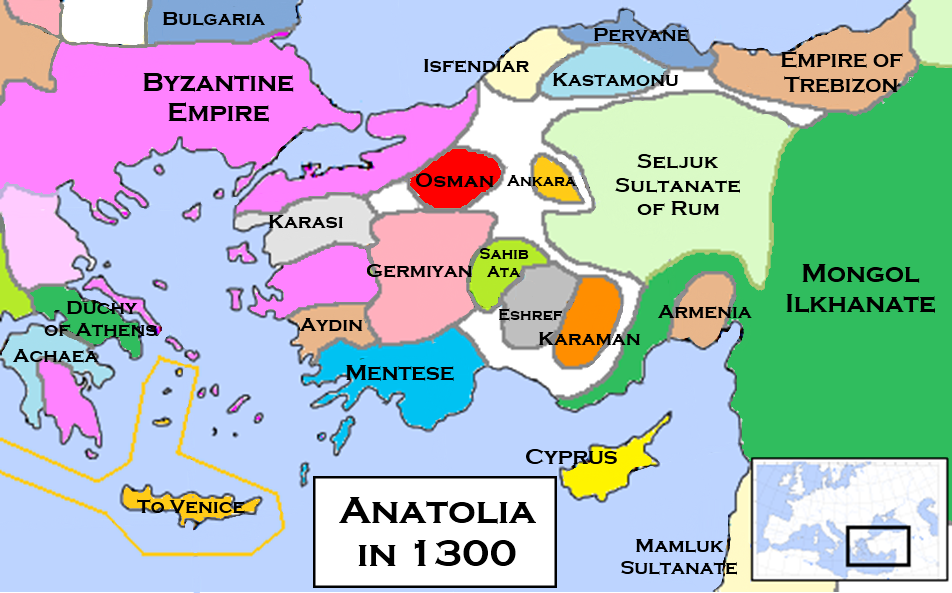
But even the wealthiest and most powerful cities will fade—especially when faced with ambitious enemies. Constantinople had had a number of those, but, finally, in its last years, perhaps its most ambitious and most powerful arose in Asia Minor: that of the Ottoman Turks. As you can see from this map, its beginnings were modest: one Turkic-speaking group among many.

Anatolian_Beyliks_in_1300.png

This was a period of instability, however. The Ottoman leaders quickly took advantage of that instability to grab power and territory, so that, by 1400, they had spread beyond the shrinking Byzantine world, into the Balkans, and, soon, Constantinople was surrounded.

trebizond1400

This surrounding took place in an increasingly-methodical way. In 1393-4, the ruler of the Ottomans, the sultan Bayezid I

bayezit1.jpg


built a small fortress on the Asia Minor side of the Bosphorus, the name for the northern stretch of the passage which led from the Black Sea to the Mediterranean. It was called Anadoluhisari, “the Anatolian fort”.

Anadoluhisari.jpg


You can see from the map that this was the beginning of setting up a choke point upstream from Constantinople.

mapwithanadoluhisari.gif

In 1451-2, the sultan Mehmet II finished the job with the Rumelihisari just opposite, on the European side (and that’s what its name means, “the Roman—that is, European—fort”).

Rumeli_hisari.jpg

Guns were mounted

muslim_rocket_technology_06.jpg

and any help which might have come from the Black Sea was blocked.

And here we want to take a minute to look at our imaginary city and its danger—because we see some easy parallels here. First, of course, the Ottoman empire was an eastern threat—so was Mordor. Mordor had taken the east bank of the Anduin, just as the Ottomans had taken the Asian side of the Bosphorus. And, in the capture of the European side and the building of Rumelihisari, we might see the taking of Osgiliath and the west bank of the Anduin. Then there is the massive city of Minas Tirith and the attack upon it.

mt.jpg 2381576-zmordorforcesk7.jpg

Constantinople was also a massive city.

Byzantine_Constantinople-en.png

It was, basically, on a triangular piece of land, with two sides protected by water. The original Greek town had had a wall, but it was long gone and almost all of Constantine’s land wall had long disappeared, as well. The latest walls are called the Theodosian, after their originator, the emperor Theodosius II (408-450AD), but the walls included bits of the Constantinian walls and many repairs, over the centuries. The main land defenses included three lines of wall and a moat.

2rh67o0.jpg

This sounds very impressive until one considers two things: first, is there a garrison big enough to defend what are, in fact, a number of miles of wall? And, second, although the walls have withstood previous attacks, including one made by the Ottomans in 1422AD, how will they stand up to the threat of modern artillery?

At the height of its power and prosperity, it is estimated that Constantinople had had a population of anywhere from 500,000 to 750,000 (although scholars argue over this). At the time of the final siege, the population had fallen to as low as 40,000. Thus, large parts of the city were empty—just like Minas Tirith:

“Pippin gazed in growing wonder at the great stone city…Yet it was in truth falling year by year into decay; and already it lacked half the men that could have dwelt at ease there.” (The Return of the King, Book 5, Chapter 1, “Minas Tirith”)

The garrison of Constantinople was perhaps about 9,000, in all, which meant that they were very thinly stretched. We don’t know just how many troops were in Minas Tirith. Some reinforcements had come from South Gondor, as we noted in an earlier posting, but only a few thousand and the defenders were powerfully outnumbered, just as those of Constantinople were, when the forces of Mordor began to arrive. The Ottoman army is thought to have had between 50,000 and 80,000 men, but just how many Orcs and others marched down the causeway from Osgiliath isn’t known–they are just a horde—something which the Jackson film shows very well.

maxresdefault

Then the assault begins, the Orcs having giant stone throwers, siege towers, and, finally, a giant, fire-breathing ram, Grond.

Grond_arrives.png

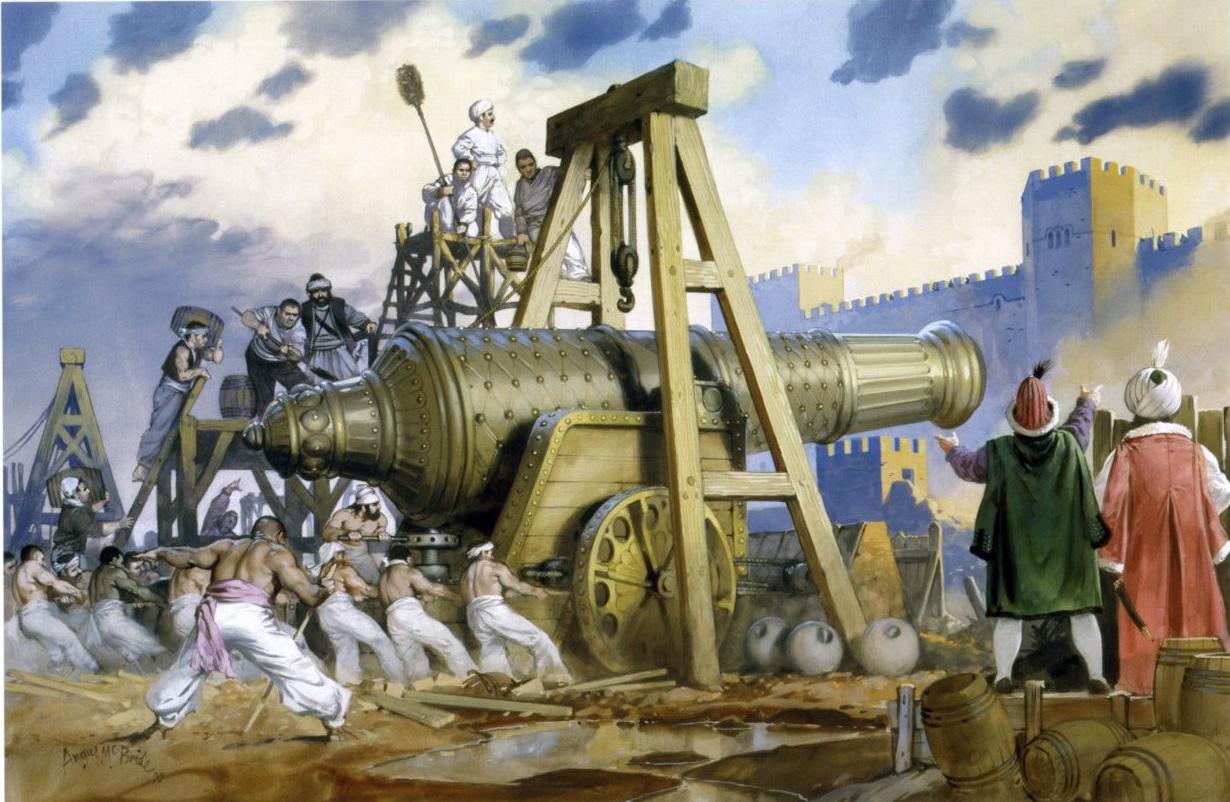
If you’ve been following our postings (and we hope you have!), then you know that we’ve discussed the use of what appears to be gunpowder, both at Helm’s Deep and at the Rammas Echor. The Orcs who attack the walls of Minas Tirith don’t appear to have such a weapon, but, unfortunately for the defenders of Constantinople in 1453, the Turks do, in the form of plentiful modern artillery.

Illustration-of-angus-mcbride-showing-the-ottoman-cannon-basilica-during-the-siege-of-constantinople-in-1453-ad.jpg

Attacks wear down the small garrison and huge, stone-throwing weapons knock down the walls, so that, finally the city falls, on 29 May, 1453.

84087026.jpg

Its conqueror, Mehmet II, rides in—

mehmet2enteringconstantinople.jpg

which is something the witch king of Angmar never gets to do, perishing instead, at the hands of Eowyn and Merry.

Eowyn.jpg


And there the parallels end, as does our posting. Did JRRT have the fall of Constantinople somewhere in the back of his mind? What do you think?

Thanks, as always, for reading.

MTCIDC

CD

Feudal Array 2

27 Wednesday Jan 2016

Posted by Ollamh in Economics in Middle-earth, Fairy Tales and Myths, Imaginary History, J.R.R. Tolkien, Literary History, Military History, Military History of Middle-earth

≈ Leave a comment

Tags

14th century, 15th century, Adventure, Agincourt, Anglo-Saxon, armor, Bayeux Tapestry, feudalism, Fyrd, Gerry Embleton, Huscarl, Luttrell Psalter, Middle-earth, N.C. Wyeth, tapestry, The Lord of the Rings, Tolkien

Welcome, as always.

In this posting, we want to conclude what has turned out to be a kind of mini-series on Feudalism in Middle Earth. Two postings ago, we used the 14th-century Luttrell Psalter to illustrate what working the plowland behind the Rammas Echor might have looked like. In our last, we used the Bayeux Tapestry to offer another possible visual influence on Tolkien’s depiction of the Rohirrim: the conquering Normans. In this final posting, we will look at the forces of Rohan’s ally, Gondor and will use a number of sources, both medieval and modern.

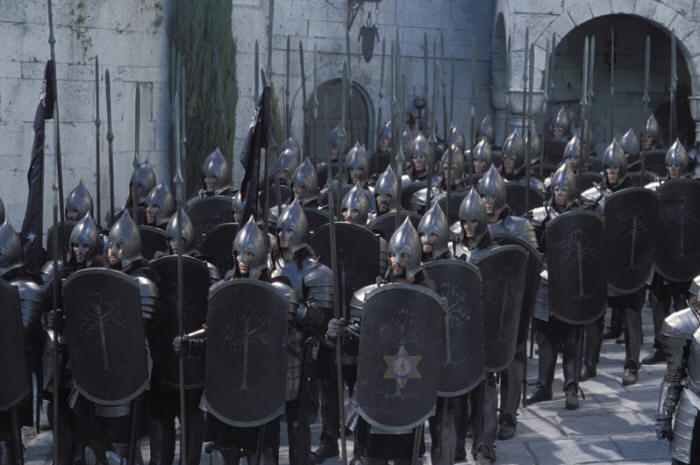
In the Jackson movies, there is a kind of regularity, from Osgiliath to Minas Tirith in what we are shown.

gondorians.jpg

This is not surprising if the cue for costuming has come primarily from one description:

“The Guards of the gate were robed in black, and their helms were of strange shape, high-crowned, with long cheek-guards close-fitting to the face, and above the cheek-guards were set the white wings of sea-birds; but the helms gleamed with a flame of silver, for they were indeed wrought of mithril, heirlooms from the glory of old days. Upon the black surcoats were embroidered in white a tree blossoming like snow beneath a silver crown and many-pointed stars. This was the livery of the heirs of Elendil, and none wore it now in all Gondor, save the Guards of the Citadel before the Court of the Fountain where the White Tree once had grown.” (The Return of the King, Chapter 1, “Minas Tirith”)

We have no wish to criticize—in this respect, at least—the creators of the films for taking what might appear to be an easy out: uniformity being cheaper than individuality, since it’s clear that, when it came to dramatic effects in the films in general, the old theatrical advertising line, “No Expense Was Spared To…” is really true. Instead, we want employ our former method of consulting medieval manuscripts, as well as another passage from the same chapter, to offer another possible view, one which might have influenced the author in his depiction of the defenders of Gondor.

We’ll begin with the passage:

“Leading the line there came walking a big thick-limbed horse, and on it sat a man of wide shoulders and huge girth, but old and grey-bearded, yet mail-clad and black-helmed and bearing a long heavy spear. Behind him marched proudly a dusty line of men, well-armed and bearing great battle-axes; grim-faced they were and shorter and somewhat swarthier than any men that Pippin had yet seen in Gondor…

And so the companies came…The men of Ringlo Vale…from the uplands of Morthond…five hundred bowmen…From the Anfalas…a long line of men of many sorts, hunters and herdsmen and men of little villages, scantily equipped save for the household of Golasgil their lord. From Lamedon, a few grim hillmen…Fisher-folk of the Ethir…Hirluin the Fair…with three hundreds of gallant green-clad men. Imrahil…with gilded banners bearing his token of the Ship and the Silver Swan, and a company of knights in full harness riding grey horses; and behind them seven hundreds of men at arms, tall as lords, grey-eyed, dark-haired, singing as they came.”

There is actually not a lot of detail here, but there are a few hints. First off, there are those “great battle-axes”.   Here are two images from the Bayeux Tapestry of the Anglo-Saxon king, Harold’s, bodyguards, his huscarl, armed with their characteristic long-handled axes.

axemen_bayeux.jpg

And here is a modern reconstruction.

huscarl4.jpg

Next, we have those five hundred bowmen from Morthond. The Tapestry can provide a useful image of those,

archers2.jpg

but perhaps what JRRT really was thinking of were the famous longbowmen of Crecy and Poitiers and Agincourt, whose skill and courage knocked down whole waves of equally brave French knights. Here are a pair of modern images by the brilliant historical illustrator, Gerry Embleton, himself a medieval reenactor.

EnglishLongbowman1330-15151
longbowman2

Besides the huscarl, King Harold’s army was made up of the fyrd, a kind of militia drawn from the freemen of the countryside, who had to provide their own weapons and equipment and were only required to serve for limited periods—they would have been farmers, most of them, after all, and couldn’t be off the farm for too long without threatening their own livelihoods. Perhaps these could suggest that “long line of men of many sorts”. Here’s an image from the Tapestry of what appears to be the fyrd fending off a mounted Norman attack. You’ll notice the lack of defensive armor.

fyrd3.jpg

“gallant, green-clad men” is rather vague, but, suddenly, all we could see is Robin Hood and his Merry Men. And so we can’t resist including some of our favorite N.C. Wyeth illustrations.

rhood1rhood2

And these could easily provide the model for the rangers in South Ithilien, couldn’t they?

faramir.jpg

Last, there is that “company of knights in full harness”. This presents a real problem. Knights from which period? The armor available at the time of the Bayeux Tapestry in the mid-11th century

fyrd3.jpg

and which, we suggested in our last, might be good for the Rohirrim, was very different from that of later times. Here’s the armor of the days of Sir Geoffrey Luttrell,

Sir_Geoffrey_from_LPsalter.jpg

in the early 14th century—

early14thcarmor.jpg

and here’s what the English archers would have faced as worn by their valiant French opponents at Agincourt, in 1415.

early15thcarmor.jpg

This handy chart can give you a diachronic (through-time) view of changes in medieval armor.

02e1c306489f565ee38b56e417ba5ff0.jpg

If we look at something produced through the workshop of William Morris, that strong influence upon JRRT, we find this group of knights from a set of tapestries produced in the 1890s.

Holy_Grail_Tapestry_-The_Arming_and_Departure_of_the_Kniights.jpg

The armor is pretty vague (the systematic study of the history of armor was still in its childhood then—if you’re interested in the early days, google Sir Samuel Rush Meyrick to learn about its first great scholar), but one of the helmets—the one to the far left in the background, looks like a visored sallet, which could date what we see in the tapestry to the later 15th century.

Sallet_helmet,_Southern_Germany,_1480-1490_-_Higgins_Armory_Museum_-_DSC05461.JPG

(Sharp-eyed readers who are Star Wars fans—we are—will recognize this general pattern from the technical people on the Death Star—

deathstarcrewmen.png

We might add that Morris and his friends were strongly influenced by pre-Renaissance and early Renaissance painters, so perhaps this picture, one of a set of 3 by Paolo Uccello from the middle of the 15th century, might also provide a possible model (and we’re glad to show you the whole set because we think that they’re just magical).

Öèôðîâàÿ ðåïðîäóêöèÿ íàõîäèòñÿ â èíòåðíåò-ìóçåå Gallerix.ru

Uccello_Battle_of_San_Romano_Uffizi


Taken all together, these produce a very different image from the films, don’t they? Much more individual, often much less well-equipped, more actual medieval, as we would imagine the author had had in mind. So—contrast this


with this:

ArmiesOfAgincourt.jpg

Which do you prefer, dear readers?

Thanks, as always, for reading.

MTCIDC

CD


The Two Sieges

22 Wednesday Jul 2015

Posted by Ollamh in Heroes, J.R.R. Tolkien, Military History

≈ Leave a comment

Tags

Agincourt, Aragorn, English Longbowmen, Faramir, French Knights, Gondor, Grond, Hoth, Jan Sobieski, Lithuania, Minas Tirith, Mumakil, Nazgul, Orcs, Ottoman, Peter Jackson, Poland, Rammas Echor, Rohan, Rohirrim, Siege Towers, Stone Throwers, The Lord of the Rings, Tolkien, Vienna, Winged Hussars

Welcome, as always, dear readers!

In this posting, we’re going to make another suggestion about a model for something in Tolkien’s work.

If you read us regularly, you know that our favorite part of P. Jackson’s The Lord of the Rings is anything to do with the Rohirrim. When we rewatch favorite scenes, the charge against the Orcs outside Minas Tirith is always first on our list (and high on our general list of cavalry charges—more on those in a future posting).

First, we see that massive Orc army marching up to the walls. (In the book, this is more dramatic: the Orcs blow two holes in the Rammas Echor, outflank the defenders, and drive them into retreat, which is where Faramir is badly wounded by an arrow.)

minas-tirith

Then they begin to attack with stone-throwers,

siege1

siege towers,

lotr-siege-towers

and, eventually a giant, flame-filled battering ram.

grond1

Things look increasingly desperate for Gondor as the Orcs press their attack, led by the Chief Nazgul.

witch_king_of_angmar_ii_by_dudeskindasketchy-d4d6uvd

And that’s when the Rohirrim appear.

rohirrimabouttocharge

And move to strike the Orcs from behind.

Charge_rohirrim

When the Orcs realize what’s happening, they try to stop the attack with bows.

archery

This immediately reminded us of the 1415 battle in which English longbowmen and their clever use defeated an army of brave French knights, Agincourt.

OLYMPUS DIGITAL CAMERA

Unlike Agincourt, however, arrows didn’t stop the Rohirrim, who sweep through the enemy—but are brought up short by the sight of a row of mumakil—giant war elephants—bearing down on them.

img-2845793-1-charge-1024x425

Seeing this scenario made us think of another attack by huge, lumbering things in a galaxy long ago and far away—

Battle_of_Hoth

The film goes on from there, including an attack by a ghost army, instead of by the actual forces brought from southern Gondor by Aragorn, but we want to back up a bit to the actual siege and another one which bears a strong resemblance to it.

For centuries, the Ottoman Turks had been expanding their dominions.

Ottoman_Empire_Map_1359-1856

They had first reached Vienna in 1529,

Siegeofvienna1529

but had given up the siege. Now, however, in 1683, they were back.

Battle_of_Vienna_1683_map

Their attacks against a dwindling number of defenders in a crumbling town

1-vienna-1683

had brought them to the edge of conquest when an army of reenforcements, including cavalry from the army of the combined state of Lithuania/Poland, had appeared. Some of the cavalry were the famous Polish winged hussars.

Battle_of_Vienna_1

Just as the Rohirrim are led by their king, Theoden, so are the Poles led by their king Jan Sobieski—

bitwa-pod-wiedniem-obraz

The reenforcements, Poles in the lead, rush upon the Turks and drive them back through their camps and out of the siege entirely.

Atak_husarii

Battle_of_Vienna_1683_11

So similar, isn’t it? No giant war elephants, ghost armies, or Nazgul, but the basic elements of siege, relieving army with cavalry led by a king attacking an unprepared enemy, and chasing off the besiegers, is nearly identical.

Tolkien was an extremely well-read man, with a strong interest in history. Was the siege and relief of Vienna somewhere in the back of his mind when he began to plan the siege of Minas Tirith?

Thanks for reading!

MTCIDC

CD

The Doubtful Sea Series Facebook Page

The Doubtful Sea Series Facebook Page

  • Ollamh

Categories

  • Artists and Illustrators
  • Economics in Middle-earth
  • Fairy Tales and Myths
  • Films and Music
  • Games
  • Heroes
  • Imaginary History
  • J.R.R. Tolkien
  • Language
  • Literary History
  • Maps
  • Medieval Russia
  • Military History
  • Military History of Middle-earth
  • Narnia
  • Narrative Methods
  • Poetry
  • Research
  • Star Wars
  • Terra Australis
  • The Rohirrim
  • Theatre and Performance
  • Tolkien
  • Uncategorized
  • Villains
  • Writing as Collaborators
Follow doubtfulsea on WordPress.com

Across the Doubtful Sea

Recent Postings

  • A Moon disfigured December 17, 2025
  • On the Roads Again—Once More December 10, 2025
  • (Not) Crossing Bridges December 3, 2025
  • On the Road(s) Again—Again November 26, 2025
  • On the Road(s) Again November 19, 2025
  • To Bree (Part 2) November 12, 2025
  • To Bree (Part 1) November 5, 2025
  • A Plague o’ Both—No, o’ All Your Houses! October 29, 2025
  • It’s in Writing (2:  I’st a Prologue, or a Poesie for a Ring?) October 22, 2025

Blog Statistics

  • 103,210 Views

Posting Archive

  • December 2025 (3)
  • November 2025 (4)
  • October 2025 (5)
  • September 2025 (4)
  • August 2025 (4)
  • July 2025 (5)
  • June 2025 (4)
  • May 2025 (4)
  • April 2025 (5)
  • March 2025 (4)
  • February 2025 (4)
  • January 2025 (5)
  • December 2024 (4)
  • November 2024 (4)
  • October 2024 (5)
  • September 2024 (4)
  • August 2024 (4)
  • July 2024 (5)
  • June 2024 (4)
  • May 2024 (5)
  • April 2024 (4)
  • March 2024 (4)
  • February 2024 (4)
  • January 2024 (5)
  • December 2023 (4)
  • November 2023 (5)
  • October 2023 (4)
  • September 2023 (4)
  • August 2023 (5)
  • July 2023 (4)
  • June 2023 (4)
  • May 2023 (5)
  • April 2023 (4)
  • March 2023 (5)
  • February 2023 (4)
  • January 2023 (4)
  • December 2022 (4)
  • November 2022 (5)
  • October 2022 (4)
  • September 2022 (4)
  • August 2022 (5)
  • July 2022 (4)
  • June 2022 (5)
  • May 2022 (4)
  • April 2022 (4)
  • March 2022 (5)
  • February 2022 (4)
  • January 2022 (4)
  • December 2021 (5)
  • November 2021 (4)
  • October 2021 (4)
  • September 2021 (5)
  • August 2021 (4)
  • July 2021 (4)
  • June 2021 (5)
  • May 2021 (4)
  • April 2021 (4)
  • March 2021 (5)
  • February 2021 (4)
  • January 2021 (4)
  • December 2020 (5)
  • November 2020 (4)
  • October 2020 (4)
  • September 2020 (5)
  • August 2020 (4)
  • July 2020 (5)
  • June 2020 (4)
  • May 2020 (4)
  • April 2020 (5)
  • March 2020 (4)
  • February 2020 (4)
  • January 2020 (6)
  • December 2019 (4)
  • November 2019 (4)
  • October 2019 (5)
  • September 2019 (4)
  • August 2019 (4)
  • July 2019 (5)
  • June 2019 (4)
  • May 2019 (5)
  • April 2019 (4)
  • March 2019 (4)
  • February 2019 (4)
  • January 2019 (5)
  • December 2018 (4)
  • November 2018 (4)
  • October 2018 (5)
  • September 2018 (4)
  • August 2018 (5)
  • July 2018 (4)
  • June 2018 (4)
  • May 2018 (5)
  • April 2018 (4)
  • March 2018 (4)
  • February 2018 (4)
  • January 2018 (5)
  • December 2017 (4)
  • November 2017 (4)
  • October 2017 (4)
  • September 2017 (4)
  • August 2017 (5)
  • July 2017 (4)
  • June 2017 (4)
  • May 2017 (5)
  • April 2017 (4)
  • March 2017 (5)
  • February 2017 (4)
  • January 2017 (4)
  • December 2016 (4)
  • November 2016 (5)
  • October 2016 (6)
  • September 2016 (5)
  • August 2016 (5)
  • July 2016 (5)
  • June 2016 (5)
  • May 2016 (4)
  • April 2016 (4)
  • March 2016 (5)
  • February 2016 (4)
  • January 2016 (4)
  • December 2015 (5)
  • November 2015 (5)
  • October 2015 (4)
  • September 2015 (5)
  • August 2015 (4)
  • July 2015 (5)
  • June 2015 (5)
  • May 2015 (4)
  • April 2015 (3)
  • March 2015 (4)
  • February 2015 (4)
  • January 2015 (4)
  • December 2014 (5)
  • November 2014 (4)
  • October 2014 (6)
  • September 2014 (1)

Blog at WordPress.com.

  • Subscribe Subscribed
    • doubtfulsea
    • Join 78 other subscribers
    • Already have a WordPress.com account? Log in now.
    • doubtfulsea
    • Subscribe Subscribed
    • Sign up
    • Log in
    • Report this content
    • View site in Reader
    • Manage subscriptions
    • Collapse this bar
 

Loading Comments...