• About

doubtfulsea

~ adventure fantasy

Tag Archives: Theoden

By Ear (2)

14 Wednesday May 2025

Posted by Ollamh in Uncategorized

≈ Leave a comment

Tags

Fantasy, Gandalf, Hamlet, Istari, Orthanc, Palantir, poison, Saruman, Sauron, Shakespeare, Theoden, Tolkien

Welcome, dear readers, as always.

In Part 1 of this posting, I began talking about ear poisons, beginning with the actual poisoning of Hamlet’s father by Hamlet’s uncle, Claudius, who, according to Hamlet’s father’s ghost:

“Sleeping within my orchard,

My custom always of the afternoon,

Upon my secure hour, thy uncle stole

With juice of cursèd hebona in a vial,

And in the porches of my ears did pour

The lep’rous distilment…” (Hamlet, Act 1, Scene 5)

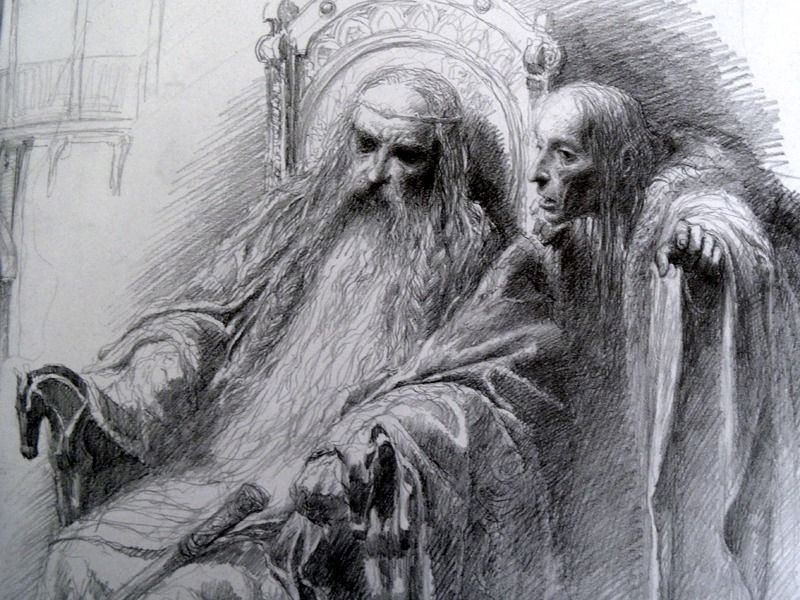
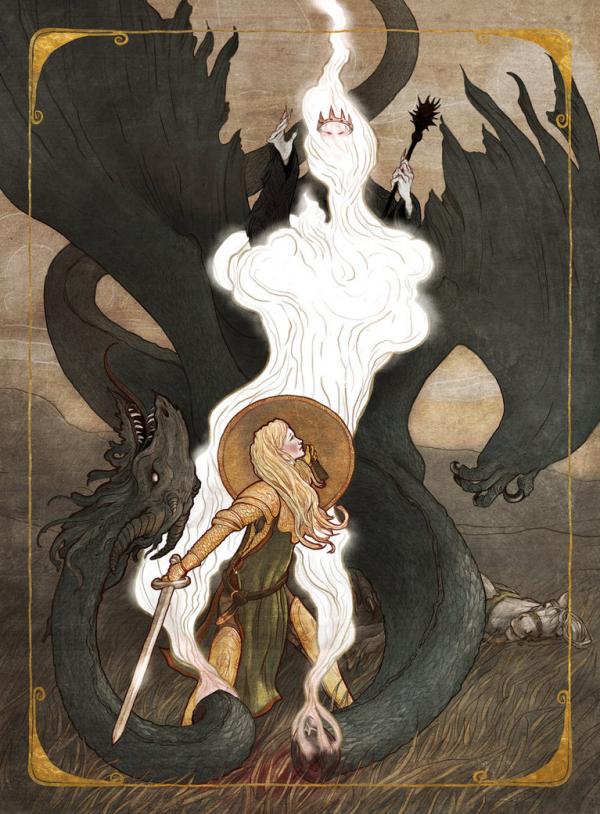
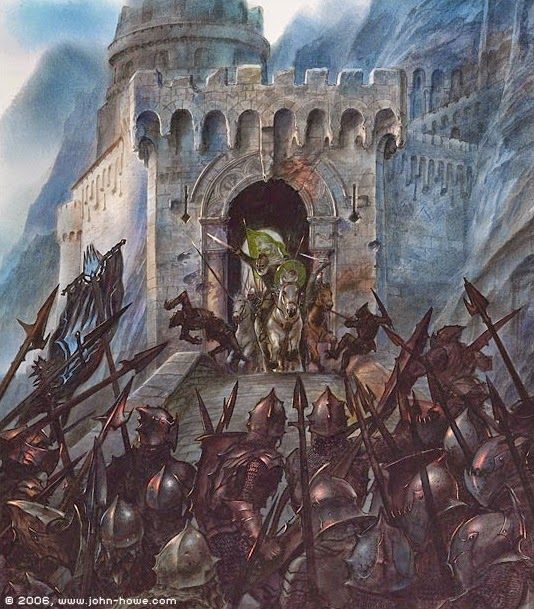
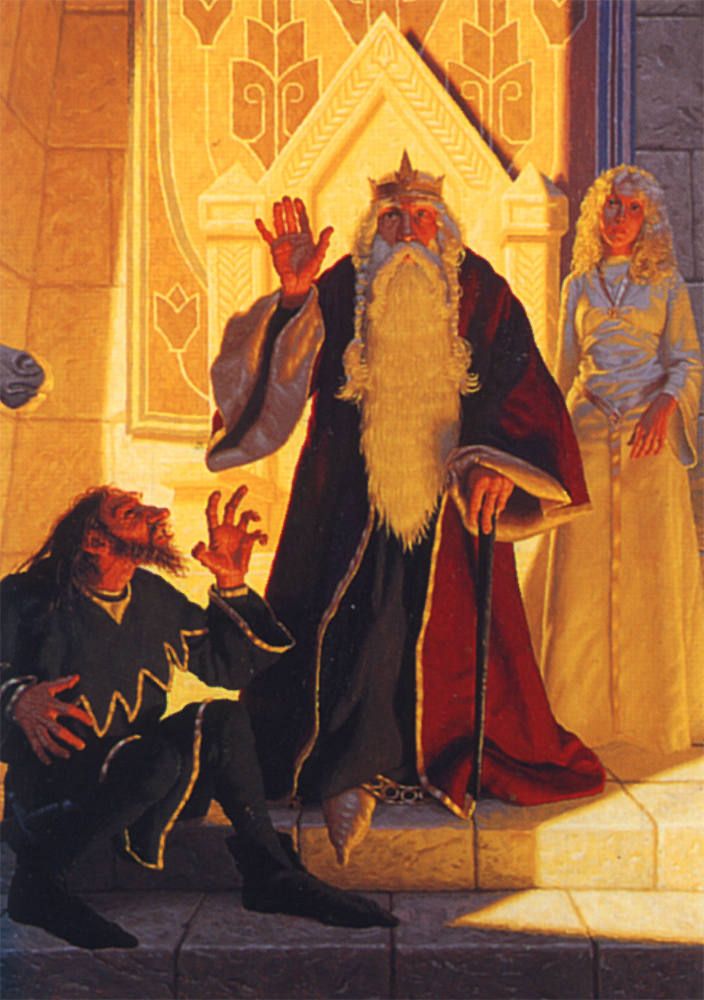
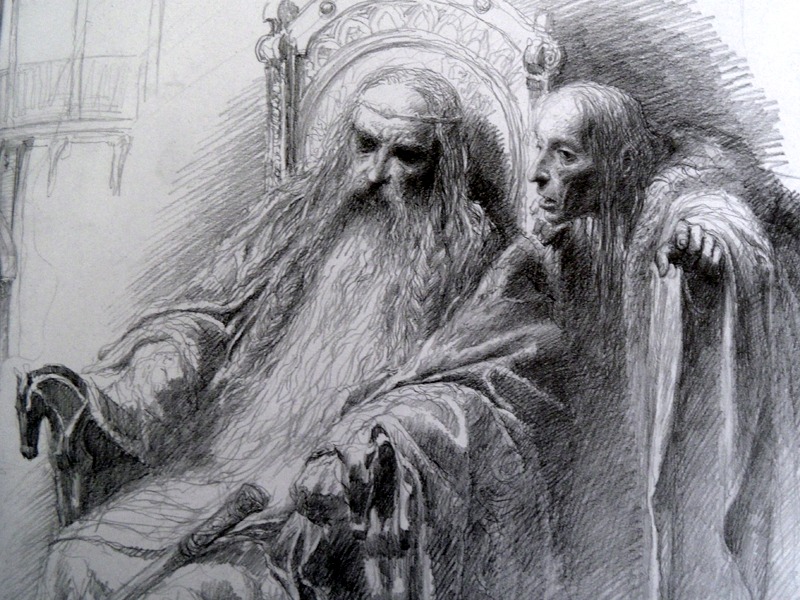
But there are poisons just as potent which come in the form of poisonous words, as we began to see in Saruman’s attempts to win over Theoden,

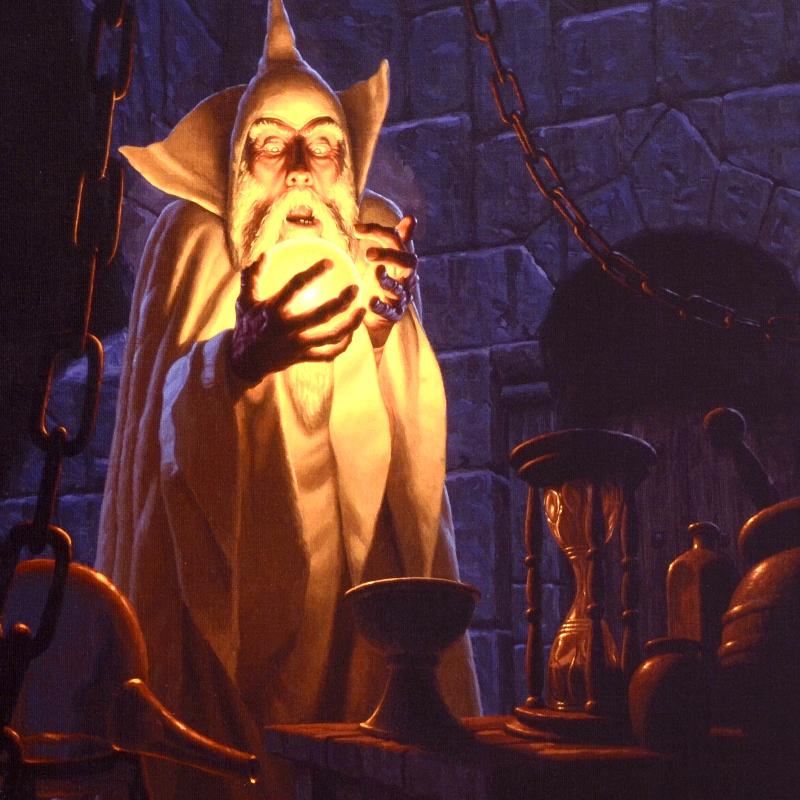
(Francesco Amadio)

and, failing that, with Gandalf:

“Gandalf stirred, and looked up.  ‘What have you to say that you did not say at our last meeting?’ he asked.  ‘Or, perhaps, you have things to unsay?’ “

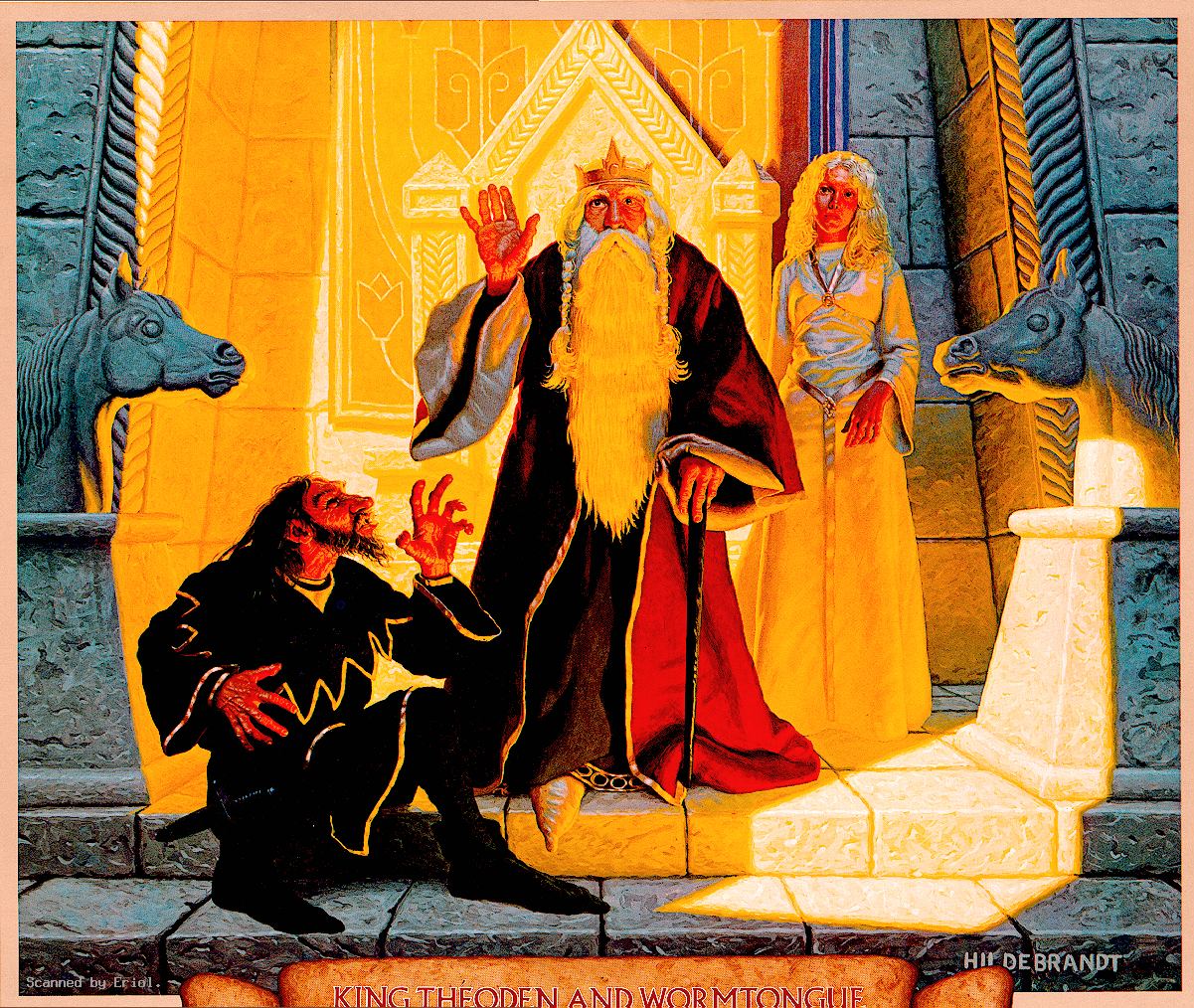
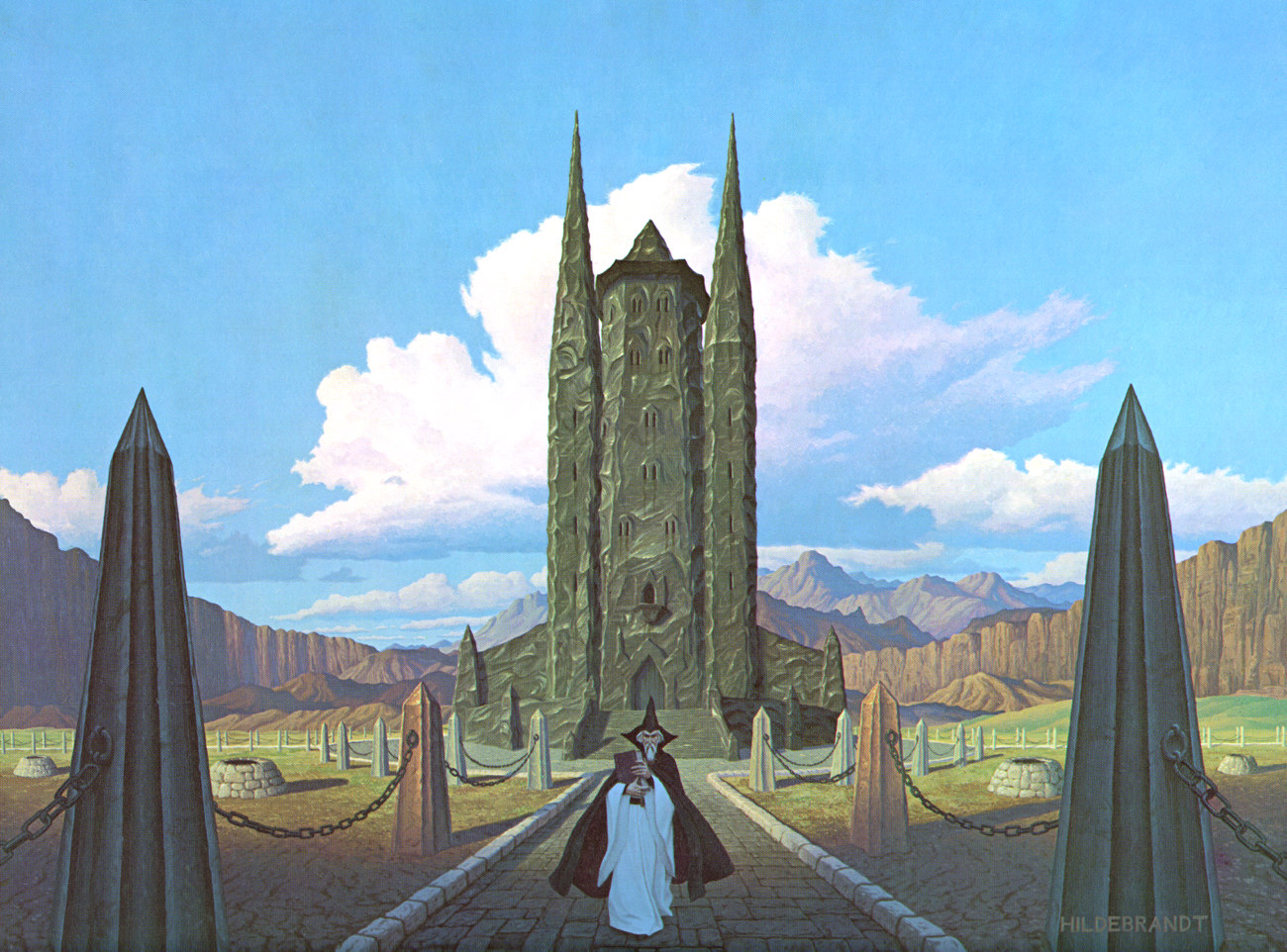
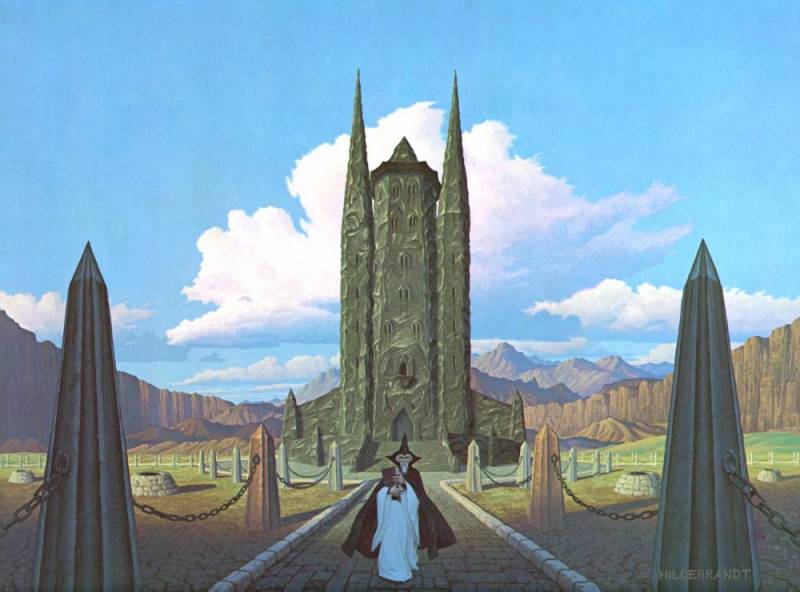
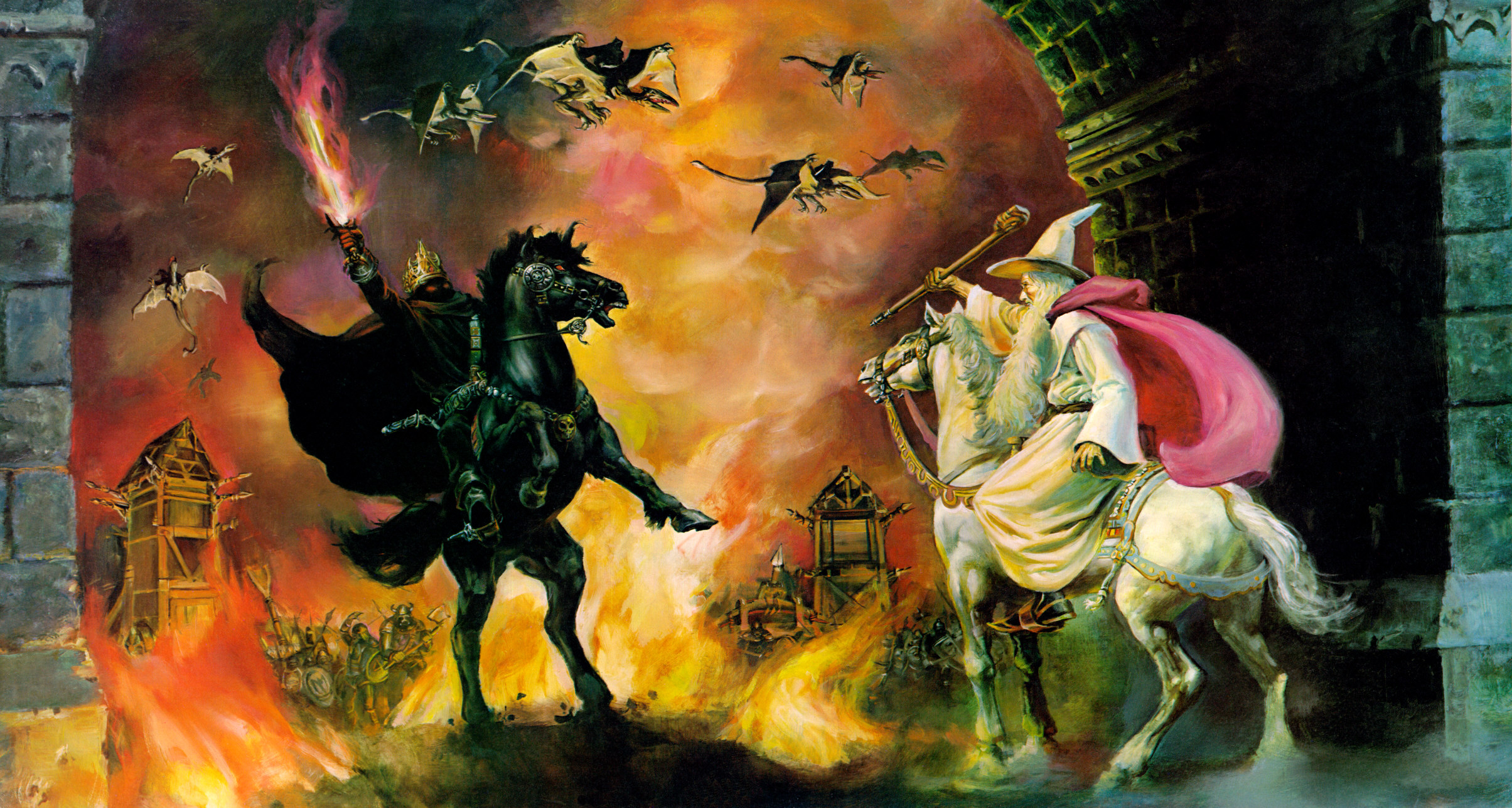
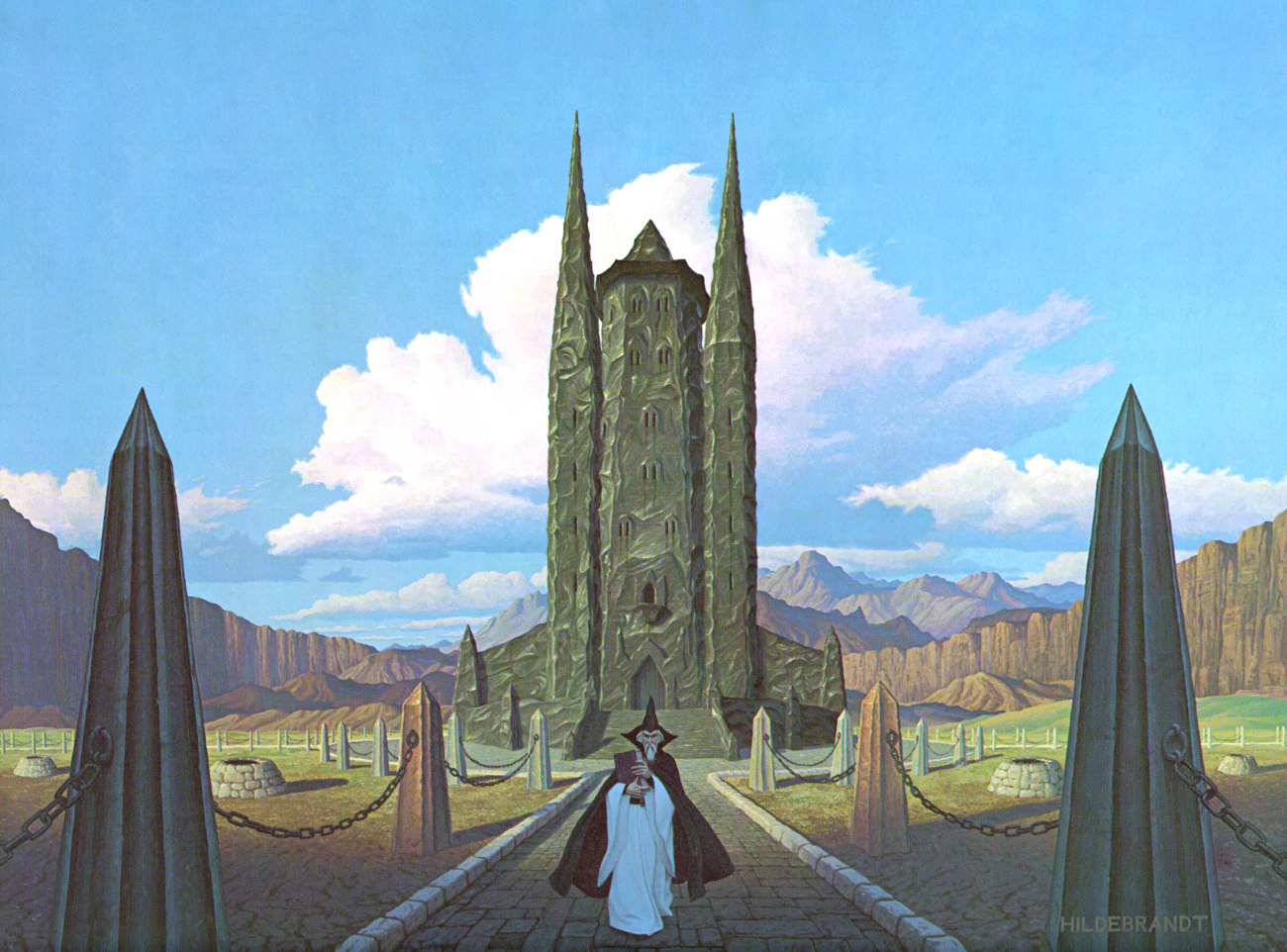
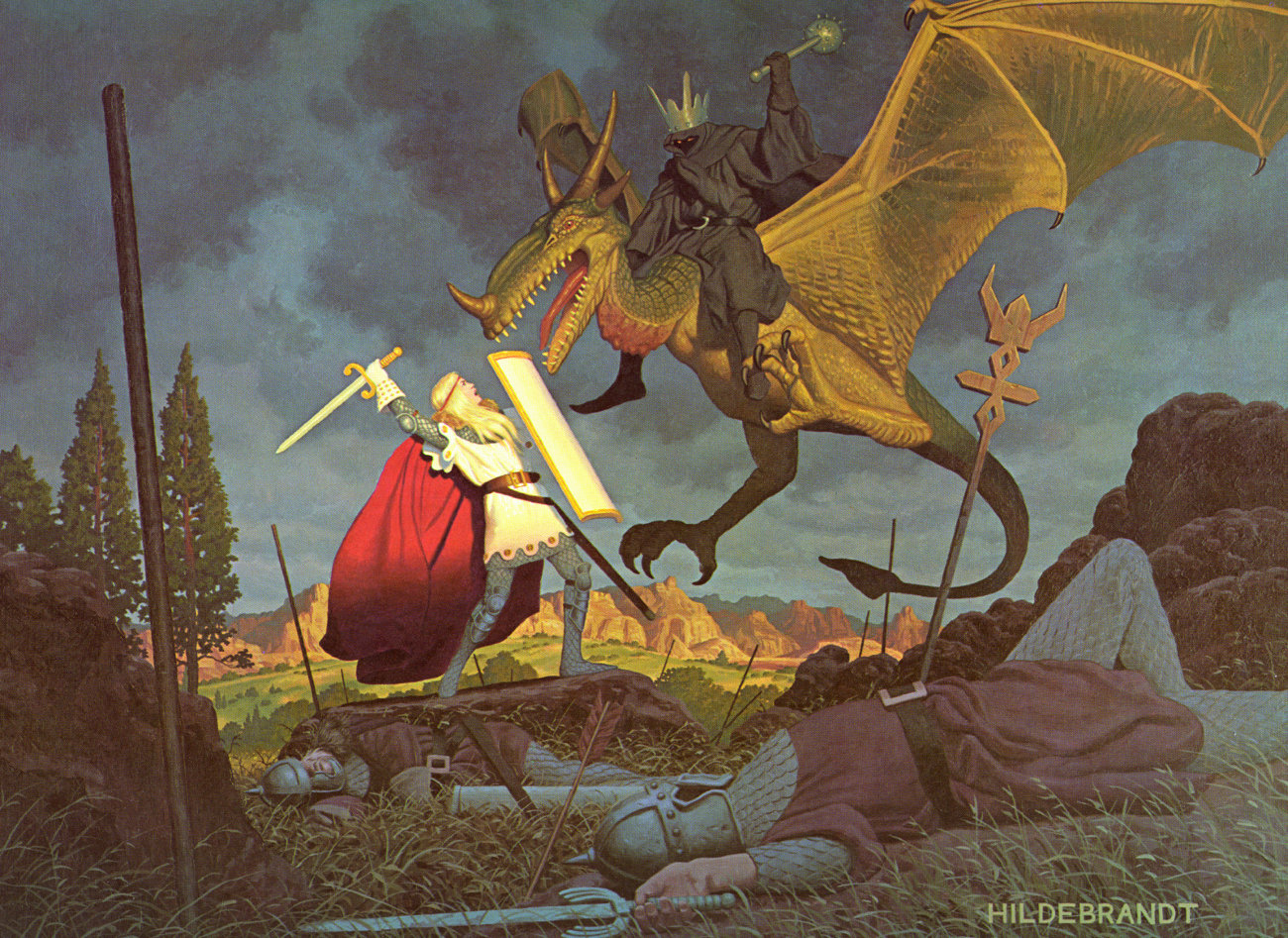
In their last meeting, Gandalf became Saruman’s prisoner in Orthanc—

(the Hildebrandts)

but the words which Saruman employed then were revealing, as Gandalf says, having listened to Saruman’s plea:

“A new Power is rising…We may join with that Power.  It would be wise, Gandalf.  There is hope that way.  Its victory is at hand; and there will be rich reward for those that aid it.  As the Power grows, its proved friends will also grow; and the Wise, such as you and I, may with patience come at last to direct its courses, to control it.  We can bide our time, we can keep our thoughts in our hearts, deploring maybe evils done by the way, but approving the high and ultimate purpose:  Knowledge, Rule, Order; all the things that we have so far striven in vain to accomplish, hindered rather than helped by our weak or idle friends.  There need not be, there would not be, any real change in our designs, only in our means.”  (The Fellowship of the Ring, Book Two, Chapter 2, “The Counsel of Elrond”)

When attempting to win over Theoden, Saruman had chosen words which suggested how much Saruman honored and respected him, defending himself from his own aggressive actions by saying that, if he had used violence against Rohan, so had Rohan used violence in the past, and now, together, he and Theoden could make peace—and therefore avoid what Saruman calls “the ruin that draws nigh inevitably”, even implying a bond between them, changing his former address from “you” to “we” and “our”—

“Shall we make our counsels together against evil days, and repair our injuries with such good will that our estates shall both come to fairer flower than ever before?”

When that hadn’t worked, Saruman had turned to Gandalf, at whom he had sneered only moments before, saying now that Gandalf had “a noble mind and eyes that look both deep and far”—in other words, attempting the same flattery which had failed with Theoden.  And he tried the same kind of shift from “you” to “we” here:

“I fear that in my eagerness to persuade you, I lost patience.  And indeed I regret it.  For I bore you no ill-will; and even now I bear none, though you return to me in the company of the violent and the ignorant.  How should I?  Are we not both members of a high and ancient order, most excellent in Middle-earth?”

That word “order” reminds us of something which Gandalf had said to Frodo long before about Saruman:

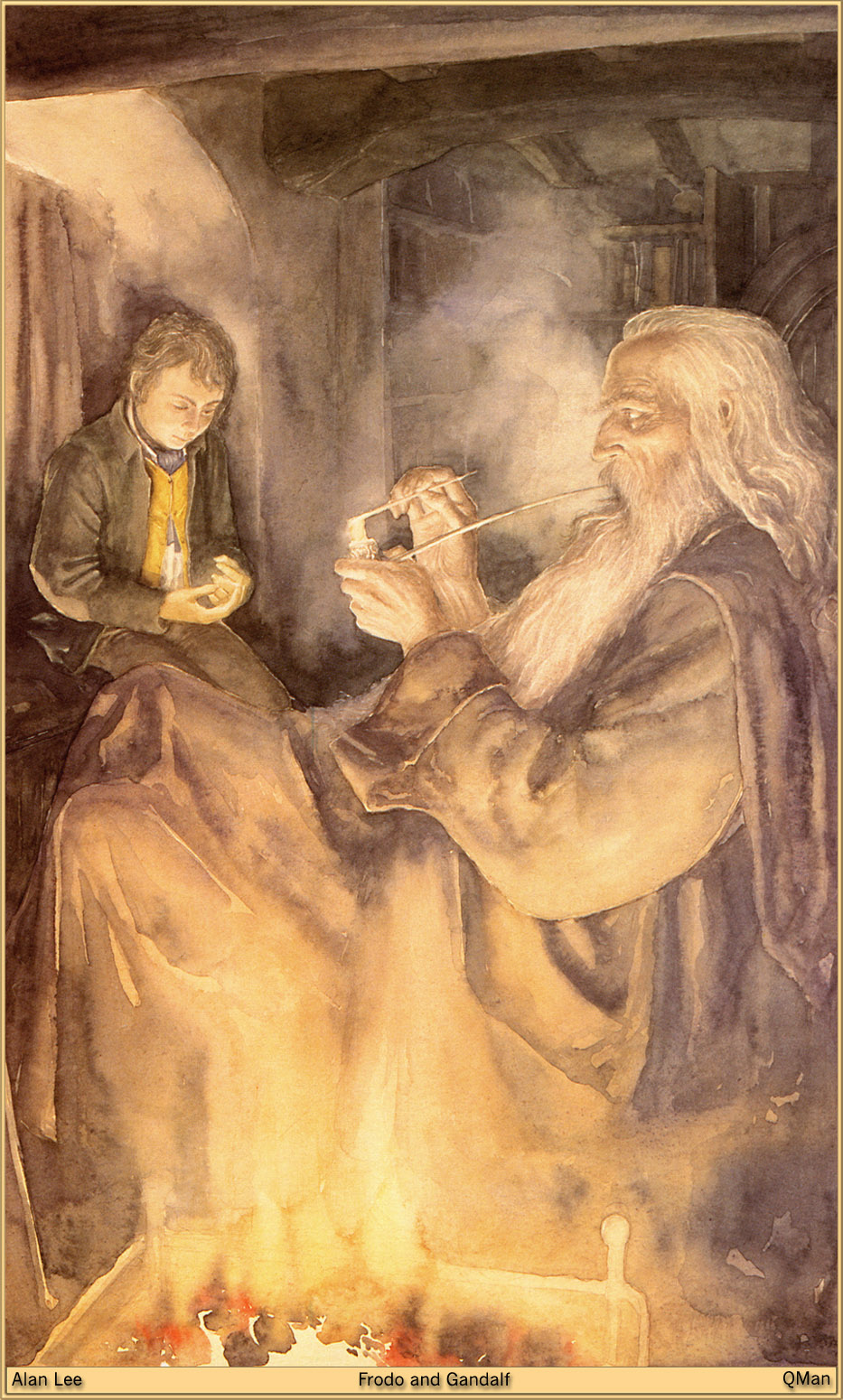
“He is the chief of my order and the head of the Council…The lore of the Elven-rings, great and small, is his province.”

(Alan Lee)

And yet:

“I might perhaps have consulted [him], but something always held me back.” (The Fellowship of the Ring, Book One, Chapter 2, “The Shadow of the Past”)

Gandalf has, then, long had doubts about Saruman, even though Saruman was head of that “order”. 

But what, actually, was that “order”?

“When maybe a thousand years had passed, and the first shadow had fallen on Greenwood the Great, the Istari, or Wizards appeared in Middle-earth.  It was afterwards said that they came out of the Far West and were messengers sent to contest the power of Sauron, and to unite all those who had the will to resist him; but they were forbidden to match his power with power, or to seek to dominate Elves or Men by force and fear.”  (The Lord of the Rings, Appendix B: “The Third Age”)

Recall, then, what Saruman has so far done:

1. he has turned Isengard into a miniature version of Mordor, ravaging the surrounding landscape

2. roused the Dunlendings to attack Rohan

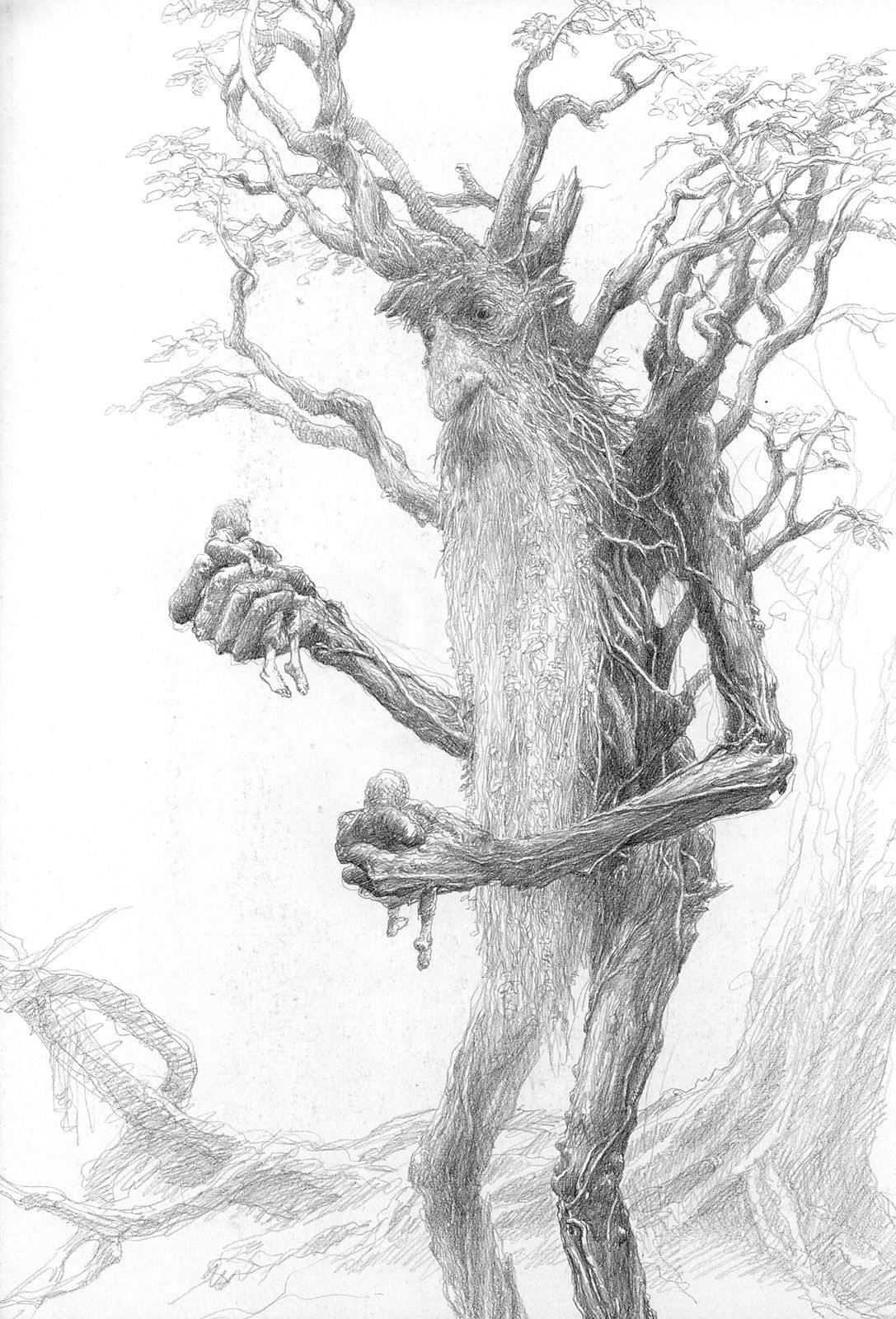
3. created his own army of orcs—and perhaps done something worse to them than simply create them, if Treebeard’s thoughts are true (“Worse than that:  he has been doing something to them; something dangerous…For these Isengarders are more like wicked men.”  The Two Towers, Book Three, Chapter 4, “Treebeard”)

4. attacked Rohan and, in the process, Theoden’s son, Theodred, has been killed

5. not to mention that, when Gandalf has resisted his proposals, Saruman has imprisoned him

And so, how believable could anything Saruman says be?  And yet he persists:

“Our friendship would profit us both alike.  Much we could still accomplish together, to heal the disorders of the world.  Let us understand one another, and dismiss from thought these lesser folk!  Let them wait on our decisions!  For the common good I am willing to redress the past, and to receive you.  Will you not consult with me?  Will you not come up?”

In other words, of everything which Saruman, as one of the Istari, has been sent to do, he has done the opposite—and persists, even when he has failed in his plans and is now a prisoner in his own domain.

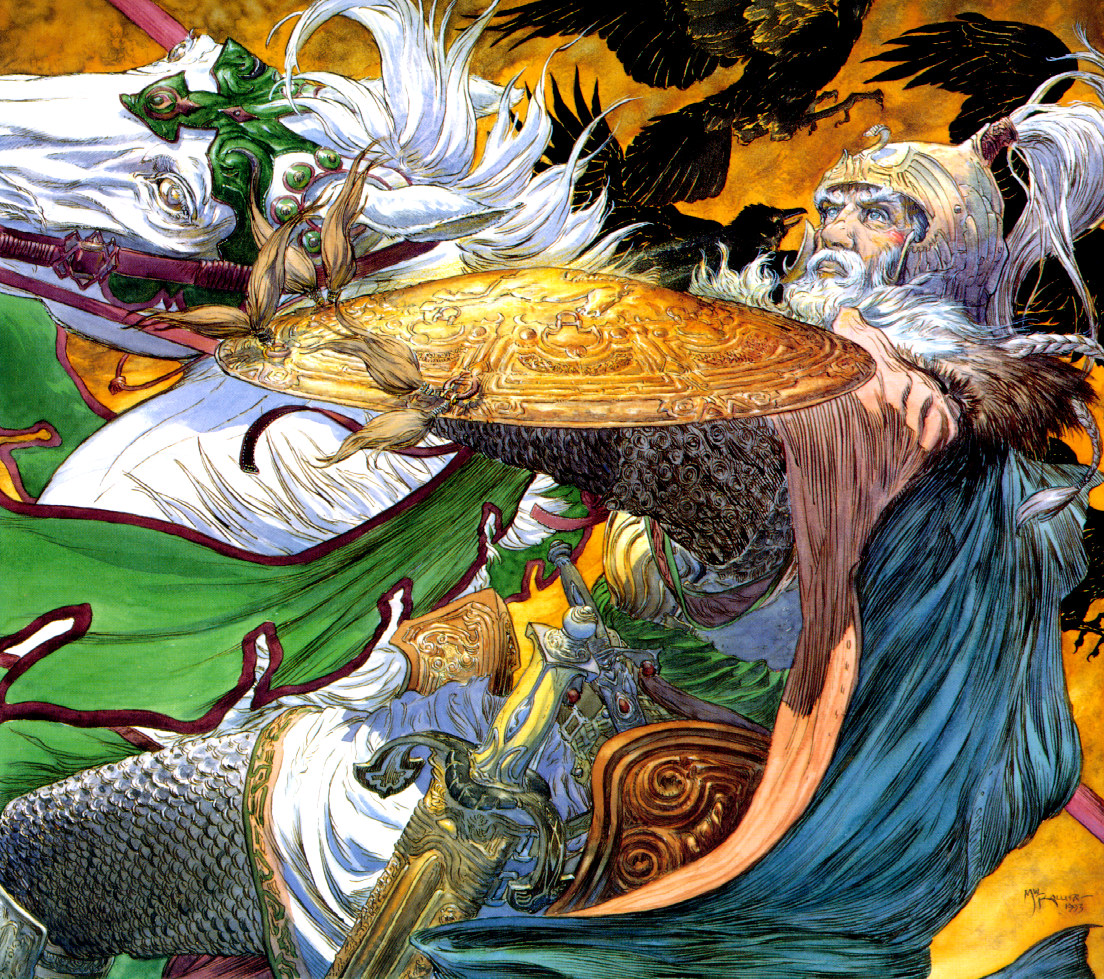
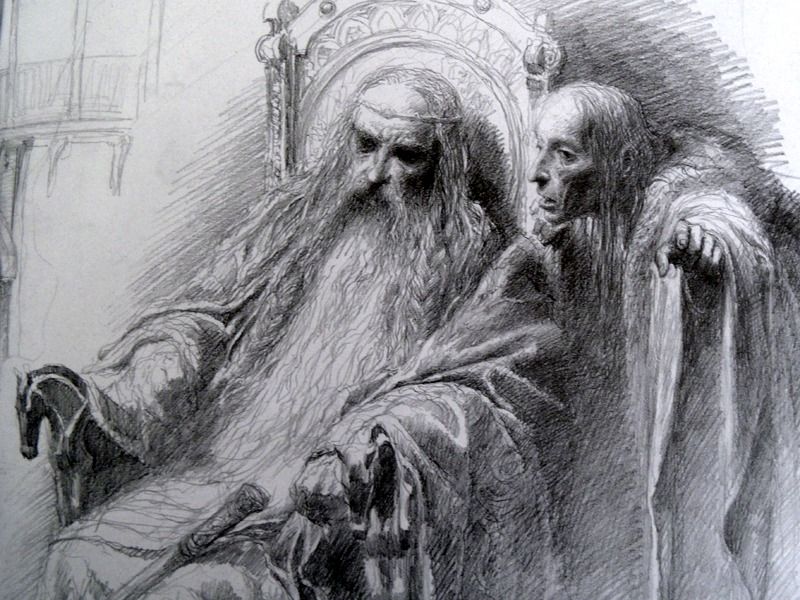
(Carl Lundgren–you can read about him here: https://en.wikipedia.org/wiki/Carl_Lundgren_(illustrator) )

Yet his tone, for the moment, still has the remains of its ability to charm:

“So great was the power that Saruman exerted in this last effort that none that stood within hearing were unmoved.  But now the spell was wholly different.  They heard the gentle remonstrance of a kindly king with an erring but much-loved minister.  But they were shut out, listening at a door to words not meant for them…”

Until—

“Then Gandalf laughed.  The fantasy vanished like a puff of smoke.”

And what follows reveals not only why Gandalf declines the offer, but who Gandalf believes lies behind all of those empty words about “heal[ing] the disorders of the world” and “the common good” and, earlier, “knowledge, rule, order”—poisonous words when coming from the mouth of Saruman:

“I keep a clearer memory of your arguments, [says Gandalf] and deeds, than you suppose.  When last I visited you, you were the jailor of Mordor, and there I was to be sent.”

Saruman’s reaction is predictable:  each time he finds that his magic tones do not lull the listener, he falls into a rage, but, this time, there is something else mixed with it:

“A shadow passed over Saruman’s face; then it went deadly white.  Before he could conceal it, they saw through the mask the anguish of a mind in doubt, loathing to stay and dreading to leave its refuge.  For a second he hesitated, and no one breathed.  Then he spoke, and his voice was shrill and cold.  Pride and hate were conquering him.”

Pride and hate, but there is something more, as Gandalf warns him:

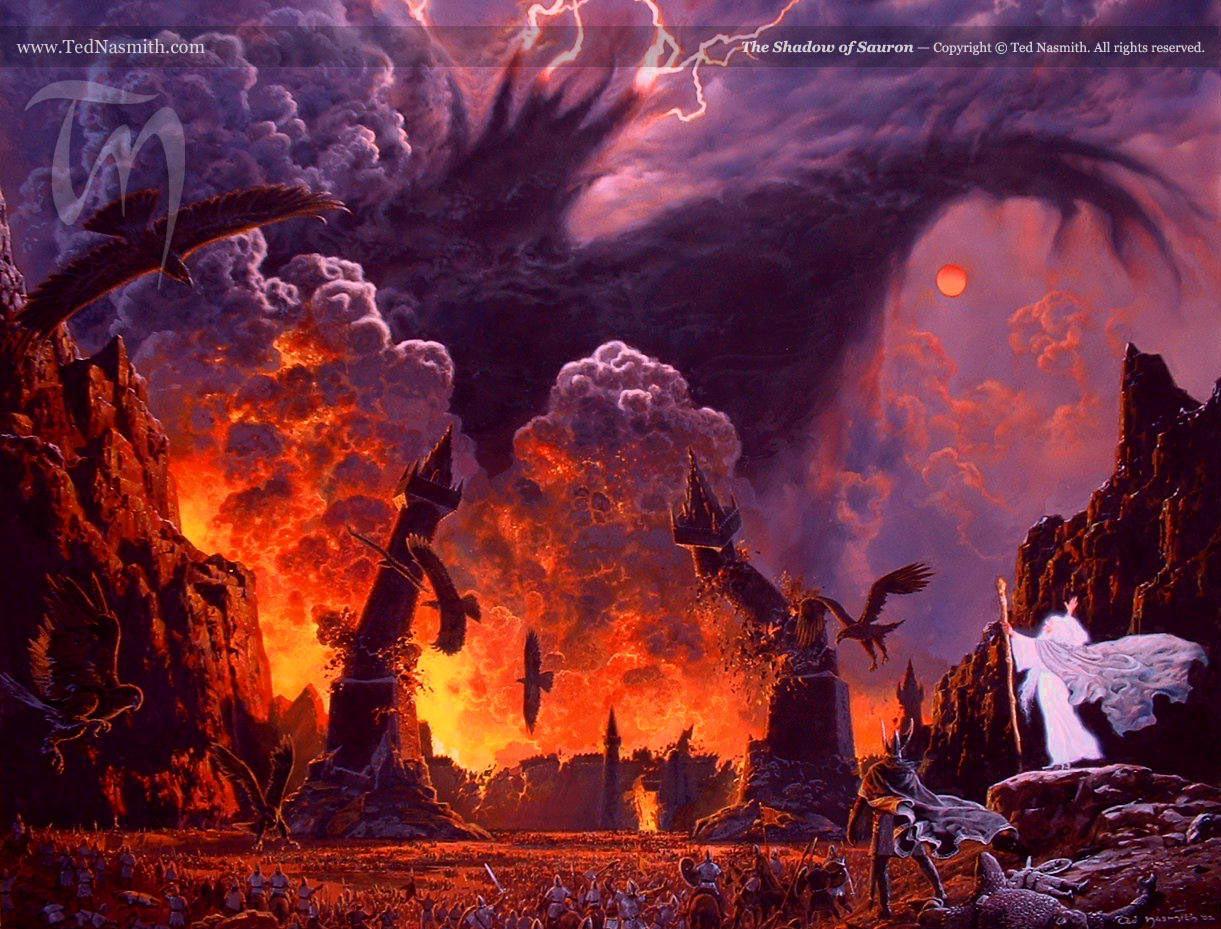
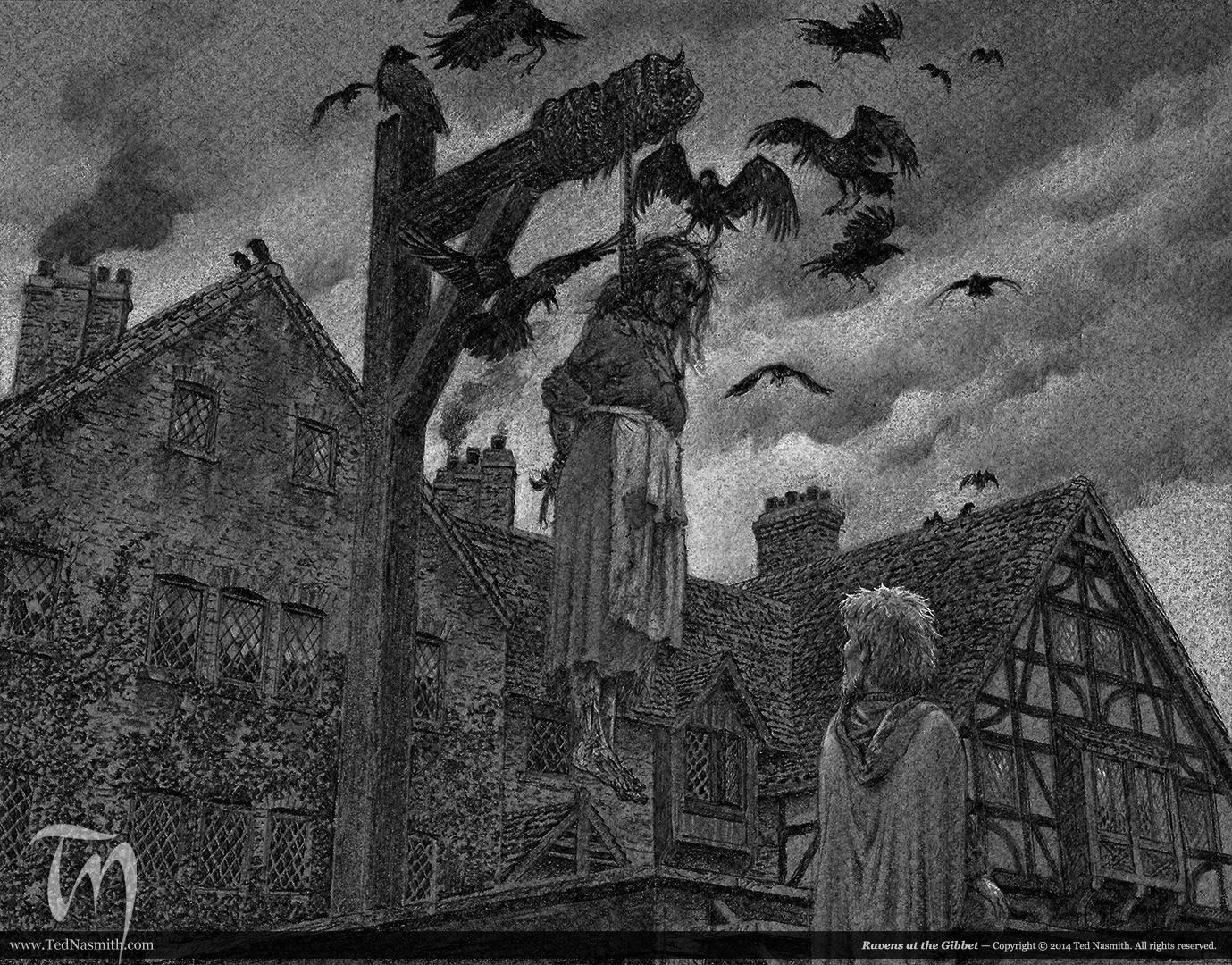
“ ‘Reasons for leaving you can see from your windows…

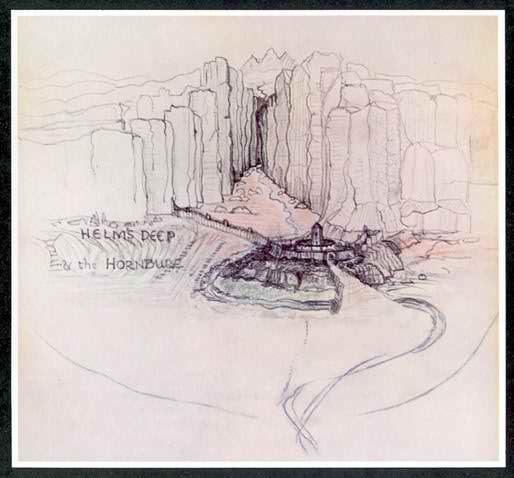
(Ted Nasmith)

Others will occur to your thought.  Your servants are destroyed and scattered; your neighbors you have made your enemies; and you have cheated your new master, or tried to do so.  When his eye turns hither, it will be the red eye of wrath.’ “

Gandalf snaps Saruman’s staff and, as if on-cue:

“With a cry Saruman fell back and crawled away.  At that moment a heavy shining thing came hurtling down from above.  It glanced off the iron rail, even as Saruman left it, passing close to Gandalf’s head, it smote the stair on which he stood.”

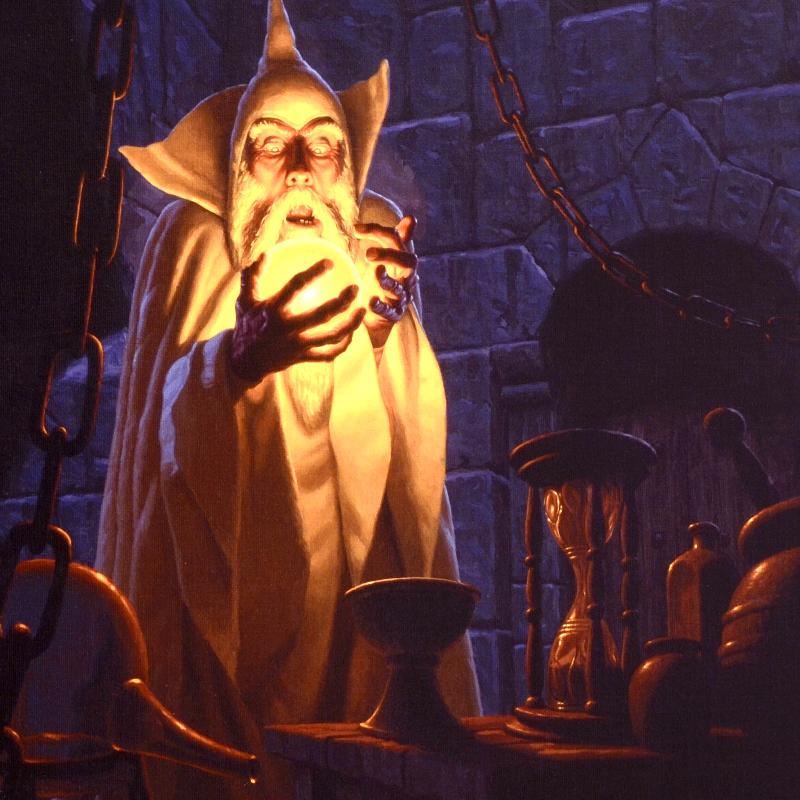
What this can be and how it figures in all of this poison will appear in the final part of this short series—

(the Hildebrandts)

As ever, thanks for reading.

Stay well,

Remember what Marcus Antonius says to the mob in Shakespeare’s Julius Caesar, “The evil that men do lives after them…” when he is supposedly only burying Caesar, not praising him…

And remember, as well, that there’s

MTCIDC,

O

By Ear (1)

07 Wednesday May 2025

Posted by Ollamh in Uncategorized

≈ Leave a comment

Tags

Claudius, ear, Fantasy, Gandalf, Grima, Hamlet, henbane, lotr, Palantir, poison, Saruman, Theoden, Tolkien

Welcome, dear readers, as always.

No matter how often I read or see the play, I’m always struck by how multifacted Hamlet is—a revenge tragedy, a murder mystery, a psychological study, a ghost story, all in one (and probably more than this list besides).  Tolkien was not a big fan of reading Shakespeare, but, seeing a performance in 1944, he wrote to his son, Christopher:   “Plain news is on the airgraph [a form of letter photographed onto microfilm, shipped, then printed out at its destination—called “V-Mail” in the US—a useful background:  https://rarehistoricalphotos.com/v-mail-photos/ ]; but the only event worth of talk was the performance of Hamlet which I had been to just before I wrote last.  I was full of it then…It was a very good performance, with a young rather fierce Hamlet; it was played fast without cuts; and it came out as a very exciting play.” (letter to Christopher Tolkien, 28 July, 1944, Letters, 126)

That ghost story is the explanation for the murder mystery, the victim being Hamlet’s father, Hamlet Senior, and the murderer being his brother, Claudius, the ghost telling Hamlet:

“Sleeping within my orchard,

My custom always of the afternoon,

Upon my secure hour, thy uncle stole

With juice of cursèd hebona in a vial,

And in the porches of my ears did pour

The lep’rous distillment, whose effect

Holds such an enmity with blood of man

That swift as quicksilver it courses through

The natural gates and alleys of the body,

And with a sudden vigor it doth possess

And curd like eager droppings into milk

The thin and wholesome blood; so did it mine,

And a most instant tetter barked about

Most lazarlike with vile and loathsome crust

All my smooth body.”  (Hamlet, Act 1, Scene 5 from the 2nd Quarto, 1604—this is from my go-to Shakespeare internet site, which you can visit here:  https://internetshakespeare.uvic.ca/doc/Ham_Q2/scene/index.html )

“Hebona” has been argued about for years, some scholars, seeing what appears to be a linguistic similarity with “henbane”,

have suggested that, as the poison, and, seeing its effects, I’m not surprised:

“As a result of this distinct chemical and pharmacological profile, overdoses can result not only in delirium, but also severe anticholinergic syndrome, coma, respiratory paralysis, and death.” (see:  https://en.wikipedia.org/wiki/Toxidrome#Anticholinergic for lots more distressing symptoms on the way to the end—although some of the above description doesn’t appear to be present in such poisoning—“tetter” means a kind of skin eruption, which is why Hamlet Sr. uses“lazarlike”, meaning “leprous”.  For more on other possible poisons, see:  https://en.wikipedia.org/wiki/Hebenon And for more on Shakespeare’s drugs, see:  https://www.bbc.com/future/article/20140416-do-shakespeares-poisons-work ) 

One can see why Uncle Claudius uses the method he does:  he’s assuming that, if all the poison is absorbed, there will be no outside traces, which is why Hamlet Senior says, “’Tis given out that, sleeping in my orchard/A serpent stung me” (although, given the usual nature of bites, one might have thought that someone would have checked for a snake bite wound, suggesting that Claudius was already prepared with a quick explanation for what had happened to his brother—“it is given out” sounds like palace propaganda, doesn’t it?).

Hamlet’s father is poisoned through the ear with an actual toxic substance, whatever it was, and that supposedly left no trace of the crime, but, in Tolkien’s own work, we see another ear poison, which also leaves no obvious physical trace, being administered by this—

(the Hildebrandts)

but which is just as deadly—spiritually.

We know from Gandalf (and the chapter title) that Saruman has an unusual weapon:

“ ‘What’s the danger?’ asked Pippin.  ‘Will he shoot at us, and pour fire out of the windows; or can he put a spell on us from a distance?’

‘The last is most likely, if you ride to his door with a light heart,’ said Gandalf…. ‘And Saruman has powers you do not guess:  Beware of his voice!’ “  (The Two Towers, Book Three, Chapter 10, “The Voice of Saruman”)

We then see that voice in operation:

“ ‘But come now,’ said the soft voice.  ‘Two at least of you I know by name.  Gandalf I know too well to have much hope that he seeks help or counsel here.  But you, Theoden Lord of the Mark of Rohan, are declared by your noble devices, and still more by the fair countenance of the House of Eorl.  O worthy son of Thengel the Thrice-renowned!  Why have you not come before, and as a friend?  Much have I desired to see you, mightiest king of western lands, and especially in these latter years, to save you from the unwise and evil counsels that beset you!  Is it yet too late?  Despite the injuries that have been done to me, in which the men of Rohan, alas! have had some part, still I would save you, and deliver you from the ruin that draws nigh inevitably, if you ride upon this road which you have taken.  Indeed I alone can aid you now.’ “

The effect of this upon the Rohirrim is just what Saruman must have hoped for—and it underlines his method of address:

“The Riders stirred at first, murmuring with approval of the words of Saruman; and then they too were silent, as men spell-bound.  It seemed to them that Gandalf had never spoken so fair and fittingly to their lord.  Rough and proud now seemed all his dealings with Theoden.  And over their hearts crept a shadow, the fear of a great danger:  the end of the Mark in a darkness to which Gandalf was driving them, while Saruman stood beside a door of escape, holding it half open so that a ray of light came through…” 

Saruman has, by:

1. addressing Theoden in a stately way, almost overdoing it with his “Lord”, “noble”, “fair”, “worthy”, “mightiest”, suggesting that he has only the greatest respect for him

2. mentioning the defeat of his ravaging army and the destruction of his mini-Mordor as if they were “wrongs” done to him, rather than the treasonous behavior they actually represented

3. threatening doom awaiting the Mark

4. offering himself as the only savior,

turns himself from the Sauron he aspires to be into the gentle, admiring friend, who, though he has been harmed, is still willing to be that friend—and, in fact, the only friend for Theoden.  And, as the Rohirrim are meant to understand, this is all designed to be in contrast to Gandalf, that false savior.

(It’s clear that Saruman has been working to undercut Gandalf’s position in Rohan for some time previously:  see Theoden’s original greeting to Gandalf—prompted—and poisoned—by Grima in The Two Towers, Book Three, Chapter 6, “The King of the Golden Hall”.)

(Alan Lee)

Eomer, seeing Theoden silent, hesitating, tries to intervene, only to have that Voice—angered, but quickly controlled, turn everything rightly said against him into the “you do it, too” argument:

“ ‘But my lord of Rohan, am I to be called a murderer, because valiant men have fallen in battle?  If you go to war, needlessly, for I did not desire it, then men will be slain.  But if I am a murderer on that account, then all the House of Eorl is stained with murder; for they have fought many wars, and assailed many who defied them.’ “

It’s not just Saruman’s voice that one should be wary of–he is so skilled in deception—or so he thinks–that he can try to use such a cheap argument, then turn it around into what is intended to sound like a reasonable proposal:

“ ‘Yet with some they have afterwards made peace, none the worse for being politic.  I say, Theoden King:  shall we have peace and friendship, you and I?  It is ours to command.’ “

And notice how it’s now not “you”, but “we” and “ours”—any attack is being turned into “being politic” and not “you do it, too”, but “we all do it sometimes” and then we make peace and everything is fine.

Theoden’s response is not what Saruman expected, although, because Theoden had remained silent, we can imagine that Saruman was smiling quietly to himself in admiration of his own powers:

“ ‘We will have peace,’ said Theoden at last thickly and with an effort…’Yes, we will have peace,’ he said, now in a clear voice, ‘we will have peace, when you and all your works have perished—and the works of your dark master to whom you would deliver us.  You are a liar, Saruman, and a corrupter of men’s hearts…When you hang from a gibbet at your own window for the sport of your own crows, I will have peace with you and Orthanc…Turn elsewhither.  But I fear your voice has lost its charm.”

(Ted Nasmith—another side of this excellent artist)

The magic of that voice still lingers for a moment:

“The Riders gazed up at Theoden like men startled out of dream.  Harsh as an old raven’s their master’s voice sounded in their ears after the music of Saruman.”

But there is then a change in that music:

“But Saruman for a while was beside himself with wrath.  He leaned over the rail as if he would simite the King with his staff.  To some suddenly it seemed that they saw a snake coiling itself to strike.”

And Saruman becomes even more serpentine:

“ ‘Gibbets and crows!’ he hissed and they shuddered at the hideous change.’ “

Thwarted, we see him basically reverse his address to Theoden.  Where before Theoden was “Lord”, “noble”, “fair”, “worthy”, “mightiest”, now he is “dotard” and his “noble”, “fair” family becomes “the house of Eorl…but a thatched barn where brigands drink in the reek, and their brats roll on the floor among the dogs”.

He isn’t quite finished, however—

“ ‘But you, Gandalf!  For you at least I am grieved, feeling for your shame.  How comes it that you can endure such company?  For you are proud, Gandalf—and not without reason, having a noble mind and eyes that look both deep and far.  Even now will you not listen to my counsel?’ “

Theoden’s eventual reply was bitter—and biting—but Gandalf’s reaction is of a different sort altogether—though it still has a sting:

“Gandalf stirred, and looked up.  ‘What have you to say that you did not say at our last meeting?’ he asked.  ‘Or, perhaps, you have things to unsay?’ “

That last meeting saw Gandalf Saruman’s prisoner on the top of Orthanc–

(the Hildebrandts)

but what was it which Saruman said, how was it put, and what or who might lie behind it, will be the subject of Part 2 of this posting.

Thanks for reading, as always.

Stay well,

Remember that line from another Shakespeare play, “All that glisters is not gold”,

And also remember that, as always, there’s

MTCIDC

O
On the Horns

16 Wednesday Jan 2019

Posted by Ollamh in J.R.R. Tolkien, Military History, Military History of Middle-earth, The Rohirrim

≈ 2 Comments

Tags

Boromir, buccinae, Cavalry charge, Chanson de Roland, Charlemagne, cornet, Easterlings, Eorl the Young, Gondor, Greek, horn, Meduseld, Militari, Rohan, Rohirrim, Roman, The Lord of the Rings, Theoden, Tolkien, trumpet, Trumpeter, Vegetius, war-horn

Welcome, dear readers, as always.

Our friend, Erik, once said that one of his very favorite passages from The Lord of the Rings began with this:  “And as if in answer there came from far away another note.  Horns, horns, horns.  In dark Mindolluin’s sides they dimly echoed.  Great horns of the North, wildly blowing.  Rohan had come at last.” (The Return of the King, Book Five, Chapter 4, “The Siege of Gondor”)

Of course this brings on the charge of the Rohirrim, one of our own favorite moments in the Jackson films.

image1rohirrim.jpg

And what is more exciting than a cavalry charge (as long as you don’t think too hard about the fate of the horses)?

image2awing.jpg

Those horns begin blowing because Theoden:

“…seized a great horn from Guthlaf his banner-bearer, and he blew such a blast upon it that it burst asunder.  And straightaway all the horns in the host were lifted up in music, and the blowing of the horns of Rohan in that hour was like a storm upon the plain and a thunder in the mountains.” (The Return of the King, Book Five, Chapter 5, “The Ride of the Rohirrim”)

A number of images immediately come into our minds when reading this.

First, when Gandalf, Aragorn, Legolas, and Gimli initially come to Edoras and enter Meduseld,

image2meduseldInger-Edelfeldt-8.jpg

(This is a particularly fine possible Meduseld by Inger Edelfeldt.)

they look up to see:

“Many woven cloths were hung upon the walls, and over their wide spaces marched figures of ancient legend, some dim with years, some darkling in the shade.  But upon one form the sunlight fell:  a young man upon a white horse.  He was blowing a great horn, and his yellow hair was flying in the wind.  The horse’s head was lifted, and its nostrils were wide and red as it neighed, smelling battle afar.  Foaming water, green and white, rushed and curled about its knees.

‘Behold Eorl the Young!’ said Aragorn.  ‘Thus he rode out of the North to the Battle of the Field of Celebrant.’”  (The Two Towers, Book Three, Chapter 6, “The King of the Golden Hall”)

image3eorl.jpg

Thus, we’re reminded of an earlier rescue, when Eorl brought the Rohirrim out of the north in TA2510 to aid Gondor in defeating a combined army of orcs and Easterlings.

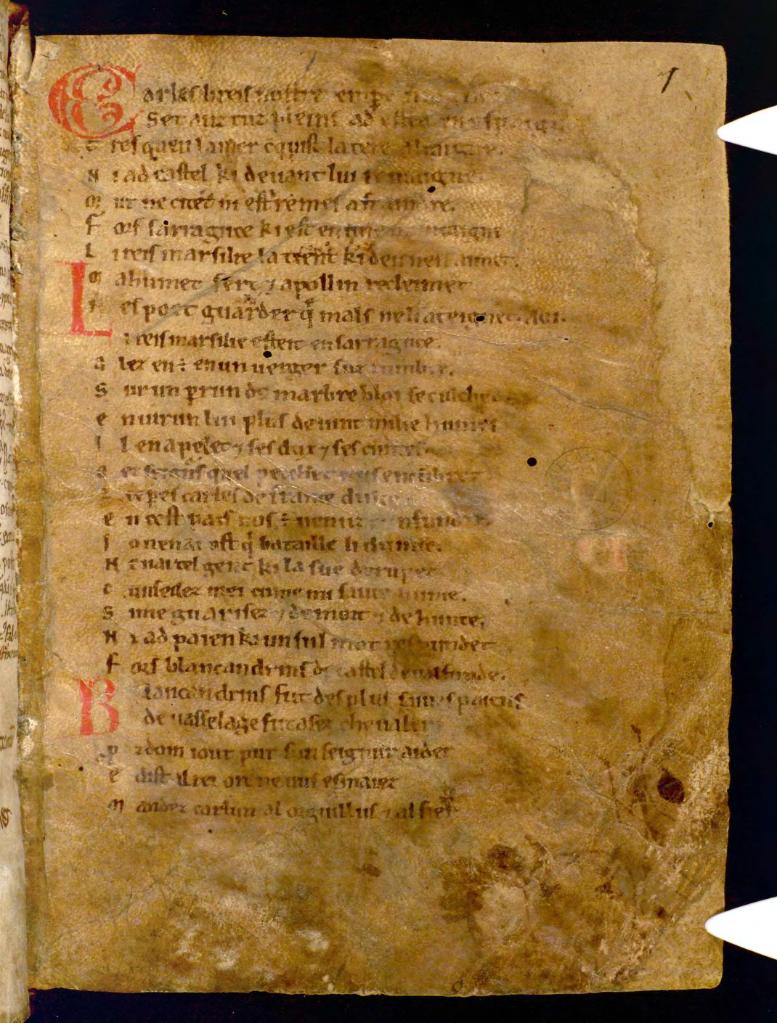
Second, anyone interested in Western medieval literature would be reminded of the early French poem, the Chanson de Roland (c1000AD),

image4chanson.jpg

in which Roland, a young warrior and leader of the rear guard of Charlemagne’s army, refuses to blow his horn for reinforcements when his men are ambushed in a pass, saying that to do so would be cowardice.

image5rol.jpg

Rather than his horn exploding, Roland’s head does, from the exertion, but the broken horn makes us think of Boromir’s last stand, where he blows his horn, but no help comes until it’s too late.

image6boromir.jpg

All that we know of the horn which Theoden blew was that it was “great”—that is, big—but perhaps it looked like Boromir’s?

“On a baldric he worn a great horn tipped with silver that was now laid upon his knees.” (The Fellowship of the Ring, Book Two, Chapter 2, “The Council of Elrond”)  Here’s a medieval one from the British Museum.

image7oliphant.jpg

It should be remembered, of all of these horns, that they have a military use, both in Middle-earth and in our world, as a method of transferring commands from officers to soldiers, both in and out of battle, and what Theoden is actually doing is the musical equivalent of shouting CHARGE! to his 6000-man eored.  Nowhere is the military use of horns made clearer for earlier warfare than in the writing of the late Roman (4th c. AD) author, Vegetius.  In Book II of his De Re Militari (“Concerning Military Affairs”) he describes the use of such instruments:

“The music of the legion consists of trumpets, cornets and buccinae. The trumpet sounds the charge and the retreat. The cornets are used only to regulate the motions of the colors; the trumpets serve when the soldiers are ordered out to any work without the colors; but in time of action, the trumpets and cornets sound together. The classicum, which is a particular sound of the buccina or horn, is appropriated to the commander-in-chief and is used in the presence of the general, or at the execution of a soldier, as a mark of its being done by his authority. The ordinary guards and outposts are always mounted and relieved by the sound of trumpet, which also directs the motions of the soldiers on working parties and on field days. The cornets sound whenever the colors are to be struck or planted. These rules must be punctually observed in all exercises and reviews so that the soldiers may be ready to obey them in action without hesitation according to the general’s orders either to charge or halt, to pursue the enemy or to retire. F or reason will convince us that what is necessary to be performed in the heat of action should constantly be practiced in the leisure of peace.” (This is taken from a 1944 digest of the 1767 translation by John Clarke—if you would like to see the Latin original, here’s a LINK to a text.  The relevant passage is:  “XXII. Quid inter tubicines et cornicines et classicum intersit.”)

The three Latin terms translated as “trumpets, cornets and buccinae” are actually, “tubicines cornicines bucinatores”, meaning “players of tubae, players of cornua, players of buccinae”.   In this ancient relief, we can see, on the left, tuba-players, and, in the center, either players of cornu, or the buccina, as the instruments appear to be rather hard to distinguish in shape.

image8.jpg

And here’s a modern reconstruction, by Peter Connolly.

image9.jpg

We live in a world of such rapid electronic communication

image10radio.jpg

that it might be easy to forget that, for centuries, any order beyond the sound of a general’s voice had to be transferred by other means.  Like Greek trumpeters,

image11salpinx.jpg

or Roman

image12buccinator.jpg

or medieval mounted messengers (the Latin says “messengers of William”).

image13mtdmess.jpg

Drums might be used—

image14rendrumimage15drum

and the early 18th-century British general, the Duke of Marlborough even had his own foot-messenger squad, wearing distinctive clothing (one, in blue, with a jockey cap, is just to the left of the Duke in this tapestry).

image16dukemess.jpg

But what, we asked above, is more exciting than a cavalry charge (we once did a posting devoted specifically to them)—and what makes that more exciting than the trumpeter at the front, sounding the charge?

image17friedland4


Thanks, as always, for reading.

MTCIDC

CD

Who’s There? (1)

14 Wednesday Nov 2018

Posted by Ollamh in J.R.R. Tolkien, Literary History, Narrative Methods

≈ Leave a comment

Tags

Beowulf, coastguard, Elsinore, footguards, ghost, Great War, Hama, Hamlet, Helsingor, Kronborg, London, Rohan, sentry, The Lord of the Rings, Theoden, Tolkien, Watchmen, William Shakespeare

Welcome, dear readers, as always.

We have always been Shakespeare fans, our favorite plays being Macbeth, The Tempest, A Midsummer Night’s Dream, Twelfth Night, The Winter’s Tale, Henry V—and we guess we’d add a few more, too, as we think about it.  Our first love was Hamlet.

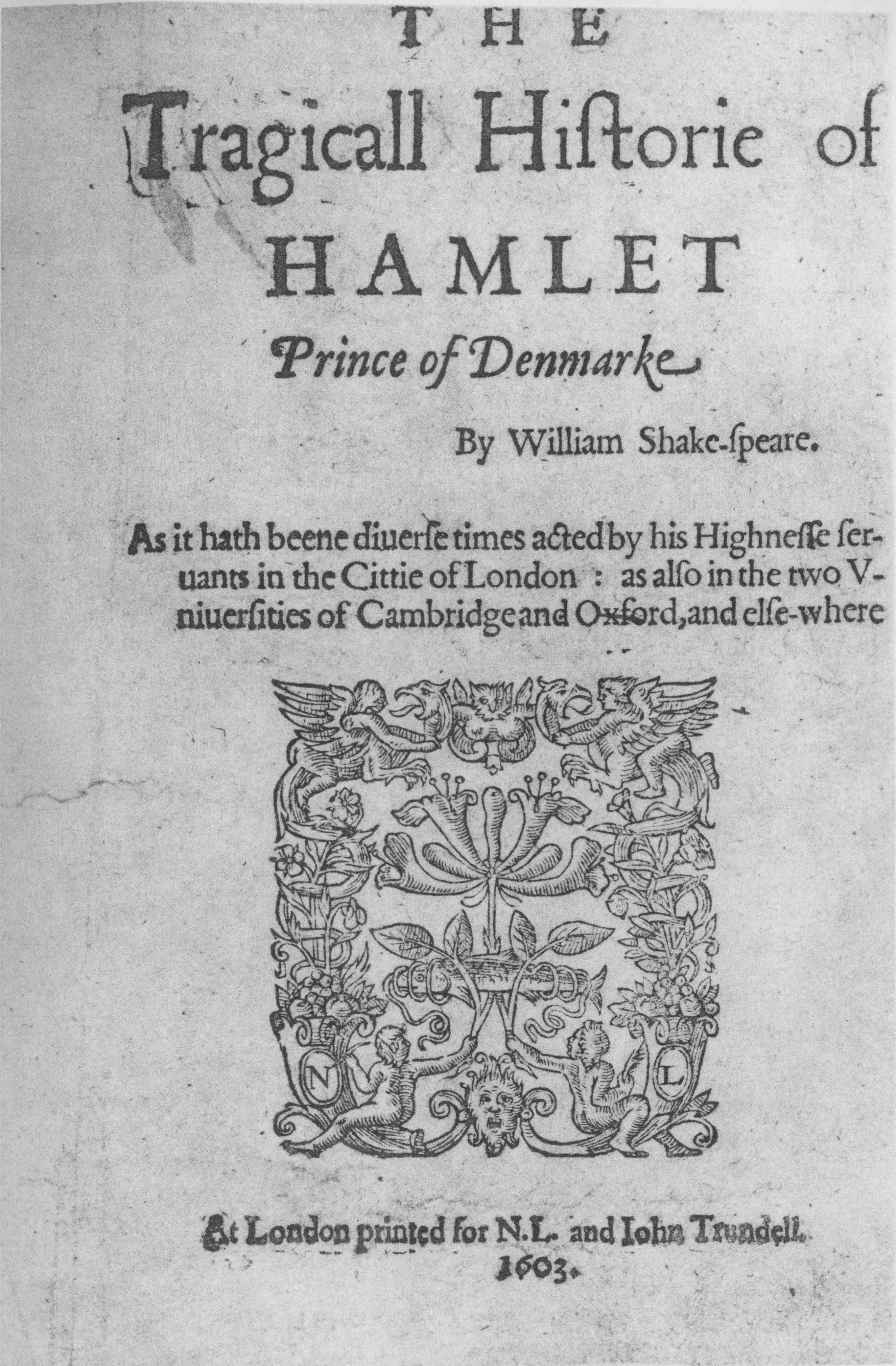
image1hamlet1603

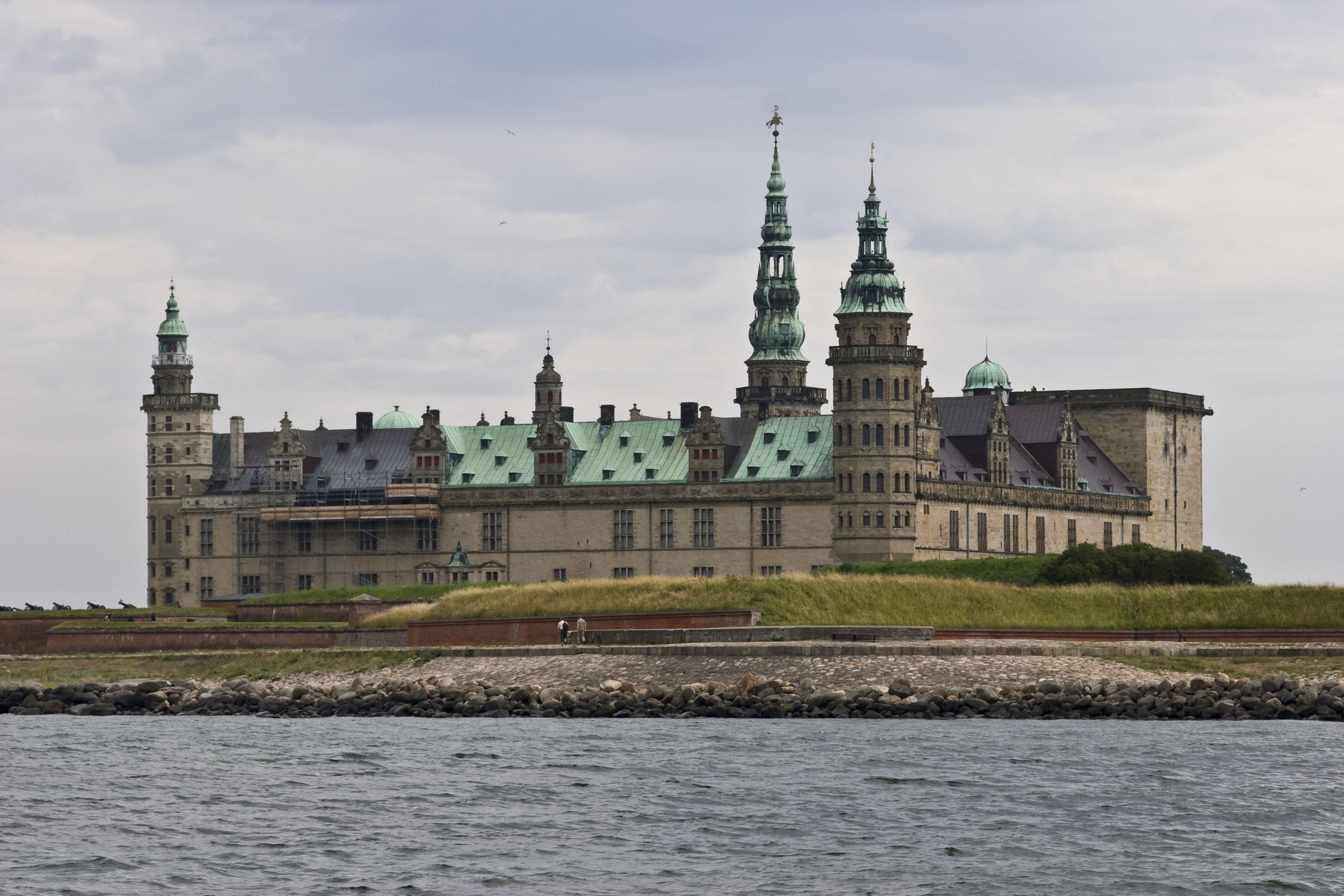
It opens with a nervous sentry on the battlements of Elsinore castle.  (Actually Kronborg—the local town is Helsingor—here’s the castle today), in the kingdom of Denmark.

image2kronborg.jpg

Something uncanny appears to be happening and, when his replacement comes, we have the idea that it’s made the watchmen jumpy:

The Tragicall Historie of

HAMLETPrince of Denmarke.

Enter Two Centinels.

  1. STand: who is that?
  2. Tis I.
  3. O you come most carefully vpon your watch,
  4. And if you meete Marcellus and Horatio,

The partners of my watch, bid them make haste.

  1. I will: See who goes there.

Enter Horatio and Marcellus.

Hor. Friends to this ground.

Mar. And leegemen to the Dane,

O farewell honest souldier, who hath releeued you?
  1. Barnardo hath my place, giue you good night.

Mar. Holla, Barnardo.

  1. Say, is Horatio there?

Hor. A peece of him.

  1. Welcome Horatio, welcome good Marcellus.

Mar. What hath this thing appear’d againe to night.

  1. I haue seene nothing.

Mar. Horatio sayes tis but our fantasie,

And wil not let beliefe take hold of him,

Touching this dreaded sight twice seene by vs,

Therefore I haue intreated him a long with vs

To watch the minutes of this night,

That if againe this apparition come,

He may approoue our eyes, and speake to it.

(The Tragicall History of Hamlet, Prince of Denmark, from its first publication, the First Folio, 1603)

We love the way Shakespeare begins with two minor characters discussing “this thing”—and we won’t learn till deeper in the scene that what they’ve seen was the ghost of Hamlet’s father:  a wonderful, spooky—and intriguing—opening.

This isn’t a Shakepeare posting, however.  What really interested us recently was, in fact, that it’s with two sentries that the play commences. Their job is to watch for anyone who might try to enter the castle for nefarious purposes (and, try as they might, they can’t do that with a ghost) and it got us to thinking about sentries in The Lord of the Rings and just how many there actually are.

From his experience in the Great War, Tolkien would have been very experienced with such people

image3sentry

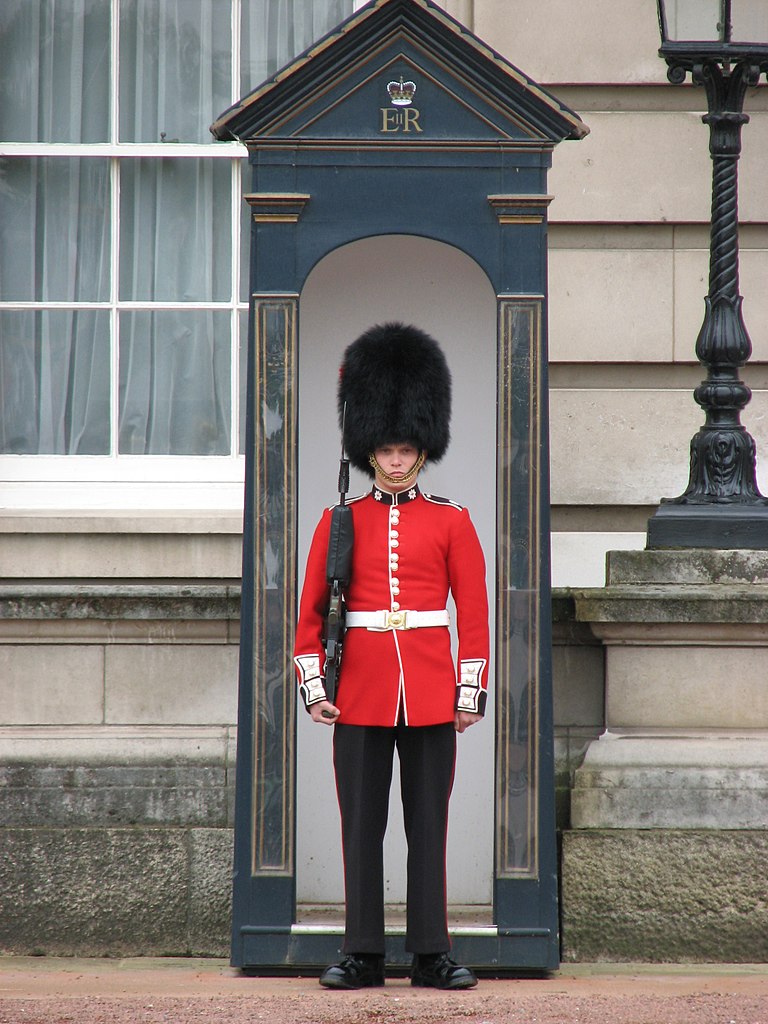
and even from simply visiting London.

image4guard.JPG

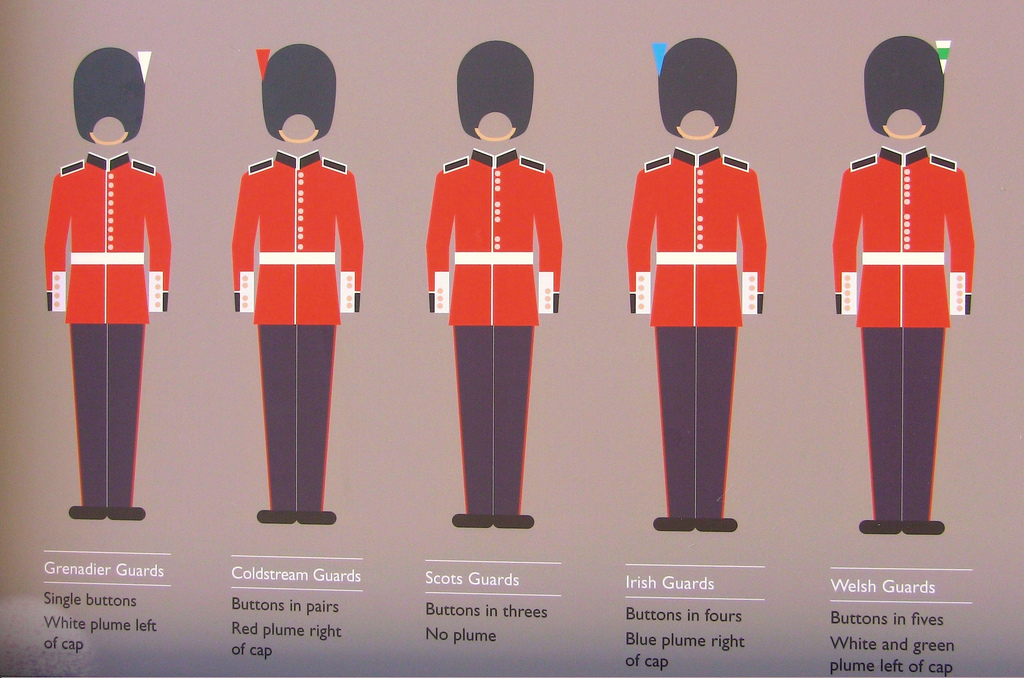
(The Queen has five regiments of foot guards, by the way.  The buttons in twos on his tunic—as well as the red plume on his fur cap—tell us that he belongs to the second regiment, the Coldstream Guards—here’s a chart so that you, too, can be able to tell them apart.)

image5guards

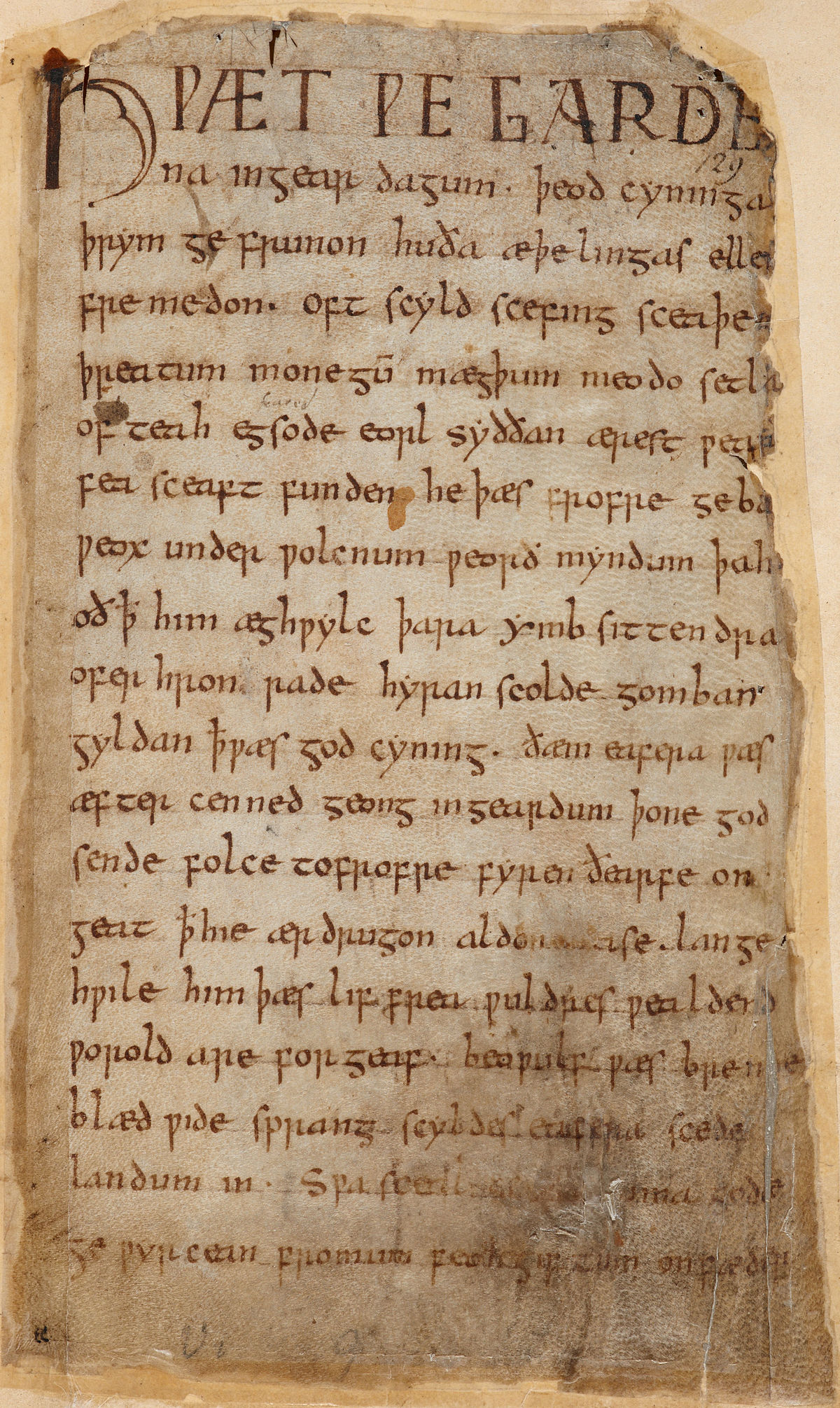
His scholarly experience would have added to this, particularly in his long-time study of Beowulf,

image6firstpage

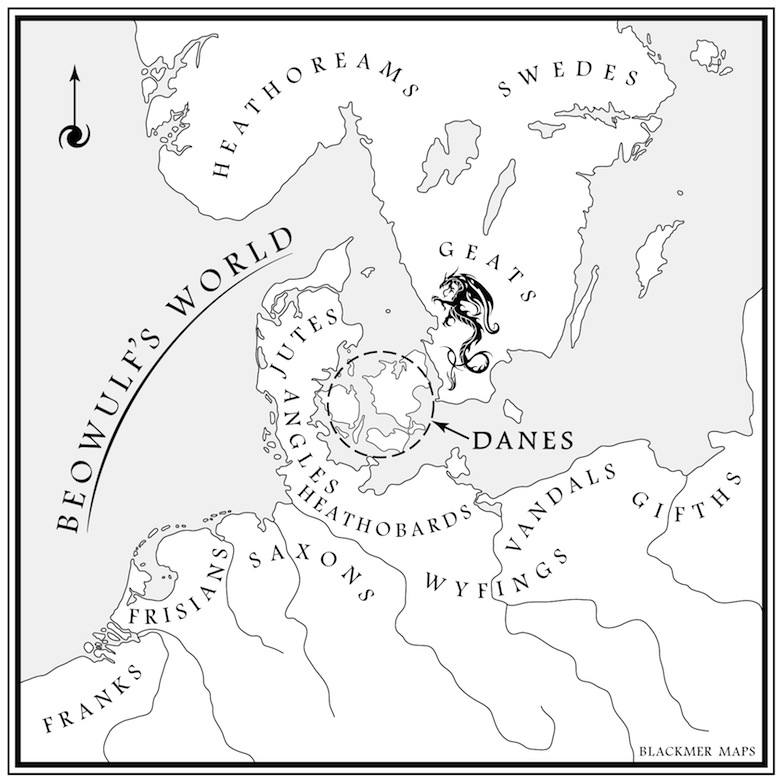
in which two such folk appear.  First, Beowulf and his companions encounter a kind of coast guard, when they cross from what is now southern Sweden to Denmark.

Print

On the shore, a Danish watchman

image8coastguard

challenges them:

“From rocks up above them
Hrothgar’s sentinel,
whose task was to guard
and patrol the sea-cliffs,
saw strangers who bore
stout battle-gear
and sturdy war-shields
striding down the gangplank;
he needed to know
who these newcomers were.
Mounting his horse
he made for the beach,
brandished his spear
and bluntly challenged
the foreign sailors
with formal words:
‘Who are you, you unknown
ironclad men,
alien troops
armed in mailcoats,
bringing your boat
from abroad, crossing
the sounding sea?’ “

(This is from Section III of  Dick Ringler’s 2005 translation, intentionally designed for recitation aloud.  Here’s the LINK to the full text.  If this is your first experience of the poem, we very much recommend that you visit the site and have a look—our students like the translation and the introductory material is very helpful.)

Beowulf’s response and the look of him and his men so impresses the coastguard that he not only lets them pass, but even says that he will detach someone to keep an eye on their boat while they’re moving inland to visit the king, Hrothgar.

At Hrothgar’s palace, however, they meet with a second guard:

“An eagle-eyed sentry
who stood in the doorway
studied them closely.
‘What country do you come from
with your curved shields,
your meshed war-shirts
and mask-helmets,
your iron spears?
I am the herald
of noble Hrothgar.
I have never seen
so bold or brave
a band of foreigners,
so it is less likely
that you are landless strays
than valiant adventurers
visiting my king.’ “

(from section V of the Ringler)

Again, the look of Beowulf and his men and Beowulf’s humble address persuades Wulfgar, the herald, to agree to take a message about them to Hrothgar—and Hrothgar tells us that he has had dealings long before with Beowulf’s father and remembers Beowulf, as well.

There are no coastguards in The Lord of the Rings, but Wulfgar bears a strong family resemblance to Hama, the Doorward of Theoden, when Gandalf, Aragorn, Legolas and Gimli come to Meduseld, but we’ll see more of him in the second part of our look at sentries in our next posting.

In the meantime, thanks for reading, as ever.

MTCIDC

CD


Thrones or Dominions (2)

07 Wednesday Nov 2018

Posted by Ollamh in Economics in Middle-earth, Imaginary History, J.R.R. Tolkien, Maps, Military History, Military History of Middle-earth

≈ Leave a comment

Tags

1984, Adolf Hitler, Barad-Dur, Benito Mussolini, Big Brother, Denethor, dictatorships, Elf Kingdom, Eye of Sauron, Gondor, Maiar, map, Middle-earth, Minas Tirith, Mouth of Sauron, Nazgul, Ornthanc, Rohan, Saruman, Sauron, Steward of Gondor, The Lord of the Rings, Theoden, Tolkien, Uruk-hai

As always, dear readers, welcome.

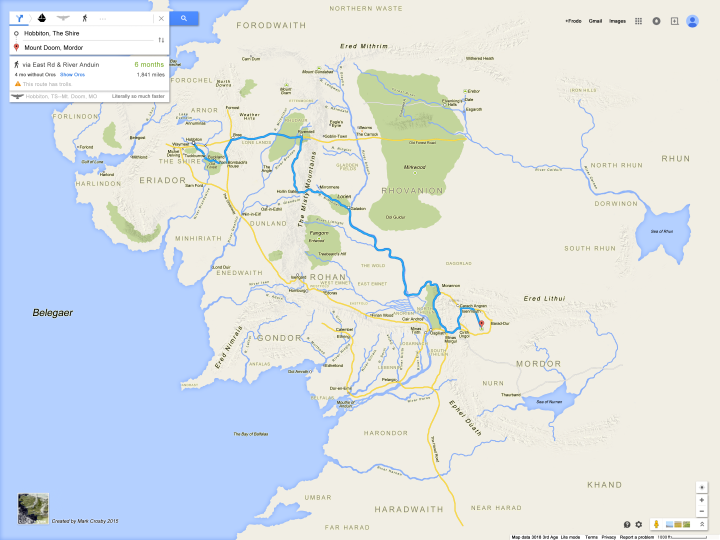
In our last, we began to discuss what we called the governments of Middle-earth at the time of the War of the Ring, making a kind of Grand Tour using the plot movement of The Lord of the Rings to loosely shape our itinerary.  (And here we’re borrowing from a witty idea, on a site called brilliantmaps.com, where we found “If Frodo and Sam had Google Maps of Middle-earth”.)

image1memap.png

Our first stop was the Shire, where we proposed that this was a “government by the few”:  that is, an oligarchy, a certain number of old and established families controlling the state.  From there, we moved on to Bree, where there was so little information that our best guess was that it, too, was probably an oligarchy, some sort of loose-knit one among—or perhaps uniting—the four villages which made up the general area.

Next, we grouped together what we suggested were two Elf kingdoms, Rivendell and Lorien, where Elrond and Galadriel (along with the nearly-invisible Celeborn), clearly were in charge, although neither would claim the title of monarch.

At our next stop, Isengard, Saruman,

image2orthanc.jpg

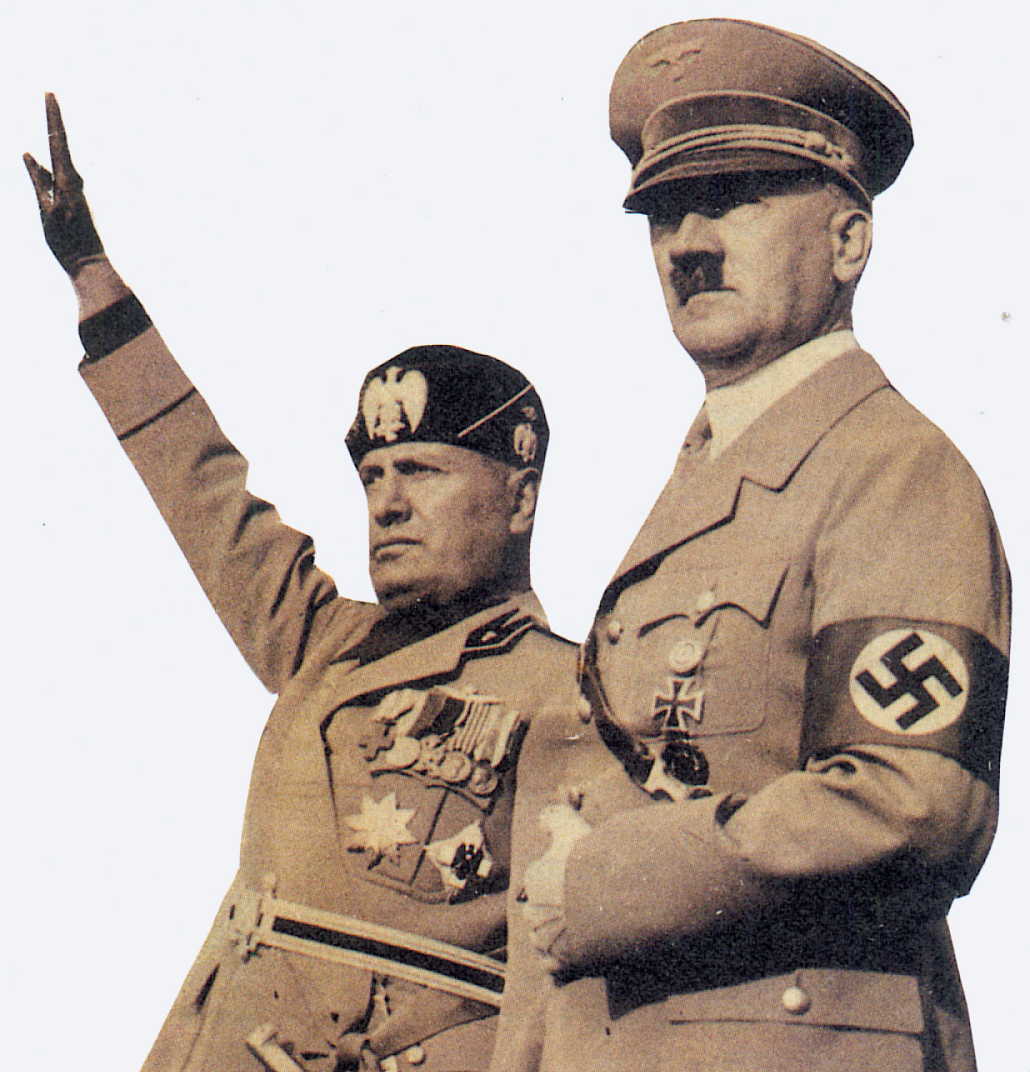
who had begun as one of the five Maiar sent to oppose the annoyingly-persistent Sauron, had moved from being what Gandalf called “the chief of my order” (The Fellowship of the Ring, Book One, Chapter 2, “The Shadow of the Past”), to being a kind of dictator—but one in the shadow of Sauron, just as Mussolini (1883-1945), who, from 1922, had been a model for such figures,

image3march.jpg

had fallen, by the later 1930s, into being the shadow of another, more powerful, dictator.

image4mushit.jpg

Like Elrond and Galadriel, he carries no title, but his captain, Ugluk, calls him “the Wise, the White Hand:  the Hand that gives us man’s-flesh to eat”, which probably tells us more than we want to know about his rule. (The Two Towers, Book Three, Chapter 3, “The Uruk-hai”)

We believe that this shadow may have been created by Saruman’s growing arrogance (which Gandalf points out to Frodo in “The Shadow of the Past”) combined with his overconfidence in using a palantir he has found in Orthanc and which puts him into communication with Sauron—and Sauron’s ability to seduce.

image5palantir.jpg

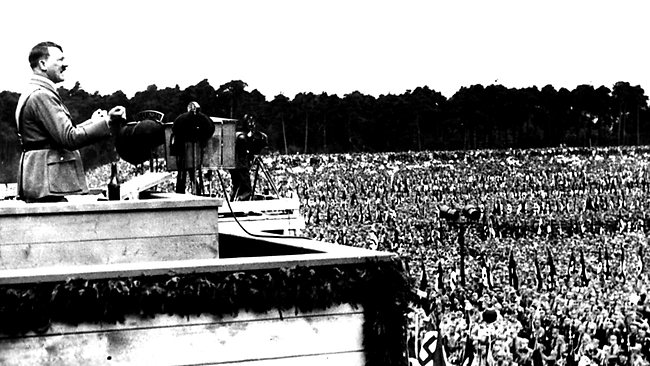
Sauron himself seems like the primal dictator, but a dictator before the 20th century, when dictators began to have a growing media world to employ to make themselves omnipresent in the lives of their citizens.

image6hitradio.jpg

image7hitmovie.jpg

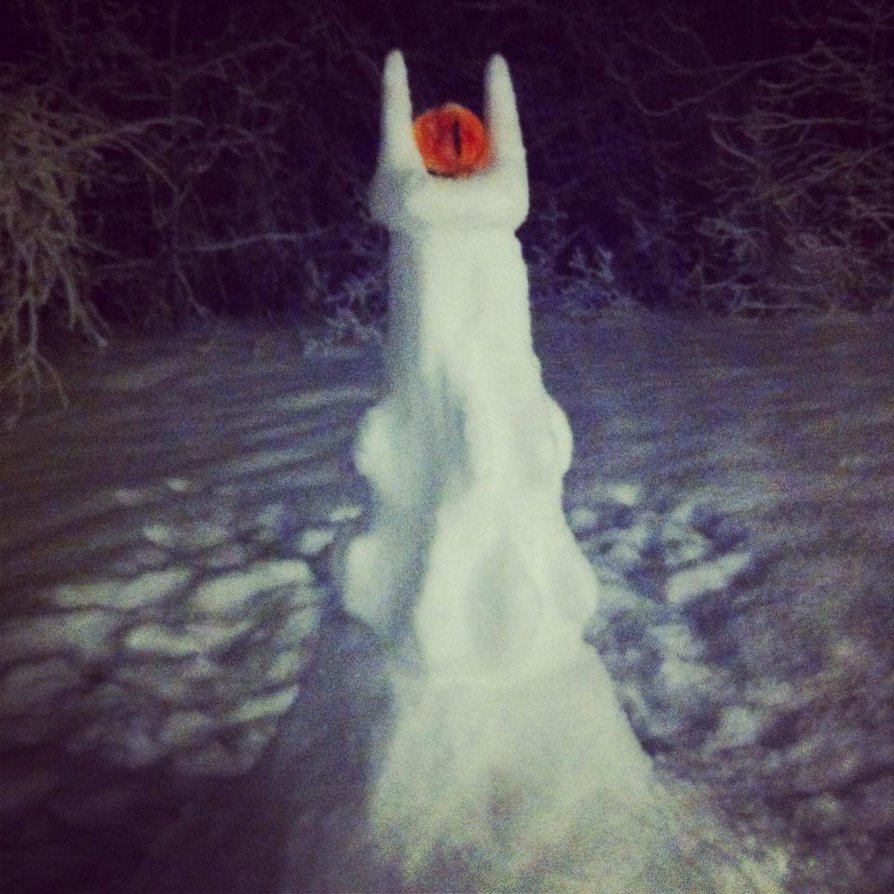
Instead, he’s  remote—sitting in the Barad dur, yet

image8baraddur.jpg

(and we can’t resist this image by “Rackthejipper”)

image9baradsnow.jpg

represented as being like 1984’s Big Brother, always watching.

image10bb.jpg

Or, as it is crudely represented in the Jackson films, literally a giant eye on a tower.

image11jack.jpg

When one thinks of modern dictators, however, one imagines them backed by huge bureaucracies, like the ministries in 1984:

“The Ministry of Truth–Minitrue, in Newspeak [Newspeak was the official

language of Oceania. For an account of its structure and etymology see

Appendix.]–was startlingly different from any other object in sight. It

was an enormous pyramidal structure of glittering white concrete, soaring

up, terrace after terrace, 300 metres into the air. From where Winston

stood it was just possible to read, picked out on its white face in

elegant lettering, the three slogans of the Party:


WAR IS PEACE

FREEDOM IS SLAVERY

IGNORANCE IS STRENGTH


The Ministry of Truth contained, it was said, three thousand rooms above

ground level, and corresponding ramifications below. Scattered about London

there were just three other buildings of similar appearance and size. So

completely did they dwarf the surrounding architecture that from the roof

of Victory Mansions you could see all four of them simultaneously. They

were the homes of the four Ministries between which the entire apparatus

of government was divided. The Ministry of Truth, which concerned itself

with news, entertainment, education, and the fine arts. The Ministry of

Peace, which concerned itself with war. The Ministry of Love, which

maintained law and order. And the Ministry of Plenty, which was responsible

for economic affairs. Their names, in Newspeak: Minitrue, Minipax, Miniluv,

and Miniplenty. (George Orwell, 1984, Chapter 1)


Instead, what we can see of Sauron’s government is much more medieval, beginning with the Nazgul, who were once human kings,

image12nazgul.jpg

who would be like the barons, the chief feudal deputies  of a king in a feudal world of the sort medieval England was and upon which much of Middle-earth, as we’ve suggested in many earlier postings, was based.  The chief of these was then the commander of Sauron’s main attack on Minas Tirith.

image13naz.jpg

To which we would add “the Voice of Sauron” (reminding us, of course, that he is only the spokesperson and Sauron would be presumed to have his eye on him, as well).  If you look for images of him, you will commonly find this:

image14jack.jpg

But, like certain other depictions in the Jackson films (that eye, for example), it is a very literal interpretation for someone JRRT described as:

“The rider was robed all in black, and black was his lofty helm; yet this was no Ringwraith but a living man…it is told that he was a renegade, who came of the race of those that are named the Black Numenoreans…” (The Return of the King, Book Five, Chapter 10, “The Black Gate Opens”)

Here’s an image possibility which comes a bit closer to the text, in our opinion.

image15lieutenant.jpg

From dictators, we make a final stop at two actual feudal  kings, the first, the ruler of Rohan, Theoden,

image16theoden.jpg

is clearly the descendant of earlier kings, as we are told in Appendix A, of The Lord of the Rings, “The Kings of the Mark”, where the line begins with Eorl the Young and continues for about five hundred years.

In the case of our other monarchy, Gondor, the kings who ruled for so many centuries (from SA3320 to TA 2050), have disappeared and, though the fiction is maintained that they will someday return, the actual ruler is their deputy, the Steward, and his role as lieutenant is symbolized literally by his position in the old throne room:

“At the far end, upon a dais [a kind of raised platform] of many steps was set a high throne under a canopy of marble shaped like a crowned helm; behind it was carved upon the wall and set with gems an image of a tree in flower.  But the throne was empty.  At the foot of the dais, upon the lowest step which was broad and deep, there was a stone chair, black and unadorned, and on it sat an old man gazing at his lap.”  (The Return of the King, Book Five, Chapter 1, “Minas Tirith)image17throne.jpg

At the same time, Denethor, and all of the previous Stewards, were kings in all but name, having ruled Gondor for twenty-five generations (see Appendix A, “The Stewards” for details).

So, in sum we have:

  1. 2 possible oligarchies (the Shire, Bree)
  2. 4 kingdoms (or at least sort of, in the case of the Elves—Rivendell, Lorien, plus Rohan and Gondor)
  3. 2 dictatorships (eastern Rohan, extending from Isengard, Mordor)

And, just when we were summarizing, the thought came to us:  what about the dwarves?  We can imagine that, considering Thorin’s family, there have been the equivalent of kings among the dwarves, but that’s a posting for another day!

Thanks, as ever, for reading.

MTCIDC

CD

A Power

25 Wednesday Apr 2018

Posted by Ollamh in J.R.R. Tolkien, Narrative Methods, Villains

≈ Leave a comment

Tags

Gandalf, Grima, Harry Potter, Isengard, Istari, Mini-Me, Mirkwood, Necromancer, Ornthanc, Palantir, power, Rings of Power, Rohan, Saruman, Sauron, The Council of Elrond, The Hobbit, The Lord of the Rings, Theoden, Tolkien, Voldemort, White Council, Wormtongue

Welcome, dear readers, as ever.

Some time ago, we did a post on Saruman as a “Mini-Me” version of Sauron

image1minime.jpg

but, since that time, one of us has used The Hobbit in a class.  Mirkwood

image2mirkwood.jpg

and the Necromancer

image3necromancer.jpg

came up and we began to think about him again, this time to consider his strategy:  how long has he been planning something and what might be the elements within that plan?

image4saruman.jpg

Although there is no hard evidence for just how long Saruman has been at work, it seems like his scheme has been under construction for at least 80 years.  We base that upon Gandalf’s description of the White Council’s meeting on the subject of Sauron and what to do when it’s discovered that he is in Dol Guldur, calling himself the Necromancer:

“Some, too, will remember also that Saruman dissuaded us from open deeds against him, and for long we watched him only.  Yet at last, as his shadow grew, Saruman yielded and the Council put forth its strength and drove the evil out of Mirkwood and that was in the very year of finding this Ring…”

(The Fellowship of the Ring, Book One, Chapter 2, “The Council of Elrond”)

Almost 80 years before the story of Bilbo and the Ring, then, it appears that one element in Saruman’s plot was shielding Sauron—a fact clearly not lost on Treebeard:

“He was chosen to be the head of the White Council, they say; but that did not turn out too well.  I wonder now if even then Saruman was not turning to evil ways.”

(The Two Towers, Book Three, Chapter 4, “Treebeard”)

From something Saruman says to Gandalf we might guess the obvious reason for helping Sauron to escape action by the White Council:

“A new Power is rising.  Against it the old allies and policies will not avail us at all.  There is no hope left in Elves and dying Numenor.  This then is one choice before you, before us.  We may join with that Power.  It would be wise, Gandalf.  There is hope that way.  Its victory is at hand; and there will be rich reward for those that aided it.”

(The Fellowship of the Ring, Book One, Chapter 2, “The Council of Elrond”)

But being a lackey to that Power is not quite his ultimate design, as we see:

“As the Power grows, its proved friends will also grow; and the Wise, such as you and I, may with patience come at last to direct its courses, to control it.  We can bide our time, we can keep our thoughts in our hearts, deploring maybe evils done by the way, but approving the high and ultimate purpose:  Knowledge, Rule, Order; all the things that we have so far striven in vain to accomplish…”

As is well-known, Saruman, as one of the Istari, was sent into Middle-earth as a counter to Sauron, not as an ally, and their purpose was:

“…coming in shapes weak and humble were bidden to advise and persuade Men and Elves to good and to seek to unite in love and understanding all those whom Sauron, should he come again, would endeavor to dominate and corrupt.”

(Unfinished Tales, 406)

Knowledge, yes, but Rule and Order?  Emphatically not!  But if that Power (and we note that even Saruman won’t just come out and say “Sauron” at this point, rather like the use of “He Who Must Not Be Named” in the Harry Potter books)

image5voldemort


can be used as a tool in Saruman’s hands—which may show us one element in his grand design.

First, however, it would seem that he needed a base.  As Treebeard tells Merry and Pippin:

“He gave up wandering about and minding the affairs of Men and Elves, some time ago—you would call it a very long time ago; and he settled down at Angrenost, or Isengard as the Men of Rohan call it.”

(The Two Towers, Book Three, Chapter 4, “Treebeard”)

image6orthanc


Saruman even then was already thinking of something, though the purpose was intentionally shrouded:

“There was a time when he was always walking about in my woods.  He was polite in those days, always asking my leave…and always eager to listen.  I told him many things that he would never have found out by himself; but he never repaid me in like kind.  I cannot remember that he ever told me anything.  And he got more like that; his face, as I remember it…became like windows in a stone wall:  windows with shutters inside.”

Although he was powerful, Saruman needed allies—or, rather, servants—and he wasn’t too particular who or what they were:

“He has taken up with foul folk, with the Orcs…Worse than that:  he has been doing something to them; something dangerous.  For these Isengarders are more like wicked Men.  It is a mark of evil things that came in the Great Darkness that they cannot abide the Sun; but Saruman’s Orcs can endure it, even if they hate it.  I wonder what he has done?  Are they Men he has ruined, or has he blended the races of Orcs and Men?  That would be a black evil!”

With the help of these servants, Saruman has turned his base into a factory and storehouse for his scheme, as Gandalf says:

“…it had once been green and fair, it was now filled with pits and forges.  Wolves and orcs were housed in Isengard, for Saruman was mustering a great force on his own account, in rivalry of Sauron and not in his service, yet.”

(The Fellowship of the Ring, Book One, Chapter 2, “The Council of Elrond”)

In fact, it would appear from what Saruman has told Gandalf, that he actually never intends to offer his service to Sauron.

From his base, he has been extending his own power into Rohan, in the south.  In his encounter with Aragon and his companions, Eomer says:

“But at this time our chief concern is with Saruman.  He has claimed lordship over all this land, and there has been war between us for many months.  He has taken Orcs into his service, and Wolf-riders, and evil Men, and he has closed the Gap against us, so that we are likely to be beset both east and west.”

(The Two Towers, Book Three, Chapter 2, “The Riders of Rohan”)

His attacks aren’t always military and Eomer hints at another possibility:

“His spies slip through every net, and his birds of ill omen are abroad in the sky.  I do not know how it will all end, and my heart misgives me; for it seems to me that his friends do not all dwell in Isengard.  But if you come to the king’s house, you shall see for yourself.”

We know that this is “fifth-column” work—Grima Worm-tongue, who has been slowly poisoning King Theoden with defeatism.

image7grima.png

And now we can see, in broad outline, what Saruman is up to:

  1. establish a base
  2. recruit an army
  3. build up an intelligence network (birds, spies, even wandering himself to pick up information)
  4. use your strength to expand power into the next land, Rohan
  5. at the same time undercut the King of Rohan’s ability to resist by subversive methods

So far, so good, as long as all that Saruman wants is to be the ruler of the land south of the Gap of Rohan and north of Gondor, but we’ve already seen that he’s more ambitious yet, suggesting to Gandalf that they—really he, as Gandalf knows—can take over that unnamed Power and use it for their—his– purposes, Knowledge, Rule, Order.  When he sees that Gandalf is unconvinced, Saruman lets slip the capstone of his scheme:

“Well, I see that this wise course does not commend itself to you…Not yet?  Not if some better way can be contrived?…And why not, Gandalf?  Why not?  The Ruling Ring?  It we could command that, then the Power would pass to us.”

And here is the real heart of Saruman’s design:  to obtain the One Ring.

He has been searching for it for a long time, even traveling to Minas Tirith to examine ancient records.

“In former days the members of my order had been well received there,” says Gandalf to the Council of Elrond, “but Saruman most of all.  Often he had been for long the guest of the Lords of the City.”

His purpose is now easy to guess.

Gandalf had been aware that Saruman had seemed to know a great deal about the Ring, even to its appearance, as Saruman had said to the White Council:

“The Nine, the Seven, and the Three had each their proper gem.  Not so the One.  It was round and unadorned, as it were one of the lesser rings; but the maker set marks upon it that the skilled, maybe, could still see and read.”

How had Saruman known that since, as Gandalf says, “What those marks were he had not said.  Who now would know?  The maker.  And Saruman?  But great though his lore may be, it must have a source.  What hand save Sauron’s ever held this thing, ere it was lost?  The hand of Isildur alone.”

Gandalf discovers the truth of this in the dusty records of Gondor:

“…there lies in Minas Tirith still, unread, I guess, by any save Saruman and myself since the kings failed, a scroll that Isildur made himself.”

And, with the discovery and reading of that scroll, Gandalf knows not only about much more about the Ring, but how Saruman knew about its appearance and now, in Orthanc, pressed by Saruman to join him, he understands the last element in Saruman’s design—and also why Saruman has summoned him:

“That is in truth why I brought you here.  For I have many eyes in my service, and I believe you know where this precious thing now lies.  Is it not so?  Or why do the Nine ask for the Shire, and what is your business there?”

So here, lacking only one element, the real element under all, is Saruman’s long plan—but lacking “this precious thing” (a telling phrase!), we will see how successful the rest will be.  Treebeard has said of him,

“He has a mind of metal and wheels; and he does not care for growing things, except as far as they serve him for the moment.”

What will happen when, without the Ring, Saruman will find that growing things, instead of serving him for the moment, might unseat him forever?

image8destruction.jpg

As always, thanks for reading!

MTCIDC

CD

Wormy

21 Wednesday Feb 2018

Posted by Ollamh in J.R.R. Tolkien, Military History, Military History of Middle-earth, Villains

≈ Leave a comment

Tags

Adolf Hitler, Bilbo, Dragon, Fifth Column, Gandalf, Germany, Grima, Madrid, Middle-earth, Nazis, Norway, Norwegian facist party, Republican government, Rohan, Saruman, Second World War, Smaug, Spanish Civil War, The Hobbit, The Lord of the Rings, The Scouring of the Shire, Theoden, Tolkien, traitor, Vidkun Quisling, William Blake, worm, Wormtongue

Welcome, as always, dear readers.
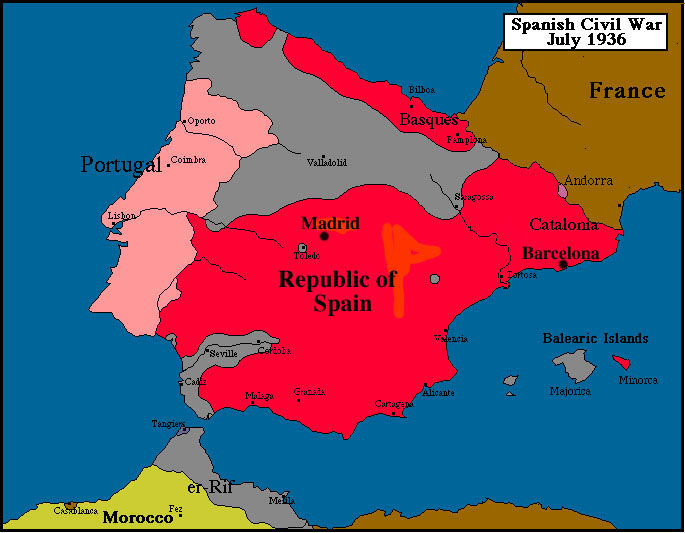
In 1936, the Nationalist forces were marching to attack the Republican government in Madrid, during the Spanish Civil War.
image1nationalists.jpg
image2attackonmadrid.jpg
When interviewed, a Nationalist general is reported to have said that, as four military columns were about to assault the city,
image3natattack.jpeg
a fifth column of loyalists would join the attack from inside.
image4natattack.jpg
This phrase “fifth column”, then, was picked up and began to be used world-wide to mean “traitors/betrayers from within” and was popular during the Second World War era.
image5thcol.jpg

When the Nazis attacked Norway in 1940,
image6nazislandinginnorway.jpg
and the Allies failed to defend their positions there successfully and were forced to surrender or flee
image7capturedtroops.jpg
a member of the small Norwegian fascist party, Vidkun Quisling,
image8quisling.jpg
declared himself ruler as the Germans marched in.
image9conqueringgermans.jpg

In time, the Nazis recognized him as the head of Norway and he even had an audience with Hitler.
image10hitandquis.jpg

This time, a specific “fifth columnist” had not only betrayed his country, but also profited greatly from it and, when we looked at the dates—1936 and 1940—we wondered, as we so often do, if the current events of our world may have colored JRRT’s relation of the events in Middle-earth—even as we hasten to say, as we always do, that this is just a suggestion.
In his first meeting with Aragorn, Eomer is troubled and his veiled comments suggest just the same sort of fifth-columnist action:
“But at this time our chief concern is with Saruman. He has claimed lordship over all this land, and there has been war between us for many months…”
His concern, however, as we see, is for more than border security, as he says of Saruman:
“His spies slip through every net, and his birds of ill omen are abroad in the sky. I do not know how it will all end, and my heart misgives me; for it seems to me that his friends do not all dwell in Isengard. But if you come to the king’s house, you shall see for yourself.” (The Two Towers, Book Three, Chapter 2, “The Riders of Rohan”)
So, all is not well, not only in Rohan, but in Meduseld itself. When Gandalf and the other survivors of the Fellowship arrive at the gates of Edoras, they are stopped by guards and by a command from Theoden, king of Rohan—or is it? A guard says:
“It is but two nights ago that Wormtongue came to us and said that by the will of Theoden no stranger should pass these gates.” (The Two Towers, Book Three, Chapter 6, “The King of the Golden Hall”)
“Wormtongue” seems a very odd name—do worms actually have tongues?
image11worm.JPG
But this isn’t a worm, it’s a “worm”—an old term for “dragon”.
image12smaug.jpg
And, if Smaug’s speech and its effect upon Bilbo is anything to go by:
“Bilbo was now beginning to feel really uncomfortable. Whenever Smaug’s roving eye, seeking for him in the shadows, flashed across him, he trembled, and an unaccountable desire seized hold of him to rush out and reveal himself and tell all the truth to Smaug. In fact he was in grievous danger of coming under the dragon-spell.” (The Hobbit, Chapter 12, “Inside Information”)
then a person having a dragon tongue might be a real threat, as Wormtongue, seated at Theoden’s feet,
image13theodenandgrima.jpg
inserts himself between Gandalf and Theoden:
“Why indeed should we welcome you, Master Stormcrow? Lathspell I name you, Ill-news; and ill news is an ill guest they say.”
Gandalf immediately resists this and, in a burst of power, breaks the real “spell”—the dragon’s words which Grima Wormtongue has been pouring into Theoden’s ears, as Theoden says to him of Gandalf’s efforts: “If this is witchcraft…it seems to me more wholesome than your whisperings. Your leechcraft [that is, “medical skill”—obviously ironic here] ere long would have had me walking on all fours like a beast.”
[A footnote here—is JRRT making a quiet reference to the fate of Nebuchadnezzar, king of Babylon, mentioned in the book of Daniel in the Old Testament? In Chapter 4, the king is driven mad and spends seven years as a grazing animal to prove the power of the Hebrew divinity. Here is William Blake’s (1757-1827) striking depiction of the mad king.]
image14blake.jpg

Certainly something Grima has been doing has affected Theoden, as he is initially described as “a man so bent with age that he seemed almost a dwarf…” and this shrinking is suddenly reversed when Gandalf strikes Grima down:
“From the king’s hand the black staff fell clattering on the stones. He drew himself up, slowly, as a man that is stiff from long bending over some dull toil. Now tall and straight he stood, and his eyes were blue as he looked into the opening sky.”
For all that Grima has been blocked and Theoden restored, the fifth columnist tries once more. When he is told that he must ride with the king and his warriors to battle, he makes a countersuggestion:
“One who knows your mind and honours your commands should be left in Edoras. Appoint a faithful steward. Let your counsellor Grima keep all things till your return…”
But he gives himself away by finishing that sentence with “and I pray that we may see it, though no wise man will deem it hopeful.”
And Gandalf sees all too clearly what is behind Grima’s proposal—and who is behind it:
“Down, snake!…Down on your belly! How long is it since Saruman bought you? What was the promised price?…”
image15fallofgrima.jpg

Although it is said that Grima deserves death for his treachery, he is allowed to flee, and, when we next see him, he is with his true master, acting as his “footman” as Gandalf calls him (The Two Towers, Book Three, Chapter 10, “The Voice of Saruman). And here, as Bilbo’s pity has preserved Gollum for an unseen but vital part in the later story of the Ring, so Gandalf’s mercy to Grima preserves him for two final acts: first, his mistaken use of a palantir as a missile, which puts it into Gandalf’s hands and, ultimately into Aragorn’s, who shakes Sauron’s nerve with it; second, Saruman’s ultimate end:
“[Saruman] kicked Wormtongue in the face as he groveled, and turned and made off. But at that something snapped: suddenly Wormtongue rose up, drawing a hidden knife, and then with a snarl like a dog he sprang on Saruman’s back, jerked his head back, cut his throat, and with a yell ran off down the lane.” (The Return of the King, Book Six, Chapter 8, “The Scouring of the Shire”)
image16deathofsaruman.jpg
Grima doesn’t survive this attack, however: “Before Frodo could recover or speak a word, three hobbit-bows twanged and Wormtongue fell dead.”
Merry calls these final acts of violence “the very last end of the War”, but we would suggest a parallel with a specific event in our world: the end of Vidkun Quisling–executed by firing squad in October, 1945, for treason. Could we say that Grima’s death—deserved earlier, but deferred—was also a kind of execution for treason, against Rohan, finally carried out?
And a final thought: after World War 2, Quisling’s name became, for a time, an easy synonym for “fifth columnist/traitor”—could we imagine that, in the Common Speech of Middle-earth after the War of the Ring, the same might have happened to “Grima Wormtongue”?
Thanks, as ever, for reading.
MTCIDC
CD

Crowning Achievement

20 Wednesday Sep 2017

Posted by Ollamh in Artists and Illustrators, J.R.R. Tolkien, Literary History, Narrative Methods

≈ Leave a comment

Tags

Alexander the Great, Alice in Wonderland, Barrow-downs, Barrow-wights, Bayeux Tapestry, Brunhilde, Charlemagne, Cheshire Cat, circlet, Cleopatra VII, diadem, Egypt, Egyptian crowns, Elightenment France, Eowyn, French Revolution, Gondor, Gondorian crown, Greek, Greek coins, Hildebrandts, Imperial Crown of the Holy Roman Empire, Julius Caesar, Lupercalia, Marcus Antonius, Medieval, Napoleon I, Nazgul, Octavian Augustus, Pharoahs, Philip II, Pontifex Maximus, Ptolemy I, Queen Elizabeth I, Queen Elizabeth II, Queen Victoria, Richard Wagner, Rohan, Romans, Tenniel, The Lord of the Rings, Theoden, Tolkien, William Shakespeare, Witch-King of Angmar, wreaths

Welcome, dear readers, as ever.

Recently, one of us was lecturing on ancient Egypt, a country of two lands, in fact, Upper and Lower, and each could be represented in the crown worn by the pharaoh.

image1crownsof-egypt.jpg

Within in blink, we began to think about JRRT’s illustration of the traditional crown of Gondor,

image2jrrtcrown.jpg

of which Tolkien says:

“I think that the crown of Gondor (the S. Kingdom) was very tall, like that of Egypt, but with wings attached, not set straight back but at an angle.

The N. Kingdom had only a diadem (III 323).  Cf. the difference between the N. and S. kingdoms of Egypt.”

(Letters, letter to Rhona Beare, 10/14/58, 281)

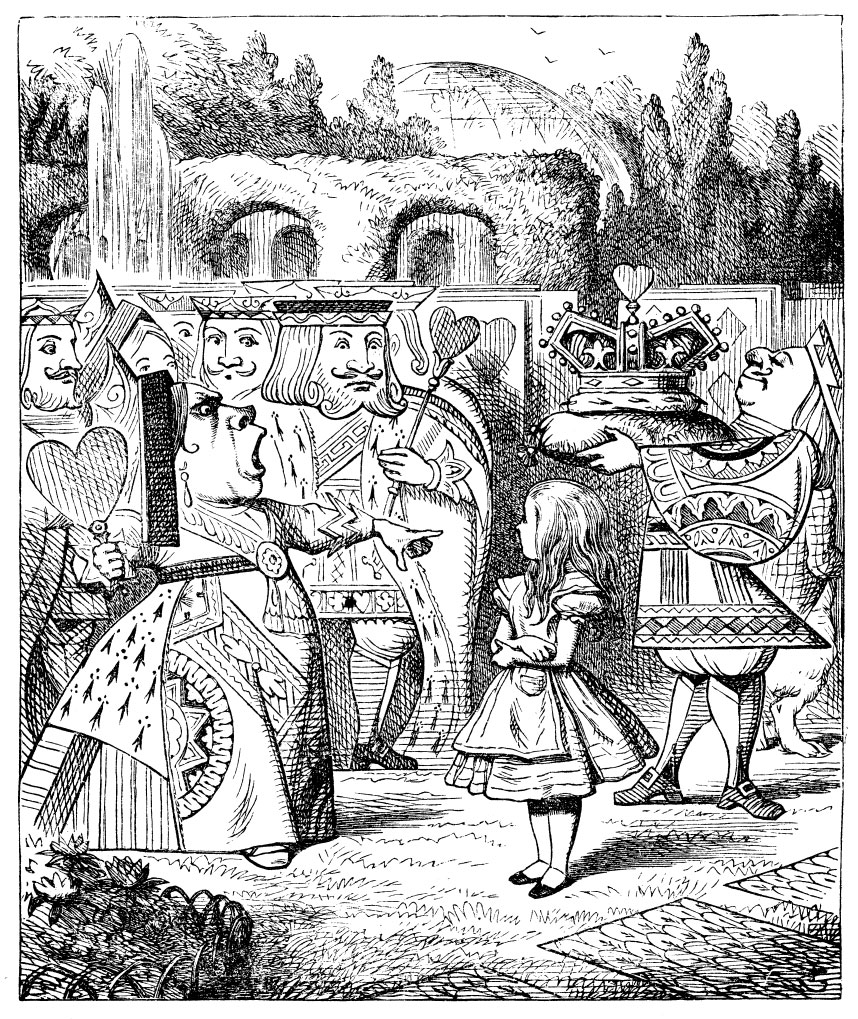
For us, the first crown we believe we ever saw as children was either one in an illustrated fairy tale (here’s a Tenniel illustration from Alice)

image3atenniel.jpg

or the actual one of Queen Elizabeth II, and that hardly fits JRRT’s idea about the southern crown—or the northern one

image3er2.jpg

or that of her ancestor, Queen Victoria

imaage4vr.jpg

or that of their distant ancestor, Elizabeth I.

image5er1.jpg

When we think of a “diadem”, however, we are reminded of the earliest western European crowns, which, in contrast to Elizabeth’s, is barely there at all.

Here is the first type of crown we know of being depicted—it’s that “diadem” in a Greek form, being on a coin of Philip II, King of Macedon and father of Alexander the Great (the reverse—the back side—the front side is called the “obverse”—shows Philip’s Olympic victory horse and Philip’s name in the genitive—possessive—case, “of Philip”—showing not only possession of the horse, but of the victory, of the coin, and, by implication, the right to issue coins).


This became a regular pattern, both of coin and of crown for those who followed Philip, and, thinking about Philip’s victory, we can imagine that the original of the crown was based upon the wreath athletic game victors wore.


And coins like Philip’s set the pattern for classical coins—and crowns—for centuries.  Here’s the crown pattern on the head of Ptolemy I, one of Alexander’s generals.


At Alexander’s death, Ptolemy seized Egypt, making it a family possession for the next nearly three hundred years, all the way down to his greatgreatgreat etc granddaughter Cleopatra VII.

image9cleo.jpg

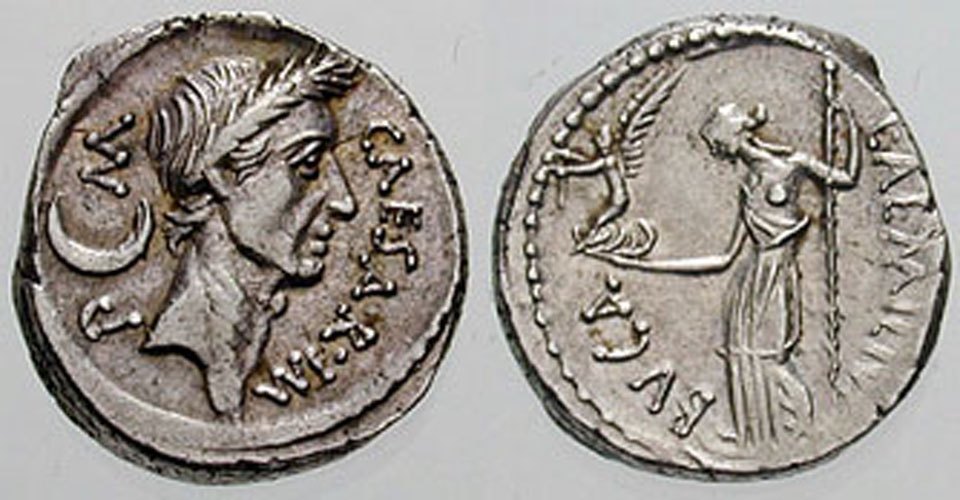
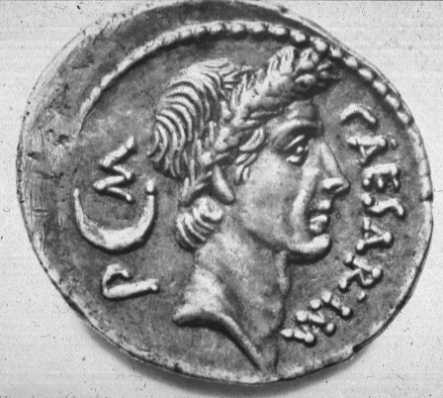
The pattern was not confined to Greece or Egypt, however—Julius Caesar wore something similar—

CaesarCoin_Wikipedia_960.jpg

although, unlike Ptolemy and other such rulers, Caesar might have hoped to muddy people’s perceptions of what such a thing symbolized and what position (dictator for life) he’d forced the Senate to give him.   Rome had hated monarchs, after all, since they’d kicked out their last king 450 years before.

(And see Act I, Sc.2 of Shakespeare’s Julius Caesar in which, at the festival of the Lupercalia, Marcus Antonius publically offers him a crown and Caesar rejects it, much to the loud delight of the mob.)

In the Greco-Roman world, wreaths had many purposes:  besides Greek kings and winners at games, people at parties and weddings and other festive occasions wore them, as well as celebrants at religious rites.

image12symposium.jpg

Perhaps Caesar hoped that, appearing in one, he might appear less like a Hellenistic king and more like anything from an Olympic victor or party-goer to a priest (he was Pontifex Maximus, head of religion in Rome, so there was a certain credibility to the latter).

image13pm.jpg

Malicious people in Rome also suggested another reason for the wreath:  Caesar was sensitive about his thinning hair.

image14jc.jpg

Caesar’s grandnephew and successor, Octavian/Augustus, continued the tradition,

Augusts-in-Ancient-Roman-Cameo.jpg

as did following emperors for several centuries—and even Charlemagne, hundreds of years after the last western emperor, revived it.

image16charlemagne.jpg

At some point, just after Charlemagne’s time or thereabout (c1000ad), a new pattern appeared, which you can see in the famous “Imperial Crown of the Holy Roman Empire”.

image17impcrown.jpg

Instead of a wreath, this was a built-up circlet, with lots of “bits and bobs” on top.

This newer look persisted in various more or less complicated forms in the west for centuries

image18king.jpgimage19king.jpgimage20king.jpgimage21king.jpg

and seems to underlie the crowns seen in more recent times (often with what appears to be a red velvet balloon in the middle).

image22er1.jpgimage23chas2.jpgimage24geov.jpg

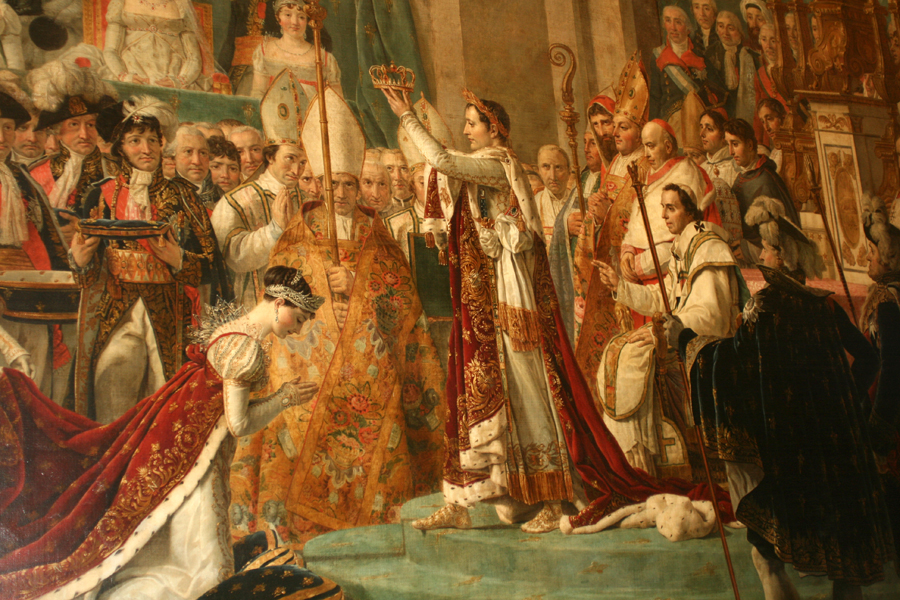
There is a throwback, however:  Napoleon I.  He had grown up in Enlightenment France, in a world which idealized classical learning and art, and so, when he made himself emperor in 1804, his model wasn’t medieval and Germanic, but Augustine.

image25agus.jpg

image25nappy.jpg

This doesn’t mean that he wasn’t aware of that other model and he would have used it—the so-called “crown of Charlemagne”–at his self-coronation

image26napcoron.jpg

had it not suffered the fate of many medieval treasures and been destroyed during the French Revolution (the famous Bayeux Tapestry was almost converted to wagon covers by revolutionaries).  In fact, a “crown of Charlemagne” did turn up for the ceremony—“recreated” by a clever Paris jeweler.

image27charlcrown.jpg

[A footnote about the coronation.  In the painter David’s sketches for it, he shows the pope (Pius VII) with his hands in his lap.

image28pope1.jpg

Napoleon saw the drawing and said to David that the pope should be blessing the occasion—after all, that’s why Napoleon had dragged him all the way from Rome.  David redid his sketch, of course!]

image29pope2.jpg

Beyond the Crowns of Gondor, most of the crowns seen in The Lord of the Rings are described as “circlets”—

  1. Sam, Merry, and Pippin, laid out in the barrow:

“About them lay many treasures of gold maybe, though in that light they looked cold and unlovely.  On their heads were circlets, gold chains were about their waists, and on their fingers were many rings.”(The Fellowship of the Ring, Book One, Chapter 8, “Fog on the Barrow-Downs”)

image30barrow.jpg

  1. Theoden:

“Upon it sat a man so bent with age that he seemed almost a dwarf; but his white hair was long and thick and fell in great braids from beneath a thin golden circlet set upon his brow.” (The Two Towers, Book Three, Chapter 6, “The King of the Golden Hall”)

image31theoden.jpeg

But there is one which, well, looking at the various illustrations of its wearer, reminds us of Alice’s comment upon the Cheshire Cat:

“Well! I’ve often seen a cat without a grin…but a grin without a cat!  It’s the most curious thing I ever saw in my life!” (Alice’s Adventures in Wonderland, Chapter 6, “Pig and Pepper”)

image32cheshirecat.jpg

On the Fields of the Pelennor, a “great shadow descended like a falling cloud.  And behold! It was a winged creature.”

This might be bad enough, but:

“Upon it sat a shape, black-mantled, huge and threatening.  A crown of steel he bore, but between rim and robe naught was there to see, save only a deadly gleam of eyes:  the Lord of the Nazgul.” (The Return of the King, Book Five, Chapter 6, “The Battle of the Pelennor Fields”)

image33eonaz.jpg

We are aware of at least half-a-dozen professional renderings of this scene (and we plan to discuss them all in a future post), but it seems to us that those eyes, seeming to float in space, make it extremely difficult to illustrate it, no matter what crown—simply described as “steel”—he’s wearing.  And that brings us back to our original crown.  As JRRT described it:

“It was shaped like the helms of the Guards of the Citadel, save that it was loftier, and it was all white, and the wings at either side were wrought of pearl and silver in the likeness of the wings of a sea-bird, for it was the emblem of kings who came over the Sea; and seven gems of adamant were set in the circlet, and upon its summit was set a single jewel the light of which went up like a flame.” (The Return of the King, Book Six, Chapter 5, “The Steward and the King”)

If his drawing (seen at the beginning of this post) is what he had in mind, then the only professional illustration we’ve seen of it, by the Hildebrandts, is only an approximation.

image34coronation.jpg

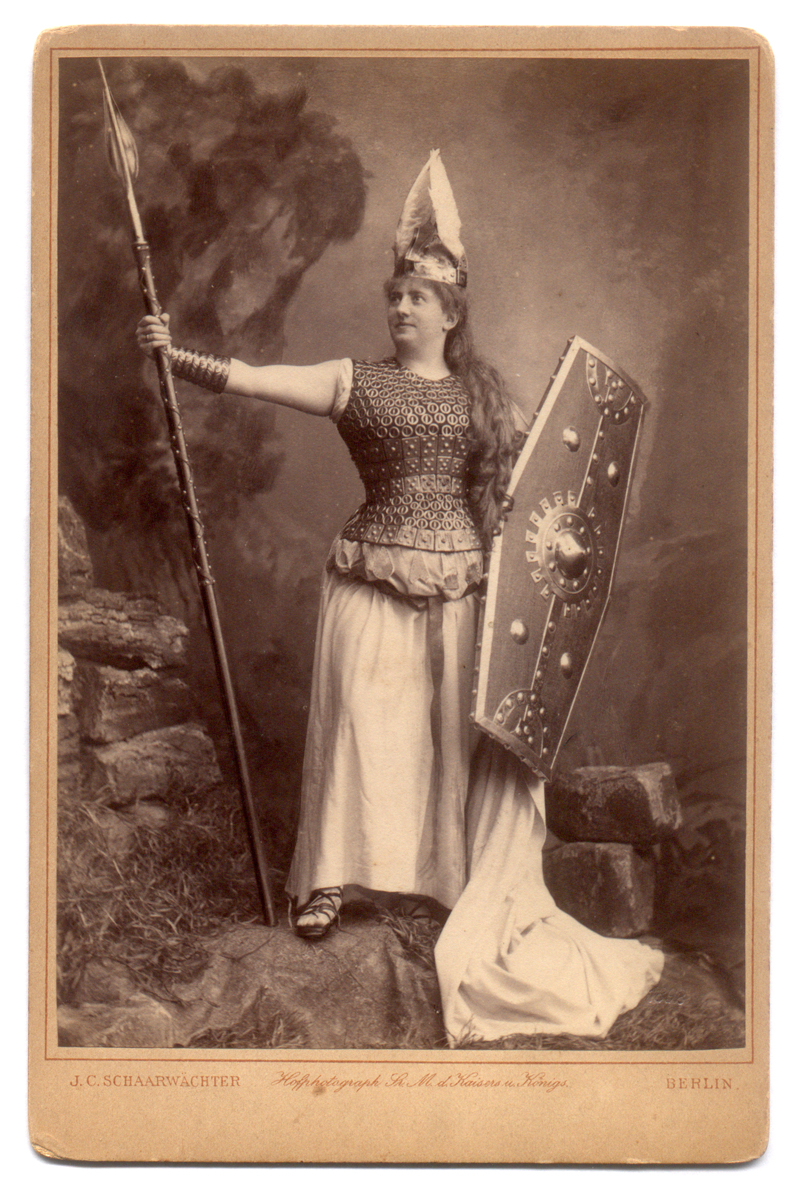
And, in fact, reminds us all-too-easily of Brunhilde, the Walkuere, from Wagner’s operas.

image35brunhilde.jpg

If illustrators as good as the Hildebrandts struggle, this must be a tough one.  The designers of the P. Jackson films are even farther away from the original, as so often.

image36aragorn.jpg

Here, however, we have some sympathy!  Somehow the medieval world of Middle-earth can not easily assimilate an Egyptian artifact.  And so, we suspect that they thought “circlet” and “wings” and left it there.  What do you think, readers?  How do you imagine the crown?

Thanks, as ever, for reading.

MTCIDC

CD

A Country for Old Men—and Old Men for a Country

11 Wednesday May 2016

Posted by Ollamh in Fairy Tales and Myths, J.R.R. Tolkien, Literary History

≈ Leave a comment

Tags

Apollonius, Aragorn, Argo, Blue Wizards, Denethor, Faramir, Gandalf and the Balrog, Grey Havens, Heracles, Hildebrandts, Hylas, Istari, Jason and the Golden Fleece, Merlin, Radaghast, sage, Saint Nicholas, Saruman, Sharkey, The Argonautica, The Fantastic Four, The Lord of the Rings, Theoden, Tiresias, Tolkien, Valar, W.B.Yeats

Dear readers, welcome, as always.

Recently, we wrote a posting about Saruman and his fate. It was fun to think about, but it made us think further about why Saruman, in the Shire, is called “Sharkey” by his thugs—supposedly from Orcish sharku, “Old Man”. If we had never read a description of Saruman, but only the nickname, we might think of “the old man” either as an older Anglo-American expression either for a father—“my old man keeps nagging me about cutting the grass, if I want my allowance” (note the use of the possessive “my”)—a naval/military term for commander—“the old man said that, on his ship, smoking would never be allowed again” (always without the possessive)—or older English for husband—“her old man is fooling around behind her back—I hope she turns around!” (again, with a possessive).

In fact, Saruman is, literally, an old man

greg-hildebrandt-isengard-orthanc-saruman-607429-1300x962.jpg

—as are all five of the Istari, the wizards sent to Middle-earth by the Valar about the year 1000 of the Third Age. As JRRT says in a letter to Robert Murray, S.J. (there’s a surviving draft on pages 200-207 of The Letters of J.R.R. Tolkien):

“They are actually emissaries from the True West, and so mediately from God, sent precisely to strengthen the resistance of the ‘good’, when the Valar become aware that the shadow of Sauron is taking shape again.” Letters, 207

He further explains their role:

“At this point in the fabulous history the purpose was precisely to limit and hinder their exhibition of ‘power’ on the physical plane, and so that they should do what they were primarily sent for: train, advise, instruct, arouse the hearts and minds of those threatened by Sauron to a resistance with their own strengths; and not just to do the job for them.” 202

JRRT could have chosen a different path, of course, and created a plot in which there was constant, open war between the wizards and Sauron, and there is mention of war of some sort, as, during the time of The Hobbit, the White Council drives “the Necromancer” out of Dol Goldur in the southern part of Mirkwood. It’s not said how, but no army is mentioned, so we presume that it was done by magic against magic (on the subject of magic, see JRRT in the letter previous to the one to Murray, Letters, 199-200).

We wonder if, in choosing to limit the wizards’ power, Tolkien made the same choice which Apollonius of Rhodes (3rd century BC) made in his version of the story of Jason and the Golden Fleece, The Argonautica. If you don’t know this story, the shortest way to explain it is to say that Jason’s wicked uncle has stolen the throne which rightfully belongs to Jason and, in an effort to make Jason disappear, his uncle has sent him off on what he hoped was a suicide mission. That mission was to bring back a magical golden fleece from the far side of the Black Sea (at the time, this would have been like a mission to Mars). To help him, Jason summons heroes from across the Greek world.

Unfortunately for Apollonius, the traditional story on which his epic is based had, over time, gradually come to include every hero from ancient Greece on Argo,

The_Argo.jpg

This means that Heracles had to be asked to join, but there is a big difficulty in including Heracles: he’s so powerful that he could do the job all by himself.

Krater_Niobid_Painter_A_Louvre_G341.jpg

Apollonius was extremely scrupulous, as far as we can tell, in following tradition, so he finds a way out. He puts Heracles’ bff, Hylas, on board the ship, then, at a watering spot, has the boy lured away by some randy water nymphs.

hylas_and_the_nymphs.waterhouse1896.jpg

When Heracles goes off to find the boy, the ship leaves without him and the problem is solved. (Although Apollonius chooses to ignore the fact that the ship is still absolutely crammed with the ancient equivalent of The Fantastic Four. We suppose that, for him, Heracles was the only really major hero.)

fantasticfour.png

Thus, we can imagine that Tolkien, believing that he could create a more interesting (and longer?) story without too much magic, has, in general, limited the wizards not in their power, but in the use of it. (There are exceptions, of course—we immediately think of Gandalf and the Balrog, for instance.)

balroggandalf.jpg

The wizards do not just have the shape of men, however, but old men—“Thus they appeared as ‘old’ sage figures” (Letters, 202).

The word “sage” here is definitely one element in Tolkien’s choice for his characters. There is a world-wide tradition that old men are wise men—think of the ancient Greek seer Tiresias, for example—

Johann_Heinrich_Füssli_tiresias.jpg

or the Arthurian Merlin

vivien-and-merlin-by-gustave-dore-cc.jpg

or Father Christmas/Santa Claus.

FatherChristmas.JPG

We wonder whether there might also be the idea that, dramatically, older rulers, like Theoden

theoden.jpg

And Denethor

hildebrandtdenethor.jpg

might be more inclined to listen to such a person (although we notice that the corrupted Denethor is less than willing).

And, that younger men like Aragorn

Image result for hildebrandts aragorn

and Faramir

Tim Hildebrandt - Faramir rencontre Frodon et Sam (2).jpg

would see them as mentors.

kingreturn.jpg

And, as the Istari have been sent by the Valar, the last act on Gandalf’s part, as depicted in this Hildebrandt twins’ painting, has special significance, suggesting that, Aragorn has been given the throne with divine approval and, with his crowning, Sauron has been completely defeated and balance has been restored, even if only temporarily, to Middle-earth.

When this has been accomplished, Gandalf is then allowed to “retire”, as we seem to expect old men to do in our world (and as Tolkien himself did, in 1959), going to the Grey Havens and a final journey back to the West.

greg_tim_hildebrandt_at_the_grey_havens.jpg

We hear nothing more of Radagast and the two so-called “Blue Wizards”, but, Saruman also leaves Middle-earth—though not in Gandalf’s gentle way. And perhaps his end, shabby and disgraced, also shows a kind of divine approval: those given power must not abuse it, for the consequences not only to the world around them, but to them, can be fatal.

Thanks, as always, for reading.

MTCIDC

CD


PS

Our title is an adaptation of the first line of W.B. Yeats’ gorgeous poem, Sailing to Byzantium (first published in 1928). Although it has nothing to do with Middle-earth, it does depict a strange, magical place.

wby.jpg

Armistice and Simbelmyne

11 Wednesday Nov 2015

Posted by Ollamh in J.R.R. Tolkien, Military History, Military History of Middle-earth

≈ Leave a comment

Tags

Allies, armistice, Armistice Day, barbed wire, Belgium, Christmas Truce of 1914, Eisenhower, Evermind, flamethrowers, France, German Government, Guy Fawkes Day, John McCrae, machine gun, maxim gun, military, military rifle, Paris, poisoned gas, poppies, Remembrance Day, Simbelmyne, tank, The Lord of the Rings, Theoden, Tolkien, truce, Veterans' Day, Western Front, Woodrow Wilson, Word War I, WWI Trenches

Dear Readers,

Welcome, as always.

“At the foot of the walled hill the way ran under the shadow of many mounds, high and green. Upon their western sides the grass was white as with drifted snow: small white flowers sprang there like countless stars amid the turf.

‘Look!’ said Gandalf. ‘How fair are the bright eyes in the grass! Evermind they are called, simbelmyne in this land of Men, for they blossom in all seasons of the year, and grow where dead men rest. Behold! we are come to the great barrows where the sires of Theoden sleep.’ “ (The Two Towers, Book 3, Chapter 6, “The King of the Golden Hall”)

simbelmynemounds

Like our bonus posting last week, for Guy Fawkes Day, this one is tied to a specific day, now called “Veterans’ Day” in the US, and “Remembrance Day” by our linguistic cousins around the world.

November 11th here was originally called “Armistice Day” when it was first declared by Woodrow Wilson in 1919. The change to “Veterans’ Day” came in 1954, but, to us, it would be good if it had remained as it was, both its name and what it commemorated, and President Eisenhower had chosen to add another holiday to the calendar, instead.

The armistice was, of course, the truce which marked the beginning of the end of World War I, the date and time—the 11th hour of the 11th day of 1918—agreed upon by commissions of the Allies and the Imperial German government who met in a railway car outside Paris in early November, after over a month of on-again-off-again negotiations. This was only a truce—the actual peace treaty was not agreed upon and didn’t come into effect until 10 January, 1920—but it did stop the fighting in the west almost immediately.

Armisticetrain_(slight_crop) Waffenstillstand_gr

The war to which it gave a permanent pause had been appalling in its losses: over 17 million people had been killed and 20 million wounded and the weapons used to kill 11 million soldiers had gone from the ordinary military rifle to the machine gun to barbed wire to poisoned gas to flamethrowers to the tank—and that was just on land.

Short_Magazine_Lee-Enfield_Mk_1_(1903)_-_UK_-_cal_303_British_-_Armémuseum

gassed

barbedwire

1280px-Sargent,_John_Singer_(RA)_-_Gassed_-_Google_Art_Project

flamethrower-10215292

tank-wire

In the process, it had driven men to dig 500 miles of trenches on the Western Front, where they lived a life of perpetual misery.

_77694555_sommetrench

Thus, the news, even of a truce, was the best of news to soldiers and civilians on both sides.

armistice

The price for that truce and for the eventual peace was almost too much to bear: all over northern France and southern Belgium seemingly endless, but necessary, cemeteries had gradually sprung up and, with the coming of peace, had been rationalized and formalized so that they looked like militarized civilian graveyards. To visit that area today is to understand, in some small way, what a horror that war was for those caught in it. And this is just the Western Front: there are many more burial places to be.

zonnebeke.passendale.tynecot.air_.dkv_

In 1921, people in the US began to wear little artificial poppies as a symbol of remembrance on 11 November and the custom was adopted abroad and still continues in Canada and Britain, at least. It is said that the custom was inspired by this poem, written by a Canadian soldier on the Western Front, John McCrae, in 1915. He had noted that poppies seemed to grow more quickly on ground which had been freshly turned—in the fighting and in the burials afterwards. And the image of the flowers, bright red as fresh blood, scattered across the fields was too powerful for a poet not to use, particularly a soldier-poet.

In_flanders_field_poppy_thumb

We here at Doubtful Sea want to commemorate all of the soldiers on both sides in this posting and wish that the famous Christmas Truce of 1914 had seen the end of the war, instead of four years and millions of deaths later.

Christmas-Day-Truce

And we offer, as Tolkien fans, not only the poppy, but the Evermind, the Simbelmyne, in remembrance.

Processed by: Helicon Filter; simbelmyneflower

Thanks, as always, for reading.

MTCIDC

CD

← Older posts

The Doubtful Sea Series Facebook Page

The Doubtful Sea Series Facebook Page

  • Ollamh

Categories

  • Artists and Illustrators
  • Economics in Middle-earth
  • Fairy Tales and Myths
  • Films and Music
  • Games
  • Heroes
  • Imaginary History
  • J.R.R. Tolkien
  • Language
  • Literary History
  • Maps
  • Medieval Russia
  • Military History
  • Military History of Middle-earth
  • Narnia
  • Narrative Methods
  • Poetry
  • Research
  • Star Wars
  • Terra Australis
  • The Rohirrim
  • Theatre and Performance
  • Tolkien
  • Uncategorized
  • Villains
  • Writing as Collaborators
Follow doubtfulsea on WordPress.com

Across the Doubtful Sea

Recent Postings

  • (Not) Crossing Bridges December 3, 2025
  • On the Road(s) Again—Again November 26, 2025
  • On the Road(s) Again November 19, 2025
  • To Bree (Part 2) November 12, 2025
  • To Bree (Part 1) November 5, 2025
  • A Plague o’ Both—No, o’ All Your Houses! October 29, 2025
  • It’s in Writing (2:  I’st a Prologue, or a Poesie for a Ring?) October 22, 2025
  • It’s in Writing (1) October 15, 2025
  • King Trotter? October 8, 2025

Blog Statistics

  • 102,469 Views

Posting Archive

  • December 2025 (1)
  • November 2025 (4)
  • October 2025 (5)
  • September 2025 (4)
  • August 2025 (4)
  • July 2025 (5)
  • June 2025 (4)
  • May 2025 (4)
  • April 2025 (5)
  • March 2025 (4)
  • February 2025 (4)
  • January 2025 (5)
  • December 2024 (4)
  • November 2024 (4)
  • October 2024 (5)
  • September 2024 (4)
  • August 2024 (4)
  • July 2024 (5)
  • June 2024 (4)
  • May 2024 (5)
  • April 2024 (4)
  • March 2024 (4)
  • February 2024 (4)
  • January 2024 (5)
  • December 2023 (4)
  • November 2023 (5)
  • October 2023 (4)
  • September 2023 (4)
  • August 2023 (5)
  • July 2023 (4)
  • June 2023 (4)
  • May 2023 (5)
  • April 2023 (4)
  • March 2023 (5)
  • February 2023 (4)
  • January 2023 (4)
  • December 2022 (4)
  • November 2022 (5)
  • October 2022 (4)
  • September 2022 (4)
  • August 2022 (5)
  • July 2022 (4)
  • June 2022 (5)
  • May 2022 (4)
  • April 2022 (4)
  • March 2022 (5)
  • February 2022 (4)
  • January 2022 (4)
  • December 2021 (5)
  • November 2021 (4)
  • October 2021 (4)
  • September 2021 (5)
  • August 2021 (4)
  • July 2021 (4)
  • June 2021 (5)
  • May 2021 (4)
  • April 2021 (4)
  • March 2021 (5)
  • February 2021 (4)
  • January 2021 (4)
  • December 2020 (5)
  • November 2020 (4)
  • October 2020 (4)
  • September 2020 (5)
  • August 2020 (4)
  • July 2020 (5)
  • June 2020 (4)
  • May 2020 (4)
  • April 2020 (5)
  • March 2020 (4)
  • February 2020 (4)
  • January 2020 (6)
  • December 2019 (4)
  • November 2019 (4)
  • October 2019 (5)
  • September 2019 (4)
  • August 2019 (4)
  • July 2019 (5)
  • June 2019 (4)
  • May 2019 (5)
  • April 2019 (4)
  • March 2019 (4)
  • February 2019 (4)
  • January 2019 (5)
  • December 2018 (4)
  • November 2018 (4)
  • October 2018 (5)
  • September 2018 (4)
  • August 2018 (5)
  • July 2018 (4)
  • June 2018 (4)
  • May 2018 (5)
  • April 2018 (4)
  • March 2018 (4)
  • February 2018 (4)
  • January 2018 (5)
  • December 2017 (4)
  • November 2017 (4)
  • October 2017 (4)
  • September 2017 (4)
  • August 2017 (5)
  • July 2017 (4)
  • June 2017 (4)
  • May 2017 (5)
  • April 2017 (4)
  • March 2017 (5)
  • February 2017 (4)
  • January 2017 (4)
  • December 2016 (4)
  • November 2016 (5)
  • October 2016 (6)
  • September 2016 (5)
  • August 2016 (5)
  • July 2016 (5)
  • June 2016 (5)
  • May 2016 (4)
  • April 2016 (4)
  • March 2016 (5)
  • February 2016 (4)
  • January 2016 (4)
  • December 2015 (5)
  • November 2015 (5)
  • October 2015 (4)
  • September 2015 (5)
  • August 2015 (4)
  • July 2015 (5)
  • June 2015 (5)
  • May 2015 (4)
  • April 2015 (3)
  • March 2015 (4)
  • February 2015 (4)
  • January 2015 (4)
  • December 2014 (5)
  • November 2014 (4)
  • October 2014 (6)
  • September 2014 (1)

Blog at WordPress.com.

  • Subscribe Subscribed
    • doubtfulsea
    • Join 78 other subscribers
    • Already have a WordPress.com account? Log in now.
    • doubtfulsea
    • Subscribe Subscribed
    • Sign up
    • Log in
    • Report this content
    • View site in Reader
    • Manage subscriptions
    • Collapse this bar
 

Loading Comments...