• About

doubtfulsea

~ adventure fantasy

Tag Archives: The Fellowship of the Ring

Boom

18 Wednesday Apr 2018

Posted by Ollamh in J.R.R. Tolkien

≈ Leave a comment

Tags

A Long-Expected Party, A Midsummer Night's Dream, Backarapper, Benwell Fireworks, cracker, Elizabethan entertainment, Fireworks, fountain, Gandalf, Kenilworth Castle, Pain's Imperial Fireworks, Queen Elizabeth, Robert Dudley, Robert Langham, Roman Candles, Shakespeare, Sparkler, squib, The Fellowship of the Ring, The Hobbit, The Lord of the Rings, thunderclap, Tolkien, torch

Welcome, dear readers, as always.

When Gandalf first arrives at Bilbo’s door “in the quiet of the world, when there was less noise and more green”, Bilbo’s memories of him are hardly those of someone aware who Gandalf really is:

“Gandalf, Gandalf!  Good gracious me!  Not the wandering wizard that gave Old Took a pair of magic diamond studs that fastened themselves and never came undone till ordered?  Not the fellow who used to tell such wonderful tales at parties, about dragons and goblins and giants and the rescue of princesses and the unexpected luck of widows’ sons?  Not the man that used to make such particularly excellent fireworks!”  (The Hobbit, Chapter 1, “An Unexpected Party”)

And it’s the fireworks in particular which made a strong impression:

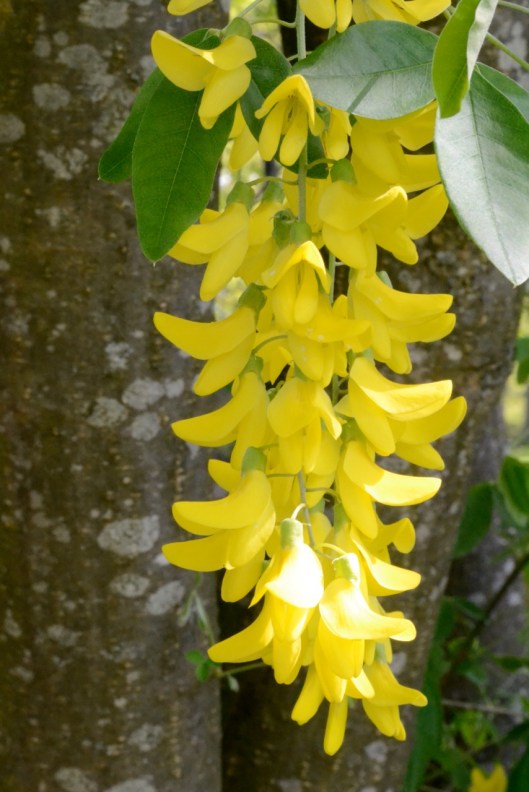
“I remember those!  Old Took used to have them on Midsummer’s Eve.  Splendid!  They used to go up like great lilies and snapdragons and laburnums of fire and hang in the twilight all evening!”

[Here, by the way are the three flowers he mentions, in case, like us, you live in a climate where such things won’t appear for months yet!]
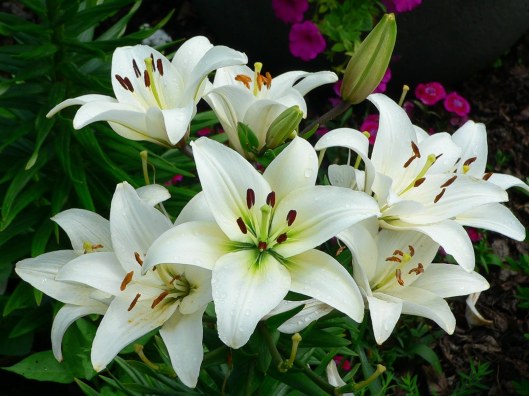
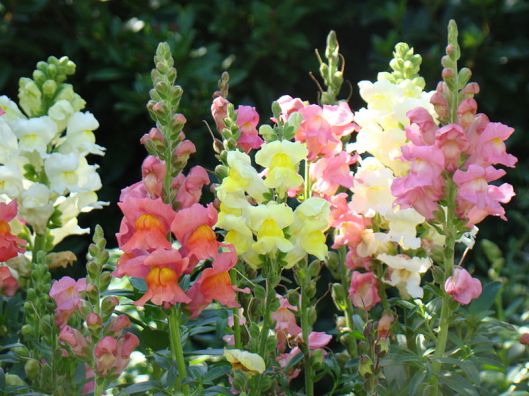
image1lily.jpg

image2snapdragons.JPG

image3laburnums.jpeg

And, although he alludes to an edgier side of Gandalf (“Not the Gandalf who was responsible for so many quiet lads and lasses going off into the Blue for mad adventures?”), he concludes as if Gandalf were merely some sort of superior tradesman:

“I beg your pardon, but I had no idea you were still in business!”

Gandalf is patient, however, only replying:

“Where else should I be?… All the same I am pleased to find that you remember something about me.  You seem to remember my fireworks kindly, at any rate, and that is not without hope…”

Perhaps the idea of linking Gandalf and fireworks is pardonable, however, when we see how, after being associated with them at the beginning of The Hobbit, he appears at the opening of The Lord of the Rings actually bringing fireworks to Hobbiton:

“At the end of the second week in September a cart came in through Bywater from the direction of Brandywine Bridge in broad daylight.  An old man was driving it all alone.  He wore a tall pointed blue hat, a long grey cloak, and a silver scarf.  He had a long white beard and bushy eyebrows that stuck out beyond the brim of his hat.  Small hobbit-children ran after the cart all through Hobbiton and right up the hill.  It had a cargo of fireworks, as they rightly guessed.  At Bilbo’s front door the old man began to unload:  there were great bundles of fireworks of all sorts and shapes, each labeled with a large red G…and the elf-rune…” (The Fellowship of the Ring, Book One, Chapter 1, “A Long-expected Party)
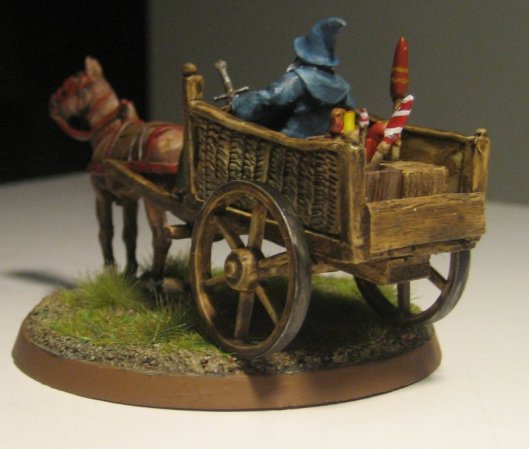
image4cart.jpg

(This is from a site called “Llama’s War of the Ring”, which has all sorts of interesting figures and conversions—here’s a LINK.)

Those great bundles turned into spectacular entertainment at the joint birthday party:

“The fireworks were by Gandalf:  they were not only brought by him, but designed and made by him; and the special effects, set pieces, and flights of rockets were let off by him.  But there was also a generous distribution of squibs, crackers, backarappers, sparklers, torches, dwarf-candles, elf-fountains, goblin-barkers and thunderclaps.  They were all superb.  The art of Gandalf improved with age.”

We ourselves enjoy fireworks, and, for the sake of our readers who might not be familiar with some of the types mentioned, we add here a few images—although some, like “dwarf-candles, elf-fountains, goblin-barkers” no longer seem to be available.

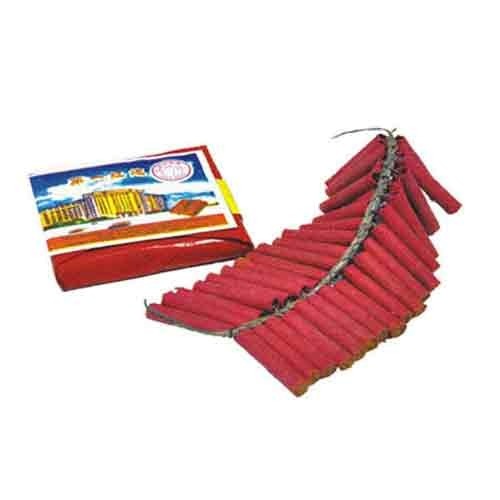
A squib is a small firecracker, like these.
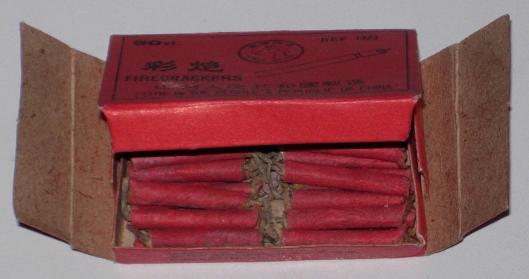
image5squibs.jpg

Crackers seem to come in sets.

image6firecrackers.jpg

Backarappers—we don’t have an image, but here’s a definition (and it sounds like the previous image):

“A firework made from multiple firecrackers folded together so that they will explode one after another”.  (from G.F. Northall’s Warwickshire Word-book, 1896)

Sparklers are metal rods or bamboo sticks whose upper part has what is called “pyrotechnic composition”—which means something which shoots out sparks when it’s lit.

image7sparkler.jpeg

Torches may be these—which, when lighted, change color as they burn down (or so the manufacturer’s description says).

image8torch.png

Although there are no “dwarf-candles”, there are Roman Candles.  These are built in stages and, as the fire burns down, they shoot out star-patterns—as you can see.
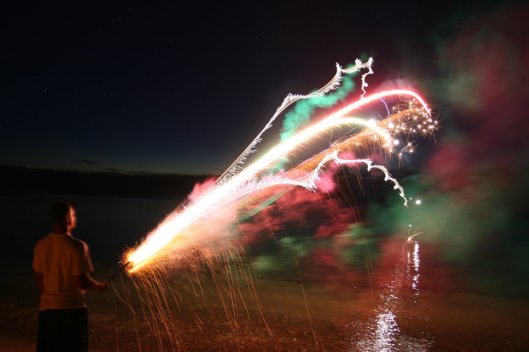
image9romancandle.jpg

There are no “elf-fountains”, either, but there are fountains and they look like this—
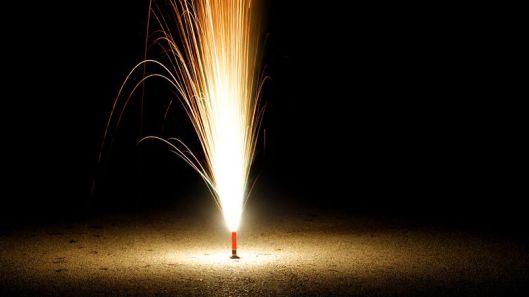
image10fountain.jpeg

Finally, we can date a “thunderclap”, made by Benwell, back to this advertisement from about 1950,

image11benwell.jpg

but we wouldn’t be surprised if Pain’s (not the best name for fireworks, we would say!) carried them, as they have something called “Laburnum Blossoms” in this 1903 listing
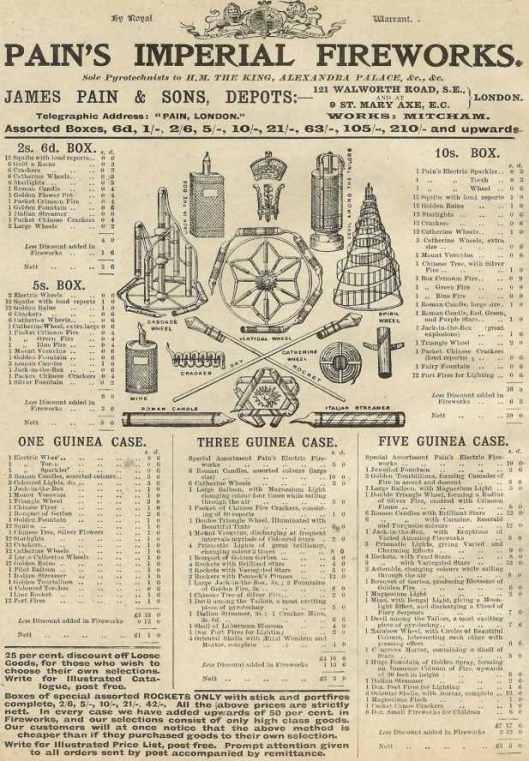
image12pains.jpg

Gandalf’s productions were clearly quite spectacular—which was undoubtedly why Bilbo remembers them:

“There were rockets like a flight of scintillating birds singing with sweet voices.  There were green trees with trunks of dark smoke:  their leaves opened like a whole spring unfolding in a moment, and their shining branches dropped glowing flowers down upon the astonished hobbits, disappearing with a sweet scene just before they touched their upturned faces.  There were fountains of butterflies that flew glittering into the trees; there were pillars of coloured fires that rose and turned into eagles, or sailing ships, or a phalanx of flying swans; there was a red thunderstorm and a shower of yellow rain; there was a forest of silver spears that sprang suddenly into the air with a yell like an embattled army, and came down again into the Water with a hiss like a hundred hot snakes.”

And then there was the finale.  Pain’s, in that 1903 listing, could make claims to baskets of elaborate pyrotechnics, but this?

“And there was also one last surprise, in honour of Bilbo, and it startled the hobbits exceedingly, as Gandalf intended.  The lights went out.  A great smoke went up.  It shaped itself like a mountain seen in the distance, and began to glow at the summit.  It spouted green and scarlet flames.  Out flew a red-golden dragon—not life-size, but terribly life-like:  fire came from his jaws, his eyes glared down; there was a roar and he whizzed three times over the heads of the crowd.  They all ducked, and many fell flat on their faces.  The dragon passed like an express train, turned a somersault, and burst over Bywater with a deafening explosion.”

In Shakespeare’s A Midsummer Night’s Dream, the fairy king, Oberon, says to his spirit-servant, Puck, these rather mysterious lines:

“My gentle Puck, come hither.  Thou rememberest

Since once I sat upon a promontory

And heard a mermaid on a dolphin’s back

Uttering such dulcet and harmonious breath

That the rude sea grew civil at her song

And certain stars shot madly from their spheres

To hear the mermaid’s music?”

(Act 2, Scene 1)

In 1575, Queen Elizabeth I
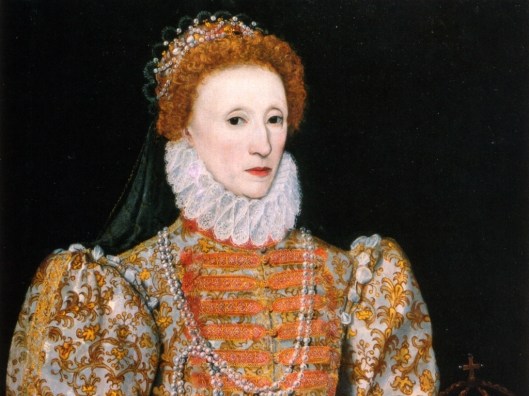
image14queene1.jpg

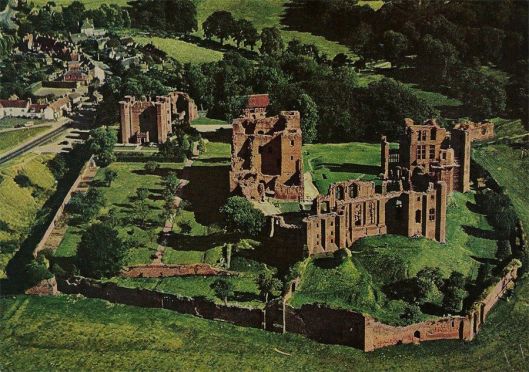
visited Kenilworth Castle,image15kenilworth.jpg

the home of Robert Dudley, the Earl of Leicester,
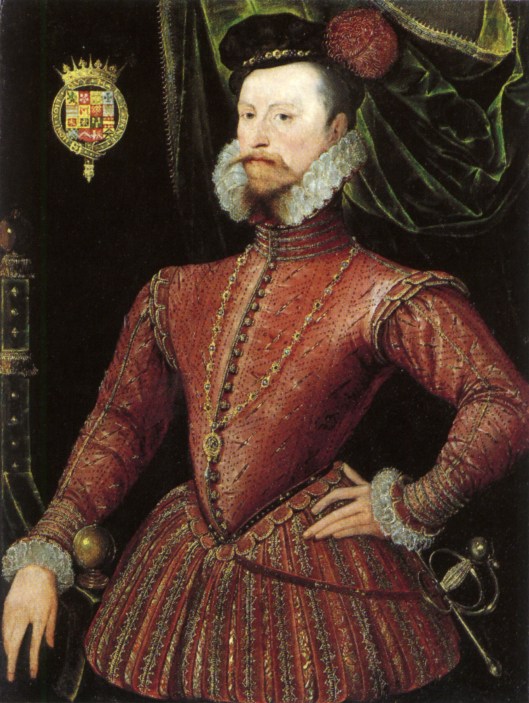
image16dudley.jpg

and a close friend (and maybe more).  To entertain her, Dudley spent thousands of pounds.
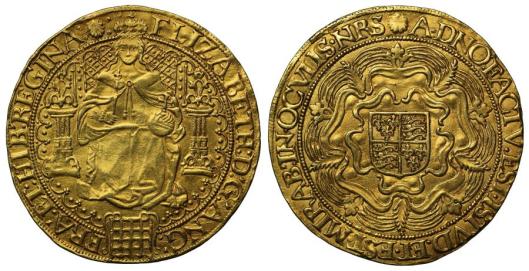
image17sovereign.jpg

(This is actually a gold sovereign—worth 20 shillings—that is, a pound, but there were no actual pound coins till after 1583.)

Among the entertainments was a big fireworks display (as well as at least one mermaid—see the LINK here for Robert Langham/Laneham’s contemporary “letter” in which he describes these entertainments in detail) and some scholars have theorized that those falling stars mentioned by Oberon are, in fact, Shakespeare’s boyhood memory of having seen the fireworks display (and the mermaid).  Kenilworth is only 14 miles from Stratford and Shakespeare was 11 and living at home—we presume—at that time, so we can imagine that this is possibility.  We know that JRRT had seen fireworks shows as a boy—as he tells us in a letter to Donald Swann, 29 February, 1968 (Letters, 390)—but we wonder:  did he ever, in those early years, see Goblin-barkers, or a red-golden dragon?

Thanks, as ever, for reading.

MTCIDC

CD

ps

We almost forgot–in case you’d like to make your own fireworks (definitely not recommended–and definitely illegal in some places!), here’s an 1878 manual on the subject.
 

When One Door Closes (2)

16 Wednesday Nov 2016

Posted by Ollamh in J.R.R. Tolkien, Literary History, Narrative Methods

≈ Leave a comment

Tags

Balin, Barrows, Bree, Bridge of Khazad-Dum, Chamber of Mazarbul, Crickhollow, doors, Dwarves, Elven-way, Farmer Maggot, Gandalf, Greenway, Hobbit door, Hollin, Lothlorien, Moria, Nazgul, picaresque, Rivendell, Robert Burns, Tam O'Shanter, The Fellowship of the Ring, The Ford of Bruinen, The Hobbit, The Legend of Sleepy Hollow, The Lord of the Rings, The Prancing Pony, Tolkien, Washington Irving, Watcher in the Water, Weathertop, West-door, West-gate

Welcome, dear reader, as always. It’s a rather gloomy late autumn day here as we write this, fitting, perhaps, for the gloomier The Lord of the Rings after the cheerier (well, sometimes) The Hobbit, as we continue our look at the functions of doors and their equivalents in JRRT.

If you’ve read our previous posting, you’ll know that, in it, we examined doors and gates in The Hobbit, dividing them into two basic categories: doors which might lead to safety and doors which led to danger, all based upon Bilbo’s remark about how dangerous it can be, just stepping outside your door.

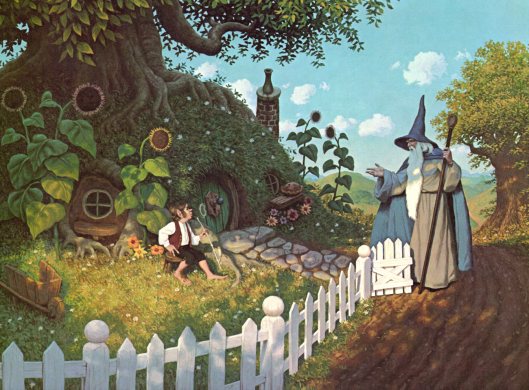
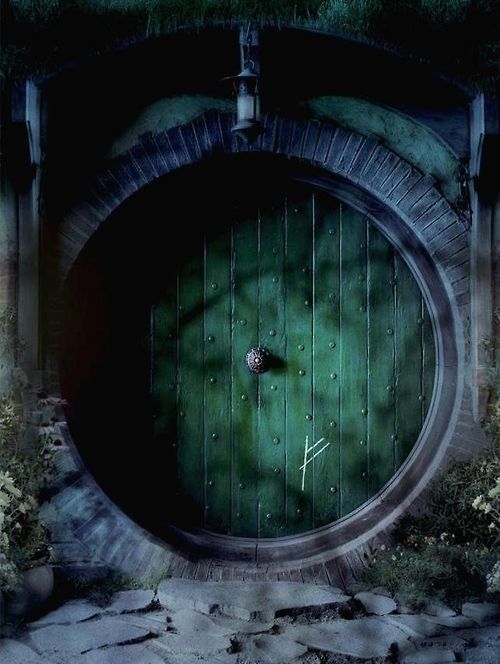
Bilbo’s door adventures had begun with his own.

gandalfvisitsbilbo.jpg

doorwithrune.jpg

When comparing the two books, we get a strong sense of the episodic nature of The Hobbit:  we can almost break it down into movement between doors, from the arrival of the dwarves to the knock of Gandalf and Balin, giving it more the feel of a picaresque novel: that is, a novel with an goal, but with much of its focus upon the adventures along the way, adventures which don’t always necessarily lead to that goal.   This gives it a lighter tone, as well—after all, it was meant as a children’s book in a time (1937) when such books were understood in general never to be too solemn. The Lord of the Rings, in contrast, develops an almost grimly-focused forward motion, which impels it even when the Fellowship breaks into two after the death of Boromir, and much of the action spreads from Frodo and Sam on the way to Mordor to the separate adventures of Merry and Pippin in Rohan and Gondor.

So what might we see as the first door—in either sense—in The Lord of the Rings? we asked ourselves. And we supposed that we might see minor doors of safety at Farmer Maggot’s and Frodo’s new home in Crickhollow, in both cases brief refuges from the Nazgul, but, as we said in our last posting, doors commonly have some sort of challenge to them—and challenger—and the first one of those appears briefly at the hedge in Bree:

“They came to the West-gate and found it shut; but at the door of the lodge beyond it, there was a man sitting. He jumped up and fetched a lantern and looked over the gate at them in surprise.”   (The Fellowship of the Ring, Book 1, Chapter 9, “At the Sign of the Prancing Pony”)

bree.jpg

The watchman, when his challenges (and maybe a little too-inquisitive challenges) are turned aside, lets them in and they reach The Prancing Pony, only to escape murder in their beds and the loss of their ponies.

prancingpony.jpg

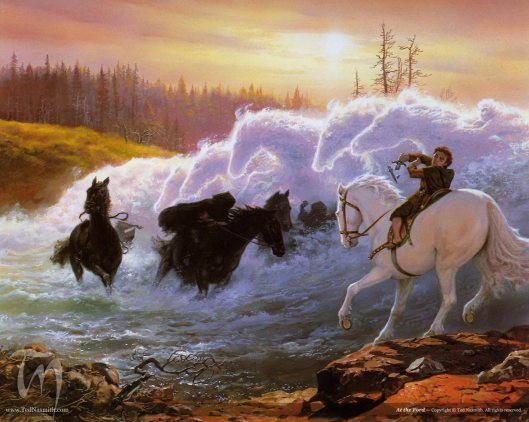
The first gateway which leads to real safety, however, isn’t a door or gate at all, but a natural barrier (with some magical help): the Ford of Bruinen. Here, the role of traveler and challenger is reversed, as the challenged are the Wraiths and the challenger is Frodo, but it is the power of the Elves which closes the door.

At the Ford, by Ted Nasmith

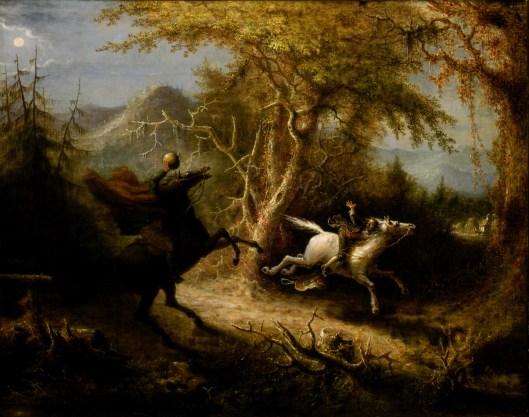
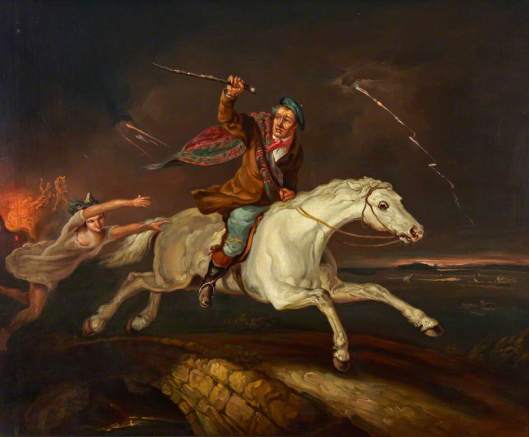
(It is interesting here that Tolkien has chosen not to take advantage of the folk belief—if you know “The Legend of Sleepy Hollow” by Washington Irving, or its inspiration, the poet Robert Burn’s “Tam O’Shanter”, this will be readily familiar to you—that evil spirits are unable to cross running water, even at a bridge.

John_Quidor_-_The_Headless_Horseman_Pursuing_Ichabod_Crane_-_Google_Art_Project.jpg

tamoshanter.jpg

To reach the Shire, the Wraiths have had to cross several bodies of water and now their hesitation to traverse another appears to be derived from their confidence that they can now control Frodo—either by the influence of the Ring, or perhaps from his wound—and call him back across the stream to them.)

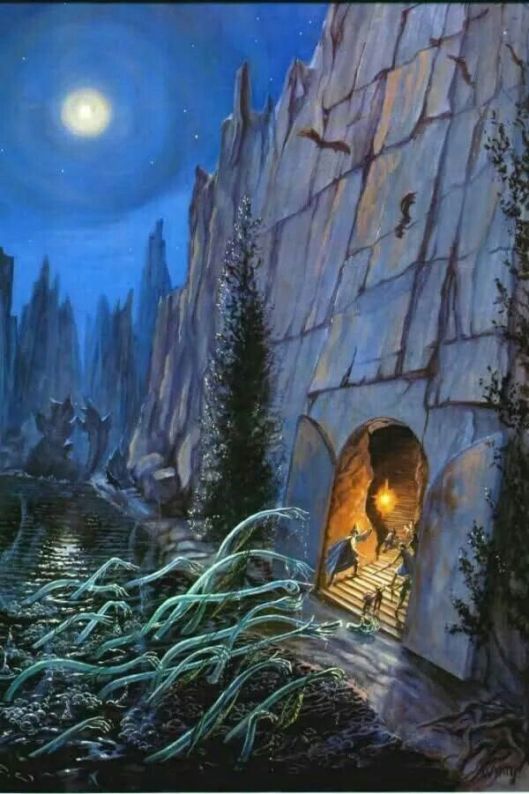
From Rivendell, the next such door is that at the western side of Moria.

moriagate.jpg

Here, there is no living challenger. Rather, it is a kind of riddle—or, at least, it is initially understood as such—which bars the way. Its answer is simple, which led us to wonder, what is the purpose of this door scene in the story? As the creature in the pool

watcher.jpg

barricades the door behind them, it adds to the tension: the Fellowship has been watched and, from the hostile mountains to the wolves to the tentacle thing, it has been forced into darker and narrower ways, those ways seemingly chosen by the malevolent force observing their journey. As well, it suggests the gradual decay of what was once a vibrant, active culture, as Gandalf explains:

“Here the Elven-way from Hollin ended. Holly was the token of the people of that land, and they planted it here to mark the end of their domain; for the West-door was made chiefly for their use in their traffic with the Lords of Moria. Those were happier days, when there was still close friendship at times between folk of different race, even between Dwarves and Elves.” (The Fellowship of the Ring, Book 2, Chapter 4, “A Journey in the Dark”)

This is a theme throughout The Lord of the Rings and one which, we believe, adds to its power: the events of the close of the Third Age are set against a background of other times and other events and the landscape still bears traces of those times, from the Barrows to the Greenway and Weathertop and far beyond. As well, so many of those traces suggest that violence and the dark spirit of Sauron, sometimes through his agents, sometimes in person, have had much to do with their end.

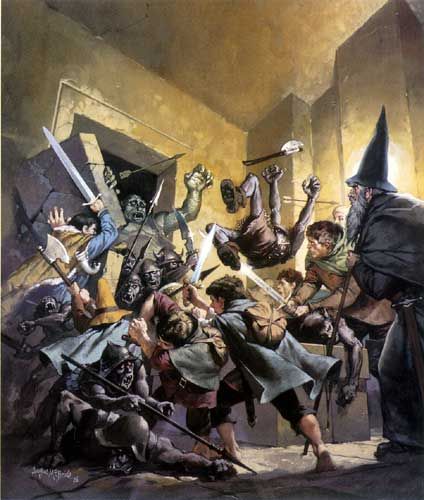
Now that the Fellowship is within Moria, it encounters its next door: that of the Chamber of Mazarbul.

marzabul.jpg

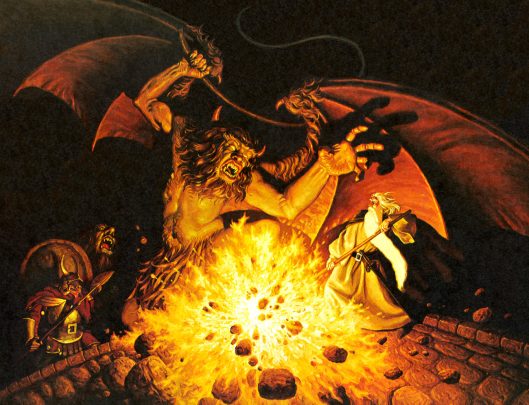
Here, they are the challengers, when forced to defend themselves from a horde of “Orcs, very many of them…And some are large and evil: black Uruks of Mordor.” (The Fellowship of the Ring, Book 2, Chapter 5, “The Bridge of Khazad-Dum”). There is a second door, however, and, when they have beaten back their attackers, they escape by it—but only so that Gandalf may be the challenger at a crossing—as Frodo was at the ford—at the Bridge of Khazad-Dum, although here magic apparently cannot save him, as it had Frodo.

balrog.jpg

With Gandalf gone, we see the repetition of a scene from The Hobbit—the escape through a crowd to the outside world:

“…and suddenly before them the Great Gates opened, an arch of blazing light.

There was a guard of orcs crouching in the shadows behind the great door-posts towering on either side, but the gates were shattered and cast down. Aragorn smote to the ground the captain that stood in his path, and the rest fled in terror at his wrath.” (The Fellowship of the Ring, Book 2, Chapter 5, “The Bridge of Khazad-Dum”)

At this moment in The Hobbit, Bilbo had used his newly-discovered ring to escape (albeit with the loss of a few buttons), but Aragorn’s sword clearly does just as well.

It is easy to see just how prevalent the pattern is: even after that harrowing moment of being chased through the mines and losing Gandalf, where there is a door, there is someone at it to make a challenge, and this holds true even without an actual door, as the remaining members of the Fellowship seek to enter Lothlorien and are stopped by Elven sentries in a tree. (The Fellowship of the Ring, Book 2, Chapter 6, “Lothlorien”)

And the pattern continues, even as the Fellowship breaks up, but let’s take a moment to see what we’ve found so far. On the side of doors to safety, we have: Bree (although it’s not so safe as it looks), the Ford of Bruinen, the main door of Moria, and the entrance to Lorien. As for doors to danger, there are: the western doors of Moria and the door to the Chamber of Mazarbul.

In the third installment, we shall see just how many more doors/gates/entryways we find which continue to fit the pattern—and there are a fair number of them.

Thanks, as ever, for reading.

MTCIDC

CD

Plot or Blot?

23 Wednesday Dec 2015

Posted by Ollamh in Fairy Tales and Myths, Films and Music, J.R.R. Tolkien, Narrative Methods, Uncategorized

≈ Leave a comment

Tags

Adventure, An Unexpected Journey, Eagles, Gandalf, Gwaihir, His Dark Materials, Iofur Rakinson, Isengard, Manwe, Middle-earth, Mirkwood, Moth, Ornthanc, Peter Jackson, Philip Pullman, Radagast, Rohirrim, Saruman, Svalbard, The Battle of the Five Armies, The Council of Elrond, The eagles are coming, The Fellowship of the Ring, The Golden Compass, The Hobbit, The Lord of the Rings, The Return of the King, Tolkien, Wizard

Dear Readers,

Welcome, as always.

This posting is about a puzzle. Recently, while visiting Orthanc to write about Saruman, we bumped into the problem of how Gandalf escaped from there. Our memory was a little unclear about this—we knew that Gwaihir swooped down to rescue him, but why was Gwaihir there in the first place?

Eagles had appeared twice before in our experience of Gandalf, first when they rescued him and his companions from the goblins and Wargs in Chapter 6 of The Hobbit, “Out of the Frying-Pan into the Fire”. Here, the Lord of the Eagles hears the commotion as the Wargs struggle to overcome Gandalf’s fire magic and, gathering up some of his people, flies down to investigate.

6a00d8341dd88553ef015436529d30970c-pi.jpg

Something similar happens at the Battle of the Five Armies, explained in Chapter 18, “The Return Journey”:

“The Eagles had long had suspicion of the goblins’ mustering; from their watchfulness the movements in the mountains could not be altogether hid.” Thus, they appear self-bid, but, as they are ancient creatures, first made by Manwe and given the role of watchers from the time of the First Age, it’s not surprising that they would act as they did.

Battle of the Five Armies_Final Complete.jpg

In Jackson’s An Unexpected Journey and, again, in his The Fellowship of the Ring, an eagle appears after Gandalf has had a heart-to-heart with a moth.

gandmothhob.pngGandalf+moth.png

With a moth? We asked ourselves. We scratched our heads and wondered: does JRRT use a moth? And, if so, where did the moth come from?

In fact, what really happens is a very neatly constructed piece of plotting on the part of the author, all of which is very nicely laid out in a couple of pages of “The Council of Elrond” during Gandalf’s long narrative.

  1. Gandalf meets Radagast—who is identified, among other talents, as one for whom “birds are especially his friends”—and who says that, if Gandalf needs help with the Black Riders, he needs to apply to Saruman immediately.
  2. In return, Gandalf says to Radagast, “We shall need your help, and the help of all things that will give it. Send out messages to all the beasts and birds that are your friends. Tell them to bring news of anything that bears on this matter to Saruman and Gandalf. Let messages be sent to Orthanc.”
  3. Gandalf goes to Orthanc and, rejecting Saruman’s offer, is imprisoned at its top.
  4. Then, that which was set up in 1 and 2 comes to fruition:

“That was the undoing of Saruman’s plot. For Radagast knew no reason why he should not do as I asked; and he rode away towards Mirkwood where he had many friends of old. And the Eagles of the Mountains went far and wide, and they saw many things…And they sent a messenger to bring these tidings to me.

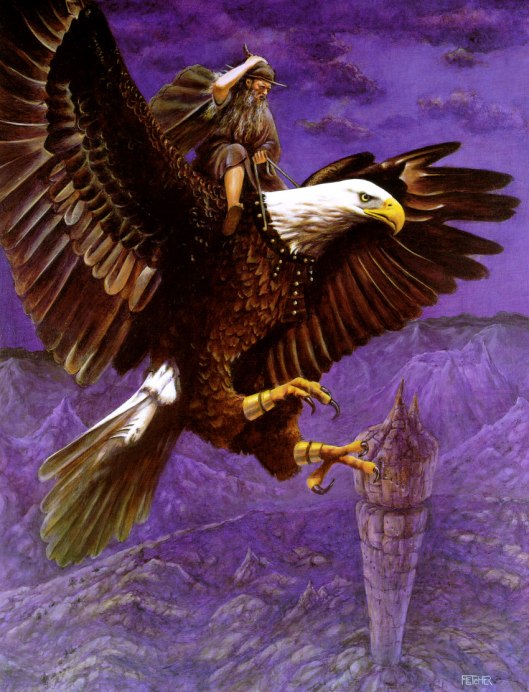
So it was that when summer waned, there came a night of moon, and Gwaihir the Windlord, swiftest of the Great Eagles, came unlooked-for to Orthanc; and he found me standing on the pinnacle. Then I spoke to him and he bore me away, before Saruman was aware.”

escape.jpg

Although we have solved the puzzle of Gandalf’s escape, we have no answer to why this natural and even elegant piece of plotting wasn’t used in the film any more than we understand why Radagast is turned into the horrible, clownish figure he is in the Hobbit films, having been described in “The Council of Elrond” simply as “a worthy Wizard, a master of shapes and changes of hue; and he has much lore of herbs and beasts, and birds are especially his friends.” And someone who could never be corrupted by Saruman, which is really, we think, why Saruman calls him a fool.

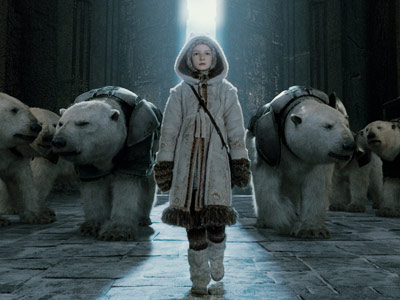
In an earlier posting, we suggested that Saruman, in his desire to ape Sauron, had created, in Isenguard, a mini-Mordor, just as Iofur Raknison, in Philip Pullman’s The Golden Compass, has turned Svalbard into a shabby ursine mockery of a human palace.

lyrasvalbard.jpg

We also suggested that the creators of the Tolkien-derived films, when they began to veer as far from the text as they appeared increasingly to do in the Hobbit films, had become a bit like Saruman themselves, and, like his master, “cannot make real new things of [their] own…” We hesitate to add this, but, could it be that, as in the case of the orcs, they “only ruined them and twisted them…”? (The Return of the King, “The Stairs of Cirith Ungol”). After all, instead of easy plot lines, we have moths, and, in place of worthy, incorruptible wizards, we have gross clowns.

We are reluctant to end on a negative note, however. After all, just as there are the Rohirrim in The Lord of the Rings films, there are those wonderful eagles at the end of An Unexpected Journey, so why not end with them?

taking-fan-theories-to-a-next-level-the-eagles-are-coming-434375.jpg

Thanks, as ever, for reading.

MTCIDC

CD

PS

If you don’t know Pullman’s His Dark Materials series, we very much recommend them—but with this proviso: in the first and second volumes (The Golden Compass, The Subtle Knife), Pullman’s antagonism towards organized religion is channeled into the “Magisterium”, a believable villainous organization in the world which he has so meticulously and powerfully created. In the third volume (The Amber Spyglass), we feel that that antagonism becomes all-too-apparent and it causes that volume—in our opinion—to lack the more human element and focus of the first two volumes. The first volume can certainly be read on its own and perhaps it says something about the trilogy as a whole that a planned project for filming all three books was eventually cut to a single film of the first book. We recommend this film, as well, but suggest that you read The Golden Compass before you see it.

The Doubtful Sea Series Facebook Page

The Doubtful Sea Series Facebook Page

  • Ollamh

Categories

  • Artists and Illustrators
  • Economics in Middle-earth
  • Fairy Tales and Myths
  • Films and Music
  • Games
  • Heroes
  • Imaginary History
  • J.R.R. Tolkien
  • Language
  • Literary History
  • Maps
  • Medieval Russia
  • Military History
  • Military History of Middle-earth
  • Narnia
  • Narrative Methods
  • Poetry
  • Research
  • Star Wars
  • Terra Australis
  • The Rohirrim
  • Theatre and Performance
  • Tolkien
  • Uncategorized
  • Villains
  • Writing as Collaborators
Follow doubtfulsea on WordPress.com

Across the Doubtful Sea

Recent Postings

  • A Moon disfigured December 17, 2025
  • On the Roads Again—Once More December 10, 2025
  • (Not) Crossing Bridges December 3, 2025
  • On the Road(s) Again—Again November 26, 2025
  • On the Road(s) Again November 19, 2025
  • To Bree (Part 2) November 12, 2025
  • To Bree (Part 1) November 5, 2025
  • A Plague o’ Both—No, o’ All Your Houses! October 29, 2025
  • It’s in Writing (2:  I’st a Prologue, or a Poesie for a Ring?) October 22, 2025

Blog Statistics

  • 103,201 Views

Posting Archive

  • December 2025 (3)
  • November 2025 (4)
  • October 2025 (5)
  • September 2025 (4)
  • August 2025 (4)
  • July 2025 (5)
  • June 2025 (4)
  • May 2025 (4)
  • April 2025 (5)
  • March 2025 (4)
  • February 2025 (4)
  • January 2025 (5)
  • December 2024 (4)
  • November 2024 (4)
  • October 2024 (5)
  • September 2024 (4)
  • August 2024 (4)
  • July 2024 (5)
  • June 2024 (4)
  • May 2024 (5)
  • April 2024 (4)
  • March 2024 (4)
  • February 2024 (4)
  • January 2024 (5)
  • December 2023 (4)
  • November 2023 (5)
  • October 2023 (4)
  • September 2023 (4)
  • August 2023 (5)
  • July 2023 (4)
  • June 2023 (4)
  • May 2023 (5)
  • April 2023 (4)
  • March 2023 (5)
  • February 2023 (4)
  • January 2023 (4)
  • December 2022 (4)
  • November 2022 (5)
  • October 2022 (4)
  • September 2022 (4)
  • August 2022 (5)
  • July 2022 (4)
  • June 2022 (5)
  • May 2022 (4)
  • April 2022 (4)
  • March 2022 (5)
  • February 2022 (4)
  • January 2022 (4)
  • December 2021 (5)
  • November 2021 (4)
  • October 2021 (4)
  • September 2021 (5)
  • August 2021 (4)
  • July 2021 (4)
  • June 2021 (5)
  • May 2021 (4)
  • April 2021 (4)
  • March 2021 (5)
  • February 2021 (4)
  • January 2021 (4)
  • December 2020 (5)
  • November 2020 (4)
  • October 2020 (4)
  • September 2020 (5)
  • August 2020 (4)
  • July 2020 (5)
  • June 2020 (4)
  • May 2020 (4)
  • April 2020 (5)
  • March 2020 (4)
  • February 2020 (4)
  • January 2020 (6)
  • December 2019 (4)
  • November 2019 (4)
  • October 2019 (5)
  • September 2019 (4)
  • August 2019 (4)
  • July 2019 (5)
  • June 2019 (4)
  • May 2019 (5)
  • April 2019 (4)
  • March 2019 (4)
  • February 2019 (4)
  • January 2019 (5)
  • December 2018 (4)
  • November 2018 (4)
  • October 2018 (5)
  • September 2018 (4)
  • August 2018 (5)
  • July 2018 (4)
  • June 2018 (4)
  • May 2018 (5)
  • April 2018 (4)
  • March 2018 (4)
  • February 2018 (4)
  • January 2018 (5)
  • December 2017 (4)
  • November 2017 (4)
  • October 2017 (4)
  • September 2017 (4)
  • August 2017 (5)
  • July 2017 (4)
  • June 2017 (4)
  • May 2017 (5)
  • April 2017 (4)
  • March 2017 (5)
  • February 2017 (4)
  • January 2017 (4)
  • December 2016 (4)
  • November 2016 (5)
  • October 2016 (6)
  • September 2016 (5)
  • August 2016 (5)
  • July 2016 (5)
  • June 2016 (5)
  • May 2016 (4)
  • April 2016 (4)
  • March 2016 (5)
  • February 2016 (4)
  • January 2016 (4)
  • December 2015 (5)
  • November 2015 (5)
  • October 2015 (4)
  • September 2015 (5)
  • August 2015 (4)
  • July 2015 (5)
  • June 2015 (5)
  • May 2015 (4)
  • April 2015 (3)
  • March 2015 (4)
  • February 2015 (4)
  • January 2015 (4)
  • December 2014 (5)
  • November 2014 (4)
  • October 2014 (6)
  • September 2014 (1)

Blog at WordPress.com.

  • Subscribe Subscribed
    • doubtfulsea
    • Join 78 other subscribers
    • Already have a WordPress.com account? Log in now.
    • doubtfulsea
    • Subscribe Subscribed
    • Sign up
    • Log in
    • Report this content
    • View site in Reader
    • Manage subscriptions
    • Collapse this bar
 

Loading Comments...