• About

doubtfulsea

~ adventure fantasy

Tag Archives: Osgiliath

On the Roads Again—Once More

10 Wednesday Dec 2025

Posted by Ollamh in Uncategorized

≈ Leave a comment

Tags

Bilbo, Fantasy, Frodo, lotr, Minas Morgul, Mordor, Mt Doom, Orcs, Orodruin, Osgiliath, Roads, Sam, The Lord of the Rings, Tolkien, Udun

As always, dear readers, welcome.

“The Road goes ever on and on
Down from the door where it began.
Now far ahead the Road has gone,
And I must follow, if I can,
Pursuing it with eager feet,
Until it joins some larger way
Where many paths and errands meet.
And whither then? I cannot say.”

as Bilbo sings, on his way away from the Shire to Rivendell.

(JRRT)

We, however, are currently standing at the broken bridge

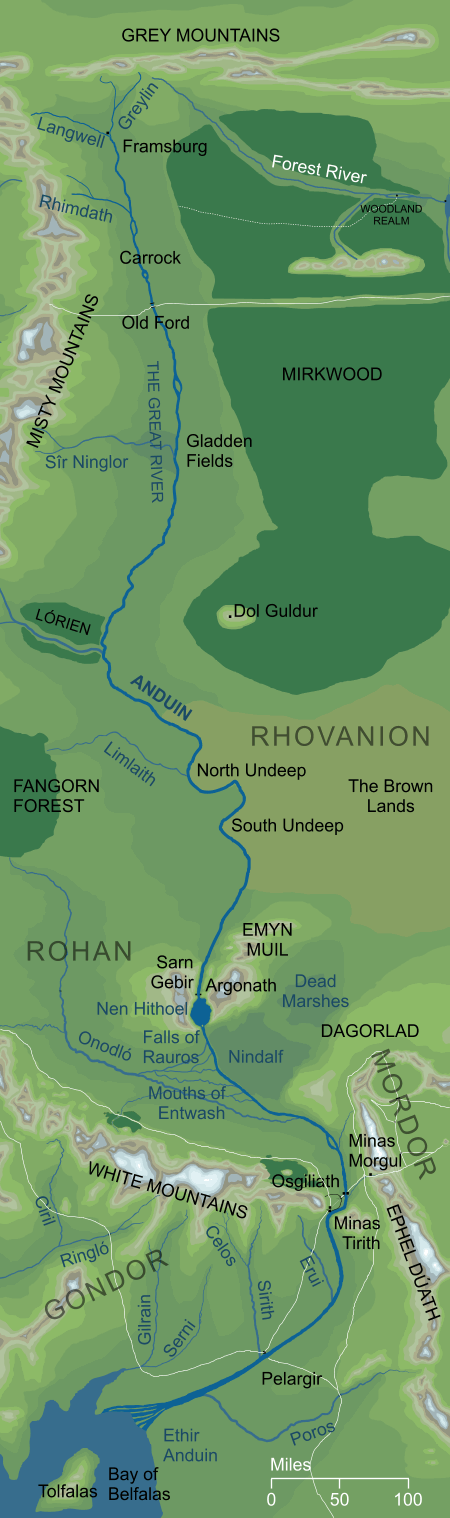
at Osgiliath,

(from The Encyclopedia of Arda)

but, through the magic of the internet, we’ll hop over the Anduin and continue our journey along the roads of Middle-earth, this time to the worst possible place (unless you’re an orc)—

(Alan Lee)

Mordor.

To get there, we walk the old road which, in the days before Sauron’s previous invasion attempt, ran from Minas Anor (the “ Tower of the Sun”—now Minas Tirith, “Tower of Guard”),

(Ted Nasmith)

to Minas Ithil (the “Tower of the Moon”)—now Minas Morgul  (the “Tower of Black Sorcery”).

(another Ted Nasmith)

This will lead us eastwards to the crossing of the Ithilien north/south road, where there is a much- abused seated figure—

“The brief glow fell upon a huge sitting figure, still and solemn as the great stone kings of Argonath.  The years had gnawed it, and violent hands had maimed it.  Its head was gone, and in its place was set in mockery a round rough-hewn stone, rudely painted  by savage hands in the likeness of a grinning face with one large red eye in the midst of its forehead.  Upon its knees and mighty chair, and all about the pedestal, were idle scrawls mixed with the foul symbols that the maggot-folk of Mordor used.”  (The Two Towers, Book Four, Chapter 7, “Journey to the Cross-roads”)
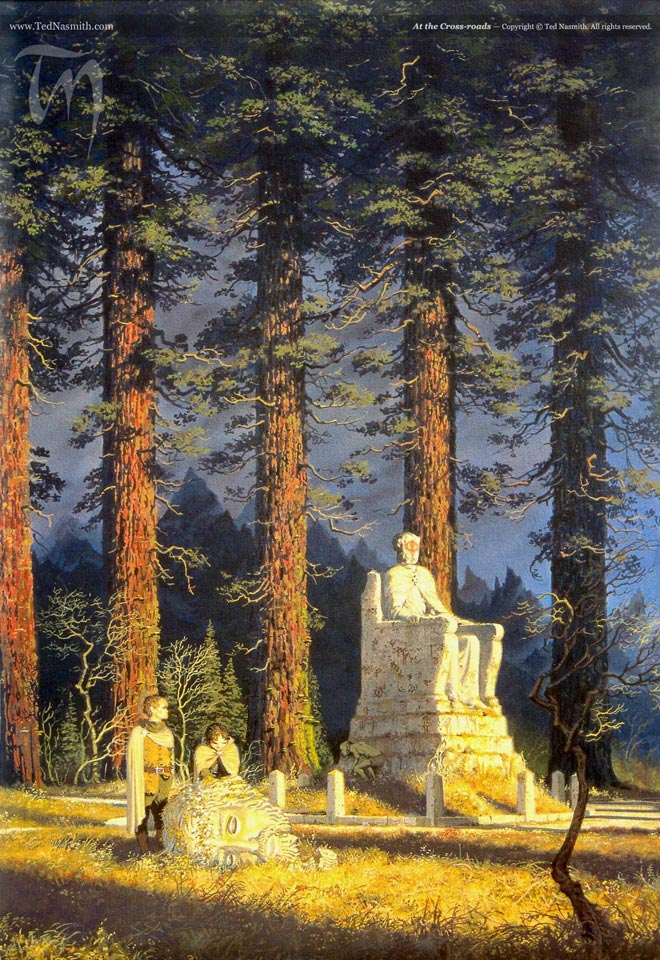
(and one more Ted Nasmith.  Notice—except for the figure’s size, perhaps, which here wouldn’t be called “huge” nor its chair “mighty”—how carefully the artist has paid attention to the text—typical of Nasmith’s always fine work.)

Frodo and Sam pause here, but we’ll keep moving eastwards on the road towards Minas Morgul.
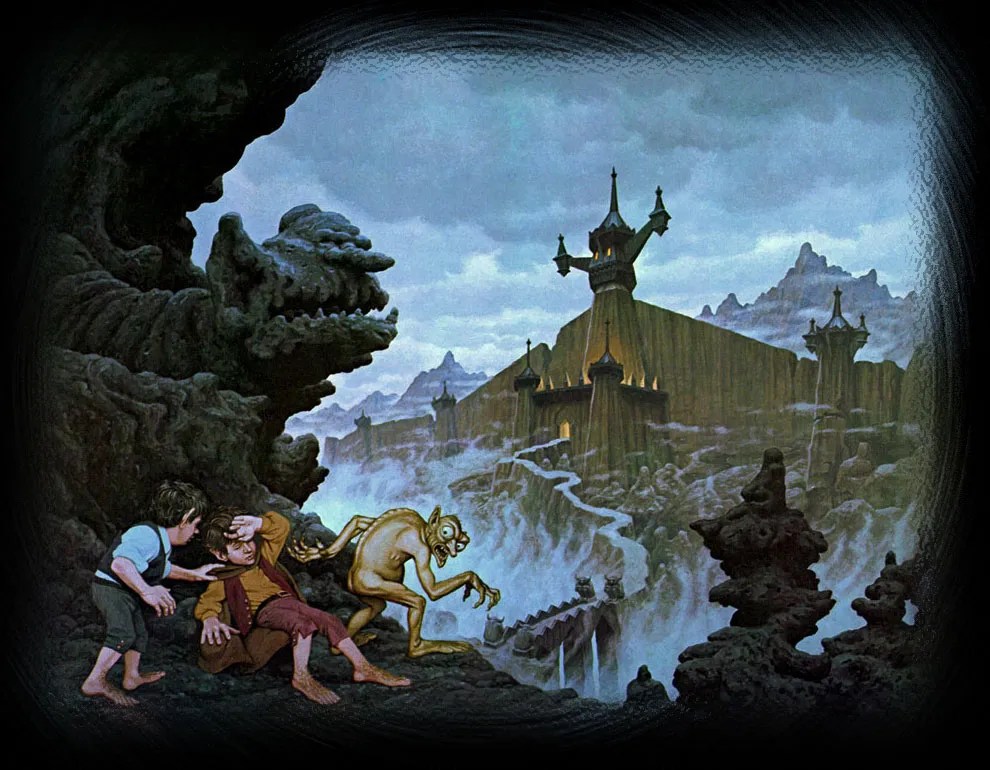
(the Hildebrandts, with a very different view of it and of Gollum)

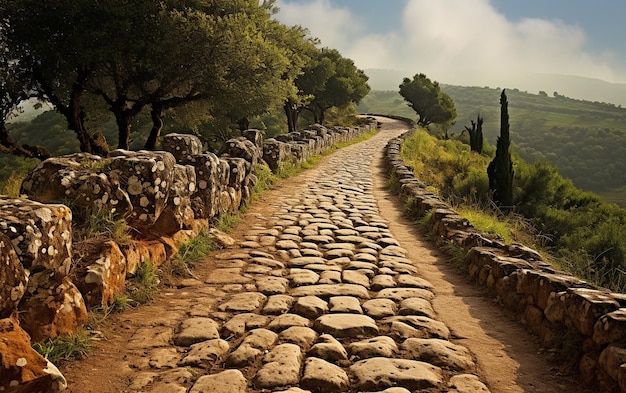
We don’t appear to have a description of this road, but, if you’ve read the previous postings on roads, you’ll know that I would like to imagine that it’s not just a worn dirt track,
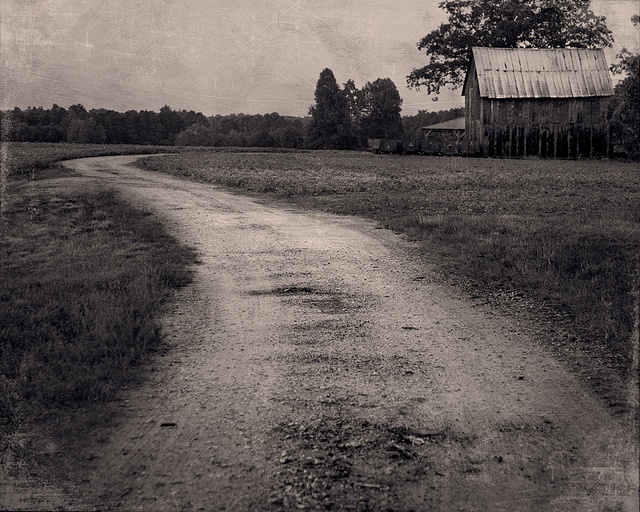
but the sort of thing which the Romans built all over their empire,

but now grassgrown and abandoned, like the figure at the crossroads.

Frodo, Sam, and Gollum skirt Minas Morgul, climbing around it, and we’ll join them, although we’ll avoid the tunnel in which Shelob lives,
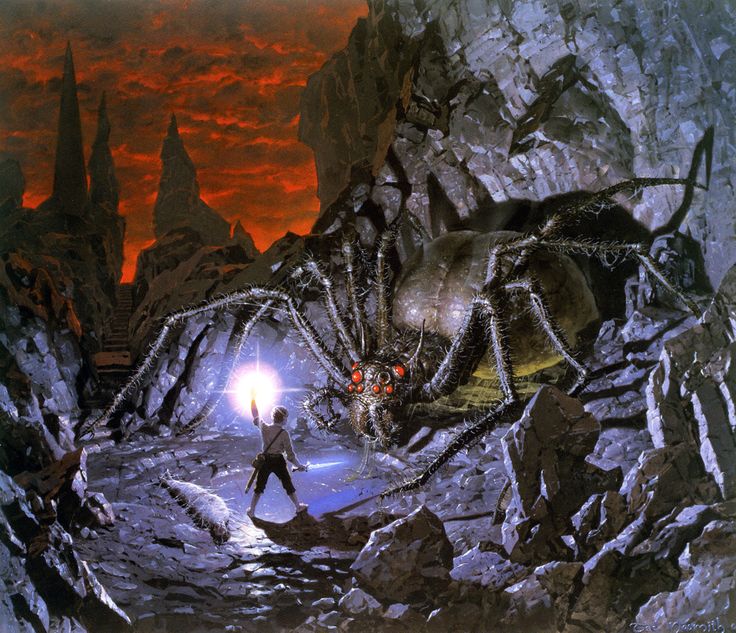
(and one more Ted Nasmith)

to come down into Mordor itself.

(Christopher Tolkien)

This is, to say the least, a very bleak place,

(in reality, this is Mt Haleakala National Park, on the island of Maui)

but it seems heavily populated with camps of orcs and Sauron’s allies.

“As far as their eyes could reach, along the skirts of the Morgai and away southward, there were camps, some of tents, some ordered like small towns.  One of the largest of these was right below them.  Barely a mile out into the plain it clustered like some huge nest of insects, with straight dreary streets of huts and long low drab buildings.”  (The Return of the King, Book Six, Chapter 2, “The Land of Shadow”)

(Alan Lee)

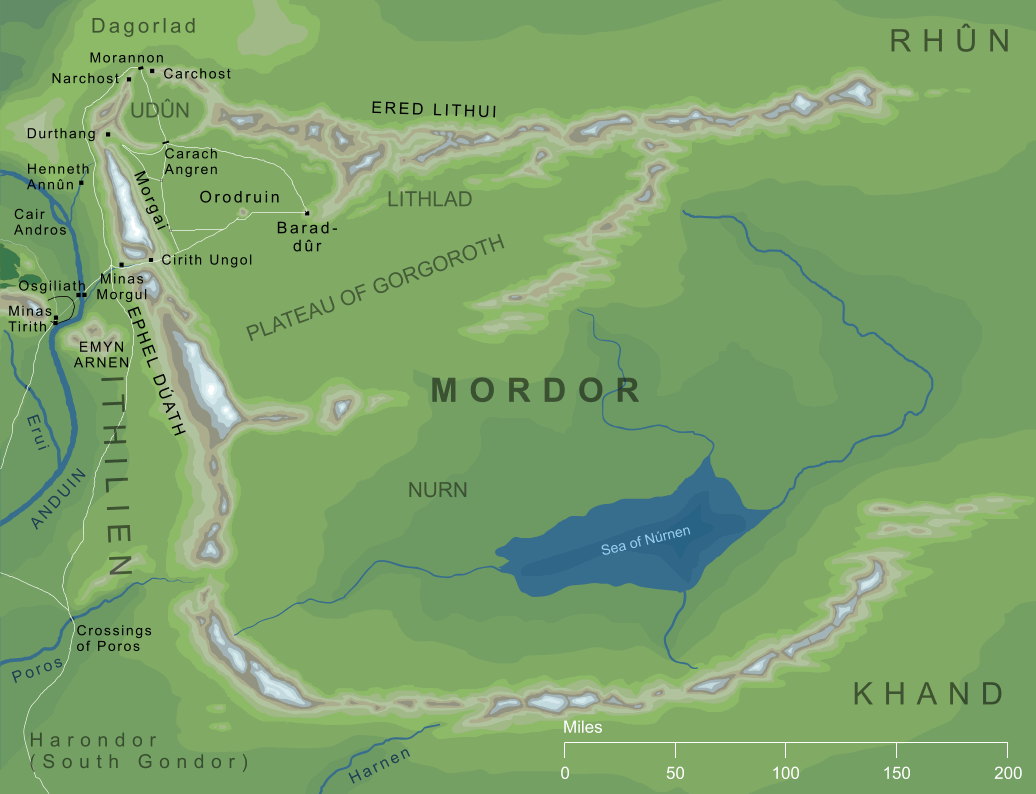
There are clearly roads, at least in the northern area—

(from the Encyclopedia of Arda)

and when Frodo and Sam disguise themselves as orcs,

(Denis Gordeev)

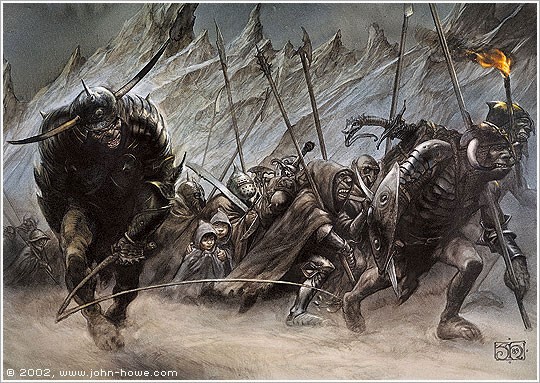
they make their way along a major one, only to be taken for potential deserters and driven into an orc marching column.

(Denis Gordeev)

Before they reach such a road, however,

“…they saw a beaten path that wound its way under the feet of the westward cliffs.  Had they known, they could have reached it quicker, for it was a track that left the main Morgul-road at the western bridge-end and went down by a long stair cut in the rock to the valley’s bottom.” (The Return of the King, Book Six, Chapter 2, “The Land of Shadow”)

We’ll follow them down this path and eventually reach a road:

“…at the point where it swung east towards the Isenmouthe  twenty miles away.  It was not a broad road, and it had no wall or parapet along the edge, and as it ran on the sheer drop from its brink became deeper and deeper.”  (The Return of the King, Book Six, Chapter 2, “The Land of Shadow”)

When Frodo and Sam are picked up and driven along in the column,

(John Howe)

we can now see that the column is headed for Isenmouthe and the entrance to the northernmost part of Mordor, Udun,

(from Karen Wynn Fonstad, The Atlas of Middle-Earth)

but the two manage to escape just before the entrance, dropping

“…over the further edge of the road.  It had a high kerb by which troop-leaders could guide themselves in black night or fog, and it was banked up some feet above the level of the open land.”  (The Return of the King, Book Six, Chapter 2, “The Land of  Shadow”)

(perhaps something like this on the right?)

Frodo and Sam now try cutting across open country, which, although full of places to hide, is hard going—

“As the light grew a little [Sam] saw to his surprise that what from a distance had seemed wide and featureless flats were in fact all broken and tumbled. “  (The Return of the King, Book Six, Chapter 3, “Mount Doom”)

The going, however, is simply too rough for them in their current condition, and they return to the road, as will we, approaching Orodruin (Mt. Doom), where, for the first time since finding a spring on the eastern slope of the Mountains of Shadow, they find water—

“All long ago would have been spent, if they had not dared to follow the orc-road.  For at long intervals on that highway cisterns had been built for the use of troops sent in haste through the waterless regions. 
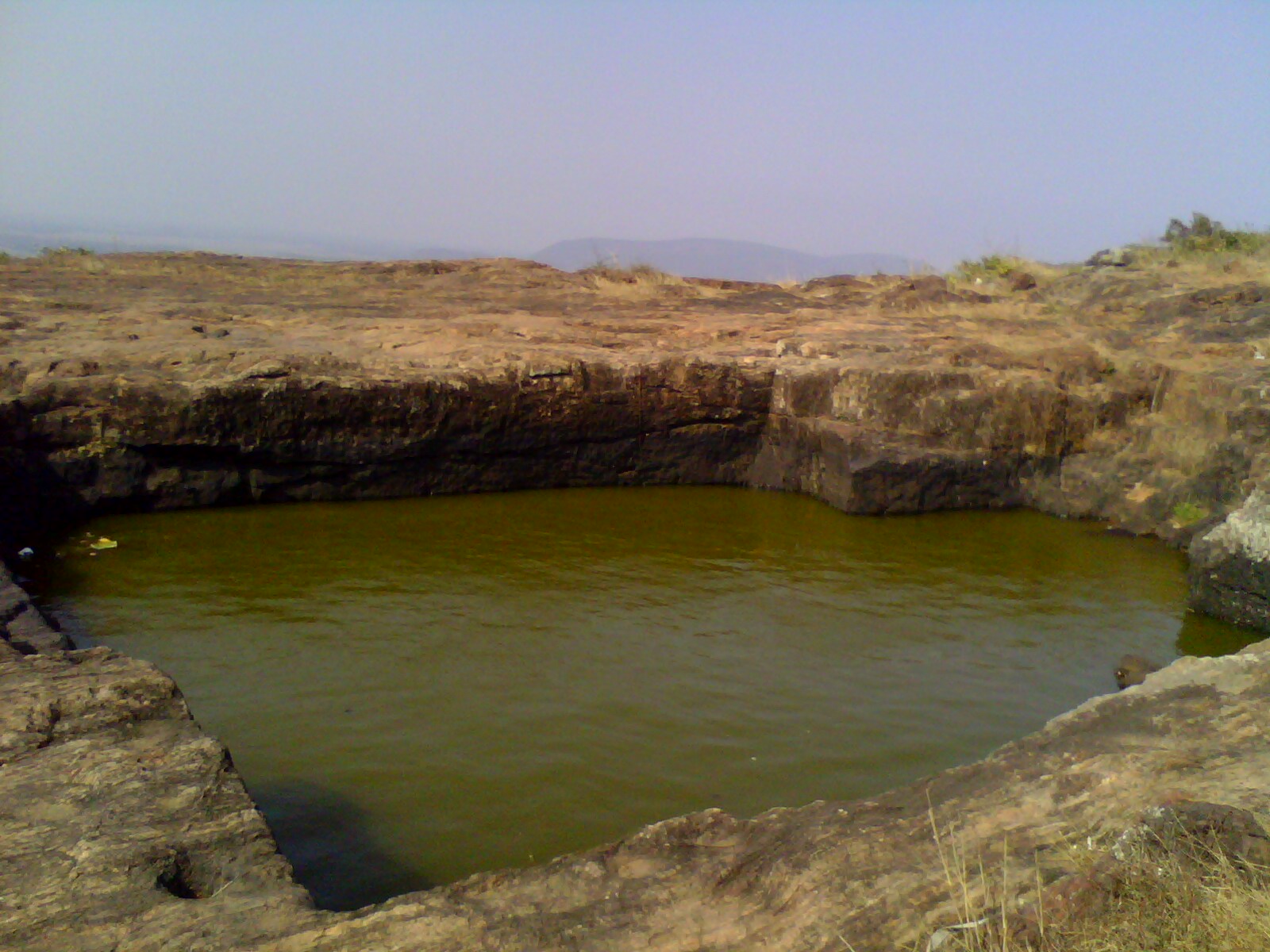
In one Sam found some water left, stale, muddied by the orcs, but still sufficient for their desperate case.”   (The Return of King, Book Six, Chapter 3, “Mount Doom”)

Struggling to the foot of Mt. Doom (Orodruin), Sam discovers a path—our last road in this series of postings—which is actually part of Sauron’s road from the Barad-dur to the volcano.

(from the Encyclopedia of Arda)

“…for amid the rugged humps and shoulders above him he saw plainly a path or road.  It climbed like a rising girdle from the west and wound snakelike about the Mountain, until before it went round out of view it reached the foot of the cone on the eastern side.”  (The Return of King, Book Six, Chapter 3, “Mount Doom”)

Finally coming to the path, they find

“…that it was broad, paved with broken rubble and beaten ash” The Return of King, Book Six, Chapter 3, “Mount Doom”)
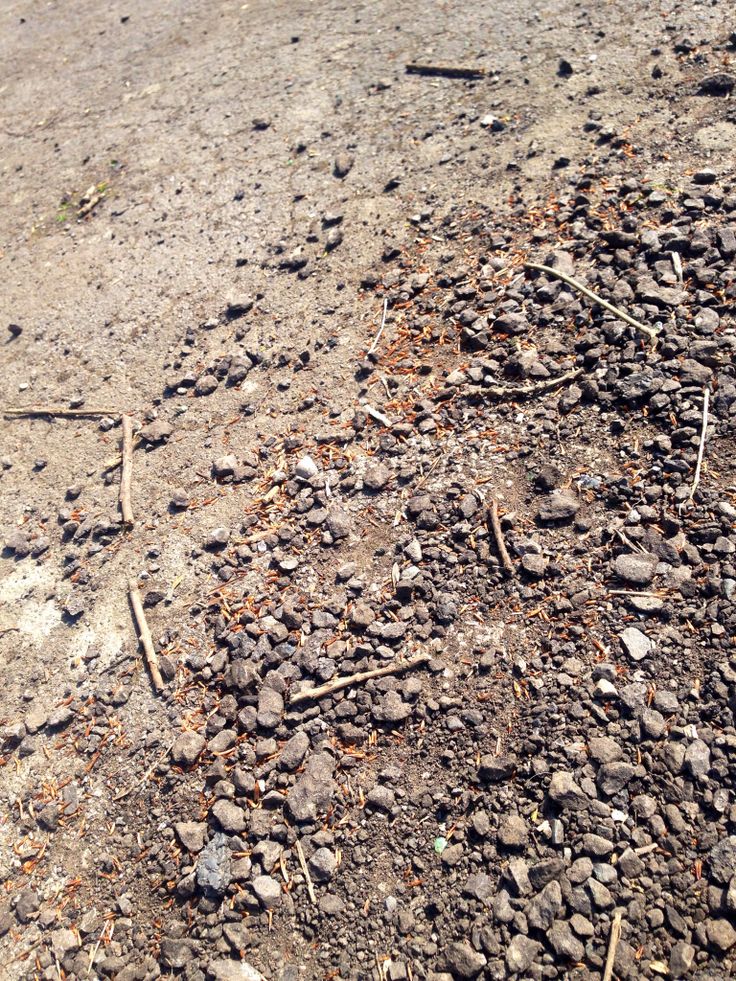
But, before the eagles come to rescue Frodo and Sam, we’ll take our own eagle back to the door where our roads began.

(the Hildebrandts)

As always, thanks for reading.

Stay well,

Remember how perilous it may be to step out your front door,

And remember, as well, that there’s always

MTCIDC

O

PS

For a bit more on the roads of Middle-earth, see:  https://thainsbook.minastirith.cz/roads.html

(Not) Crossing Bridges

03 Wednesday Dec 2025

Posted by Ollamh in Uncategorized

≈ Leave a comment

Tags

Anduin, Boromir, bridges, Etruscans, Horatius, Lars Porsena, Lays of Ancient Rome, Osgiliath, Tarquinius Superbus, The Lord of the Rings, Tolkien

Welcome, dear readers, as always.

We’ve been traveling along the roads of Middle-earth in the last two postings, but we’ve taken a pause at Osgiliath,

(from the Encylopedia of Arda)

before our trip across the Anduin and beyond.

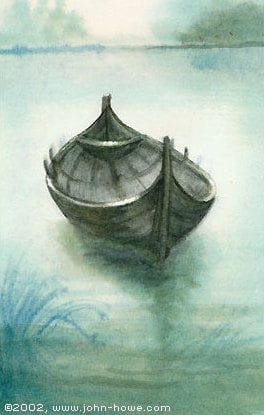
Frodo and Sam had crossed the Anduin by boat, much farther upstream,

(John Howe)

(Encyclopedia of Arda)

but the bridge here is broken—

and the real reason why it’s broken may lie, not in this Middle-earth, but in our own Middle-earth and far in the past, in the early history of Rome.

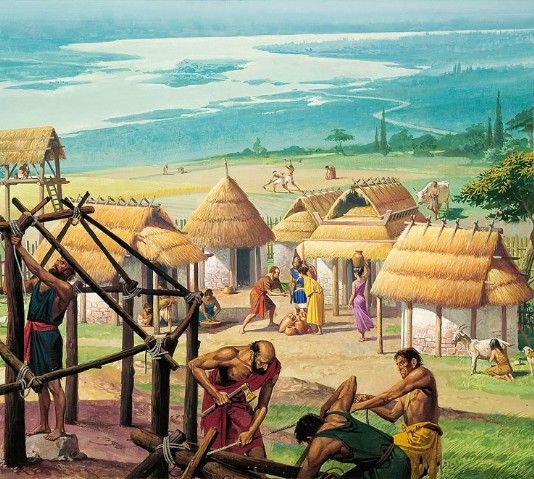
The earliest Italic settlers of the area had been farmers, who built communities on seven hills to the east of the Tiber River and farmed the land below.

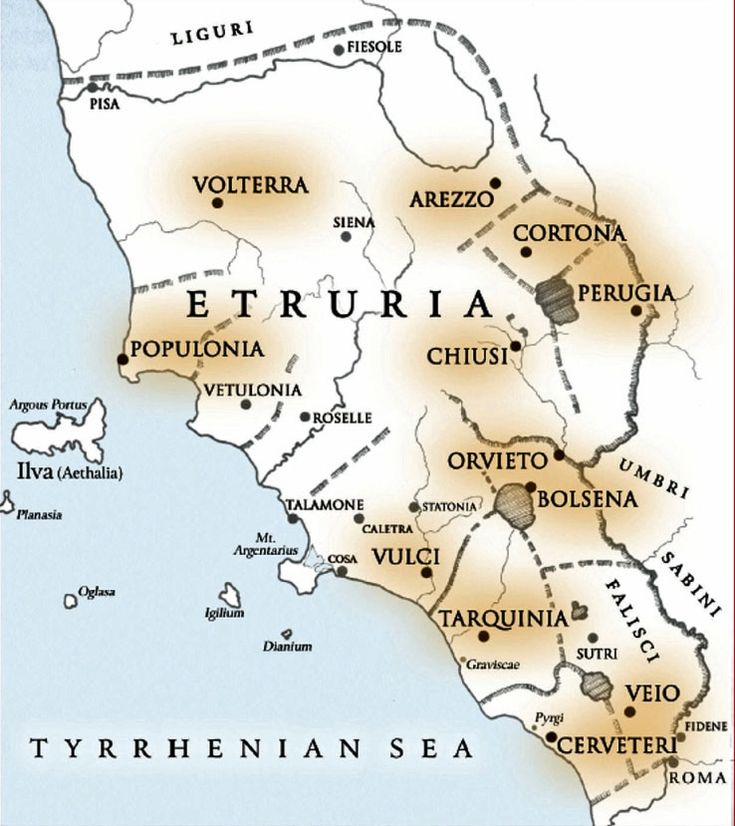
To their north was an older civilization, the Etruscans,

who were, culturally, a more sophisticated people.

They were also a more powerful military people

(Giuseppe Rava)

and eventually took over Rome for about a century (616-509BC).

Their last ruler of the city, Tarquinius Superbus (“Tarquinius the Arrogant”), was ejected, however, in 509BC, but did not leave quietly, going to the Etruscan king, Lars Porsena, in another Etruscan town, Clusium (Etruscan “Clevsin”),

for help.  Porsena marched on Rome—

(Peter Connolly)

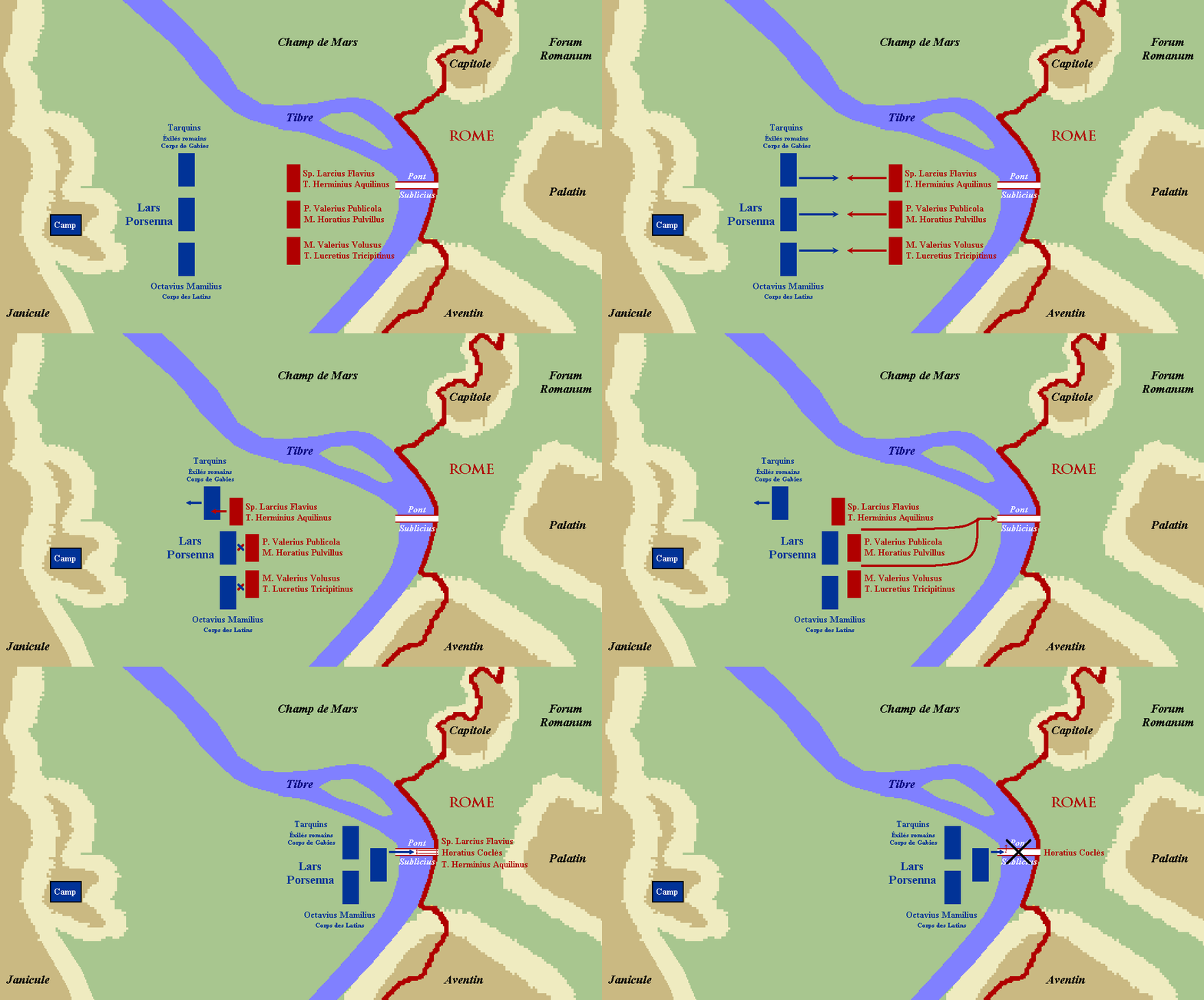
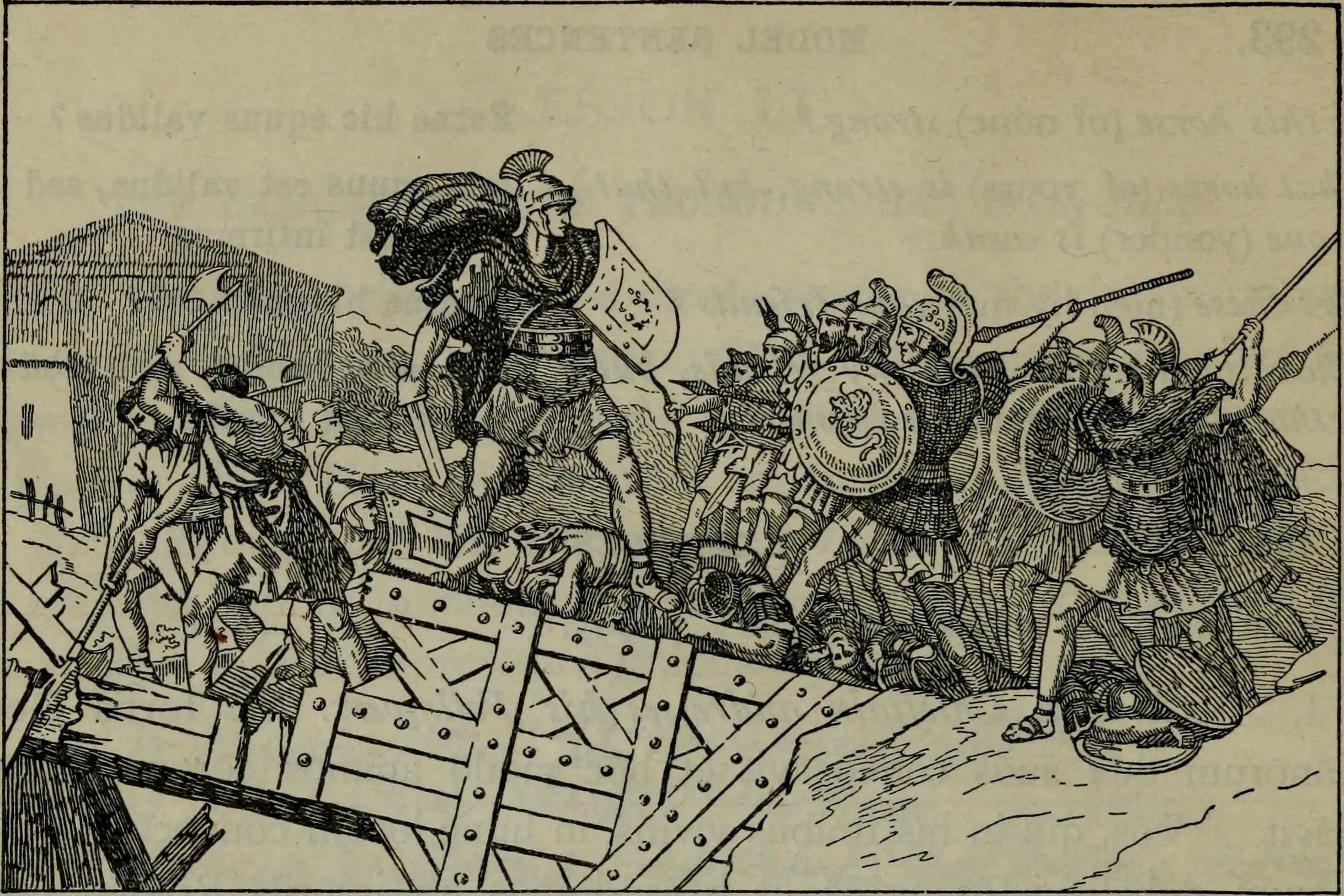
but, after this, ancient histories diverge—and so will we, as we pause once more at that bridge—the Pons Sublicius—the first bridge at the crossing of the Tiber.  As Lars Porsena moved against the city, the Roman militia came out to fight and were defeated.

Their only chance to save Rome, they believed, was to break down the bridge and three Romans, led by a lower-rank officer, Horatius, held back the Etruscans with two higher-rank officers while that was done.

Under Etruscan pressure, the other two began to retreat, but Horatius stood his ground, even though wounded more than once, until he had word that the bridge had been broken.  Upon that news, he turned, leaped into the Tiber, and swam to the other bank.

(Richard Hook)

At least one of our sources, Titus Livius (59BC-17AD), is doubtful about all of this, especially because Horatius was said to have done his swimming in full armor, but it fits into a regular story-pattern for Romans, in which a Roman suffers bravely—all for the sake of Rome.  A favorite in this pattern was the story of Regulus, a Roman official, who, being allowed by his Carthaginian captors to return to Rome to deal with terms for a prisoner exchange, spoke against it in Rome, then returned to his captors to meet an unpleasant end.  (For more on Regulus see:  https://en.wikipedia.org/wiki/Marcus_Atilius_Regulus_(consul_267_BC) )

Long after Rome’s empire was history—and legends—Horatius’ story survived and, in Victorian England, had become a literary staple because of the poem “Horatius ”, the first chapter in Thomas Babington Macaulay’s  (1800-1859)

 Lays of Ancient Rome (1842).

This also became a schoolboy staple, a popular favorite for memorizing and reciting in a world and time in which public poetic recitation was common.  (Winston Churchill claimed that he had once won a school prize for doing so.  See:  https://en.wikipedia.org/wiki/Horatius_Cocles  You can have your own copy of the first edition of Macaulay to recite from here:  https://archive.org/details/macaulaylaysofancientrome/page/n7/mode/2up  )

As a Victorian schoolboy, Tolkien

would have had a double exposure to this story, then:  first, in his copy of Livy’s history of Rome, Ab Urbe Condita, and then in Macaulay—which is why, rereading this passage, in which Boromir details Gondor’s rearguard action against Mordor, I saw what may have been the ultimate source for Tolkien’s bridge:

“ ‘Only a remnant of our eastern force came back, destroying the last bridge that still stood amid the ruins of Osgiliath.

I was in the company that held the bridge, until it was cast down behind us.  Four only were saved by swimming:  my brother and myself and two others.’ “ (The Fellowship of the Ring, Book Two, Chapter 2, “The Council of Elrond”)

Thanks, as ever, for reading.  Next posting:  the third and last part of the little series on Middle-earth roads, where we’ll leap over the Anduin and move east.

Stay well,

Building bridges is always better than breaking them–just ask a Roman,

And remember that, as always, there’s

MTCIDC

O

On the Road(s) Again—Again

26 Wednesday Nov 2025

Posted by Ollamh in Uncategorized

≈ Leave a comment

Tags

Edoras, Fords of Isen, Ghan Buri Ghan, Helm's Deep, Isengard, Osgiliath, Rammas Echor, Rocky Road to Dublin, Stephen Dedalus, Stonewain Valley, Tharbad, Ulysses

Welcome, dear readers, as always.

“While in the merry month of May, from me home I started
Left the girls of Tuam so sad and broken hearted
Saluted father dear, kissed me darling mother
Drank a pint of beer, me grief and tears to smother

Then off to reap the corn, leave where I was born
Cut a stout black thorn to banish ghosts and goblins
Bought a pair of brogues rattling o’er the bogs
And fright’ning all the dogs on the rocky road to Dublin”

Another road song—this time an Irish one—and we’ll be continuing, in this posting, to follow the roads of Middle-earth, rocky and otherwise.

(This is a very catchy song and you can read the whole lyric here:  https://www.azlyrics.com/lyrics/dubliners/rockyroadtodublin.html   (although you’ll notice a couple of small discrepancies between the written lyric and the sung one) before you listen to Liam Clancy and Tommy Makem performing it here: https://www.youtube.com/watch?v=Vb2Xw424W0M&list=RDVb2Xw424W0M&start_radio=1  For something about the history of the song, see:  https://en.wikipedia.org/wiki/Rocky_Road_to_Dublin )

We had stopped our exploration at the ruined bridge at Tharbad—

(the so-called Ponte Rotto (“Ruined Bridge”) in Rome—actually the Pons Aemilius—here’s a very interesting article about it and other bridges in Rome:   https://www.througheternity.com/en/blog/hidden-sights/rome-most-beautiful-historic-bridges.html  )    

Tharbad had once been a Numenorean city, with an impressive bridge which spanned the River Gwathlo (“Greyflood”), but

“A considerable garrison of soldiers, mariners and engineers had been kept there until the seventeenth century of the Third Age.  But from then onwards the region fell quickly into decay; and long before the time of The Lord of the Rings had gone back into wild fenlands.  When Boromir made his great journey from Gondor to Rivendell…the North-South Road no longer existed except for the crumbling remains of the causeways, by which a hazardous approach to Tharbad might be achieved, only to find ruins on dwindling mounds, and a dangerous ford formed by the ruins of the bridge…” (JRRT/Christopher Tolkien, Unfinished Tales, 277)

I wonder whether, when thinking of ruins, Tolkien had in mind the towns of southern Belgium destroyed by German shelling in the Great War, such as Ypres, which he would have walked through in 1916–

The road south from Tharbad, then, we can presume, was more like the Greenway farther north—grassgrown and abandoned.

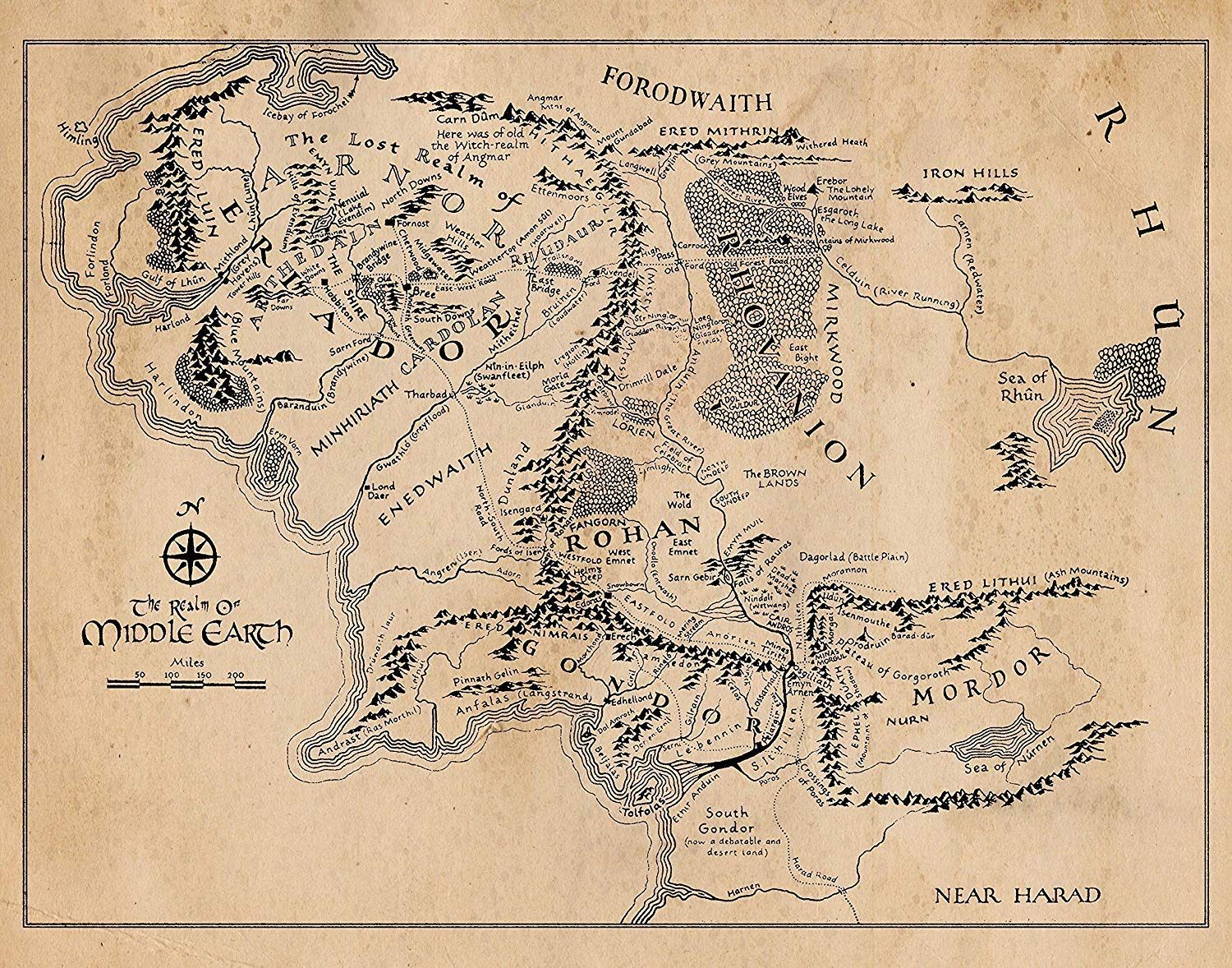
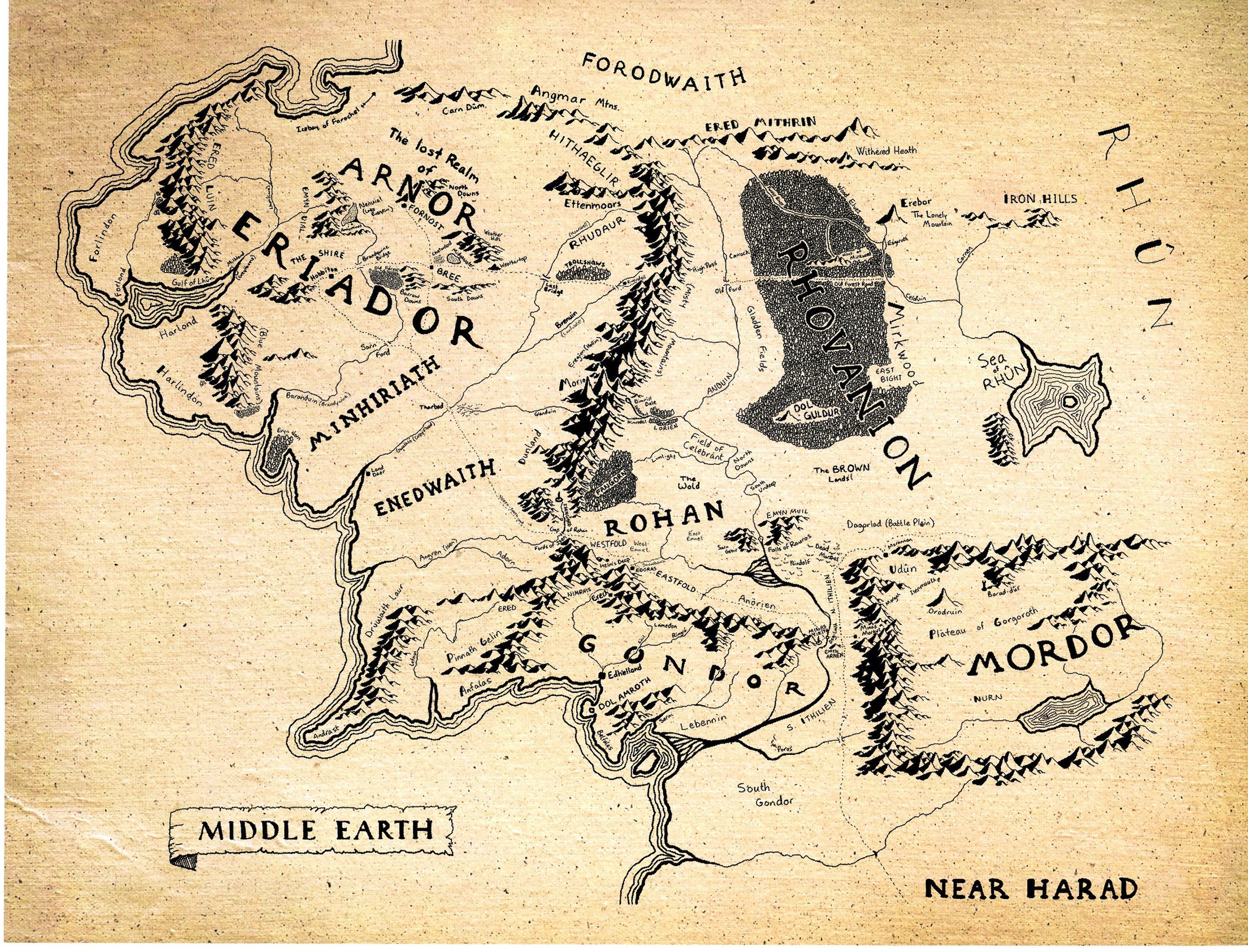
Using our map, we can see that the old road traveled through the Gap of Rohan,

(both this and the map above are derived, ultimately, from the Tolkiens’ map, but I haven’t seen this credited to anyone)

with Isengard off to its left,

(the Hildebrandts)

and, farther on, Helm’s Deep to its right,

(JRRT)

although I doubt that either was visible from the road, Isengard in particular being up the valley of the Isen.

JRRT has left us a useful description of the Fords of the Isen—

“There the river was broad and shallow, passing in two arms about a large eyot [from Old English, igeoth, “small island”], over a stony shelf covered with stones and pebbles brought down from the north.”  (Unfinished Tales, 372—there is a long and detailed account here, 372-390, including the heroic death of Theodred, son of Theoden.  This fills in the period when members of the Fellowship come to the defense of Helm’s Deep and Gandalf is abroad, looking for aid, while Merry and Pippin are rallying the Ents.)

Down from Helm’s Deep would also be Edoras,

(Alan Lee—notice, by the way, that the usual image of the wall of Edoras isn’t the spindly palisade shown in the films, but a solid stone wall, of the sort JRRT must have meant when he wrote:  “Following the winding way up the green shoulders of the hills, they came at last to the wide wind-swept walls and the gates of Edoras.”  (The Two Towers, Book Three, Chapter 6, “The King of the Golden Hall”)

and the road to Gondor and Minas Tirith.

(Ted Nasmith)

But we should pause here—as a hidden road will appear to our right—indicated to the Rohirrim in their ride south to the rescue of Minas Tirith by Ghan Buri Ghan, chief of the Woses (aka Wild Men—descendants  of pre-Numorean settlers of Gondor).

(Hildebrandts)

(This is taken from a large and elegant map which you can see here:  https://i.pinimg.com/originals/70/bc/b6/70bcb6ccc3a0ed5068d6ce15fb5a09a4.jpg )

As he describes it:

“ ‘Road is forgotten, but not by Wild Men.  Over hill and behind hill it lies under grass and tree, there behind Rimmon and down to Din, and back at the end to Horse-men’s road…Way is wide for four horses in Stonewain Valley yonder…but narrow at beginning and at end.  Wild Man could walk from here to Din between sunrise and noon.’ ”  (The Return of the King, Book Five, Chapter 5, “The Ride of the Rohirrim”)

And the narrator continues:

“It was late in the afternoon when the leaders came to wide grey thickets stretching beyond the eastward side of Amon Din, and masking a great gap in the line of hills that from Nardol to Din ran east and west.  Through the gap the forgotten wain-road long ago had run down, back into the main horse-way from the City through Anorien; but now for many lives of men trees had had their way with it, and it had vanished, broken and buried under the leaves of uncounted years.” (The Return of the King, Book Five, Chapter 5, “The Ride of the Rohirrim”)

A “wain” is a wagon

(This is the center of John Constable’s “The Hay Wain”, 1824, but it can give you an idea of what JRRT had in mind—picture this loaded with building stone instead of hay.)

and it’s clear that what we’re seeing here is an old quarry road, which led from stone quarries down to Minas Tirith, to build its walls.

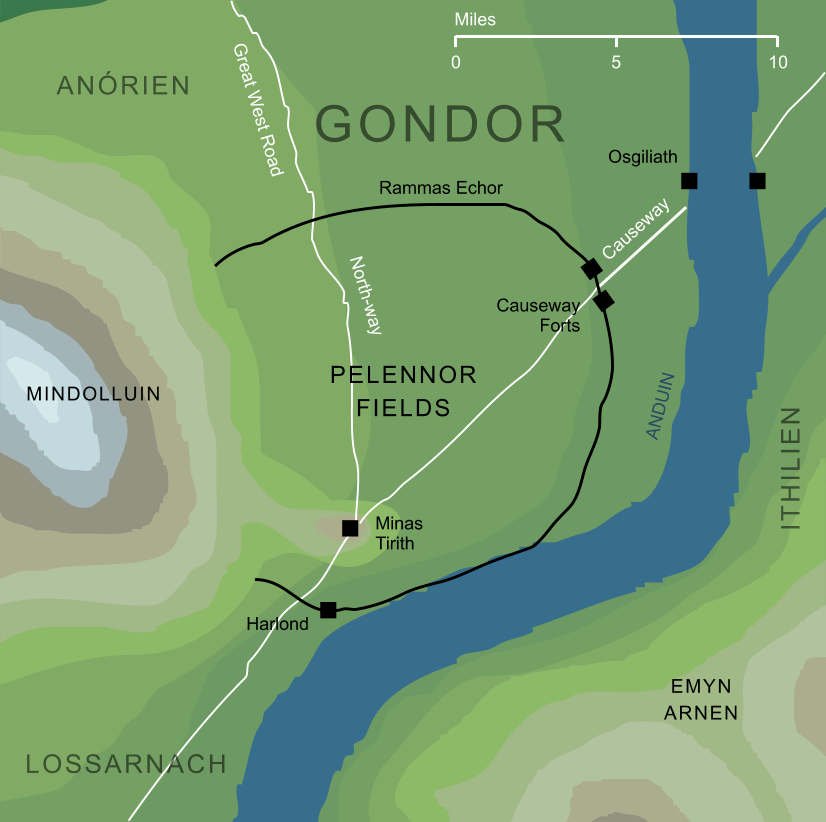
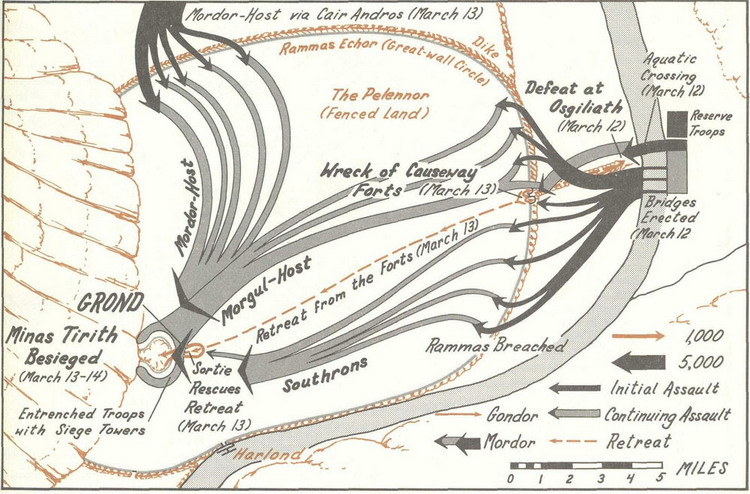
But, speaking of walls, we’re about to come up against one:  the Rammas Echor, or great circuit of wall that surrounded the Pelennor:

(from the Encyclopedia of Arda site)

“Many tall men heavily cloaked stood beside him, and behind them in the mist loomed a wall of stone.  Partly ruinous it seemed, but already before the night was passed the sound of hurried labour could be heard.”

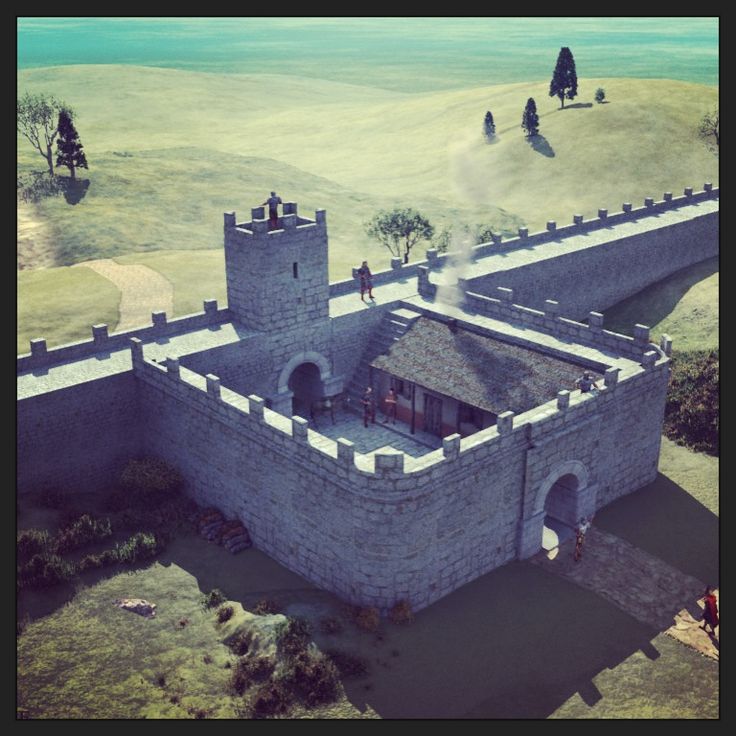
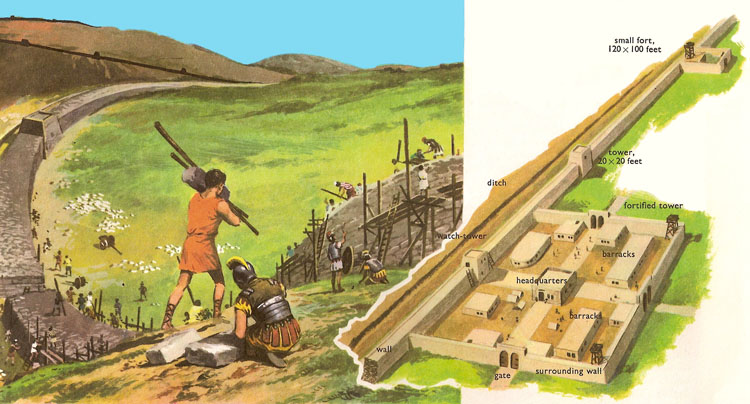
As you can see from the map, this was a very long wall (“For ten leagues or more it ran from the mountains’ feet and so back again…” —   a standard for a league is about 3 miles, so the wall is about 30 miles—about 48km–long) , and I’ve always imagined it as looking rather like Hadrian’s Wall in northern England, some 80+ miles long (about 129km), as it appeared when finished.

There were larger gates in the area called the Causeway Forts, but there were clearly single, smaller gates as in the image above, as the text tells us:  “…and the men made way for Shadowfax, and he passed through a narrow gate in the wall.” (The Return of the King, Book Five, Chapter 1, “Minas Tirith”)

I suppose that we could circle around the wall, and then we’d have to get onto the causeway—that’s a kind of elevated road—

(This is the stone causeway leading to St.Michael’s Mount, in Cornwall, southwest England, with the tide coming in—or going out.  You can read about St.Michael’s Mount here:  https://en.wikipedia.org/wiki/St_Michael%27s_Mount )

which leads to the ruined city of Osgiliath

where, alas, the bridges are broken (“And are not the bridges of Osgiliath broken down and all the landings held now by the Enemy?”  (The Fellowship of the Ring, Book Two, Chapter 8, “Farewell to Lorien “)

(Norris Rahming, 1886-1959)

and where we’ll stop for today, but pause at the site of one of those bridges in our next.

As ever, thanks for reading.

Stay well,

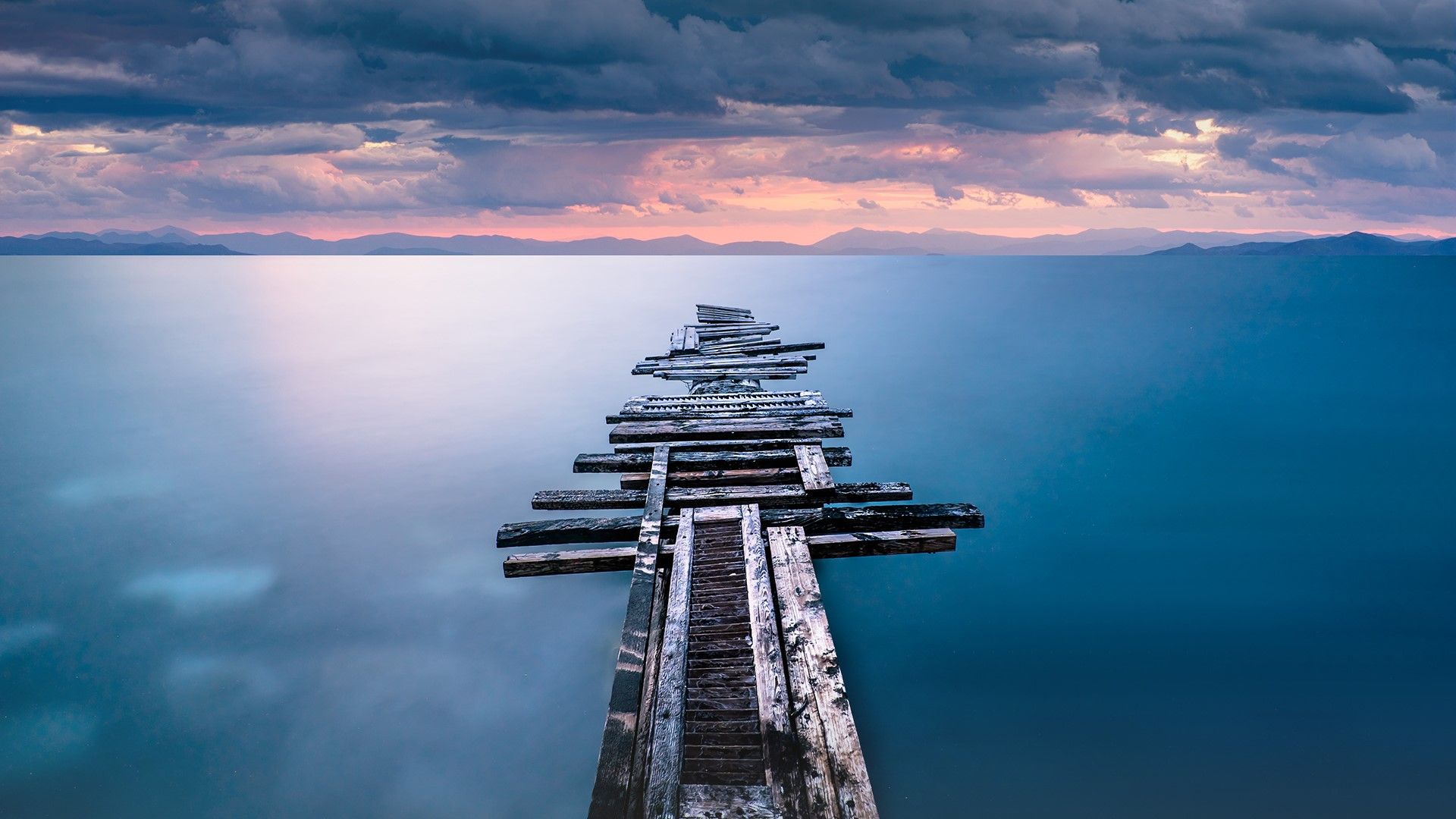
In James Joyce’s Ulysses, one of the main characters, Stephen Dedalus, calls a pier

a “disappointed bridge”—would you agree?

And remember that, as always, there’s

MTCIDC

O

In Bad Hands

30 Wednesday Aug 2017

Posted by Ollamh in Heroes, J.R.R. Tolkien, Literary History, Maps, Military History, Narrative Methods

≈ Leave a comment

Tags

CBS Television News, Denethor, Dunkirk, Early newspapers, early radio, Ecthelion, fake news, Gandalf, Henry IV, Isengard, Lifestyle Magazine, Minas Tirith, Nazi, Nazi Propaganda, news, newspaper, Orthanc, Osgiliath, Palantir, propaganda leaflet, Relation, rumors, Saruman, Shakespeare, texting while driving, The Detroit News, The Illustrated London News, The White Tower, Tolkien

Welcome, dear readers, as ever.
Not so long ago, news came to most people through one—very undependable–source: rumor and gossip. As Shakespeare’s Rumor (depicted as “all painted with tongues” in a stage direction), who appears at the beginning of Henry IV, Part 2, Prologue, 1-5, describes herself:
“Open your ears, for which of you will stop
The vent of hearing when loud Rumour speaks?
I, from the orient to the drooping west,
Making the wind my post-horse, still unfold
The acts commenced on this ball of earth.”
At almost the same time as this play was written and first performed (1596-99), the first printed Western newspaper appeared, the Relation, in Strasbourg in 1605.
image1a1609newspaper.jpg
For the next 300-and-some years, newspapers were then the accepted conveyor of popular information about local, national, and world events. Until 1842, these could only convey that information in words, but, in that year, the first illustrated newspaper appeared, The Illustrated London News.
image1billustratedlondonnews.jpg
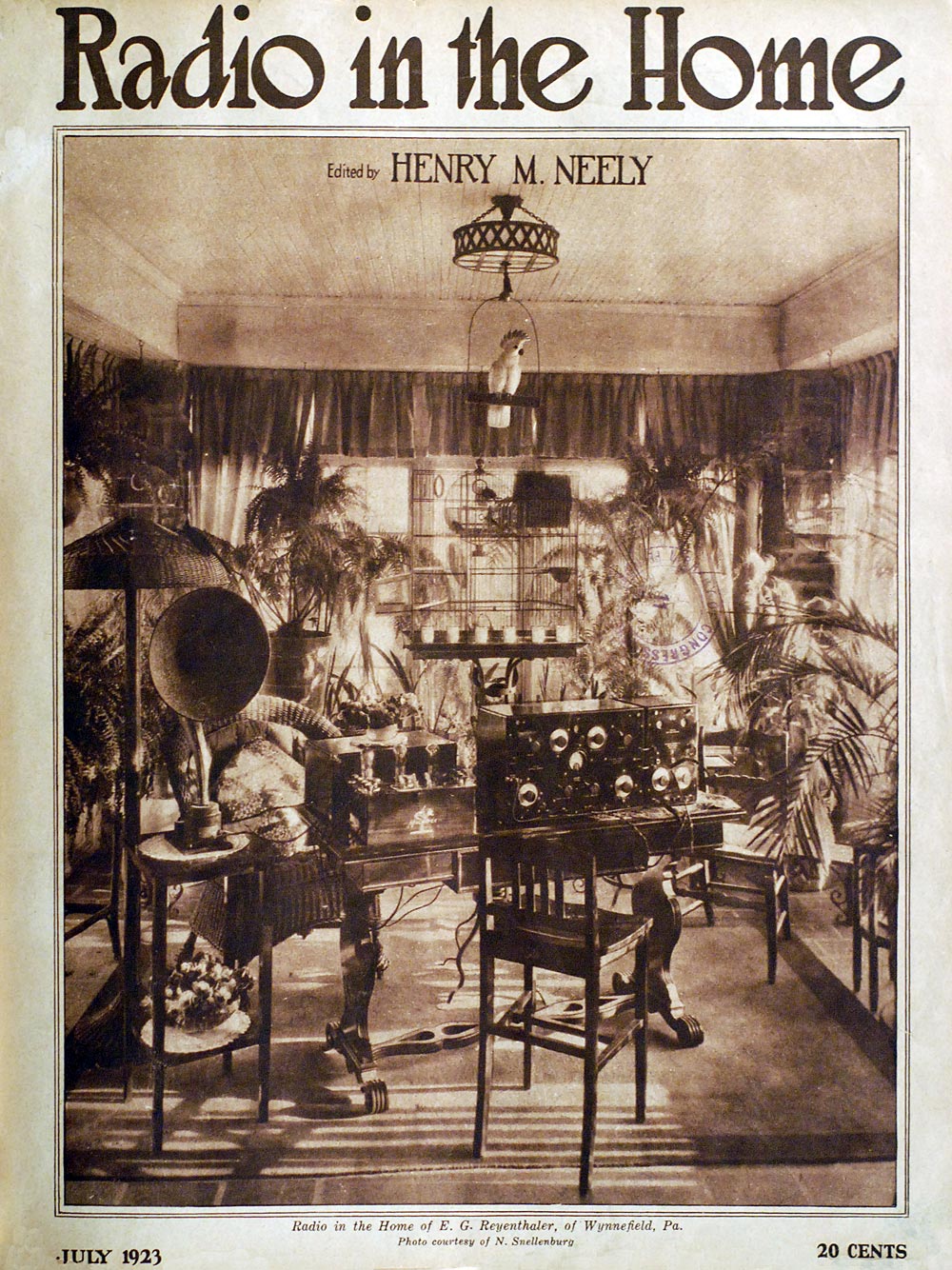
And soon other newspapers followed, opening a wider world of information to the reading public. In under a century, however, news appeared in a new form of technology entirely: the first news broadcast by radio believed to have been on August 31, 1920, by a set owned—perhaps not surprisingly by a newspaper— The Detroit News. Considering what radios looked like in the early 1920s, we doubt that many people heard it (this is an image from Lifestyle Magazine from 1923).
image1cearlyradio1923.jpg
Radios soon improved, however, so that, along with newspapers, people could tune in to hear news, news sometimes more up-to-date than even the newspapers could supply. And then came television. Experiments had been made with television broadcasting as early as 1940, but steady broadcasting really only began in 1948, with CBS Television News.
And then the internet appeared, so that, today, more people are believed to get their news from some form of electronic means than any other (or so electronic means tell us). Practically anywhere you go in our world, you see people staring at screens (not always reading the news, of course—with the universe of apps, people can be doing almost anything imaginable), many of them so portable that you can watch people doing it while walking
image1walktext.jpg
eating,
image2eattext.jpg
even while driving (which, frankly, terrifies us!).
image3textdrive.jpg
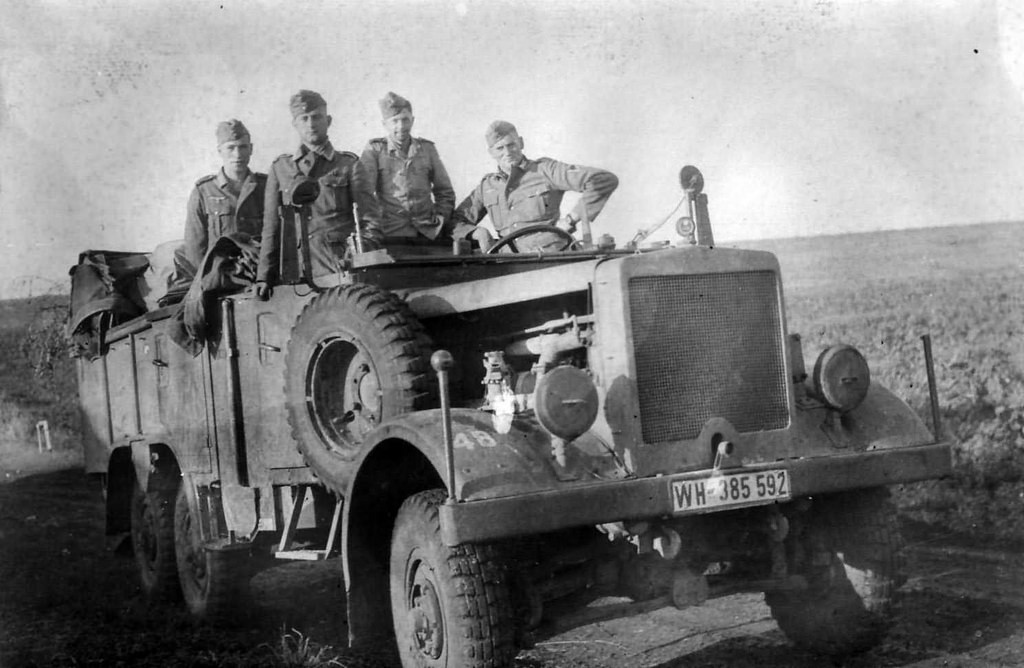
There is a problem with news, however, in every era. Shakespeare’s Rumor may have been pushed to one side by later technological innovations, but, in the form of so-called “fake news”, it’s still with us. And, in fact, faked news—news distorted—or even manufactured—has become a standard feature in newer technology. One has only to think about Nazi propaganda (certainly not the first, but perhaps, for us, the most extensive and most vivid), where—just as one example out of thousands—the mostly horse-powered German army of 1940
image4awehrmacht.jpg
was publicly depicted as streamlined and gasoline-powered (or, even more high-tech, diesel-powered).
image4bwehrmachttruck.jpg
Some time ago, we talked about literacy in Middle-earth. There was no printed material, of course, and literacy appears to have been limited (we only have to mention Gaffer Gamgee saying of Sam, “Mr. Bilbo has learned him his letters—meaning no harm, mark you, and I hope no harm will come of it.” to imagine that not only was it limited, but there might even be a certain suspicion attached to it.)
And what news there was came by the oldest of methods:
“There were rumours of strange things happening in the world outside; and as Gandalf had not at that time appeared or sent any message for several years, Frodo gathered all the news he could. Elves, who seldom walked in the Shire, could now be seen passing westward through the woods in the evening, passing and not returning; but they were leaving Middle-earth and were no longer concerned with its troubles. There were, however, dwarves on the road in unusual numbers. The ancient East-West Road ran through the Shire to its end at the Grey Havens, and dwarves had always used it on their way to their mines in the Blue Mountains. They were the hobbits’ chief source of news from distant parts—if they wanted any: as a rule dwarves said little and hobbits asked no more. But now Frodo often met strange dwarves of far countries, seeking refuge in the West. They were troubled, and some spoke in whispers of the Enemy and of the Land of Mordor.” (The Fellowship of the Ring, Book One, Chapter 2, “The Shadow of the Past”)
(See also the scene in The Green Dragon a little later in the chapter, where there is discussion, all based on hearsay, about Shire and extra-Shire events, between Sam and Ted Sandyman.)
For two people in Middle-earth, however, news came by a method in a strange way like that of the internet: the palantir, and that news which they received was not to their advantage. Made “from beyond Westernesse, from Eldamar. The Noldor made them…” Gandalf tells Pippin. (The Two Towers, Book Three, Chapter 11, “The Palantir”)

The palantiri were made “to see far off, and to converse in thought with one another.” Although there were seven, one, that at Osgiliath, was the master: “each palantir replied to each, but all those in Gondor were ever open to the view of Osgiliath.” Saruman had one of the others
image4saruman.jpg
—the one under discussion in this chapter, after Pippin had almost come to disaster from looking in it—which Grima flung off Orthanc
image5sarumanorthanc.jpg
in what, although unexplained, must have been an attempt to brain Gandalf.
image6gandalforthanc.jpg
Unfortunately for Saruman, what he presumably thought would benefit his quest for what he speciously tells Gandalf is “Knowledge, Rule, Order; all the things that we have so far striven in vain to accomplish…” (The Fellowship of the Ring, Book Two, Chapter 2, “The Council of Elrond”), becomes a snare, as it seems that the master stone of Osgiliath has fallen into Sauron’s hands and “Easy it is now to guess how quickly the roving eye of Saruman was trapped and held; and how ever since he has been persuaded from afar, and daunted when persuasion would not serve.” (The Two Towers, Book 3, Chapter 11, “The Palantir”)
There is another surviving stone, however, and, though it doesn’t turn its possessor into an unwilling ally of Sauron, its propaganda—faked news—does terrible damage, all the same. In the White Tower of Ecthelion in Minas Tirith,
image7awhitetower.jpg
Denethor
image7denethor.jpg
holds a palantir and he, too, is caught, as Gandalf surmises:
“…I fear that as the peril in his realm grew he looked in the Stone and was deceived: far too often, I guess, since Boromir departed. He was too great to be subdued to the will of the Dark Power, he saw nonetheless only those things which that Power permitted him to see. The knowledge which he obtained was, doubtless, often of service to him; yet the vision of the great might of Mordor that was shown to him fed the despair of his heart until it overthrew his mind.” (The Return of the King, Book Five, Chapter 7, “The Pyre of Denethor”)
This overthrow, brought on by Sauron’s propaganda, results in Denethor accusing Gandalf of plotting “to rule in my stead, to stand behind every throne, north, south, or west” as well as delivering what clearly sounds like the “speech long rehearsed” Gandalf has long ago said that Saruman delivered to him in Orthanc:
“For a little space you may triumph on the field, for a day. But against the Power that now arises there is no victory. To this City only the first finger of its hand has yet been stretched. All the East is moving. And even now the wind of thy hope cheats thee and wafts up the Anduin a fleet with black sails. The West has failed. It is time for all to depart who would not be slaves.”
“to depart” quickly seems a euphemism for something much more radical as Denethor:
“leaped upon the table, and standing there wreathed in fire and smoke he took up the staff of his stewardship that lay at his feet and broke it on his knee. Casting the pieces into the blaze he bowed and laid himself on the table, clasping the palantir with both hands upon his breast.”
image8denethorontable.jpg
Here, we thought of all of those people we see who seemingly can never put down their phones—even in death Denethor still grips the very thing which has brought about his destruction.
image9textdrive.jpg
Was JRRT sending us, here in the future, a warning: beware of your source of news—and sometimes let go of what brings it to you? We can only add his description of Denethor’s palantir when it was retrieved from the pyre:
“And it was said that ever after, if any man looked in that Stone, unless he had a great strength of will to turn it to other purpose, he saw only two aged hands withering into flame.”
image10dshands.jpg
Thanks, as always, for reading!
MTCIDC
CD
PS
The new film, Dunkirk, opens with a British soldier catching a German propaganda leaflet based upon an actual one. Below on the left is the movie version, on the right the original. (Notice, by the way, that, in the one on the right, the English is not quite parallel to the French, including the line, “Your commanders (chefs) are going to flee by airplane.”) If Middle-earth had had a print culture, it’s easy to see such a leaflet being dropped by Nazgul over Minas Tirith!
image11leaflet.jpg

Rear Guard

18 Wednesday May 2016

Posted by Ollamh in Films and Music, J.R.R. Tolkien, Literary History, Maps, Military History, Military History of Middle-earth, Narrative Methods

≈ 1 Comment

Tags

66th Regiment, British Infantry, Denethor, Faramir, Gary Zaboly, Le Cateau, Maiwand, Nazgul, Osgiliath, Pelennor, Peter Jackson, Rammas Echor, Richard Caton Woodville, the Alamo, The Lord of the Rings, The Return of the King, The Siege of Gondor, Tolkien

Welcome, dear readers, as always.

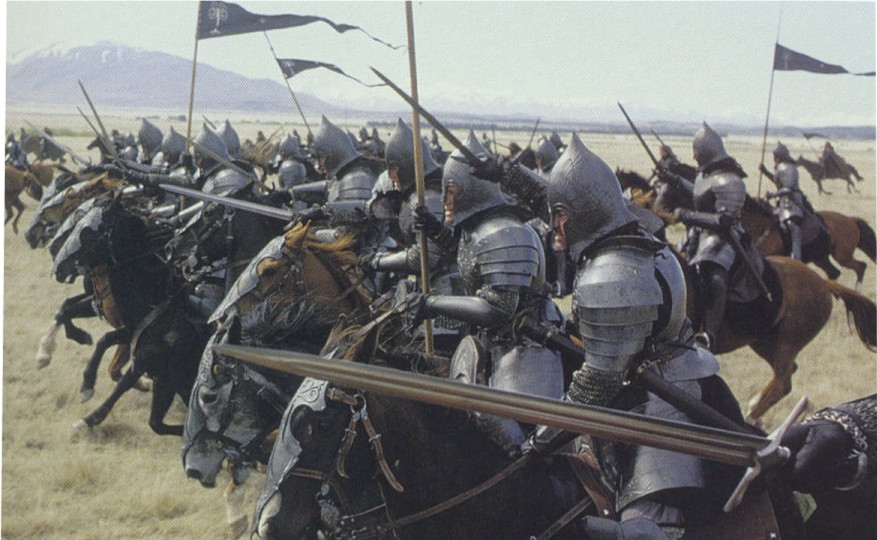
In a previous posting, we rolled our eyes verbally at a moment in P. Jackson’s The Return of the King in which Faramir, according to the script, was required to mount a double-rank cavalry charge against the west bank of Osgiliath.

gondorianerritt-cb182208.jpg

To us, this was a clumsy attempt to convey the clash between Faramir and his father Denethor, derived from material in The Lord of the Rings, Book 5, Chapter IV, “The Siege of Gondor”, principally from this:

“ ‘Much must be risked in war,’ said Denethor. ‘Cair Andros is manned, and no more can be sent so far. But I will not yield the River and the Pelennor unfought—not if there is a captain here who has still the courage to do his lord’s will.’

Then all were silent. But at length Faramir said: ‘I do not oppose your will, sire. Since you are robbed of Boromir, I will go and do what I can in his stead—if you command it.’

‘I do so,’ said Denethor.

‘Then farewell!’ said Faramir. ‘But if I should return, think better of me!’

‘That depends on the manner of your return,’ said Denethor.

Gandalf it was that last spoke to Faramir ere he rode east. ‘Do you throw your life away rashly or in bitterness,’ he said. ‘You will be needed here, for other things than war. Your father loves you, Faramir, and will remember it ere the end. Farewell!’ “

In the text, Faramir then goes to Osgiliath, having “taken with him such strength of men as were willing to go or could be spared.” The tone here is hardly encouraging and, the following day, “The passage of Anduin was won by the Enemy. Faramir was retreating to the wall of the Pelennor, rallying his men to the Causeway Forts; but he was ten times outnumbered.”

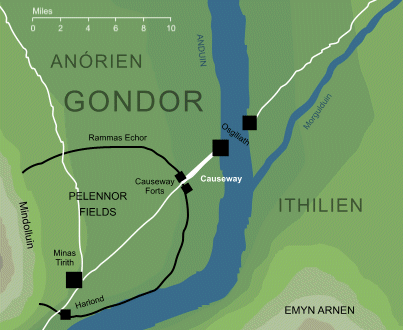
In an earlier posting, we have discussed the Rammas Echor, the wall which enclosed the farmland outside the walls of Minas Tirith.

causeway.gif

We have also discussed the use by both Saruman and Sauron of what appears to be an early form of explosive—seen here in the following description of the fall of the Rammas:

“The bells of day had scarcely rung out again, a mockery in the unlightened dark, when far away he [Pippin] saw fires spring up, across in the dim spaces where the walls of the Pelennor stood. ..Now ever and anon there was a red flash, and slowly through the heavy air dull rumbles could be heard.

‘They have taken the wall!’ men cried. ‘They are blasting breeches in it. They are coming!’ “

Outnumbered and, with the fall of the wall in different locations, outflanked, the best that Faramir can do is to fall back towards Minas Tirith, as Gandalf says, “Yet he is resolved to stay with the rearguard, lest the retreat over the Pelennor become a rout. He may, perhaps, hold his men together long enough, but I doubt it.”

Unlike the silly—there’s really no other word for it—charge of P. Jackson—Faramir is a professional soldier, after all, much loved by his soldiers—we see what JRRT, having been a soldier himself, would have known was the military solution: a fighting retreat, led by a brave and capable leader.

His task had been an impossible one to begin with and, properly understood and depicted on the screen, would not only have been powerful dramatically, but much more believable. It was an impossible task, however, against the odds of ten to one. (For a comparison, we offer the siege and fall of the Alamo, late February-early March, 1836. The garrison numbered about 180, the besiegers eventually approximately 3000. In the final assault, before dawn on 6 March, 1836, the four assaulting columns had about 1200 men, offering odds of roughly 6 to 1 and the entire garrison died, along with somewhere between 400 and 600 of the attackers.)

ALAMO_FORTRESS.jpg

(This is the work of the amazing Gary Zaboly– as an historical illustrator, he can’t be recommended highly enough. Much of his work concerns the 18th century, especially the 1740s and 50s, but he also has done some wonderful depictions of warfare in the American southwest in the 1830s and 40s.)

There are lots of examples of fighting retreats and we’ve picked two: a failure (Maiwand, Second Afghan War, 1880) and Le Cateau (The Great War, 1914).

At Maiwand, 27 July, 1880, a British-Indian brigade of 3 infantry units plus two cavalry units and a battery (6 guns) of horse artillery, anywhere from 1500 to 2000 soldiers, faced perhaps 12,000 Afghans with 6 batteries of guns.

Action_at_Maiwand_map.jpg

Basically, the British were outflanked and their left-hand units began to buckle under the pressure of the attacks and the number of attackers which they had to face. As they gave way, the right hand end of the line began to move backwards, feeling increasingly in danger of being surrounded, just as Faramir’s men must have.

As the infantry retreated, the artillerymen used their guns to buy time for a general withdrawal, ending by losing a section (2 guns) to the enemy. There’s a famous painting of the withdrawal of the remaining guns by the late-Victorian artist, Richard Caton Woodville.

woodvillesavingtheguns.jpg

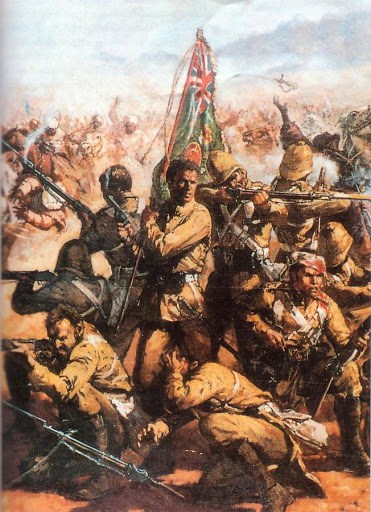
At the end of the withdrawal from the battle, a small group of British soldiers of the 66th Regiment took shelter inside an enclosure in a nearby village and fought it out to the end.

66thfootmaiwand.jpg

maiwand-66th.jpeg

Gandalf’s worry had been that Faramir couldn’t hold his men together and you can see here what happens when organized units come apart—they are defeated piecemeal, “in detail” is the military expression.

In contrast to this, we offer an action from Tolkien’s own time, the battle at Le Cateau, fought on 26 August, 1914. The British Expeditionary Force, facing superior numbers and in danger of being outflanked, particularly to the west, was engaged in a long retreat. Miraculously, unit cohesion was mostly maintained, although communications were often poor, causing confusion and, in one case, even in losing a unit, never notified of withdrawal.

The British Army was divided into two larger groupings, First and Second Corps, and it was Second Corps which turned to face its pursuers. During a long morning, the British, in hastily-dug trenches, fended off superior numbers of German infantry.

1st-east-lancs-regiment-s.jpg

LeCateauMAP1.jpg

Having lost heavily, but having given the enemy similar punishment, the British slowed German pursuit and were able to withdraw without being as closely pursued as they had been.

The difference here is in exactly what Gandalf was worried about. At Maiwand, the brigade fell apart and could easily be swept away by the enemy. At Le Cateau, although it was hardly a perfect affair, the British kept enough cohesion not only to withstand and defeat heavy attacks, but then to retreat in units, without ever collapsing into a fleeing mob.

What happens in that struggle in the fields behind the Rammas Echor is, in fact, a mixture of the two retreats described above. We see “Small bands of weary and often wounded men…some were running wildly as if pursued.” Then, “…less than a mile from the City, a more ordered mass of men came into view, marching not running, still holding together.” And then “Out of the gloom behind a small company of horsemen galloped, all that was left of the rearguard.”

So, it looks like Faramir had succeeded in maintaining that sense of order and purpose which is vital for a fighting retreat. It was not to last, however, as a mass of enemy horsemen on the causeway behind, as well as several Nazgul from above, threw all into confusion—which was stemmed, in turn, by the arrival of a rescue party, led by the Prince of Dol Amroth and accompanied by Gandalf arrived to drive back the attackers.

gandalf_to_the_rescue___speed_paint4_by_myworld1-d7wjv97.png

In that flurry, Faramir is struck by an arrow and has to be rescued and brought into the City, badly wounded.

Looking back, it is a very different scene from that preposterous cavalry charge, isn’t it? As our readers are probably also experienced watchers of the films, we wonder: which do you prefer, Jackson/writers or the author?

Thanks, as always, for reading.

MTCIDC

CD

The Fall of Two Cities?

09 Wednesday Mar 2016

Posted by Ollamh in Economics in Middle-earth, Imaginary History, J.R.R. Tolkien, Language, Maps, Military History, Military History of Middle-earth, Narrative Methods

≈ Leave a comment

Tags

Agincourt, Anadoluhisari, Anatolia, Asia Minor, Bayezid I, Bosphorus, Byzantium, Constantine I, Constantinople, Crecy, English Civil Wars, Eowyn, Gondor, map, Mehmet II, Minas Tirith, motte and bailey, Newark, Normans, Osgiliath, Ottoman Empire, Poitiers, Rumelihisari, siege, The Lord of the Rings, Tolkien, Witch-King of Angmar

Dear Readers,

Welcome, as always. A little while ago, we talked about the “siege of Gondor”, which really wasn’t a siege in the formal sense, at all, but rather an assault. (We suspect that JRRT liked the sound of “siege” and so used it, not caring if it were strictly accurate or not.) In this posting, we want to look at a real siege and examine what might be parallels with events in Middle Earth.

Before we do, we want to take a moment to talk about the word “siege”. It comes into English through Old French asegier, which comes from Latin ad + sedeo > adsideo, adsidere , literally, “to sit down at”. The northern French who passed the word on to England must have liked to say what’s called a y-glide when certain consonants came before e, so, though it was spelled asegier, it would have been said “ah-see-YED-jier”. And that’s why English today has what can be a confusing spelling. (In our experience, lots of native speakers have trouble distinguishing between the ie of “siege” and the ei of “seize”). The stress on the word in English would have been away from the initial a, and so that would have disappeared from the word as it moved from being a borrowing.

[As what we think is a cool footnote, Latin also has the verb obsideo “to sit down right before=to besiege” and we can see that used in English in the word “obsession”, with the idea that something bothers you so much that it’s like you’re being besieged by it. You can also see it on this wonderful bit of 17th-c. English history.

obsidionalmoney.jpg

Although it doesn’t look like a modern coin, this is a form which used to be called “half-a-crown”—that is, 30 pennies (that’s what those three xses mean), or two shillings, sixpence.   This coin was struck in the town of Newark-upon-Trent, when it was besieged during the English Civil Wars (1642-1651).

_82601862_newark-1646map.jpg

And that’s where obsideo comes in. The back (the “reverse” in coin language—the front is called the “obverse”) says:

OBS: Newark (with a date, either 1645 or 1646, depending on when the coin was struck)

OBS = Obsessa Newark = “Newark Besieged”

There were a lot of coin-substitutes struck by various besieged towns, but, apparently, those from Newark are the most numerous.]

In the medieval western military world, sieges were more common, it seems, than pitched battles. As castles and towns were focal points for the possession and control of land—think of the hundreds of early castles, called “motte and bailey”, which the Normans built all across England in the first years after their conquest–it’s not surprising that they would have been a focus of attack.

motteandbailey.jpg Tapisserie_motte_dinan 704.jpg

As well, we can imagine that, ultimately, they would have been cheaper, in terms of the most irreplaceable manpower, sparing the highly-trained, hard-to-replace, knights and men-at-arms.

knights.jpg

Battles like Crecy (1346), Poitiers (1356), and Agincourt (1415), cost the French dearly as their brave knights threw themselves at their English opponents, whose longbows shot them and their horses down.

agincourt.jpg

In a siege, although there was the occasional combat, including the exploitation of a break in the enemy’s defenses,

Edward-III-takes-Poix-Castle.jpg

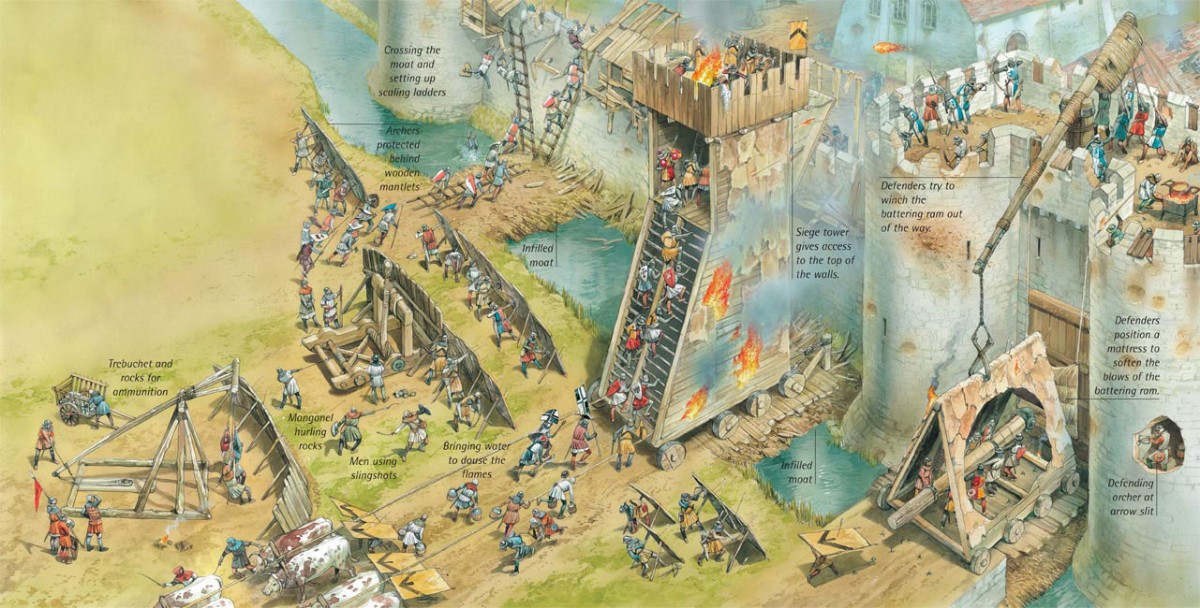
most of a siege would be spent in using machinery of various sorts to aid you in breaking down the walls—and the resistance of the defenders, as well.

castles-and-knights-2-with-labels.jpg

This brings us to the real, historical siege we want to examine: Constantinople, 1453.

Bizansist_touchup.jpg

Constantinople had begun life as a Greek colony, called Byzantium, on the European side of the narrow passageway between the Black Sea and the northeastern Mediterranean.

byzempmap.gif

It had been refounded and greatly expanded by the Roman emperor, Constantine I, to be a new capital in the east.

Constantine-I-Face.jpg

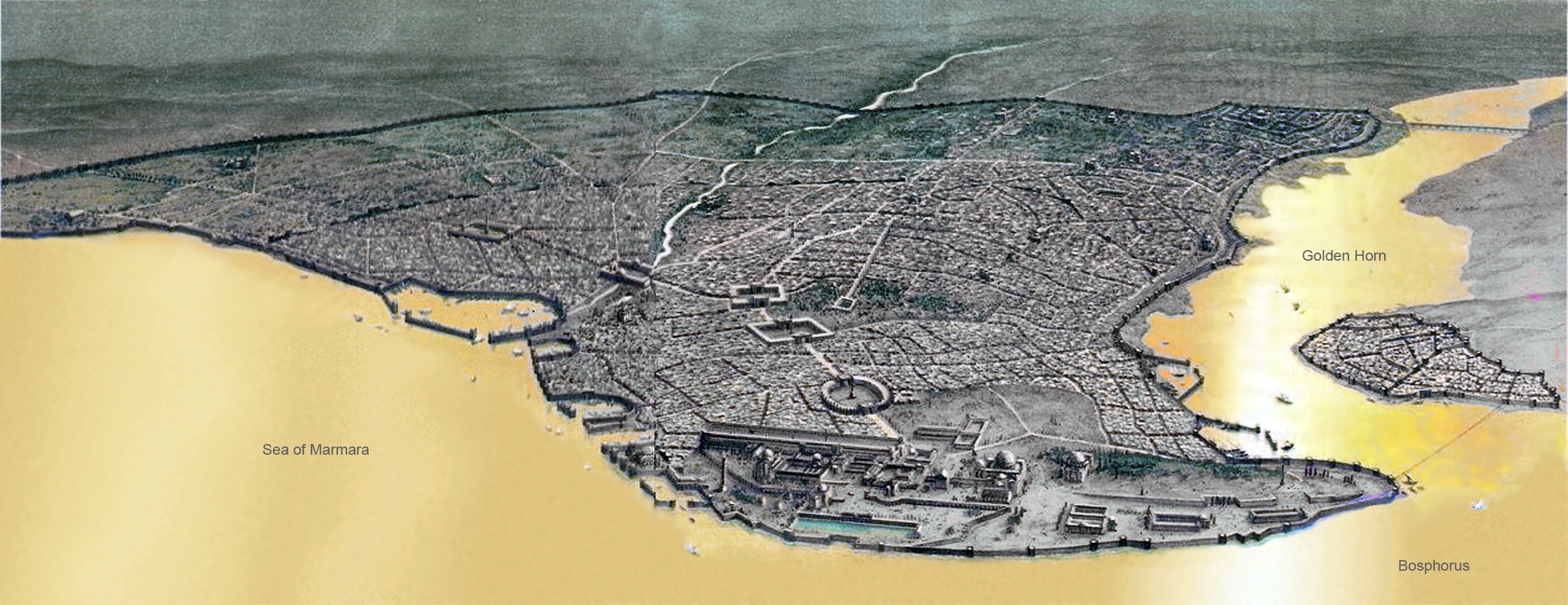
Although it was supposed to be called “New Rome”, everyone in the east called it after its refounder, and so it was “Constantinople”, becoming the capital of an eastern empire which we call “Byzantine”. Even with setbacks and a number of unsuccessful attacks over the centuries, it was, for a long time, a very wealthy and powerful city.

1-reconstruccion-de-bizancio.jpg

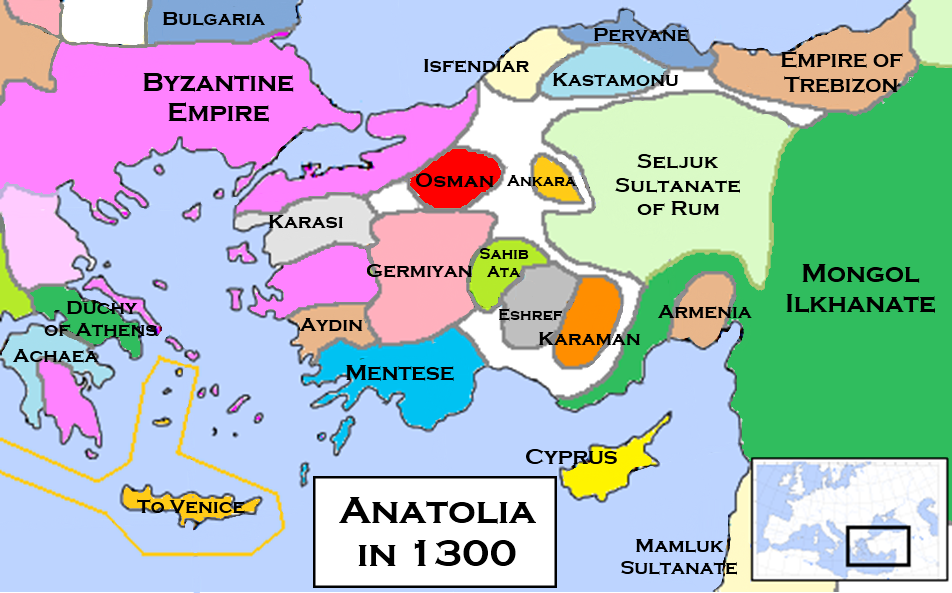
But even the wealthiest and most powerful cities will fade—especially when faced with ambitious enemies. Constantinople had had a number of those, but, finally, in its last years, perhaps its most ambitious and most powerful arose in Asia Minor: that of the Ottoman Turks. As you can see from this map, its beginnings were modest: one Turkic-speaking group among many.

Anatolian_Beyliks_in_1300.png

This was a period of instability, however. The Ottoman leaders quickly took advantage of that instability to grab power and territory, so that, by 1400, they had spread beyond the shrinking Byzantine world, into the Balkans, and, soon, Constantinople was surrounded.

trebizond1400

This surrounding took place in an increasingly-methodical way. In 1393-4, the ruler of the Ottomans, the sultan Bayezid I

bayezit1.jpg


built a small fortress on the Asia Minor side of the Bosphorus, the name for the northern stretch of the passage which led from the Black Sea to the Mediterranean. It was called Anadoluhisari, “the Anatolian fort”.

Anadoluhisari.jpg


You can see from the map that this was the beginning of setting up a choke point upstream from Constantinople.

mapwithanadoluhisari.gif

In 1451-2, the sultan Mehmet II finished the job with the Rumelihisari just opposite, on the European side (and that’s what its name means, “the Roman—that is, European—fort”).

Rumeli_hisari.jpg

Guns were mounted

muslim_rocket_technology_06.jpg

and any help which might have come from the Black Sea was blocked.

And here we want to take a minute to look at our imaginary city and its danger—because we see some easy parallels here. First, of course, the Ottoman empire was an eastern threat—so was Mordor. Mordor had taken the east bank of the Anduin, just as the Ottomans had taken the Asian side of the Bosphorus. And, in the capture of the European side and the building of Rumelihisari, we might see the taking of Osgiliath and the west bank of the Anduin. Then there is the massive city of Minas Tirith and the attack upon it.

mt.jpg 2381576-zmordorforcesk7.jpg

Constantinople was also a massive city.

Byzantine_Constantinople-en.png

It was, basically, on a triangular piece of land, with two sides protected by water. The original Greek town had had a wall, but it was long gone and almost all of Constantine’s land wall had long disappeared, as well. The latest walls are called the Theodosian, after their originator, the emperor Theodosius II (408-450AD), but the walls included bits of the Constantinian walls and many repairs, over the centuries. The main land defenses included three lines of wall and a moat.

2rh67o0.jpg

This sounds very impressive until one considers two things: first, is there a garrison big enough to defend what are, in fact, a number of miles of wall? And, second, although the walls have withstood previous attacks, including one made by the Ottomans in 1422AD, how will they stand up to the threat of modern artillery?

At the height of its power and prosperity, it is estimated that Constantinople had had a population of anywhere from 500,000 to 750,000 (although scholars argue over this). At the time of the final siege, the population had fallen to as low as 40,000. Thus, large parts of the city were empty—just like Minas Tirith:

“Pippin gazed in growing wonder at the great stone city…Yet it was in truth falling year by year into decay; and already it lacked half the men that could have dwelt at ease there.” (The Return of the King, Book 5, Chapter 1, “Minas Tirith”)

The garrison of Constantinople was perhaps about 9,000, in all, which meant that they were very thinly stretched. We don’t know just how many troops were in Minas Tirith. Some reinforcements had come from South Gondor, as we noted in an earlier posting, but only a few thousand and the defenders were powerfully outnumbered, just as those of Constantinople were, when the forces of Mordor began to arrive. The Ottoman army is thought to have had between 50,000 and 80,000 men, but just how many Orcs and others marched down the causeway from Osgiliath isn’t known–they are just a horde—something which the Jackson film shows very well.

maxresdefault

Then the assault begins, the Orcs having giant stone throwers, siege towers, and, finally, a giant, fire-breathing ram, Grond.

Grond_arrives.png

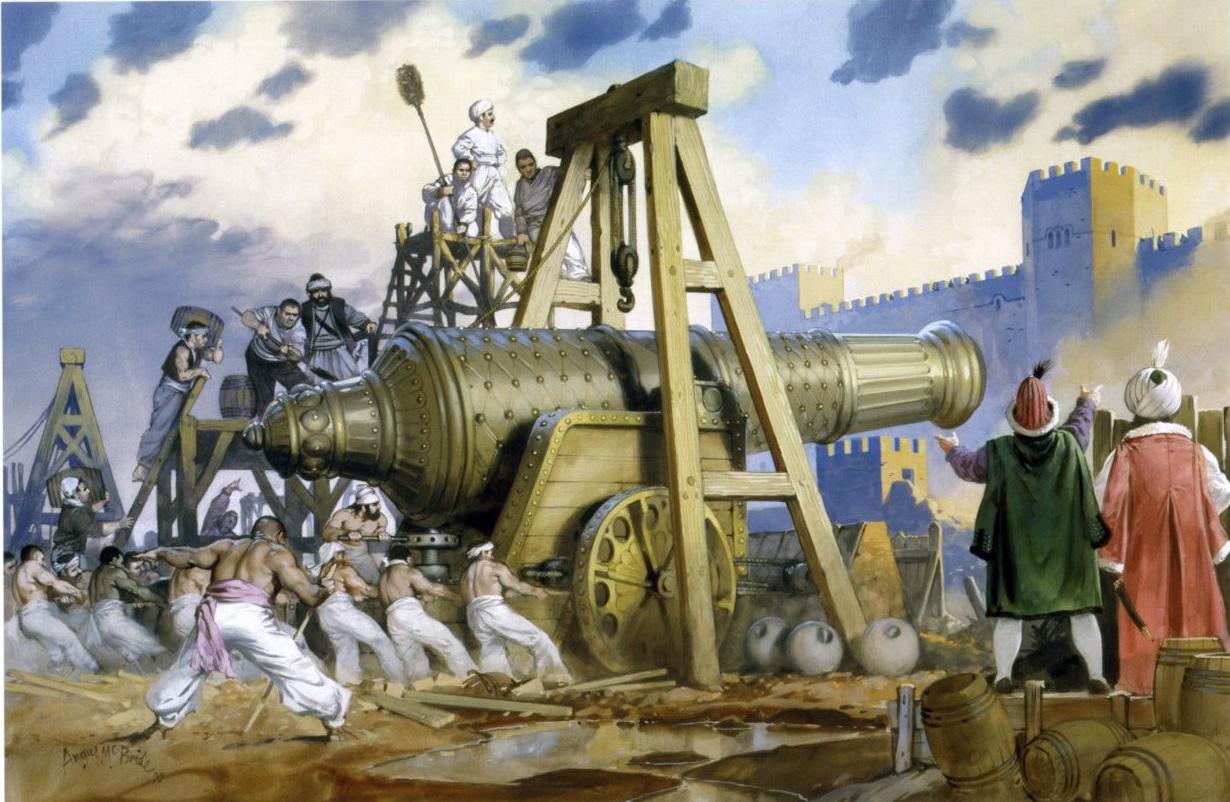
If you’ve been following our postings (and we hope you have!), then you know that we’ve discussed the use of what appears to be gunpowder, both at Helm’s Deep and at the Rammas Echor. The Orcs who attack the walls of Minas Tirith don’t appear to have such a weapon, but, unfortunately for the defenders of Constantinople in 1453, the Turks do, in the form of plentiful modern artillery.

Illustration-of-angus-mcbride-showing-the-ottoman-cannon-basilica-during-the-siege-of-constantinople-in-1453-ad.jpg

Attacks wear down the small garrison and huge, stone-throwing weapons knock down the walls, so that, finally the city falls, on 29 May, 1453.

84087026.jpg

Its conqueror, Mehmet II, rides in—

mehmet2enteringconstantinople.jpg

which is something the witch king of Angmar never gets to do, perishing instead, at the hands of Eowyn and Merry.

Eowyn.jpg


And there the parallels end, as does our posting. Did JRRT have the fall of Constantinople somewhere in the back of his mind? What do you think?

Thanks, as always, for reading.

MTCIDC

CD

Where Did It Go– And Why?

17 Wednesday Jun 2015

Posted by Ollamh in J.R.R. Tolkien, Military History, Military History of Middle-earth

≈ Leave a comment

Tags

Arbeia, Boromir, Cavalry, Denethor, England, Faramir, Film, Gondor, Hadrian's Wall, Helm's Deep, Iliad, Minas Tirith, Offa's Dyke, Osgiliath, Pelennor, Peter Jackson, Rammas Echor, Script, The Great Wall, The Lord of the Rings, Tolkien, Wansdyke

Dear Readers,

Welcome, as always!

     In this post, we want to consider the Rammas Echor, which, in the original, had holes blown in it by the invading army of Sauron, but was demolished completely by the script writers for Peter Jackson’s LOTR.

The%20Siege%20of%20Minas%20Tirith

     We first meet it when Gandalf and Pippin, in their rapid journey to Minas Tirith, are briefly stopped at what appears to be a sally port in it (rather than a major gate, as Shadowfax is said to have “passed through a narrow gate in the wall” 749). Gandalf briefly trades remarks with an officer named Ingold (who appears briefly later in the story to report that the northern section has fallen, 821) before he and Pippin continue their journey.

     It is described thus:

   “Gandalf passed now into the wide land beyond the Rammas Echor. So the men of Gondor called the out-wall that they had built with great labour, after Ithilien fell under the shadow of their Enemy. For ten leagues [about 30 miles in the English system—about 48 km in the metric] or more it ran from the mountains’ feet and so back again, enclosing in its fence the fields of the Pelennor: fair and fertile townlands on the long slopes and terraces falling to the deep levels of the Anduin. At its furthest point from the Great Gate of the City, north-eastward, the wall was four leagues [12 miles—about 19 km] distant, and there from a frowning bank it overlooked the long flats beside the river, and men had made it high and strong; for at that point, upon a walled causeway, the road came in from the fords and bridges of Osgiliath and passed through a guarded gate between embattled towers… “ 750.

     With so much of Tolkien, one can find illustrations from the usual artists—the Hildebrandts, Howe, Nasmith, and Lee—but for this particular—and important—architectural feature, we haven’t discovered—so far—a single illustration.

     It’s made of stone and has evidently not been well-maintained: “Many tall men heavily cloaked stood beside him [Shadowfax], and behind them in the mist loomed a wall of stone. Partly ruinous it seemed, but already before the night was passed the sound of hurried labour clould be heard: beat of hammers, clink of trowels, and the creak of wheels.” 748 And, as mentioned above, it has gates, but, beyond that, what does it look like?

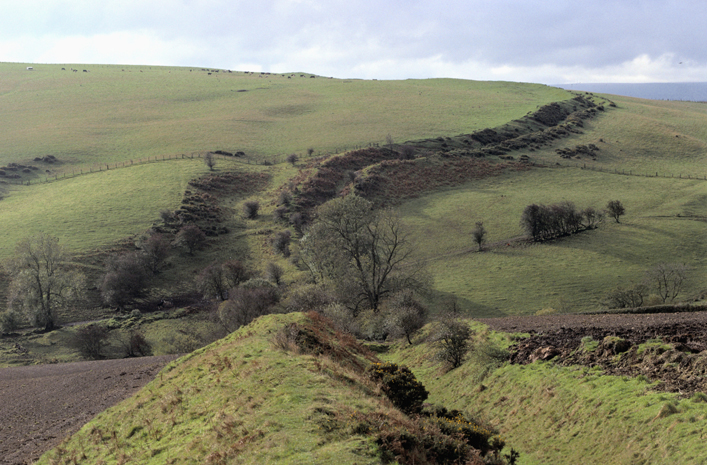
     England has a long history of long walls. There are the surviving earthen walls and ditches of the Dark Ages or early medieval Offa’s Dyke

Offa's_Dyke_near_Yew_Tree_Farm_-_geograph_org_uk_-_450420

1990s, Near Knighton, Wales, UK --- Offa's Dyke near Knighton in Wales. The dyke was created by Offa the King of Mercia from 757 to 796 AD and roughly formed the boundary between England and Wales. --- Image by © Homer Sykes/CORBIS

and Wansdyke

wansdyke

and, of course, the well-known 2nd –century AD work, Hadrian’s Wall, with its surviving stone work and its elaborate series of mile castles, gates, and supporting forts and camps.

Hadrians_Wall Hadrian's Wall phase 1 Central sector

   We might also cast further afield and in time. In Book 7 of the Iliad, the Greeks dig a ditch, fill it with sharpened stakes, and build a stone wall behind it to protect their ships from Trojan attack.

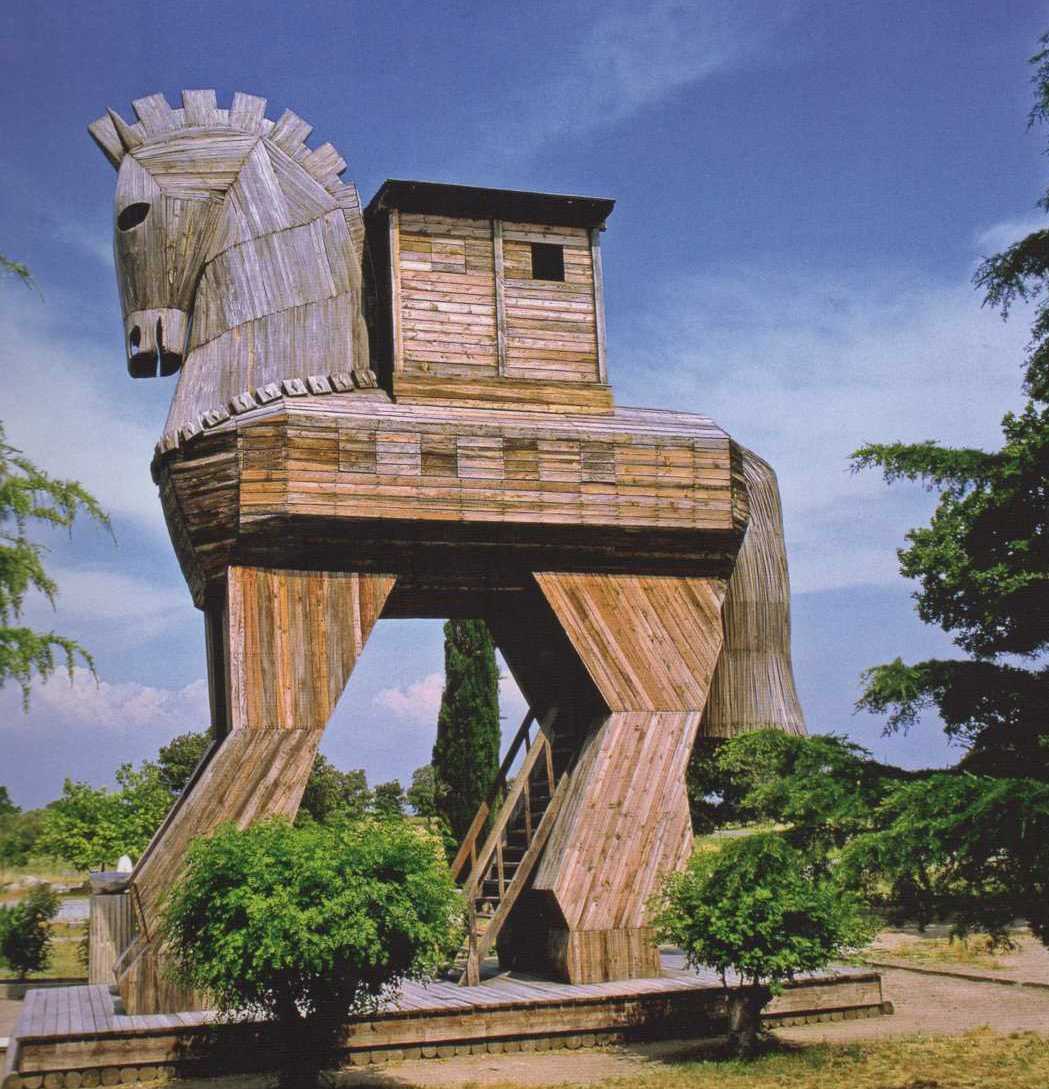
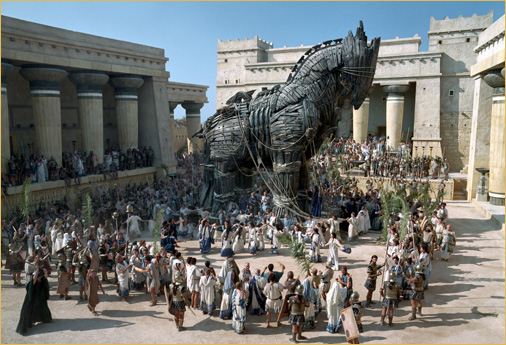
[We can’t find an image of that, but here’s a picture of one of our favorite features of today’s Truva/Hisalik, just to remind you of a later feature of the Trojan War—along with a still from the 2004 Brad Pitt film, known to those of us who love Homer for its rather casual attitude towards the traditional story.]

617-5-horse1

trojan-horse%20troy%20the%20movie

And how can we fail to mention the Great Wall of China?

thegreatwall_rcv

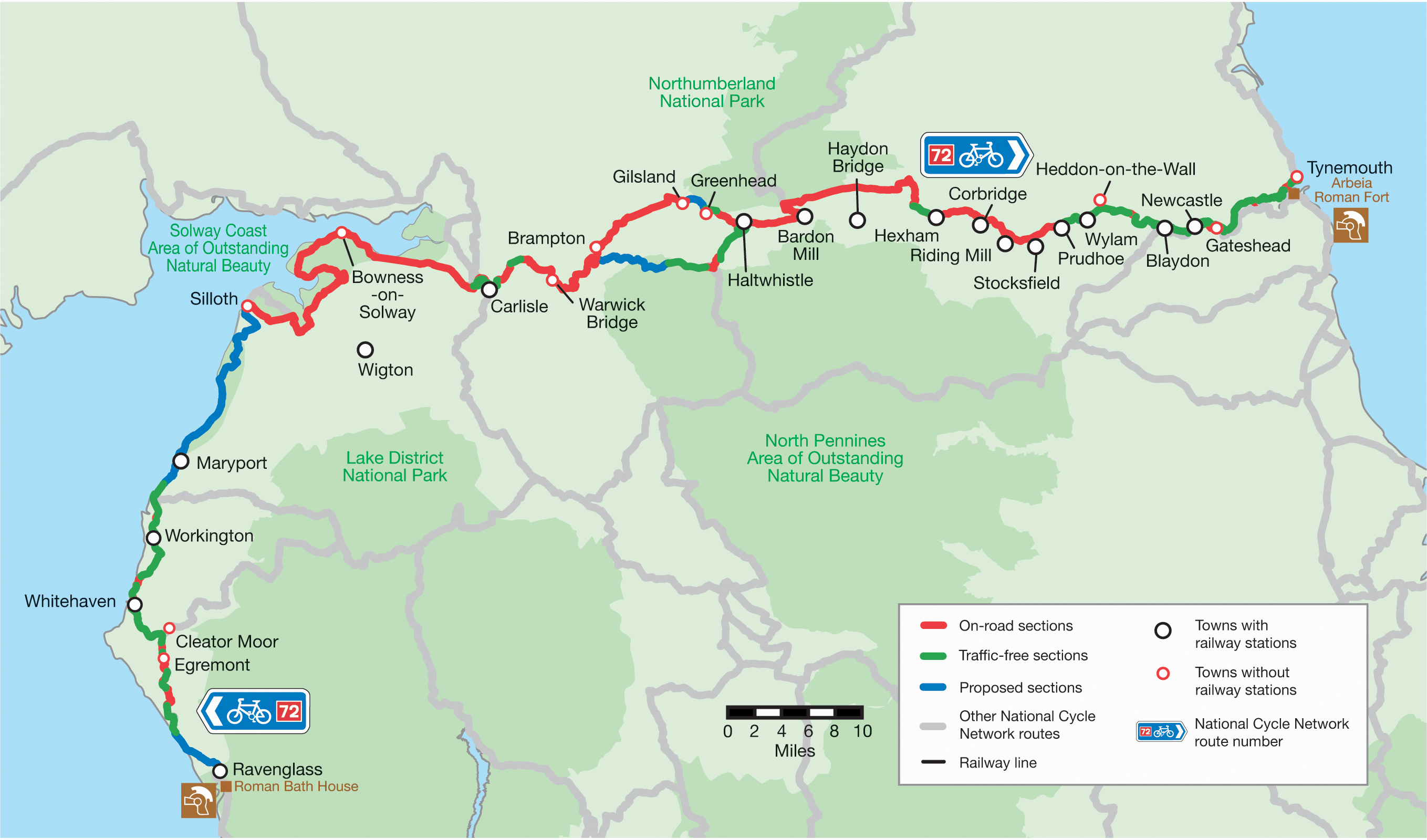
     For us, Hadrian’s Wall might do, with its stretch of stonework across the entire width of England (73 miles, 117.5 kilometres).

map-hadrians-wall

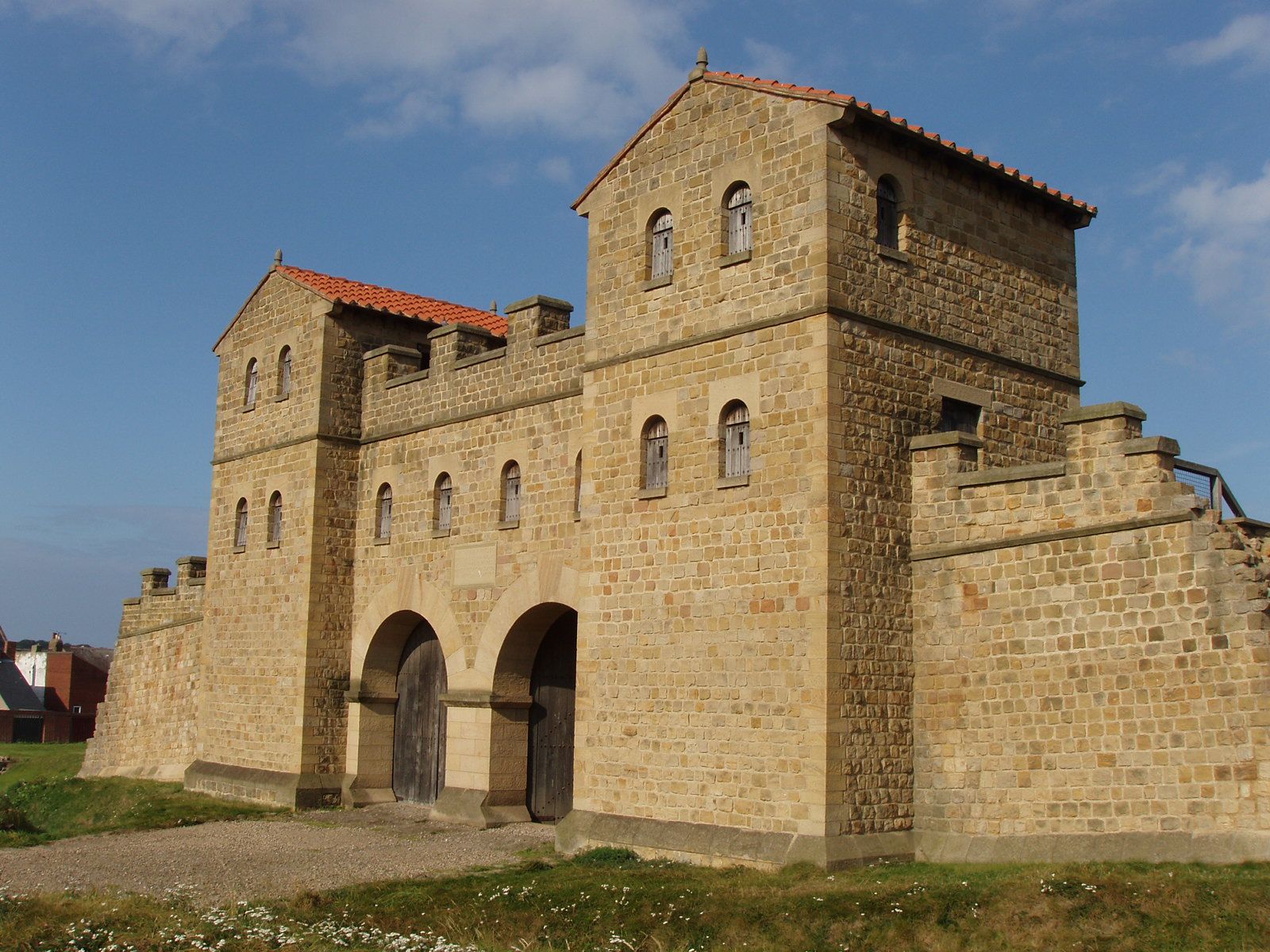
It even has the requisite main gate, which will be defended by Faramir.

This is actually from the Roman fort of Arbeia, South Shields—a great site—but it gives you an idea of what something a little grander—after all, it connected the Pelennor with Osgiliath—might look like.

F00638REW

     That event, however, is in The Lord of the Rings, where Faramir maintains his reputation as a brave and far-sighted commander, as Beregond says to Pippin:

     “But things may change when Faramir returns. He is bold, more bold than many deem; for in these days men are slow to believe that a captain can be wise and learned in the scrolls of lore and song, as he is, and yet a man of hardihood and swift judgement in the field.” 766

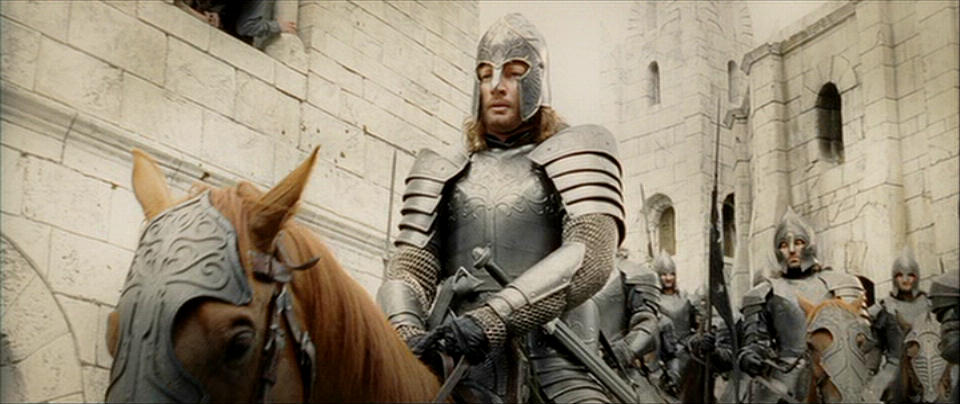
FaramirCaptainGondor

     In the film, it is quite a different matter. There is no Rammas Echor and Faramir, in contrast, is badly wounded in a cavalry charge against the walls of Osgiliath while his father, Denethor, has a rather messy and all-too-symbolic lunch.

maxresdefault

gondorianerritt-cb182208

gifdenethoreating

     What has happened here? First, no intelligent—maybe even foolish—commander would attack a stone wall with cavalry, and we know that Faramir is, indeed, intelligent. Second, what has happened to the Rammas, where Faramir actually had been just before he fell, commanding the rearguard?

     First, we would suggest that the script writers took their cue from the final scene between father and son, in which Faramir, already told by his father that his father had preferred his elder son, Boromir, volunteers to direct the defense of Osgiliath:

“But at length Faramir said: ‘I do not oppose your wil, sire. Since you are robbed of Boromir, I will go and do what I can in his stead—if you command it.’

     ‘I do so,’ said Denethor.

     “Then farewell!’ said Faramir. ‘But if I should return, think better of me!’

     ‘That depends upon the manner of your return,’ said Denethor.

     Gandalf it was that last spoke to Faramir ere he rode east. ‘Do not throw your life away rashly or in bitterness,’ he said. ‘You will be needed here, for other things than war. Your father loves you, Faramir, and will remember it ere the end. Farewell!’” 816-817

     To them, this might have indicated that Faramir—who had clearly been Gandalf’s pupil, as his father has said:

“See, you have spoken skillfully, as ever; but I, have I not seen your eyes fixed on Mithrandir, seeking whether you said well or too much? He has long had your heart in his keeping.” 812

does not listen to his tutor and deliberately sets out to get himself killed. In the text, however, Faramir is actually acting responsibly, fighting in the rearguard of the retreating detachment driven from the Rammas:

“Even as the Nazgul had swerved aside from the onset of the White Rider, there came flying a deadly dart, and Faramir, as he held at bay a mounted champion of Harad, had fallen to the earth.” 821

     (And we might add that Prince Imrahil, who brings the wounded Faramir back, says, “Your son has returned, lord, after great deeds…” 821, which, of course, could easily be understood to be ironic and is perhaps meant to be so on the part of Imrahil, considering Fararmir’s last words to his father and Denethor’s reply.)

     Thus, we see Faramir’s wounding completely changed, but what about the wall he had been defending?

     When one reads through the various chat sights, there was once a considerable amount of discussion about the Rammas Echor, but all was speculation, it seems, as we were unable to find anything said by the writers themselves. In the text, instead of concentrating on the main gate, Sauron’s engineers detonate explosions to each side and the troops then pour through the breaches to take the defenders in flank. This could be seen as a repetition of a similar earlier event at Helm’s Deep, in which Saruman’s forces blew a hole in the defenses.

blowingupthewallathelmsdeep

     As well, we think that, for the director, the big visual attraction was the attack on Minas Tirith. This means that it could simply have been a matter of where to spend time—and/or possibly money—and so the Rammas was sacrificed. If the decision had already been made to change—we will say misinterpret– the story of Faramir, simplifying it drastically and shifting the focus (just think of that dripping mouth!), then the choice to discard this defense would have been an easy one.

     So, suppose you were script writer or director, what would you have done, dear readers?

     Thanks, as always, for reading (and, we hope, speculating).

     MTCIDC

     CD

The Doubtful Sea Series Facebook Page

The Doubtful Sea Series Facebook Page

  • Ollamh

Categories

  • Artists and Illustrators
  • Economics in Middle-earth
  • Fairy Tales and Myths
  • Films and Music
  • Games
  • Heroes
  • Imaginary History
  • J.R.R. Tolkien
  • Language
  • Literary History
  • Maps
  • Medieval Russia
  • Military History
  • Military History of Middle-earth
  • Narnia
  • Narrative Methods
  • Poetry
  • Research
  • Star Wars
  • Terra Australis
  • The Rohirrim
  • Theatre and Performance
  • Tolkien
  • Uncategorized
  • Villains
  • Writing as Collaborators
Follow doubtfulsea on WordPress.com

Across the Doubtful Sea

Recent Postings

  • On the Roads Again—Once More December 10, 2025
  • (Not) Crossing Bridges December 3, 2025
  • On the Road(s) Again—Again November 26, 2025
  • On the Road(s) Again November 19, 2025
  • To Bree (Part 2) November 12, 2025
  • To Bree (Part 1) November 5, 2025
  • A Plague o’ Both—No, o’ All Your Houses! October 29, 2025
  • It’s in Writing (2:  I’st a Prologue, or a Poesie for a Ring?) October 22, 2025
  • It’s in Writing (1) October 15, 2025

Blog Statistics

  • 102,741 Views

Posting Archive

  • December 2025 (2)
  • November 2025 (4)
  • October 2025 (5)
  • September 2025 (4)
  • August 2025 (4)
  • July 2025 (5)
  • June 2025 (4)
  • May 2025 (4)
  • April 2025 (5)
  • March 2025 (4)
  • February 2025 (4)
  • January 2025 (5)
  • December 2024 (4)
  • November 2024 (4)
  • October 2024 (5)
  • September 2024 (4)
  • August 2024 (4)
  • July 2024 (5)
  • June 2024 (4)
  • May 2024 (5)
  • April 2024 (4)
  • March 2024 (4)
  • February 2024 (4)
  • January 2024 (5)
  • December 2023 (4)
  • November 2023 (5)
  • October 2023 (4)
  • September 2023 (4)
  • August 2023 (5)
  • July 2023 (4)
  • June 2023 (4)
  • May 2023 (5)
  • April 2023 (4)
  • March 2023 (5)
  • February 2023 (4)
  • January 2023 (4)
  • December 2022 (4)
  • November 2022 (5)
  • October 2022 (4)
  • September 2022 (4)
  • August 2022 (5)
  • July 2022 (4)
  • June 2022 (5)
  • May 2022 (4)
  • April 2022 (4)
  • March 2022 (5)
  • February 2022 (4)
  • January 2022 (4)
  • December 2021 (5)
  • November 2021 (4)
  • October 2021 (4)
  • September 2021 (5)
  • August 2021 (4)
  • July 2021 (4)
  • June 2021 (5)
  • May 2021 (4)
  • April 2021 (4)
  • March 2021 (5)
  • February 2021 (4)
  • January 2021 (4)
  • December 2020 (5)
  • November 2020 (4)
  • October 2020 (4)
  • September 2020 (5)
  • August 2020 (4)
  • July 2020 (5)
  • June 2020 (4)
  • May 2020 (4)
  • April 2020 (5)
  • March 2020 (4)
  • February 2020 (4)
  • January 2020 (6)
  • December 2019 (4)
  • November 2019 (4)
  • October 2019 (5)
  • September 2019 (4)
  • August 2019 (4)
  • July 2019 (5)
  • June 2019 (4)
  • May 2019 (5)
  • April 2019 (4)
  • March 2019 (4)
  • February 2019 (4)
  • January 2019 (5)
  • December 2018 (4)
  • November 2018 (4)
  • October 2018 (5)
  • September 2018 (4)
  • August 2018 (5)
  • July 2018 (4)
  • June 2018 (4)
  • May 2018 (5)
  • April 2018 (4)
  • March 2018 (4)
  • February 2018 (4)
  • January 2018 (5)
  • December 2017 (4)
  • November 2017 (4)
  • October 2017 (4)
  • September 2017 (4)
  • August 2017 (5)
  • July 2017 (4)
  • June 2017 (4)
  • May 2017 (5)
  • April 2017 (4)
  • March 2017 (5)
  • February 2017 (4)
  • January 2017 (4)
  • December 2016 (4)
  • November 2016 (5)
  • October 2016 (6)
  • September 2016 (5)
  • August 2016 (5)
  • July 2016 (5)
  • June 2016 (5)
  • May 2016 (4)
  • April 2016 (4)
  • March 2016 (5)
  • February 2016 (4)
  • January 2016 (4)
  • December 2015 (5)
  • November 2015 (5)
  • October 2015 (4)
  • September 2015 (5)
  • August 2015 (4)
  • July 2015 (5)
  • June 2015 (5)
  • May 2015 (4)
  • April 2015 (3)
  • March 2015 (4)
  • February 2015 (4)
  • January 2015 (4)
  • December 2014 (5)
  • November 2014 (4)
  • October 2014 (6)
  • September 2014 (1)

Blog at WordPress.com.

  • Subscribe Subscribed
    • doubtfulsea
    • Join 78 other subscribers
    • Already have a WordPress.com account? Log in now.
    • doubtfulsea
    • Subscribe Subscribed
    • Sign up
    • Log in
    • Report this content
    • View site in Reader
    • Manage subscriptions
    • Collapse this bar
 

Loading Comments...