• About

doubtfulsea

~ adventure fantasy

Tag Archives: Nazgul

The Two Sieges

22 Wednesday Jul 2015

Posted by Ollamh in Heroes, J.R.R. Tolkien, Military History

≈ Leave a comment

Tags

Agincourt, Aragorn, English Longbowmen, Faramir, French Knights, Gondor, Grond, Hoth, Jan Sobieski, Lithuania, Minas Tirith, Mumakil, Nazgul, Orcs, Ottoman, Peter Jackson, Poland, Rammas Echor, Rohan, Rohirrim, Siege Towers, Stone Throwers, The Lord of the Rings, Tolkien, Vienna, Winged Hussars

Welcome, as always, dear readers!

In this posting, we’re going to make another suggestion about a model for something in Tolkien’s work.

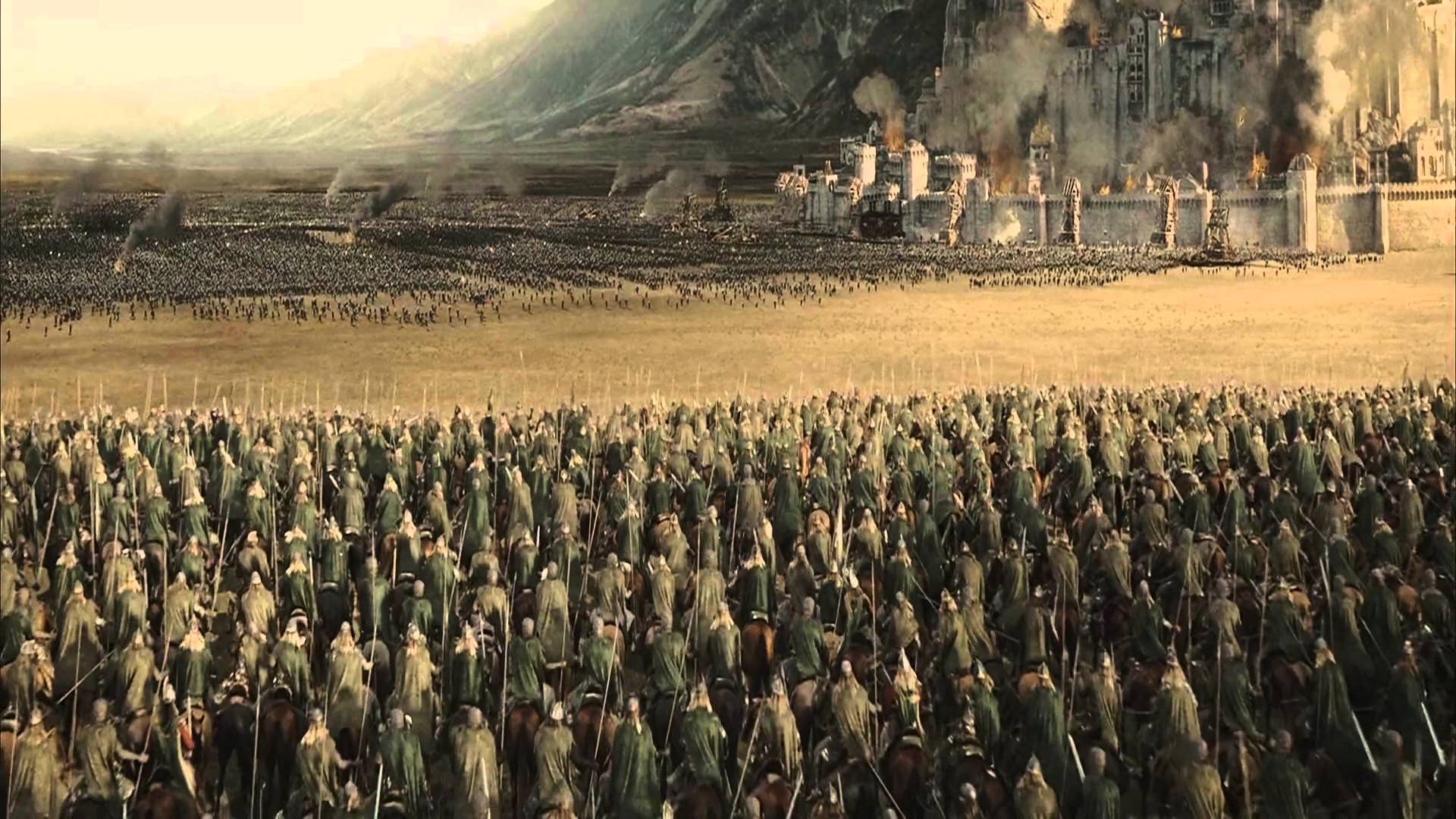
If you read us regularly, you know that our favorite part of P. Jackson’s The Lord of the Rings is anything to do with the Rohirrim. When we rewatch favorite scenes, the charge against the Orcs outside Minas Tirith is always first on our list (and high on our general list of cavalry charges—more on those in a future posting).

First, we see that massive Orc army marching up to the walls. (In the book, this is more dramatic: the Orcs blow two holes in the Rammas Echor, outflank the defenders, and drive them into retreat, which is where Faramir is badly wounded by an arrow.)

minas-tirith

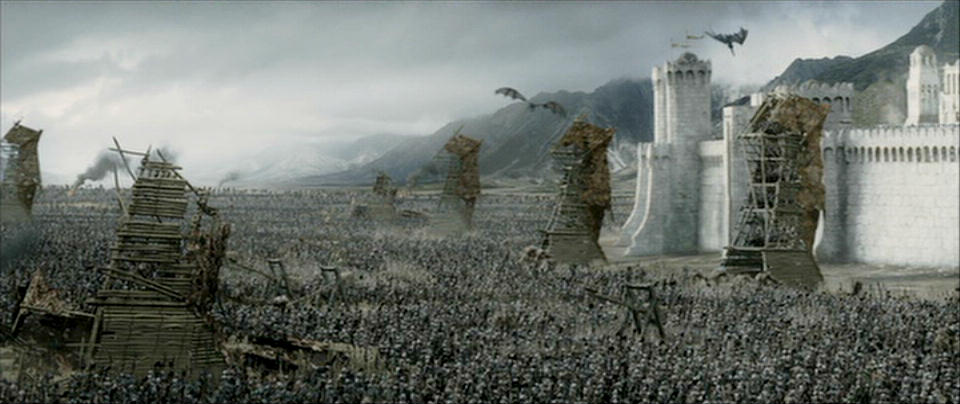
Then they begin to attack with stone-throwers,

siege1

siege towers,

lotr-siege-towers

and, eventually a giant, flame-filled battering ram.

grond1

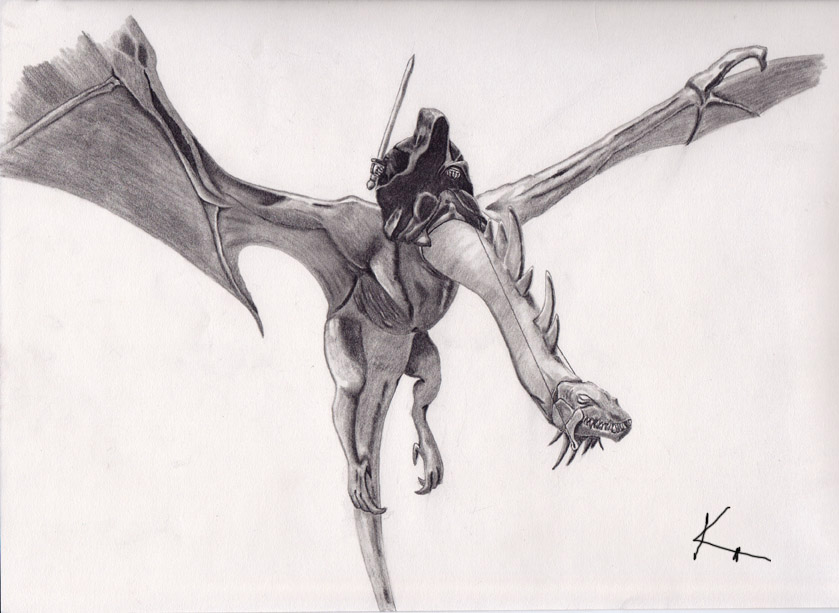
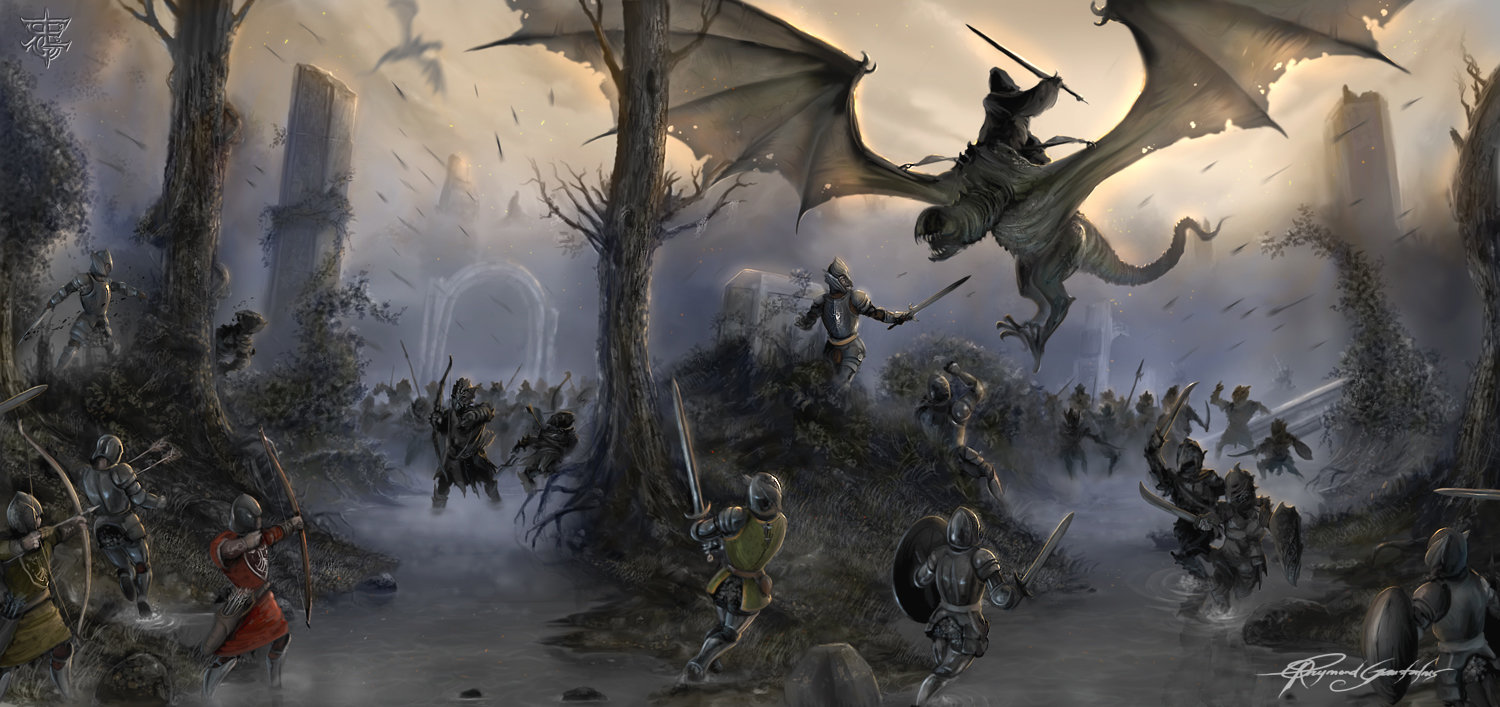
Things look increasingly desperate for Gondor as the Orcs press their attack, led by the Chief Nazgul.

witch_king_of_angmar_ii_by_dudeskindasketchy-d4d6uvd

And that’s when the Rohirrim appear.

rohirrimabouttocharge

And move to strike the Orcs from behind.

Charge_rohirrim

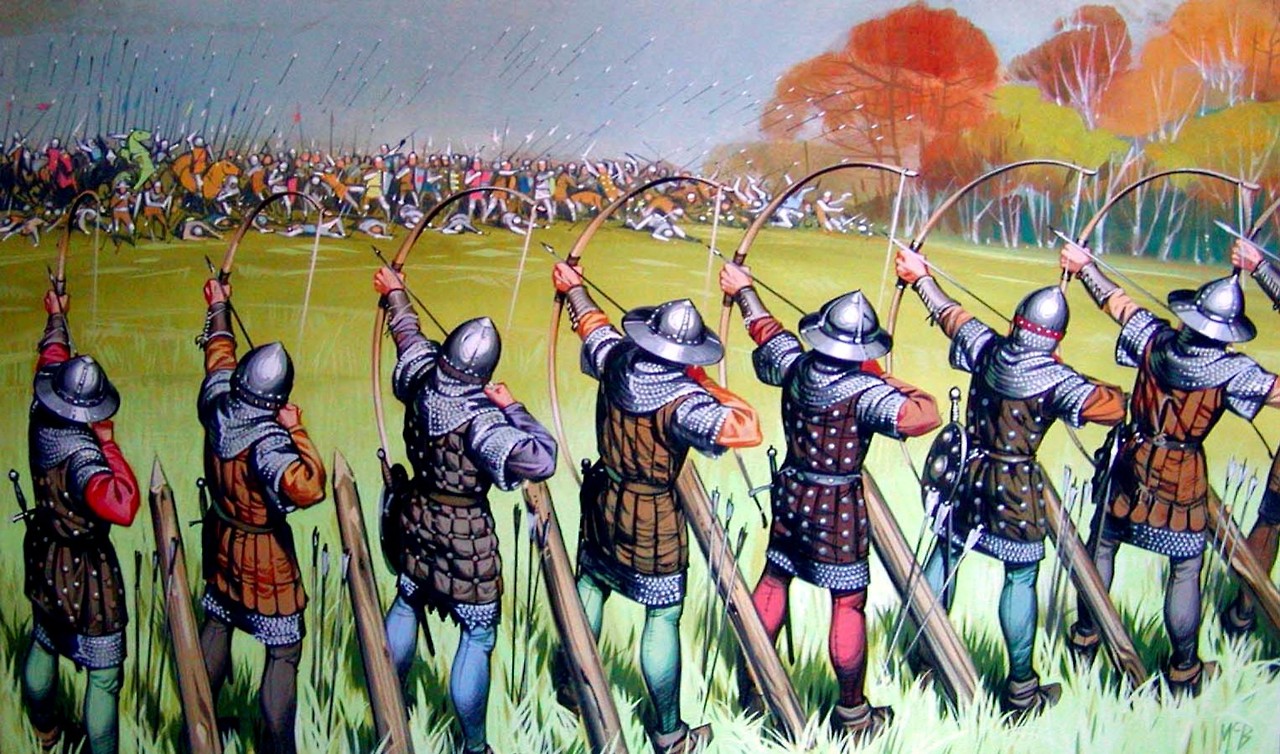
When the Orcs realize what’s happening, they try to stop the attack with bows.

archery

This immediately reminded us of the 1415 battle in which English longbowmen and their clever use defeated an army of brave French knights, Agincourt.

OLYMPUS DIGITAL CAMERA

Unlike Agincourt, however, arrows didn’t stop the Rohirrim, who sweep through the enemy—but are brought up short by the sight of a row of mumakil—giant war elephants—bearing down on them.

img-2845793-1-charge-1024x425

Seeing this scenario made us think of another attack by huge, lumbering things in a galaxy long ago and far away—

Battle_of_Hoth

The film goes on from there, including an attack by a ghost army, instead of by the actual forces brought from southern Gondor by Aragorn, but we want to back up a bit to the actual siege and another one which bears a strong resemblance to it.

For centuries, the Ottoman Turks had been expanding their dominions.

Ottoman_Empire_Map_1359-1856

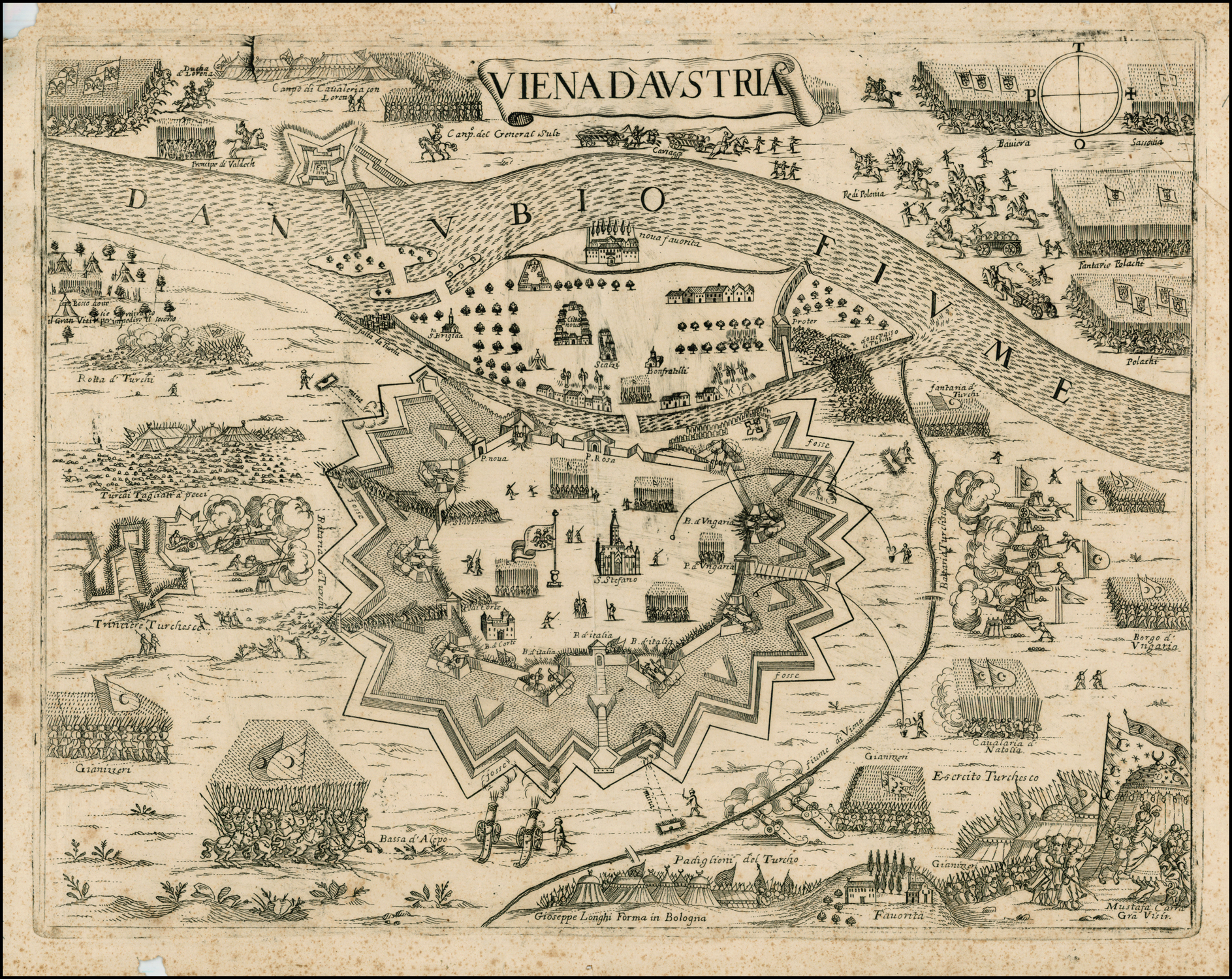
They had first reached Vienna in 1529,

Siegeofvienna1529

but had given up the siege. Now, however, in 1683, they were back.

Battle_of_Vienna_1683_map

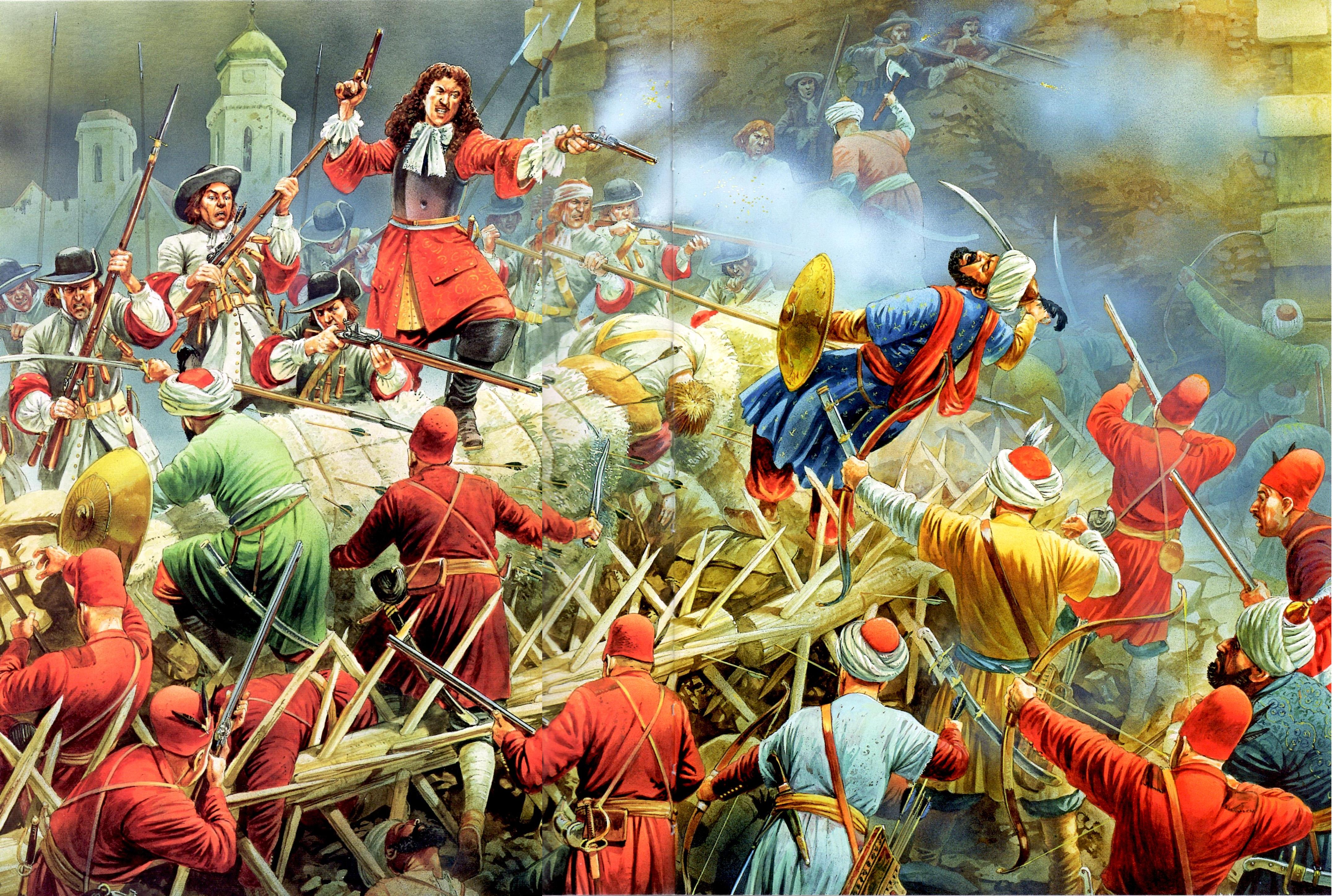
Their attacks against a dwindling number of defenders in a crumbling town

1-vienna-1683

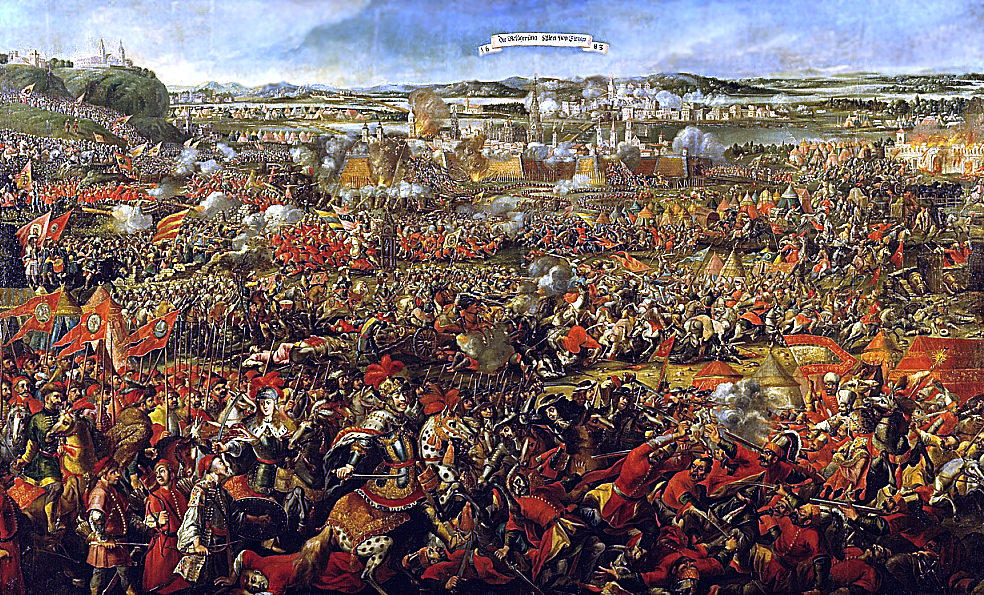
had brought them to the edge of conquest when an army of reenforcements, including cavalry from the army of the combined state of Lithuania/Poland, had appeared. Some of the cavalry were the famous Polish winged hussars.

Battle_of_Vienna_1

Just as the Rohirrim are led by their king, Theoden, so are the Poles led by their king Jan Sobieski—

bitwa-pod-wiedniem-obraz

The reenforcements, Poles in the lead, rush upon the Turks and drive them back through their camps and out of the siege entirely.

Atak_husarii

Battle_of_Vienna_1683_11

So similar, isn’t it? No giant war elephants, ghost armies, or Nazgul, but the basic elements of siege, relieving army with cavalry led by a king attacking an unprepared enemy, and chasing off the besiegers, is nearly identical.

Tolkien was an extremely well-read man, with a strong interest in history. Was the siege and relief of Vienna somewhere in the back of his mind when he began to plan the siege of Minas Tirith?

Thanks for reading!

MTCIDC

CD

Shall We Gather at the River?

08 Wednesday Jul 2015

Posted by Ollamh in J.R.R. Tolkien, Maps, Military History, Narrative Methods

≈ Leave a comment

Tags

Alexander, Anduin, Burnside, Cair Andros, Celeborn, Confederate, D-Day, Denethor, Douro, Faramir, Fredericksburg, French, Gandalf, Hydaspes, Inchon, Indiana Jones, Isola Tiberina, King Poros, Lee, Minas Tirith, Mordor, Napoleonic, Nazgul, Pelennor, Pontoon, Porto, Quebec, Rappahannock, Roechling, Sauron, Soult, The Lord of the Rings, Tolkien, Union, Wellington, West Osgiliath, Zouaves

Dear Readers,

Welcome, as always. In this posting, we thought we’d do a kind of follow-up to our “What Happened to the Rammas Echor” piece by looking at the Mordorian assault on West Osgiliath, which leads up to it. (Yes, we know—bassackwards, right? We can only claim as Indiana Jones does, that “I’m making this up as I go along.”)

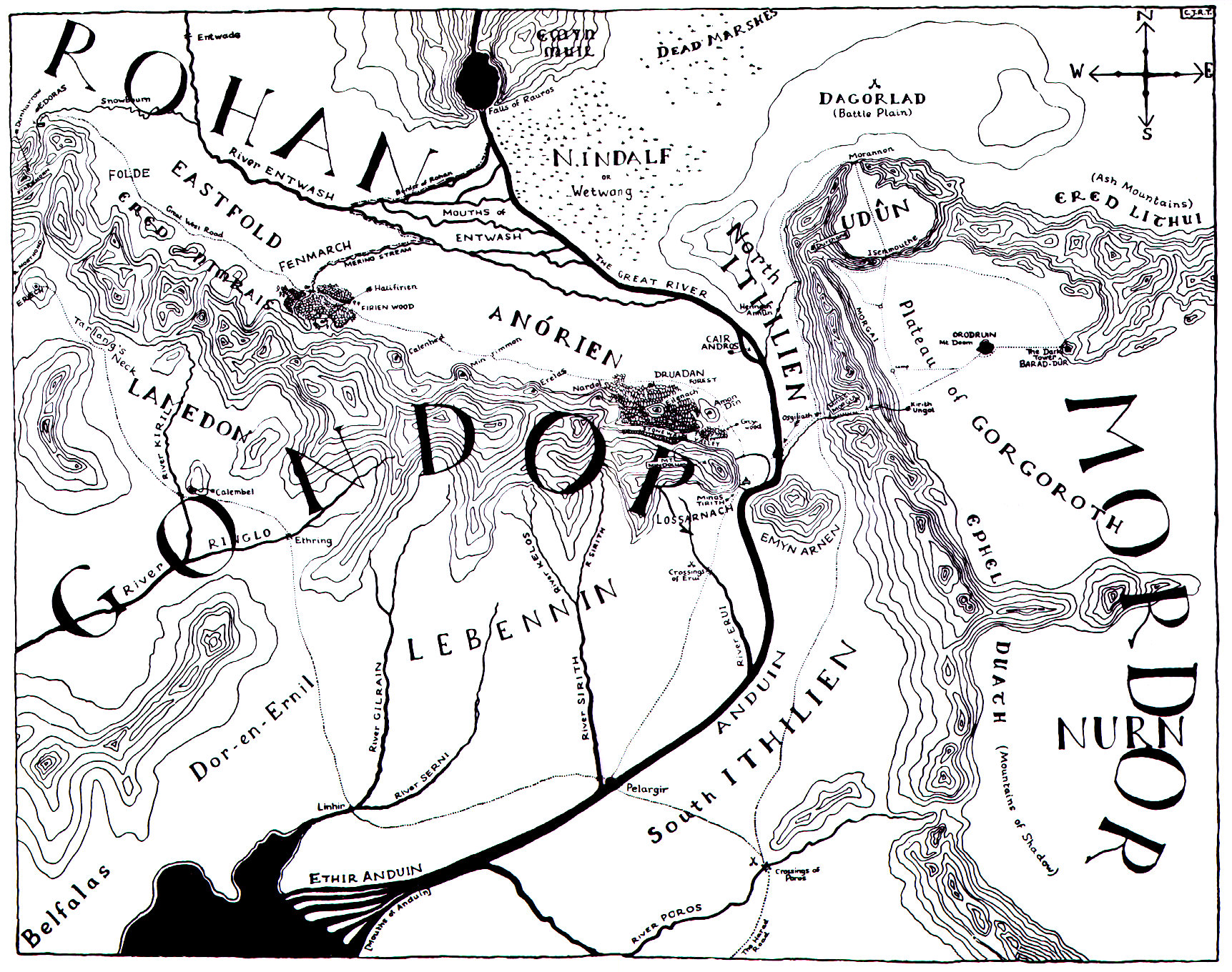
We can begin with a map and a description by a participant.

Here’s the Anduin, the major obstacle for Sauron’s forces to cross at a point in easy striking distance of Minas Tirith.

gondor_map

Here’s Denethor’s intelligent assessment of the defensive situation:

“…And the Enemy must pay dearly for the crossing of the River. That he cannot do, in force to assail the City, either north of Cair Andros because of the marshes, or southwards towards Lebennin because of the breadth of the River, that needs many boats. It is at Osgiliath that he will put his weight, as before when Boromir denied him the passage.” LotR 816

EphelDuath_10x10drape2

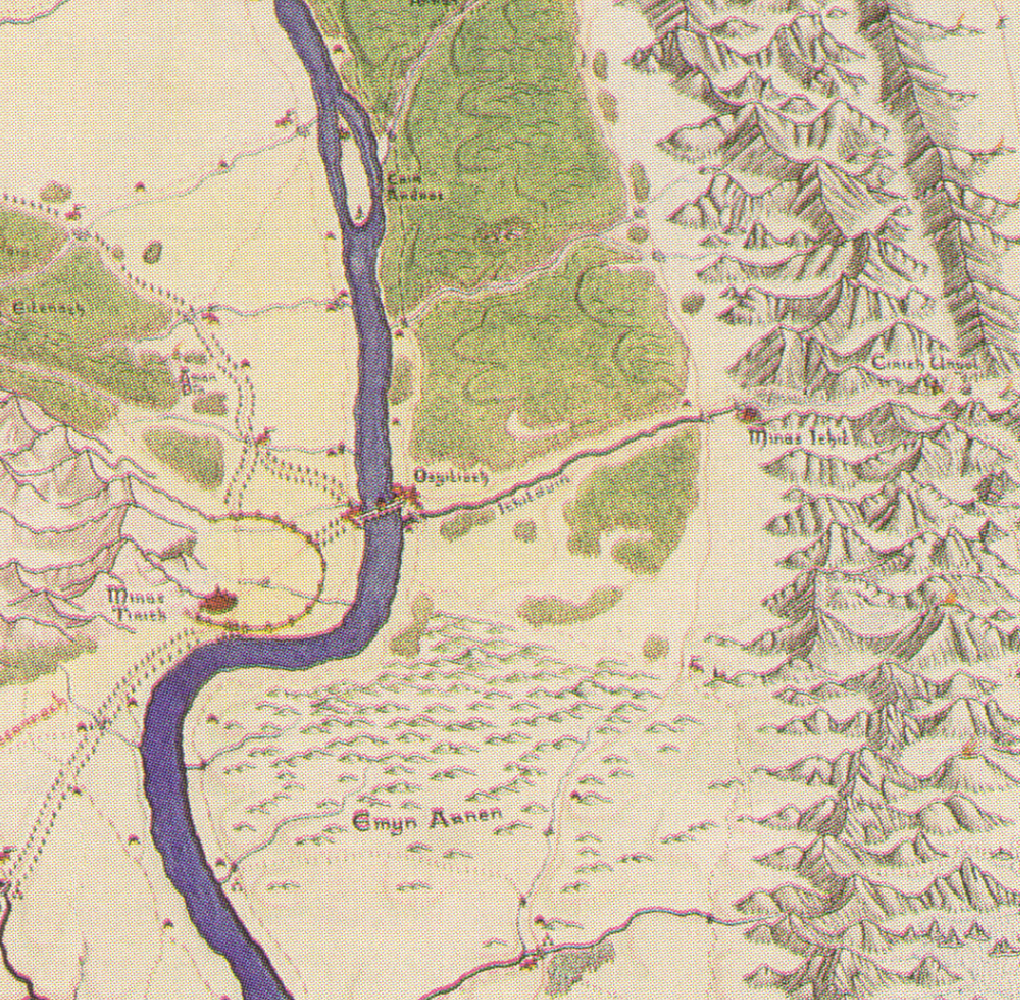
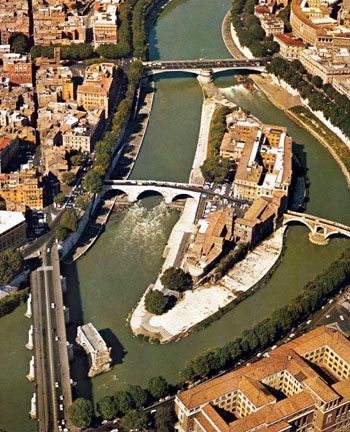
Although there have been very creative attempts to map or depict Cair Andros, for all of its importance in the defense of Gondor, we aren’t given much detail. Its name means “Ship of Long Foam” , called so because of its shape and its action in breaking up the flow of the Anduin. This brought to our minds the Isola Tiberina on the Tiber in Rome,

18-1

which so reminded the Romans of a ship that—well, this 1770s engraving makes their next step obvious—

Piranesi-16059

Cair Andros was fortified and had a garrison, although Denethor refuses to reinforce it, saying “Cair Andros is manned, and no more can be sent so far.” LOtR 816

We also know that the enemy will capture it during their two-proned general assault (Gandalf says to Denethor: “Fugitives from Cair Andros have reached us. The isle has fallen.” LotR 819)

To the south, somewhere between forty and fifty miles, lies Osgiliath.

Anorien

Identified by Denethor as the other major crossing point, it was once a prosperous city, but now lies in ruins, with its bridges destroyed (Celeborn to Aragorn: “And are not the bridges of Osgiliath broken down and all the landings held now by the Enemy?” LotR 367).

The problem, then, for the Enemy is how to cross a river against opposition, a classic problem for generals since there were generals.

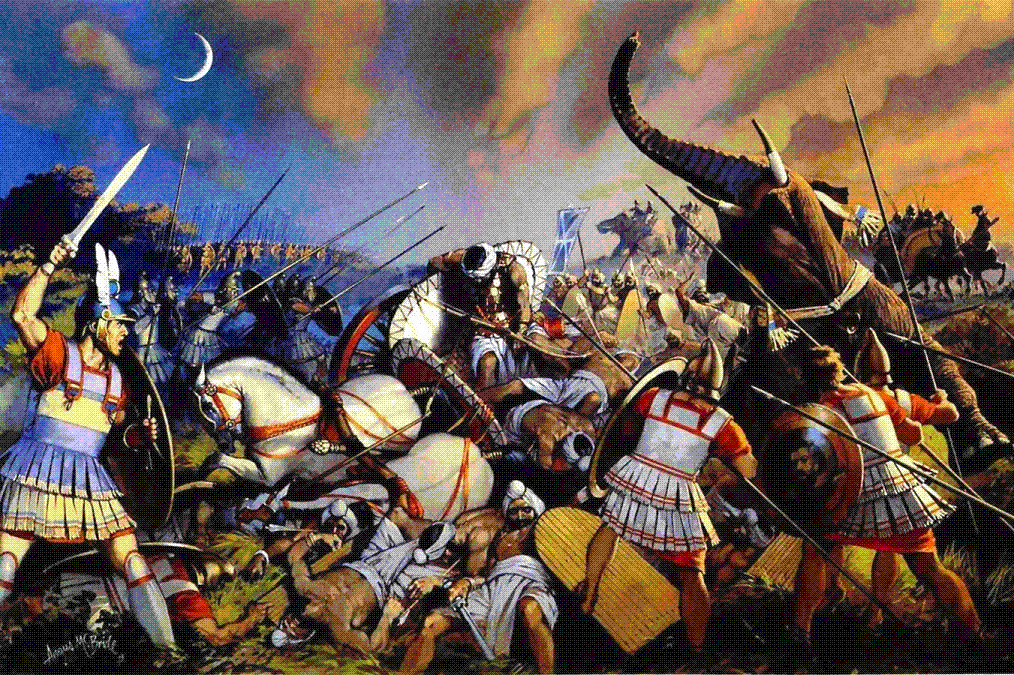
We think, for example, of Alexander at the Hydaspes River in 326BC, defended by King “Poros” (actually Porushattama—Greeks were determined to tame everything—including other cultures’ proper names).

1382499630_Hydaspes

(and we couldn’t resist this second image—Alexander in the center of his pikemen—in what looks like 25-28mm)

VendelMacedonians

As you can see from the map, Alexander crossed upstream, having distracted the king with a demonstration (military for “feint/decoy”).

Battle_hydaspes_crossing

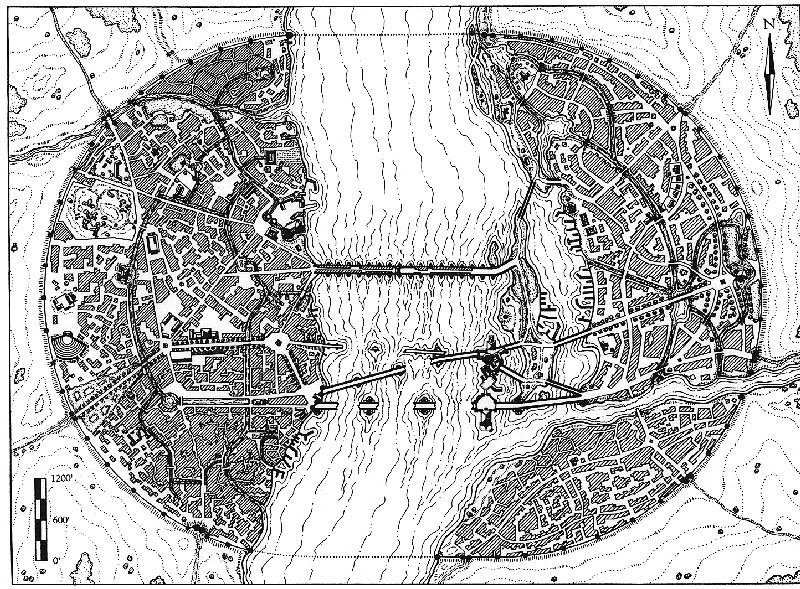
This was through open country, however. In the case of Osgiliath

osgiliath

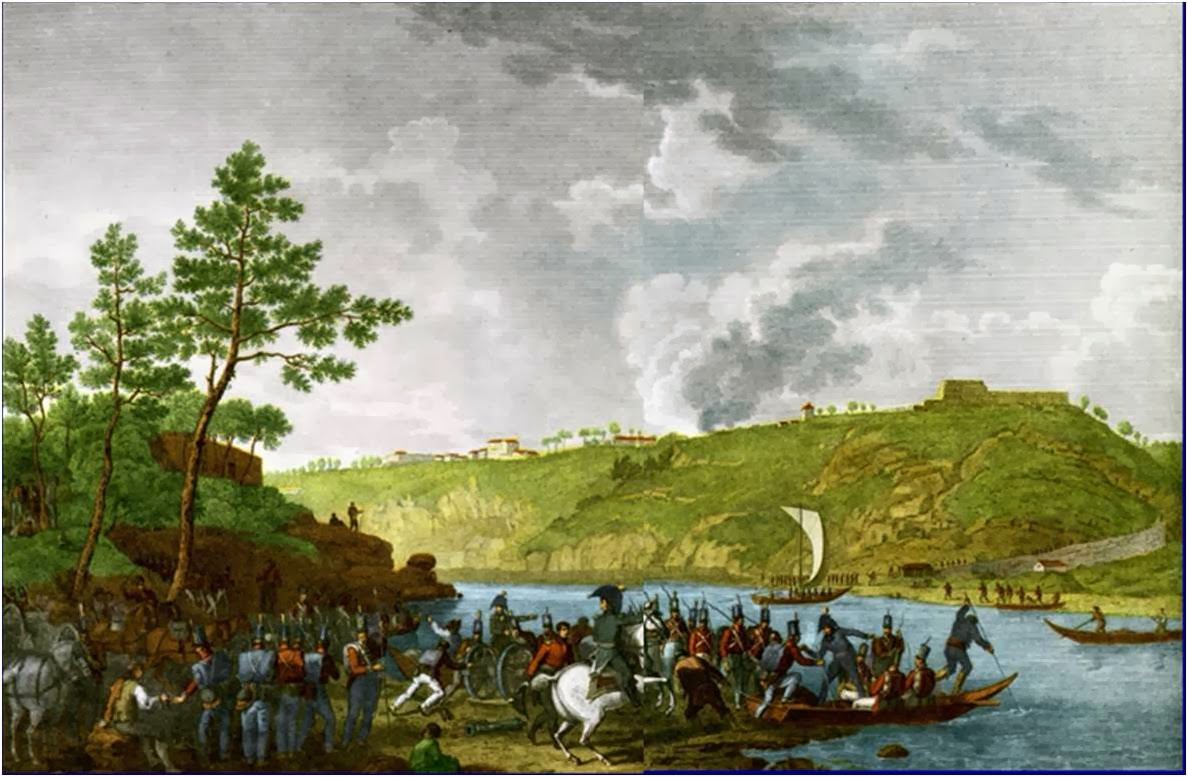
the Enemy would have to cross the river in the face of opposition within a town. Here, we thought of several possibilities: Wellington’s crossing of the river Douro against French resistance in 1809, for example. Here was not only the river, but its steep banks, as well.

Henry Smith Oporto, With The Bridge Of Boats 1809

(The pontoon bridge was set up after the attack.)

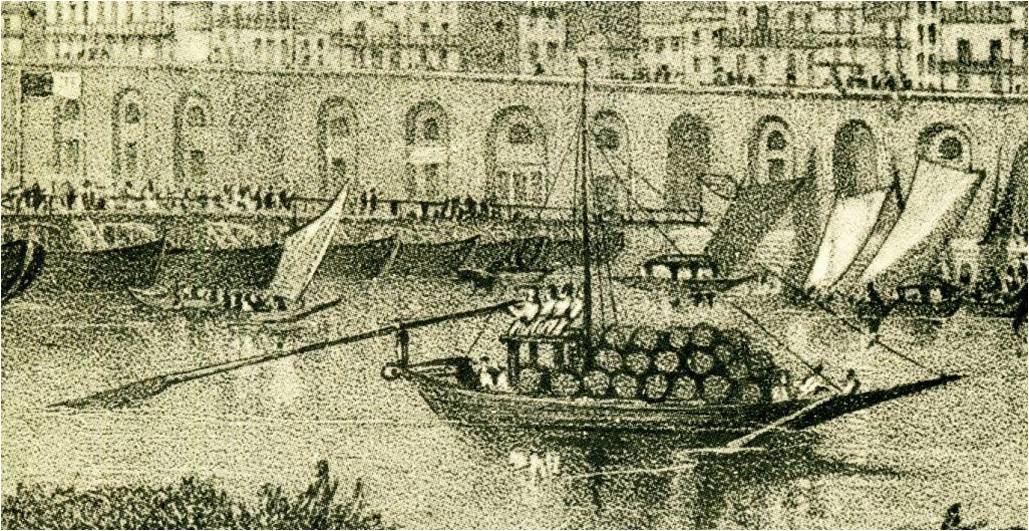
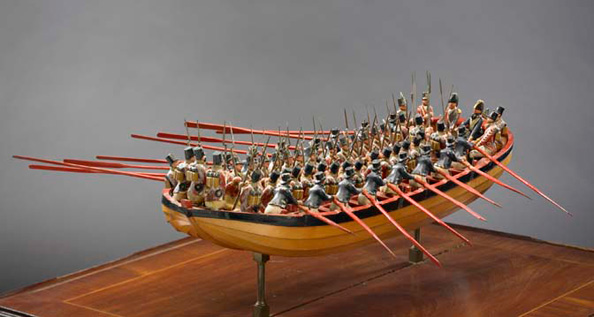
There were no bridges and the French had collected all of the available boats and had either destroyed them or were holding them on the north side of the river. As Porto (the name means what you think it does) was the center of the fortified wine trade (yes , “Pass the port, Wriothsley, will you?”), the major vessel on the river was this—

pb17

Wellington was always a clever and flexible commander and had to be when confronted by the able Marshal Soult across the river. Much of Wellington’s success came from his use of local sources: Portuguese who hated their French occupiers and supplied some of Wellington’s men with a rowboat and crew. On the north side were four wine boats, soon filled with British soldiers—

sec198

and the surprised, but always brave and sturdy, French soldiers were eventually pushed back north, out of the town.

oporto

As you can see, this was really a frontal assault, but, because of their former preparations and their sense of the geography, the French had been lulled into thinking that they were prepared.

A second battle with a river crossing against a defended town which occurred to us was from the US Civil War, Fredericksburg, fought in mid-December, 1862.

Fredericksburg-Overview

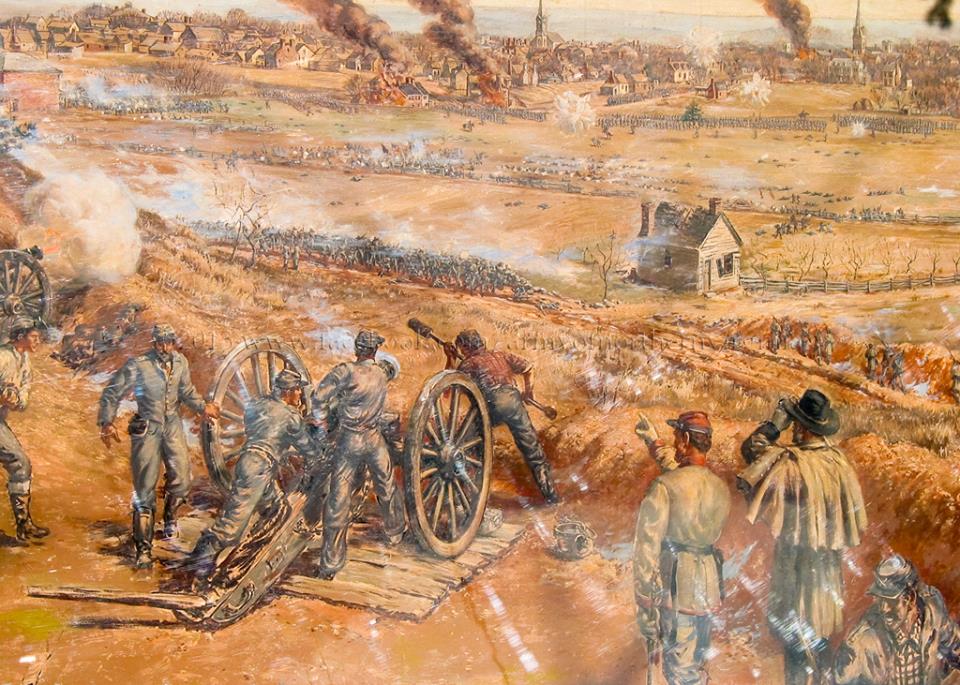
Here, as this extremely useful panorama shows, this was actually a two-step battle: first the Union troops had to cross the Rappahannock River, then they had to drive the Confederate Army from their positions on high ground beyond.

fburg_diorama1

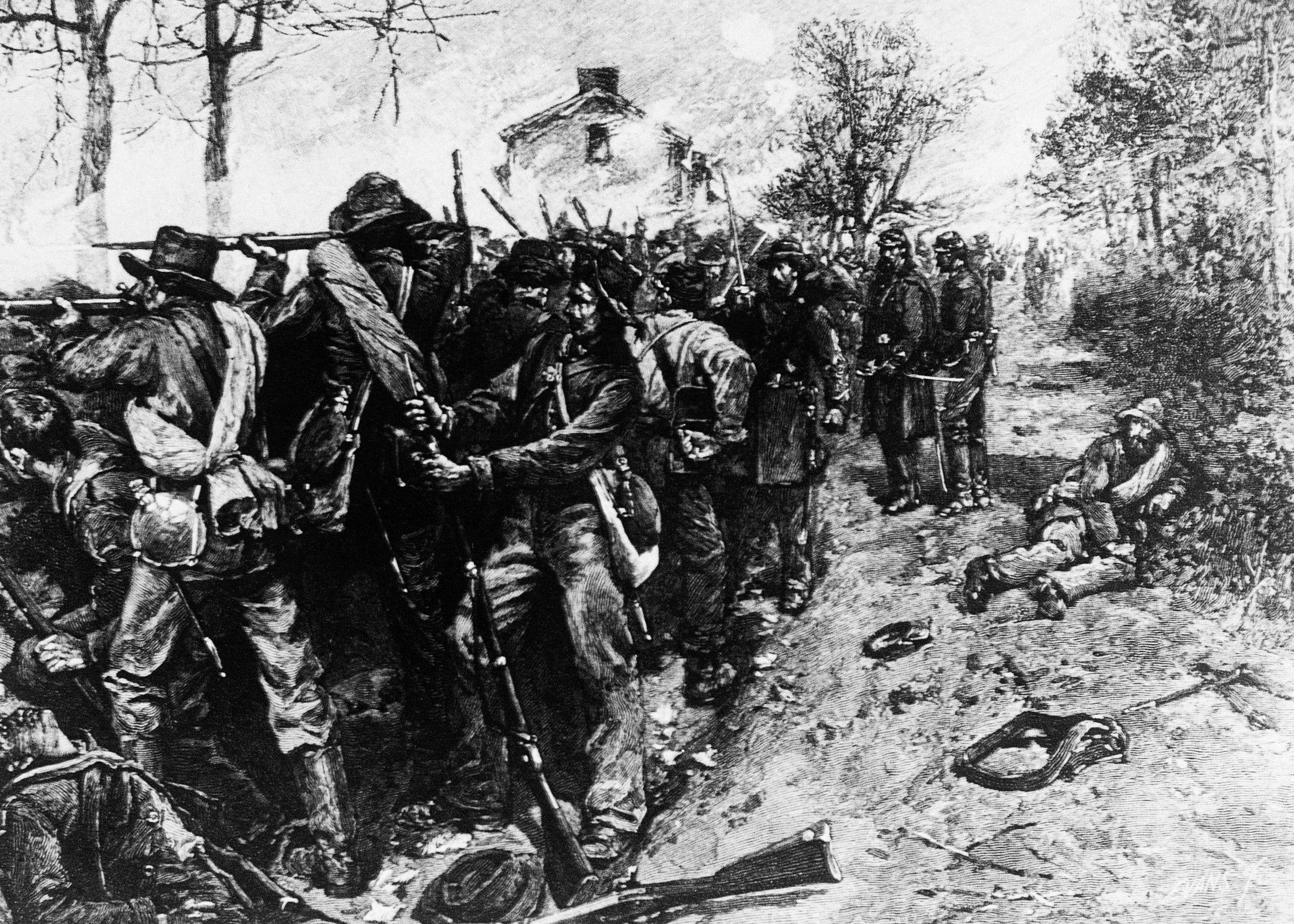
The town of Fredericksburg itself was lightly held: mostly close to the river and relatively few in numbers.

barksdales-men

The main Confederate positions were spread a bit thinly for their numbers (not much in the way of reserves, had there been a breakthrough—Lee had had a similar problem at Antietam), but paid close attention to the ground, including taking advantage of a sunken road with a stone wall at its edge as a makeshift trench.

Confederate soldiers rake the field over which Union troops charged six times, from behind the stone walll at the Sunken Road, in  the blood Battle of Fredericksburg, Va., Dec. 1862.  Confederate Sgt. Richard Kirkland became known as the Angel of Marye's Heights when he brought water to wounded Union soldiers. (AP Photo)

To cross the river itself meant a two-stage process: first, to gain the opposite bank and set up a perimeter; second, to build several pontoon bridges to allow for the rapid deployment of troops and artillery.

19th-century armies commonly traveled with pontoons—boats built specifically to be used as the basis for floating bridges—

ACWpontoonsmobile1862

They were dragged along on wagons wherever and whenever armies went—

mud-march-waud-locgov

and, with the addition of planks and anchors and ropes, created complete roadways across bodies of water.

Fredericksburg_pontoon_model

The first stage was difficult,

Amphibious-assault_1376_2

but using pontoons for assault boats

laying-pontoons-fredericksburg

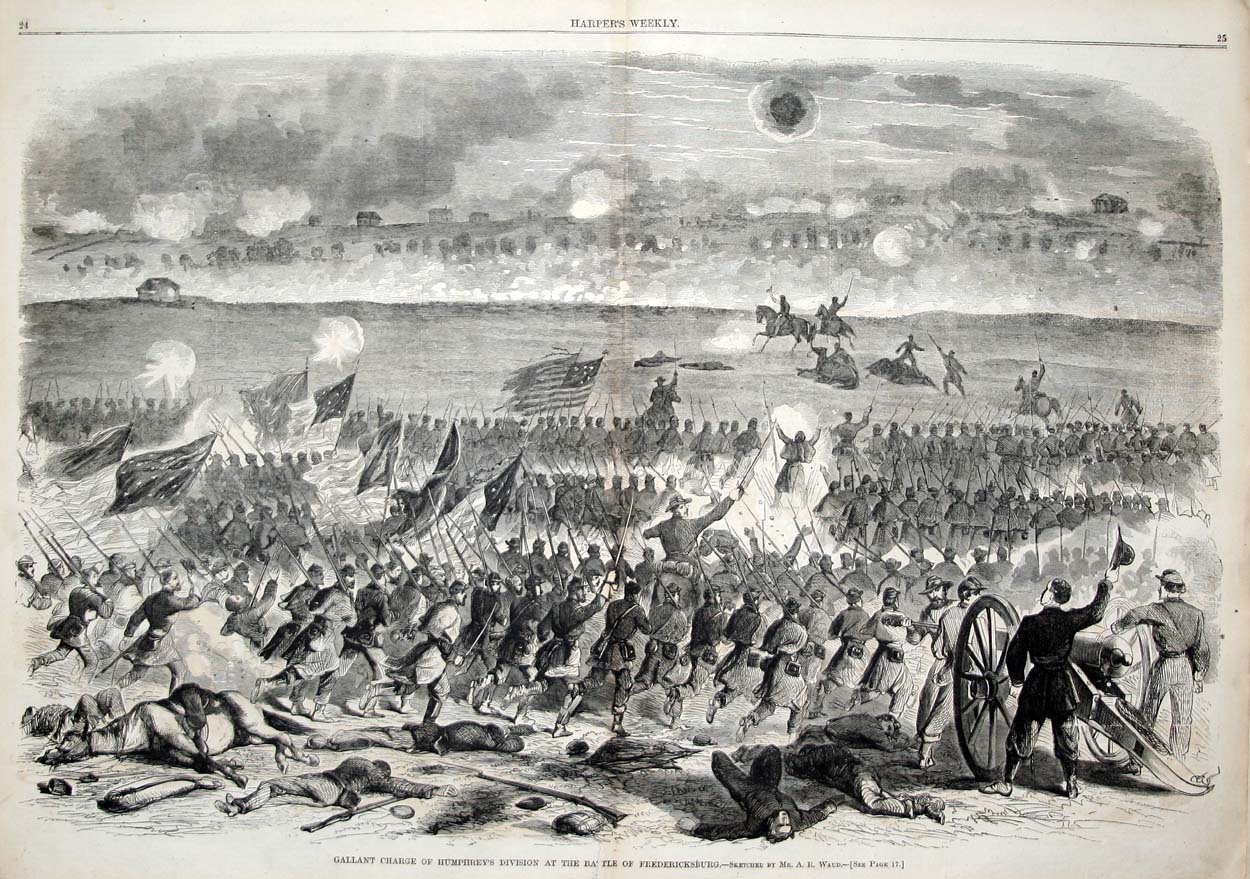
the Union troops managed to secure a foothold on the opposite bank. When bridges went up, stage one had been successful. But, when the Confederates had withdrawn from the town (which they had never intended to occupy in force), there was still that second stage.

dec13fredericksburgcharge

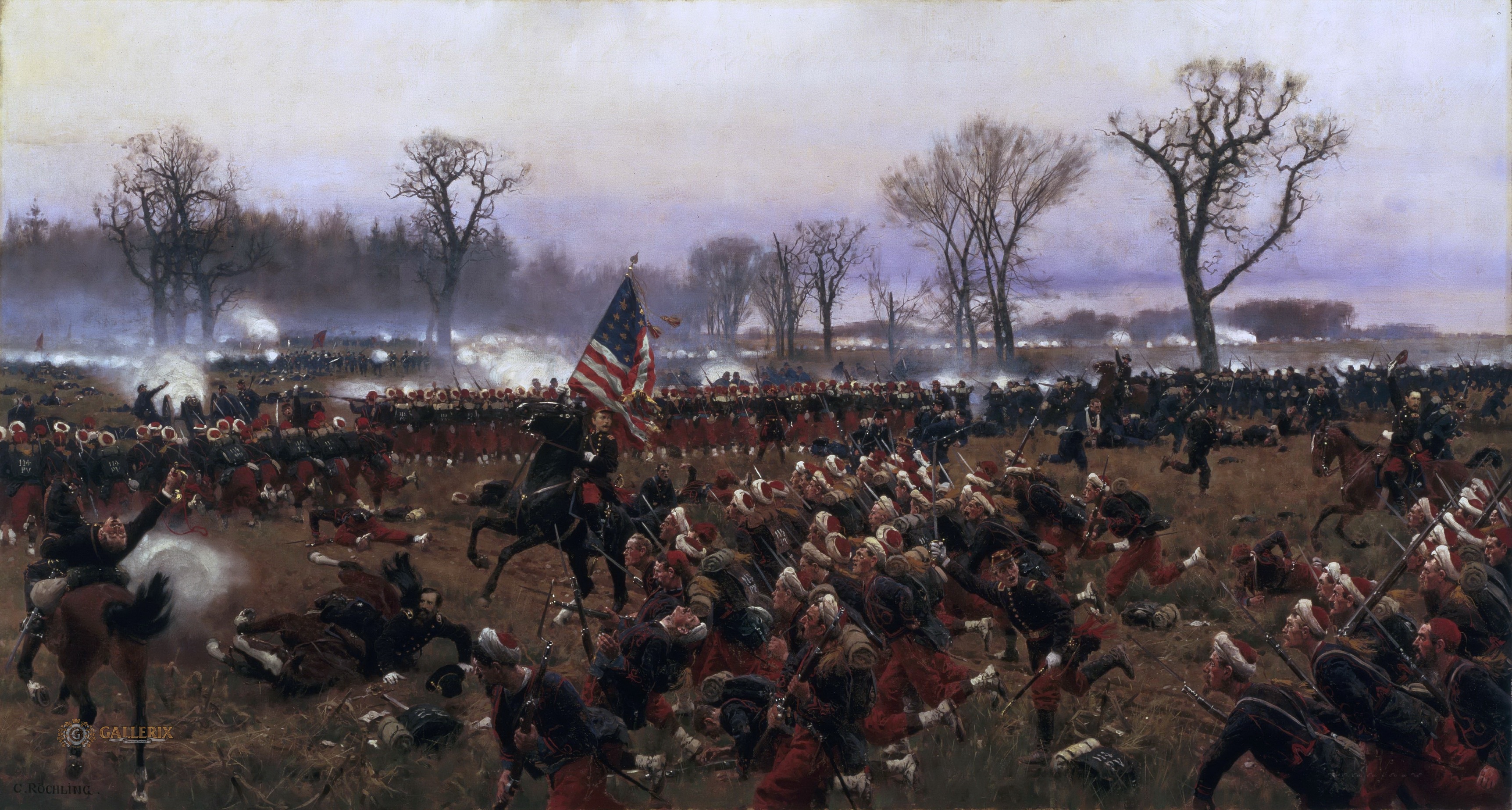
Great courage, but thrown away against resolute Confederate defenders,

1457692_641056089250250_1771492272_n

as you can see in this splendid painting by Carl Roechling, one of our favorite 19th-c. German military-historical painters of the attack of the 114th Pennsylvania (uniformed like French Zouaves, those most admired of French soldiers during this period).

Öèôðîâàÿ ðåïðîäóêöèÿ íàõîäèòñÿ â èíòåðíåò-ìóçåå Gallerix.ru

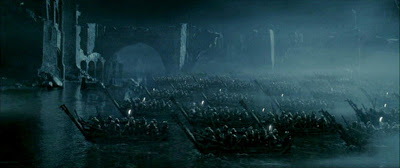
You can see the kinds of difficulties, then, for the Enemy in their attack on the west bank of the Anduin. How do they succeed? A messenger from Faramir, commanding the defense of West Osgiliath, describes the assault:

“The plan has been well laid. It is now seen that in secret they have long been building floats and barges in great number in East Osgiliath. They swarmed across like beetles.” LotR 817.

Here is the initial attack in Jackson’s film version—

800px-Orcs_crossing_anduin

When these craft land, they open at the bow and, of course, we immediately thought of D-Day and Pacific island battles and the Inchon landing, and Higgins Boats (LCVPs)

Darke_APA-159_-_LCVP_18 tumblr_n6pop14CrH1s57vgxo3_1280

Along with their advanced use of explosives in the attack on the Pelennor to come, these are very sophisticated creatures, especially when one thinks about the landing craft of earlier centuries—the boats designed for the British attack on Quebec in 1759

c-001078

102381

Or the sort of thing you see during the Napoleonic era—

agoid106297-594

These are for amphibious landings. Mostly, when it comes to the era of pontoons, it appears that, when it came to rivers, soldiers simply used them

Voltigeurs_of_a_French_Line_regiment_crossing_the_Danube_before_the_battle_of_Wagram

The “beetles” mentioned by Faramir’s messenger swarm over the men of Gondor, so heavily outnumbered that, as Faramir says, “Today we may make the Enemy pay ten times our loss at the passage and yet rue the exchange. For he can afford to lose a host better than we to lose a company.” LotR 816. And then there is their other weapon, the Chief Nazgul.

battle_of_osgiliath_by_shockbolt

“But it is the Black Captain that defeats us. Few will stand and abide even the rumor of his coming. His own folk quail at him, and they would slay themselves at his bidding.” As Faramir’s messenger adds. LotR 817.

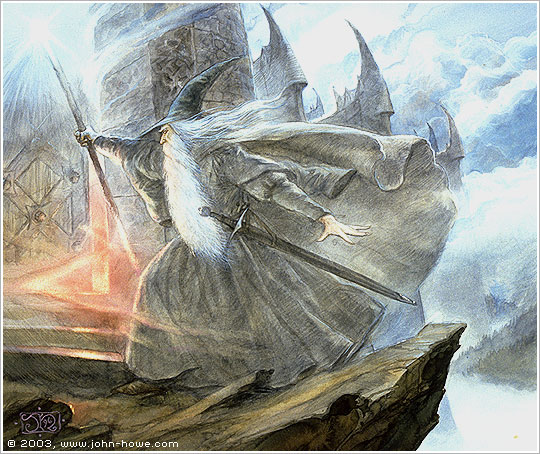
Gandalf goes out to face him

lotr-collectibe_PASSTHED

and we wonder if other commanders—Alexander, Wellington, the Union general Burnside, for example–when faced with the problem of a defended crossing, would wish to have him on their side—or the Black Captain?

As always, thanks for reading.

MTCIDC

CD

Dead Ringers?

01 Wednesday Jul 2015

Posted by Ollamh in Fairy Tales and Myths, J.R.R. Tolkien, Narrative Methods, Poetry

≈ 1 Comment

Tags

Daydreaming, Dragon, Eagles, Ford of Bruinen, Frigates, Frodo, Kites, Nazgul, Pterodactyl, Red-Tailed Hawk, Ring Wraiths, Robert Burns, Shire, Tam O'Shanter, The Legend of Sleepy Hollow, The Lord of the Rings, Tolkien, Washington Irving, Witches' Sabbath

Welcome! In this posting, we plan to talk about the Ring Wraiths (probably in hushed voices).

This entry was initially inspired by looking out the window (and no, we weren’t daydreaming—really!).

There was a harsh call from the sky.

Red-Tailed Hawk Scream (YouTube)

Peering out, we saw the local hawks, who are nesting on a tall building across the road, circling, balancing high on a thermal in that amazing way, something like a kite

Ancient-China-kites-2

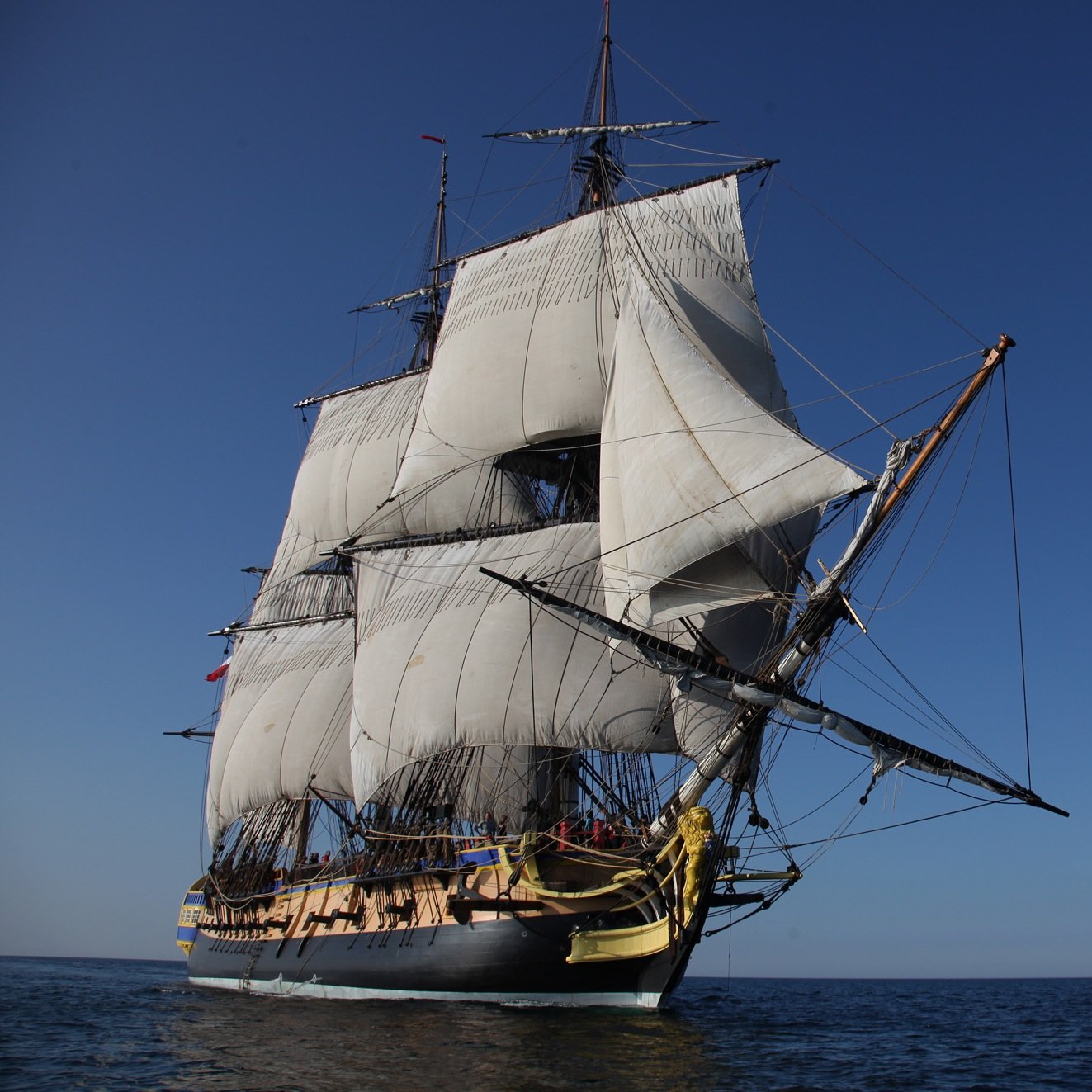
combined with the nimbleness of an 18th-c. frigate.

l'hermione

Red-Tailed Hawks Circling (YouTube)

And suddenly we were looking up at something completely different—

7affeea5ca3551eddd3ae8bc4abd7b47

Nazgul!

In contrast to those very convenient Tolkien eagles, traditionally admired as a fierce and noble bird

tumblr_inline_mvvy21Tf9e1rnrk68

the Wraiths appear to be riding a cross between a flying dragon

Fantasy_In_the_clouds_flying_dragon_067388_

and a pterodactyl.

Pterodactyl_2_(PSF)

nazgul_by_daroz-d5hdnn9

Of course, we first encounter the Nazgul on the ground

nazgul_by_jarrettonions-d47wvdd

in their invasion of the Shire and their subsequent pursuit of Frodo.

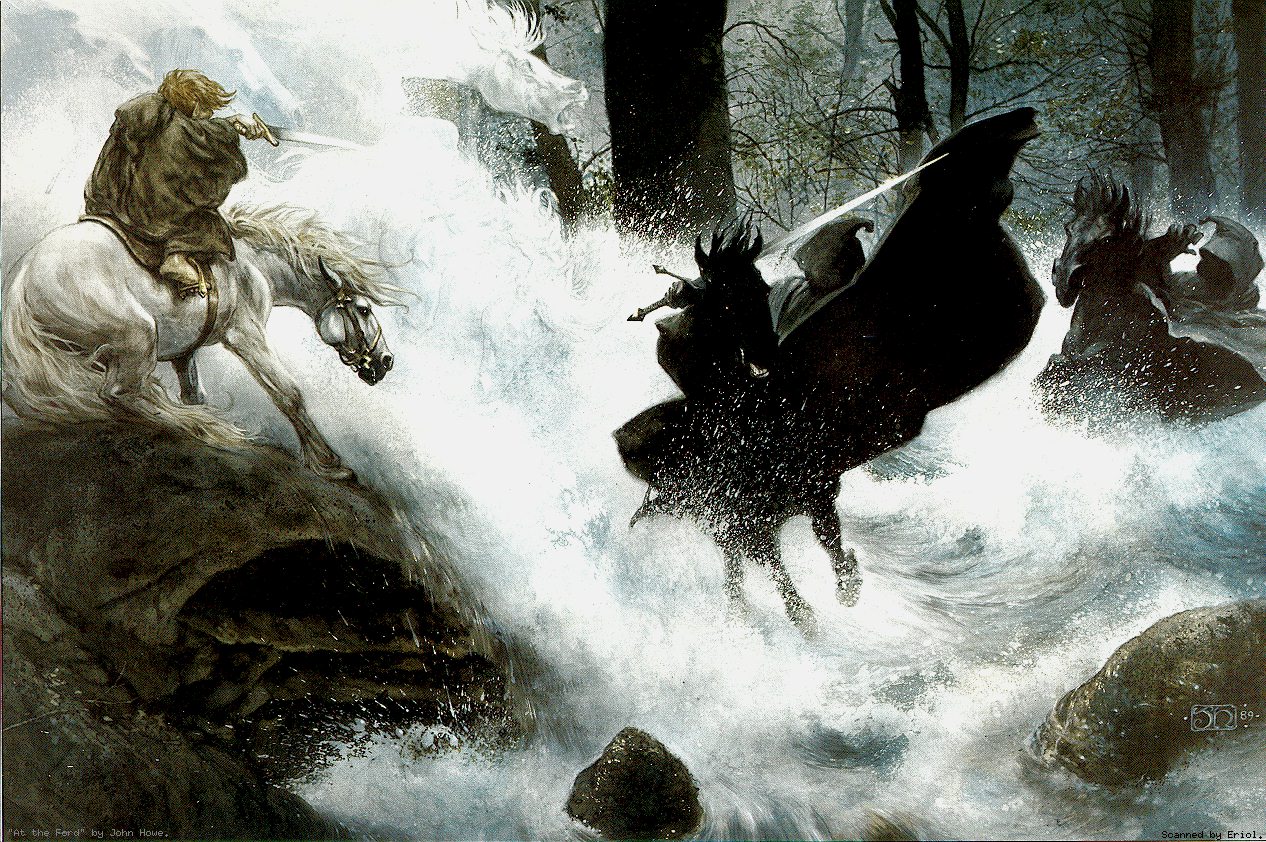
And here, at the final moment, at the Ford of Bruinen, where the Wraiths are swept away,

ford

perhaps we can catch a glimpse of one of the origins of a very dramatic scene.

The Scots poet, Robert Burns

burnshead1

wrote “Tam O’Shanter” in 1790 and published it the following year.

Tam O’Shanter Poem and Translation

It’s the story in verse of a farmer who stays too late at his local.

Tam_o'_Shanter_and_Souter_Johnny_at_Kirkton_Jean's

Then, on the way home, he is attracted by light in a local abandoned (and, of course, haunted) church

Alloway_Kirk

where a witches’ Sabbath is going on.

(c) City of Edinburgh Council; Supplied by The Public Catalogue Foundation

Still quite tipsy, he cheers it on and, of course, the witches and other otherworldly creatures are immediately in hot pursuit.

(c) Cutty Sark Trust; Supplied by The Public Catalogue Foundation

Tam can escape, but only if he can reach the nearby river Doon and cross its bridge.

bridgeofdoune

He just manages to do this, but his poor horse, Meg, loses her tail.

four

If this plot has a familiar ring, it’s because the American author, Washington Irving,

Portrait of Washington Irving

used the poem as a major source for his short story, “The Legend of Sleepy Hollow” (published in 1820). We begin with a very different story: in 1790, a poor schoolmaster with the poetic name of Ichabod Crane comes to the Hudson River valley town of Sleepy Hollow and, in the course of his stay, becomes such an annoyance to the local bravo, that he uses the local legend of a headless horseman to frighten Crane off.

keller_sleepyhollow

To do this, he convinces Crane that, should he be pursued by such a creature, he can only escape it by crossing running water. (And here we can see the strong influence of Burns.) In the subsequent narrative, as the horseman, the bravo chases Crane to a bridge, and there the story stops. Crane disappears, never to be seen in Sleepy Hollow again. Irving_Sleepy 

John_Quidor_-_The_Headless_Horseman_Pursuing_Ichabod_Crane_-_Google_Art_Project

Unfortunately, neither the Carpenter letters nor the Hammond/Scull volumes provides any reference to Burns or Irving, but the idea that crossing the ford might stop the unearthly has, to us, a definite suggestion that, somewhere in the leaf mould, there may have been a tiny acorn of memory…

Thanks, as ever, for reading!

MTCIDC

CD

ps

You might know “The Legend of Sleepy Hollow” from this–

legendofsleepyhollow-chase

Subsubcreations

03 Wednesday Jun 2015

Posted by Ollamh in Fairy Tales and Myths, J.R.R. Tolkien, Military History of Middle-earth, Narrative Methods, Villains

≈ Leave a comment

Tags

Chicken Run, Corsairs, Easterlings, Gorbag and Shagrat, Haradrim, Melkor, Minions, Morgoth, Nazgul, Nick and Fetcher, Orc, Robin Hood, Sauron, Star Wars, Storm Troopers, The Lord of the Rings, Tolkien, Zorro

Dear Readers,

Welcome, as always!

     Two posts ago, we talked about how it might be possible to make Sauron –the- nearly-invisible slightly more visible by means of his minions.

Minions-Film

[oh yes—minions—from Middle French, “mignon”, meaning “little/darling” and coming to have a negative meaning in English, “lackey”]

     These included the Nazgul

nazgul

various humans—corsairs, Haradrim, Easterlings—

702343aharadvetcav easterling_hassassin_by_taurus_chaoslord-d5sb6rc

And, the real stars (as Nick and Fetcher, the two rats from Chicken Run, refer to themselves)

Nick_and_Fetcher

the Orcs.

John%20Howe%20-%20Merry%20et%20Pippin%20prisonniers%20des%20orcs 36 - Orcs (MERP)

OrcsOnSentry_Alan_Lee

     Tolkien appears always to have had trouble placing them. We would suppose that this problem arose because Orcs were not the usual run-of-the-mill lackeys one usually sees in adventure, like the sheriff of Nottingham’s men

sjff_03_img1296

the soldiers of the evil commandante in the Zorro adventures

ep23d

or the hordes of faceless stormtroopers in Star Wars

Stormtrooper_Corps

       His first question—where do they come from? was immediately followed by a second—if they are created, do they have free will? That first question, any author might ask himself. The second, however, was pure Tolkien, fitting into the pattern which those who’ve only read The Lord of the Rings and not JRRT’s letters on the subject or the volumes produced by the admirable (a pale adjective!) Christopher Tolkien, would never see: the complex spiritual history which lies behind the creation of Middle Earth.

     Not that the first question was simple. In The Lord of the Rings, Fangorn says of the Orcs:

“But Trolls are only counterfeits, made by the Enemy in the Great Darkness, in mockery of Ents, as Orcs were of Elves.” L486

     The author, however, had a very different opinion:

“Their nature and origin require more thought. They are not easy to work into the theory and system.”

(Morgoth’s  Ring   409)

     Not easy because of that second question. As he wrote in an unpublished essay entitled (not surprisingly) Orcs (Morgoth’s Ring 409-413),

“…only Eru [the central creative deity] could make creatures with independent wills, and with reasoning powers. But the Orcs seem to have both: they can try to cheat Morgoth/ Sauron, rebel against him, or criticize him.”

     Morgoth (Sauron’s former master) made the Orcs in some way, but, because only the central deity, Eru, can give independent wills and reasoning powers—which Orcs display by cheating, rebelling, and criticizing– to created beings, what is to be made of Orcs? Bound by those seemingly contrary facts, the conclusion was obvious to him that “therefore they must be corruptions of something pre-existing.” (409)

But of what?

     “But Men had not yet appeared, when the Orcs already existed. Aule constructed the Dwarves out of his memory of the Music; but Eru would not sanction the work of Melkor [i.e. Morgoth] so as to allow the independence of the Orcs.

     It also seems clear…that though Melkor could utterly corrupt and ruin individuals, it is not possible to contemplate his absolute perversion of a whole people, or group of peoples, and his making that state heritable.

     In that case Elves, as a source, are very unlikely.” (409)

     Thus, logically, if the Orcs are created, not corrupted, and created by a power which hasn’t the ability to give his creations independence, then–

     “The Orcs were beasts of humanized shape (to mock Men and Elves) deliberately perverted/converted into a more close resemblance to Men. Their ‘talking’ was really reeling off ‘records’ set in them by Melkor. Even their rebellious critical words—he knew about them. Melkor taught them speech and as they bred they inherited this; and they had just as much independence as have, say, dogs or horses of their human masters. This talking was largely echoic (cf. parrots). ..Also (n.b.) Morgoth not Sauron is the source of Orc-wills. Sauron is just another (if greater) agent. Orcs can rebel against him without losing their own irremediable allegiance to evil (Morgoth).” (410-411)

     We don’t know about you, dear Readers, but we confess to a certain disappointment at the idea that the Orcs are only more complex puppets. Consider this piece of villainous dialogue between Gorbag and Shagrat:

Unknown%20-%20Bilbo%20le%20Hobbit%20(01)%20-%20Les%20orcs

     “I’d like to try somewhere where there’s none of ‘em. But the war’s on now, and when that’s over things may be easier.”

     “It’s going well, they say.”

     “They would,” grunted Gorbag. “We’ll see. But anyway, if it does go well, there should be a lot more room. What d’you say?—if we get a chance, you and me’ll slip off and set up somewhere on our own with a few trusty lads, where there’s good loot nice and handy, and no big bosses.”

     “Ah!” said Shagrat. “Like old times.” (LOTR 738)

     The plans and reminiscences of demons—how wonderful! And what an interesting sidelight into their world and even their past: they used to be masterless marauders, in the “old times”—could this suggest that perhaps they weren’t such puppets after all? We would like to imagine so!

And what is your opinion, dear readers?

Thanks, as ever, for reading.

MTCIDC

CD
Personae

15 Friday May 2015

Posted by Ollamh in Artists and Illustrators, Fairy Tales and Myths, J.R.R. Tolkien, Narrative Methods, Villains

≈ Leave a comment

Tags

Alan Lee, Antagonists, Bosch, Bruegel, Christina Rossetti, Corsairs, Easterlings, Gorbag, Gruenewald, Haradrim, Minions, Nazgul, Orc, Sauron, Shagrat, The Wind, Tolkien

A man is known by the company he keeps.

                                                           Old Proverb

Who Has Seen the Wind?

Who has seen the wind?

Neither I nor you:

But when the leaves hang trembling,

The wind is passing through.


Who has seen the wind?

Neither you nor I:

But when the trees bow down their heads,

The wind is passing by.

                                             Christina Rossetti from Sing-Song: A Nursery Rhyme Book (1872)

wind


Dear Readers,

Welcome, as always!

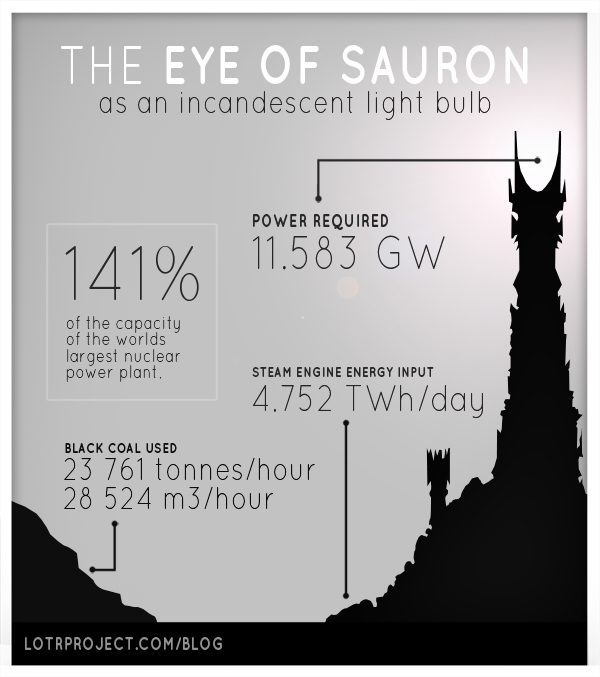
     In our last posting, we talked about villains visible and invisible and suggested that, in the case of Sauron, rather than showing him as a searchlight eye,

sauronbulb2png

(This is from the LOTR Project— a great site, much recommended). 

there were other and more potentially convincing ways to depict such a menacing figure.

One was seeing his reflection in his minions.

minions_2015-wide

(Can you wait for this?)

Imagine that seeing him this way is like seeing the effect a strong wind has on trees.

Palm Tree Nassau Winslow Homer

     Sauron’s minions fall into three main categories: the Nazgul, various humans, most from what appear to be the less-civilized peoples of the south—Corsairs of Umbar, Easterlings, and the Haradrim.

     The Nazgul

eowyn_nazgul

are the most daunting, but we’re told only a limited amount about them, we see them very selectively, and their speech is recorded mainly as threats. We see the humans even less and we really don’t hear them at all. It’s the Orcs of whom we’re shown the most.

     Sauron is described as once being “comely”, but his present condition (except perhaps for his eyes—make that eye) is hard to determine. Tolkien could never quite settle on the origin of the Orcs, but, they are definitely less than attractive.

     Illustrators of Orcs tend, we think, to be strongly influenced by early-Renaissance northern German painters, like Bosch, who depicted devils and demons as hybrids between humans and birds and animals.

Bosch_LJ_Vienna_Music bosch-devil Bosch,_Hieronymus_-_The_Garden_of_Earthly_Delights,_right_panel_-_man_riding_on_dotted_fish_and_bird_creature grunewald_400x478 the-devil-throughout-history-photos-3-horned_pig_devil

     This does not, however, seem to be in line with Tolkien’s thinking. If as Fangorn says, they were created as a mockery of elves, one would presume that they would be much more human in look, but perhaps with exaggerated features, and this seems to be closer to what Tolkien had in mind, although physical description tends to be less detailed.

     Here’s an Alan Lee which we think is more like what Tolkien imagined.

Unknown%20-%20Bilbo%20le%20Hobbit%20(01)%20-%20Les%20orcs

     If they are northern Orcs—those whom Sauron employs—they tend to be smaller and paler. If Uruk-hai, primarily used by Saruman, larger and black. (Although a tracker for Sauron is described as small and black.) Here’s the contrast of the two types in the confrontation between Ugluk and Grishnakh:

“…a large black Orc, probably Ugluk, standing facing Grishnakh, a short crook-legged creature very broad and with long arms that hung almost to the ground.”

     As Orcs may be a mockery of Elves, their speech sounds like it’s derived from the conversations Tolkien heard among his nco’s in the trenches—foul-mouthed (in a modified form), cheerfully abusive, and full of casual threats.

     It’s also instructive to note that there appear to be no Orcs in command positions beyond captain—the rank of Ugluk and Grishnakh, Gorbag and Shagrat. Beyond are the Nazgul, whom the Orcs both dread and envy. (“Those Nazgul give me the creeps…But He likes ‘em; they’re His favorites nowadays, so it’s no use grumbling.”) When we hear these Orcs talk, then, we are being given the mass of Sauron’s soldiery, as below them there is only a babel of cries, cheers, and curses, like a translation of the baying of a pack of hounds.

     Throughout all of the Orc conversation, there runs a joint theme: criticism of superiors (no names—but even up to Sauron himself) and fear of being heard doing so, as when Gorbag says:

     “They don’t tell us all they know, do they? Not by half. But they can make mistakes, even the Top Ones can.” “Sh, Gorbag!” Shagrat’s voice was lowered, so that even with his strangely sharpened hearing could only just catch what was said. “They may, but they’ve got eyes and ears everywhere; some among my lot, as like as not…”

     This suggestion of internal spies reflects a basic uneasiness to be found everywhere under Sauron’s rule: no one trusts anyone else at any level in what Frodo calls “the spirit of Mordor”, leading to murder between rival bands of Orcs and even between individuals, as Sam and Frodo witness, when soldier and tracker trade threats and insults before tracker kills soldier with an arrow.

     So what do Sauron’s minions mirror, which would provide us with any clearer image of the nearly-invisible villain?

   Certainly, we might see that he is incapable of gaining any kind of following at all among the dominant peoples of western Middle Earth.  First, his armies are led by the ancient undead, who frighten their own side as much as they do the enemy. Second, his human recruits are half-civilized people from the far south, plunderers, with no stake in things beyond gain. Third, the bulk of his armies are made up of creatures who are, in a sense, not genuine, but simply mockeries of actual living beings and whose loyalty to their maker is, at best, questionable, even as they fear him.

     Thus, we might imagine that, for all that he is powerful enough to command magic ghosts and armies of primitive men and mutants, Sauron is, ultimately, fearful, suspicious, and divisive and so transparently a source of instability that he can neither convince nor menace any of the free peoples of Middle Earth into having anything to do with him.

     So, as always, we end by asking you, dear readers, what you think? And, as always, we thank you for reading.

MTCIDC

CD

Newer posts →

The Doubtful Sea Series Facebook Page

The Doubtful Sea Series Facebook Page

  • Ollamh

Categories

  • Artists and Illustrators
  • Economics in Middle-earth
  • Fairy Tales and Myths
  • Films and Music
  • Games
  • Heroes
  • Imaginary History
  • J.R.R. Tolkien
  • Language
  • Literary History
  • Maps
  • Medieval Russia
  • Military History
  • Military History of Middle-earth
  • Narnia
  • Narrative Methods
  • Poetry
  • Research
  • Star Wars
  • Terra Australis
  • The Rohirrim
  • Theatre and Performance
  • Tolkien
  • Uncategorized
  • Villains
  • Writing as Collaborators
Follow doubtfulsea on WordPress.com

Across the Doubtful Sea

Recent Postings

  • Through a glass… January 7, 2026
  • Heffalumps? December 31, 2025
  • We Three Kings December 24, 2025
  • A Moon disfigured December 17, 2025
  • On the Roads Again—Once More December 10, 2025
  • (Not) Crossing Bridges December 3, 2025
  • On the Road(s) Again—Again November 26, 2025
  • On the Road(s) Again November 19, 2025
  • To Bree (Part 2) November 12, 2025

Blog Statistics

  • 104,104 Views

Posting Archive

  • January 2026 (1)
  • December 2025 (5)
  • November 2025 (4)
  • October 2025 (5)
  • September 2025 (4)
  • August 2025 (4)
  • July 2025 (5)
  • June 2025 (4)
  • May 2025 (4)
  • April 2025 (5)
  • March 2025 (4)
  • February 2025 (4)
  • January 2025 (5)
  • December 2024 (4)
  • November 2024 (4)
  • October 2024 (5)
  • September 2024 (4)
  • August 2024 (4)
  • July 2024 (5)
  • June 2024 (4)
  • May 2024 (5)
  • April 2024 (4)
  • March 2024 (4)
  • February 2024 (4)
  • January 2024 (5)
  • December 2023 (4)
  • November 2023 (5)
  • October 2023 (4)
  • September 2023 (4)
  • August 2023 (5)
  • July 2023 (4)
  • June 2023 (4)
  • May 2023 (5)
  • April 2023 (4)
  • March 2023 (5)
  • February 2023 (4)
  • January 2023 (4)
  • December 2022 (4)
  • November 2022 (5)
  • October 2022 (4)
  • September 2022 (4)
  • August 2022 (5)
  • July 2022 (4)
  • June 2022 (5)
  • May 2022 (4)
  • April 2022 (4)
  • March 2022 (5)
  • February 2022 (4)
  • January 2022 (4)
  • December 2021 (5)
  • November 2021 (4)
  • October 2021 (4)
  • September 2021 (5)
  • August 2021 (4)
  • July 2021 (4)
  • June 2021 (5)
  • May 2021 (4)
  • April 2021 (4)
  • March 2021 (5)
  • February 2021 (4)
  • January 2021 (4)
  • December 2020 (5)
  • November 2020 (4)
  • October 2020 (4)
  • September 2020 (5)
  • August 2020 (4)
  • July 2020 (5)
  • June 2020 (4)
  • May 2020 (4)
  • April 2020 (5)
  • March 2020 (4)
  • February 2020 (4)
  • January 2020 (6)
  • December 2019 (4)
  • November 2019 (4)
  • October 2019 (5)
  • September 2019 (4)
  • August 2019 (4)
  • July 2019 (5)
  • June 2019 (4)
  • May 2019 (5)
  • April 2019 (4)
  • March 2019 (4)
  • February 2019 (4)
  • January 2019 (5)
  • December 2018 (4)
  • November 2018 (4)
  • October 2018 (5)
  • September 2018 (4)
  • August 2018 (5)
  • July 2018 (4)
  • June 2018 (4)
  • May 2018 (5)
  • April 2018 (4)
  • March 2018 (4)
  • February 2018 (4)
  • January 2018 (5)
  • December 2017 (4)
  • November 2017 (4)
  • October 2017 (4)
  • September 2017 (4)
  • August 2017 (5)
  • July 2017 (4)
  • June 2017 (4)
  • May 2017 (5)
  • April 2017 (4)
  • March 2017 (5)
  • February 2017 (4)
  • January 2017 (4)
  • December 2016 (4)
  • November 2016 (5)
  • October 2016 (6)
  • September 2016 (5)
  • August 2016 (5)
  • July 2016 (5)
  • June 2016 (5)
  • May 2016 (4)
  • April 2016 (4)
  • March 2016 (5)
  • February 2016 (4)
  • January 2016 (4)
  • December 2015 (5)
  • November 2015 (5)
  • October 2015 (4)
  • September 2015 (5)
  • August 2015 (4)
  • July 2015 (5)
  • June 2015 (5)
  • May 2015 (4)
  • April 2015 (3)
  • March 2015 (4)
  • February 2015 (4)
  • January 2015 (4)
  • December 2014 (5)
  • November 2014 (4)
  • October 2014 (6)
  • September 2014 (1)

Blog at WordPress.com.

  • Subscribe Subscribed
    • doubtfulsea
    • Join 78 other subscribers
    • Already have a WordPress.com account? Log in now.
    • doubtfulsea
    • Subscribe Subscribed
    • Sign up
    • Log in
    • Report this content
    • View site in Reader
    • Manage subscriptions
    • Collapse this bar
 

Loading Comments...