• About

doubtfulsea

~ adventure fantasy

Category Archives: Language

The Fall of Two Cities?

09 Wednesday Mar 2016

Posted by Ollamh in Economics in Middle-earth, Imaginary History, J.R.R. Tolkien, Language, Maps, Military History, Military History of Middle-earth, Narrative Methods

≈ Leave a comment

Tags

Agincourt, Anadoluhisari, Anatolia, Asia Minor, Bayezid I, Bosphorus, Byzantium, Constantine I, Constantinople, Crecy, English Civil Wars, Eowyn, Gondor, map, Mehmet II, Minas Tirith, motte and bailey, Newark, Normans, Osgiliath, Ottoman Empire, Poitiers, Rumelihisari, siege, The Lord of the Rings, Tolkien, Witch-King of Angmar

Dear Readers,

Welcome, as always. A little while ago, we talked about the “siege of Gondor”, which really wasn’t a siege in the formal sense, at all, but rather an assault. (We suspect that JRRT liked the sound of “siege” and so used it, not caring if it were strictly accurate or not.) In this posting, we want to look at a real siege and examine what might be parallels with events in Middle Earth.

Before we do, we want to take a moment to talk about the word “siege”. It comes into English through Old French asegier, which comes from Latin ad + sedeo > adsideo, adsidere , literally, “to sit down at”. The northern French who passed the word on to England must have liked to say what’s called a y-glide when certain consonants came before e, so, though it was spelled asegier, it would have been said “ah-see-YED-jier”. And that’s why English today has what can be a confusing spelling. (In our experience, lots of native speakers have trouble distinguishing between the ie of “siege” and the ei of “seize”). The stress on the word in English would have been away from the initial a, and so that would have disappeared from the word as it moved from being a borrowing.

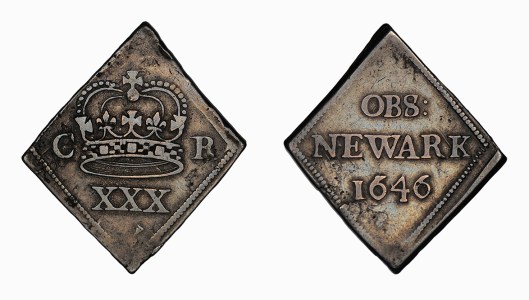
[As what we think is a cool footnote, Latin also has the verb obsideo “to sit down right before=to besiege” and we can see that used in English in the word “obsession”, with the idea that something bothers you so much that it’s like you’re being besieged by it. You can also see it on this wonderful bit of 17th-c. English history.
obsidionalmoney.jpg

Although it doesn’t look like a modern coin, this is a form which used to be called “half-a-crown”—that is, 30 pennies (that’s what those three xses mean), or two shillings, sixpence.   This coin was struck in the town of Newark-upon-Trent, when it was besieged during the English Civil Wars (1642-1651).
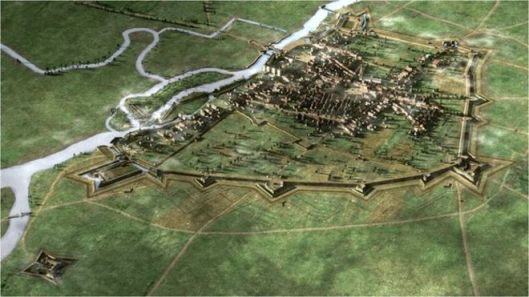
_82601862_newark-1646map.jpg

And that’s where obsideo comes in. The back (the “reverse” in coin language—the front is called the “obverse”) says:

OBS: Newark (with a date, either 1645 or 1646, depending on when the coin was struck)

OBS = Obsessa Newark = “Newark Besieged”

There were a lot of coin-substitutes struck by various besieged towns, but, apparently, those from Newark are the most numerous.]

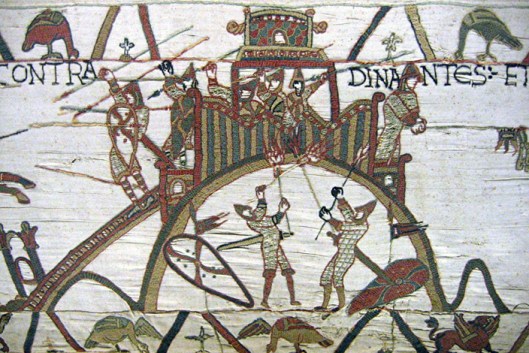
In the medieval western military world, sieges were more common, it seems, than pitched battles. As castles and towns were focal points for the possession and control of land—think of the hundreds of early castles, called “motte and bailey”, which the Normans built all across England in the first years after their conquest–it’s not surprising that they would have been a focus of attack.

motteandbailey.jpg Tapisserie_motte_dinan 704.jpg

As well, we can imagine that, ultimately, they would have been cheaper, in terms of the most irreplaceable manpower, sparing the highly-trained, hard-to-replace, knights and men-at-arms.
knights.jpg

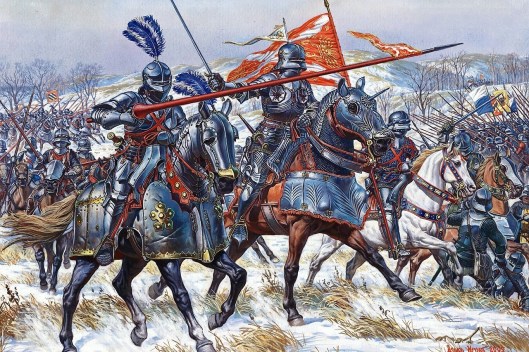
Battles like Crecy (1346), Poitiers (1356), and Agincourt (1415), cost the French dearly as their brave knights threw themselves at their English opponents, whose longbows shot them and their horses down.
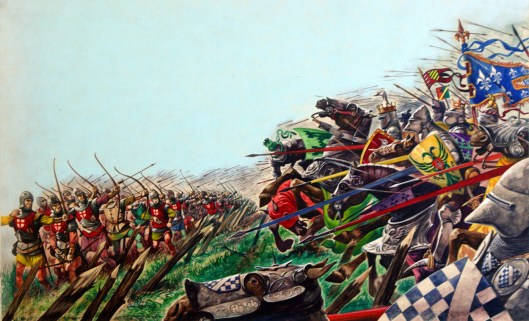
agincourt.jpg

In a siege, although there was the occasional combat, including the exploitation of a break in the enemy’s defenses,
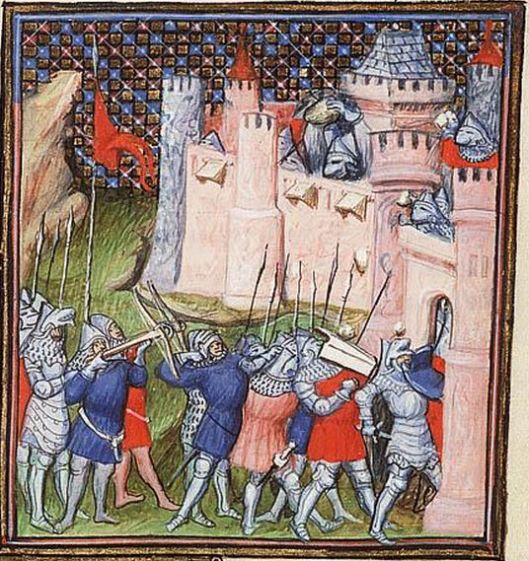
Edward-III-takes-Poix-Castle.jpg

most of a siege would be spent in using machinery of various sorts to aid you in breaking down the walls—and the resistance of the defenders, as well.
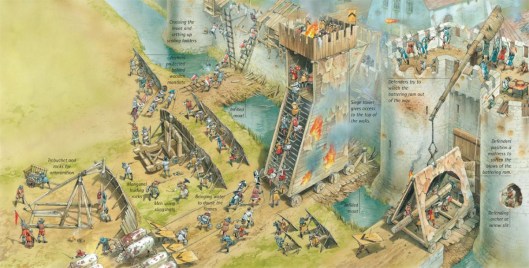
castles-and-knights-2-with-labels.jpg

This brings us to the real, historical siege we want to examine: Constantinople, 1453.

Bizansist_touchup.jpg

Constantinople had begun life as a Greek colony, called Byzantium, on the European side of the narrow passageway between the Black Sea and the northeastern Mediterranean.

byzempmap.gif

It had been refounded and greatly expanded by the Roman emperor, Constantine I, to be a new capital in the east.

Constantine-I-Face.jpg

Although it was supposed to be called “New Rome”, everyone in the east called it after its refounder, and so it was “Constantinople”, becoming the capital of an eastern empire which we call “Byzantine”. Even with setbacks and a number of unsuccessful attacks over the centuries, it was, for a long time, a very wealthy and powerful city.

1-reconstruccion-de-bizancio.jpg

But even the wealthiest and most powerful cities will fade—especially when faced with ambitious enemies. Constantinople had had a number of those, but, finally, in its last years, perhaps its most ambitious and most powerful arose in Asia Minor: that of the Ottoman Turks. As you can see from this map, its beginnings were modest: one Turkic-speaking group among many.

Anatolian_Beyliks_in_1300.png

This was a period of instability, however. The Ottoman leaders quickly took advantage of that instability to grab power and territory, so that, by 1400, they had spread beyond the shrinking Byzantine world, into the Balkans, and, soon, Constantinople was surrounded.

trebizond1400

This surrounding took place in an increasingly-methodical way. In 1393-4, the ruler of the Ottomans, the sultan Bayezid I

bayezit1.jpg


built a small fortress on the Asia Minor side of the Bosphorus, the name for the northern stretch of the passage which led from the Black Sea to the Mediterranean. It was called Anadoluhisari, “the Anatolian fort”.
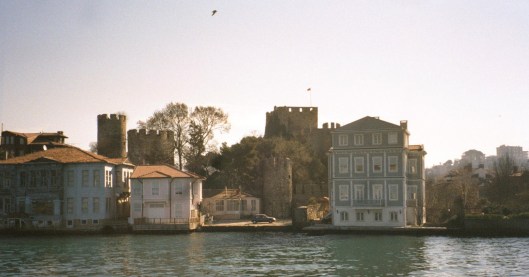
Anadoluhisari.jpg


You can see from the map that this was the beginning of setting up a choke point upstream from Constantinople.

mapwithanadoluhisari.gif

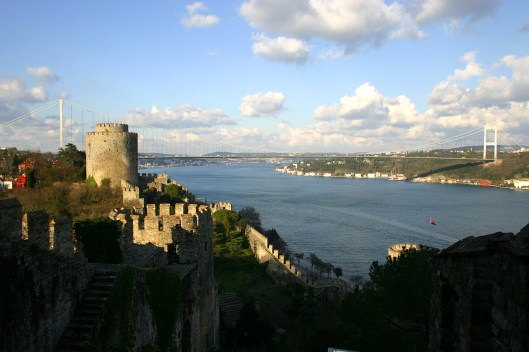
In 1451-2, the sultan Mehmet II finished the job with the Rumelihisari just opposite, on the European side (and that’s what its name means, “the Roman—that is, European—fort”).
Rumeli_hisari.jpg

Guns were mounted

muslim_rocket_technology_06.jpg

and any help which might have come from the Black Sea was blocked.

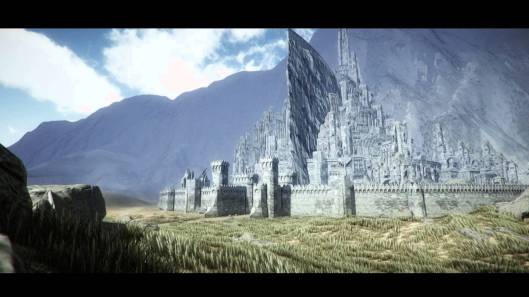
And here we want to take a minute to look at our imaginary city and its danger—because we see some easy parallels here. First, of course, the Ottoman empire was an eastern threat—so was Mordor. Mordor had taken the east bank of the Anduin, just as the Ottomans had taken the Asian side of the Bosphorus. And, in the capture of the European side and the building of Rumelihisari, we might see the taking of Osgiliath and the west bank of the Anduin. Then there is the massive city of Minas Tirith and the attack upon it.
mt.jpg 2381576-zmordorforcesk7.jpg

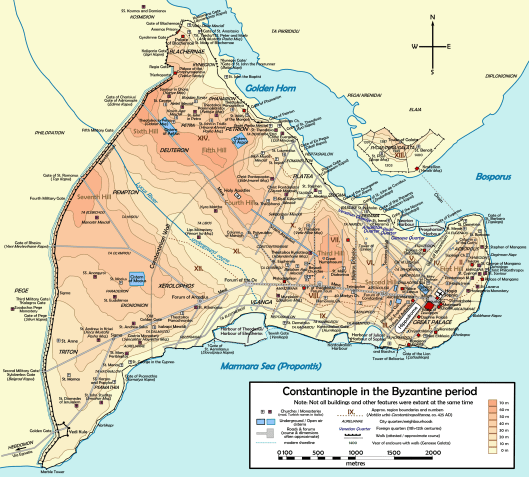
Constantinople was also a massive city.
Byzantine_Constantinople-en.png

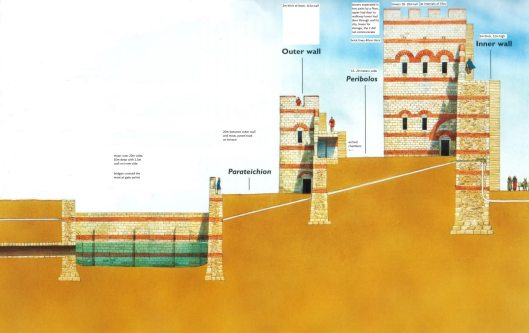
It was, basically, on a triangular piece of land, with two sides protected by water. The original Greek town had had a wall, but it was long gone and almost all of Constantine’s land wall had long disappeared, as well. The latest walls are called the Theodosian, after their originator, the emperor Theodosius II (408-450AD), but the walls included bits of the Constantinian walls and many repairs, over the centuries. The main land defenses included three lines of wall and a moat.
2rh67o0.jpg

This sounds very impressive until one considers two things: first, is there a garrison big enough to defend what are, in fact, a number of miles of wall? And, second, although the walls have withstood previous attacks, including one made by the Ottomans in 1422AD, how will they stand up to the threat of modern artillery?

At the height of its power and prosperity, it is estimated that Constantinople had had a population of anywhere from 500,000 to 750,000 (although scholars argue over this). At the time of the final siege, the population had fallen to as low as 40,000. Thus, large parts of the city were empty—just like Minas Tirith:

“Pippin gazed in growing wonder at the great stone city…Yet it was in truth falling year by year into decay; and already it lacked half the men that could have dwelt at ease there.” (The Return of the King, Book 5, Chapter 1, “Minas Tirith”)

The garrison of Constantinople was perhaps about 9,000, in all, which meant that they were very thinly stretched. We don’t know just how many troops were in Minas Tirith. Some reinforcements had come from South Gondor, as we noted in an earlier posting, but only a few thousand and the defenders were powerfully outnumbered, just as those of Constantinople were, when the forces of Mordor began to arrive. The Ottoman army is thought to have had between 50,000 and 80,000 men, but just how many Orcs and others marched down the causeway from Osgiliath isn’t known–they are just a horde—something which the Jackson film shows very well.

maxresdefault

Then the assault begins, the Orcs having giant stone throwers, siege towers, and, finally, a giant, fire-breathing ram, Grond.

Grond_arrives.png

If you’ve been following our postings (and we hope you have!), then you know that we’ve discussed the use of what appears to be gunpowder, both at Helm’s Deep and at the Rammas Echor. The Orcs who attack the walls of Minas Tirith don’t appear to have such a weapon, but, unfortunately for the defenders of Constantinople in 1453, the Turks do, in the form of plentiful modern artillery.

Illustration-of-angus-mcbride-showing-the-ottoman-cannon-basilica-during-the-siege-of-constantinople-in-1453-ad.jpg

Attacks wear down the small garrison and huge, stone-throwing weapons knock down the walls, so that, finally the city falls, on 29 May, 1453.

84087026.jpg

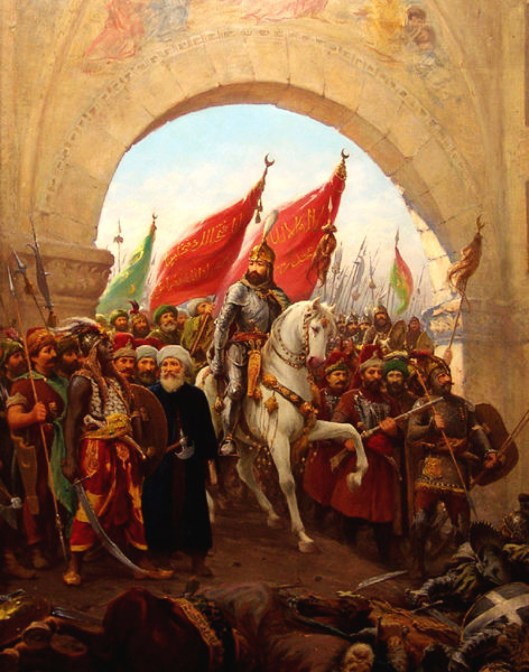
Its conqueror, Mehmet II, rides in—

mehmet2enteringconstantinople.jpg

which is something the witch king of Angmar never gets to do, perishing instead, at the hands of Eowyn and Merry.

Eowyn.jpg


And there the parallels end, as does our posting. Did JRRT have the fall of Constantinople somewhere in the back of his mind? What do you think?

Thanks, as always, for reading.

MTCIDC

CD

Lingua Orca

10 Wednesday Feb 2016

Posted by Ollamh in Imaginary History, J.R.R. Tolkien, Language, Literary History, Narrative Methods

≈ Leave a comment

Tags

Adventure, Black Speech, Bree, Cirth, Fantasy, Gandalf, L. Frank Baum, Mordor, Orcs, Origin of Orcs, Ozma of Oz, Princess Langwidere, The Lord of the Rings, Thorin, Tolkien

Welcome, dear readers, as always.

In P. Jackson’s The Desolation of Smaug, there is a scene at the opening, cut from whole cloth as so much of the later Hobbit movies, in which Gandalf meets Thorin in The Prancing Pony in Bree.

gandalfandthorin.jpg

There Gandalf shows Thorin a “message”.

“Gandalf: It is Black Speech.

[Thorin looks at Gandalf with unease]

Gandalf: A promise of payment.

Thorin: For what?

Gandalf: Your head. Someone wants you dead.”

One can laugh at that last—is there the possibility that someone who promised payment for a head would not want the owner dead? (Here we thought, for a moment, of the Princess Langwidere in L. Frank Baum’s Ozma of Oz, who has a collection of 30 exchangeable heads which she keeps locked in a cabinet.)

princesslangwidere.jpg

After laughing, however, we began to wonder just who that message was supposed to be for.

Tolkien says of the Black Speech:

“It is said that the Black Speech was devised by Sauron in the Dark Years, and that he had desired to make it the language of all those that served him, but he failed in that purpose.”

We are never told why he failed: was it too complicated? Too impractical? Too limited? (In modern terms, we can imagine Sauron sending out memos, saying things like: “To All Departments: it has come to Our attention that there are those who are not using the Black Speech in all official documents. Please conform to standards as laid out in Mordor Bulletin #512. Immediate.”) If what Isildur has to say about the inscription inside the ring is true,

One_Ring_Inscription_In_Three_Languages.jpg

Sauron doesn’t appear to have devised a script in which to write it:

“Already the writing upon it, which at first was as clear as red flame, fadeth and is now only barely to be read. It is fashioned in an elven-script of Eregion, for they have no letters in Mordor for such subtle work…” (The Fellowship of the Ring, Book 2, Chapter 2, “The Council of Elrond”)

Tolkien continues:

From the Black Speech, however, were derived many of the words that were in the Third Age wide- spread among the Orcs, such as ghash ‘fire’, but after the first overthrow of Sauron this language in its ancient form was forgotten by all but the Nazgul. When Sauron arose again, it became once more the language of Barad-dur and of the captains of Mordor.”

Could the “promise of payment” be meant for the Nazgul, then? That hardly seems likely—after all, they are the main servants of Sauron, bound to him by the rings they wear, Nazgul, after all, meaning “ring wraith”. Sauron’s success is their success—just as his failure seems to mean their end.

Because this scene exists only in the minds of the scriptwriters, we could have just shrugged it off right there as being a piece with the resurrected Azog and that ridiculous arm which he seems to have borrowed from a macho Frosty the Snowman, “Tauriel” and the embarrassing romance with a Dwarf, etc, etc, etc. Instead, we decided to play with the idea.

Using Tolkien’s actual texts as the basis of our thinking, we wondered: if the message wasn’t for the Nazgul and the Black Speech is specifically linked to Mordor, who else might be the recipient? Well, there are always the Orcs—but could they read it?

We know—sort of—what they are. Fangorn tells Merry and Pippin that they were made by Sauron as mockery of Elves. Tolkien himself seemed initially a bit puzzled about Orcish origins, calling them, in a letter to Milton Waldman (Letters no.131, 151, “probably in late 1951”) “…the Orcs (goblins) and other monsters bred by the First Enemy”. The same is said in Appendix F of The Lord of the Rings: “The Orcs were first bred by the Dark Power of the North in the Elder Days.” Then, in a letter to Naomi Mitchison (Letters, no.144, 177-8, 25 April, 1954), however, he writes: “Orcs…are nowhere clearly stated to be of any particular origin. But since they are servants of the Dark Power, and later of Sauron, neither of whom could, or would, produce living things, they must be ‘corruptions.’” And, again, in the draft of a letter to Peter Hastings, from later in the same year, he explains, quoting Frodo, speaking to Sam: “ ‘The Shadow that bred them can only mock, it cannot make real new things of its own. I don’t think it gave life to the Orcs, it only ruined them and twisted them.’” to which he adds, “In the legends of the Elder Days it is suggested that the Diabolus subjugated and corrupted some of the earliest Elves…” (Letters, no.153, 191). (This is continued later in the same letter, 195.)

Of their speech, JRRT wrote:

“It is said that they had no language of their own, but took what they could of other tongues and perverted it to their own liking; yet they made only brutal jargons, scarcely sufficient for their own needs, unless it were for curses and abuse. So it was in the Third Age Orcs used for communication between breed and breed the Westron tongue…” (The Lord of the Rings, Appendix F)

(Linguistically, we wonder if it would be possible for a people—especially a people who appear, in the later Third Age, to be extensive in number—could actually have had no language—or languages–of their own, particularly if they were a people who had existed before being corrupted by Morgoth. In The Lord of the Rings, for example, although they speak the Common Speech, they clearly have names out of some other language—what might that have been?)

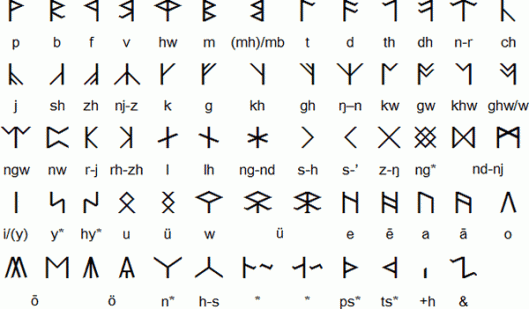
Taking the next step, in a previous posting, we had begun to probe the question of literacy versus orality in Middle Earth and here we might ask the question: were Orcs literate at all? The only possible clue we’d found is in Appendix E of The Lord of the Rings, where it is said of the form of writing called “Cirth”:

d5256b13ca277364da6f842a2744b63c.gif

“The Cirth in their older and simpler form spread eastward in the Second Age, and became known to many peoples, to Men and Dwarves, and even to Orcs…”

This would suggest that they were.

When we actually see the Orcs, however, do we find any evidence of the use of that writing?

There are only a couple of extended passages when we hear the Orcs as well as see them. The first is in the chapter entitled “The Uruk-hai”. In this chapter, the Orcs who have Merry and Pippin argue over their captives and we hear several talk about “orders” and “my orders”, but no documents appear or are mentioned: are these only oral orders? The second time we hear the Orcs is in “The Choices of Master Samwise.” Here, Sam overhears two Orc officers, Gorbag and Shagrat, talking. “The messages go through quicker than anything could fly, as a rule. But I don’t inquire how it’s done. Safest not to.” says Gorbag. And, a little later, Shagrat says, “A message came: Nazgul uneasy. Spies feared on Stairs. Double vigilance. Patrol to head of Stairs.” Unfortunately, there’s no further information here– although that second message almost sounds like it’s one step from being a tweet! (Or, in JRRT’s time, a Western Union telegram.) But then Shagrat says, “ I have my orders…Any trespasser found by the guard is to be held at the tower. Prisoner to be stripped. Full description of every article, garment, weapon, letter, ring, or trinket to be sent to Lugburz at once, and to Lugburz only…” Does such detail require writing? It does say “full description…to be sent”, which certainly suggests it.

We have a final glimpse and earful of the Orcs from “The Tower of Cirith Ungol” and into “The Land of Shadow”, but there are no more discussions of orders or messages or descriptions, just more of the brutality and treachery which seems the norm for such creatures.

So, we have two statements, in total, which are more suggestive than actual proof: Cirth was known to Orcs and the order for a “full description” to be sent to Barad-dur. Does that mean that, should Shagrat or Gorbag have written, he would have done so in Cirth? If so, this proves only literacy in that form and, when we look back to the one sample we have of any length (all of two lines) of the actual Black Speech, it is in Tengwar as we know, from Isildur, that Sauron—at least at the time of the making of the ring—had no Black Speech writing system to employ.

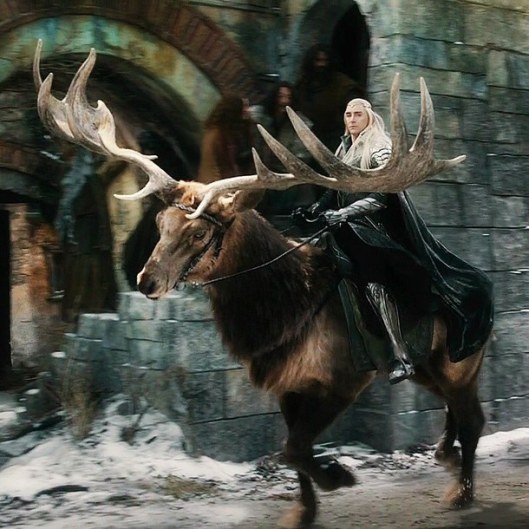
Conclusions? Although it was fun to do the research, at base, this was a fool’s errand—the whole thing, after all, was a creation of the same people who brought you Thranduil on an Irish elk (for more on that, google the extremely useful—and entertaining!– www.tolkien-treasures and see the entry on Thranduil and his mount).

elf-elk-lord-of-the-rings-the-hobbit-Favim.com-2609245.jpg

If we play along, as we have, there’s only a process of elimination. The only people who had anything to do with the (revived) Black Speech were in Mordor. If it wasn’t the Nazgul and it wasn’t the Orcs, who’s left? Only one possibility seems to remain: Sauron wrote it as a memo to himself, a kind of Barad-dur post-it, (“To Me: Thorin. Head. Reward? Do soonest.”), but, being very busy in contract negotiations with Benedict Cumberbatch’s agent on voice-overs, he absentmindedly sent it.

What do you think, dear readers?

As always, thanks for reading!

MTCIDC

CD

Strange as News from Bree

03 Wednesday Feb 2016

Posted by Ollamh in Fairy Tales and Myths, J.R.R. Tolkien, Language, Literary History, Narrative Methods

≈ Leave a comment

Tags

acta, Barad-Dur, Barliman Butterbur, Bree, Bronte, copyists, Dwarves, English coaching inn, Forum Romanum, Frodo Baggins, Gandalf, Gondor, Gutenberg, Haworth, Johann Carolus, Literacy, manuscripts, Medieval, Minas Tirith, Orality, Peter Jackson, pre-print, press, printing press, Romans, royal archives, Sauron, scriptoria, Story, The Lord of the Rings, The Prancing Pony, The Red Book of Westmarch, The Shire, Tolkien, War of the Ring, word-of-mouth, Yorkshire

Welcome, dear readers, as always.

After the last couple of postings, full of war, this is a rather peaceful one. We want to put forward a scheme for a larger project, all about orality versus literacy in Middle Earth, of which this is one small step, our initial question for the project being, “What is written and how and what is only spoken and remembered?”

Early in Chapter 9 of The Fellowship of the Ring (“At the Sign of the Prancing Pony”), we encounter this passage:

“For Bree stood at an old meeting of ways; another ancient road crossed the East Road just outside the dike at the western end of the village, and in former days Men and other folk of various sorts had travelled much on it. Strange as News from Bree was still a saying in the East Farthing, descending from those days, when news from North, South, and East could be heard in the inn, and when the Shire-hobbits used to go more often to hear it.”

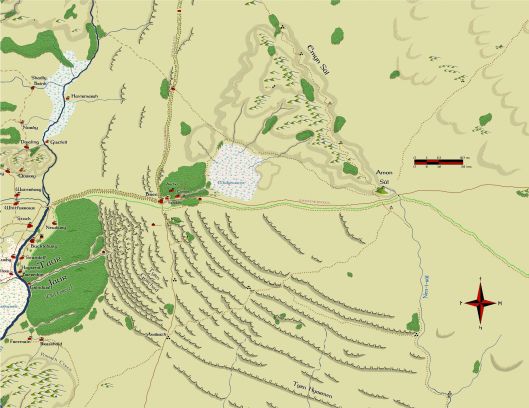
Bree, of course, is the little town to which Frodo and his companions travel once they have gotten free of the Barrow Downs.

ICE Bree and the Barrow-downs (Late Third Age) v1.3.jpg

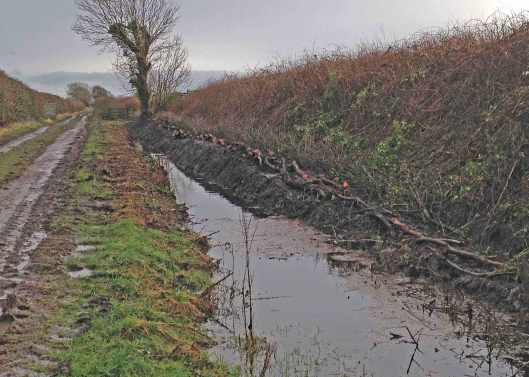
The little town is described as being surrounded by a dike—a wide ditch, the inner side topped with a thick hedge—perhaps something like this—

D21-15-2-14-More-hedging-activity_0670.jpg

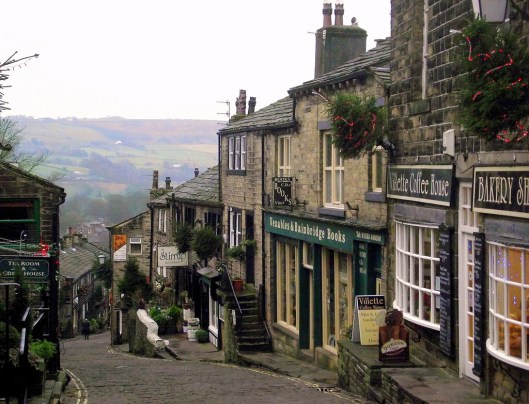
And consisting of “some hundred stone houses of the Big Folk, mostly above the Road…”. Without knowing the kind of stone, we have imagined it as looking rather like Haworth, in Yorkshire, the home of the Bronte family (without the modern touristy stuff, of course).

haworth.jpg

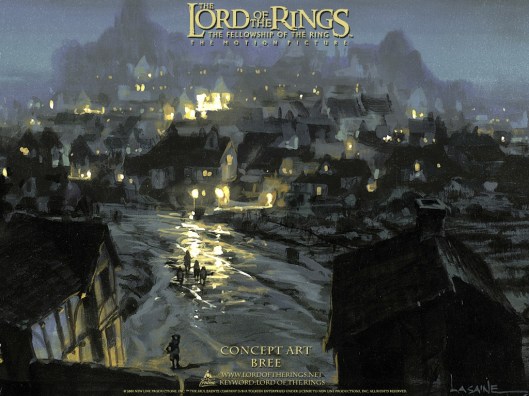
(And we note, by the way, that its depiction in the Jackson films doesn’t appear to reflect JRRT’s description that the houses were made of stone: rather, it appears to be filled with half-timbered, plaster and lath constructions.)

LOTR Bree.JPG


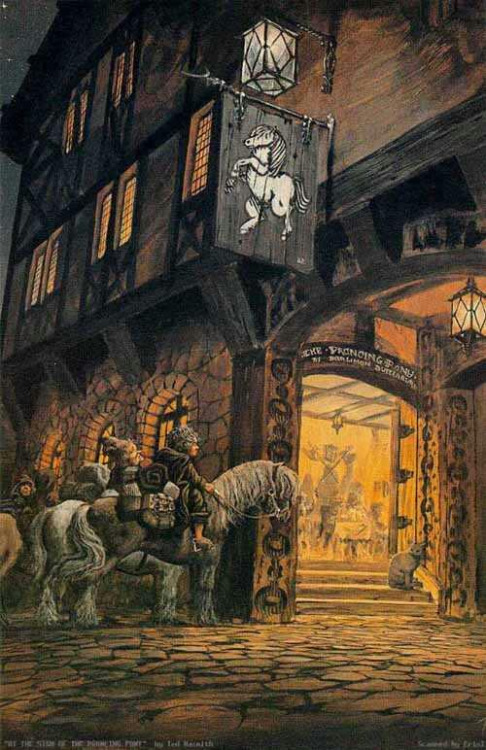
Here, the Hobbits stay at the Prancing Pony.

naismithprancingpony.jpg

Tolkien describes it as

“a meeting place for the idle, talkative, and inquisitive among the inhabitants, large and small…”

To our minds, it probably looked like one of those very old English coaching inns.

111-1000011im.jpg


And we begin our research inside.

Before we do, let’s spend a moment thinking about that word “news”, as in “Strange as news from Bree”.

In pre-print days, for most people in most places, information about events was circulated only by word-of-mouth. There were a few exceptions: the government in Rome produced hand-written circulars, called acta which were put up in the Forum Romanum from the middle of the last century BC through to the 3rd century AD. These would obviously have had a very limited circulation, however, and we can imagine that the contents would still have been passed on mouth-to-mouth for most people in Rome.

To gain greater circulation really demanded print. Although Gutenberg produced the first press and movable lead type by 1440,

gutenberg.jpg

the earliest surviving printed newspaper known at present dates from 1609, produced in Germany. (It appears that the publisher, Johann Carolus, had actually begun printing, rather than hand-copying, in 1605.)

Relation_Aller_Fuernemmen_und_gedenckwuerdigen_Historien_(1609).jpg

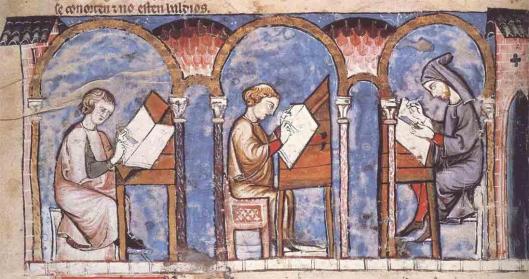
As far as we can tell, true to the general image of Middle Earth as a medieval world, printing presses have yet to appear (unless Sauron is producing very limited editions at the Barad-dur Press and circulation consists of exactly one copy). This means that we are still in the preprint world of hand-copying, when it comes to documents. In the western European world, on which places like Gondor are modeled, this means scriptoria—copy centers—mainly in monasteries and in royal courts where the copyists had probably been trained in monastic scriptoria.

scriptorium.jpg

Because there are no religious foundations or even schools of any sort mentioned in Middle Earth, we don’t know how or where documents were written or copied or even how and where anyone learned to read and write (except Sam, who was taught his letters by Frodo), but literacy turns up all over the place, from the Red Book of Westmarch to the runes of the dwarves to the writings Gandalf says he searched through in the archives of Minas Tirith.

All of this is, in a sense, commemorative—it’s history, really, whether a dwarvish map or tomb inscription, or an account of the War of the Ring. What about other things, however—word of daily events, or even entertainment forms, like songs and poems, things which may some day become part of history but, at the present, seem much more ephemeral? That’s what we’ve come to Bree to find out—and we’re quickly helped in our investigation by the host of the Prancing Pony, Barliman Butterbur, who says to Frodo and the others:

“ ‘I don’t know whether you would care to join the company…Perhaps you would rather go to your beds. Still the company would be very pleased to welcome you, if you had a mind. We don’t get Outsiders—travelers from the Shire, I should say, begging your pardon—often; and we like to hear a bit of news, or any story or song you may have in mind…’ “

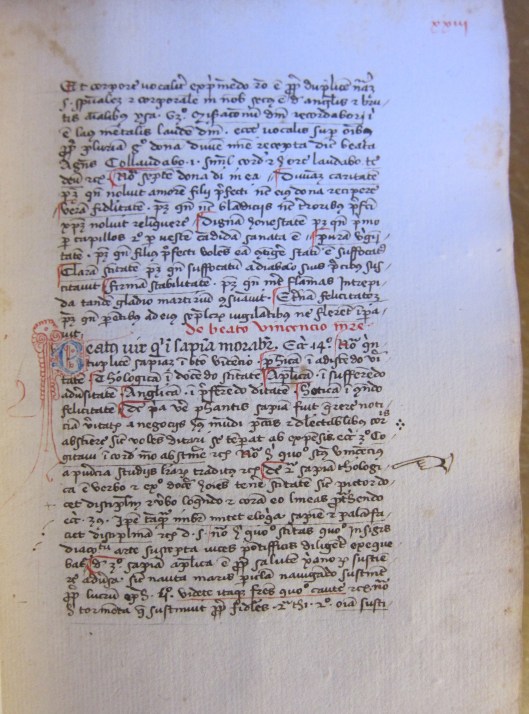
And there’s that emphasis on the oral: “we like to hear”. You, readers, have a world of electronic devices to turn to for “a bit of news, or any story or song”, as well as, in the case of news, actual newspapers, not to mention bookstores, libraries, and the wonderful resources of Gutenberg and the Internet Archive. None of that in any form is available to carry or preserve information in Middle Earth. What books there are—and they are manuscripts, remember, things which look like this—

MS-Italian.jpg

or, if you are rich, this—

frms.png

are either in royal archives, as in the case of those which Gandalf consults in Minas Tirith, or in the hands of families, as is the fate of The Red Book of Westmarch and other such items in the Shire. And so people are, on the one hand, eager for news and entertainment, but, on the other, forced either to make it for themselves or to wait for willing strangers to add to their meager store.

It’s natural, then, that “As soon as the Shire-hobbits entered, there was a chorus of welcome from the Bree-landers.” The first local reaction to Frodo’s attempts to create an explanation for why he and his companions are traveling is also natural:

“He gave out that he was interested in history and geography (at which there was much wagging of heads, although neither of these words were [sic] much used in the Bree-dialect). He said he was thinking of writing a book (at which there was silent astonishment), and that he and his friends wanted to collect information about hobbits living outside the Shire, especially in the eastern lands.”

In the nearly-oral world of Bree (there must be some literacy—the Prancing Pony has a sign with an inscription and Barliman seems to know what a letter is), the next reaction is also natural:

“At this a chorus of voices broke out. If Frodo had really wanted to write a book, and had had many ears, he would have learned enough for several chapters in a few minutes. And if that was not enough, he was given a whole list of names, beginning with ‘Old Barliman here’, to whom he could go for further information.”

These would all be so-called “oral informants”—not one mention of manuscripts or documents to suggest that information is conveyed and recorded in writing—and so the Breelanders’ third and final reaction is also natural:

“But after a time, as Frodo did not show any sign of writing a book on the spot, the hobbits returned to their questions about doings in the Shire.”

It’s obvious then, that books, like the words “history” and “geography”, are almost alien to these people and so their interest is in the spoken—or sung—word, which is why, when Frodo breaks into Bilbo’s “There is an inn…” to distract the audience from Pippin’s indiscreet recounting of the birthday party, his stratagem almost works—until he overdoes it and—

But even in the aftermath, although it leads to more trouble for Frodo and his companions, Butterbur can imagine that, in time, that surprising event, like all of the others in this near-oral world, will subside into word-of-mouth.

“He reckoned, very probably, that his house would be full again on many future nights, until the present mystery had been thoroughly discussed.”

And then it would become just another piece of strange news from Bree.

Thanks, as always, for reading.

MTCIDC

CD

Red Books, Black Books, Yellow Books

24 Wednesday Jun 2015

Posted by Ollamh in J.R.R. Tolkien, Language, Narrative Methods

≈ Leave a comment

Tags

Bilbo, Black Book of Carmarthen, Book of Ballymote, Book of Leinster, Book of Lismore, Book of Taliesin, Book of the Dun Cow, Dwarves, Geoffrey of Monmouth, Gollum, Mabinogion, Manuscript, Medieval books, Red Book of Hergest, Red Book of Westmarch, Scriptorium, The Hobbit, The Lord of the Rings, The Shire, Tolkien, White Book of Rhydderch, Yellow Book of Lecan

Dear Readers,

Welcome back! This posting is devoted to a look at what lies behind that famous imaginary document The Red Book of Westmarch.

     As Tolkien says of The Lord of the Rings in the section of the prologue entitled “Note on the Shire Records”:

“This account of the end of the Third Age is drawn mainly from the Red Book of Westmarch. That most important source for the history of the War of the Ring was so called because it was long preserved at Undertowers, the home of the Fairbairns, Wardens of the Westmarch. It was in origin Bilbo’s private diary, which he took with him to Rivendell. Frodo brought it back to the Shire, together with many loose leaves of notes, and during S.R. 1420-1 he nearly filled its pages with his account of the War. But annexed to it and preserved with it, probably in a single red case, were the three large volumes, bound in red leather, that Bilbo gave to him as a parting gift. To these four volumes there was added in Westmarch a fifth containing commentaries, genealogies, and various other matter concerning the hobbit members of the Fellowship.” 14

redbookfacsimile

     This is not the end of the material on the Red Book, of course,—that takes up another paragraph and then is continued in several more paragraphs about copies and about other pertinent written sources. This is JRRT having fun, of course: after all, for him, what is more satisfying after creating languages than building contexts for them?

     This particular context is based upon material from his own specialty, medieval literature, and it’s always been said that The Red Book of Westmarch was inspired by the late 14th-century Welsh Red Book of Hergest. This famous manuscript contains one of the major texts of the cycle of legendary material called the Mabinogion, but for Tolkien its importance may have been simply that

  1. it’s a medieval manuscript familiar to him and a model-ready-to-hand for what he created in what he thought of as his own medieval world
  2. as the Wiki entry says, “The manuscript derives its name from the colour of its leather binding and from its association with Hergest Court between the late 15th and early 17th century.”

redbookofhergest

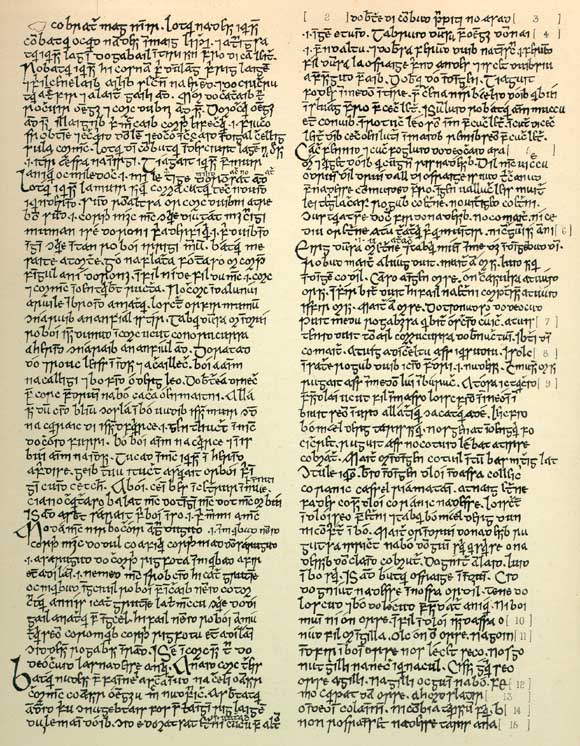
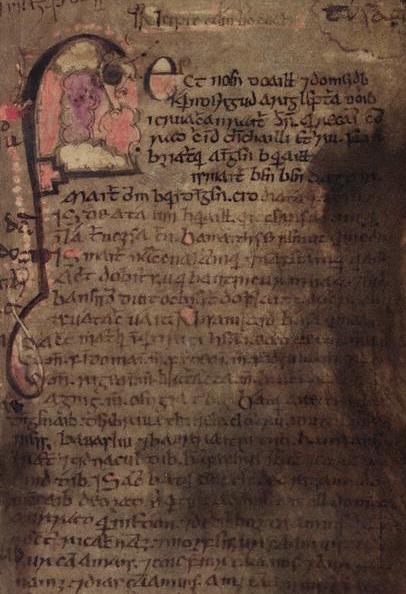
     This manuscript and others like it, both Welsh (Black Book of Carmarthen,White Book of Rhydderch, Book of Taliesin) and Irish (Book of the Dun Cow, Yellow Book of Lecan, Book of Leinster, Book of Ballymote, Book of Lismore)

blackbookofcarmarthen

Book_of_Taliesin_facsimile

whitebookof rhydderch

lebornauidre

Book_of_Lecan_p2

Book_of_Leinster,_folio_53

were created in the scriptoriums (Latin plural: scriptoria), the medieval equivalent of a copy center, in various monasteries. The following images will give you an idea of how they worked.

scriptorium

 BL_Royal_Vincent_of_Beauvais

gregory

In the world before Gutenberg

792px-Pressing-16th_century%20copy

everything was written—and then copied—by hand, a fact which Tolkien faithfully reproduces in his world when he writes that:

“The most important copy, however, has a different history. It was kept at Great Smials, but it was written in Gondor, probably at the request of the great-grandson of Peregrin, and completed in S.R. 1592 (F.A. 172). Its southern scribe appended this note: Findegil, King’s Writer, finished this work in IV 172.” 14

     There are, of course, no monasteries in Middle Earth, but, in our world, there were clerks, educated in monasteries, who worked as secretaries and copyists for kings and their nobility, so it’s quite logical that a copy of the Red Book in Middle Earth was the work of a so-called “King’s Writer”.

     Comparing an actual manuscript with the Red Book of Westmarch, we find several other differences. For one, the RBW’s four main volumes appear to contain nothing but material relating to the events surrounding Bilbo, Frodo, and the Ring. In contrast, the actual medieval manuscripts are more like compilations. The Red Book of Hergest, for example, has not only the Mabinogion, but also unrelated poetry, and a Welsh translation of Geoffrey of Monmouth’s History of the Kings of Britain, among other works. The Irish Book of the Dun Cow has religious texts and secular, all mixed together, and this appears to be common. The closest the RBW comes to this is volume 5, with its “commentaries, genealogies, and various other matter concerning the hobbit members of the Fellowship” and this is still material pertaining to the main subject, not something as removed as the method for determining the correct date for Easter to be found in the Book of Leinster.

     Another difference brings us to a puzzle and the conclusion of this posting.  Tolkien has told us that the core of the RBW is Bilbo’s diary. The Welsh and Irish manuscripts discussed above are collections of literary and religious texts, with nothing personal in them at all, as he would have been well aware.  As well, we might wonder when and where and how Bilbo kept that diary. There’s no mention of it in The Hobbit—after all, Bilbo ran out of his house to join the dwarves without even a pocket handkerchief. And, even if the dwarves had provided one (along with the handkerchief–although that does not seem terrifically likely–the dwarves who visit Bilbo seem more attuned to orality than literacy), surely it would have been lost with all of the other baggage when the company fell into the goblin world and Bilbo met Gollum.

Alan Lee - The Hobbit - 19 - Riddles in the dark

Other than assuming that Bilbo, although he had forgotten his handkerchief, had remembered his Blackberry and was constantly dictating to the Cloud for later transcription, what do we have here?  (And, while we’re wondering, if The Hobbit was based upon that mysterious diary, what do we know of the adapter/narrator who turned it from a diary into a continuous narrative–another “King’s Writer”?)

Obviously, MTCIDC!

Thanks, as always, for reading.

CD

A Language for Antagonists

04 Tuesday Nov 2014

Posted by Ollamh in Imaginary History, Language, Villains

≈ 1 Comment

Dear Readers,

In our last, we told you that some of our villains are French. (Of course, this means English-speaking in a novel written in English.) If your villains don’t belong to your culture and don’t use yours as their first language, what might they speak? And, what might they call themselves and the places around them?

We’ve already shown you how our non-French villains evolved. They originally had the look of Inuit because of their association with cold. Then, because we like the contrast, we showed you their bright Turkish-Persian look underneath.

So– Inuit look made us wonder about Inuit sound.

We want to make a very necessary disclaimer here: that we borrowed visuals or languages from any culture doesn’t indicate anything more than the magpie nature of our creating an alternate 18th century world. To us, all languages and cultures are equally interesting and we’d study them all, if we could.

There are some really useful online sources, including this Iñupiat Dictionary, which we encourage you to open and look through. We think you will find it as fascinating as we did. (A mild warning– this is a rather large file– but worth it!)

As we browsed this and other sites, we sometimes lifted things entirely. At other times, we adapted what we found. Our goals were not only to provide ourselves with a fund of useful words and naming elements, but also to create a strong contrast with the languages of our protagonists, both French and Polynesian.

As great admirers of Tolkien we’ve always been fascinated by the languages he created for Middle-earth. We hope to try to create our own in a future series of adventure novels, tentatively called To Windward.

In our next, we want to talk about our protagonists, both French and– English?

Thank you for reading!

MTCIDC,

CD

Newer posts →

The Doubtful Sea Series Facebook Page

The Doubtful Sea Series Facebook Page

  • Ollamh

Categories

  • Artists and Illustrators
  • Economics in Middle-earth
  • Fairy Tales and Myths
  • Films and Music
  • Games
  • Heroes
  • Imaginary History
  • J.R.R. Tolkien
  • Language
  • Literary History
  • Maps
  • Medieval Russia
  • Military History
  • Military History of Middle-earth
  • Narnia
  • Narrative Methods
  • Poetry
  • Research
  • Star Wars
  • Terra Australis
  • The Rohirrim
  • Theatre and Performance
  • Tolkien
  • Uncategorized
  • Villains
  • Writing as Collaborators
Follow doubtfulsea on WordPress.com

Across the Doubtful Sea

Recent Postings

  • Through a glass… January 7, 2026
  • Heffalumps? December 31, 2025
  • We Three Kings December 24, 2025
  • A Moon disfigured December 17, 2025
  • On the Roads Again—Once More December 10, 2025
  • (Not) Crossing Bridges December 3, 2025
  • On the Road(s) Again—Again November 26, 2025
  • On the Road(s) Again November 19, 2025
  • To Bree (Part 2) November 12, 2025

Blog Statistics

  • 104,102 Views

Posting Archive

  • January 2026 (1)
  • December 2025 (5)
  • November 2025 (4)
  • October 2025 (5)
  • September 2025 (4)
  • August 2025 (4)
  • July 2025 (5)
  • June 2025 (4)
  • May 2025 (4)
  • April 2025 (5)
  • March 2025 (4)
  • February 2025 (4)
  • January 2025 (5)
  • December 2024 (4)
  • November 2024 (4)
  • October 2024 (5)
  • September 2024 (4)
  • August 2024 (4)
  • July 2024 (5)
  • June 2024 (4)
  • May 2024 (5)
  • April 2024 (4)
  • March 2024 (4)
  • February 2024 (4)
  • January 2024 (5)
  • December 2023 (4)
  • November 2023 (5)
  • October 2023 (4)
  • September 2023 (4)
  • August 2023 (5)
  • July 2023 (4)
  • June 2023 (4)
  • May 2023 (5)
  • April 2023 (4)
  • March 2023 (5)
  • February 2023 (4)
  • January 2023 (4)
  • December 2022 (4)
  • November 2022 (5)
  • October 2022 (4)
  • September 2022 (4)
  • August 2022 (5)
  • July 2022 (4)
  • June 2022 (5)
  • May 2022 (4)
  • April 2022 (4)
  • March 2022 (5)
  • February 2022 (4)
  • January 2022 (4)
  • December 2021 (5)
  • November 2021 (4)
  • October 2021 (4)
  • September 2021 (5)
  • August 2021 (4)
  • July 2021 (4)
  • June 2021 (5)
  • May 2021 (4)
  • April 2021 (4)
  • March 2021 (5)
  • February 2021 (4)
  • January 2021 (4)
  • December 2020 (5)
  • November 2020 (4)
  • October 2020 (4)
  • September 2020 (5)
  • August 2020 (4)
  • July 2020 (5)
  • June 2020 (4)
  • May 2020 (4)
  • April 2020 (5)
  • March 2020 (4)
  • February 2020 (4)
  • January 2020 (6)
  • December 2019 (4)
  • November 2019 (4)
  • October 2019 (5)
  • September 2019 (4)
  • August 2019 (4)
  • July 2019 (5)
  • June 2019 (4)
  • May 2019 (5)
  • April 2019 (4)
  • March 2019 (4)
  • February 2019 (4)
  • January 2019 (5)
  • December 2018 (4)
  • November 2018 (4)
  • October 2018 (5)
  • September 2018 (4)
  • August 2018 (5)
  • July 2018 (4)
  • June 2018 (4)
  • May 2018 (5)
  • April 2018 (4)
  • March 2018 (4)
  • February 2018 (4)
  • January 2018 (5)
  • December 2017 (4)
  • November 2017 (4)
  • October 2017 (4)
  • September 2017 (4)
  • August 2017 (5)
  • July 2017 (4)
  • June 2017 (4)
  • May 2017 (5)
  • April 2017 (4)
  • March 2017 (5)
  • February 2017 (4)
  • January 2017 (4)
  • December 2016 (4)
  • November 2016 (5)
  • October 2016 (6)
  • September 2016 (5)
  • August 2016 (5)
  • July 2016 (5)
  • June 2016 (5)
  • May 2016 (4)
  • April 2016 (4)
  • March 2016 (5)
  • February 2016 (4)
  • January 2016 (4)
  • December 2015 (5)
  • November 2015 (5)
  • October 2015 (4)
  • September 2015 (5)
  • August 2015 (4)
  • July 2015 (5)
  • June 2015 (5)
  • May 2015 (4)
  • April 2015 (3)
  • March 2015 (4)
  • February 2015 (4)
  • January 2015 (4)
  • December 2014 (5)
  • November 2014 (4)
  • October 2014 (6)
  • September 2014 (1)

Blog at WordPress.com.

  • Subscribe Subscribed
    • doubtfulsea
    • Join 78 other subscribers
    • Already have a WordPress.com account? Log in now.
    • doubtfulsea
    • Subscribe Subscribed
    • Sign up
    • Log in
    • Report this content
    • View site in Reader
    • Manage subscriptions
    • Collapse this bar
 

Loading Comments...