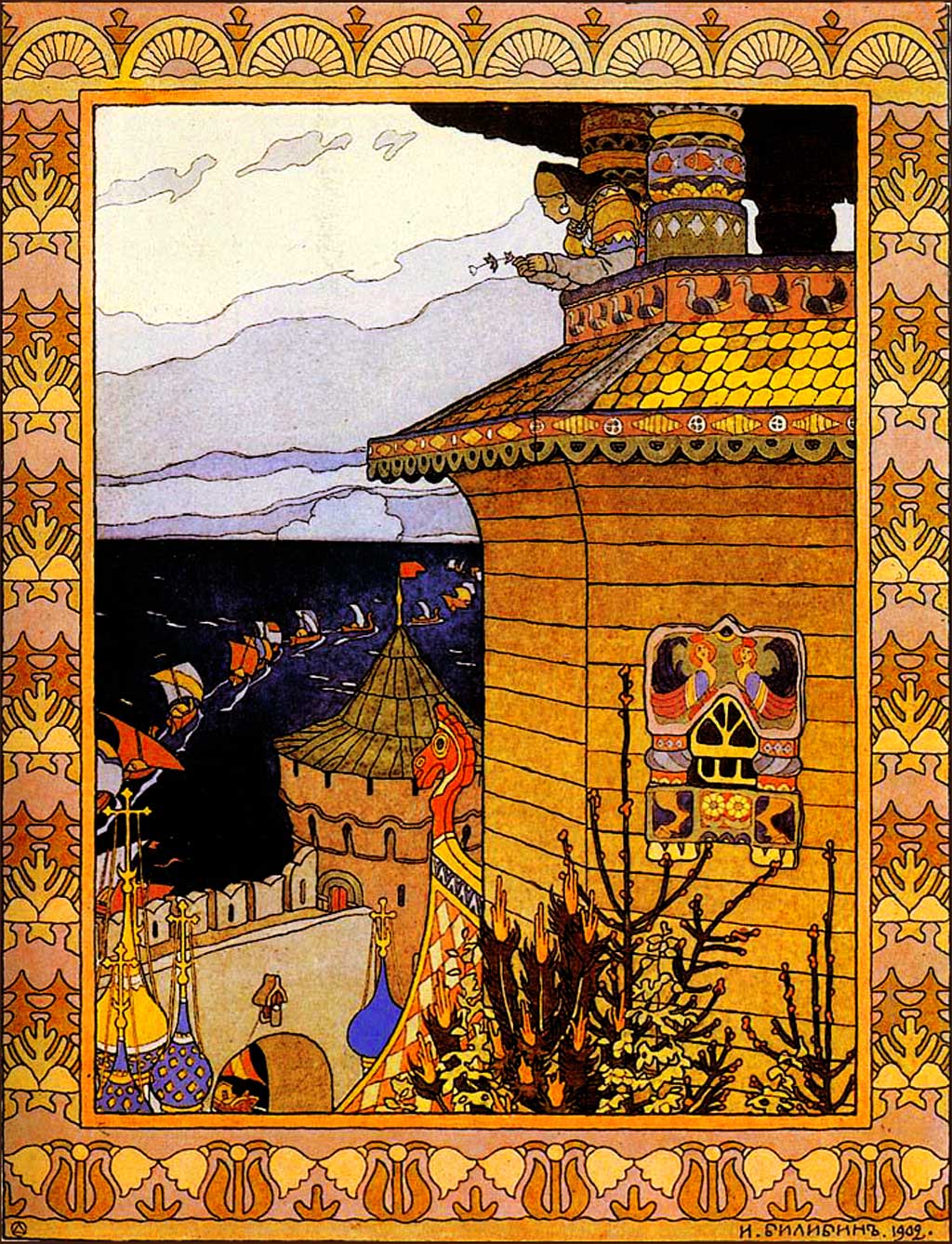
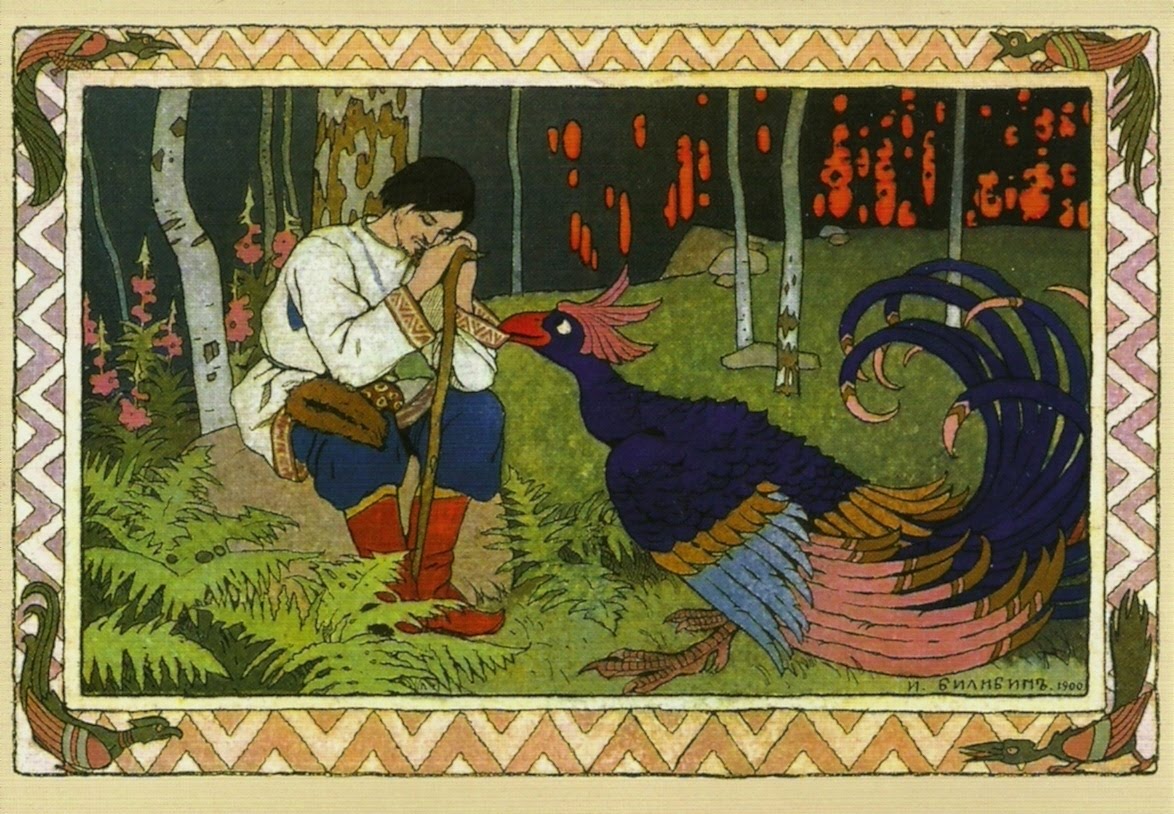
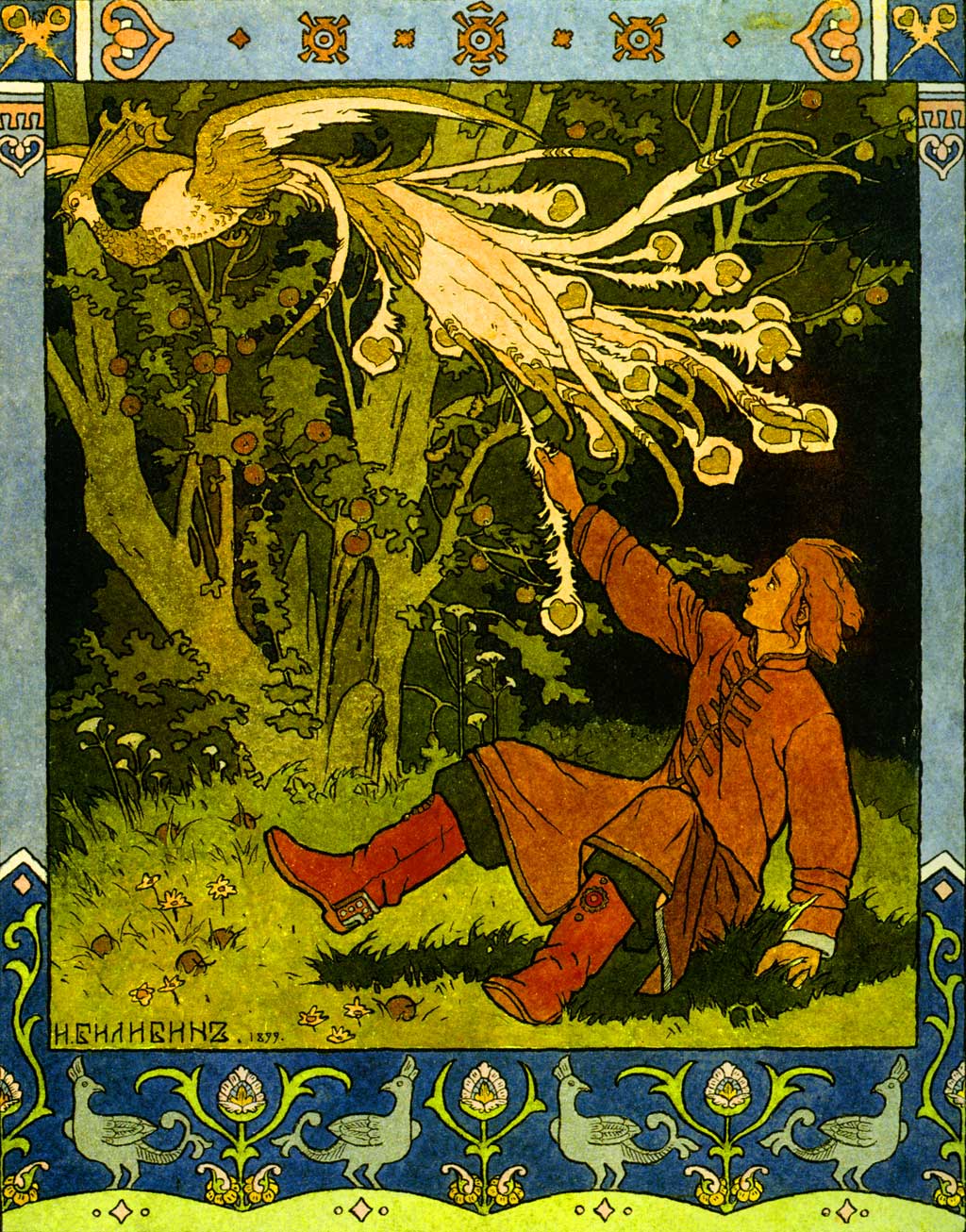
• About

doubtfulsea

~ adventure fantasy

Category Archives: Artists and Illustrators

Feudal-Earth?

13 Wednesday Jan 2016

Posted by Ollamh in Artists and Illustrators, Economics in Middle-earth, Fairy Tales and Myths, J.R.R. Tolkien, Literary History, Military History, Military History of Middle-earth, Narrative Methods

≈ 2 Comments

Tags

Bayeux Tapestry, feudalism, Gondor, Medieval, Prince Valiant, The Lord of the Rings, Tolkien

Welcome, dear readers, as always!

In this posting, we want to think out loud about something which has puzzled us for some time. Regular readers must know by this time that, along with literature of various times and places, we’re also very much interested in world history, from its human beginnings all the way up to the present. As those of you who have read past postings know, we have sometimes tried to apply our interest (and, we hope our knowledge) to the works of one of our favorite fantasy authors, JRR Tolkien. In our last posting, for example, we have spent a little time considering the 20th-century world of dictators and how they might have influenced JRRT’s depiction of Sauron and his plans.

In this posting, we want to look at something we’ve touched upon some time in the past, the economic/social structure of Middle Earth (or Middle-earth as it sometimes seems to appear). After all, kingdoms don’t just magically appear and survive: or, in Middle Earth, do they? For fun, we wondered what we might find in The Lord of the Rings which would remind us of our own Middle Ages.

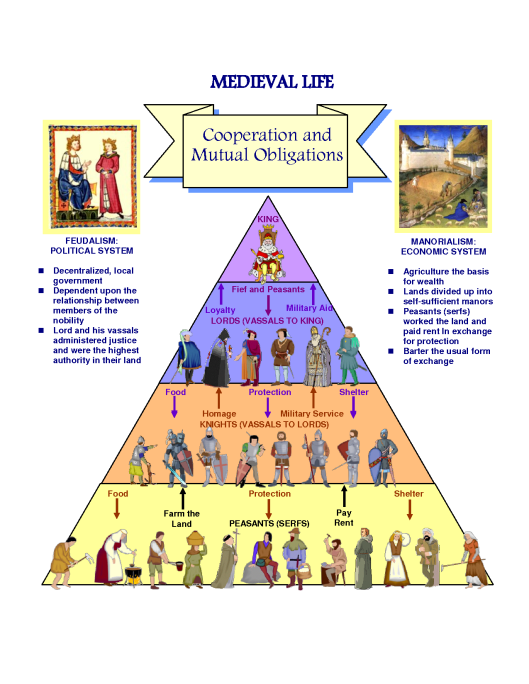
In our world, particularly in western Europe , this is the period which appears physically similar to the end of the Third Age (minus Elves, etc), and, in this period, we find a social/economic structure called feudalism. There has been a great deal of scholarly discussion as to where the base word, feud comes from, but the structure is pretty basic and goes like this (with apologies to all actual medievalists for the gross simplification):
feudalsystemchart.png

At base, it’s all about two things: land and soldiers.

At the top—the very top—is God, who owns everything. He chooses a king (this comes down to us under the heading of “the divine right of kings” and is similar to “the mandate of heaven” in Chinese history). The king then claims that, because of his position as the Chosen One, he owns all of the land in the country. This land, however, he divides, keeping some for himself, but giving large portions to his chief nobles (the Church also owns a large chunk, but, as religion is rather subterranean in Middle Earth, we’ll leave it at that). They, in turn, divide it among lesser nobles (family members and/or those loyal to them), who, in turn, divide it among the lowest level of nobility (often knights). The simplest parcel is a manor and a knight may hold just one or more than one and this is true all the way up the chain.

4186733_orig.jpg

Each manor, in turn, has various grades of inhabitants, from freeholders, who own land but pay taxes on it, to peasants who are free, but are landless and have to work for others, and serfs, who are nothing more than slaves and considered part of the property. Even freemen might still owe an obligation in the form of labor to the lord of the manor.
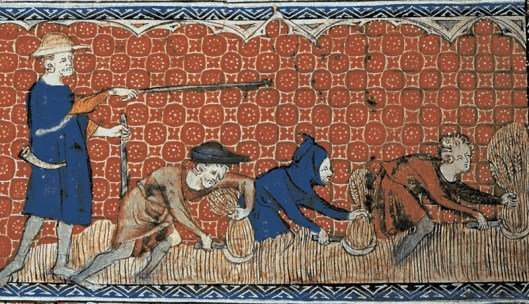
Reeve_and_Serfs.jpg

In return for a manor or for many manors, the nobles at every level owed the king military service.

Sir_Geoffrey_from_LPsalter.jpg

This was necessary, since, with the exception of a certain number of household troops or bodyguards, kings couldn’t afford to keep standing armies on their own.

When we began wondering if we could find traces of feudalism in Middle Earth, we thought first about titles. As we said, there are kings, so could we add to them “sirs”, “knights”, “lords”, and such? The densest patch of those would seem to be in The Return of the King, Chapter 1, “Minas Tirith”. Almost at the end of the chapter, Pippin and Beregond’s son, Bergil, watch reinforcements march into the city. Here we can list leaders, almost every one seeming to be a major landowner, judging by the number of his military followers, and all but one called “lord” : Forlong, Dervorin (“son of their lord”), Golasgil, and last and most feudal-like, Imrahil, Prince of Dol Amroth, who comes with “a company of knights in full harness”.

This last reminded us of an earlier posting, when we wondered whether JRRT had ever seen the Prince Valiant comic strip, which occasionally had scenes like this:

Prince-Valiant-10-2-38.jpg


Our other thought was this sounded rather like a combination of men entering the Alamo and a gathering of the clans.
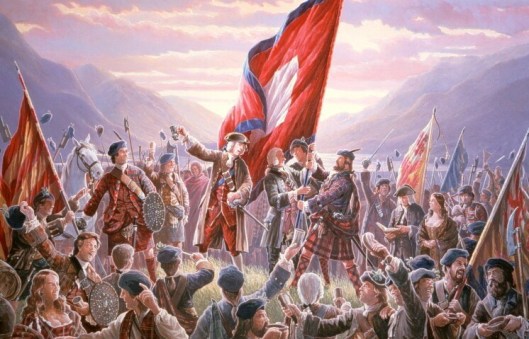
raising-the-standard-at-glenfinnan-1745-jacobite-rebellion.jpg

To gain a portion of land, all levels of nobles swore oaths of loyalty (called fealty, from Latin fidelitas, through Old French, the legal language of England after the Norman conquest) to those who gave them that land and that oath was commonly done publically and was legally binding.

There were different ways of confirming the earnestness of the person swearing. An altar or saint’s reliquary might be used, as seems to be the case from this scene on the “Bayeaux Tapestry”, in which Harold swears a sacramentum (a “sacred oath”, so Norman propaganda would afterwards claim) to be the vassal (sworn man) of Duke William of Normandy.

Bayeux_Tapestry_scene23_Harold_sacramentum_fecit_Willelmo_duci.jpg


Oaths might take the form of the receiver placing his hands between those of the giver and swearing.

1274514-miniature-depicting-a-knight-receiving-his-sword-from-the-king-guillaume-dorange.jpeg


An extremely useful site (www.dragonbear.com) provides a number of examples of the oath, which, while varying greatly through time and place, can be encapsulated in this version, from “The Laws of Alfred, Guthrum, and Edward the Elder”:

“Thus shall a man swear fealty oaths.

By the Lord, before whom this relic is holy, I will be to ____ faithful and true, and love all that he loves, and shun all that he shuns, according to God’s law, and according to the world’s principles, and never, by will nor by force, by word nor by work, do ought of what is loathful to him; on condition that he keep me as I am willing to deserve, and all that fulfil that our agreement was, when I to him submitted and chose his will.”

Compare this with Pippin’s oath to Denethor, after Pippin offers his sword to him:

“Here do I swear fealty and service to Gondor, and to the Lord and Steward of the realm, to speak and to be silent, to do and to let be, to come and to go, in need or plenty, in peace or war, in living or dying, from this hour henceforth, until my lord release me, or death take me, or the world end. So say I, Peregrin son of Paladin of the Shire of the Halflings.” (The Return of the King, Chapter 1, “Minas Tirith”)

There is no transfer of land involved here, but certainly there is military service.

JRRT, for all of the amazing detail which he put into Middle Earth, was content, it would seem, to leave it at that: there are kings to whom oaths are sworn, and that idea comes from feudal oaths. There are knights and lords—who else would be in charge of this quasi-medieval world (except, of course, among the non-men—elves, dwarves, and hobbits)? At the same time, this is a huge and wonderfully entertaining adventure, not a disguised treatise on the economic and social substructure of a mirror of the western Middle Ages, as interesting as, if anyone, Tolkien, could have made even that. It is fun, however, to spend a moment imagining what, given another ten years and several more drafts, Middle Earth might have looked like… As always, we ask: what do you think?

Thanks, as always, for reading.

MTCIDC

CD
And Whither Then?

25 Wednesday Nov 2015

Posted by Ollamh in Artists and Illustrators, Fairy Tales and Myths, J.R.R. Tolkien, Narrative Methods

≈ 1 Comment

Tags

Adrien Guignet, Aeneid, art, bibliomancy, Bilbo, Birth of Venus, Bouguereau, chimp painting, Chinese, critics, Cumae, Delphi, Etruscans, Frodo, future, Genesis, Greeks, Homer, Impressionism, It's a dangerous business going out your door, Joseph, Kansas City Royals, Monet, New York Mets, Oedipus, plastrons, prophetic, prophetic books, Pythia, Romans, Scapula, Sibyls, Sortes Tolkienses, Sortes Vergilianae, the Bible, The Lord of the Rings, The New Testament, Tolkien, Vergil, World Series, Zhang Dynasty

“It’s a dangerous business, Frodo, going out your front door. You step onto the Road, and if you don’t keep your feet, there’s no knowing where you might be swept off to.” (The Fellowship of the Ring, Book 1, Chapter 3)

Dear Readers,

Welcome, as always. In this posting, we want to propose an aid for that dangerous business to which Frodo is referring when he quotes Bilbo.

The desire to know what will happen next makes for good novel readers—and writers—but it’s also an ancient human desire.

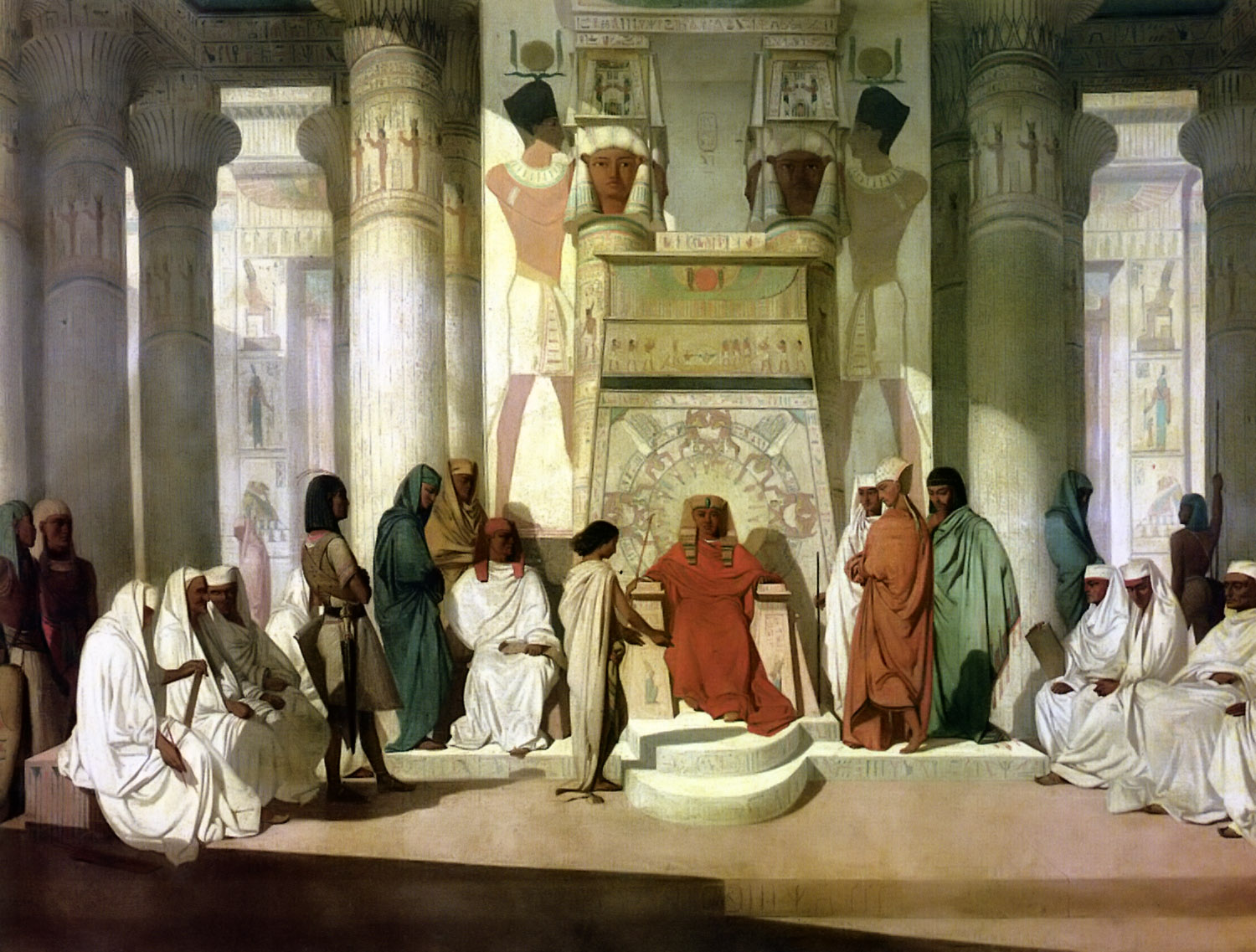
The Old Testament gives us a pharaoh with dreams, which Joseph interprets (Genesis 41-44) and which provides us with this splendid picture by Adrien Guignet (1816-1854).

Joseph Explaining the Dream to Pharoah, Jean Adrien Guignet

(This is an example of a whole world of painting which was devalued and declared stuffy and old-fashioned and pompous once Impressionism—which was originally mocked as just that, “impressions” rather than paintings—gained a foothold among art-buyers and the more progressive art critics. To us, although it may not have the wonderful fragmentations and color-freshness of those later painters, such older works have great importance historically—it’s the yin to the Impressionists’ yang, after all—and the over-the-top quality of some things—like this “Birth of Venus” by Bouguereau—1825-1905—has, we think, its own loopy charm.

The_Birth_of_Venus_by_William-Adolphe_Bouguereau_(1879)

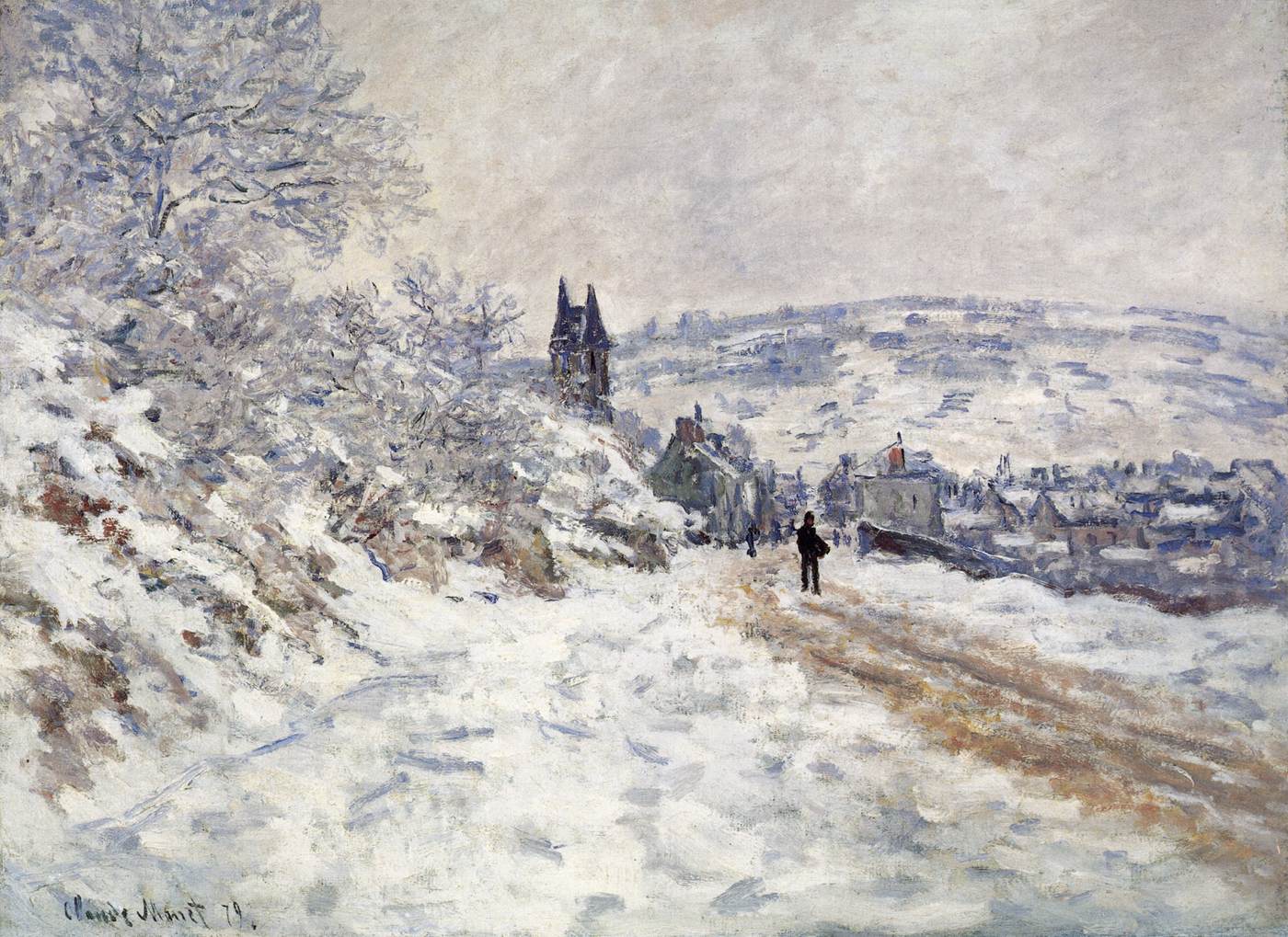
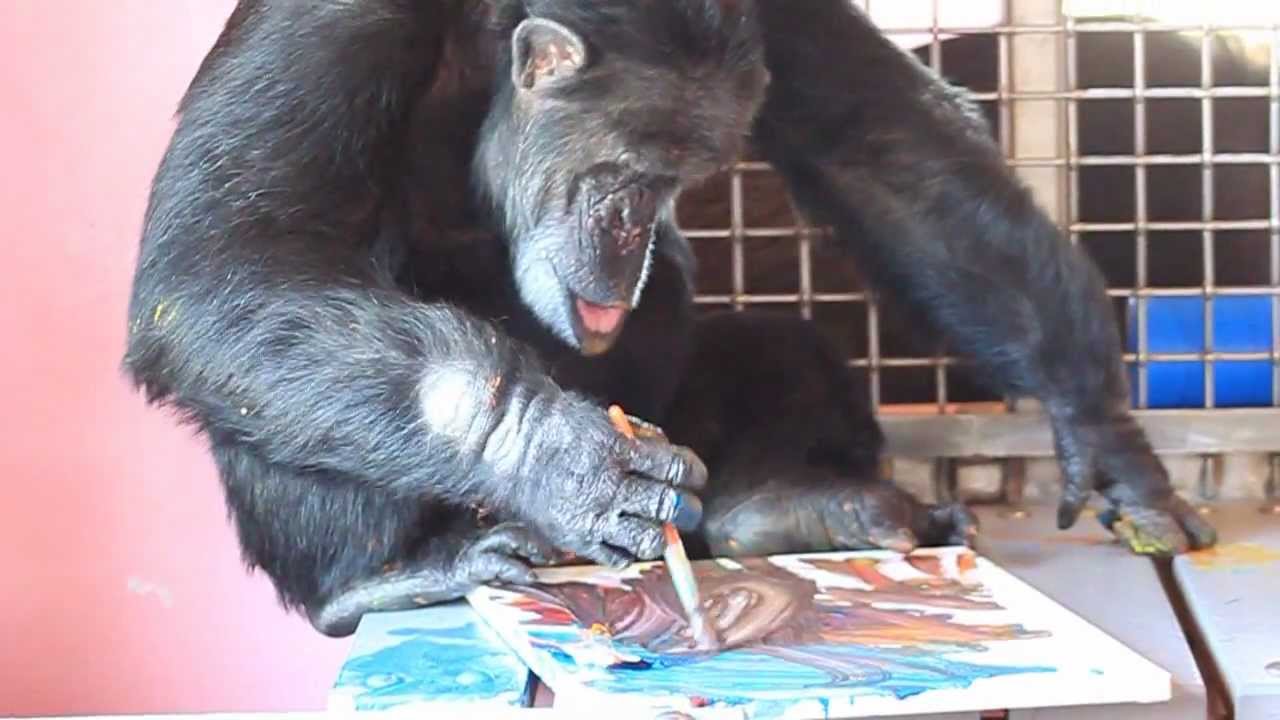
You see what we mean about yin/yang, however, when we compare it with this Monet, painted in the same year—1879. If you were brought up on academic painters like Bouguereau, Monet’s work must have looked like chimp paintings!

1vethe2

maxresdefault)

The Chinese of the Zhang Dynasty (1500-1000BC) used turtle plastrons and cow shoulder blades to consult about the future.

Shang_dynasty_inscribed_tortoise_plastron

Shang_dynasty_inscribed_scapula

The Greeks had a number of prophetic sites, like Delphi, with its Pythia.

Pythia

And the Romans had several methods, beginning with what they inherited from their big brothers to the north, the Etruscans.

liver

And, yes, this is a sheep’s liver, done in bronze. What does it do? Lots of discussion about that! It appears to have gods and perhaps constellations, or at least the sky, involved. (For more and some useful references, google “liver of Piacenza”)

The Romans consulted the insides of selected animals

haruspex

and the flying patterns of birds

romrem

although this could lead to the occasional argument

romrem1

as well as their own counterpart to people like the Pythia at Delphi, the Sibyls. One Sibyl, who was reputed to live at Cumae, even had a collection of prophetic books which talked about the future.

CumaeanSibyl

Later Romans also consulted a particular book, Vergil’s Aeneid, the idea being that you would open the book (a scroll, early on, a book—a codex—in later imperial times), close your eyes, run your finger along the lines and stop—and the line your finger was on would tell you something about the future. This is a form of bibliomancy, or telling the future by using a book. Ancients might choose Homer, or, in this case, Vergil (the Aeneid) or, for the Judeo-Christian tradition, the Bible. If you use Vergil, the practice is called Sortes Vergilianae (“Vergilian lots”—that is to say, not building sites—although one could build an interpretation upon one—but things used to determine the fate of something).

Today, we, as Tolkien fans, propose to add another text, suggesting Sortes Tolkienses (SOR-tes tol-kee-EN-ses). Pick up your copy of The Lord of the Rings, and ask it a question. Then close your eyes, open the book (make sure that it is rightsideup before you do this—although perhaps upsidedown would provide a greater-yet feel of randomness), run your index finger down the page, stop, open eyes, and read.

For our first try, we asked it who would win this year’s World Series, the New York Mets or the Kansas City Royals.

Hmm. Page 351 of the 2004 HarperCollins edition.

“…Frodo felt that he was in a timeless land that did not fade or change or fall into forgetfulness.”

Well, this is the 111th World Series—that would certainly suggest a kind of timelessness, we supposed. Then there was that business about not fading or changing—which team had won the Series last? A quick flick through statistics gave us the Royals in 1985 and the Mets in 1986. Okay. Does that mean that, since the Mets won more recently, that wouldn’t change?

Should we try again? Influenced by the rash Oedipus, asking the Pythia only one question and not pausing for clarification, we decided that it meant the Mets.

But then the Royals won.

So, we leave it to you, dear readers. You consult the Sortes Tolkienses—just make sure that the course of your life—or your team—doesn’t depend upon it!

Thanks, as always, for reading.

MTCIDC

CD

PS

There is a very entertaining experiment with the more established Sortes Vergilianae to be found by googling timesonline.typepad.com/dons_life/2012/03/sortes-virgilianae.html—an essay by the ever-lively Mary Beard.

The Sadness of a Second Reading

27 Wednesday May 2015

Posted by Ollamh in Artists and Illustrators, J.R.R. Tolkien, Narrative Methods, Villains

≈ Leave a comment

Tags

Aragorn, Arwen, Canterbury Tales, Chaucer, Ents, Fangorn, Frodo, Gandalf, Herblore, Hildebrandt, Hobbits, Isengard, Meduseld, Merry and Pippin, Ring, Saruman, Sauron, Smaug, The Lord of the Rings, Theoden, Tolkien, Villains

Welcome again, dear readers!

We’re sure to return to villains—Orcs first, we think—but, as we reread material for the last posting, we came across a passage which so struck us that we had to sit down and write a posting about it…

   Isengard is ruined. So much of what Tolkien described in such vivid detail in “The Road to Isengard”, both before Saruman decided to be a rival to Sauron and after, has been destroyed—here is the Hildebrandts’ version of it in Saruman’s early days

greg-hildebrandt-isengard-orthanc-saruman-607429-1300x962

And here it is when Saruman’s ambition overcame his sense of mission as one of the Istari and he could tell Gandalf that their job was to strive for “Knowledge, Rule, Order”—

Isengard_by_Nagzuku

But Fangorn and his Ents have changed all of that—

The Wrath of the Ents, by Ted Nasmith

So that, when Gandalf and his company appear, they see

“…And all about, stone, cracked and splintered into countless jagged shards, was scattered far and wide, or piled in ruinous heaps.” 

On top of one of those heaps                  

ruins 

“…two small figures…at their ease. One seemed asleep; the other, with crossed legs and arms behind his head leaned back against a broken rock and sent from his mouth long wisps and little rings of thin blue smoke.”

     Not tiny Smaugs sunning, it is, of course Merry and Pippin making themselves comfortable in the wreckage of Saruman’s palace/fortress/factory. That comfort is an affront to Gimli—or, at least, he pretends that it is—but it is a source of amusement to the rest of the company and the Hobbits themselves are a source of amazement to Theoden:

     “The days are fated to be filled with marvels. Already I have seen many since I left my house; and now here before my eyes stand yet another of the folk of legend. Are these not the Halflings, that some among us call the Holbytlan?” 

     But Theoden’s wonder is greater: not only are these figures from distant legend, but, “I had not heard that they spouted smoke from their mouths.”

     This sets Merry off on a lecture, which prefigures, of course, his later treatise, Herblore of the Shire, but which Gandalf stops in its tracks, saying,

“You do not know your danger, Theoden…These hobbits will sit on the edge of ruin [ironic here, as they are, in fact, doing so—it’s Saruman’s ruin] and discuss the pleasures of the table, or the small doings of their fathers, grandfathers, and great-grandfathers and remoter cousins to the ninth degree, if you encourage them with undue patience.” 

     Theoden, however, shows that, in the future, at least, he will encourage them with that patience—

“Farewell, my hobbits! May we meet again in my house! There you shall sit beside me and tell me all that your hearts desire: the deeds of your grandsires, as far as you can reckon them; and we will speak also of Tobold the Old and his herb-lore. Farewell!”

     Merry and Pippin, usually less-than-respectful, are quite charmed by this and behave better than usual:

     “The Hobbits bowed low. ‘So that is the King of Rohan!’ said Pippin in an undertone. ‘A fine old fellow. Very polite.’”

      If this is your first reading, there is something to look forward to—or, if you are Gandalf, to dread. For the more experienced, we already see the splitting up of Merry and Pippin, Pippin’s whirlwind ride with Gandalf to Minas Tirith, and Merry’s equally grueling ride to the Pelennor and his part in the last heroic moments of Theoden’s life and his final words on the subject of that earlier promise:

“Live now in blessedness; and when you sit in peace with your pipe, think of me! For never now shall I sit with you in Meduseld, as I promised, or listen to your herb-lore.” 

deathoftheoden

   And this brings us to the point: if you know what’s going to happen—in detail—why read this again?

     The answers are many and here are only a few from an entire spectrum: it’s such a rich story that you can easily read it again and find something new every time; you’d like to escape to Middle Earth because, even troubled as it is with Sauron, it makes more sense than Here and Now; you don’t read it all, but there are scenes and/or characters you like to revisit; it has become a kind of happy yearly ritual, as Chaucer fans reread The Canterbury Tales every spring. For us, among all of the other reasons (and we would say that probably every one makes sense, in its way) there is another reason and it has to do with that knowing.

     Wherever the sun shines directly on an object, a person, there is a shadow. Shadows can be knife-edge precise or vague, still or moving, smaller than that which casts them or greater. Knowing what’s to come in Tolkien is like seeing each event with its outcome, its shadow, all at the same moment and, as so often in The Lord of the Rings, what’s to come is compromised—if there’s happiness, it’s happiness of the moment: Sauron is defeated, but the Elves fade; Arwen marries Aragorn at last, but, he being mortal, even if a long-lived one, she is left a widow for many years; Frodo survives the Ring quest, but somehow is never healed. Events cast shadows in our current life, but we only see the shadows in retrospect in this world. In Middle Earth, on second and subsequent readings, events cast their shadows before as well as after themselves. And there is a pleasure in this. One might say, “Hmph. Adolescent thinking. Really self-pity in literary disguise.” We would disagree.

     One of the most powerful enhancers of emotion is contrast, beginning with the very idea of human mortality. As so many religions and philosophical systems advise: live now, in the moment, because there are just so many moments and then…?

     Thus, to read Theoden’s affectionate promise to the hobbits and to know, at that same moment, that it will be broken, and very dramatically, with Theoden’s death, is, potentially, to see that shadow, which is the contrast between what is said now and what will happen then.

     So, dear readers, what do you think? We imagine that you’re like us, with favorite books about which it doesn’t matter in the least that you know them practically by heart—surprise is only the first sensation—like opening a wonderful present which, once opened, you’ll use and love again and again, always grateful to the giver.

MTCIDC

CD

Personae

15 Friday May 2015

Posted by Ollamh in Artists and Illustrators, Fairy Tales and Myths, J.R.R. Tolkien, Narrative Methods, Villains

≈ Leave a comment

Tags

Alan Lee, Antagonists, Bosch, Bruegel, Christina Rossetti, Corsairs, Easterlings, Gorbag, Gruenewald, Haradrim, Minions, Nazgul, Orc, Sauron, Shagrat, The Wind, Tolkien

A man is known by the company he keeps.

                                                           Old Proverb

Who Has Seen the Wind?

Who has seen the wind?

Neither I nor you:

But when the leaves hang trembling,

The wind is passing through.


Who has seen the wind?

Neither you nor I:

But when the trees bow down their heads,

The wind is passing by.

                                             Christina Rossetti from Sing-Song: A Nursery Rhyme Book (1872)

wind


Dear Readers,

Welcome, as always!

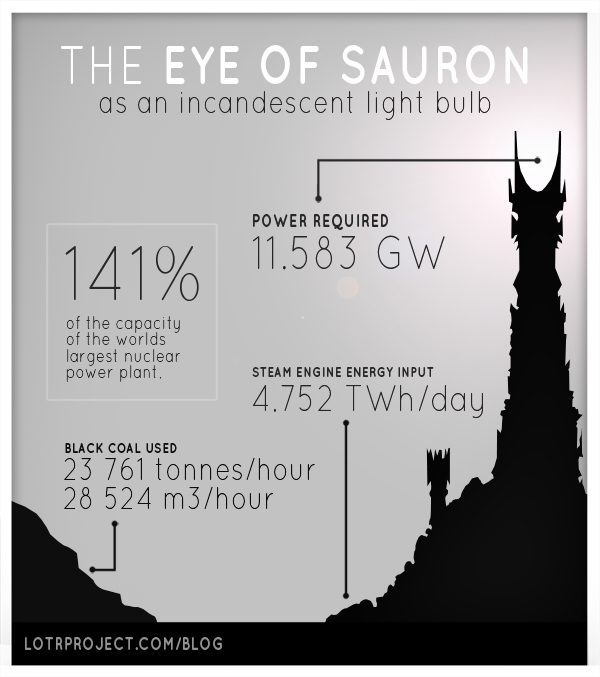
     In our last posting, we talked about villains visible and invisible and suggested that, in the case of Sauron, rather than showing him as a searchlight eye,

sauronbulb2png

(This is from the LOTR Project— a great site, much recommended). 

there were other and more potentially convincing ways to depict such a menacing figure.

One was seeing his reflection in his minions.

minions_2015-wide

(Can you wait for this?)

Imagine that seeing him this way is like seeing the effect a strong wind has on trees.

Palm Tree Nassau Winslow Homer

     Sauron’s minions fall into three main categories: the Nazgul, various humans, most from what appear to be the less-civilized peoples of the south—Corsairs of Umbar, Easterlings, and the Haradrim.

     The Nazgul

eowyn_nazgul

are the most daunting, but we’re told only a limited amount about them, we see them very selectively, and their speech is recorded mainly as threats. We see the humans even less and we really don’t hear them at all. It’s the Orcs of whom we’re shown the most.

     Sauron is described as once being “comely”, but his present condition (except perhaps for his eyes—make that eye) is hard to determine. Tolkien could never quite settle on the origin of the Orcs, but, they are definitely less than attractive.

     Illustrators of Orcs tend, we think, to be strongly influenced by early-Renaissance northern German painters, like Bosch, who depicted devils and demons as hybrids between humans and birds and animals.

Bosch_LJ_Vienna_Music bosch-devil Bosch,_Hieronymus_-_The_Garden_of_Earthly_Delights,_right_panel_-_man_riding_on_dotted_fish_and_bird_creature grunewald_400x478 the-devil-throughout-history-photos-3-horned_pig_devil

     This does not, however, seem to be in line with Tolkien’s thinking. If as Fangorn says, they were created as a mockery of elves, one would presume that they would be much more human in look, but perhaps with exaggerated features, and this seems to be closer to what Tolkien had in mind, although physical description tends to be less detailed.

     Here’s an Alan Lee which we think is more like what Tolkien imagined.

Unknown%20-%20Bilbo%20le%20Hobbit%20(01)%20-%20Les%20orcs

     If they are northern Orcs—those whom Sauron employs—they tend to be smaller and paler. If Uruk-hai, primarily used by Saruman, larger and black. (Although a tracker for Sauron is described as small and black.) Here’s the contrast of the two types in the confrontation between Ugluk and Grishnakh:

“…a large black Orc, probably Ugluk, standing facing Grishnakh, a short crook-legged creature very broad and with long arms that hung almost to the ground.”

     As Orcs may be a mockery of Elves, their speech sounds like it’s derived from the conversations Tolkien heard among his nco’s in the trenches—foul-mouthed (in a modified form), cheerfully abusive, and full of casual threats.

     It’s also instructive to note that there appear to be no Orcs in command positions beyond captain—the rank of Ugluk and Grishnakh, Gorbag and Shagrat. Beyond are the Nazgul, whom the Orcs both dread and envy. (“Those Nazgul give me the creeps…But He likes ‘em; they’re His favorites nowadays, so it’s no use grumbling.”) When we hear these Orcs talk, then, we are being given the mass of Sauron’s soldiery, as below them there is only a babel of cries, cheers, and curses, like a translation of the baying of a pack of hounds.

     Throughout all of the Orc conversation, there runs a joint theme: criticism of superiors (no names—but even up to Sauron himself) and fear of being heard doing so, as when Gorbag says:

     “They don’t tell us all they know, do they? Not by half. But they can make mistakes, even the Top Ones can.” “Sh, Gorbag!” Shagrat’s voice was lowered, so that even with his strangely sharpened hearing could only just catch what was said. “They may, but they’ve got eyes and ears everywhere; some among my lot, as like as not…”

     This suggestion of internal spies reflects a basic uneasiness to be found everywhere under Sauron’s rule: no one trusts anyone else at any level in what Frodo calls “the spirit of Mordor”, leading to murder between rival bands of Orcs and even between individuals, as Sam and Frodo witness, when soldier and tracker trade threats and insults before tracker kills soldier with an arrow.

     So what do Sauron’s minions mirror, which would provide us with any clearer image of the nearly-invisible villain?

   Certainly, we might see that he is incapable of gaining any kind of following at all among the dominant peoples of western Middle Earth.  First, his armies are led by the ancient undead, who frighten their own side as much as they do the enemy. Second, his human recruits are half-civilized people from the far south, plunderers, with no stake in things beyond gain. Third, the bulk of his armies are made up of creatures who are, in a sense, not genuine, but simply mockeries of actual living beings and whose loyalty to their maker is, at best, questionable, even as they fear him.

     Thus, we might imagine that, for all that he is powerful enough to command magic ghosts and armies of primitive men and mutants, Sauron is, ultimately, fearful, suspicious, and divisive and so transparently a source of instability that he can neither convince nor menace any of the free peoples of Middle Earth into having anything to do with him.

     So, as always, we end by asking you, dear readers, what you think? And, as always, we thank you for reading.

MTCIDC

CD
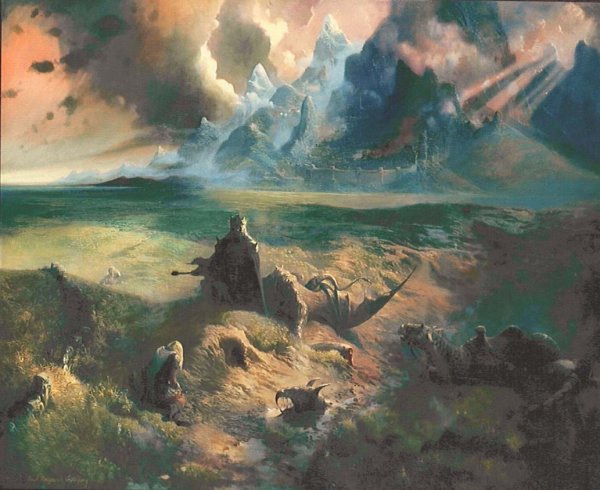
A (Self)-portrait of the Artist?

03 Friday Apr 2015

Posted by Ollamh in Artists and Illustrators

≈ Leave a comment

Tags

Adventure, Doubloon, Howard Pyle, Illustration, N.C. Wyeth, Pirates, Self-portrait, Spanish Galleon

Dear Readers, 

We intend to continue our discussion of narrative in Tolkien in our next, but heavy with the baskets of jelly beans and peeps we’ve consumed pre-Easter, we thought we’d daydream with you a little this week. Our focus in this blog is a picture we have displayed once before. It is by N.C. Wyeth and was the cover of the March 1922 issue of the Ladies’ Home Journal. 

3923894215_20aa1d139f_o

Remembering all of N.C. Wyeth’s pictures of pirates, like this one:

1911_ncwyeth_treasureisland

we could certainly see this as one of that thematic family– a Spanish galleon being attacked by tiny pirate longboats.

hIDxztR

Here’s a cutaway of one such galleon by the wonderfully talented Stephen Biesty. And here is what they are attacking the ship for (and who wouldn’t?):

DOUBLOONS

It’s clearly a very powerful image: the boy daydreaming of adventure on the high seas. What interests us, however, beyond the evocative nature of the image, is to take a closer look at what the boy has in front of him, and to realize that the book is opened not to a picture, but to print. Thus, what so stirs the boy’s imagination is not a an illustration by, say, Wyeth’s teacher, Howard Pyle,

Unknown-1 

but the written text which such a picture would have accompanied during that golden era of book illustration, just at the end of the 19th and beginning of 20th centuries. And something else strikes us: is this a self-portrait of Wyeth himself as a boy, stirred, as we know he was, by stories of adventure? Compare these two pictures (the one on the right is the earliest picture we could find of Wyeth– dated 1903, so he’s about 21). 

3923894215_20aa1d139f_o NC_Wyeth_ca1903-1904

If it really is a retro self-portrait, then we have an extra level of narrative:

1. a boy, lost in the written word of an adventure story, day-dreaming of pirates

2. not just any boy, but Wyeth the painter–could we be looking at Wyeth depicting that moment when he decided that he would like to illustrate such stories himself?

What do you think, dear readers?  The only thing we could wish was that there was a companion picture, in which a girl of 1922 was reading the same book and having the same daydream!

Happy Easter!

MTCIDC

And thanks, as always, for reading,

CD

From Master to Pupil

13 Friday Mar 2015

Posted by Ollamh in Artists and Illustrators

≈ 1 Comment

Tags

Howard Pyle, Kidnapped, King Arthur, N.C. Wyeth, Robin Hood, Treasure Island

Dear Readers, 

Welcome, as always! 

Last time, we looked at some works by Howard Pyle, the great 19th-century illustrator and painter. Today, we want to look at the work of one of his most prominent students, N.C. Wyeth.

To give you an idea of what captivates us, we could just show you this:

3923894215_20aa1d139f_o

This sums it all up: the way in which reading allows you to step into imagination as if it were a country. It also suggests a certain propensity for romanic daydreaming on the part of certain people!

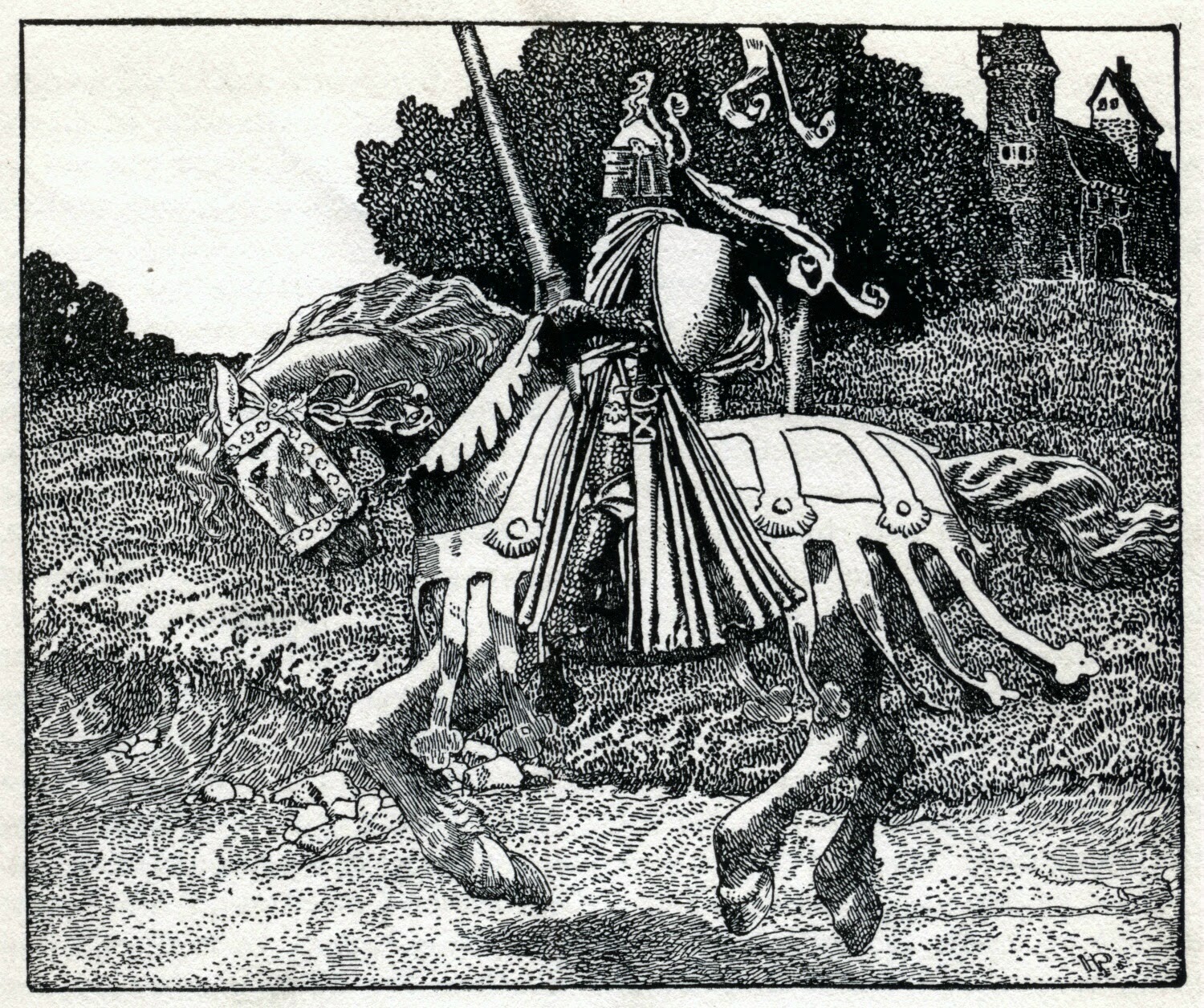
Here is an easy example of the difference between master and pupil. This is a Howard Pyle from his version of King Arthur. It’s beautifully detailed with a somewhat hard edge to it.

Mounted Knight By Howard Pyle

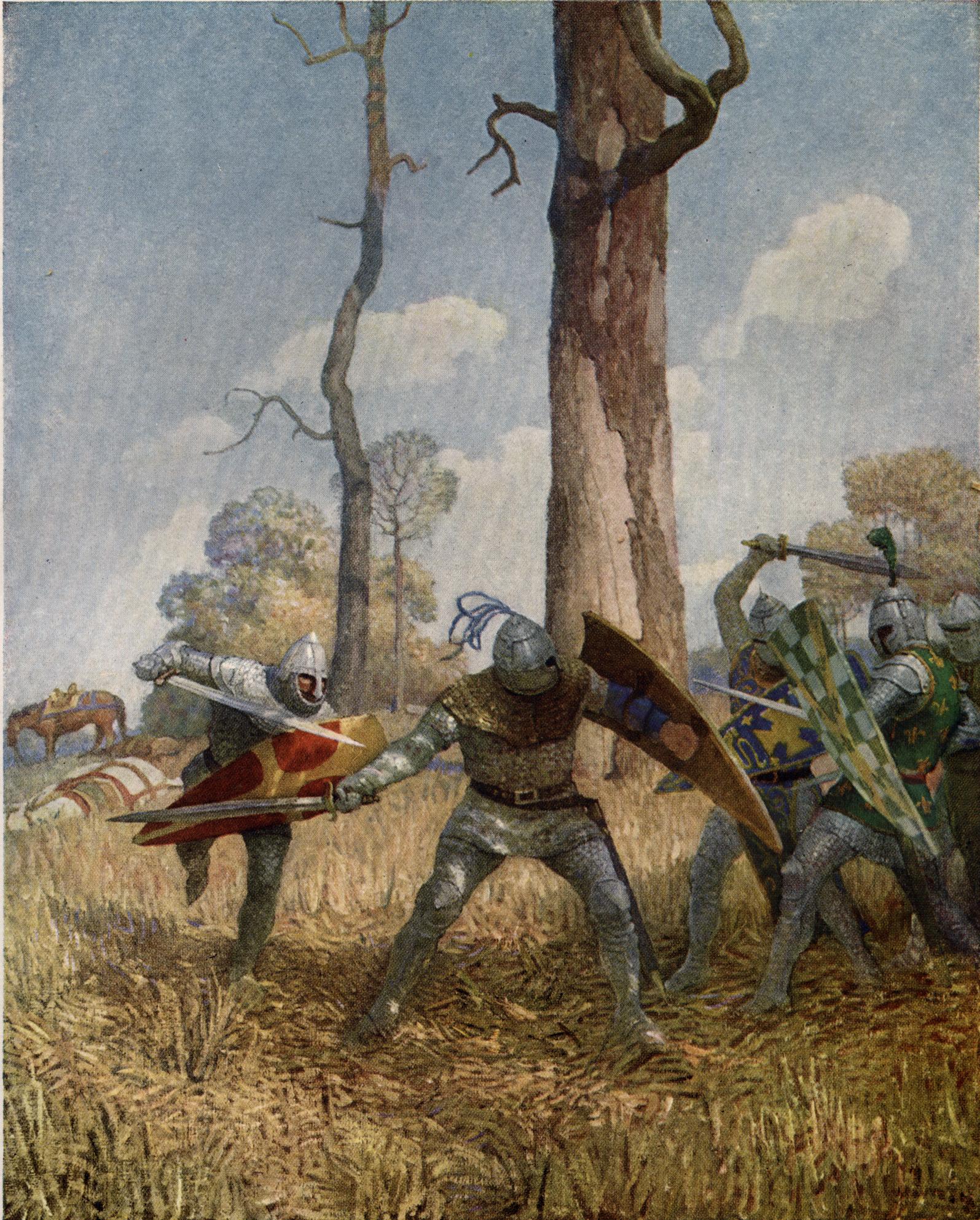
And here is a work by his pupil from his King Arthur:

the-green-knight-preparing-to-battle-sir-beaumains

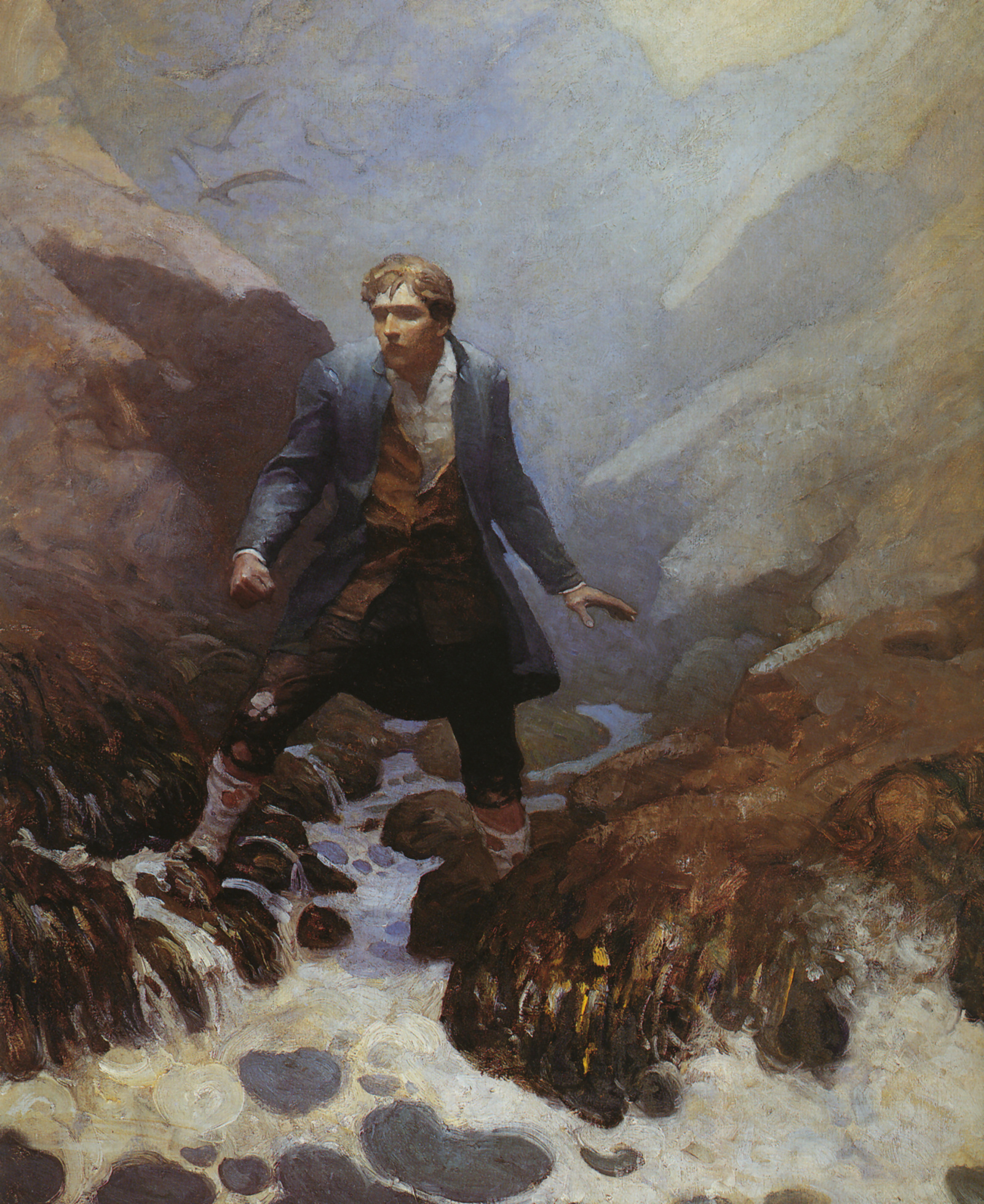
There is an almost dream-like cloudy quality to his work. In fact, that dream can even seem something like a nightmare in this Wyeth illustration from Kidnapped. 

On_the_Island_of_Earraid_(N.C._Wyeth)

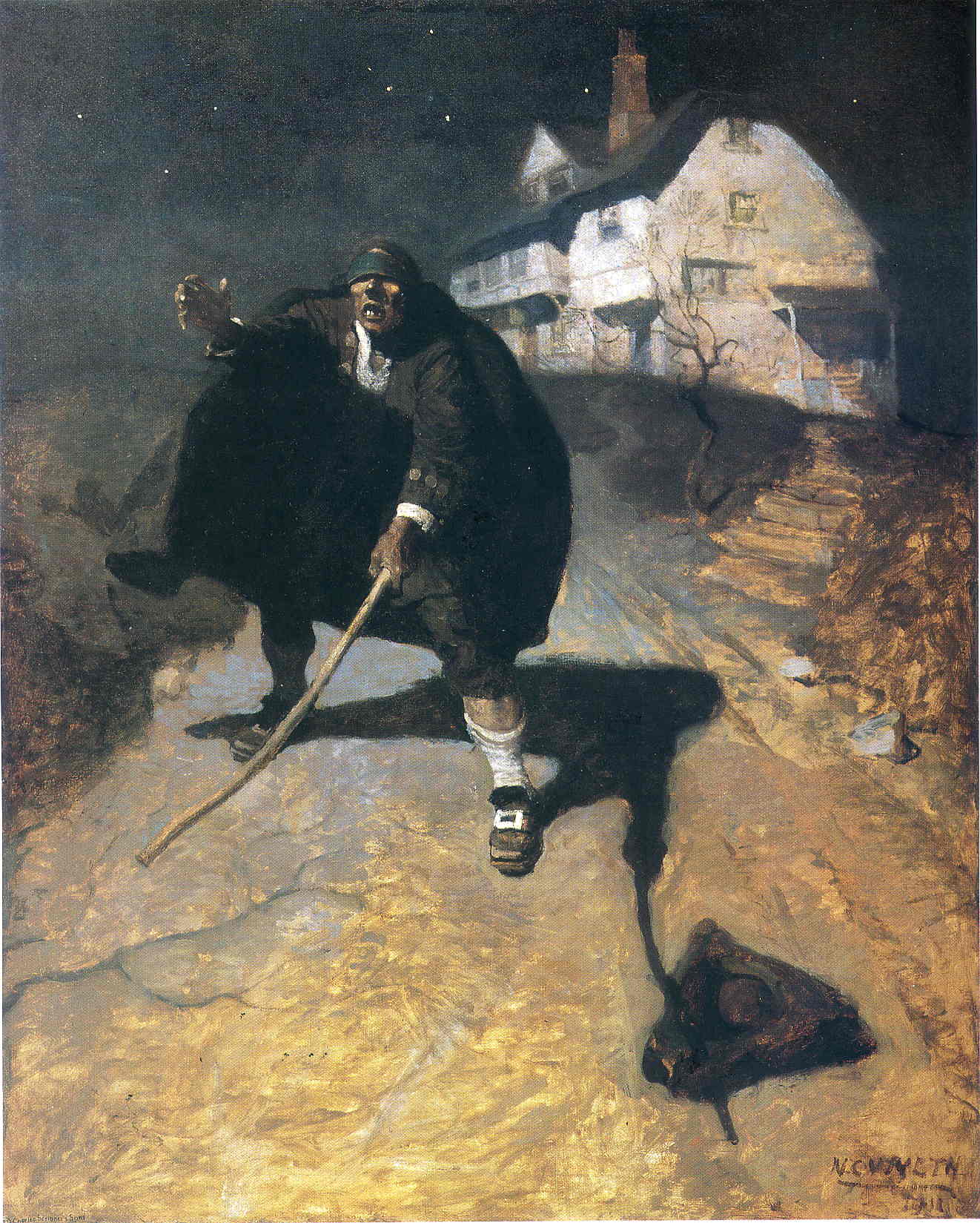
We’ve read that there are those who have criticized such works as “melodramatic”, but we think that that misses the point– they aren’t melodramatic, they are simply dramatic. 

blind-pew

But, for us, it truly is the case of picture = words x 1000. And so, we’ll content ourselves with showing you a few more of our favorite pictures.

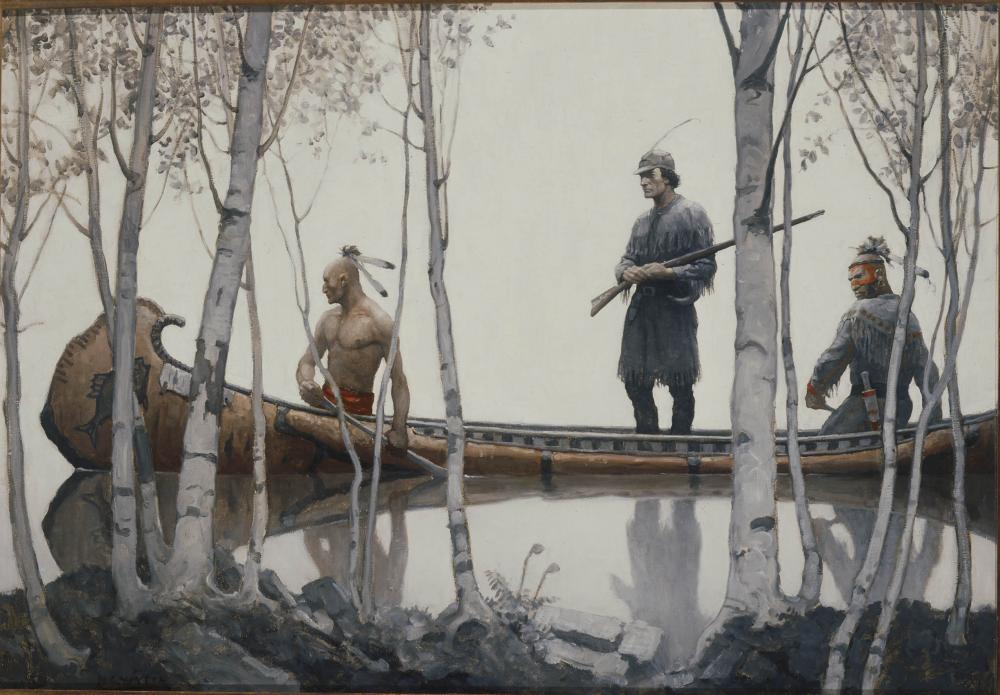
OLYMPUS DIGITAL CAMERA WyethRoundhouseWEB NCW-canoe-artwork nc-wyeth-giant1

5021b2a38af7ba9f082937ac220f7080.jpg

6f9f00b5837bfc1918bfd798f1812039

75aa91cf5c7a93afcab8b7208039eb78

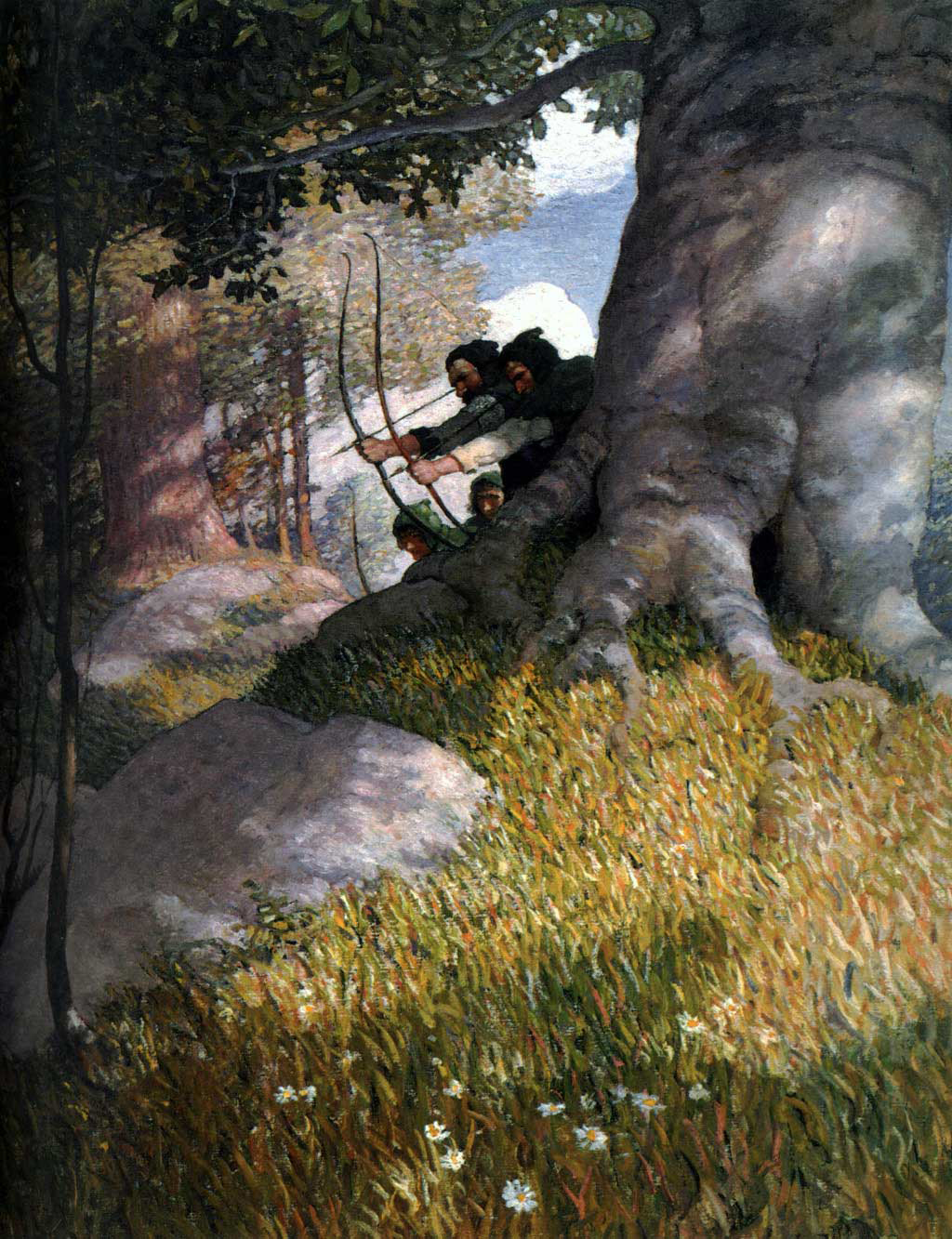
This last one, for us, may be as suggestive as the first one. We can feel ourselves deep in the beechwood behind the next tree, our bows creaking with the strain, waiting for the Sheriff of Nottingham. 

And, for this time, we invite you, dear readers, to join us there. 

Thanks, as always, for reading,

MTCIDC,

CD

Pyle of Pirates

06 Friday Mar 2015

Posted by Ollamh in Artists and Illustrators, Military History, Research, Writing as Collaborators

≈ Leave a comment

Tags

Bunker Hill, Howard Pyle, Illustrating History, Jack Sparrow, Pirates

Dear Readers,

Welcome!

In recent posts, we’ve talked about the wonderful Russian fairy/folktale illustrators of the late 19th, early 20th centuries.  We thought it might be fun, as we work on the sequel to Across the Doubtful Sea (Empire of the Isles) while editing The Good King’s Daughter for our second series, to continue the conversation by looking at other illustrators, beginning with two Americans, teacher and pupil Howard Pyle and N.C. Wyeth.

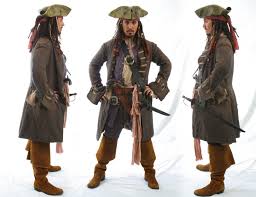
We begin, however, with a familiar contemporary image:

Unknown-3

We think it goes without saying who this is, don’t you?  He’s a wonderful actor, but, for someone who’s supposed to be dressed as a mid-18th-century sailor, he owes more to Howard Pyle, who, as has been pointed out more than once before, has exerted a strong influence upon Hollywood’s view of such people, than to actual 18th-century sailor’s dress.

Pirates were, in fact, sailors with, shall we say, non-mercantile goals.  They were workmen and wore very practical workmen’s clothes, like those in the following 18th-century illustrations.

ce4bd96ef59565cdd6aea174068137e1

siftingthepast_men-loading-a-boat-with-barrels_scott_ siftingthepast_a-ships-boat_scott_340264-bounty-mutiny

(This is, in fact, a contemporary illustration of the casting adrift of the notorious Captain Bligh, a British naval officer, although you see him only in his shirtsleeves here, rather than in his blue officer’s coat. His men, however, did not wear uniforms at this period, and, as you can see, would have looked like any other sailor.)

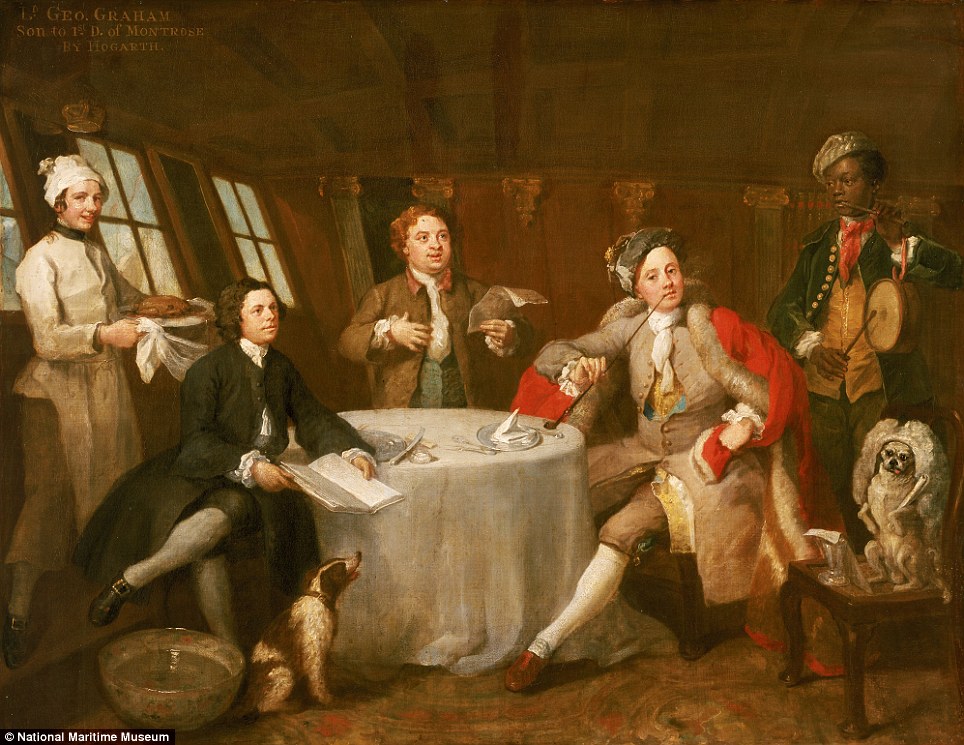
Okay, it might be argued, he’s “Captain” Jack Sparrow–what about officers?  Here’s a Hogarth painting of a more-or-less mid-century civilian captain.

article-2333382-1A0D5458000005DC-29_964x745

As the illustration shows, he simply wears ordinary clothing– no uniform.

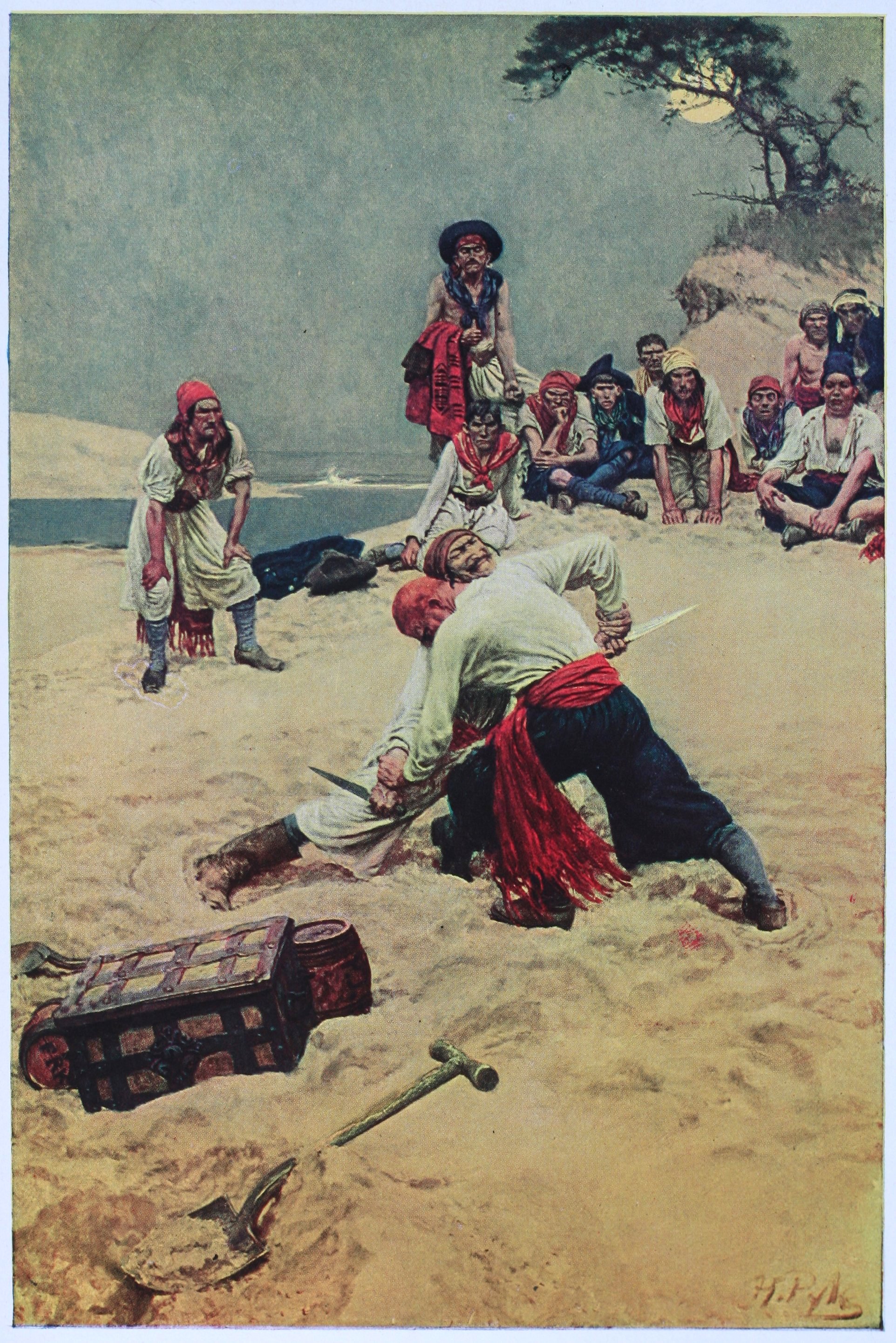
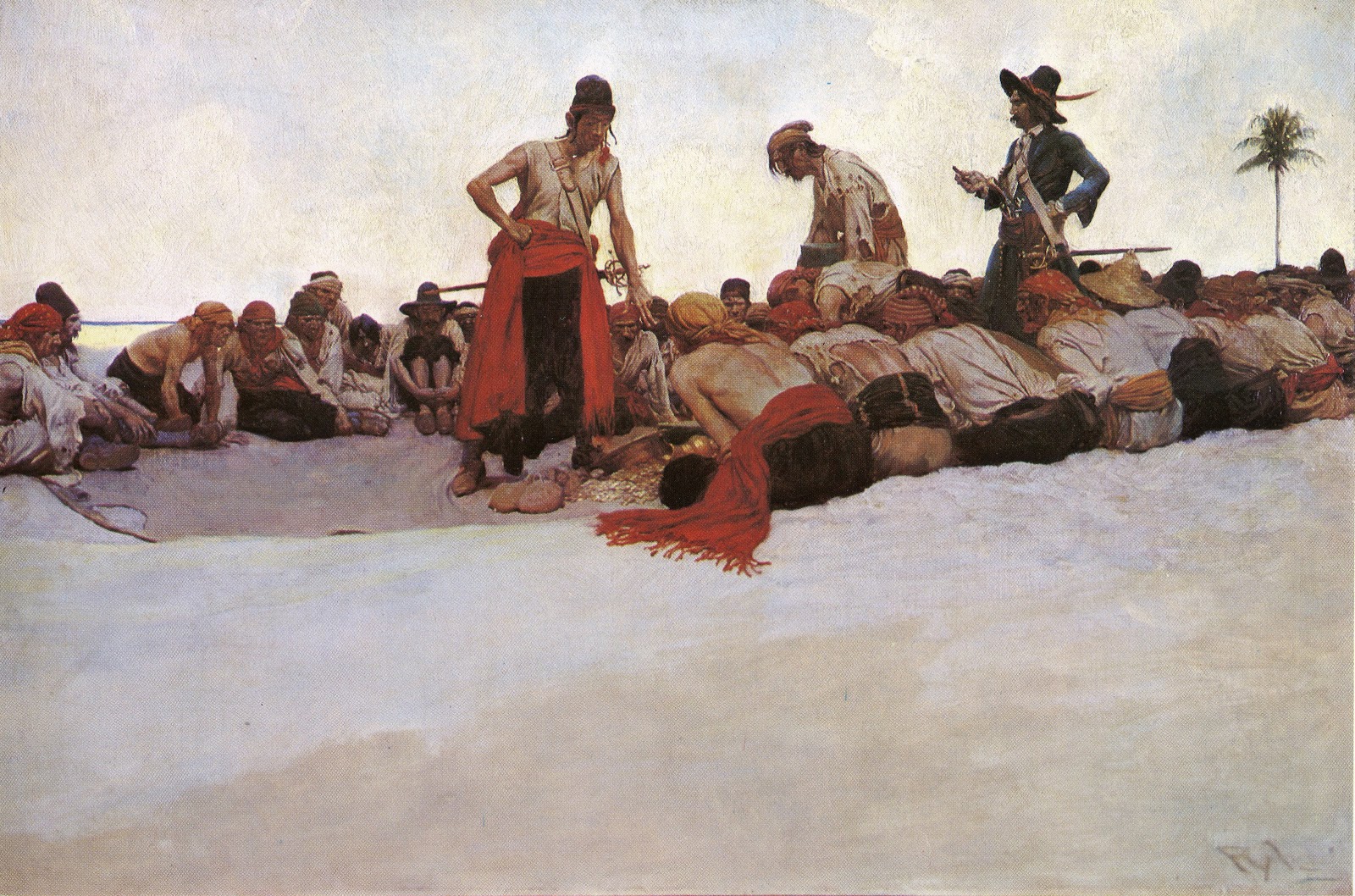
Now, here are a few Pyle pictures.

12c250252BC0-3351Z

Pyle_pirates_treasfight

pyle-pirates-composition009

Typical Pyle touches: the bandanas and the huge sashes, not to be seen in period illustrations.

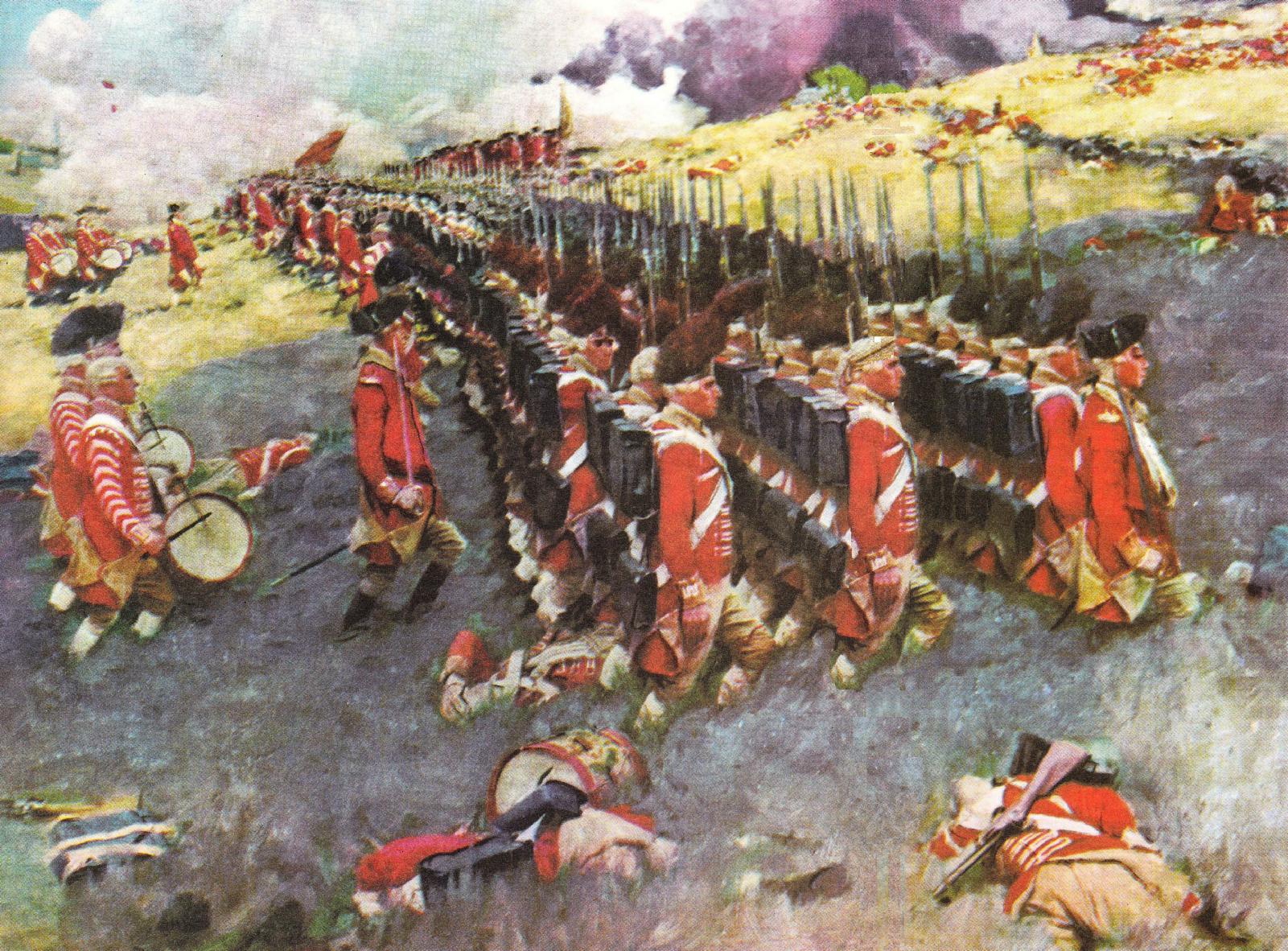
One might argue that Pyle lacked readily-available visual sources:  someone in the 1890s certainly didn’t have Google Images. It has been said, that, like Detaille in France, Pyle collected period uniforms, etc., and sometimes dressed up students in them,  but, one has only to look at his illustration of Bunker Hill, to make you wonder what he actually collected.

pyle-bunker-hill

There are numerous errors here, from the cut of the coats, to the lace on the breast, to the packs and that’s only the beginning.  The study of the history of uniforms was, of course, only in its infancy in this period and even serious military artists, like H.A. Ogden, could go very wrong.

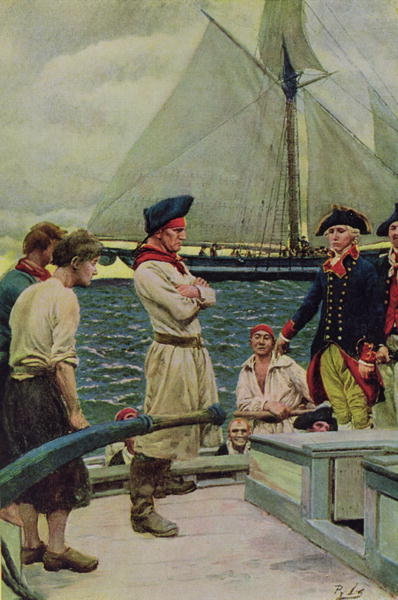
And yet, there are also Pyle illustrations like these, in which he seems to have gotten things– at least, non-piratical things–right.

bal108969OldCaptain150.280

In these, you see a depiction of 18th century sailors which looks much more like those in actual period illustrations.

So what was Pyle up to? Let’s look at a much more modern depiction of Bunker Hill, by the American military artist, H. Charles McBarron.

bunker hill

McBarron was a member of the Company of Military Historians and Collectors. He was well-known not only as a skilled artist, but as a thorough researcher, and the owner of an extensive collection of militaria of the past. What you see in this picture (minus the graphic depiction of violence) would have been as accurate a depiction of the event as anyone might imagine.

Suppose, however, you were attempting to picture this event in dramatic terms from the British side. You would want long lines of red-coated, determined men, marching steadily uphill through their own casualties, as in Pyle’s illustration.

pyle-bunker-hill

Imagine, then, that even if you had much more visual information about pirates than Pyle may have had, but you wanted people to see pirates painted broadly and dramatically, what better than flowing headscarves, and big, blood-red sashes?

And this is why people in the past–and we in the present– love Pyle. Strict accuracy certainly has its place, but we’re perfectly willing to let it walk the plank in favor of romantic strokes and bold depictions.

Unknown-10

And, as always, we ask you readers, what do you think?

Next, Pyle’s pupil, N.C. Wyeth.

Thanks for reading,

MTCIDC,

CD

More Russian Favorites

10 Tuesday Feb 2015

Posted by Ollamh in Artists and Illustrators, Fairy Tales and Myths, Medieval Russia

≈ Leave a comment

Tags

Adventure, Epic, Fairytale Illustrators, Fantasy, Heroic, Medieval, Russia, Song

Dear Reader,

Welcome, as always.

We are very visual people. A picture in a museum, an illustration in a book, something in a film, will always catch our eye and sometimes inspire our writing.

This was certainly the case in our first book, Across the Doubtful Sea, where the drawings and paintings from the three Cook expeditions to the South Seas (1768-1779) filled us with a combination of wonder and curiosity. Although they were sometimes strongly influenced by period ideas of the sublime, here were images as close to historical photos as we would ever see.

Hodges,_Resolution_and_Adventure_in_Matavai_Bay

In the case of our second book, The Good King’s Daughter, however, because it was set in a world based loosely upon the medieval Russia of fairy tales, we looked to other sources, particularly those later-19th and 20th-century Russian artists who illustrated moments from the Russian heroic songs (byliny) and from the fairy and folktales themselves.

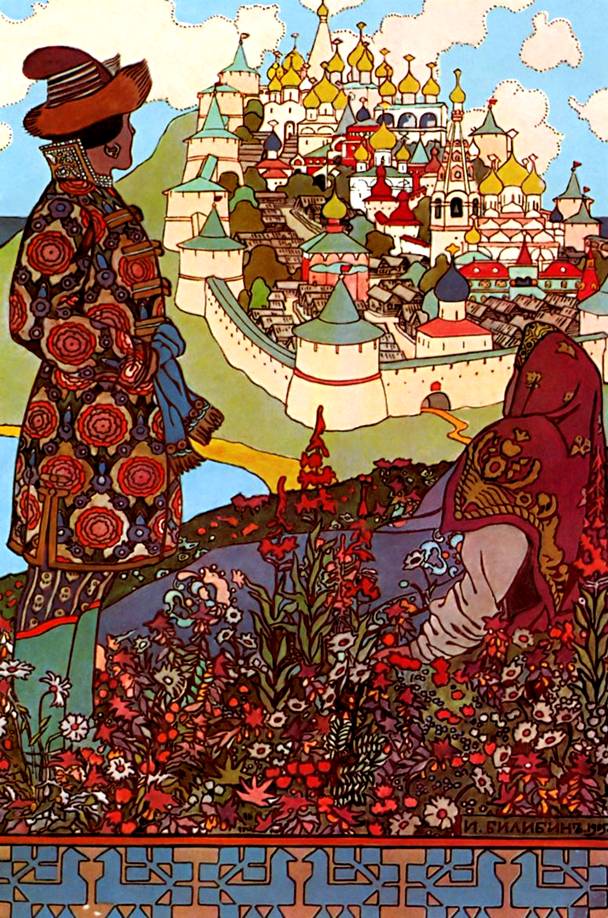
In our last, we showed you a few images from the work of perhaps the most famous (outside Russia, at least) illustrator, Ivan Bilibin (1876-1942). Pictures like “The Island of Buyan” (1905):

Ivanbilibin

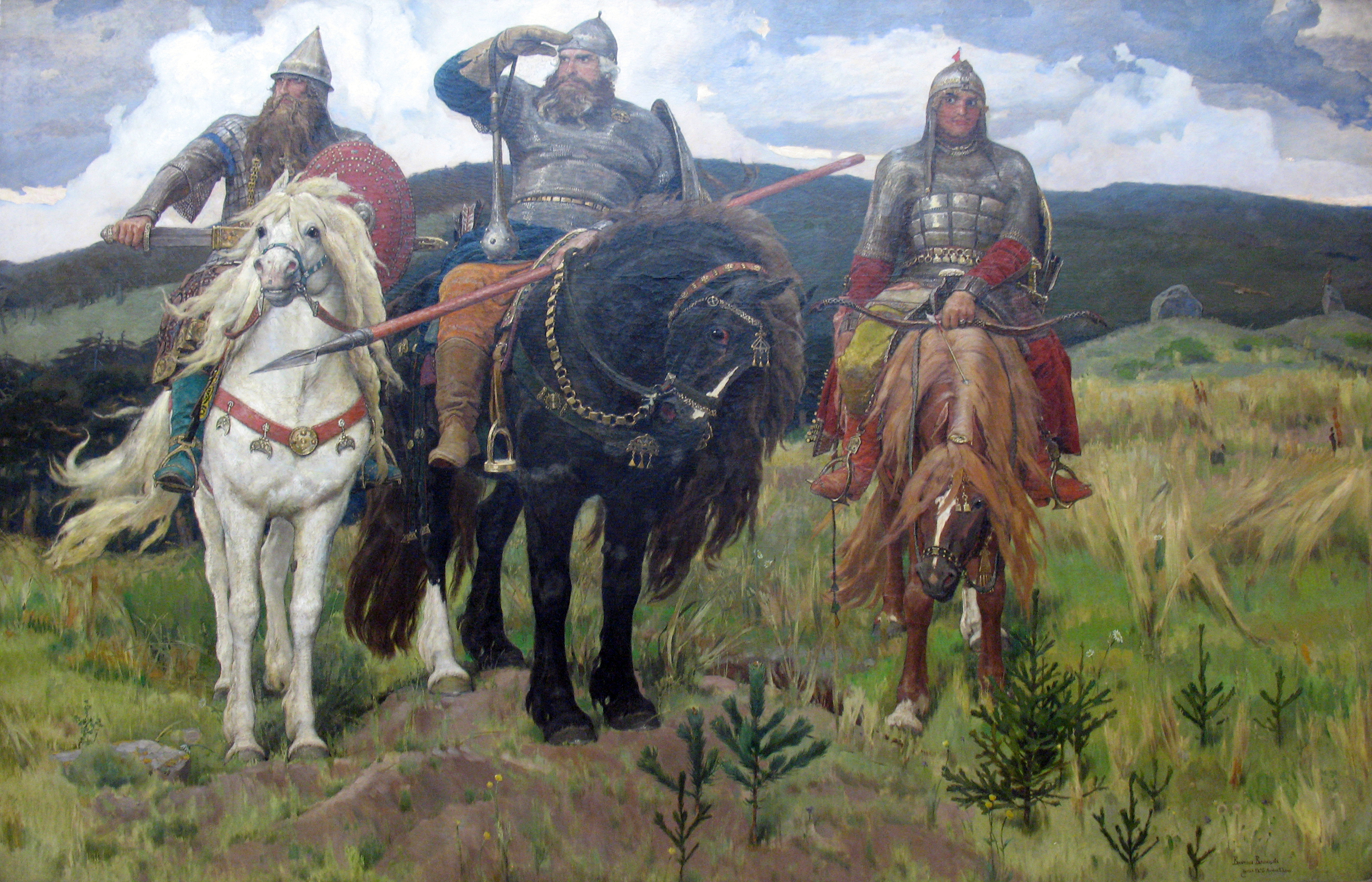
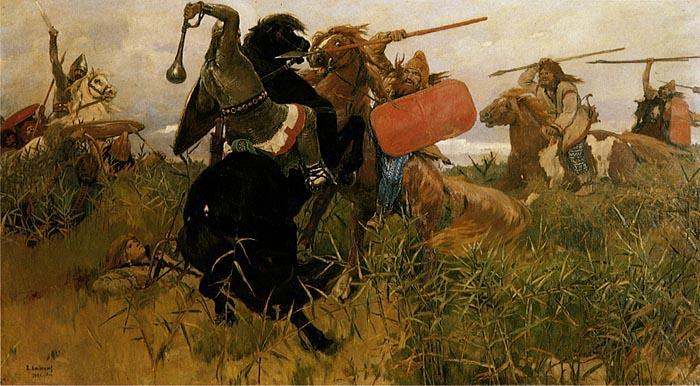
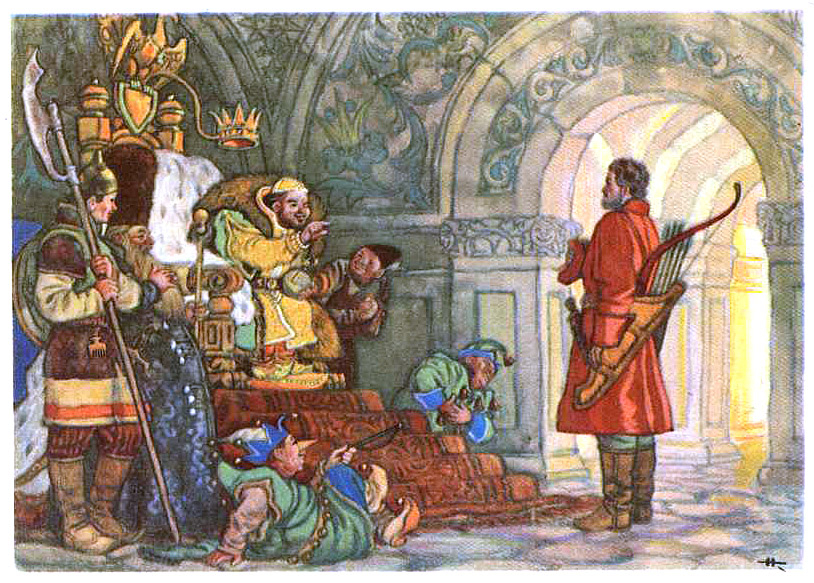
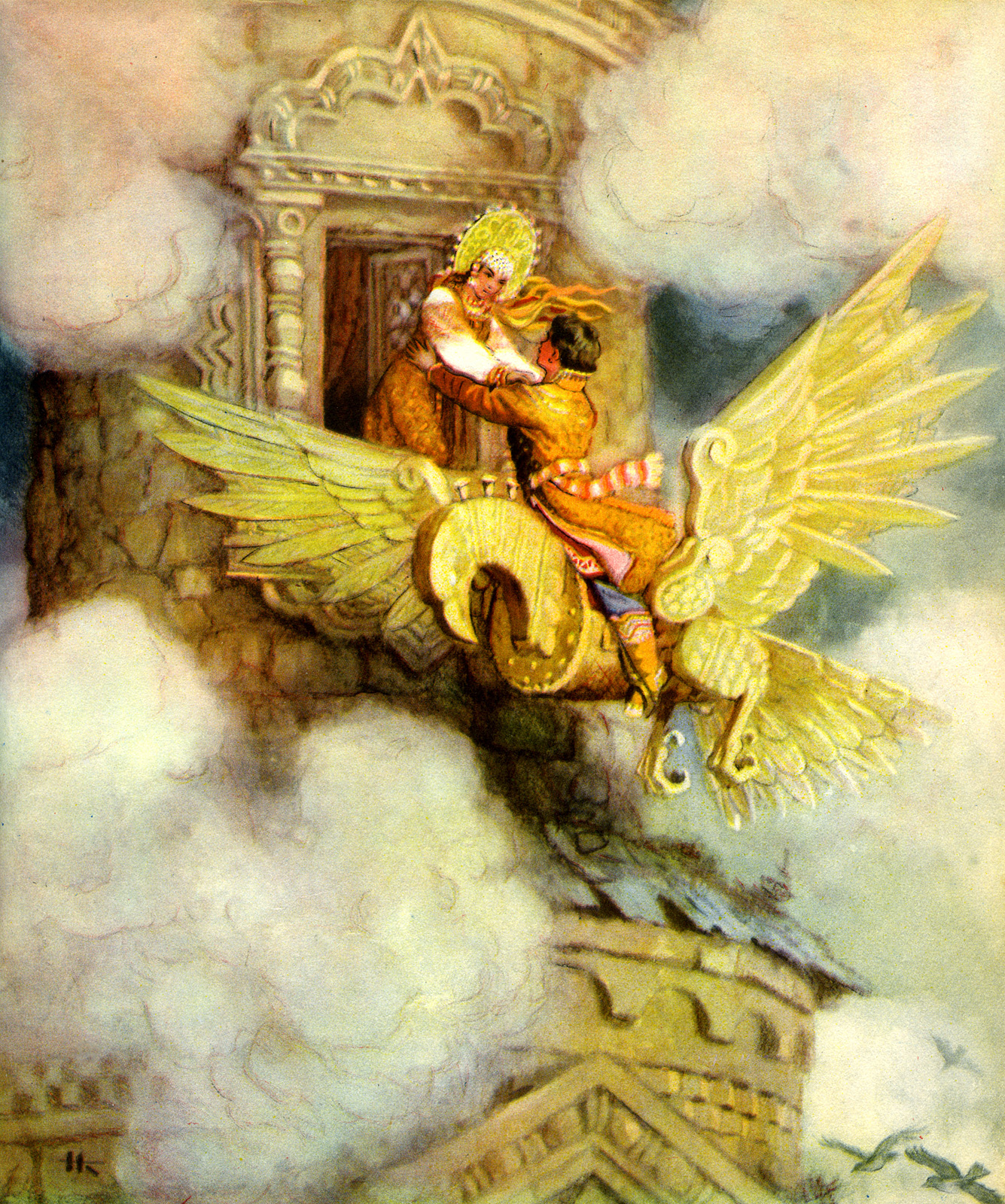
In this posting, we would add two more artists, Victor Vasnetsov (1848-1926—not to be confused with his equally-talented brother, Apollinary 1856-1923) and the more recent Nikolai Kochergin (1897-1974).

As you can see from the pictures below, Vasnetsov can move from the grandly (and grimly) heroic world of the byliny and its bogatyr (epic hero) to a more fanciful world of fairy tales like The Firebird (but still rather grim and grand).

1898_Vasnetsov_Bogatyrs_anagoria Igorsvyat Vasnetsov_samolet Viktor%20Vasnetsov-526879

hero

a-knight-at-the-crossroads-1878

Kochergin strikes us as more like Bilibin—brightly-colored, folk-influenced.

4f463a868cf7b31a66ad1c87e00 9f97a52394ba8269194a869df52 berendei-palace nicolai-kochergin_the-wooden-eagle

tumblr_mxjgrquVKF1rz5qxqo1_500

nicolai-kochergin_seven-simeons-seven-workers

tumblr_ndw64pRZCk1rgcyvso2_500

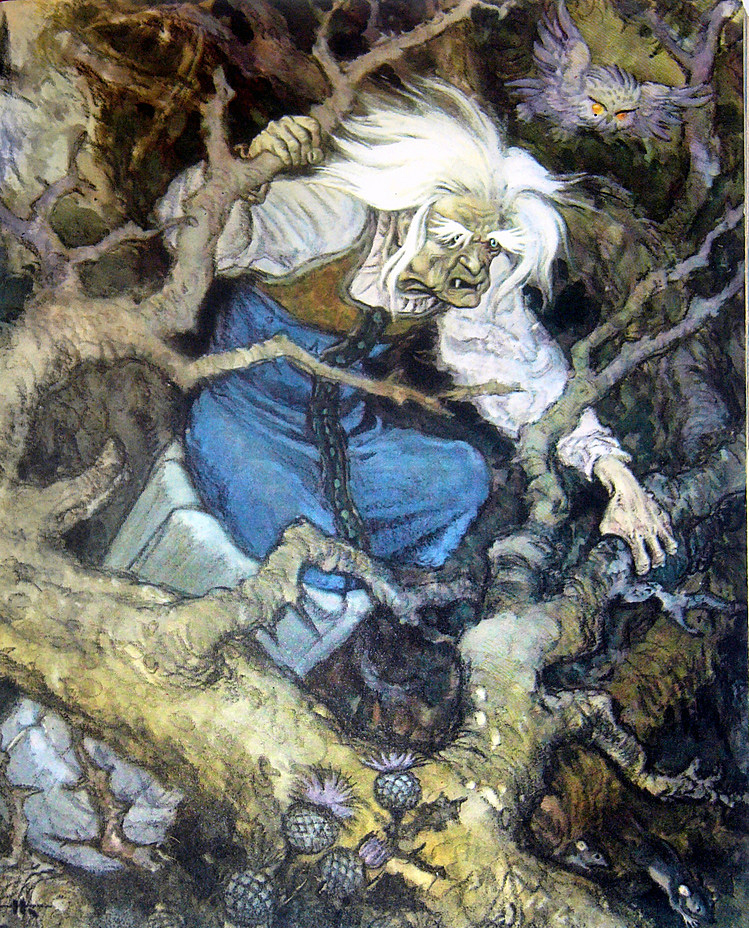
What inspires us in these pictures? To a degree, it’s what attracts us to the fairy/folktales: the strange scenes (even when you know the story), the swirl of color, that suggestion of a complex world of patterns from a different time and place, one in which there were yagas and firebirds and heroes who could be helped by wise animals.

And you, reader, do these pictures inspire you?

Thanks for reading!

MTCIDC

CD

PS

If you would like to know more about Russian heroic song—and for free—you might try:

Hapgood, Isabel Florence, The Epic Songs of Russia (1916)

Harrison, Marion Chilton, Byliny Book: Hero Tales of Russia (1915)

at archive.org. They are clearly older books, but, for those on a budget, they can provide a starting place into a rich world worth visiting.

Picturing Wonder

02 Monday Feb 2015

Posted by Ollamh in Artists and Illustrators, Medieval Russia

≈ Leave a comment

Tags

Fairytale Illustrators, Ivan Bilibin, Russian Fairy Tales

Dear Readers,

Welcome!

In our last, we mentioned that we have a second book in the works. It’s part of a series whose titles (and elements) are based upon this mysterious nursery rhyme:

“Grey goose and gander,

Waft your wings together

To carry the good king’s daughter

Over the one-strand river.”

The second book in the series, The Good King’s Daughter, is now a complete draft and is currently being given its first editorial run-through. Then it will be checked, rewritten where necessary, then formatted and published, like Across the Doubtful Sea, on Amazon and Kindle, we hope by early March. In the meantime, work goes on for the first in the series, Grey Goose and Gander, as well as on our sequel to Across, Empire of the Isles.

The Grey Goose series takes place in an imaginary medieval Russia, with yagas, talking animals, warriors, invaders like the historical Mongols, magic, saints, singers, and a young woman warrior, Unegen. The story is original, although there are elements from Russian history, as well as from folk tales.

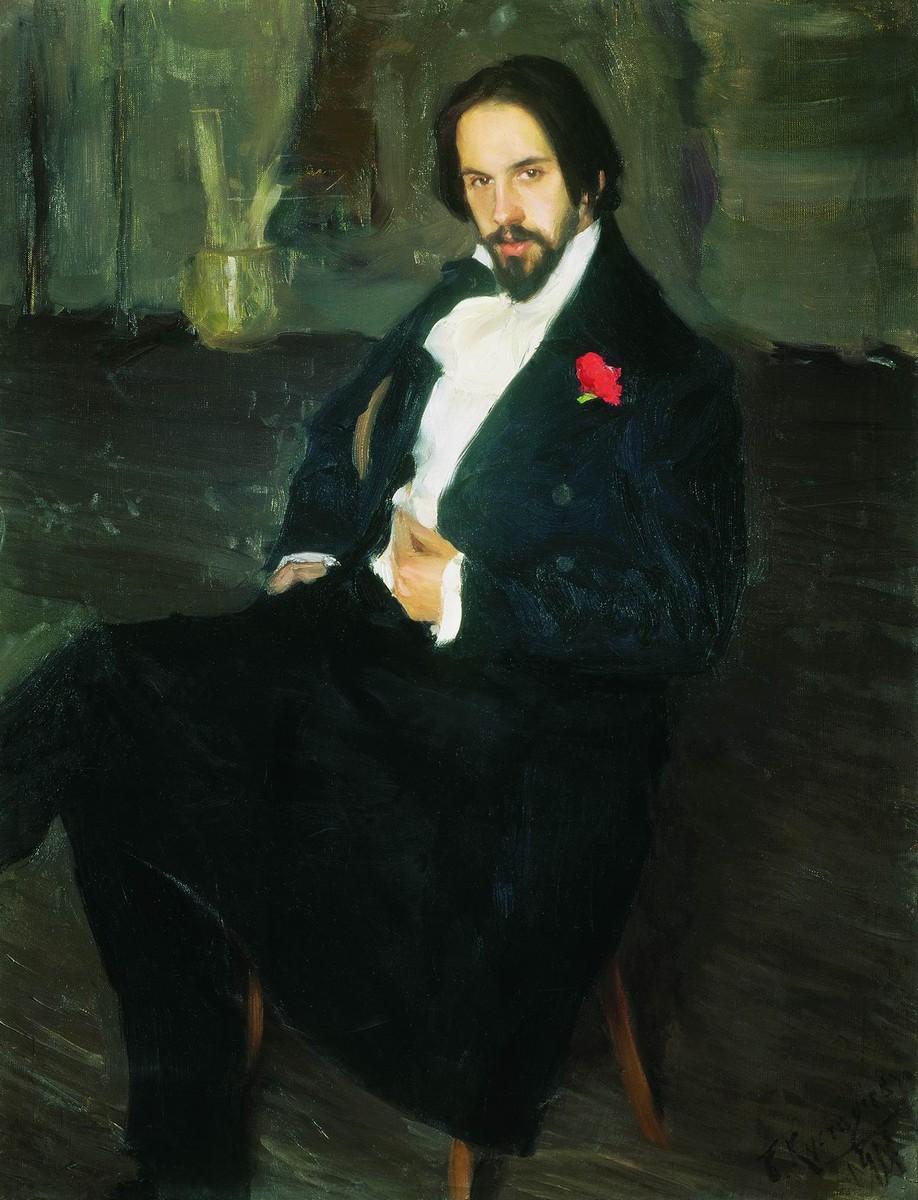
We also mentioned in our last our favorite Russian fairy tale illustrator, Ivan Bilibin (1876-1942).

1901._Portrait_of_Ivan_Bilibin_by_B._Kustodiev

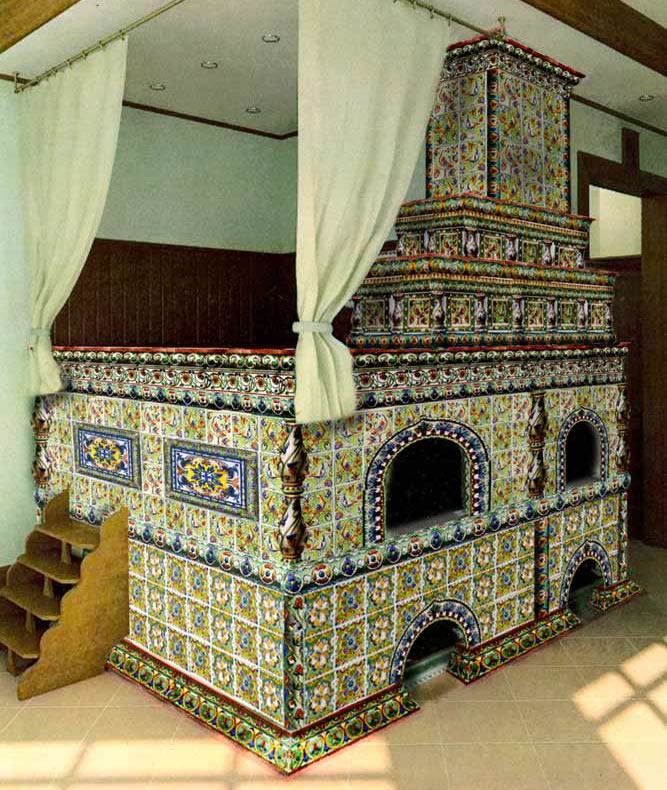
If you look him up on-line, you’ll find out that he was strongly influenced by his exposure to traditional Russian folk art and architecture. Like these:

russianwoodenbuilding TiledStoveCropt 0_10731_92b7363f_L russiancostumescentral

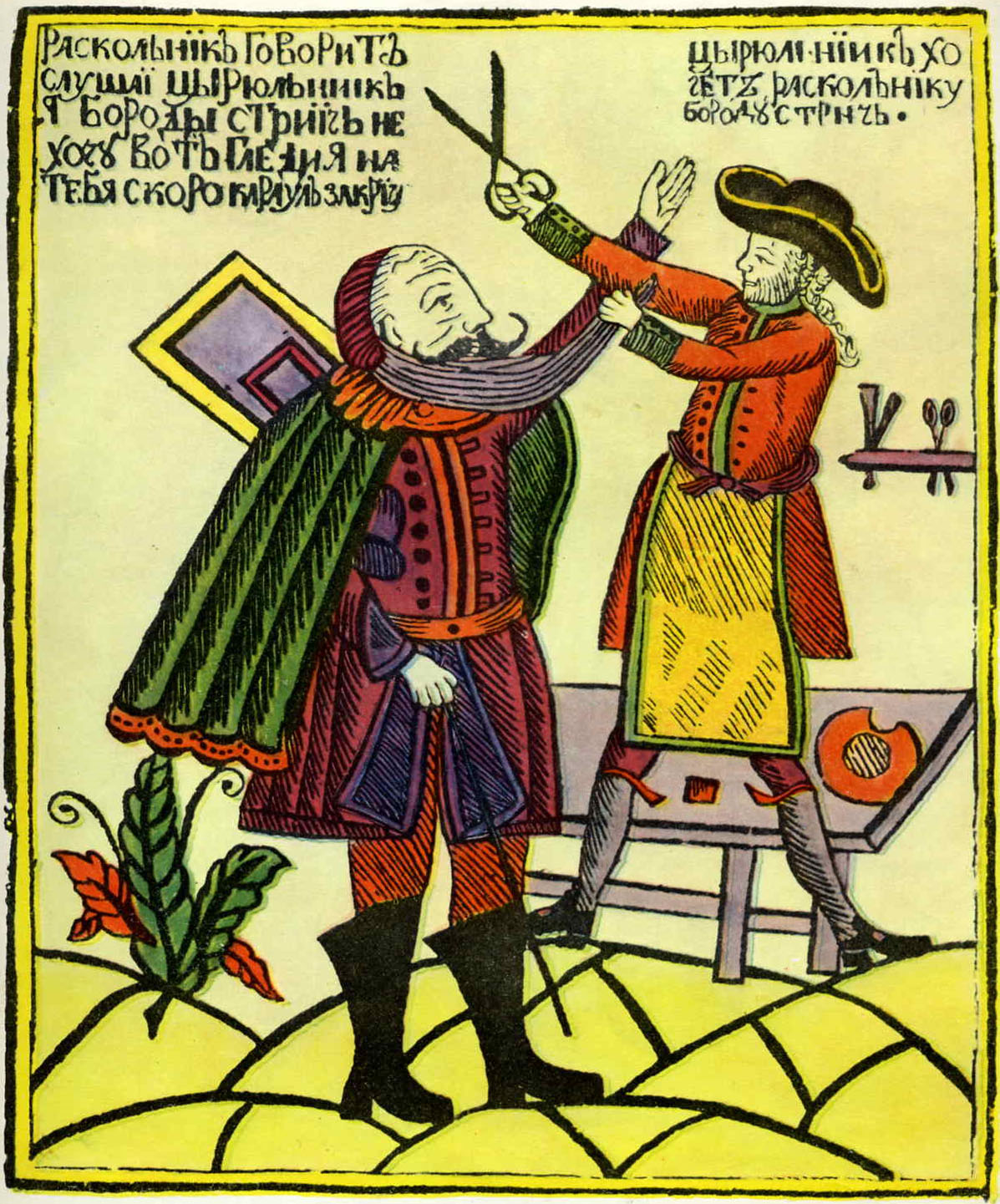
There is scholarly argument over how authentic this sort of thing was by Bilibin’s time: by 1700, Peter the Great was actively westernizing Russia. This lead to everything from laws about dress to regulations about beards (Peter taxed them—but so had Henry VIII, who had one, and Elizabeth I, who did not).

russianbeardcutting

Beard_token

(The second picture is of a government token to show anyone who would ask that you’ve paid the beard tax.)

And here we come to that fork in the road where “strictly accurate” may get in the way of creativity. Anyone who has read The Lord of the Rings knows that Rohan has wide, grassy plains. There are no such plains in New Zealand, so Peter Jackson did what he could to give at least the rolling effect. It’s not grassy, as JRRT described, but we have yet to meet anyone who has complained about the look of Jackson’s Edoras or the Rohirrim (one of our all-time favorite parts of the films, in fact).

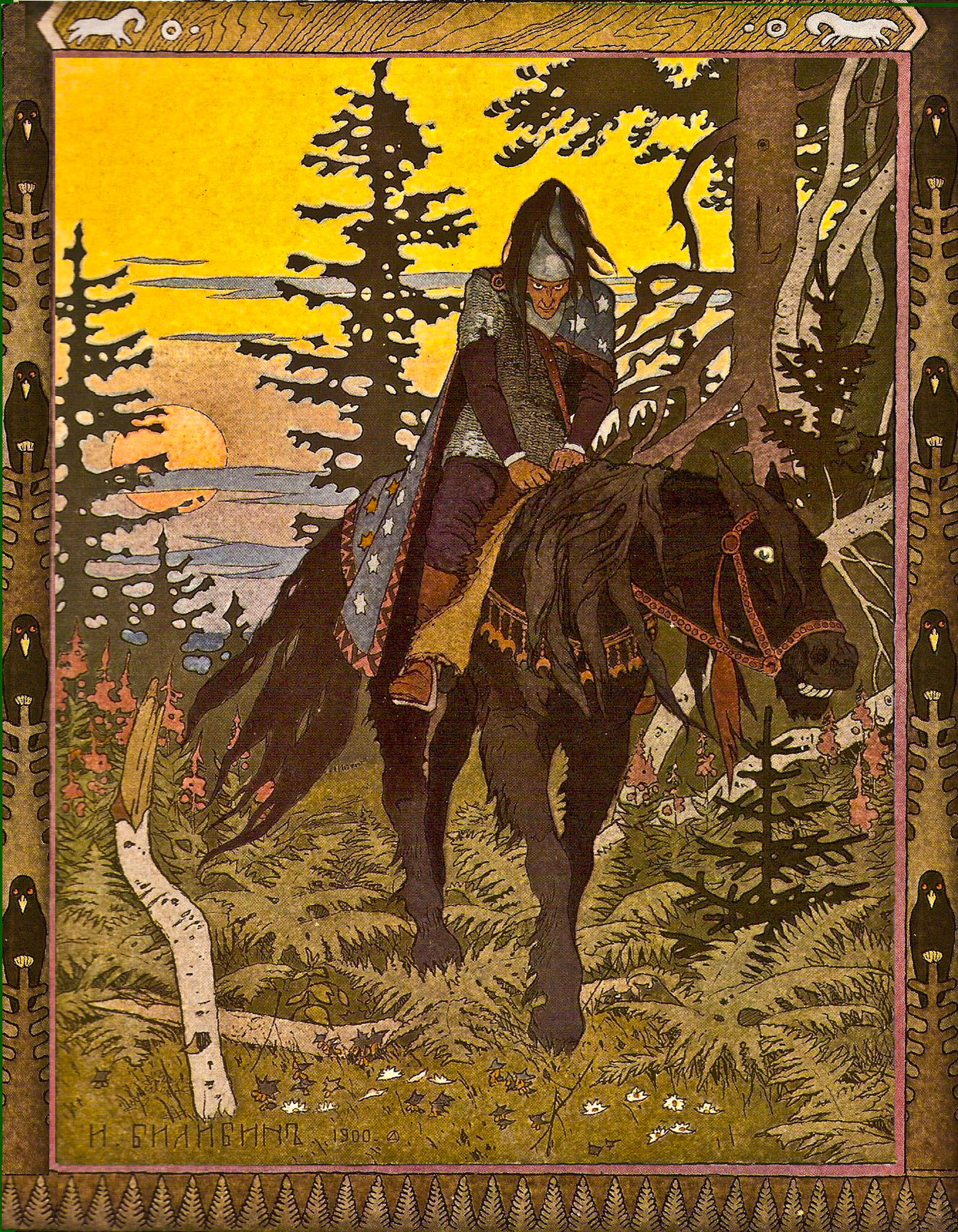
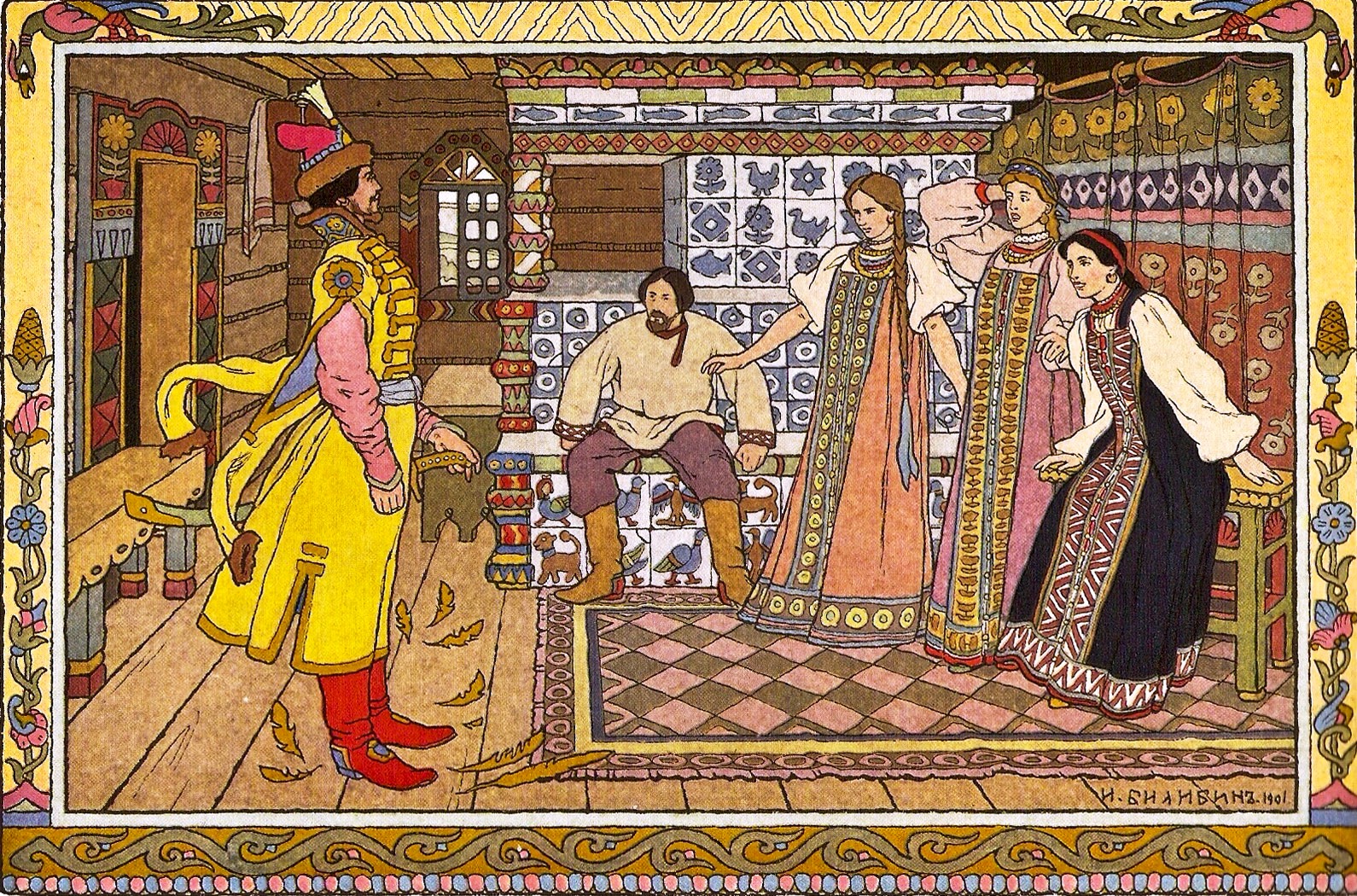
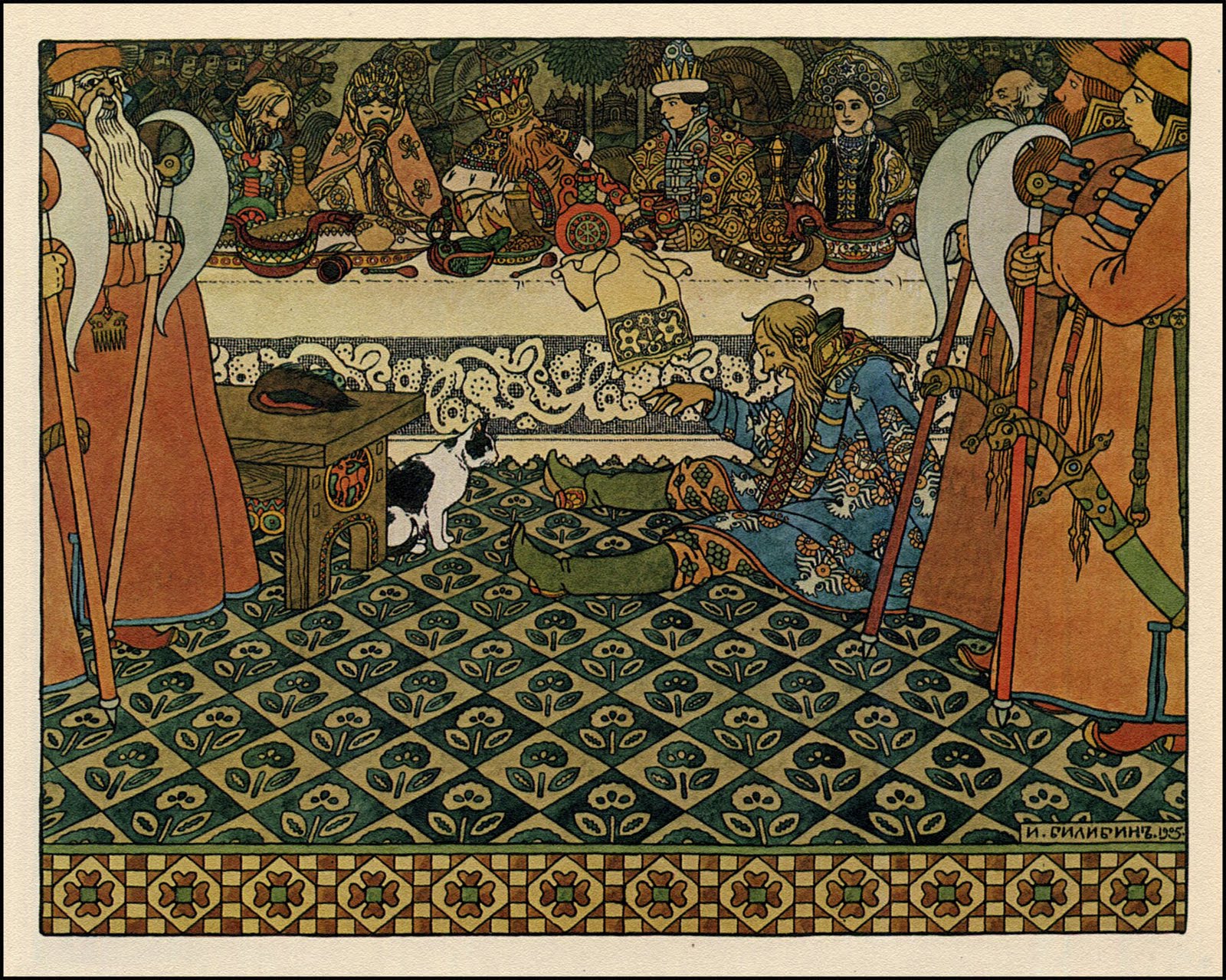
Bilibin was inspired by something, no doubt. He wrote about it in Folk Arts of the Russian North (1904). And he produced illustrations like these—

bilibin3_saltan bilibinbrdrs-1024x710 Ivan_Bilibin_024_variation Ivan_Bilibin_028 Ivan_Bilibin_247 Ivan-Bilibin-Baba-Yaga IvanBilibin11 PR_RU--12--big PR_RU--13--big ruske-bajke-ivan-bilibin-4 ruske-bajke-ivan-bilibin-6 Vasilisa

We hope you enjoy them as much as we do and imagine that, in our world of Grey Goose, Bilibin would feel right at home.

Thanks for reading.

MTCIDC

CD

PS

Amazon carries Golynets’ Ivan Bilibin, but if you would like to see the illustrator in his natural habitat, you can download Wheeler’s 1912 Russian Wonder Tales (in a 1917 reprinting) with Bilibin’s illustrations at Archive.org for free.

PPS

We’ve just discovered a very interesting site at Textualities.net. It’s full of images and interesting ideas.


Newer posts →

The Doubtful Sea Series Facebook Page

The Doubtful Sea Series Facebook Page

  • Ollamh

Categories

  • Artists and Illustrators
  • Economics in Middle-earth
  • Fairy Tales and Myths
  • Films and Music
  • Games
  • Heroes
  • Imaginary History
  • J.R.R. Tolkien
  • Language
  • Literary History
  • Maps
  • Medieval Russia
  • Military History
  • Military History of Middle-earth
  • Narnia
  • Narrative Methods
  • Poetry
  • Research
  • Star Wars
  • Terra Australis
  • The Rohirrim
  • Theatre and Performance
  • Tolkien
  • Uncategorized
  • Villains
  • Writing as Collaborators
Follow doubtfulsea on WordPress.com

Across the Doubtful Sea

Recent Postings

  • The Damage of Dragons March 11, 2026
  • Encouragement March 4, 2026
  • Eavesdropping February 25, 2026
  • Do You Speak Villain? (Part 3) February 18, 2026
  • Do You Speak Villain? (2) February 11, 2026
  • Do You Speak Villain? (Part 1) February 4, 2026
  • Towering January 28, 2026
  • Tolkien Among the Indians January 21, 2026
  • Thin and Stretched January 14, 2026

Blog Statistics

  • 108,928 Views

Posting Archive

  • March 2026 (2)
  • February 2026 (4)
  • January 2026 (4)
  • December 2025 (5)
  • November 2025 (4)
  • October 2025 (5)
  • September 2025 (4)
  • August 2025 (4)
  • July 2025 (5)
  • June 2025 (4)
  • May 2025 (4)
  • April 2025 (5)
  • March 2025 (4)
  • February 2025 (4)
  • January 2025 (5)
  • December 2024 (4)
  • November 2024 (4)
  • October 2024 (5)
  • September 2024 (4)
  • August 2024 (4)
  • July 2024 (5)
  • June 2024 (4)
  • May 2024 (5)
  • April 2024 (4)
  • March 2024 (4)
  • February 2024 (4)
  • January 2024 (5)
  • December 2023 (4)
  • November 2023 (5)
  • October 2023 (4)
  • September 2023 (4)
  • August 2023 (5)
  • July 2023 (4)
  • June 2023 (4)
  • May 2023 (5)
  • April 2023 (4)
  • March 2023 (5)
  • February 2023 (4)
  • January 2023 (4)
  • December 2022 (4)
  • November 2022 (5)
  • October 2022 (4)
  • September 2022 (4)
  • August 2022 (5)
  • July 2022 (4)
  • June 2022 (5)
  • May 2022 (4)
  • April 2022 (4)
  • March 2022 (5)
  • February 2022 (4)
  • January 2022 (4)
  • December 2021 (5)
  • November 2021 (4)
  • October 2021 (4)
  • September 2021 (5)
  • August 2021 (4)
  • July 2021 (4)
  • June 2021 (5)
  • May 2021 (4)
  • April 2021 (4)
  • March 2021 (5)
  • February 2021 (4)
  • January 2021 (4)
  • December 2020 (5)
  • November 2020 (4)
  • October 2020 (4)
  • September 2020 (5)
  • August 2020 (4)
  • July 2020 (5)
  • June 2020 (4)
  • May 2020 (4)
  • April 2020 (5)
  • March 2020 (4)
  • February 2020 (4)
  • January 2020 (6)
  • December 2019 (4)
  • November 2019 (4)
  • October 2019 (5)
  • September 2019 (4)
  • August 2019 (4)
  • July 2019 (5)
  • June 2019 (4)
  • May 2019 (5)
  • April 2019 (4)
  • March 2019 (4)
  • February 2019 (4)
  • January 2019 (5)
  • December 2018 (4)
  • November 2018 (4)
  • October 2018 (5)
  • September 2018 (4)
  • August 2018 (5)
  • July 2018 (4)
  • June 2018 (4)
  • May 2018 (5)
  • April 2018 (4)
  • March 2018 (4)
  • February 2018 (4)
  • January 2018 (5)
  • December 2017 (4)
  • November 2017 (4)
  • October 2017 (4)
  • September 2017 (4)
  • August 2017 (5)
  • July 2017 (4)
  • June 2017 (4)
  • May 2017 (5)
  • April 2017 (4)
  • March 2017 (5)
  • February 2017 (4)
  • January 2017 (4)
  • December 2016 (4)
  • November 2016 (5)
  • October 2016 (6)
  • September 2016 (5)
  • August 2016 (5)
  • July 2016 (5)
  • June 2016 (5)
  • May 2016 (4)
  • April 2016 (4)
  • March 2016 (5)
  • February 2016 (4)
  • January 2016 (4)
  • December 2015 (5)
  • November 2015 (5)
  • October 2015 (4)
  • September 2015 (5)
  • August 2015 (4)
  • July 2015 (5)
  • June 2015 (5)
  • May 2015 (4)
  • April 2015 (3)
  • March 2015 (4)
  • February 2015 (4)
  • January 2015 (4)
  • December 2014 (5)
  • November 2014 (4)
  • October 2014 (6)
  • September 2014 (1)

Blog at WordPress.com.

  • Subscribe Subscribed
    • doubtfulsea
    • Join 78 other subscribers
    • Already have a WordPress.com account? Log in now.
    • doubtfulsea
    • Subscribe Subscribed
    • Sign up
    • Log in
    • Report this content
    • View site in Reader
    • Manage subscriptions
    • Collapse this bar
 

Loading Comments...