• About

doubtfulsea

~ adventure fantasy

Author Archives: Ollamh

As All Should Know?

01 Wednesday Jan 2020

Posted by Ollamh in Uncategorized

≈ Leave a comment

“ ‘Then what is Durin’s Day?’ asked Elrond.

‘The first day of the dwarves’ New Year,’ said Thorin, ‘is as all should know the first day of the last moon of Autumn on the threshold of Winter.’ “ (The Hobbit, Chapter Three, “A Short Rest”)

Welcome, dear readers, to our end-of-the-year posting.  It will be posted on January 1, 2020—which is hardly Durin’s Day.

But when is Durin’s Day?

It seems that that is as much a puzzle for Thorin as it might be for us, as he says:

“ ‘We call it Durin’s Day when the last moon of Auturm and the sun are in the sky together.  But this will not help us much, I fear, for it passes our skill in these days to guess when such a time will come again.’ “

Thorin and Gandalf have consulted Elrond over the map of the Lonely Mountain made by (or for) Thror, Thorin’s grandfather, and Elrond has discovered that the map has more to tell than would first appear.

image1map.jpgAs, in the light of a crescent moon, Elrond

“held up the map and the white light shone through it.  ‘What is this?’ he said.  ‘There are moon-letters here, beside the plain runes…’ “

Those briefly-readable lunar runes (highlighted in white on our image), say:

“Stand by the grey stone when the thrush knocks…and the setting sun with the last light of Durin’s Day will shine upon the key-hole.”

Like the first day of the dwarves’ New Year, the first day of the Western New Year has been a bit of a mystery over the centuries, too.

Ultimately, our calendar comes from the Roman calendar and that calendar, at its beginnings, was already in trouble, and all because of that same moon which illuminates Thror’s map.

image2phases.jpg

Roman tradition said that this calendar had been edited by the founder of Rome, Romulus, here depicted murdering his twin brother, Remus, before introducing

image3rom.jpg

his ten-month lunar calendar.  His successor, Numa Pompilius,

image4numa.jpg

attempting to combine a solar with a lunar calendar, added two months, but was forced to add another, shorter, month, every two years so that the seasons and the calendar didn’t drift too far apart.  As this still caused difficulties, Julius Caesar, many centuries later,

image5jc.jpg

recently made “Dictator for Life” by the Senate, consulted an Alexandrian astronomer, Sosigenes, and redesigned the calendar with 12 months with a total of 365 ¼ days, an extra day being added every four years to fill out that ¼ day—that is, more or less, a solar year.  There are a lot of complications in this which we ourselves would roll our eyes over, so, if you would like more information, here’s the WIKI LINK:  https://en.wikipedia.org/wiki/Julian_calendar.

The difficulty with this, as we understand it, is that that ¼ day is fractionally longer than a quarter and that, over many years, the seasons and the calendar still managed to drift apart, so that, by the early 1580s, there was a 10-day gap.  This was adjusted by a new calendar, authorized by Pope Gregory XIII, in 1582, which recalibrated things in such a way that we’re still using that system in 2019.

image6pope.jpg

But what about the first day of the Western New Year?

Originally, Romans, with a ten-month calendar (which is why we the names “Septem-ber, Octo-ber, Novem-ber, and Decem-ber”, even though, now, those names/numbers can no longer be correlated with the modern 12-month variety), marked the beginning of the New Year as late in March, at the time of the vernal equinox.   This was one of two days a year when day and night are approximately equal (the other is on the autumnal equinox, which, as the name suggests, is in the fall).  In 2020, that will be on March 20th.

Although the Roman Republic had established 1 January as the beginning of the civil year, when their two chief magistrates, the consuls, took office,

image7aconsuls.jpg

that late March date was still being used until, along with his 12-month reform, Caesar permanently moved the beginning of the year to the first day of the extra month named after the god of endings and beginnings, Janus.

image7janus.jpg

This shift also nicely fit in with the season of traditional Roman year-end festivities (which seemed to go on no matter what the calendar might be doing), including the Saturnalia,

image8saturnalia.jpg

and the later addition of the festival of Sol Invictus (the “unconquered sun”), all from mid-to-late December.

image9solinvictus.jpg

This worked until 567AD, when Christian clergy, meeting at the Council of Tours, decreed that 1 January still reeked of paganism and shifted the beginning of the year back to late March—March 25th, in fact, where it remained until Pope Gregory XIII (remember him?) revised the calendar and moved it back to 1 January.  Most of the West adopted this new version of the calendar rather speedily, except for Great Britain, which didn’t make the change until 1752.  (So, when you see that George Washington, for example, was born on 22 February, 1732, until he was about 20, he must have believed that he had been born on 11 February, 1731.)

But what about Durin’s Day? we asked some time ago.

We know that Thorin seems a bit unsure and that would appear to be true for his creator, as well.  The best guess (with the author sort of behind it) would be 19 October, but, if you want to pursue it farther than that, see this LINK:  http://thorinoakenshield.net/confusticate-and-bebother-these-dates-the-durins-day-dilemma/  The author does a very good job of, well, trying to deal with something JRRT once wrote in a note at the top of a page of revisions for the projected 1966 edition of The Hobbit, “Hobbit Time table is not very clear”.

In this world, however, in the West, 1 January remains the beginning of the year and we wish you a happy and prosperous one, no matter when/how you celebrate.

With thanks for reading, as always, and, as always

MTCIDC

CD

ps

The traditional New Year’s song in the English-speaking world is Robert Burn’s “Auld Lang Syne” (literally, “Old Long Since”) and our favorite version is that of Leopold Kozeluch (1747-1818).

image10kozeluch.jpg

Here’s a LINK so that you can hear it for yourself:  https://www.youtube.com/watch?v=INzME1iKkGE


Real Fantasy

25 Wednesday Dec 2019

Posted by Ollamh in Uncategorized

≈ Leave a comment

Welcome, as always, dear readers—although we were tempted to say:  “Welcome to my house! Enter freely and of your own will!”  This is what Dracula says to Jonathan Harker, soon to become the Count’s horrified prisoner in Bram Stoker’s (1847-1912)

image1stoker.jpg

1897 novel, Dracula,

image2first.jpg

which we taught this last term.

Although the novel is the most famous of vampire stories, and the most popular, never being out of print since that original publication, it is not the original vampire story in English.  That honor appears to go to John Polidori (1795-1821),

image3polidori.jpg

who published The Vampyre in 1819.

image4first.JPG

The story behind this is well-known:  Polidori was Lord Byron’s physician and was at the occasion when Shelley and Byron and their circle challenged each other to come up with a horror story.  Mary Shelley (1797-1851),

image5ms.jpg

with a little help from her husband, produced the first version of Frankenstein

image6first.png

in 1818.  The Polidori, published the following year is a novella (a short novel) about a character called “Lord Ruthven”, who somehow returns from the dead and seems to appear and disappear in rather an odd fashion, as well as be involved in a mysterious murder (after which he disappears again).  Although the novella includes a certain amount of travel in what was at that time an exotic locale, Asia Minor and Greece, both in the hands of the Ottoman Empire,

image7turkokratia.jpg

it is set in a contemporary world (c.1818) and London, amidst upper class society, which is depicted in conventional terms of social calls and gossip.

image8society.jpg

This turned out to be a popular story (in part because there was a rumor that “Lord Ruthven” was actually Lord Byron—and a second rumor that the novella itself was actually written by him) and, from that moment, “vampyre”—respelled as “vampire”– became a useful figure in English literature.  (Here is a LINK if you’d like to read the story for yourself:  https://gutenberg.org/files/6087/6087-h/6087-h.htm)

At least useful when it came to what were called “penny dreadfuls”, which were stories with sensational violence in them, produced cheaply for the mass market which increasing literacy in Victorian England, as well, as improvements in everything from paper production (from rag to wood pulp) to illustration, encouraged.  In 1845-47, one of these, published in installments, was this–image9varney.jpg

The story of Sir Francis Varney, who was inflicted with vampirism as a kind of curse, it is set in the 18th century—sort of–but also in the 19th and scholars who have written about the text, which is, ultimately 876 double column pages long, have suggested that more than one author was involved in the long period of its initial serial publication, the two names associated with it being James Malcolm Rymer (1814-1884) and Thomas Peckett Prest (1810?-1859), both known for other popular thrillers.  As you may guess, that confusion about time period is only one of a number of confusions in the plot, probably stemming from multiple authorship but perhaps more so from haste in writing—hack writers were commonly paid for volume, after all–as well as the disposable nature of the genre. (If you would like to struggle through this text, here’s a LINK:  http://www.gutenberg.org/files/14833/14833-h/14833-h.htm  This is an edited version.  You can see all three volumes of the ultimate publication at:  https://web.archive.org/web/20080913024450/http://etext.lib.virginia.edu/toc/modeng/public/PreVarn.html)

Of a higher quality was the next contender for prominence in vampire-lit:  Sheridan le Fanu’s (1814-1873)

image10lefanu.png

Carmilla, first published in serial form in 1871-72 in the magazine The Dark Blue, appearing the next year in a collection of short stories and novellas, In a Glass Darkly.

image11glass1884.jpg

(This is the 1884 edition as, so far, we’ve been unable to locate an image of the 1872 original.)

Like the Polidori novella, Carmilla is set in the present (1871), in Styria, part of southeast Austria.  The protagonist, Laura, is of English descent, but has lived her whole life abroad, in an ancient castle, perhaps like this one.

image12castle.jpg

Without going into a plot summary (here’s the Wiki LINK if you’d like one:    https://en.m.wikipedia.org/wiki/Carmilla), we would only add that:

  1. Carmilla is actually the Countess Mircalla, a 17th-century vampire, who preys on young women
  2. many elements, including: an ancient castle, Mircalla’s age, her ability to shift shapes, her feeding off young women, her death (stake through the heart, head cut off) foreshadow our last book, and the one with which we began, Dracula.

(Here’s a LINK to Carmilla: http://www.gutenberg.org/files/10007/10007-h/10007-h.htm, but, we would actually recommend that you try the whole collection:  http://gutenberg.net.au/ebooks07/0700861h.html)

We entitled this posting “Real Fantasy” and what we meant by that was exactly what, as we’ve taught Stoker’s novel, we’ve seen to be a major feature of this novel.  Our earlier stories here—at least the better ones—Polidori and Le Fanu, have taken place in their own present time, either the early 1800s or the 1870s, but, beyond a few details, their settings, barely sketched in, are like the proscenium arch of a theatre, a kind of frame for the story.

image13victheatre.jpg

Dracula, set in the 1890s, does more with its own time, making the physical world of 1897 a major part of the book.  One element of this is in the settings.  In his research, Stoker had consulted Emily Gerard’s “Transylvanian Superstitions” (an article in The Nineteenth Century, Vol. 18, July-December, 1885) and The Land Beyond the Forest, published in 1888.

image14land.jpg

Gerard’s (1849-1905) husband had been an Austro-Hungarian officer stationed in Transylvania, where the opening chapters of the novel take place, and Stoker, while not plagiarizing, certainly leans heavily on her texts to help to provide vivid depictions of places where he had never been.

The next major location is the Victorian seaside resort of Whitby, on the northeast English coast.

image15whitby.jpg

Unlike his literary-based Transylvania, Stoker had actually spent part of the summer in his first English location in 1890, working in the local library and clearly making careful notes about the town, down to borrowing a name for a minor character from a tombstone in a local cemetery.

For his third major location, London, Stoker had lived and worked there for years and, just as in Whitby, he had kept his eyes open not only to the city, but to its outskirts, where he may have found the house upon which Dracula’s first habitation was based, in Purfleet, down the Thames from the city.

image16carfax.jpg

Beyond locations, we see so much of Victorian to late-Victorian technology:

  1. complex railroad networks—Jonathan Harker actually sees Dracula consulting one of the two major railway guides, Bradshaw

image17bradshaw.jpg

image18rr.jpg

  1. the telegraph

image19telegraph.jpg

3. the telephone

image20telephone.jpg

4.  several items from the modern world of the office, including shorthand stenography

image21pitman.jpg

5. the dictaphone,

image22dictaphone.jpg

6. and the typewriter.

image23typewriter.jpg

7. Beyond the office (we hope), the breech-loading, repeating rifle appears

image24winchester.jpg

8. and, though gas lighting  is common in towns and cities still (although electric lighting was coming in)

image25gasjet.jpg

9. there are battery-powered flashlights (called “electric torches” in England).

image26flashlight.jpg

All of this, combined, gives a remarkable vividness to the text, placing the 15th-century Vlad Tepes

image27vlad.jpg

in an up-to-date context, where modern men of science must combine that modernity with ancient folk beliefs

image28.jpg

to defeat an enemy far more imposing than Lord Ruthven, or Varney, or Countess Mircalla.

Thanks, as ever, for reading and, as ever,

MTCIDC

CD


ps

If you don’t own a copy of Dracula, here’s the LINK to the 1897 American edition:  https://www.gutenberg.org/files/345/345-h/345-h.htm

pps

As this will be posted on 25 December, we want to wish all of our readers a happy holiday season and a prosperous new year, whatever faith you may follow!


Desolated

18 Wednesday Dec 2019

Posted by Ollamh in Uncategorized

≈ Leave a comment

As always, dear readers, welcome.

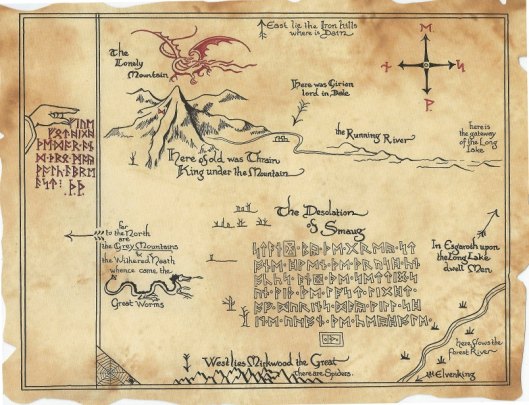
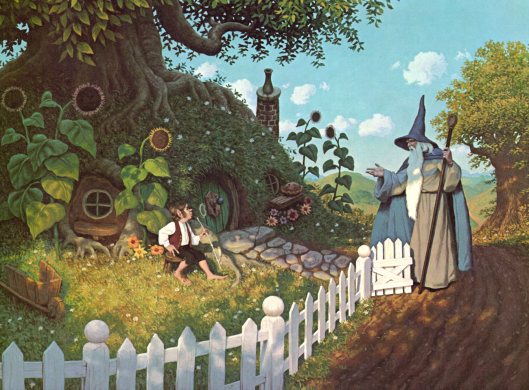
“On the table in the light of a big lamp with a red shade he spread a piece of parchment rather like a map.  ‘This was made by Thror, your grandfather, Thorin,’ he said in answer to the dwarves’ excited questions.  ‘It is a plan of the Mountain.’ “ (The Hobbit, Chapter One, “An Unexpected Party”)

We are teaching The Hobbit again and here is Gandalf, spreading out Thror’s map (by Alan Lee).

image1gwithmap.jpg

And here’s that map.

image2map


What caught our immediate attention this time was that central label:  “The Desolation of Smaug”.

The narrator describes this:

“The land about them grew bleak and barren, though once, as Thorin told them, it had been green and fair.  There was little grass, and before long there was neither bush nor tree, and only broken and blackened stumps to speak of ones long vanished.” (Chapter 11, “On the Doorstep”)

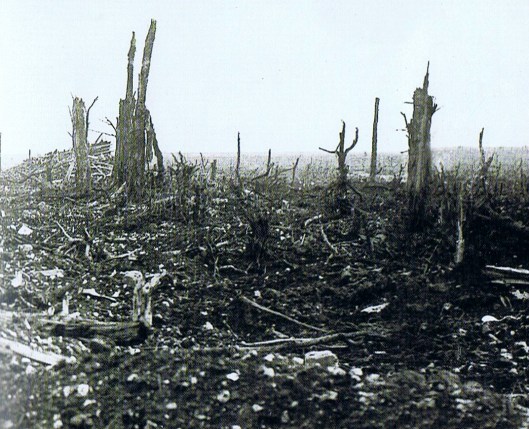
That last detail, about the stumps, reminded us of another place, one with which Tolkien, in 1916, would have been very familiar—No Man’s Land in that area between the Germans and the Allies during the Great War in the West and

image3no.jpg

image4no.jpg

pounded to dust by the heavy artillery of both sides.

image5bertha.jpg

Loading a 15-inch howitzer on the Somme, 7 August 1916.

It wasn’t just the landscape which was pounded:  entire villages disappeared under bombardment and bigger towns suffered severe damage, foreshadowing the destruction of Dale:

“they could see in the wide valley shadowed by the Mountain’s arms the grey ruins of ancient houses, towers, and walls.”

Perhaps the most famous ruin was that of the Cloth Hall in Ypres, in southern Belgium.

image7ypres

image8ypresmap

Here it is in a pre-war image.

image9clothhall.jpg

Ypres had been at the center of the northern European wool and cloth trade,

image10medloom


which had made its makers and dealers so rich that they had this enormous place built for themselves,

image11clothhall.jpg

finished in 1304.

But then, in August, 1914, came the German invasion of Belgium.

image12invasion

The Allies—the British and French—were driven back, but, in time, part of their network of defensive trenches was on the northeast side of Ypres.

image13ypressalient

Unfortunately for the Allies, the Germans held heights above the town and their guns could easily batter their positions and the town of Ypres beyond.  Doubly unfortunate was the fact that the Cloth Hall and the cathedral behind were prominent features on the landscape and therefore excellent targets—which they soon became—and, in a series of photos, the gradual nearly-complete destruction of the Cloth Hall is clearly visible.

image14ypresimage16ypresimage17ypresimage18ypresimage19ypres

It wasn’t just Belgium which suffered, however.  Beginning in January, 1915, the Germans began an air campaign against Britain.  First, airships were employed,

image20zepplin

but, as aircraft technology improved, bombers were added to the attacks,

image21bomber.jpg

which continued until May, 1918.  The raids only killed or wounded about 2,000, and did minimal physical damage,

image22damage

but the psychological damage was enormous.  In the past, as long as the Royal Navy was active, no one had ever successfully threatened England, not even Napoleon.

image23napatboulogne

Airpower changed all that and we wonder about how JRRT’s experience of that—from reading newspaper accounts—

image24newspaper

combined with his first-hand experience of No Man’s Land,

image25nomansland

influenced the way he imagined the land Smaug had invaded and destroyed.

image26erebor

When the Second War came, Tolkien became an Air Raid Warden in Oxford.

image27arp.jpg

German air attacks on England were much more elaborate and intense than in the First War,

image28dornier

causing great loss of life and enormous damage—huge fires could engulf whole sections of cities, as they did in London.

image29docks

Bombers never attacked Oxford, but the newspapers

image30paper

and newsreels of the day

image31newsreel

would have shown him what the rest of the country was experiencing, and we can easily imagine that Smaug’s

image32smaug

attack on Lake-town

image33laketown

would have somehow mirrored the awful destruction England was enduring,

image34london

just as the use of antiaircraft fire

image35aa

which brought down German aircraft

image36crashed

would suggest the fateful arrow which brings down Smaug.

image37smaug

Tolkien himself resisted all attempts to turn his work into allegories which portrayed the political and military events of his time in veiled terms, but it wouldn’t be hard to see that such earth-shaking events as the First and Second World Wars and his own experiences in them and of them, could certainly influence the way he saw and presented events in his own Middle-earth.

Thanks, as always, for reading and

MTCIDC

CD


ps

But we couldn’t leave you with that ruin of a cloth hall.  Over many years, the people of Ypres worked to rebuild and here’s that famous building today.

image38ypres

Ashes, Ashes, All Fall…

11 Wednesday Dec 2019

Posted by Ollamh in Uncategorized

≈ Leave a comment

Welcome again, dear readers.

In our last, we were thinking out loud about the Dark Tower, the Barad-dur.  This brought us easily to the White Tower of Minas Tirith

image1mt.jpg

but then, almost by Sauron’s power, we were carried beyond it to a shadowy place, as JRRT describes it:

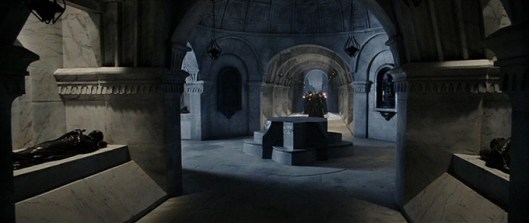
“A strong citadel it was indeed, and not to be taken by a host of enemies…unless some foe could come up behind and scale the lower skirts of Mindolluin, and so come upon the narrow shoulder that joined the Hill of Guard to the mountain mass.  But that shoulder, which rose to the height of the fifth wall, was hedged with great ramparts right up to the precipice that overhung its western end; and in that space stood the houses and domed tombs of bygone kings and lords, for ever silent between the mountain and the tower.” (The Return of the King, Book Five, Chapter 1, “Minas Tirith”)

image2map.jpg

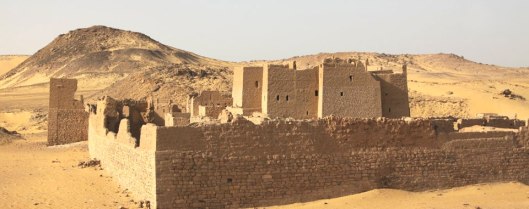
“domed tombs” was an interesting detail—and made us think of the huge necropolis (literally “dead city/city of the dead”) near El-Minya, in Egypt.

image3friedhof.jpg

(This is from a very interesting blog, “jennyfaraway.com” which we recommend that you might take a look at.  If you google “El Minya”, the major images are all from her site—and, as she seems to have traveled almost everywhere short of Mordor, there’s lots more to see and read about.)

The bigger picture, however, was that there was an entire area of the city which had been set aside as a cemetery for “bygone kings and lords”, along a street called Rath Dinen, “Silent Street”, only to be entered by “a door in the rearward wall of the sixth circle, Fen Hollen it was called”.  (The Return of the King, Book Five, Chapter 4, “The Siege of Gondor”)  Fen Hollen means “Closed Door”, and “it was kept ever shut save at times of funeral, and only the Lord of the City might use that way, or those who bore the token of the tombs and tended the houses of the dead”.

It is to this door that a small procession comes, even as the outer walls of Minas Tirith are being attacked by a vast army from Mordor.

siege3


Denethor, whose mind has actually been completely taken over by Sauron’s power through his use of a palantir, is about to do something terrible beyond that door, where “Beyond it went a winding road that descended in many curves down to the narrow land under the shadow of Mindolluin’s precipice where stood the mansions of the dead Kings and of their Stewards.”

As we know, Denethor is now convinced that Minas Tirith, and Gondor itself, are about to fall to the Dark Lord, even as he believes that Faramir, wounded in the last defense of the causeway across the Pelennor,

image5gandalf.jpg

(by Ted Nasmith, always a favorite of ours)

is dying.  In his despair, Denethor is about to rush the process by cremating Faramir and himself alive although this goes against Gondorian tradition—as Denethor says, “No tomb for Denethor and Faramir.  No tomb! No long slow sleep of death embalmed.  We will burn like heathen kings before ever a ship sailed hither from the West.”

Denethor orders attendants to pick up Faramir’s bed and “Out from the White Tower they walked, as if to a funeral, out into the darkness…”

image6litter.png

To us, two images came immediately to mind and we wondered whether they were models for JRRT:

  1. something Tolkien must have known as a common sight in his time in the trenches in the Great War, the removal of the wounded on stretchersimage7stretchers


  1. all of the funerals of monarchs he would have seen growing up and as an adult writing The Lord of the Rings in photographs in magazines and newspapers and even in newsreels, from Victoria (1901)image8avic


to Edward VII (1910)

image8bed7.jpeg

to George V (1936)

image8cgeo5.jpg

to George VI (1952).

image8dgeo6.jpg

Huge processions wound

image8procession.jpg

through London’s streets where, since the funeral of Edward VII, the casket bearing the monarch would be carried into Westminster to lie in state for a brief time

image9ageo5instate.jpg

before ultimate burial—also since Edward VII—at St George’s Chapel, in Windsor Castle.

image10stgeos.jpg

Here, in fact, is the tomb of George V and his wife, Queen Mary,

image11geo5.jpg

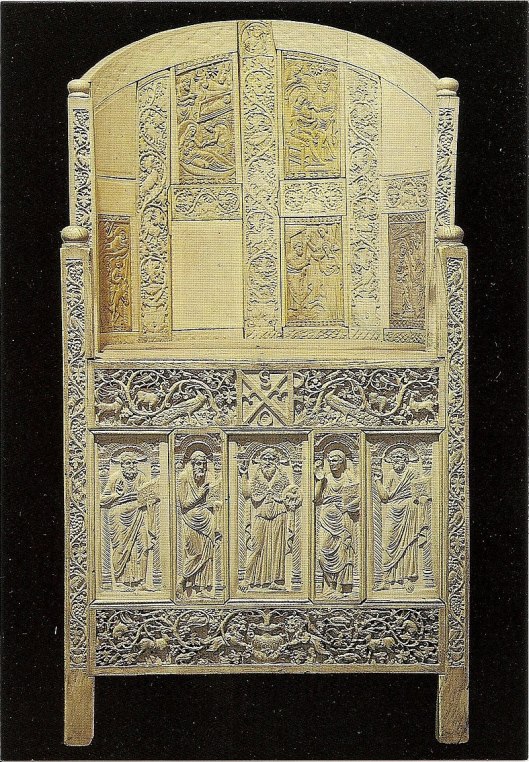
modeled on something much earlier and which might turn up in churches not only in England, but in other parts of western Europe, tomb effigies.

image12effigy.jpg

image13effigy.jpg

image14effigy.jpg

image15effigy.jpg

And JRRT, having seen such, we’re sure, as they’re fairly common in England, has them appear in “the House of the Stewards”—which is a kind of euphemism, as this is clearly the burial vault for the Stewards:

“There Pippin, staring uneasily about him, saw that he was in a wide vaulted chamber, draped as it were with the great shadows that the little lantern threw upon its shrouded walls.  And dimly to be seen were many rows of tables, carved of marble; and upon each table lay a sleeping form, hands folded, head pillowed upon stone.”

These aren’t tables, of course, but the tops of tombs, like this one:

image16effigy.jpg

That Denethor has gone mad is clear to see in his command to his attendants, who have “laid Faramir and his father side by side” on one of these “tables”:

“Here we will wait…But send not for the embalmers.  Bring us wood quick to burn, and lay it all about us, and beneath, and pour oil upon it.  And when I bid you thrust in a torch.”

To the first audience to read this scene, in 1955, just three years after the last state funeral, that of George VI,

image17geo6.jpg

that madness would have been underlined by Denethor’s “No tomb for Denethor and Faramir.  No tomb! No long slow sleep of death embalmed.  We will burn like heathen kings before ever a ship sailed hither from the West.”

The Stewards, though not the kings of Gondor, had ruled like kings for 25 generations, and it’s easy to see in “the House of the Stewards” that they treated themselves like kings, even in their burials.  That Denethor would choose a “heathen” end and in the place of formal entombment could only mean that there was little left of the mind of the man who once had ruled Gondor while waiting, at least symbolically, for the return of the King.  The readers of 1955 would have been well aware of how a real monarch was to be laid to rest and not as the Steward was, when “Denethor gave a great cry, and afterwards spoke no more, nor was ever again seen by mortal men.”  (The Return of the King, Book Five, Chapter 7, “The Pyre of Denethor”)

The attempt at a combination murder and suicide, as well as such a violation of custom, so indicative of the overthrow of Denethor’s mind by Sauron, has a fitting aftermath:

“But the servants of the Lord stood gazing as stricken men at the house of the dead; and even as Gandalf came to the end of Rath Dinen there was a great noise.  Looking back they saw the dome of the house crack and smokes issue forth; and then with a rush and rumble of stone it fell in a flurry of fire…”

Denethor has warned of a catastrophe when he replies to Gandalf:

“But soon all shall be burned.  The West has failed.  It shall all go up in a great fire, and all shall be ended.  Ash!  Ash and smoke blown away on the wind.”

With the (literal) fall of the House of the Steward, it is Denethor himself who must be little but ash.

image18denethor.jpg

Thanks, as ever, for reading, and

MTCIDC

CD

ps

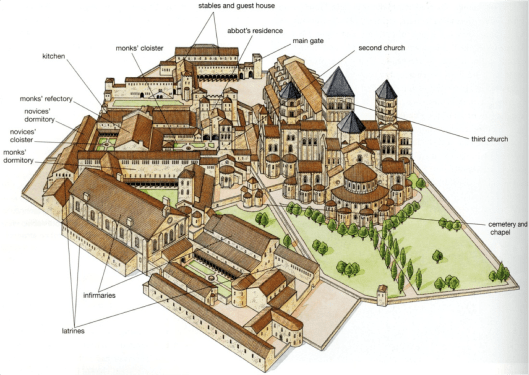
As so often, it might be that something in Tolkien’s own world has either stimulated his imagination or he has borrowed something for his own purposes.  Here’s a domed building at Oxford, the Radcliffe Camera, opened 1749, which JRRT must have passed by perhaps on a daily basis.  Could this be one source for the House of the Stewards on Rath Dinen?

image19radcam.jpg

pps

While researching this posting, we discovered this:

image20lego.jpg

a LEGO version of the pyre of Denethor, by Jackson Williams.  You can see more at:  http://www.moc-pages.com/moc.php/372301/330571

Childe Rowland to the Dark Tower Came

04 Wednesday Dec 2019

Posted by Ollamh in Artists and Illustrators, Fairy Tales and Myths, J.R.R. Tolkien

≈ Leave a comment

Tags

Alan Lee, Barad-Dur, Child Ballads, Fairy Tale, Hildebrandts, Hogwarts, John Howe, Neuschwanstein, Shakespeare, Sunset Crater, The Lord of the Rings, Tolkien, Wukoki

If you are a reader/watcher of Shakespeare, you’ll immediately recognize the title, dear readers, as coming from King Lear, Act 3, Scene 4, where a character named Edgar, pretending to be mad, babbles (among other things):

“Child Roland to the dark tower came.

His word was still ‘Fie, foh, and fum,

I smell the blood of a British man.’ “

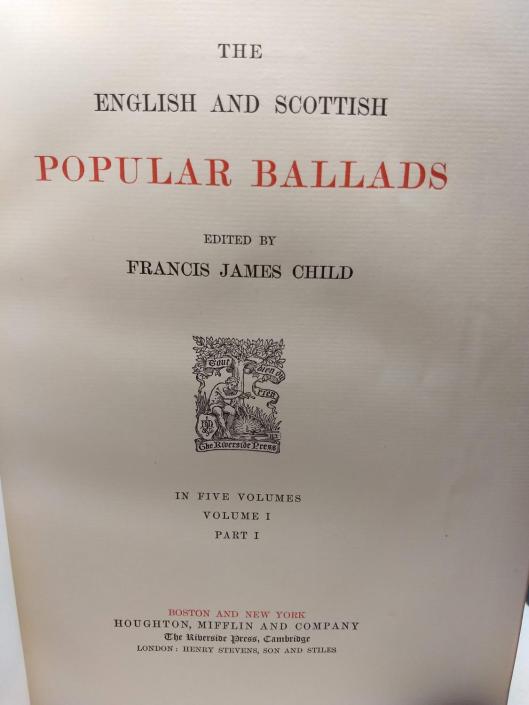
“Child Roland” belongs to a Scots ballad, “Burd Helen”, first cited in detail in Robert Jamieson’s Illustrations of Northern Antiquities (1814), page 397 and following. (“Burd” is an old Scots term for a young woman.) [If you’d like your own Jamieson, here’s the LINK to obtain a free copy: https://archive.org/details/illustrationsofn00webe]

That “Fie, foh, and fum” may also be familiar to you from the story of Jack the Giant Killer/Jack and the Bean Stalk, which first appeared in Round about our Coal Fire (1734), in “the story of Jack Spriggins and the Enchanted Bean” on page 45, with the words in a slightly different form:

“Fee-Faw-Fum!————–

I smell the Blood of an English-Man;

Whether he be alive or dead,

I’ll grind his Bones to make my Bread.”

[A copy of the whole pamphlet may be had at this LINK: https://upload.wikimedia.org/wikipedia/commons/9/98/Round_about_our_Coal_Fire%2C_or%2C_Christmas_Entertainments%2C_4th_edn%2C_1734.pdf]

It wasn’t about Jack or his beanstalk, that we began writing this, however, but about that “dark tower”.

And, when we write that, we think, at once, of the Barad-dur—although not perhaps as the Hildebrandts saw it—image1hild

or Alan Lee

image2lee

or John Howe

image3howe

or Ted Nasmith,

image4ted

as much as we respect their ideas and enjoy their work. It’s interesting to see how Tolkien imagined it.

image5jrrt

Oddly, to us, this doesn’t look like anything western, but rather like a Japanese castle, such as Kumamoto, originally built in the 15th century.

image6kumamoto

There is no long description of Sauron’s fortress in The Lord of the Rings, but there are a few bits here and there–

“The Dark Tower was broken, but its foundations were not removed, for they were made with the power of the Ring, and while it remains they will endure.” (The Fellowship of the Ring, Book Two, Chapter 2, “The Council of Elrond”)

“Then at last his [Sam’s] gaze was held: wall upon wall, battlement upon battlement, black, immeasurably strong, mountain of iron, gate of steel, tower of adamant, he saw it: Barad-dur, Fortress of Sauron.” (The Fellowship of the Ring, Book Two, Chapter 10, “The Breaking of the Fellowship”)

“…that vast fortress, armoury, prison, furnace of great power, Barad-dur, the Dark Tower…” (The Two Towers, Book Three, Chapter 8, “The Road to Isengard”)

“…towers and battlements, tall as hills, founded upon a mighty mountain-throne above immeasurable pits; great courts and dungeons, eyeless prisons sheer as cliffs, and gaping gates of steel and adamant…” (The Return of the King, Book Six, Chapter 3, “Mount Doom”)

The last description, in particular, with its mention of “towers and battlements, round as hills”, makes us think of medieval fictional castles built on rocks, like Andelkrag, from the stories of Prince Valiant,

image7andelkrag

or historical castles, like “Dracula’s castle”—actually Bran Castle–in Rumania,

image8dracs

or even the mock-medieval Neuschwanstein, built in the 19th century.

image9neu

All of these have the “towers and battlements” necessary, suggesting that the Barad-dur may be called “the dark tower”, but is, in fact, like many medieval castles, a conglomeration of towers

image10ideal

and therefore perhaps even Hogwarts might be a candidate for a model.

image11hogwarts

In one respect, however, we agree with the Hildebrandts’ view.

image12hil

The Barad-dur is built in what is clearly a volcanic world—rather like this—

image31wilderness

so what is it built from? The volcanic area we have some experience of is in northern Arizona, a place called Sunset Crater, the site of a volcanic eruption about 1085AD.

image14sun

It’s obviously a bit overgrown in comparison with our first image, but in the area are the remains of a number of buildings—ancient buildings from a culture called “Puebloan”—which date from after the eruption and they are made of the local sandstone. The most imposing is this—

image15wukoki

Imagine, then, a many-towered castle, with a central tower (perhaps darker than the others, and taller?), built of a ruddy local stone, set on a rocky outcropping in a wide volcanic valley and you have our idea of the Barad-dur. What do you think, dear readers?

Thanks, as always, for reading and

MTCIDC

CD


ps

While we were thinking and doing a little looking around about this, we happened on two very different views of that 19th-century castle, Neuschwanstein,

image16neu

image17neu

and we suddenly wondered whether it hadn’t been an inspiration for Minas Tirith?

image18mt

pps

By the way, welcome, dear readers!


Into the Trees.2

27 Wednesday Nov 2019

Posted by Ollamh in J.R.R. Tolkien, Language

≈ Leave a comment

Tags

Alan Lee, Ents, Entwives, Hildebrandts, language, mallorn, Old Forest, Party Tree, Ted Nasmith, The Lord of the Rings, Tolkien, Tom Bombadil, Treebeard, trees, Withywindle

As ever, dear readers, welcome.

In our last, we were examining something which JRRT said in a letter from 1958 discussing a script for a film of The Lord of the Rings.  He was talking about trees and said that “the story is so largely concerned with them.”  (Letters, 275)

image1tolkienandtree.jpg

That seemed to us rather an odd thing to say, there being so many human (or humanoid) characters and so much plot in which they are actors in the novel.  And yet, as we began to consider it, we found ourselves trying to approach the story as if the trees were a major part of things—or perhaps more than one part?—and to wonder just what role or roles they were playing and whether that suggests that we might need to expand our understanding of the goals of the book in general.

We thought first of Treebeard, who is, of course, a character (here, drawn by Alan Lee) in the plot

image2fangorn.jpg

and so are the Ents (by Ted Nasmith).

image3ents.jpg

Besides being plot-drivers, though, Treebeard and his people represent an ancient part of Middle-earth which has somehow survived the long years of human occupation, with its own interests and its own memories—and its own tragedy:  the loss of the Entwives.   As Treebeard says:

“I am not altogether on anybody’s side because nobody is altogether on my side…”  (The Two Towers, Book Three, Chapter 4, “Treebeard”)

The sentient nature of trees is not only to be found in Treebeard and the Ents, however.  Consider the Old Forest.

image4theoldforest.gif

As Merry describes it:

“But the Forest is queer.  Everything in it is very much more alive, more aware of what is going on, so to speak, than things are in the Shire…I have only once or twice been in here after dark, and then only near the hedge.  I thought all the trees were whispering to each other, passing news and plots along in an unintelligible language…” (The Fellowship of the Ring, Book One, Chapter 6, “The Old Forest”)

Perhaps the words “unintelligible language” say it best.  Merry appears to accept not only that the trees are awake (“more aware”, as he puts it), but also that they have their own complex form of intercommunication (“language”).  At the same time he may believe such things, what it is they are thinking and saying is not comprehensible, at least by him and, we presume, by those of his acquaintance.  In other words, they are part of a world in which he has no part, just as Treebeard and the Ents are apart from those who visit or, in the case of the orcs, attack them.

In the case of Old Man Willow,

image5omw.jpg

the mostly passive hostility of the Old Forest—

“And the trees do not like strangers.  They watch you.  They are usually content merely to watch you, as long as daylight lasts, and don’t do much.  Occasionally the most unfriendly ones may drop a branch, or stick a root out, or grasp at you with a long trailer.”

becomes something more.  The Forest seems to have been guiding the hobbits, funneling them towards the river Withywindle, about which Merry has said:

“We don’t want to go that way!  The Withywindle valley is said to be the queerest part of the whole wood—the centre from which all the queerness comes, as it were.”

And then—

“Suddenly Frodo himself felt sleep overwhelming him.  His head swam.  There now seemed hardly a sound in the air.  The flies had stopped buzzing.  Only a gentle noise on the edge of hearing, a soft fluttering as of a song half whispered, seemed to stir in the boughs above.  He lifted his heavy eyes and saw leaning over him a huge willow-tree, old and hoary.  Enormous it looked, its sprawling branches going up like reaching arms with many long-fingered hands, its knotted and twisted trunk gapping in wide fissures that creaked faintly as the boughs moved.  The leaves fluttering against the bright sky dazzled him, and he toppled over, lying where he fell upon the grass.”

Frodo isn’t alone in succumbing to the seductive nature of the place:

“Merry and Pippin dragged themselves forward and lay down with their backs to the willow-trunk.  Behind them great cracks gaped wide to receive them as the tree swayed and creaked.  They looked up at the grey and yellow leaves, moving softly against the light, and singing.  They shut their eyes, and then it seemed that they could almost hear words, cool words, saying something about water and sleep.  They gave themselves up to the spell and fell fast asleep at the foot of the great grey willow.”

Again, as Merry has said, there is a language here, this time a little more intelligible, but it might just be part of a general hobbit drowsiness on what appears to be a sultry autumn afternoon, unless we worry about those “great cracks” gaping “wide to receive them”—and we should.  One of the hobbits—the only one not seduced into slumber—does:

“Sam sat down and scratched his head, and yawned like a cavern.  He was worried.  The afternoon was getting late, and he thought this sudden sleepiness uncanny.  ‘There’s more behind this than sun and warm air,’ he muttered to himself.  ‘I don’t like this great big tree.  I don’t trust it.  Hark at it singing about sleep now!  This won’t do at all!’ “

As he rouses himself, he quickly discovers what the seductive tree has been planning:  it is trying to drown Frodo and has completely swallowed Pippin and partially swallowed Merry.

They are rescued, of course, by Tom Bombadil, a character who has been left out of virtually every other medium of telling the story of The Lord of the Rings.

image6tom.jpg

And it’s not hard to see why:  he is somehow, truly out of the story, just as he’s unaffected by the Ring:

“It seemed to grow larger as it lay for a moment on his big brown-skinned hand.  Then suddenly he put it to his eye and laughed.  For a second the hobbits had a vision, both comical and alarming, of his bright blue eye gleaming through a circle of gold.  Then Tom put the Ring round the end of his little finger and held it up to the candlelight.  For a moment the hobbits noticed nothing strange about this.  Then they gasped.  There was no sign of Tom disappearing!” (The Fellowship of the Ring, Book One, Chapter 7, “In the House of Tom Bombadil”)

When it comes to things like the Old Forest and Old Man Willow, however, he is invaluable.

“As they listened, they began to understand the lives of the Forest, apart from themselves, indeed to feel themselves as the strangers where all other things are at home.”

As Tom is apart, and ancient—

“Eldest, that’s what I am.  Mark my words, my friends:  Tom was here before the river and the trees; Tom remembers the first raindrop and the first acorn.”

he is distanced, being senior to all living, growing things, and that gives him both greater knowledge and greater perspective, able to know and understand other ancient things, even if less ancient than he:

“Tom’s words laid bare the hearts of the trees and their thoughts, which were often dark and strange, filled with a hatred of things that go free upon the earth, gnawing, biting, breaking, hacking, burning:  destroyers and usurpers.  It was not called the Old Forest without reason, for it was indeed ancient, a survivor of vast forgotten woods; and in it there lived yet, ageing no quicker than the hills, the fathers of the fathers of trees, remembering times when they were lords.”

And here again we see that sense of otherness:  these are living creatures only tangentially—and then, it seems, often negatively—involved with humans (and humanoids).  And they are not just living things, but things with their own interests and purposes.  Taking all of that into account, and adding in the healing nature of the mallorn seed which Galadriel gives to Sam, which replaces the cut-down Party Tree (please see our previous posting on that subject), we would tentatively advance two possible reasons for JRRT’s remark about the major place of trees in The Lord of the Rings.

First, when it comes to the Old Forest and Old Man Willow, as well as Treebeard and the Ents, by having them in the story we are being quietly told that the history of Middle-earth is not just about its two-footed inhabitants.  Although so much of the plot focuses upon them, there is more to the story, a deeper, older context yet, putting them into a frame so much larger than that in which they and their past or even current actions take place.  This gives Gandalf’s words to Bilbo at the end of The Hobbit that much more weight:

“You are a very fine person, Mr. Baggins, and I am very fond of you; but you are only quite a little fellow in a wide world after all!”  (The Hobbit, Chapter 19, “The Last Stage”)

Second, in growing things there is a continuity beyond the human world, and not necessarily only an Old Forest malevolence.  The seed may be from a tree in fading Lorien, as Galadriel says when she gives the box containing it and earth from her garden to Sam:

“Then you may remember Galadriel, and catch a glimpse of far off Lorien, that you have seen only in our winter.  For our Spring and our Summer are gone by, and they will never be seen on earth again save in memory.”  (The Fellowship of the Ring, Book Two, Chapter 8, “Farewell to Lorien”)

Yet, planted in the Shire, the young tree appears at a time when the whole world is being regenerated:

“Altogether 1420 in the Shire was a marvellous year.  Not only was there wonderful sunshine and delicious rain, in due times and perfect measure, but there seemed something more:  an air of richness and growth, and a gleam of a beauty beyond that of mortal summers that flicker and pass upon this Middle-earth.” (The Return of the King, Book Six, Chapter 9, “The Grey Havens”)

And, thus, though the magical Lorien may fade and die, something of it will live beyond it in another place and time, linked to, and a reminder of, that other place and time, by a tree which

“In after years, as it grew in grace and beauty,… was known, far and wide, and people would come long journeys to see it:  the only mallorn west of the Mountain and east of the Sea…”

image7lorien.jpg

(by the Hildebrandts)

Thanks, as always, for reading and, as always,

MTCIDC

CD


Into the Trees.1

20 Wednesday Nov 2019

Posted by Ollamh in Artists and Illustrators, J.R.R. Tolkien, Narrative Methods

≈ Leave a comment

Tags

A Long-Expected Party, Alan Lee, Angus McBride, Beech, Charles Addams, Cousin It, Eugenia Weinstein, Galadriel, Hildebrandts, Inger Edelfeldt, Lorien, mallorn, Party Field, Party Tree, Samwise Gamgee, Ted Nasmith, The Addams Family, The Lord of the Rings, Tolkien, Treebeard, trees

Welcome, dear readers, as always.

In the draft of an undated letter from 1958 about a proposed film of The Lord of the Rings, Tolkien wrote about the work of the preparer of the draft for the script (whom he calls “Z”):

“I deeply regret this handling of the ‘Treebeard’ chapter, whether necessary or not.  I have already suspected Z of not being interested in trees:  unfortunate, since the story is so largely concerned with them.” (Letters, 275)

“since the story is so largely concerned with them” puzzled us at first.  JRRT himself, of course, had strong feelings for trees, as he says in this letter from three years earlier:

“I am (obviously) much in love with plants and above all trees and always have been; and I find human maltreatment of them as hard to bear as some find ill-treatment of animals.” (Letters, 220)

image1jrrttree.jpg

“so largely concerned with them”, however, would make them seem almost like characters, or at least major subjects of discussion, within the text.

As far as characters go, there is Treebeard, of course.

image2treebeard.jpg

(We’re not quite sure about this early version by the Hildebrandts.  Here, he appears to be wearing a coat of Spanish moss

image3amoss.jpg

and rather reminds us of Cousin It, from the cartoonist, Charles Addams, 1912-1988,

image3chasaddams.jpg

who created a number of mock-sinister characters, including “Cousin It”.

image4it.jpg

Here it/It is in the 1991 film

image5it.jpg

image6poster.jpg

or here it/it is in the new animated feature.

image7it

The challenge in illustrating Treebeard is to find a happy balance between human and tree, as we see in this Alan Lee portrayal, on the one hand,

image8treeb.jpg


or that of Angus McBride on the other, with much in between–

image9mcb.GIF

image10atree.jpg

by Inger Edelfeldt,

image10btree.jpg

by Eugenia Weinstein.)

And there are the Ents, as well, who, like Tolkien, are more than a little upset over the destruction of trees, but, unlike the author, take a very direct approach to stopping it (by Ted Nasmith).

image10isengard.jpg

Beyond Treebeard and the Ents, what do we find?

First, there is the so-called “Party Tree”:

image11party.jpg

“The tents began to go up.  There was a specially large pavilion, so big that the tree that grew in the field was right inside it, and stood proudly at one end, at the head of the chief table.  Lanterns were hung on all its branches.” (The Fellowship of the Ring, Book One, Chapter 1, “A Long-expected Party”)

Although its first appearance is understated, it clearly has greater significance, as we see when the hobbits return to the Shire and Sam sees one particular piece of completely unnecessary destruction:

“ ‘They’ve cut it down!’ cried Sam.  ‘They’ve cut down the Party Tree!’ He pointed to where the tree had stood under which Bilbo had made his Farewell Speech.  It was lying lopped and dead in the field.  As if this was the last straw Sam burst into tears.” (The Return of the King, Book Six, Chapter 8, “The Scouring of the Shire”)

And this is not the end.  When the Fellowship was leaving Lorien, Galadriel gave each a special gift.  To Sam she said:

“ ‘For you little gardener and lover of trees,’ she said to Sam, ‘I have only a small gift.’  She put into this hand a little box of plain grey wood, unadorned save for a single silver rune upon the lid.  ‘Here is set G for Galadriel,’ she said; ‘but also it may stand for garden in your tongue.  In this box there is earth from my orchard, and such blessing as Galadriel has still to bestow is upon it.  It will not keep you on your road, nor defend you against any peril, but if you keep it and see your home again at last, then perhaps it may reward you.  Though you should find all barren and laid waste, there will be few gardens in Middle-earth that will bloom like your garden.’ “ (The Fellowship of the Ring, Book Two, Chapter 8, “Farewell to Lorien”)

When the hobbits return to the Shire and Sharkey and his henchmen are removed, Sam uses Galadriel’s gift to do exactly as she told him to, to regenerate things.  When he opened the box, he found something extra:

“Inside it was filled with a grey dust, soft and fine, in the middle of which was a seed, like a small nut with a silver shale.” (The Return of the King, Book Six, Chapter 9, “The Grey Havens”)

(“Shale” here is an old variation of “shell”.)

Sam chooses a special place for this:

“The little silver nut he planted in the Party Field where the tree had once been; and he wondered what would come of it.  All through the winter he remained as patient as he could, and tried to restrain himself from going round constantly to see if anything was happening.”

From this much build, we know that something just this side of miraculous must be about to happen—and it does:

“Spring surpassed his wildest hopes.  His trees began to sprout and grow, as if time was in a hurry and wished to make one year do for twenty.  In the Party Field a beautiful young sapling leaped up:  it had silver bark and long leaves and burst into golden flowers in April.  It was indeed a mallorn, and it was the wonder of the neighborhood.  In after years, as it grew in grace and beauty, it was known far and wide and people would come long journeys to see it:  the only mallorn west of the Mountains and east of the Sea; and one of the finest in the world.”

It seems that Tolkien so loved trees that he even invented one here.  Mellyrn (the plural of mallorn by the same linguistic process which, in English, turns “foot” into “feet”)  appear to be mostly a beech tree of the type called “Fagus sylvatica” or “European beech” (although there are also actual beech trees in Middle-earth).

image12beech.jpg

image13beech.jpg

Some adaptation has taken place:  European beeches have spreading branches and can grow to as much as 150 feet, but Tolkien’s tree seems even bigger and has “long leaves”—longer than beech?—

image14beech.jpg

and “golden flowers”, which beech trees don’t have, although the silver bark is similar.

image15bark.jpg

So much of Middle-earth is visibly old, sometimes in layers of antiquity, and JRRT is very careful to present a Shire which lives on top of something older, as the East Road, which runs through its middle and had been built by the dwarves and improved upon by the Numenoreans reminds us.  The Party Field, under that name, is almost brand new, however, the party being Bilbo and Frodo’s joint birthday, celebrated at the beginning of The Lord of the Rings.  The original tree just happens to be in the middle of that field.  This replacement, however, is clearly more than just a replacement and we’ll examine its possible significance and more in part 2 of this in our next posting.

In the meantime, thanks, as always for reading and

MTCIDC

CD

Orc Looks

13 Wednesday Nov 2019

Posted by Ollamh in Artists and Illustrators, J.R.R. Tolkien, Villains

≈ Leave a comment

Tags

Alan Lee, Angus McBride, Count Orlok, Denis Gordeev, Description, Frank Frazetta, Hal Foster, Hildebrandts, Illustration, John Howe, Nosferatu, Orcs, Peter Jackson, Prince Valiant, Ted Nasmith, The Lord of the Rings, Tolkien, Villains

As ever, dear readers, welcome.

Two postings ago, we were discussing henchmen and, of course, orcs were among them.

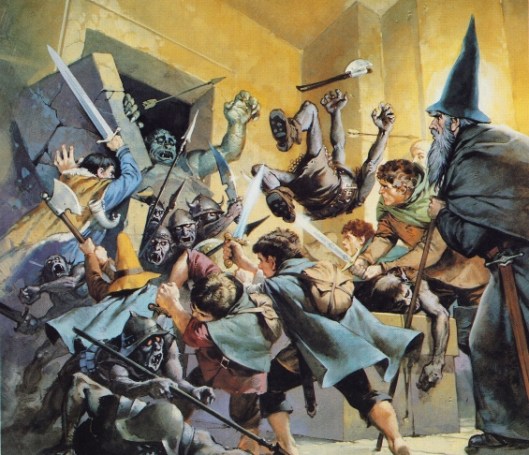
While we were discussing, we began to wonder about orcs.  They appear numerous times in The Lord of the Rings, from pursuing the Fellowship in the mines of Moria

image1aamines.jpg

to attacking Boromir and capturing Merry and Pippin

image1adeath.jpg

to forming the initial assault team on Minas Tirith.

image1battack.jpg

But what do they really look like?

Here’s the first description we’re given, a second-hand one, spoken by Gandalf:

“There are Orcs, very many of them…And some are large and evil:  black Uruks of Mordor.”

(The Fellowship of the Ring, Book Two, Chapter 5, “The Bridge of Khazad-Dum”)

Our first real view of them comes just paragraphs later:

“…a huge orc-chieftain, almost man-high, clad in black mail from head to foot, leaped into the chamber…His broad flat face was swart, his eyes were like coals, and his tongue was red.”

If this orc-chieftain is representative, then, orcs are smaller than men, with dark skin and broad flat faces.  But is this a consistent description?

We next meet the orcs as casualties after the death of Boromir:

“There were four goblin-soldiers of greater stature, swart, slant-eyed, with thick legs and large hands.”

(The Two Towers, Book Three, Chapter 1, “The Departure of Boromir”)

As we know from other references to “goblins”, Tolkien came to blur the words “goblin” and “orc”, where the earlier Hobbit has only the former.  Thus, that compound “goblin-soldiers” really means “orcs” and we see that word “swart”—“dark/black” (like German schwarz)—again.  To which is added “slant-eyed” and the detail “of greater stature” (than the surrounding dead orcs), emphasizing a second time that many, if not most, orcs are apparently normally small creatures.

So far, then, orcs, in general, seem to be dark-skinned and little, with broad, flat faces.  And their next appearance may add a little more:

“In the twilight he saw a large black Orc, probably Ugluk, standing facing Grishnakh, a short crook-legged creature, very broad and with long arms that hung almost to the ground.  Round them were many smaller goblins.  Pippin supposed that these were ones from the North…

Ugluk shouted, and a number of other Orcs of nearly his own size ran up.”

(The Two Towers, Book Three, Chapter 3, “The Uruk-Hai”)

This suggests that there, in fact, at least two subspecies of orcs:  smaller ones (possibly from the north) in the service of Sauron, and larger ones, who are the followers of Saruman.

(There are also large orcs in Sauron’s pay, however, as we saw above in Moria.)

And we might add one more detail—at least one has rather menacing teeth:

“He stooped over Pippin, bringing his yellow fangs close to his face.”

With this much information from the text, we turned to illustrations:  how close are they to these bits of description?  There are many images of orcs on the internet and we ourselves have used a certain number of those images over the years, beginning with this from the Hildebrandts, which we believe must be one of the earliest.

image1hild.jpg

These are mostly very piglike, reminding us both of a wild boar (with a close shave)

image2boar.jpgand of a connection which we suggested some time ago with Jabba the Hutt’s Gammorean Guard—

image3gammoreangd.jpg

That green skin color, both on the Hildebrandt orcs and the Gammorean Guard, will follow orcs through the work of many artists, like Angus McBride,

image4mcb.JPG

and Ted Nasmith–

image5nas.jpg

although not in this image of the wounding of Boromir–

image6bor.jpg

and sometimes in the work of Alan Lee,

image7lee.jpg

as well as that of John Howe.

image8jhowe.jpg

In place of the piggyness, we see a kind of apelike quality in this illustration by Frank Frazetta

image9fraz.jpg

or this, by Alan Lee.

image10lee.jpg

In the Jackson films, the orcs can range from what we think of as rather batlike

image11bat.jpg

image12orc.jpg

to resembling Count Orlok in Murnau’s 1922 film, Nosferatu,

image13nosf.jpg

image14orc.jpg

to being grossly human.

image15aorc.jpg

And then there’s an outlier in the illustrations of Denis Gordeev, who seems to have read a different version of The Lord of the Rings, as his orcs, whose faces are in the ape category, but who appear to be as shaggy as bears, though definitely “swart”.

image15bear.jpg

image16orcs.jpg

Thus, we mostly see images which don’t really match the descriptions in the books, the short (or almost man-height), black-skinned, flat-faced creatures of The Lord of the Rings, have mostly turned green, come in all sizes, and have faces which range from piglike to batlike.

But does JRRT have any more to say about the look of orcs?  In an undated letter from 1958 to Forrest J. Ackerman, he says of them:

“The Orcs are definitely stated to be corruptions of the ‘human’ form seen in Elves and Men.  They are (or were) squat, broad, flat-nosed, sallow-skinned with wide mouths and slant eyes:  in fact degraded and repulsive versions of the (to Europeans) less lovely Mongol-types.”  (Letters, 274)

The skin color has changed from “swart” to “sallow”, often meaning a kind of yellowish tint, rather like this image of Snape from the Harry Potter films.

image17asnape.jpg

Much of this description, however, seems to match, at least roughly, the earlier ones—except for the potentially racist tone of “less lovely Mongol-types”.  (We should always remember, though, that Tolkien was born in 1892, grew up in a world in which Britain controlled 2/5s of the earth’s land mass in colonies, and where a national poet like Kipling could refer to those colonized as “lesser breeds”.  This might at least explain something of his approach to non-Caucasian people, if not excuse it.)

Putting aside that tone for the moment, to try to understand what he had in mind in this description, what we come up with is something like this, from illustrations done for Hal Foster’s Prince Valiant Fights Attila the Hun (1952)—

image17val.jpgimage18val.jpg

We admit that this is only a rough guess—Tolkien’s orcs, though supposedly derived from elves and therefore more humanoid than most illustrators make them, are probably smaller and perhaps more caricatured or exaggerated, but, at the same time, these figures suggest, to us, something of the barbaric look we believe that JRRT had in mind.

As we’ve seen, however, Tolkien himself seems to have changed his mind over time, turning his orcs from “swart” to “sallow”, although the general impression of smaller, broad creatures with flat faces remained pretty much the same throughout The Lord of the Rings.  So many of his illustrators, however, appear to have had anything from a slightly different to a very different view, making us wish that we could read their letters to find out just where their ideas came from.

Thanks, as always, for reading and

MTCIDC

CD

ps

We do have an idea of where that green skin color came from—perhaps from a misreading of the text, in fact.  In “The Bridge of Khazad-Dum”, Gandalf, in the brief initial description of orcs we quoted above, adds “…but there is something else there.  A great cave-troll, I think, or more than one.”

Shortly after that, the Fellowship is attacked and:

“A huge arm and shoulder, with a dark skin of greenish scales, was thrust through the widening gap.  Then a great, flat, toeless foot was forced through below.”

This appears to be one of those “great cave-troll[s]” and perhaps that “skin of greenish scales” has been accidentally transferred to the orcs?

Minions and Henchmen

06 Wednesday Nov 2019

Posted by Ollamh in Films and Music, Theatre and Performance, Villains

≈ Leave a comment

Tags

carabiniers, Falscappa, Gilbert and Sullivan, Henchmen, Jacques Offenbach, Les Brigands, Major General, Minions, Pirate King, The Keystone Cops, The Pirates of Penzance

As ever, dear readers, welcome.  In our last, entitled “Henchmen and Minions”, we had a brief look at henchmen—that is, the servants—in groups—of evil-doers, from orcs

image1orcs.jpg

to Imperial stormtroopers.

image2storm.png

These were a grim lot, doing their masters’ work and showing no signs of remorse or regret and mostly very competent at doing so.

In this posting, we thought that we would take the opposite tack and look at minions—for our purposes, we’ll define them as the Light Side of the Dark Side.  Often, unlike Sauron or Cardinal Richelieu in our last post, their bosses are hardly the object of fear themselves.

We begin with two combinations of comic ineptitude:  government mounted police vs bandits and policemen vs pirates.

In 1869, Jacques Offenbach (1819-1880)

image3offenbach.jpg

composed the music for Les Brigands (“The Bandits”).

image4poster.jpg

The plot concerns the adventures of a group of Italian banditti, led by a chief called Falsacappa, (“Fake Cape”, suggesting that he’s only wearing the costume of a bandit and is, in fact, someone not so bold?)

image5fals.jpg

who are scheming to pull off a major heist.  Here (along with that of Falsacappa) are some of the original costume designs.

image6barbavano.jpgimage6fior.jpg

These bandits talk (and sing) as if they were blood-thirsty killers, mostly, but that seems to be all that they do, except indulge in petty crime.  Their opponents, the carabiniers (here’s an original design for their uniforms),

image8carab.JPEG

the ancestors of the modern carabinieri,

image9carab.jpg

although the costume design makes them look much more like French Napoleonic carabiniers,

image10carab.jpg

a pair of cavalry units, rather than mounted police, are even less impressive.  In fact, as they march onstage, they recite this (our crude translation):

“Nous sommes les carabiniers, gauche, gauche
La sécurité des foyers, gauche, gauche
Mais, par un malheureux hasard,
Au secours des particuliers
Nous arrivons toujours trop tard…”


“We are the carabiniers, left, left.

The security of homes, left, left.

But, by an unhappy chance,

In helping private citizens,

We always arrive too late.”

They are also so loud as they tramp along that they always alert criminals that they are coming (and there’s a song about that)—just look at this sheet music cover to give you an idea.

image11carabiniers.png

As for a leader, he seems just to blend in with his hapless men.

In 1871, WS Gilbert (1836-1911)

image12wsg.jpg

of (eventual) Gilbert and Sullivan (1842-1900) operetta fame,

image13gil.jpg

published a translation of Les Brigands, which became the standard 19th-century translation.  The characters in the Offenbach clearly also influenced Gilbert, who, in 1879, created The Pirates of Penzance.

image14pirates.jpg

Led by a Pirate King, who looks the part, but…

the plot concerns some extremely tender-hearted pirates, who, being orphans themselves, always let people—and ships—go if the crews claim to be orphans.

image15pirates.png

Their opponents, who appear to be Metropolitan policemen (“Bobbies/Peelers”),

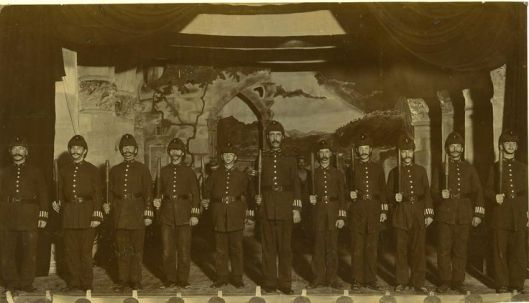
image16police.png

are extremely timid and jump at the slightest sound—which is not surprising, as their chief is an elderly major general whose greatest claim is that he knows everything about war—except for war.

image17mod.jpg

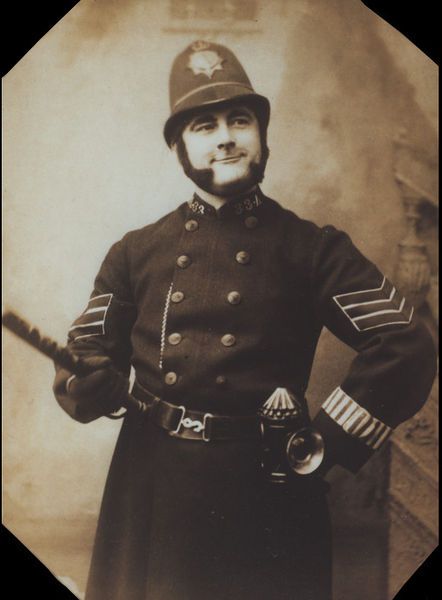
Inept or timid policemen seem to be very popular as minions—early film featured The Keystone Cops from 1912-1917.

image18key.jpg

If earlier figures, like the carabiniers and the Gilbert and Sullivan police were dim or fraidy-cats, the Keystone Cops were an absolute disaster, causing more problems than they ever solved–

image19key.jpg

which brings us to our last exhibit

image20minions.jpg

and perhaps enough said.


Thanks for reading, as always, and, as always,

MTCIDC

CD

ps

If you would like to see the Keystone Cops in action, here’s a LINK to one of their films, “For Better But Worse” at the Internet Archive.

(There are more there.)

Henchmen and Minions

30 Wednesday Oct 2019

Posted by Ollamh in Films and Music, J.R.R. Tolkien, Narrative Methods, Villains

≈ Leave a comment

Tags

A History of Scotland, Albrecht Duerer, Alexandre Dumas, Cardinal Richelieu, Droids, druid, Emperor Palpatine, Flying Monkeys, gangster, Henchmen, Mignon, Neil Oliver, Odysseus, Orcs, Robin Hood, Saint Columba, Saruman, Sauron, Sheriff of Nottingham, Telemachus, The Lord of the Rings, The Three Musketeers, The Wizard of Oz, Tolkien, Winkie Guards


Welcome, dear readers, as ever.

A henchman was originally a hengestman, from hengest “horse/stallion” + man “man”—in other words, a groom, a servant who takes care of horses.

image1groom.jpg

Although the word began with the meaning of “groom”, it has certainly changed over time and now it suggests something like “ thuggish follower”—like these gangster henchmen.

image2henchmen.jpg

The word minion comes from the Old French word mignon, “a (little) darling”, but its meaning has also changed–even more than henchmen, now indicating a kind of low-level person who simply follows orders, which the peasants in this picture by Albrecht Duerer make us think of.

image3thugs.jpg

These words originally came to mind while we were watching the first episode of Neil Oliver’s excellent BBC series A History of Scotland. (Smart writing and wonderful photography.)

image4oliver.jpg

In the episode, a scene was reenacted, in which Saint Columba (521-597AD)

image5columba.jpg

faces off against a Pictish druid.

image6druids.PNG

(This is the closest we can come to an image of a druid. As far as we know, there are, in fact, no surviving images of the learned class of the Celtic world, just often very imaginative illustrations with little or no factual basis.)

In Adomnan’s (c.624-704AD) Life of Columba, Book II, Chapter XXXIV, Columba struggles to free a slave being held by the druid, Broichan.

image7struggle.JPG

The saint wins, of course, but what struck us about this story—and in this DVD depiction—was that it was a one-on-one contest: neither man called upon backup—something which one might especially expect from the antagonist of the story, as in so many. After all, we thought, just think of villains in all kinds of stories—

The Sheriff of Nottingham has his henchmen ready to try to capture Robin Hood at the famous archery contest.

image8not.jpg

image9arch.jpg

Or, if you prefer—

image10disney.png

The evil Cardinal Richelieu

image11acard.jpg

has his guards

image11guards.jpg

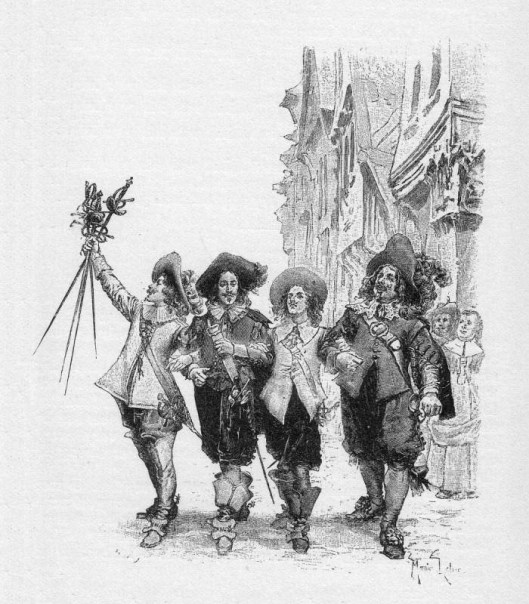
to fight the musketeers

image12three.jpg

image13musk.jpg

in Alexandre Dumas’ The Three Musketeers.

image14dumas.jpg

The Wicked Witch of the West

image15witch.jpg

has two sets of henchmen: the flying monkeys

image16witch.jpg

which have been the terror of many childhoods, in our experience, and the Winkie Guards,

image17witch.jpg

whose drum beat and deep chant always made us a little nervous when we were little (not to mention their skin color and odd noses).

image18witch.jpg

Here’s a LINK, in case you’ve forgotten what they were like.

In a more modern story, the Separatists have so many droids,

image19droids.jpg

as Emperor Palpatine has so many stormtroopers.

image20troopers.jpg

And, of course, Saruman

image21saruman.jpg

has so many orcs

image22orcs.gif

as, along with all of his human minions, does Sauron.

image23orcs.jpg

We can imagine several reasons for such overwhelming force in these stories. For the protagonist/s, the more of the enemy there are, the more impressive their defeat, as when Odysseus faces so many suitors (over a hundred) with only his son, Telemachus, and a couple of servants to help him.

image24suitors.jpg

(And Athena, of course!)

image25suitors.jpg

For the antagonist/s, there is the sense that they are so powerful that they have only to command and vast numbers of henchmen will do their bidding.

image26hench.jpg

At the same time, we wonder if, underneath all of that force, there is a basic insecurity, a feeling that “my power by itself is really not enough—I can’t do this alone”? After all, it’s not the Sheriff of Nottingham who faces Robin Hood in the 1938 film,

image27poster.jpg

but the secondary character, Guy of Gisborne (played by Basil Rathbone, who was the first great film Sherlock Holmes).

image28rathbone.jpg

image29holmes.jpg

The Wicked Witch of the West relies upon her monkeys and her guards and Saruman and Sauron upon their armies and none ever faces an opponent alone: for that matter, we never even see Sauron except as a shadow at his fall.

And perhaps that underlying insecurity has some roots in reality: the only antagonist who actually confronts the protagonist is a little too sure of himself and of his major henchman and we all know what happens next…

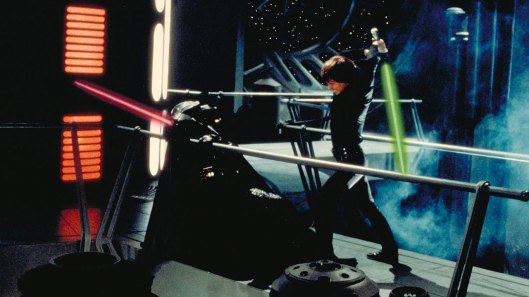
image30darth.jpg


As always, thanks for reading and

MTCIDC, dear readers!

CD

← Older posts
Newer posts →

The Doubtful Sea Series Facebook Page

The Doubtful Sea Series Facebook Page

  • Ollamh

Categories

  • Artists and Illustrators
  • Economics in Middle-earth
  • Fairy Tales and Myths
  • Films and Music
  • Games
  • Heroes
  • Imaginary History
  • J.R.R. Tolkien
  • Language
  • Literary History
  • Maps
  • Medieval Russia
  • Military History
  • Military History of Middle-earth
  • Narnia
  • Narrative Methods
  • Poetry
  • Research
  • Star Wars
  • Terra Australis
  • The Rohirrim
  • Theatre and Performance
  • Tolkien
  • Uncategorized
  • Villains
  • Writing as Collaborators
Follow doubtfulsea on WordPress.com

Across the Doubtful Sea

Recent Postings

  • Subterranean April 22, 2026
  • Serendipity? April 15, 2026
  • Serendipity April 8, 2026
  • Verisimilitude April 1, 2026
  • Goblins and Goblin March 25, 2026
  • Crowing and Raven March 18, 2026
  • The Damage of Dragons March 11, 2026
  • Encouragement March 4, 2026
  • Eavesdropping February 25, 2026

Blog Statistics

  • 112,277 Views

Posting Archive

  • April 2026 (4)
  • March 2026 (4)
  • February 2026 (4)
  • January 2026 (4)
  • December 2025 (5)
  • November 2025 (4)
  • October 2025 (5)
  • September 2025 (4)
  • August 2025 (4)
  • July 2025 (5)
  • June 2025 (4)
  • May 2025 (4)
  • April 2025 (5)
  • March 2025 (4)
  • February 2025 (4)
  • January 2025 (5)
  • December 2024 (4)
  • November 2024 (4)
  • October 2024 (5)
  • September 2024 (4)
  • August 2024 (4)
  • July 2024 (5)
  • June 2024 (4)
  • May 2024 (5)
  • April 2024 (4)
  • March 2024 (4)
  • February 2024 (4)
  • January 2024 (5)
  • December 2023 (4)
  • November 2023 (5)
  • October 2023 (4)
  • September 2023 (4)
  • August 2023 (5)
  • July 2023 (4)
  • June 2023 (4)
  • May 2023 (5)
  • April 2023 (4)
  • March 2023 (5)
  • February 2023 (4)
  • January 2023 (4)
  • December 2022 (4)
  • November 2022 (5)
  • October 2022 (4)
  • September 2022 (4)
  • August 2022 (5)
  • July 2022 (4)
  • June 2022 (5)
  • May 2022 (4)
  • April 2022 (4)
  • March 2022 (5)
  • February 2022 (4)
  • January 2022 (4)
  • December 2021 (5)
  • November 2021 (4)
  • October 2021 (4)
  • September 2021 (5)
  • August 2021 (4)
  • July 2021 (4)
  • June 2021 (5)
  • May 2021 (4)
  • April 2021 (4)
  • March 2021 (5)
  • February 2021 (4)
  • January 2021 (4)
  • December 2020 (5)
  • November 2020 (4)
  • October 2020 (4)
  • September 2020 (5)
  • August 2020 (4)
  • July 2020 (5)
  • June 2020 (4)
  • May 2020 (4)
  • April 2020 (5)
  • March 2020 (4)
  • February 2020 (4)
  • January 2020 (6)
  • December 2019 (4)
  • November 2019 (4)
  • October 2019 (5)
  • September 2019 (4)
  • August 2019 (4)
  • July 2019 (5)
  • June 2019 (4)
  • May 2019 (5)
  • April 2019 (4)
  • March 2019 (4)
  • February 2019 (4)
  • January 2019 (5)
  • December 2018 (4)
  • November 2018 (4)
  • October 2018 (5)
  • September 2018 (4)
  • August 2018 (5)
  • July 2018 (4)
  • June 2018 (4)
  • May 2018 (5)
  • April 2018 (4)
  • March 2018 (4)
  • February 2018 (4)
  • January 2018 (5)
  • December 2017 (4)
  • November 2017 (4)
  • October 2017 (4)
  • September 2017 (4)
  • August 2017 (5)
  • July 2017 (4)
  • June 2017 (4)
  • May 2017 (5)
  • April 2017 (4)
  • March 2017 (5)
  • February 2017 (4)
  • January 2017 (4)
  • December 2016 (4)
  • November 2016 (5)
  • October 2016 (6)
  • September 2016 (5)
  • August 2016 (5)
  • July 2016 (5)
  • June 2016 (5)
  • May 2016 (4)
  • April 2016 (4)
  • March 2016 (5)
  • February 2016 (4)
  • January 2016 (4)
  • December 2015 (5)
  • November 2015 (5)
  • October 2015 (4)
  • September 2015 (5)
  • August 2015 (4)
  • July 2015 (5)
  • June 2015 (5)
  • May 2015 (4)
  • April 2015 (3)
  • March 2015 (4)
  • February 2015 (4)
  • January 2015 (4)
  • December 2014 (5)
  • November 2014 (4)
  • October 2014 (6)
  • September 2014 (1)

Blog at WordPress.com.

  • Subscribe Subscribed
    • doubtfulsea
    • Join 75 other subscribers
    • Already have a WordPress.com account? Log in now.
    • doubtfulsea
    • Subscribe Subscribed
    • Sign up
    • Log in
    • Report this content
    • View site in Reader
    • Manage subscriptions
    • Collapse this bar

Loading Comments...