• About

doubtfulsea

~ adventure fantasy

Tag Archives: Treasure Island

Pieces of Eight!

29 Wednesday May 2019

Posted by Ollamh in Artists and Illustrators, Literary History, Maps, Villains

≈ Leave a comment

Tags

Blackbeard, Captain George North, Captain Kidd, coins, Doubloon, Edward Teach, Elizabeth I, Hernan Cortez, Inca, Long John Silver, Mexico, Muppet Treasure Island, N.C. Wyeth, Parrot, Pieces of Eight, Pirates, Privateer, reales, Robert Louis Stevenson, Robert Newton, San Luis Potosi, Sir Francis Drake, South America, Spain, Treasure Island, Young Folks

As ever, dear readers, welcome.

In 1881-1882, a new serial appeared in the British children’s newspaper, Young Folks.  Its author was Captain George North and the story was entitled, “Treasure Island or, the Mutiny of the Hispaniola”.  In 1883, Cassell and Company published this in book form
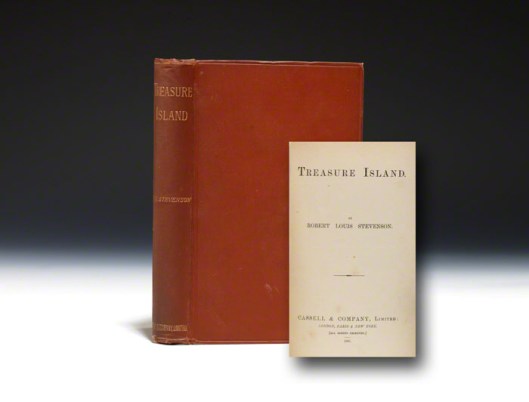
image1first

as Treasure Island, and its author’s name was right below the title:  Robert Louis Stevenson.

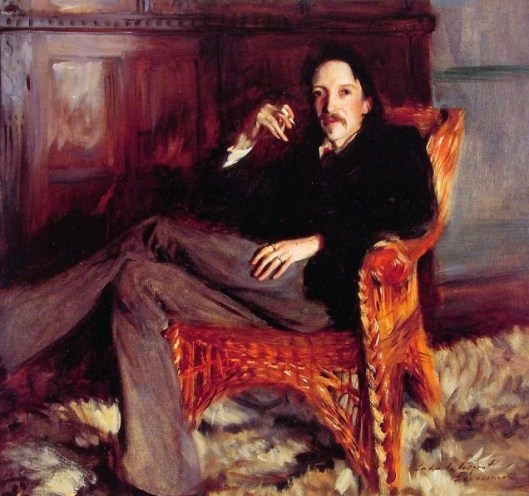
image2rls

The story had come about because Stevenson had seen his stepson, Lloyd, drawing a map.  Stevenson joined him and that map became the map.

image3map.jpg

The book became a number of movies over the years, including one by the Muppets (1996),

image4mup

but our favorite is that made by the Disney studio in 1950.

00000tmp

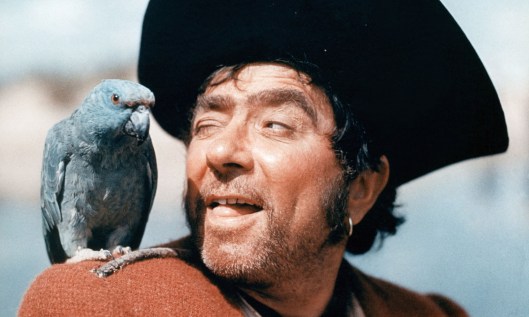
This version has Robert Newton as Long John Silver, the man whose twitches and vocal mannerisms have been passed down now as “the way pirates talk” (including—and especially on—“International Talk Like a Pirate Day”, September 19).
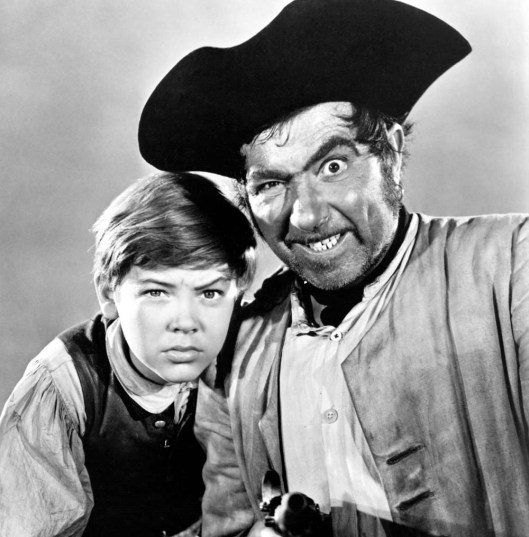
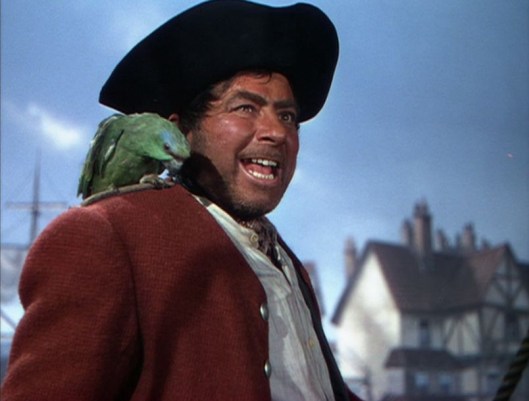
MBDTRIS EC018

image6newton

You’ll notice that parrot (as far as we know, there’s no “International Talk Like a Parrot Day”, unfortunately) on his shoulder.  We can trace this back to the original novel and identify him as “Captain Flint”, Silver’s pet.  Here he is in a picture from our favorite illustrated version, that of NC Wyeth, from 1911.

image7newton.jpg

(If you’d like your own early edition, with Wyeth’s illustrations—not his only pirate pictures, by the way—here’s a LINK to the 1913 printing.)

Among other parrotings, Captain Flint is given to calling “pieces of eight!” and, when we were little, we wondered “pieces of eight what?” and perhaps you did, too.  The story begins much earlier than the novel—about 1500.  It starts with this early Spanish silver coin called a “real” (14th century).
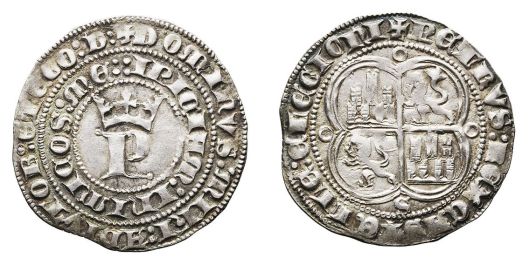
image8real

About 1500, a new coin appeared, worth 8 reales,
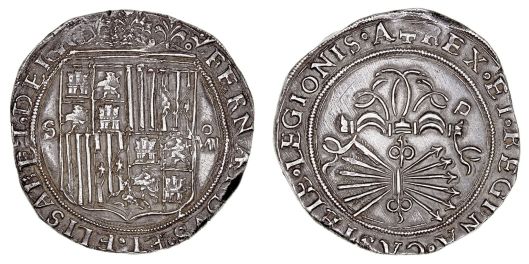
image9piece

and this is a “piece of eight”.

It shouldn’t be confused with another coin Captain Flint might have exclaimed over, the doubloon.
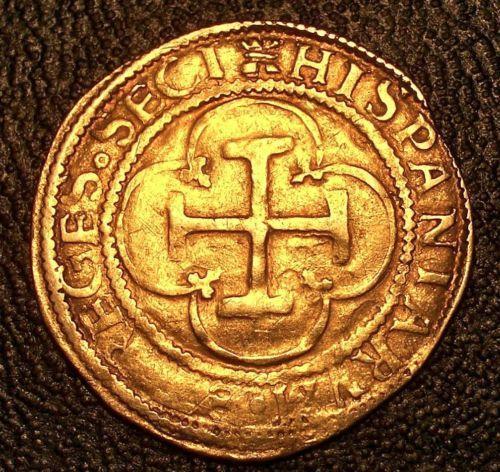
10adoubloon

The doubloon (from Spanish  “doblon”—“double”) was gold, rather than silver, and was probably called “double” because it was worth two of the coins below, an escudo.

image10bescudo

Spanish silver supplies mushroomed after 1519, when a small expedition, led by Hernan Cortez (1485-1547)

image10cortez

landed on the coast of Mexico.  The expedition was armed with European weapons and armor of the period.
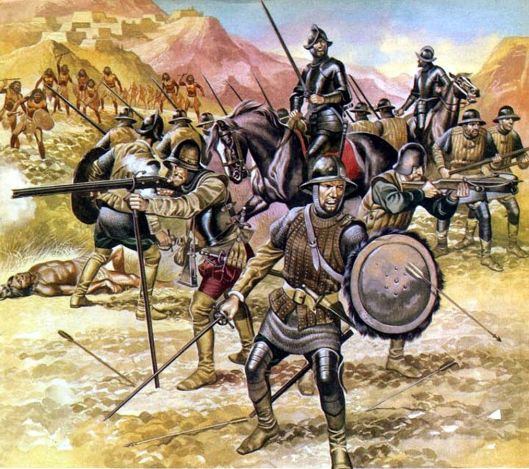
image11conq

As they marched inland, they found an empire, with a capital set in the middle of a lake, with public buildings made of stone blocks.
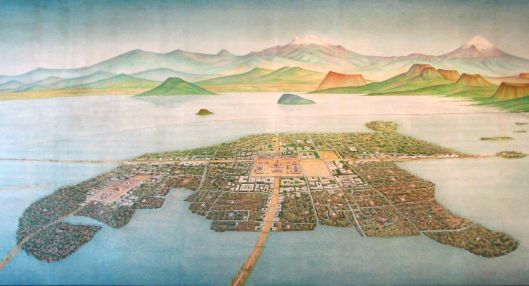
image12tenoch

image13tenoch

They also found that the local warriors were still living in the Neolithic Era and, though they were fierce, were no match for modern (early 16th-century) weapons.
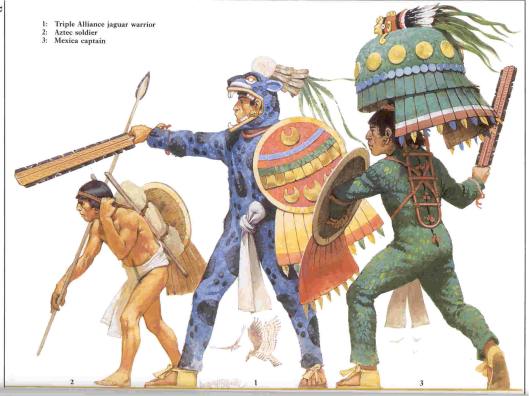
image14aztecs

Farther south, other Spanish invaders found the same thing along the west coast of South America,

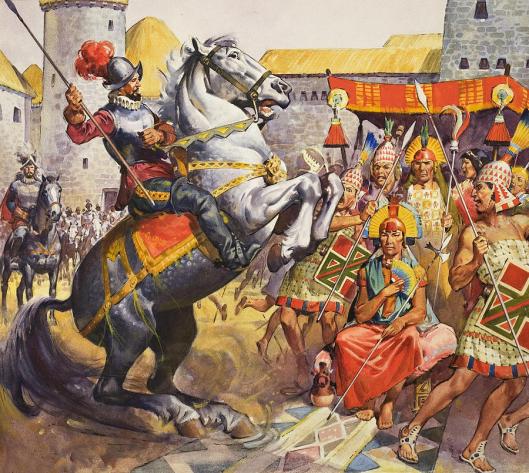
image15incas

image16aincas

and soon, they had enslaved the local populations and turned them to work in the silver mines, like that at San Luis Potosi, in Mexico.

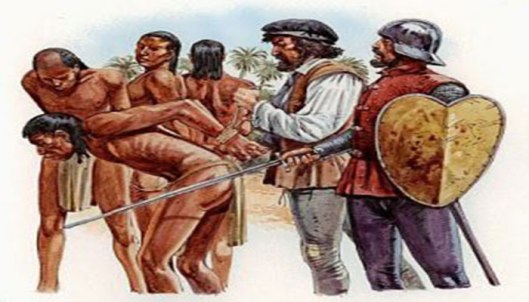
image16bmap

image16abslaves

image17san

Their labor then produced vast quantities of precious metal, which was left in bars, or turned into coins—pieces of eight and others.  This was loaded on ships and sent back to Spain.
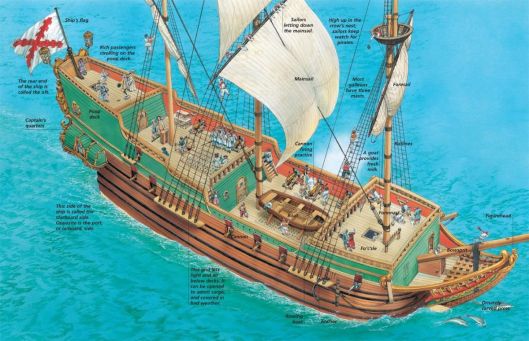
image18galleon

Such riches didn’t escape the attention of Spain’s enemies, however, and soon such ships had to travel in convoys, with merchant ships being shepherded by warships.

image19fleet

This didn’t prevent attacks completely, a famous leader of those attacks being Sir Francis Drake, from the days of Elizabeth I.

image20drake

Although the Spanish referred to Drake as a “pirate”, while England was at war with Spain (as it was for much of Drake’s later lifetime), to the English he was a “privateer”—a private naval commander holding a kind of license from Elizabeth I, which permitted him to attack enemy shipping at will (and to share the profits with the Queen’s government).  Because he wasn’t one of the government’s official officers, this created a kind of grey area, one which many sailors from western nations, as late as the Napoleonic wars, would take advantage of, slipping between government service and something which, even with that license, could look like piracy.  Such men included the notorious, like Captain Kidd

image21kidd

(of whom there is no portrait—we inserted this just for fun)

and Edward Teach, “Blackbeard”.

image22blackbeard

(His beard isn’t really on fire, by the way.  He wove bits of matchcord—used to fire ships’ guns and touch off handgrenades—into it to give himself a fiendish aspect.)
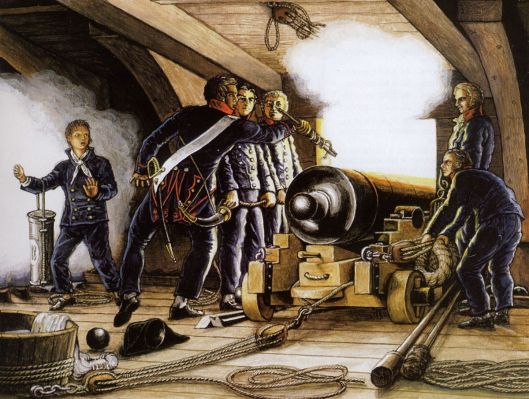
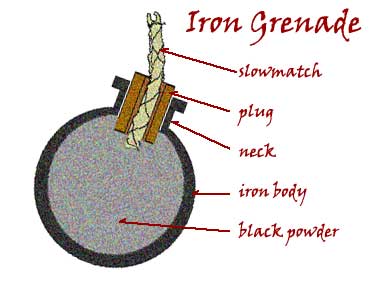
image23gun

image24grenado

Rather than sharing it with governments, both men were said to have taken much of their loot ashore and buried it in now-lost locations—

image25treasure

which brings us back to the map and Captain Flint squawking, “Pieces of eight!”

image26map

D31MWE Long John Silver. Image shot 1954. Exact date unknown.

Thanks, as always, for reading, and definitely

MTCIDC (matey!)

CD

ps

The most famous of Blackbeard’s ships, the Queen Anne’s Revenge, has been located off the coast of North Carolina, here in the US.  Here’s a LINK to the site which talks all about the discovery and the ongoing archaeology.

First Make a Map

16 Wednesday May 2018

Posted by Ollamh in Artists and Illustrators, J.R.R. Tolkien, Literary History, Maps, Narrative Methods

≈ Leave a comment

Tags

Braemar, Cherna, geography, Lloyd Osbourne, Maps, plot, Robert Louis Stevenson, Story, The Idler, The Lord of the Rings, Tolkien, topography, Treasure Island, Young Folks Magazine

As always, welcome, dear readers.

We have just said goodbye to an old friend, E, who stayed all too briefly with us on his way to and from a conference.  E, like us, is a big fan of maps and we had a lot of conversation on the topographical charting of Middle-earth, particularly as seen in The Lord of the Rings.

A map forms the basis of the plot of The Hobbit, of course.

image1throrsmap.jpg

And the need for an accurate depiction of (fictional) geography haunted its author as he expanded his story, as he says in a letter to Rayner Unwin, 11 April, 1953:

“Maps are worrying me.  One at least (which would then have to be rather large) is absolutely essential.  I think three are needed:  1. Of the Shire; 2. Of Gondor; and 3. A general small-scale map of the whole field of action.  They exist, of course; though not in any form fit for reproduction—for of course in such a story one cannot make a map for the narrative, but must first make a map and make the narrative agree.”  (Letters, 168)

(If you would like to see an interesting selection of Tolkien maps, here’s a LINK to the Tolkien Estate website, which has a number of them, including the first map of the Shire.)

The idea of making a map, rather than a story, first reminded us of an earlier author, who once said much the same thing.

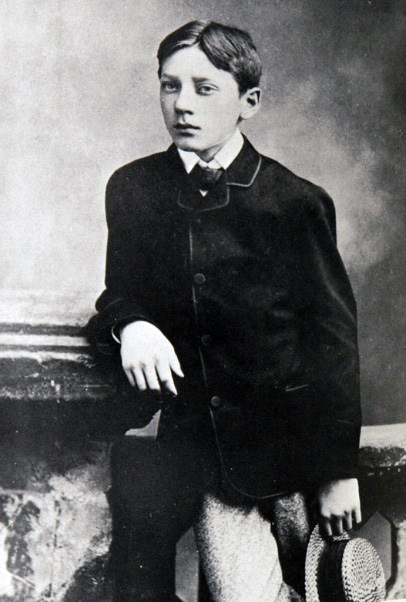
In the summer of 1881, Robert Louis Stevenson

image2rls.jpg

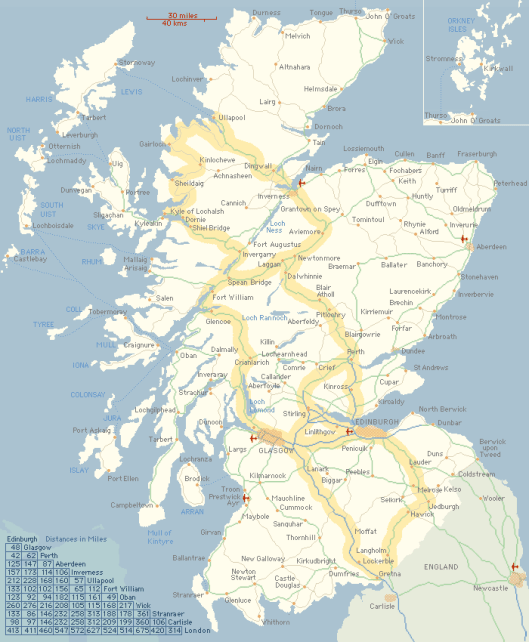
was on an extended tour of central and eastern Scotland with his parents, his wife, and his stepson, Lloyd Osbourne.

image3l0.jpg

From early August to late September, they stayed in Braemar

image4map.png

in this cottage.

image5cottage.JPG

Then the weather intervened:

“There it blew a good deal and rained in a proportion…and I must consent to pass a good deal of my time between four walls…There was a schoolboy [his stepson, Lloyd]…home from the holidays…He had no thought of literature; it was the art of Raphael that received his fleeing suffrages; and with the aid of pen and ink and a shilling box of water colours, he had soon turned one of the rooms into a picture gallery.  My more immediate duty towards the gallery was to be showman; but I would sometimes unbend a little, join the artist (so to speak) at the easel, and pass the afternoon with him in a generous emulation, making coloured drawings.  On one of these occasions, I made the map of an island; it was elaborately and (I thought) beautifully coloured; the shape of it took my fancy beyond expression; it contained harbours that pleased me like sonnets; and with the unconsciousness of the predestined, I ticketed my performance ‘Treasure Island’.”  (RL Stevenson, “My First Book:  ‘Treasure Island’”, The Idler, August, 1894)

In fact, as Stevenson writes earlier in this essay, it was not, in fact, his first book, or even his first novel, but it was his first published novel.  After its inspired beginning as a map, it first saw publication not as a novel, but as a serial in 17 installments in a magazine called Young Folks, from 1 Oct, 1881 to 28 Jan, 1882, under a pen name, “Captain George North”.  Its first appearance as a novel was in November, 1883, with the title, Treasure Island, or, The Mutiny of the Hispaniola.

image6tifirst.png

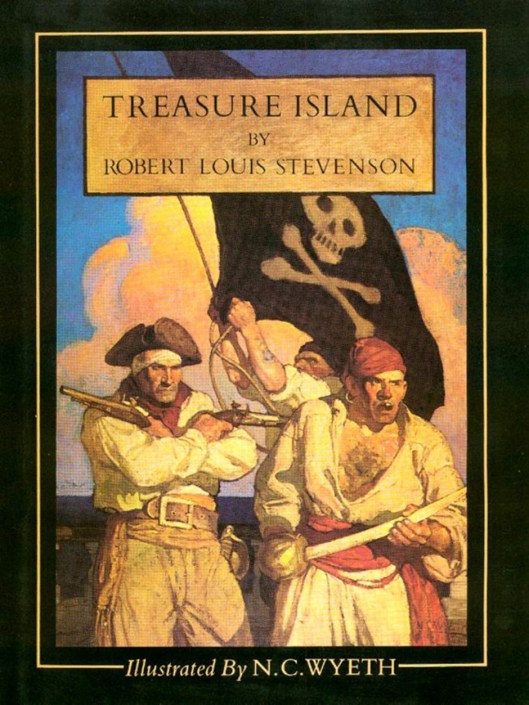
This has produced many subsequent republications over the years, our favorite being the 1911 edition,

image7wyeth.jpg

with its wonderful, atmospheric illustrations by NC Wyeth.

image8ncw.jpg

But what about the map which started it all?

“But the adventures of Treasure Island are not yet quite at an end.  I had written it up to the map.  The map was the chief part of my plot.  For instance, I had called an islet ‘Skeleton Island,’ not knowing what I meant, seeking only for the immediate picturesque, and it was to justify this name that I broke into the gallery of Mr. Poe and stole Flint’s pointer [a sprawled skeleton, if you don’t know the book].  And in the same way, it was because I had made two harbours that the Hispaniola was sent on her wanderings with Israel Hands.  The time came when it was decided to republish [that is, from magazine to book form], and I sent in my manuscript, and the map along with it, to Messrs. Cassell.  The proofs came, they were corrected, but I heard nothing of the map.  I wrote and asked; was told it had never been received, and sat aghast.  It is one thing to draw a map at random, set a scale in one corner of it at a venture, and write up a story to the measurements.  It is quite another to have to examine a whole book, make an inventory of all the allusions contained in it, and with a pair of compasses, painfully design a map to suit the date.  I did it; and the map was drawn again in my father’s office, with embellishments of blowing whales and sailing ships, and my father himself brought into service a knack he had of various writing, and elaborately FORGED the signature of Captain Flint, and the sailing directions of Billy Bones.  But somehow it was never Treasure Island to me.”

So here is that second version.

image9timap.jpg

From his experience, Stevenson drew the same conclusion as JRRT would nearly 60 years later:

“I have said the map was the most of the plot.  I might almost say it was the whole…It is, perhaps, not often that a map figures so largely in a tale, yet it is always important.  The author must know his countryside, whether real or imaginary, like his hand; the distances, the points of the compass, the place of the sun’s rising, the behavior of the moon, should all be beyond cavil…But it is my contention—my superstition, if you like—that who is faithful to his map, and consults it, and draws from it his inspiration, daily and hourly, gains positive support, and not mere negative immunity from accident.  The tale has a root there; it grows in that soil; it has a spine of its own behind the words.  Better if the country be real, and he has walked every foot of it and knows every milestone.  But even with imaginary places, he will do well in the beginning to provide a map; as he studies it, relations will appear that he had not thought upon; he will discover obvious, though unsuspected, short-cuts and footprints for his messengers; and even when a map is not all the plot, as it was in Treasure Island, it will be found to be a mine of suggestion.”

(If you would like to read this little essay in full—and we recommend it—here’s a LINK.)

We will end here as, inspired, we’re off to redo the map for our imaginary medieval Russia, Cherna.

MTCIDC

CD

Jacobites

17 Wednesday Aug 2016

Posted by Ollamh in Artists and Illustrators, Literary History, Military History, Narrative Methods

≈ Leave a comment

Tags

Anne, Aughrim, Boyne, Catriona, Charles II, Culloden, Elizabeth II, Falkirk, George I, George II, Glenshiel, Highlanders, Jacobites, James II, James III, Kidnapped, Killiecrankie, Lowlanders, Mary and William, N.C. Wyeth, Prestonpans, Prince Charles, Requiem, Robert Louis Stevenson, Scotland, Sir Walter Scott, The Black Arrow, The Old Pretender, Treasure Island, Underwoods, War of Austrian Succession, Waverly, Young Folks

Dear Readers, welcome, as always.

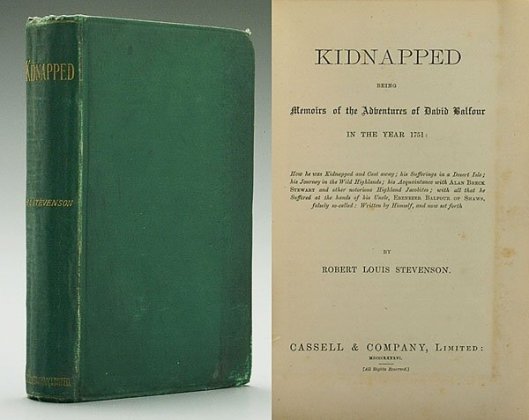
We’re taking a break from JRRT in this posting and looking at another favorite, Robert Louis Stevenson’s 1886 novel, Kidnapped,

rlsjss2kidnappedfirstedition

which was first serialized in what must have been a remarkable Victorian children’s magazine, Young Folks (1871-1897, with various titles), as it featured Stevenson’s Treasure Island (1881-1882) and The Black Arrow (1883), as well.

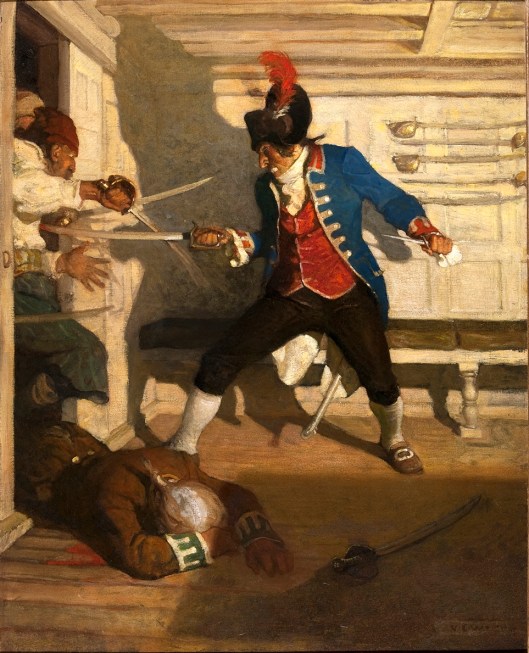
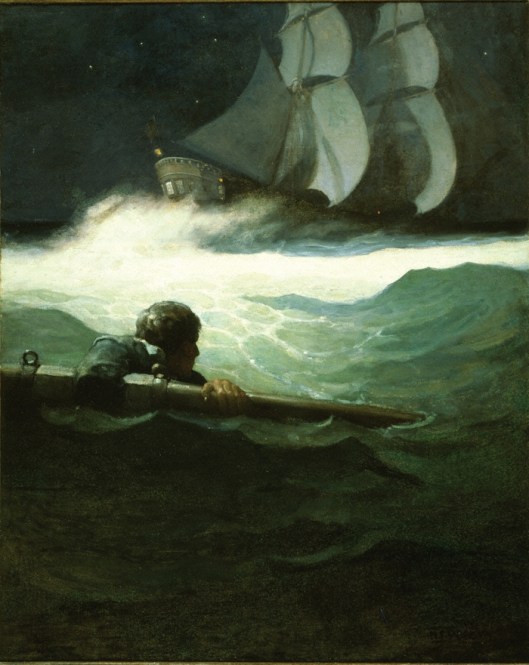
It has been published and republished numerous times since its original appearance (just google the title), but, if you read us regularly, you’ll already know our favorite edition is that published by Charles Scribner’s Sons in 1913 and illustrated by N. C. Wyeth (although we agree with the critics that his Treasure Island, 1911, is even better). Here are a few of the illustrations to give you an idea—these are much moodier than those for Treasure Island, we think.

Wyeth Kidnapped Siege of the Round-HouseWyeth Kidnapped Wreck of the CovenantOn_the_Island_of_Earraid_(N.C._Wyeth).kidnap212_kidnapped_wyeth_murderer

The actual title is based upon 18th-century models, where a great deal of the plot may be teasingly outlined beforehand. We won’t give it all to you, but it begins: Kidnapped Being the Memoirs of David Balfour in the Year 1751 How He Was Kidnapped and Cast Away; His Sufferings in a Desert Isle; His Journey in the Wild Highlands; His Acquaintance with Alan Breck Stewart and Other Notorious Highland Jacobites…

“Jacobites” if you are not acquainted with the term, means “followers of/those loyal to Jacob (that is, James)” and the Jacob/James story marks a turning point in the history of the British Isles.

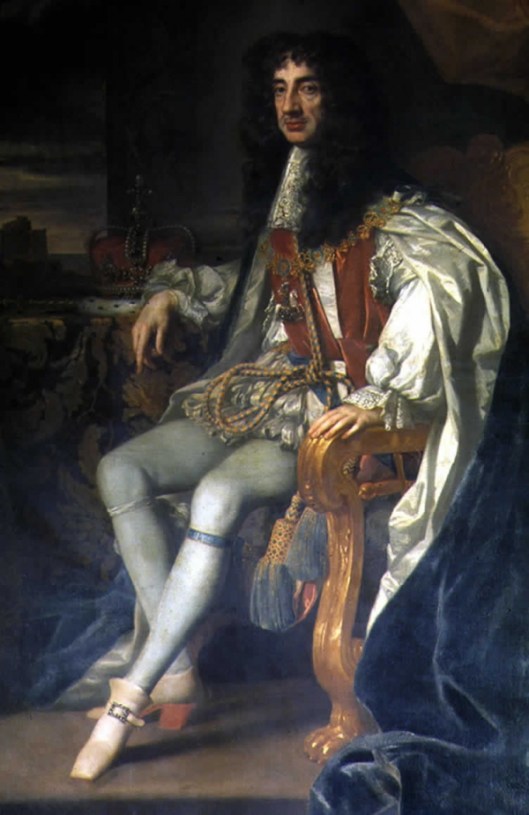
The story begins when Charles II of England dies in 1685 without leaving a legitimate heir.

charles-ii

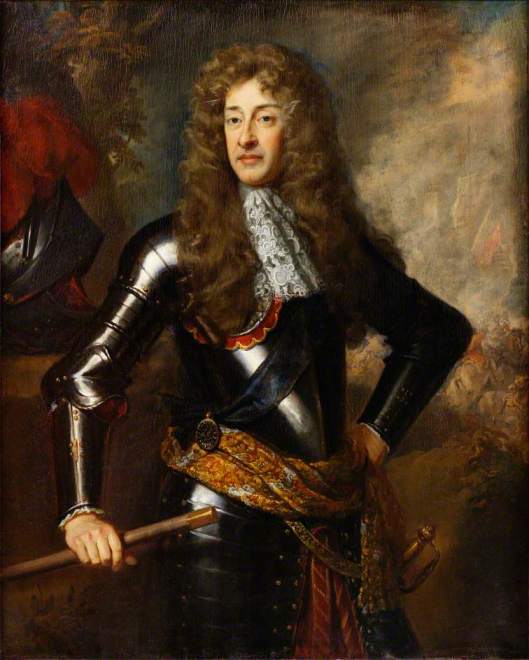
The throne then goes to his younger brother, James II.

(c) Government Art Collection; Supplied by The Public Catalogue Foundation

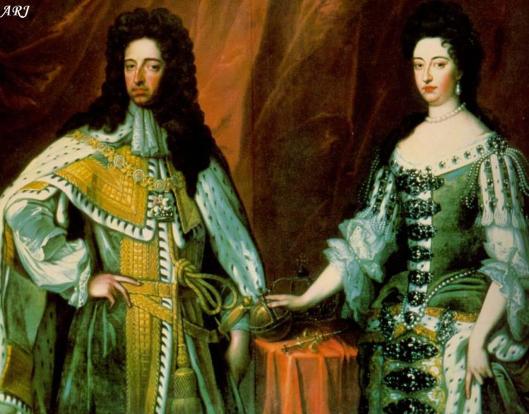
James was a very unpopular king, for some very complicated reasons, and he was driven from the throne in 1688 by a conspiracy which included members of Parliament, some of his army, and his daughter, Mary, as well as his son-in-law, William the Stadthoulder of the Netherlands.

1-william-mary

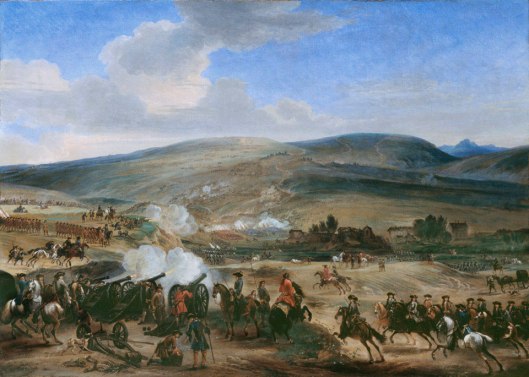
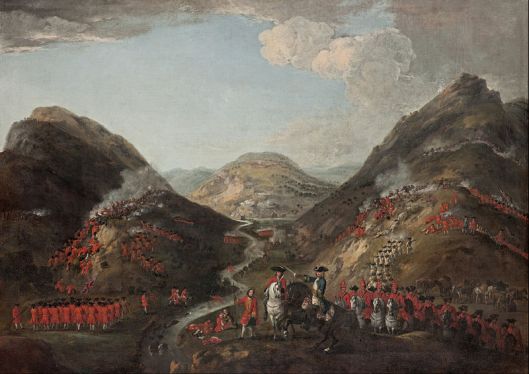
James didn’t go very easily and there was war in the British Isles from 1689 to 1692, with three major battles, Killiecrankie in Scotland (1689),

killie1

the Boyne, 1690,

boyne1690

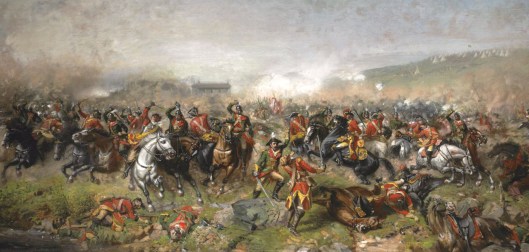
and Aughrim, 1691, both in Ireland.

John_Mulvany_-_The_Battle_of_Aughrim.1691

Although James II’s forces lost, that did not end the matter, however. James II died in exile in 1701, but his son, the potential James III (called by his enemies “The Old Pretender”, meaning “claimant to the throne”), continued the struggle, being involved in three major attempts at taking back the monarchy.

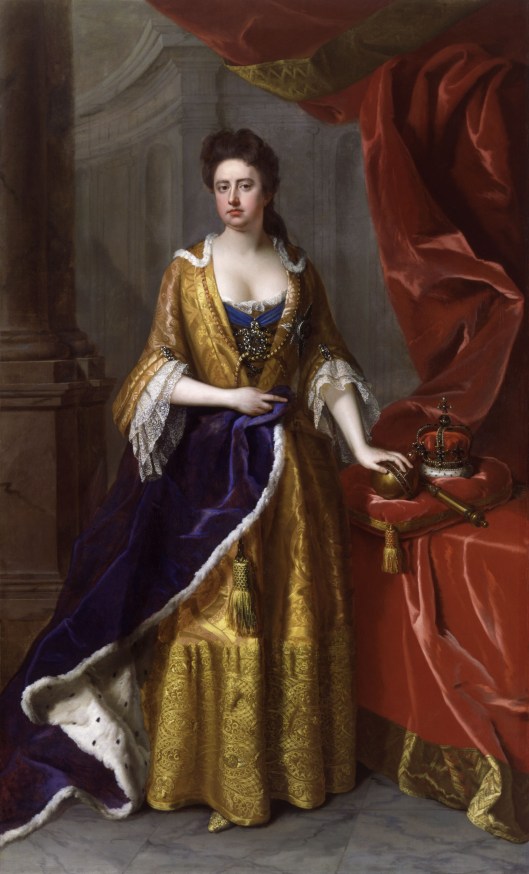
In the meantime, Mary and William had both died and Mary’s younger sister, Anne,

6187,Queen Anne,by Michael Dahl

who succeeded them, as well. To keep both religious and family continuity, it had been agreed that, since Anne had no surviving heirs, her second-cousin, George, the Elector of Hanover (a country in what is now western Germany) and his family would inherit the throne, which George did, in 1714, as George I of England.

King_George_I_by_Sir_Godfrey_Kneller,_Bt_(3)

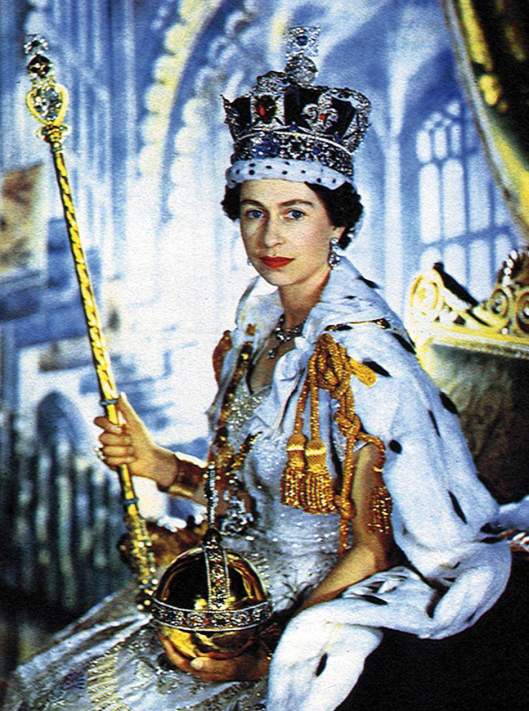
That continuity worked so well, in fact, that he is the direct ancestor of the present queen, Elizabeth II,

coronationpicofer2

article-2335617-1A1939BE000005DC-225_964x730

(We just couldn’t resist including this– even royalty don’t take reigning totally seriously, it seems!)

Not a year later, there was a plan to take the throne by invading Scotland, raising an army of Lowlanders and Highlanders alike, and marching on London. There was one inconclusive battle, at Sherriffmuir, in 1715,

Battle_of_Sheriffmuir

but, even with the arrival of James-the-possible-third,

Prince_James_Francis_Edward_Stuart_by_Anton_Raphael_Mengs

the whole thing fell apart. And something similar happened with the next attempt, in 1719. Modest Spanish support was not enough and the Jacobite army failed at Glenshiel

Glen_shiel

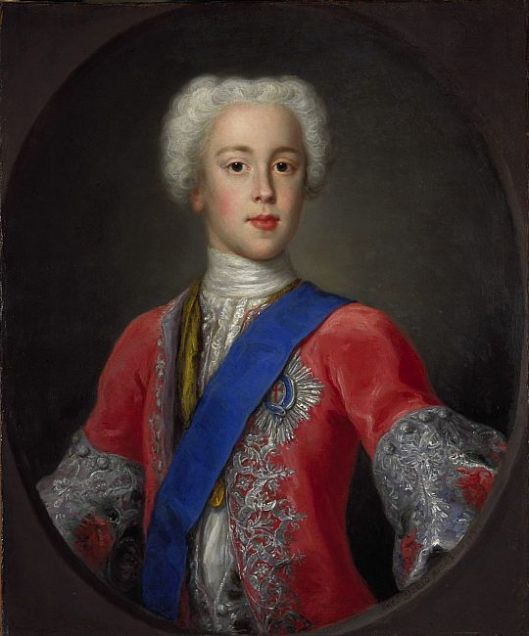
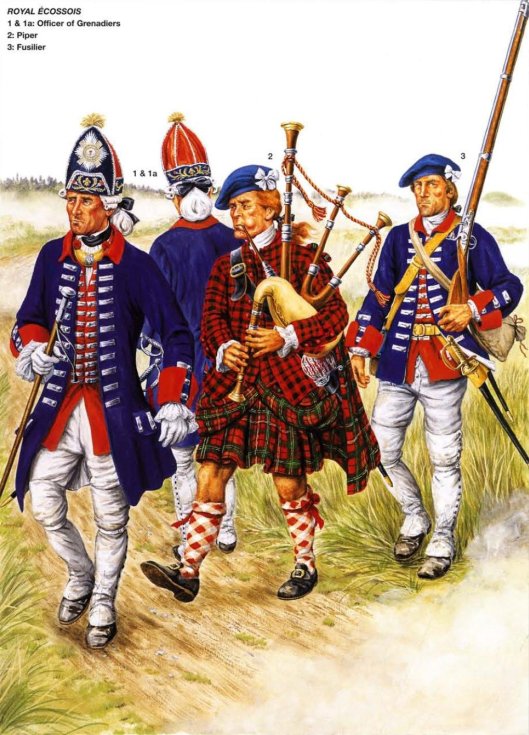
and things subsided into a cold war until 1745. During the intervening years, the struggle between Britain and France, begun in the days of Louis XIV (ruled 1661-1715) had intensified, with France supporting James II and his son as proxies. In 1745, the latest war, the so-called “War of the Austrian Succession”, had been going on since 1740. This was a much more complex pan-European war, but, with Britain and France backing different candidates for the throne, there was a good opportunity for a further attempt on the part of France to destabilize her old opponent. Thus, when it was proposed that the dashing young son of James, Prince Charles (1720-1788),

Young Charles Edward Stuart L_tcm4-563619

backed by a small French army

royalecossais

(with another waiting in the wings for an invasion of southern England), should land in Scotland and raise the country against the government of George II, the Old Pretender agreed.

King_George_II_by_Charles_Jervas

Unfortunately for their cause, this ended as the other attempts had, in failure—and this was the final failure. After one great victory, at Prestonpans in 1745,

prestonpansSurrender

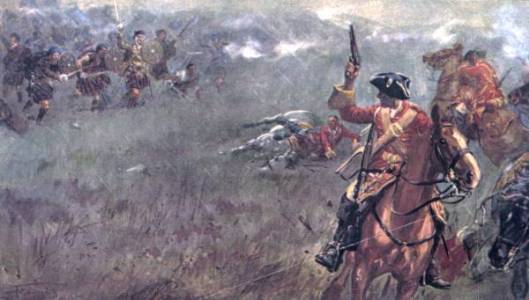
and a smaller one at Falkirk, in early 1746,

falkirk1746

the plan failed at Culloden in April, 1746,

The_Battle_of_Culloden

and this was the last grand attempt. As the inspiration for literature in the romantic period, however, it was extremely successful, beginning with Sir Walter Scott’s

Sir_William_Allan_-_Sir_Walter_Scott,_1771_-_1832._Novelist_and_poet_-_Google_Art_Project

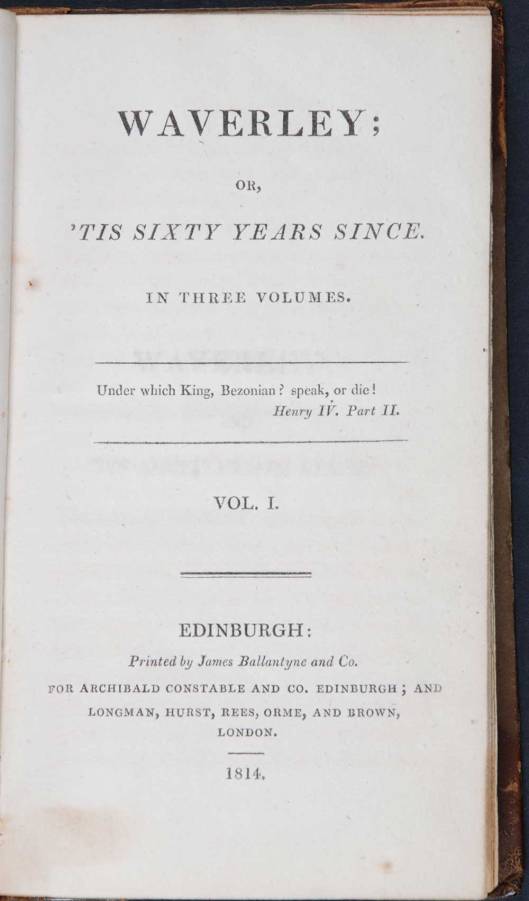
Waverley, published anonymously in 1814.

waverleyfirsted

Regularly regarded as the first great historical novel, it was the beginning of great commercial success for Scott, as well as the beginning of a process which turned Scotland’s past into the basis of an entire cultural industry, of which Kidnapped (1886) and its sequel, Catriona (1893) formed a small, but prominent part and is still with us today in the US (and elsewhere) in Scottish festivals and bumperstickers.

scottishfestivalThank-God-Scottish-Sticker

Thanks, as always, for reading.

MTCIDC

CD

ps

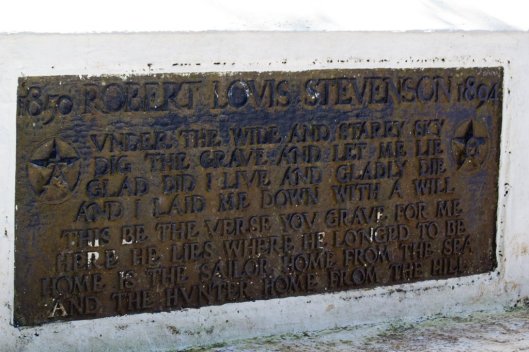
We can’t conclude without including Stevenson’s “Requiem” (from his collection Underwoods, 1887),

RLSrequiem1880

which we’ve always admired and which is on his tomb in Samoa, where he died of a cerebral hemorrhage in 1894.

rlstomb

Terrifyingly Funny? (Part 2)

20 Wednesday Jul 2016

Posted by Ollamh in J.R.R. Tolkien, Language, Narrative Methods, Villains

≈ 3 Comments

Tags

Andy Serkis, Ben Gunn, Bilbo, Deagol, Gollum, Received Standard English, Riddles in the Dark, Smeagol, The Hobbit, The Lord of the Rings, Tolkien, Treasure Island

Dear Readers, welcome, as always.

In the first part of this posting, we began to think out loud about the idea of characters in Tolkien who might combine menace and comedy. Our first idea had been to consider Gollum—

Gollum_Render.png

but not the Lord of the Rings Gollum, at least not at first glance.

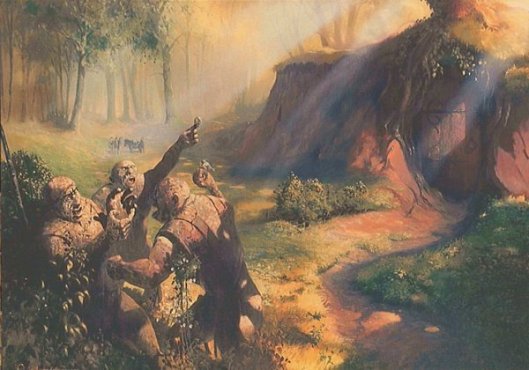
The idea then took us backwards to the large, rather dim trolls of The Hobbit, who certainly seemed to display that combination.

trolls.jpg

And The Hobbit brings us back to Gollum.

All Tolkien readers must know, we imagine, that the book which JRRT published in 1937 was a very different kind of book from what gradually grew up around it. Here, for example, is the beginning of the reader’s introduction to Smeagol (a name never used in The Hobbit, of course):

“Deep down here by the dark water lived old Gollum…” (The Hobbit, Chapter 5, “Riddles in the Dark”)

To us, this sounds like it could easily begin, “Once upon a time, deep down by the dark water, lived Old Gollum”, as if it were the opening of a fairy tale and The Hobbit was, of course, originally conceived of and written as a children’s book.

“Old Gollum”, by that name, might have been a cantankerous but lovable geezer—but the line continues, “a small slimy creature”. “Slimy” then leads to “dark as darkness, except for two big round pale eyes in his thin face…He liked meat too. Goblin he thought good, when he could get it; but he took care they never found him out. He just throttled them from behind…” And then, presumably, he ate them raw (as he does fish in The Hobbit and he would coneys in The Lord of the Rings), as Gollum’s level of civilization seems to begin and end with the little boat which he has—although where the materials came from for that is never explained. (Gandalf, in “The Shadow of the Past”, says that the Stoors and Fallowhides, to whom Gollum/Smeagol belonged, made boats out of reeds.)

In our last posting, we pointed to the speech of the trolls in The Hobbit as one possible source of humor.

THE HOBBIT: AN UNEXPECTED JOURNEY

Unlike the main characters, who spoke a Middle-earth version of RSE (Received Standard English), they displayed a number of the linguistic elements of lower-class London which are often used to show class—or even species?–difference (think of the orcs who carry off Merry and Pippin, for example) in Tolkien. If this is combined with the topics of their conversation—mainly about food, some of it sheep, but also both humans and dwarves—we then have what we set out to find, menace and humor.

As for Gollum, he certainly has a very distinctive form of speech. First, there’s his habit of carrying on a conversation with himself even in the presence of others. It reminds us of the talk of Ben Gunn,

bengunn

who was marooned by Captain Flint in Stevenson’s Treasure Island (1881-2; 1883) and has clearly developed a similar habit:

“If you was sent by Long John,” said he, “I’m as good as pork and I know it. But where was you, do you suppose?” (Treasure Island, Chapter XV, “The Man of the Island”)

There are four other distinctive elements of Gollum’s speech. First, there is that gollum. The narrator says of it:

“And when he said gollum he made a horrible swallowing noise in his throat.” (The Hobbit, Chapter 5, “Riddles in the Dark”)

Andy Serkis, who is the voice (and movement) of Gollum in the Jackson films, has, in interviews, said that the noise he makes is modeled upon his cat throwing up a hairball. As Tolkien has called it “a horrible swallowing noise”, it would seem that this is, in fact, the opposite sound from what is wanted. So what should it sound like—that is, and still sound like “gollum”? The word has two syllables—perhaps we might think that the noise would depend upon which syllable bore the primary accent: GOL-lum or gol-LUM. To us, accenting the first has more of a choky feel to it and the second more of a froggy. (We also wonder, knowing Gandalf’s later explanation of how Smeagol acquired the Ring, whether, in fact, Smeagol is actually imitating the noise Deagol made as he struggled for breath.)

A second element is his incessant referring—in the 1937 edition—to himself as “my precious”. In the 1951 revision, and beyond, Gollum can call both himself and the Ring by the term, and we are of two minds about the change. On the one hand, the 1937 version reflects what interests us: a word of tender endearment mixed with a murderous intent, all within Gollum. On the other, the post-1951 version’s double usage presents us with a picture of a creature so enslaved to the Ring that he uses that term of endearment (and we also know, from Gandalf’s later explanation, that the Ring does not return the affection, making it even more horrible). As well, others touched by the Ring can be seen as infected by its power when they use the expression.

bilbowithring

Third—and more potentially comic—is Gollum’s actual language. There are the odd expressions, sometimes based on actual older English expressions—“Bless us and save us” becomes “Bless us and splash us”, example.   As well, there are the non-standard words like “bitsy” (a kind of diminutive) and plurals—“handses”, “eggses”, “pocketses”.

Fourth is the stressed sssssssssssssssssssssibilance. JRRT himself points to this in a letter to Rayner Unwin in a correction to the 1937 edition: “Not that Gollum would miss the chance of a sibilant.” (cited in Anderson, The Annotated Hobbit, 120, note 9)

Taken altogether, this makes for a very distinctive—and very different speaker from any other in The Hobbit (or The Lord of the Rings, for that matter) and this is clear from the very start of the conversation between Gollum and Bilbo:

“What iss he, my preciouss?”…

“I am Mr. Bilbo Baggins. I have lost the dwarves and I have lost the wizard, and I don’t know where I am and I don’t want to know, if only I can get away.” (The Hobbit, Chapter 5, “Riddles in the Dark”)

The menace is there in Gollum, from the very beginning:

“Bless us and splash us, my precioussss! I guess it’s a choice feast; at least a tasty morsel it’d make us, gollum!” (The Hobbit, Chapter 5, “Riddles in the Dark”)

And we would suggest that the humor is there, too, in the very same speech: the twisted expression, the self-address, the use of “my precioussss”, and the hissy sibilance. Tolkien, though personally drily witty, was not—nor intended to be—a comic writer. What he could do well, we suggest, is use that which interested him deeply—language and its expression—combine it, for contrast, with a certain darkness of theme, as here, and allow the reader to feel a kind of grim amusement in the balance–or imbalance–between what’s being said and how.

What do you think, dear readers?

Thanks, as always, for reading.

MTCIDC

CD

A Pirate’s Life

24 Wednesday Feb 2016

Posted by Ollamh in Artists and Illustrators, Imaginary History, J.R.R. Tolkien, Literary History, Military History, Military History of Middle-earth, Villains

≈ Leave a comment

Tags

Barbary Coast, Captain Blood, Captain Hook, Corsairs, Errol Flynn, Gilbert and Sullivan, Howard Pyle, Jack Sparrow, Jolly Roger, mariners, Napoleonic Wars, Narnia, Peter Jackson, Pirates, Scharb, shipbuilding, Tamora Pierce, The Black Pearl, The Lord of the Rings, Tolkien, Tortall, Treasure Island, Umbar, USS Philadelphia, xebec

“Oh, a pirate’s life is a wonderful life,

A-rovin’ over the sea,

Give me a career as a buccaneer

It’s the life of a pirate for me…”

Wallace/Penner, Peter Pan (1953)


Dear readers, welcome, as ever.

Being clever, you can tell immediately where this posting is going to go. Yep, the corsairs of Umbar.

A corsair is another word for pirate. And, when we think “pirate”, first there’s the late-19th-early-20th-century work of Howard Pyle.

Pyle_pirate_handsome.jpg


And the silly pirates from Gilbert and Sullivan’s The Pirates of Penzance.

piratesofpenzance.jpg


And Long John Silver, from Treasure Island.

longjohnsilver.jpg


And then there is Captain Hook and the Jolly Roger.

TigerLilyandHook.jpg


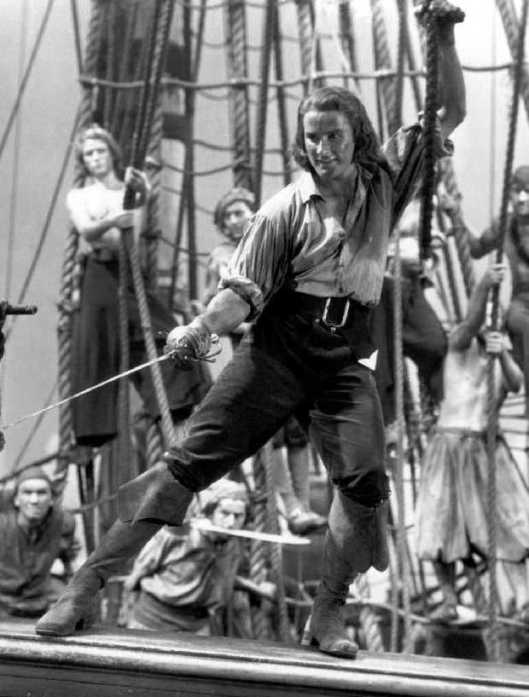
And Errol Flynn in the 1935 movie, Captain Blood.

1023_captblood.jpg


And who could forget Jack Sparrow and The Black Pearl?

Captain-Jack-captain-jack-sparrow-14117613-1242-900.jpg

blackpearl.jpg

We think that Tolkien has something rather different in mind, however. Let’s start with a little history.

Umbar’s past in relation to Gondor is summed up by Damrod in “Of Herbs and Stewed Rabbit”:

“ ‘Aye, curse the Southrons!’ said Damrod. ‘Tis said that there were dealing of old between Gondor and the kingdoms of the Harad to the Far South; though there was never friendship. In those days our bounds were away south beyond the mouths of Anduin, and Umbar, the nearest of their realms, acknowledged our sway. But that is long since. ‘Tis many lives of Men since any passed to and fro . Now of late we have learned that the Enemy has been among them, and they are gone over to Him, or back to Him—they were ever ready to his Will—“ (The Two Towers, Book 4, Chapter 4,“Of Herbs and Stewed Rabbit”)

Damrod’s mistrust is confirmed by what Beregond says to Pippin in “Minas Tirith”:

“…There is a great fleet drawing near to the mouths of Anduin, manned by the corsairs of Umbar in the South. They have long ceased to fear the might of Gondor, and they have allied them with the Enemy, and now make a heavy stroke in his cause. For this attack will draw off much of the help that we looked to have from Lebennin and Belfalas, where folk are hardy and numerous.” (The Return of the King, Chapter 1, “Minas Tirith”)

As Damrod has said, Umbar is to the far south.

map-of-gondor-and-neighbors2.jpg

Here is a view of it as imagined by the Czech artist, Scharb.

thecityofumbar.jpg

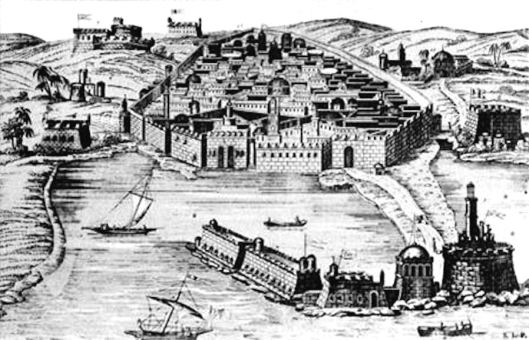
To us, this resembles cities along the southern Mediterranean coast, especially as seen in old engravings of the Barbary Coast.

Old_algiers_16th_century.jpg

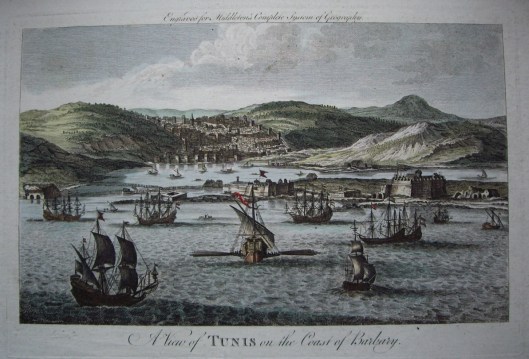
Take, for example, this copperplate of Tunis, from 1778.

tunisengraving.JPG


There are all kinds of ships depicted here, from three-masters to a galley, in the center, to a small xebec, to the far right.

The galley seemed once to be the characteristic ship of the pirates of the Barbary Coast, coming from earlier Turkish galleys.

Galley1500ca.jpg


What the Czech artist appears to have picked up upon, however, is something from P. Jackson’s third The Lord of the Rings film, in which the xebec

Xebec L80 - 01.jpg_0_1024x769.jpg


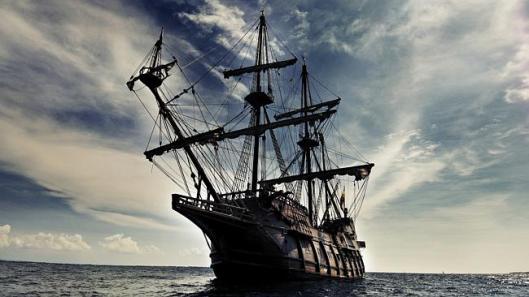
is the model for the corsairs’ vessels.

corsairMastSails.jpg


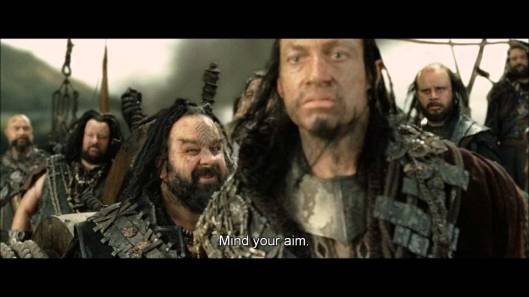
Jackson’s corsairs look like this (including Jackson himself, mugging to the left).

jacksonandcorsairs.jpg

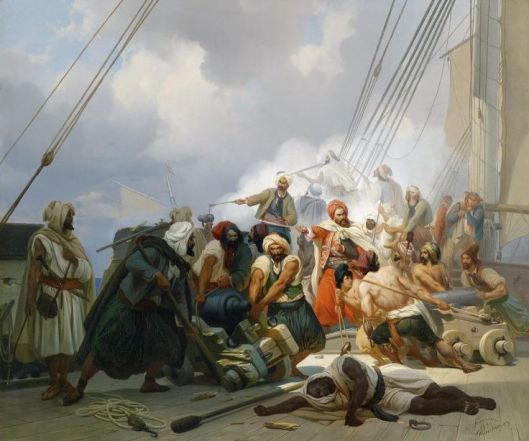
The crews of actual Barbary ships probably looked more like this:

21c27fb9a0a7cdf4d123d6e12bcbbd83.jpg

This makes perfect sense, as these are North Africans, and very tough people, as European mariners came to know. Their swift, daring ships attacked any vessel which might bring them profit.

barbary-pirate-galleon.jpg

The young United States first paid them tribute to keep them away from US ships.

tribute.jpg

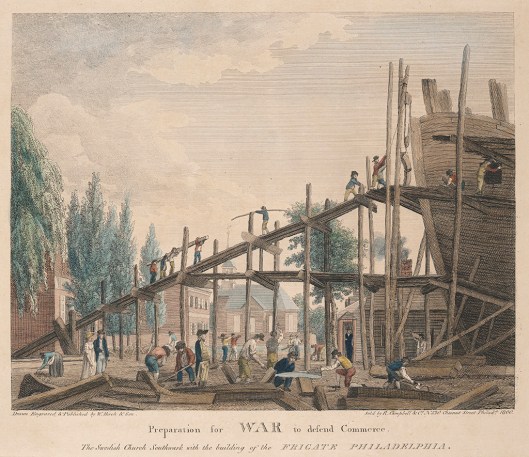
But, as the government somewhere found the money, it began a shipbuilding program to provide the country with its first national navy.

buildingthephiladelphia.jpg

This particular ship was the ill-fated USS Philadelphia, which ran aground and was captured by the pirates.

philly.jpg

captureofthephiladelphia.jpg

It was destroyed, however,

destructionofthephiladelphia.jpg

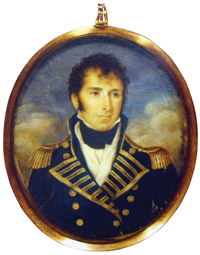
in a daring raid by Stephen Decatur, seen in this miniature.

stephendecatur.jpg

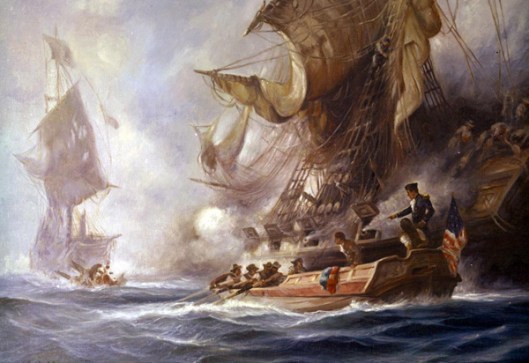
The United States fought two wars against the Barbary pirates, 1801-5 and 1815, doing a great deal of damage to the pirates.

USS-Enterprise-barbary-war.jpg

Ultimately, however, it was a combination of governments and navies, including the US, the British, and the Dutch, which put a stop to piracy in the southern Mediterranean after the end of the Napoleonic Wars in 1815.

Decatur_Boarding_the_Tripolitan_Gunboat.jpg

So, like Scharb, we took the idea from JRRT that Umbar was in the far south and, influenced by our experience, not only of the Barbary pirates, but of Narnia and the country called Calormen

Baynes-Map_of_Narnia.jpg

and of Tamora Pierce’s “Tortall” with its Carthaki southland,

Tortall_1.gif

we imagined the corsairs to look like this.

barbarypirates.jpg

So, dear readers, what do you think?

Thanks, as always, for reading.

MTCIDC

CD


From Master to Pupil

13 Friday Mar 2015

Posted by Ollamh in Artists and Illustrators

≈ 1 Comment

Tags

Howard Pyle, Kidnapped, King Arthur, N.C. Wyeth, Robin Hood, Treasure Island

Dear Readers, 

Welcome, as always! 

Last time, we looked at some works by Howard Pyle, the great 19th-century illustrator and painter. Today, we want to look at the work of one of his most prominent students, N.C. Wyeth.

To give you an idea of what captivates us, we could just show you this:

3923894215_20aa1d139f_o

This sums it all up: the way in which reading allows you to step into imagination as if it were a country. It also suggests a certain propensity for romanic daydreaming on the part of certain people!

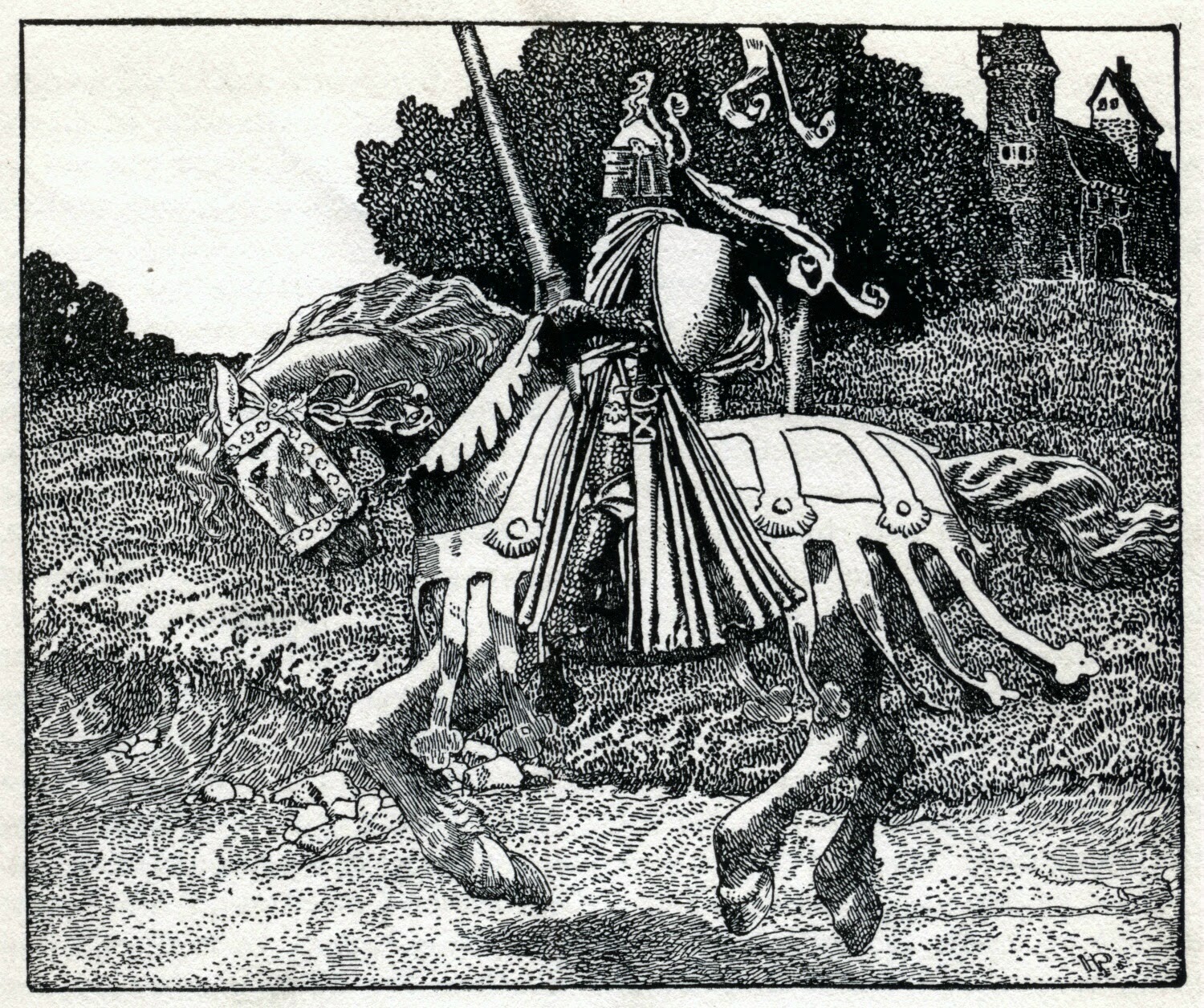
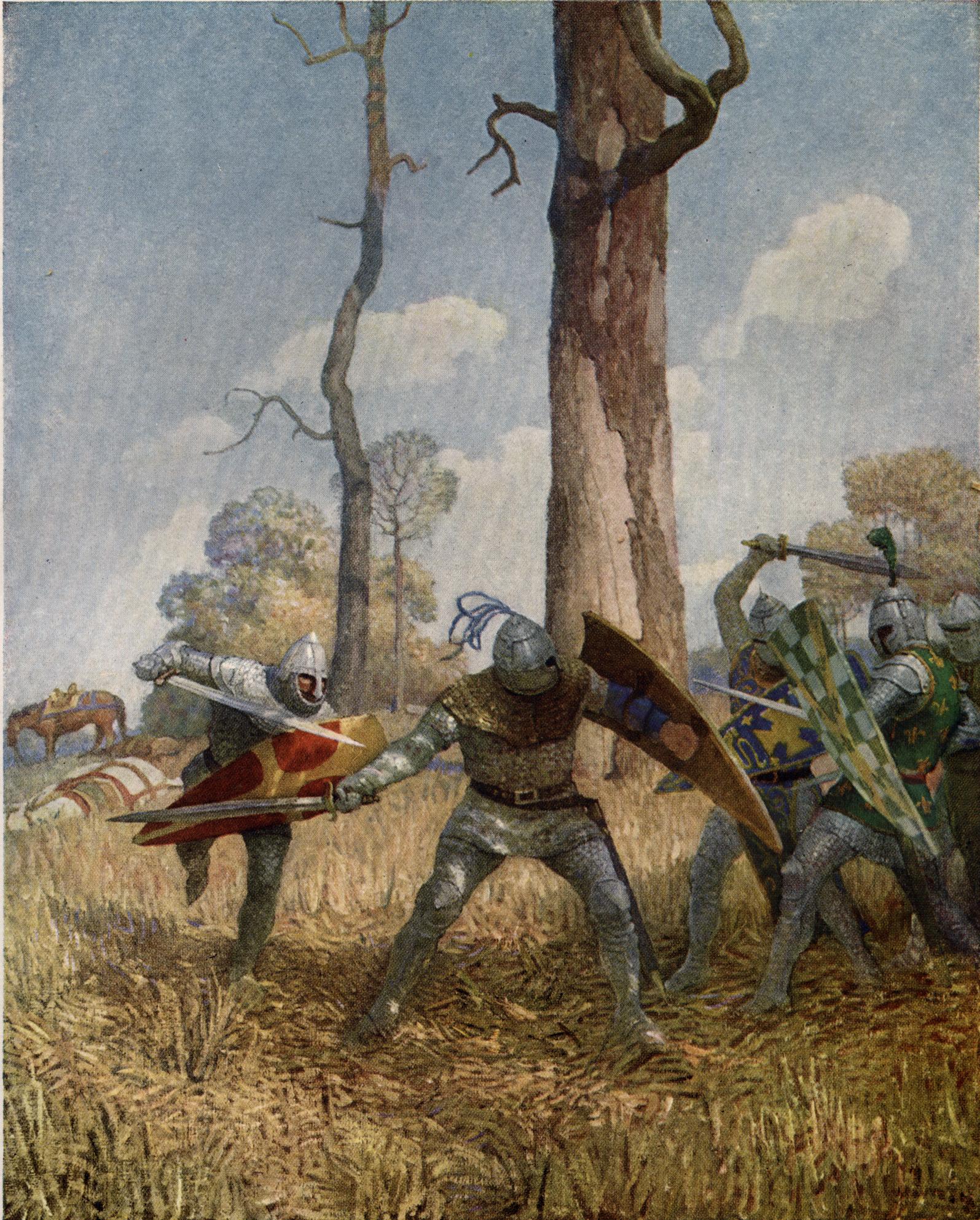
Here is an easy example of the difference between master and pupil. This is a Howard Pyle from his version of King Arthur. It’s beautifully detailed with a somewhat hard edge to it.

Mounted Knight By Howard Pyle

And here is a work by his pupil from his King Arthur:

the-green-knight-preparing-to-battle-sir-beaumains

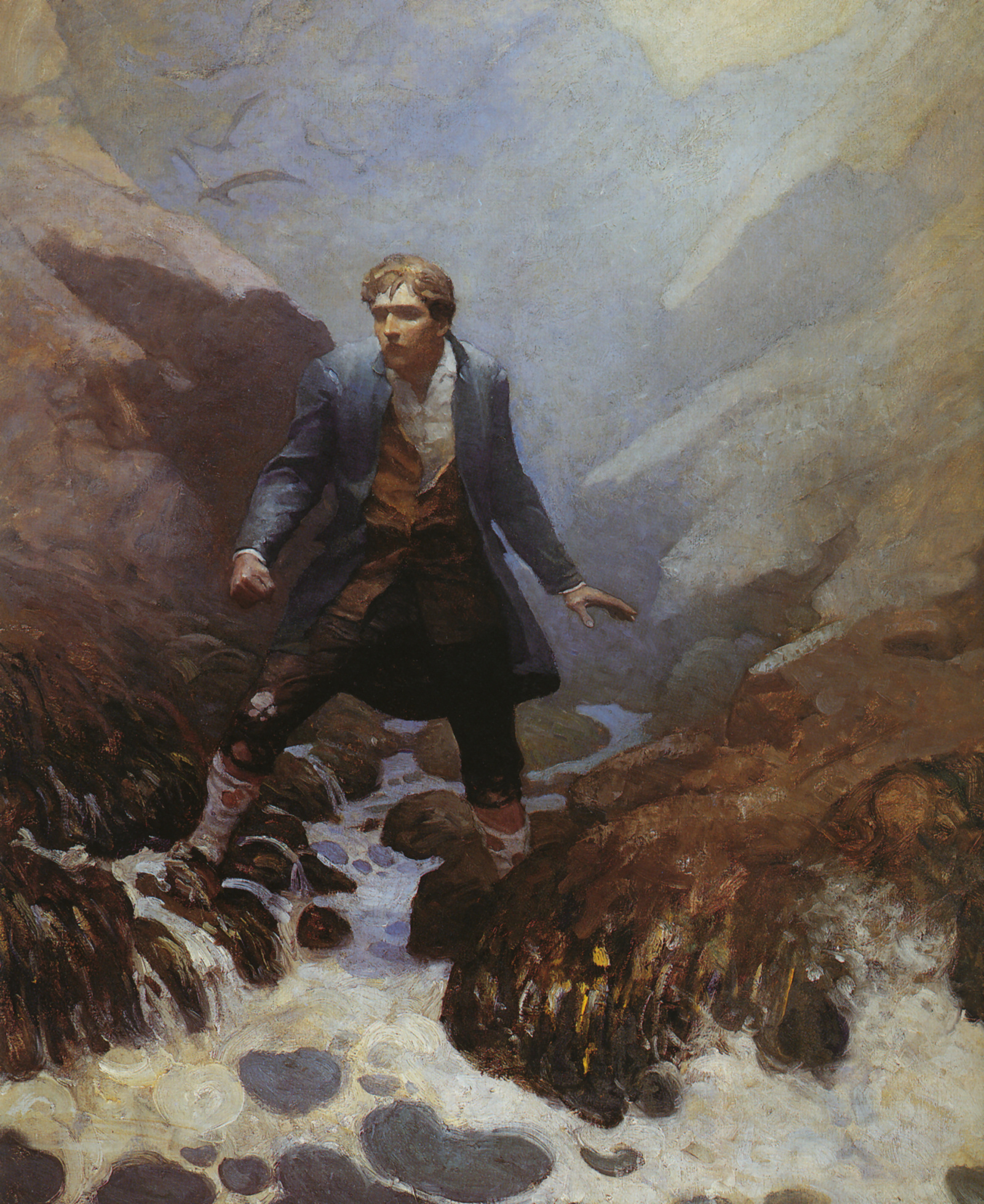
There is an almost dream-like cloudy quality to his work. In fact, that dream can even seem something like a nightmare in this Wyeth illustration from Kidnapped. 

On_the_Island_of_Earraid_(N.C._Wyeth)

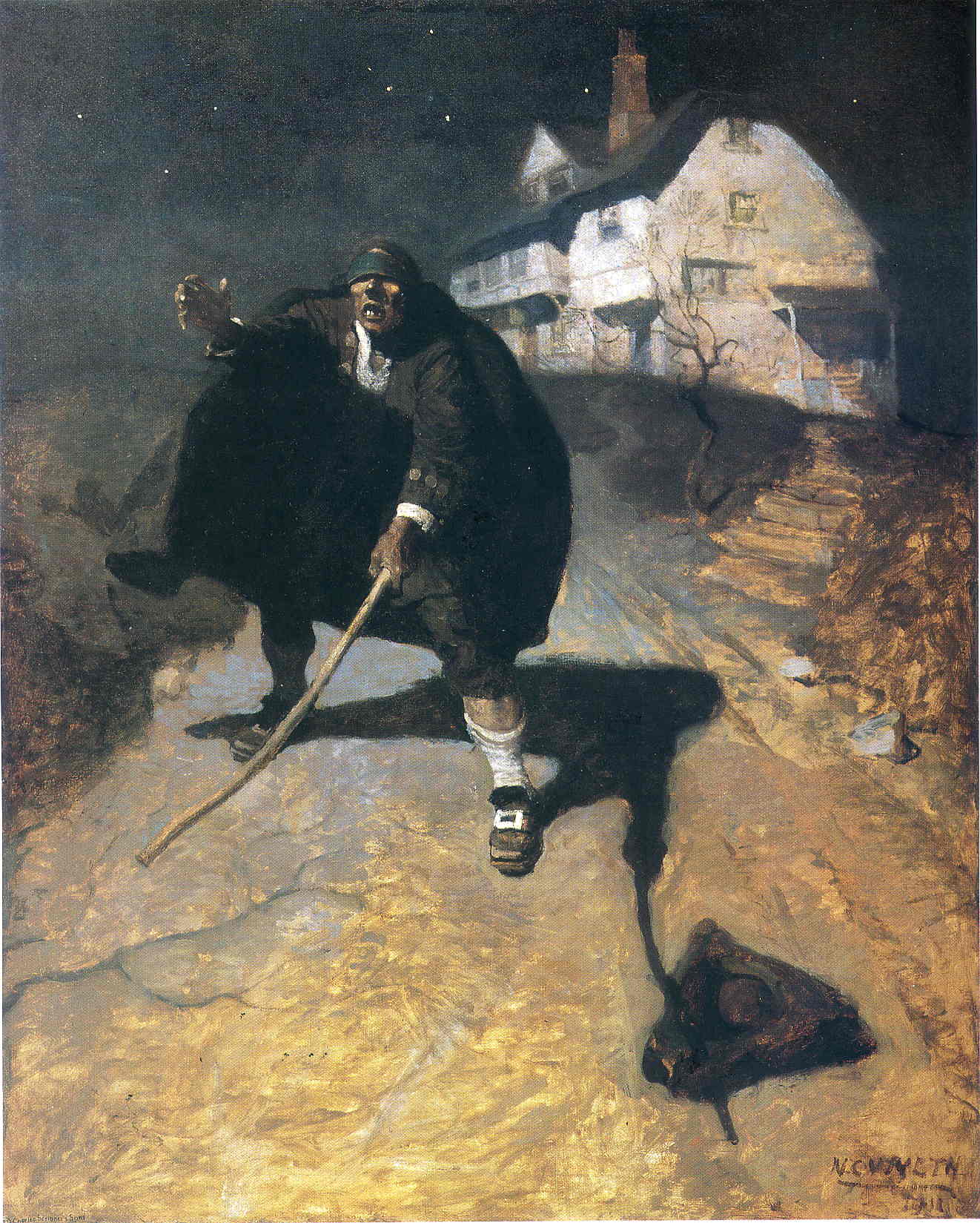
We’ve read that there are those who have criticized such works as “melodramatic”, but we think that that misses the point– they aren’t melodramatic, they are simply dramatic. 

blind-pew

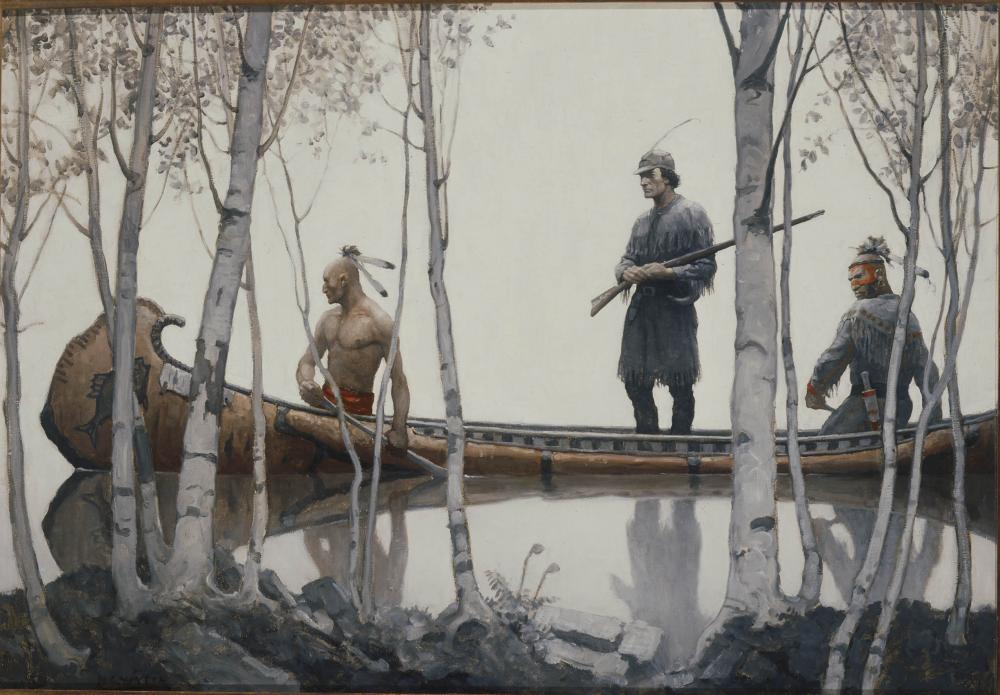
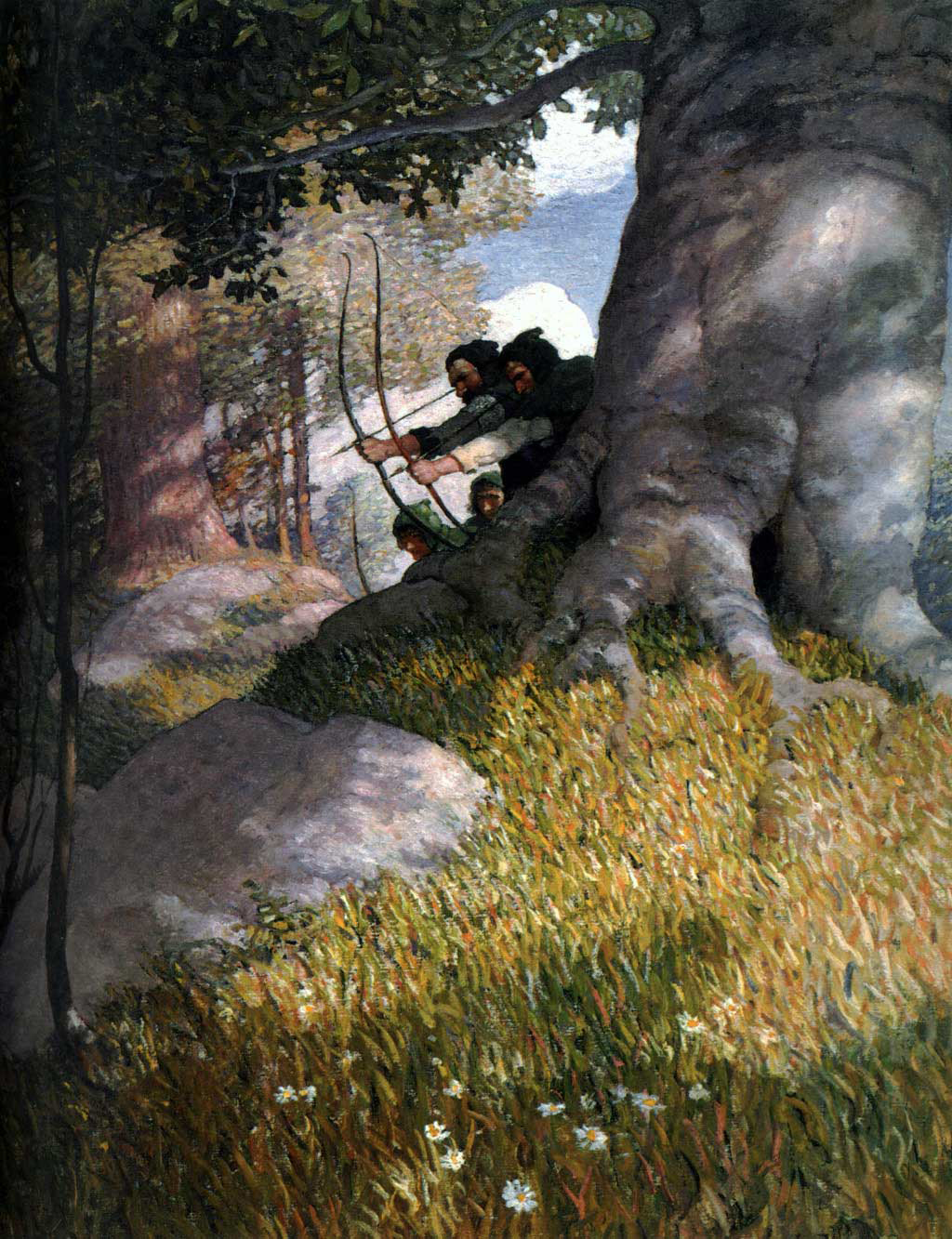
But, for us, it truly is the case of picture = words x 1000. And so, we’ll content ourselves with showing you a few more of our favorite pictures.

OLYMPUS DIGITAL CAMERA WyethRoundhouseWEB NCW-canoe-artwork nc-wyeth-giant1

5021b2a38af7ba9f082937ac220f7080.jpg

6f9f00b5837bfc1918bfd798f1812039

75aa91cf5c7a93afcab8b7208039eb78

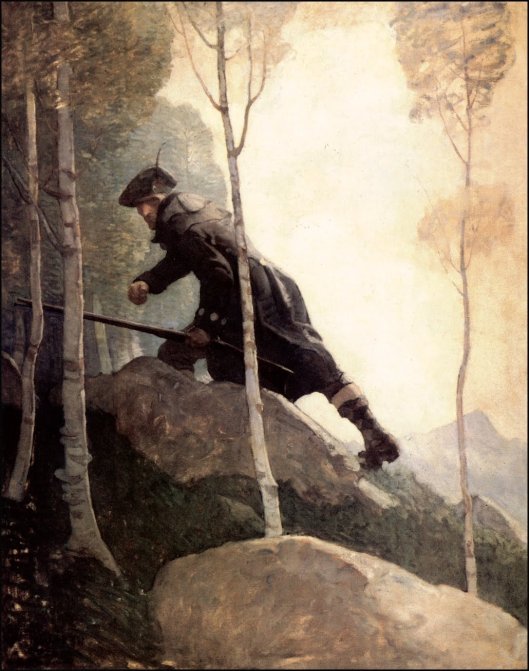
This last one, for us, may be as suggestive as the first one. We can feel ourselves deep in the beechwood behind the next tree, our bows creaking with the strain, waiting for the Sheriff of Nottingham. 

And, for this time, we invite you, dear readers, to join us there. 

Thanks, as always, for reading,

MTCIDC,

CD

The Doubtful Sea Series Facebook Page

The Doubtful Sea Series Facebook Page

  • Ollamh

Categories

  • Artists and Illustrators
  • Economics in Middle-earth
  • Fairy Tales and Myths
  • Films and Music
  • Games
  • Heroes
  • Imaginary History
  • J.R.R. Tolkien
  • Language
  • Literary History
  • Maps
  • Medieval Russia
  • Military History
  • Military History of Middle-earth
  • Narnia
  • Narrative Methods
  • Poetry
  • Research
  • Star Wars
  • Terra Australis
  • The Rohirrim
  • Theatre and Performance
  • Tolkien
  • Uncategorized
  • Villains
  • Writing as Collaborators
Follow doubtfulsea on WordPress.com

Across the Doubtful Sea

Recent Postings

  • A Moon disfigured December 17, 2025
  • On the Roads Again—Once More December 10, 2025
  • (Not) Crossing Bridges December 3, 2025
  • On the Road(s) Again—Again November 26, 2025
  • On the Road(s) Again November 19, 2025
  • To Bree (Part 2) November 12, 2025
  • To Bree (Part 1) November 5, 2025
  • A Plague o’ Both—No, o’ All Your Houses! October 29, 2025
  • It’s in Writing (2:  I’st a Prologue, or a Poesie for a Ring?) October 22, 2025

Blog Statistics

  • 103,220 Views

Posting Archive

  • December 2025 (3)
  • November 2025 (4)
  • October 2025 (5)
  • September 2025 (4)
  • August 2025 (4)
  • July 2025 (5)
  • June 2025 (4)
  • May 2025 (4)
  • April 2025 (5)
  • March 2025 (4)
  • February 2025 (4)
  • January 2025 (5)
  • December 2024 (4)
  • November 2024 (4)
  • October 2024 (5)
  • September 2024 (4)
  • August 2024 (4)
  • July 2024 (5)
  • June 2024 (4)
  • May 2024 (5)
  • April 2024 (4)
  • March 2024 (4)
  • February 2024 (4)
  • January 2024 (5)
  • December 2023 (4)
  • November 2023 (5)
  • October 2023 (4)
  • September 2023 (4)
  • August 2023 (5)
  • July 2023 (4)
  • June 2023 (4)
  • May 2023 (5)
  • April 2023 (4)
  • March 2023 (5)
  • February 2023 (4)
  • January 2023 (4)
  • December 2022 (4)
  • November 2022 (5)
  • October 2022 (4)
  • September 2022 (4)
  • August 2022 (5)
  • July 2022 (4)
  • June 2022 (5)
  • May 2022 (4)
  • April 2022 (4)
  • March 2022 (5)
  • February 2022 (4)
  • January 2022 (4)
  • December 2021 (5)
  • November 2021 (4)
  • October 2021 (4)
  • September 2021 (5)
  • August 2021 (4)
  • July 2021 (4)
  • June 2021 (5)
  • May 2021 (4)
  • April 2021 (4)
  • March 2021 (5)
  • February 2021 (4)
  • January 2021 (4)
  • December 2020 (5)
  • November 2020 (4)
  • October 2020 (4)
  • September 2020 (5)
  • August 2020 (4)
  • July 2020 (5)
  • June 2020 (4)
  • May 2020 (4)
  • April 2020 (5)
  • March 2020 (4)
  • February 2020 (4)
  • January 2020 (6)
  • December 2019 (4)
  • November 2019 (4)
  • October 2019 (5)
  • September 2019 (4)
  • August 2019 (4)
  • July 2019 (5)
  • June 2019 (4)
  • May 2019 (5)
  • April 2019 (4)
  • March 2019 (4)
  • February 2019 (4)
  • January 2019 (5)
  • December 2018 (4)
  • November 2018 (4)
  • October 2018 (5)
  • September 2018 (4)
  • August 2018 (5)
  • July 2018 (4)
  • June 2018 (4)
  • May 2018 (5)
  • April 2018 (4)
  • March 2018 (4)
  • February 2018 (4)
  • January 2018 (5)
  • December 2017 (4)
  • November 2017 (4)
  • October 2017 (4)
  • September 2017 (4)
  • August 2017 (5)
  • July 2017 (4)
  • June 2017 (4)
  • May 2017 (5)
  • April 2017 (4)
  • March 2017 (5)
  • February 2017 (4)
  • January 2017 (4)
  • December 2016 (4)
  • November 2016 (5)
  • October 2016 (6)
  • September 2016 (5)
  • August 2016 (5)
  • July 2016 (5)
  • June 2016 (5)
  • May 2016 (4)
  • April 2016 (4)
  • March 2016 (5)
  • February 2016 (4)
  • January 2016 (4)
  • December 2015 (5)
  • November 2015 (5)
  • October 2015 (4)
  • September 2015 (5)
  • August 2015 (4)
  • July 2015 (5)
  • June 2015 (5)
  • May 2015 (4)
  • April 2015 (3)
  • March 2015 (4)
  • February 2015 (4)
  • January 2015 (4)
  • December 2014 (5)
  • November 2014 (4)
  • October 2014 (6)
  • September 2014 (1)

Blog at WordPress.com.

  • Subscribe Subscribed
    • doubtfulsea
    • Join 78 other subscribers
    • Already have a WordPress.com account? Log in now.
    • doubtfulsea
    • Subscribe Subscribed
    • Sign up
    • Log in
    • Report this content
    • View site in Reader
    • Manage subscriptions
    • Collapse this bar
 

Loading Comments...