• About

doubtfulsea

~ adventure fantasy

Tag Archives: Robert Burns

Nodding Off

18 Wednesday Sep 2019

Posted by Ollamh in Artists and Illustrators, Fairy Tales and Myths, Literary History

≈ Leave a comment

Tags

A Child's Garden of Verses, Charles Robinson, Child Ballad, Eugene Field, Fairy Tale, Into the Woods, Little Red Riding Hood, Maxfield Parrish, Poems of Childhood, Port na bPucai, Robert Burns, Robert Louis Stevenson, Song of the Pooka, Steven Sondheim, The Land of Nod, The Scots Musical Museum

Welcome, dear readers, as ever.

In our last, we began with a poem by Robert Louis Stevenson
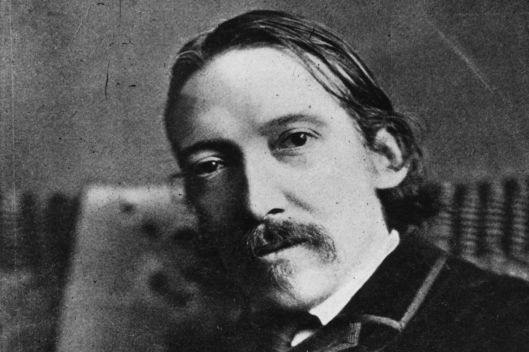
image1rls.jpg

from his 1885 collection, A Child’s Garden of Verses.

image2garden.jpg

There’s another poem from that collection which has haunted us for years—here it is:

THE LAND OF NOD

From breakfast on through all the day

At home among my friends I stay,

But every night I go abroad

Afar into the Land of Nod.


All by myself I have to go,

With none to tell me what to do—

All alone beside the streams

And up the mountain-side of dreams.


The strangest things are there for me,

Both things to eat and things to see,

And many frightening sights abroad

Till morning in the Land of Nod.


Try as I like to find the way,

I never can get back by day,

Nor can remember plain and clear

The curious music that I hear.

As a poem for children, it seems to contain a certain amount of menace:  “All by myself I have to go”, “many frightening sights”.  At the same time, there is a certain fascination—after all, the speaker seems to want to return there.  In other words, it’s a weird, but somehow interesting place, which reminds us of Little Red Riding Hood’s song from Stephen Sondheim’s modern fairy tale musical, Into the Woods (1987), in which she describes her experience with the wolf:

Mother said,
“Straight ahead,
Not to delay
or be misled.”
I should have heeded
Her advice…
But he seemed so nice.
And he showed me things
Many beautiful things,
That I hadn’t thought to explore.
They were off my path,
So I never had dared.
I had been so careful,
I never had cared
And he made me feel excited-
Well, excited and scared.
When he said, “Come in!”
With that sickening grin,
How could I know what was in store?
Once his teeth were bared,
Though, I really got scared-
Well, excited and scared-
But he drew me close
And he swallowed me down,
Down a dark slimy path
Where lie secrets that I never want to know
And when everything familiar seems to disappear forever
At the end of the path was granny once again
So we lay in the dark till you came and set us free
And you brought us to the light
And we’re back at the start

And I know things now,
Many valuable things,
That I hadn’t known before:
Do not put your faith
In a cape and a hood,
They will not protect you
The way that they should.
And take extra care with strangers,
Even flowers have their dangers.
And though scary is exciting,
Nice is different than good.
Now I know:
Don’t be scared.
Granny is right,
Just be prepared.
Isn’t it nice to know a lot!
And a little bit…not.”
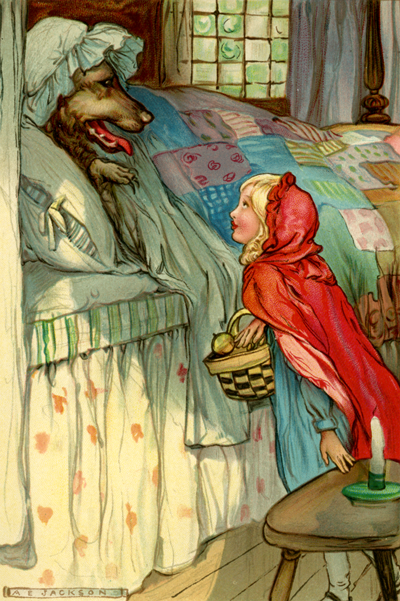
image3lrrh.png

Perhaps it’s that “curious music that I hear” which lures the speaker back?  For us, we’re immediately reminded of the Otherworld music which calls mortals into Faerie in Celtic folk literature.  Here’s a well-known tune with a lyric in Irish and English, which is the lament of a mortal woman who has been pulled into that world against her will, entitled Port na bPucai, “Song of the Pooka” (a kind of Otherworld spirit who plays malevolent tricks on mortals), which can illustrate the kind of music humans believed the Otherworlders used:

Is bean ón slua sí mé, do tháinig thar toinn

I am a woman from the fairy host who traveled over the seas

Is do goideadh san oíche me tamall thar lear

I was stolen in the night and taken beyond the sea

Is go bhfuilim as ríocht seo fé gheas’ mná sídhe

And I am held hostage in the kingdom by the fairy women

Is ní bheidh ar an saol seo ach go nglaofaidh an coileach

And I can only be in this world until the moment the cock crows

Is caitheadsa féin tabhairt fá’n deis isteach

I know I have tasks to do here

Ni thaithneamh liom é ach caithfead tabhairt fé

Which I do not like but must comply with

Is caitheadsa féin tabhairt fén lios isteach

I must return to the fort and do not have anything to do

Is ná déinig aon ní leis an dream thíos sa leas

With this body of fairy people down in the fairy mound.


And here’s a LINK so that you can hear that music sung.

On one level, then, this Land of Nod is simply the land of dreams—and here that land is, disturbingly illustrated by Charles Robinson for an 1895 edition of A Child’s Garden of Verses.
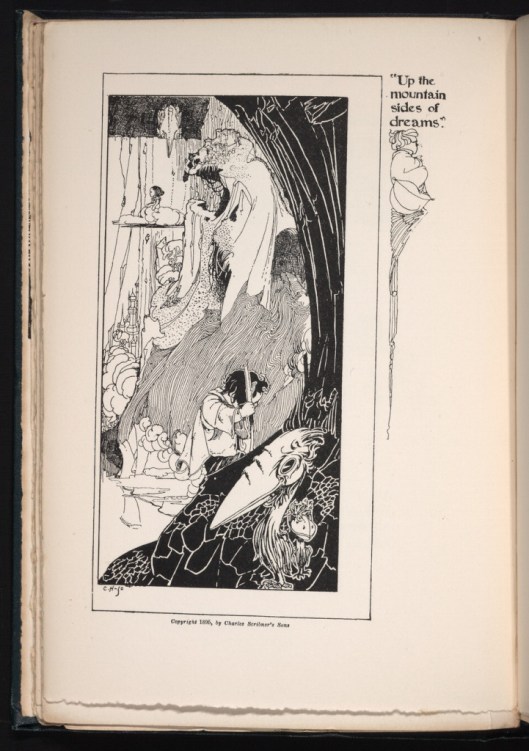
image4robinson.jpg

And we see this again in another late-19th-century poem, by the American poet, Eugene Field (1850-1895), where Nod has become a character who, along with two boating friends (Wynken and Blynken), personifies a child going to sleep:

Dutch Lullabye

Wynken, Blynken, and Nod one night
sailed off in a wooden shoe —
Sailed on a river of crystal light,
into a sea of dew.
“Where are you going, and what do you wish?”
the old moon asked the three.
“We have come to fish for the herring fish
that live in this beautiful sea;
Nets of silver and gold have we!”
said Wynken, Blynken, and Nod.

The old moon laughed and sang a song,
as they rocked in the wooden shoe,
And the wind that sped them all night long
ruffled the waves of dew.
The little stars were the herring fish
that lived in that beautiful sea —
“Now cast your nets wherever you wish —
never afraid are we”;
So cried the stars to the fishermen three:
Wynken, Blynken, and Nod.

All night long their nets they threw
to the stars in the twinkling foam —
Then down from the skies came the wooden shoe,
bringing the fishermen home;
‘Twas all so pretty a sail, it seemed
as if it could not be,
And some folks thought ’twas a dream they’d dreamed
of sailing that beautiful sea —
But I shall name you the fishermen three:
Wynken, Blynken, and Nod.

Wynken and Blynken are two little eyes,
and Nod is a little head,
And the wooden shoe that sailed the skies
is a wee one’s trundle-bed.
So shut your eyes while Mother sings
of wonderful sights that be,
And you shall see the beautiful things
as you rock in the misty sea,
Where the old shoe rocked the fishermen three:
Wynken, Blynken, and Nod.

For a 1904 edition of a selection of Field’s poems, Poems of Childhood, Maxfield Parrish provided the following illustration—

image5parrish.jpg

(A “trundle bed”, by the way, is a low bed built to slide out from under a taller one and commonly was used in the past to accommodate children.  Here’s an image of one.)

image6trundle.jpg


On another level, the reference to music might remind us of the Celtic Otherworld, to which unsuspecting humans are lured away.
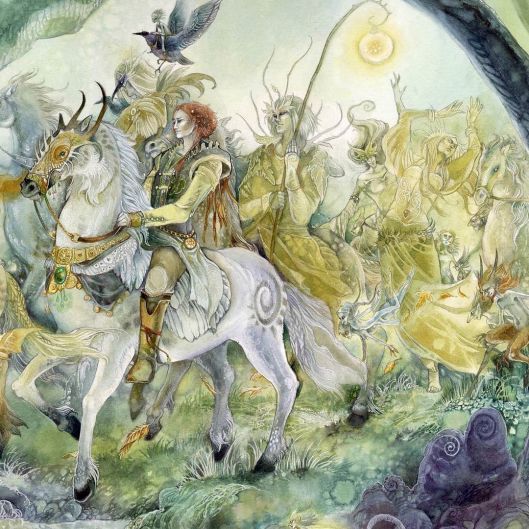
image7tl.jpg

This is an illustration of Child Ballad 39A, “Tam Lin”.  Tam (Tom) is a mortal who has been taken by the elves (another name here for fairies) and is eventually rescued by a mortal woman.  Here’s a LINK to more on the ballad.

We have one more possibility for the Land of Nod—perhaps that which inspired Stevenson initially.  “To nod off” is an expression meaning “to fall asleep”, as we see in a traditional Scots song, “We’re a’ nodding”.  Here’s the first verse and the chorus as edited by Robert Burns and published in Volume 6 of The Scots Musical Museum (1803):

Gudeen to you kimmer
And how do you do?
Hiccup, quo’ kimmer,
The better that I’m fou.

Chorus:
We’re a’ noddin, nid nid nodding,
We’re a’ nodding at our house at hame,
We’re a’ noddin, nid nid nodding,
We’re a’ nodding at our house at hame.

(Translation:

“Good evening to you, old gossip,

And how are you?

Hiccup! Said the old gossip,

Much better because I’m full. [a local usage, meaning “drunk”]

Chorus:

We’re all nodding, nid, nid, nodding,

We’re all nodding at our house at home.

We’re all nodding, nid, nid, nodding,

We’re all nodding at our house at home.”)

But, besides this meaning, there is also, from “Genesis” in the Hebrew Bible, the story of the twin sons of Adam and Eve, Cain and Able.  After Cain murders Able:

“And Cain went out from the presence of the LORD, and dwelt in the land of Nod, on the east of Eden.” (“Genesis”, Chapter 4, Verse 16)
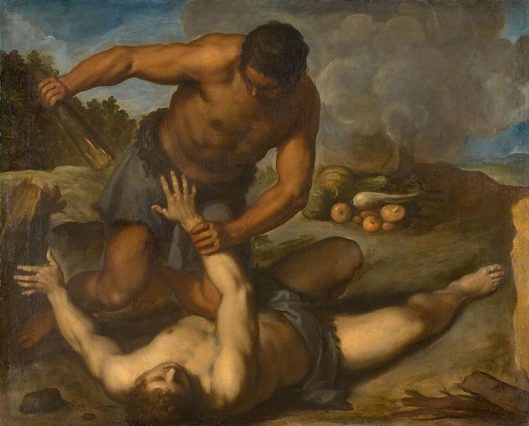
image8canda.jpg

A little research suggests that the name “Nod” comes from a Hebrew root for the verb “to wander”, so Cain, we may be being told, was a wanderer.  That brings us back to our original Stevenson poem, where the speaker tells us that

“…every night I go abroad

Afar into the Land of Nod.


All by myself I have to go,

With none to tell me what to do—

All alone beside the streams

And up the mountain-side of dreams.”


Pleasant—or pleasanter—dreams, dear readers, and


MTCIDC


CD


ps

Our information on the Hebrew Land of Nod comes from this LINK.
When One Door Closes (2)

16 Wednesday Nov 2016

Posted by Ollamh in J.R.R. Tolkien, Literary History, Narrative Methods

≈ Leave a comment

Tags

Balin, Barrows, Bree, Bridge of Khazad-Dum, Chamber of Mazarbul, Crickhollow, doors, Dwarves, Elven-way, Farmer Maggot, Gandalf, Greenway, Hobbit door, Hollin, Lothlorien, Moria, Nazgul, picaresque, Rivendell, Robert Burns, Tam O'Shanter, The Fellowship of the Ring, The Ford of Bruinen, The Hobbit, The Legend of Sleepy Hollow, The Lord of the Rings, The Prancing Pony, Tolkien, Washington Irving, Watcher in the Water, Weathertop, West-door, West-gate

Welcome, dear reader, as always. It’s a rather gloomy late autumn day here as we write this, fitting, perhaps, for the gloomier The Lord of the Rings after the cheerier (well, sometimes) The Hobbit, as we continue our look at the functions of doors and their equivalents in JRRT.

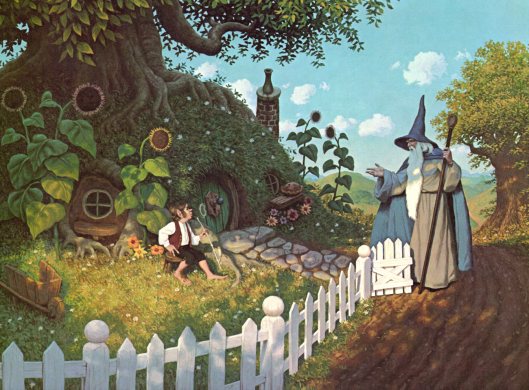
If you’ve read our previous posting, you’ll know that, in it, we examined doors and gates in The Hobbit, dividing them into two basic categories: doors which might lead to safety and doors which led to danger, all based upon Bilbo’s remark about how dangerous it can be, just stepping outside your door.

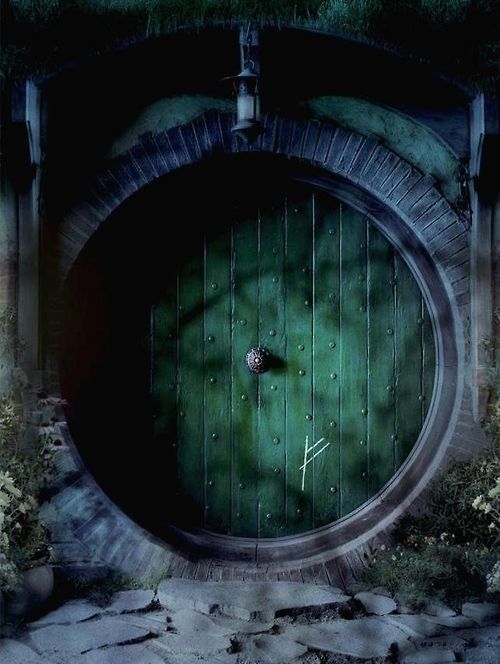
Bilbo’s door adventures had begun with his own.

gandalfvisitsbilbo.jpg

doorwithrune.jpg

When comparing the two books, we get a strong sense of the episodic nature of The Hobbit:  we can almost break it down into movement between doors, from the arrival of the dwarves to the knock of Gandalf and Balin, giving it more the feel of a picaresque novel: that is, a novel with an goal, but with much of its focus upon the adventures along the way, adventures which don’t always necessarily lead to that goal.   This gives it a lighter tone, as well—after all, it was meant as a children’s book in a time (1937) when such books were understood in general never to be too solemn. The Lord of the Rings, in contrast, develops an almost grimly-focused forward motion, which impels it even when the Fellowship breaks into two after the death of Boromir, and much of the action spreads from Frodo and Sam on the way to Mordor to the separate adventures of Merry and Pippin in Rohan and Gondor.

So what might we see as the first door—in either sense—in The Lord of the Rings? we asked ourselves. And we supposed that we might see minor doors of safety at Farmer Maggot’s and Frodo’s new home in Crickhollow, in both cases brief refuges from the Nazgul, but, as we said in our last posting, doors commonly have some sort of challenge to them—and challenger—and the first one of those appears briefly at the hedge in Bree:

“They came to the West-gate and found it shut; but at the door of the lodge beyond it, there was a man sitting. He jumped up and fetched a lantern and looked over the gate at them in surprise.”   (The Fellowship of the Ring, Book 1, Chapter 9, “At the Sign of the Prancing Pony”)

bree.jpg

The watchman, when his challenges (and maybe a little too-inquisitive challenges) are turned aside, lets them in and they reach The Prancing Pony, only to escape murder in their beds and the loss of their ponies.

prancingpony.jpg

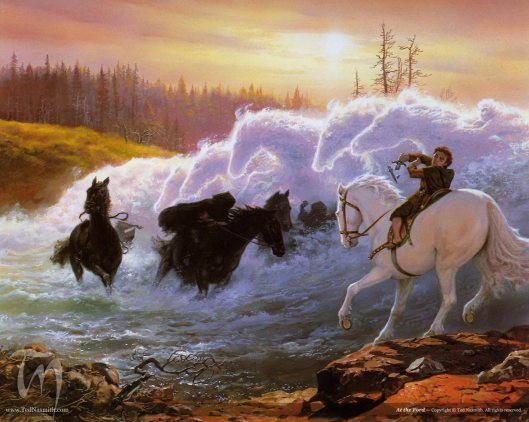
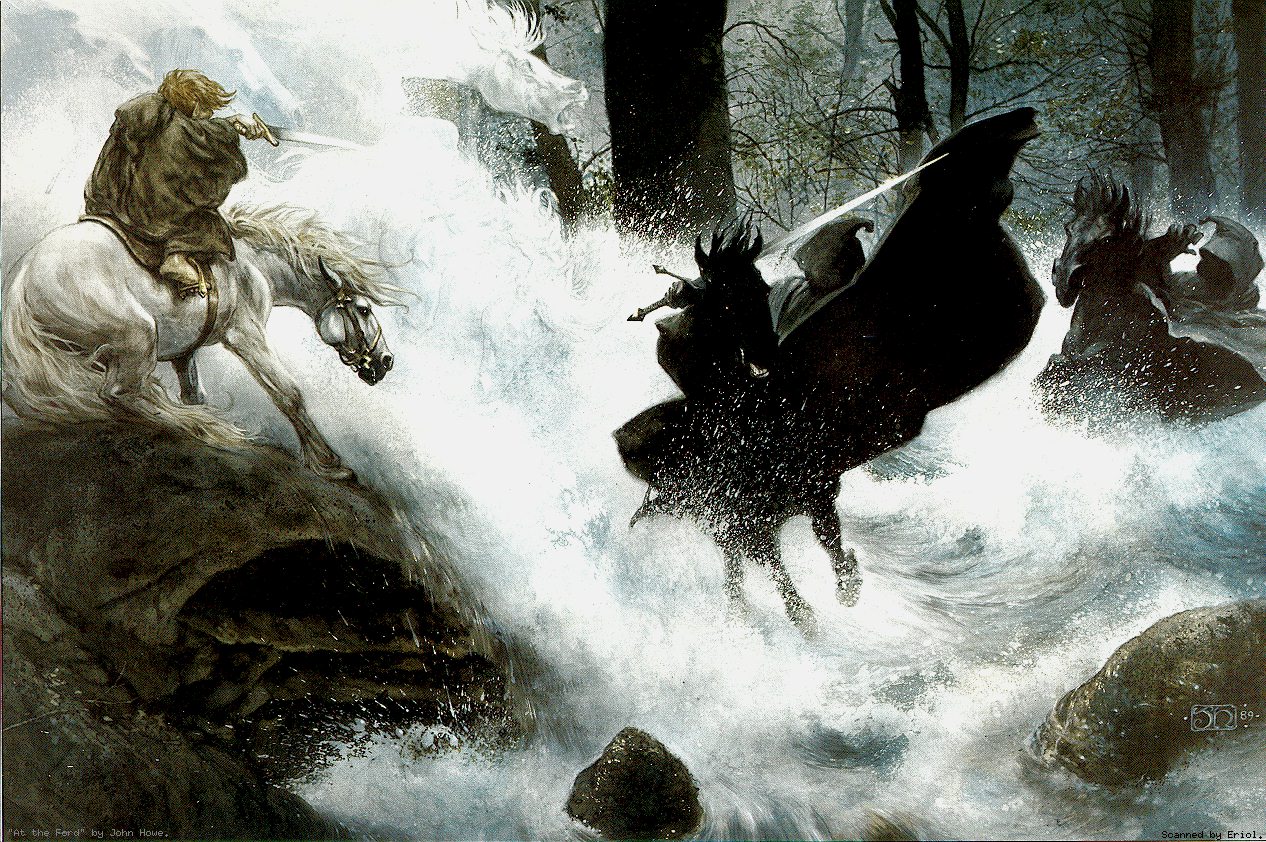
The first gateway which leads to real safety, however, isn’t a door or gate at all, but a natural barrier (with some magical help): the Ford of Bruinen. Here, the role of traveler and challenger is reversed, as the challenged are the Wraiths and the challenger is Frodo, but it is the power of the Elves which closes the door.

At the Ford, by Ted Nasmith

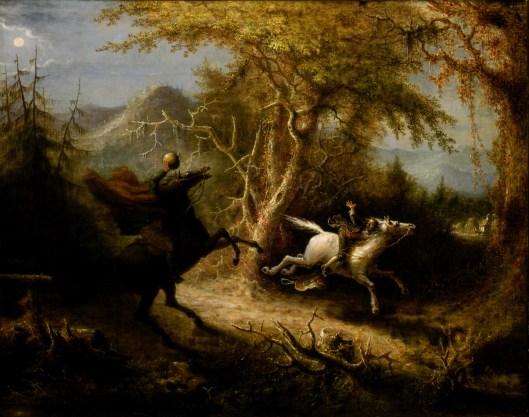
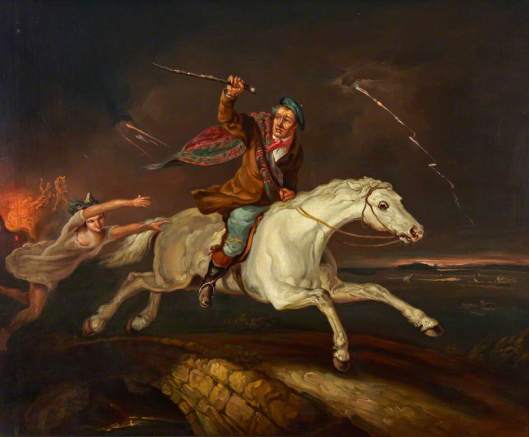
(It is interesting here that Tolkien has chosen not to take advantage of the folk belief—if you know “The Legend of Sleepy Hollow” by Washington Irving, or its inspiration, the poet Robert Burn’s “Tam O’Shanter”, this will be readily familiar to you—that evil spirits are unable to cross running water, even at a bridge.

John_Quidor_-_The_Headless_Horseman_Pursuing_Ichabod_Crane_-_Google_Art_Project.jpg

tamoshanter.jpg

To reach the Shire, the Wraiths have had to cross several bodies of water and now their hesitation to traverse another appears to be derived from their confidence that they can now control Frodo—either by the influence of the Ring, or perhaps from his wound—and call him back across the stream to them.)

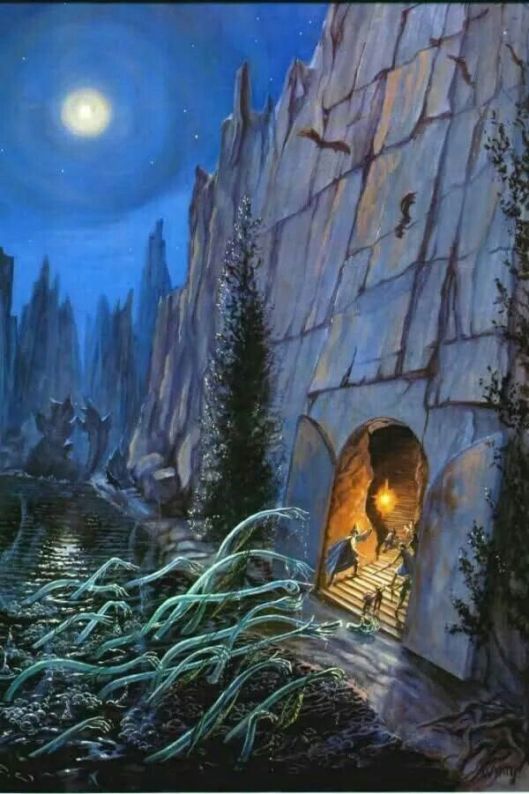
From Rivendell, the next such door is that at the western side of Moria.

moriagate.jpg

Here, there is no living challenger. Rather, it is a kind of riddle—or, at least, it is initially understood as such—which bars the way. Its answer is simple, which led us to wonder, what is the purpose of this door scene in the story? As the creature in the pool

watcher.jpg

barricades the door behind them, it adds to the tension: the Fellowship has been watched and, from the hostile mountains to the wolves to the tentacle thing, it has been forced into darker and narrower ways, those ways seemingly chosen by the malevolent force observing their journey. As well, it suggests the gradual decay of what was once a vibrant, active culture, as Gandalf explains:

“Here the Elven-way from Hollin ended. Holly was the token of the people of that land, and they planted it here to mark the end of their domain; for the West-door was made chiefly for their use in their traffic with the Lords of Moria. Those were happier days, when there was still close friendship at times between folk of different race, even between Dwarves and Elves.” (The Fellowship of the Ring, Book 2, Chapter 4, “A Journey in the Dark”)

This is a theme throughout The Lord of the Rings and one which, we believe, adds to its power: the events of the close of the Third Age are set against a background of other times and other events and the landscape still bears traces of those times, from the Barrows to the Greenway and Weathertop and far beyond. As well, so many of those traces suggest that violence and the dark spirit of Sauron, sometimes through his agents, sometimes in person, have had much to do with their end.

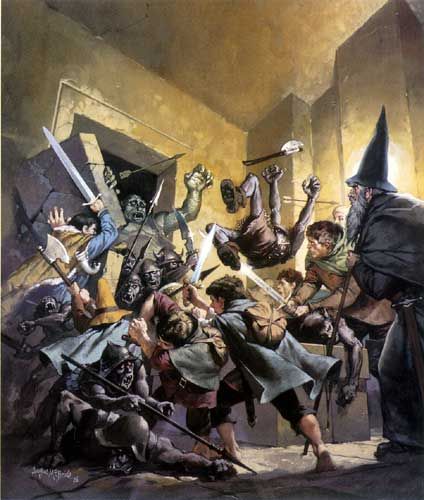
Now that the Fellowship is within Moria, it encounters its next door: that of the Chamber of Mazarbul.

marzabul.jpg

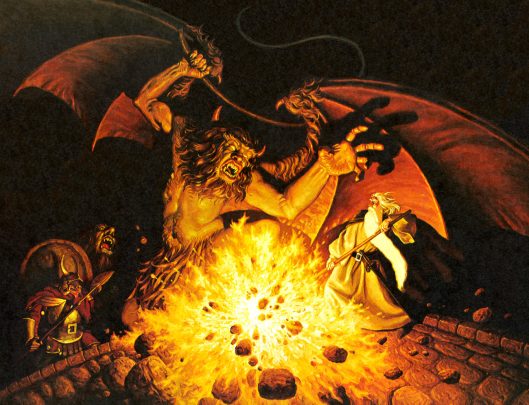
Here, they are the challengers, when forced to defend themselves from a horde of “Orcs, very many of them…And some are large and evil: black Uruks of Mordor.” (The Fellowship of the Ring, Book 2, Chapter 5, “The Bridge of Khazad-Dum”). There is a second door, however, and, when they have beaten back their attackers, they escape by it—but only so that Gandalf may be the challenger at a crossing—as Frodo was at the ford—at the Bridge of Khazad-Dum, although here magic apparently cannot save him, as it had Frodo.

balrog.jpg

With Gandalf gone, we see the repetition of a scene from The Hobbit—the escape through a crowd to the outside world:

“…and suddenly before them the Great Gates opened, an arch of blazing light.

There was a guard of orcs crouching in the shadows behind the great door-posts towering on either side, but the gates were shattered and cast down. Aragorn smote to the ground the captain that stood in his path, and the rest fled in terror at his wrath.” (The Fellowship of the Ring, Book 2, Chapter 5, “The Bridge of Khazad-Dum”)

At this moment in The Hobbit, Bilbo had used his newly-discovered ring to escape (albeit with the loss of a few buttons), but Aragorn’s sword clearly does just as well.

It is easy to see just how prevalent the pattern is: even after that harrowing moment of being chased through the mines and losing Gandalf, where there is a door, there is someone at it to make a challenge, and this holds true even without an actual door, as the remaining members of the Fellowship seek to enter Lothlorien and are stopped by Elven sentries in a tree. (The Fellowship of the Ring, Book 2, Chapter 6, “Lothlorien”)

And the pattern continues, even as the Fellowship breaks up, but let’s take a moment to see what we’ve found so far. On the side of doors to safety, we have: Bree (although it’s not so safe as it looks), the Ford of Bruinen, the main door of Moria, and the entrance to Lorien. As for doors to danger, there are: the western doors of Moria and the door to the Chamber of Mazarbul.

In the third installment, we shall see just how many more doors/gates/entryways we find which continue to fit the pattern—and there are a fair number of them.

Thanks, as ever, for reading.

MTCIDC

CD

Dead Ringers?

01 Wednesday Jul 2015

Posted by Ollamh in Fairy Tales and Myths, J.R.R. Tolkien, Narrative Methods, Poetry

≈ 1 Comment

Tags

Daydreaming, Dragon, Eagles, Ford of Bruinen, Frigates, Frodo, Kites, Nazgul, Pterodactyl, Red-Tailed Hawk, Ring Wraiths, Robert Burns, Shire, Tam O'Shanter, The Legend of Sleepy Hollow, The Lord of the Rings, Tolkien, Washington Irving, Witches' Sabbath

Welcome! In this posting, we plan to talk about the Ring Wraiths (probably in hushed voices).

This entry was initially inspired by looking out the window (and no, we weren’t daydreaming—really!).

There was a harsh call from the sky.

Red-Tailed Hawk Scream (YouTube)

Peering out, we saw the local hawks, who are nesting on a tall building across the road, circling, balancing high on a thermal in that amazing way, something like a kite

Ancient-China-kites-2

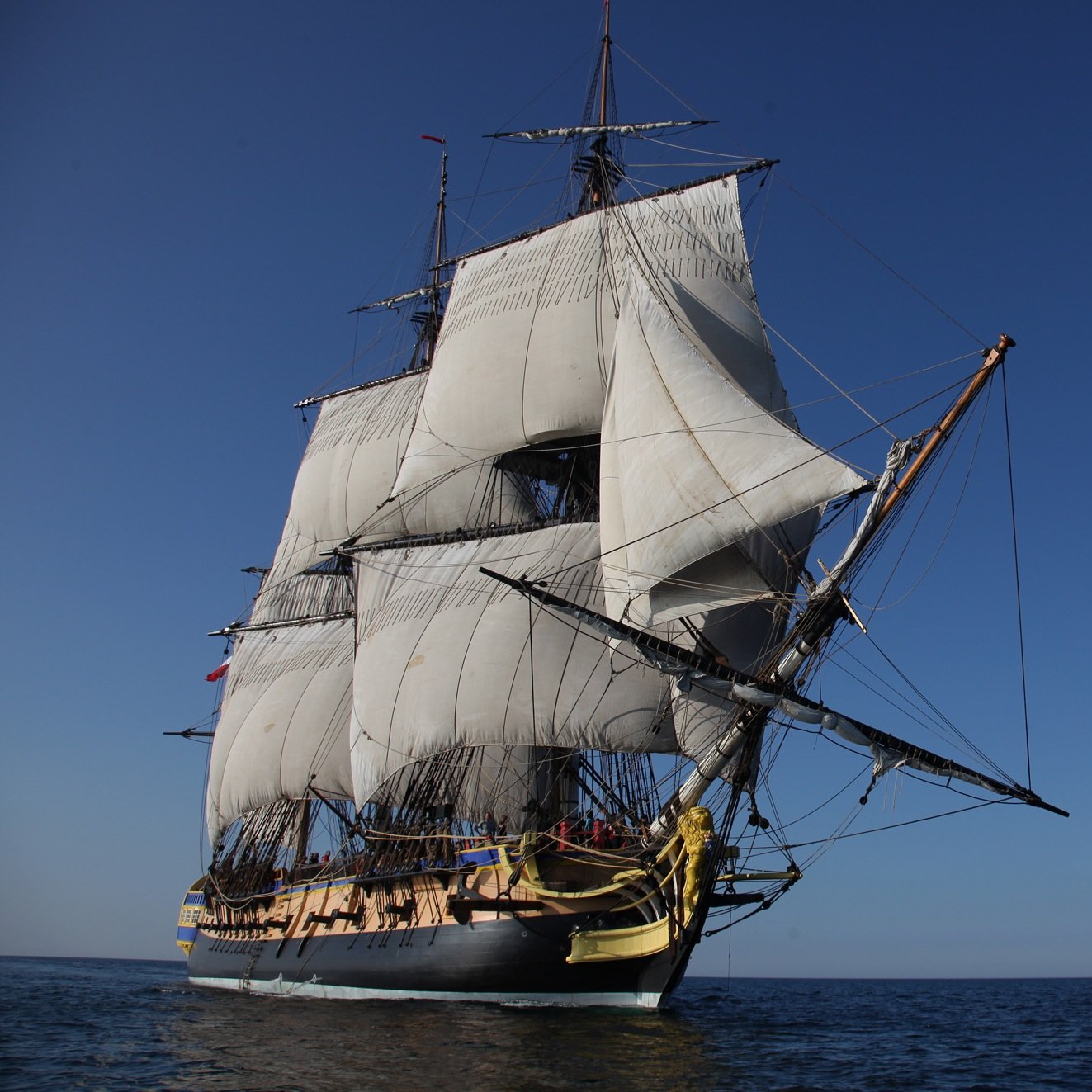
combined with the nimbleness of an 18th-c. frigate.

l'hermione

Red-Tailed Hawks Circling (YouTube)

And suddenly we were looking up at something completely different—

7affeea5ca3551eddd3ae8bc4abd7b47

Nazgul!

In contrast to those very convenient Tolkien eagles, traditionally admired as a fierce and noble bird

tumblr_inline_mvvy21Tf9e1rnrk68

the Wraiths appear to be riding a cross between a flying dragon

Fantasy_In_the_clouds_flying_dragon_067388_

and a pterodactyl.

Pterodactyl_2_(PSF)

nazgul_by_daroz-d5hdnn9

Of course, we first encounter the Nazgul on the ground

nazgul_by_jarrettonions-d47wvdd

in their invasion of the Shire and their subsequent pursuit of Frodo.

And here, at the final moment, at the Ford of Bruinen, where the Wraiths are swept away,

ford

perhaps we can catch a glimpse of one of the origins of a very dramatic scene.

The Scots poet, Robert Burns

burnshead1

wrote “Tam O’Shanter” in 1790 and published it the following year.

Tam O’Shanter Poem and Translation

It’s the story in verse of a farmer who stays too late at his local.

Tam_o'_Shanter_and_Souter_Johnny_at_Kirkton_Jean's

Then, on the way home, he is attracted by light in a local abandoned (and, of course, haunted) church

Alloway_Kirk

where a witches’ Sabbath is going on.

(c) City of Edinburgh Council; Supplied by The Public Catalogue Foundation

Still quite tipsy, he cheers it on and, of course, the witches and other otherworldly creatures are immediately in hot pursuit.

(c) Cutty Sark Trust; Supplied by The Public Catalogue Foundation

Tam can escape, but only if he can reach the nearby river Doon and cross its bridge.

bridgeofdoune

He just manages to do this, but his poor horse, Meg, loses her tail.

four

If this plot has a familiar ring, it’s because the American author, Washington Irving,

Portrait of Washington Irving

used the poem as a major source for his short story, “The Legend of Sleepy Hollow” (published in 1820). We begin with a very different story: in 1790, a poor schoolmaster with the poetic name of Ichabod Crane comes to the Hudson River valley town of Sleepy Hollow and, in the course of his stay, becomes such an annoyance to the local bravo, that he uses the local legend of a headless horseman to frighten Crane off.

keller_sleepyhollow

To do this, he convinces Crane that, should he be pursued by such a creature, he can only escape it by crossing running water. (And here we can see the strong influence of Burns.) In the subsequent narrative, as the horseman, the bravo chases Crane to a bridge, and there the story stops. Crane disappears, never to be seen in Sleepy Hollow again. Irving_Sleepy 

John_Quidor_-_The_Headless_Horseman_Pursuing_Ichabod_Crane_-_Google_Art_Project

Unfortunately, neither the Carpenter letters nor the Hammond/Scull volumes provides any reference to Burns or Irving, but the idea that crossing the ford might stop the unearthly has, to us, a definite suggestion that, somewhere in the leaf mould, there may have been a tiny acorn of memory…

Thanks, as ever, for reading!

MTCIDC

CD

ps

You might know “The Legend of Sleepy Hollow” from this–

legendofsleepyhollow-chase

The Doubtful Sea Series Facebook Page

The Doubtful Sea Series Facebook Page

  • Ollamh

Categories

  • Artists and Illustrators
  • Economics in Middle-earth
  • Fairy Tales and Myths
  • Films and Music
  • Games
  • Heroes
  • Imaginary History
  • J.R.R. Tolkien
  • Language
  • Literary History
  • Maps
  • Medieval Russia
  • Military History
  • Military History of Middle-earth
  • Narnia
  • Narrative Methods
  • Poetry
  • Research
  • Star Wars
  • Terra Australis
  • The Rohirrim
  • Theatre and Performance
  • Tolkien
  • Uncategorized
  • Villains
  • Writing as Collaborators
Follow doubtfulsea on WordPress.com

Across the Doubtful Sea

Recent Postings

  • A Moon disfigured December 17, 2025
  • On the Roads Again—Once More December 10, 2025
  • (Not) Crossing Bridges December 3, 2025
  • On the Road(s) Again—Again November 26, 2025
  • On the Road(s) Again November 19, 2025
  • To Bree (Part 2) November 12, 2025
  • To Bree (Part 1) November 5, 2025
  • A Plague o’ Both—No, o’ All Your Houses! October 29, 2025
  • It’s in Writing (2:  I’st a Prologue, or a Poesie for a Ring?) October 22, 2025

Blog Statistics

  • 103,228 Views

Posting Archive

  • December 2025 (3)
  • November 2025 (4)
  • October 2025 (5)
  • September 2025 (4)
  • August 2025 (4)
  • July 2025 (5)
  • June 2025 (4)
  • May 2025 (4)
  • April 2025 (5)
  • March 2025 (4)
  • February 2025 (4)
  • January 2025 (5)
  • December 2024 (4)
  • November 2024 (4)
  • October 2024 (5)
  • September 2024 (4)
  • August 2024 (4)
  • July 2024 (5)
  • June 2024 (4)
  • May 2024 (5)
  • April 2024 (4)
  • March 2024 (4)
  • February 2024 (4)
  • January 2024 (5)
  • December 2023 (4)
  • November 2023 (5)
  • October 2023 (4)
  • September 2023 (4)
  • August 2023 (5)
  • July 2023 (4)
  • June 2023 (4)
  • May 2023 (5)
  • April 2023 (4)
  • March 2023 (5)
  • February 2023 (4)
  • January 2023 (4)
  • December 2022 (4)
  • November 2022 (5)
  • October 2022 (4)
  • September 2022 (4)
  • August 2022 (5)
  • July 2022 (4)
  • June 2022 (5)
  • May 2022 (4)
  • April 2022 (4)
  • March 2022 (5)
  • February 2022 (4)
  • January 2022 (4)
  • December 2021 (5)
  • November 2021 (4)
  • October 2021 (4)
  • September 2021 (5)
  • August 2021 (4)
  • July 2021 (4)
  • June 2021 (5)
  • May 2021 (4)
  • April 2021 (4)
  • March 2021 (5)
  • February 2021 (4)
  • January 2021 (4)
  • December 2020 (5)
  • November 2020 (4)
  • October 2020 (4)
  • September 2020 (5)
  • August 2020 (4)
  • July 2020 (5)
  • June 2020 (4)
  • May 2020 (4)
  • April 2020 (5)
  • March 2020 (4)
  • February 2020 (4)
  • January 2020 (6)
  • December 2019 (4)
  • November 2019 (4)
  • October 2019 (5)
  • September 2019 (4)
  • August 2019 (4)
  • July 2019 (5)
  • June 2019 (4)
  • May 2019 (5)
  • April 2019 (4)
  • March 2019 (4)
  • February 2019 (4)
  • January 2019 (5)
  • December 2018 (4)
  • November 2018 (4)
  • October 2018 (5)
  • September 2018 (4)
  • August 2018 (5)
  • July 2018 (4)
  • June 2018 (4)
  • May 2018 (5)
  • April 2018 (4)
  • March 2018 (4)
  • February 2018 (4)
  • January 2018 (5)
  • December 2017 (4)
  • November 2017 (4)
  • October 2017 (4)
  • September 2017 (4)
  • August 2017 (5)
  • July 2017 (4)
  • June 2017 (4)
  • May 2017 (5)
  • April 2017 (4)
  • March 2017 (5)
  • February 2017 (4)
  • January 2017 (4)
  • December 2016 (4)
  • November 2016 (5)
  • October 2016 (6)
  • September 2016 (5)
  • August 2016 (5)
  • July 2016 (5)
  • June 2016 (5)
  • May 2016 (4)
  • April 2016 (4)
  • March 2016 (5)
  • February 2016 (4)
  • January 2016 (4)
  • December 2015 (5)
  • November 2015 (5)
  • October 2015 (4)
  • September 2015 (5)
  • August 2015 (4)
  • July 2015 (5)
  • June 2015 (5)
  • May 2015 (4)
  • April 2015 (3)
  • March 2015 (4)
  • February 2015 (4)
  • January 2015 (4)
  • December 2014 (5)
  • November 2014 (4)
  • October 2014 (6)
  • September 2014 (1)

Blog at WordPress.com.

  • Subscribe Subscribed
    • doubtfulsea
    • Join 78 other subscribers
    • Already have a WordPress.com account? Log in now.
    • doubtfulsea
    • Subscribe Subscribed
    • Sign up
    • Log in
    • Report this content
    • View site in Reader
    • Manage subscriptions
    • Collapse this bar
 

Loading Comments...