• About

doubtfulsea

~ adventure fantasy

Tag Archives: Gilbert and Sullivan

Minions and Henchmen

06 Wednesday Nov 2019

Posted by Ollamh in Films and Music, Theatre and Performance, Villains

≈ Leave a comment

Tags

carabiniers, Falscappa, Gilbert and Sullivan, Henchmen, Jacques Offenbach, Les Brigands, Major General, Minions, Pirate King, The Keystone Cops, The Pirates of Penzance

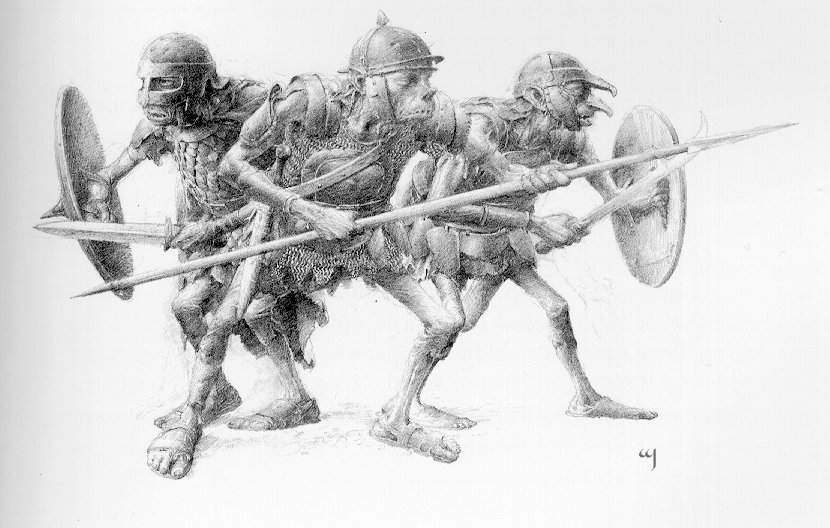
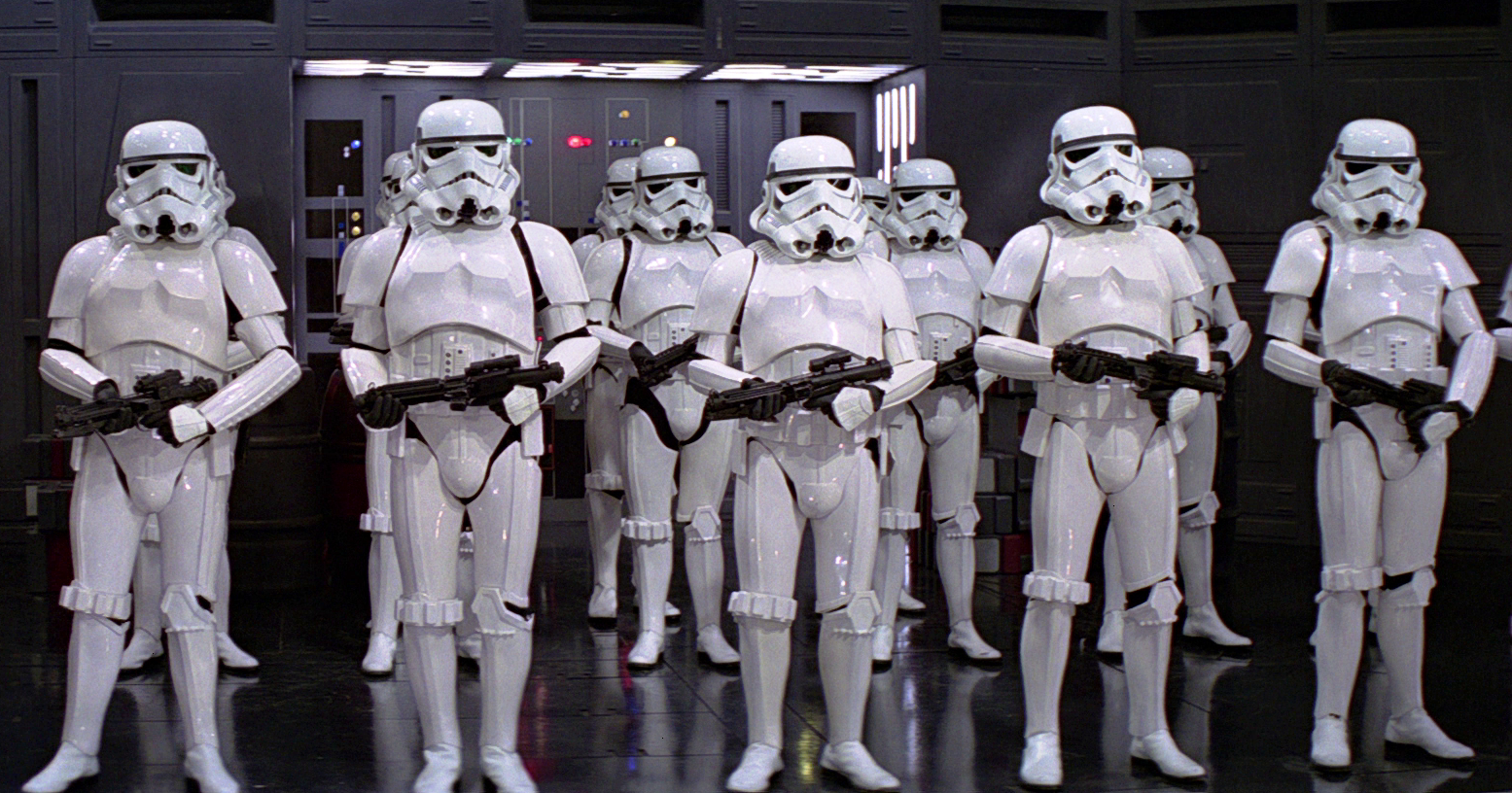
As ever, dear readers, welcome.  In our last, entitled “Henchmen and Minions”, we had a brief look at henchmen—that is, the servants—in groups—of evil-doers, from orcs

image1orcs.jpg

to Imperial stormtroopers.

image2storm.png

These were a grim lot, doing their masters’ work and showing no signs of remorse or regret and mostly very competent at doing so.

In this posting, we thought that we would take the opposite tack and look at minions—for our purposes, we’ll define them as the Light Side of the Dark Side.  Often, unlike Sauron or Cardinal Richelieu in our last post, their bosses are hardly the object of fear themselves.

We begin with two combinations of comic ineptitude:  government mounted police vs bandits and policemen vs pirates.

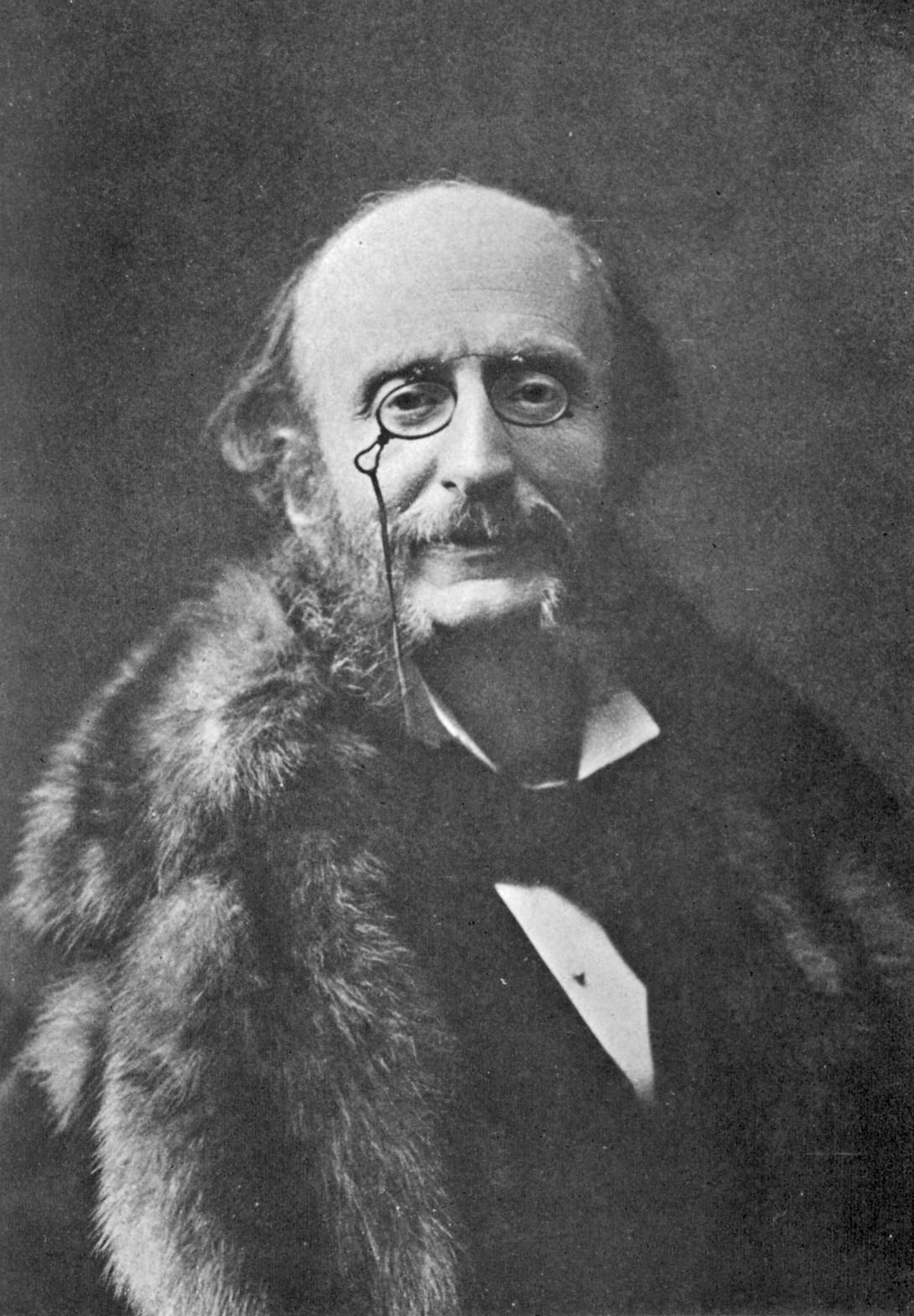
In 1869, Jacques Offenbach (1819-1880)

image3offenbach.jpg

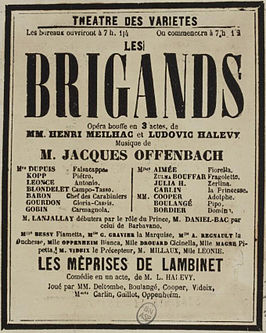
composed the music for Les Brigands (“The Bandits”).

image4poster.jpg

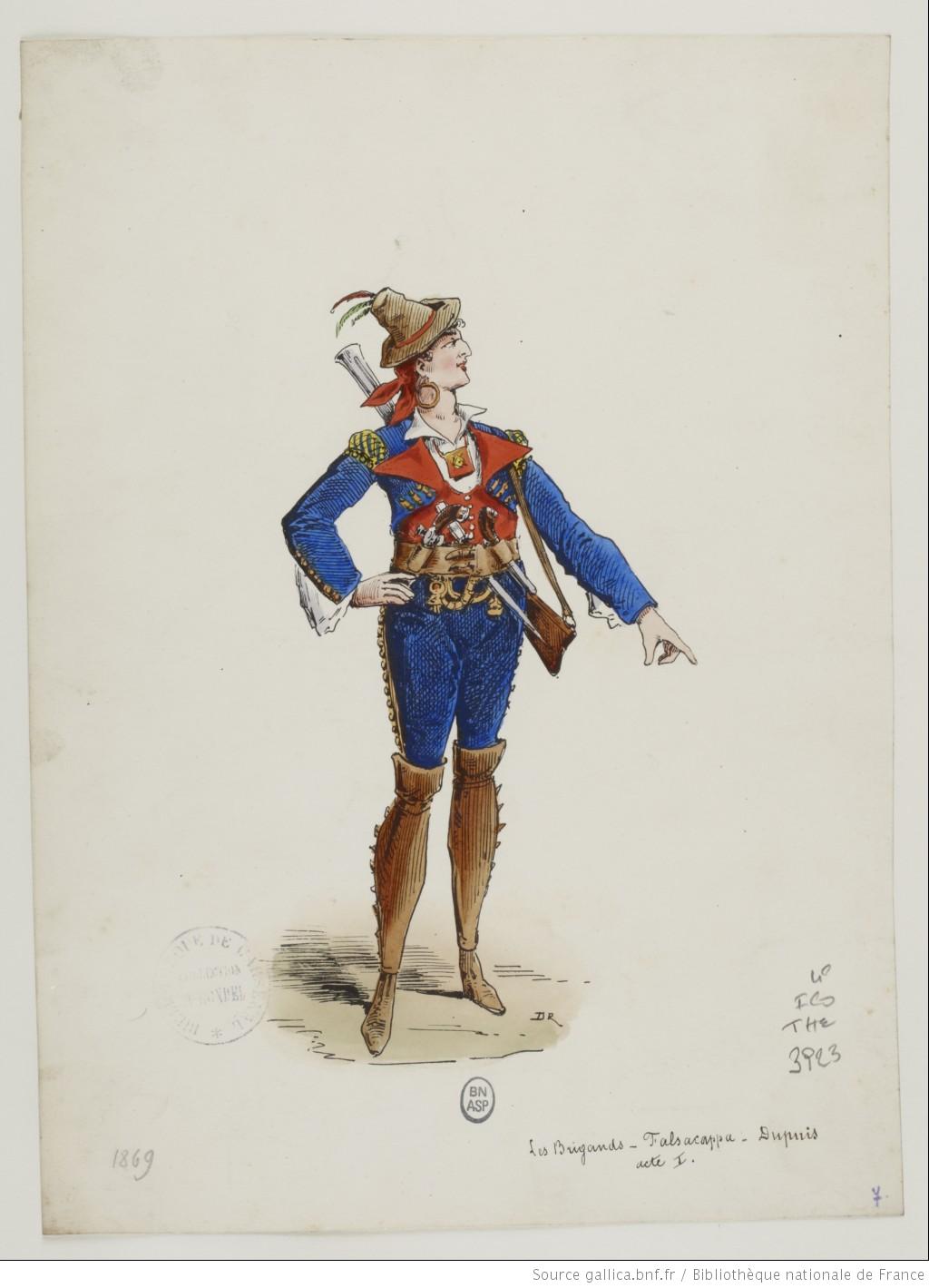
The plot concerns the adventures of a group of Italian banditti, led by a chief called Falsacappa, (“Fake Cape”, suggesting that he’s only wearing the costume of a bandit and is, in fact, someone not so bold?)

image5fals.jpg

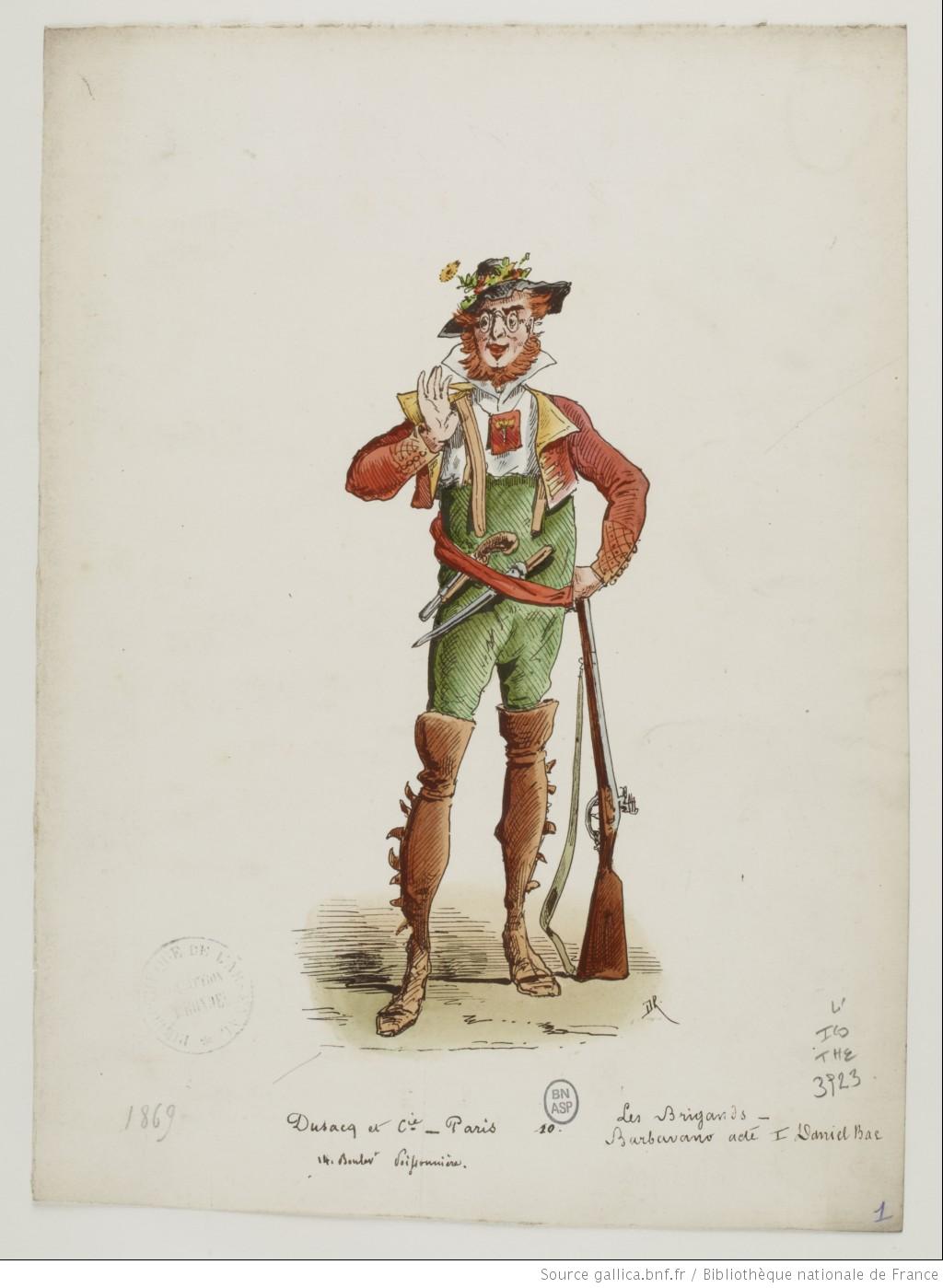
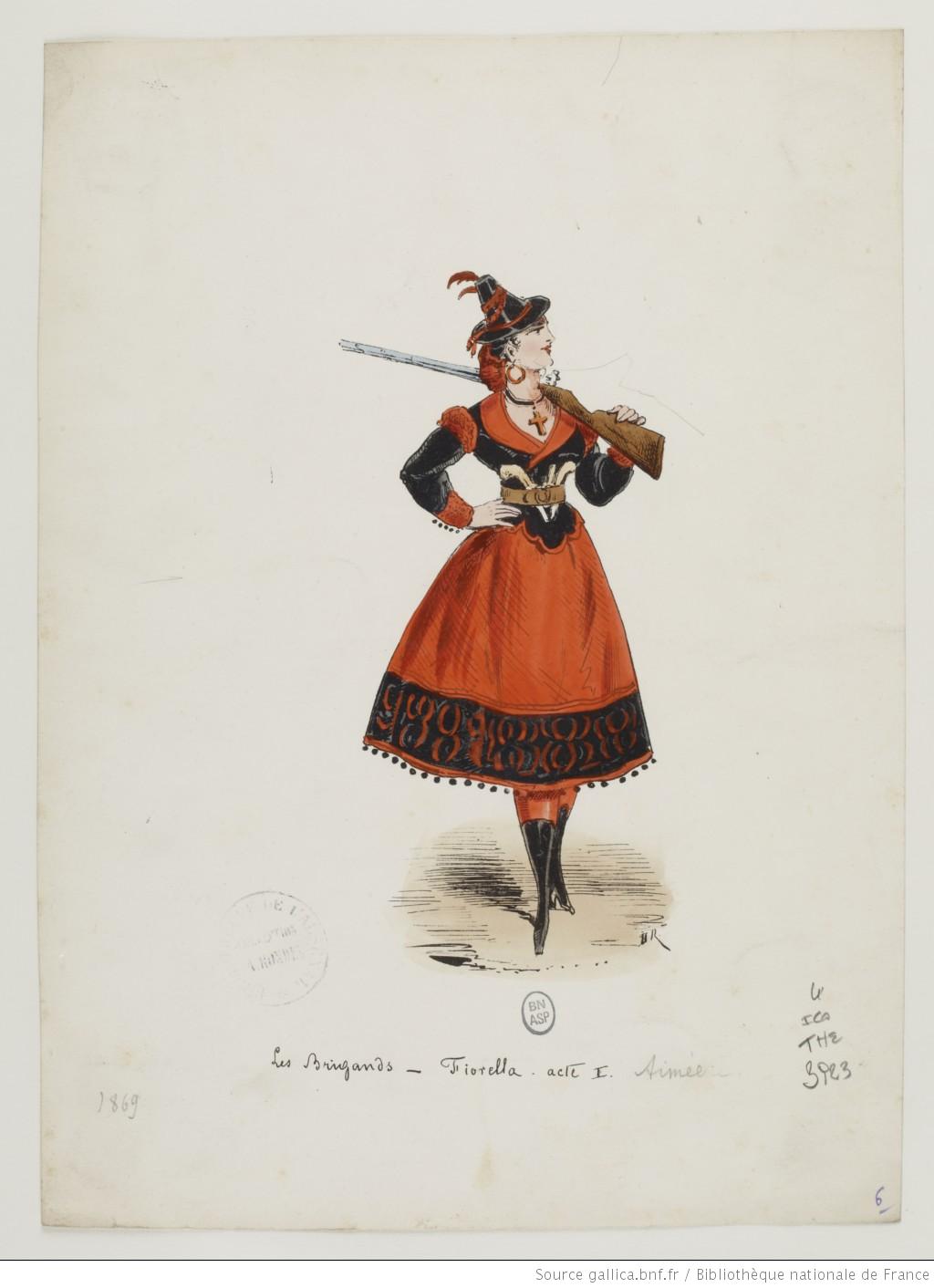
who are scheming to pull off a major heist.  Here (along with that of Falsacappa) are some of the original costume designs.

image6barbavano.jpgimage6fior.jpg

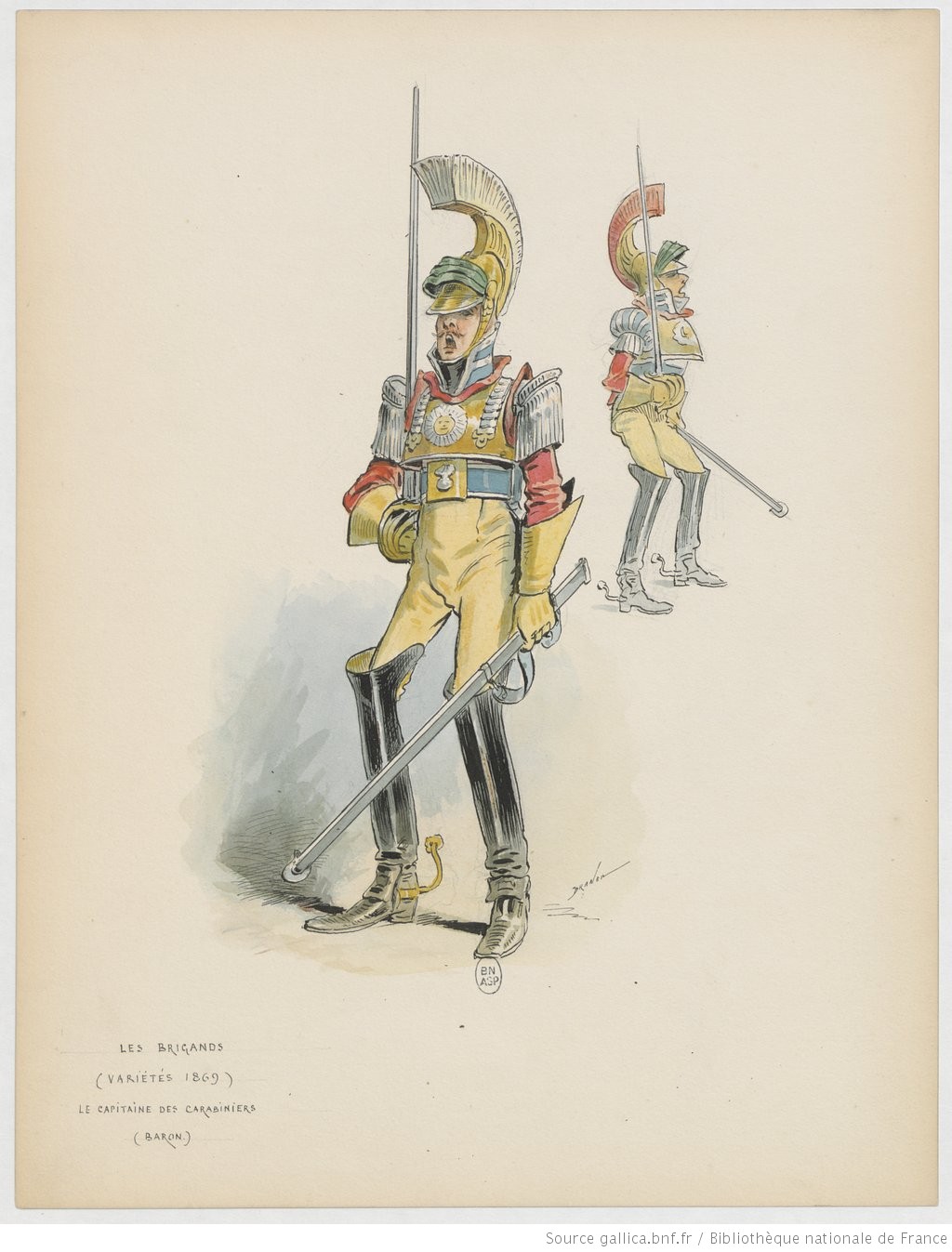
These bandits talk (and sing) as if they were blood-thirsty killers, mostly, but that seems to be all that they do, except indulge in petty crime.  Their opponents, the carabiniers (here’s an original design for their uniforms),

image8carab.JPEG

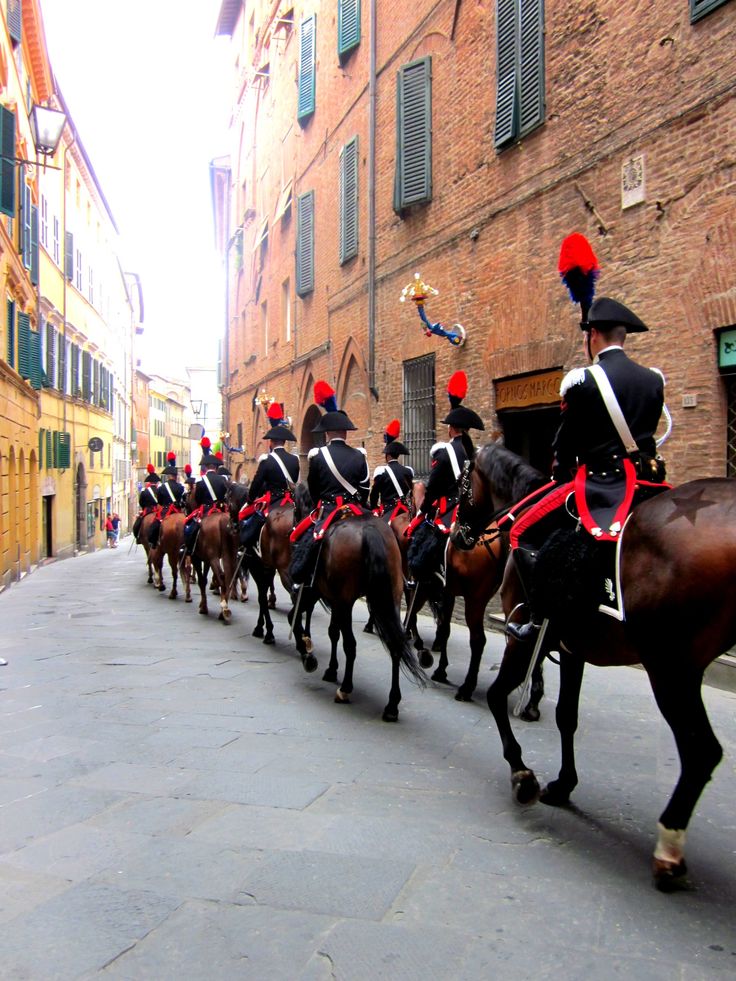
the ancestors of the modern carabinieri,

image9carab.jpg

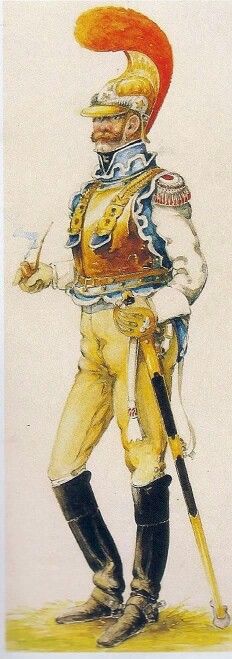
although the costume design makes them look much more like French Napoleonic carabiniers,

image10carab.jpg

a pair of cavalry units, rather than mounted police, are even less impressive.  In fact, as they march onstage, they recite this (our crude translation):

“Nous sommes les carabiniers, gauche, gauche
La sécurité des foyers, gauche, gauche
Mais, par un malheureux hasard,
Au secours des particuliers
Nous arrivons toujours trop tard…”


“We are the carabiniers, left, left.

The security of homes, left, left.

But, by an unhappy chance,

In helping private citizens,

We always arrive too late.”

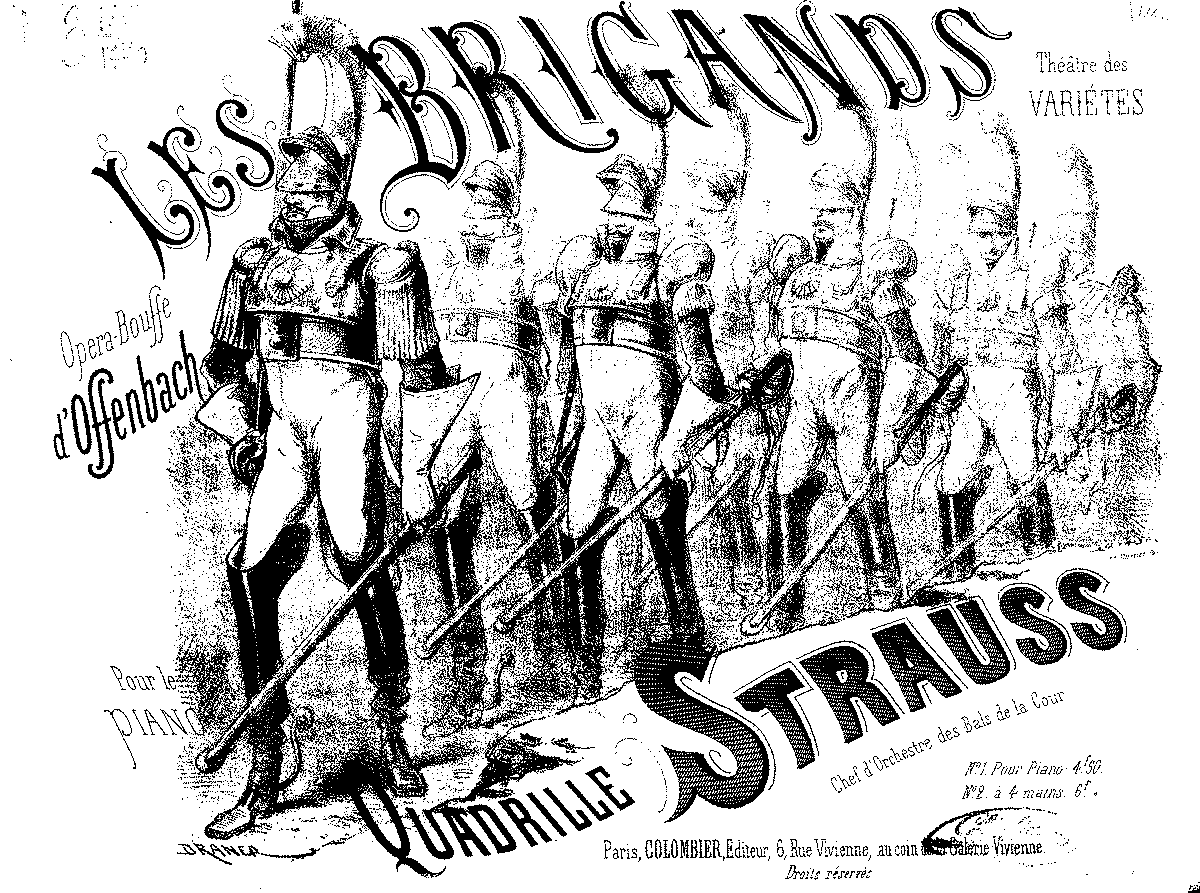
They are also so loud as they tramp along that they always alert criminals that they are coming (and there’s a song about that)—just look at this sheet music cover to give you an idea.
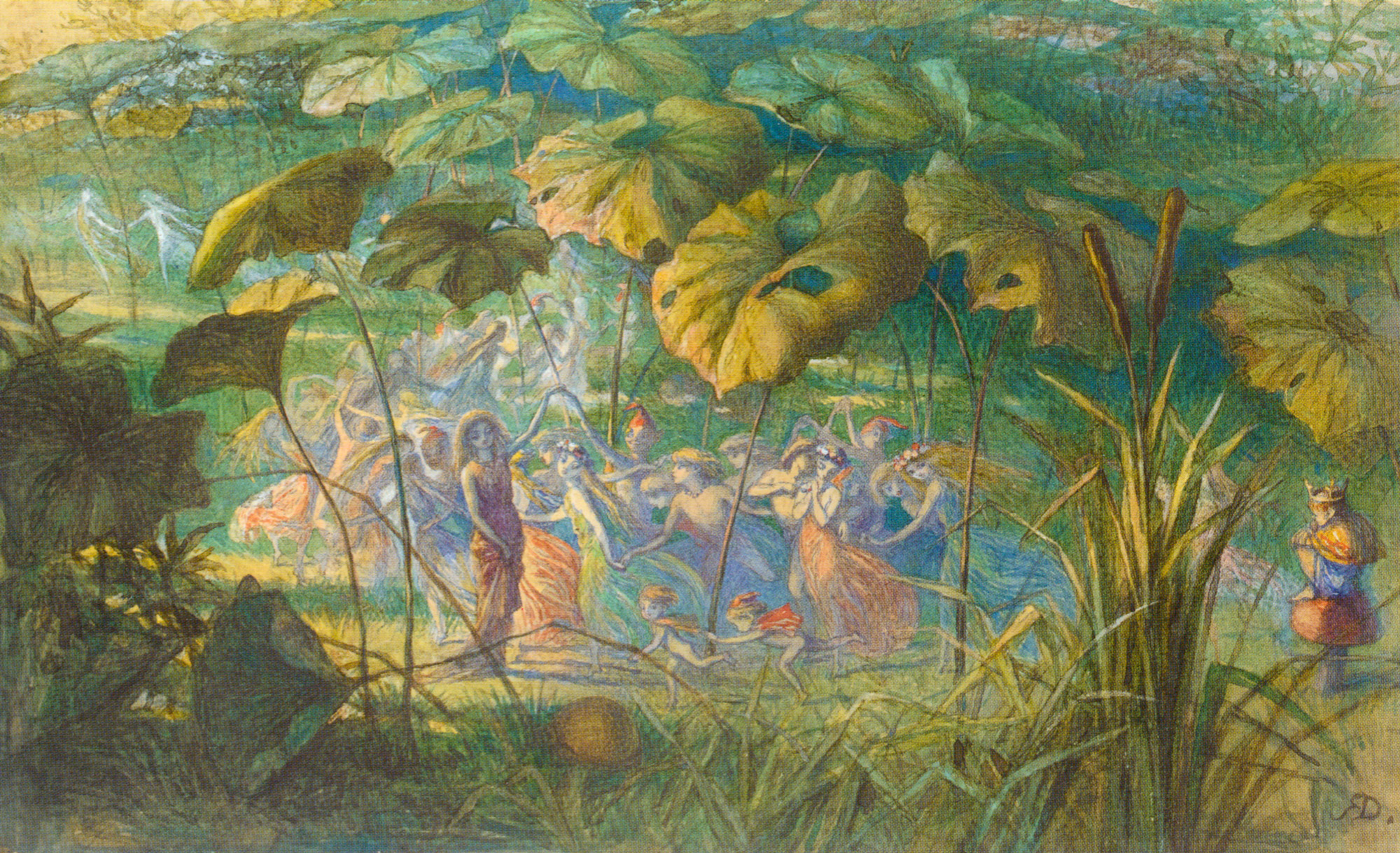
image11carabiniers.png

As for a leader, he seems just to blend in with his hapless men.

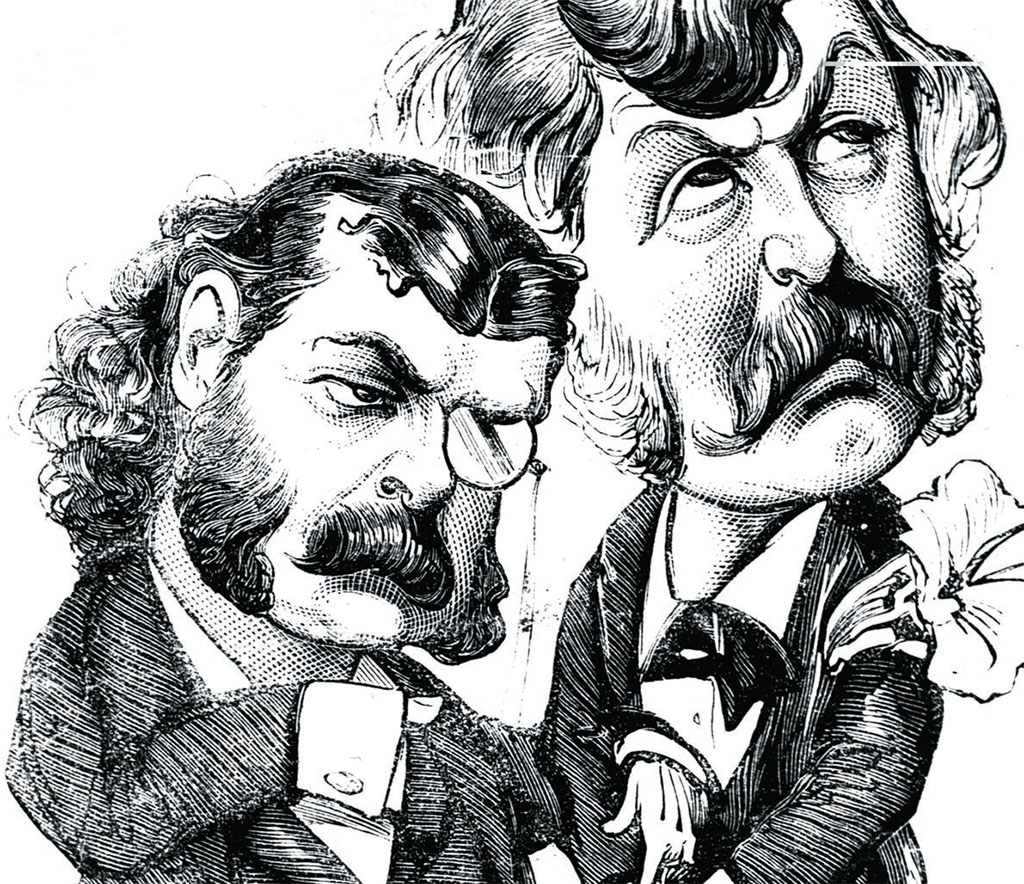
In 1871, WS Gilbert (1836-1911)

image12wsg.jpg

of (eventual) Gilbert and Sullivan (1842-1900) operetta fame,

image13gil.jpg

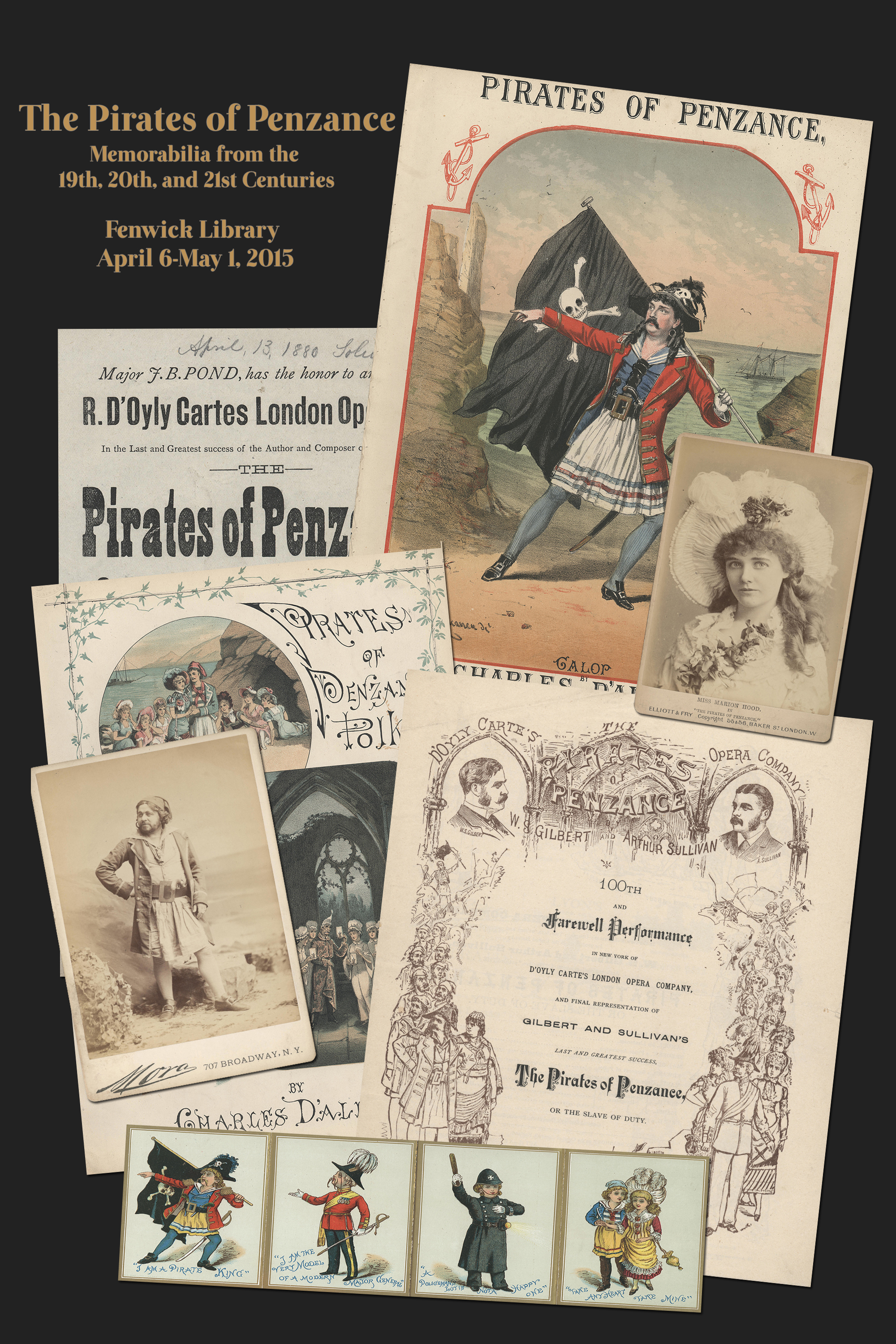
published a translation of Les Brigands, which became the standard 19th-century translation.  The characters in the Offenbach clearly also influenced Gilbert, who, in 1879, created The Pirates of Penzance.

image14pirates.jpg

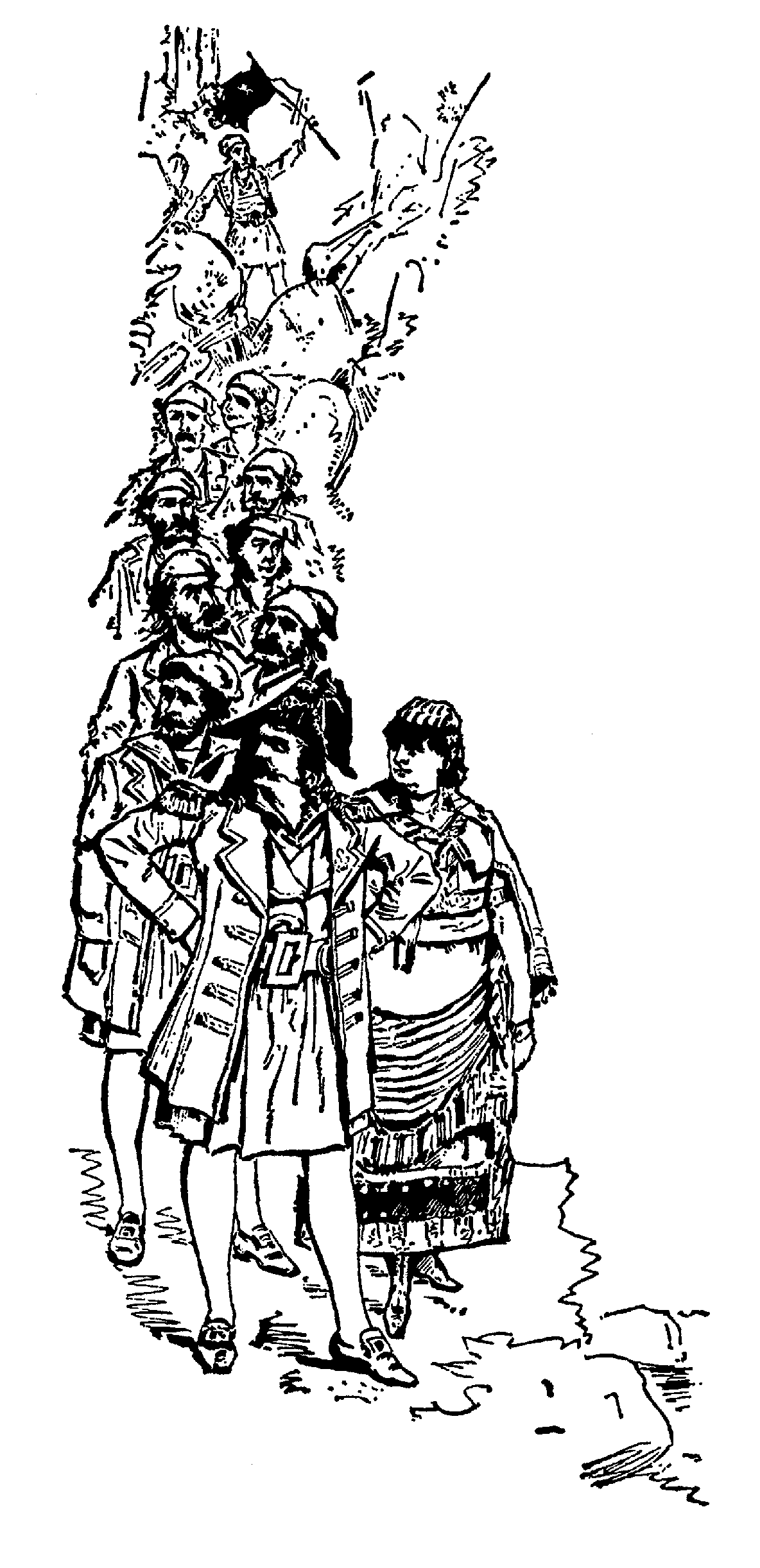
Led by a Pirate King, who looks the part, but…

the plot concerns some extremely tender-hearted pirates, who, being orphans themselves, always let people—and ships—go if the crews claim to be orphans.

image15pirates.png

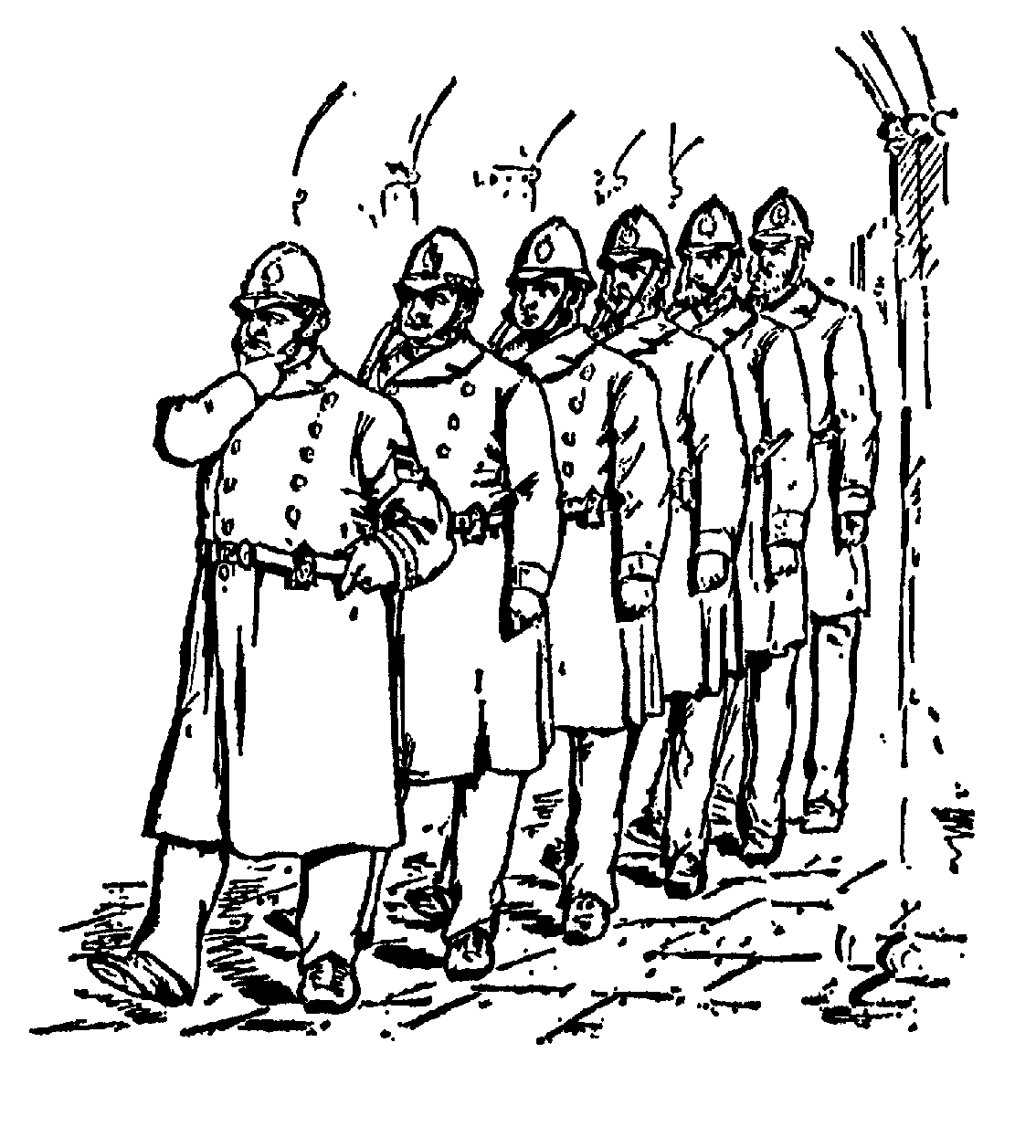
Their opponents, who appear to be Metropolitan policemen (“Bobbies/Peelers”),

image16police.png

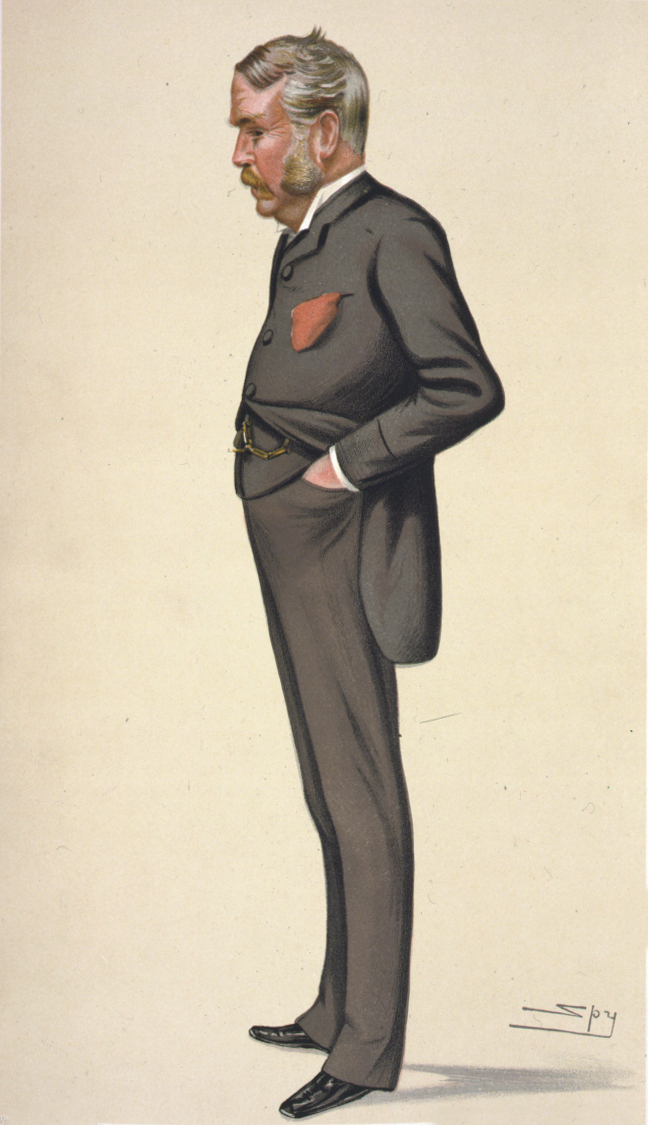
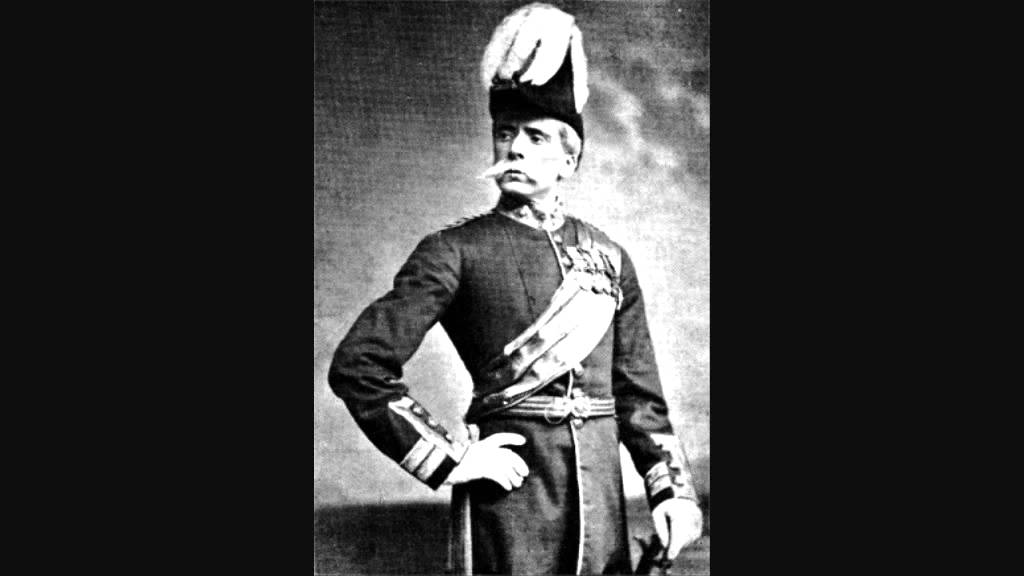
are extremely timid and jump at the slightest sound—which is not surprising, as their chief is an elderly major general whose greatest claim is that he knows everything about war—except for war.

image17mod.jpg

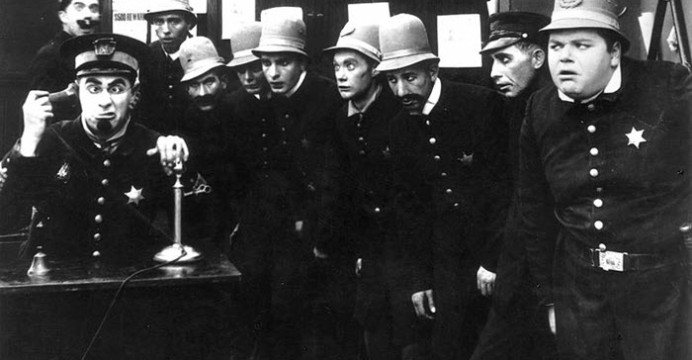
Inept or timid policemen seem to be very popular as minions—early film featured The Keystone Cops from 1912-1917.

image18key.jpg

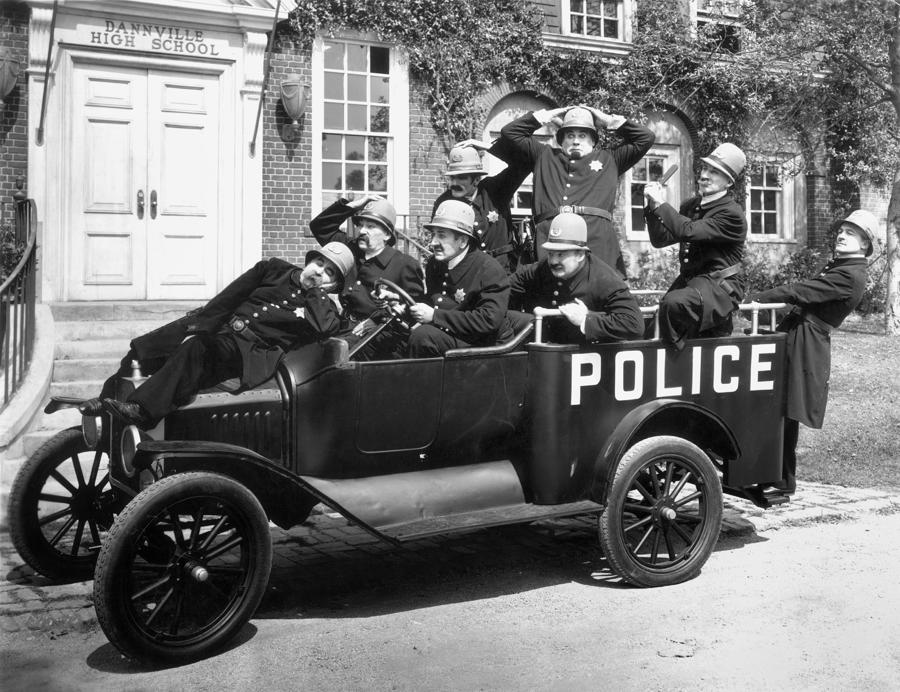
If earlier figures, like the carabiniers and the Gilbert and Sullivan police were dim or fraidy-cats, the Keystone Cops were an absolute disaster, causing more problems than they ever solved–

image19key.jpg

which brings us to our last exhibit

image20minions.jpg

and perhaps enough said.


Thanks for reading, as always, and, as always,

MTCIDC

CD

ps

If you would like to see the Keystone Cops in action, here’s a LINK to one of their films, “For Better But Worse” at the Internet Archive.

(There are more there.)

Gobs and Hobs (1)

22 Wednesday Aug 2018

Posted by Ollamh in Fairy Tales and Myths, J.R.R. Tolkien, Literary History, Military History

≈ 2 Comments

Tags

A E Mason, A Midsummer Night's Dream, Brunhilde, cadet, cockfighting, Edith Bratt, Exeter College, Faeries, Fairies, Gilbert and Sullivan, Goblin Feet, Iolanthe, Oxford Poetry, Richard Doyle, Richard Wagner, The Four Feathers, The Great War, The Lord of the Rings, Tolkien, white feather, William Shakespeare, World War I, Yeats

As always, dear readers, welcome.

In 1915, Tolkien was

image1jrrt.jpg

scrambling to finish his BA at Exeter College

image2aexeter.jpg

before he was swept up into the war which was gradually devouring the younger male populations of much of western Europe

image2bcasualties.jpg

and would soon swallow him, as well.

image2jrrt.jpg

Although he had been a cadet in his earlier days,

image3cadet.jpg

he resisted the societal pressure to join up and that must have been difficult, as it was not uncommon in 1915 for young men not in uniform to be stopped in the street by civilians, particularly women, and asked why they hadn’t enlisted yet before being presented with a white feather as a symbol of cowardice.

image4feather.png

image5feather.jpg

The use of a white feather appears to have been derived from the old sport of cockfighting, in which it was believed that a rooster with a white tail feather would be a poor combatant.

image6cockfighting.jpg

For us, the image is directly related to a famous 1902 adventure novel, The Four Feathers

image7fourfeathers.jpg

by A E Mason (1865-1948).

image8aemason


In this book, the main character, Harry Feversham, is thought to be a coward by his brother officers and by his fiancé and goes to heroic lengths to prove otherwise (here’s a LINK so that you can enjoy the book for yourself, if you would like).

As well as the book, there have been a number of films made from it, including the one which we believe to be the best, from 1939.

image9fourfeathers.jpg

During this scramble to finish, Tolkien wrote a poem in late April for his wife-to-be, Edith Bratt (1889-1971).

image10edith.jpg

Called “Goblin Feet”, it was first published in Oxford Poetry 1915.  (Here’s a LINK so that you may have your own copy of the book.)

image11opo.jpg

Here’s the text:

I am off down the road
Where the fairy lanterns glowed
And the little pretty flitter-mice are flying;
A slender band of gray
It runs creepily away
And the hedges and the grasses are a-sighing.
The air is full of wings,
And of blundery beetle-things
That warn you with their whirring and their humming.
O! I hear the tiny horns
Of enchanted leprechauns
And the padded feet of many gnomes a-coming!
O! the lights! O! the gleams! O! the little twinkly sounds!
O! the rustle of their noiseless little robes!
O! the echo of their feet — of their happy little feet!
O! the swinging lamps in the starlit globes.

I must follow in their train
Down the crooked fairy lane
Where the coney-rabbits long ago have gone.
And where silvery they sing
In a moving moonlit ring
All a twinkle with the jewels they have on.
They are fading round the turn
Where the glow worms palely burn
And the echo of their padding feet is dying!
O! it’s knocking at my heart—

Let me go! let me start!
For the little magic hours are all a-flying.

O! the warmth! O! the hum! O! the colors in the dark!
O! the gauzy wings of golden honey-flies!
O! the music of their feet — of their dancing goblin feet!
O! the magic! O! the sorrow when it dies.

Two things strike us immediately about this text.  First, its tone of subdued longing for Otherness—“I must follow”, “O! it’s knocking at my heart”, “O! the sorrow when it dies”.  This reminded us of WB Yeats’  (1865-1939) “The Hosting of the Sidhe” (from the volume The Wind Among the Reeds, 1899)

The host is riding from Knocknarea
And over the grave of Clooth-na-Bare;
Caoilte tossing his burning hair,
And Niamh calling Away, come away:
Empty your heart of its mortal dream.
The winds awaken, the leaves whirl round,
Our cheeks are pale, our hair is unbound,
Our breasts are heaving, our eyes are agleam,
Our arms are waving, our lips are apart;
And if any gaze on our rushing band,
We come between him and the deed of his hand,
We come between him and the hope of his heart.
The host is rushing ‘twixt night and day,
And where is there hope or deed as fair?
Caoilte tossing his burning hair,
And Niamh calling Away, come away.

(Here, by the way, is the cover to the first edition of the volume, artwork by Yeats’ friend, Althea Giles.

image12windcover.jpg

And here’s a LINK to the earliest edition we can find on the internet—it’s the 4th, from 1903.)

Yeats, in this part of his creative life, was just leaving the late-Victorian era called the “Celtic Twilight”, in which Irish artists of all sorts were attempting to create a new art, independent of British art and literature and based upon what they conceived were “Old Irish models”.  To someone of late-Romantic temperament, like Tolkien, the attraction must have been very strong—note that leprechauns have somehow gotten mixed with the goblins!

This mixing of all kinds of beings from Faerie—goblins, fairies, leprechauns, gnomes—and their diminutive size—note five uses of “little” and one “tiny” –is the second thing which strikes us. The shrinking of otherworld beings in English literature can be traced at least as far back as Shakespeare and A Midsummer Night’s Dream,

STC 22302, title page


but really catches hold in the 19th century, with the pictorial work of artists like Richard Doyle

image14doyle

image15fairyland

and which is parodied by WS Gilbert (1836-1911), in Iolanthe (1882), in which the human-sized (and often played by a stout woman) Queen of the Fairies talks all about curling “myself inside a buttercup”, all the while being costumed to look like a Valkyrie from Wagner’s operas—an extra visual joke (which is, in our Gilbert and Sullivan experience, no longer employed—a pity!).

image16queen

image17brunhilde

(Arthur Sullivan (1842-1900), who was the composer of Iolanthe, has left us a very beautiful overture for it.  Here’s a LINK so that you can hear it.)

JRRT seems, at the very beginning of his literary life, to have been caught up in this mixture of Shakespeare and Victoriana and Yeats’ “Celtic Twilight” mood and it’s perhaps for that reason that, later in life, looking back on it, he said of this early poem:

“I wish the unhappy little thing, representing all that I came (so soon after) to fervently dislike, could be buried forever.” (The Book of Lost Tales Part One, “The Cottage of Lost Play”, 32)

Was he embarrassed at his own youthful influences?  And there have certainly been later critics who have been hard upon the poem.

If we put it into the context of 1915, however, this longing to be anywhere but in wartime 1915 makes perfect sense, especially for a young, sensitive, highly-intelligent man deeply in love with a girl he’d worked so hard to be with. The real horrific violence of the Great War was kept hidden from the people of the UK by the Government.  Newspapers and magazines were censored, soldiers’ letters were censored (Tolkien and Edith developed a secret code in his letters to get around that censorship), soldiers were not allowed to keep diaries or have cameras (only official photographers were permitted to work at the Front—and their work was closely watched), but word still got back, mainly, we suspect, from those on leave, often wounded, who had experienced events which turned out like this—

image18casualties

Is it any wonder, with what he knew about and dreaded being part of, that JRRT would have wished to be on the road to Fairyland?

Thanks, as always, for reading.

MTCIDC

CD

ps

In our next, we want to think out loud a bit about the goblins whose feet JRRT wants so much to follow…

When One Door Closes.4

30 Wednesday Nov 2016

Posted by Ollamh in Imaginary History, J.R.R. Tolkien, Literary History, Maps, Uncategorized

≈ Leave a comment

Tags

Alfred Lord Tennyson, Cirith Ungol, doors, Gilbert and Sullivan, Gondor, Grond, Hobbit door, James Fennimore Cooper, Minas Morgul, Minas Tirith, Morannon, Mordor, N.C. Wyeth, Nazgul, Orodruin, Princess Ida, Shelob's Lair, The Last of the Mohicans, The Lord of the Rings, The Princess, The Siege of Gondor, Tolkien

Welcome, as always, dear readers. In this posting, we’ll complete our survey of doors and entryways and what happens at them in The Lord of the Rings.

We began this series a little while ago when we got to thinking about Bilbo’s remark to Frodo that: “It’s a dangerous business, Frodo, going out your door.”

Bilbo had learned this the hard way when Gandalf had come to his door and he had embarked upon an adventure he, originally, had no desire to be part of.

gandalfvisitsbilbo

In three postings, we’ve followed the story through doors and entryways from that moment all the way to the moment when Gandalf blocks the Lord of the Nazgul from entering Minas Tirith through its ruined main gate.

mcbridegandalflordofnazgul.gif

In the process, we have come to see that doors and entryways seem to come in two forms: first, there are doors which lead to safety; second, there are doors which lead to danger. We’ve added other elements, natural entryways, like fords and bridges, and the fact that many of the entryways have challenges and challengers barring the way.

In a moment of cheerful intellectual cruelty, we ended the last posting at that crucial moment in “The Siege of Gondor”, in which Grond, the battering ram of the armies of Mordor, has, with the magical aid of the Lord of the Nazgul, broken down the gate and that Lord is about to enter the city, when he meets Gandalf as the challenger:

“ ‘You cannot enter here,’ said Gandalf, and the huge shadow halted. ‘Go back to the abyss prepared for you! Go back! Fall into the nothingness that awaits you and your Master. Go!’ ”

And, just at that moment, “Great horns of the North wildly blowing. Rohan had come at last.”

rohirrim.jpg

[We wondered, by the way, if that “Great horns of the North wildly blowing” was an accidental or deliberate allusion to a lyric from Alfred Lord Tennyson’s

tennysonyoung.jpg

poetic criticism of the idea of women’s education, The Princess (1847),

prncss.jpg

in which we find the line “The horns of Elfland faintly blowing”—here’s the whole poem:

from The Princess: The Splendour Falls on Castle Walls
By Alfred, Lord Tennyson
The splendour falls on castle walls
                And snowy summits old in story:
         The long light shakes across the lakes,
                And the wild cataract leaps in glory.
Blow, bugle, blow, set the wild echoes flying,
Blow, bugle; answer, echoes, dying, dying, dying.
         O hark, O hear! how thin and clear,
                And thinner, clearer, farther going!
         O sweet and far from cliff and scar
                The horns of Elfland faintly blowing!
Blow, let us hear the purple glens replying:
Blow, bugle; answer, echoes, dying, dying, dying.
         O love, they die in yon rich sky,
                They faint on hill or field or river:
         Our echoes roll from soul to soul,
                And grow for ever and for ever.
Blow, bugle, blow, set the wild echoes flying,
And answer, echoes, answer, dying, dying, dying.


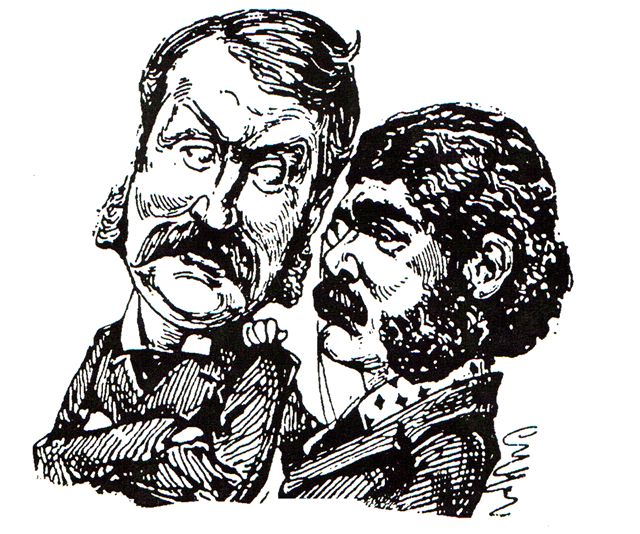
This then formed the basis of an 1870 play by W.S. Gilbert, which he converted, with his collaborator, Arthur Sullivan, into an operetta, in 1884.]


Gilbert and Sullivan Cartoon.jpg

Princess-Ida-1884.jpg

For the Aragorn and company half of the story, we see the arrival of the army of Gondor and its allies at the Morannon as the last door.

morannon.1.gif

Here, there are, in fact, two challengers/challenges. First,

“When all was ordered, the Captains rode forth towards the Black Gate with a great guard of horsemen and the banner and heralds and trumpeters…They came within cry of the Morannon, and unfurled the banner, and blew upon their trumpets; and the heralds stood out and sent their voices up over the battlement of Mordor.” (The Return of the King, Book 5, Chapter 10, “The Black Gate Opens”)

In return,

“There came a long rolling of great drums like thunder in the mountains, and then a braying of horns that shook the very stones and stunned men’s ears. And thereupon the door of the Black Gate was thrown open with a great clang, and out of it there came an embassy from the Dark Tower.”

In both cases, it goes without saying that this is a door to danger, the difference being that those from Gondor want those within to come out so that, by defeating them (though they have little hope of this), those from Gondor can enter, while those within the gate want to prevent their entry (except, perhaps, as prisoners).

As we turn to the other half of the narrative, we begin at the same gate, where Gollum has brought Frodo and Sam.

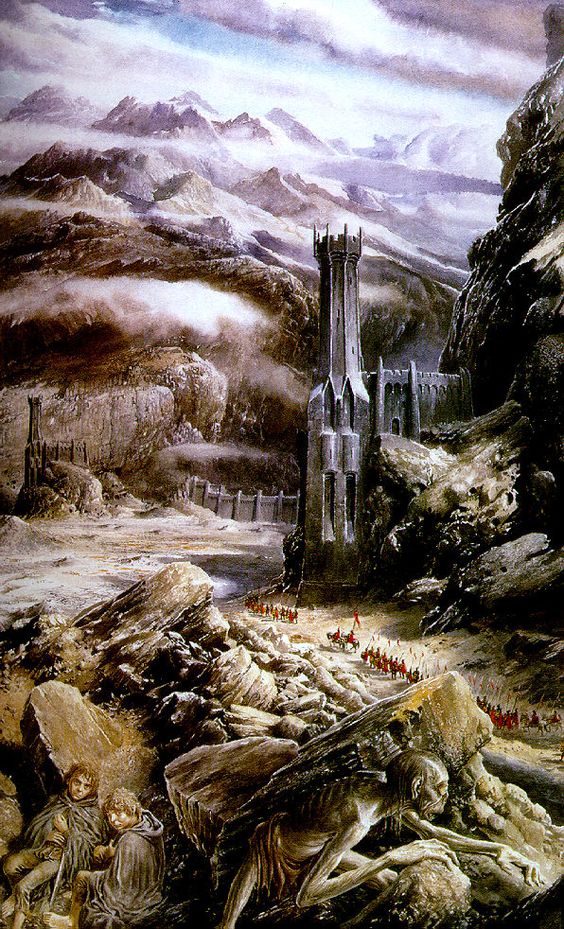
alanleemorannon.jpg

Here, there is no easily visible challenger, just the forbidding nature of the gate, but it is still not an entryway to safety, as, on the other side is an inhospitable landscape, populated by Sauron’s vast armies, constantly on the move, as we see in later chapters. As well, from those later chapters, we gain the sense that Frodo doesn’t believe he’s going to return from Mordor anyway.

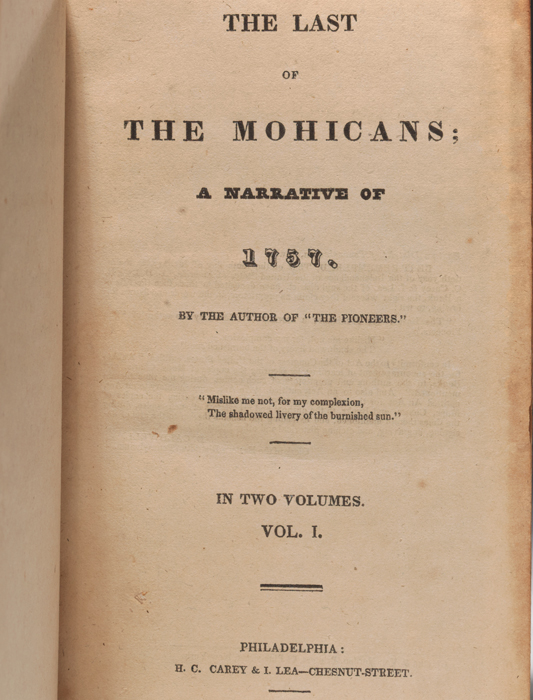
Seeing no way to enter, Frodo pushes Gollum to lead them south and, with a diversion to Faramir’s base behind a waterfall (which, to us, is reminiscent of a similar hide-out in James Fennimore Cooper’s The Last of the Mohicans (1826)

mohicansfirstedition.jpg

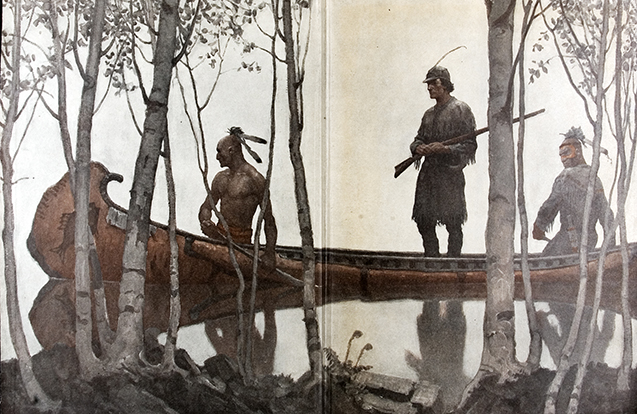
—and how can we resist mentioning that, in 1919, N.C. Wyeth illustrated an edition?)

05_lastofthemohicans_wyeth_glenfalls.jpg

wyethlast.jpg

they arrive at the southern entryway to Mordor, the pass with Minas Morgul at its western end and Cirith Ungol at its eastern.

Morgul2.jpg

WATCHERS.jpg

The challengers of Minas Morgul are the Lord of the Nazgul and a vast army, on their way to attack Minas Tirith, but these are skirted, as Gollum guides the two hobbits around the site and up on a perilous climb—and into Torech Ungol, Shelob’s Lair. Safety? Gollum wants the hobbits to think so. Danger? With Shelob as a challenger, what else?

shelob.jpg

Even as Sam drives Shelob off, however, he loses Frodo, paralyzed and cocooned, and is faced with an inner door closed by the orcs as they withdraw. Climbing over it, he moves forward, cloaked by the ring, to look out towards Orodruin and the Tower of Cirith Ungol.

cirith-ungol2

And, with this, we have finished our survey.

Unless, of course, we consider two more events.

First, there is what happens at Mount Doom, where Gollum is the challenger, and the door, such as it is, leads to safety for Middle-earth, but not for Sam and Frodo.

gollum__s_dance_by_01gus01-d4rmt18.jpg

And, finally, at the edge of the Shire, in “The Scouring of the Shire”, where the returning hobbits meet with the followers of “Sharkey” at the bridge. Those followers, brain-washed by fear of “The Chief” and his “big man” followers, attempt to deny what should be a door to safety to Frodo, Merry, and Pippin, as the three had expected, but which leads, in fact, to conflict and open violence before their return home is safely accomplished.

scouringoftheshire.jpg

With that, we complete the pattern and here is our chart:


Entryway Source Challenger Challenged Outcome
Bilbo’s door The Hobbit Bilbo Dwarves Bilbo is tricked into hospitality
Beorn’s house The Hobbit Beorn Gandalf Beorn tricked into hospitality
Goblin cave The Hobbit Goblins Bilbo Escapes by use of the Ring
Mirkwood The Hobbit Elves Dwarves/Bilbo Bilbo rescues dwarves with Ring and barrels
Lonely Mountain (Back door) The Hobbit Smaug Dwarves/Bilbo Understanding the inscription, Dwarves open the door
Lonely Mountain (Front door) The Hobbit Dwarves Men, Elves, Goblins Battle of the Five Armies—eventual settlement
Bilbo’s door The Hobbit Hobbits Bilbo Bilbo’s things are up for auctions—Bilbo gets most things back
Ford of Bruinen The Lord of the Rings Wraiths Frodo/Elves After Frodo’s challenge, elf magic overwhelms wraiths
Moria (west gate) The Lord of the Rings Elves of Hollin Fellowship Gandalf discovers password—the group enters
Lothlorien (western side) The Lord of the Rings Elves Fellowship Challenged by elves, but allowed to enter
Edoras The Lord of the Rings Rohirrim Gandalf et al. Challenged by gate guards, but allowed to enter
Meduseld The Lord of the Rings Hama Gandalf et al. Challenged, but allowed to enter
Helms Deep The Lord of the Rings Aragorn Orcs/Wildings Aragorn warns them of their danger
Isengard The Lord of the Rings Merry/Pippin Gandalf et al. Greeted and offered food, drink, and smoke
Paths of the Dead The Lord of the Rings Oath-breakers Aragorn at al. Allowed to enter, but followed—leave safely
Morannon The Lord of the Rings Sauron King Elessar et al. Sauron’s army appears for battle
Morannon The Lord of the Rings Sauron Frodo/Sam/Gollum No way of entry—the three head south
Minas Morgul The Lord of the Rings Lord of Nazgul Frodo/Sam/Gollum Entry blocked by Lord’s Army
Torech Ungol The Lord of the Rings Shelob Frodo/Sam Gollum escapes, Frodo paralyzed by Shelob
Cirith Ungol The Lord of the Rings Orcs Sam With Ring as aid, Sam enters
Mt. Doom The Lord of the Rings Gollum Frodo Gollum gains Ring, but perishes in fire
Shire bridge The Lord of the Rings Hobbits Frodo et al. Hobbits climb over gate, guards run


Because this material becomes increasingly complex, there is always the possibility that, as thorough as we try to be and as inclusive, we’ve missed something. If so, we’d be glad to hear from our readers!

Thanks, as always, for reading!

MTCIDC

CD


A Pirate’s Life

24 Wednesday Feb 2016

Posted by Ollamh in Artists and Illustrators, Imaginary History, J.R.R. Tolkien, Literary History, Military History, Military History of Middle-earth, Villains

≈ Leave a comment

Tags

Barbary Coast, Captain Blood, Captain Hook, Corsairs, Errol Flynn, Gilbert and Sullivan, Howard Pyle, Jack Sparrow, Jolly Roger, mariners, Napoleonic Wars, Narnia, Peter Jackson, Pirates, Scharb, shipbuilding, Tamora Pierce, The Black Pearl, The Lord of the Rings, Tolkien, Tortall, Treasure Island, Umbar, USS Philadelphia, xebec

“Oh, a pirate’s life is a wonderful life,

A-rovin’ over the sea,

Give me a career as a buccaneer

It’s the life of a pirate for me…”

Wallace/Penner, Peter Pan (1953)


Dear readers, welcome, as ever.

Being clever, you can tell immediately where this posting is going to go. Yep, the corsairs of Umbar.

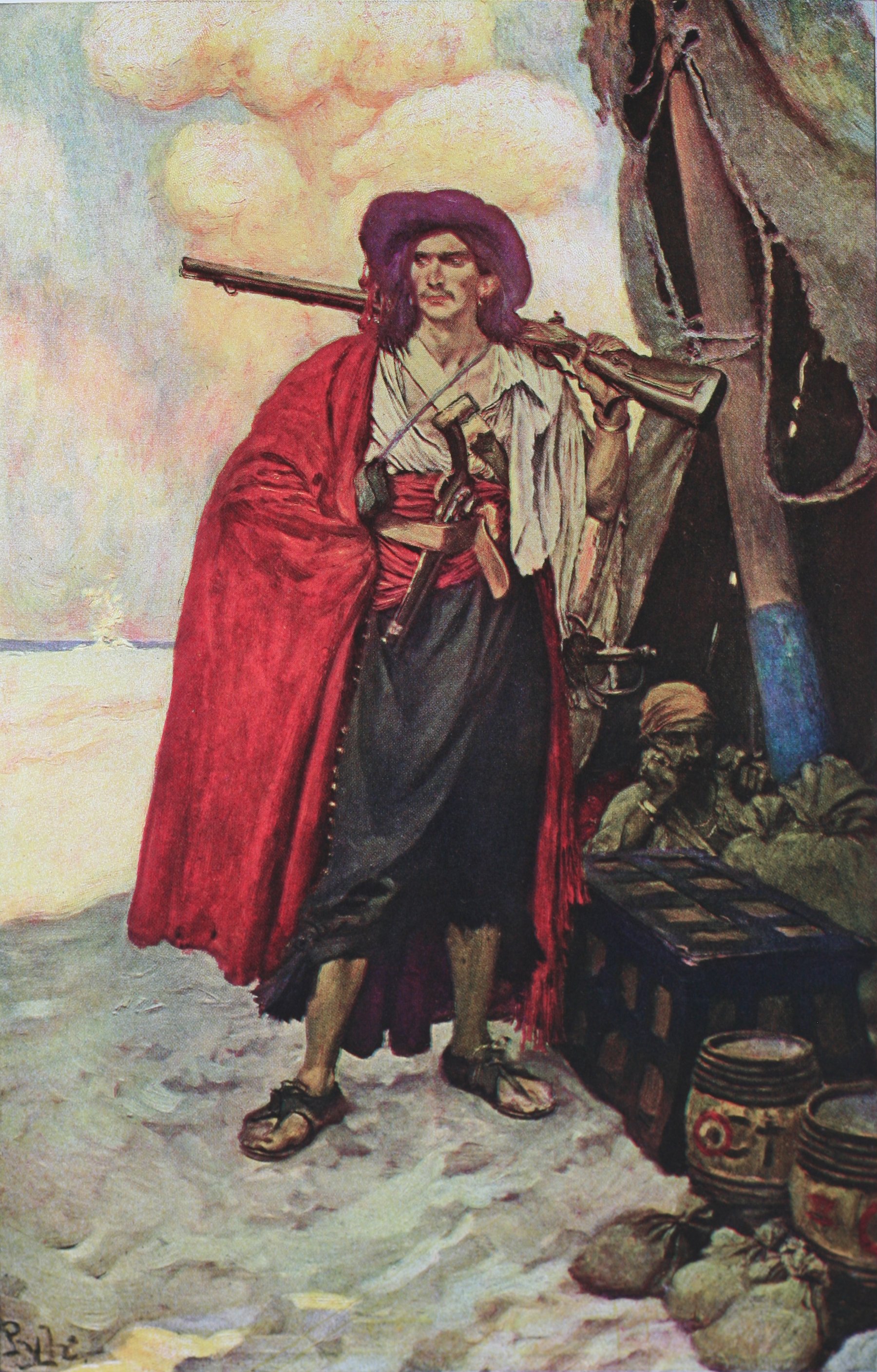
A corsair is another word for pirate. And, when we think “pirate”, first there’s the late-19th-early-20th-century work of Howard Pyle.

Pyle_pirate_handsome.jpg


And the silly pirates from Gilbert and Sullivan’s The Pirates of Penzance.

piratesofpenzance.jpg


And Long John Silver, from Treasure Island.

longjohnsilver.jpg


And then there is Captain Hook and the Jolly Roger.

TigerLilyandHook.jpg


And Errol Flynn in the 1935 movie, Captain Blood.

1023_captblood.jpg


And who could forget Jack Sparrow and The Black Pearl?

Captain-Jack-captain-jack-sparrow-14117613-1242-900.jpg

blackpearl.jpg

We think that Tolkien has something rather different in mind, however. Let’s start with a little history.

Umbar’s past in relation to Gondor is summed up by Damrod in “Of Herbs and Stewed Rabbit”:

“ ‘Aye, curse the Southrons!’ said Damrod. ‘Tis said that there were dealing of old between Gondor and the kingdoms of the Harad to the Far South; though there was never friendship. In those days our bounds were away south beyond the mouths of Anduin, and Umbar, the nearest of their realms, acknowledged our sway. But that is long since. ‘Tis many lives of Men since any passed to and fro . Now of late we have learned that the Enemy has been among them, and they are gone over to Him, or back to Him—they were ever ready to his Will—“ (The Two Towers, Book 4, Chapter 4,“Of Herbs and Stewed Rabbit”)

Damrod’s mistrust is confirmed by what Beregond says to Pippin in “Minas Tirith”:

“…There is a great fleet drawing near to the mouths of Anduin, manned by the corsairs of Umbar in the South. They have long ceased to fear the might of Gondor, and they have allied them with the Enemy, and now make a heavy stroke in his cause. For this attack will draw off much of the help that we looked to have from Lebennin and Belfalas, where folk are hardy and numerous.” (The Return of the King, Chapter 1, “Minas Tirith”)

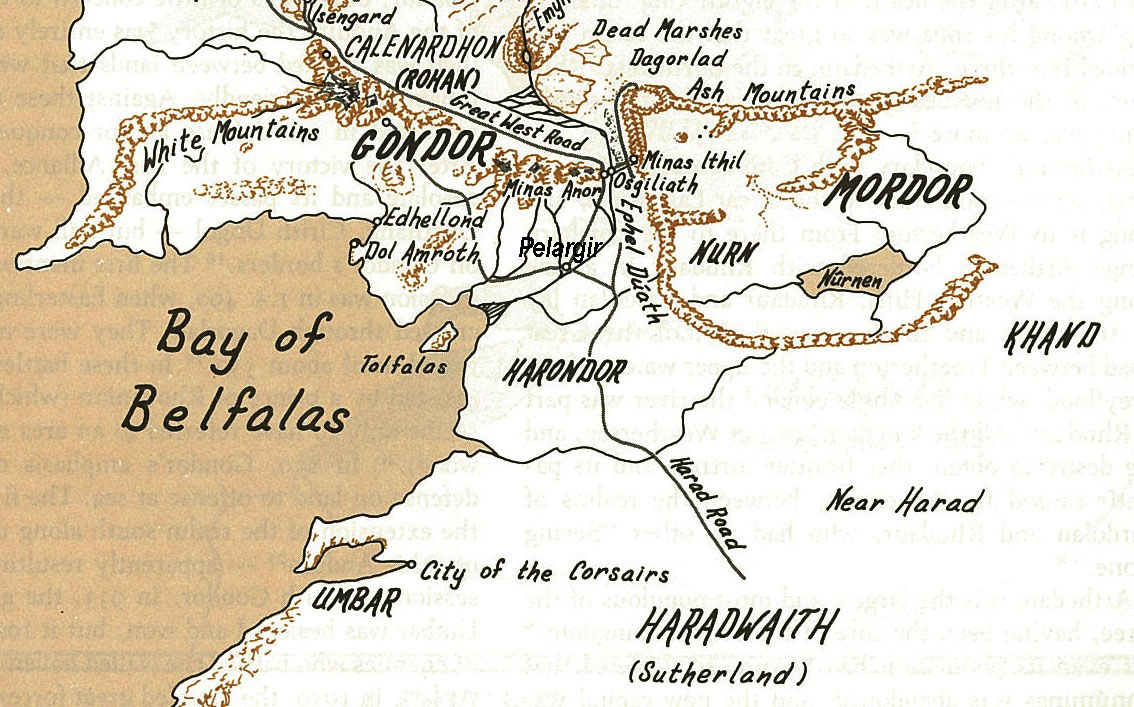
As Damrod has said, Umbar is to the far south.

map-of-gondor-and-neighbors2.jpg

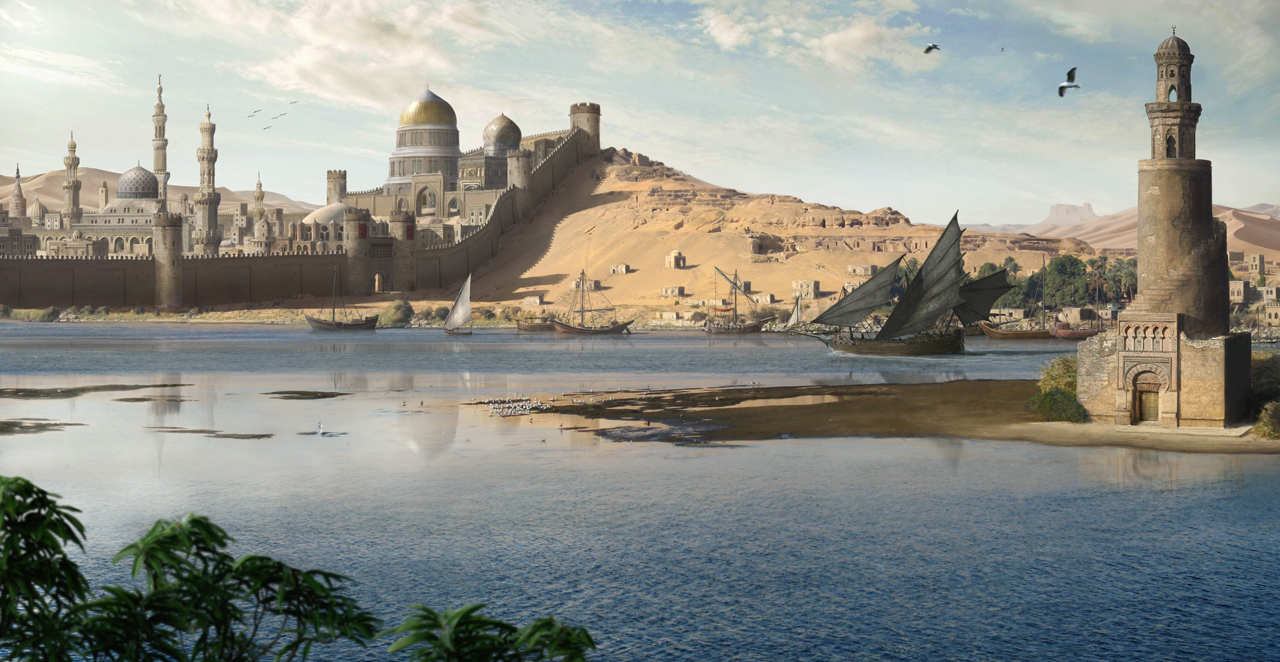
Here is a view of it as imagined by the Czech artist, Scharb.

thecityofumbar.jpg

To us, this resembles cities along the southern Mediterranean coast, especially as seen in old engravings of the Barbary Coast.

Old_algiers_16th_century.jpg

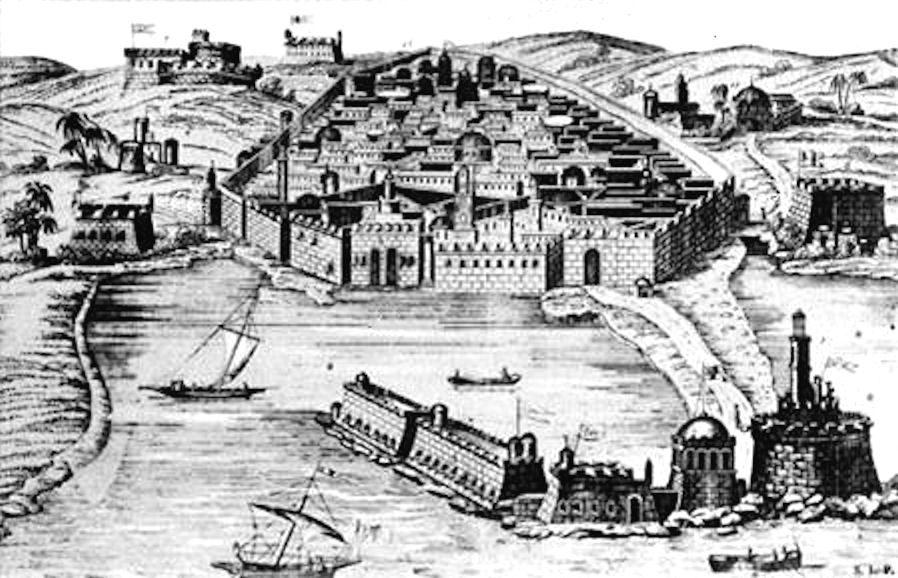
Take, for example, this copperplate of Tunis, from 1778.

tunisengraving.JPG


There are all kinds of ships depicted here, from three-masters to a galley, in the center, to a small xebec, to the far right.

The galley seemed once to be the characteristic ship of the pirates of the Barbary Coast, coming from earlier Turkish galleys.

Galley1500ca.jpg


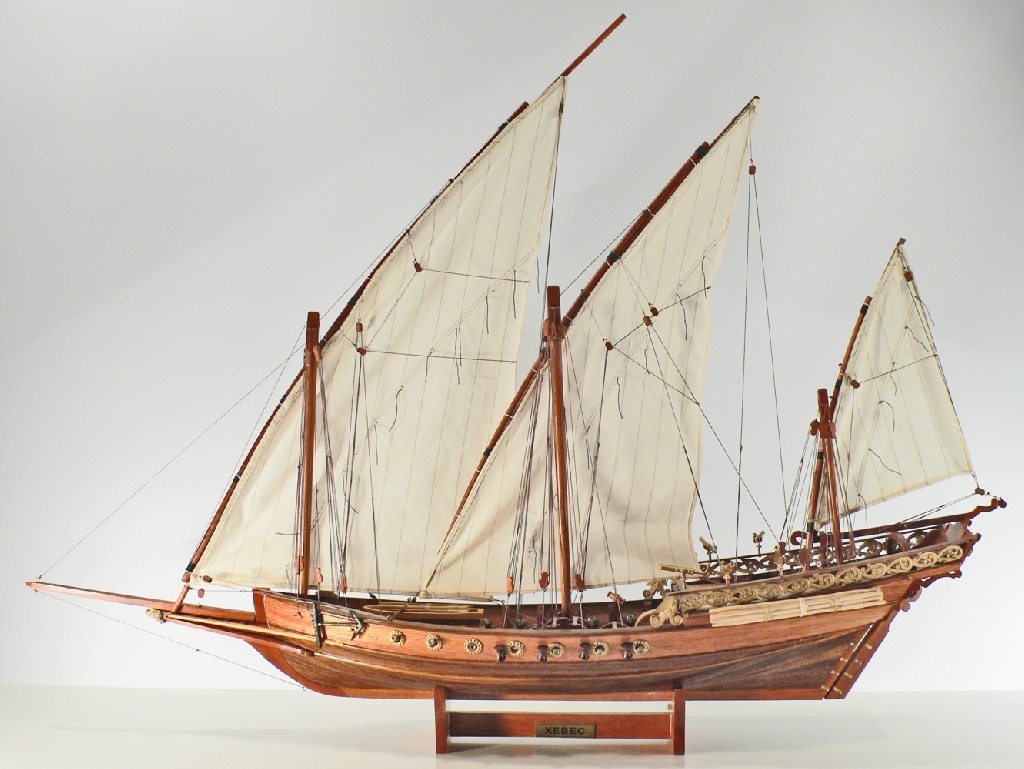
What the Czech artist appears to have picked up upon, however, is something from P. Jackson’s third The Lord of the Rings film, in which the xebec

Xebec L80 - 01.jpg_0_1024x769.jpg


is the model for the corsairs’ vessels.

corsairMastSails.jpg


Jackson’s corsairs look like this (including Jackson himself, mugging to the left).

jacksonandcorsairs.jpg

The crews of actual Barbary ships probably looked more like this:

21c27fb9a0a7cdf4d123d6e12bcbbd83.jpg

This makes perfect sense, as these are North Africans, and very tough people, as European mariners came to know. Their swift, daring ships attacked any vessel which might bring them profit.

barbary-pirate-galleon.jpg

The young United States first paid them tribute to keep them away from US ships.

tribute.jpg

But, as the government somewhere found the money, it began a shipbuilding program to provide the country with its first national navy.

buildingthephiladelphia.jpg

This particular ship was the ill-fated USS Philadelphia, which ran aground and was captured by the pirates.

philly.jpg

captureofthephiladelphia.jpg

It was destroyed, however,

destructionofthephiladelphia.jpg

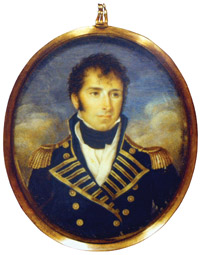
in a daring raid by Stephen Decatur, seen in this miniature.

stephendecatur.jpg

The United States fought two wars against the Barbary pirates, 1801-5 and 1815, doing a great deal of damage to the pirates.

USS-Enterprise-barbary-war.jpg

Ultimately, however, it was a combination of governments and navies, including the US, the British, and the Dutch, which put a stop to piracy in the southern Mediterranean after the end of the Napoleonic Wars in 1815.

Decatur_Boarding_the_Tripolitan_Gunboat.jpg

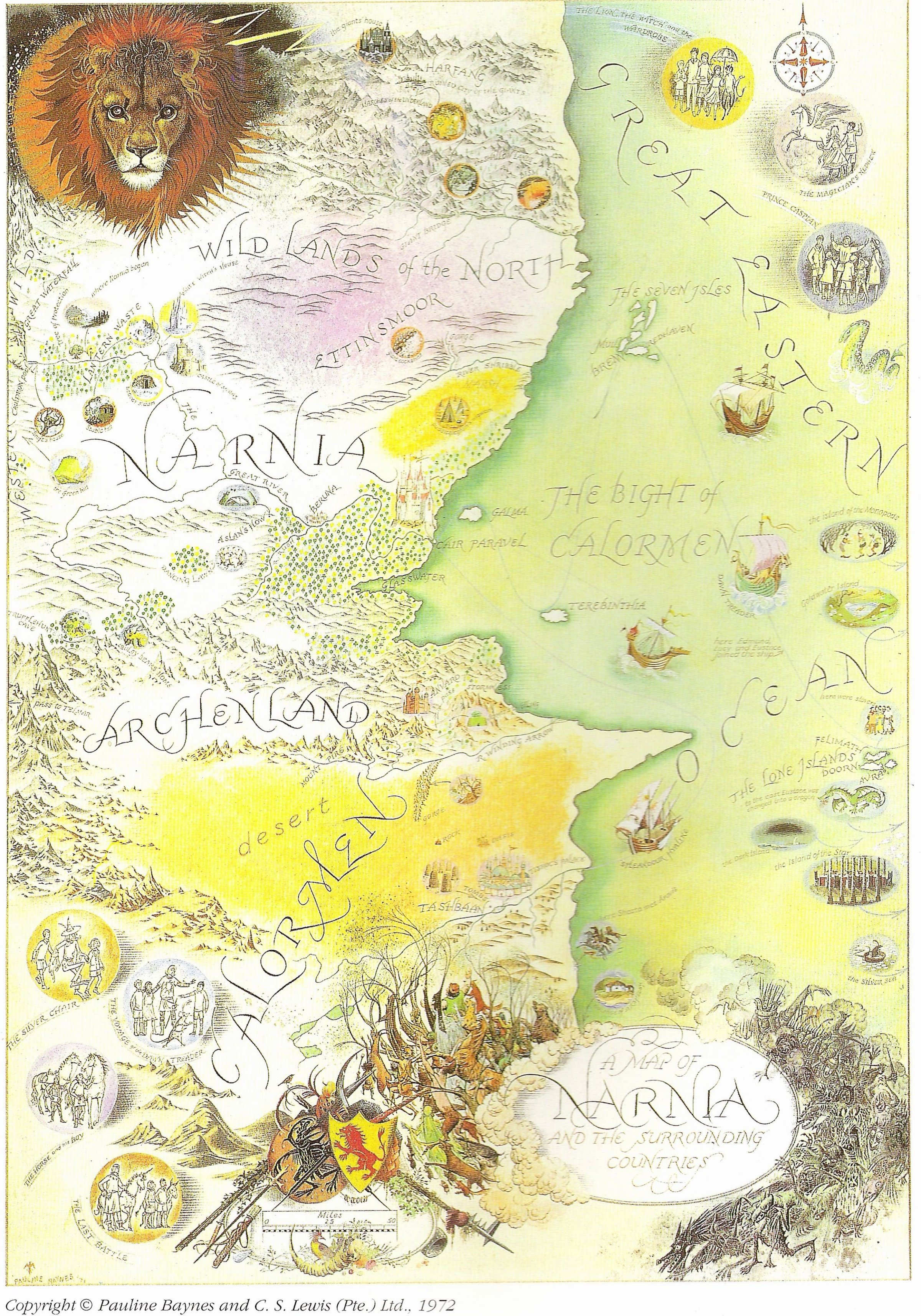
So, like Scharb, we took the idea from JRRT that Umbar was in the far south and, influenced by our experience, not only of the Barbary pirates, but of Narnia and the country called Calormen

Baynes-Map_of_Narnia.jpg

and of Tamora Pierce’s “Tortall” with its Carthaki southland,

Tortall_1.gif

we imagined the corsairs to look like this.

barbarypirates.jpg

So, dear readers, what do you think?

Thanks, as always, for reading.

MTCIDC

CD


The Doubtful Sea Series Facebook Page

The Doubtful Sea Series Facebook Page

  • Ollamh

Categories

  • Artists and Illustrators
  • Economics in Middle-earth
  • Fairy Tales and Myths
  • Films and Music
  • Games
  • Heroes
  • Imaginary History
  • J.R.R. Tolkien
  • Language
  • Literary History
  • Maps
  • Medieval Russia
  • Military History
  • Military History of Middle-earth
  • Narnia
  • Narrative Methods
  • Poetry
  • Research
  • Star Wars
  • Terra Australis
  • The Rohirrim
  • Theatre and Performance
  • Tolkien
  • Uncategorized
  • Villains
  • Writing as Collaborators
Follow doubtfulsea on WordPress.com

Across the Doubtful Sea

Recent Postings

  • On the Roads Again—Once More December 10, 2025
  • (Not) Crossing Bridges December 3, 2025
  • On the Road(s) Again—Again November 26, 2025
  • On the Road(s) Again November 19, 2025
  • To Bree (Part 2) November 12, 2025
  • To Bree (Part 1) November 5, 2025
  • A Plague o’ Both—No, o’ All Your Houses! October 29, 2025
  • It’s in Writing (2:  I’st a Prologue, or a Poesie for a Ring?) October 22, 2025
  • It’s in Writing (1) October 15, 2025

Blog Statistics

  • 102,801 Views

Posting Archive

  • December 2025 (2)
  • November 2025 (4)
  • October 2025 (5)
  • September 2025 (4)
  • August 2025 (4)
  • July 2025 (5)
  • June 2025 (4)
  • May 2025 (4)
  • April 2025 (5)
  • March 2025 (4)
  • February 2025 (4)
  • January 2025 (5)
  • December 2024 (4)
  • November 2024 (4)
  • October 2024 (5)
  • September 2024 (4)
  • August 2024 (4)
  • July 2024 (5)
  • June 2024 (4)
  • May 2024 (5)
  • April 2024 (4)
  • March 2024 (4)
  • February 2024 (4)
  • January 2024 (5)
  • December 2023 (4)
  • November 2023 (5)
  • October 2023 (4)
  • September 2023 (4)
  • August 2023 (5)
  • July 2023 (4)
  • June 2023 (4)
  • May 2023 (5)
  • April 2023 (4)
  • March 2023 (5)
  • February 2023 (4)
  • January 2023 (4)
  • December 2022 (4)
  • November 2022 (5)
  • October 2022 (4)
  • September 2022 (4)
  • August 2022 (5)
  • July 2022 (4)
  • June 2022 (5)
  • May 2022 (4)
  • April 2022 (4)
  • March 2022 (5)
  • February 2022 (4)
  • January 2022 (4)
  • December 2021 (5)
  • November 2021 (4)
  • October 2021 (4)
  • September 2021 (5)
  • August 2021 (4)
  • July 2021 (4)
  • June 2021 (5)
  • May 2021 (4)
  • April 2021 (4)
  • March 2021 (5)
  • February 2021 (4)
  • January 2021 (4)
  • December 2020 (5)
  • November 2020 (4)
  • October 2020 (4)
  • September 2020 (5)
  • August 2020 (4)
  • July 2020 (5)
  • June 2020 (4)
  • May 2020 (4)
  • April 2020 (5)
  • March 2020 (4)
  • February 2020 (4)
  • January 2020 (6)
  • December 2019 (4)
  • November 2019 (4)
  • October 2019 (5)
  • September 2019 (4)
  • August 2019 (4)
  • July 2019 (5)
  • June 2019 (4)
  • May 2019 (5)
  • April 2019 (4)
  • March 2019 (4)
  • February 2019 (4)
  • January 2019 (5)
  • December 2018 (4)
  • November 2018 (4)
  • October 2018 (5)
  • September 2018 (4)
  • August 2018 (5)
  • July 2018 (4)
  • June 2018 (4)
  • May 2018 (5)
  • April 2018 (4)
  • March 2018 (4)
  • February 2018 (4)
  • January 2018 (5)
  • December 2017 (4)
  • November 2017 (4)
  • October 2017 (4)
  • September 2017 (4)
  • August 2017 (5)
  • July 2017 (4)
  • June 2017 (4)
  • May 2017 (5)
  • April 2017 (4)
  • March 2017 (5)
  • February 2017 (4)
  • January 2017 (4)
  • December 2016 (4)
  • November 2016 (5)
  • October 2016 (6)
  • September 2016 (5)
  • August 2016 (5)
  • July 2016 (5)
  • June 2016 (5)
  • May 2016 (4)
  • April 2016 (4)
  • March 2016 (5)
  • February 2016 (4)
  • January 2016 (4)
  • December 2015 (5)
  • November 2015 (5)
  • October 2015 (4)
  • September 2015 (5)
  • August 2015 (4)
  • July 2015 (5)
  • June 2015 (5)
  • May 2015 (4)
  • April 2015 (3)
  • March 2015 (4)
  • February 2015 (4)
  • January 2015 (4)
  • December 2014 (5)
  • November 2014 (4)
  • October 2014 (6)
  • September 2014 (1)

Blog at WordPress.com.

  • Subscribe Subscribed
    • doubtfulsea
    • Join 78 other subscribers
    • Already have a WordPress.com account? Log in now.
    • doubtfulsea
    • Subscribe Subscribed
    • Sign up
    • Log in
    • Report this content
    • View site in Reader
    • Manage subscriptions
    • Collapse this bar
 

Loading Comments...