• About

doubtfulsea

~ adventure fantasy

Tag Archives: Galadriel

Beaux Gestes? (2)

27 Wednesday Apr 2016

Posted by Ollamh in Artists and Illustrators, Fairy Tales and Myths, J.R.R. Tolkien, Villains

≈ 1 Comment

Tags

19th-century tombs, Cicero, Galadriel, Gandalf, Grey Havens, Hildebrandts, Istari, Mourning, Queen Victoria, Quintilian, Saruman, Scouring of the Shire, The Lord of the Rings, The Mirror of Galadriel, Theatrical gesture, Tolkien, Valar

Welcome, as always, dear readers.

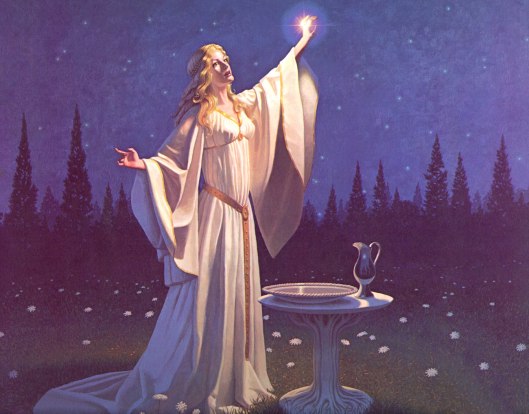
In our last, we commenced a small examination of gesture in The Lord of the Rings, relating specifically to Galadriel and Saruman. We began with Galadriel

galadriel.jpg

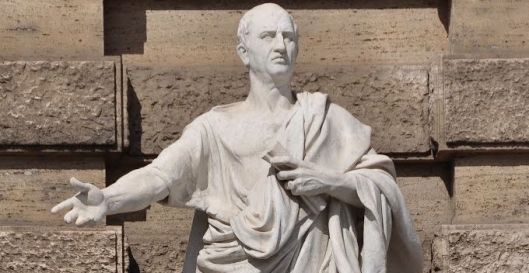
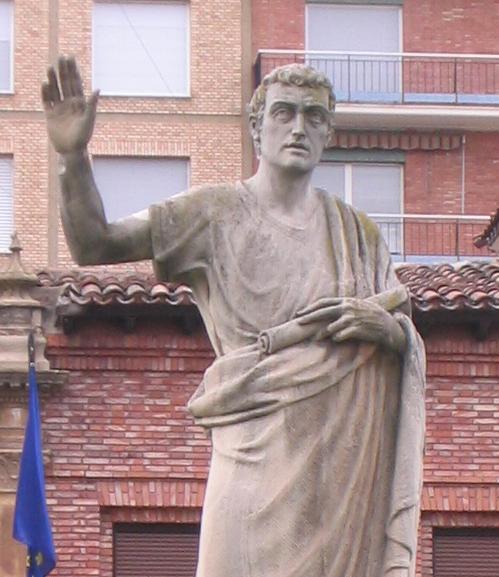
and her rejection of Sauron. JRRT describes it in this way: “She lifted up her white arms, and spread out her hands towards the East in a gesture of rejection and denial.” In that post, we said that her gesture seemed theatrical, almost melodramatic, and we suggested that JRRT had been influenced by what we imagined he had seen on stage and on screen late in the 19th and into the 20th centuries, a time when such broad gestures were still considered the best way to convey strong emotion. This mode was, we proposed, ultimately based upon the writings of two ancient Romans, Cicero and Quintilian, who lived between the years 100BC and 100AD. In their day and up to the 20th century, the only magnification available to allow speakers to be heard over crowds was the human voice. Thus, a range of gestures emphatic enough to be seen and clear enough to be understood at a distance was an important component of effective speaking and such gestures were adopted and adapted by actors and used and reused for many centuries to come.

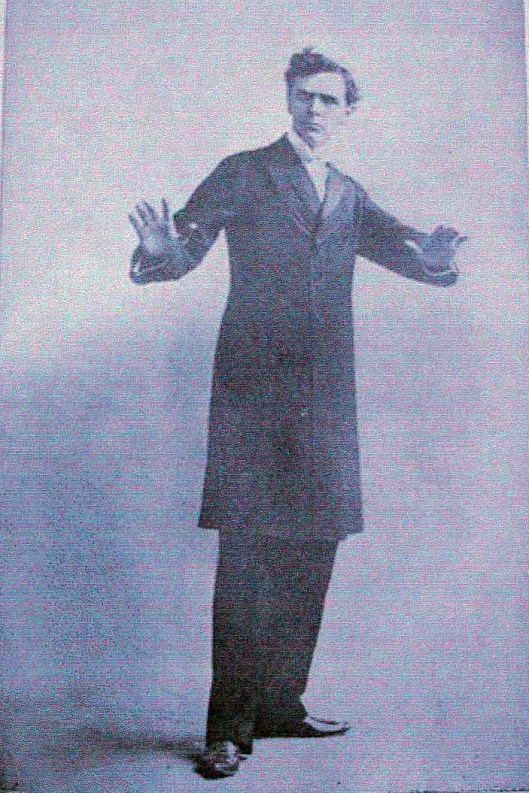
Because none of the illustrations based upon “The Mirror of Galadriel” depicts this gesture, we used a photograph from an 1898 book on public speaking to provide the sense of what we believe we were meant to see.

Repulsion.jpg

In our last, we also suggested that Galadriel’s gesture was linked to one of Saruman’s—in fact, his last gesture on Middle Earth, as far as we know.

In sudden resentment at the contemptuous treatment consistently dealt him by Saruman, Grima Wormtongue has drawn a hidden knife and cut the wizard’s throat.

“To the dismay of those that stood by, about the body of Saruman a grey mist gathered, and rising slowly to a great height like smoke from a fire, as a pale shrouded figure it loomed over the Hill. For a moment it wavered, looking to the West; but out of the West came a cold wind, and it bent away, and with a sigh dissolved into nothing.” The Lord of the Rings, Book 6, Chapter viii.

jwyatt-sarumande.jpg

Saruman had been one of the Istari, as Tolkien describes them all in describing Gandalf:

“There are naturally no precise modern terms to say what he was. I wd. venture to say that he was an incarnate ‘angel’—strictly an angelos: that is, with the other Istari, wizards, ‘those who know’, an emissary from the Lords of the West, sent to Middle-earth, as the great crisis of Sauron loomed on the horizon. By ‘incarnate’ I mean they were embodied in physical bodies capable of pain, and weariness, and of afflicting the spirit with physical fear, and of being ‘killed’, though supported by the angelic spirit they might endure long, and only show slowly the wearing of care and labour.” Letter to Robert Murray, S.J. (draft), 4 November, 1954.

Saruman, then, as another of the Istari, can be killed—and is, but what then? In his battle with the Balrog, it appears that Gandalf has met his end. He returns, however, suggesting that his physical body might be capable of the repair which Galadriel administers in Lorien.  As JRRT says in the same letter, “He was sent by a mere prudent plan of the angelic Valar or governors; but Authority had taken up this plan and enlarged it, at the moment of its failure.”—that is, Gandalf’s apparent death.

As Gandalf puts it, “I was the enemy of Sauron”, and, with Sauron defeated, apparently conclusively, Gandalf is allowed to return to the West, to do or be what, is never explained.   It is a privilege, clearly, since it is granted only to High Elves and, with special dispensation, to Bilbo and Frodo.

This brings us back to Saruman’s gesture: “For a moment it wavered, looking to the West; but out of the West came a cold wind, and it bent away, and with a sigh dissolved into nothing.”

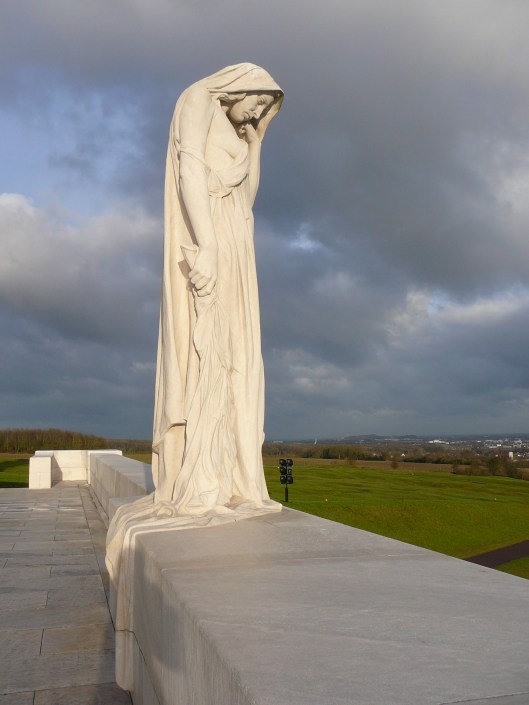
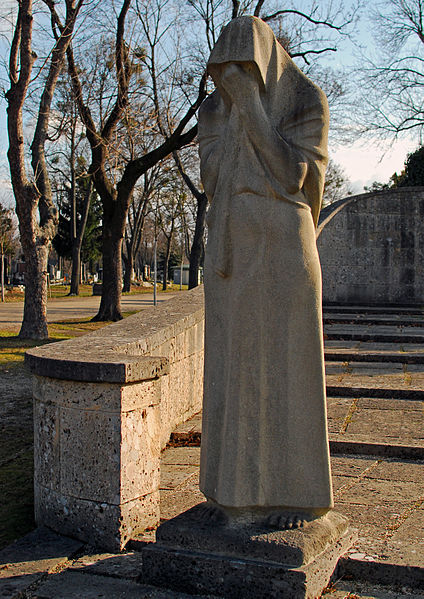
In a way, what we see here is actually a lack of gesture—it is a wavering, with a sense of hope, perhaps? Almost as if Saruman is appealing for pardon? As in the case, of Galadriel, we have no artist’s depiction of this, but we’ve used the clue of “a pale shrouded figure”, as well as that wavering, to imagine that this is someone in mourning and so we can offer several figures from later 19th-century tombs as a possible image.

d5717eeaa95186cd2e3d95447d215e2f.jpgp1140386.jpg

Statue-to-Mourning-Zentralfriedhof-Vienna.jpg

It’s interesting that these all are female, as if this is one of the expected jobs of 19th-century women, to be the Mourners in Chief. We suppose that, since Queen Victoria mourned for her husband Albert from his death in 1861 to her own death in 1901, this shouldn’t be surprising, but we are planning a later posting about mourning in The Lord of the Rings which will examine the subject within certain western traditions in more depth.

Queen-Victoria-Her-Latest-Portrait-1900_tr_4643_566.jpg

In the meantime, we return to Galadriel to match these two gestures. Saruman had failed because he had accepted the East and the deceptive words of Sauron. His fate, then, is to be met with a cold wind and to dissolve, with a sigh, into nothing, rejected by the West from which he had been sent, several thousand years before. Galadriel, on the other hand, by protecting her people and rejecting Sauron, had been accepted back into the West and the last we see of her is aboard a ship at the Grey Havens, bound for her reward.

ghavens.jpg

Thanks for reading, as always.

MTCIDC

CD

PS

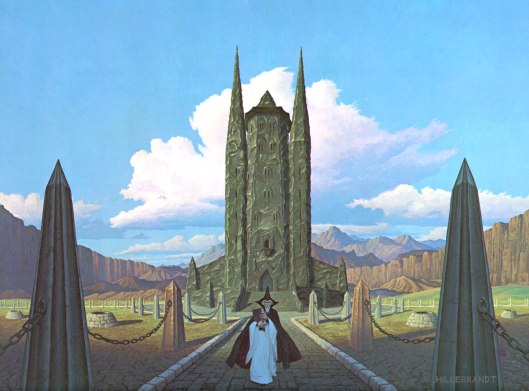
We couldn’t resist this final image: the Hildebrandts with the painting.

haven-c.jpg

For all of the wonderful paintings he and his brother have given us, may Tim Hildebrandt (1939-2006) have been given a safe passage to the West, as well.


Beaux Gestes? (1)

20 Wednesday Apr 2016

Posted by Ollamh in J.R.R. Tolkien, Narrative Methods, Theatre and Performance

≈ Leave a comment

Tags

Cicero, David Garrick, Edmund Burke, Elizabethan, Film, Galadriel, Globe theatre, Hamlet, Hildebrandt, Mirror of Galadriel, Quintilian, rejection, Roman theatre, The Argonath, The Lord of the Rings, The Phantom of the Opera, The Popular Entertainer and Self-Instructor in Elocution, theatre, Theatrical gesture, Tolkien

Dear Readers, welcome, as always.

In this posting, we want to begin to consider a pair of contrasting gestures in The Lord of the Rings, where they may come from, and how they may mirror each other.

We begin with Galadriel in The Fellowship of the Ring, Book II, Chapter 7, “The Mirror of Galadriel”.

In this scene, she has offered Frodo and Sam the chance to look into what appears to be a small pool of enchanted water, where she tells Frodo “You may learn something, and whether what you see be fair or evil, that may be profitable, and yet it may not. Seeing is both good and perilous.”

9ae941056ddb6946598d98690668e844.jpg

Sam goes first and endures a nightmarish depiction of the future of the Shire—although Galadriel warns him that it is perhaps potential, not fated future.

Frodo has, in turn, an even worse experience: the eye of Sauron himself appears and Frodo can feel that it is trying to discover the Ring.   It is something of which Galadriel herself is well aware, but she comforts Frodo, saying, “…I perceive the Dark Lord and know his mind, or all of his mind that concerns the Elves. And he gropes ever to see me and my thought. But the door is still closed!”

To emphasize this, “She lifted up her white arms, and spread out her hands towards the East in a gesture of rejection and denial.”

Repulsion.jpg

To modern people, like us, trying to visualize what Galadriel is doing , this might seem a very “theatrical” gesture. The closest we could find in our image bank of Galadriel actually doing it wasn’t more than a suggestion.

galadriel.jpg


And, in fact, the image we’ve chosen (obviously not Galadriel!) to depict this comes from a book published in 1898, with the intriguing title, The Popular Entertainer and Self-Instructor in Elocution.

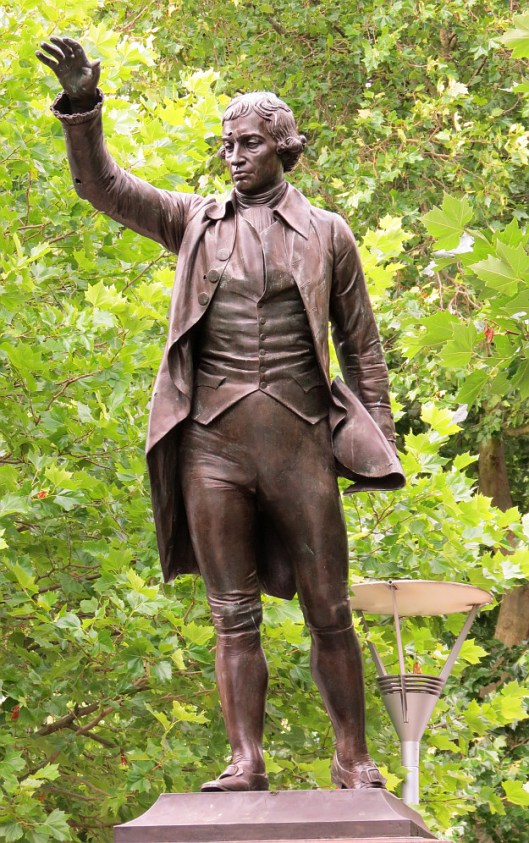
This brings us back to a time in history when public speaking was a polished art and men (primarily—although the women’s rights movement from the mid-19th century had its speakers, as well) practiced stylized gestures to help them convey their meaning in lecture halls, theatres, and open spaces. Older public statues sometimes capture such a speaker in mid-gesture—as in this of the British intellectual and politician, Edmund Burke, in Bristol.

bristolbroadquayburke.jpg

Such combinations of gesture and speech are derived from a tradition which stretches all the way back to the last century BC/first century AD in the works of the Roman orators/writers Cicero

cicero.jpg

And Quintilian.

QuintWikiImage.JPG

These men described the art of public speaking, and Quintilian, in particular, discusses the use of gesture to expand and underline the spoken text emotionally. This tradition was continued from the Renaissance and beyond initially in translations of the two into local languages, but then in expansions of their ideas. Such gestures were also found useful for the young popular theatre and continued to form part of an actor’s training into the twentieth century. Here, for instance, is the 18th-century actor, David Garrick, in a role for which he was famous, Hamlet. And you’ll notice that same gesture of rejection: arms extended, hands spread.

davidgarrickashamlet.jpg

(This is not, by the way, the same gesture we see depicted on the Argonath. That seems to us more to convey the message: Stop! You have reached the boundary of Gondor—go no farther!

argonath hildebrandt.jpg

This is the Hildebrandt twins rather mild version. A fiercer one would be that from the film.)

argonathfilm.jpg

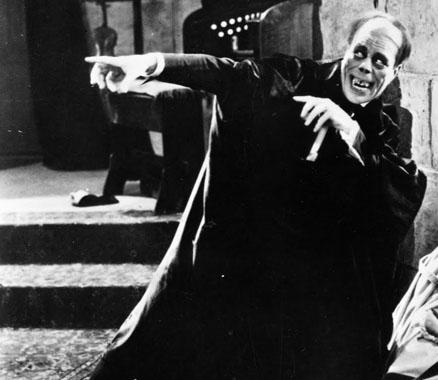
To us, such gestures may seem very overdone, if not downright silly—as in this from the 1925 film of The Phantom of the Opera.

lchaneysrphantom

And it is probably film itself which has changed our view. Originally, these gestures were developed to extend a speaker’s ability to convey thought and feeling in a public space—a big place where there was no elaborate sound system with microphones and speakers to help.

cicerovscatiline.jpg

In a big, noisy place like an Elizabethan theatre, such an extension would have proved just as useful.

Hodge's_conjectural_Globe_reconstruction.jpg

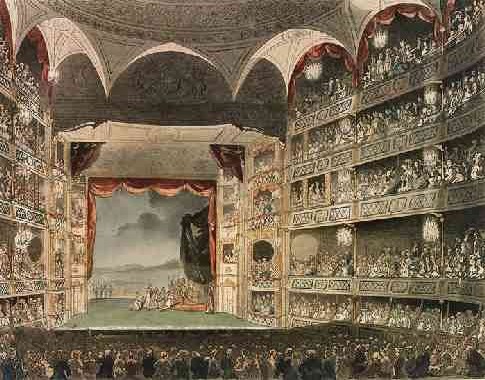
And, until artificial vocal magnification was invented in the 20th century, it would have continued to help.

Theatre_drury_lane2.jpg

sadlers_wells_interior_rowlandson_microcosm_1810.jpg

Film began as an offshoot of the stage—after all, what other model was there for actors? Film was much more intimate than the stage, however, even before sound films arrived at the very end of the 1920s. The heavy make-up and big, stylized gestures brought over from earlier drama must have seemed even more exaggerated, in time, to audiences, and everything was gradually scaled down. What Tolkien saw as a young man,

hunchback.jpg

however, having been born in 1893, would have been the product of that earlier time—a time all the way back to the Romans—and thus, when he wants to depict strong emotion, he clearly uses what would have been more appropriate for an older time, just as he uses older language, borrowed from people like William Morris and Tennyson, when he wants to add a certain weight to the words.

In our second posting, we want to continue our exploration with what we feel to be an opposing gesture—and the final gesture—of Saruman.

greg-hildebrandt-isengard-orthanc-saruman-607429-1300x962.jpg

Thanks, as always, for reading.

MTCIDC

CD

Smoke and Mirror?

16 Wednesday Dec 2015

Posted by Ollamh in Fairy Tales and Myths, Films and Music, J.R.R. Tolkien, Narrative Methods, Villains

≈ Leave a comment

Tags

"Slave of the Mirror", acting, actor, Adventure, Aladdin, classical drama, classics, clowns, comedy, Commedia dell'Arte, Disney, drama, Evil Stepmother, Fiction, Galadriel, Genie, Hellenistic, histrio, Jumanji, Magic, Magic mirror, masks, Middle-earth, Moroni Olsen, persona, pretending, Snow White, The Lord of the Rings, theatre, Tolkien, tragedy

Dear Readers,

Welcome, as always.

In our last posting, we thought about Galadriel’s mirror.

galadriel.jpg

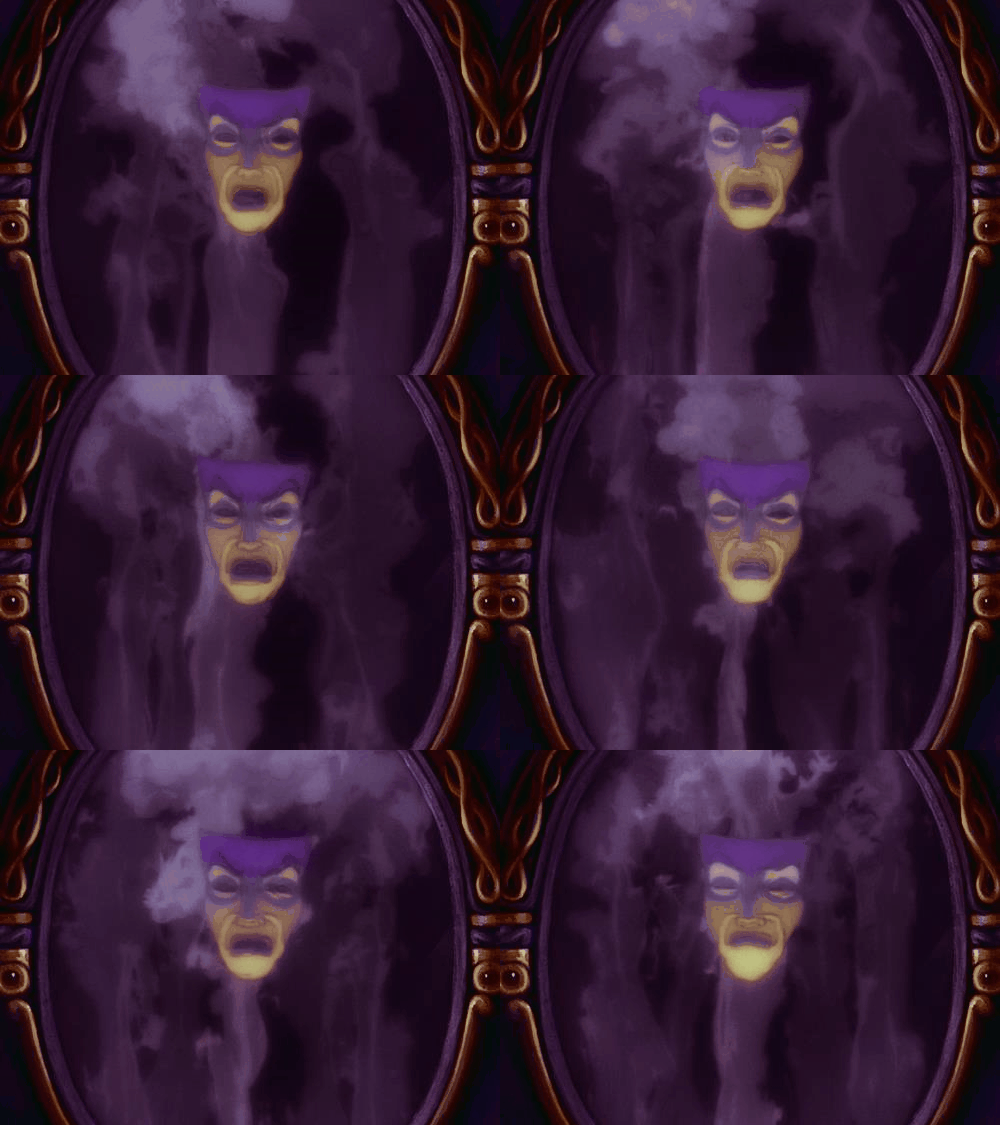
We began with the mirror in Disney’s 1937 Snow White, and it occurred to us that we have no backstory for this. Where did it come from? How did it know anything? And, perhaps more important for the story, why did the stepmother believe it?

Magic_Mirror_SnowWhite.jpg

We know how wary we would have been– that Snow White mirror freaked us out as children.

girmagicmirror.gif

Reconsidering it, we thought it was partially that smoke. But it was also that face. There was a real face behind that mirror, that of the actor Moroni Olsen (1889-1954).

There is also a history behind that face, which appears to be based upon the conventional mask of tragedy, which is often seen paired with that of comedy.

comedy_and_tragedy_masks_symbols_plays_hd-wallpaper-1888436.jpg

These masks might have come down to us most recently through the Italian Commedia dell’Arte, in which all the comic characters were masked.

commdance.jpg

The masks are much older, however, coming to us from ancient classical drama. The masks we usually see are later Roman versions,

Tragic_comic_masks_-_roman_mosaic.jpgof which there are seemingly many surviving in several media. Older yet are the Greek masks, the images of which survive in many fewer images, mostly on pots.

greekactorswithmasks.jpg

These Greeks masks suggest that the original idea was to make lifelike, if stylized, representations. Later ones– Hellenistic and Roman– are often much more distorted-looking, and it has been suggested that the masks were shaped as the equivalent of megaphones and resonators, and certainly the later ones at least suggest that possibility.

Sousse_mosaic_theatre_masks.JPG

Certainly, theatres got bigger and more complex after having begun as simple hillsides.

2007-05-10_Epidauros,_Greece_5.jpg

But we wonder as well about Romans, and earlier non-dramatic uses of masks, perhaps for religious purposes?

The Romans got at least some of their religion from their neighbors to the north, the Etruscans. They may have gotten some elements of their drama from them, as well. A Roman word for actor, histrio, they believed was an Etruscan word, as was the word for mask, persona.

images.jpg

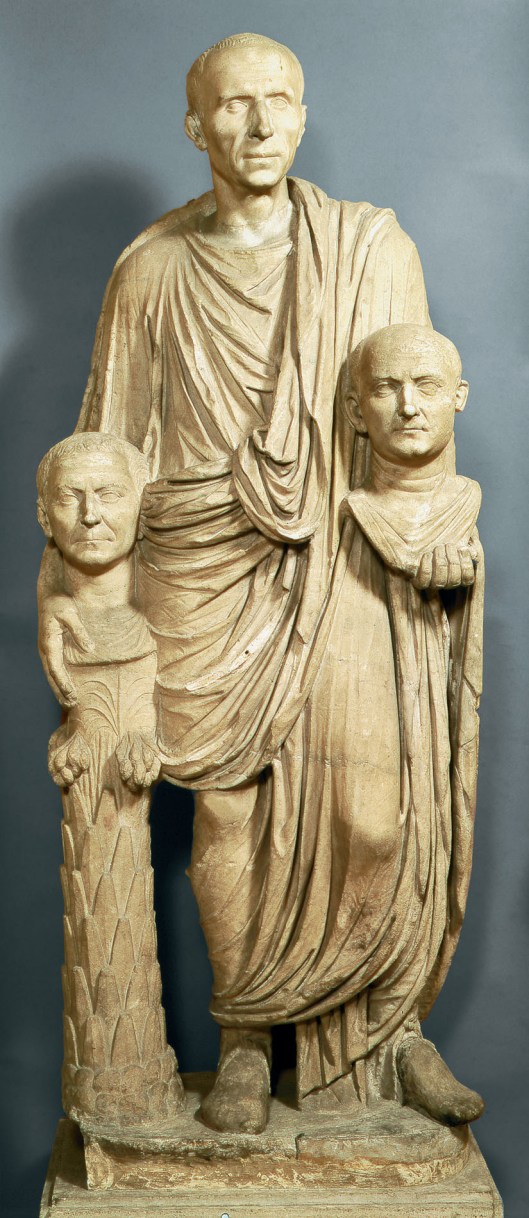
In their religion, the Romans practiced ancestor worship and used images of their ancestors as part of their ceremonies, perhaps even using masks to impersonate them.

13224081013_185a96cbd9_o_d.jpg

And there’s that word persona again, and perhaps that’s what masks are all about: impersonation, pretending to be someone you aren’t.

So, what’s spooky about that mask?

Magic_Mirror_SnowWhite.jpg

First, there are those empty eyes. Then, there’s that expression, if not fixed, at least limited.

This makes us think about clowns.

images-1.jpg

We were frightened by clowns as children– maybe still are.

tvi061ab_wide-185b74c3460d303bcf13ff50d8db7d58e194c07c-s900-c85.jpgWhy are they so scary? Well, for one thing, the clothing is bright and festive, but the face is dead-white and corpse-like, therefore giving a mixed signal of merriment and death at the same time. Perhaps these contradictions should have made the stepmother less trusting (it certainly made us less trusting as children).

After all, this is an empty face– not even eyes behind it.

Magic_Mirror_SnowWhite.jpg

Why should it be telling the truth any more than a clown?

In the Disney movie, the face is referred to as the “slave of the mirror” and we can imagine that this was an attempt indirectly to suggest why the stepmother trusted the mirror. Presumably, it was like Aladdin’s genie–

genie_aladdinlamp.png

in control, at least temporarily, of its possessor– it’s a slave, after all.

Roman comedy, however, and Greek comedy before it, is full of tricky slaves out for their own profit…

AN00448728_001_l.jpg

What might it be like, we wonder, if the mirror, although saying “Madame Queen”, was actually stage managing the whole thing for his own sinister purposes? After all, the Snow White story always ends with the death of the stepmother. Does her death free the mirror?

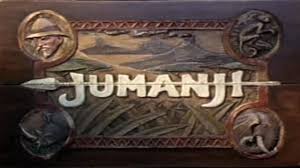
Or, as was once the custom, does a palace servant cover the mirror after the stepmother’s death, and, like Jumanji,

images-2.jpg

must it lie on the wall, waiting for its next victim?

Thanks, as always, for reading.

MTCIDC,

CD

Mirror, Mirror

09 Wednesday Dec 2015

Posted by Ollamh in Fairy Tales and Myths, J.R.R. Tolkien, Narrative Methods

≈ Leave a comment

Tags

A Christmas Carol, Denethor, Dickens, Disney, Evil Stepmother, Fates, Fiction, Folktale, Frodo, Galadriel, Gandalf, Gondor, Grimm Brothers, Istari, Kinder und Hausmaerchen, Lothlorien, Magic mirror, Maiar, Middle-earth, mirror, Mordor, Muses, Norns, Norse Mythology, Numenor, Ornthanc, Palantir, Saruman, Sauron, Schneewittchen, Scrooge, scrying stone, Snow White, Story, The Lord of the Rings, The Theogony, Tolkien, Urtharbrunnr, Valar, Yggdrasil

Dear Readers,

Welcome, as always.

This is the second of two postings which, as we said in our last, was originally just one. That earlier draft linked the Palantiri with Galadriel’s mirror, but, on reconsideration, we believed—at least at first–that, in fact, they weren’t so close as we thought and so we separated them.

In our last, we discussed the Palantiri and what might have been a possible inspiration for them. In this posting, we propose to look a little more closely at Galadriel’s mirror (but we promise not to touch the water).

When we speak of mirrors—and, in this case, magic ones—the first one which pops into our mind is from childhood—the mirror in Snow White and the particularly creepy mirror in the 1937 Disney animated film.

girmagicmirror.gif

In the original Schneewittchen, first published in the Grimm brothers’ Kinder und Hausmaerchen in the original edition of 1812,

grimm_bruder_1847_klein.jpg firstedkundh.JPG

the mirror belongs to Snow White’s stepmother, of whom the story says (in our translation):

“She was a very beautiful woman, but she was proud and arrogant and couldn’t allow that anyone would surpass her in beauty.”

She monitored her position by means of that mirror:

“She had a wonderful mirror. When she stepped before it and looked at herself within it, she said:

Little mirror, little mirror, on the wall,

Who is the most beautiful in the whole land?

The mirror answered thus:

Madame Queen, you are the most beautiful in the land.”

Franz_Jüttner_Schneewittchen_1.jpg

This makes us wonder about the stepmother. Was she like so many of the people we see around us every day (and not “everyday”, which is a compound adjective, meaning “commonly” as in “everyday usage does not necessarily equal correct usage in language”), compulsively fiddling with their electronic devices? How often did she go to that mirror and ask that question? As it was attached to the wall, she wasn’t carrying it in her back pocket, so, can we picture her making excuses to the king, to the prime minister, to her ladies in waiting, just so that she could go back to visit it? The text only says that she did—it’s a folktale, after all, and therefore old and so before current addictions were available, but she seems so obsessed—and familiar.

But then comes the day when the answer is:

“Madame Queen, you’re the most beautiful here,

But Snow White is a thousand times more beautiful than you.”

And the story goes on from there to places we don’t intend to follow.  It is interesting, however, that the mirror itself appears to do the talking, not a visible spirit within it, as in the Disney movie, and there is a certain logic to this. After all, normally, a mirror is only a reflecting device: it shows the person who is looking into it, as we see the stepmother doing. Then again, having someone—or something—looking out when you look in raises all sorts of interesting questions: who is it? Where is it? How does it know what it knows and how to speak? Does it have limits?

We might imagine, from her single, repeated question that the woman does. She never, for example, asks “Was there anyone as beautiful before me?” or “Will I always be the most beautiful?” She seems trapped in the moment and, without a greater context, the mirror’s last reply will be that much more shocking.

In contrast, Galadriel’s mirror, is neither on a wall, nor portable. In fact, it’s not really a mirror in the conventional sense at all.

“With water from the stream Galadriel filled the basin to the brim, and breathed on it, and when the water was still again she spoke. ‘Here is the Mirror of Galadriel,’ she said. ‘I have brought you here so that you may look in it, if you will.’ “ (The Fellowship of the Ring, Book 2, “The Mirror of Galadriel”)

64b97a1e010e45710323b25705b62626.jpg

When Frodo asks what might be seen therein, Galadriel replies:

‘Many things I can command the Mirror to reveal,’ she answered, ‘and to some I can show what they desire to see. But the Mirror will also show things unbidden, and those are often stranger and more profitable than things which we wish to behold. What you will see if you leave the Mirror free to work, I cannot tell. For it shows things that were, and things that are, and things that yet may be. But which is it that he sees, even the wisest cannot always tell.’ (The Fellowship of the Ring, Book 2, “The Mirror of Galadriel”)

There appear to be several possible influences here. In the ancient Greek poem, The Theogony, the Muses are described as knowing past, present, and future (Theogony 380), as they choose the shepherd, Hesiod, to become a poet.

Muses_sarcophagus_Louvre_MR880.jpg

Others have suggested that an influence upon the author here was the Urtharbrunnr, the well of fate, as it may be translated, from Norse mythology, which lies at the foot of the tree called Yggdrasil. Here the Norns, or Fates in Norse tradition, sit to do their work.

Nornorna_vid_Urdarbrunnen.jpg

Another possibility yet might be the three Christmases who visit Ebenezer Scrooge in Charles Dickens’ A Christmas Carol and an advantage to pointing to them is that Christmas Yet to Come, although mute, shows Scrooge what turn out to be only “things that yet may be”, as Scrooge, by his change in behavior, diverts fate.

The_Last_of_the_Spirits-John_Leech,_1843.jpg

That sense of potentiality about the future is clearly a very important feature of Galadriel’s Mirror. Lorien is not only a haven from Orcish pursuit,

Lothlorien.jpg

but also a testing ground, where the surviving members of the Fellowship are probed by the Lady of the Wood, even as she herself is inadvertently tested when Frodo offers her the Ring. Sam may suffer the most from this, being shown what appears to be the destruction of the Shire and the destitution of his own grandfather.

ruinedshire.png

And yet, as Galadriel says,

‘But the Mirror will also show things unbidden, and those are often stranger and more profitable than things which we wish to behold.’ (The Fellowship of the Ring, Book 2, “The Mirror of Galadriel”)

What Sam sees shakes him for a moment to the point of stepping back from the basin, saying (almost shouting, as the sentence ends with an exclamation point), “I must go home!” (The Fellowship of the Ring, Book 2, “The Mirror of Galadriel”) He recovers immediately, however, resolving, “ ‘No, I’ll go home by the long road with Mr. Frodo, or not at all.’” And thus he, like Galadriel, passes the test and perhaps that’s what the odd word “profitable” means in her explanation. Sam is confronted with what must have been that which he subconsciously dreaded most, but his new resolution ultimately proves the salvation of Middle Earth, on the one hand, and the healing of the Shire by means of Galadriel’s gift of a little Lorien, on the other. And, considering that Sam first appears in the story as an eaves-dropping gardener and hardly a giant elf-warrior, that other adjective, “stranger” may be appropriate, too.

So far, the Mirror has nothing in common with a Palantir, which was clearly designed not as a “scrying stone”, but as a communication device. And yet there is Galadriel’s remark,

“ ‘Many things I can command the Mirror to reveal,’ she answered, ‘and to some I can show what they desire to see.’ “

This strikes us as an ambiguous statement—and probably meant to be. Does Galadriel mean:

  1. people come to ask her, for example, to see their future—implication being that she shows them that, and nothing more
  2. people come, ask, and she shows them what they want to see—implication being that what they see is not necessarily what is real?

When Frodo looks into Mirror, he sees the very last thing he would want to see, however:

“But suddenly the Mirror went altogether dark, as dark as if a hole had opened in the world of sight, and Frodo looked into emptiness. In the black abyss there appeared a single Eye that slowly grew, until it filled nearly all the mirror. So terrible was it that Frodo stood rooted, unable to cry out or to withdraw his gaze. The Eye was rimmed with fire, but was itself glazed, yellow as a cat’s, watchful and intent, and the black slit of its pupil opened on a pit, a window into nothing.” (The Fellowship of the Ring, Book 2, “The Mirror of Galadriel”)
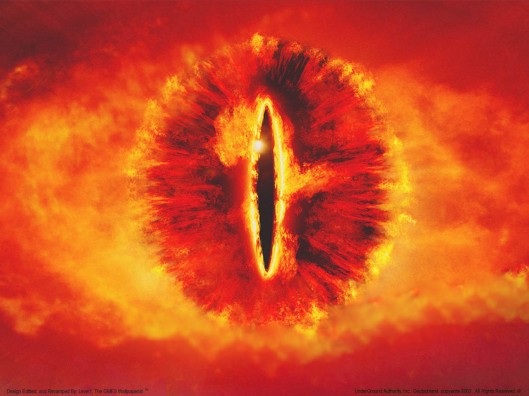
eye-o-sauron-03.jpeg

This is especially true in that:

“Then the Eye began to rove, searching this way and that; and Frodo knew with certainty and horror that among the many things that it sought he himself was one.” (The Fellowship of the Ring, Book 2, “The Mirror of Galadriel”)

This is clearly not the past or the future, as Frodo sees it, but the all-too-realistic present. And this is not just a present to be viewed. Like the figure in the mirror in the old Disney Snow White, this is someone who would respond directly to what he sees, if he could. And Frodo is aware of this:

“But he also knew that it could not see him—not yet, not unless he willed it.” (The Fellowship of the Ring, Book 2, “The Mirror of Galadriel”)

Does the Mirror have more potential, then? Can it be used as a communication device, like a Palantir? If it can combine the functions of “magic mirror” and Palantir, might the Palantir be able to combine functions, as well?

Certainly Sauron does something which ruins Denethor’s ability to resist Sauron’s view of the future to the point where he attempts to commit flaming suicide along with his one surviving son, having abandoned his city to its fate.

pyre.jpg

Denethor, though, is just a human, and rather a vain one, at that.

How would Sauron do the same with one of the Maiar, those beings sent by the Valar to protect Middle Earth from the danger which Sauron represents? Certainly we know that Sauron has communicated with Saruman through the Palantir.

palantir.jpg

There may be a clue in Gandalf’s reply to Saruman, just before he is held captive in Orthanc:

“I have heard speeches of this kind before, but only in the mouths of emissaries sent from Mordor to deceive the ignorant.” (The Fellowship of the Ring, Book 2, “The Council of Elrond”)

What Gandalf is responding to is:

“A new Power is rising. Against it the old allies and policies will not avail us at all. There is no hope left in Elves or dying Numenor. This then is one choice before you, before us. We may join with that Power. It would be wise, Gandalf. There is hope that way. Its victory is at hand; and there will be rich reward for those that aided it. As the Power grows, its proved friends will also grow; and the Wise, such as you and I, may with patience come at last to direct its courses, to control it. We can bide our time, we can keep our thoughts in our hearts, deploring maybe evils done by the way, but approving the high and ultimate purpose: Knowledge, Rule, Order; all the things that we have so far striven in vain to accomplish,,hindered rather than helped by our weak or idle friends. There need not be, there would not be, any real change in our designs, only in our means.” (The Fellowship of the Ring, Book 1, “The Council of Elrond”)

“Knowledge, Rule, Order”? It’s no wonder that Gandalf replies as he does. Such words sound more like the slogan of a totalitarian state—exactly what Mordor has become under its lidless-eyed master–than those of one of the Istari.

And how did Saruman come to have such a distorted vision of the future? Just as Denethor, bitter over his son’s death and the loss to Gandalf—he thinks—of his younger son, has been shown what must have been an increasingly-bleak picture of Gondor and its fate, so can we imagine that Sauron, sensing a latent arrogance and desire for power in Saruman, has given Saruman the second possible understanding of Galadriel’s statement. He has shown Saruman what Saruman secretly wishes for and, in doing so, he cunningly paints for Saruman, who is just wise enough to know that he will never be Sauron, a picture of an alliance which will grant him his wish. Why does Saruman, who is himself an extremely powerful figure, fall for this? Perhaps he’s like Snow White’s stepmother and limited to one question: “Little globe, little globe, who is the (second most) powerful in Middle Earth?”

What do you think, dear readers?

Thanks, as always, for reading.

MTCIDC

CD

Somewhere Over…Ephel Duath?

02 Wednesday Dec 2015

Posted by Ollamh in Fairy Tales and Myths, J.R.R. Tolkien, Narrative Methods

≈ Leave a comment

Tags

Aragorn, Auntie Em, communication, crystal ball, Denethor, Dorothy, Emerald City, Galadriel, heroine, Kansas, Margaret Hamilton, Middle-earth, mirror, Oxford, Oz, Palantir, Pippin, Professor Marvel, Saruman, Sauron, seeing-stones, skype, The Lord of the Rings, The Wizard of Oz, Tolkien, Villains, Wicked Witch

Dear Readers,

Welcome, as always. This posting is now one of two, but it was originally a single posting in which we discussed both Palantiri and Galadriel’s mirror.

Our first thought had been, in fact, a vague one: what did one see in such things? As we reviewed the various possibilities, we realized that they were, in fact, very different in function (yes, we probably didn’t think long and hard enough—we should have pulled out our spares and dipped into that cask of Longbottom Leaf for a three-pipe problem). So we separated them and here’s the first, on the Palantiri.

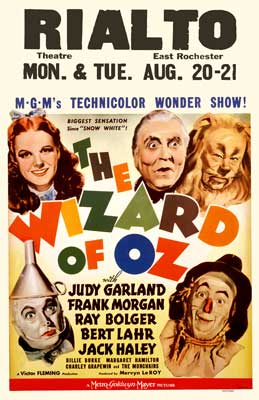
We begin in 1939. It’s not a happy time: war in Europe has broken out again after only two decades of peace. The Depression is still lingering. But there is a new film which Priscilla (age 10) has heard about and would very much like to see and her loving and indulgent father has agreed to take her—after all, this is a children’s movie and he, since his first novel was published in 1937, has become a children’s author.

The film was the story of a quest: the heroine, torn from home, acquires a magical object (two, in fact), slowly gathers a disparate band of companions who help her on her way, visits a grand city, has dealings with a wizard, defeats a powerful enemy and returns home, at last, a wiser person.

posterforwoo

In the very year he became a children’s author, the father had begun a new work. Based in part upon earlier materials and interests, as well as upon elements from his 1937 novel, this was to become not, as he thought at first (and his publishers hoped) a sequel to his previous work, but a kind of extension of that work and, in the years in which he continued to work on it, much more.

In the meantime, he sat in the theatre in Oxford and watched a bleak prairie worldkansas

turn into something almost hallucinogenically-technicolored

munchkinland

and filled with small and very energetic people.

munchkins

But the heroine, as we said, has been torn from home and, worse, she arrives and is immediately in trouble with a powerful enemy,

wickedwitchofthewest

having accidentally killed that enemy’s sibling.houseinwwoe

And the story moves on from there—the gathering of the companions

Wizard-of-Oz-w13

the grand city

oz

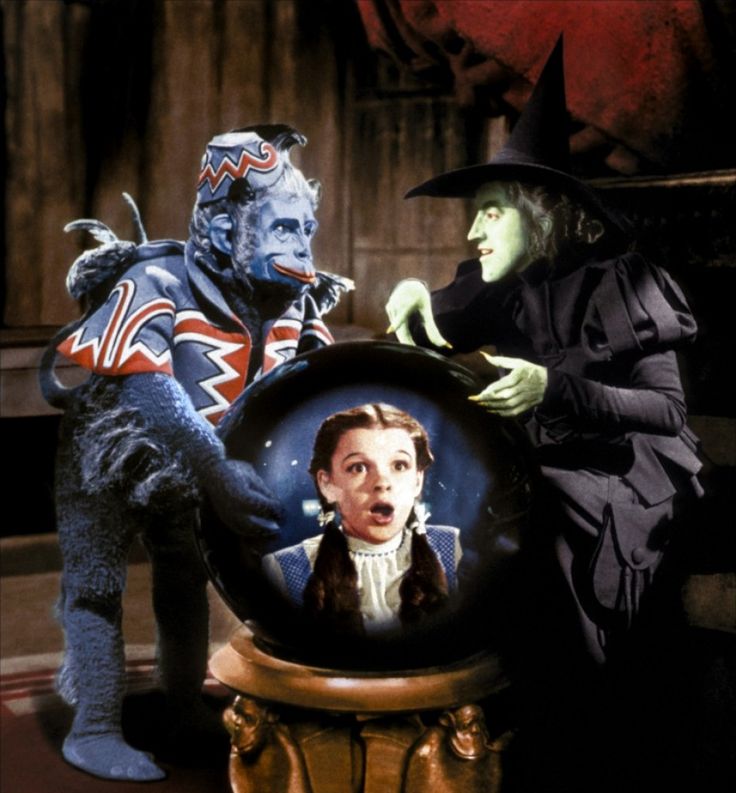
and, all the while, that powerful enemy is watching.

ball4

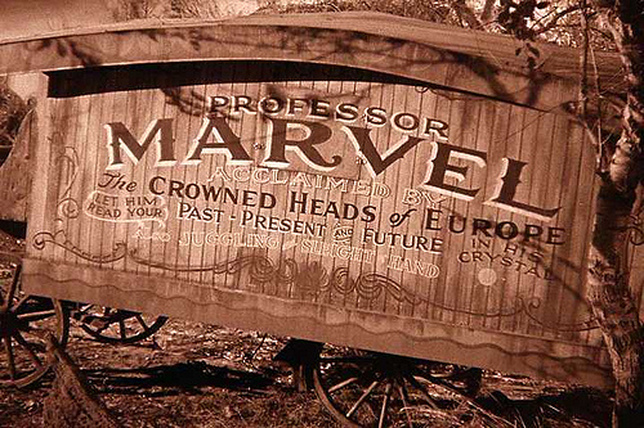
This isn’t the first time such a scrying device has been seen in the story. Earlier, the heroine had consulted another magical figure—or so he claimed.

profmarvelswagon Wizard-3-Marvel

What’s particularly interesting about this device is that, unlike crystal balls one remembers from film and books and from general folklore,

crystalball

the one which is actually used sees not the future, but the present.

The Wicked Witch of the West sees Dorothy—as, of course, that’s who they are–

wwowwithball

and Dorothy sees Auntie Em.

crystalballdseesem

(And “Professor Marvel”, as he calls himself, at least pretends to see the present.)

This made us wonder about the Palantiri.

For a useful summary of information about these so-called “seeing-stones”, see the entry for Palantiri at Tolkiengateway.net/wiki/Palantiri, but, in short, they are an ancient communication device. That is, they are unlike the usual crystal ball, which looks into the future (or possibly the past), but are rather like the Middle Earth form of skype.

skype

These items don’t have the security offered by our earthly form, however. Within The Lord of the Rings, we see them used by Saruman

sarumanpalantir

Pippin

Pippinpalantir

and Aragorn

palantirandaragorn

and Denethor.

denethorandpalantir

Aragorn, however, is the only one able to escape the control of Sauron as exerted by the sphere.

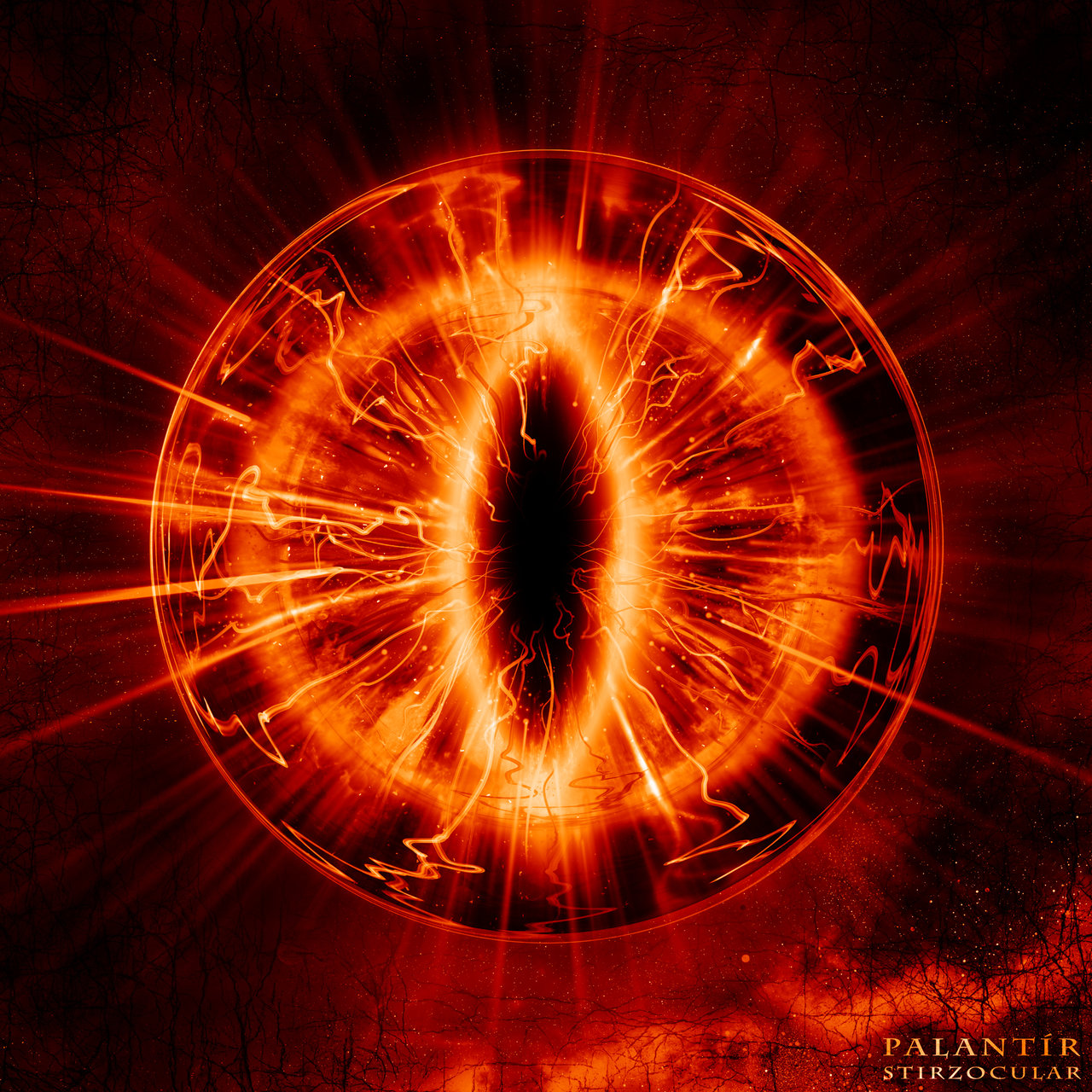
the_palantir_of_barad_dur_by_stirzocular-d7xwbi9

Their function as a medium of communication, so different from their usual use, brings us back to Margaret Hamilton, staring into her crystal ball

ball4

and we wondered whether, in that dark late summer of 1939, Tolkien might have sat in a theatre in Oxford, watching the Wicked Witch of the West, and, as he did so brilliantly with so many other things, absorbing, then recreating what he saw for his own purposes. What do you think, dear readers?

As always, thanks for reading.

MTCIDC

CD

Like Smoke From a Fire: Sharkey’s End

04 Wednesday Nov 2015

Posted by Ollamh in Fairy Tales and Myths, Imaginary History, J.R.R. Tolkien, Maps, Narrative Methods, Research

≈ Leave a comment

Tags

Adventure, Birmingham, Branywine, Bywater, Coketown, Dickens, Dol Amroth, England, Ents, factory, Fangorn, feudalism, Galadriel, Gandalf, Grima, Hard Times, Hobbiton, Idylls, industrial, Industrial Revolution, Isengard, King Edward School, Medieval, Merry, Midlands, Mordor, Morris, Oxford, Palantir, Pippin, poetry, pre-industrial, Saruman, Sauron, Scouring of the Shire, Sharkey, Southfarthing, Tennyson, The Lord of the Rings, The Shire, Tolkien

Dear Readers,

Welcome, as always.

In a previous posting, we talked about Saruman as a kind of imitation Sauron and Isengard as a mini-Mordor.

sarum1

In this posting, we want to consider the implications of Gandalf’s remark about him in “Many Partings”, from The Return of the King: “I fancy he could do some mischief still in a small mean way.”

The mischief, when we see it, is definitely mean, but not small, even though confined to the limits of the Shire.

The world of The Lord of the Rings is a pre-industrial one. The most advanced technology, on the one hand, is the palantir (actually perhaps a magical, rather than mechanical, device)

palantir

and , on the other hand, a watermill.

j-r-r-_tolkien_-_the_hill_-_hobbiton-across-the-water_colored

Beyond that, it’s a medieval world, but without, it seems, feudalism, although there are, for example, castles and knights in the form of the Prince of Dol Amroth.

We can easily see why JRRT wanted this regression. On the one hand, like so many boys of his age, he had grown up reading Tennyson

John_everett_millais_portrait_of_lord_alfred_tennyson firstedition1859idylls

and William Morris

Morris-Portrait1

morris_tapestry

who had created a world of Victorian medievalism, Tennyson in poetry, Morris in many different art forms.

On the other, Tolkien had grown up in Birmingham, in the English Midlands, where there had been massive development throughout the era of the Industrial Revolution.

Textile Mill Diagram McConnel_&_Company_mills,_about_1820

Here’s Charles Dickens’ description of such a place from Hard Times (1856):

(Excerpt Describing Coketown)

Needless to say, although Tolkien kept a strong affection for King Edward School, where he was educated before Oxford,

KingEdwardsSchoolinBirmingham

he was less enthusiastic about the industrial world which surrounded it and this clearly colors his picture of Saruman. Look, for instance, at Fangorn’s description of him:

“He has a mind of metals and wheels; and he does not care for growing things, except as far as they serve him for the moment.” (The Two Towers, Book 1, Chapter 4, “Treebeard”) (It’s revealing, by the way that this is almost a quotation of something which Saruman later says of Gandalf, “When his tools have done their task he drops them.” The Return of the King, Book 2, Chapter 8, “The Scouring of the Shire”)

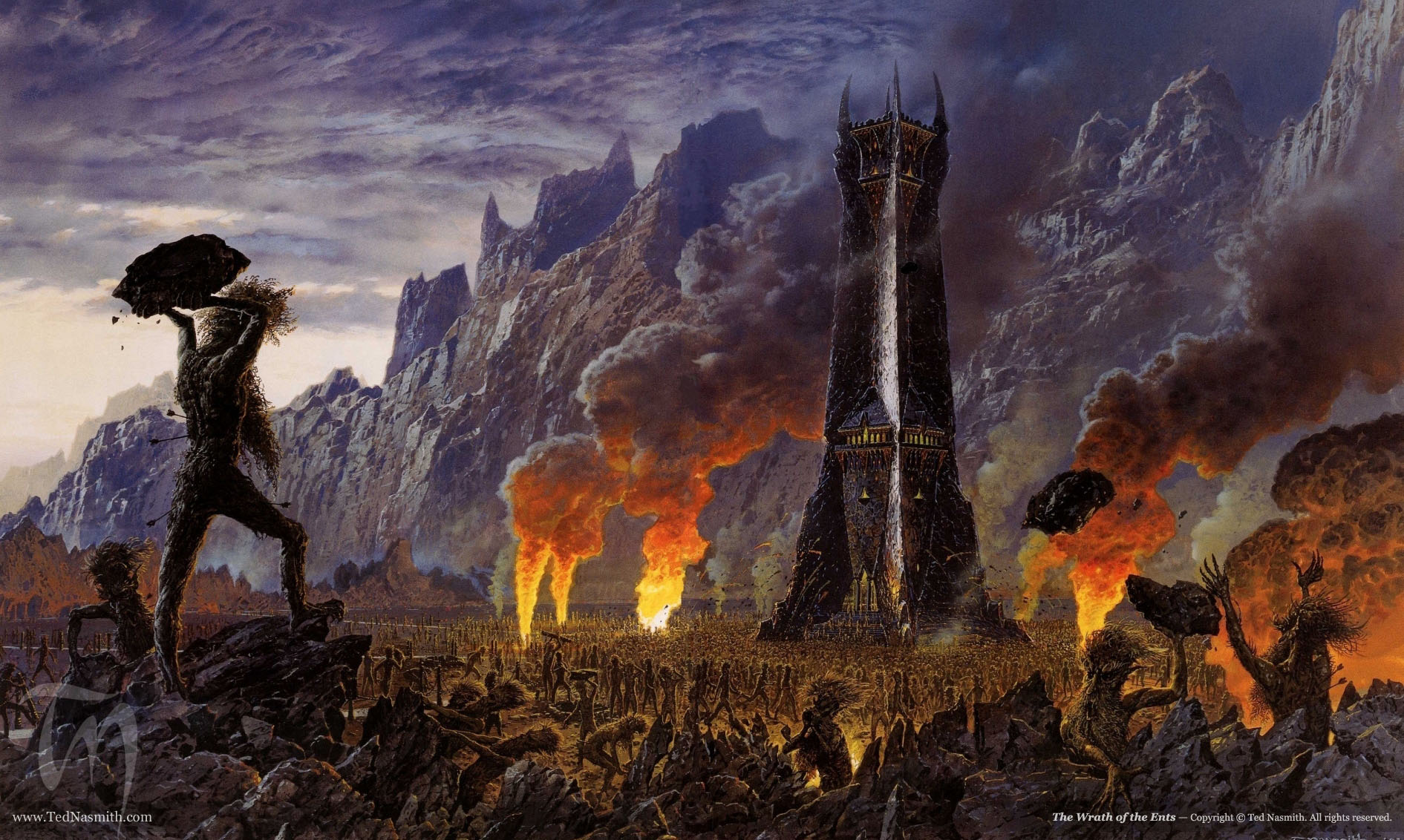
Saruman, then, with his metal mind, has turned the once-beautiful Isengardgreg-hildebrandt-isengard-orthanc-saruman-607429-1920x1080

into an arms factory

kruppworks

another Midlands,

isengardasfactory

and has angered the Ents, as well, by the wanton destruction of trees, not just for fuel, it appears, but just out of sheer spitefulness.

The Wrath of the Ents, by Ted Nasmith

As we wrote earlier, all of this has remade Isengard into a mini-Mordor—as Frodo says: “Yes, this is Mordor…just one of its works. Saruman was doing its work all the time, even when he thought he was working for himself.” (The Return of the King, Book 2, Chapter 8, “The Scouring of the Shire”)

So, when Saruman, Grima in tow, leaves his ruined factory, one could almost imagine just what he might have in mind when he says to the hobbits:

“Well, it will serve you right when you come home, if you find things less good in the Southfarthing than you would like.” (The Return of the King, Book 2, Chapter 6, “Many Partings”)

We know from Merry and Pippin’s experience at the gate of Isengard that Saruman has been importing pipe-weed, a main export of the Southfarthing.

merrypippinisengard

But when the hobbits, having forced the gate at the Brandywine, are making their way towards Hobbiton, they begin to have a feeling that much more has been damaged than the South Farthing: “Still there seemed an unusual amount of burning going on, and smoke rose from many points round about. A great cloud of it was going up far away in the direction of the Woody End.” (The Return of the King, Book 2, Chapter 8, “The Scouring of the Shire”)

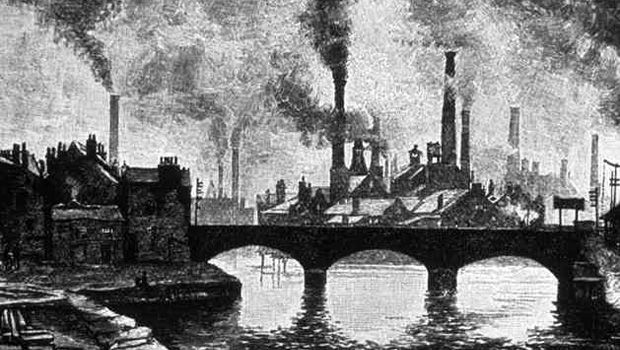
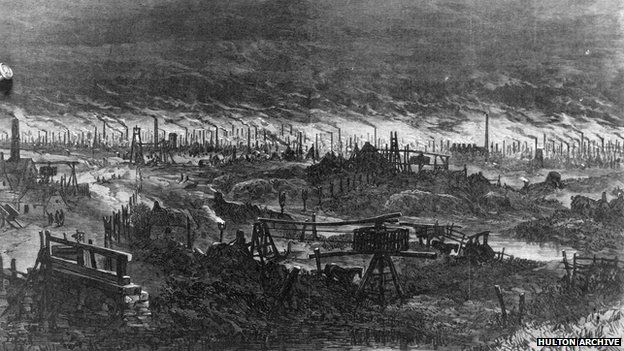
This smoke bears an ominous resemblance to the Midlands (and, in fact, to all of industrial England):

7ad841d6d5852b586a78fc03df7d64259715bddd.jpg__846x0_q80

There is worse to come, however: Bywater. “Many of the houses that they had known were missing. Some seemed to have been burned down. The pleasant row of old hobbit-holes in the bank on the north side of the Pool were deserted, and their little gardens that used to run down bright to the water’s edge were rank with weeds. Worse, there was a whole line of ugly new houses all along the Pool Side, where the Hobbiton Road ran close to the bank. An avenue of trees had stood there. They were all gone. And looking with dismay up the road towards Bag End they saw a tall chimney of brick in the distance. It was pouring out black smoke into the evening air.” (The Return of the King, Book 2, Chapter 8, “The Scouring of the Shire”)

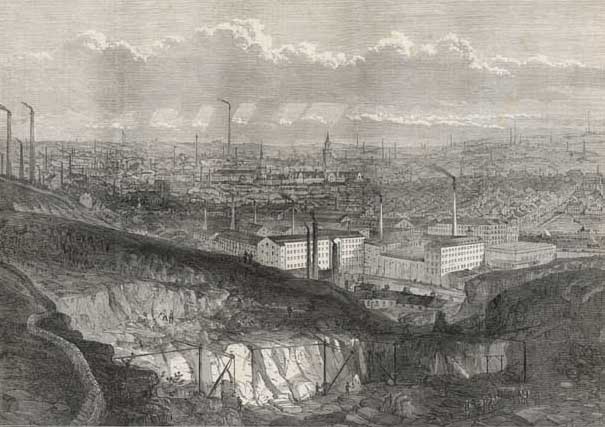
And here, we move from a single smoking mill to a smoking mill town.

BRADFORD/YORKSHIRE/1873

Saruman’s revenge has been more than small and mean, especially in terms of the industrial world which The Lord of the Rings rejects: the Shire is on its way to becoming another Midlands,

_77710962_3322454

even to the workers’ miserable housing.

preston

And the cutting down of trees (including, as we will find out, the Party Tree) insures the truth of Saruman’s sneering statement to the hobbits:

“…I have done much that you will find it hard to mend or undo in your lives.” (The Return of the King, Book 2, Chapter 8, “The Scouring of the Shire”)

But, as we know, Saruman, even in his moment of triumph, has no more than a moment to enjoy it. He is murdered by Grima and here we see the final irony. As Saruman has turned the medieval, bucolic Shire into a smoky horror, so he himself is turned to smoke:

“To the dismay of those that stood by, about the body of Saruman a grey mist gathered, and rising slowly to a great height like smoke from a fire, as a pale shrouded figure it loomed over the Hill. For a moment it wavered, looking to the West; but out of the West came a cold wind, and it bent away, and with a sigh dissolved into nothing.” (The Return of the King, Book 2, Chapter 8, “The Scouring of the Shire”)

61 - The scouring of the shire

A final thought, however. Might we see Saruman’s gesture towards the West, in which he clearly feels that he has been rejected by that which sent him to Middle Earth, as a mirror Galadriel’s gesture of rejection towards the East, when she refuses the Ring?

“She lifted up her hand and from the ring that she wore there issued a great light that illuminated her alone and left all else dark. She stood before Frodo seeming now tall beyond measurement, and beautiful beyond enduring, terrible and worshipful. Then she let her hand fall, and the light faded, and suddenly she laughed again, and lo! she was shrunken: a slender elf-woman, clad in simple white, whose gentle voice was soft and sad.” (The Fellowship of the Ring, Book 2, Chapter 7, “The Mirror of Galadriel”)

galadriel

Thanks, as always, for reading.

MTCIDC

CD

Newer posts →

The Doubtful Sea Series Facebook Page

The Doubtful Sea Series Facebook Page

  • Ollamh

Categories

  • Artists and Illustrators
  • Economics in Middle-earth
  • Fairy Tales and Myths
  • Films and Music
  • Games
  • Heroes
  • Imaginary History
  • J.R.R. Tolkien
  • Language
  • Literary History
  • Maps
  • Medieval Russia
  • Military History
  • Military History of Middle-earth
  • Narnia
  • Narrative Methods
  • Poetry
  • Research
  • Star Wars
  • Terra Australis
  • The Rohirrim
  • Theatre and Performance
  • Tolkien
  • Uncategorized
  • Villains
  • Writing as Collaborators
Follow doubtfulsea on WordPress.com

Across the Doubtful Sea

Recent Postings

  • A Moon disfigured December 17, 2025
  • On the Roads Again—Once More December 10, 2025
  • (Not) Crossing Bridges December 3, 2025
  • On the Road(s) Again—Again November 26, 2025
  • On the Road(s) Again November 19, 2025
  • To Bree (Part 2) November 12, 2025
  • To Bree (Part 1) November 5, 2025
  • A Plague o’ Both—No, o’ All Your Houses! October 29, 2025
  • It’s in Writing (2:  I’st a Prologue, or a Poesie for a Ring?) October 22, 2025

Blog Statistics

  • 103,238 Views

Posting Archive

  • December 2025 (3)
  • November 2025 (4)
  • October 2025 (5)
  • September 2025 (4)
  • August 2025 (4)
  • July 2025 (5)
  • June 2025 (4)
  • May 2025 (4)
  • April 2025 (5)
  • March 2025 (4)
  • February 2025 (4)
  • January 2025 (5)
  • December 2024 (4)
  • November 2024 (4)
  • October 2024 (5)
  • September 2024 (4)
  • August 2024 (4)
  • July 2024 (5)
  • June 2024 (4)
  • May 2024 (5)
  • April 2024 (4)
  • March 2024 (4)
  • February 2024 (4)
  • January 2024 (5)
  • December 2023 (4)
  • November 2023 (5)
  • October 2023 (4)
  • September 2023 (4)
  • August 2023 (5)
  • July 2023 (4)
  • June 2023 (4)
  • May 2023 (5)
  • April 2023 (4)
  • March 2023 (5)
  • February 2023 (4)
  • January 2023 (4)
  • December 2022 (4)
  • November 2022 (5)
  • October 2022 (4)
  • September 2022 (4)
  • August 2022 (5)
  • July 2022 (4)
  • June 2022 (5)
  • May 2022 (4)
  • April 2022 (4)
  • March 2022 (5)
  • February 2022 (4)
  • January 2022 (4)
  • December 2021 (5)
  • November 2021 (4)
  • October 2021 (4)
  • September 2021 (5)
  • August 2021 (4)
  • July 2021 (4)
  • June 2021 (5)
  • May 2021 (4)
  • April 2021 (4)
  • March 2021 (5)
  • February 2021 (4)
  • January 2021 (4)
  • December 2020 (5)
  • November 2020 (4)
  • October 2020 (4)
  • September 2020 (5)
  • August 2020 (4)
  • July 2020 (5)
  • June 2020 (4)
  • May 2020 (4)
  • April 2020 (5)
  • March 2020 (4)
  • February 2020 (4)
  • January 2020 (6)
  • December 2019 (4)
  • November 2019 (4)
  • October 2019 (5)
  • September 2019 (4)
  • August 2019 (4)
  • July 2019 (5)
  • June 2019 (4)
  • May 2019 (5)
  • April 2019 (4)
  • March 2019 (4)
  • February 2019 (4)
  • January 2019 (5)
  • December 2018 (4)
  • November 2018 (4)
  • October 2018 (5)
  • September 2018 (4)
  • August 2018 (5)
  • July 2018 (4)
  • June 2018 (4)
  • May 2018 (5)
  • April 2018 (4)
  • March 2018 (4)
  • February 2018 (4)
  • January 2018 (5)
  • December 2017 (4)
  • November 2017 (4)
  • October 2017 (4)
  • September 2017 (4)
  • August 2017 (5)
  • July 2017 (4)
  • June 2017 (4)
  • May 2017 (5)
  • April 2017 (4)
  • March 2017 (5)
  • February 2017 (4)
  • January 2017 (4)
  • December 2016 (4)
  • November 2016 (5)
  • October 2016 (6)
  • September 2016 (5)
  • August 2016 (5)
  • July 2016 (5)
  • June 2016 (5)
  • May 2016 (4)
  • April 2016 (4)
  • March 2016 (5)
  • February 2016 (4)
  • January 2016 (4)
  • December 2015 (5)
  • November 2015 (5)
  • October 2015 (4)
  • September 2015 (5)
  • August 2015 (4)
  • July 2015 (5)
  • June 2015 (5)
  • May 2015 (4)
  • April 2015 (3)
  • March 2015 (4)
  • February 2015 (4)
  • January 2015 (4)
  • December 2014 (5)
  • November 2014 (4)
  • October 2014 (6)
  • September 2014 (1)

Blog at WordPress.com.

  • Subscribe Subscribed
    • doubtfulsea
    • Join 78 other subscribers
    • Already have a WordPress.com account? Log in now.
    • doubtfulsea
    • Subscribe Subscribed
    • Sign up
    • Log in
    • Report this content
    • View site in Reader
    • Manage subscriptions
    • Collapse this bar
 

Loading Comments...