• About

doubtfulsea

~ adventure fantasy

Category Archives: Uncategorized

A Plague o’ Both—No, o’ All Your Houses!

29 Wednesday Oct 2025

Posted by Ollamh in Uncategorized

≈ Leave a comment

Tags

Black Death, Black Plague, black ship rat, flea, Great Fire of London, great-london-fire, Halloween, History, miasma, plague, plague doctor, plague pits, Roger Bacon, Romeo and Juliet, Shakespeare, Trick or Treat, Yersinia Pestis

As always, dear readers, welcome.

It’s almost Halloween again, one of my favorite holidays, when children dress up in various costumes and wander the streets in groups, demanding treats and threatening tricks,

while older people, themselves in costume, attend parties.

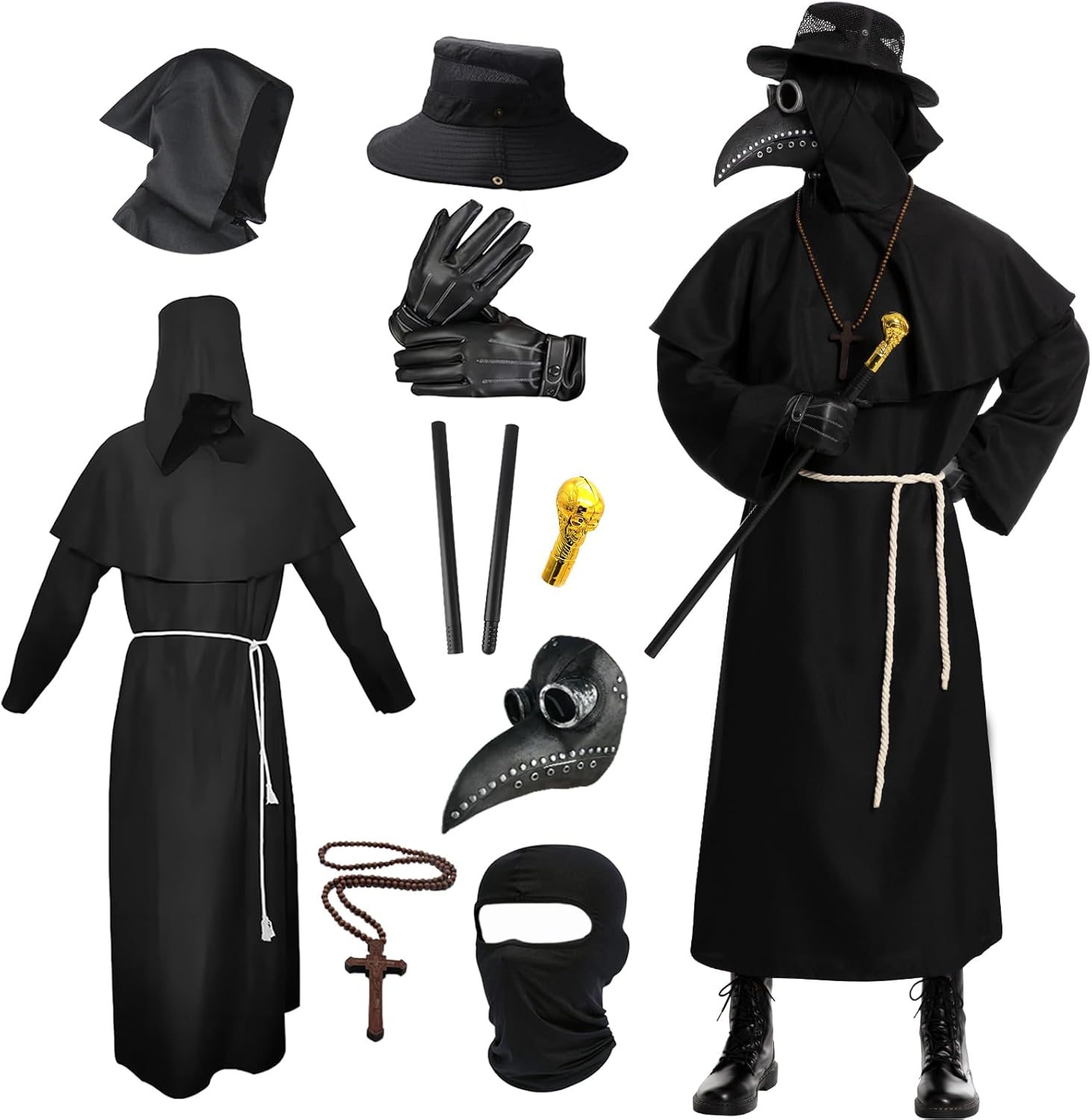
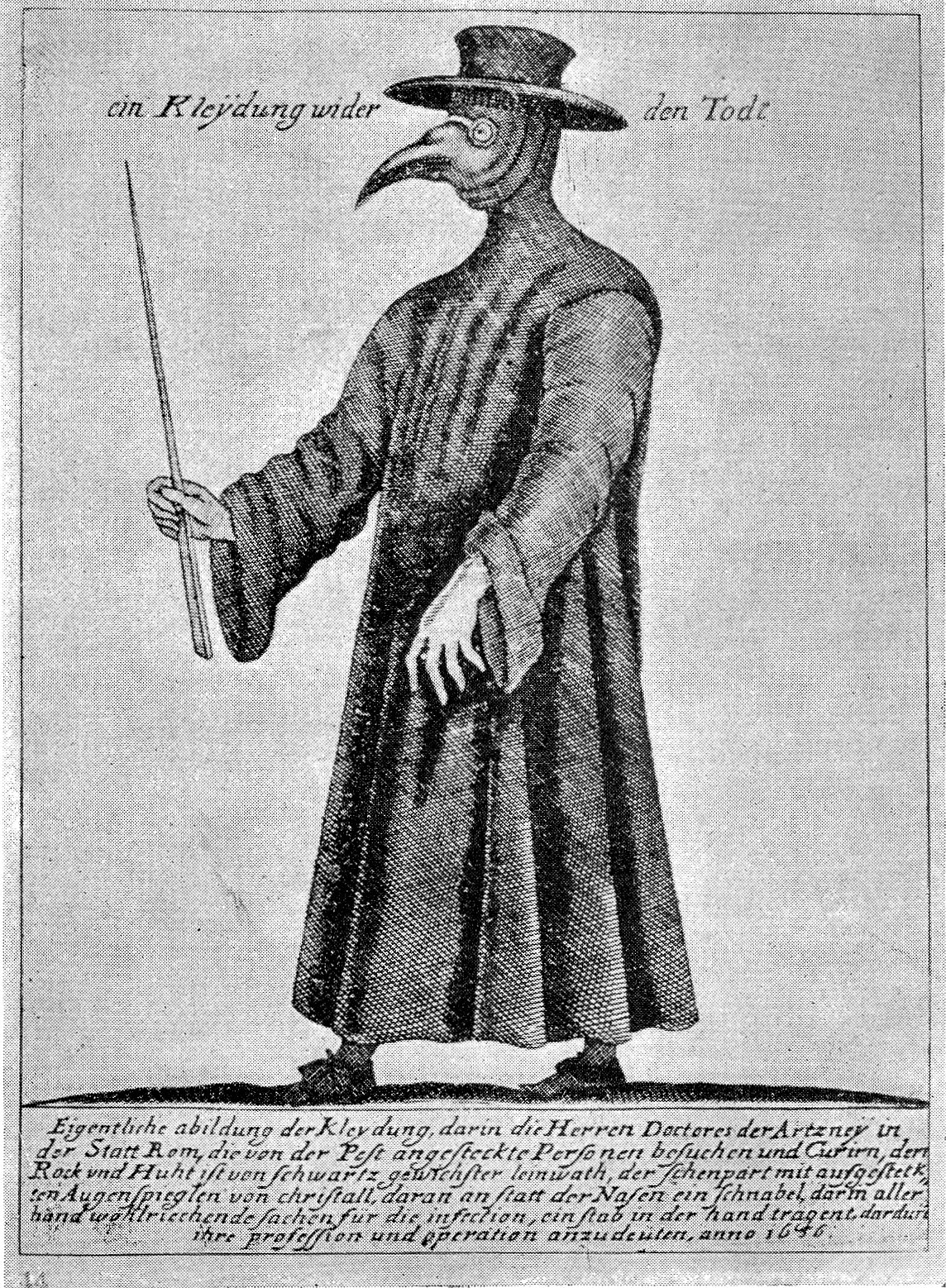
People dress up as monsters, vampires, and superheroes, but, recently, I’ve also seen a few of these—

a costume which you can actually buy on Amazon.

It’s a very haunting image:  crowlike, and yet not, and it struck me as an interesting basis for this year’s Halloween posting.

But what is it?

If you don’t know, I’ve given you a clue in that (modified) quotation I’ve used as a title.

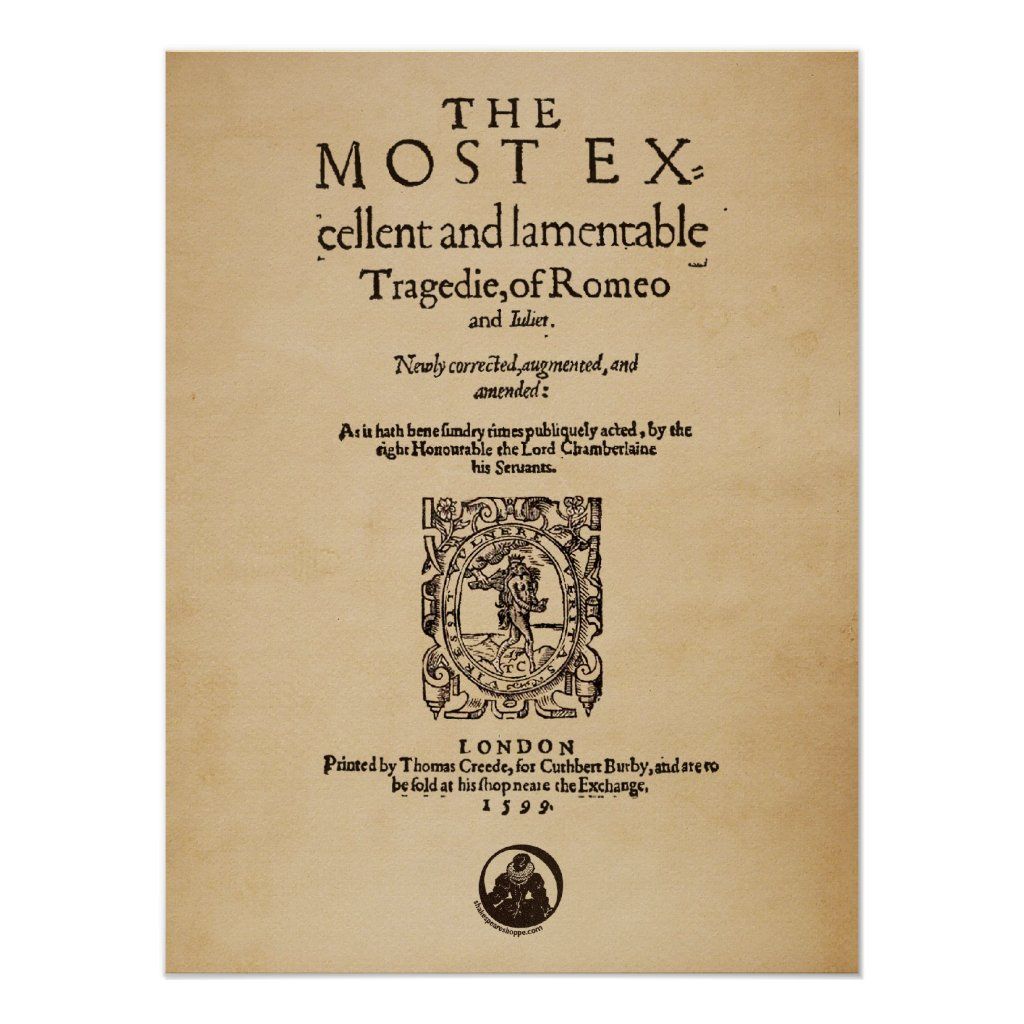
In Act III, Scene 1, of Shakespeare’s The Most Excellent and Lamentable Tragedy of Romeo and Juliet, 1591/95, as the 2nd Quarto (1599) has it,

Romeo’s best friend and perhaps the sanest character in the play, Mercutio, has been mortally wounded.  Dying, he curses both of the feuding families, wishing that a plague would take them both.

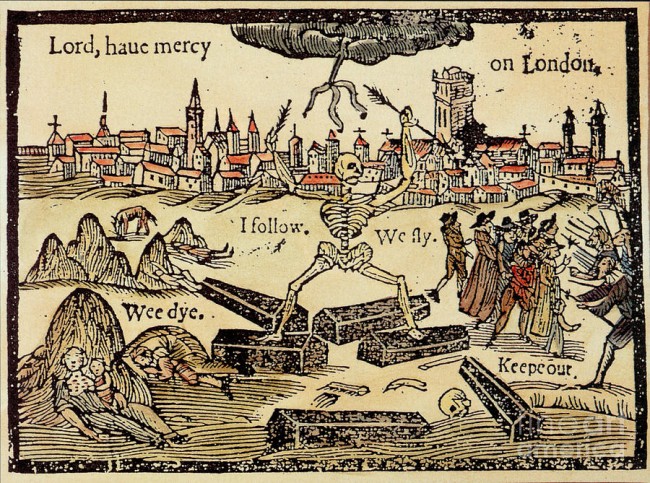
In Shakespeare’s England, this was not a random remark.  Since its original appearance, in 1348, when it may have killed as many as 40-60% of the population, the Black Plague (aka the Black Death) had

reappeared over the next couple of centuries, killing 30,000 in London, in 1603 alone,

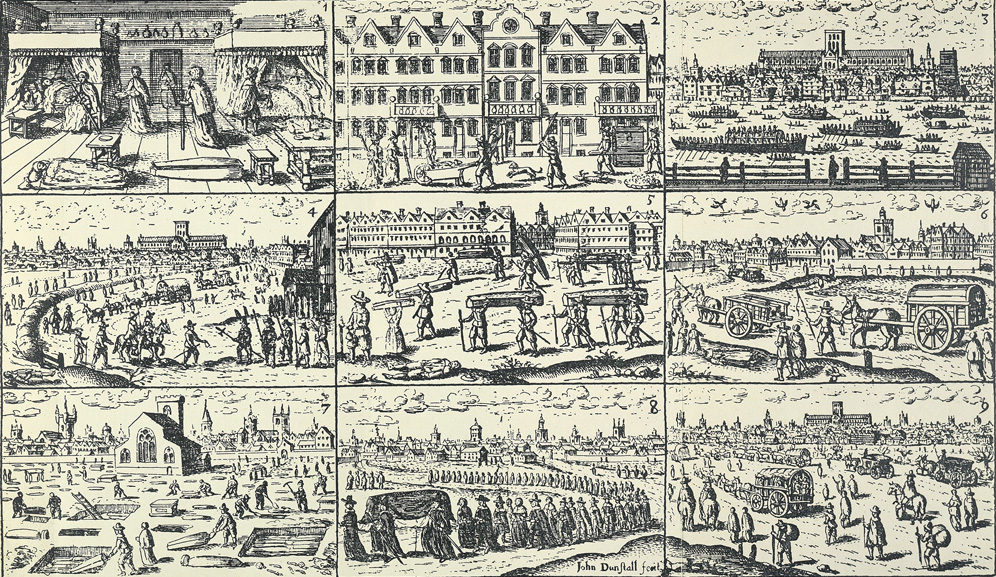
before its grand finale (or nearly), in 1665-6,when it was responsible for perhaps 100,000 deaths there.

(And, in 1666, came the great fire, which destroyed much of the city—it’s a wonder that everyone surviving didn’t attempt to flee to anywhere as far away as they could.

For the fire, I recommend J. Draper’s short presentation here:  https://www.youtube.com/watch?v=4bvB_gJThYk   with one correction.  She says that the artist/engraver Wenceslaus Hollar was Dutch when, in fact, he was a Czech.  See:  https://en.wikipedia.org/wiki/Wenceslaus_Hollar  Otherwise, I have nothing but praise for Draper, who does proper research and wanders the London area , looking for odd and interesting aspects of London’s—and English—history which she then presents in creative ways.  For her grim and striking view of the Black Death, see:  https://www.youtube.com/watch?v=Ybh1jSZLIKY  )

Medieval science was not really even in its infancy—although there were highly intelligent and thoughtful men struggling to look at the world without superstition or religion, like Friar Roger Bacon, 1214-1294.

(an imaginary image—we have no known portrait)

Medical science, such as existed, followed the classical world and believed that communicable diseases were spread through miasma—that is, through “bad air”,

which isn’t such a far-fetched idea:  rotting things, dead things, stink, so death and bad smells are easily associated.

In fact, the Black Plague was—and is–a bacterium, Yersinia Pestis,

which lives in the gut of fleas,

which inhabited what was called the “black ship rat”,

which traveled on trading vessels from the Far East in the 14th century,

and eventually came, either directly on rats, or indirectly by a human carrier, to England, causing havoc on and off, for several centuries.

Needless to say, in a packed city, like London,

rats and their passengers could easily spread out and, in doing so, would spread the bacterium through the bites of those fleas. 

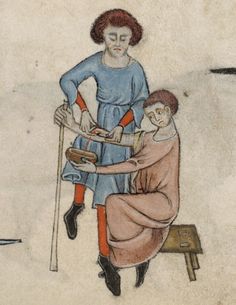
Medical men of that world, however, could make no such connections.  They only saw the horrible symptoms—including the swelling of the lymph nodes, attempting to defend the body—the buboes of bubonic plague—

(This is such a gross image that I almost didn’t include it, but it’s very helpful in explaining what exactly was going on in the body, so…)

The plague produced fever, chills, vomiting, violent headaches—and all that doctors could do was what they did for almost anything:  try to balance the humors—the basic elements of the body—which included bleeding, a treatment which actually weakened the body.

Because the real agent of contagion wasn’t understood, doctors could only be brave and deal with their patients as best they could—and contract the disease themselves—or could attempt to protect themselves, which brings us to this image again—

(appropriately titled “the clothing against death”, implying the Black Death)

This diagram

(with some strange English—it appears to be a translation—I’ve seen one copy in which the text is in Russian– gives you a general idea of how a doctor might attempt to ward off infection, including basics which had to do with bad air, like carrying a pomander—a little vessel containing strong-smelling herbs to fend off that air—

which someone might carry simply to ward off the bad smells of a time when streets in cities often had the equivalent of open sewers, as well as might be employ ed as a fashion accessory—for more on pomanders, see:   https://en.wikipedia.org/wiki/Pomander )

as well as that beaky thing—which is really a kind of early surgical mask

combined with a pomander—the beak being stuffed with those protective herbs.  And, as who knows what can get in through the eyes, add crystalline lenses to the beak.

Gloves and a long coat, sometimes waxed, probably as much for water-proofing as against floating miasma, and a broad-brimmed hat to cover the head, complete the outfit.  Oh—and a rod for probing the infected, plus a light source—medieval/Renaissance houses being notoriously dim. 

Note, however, that, whoever designed this modern version hadn’t done quite enough research:  that’s a 19th-century kerosene lantern.  Here’s a lantern of a sort which would be likely—

(This is an Elizabethan image of a city watchman, armed with a spear, followed by a dog, and carrying a bell to sound the hours.)

And so, when you see someone dressed like this at a party, you can confidently ask, “Tell me, doctor, is the plague spreading and should I flee the city?”

although he may respond by offering you not a pomander, but one of these, instead.

Thanks, as always for reading.  Happy Halloween, if you celebrate it.

Stay well,

Avoid miasma like the plague,

And remember that, as always, there’s

MTCIDC

O

PS

There is now some argument about the gear of such doctors.  See:  https://en.wikipedia.org/wiki/Plague_doctor  and https://www.livescience.com/plague-doctors.html   Plague could actually take several forms.  See:  https://www.britannica.com/science/plague   Because cemeteries—and grave-diggers were often overwhelmed, mass graves in unconsecrated ground began to be common—and now are sometimes happened upon unexpectedly.  See recent London plague pit discoveries:  https://www.cityam.com/after-crossrails-gruesome-discovery-weve-mapped-every-one-londons-plague-pits-do-you-work/

It’s in Writing (2:  I’st a Prologue, or a Poesie for a Ring?)

22 Wednesday Oct 2025

Posted by Ollamh in Uncategorized

≈ Leave a comment

Tags

Belshazzar, Bilbo, Daniel, Darius, Frodo, Gandalf, inscription, Isildur, Kilroy, Literacy, Orcs, posy ring, Sam Gamgee, Sauron, Shakespeare, The Black Speech, The Ring

As always, dear readers, welcome.

The first part of this posting began as far from Middle-earth and its history as possible:  the Biblical lands of our Middle-earth and the story of the ancient prophet, Daniel and specifically the event which gained Daniel his position in the court first of Belshazzar, the Babylonian king, and then in that of his conqueror/successor, Darius the Persian.  Uniquely for early prophecy, Belshazzar hadn’t been warned that he would be deposed by any of the accepted means—the reading of the flight of birds

or the reading of animal intestines, for example,

(This is a bit of Etruscology, being a bronze model of a sheep’s liver believed to be used as a guide to interpreting what an Etruscan priest might find on an actual sheep’s liver.  For more, see:  https://en.wikipedia.org/wiki/Haruspex )

but by a message written by a detached hand on an interior wall of his palace.

(Rembrandt—as I said in the first part of this posting, having no idea of what real Babylonians looked like, the artist went for the Magi look)

When Belshazzar’s own scribes and prophets could make nothing of it, Daniel was brought in as a consultant and delivered the grim message that the words—which were potentially chillingly ambiguous—signalled not only the end of Belshazzar’s reign, but of his kingdom.  (For more on this, see:  https://www.christianitytoday.com/2024/11/andrew-wilson-spirited-life-daniel-writing-on-wall-babylon/   For a wonderful 12th-century version of the story and a little on Daniel’s experience in the court of Darius, see:  https://www.youtube.com/watch?v=Djf0DFkH7mA&list=RDDjf0DFkH7mA&start_radio=1 )

In that posting, I suggested that Daniel’s story not only confirmed his role as prophet, but, for the posting, that he was literate, which would have marked him out in a world in which literacy was a specialized skill, like being a boatwright.

(This is from one of my favorite medieval mosaics, the story of Noah and the Ark from the cathedral of Monreale in Palermo—for more see:  https://www.christianiconography.info/sicily/noahBuildsArkMonreale.html )

This, in turn, had led to considering literacy in Middle-earth, chiefly among hobbits, and, in particular, the literacy of one rather unlikely hobbit, Sam Gamgee.

(Robert Chronister)

For more on this, see that earlier posting, “It’s in Writing (1)” 15 October, 2025, but my conclusion, based upon the final chapter of The Lord of the Rings, “The Grey Havens”, was that, as the story of Daniel makes Daniel literate in order to elevate him to a level of prophetic importance, so JRRT makes Sam literate in order to allow him to be the author who will complete the story of the Ring.  

That posting briefly examined hobbits and even suggested some evidence of literacy among dwarves, but it was never meant to be a full inventory of mentions of literacy in Middle-earth—although I think that that would be a very interesting project and well worth doing—and one thing it omitted entirely was any mention of literacy in Mordor. 

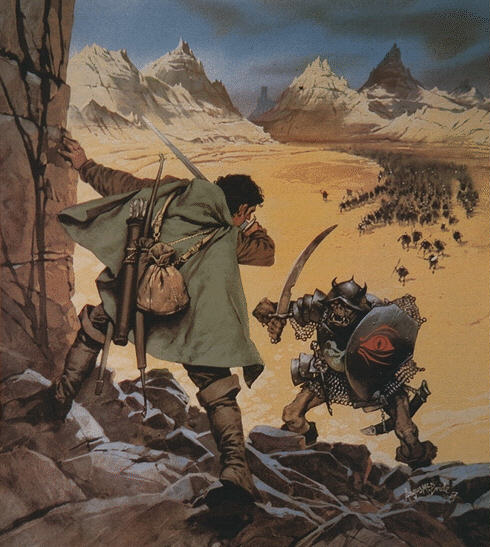
Did Orcs read and write, for example?

(Alan Lee)

Considering the conversation of people like Ugluk and Grishnakh, it would seem that they were mainly oral, as much of their and other talk is based upon what they hear, rather than read. (“ ‘What are they wanted for?’ asked several voices.  ‘Why alive?  Do they give good sport?’ ‘No!  I heard that one of them has got something, something that’s wanted for the war…”  The Two Towers, Book Three, Chapter 3, “The Uruk-hai”—for more on Orcs and gossip, among other things, see “Scuttlebutt”, 27 October, 2021)

And yet there’s this:

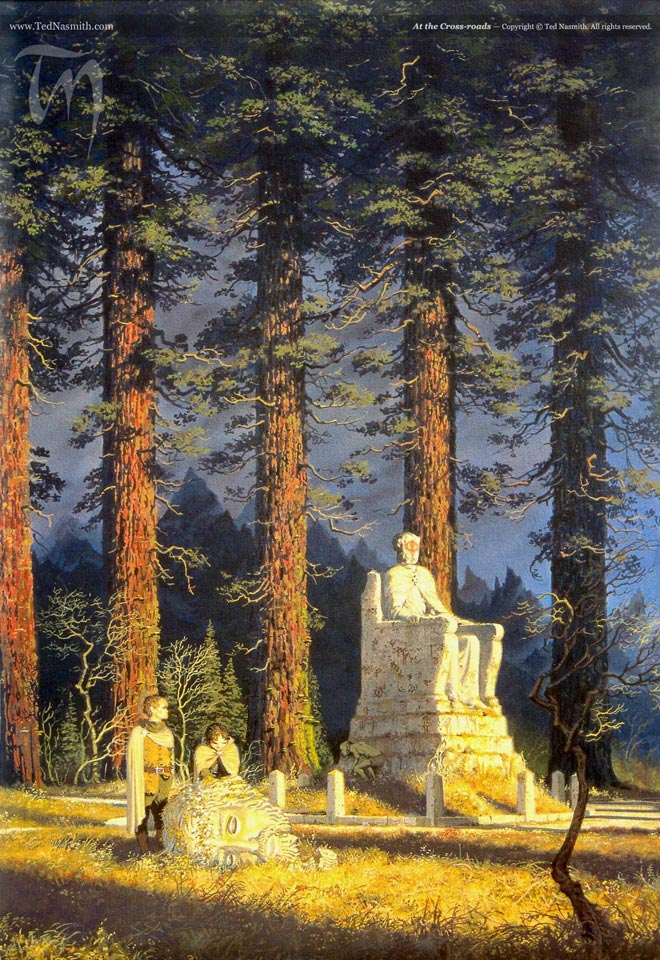
“The brief glow fell upon a huge sitting figure, still and solemn like the great stone kings of Argonath.  The years had gnawed it, and violent hands had maimed it..Upon its knees were idle scrawls mixed with the foul symbols that the maggot-folk of Mordor used.”  (The Two Towers, Book Four, Chapter 7, Journey to the Cross-roads”)

The “maggot-folk of Mordor” must certainly be the Orcs and “idle scrawls” suggests graffiti, like the World War 2-era favorite–

(For more on orcs and graffiti, see “Ugluk was Here”, 14 December, 2016—for more on Kilroy see:  https://en.wikipedia.org/wiki/Kilroy_was_here )

So what did they write in?  Pippin, while a prisoner of the Orcs, notices that they seem to speak different languages—or at least dialects—but employ the Common Speech to understand each other:

“To Pippin’s surprise he found that much of the talk was intelligible; many of the Orcs were using ordinary language.  Apparently the members of two or three quite different tribes were present, and they could not understand one another’s orc-speech.”  (The Two Towers, Book Three, Chapter 3, “The Uruk-hai”)

Can we presume, then, that the “idle scrawls” were in the writing system called the Tengwar, as “[its letters] had spread over much of the same area as that in which the Common Speech was known” (The Lord of the Rings, Appendix E, II, “Writing”)?  Or possibly the runic Cirith, as “[it] became known to many peoples, to Men and Dwarves, and even to Orcs, all of whom altered it to suit their purposes and according to their skill or lack of it.”

But what about the Black Speech?

“It is said that the Black Speech was devised by Sauron in the Dark Years, and that he had desired to make it the language of all those that served him…”

however—

“…after the first overthrow of Sauron this language in its ancient form was forgotten by all but the Nazgul.  When Sauron arose again, it became once more the language of Barad-dur and of the captains of Mordor.”

It was the formal language of the top of the chain of command, then, but, as JRRT had written earlier of Sauron’s first attempt to make it the official language, “he failed in that purpose” and the Orcs picked and chose what they found useful and nothing more.  (See The Lord of the Rings, Appendix F, “Of the Other Races”)

Save for what might be the Black Speech in a curse (“Ugluk u bagronk sha pushdug Saruman-glob bubhosh skai”, says one menacing Orc to Pippin– The Two Towers, Book Three, Chapter 3, “The Uruk-hai”), when we hear it, it’s Gandalf, reciting what he read when he “set the golden thing in the fire a while” (The Fellowship of the Ring, Book Two, Chapter 2, “The Council of Elrond”). 

And this brings us back to reading and writing.  Why was there writing on that particular ring? 

Not being a party to its maker’s mind, this is only my guess, but I think that it may have had several possible purposes.

First—and this seems the most obvious—comes from something Gandalf says, repeating a remark made by Saruman:

“ ‘The Nine, the Seven, and the Three…had each their proper gem.  Not so the One.  It was round and unadorned, as it were one of the lesser rings; but its maker set marks upon it that the skilled, maybe, could still see and read.”  (The Fellowship of the Ring, Book Two, Chapter 2, “The Council of Elrond”). 

Thus, Sauron had written on it to distinguish it from the other rings—and this writing was seemingly to be seen only by Sauron, as Isildur suggests:

“It was hot when I first took it, hot as a glede [a hot coal], and my hand was scorched, so that I doubt if ever again I shall be free of the pain of it.  Yet even as I write it is cooled, and it seemeth to shrink, though it loseth neither its beauty nor its shape.  Already the writing upon it, which at first was as clear as red flames, fadeth and is only barely to be read.”

Isildur’s explanation for this fading was:

“The Ring misseth, maybe, the heat of Sauron’s hand, which was black and yet burned like fire.” (The Fellowship of the Ring, Book Two, Chapter 2, “The Council of Elrond”). 

The second purpose, then, might be that The Ring mirrored, in a way, its master, the inscription legible to him because it took its heat from his hand and, with that removed, it cooled, eventually, into silence.  Isildur had guessed that heat might revive it (“…maybe were the gold made hot again, the writing would be refreshed”) but it was Gandalf, having read Isildur’s suggestion, who did, by placing it into an environment like to its original.  That it would lose that inscription if the Ring were removed from its owner’s hand might also suggest a third purpose, which lies in what the writing actually said:

“One Ring to rule them all, One Ring to find them,

One Ring to bring them all and in the darkness bind them.”  (The Fellowship of the Ring, Book One, Chapter 2, “The Shadow of the Past”)

Although Gandalf says that this formed part of “a verse long known in Elven-lore”, the Ring itself was meant to be the master ring:

“He only needs the One; for he made that Ring himself, it is his, and he let a great part of his own former power pass into it, so that he could rule all the others.”

Thus, though it may have been part of a “verse long known in Elven-lore”, it sounds to me like a kind of spell Sauron would have chanted as he made the Ring, not only putting “a great part of his own former power” into it, but binding the lesser rings to it, as the words written on the Ring may have eventually been part of later tradition, but, logically, must have been his words long before they became part of that tradition.

These might have been Sauron’s purposes, but they also serve the narrative.  As Bilbo’s ring, passed down traumatically to Frodo, is “round and unadorned”, Gandalf has to have some way to prove to himself and to Frodo that this ring is the Ring.

(Alan Lee)

When Gandalf begins explaining to Frodo in detail about it and about Bilbo’s connection to it, he first mentions that

“A mortal…who keeps one of the Great Rings, does not die, but he does not grow or obtain more life, he merely continues, until at last every minute is a weariness.”

and Bilbo, says Gandalf, “…was getting restless and uneasy.  Thin and Stretched, he said.”

He speaks further about his worries about Bilbo and then tells Frodo that “There is a last test to make”, meaning in his confirmation that this is the Ring.

That last test takes place when, reluctantly, Frodo hands the Ring to Gandalf, and Gandalf throws it into the fire on Frodo’s hearth, where, when Frodo picks it up, he spots “fine lines, finer than the finest pen-strokes, running along the ring, outside and inside:  lines of fire that seemed to form the letters of a flowing script” and that script says:

“Ash nazg burbatuluk, ash nasz gimbatul, ash nazg thrakatuk agh burzum-ishi krimpatul.”

“One Ring to rule them all, One Ring to find them, One Ring to bring them all and in the Darkness bind them.”  (translation by Gandalf—earlier quotations from The Fellowship of the Ring, Book One, Chapter 2, “The Shadow of the Past”, the Black Speech from Book Two, Chapter 2, “The Council of Elrond”  For more on the Black Speech, see:  https://en.wikipedia.org/wiki/Black_Speech )

For Gandalf, that inscription is the final element in his understanding of just what, long ago, Bilbo picked up in the tunnels under the Misty Mountains.  He explains that it’s “only two lines of a verse long known in Elven-lore”, but those two lines are apparently all that’s necessary.

But where might the idea for an inscription have come to JRRT from originally?  I have no proof, but, as a medievalist, Tolkien might have been aware of what we find in medieval bling and is later picked up in Hamlet.

If you, like me, are a Shakespeare fan, you may recognize the subtitle of this posting as a sharp little remark by Hamlet in Act III, Scene 2 (you can read it here in the First Quarto of 1603:      https://internetshakespeare.uvic.ca/doc/Ham_Q1/complete/index.html ).  Hamlet is making fun of a very brief prologue before The Murder of Gonzago, the “play within a play” (renamed “The Mousetrap” by Hamlet) by which he hopes to force his uncle, Claudius, to reveal his guilt in the death of Hamlet’s father, but it’s the second half of that line, “a Poesie for a Ring” which provides an answer to my question.

What Hamlet is suggesting is that the prologue is as clumsy as the poetry found within a ring (although occasionally on the outside) usually given by one lover to another in the late medieval era at least into the 18th century, like this one—

where inside is written “When this you see, remember me.”

(For more, see:  https://web.archive.org/web/20080611125813/http://www.wartski.com/Posy%20ring%20messages.htm )

Often called “posy rings” (a contracted form of “poesie”, as in the Shakespeare quotation), there are hundreds of surviving examples—here are only a small number from the Ashmolean Museum in Oxford—

The texts vary, from what appears confident–“In thee my choice I do rejoice”—to the less so:  “I live in Hope”, but the general purpose of these little gifts is clear, if less sinister than Sauron’s.  They are meant to remind someone that someone else is thinking of them.  The difference, however, is that, if there’s one thing you wouldn’t want, it would be to have the Eye of Sauron looking in your direction.

Thanks, as always, for reading.

Stay well,

Consider what Orcs might write on their rings,

(Alan Lee)

And remember that, as ever, there’s

MTCIDC

O

PS

For a little more on posy rings, see the monograph by John Evans, “Posy-Rings” (1892) at https://ia800704.us.archive.org/5/items/PosyRingsEvans/evans-j-posy-1892-00011597.pdf

It’s in Writing (1)

15 Wednesday Oct 2025

Posted by Ollamh in Uncategorized

≈ Leave a comment

Tags

augury, Belshazzar, class in the Shire, Daniel, Dwarves, Fantasy, Jerome, literacy in Middle-earth, reading, Rohirrim, Sam Gamgee, scribes, the handwriting on the wall, Tolkien, Writing

As always, dear readers, welcome.

Belshazzar, the king of the Babylonians, was having a lovely party—

“Baltassar rex fecit grande convivium optimatibus suis mille: et unusquisque secundum suam bibebat aetatem.”

“Belshazzar held a great banquet for a thousand of his elite and each one was drinking according to his time of life.”
But, wishing to up the fun, he decided to make the party a bit more lavish—

Praecepit ergo jam temulentus ut afferrentur vasa aurea et argentea, quae asportaverat Nabuchodonosor pater ejus de templo, quod fuit in Ierusalem, ut biberent in eis rex, et optimates ejus, uxoresque ejus, et concubinae.

“And so now, being drunk, he ordered that the golden and silver vessels which Nebuchadnezzar, his father, had carried away from the temple which had been in Jerusalem be brought in so that the king and his nobles and his wives and concubines might drink in them.”

[“fuit” here is the perfect form and might be translated “has been”, but that form can suggest a permanent state, the pluperfect, suggesting that there would be no more Jerusalem.]

and then things go very wrong–

“In eadem hora apparuerunt digiti, quasi manus hominis scribentis contra candelabrum in superficie parietis aulae regiae: et rex aspiciebat articulos manus scribentis.”

“In the same hour, there appeared fingers, like a man’s hand, opposite the lampstand, writing on the surface of the wall of the royal hall, and the king was staring at the joints of the hand writing.”

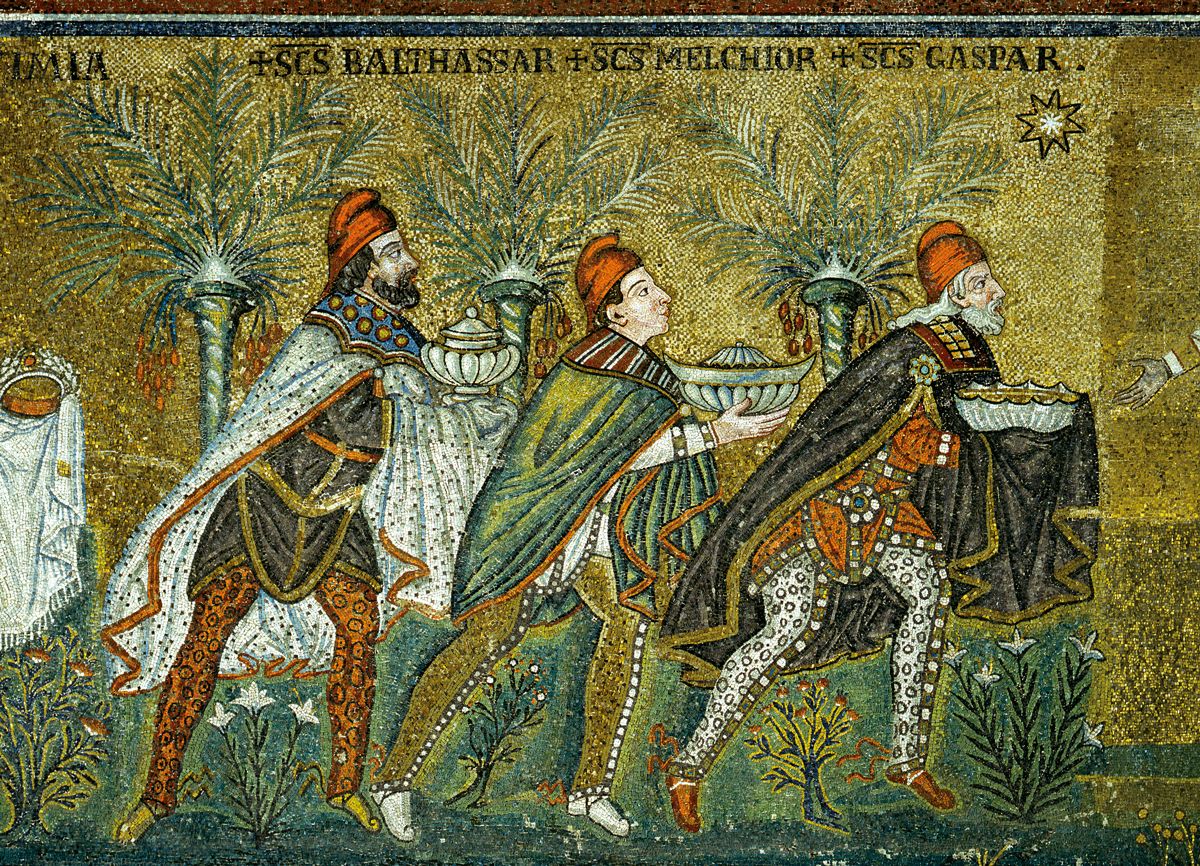
(Rembrandt—who clearly had no idea what the real Babylonian king would have worn, but settled for something right out of the visit of the Magi, which was undoubtedly good enough for his audience, who would have had no more idea than he did)

Needless to say, this was a bad omen, but one his own counselors couldn’t interpret, as the message was not in Babylonian.  His queen, however, recommended that a Jewish interpreter, Daniel, be summoned, who arrived and interpreted the writing, which may have included some rather fancy word-play, but which meant:  “You are not long on the throne and your kingdom is about to become the property of the Persians.”

(All Latin translations are mine from Section 5 of “The Book of Daniel”.  The Latin text is from Jerome’s 4th-century translation, which you can read, with an English translation, here:     https://vulgate.org/ot/daniel_5.htm  For more on the message, see:   https://www.christianitytoday.com/2024/11/andrew-wilson-spirited-life-daniel-writing-on-wall-babylon/   For more on the historic Belshazzar—an ironic name as far as the ancient Hebrews must have been concerned, as it means “[the god] Bel [aka Baal] protect the king” which the Book of Daniel indicates that he certainly didn’t!—see:  https://en.wikipedia.org/wiki/Belshazzar )

Behind this story lies not only the status of Daniel as prophet and interpreter, and the idea that the Hebrew God is not to be messed with, even by kings, but also, for this posting, the importance of writing—the omen isn’t, like so many others, based on the flight of birds or the liver of a sheep or the behavior of chickens,

(for more on such practices see:  https://en.wikipedia.org/wiki/Augury )

all things which the ancient world would have thought significant–but on something handwritten (literally) on a palace wall.  This is clearly so unusual that its significance is immediately multiplied, and which, since Daniel can not only interpret it, but, to do so, he can read it, tells us something more about Daniel:   he is literate.

Because we in the modern West live in such a literate world ourselves, it’s sometimes hard to understand earlier worlds where literacy was not the norm.  Could Belshazzar read?  Probably not:  that was the job of technical people, scribes,

(These are actually Sumerians, but can stand in for Babylonian scribes, as the Babylonians used the writing system, cuneiform,

which the Sumerian scribes had invented.)

whom rulers could call upon when needed, as we see in ancient and medieval societies in general.  Literacy was a skill, like carpentry or masonry, and limited in the number of people who could practice it.  Could this have been true in Middle-earth, based as it is upon the medieval world of our Middle-earth, as well?

Gondor appears to have had a long tradition at least of extensive record-keeping, as we hear from Gandalf:

“And yet there lie in his hoards many records that few even of the lore-masters now can read, for their scripts and tongues have become dark to later men.” (The Fellowship of the Ring, Book Two, Chapter 2, “The Council of Elrond”)

As for the Rohirrim, I would guess that, although there may have been some literacy, much of their past—and possibly their present—was preserved in oral tradition, as Aragorn says of Meduseld:

“But to the Riders of the Mark it seems so long ago…that the raising of this house is but a memory of song.” (The Two Towers, Book Three, Chapter 6, “The King of the Golden Hall”)

And Theoden says to Aragorn:

“Will you ride with me then, son of Arathorn?  Maybe we shall cleave a road, or make an end as will be worth a song—if any be left to sing of us hereafter.”  (The Two Towers, Book Three, Chapter 7, “Helm’s Deep”)

In the Prologue to The Lord of the Rings, we are told that the Hobbits as a whole had had potential literacy for some time, in fact, from their days of moving westwards towards what would become the Shire:

“It was in these early days, doubtless, that the Hobbits learned their letters and began to write, after the manner of the Dunedain, who had in their turn long before learned the art from the Elves.”  (The Lord of the Rings, Prologue I, “Concerning Hobbits”)

As in the case of other medieval worlds, however, this was seemingly not general literacy, although rather than being the possession of a specialized class, as in Babylon or ancient Egypt,

it might, instead, have been a mark of class.

Consider Sam Gamgee.  His father is the gardener for Bilbo Baggins and Sam is his assistant.

(Robert Chronister)

From his position—and from the way he addresses his “betters” as “Mister”, while they address him by his first name—it’s clear that Sam and his father are not of the same social class as the Bagginses.   And so, when the Gaffer says:

“Mr. Bilbo has learned him his letters—meaning no harm, mark you, and I hope no harm will come of it.”  (The Fellowship of the Ring, Book One, Chapter 1, “A Long-Expected Party”)

This appears to be what we might call a mark of that class difference:  Bilbo, a ‘gentleman” can read, although, as we hear of no academies in the Shire, presumably through home-schooling, implying that there was at least one other person in his family’s household who could also read and who had taught him.  Considering the Gaffer’s potential uneasiness about it—why should there be harm in being able to read?—I think that we can imagine that the Gaffer himself could not—and himself was aware of the class distinction (Sam might get ideas “above his station”?).

And yet it’s to Sam that Frodo passes the book begun so long ago by Bilbo:

“ ‘Why, you have nearly finished it, Mr. Frodo!’ Sam exclaimed.  ‘Well, you have kept at it, I must say.’

‘I have quite finished, Sam,’ said Frodo.  ‘The last pages are for you.’ “ (The Return of the King, Book Six, Chapter 9, “The Grey Havens”)

Daniel’s literacy gives him the ability to read the Hebrew God’s warning to Belshazzar, establishing his importance in the story (which continues, as he becomes the confidant and friend of the new king, Darius.)

And here we see the real reason JRRT had given Sam literacy:  not that he might read Bilbo/Frodo’s efforts, but that he might write and therefore complete the story of The Lord of the Rings, and thus add one more element to his importance in the narrative.

In our next posting, however, we will examine another use of writing and reading—and a much less benign one.

Thanks, as always for reading.

Stay well,

Delight in the fact that you can read,

And remember that there’s always

MTCIDC

O

PS

As to evidence of general literacy in the Shire, we see, in “The Scouring of the Shire”, some public notices—a sign on the new gate on the bridge over the Brandywine (“No admittance between sundown and sunrise”) and an anonymous hobbit calls out “Can’t you read the notice?”  In the watch house just beyond we see:   “…on every wall there was a notice and list of Rules”. As far as I can tell, however, these are the only public signs we see in Middle-earth and seem to me more about Authority than literacy.   Just the fact that they’re there must have an effect upon cowed hobbits, even if they can’t read.

PPS

For completeness sake, although we have only bits and pieces of dwarvish, we can say that at least some dwarves were literate, evidence being the fragmentary account of the reworking of Moria which the Fellowship find in the Chamber of Records there,

as well as the inscription on Balin’s tomb. (for more on JRRT’s work on recreating that fragmentary record, the so-called Book of Mazarbul, see: “Aging Documents”, 31 July, 2024)

King Trotter?

08 Wednesday Oct 2025

Posted by Ollamh in Uncategorized

≈ Leave a comment

Tags

Aragorn, Fantasy, Geoffrey Chaucer, Geoffrey of Monmouth, Historia Regum Britanniae, Howard Pyle, King Arthur, Le Morte d'Arthur, Merlin, NC Wyeth, Robert de Boron, Sigurd, Sir Thomas Malory, Strider, TH White, The Once and Future King, The Red Fairy Book, The Sword in the Stone, Tolkien, Trotter.

Welcome, dear readers, as ever.

I had been outside on some land being cleared when I spotted this—

and, as someone who thinks and writes and teaches about adventure in literature, I immediately thought of  this—

(This version of the scene is from Howard Pyle’s 1903 The Story of King Arthur and his Knights          , which you can read here:  https://www.gutenberg.org/cache/epub/60184/pg60184-images.html#CHAPTER_FIRST-A )

My own knowledge of King Arthur probably began with books like The Boy’s King Arthur, by Sidney Lanier, originally published in 1880, with perhaps the best known version being the 1917 edition, with its wonderful illustrations by N.C.Wyeth,

(Here’s your copy:  https://archive.org/details/boyskingarthursimalo/mode/2up  )

and Howard Pyle’s The Story of King Arthur and His Knights, mentioned above, before, as a teenager, I found  the Imaginative and witty but ultimately melancholy T.H. White’s 1958 The Once and Future King,

(This is actually an omnibus volume of earlier White works, which you can read about here:  https://en.wikipedia.org/wiki/The_Once_and_Future_King   )

the first volume of which being made into a Disney movie, The Sword in the Stone in 1963,

all of which being direct descendants from Sir Thomas Malory’s Le Morte d’Arthur, written perhaps in the 1460s and one of the first books printed in England by William Caxton in 1485.

(Only 2 copies are known to exist:  one in the Rylands Library in Manchester, the other in the Morgan Library in New York—this is the Morgan Library copy.  You can read an 1893 edition here:  https://www.gutenberg.org/cache/epub/46853/pg46853-images.html   Malory’s book—and Malory himself—have been the subject of much scholarly work and debate and you can read a little about it and him here:  https://en.wikipedia.org/wiki/Le_Morte_d%27Arthur  )

I had known that, behind Malory, lies Geoffrey of Monmouth’s early 12th-Century Historia Regum Britanniae (aka De Gestis Britonum—that is, “History of the Kings of Britain” or “Concerning the Acts/Deeds of the Britons”), but there was something new to me in doing a little reading for this posting:  the story of the sword and its stone.   Because it’s in all the later versions, even forming the title of one part of White’s larger collection, I had assumed that it was a story which had always been part of the bigger history of Arthur, and yet it seems to have been an independent creation, by a French knight, Robert de Boron, in a poem entitled Merlin, dated to the end of the 12th, the beginning of the 13th-Century.  


(This is from 13th-Century manuscript in the Bibliotheque nationale in Paris.   The BnF has a short feature—in French—on it here:  https://essentiels.bnf.fr/fr/litterature/moyen-age-1/ed6c3713-b2d5-4b94-8cac-a35fbd9471b1-mythe-arthurien/video/9ad866b9-c7ac-47b8-9356-9bcb793fb0ad-histoire-merlin )    

The whole Arthur story is a tangle of English and French poems and prose works, showing what a fertile field it was for poets and story-tellers, just as Troy had been, many centuries before—and still could be for medieval creators, if we think of Geoffrey Chaucer’s  Troilus and Criseyde as an example of a continued interest.   (You can read Chaucer’s poem here:  https://www.gutenberg.org/files/257/257-h/257-h.htm )    Who influenced whom, sometimes even who someone might have been, is a happy battlefield for scholars, so I’ll only point you to some discussion of de Boron and his poem here:   https://en.wikipedia.org/wiki/Robert_de_Boron#Further_reading and here:  https://en.wikipedia.org/wiki/Merlin_(Robert_de_Boron_poem)  and include a 15th-century English prose translation of the Old French of the original here, which is quite readable, and not just if you’re used to Chaucer’s 14th-century English:  https://metseditions.org/read/jy0W7X8HvLalIgvvC1z6jFMKyK4EakW ) 

For me, the important point of the story is really a question :  who is to be king of England and how can he prove that he is the rightful king?  And the answer is provided by that sword, as the 15th-century text reads:

“And the archebisshop lowted to the swerde and sawgh letteres of golde in
the stiel. And he redde the letteres that seiden, ‘Who taketh this swerde out of
this ston sholde be kynge by the eleccion of Jhesu Criste.’ “ 

(“And the archbishop bent over  the sword and saw letters of gold in the steel.  And he read the letters that said, ‘Who takes this sword out of the stone should be king by the choice of Jesus Christ.’ “)

This brings us to King Trotter.

It’s clear from his various letters and from Carpenter’s biography that Tolkien spent a lot of time in a kind of creative wandering before he settled upon various elements which make up the eventual The Lord of the Rings.  As he writes to W.H. Auden:

“…the main idea…was arrived at in one of the earliest chapters still surviving…It is really given, and present in germ, from the beginning, though I had no conscious notion of what the Necromancer stood for (except ever-recurrent evil) in The Hobbit, nor of his connexion with the Ring.  But if you wanted to go on from the end of The Hobbit I think the ring would be your inevitable choice as a link.  If then you wanted a large tale, the Ring would at once acquire a capital letter; and the Dark Lord would immediately appear.  As he did, unasked, on the hearth at Bag End as soon as I came to that point.  So the essential Quest started at once.  But I met a lot of things on the way that astonished me.  Tom Bombadil I knew already; but I had never been to Bree.  Strider sitting in the corner of the inn was a shock, and I had no idea who he was than had Frodo.”  (letter to W.H. Auden,  7 June, 1955, Letters, 315-316)

In one of his wanderings, he had created a kind of Hobbit Ranger, “Trotter”.  As Carpenter tells us:

[on a holiday at Sidmouth in 1938] “There he did a good deal of work on the story, bringing the hobbits to a village inn at ‘Bree’ where they meet a strange character, another unpremeditated element in the narrative.  In the first drafts Tolkien described this person as ‘a queer-looking brown-faced hobbit’, and named him ‘Trotter’.”  (Carpenter, 191)

And so, in fact, Tolkien had not initially met Strider in the Prancing Pony in Bree at all, but a completely different character, one who would, at a later date, disappear, to be replaced by Aragorn, son of Arathorn, who would, by the end of the story, be the king who has returned.

(the Hildebrandts)

But how will he ever prove that he is that king?

One  clue is in the verses which are attached to a letter Gandalf had written to Frodo, but, neglected by the landlord of The Prancing Pony, was only delivered when Frodo and his friends had reached Bree:

“All that is gold does not glitter,

Not all those who wander are lost;

The old that is strong does no wither,

Deep roots are not reached by the frost.

From the ashes a fire shall be woken,

A light from the shadows shall spring;

Renewed shall be blade that was broken,

The crownless again shall be king.”  (The Fellowship of the Ring, Book One, Chapter 10, “Strider”)

When Pippin and Sam both express doubt about Strider’s identity, he makes a bold gesture, saying,

“ ‘If I had killed the real Strider, I could kill you.  And I should have killed you already without so much talk.  If I was after the Ring I could have it—NOW!’

He stood up, and seemed suddenly to grow much taller…Throwing back his cloak, he laid his hand on the hilt of a sword that had hung concealed by his side.”

But then:

“He drew out his sword, and they saw that the blade was indeed broken a foot below the hilt.”

As I have suggested  in a previous posting (see “Swords Drawn”, 2 July, 2025), this sword appears to have been influenced by something which Tolkien had either read or had read to him as a child from Andrew Lang’s The Red Fairy Book, 1890.

(here’s a copy for you:  https://archive.org/details/redfairybook00langiala/redfairybook00langiala/ )

In the last tale in the book, “The Story of Sigurd”, we find:

“ONCE upon a time there was a King in the North who had won

many wars, but now he was old. Yet he took a new wife, and

then another Prince, who wanted to have married her, came up

against him with a great army. The old King went out and fought

bravely, but at last his sword broke, and he was wounded and his men

fled. But in the night, when the battle was over, his young wife came

out and searched for him among the slain, and at last she found

him, and asked whether he might be healed. But he said

 ‘No’, his luck was gone, his sword was broken, and he must die. And he

told her that she would have a son, and that son would be a great

warrior, and would avenge him on the other King, his enemy. And

he bade her keep the broken pieces of the sword, to make a new sword

for his son, and that blade should be called Gram.”  (Lang, “The Story of Sigurd” from The Red Fairy Book, 357)

Just as Sigurd, when other swords have failed his test, has his father’s sword reforged, so the smiths of Rivendell reforge Aragorn’s sword and he changes its name from Narsil to Anduril, and even shows it, via Saruman’s palantir, to Sauron, clearly as a threat, as this is the very sword Isildur used to cut the Ring from Sauron’s hand long ago. (see The Return of the King, Book Five, Chapter 2, “The Passing of the Grey Company”)

But returning to the opening of this posting, I would wonder just how surprised JRRT really was when he returned to the Prancing Pony and found, not Trotter, the hobbit, but Strider, aka Aragorn, son of Arathorn, descended from the ancient rulers of Gondor and himself the heir?  Although he had mixed feelings about Arthurian legend (see from a letter to Milton Waldman, “late in 1951”, Letters, 202, among other places– even though, in the mid-1930s, he attempted and abandoned  a long poem, “The Fall of Arthur”—see Carpenter, 171),  Tolkien had been well aware of its stories from childhood (“The Arthurian legends also excited him.”  Carpenter, 30) and it’s clear that no story he had ever read or heard ever completely disappeared from his mind and so we’re left perhaps with a question:  did Aragorn arrive with the sword, either from Sigurd or Arthur, or did the sword, in Tolkien’s memory from his earliest years, come first, making Aragorn—who needed proof that he was the rightful king, just as Arthur did–come first?

In either event, I think that we should be thankful that both arrived as it’s hard to imagine the coronation not of Aragorn,

(the Hildebrandts)

but of “a queer-looking brown-faced hobbit”!

Thanks, as always, for reading.

Stay well,

Wander, if you will, but don’t be lost,

And remember that, as always, there’s

MTCIDC

O

The Voices in His Head 

02 Thursday Oct 2025

Posted by Ollamh in Uncategorized

≈ Leave a comment

Tags

Finnish, Gothic, Greek, Joseph Wright, Landscape, languages, Latin, Middle English, Old English, Old Norse, seascape, soundscape, Tolkien, Welsh

As ever, welcome, dear readers.

Everyone knows the term “seascape”—as in this painting by Eugene Boudin (1824-1898)–

(You can learn a little more about him and see a small gallery of his work here:  https://en.wikipedia.org/wiki/Eug%C3%A8ne_Boudin   and see a lot more of his work here:  https://www.wikiart.org/en/eugene-boudin  There is also a much longer and detailed biography—in French—here:   https://fr.wikipedia.org/wiki/Eug%C3%A8ne_Boudin    As you view his work, you can see why Monet claimed him as an early influence, as well as a dear friend.)

and “landscape”—as in this painting by John Constable (1776-1837)—

(And you can learn a bit more about Constable and see a small gallery of his works here:  https://en.wikipedia.org/wiki/John_Constable )

but, in this posting, I want to talk about another –scape:  soundscape, and, in particular, the soundscape I imagine inside the head of J.R.R. Tolkien.

We might begin where he began, with the tutoring of his mother, Mabel.

(Taken in Blomfontein, with Tolkien’s father on the left and a very tiny Tolkien on the right)

Carpenter’s biography tells us that Mabel

“…knew Latin…’

so we can imagine something like this in Tolkien’s ears:  

https://www.youtube.com/watch?v=BbcRm5EbGxg   “Scorpio Martianus”

To which I’ll add:

https://www.youtube.com/watch?v=mPuEO0VAh04  This is an attempt at Latin conversation and fun to listen to, but the subtitles don’t always mirror what is said and the use of “ius” instead of “lex” might be questioned for “law” in the script.

NativLang:  https://www.youtube.com/watch?v=_enn7NIo-S0&t=44s   This is a favorite language site of mine and this is entitled “What Latin Sounded Like and How We Know”.

“…French…”

Try this slowed-down version with subtitles—in both French and English—as I imagine that any French Mabel would have tried out would have been in talking to JRRT, then a small child, and would have been slow:  https://www.youtube.com/watch?v=aMx0d42wzBs    Unfortunately, in later life Tolkien would write:  “For instance I dislike French..”—and he also rejected French cooking—see “From a letter to Deborah Webster”, 25 October, 1958, Letters, 411.

“…and German…”  (Carpenter, J.R.R. Tolkien. 35)

This is actually German words/phrases at the children’s level (with German/English subtitles):  https://www.youtube.com/watch?v=PSu7RN1IP5Q

From Mabel, we can pass to more formal education, first at King Edward’s School in Birmingham.

Here, according to Carpenter, he was exposed to Greek:

“On his return to King Edward’s, Ronald was placed in the Sixth Class, about half way up the school.  He was now learning Greek.  Of his first contact with this language he later wrote:  ‘The fluidity of Greek, punctuated by hardness, and with its surface glitter captivated me.  But part of the attraction was antiquity and alien remoteness (from me):  it did not touch home.’ “  (Carpenter, J.R.R. Tolkien. 35)

For ancient Greek, try:   https://www.youtube.com/watch?v=NOJsnFz4Um0   

This is closer to what we understand Greek to have sounded like, including turning Greek theta into the sound T + a tiny explosion of breath afterwards (as Greek phi would sound like P + that same explosion).  There are a number of recitations on-line, but often strongly influenced by modern Greek, including the distinctive modern Greek pronunciation of sigma, which is a kind of hissy under-the-breath sound, which I like, but seems more modern than classical.

Even as he was increasing his knowledge of Latin and adding Greek to it through school instruction, Tolkien was making his own additions to what went on in his head.

Because his guardian, Father Francis Morgan (1857-1935)

spoke Spanish fluently and had a collection of books in Spanish, Tolkien was drawn to the language, later writing:

“…my guardian was half Spanish and in my early teens I used to pinch his books and try to learn it:  the only Romance language that gives me the particular pleasure of which I am speaking…”  (letter to W.H. Auden, 7 June, 1955, Letters, 312)

Here’s a little fun Spanish—this is Castilian, which is what I imagine Father Francis spoke, his family being from Andalusia:  https://www.youtube.com/watch?v=ybfyLfI5Ml0   You can read more about Father Francis here:  https://en.wikipedia.org/wiki/Francis_Xavier_Morgan )

We can add to this Anglo-Saxon (now commonly called Old English) at this time—and here’s a sample for you:

Beowulf:  https://www.youtube.com/watch?v=CH-_GwoO4xI

and likewise Middle English, which you can hear here:

Chaucer, General Prologue:  https://www.youtube.com/watch?v=qWM1Yk_BXMw

both thanks to an assistant master at King Edward’s, George Brewerton, who loaned Tolkien an Anglo-Saxon primer –my guess being Sweet’s—

(You can see what Brewerton’s loan looked like here:  https://archive.org/details/anglosaxonprimer00sweerich )

and who:

“…encouraged his students to read Chaucer , and he recited the Canterbury Tales to them in the original Middle English.”  (Carpenter, J.R.R. Tolkien, 35)

(Here, by the way, is an interesting comparison in the changing sounds of English over centuries:  Old/Middle/Early Modern “The Lord’s Prayer”:  https://www.youtube.com/watch?v=nhgXnEGSn4A  )

This isn’t all, however. 

“One of his school-friends had bought a book at a missionary sale, but found that he had no use for it and sold it to Tolkien.  It was Joseph Wright’s Primer of the Gothic Language.  Tolkien opened it and immediately experienced ‘a sensation at least as full of delight as first looking into Chapman’s Homer. ‘ “ (Carpenter, J.R.R. Tolkien, 45)

(If you’d like to see what so pleased JRRT, see:  https://archive.org/details/aprimergothicla00wriggoog )

Here’s a short possible reconstruction of what Gothic sounded like: https://www.youtube.com/shorts/GORwFe5TL5c

And more about Gothic here:  https://www.youtube.com/watch?v=l-pmudxHUfQ

To which we should add Old Norse:

“Then he turned to a different language and took a few hesitant steps in Old Norse, reading line by line in the original words the story of Sigurd and the dragon Fafnir that had fascinated him in Andrew Lang’s Red Fairy Book when he was a small child.” (Carpenter, J.R.R. Tolkien, 43)

Here’s a brief selection :  https://www.youtube.com/watch?v=_ASsCH17cbA  ( This is from Jackson Crawford’s very interesting Norse website.  And you can read the Sigurd story which fascinated Tolkien here:  https://archive.org/details/redfairybook00langiala/redfairybook00langiala/  Tolkien formalized and extended his study of Old Norse at Oxford—see Carpenter, 71-72.  Old Norse is the ancestor of Icelandic and JRRT was particularly pleased when he was informed that The Hobbit was being translated into Icelandic.  See “from a letter ot Ungfru Adalsteinsdottir”, 5 June, 1973, Letters, 603)

With all of this behind him, Tolkien went off to Oxford, to Exeter College,

intending to continue his classical studies, but then:

“I did not learn any Welsh till I was an undergraduate, and found in it an abiding linguistic-aesthetic satisfaction…”

and here you can hear some Welsh:   https://www.youtube.com/watch?v=fvtbdq3WiyU

As a child, Tolkien’s eye had been caught by hopper cars labeled in Welsh full of coal from Welsh mines  (Carpenter, J.R.R. Tolkien, 33-34),

but it was only at Exeter , encouraged by the man who had written the Gothic text which had been such a revelation, Joseph Wright (1855-1930), that

“He managed to find books of medieval Welsh, and he began to read the language that had fascinated him on coal-trucks.  He was not disappointed; indeed he was confirmed in all his expectations of beauty.”  (Carpenter, J.R.R. Tolkien, 64)

and then:

 “ ‘Most important, perhaps, after Gothic was the discovery in Exeter College library, when I was supposed to be reading for Honour Mods, of a Finnish Grammar.   It was like discovering a complete wine-cellar filled with bottles of an amazing wine of a kind and flavour never tasted before.  It quite intoxicated me…’ ” (letter to W.H. Auden, 7 June, 1955, Letters, 312)

Here’s what Finnish sounds like:   https://www.youtube.com/watch?v=r6xt8HZy1-k

(I have no current evidence for what Tolkien’s actual discovery might have been, but here’s an 1890 Finnish grammar that, being an Oxford University Press publication, might be a good possibility:  https://www.gutenberg.org/files/59795/59795-h/59795-h.htm )

So, what might Tolkien have had echoing through his capacious head?  German, French, Latin, Greek, Old and Middle English, Gothic, Spanish, Old Norse, Welsh, and Finnish—which I thought covered them all until I discovered:

“In hospital, besides working on his mythology and the elvish languages, he was teaching himself a little Russian and improving his Spanish and Italian.”  (Carpenter, J.R.R. Tolkien, 106)

and:

“The Dutch edition and translation are going well.  I have had to swot at Dutch; but it is not a really nice language.  Actually I am at present immersed in Hebrew.  If you want a beautiful but idiotic alphabet, and a language so difficult that it makes Latin (and even Greek) seem footling—but also glimpses into a past that makes Homer seem recent—then that is the stuff!”  (letter to Michael George Tolkien, 24 April, 1957, Letters, 370)

As if German, French, Latin, Greek, Old and Middle English, Gothic ,Old Norse, Spanish, Italian, and a little Russian, Welsh, and Finnish—not to mention creating Sindarin, Quenya, a little of the language of the Dwarves, a bit of the tongue of the Ents, Rohirric, and even a fragment of the Black Speech–were not enough.

Thanks, as ever for reading.

Stay well,

Remember that:  “To learn a language is to have one more window from which to look at the world.” (a Chinese proverb)

And remember, as well, that there’s

MTCIDC

O

PS

As a contrast, here’s the sound of a language Tolkien didn’t care for (besides French)–see “From a letter to Deborah Webster”, 25 October, 1958, Letters, 412–https://www.youtube.com/watch?v=vfXBjv-uMZM

Plain and Grassy

24 Wednesday Sep 2025

Posted by Ollamh in Uncategorized

≈ Leave a comment

Tags

anime, Fantasy, Mononoke, movies, Rohan, The Lord of the Rings, The War Of the Rohirrim, Tolkien, Yuhimov

Welcome, as always, dear readers.

If you read this blog regularly, you know that, when I review something, I will see it/read it twice before I put fingers to keyboard and that I always try to understand, as best I can, what it is that the creators are intending, finding completely negative reviews of the sort which are too common on the internet simply unhelpful. 

 I’ve watched The War of the Rohirrim only once, so far,

and, after I’ve seen it a second time, I’m sure that I’ll want to say more, but one point struck me immediately and I thought that others might find it interesting—or puzzling, as I did.

To begin with, I very much enjoy anime and have seen all sorts of examples, from the adventures of Cowboy Bebop

to the sad and beautiful adaptation of When Marnie was Here

to the almost hallucinatory Mononoke.

My curiosity, then, was aroused to read that someone was making an anime-influenced film from section II, “The House of Eorl” of Appendix A of The Lord of the Rings, both because of the anime and because I’m always interested to see how different artists might imagine works with which I’m familiar.

Some years ago, for instance, a Russian artist, Sergey Yuhimov, had illustrated The Lord of the Rings in the style of Russian religious art, which was an intriguing idea.  Here’s the death of Boromir, as an  example–

(For more, see:  https://www.openculture.com/2014/06/russian-illustrations-of-the-lord-of-the-rings-in-a-medieval-iconographic-style-1993.html )

At the same time, I was a bit concerned about just what could be made of this material when there was so little of it—pages 1065-1067 in my 50th-anniversary edition of the book.

Remembering my dismay at “Azog”

and “Tauriel”

 in P. Jackson’s The Hobbit, where there was plenty of original material with which to work, I wondered if this would this mean the appearance of a number of characters never devised—or intended—by the author?  (for more on this see “A Fine Romance”, 15 February, 2023)

As I said, however, more on the film in general in a future posting, but for now I want to concentrate on a bit of geography.

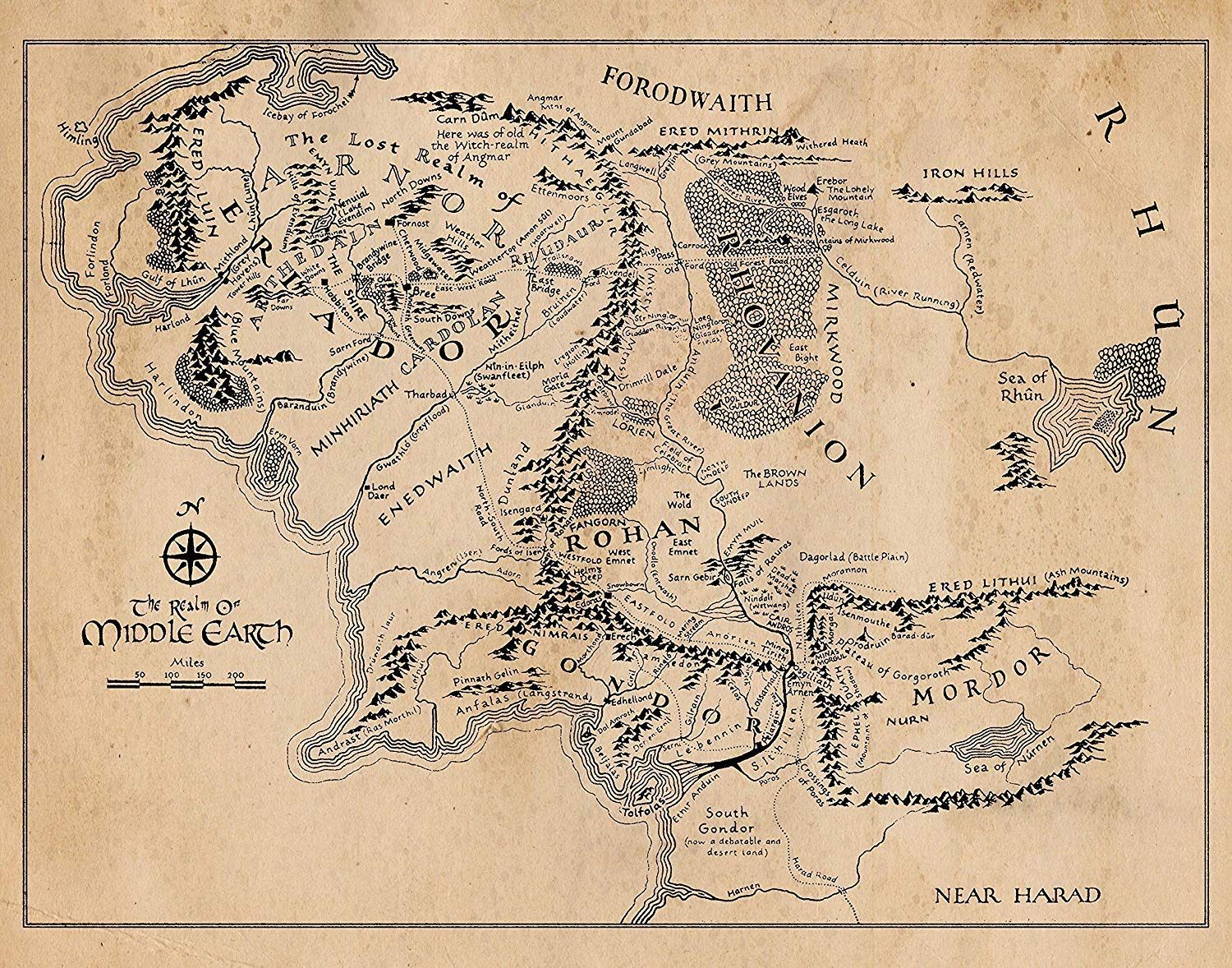
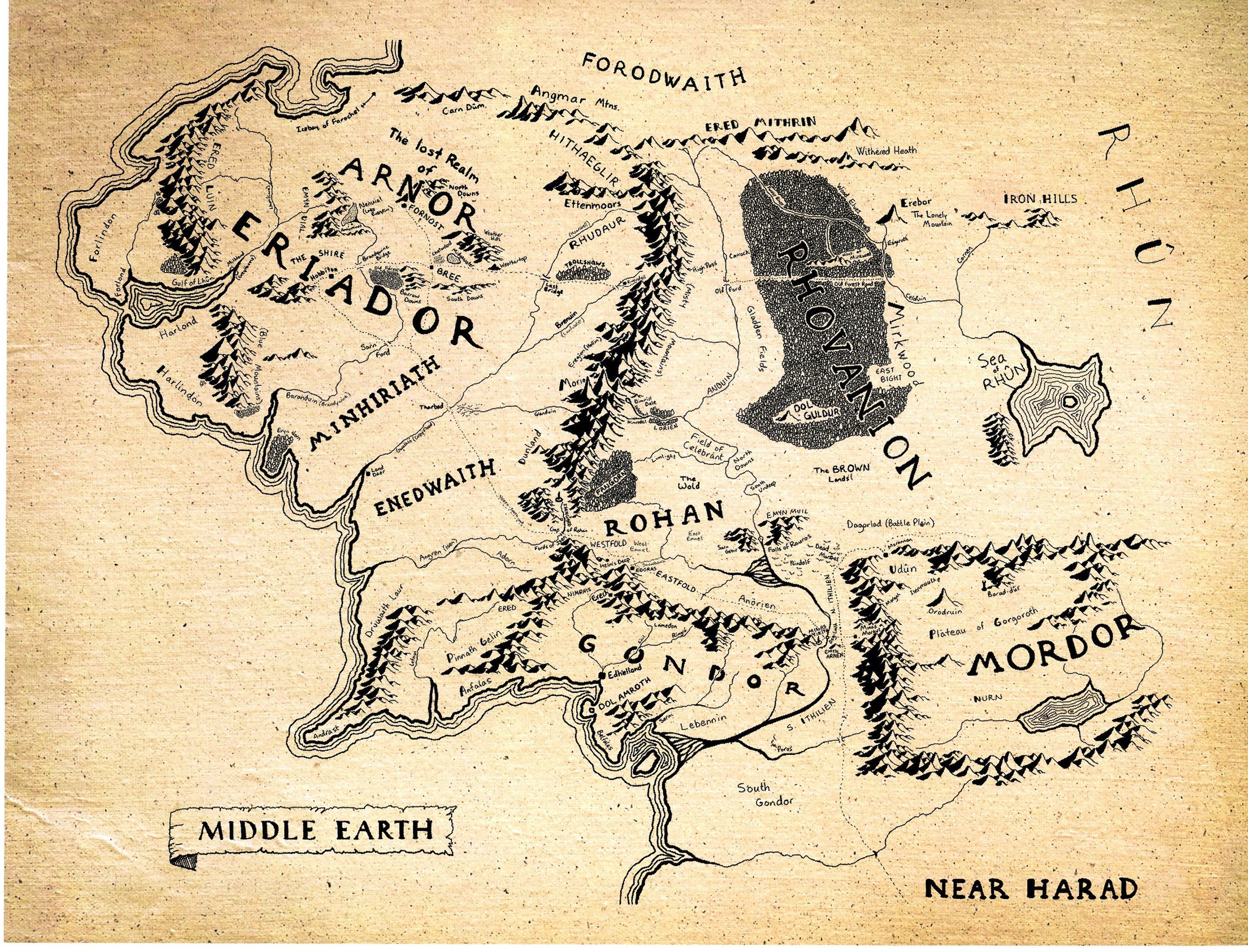
Here’s a map of Rohan, the location of the film’s story

It’s divided into a couple of regions, their names based on Old English words—“Wold”, I’m presuming coming for “weald”, defined as “high land covered with wood”, which would be appropriate for land just outside Fangorn, “Emnet” from “emnett”, “a plain”—basically a level or flat area, and “Fold” from a word used in compounds, meaning “earth/land”.  (See Bosworth & Toller’s  Anglo-Saxon Dictionary here:  https://bosworthtoller.com/  )  So, the central area, at least, is, at best, rolling, I would say, and we know, from the text, covered in grass:

“Turning back they saw across the River the far hills kindled.  Day leaped into the sky.  The red rim of the sun rose over the shoulders of the dark land.  Before them in the West the world lay still, formless and grey; but even as they looked, the shadows of night melted, the colours of the waking earth returned:  green flowed over the wide meads of Rohan…” (The Two Towers, Book Three, Chapter 2, “The Riders of Rohan”)

“Mead” is from Old English “maed”, “meadow” (itself from Old English “maedwe”, which Etymonline, from the OED, glosses as “low, level tract of land under grass; pasture” (for more, see:  https://www.etymonline.com/search?q=meadow )

I’ve always imagined, then, something like this—

it being a perfect place for grazing for the herds of horses kept by the Rohirrim.

Unfortunately, New Zealand doesn’t appear to have such places and so Jackson, in his films, had to make do with this—

With those snowy mountains in the background, it makes an impressive scene, but it’s not really what JRRT had clearly—and rather beautifully–imagined.

I thought, however, that the makers of the new film would take advantage of the fact that, their landscape being anything which they could imagine and depict, and would restore to us Tolkien’s vision of the plains of Rohan as he described them.

Unfortunately, that’s not what happened:  instead, the artists simply copied the Jackson look of the nearly-barren countryside, far from anything a horse people would delight in—

Why do this?  The creators weren’t limited, as Jackson was, by the available landscape, and yet they simply followed what was already available on film, virtually down to the last detail.

Needless to say, I was disappointed, and it made me wonder what else I would see as the film progressed.  But that’s for another posting.

Thanks for reading, as ever.

Stay well,

May you always seek green—but not greener– pastures,

And remember that, as always, there’s

MTCIDC

O
Going Around in Cycles

17 Wednesday Sep 2025

Posted by Ollamh in Uncategorized

≈ Leave a comment

Tags

Barrow-wight, Finnegans Wake, Giambattista Vico, goblin king, James Joyce, La Scienza Nuova, lotr, Mirkwood spiders, Nazgul, Ouroboros, Palantir, runes, Shelob, swords, The Hobbit, The Lord of the Rings, The Return of the King, Tolkien, Tom Bombadil, Yogi Berra

“It’s déjà vue all over again.”

(attributed to Yogi Berra, US baseball player, but see:  https://quoteinvestigator.com/2013/10/08/deja-vu-again/ )

Dear readers, as always, welcome.

In later life, James Joyce, 1882-1941,

was interested in the work of the 17-18th-century philosopher (among other things) Giambattista Vico, 1668-1744,

and his idea that history followed a definite repeated pattern in three ages, Divine, Heroic, and Human, posited in his 1725-1744 work, La Scienza Nuova (“the new understanding, knowledge, learning”).

(For more on Vico, see:  https://www.philosopheasy.com/p/the-eternal-return-giambattista-vicos  This is, potentially, a very large subject, and even more so when Joyce is combined with Vico.  For an introductory view, see:  https://archive.org/details/vicojoyce00vere_0/page/n5/mode/2up ) 

Joyce incorporated his understanding of Vico in his last work, Finnegans Wake, 1939, in which

the idea of repeated patterns cycling throughout appears in the very opening—and closing– lines of the book:

“A way a lone a last a loved a long the / riverrun, past Eve and Adam’s, from swerve of shore to bend of bay, brings us by a commodius vicus of recirculation back to Howth Castle and Environs.” 

which, in fact, are reversed, the opening of the book being:

“…riverrun, past Eve and Adam’s, from swerve of shore to bend of bay, brings us by a commodius vicus of recirculation back to Howth Castle and Environs…”

and the last words of the book are:

“A way a lone a last a loved a long the…”

so that, by joining them, we have the effect of the serpent Ouroboros, tail/tale joined to mouth—and the book can begin again.

(For more on Finnegans Wake, see:  https://en.wikipedia.org/wiki/Finnegans_Wake  For more on the serpent, see:   https://en.wikipedia.org/wiki/Ouroboros )

I’ve always thought that leaving Tom Bombadil and the Barrow-wight

(Matthew Stewart—see more of his work here:  https://www.matthew-stewart.com/  See, in particular, his Middle-earth work, but then go through his other galleries to view his impressive ability to capture other imaginary worlds.)

out of the first Lord of the Rings film was a mistake, even though Tolkien himself once wrote:

“Tom Bombadil is not an important person—to the narrative.”  (letter to Naomi Mitchison, 25 April, 1954, Letters, 268—but read on, as JRRT has much more to say and, to my mind, justifies his position in the narrative, in fact, in a spiritual way.)

Tom is interesting in himself, being a kind of parallel for Treebeard, among other things (and the writers of the Rings of Power series thought highly enough of him to include him in their telling), but, for me, in the narrative, it’s what he gives them, particularly Merry, which is important—

“For each of the hobbits he chose a dagger, long, leaf-shaped, and keen, of marvelous workmanship…”

(probably something like this, but more elaborately-worked)

‘Old knives are long enough as swords for hobbit-people,’ he said…Then he told them that the blades were forged many long years ago by Men of Westernesse:  they were foes of the Dark Lord, but they were overcome by the evil king of Carn Dum in the Land of Angmar.”  (The Fellowship of the Ring, Book One,  Chapter 8, “Fog on the Barrow-downs”)

This is, of course, the weapon  which Merry uses to stab the chief of the Nazgul while he’s attacking Eowyn, the Nazgul being the very witch-king who had overcome the Men of Westernesse so long before.

(Ted Nasmith)

To keep Tom and the Barrow-wight in the film is then to underline the cyclic nature of much of the story.

 This unnamed but crucial sword is only one of the swords scattered throughout the later story of Middle-earth, however, and there is a cyclic potential for others, as well.

Think of the swords which Gandalf and Co. find in the trolls’ hideout in The Hobbit—

“…and among them were several swords of various makes, shapes, and sizes.  Two caught their eyes particularly, because of their beautiful scabbards and jeweled hilts…

‘These look like good blades,’ said the wizard, half drawing them and looking at them curiously.  ‘They were not made by any troll, nor by any smith among men in these parts and days; but when we can read the runes on them, we shall know more about them.’ “ (The Hobbit, Chapter Two, “Roast Mutton”)

In the next chapter, Elrond then identifies them:

“Elrond knew all about runes of every kind.  That day he looked at the swords they had brought from the trolls’ lair, and he said:  ‘These are not troll-make.  They are old swords, very old swords of the High Elves of the West, my kin.  They were made in Gondolin for the Goblin-wars.  They must have come from a dragon’s hoard or goblin plunder, for dragons and goblins destroyed that city many ages ago.  This, Thorin, the runes name Orcrist, the Goblin-cleaver in the ancient tongue of Gondolin; it was a famous blade.  This, Gandalf, is Glamdring, a Foe-hammer that the king of Gondolin once wore.’ “ (The Hobbit, Chapter Three.  “A Short Rest”)

And you’ll remember that Gandalf runs the king of later goblins through in the next chapter with that very sword:

“Suddenly a sword flashed in its own light.  Bilbo saw it go right through the Great Goblin as he stood dumb-founded in the middle of his rage.  He fell dead, and the goblin soldiers fled before the sword shrieking into the darkness.”  (The Hobbit, Chapter Four, “Over Hill and Under Hill”)

(Alan Lee)

The knife which Bilbo picks up from the trolls’ hoard “only a tiny pocket-knife for a troll, but it was as good as a short sword for the hobbit”, comes in handy later in The Hobbit, when Bilbo uses it to kill some of the spiders of Mirkwood,

(Oleksiy Lipatov—you can see more of his work here:  https://www.deviantart.com/lipatov/gallery/85631839/old-comic  )

but it will reappear many years later in The Lord of the Rings, when Frodo and Sam use it against another ancient evil, Shelob–

(Ted Nasmith again—and, unusually for his work, just plain weird—but vivid!)

Perhaps the most consequential sword  to return, however, is that which maimed Sauron many centuries ago, causing him to lose the Ring, and which, reforged, Aragorn shows him in Saruman’s palantir

(the Hildebrandts)

(itself appearing from a far older world, being as Aragorn says, “For this assuredly is the palantir of Orthanc, from the treasury of Elendil, set here by the Kings of Gondor.”  The Two Towers, Book Three, Chapter 11, “The Palantir”):

“…The eyes in Orthanc did not see through the armour of Theoden; but Sauron has not forgotten Isildur and the sword of Elendil.  Now in the very hour of his great designs the heir of Isildur and the Sword are revealed; for I showed the blade re-forged to him.  He is not so mighty yet that he is above fear; nay doubt ever gnaws him.”  (The Return of the King, Book Five, Chapter 2, “The Passing of the Grey Company”)

And there are more cyclings.

Consider the Ring itself:  forged in the fires of Mt Doom, it is eventually returned there and destroyed,

(another Ted Nasmith)

which causes the final end of Sauron, after several ages of struggle,

(and one more Ted Nasmith–and who better to paint a cataclysm?)

and which, in turn, brings the—return of the King.

(Denis Gordeev–and note that the artist has painted Aragorn’s crown as depicted by Tolkien in a letter to Rhona Beare, 14 October, 1958, see Letters, 401.)

After thinking about this, I can see that there are even more cyclic events, like the movement of the elves westwards, and  Gandalf traveling the same way, originally sent eastwards to oppose Sauron,

(one more Ted Nasmith)

but I think that this is enough for one posting—though considering all of the cycles I’ve already identified,  I’ll end with another (supposed) quotation from Yogi Berra:

Thanks, as always, for reading.

Stay well,

Remember one more piece of Yogi wisdom

And remember, as well, that there’s always

MTCIDC

O

AI?  Ay!

10 Wednesday Sep 2025

Posted by Ollamh in Uncategorized

≈ Leave a comment

Tags

AI, I Robot, Isaac Asimov, Karl Capek, robots, RUR, science fiction, Tolkien

Welcome, dear readers, as ever.

AI seems to be everywhere and talked about all the time, sometimes in the kind of excited tones that earlier centuries used for STEAM!  ELECTRICITY!  THE INTERNAL COMBUSTION ENGINE!  NUCLEAR POWER!  COMPUTERS!  and sometimes in less than enthusiastic voices which point out the pitfalls, including the (apocryphal? urban legend? true?) story about the computer which refused to turn itself off, or the one which supposedly tried to blackmail its user (possibly the same story?).

The latter, for me, has brought up this—

and this fragment of dialogue, where the Terminator’s target is being given a crash course by her protector in why she is that target:

“SARAH

I don’t understand…

REESE

Defense network computer. New.

Powerful. Hooked into everything.

Trusted to run it all. They say it

got smart…a new order of intelli-

gence. Then it saw all people as

a threat, not just the ones on the

other side. Decided our fate in a

micro-second…extermination.”

(if you’d like to read what appears to be a late draft of the screenplay, see:

https://assets.scriptslug.com/live/pdf/scripts/the-terminator-1984.pdf?v=1729115040 )

This uneasiness about new technology—and robots, in particular, is hardly new.  In the early 20th century, as technology was rapidly accelerating, we see Karl Capek ‘s  (that’s CHA-pek), 1890-1938,

1920 play R.U.R.,

which stands for “Rossum’s Universal Robots”, a company which is supplying the world with mechanical workers, as one of the main characters says of the formula which produced the original successful models:

“Dr. Gall. We go on using it and making Robots. All the universities are sending in long petitions to restrict their production. Otherwise, they say, mankind will become extinct through lack of fertility.  But the R. U. R. shareholders, of course, won’t hear of it. All the governments, on the other hand, are clamoring for an increase in production, to raise the standards of their armies. And all the manufacturers in the world are ordering Robots like mad.” (R.U.R., Act II)

And you can see here the tensions which such an invention can—and do– bring:  those who can see the future are concerned, those who are only interested in profit—or death—are boosting production, regardless of any hazard.

This all comes apart when a limited number of robots (from the Czech word roboti, “workers”) gain sentience—“got smart…a new order of intelligence”—you can see that uneasiness started early—realize that they are far more intelligent and stronger, with more endurance, than humans, and revolt, determined to wipe out humanity and replace it with themselves.

They rally all of the other robots and, by the play’s end, only one human appears to be left.  That ending is perhaps a little more hopeful, but I won’t spoil it for you—you can read it (in its first English translation) here:  https://www.gutenberg.org/files/59112/59112-h/59112-h.htm

Tolkien was somewhat of a science fiction fan, enjoying, in particular, the work of Isaac Asimov, 1920-1992. (See the second footnote to a letter to Charlotte and Denis Plimmer, 8 February, 1968, Letters, 530)

He doesn’t list what he had read, unfortunately, but, as the letter in which he mentions (and misspells) Asimov dates from 1967, I’ve wondered whether he had read Asimov’s  1950 classic collection of short stories, I, Robot,

the first of a series of “Robot” novels, beginning with The Caves of Steel, 1954.

To Asimov’s annoyance, the publisher took the title of that short story collection from a 1939 short story by “Eando Binder” (pen name of Earl and Otto Binder) published in the January, 1939, issue of Amazing Stories.

It’s an odd little tale in which a robot, already an object of local fear, is mistaken for the murderer of his scientist creator (actually killed in an accident) and hounded to the point at which he commits mechanical suicide, the entire story being, as he terms it, his “confession”.  You can read it here:   https://archive.org/details/Amazing_Stories_v13n01_1939-01_cape1736  And read more about it here:  https://en.wikipedia.org/wiki/I,_Robot_(short_story)

Asimov tells us that he had read and been inspired by the 1939 short story, but his 1950 collection, of which a number of the stories had been published earlier, is told from the outside, and is a very interesting series of what might be seen as profiles of robots and their behavior over a number of years and events, narrated by Dr. Susan Calvin, a “robopsychologist”.   You can read the collection here:   https://dn720004.ca.archive.org/0/items/english-collections-1/I%2C%20Robot%20-%20Isaac%20Asimov.pdf   And read about it here:   https://en.wikipedia.org/wiki/I,_Robot

One aspect of Asimov’s early stories is that robot behavior—almost as if the creators there had seen or read R.U.R. and paid attention to the warning implied (and I’ll bet that Asimov, who appears to have read everything, probably had read the play)- – is governed by a set of basic laws, first appearing in the story “Runaround” in I, Robot:

“Powell’s radio voice was tense in Donovan’s ear: ‘Now, look, let’s start
with the three fundamental Rules of Robotics—the three rules that are built
most deeply into a robot’s positronic brain.’ In the darkness, his gloved
fingers ticked off each point.
‘We have: One, a robot may not injure a human being, or, through
inaction, allow a human being to come to harm.’

‘Right!’
‘Two,’ continued Powell, ‘a robot must obey the orders given it by
human beings except where such orders would conflict with the First Law.’
‘Right!’
‘And three, a robot must protect its own existence as long as such
protection does not conflict with the First or Second Laws.’
‘Right! Now where are we?’ “

As we confront the extremely rapid growth of AI, still so much a mystery, even if we don’t believe stories about increasing—and potentially menacing—sentience, I’m only hoping that, as I suppose Tolkien did, at least some of the designers have read “Runaround” and built those laws into their experimental models.

Thanks, as ever, for reading.

Stay well,

Be interested in technology, but be aware, as Asimov was, that it should be addressed critically,

And remember that, as always, there’s

MTCIDC

O
PS

For more on the history of automata and droids, see:  “Eyeing Robots”, 8 April, 2021.  Capek came from a very interesting family.  Read about him and them here:  https://en.wikipedia.org/wiki/Karel_%C4%8Capek

PPS

As Tolkien was an admirer of Asimov, so Asimov was an admirer of Tolkien, see his article, “All and Nothing” in Fantasy and Science Fiction, January, 1981, which you can read here:  https://archive.org/details/Fantasy_Science_Fiction_v060n01_1981-01/mode/2up

Horse, Two

03 Wednesday Sep 2025

Posted by Ollamh in Uncategorized

≈ Leave a comment

Tags

Achilles, Alexander the Great, Balios and Xanthus, Bucephalus, Grani, Nazgul, Podarge, Richard III, Shadowfax, Shakespeare, Sleipnir, The Lord of the Rings, the-iliad, Tolkien, Volsunga Saga, Zephyrus

Welcome , dear readers, as always, and, as always, I’m interested in Tolkien’s inspirations…

Enter Richard

King    A horse, a horse, my kingdome for a horse.

Cates   Withdraw my lord, ile helpe you to a horse.

King   Slaue I haue set my life vpon a cast,

And I will stand the hazard of the die,

I thinke there be sixe Richmonds in the field,

Fiue haue I slaine to daie in stead of him,

A horse, a horse, my kingdome for a horse.  (Wm Shakespeare, Richard III, Act V,  Scene 4,  First Quarto, 1597  You can read it here at the excellent Internet Shakespeare site: https://internetshakespeare.uvic.ca/doc/R3_Q1/index.html    )

(artist?)

Richard III is clearly not having a good day:  one of his allies has waited out the battle until a fatal moment, then changed sides.  And Richard has lost his horse, which, as a good horseback soldier, gives him an advantage, in terms of mobility on the battlefield, height over enemy infantry,

(Adam Hook)

and even a better chance of escape.  Without it, surrounded by enemy soldiers, he’s about to be dead.  (In the Shakespeare play, he’s killed by the Earl of Richmond, Henry Tudor, who, in turn, is about to become Henry VII, but, in reality, we don’t know who did him in, but see here for more:  https://le.ac.uk/richard-iii/identification/osteology/injuries/how-richard-iii-died )

Soldiers in the West didn’t begin on horseback.  The Sumerians first had yoked wild asses to their battle cars.

The ancient Egyptians had, by the New Kingdom (1550-1070BC), yoked horses to chariots.

(Rameses II, c.1303-1213BC)

The Assyrians, breeding bigger horses, began to sit soldiers upon their backs.

Greeks in the Iliad went to battle in and sometimes fought from their chariots (sometimes called by classical scholars “battle taxis” under the mistaken impression that they used those chariots only for transportation, which a close reading of the text shows not to be the case), although cavalry, as cavalry, are briefly mentioned, though never shown in action.

But cavalry, when it finally appeared in the Greek world, was meant for scouting and pursuit.

(Angus McBride)

All of this changed with Philip II of Macedon. 382-336BC, and his son, Alexander.  Macedon was prime horse-breeding country and Philip was a military innovator, so, with chariots long gone, Philip trained real battle cavalry, which Alexander then led to victory.

(Peter Connolly)

Alexander had a famous horse, Bucephalus (“Ox Head”),

whom he alone could tame. (see Plutarch’s life of Alexander here—section.6:    https://www.lexundria.com/plut_alex/1-77/prr )

He also fancied himself a kind of descendent of the Trojan War hero Achilles, who had two famous horses, Balios (“Dapple”)  and Xanthus (“Palomino”), born of a Fury, Podarge (“Swiftfoot”), and Zephyrus, the god of the West Wind.

This divine lineage for horses made me think about a famous horse in another adventure story:  Shadowfax.

(Luca Michelucci—you can see more of his work here:  https://www.artnet.com/artists/luca-michelucci/  I like especially his image of Gwaihir rescuing Gandalf from Orthanc)

Shadowfax, according to Gandalf, is the chief of the Mearas, horses descended from one Felarof,  the horse of Eorl, the founder of Rohan.  Felarof was said to have understood the speech of men (Rohirric, we can presume) and may have been brought by Orome, the huntsman of the Valar, from across the sea, suggesting a horse of the Valar themselves.  (See The Lord of the Rings, Appendix A, II, “The House of Eorl”)

Mearas is the plural of mearh, one of the Old English words for “horse” and this might suggest that, with his  interest in things early Germanic, we might imagine that Tolkien would have looked towards Grani,

(from the Ramsund Carving—for more:  https://en.wikipedia.org/wiki/Sigurd_stones )

the horse of Sigurd, descended from Odin’s 8-legged steed, Sleipnir

(on the Tjaengvide image stone—you can read more about it here:  https://en.wikipedia.org/wiki/Tj%C3%A4ngvide_image_stone     For the story of how Sigurd found Grani, see the Icelandic Volsunga Saga  in this bilingual edition, pages 23-24:   https://archive.org/details/vo-lsungasaga-text-translation-finch/page/n89/mode/2up

And I can’t resist this very clever way of producing a modern Sleipnir—

Lachlan Templar—his work appears at Deviant Art, but, when I try to find out more, the site is blocked.)

as an inspiration, but, remembering that Tolkien had begun his formal education in the traditional way:   studying Classics at King Edward’s School in Birmingham,

and, initially, continuing  in Classics at Oxford,

I wonder—and return to Balios and Xanthus.  These are horses with as distinguished a lineage as Grani, coming from a Fury

and the god of the West Wind.

As well,  Felarof—and, in turn, Shadowfax–understand human speech and Balios and Xanthus show emotion more human than equine, weeping when their temporary master and charioteer, Patroclus, is killed in battle by the Trojan hero, Hector, refusing to return to battle, but, instead—

“…but as a monument remains firmly in the ground, one set up on a tomb

For a dead man or woman,

So they remained, immobile, holding the very beautiful chariot [still],

Leaning [their] heads to the earth, and their hot tears

Flow down from under [their] eyelids to the ground

In longing for [their] charioteer.”  (Iliad, Book 17.434-439—my translation]

And  there’s more.   Felarof and Shadowfax may understand human speech, and Balios and Xanthus may grieve, in a human way for the death of Achilles’ friend and charioteer, Patroclus, but, in an eerie moment, one of them, Xanthus, actually speaks to Achilles, warning him of his own impending doom:

“We will still keep you safe for now, mighty Achilles,

But a deadly day is near to you.”  (Iliad, Book 19.408-409—my translation)

Could there be another link here?

“But lo!  suddenly in the midst of the glory of the king his golden shield was dimmed.  The new morning was blotted from the sky.  Dark fell about him.  Horses reared and screamed.  Men cast from the saddle lay groveling on the ground…Snowmane wild with terror stood up on high, fighting with the air, and then with a great scream he crashed upon his side; a black dart had pierced him.  The king fell beneath him…” 

(Ted Nasmith)

Although we have no idea of Snowmane’s lineage except that he’s “Lightfoot’s foal”, and he never speaks a word, he’s certainly involved in a death and, as Balios and Xanthus might have inspired Shadowfax, could this horse-speech be related to Theoden’s horse, Snowmane?

(Joona  Kujanen, aka Tulikoura, a bit more of whose work you can see here:  https://hole-intheground.blogspot.com/2012/03/fridays-at-mathom-house-joona-kujanen.html )

We have no idea of the fate of Achilles’ horses, though we are told that Achilles himself was buried in a mound—

as Agamemnon says to him in the Underworld, speaking of the cremated remains of Achilles and his friend, Patroclus (over whom Achilles’ horses mourned):

“And over them then we, mighty army of the Argive spearmen,

Heaped up a tumulus…”  (Odyssey, Book 24.81-81—my translation)

Just as Snowmane received a similar grave:

“And afterwards when all was over men returned and made a fire there and burned the carcase of the beast; but for Snowmane they dug a grave and set up a stone upon which was carved in the tongues of Gondor and the Mark:

‘Faithful servant yet master’s bane,

Lightfoot’’s foal, swift Snowbane.’

Green and long grew the grass on Snowmane’s Howe…”  (The Return of the King, Book Five, Chapter 6, “The Battle of the Pelennor Fields”)

All coincidence?   Or were JRRT’s many years of classical training still at work, when he’d long abandoned it for Germanic, Finnish, and Welsh?

As ever, thanks for reading.

Stay well,

Horses are wonderful, but remember that they, like us, have their limits—what would you do if a Nazgul on a frightful thing came down upon you?

(Craig J. Spearing—you can read more about him and his work here:  https://pathfinderwiki.com/wiki/Craig_J_Spearing )

And remember that, as ever, there’s

MTCIDC

O

Return to Horrors?

27 Wednesday Aug 2025

Posted by Ollamh in Uncategorized

≈ 1 Comment

Tags

'Salem's Lot, Acrophobia, Arachnophobia, Billina, Claustrophobia, Coulrophobia, Dracula, ECT, Film, Goblins, Gump, Herpetophobia, jack-pumpkinhead, nome-king, Oz, Ozma of Oz, Return to Oz, Smaug, spiders, Stephen King, The Hobbit, The Marvelous Land of Oz, The Shining, Tik-Tok, Tolkien, trolls, Trypanophobia, Wheelers, wolves

Welcome, dear readers, as always.

Does this picture make your hands sweat?  Can you barely look at it?

How about this one—

Or this one—

Or—

Or—

Or—horror of horrors!—

It’s possible that all of these might have an effect upon you and, in which case, I imagine that you’re reading this hiding under your bed.

Why all of this phobic display?  Because, back in June, I read an article from the BBC about the 40th anniversary of Disney’s Return to Oz entitled:

“ ‘It has the appeal of an actual horror’: How Return to Oz became one of the darkest children’s films ever made”

(You can read the article here:  https://www.bbc.com/culture/article/20250616-the-darkest-childrens-film-ever-made )

This is a film I own and have seen perhaps half-a-dozen times and I’ve never viewed it as the horror film which the article would suggest.  Granted, sensationalism sells the news, but, having read the article again, I’ve thought about how horror can be an element in a work—and a powerful one—without making the work as a whole into something like Bram Stoker’s Dracula.

(And, if you haven’t read it, I would certainly recommend it.  Here it is in the first US edition of 1897:   https://gutenberg.org/files/345/345-h/345-h.htm )

Think, for a moment, about The Hobbit.

Here, we go from the safety of Hobbiton

(JRRT)

to a world where there are trolls,

(JRRT)

goblin-infested mountains,

(Alan Lee)

wolves in large packs,

(Tove Jansson)

giant spiders,

(John Tyler Christopher—you can see more of his work here:  https://johntylerchristopher.com/ )

and, finally, an intelligent and vengeful dragon.

(JRRT)

But does the appearance of all these dangers make the book a horror novel, like one of Stephen King’s more forbidding works?

The article points to some potentially disturbing moments—and at least the first is certainly disturbing and, interestingly, is not in the two books upon which the film is based—The Marvelous Land of Oz, 1904,

and Ozma of Oz, 1907.  (For more on the combination and the scriptwriters’ changes, see:  “Chickening In”, 12 February,  2025)

The Kansas of the 1939 film was as bleak as a 1930s sound stage could make it, in sepia, suggesting photos of the Dust Bowl of the Great Depression era—

The 1985 movie showed us the real rolling hills of Kansas and the ruin of Uncle Henry and Aunt Em’s farm.

(This is at the end of the film, when the house has been rebuilt—early in the film, the house—which, of course, was ripped from Kansas and dropped on the Wicked Witch of the East—remains unfinished and Uncle Henry crippled from the twister.)

Dorothy, to Aunt Em, also seems somehow ruined, having reappeared after the tornado with stories about having been in a foreign land, Oz, but with no proof of it, and Em, having seen a newspaper ad for medical treatment by electricity, decides to take Dorothy to the clinic and its all-too-calm and rational Dr. Worley.

The treatment consists of running a powerful electrical current through Dorothy’s brain, (now called ECT—electroconvulsive therapy), which is supposed to erase Dorothy’s (supposedly false) memory of Oz. 

As the audience, with its own memories of Oz, from the 1939 film, the many books, or both, knows perfectly well that Oz is real, as is Dorothy’s memory of it, and, as the article points out:

“…the power of these scenes lies in the fact that they are trying to silence Dorothy, to obliterate her memories of Oz”

Dorothy escapes the clinic (one might really says “asylum”, as it has that grim look of Victorian asylums for the insane)

(A real Victorian asylum—and not the grimmest, there being some real competition here)

and turns up in Oz, once more, where the article mentions other potentially disturbing elements:

the destruction of Oz and its citizens petrified,

its ruins haunted by the Wheelers,

the minions of Princess Mombi, who collects heads and wears them for different occasions,

and then there is the Nome King, who is the current ruler of Oz,

and is the destroyer of the Emerald City, the overlord of Mombi, and has enchanted Dorothy’s former friends, the Scarecrow, the Tinman, and the Cowardly Lion, turning them into inanimate objects.

For the sake of sensationalism, it seems that the article leans heavily on these—as if, I suggested above, one could do the same for The Hobbit, but this leaves out the fact that, although Dorothy’s first allies in Oz have been neutralized, she finds others, just as Bilbo has dwarves, Gandalf, Elrond, the Eagles, and Beorn, not to mention Sting and the Ring.

These include the caustic hen, Billina, who arrives with her from Kansas,

“the Army of Oz”—Tik-Tok,

Jack Pumpkinhead,

and the Gump.

I teach story-telling on a regular basis and a dictum I use is “No fiction without friction” .  Just as trolls, goblins, wolves, Gollum, spiders, and Smaug provide the friction in The Hobbit, so the clinic and its smooth-talking doctor, the Wheelers, Princess Mombi, and the Nome King, provide it in Return to Oz.  These plot elements supply the problems which must be solved before the ultimate goal of the story can be achieved—coming home safely (and much better-off) for Bilbo, coming home and keeping her memories of Oz for Dorothy (guaranteed for her when she sees Ozma, rescued from the Nome King, in her mirror in Kansas).

Disturbing moments—in both—what’s that riddle contest with Gollum if nothing short of harrowing?—but is Return to Oz just this side of a horror movie?  As always, I suggest that you see it for yourself, but remember “no fiction without friction” before you rank it with The Shining.

Thanks, as ever, for reading.

Stay well,

Pick a bed with a reasonable clearance,

And remember that, as always, there’s

MTCIDC

O

← Older posts
Newer posts →

The Doubtful Sea Series Facebook Page

The Doubtful Sea Series Facebook Page

  • Ollamh

Categories

  • Artists and Illustrators
  • Economics in Middle-earth
  • Fairy Tales and Myths
  • Films and Music
  • Games
  • Heroes
  • Imaginary History
  • J.R.R. Tolkien
  • Language
  • Literary History
  • Maps
  • Medieval Russia
  • Military History
  • Military History of Middle-earth
  • Narnia
  • Narrative Methods
  • Poetry
  • Research
  • Star Wars
  • Terra Australis
  • The Rohirrim
  • Theatre and Performance
  • Tolkien
  • Uncategorized
  • Villains
  • Writing as Collaborators
Follow doubtfulsea on WordPress.com

Across the Doubtful Sea

Recent Postings

  • Through a glass… January 7, 2026
  • Heffalumps? December 31, 2025
  • We Three Kings December 24, 2025
  • A Moon disfigured December 17, 2025
  • On the Roads Again—Once More December 10, 2025
  • (Not) Crossing Bridges December 3, 2025
  • On the Road(s) Again—Again November 26, 2025
  • On the Road(s) Again November 19, 2025
  • To Bree (Part 2) November 12, 2025

Blog Statistics

  • 104,101 Views

Posting Archive

  • January 2026 (1)
  • December 2025 (5)
  • November 2025 (4)
  • October 2025 (5)
  • September 2025 (4)
  • August 2025 (4)
  • July 2025 (5)
  • June 2025 (4)
  • May 2025 (4)
  • April 2025 (5)
  • March 2025 (4)
  • February 2025 (4)
  • January 2025 (5)
  • December 2024 (4)
  • November 2024 (4)
  • October 2024 (5)
  • September 2024 (4)
  • August 2024 (4)
  • July 2024 (5)
  • June 2024 (4)
  • May 2024 (5)
  • April 2024 (4)
  • March 2024 (4)
  • February 2024 (4)
  • January 2024 (5)
  • December 2023 (4)
  • November 2023 (5)
  • October 2023 (4)
  • September 2023 (4)
  • August 2023 (5)
  • July 2023 (4)
  • June 2023 (4)
  • May 2023 (5)
  • April 2023 (4)
  • March 2023 (5)
  • February 2023 (4)
  • January 2023 (4)
  • December 2022 (4)
  • November 2022 (5)
  • October 2022 (4)
  • September 2022 (4)
  • August 2022 (5)
  • July 2022 (4)
  • June 2022 (5)
  • May 2022 (4)
  • April 2022 (4)
  • March 2022 (5)
  • February 2022 (4)
  • January 2022 (4)
  • December 2021 (5)
  • November 2021 (4)
  • October 2021 (4)
  • September 2021 (5)
  • August 2021 (4)
  • July 2021 (4)
  • June 2021 (5)
  • May 2021 (4)
  • April 2021 (4)
  • March 2021 (5)
  • February 2021 (4)
  • January 2021 (4)
  • December 2020 (5)
  • November 2020 (4)
  • October 2020 (4)
  • September 2020 (5)
  • August 2020 (4)
  • July 2020 (5)
  • June 2020 (4)
  • May 2020 (4)
  • April 2020 (5)
  • March 2020 (4)
  • February 2020 (4)
  • January 2020 (6)
  • December 2019 (4)
  • November 2019 (4)
  • October 2019 (5)
  • September 2019 (4)
  • August 2019 (4)
  • July 2019 (5)
  • June 2019 (4)
  • May 2019 (5)
  • April 2019 (4)
  • March 2019 (4)
  • February 2019 (4)
  • January 2019 (5)
  • December 2018 (4)
  • November 2018 (4)
  • October 2018 (5)
  • September 2018 (4)
  • August 2018 (5)
  • July 2018 (4)
  • June 2018 (4)
  • May 2018 (5)
  • April 2018 (4)
  • March 2018 (4)
  • February 2018 (4)
  • January 2018 (5)
  • December 2017 (4)
  • November 2017 (4)
  • October 2017 (4)
  • September 2017 (4)
  • August 2017 (5)
  • July 2017 (4)
  • June 2017 (4)
  • May 2017 (5)
  • April 2017 (4)
  • March 2017 (5)
  • February 2017 (4)
  • January 2017 (4)
  • December 2016 (4)
  • November 2016 (5)
  • October 2016 (6)
  • September 2016 (5)
  • August 2016 (5)
  • July 2016 (5)
  • June 2016 (5)
  • May 2016 (4)
  • April 2016 (4)
  • March 2016 (5)
  • February 2016 (4)
  • January 2016 (4)
  • December 2015 (5)
  • November 2015 (5)
  • October 2015 (4)
  • September 2015 (5)
  • August 2015 (4)
  • July 2015 (5)
  • June 2015 (5)
  • May 2015 (4)
  • April 2015 (3)
  • March 2015 (4)
  • February 2015 (4)
  • January 2015 (4)
  • December 2014 (5)
  • November 2014 (4)
  • October 2014 (6)
  • September 2014 (1)

Blog at WordPress.com.

  • Subscribe Subscribed
    • doubtfulsea
    • Join 78 other subscribers
    • Already have a WordPress.com account? Log in now.
    • doubtfulsea
    • Subscribe Subscribed
    • Sign up
    • Log in
    • Report this content
    • View site in Reader
    • Manage subscriptions
    • Collapse this bar
 

Loading Comments...