• About

doubtfulsea

~ adventure fantasy

Category Archives: Literary History

Stepping Westward

10 Wednesday Aug 2016

Posted by Ollamh in Artists and Illustrators, Fairy Tales and Myths, Imaginary History, J.R.R. Tolkien, Literary History, Narnia, Narrative Methods

≈ Leave a comment

Tags

Aman, Beliefs, Bran, cult statues, heroa, immrama, Istari, Ithaka, Mael Duin, Middle-earth, monotheistic, N.C. Wyeth, Odysseus, religion, Rip Van Winkle, Saint Brendan, Saruman, shrines, Stone Table, temples, The Grey Havens, The Lord of the Rings, The Odyssey, Tireisias, Tolkien, Valar, Valinor, ziggurats

Dear readers, welcome as always.

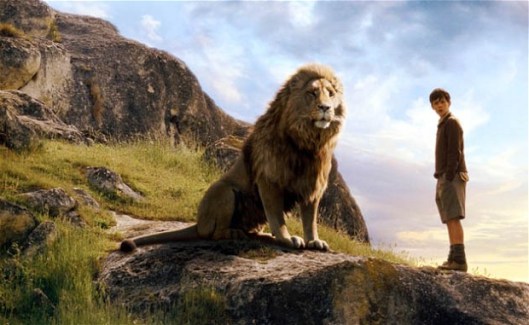
Although there are no temples or shrines to him (the closest thing is perhaps the Stone Table),

narnia stone table

Aslan

1653963a

is clearly someone with divine powers and his influence is felt directly and indirectly throughout all of the Narnia books.

JRRT once said that Middle-earth had a monotheistic religion, but the traces, as has been written about more than once, are almost invisible.

There are no ziggurats,

Ancient_ziggurat_at_Ali_Air_Base_Iraq_2005

no temples,

templeofheraselinus

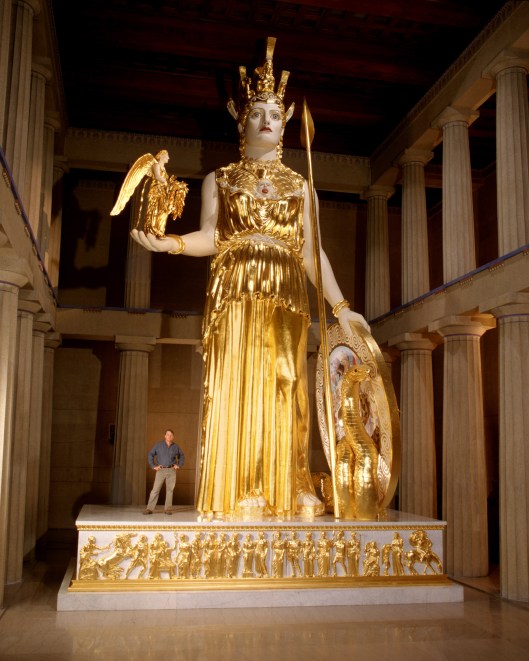
no cult statues

Athena_Parthenos_LeQuire

no shrines

97_full

no heroa (shrines for demi-gods or heroes).
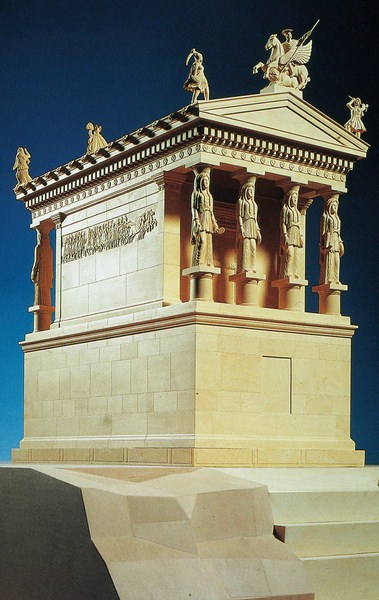
heroon

The Valar are mentioned once (some of Faramir’s men call on them to protect them from a mumak), of course, and there is that ceremony of standing and looking west before a meal.

That idea of looking west has long interested us, mainly because, in much of western tradition before the Age of Exploration, the west was looked upon as a place of uncertainty, if not outright fear.

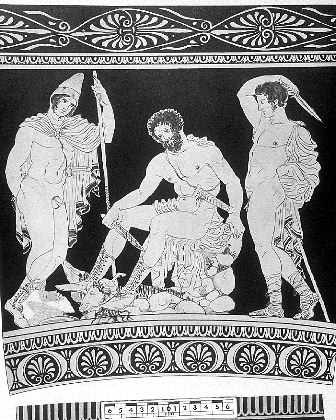
Although Odysseus, in Odyssey 9, is careful to point out that his home island, Ithaka, lies farthest towards dusk in its island group, in Odyssey 11, in the far west lies the Land of the Dead,

lykaon-painter-odysseus-and-elpenor

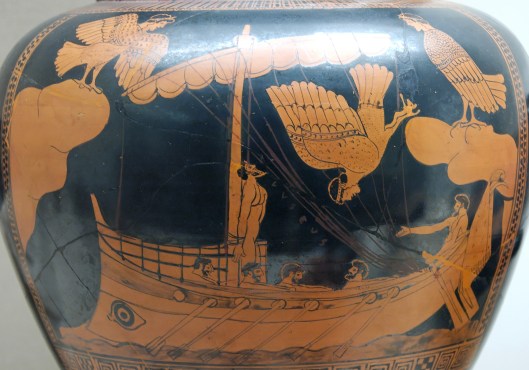
to which Odysseus sails

Odysseus_Sirens_BM_E440_n2

to consult the seer, Tireisias,

Teir.1993.01.0348

on the way to get home. This is, then, hardly a choice direction in which to sail, for all that Tireisias does provide some guidance.

The same is true for a series of stories about immrama, “voyages” (literally “rowings around”) in Old Irish, not only secular stories, like those of Mael Duin

mailduin

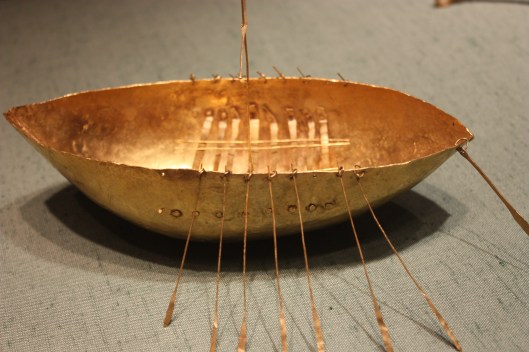
and Bran,

Broighter_Gold,_Dublin,_October_2010_(03)

but a famous religious one about Saint Brendan.

brendan

In each of these stories, sailing westward commonly means sailing rather haphazardly among sea monsters and islands with strange people or creatures. There is also the possibility of time distortion: the voyager believes himself gone in terms of a few years, at most, when, instead, he may have been gone for much longer (as in Washington Irving’s short story, “Rip Van Winkle”, in which Rip, falling asleep in the Catskill Mountains after drinking with the ghosts of the crew of the explorer Henrik Hudson’s ship The Half Moon, thinks that he has been gone only overnight when, instead, he’s been gone for twenty years.)

rip-van-winkle.wyeth

(by one of our all-time favorite illustrators, N.C. Wyeth, from his Rip Van Winkle, 1921—the whole work is available, with all of its wonderful illustrations, to download for free at the Internet Archive, may their beards grow long!)

“To go west”, probably based upon the idea of the sinking sun, as an older English expression has the meaning of “to die/to fail catastrophically” (now people in the US seem to be replacing it with “to go south”, which has none of the older resonance, unfortunately), but it ties in very nicely with these older beliefs about what lies west of Europe, so full of danger and mystery.

But then we come back to that looking west.

In the belief system of Middle-earth, westward across the sea lies the continent of Aman, and on that continent is Valinor, home of the Valar, those powerful and immortal beings who are perhaps to be likened to the archangels of Christian belief—with a bit of patron saint and even Norse and Greco-Roman pantheons thrown in. (We admit to having a very shallow knowledge of Arda theology, being less interested in the finer points of belief than in the adventures and the cultures and the languages of Middle-earth.)

The Istari, the five wizards are from there and it’s for us one of the most melancholy moments when, after his murder by Grima, it is clear that Saruman is denied a return.

jwyatt-sarumande

Gandalf, however, is permitted to return, as are Bilbo and Frodo (and, in time, Sam, apparently), all part of the defeat and disembodiment of Sauron.

greyhavens

The elves are also allowed to make the voyage to Aman, although they have their own separate place there, and, when Gandalf leaves, so do Galadriel, Celeborn, and Elrond, part of a slow general leave-taking of the Elves.

No human is admitted however, to the Undying Lands, as they are called, and it occurred to us that perhaps, in that fact, the mortals of Middle-earth are closer to Saruman than to Gandalf or the Elves:

“To the dismay of those that stood by, about the body of Saruman a grey mist gathered, and rising slowly to a great height like smoke from a fire, as a pale, shrouded figure it loomed over the Hill. For a moment it wavered, looking to the West; but out of the West came a cold wind, and it bent away, and with a sigh dissolved into nothing.” (The Return of the King, Book 6, Chapter 8, “The Scouring of the Shire”)

Could that ceremony of looking westward also be done with a sigh, an acknowledgement that there are no undying lands for them?

What do you think, dear readers?

Thanks, as ever, for reading.

MTCIDC

CD

Ps

This, for us, is a rather historical posting, being our Number 100. By earlier September, we will have reached 104, making exactly two years since we began our blog. We thank you for reading, hope that you will continue to do so, that you will share our work among your friends and that, in the future, you will be willing to share your thoughts with us, as we always encourage you to do.


Nought’s had, all’s spent

03 Wednesday Aug 2016

Posted by Ollamh in J.R.R. Tolkien, Literary History, Narrative Methods, Theatre and Performance, Villains

≈ Leave a comment

Tags

A Shadow of the Past, Birnam Wood, Eowyn, Fangorn Forest, Gandalf, Gondor, Isengard, Istari, King Duncan, Lady Macbeth, Macbeth, Macduff, Orthanc, Palantir, Saruman, Sauron, Shakespeare, The Lord of the Rings, The Weird Sisters, The Witch-King, Tolkien

4acce62d6b1154ae5fdb5272434de3be.jpg

In “The Shadow of the Past,” Gandalf, giving Frodo backstory of the Ring, makes a confession:

“I might perhaps have consulted Saruman the White, but something always held me back.”

“Who is he?” asked Frodo. “I have never heard of him before.”

“Maybe not,” answered Gandalf. “Hobbits are, or were, no concern of his. Yet he is great among the Wise. He is the chief of my order and the head of the Council. His knowledge is deep, but his pride had grown with it, and he takes ill any meddling. The lore of the Elven-rings, great and small, is his province. He has long studied it, seeking the lost secrets of their making; but when the Rings were debated in the Council, all that he would reveal  to us of his ring-lore told against my fears. So my doubt slept– but uneasily. Still I watched and I waited.” (The Lord of the Rings, The Fellowship of the Ring, Book 1, Chapter 2, “The Shadow of the Past”)

In terms of the spiritual life and safety of Middle-earth, Gandalf’s confession foreshadows much evil to come. Both Gandalf and Saruman are Istari, one of a group of five divine beings sent specifically to counteract the activities of Sauron.

istari.jpg

Gandalf suspects that “the chief of my order and the head of the Council” is false, and his suspicion will prove to be true, but what has happened to Saruman? Gandalf suggests that it has something to do with the ring, but, in fact, the ring is only emblematic of the real problem: the lure of control.

Here is Saruman attempting to seduce Gandalf into joining him:

“I said we, for we it may be, if you will join with me. A new Power is rising. Against it the old allies and policies will not avail us at all. There is no hope left in Elves or dying Numenor. This then is one choice before you, before us. We may join with that Power. It would be wise, Gandalf. There is hope that way. Its victory is at hand; and there will be rich reward for those that aided it. As the Power grows, its proved friends will also grow; and the Wise, such as you and I may with patience come at last to direct its courses, to control it.” (The Lord of the Rings, The Fellowship of the Ring, Book 2, Chapter 2, “The Council of Elrond”)

Instead of fulfilling his role as a counter-balance to Sauron, Saruman proposes first to control Sauron, and then even to become Sauron. As Saruman says, “Why not? The Ruling Ring? If we could command that, then the Power would pass to us.” (The Lord of the Rings, The Fellowship of the Ring, Book 2, Chapter 2, “The Council of Elrond”)  This use of the first person plural pronoun is not convincing:

“Saruman,” I said, standing away from him, “only one hand at a time can wield the One, and you know that well, so do not trouble to say we.” (The Lord of the Rings, The Fellowship of the Ring, Book 2, Chapter 2, “The Council of Elrond”)

But what is it which Saruman wants to do with that ring?

“We can bide our time, we can keep our thoughts in our hearts, deploring maybe evils done by the way, but approving the high and ultimate purpose:  Knowledge, Rule, Order; all the things that we have so far striven in vain to accomplish, hindered rather than helped by our weak or idle friends.  There need not be, there would not be, any real change in our designs, only in our means.”  (The Lord of the Rings, The Fellowship of the Ring, Book 2, Chapter 2, “The Council of Elrond”)

Knowledge, rule, order?  We immediately want to know, knowledge of what, and who is ruling whom, with what order?   And the answers are all the same:  Saruman’s knowledge,  Saruman’s rule, Saruman’s order.  But what has happened to Saruman to so turn him away from the purpose for which he was sent?

Saruman’s headquarters are at Orthanc, a tower set in a stone circle at Isengard.

orthanc.jpgOriginally, this had been the site of a Gondorian strongpoint, but, as Gondor waned, it fell into disuse until taken over by Saruman with the permission of the Steward of Gondor, Beren. When we think of wizards, we imagine them as wanderers, like Gandalf and Radagast, and even more so, the two Blue wizards who have wandered so far as to have disappeared almost entirely from the history of Middle-earth. Could the very fact that Saruman would want a permanent base have been a hint that his plans went beyond the directive he had received in Valinor?

And there is worse to come. Within Orthanc, Saruman has discovered a Palantir, a far-seeing stone of Numenor.

saruman_palantir.jpg

Who else might have one of these stones? Unfortunately, one of them is in the hands of Sauron.

palantir1.jpg

And the seduction of Gandalf began with the seduction of Saruman, as Gandalf says:

“Saruman…I have heard speeches of this kind before, but only in the mouths of emissaries sent from Mordor to deceive the ignorant.” (The Lord of the Rings, The Fellowship of the Ring, Book 2, Chapter 2, “The Council of Elrond”)

This figure for good being drawn away from the proper path reminded us of a similar situation in Shakespeare. Macbeth has been a successful general for Duncan, the king of Scotland. For his latest victory, he has been well-rewarded by the king, but just as in the case of Saruman, there is some part of him which wants more. Thus, when, after the battle, he and a companion meet three strange women on the edge of the battlefield, their prophetic words touch him in a place perhaps untouched before, but there.

MacbethAndBanquo-Witches

They first hail him by titles King Duncan has yet to give him–but will.  Then they hail him as King of Scotland itself, and his corruption begins.  It may have gone no farther than unquiet dreams had there not be a second element in his seduction:  his wife.

Ellen-Terry-as-Lady-Macbeth-by-John-Singer-Sargent-1889

It is she who completes what these three strange women began, not only nurturing Macbeth’s ambition, but even planning the murder of King Duncan.

Lady_Macbeth_CattermoleLike Saruman, Macbeth is overcome, gives in, murders Duncan, seizes power, but, also like Saruman, can not retain it and, interestingly, an element in his defeat closely resembles an element in Saruman’s defeat:  trees.
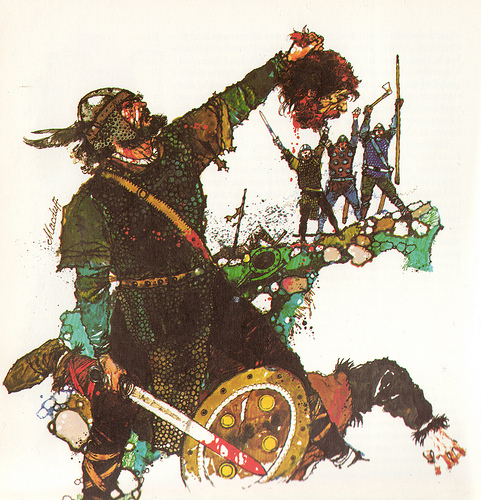
As his reign suffers resistance and becomes bloodier and more confused, Macbeth sees a series of apparitions, including one which reassures him–or so he thinks–that

“Be lion-mettled, proud, and take no care
Who chafes, who frets, or where conspirers are.
Macbeth shall never vanquished be until
Great Birnam Wood to high Dunsinane Hill
Shall come against him.” (Macbeth, 4.1.94-98)
But his enemies, to disguise their numbers and movements, camouflage themselves with foliage from Birnam Wood,
 Scan-100518-0011
Macbeth’s fortress is successfully taken, and Macbeth is killed in battle, his head taken by an avenging enemy, Macduff.
 macduff-wit-macbeth-head-jpg

Where Macbeth has had Birnam Wood, Saruman suffers from the Forest of Fangorn–

Tolkien, Nasmith, painting, illustration, Lord of the Rings, Silmarillion, Hobbit, Middle-earth

The Wrath of the Ents, by Ted Nasmith

(We would add one more Macbeth parallel for The Lord of the Rings.  Another seemingly reassuring apparition has told Macbeth that he can only be killed by a very special person:

“Be bloody, bold, and resolute. Laugh to scorn
The power of man, for none of woman born
Shall harm Macbeth.” (Macbeth, 4.1.81-83)
That person turns out to be Macduff, born from a Caesarian section.
Do we need to remind our readers of what Eowyn says in reply to the Witch-king’s “Hinder me?  Thou fool.  No living man may hinder me!”)
eowyn.nazgul

After the fall of Isengard, Saruman is imprisoned in his own tower.  During his imprisonment, he is deprived of the Palantir, but Sauron’s seduction has been thorough and, even when offered another chance, there will be nothing left for him in the future but being a petty spoiler and then the victim of his own slave, someone he had once seduced.

jwyatt-sarumande

Thanks, as always, for reading.

MTCIDC

CD

What’s In a Name?

27 Wednesday Jul 2016

Posted by Ollamh in Imaginary History, J.R.R. Tolkien, Literary History, Narrative Methods

≈ Leave a comment

Tags

Adventure, akaletes, Baggins, Bilbo, Chico, cyclops, Gollum, Groucho, Marx Brothers, Odysseus, Polyphemus, Riddles in the Dark, The Hobbit, The Lord of the Rings, The Odyssey, Tolkien, trolls, xenia

Welcome, as always, dear readers.

In this posting, we are interested in the use and danger of using names in the history of the Ring, as well as looking at a possible parallel from an earlier heroic story.  How dangerous can a name be?

In Chapter 5 of The Hobbit, Bilbo makes what is almost a fatal mistake—not for himself so much as for Frodo, and not at the time, so much as some 77 years later.

Confronted by the curious Gollum deep under the Misty Mountains, Bilbo has responded to Gollum’s, “What iss he, my preciouss?” with, “I am Mr. Bilbo Baggins.”

The Riddle Game

First, of course, he hasn’t answered the question. He was asked what, not who. And, from Gollum’s viewpoint, in which seemingly all animate things are potentially at least a snack, if not a full meal (“I guess it’s a choice feast; at least a tasty morsel it’d make us, gollum!” The Hobbit, Chapter 5, “Riddles in the Dark”), “What is it?” is the more appropriate question.

Second, depending on the culture, names can have a much greater significance than simply being social identifiers. If your culture has a strong belief in magic, then your personal name is a point of vulnerability: someone who wishes to control you can use it in summoning spells. This is probably why, for example, Circe, in Book 10 of the Odyssey, when she can’t turn Odysseus into a pig, as she had already done with part of his crew, says that he’s akaletes—literally, “uncallable by name”. Although the story as we have it doesn’t say so, we can presume that, as he does in another circumstance—which we’re about to discuss—he gives the enchantress a false name and therefore escapes her magic.

This is not the first time Bilbo has slipped, however. William, the troll, has already asked, “What are yer?” And Bilbo has replied, “Bilbo Baggins, a bur-a hobbit.” (The Hobbit, Chapter 2, “Roast Mutton”)

TN-Trolls_colour_sketch

(By one of our favorite Tolkien artists, Ted Nasmith)

Again, Bilbo has given the wrong answer (reminding us of a scene in the Marx Brothers movie, Horsefeathers, 1932, where Chico, as Baravelli, the doorkeeper of a speakeasy, demands of Groucho, “Who are you?” to which Groucho replies, “I’m fine, thanks. Who are you?”).

Password Scene

He has also complicated matters by almost saying “burglar” (he’s just tried to steal William’s purse, after all, which has, in fact, asked him “’Ere, ‘oo are you?”), but, by changing it at the last moment, he’s then created a new confusion, as the trolls simultaneously ask, “A burrahobbit?” and William adds, “What’s a burrahobbit got to do with my pocket, anyways?”

(We also ask, is there a very mild joke here—“burra” could easily sound like “burrow” and, since hobbits traditionally lived in tunnels…?)

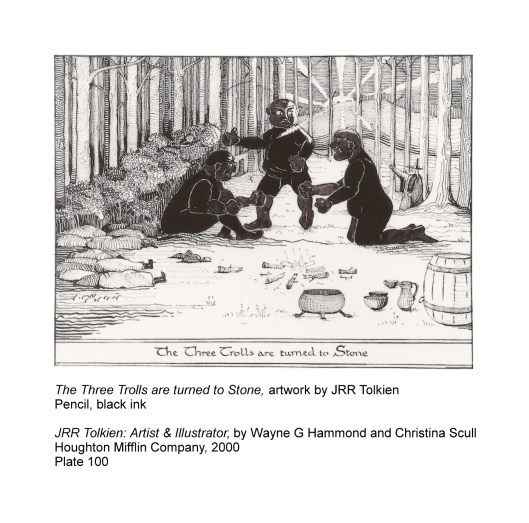
Gandalf and daylight take care of the trolls,

img__Art-The_Three_Trolls_are_Turned_to_Stone,_by_JRRT

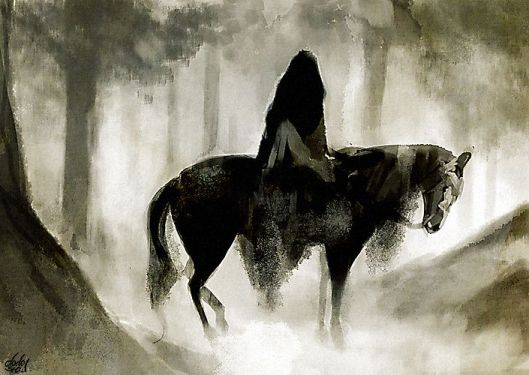
but Gollum is another matter. Bilbo, caught off guard, gives him his name. This, in turn, under torture, is passed on to Sauron, now aware that the Ring has (literally) resurfaced on Middle-earth. And, somehow, the names “hobbits” and “Shire” have been added to Bilbo’s name, as Gandalf tells Frodo (The Fellowship of the Ring, Chapter 2, “The Shadow of the Past”). To find out more, Sauron sends out his search team, the Nazgul, and the danger begins…

ellenkurkinazgul

(A wonderfully atmospheric watercolor by Ella Kurki)

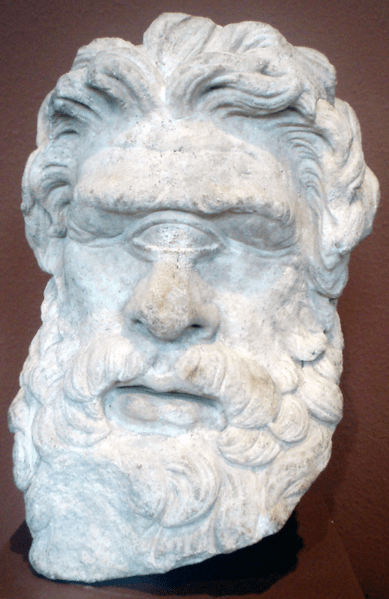
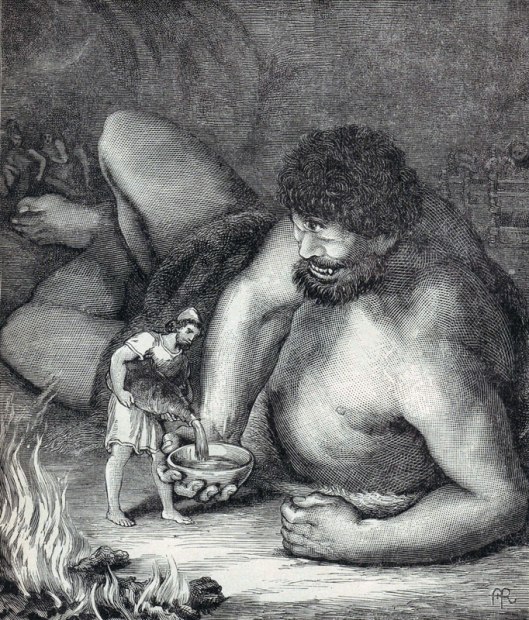
Odysseus, whom we mentioned earlier, has also been involved with a large and menacing creature, Polyphemus, the Cyclops, in Book 9 of the Odyssey.

Head-of-Polyphemos-Captmondo-wikimedia-commons

Having a little more experience of danger and living in a world where magic may be anywhere, he is more wary, however, than Bilbo and, when asked his name, replies “Ootis”, which is Greek for “Nobody”.

Scholars have argued for a very long time as to why Polyphemus, who has a Greek name (“The Much-Spoken-Of”) and speaks perfectly good Greek, can be so easily taken in by such a transparent trick and there are lots of theories to explain it. Perhaps, however, the answer is simply to point to Bilbo’s trolls, whom Tolkien describes as “slow in the uptake”—that is, they are not very quick to assess a new situation. Is this the case with Polyphemus? Or, being as big as he is, and not fearing the gods (as he informs Odysseus), perhaps he ignores Odysseus’ reply as simply part of the guest ritual known as xenia, in which, it is clear from his behavior, he does not believe anyway?

Over and over again, in the Odyssey, we see this social pattern, called xenia, which means something like “guest-friendship”, enacted   In this pattern, a person comes to another’s house in need of food and shelter. There is then a ritual, in which:

  1. the potential guest appeals to the householder
  2. the householder fulfills that person’s wants
  3. in return the person tells his name and his story
  1. the host gives the person guest-gifts and sends him on his way
  2. should he—or anyone to whom he’s related—be in the guest’s territory in the future, he can claim the same hospitality from the guest—and this can be passed down through generations

In the case of Polyphemus, Odysseus and his men have come to Polyphemus’ cave and helped themselves to his food while he was absent, therefore immediately disturbing the pattern. When the Cyclops comes home, his response is to kill and eat two of Odysseus’ men, a grim parody of the custom, in which he should be feeding them, not feeding on them. The situation escalates, with more men eaten, until Odysseus formulates an escape plan which includes getting the Cyclops drunk

Cyclops-Homer

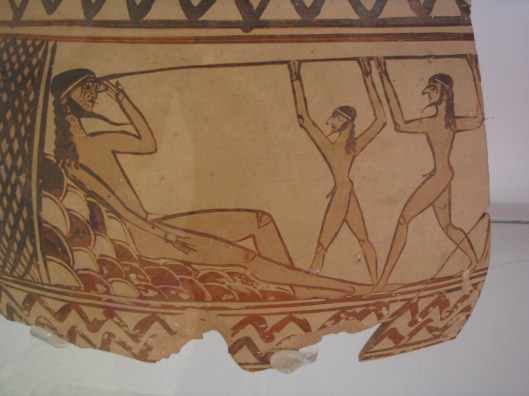
and putting out his eye,

cyclops2

then using a flock of sheep as an escape vehicle.

FrCyclopsEscape

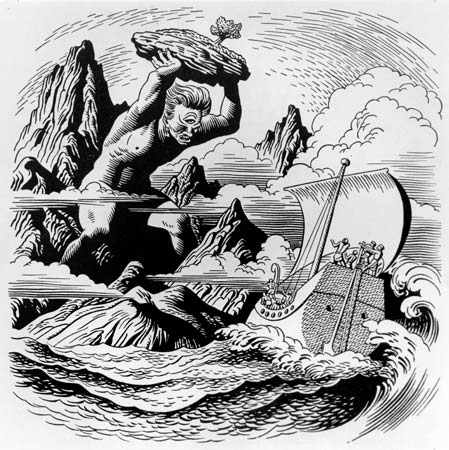
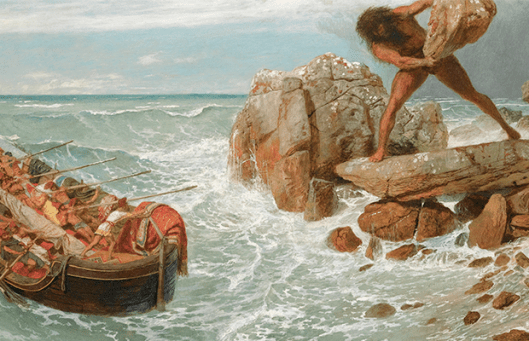
In the meantime, however, Polyphemus has asked for Odysseus’ name, gotten the “Nobody” answer, and offered a guest-gift in return: the Cyclops will eat Odysseus last. The plan works, Odysseus and his surviving men escape (with the sheep), and get back to their ship, but then things go wrong again. Even blind, Polyphemus pursues them and, tossing mountain tops, almost brings them back to shore.

cyclops3

They do manage to row out of range, however, but then Odysseus, seeming to destroy completely his earlier “Nobody” trick, and much to his crew’s horror, shouts out to the Cyclops not only who he really is, but where he lives, as well. What’s going on here?

polyphemos

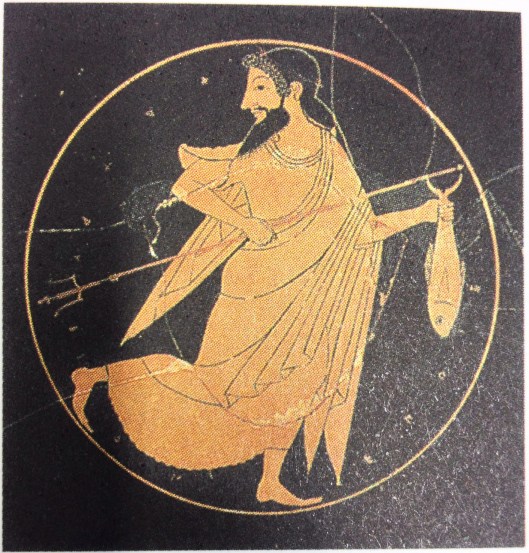
Bilbo has twice, inadvertently, provided others with his name, if not his address.  Although Odysseus may be more able when it comes to thinking quickly in a dangerous situation than Bilbo, he also belongs to what is called a “face culture”. This means that who you are is a public thing. You only gain credit if you do things publically and your name is attached to what you do. In Odysseus’ case, he has bested a monster and avenged the deaths of his crewmen and it is important that that monster knows who did it. Unfortunately, that monster is the son of the sea god, Poseidon, to whom he prays for revenge and, knowing Odysseus’ name and address, this is a bit more pinpointed than simply saying, “Get that guy who put out my eye, dad!”

poseidon.jpg

Bilbo blundered into the territory of Gollum and, through inexperience and surprise, brought trouble, in time, to Frodo. Odysseus, having concealed his identity successfully, then exposed himself because his society and his position in that society required it. In turn, he returns home alone and on someone else’s ship, having brought trouble on himself and his crew.  In answer to our initial question, “How dangerous can a name be?”  The answer appears to be, “Very.”

Thanks, as always, for reading.

MTCIDC

CD


Allons, enfants!

14 Thursday Jul 2016

Posted by Ollamh in Literary History, Military History

≈ Leave a comment

Tags

Across the Doubtful Sea, Alexandre Dumas, Bastille, Bastille Day, Bastille Day parade, Beau Geste, Bernard Cornwell, Brigadier Gerard, C.S. Forester, CD, Charles X, Conan Doyle, Cyrano de Bergerac, de Bougainville, Edmond Rostand, Eugene Leliepvre, French Foreign Legion, French Royal Navy, Hornblower, King's French Guard, Louis Philippe, Marquis de Montcalm, Napoleon, Place de la Bastille, Place Henri Galli, Sharpe, South Pacific, The Three Musketeers

Dear readers, chers lecteurs,

Welcome/bienvenue as always/comme toujours. This is a special extra posting for our faithful French readers, but really for all of our readers who love adventure and history—and that, as far as we can tell, is everyone who regularly reads us.

When we were thinking about this special Bastille Day extra, we wondered what we should write about.

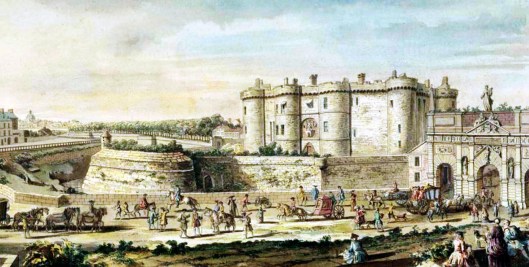
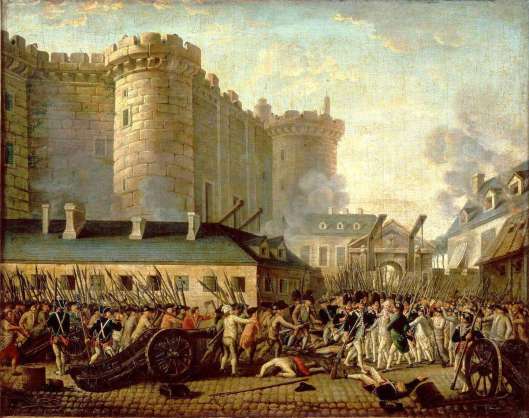
We could, of course, write about the original Bastille day, 14 July, 1789, when a crowd of brave and angry Parisians, aided by some members of the King’s French Guard, attacked the 14th-century fortress-turned-state-prison, and forced its surrender.

Bastille_1715

l'attaquesurlabastille(We can’t resist a visual footnote– you’ll notice the people to the right in dark blue with the fuzzy hats. These are members of a grenadier company of the French Guard. Here’s a larger and more modern illustration of these Guards by one of our favorite French military artists, Eugene Leliepvre.)
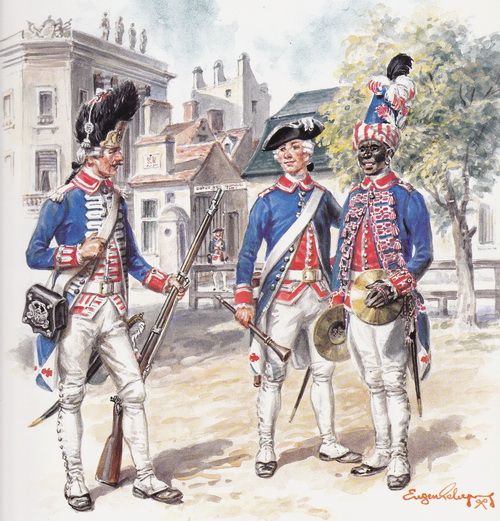
leliepvregardefrancaise

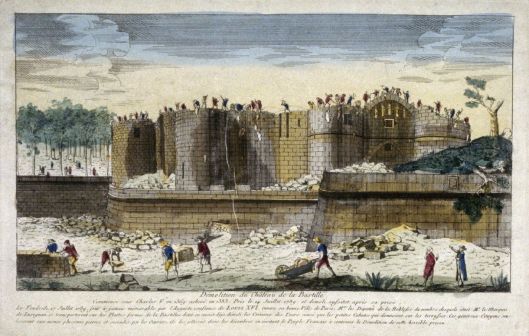
Not satisfied with capturing the place, the revolutionaries soon tore it down, and it’s now the Place de la Bastille, with a column, erected in 1840, commemorating the revolution of 1830, in which the last member of the Bourbon monarchy, Charles X, was overthrown and was replaced by his cousin, Louis Philippe.

demolitiondelabastille

Place_de_la_Bastille,_1878

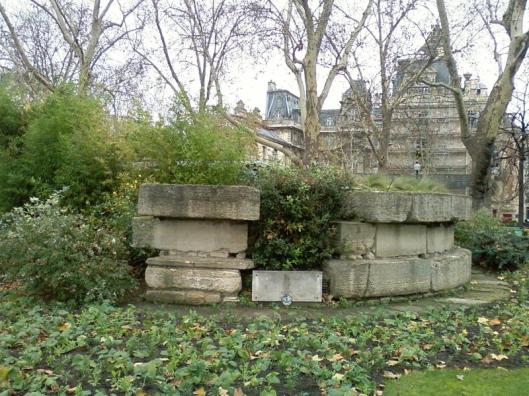
In 1899, a small section of one of the Bastille’s towers was discovered during metro excavations and is now on display in the Place Henri Galli, not far from its original site.

la-bastille1Paris4_SquareHenriGalli_VestigesBastille_Nov09

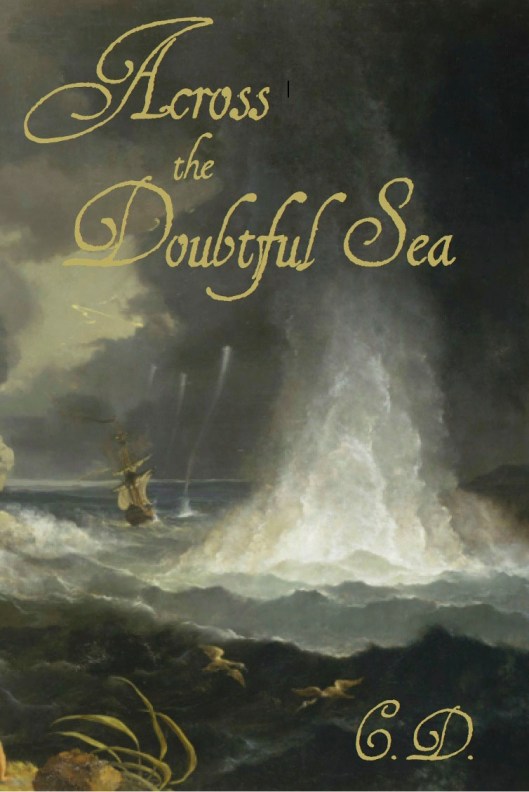
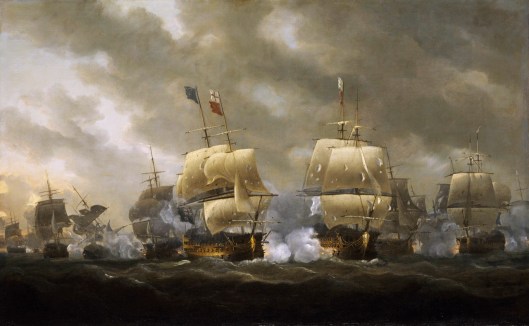
The Revolution which followed the fall of the Bastille brought on the era of Napoleon and, for those of us interested in adventure and who read English, at sea, C.S. Forester’s “Hornblower” series, among others, and, on land, Bernard Cornwell’s “Sharpe” series and, long before that, the “Brigadier Gerard” stories of Conan Doyle. Hornblower and others have appeared in some of our earlier postings, when we discussed sources for our first novel, Across the Doubtful Sea, set in an imaginary South Pacific in the 18th century,

Across Cover

but we’ve never looked at Gerard or Sharpe. And we would be glad if our French readers would offer comparable books in French for this period (one of us grew up in a Francophile household and reads French). One reason why heroes in our first novel are members of the French Royal Navy is that the period from 1750 to 1800 is filled with adventure, both in exploration and in war, and that navy is constantly involved, something of which English readers have no knowledge.

img_9168

(Another color plate by Leliepvre.)

One has only to remember de Bougainville (1729-1811),

Louis_Antoine_de_Bougainville_-_Portrait_par_Jean-Pierre_Franquel

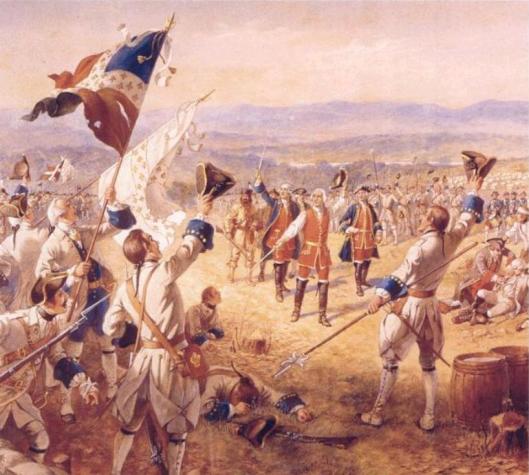
who began his career as an aide to the Marquis de Montcalm, the daring and resourceful commander of French regular forces in New France, 1756-1759.

The_Victory_of_Montcalms_Troops_at_Carillon_by_Henry_Alexander_Ogden

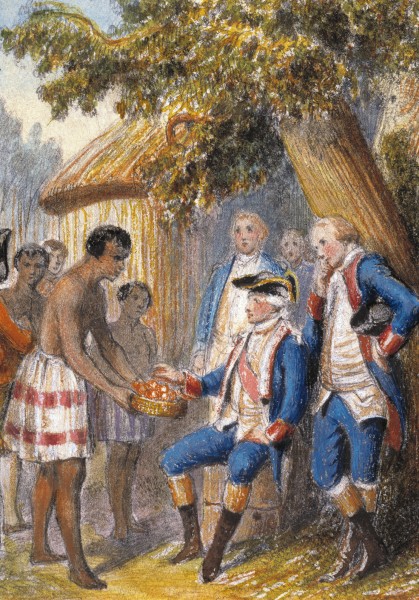
In the 1780s, however, he had become a naval commander, leading an exploratory expedition to the South Pacific.

51_Pacific_02-419x600

Throughout the later 17th and 18th centuries, the French Navy formed a large part of the French struggle for commercial supremacy across the world.

Quibcardinaux2

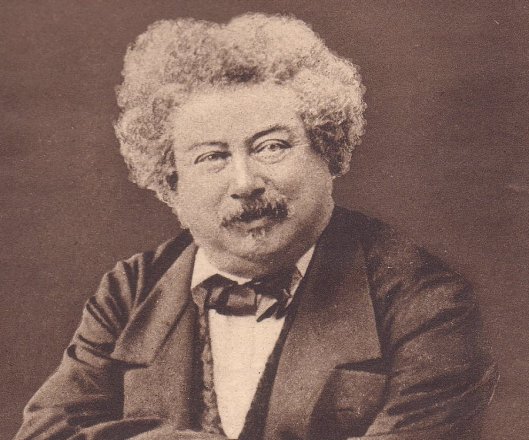
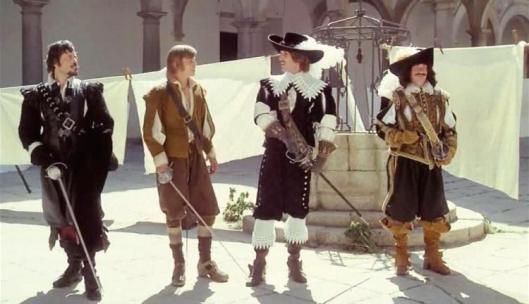
Or then again, as we’ve done once before, we could go back to the 17th century and write about Alexandre Dumas and his famous musketeers, who first appeared in The Three Musketeers (1844).

alexandre-dumas-3TheThreeMusketeers099

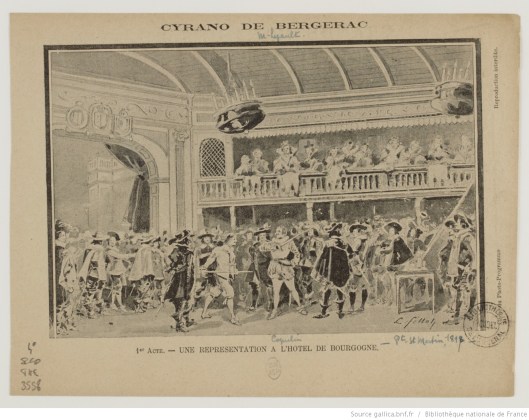
Or there is the wonderful play Cyrano de Bergerac (1897) by Edmond Rostand, set about 1640. We could easily write a posting about the amazing scene in the first act alone, where, at the Hotel de Bourgogne, Cyrano fights a duel and composes a ballade at the same time.

Edmond_Rostand_en_habit_vert_01

cyrano_acte1

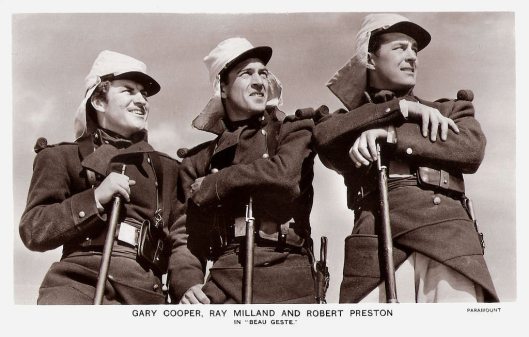
What else? Hmm. How about the French Foreign Legion of one of our favorite old adventure movies, Beau Geste (1939)?

beaugeste1939

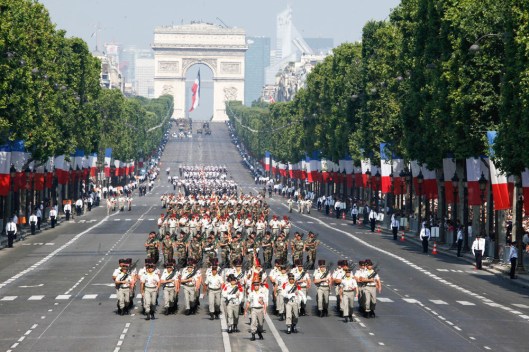
And then a final then again, perhaps it’s best just to wish everyone a happy Bastille Day and end with some dramatic views from a previous parade…

defile114 Juillet 2013defile3

Merci, nos lecteurs/thanks, as ever, for reading.

MTCIDC

CD

Terrifyingly Funny? (Part 1)

13 Wednesday Jul 2016

Posted by Ollamh in Artists and Illustrators, Fairy Tales and Myths, Imaginary History, J.R.R. Tolkien, Language, Literary History, Narrative Methods, Villains

≈ 2 Comments

Tags

Adventure, Among Gnomes and Trolls, Bilbo, comic, Gandalf, Gollum, humor, John Bauer, Middle-earth, Pēro & Pōdex, Roast Mutton, Stone Trolls, The Hobbit, The Lord of the Rings, Through the Looking-Glass, Tolkien, Tommies, trolls, Victorian Drawing Room

Dear Readers, welcome, as always.

This is going to be a two-part posting because– well, it began as one thing, and then became another. We were thinking about Gollum, not as the grim and tormented figure we know from The Lord of the Rings, but rather as the muttering, riddling cave-dweller of The Hobbit. We were wondering if we could see Gollum not only as menacing, but as comic, as well.

Gollum_Render.png

Then, however, we began to think about other such figures, and one of us said to the other, “What about the trolls in The Hobbit?”. The other replied, “we see them before we see Gollum. Maybe we should start with them.”

And so we shall.

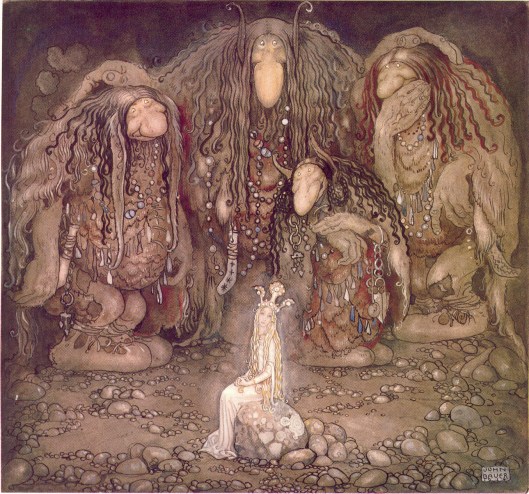
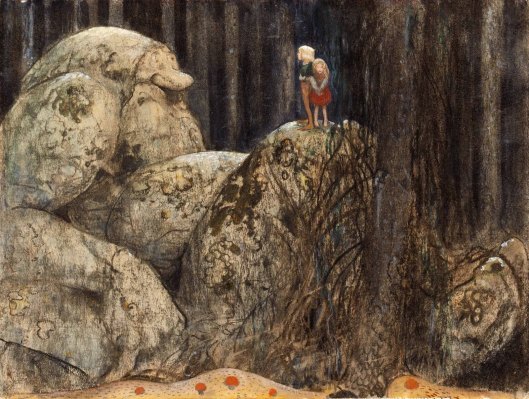
It’s clear where Tolkien got his trolls– they’re all over the fairy tales he had been reading since childhood, and they form a component of the traditional Scandinavian literature in which he had been interested for nearly as long. They are commonly large, and not terrifically bright, and often possess an anxiety about daylight. One of our favorite illustrators of such creatures is John Bauer (1882-1918), who, among other works, contributed illustrations to an ongoing series of volumes appropriately titled Among Gnomes and Trolls. Here, for example, is one of his depictions of the latter.

John_Bauer_1915.jpg

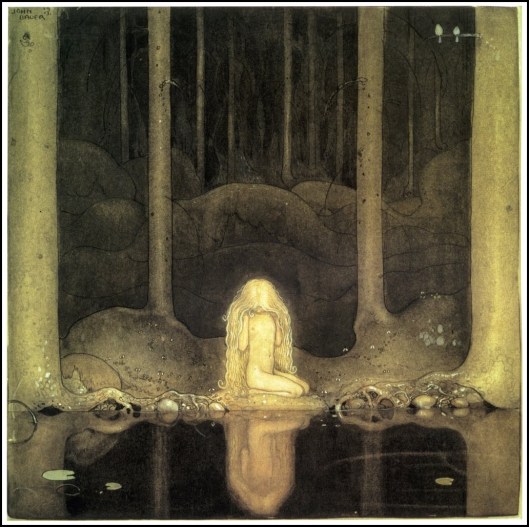
And, because we can’t resist– can we ever? Here are a couple more illustrations by Bauer.

bauer5.jpgJohn_Bauer07.jpg

Even before The Hobbit, however, Tolkien had produced a literary troll. In 1926, he wrote the first version of a poem to be sung to the folk song “The Fox Went Out”, called “Pēro & Pōdex”(“Boot and Bottom”). It survives  in a later version in chapter 12 of Book 1 of The Lord of the Rings, beginning “Troll sat alone on his seat of stone”.

In The Hobbit, the trolls are grouped around a fire, drinking and eating and immediately recognizable:

“But they were trolls.  Obviously trolls.  Even Bilbo, in spite of his sheltered life, could see that:  from the great heavy faces of them, and their size, and the shape of their legs, not to mention their language, which was not drawing-room fashion at all, at all.”  (The Hobbit, Chapter 2, “Roast Mutton”)

tumblr_m6wyygQDLc1ru50yro1_1280.jpg

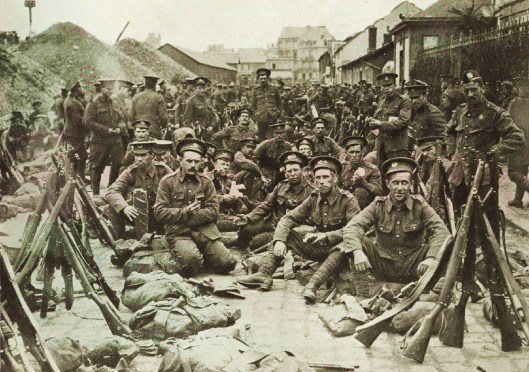
Douglas Anderson, in his invaluable The Annotated Hobbit, says that “Tolkien presents the Trolls’ speech in a comic, lower-class dialect” (70). In fact, we wonder whether, as in the case of the later orcs in The Lord of the Rings, we are not seeing a reflection of the speech of some of the Tommies whom Tolkien had commanded in the Great War.

roads_bef1914.jpg

” ‘Mutton yesterday, mutton today, and blimey, if it don’t look like mutton again tomorrer,’ said one of the trolls.

‘Never a blinking bit of manflesh have we had for long enough,’ said a second. ‘What the ‘ell William was a-thinkin; of to bring us into these parts at all, beats me – and the drink runnin’ short, what’s more,’ he said jogging the elbow of William, who was taking a pull at his jug” (The Hobbit, Chapter 2, “Roast Mutton”).

Besides what sounds like a reference to a line in Through the Looking-Glass (1871), “The rule is, jam to-morrow and jam yesterday – but never jam to-day,” with their “blimey” and “blinking”, the trolls are immediately labeled by their speech as lower-class, potentially thuggish, and certainly not people invited to a formal drawing room like this–

drawingroom1890ssmall.JPG

Of course, we might ask ourselves, why should trolls talk like that anyway? And we might then reply, because Tolkien is mixing language for comic effect. Bilbo, Gandalf, and the dwarves speak in non-dialect standard English. Therefore, there’s an especially strong contrast here. As well, what the trolls are saying can be funny in itself, as when William says to the discontented other trolls,

” ‘Yer can’t expect folk to stop here for ever just to be et by you and Bert. You’ve et a village and a half between yer, since we come down from the mountains. What more d’yer want?’ ” (The Hobbit, Chapter 2, “Roast Mutton”).

Here, we have comic exaggeration combined with the frustrated defensiveness of a leader whose tactics are being questioned by subordinates.

The tension grows as the scene progresses.  Bilbo appears, is nabbed by a purse which sounds like the Trolls, the Trolls fall to fisticuffs while arguing over Bilbo and then over the dwarves whom they capture, and Gandalf, imitating various Troll voices, so stirs the pot that the Trolls never notice when the first beam of sunlight cuts across their clearing and they are petrified.

jrrt_14.jpg

So, if we consider what the Trolls have been doing previously–“Never a blinking bit of manflesh have we had for long enough…” says one, as well as what they discuss doing not only to Bilbo, but to the whole of Thorin & Co., these could seem to be grim figures, indeed.  Then again, they sound like comic cockneys, they have ludicrously-large appetites, and they are dim enough to be taken in very easily by Gandalf’s ventriloquism.   So, grim and funny at the same time.

On the whole, humor is more an element in The Hobbit than in The Lord of the Rings, but we believe that perhaps because of his initial appearance in The Hobbit, Gollum may have both the menace and the humor, at times , of these gormless Trolls, as we hope to show in Part 2.

Thanks, as always, for reading,

MTCIDC,

CD

Ambiguity in Oz

06 Wednesday Jul 2016

Posted by Ollamh in Films and Music, Literary History, Narrative Methods, Theatre and Performance, Villains

≈ 1 Comment

Tags

Adventure, Aldus Manutius, Captain Cyril Turner, condensation trail, Epsom Downs, James Pollard, Let's eat grandma, Oz, punctuation, skywriting, Surrender Dorothy, The Wizard of Oz, the Wright brothers, Wicked Witch

Dear Readers,

Welcome, as always.

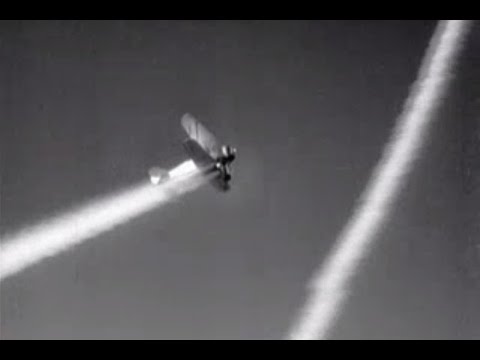
It was a bright, breezy morning yesterday and we were looking up at a contrail (short for “con(densation) trail”)

Contrail.jpg

which brought to mind this message:

surrender2.jpg

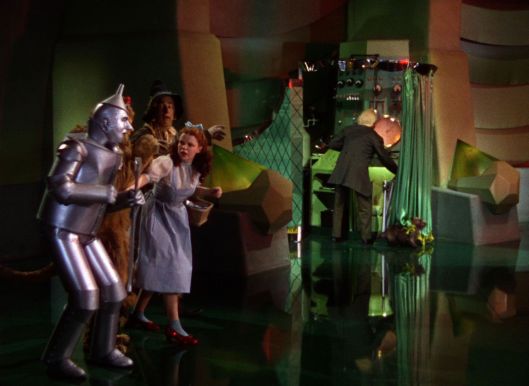
from the 1939 movie, The Wizard of Oz. At this moment in the movie, the four friends (and Toto),

dorothyandfriends.jpg

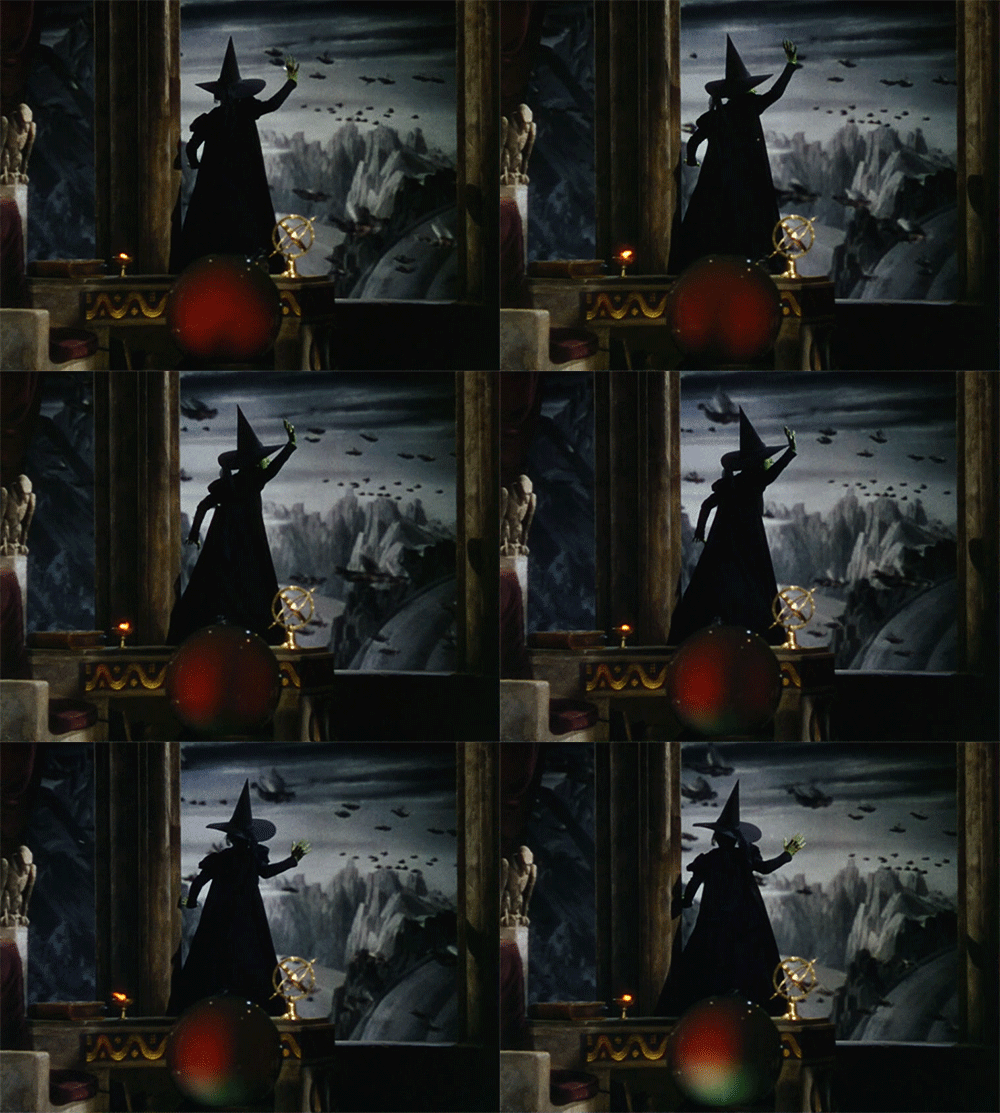
seemingly welcome in the Emerald City, have been enjoying their welcome when the happy music stops at a shriek, and they look up to see the Wicked Witch of the West skywriting.

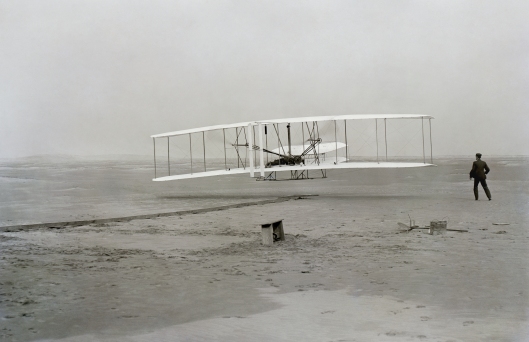
In the US in 1939, artificial flying objects would hardly have been a surprise. After 1903,

First_flight2.jpg

and certainly after the Great War

dogfight

aircraft were increasingly common—even up to massive dirigibles.

Hindenburg_over_New_York_1937

Skywriting—

aerialadvertising1930s

is said to have been first commercially employed in 1922 at Epsom Downs, in England,

horace-walter-nicholls-crowds-on-derby-day-epsom-downs-surre

where Captain Cyril Turner wrote “Daily Mail” over the race track.

James_Pollard_-_Epsom_Races-_The_Race_Over1835.jpg

(This is a painting by James Pollard from 1835, but we couldn’t resist its detail.)

It appeared over New York City for the first time shortly afterward.

In Oz, however, the usual airborne objects appear to have been:

  1. crows

crowsinoz

  1. witcheswitchflying

Glinda-Wizard-Oz

  1. monkeys

flyingmonkey1gifflyingmonkeys

(To which we might add 4. balloons—although there is only one and it’s not a native product.)
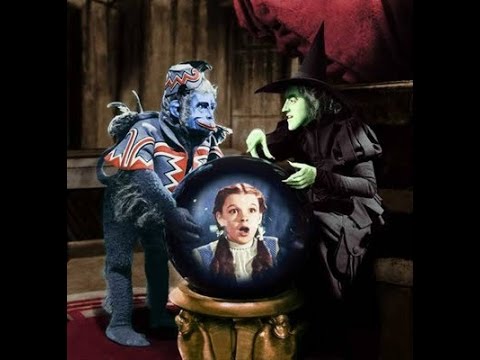
ballooninwizard

Thus, a thing like a flying house

Tornado-with-house

would have been more than a little disturbing (and still is, here in this world)—especially when it landed on a major political figure.

houseonwitch

As well, although witches fly in Oz, as far as we know, they are not given to delivering messages by air.

(This message, by the way, was:

  1. made by using a hypodermic needle filled with black ink to write on the bottom of a glass tank filled with colored water
  2. originally longer—here is what it first said:

extendedwwwskywriting)
Equally disturbing to us, however, is the ambiguous (from Latin amb-, “both” and ag- “to drive”—hence, “to go in two directions”) nature of the message—all due to a (potentially) missing comma.

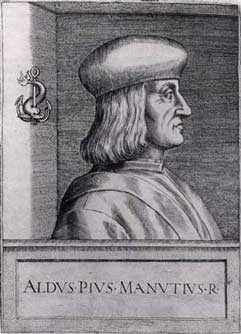
Modern western punctuation took several centuries to appear and mature, beginning with the work of the early printer, Aldus Manutius (the Elder—1449-1515) in the later 15th century.

Aldus_ManutiusAldo_Manuzio_Aristotele

On the whole, modern native English-speakers tend to use the same practices, although an inverted prepositional phrase in American English, for example, has a comma, where British English does not.

Uninverted: There were about twenty fresh crabs in the sink.

Inverted (US): In the sink, there were about twenty fresh crabs.

Inverted (UK): In the sink there were about twenty fresh crabs.

When this is spoken by any native-speaker, there is a slight pause after “sink” and the point of the comma (a point which goes back to 16th-century rhetorical texts, in which punctuation is intended to be used like rests in music, as a series of directional signals as to pauses) is to signal that natural pause.

There is no ambiguity either way in the model sentence, but what about in the Witch’s command?

As it stands, “Surrender Dorothy”, without a comma, is a kind of general imperative—it could perhaps be addressed to all of Oz—and thus easily explained in a longer construction, like “Oz! Surrender Dorothy”—perhaps with the original conclusion “or Die!”

But is this the Witch’s intention? Insert the comma and you have a command directed specifically—and solely–to Dorothy: “Surrender, Dorothy!”   (As we learn when Dorothy is in the hands of the Witch, the deleted part of the message “Or Die” is not quite accurate—the Witch wants the Ruby Slippers, but can’t get them without killing the wearer, so that the real message should be “Surrender, Dorothy—and Die!”—which is hardly likely to be persuasive!)

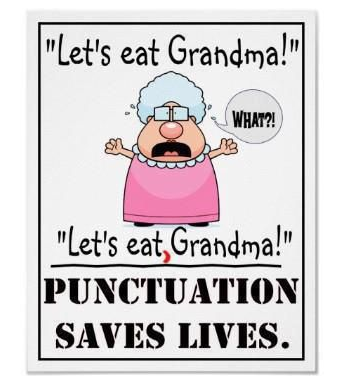
There is a cartoon about English punctuation which has circulated for some years:

letseatgrandmacorrection

In the version without the comma, it’s an invitation to eat grandma. With the comma, it’s an invitation to eat with grandma. In the case of the Witch’s message, what do you think: is it a command to Oz, or to Dorothy?

surrenderpartialview

Thanks, as always, for reading.

MTCIDC

CD

Paying No Attention to the Man Behind the Curtain

08 Wednesday Jun 2016

Posted by Ollamh in J.R.R. Tolkien, Literary History, Narrative Methods

≈ 1 Comment

Tags

Beowulf, Cloacina, Connacht, Grendel, Heorot, Horatius, King of Leinster, Lembas, Lord Chesterfield, Mac Da Tho, Mordor, Odysseus, Penelope, Tamora Pierce, The Lord of the Rings, The Odyssey, The Wizard of Oz, Tolkien, Ulster

Behind-the-Curtain.jpg

Dear Readers,

Welcome, as always, to our blog. In this posting, we want to consider something usually invisible, but, at the same time, for reader/listeners, always there in adventure stories.

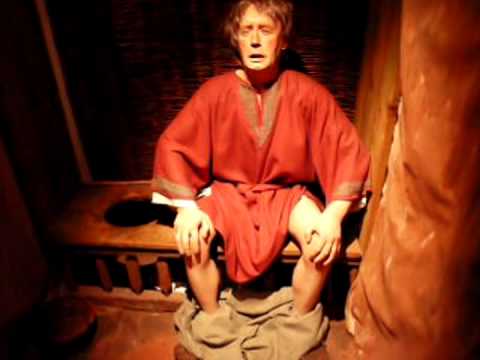
Think for a moment about your day. And how filled it is with requirements of the body, from sleep to washing to eating to—yes, you see where we’re going.

PoplarForestPriviesRob.jpg

(And we can’t see this 18th century outhouse—sometimes called a “necessary” or a “privy” then—without thinking of part of a letter by the famous 18th-century essayist/letter-writer Lord Chesterfield (1694-1773).

Philip_Stanhope,_4th_Earl_of_Chesterfield.PNG

Who wrote a series of affectionate and very worldly-wise letters to his illegitimate son. In one of them he had the following advice—

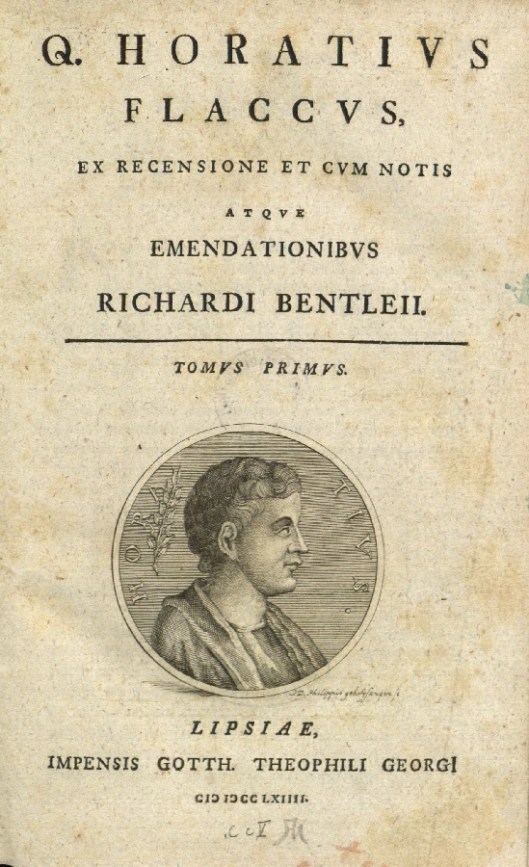
“I knew a gentleman who was so good a manager of his time that he would not even lose that small portion of it which the calls of nature obliged him to pass in the necessary-house; but gradually went through all the Latin poets in those moments. He bought, for example, a common edition of Horace, of which he tore off gradually a couple of pages, carried them with him to that necessary place, read them first, and then sent them down as a sacrifice to Cloacina: this was so much time fairly gained, and I recommend you to follow his example…. Books of science and of a grave sort must be read with continuity; but there are very many, and even very useful ones, which may be read with advantage by snatches and unconnectedly: such are all the good Latin poets, except Virgil in his Æneid, and such are most of the modern poets, in which you will find many pieces worth reading that will not take up above seven or eight minutes.”

earlyeditionofhorace.jpg

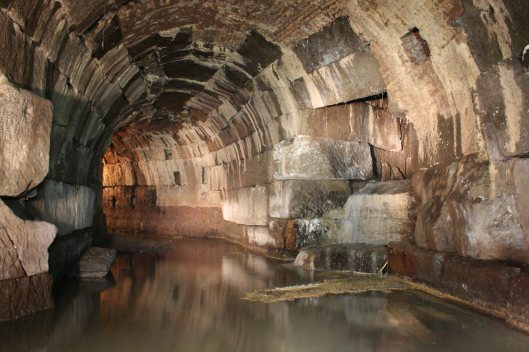
Cloacina was the patron goddess of the ancient main drain of Rome. Here’s an image of her shrine—

Coins-venus-cloacina.jpg

and here’s her drain

Domitian-Cloaca-Forum.jpg

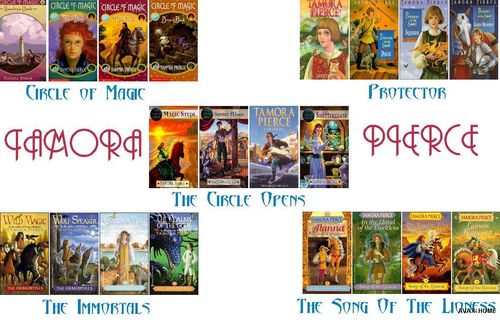
But, as we were starting to say, things of the body, ordinary things, are almost entirely ignored both in traditional adventure and in modern versions. In fact, it’s a bit of a shock to see, in some of Tamora Pierce’s YA novels (a big favorite of ours), that people actually use a latrine.

tpiercebooks.jpg

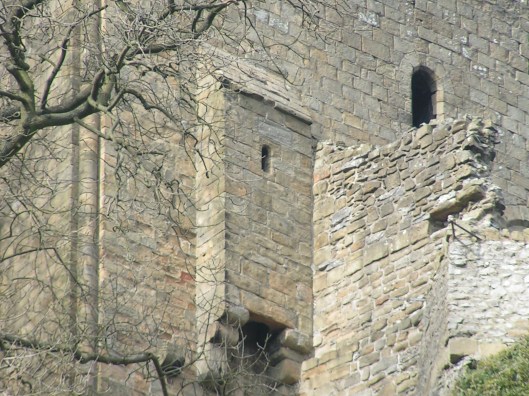
When we look at JRRT, for example, whose works we’ve often tried to set into a medieval context, we never see what one would have seen in such a context, whether behind a farmhouse

garderobe1.jpg

or in some place grand.

garderobe.jpgGarderobe,_Peveril_Castle,_Derbyshire.jpg

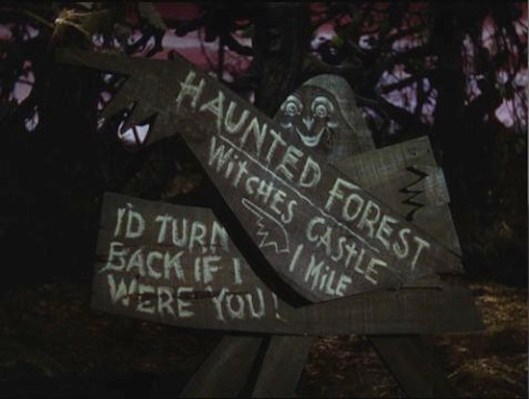
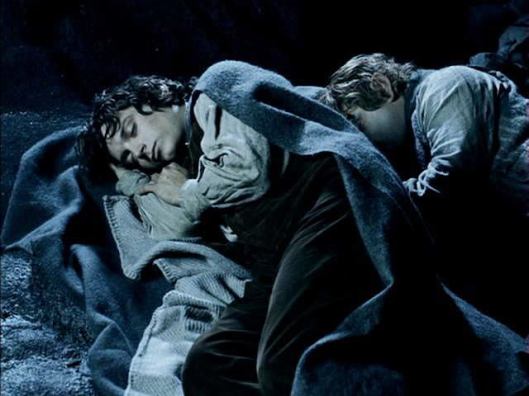
We began with the least common possibility, but this is as true for other functions—usually taken for granted, except for specific reasons. Sleep, for example, is very often employed simply as a way to show the passage of time during an adventure—and, in worlds without googlemaps, Siri, and perhaps even signposts

HauntedForest_sign.jpg

it’s a very natural and easy way to mark time and distance simultaneously.

samandfrodoasleep.jpg

Eating can show the same—think of Sam hoarding lembas as he and Frodo trek towards Mordor—

leaf-lembas.JPG

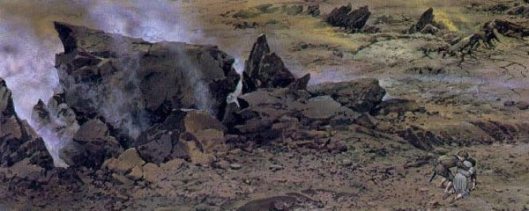
JRRT then uses it to show urgency, as well—what will they do in Mordor, when it runs out?

602_NASMITH_Across_Gorgoroth_02.jpg

Of course, eating—in the form of feasting, in particular—can provide a major plot element.

Think of Heorot, the feasting hall, in Beowulf, for instance,

heorot.jpg

where feasts are ruined until Beowulf defeats their ruiner, Grendel.

Stories_of_beowulf_head_of_grendel.jpg

Or the endless feasting of the suitors in the Odyssey

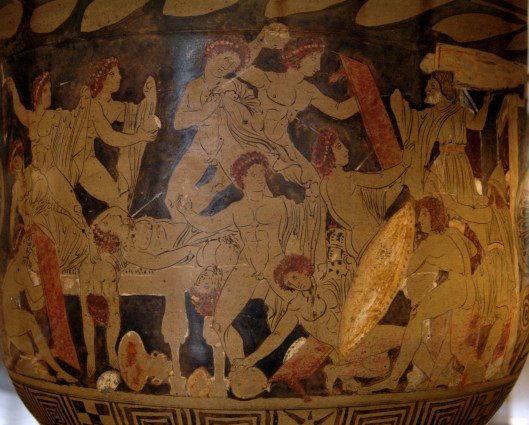
greekfeastpaestumdivertomb.jpg

as they eat up everything which makes Odysseus the lord of his lands, besides trying to steal his wife, Penelope.

JohnWilliamWaterhouse-PenelopeandtheSuitors(1912).jpg

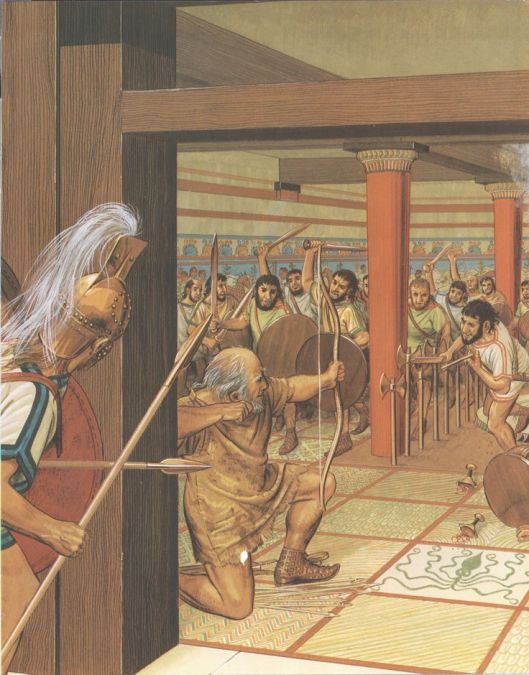
Here, eating and drinking take on a greater significance in that they are symbolic of the slow destruction of Odysseus’ household. They also provide a great setting for his reappearance and then, with the help of Athena, his massacre of the suitors in one of the wildest revenge scenes we know. It has quite a number of illustrators, from ancient

Mnesterophonia_Louvre_CA7124.jpg

to Victorian

odysseus-kills-the-suitors1.jpg

to modern—and our favorite, for the way it’s being shown from the angle of Odysseus’ patron, Athena

peterconnollysuitors.jpg

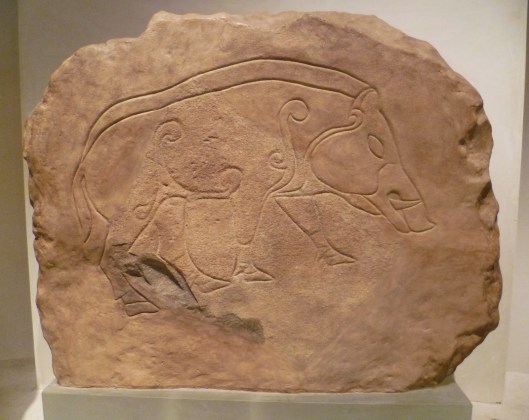
And then there is the feast, held in the rath of the king of Leinster, Mac Da Tho, which has to be one of the zaniest scela in Old Irish literature. Leinster’s most powerful neighbors, Ulster and Connacht, are at dinner, but there is a sudden difficulty over who will carve the pig.

Pictish_symbol_stone_from_Dores Wiki Commons.JPG

Like so many of the stories of the so-called “Ulster Cycle”, it is full of over-the-top violence and grim humor as both powers struggle to gain the honor of carving and therefore having the right to award the curadmir, the “hero’s portion”.

As you think about your favorite heroic or adventure story, consider the above—where can you see body care/body functions? Then, to take it a step farther: where does anyone ever sneeze? (We can think of one special one, but what can you come up with?—Hint: see Odyssey 17…)

Thanks, as ever, for reading.

MTCIDC

CD


“A kind of proud, venerable, but increasingly impotent Byzantium”

01 Wednesday Jun 2016

Posted by Ollamh in Artists and Illustrators, J.R.R. Tolkien, Literary History, Maps, Military History, Military History of Middle-earth, Narrative Methods

≈ Leave a comment

Tags

Adventure, Byzantine Empire, Byzantium, Constantinople, Gondor, Justinian, Megara, Mehmet II, Milton Waldman, Minas Arnor, Minas Tirith, Mont Saint Michel, Ottoman Empire, Ted Nasmith, The Lord of the Rings, The Tower of Guard, Theodosian walls, Theodosius, Tolkien

Welcome, as always, dear readers.

The title of this posting is taken from a very long letter (10,000 words), written to Milton Waldman probably in 1951 (Letters No.131, 157). Waldman represented the English publisher, Collins, which had expressed an interest in The Lord of the Rings and The Silmarillion when Allen & Unwin had been hesitant. Determined to justify the simultaneous publication of both, Tolkien wrote in great detail about the general narrative, with an emphasis upon the religious aspects.

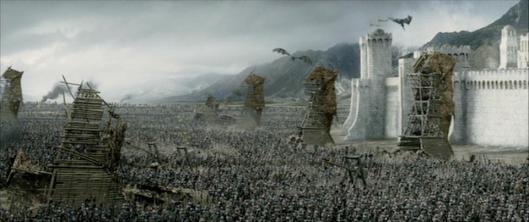
In the process, he likened Gondor to the Byzantine empire, a comparison which immediately attracted our attention. We ourselves had suggested in an earlier posting that the attack on its capital, Minas Tirith, had been like the siege of the Byzantine capital, Constantinople.

attackongondor.jpg

8da792d4aac58fe51f8ddf1aefa36048.jpg

What was JRRT thinking of when he likened the two?

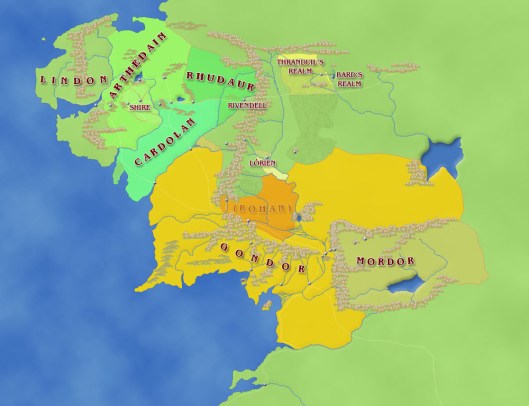
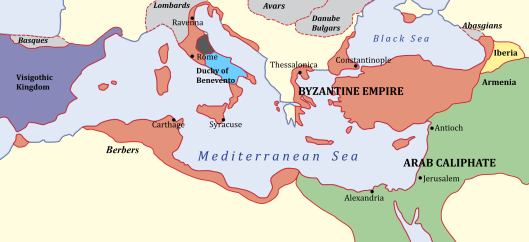
First, they both were—or had been—large kingdoms—in the case of Byzantium, an empire, really, as these maps demonstrate.

gondor1050height.jpg

2000px-Byzantiumby650AD.svg.png

Their capitals were both of great age. Minas Tirith, “The Tower of Guard”, had been built originally as Minas Anor, “Tower of the Sun” in SA 3320 by Anarion, the younger son of Elendil, but only became the capital of Gondor in TA1640, after Osgiliath had been devastated by a plague. If we add its time in the Second Age (121 years) to the whole of the Third Age (3021 years), we reach a total of 3142 years at the defeat of Sauron. (For comparison, we might look at Athens, whose continuous habitation began before 3000BC, giving it a more-than-5000-year history.)

Constantinople, is old, by anyone’s standards, having been founded in 667BC as a Greek colony (there’s a bit of argument over the dating of this, which is typical of such things), and is still inhabited (and an absolutely amazing place!), but a bit younger than Minas Tirith at the time of The Lord of the Rings by some 500 years or so.

Third, there is the matter of the elaborate construction of these capitals.

“For the fashion of Minas Tirith was such that it was built on seven levels, each delved into the hill, and about each was set a wall, and in each wall was a gate. But the gates were not set in a line: the Great Gate in the City Wall was at the east point of the circuit, but the next faced half south, and the third half north, and so to and fro upwards; so that the paved way that climbed towards the Citadel turned first this way and then that across the face of the hill. And each time that it passed the line of the Great Gate it went through an arched tunnel, piercing a vast pier of rock whose huge out-thrust bulk divided in two all of the circles of the City save the first. For partly in the primeval shaping of the hill, partly by the mighty craft and labour of old, there stood up from the rear of the wide court behind the Gate a towering bastion of stone, its edge sharp as a ship-keel facing east. Up it rose, even to the level of the topmost circle, and there was crowned with a battlement; so that those in the Citadel might, like mariners in a monstrous ship, look from its peak sheer down upon the Gate seven hundred feet below.”

The Lord of the Rings, Book 5, Chapter 1, “Minas Tirith”

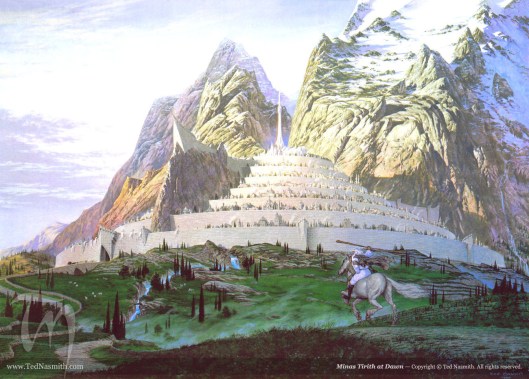
Here’s one of our favorite paintings (by Ted Nasmith—one of our favorite Tolkien artists).

TN-Minas_Tirith_at_Dawn.jpgnaismith.jpg

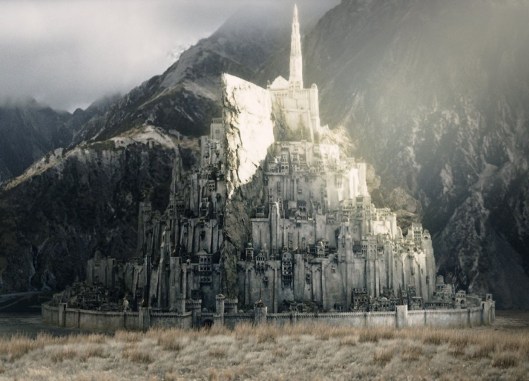
And here’s the film.

ROTK-Minas-Tirith.jpg

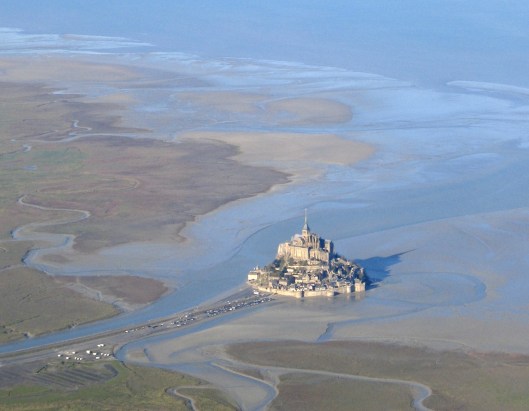
The designers have said that they were influenced by the look of Mont Saint Michel, a medieval monastery just off the coast of Normandy in France.

Mont_St_Michel_3,_Brittany,_France_-_July_2011.jpg

MtStMichel_avion.jpg

The complex nature of the place is captured in this diagram.

minas-tirith-diagram.0.jpg

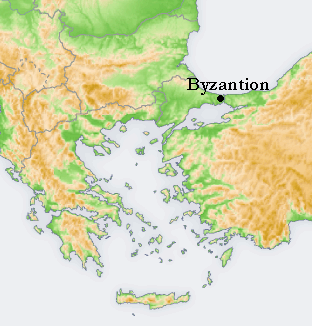
Byzantium (or, Constantinople, its later name) began its life, as we said, as a colony of the Greek mainland city of Megara. In the 4th century AD, the Roman emperor Constantine I, the last survivor in a long civil war, chose the site for his new capital. As much of the weight, both of commerce and defense, lay in the eastern part of the Roman world by this time, he chose very wisely: his new city was placed to control trade with the rich Black Sea region and to provide a strategic jumping-off point for dealing with invaders and emerging kingdoms in Asia Minor.

Locator_map_Byzantion.PNG

The position was also well-chosen for defense, being at the end of a peninsula—the main strategy then being its walling-off from the mainland.

constantin.jpg

There is, of course, a big difference here between the 7 levels and 7 gates of Minas Tirith and the two walls—the older inner 4th-century one of Constantine and the slightly-later (early 5th century) walls of Theodosius II. Nevertheless, those later walls were well-constructed, in two successive lines, with a moat on the outside.

Theodosian Walls.jpg

The Theodosian walls were about a mile-and-half from the older, Constantine wall, encompassing a population which, at its height, may have been over 400,000 in number. By the time of its fall to the Ottoman army in 1453, that number had dropped to perhaps only 50,000, which reflected the gradual shrinking of the empire from its greatest size, in the 6th century

Byzantine-empire.6thc.gif

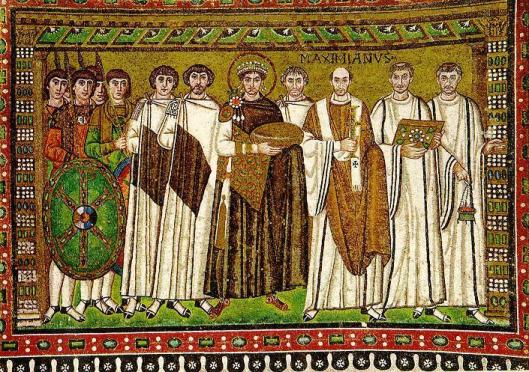
under the emperor Justinian

justinian.jpg

when it encompassed the majority of the Mediterranean basin, to its last, worn-out phase in the early 15th century, when it controlled a few scattered outposts, but mainly the area directly around the capital.

constantinople-world-map.jpg

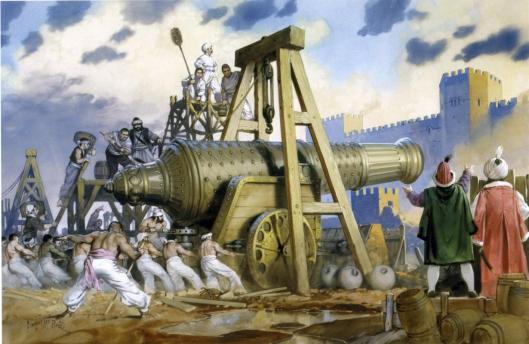
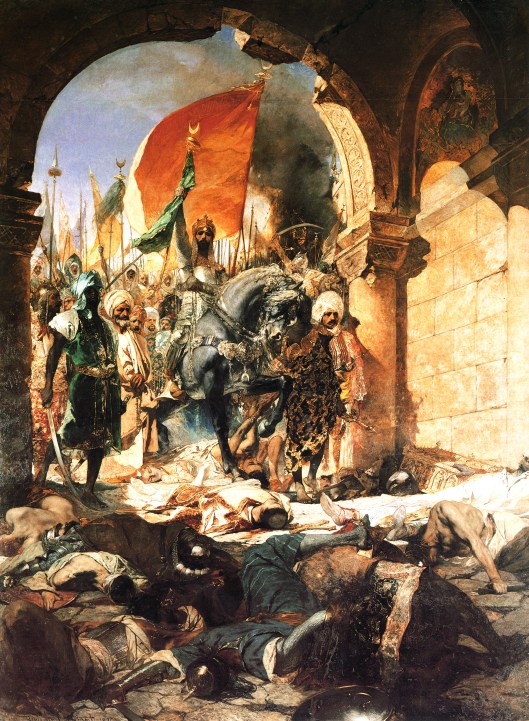
This shrinking of the empire and of its population proved disastrous for the capital. When the Ottoman army, under Mehmet II, arrived outside the walls in the spring of 1453, the imperial government could only provide 7000 defenders, 2000 of whom were foreigners, to defend about 3 and ½ miles of wall (that’s 5 ½ km). Against them were anywhere from 50 to 80,000 attackers, who brought with them (or cast on the spot), massive artillery pieces and, after a 53-day siege, broke into the city and put an end to an empire which had lasted for over 1100 years.

Illustration-of-angus-mcbride-showing-the-ottoman-cannon-basilica-during-the-siege-of-constantinople-in-1453-ad.jpg

Benjamin-Constant-The_Entry_of_Mahomet_II_into_Constantinople-1876.jpg

And this is the last sad similarity with Gondor and its capital, as we see through Pippin’s eyes:

“Pippin gazed in growing wonder at the great stone city, vaster and more splendid than anything that he had dreamed of, greater and stronger than Isengard, and far more beautiful. Yet is was in truth falling year by year into decay, and already it lacked half the men that could have dwelt at ease there. In every street they passed some great house or court over whose doors and arched gates were carved many fair letters of strange and ancient shapes: names Pippin guessed of great men and kindreds that had once dwelt there; and yet now they were silent, and no footsteps rang on their wide pavements, nor voice was heard in their halls, nor any face looked out from door or empty window.”

The Lord of the Rings, Book 5, Chapter 1, “Minas Tirith”

And, just as in the case of Constantinople, the capital of Gondor was hard-pressed to defend itself. Luckily for it, however, there was an uncrowned king with a ghostly army, a brave reinforcement of southern yeomen, a mass of wild horsemen from the north, a wizard, and the fulfillment of an ancient prophecy about a witch king to aid it in its hour of need…

Thanks, as always, for reading.

MTCIDC

CD

His Letters

25 Wednesday May 2016

Posted by Ollamh in Economics in Middle-earth, J.R.R. Tolkien, Literary History

≈ 1 Comment

Tags

1930s England, A Long-Expected Party, Bellerophon, Governor of the King's Posts, Henry VIII, London, mail coach, Orality, Penny Black, pillar box, Pony Express, Postal Service, Postmen, Rowland Hill, Royal Mail, semata lugra, Shire, Shirriffs, Sir Brian Tuke, stamps, The Illiad, The Lord of the Rings, Tolkien

(For Aunt Cathy—she knows why.)

“Mr. Bilbo has learned him his letters—meaning no harm, mark you, and I hope no harm will come of it.” Gaffer Gamgee, The Fellowship of the Ring, Ch.1, A Long-Expected Party


Welcome, as always, dear readers.

We’ve written a little before about aspects of literacy in Middle-earth and we will probably do so again, since the idea of reading and writing in what is, basically, an heroic world interests us very much.

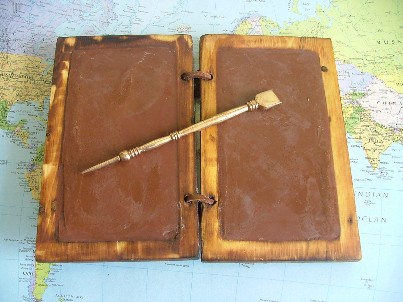
Ordinarily—with a few exceptions (South Slavic pjesme, “songs” sometimes have examples)—we don’t think of writing as being an important feature of heroic stories, but our interest in such things began some years ago with an odd little reference in The Iliad. In all of the story (or in Homer in general for that matter), this is the only mention of what appears to be writing. We say “appears” because the actual writing is called semata lugra, not, in fact, a clear reference to writing, but often translated as something like “baneful signs”. We won’t get into the long, complex controversy over orality and literacy in Homer (although we have strong opinions on the subject) here, but rather point to what these semata were supposed to do. They were inscribed on tablets.

writingtablets1.jpgwritingtablets2.JPG

The tablets were sealed and given to a carrier—in this case, the hero Bellerophon—

NAMA_Epinetron_Bellérophon.jpg

to take with him to the person who would open the tablets, read them, and then—have him killed! That certainly makes those semata lugra. The fact that the tablets were closed suggests that, whatever those “signs” were, the sender thought that the carrier would be able to read them, too, giving us a wider picture of the use of such signs, whatever they might actually be.

But now we come to the Shire, and to a world which is domestic, long before some of its inhabitants become heroic.

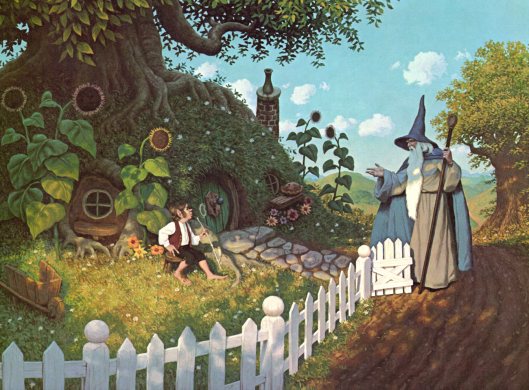
At the beginning of The Hobbit, Bilbo is enjoying a pipe in the morning air when a very disturbing figure appears.

gandalfvisitsbilbo.jpg

His mocking words are soon too much for the Hobbit, who “Then…took out his morning letters, and began to read, pretending to take no more notice of the old man.” (The Hobbit, Ch.1, An Unexpected Party)

As we were once intrigued by the semata lugra, we are now interested in these letters. Douglas Anderson, in his note (15) to this sentence in The Annotated Hobbit supplies the information that “In England in the 1930s there were at least two mail deliveries per day—hence the distinction of morning letters.” (39) If the Shire is like 1930s England, which it sometimes appears to be, even as Tolkien denies that “There is no special reference to England in the ‘Shire’—except of course that of an Englishman brought up in an ‘almost rural’ village of Warwickshire on the edge of the prosperous bourgeoisie of Birmingham…” (draft of a letter to Michael Straight, “probably January or February 1956”, Letters, 235), then Bilbo is in the enviable position of one who is in the care of The Royal Mail—or, in this case, its Shire equivalent. Or is he?

The Royal Mail as a branch of government took off in the time of Henry VIII, with the appointment of Sir Brian Tuke (respell that and where in the Shire might you find him?) as Master of the Posts (1512), then Governor of the King’s Posts (1517).

Holbein,_Hans_-_Sir_Brian_Tuke.jpgmasterkingspost1512.jpg

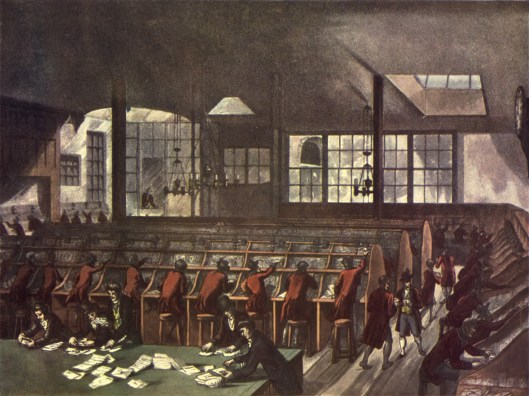
Much, if not most of the correspondence of that period was literally royal—the government’s business, not private correspondence, but, over time, this gradually changed until, by the late 18th century, postmen had an official uniform

bellman2.JPG

and there were places were letters were received and sorted.

lombardstreetpo1809.jpg

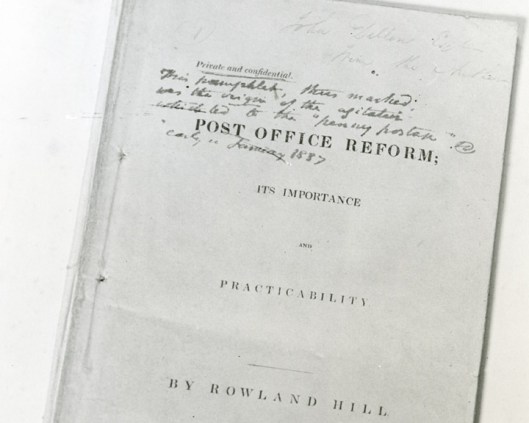
There were problems of corruption in the system, as well as a basic difficulty: the sender didn’t pay for the letter—the receiver did. Thus, there was no assurance that the service would be paid for, beyond whatever government subsidies were allowed to it. All of this began to change in 1837, however, with this privately-printed and circulated pamphlet

Post118_1837_1.jpg

by the education (and, in time more general) reformer, Rowland Hill.

Rowland_Hill_photo_crop.jpg


He proposed to reverse the process: the sender would pay and there would be strict regulation of the charge (and, for ordinary letters a very low charge at that). Initially, the idea was to use an already franked (that is, with a mark showing that it had been paid for) form on which one might write a message, fold it, and send it.

mulready1.jpg


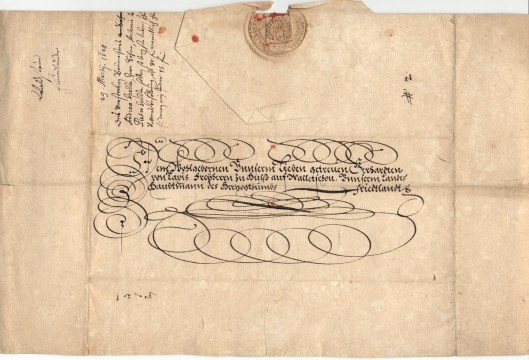
This was not a new idea and had been used since the 17th century, at least.

WallensteinBriefSiegel.jpg

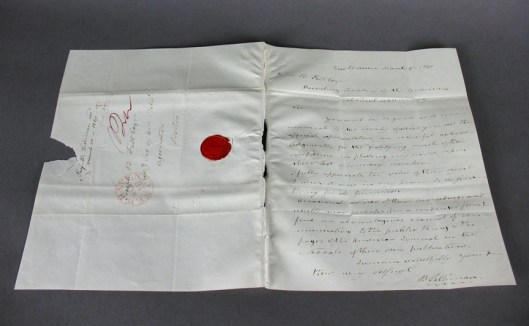
Hill quickly followed this with the idea of a stamp which could be readily attached to a letter—commonly a sheet which, once written upon, could then be folded into its own container.

historicalletter-01.jpg

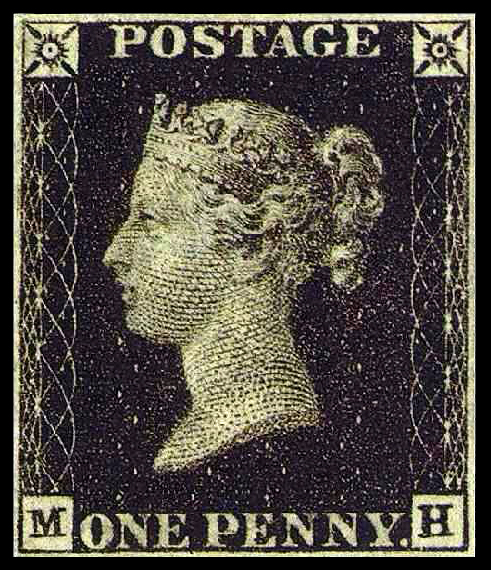
This could also be attached as we do, to a pre-made envelope, into which the folded letter might be placed. This was the first modern stamp, the so-called “Penny Black”.

Penny_black.jpg

After 1853, there were even special public mail boxes into which you might place your letters for collection.

letterbox.jpg

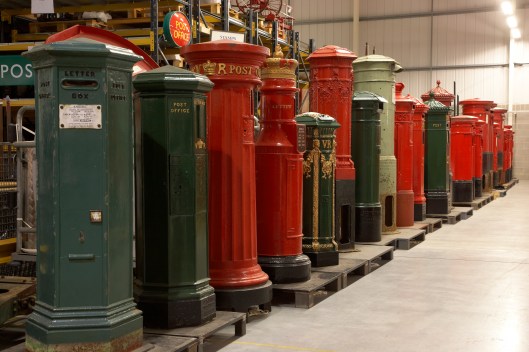
Delivery in big cities like London would, by the late 19th-century, begin at 7:30 in the morning and go to 7:30 in the evening, so that you could write a note to a friend across the city, drop it into a pillar box (mailbox to people in the US) at 7:30 am

pillarbox_line1.jpg


and expect a reply sometime during the same day.

Behind all of this was an increasingly-complex government backed by a well-established bicameral legislature, with an increasingly-large tax base. But what of the Shire?

The government of the Shire seems to be sketchy, at best. Tolkien gives us the total picture on in the Prologue to The Lord of the Rings.

“The only real official in the Shire at this date was the Mayor of Michel Delving (or of the Shire), who was elected every seven years…As mayor almost his only duty was to preside at banquets…But the offices of Postmaster and First Shirriff were attached to the mayoralty, so that he managed both the Messenger Service and the Watch. These were the only Shire-services, and the Messengers were the most numerous, and much the busier of the two. By no means were all Hobbits lettered, but those who were wrote constantly to all their friends (and a selection of their relations) who lived further off than an afternoon’s walk.

The Shirriffs was the name that the Hobbits gave to their police…There were in the Shire only twelve of them, three in each Farthing, for Inside Work.”

So, in contrast to the elaborate workings of the Royal Mail, we are left with a series of questions: if there is a Postmaster—and clearly there is a post—how does it work? Is it all on foot? Is there the equivalent of the Pony Express? Nob, at the Prancing Pony, is called a “slow-coach”—were there once mail coaches, as in England?

The-Cambridge-Telegraph-a-mail-coach-about-to-depart-English.jpg


(Is this the only mention of such carriages in all The Lord of the Rings and The Hobbit? There are certainly wagons—there was even an invasion of “the Wainriders” once upon a time—see Appendix A of The Lord of the Rings.)

How were letters collected? Distributed? Is there a central post office, perhaps in Michel Delving, the closest thing to a capital in the Shire? And, of course, how was it all paid for? In an earlier posting, we talked a little about coinage in Middle-earth and we tried to imagine what Gondorian currency might have looked like—can we imagine Shire postage stamps?

When you read the following, think of your own postal service and join us in wondering about all of the above:

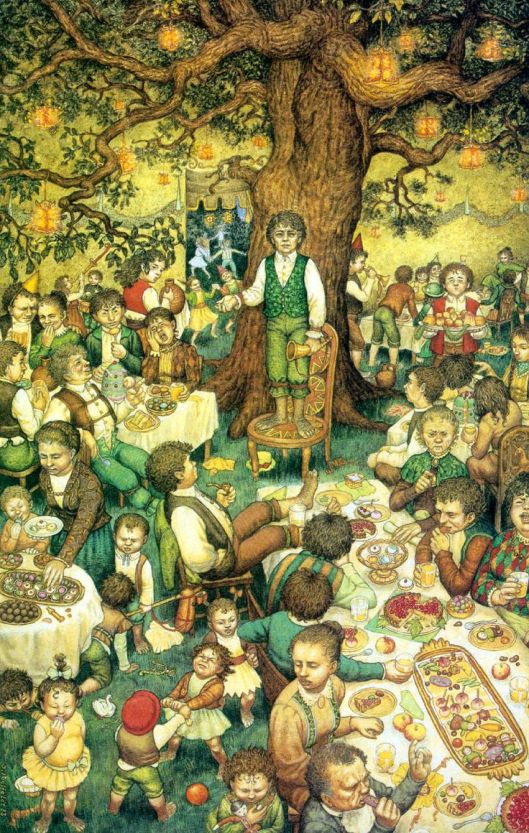
“Before long the invitations began pouring out, and the Hobbiton post-office was blocked, and the Bywater post-office was snowed under, and voluntary assistant postmen were called for…” The Fellowship of the Ring, Ch.1, A Long-Expected Party

ingeredelfeldt.jpg

Thanks, as ever, for reading.

MTCIDC

CD

Rear Guard

18 Wednesday May 2016

Posted by Ollamh in Films and Music, J.R.R. Tolkien, Literary History, Maps, Military History, Military History of Middle-earth, Narrative Methods

≈ 1 Comment

Tags

66th Regiment, British Infantry, Denethor, Faramir, Gary Zaboly, Le Cateau, Maiwand, Nazgul, Osgiliath, Pelennor, Peter Jackson, Rammas Echor, Richard Caton Woodville, the Alamo, The Lord of the Rings, The Return of the King, The Siege of Gondor, Tolkien

Welcome, dear readers, as always.

In a previous posting, we rolled our eyes verbally at a moment in P. Jackson’s The Return of the King in which Faramir, according to the script, was required to mount a double-rank cavalry charge against the west bank of Osgiliath.

gondorianerritt-cb182208.jpg

To us, this was a clumsy attempt to convey the clash between Faramir and his father Denethor, derived from material in The Lord of the Rings, Book 5, Chapter IV, “The Siege of Gondor”, principally from this:

“ ‘Much must be risked in war,’ said Denethor. ‘Cair Andros is manned, and no more can be sent so far. But I will not yield the River and the Pelennor unfought—not if there is a captain here who has still the courage to do his lord’s will.’

Then all were silent. But at length Faramir said: ‘I do not oppose your will, sire. Since you are robbed of Boromir, I will go and do what I can in his stead—if you command it.’

‘I do so,’ said Denethor.

‘Then farewell!’ said Faramir. ‘But if I should return, think better of me!’

‘That depends on the manner of your return,’ said Denethor.

Gandalf it was that last spoke to Faramir ere he rode east. ‘Do you throw your life away rashly or in bitterness,’ he said. ‘You will be needed here, for other things than war. Your father loves you, Faramir, and will remember it ere the end. Farewell!’ “

In the text, Faramir then goes to Osgiliath, having “taken with him such strength of men as were willing to go or could be spared.” The tone here is hardly encouraging and, the following day, “The passage of Anduin was won by the Enemy. Faramir was retreating to the wall of the Pelennor, rallying his men to the Causeway Forts; but he was ten times outnumbered.”

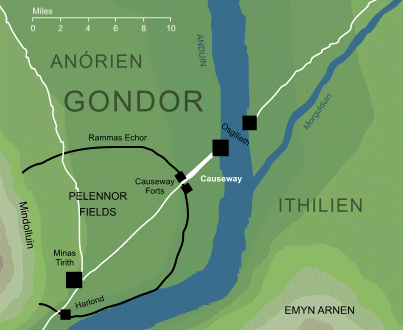
In an earlier posting, we have discussed the Rammas Echor, the wall which enclosed the farmland outside the walls of Minas Tirith.

causeway.gif

We have also discussed the use by both Saruman and Sauron of what appears to be an early form of explosive—seen here in the following description of the fall of the Rammas:

“The bells of day had scarcely rung out again, a mockery in the unlightened dark, when far away he [Pippin] saw fires spring up, across in the dim spaces where the walls of the Pelennor stood. ..Now ever and anon there was a red flash, and slowly through the heavy air dull rumbles could be heard.

‘They have taken the wall!’ men cried. ‘They are blasting breeches in it. They are coming!’ “

Outnumbered and, with the fall of the wall in different locations, outflanked, the best that Faramir can do is to fall back towards Minas Tirith, as Gandalf says, “Yet he is resolved to stay with the rearguard, lest the retreat over the Pelennor become a rout. He may, perhaps, hold his men together long enough, but I doubt it.”

Unlike the silly—there’s really no other word for it—charge of P. Jackson—Faramir is a professional soldier, after all, much loved by his soldiers—we see what JRRT, having been a soldier himself, would have known was the military solution: a fighting retreat, led by a brave and capable leader.

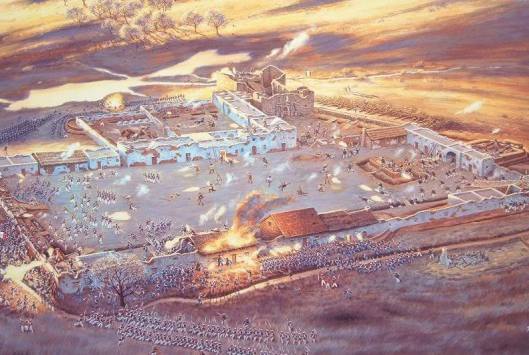
His task had been an impossible one to begin with and, properly understood and depicted on the screen, would not only have been powerful dramatically, but much more believable. It was an impossible task, however, against the odds of ten to one. (For a comparison, we offer the siege and fall of the Alamo, late February-early March, 1836. The garrison numbered about 180, the besiegers eventually approximately 3000. In the final assault, before dawn on 6 March, 1836, the four assaulting columns had about 1200 men, offering odds of roughly 6 to 1 and the entire garrison died, along with somewhere between 400 and 600 of the attackers.)

ALAMO_FORTRESS.jpg

(This is the work of the amazing Gary Zaboly– as an historical illustrator, he can’t be recommended highly enough. Much of his work concerns the 18th century, especially the 1740s and 50s, but he also has done some wonderful depictions of warfare in the American southwest in the 1830s and 40s.)

There are lots of examples of fighting retreats and we’ve picked two: a failure (Maiwand, Second Afghan War, 1880) and Le Cateau (The Great War, 1914).

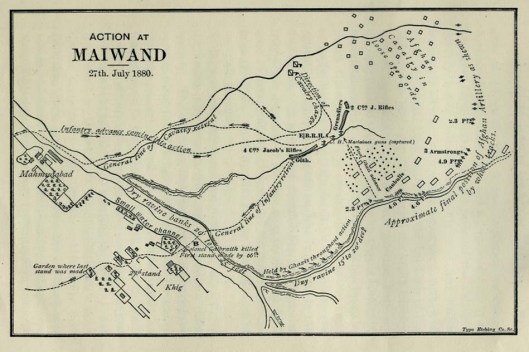
At Maiwand, 27 July, 1880, a British-Indian brigade of 3 infantry units plus two cavalry units and a battery (6 guns) of horse artillery, anywhere from 1500 to 2000 soldiers, faced perhaps 12,000 Afghans with 6 batteries of guns.

Action_at_Maiwand_map.jpg

Basically, the British were outflanked and their left-hand units began to buckle under the pressure of the attacks and the number of attackers which they had to face. As they gave way, the right hand end of the line began to move backwards, feeling increasingly in danger of being surrounded, just as Faramir’s men must have.

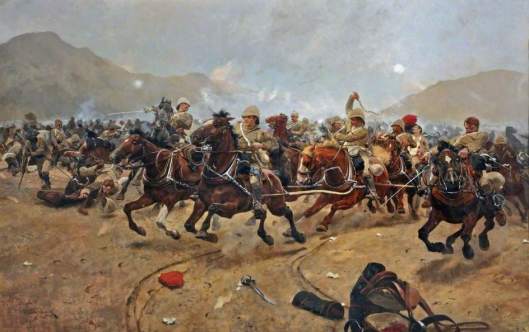
As the infantry retreated, the artillerymen used their guns to buy time for a general withdrawal, ending by losing a section (2 guns) to the enemy. There’s a famous painting of the withdrawal of the remaining guns by the late-Victorian artist, Richard Caton Woodville.

woodvillesavingtheguns.jpg

At the end of the withdrawal from the battle, a small group of British soldiers of the 66th Regiment took shelter inside an enclosure in a nearby village and fought it out to the end.

66thfootmaiwand.jpg

maiwand-66th.jpeg

Gandalf’s worry had been that Faramir couldn’t hold his men together and you can see here what happens when organized units come apart—they are defeated piecemeal, “in detail” is the military expression.

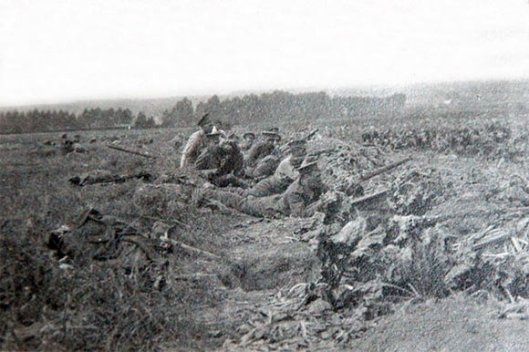
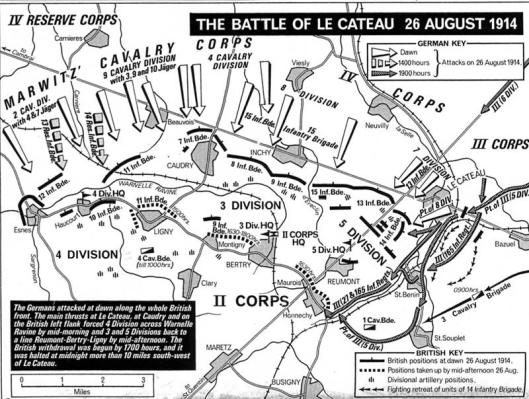
In contrast to this, we offer an action from Tolkien’s own time, the battle at Le Cateau, fought on 26 August, 1914. The British Expeditionary Force, facing superior numbers and in danger of being outflanked, particularly to the west, was engaged in a long retreat. Miraculously, unit cohesion was mostly maintained, although communications were often poor, causing confusion and, in one case, even in losing a unit, never notified of withdrawal.

The British Army was divided into two larger groupings, First and Second Corps, and it was Second Corps which turned to face its pursuers. During a long morning, the British, in hastily-dug trenches, fended off superior numbers of German infantry.

1st-east-lancs-regiment-s.jpg

LeCateauMAP1.jpg

Having lost heavily, but having given the enemy similar punishment, the British slowed German pursuit and were able to withdraw without being as closely pursued as they had been.

The difference here is in exactly what Gandalf was worried about. At Maiwand, the brigade fell apart and could easily be swept away by the enemy. At Le Cateau, although it was hardly a perfect affair, the British kept enough cohesion not only to withstand and defeat heavy attacks, but then to retreat in units, without ever collapsing into a fleeing mob.

What happens in that struggle in the fields behind the Rammas Echor is, in fact, a mixture of the two retreats described above. We see “Small bands of weary and often wounded men…some were running wildly as if pursued.” Then, “…less than a mile from the City, a more ordered mass of men came into view, marching not running, still holding together.” And then “Out of the gloom behind a small company of horsemen galloped, all that was left of the rearguard.”

So, it looks like Faramir had succeeded in maintaining that sense of order and purpose which is vital for a fighting retreat. It was not to last, however, as a mass of enemy horsemen on the causeway behind, as well as several Nazgul from above, threw all into confusion—which was stemmed, in turn, by the arrival of a rescue party, led by the Prince of Dol Amroth and accompanied by Gandalf arrived to drive back the attackers.

gandalf_to_the_rescue___speed_paint4_by_myworld1-d7wjv97.png

In that flurry, Faramir is struck by an arrow and has to be rescued and brought into the City, badly wounded.

Looking back, it is a very different scene from that preposterous cavalry charge, isn’t it? As our readers are probably also experienced watchers of the films, we wonder: which do you prefer, Jackson/writers or the author?

Thanks, as always, for reading.

MTCIDC

CD

← Older posts
Newer posts →

The Doubtful Sea Series Facebook Page

The Doubtful Sea Series Facebook Page

  • Ollamh

Categories

  • Artists and Illustrators
  • Economics in Middle-earth
  • Fairy Tales and Myths
  • Films and Music
  • Games
  • Heroes
  • Imaginary History
  • J.R.R. Tolkien
  • Language
  • Literary History
  • Maps
  • Medieval Russia
  • Military History
  • Military History of Middle-earth
  • Narnia
  • Narrative Methods
  • Poetry
  • Research
  • Star Wars
  • Terra Australis
  • The Rohirrim
  • Theatre and Performance
  • Tolkien
  • Uncategorized
  • Villains
  • Writing as Collaborators
Follow doubtfulsea on WordPress.com

Across the Doubtful Sea

Recent Postings

  • Do You Speak Villain? (Part 3) February 18, 2026
  • Do You Speak Villain? (2) February 11, 2026
  • Do You Speak Villain? (Part 1) February 4, 2026
  • Towering January 28, 2026
  • Tolkien Among the Indians January 21, 2026
  • Thin and Stretched January 14, 2026
  • Through a glass… January 7, 2026
  • Heffalumps? December 31, 2025
  • We Three Kings December 24, 2025

Blog Statistics

  • 107,650 Views

Posting Archive

  • February 2026 (3)
  • January 2026 (4)
  • December 2025 (5)
  • November 2025 (4)
  • October 2025 (5)
  • September 2025 (4)
  • August 2025 (4)
  • July 2025 (5)
  • June 2025 (4)
  • May 2025 (4)
  • April 2025 (5)
  • March 2025 (4)
  • February 2025 (4)
  • January 2025 (5)
  • December 2024 (4)
  • November 2024 (4)
  • October 2024 (5)
  • September 2024 (4)
  • August 2024 (4)
  • July 2024 (5)
  • June 2024 (4)
  • May 2024 (5)
  • April 2024 (4)
  • March 2024 (4)
  • February 2024 (4)
  • January 2024 (5)
  • December 2023 (4)
  • November 2023 (5)
  • October 2023 (4)
  • September 2023 (4)
  • August 2023 (5)
  • July 2023 (4)
  • June 2023 (4)
  • May 2023 (5)
  • April 2023 (4)
  • March 2023 (5)
  • February 2023 (4)
  • January 2023 (4)
  • December 2022 (4)
  • November 2022 (5)
  • October 2022 (4)
  • September 2022 (4)
  • August 2022 (5)
  • July 2022 (4)
  • June 2022 (5)
  • May 2022 (4)
  • April 2022 (4)
  • March 2022 (5)
  • February 2022 (4)
  • January 2022 (4)
  • December 2021 (5)
  • November 2021 (4)
  • October 2021 (4)
  • September 2021 (5)
  • August 2021 (4)
  • July 2021 (4)
  • June 2021 (5)
  • May 2021 (4)
  • April 2021 (4)
  • March 2021 (5)
  • February 2021 (4)
  • January 2021 (4)
  • December 2020 (5)
  • November 2020 (4)
  • October 2020 (4)
  • September 2020 (5)
  • August 2020 (4)
  • July 2020 (5)
  • June 2020 (4)
  • May 2020 (4)
  • April 2020 (5)
  • March 2020 (4)
  • February 2020 (4)
  • January 2020 (6)
  • December 2019 (4)
  • November 2019 (4)
  • October 2019 (5)
  • September 2019 (4)
  • August 2019 (4)
  • July 2019 (5)
  • June 2019 (4)
  • May 2019 (5)
  • April 2019 (4)
  • March 2019 (4)
  • February 2019 (4)
  • January 2019 (5)
  • December 2018 (4)
  • November 2018 (4)
  • October 2018 (5)
  • September 2018 (4)
  • August 2018 (5)
  • July 2018 (4)
  • June 2018 (4)
  • May 2018 (5)
  • April 2018 (4)
  • March 2018 (4)
  • February 2018 (4)
  • January 2018 (5)
  • December 2017 (4)
  • November 2017 (4)
  • October 2017 (4)
  • September 2017 (4)
  • August 2017 (5)
  • July 2017 (4)
  • June 2017 (4)
  • May 2017 (5)
  • April 2017 (4)
  • March 2017 (5)
  • February 2017 (4)
  • January 2017 (4)
  • December 2016 (4)
  • November 2016 (5)
  • October 2016 (6)
  • September 2016 (5)
  • August 2016 (5)
  • July 2016 (5)
  • June 2016 (5)
  • May 2016 (4)
  • April 2016 (4)
  • March 2016 (5)
  • February 2016 (4)
  • January 2016 (4)
  • December 2015 (5)
  • November 2015 (5)
  • October 2015 (4)
  • September 2015 (5)
  • August 2015 (4)
  • July 2015 (5)
  • June 2015 (5)
  • May 2015 (4)
  • April 2015 (3)
  • March 2015 (4)
  • February 2015 (4)
  • January 2015 (4)
  • December 2014 (5)
  • November 2014 (4)
  • October 2014 (6)
  • September 2014 (1)

Blog at WordPress.com.

  • Subscribe Subscribed
    • doubtfulsea
    • Join 78 other subscribers
    • Already have a WordPress.com account? Log in now.
    • doubtfulsea
    • Subscribe Subscribed
    • Sign up
    • Log in
    • Report this content
    • View site in Reader
    • Manage subscriptions
    • Collapse this bar
 

Loading Comments...