• About

doubtfulsea

~ adventure fantasy

Author Archives: Ollamh

Heroes III

24 Monday Nov 2014

Posted by Ollamh in Heroes, Military History, Terra Australis

≈ Leave a comment

Dear Readers,

Welcome!

In our last, we continued discussion of our heroes. So far, we’ve talked about the French and the English, their look and their ships. Now we want to say something briefly about our heroes—mostly, in fact, heroines—from the Calm Sea (in our world, the Pacific).

As we began to model our villains, as we’ve said, we combined the look of the Inuit with that of Persians and Ottoman Turks. This gave us both a wintery exterior and a lush, brightly-colored interior.

For our Calm Sea heroes, we’ve looked to the Polynesian adventurers who colonized the eastern and southern islands of the Pacific between 800 and 1300AD.

1_the_polynesian_migration

To narrow this a bit, we borrowed linguistically mainly from the Tahitians, but visually from a wide variety of peoples, with perhaps more visuals chosen from the Maori than others. We call our people the Matan’a’e amavi’o, “the people of the goddess Matan’a’e”.

For example, our heroines, Matan’o’ahei, the warrior priestess of the goddess Matan’a’e, and her younger sister, Naru, both wear a distinctive Maori tattoo, or moko, on their lower faces as a mark of their status as belonging to a priestly family.

Femme_Maori_1998-23050-173

The warriors of the Matan’a’e amavi’o we imagined as looking like Maori warriors—here doing a traditional war dance, a haka, in this early 19th-century illustration.

MaoriWardanceKahuroa

Here’s a selection of Maori weapons—the weapons of the Matan’a’e amavi’o, as well.

museum

For their ships, we have created a sort of Polynesian-based warship, our model being the catamaran.

Cata-Tonga-3v hokule-aschematic kane_waa_small10

To give such a ship some teeth, we added this, a small, very basic catapult, of the sort seen in early China.

c-crouchingtigercatapult

As for their opponents, whom the Matan’a’e amavi’o call the Atuk amavi’o, “the people of cold”, we will discuss their ships in our next post.

If you have any questions about any of our past posts, or about the civilizations we are developing in our novels, please let us know.

Thanks for reading!

MTCIDC

CD

Heroes II

18 Tuesday Nov 2014

Posted by Ollamh in Heroes, Military History

≈ 2 Comments

Dear Readers,

We’ve shown you something of the look of our European heroes, French and English. Now we want to show you their ships.

A disclaimer: we are not experts in 18th-century naval affairs. This is potentially an enormous subject, especially towards the end of the century, when we have the French Revolutionary and Napoleonic Wars. Far better writers than we—we name only C.S. Forester and Patrick O’Brian here—have used their knowledge to produce convincing historical novels of the sea. We have never intended to emulate them.

Instead, in our alternative world fantasy/adventure novels, we hope to suggest something of the subject, but only enough to provide settings and plot elements. We’ve done some homework, however, and provide a mini-bibliography at the end of this post for those who might want to see where we came from. As you read through it, you’ll notice immediately that words like “Nelson” and “Napoleonic” pop up regularly. As far as we can currently tell, information for the period of our series—the 1750s to the 1780s—is much sparser, but, from our reading, it would appear that basic elements, like life at sea, did not change much over 50 years or more.

Big, decisive naval battles of this era were fought with the period equivalent of modern battleships: three-masted sailing ships with guns ranging in number from the 50s to the 90s. Here are HMS Victory, an English ship (shown from the air to show how big she is), and a model of one of the larger French ships.

HMS Victory 1024px-MuseeMarine-Ocean-p1000425

The guns used were all muzzle-loading and varied in size, the size being gauged not by the gun itself, but by the weight of the solid iron ball which was the basic ammunition.

12534_1

Thus, a 12-pounder like this one—

OLYMPUS DIGITAL CAMERA

fired a ball weighing 12 pounds. French ships, in fact, could be classed in part by saying what the main armament consisted of in terms of the weight of the ball fired. In this way, a frigate (we’ll talk more about these in a moment) could be called a “12-pounder frigate”. The bigger French warships of this time, the so-called “74s”, could also as the name suggests, be classified by the number of their guns. Somewhat like this system, the English used a system of “ratings”, each rating being based upon the total number of guns on board a ship.

As well as solid iron balls, both sides might use a variety of types of ammunition, from grape shot (an anti-personnel weapon) to chain and bar shot, both useful for tearing apart rigging and therefore rendering an anemy ship immobile.

cannon_projectile_examples

Theoretically, the French were supposed to aim for the rigging and the English to focus upon the crew on deck and the hull, but there is now argument about this, at least in the study of the Napoleonic period.

It was also common practice, if you thought that the enemy was beginning to falter, to try to board the enemy ship, thus turning a sea battle into a small land battle. Ships carried stores of weapons for hand-to-hand fighting, their crews arming themselves with cutlasses, pistols, muskets, pikes, axes, and even hand grenades.

boarding a vessel

OLYMPUS DIGITAL CAMERA Grenadeslg

Larger ships also carried detachments of marines, both to fire upon enemy ships from the deck and rigging as they closed with each other, and to form part of boarding parties. This is a group of Napoleonic-period British marines at their job as sharpshooters.

frigatebattle2

For our first book, however, we chose not to use the battleships of the day but the smaller, more lightly-armed frigates. These, like the battleships, were three-masted, but their guns numbered from the upper 20s to the upper 30s, in general. Here are two, one English, the Surprise, from the movie Master and Commander, the other French, a brand new recreation of the 1770s L’Hermione. (more about her in the future.)

20121027-071654

depart-de-l-hermione-lundi-a-bordeaux-apres-une-escale_2130364_1200x800

Combat between such ships could be like a deadly dance, each struggling both to gain the wind and to pound the other into surrender. If the opponent continued to resist, as in the case of the battleships, boarding was also a possibility.

history_CyaneLevantBattlePattern

HMS_Guerriere

Bayonnaise_vs_Embuscade_mg_9452

If you are new to this world of naval adventures, we hope that this encourages you to learn more. Our father authors are Forester and O’Brian and there are very good films made from the works of both. Master and Commander is based upon elements from several of O’Brian’s novels and the BBC television series Horatio Hornblower is founded (somewhat loosely) upon the Forester novels of the same name. Both of these have very much helped us to see the world of our characters in more vivid way.

We’ll stop here and, in our next, we’ll talk about our other heroes—really, heroines—the Matan’a’e amavi’o.

Thanks, as always, for reading.

MTCIDC

CD

Ps

The count-down has begun on Across the Doubtful Sea. We are in the later stages of editing and hope to have it available on Amazon/Kindle by sometime in early December.

Heroes, Part I

13 Thursday Nov 2014

Posted by Ollamh in Heroes, Military History

≈ 1 Comment

Dear Readers,

Welcome!

So far, we’ve talked a certain amount about villains, but what about heroes?
We have three different varieties, in fact. First, there are the French, officers and men of His Majesty’s navy, with a few civilians thrown in. As we said in our first post, we began our work by deciding that the basis for this series would be a variant of our own world of the late 18th century. At that time, France and England had been involved, on and off, in wars with each other back into the previous century. At the same time, from the mid-18th century on, both had been rivals in exploration of the Pacific.
For English-speakers, the most famous of these explorers is Captain James Cook. In three expeditions (1768-71, 1772-75, and 1776-79), Cook mapped large areas of the ocean and its lands before being killed in a skirmish with Hawaiians in February, 1779.

Captain James Cook (1728-1779)  *oil on canvas  *127 x 101.6 cm  *1775-1776

Geoffrey Huband - Resolution and Discovery Cook Hawaii - 1779

A parallel explorer, from the French navy of the time, is completely unknown in the English-speaking world except as the name of a flower.

6899375650_d7f443c785_z
This was Louis Antoine de Bougainville, who is the first Frenchman to circumnavigate the globe in 1766-69. Just as we have learned a great deal from Cook’s voyages, so we have added to our knowledge with de Bougainville, who is a remarkable figure even in the Age of Enlightenment. (You can read a period English version of his famous account at: https://archive.org/download/VoyageAroundTheWorldbyLewisDeBougainville1766-9/Bougainville_Voyage_Eng_Transcr_JFF.pdf)

bougainville
Twenty years later, another Frenchman, whose story is even more romantic, appears in the literature of the Pacific, Jean-Francois de Galaup de La Perouse. In a voyage which began in 1785 and which only ended in 1788 with the disappearance of La Perouse and his two ships, L’Astrolabe and La Boussole (the Astrolabe and the Compass), and included, along the way, a vast stretch of the Pacific, including Australia and the Kamchatka Peninsula.

Laperouse-Eleonore826 boussole-astrolabe

This voyage had so attracted public attention that its commissioner, Louis XVI, supposedly asked for news about it on the way to his execution.
Louis_XVI_et_La_Pérouse
So what did the French look like? Common sailors during this time were not normally issued uniforms, but their working gear clearly marked them out as seamen. Officers, however, wore blue coats with red cuffs and small clothes (vests and pantaloons and possibly stockings).

IMG_9178 IMG_9168

Our second variety of hero is the English equivalent: the Royal Navy, its officers and men. Like the French, their sailors wore no uniforms, only working clothes, which were similar to those of the French, and the officers were blue coats with white collars, cuffs, and small clothes.

Captain_Cook,_oil_on_canvas_by_John_Webber,_1776,_Museum_of_New_Zealand_Tepapa_Tongarewa,_Wellington Captain_Edward_Vernon_(1723-1794)._by_Francis_Hayman v0_master
When we began our research for Across the Doubtful Sea and its sequels, we were interested to find that it was quite easy to turn up information for the Napoleonic era, but earlier material was harder to come by. Besides paintings from the era, our illustrations come from John Mollo, Uniforms of the American Revolution (British Navy, figures 152-57; French, 158-63) and Eugene Leliepvre, Ancien Regime (plate 15, “Officiers de Marine et Matelots, 1679-1786″),
In our next, we want to share with you the ships we’ve used as models for our ships. In that post, we’ll include exciting news about a new, full-size, sailing replica of the 1770s frigate, L’Hermione.
And, in the post after that, we want to talk about our third variety of hero, the Matan’a’e amavi’o…

MTCIDC,

CD

A Language for Antagonists

04 Tuesday Nov 2014

Posted by Ollamh in Imaginary History, Language, Villains

≈ 1 Comment

Dear Readers,

In our last, we told you that some of our villains are French. (Of course, this means English-speaking in a novel written in English.) If your villains don’t belong to your culture and don’t use yours as their first language, what might they speak? And, what might they call themselves and the places around them?

We’ve already shown you how our non-French villains evolved. They originally had the look of Inuit because of their association with cold. Then, because we like the contrast, we showed you their bright Turkish-Persian look underneath.

So– Inuit look made us wonder about Inuit sound.

We want to make a very necessary disclaimer here: that we borrowed visuals or languages from any culture doesn’t indicate anything more than the magpie nature of our creating an alternate 18th century world. To us, all languages and cultures are equally interesting and we’d study them all, if we could.

There are some really useful online sources, including this Iñupiat Dictionary, which we encourage you to open and look through. We think you will find it as fascinating as we did. (A mild warning– this is a rather large file– but worth it!)

As we browsed this and other sites, we sometimes lifted things entirely. At other times, we adapted what we found. Our goals were not only to provide ourselves with a fund of useful words and naming elements, but also to create a strong contrast with the languages of our protagonists, both French and Polynesian.

As great admirers of Tolkien we’ve always been fascinated by the languages he created for Middle-earth. We hope to try to create our own in a future series of adventure novels, tentatively called To Windward.

In our next, we want to talk about our protagonists, both French and– English?

Thank you for reading!

MTCIDC,

CD

What More About Villains?

28 Tuesday Oct 2014

Posted by Ollamh in Imaginary History, Narrative Methods, Villains

≈ Leave a comment

Dear Readers,

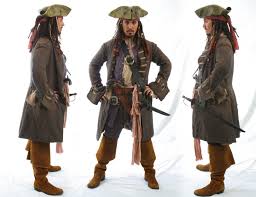
Happy Halloween! This is a great holiday for people interested in fantasy and adventure. After all, you’ve got witches, ghouls, vampires, and even a Headless Horseman– villains!6960244159_7f66a0d317_z

(Or just children in really great costumes.)

And speaking of villains, we will.

In our last, we talked in a general way about our villains– Frenchmen and other. Now, we want to talk more specifically about Other.

Because Terra Australis is based upon the real Antarctica, the idea of cold, in some form,  was a ready influence. And so, there appeared the Atuk, the servants of a god who embodies cold. This led us to imagine what they might look like. At first, we thought perhaps something like Inuit: all furs and big boots and slitted wooden sunscreens. And that might be an idea for the next book, Empire of the Isles. Here are a couple of those possibilities:

IMG_0754

IMG_0745

For Across the Doubtful Sea, however, we decided to imagine what they might look like underneath those wintry clothes. For models, we chose an extreme contrast– Ottoman Turkish and Persian– like the images below.

ottomanboss      ottoman_empire_2_by_byzantinum

IMG_0705

With them in costume, we wondered what they would sound like. What would their names be like? Would they speak a language like the Inupiat of our original models, or something Turkic or Persian?

For now, however, imagine dressing as one of the fearsome Atuk for next Halloween…

Thanks, as always, for reading, and save some candy corn for us!

MTCIDC,

CD

What About Villains?

24 Friday Oct 2014

Posted by Ollamh in Imaginary History, Narrative Methods, Villains

≈ 1 Comment

Tags

Adventure, Fantasy, Fiction, Villains

Dear Readers,

Villains– a big question, and something which needs more than one post.

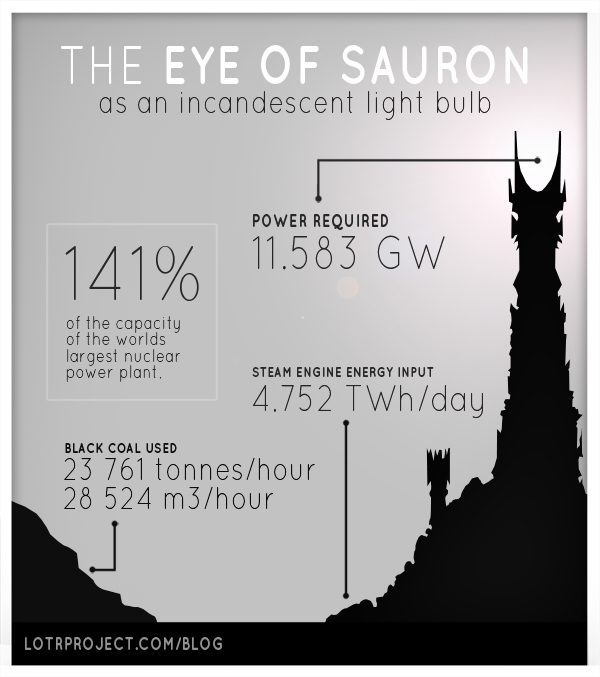
There are so many kinds, from Sauron to the Joker. All of them, however, produce friction– that which produces problems and demands solutions. As well, it allows for heroes to be defined and to define themselves.

For this series, we have two kinds of villains so far: those native to our hero’s homeland and those who are entirely alien to everything our 18th century understands. The former include corrupt officials within the royal government, and the latter, those who might appear human, but who also have powers over nature which seem superhuman.

Corrupt officials are pretty easy to create– they’re everywhere, but we believe that we’ve given ours an extra twist. As for the others, we’ll talk about those in our next post…

Thanks for reading,

MTCIDC,

CD

Terra Australis?

14 Tuesday Oct 2014

Posted by Ollamh in Imaginary History, Terra Australis

≈ Leave a comment

Dear Readers,

What about Terra Australis?

Why write about a parallel 18th century world instead of the real one?

Certainly, we’re not against doing research in our world to use in that other world we’re creating. In fact, we very much enjoy it. The historical 18th century provides physical structure– real ships, period technology, even period ideas, upon which we can build. Thus, we take real places like England and France, and real political situations, like the struggle between France and England. Then we add something theoretical from the 18th century– Terra Australis, and we make it (selectively) real.

We say selectively real because, on the one hand, we’ve based it on the actual Antarctica, but, on the other, we’ve changed its climate and we’ve populated it. We have made much of it green, and only some parts, ice. By doing this, we have generated a strong plot element: why is this place, Terra Australis, cold in one place and warm in another? Is it possible that someone or something creates that cold? And, if so, are we on our way to mystery and villains?

MTCIDC,

CD

Where Did We Go From There?

09 Thursday Oct 2014

Posted by Ollamh in Imaginary History, Terra Australis

≈ 2 Comments

Dear Readers,

Terra Australis. Although this looks like it might be Australia, and the name Australia comes from it, in the earlier years of the 18th century, it wasn’t. Instead, it was another continent thought to be in the far south, where our Antarctica is. The idea for such a continent was as old as Aristotle. His idea was that, because there was a northern landmass, there should be an equal one to the south.

In our fictional world, Terra Australis really is a continent in the south. Unlike Antarctica, it is not totally covered in ice and snow– but some areas are. Why this is so forms part of the story of our series of three novels. Here are three images to give you an idea where we started. The first, as you can see, is a very old map, and it imagines Terra Australis the way Aristotle must have.

image1

The second and third are maps of our Antarctica– but imagine it without those huge ice fields, and you can see the rock underneath. Our Terra Australis is founded upon the rock of Antarctica.

Finaeus_antart

antarctic2_624x420

MTCIDC!

Thank you for reading,

CD

Beginning(s)

07 Tuesday Oct 2014

Posted by Ollamh in Writing as Collaborators

≈ 1 Comment

Dear Readers, 

We didn’t start out to be co-authors. In fact, we were going to study English and American Poetry and the writing of it. So we sat in Barnes and Noble, surrounded by books and the roar of the coffee machine, and read poems and talked about them. Then, one day, quite early on, D said to C (out of the blue), “I’d like to write a novel about something new, something I don’t know anything about.” Without thinking, C said, “South Seas exploration in the 18th century. Do you know anything about that?” 

And that’s the moment we became collaborators.

And that’s the moment when we both realized that neither one of us knew much of anything about south seas exploration in the 18th century. It meant research, and lots of it, not only about the south seas, but about the 18th century maritime world, among other subjects.  

We also wanted to write fantasy/adventure/romance: how could we combine our research-to-come with that desire?

And then we discovered Terra Australis. 

MTCIDC,

CD

A Bit More

02 Thursday Oct 2014

Posted by Ollamh in Terra Australis, Writing as Collaborators

≈ Leave a comment

Dear Readers,

In our first blog posting, we spoke a little about what we’re doing and intending, but now we want to add to that a little more about our first projects. As we said in our first, we are joint-explorers of adventure fiction, writing about exploration in a parallel 18th-century world. To heroes drawn from the French and English navies of the period, we have heroines whom we’ve created from elements of fantasy and South Pacific culture, with our goal the addition of more fierce and able women to the world  of fantasy/adventure fiction.  The books are in English, of course, but include names based upon Polynesian models for heroines and the world around them, and upon the languages of the far north for their opponents, the strange, silent Atuk and their god, Haleiheia Teiheifata, “he who drinks breath, is twisted in cold” (as their enemies call him).

To create this new parallel, our work combines research into the actual (well, one actual) 18th-century and its ideas about the ocean to the west of South America and about what they believed to be a continent-of-balance far to the south (Antarctica in our world, in fact). We have also had to teach ourselves as much as we needed about the complex world of 18th-century naval technology, as well as about the history of Polynesian culture and colonization of the Pacific. In coming blogs, we’ll discuss that research and provide some bibliography and links for anyone who would like to follow us–and we hope that there will be many. 

And, because we enjoy mystery along with collaboration, we have decided to emulate some of our literary ancestors, like the early Brontes and Louisa May Alcott and even Boz, and publish our work under a joint pen name, CD.  Perhaps we’ll offer a prize for anyone who can guess why we chose those initials…

← Older posts
Newer posts →

The Doubtful Sea Series Facebook Page

The Doubtful Sea Series Facebook Page

  • Ollamh

Categories

  • Artists and Illustrators
  • Economics in Middle-earth
  • Fairy Tales and Myths
  • Films and Music
  • Games
  • Heroes
  • Imaginary History
  • J.R.R. Tolkien
  • Language
  • Literary History
  • Maps
  • Medieval Russia
  • Military History
  • Military History of Middle-earth
  • Narnia
  • Narrative Methods
  • Poetry
  • Research
  • Star Wars
  • Terra Australis
  • The Rohirrim
  • Theatre and Performance
  • Tolkien
  • Uncategorized
  • Villains
  • Writing as Collaborators
Follow doubtfulsea on WordPress.com

Across the Doubtful Sea

Recent Postings

  • Planting April 29, 2026
  • Subterranean April 22, 2026
  • Serendipity? April 15, 2026
  • Serendipity April 8, 2026
  • Verisimilitude April 1, 2026
  • Goblins and Goblin March 25, 2026
  • Crowing and Raven March 18, 2026
  • The Damage of Dragons March 11, 2026
  • Encouragement March 4, 2026

Blog Statistics

  • 112,388 Views

Posting Archive

  • April 2026 (5)
  • March 2026 (4)
  • February 2026 (4)
  • January 2026 (4)
  • December 2025 (5)
  • November 2025 (4)
  • October 2025 (5)
  • September 2025 (4)
  • August 2025 (4)
  • July 2025 (5)
  • June 2025 (4)
  • May 2025 (4)
  • April 2025 (5)
  • March 2025 (4)
  • February 2025 (4)
  • January 2025 (5)
  • December 2024 (4)
  • November 2024 (4)
  • October 2024 (5)
  • September 2024 (4)
  • August 2024 (4)
  • July 2024 (5)
  • June 2024 (4)
  • May 2024 (5)
  • April 2024 (4)
  • March 2024 (4)
  • February 2024 (4)
  • January 2024 (5)
  • December 2023 (4)
  • November 2023 (5)
  • October 2023 (4)
  • September 2023 (4)
  • August 2023 (5)
  • July 2023 (4)
  • June 2023 (4)
  • May 2023 (5)
  • April 2023 (4)
  • March 2023 (5)
  • February 2023 (4)
  • January 2023 (4)
  • December 2022 (4)
  • November 2022 (5)
  • October 2022 (4)
  • September 2022 (4)
  • August 2022 (5)
  • July 2022 (4)
  • June 2022 (5)
  • May 2022 (4)
  • April 2022 (4)
  • March 2022 (5)
  • February 2022 (4)
  • January 2022 (4)
  • December 2021 (5)
  • November 2021 (4)
  • October 2021 (4)
  • September 2021 (5)
  • August 2021 (4)
  • July 2021 (4)
  • June 2021 (5)
  • May 2021 (4)
  • April 2021 (4)
  • March 2021 (5)
  • February 2021 (4)
  • January 2021 (4)
  • December 2020 (5)
  • November 2020 (4)
  • October 2020 (4)
  • September 2020 (5)
  • August 2020 (4)
  • July 2020 (5)
  • June 2020 (4)
  • May 2020 (4)
  • April 2020 (5)
  • March 2020 (4)
  • February 2020 (4)
  • January 2020 (6)
  • December 2019 (4)
  • November 2019 (4)
  • October 2019 (5)
  • September 2019 (4)
  • August 2019 (4)
  • July 2019 (5)
  • June 2019 (4)
  • May 2019 (5)
  • April 2019 (4)
  • March 2019 (4)
  • February 2019 (4)
  • January 2019 (5)
  • December 2018 (4)
  • November 2018 (4)
  • October 2018 (5)
  • September 2018 (4)
  • August 2018 (5)
  • July 2018 (4)
  • June 2018 (4)
  • May 2018 (5)
  • April 2018 (4)
  • March 2018 (4)
  • February 2018 (4)
  • January 2018 (5)
  • December 2017 (4)
  • November 2017 (4)
  • October 2017 (4)
  • September 2017 (4)
  • August 2017 (5)
  • July 2017 (4)
  • June 2017 (4)
  • May 2017 (5)
  • April 2017 (4)
  • March 2017 (5)
  • February 2017 (4)
  • January 2017 (4)
  • December 2016 (4)
  • November 2016 (5)
  • October 2016 (6)
  • September 2016 (5)
  • August 2016 (5)
  • July 2016 (5)
  • June 2016 (5)
  • May 2016 (4)
  • April 2016 (4)
  • March 2016 (5)
  • February 2016 (4)
  • January 2016 (4)
  • December 2015 (5)
  • November 2015 (5)
  • October 2015 (4)
  • September 2015 (5)
  • August 2015 (4)
  • July 2015 (5)
  • June 2015 (5)
  • May 2015 (4)
  • April 2015 (3)
  • March 2015 (4)
  • February 2015 (4)
  • January 2015 (4)
  • December 2014 (5)
  • November 2014 (4)
  • October 2014 (6)
  • September 2014 (1)

Blog at WordPress.com.

  • Subscribe Subscribed
    • doubtfulsea
    • Join 75 other subscribers
    • Already have a WordPress.com account? Log in now.
    • doubtfulsea
    • Subscribe Subscribed
    • Sign up
    • Log in
    • Report this content
    • View site in Reader
    • Manage subscriptions
    • Collapse this bar

Loading Comments...