• About

doubtfulsea

~ adventure fantasy

Tag Archives: The Hobbit

Red Books, Black Books, Yellow Books

24 Wednesday Jun 2015

Posted by Ollamh in J.R.R. Tolkien, Language, Narrative Methods

≈ Leave a comment

Tags

Bilbo, Black Book of Carmarthen, Book of Ballymote, Book of Leinster, Book of Lismore, Book of Taliesin, Book of the Dun Cow, Dwarves, Geoffrey of Monmouth, Gollum, Mabinogion, Manuscript, Medieval books, Red Book of Hergest, Red Book of Westmarch, Scriptorium, The Hobbit, The Lord of the Rings, The Shire, Tolkien, White Book of Rhydderch, Yellow Book of Lecan

Dear Readers,

Welcome back! This posting is devoted to a look at what lies behind that famous imaginary document The Red Book of Westmarch.

     As Tolkien says of The Lord of the Rings in the section of the prologue entitled “Note on the Shire Records”:

“This account of the end of the Third Age is drawn mainly from the Red Book of Westmarch. That most important source for the history of the War of the Ring was so called because it was long preserved at Undertowers, the home of the Fairbairns, Wardens of the Westmarch. It was in origin Bilbo’s private diary, which he took with him to Rivendell. Frodo brought it back to the Shire, together with many loose leaves of notes, and during S.R. 1420-1 he nearly filled its pages with his account of the War. But annexed to it and preserved with it, probably in a single red case, were the three large volumes, bound in red leather, that Bilbo gave to him as a parting gift. To these four volumes there was added in Westmarch a fifth containing commentaries, genealogies, and various other matter concerning the hobbit members of the Fellowship.” 14

redbookfacsimile

     This is not the end of the material on the Red Book, of course,—that takes up another paragraph and then is continued in several more paragraphs about copies and about other pertinent written sources. This is JRRT having fun, of course: after all, for him, what is more satisfying after creating languages than building contexts for them?

     This particular context is based upon material from his own specialty, medieval literature, and it’s always been said that The Red Book of Westmarch was inspired by the late 14th-century Welsh Red Book of Hergest. This famous manuscript contains one of the major texts of the cycle of legendary material called the Mabinogion, but for Tolkien its importance may have been simply that

  1. it’s a medieval manuscript familiar to him and a model-ready-to-hand for what he created in what he thought of as his own medieval world
  2. as the Wiki entry says, “The manuscript derives its name from the colour of its leather binding and from its association with Hergest Court between the late 15th and early 17th century.”

redbookofhergest

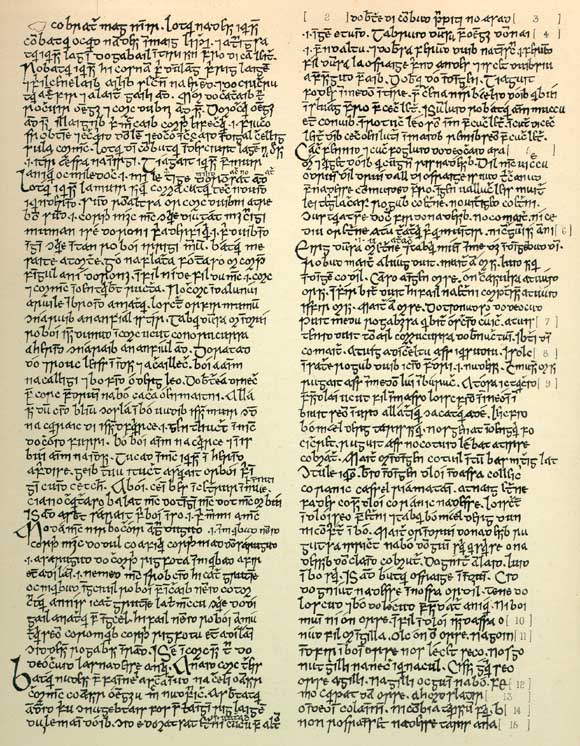
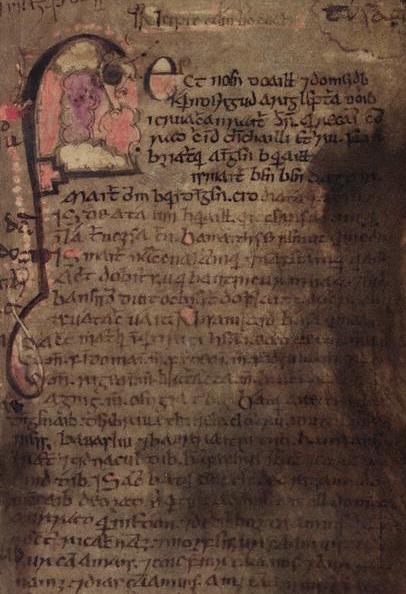
     This manuscript and others like it, both Welsh (Black Book of Carmarthen,White Book of Rhydderch, Book of Taliesin) and Irish (Book of the Dun Cow, Yellow Book of Lecan, Book of Leinster, Book of Ballymote, Book of Lismore)

blackbookofcarmarthen

Book_of_Taliesin_facsimile

whitebookof rhydderch

lebornauidre

Book_of_Lecan_p2

Book_of_Leinster,_folio_53

were created in the scriptoriums (Latin plural: scriptoria), the medieval equivalent of a copy center, in various monasteries. The following images will give you an idea of how they worked.

scriptorium

 BL_Royal_Vincent_of_Beauvais

gregory

In the world before Gutenberg

792px-Pressing-16th_century%20copy

everything was written—and then copied—by hand, a fact which Tolkien faithfully reproduces in his world when he writes that:

“The most important copy, however, has a different history. It was kept at Great Smials, but it was written in Gondor, probably at the request of the great-grandson of Peregrin, and completed in S.R. 1592 (F.A. 172). Its southern scribe appended this note: Findegil, King’s Writer, finished this work in IV 172.” 14

     There are, of course, no monasteries in Middle Earth, but, in our world, there were clerks, educated in monasteries, who worked as secretaries and copyists for kings and their nobility, so it’s quite logical that a copy of the Red Book in Middle Earth was the work of a so-called “King’s Writer”.

     Comparing an actual manuscript with the Red Book of Westmarch, we find several other differences. For one, the RBW’s four main volumes appear to contain nothing but material relating to the events surrounding Bilbo, Frodo, and the Ring. In contrast, the actual medieval manuscripts are more like compilations. The Red Book of Hergest, for example, has not only the Mabinogion, but also unrelated poetry, and a Welsh translation of Geoffrey of Monmouth’s History of the Kings of Britain, among other works. The Irish Book of the Dun Cow has religious texts and secular, all mixed together, and this appears to be common. The closest the RBW comes to this is volume 5, with its “commentaries, genealogies, and various other matter concerning the hobbit members of the Fellowship” and this is still material pertaining to the main subject, not something as removed as the method for determining the correct date for Easter to be found in the Book of Leinster.

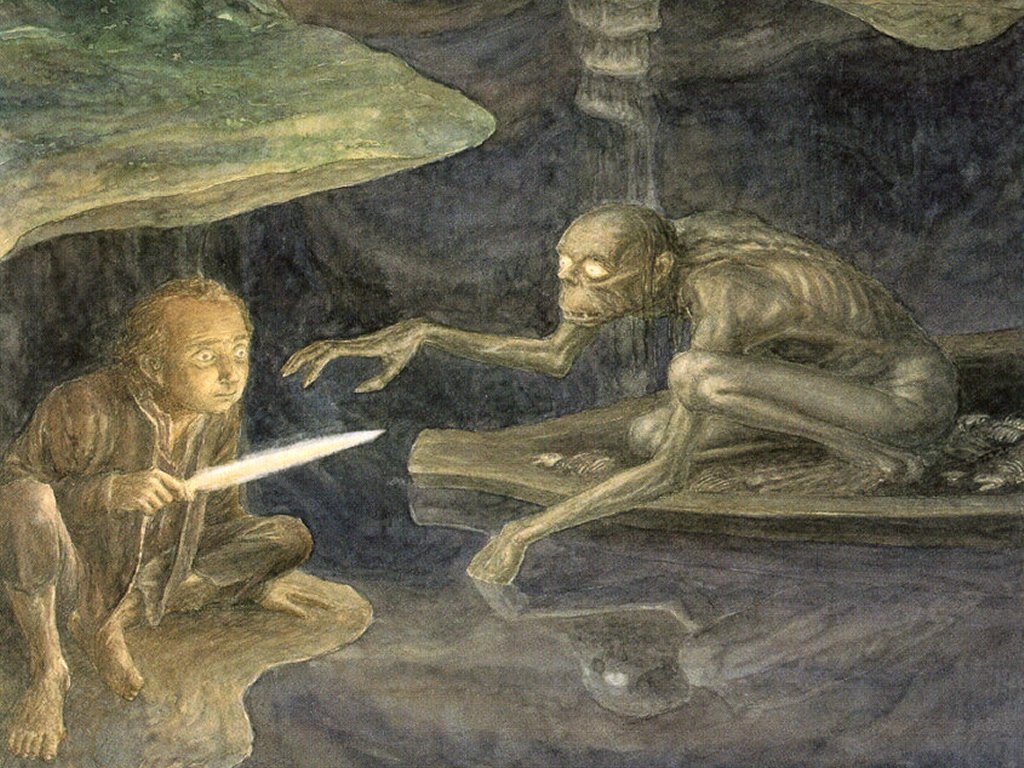
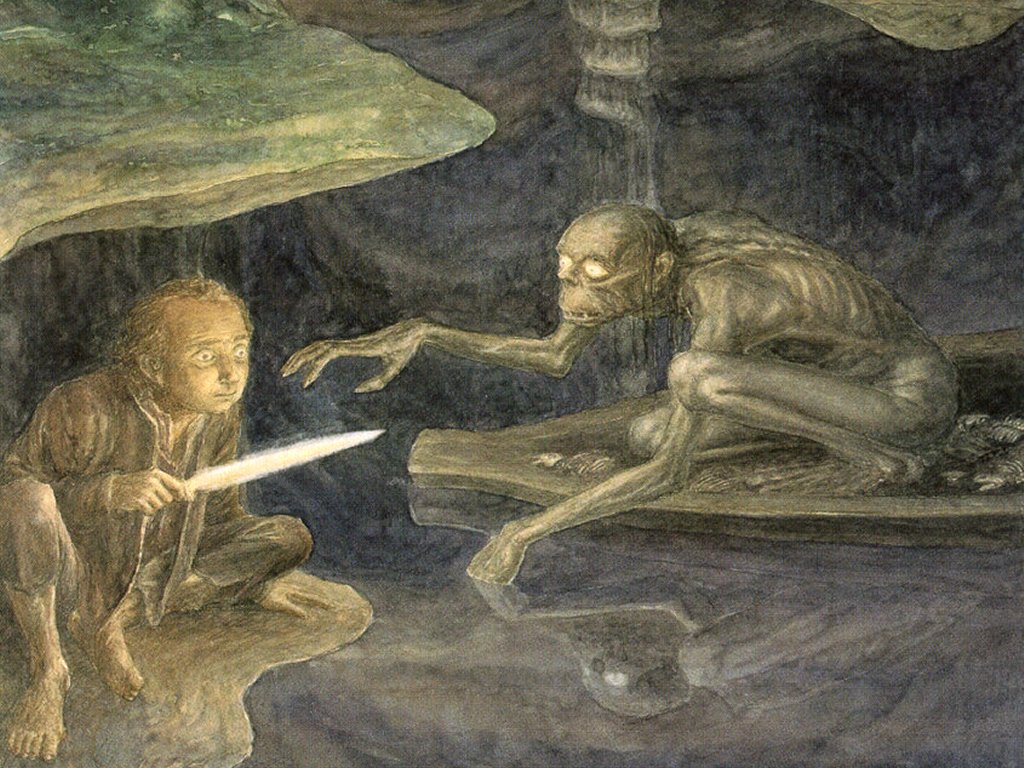
     Another difference brings us to a puzzle and the conclusion of this posting.  Tolkien has told us that the core of the RBW is Bilbo’s diary. The Welsh and Irish manuscripts discussed above are collections of literary and religious texts, with nothing personal in them at all, as he would have been well aware.  As well, we might wonder when and where and how Bilbo kept that diary. There’s no mention of it in The Hobbit—after all, Bilbo ran out of his house to join the dwarves without even a pocket handkerchief. And, even if the dwarves had provided one (along with the handkerchief–although that does not seem terrifically likely–the dwarves who visit Bilbo seem more attuned to orality than literacy), surely it would have been lost with all of the other baggage when the company fell into the goblin world and Bilbo met Gollum.

Alan Lee - The Hobbit - 19 - Riddles in the dark

Other than assuming that Bilbo, although he had forgotten his handkerchief, had remembered his Blackberry and was constantly dictating to the Cloud for later transcription, what do we have here?  (And, while we’re wondering, if The Hobbit was based upon that mysterious diary, what do we know of the adapter/narrator who turned it from a diary into a continuous narrative–another “King’s Writer”?)

Obviously, MTCIDC!

Thanks, as always, for reading.

CD

Food for Thought

20 Wednesday May 2015

Posted by Ollamh in J.R.R. Tolkien, Military History of Middle-earth, Narrative Methods, Villains

≈ Leave a comment

Tags

Eating, Gollum, Isengard, Lembas, Longbottom Leaf, Lorien, Man-Meat, Mordor, Orc, Rivendell, Rohan, Saruman, Sauron, The Hobbit, The Lord of the Rings, Tolkien

Dear Readers,

Welcome!

In this posting, we’re continuing our discussion of villains, specifically in Tolkien, but, for a change, we mention the good guys, as well.

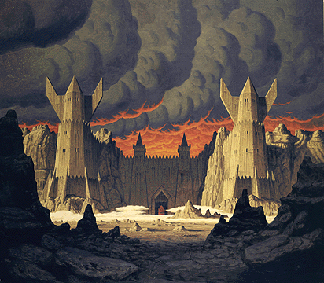
We begin with a wail by Gollum, when assured by Frodo that, if there’s no other way to go, he will enter Mordor by the Morannon, the Black Gate.

morannon_(black_gate)

“No use that way! No use! Don’t take the Precious to Him! He’ll eat us all, if he gets it, eat all the world!” L637

It’s not surprising that Gollum would express his fear in such terms—after all, in his first appearance in The Hobbit, his first words were

“Bless us and splash us, my precioussss! I guess it’s a choice feast, at least a tasty morsel it’d make us, gollum!” 

And this from a creature who appears ready to consume anything living, as the narrator says of him:

“He was looking out of his pale lamp-like eyes for blind fish, which he grabbed with his long fingers as quick as thinking. He liked meat too. Goblin he thought good, when he could get it…”

Alan Lee - The Hobbit - Riddles in the dark

What were goblins in The Hobbit have become the Orcs in The Lord of the Rings and Gollum would still be interested in them, but now we’re told what they eat—and drink.

Orque-Terre_du_Milieu

“Ugluk thrust a flask between his teeth and poured some burning liquid down his throat: he felt a hot fierce glow flow through him. The pain in his legs and ankles vanished. He could stand.” 

red-bull-3

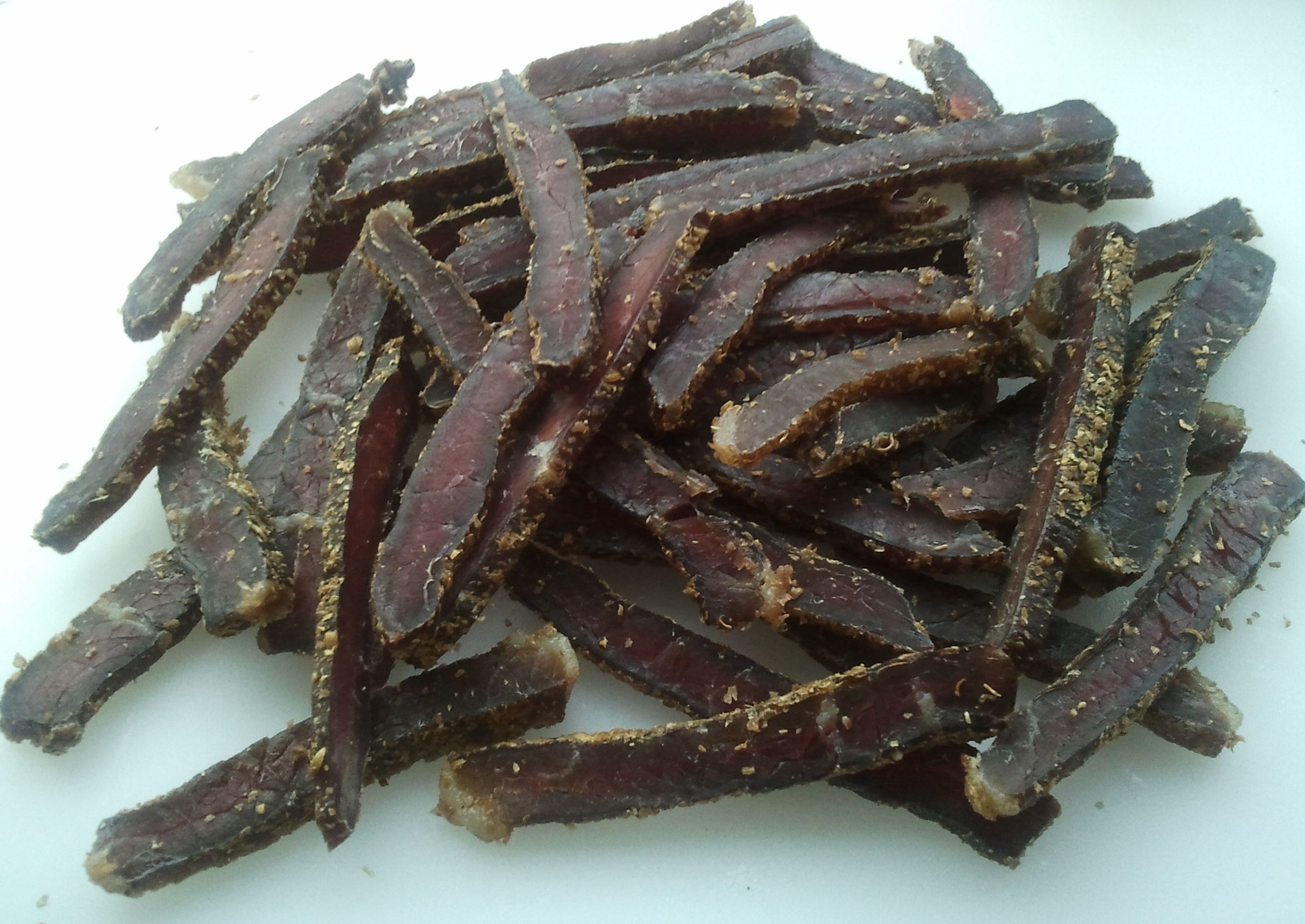
“An Orc stooped over him, and flung him some bread and a strip of raw dried flesh. He ate the stale grey bread hungrily, but not the meat. He was famished, but not yet so famished as to eat flesh flung to him by an Orc, the flesh of he dared not guess what creature.”

SAMSUNG

“”We are the servants of Saruman the Wise, the White Hand: the Hand which gives us man’s –flesh to eat.” 

saruman

     To judge by what Merry and Pippin find when they come to Isengard, Saruman certainly didn’t stint himself, including casks of Longbottom Leaf from the Shire. 

And here is a glaring contrast between the two sides in The Lord of the Rings, and it has to do with plenty and enjoyment. Saruman seems to have all the wealth in the world, but always wants more, and what he has does not appear to be shared out equally. Sauron, Gollum says, wants to eat the world, but would he ever be full?

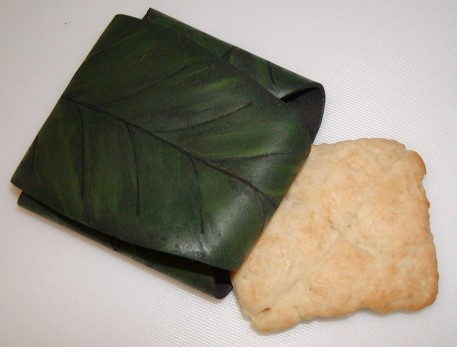
Contrast the traveling supplies of the orcs as you see them above in our text with lembas

leaf-lembas

As the elves describe it, “…it is more strengthening than any food made by Men, and it is more pleasant than cram, by all accounts.” To which Gimli agrees enthusiastically, “Why, it is better than the honey-cakes of the Beornings, and that is great praise, for the Beornings are the best bakers that I know of…” 

Only contrast the look of West and East to see the difference. Here is what the plains of Rohan must look like:

Grassy_Plains_717200735815PM691

And here is an artist’s rendering of Mordor:

sams_first_view_of_mordor

It’s a striking difference topographically, but the difference is even greater in terms of behavior. Isengard is a fortress and a factory, a little Mordor set against the greater Mordor to the east. It can also be a prison, as Gandalf finds out. In contrast, think of the welcome in Rivendell

rivjrrt2

and Lorien

Lothlorien

The West doesn’t plan to eat the world, instead, it lives in a fruitful land, which it makes more fruitful, and it offers this in hospitality to those who come in peace.

This is what is really at stake in The Lord of the Rings, that sense of bounty, generosity, and pleasure, which it must defend from what would eat all the world.

And, as always, we ask what you think, dear readers?

Thanks for reading, 

MTCIDC,

CD

Where is Adventure?

20 Friday Mar 2015

Posted by Ollamh in Fairy Tales and Myths, J.R.R. Tolkien, Narrative Methods

≈ Leave a comment

Tags

Adventure, Landscape, Sam and Frodo, Story, The Hobbit, The Lord of the Rings, Tolkien

Dear Readers,

Welcome, as always!

In this post, we want to consider the idea of adventure. Usually, we think of this as an event or series of events, things which happen. This is certainly the way Bilbo sees it in the first chapter of The Hobbit, when Gandalf appears and all Bilbo thinks he wants to do is to sit, smoke, and read his mail, saying to the wizard: “nasty, disturbing uncomfortable things. Make you late for dinner! I can’t think what anybody sees in them!”

But what does Bilbo really know of adventure?

Imagine (and what a wonderful word that is), that you live down the hill from Bilbo, in the Shire in the quiet time, long after the wolves had come over the frozen Brandywine and some time before the Black Riders appear. This is a contented backwater of Middle-Earth and Bilbo mirrors this in his strong anti-adventure reactions.

With the world seemingly so safe and day-to-day (not that there aren’t the usual human–or hobbit–tussles—think of the Sackville-Baggins and their plans and jealousies) is there anything to suggest—beyond the idea that they are “nasty, disturbing uncomfortable things”–what real knowledge of adventure might exist in the Shire?

Sam suggests, in the second chapter of The Lord of the Rings, that at least he has some understanding beyond a vague sense that adventure is nasty when he says, “I heard a deal that I didn’t rightly understand, about an enemy, and rings, and Mr. Bilbo, sir, and dragons and a fiery mountain, and—and Elves, sir. I listened because I couldn’t help myself, if you know what I mean. Lor bless me, sir, but I do love tales of that sort. And I believe them too…”

Adventure, to Sam, then, isn’t a thing, but a story, and a believable one, too. It’s a story which he and Frodo talk about much later in the narrative, when they are about to encounter the treachery of Smeagol, Shelob, and the terrible march into Mordor and Sam has now realized that he and his master are in a story, too.

“The brave things in the old tales and songs, Mr. Frodo” Sam says, in one of the most profound moments for us in all of Tolkien, “adventures I used to call them. I used to think that they were things the wonderful folk of the stories went out and looked for, because they wanted them, because they were exciting and life was a bit dull, a kind of sport, as you might say.”

So now we see a kind of equation, which (beginning with Bilbo) might read:

(Nasty, disturbing) thing = adventure = story (Sam’s addition)

But Sam, the second half of his first name now being truer than he knows, continues his definition:

“But that’s not the way of it with the tales that really mattered, or the ones that stay in the mind. Folk seem to have been just landed in them, usually—their paths were laid that way, as you put it. But I expect they had lots of chances, like us, of turning back, only they didn’t.”

And here, with words and expressions like “paths” and “turning back” we can add another step to our equation:

(Nasty, disturbing) thing = adventure = story = going somewhere

There are, of course, folk and fairy tales where adventure comes to the protagonist, but it seems to us that when we began to run through the big stories, stories like the Odyssey, the Ramayana, and Beowulf, the narrative is mostly laid outside the world of home—Odysseus is coming home, but the bulk of the story takes place otherwhere, Rama and his wife and brother are in the forest, far from the palace when their adventure begins, and Beowulf has come from southern Sweden to Denmark to help King Hrothgar with a pest-control problem. And there are, of course, Frodo and Sam, who have traveled, mostly on foot, all the way from home in that safe-seeming Shire.

So, imagine that adventure can mean Somewhere Else, and that that place needs to be traveled through (or at least traveled to) for it to be an adventure, and for it to make the transition from adventure to story. For Sam, the choice to travel to and through adventure seems all-important. As he says of those who turn back:

“And if they had, we shouldn’t know, because they’d have been forgotten. We hear about those as just went on—and not all to a good end, mind you; at least, not to folk inside a story and not outside it call a good end. You know, coming home, and finding things alright, though not quite the same—like old Mr. Bilbo. But those aren’t always the best tales to hear, though they may be the best tales to get landed in.”

These, then, are the possible consequences of going to (and through) Somewhere Else: on the one hand, you may come back and, if you do, you may find things have changed, but are survivable, as Bilbo does when he returns to find himself considered dead and his house and goods up for auction. On the other hand, you may not come back—and yet may still be part of “the tales that really mattered, or the ones that stay in the mind.”

There is, of course, a paradox here: by Sam’s definition, it’s only by not turning back that one is in an adventure and a successful story, but a successful story (meaning, to Sam, a memorable one) may not ultimately be a successful adventure: what’s good for the listener/reader may not be good for those traveling to or in Somewhere Else.

Somewhere Else, itself, can be like any place in fiction: seas, mountains, forests, Middle Earth has them all and much of the story is about the simple act of marching along those many long miles, where the only quality necessary for heroic behavior seems to be persistence and, for Sam, and for us as readers, this becomes an heroic quality in itself—the ability to keep going, no matter what, a quality which is tested to the extreme degree in that last trek through the worst landscape of all, Mordor, half volcanic wilderness, half industrial wasteland. The landscape almost becomes another character here, a geographic Sauron who opposes those who would destroy his ring and through it, him. This, in turn, presents us with the idea that, just as characters good and bad give a story life, so do surroundings and the more complex the surroundings, might we see the greater the power of that life to make the story one that “stays in the mind”?

We’ll end this here, but, at the same time, we’ll add a “teaser” for our next. Sam and Frodo talk about adventures from the viewpoint of people who have read or heard them, all the while being inside an adventure themselves, as they—Sam in particular—acknowledge:

“Still, I wonder if we shall ever be put into songs or tales. We’re in one, of course; but I mean: put into words, you know, told by the fireside, or read out of a great big book with red and black letters, years and years afterwards.”

And yet there is an authorial fiction here: when they talk about being in a story, they mean that, through all the consequences of the Ring, their lives have been significantly altered and they have been “landed” in the current narrative. We know that they are, in fact, completely fictitious characters literally put into the story and that it only exists because the author has chosen to locate them there. All around them is a narrative which they cannot hear, as well as a listener whom they cannot see but who sees them and records every word and act, and this is just as true for Homer as it is for Tolkien. If Sam and Frodo went to Mount Doom without that listener, but didn’t return to set down what happened, as we’re told they did, what story would there be, even though they didn’t turn back and therefore should have been part of a story that “stays in the mind”?

More on that next time.

Thanks as ever for reading!

MTCIDC

CD

Newer posts →

The Doubtful Sea Series Facebook Page

The Doubtful Sea Series Facebook Page

  • Ollamh

Categories

  • Artists and Illustrators
  • Economics in Middle-earth
  • Fairy Tales and Myths
  • Films and Music
  • Games
  • Heroes
  • Imaginary History
  • J.R.R. Tolkien
  • Language
  • Literary History
  • Maps
  • Medieval Russia
  • Military History
  • Military History of Middle-earth
  • Narnia
  • Narrative Methods
  • Poetry
  • Research
  • Star Wars
  • Terra Australis
  • The Rohirrim
  • Theatre and Performance
  • Tolkien
  • Uncategorized
  • Villains
  • Writing as Collaborators
Follow doubtfulsea on WordPress.com

Across the Doubtful Sea

Recent Postings

  • Towering January 28, 2026
  • Tolkien Among the Indians January 21, 2026
  • Thin and Stretched January 14, 2026
  • Through a glass… January 7, 2026
  • Heffalumps? December 31, 2025
  • We Three Kings December 24, 2025
  • A Moon disfigured December 17, 2025
  • On the Roads Again—Once More December 10, 2025
  • (Not) Crossing Bridges December 3, 2025

Blog Statistics

  • 105,583 Views

Posting Archive

  • January 2026 (4)
  • December 2025 (5)
  • November 2025 (4)
  • October 2025 (5)
  • September 2025 (4)
  • August 2025 (4)
  • July 2025 (5)
  • June 2025 (4)
  • May 2025 (4)
  • April 2025 (5)
  • March 2025 (4)
  • February 2025 (4)
  • January 2025 (5)
  • December 2024 (4)
  • November 2024 (4)
  • October 2024 (5)
  • September 2024 (4)
  • August 2024 (4)
  • July 2024 (5)
  • June 2024 (4)
  • May 2024 (5)
  • April 2024 (4)
  • March 2024 (4)
  • February 2024 (4)
  • January 2024 (5)
  • December 2023 (4)
  • November 2023 (5)
  • October 2023 (4)
  • September 2023 (4)
  • August 2023 (5)
  • July 2023 (4)
  • June 2023 (4)
  • May 2023 (5)
  • April 2023 (4)
  • March 2023 (5)
  • February 2023 (4)
  • January 2023 (4)
  • December 2022 (4)
  • November 2022 (5)
  • October 2022 (4)
  • September 2022 (4)
  • August 2022 (5)
  • July 2022 (4)
  • June 2022 (5)
  • May 2022 (4)
  • April 2022 (4)
  • March 2022 (5)
  • February 2022 (4)
  • January 2022 (4)
  • December 2021 (5)
  • November 2021 (4)
  • October 2021 (4)
  • September 2021 (5)
  • August 2021 (4)
  • July 2021 (4)
  • June 2021 (5)
  • May 2021 (4)
  • April 2021 (4)
  • March 2021 (5)
  • February 2021 (4)
  • January 2021 (4)
  • December 2020 (5)
  • November 2020 (4)
  • October 2020 (4)
  • September 2020 (5)
  • August 2020 (4)
  • July 2020 (5)
  • June 2020 (4)
  • May 2020 (4)
  • April 2020 (5)
  • March 2020 (4)
  • February 2020 (4)
  • January 2020 (6)
  • December 2019 (4)
  • November 2019 (4)
  • October 2019 (5)
  • September 2019 (4)
  • August 2019 (4)
  • July 2019 (5)
  • June 2019 (4)
  • May 2019 (5)
  • April 2019 (4)
  • March 2019 (4)
  • February 2019 (4)
  • January 2019 (5)
  • December 2018 (4)
  • November 2018 (4)
  • October 2018 (5)
  • September 2018 (4)
  • August 2018 (5)
  • July 2018 (4)
  • June 2018 (4)
  • May 2018 (5)
  • April 2018 (4)
  • March 2018 (4)
  • February 2018 (4)
  • January 2018 (5)
  • December 2017 (4)
  • November 2017 (4)
  • October 2017 (4)
  • September 2017 (4)
  • August 2017 (5)
  • July 2017 (4)
  • June 2017 (4)
  • May 2017 (5)
  • April 2017 (4)
  • March 2017 (5)
  • February 2017 (4)
  • January 2017 (4)
  • December 2016 (4)
  • November 2016 (5)
  • October 2016 (6)
  • September 2016 (5)
  • August 2016 (5)
  • July 2016 (5)
  • June 2016 (5)
  • May 2016 (4)
  • April 2016 (4)
  • March 2016 (5)
  • February 2016 (4)
  • January 2016 (4)
  • December 2015 (5)
  • November 2015 (5)
  • October 2015 (4)
  • September 2015 (5)
  • August 2015 (4)
  • July 2015 (5)
  • June 2015 (5)
  • May 2015 (4)
  • April 2015 (3)
  • March 2015 (4)
  • February 2015 (4)
  • January 2015 (4)
  • December 2014 (5)
  • November 2014 (4)
  • October 2014 (6)
  • September 2014 (1)

Blog at WordPress.com.

  • Subscribe Subscribed
    • doubtfulsea
    • Join 78 other subscribers
    • Already have a WordPress.com account? Log in now.
    • doubtfulsea
    • Subscribe Subscribed
    • Sign up
    • Log in
    • Report this content
    • View site in Reader
    • Manage subscriptions
    • Collapse this bar
 

Loading Comments...