• About

doubtfulsea

~ adventure fantasy

Tag Archives: Scouring of the Shire

Smoke (No Mirrors)

22 Wednesday Mar 2017

Posted by Ollamh in Economics in Middle-earth, J.R.R. Tolkien, Literary History, Narrative Methods

≈ Leave a comment

Tags

Algonquian, Aragorn, Bag End, Baggins, Daemonologie, domestic, Gandalf, Gimli, Hernandez de Boncalo, hogsheads, Isengard, James I, Jamestown, John Rolfe, Longbottom Leaf, Matoaka, Merry and Pippin, Native Americans, Nictotiana, Philip II of Spain, pipe, plantations, Pocahontas, Popeye the Sailor, Saruman, Scouring of the Shire, Sharkey, Sherlock Holmes, Shire, smoking, Southfarthing, The First Part of Ayres of the Musicall Humours, The Hobbit, The Illiad, The Lord of the Rings, The Odyssey, Tobacco, Tobias Hume, Tolkien

As always, welcome, dear readers.

This posting takes us away from the Shire and back to it, all in a couple of pages, as well as linking itself with a recent one on Sharkey and his attempt at revenge on the Hobbits who have helped in his downfall.

We begin just after Helm’s Deep, at the moment when Gandalf and all of the major characters involved have followed the invasion route back to Isengard, only to find it in ruins and:

“And now they turned their eyes towards the archway and the ruined gates. There they saw close beside them a great rubble-heap; and suddenly they were aware of two small figures lying on it at their ease…One seemed asleep; the other, with crossed legs and arms behind his head, leaned back against a broken rock and sent from his mouth long whisps and little rings of thin blue smoke.” The Two Towers, Book Three, Chapter 8, “The Road to Isengard”
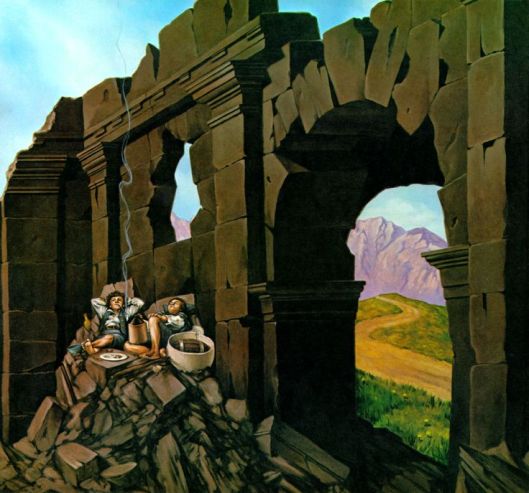
image1ruins.jpg

For Gimli, himself a smoker, that latter sight is not a surprising. For Theoden, however, not only are the Hobbits a surprise, but: “I had not heard that they spouted smoke from their mouths.”

Merry’s reply then leads us into today’s posting.

“That is not surprising…for it is an art which we have not practised for more than a few generations. It was Tobold Hornblower, of Longbottom in the Southfarthing, who first grew the true pipe-weed in his gardens, about the year 1070 according to our reckoning. How old Toby came by the plant…”

Gandalf interrupts Merry here, concluding with “Some other time would be more fitting for the history of smoking.”

But not for us.

For us, smoking, in the The Lord of the Rings, as in The Hobbit, belongs to a whole category of what we call the “domestication of the heroic”, a distinctive and important feature of JRRT’s narrative style. Earlier epics, like the Iliad and the Odyssey, certainly have their moments where combat and travel and dealing with monsters and enchantresses are not the only features of the stories. People sometimes pause to eat and drink and even sleep. JRRT goes beyond this, however, to provide what he himself might call the “homely” in his texts. By this term, we mean the ordinary and familiar, including such things as a brief inventory of the contents of Bag End, food more detailed than the “endless meat and sweet dark wine” of Homer–such as the mushrooms and bacon which Farmer Maggot offers–and Bilbo reading his letters and forgetting his pocket handkerchief. Such seemingly-trivial things give the stories—and certain of the characters within them—an extra depth and thus a deeper believability, as well as anchoring the story in something more ordinary than kings and wizards.

In fact, the center of this domestication are the Hobbits: think of Sam wanting a bit of rope or explaining taters to Gollum or that heart-breaking moment when Sam discards his pots and pans and “The clatter of his precious pans as they fell down into the dark was like a death-knell to his heart.” (The Return of the King, Book Six, Chapter 3, “Mount Doom”) And, along with things like rope and conies, there is what once was called “the pleasures of the pipe”.

We live in a different world from JRRT. When he took up the pipe, in the early 20th century, no one knew the dangers of smoking.
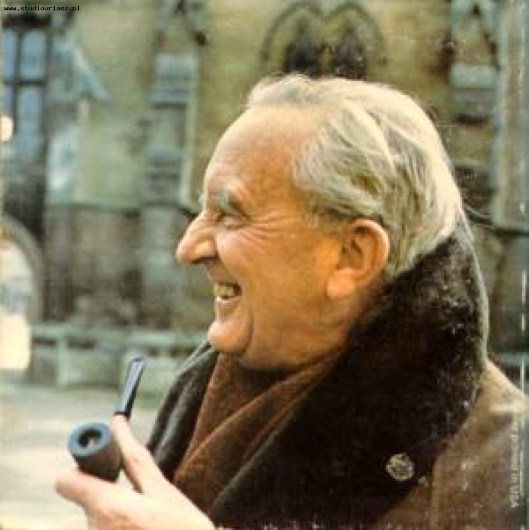
image2jrrt.jpg

It was simply something men, in particular, did. After all, there was Sherlock Holmes, with his famous “three-pipe problem” (“The Red-Headed League”, The Strand Magazine, August, 1891) as a perfect model.
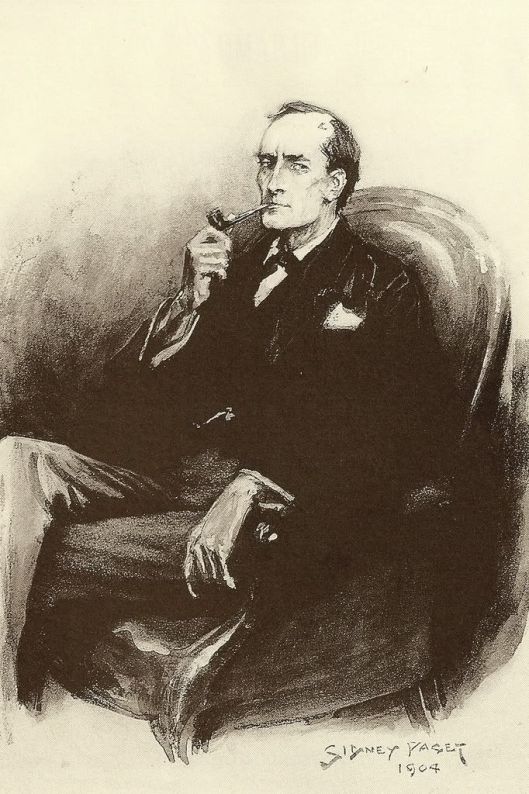
image3holmessmoking.jpg

Thus, smoking was acceptable and, potentially, domestic: after all, although the ancient comic book and cartoon character, Popeye the Sailor (1929-1957), may hold a pipe in his mouth while battling,

image3apopeye.jpg

it is generally something done in quiet and contemplation. Perhaps, then, for the times in which JRRT was writing, a perfect symbol of the domestic. (Hence the old expression for household comfort that someone—typically his wife–brings the owner “his pipe and slippers” when he comes home from work?)

And it appears very early in our experience of Hobbits. After all, the first time we see Bilbo, he is “standing at his door after breakfast smoking an enormous long wooden pipe that reached nearly down to his woolly toes”. (The Hobbit, Chapter 1, “An Unexpected Party”)

image4bilbo.jpg

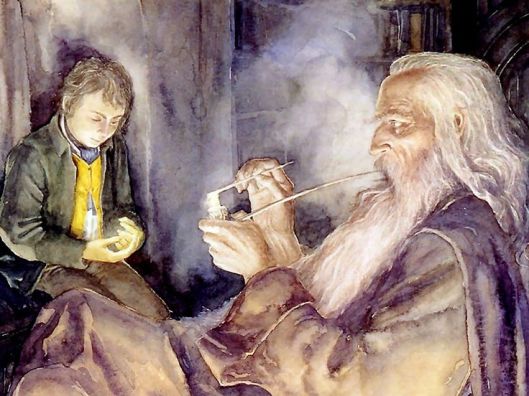
In time, we’ll see Gandalf smoking

image5gandalfsmoking.jpg

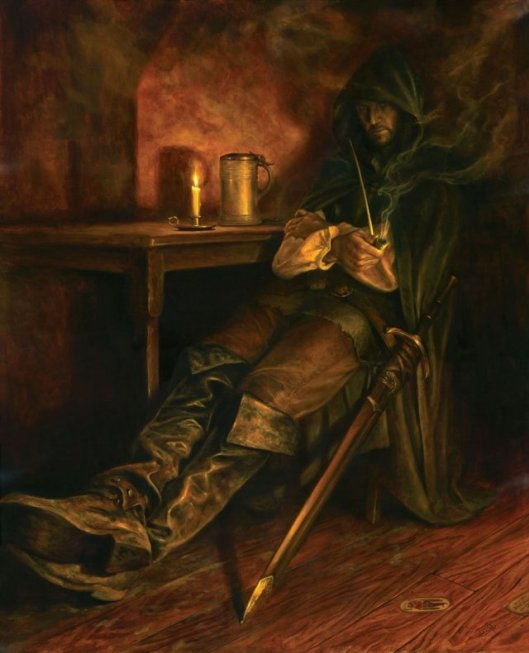
and Strider/Aragorn, too.

image6strider.jpg

In fact, we wonder if it isn’t a kind of unconscious sign that someone is a positive character—after all, as we said, Gimli smokes, too.
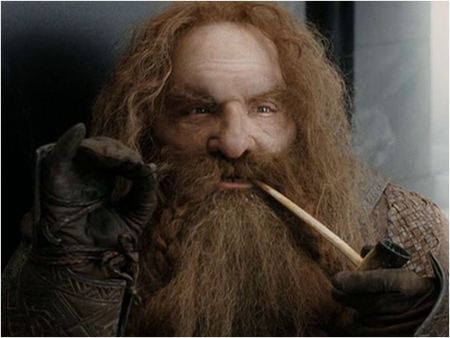
image7gimli.jpg

There is one exception, of course—and we’ll come back to that!

It should be no surprise, then, that one more positive character, Merry, is a smoker. Knowing, from the Prologue to The Lord of the Rings, that he is also the author of Herblore of the Shire, among other works, it is also not surprising that he appears to be the main authority on “pipe-weed”, claiming that the Hobbits were the inventors of its consumption:   “Hobbits first put it into pipes. Not even the Wizards first thought of that before we did.”

This, of course, made us think about who invented tobacco-smoking in our world—or, at least, in the English-speaking Western Hemisphere. (Although we are glad to point out that, as early as 1559, Philip II of Spain ordered Hernandez de Boncalo to bring back tobacco seeds from the New World to plant in Spain.)

Merry says of the plant (which he correctly identifies with our genus Nicotiana):

“…observations that I have made on my own many journeys south have convinced me that the weed itself is not native to our parts of the world, but came northward from the lower Anduin, whither it was, I suspect, originally brought over Sea by the Men of Westernesse. It grows abundantly in Gondor, and there is richer and larger than in the North, where it is never found wild, and flourishes only in warm sheltered places like Longbottom.”

In our world—that is, in the Americas– Native Americans first cultivated tobacco—as can be seen in this engraved version of John White’s 1580s drawing of the Algonquian village of Secoton by Theodor de Bry for the 1590 second edition of Thomas Harriot’s A Briefe and True Report of the New Found Land of Virginia.

image8secoton.jpg

At the top, center, is a tobacco field, with stylized plants, which, up close, might look like this:
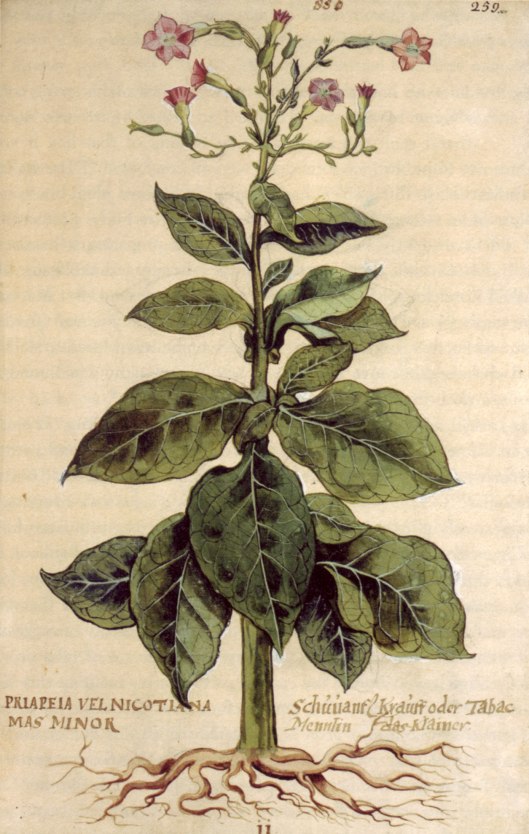
image9tobacco.jpg

Native Americans appear to have used tobacco—and its smoke—primarily for religious and political ceremonies, rather than for recreation.
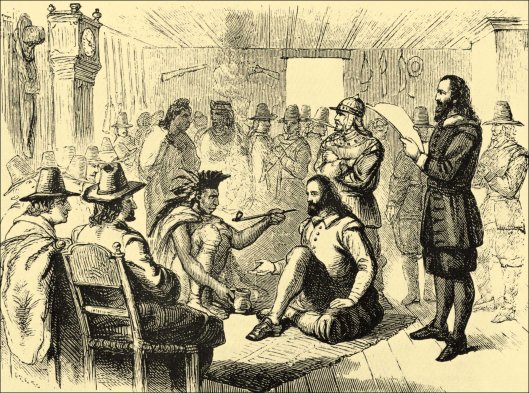
image10pipeceremony.jpg

This soon changed, however, when a member of the newly-established (1607) colony of Jamestown, John Rolfe, in what would become the US state of Virginia,
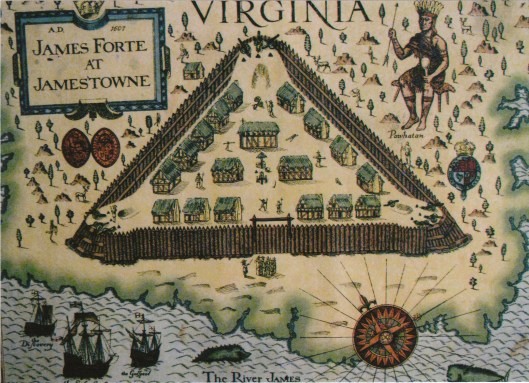
image11jamestown.jpg

saw the commercial possibilities and began to cultivate tobacco for export.

image12growingtobacco.jpg

Although John Rolfe is known to those interested in early English colonization, his wife is much more famous. She was Matoaka, called Pocahontas as a nickname (it means something like “playful/lively”), the 400th anniversary of whose funeral is the day of this writing, 21 March (although it will be posted tomorrow, the 22nd).
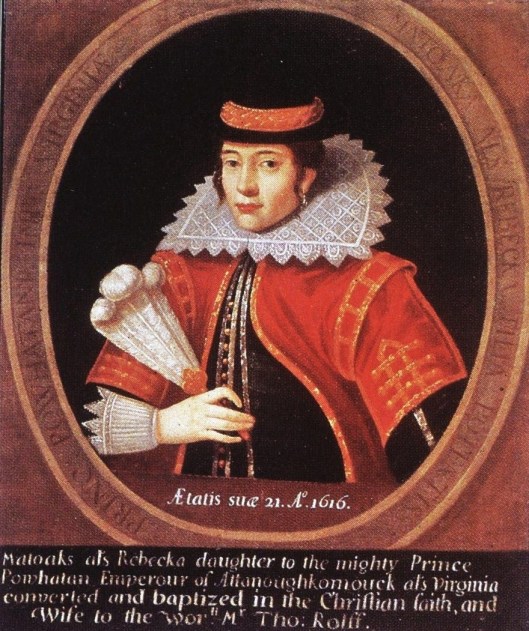
image13pocahontas.jpg

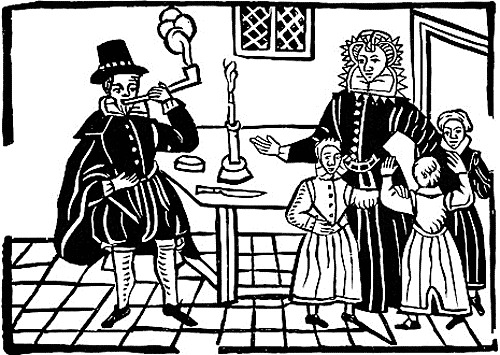
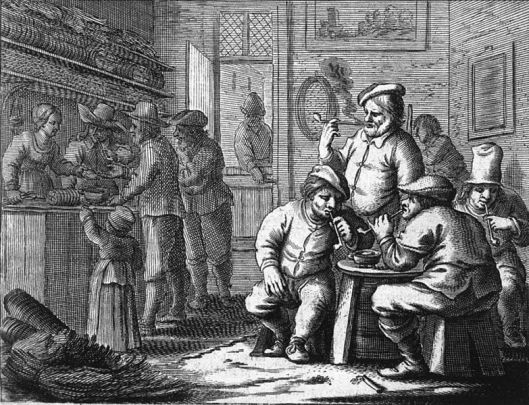
Tobacco was already known in England,

image14drinker.jpg

had become a sort of craze,

image15tobaccosmoking.gif

and even inspired at least one pop song, Tobias Hume’s “Tobacco”, from his The First Part of Ayres of the Musicall Humours (1605). Hume was a big fan of the lyra viol (a member of the string bass family).
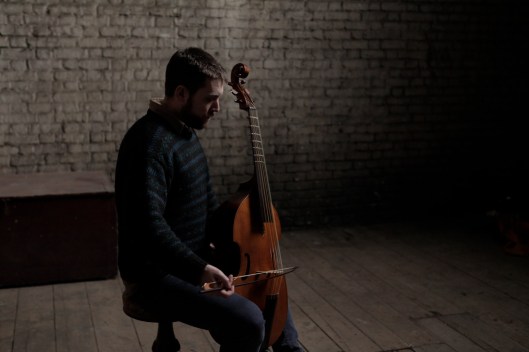
image16lyraviol

(We include here a link so that you can hear the song sung and accompanied by his favorite instrument.  Oh—and it’s sung in the pronunciation of the early 17th century, so be prepared for some differences in sound.)

Thus, Rolfe’s exploitation was a good business investment, even though tobacco quickly ran afoul of the British government, in the form of the new king, James I,
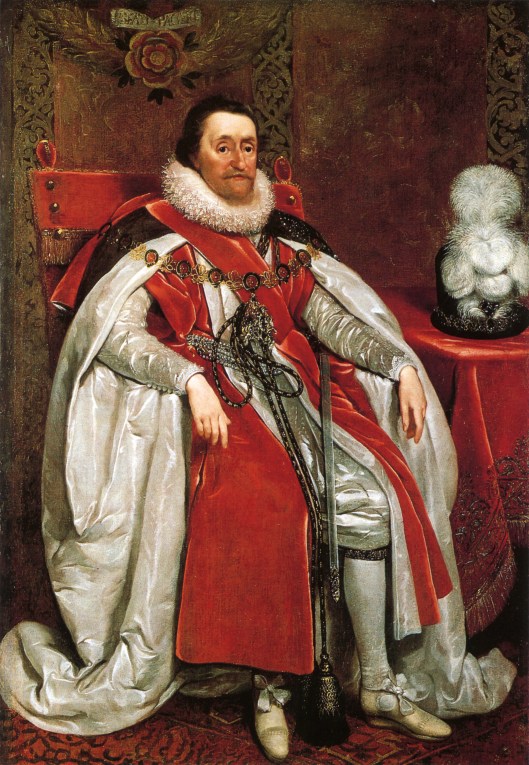
image17james1

who had already published an attack on smoking in 1604.

image18counterblast

James I had opinions on numerous subjects, including witches, about whom he had published a book, Daemonologie, in 1597.
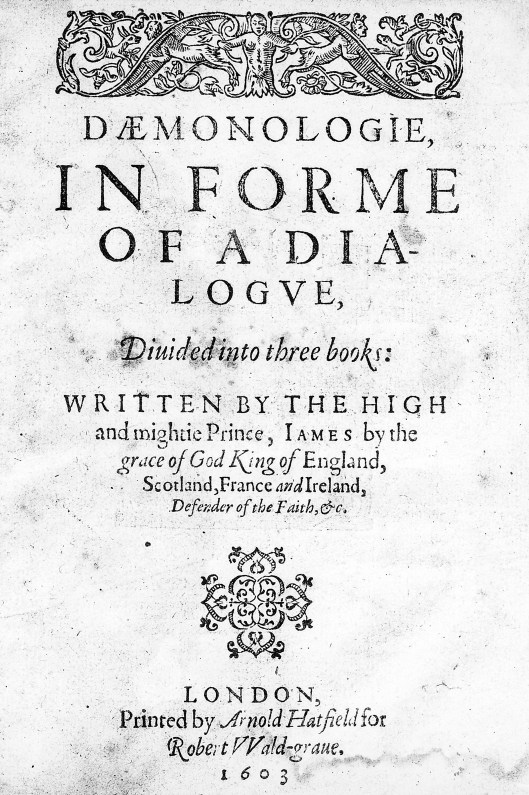
M0014280 James I: Daemonologie, in forme of a dialogue. Title page.

His attack on tobacco—although more sensible than believing in witches—didn’t stop it from becoming the major Virginia crop, however—as this roadside sign points out.
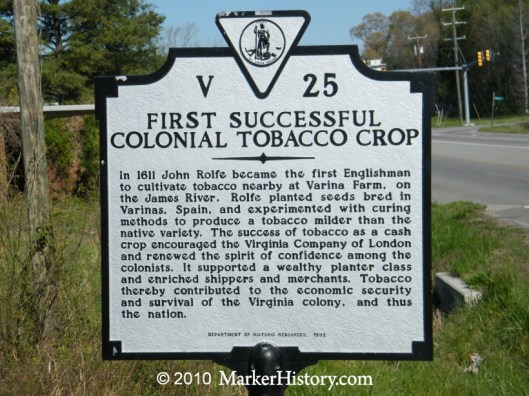
image20sign.jpg

Virginia farmers planted huge fields of tobacco,

image21tobaccofield.jpg

cultivated it (a major use of slave labor, like the sugar plantations of the Caribbean),

image22cultivation.jpg

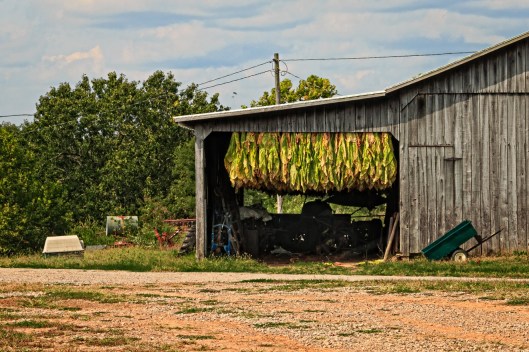
cut and dried it,

image23drying.jpg

packed it into huge barrels, called hogsheads,
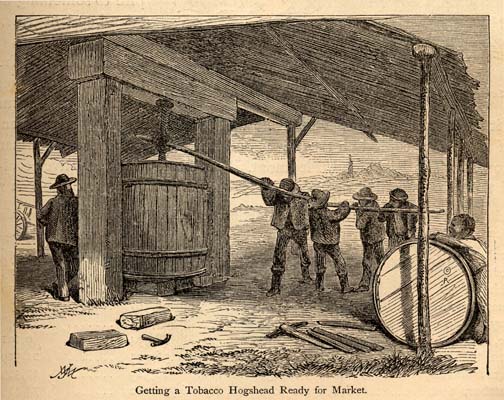
image24hogsheadpacking.jpg

dragged those hogsheads to a port,

image25dragging.jpg

and shipped those hogsheads to England
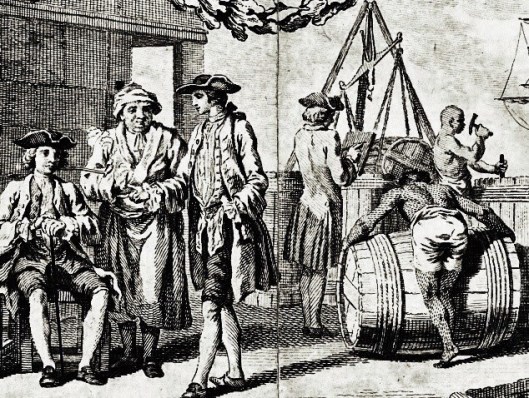
image26shipping.jpg

where smokers enjoyed it.

image27smoking.jpg

We don’t know the methods used in the Southfarthing, but, looking at tobacco around the world in our world, the main difference seems to be in the curing (drying) technique used. We can imagine, then, that, when Merry talks about “pipe-weed” and its cultivation, if we visited the southern part of the Shire, we would see familiar sights—except, perhaps, for those hogheads. The stuff which Merry is smoking came from “two small barrels, washed up out of some cellar or store-house…When we opened them, we found they were filled with this: as fine a pipe-weed as you could wish for, and quite unspoilt.” (The Two Towers, Chapter Nine, “Flotsam and Jetsam”)

Gimli admires the quality and Merry says, “My dear Gimli, it is Longbottom Leaf! There were the Hornblower brandmarks on the barrels, as plain as plain. How it came here, I can’t imagine. For Saruman’s private use, I fancy.”

This brings us back to the final smoker and one exception to our fanciful rule that, in Tolkien, if you smoke, you’re a positive character: Saruman.
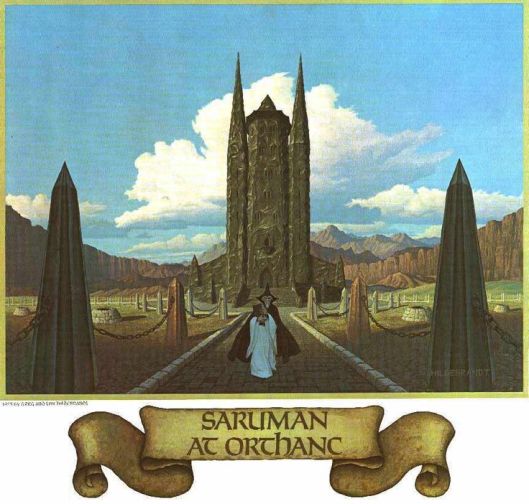
image28saruman.jpg

It’s hard to think of Saruman as indulging in the domestic. As Treebeard says of him: “He has a mind of metal and wheels” (The Two Towers, Book Three, Chapter 4, “Treebeard”). And yet, although he has lost his position as head of the White Council, and has lost Isengard, as well, as Gandalf says of him, “I fancy he could do some mischief still in a small mean way.” (The Return of the King, Book Six, Chapter 6, “Many Partings”). Thus, what better small, mean way than to attack that very domesticity which is embodied in the Hobbits and their Shire? As Sharkey, he does so, destroying the Shire by cutting down trees, knocking or burning down houses, replacing water mills with steam, and turning a nearly a-political place into a little fascist state. And, perhaps, as a last straw, he attacks one last small comfort, saying to Merry, as he keeps his tobacco pouch:

“Well, it will serve you right when you come home, if you find things less good in the Southfarthing than you would like. Long may your land be short of leaf!” (The Return of the King, Book Six, Chapter 6, “Many Partings”)

If so, perhaps there is a certain horrible irony, then, that, when Saruman is murdered, he is last seen as “a grey mist…rising slowly to a great height like smoke from a fire”. (The Return of the King, Book Six, Chapter 8, “The Scouring of the Shire”)

Thanks, as always, for reading.

MTCIDC

CD

Beaux Gestes? (2)

27 Wednesday Apr 2016

Posted by Ollamh in Artists and Illustrators, Fairy Tales and Myths, J.R.R. Tolkien, Villains

≈ 1 Comment

Tags

19th-century tombs, Cicero, Galadriel, Gandalf, Grey Havens, Hildebrandts, Istari, Mourning, Queen Victoria, Quintilian, Saruman, Scouring of the Shire, The Lord of the Rings, The Mirror of Galadriel, Theatrical gesture, Tolkien, Valar

Welcome, as always, dear readers.

In our last, we commenced a small examination of gesture in The Lord of the Rings, relating specifically to Galadriel and Saruman. We began with Galadriel

galadriel.jpg

and her rejection of Sauron. JRRT describes it in this way: “She lifted up her white arms, and spread out her hands towards the East in a gesture of rejection and denial.” In that post, we said that her gesture seemed theatrical, almost melodramatic, and we suggested that JRRT had been influenced by what we imagined he had seen on stage and on screen late in the 19th and into the 20th centuries, a time when such broad gestures were still considered the best way to convey strong emotion. This mode was, we proposed, ultimately based upon the writings of two ancient Romans, Cicero and Quintilian, who lived between the years 100BC and 100AD. In their day and up to the 20th century, the only magnification available to allow speakers to be heard over crowds was the human voice. Thus, a range of gestures emphatic enough to be seen and clear enough to be understood at a distance was an important component of effective speaking and such gestures were adopted and adapted by actors and used and reused for many centuries to come.

Because none of the illustrations based upon “The Mirror of Galadriel” depicts this gesture, we used a photograph from an 1898 book on public speaking to provide the sense of what we believe we were meant to see.

Repulsion.jpg

In our last, we also suggested that Galadriel’s gesture was linked to one of Saruman’s—in fact, his last gesture on Middle Earth, as far as we know.

In sudden resentment at the contemptuous treatment consistently dealt him by Saruman, Grima Wormtongue has drawn a hidden knife and cut the wizard’s throat.

“To the dismay of those that stood by, about the body of Saruman a grey mist gathered, and rising slowly to a great height like smoke from a fire, as a pale shrouded figure it loomed over the Hill. For a moment it wavered, looking to the West; but out of the West came a cold wind, and it bent away, and with a sigh dissolved into nothing.” The Lord of the Rings, Book 6, Chapter viii.

jwyatt-sarumande.jpg

Saruman had been one of the Istari, as Tolkien describes them all in describing Gandalf:

“There are naturally no precise modern terms to say what he was. I wd. venture to say that he was an incarnate ‘angel’—strictly an angelos: that is, with the other Istari, wizards, ‘those who know’, an emissary from the Lords of the West, sent to Middle-earth, as the great crisis of Sauron loomed on the horizon. By ‘incarnate’ I mean they were embodied in physical bodies capable of pain, and weariness, and of afflicting the spirit with physical fear, and of being ‘killed’, though supported by the angelic spirit they might endure long, and only show slowly the wearing of care and labour.” Letter to Robert Murray, S.J. (draft), 4 November, 1954.

Saruman, then, as another of the Istari, can be killed—and is, but what then? In his battle with the Balrog, it appears that Gandalf has met his end. He returns, however, suggesting that his physical body might be capable of the repair which Galadriel administers in Lorien.  As JRRT says in the same letter, “He was sent by a mere prudent plan of the angelic Valar or governors; but Authority had taken up this plan and enlarged it, at the moment of its failure.”—that is, Gandalf’s apparent death.

As Gandalf puts it, “I was the enemy of Sauron”, and, with Sauron defeated, apparently conclusively, Gandalf is allowed to return to the West, to do or be what, is never explained.   It is a privilege, clearly, since it is granted only to High Elves and, with special dispensation, to Bilbo and Frodo.

This brings us back to Saruman’s gesture: “For a moment it wavered, looking to the West; but out of the West came a cold wind, and it bent away, and with a sigh dissolved into nothing.”

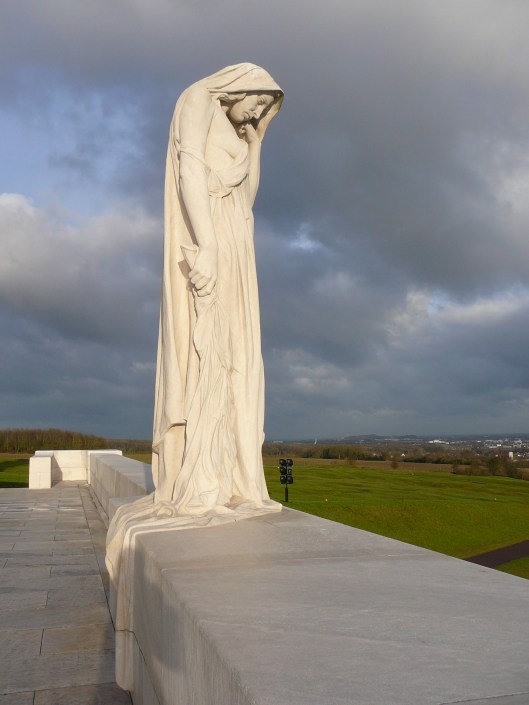
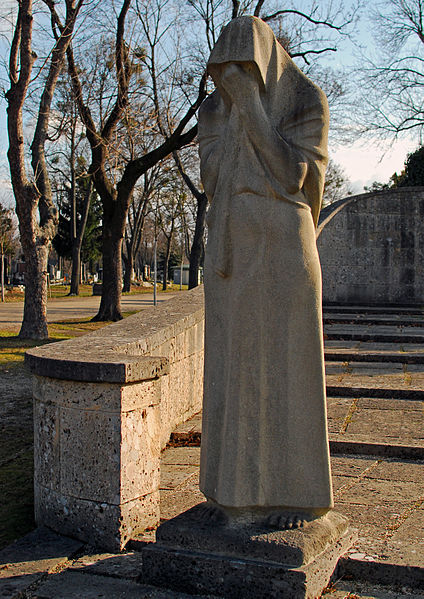
In a way, what we see here is actually a lack of gesture—it is a wavering, with a sense of hope, perhaps? Almost as if Saruman is appealing for pardon? As in the case, of Galadriel, we have no artist’s depiction of this, but we’ve used the clue of “a pale shrouded figure”, as well as that wavering, to imagine that this is someone in mourning and so we can offer several figures from later 19th-century tombs as a possible image.

d5717eeaa95186cd2e3d95447d215e2f.jpgp1140386.jpg

Statue-to-Mourning-Zentralfriedhof-Vienna.jpg

It’s interesting that these all are female, as if this is one of the expected jobs of 19th-century women, to be the Mourners in Chief. We suppose that, since Queen Victoria mourned for her husband Albert from his death in 1861 to her own death in 1901, this shouldn’t be surprising, but we are planning a later posting about mourning in The Lord of the Rings which will examine the subject within certain western traditions in more depth.

Queen-Victoria-Her-Latest-Portrait-1900_tr_4643_566.jpg

In the meantime, we return to Galadriel to match these two gestures. Saruman had failed because he had accepted the East and the deceptive words of Sauron. His fate, then, is to be met with a cold wind and to dissolve, with a sigh, into nothing, rejected by the West from which he had been sent, several thousand years before. Galadriel, on the other hand, by protecting her people and rejecting Sauron, had been accepted back into the West and the last we see of her is aboard a ship at the Grey Havens, bound for her reward.

ghavens.jpg

Thanks for reading, as always.

MTCIDC

CD

PS

We couldn’t resist this final image: the Hildebrandts with the painting.

haven-c.jpg

For all of the wonderful paintings he and his brother have given us, may Tim Hildebrandt (1939-2006) have been given a safe passage to the West, as well.


Like Smoke From a Fire: Sharkey’s End

04 Wednesday Nov 2015

Posted by Ollamh in Fairy Tales and Myths, Imaginary History, J.R.R. Tolkien, Maps, Narrative Methods, Research

≈ Leave a comment

Tags

Adventure, Birmingham, Branywine, Bywater, Coketown, Dickens, Dol Amroth, England, Ents, factory, Fangorn, feudalism, Galadriel, Gandalf, Grima, Hard Times, Hobbiton, Idylls, industrial, Industrial Revolution, Isengard, King Edward School, Medieval, Merry, Midlands, Mordor, Morris, Oxford, Palantir, Pippin, poetry, pre-industrial, Saruman, Sauron, Scouring of the Shire, Sharkey, Southfarthing, Tennyson, The Lord of the Rings, The Shire, Tolkien

Dear Readers,

Welcome, as always.

In a previous posting, we talked about Saruman as a kind of imitation Sauron and Isengard as a mini-Mordor.

sarum1

In this posting, we want to consider the implications of Gandalf’s remark about him in “Many Partings”, from The Return of the King: “I fancy he could do some mischief still in a small mean way.”

The mischief, when we see it, is definitely mean, but not small, even though confined to the limits of the Shire.

The world of The Lord of the Rings is a pre-industrial one. The most advanced technology, on the one hand, is the palantir (actually perhaps a magical, rather than mechanical, device)

palantir

and , on the other hand, a watermill.

j-r-r-_tolkien_-_the_hill_-_hobbiton-across-the-water_colored

Beyond that, it’s a medieval world, but without, it seems, feudalism, although there are, for example, castles and knights in the form of the Prince of Dol Amroth.

We can easily see why JRRT wanted this regression. On the one hand, like so many boys of his age, he had grown up reading Tennyson

John_everett_millais_portrait_of_lord_alfred_tennyson firstedition1859idylls

and William Morris

Morris-Portrait1

morris_tapestry

who had created a world of Victorian medievalism, Tennyson in poetry, Morris in many different art forms.

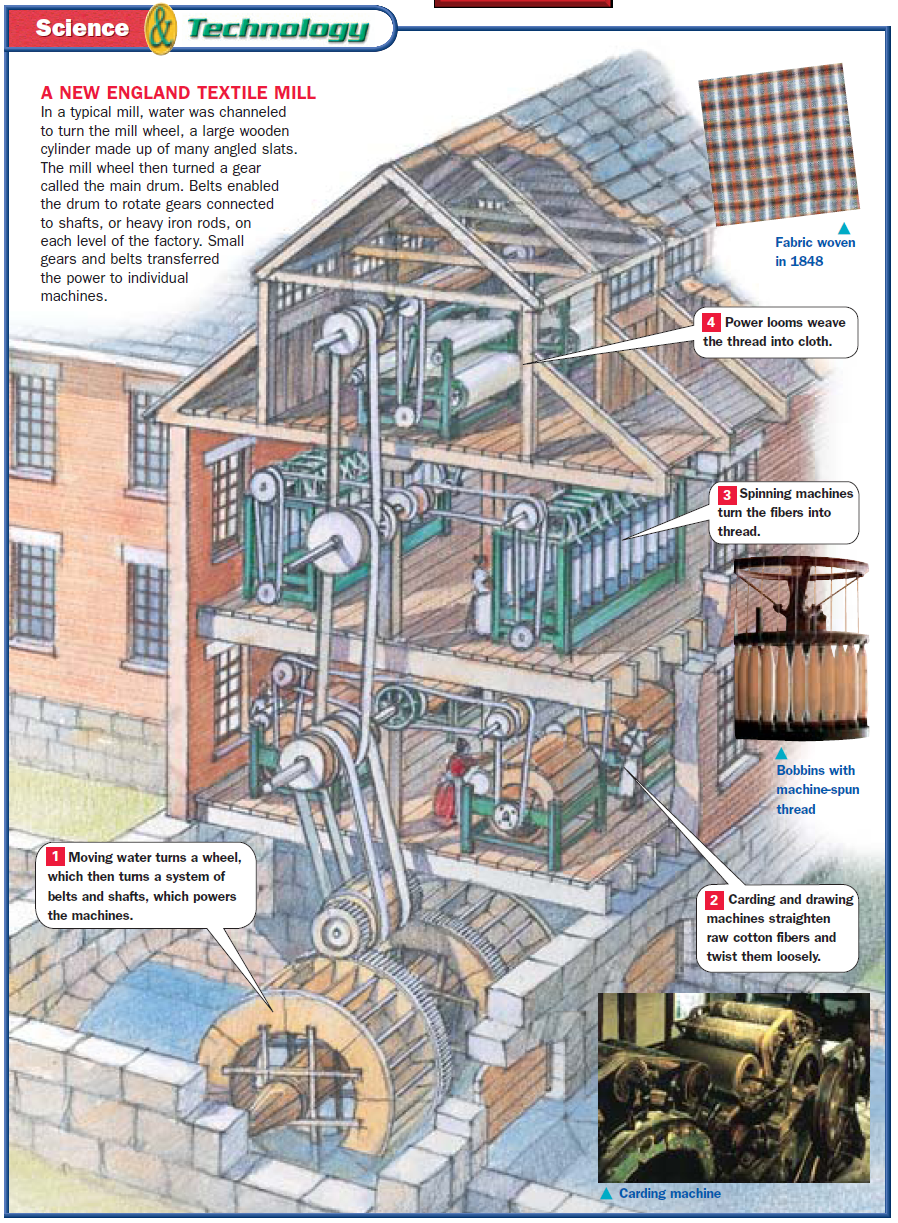
On the other, Tolkien had grown up in Birmingham, in the English Midlands, where there had been massive development throughout the era of the Industrial Revolution.

Textile Mill Diagram McConnel_&_Company_mills,_about_1820

Here’s Charles Dickens’ description of such a place from Hard Times (1856):

(Excerpt Describing Coketown)

Needless to say, although Tolkien kept a strong affection for King Edward School, where he was educated before Oxford,

KingEdwardsSchoolinBirmingham

he was less enthusiastic about the industrial world which surrounded it and this clearly colors his picture of Saruman. Look, for instance, at Fangorn’s description of him:

“He has a mind of metals and wheels; and he does not care for growing things, except as far as they serve him for the moment.” (The Two Towers, Book 1, Chapter 4, “Treebeard”) (It’s revealing, by the way that this is almost a quotation of something which Saruman later says of Gandalf, “When his tools have done their task he drops them.” The Return of the King, Book 2, Chapter 8, “The Scouring of the Shire”)

Saruman, then, with his metal mind, has turned the once-beautiful Isengardgreg-hildebrandt-isengard-orthanc-saruman-607429-1920x1080

into an arms factory

kruppworks

another Midlands,

isengardasfactory

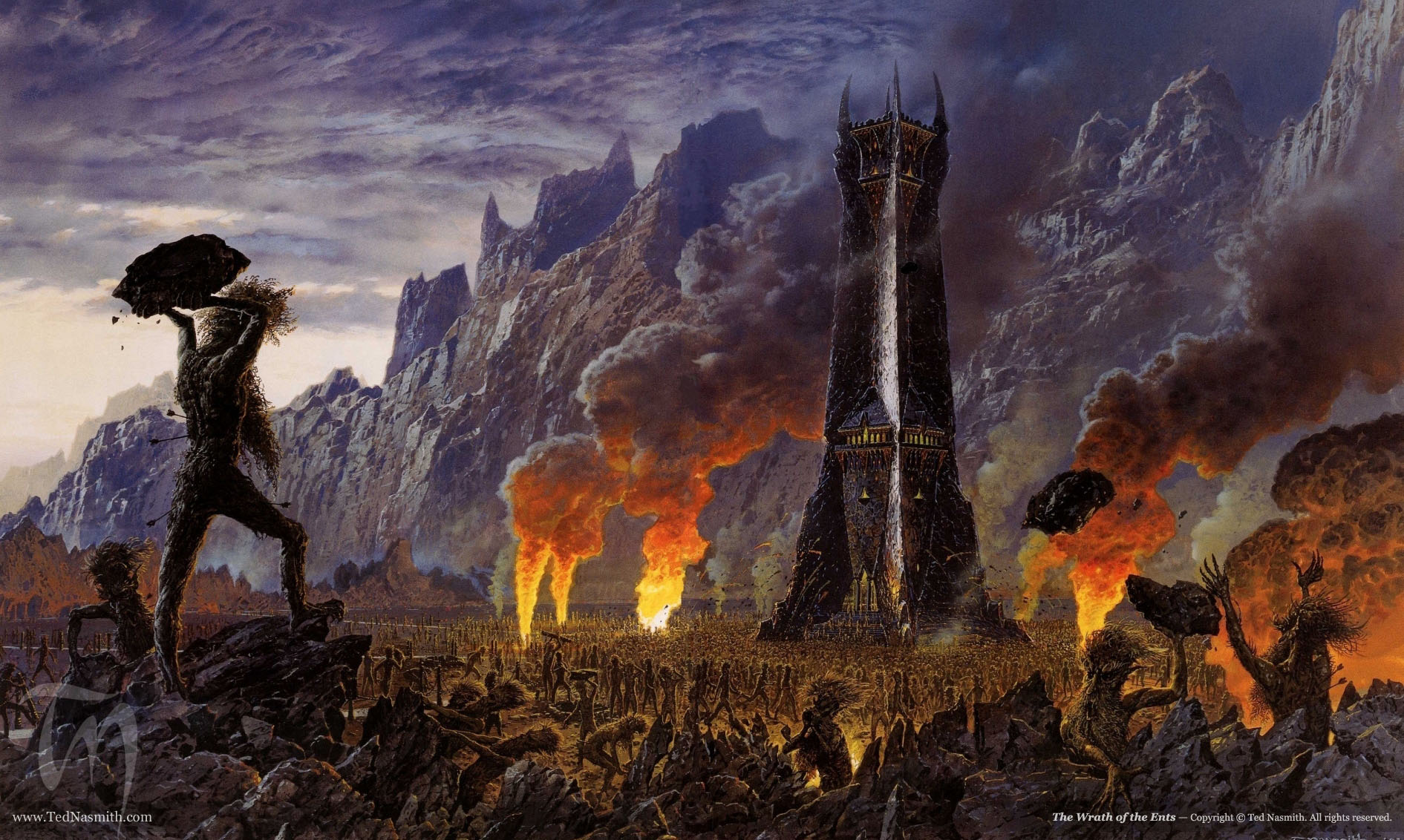
and has angered the Ents, as well, by the wanton destruction of trees, not just for fuel, it appears, but just out of sheer spitefulness.

The Wrath of the Ents, by Ted Nasmith

As we wrote earlier, all of this has remade Isengard into a mini-Mordor—as Frodo says: “Yes, this is Mordor…just one of its works. Saruman was doing its work all the time, even when he thought he was working for himself.” (The Return of the King, Book 2, Chapter 8, “The Scouring of the Shire”)

So, when Saruman, Grima in tow, leaves his ruined factory, one could almost imagine just what he might have in mind when he says to the hobbits:

“Well, it will serve you right when you come home, if you find things less good in the Southfarthing than you would like.” (The Return of the King, Book 2, Chapter 6, “Many Partings”)

We know from Merry and Pippin’s experience at the gate of Isengard that Saruman has been importing pipe-weed, a main export of the Southfarthing.

merrypippinisengard

But when the hobbits, having forced the gate at the Brandywine, are making their way towards Hobbiton, they begin to have a feeling that much more has been damaged than the South Farthing: “Still there seemed an unusual amount of burning going on, and smoke rose from many points round about. A great cloud of it was going up far away in the direction of the Woody End.” (The Return of the King, Book 2, Chapter 8, “The Scouring of the Shire”)

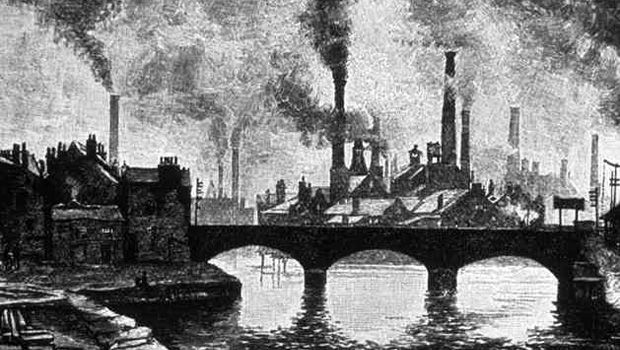
This smoke bears an ominous resemblance to the Midlands (and, in fact, to all of industrial England):

7ad841d6d5852b586a78fc03df7d64259715bddd.jpg__846x0_q80

There is worse to come, however: Bywater. “Many of the houses that they had known were missing. Some seemed to have been burned down. The pleasant row of old hobbit-holes in the bank on the north side of the Pool were deserted, and their little gardens that used to run down bright to the water’s edge were rank with weeds. Worse, there was a whole line of ugly new houses all along the Pool Side, where the Hobbiton Road ran close to the bank. An avenue of trees had stood there. They were all gone. And looking with dismay up the road towards Bag End they saw a tall chimney of brick in the distance. It was pouring out black smoke into the evening air.” (The Return of the King, Book 2, Chapter 8, “The Scouring of the Shire”)

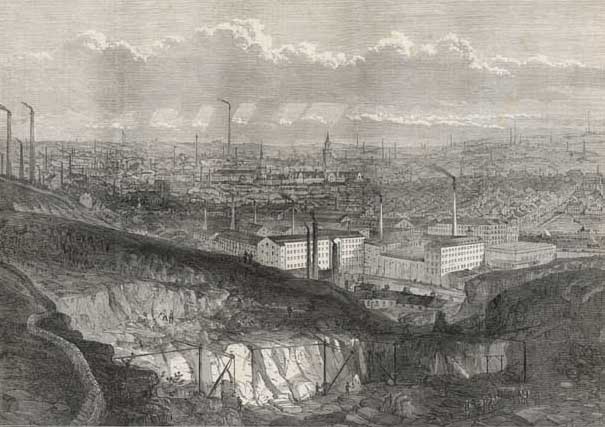
And here, we move from a single smoking mill to a smoking mill town.

BRADFORD/YORKSHIRE/1873

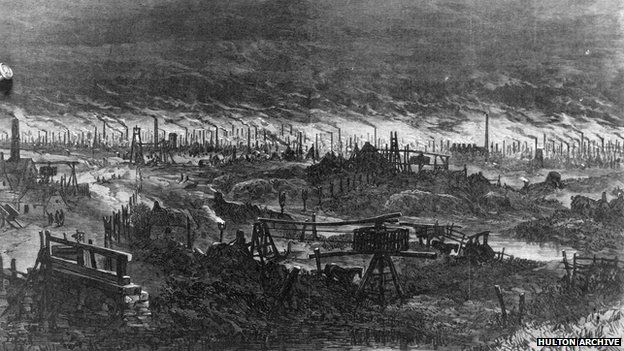
Saruman’s revenge has been more than small and mean, especially in terms of the industrial world which The Lord of the Rings rejects: the Shire is on its way to becoming another Midlands,

_77710962_3322454

even to the workers’ miserable housing.

preston

And the cutting down of trees (including, as we will find out, the Party Tree) insures the truth of Saruman’s sneering statement to the hobbits:

“…I have done much that you will find it hard to mend or undo in your lives.” (The Return of the King, Book 2, Chapter 8, “The Scouring of the Shire”)

But, as we know, Saruman, even in his moment of triumph, has no more than a moment to enjoy it. He is murdered by Grima and here we see the final irony. As Saruman has turned the medieval, bucolic Shire into a smoky horror, so he himself is turned to smoke:

“To the dismay of those that stood by, about the body of Saruman a grey mist gathered, and rising slowly to a great height like smoke from a fire, as a pale shrouded figure it loomed over the Hill. For a moment it wavered, looking to the West; but out of the West came a cold wind, and it bent away, and with a sigh dissolved into nothing.” (The Return of the King, Book 2, Chapter 8, “The Scouring of the Shire”)

61 - The scouring of the shire

A final thought, however. Might we see Saruman’s gesture towards the West, in which he clearly feels that he has been rejected by that which sent him to Middle Earth, as a mirror Galadriel’s gesture of rejection towards the East, when she refuses the Ring?

“She lifted up her hand and from the ring that she wore there issued a great light that illuminated her alone and left all else dark. She stood before Frodo seeming now tall beyond measurement, and beautiful beyond enduring, terrible and worshipful. Then she let her hand fall, and the light faded, and suddenly she laughed again, and lo! she was shrunken: a slender elf-woman, clad in simple white, whose gentle voice was soft and sad.” (The Fellowship of the Ring, Book 2, Chapter 7, “The Mirror of Galadriel”)

galadriel

Thanks, as always, for reading.

MTCIDC

CD

The Doubtful Sea Series Facebook Page

The Doubtful Sea Series Facebook Page

  • Ollamh

Categories

  • Artists and Illustrators
  • Economics in Middle-earth
  • Fairy Tales and Myths
  • Films and Music
  • Games
  • Heroes
  • Imaginary History
  • J.R.R. Tolkien
  • Language
  • Literary History
  • Maps
  • Medieval Russia
  • Military History
  • Military History of Middle-earth
  • Narnia
  • Narrative Methods
  • Poetry
  • Research
  • Star Wars
  • Terra Australis
  • The Rohirrim
  • Theatre and Performance
  • Tolkien
  • Uncategorized
  • Villains
  • Writing as Collaborators
Follow doubtfulsea on WordPress.com

Across the Doubtful Sea

Recent Postings

  • Through a glass… January 7, 2026
  • Heffalumps? December 31, 2025
  • We Three Kings December 24, 2025
  • A Moon disfigured December 17, 2025
  • On the Roads Again—Once More December 10, 2025
  • (Not) Crossing Bridges December 3, 2025
  • On the Road(s) Again—Again November 26, 2025
  • On the Road(s) Again November 19, 2025
  • To Bree (Part 2) November 12, 2025

Blog Statistics

  • 104,098 Views

Posting Archive

  • January 2026 (1)
  • December 2025 (5)
  • November 2025 (4)
  • October 2025 (5)
  • September 2025 (4)
  • August 2025 (4)
  • July 2025 (5)
  • June 2025 (4)
  • May 2025 (4)
  • April 2025 (5)
  • March 2025 (4)
  • February 2025 (4)
  • January 2025 (5)
  • December 2024 (4)
  • November 2024 (4)
  • October 2024 (5)
  • September 2024 (4)
  • August 2024 (4)
  • July 2024 (5)
  • June 2024 (4)
  • May 2024 (5)
  • April 2024 (4)
  • March 2024 (4)
  • February 2024 (4)
  • January 2024 (5)
  • December 2023 (4)
  • November 2023 (5)
  • October 2023 (4)
  • September 2023 (4)
  • August 2023 (5)
  • July 2023 (4)
  • June 2023 (4)
  • May 2023 (5)
  • April 2023 (4)
  • March 2023 (5)
  • February 2023 (4)
  • January 2023 (4)
  • December 2022 (4)
  • November 2022 (5)
  • October 2022 (4)
  • September 2022 (4)
  • August 2022 (5)
  • July 2022 (4)
  • June 2022 (5)
  • May 2022 (4)
  • April 2022 (4)
  • March 2022 (5)
  • February 2022 (4)
  • January 2022 (4)
  • December 2021 (5)
  • November 2021 (4)
  • October 2021 (4)
  • September 2021 (5)
  • August 2021 (4)
  • July 2021 (4)
  • June 2021 (5)
  • May 2021 (4)
  • April 2021 (4)
  • March 2021 (5)
  • February 2021 (4)
  • January 2021 (4)
  • December 2020 (5)
  • November 2020 (4)
  • October 2020 (4)
  • September 2020 (5)
  • August 2020 (4)
  • July 2020 (5)
  • June 2020 (4)
  • May 2020 (4)
  • April 2020 (5)
  • March 2020 (4)
  • February 2020 (4)
  • January 2020 (6)
  • December 2019 (4)
  • November 2019 (4)
  • October 2019 (5)
  • September 2019 (4)
  • August 2019 (4)
  • July 2019 (5)
  • June 2019 (4)
  • May 2019 (5)
  • April 2019 (4)
  • March 2019 (4)
  • February 2019 (4)
  • January 2019 (5)
  • December 2018 (4)
  • November 2018 (4)
  • October 2018 (5)
  • September 2018 (4)
  • August 2018 (5)
  • July 2018 (4)
  • June 2018 (4)
  • May 2018 (5)
  • April 2018 (4)
  • March 2018 (4)
  • February 2018 (4)
  • January 2018 (5)
  • December 2017 (4)
  • November 2017 (4)
  • October 2017 (4)
  • September 2017 (4)
  • August 2017 (5)
  • July 2017 (4)
  • June 2017 (4)
  • May 2017 (5)
  • April 2017 (4)
  • March 2017 (5)
  • February 2017 (4)
  • January 2017 (4)
  • December 2016 (4)
  • November 2016 (5)
  • October 2016 (6)
  • September 2016 (5)
  • August 2016 (5)
  • July 2016 (5)
  • June 2016 (5)
  • May 2016 (4)
  • April 2016 (4)
  • March 2016 (5)
  • February 2016 (4)
  • January 2016 (4)
  • December 2015 (5)
  • November 2015 (5)
  • October 2015 (4)
  • September 2015 (5)
  • August 2015 (4)
  • July 2015 (5)
  • June 2015 (5)
  • May 2015 (4)
  • April 2015 (3)
  • March 2015 (4)
  • February 2015 (4)
  • January 2015 (4)
  • December 2014 (5)
  • November 2014 (4)
  • October 2014 (6)
  • September 2014 (1)

Blog at WordPress.com.

  • Subscribe Subscribed
    • doubtfulsea
    • Join 78 other subscribers
    • Already have a WordPress.com account? Log in now.
    • doubtfulsea
    • Subscribe Subscribed
    • Sign up
    • Log in
    • Report this content
    • View site in Reader
    • Manage subscriptions
    • Collapse this bar
 

Loading Comments...