• About

doubtfulsea

~ adventure fantasy

Tag Archives: Oz

Return to Horrors?

27 Wednesday Aug 2025

Posted by Ollamh in Uncategorized

≈ 1 Comment

Tags

'Salem's Lot, Acrophobia, Arachnophobia, Billina, Claustrophobia, Coulrophobia, Dracula, ECT, Film, Goblins, Gump, Herpetophobia, jack-pumpkinhead, nome-king, Oz, Ozma of Oz, Return to Oz, Smaug, spiders, Stephen King, The Hobbit, The Marvelous Land of Oz, The Shining, Tik-Tok, Tolkien, trolls, Trypanophobia, Wheelers, wolves

Welcome, dear readers, as always.

Does this picture make your hands sweat?  Can you barely look at it?

How about this one—

Or this one—

Or—

Or—

Or—horror of horrors!—

It’s possible that all of these might have an effect upon you and, in which case, I imagine that you’re reading this hiding under your bed.

Why all of this phobic display?  Because, back in June, I read an article from the BBC about the 40th anniversary of Disney’s Return to Oz entitled:

“ ‘It has the appeal of an actual horror’: How Return to Oz became one of the darkest children’s films ever made”

(You can read the article here:  https://www.bbc.com/culture/article/20250616-the-darkest-childrens-film-ever-made )

This is a film I own and have seen perhaps half-a-dozen times and I’ve never viewed it as the horror film which the article would suggest.  Granted, sensationalism sells the news, but, having read the article again, I’ve thought about how horror can be an element in a work—and a powerful one—without making the work as a whole into something like Bram Stoker’s Dracula.

(And, if you haven’t read it, I would certainly recommend it.  Here it is in the first US edition of 1897:   https://gutenberg.org/files/345/345-h/345-h.htm )

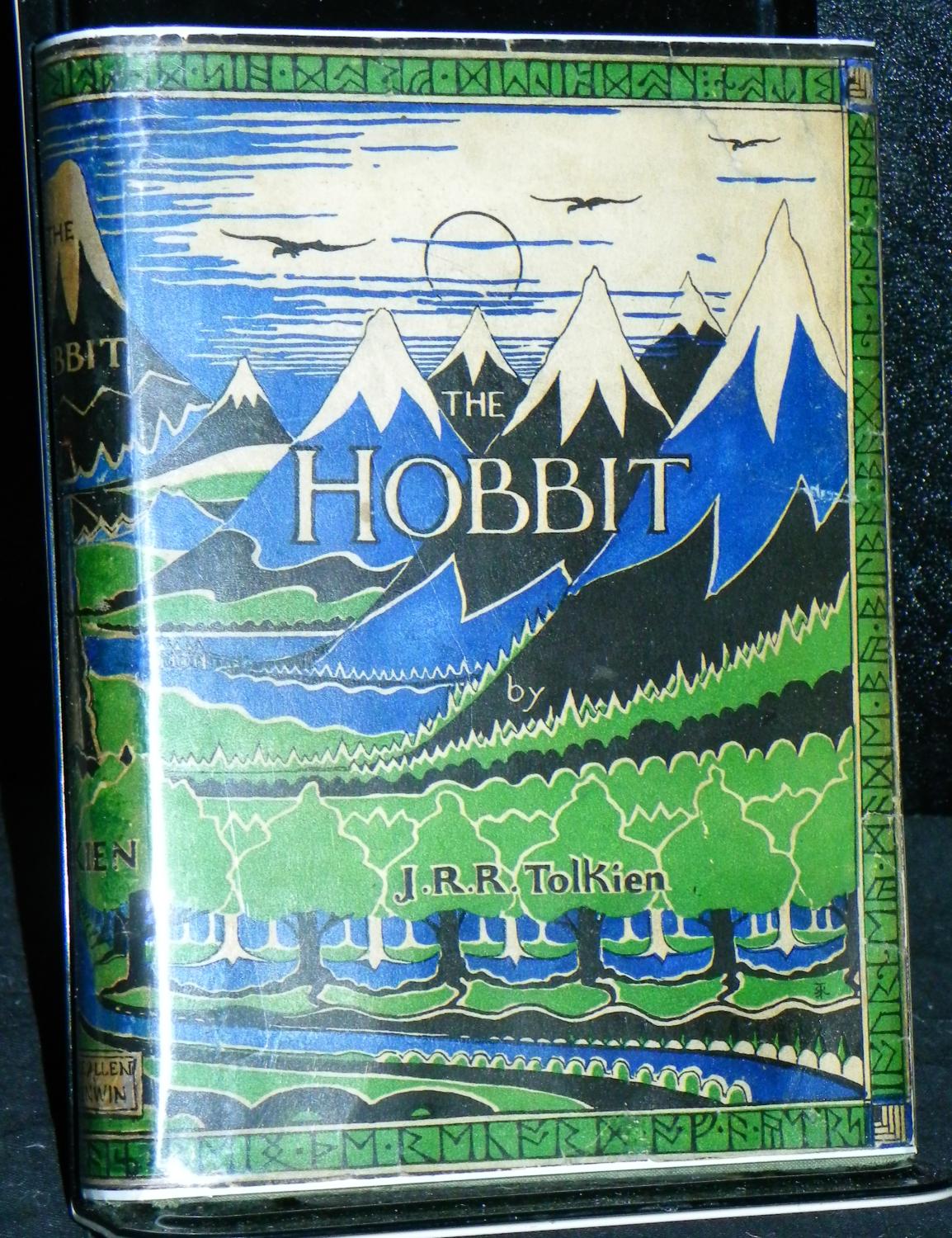
Think, for a moment, about The Hobbit.

Here, we go from the safety of Hobbiton
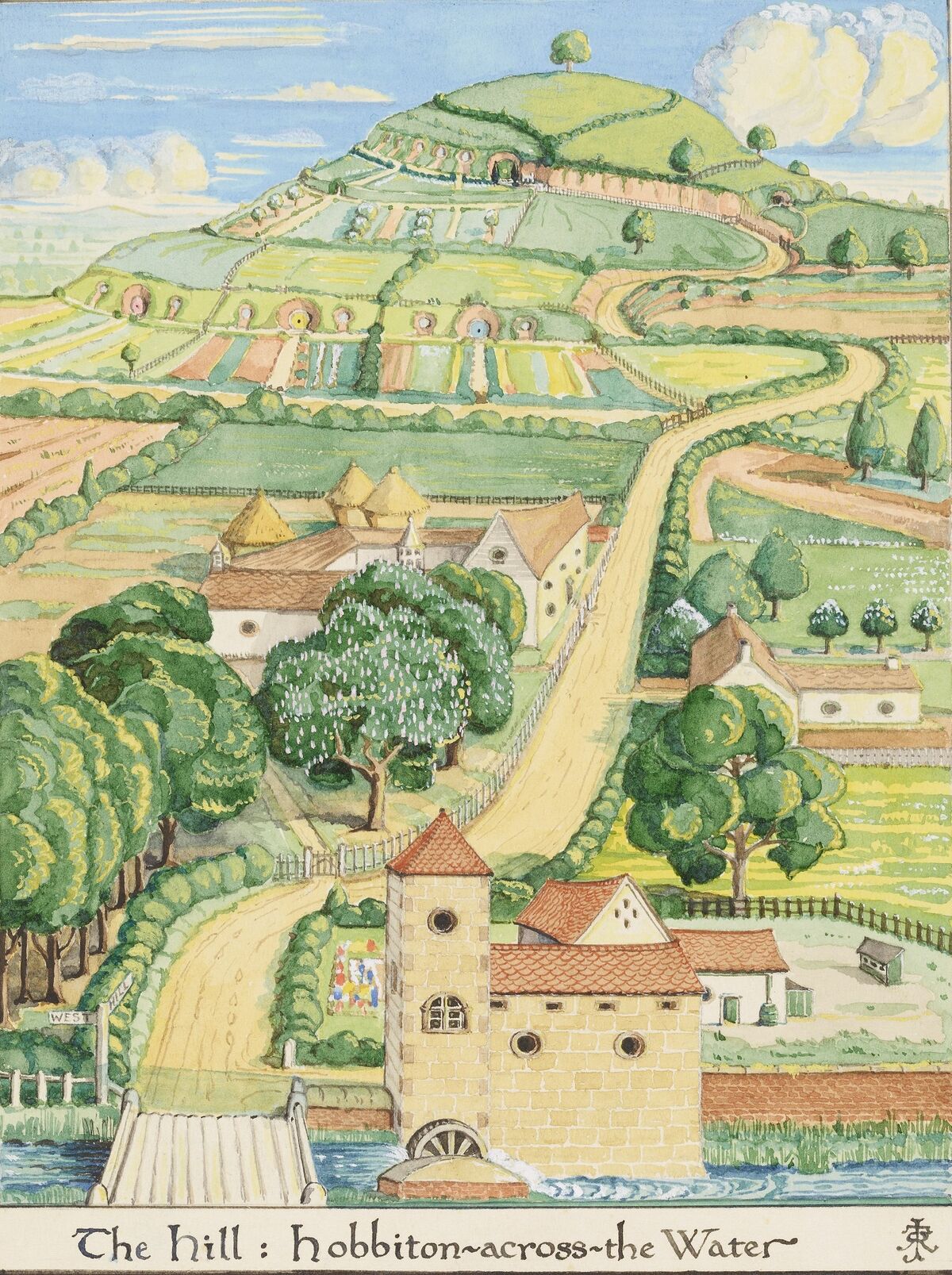
(JRRT)

to a world where there are trolls,

(JRRT)

goblin-infested mountains,

(Alan Lee)

wolves in large packs,

(Tove Jansson)

giant spiders,

(John Tyler Christopher—you can see more of his work here:  https://johntylerchristopher.com/ )

and, finally, an intelligent and vengeful dragon.
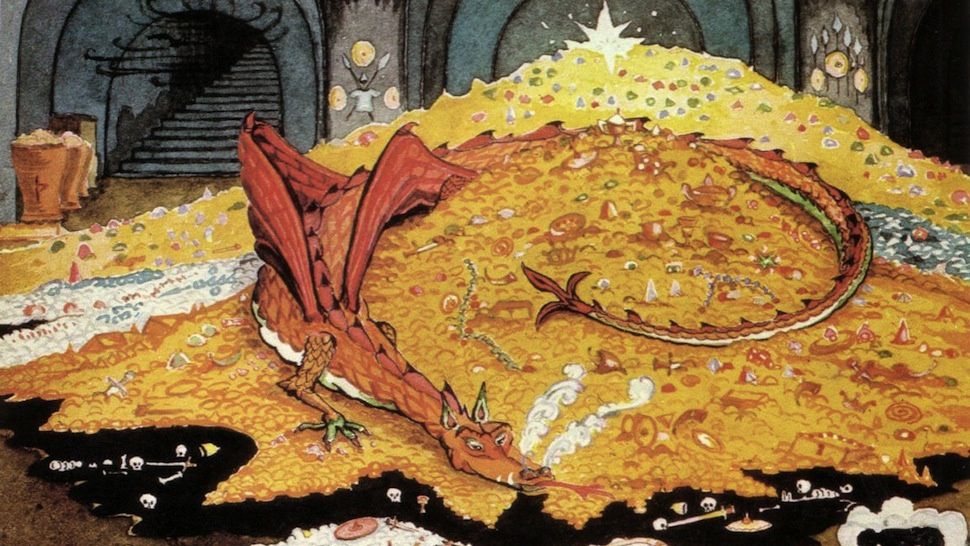
(JRRT)

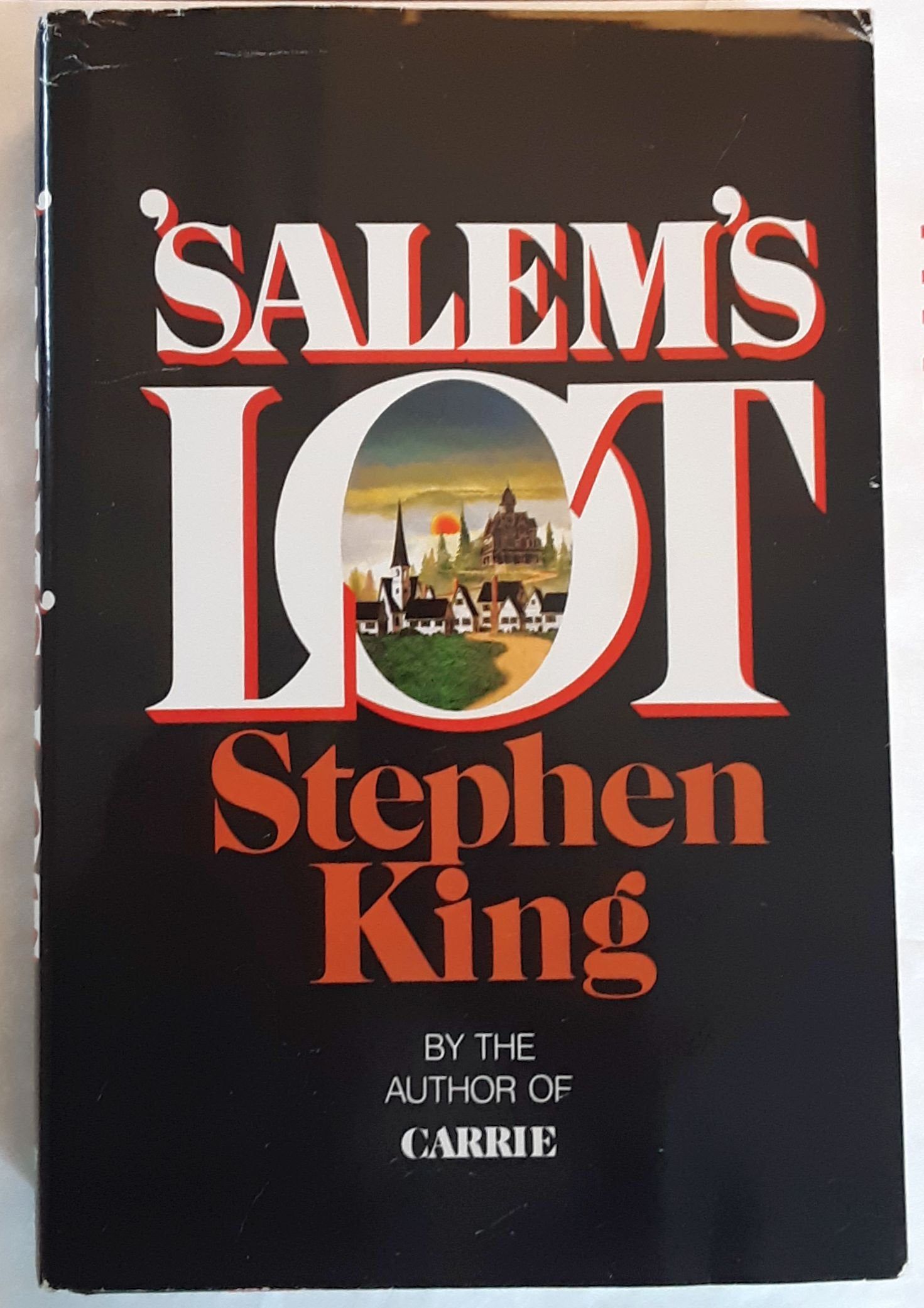
But does the appearance of all these dangers make the book a horror novel, like one of Stephen King’s more forbidding works?
The article points to some potentially disturbing moments—and at least the first is certainly disturbing and, interestingly, is not in the two books upon which the film is based—The Marvelous Land of Oz, 1904,
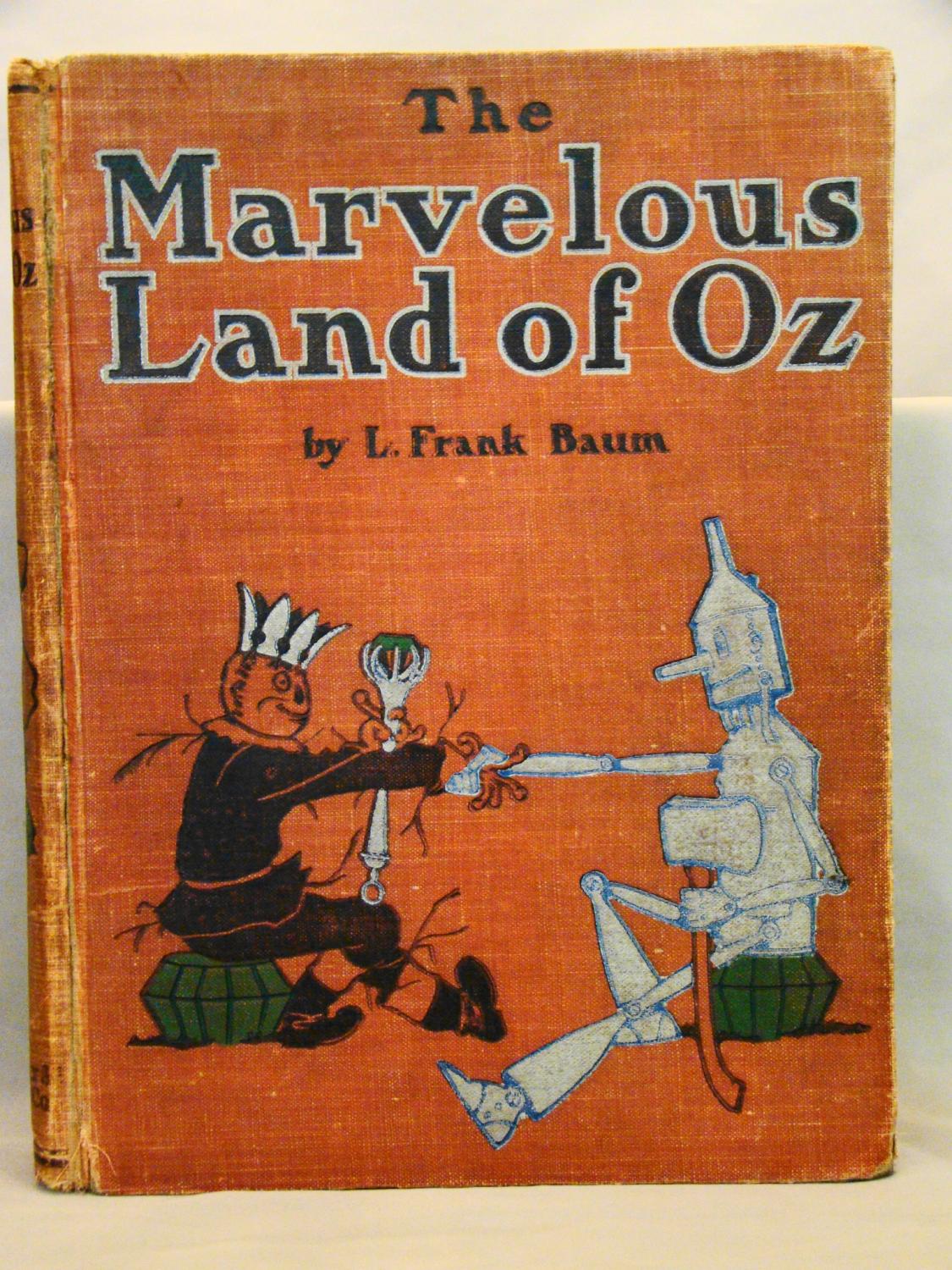
and Ozma of Oz, 1907.  (For more on the combination and the scriptwriters’ changes, see:  “Chickening In”, 12 February,  2025)
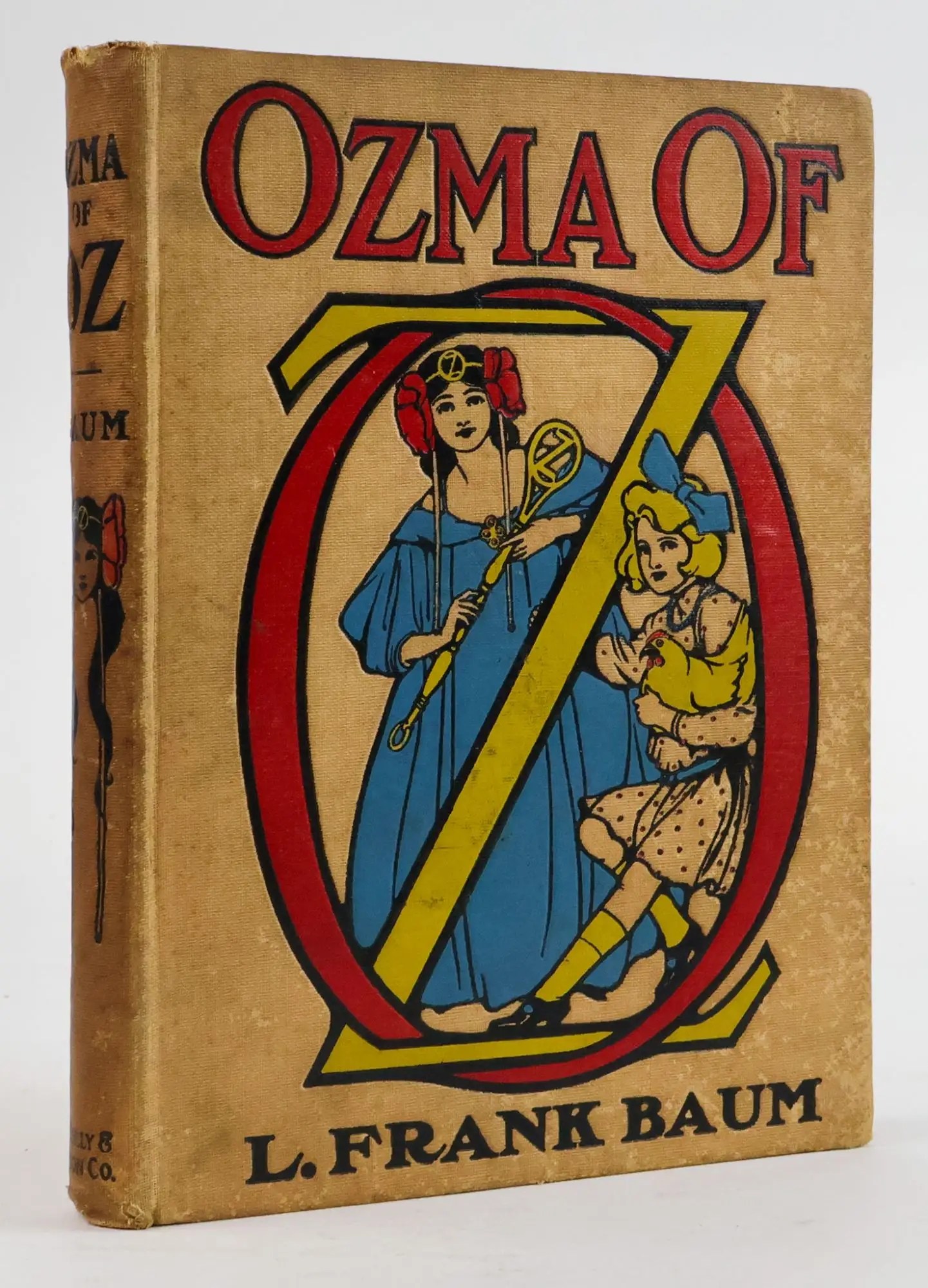
The Kansas of the 1939 film was as bleak as a 1930s sound stage could make it, in sepia, suggesting photos of the Dust Bowl of the Great Depression era—

The 1985 movie showed us the real rolling hills of Kansas and the ruin of Uncle Henry and Aunt Em’s farm.
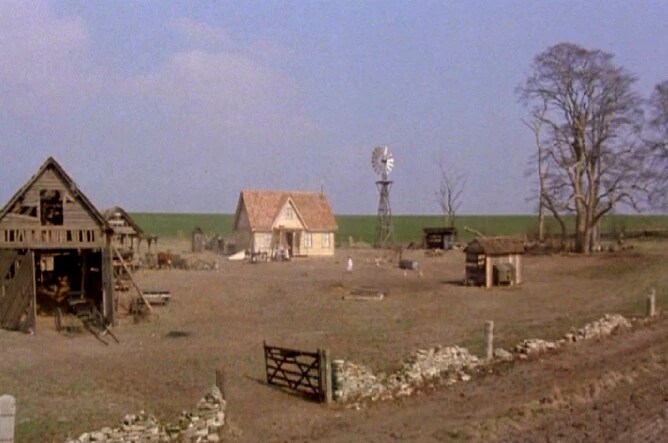
(This is at the end of the film, when the house has been rebuilt—early in the film, the house—which, of course, was ripped from Kansas and dropped on the Wicked Witch of the East—remains unfinished and Uncle Henry crippled from the twister.)

Dorothy, to Aunt Em, also seems somehow ruined, having reappeared after the tornado with stories about having been in a foreign land, Oz, but with no proof of it, and Em, having seen a newspaper ad for medical treatment by electricity, decides to take Dorothy to the clinic and its all-too-calm and rational Dr. Worley.

The treatment consists of running a powerful electrical current through Dorothy’s brain, (now called ECT—electroconvulsive therapy), which is supposed to erase Dorothy’s (supposedly false) memory of Oz. 

As the audience, with its own memories of Oz, from the 1939 film, the many books, or both, knows perfectly well that Oz is real, as is Dorothy’s memory of it, and, as the article points out:

“…the power of these scenes lies in the fact that they are trying to silence Dorothy, to obliterate her memories of Oz”

Dorothy escapes the clinic (one might really says “asylum”, as it has that grim look of Victorian asylums for the insane)
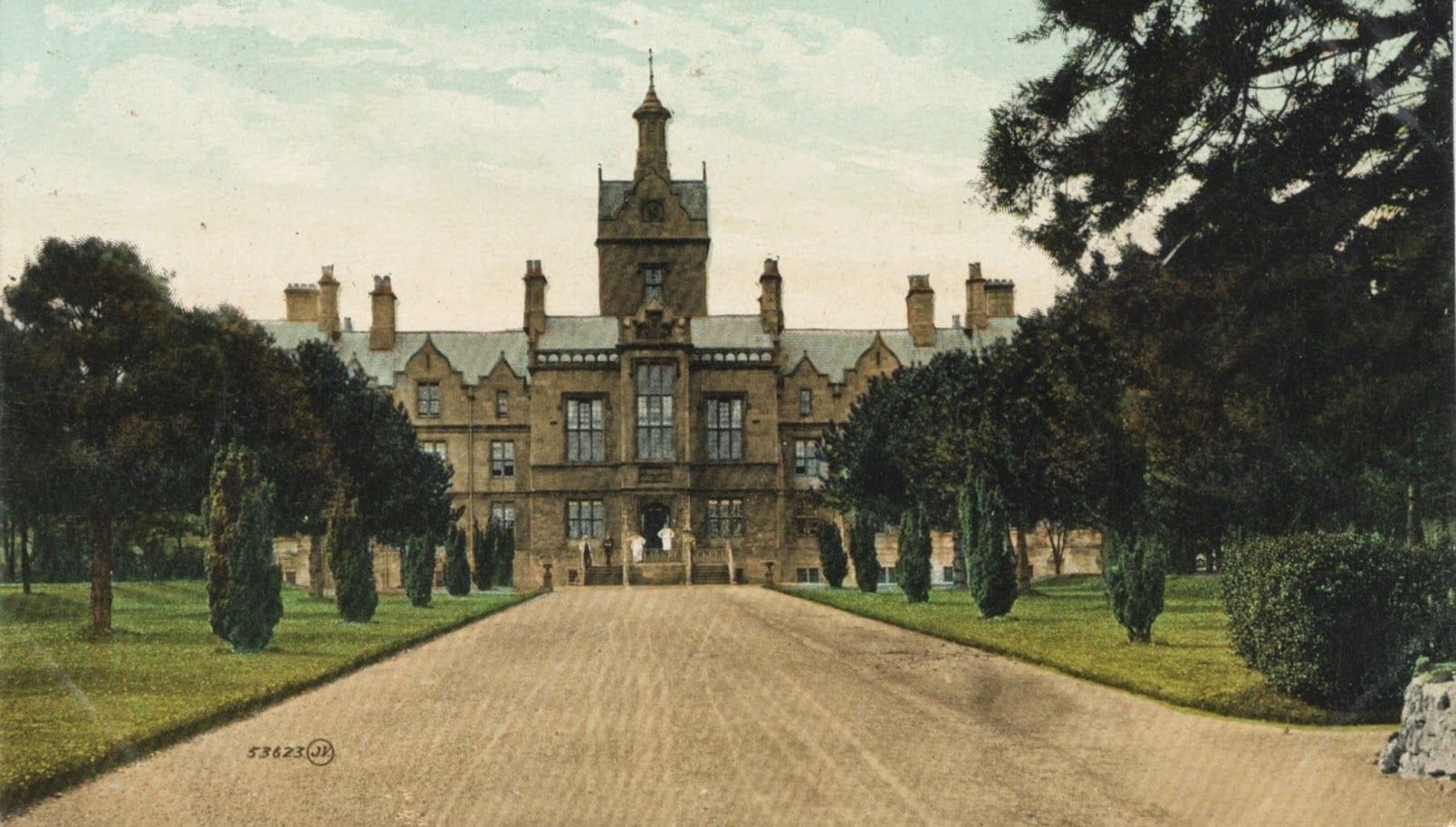
(A real Victorian asylum—and not the grimmest, there being some real competition here)

and turns up in Oz, once more, where the article mentions other potentially disturbing elements:

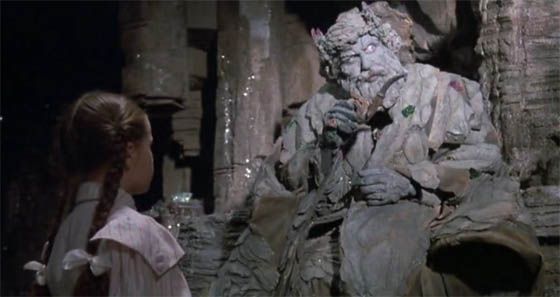
the destruction of Oz and its citizens petrified,

its ruins haunted by the Wheelers,
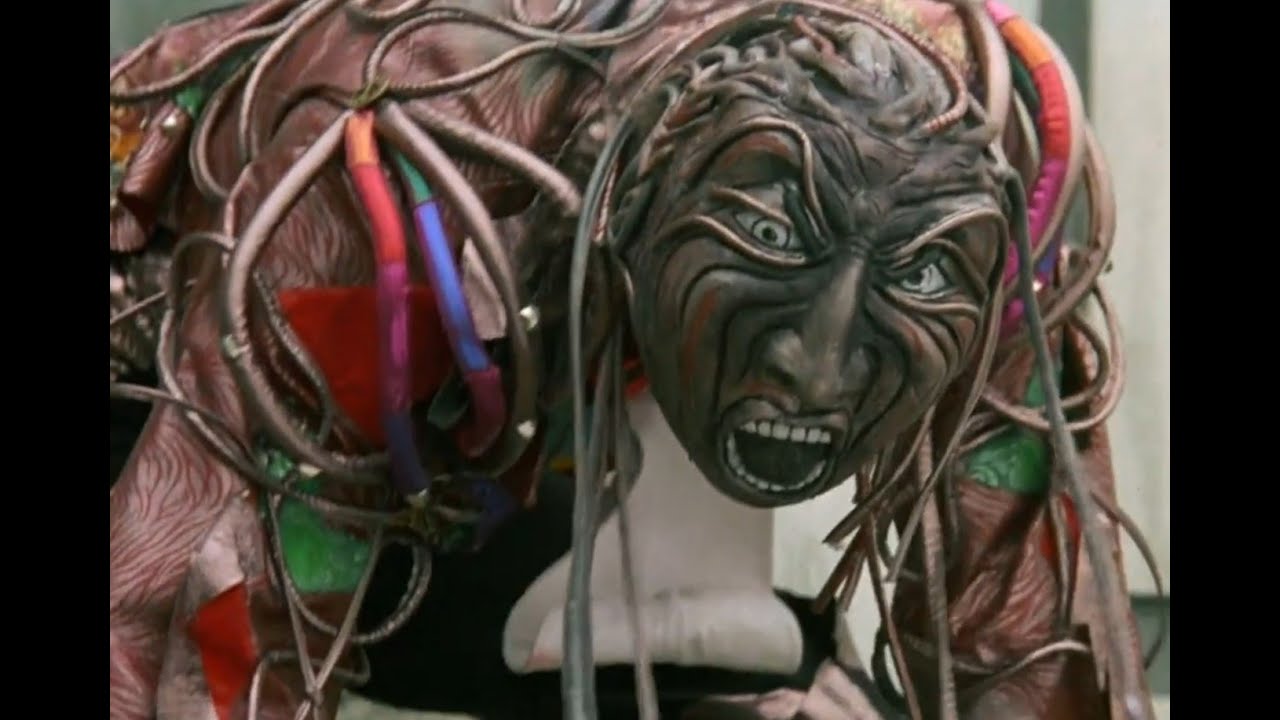
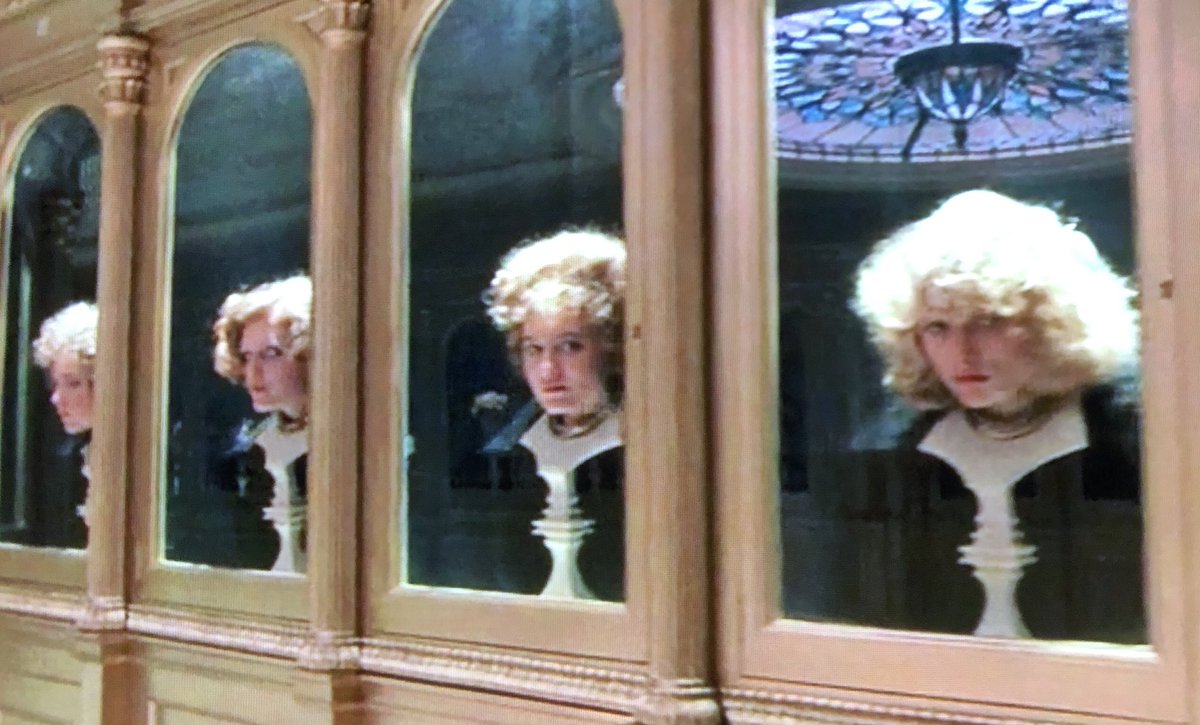
the minions of Princess Mombi, who collects heads and wears them for different occasions,
and then there is the Nome King, who is the current ruler of Oz,
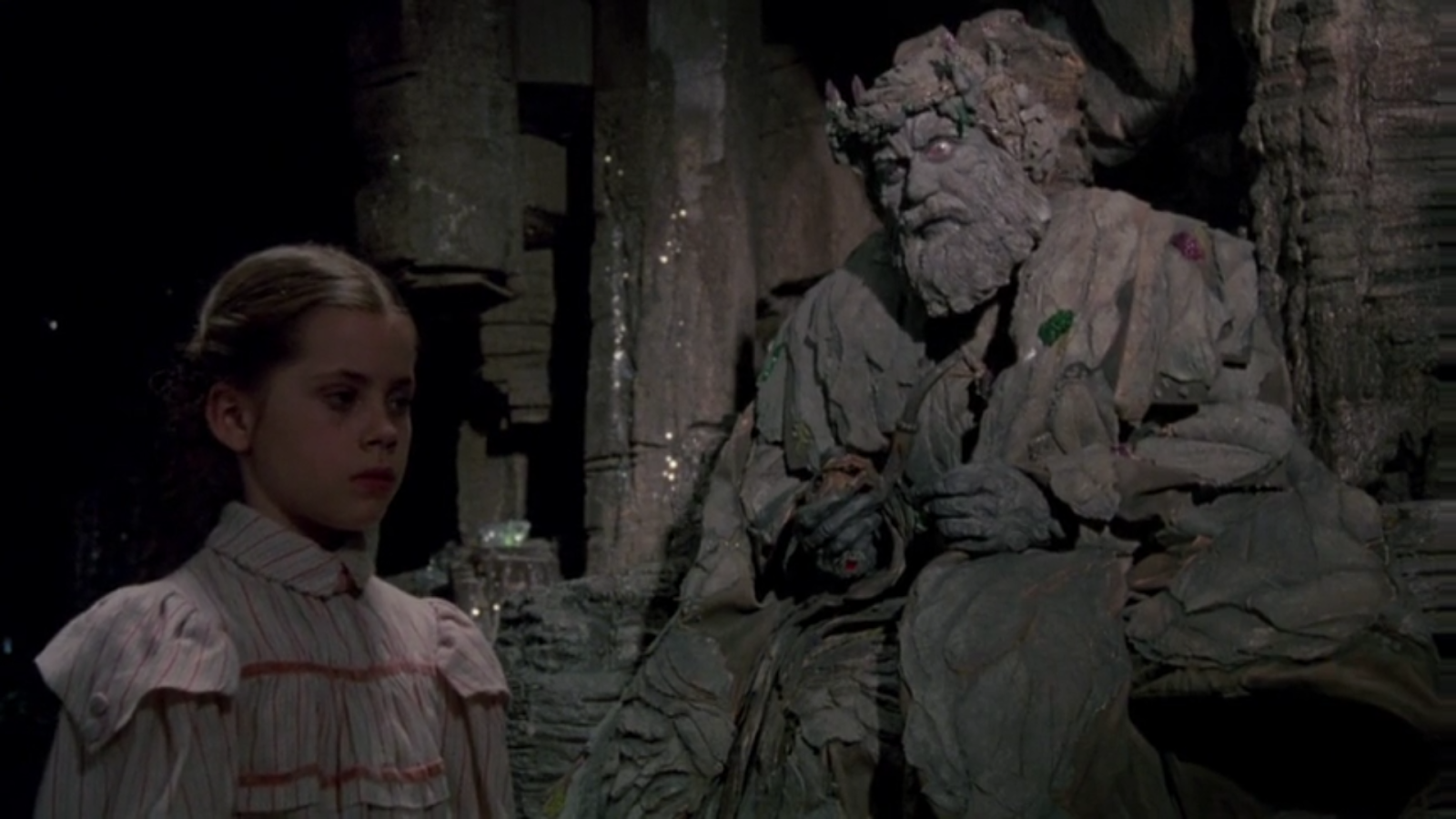
and is the destroyer of the Emerald City, the overlord of Mombi, and has enchanted Dorothy’s former friends, the Scarecrow, the Tinman, and the Cowardly Lion, turning them into inanimate objects.

For the sake of sensationalism, it seems that the article leans heavily on these—as if, I suggested above, one could do the same for The Hobbit, but this leaves out the fact that, although Dorothy’s first allies in Oz have been neutralized, she finds others, just as Bilbo has dwarves, Gandalf, Elrond, the Eagles, and Beorn, not to mention Sting and the Ring.

These include the caustic hen, Billina, who arrives with her from Kansas,

“the Army of Oz”—Tik-Tok,
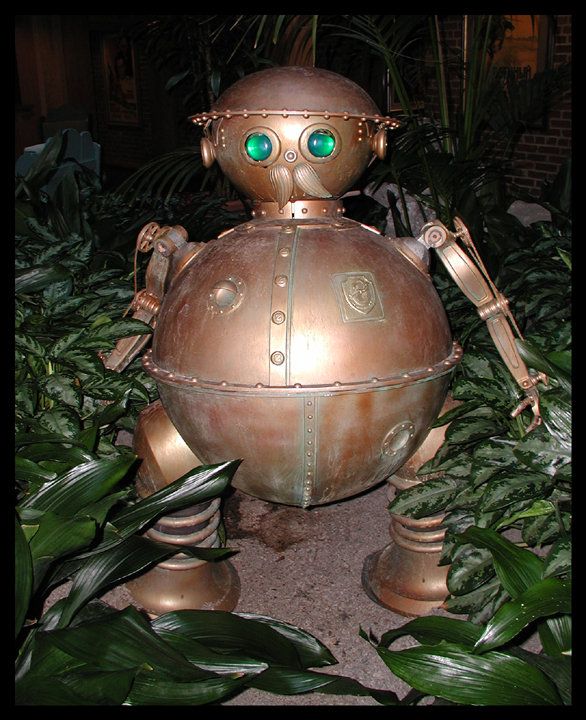
Jack Pumpkinhead,

and the Gump.

I teach story-telling on a regular basis and a dictum I use is “No fiction without friction” .  Just as trolls, goblins, wolves, Gollum, spiders, and Smaug provide the friction in The Hobbit, so the clinic and its smooth-talking doctor, the Wheelers, Princess Mombi, and the Nome King, provide it in Return to Oz.  These plot elements supply the problems which must be solved before the ultimate goal of the story can be achieved—coming home safely (and much better-off) for Bilbo, coming home and keeping her memories of Oz for Dorothy (guaranteed for her when she sees Ozma, rescued from the Nome King, in her mirror in Kansas).

Disturbing moments—in both—what’s that riddle contest with Gollum if nothing short of harrowing?—but is Return to Oz just this side of a horror movie?  As always, I suggest that you see it for yourself, but remember “no fiction without friction” before you rank it with The Shining.

Thanks, as ever, for reading.

Stay well,

Pick a bed with a reasonable clearance,

And remember that, as always, there’s

MTCIDC

O
Chickening In

12 Wednesday Feb 2025

Posted by Ollamh in Uncategorized

≈ Leave a comment

Tags

anachronisms, bacon and eggs, Billina, Chickens, Claymation, Nomes, Oz, Ozma, The Hobbit, Winky Guards

Welcome, dear readers, as always.

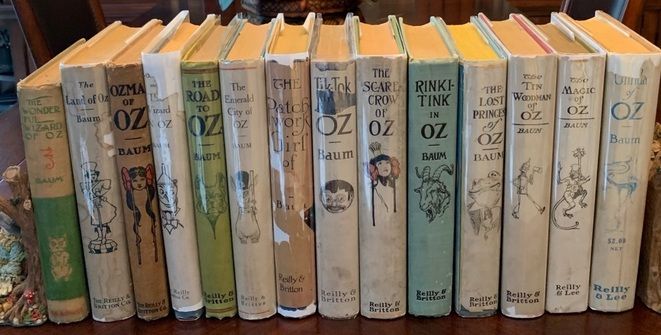
Recently, I had an interesting conversation with a dear friend on the subject of Oz books.  As a child, he had read all of them, whereas I used to look at the whole shelf of them in the local library

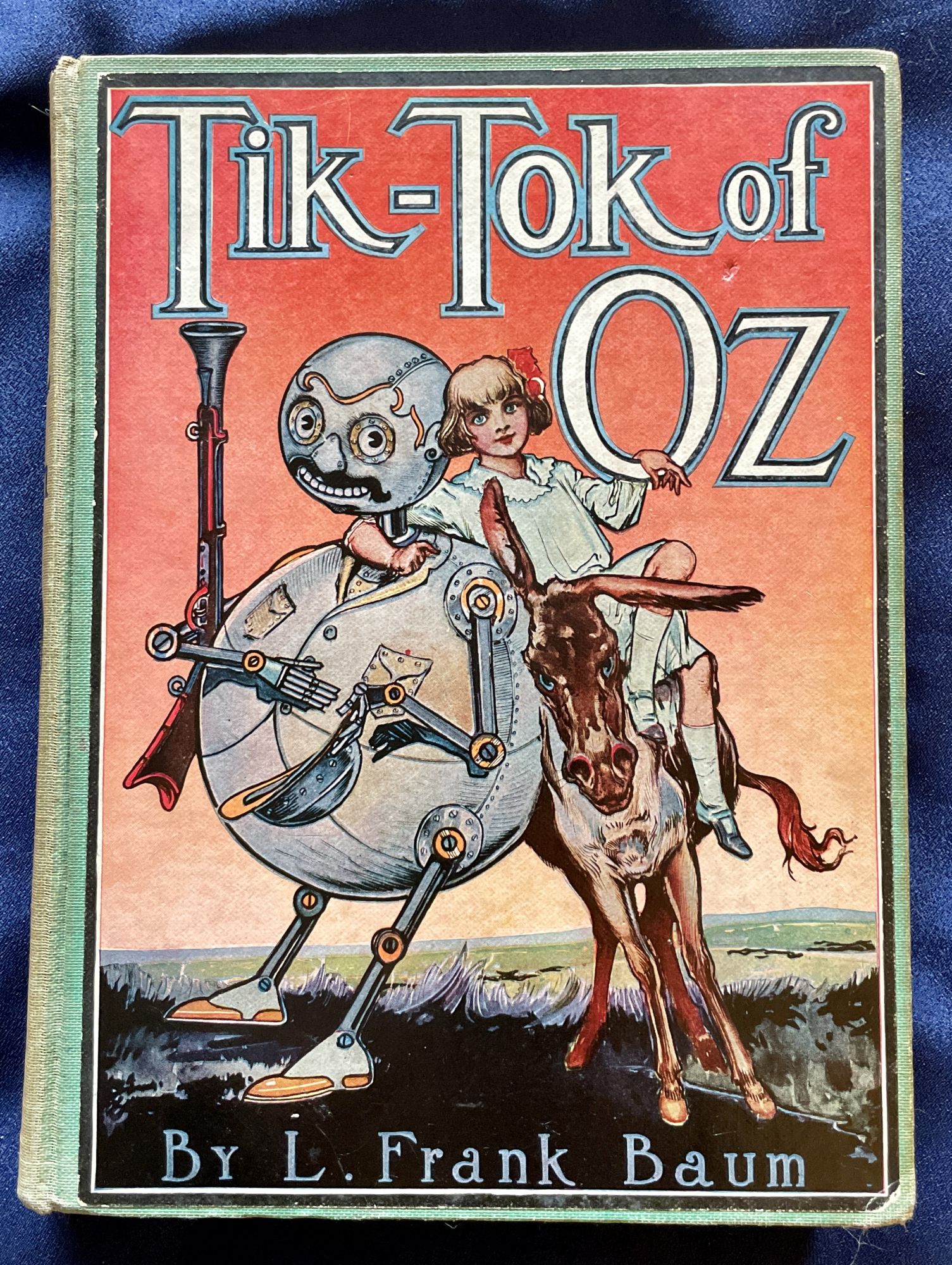
and puzzle over names like “Tik-Tok” and “Rinky-Tink”, with their strange covers,

but, interested in history and science fiction, I never read one of them, going to other sections of the library for my books.  My only contact with Oz lay in the (then) yearly showing of “The Wizard of Oz” on TV, where I would be yearly creeped out by what I later found out were the Winky Guards and their song—

which you can see/hear here, in case you’ve forgotten the Winkies:  https://www.youtube.com/watch?v=nx8-J66yawM

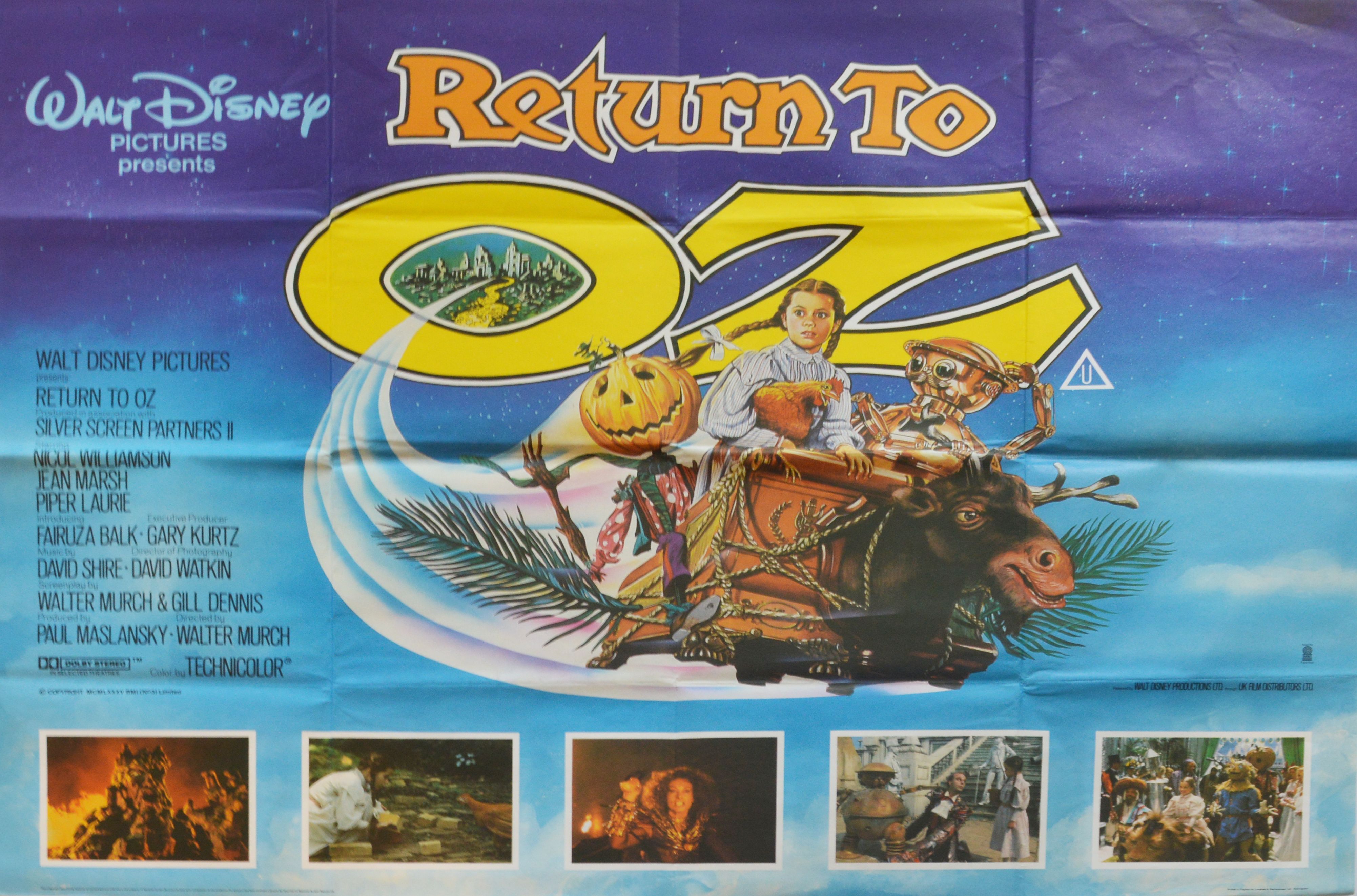
Then came a kind of sequel, “The Return to Oz”,

with its wonderful Claymation figures

and its critics:  it had run together a number of different Oz books, taking something from here and there, as well as adding what might be a disturbing element about the early use of shock treatment (Dorothy’s Aunt Em has Uncle Henry take her to an early clinic where her stories of her adventures in Oz are to be—literally—shocked out of her.  Anyone who has read Silvia Plath’s The Bell Jar, 1963, will know what a horrific form of treatment this is.)

As someone innocent of Oz, I had no idea if any of this criticism were true—although I was sure that L. Frank would never have sent Dorothy to such a place—but much later, doing research for an earlier posting, I saw that the script writers had combined two figures the witch Mombi, from The Marvelous Land of Oz, 1904

with Princess Langwidere, from Ozma of Oz, 1907,

making her the “Princess” Mombi and giving her the actual Princess’ collection of heads (she liked to change them, depending upon her mood).  Also from Ozma, along with other characters and details, came the Nomes, led by their king, Dorothy, and Dorothy’s pet chicken, Billina, who, in the world of Oz, could talk.

This last character would actually be crucial in the film as in the book, as the Nomes had a definite weakness:

“But—thunderation! Don’t you know that eggs are poison?” roared the King, while his rock-colored eyes stuck out in great terror. «Poison! well, I declare,” said Billina, indignantly. «I’ll have you know all my eggs are warranted strictly fresh and up to date. Poison, indeed!” «You don’t understand,” retorted the little monarch, nervously. “Eggs belong only to the outside world—to the world on the earth’s surface, where you came from. Here, in my underground kingdom, they are rank poison, as I said, and we Nomes can’t bear them around.” (Ozma of Oz, Chapter XV, “Billina Frightens the Nome King”)

In the film, it’s one of Billina’s eggs which destroys the Nome king, but, in the book, they are more of a provocation and the Nome king is defeated—but not killed—when his magic belt (which Billina has heard mentioned earlier) is pulled from him.

Dorothy and Billina are, of course—and proudly—from Kansas but, as I’m always interested in backstories and origins, I wondered:  before Kansas, where did chickens come from originally?  Are chickens indigenous?

But, as chickens turn out to be ancient, the answer is “it’s complicated”.

Wikipedia begins:

“The chicken (Gallus gallus domesticus) is a large and round short-winged bird, domesticated from the red junglefowl of Southeast Asia around 8,000 years ago.”

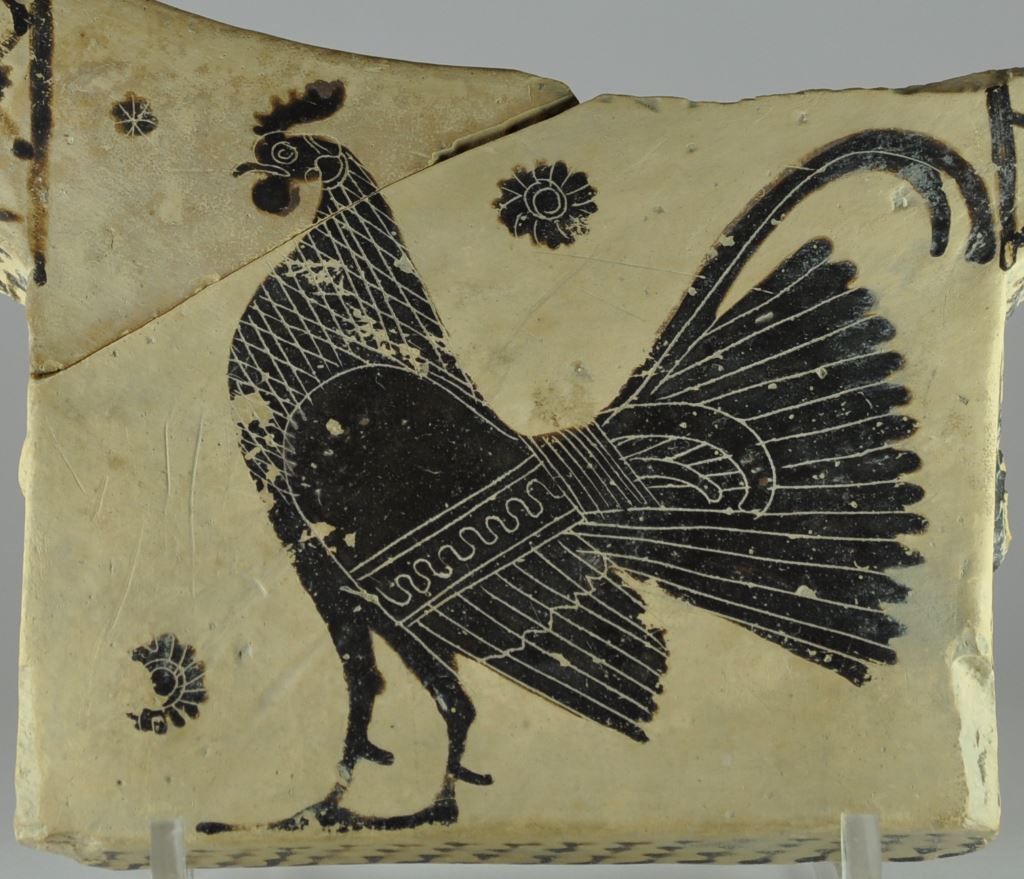
The first question which immediately springs to mind is:  “Southeast Asia?  Around 8,000 years ago?”  And how did this domesticated creature come west—and when?  Lots of mystery here, with explanations like “it came via Persia”, which is a pretty long distance from Southeast Asia.  Ancient Greece, clearly had them, but, although it has a word for “rooster” (“alektor”, among related forms, transliterated) and provides us with lots of illustrations of them,

(5th century BC)

doesn’t appear to have a separate word for hens—without hens, however, no more roosters, so hens were obviously present.  Ancient Rome has gallus for a rooster and gallina for a hen (along with pullus, which has a more generic meaning of “young one”—but is clearly the ancestor of “pullet” from Old French poulette, a diminutive of poule, “a hen”), but, when it comes to illustrations, images are seemingly almost entirely of roosters

and images of hens are as rare as—dare I say it?—hens’ teeth.

The Romans didn’t introduce chickens to the UK—recent archeological evidence suggests the pre-Roman 5th-3rd century BC—but we can presume that the chickens found a home there and, from there, traveled to the New World in the Age of Colonization, eventually making their way to Kansas, where some gallinaceous ancestors produced Billina.

As we know, Tolkien became aware of anachronisms in the 1937 The Hobbit—

things like:

“…he began to feel a shriek coming up inside, and very soon it burst out like the whistle of an engine coming out of a tunnel”

and, in the 1966 revision of the text, he considered replacing them.  Ultimately, references to tobacco remained, as did that engine, but one thing did change, Gandalf’s demand:

“And just bring out the cold chicken and tomatoes”

 became “And just bring out the cold chicken and pickles!” 

Gandalf just previously had requested, “Put on a few eggs, there’s a good fellow!”

showing an instance where the egg came before the chicken—always a philosophical problem as to precedence—but it’s clear that JRRT was quite convinced that, although tomatoes might be alien, chickens and their produce were native and that the Nome king’s view of eggs:

“Eggs belong only to the outside world—to the world on the earth’s surface, where you came from. Here, in my underground kingdom, they are rank poison, as I said, and we Nomes can’t bear them around.”

might pertain to Oz, but not to Middle-earth.

As always, thanks for reading.

Stay well,

Whichever came first, where would bacon be without eggs?

Fresh breakfast with a tasty fried egg and crispy bacon in a sauce pan waiting to be served and eaten

(Bilbo might be polled on this as, throughout The Hobbit, his thought of comfort always includes this dish)

And remember that there’s always

MTCIDC

O

Ambiguity in Oz

06 Wednesday Jul 2016

Posted by Ollamh in Films and Music, Literary History, Narrative Methods, Theatre and Performance, Villains

≈ 1 Comment

Tags

Adventure, Aldus Manutius, Captain Cyril Turner, condensation trail, Epsom Downs, James Pollard, Let's eat grandma, Oz, punctuation, skywriting, Surrender Dorothy, The Wizard of Oz, the Wright brothers, Wicked Witch

Dear Readers,

Welcome, as always.

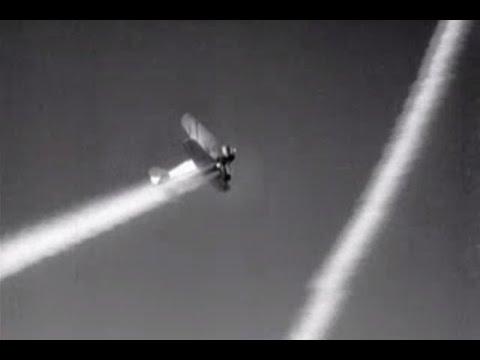
It was a bright, breezy morning yesterday and we were looking up at a contrail (short for “con(densation) trail”)

Contrail.jpg

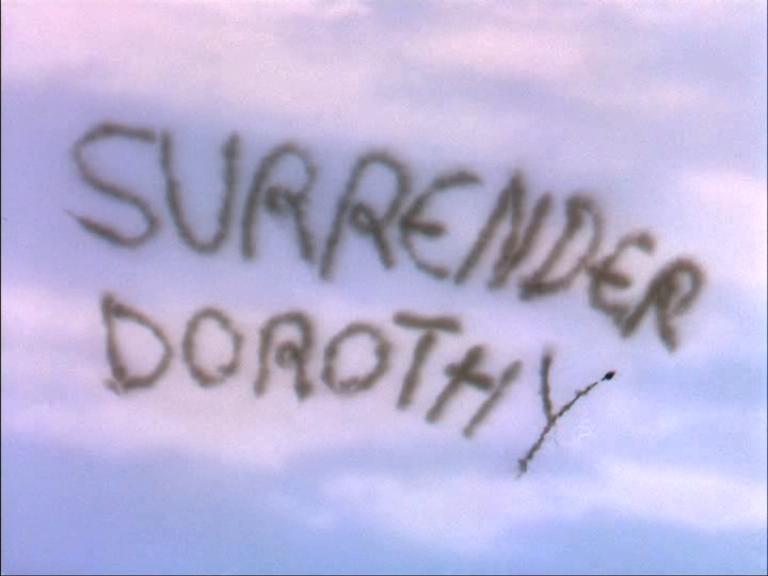
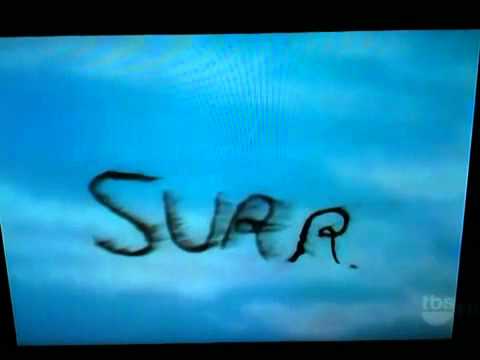
which brought to mind this message:

surrender2.jpg

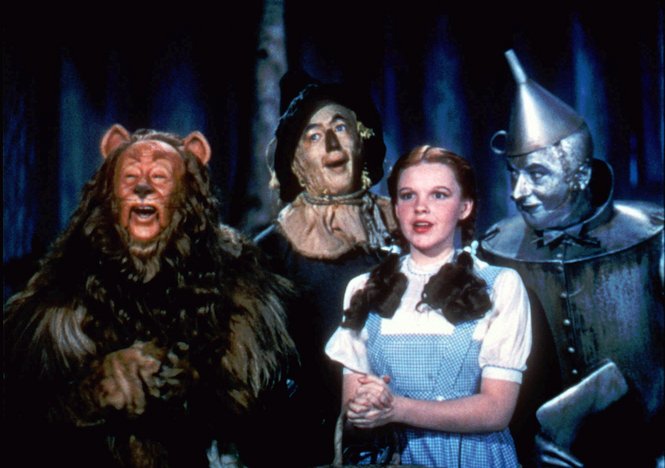
from the 1939 movie, The Wizard of Oz. At this moment in the movie, the four friends (and Toto),

dorothyandfriends.jpg

seemingly welcome in the Emerald City, have been enjoying their welcome when the happy music stops at a shriek, and they look up to see the Wicked Witch of the West skywriting.

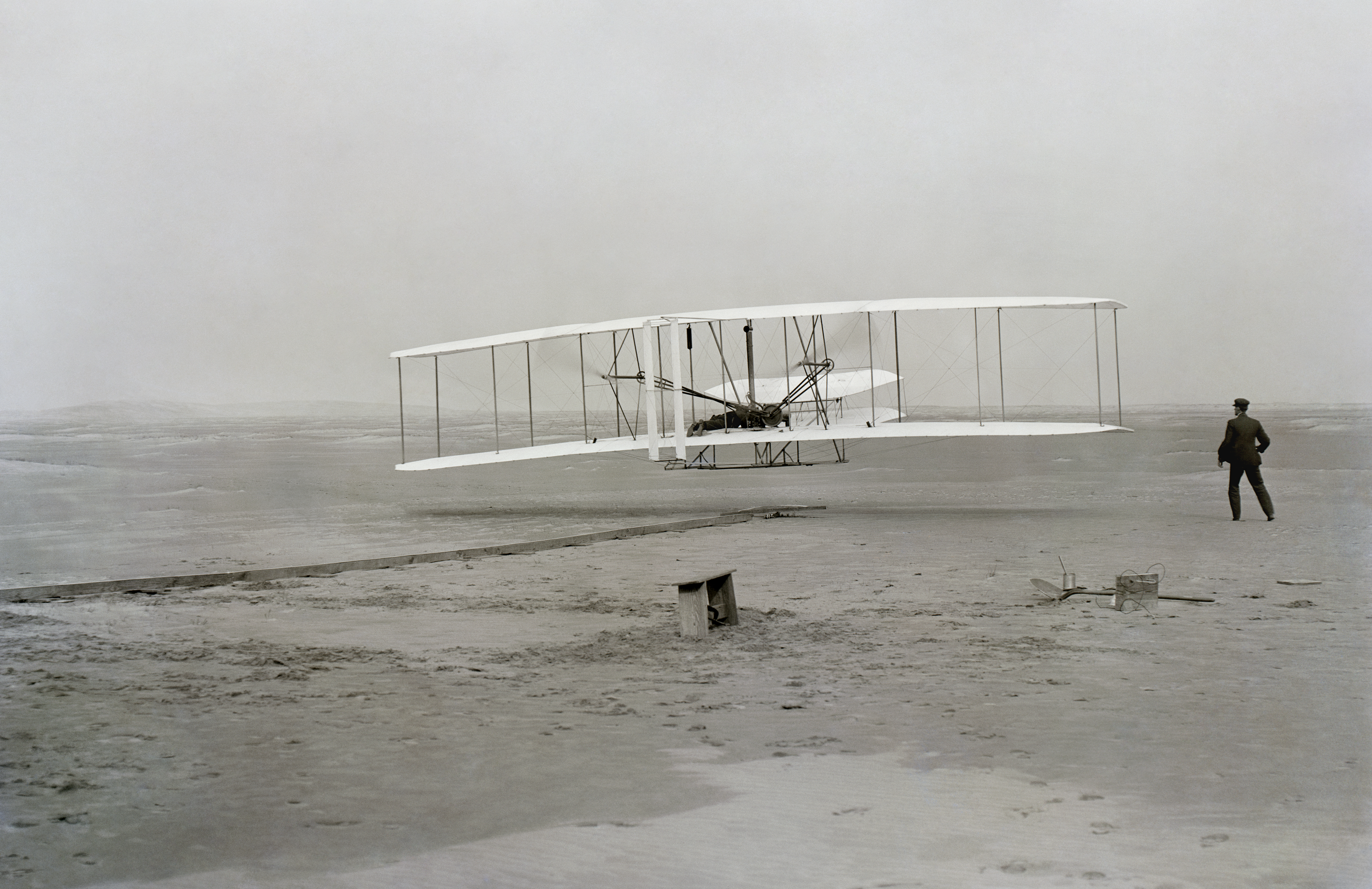
In the US in 1939, artificial flying objects would hardly have been a surprise. After 1903,

First_flight2.jpg

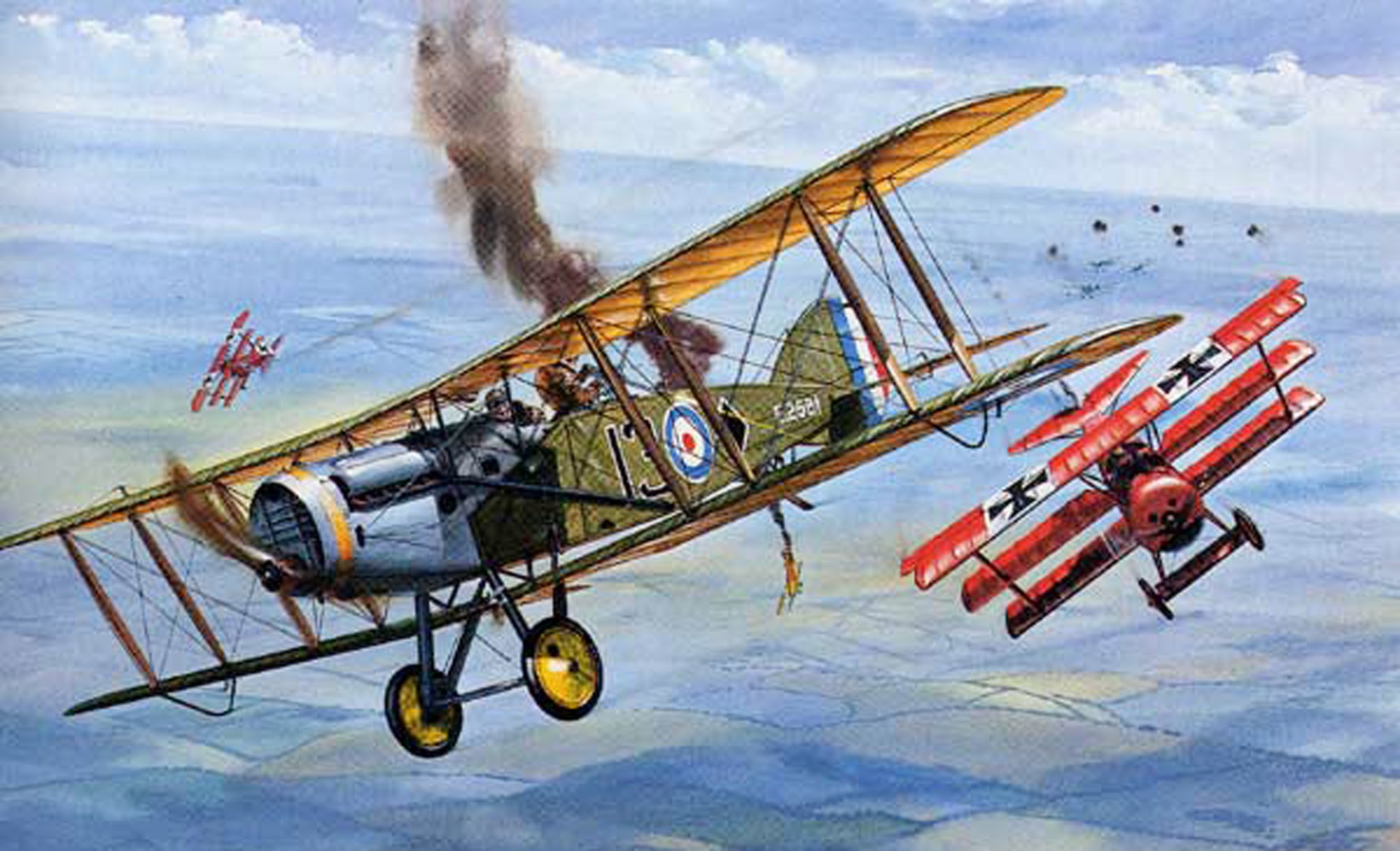
and certainly after the Great War

dogfight

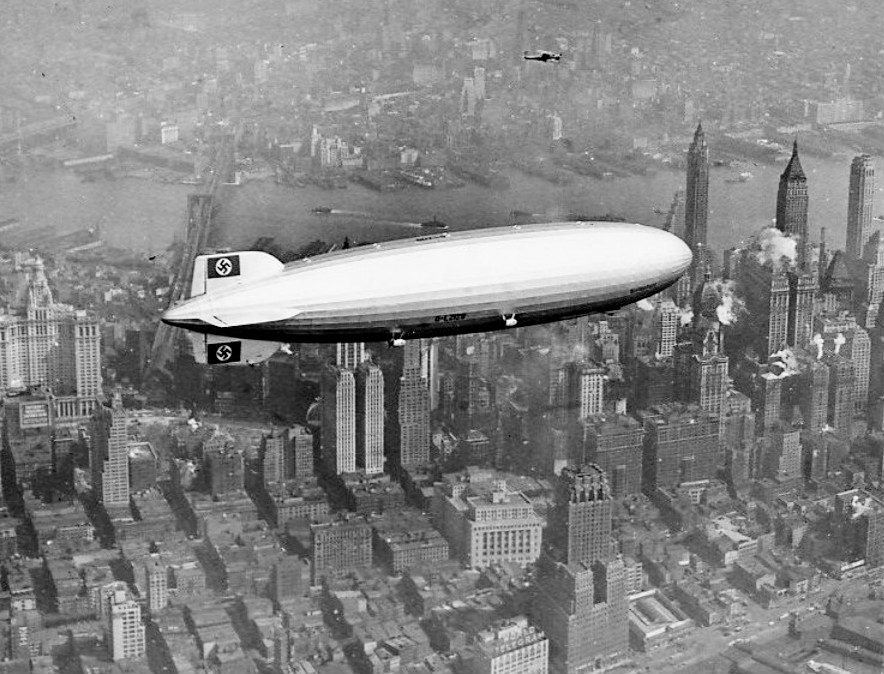
aircraft were increasingly common—even up to massive dirigibles.

Hindenburg_over_New_York_1937

Skywriting—

aerialadvertising1930s

is said to have been first commercially employed in 1922 at Epsom Downs, in England,

horace-walter-nicholls-crowds-on-derby-day-epsom-downs-surre

where Captain Cyril Turner wrote “Daily Mail” over the race track.

James_Pollard_-_Epsom_Races-_The_Race_Over1835.jpg

(This is a painting by James Pollard from 1835, but we couldn’t resist its detail.)

It appeared over New York City for the first time shortly afterward.

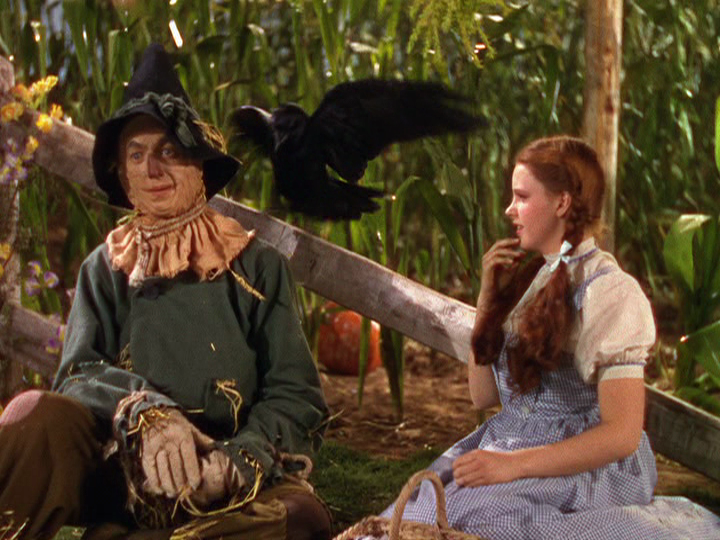
In Oz, however, the usual airborne objects appear to have been:

  1. crows

crowsinoz

  1. witcheswitchflying

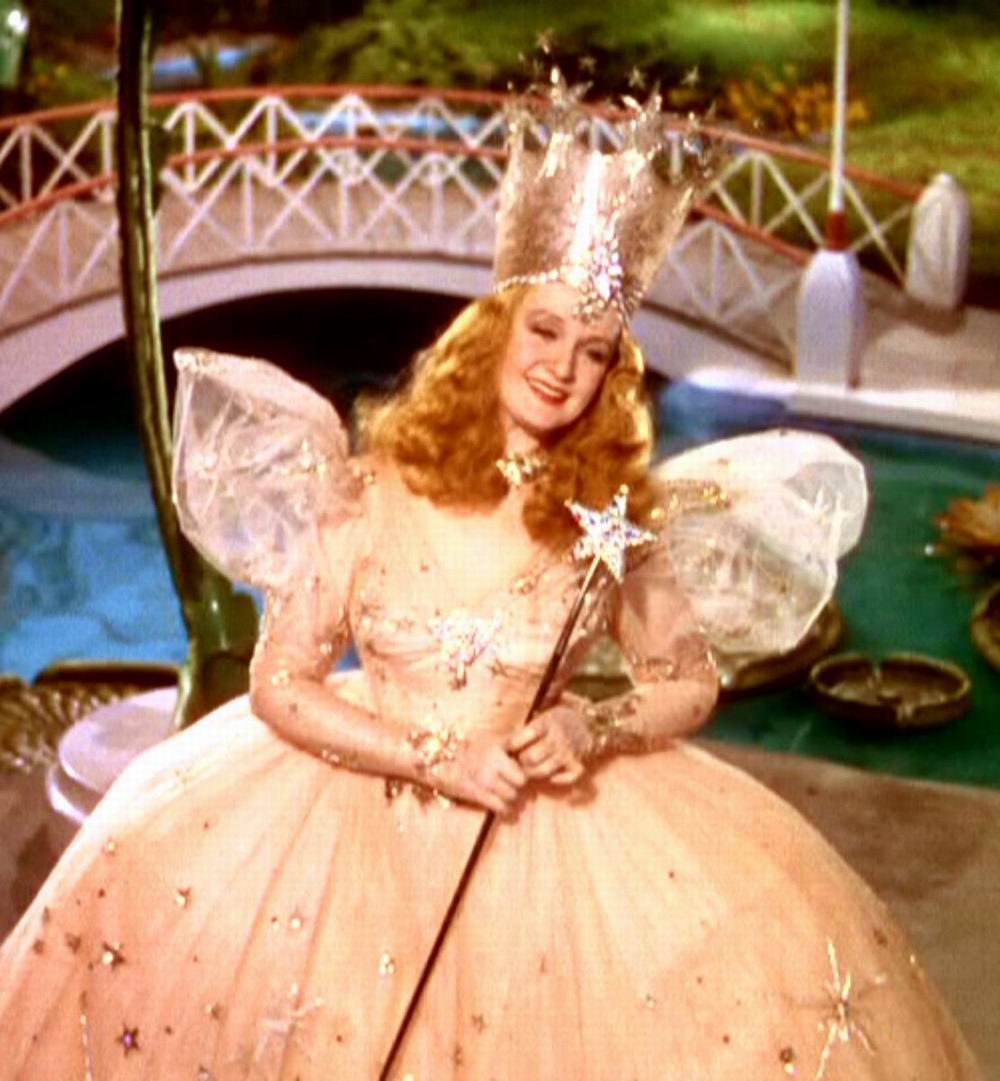
Glinda-Wizard-Oz

  1. monkeys

flyingmonkey1gifflyingmonkeys

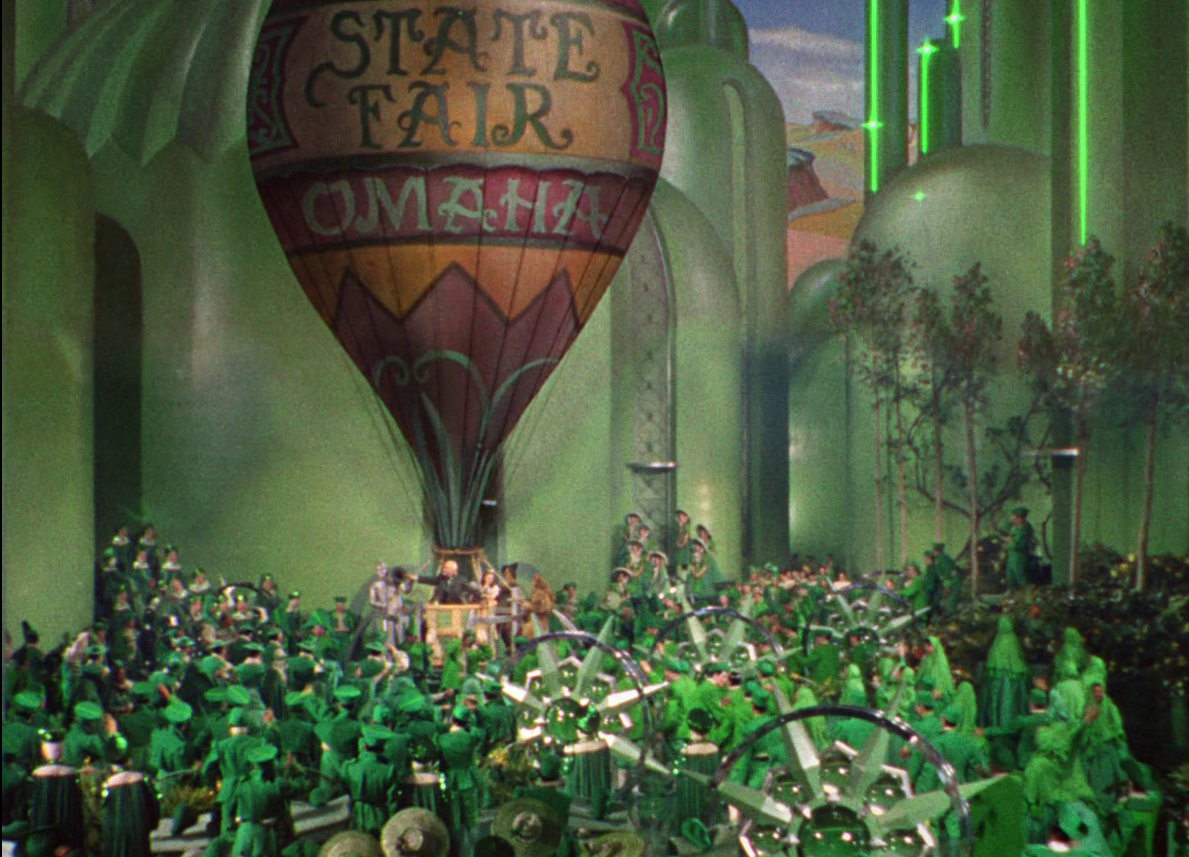
(To which we might add 4. balloons—although there is only one and it’s not a native product.)

ballooninwizard

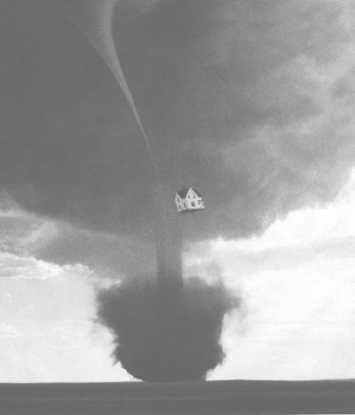
Thus, a thing like a flying house

Tornado-with-house

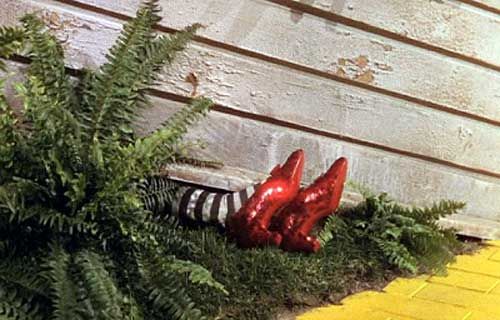
would have been more than a little disturbing (and still is, here in this world)—especially when it landed on a major political figure.

houseonwitch

As well, although witches fly in Oz, as far as we know, they are not given to delivering messages by air.

(This message, by the way, was:

  1. made by using a hypodermic needle filled with black ink to write on the bottom of a glass tank filled with colored water
  2. originally longer—here is what it first said:

extendedwwwskywriting)

Equally disturbing to us, however, is the ambiguous (from Latin amb-, “both” and ag- “to drive”—hence, “to go in two directions”) nature of the message—all due to a (potentially) missing comma.

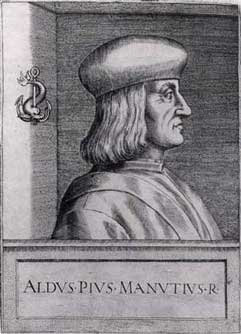
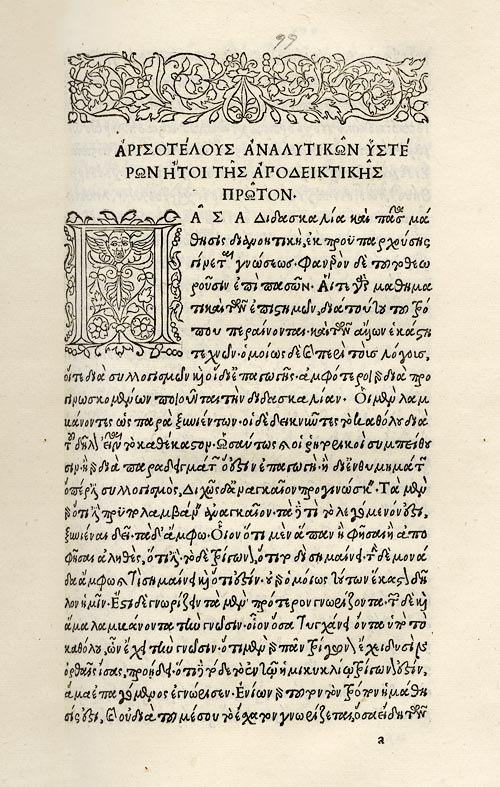
Modern western punctuation took several centuries to appear and mature, beginning with the work of the early printer, Aldus Manutius (the Elder—1449-1515) in the later 15th century.

Aldus_ManutiusAldo_Manuzio_Aristotele

On the whole, modern native English-speakers tend to use the same practices, although an inverted prepositional phrase in American English, for example, has a comma, where British English does not.

Uninverted: There were about twenty fresh crabs in the sink.

Inverted (US): In the sink, there were about twenty fresh crabs.

Inverted (UK): In the sink there were about twenty fresh crabs.

When this is spoken by any native-speaker, there is a slight pause after “sink” and the point of the comma (a point which goes back to 16th-century rhetorical texts, in which punctuation is intended to be used like rests in music, as a series of directional signals as to pauses) is to signal that natural pause.

There is no ambiguity either way in the model sentence, but what about in the Witch’s command?

As it stands, “Surrender Dorothy”, without a comma, is a kind of general imperative—it could perhaps be addressed to all of Oz—and thus easily explained in a longer construction, like “Oz! Surrender Dorothy”—perhaps with the original conclusion “or Die!”

But is this the Witch’s intention? Insert the comma and you have a command directed specifically—and solely–to Dorothy: “Surrender, Dorothy!”   (As we learn when Dorothy is in the hands of the Witch, the deleted part of the message “Or Die” is not quite accurate—the Witch wants the Ruby Slippers, but can’t get them without killing the wearer, so that the real message should be “Surrender, Dorothy—and Die!”—which is hardly likely to be persuasive!)

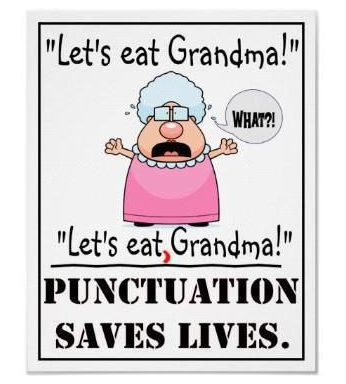
There is a cartoon about English punctuation which has circulated for some years:

letseatgrandmacorrection

In the version without the comma, it’s an invitation to eat grandma. With the comma, it’s an invitation to eat with grandma. In the case of the Witch’s message, what do you think: is it a command to Oz, or to Dorothy?

surrenderpartialview

Thanks, as always, for reading.

MTCIDC

CD

Knowledge, Rule, Order

06 Wednesday Jan 2016

Posted by Ollamh in Fairy Tales and Myths, Imaginary History, J.R.R. Tolkien, Military History, Military History of Middle-earth, Narrative Methods

≈ 2 Comments

Tags

Adolf Hitler, Anduin, Benedict Cumberbatch, Benito Mussolini, British Government, Charlie Chaplin, dictatorships, England, Gandalf, George V, Germany, Gondor, gothic script, Government, History, India, Isengard, Kaiser Willhelm II, Lenin, Mehmed VI, Middle-earth, monarchs, Mordor, Nazis, newsreel, Numenor, Ottoman Empire, Oz, Peter Jackson, Queen Mary, Queen Victoria, Rohan, Saruman, Sauron, Scott, Smaug, Stalin, Stock Market Crash of 1929, Sultan, The Great Dictator, The Lord of the Rings, Tolkien, Treaty of Versailles, Valar, Victoria Louise, Weimar Republic, William Morris, Writing

Dear Readers,

Welcome, as always.

Have you ever wondered what Middle Earth would have been like if the Fourth Age had begun on a calendar written by Sauron?

That of the Third Age was hardly a democratic paradise: a king rules Rohan, a stand-in for king rules Gondor. Elrond and Celeborn/Galadriel behave and are treated like royalty and Thranduil, as we learn from The Hobbit, is the king of Mirkwood. The dwarves have hereditary rulers.   Only the outliers—communities like Bree and the Shire and the earlier inhabitants like Tom Bombadil and Fangorn—appear to be completely independent. (The Shire even has elections and a mayor, although the actual government, except for the shire reeves, appears to bemostly token—you wonder who’s running their seemingly-efficient postal service.)

This is not surprising, not only for an author born during the later years of Victoria,

queenvic.jpg

but also for someone powerfully influenced by the medievalist interests of everyone from Scott

Sir_William_Allan_-_Sir_Walter_Scott,_1771_-_1832._Novelist_and_poet_-_Google_Art_Project.jpg

to William Morris.

William_Morris_age_53.jpg

(We might add that the world of fairy tales, full of princes and princesses, queens and kings, was also a powerful influence at the time—and not only on story-tellers born in monarchies—after all, even Oz is ruled by a queen—

OzmaOz.jpg

Yet, after Smaug—who could better be a medieval fantasy villain (especially with the voice of the incomparable Benedict Cumberbatch attached)?

p8204516_n279079_cc_v4_aa.jpg

—something changed in Tolkien’s world. In fact, something changed in the whole outside world. With the end of World War One, monarchs toppled all over Europe and beyond, from:

Kaiser Wilhelm II of Germany

KAISER-WILHELM_2994889b.jpg

to Mehmed VI, last Sultan of the Ottoman Empire.

mehmed6.jpg

In place of the former, there appeared the always-troubled Weimar Republic, full of good intentions, but badly crippled, not only by the war which had sapped its manpower and resources, but by all kinds of social unrest and then by the Crash of 1929, which notoriously destroyed the value of its currency.

weimar currency.jpg

As early as 1919, there had been clashes among the forces of different ideologies—

CombatesEnBerlín19190903.jpg

And, amidst all of the unrest, there was a failed coup attempt in 1923 by the man in the overcoat in this picture.

Bundesarchiv_Bild_102-00344A,_München,_nach_Hitler-Ludendorff_Prozess.jpg

He, of course, was only following the footsteps of this man, who had pushed his way into power the year before—

March_on_Rome.jpg

to be followed, in turn, by the man on the left, from the mid-1920s.

stalinandfriends.jpg

That first man, having failed at obvious violence, tried again through more complicated means (although still employing violence, if it suited his purposes) and succeeded in 1933.

Hitler-Papen-First-Reichstag-1933.jpg

He was, so we are told, a riveting public speaker, but, if the newsreels we’ve seen are evidence, we guess you would have had to have been there.

hitlerspeaking.jpg

Some people thought the style exaggerated in the 1930s and caricatured it even then.

chaplin2.jpg

He had a definite social agenda, which he outlined at length and often, although concealing certain of the most horrible aspects. And he liked big words and big concepts, like:

einfolk.jpg

It would have been impossible for someone as intelligent and generally well-informed as Tolkien not to have been very much aware of this man and all of the other like men, busy oppressing as much of the world as they could. And this would have been especially true in a time when radio and film were changing how people received news—and how those interested in influencing others might shape what people saw. As early as 1911, the British government was using newsreel film to show the might and reach of its empire (2/5 of the globe was in their hands) when the king, George V, and his wife, Queen Mary, visited India.

Delhi_Durbar,_1911.jpg

Not to be outdone, Kaiser Wilhelm II encouraged a grand—and filmed–event in 1913, for the wedding of his daughter, Victoria Louise—and some of the film was even in color.

vlouisekaiser.jpg

The Marriage of Victoria Louise Color Film

It would be easy to imagine, then, that the weight of such public figures might have influenced Tolkien in his depiction of late-3rd-Age villains. We can see it in Saruman’s unsuccessful attempt to persuade Gandalf to join him:

“ ‘He drew himself up then and began to declaim, as if he were making a speech long rehearsed. ‘The Elder Days are gone. The Middle Days are passing. The Younger Days are beginning. The time of the Elves is over, but our time is at hand: the world of Men, which we must rule. But we must have power, power to order all things as we will, for that good which only the Wise can see.” (The Fellowship of the Ring, Chapter 2, “The Council of Elrond”)

Thus, unlike the script of Jackson’s version, there is no plan to wipe out men and replace them with orcs. Instead, men are to survive: to be ruled—perhaps under what definitely sounds like it should be a translation from something written in Fraktur—the fake Gothic script favored by the Nazis–

die-schöne-deutsche-Schrift-detail1.jpg

“ ‘We can bide our time,’” says Saruman, “ ‘we can keep our thoughts in our hearts, deploring maybe evils done by the way, but approving the high and ultimate purpose: Knowledge, Rule, Order; all the things that we have so far striven in vain to accomplish…’ ”

Such abstract, but somehow menacing, words sound like a translation of something from Hitler’s Germany: Kenntnisse, Herrschaft, Ordnung. They do not sound in the least like Gandalf’s goals, ever, and he, in fact, replies by implying that not only are they not really Saruman’s words, but that Saruman is foolish for believing them:

“ ‘Saruman,’ I said, ‘I have heard speeches of this kind before, but only in the mouths of emissaries sent from Mordor to deceive the ignorant.’ “

As really the words of Sauron, however, they give us an idea of what to expect in a world under his control. Knowledge would be for Sauron alone, we suppose, perhaps after regaining his lost ring? Certainly he wouldn’t share it with Saruman, whom, it will become clear, he never trusted. As for Rule and Order, the world would be a place full of rules and those watching that they be obeyed. And here we can remember Sharkey’s Shire, with its “by order of the Chief” signs—and its gangs of human enforcers. As well, we can think of its grey, industrial character, as we’ve discussed in a previous post, a universal Mordor, devoted to production. To this, we can add the Mouth of Sauron’s recitation of surrender conditions, delivered to the allies before the Morannon:

“ ‘These are the terms…The rabble of Gondor and its deluded allies shall withdraw at once beyond the Anduin, first taking oaths never again to assail Sauron the Great in arms, open or secret. All lands east of the Anduin shall be Sauron’s for ever, solely. West of the Anduin as far as the Gap of Rohan shall be tributary to Mordor, and men there shall bear no weapons, but shall have leave to govern their own affairs. But they shall help to rebuild Isengard which they have wantonly destroyed, and that shall be Sauron’s, and there his lieutenant shall dwell: not Saruman, but one more worthy of trust.’ “ (The Return of the King, Chapter 10, “The Black Gate Opens”)

In keeping with the influence of current events in this world, we might see this as being a parallel with the 1919 Versailles Treaty, in which Germany was to be forced to make huge territorial concessions, to disarm almost entirely, and to pay massive amounts in reparation to the victorious allies.

Treaty_of_Versailles,_English_version.jpg

The Treaty of Versailles– Wiki Article

Such terms as Sauron offers would also destroy Rohan as an ally and set up a permanent garrison between it and the north. We might also expect the restored Isengard to be a staging area for an assault upon Fangorn and the ents, to their ultimate destruction. As well, “west of the Anduin” is a very vague expression—does it include Gondor, as well as Rohan?

Religion in The Lord of the Rings has always been the subject of debate: how much or how little? Of what kind? Tolkien is quoted as saying that it was monotheistic, although, when attacked by the Mumak, Faramir’s men called on the (plural) Valar. There is no mention, in what is often extremely detailed landscape description, of any kind of temple or shrine, however. Nevertheless, we would like to conclude with an eerie thought about religion in this alternative Fourth Age. The Mouth of Sauron, aka, The Lieutenant of the Tower of Barad-dur, is described as:

“…a renegade, who came of the race of those that are named the Black Numenoreans; for they established their dwellings in Middle-earth during the years of Sauron’s domination, and they worshipped him, being enamoured of evil knowledge.”

Could we imagine that, in this other Fourth Age, a new and horrible religion might have appeared, one dedicated to the worship of Sauron—and to that Knowledge which Saruman finds so important? What do you think, dear readers?

As always, thanks for reading.

MTCIDC

CD

Somewhere Over…Ephel Duath?

02 Wednesday Dec 2015

Posted by Ollamh in Fairy Tales and Myths, J.R.R. Tolkien, Narrative Methods

≈ Leave a comment

Tags

Aragorn, Auntie Em, communication, crystal ball, Denethor, Dorothy, Emerald City, Galadriel, heroine, Kansas, Margaret Hamilton, Middle-earth, mirror, Oxford, Oz, Palantir, Pippin, Professor Marvel, Saruman, Sauron, seeing-stones, skype, The Lord of the Rings, The Wizard of Oz, Tolkien, Villains, Wicked Witch

Dear Readers,

Welcome, as always. This posting is now one of two, but it was originally a single posting in which we discussed both Palantiri and Galadriel’s mirror.

Our first thought had been, in fact, a vague one: what did one see in such things? As we reviewed the various possibilities, we realized that they were, in fact, very different in function (yes, we probably didn’t think long and hard enough—we should have pulled out our spares and dipped into that cask of Longbottom Leaf for a three-pipe problem). So we separated them and here’s the first, on the Palantiri.

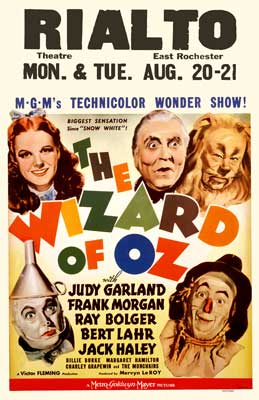
We begin in 1939. It’s not a happy time: war in Europe has broken out again after only two decades of peace. The Depression is still lingering. But there is a new film which Priscilla (age 10) has heard about and would very much like to see and her loving and indulgent father has agreed to take her—after all, this is a children’s movie and he, since his first novel was published in 1937, has become a children’s author.

The film was the story of a quest: the heroine, torn from home, acquires a magical object (two, in fact), slowly gathers a disparate band of companions who help her on her way, visits a grand city, has dealings with a wizard, defeats a powerful enemy and returns home, at last, a wiser person.

posterforwoo

In the very year he became a children’s author, the father had begun a new work. Based in part upon earlier materials and interests, as well as upon elements from his 1937 novel, this was to become not, as he thought at first (and his publishers hoped) a sequel to his previous work, but a kind of extension of that work and, in the years in which he continued to work on it, much more.

In the meantime, he sat in the theatre in Oxford and watched a bleak prairie worldkansas

turn into something almost hallucinogenically-technicolored

munchkinland

and filled with small and very energetic people.

munchkins

But the heroine, as we said, has been torn from home and, worse, she arrives and is immediately in trouble with a powerful enemy,

wickedwitchofthewest

having accidentally killed that enemy’s sibling.houseinwwoe

And the story moves on from there—the gathering of the companions

Wizard-of-Oz-w13

the grand city

oz

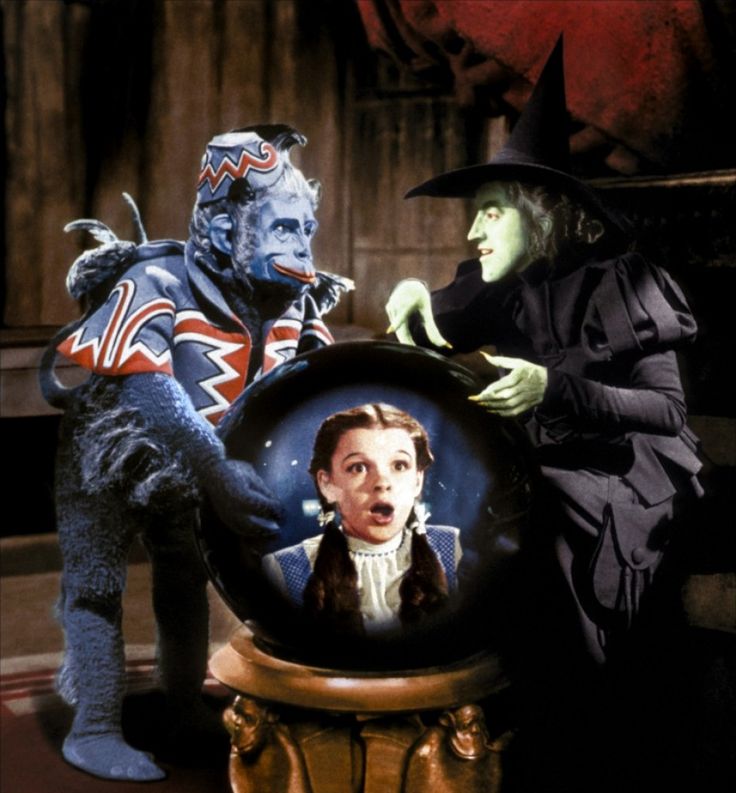
and, all the while, that powerful enemy is watching.

ball4

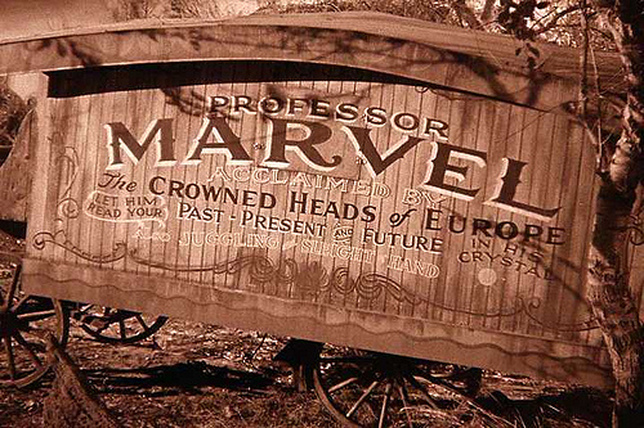
This isn’t the first time such a scrying device has been seen in the story. Earlier, the heroine had consulted another magical figure—or so he claimed.

profmarvelswagon Wizard-3-Marvel

What’s particularly interesting about this device is that, unlike crystal balls one remembers from film and books and from general folklore,

crystalball

the one which is actually used sees not the future, but the present.

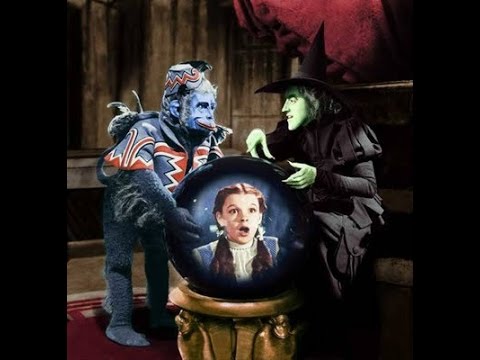
The Wicked Witch of the West sees Dorothy—as, of course, that’s who they are–

wwowwithball

and Dorothy sees Auntie Em.

crystalballdseesem

(And “Professor Marvel”, as he calls himself, at least pretends to see the present.)

This made us wonder about the Palantiri.

For a useful summary of information about these so-called “seeing-stones”, see the entry for Palantiri at Tolkiengateway.net/wiki/Palantiri, but, in short, they are an ancient communication device. That is, they are unlike the usual crystal ball, which looks into the future (or possibly the past), but are rather like the Middle Earth form of skype.

skype

These items don’t have the security offered by our earthly form, however. Within The Lord of the Rings, we see them used by Saruman

sarumanpalantir

Pippin

Pippinpalantir

and Aragorn

palantirandaragorn

and Denethor.

denethorandpalantir

Aragorn, however, is the only one able to escape the control of Sauron as exerted by the sphere.

the_palantir_of_barad_dur_by_stirzocular-d7xwbi9

Their function as a medium of communication, so different from their usual use, brings us back to Margaret Hamilton, staring into her crystal ball

ball4

and we wondered whether, in that dark late summer of 1939, Tolkien might have sat in a theatre in Oxford, watching the Wicked Witch of the West, and, as he did so brilliantly with so many other things, absorbing, then recreating what he saw for his own purposes. What do you think, dear readers?

As always, thanks for reading.

MTCIDC

CD

The Doubtful Sea Series Facebook Page

The Doubtful Sea Series Facebook Page

  • Ollamh

Categories

  • Artists and Illustrators
  • Economics in Middle-earth
  • Fairy Tales and Myths
  • Films and Music
  • Games
  • Heroes
  • Imaginary History
  • J.R.R. Tolkien
  • Language
  • Literary History
  • Maps
  • Medieval Russia
  • Military History
  • Military History of Middle-earth
  • Narnia
  • Narrative Methods
  • Poetry
  • Research
  • Star Wars
  • Terra Australis
  • The Rohirrim
  • Theatre and Performance
  • Tolkien
  • Uncategorized
  • Villains
  • Writing as Collaborators
Follow doubtfulsea on WordPress.com

Across the Doubtful Sea

Recent Postings

  • Through a glass… January 7, 2026
  • Heffalumps? December 31, 2025
  • We Three Kings December 24, 2025
  • A Moon disfigured December 17, 2025
  • On the Roads Again—Once More December 10, 2025
  • (Not) Crossing Bridges December 3, 2025
  • On the Road(s) Again—Again November 26, 2025
  • On the Road(s) Again November 19, 2025
  • To Bree (Part 2) November 12, 2025

Blog Statistics

  • 104,228 Views

Posting Archive

  • January 2026 (1)
  • December 2025 (5)
  • November 2025 (4)
  • October 2025 (5)
  • September 2025 (4)
  • August 2025 (4)
  • July 2025 (5)
  • June 2025 (4)
  • May 2025 (4)
  • April 2025 (5)
  • March 2025 (4)
  • February 2025 (4)
  • January 2025 (5)
  • December 2024 (4)
  • November 2024 (4)
  • October 2024 (5)
  • September 2024 (4)
  • August 2024 (4)
  • July 2024 (5)
  • June 2024 (4)
  • May 2024 (5)
  • April 2024 (4)
  • March 2024 (4)
  • February 2024 (4)
  • January 2024 (5)
  • December 2023 (4)
  • November 2023 (5)
  • October 2023 (4)
  • September 2023 (4)
  • August 2023 (5)
  • July 2023 (4)
  • June 2023 (4)
  • May 2023 (5)
  • April 2023 (4)
  • March 2023 (5)
  • February 2023 (4)
  • January 2023 (4)
  • December 2022 (4)
  • November 2022 (5)
  • October 2022 (4)
  • September 2022 (4)
  • August 2022 (5)
  • July 2022 (4)
  • June 2022 (5)
  • May 2022 (4)
  • April 2022 (4)
  • March 2022 (5)
  • February 2022 (4)
  • January 2022 (4)
  • December 2021 (5)
  • November 2021 (4)
  • October 2021 (4)
  • September 2021 (5)
  • August 2021 (4)
  • July 2021 (4)
  • June 2021 (5)
  • May 2021 (4)
  • April 2021 (4)
  • March 2021 (5)
  • February 2021 (4)
  • January 2021 (4)
  • December 2020 (5)
  • November 2020 (4)
  • October 2020 (4)
  • September 2020 (5)
  • August 2020 (4)
  • July 2020 (5)
  • June 2020 (4)
  • May 2020 (4)
  • April 2020 (5)
  • March 2020 (4)
  • February 2020 (4)
  • January 2020 (6)
  • December 2019 (4)
  • November 2019 (4)
  • October 2019 (5)
  • September 2019 (4)
  • August 2019 (4)
  • July 2019 (5)
  • June 2019 (4)
  • May 2019 (5)
  • April 2019 (4)
  • March 2019 (4)
  • February 2019 (4)
  • January 2019 (5)
  • December 2018 (4)
  • November 2018 (4)
  • October 2018 (5)
  • September 2018 (4)
  • August 2018 (5)
  • July 2018 (4)
  • June 2018 (4)
  • May 2018 (5)
  • April 2018 (4)
  • March 2018 (4)
  • February 2018 (4)
  • January 2018 (5)
  • December 2017 (4)
  • November 2017 (4)
  • October 2017 (4)
  • September 2017 (4)
  • August 2017 (5)
  • July 2017 (4)
  • June 2017 (4)
  • May 2017 (5)
  • April 2017 (4)
  • March 2017 (5)
  • February 2017 (4)
  • January 2017 (4)
  • December 2016 (4)
  • November 2016 (5)
  • October 2016 (6)
  • September 2016 (5)
  • August 2016 (5)
  • July 2016 (5)
  • June 2016 (5)
  • May 2016 (4)
  • April 2016 (4)
  • March 2016 (5)
  • February 2016 (4)
  • January 2016 (4)
  • December 2015 (5)
  • November 2015 (5)
  • October 2015 (4)
  • September 2015 (5)
  • August 2015 (4)
  • July 2015 (5)
  • June 2015 (5)
  • May 2015 (4)
  • April 2015 (3)
  • March 2015 (4)
  • February 2015 (4)
  • January 2015 (4)
  • December 2014 (5)
  • November 2014 (4)
  • October 2014 (6)
  • September 2014 (1)

Blog at WordPress.com.

  • Subscribe Subscribed
    • doubtfulsea
    • Join 78 other subscribers
    • Already have a WordPress.com account? Log in now.
    • doubtfulsea
    • Subscribe Subscribed
    • Sign up
    • Log in
    • Report this content
    • View site in Reader
    • Manage subscriptions
    • Collapse this bar
 

Loading Comments...