• About

doubtfulsea

~ adventure fantasy

Tag Archives: Numenor

Oh, Come, Let Us Adore…

21 Wednesday Jun 2017

Posted by Ollamh in Imaginary History, J.R.R. Tolkien, Literary History, Military History, Military History of Middle-earth, Narrative Methods

≈ Leave a comment

Tags

1984, Adolf Hitler, altar, Ar-Pharazon, Armenelos, Artemis, Aulis, Avebury, Aztec, Benito Mussolini, Big Brother, France, Gallic Celts, George Orwell, Germany, Gondor, Greek temple, Hera, Herodotus, human sacrifice, Iphigenia, Melkor, Nazis, nemeton, Numenor, occupation, Olympia, Pantheon, Rome, sacrifice, Sauron, shrine, Soviet Union, Stalin, Stonehenge, Tenochtitlan, The Hobbit, The Lord of the Rings, The Silmarillion, The War of the Ring, Tolkien, Valar, World War II, worship

Welcome, as always, dear readers.

Some time ago, we posted a piece on what Sauron wanted out of the War of the Ring. Our evidence was this, spoken to Aragorn and Gandalf and the allied army which had marched to the Morannon as a distraction, by the Lieutenant of the Tower:

“The rabble of Gondor and its deluded allies shall withdraw at once beyond the Anduin, first taking oaths never again to assail Sauron the Great in arms, open or secret. All lands east of the Anduin shall be Sauron’s for ever, solely. West of the Anduin as far as the Misty Mountains and the Gap of Rohan shall be tributary to Mordor, and men there shall bear no weapons, but shall have leave to govern their own affairs. But they shall help to rebuild Isengard which they have wantonly destroyed, and that shall be Sauron’s, and there his lieutenant shall dwell: not Saruman, but one more worthy of trust.” (The Return of the King, Book Five, Chapter 10, “The Black Gate Opens”)

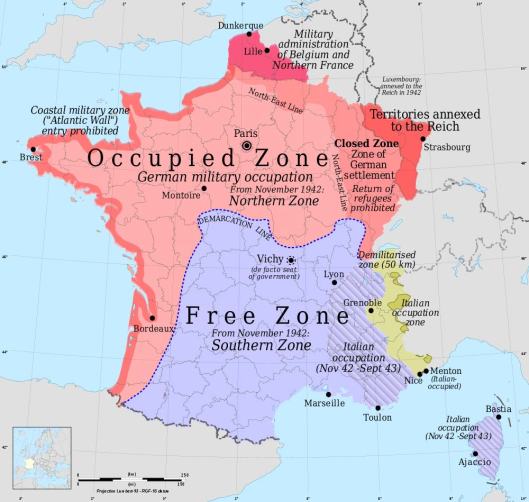
These are political conditions: Sauron is demanding territory, just as any conqueror in our world would. When France was occupied by the Nazis in 1940–something with which JRRT would have been quite familiar while writing The Lord of the Rings—here’s a map of what Hitler demanded—and got.
France-occupation

The last sentence of Sauron’s conditions even reminds us of the relationship between Hitler and Mussolini—although not how Mussolini would have viewed it.
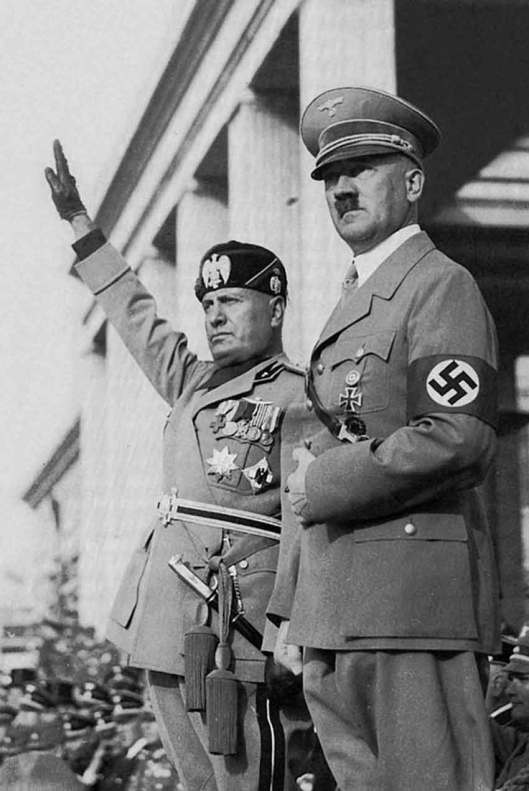
Hitler-and-Mussolini

Hitler had another dictator-partner for a short time, however, Stalin, whom he distrusted even more than Mussolini.
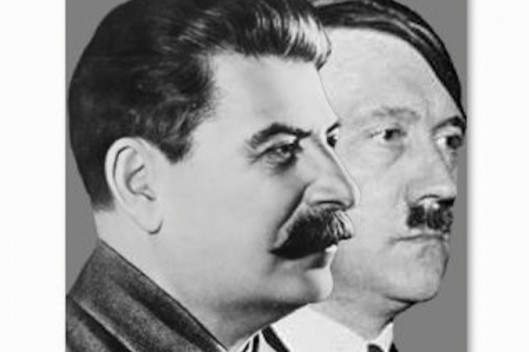
STALIN-HITLER-2-676x450

And Stalin, unlike Sauron, won his war and swallowed all of central Europe, as well as eastern Germany.

post-war-soviet-influence

It’s clear that George Orwell had this dictator in mind when he was creating his “Big Brother”, in 1984, even to his physical description (from a poster—it appears that no one has actually seen Big Brother in the flesh): “an enormous face, more than a meter wide: the face of a man about forty-five, with a heavy black mustache and ruggedly handsome features…”
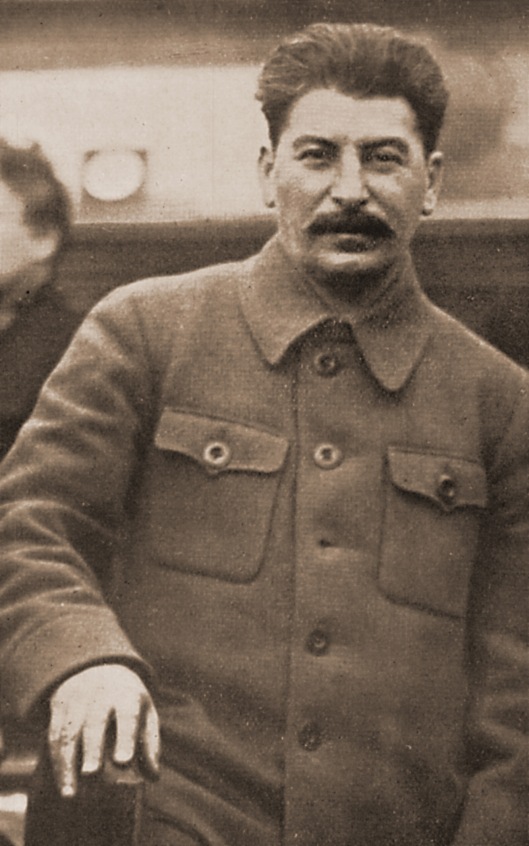
stalin

These posters were so constructed that, “It was one of those pictures…which are so contrived that the eyes follow you about when you move.”
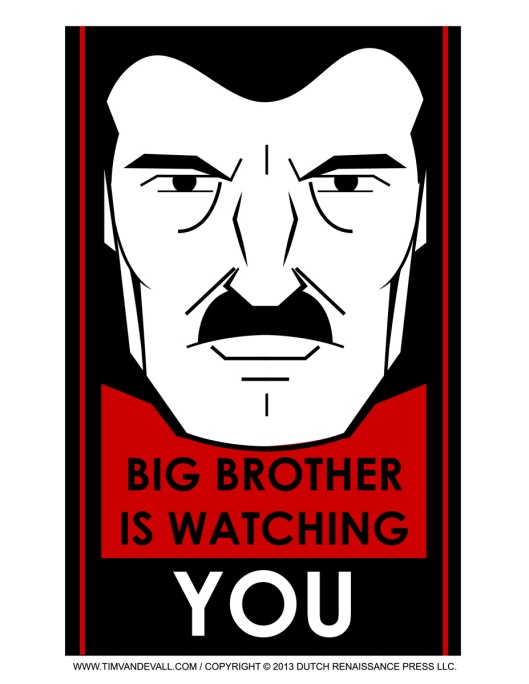
Big-Brother-Is-Watching-You-Poster

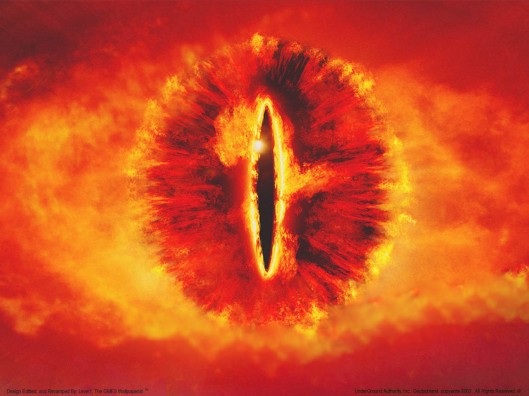
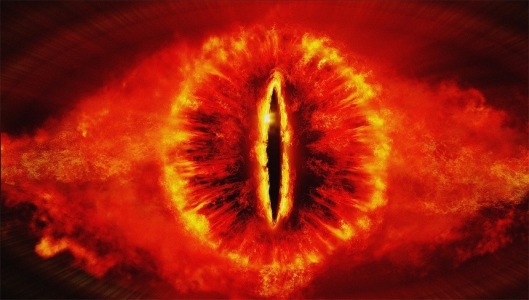
In fact, as we think about the image, its slogan, “Big Brother is Watching” might be applied to the All-Seeing Eye.
sauron-eye

That all-seeing eye, however, has another meaning, we believe, and it has to do with a goal which the Lieutenant doesn’t mention, but JRRT does:

“Sauron desired to be a God-King, and was held to be this by his servants.  If he had been victorious he would have demanded divine honour from all the rational creatures and absolute temporal power over the whole world.” (Letters, 244)

Thus, like various gods through the history of the world, by showing himself not a full physical form, but only as an eye, we can imagine that Sauron was claiming divine omniscience.

This set us to thinking: there is virtually no trace of religion in the latter part of the Third Age and certainly no religious structures. What might Sauron build as a shrine—to himself? And, as a corollary, what would he demand for worship?

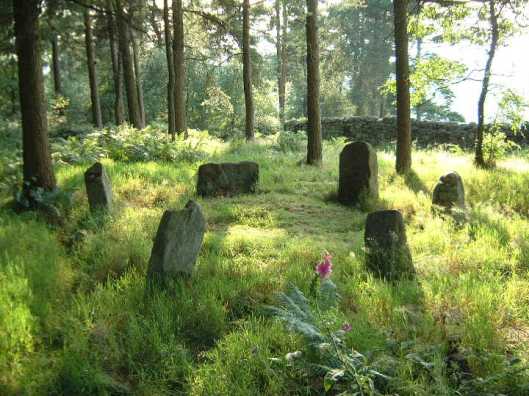
In Western Europe, some the earliest shrines were not actual buildings, but sites claimed to be somehow invested with divinity, such as groves of trees, something which the Gallic Celts called a nemeton, perhaps related to the Old Irish word nemed, meaning, according to the on-line OI/Middle Irish dictionary, “(small) sacred place”.
DollTorWest0801

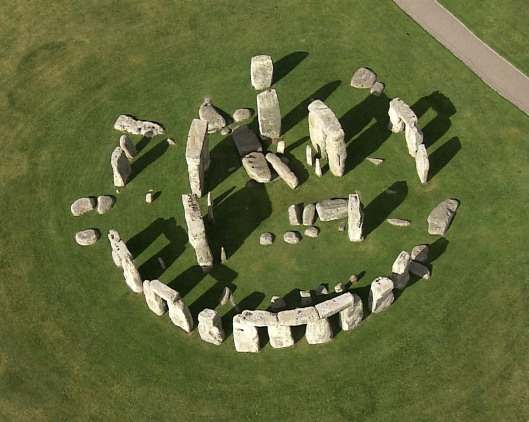
It’s easy to see how this could lead to the idea of a stone circle (perhaps beginning with a ditch of the sort which could ring settlements?), like that at Avebury.
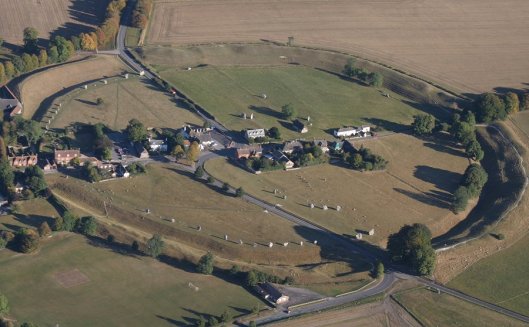
Avebury

Or its more concentrated version, Stonehenge.
stonehenge-copy1

Another possibility might be to organize that grove into lines of pillars—using the trunks of the trees—and adding a roof—and you get a Greek temple.
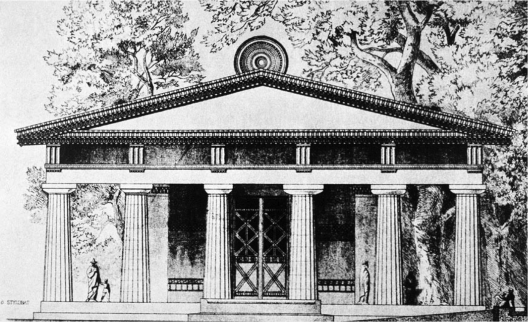
templeofhera

Herodotus tells us that, in his time, this temple, devoted to Hera at Olympia, still had a couple of wooden columns, showing just how old it was. (There are also building elements, like pegs—all in stone in later time—which mirror earlier wooden construction.)

In the Greek world (and the Roman, as well), worship was done outside the building, at an altar in front.
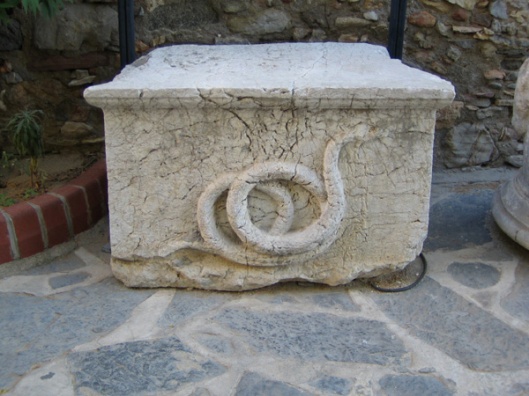
snake-altar-from-mausoleum-of-halicarnassus-in-bodrum

That worship would consist of prayers and sacrifices. As the majority of the gods were believed to live in a place above humans (Olympus—an actual mountain, but also, seemingly, an imaginary location in the sky), sacrifices were conveyed in smoke. These could be as simple as incense
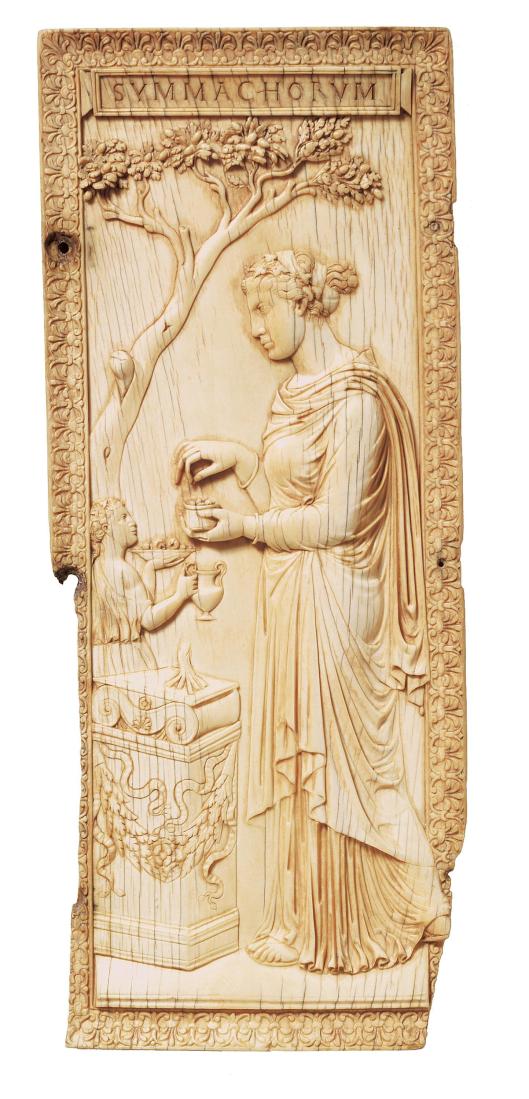
elt200810220812093544851-142058F954A638F8693

or as complicated as the barbecue after a multiple animal-slaughter, like the Roman suovetaurilia (“pigsheepbullactivity”). (Guess who got to consume the actual meat?)
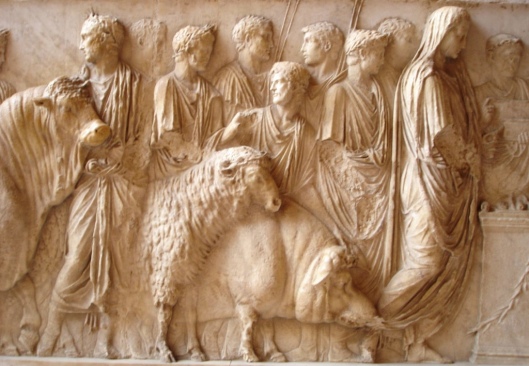
multipleanimalsacrifice

Classical people did not practice human sacrifice, considering it abominable, but it may have existed, at least in desperate circumstances in the far past, as has been preserved in the Greek story of Iphigenia, murdered at the altar of Artemis at Aulis to propitiate the goddess, who had blocked the Greeks from sailing to attack Troy.
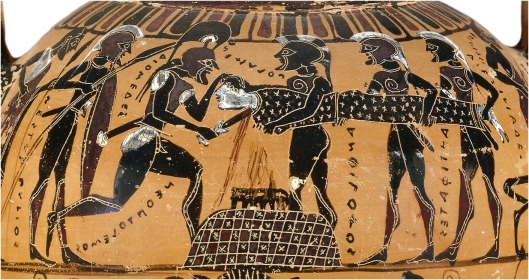
Black-figured Tyrrhenian amphora (wine-jar) attributed to the Timiades Painter

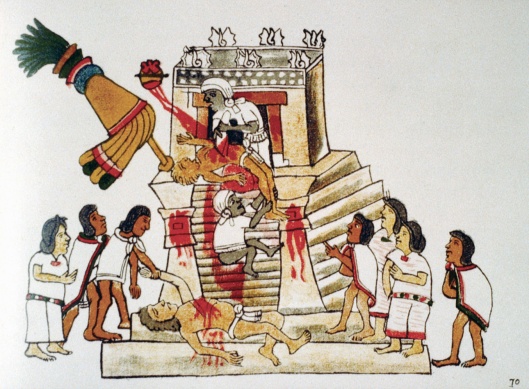
Of course, when it comes to wholesale, regular human sacrifice, we immediately think of Aztec devotion to their god, Huitzilopochtli, who was fed on the blood of human hearts at the top of his temple in the Aztec capital, Tenochtitlan.

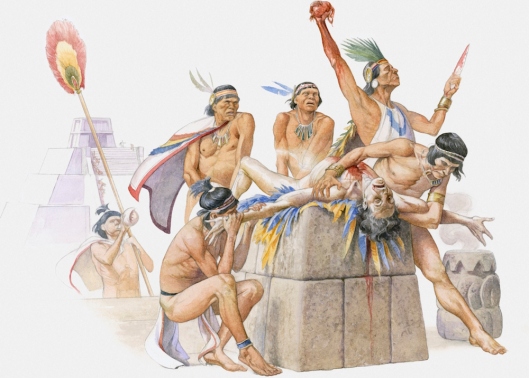
huitzilopochtli

ThinkstockPhotos-98193978

sacrifice-2

And this brings us back to Sauron, his temple, his worship. Because there is so much wonderful material to work from in The Hobbit and The Lord of the Rings, in general, we confine ourselves to those and the Letters, but a little wider research gave us a clue—a horrible but not surprising clue—to answer our original question. In the Silmarillion, we found this:

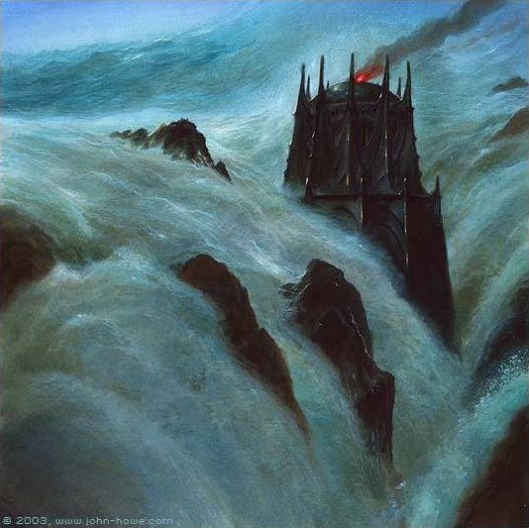
“But Sauron caused to be built upon the hill in the midst of the city of the Numenoreans, Armenelos the Golden, a mighty temple; and it was in the form of a circle at the base, and there the walls were fifty feet in thickness, and the width of the base was five hundred feet across the center, and the walls rose from the ground five hundred feet, and they were crowned with a mighty dome. And that dome was roofed all with silver, and rose glittering in the sun, so that the light of it could be seen afar off; but soon the light was darkened and the silver became black.” (The Silmarillion, “Akallabeth”, 273)

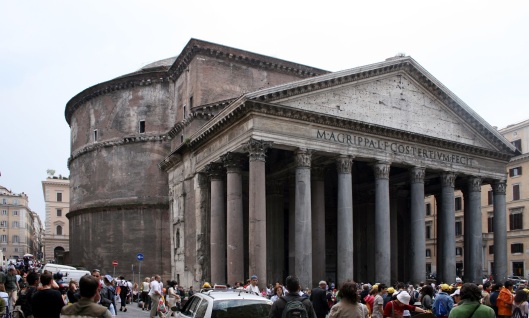
As people who are much involved with the Greco-Roman world, this description immediately brings to our minds the Pantheon, in Rome, whose dome was sheathed in copper, until that was stolen by the eastern emperor Constans II in 663AD, only to be stolen from him en route by Saracen pirates. It’s not 500 feet by 500 feet (152.4m.), of course, being only about 140 (42.67m.), but it’s certainly large and impressive—and circular, with a mighty dome.
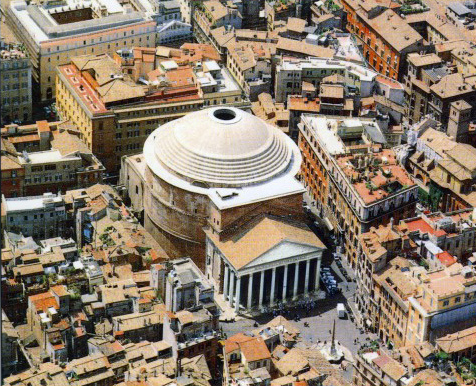
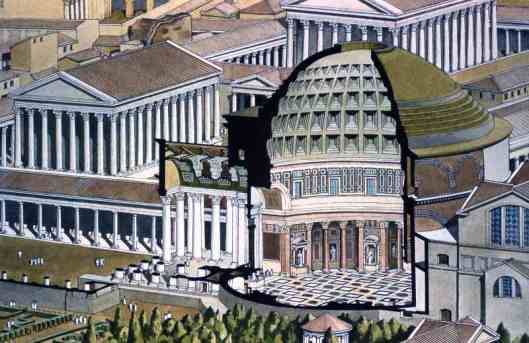
aerial-view-pantheon

26.pantheon

Pantheon_Rome_(1)

But why did the “silver become black”? Do we have a bad feeling about this?

“For there was an altar of fire in the midst of the temple, and in the topmost of the dome there was a louver, whence there issued a great smoke…Thereafter the fire and smoke went up without ceasing; for the power of Sauron daily increased, and in that temple, with the spilling of blood and torment and great wickedness, men made sacrifice to Melkor that he should release them from Death. And most often from among the Faithful they chose their victims…”

Sauron, once Melkor’s servant, had gained great power over the Numenorean king, Ar-Pharazon, using it to persuade the king to attack the Valar—and thus bring about the destruction of Numenor. Sauron’s spirit survived that destruction, and perhaps his memory of Melkor’s temple and its worship would have, as well?

Thanks, as ever, for reading!

MTCIDC

CD

PS

We can’t resist adding this wonderful John Howe impression of the drowning of the city of Armenelos…
John_Howe_-_The_Drowning_of_Numenor


What If…

31 Wednesday May 2017

Posted by Ollamh in Artists and Illustrators, J.R.R. Tolkien, Literary History, Maps, Military History, Military History of Middle-earth, Narrative Methods, Tolkien

≈ Leave a comment

Tags

Alamo, Andelkrag, Anduin, Caernarfon, Carcassonne, Duc de Berry, fortresses, Hal Foster, Harry Turtledove, Howard Pyle, Huns, Minas Tirith, moat, Mont Saint Michel, Mordor, Numenor, Peter Jackson, Portchester, Prince Valiant, Rohirrim, S.M. Stirling, Santa Anna, Segontium, Siege Warfare, Texas War for Independence, The Lord of the Rings, The Return of the King, Tiryns, Tolkien, Tower of Orthanc, Tres Riches Heures

Welcome, readers, as always.

If you are among our excellent regulars, you know that we’re fascinated by history (one of us has taught it for years). One subset of our interest is “what ifs”, two of our favorite scifi/fantasy authors being Harry Turtledove and S.M. Stirling, who have written numerous books exploring all sorts of alternative places and times.

In this posting, we’d like to try a “what if” ourselves: what would happen to Minas Tirith if the Rohirrim and Aragorn had failed to arrive?

Walls collapsing under a rain of boulders, soldiers fleeing from the defenses, the main gate broken in by a giant battering ram—

image1anazgan.jpg

how was this the place of which its creator had written:

“A strong citadel it was indeed, and not to be taken by a host of enemies, if there were any within that could hold weapons…” (The Return of the King, Book Five, Chapter 1, “Minas Tirith”)

In an earlier posting, we talked about Sauron’s attack on Minas Tirith

image1battackonmt.jpg

and even suggested that one inspiration might have been an episode of the comic strip Prince Valiant and the siege of Andelkrag by the Huns (published in May, 1939). (Footnote: there is a rumor that the writer/illustrator, Hal Foster, intended the Huns to equal the Nazis and therefore annoyed Hitler—a would-be Sauron to Saruman’s Mussolini, as we once also suggested?)

image1andelkrag.jpg

That castle is splendid, but not quite what one would have seen in the 5th century AD, when Attila led the Huns to invade central and western Europe. Andelkrag appears to be a very elaborate late-medieval castle, c.1400 or so, rather like the ones you might see in the Duc de Berry’s Tres Riches Heures (c.1412-16; 1440s; 1485-1489).

image2tresrichesheures.jpg

More likely, if Andelkrag had been a real fortress, it would have been a repurposed Roman army installation, like this at Caernarfon, called by the Romans, Segontium.

image3caernarfonsegontium.jpg

Such forts might then be converted into castles, as at Portchester

62790_8d3686244501897

but that would hardly have provided the gallant medieval look which Foster gave his comic strip and which, in turn, came from the illustrations of people like Howard Pyle (1853-1911), in the previous generation (and which, we have previously argued, had a strong influence on what JRRT imagined his Middle-earth to look like).

image5ahowpylephoebe.jpg

image6pyleillustration.JPG

We are told in one of the extra features in the extended film version of The Lord of the Rings that an inspiration for P. Jackson’s Minas Tirith

image5mt.jpg

was the ancient island fort/religious site of Mont Saint Michel, on the western coast of France.

image6mtstmich.jpg

image7mtstmichmap.jpg

As you can see from the photo and the map, this isn’t just a fort, however, but a little fortified town, reminding us that Minas Tirith isn’t a castle, but a walled city, like the restored medieval town of Carcassonne, in southern France.

image8carcassonne.jpg

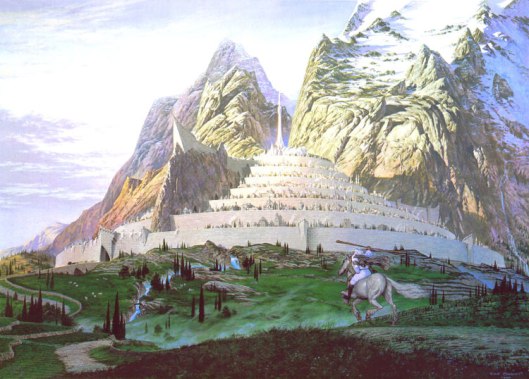
Like Mont St. Michel, Minas Tirith is built up a slope.

jrrtsfirstmtdrawing.jpeg

(This, by the way, is Tolkien’s first sketch.)

But, unlike Mont St. Michel and Carcassonne, it has not one wall, but many:

“For the fashion of Minas Tirith was such that it was built on seven levels, each delved into the hill, and about each was set a wall, and in each wall was a gate.”

image12leemt.jpg

Because the city was built on a series of levels, this would mean that each wall would overlook the next lower one, so that the defenders on the upper wall could rain down missiles on attackers below.

poi_img_town_defences_1

This is an ancient practice. The Bronze Age Greek city of Tiryns (yes, there is a bit of a similarity in the name, isn’t there?) is so constructed, for example, that its entryway forces attackers to move to the left, thereby potentially exposing an unshielded side, as well as undergoing a barrage of arrows and rocks from those on the wall above.

Tiryns Reconstruction

tiryns-walls

In the case of Minas Tirith, there is an added obstacle:

“But the gates were not set in a line: the Great Gate in the City Wall was at the east point of the circuit, but the next faced half south, and the third half north, and so to and fro upwards; so that the paved way that climbed towards the Citadel turned this way and then that across the face of the hill.”

image13mtzigzag

Attackers, then, would not only be at the mercy of those above them, but would, should they break through one gate, be forced to zigzag back and forth as they fought their way upwards, taking more and more casualties as they advanced.

minas-tirith3

Added to this, at the lowest level, was the main wall:

“…of great height and marvellous thickness, built ere the power and craft of Numenor waned in exile; and its outward face was like to the Tower of Orthanc, hard and dark and smooth, unconquerable by steel or fire, unbreakable except by some convulsion that would rend the very earth on which it stood.” (The Return of the King, Book Five, Chapter 4, “The Siege of Gondor”)

Unlike so many fortresses—going back at least to Neolithic times—Minas Tirith had no moat. Not only does such a watery ditch slow down attackers by giving them one more puzzle to solve, but it also makes a standard siege practice, undermining, much more difficult. Basically, what undermining does is to hollow out an area underneath a wall and replace the original foundation with a flammable wooden one. Then the miners fill the hollow with burnables, torch them, and wait to see if the new wooden foundation collapses, bringing down the wall on top of it. You can see miners at work in this medieval manuscript illustration.

villanip214bottom.jpg

A wet moat would have forced the miners to dig much deeper, to avoid being flooded out.

For Minas Tirith, the nearest water source for a wet moat would have been the Anduin, some miles away, but dry moats were useful as well. This diorama of the final attack by the British at the siege of Badajoz in 1812 shows how effective such a thing might be. Although the besiegers have managed, through prolonged bombardment, to create a breach in the main wall, they have to struggle through the deep dry moat to reach it—and took large numbers of casualties in doing so.

image18badajoz

Against all of these defenses, the head of the Nazgul, as Sauron’s general in the field, has the usual siege weapons: stone throwers, siege towers, even a massive battering ram. He also has a more subtle tool:

“But soon there were few left in Minas Tirith who had the heart to stand up and defy the hosts of Mordor. For yet another weapon, swifter than hunger, the Lord of the Dark Tower had: dread and despair.”

Even so, under the command of Gandalf, there was still resistance and we can imagine that that resistance would have persisted through all the circles, but the ultimate difficulty, which would have caused the fall of the city, had not the Rohirrim—and then Aragorn—come, was the lack of reserves.

Gondor was, at the time of the siege, in decline, as Pippin noticed when he and Gandalf arrived there:

“Yet it was in truth falling year by year into decay; and already it lacked half the men that could have dwelt at ease there.”

When reenforcements came from the south, they were “less than three thousands full told.”

When a city or castle is under siege, it needs not only a force to man its walls, but also a second force, to be sent quickly to any place where an enemy breakthrough is threatened. The force on the walls has two main jobs: 1. to keep the enemy at a distance with missile fire—or, failing that, to cut down the attacking force as it approaches the walls, trimming its numbers and thereby possibly demoralizing it; 2. to fend off the enemy if it actually manages to gain the walls. This illustration from the Prince Valiant Andelkrag siege provides a good image of this double job.

image19defenseofandelkrag

It might be possible, if the enemy made an assault upon a single point, to siphon off men from other parts of the defenses to act as a temporary second force, but, if the enemy attacks more than one place at the same time, this is not a safe thing to do. In the case of the assault on the first wall of Minas Tirith, the enemy commander seems to have had such numbers—and didn’t care in the least about his losses– that he could attack the entire wall:

“Ever since the middle night the great assault had gone on. The drums rolled. To the north and to the south company upon company of the enemy pressed to the walls. There came great beasts, like moving houses in the red and fitful light, the mumakil of the Harad dragging through the lanes amid the fires huge towers and engines. Yet their Captain cared not greatly what they did or how many might be slain: their purpose was only to test the strength of the defence and to keep the men of Gondor busy in many places.”

The weakest place in any strong wall is a gate and that knowledge has guided Sauron’s Captain:

“It was against the Gate that he would throw his heaviest weight. Very strong it might be, wrought of steel and iron, and guarded with towers and bastions of indomitable stone, yet it was the key, the weakest point in all that high and impenetrable wall.”

Thus, with everyone pinned in position by a general assault, and there being no other possible reserve, once the gate is down—but then a cock crows and there are horns and, well, you know what happens next.

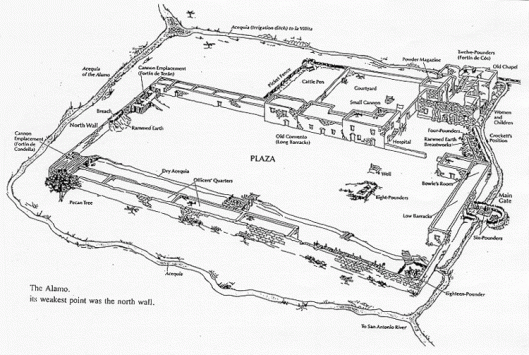
But, continuing our “what if”, we look to a different model, the Alamo, a ruined mission turned into a fortress in the so-called “Texas War for Independence” of 1835-36.

alamo-map-3

Within this mission, some 180plus defenders faced a Mexican army of several thousand, staving them off for a week-and-a-half before finally being overwhelmed by a series of nearly-simultaneous pre-dawn assaults from several directions at once.image21alamoassault

The survivors drew back, still fighting, and made a series of last stands in the rooms of the surviving mission buildings, dying almost to a man because the Mexican general, Santa Anna, had declared that there would be no mercy for any survivors. (There were a handful of prisoners, however, perhaps including the famous American frontiersman, Davy Crockett, but under Santa Anna’s direction, they were then murdered.)

In our grim “what if”, the survivors of the outer wall, led in retreat by Gandalf, are gradually driven back, like the Alamo defenders, until they reach the Citadel—and then—but, can we go on? Are the Rohirrim and Aragorn simply delayed and then appear? Are there eagle-rescues, as in The Hobbit?

image23eaglerescue.gif

What do you think, dear readers?

And thanks, as ever, for reading!

MTCIDC

CD

PS

We saw this Lego attack on Minas Tirith and it was just too wonderful not to include!

legominastirith.jpg

PPS

As we were finishing this, we happened upon a really great website–

https://middleeartharchitectures.wordpress.com/  –wonderful visuals!

Knowledge, Rule, Order

06 Wednesday Jan 2016

Posted by Ollamh in Fairy Tales and Myths, Imaginary History, J.R.R. Tolkien, Military History, Military History of Middle-earth, Narrative Methods

≈ 2 Comments

Tags

Adolf Hitler, Anduin, Benedict Cumberbatch, Benito Mussolini, British Government, Charlie Chaplin, dictatorships, England, Gandalf, George V, Germany, Gondor, gothic script, Government, History, India, Isengard, Kaiser Willhelm II, Lenin, Mehmed VI, Middle-earth, monarchs, Mordor, Nazis, newsreel, Numenor, Ottoman Empire, Oz, Peter Jackson, Queen Mary, Queen Victoria, Rohan, Saruman, Sauron, Scott, Smaug, Stalin, Stock Market Crash of 1929, Sultan, The Great Dictator, The Lord of the Rings, Tolkien, Treaty of Versailles, Valar, Victoria Louise, Weimar Republic, William Morris, Writing

Dear Readers,

Welcome, as always.

Have you ever wondered what Middle Earth would have been like if the Fourth Age had begun on a calendar written by Sauron?

That of the Third Age was hardly a democratic paradise: a king rules Rohan, a stand-in for king rules Gondor. Elrond and Celeborn/Galadriel behave and are treated like royalty and Thranduil, as we learn from The Hobbit, is the king of Mirkwood. The dwarves have hereditary rulers.   Only the outliers—communities like Bree and the Shire and the earlier inhabitants like Tom Bombadil and Fangorn—appear to be completely independent. (The Shire even has elections and a mayor, although the actual government, except for the shire reeves, appears to bemostly token—you wonder who’s running their seemingly-efficient postal service.)

This is not surprising, not only for an author born during the later years of Victoria,

queenvic.jpg

but also for someone powerfully influenced by the medievalist interests of everyone from Scott

Sir_William_Allan_-_Sir_Walter_Scott,_1771_-_1832._Novelist_and_poet_-_Google_Art_Project.jpg

to William Morris.

William_Morris_age_53.jpg

(We might add that the world of fairy tales, full of princes and princesses, queens and kings, was also a powerful influence at the time—and not only on story-tellers born in monarchies—after all, even Oz is ruled by a queen—

OzmaOz.jpg

Yet, after Smaug—who could better be a medieval fantasy villain (especially with the voice of the incomparable Benedict Cumberbatch attached)?

p8204516_n279079_cc_v4_aa.jpg

—something changed in Tolkien’s world. In fact, something changed in the whole outside world. With the end of World War One, monarchs toppled all over Europe and beyond, from:

Kaiser Wilhelm II of Germany

KAISER-WILHELM_2994889b.jpg

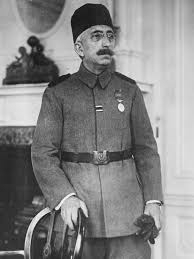
to Mehmed VI, last Sultan of the Ottoman Empire.

mehmed6.jpg

In place of the former, there appeared the always-troubled Weimar Republic, full of good intentions, but badly crippled, not only by the war which had sapped its manpower and resources, but by all kinds of social unrest and then by the Crash of 1929, which notoriously destroyed the value of its currency.

weimar currency.jpg

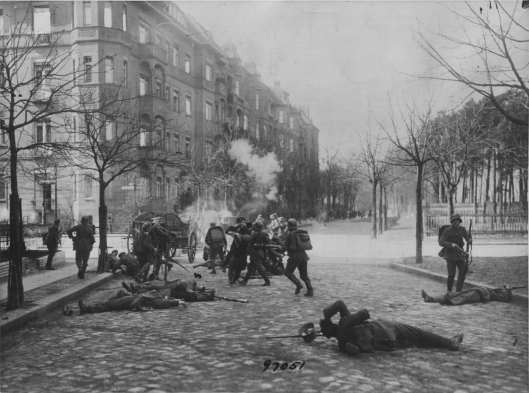
As early as 1919, there had been clashes among the forces of different ideologies—

CombatesEnBerlín19190903.jpg

And, amidst all of the unrest, there was a failed coup attempt in 1923 by the man in the overcoat in this picture.

Bundesarchiv_Bild_102-00344A,_München,_nach_Hitler-Ludendorff_Prozess.jpg

He, of course, was only following the footsteps of this man, who had pushed his way into power the year before—

March_on_Rome.jpg

to be followed, in turn, by the man on the left, from the mid-1920s.

stalinandfriends.jpg

That first man, having failed at obvious violence, tried again through more complicated means (although still employing violence, if it suited his purposes) and succeeded in 1933.

Hitler-Papen-First-Reichstag-1933.jpg

He was, so we are told, a riveting public speaker, but, if the newsreels we’ve seen are evidence, we guess you would have had to have been there.

hitlerspeaking.jpg

Some people thought the style exaggerated in the 1930s and caricatured it even then.

chaplin2.jpg

He had a definite social agenda, which he outlined at length and often, although concealing certain of the most horrible aspects. And he liked big words and big concepts, like:

einfolk.jpg

It would have been impossible for someone as intelligent and generally well-informed as Tolkien not to have been very much aware of this man and all of the other like men, busy oppressing as much of the world as they could. And this would have been especially true in a time when radio and film were changing how people received news—and how those interested in influencing others might shape what people saw. As early as 1911, the British government was using newsreel film to show the might and reach of its empire (2/5 of the globe was in their hands) when the king, George V, and his wife, Queen Mary, visited India.

Delhi_Durbar,_1911.jpg

Not to be outdone, Kaiser Wilhelm II encouraged a grand—and filmed–event in 1913, for the wedding of his daughter, Victoria Louise—and some of the film was even in color.

vlouisekaiser.jpg

The Marriage of Victoria Louise Color Film

It would be easy to imagine, then, that the weight of such public figures might have influenced Tolkien in his depiction of late-3rd-Age villains. We can see it in Saruman’s unsuccessful attempt to persuade Gandalf to join him:

“ ‘He drew himself up then and began to declaim, as if he were making a speech long rehearsed. ‘The Elder Days are gone. The Middle Days are passing. The Younger Days are beginning. The time of the Elves is over, but our time is at hand: the world of Men, which we must rule. But we must have power, power to order all things as we will, for that good which only the Wise can see.” (The Fellowship of the Ring, Chapter 2, “The Council of Elrond”)

Thus, unlike the script of Jackson’s version, there is no plan to wipe out men and replace them with orcs. Instead, men are to survive: to be ruled—perhaps under what definitely sounds like it should be a translation from something written in Fraktur—the fake Gothic script favored by the Nazis–

die-schöne-deutsche-Schrift-detail1.jpg

“ ‘We can bide our time,’” says Saruman, “ ‘we can keep our thoughts in our hearts, deploring maybe evils done by the way, but approving the high and ultimate purpose: Knowledge, Rule, Order; all the things that we have so far striven in vain to accomplish…’ ”

Such abstract, but somehow menacing, words sound like a translation of something from Hitler’s Germany: Kenntnisse, Herrschaft, Ordnung. They do not sound in the least like Gandalf’s goals, ever, and he, in fact, replies by implying that not only are they not really Saruman’s words, but that Saruman is foolish for believing them:

“ ‘Saruman,’ I said, ‘I have heard speeches of this kind before, but only in the mouths of emissaries sent from Mordor to deceive the ignorant.’ “

As really the words of Sauron, however, they give us an idea of what to expect in a world under his control. Knowledge would be for Sauron alone, we suppose, perhaps after regaining his lost ring? Certainly he wouldn’t share it with Saruman, whom, it will become clear, he never trusted. As for Rule and Order, the world would be a place full of rules and those watching that they be obeyed. And here we can remember Sharkey’s Shire, with its “by order of the Chief” signs—and its gangs of human enforcers. As well, we can think of its grey, industrial character, as we’ve discussed in a previous post, a universal Mordor, devoted to production. To this, we can add the Mouth of Sauron’s recitation of surrender conditions, delivered to the allies before the Morannon:

“ ‘These are the terms…The rabble of Gondor and its deluded allies shall withdraw at once beyond the Anduin, first taking oaths never again to assail Sauron the Great in arms, open or secret. All lands east of the Anduin shall be Sauron’s for ever, solely. West of the Anduin as far as the Gap of Rohan shall be tributary to Mordor, and men there shall bear no weapons, but shall have leave to govern their own affairs. But they shall help to rebuild Isengard which they have wantonly destroyed, and that shall be Sauron’s, and there his lieutenant shall dwell: not Saruman, but one more worthy of trust.’ “ (The Return of the King, Chapter 10, “The Black Gate Opens”)

In keeping with the influence of current events in this world, we might see this as being a parallel with the 1919 Versailles Treaty, in which Germany was to be forced to make huge territorial concessions, to disarm almost entirely, and to pay massive amounts in reparation to the victorious allies.

Treaty_of_Versailles,_English_version.jpg

The Treaty of Versailles– Wiki Article

Such terms as Sauron offers would also destroy Rohan as an ally and set up a permanent garrison between it and the north. We might also expect the restored Isengard to be a staging area for an assault upon Fangorn and the ents, to their ultimate destruction. As well, “west of the Anduin” is a very vague expression—does it include Gondor, as well as Rohan?

Religion in The Lord of the Rings has always been the subject of debate: how much or how little? Of what kind? Tolkien is quoted as saying that it was monotheistic, although, when attacked by the Mumak, Faramir’s men called on the (plural) Valar. There is no mention, in what is often extremely detailed landscape description, of any kind of temple or shrine, however. Nevertheless, we would like to conclude with an eerie thought about religion in this alternative Fourth Age. The Mouth of Sauron, aka, The Lieutenant of the Tower of Barad-dur, is described as:

“…a renegade, who came of the race of those that are named the Black Numenoreans; for they established their dwellings in Middle-earth during the years of Sauron’s domination, and they worshipped him, being enamoured of evil knowledge.”

Could we imagine that, in this other Fourth Age, a new and horrible religion might have appeared, one dedicated to the worship of Sauron—and to that Knowledge which Saruman finds so important? What do you think, dear readers?

As always, thanks for reading.

MTCIDC

CD

Mirror, Mirror

09 Wednesday Dec 2015

Posted by Ollamh in Fairy Tales and Myths, J.R.R. Tolkien, Narrative Methods

≈ Leave a comment

Tags

A Christmas Carol, Denethor, Dickens, Disney, Evil Stepmother, Fates, Fiction, Folktale, Frodo, Galadriel, Gandalf, Gondor, Grimm Brothers, Istari, Kinder und Hausmaerchen, Lothlorien, Magic mirror, Maiar, Middle-earth, mirror, Mordor, Muses, Norns, Norse Mythology, Numenor, Ornthanc, Palantir, Saruman, Sauron, Schneewittchen, Scrooge, scrying stone, Snow White, Story, The Lord of the Rings, The Theogony, Tolkien, Urtharbrunnr, Valar, Yggdrasil

Dear Readers,

Welcome, as always.

This is the second of two postings which, as we said in our last, was originally just one. That earlier draft linked the Palantiri with Galadriel’s mirror, but, on reconsideration, we believed—at least at first–that, in fact, they weren’t so close as we thought and so we separated them.

In our last, we discussed the Palantiri and what might have been a possible inspiration for them. In this posting, we propose to look a little more closely at Galadriel’s mirror (but we promise not to touch the water).

When we speak of mirrors—and, in this case, magic ones—the first one which pops into our mind is from childhood—the mirror in Snow White and the particularly creepy mirror in the 1937 Disney animated film.

girmagicmirror.gif

In the original Schneewittchen, first published in the Grimm brothers’ Kinder und Hausmaerchen in the original edition of 1812,

grimm_bruder_1847_klein.jpg firstedkundh.JPG

the mirror belongs to Snow White’s stepmother, of whom the story says (in our translation):

“She was a very beautiful woman, but she was proud and arrogant and couldn’t allow that anyone would surpass her in beauty.”

She monitored her position by means of that mirror:

“She had a wonderful mirror. When she stepped before it and looked at herself within it, she said:

Little mirror, little mirror, on the wall,

Who is the most beautiful in the whole land?

The mirror answered thus:

Madame Queen, you are the most beautiful in the land.”

Franz_Jüttner_Schneewittchen_1.jpg

This makes us wonder about the stepmother. Was she like so many of the people we see around us every day (and not “everyday”, which is a compound adjective, meaning “commonly” as in “everyday usage does not necessarily equal correct usage in language”), compulsively fiddling with their electronic devices? How often did she go to that mirror and ask that question? As it was attached to the wall, she wasn’t carrying it in her back pocket, so, can we picture her making excuses to the king, to the prime minister, to her ladies in waiting, just so that she could go back to visit it? The text only says that she did—it’s a folktale, after all, and therefore old and so before current addictions were available, but she seems so obsessed—and familiar.

But then comes the day when the answer is:

“Madame Queen, you’re the most beautiful here,

But Snow White is a thousand times more beautiful than you.”

And the story goes on from there to places we don’t intend to follow.  It is interesting, however, that the mirror itself appears to do the talking, not a visible spirit within it, as in the Disney movie, and there is a certain logic to this. After all, normally, a mirror is only a reflecting device: it shows the person who is looking into it, as we see the stepmother doing. Then again, having someone—or something—looking out when you look in raises all sorts of interesting questions: who is it? Where is it? How does it know what it knows and how to speak? Does it have limits?

We might imagine, from her single, repeated question that the woman does. She never, for example, asks “Was there anyone as beautiful before me?” or “Will I always be the most beautiful?” She seems trapped in the moment and, without a greater context, the mirror’s last reply will be that much more shocking.

In contrast, Galadriel’s mirror, is neither on a wall, nor portable. In fact, it’s not really a mirror in the conventional sense at all.

“With water from the stream Galadriel filled the basin to the brim, and breathed on it, and when the water was still again she spoke. ‘Here is the Mirror of Galadriel,’ she said. ‘I have brought you here so that you may look in it, if you will.’ “ (The Fellowship of the Ring, Book 2, “The Mirror of Galadriel”)

64b97a1e010e45710323b25705b62626.jpg

When Frodo asks what might be seen therein, Galadriel replies:

‘Many things I can command the Mirror to reveal,’ she answered, ‘and to some I can show what they desire to see. But the Mirror will also show things unbidden, and those are often stranger and more profitable than things which we wish to behold. What you will see if you leave the Mirror free to work, I cannot tell. For it shows things that were, and things that are, and things that yet may be. But which is it that he sees, even the wisest cannot always tell.’ (The Fellowship of the Ring, Book 2, “The Mirror of Galadriel”)

There appear to be several possible influences here. In the ancient Greek poem, The Theogony, the Muses are described as knowing past, present, and future (Theogony 380), as they choose the shepherd, Hesiod, to become a poet.

Muses_sarcophagus_Louvre_MR880.jpg

Others have suggested that an influence upon the author here was the Urtharbrunnr, the well of fate, as it may be translated, from Norse mythology, which lies at the foot of the tree called Yggdrasil. Here the Norns, or Fates in Norse tradition, sit to do their work.

Nornorna_vid_Urdarbrunnen.jpg

Another possibility yet might be the three Christmases who visit Ebenezer Scrooge in Charles Dickens’ A Christmas Carol and an advantage to pointing to them is that Christmas Yet to Come, although mute, shows Scrooge what turn out to be only “things that yet may be”, as Scrooge, by his change in behavior, diverts fate.

The_Last_of_the_Spirits-John_Leech,_1843.jpg

That sense of potentiality about the future is clearly a very important feature of Galadriel’s Mirror. Lorien is not only a haven from Orcish pursuit,

Lothlorien.jpg

but also a testing ground, where the surviving members of the Fellowship are probed by the Lady of the Wood, even as she herself is inadvertently tested when Frodo offers her the Ring. Sam may suffer the most from this, being shown what appears to be the destruction of the Shire and the destitution of his own grandfather.

ruinedshire.png

And yet, as Galadriel says,

‘But the Mirror will also show things unbidden, and those are often stranger and more profitable than things which we wish to behold.’ (The Fellowship of the Ring, Book 2, “The Mirror of Galadriel”)

What Sam sees shakes him for a moment to the point of stepping back from the basin, saying (almost shouting, as the sentence ends with an exclamation point), “I must go home!” (The Fellowship of the Ring, Book 2, “The Mirror of Galadriel”) He recovers immediately, however, resolving, “ ‘No, I’ll go home by the long road with Mr. Frodo, or not at all.’” And thus he, like Galadriel, passes the test and perhaps that’s what the odd word “profitable” means in her explanation. Sam is confronted with what must have been that which he subconsciously dreaded most, but his new resolution ultimately proves the salvation of Middle Earth, on the one hand, and the healing of the Shire by means of Galadriel’s gift of a little Lorien, on the other. And, considering that Sam first appears in the story as an eaves-dropping gardener and hardly a giant elf-warrior, that other adjective, “stranger” may be appropriate, too.

So far, the Mirror has nothing in common with a Palantir, which was clearly designed not as a “scrying stone”, but as a communication device. And yet there is Galadriel’s remark,

“ ‘Many things I can command the Mirror to reveal,’ she answered, ‘and to some I can show what they desire to see.’ “

This strikes us as an ambiguous statement—and probably meant to be. Does Galadriel mean:

  1. people come to ask her, for example, to see their future—implication being that she shows them that, and nothing more
  2. people come, ask, and she shows them what they want to see—implication being that what they see is not necessarily what is real?

When Frodo looks into Mirror, he sees the very last thing he would want to see, however:

“But suddenly the Mirror went altogether dark, as dark as if a hole had opened in the world of sight, and Frodo looked into emptiness. In the black abyss there appeared a single Eye that slowly grew, until it filled nearly all the mirror. So terrible was it that Frodo stood rooted, unable to cry out or to withdraw his gaze. The Eye was rimmed with fire, but was itself glazed, yellow as a cat’s, watchful and intent, and the black slit of its pupil opened on a pit, a window into nothing.” (The Fellowship of the Ring, Book 2, “The Mirror of Galadriel”)

eye-o-sauron-03.jpeg

This is especially true in that:

“Then the Eye began to rove, searching this way and that; and Frodo knew with certainty and horror that among the many things that it sought he himself was one.” (The Fellowship of the Ring, Book 2, “The Mirror of Galadriel”)

This is clearly not the past or the future, as Frodo sees it, but the all-too-realistic present. And this is not just a present to be viewed. Like the figure in the mirror in the old Disney Snow White, this is someone who would respond directly to what he sees, if he could. And Frodo is aware of this:

“But he also knew that it could not see him—not yet, not unless he willed it.” (The Fellowship of the Ring, Book 2, “The Mirror of Galadriel”)

Does the Mirror have more potential, then? Can it be used as a communication device, like a Palantir? If it can combine the functions of “magic mirror” and Palantir, might the Palantir be able to combine functions, as well?

Certainly Sauron does something which ruins Denethor’s ability to resist Sauron’s view of the future to the point where he attempts to commit flaming suicide along with his one surviving son, having abandoned his city to its fate.

pyre.jpg

Denethor, though, is just a human, and rather a vain one, at that.

How would Sauron do the same with one of the Maiar, those beings sent by the Valar to protect Middle Earth from the danger which Sauron represents? Certainly we know that Sauron has communicated with Saruman through the Palantir.

palantir.jpg

There may be a clue in Gandalf’s reply to Saruman, just before he is held captive in Orthanc:

“I have heard speeches of this kind before, but only in the mouths of emissaries sent from Mordor to deceive the ignorant.” (The Fellowship of the Ring, Book 2, “The Council of Elrond”)

What Gandalf is responding to is:

“A new Power is rising. Against it the old allies and policies will not avail us at all. There is no hope left in Elves or dying Numenor. This then is one choice before you, before us. We may join with that Power. It would be wise, Gandalf. There is hope that way. Its victory is at hand; and there will be rich reward for those that aided it. As the Power grows, its proved friends will also grow; and the Wise, such as you and I, may with patience come at last to direct its courses, to control it. We can bide our time, we can keep our thoughts in our hearts, deploring maybe evils done by the way, but approving the high and ultimate purpose: Knowledge, Rule, Order; all the things that we have so far striven in vain to accomplish,,hindered rather than helped by our weak or idle friends. There need not be, there would not be, any real change in our designs, only in our means.” (The Fellowship of the Ring, Book 1, “The Council of Elrond”)

“Knowledge, Rule, Order”? It’s no wonder that Gandalf replies as he does. Such words sound more like the slogan of a totalitarian state—exactly what Mordor has become under its lidless-eyed master–than those of one of the Istari.

And how did Saruman come to have such a distorted vision of the future? Just as Denethor, bitter over his son’s death and the loss to Gandalf—he thinks—of his younger son, has been shown what must have been an increasingly-bleak picture of Gondor and its fate, so can we imagine that Sauron, sensing a latent arrogance and desire for power in Saruman, has given Saruman the second possible understanding of Galadriel’s statement. He has shown Saruman what Saruman secretly wishes for and, in doing so, he cunningly paints for Saruman, who is just wise enough to know that he will never be Sauron, a picture of an alliance which will grant him his wish. Why does Saruman, who is himself an extremely powerful figure, fall for this? Perhaps he’s like Snow White’s stepmother and limited to one question: “Little globe, little globe, who is the (second most) powerful in Middle Earth?”

What do you think, dear readers?

Thanks, as always, for reading.

MTCIDC

CD

The Doubtful Sea Series Facebook Page

The Doubtful Sea Series Facebook Page

  • Ollamh

Categories

  • Artists and Illustrators
  • Economics in Middle-earth
  • Fairy Tales and Myths
  • Films and Music
  • Games
  • Heroes
  • Imaginary History
  • J.R.R. Tolkien
  • Language
  • Literary History
  • Maps
  • Medieval Russia
  • Military History
  • Military History of Middle-earth
  • Narnia
  • Narrative Methods
  • Poetry
  • Research
  • Star Wars
  • Terra Australis
  • The Rohirrim
  • Theatre and Performance
  • Tolkien
  • Uncategorized
  • Villains
  • Writing as Collaborators
Follow doubtfulsea on WordPress.com

Across the Doubtful Sea

Recent Postings

  • Through a glass… January 7, 2026
  • Heffalumps? December 31, 2025
  • We Three Kings December 24, 2025
  • A Moon disfigured December 17, 2025
  • On the Roads Again—Once More December 10, 2025
  • (Not) Crossing Bridges December 3, 2025
  • On the Road(s) Again—Again November 26, 2025
  • On the Road(s) Again November 19, 2025
  • To Bree (Part 2) November 12, 2025

Blog Statistics

  • 104,101 Views

Posting Archive

  • January 2026 (1)
  • December 2025 (5)
  • November 2025 (4)
  • October 2025 (5)
  • September 2025 (4)
  • August 2025 (4)
  • July 2025 (5)
  • June 2025 (4)
  • May 2025 (4)
  • April 2025 (5)
  • March 2025 (4)
  • February 2025 (4)
  • January 2025 (5)
  • December 2024 (4)
  • November 2024 (4)
  • October 2024 (5)
  • September 2024 (4)
  • August 2024 (4)
  • July 2024 (5)
  • June 2024 (4)
  • May 2024 (5)
  • April 2024 (4)
  • March 2024 (4)
  • February 2024 (4)
  • January 2024 (5)
  • December 2023 (4)
  • November 2023 (5)
  • October 2023 (4)
  • September 2023 (4)
  • August 2023 (5)
  • July 2023 (4)
  • June 2023 (4)
  • May 2023 (5)
  • April 2023 (4)
  • March 2023 (5)
  • February 2023 (4)
  • January 2023 (4)
  • December 2022 (4)
  • November 2022 (5)
  • October 2022 (4)
  • September 2022 (4)
  • August 2022 (5)
  • July 2022 (4)
  • June 2022 (5)
  • May 2022 (4)
  • April 2022 (4)
  • March 2022 (5)
  • February 2022 (4)
  • January 2022 (4)
  • December 2021 (5)
  • November 2021 (4)
  • October 2021 (4)
  • September 2021 (5)
  • August 2021 (4)
  • July 2021 (4)
  • June 2021 (5)
  • May 2021 (4)
  • April 2021 (4)
  • March 2021 (5)
  • February 2021 (4)
  • January 2021 (4)
  • December 2020 (5)
  • November 2020 (4)
  • October 2020 (4)
  • September 2020 (5)
  • August 2020 (4)
  • July 2020 (5)
  • June 2020 (4)
  • May 2020 (4)
  • April 2020 (5)
  • March 2020 (4)
  • February 2020 (4)
  • January 2020 (6)
  • December 2019 (4)
  • November 2019 (4)
  • October 2019 (5)
  • September 2019 (4)
  • August 2019 (4)
  • July 2019 (5)
  • June 2019 (4)
  • May 2019 (5)
  • April 2019 (4)
  • March 2019 (4)
  • February 2019 (4)
  • January 2019 (5)
  • December 2018 (4)
  • November 2018 (4)
  • October 2018 (5)
  • September 2018 (4)
  • August 2018 (5)
  • July 2018 (4)
  • June 2018 (4)
  • May 2018 (5)
  • April 2018 (4)
  • March 2018 (4)
  • February 2018 (4)
  • January 2018 (5)
  • December 2017 (4)
  • November 2017 (4)
  • October 2017 (4)
  • September 2017 (4)
  • August 2017 (5)
  • July 2017 (4)
  • June 2017 (4)
  • May 2017 (5)
  • April 2017 (4)
  • March 2017 (5)
  • February 2017 (4)
  • January 2017 (4)
  • December 2016 (4)
  • November 2016 (5)
  • October 2016 (6)
  • September 2016 (5)
  • August 2016 (5)
  • July 2016 (5)
  • June 2016 (5)
  • May 2016 (4)
  • April 2016 (4)
  • March 2016 (5)
  • February 2016 (4)
  • January 2016 (4)
  • December 2015 (5)
  • November 2015 (5)
  • October 2015 (4)
  • September 2015 (5)
  • August 2015 (4)
  • July 2015 (5)
  • June 2015 (5)
  • May 2015 (4)
  • April 2015 (3)
  • March 2015 (4)
  • February 2015 (4)
  • January 2015 (4)
  • December 2014 (5)
  • November 2014 (4)
  • October 2014 (6)
  • September 2014 (1)

Blog at WordPress.com.

  • Subscribe Subscribed
    • doubtfulsea
    • Join 78 other subscribers
    • Already have a WordPress.com account? Log in now.
    • doubtfulsea
    • Subscribe Subscribed
    • Sign up
    • Log in
    • Report this content
    • View site in Reader
    • Manage subscriptions
    • Collapse this bar
 

Loading Comments...