• About

doubtfulsea

~ adventure fantasy

Tag Archives: Film

Return to Horrors?

27 Wednesday Aug 2025

Posted by Ollamh in Uncategorized

≈ 1 Comment

Tags

'Salem's Lot, Acrophobia, Arachnophobia, Billina, Claustrophobia, Coulrophobia, Dracula, ECT, Film, Goblins, Gump, Herpetophobia, jack-pumpkinhead, nome-king, Oz, Ozma of Oz, Return to Oz, Smaug, spiders, Stephen King, The Hobbit, The Marvelous Land of Oz, The Shining, Tik-Tok, Tolkien, trolls, Trypanophobia, Wheelers, wolves

Welcome, dear readers, as always.

Does this picture make your hands sweat?  Can you barely look at it?

How about this one—

Or this one—

Or—

Or—

Or—horror of horrors!—

It’s possible that all of these might have an effect upon you and, in which case, I imagine that you’re reading this hiding under your bed.

Why all of this phobic display?  Because, back in June, I read an article from the BBC about the 40th anniversary of Disney’s Return to Oz entitled:

“ ‘It has the appeal of an actual horror’: How Return to Oz became one of the darkest children’s films ever made”

(You can read the article here:  https://www.bbc.com/culture/article/20250616-the-darkest-childrens-film-ever-made )

This is a film I own and have seen perhaps half-a-dozen times and I’ve never viewed it as the horror film which the article would suggest.  Granted, sensationalism sells the news, but, having read the article again, I’ve thought about how horror can be an element in a work—and a powerful one—without making the work as a whole into something like Bram Stoker’s Dracula.

(And, if you haven’t read it, I would certainly recommend it.  Here it is in the first US edition of 1897:   https://gutenberg.org/files/345/345-h/345-h.htm )

Think, for a moment, about The Hobbit.

Here, we go from the safety of Hobbiton
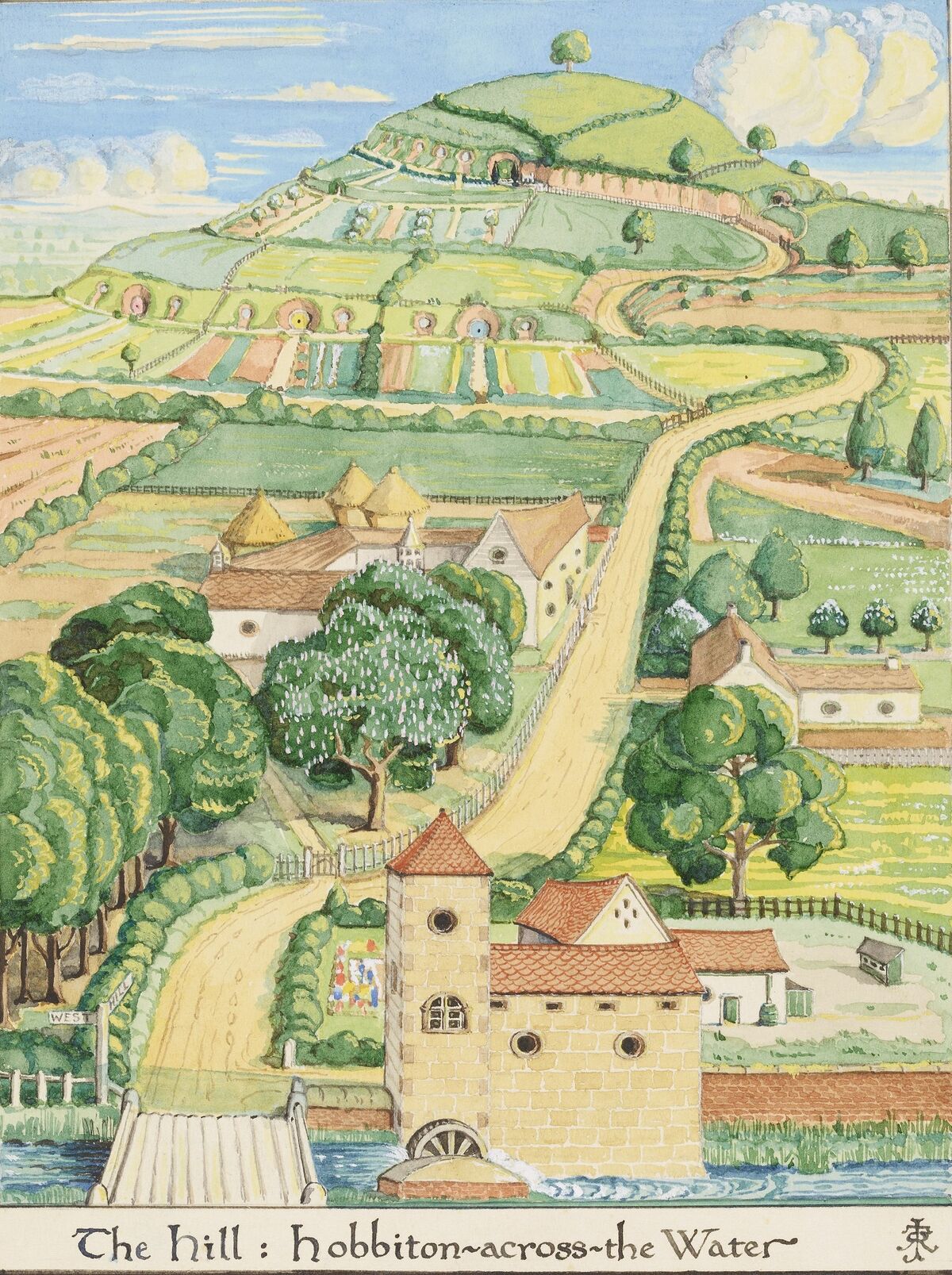
(JRRT)

to a world where there are trolls,

(JRRT)

goblin-infested mountains,

(Alan Lee)

wolves in large packs,

(Tove Jansson)

giant spiders,

(John Tyler Christopher—you can see more of his work here:  https://johntylerchristopher.com/ )

and, finally, an intelligent and vengeful dragon.
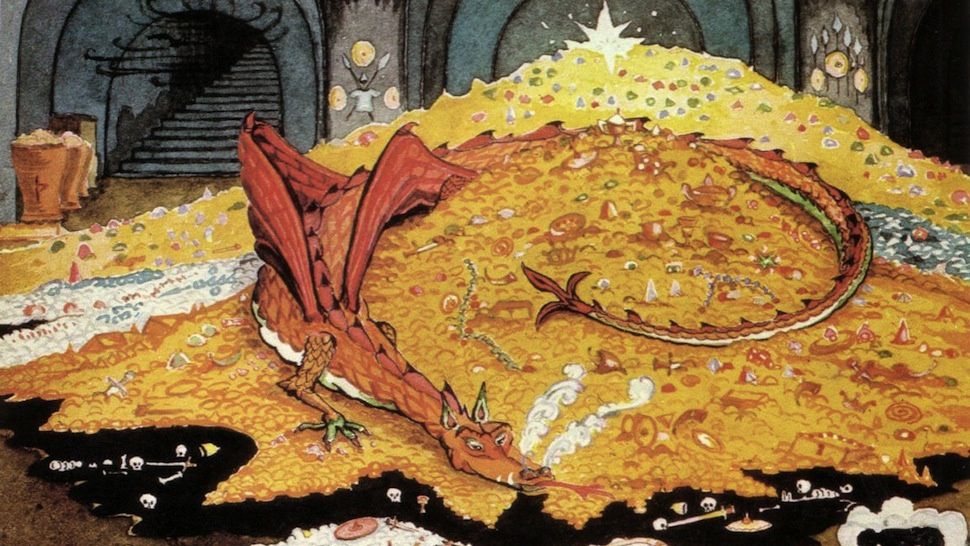
(JRRT)

But does the appearance of all these dangers make the book a horror novel, like one of Stephen King’s more forbidding works?
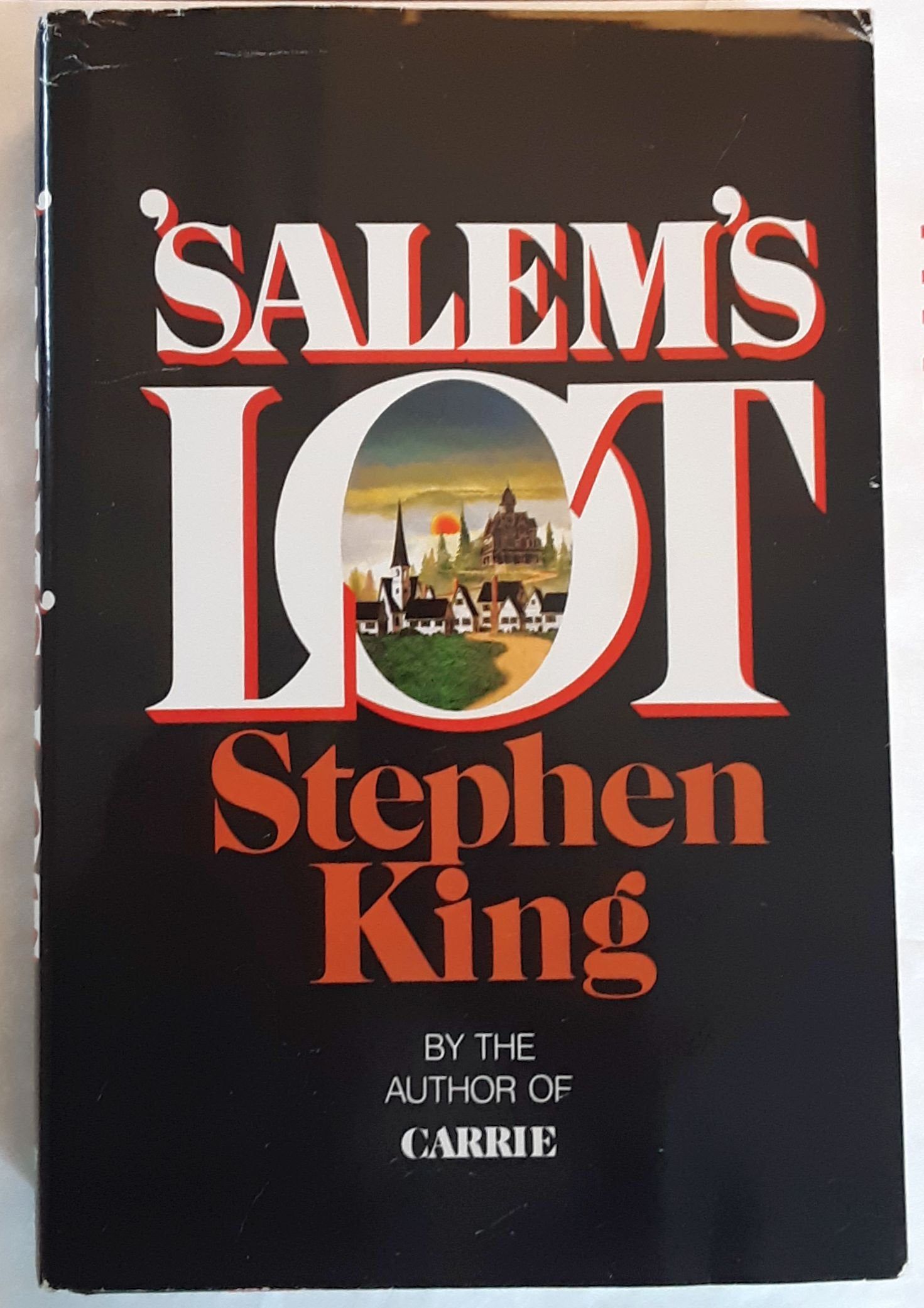
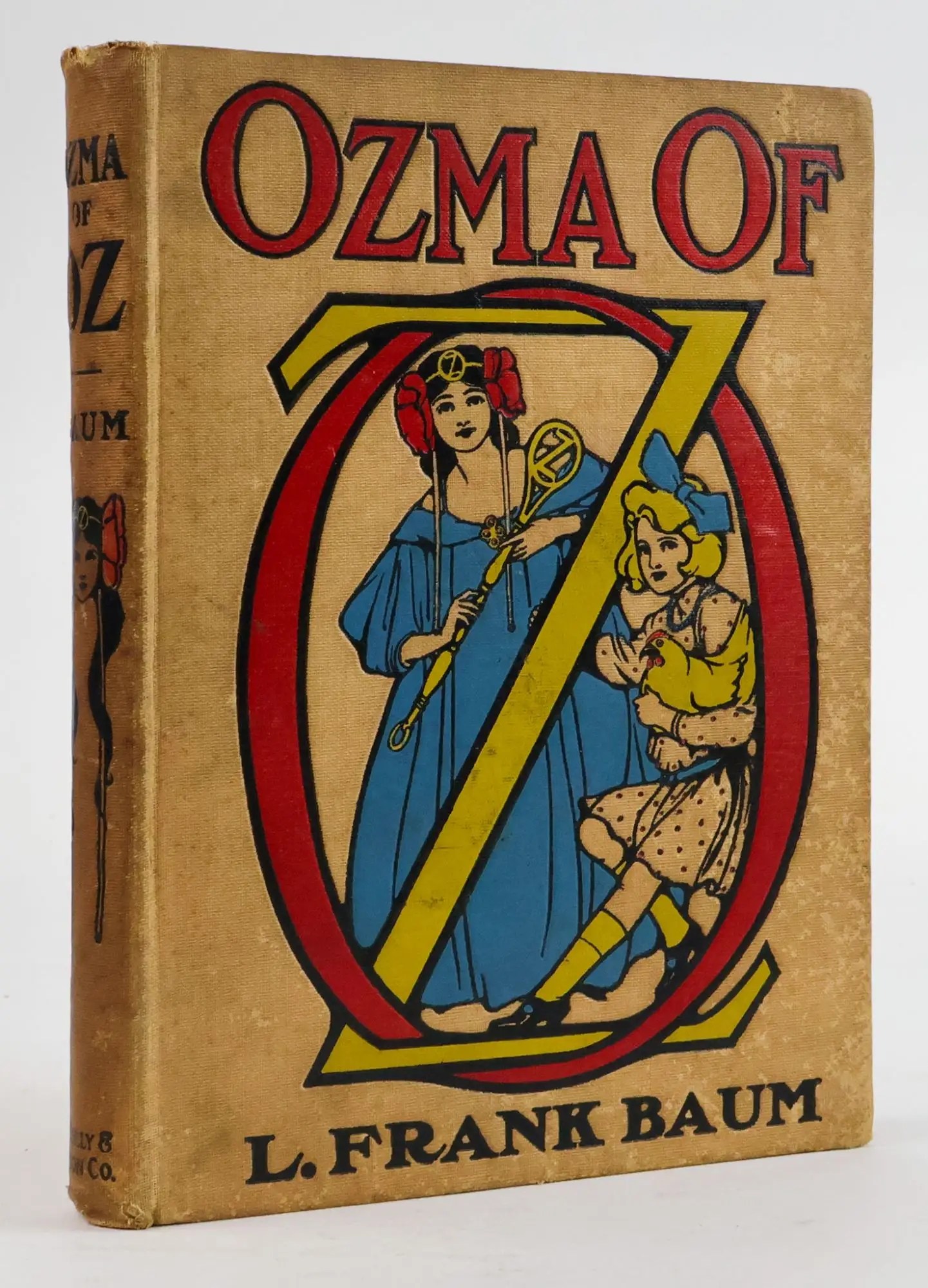
The article points to some potentially disturbing moments—and at least the first is certainly disturbing and, interestingly, is not in the two books upon which the film is based—The Marvelous Land of Oz, 1904,
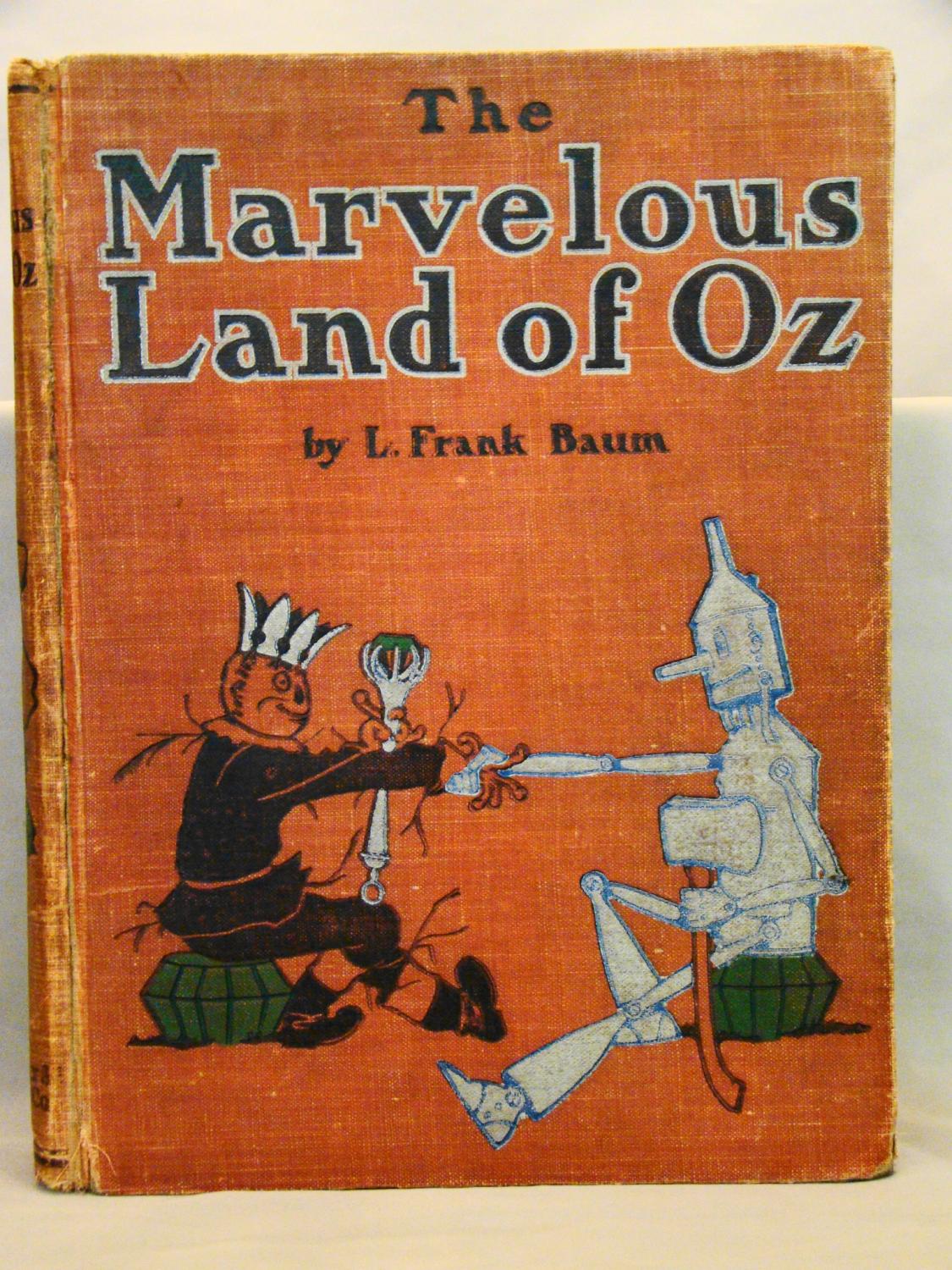
and Ozma of Oz, 1907.  (For more on the combination and the scriptwriters’ changes, see:  “Chickening In”, 12 February,  2025)
The Kansas of the 1939 film was as bleak as a 1930s sound stage could make it, in sepia, suggesting photos of the Dust Bowl of the Great Depression era—

The 1985 movie showed us the real rolling hills of Kansas and the ruin of Uncle Henry and Aunt Em’s farm.
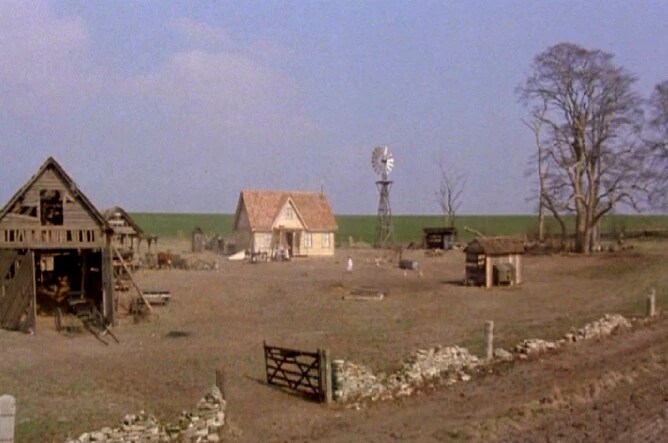
(This is at the end of the film, when the house has been rebuilt—early in the film, the house—which, of course, was ripped from Kansas and dropped on the Wicked Witch of the East—remains unfinished and Uncle Henry crippled from the twister.)

Dorothy, to Aunt Em, also seems somehow ruined, having reappeared after the tornado with stories about having been in a foreign land, Oz, but with no proof of it, and Em, having seen a newspaper ad for medical treatment by electricity, decides to take Dorothy to the clinic and its all-too-calm and rational Dr. Worley.

The treatment consists of running a powerful electrical current through Dorothy’s brain, (now called ECT—electroconvulsive therapy), which is supposed to erase Dorothy’s (supposedly false) memory of Oz. 

As the audience, with its own memories of Oz, from the 1939 film, the many books, or both, knows perfectly well that Oz is real, as is Dorothy’s memory of it, and, as the article points out:

“…the power of these scenes lies in the fact that they are trying to silence Dorothy, to obliterate her memories of Oz”

Dorothy escapes the clinic (one might really says “asylum”, as it has that grim look of Victorian asylums for the insane)
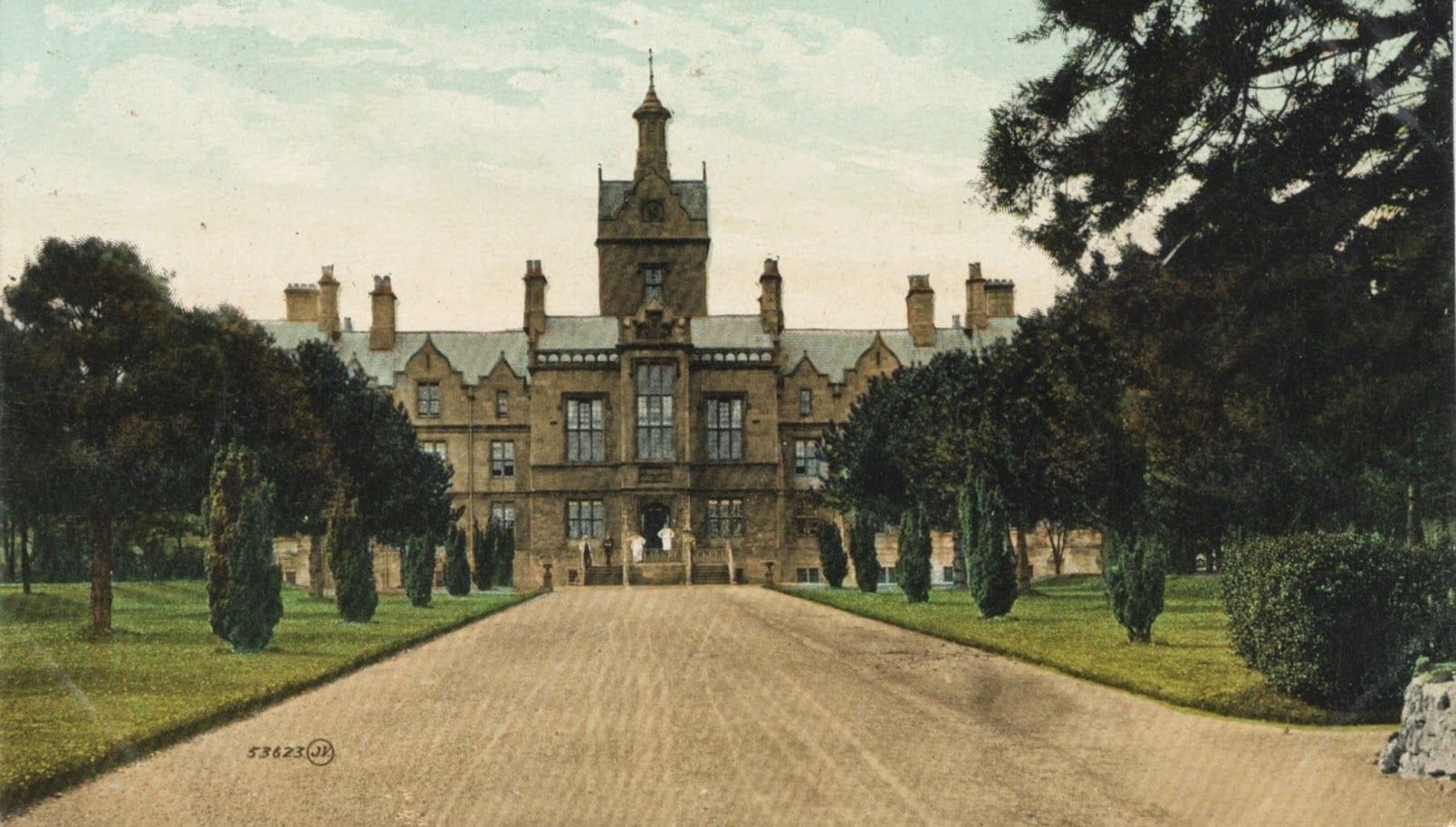
(A real Victorian asylum—and not the grimmest, there being some real competition here)

and turns up in Oz, once more, where the article mentions other potentially disturbing elements:

the destruction of Oz and its citizens petrified,

its ruins haunted by the Wheelers,
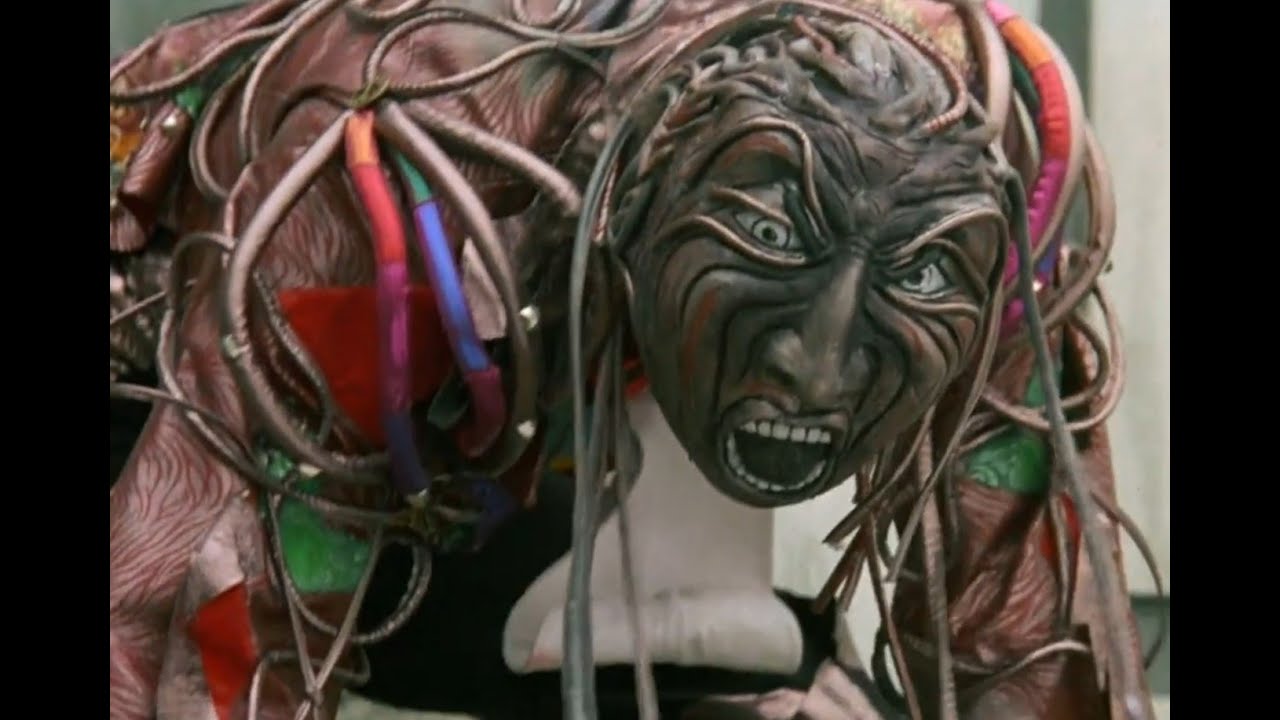
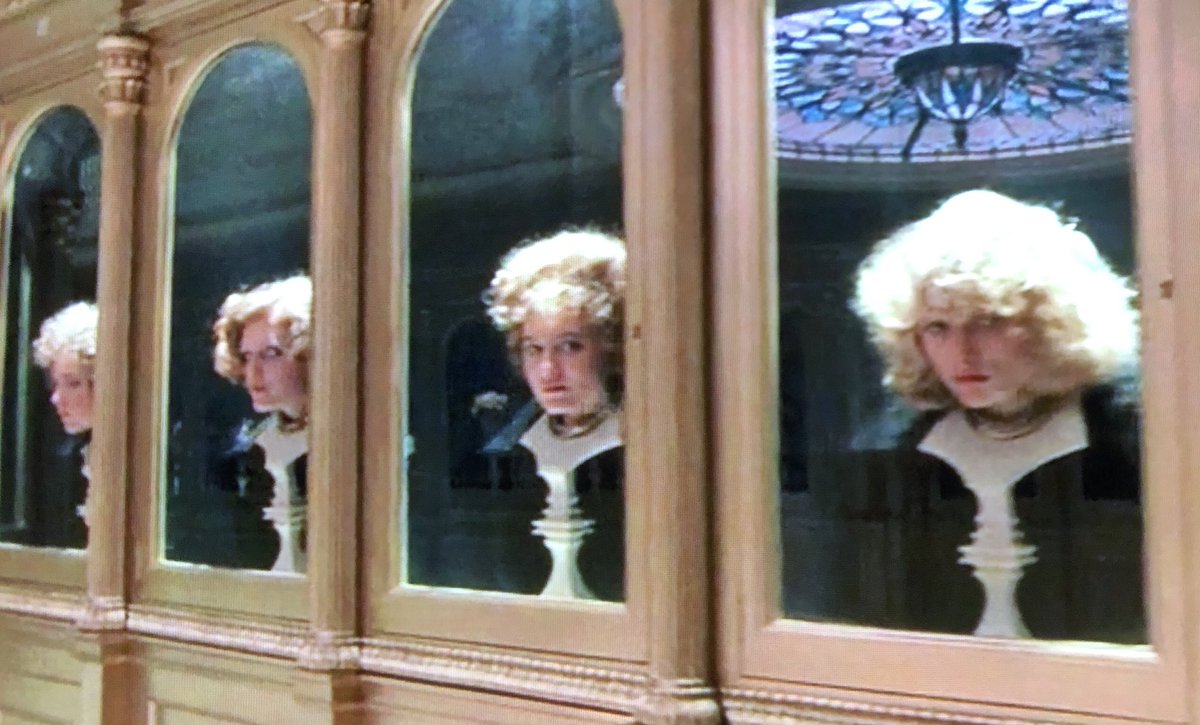
the minions of Princess Mombi, who collects heads and wears them for different occasions,
and then there is the Nome King, who is the current ruler of Oz,
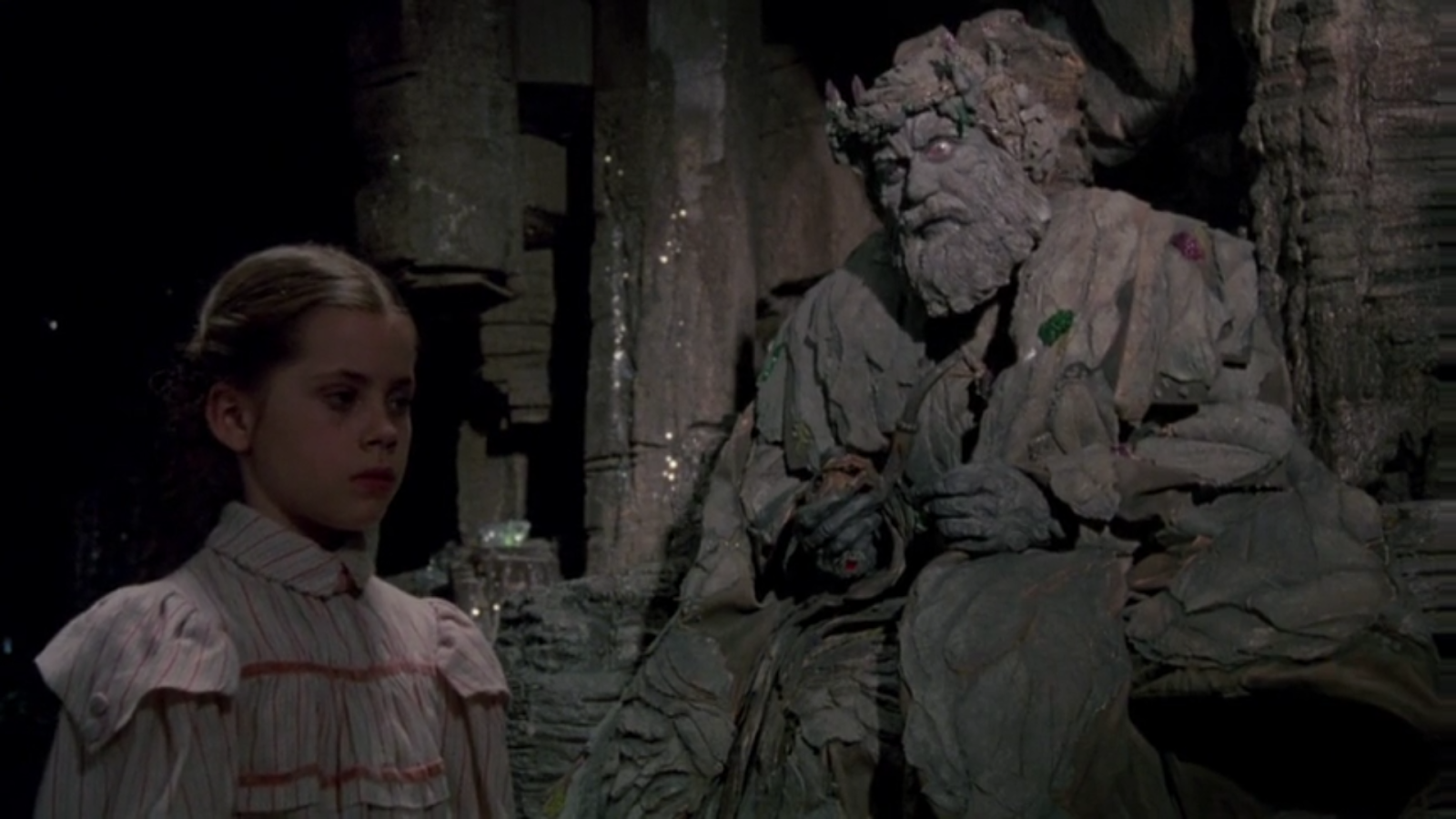
and is the destroyer of the Emerald City, the overlord of Mombi, and has enchanted Dorothy’s former friends, the Scarecrow, the Tinman, and the Cowardly Lion, turning them into inanimate objects.

For the sake of sensationalism, it seems that the article leans heavily on these—as if, I suggested above, one could do the same for The Hobbit, but this leaves out the fact that, although Dorothy’s first allies in Oz have been neutralized, she finds others, just as Bilbo has dwarves, Gandalf, Elrond, the Eagles, and Beorn, not to mention Sting and the Ring.

These include the caustic hen, Billina, who arrives with her from Kansas,

“the Army of Oz”—Tik-Tok,
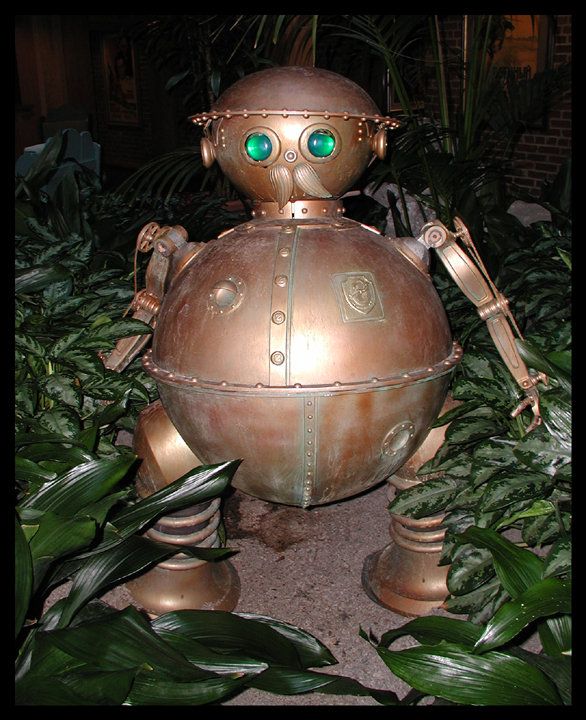
Jack Pumpkinhead,

and the Gump.

I teach story-telling on a regular basis and a dictum I use is “No fiction without friction” .  Just as trolls, goblins, wolves, Gollum, spiders, and Smaug provide the friction in The Hobbit, so the clinic and its smooth-talking doctor, the Wheelers, Princess Mombi, and the Nome King, provide it in Return to Oz.  These plot elements supply the problems which must be solved before the ultimate goal of the story can be achieved—coming home safely (and much better-off) for Bilbo, coming home and keeping her memories of Oz for Dorothy (guaranteed for her when she sees Ozma, rescued from the Nome King, in her mirror in Kansas).

Disturbing moments—in both—what’s that riddle contest with Gollum if nothing short of harrowing?—but is Return to Oz just this side of a horror movie?  As always, I suggest that you see it for yourself, but remember “no fiction without friction” before you rank it with The Shining.

Thanks, as ever, for reading.

Stay well,

Pick a bed with a reasonable clearance,

And remember that, as always, there’s

MTCIDC

O

Theme and Variations.4

11 Wednesday Jul 2018

Posted by Ollamh in Artists and Illustrators, Fairy Tales and Myths, Films and Music, Literary History, Narrative Methods

≈ Leave a comment

Tags

A Trip to the Moon, Alexandre Dumas, Arthur Rackham, Cendrillon, Charles Perrault, Charles S Evans, Cinderella, Cinderella 1899, Cinderella 1911, Cinderella 1912, Cinderella 1914, Contes de Ma Mere L'Oye, Film, Florence La Badie, Georges Melies, Gustave Dore, Henri IV, Histoires ou Contes du Temps Passe, Hugo, Le Voyage dan la Lune, Louis XIII, Mary Pickford, silent film, Sleeping Beauty, The Invention of Hugo Cabret, The Three Musketeers

Welcome, dear readers, as ever.

This is the next-to-last in a little series on several of the fairy tales of Charles Perrault (1628-1703) from his 1697 collection, Histoires ou Contes du Temps Passe (“Stories or Tales of Past Time”), better known by a kind of subtitle, Contes de Ma Mere L’Oye (“Tales of My Mother Goose”).

image1chasp

So far, we’ve devoted two posts to “Sleeping Beauty” (actually called by Perrault “La Belle au Bois Dormant”—“The Beautiful Girl in the Sleeping Wood”), covering everything from 19th-century theatrical performances to book illustrations to Disney.

image2belle.jpg

In the third post, we began to look at “Cinderella”, more specifically in opera, from Isouard’s 1810 Cendrillon to Viardot’s 1904 Cendrillon.

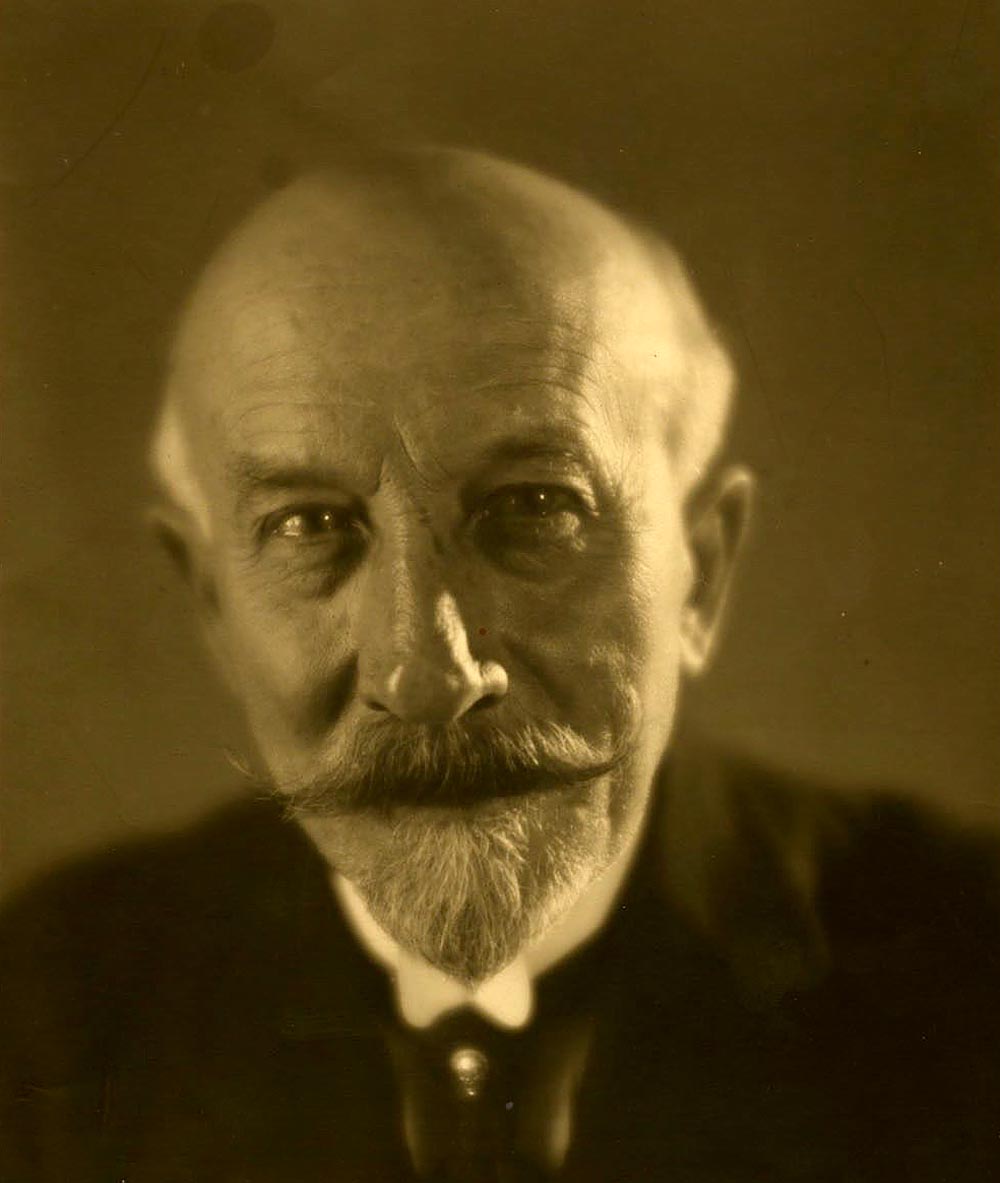
Now, in this post, we want to look at “Cinderella” in film, beginning with the 1899 work of Georges Melies (1861-1938)

image3melies.jpg

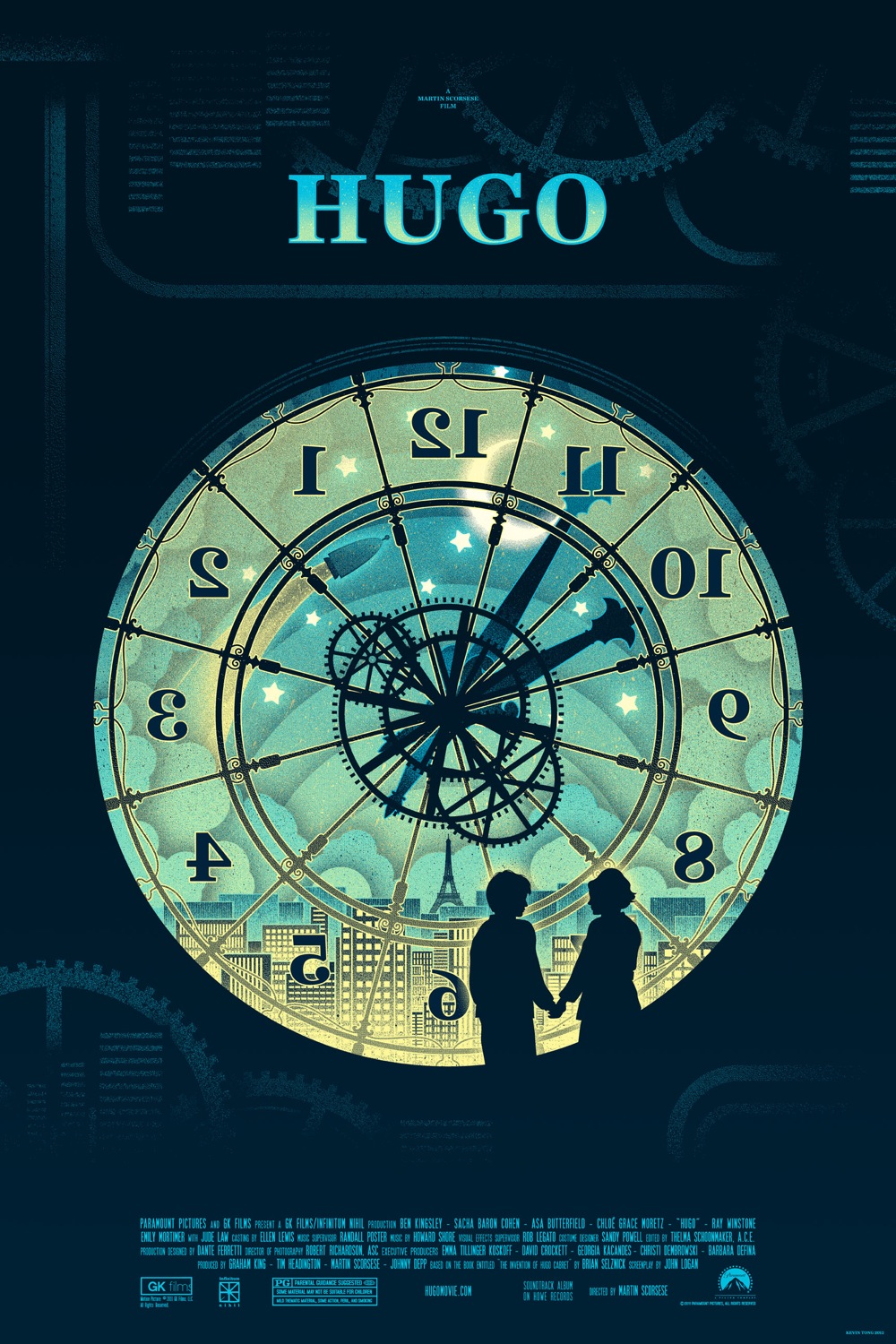
whom you may know from the 2011 film Hugo

image4hugoposter.jpg

based upon Brian Selznick’s 2007 wonderfully inventive novel, The Invention of Hugo Cabret.

image5hcabret.jpg

Even if you aren’t familiar with Melies, you may recognize his work in this image

image6moon.jpg

from his 1902 science fiction film, Le Voyage dans La Lune (“The Trip to the Moon”), thought by scholars to be the first science fiction film (or at least first surviving such film.  Silent film historians estimate that only about 10% of all silent films made are still available to us.  Here’s a LINK to the film so that you can enjoy it for yourself).

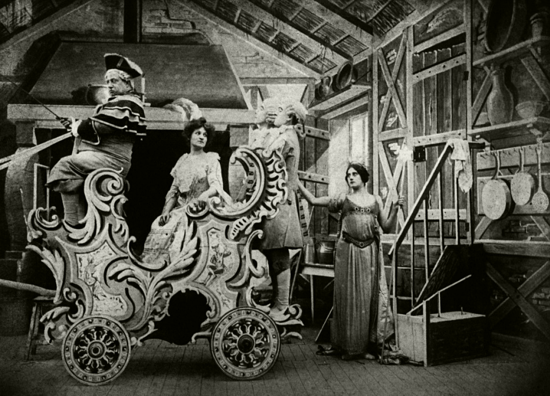
Cendrillon was Melies’ most elaborate film to date and was a commercial success, even though only just under 6 minutes long—which says something for the expectations of the movie-going public of 1899.

image7cend.png

As it is so short, it has only a couple of scenes—the kitchen in Cinderella’s house, the palace ballroom, Cinderella’s room, and what appears to be the outside of the palace—and very much depends upon the viewer already knowing the basic story (it begins, for example, with a very fancily-dressed woman leaving the kitchen and the sudden appearance of the Fairy Godmother, with no introduction at all).  Its greatest strength, for us, is in its transformation scenes (a Melies’ specialty), particularly the change of rats/mice into coachmen and footmen. (And here’s a LINK to the film, see if you agree with the 1899 audience.)

image8trans.jpg

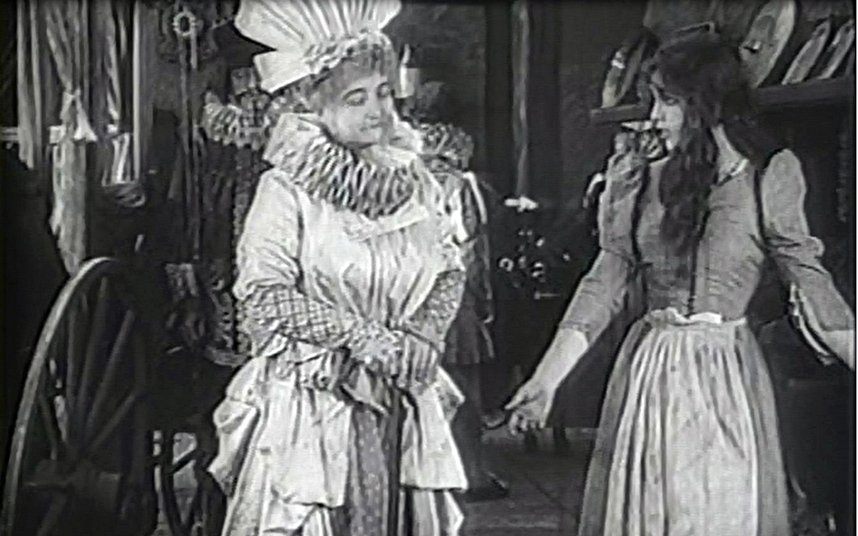
Our second film is from 1911 and is nearly 15 minutes long, meaning that it actually has time to tell the story, if not in a leisurely fashion, at least in a more complete one than the Melies.  This is a US version of the story, starring an early popular favorite, Florence La Badie (or Labadie).

image9aflo.jpg

Forgotten except by silent film enthusiasts, La Badie was a hardworking dare-devil, appearing in nearly 200 films between 1909 and her death in 1917, and doing most of her own stunts.  She was also someone who personified a new look for young women in the years leading up to the Great War—as this portrait (and there are more like it) shows.

image9flo


If you follow this LINK, you can see not only the actress, but a “Cinderella” which has almost everything we would expect from the Perrault original.

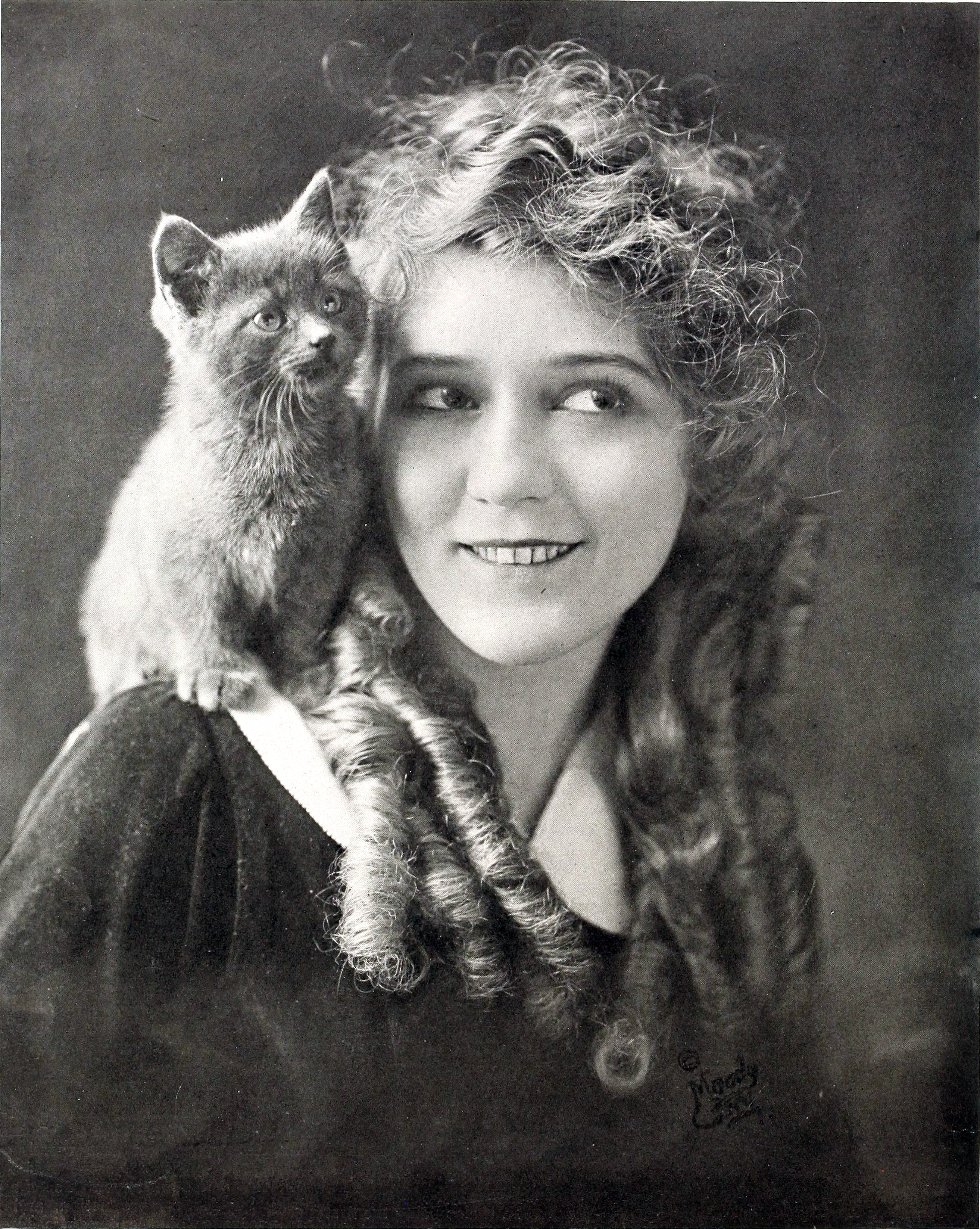
Florence La Badie had gotten into films through the suggestion of an acting friend, Mary Pickford,

image10pick


who starred in our next Cinderella, in 1914.

image11cind

Two things strike us about this:

  1. it’s over 50 minutes long—a great advance from the 1911 15 minutes
  2. the advertising seems to suggest that the audience of 1914 was expected to visit the theatre to see Mary Pickford in Cinderella, rather than Cinderella in which Mary Pickford plays the title role. For us, this foreshadows the obsession with film celebrities which is still with us today.

image12pick

This version, with its almost luxurious length, has plenty of time not only to tell the Perrault story, but to makes two additions to the plot:  Cinderella actually meets the prince before the ball, near her home and they fall in love—but are then separated; the stepsisters visit a fortune-teller, who informs them cryptically that one of their family will be successful at the ball.  (Here’s a LINK so that you can enjoy this more elaborate version.)

In the midst of these US versions, Georges Melies issued a second one himself.  At about 24 minutes long, it is much grander than his 1899 production, spending nearly a quarter of its length on the transformation of Cinderella from kitchen maid to grand lady alone.  The contrast between the 1899 pumpkin coach and the 1913 one illustrates this nicely.

image13acoach.jpg

image13melies2

It did not enjoy the success of the 1899 original, perhaps because, the weight of production values was simply too heavy for the little story inside, which was smothered by all of the plumed hats and sweeping bows.  We admit that we find this version a little slow, but the creation of the pumpkin coach is still as impressive to us as it must have been in 1913.  Here’s a LINK so that you can judge for yourself. It’s dated 1912, by the way, when the film was made, but it premiered in 1913, so we are sticking to the later date.

It has been suggested that Melies, in the look of this later take on the story, was influenced by the work of Gustave Dore (Do-RAY) (1832-1883).

image14dore.jpg

In 1867, Dore—a well-known illustrator–among other things–published Les Contes de Perrault, dessins par Gustave Dore. image15contes

Here’s one of the three illustrations done for the story.

image16cend

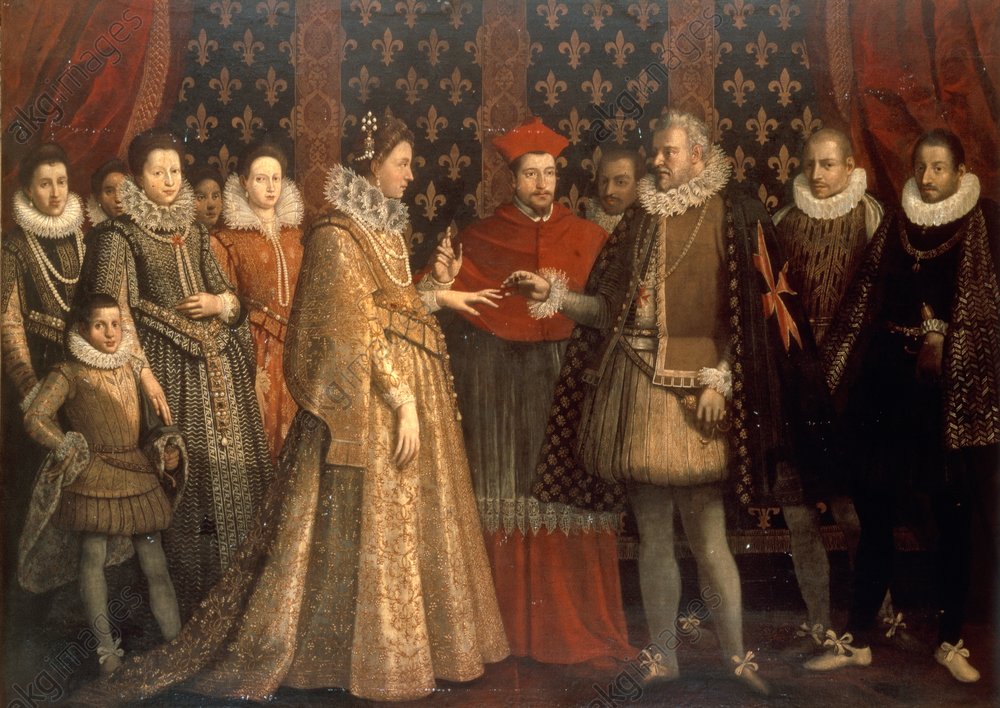
To us, however, Melies thinks of the story taking place in the time of Louis XIII (reigned 1610-1643), when Dumas’ “Musketeers” novels are set (with a little 18th-century addition here and there).

image17musk

Dore would appear to be setting it earlier, in the time of Louis’ father, Henri IV (reigned 1589-1610).

image18henri4

One of our very favorite illustrators, Arthur Rackham (1867-1939),

image19ar

tackled both “Cinderella” in 1919 and “Sleeping Beauty” in 1920, with retellings by Charles S. Evans.  Always original and surprising in his approach, Rackham here has produced what we believe to be two of his most inspired works—we’ll talk about them, as well as more versions of “Cinderella”, in our next.

But we’ll finish this post with one more image—as a teaser…

image20sketch

And thank you, as ever, for reading.

MTCIDC

CD

Legionnaire, But No Disease

28 Wednesday Mar 2018

Posted by Ollamh in Films and Music, Heroes, Military History

≈ Leave a comment

Tags

Africa, Alexandre Dumas, Algeria, Beau Geste, Beau Hunks, Camels, Chasseurs d'Afrique, Film, Flying Deuces, Follow that Camel, French Conquest of Algeria, French Foreign Legion, Garde Suisse, Genoese, Laurel and Hardy, Legions, Louisa de Ramee, military, Ouida, P.C. Wren, Sahara, The Last Remake of Beau Geste, The Three Musketeers, Under Two Flags, uniforms, Zouaves

As always, dear readers, welcome!

Although we do a lot of Tolkien, we set up this blog for adventure in general and, in this posting, we’ve gone to a completely different world—as you’ll see.

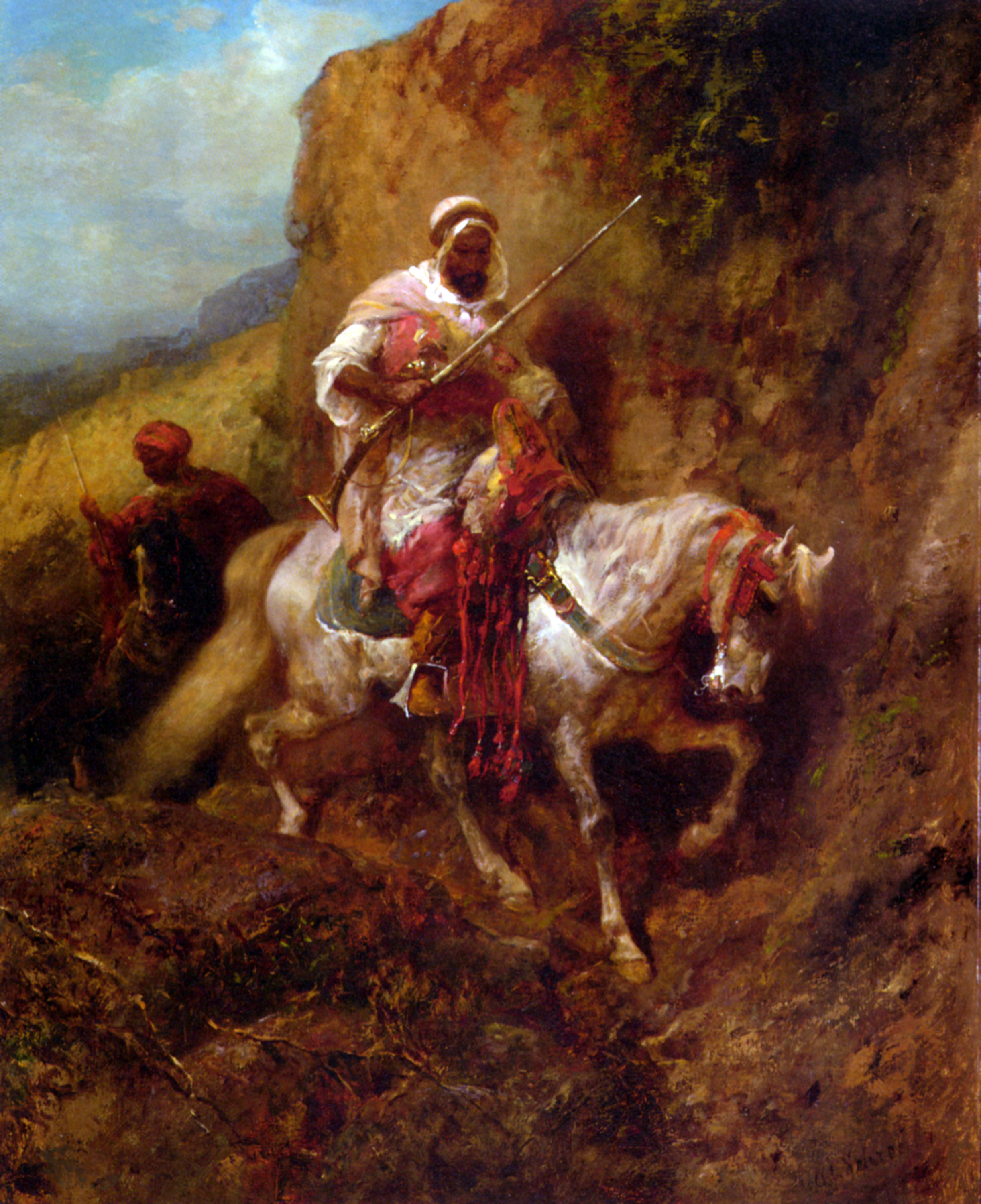
When we think of the Sahara, we immediately see:

a. a satellite map, which shows us just how huge it is

image1sahara.jpg

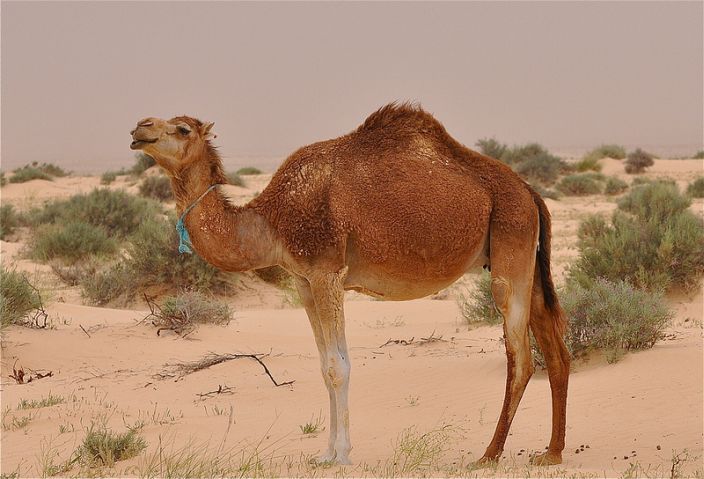
b. and camels—although they aren’t native, they’ve been there a long time, having been introduced from Arabia perhaps about 300Ad

image2camel.jpg

c. and, of course, desert warriors

image3desertwarrior.jpg

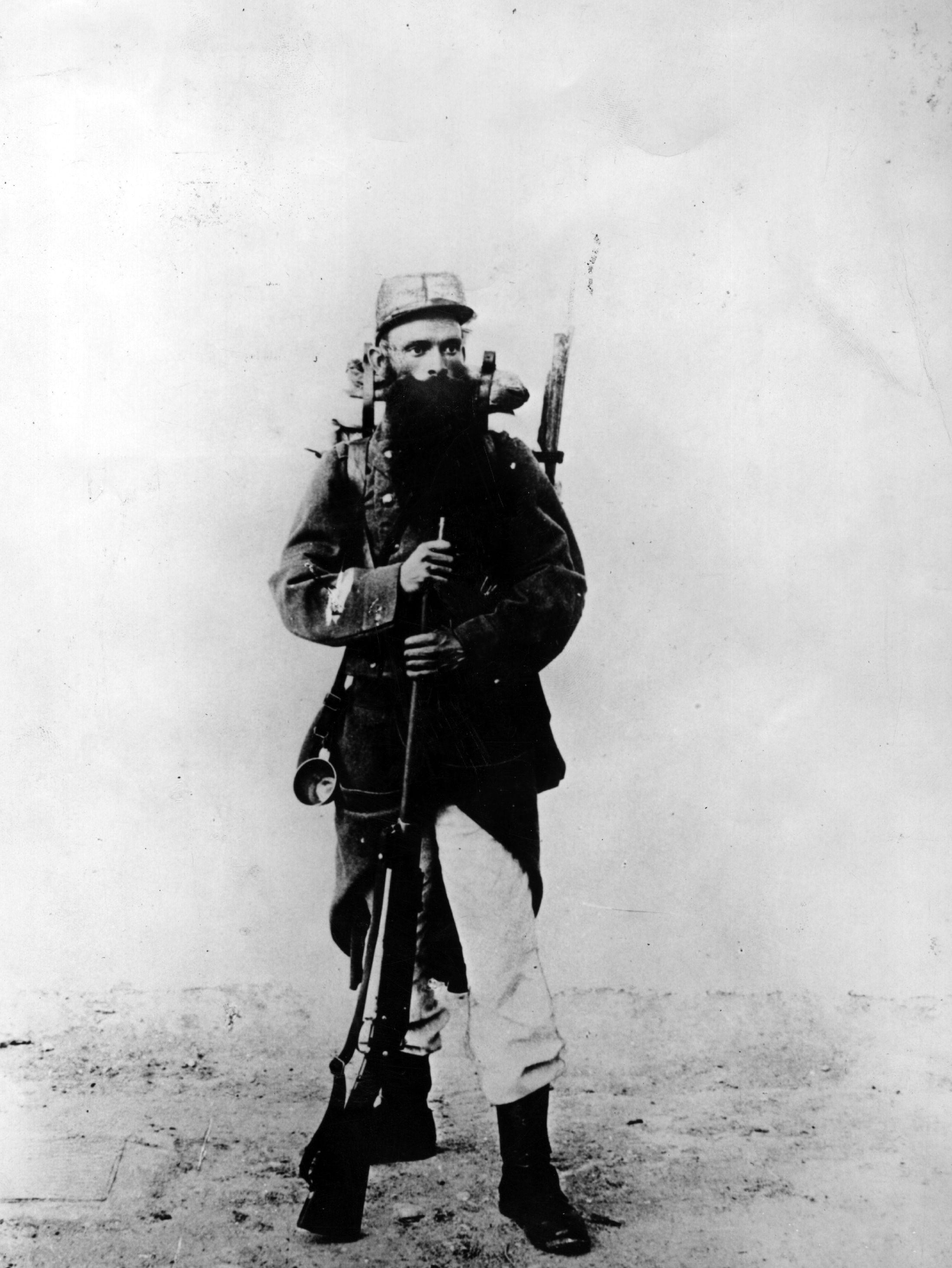
d. and, also, of course, their opponents, the French Foreign Legion

image4ffl.jpeg

e. or, with a bit of a trim—and in color—

image5fflcolor.jpg

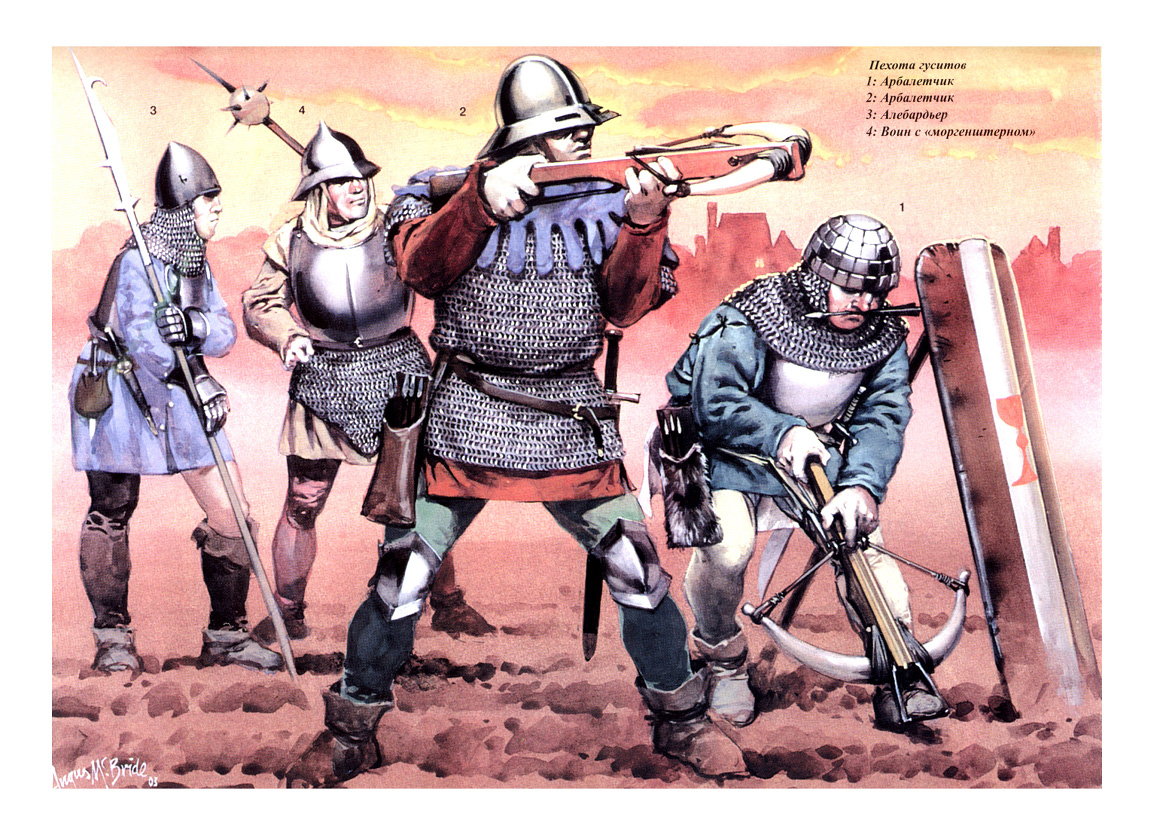
The Foreign Legion were hardly the first foreigners in the service of France.  Medieval French kings had used Genoese crossbowmen.

image6genoesecrossbowmen.jpg

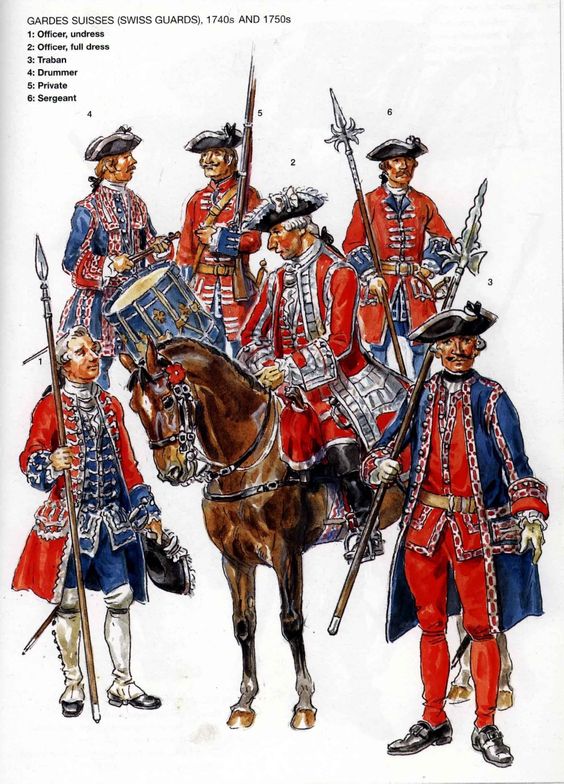
And the later kings of France had, as part of their household guards, the Garde Suisse.

image7gardesuisse.jpg

The Foreign Legion was raised in 1831 and used, at first, during the French conquest of Algeria.

image8firstuniform.jpg

image9frinvasionalgeria.jpg

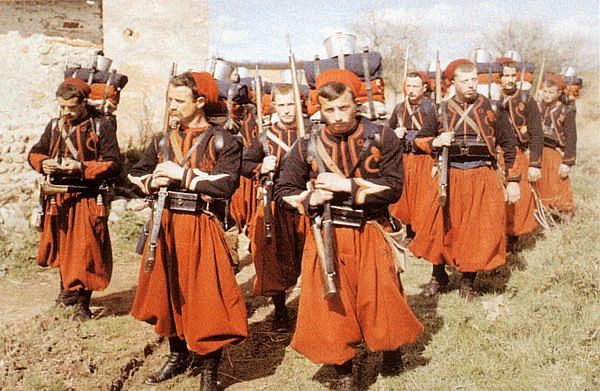
As Algeria was exotic, so were the soldiers there, beginning with the dashing Zouaves, originally locals, but gradually mostly French.

image10zouave.jpg

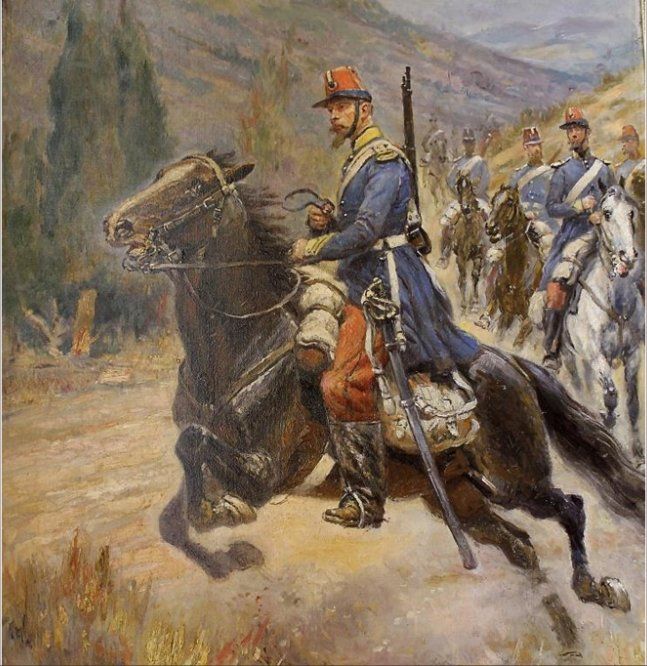
Along with these were the Chasseurs d’Afrique,

image11chass.jpg

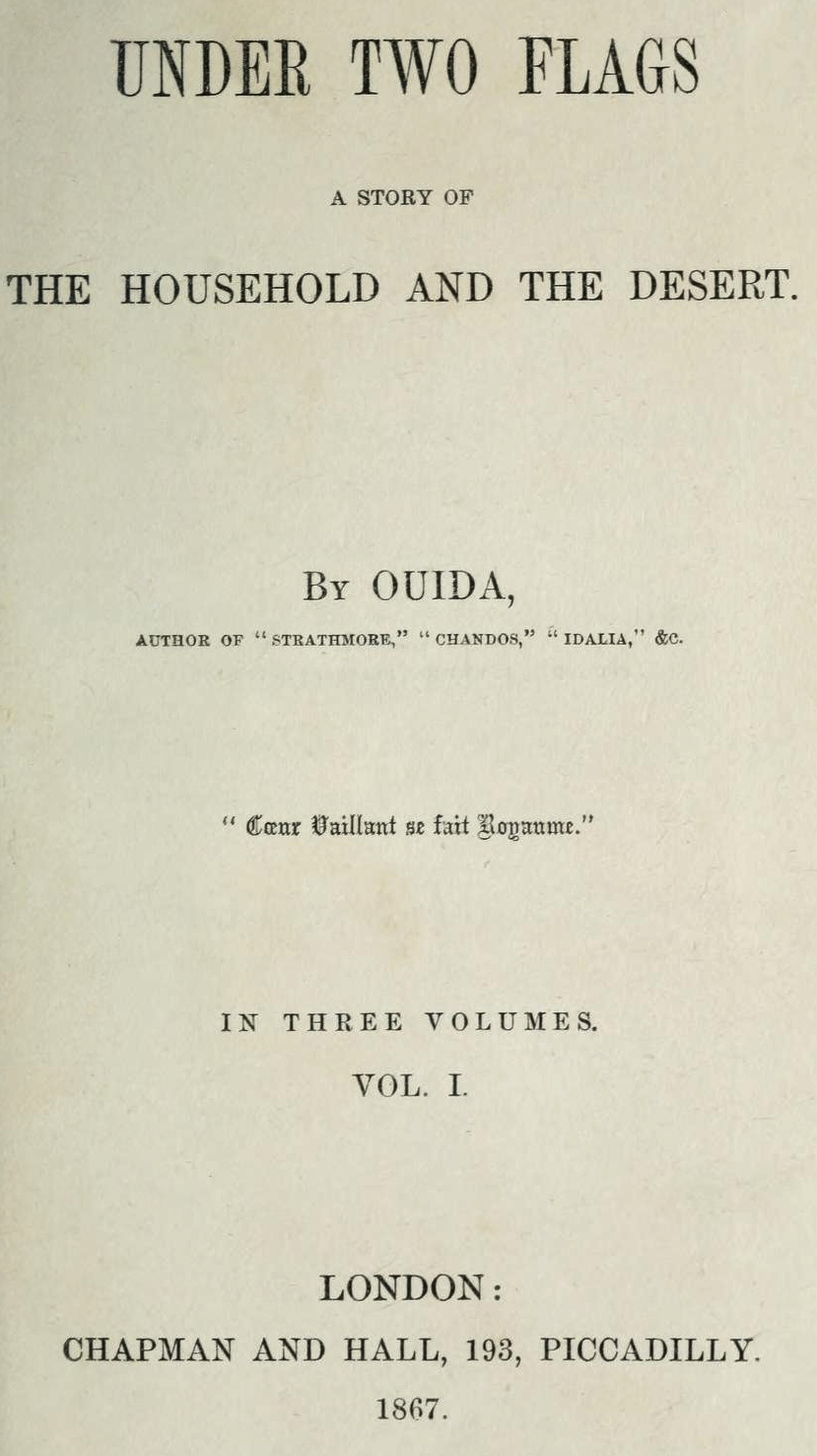
who formed the background for what we think is the first North African adventure novel in English, Ouida (Louisa de Ramee)’s Under Two Flags (1867)

image12louisa.jpg

image13book.jpg

which became a film twice, in 1922

image14nineteentwentytwo.jpg

And in 1936.

image15nineteenthirtysix.jpg

Oddly, the Chasseurs d’Afrique of the novel were replaced, in the 1936 film by the Foreign Legion—perhaps because the script writers thought that the Foreign Legion would have been a more familiar unit to their audience?

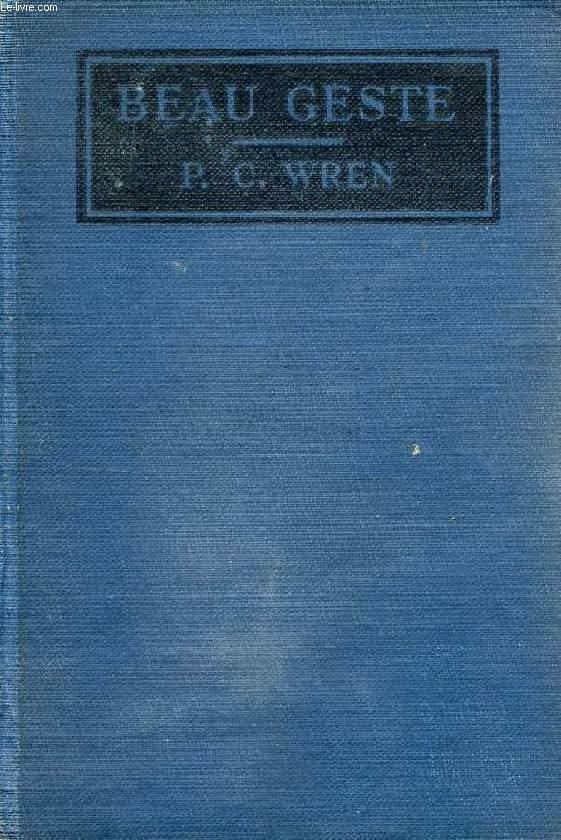
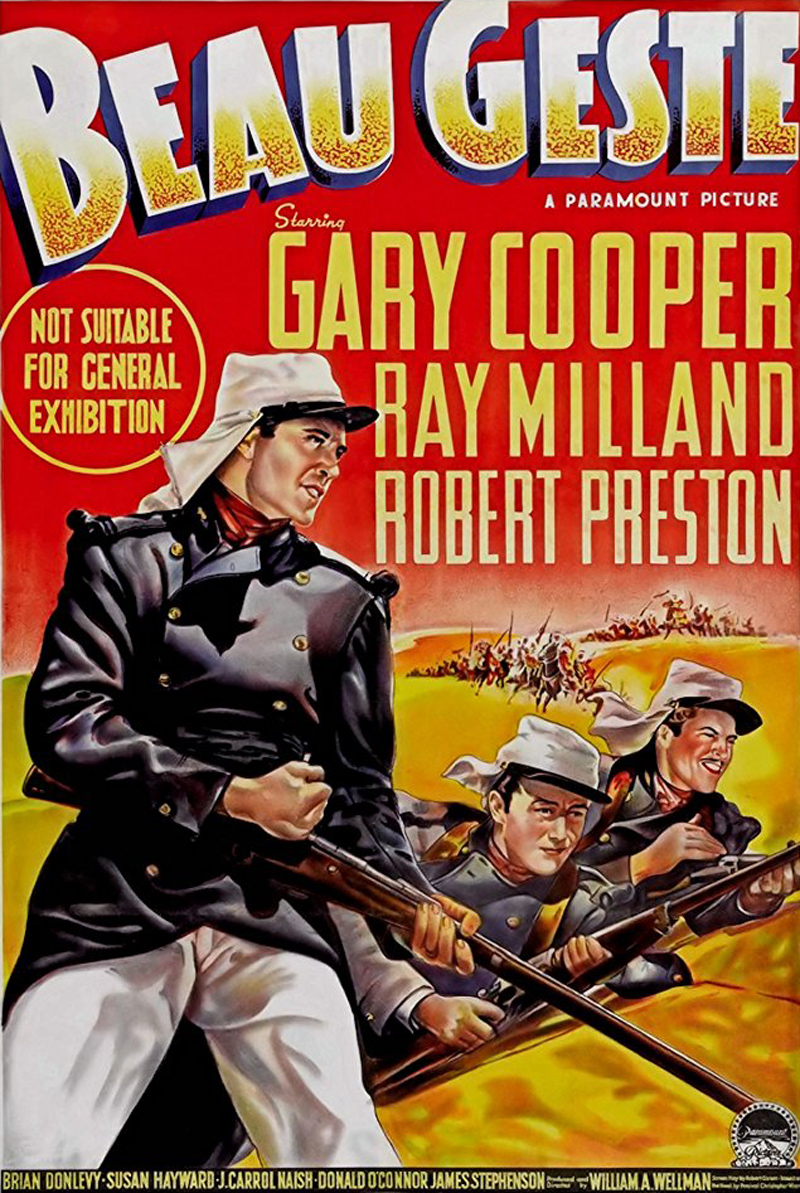
If so, it may have been because of P.C. Wren’s 1924 novel, Beau Geste,

image16bg1924.jpg

which has appeared a number of times on the screen, initially in silent form in 1926,

image17bg1926.jpg

and again as a “talkie” in 1939

image18bg1939.jpg

and again in full color in 1966.

image19bg1966.jpg

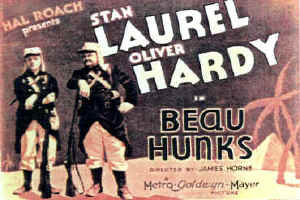
The book—and the film’s—popularity—the story was all about noble sacrifice—and exotic desert adventure—did not escape satire.  As early as 1931, two of our favorite early film comedy stars, Stan Laurel and Oliver Hardy,

image20laurelandhardy.jpg

appeared in their longest short (37 minutes—but it which sounds like a contradiction in terms), Beau Hunks.

image21hunks.jpg

This title is based upon what appears to be a double ethnic slur, Bo- from “Bohemian” + Hunk- from “Hungarian”, so a disparaging reference to a central European—a lower class one, at that.  (It makes us thankful that it appears to have disappeared entirely as a slang term:  in our current world, we don’t need any more ethnic attacks—we have plenty already.)

This was remade in 1939 as Flying Deuces.

image22flying.jpg

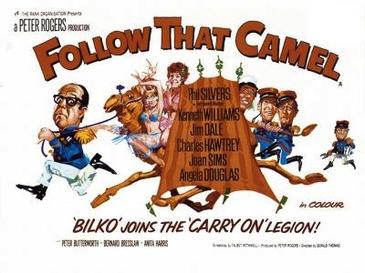
This wasn’t the end of such cheerful assaults, however.  In 1967, there was Follow That Camel (from the British comedy series “Carry On…)

image23follow.jpeg

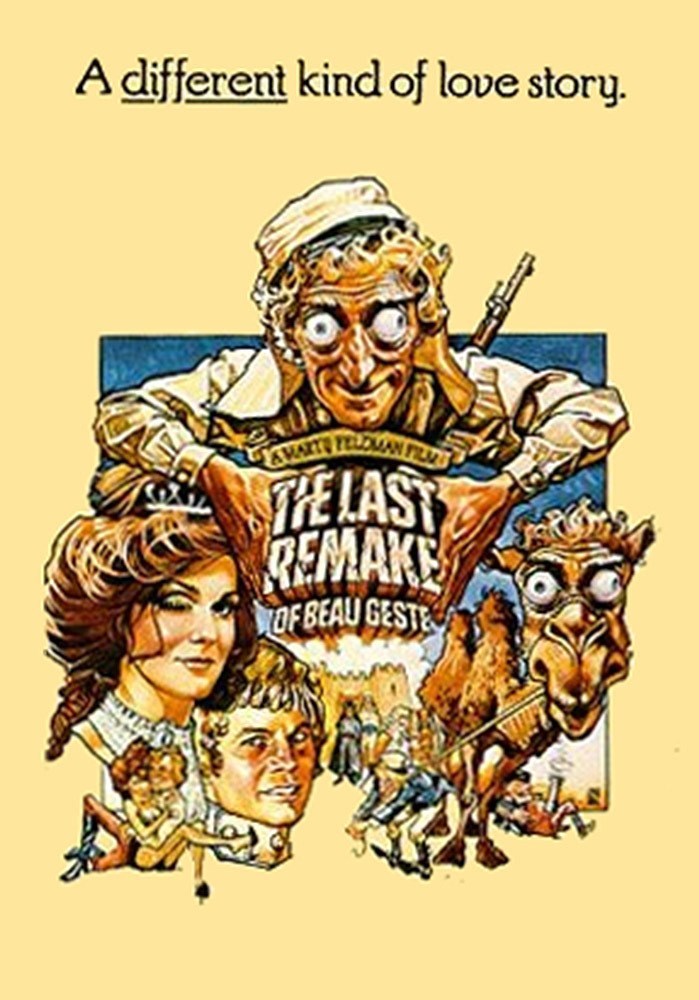
and, appropriately, in 1977, came The Last Remake of Beau Geste.

image24lastremake.jpg

All the same, we still love the old movie, with its last-ditch defense of Fort Zinderneuf,

image25ftz.jpg

where, borrowing from Dumas’ The Three Musketeers,

image26three.jpg

image27dumas.jpg

in desperation, the defenders prop up dead legionnaires to make their numbers appear greater than they are.

How could people with a passion for adventure not find that appealing?

Thanks, as ever, for reading

and, as always,

MTCIDC

CD


Beaux Gestes? (1)

20 Wednesday Apr 2016

Posted by Ollamh in J.R.R. Tolkien, Narrative Methods, Theatre and Performance

≈ Leave a comment

Tags

Cicero, David Garrick, Edmund Burke, Elizabethan, Film, Galadriel, Globe theatre, Hamlet, Hildebrandt, Mirror of Galadriel, Quintilian, rejection, Roman theatre, The Argonath, The Lord of the Rings, The Phantom of the Opera, The Popular Entertainer and Self-Instructor in Elocution, theatre, Theatrical gesture, Tolkien

Dear Readers, welcome, as always.

In this posting, we want to begin to consider a pair of contrasting gestures in The Lord of the Rings, where they may come from, and how they may mirror each other.

We begin with Galadriel in The Fellowship of the Ring, Book II, Chapter 7, “The Mirror of Galadriel”.

In this scene, she has offered Frodo and Sam the chance to look into what appears to be a small pool of enchanted water, where she tells Frodo “You may learn something, and whether what you see be fair or evil, that may be profitable, and yet it may not. Seeing is both good and perilous.”

9ae941056ddb6946598d98690668e844.jpg

Sam goes first and endures a nightmarish depiction of the future of the Shire—although Galadriel warns him that it is perhaps potential, not fated future.

Frodo has, in turn, an even worse experience: the eye of Sauron himself appears and Frodo can feel that it is trying to discover the Ring.   It is something of which Galadriel herself is well aware, but she comforts Frodo, saying, “…I perceive the Dark Lord and know his mind, or all of his mind that concerns the Elves. And he gropes ever to see me and my thought. But the door is still closed!”

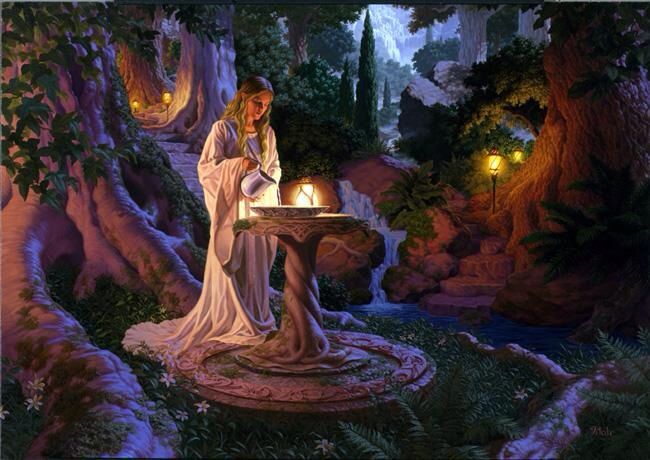
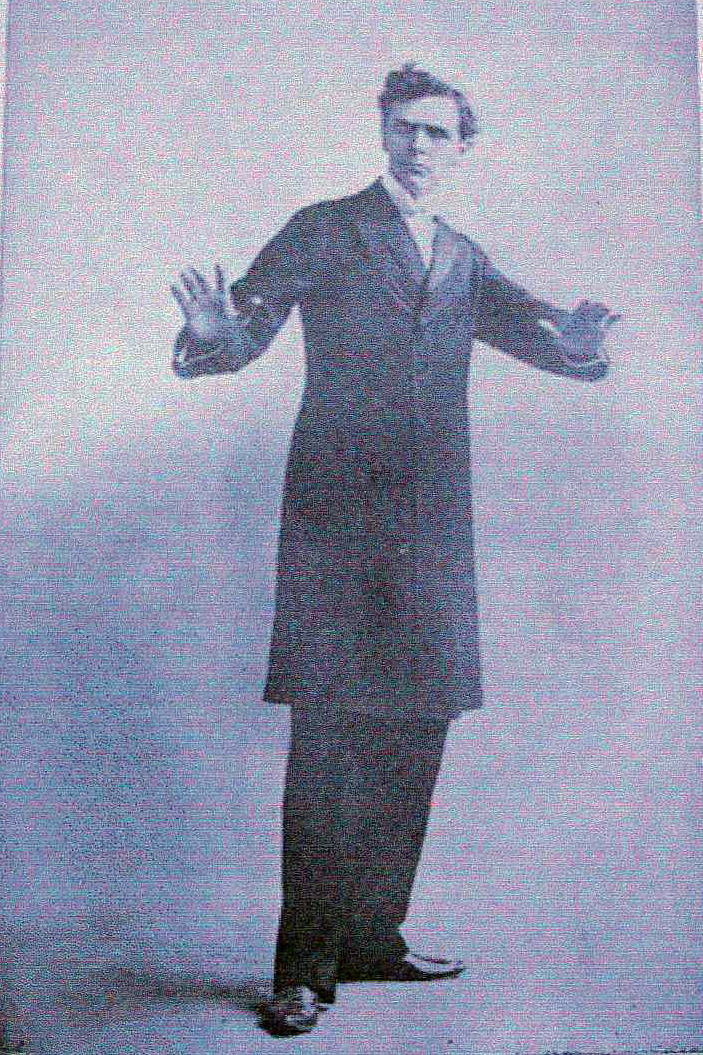
To emphasize this, “She lifted up her white arms, and spread out her hands towards the East in a gesture of rejection and denial.”

Repulsion.jpg

To modern people, like us, trying to visualize what Galadriel is doing , this might seem a very “theatrical” gesture. The closest we could find in our image bank of Galadriel actually doing it wasn’t more than a suggestion.

galadriel.jpg


And, in fact, the image we’ve chosen (obviously not Galadriel!) to depict this comes from a book published in 1898, with the intriguing title, The Popular Entertainer and Self-Instructor in Elocution.

This brings us back to a time in history when public speaking was a polished art and men (primarily—although the women’s rights movement from the mid-19th century had its speakers, as well) practiced stylized gestures to help them convey their meaning in lecture halls, theatres, and open spaces. Older public statues sometimes capture such a speaker in mid-gesture—as in this of the British intellectual and politician, Edmund Burke, in Bristol.

bristolbroadquayburke.jpg

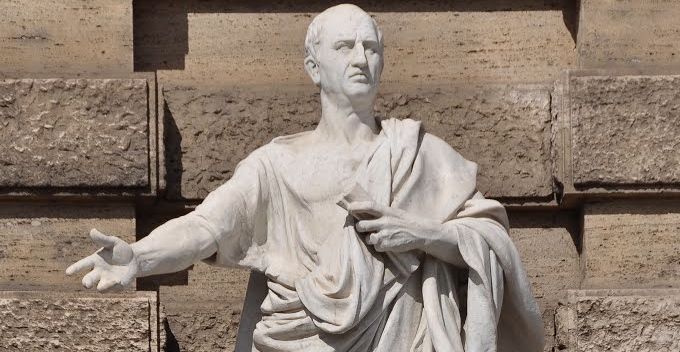
Such combinations of gesture and speech are derived from a tradition which stretches all the way back to the last century BC/first century AD in the works of the Roman orators/writers Cicero

cicero.jpg

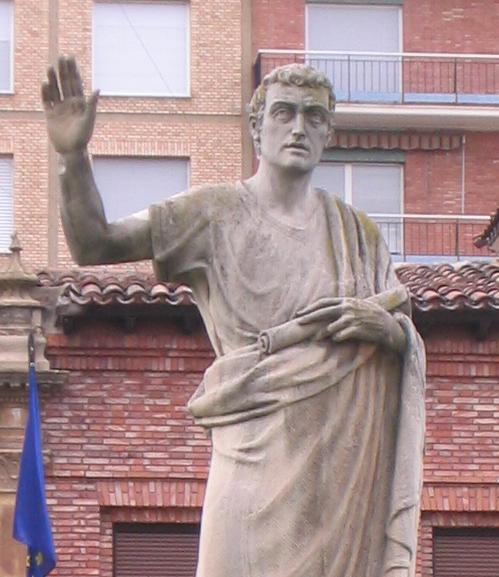
And Quintilian.

QuintWikiImage.JPG

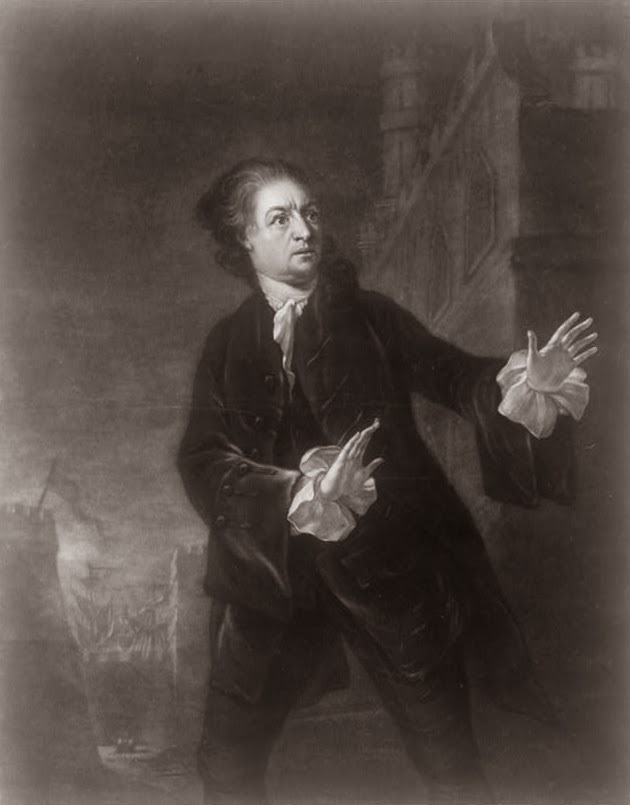
These men described the art of public speaking, and Quintilian, in particular, discusses the use of gesture to expand and underline the spoken text emotionally. This tradition was continued from the Renaissance and beyond initially in translations of the two into local languages, but then in expansions of their ideas. Such gestures were also found useful for the young popular theatre and continued to form part of an actor’s training into the twentieth century. Here, for instance, is the 18th-century actor, David Garrick, in a role for which he was famous, Hamlet. And you’ll notice that same gesture of rejection: arms extended, hands spread.

davidgarrickashamlet.jpg

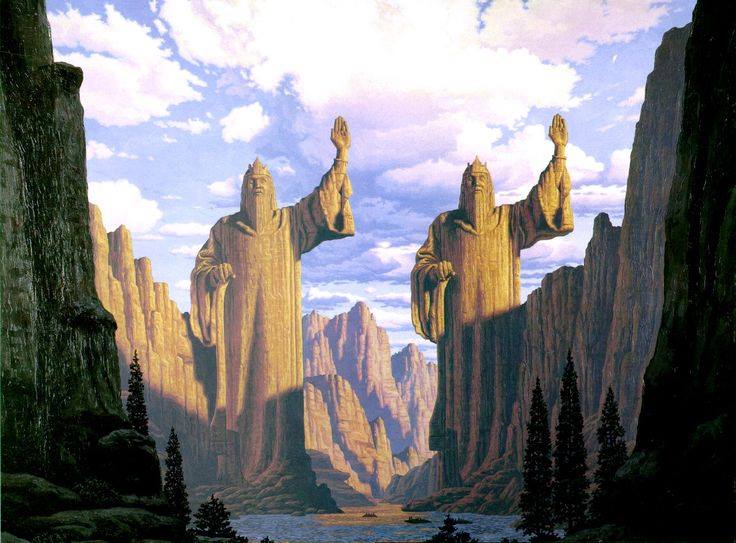
(This is not, by the way, the same gesture we see depicted on the Argonath. That seems to us more to convey the message: Stop! You have reached the boundary of Gondor—go no farther!

argonath hildebrandt.jpg

This is the Hildebrandt twins rather mild version. A fiercer one would be that from the film.)

argonathfilm.jpg

To us, such gestures may seem very overdone, if not downright silly—as in this from the 1925 film of The Phantom of the Opera.

lchaneysrphantom

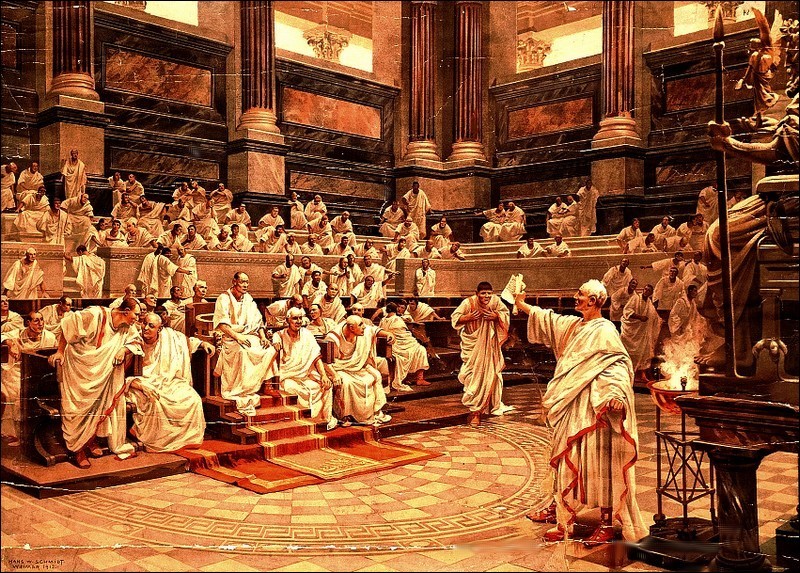
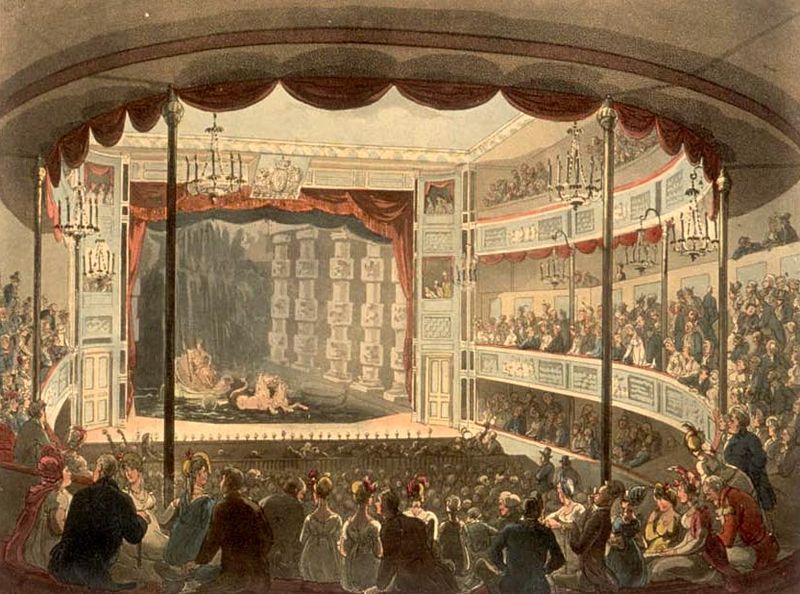
And it is probably film itself which has changed our view. Originally, these gestures were developed to extend a speaker’s ability to convey thought and feeling in a public space—a big place where there was no elaborate sound system with microphones and speakers to help.

cicerovscatiline.jpg

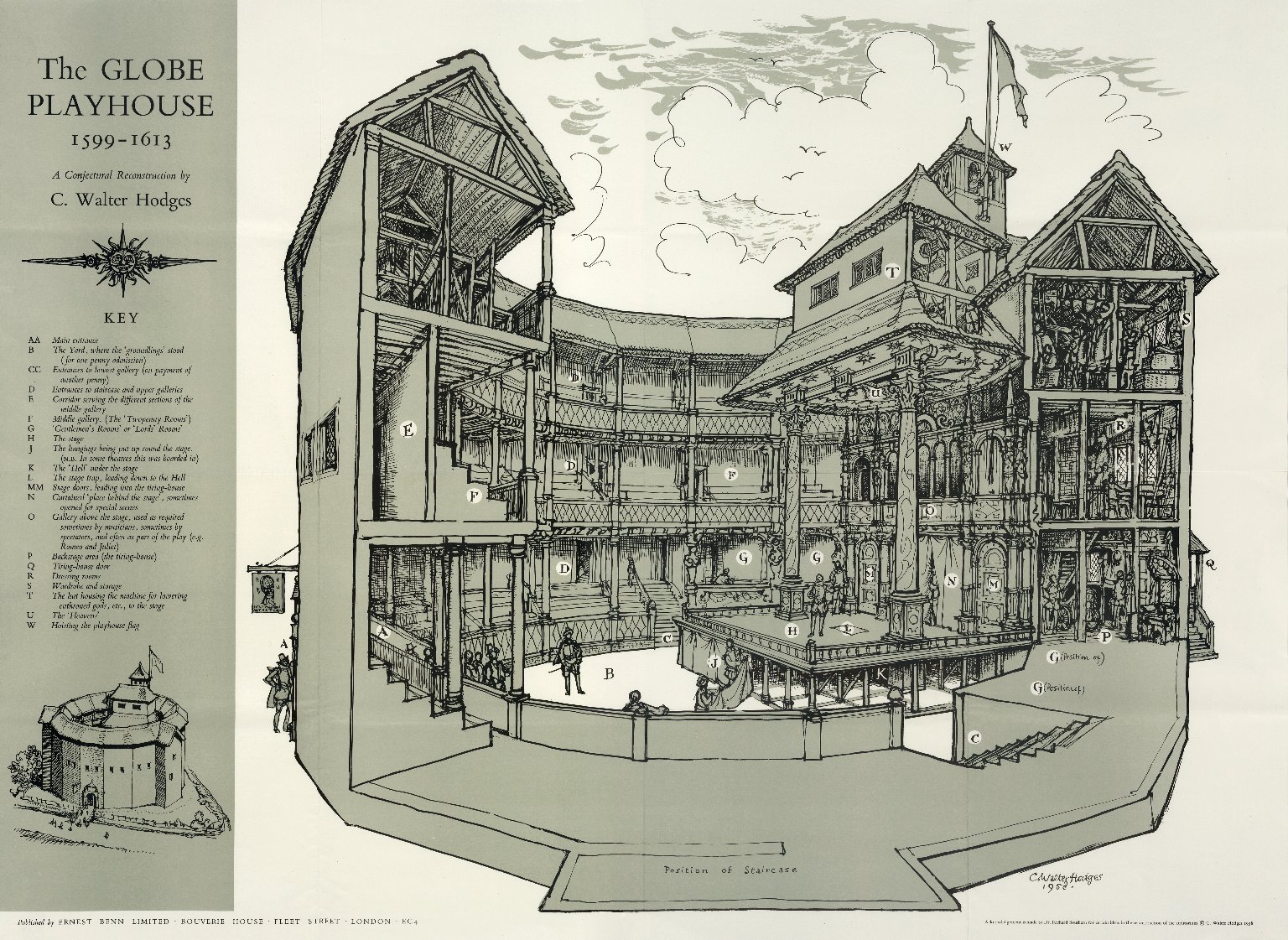
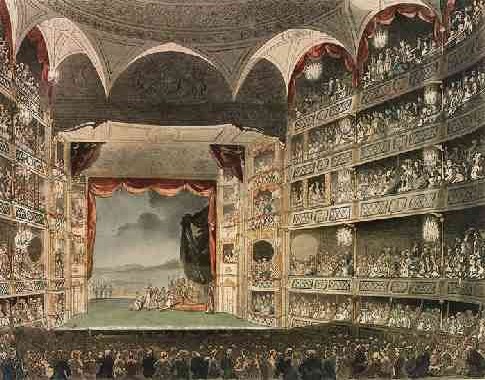
In a big, noisy place like an Elizabethan theatre, such an extension would have proved just as useful.

Hodge's_conjectural_Globe_reconstruction.jpg

And, until artificial vocal magnification was invented in the 20th century, it would have continued to help.

Theatre_drury_lane2.jpg

sadlers_wells_interior_rowlandson_microcosm_1810.jpg

Film began as an offshoot of the stage—after all, what other model was there for actors? Film was much more intimate than the stage, however, even before sound films arrived at the very end of the 1920s. The heavy make-up and big, stylized gestures brought over from earlier drama must have seemed even more exaggerated, in time, to audiences, and everything was gradually scaled down. What Tolkien saw as a young man,

hunchback.jpg

however, having been born in 1893, would have been the product of that earlier time—a time all the way back to the Romans—and thus, when he wants to depict strong emotion, he clearly uses what would have been more appropriate for an older time, just as he uses older language, borrowed from people like William Morris and Tennyson, when he wants to add a certain weight to the words.

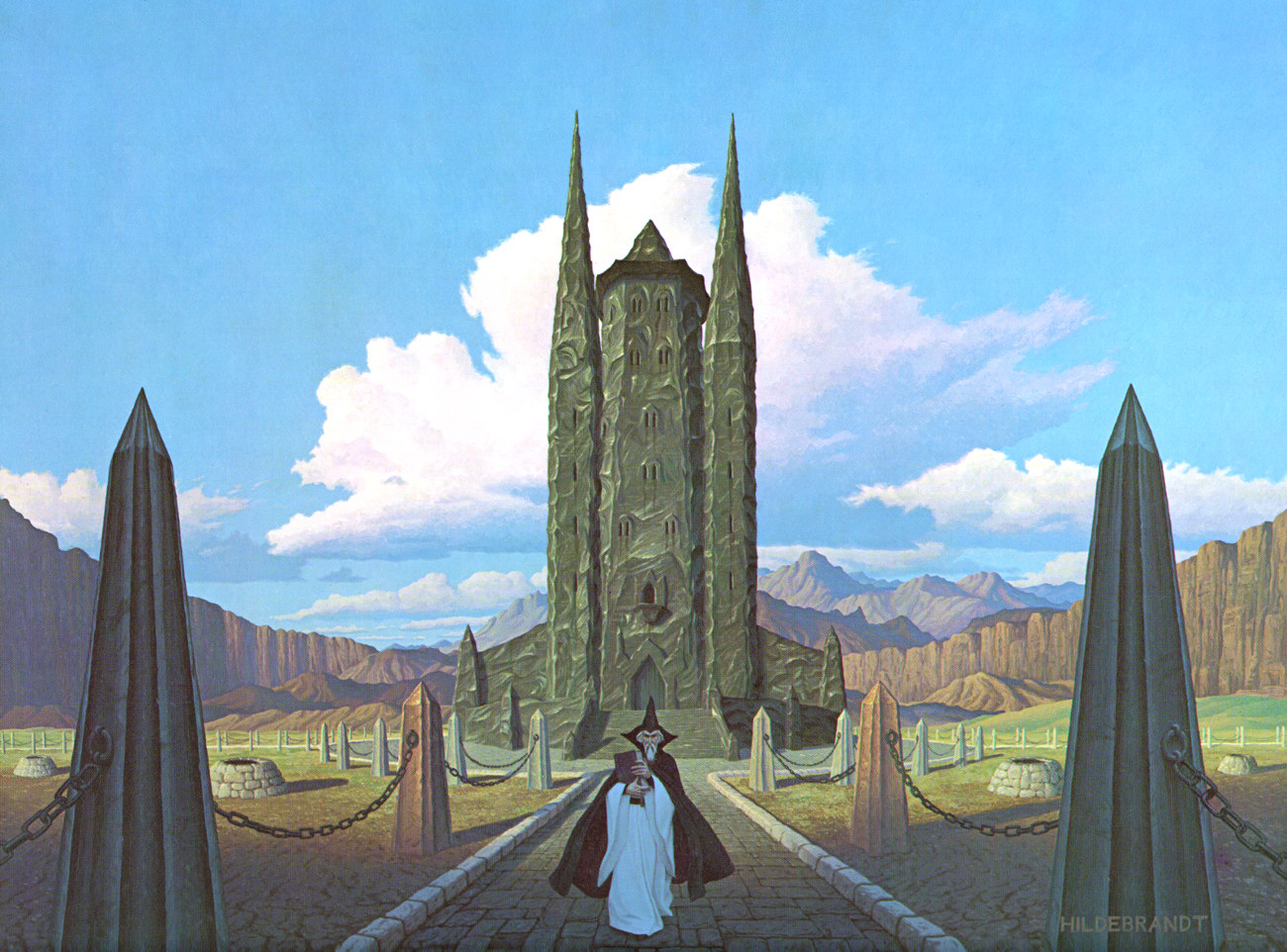
In our second posting, we want to continue our exploration with what we feel to be an opposing gesture—and the final gesture—of Saruman.

greg-hildebrandt-isengard-orthanc-saruman-607429-1300x962.jpg

Thanks, as always, for reading.

MTCIDC

CD

Where Did It Go– And Why?

17 Wednesday Jun 2015

Posted by Ollamh in J.R.R. Tolkien, Military History, Military History of Middle-earth

≈ Leave a comment

Tags

Arbeia, Boromir, Cavalry, Denethor, England, Faramir, Film, Gondor, Hadrian's Wall, Helm's Deep, Iliad, Minas Tirith, Offa's Dyke, Osgiliath, Pelennor, Peter Jackson, Rammas Echor, Script, The Great Wall, The Lord of the Rings, Tolkien, Wansdyke

Dear Readers,

Welcome, as always!

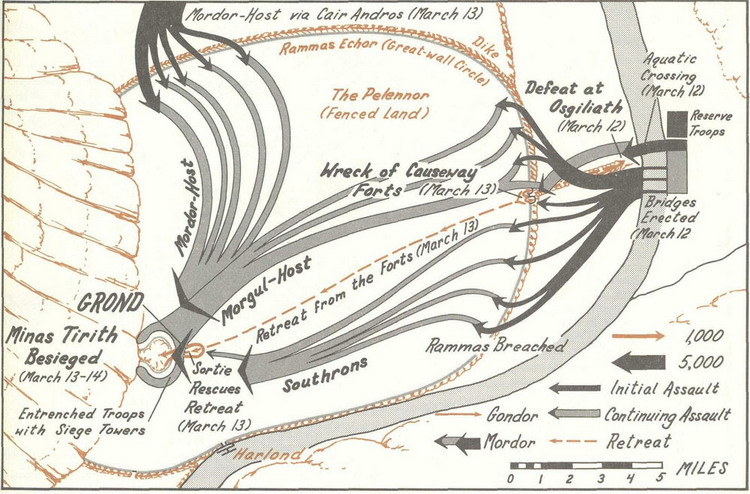
     In this post, we want to consider the Rammas Echor, which, in the original, had holes blown in it by the invading army of Sauron, but was demolished completely by the script writers for Peter Jackson’s LOTR.

The%20Siege%20of%20Minas%20Tirith

     We first meet it when Gandalf and Pippin, in their rapid journey to Minas Tirith, are briefly stopped at what appears to be a sally port in it (rather than a major gate, as Shadowfax is said to have “passed through a narrow gate in the wall” 749). Gandalf briefly trades remarks with an officer named Ingold (who appears briefly later in the story to report that the northern section has fallen, 821) before he and Pippin continue their journey.

     It is described thus:

   “Gandalf passed now into the wide land beyond the Rammas Echor. So the men of Gondor called the out-wall that they had built with great labour, after Ithilien fell under the shadow of their Enemy. For ten leagues [about 30 miles in the English system—about 48 km in the metric] or more it ran from the mountains’ feet and so back again, enclosing in its fence the fields of the Pelennor: fair and fertile townlands on the long slopes and terraces falling to the deep levels of the Anduin. At its furthest point from the Great Gate of the City, north-eastward, the wall was four leagues [12 miles—about 19 km] distant, and there from a frowning bank it overlooked the long flats beside the river, and men had made it high and strong; for at that point, upon a walled causeway, the road came in from the fords and bridges of Osgiliath and passed through a guarded gate between embattled towers… “ 750.

     With so much of Tolkien, one can find illustrations from the usual artists—the Hildebrandts, Howe, Nasmith, and Lee—but for this particular—and important—architectural feature, we haven’t discovered—so far—a single illustration.

     It’s made of stone and has evidently not been well-maintained: “Many tall men heavily cloaked stood beside him [Shadowfax], and behind them in the mist loomed a wall of stone. Partly ruinous it seemed, but already before the night was passed the sound of hurried labour clould be heard: beat of hammers, clink of trowels, and the creak of wheels.” 748 And, as mentioned above, it has gates, but, beyond that, what does it look like?

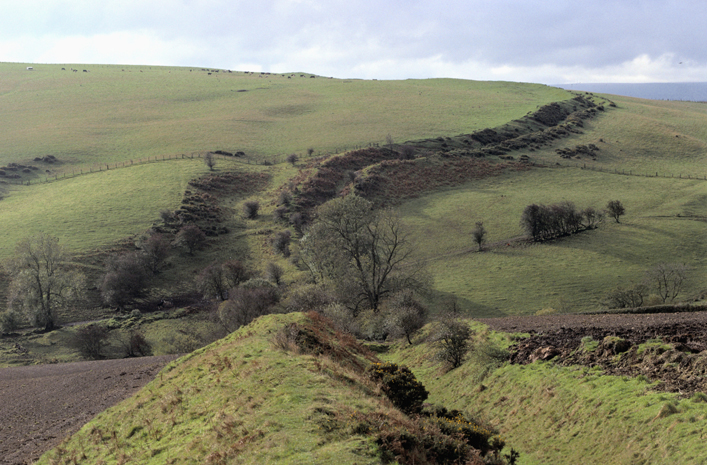
     England has a long history of long walls. There are the surviving earthen walls and ditches of the Dark Ages or early medieval Offa’s Dyke

Offa's_Dyke_near_Yew_Tree_Farm_-_geograph_org_uk_-_450420

1990s, Near Knighton, Wales, UK --- Offa's Dyke near Knighton in Wales. The dyke was created by Offa the King of Mercia from 757 to 796 AD and roughly formed the boundary between England and Wales. --- Image by © Homer Sykes/CORBIS

and Wansdyke

wansdyke

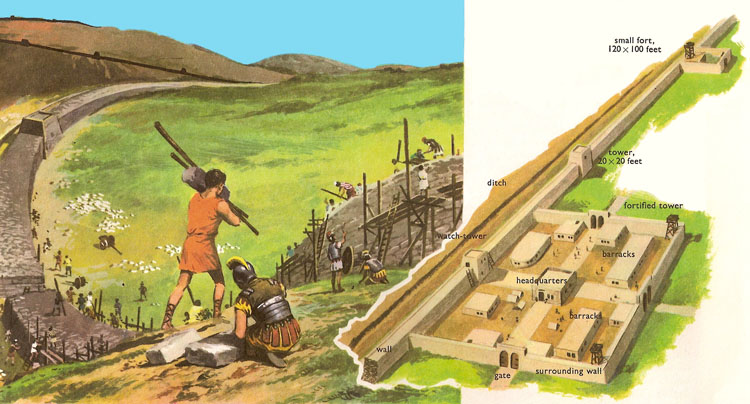
and, of course, the well-known 2nd –century AD work, Hadrian’s Wall, with its surviving stone work and its elaborate series of mile castles, gates, and supporting forts and camps.

Hadrians_Wall Hadrian's Wall phase 1 Central sector

   We might also cast further afield and in time. In Book 7 of the Iliad, the Greeks dig a ditch, fill it with sharpened stakes, and build a stone wall behind it to protect their ships from Trojan attack.

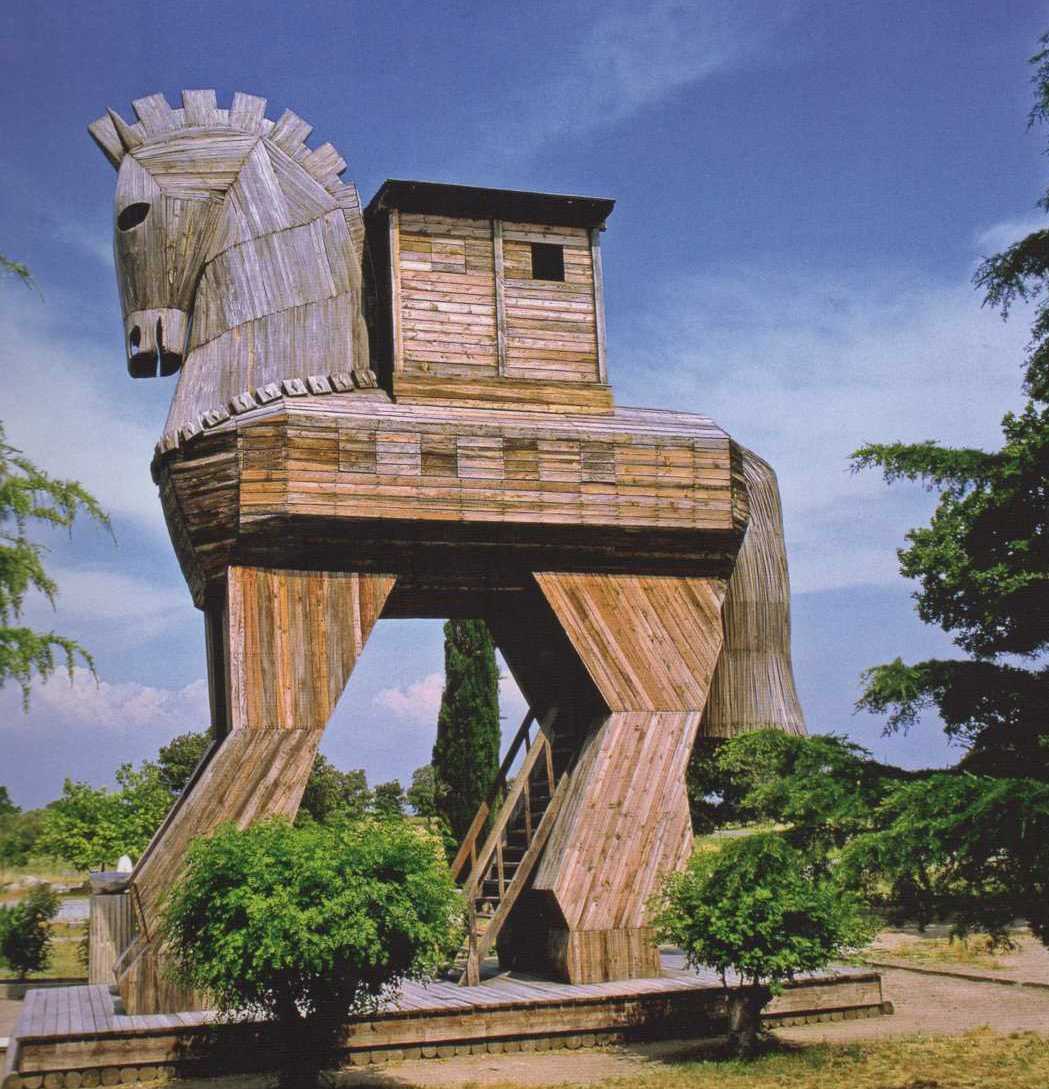
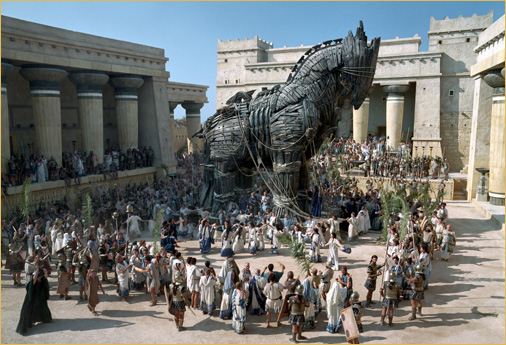
[We can’t find an image of that, but here’s a picture of one of our favorite features of today’s Truva/Hisalik, just to remind you of a later feature of the Trojan War—along with a still from the 2004 Brad Pitt film, known to those of us who love Homer for its rather casual attitude towards the traditional story.]

617-5-horse1

trojan-horse%20troy%20the%20movie

And how can we fail to mention the Great Wall of China?

thegreatwall_rcv

     For us, Hadrian’s Wall might do, with its stretch of stonework across the entire width of England (73 miles, 117.5 kilometres).

map-hadrians-wall

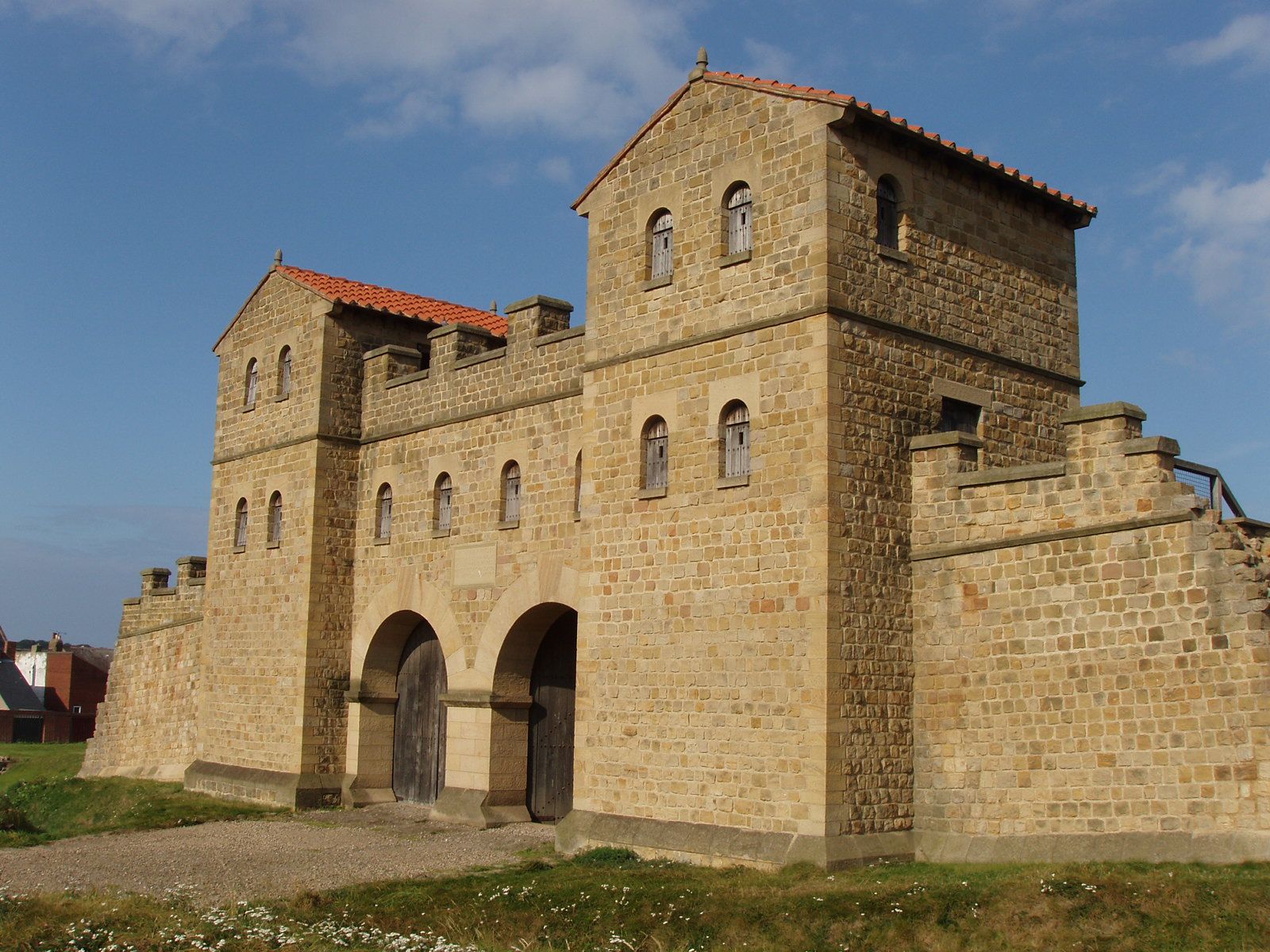
It even has the requisite main gate, which will be defended by Faramir.

This is actually from the Roman fort of Arbeia, South Shields—a great site—but it gives you an idea of what something a little grander—after all, it connected the Pelennor with Osgiliath—might look like.

F00638REW

     That event, however, is in The Lord of the Rings, where Faramir maintains his reputation as a brave and far-sighted commander, as Beregond says to Pippin:

     “But things may change when Faramir returns. He is bold, more bold than many deem; for in these days men are slow to believe that a captain can be wise and learned in the scrolls of lore and song, as he is, and yet a man of hardihood and swift judgement in the field.” 766

FaramirCaptainGondor

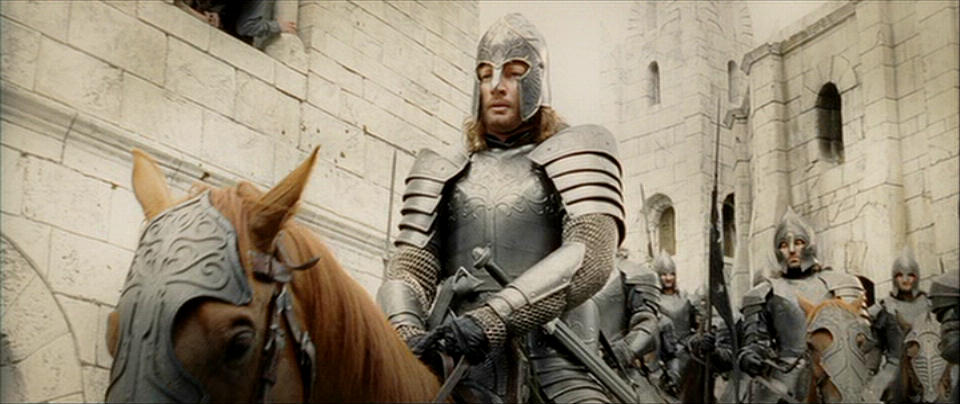
     In the film, it is quite a different matter. There is no Rammas Echor and Faramir, in contrast, is badly wounded in a cavalry charge against the walls of Osgiliath while his father, Denethor, has a rather messy and all-too-symbolic lunch.

maxresdefault

gondorianerritt-cb182208

gifdenethoreating

     What has happened here? First, no intelligent—maybe even foolish—commander would attack a stone wall with cavalry, and we know that Faramir is, indeed, intelligent. Second, what has happened to the Rammas, where Faramir actually had been just before he fell, commanding the rearguard?

     First, we would suggest that the script writers took their cue from the final scene between father and son, in which Faramir, already told by his father that his father had preferred his elder son, Boromir, volunteers to direct the defense of Osgiliath:

“But at length Faramir said: ‘I do not oppose your wil, sire. Since you are robbed of Boromir, I will go and do what I can in his stead—if you command it.’

     ‘I do so,’ said Denethor.

     “Then farewell!’ said Faramir. ‘But if I should return, think better of me!’

     ‘That depends upon the manner of your return,’ said Denethor.

     Gandalf it was that last spoke to Faramir ere he rode east. ‘Do not throw your life away rashly or in bitterness,’ he said. ‘You will be needed here, for other things than war. Your father loves you, Faramir, and will remember it ere the end. Farewell!’” 816-817

     To them, this might have indicated that Faramir—who had clearly been Gandalf’s pupil, as his father has said:

“See, you have spoken skillfully, as ever; but I, have I not seen your eyes fixed on Mithrandir, seeking whether you said well or too much? He has long had your heart in his keeping.” 812

does not listen to his tutor and deliberately sets out to get himself killed. In the text, however, Faramir is actually acting responsibly, fighting in the rearguard of the retreating detachment driven from the Rammas:

“Even as the Nazgul had swerved aside from the onset of the White Rider, there came flying a deadly dart, and Faramir, as he held at bay a mounted champion of Harad, had fallen to the earth.” 821

     (And we might add that Prince Imrahil, who brings the wounded Faramir back, says, “Your son has returned, lord, after great deeds…” 821, which, of course, could easily be understood to be ironic and is perhaps meant to be so on the part of Imrahil, considering Fararmir’s last words to his father and Denethor’s reply.)

     Thus, we see Faramir’s wounding completely changed, but what about the wall he had been defending?

     When one reads through the various chat sights, there was once a considerable amount of discussion about the Rammas Echor, but all was speculation, it seems, as we were unable to find anything said by the writers themselves. In the text, instead of concentrating on the main gate, Sauron’s engineers detonate explosions to each side and the troops then pour through the breaches to take the defenders in flank. This could be seen as a repetition of a similar earlier event at Helm’s Deep, in which Saruman’s forces blew a hole in the defenses.

blowingupthewallathelmsdeep

     As well, we think that, for the director, the big visual attraction was the attack on Minas Tirith. This means that it could simply have been a matter of where to spend time—and/or possibly money—and so the Rammas was sacrificed. If the decision had already been made to change—we will say misinterpret– the story of Faramir, simplifying it drastically and shifting the focus (just think of that dripping mouth!), then the choice to discard this defense would have been an easy one.

     So, suppose you were script writer or director, what would you have done, dear readers?

     Thanks, as always, for reading (and, we hope, speculating).

     MTCIDC

     CD

The Doubtful Sea Series Facebook Page

The Doubtful Sea Series Facebook Page

  • Ollamh

Categories

  • Artists and Illustrators
  • Economics in Middle-earth
  • Fairy Tales and Myths
  • Films and Music
  • Games
  • Heroes
  • Imaginary History
  • J.R.R. Tolkien
  • Language
  • Literary History
  • Maps
  • Medieval Russia
  • Military History
  • Military History of Middle-earth
  • Narnia
  • Narrative Methods
  • Poetry
  • Research
  • Star Wars
  • Terra Australis
  • The Rohirrim
  • Theatre and Performance
  • Tolkien
  • Uncategorized
  • Villains
  • Writing as Collaborators
Follow doubtfulsea on WordPress.com

Across the Doubtful Sea

Recent Postings

  • Through a glass… January 7, 2026
  • Heffalumps? December 31, 2025
  • We Three Kings December 24, 2025
  • A Moon disfigured December 17, 2025
  • On the Roads Again—Once More December 10, 2025
  • (Not) Crossing Bridges December 3, 2025
  • On the Road(s) Again—Again November 26, 2025
  • On the Road(s) Again November 19, 2025
  • To Bree (Part 2) November 12, 2025

Blog Statistics

  • 104,078 Views

Posting Archive

  • January 2026 (1)
  • December 2025 (5)
  • November 2025 (4)
  • October 2025 (5)
  • September 2025 (4)
  • August 2025 (4)
  • July 2025 (5)
  • June 2025 (4)
  • May 2025 (4)
  • April 2025 (5)
  • March 2025 (4)
  • February 2025 (4)
  • January 2025 (5)
  • December 2024 (4)
  • November 2024 (4)
  • October 2024 (5)
  • September 2024 (4)
  • August 2024 (4)
  • July 2024 (5)
  • June 2024 (4)
  • May 2024 (5)
  • April 2024 (4)
  • March 2024 (4)
  • February 2024 (4)
  • January 2024 (5)
  • December 2023 (4)
  • November 2023 (5)
  • October 2023 (4)
  • September 2023 (4)
  • August 2023 (5)
  • July 2023 (4)
  • June 2023 (4)
  • May 2023 (5)
  • April 2023 (4)
  • March 2023 (5)
  • February 2023 (4)
  • January 2023 (4)
  • December 2022 (4)
  • November 2022 (5)
  • October 2022 (4)
  • September 2022 (4)
  • August 2022 (5)
  • July 2022 (4)
  • June 2022 (5)
  • May 2022 (4)
  • April 2022 (4)
  • March 2022 (5)
  • February 2022 (4)
  • January 2022 (4)
  • December 2021 (5)
  • November 2021 (4)
  • October 2021 (4)
  • September 2021 (5)
  • August 2021 (4)
  • July 2021 (4)
  • June 2021 (5)
  • May 2021 (4)
  • April 2021 (4)
  • March 2021 (5)
  • February 2021 (4)
  • January 2021 (4)
  • December 2020 (5)
  • November 2020 (4)
  • October 2020 (4)
  • September 2020 (5)
  • August 2020 (4)
  • July 2020 (5)
  • June 2020 (4)
  • May 2020 (4)
  • April 2020 (5)
  • March 2020 (4)
  • February 2020 (4)
  • January 2020 (6)
  • December 2019 (4)
  • November 2019 (4)
  • October 2019 (5)
  • September 2019 (4)
  • August 2019 (4)
  • July 2019 (5)
  • June 2019 (4)
  • May 2019 (5)
  • April 2019 (4)
  • March 2019 (4)
  • February 2019 (4)
  • January 2019 (5)
  • December 2018 (4)
  • November 2018 (4)
  • October 2018 (5)
  • September 2018 (4)
  • August 2018 (5)
  • July 2018 (4)
  • June 2018 (4)
  • May 2018 (5)
  • April 2018 (4)
  • March 2018 (4)
  • February 2018 (4)
  • January 2018 (5)
  • December 2017 (4)
  • November 2017 (4)
  • October 2017 (4)
  • September 2017 (4)
  • August 2017 (5)
  • July 2017 (4)
  • June 2017 (4)
  • May 2017 (5)
  • April 2017 (4)
  • March 2017 (5)
  • February 2017 (4)
  • January 2017 (4)
  • December 2016 (4)
  • November 2016 (5)
  • October 2016 (6)
  • September 2016 (5)
  • August 2016 (5)
  • July 2016 (5)
  • June 2016 (5)
  • May 2016 (4)
  • April 2016 (4)
  • March 2016 (5)
  • February 2016 (4)
  • January 2016 (4)
  • December 2015 (5)
  • November 2015 (5)
  • October 2015 (4)
  • September 2015 (5)
  • August 2015 (4)
  • July 2015 (5)
  • June 2015 (5)
  • May 2015 (4)
  • April 2015 (3)
  • March 2015 (4)
  • February 2015 (4)
  • January 2015 (4)
  • December 2014 (5)
  • November 2014 (4)
  • October 2014 (6)
  • September 2014 (1)

Blog at WordPress.com.

  • Subscribe Subscribed
    • doubtfulsea
    • Join 78 other subscribers
    • Already have a WordPress.com account? Log in now.
    • doubtfulsea
    • Subscribe Subscribed
    • Sign up
    • Log in
    • Report this content
    • View site in Reader
    • Manage subscriptions
    • Collapse this bar
 

Loading Comments...