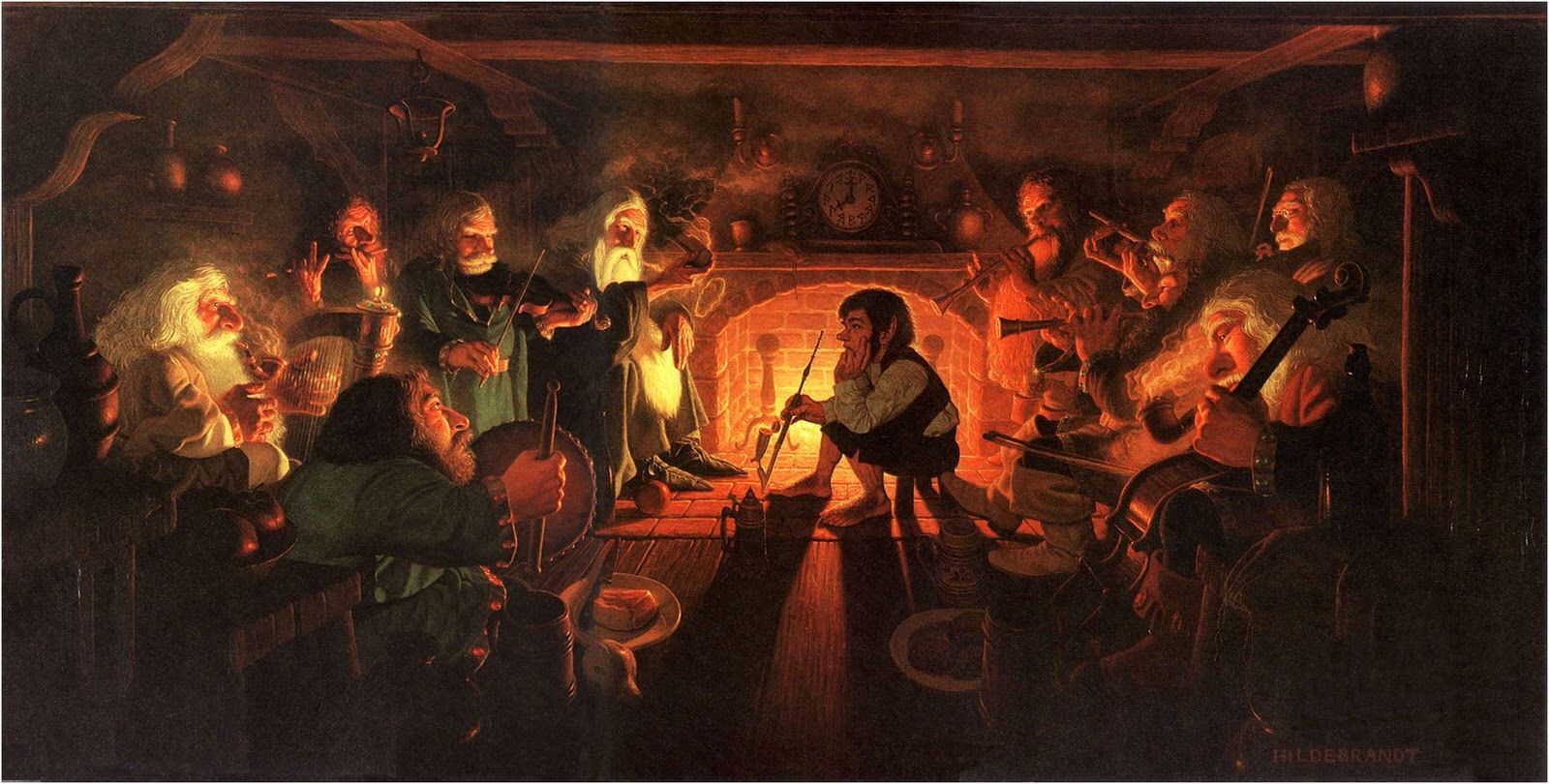
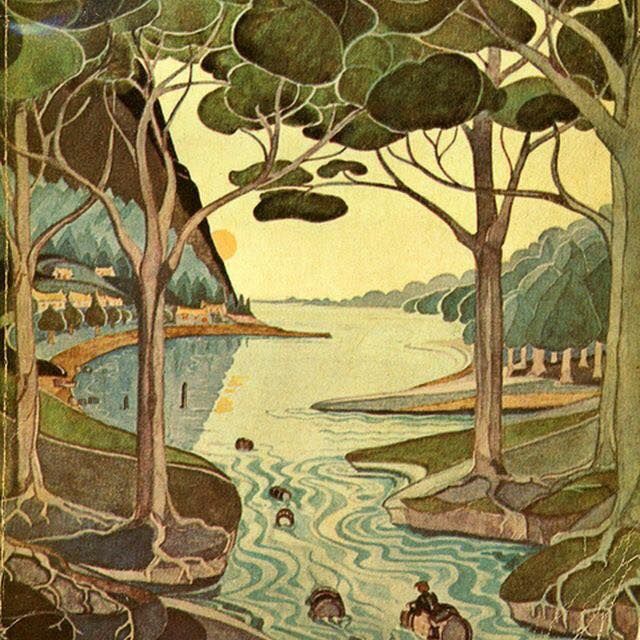
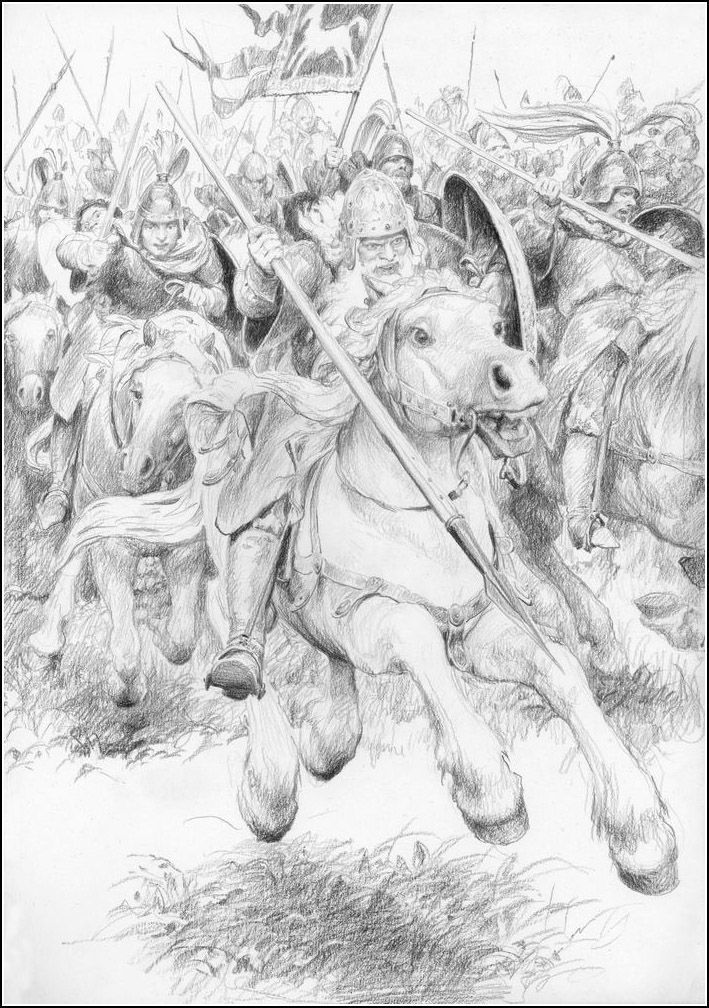
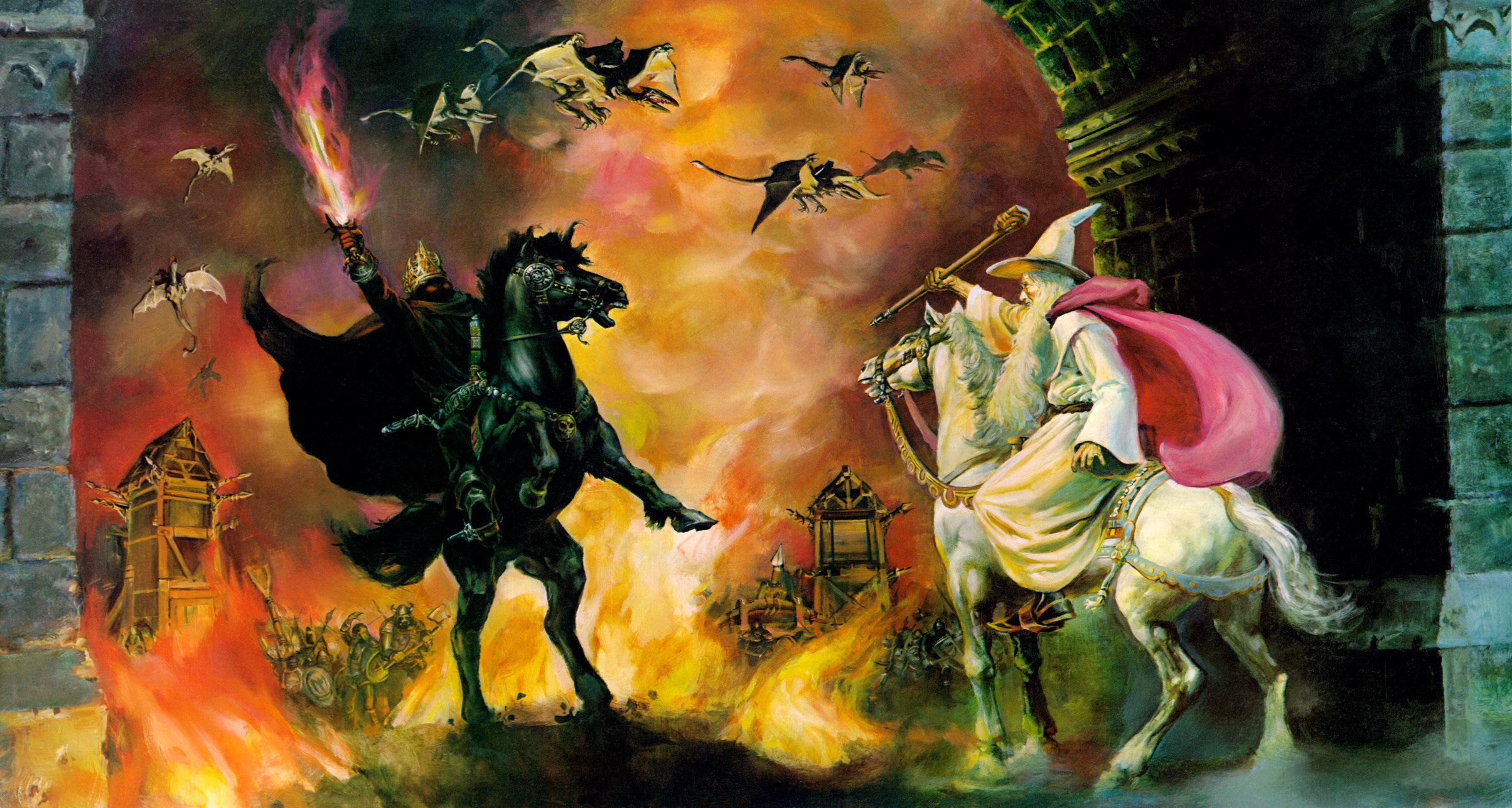
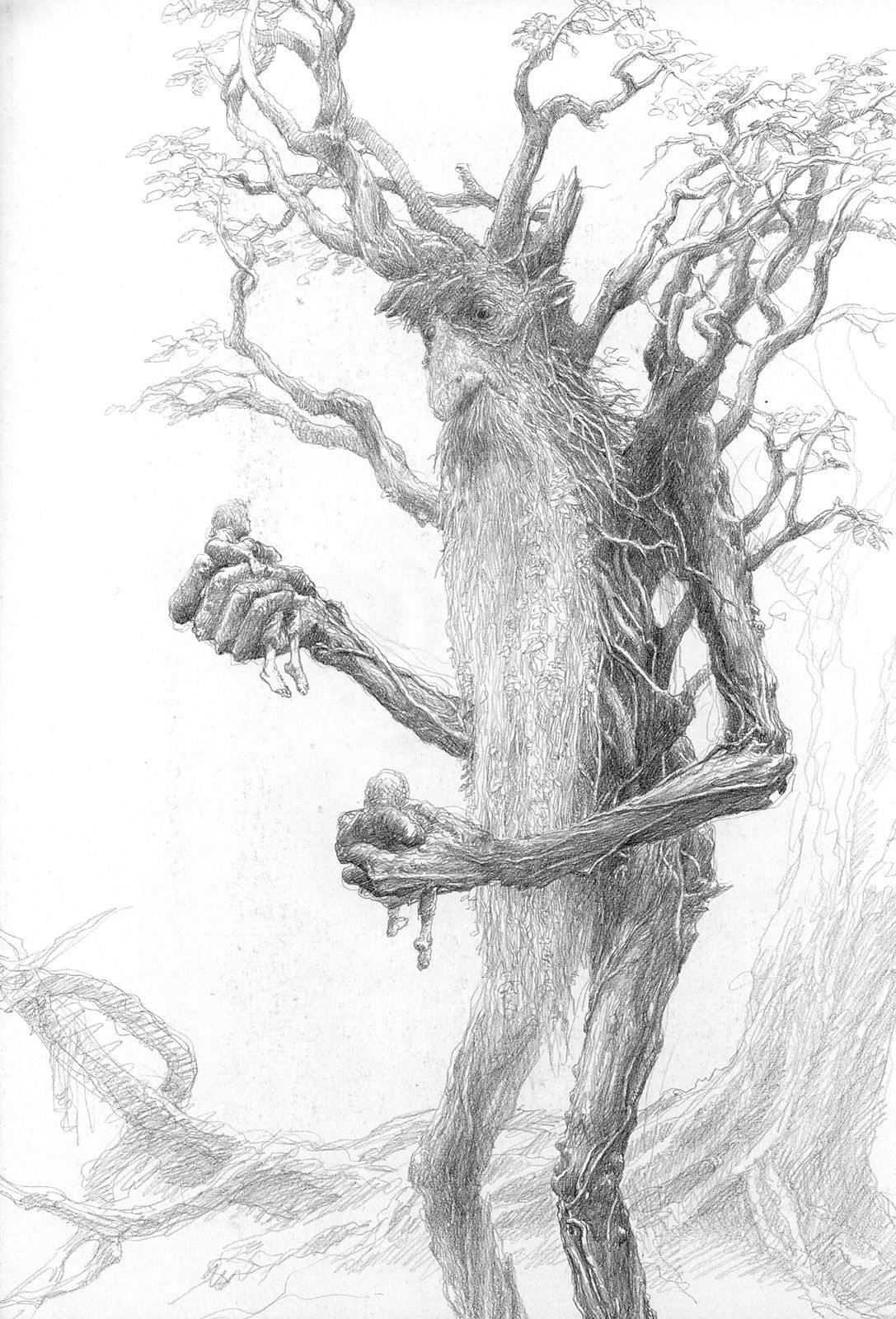
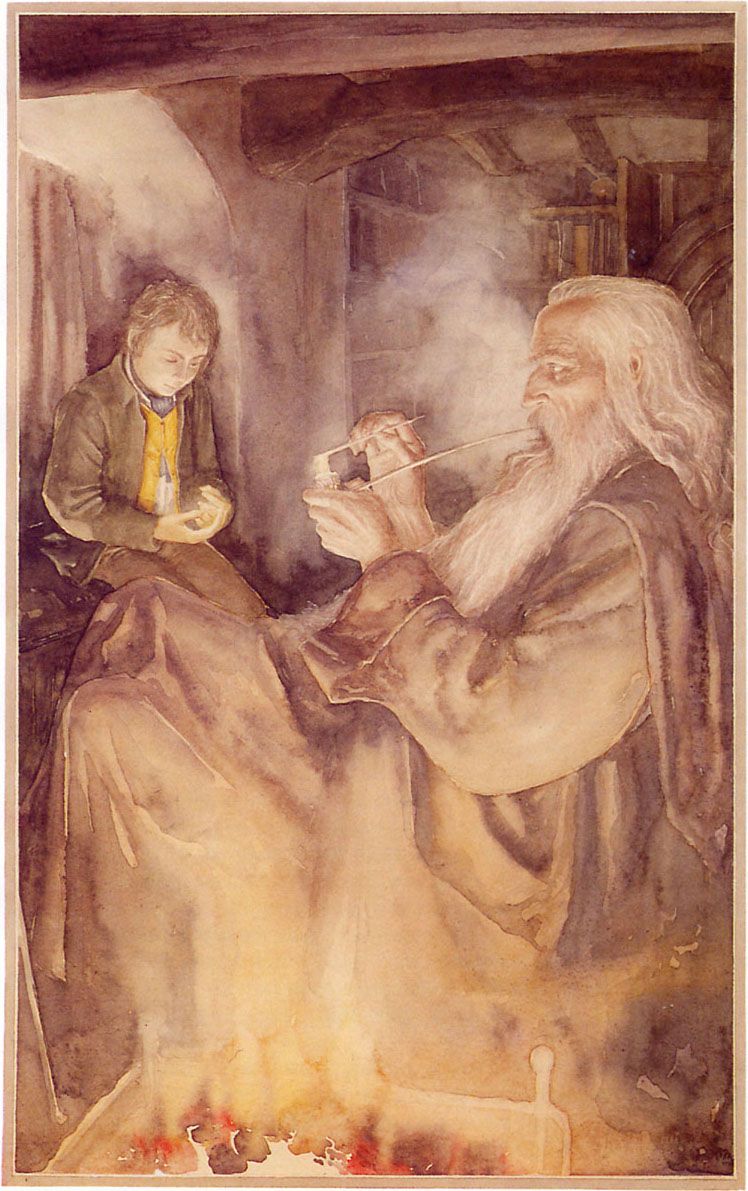
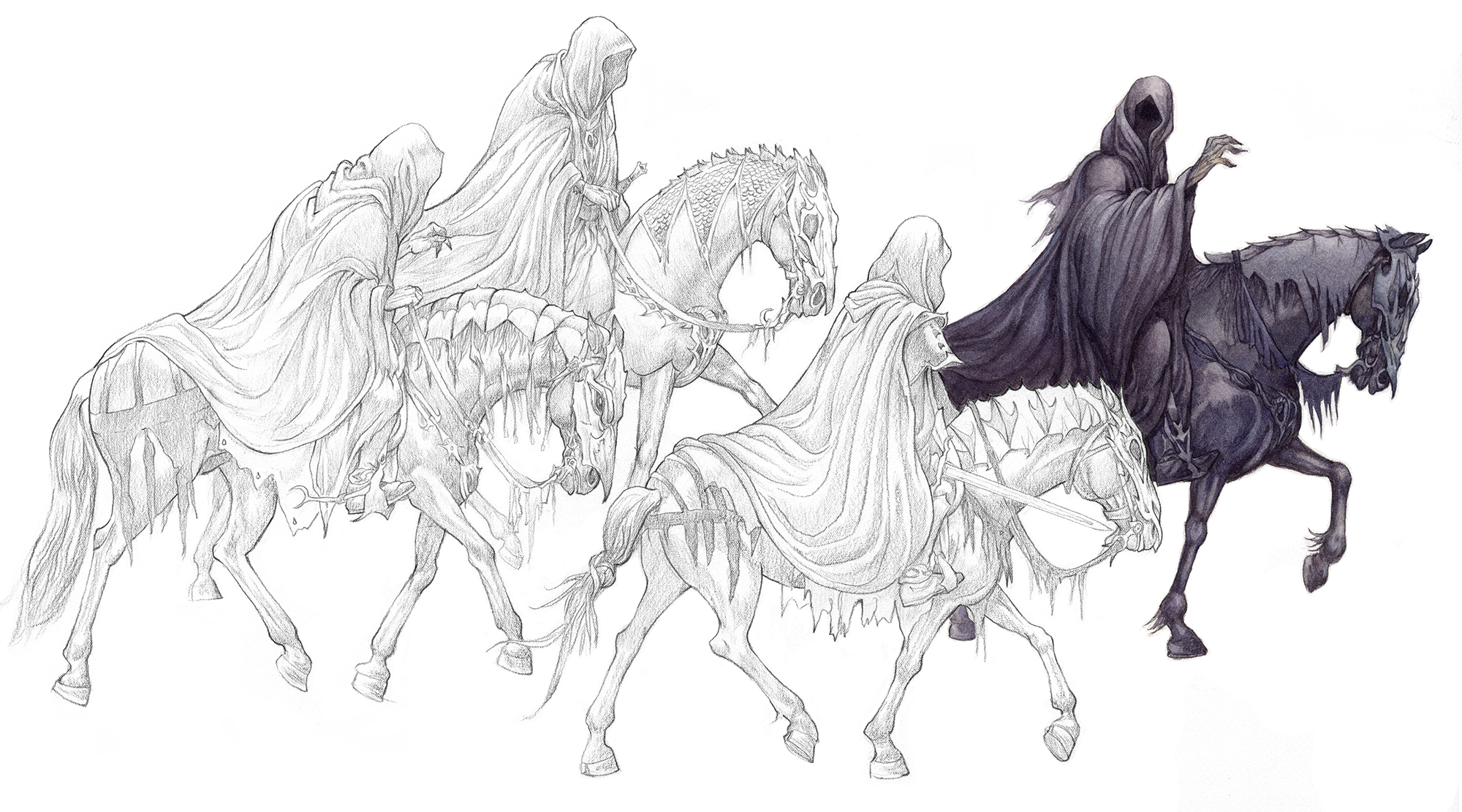
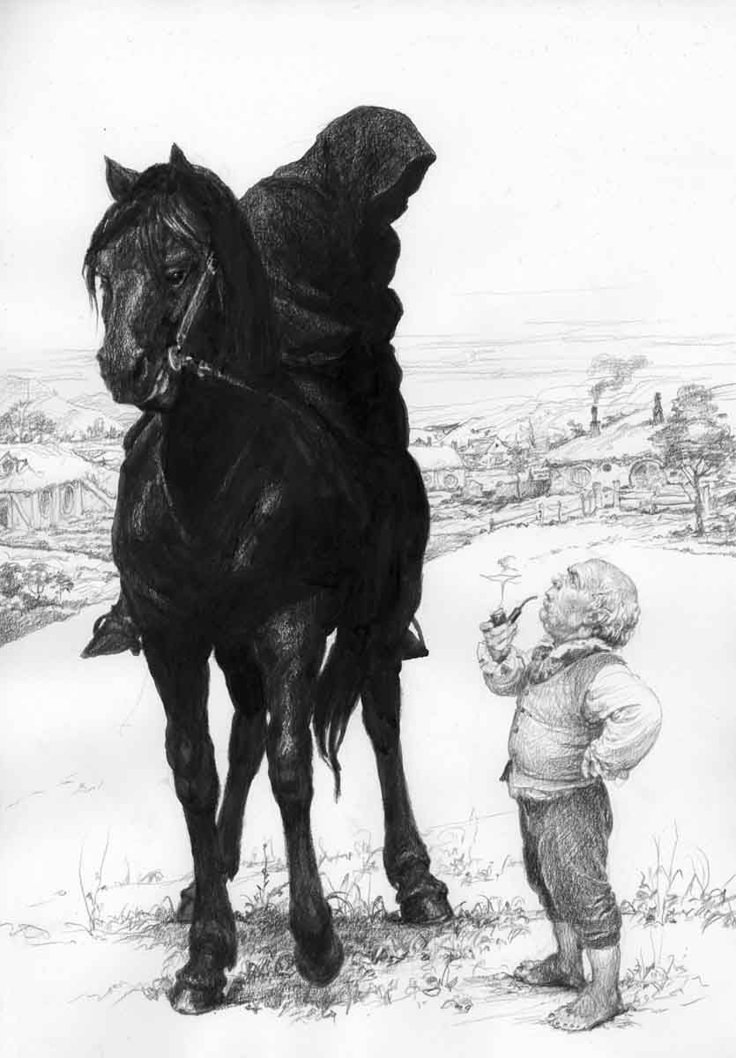
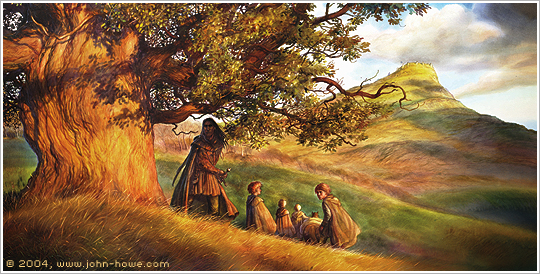
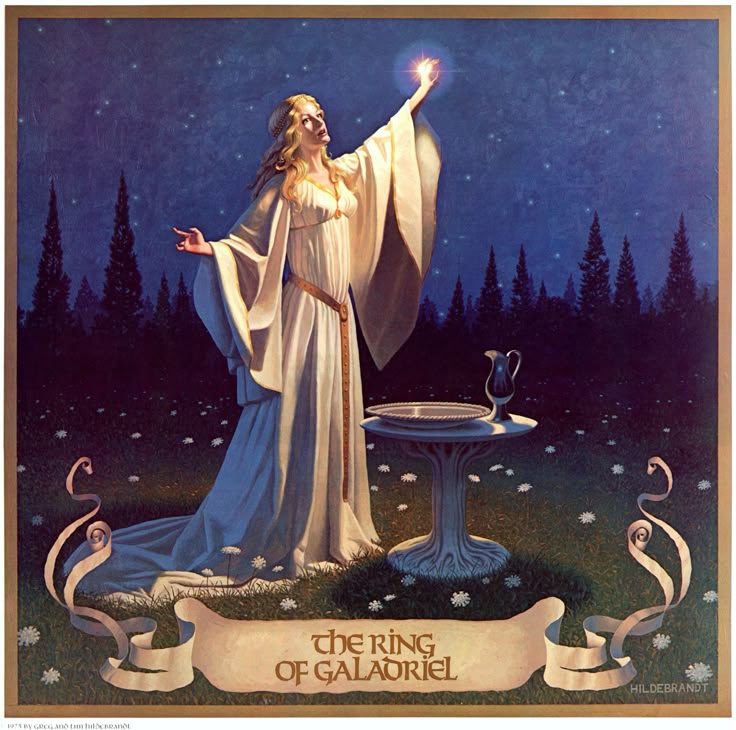
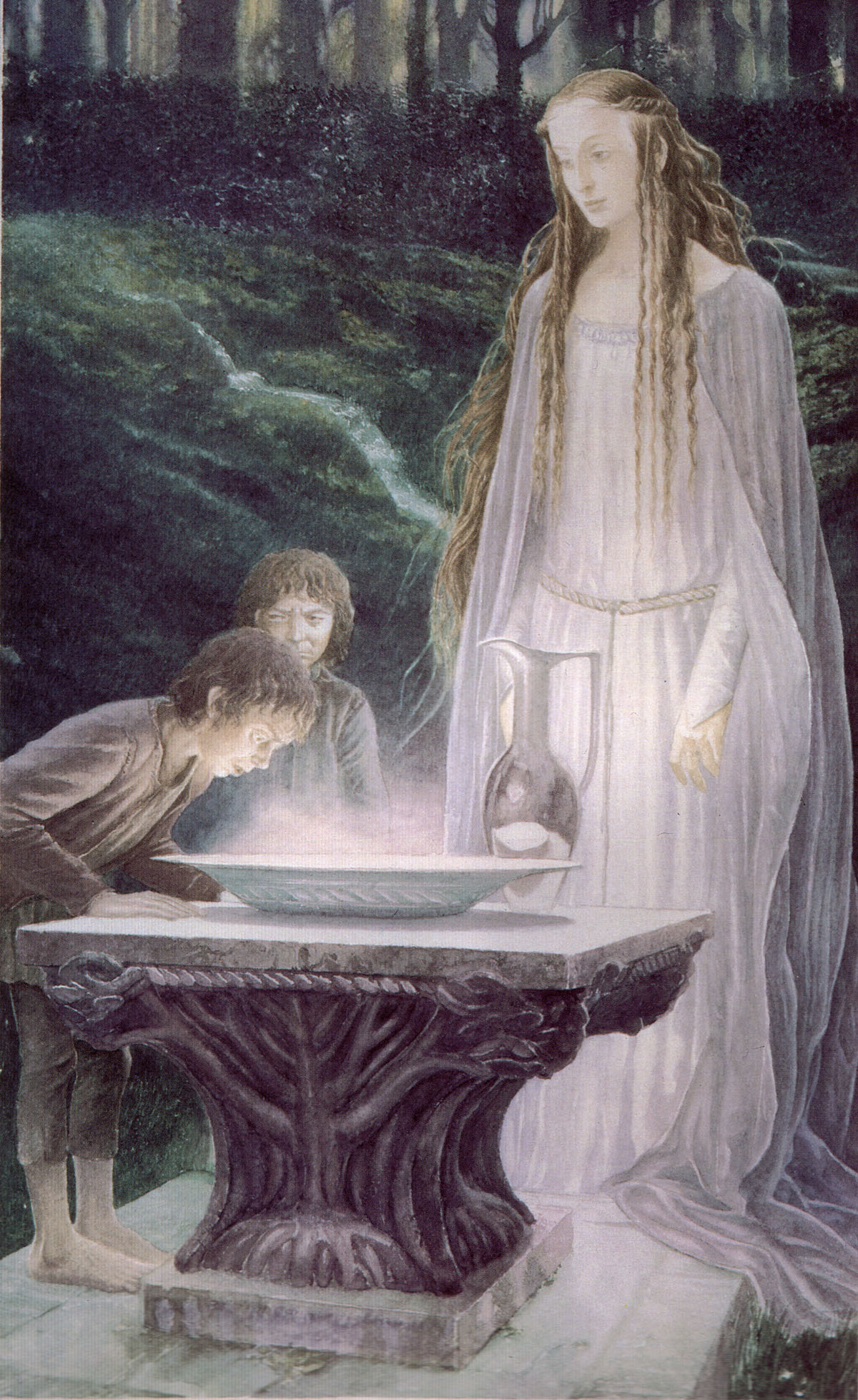
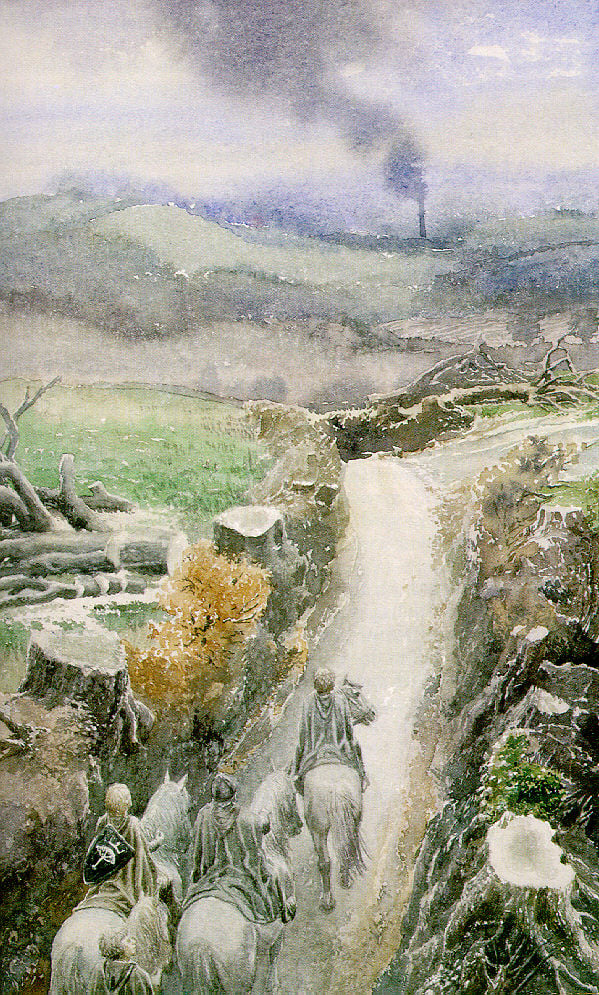
“The Road goes ever on and on Down from the door where it began. Now far ahead the Road has gone, And I must follow, if I can, Pursuing it with eager feet, Until it joins some larger way Where many paths and errands meet. And whither then? I cannot say.”
as Bilbo sings, on his way away from the Shire to Rivendell.
(JRRT)
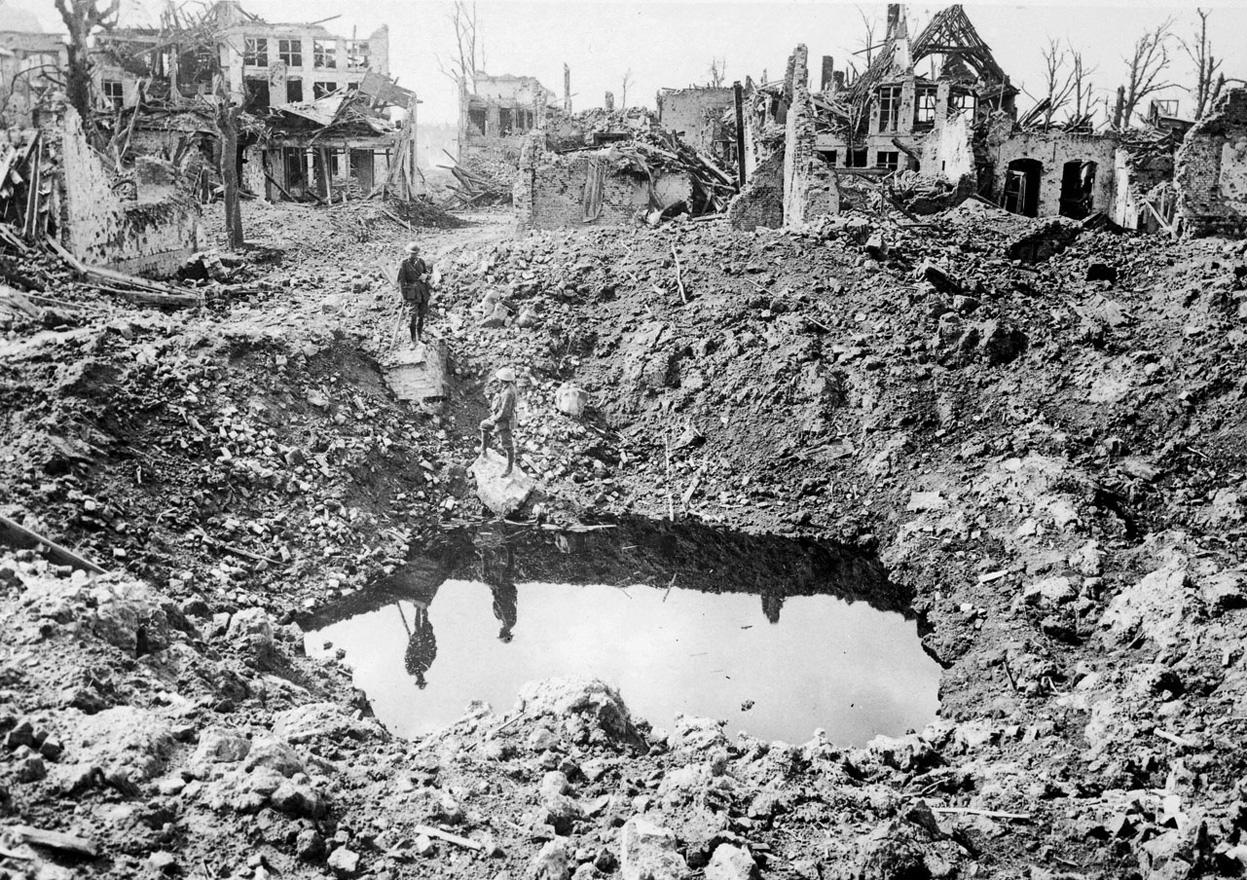
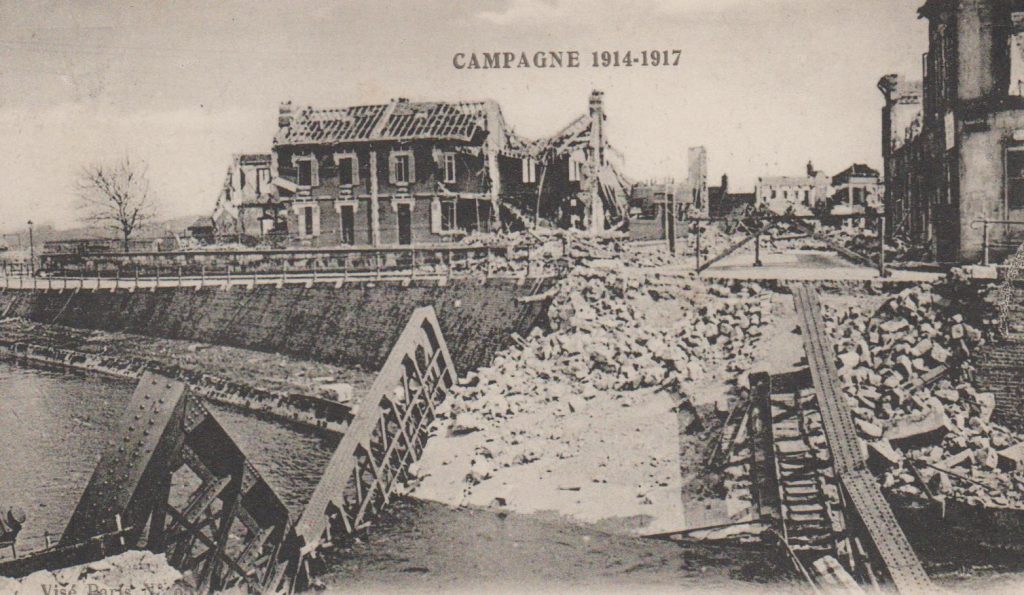
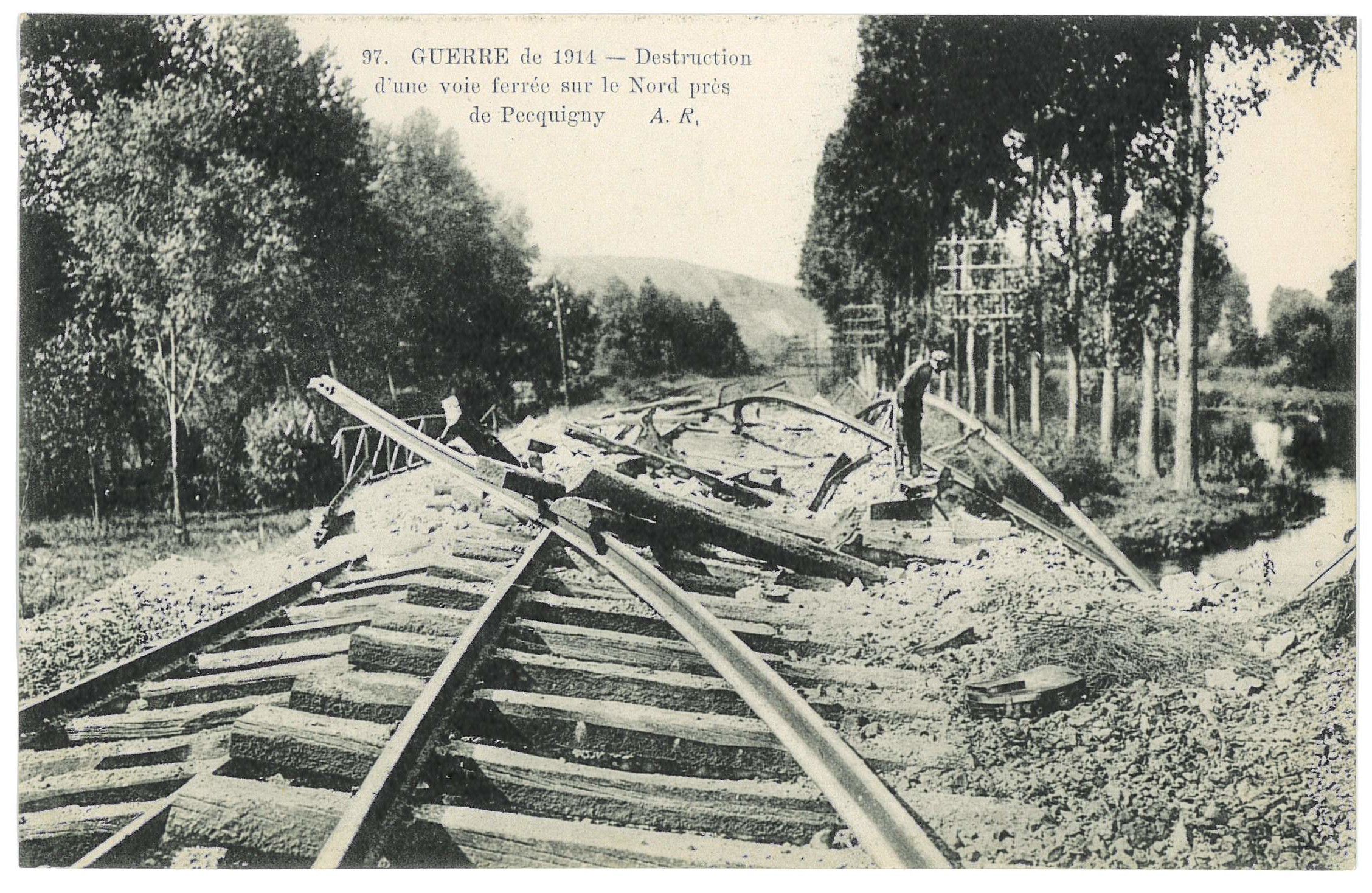
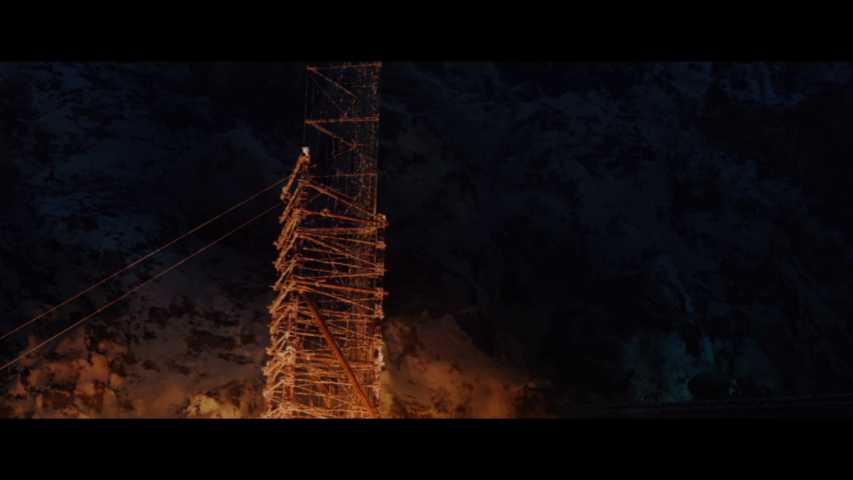
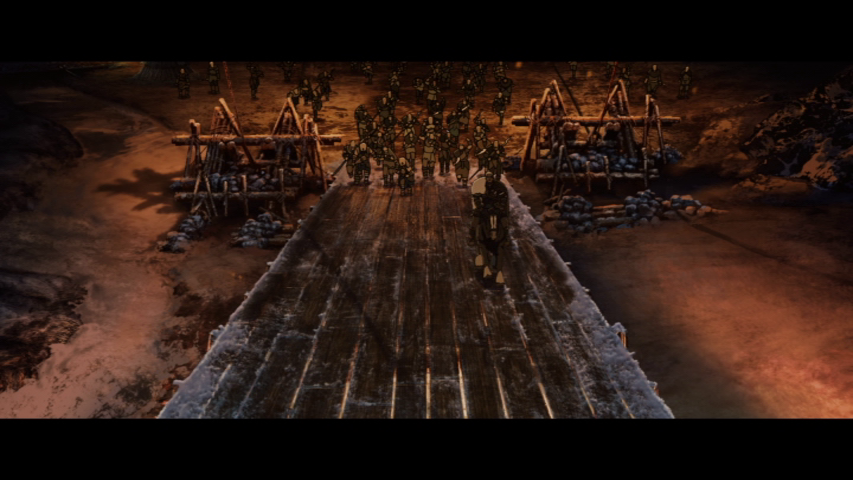
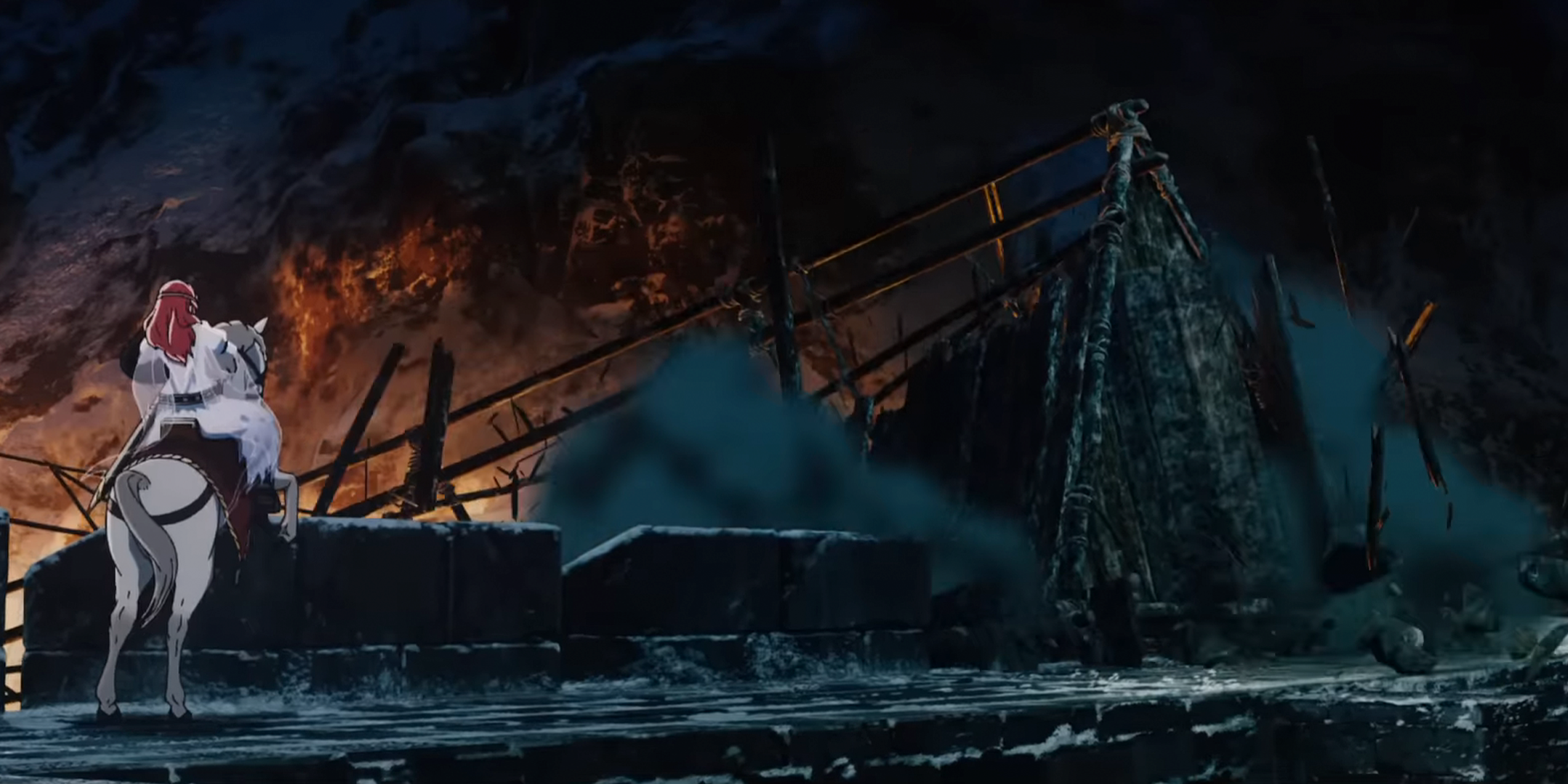
We, however, are currently standing at the broken bridge
at Osgiliath,
(from The Encyclopedia of Arda)
but, through the magic of the internet, we’ll hop over the Anduin and continue our journey along the roads of Middle-earth, this time to the worst possible place (unless you’re an orc)—
(Alan Lee)
Mordor.
To get there, we walk the old road which, in the days before Sauron’s previous invasion attempt, ran from Minas Anor (the “ Tower of the Sun”—now Minas Tirith, “Tower of Guard”),
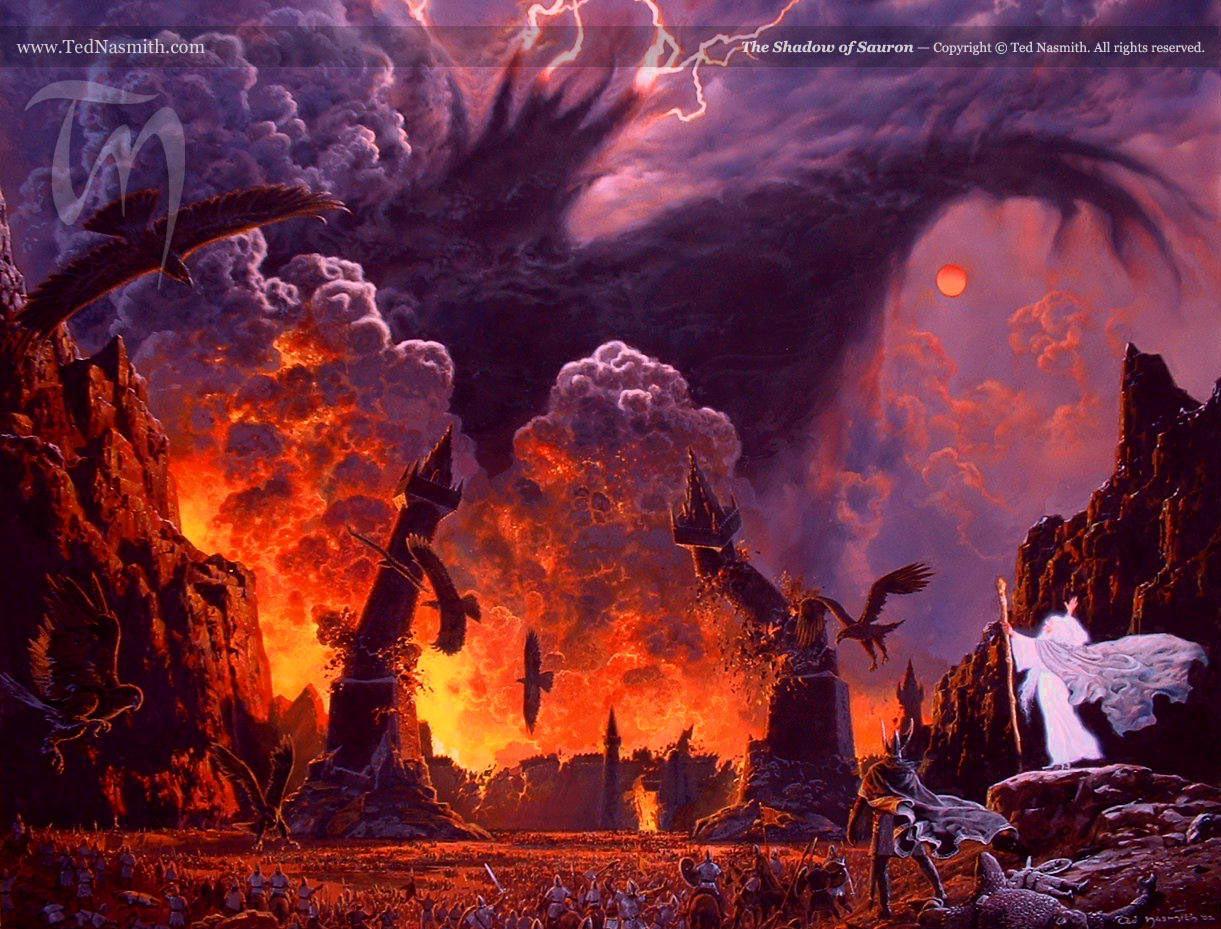
(Ted Nasmith)
to Minas Ithil (the “Tower of the Moon”)—now Minas Morgul (the “Tower of Black Sorcery”).
(another Ted Nasmith)
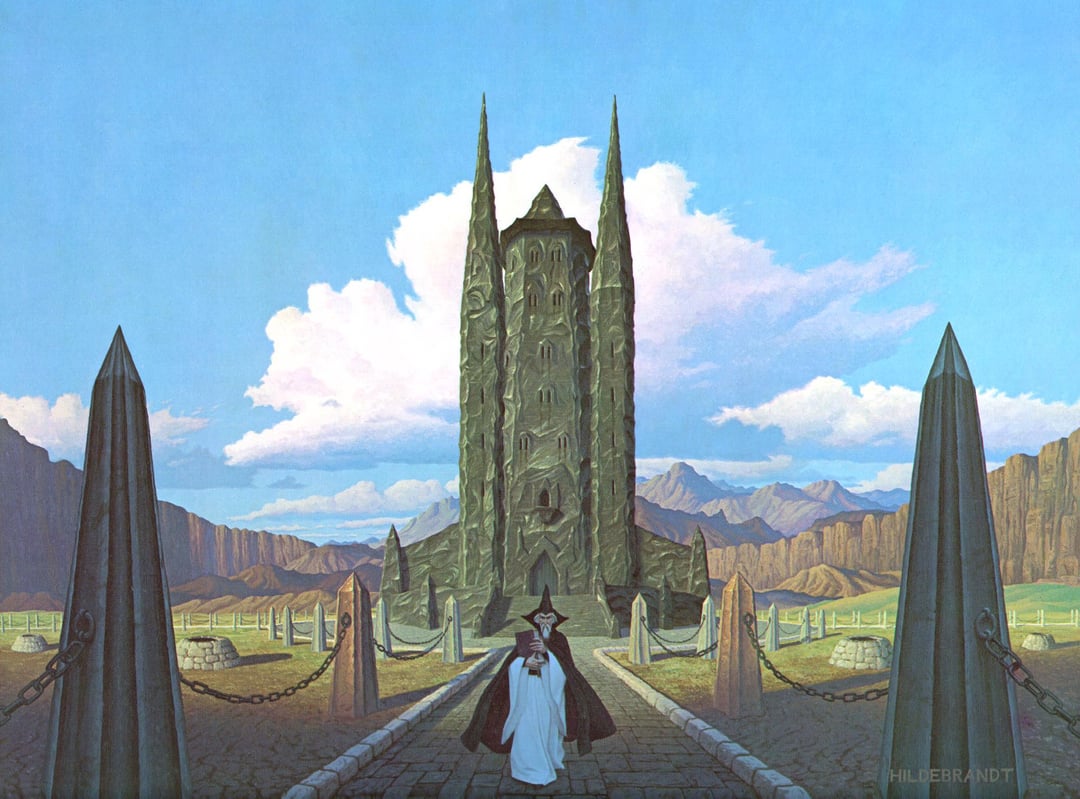
This will lead us eastwards to the crossing of the Ithilien north/south road, where there is a much- abused seated figure—
“The brief glow fell upon a huge sitting figure, still and solemn as the great stone kings of Argonath. The years had gnawed it, and violent hands had maimed it. Its head was gone, and in its place was set in mockery a round rough-hewn stone, rudely painted by savage hands in the likeness of a grinning face with one large red eye in the midst of its forehead. Upon its knees and mighty chair, and all about the pedestal, were idle scrawls mixed with the foul symbols that the maggot-folk of Mordor used.” (The Two Towers, Book Four, Chapter 7, “Journey to the Cross-roads”)
(and one more Ted Nasmith. Notice—except for the figure’s size, perhaps, which here wouldn’t be called “huge” nor its chair “mighty”—how carefully the artist has paid attention to the text—typical of Nasmith’s always fine work.)
Frodo and Sam pause here, but we’ll keep moving eastwards on the road towards Minas Morgul.
(the Hildebrandts, with a very different view of it and of Gollum)
We don’t appear to have a description of this road, but, if you’ve read the previous postings on roads, you’ll know that I would like to imagine that it’s not just a worn dirt track,
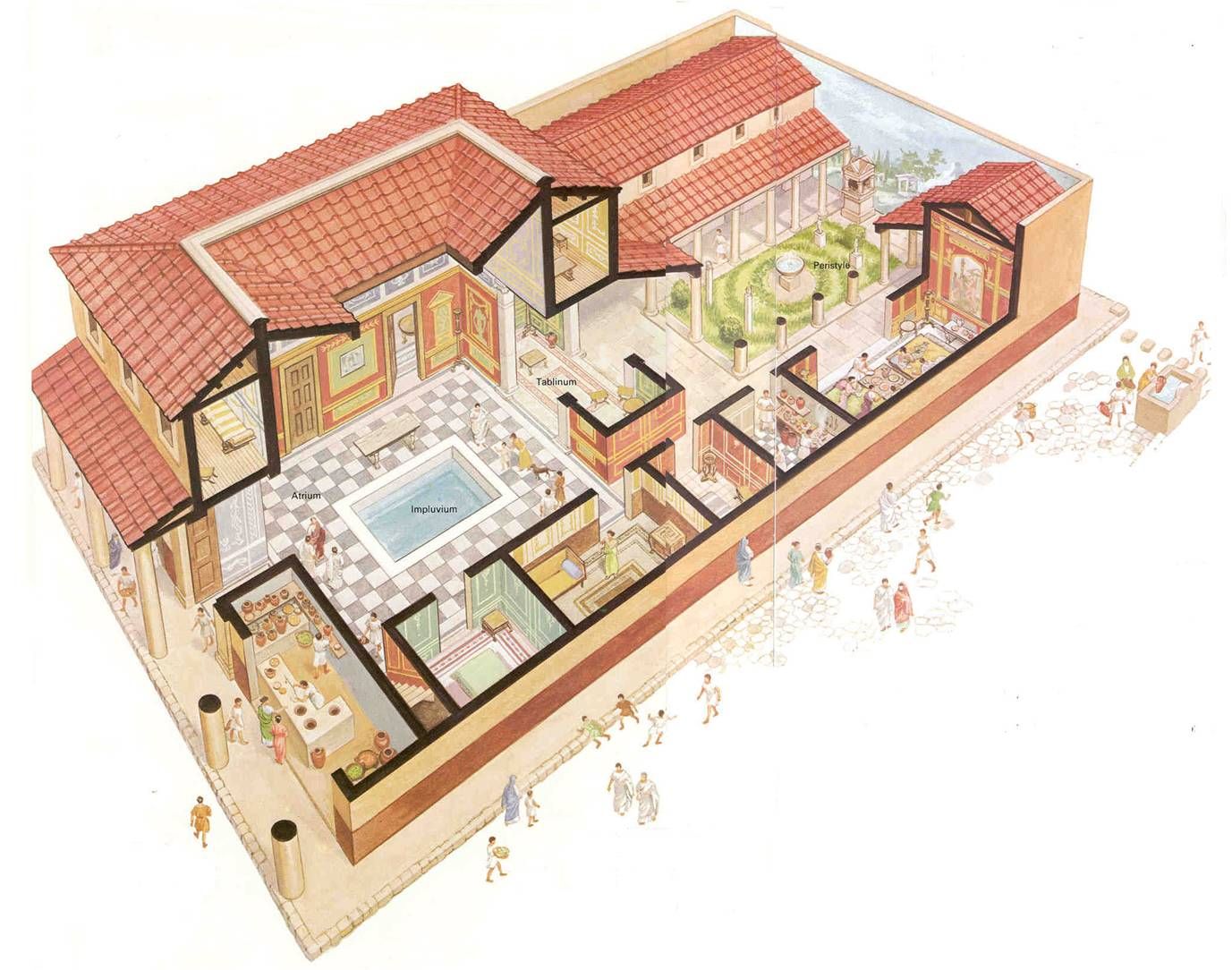
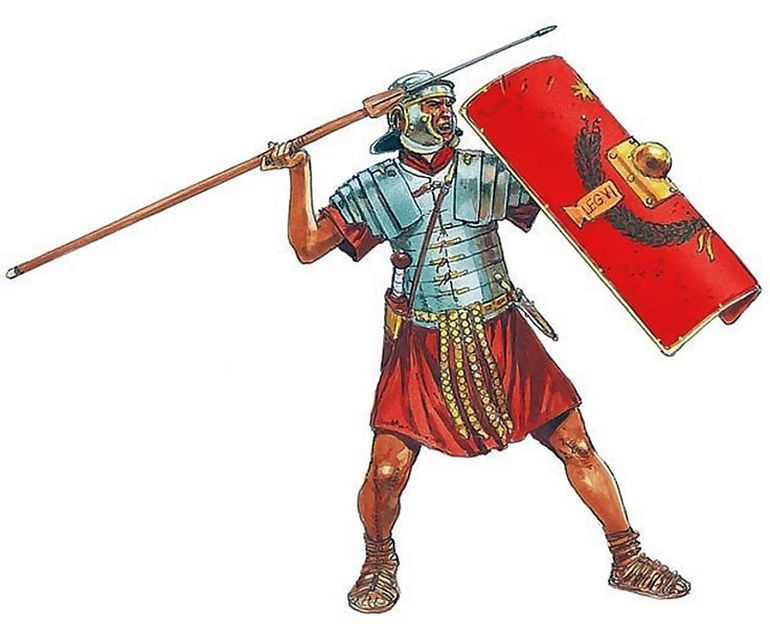
but the sort of thing which the Romans built all over their empire,
but now grassgrown and abandoned, like the figure at the crossroads.
Frodo, Sam, and Gollum skirt Minas Morgul, climbing around it, and we’ll join them, although we’ll avoid the tunnel in which Shelob lives,
(and one more Ted Nasmith)
to come down into Mordor itself.
(Christopher Tolkien)
This is, to say the least, a very bleak place,
(in reality, this is Mt Haleakala National Park, on the island of Maui)
but it seems heavily populated with camps of orcs and Sauron’s allies.
“As far as their eyes could reach, along the skirts of the Morgai and away southward, there were camps, some of tents, some ordered like small towns. One of the largest of these was right below them. Barely a mile out into the plain it clustered like some huge nest of insects, with straight dreary streets of huts and long low drab buildings.” (The Return of the King, Book Six, Chapter 2, “The Land of Shadow”)
(Alan Lee)
There are clearly roads, at least in the northern area—
(from the Encyclopedia of Arda)
and when Frodo and Sam disguise themselves as orcs,
(Denis Gordeev)
they make their way along a major one, only to be taken for potential deserters and driven into an orc marching column.
(Denis Gordeev)
Before they reach such a road, however,
“…they saw a beaten path that wound its way under the feet of the westward cliffs. Had they known, they could have reached it quicker, for it was a track that left the main Morgul-road at the western bridge-end and went down by a long stair cut in the rock to the valley’s bottom.” (The Return of the King, Book Six, Chapter 2, “The Land of Shadow”)
We’ll follow them down this path and eventually reach a road:
“…at the point where it swung east towards the Isenmouthe twenty miles away. It was not a broad road, and it had no wall or parapet along the edge, and as it ran on the sheer drop from its brink became deeper and deeper.” (The Return of the King, Book Six, Chapter 2, “The Land of Shadow”)
When Frodo and Sam are picked up and driven along in the column,
(John Howe)
we can now see that the column is headed for Isenmouthe and the entrance to the northernmost part of Mordor, Udun,
(from Karen Wynn Fonstad, The Atlas of Middle-Earth)
but the two manage to escape just before the entrance, dropping
“…over the further edge of the road. It had a high kerb by which troop-leaders could guide themselves in black night or fog, and it was banked up some feet above the level of the open land.” (The Return of the King, Book Six, Chapter 2, “The Land of Shadow”)
(perhaps something like this on the right?)
Frodo and Sam now try cutting across open country, which, although full of places to hide, is hard going—
“As the light grew a little [Sam] saw to his surprise that what from a distance had seemed wide and featureless flats were in fact all broken and tumbled. “ (The Return of the King, Book Six, Chapter 3, “Mount Doom”)
The going, however, is simply too rough for them in their current condition, and they return to the road, as will we, approaching Orodruin (Mt. Doom), where, for the first time since finding a spring on the eastern slope of the Mountains of Shadow, they find water—
“All long ago would have been spent, if they had not dared to follow the orc-road. For at long intervals on that highway cisterns had been built for the use of troops sent in haste through the waterless regions.
In one Sam found some water left, stale, muddied by the orcs, but still sufficient for their desperate case.” (The Return of King, Book Six, Chapter 3, “Mount Doom”)
Struggling to the foot of Mt. Doom (Orodruin), Sam discovers a path—our last road in this series of postings—which is actually part of Sauron’s road from the Barad-dur to the volcano.
(from the Encyclopedia of Arda)
“…for amid the rugged humps and shoulders above him he saw plainly a path or road. It climbed like a rising girdle from the west and wound snakelike about the Mountain, until before it went round out of view it reached the foot of the cone on the eastern side.” (The Return of King, Book Six, Chapter 3, “Mount Doom”)
Finally coming to the path, they find
“…that it was broad, paved with broken rubble and beaten ash” The Return of King, Book Six, Chapter 3, “Mount Doom”)
But, before the eagles come to rescue Frodo and Sam, we’ll take our own eagle back to the door where our roads began.
(the Hildebrandts)
As always, thanks for reading.
Stay well,
Remember how perilous it may be to step out your front door,
“Just can’t wait to get on the road again The life I love is makin’ music with my friends And I can’t wait to get on the road again And I can’t wait to get on the road again”
As always, welcome, dear readers. This is from a Willie Nelson, a US country and western singer’s,
virtual theme song, and it seemed to fit where this posting wanted to go.
Having just written two postings about traveling to Bree, it struck me just how many Western adventure stories, as a main element of the plot, require the characters to travel, often long distances. (I’m sure that there are lots of Eastern stories which do this, too—see, for example, Wu Cheng’en’s (attributed) Journey to the West, which appeared in the 16th century—see, for more: https://en.wikipedia.org/wiki/Journey_to_the_West You can read an abridged translation of this at: https://www.fadedpage.com/books/20230303/html.php )
Such adventures are commonly quests—that is, journeys with a particular goal and are commonly round- trip adventures. (For more on quests, see: https://en.wikipedia.org/wiki/Quest )
There are lots of folktales with this pattern, but the literary begins for us with the story of Jason, and his task of finding the Golden Fleece and bringing it back to Greece. (You can read a summary of the story here: https://en.wikipedia.org/wiki/Golden_Fleece The full Greek version we have of the story is from a 3rd century BC poem, the Argonautica of Apollonius of Rhodes, which you can read in a translation here: https://archive.org/details/apolloniusrhodiu00apol And you can read about the poem itself here: https://en.wikipedia.org/wiki/Argonautica )
Then there’s the Odyssey, a later story, in mythological time, in which the main plot is that of Odysseus, a Greek and ruler of the island of Ithaka, who, having participated in the war against Troy, spends 9+ years of many adventures getting home to his island once more.
It’s no wonder, then, that Tolkien, originally destined to be a classicist, in telling a long story to his children, would make it a quest.
This quest would take the protagonist, Bilbo Baggins, from his home in the Shire hundreds of miles east, to the Lonely Mountain (Erebor) and back.
(Pauline Baynes—probably JRRT’s favorite illustrator—and whom he recommended to CS Lewis, for whom she illustrated all the Narnia books. You can read about her here: https://en.wikipedia.org/wiki/Pauline_Baynes )
In the last two postings, we first followed Bilbo eastwards to Bree—only to find that, in The Hobbit, there is no Bree. We then retraced our steps and followed Frodo and his friends as they journeyed in the same direction, although this time with more success.
(Ted Nasmith)
Part of Frodo’s trip (with some detours), took him along the Great East Road, which ran through the Shire,
(Christopher Tolkien)
crossing the Greenway ( the old north/south road—more about this in a moment) at Bree and proceeding eastwards from there–
(Barbara Strachey, The Journeys of Frodo, 1981)
although Frodo and his friends, led by Strider,
(the Hildebrandts)
took an alternate route from there to Weathertop.
Because I’m always interested in the physical world of Middle-earth, I try to imagine what, in our Middle-earth, either suggested things to JRRT, or at least what we can use to try to reconstruct something comparable.
For the Great East Road, because it was constructed by the kings of Arnor, and had a major bridge (the Bridge of Strongbows—that is, strong arches), across the Brandywine,
(actually a 16thcentury Ottoman bridge near the village of Balgarene in Bulgaria. For more on Bulgarian bridges, some of which are quite spectacular, see: https://vagabond.bg/bulgarias-wondrous-bridges-3120 )
I had imagined something like a Roman road, wide, paved, with perhaps drainage on both sides.
The Romans were serious engineers and roads could be very methodically laid out and built.
This may have been true once, but the road Frodo and his friends eventually reach doesn’t sound much like surviving Roman work—
“…the Road, now dim as evening drew on, wound away below them. At this point it ran nearly from South-west to North-east, and on their right it fell quickly down into a wide hollow. It was rutted and bore many signs of the recent heavy rain; there were pools and pot-holes full of water.” (The Fellowship of the Ring, Book One, Chapter 8, “Fog on the Barrow-downs”)
Following the road, however, has made me consider just how many miles of roads we actually see in Middle-earth and over which various characters travel and how they might appear. Just look at a map—
(cartographer? clearly based on JRRT and Christopher Tolkien’s map)
The Great East Road (named “East-West Road” there) is drawn and identified, and we can see the North Road (as “North-South Road”), but these are hardly the only roads in Middle-earth and certainly not in the story, and, as we’re following Frodo & Co. on their journeys, I thought that it would be interesting to examine some of the others—the main ones, and one nearly-lost one.
So, when Frodo and his friends eventually reach the edge of Bree, they’re actually at a crossroads—
“For Bree stood at the old meeting of ways: another ancient road crossed the East Road just outside the dike at the western end of the village, and in former days Men and other folk of various sorts had traveled much on it. ‘Strange as News from Bree’ was still a saying in the Eastfarthing, descending from those days, when news from North, South, and East could be heard in the inn, and when the Shire-hobbits used to go more to hear it.”
With the fall of the northern realm of Arnor about TA1974, however, things had changed:
“But the Northern Lands had long been desolate, and the North Road was now seldom used: it was grass-grown, and the Bree-folk called it the Greenway.” (The Fellowship of the Ring, Book One, Chapter 9, “At the Sign of the Prancing Pony”)
We’re not given a detailed description of this road—was it like what I had imagined the Great East Road might have looked like, Roman and paved, but overgown?
If so, it led back to the city of Tharbad to the south, which had had its own elaborate bridge at the River Greyflood—
“…where the old North Road crossed the river by a ruined town.”
Of this bridge we know:
“…both kingdoms [Arnor and Gondor] together built and maintained the Bridge of Tharbad and the long causeways that carried the road to it on either of the Gwathlo [Greyflood]…” (JRRT Unfinished Tales, 277)
It must have been massive—could it have looked something like this?
As we also know, it had fallen into ruin, becoming only a dangerous ford, as Boromir found out, losing his horse there on the way north (The Fellowship of the Ring, Book Two, Chapter 8, “Farewell to Lorien”)
In “To Bree (Part 1)”, we had followed Bilbo & Co.
(Hildebrandts)
(Hildebrandts)
eastwards,
but only as far as Bree, echoing the remark in The Lord of the Rings:
“It was not yet forgotten that there had been a time when there was much coming and going between the Shire and Bree.” (The Fellowship of the Ring, Book One, Chapter 9, “At the Sign of the Prancing Pony”)
Oddly, however, although I supposed that we were traveling through the East Farthing
the description in The Hobbit was wildly different:
“Then they came to lands where people spoke strangely, and sang songs Bilbo had never heard before. Now they had gone on far into the Lone-lands, where there were no people left, no inns, and the roads grew steadily worse. Not far ahead were dreary hills, rising higher and higher, dark with trees. On some of them were old castles with an evil look, as if they had been built by wicked people.” (The Hobbit, Chapter 2, “Roast Mutton”)
with, eventually, a surprise for us Bree-bound folk: no Bree.
So, back we went to the Green Dragon, in Bywater, where Bilbo started and now we begin again, with Frodo. Times have changed, however, and unlike the innocent Bilbo, we are in a different world, where Mordor isn’t just a distant place name and its servants are looking for Baggins.
(Denis Gordeev)
Frodo doesn’t take the Great East Road,
(Christopher Tolkien)
but cuts across country, narrowly avoiding one of the searchers,
(Angus McBride)
taking shelter with a local farmer, and finally reaching the ferry across the Brandywine just ahead of his pursuers.
Although this is a very indirect route, Frodo and his companions eventually reach Bree, but even though I would love to meet Tom Bombadil,
(the Hildebrandts)
I prefer a direct route, so we’ll continue on the Great East Road, cross the Bridge of Strongbows, and head eastwards.
(from Barbara Strachey, The Journeys of Frodo, a much-recommended book, if you don’t have a copy)
So what do we see?
Over the bridge—and here’s another possibility for it, the Clopton Bridge at Stratford-upon-Avon—
the road runs, not surprisingly, due eastwards and here, consulting our map,
is the Old Forest to our right,
described, by our narrator, as Frodo and his friends see it on their detour away from the Great East Road:
“Looking ahead they could see only tree-trunks of innumerable sizes and shapes: straight or bent, twisted, leaning, squat or slender, smooth or gnarled and branched; and all the stems were green or grey with moss and slimy, shaggy growths.” (The Fellowship of the Ring, Book One, Chapter 6, “The Old Forest”)
Keep in mind, however, that we’re seeing it through a long line of trees planted alongside the road, probably as a windbreak.
We know that they’re there because Merry says:
“ ‘That is a line of trees,’ said Merry, ‘and that must mark the Road. All along it for many leagues east of the Bridge there are trees growing. Some say they were planted in the old days.’ “ (The Fellowship of the Ring, Book One, Chapter 8, “Fog on the Barrow-downs”)
As we travel farther along the road, if we look to our right, through the trees, we then come to the edge of the Barrow-downs,
with their ancient standing stones
and tumuli—
where Frodo and his friends almost end their trip.
(Matthew Stewart)
But we haven’t strayed, as they did, and, passing the Downs, we see, again on our right:
“The dark line they had seen was not a line of trees but a line of bushes growing on the edge of a deep dike, with a steep wall on the further side.”
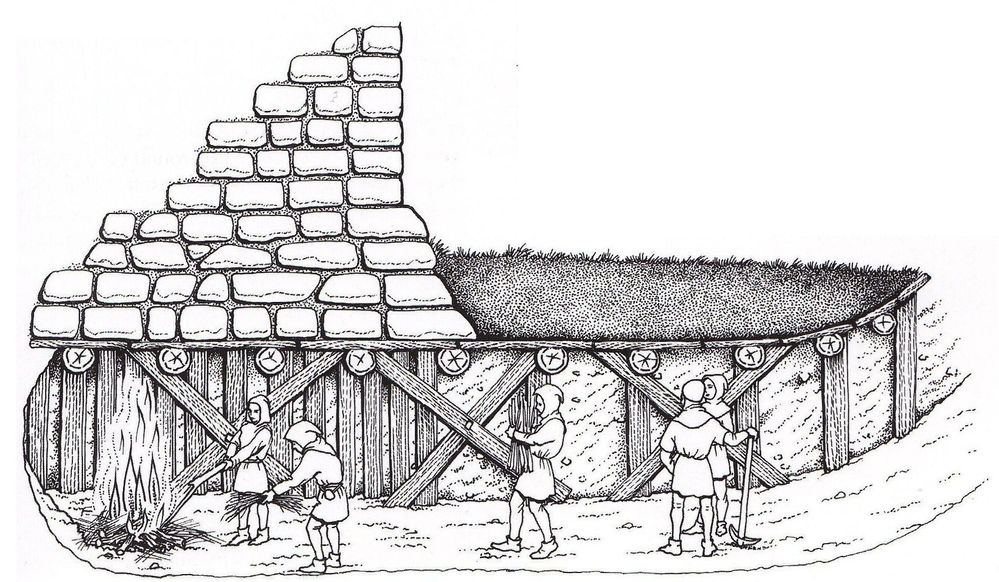
A dike is a ditch, usually with an earthen embankment made from the spoil of the ditch. There are several of these in England, like Offa’s Dyke—
The narrator adds:
“…with a steep wall on the further side”
and I’m presuming that that is the earthen embankment, with:
“…a gap in the wall” through which Frodo and friends rode and
…when at last they saw a line of tall trees ahead…they knew that they had come back to the Road.”
If you’re read the first part of this posting, you will know that I’ve been assuming that that Road, laid in ancient times to a stone bridge and beyond, would be like a Roman road, and be paved,
if a bit weedy, but now we find:
“…the Road, now dim as evening drew on, wound away below them. At this point it ran nearly from South-west to North-east, and on their right it fell quickly down into a wide hollow. It was rutted and bore many signs of the recent heavy rain; there were pools and pot-holes full of water.”
Does this suggest that it was, at best and in the past, simply a dirt road, through well-kept? Or is it a very run-down road, worn and covered over with leaves and dirt, the ancient blocks gradually becoming separated under the weight of centuries, allowing for pot-holes?
In any event, we now continue our journey with Frodo and his compantions until–
“…they saw lights twinkling some distance ahead.
Before them rose Bree-hill barring the way, a dark mass against misty stars; and under its western flank nestled a large village. Towards it they [and we] now hurried desiring only to find a fire, and a door between them and the night.”
We’re not in Bree yet, however, as:
“The village of Bree had some hundred stone houses of the Big Folk, mostly above the Road, nestling on the hillside with windows looking west. On that side, running in more than half a circle from the hill and back to it, there was a deep dike with a thick hedge on the inner side. Over this the Road crossed by a causeway; but where it pierced the hedge it was barred by a great gate. There was another gate in the southern corner where the Road ran out of the village. The gates were closed at nightfall; but just inside them were small lodges for the gatekeepers.” (The Fellowship of the Ring, Book One, Chapter 9, “At the Sign of the Prancing Pony”)
We’ve seen a dike just now, at the Great East Road, but now we have to add a hedge
For me, one of the great pleasures of The Hobbit and The Lord of the Rings is that they are both so wonderfully imagined. Consider the beginning of The Hobbit, for example, where the opening could just have been the bare line “In a hole in the ground there lived a hobbit.” Instead, it continues:
“Not a nasty, dirty, wet hole, filled with the ends of worms and an oozy smell, nor yet a dry, bare, sandy hole with nothing in it to sit down on or to eat: it was a hobbit-hole, and that means comfort.”
(JRRT)
And even this is not enough, as it continues:
“It had a perfectly round door like a porthole, painted green, with a shiny yellow brass knob in the exact middle.”
And it will go on for an entire paragraph beyond that sentence, listing rooms and even explaining why some are preferred.
Even with so much detail, I sometimes find myself wanting more—often more of the outside world. In this posting, then, I thought that we might take a trip to Bree and spend some time sightseeing as we go. Via the Great East Road, this is about 100 of our miles (160 km), according to the very useful website of Becky Burkheart (which you can visit here: https://www.beckyburkheart.com/traveltimesinmiddleearth ).
Why Bree? To quote The Lord of the Rings:
“It was not yet forgotten that there had been a time when there was much coming and going between the Shire and Bree.” (The Fellowship of the Ring, Book One, Chapter 9, “At the Sign of the Prancing Pony”)
If we use both The Hobbit and The Lord of the Rings together, however, we’ll soon encounter some difficulties, as we shall see.
Our starting point for Bilbo is the Green Dragon Inn, in Bywater.
(Christopher Tolkien)
Tolkien doesn’t describe the inn, but, using a real inn, we might imagine the Green Dragon as looking something like this–
Just to the south of Bywater is the spot where the Hobbiton road meets the Great East Road. Again, Tolkien gives us no description, but there may be a hint as to this road in the original grant of the Shire by Argeleb II in TA1601:
“For it was in the one thousand six hundred and first year of the Third Age that the Fallohide brothers, Marcho and Blanco, set out from Bree; and having obtained permission from the high king at Fornost, they crossed the brown river Baranduin with a great following of Hobbits. They passed over the Bridge of Strongbows, that had been built in the days of the power of the North Kingdom, and they took all the land beyond to dwell in, between the river and the Far Downs. All that was demanded of them was that they should keep the Great Bridge in repair, and all other bridges and roads, speed the king’s messengers, and acknowledge his lordship.” (The Lord of the Rings, Prologue I, “Concerning Hobbits”)
We’ll cross the bridge a little later in our journey, but we might start with the road. That it’s sometimes called “the Great East Road” suggests that it’s more than a dirt path.
Could Tolkien have been thinking of the bits of surviving Roman road which crisscross England? Most are now buried under modern roads, but, here and there some are still available on the surface, as here—
and perhaps we can use this as a model. As an ancient stone road, it would certainly fit in with the ancient stone Bridge, as we’ll see.
Just beyond the spot where the lesser road meets the greater, we see marked on our map, the “Three Farthing Stone”. A “farthing” is a “four-thing”—that is, a quarter, and it marks the spot where three of the quarters, the four farthings, of the Shire meet. This appears to be modeled on the “Four Shire Stone” in our Middle-earth
And, from here, we head eastwards—and meet our first difficulty. Here’s the description in The Hobbit—
“At first they had passed through hobbit-lands, a wide respectable country inhabited by decent folk, with good roads, an inn or two, and now and then a dwarf or a farmer ambling by on business.”
That fits our Shire map: we might be traveling through Frogmorton and Whitfurrows, villages which might look like this—
but then there’s—
“Then they came to lands where people spoke strangely, and sang songs Bilbo had never heard before. Now they had gone on far into the Lone-lands, where there were no people left, no inns, and the roads grew steadily worse. Not far ahead were dreary hills, rising higher and higher, dark with trees. On some of them were old castles with an evil look, as if they had been built by wicked people.” (The Hobbit, Chapter 2, “Roast Mutton”)
The bridge is just ahead, but “dreary hills”? “old castles”?
And you can really see the difference here between the two books. Tolkien had yet to discover much of the East Farthing and was simply penciling in something which we might think of as “travel filler”, to indicate that the expedition was riding eastwards, but the trip was already becoming more difficult.
And then we come to the (here unnamed) bridge:
“Fortunately the road went over an ancient stone bridge, for the river, swollen with the rains, came rushing down from the hills and mountains in the north.”
As this is the first bridge mentioned, I’m going to assume that this is the “Bridge of Strongbows/Great Bridge” mentioned in Argeleb II’s grant to the original hobbit settlers.
(This is the Roman Pont Julien in southeastern France—over a bit drier patch than described in the book. For more on this ancient bridge, see: https://en.wikipedia.org/wiki/Pont_Julien )
Once over this bridge, we’re in a different world. We reach another river:
“Then one of the ponies took fright at nothing and bolted. He got into the river before they could catch him…”
Then, attempting to camp in the rain, Bilbo and the dwarves spot a fire, go to it, and find trolls.
(JRRT)
With the trolls dealt with by Gandalf, we move on to Rivendell–
(JRRT)
and suddenly we realize that: there’s no Bree!
It’s at the crossroads of the Great East Road and what the locals call “the Greenway”, the old north/south road, now long overgrown,
but, somehow, Bilbo and the dwarves have not encountered it. The reason is clear, of course: just as the Tolkien of The Hobbit had yet to discover the East Farthing, so, too, he had yet to discover Breeland.
So, it looks like we have to turn around, back to the Green Dragon, stop for a pint, as any hobbit would,
and try again—in “To Bree (Part 2”).
As always, thanks for reading.
Stay well,
When approaching a crossroads, be prepared for anything—especially monsters with questions–
Belshazzar, the king of the Babylonians, was having a lovely party—
“Baltassar rex fecit grande convivium optimatibus suis mille: et unusquisque secundum suam bibebat aetatem.”
“Belshazzar held a great banquet for a thousand of his elite and each one was drinking according to his time of life.” But, wishing to up the fun, he decided to make the party a bit more lavish—
Praecepit ergo jam temulentus ut afferrentur vasa aurea et argentea, quae asportaverat Nabuchodonosor pater ejus de templo, quod fuit in Ierusalem, ut biberent in eis rex, et optimates ejus, uxoresque ejus, et concubinae.
“And so now, being drunk, he ordered that the golden and silver vessels which Nebuchadnezzar, his father, had carried away from the temple which had been in Jerusalem be brought in so that the king and his nobles and his wives and concubines might drink in them.”
[“fuit” here is the perfect form and might be translated “has been”, but that form can suggest a permanent state, the pluperfect, suggesting that there would be no more Jerusalem.]
and then things go very wrong–
“In eadem hora apparuerunt digiti, quasi manus hominis scribentis contra candelabrum in superficie parietis aulae regiae: et rex aspiciebat articulos manus scribentis.”
“In the same hour, there appeared fingers, like a man’s hand, opposite the lampstand, writing on the surface of the wall of the royal hall, and the king was staring at the joints of the hand writing.”
(Rembrandt—who clearly had no idea what the real Babylonian king would have worn, but settled for something right out of the visit of the Magi, which was undoubtedly good enough for his audience, who would have had no more idea than he did)
Needless to say, this was a bad omen, but one his own counselors couldn’t interpret, as the message was not in Babylonian. His queen, however, recommended that a Jewish interpreter, Daniel, be summoned, who arrived and interpreted the writing, which may have included some rather fancy word-play, but which meant: “You are not long on the throne and your kingdom is about to become the property of the Persians.”
Behind this story lies not only the status of Daniel as prophet and interpreter, and the idea that the Hebrew God is not to be messed with, even by kings, but also, for this posting, the importance of writing—the omen isn’t, like so many others, based on the flight of birds or the liver of a sheep or the behavior of chickens,
all things which the ancient world would have thought significant–but on something handwritten (literally) on a palace wall. This is clearly so unusual that its significance is immediately multiplied, and which, since Daniel can not only interpret it, but, to do so, he can read it, tells us something more about Daniel: he is literate.
Because we in the modern West live in such a literate world ourselves, it’s sometimes hard to understand earlier worlds where literacy was not the norm. Could Belshazzar read? Probably not: that was the job of technical people, scribes,
(These are actually Sumerians, but can stand in for Babylonian scribes, as the Babylonians used the writing system, cuneiform,
which the Sumerian scribes had invented.)
whom rulers could call upon when needed, as we see in ancient and medieval societies in general. Literacy was a skill, like carpentry or masonry, and limited in the number of people who could practice it. Could this have been true in Middle-earth, based as it is upon the medieval world of our Middle-earth, as well?
Gondor appears to have had a long tradition at least of extensive record-keeping, as we hear from Gandalf:
“And yet there lie in his hoards many records that few even of the lore-masters now can read, for their scripts and tongues have become dark to later men.” (The Fellowship of the Ring, Book Two, Chapter 2, “The Council of Elrond”)
As for the Rohirrim, I would guess that, although there may have been some literacy, much of their past—and possibly their present—was preserved in oral tradition, as Aragorn says of Meduseld:
“But to the Riders of the Mark it seems so long ago…that the raising of this house is but a memory of song.” (The Two Towers, Book Three, Chapter 6, “The King of the Golden Hall”)
And Theoden says to Aragorn:
“Will you ride with me then, son of Arathorn? Maybe we shall cleave a road, or make an end as will be worth a song—if any be left to sing of us hereafter.” (The Two Towers, Book Three, Chapter 7, “Helm’s Deep”)
In the Prologue to The Lord of the Rings, we are told that the Hobbits as a whole had had potential literacy for some time, in fact, from their days of moving westwards towards what would become the Shire:
“It was in these early days, doubtless, that the Hobbits learned their letters and began to write, after the manner of the Dunedain, who had in their turn long before learned the art from the Elves.” (The Lord of the Rings, Prologue I, “Concerning Hobbits”)
As in the case of other medieval worlds, however, this was seemingly not general literacy, although rather than being the possession of a specialized class, as in Babylon or ancient Egypt,
it might, instead, have been a mark of class.
Consider Sam Gamgee. His father is the gardener for Bilbo Baggins and Sam is his assistant.
(Robert Chronister)
From his position—and from the way he addresses his “betters” as “Mister”, while they address him by his first name—it’s clear that Sam and his father are not of the same social class as the Bagginses. And so, when the Gaffer says:
“Mr. Bilbo has learned him his letters—meaning no harm, mark you, and I hope no harm will come of it.” (The Fellowship of the Ring, Book One, Chapter 1, “A Long-Expected Party”)
This appears to be what we might call a mark of that class difference: Bilbo, a ‘gentleman” can read, although, as we hear of no academies in the Shire, presumably through home-schooling, implying that there was at least one other person in his family’s household who could also read and who had taught him. Considering the Gaffer’s potential uneasiness about it—why should there be harm in being able to read?—I think that we can imagine that the Gaffer himself could not—and himself was aware of the class distinction (Sam might get ideas “above his station”?).
And yet it’s to Sam that Frodo passes the book begun so long ago by Bilbo:
“ ‘Why, you have nearly finished it, Mr. Frodo!’ Sam exclaimed. ‘Well, you have kept at it, I must say.’
‘I have quite finished, Sam,’ said Frodo. ‘The last pages are for you.’ “ (The Return of the King, Book Six, Chapter 9, “The Grey Havens”)
Daniel’s literacy gives him the ability to read the Hebrew God’s warning to Belshazzar, establishing his importance in the story (which continues, as he becomes the confidant and friend of the new king, Darius.)
And here we see the real reason JRRT had given Sam literacy: not that he might read Bilbo/Frodo’s efforts, but that he might write and therefore complete the story of The Lord of the Rings, and thus add one more element to his importance in the narrative.
In our next posting, however, we will examine another use of writing and reading—and a much less benign one.
Thanks, as always for reading.
Stay well,
Delight in the fact that you can read,
And remember that there’s always
MTCIDC
O
PS
As to evidence of general literacy in the Shire, we see, in “The Scouring of the Shire”, some public notices—a sign on the new gate on the bridge over the Brandywine (“No admittance between sundown and sunrise”) and an anonymous hobbit calls out “Can’t you read the notice?” In the watch house just beyond we see: “…on every wall there was a notice and list of Rules”. As far as I can tell, however, these are the only public signs we see in Middle-earth and seem to me more about Authority than literacy. Just the fact that they’re there must have an effect upon cowed hobbits, even if they can’t read.
PPS
For completeness sake, although we have only bits and pieces of dwarvish, we can say that at least some dwarves were literate, evidence being the fragmentary account of the reworking of Moria which the Fellowship find in the Chamber of Records there,
as well as the inscription on Balin’s tomb. (for more on JRRT’s work on recreating that fragmentary record, the so-called Book of Mazarbul, see: “Aging Documents”, 31 July, 2024)
My own knowledge of King Arthur probably began with books like The Boy’s King Arthur, by Sidney Lanier, originally published in 1880, with perhaps the best known version being the 1917 edition, with its wonderful illustrations by N.C.Wyeth,
and Howard Pyle’s The Story of King Arthur and His Knights, mentioned above, before, as a teenager, I found the Imaginative and witty but ultimately melancholy T.H. White’s 1958 The Once and Future King,
the first volume of which being made into a Disney movie, The Sword in the Stone in 1963,
all of which being direct descendants from Sir Thomas Malory’s Le Morte d’Arthur, written perhaps in the 1460s and one of the first books printed in England by William Caxton in 1485.
I had known that, behind Malory, lies Geoffrey of Monmouth’s early 12th-Century Historia Regum Britanniae (aka De Gestis Britonum—that is, “History of the Kings of Britain” or “Concerning the Acts/Deeds of the Britons”), but there was something new to me in doing a little reading for this posting: the story of the sword and its stone. Because it’s in all the later versions, even forming the title of one part of White’s larger collection, I had assumed that it was a story which had always been part of the bigger history of Arthur, and yet it seems to have been an independent creation, by a French knight, Robert de Boron, in a poem entitled Merlin, dated to the end of the 12th, the beginning of the 13th-Century.
The whole Arthur story is a tangle of English and French poems and prose works, showing what a fertile field it was for poets and story-tellers, just as Troy had been, many centuries before—and still could be for medieval creators, if we think of Geoffrey Chaucer’s Troilus and Criseyde as an example of a continued interest. (You can read Chaucer’s poem here: https://www.gutenberg.org/files/257/257-h/257-h.htm ) Who influenced whom, sometimes even who someone might have been, is a happy battlefield for scholars, so I’ll only point you to some discussion of de Boron and his poem here: https://en.wikipedia.org/wiki/Robert_de_Boron#Further_reading and here: https://en.wikipedia.org/wiki/Merlin_(Robert_de_Boron_poem) and include a 15th-century English prose translation of the Old French of the original here, which is quite readable, and not just if you’re used to Chaucer’s 14th-century English: https://metseditions.org/read/jy0W7X8HvLalIgvvC1z6jFMKyK4EakW )
For me, the important point of the story is really a question : who is to be king of England and how can he prove that he is the rightful king? And the answer is provided by that sword, as the 15th-century text reads:
“And the archebisshop lowted to the swerde and sawgh letteres of golde in the stiel. And he redde the letteres that seiden, ‘Who taketh this swerde out of this ston sholde be kynge by the eleccion of Jhesu Criste.’ “
(“And the archbishop bent over the sword and saw letters of gold in the steel. And he read the letters that said, ‘Who takes this sword out of the stone should be king by the choice of Jesus Christ.’ “)
This brings us to King Trotter.
It’s clear from his various letters and from Carpenter’s biography that Tolkien spent a lot of time in a kind of creative wandering before he settled upon various elements which make up the eventual The Lord of the Rings. As he writes to W.H. Auden:
“…the main idea…was arrived at in one of the earliest chapters still surviving…It is really given, and present in germ, from the beginning, though I had no conscious notion of what the Necromancer stood for (except ever-recurrent evil) in The Hobbit, nor of his connexion with the Ring. But if you wanted to go on from the end of The Hobbit I think the ring would be your inevitable choice as a link. If then you wanted a large tale, the Ring would at once acquire a capital letter; and the Dark Lord would immediately appear. As he did, unasked, on the hearth at Bag End as soon as I came to that point. So the essential Quest started at once. But I met a lot of things on the way that astonished me. Tom Bombadil I knew already; but I had never been to Bree. Strider sitting in the corner of the inn was a shock, and I had no idea who he was than had Frodo.” (letter to W.H. Auden, 7 June, 1955, Letters, 315-316)
In one of his wanderings, he had created a kind of Hobbit Ranger, “Trotter”. As Carpenter tells us:
[on a holiday at Sidmouth in 1938] “There he did a good deal of work on the story, bringing the hobbits to a village inn at ‘Bree’ where they meet a strange character, another unpremeditated element in the narrative. In the first drafts Tolkien described this person as ‘a queer-looking brown-faced hobbit’, and named him ‘Trotter’.” (Carpenter, 191)
And so, in fact, Tolkien had not initially met Strider in the Prancing Pony in Bree at all, but a completely different character, one who would, at a later date, disappear, to be replaced by Aragorn, son of Arathorn, who would, by the end of the story, be the king who has returned.
(the Hildebrandts)
But how will he ever prove that he is that king?
One clue is in the verses which are attached to a letter Gandalf had written to Frodo, but, neglected by the landlord of The Prancing Pony, was only delivered when Frodo and his friends had reached Bree:
“All that is gold does not glitter,
Not all those who wander are lost;
The old that is strong does no wither,
Deep roots are not reached by the frost.
From the ashes a fire shall be woken,
A light from the shadows shall spring;
Renewed shall be blade that was broken,
The crownless again shall be king.” (The Fellowship of the Ring, Book One, Chapter 10, “Strider”)
When Pippin and Sam both express doubt about Strider’s identity, he makes a bold gesture, saying,
“ ‘If I had killed the real Strider, I could kill you. And I should have killed you already without so much talk. If I was after the Ring I could have it—NOW!’
He stood up, and seemed suddenly to grow much taller…Throwing back his cloak, he laid his hand on the hilt of a sword that had hung concealed by his side.”
But then:
“He drew out his sword, and they saw that the blade was indeed broken a foot below the hilt.”
As I have suggested in a previous posting (see “Swords Drawn”, 2 July, 2025), this sword appears to have been influenced by something which Tolkien had either read or had read to him as a child from Andrew Lang’s The Red Fairy Book, 1890.
In the last tale in the book, “The Story of Sigurd”, we find:
“ONCE upon a time there was a King in the North who had won
many wars, but now he was old. Yet he took a new wife, and
then another Prince, who wanted to have married her, came up
against him with a great army. The old King went out and fought
bravely, but at last his sword broke, and he was wounded and his men
fled. But in the night, when the battle was over, his young wife came
out and searched for him among the slain, and at last she found
him, and asked whether he might be healed. But he said
‘No’, his luck was gone, his sword was broken, and he must die. And he
told her that she would have a son, and that son would be a great
warrior, and would avenge him on the other King, his enemy. And
he bade her keep the broken pieces of the sword, to make a new sword
for his son, and that blade should be called Gram.” (Lang, “The Story of Sigurd” from The Red Fairy Book, 357)
Just as Sigurd, when other swords have failed his test, has his father’s sword reforged, so the smiths of Rivendell reforge Aragorn’s sword and he changes its name from Narsil to Anduril, and even shows it, via Saruman’s palantir, to Sauron, clearly as a threat, as this is the very sword Isildur used to cut the Ring from Sauron’s hand long ago. (see The Return of the King, Book Five, Chapter 2, “The Passing of the Grey Company”)
But returning to the opening of this posting, I would wonder just how surprised JRRT really was when he returned to the Prancing Pony and found, not Trotter, the hobbit, but Strider, aka Aragorn, son of Arathorn, descended from the ancient rulers of Gondor and himself the heir? Although he had mixed feelings about Arthurian legend (see from a letter to Milton Waldman, “late in 1951”, Letters, 202, among other places– even though, in the mid-1930s, he attempted and abandoned a long poem, “The Fall of Arthur”—see Carpenter, 171), Tolkien had been well aware of its stories from childhood (“The Arthurian legends also excited him.” Carpenter, 30) and it’s clear that no story he had ever read or heard ever completely disappeared from his mind and so we’re left perhaps with a question: did Aragorn arrive with the sword, either from Sigurd or Arthur, or did the sword, in Tolkien’s memory from his earliest years, come first, making Aragorn—who needed proof that he was the rightful king, just as Arthur did–come first?
In either event, I think that we should be thankful that both arrived as it’s hard to imagine the coronation not of Aragorn,
If you read this blog regularly, you know that, when I review something, I will see it/read it twice before I put fingers to keyboard and that I always try to understand, as best I can, what it is that the creators are intending, finding completely negative reviews of the sort which are too common on the internet simply unhelpful.
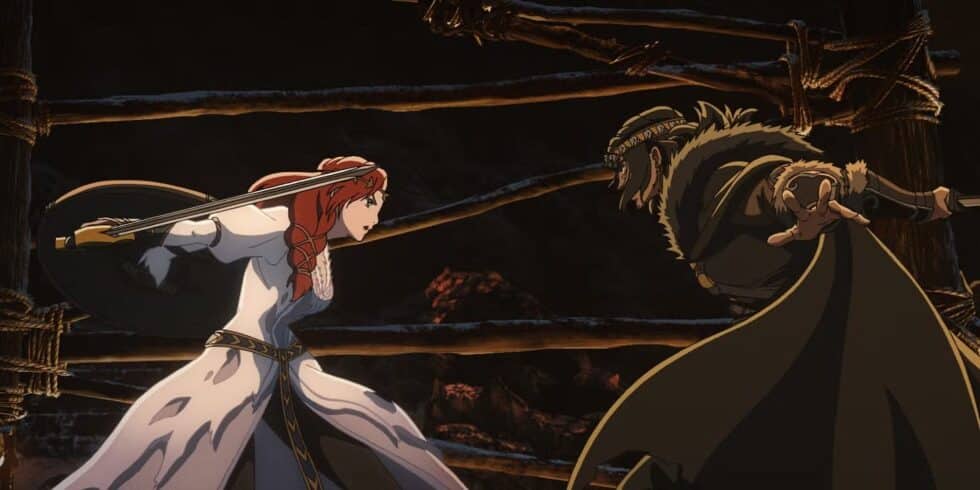
I’ve watched The War of the Rohirrim only once, so far,
and, after I’ve seen it a second time, I’m sure that I’ll want to say more, but one point struck me immediately and I thought that others might find it interesting—or puzzling, as I did.
To begin with, I very much enjoy anime and have seen all sorts of examples, from the adventures of Cowboy Bebop
to the sad and beautiful adaptation of When Marnie was Here
to the almost hallucinatory Mononoke.
My curiosity, then, was aroused to read that someone was making an anime-influenced film from section II, “The House of Eorl” of Appendix A of The Lord of the Rings, both because of the anime and because I’m always interested to see how different artists might imagine works with which I’m familiar.
Some years ago, for instance, a Russian artist, Sergey Yuhimov, had illustrated The Lord of the Rings in the style of Russian religious art, which was an intriguing idea. Here’s the death of Boromir, as an example–
At the same time, I was a bit concerned about just what could be made of this material when there was so little of it—pages 1065-1067 in my 50th-anniversary edition of the book.
Remembering my dismay at “Azog”
and “Tauriel”
in P. Jackson’s The Hobbit, where there was plenty of original material with which to work, I wondered if this would this mean the appearance of a number of characters never devised—or intended—by the author? (for more on this see “A Fine Romance”, 15 February, 2023)
As I said, however, more on the film in general in a future posting, but for now I want to concentrate on a bit of geography.
Here’s a map of Rohan, the location of the film’s story
It’s divided into a couple of regions, their names based on Old English words—“Wold”, I’m presuming coming for “weald”, defined as “high land covered with wood”, which would be appropriate for land just outside Fangorn, “Emnet” from “emnett”, “a plain”—basically a level or flat area, and “Fold” from a word used in compounds, meaning “earth/land”. (See Bosworth & Toller’s Anglo-Saxon Dictionary here: https://bosworthtoller.com/ ) So, the central area, at least, is, at best, rolling, I would say, and we know, from the text, covered in grass:
“Turning back they saw across the River the far hills kindled. Day leaped into the sky. The red rim of the sun rose over the shoulders of the dark land. Before them in the West the world lay still, formless and grey; but even as they looked, the shadows of night melted, the colours of the waking earth returned: green flowed over the wide meads of Rohan…” (The Two Towers, Book Three, Chapter 2, “The Riders of Rohan”)
“Mead” is from Old English “maed”, “meadow” (itself from Old English “maedwe”, which Etymonline, from the OED, glosses as “low, level tract of land under grass; pasture” (for more, see: https://www.etymonline.com/search?q=meadow )
I’ve always imagined, then, something like this—
it being a perfect place for grazing for the herds of horses kept by the Rohirrim.
Unfortunately, New Zealand doesn’t appear to have such places and so Jackson, in his films, had to make do with this—
With those snowy mountains in the background, it makes an impressive scene, but it’s not really what JRRT had clearly—and rather beautifully–imagined.
I thought, however, that the makers of the new film would take advantage of the fact that, their landscape being anything which they could imagine and depict, and would restore to us Tolkien’s vision of the plains of Rohan as he described them.
Unfortunately, that’s not what happened: instead, the artists simply copied the Jackson look of the nearly-barren countryside, far from anything a horse people would delight in—
Why do this? The creators weren’t limited, as Jackson was, by the available landscape, and yet they simply followed what was already available on film, virtually down to the last detail.
Needless to say, I was disappointed, and it made me wonder what else I would see as the film progressed. But that’s for another posting.
Thanks for reading, as ever.
Stay well,
May you always seek green—but not greener– pastures,
set out on their quest, they’re aware that, at its end, they must face the reason the dwarves’ forebears died or fled Erebor, the “Lonely Mountain”.
(JRRT)
And yet they go, suggesting an almost foolhardy shrug of an attitude, particularly as Gandalf has suggested that they need someone right out of myth to help them:
“ ‘That would be no good…not without a mighty Warrior, even a Hero.’ “
But:
“ ‘I tried to find one; but warriors are busy fighting one another in distant lands, and in this neighbourhood heroes are scarce, or simply not to be found.’ “ (The Hobbit, Chapter 1, “An Unexpected Party”)
Everything about this trip already seems haphazard, having no map of their destination, till Gandalf furnishes them with one,
(JRRT)
and even then they have no idea of another, secret entrance until Elrond spots the inscription which describes it—and how to open it. Clearly, then, this is a case of “we’ll cross that bridge when we come to it.”
Uh oh.
There’s also no clue in the text as to who or what may destroy the destroyer—until Bilbo, flattering Smaug, spots that fatal weak point:
“ ‘I’ve always understood…that dragons were softer underneath, especially in the region of the—er—chest…’ “
The dragon stopped short in his boasting. ‘Your information is antiquated,’ he snapped. ‘I am armoured above and below with iron scales and hard gems. No blade can pierce me.’ “
There’s a clue here, if not for Bilbo, for readers who are aware of something in Tolkien’s own past reading:
“Then Sigurd went down into that deep place, and dug many pits
in it, and in one of the pits he lay hidden with his sword drawn.
There he waited, and presently the earth began to shake with the
weight of the Dragon as he crawled to the water. And a cloud of
venom flew before him as he snorted and roared, so that it would
have been death to stand before him.
But Sigurd waited till half of him had crawled over the pit, and
then he thrust the sword Gram right into his very heart.” (Andrew Lang, ed., The Red Fairy Book, 1890, “The Story of Sigurd”, page 360)
And Bilbo persists, goading Smaug to turn over, where Bilbo sees—and says:
“ ‘Old fool! Why, there is a large patch in the hollow of his left breast as bare as a snail out of its shell!’ “ (The Hobbit, Chapter 12, “Inside Information”)
Still, although we might have a target now, who will make use of it and how and with what? Sigurd is just what Gandalf says is not locally available, a Hero, and it’s clear that neither Bilbo nor the dwarves are capable of taking on that role.
And here we can bring in another clue from Tolkien’s past.
In “On Fairy-Stories”, he writes:
“I had very little desire to look for buried treasure or to fight pirates, and Treasure Island left me cool. Red Indians were better: there were bows and arrows (I had and have a wholly unsatisfied desire to shoot well with a bow)…” (“On Fairy Stories”, 134)
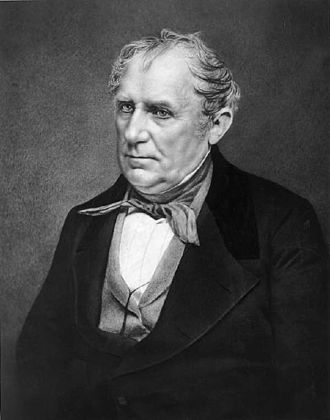
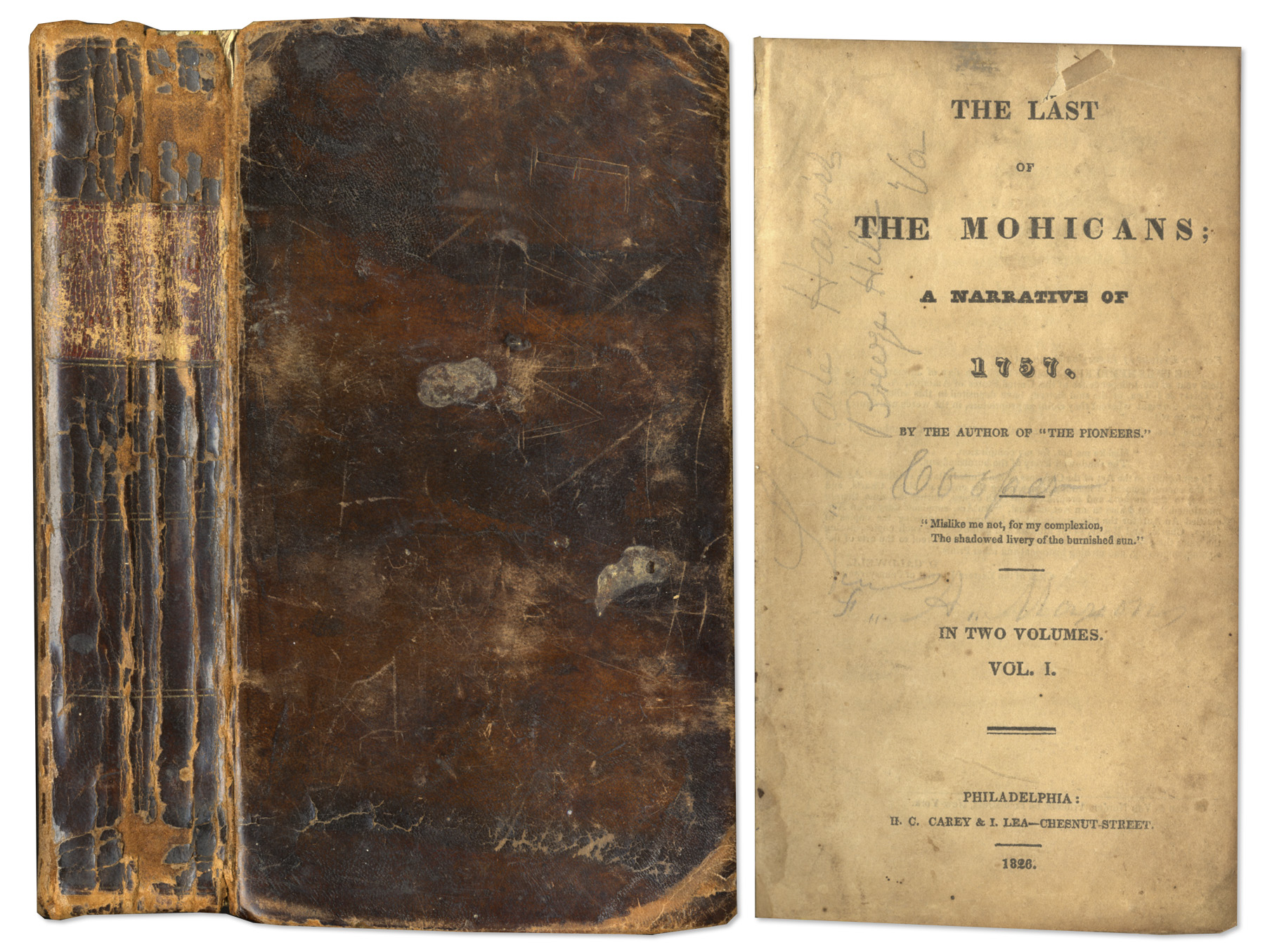
This suggests that Tolkien may have been exposed to the works of James Fenimore Cooper, 1789-1851, who, beginning with The Pioneers, 1823, wrote a series of novels set on the 18th-century western Frontier (much of it what is now central and eastern New York State), called the “Leatherstocking Tales”,
the best known, even now, being The Last of the Mohegans, 1826.
These books were filled with battles between the British and French, with Native Americans on both sides and I wonder if it’s from the adventures depicted there that JRRT was inspired with his passion for bows and arrows?
(artist? A handsome depiction and I wish I could identify the painter.)
Another clue might lie in British history. During the medieval struggle for English control of France, the so-called “Hundred Years War” (1337-1453), the English enjoyed three great victories, at Crecy (1346), Poitiers (1356), and Agincourt (1415), where companies of English longbowmen shot their French opponents to pieces.
(Angus McBride)
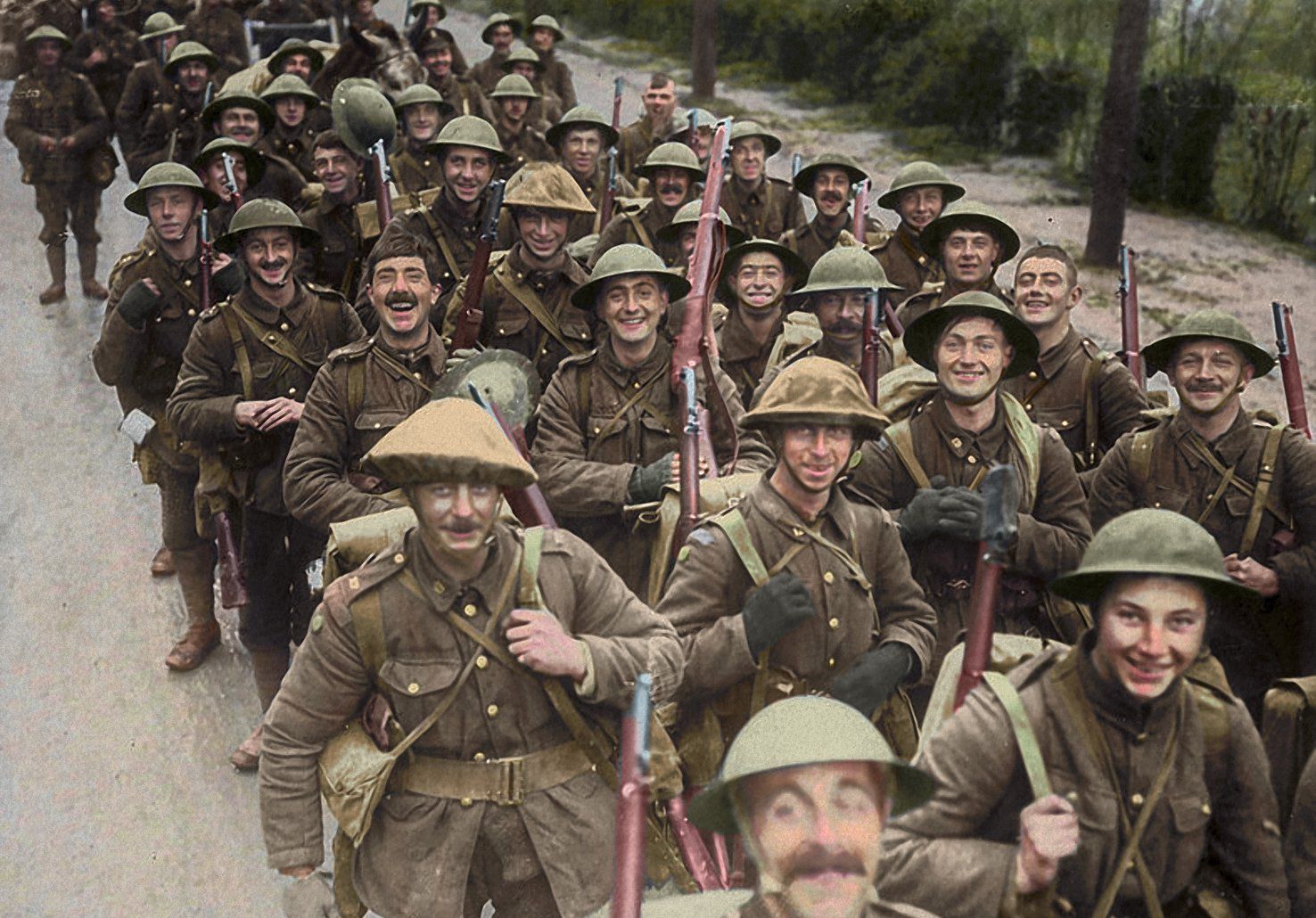
Tolkien would have read about this as a schoolboy, but, in an odd way, he might have had his knowledge of these long-ago events refreshed in 1914.
Outnumbered and in danger of being outflanked by massive German columns, the small BEF (British Expeditionary Force), in the early fall of 1914, retreated, one unit (2nd Corps) fighting a desperate battle to slow the Germans at Le Cateau.
The British managed to fend off the enveloping Germans and, considering the odds against them, some might have believed their escape miraculous.
Enter the fantasist Arthur Machen, 1863-1947.
In the September 29th, 1914, issue of The Evening News, Machen published a short story which he entitled “The Bowmen”. This was a supposed first-hand account of a British soldier who had seen a line of ghostly British longbowmen shooting down German pursuers, just as they had shot down the French, centuries before.
Machen subsequently republished it with other stories in 1915—
but was astonished when his fiction was believed to have been true, and widely circulated as such. We don’t have any evidence that JRRT actually read this story, but it was extremely widespread at the time and, once more, we see men with bows. (For more on this, see: https://en.wikipedia.org/wiki/Angels_of_Mons And you can read the stories in Machen’s volume here: https://en.wikipedia.org/wiki/Angels_of_Mons )
I think we can add to this the legends of Robin Hood, which could appear in any number of sources—our first known reference being in William Langland’s (c.1330-c.1386) late 14th-century Piers Plowman, where Sloth—a priest deserving of his name, doesn’t seem to have any religious knowledge, but says,
In more recent times, perhaps Tolkien had seen Howard Pyle’s (1853-1911) The Merry Adventures of Robin Hood, 1883,
or Paul Creswick’s (1866-1947) 1917 Robin Hood,
with its wonderful illustrations by N.C.Wyeth (1882-1945).
(If the Tolkien journal Amon Hen, is available to you–but, alas, not to me–you might also have a look at Alex Voglino’s “Middle-earth and the Legend of Robin Hood” in issue 284.)
And, although Tolkien may not have liked Treasure Island, we might add to this possible influence Robert Louis Stevenson’s (1850-1894) The Black Arrow (serialized 1883, published as a book in 1888).
“ ‘Arrow!’ said the bowman. ‘Black arrow! I have saved you to the last. You have never failed me and always I have recovered you. I had you from my father and he from of old. If ever you came from the forges of the true king under the Mountain, go now and speed well!’ “ (The Hobbit, Chapter 14, “Fire and Water”)
(Michael Hague, one of my favorite Hobbit illustrators)
So, we’re about to see that the Hero to kill Smaug is a Lake-town local, Bard, and his weapon of choice is Tolkien’s special favorite, the bow. But how to attack?
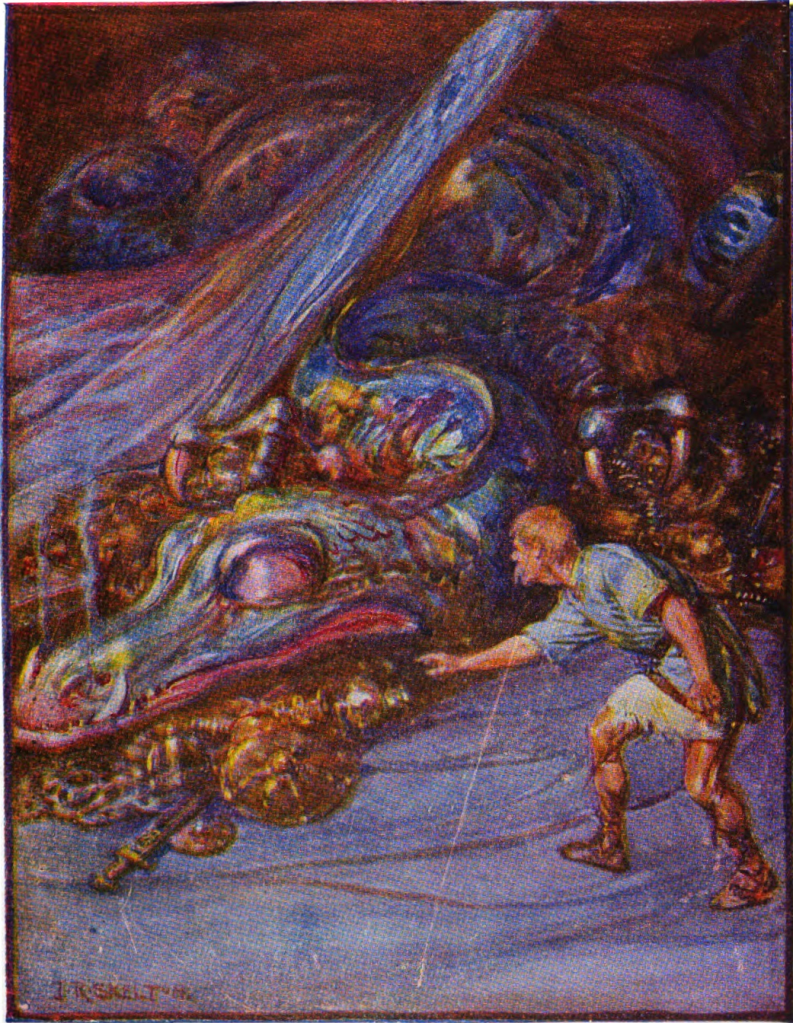
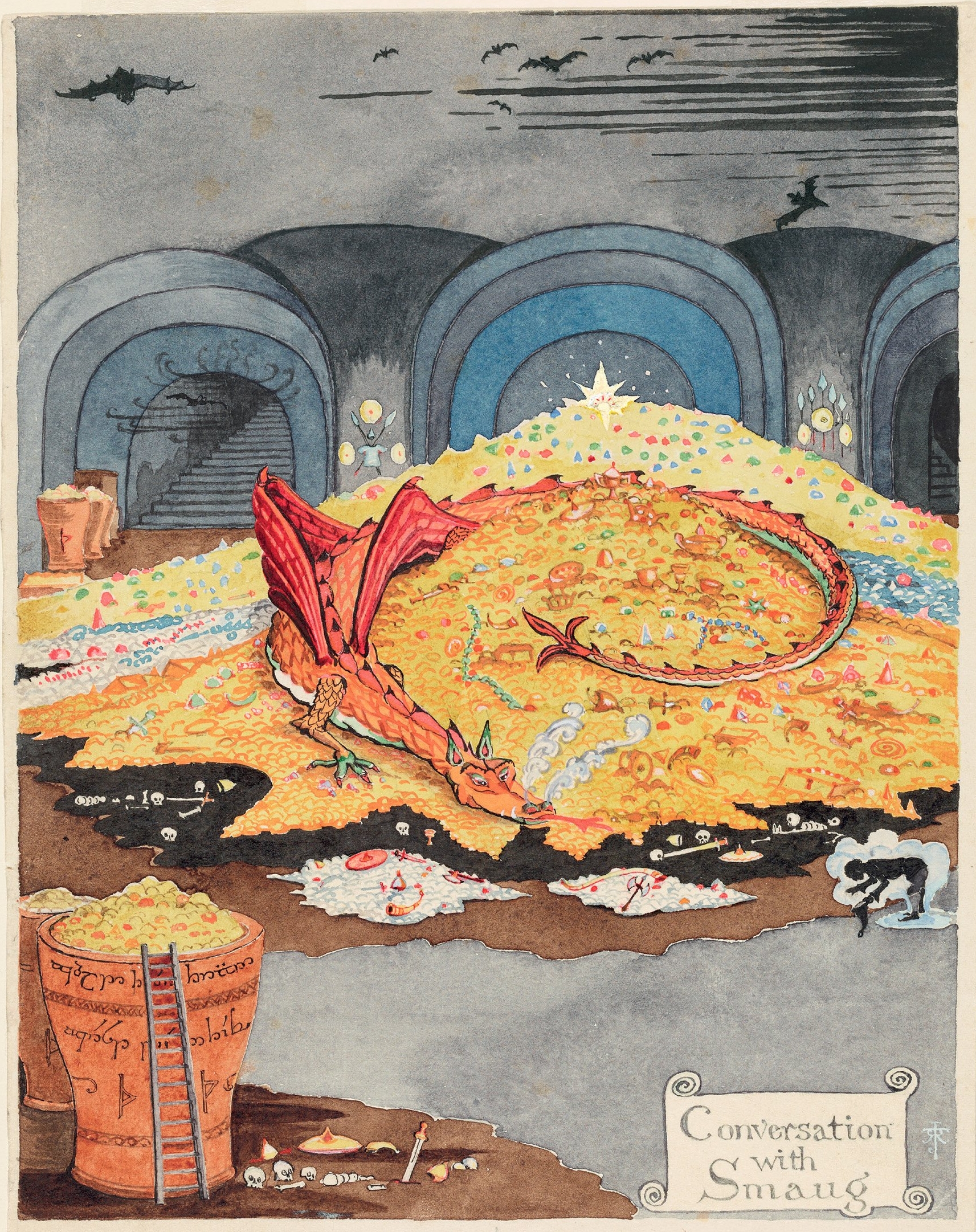
We first see Smaug on the ground, lying on his hoard.
(JRRT)
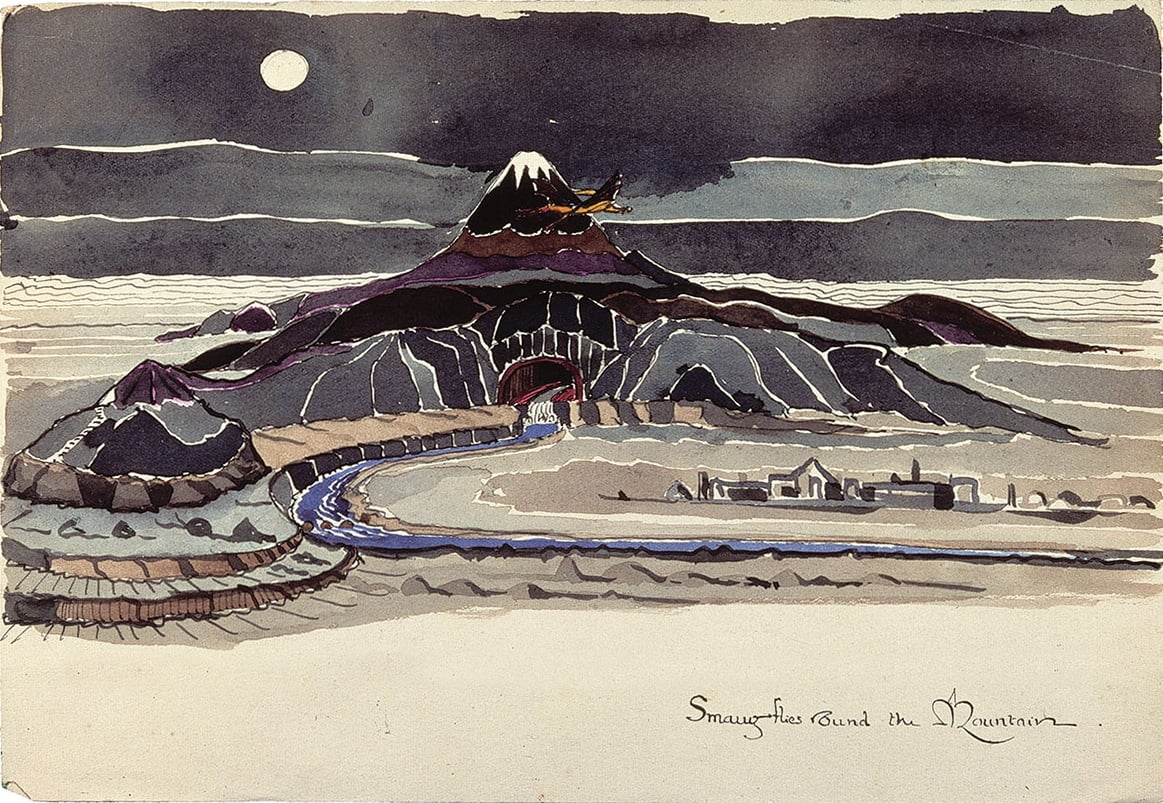
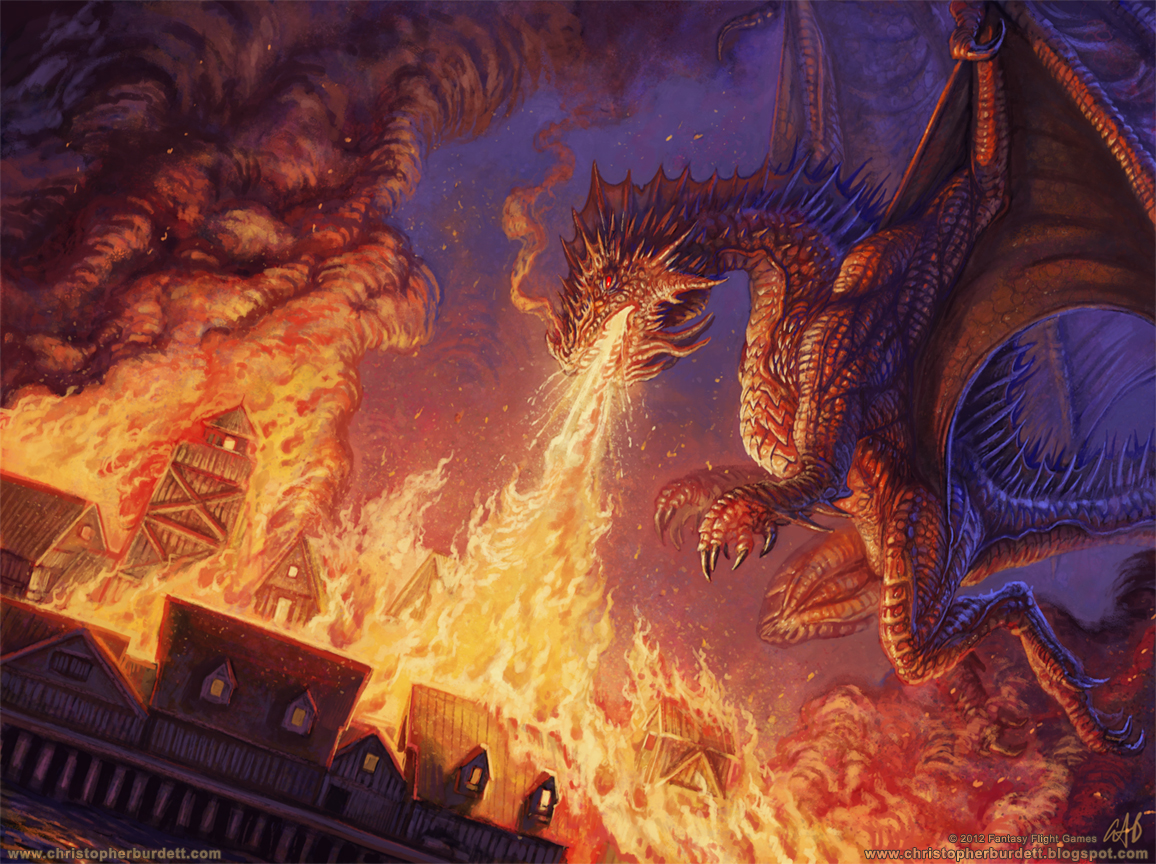
Angered at Bilbo’s teasing, he gets up long enough to attempt to flame him, but his real method of destruction is to take to the air.
(Ted Nasmith)
Fafnir was never airborne, dragging himself along the ground. Sigurd solved the problem of his scaly protection by digging a pit and attacking him from below with his sword. It makes good sense, then, with all of the possible bowman influences upon him, that Tolkien would imagine that the way to deal with a flying dragon would be an arrow from below.
(JRRT)
To which we might add one more potential influence from JRRT’s own experience.
In 1914, there were few military aircraft and their main task was reconnaissance.
By 1918, there were many different models, with different tasks, including heavy bombers.
To protect their troops on the ground, all of the warring nations developed the first artillery defenses: anti-aircraft guns, designed to shoot down threats from above.
JRRT would certainly have seen such guns and possibly even in action, attempting to knock flying danger out of the sky.
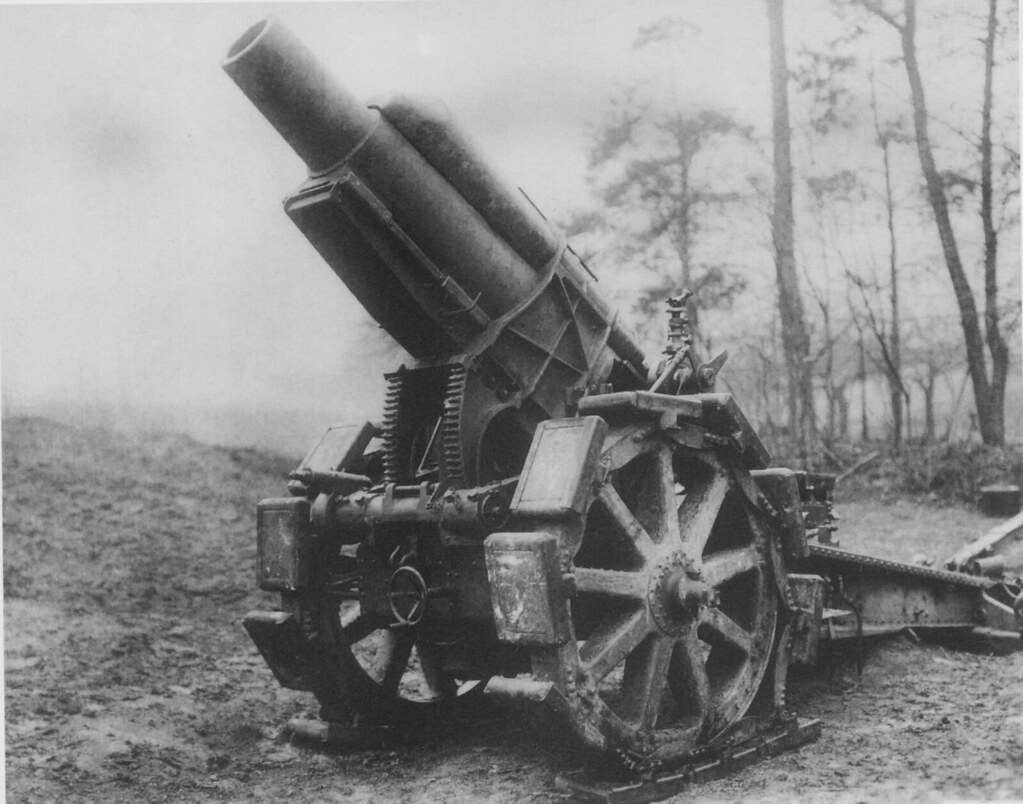
Some of those guns were rapid-firing, spraying the air with metal, hoping to guarantee the success of their defense. Bard, in turn, has his black arrow—and not just any black arrow, but one seemingly created perfectly for revenge: “ ‘I had you from my father and he from of old. If ever you came from the forges of the true king under the Mountain, go now and speed well.’ “
That is, this is an arrow created by the dwarves, whom Smaug had driven out or killed—or eaten—and it’s also an heirloom from the days before Smaug destroyed Dale: what better weapon to deal vengeance to the wicked creature who had ruined so much? To take out such a flying danger, but with a glaring vulnerability below, what means of propulsion, especially one known to have defeated whole medieval armies? And, as the seemingly last descendant of the last lord of Dale, Girion, who better to take that revenge?
As ever, thanks for reading.
Stay well,
Always monitor the skies—who knows what’s watching from above?
And remember that, as always, there’s
MTCIDC
O
PS
For more on birds, Bard, and Smaug, see “Why a Dragon?” 28 May, 2025.
PPS
While looking for just the right Smaug images, I came upon this, entitled, “Dante aka Smaug on his hoard” and couldn’t resist.
A common motif is that of the apparent good-for-nothing—or at least for not much—who turns out to be of heroic material. I immediately think of King Arthur, who is, basically, a servant until he fetches that sword from the stone/anvil.
Heroes and heroines, then, can be anything from a demigod to a nobleman to a good girl who loves her father to a good-for-nothing who is more than he seems, and set out on adventures or, as in the case of Arthur, adventure finds them.
Ordinary—or seemingly ordinary—people can also be pulled into adventures, as Bilbo is.
(the Hildebrandts)
Then there are people who are literally dropped into adventures,
(WW Denslow)
sometimes beginning those adventures in a very dramatic—and ultimately decisive—way.
Dorothy, of course, has been whirled by a tornado from Kansas to Oz,
(from the 1939 film)
but, when she arrives in Oz in the film, Glinda, the Good Witch of the North
(also from the film)
sings:
“Come out, come out, wherever you are and meet the young lady
Who fell from a star.
She fell from the sky, she fell very far and Kansas, she says,
Is the name of that star.”
Not true, of course, of Dorothy, (although Kansas has its beauties, no doubt), but it is true of another hero, Superman,
who had been shipped in a rocket by his parents from the dying planet, Krypton, and discovered in a field by Ma and Pa Kent, who would become his foster parents.
If you read this blog regularly, you know that I don’t find negative reviews which are nothing but hatchet jobs
at all helpful and, in my own reviews, I try to understand what it is that the creators attempted to do and react to that, being aware, of course, that I do have my own perspective on things. I also buy DVDs of everything I can, so that I can watch things more than once before I review.
I’ve now seen “Rings of Power”, both seasons,
only once, so I’m not going to attempt to review the whole two seasons here. Certainly there have been some very impressive visuals and some very good acting. I’m not sure how I feel about the two as a whole—some of the plot I found rather confusing and I’m not sure how I feel about proto-hobbits with Irish accents, although the idea of using proto-hobbits was, I thought, pretty ingenious—but I want to end this posting by talking about Gandalf.
He first appears—like Dorothy in Oz, but even more so like the baby Superman, in a dramatic fashion, having been conveyed in which appears to be a kind of meteor which roars across the sky and slams into the earth, leaving a fiery crater.
(Thank goodness that, whoever sent him, dressed him in underpants so that he wouldn’t embarrass himself or us when he stood up.)
At first, he seems stricken and quite clueless, not even really having language at first, although certainly having great powers, and it takes two seasons for him to begin to understand himself and what he’s been sent to do and I suspect that this stricken quality comes from a hint in Christopher/JRR Tolkien’s Unfinished Tales, where, under “The Istari” we find:
“For it is said indeed that being embodied the Istari had need to learn much anew by slow experience…” (Unfinished Tales, 407)
I understand that the creators of the series were somewhat hampered in their work—should they want to be as faithful as possible to Tolkien—because they were restricted in their sources, being confined, in this case, to The Lord of the Rings and its appendices. And, at first glance, the appearance in Middle-earth of the Istari does seem rather vague.
In Appendix B, “The Third Age”, of The Lord of the Rings, we read:
“When maybe a thousand years had passed, and the first shadow had fallen on Greenwood the Great, the Istari or Wizards appeared in Middle-earth. It was afterwards said that they came out of the Far West and were messengers sent to contest the power of Sauron, and to unite all those who had the will to resist him…”
No meteors are mentioned, but no other means of transport, either, yet turn the page and we then read:
“Gil-galad before he died gave his ring to Elrond; Cirdan later surrendered his to Mithrandir (aka Gandalf). For Cirdan saw further and deeper than any other in Middle-earth, and he welcomed Mithrandir at the Grey Havens, knowing whence he came and wither he would return.”
If you know The Lord of the Rings, you know that the Grey Havens is a seaport on the west coast of Middle-earth: it’s where Gandalf and others, including Frodo, depart for the Uttermost West—that is, Valinor.
(Ted Nasmith and a gorgeous view)
In fact, it was the Valar who had sent the Istari in the first place, as we know from Unfinished Tales, 406:
“For with the consent of Eru they sent members of their own high order, but clad in bodies as of Men, real and not feigned…”
And thus, from the source to which I’m informed the creators were confined, they would have learned that the Istari had sailed to Middle-earth, not been shot across the sky like Dorothy or Superman. Why make such a change, especially as, because Cirdan recognizes Gandalf’s worth, he gives him one of the original Elvish rings, Narya, which turns up on his hand in the subsequent The Lord of the Rings?
The title of this posting is a quotation from Shakespeare, from the prologue to “An EXCELLENT conceited Tragedie OF Romeo and Juliet” (as the First Quarto title page reads) in which the Prologue says of the protagonists: “A paire of starre-crost Louers tooke their life”.
The creators of The Rings of Power, even with evidence available to them, have veered away from that evidence with no explanation as to why they have made such a choice. What else may they have chosen to change and how might that affect JRRT’s view of the earlier history of Middle-earth, as well as ours?
As I begin my second viewing of The Rings of Power, then, I’ll be curious to see if another Shakespeare quotation, this from “The Tragedie of Julius Caesar”, Act 1, Scene 1, when Cassius, the leader of the plot against Julius Caesar, is trying to persuade Brutus to join him, may apply to the creators and their work:
“The fault (deere Brutus) is not in our Starres,
But in our Selues…”
Thanks, as always, for reading.
Stay well,
Think about what Cassius is telling us about horoscopes,
I think that I’ve always been a fan of the Marx brothers.
Their lack of respect for pompous men in silk hats,
opera-goers who are only interested because it gives them social status,
and self-important artists,
among many others, and their creative methods of deflating such people,
have always cheered me immensely.
There is another side to their comedy, however, which means just as much to me: their endless play with words, delivered always deadpan and with perfect timing—not to mention absolute absurdist nonsequiturism.
Take, for example, this fragment from The Cocoanuts, their first surviving film, from 1929. It’s set during the 1920s Florida land boom (read about that here: https://en.wikipedia.org/wiki/Florida_land_boom_of_the_1920s ) and, in this scene, “Mr. Hammer”, Groucho, is explaining the layout of a real estate plot to “Chico”, Chico,
saying, at one point:
“Groucho: Now, here is a little peninsula, and, eh, here is a viaduct leading over to the mainland.
Chico: Why a duck?
Groucho: I’m all right, how are you? I say, here is a little peninsula, and here is a viaduct leading over to the mainland.
Chico: All right, why a duck?
Groucho: I’m not playing ‘Ask Me Another’, I say that’s a viaduct.
Chico: All right! It’s what…why a duck? Why no a chicken?
Groucho: I don’t know why no a chicken—I’m a stranger here myself. All I know is that it’s a viaduct. You try to cross over there a chicken and you’ll find out why a duck.”
By the same kind of logic which produced this, I found myself thinking about The Hobbit: and hence the title of this posting: why a dragon?
The plot of The Hobbit is, basically, a quest: a journey with a goal.
Quests are a familiar form of adventure story and still common—just think about Indiana Jones, with his Lost Ark
and his Holy Grail, for example.
Indiana has to travel to Tibet and Egypt and to an unnamed island in the Mediterranean for the Ark and to Germany and Turkey for the Grail.
Although Thorin doesn’t mention the travel in his “mission statement”, much of the story will be about travel, from the Shire to the Lonely Mountain and back again,
to reach the dwarves’ goal, as stated in the first chapter by Thorin:
“But we have never forgotten our stolen treasure. And even now, when I will allow we have a good bit laid by and are not so badly off…we still mean to get it back, and to bring our curses home to Smaug—if we can.” (The Hobbit, Chapter 1, “An Unexpected Party”)
The goal, then, is in two parts:
1. to regain the treasure taken from the dwarves by the dragon
2. to take revenge upon said dragon
Because they are aware that the dragon can be lying on top of the treasure (“Probably”, says Thorin, “for that is the dragons’ way, he has piled it all up in a great heap far inside, and sleeps on it for a bed.”), it’s clear that 1 and 2 have to be dealt with as a sequence: no getting the treasure without getting rid of the dragon.
Which brings us back to my title. Indiana Jones commonly has Nazis (and eventually Communists and even Neo-Nazis) as opponents,
these being the characters who compete for his goal and stand in the way of his achieving his quest.
Tolkien was a medievalist, writing a sort of fairy tale, so what would be his equivalent and why?
We know that Tolkien had been interested in dragons since far childhood—at least the age of 6, when he tried to write a poem about a “green, great dragon” (to the Houghton Mifflin Company [summer, 1955?], Letters, 321—JRRT tells a somewhat different version of this to W.H. Auden in a letter of 7 June, 1955, Letters, 313) and he confesses to an early love for them in his lecture “On Fairy-Stories” where he mentions Fafnir and Sigurd, suggesting that he may have had read to him or had read for himself from Andrew Lang’s The Red Fairy Book, 1890, the last chapter of which is “The Story of Sigurd”, and since, elsewhere, he mentions “Soria Moria Castle”, which is the third story in the same book.
Fafnir, the dragon in the Sigurd story, is described as, having killed his own father:
“he went and wallowed on the gold…and no man dared go near it.” (“The Story of Sigurd”, 360)
The next major dragon story with which Tolkien was probably involved saw the same draconic behavior, as, in Beowulf, we’re told that the unnamed dragon, having discovered a hoard in a tumulus:
“This hoarded loveliness did the old despoiler wandering
in the gloom find standing unprotected, even he who filled
with fire seeks out mounds (of burial), the naked dragon of
1915
fell heart that flies wrapped about in flame: him do earth’s
dwellers greatly dread. Treasure in the ground it is ever his
wont to seize, and there wise with many years he guards the
heathen gold – no whit doth it profit him.”
(from JRRT’s draft translation of 1920-26 in Christopher Tolkien’s 2014 publication)
Traditionally, then, dragons and gold go together—and, as JRRT admitted in a letter to the Editor of the Observer, “Beowulf is among my most valued sources” (letter to the Editor of the Observer, printed in the Observer, 28 February, 1938, Letters, 41)
There is a very interesting twist in Tolkien’s version of the story, however.
By lying in a pit below the dragon, Sigurd slays Fafnir
and Beowulf, along with his companion (and successor), Wiglaf, make an end of the nameless dragon,
Beowulf fighting against a dragon. Scene from the early medieval epic poem “Beowulf”. It is one of the most important works of Old English literature and was probably created after the year 700 and plays in the time before 600 AD in Scandinavia. Chromolithograph after drawing by Walter Zweigle (German painter, 1859 – 1904), published in 1896.
(This is a pretty silly version, with costumes and armor which look like they came from the original production of Der Ring des Nibelungen, but finding a depiction of the two attacking the dragon has seemed surprisingly difficult.)
but, in The Hobbit, although we have the traditional dragon on the traditional hoard, we don’t have the traditional dragon-slayer, a fact underlined by Thorin’s “to bring our curses home to Smaug, if we can”.
This has always struck me as the potential weak point in the quest: to travel hundreds of miles through dangerous territory filled with trolls, goblins, wolves, hostile elves, and even giant spiders, to come to a mountain inhabited by a fearsome dragon—but to have no plan in mind as to how to deal with it, especially when the other half of the plan—to get back the dwarvish treasure—requires somehow eliminating the current guardian of that treasure.
(JRRT)
Faced with that possible weak point, so much now may appear to have a certain haphazard happenstance about it, the kind of attempted slight-of-hand which indicates an author who hasn’t the skill to create a narrative in which every element seems to fall naturally into place, and this might make us question the finding of the Ring, the convenient rescue at Lake-town, even the ray of sun which indicates the opening to the back door of the Lonely Mountain (suppose it had been overcast).
But this is where the burglar comes in—and the story of Sigurd once more.
It seems that Bilbo was not Gandalf’s first choice for the quest when he came to visit him.
(the Hildebrandts)
Thorin has just mentioned the inconvenient dragon and the awkwardness of his sudden appearance, to which Gandalf replies:
“That would be no good…not without a mighty Warrior, even a Hero. I tried to find one; but warriors are busy fighting one another in distant lands, and in this neighbourhood heroes are scarce, or simply not to be found.”
And he continues:
“That is why I settled on burglary—especially when I remembered the existence of a Side-door. And here is our little Bilbo Baggins, the burglar, the chosen and selected burglar.”
Bilbo’s first attempt at burglary: picking a troll’s pocket,
(JRRT)
almost ends in disaster, but, with the eventual aid of the Ring, he even manages, first, to steal from Smaug, in a direct echo of Beowulf,
(artist? So far, I haven’t seen one credited.)
and then to confront Smaug in his lair and escape, at worst, with only a singeing.
(JRRT)
So far, it’s been burglary, with some help from the Ring, but then the Sigurd story comes in.
You’ll remember that, although the version in The Red Fairy Book doesn’t say so, it was clear that the vulnerable part of the dragon Fafnir was its underside, which is why Sigurd hid in a pit so that, when the dragon crawled over it, Sigurd could stab him in that unprotected underbelly.
Using his burglarious skills, as well as a fluent tongue, Bilbo actually persuades Smaug unknowingly to expose his own vulnerability:
“ ‘I have always understood…that dragons were softer underneath, especially in the region of the—er—chest; but doubtless one so fortified has thought of that.’
The dragon stopped short in his boasting. ‘Your information is antiquated,’ he snapped. ‘I am armoured above and below with iron scales and hard gems. No blade can pierce me.’”
And the smooth-tongued burglar actually flatters Smaug into rolling over, exposing “…a large patch in the hollow of his left breast as bare as a snail out of its shell”.
What to do with this potentially deadly piece of information requires the reverse of the Sigurd story.
In that story, Sigurd, having killed Fafnir, has been asked by his mentor, Regin, to roast the dragon’s heart and serve it to him. In the process, Sigurd burns a finger, puts it in his mouth, and suddenly understands that all of the birds above him are talking about him and telling him to beware of Regin.
In The Hobbit, the opposite happens: the thrush who had tapped the snail
(Alan Lee)
and therefore set off the chain of events which revealed the back door to the Lonely Mountain to Bilbo and the dwarves, overhears Bilbo telling the dwarves about Smaug’s vulnerable spot, which he then conveys to Bard the Archer, who is then the dragon-slayer
(Michael Hague—one of my favorite Hobbit illustrators)
needed to dispose of the one-time guardian of the hoard.
And so the dragon is disposed of—but he has one more use in the story: as a negative model.
Although Thorin has led the quest to retrieve the dwarves’ treasure, it seems that there’s only one which he craves, the Arkenstone,
(Donato Giancola)
and it’s clear that, in its pursuit, he becomes much like the Smaug who once reacted almost hysterically when he sensed that something was missing from his hoard:
“Thieves! Fire! Murder!…His rage passes description—the sort of rage that is only seen when rich folk that have more than they can enjoy suddenly lose something that they have long had but have never before used or wanted.” (The Hobbit, Chapter 12, “Inside Information”)
Here’s his dwarvish parallel:
“ ‘For the Arkenstone of my father,’ he said, ‘is worth more than a river of gold in itself, and to me it is beyond price. That stone of all the treasure I name unto myself, and I will be avenged on anyone who finds it and withholds it.” (The Hobbit, Chapter 16, “A Thief in the Night”)
And, when he finds that Bilbo has taken it as a way to make peace between the dwarves, the elves, and the Lake-town men, Thorin almost does take revenge:
“ ‘You! You!’ cried Thorin, turning upon him and grasping him with both hands. ‘You miserable hobbit! You undersized—burglar!…By the beard of Durin! I wish I had Gandalf here! Curse him for his choice of you! May his beard wither! As for you I will throw you to the rocks!’ he cried and lifted Bilbo in his arms.” (The Hobbit, Chapter 17, “The Clouds Burst”)
So why a dragon?
First, to Tolkien the medievalist, gold and dragons go together: a quest for treasure needs a particularly powerful enemy and the dragon of Beowulf, who actually fatally wounds Beowulf,
who had previously defeated two terrible opponents in Grendel and his mother, provides a strong model.
Second, JRRT had, from childhood, a long-standing interest in dragons—he’ll return to them in his 1938/49 novella, “Farmer Giles of Ham”, where the practical farmer eventually not only tames the dragon, Chrysophylax (“Goldwatchman”, perhaps), but makes him disgorge much of his treasure—this time by doing nothing more than outfacing him and threatening him with his sword, “Tailbiter”.
It’s interesting, by the way, that, although, in “The Story of Sigurd”, the dragon talks, he has only one short speech: a curse on anyone who touches his gold, whereas, in perhaps the greatest draconic influence upon Tolkien, Beowulf, another wyrm who enjoys lying on a hoard, is mute.
Smaug, in The Hobbit, however, is not only positively talky, but, like Saruman in The Lord of the Rings, his voice and manner have their own dangerously persuasive power, at one point in his conversation with Bilbo even beginning to seed Bilbo’s mind with doubts about the dwarves Bilbo accompanies (The Hobbit, Chapter 12, “Inside Information”).
Chrysophylax, in “Farmer Giles of Ham” is even more talkative than Smaug, and I wonder about the model for these chatty beasts. Tolkien was a great fan of Kenneth Grahame (1859-1932) and of his well-known children’s book, The Wind in the Willows (1908),
mentioning in a letter to Christopher Tolkien that Elspeth Grahame, Grahame’s widow, is publishing a book with other stories about the main characters of The Wind in the Willows, a book which JRRT is very eager to obtain (letter to Christopher Tolkien, 31 July, 1944, Letters, 128). In 1898, Grahame published a collection of stories, Dream Days,
which included “The Reluctant Dragon”, in which we see another very loquacious beast,
(from the original book, illustrated by Maxfield Parrish)
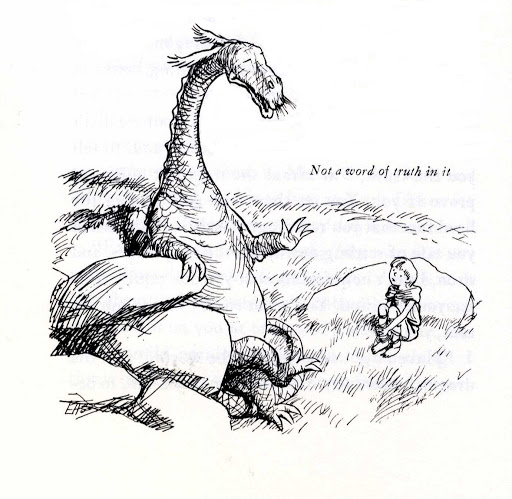
(I couldn’t resist including E.H. Shepard’s 1938 version)
but rather more like the ultimately rather timid dragon of “Farmer Giles” than the grim and mute creature of Beowulf or the more-than-a-little-pleased-with-himself Smaug, but, in his garrulousness, could he have been a model for Smaug? (You can make your own comparison with: https://www.gutenberg.org/files/35187/35187-h/35187-h.htm )
To this we add perhaps not a model, but a parallel: Thorin as becoming a kind of dwarvish dragon in his obsession with the Arkenstone. Fafnir dies with a curse, however, the Beowulf beast dies killing Beowulf, and Smaug dies destroying Lake-town,
but, in his own last moments, Thorin escapes such a poisonous model, saying to Bilbo:
“Farewell, good thief…I go now to the halls of waiting to sit beside my fathers, until the world is renewed. Since I leave now all gold and silver, and go where it is of little worth, I wish to part in friendship from you, and I would take back my words and deeds at the Gate.” (The Hobbit, Chapter 18, “The Return Journey”)