• About

doubtfulsea

~ adventure fantasy

Tag Archives: English Longbowmen

Orc Arsenal.1

26 Wednesday Sep 2018

Posted by Ollamh in Artists and Illustrators, Fairy Tales and Myths, Heroes, J.R.R. Tolkien, Literary History, Military History, Military History of Middle-earth, The Rohirrim

≈ Leave a comment

Tags

Alan Lee, And Inquiry Into Ancient Armour, Angus McBride, arming sword, Battle Axe, English Longbowmen, Eowyn, Falchion, Gladius, Gondor, Hildebrandts, Howard Pyle, John Howe, King Arthur, Longbow, Mace, Medieval, Mongols, Morning Star, Orcs, Pelennor, Pitt-Rivers Museum, Robert Louis Stevenson, Rohirrim, Scimitar, Sir Arthur Conan Doyle, Sir Samuel Meyrick, Ted Nasmith, The Black Arrow, The Lord of the Rings, The White Company, Tolkien, Victorian, Wallace Collection, War Hammer, Weaponry, Witch-King of Angmar

Welcome, dear readers, as always.

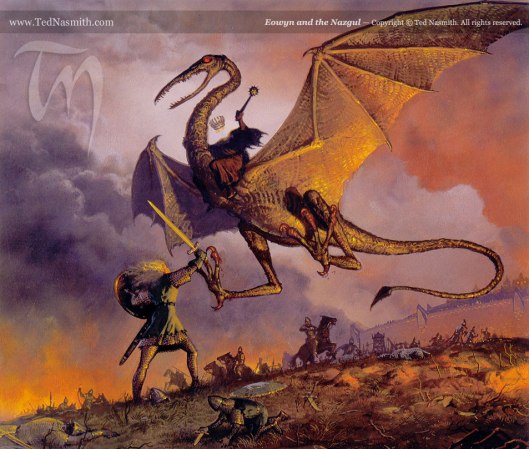
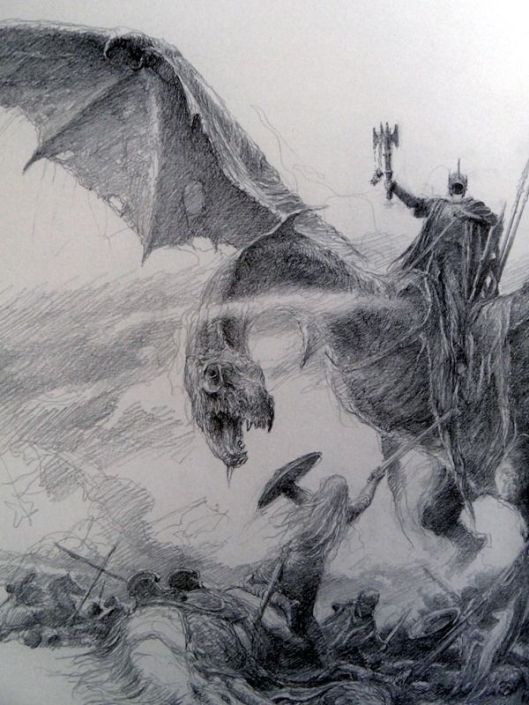
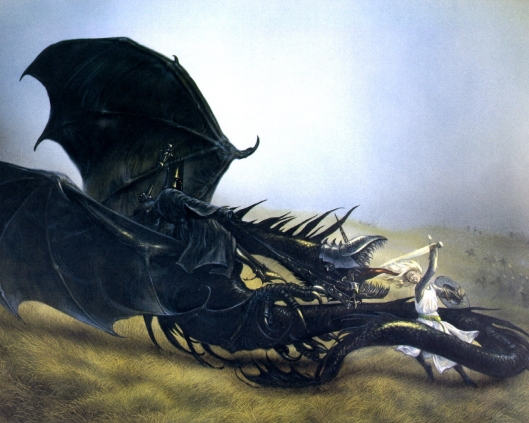
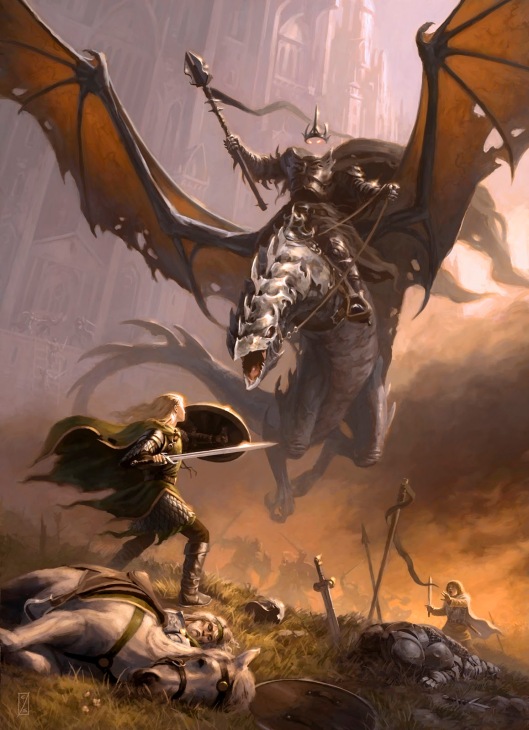
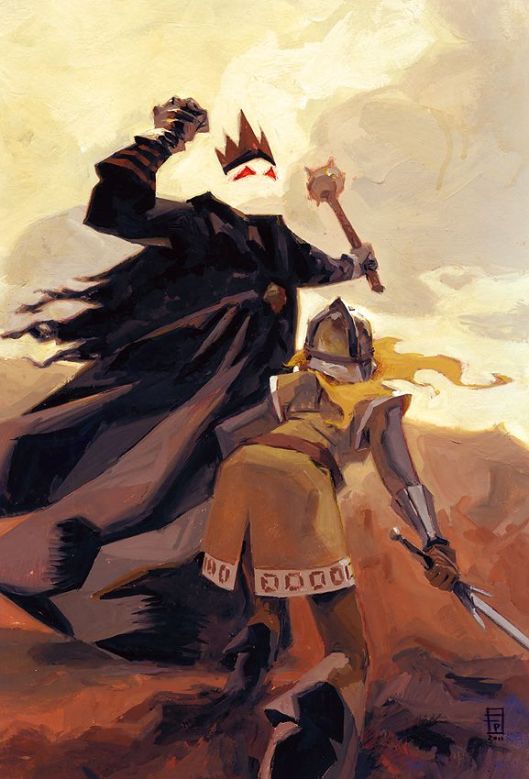
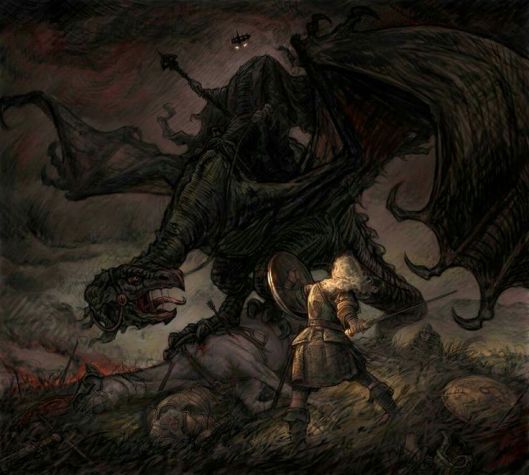
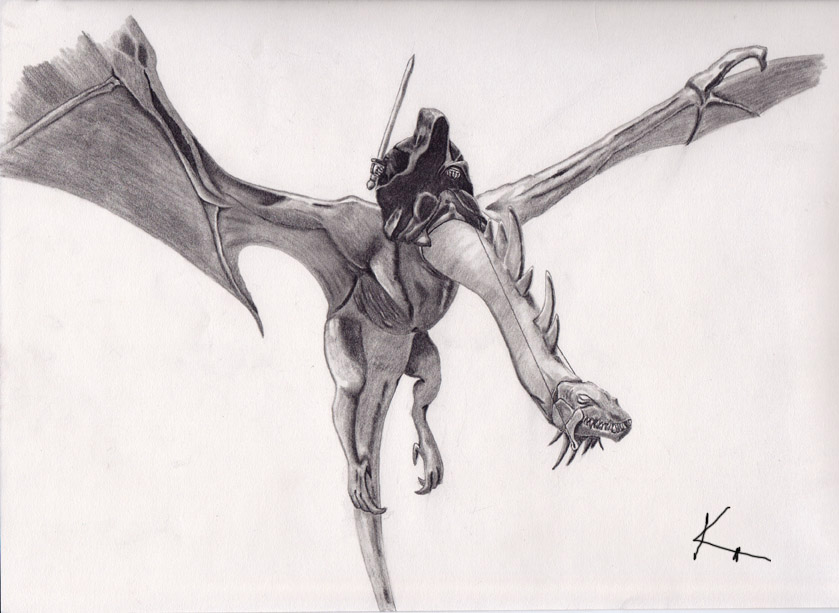
“The great shadow descended like a falling cloud.  And behold! It was a winged creature…

Upon it sat a shape, black-mantled, huge and threatening…A great black mace he wielded.”

(The Return of the King, Book Five, Chapter 6, “The Battle of the Pelennor Fields”)

This is clearly a scene which has caught the attention, over the years, of many artists, starting, we’d guess, with the Hildebrandts.
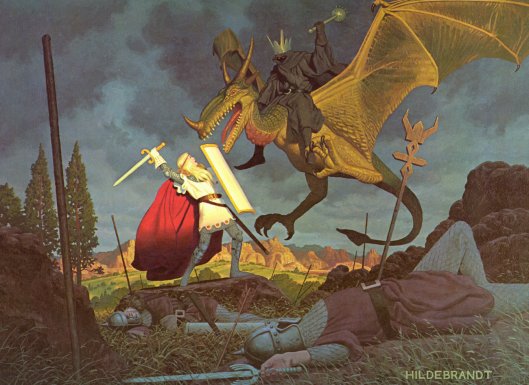
image1hild.jpg


Then others, like Angus McBride and Ted Nasmith,
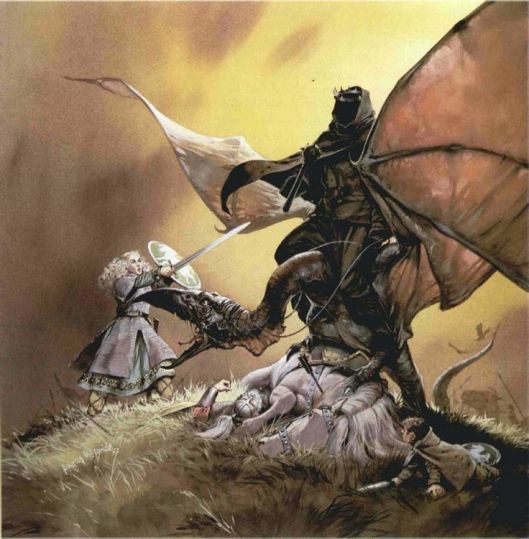
image2am.jpg

image3nasmith.jpg

And Alan Lee and John Howe,


image4aleeimage4bhowe

as well as many very good artists whom we don’t know by name—
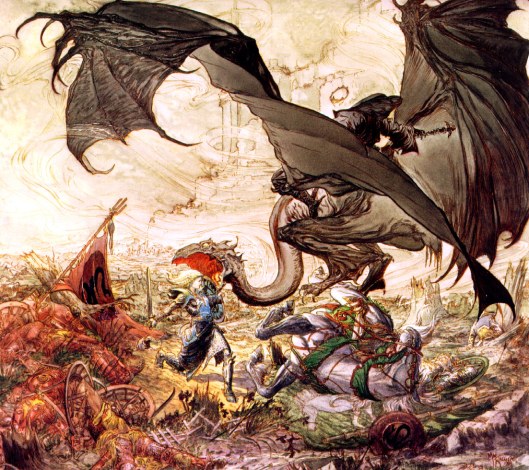
image4cimage5image6image7


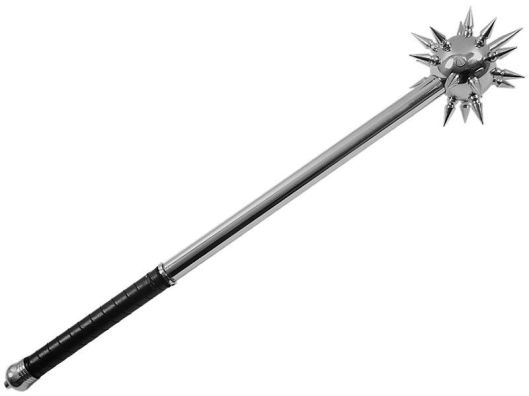
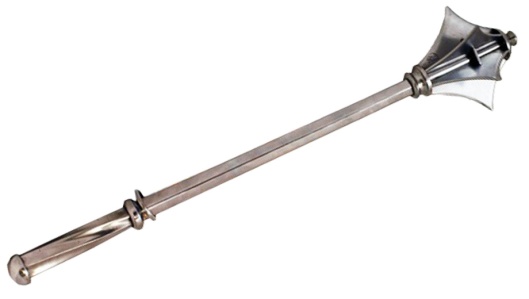
Of these, all but Lee and the unknown sixth artist follow JRRT’s description more or less closely.  Number 6—it’s a little unclear– but he might be carrying a war hammer of some sort,
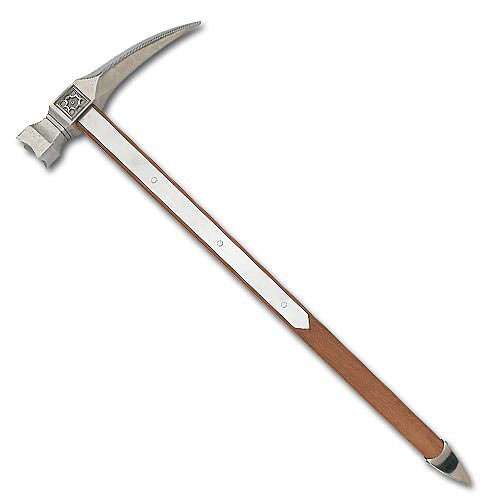
image8warhammer.jpg

rather than a mace.

image9mace.jpg

image10mace.jpg

(These last two are basic patterns of a mace.)

The Lee is, well, we’re not sure what it seems to be.  It sort of looks like a battle axe
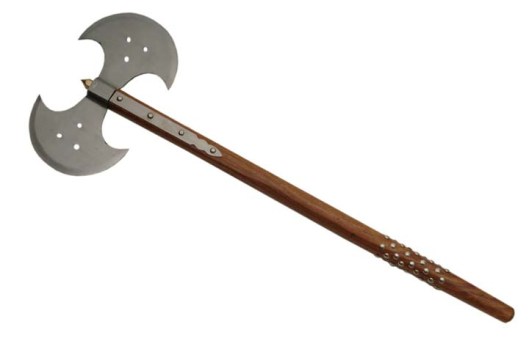
image11battleaxe.jpg

but also like what was called a “morning star”,
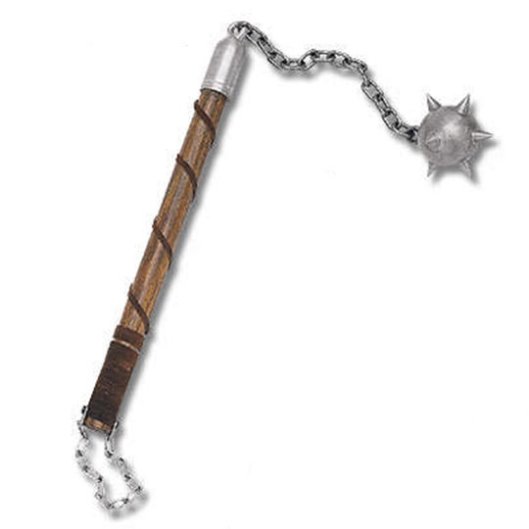
image12mornin.jpg

which should, we think, belong to the flail family.
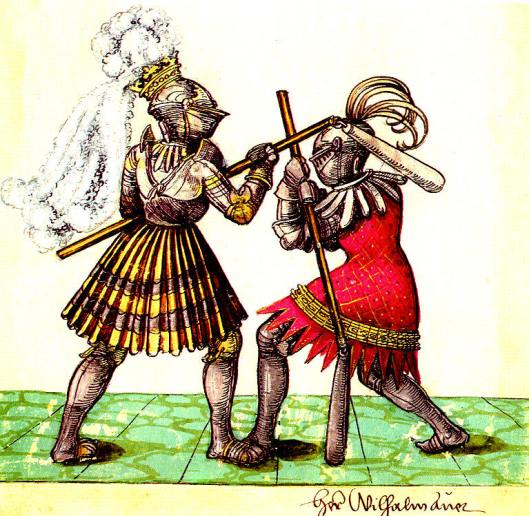
 

image13flail

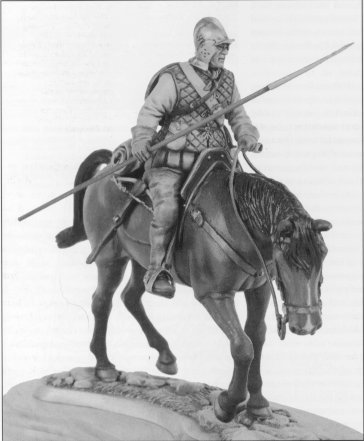
This rather fits in with the P Jackson image, shown in this model (and note that sword—definitely not in the original description—which is in his other hand).
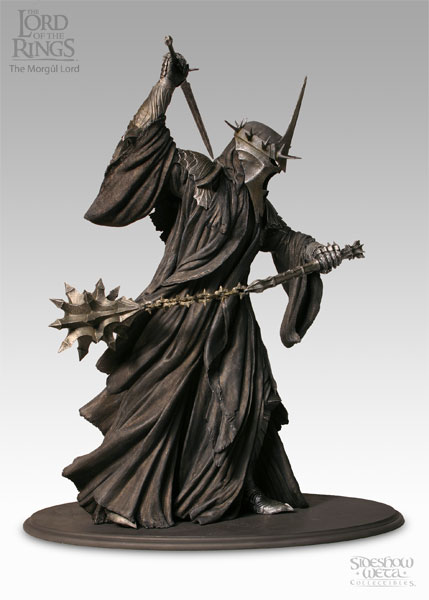
image14mace.jpg

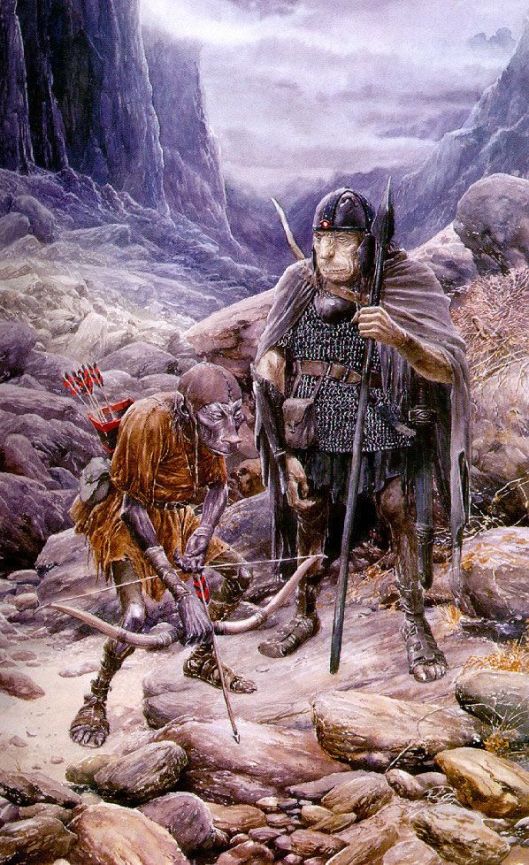
This difference made us curious about the weapons the Rohirrim—and the Gondorians—face and, in particular, those of the orcs.  The Hildebrandts
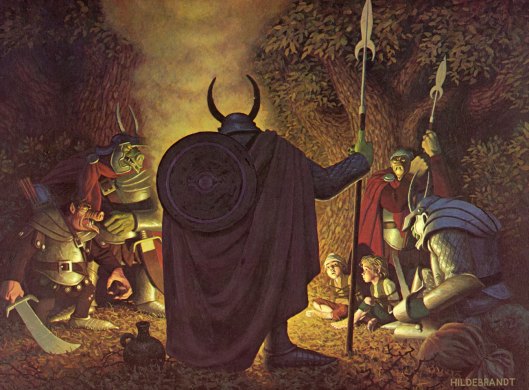
image15captured


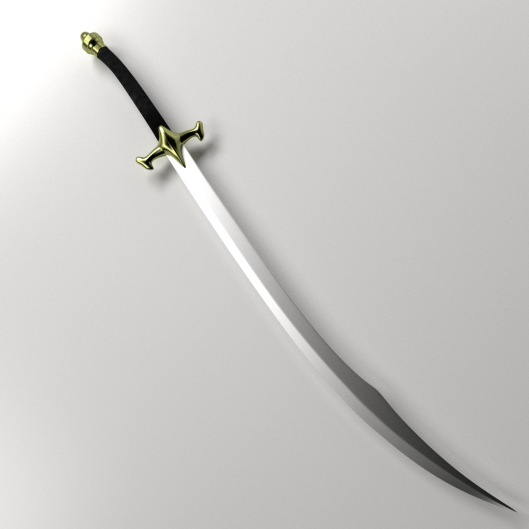
provide us with odd-looking spears and what might appear to be scimitars
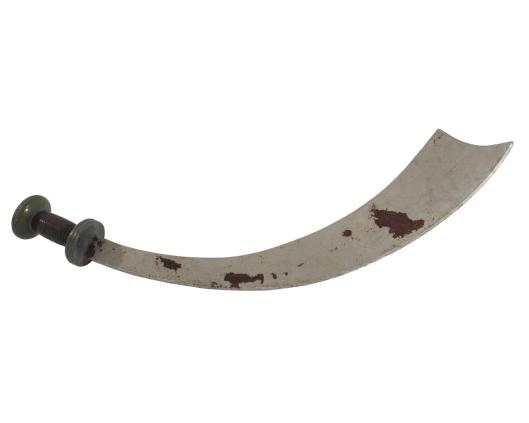
 

image16scim

but might be the suggestion of a medieval sword called a falchion.
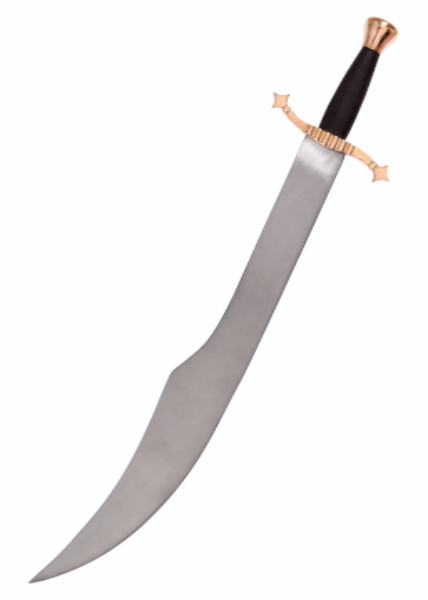
image17falchion

McBride, who spent much of his artistic career illustrating military subjects, gives us weapons (mostly) less fanciful.
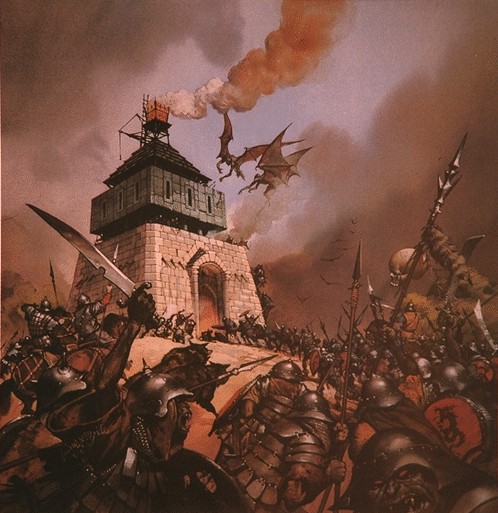
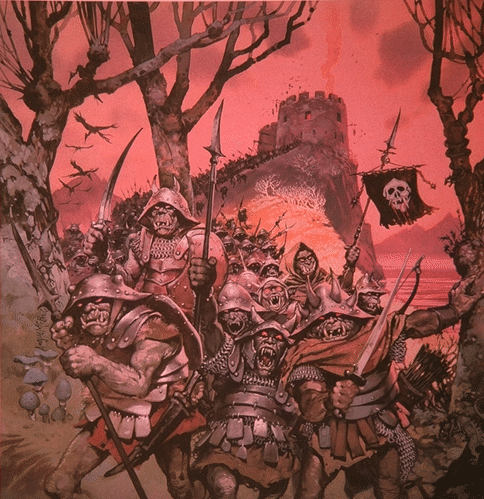
image18mcbimage19mcb

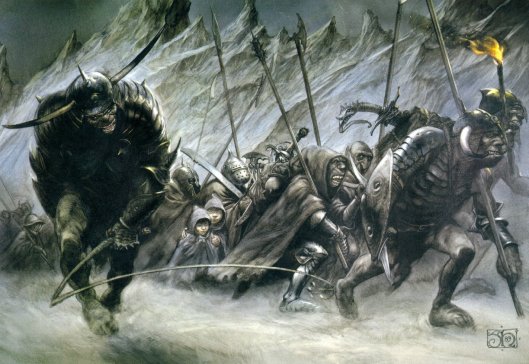
Lee

image19lee

and Howe

image20howe

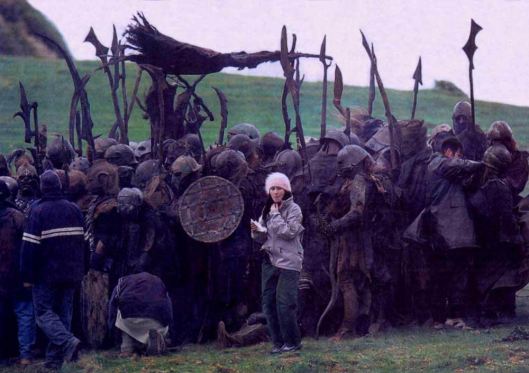
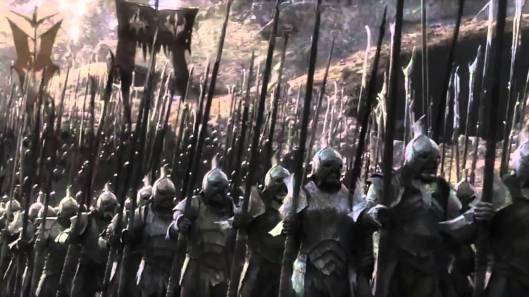
veer between the practical and the fantastic and the films clearly follow them—
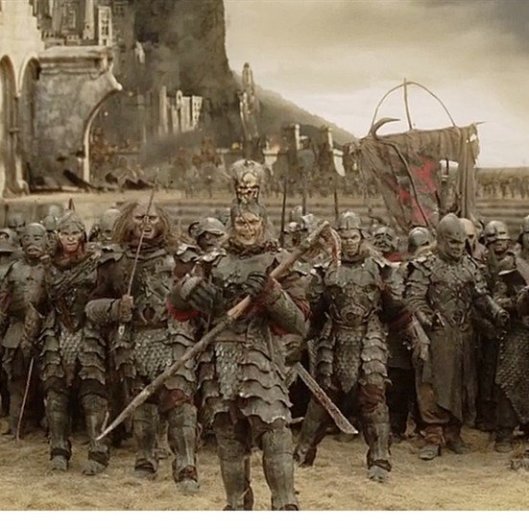
image21orcimage22orcimage23orc

How does JRRT describe the orc weaponry?

The first armed orc we see appears in Moria:

“His broad flat face was swart, his eyes were like coals, and his tongue was red; he wielded a great spear…Sam, with a cry, hacked at the spear-shaft, and it broke.  But even as the orc flung down the truncheon and swept out his scimitar…” (The Fellowship of the Ring, Book Two, Chapter 5, “The Bridge of Khazad-dum”)

The orcs who pursue the Fellowship through Moria have similar weapons:

“Beyond the fire he saw swarming black figures:  there seemed to be hundreds of orcs.  They brandished spears and scimitars which shone red as blood in the firelight.”

After the death of Boromir, however, Aragorn, Gimli, and Legolas find a different kind of orc:

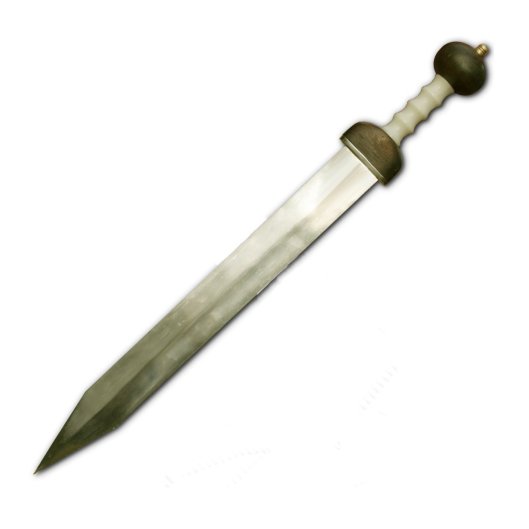
“There were four goblin-soldiers of greater stature, swart, slant-eyed, with thick legs and large hands.  They were armed with short broad-bladed swords, not with the curved scimitars usual with Orcs: and they had bows of yew, in length and shape like the bows of Men.” (The Two Towers, Book Three, Chapter 1, “The Departure of Boromir”)

So far, we’ve seen spears
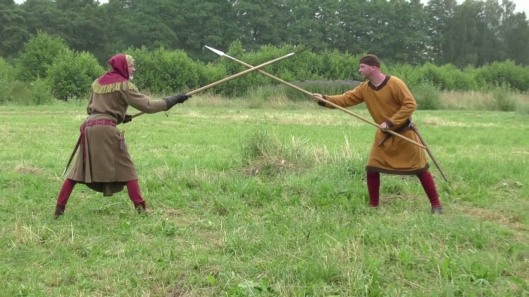
image24spears

and scimitars

image25scim

and now we can add to that “short broad-bladed swords”.  Perhaps Tolkien is thinking of the medieval “arming sword”
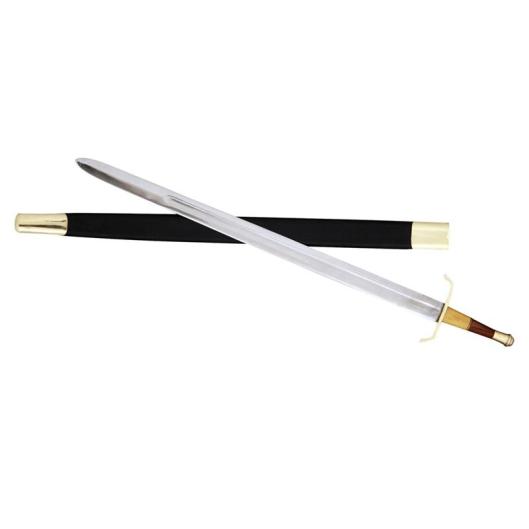
image26arming

or even the Roman gladius?

image27gladius.jpg

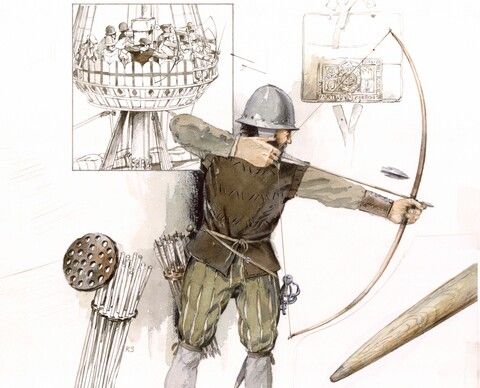
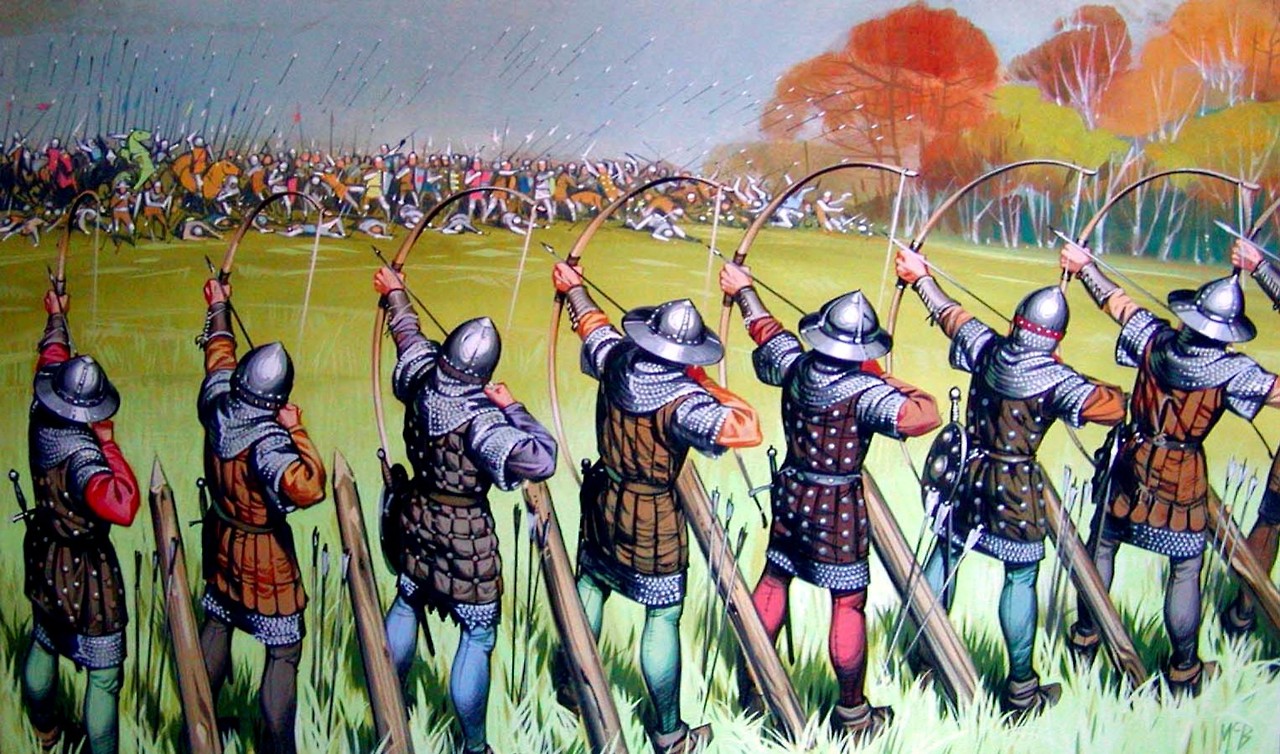
When we add “bows of yew, in length and shape like the bows of Men”, we immediately see the classic English longbow.
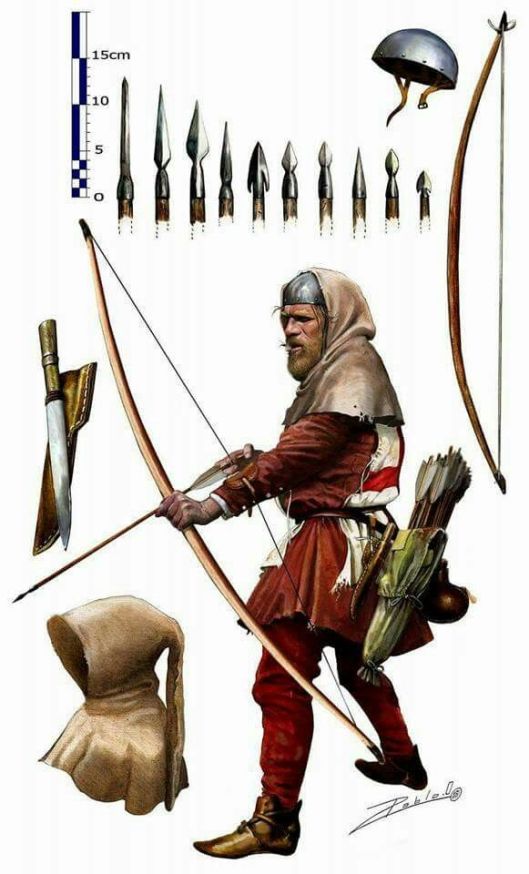
image28longbowman.jpg

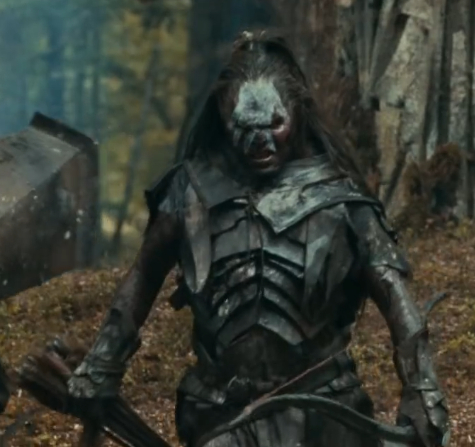
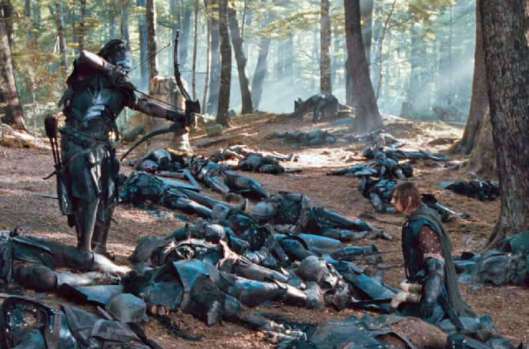
This doesn’t quite match with the first orc bowman we see in the films, however, “Lurtz”—
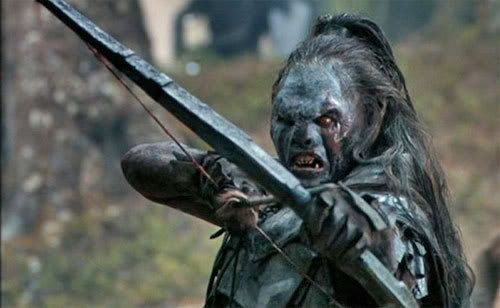
image29lurtz.jpg

image30lurtz.jpg

who appears to have some sort of recurved bow, possibly composite, of the sort the Mongols used
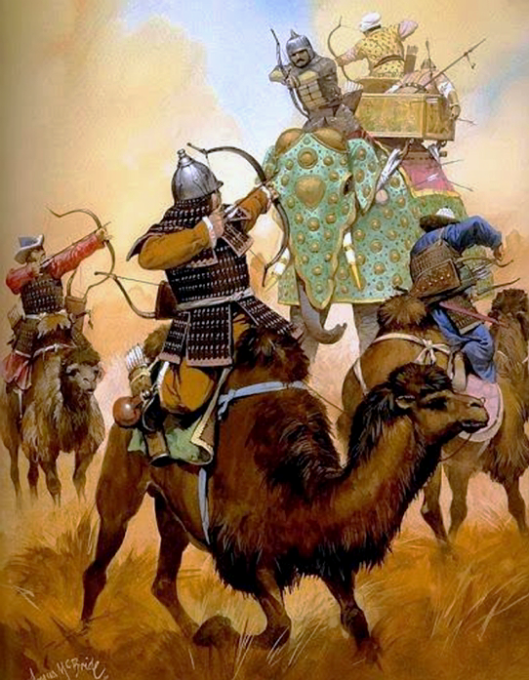
image31mongol

even though, from the white hand on his face, he is supposed to be one of those “goblin-soldiers” from Isengard.

As we were looking through Tolkien’s text, we wondered where he would have gotten his ideas for weapons from.  If the basis, as we imagine it, would have been his background in medieval literature, then he might have gone to the library and found an old standard work, Sir Samuel Meyrick’s (1783-1848)
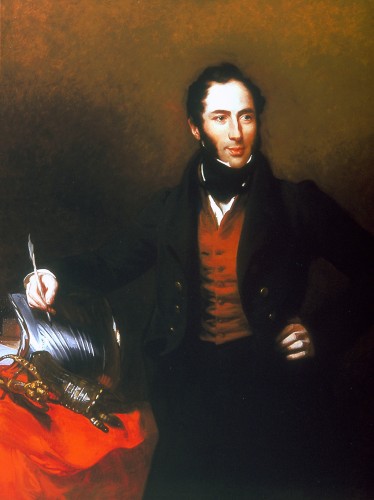
image32meyrick.jpg

An Inquiry Into Ancient Armour, As It Existed in Europe, Particularly in Great Britain, From the Norman Conquest to the Reign of Charles the Second, first published in 1824.  (Here’s a LINK if you’d like to look at this text for yourself.)
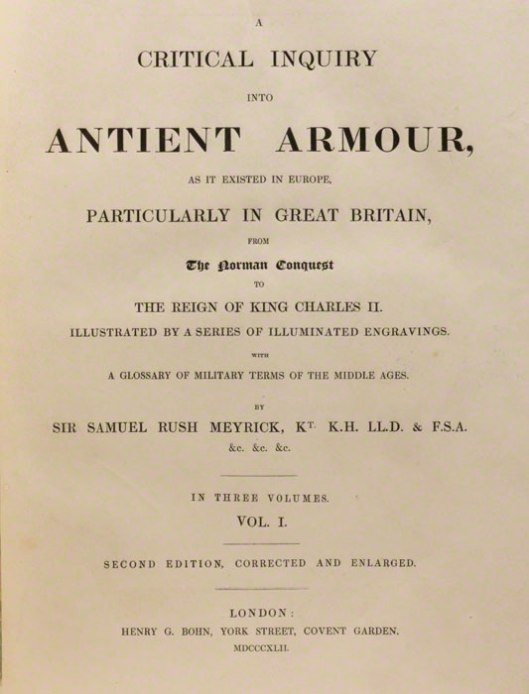
image33mey

Meyrick was the first great English specialist in armor and the later editions of his work (in 3 volumes) have wonderful early hand-colored plates, all based upon surviving armor, tombs, manuscripts, and any other period materials he could gather.
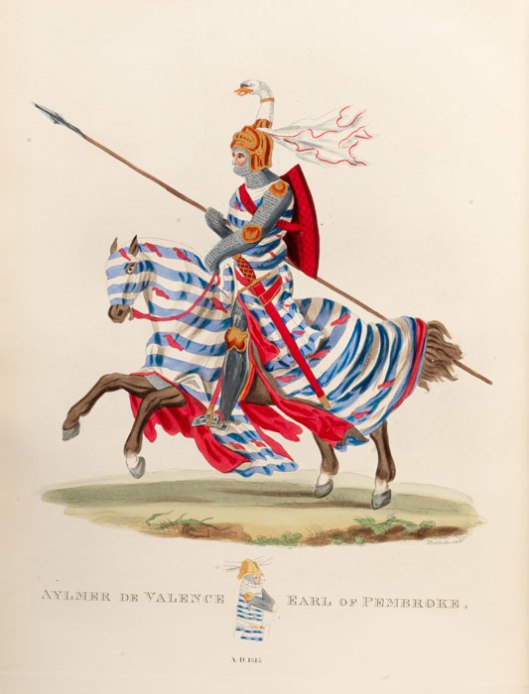
image34meyill.jpg

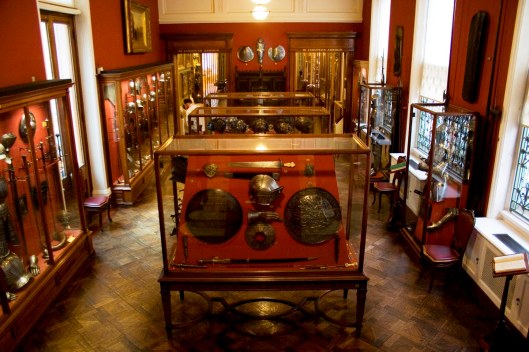
If JRRT wanted to see such things for himself, he would have found more exotic weapons in the Pitt-Rivers Museum in Oxford,
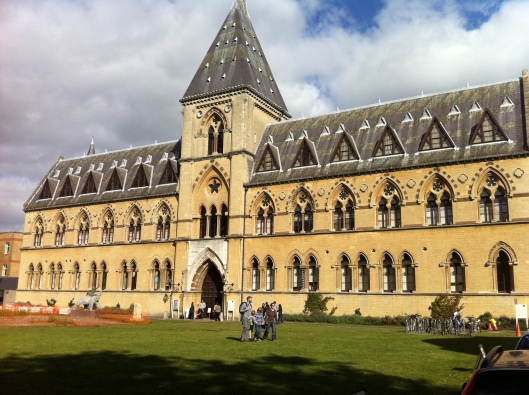
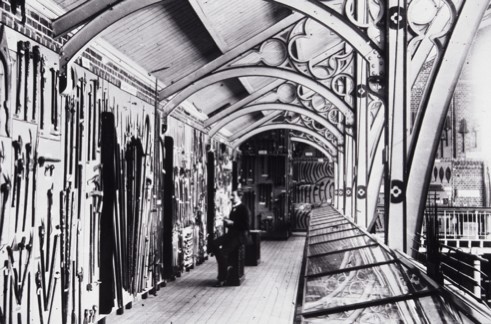
image35pittriversimage36pitt

or he could have traveled up to London to see the Wallace Collection
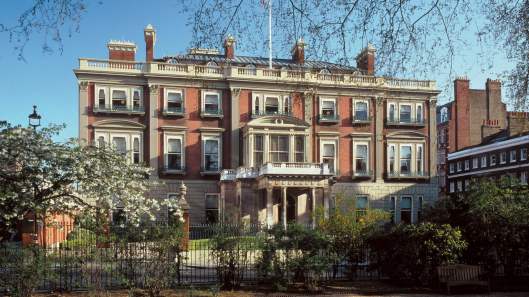
image37wallaceimage38wallace

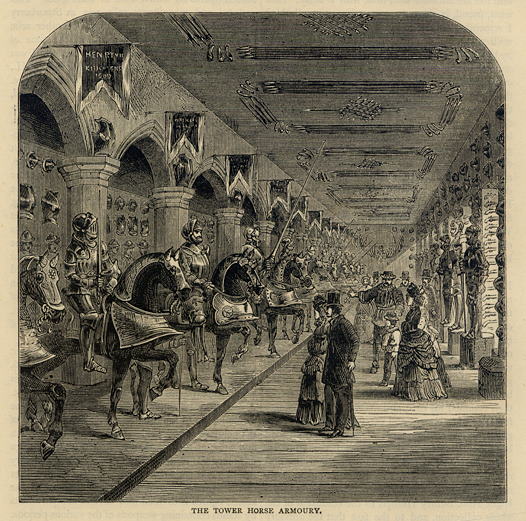
or, best of all, he could have visited the Tower of London, with its massive collection (the organizing of which had earned Meyrick his knighthood in 1832) of medieval arms and armor, which had been available to the public in some form even before Meyrick’s time—here’s a Victorian tour.
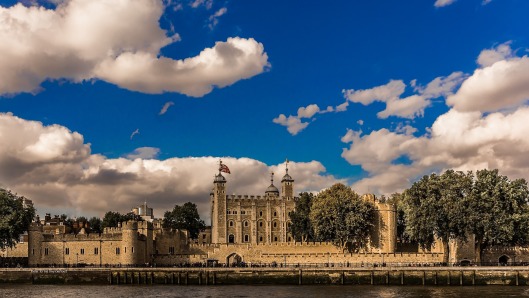
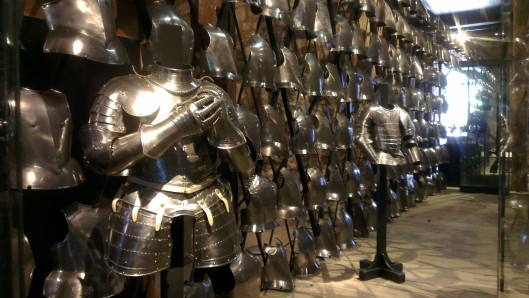
image39tower

image40towerimage41tower

It could have been all of the above, of course, but it seems to us that the descriptions we’re reading are actually not really very specific—“mace”, “spear”, “scimitar”—only those short swords and bows suggest anything more detailed.  Perhaps, then, Tolkien was inspired by something else—perhaps he had read, perhaps even possessed, as a boy, books like Howard Pyle’s 1903 The Story of King Arthur and His Knights
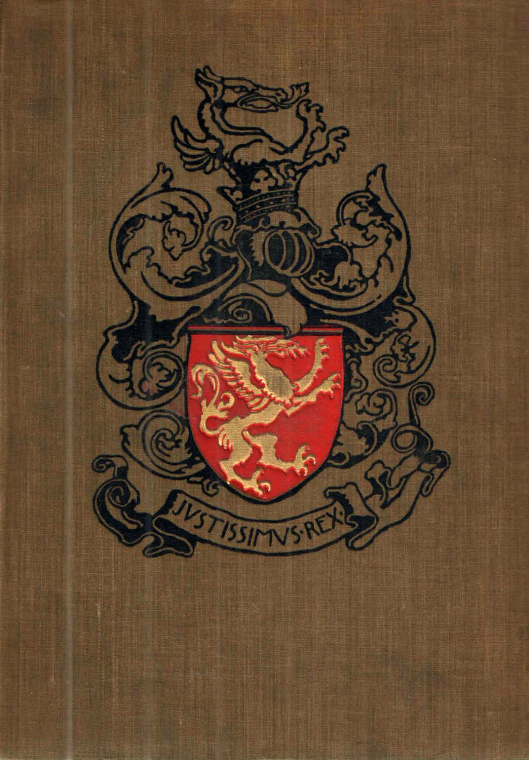
image42pyle

and been inspired by its illustrations.
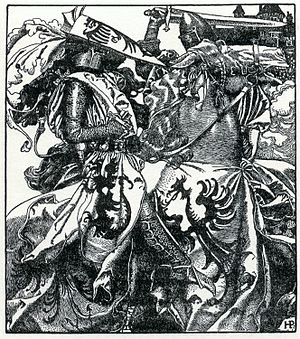
image43pyle

There were plenty of illustrated tales like this—Conan Doyle’s The White Company (first published in serial form in 1891),
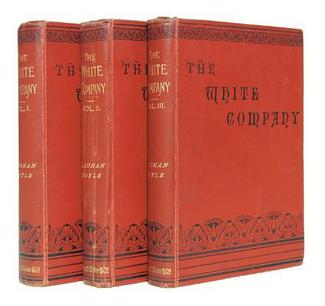
image44whitecompany.jpg

or Robert Louis Stevenson’s The Black Arrow (serial 1883, book 1888).
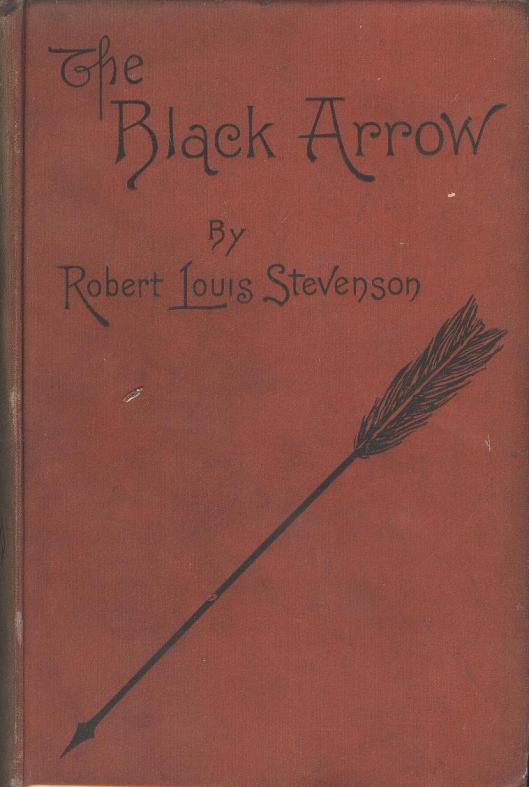
image45blackarrow.jpg

With any and all of that background, we wonder what he might have made of this, however, an orc sword from the films which looks more like something manufactured from a car part than the product of a medieval armorer…
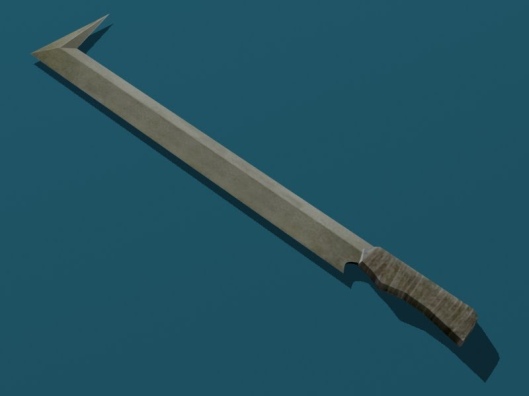
image46sword.jpg

Thanks, as ever, for reading.

MTCIDC

CD

ps

If car part weapons don’t bother you, you might be interested in this LINK—it’s an early article on ideas for weapons and armor for the Jackson films.
A Longer Stretch

19 Wednesday Jul 2017

Posted by Ollamh in Fairy Tales and Myths, Heroes, Imaginary History, J.R.R. Tolkien, Literary History, Narrative Methods

≈ Leave a comment

Tags

Achilles, Angelica Kauffmann, Athena, Bard the Bowman, Circe, cyclops, Dora Wheeler, English Longbowmen, Errol Flynn, Greek, Henry VIII, Heracles, His Dark Materials, John William Waterhouse, Laertes, Lord Asriel, N.C. Wyeth, Odysseus, Paris, Patroclus, Penelope, Philip Pullman, Philoctetes, Portsmouth, Priam, Robin Hood, Sparta, Stelmaria, Telemachus, The Amber Spyglass, The Golden Compass, The Illiad, The Mary Rose, The Odyssey, The Subtle Knife, Tolkien, Troy

Welcome, dear readers, as always.
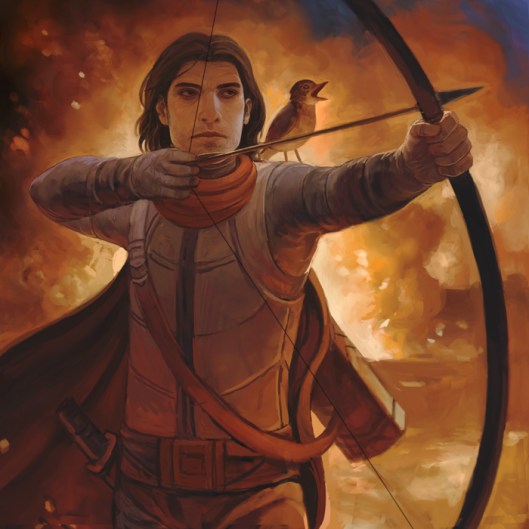
In our last posting, our central focus was upon Bard the Bowman and what he might have looked like.
image1bardjeffchang.jpg
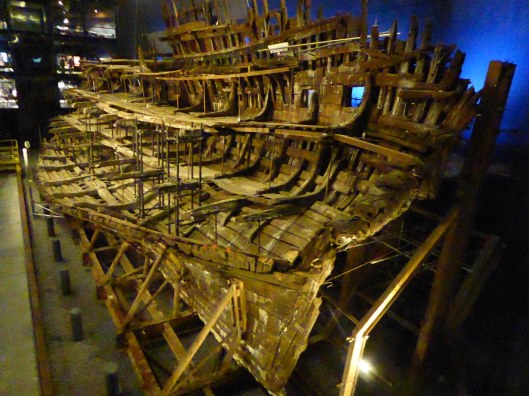
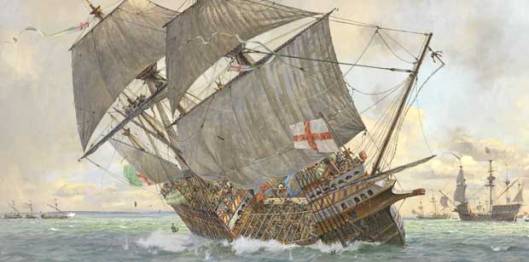
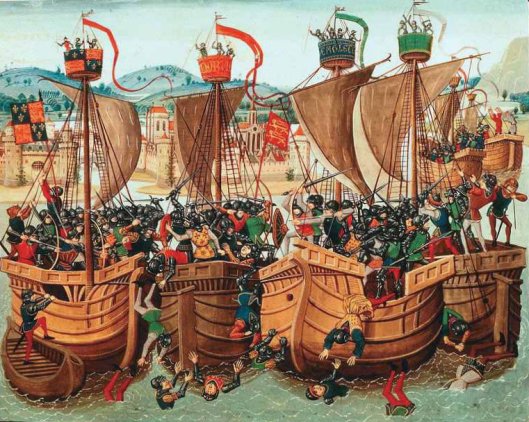
As we do so often, we tried to use something from the history of our world to help us to flesh out JRRT’s description. In this case, we looked at Henry VIII’s battleship (a carrack, in the vocabulary of the period), the Mary Rose, which sank during a naval battle with the French on 19 July, 1545.
image2amrsinks.jpg
The ship was raised in 1982 (you can see the large surviving section of the hull in the Mary Rose museum, in Portsmouth, England).
image3amr.jpg
It was full of artifacts—and of crew.
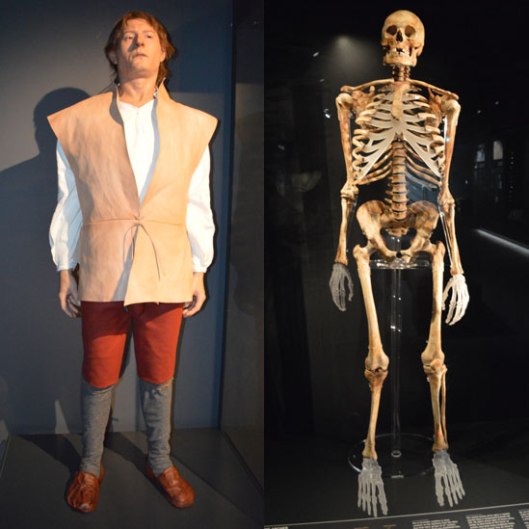
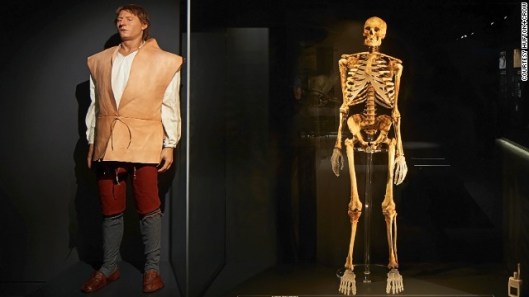
Because she sank so suddenly—and in the middle of a battle—almost none of the crew of 400 and more escaped. One of those trapped was this man.
image3mrarcher.jpg
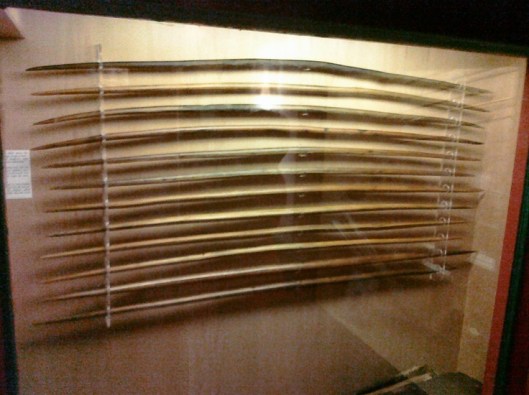
His was among the roughly 90 skeletons well-enough preserved to allow for forensic exploration. That exploration, and the subsequent brilliant reconstruction, brought back to life a man about 6 feet (182cm) tall, with a powerfully-developed upper body. His build, certain characteristic marks of stress, and the fact that over 130 longbows and several thousand arrows were found in the wreck, led the archaeologists to see this man as an archer. We, in turn, then used him as the body-model for Bard.
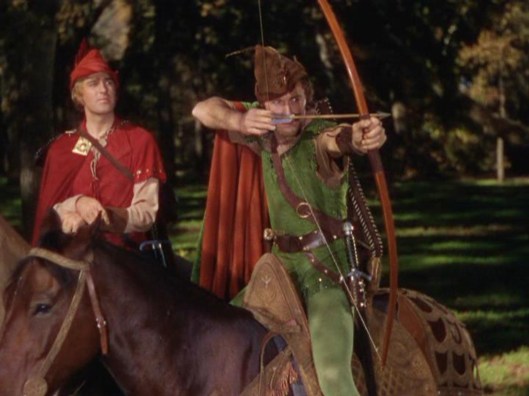
But “bowman/archer” to us, who are crazy for adventure, immediately brought back Robin Hood, first in what we believe to be his best 20th-century incarnation, Erroll Flynn,
image3eflynrhood.jpg
in the classic 1938 film.
image4poster.jpg
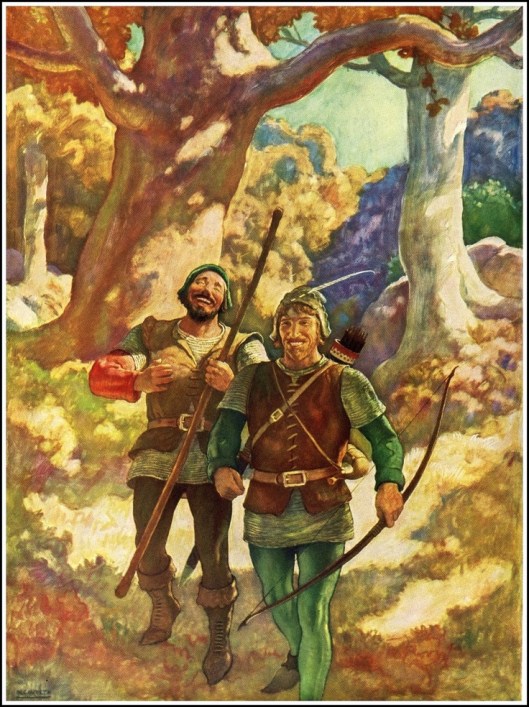
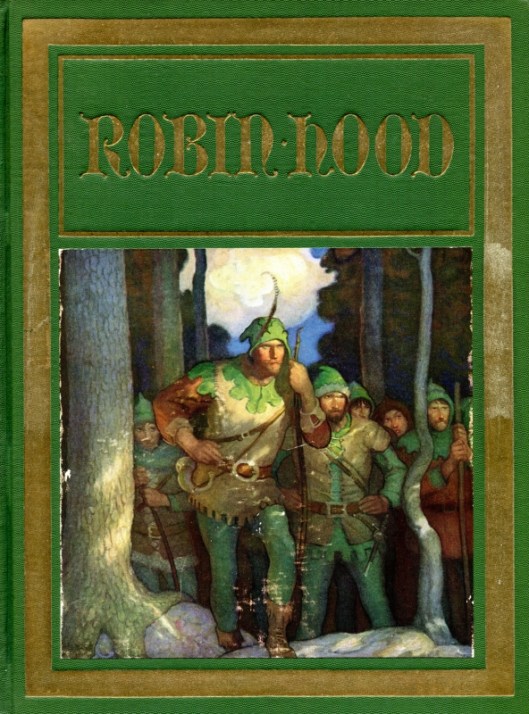
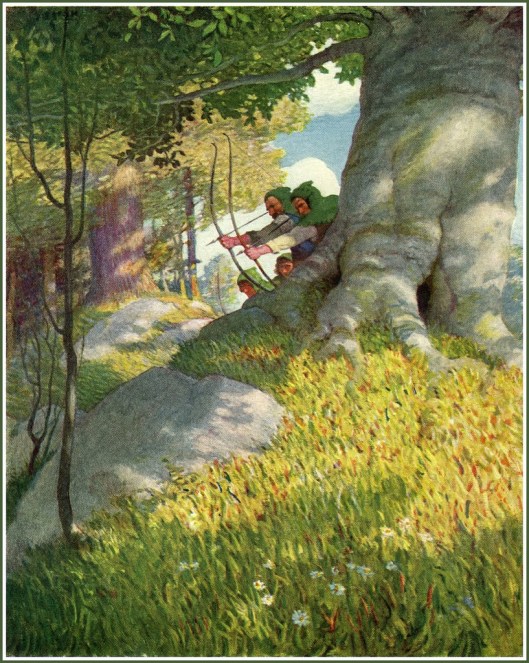
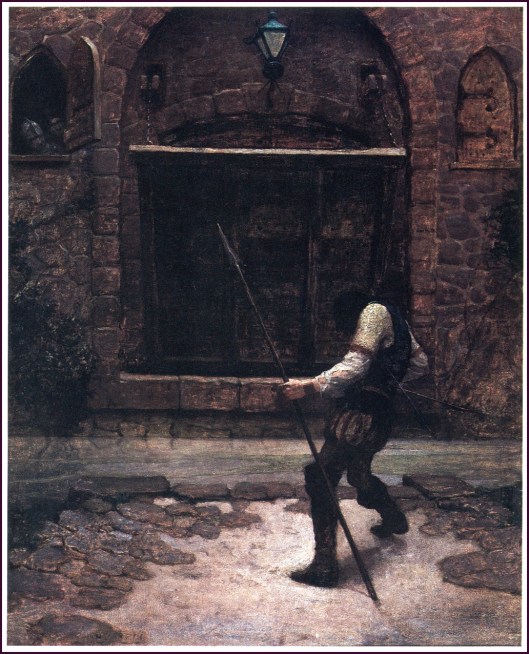
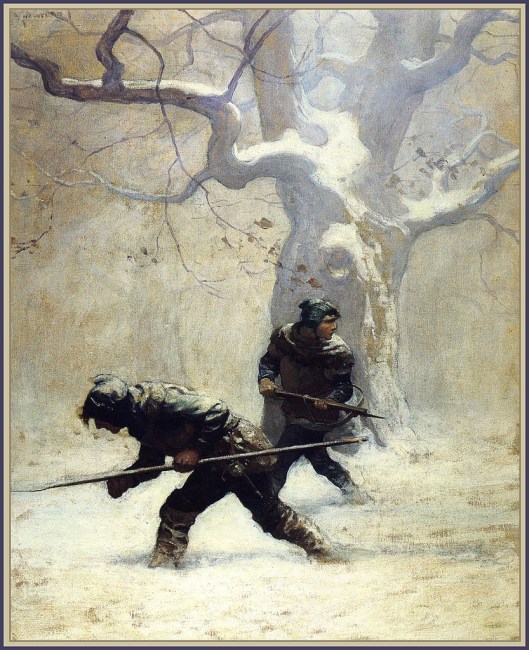
To which we would add N.C. Wyeth’s illustrations
image5wyeth.jpg
for the 1917 Robin Hood.
image6bookcover.jpg
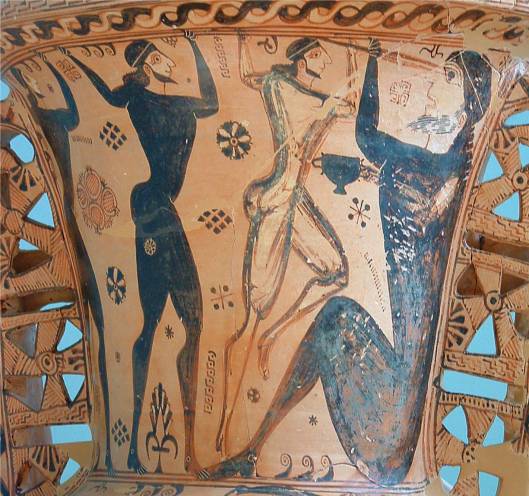
Thinking about bowmen in adventure stories then took us back to the first big adventure story in western literature, the Odyssey, and its hero, Odysseus, who has two associations with bows, but who, oddly enough, is never depicted as an archer, but rather as a trickster, who uses his brains to escape everything from a one-eyed giant
image7.jpg
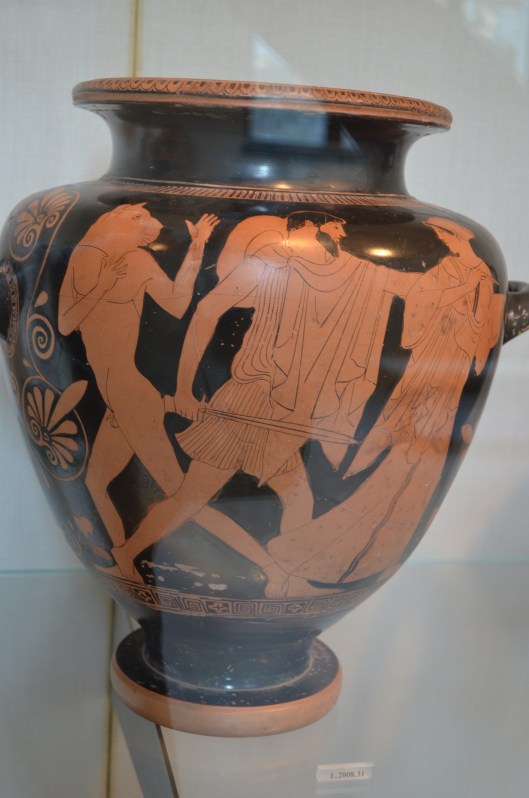
to an enchantress, Circe, who has already turned a good number of his crewmen into ham-on-the-hoof.
image8herccirce.jpg
One of our favorite illustrations of Circe is by John William Waterhouse, which he worked on from 1911 to 1915.

image9jwwaterhousecirce.jpg

The leopards in this version of the painting (in another, apparently, they are bears) reminded us of the snow leopard which is Lord Asriel’s demon, Stelmaria,
image10goldcomposter.jpg
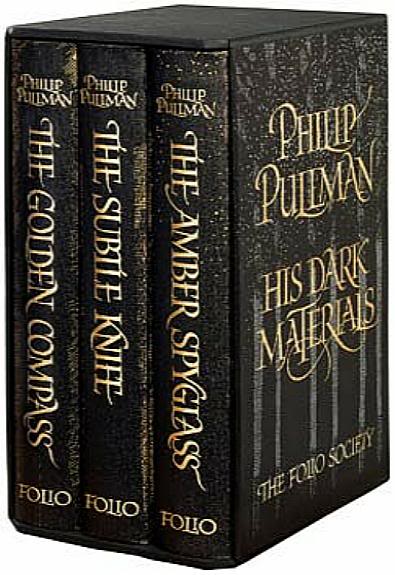
in Philip Pullman’s trilogy
image13pullman.jpg
His Dark Materials, the three books being The Golden Compass (in the British edition, Northern Lights), 1995, The Subtle Knife, 1997, and The Amber Spyglass, 2000.
image12hisdarkmaterials.jpg
These are remarkable books—full of vivid characters and places-other-than-here-and-now, and we have read and reread them since they first appeared. If you haven’t read them, we would add only one proviso: there is a strong anti-religious theme throughout and some devout readers might have difficulty with Pullman’s views. If you are willing to imagine that this is a critique of beliefs in other worlds than our own, however, we would unqualifiably recommend them. (Our favorite characters are Lyra, the fierce and fearless heroine, and Iorek Byrnison, a panserbjorn, or armored bear. There is a film version, released in 2007, based upon The Golden Compass, which we enjoy, although it has simplified and changed certain elements in the original story.)
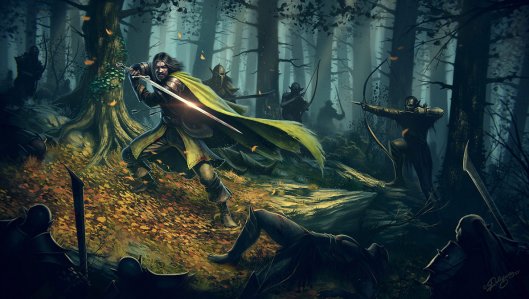
image14aposter.jpg
But back to Odysseus the archer…
In the story of Troy, the famous archer is Paris, the son of Priam, the king of Troy, who uses his skill to kill Achilles, the most famous and powerful hero on the Greek side (in this pot illustration, almost by accident!).
image14parisshootsachilles.jpg
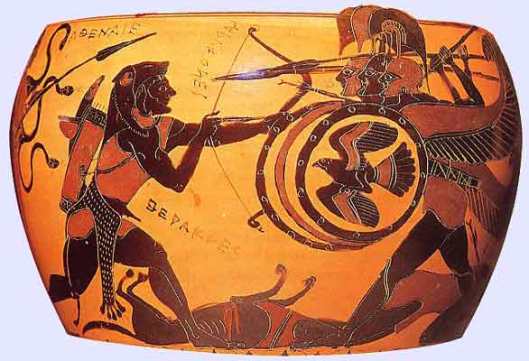
Paris, according to some accounts (there are a number of them and they can differ in all sorts of details), is then killed by Philoctetes, who has inherited Heracles’ bow. A prophecy lies behind that bow: it seems that it is a necessary element in the conquest of Troy.
image15hercger.jpg
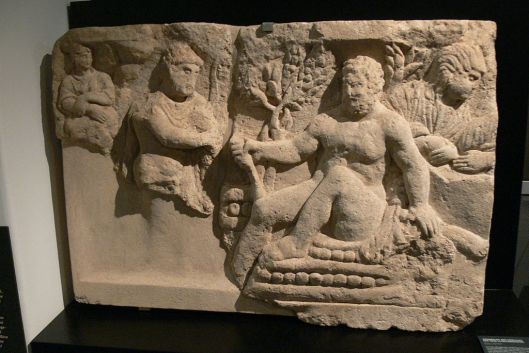
When Heracles is suffering from a poisoned shirt, and builds a pyre to cremate himself
image16herconpyre.jpg
it is Philoctetes who is willing to light it and, in return, he receives Heracles’ bow. On the way to Troy, however, Philoctetes is bitten by a snake and left behind on an island.
image17philoct.jpg
In some versions of the story (including Sophocles’ play), Odysseus acts as the main agent for, initially, bringing the bow to Troy, and then for bringing Philoctetes himself. So far, that is Odysseus’ only connection with archery. He is depicted as clever—being part of a successful scouting expedition in which a Trojan ally is killed and possibly the creator of the wooden horse—but, otherwise, his main accomplishments lie in beating up a trouble-maker at a public meeting and, at the funeral games which Achilles holds at the end of the Iliad for his companion, Patroclus, winning a footrace.
This footrace, however, leads us from Troy westward, as well as backward in time.
For all that there are these two huge things called the Iliad and the Odyssey, they are not all of the Troy story. They themselves are just collections of smaller stories stitched onto a plot outline. In the case of the Iliad, that outline is very basic: a. Achilles leaves war; b. Greeks substitute other warriors for Achilles; c. Achilles returns to war. The Odyssey is actually even more basic: man tries to find a way to sail home from Troy. Along with these, there are fragments from other parts of the tradition and lots of separate tales which often act as back-stories, probably invented when the popularity of the Troy tale in general caused a demand for singers to supply more material—the ancient equivalent of fan fiction!
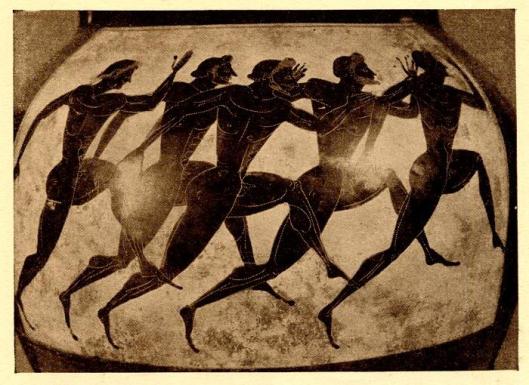
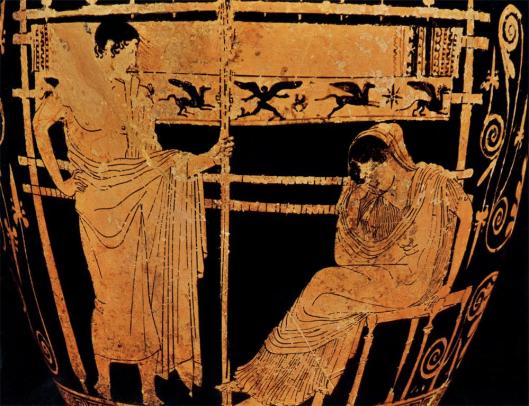
One of these back-stories explains why Odysseus wins at the funeral games: he must already have been a famous foot racer, as he wins his bride, Penelope, from her father, the king of Sparta, in a footrace.
image20footrace.jpg
Not long after that, having gotten Penelope pregnant, he is off to Troy and won’t return for twenty years.
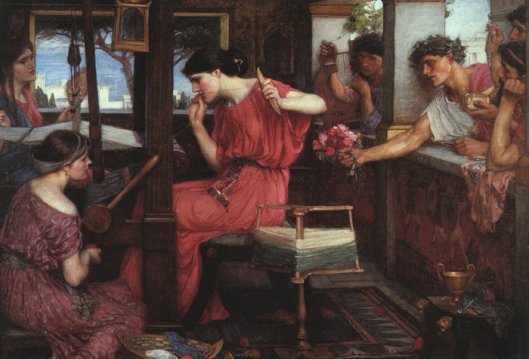
In the meantime, Penelope gives birth to a son, Telemachus, who grows up fatherless and in a household increasingly besieged by young men who claim that Odysseus must be dead and demand that Penelope must marry again.
image19jwwpenelope.jpg
To delay being forced to accept one of these obnoxious toads, Penelope (our favorite in the story, along with Athena) claims that, before she can choose, she has to finish a shroud she is weaving for Odysseus’ father, Laertes. (That’s Telemachus, on the left.)
image20aapenandtel.jpg
In fact, although she weaves by day, she un-weaves by night and continues to do so for three years before one of her maids tells the suitors what’s going on.
image20penrav.jpg
(This is a remarkable piece of work designed by the painter/designer, Dora Wheeler, 1856-1940.
image21dorawheeler.jpg
It is not a painting, but, in fact, an embroidery—silk stitched into silk cloth—and a remarkable artifact—and, unfortunately, the only surviving one of its kind.)
In year 19, Odysseus comes home—disguised by Athena as an old beggar, to keep him safe until he can plot his revenge and gather allies. In the meantime, Penelope (who, to us, is as quick-witted as her wandering husband) announces an archery contest, the winner to—win her. Besides the trickiness of the target (having something to do with shooting through axes—scholars have argued over just how that works for years), there is the bow: it has such a pull that only her husband, she says, has ever been able to string it.
image22penelopebowangelicakauffmann.jpg
(This illustration is by another wonderful woman artist, Angelica Kauffmann, 1741-1807. Here’s a self-portrait.)
image23.jpg
Needless to say, the suitors are unable to do it, but that dirty old beggarman can—and does—and then, with a little help from Telemachus and a servant or two—not to mention Athena—proceeds to slaughter the suitors and clean house.
image25connolly.jpg
image26deathofsuitors.jpg
So, remembering the Mary Rose archer (as well as Bard), can we now imagine Odysseus’ build? And, for that matter, Robin Hood’s?
image27rharchcontest.jpg
Thanks, as ever, for reading!
MTCIDC
CD

A Long Stretch

12 Wednesday Jul 2017

Posted by Ollamh in Heroes, J.R.R. Tolkien, Literary History, Military History, Military History of Middle-earth

≈ Leave a comment

Tags

Agincourt, Archery, arrow bag, arrows, Bard the Bowman, Battle of Poitiers, Casula Mellita, Crecy, Edinburgh, English Longbowmen, Esgaroth, Greco-Roman, gunpowder, harpoon, Hundred Years War, Laketown, longbows, Medieval-Renaissance, Napoleonic Wars, Naval Warfare, Pinkie Cleugh, Roman, sailing, Smaug, The Hobbit, The Mary Rose, Tolkien

Welcome, as always, dear readers.

In the past, we had a posting on Bard the bowman

image1jeffchanbard.jpg

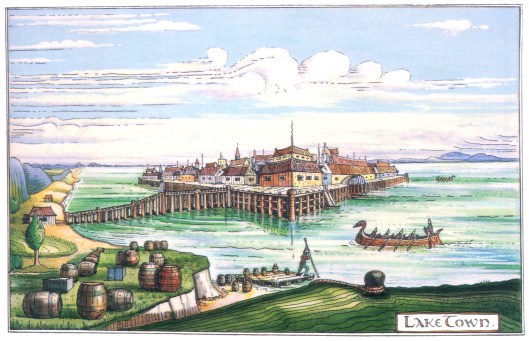
who rescued Esgaroth (Laketown)

image2esgaroth.jpg

from the attack by Smaug.

image3smaug.jpg

(We especially like this Jeff Chan Bard not only because Bard is depicted as he is in the book, as an archer, but also because it includes the thrush who tells him where he is to strike.)

In that previous posting, we suggested that JRRT pictured Bard as looking and acting like one of the English longbowmen of the Hundred Years War

image4longbowman.jpg

rather than as a harpooner, as in the film.

image5bard.jpg

image6aharpoongun.jpg

Since that posting, we did a second which included bowmen, just a few weeks ago, about Mogul-knife and arrow wound, and now we would like to add a third.

As we’ve mentioned before, one of us is preparing a new university course to be taught in the autumn on the history of warfare.  As you can imagine, this is a big subject, but, in the process of shaping it, we want to include a week on developments in naval warfare over the centuries.  So far, we’ve divided it into several parts:

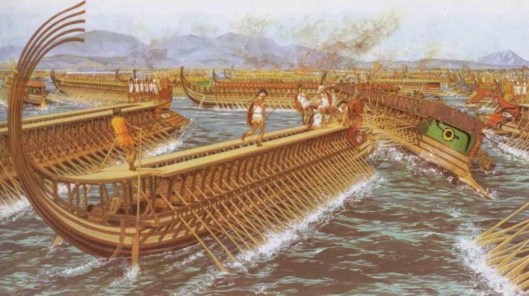
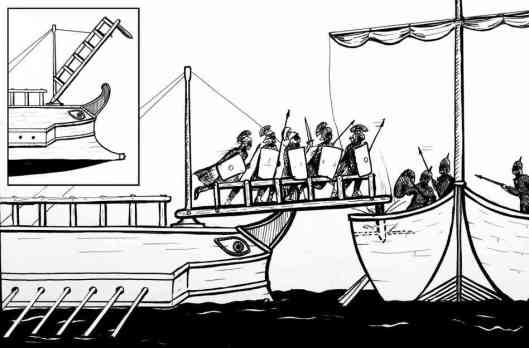
a. Greco-Roman

image6agrknavbat.jpg

image6romannavbat.jpg

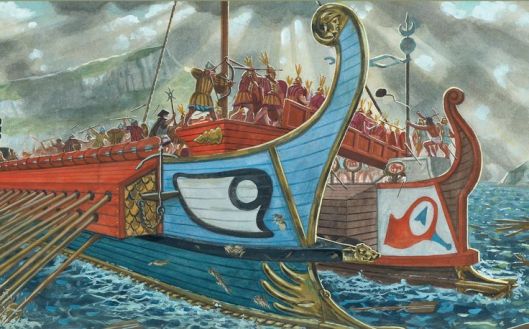
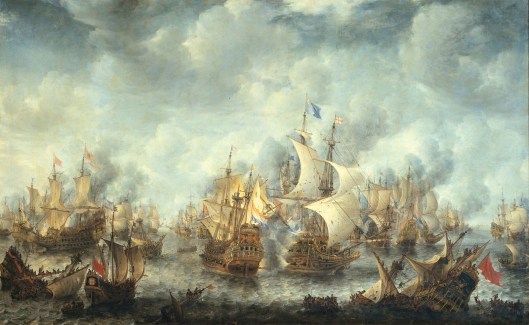
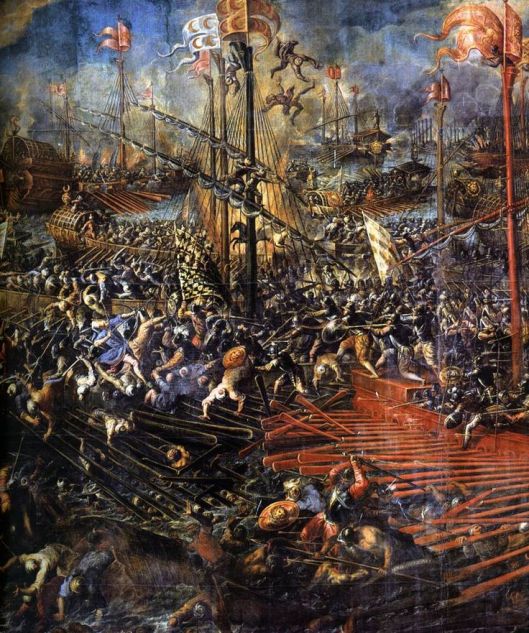
b. medieval-renaissance

image7sluys.jpg

image8lepanto.jpg

c. the age of sail

image9glorious.jpg

d. ironclads

image10monitor.jpg

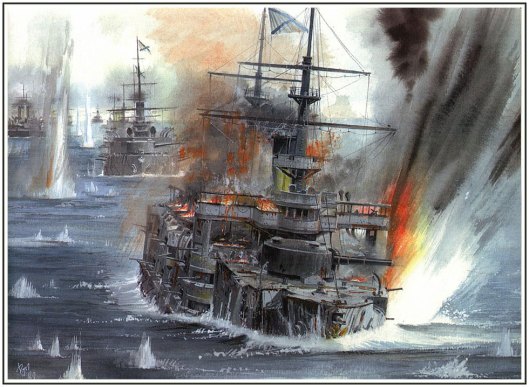
e. dreadnoughts

image11tsushima.jpg

While working on the Medieval/Renaissance section, we were reminded of what might be the most famous Renaissance shipwreck:  the sinking of The Mary Rose, 19 July, 1545.

image12mrsinks.jpg

Medieval naval battles had been primarily infantry battles transferred to the sea, as had been Roman practice.  That practice was a story in itself—the traditional Roman explanation was that they were land-fighters and so had invented a device, called a “corvus”–that’s “crow” in English—probably because the point at the enemy’s end was a bit like a pecking beak.  This was a kind of gangplank which, dropped onto the enemy’s ship, stuck in place and allowed Roman marines to rush across and deal with their opposite numbers.

image13corvus.jpg

image14medbat.jpg

Things began to change with the invention of cannon in western Europe.  (The history of gunpowder in the Far East is its own subject—and one we urge those interested to have a look at.  Here’s a LINK to get you started.)  Used first on land perhaps by the 13th century, the first recorded use of cannon on a ship dates from 1338 (and here’s a LINK to naval artillery, in case you want to know more).

With cannon, you could stand off from an enemy ship and—your choice—cripple it by destroying its sails and rigging—or sink it with holes below the waterline.

image15renbat.jpg

Boarding, as the Romans had, was still a possibility, of course, and provided the extra benefit, if the boarding was successful, of allowing for the acquisition of an extra ship.  This could be added to your fleet or sold and the profits shared among the sailors—or, actually, if we go by Napoleonic British standards, the profits went to everybody at the top, including admirals who weren’t even present at the capture, with a teeny amount remaining for the seamen who’d actually taken the prize.

image16renbat1.jpg

To do that boarding, Romans—and medievals—had loaded their ships with soldiers, and the Mary Rose was no exception, its surviving records suggesting that there were about 200 soldiers in a crew of approximately 400-450.

As a number of longbows have been recovered from the wreck,

image17mrlongbows.jpg

this would suggest that many of those soldiers were archers.

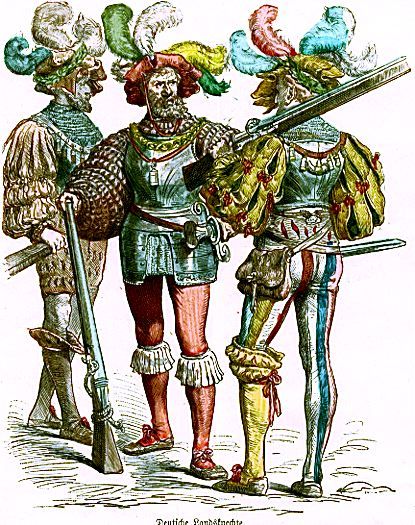
These, along with the artillery (and perhaps a small number of arquebuses?  To our current knowledge, none has been recovered from the ship, but, certainly, by 1545, they were in common use—at the battle of Pinkie Cleugh, east of Edinburgh, in 1547, the English army had several hundred German mercenary arquebusiers),

image18grmarq.jpg

would have supplied the missile weapons of the ship.

image19mrbowman.jpg

Not only were large numbers of artifacts discovered in the Mary Rose, but the skeletons of perhaps half its crew and about 90 of those were intact enough to warrant further study.  For our purpose, one, in particular is very interesting.

image20mrarcher.jpg

Discovered in the hold, he was a large man for his time, about 6 feet (about 183cm).  As well as revealing that he would have had a powerful build, his skeleton displayed repetitive stress injuries to his upper body.  There is discussion as to the pull-weight (how much muscle power it takes) of the longbow of the medieval/Renaissance period, estimates ranging from 90 to about 150 pounds (we’re sorry that we can’t readily convert this, as it isn’t pounds of weight, but pounds of force—the general idea is that it would have taken huge muscle power in either case), but, for a bow as tall as a bowman, this would have demanded great muscular strength—which would then have, over time, put huge stress upon an archer’s body.  This has then led archaeologists to suggest that he was a bowman.

And this brings us back to Bard, the actual archer, and a suggestion as to what he might have looked like.

JRRT only says:

“But there was still a company of archers that held their ground among the burning houses.  Their captain was Bard, grim-voiced and grim-faced…Now he shot with a great yew bow, till all his arrows but one were spent.”  (The Hobbit, Chapter 14, “Fire and Water”)

“a great yew bow” makes us think of the English bowmen we’ve mentioned before, and those we believe were in Tolkien’s mind, the victors at the battles of Crecy (1346), Poitiers (1356), and Agincourt (1415).

image21agincourt.jpg

To produce archers who could pull such powerful bows (and fire up to 10 arrows a minute, as we’ve mentioned in a previous posting), English archers began training as boys and continued throughout the years—as athletes of the bow, they had to keep in shape.  Such training and exercise would then have produced men like that discovered on the Mary Rose—big-shouldered, strong-armed—and given to the subsequent damage inflicted on the body by archery wear-and-tear.

So, might we then see Bard as not only “grim-voiced and grim-faced”, but “broad-shouldered and imposing”?  To which we can add this from The Hobbit:

“In the very midst of their talk, a tall figure stepped from the shadows.  He was drenched with water, his black hair hung wet over his face and shoulders, and a fierce light was in his eyes.”  (Chapter 14, “Fire and Water”)

All of which gives us:  “tall, black-haired, fierce, grim-voiced and grim-faced”—and, at our suggestion, “broad-shouldered and imposing”—a worthy portrait of Bard the Dragon-slayer.

Thanks, as ever, for reading!

MTCIDC

CD

PS

It’s not known what our Mary Rose archer was doing in the hold at the time the ship went down, but perhaps he was seeking to transfer extra ammunition to the main deck?  That ammunition would probably have been in the form of coarse linen bags carrying 24 arrows each—here’s a modern reconstruction

image22arrowbag.jpg

and here’s the LINK to the site from which it comes.  This belongs to an amazing woman whose website is full of her life on the edge of the Great Plains, in Kansas, USA—home of Dorothy of the OZ books, of course– as well as her photos of things like the reconstructed bag in the photo above.  Below is a picture of the Kansas tall grass prairie.

image23kansas.jpg

Too Narrow Escapes

05 Wednesday Jul 2017

Posted by Ollamh in Fairy Tales and Myths, J.R.R. Tolkien, Literary History, Narrative Methods

≈ Leave a comment

Tags

Abu al-Qasim Khalaf ibn al-Abbas al-Zahrawi, Agincourt, Albucasis, Anglo-Scots, arrow removal, arrows, bascinet, bodkin points, Dagger, David Gwillim, elf shot, Elverskud, English Longbowmen, healing, Henry V, John Bradmore, Kenneth Branagh, Laurence Olivier, Medieval, Morgul Knife, Nazgul, Neolithic, Niels W Gade, Otherworld, Philomena, poignard, Prince Henry, Renaissance, Shrewsbury, St Mary Magdalen, Tolkien, Two Men in a Trench, Weaponry, Weathertop, Wraiths

Welcome, dear readers, as ever.

We had what we thought was a very interesting idea for this posting—about the effect of a Morgul-knife and that of something from western European—perhaps specificially Germanic?—folk tradition, an “elf shot”.

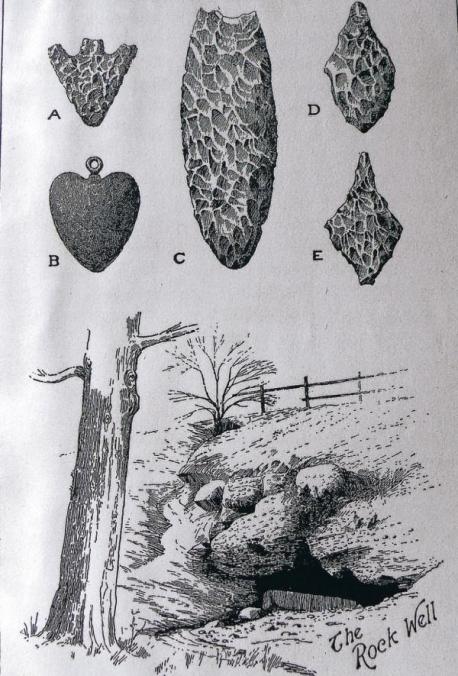
“Elf shot” was once thought to be a condition in humans and animals, caused by an arrow fired by someone from the Otherworld. There was a long tradition of methods of healing, which could be a difficult problem because the entry wound might be nearly—if not completely—invisible and it took special skills to find it and to remove the arrowhead, while, in the meantime, the victim slowly withered away.

When it was supposedly removed, by someone who was believed to have competence in such matters, the arrowhead was probably actually a Neolithic point, like one of these—

image1elfshot.jpg

picked up from somewhere and whatever had actually caused the withering was a disease brought on in the natural order of things, but all of the stories we’ve read about the belief and cures appear to end with the point removed—and the sufferer in recovery.

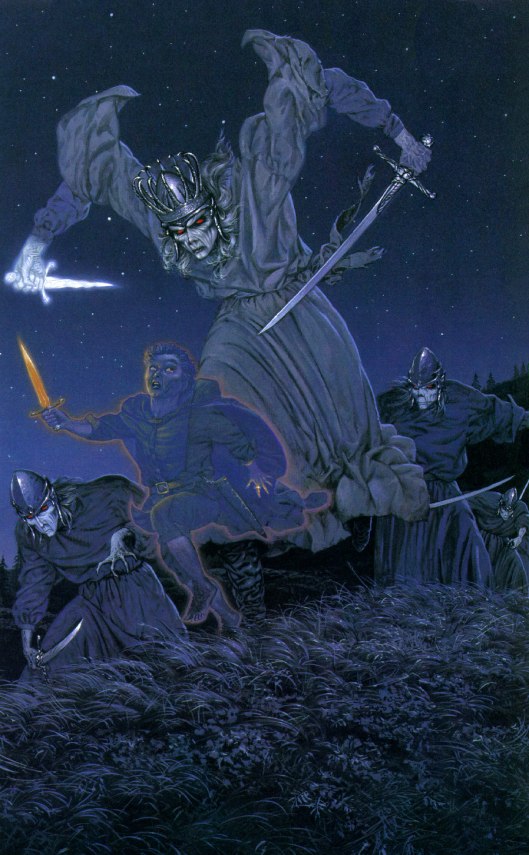
Hmm—we thought. Something familiar about this. On Weathertop, Frodo is attacked by Nazgul.

image2weathertop.jpg

“The third was taller than the others: his hair was long and gleaming and on his helm was a crown. In one hand he held a long sword, and in the other a knife; both the knife and the hand that held it glowed with a pale light. He sprang forward and bore down on Frodo.” (The Fellowship of the Ring, Book One, Chapter 11, “ A Knife in the Dark”)

The figure stabs Frodo, but the weapon which did it was no ordinary one, as Strider indicates, lifting

“…up a long thin knife. There was a cold gleam in it. As Strider raised it they saw that near the end its edge was notched and the point was broken off. But even as he held it up in the growing light, they gazed in astonishment, for the blade seemed to melt, and vanished like a smoke in the air, leaving only the hilt in Strider’s hand.” (The Fellowship of the Ring, Book One, Chapter 12, “Flight to the Ford”)

In the film, this is represented by something which looks like a medieval fighting dagger.

image3morgula.jpg

It seems that its purpose was not to act as a secondary weapon in combat, however, but to inflict a fatal stabbing wound. As Gandalf says,

“They tried to pierce your heart with a Morgul-knife which remains in the wound.” (The Fellowship of the Ring, Book Two, Chapter 1, “Many Meetings”)

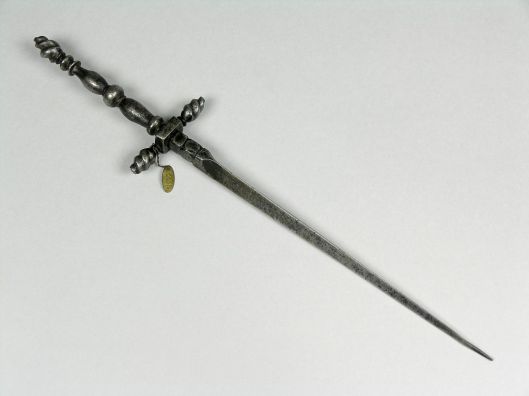
Thus, we could imagine it looking like a Renaissance poignard, like this one—

image4morgulb.jpg

Whatever its look, its point is embedded in Frodo’s shoulder and, like someone elf-shot, Frodo is fading and, also like the victim of elf-shot, the wound has changed.

“ ‘What is the matter with my master?’ asked Sam in a low voice, looking appealingly at Strider. ‘His wound was small, and it is already closed. There’s nothing to be seen but a cold white mark on his shoulder.; “ (The Fellowship of the Ring, Book One, Chapter 12, “The Flight to the Ford”)

Neither Strider nor, in turn, Glorfindel, can heal Frodo and even Gandalf was daunted:

“Elrond is a master of healing, but the weapons of our Enemy are deadly. To tell you the truth, I had very little hope; for I suspected that there was some fragment of the blade still in the closed wound. But it could not be found until last night. Then Elrond removed a splinter. It was deeply buried, and it was working inwards.” (The Fellowship of the Ring, Book Two, Chapter 1, “Many meetings”)

We thought, then, that we could write a very interesting post about the parallels between that knife and elf-shot—and then we found that it had already been done: see “Elf-shot” in Drout, Michael, ed., J.R.R. Tolkien Encyclopedia, London: RKP, 2006.

We are not given to despair, however, and something Gandalf said interested us: “Then Elrond removed the splinter.”

As our regular readers know, we take particular pleasure in linking things of Middle-earth with those of the medieval world in which JRRT spent his scholarly life. In this case, we were reminded of the removal of part of another weapon—the head of an arrow (just like elf-shot) from the head of a real person: Prince Henry of England—the future Henry V (1386-1422) of Shakespeare’s wonderful play. (We grew up on the 1944 Laurence Olivier version, which is full of color and action—the reconstruction of the Globe Theatre at the opening alone is worth watching—although, as we’ve gotten older, we’ve come to prefer both Kenneth Branagh’s 1989 filming and the 1979 David Gwillim version which we mentioned in our last posting.)

image5olivier.jpg

When he was fifteen, Prince Hal commanded the left wing of his father’s army at the battle of Shrewsbury, on 21 July, 1403.

image6shrewsmap.jpg

(Note: this is an old map, based upon the tradition that the church of St. Mary Magdalen was built on the site of the battle.

image7stmarymag.jpg

In 2006, the Anglo-Scots archaeologists, Tony Pollard and Neil Oliver, led a team to probe the churchyard, where it had long been held that there was a burial pit for some of the dead of the battle. After geophysical exploration and the digging of several test trenches, no trace of such a pit was found, leaving the tradition to remain, at least for the moment, just that. If you are interested to learn more, their visit to the site is from their 2-year series, Two Men in a Trench.  Here’s a LINK—you can watch the whole show—and we recommend the entire series for a combination of light-hearted looniness and serious archaeology.)

The battle began with a barrage of arrows from the longbowmen on each side.

image8longbowmen.jpg

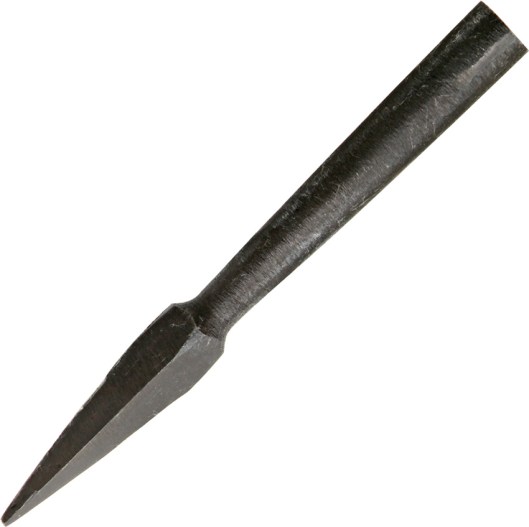
The arrows had what were called bodkin points—

image9bodkin.jpg

which were specifically designed to penetrate plate armor of the very sort which the prince was wearing.

image10armor.jpg

A practiced longbowman could fire ten arrows a minute and his original battlefield issue would have been two 24-arrow linen bundles. We don’t know how many archers both sides had, but even if each had no more than a thousand, at the end of in a single minute, that would have meant 20,000 arrows in the air.

image11arrowstorm.jpg

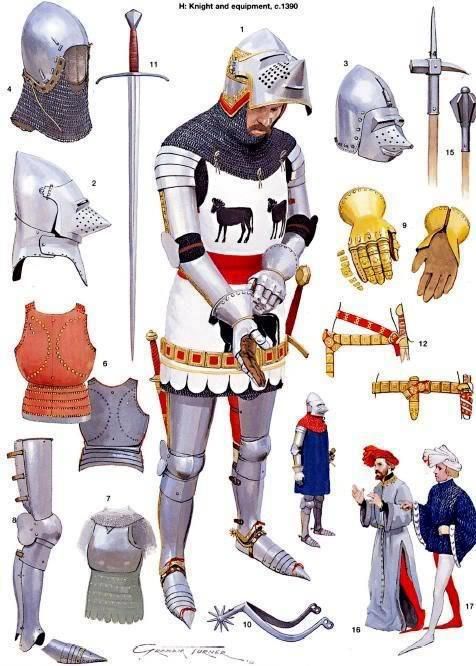
If Hal was wearing a bascinet—as you see on the knight above–because of the shape of the helmet, many of the arrows might have glanced off. Perhaps Hal was wearing an open-face bascinet

image12openfacebasc.jpg

or had raised his visor, to give a command, say, but, instead of bouncing off, an arrow hit him in the face, below his eye (there is argument as to which eye) and penetrated his head. Had it gone all the way through, it might have been possible to saw off the arrow head and remove both arrow and shaft, but the arrow head had sunk into the bone at the back of the skull, instead. (Remarkably, it is reported that Hal continued to direct his troops, even in this condition. Tough people, those medievals!) And the first attempt at extraction had broken off the shaft, leaving the arrowhead still embedded. And this, of course, is what made us think of Elrond and the Morgul-knife splinter.

image13halarrow.jpg

We aren’t told how Elrond found or removed it. A medieval tool for removing arrowheads had been invented by the brilliant Arab physician with the splendid name of Abu al-Qasim Khalaf ibn al-Abbas al-Zahrawi, reduced by westerners to “Albucasis” (936-1013). (Here’s a LINK—this is a man of science well worth knowing much more about!)

image14alzahrawispoon.jpg

This might have worked, had the arrow been in a less delicate place, as well as not barbed, but Hal’s wound was just below his brain stem and next to all sorts of delicate blood vessels and the arrowhead was a bodkin point.

At this point, John Bradmore appeared. Interestingly, he had been a goldsmith, as well as a practicing surgeon, and the two seem to have come together as he tackled the problem. First, while he considered the possibilities, he kept the wound open and cleaned. Then he invented this—

image15extractor.jpg

It’s a simple but cunning design: the two outer parts are gradually introduced into the wound and spread it gently open. In the middle is a screw mechanism which could insert itself into the socket of the arrowhead. When it is firmly in place, the outer parts are closed as far as possible and then the whole, with, Bradmore hoped, the arrowhead, could be extracted from the wound. And it was. And then Bradmore washed out the wound with wine and kept it clean during the healing process. A completely remarkable piece of work, from the use of antisepsis to the invention and manufacture of the necessary tool.

Hal not only survived the operation (he had reportedly been dosed with henbane, which would have stupefied him but, given the wrong dose, would have killed him within a couple of days), but lived another 19 years to beat the French at Agincourt, marry the daughter of the king of France, and, for a brief time, imagine seeing his son succeed him on the now-joint thrones.

As for Bradmore, he wrote a medical treatise, Philomena, the title being a learned joke– St. Philomena was an early Christian martyr, part of whose martyrdom included surviving arrow attacks—before dying, a very well-off man, in 1412.

(If you’d like to see a very well-done visual segment on Bradmore and Prince Hal, here’s a LINK for a NOVA program of some years ago.)

In both cases, the patient survived, although it would appear that Prince Hal had a better recovery than Frodo. Then again, Hal, for all that his wound was life-threatening, hadn’t been hit by an elf-shot, but only by a mortal arrow, while the hobbit was almost doomed to the Nazgul world by a Morgul-knife.

Thanks, as ever, for reading.

MTCIDC

CD

PS

One of our favorite Danish composers, Niels W. Gade (1817-1890), has left us a very beautiful dramatic cantata, Elverskud—“Elfshot” (1854). Based upon a Danish ballad, it’s the story of Sir Oluf, who prefers the Elf king’s daughter to his own human bride and the consequences of that preference. If you’d like to hear it—we recommend it and much other music by Gade, as well—here’s a LINK.

PPS

This posting is our 151st! Five more will make exactly three years of weekly postings. Thank you for reading, and we hope to keep you interested for another 150 postings at least.

Bolts and Arrows

06 Wednesday Apr 2016

Posted by Ollamh in Films and Music, Heroes, J.R.R. Tolkien, Military History, Military History of Middle-earth, Narrative Methods, Uncategorized

≈ Leave a comment

Tags

Agincourt, anti-aircraft gun, ballista, Bard the Bowman, Battle of Crecy, Battle of Poitiers, Border Reivers, Boromir, crossbow, Crossbow Bunnies, English Longbowmen, harpoon, Hundred Years War, John Singer Sargent, latch, Maximus, N.C. Wyeth, Peter Jackson, Richard the Lionheart, Robert Louis Stevenson, Robin Hood, Roman d'Alexandre, Siege of Chalus, Smaug, Tangled, The Black Arrow, The Hobbit, The Lord of the Rings, The Mary Rose, Tolkien, Towton

In our review of the third Hobbit film, we questioned the use by Bard of something a little larger in the way of a missile than Tolkien had intended:

“Then Bard drew his bow-string to his ear. The dragon was circling back, flying low, and as he came the moon rose above the eastern shore and silvered his great wings.

‘Arrow!’ said the bowman. ‘Black Arrow! I have saved you to the last. You have never failed me and always I have recovered you. I had you from my father and he from of old. If ever you come from the forges of the true king under the Mountain, go now and speed well!’ ” (TH 307).

As Bard was firing this himself, we always envisioned him as an English longbowman.

englishlongbowman1330-15151.jpg

And this led us to think a bit about Tolkien’s possible sources, not only for Bard and his bow, but for that arrow–the real one, not the monster dart used in the film.

From any children’s history of England, Tolkien would have learned that longbowmen like the one shown above destroyed three brave French armies in the Hundred Years War, at Crecy (1346), Poitiers (1356), and Agincourt (1415).

hf54d67201.jpg

In the film, however, although Bard was depicted as an archer,

Bard-the-Bowman-bard-the-bowman-37670604-1920-1200.jpg

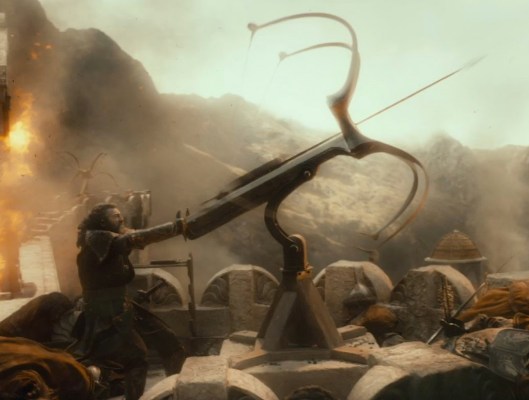
his weapon of choice looks like this.

bardwithharpoon.jpeg

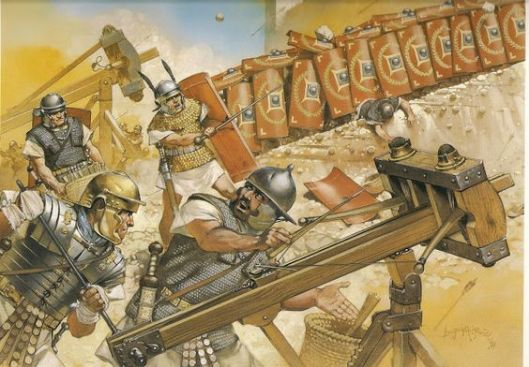
This reminds us of either a Roman ballista

b0370394e429c42631f520182c155a34.jpg

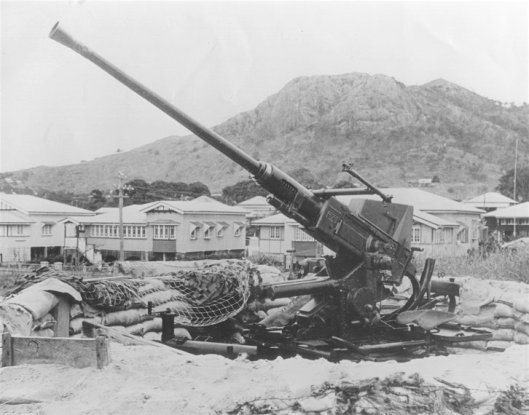
or an anti-aircraft gun

strandgun01.jpg

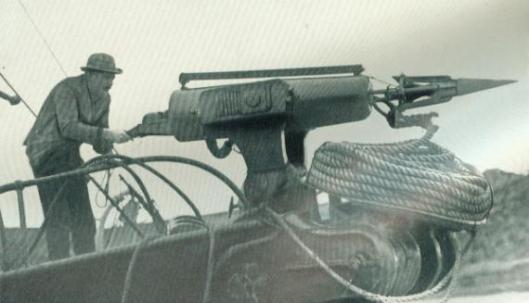
or, most especially,  a harpoon gun.

WhaleHarpGun1.jpg

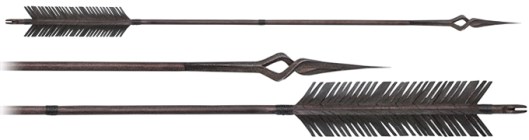
Especially when you look at this Bard’s arrow.

bard.jpg

Although we currently have no evidence for Tolkien’s sources, we can imagine that they might have included, among others, Robin Hood,

5616567327_fc899be2f1_b.jpg

the actions of actual Medieval archers like those at Agincourt or Towton (1461),

towton3.jpg

and a book, perhaps from boyhood, Robert Louis Stevenson’s The Black Arrow (1883/1888).  Stevenson (here in an 1880s portrait by John Singer Sargent)

rlsjss2.jpg

had originally published the story serially in a children’s magazine in 1883

ba1.jpg

before its publication in book form in 1888.

Blackarrowcoverscribners1888.jpg

The classic illustrations are by one of our all-time favorite illustrators, NC Wyeth, from 1917.

309642.jpg

We can’t resist showing you a few:

tumblr_l4istbR1JZ1qamjklo1_1280.jpgillus08.jpg09_blackarrow_alittlebeforedawn_wyeth.jpg

Although the bow is the weapon of choice of those who use the black arrow of the title (it’s employed for revenge), the hero  in fact, has a crossbow.

5616566731_49d251a1fc_b.jpg

The longbow requires years of training and great upper-body strength, leaving its mark on bowmen, as can be seen from this skeleton (and its reconstruction) brought up from the English warship, the Mary Rose,

sinking_3.jpg

which sank with most of its crew in 1545 and was brought up from the mud of the ocean floor in 1982.

130530121104-mary-rose-skeleton-horizontal-gallery.jpg

The crossbow is a mechanical weapon, which uses much less strength to draw

the_old_crossbow_archer_by_renum63-d8aaovo.jpg

and, in the more developed versions, even uses a crank to produce the necessary string tension.

8f106fadbe86ed34e5567bc7a90b89e2.jpg

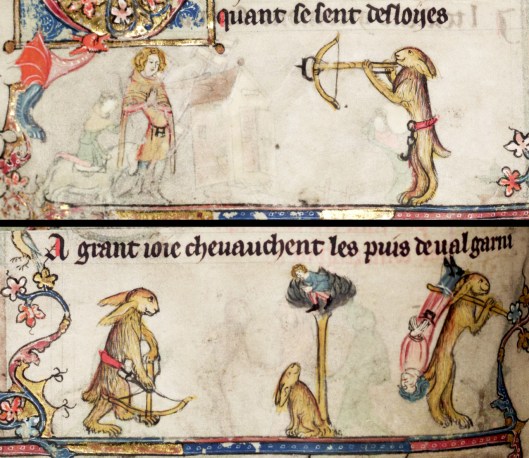
(And, just as in the case of NC Wyeth illustrations, we can’t resist medieval manuscript illustrations. Look at this pair of crossbow… bunnies from a copy of the Roman d’ Alexandre, circa 1340.)

romandalexandrec1340.jpg

This makes it a less romantic weapon, but equally deadly:  Richard the Lionheart was killed with a bolt/quarrel (what one calls a crossbow arrow) at the siege of Chalus in 1199.

Richard1TombFntrvd.jpg

(This creates another aside–about the hand weapon used as late as the 16th century by the Border Reivers of the land between northern England and southern Scotland–called a “latch”, it was the weapon of choice for those who couldn’t afford early hand guns but wanted to fire easily from the saddle.

Reiver-on-Horse.jpg

The soldiers in Disney’s wonderful movie, Tangled, carry them–notice the off-hand side pouch with a handful of bolts  for one on Maximus’ saddle–)

maxtangled.jpg

But we would  like to conclude with one more use of that black arrow.  A flight of them kills Boromir in The Lord of the Rings.

boromirarrows1.jpg

boromirearrows.png

Just as we began by pointing to the text and the actual bow and arrow which kill Smaug, and not the harpoon of the film, so we would criticize this scene.  In our opinion, it is stretched beyond believability, as well as beyond the text, taking away something of Boromir’s valor in combat with dozens of the enemy, in which he is gradually overcome.

boromir_by_deligaris-d5po92u.jpg

This is just as true for the brief scene of Aragorn at Boromir’s death.  What was simple in the text, thus making it more moving–just Boromir’s confession and Aragorn’s comforting him–becomes a soppy scene in which Boromir swears loyalty and calls Aragorn “my brother”, a liberty Aragorn-the-king-t0-be, would hardly have welcomed.  In the theatrical world, this is called “milking the scene” and here, we think it curdled.

Thanks, as always, for reading.

MTCIDC,

CD

The Two Sieges

22 Wednesday Jul 2015

Posted by Ollamh in Heroes, J.R.R. Tolkien, Military History

≈ Leave a comment

Tags

Agincourt, Aragorn, English Longbowmen, Faramir, French Knights, Gondor, Grond, Hoth, Jan Sobieski, Lithuania, Minas Tirith, Mumakil, Nazgul, Orcs, Ottoman, Peter Jackson, Poland, Rammas Echor, Rohan, Rohirrim, Siege Towers, Stone Throwers, The Lord of the Rings, Tolkien, Vienna, Winged Hussars

Welcome, as always, dear readers!

In this posting, we’re going to make another suggestion about a model for something in Tolkien’s work.

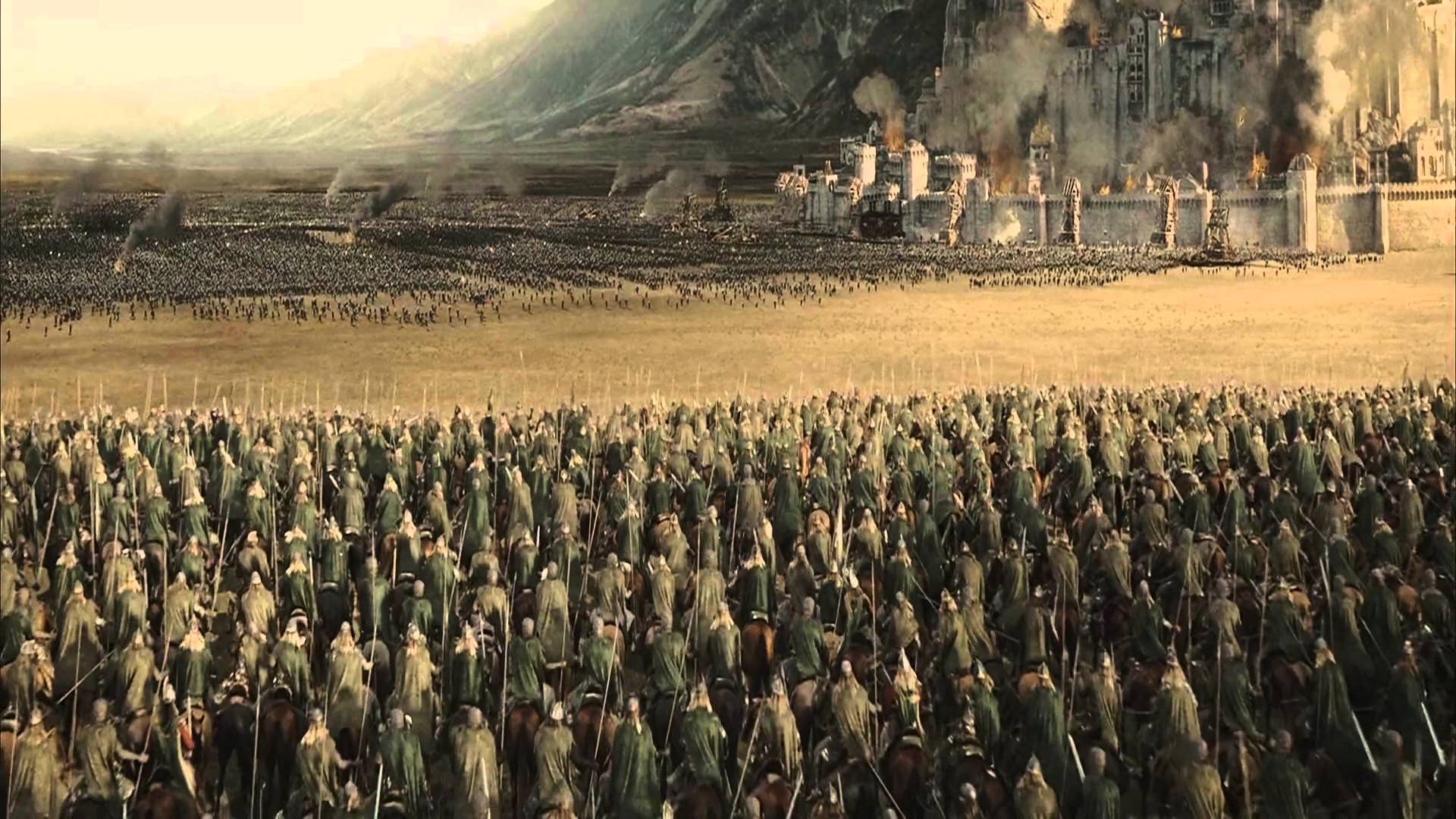
If you read us regularly, you know that our favorite part of P. Jackson’s The Lord of the Rings is anything to do with the Rohirrim. When we rewatch favorite scenes, the charge against the Orcs outside Minas Tirith is always first on our list (and high on our general list of cavalry charges—more on those in a future posting).

First, we see that massive Orc army marching up to the walls. (In the book, this is more dramatic: the Orcs blow two holes in the Rammas Echor, outflank the defenders, and drive them into retreat, which is where Faramir is badly wounded by an arrow.)

minas-tirith

Then they begin to attack with stone-throwers,

siege1

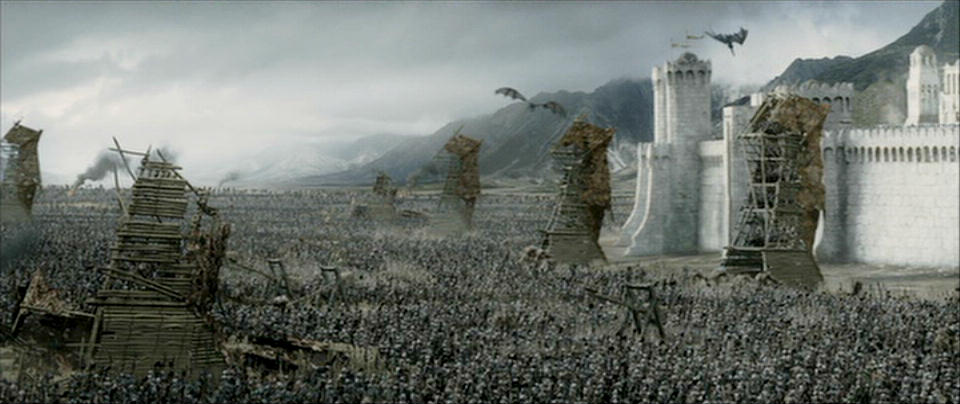
siege towers,

lotr-siege-towers

and, eventually a giant, flame-filled battering ram.

grond1

Things look increasingly desperate for Gondor as the Orcs press their attack, led by the Chief Nazgul.

witch_king_of_angmar_ii_by_dudeskindasketchy-d4d6uvd

And that’s when the Rohirrim appear.

rohirrimabouttocharge

And move to strike the Orcs from behind.

Charge_rohirrim

When the Orcs realize what’s happening, they try to stop the attack with bows.

archery

This immediately reminded us of the 1415 battle in which English longbowmen and their clever use defeated an army of brave French knights, Agincourt.

OLYMPUS DIGITAL CAMERA

Unlike Agincourt, however, arrows didn’t stop the Rohirrim, who sweep through the enemy—but are brought up short by the sight of a row of mumakil—giant war elephants—bearing down on them.

img-2845793-1-charge-1024x425

Seeing this scenario made us think of another attack by huge, lumbering things in a galaxy long ago and far away—

Battle_of_Hoth

The film goes on from there, including an attack by a ghost army, instead of by the actual forces brought from southern Gondor by Aragorn, but we want to back up a bit to the actual siege and another one which bears a strong resemblance to it.

For centuries, the Ottoman Turks had been expanding their dominions.

Ottoman_Empire_Map_1359-1856

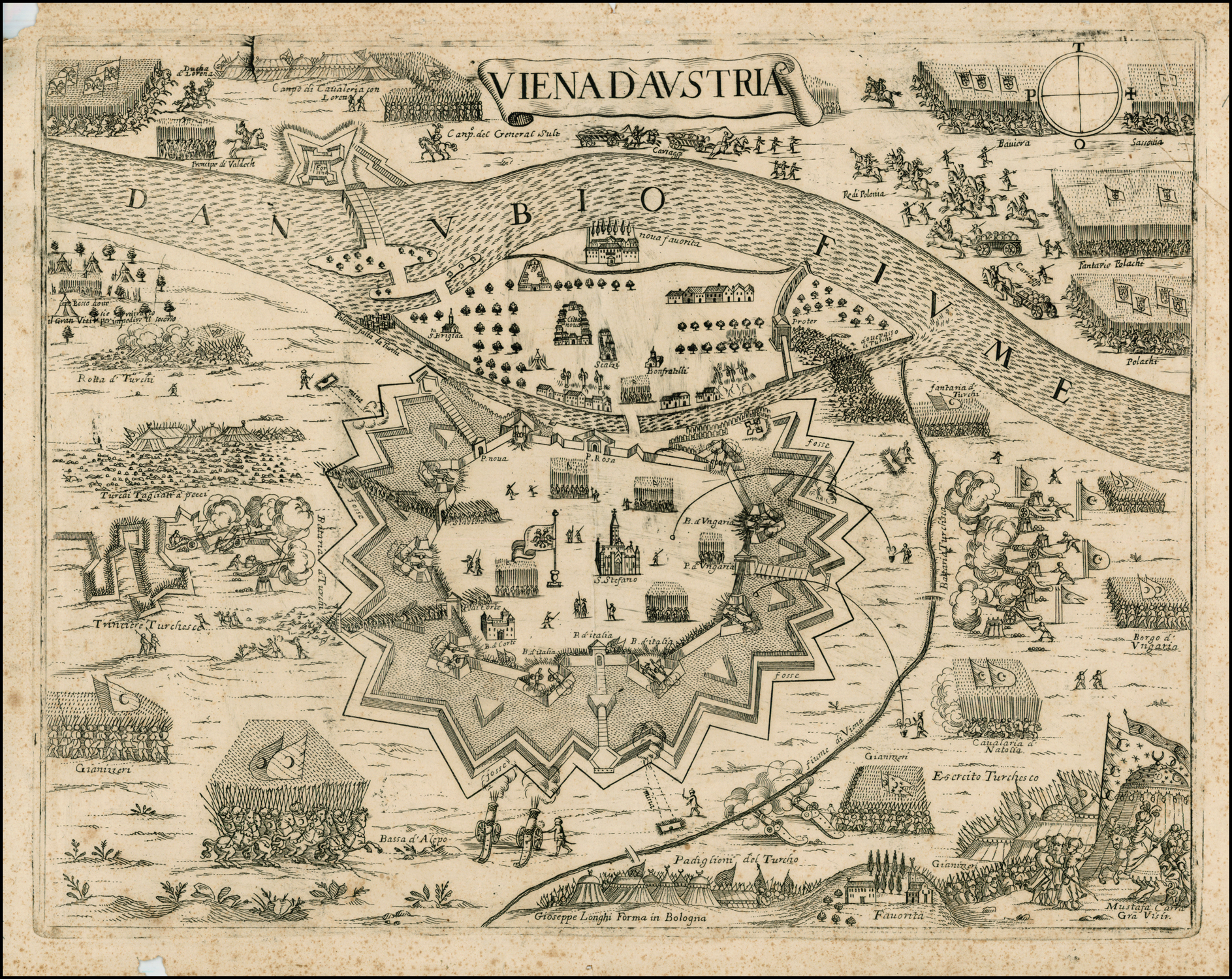
They had first reached Vienna in 1529,

Siegeofvienna1529

but had given up the siege. Now, however, in 1683, they were back.

Battle_of_Vienna_1683_map

Their attacks against a dwindling number of defenders in a crumbling town

1-vienna-1683

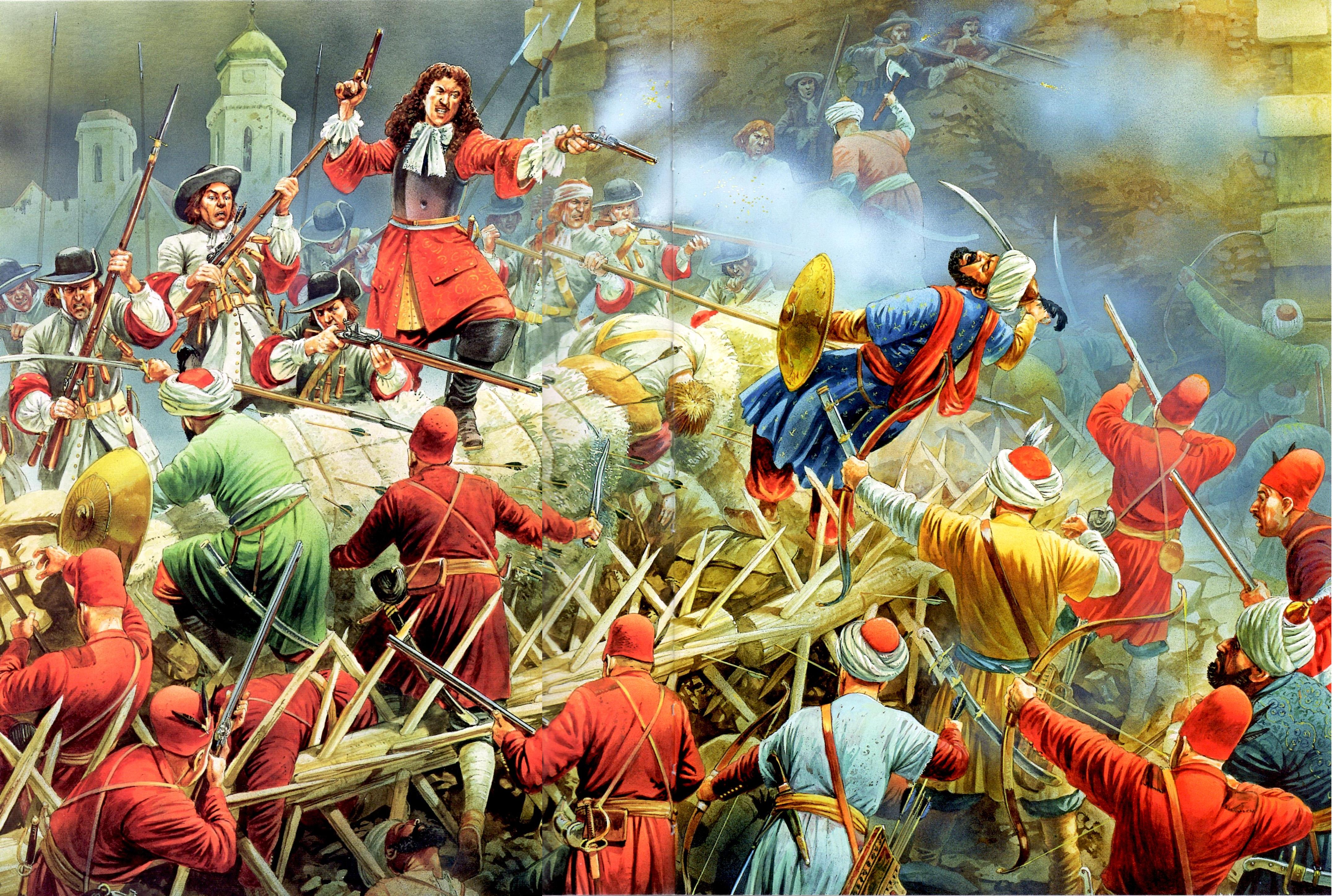
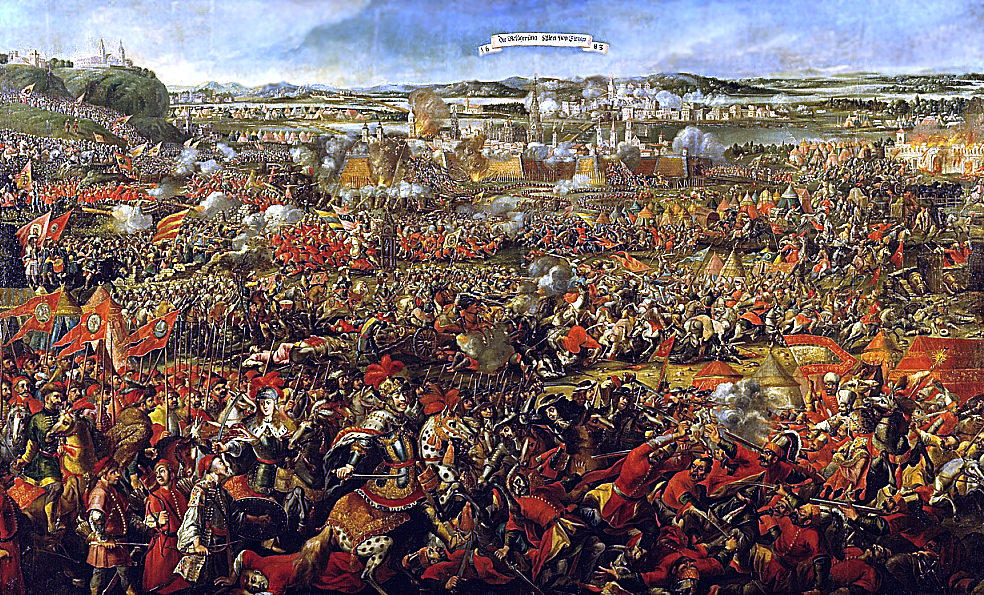
had brought them to the edge of conquest when an army of reenforcements, including cavalry from the army of the combined state of Lithuania/Poland, had appeared. Some of the cavalry were the famous Polish winged hussars.

Battle_of_Vienna_1

Just as the Rohirrim are led by their king, Theoden, so are the Poles led by their king Jan Sobieski—

bitwa-pod-wiedniem-obraz

The reenforcements, Poles in the lead, rush upon the Turks and drive them back through their camps and out of the siege entirely.

Atak_husarii

Battle_of_Vienna_1683_11

So similar, isn’t it? No giant war elephants, ghost armies, or Nazgul, but the basic elements of siege, relieving army with cavalry led by a king attacking an unprepared enemy, and chasing off the besiegers, is nearly identical.

Tolkien was an extremely well-read man, with a strong interest in history. Was the siege and relief of Vienna somewhere in the back of his mind when he began to plan the siege of Minas Tirith?

Thanks for reading!

MTCIDC

CD

The Doubtful Sea Series Facebook Page

The Doubtful Sea Series Facebook Page

  • Ollamh

Categories

  • Artists and Illustrators
  • Economics in Middle-earth
  • Fairy Tales and Myths
  • Films and Music
  • Games
  • Heroes
  • Imaginary History
  • J.R.R. Tolkien
  • Language
  • Literary History
  • Maps
  • Medieval Russia
  • Military History
  • Military History of Middle-earth
  • Narnia
  • Narrative Methods
  • Poetry
  • Research
  • Star Wars
  • Terra Australis
  • The Rohirrim
  • Theatre and Performance
  • Tolkien
  • Uncategorized
  • Villains
  • Writing as Collaborators
Follow doubtfulsea on WordPress.com

Across the Doubtful Sea

Recent Postings

  • A Moon disfigured December 17, 2025
  • On the Roads Again—Once More December 10, 2025
  • (Not) Crossing Bridges December 3, 2025
  • On the Road(s) Again—Again November 26, 2025
  • On the Road(s) Again November 19, 2025
  • To Bree (Part 2) November 12, 2025
  • To Bree (Part 1) November 5, 2025
  • A Plague o’ Both—No, o’ All Your Houses! October 29, 2025
  • It’s in Writing (2:  I’st a Prologue, or a Poesie for a Ring?) October 22, 2025

Blog Statistics

  • 103,212 Views

Posting Archive

  • December 2025 (3)
  • November 2025 (4)
  • October 2025 (5)
  • September 2025 (4)
  • August 2025 (4)
  • July 2025 (5)
  • June 2025 (4)
  • May 2025 (4)
  • April 2025 (5)
  • March 2025 (4)
  • February 2025 (4)
  • January 2025 (5)
  • December 2024 (4)
  • November 2024 (4)
  • October 2024 (5)
  • September 2024 (4)
  • August 2024 (4)
  • July 2024 (5)
  • June 2024 (4)
  • May 2024 (5)
  • April 2024 (4)
  • March 2024 (4)
  • February 2024 (4)
  • January 2024 (5)
  • December 2023 (4)
  • November 2023 (5)
  • October 2023 (4)
  • September 2023 (4)
  • August 2023 (5)
  • July 2023 (4)
  • June 2023 (4)
  • May 2023 (5)
  • April 2023 (4)
  • March 2023 (5)
  • February 2023 (4)
  • January 2023 (4)
  • December 2022 (4)
  • November 2022 (5)
  • October 2022 (4)
  • September 2022 (4)
  • August 2022 (5)
  • July 2022 (4)
  • June 2022 (5)
  • May 2022 (4)
  • April 2022 (4)
  • March 2022 (5)
  • February 2022 (4)
  • January 2022 (4)
  • December 2021 (5)
  • November 2021 (4)
  • October 2021 (4)
  • September 2021 (5)
  • August 2021 (4)
  • July 2021 (4)
  • June 2021 (5)
  • May 2021 (4)
  • April 2021 (4)
  • March 2021 (5)
  • February 2021 (4)
  • January 2021 (4)
  • December 2020 (5)
  • November 2020 (4)
  • October 2020 (4)
  • September 2020 (5)
  • August 2020 (4)
  • July 2020 (5)
  • June 2020 (4)
  • May 2020 (4)
  • April 2020 (5)
  • March 2020 (4)
  • February 2020 (4)
  • January 2020 (6)
  • December 2019 (4)
  • November 2019 (4)
  • October 2019 (5)
  • September 2019 (4)
  • August 2019 (4)
  • July 2019 (5)
  • June 2019 (4)
  • May 2019 (5)
  • April 2019 (4)
  • March 2019 (4)
  • February 2019 (4)
  • January 2019 (5)
  • December 2018 (4)
  • November 2018 (4)
  • October 2018 (5)
  • September 2018 (4)
  • August 2018 (5)
  • July 2018 (4)
  • June 2018 (4)
  • May 2018 (5)
  • April 2018 (4)
  • March 2018 (4)
  • February 2018 (4)
  • January 2018 (5)
  • December 2017 (4)
  • November 2017 (4)
  • October 2017 (4)
  • September 2017 (4)
  • August 2017 (5)
  • July 2017 (4)
  • June 2017 (4)
  • May 2017 (5)
  • April 2017 (4)
  • March 2017 (5)
  • February 2017 (4)
  • January 2017 (4)
  • December 2016 (4)
  • November 2016 (5)
  • October 2016 (6)
  • September 2016 (5)
  • August 2016 (5)
  • July 2016 (5)
  • June 2016 (5)
  • May 2016 (4)
  • April 2016 (4)
  • March 2016 (5)
  • February 2016 (4)
  • January 2016 (4)
  • December 2015 (5)
  • November 2015 (5)
  • October 2015 (4)
  • September 2015 (5)
  • August 2015 (4)
  • July 2015 (5)
  • June 2015 (5)
  • May 2015 (4)
  • April 2015 (3)
  • March 2015 (4)
  • February 2015 (4)
  • January 2015 (4)
  • December 2014 (5)
  • November 2014 (4)
  • October 2014 (6)
  • September 2014 (1)

Blog at WordPress.com.

  • Subscribe Subscribed
    • doubtfulsea
    • Join 78 other subscribers
    • Already have a WordPress.com account? Log in now.
    • doubtfulsea
    • Subscribe Subscribed
    • Sign up
    • Log in
    • Report this content
    • View site in Reader
    • Manage subscriptions
    • Collapse this bar
 

Loading Comments...