• About

doubtfulsea

~ adventure fantasy

Tag Archives: Crecy

Bard

09 Wednesday Jul 2025

Posted by Ollamh in Uncategorized

≈ Leave a comment

Tags

Agincourt, anti-aircraft gun, Archery, Arthur Machen, Bard, Bilbo, black arrow, Crecy, Dwarves, Fafnir, Fantasy, Howard Pyle, James Fenimore Cooper, Le Cateau, NC Wyeth, Poitiers, Robert Louis Stevenson, Robin Hood, Sigurd, Smaug, The Bowmen, The Hobbit, Tolkien

Welcome, as ever, dear readers,

When Bilbo and the dwarves

(the Hildebrandts)

set out on their quest, they’re aware that, at its end, they must face the reason the dwarves’ forebears died or fled Erebor, the “Lonely Mountain”.

(JRRT)

And yet they go, suggesting an almost foolhardy shrug of an attitude, particularly as Gandalf has suggested that they need someone right out of myth to help them:

“ ‘That would be no good…not without a mighty Warrior, even a Hero.’ “

But:

“ ‘I tried to find one; but warriors are busy fighting one another in distant lands, and in this neighbourhood heroes are scarce, or simply not to be found.’ “ (The Hobbit, Chapter 1, “An Unexpected Party”) 

Everything about this trip already seems haphazard, having no map of their destination, till Gandalf furnishes them with one,
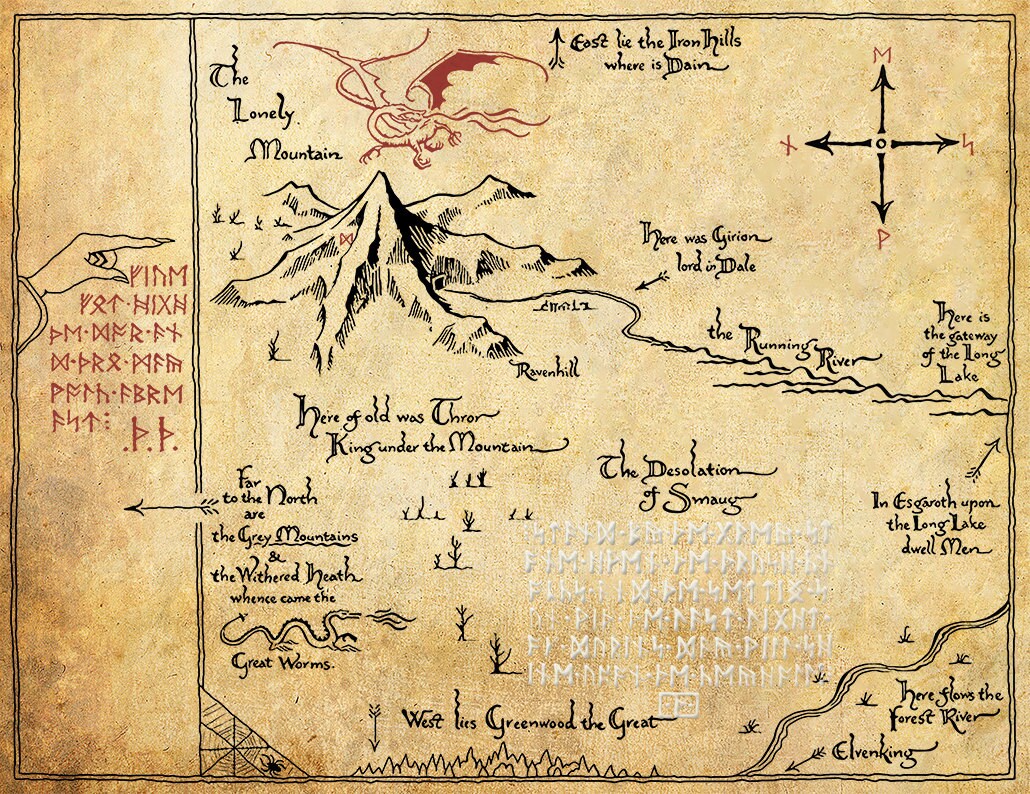
(JRRT)

and even then they have no idea of another, secret entrance until Elrond spots the inscription which describes it—and how to open it.  Clearly, then, this is a case of “we’ll cross that bridge when we come to it.”

Uh oh.

There’s also no clue in the text as to who or what may destroy the destroyer—until Bilbo, flattering Smaug, spots that fatal weak point:

“ ‘I’ve always understood…that dragons were softer underneath, especially in the region of the—er—chest…’ “

The dragon stopped short in his boasting.  ‘Your information is antiquated,’ he snapped.  ‘I am armoured above and below with iron scales and hard gems.  No blade can pierce me.’ “

There’s a clue here, if not for Bilbo, for readers who are aware of something in Tolkien’s own past reading: 

“Then Sigurd went down into that deep place, and dug many pits

in it, and in one of the pits he lay hidden with his sword drawn.

There he waited, and presently the earth began to shake with the

weight of the Dragon as he crawled to the water. And a cloud of

venom flew before him as he snorted and roared, so that it would

have been death to stand before him.

But Sigurd waited till half of him had crawled over the pit, and

then he thrust the sword Gram right into his very heart.”  (Andrew Lang, ed., The Red Fairy Book, 1890, “The Story of Sigurd”, page 360)

And Bilbo persists, goading Smaug to turn over, where Bilbo sees—and says:

“ ‘Old fool!  Why, there is a large patch in the hollow of his left breast as bare as a snail out of its shell!’ “ (The Hobbit, Chapter 12, “Inside Information”)

Still, although we might have a target now, who will make use of it and how and with what?  Sigurd is just what Gandalf says is not locally available, a Hero, and it’s clear that neither Bilbo nor the dwarves are capable of taking on that role.

And here we can bring in another clue from Tolkien’s past.

In “On Fairy-Stories”, he writes:

“I had very little desire to look for buried treasure or to fight pirates, and Treasure Island left me cool.  Red Indians were better:  there were bows and arrows (I had and have a wholly unsatisfied desire to shoot well with a bow)…”  (“On Fairy Stories”, 134)

This suggests that Tolkien may have been exposed to the works of James Fenimore Cooper, 1789-1851, who, beginning with The Pioneers, 1823, wrote a series of novels set on the 18th-century western Frontier (much of it what is now central and eastern New York State), called the “Leatherstocking Tales”,

the best known, even now, being The Last of the Mohegans, 1826. 
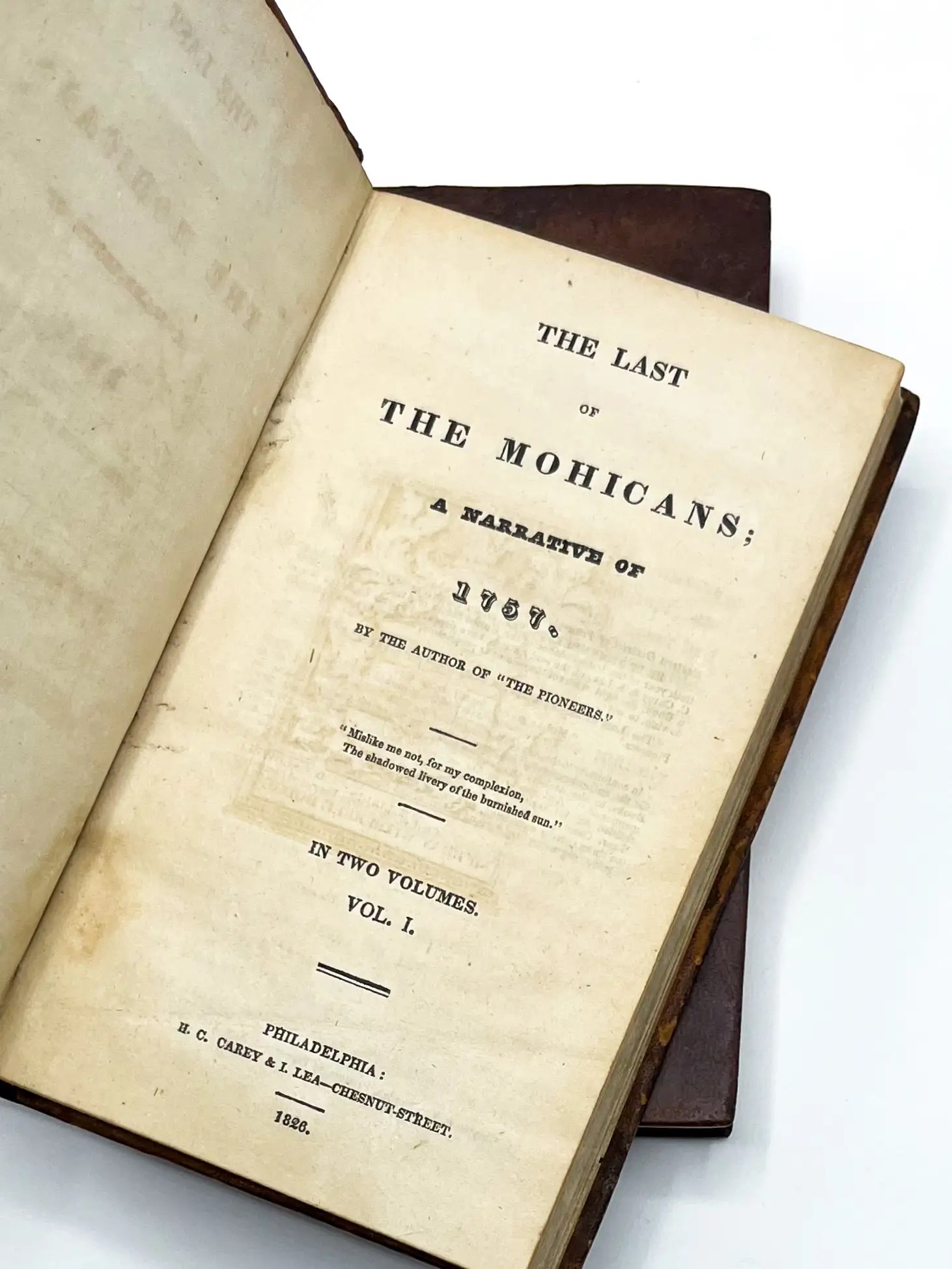
These books were filled with battles between the British and French, with Native Americans on both sides and I wonder if it’s from the adventures depicted there that JRRT was inspired with his passion for bows and arrows?

(artist?  A handsome depiction and I wish I could identify the painter.)

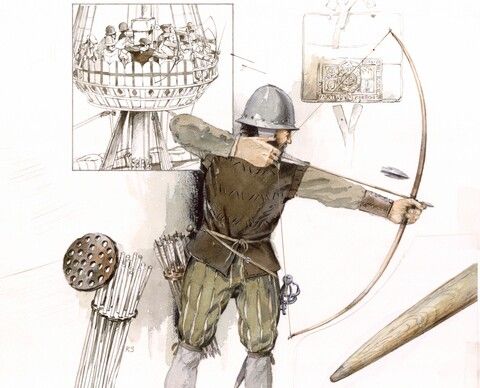
Another clue might lie in British history.  During the medieval struggle for English control of France, the so-called “Hundred Years War” (1337-1453), the English enjoyed three great victories, at Crecy (1346), Poitiers (1356), and Agincourt (1415), where companies of English longbowmen shot their French opponents to pieces.

(Angus McBride)

Tolkien would have read about this as a schoolboy, but, in an odd way, he might have had his knowledge of these long-ago events refreshed in 1914.

Outnumbered and in danger of being outflanked by massive German columns, the small BEF (British Expeditionary Force), in the early fall of 1914, retreated, one unit (2nd Corps) fighting a desperate battle to slow the Germans at Le Cateau.
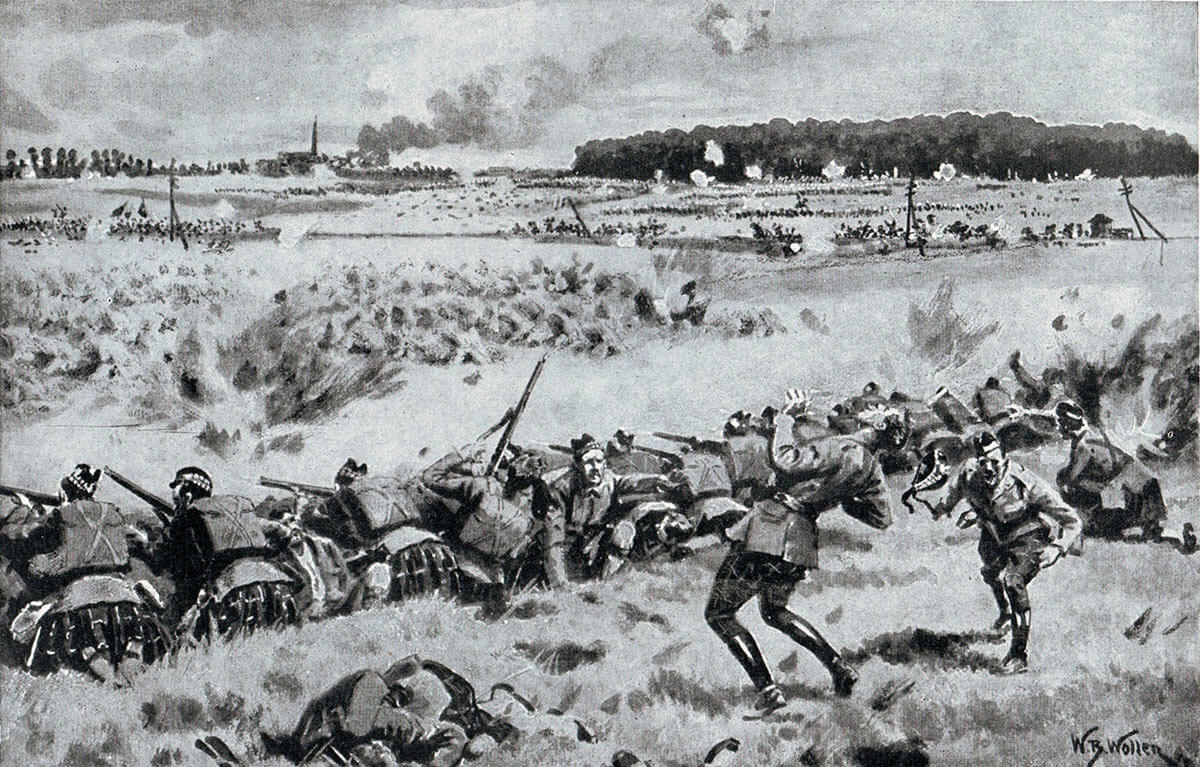
The British managed to fend off the enveloping Germans and, considering the odds against them, some might have believed their escape miraculous. 

Enter the fantasist Arthur Machen, 1863-1947. 

In the September 29th,  1914,  issue of The Evening News, Machen published a short story which he entitled “The Bowmen”.  This was a supposed first-hand account of a British soldier who had seen a line of ghostly British longbowmen shooting down German pursuers, just as they had shot down the French, centuries before.
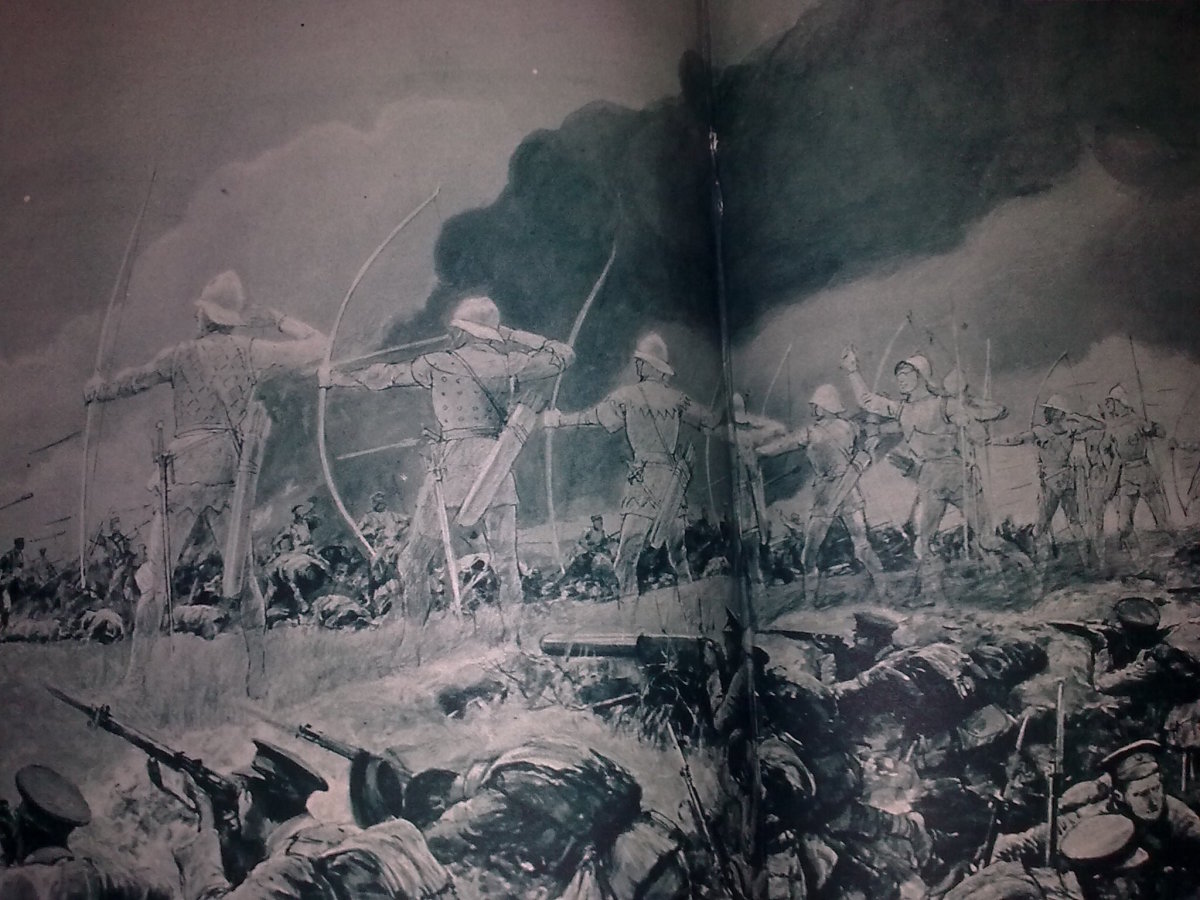
Machen subsequently republished it with other stories in 1915—

but was astonished when his fiction was believed to have been true, and widely circulated as such. We don’t have any evidence that JRRT actually read this story, but it was extremely widespread at the time and, once more, we see men with bows. (For more on this, see:  https://en.wikipedia.org/wiki/Angels_of_Mons And you can read the stories in Machen’s volume here:  https://en.wikipedia.org/wiki/Angels_of_Mons )

I think we can add to this the legends of Robin Hood, which could appear in any number of sources—our first known reference being in William Langland’s (c.1330-c.1386) late 14th-century Piers Plowman, where Sloth—a priest deserving of his name, doesn’t seem to have any religious knowledge, but says,

“Ich can rymes of Robyn Hode” (that is, “I know rhymes/songs about Robin Hood”—see the citation at:  https://robinhoodlegend.com/piers-plowman/ at the impressively rich Robin Hood site:  https://robinhoodlegend.com/ )

Then there is the collection of poems/songs from about 1500, A Gest of Robyn Hode,

which JRRT might have encountered in F.J. Child’s (1825-1896) The English and Scottish Popular Ballads, 1882-1898,

where it appears as #117.  (If you don’t know the so-called “Child Ballads”, here’s a beginning:  https://en.wikipedia.org/wiki/Child_Ballads  And, for a massive one-volume edition:  https://archive.org/details/englishscottishp1904chil/page/n11/mode/2up The texts are interesting in themselves, but, for me, they’re even better as songs.  To hear one, you might try one of my favorite folk singers, Ewan McColl’s version of “The Dowie Dens o’ Yarrow here:  https://www.youtube.com/watch?v=Vfsv8zUdqKM&list=RDVfsv8zUdqKM&start_radio=1 For more on Yarrow, see “Yarrow”, 10 April, 2024.

For lots more on Robin Hood, see:  https://en.wikipedia.org/wiki/Robin_Hood )

In more recent times, perhaps Tolkien had seen Howard Pyle’s (1853-1911) The Merry Adventures of Robin Hood, 1883,

 or Paul Creswick’s (1866-1947) 1917 Robin Hood,

with its wonderful illustrations by N.C.Wyeth (1882-1945).
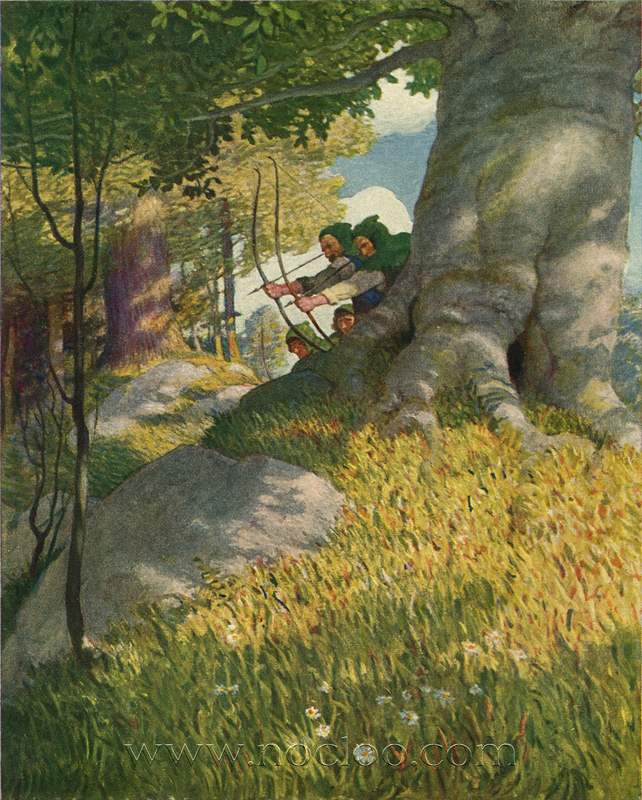
(If the Tolkien journal Amon Hen, is available to you–but, alas, not to me–you might also have a look at Alex Voglino’s “Middle-earth and the Legend of Robin Hood” in issue 284.)

And, although Tolkien may not have liked Treasure Island, we might add to this possible influence Robert Louis Stevenson’s (1850-1894) The Black Arrow (serialized 1883, published as a book in 1888).

An adventure story set during the Wars of the Roses, you can read it here:  https://archive.org/details/blackarrowatale02stevgoog/page/n1/mode/2up

Although there are more possibilities (Tolkien might have read Sir Walter Scott’s (1771-1832) Ivanhoe, 1819, where Robin Hood makes an appearance, for instance—and here’s the book:  https://archive.org/details/ivanhoe-sir-walter-scott/page/n7/mode/2up )

that title suggests something else:

“ ‘Arrow!’ said the bowman.  ‘Black arrow!  I have saved you to the last.  You have never failed me and always I have recovered you.  I had you from my father and he from of old.  If ever you came from the forges of the true king under the Mountain, go now and speed well!’ “ (The Hobbit, Chapter 14, “Fire and Water”)

(Michael Hague, one of my favorite Hobbit illustrators)

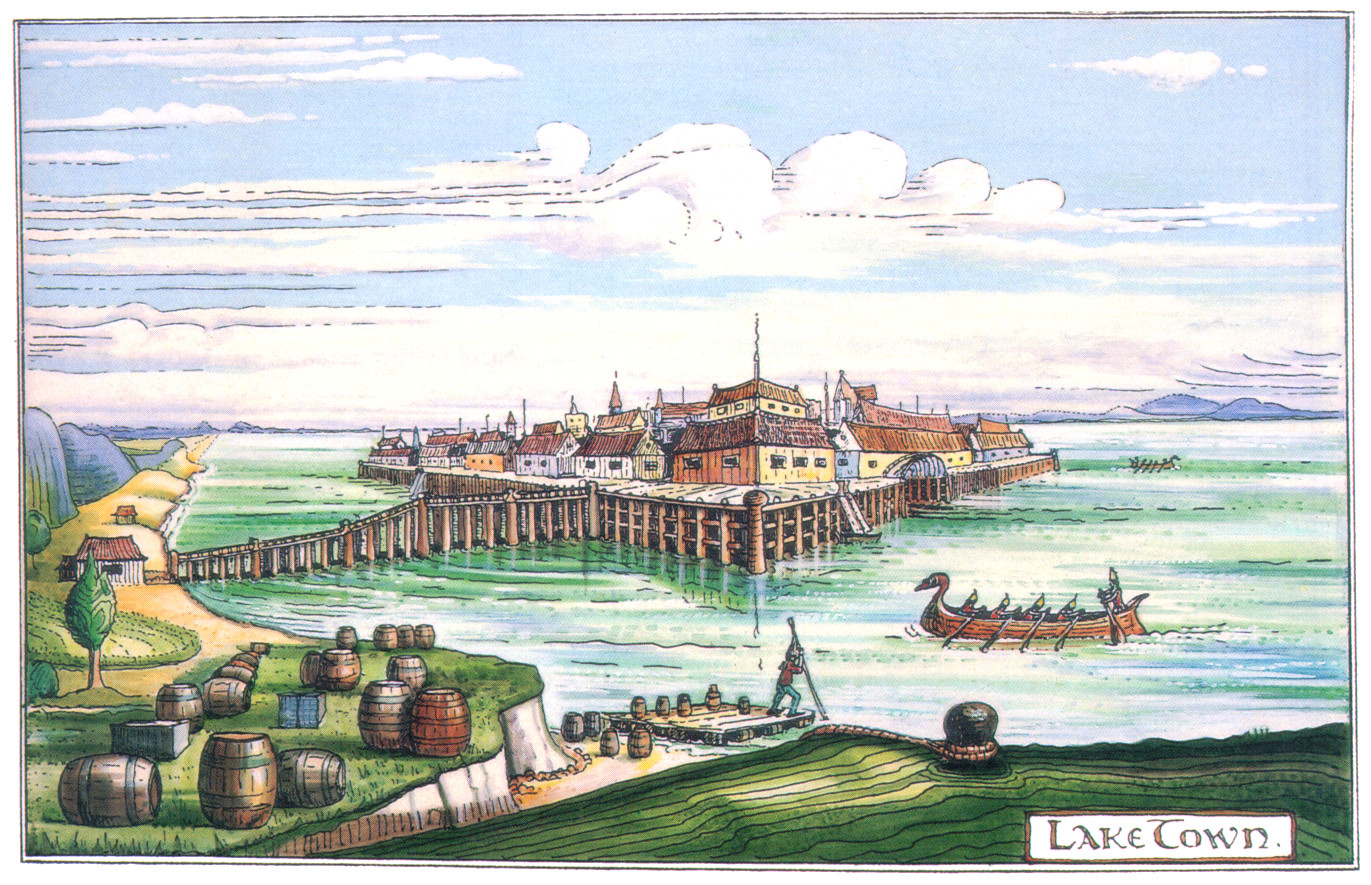
So, we’re about to see that the Hero to kill Smaug is a Lake-town local, Bard, and his weapon of choice is Tolkien’s special favorite, the bow.  But how to attack?

We first see Smaug on the ground, lying on his hoard.

(JRRT)

Angered at Bilbo’s teasing, he gets up long enough to attempt to flame him, but his real method of destruction is to take to the air.

(Ted Nasmith)

Fafnir was never airborne, dragging himself along the ground.  Sigurd solved the problem of his scaly protection by digging a pit and attacking him from below with his sword.  It makes good sense, then, with all of the possible bowman influences upon him, that Tolkien would imagine that the way to deal with a flying dragon would be an arrow from below.
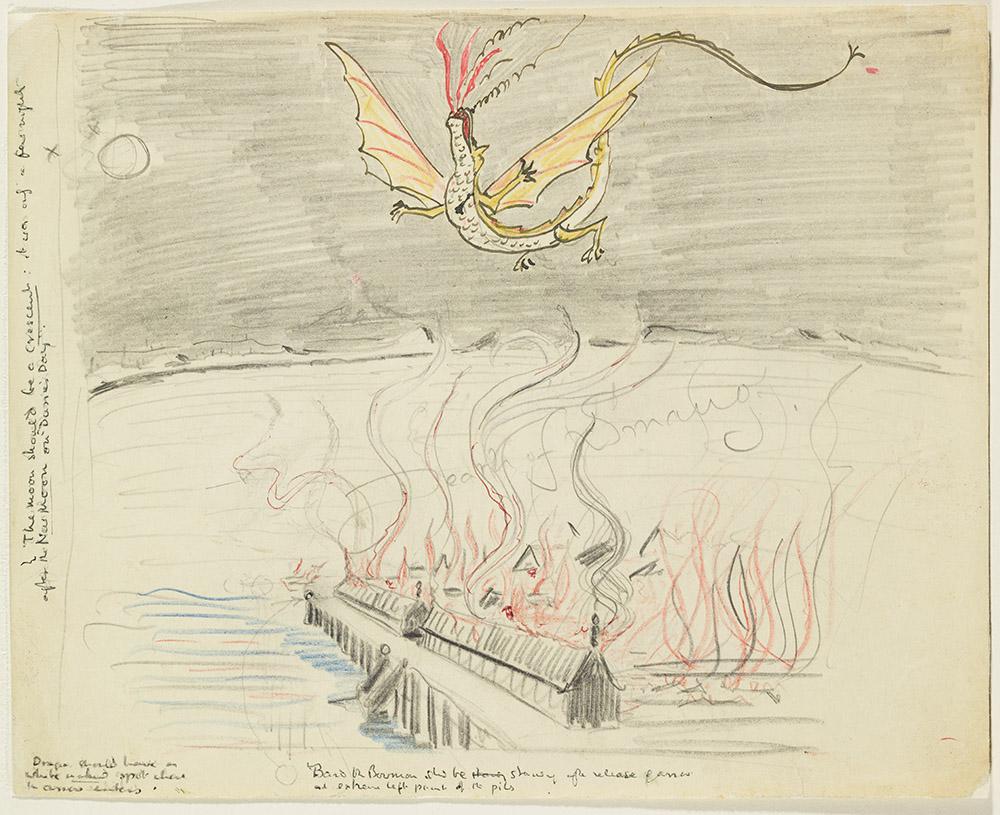
(JRRT)

To which we might add one more potential influence from JRRT’s own experience. 

In 1914, there were few military aircraft and their main task was reconnaissance.

By 1918, there were many different models, with different tasks, including heavy bombers.

To protect their troops on the ground, all of the warring nations developed the first artillery defenses:  anti-aircraft guns, designed to shoot down threats from above. 
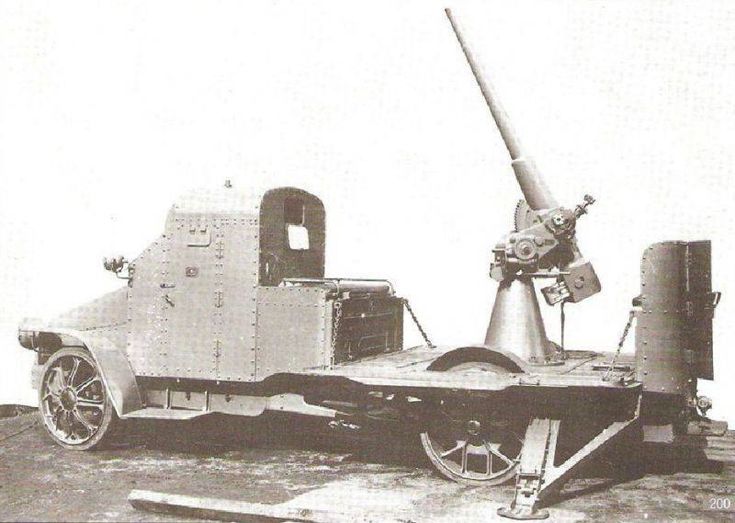
JRRT would certainly have seen such guns and possibly even in action, attempting to knock flying danger out of the sky.

Some of those guns were rapid-firing, spraying the air with metal, hoping to guarantee the success of their defense.  Bard, in turn, has his black arrow—and not just any black arrow, but one seemingly created perfectly for revenge:  “  ‘I had you from my father and he from of old.  If ever you came from the forges of the true king under the Mountain, go now and speed well.’ “

That is, this is an arrow created by the dwarves, whom Smaug had driven out or killed—or eaten—and it’s also an heirloom from the days before Smaug destroyed Dale:  what better weapon to deal vengeance to the wicked creature who had ruined so much?  To take out such a flying danger, but with a glaring vulnerability below, what means of propulsion, especially one known to have defeated whole medieval armies?  And, as the seemingly last descendant of the last lord of Dale, Girion, who better to take that revenge? 

As ever, thanks for reading.

Stay well,

Always monitor the skies—who knows what’s watching from above?

And remember that, as always, there’s

MTCIDC

O

PS

For more on birds, Bard, and Smaug, see “Why a Dragon?” 28 May, 2025.

PPS

While looking for just the right Smaug images, I came upon this, entitled, “Dante aka Smaug on his hoard” and couldn’t resist.

In Shining Armo(u)r

17 Wednesday Jan 2018

Posted by Ollamh in Artists and Illustrators, Heroes, J.R.R. Tolkien, Literary History, Military History, Military History of Middle-earth, Narrative Methods, The Rohirrim, Tolkien

≈ Leave a comment

Tags

Agincourt, Anglo-Saxon, armor, Bayeux Tapestry, chain-mail, Crecy, Dark Ages, Embroidery, Howard Pyle, knights of Dol Amroth, Medieval books, medieval manuscript drawings, N.C. Wyeth, Norman knight, Pauline Baynes, Romans, sub-Roman period, Sutton Hoo, The Lord of the Rings, The Rohirrim, The Story of King Arthur and His Knights, Tolkien

Welcome, as always, dear readers.

In a letter to Miss [Rhona] Beare, of 14 October, 1958, JRRT wrote to answer what was clearly a question about dress in The Lord of the Rings:

“Question 4.  I do not know the detail of clothing.  I visualize with great clarity and detail scenery and ‘natural’ objects, but not artefacts.  Pauline Baynes drew her inspiration for F. Giles largely from medieval MS drawings—except for the knights (who are a bit ‘King-Arthurish’)* the style seems to fit well enough.” (Letters, 280)

To which he adds this footnote:

“*Sc. [= “Know/understand”] belong to our ‘mythological’ Middle-Ages which blends unhistorically styles and details ranging over 500 years, and most of which did not of course exist in the Dark Ages of c. 500 A.D.”

In the next paragraph he adds:

“The Rohirrim were not ‘mediaeval’, in our sense.  The styles of the Bayeux Tapestry (made in England) fit them well enough, if one remembers that the kind of tennis-nets [the] soldiers seem to have on are only a clumsy conventional sign for chain-mail of small rings.” (Letters, 280-281)

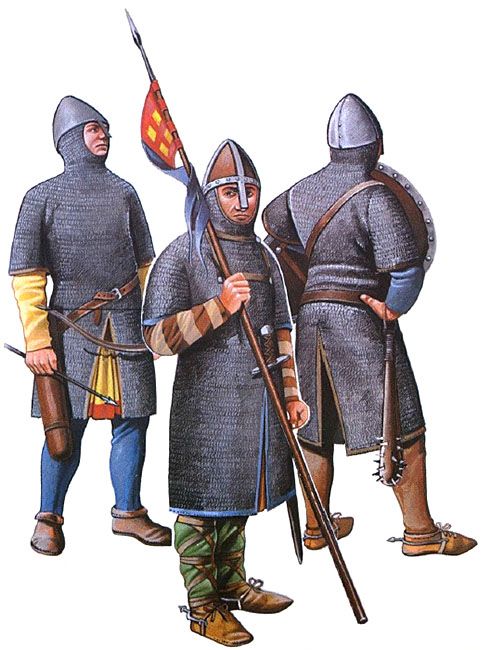
The Bayeux Tapestry (which should really be called the “Bayeux Embroidery”, since it’s actually a long piece of cloth with hundreds of figures and details stitched on to it, rather than woven into it) presents us with a detailed history of the invasion of England in 1066AD.  The soldiers Tolkien is talking about look like this:

image1knights.jpg

You can see what he means by “tennis-nets”—which should really look like this:

image2normans.jpg

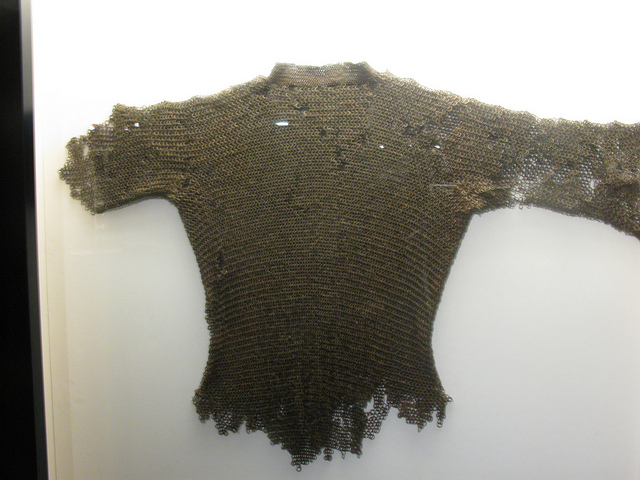
That chain-mail, then, looks like this:

image3mailshirt.jpg

And, at the bottom of this next illustration, you can see how it’s made:

image4mailnorman.jpg

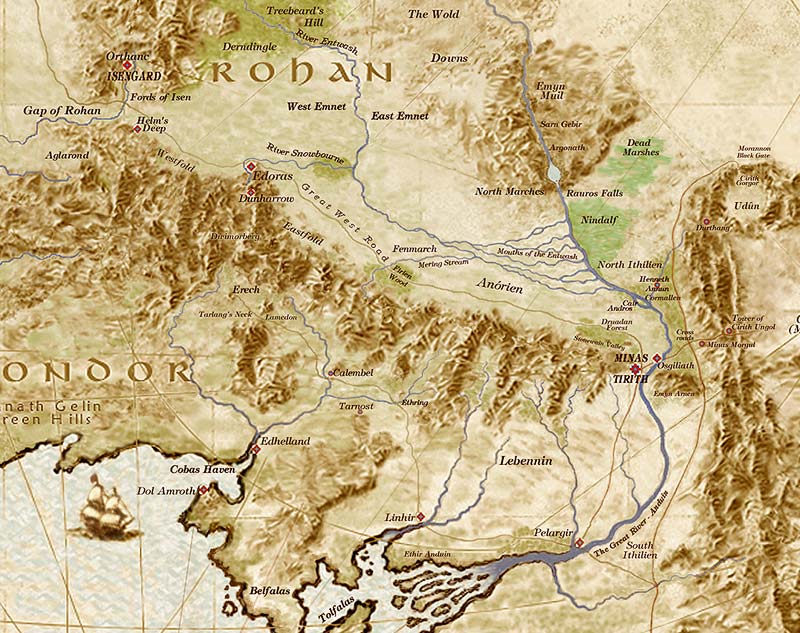
We know, then, how JRRT envisaged the Rohirrim in its eoreds, marching towards Minas Tirith, but how did he imagine other soldiers, we’ve asked ourselves, and, in particular, the knights of Dol Amroth—the only soldiers specifically described as such in The Lord of the Rings?

image5map.jpg

JRRT writes of them as they enter Minas Tirith:

“And last and proudest, Imrahil, Prince of Dol Amroth, kinsman of the Lord, with gilded banners bearing his token of the Ship and the Silver Swan, and a company of knights in full harness riding grey horses…”(The Return of the King, Book Five, Chapter 1, “Minas Tirith”)

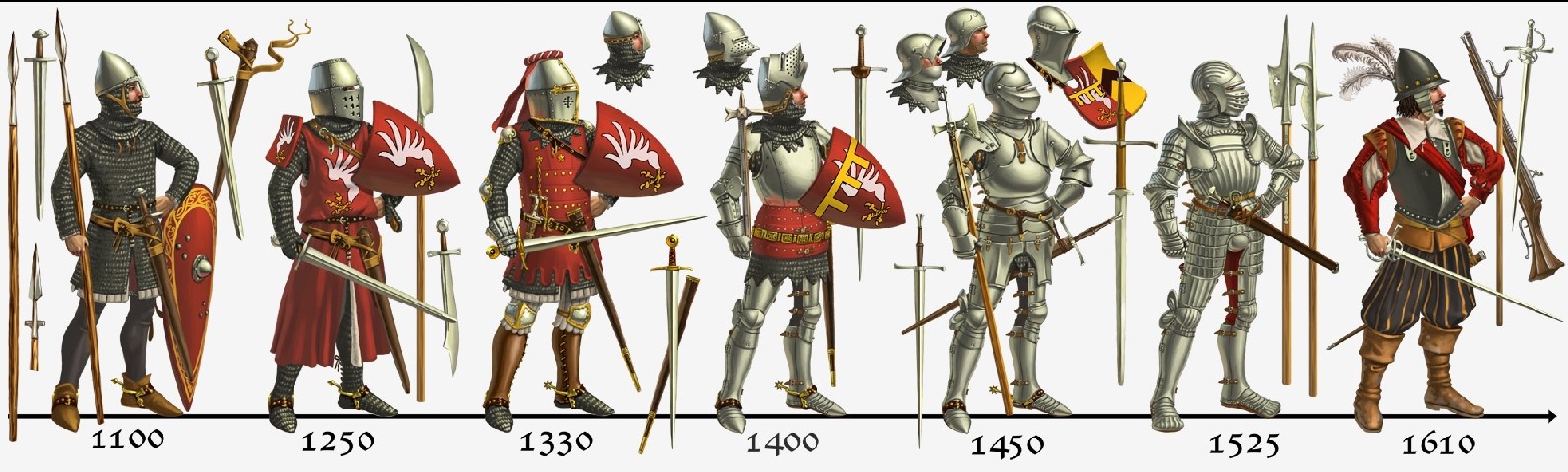
“Full harness” means “complete armor”.  When we think of the term, we think of something later than the Normans, who are, after all, just wearing a kind of very long ringed shirt.  Here’s a useful chart to give you of an idea of what we mean.

image6aarmorchart.jpg

So, since “full harness” doesn’t look like the Rohirrim, how might it look?

In Jackson’s films, we don’t believe that we ever see those knights singled out, as we see the Rohirrim.  The best we could find was this picture of Faramir’s men about to mount a cavalry charge against what appears to be Osgiliath.  (We’ve talked about this in a much earlier posting—one of the most unbelievable moments in the whole of Jackson’s work.)

image6knightsmt.jpg

This is a big picture, but the details, unfortunately, aren’t very clear.  There are a few things, however, which we found rather odd:

  1. although there appear to be a few lances with penons among them, most seem to be armed only with swords—a close-up weapon—which is why actual knights also carried lances—heavy cavalry came crashing down on infantry or slamming into enemy mounted men—or intended to—spearing right and left and then drawing swords (or using maces or battle axes)
  2. a minor detail, but everyone seems to be wearing his sword on the right-hand side, which would have made it very hard to draw, unless all were left-handed men!
  3. the helmets and armor seem very standardized, and we would believe that budgetary considerations probably influenced this uniformity—50 identical helmets were probably cheaper to make than 50 different ones—but such sameness reminds us more of Roman imperial troops than of any western medieval army we can think of.

image7romans.jpg

We assume, then, that this is the film’s view of soldiers at least like Imrahil’s men, but when Tolkien wrote “a company of knights in full harness”:  what might he have had in mind?  We think there is a clue in that adjective “King-Arthurish”, which he uses of Pauline Bayne’s illustrations and in his footnote, where he refers to “our ‘mythological Middle-Ages”. What does he mean?

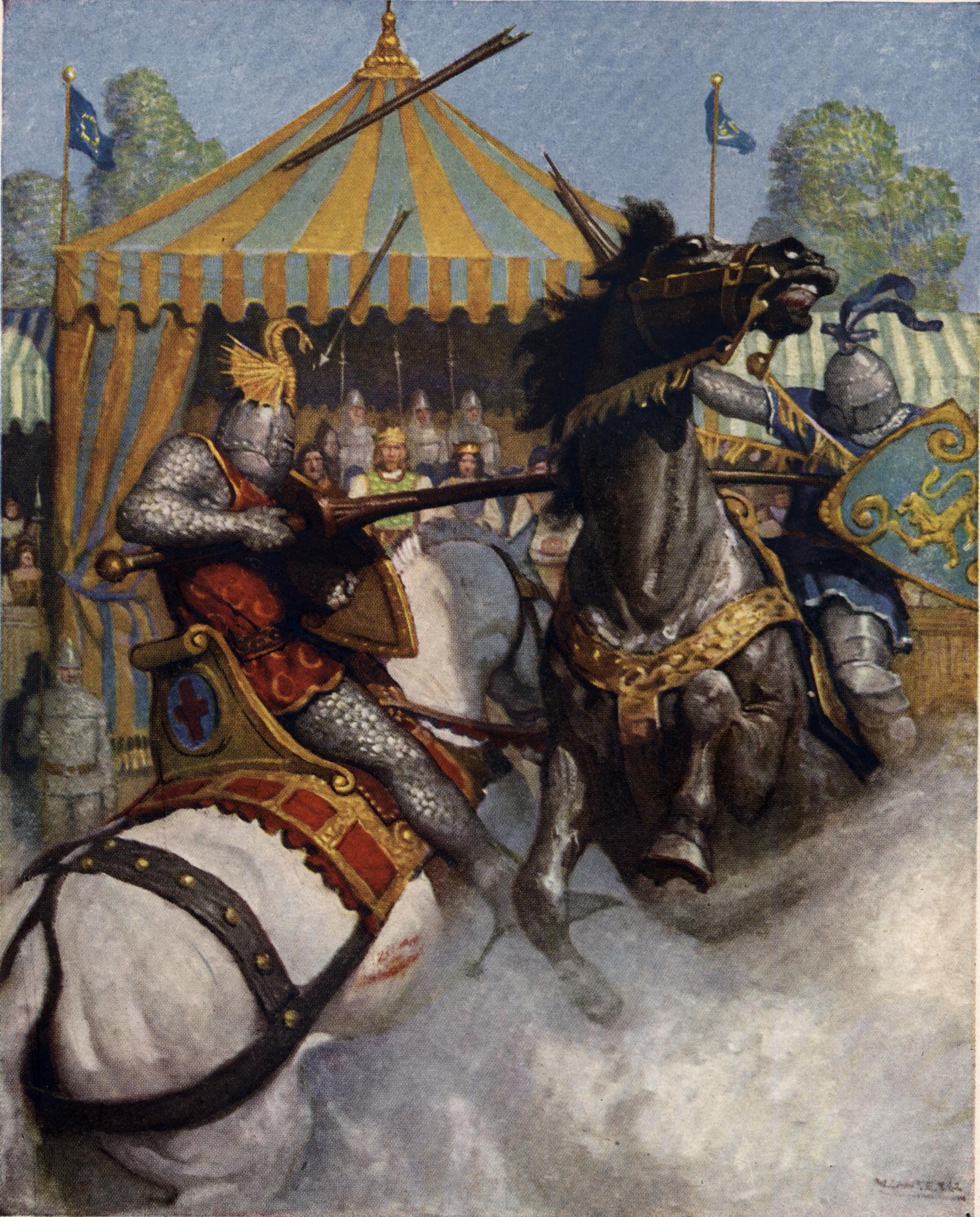
JRRT would have been about ten when Howard Pyle published his The Story of King Arthur and His Knights in 1903.

image8pyle.png

Here is how Pyle saw Arthur’s knights.

image9aknightimage10asknights

Could this have inspired Tolkien’s view of Imrahil’s men?  (Judge for yourself by following this LINK.)

Tolkien would have been nearly 30 when The Boy’s King Arthur, illustrated by N.C. Wyeth, was published in 1922,

Image result for the boy's king arthur

but, if this were in among his children’s books, perhaps these illustrations might have given him ideas.  (And here’s a LINK to your own copy, from the Internet Archive.)

image12wyeth.jpgimage13wyeth.jpgimage14wyeth.jpg

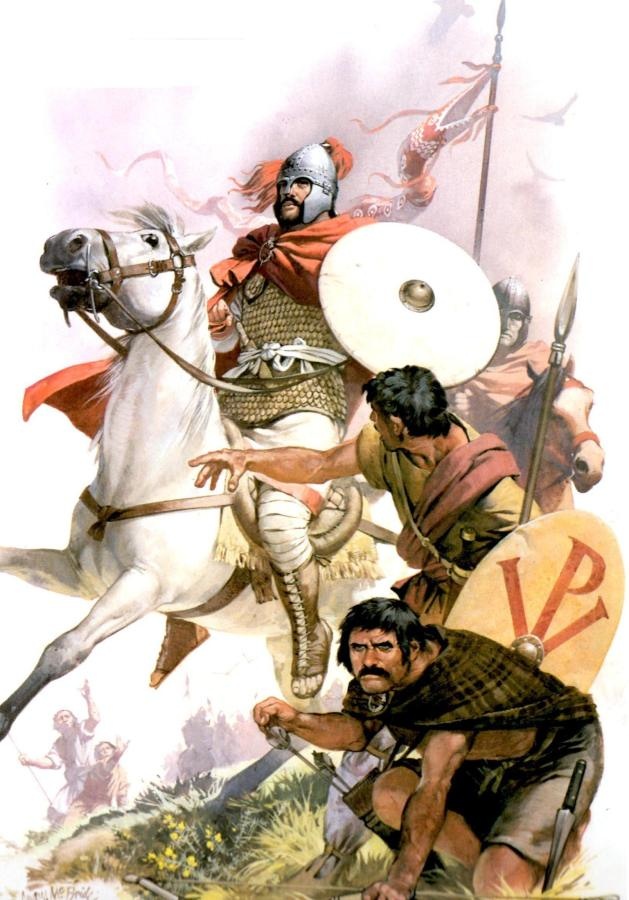
These are two well-known sets of illustrations of Arthurian figures, both available in Tolkien’s early lifetime.  If Arthur was real, of course, he would have lived, as JRRT was well aware, in what is called the “sub-Roman period”, c.500AD—at the beginning of the so-called “Dark Ages”– and he and his men would actually have looked like this:

image15arthur.jpg

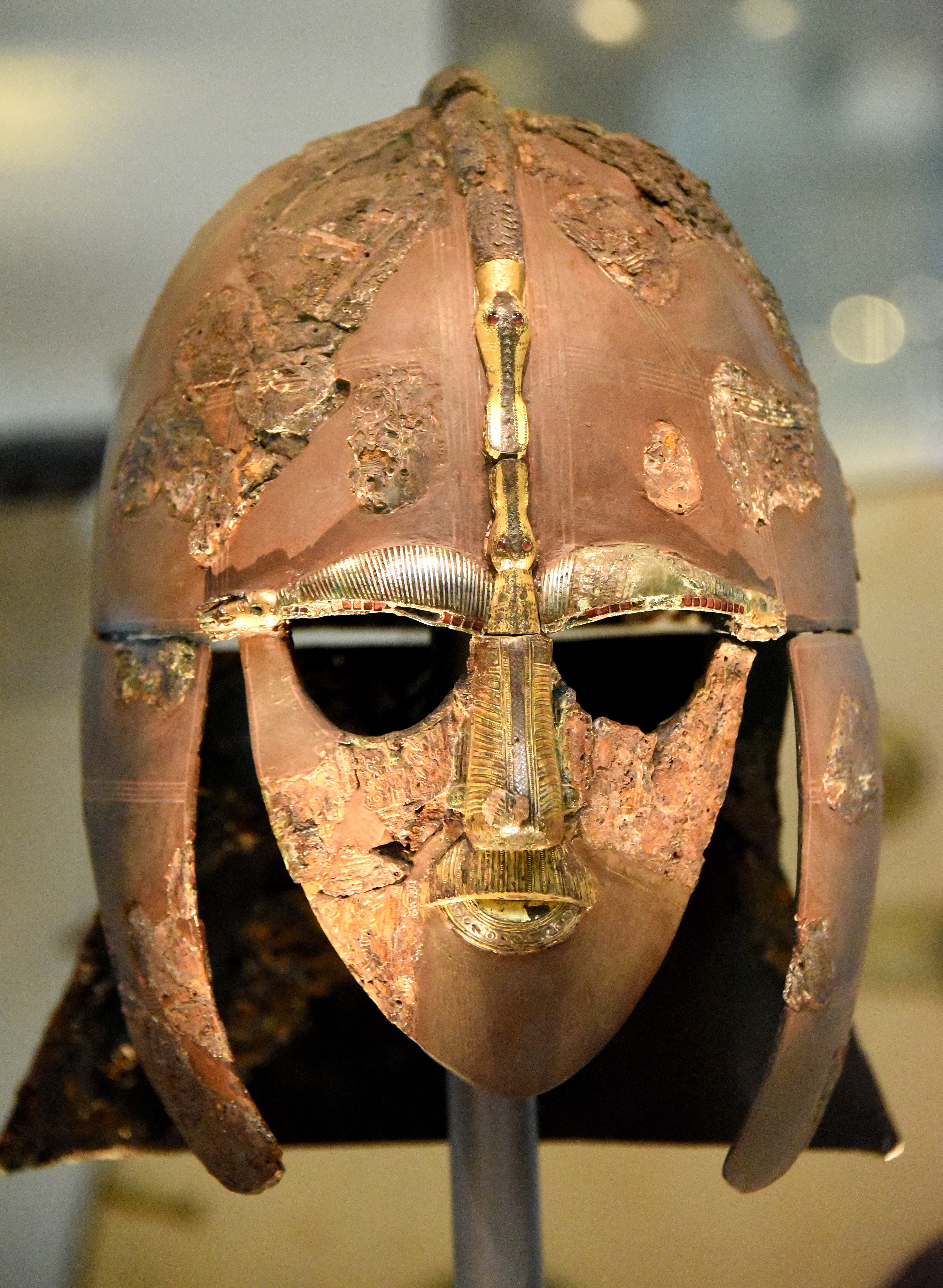
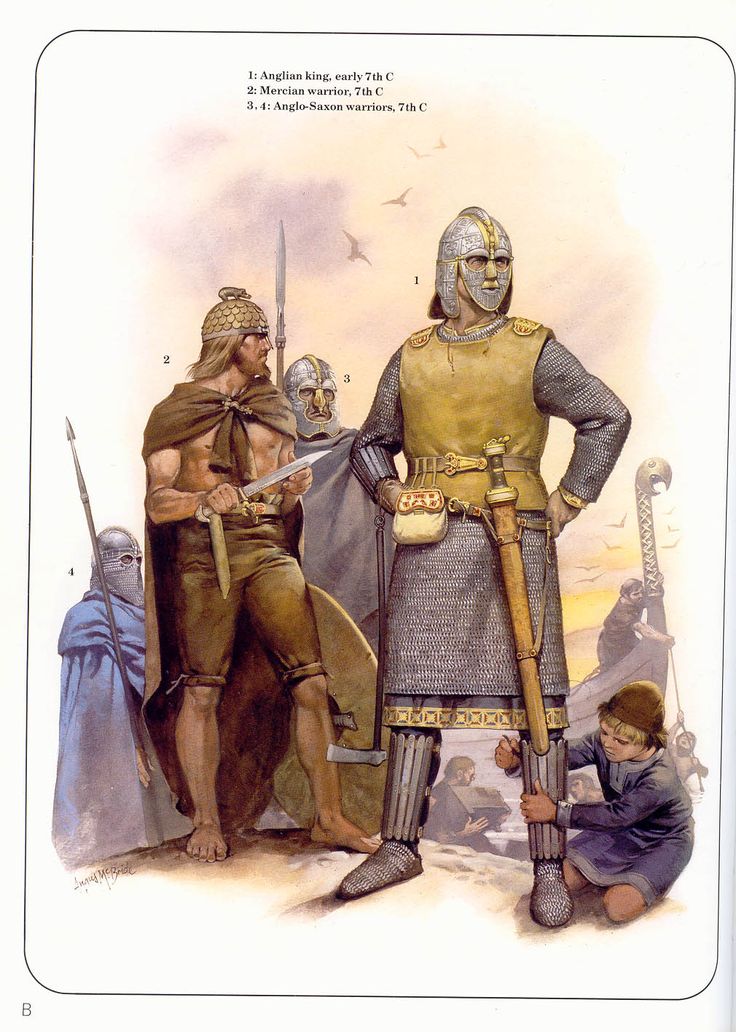
But this is where “our ‘mythological’ Middle-Ages” comes in—little would have been known, when JRRT was writing The Lord of the Rings, of what such warriors would have looked like, although the spectacular Sutton Hoo find of 1939, with its splendid helmet, would have given an inkling, once restored.

image16suttonhoo.jpg

image17suttonhoohelmet.jpg

image18mcbhelm.jpg

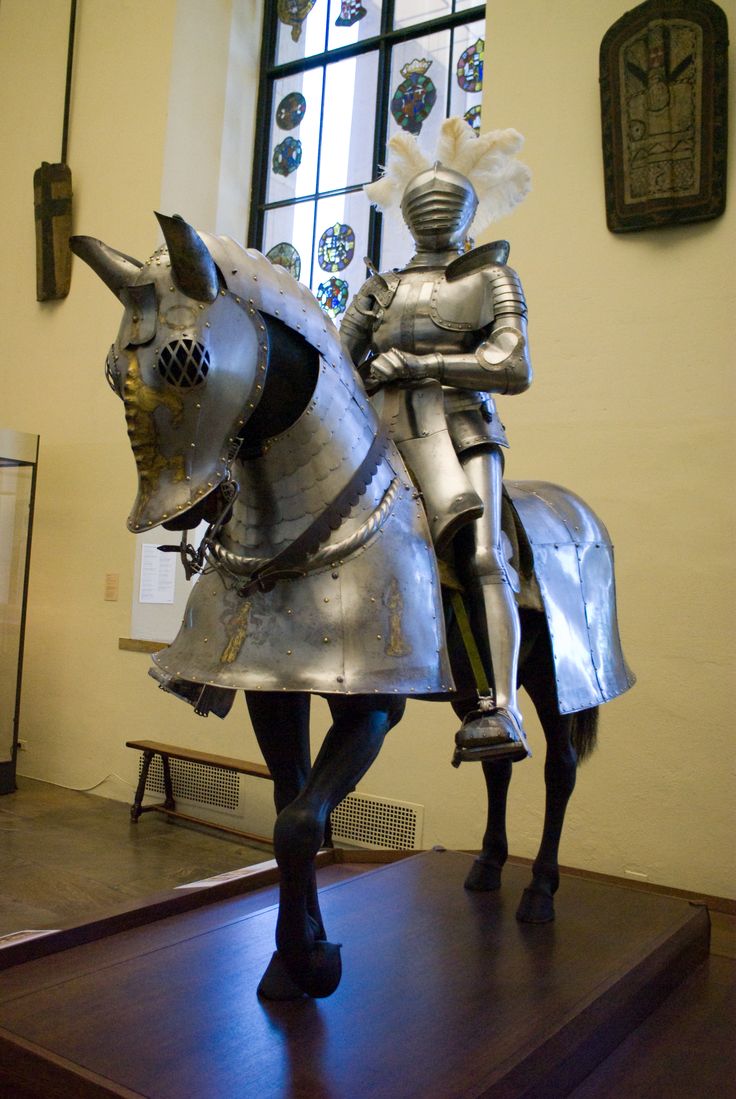
Because such knowledge was lacking, however, the historical Arthur (if there was one) had been moved to the Middle-Ages and re-equipped as a military figure of a much later era, and we believe that, when Tolkien wrote “Arthurish” and “knights”, this is what he meant—and how we’ve always seen Arthur, not only from books (and lots of films) but also from the armor galleries in a number of museums, from the Metropolitan Museum of Art in New York

image24.jpg

to the Higgins Armory in Massachusetts

image25.jpg

to the Philadelphia Museum of Fine Arts

image26.jpg

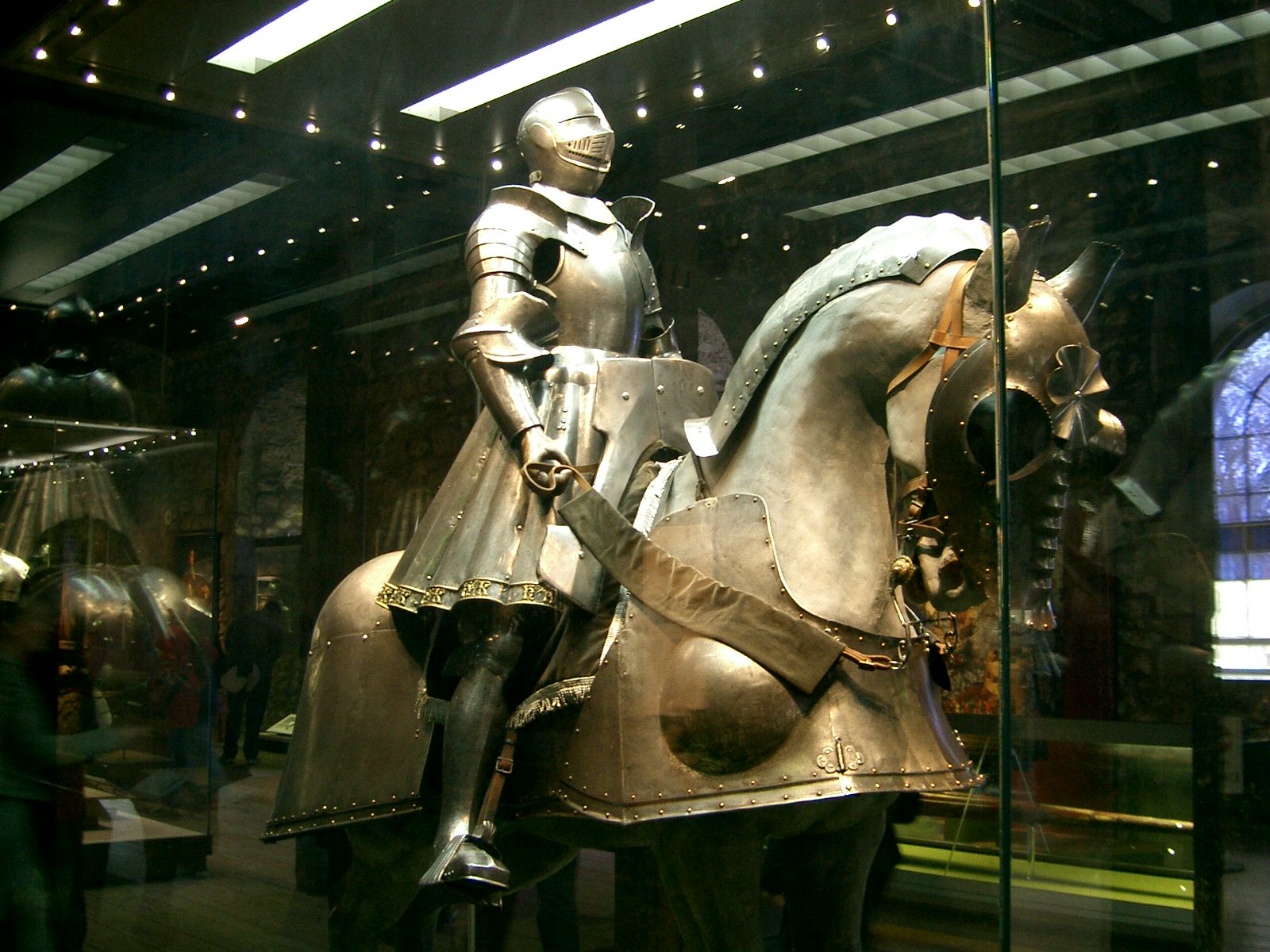
to the Tower of London.

image27tower.jpg

And, as we’ve discussed before, Prince Valiant, has been an influence from childhood (talk about ‘mythological’ Middle-Ages!).

image28val.jpg

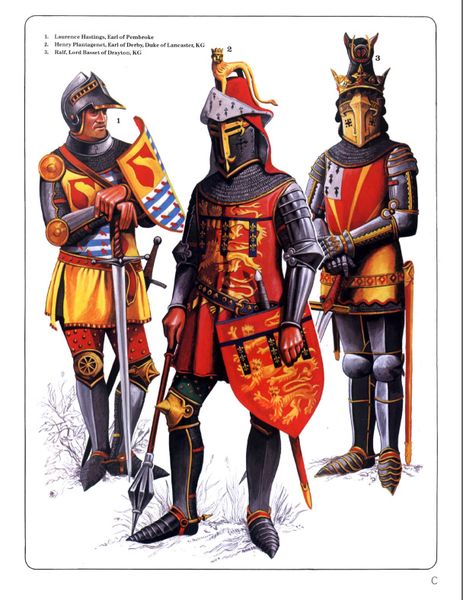
And so, in turn, we imagine—and we think that JRRT did, too–the “company of knights in full harness” to have been individuals, brightly clothed in heraldic colors, their armor that, perhaps, of Crecy, in 1346—

image29crecy.jpg

or Agincourt, in 1415.

image30agincourt.jpg

And you, dear readers, what do you think?

Thanks, as ever, for reading!

MTCIDC

CD

A Long Stretch

12 Wednesday Jul 2017

Posted by Ollamh in Heroes, J.R.R. Tolkien, Literary History, Military History, Military History of Middle-earth

≈ Leave a comment

Tags

Agincourt, Archery, arrow bag, arrows, Bard the Bowman, Battle of Poitiers, Casula Mellita, Crecy, Edinburgh, English Longbowmen, Esgaroth, Greco-Roman, gunpowder, harpoon, Hundred Years War, Laketown, longbows, Medieval-Renaissance, Napoleonic Wars, Naval Warfare, Pinkie Cleugh, Roman, sailing, Smaug, The Hobbit, The Mary Rose, Tolkien

Welcome, as always, dear readers.

In the past, we had a posting on Bard the bowman

image1jeffchanbard.jpg

who rescued Esgaroth (Laketown)

image2esgaroth.jpg

from the attack by Smaug.

image3smaug.jpg

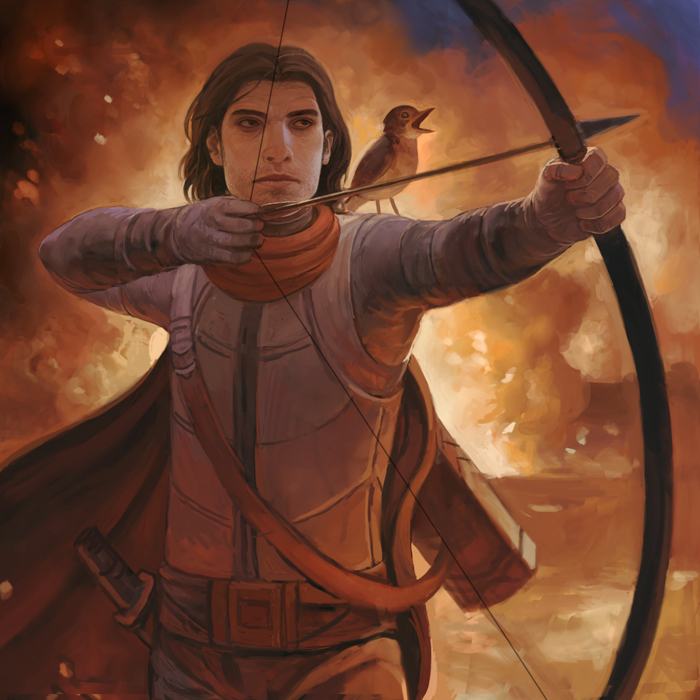
(We especially like this Jeff Chan Bard not only because Bard is depicted as he is in the book, as an archer, but also because it includes the thrush who tells him where he is to strike.)

In that previous posting, we suggested that JRRT pictured Bard as looking and acting like one of the English longbowmen of the Hundred Years War

image4longbowman.jpg

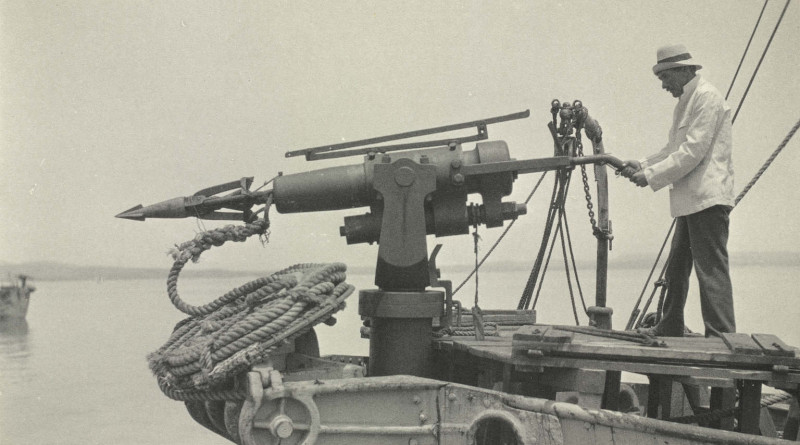
rather than as a harpooner, as in the film.

image5bard.jpg

image6aharpoongun.jpg

Since that posting, we did a second which included bowmen, just a few weeks ago, about Mogul-knife and arrow wound, and now we would like to add a third.

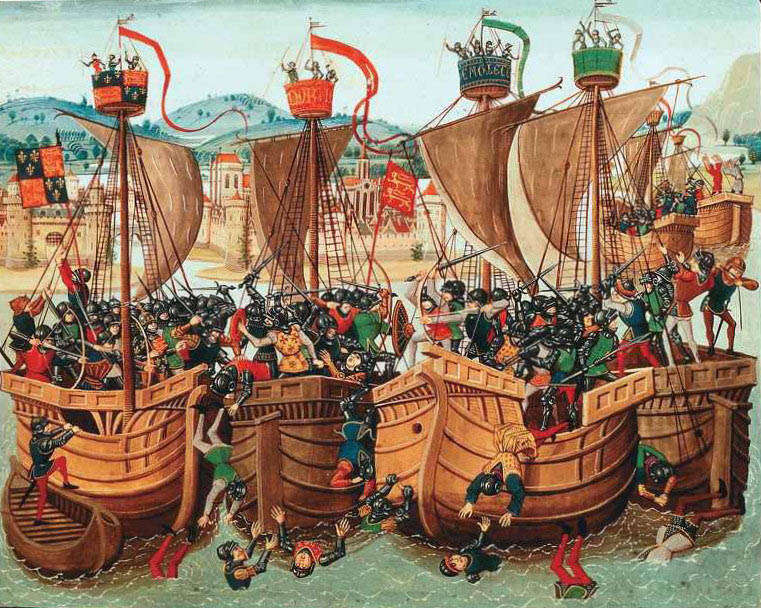
As we’ve mentioned before, one of us is preparing a new university course to be taught in the autumn on the history of warfare.  As you can imagine, this is a big subject, but, in the process of shaping it, we want to include a week on developments in naval warfare over the centuries.  So far, we’ve divided it into several parts:

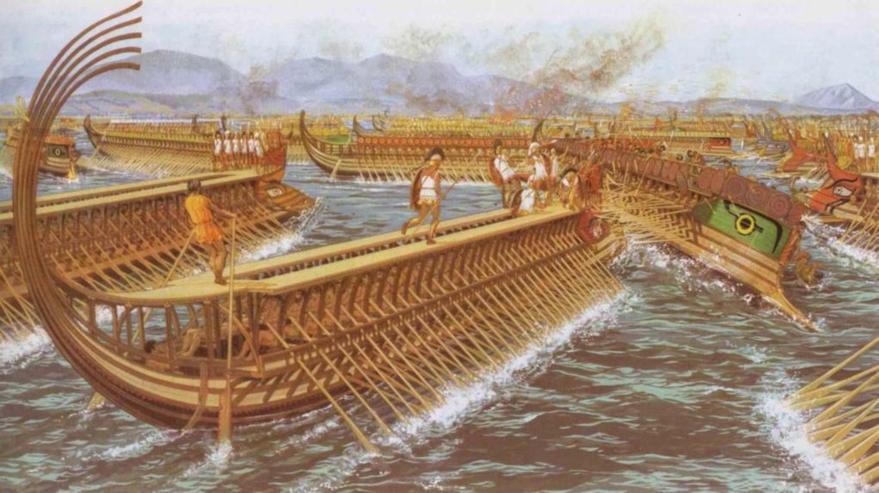
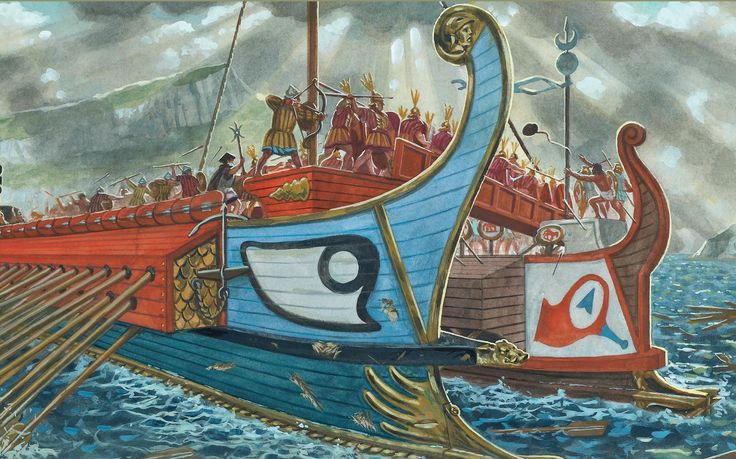
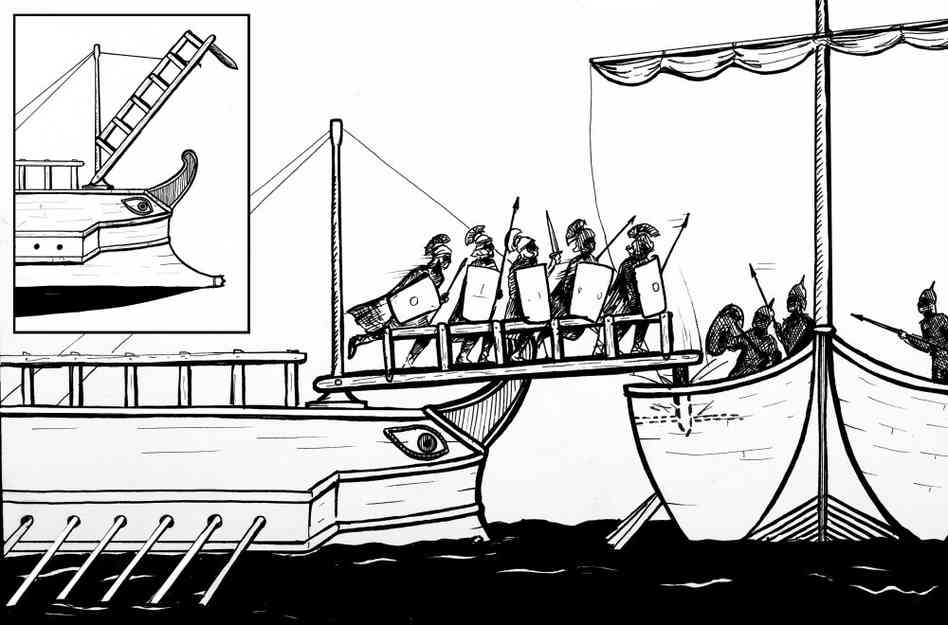
a. Greco-Roman

image6agrknavbat.jpg

image6romannavbat.jpg

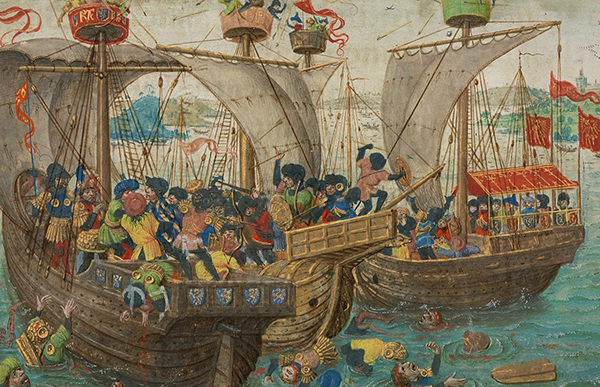
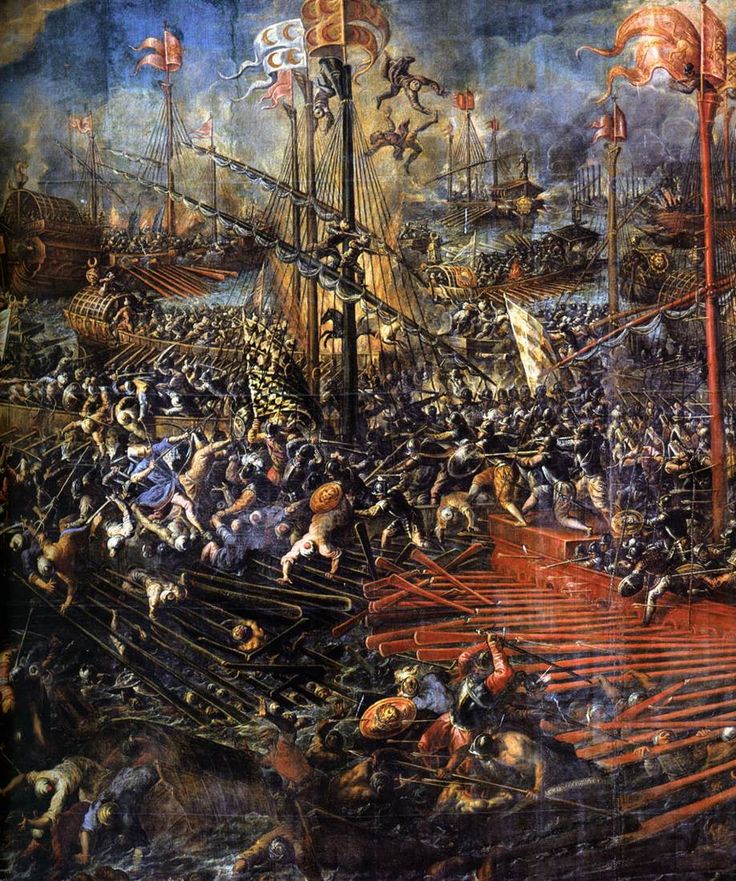
b. medieval-renaissance

image7sluys.jpg

image8lepanto.jpg

c. the age of sail

image9glorious.jpg

d. ironclads

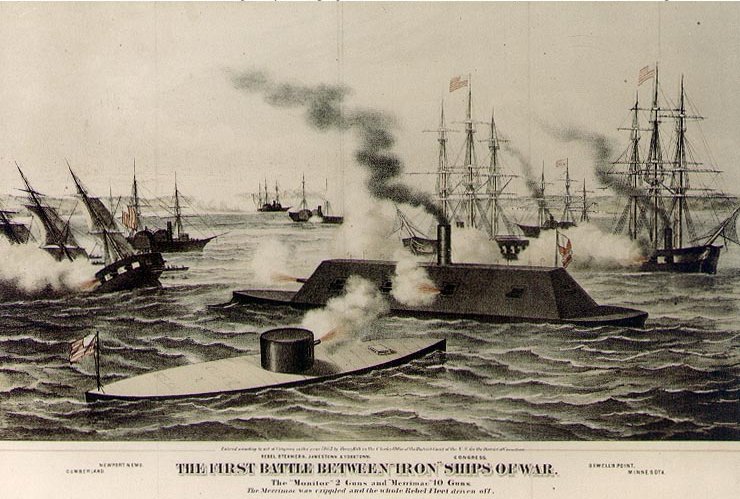
image10monitor.jpg

e. dreadnoughts

image11tsushima.jpg

While working on the Medieval/Renaissance section, we were reminded of what might be the most famous Renaissance shipwreck:  the sinking of The Mary Rose, 19 July, 1545.

image12mrsinks.jpg

Medieval naval battles had been primarily infantry battles transferred to the sea, as had been Roman practice.  That practice was a story in itself—the traditional Roman explanation was that they were land-fighters and so had invented a device, called a “corvus”–that’s “crow” in English—probably because the point at the enemy’s end was a bit like a pecking beak.  This was a kind of gangplank which, dropped onto the enemy’s ship, stuck in place and allowed Roman marines to rush across and deal with their opposite numbers.

image13corvus.jpg

image14medbat.jpg

Things began to change with the invention of cannon in western Europe.  (The history of gunpowder in the Far East is its own subject—and one we urge those interested to have a look at.  Here’s a LINK to get you started.)  Used first on land perhaps by the 13th century, the first recorded use of cannon on a ship dates from 1338 (and here’s a LINK to naval artillery, in case you want to know more).

With cannon, you could stand off from an enemy ship and—your choice—cripple it by destroying its sails and rigging—or sink it with holes below the waterline.

image15renbat.jpg

Boarding, as the Romans had, was still a possibility, of course, and provided the extra benefit, if the boarding was successful, of allowing for the acquisition of an extra ship.  This could be added to your fleet or sold and the profits shared among the sailors—or, actually, if we go by Napoleonic British standards, the profits went to everybody at the top, including admirals who weren’t even present at the capture, with a teeny amount remaining for the seamen who’d actually taken the prize.

image16renbat1.jpg

To do that boarding, Romans—and medievals—had loaded their ships with soldiers, and the Mary Rose was no exception, its surviving records suggesting that there were about 200 soldiers in a crew of approximately 400-450.

As a number of longbows have been recovered from the wreck,

image17mrlongbows.jpg

this would suggest that many of those soldiers were archers.

These, along with the artillery (and perhaps a small number of arquebuses?  To our current knowledge, none has been recovered from the ship, but, certainly, by 1545, they were in common use—at the battle of Pinkie Cleugh, east of Edinburgh, in 1547, the English army had several hundred German mercenary arquebusiers),

image18grmarq.jpg

would have supplied the missile weapons of the ship.

image19mrbowman.jpg

Not only were large numbers of artifacts discovered in the Mary Rose, but the skeletons of perhaps half its crew and about 90 of those were intact enough to warrant further study.  For our purpose, one, in particular is very interesting.

image20mrarcher.jpg

Discovered in the hold, he was a large man for his time, about 6 feet (about 183cm).  As well as revealing that he would have had a powerful build, his skeleton displayed repetitive stress injuries to his upper body.  There is discussion as to the pull-weight (how much muscle power it takes) of the longbow of the medieval/Renaissance period, estimates ranging from 90 to about 150 pounds (we’re sorry that we can’t readily convert this, as it isn’t pounds of weight, but pounds of force—the general idea is that it would have taken huge muscle power in either case), but, for a bow as tall as a bowman, this would have demanded great muscular strength—which would then have, over time, put huge stress upon an archer’s body.  This has then led archaeologists to suggest that he was a bowman.

And this brings us back to Bard, the actual archer, and a suggestion as to what he might have looked like.

JRRT only says:

“But there was still a company of archers that held their ground among the burning houses.  Their captain was Bard, grim-voiced and grim-faced…Now he shot with a great yew bow, till all his arrows but one were spent.”  (The Hobbit, Chapter 14, “Fire and Water”)

“a great yew bow” makes us think of the English bowmen we’ve mentioned before, and those we believe were in Tolkien’s mind, the victors at the battles of Crecy (1346), Poitiers (1356), and Agincourt (1415).

image21agincourt.jpg

To produce archers who could pull such powerful bows (and fire up to 10 arrows a minute, as we’ve mentioned in a previous posting), English archers began training as boys and continued throughout the years—as athletes of the bow, they had to keep in shape.  Such training and exercise would then have produced men like that discovered on the Mary Rose—big-shouldered, strong-armed—and given to the subsequent damage inflicted on the body by archery wear-and-tear.

So, might we then see Bard as not only “grim-voiced and grim-faced”, but “broad-shouldered and imposing”?  To which we can add this from The Hobbit:

“In the very midst of their talk, a tall figure stepped from the shadows.  He was drenched with water, his black hair hung wet over his face and shoulders, and a fierce light was in his eyes.”  (Chapter 14, “Fire and Water”)

All of which gives us:  “tall, black-haired, fierce, grim-voiced and grim-faced”—and, at our suggestion, “broad-shouldered and imposing”—a worthy portrait of Bard the Dragon-slayer.

Thanks, as ever, for reading!

MTCIDC

CD

PS

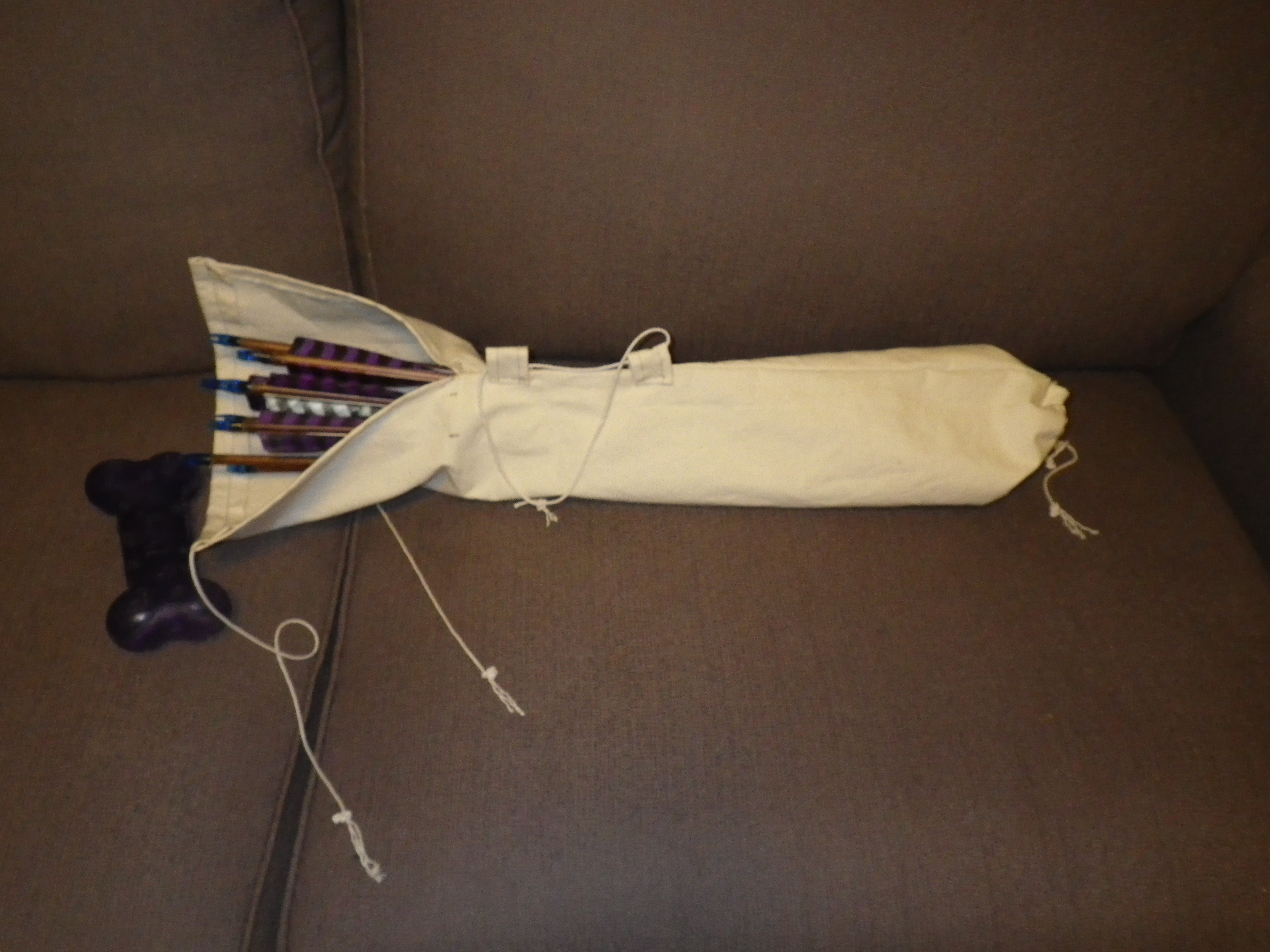
It’s not known what our Mary Rose archer was doing in the hold at the time the ship went down, but perhaps he was seeking to transfer extra ammunition to the main deck?  That ammunition would probably have been in the form of coarse linen bags carrying 24 arrows each—here’s a modern reconstruction

image22arrowbag.jpg

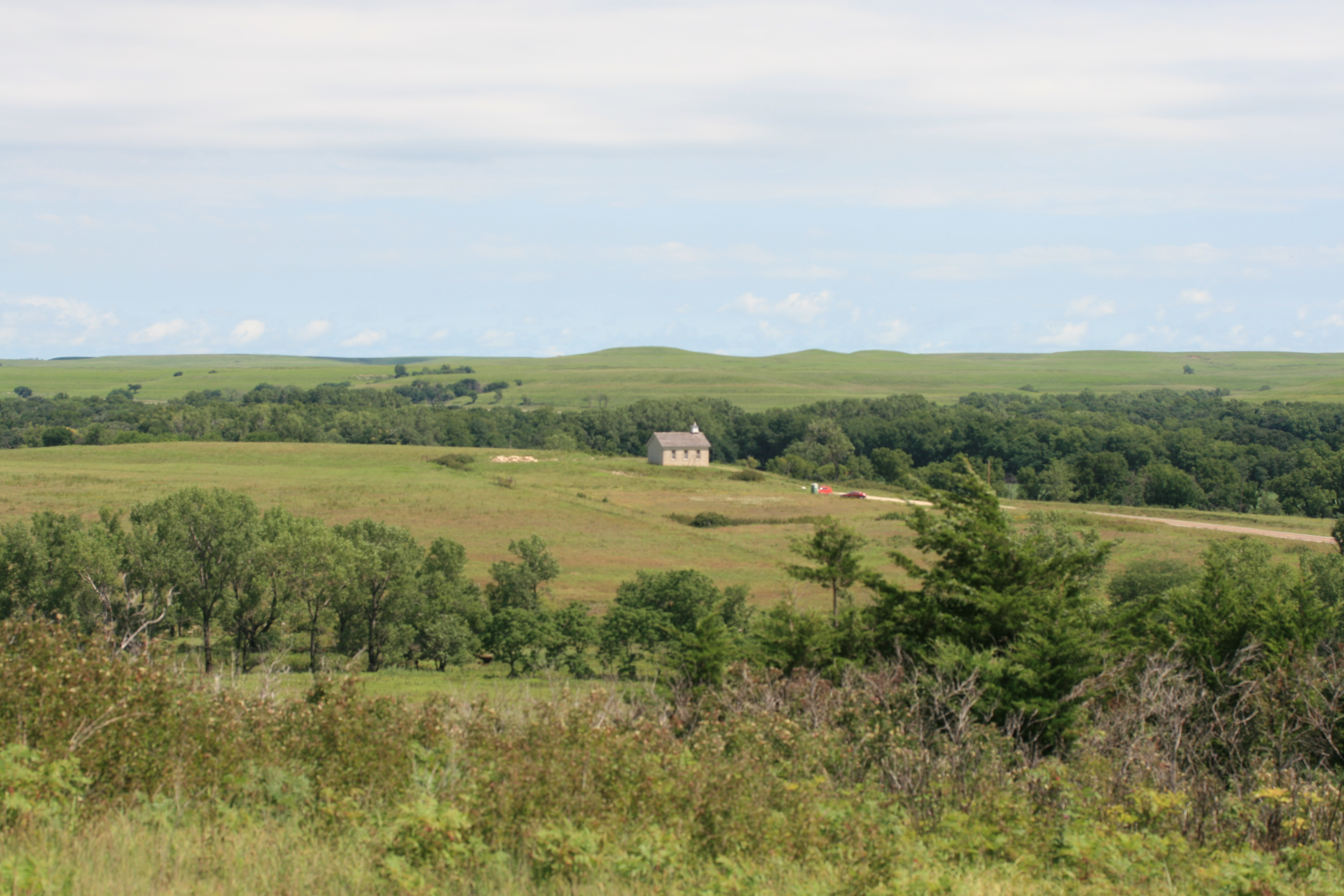
and here’s the LINK to the site from which it comes.  This belongs to an amazing woman whose website is full of her life on the edge of the Great Plains, in Kansas, USA—home of Dorothy of the OZ books, of course– as well as her photos of things like the reconstructed bag in the photo above.  Below is a picture of the Kansas tall grass prairie.

image23kansas.jpg

The Fall of Two Cities?

09 Wednesday Mar 2016

Posted by Ollamh in Economics in Middle-earth, Imaginary History, J.R.R. Tolkien, Language, Maps, Military History, Military History of Middle-earth, Narrative Methods

≈ Leave a comment

Tags

Agincourt, Anadoluhisari, Anatolia, Asia Minor, Bayezid I, Bosphorus, Byzantium, Constantine I, Constantinople, Crecy, English Civil Wars, Eowyn, Gondor, map, Mehmet II, Minas Tirith, motte and bailey, Newark, Normans, Osgiliath, Ottoman Empire, Poitiers, Rumelihisari, siege, The Lord of the Rings, Tolkien, Witch-King of Angmar

Dear Readers,

Welcome, as always. A little while ago, we talked about the “siege of Gondor”, which really wasn’t a siege in the formal sense, at all, but rather an assault. (We suspect that JRRT liked the sound of “siege” and so used it, not caring if it were strictly accurate or not.) In this posting, we want to look at a real siege and examine what might be parallels with events in Middle Earth.

Before we do, we want to take a moment to talk about the word “siege”. It comes into English through Old French asegier, which comes from Latin ad + sedeo > adsideo, adsidere , literally, “to sit down at”. The northern French who passed the word on to England must have liked to say what’s called a y-glide when certain consonants came before e, so, though it was spelled asegier, it would have been said “ah-see-YED-jier”. And that’s why English today has what can be a confusing spelling. (In our experience, lots of native speakers have trouble distinguishing between the ie of “siege” and the ei of “seize”). The stress on the word in English would have been away from the initial a, and so that would have disappeared from the word as it moved from being a borrowing.

[As what we think is a cool footnote, Latin also has the verb obsideo “to sit down right before=to besiege” and we can see that used in English in the word “obsession”, with the idea that something bothers you so much that it’s like you’re being besieged by it. You can also see it on this wonderful bit of 17th-c. English history.

obsidionalmoney.jpg

Although it doesn’t look like a modern coin, this is a form which used to be called “half-a-crown”—that is, 30 pennies (that’s what those three xses mean), or two shillings, sixpence.   This coin was struck in the town of Newark-upon-Trent, when it was besieged during the English Civil Wars (1642-1651).

_82601862_newark-1646map.jpg

And that’s where obsideo comes in. The back (the “reverse” in coin language—the front is called the “obverse”) says:

OBS: Newark (with a date, either 1645 or 1646, depending on when the coin was struck)

OBS = Obsessa Newark = “Newark Besieged”

There were a lot of coin-substitutes struck by various besieged towns, but, apparently, those from Newark are the most numerous.]

In the medieval western military world, sieges were more common, it seems, than pitched battles. As castles and towns were focal points for the possession and control of land—think of the hundreds of early castles, called “motte and bailey”, which the Normans built all across England in the first years after their conquest–it’s not surprising that they would have been a focus of attack.

motteandbailey.jpg Tapisserie_motte_dinan 704.jpg

As well, we can imagine that, ultimately, they would have been cheaper, in terms of the most irreplaceable manpower, sparing the highly-trained, hard-to-replace, knights and men-at-arms.

knights.jpg

Battles like Crecy (1346), Poitiers (1356), and Agincourt (1415), cost the French dearly as their brave knights threw themselves at their English opponents, whose longbows shot them and their horses down.

agincourt.jpg

In a siege, although there was the occasional combat, including the exploitation of a break in the enemy’s defenses,

Edward-III-takes-Poix-Castle.jpg

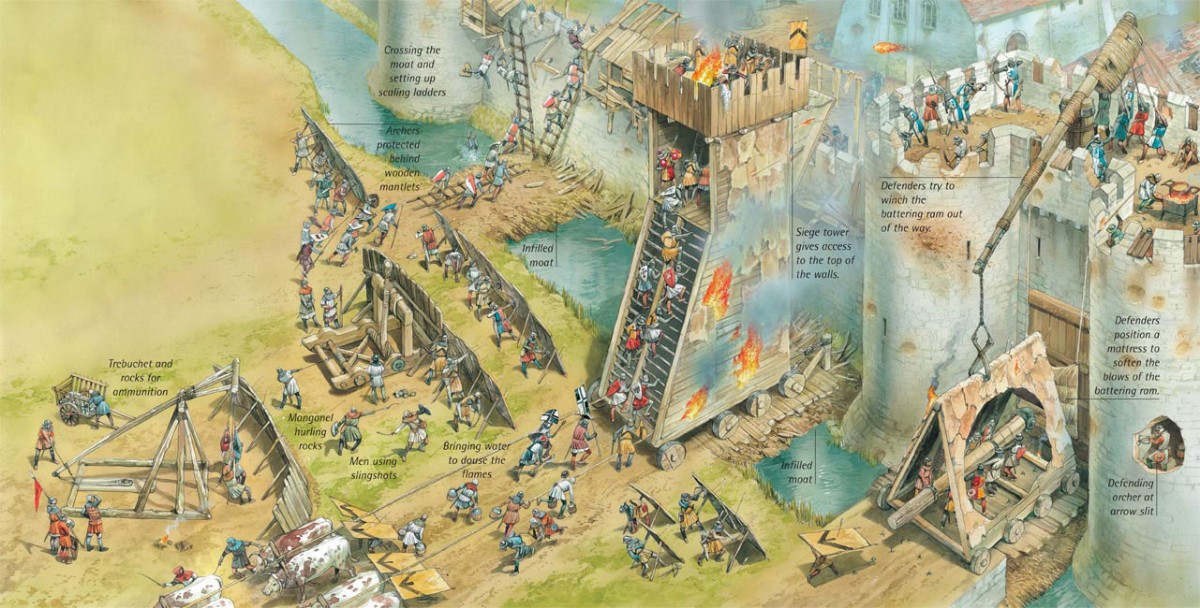
most of a siege would be spent in using machinery of various sorts to aid you in breaking down the walls—and the resistance of the defenders, as well.

castles-and-knights-2-with-labels.jpg

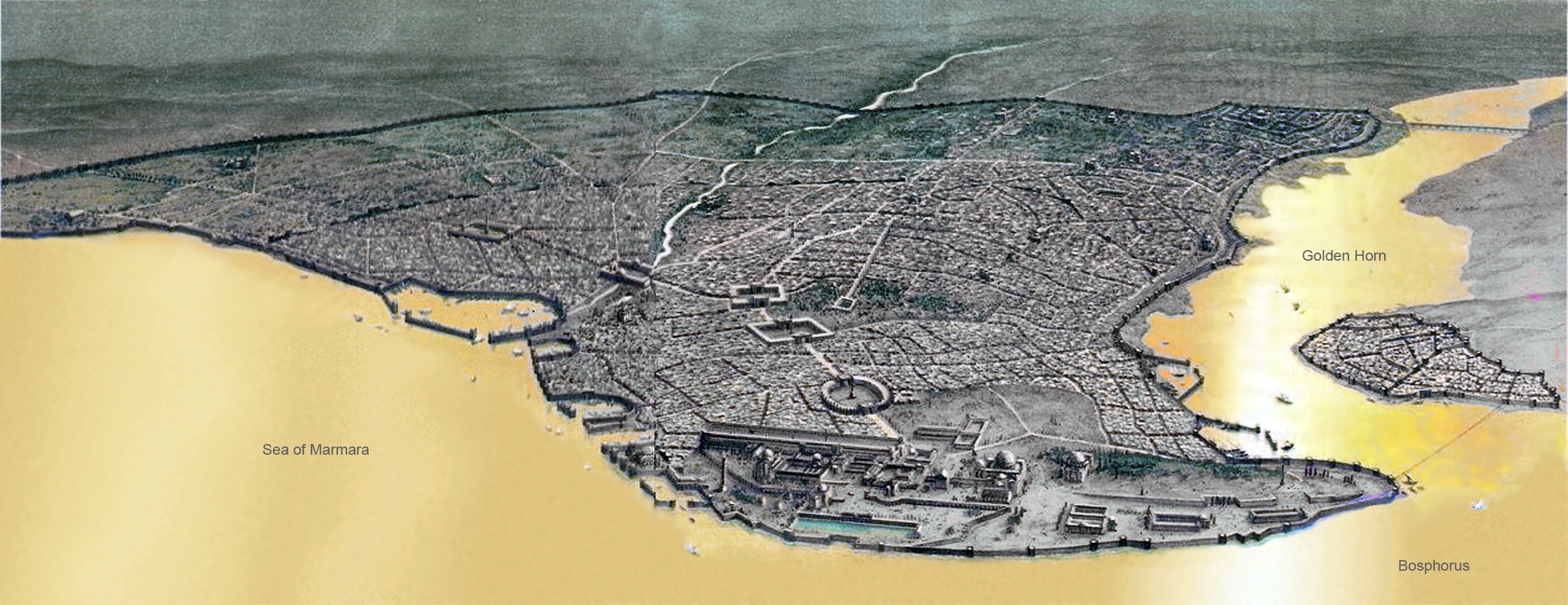
This brings us to the real, historical siege we want to examine: Constantinople, 1453.

Bizansist_touchup.jpg

Constantinople had begun life as a Greek colony, called Byzantium, on the European side of the narrow passageway between the Black Sea and the northeastern Mediterranean.

byzempmap.gif

It had been refounded and greatly expanded by the Roman emperor, Constantine I, to be a new capital in the east.

Constantine-I-Face.jpg

Although it was supposed to be called “New Rome”, everyone in the east called it after its refounder, and so it was “Constantinople”, becoming the capital of an eastern empire which we call “Byzantine”. Even with setbacks and a number of unsuccessful attacks over the centuries, it was, for a long time, a very wealthy and powerful city.

1-reconstruccion-de-bizancio.jpg

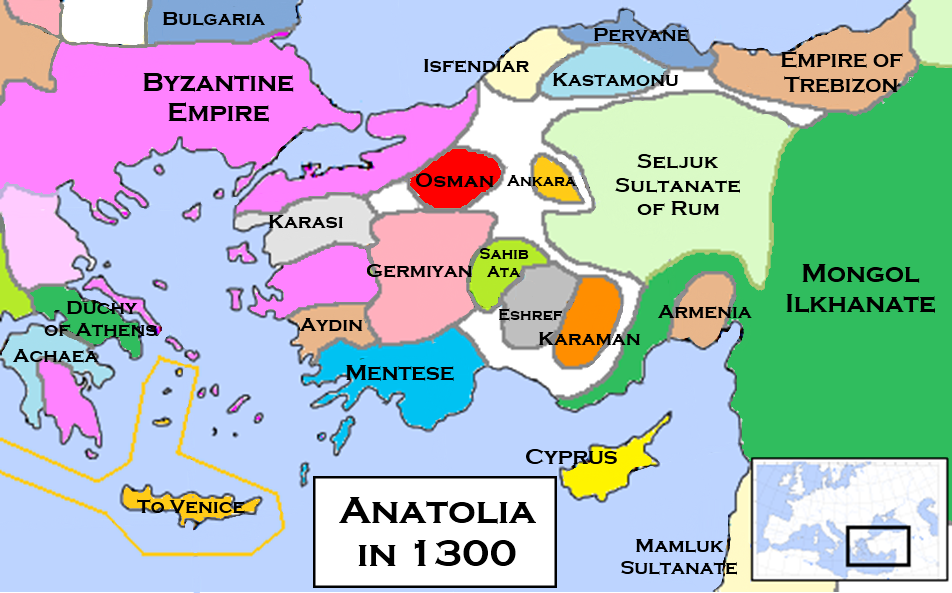
But even the wealthiest and most powerful cities will fade—especially when faced with ambitious enemies. Constantinople had had a number of those, but, finally, in its last years, perhaps its most ambitious and most powerful arose in Asia Minor: that of the Ottoman Turks. As you can see from this map, its beginnings were modest: one Turkic-speaking group among many.

Anatolian_Beyliks_in_1300.png

This was a period of instability, however. The Ottoman leaders quickly took advantage of that instability to grab power and territory, so that, by 1400, they had spread beyond the shrinking Byzantine world, into the Balkans, and, soon, Constantinople was surrounded.

trebizond1400

This surrounding took place in an increasingly-methodical way. In 1393-4, the ruler of the Ottomans, the sultan Bayezid I

bayezit1.jpg


built a small fortress on the Asia Minor side of the Bosphorus, the name for the northern stretch of the passage which led from the Black Sea to the Mediterranean. It was called Anadoluhisari, “the Anatolian fort”.

Anadoluhisari.jpg


You can see from the map that this was the beginning of setting up a choke point upstream from Constantinople.

mapwithanadoluhisari.gif

In 1451-2, the sultan Mehmet II finished the job with the Rumelihisari just opposite, on the European side (and that’s what its name means, “the Roman—that is, European—fort”).

Rumeli_hisari.jpg

Guns were mounted

muslim_rocket_technology_06.jpg

and any help which might have come from the Black Sea was blocked.

And here we want to take a minute to look at our imaginary city and its danger—because we see some easy parallels here. First, of course, the Ottoman empire was an eastern threat—so was Mordor. Mordor had taken the east bank of the Anduin, just as the Ottomans had taken the Asian side of the Bosphorus. And, in the capture of the European side and the building of Rumelihisari, we might see the taking of Osgiliath and the west bank of the Anduin. Then there is the massive city of Minas Tirith and the attack upon it.

mt.jpg 2381576-zmordorforcesk7.jpg

Constantinople was also a massive city.
Byzantine_Constantinople-en.png

It was, basically, on a triangular piece of land, with two sides protected by water. The original Greek town had had a wall, but it was long gone and almost all of Constantine’s land wall had long disappeared, as well. The latest walls are called the Theodosian, after their originator, the emperor Theodosius II (408-450AD), but the walls included bits of the Constantinian walls and many repairs, over the centuries. The main land defenses included three lines of wall and a moat.

2rh67o0.jpg

This sounds very impressive until one considers two things: first, is there a garrison big enough to defend what are, in fact, a number of miles of wall? And, second, although the walls have withstood previous attacks, including one made by the Ottomans in 1422AD, how will they stand up to the threat of modern artillery?

At the height of its power and prosperity, it is estimated that Constantinople had had a population of anywhere from 500,000 to 750,000 (although scholars argue over this). At the time of the final siege, the population had fallen to as low as 40,000. Thus, large parts of the city were empty—just like Minas Tirith:

“Pippin gazed in growing wonder at the great stone city…Yet it was in truth falling year by year into decay; and already it lacked half the men that could have dwelt at ease there.” (The Return of the King, Book 5, Chapter 1, “Minas Tirith”)

The garrison of Constantinople was perhaps about 9,000, in all, which meant that they were very thinly stretched. We don’t know just how many troops were in Minas Tirith. Some reinforcements had come from South Gondor, as we noted in an earlier posting, but only a few thousand and the defenders were powerfully outnumbered, just as those of Constantinople were, when the forces of Mordor began to arrive. The Ottoman army is thought to have had between 50,000 and 80,000 men, but just how many Orcs and others marched down the causeway from Osgiliath isn’t known–they are just a horde—something which the Jackson film shows very well.

maxresdefault

Then the assault begins, the Orcs having giant stone throwers, siege towers, and, finally, a giant, fire-breathing ram, Grond.

Grond_arrives.png

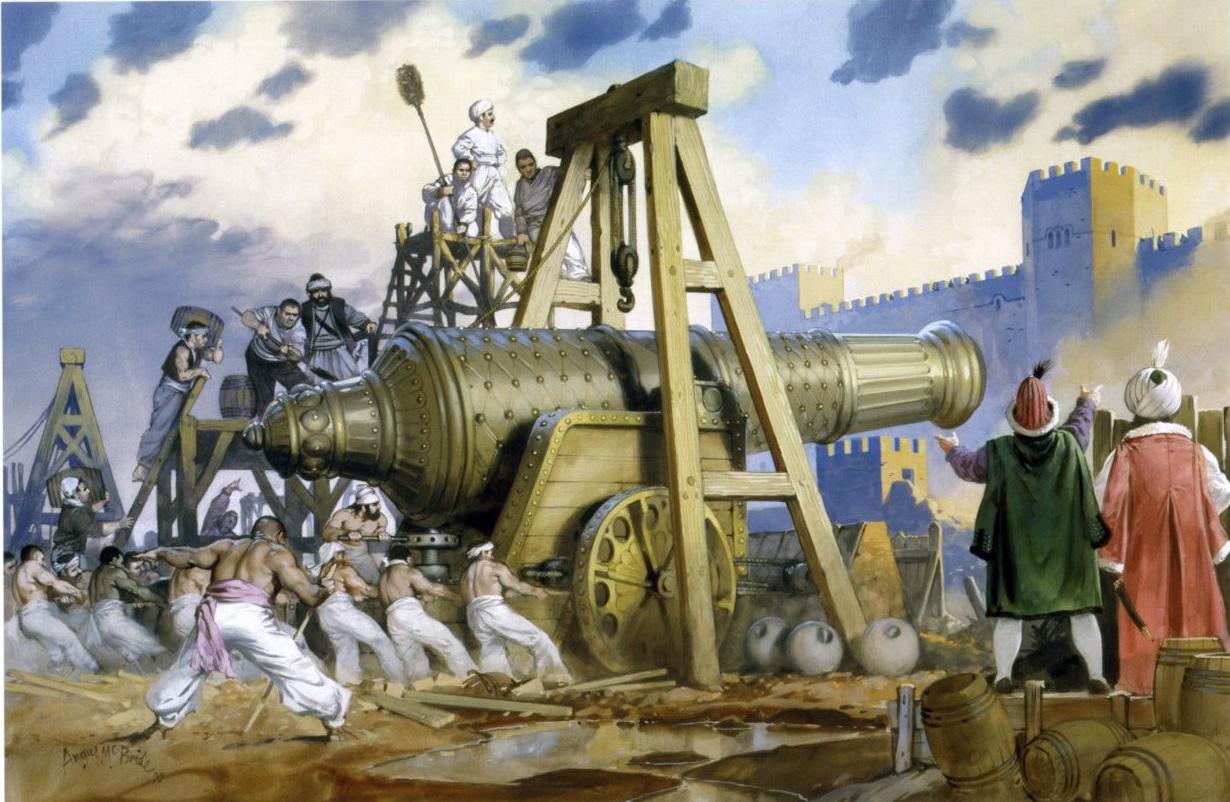
If you’ve been following our postings (and we hope you have!), then you know that we’ve discussed the use of what appears to be gunpowder, both at Helm’s Deep and at the Rammas Echor. The Orcs who attack the walls of Minas Tirith don’t appear to have such a weapon, but, unfortunately for the defenders of Constantinople in 1453, the Turks do, in the form of plentiful modern artillery.

Illustration-of-angus-mcbride-showing-the-ottoman-cannon-basilica-during-the-siege-of-constantinople-in-1453-ad.jpg

Attacks wear down the small garrison and huge, stone-throwing weapons knock down the walls, so that, finally the city falls, on 29 May, 1453.

84087026.jpg

Its conqueror, Mehmet II, rides in—

mehmet2enteringconstantinople.jpg

which is something the witch king of Angmar never gets to do, perishing instead, at the hands of Eowyn and Merry.

Eowyn.jpg


And there the parallels end, as does our posting. Did JRRT have the fall of Constantinople somewhere in the back of his mind? What do you think?

Thanks, as always, for reading.

MTCIDC

CD

The Doubtful Sea Series Facebook Page

The Doubtful Sea Series Facebook Page

  • Ollamh

Categories

  • Artists and Illustrators
  • Economics in Middle-earth
  • Fairy Tales and Myths
  • Films and Music
  • Games
  • Heroes
  • Imaginary History
  • J.R.R. Tolkien
  • Language
  • Literary History
  • Maps
  • Medieval Russia
  • Military History
  • Military History of Middle-earth
  • Narnia
  • Narrative Methods
  • Poetry
  • Research
  • Star Wars
  • Terra Australis
  • The Rohirrim
  • Theatre and Performance
  • Tolkien
  • Uncategorized
  • Villains
  • Writing as Collaborators
Follow doubtfulsea on WordPress.com

Across the Doubtful Sea

Recent Postings

  • On the Road(s) Again November 19, 2025
  • To Bree (Part 2) November 12, 2025
  • To Bree (Part 1) November 5, 2025
  • A Plague o’ Both—No, o’ All Your Houses! October 29, 2025
  • It’s in Writing (2:  I’st a Prologue, or a Poesie for a Ring?) October 22, 2025
  • It’s in Writing (1) October 15, 2025
  • King Trotter? October 8, 2025
  • The Voices in His Head  October 2, 2025
  • Plain and Grassy September 24, 2025

Blog Statistics

  • 101,639 Views

Posting Archive

  • November 2025 (3)
  • October 2025 (5)
  • September 2025 (4)
  • August 2025 (4)
  • July 2025 (5)
  • June 2025 (4)
  • May 2025 (4)
  • April 2025 (5)
  • March 2025 (4)
  • February 2025 (4)
  • January 2025 (5)
  • December 2024 (4)
  • November 2024 (4)
  • October 2024 (5)
  • September 2024 (4)
  • August 2024 (4)
  • July 2024 (5)
  • June 2024 (4)
  • May 2024 (5)
  • April 2024 (4)
  • March 2024 (4)
  • February 2024 (4)
  • January 2024 (5)
  • December 2023 (4)
  • November 2023 (5)
  • October 2023 (4)
  • September 2023 (4)
  • August 2023 (5)
  • July 2023 (4)
  • June 2023 (4)
  • May 2023 (5)
  • April 2023 (4)
  • March 2023 (5)
  • February 2023 (4)
  • January 2023 (4)
  • December 2022 (4)
  • November 2022 (5)
  • October 2022 (4)
  • September 2022 (4)
  • August 2022 (5)
  • July 2022 (4)
  • June 2022 (5)
  • May 2022 (4)
  • April 2022 (4)
  • March 2022 (5)
  • February 2022 (4)
  • January 2022 (4)
  • December 2021 (5)
  • November 2021 (4)
  • October 2021 (4)
  • September 2021 (5)
  • August 2021 (4)
  • July 2021 (4)
  • June 2021 (5)
  • May 2021 (4)
  • April 2021 (4)
  • March 2021 (5)
  • February 2021 (4)
  • January 2021 (4)
  • December 2020 (5)
  • November 2020 (4)
  • October 2020 (4)
  • September 2020 (5)
  • August 2020 (4)
  • July 2020 (5)
  • June 2020 (4)
  • May 2020 (4)
  • April 2020 (5)
  • March 2020 (4)
  • February 2020 (4)
  • January 2020 (6)
  • December 2019 (4)
  • November 2019 (4)
  • October 2019 (5)
  • September 2019 (4)
  • August 2019 (4)
  • July 2019 (5)
  • June 2019 (4)
  • May 2019 (5)
  • April 2019 (4)
  • March 2019 (4)
  • February 2019 (4)
  • January 2019 (5)
  • December 2018 (4)
  • November 2018 (4)
  • October 2018 (5)
  • September 2018 (4)
  • August 2018 (5)
  • July 2018 (4)
  • June 2018 (4)
  • May 2018 (5)
  • April 2018 (4)
  • March 2018 (4)
  • February 2018 (4)
  • January 2018 (5)
  • December 2017 (4)
  • November 2017 (4)
  • October 2017 (4)
  • September 2017 (4)
  • August 2017 (5)
  • July 2017 (4)
  • June 2017 (4)
  • May 2017 (5)
  • April 2017 (4)
  • March 2017 (5)
  • February 2017 (4)
  • January 2017 (4)
  • December 2016 (4)
  • November 2016 (5)
  • October 2016 (6)
  • September 2016 (5)
  • August 2016 (5)
  • July 2016 (5)
  • June 2016 (5)
  • May 2016 (4)
  • April 2016 (4)
  • March 2016 (5)
  • February 2016 (4)
  • January 2016 (4)
  • December 2015 (5)
  • November 2015 (5)
  • October 2015 (4)
  • September 2015 (5)
  • August 2015 (4)
  • July 2015 (5)
  • June 2015 (5)
  • May 2015 (4)
  • April 2015 (3)
  • March 2015 (4)
  • February 2015 (4)
  • January 2015 (4)
  • December 2014 (5)
  • November 2014 (4)
  • October 2014 (6)
  • September 2014 (1)

Blog at WordPress.com.

  • Subscribe Subscribed
    • doubtfulsea
    • Join 77 other subscribers
    • Already have a WordPress.com account? Log in now.
    • doubtfulsea
    • Subscribe Subscribed
    • Sign up
    • Log in
    • Report this content
    • View site in Reader
    • Manage subscriptions
    • Collapse this bar
 

Loading Comments...