• About

doubtfulsea

~ adventure fantasy

Tag Archives: books

Aging Documents

31 Wednesday Jul 2024

Posted by Ollamh in Uncategorized

≈ Leave a comment

Tags

books, Fantasy, J.R.R. Tolkien, lord-of-the-rings, Tolkien

As ever, dear readers, welcome.

Sometimes, for all of his hard work, something which Tolkien planned simply never appeared, at least in his lifetime.

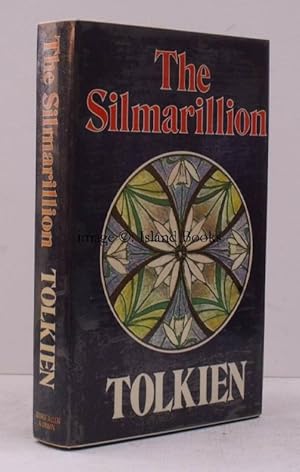
The biggest and most obvious of these is The Silmarillion,

with which he struggled for years, even flirting with an American publisher, Collins, when his Hobbit publisher, Allen & Unwin, agreeable to The Lord of the Rings, proved unwilling to publish it along with that work, which only appeared, edited by Christopher Tolkien, in 1977.

An earlier disappointment had been a smaller one, but JRRT put the same amount of creative energy and effort into it which he applied to much grander works:

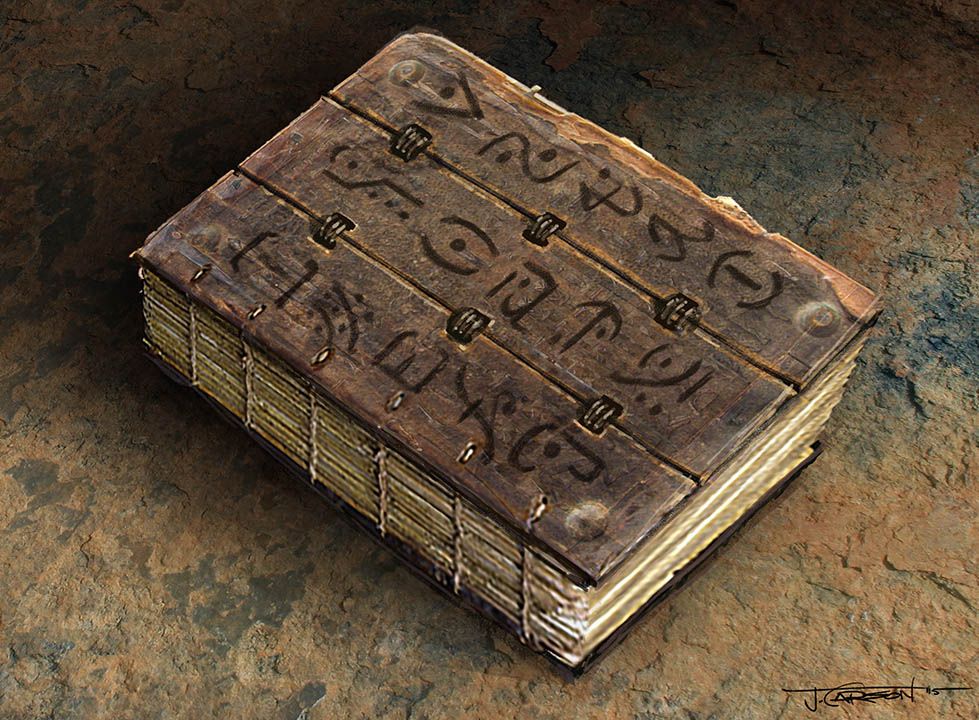
“There were many recesses cut in the rock of the walls, and in them were large iron-bound chests of wood.  All had been broken and plundered; but beside the shattered lid of one there lay the remains of a book.  It had been slashed and stabbed and partly burned, and it was so stained with black and other dark marks like old blood that little of it could be read.  Gandalf lifted it carefully, but the leaves cracked and broke as he laid it on the slab.  He pored over it for some time without speaking.  Frodo and Gimli standing at his side could see, as he gingerly turned the leaves, that they were written by many different hands, in runes, both of Moria and of Dale, and here and there in Elvish script.”  (The Fellowship of the Ring, Book Two, Chapter 5, “The Bridge of Khazad-dum”)

This is the “Book of Mazarbul”, which Gandalf describes as “a record of the fortunes of Balin’s folk”—that is, of the dwarves who followed Balin to repopulate the mines of Moria about 30 years before the beginning of the final adventure of The Ring.  This is a story with an unhappy ending, of course, as Balin and all of his people were eventually killed by orcs who themselves came to repopulate Moria and it ends with those terrible words, “they are coming”.

Had he had the time, I wouldn’t be in the least surprised to find that Tolkien would have reconstructed the entire book, but, in a fit of realism, he confined himself to three pages, including that final page,

hoping to include them among the illustrations (maps, the Hollin gate of Moria, and the lettering on Balin’s tomb).  This page shows his efforts, which including burning the pages with his pipe, punching holes in the margin to indicate where the pages would have been stitched to the binding, and staining them with red (I presume water color) to simulate blood.  For all those efforts, however, the publisher informed him that including them in color would have been too expensive and so, like The Silmarillion, they only appeared after Tolkien’s death.  (For images of all three pages—in color—and more details, see pages 348-9 of the highly informative Catherine McIlwaine Tolkien Maker of Middle-earth, published in 2018 by the Bodleian Library.)

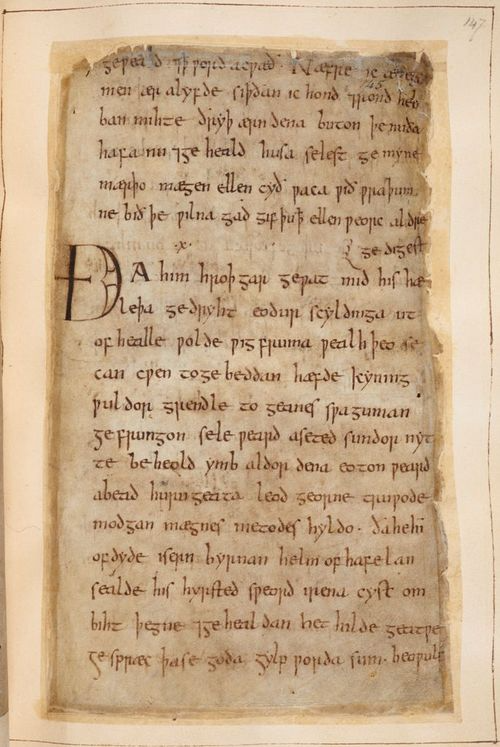
For someone who worked in Early English literature, models for his pages would have been easy to come by.  Here’s the first page of his beloved Beowulf, from the manuscript called “Cotton Vitellius A XV”.

Though not “slashed and stabbed”, it was certainly “partly burned” in a great fire in 1731 which not only damaged this manuscript, but destroyed a number of others.  (For more on the manuscript and on the poem, see:  https://en.wikipedia.org/wiki/Nowell_Codex and         https://en.wikipedia.org/wiki/Beowulf#External_links  This is our only manuscript of the poem and I shake my head at the thought that, had the fire gone a little farther, we would have lost this wonderful piece of English poetry forever.)

So often, these postings are explorations of some of the many various sources which influenced and stimulated Tolkien, but I’ve recently come upon what I suspect might be the opposite.

In 2010, the director of the British Museum, Neil MacGregor, narrated a 100-part series on BBC Radio 4 entitled, A History of the World in 100 Objects, all drawn from the Museum’s vast collections.  That same year, a companion book appeared.

It was a very clever idea (although it takes a moment to imagine how these objects were, initially, unseen, but only described) and soon there were a number of imitations, including this—

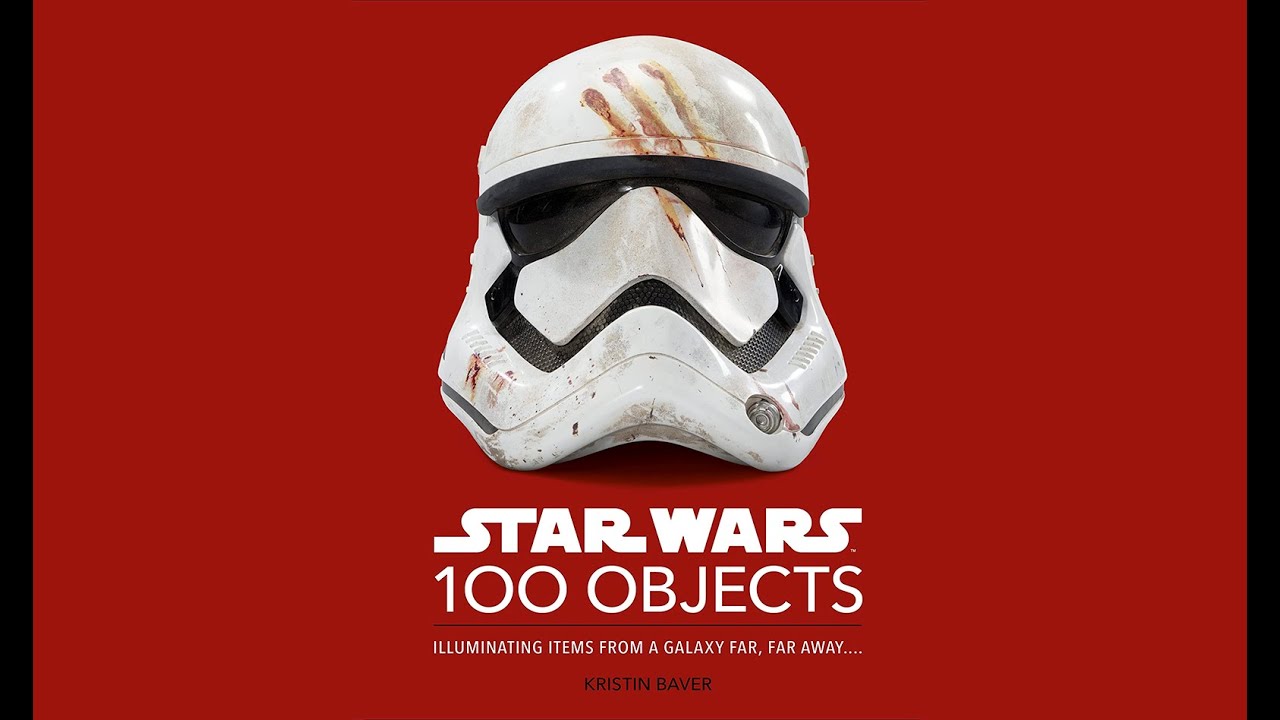
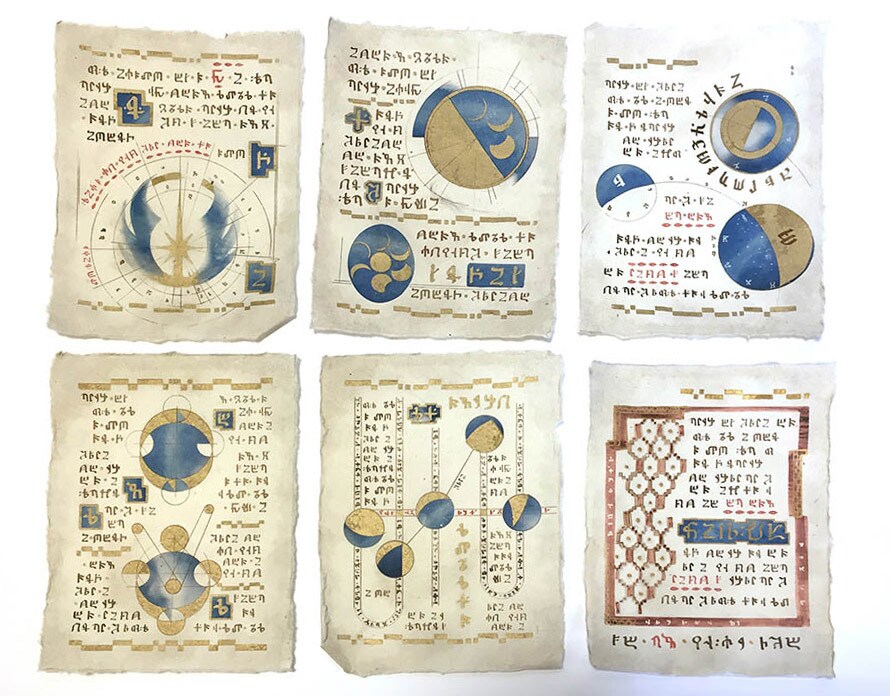
which recently came into my hands.  What’s marvelous about this is that, in contrast to the British Museum book, which uses actual historical artifacts, everything in this book, beginning with the idea of Star Wars itself, is something creatively imagined, even if based on things from our own galaxy.  It was, like the MacGregor, a fun read, but my attention was particularly caught by these—

“[Objects Number] 76 Ancient Jedi Texts”. 

With names like “Aionomica” and “Rammahgon” (which immediately reminded me of that magical Indian epic, the Ramayana,

a story of a kidnapping, a demon king, and a rescue–an easy introduction would be this–)

they were, as the book’s text informs us: “Far from those exciting stories of lightsaber adventures…” but, instead, were meant “…to preserve the sacred knowledge of those most in tune with the nature of the galaxy.” 

Interestingly, however, the “Rammahgon”

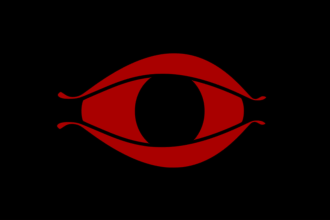
“…contains four origin stories of the cosmos and the Force…Recovered from the world of Ossus, the pressed red clay cover represents an omniscient eye referenced in a poem within.  But between the wordplay and talk of battling gods, there lies real, indisputable knowledge that saved the galaxy from the Sith Eternal.”

The look of ancient wear and tear of these texts imitates manuscripts the study of which occupied Tolkien’s scholarly work for most of his life

and presented a model for his own imitation of pages from the “Book of Mazarbul”.  Could it, in turn, have provided an inspiration for the creators of the “Jedi Sacred Texts”?  And, considering the kinds of material found in the Silmarillion—foundation and stories of struggles between lesser gods and would-be greater ones and evil as great as the Sith–could we see another bit of earlier Tolkien influencing later Star Wars? 

As always, thanks for reading.

Stay well,

Consider which texts you find sacred,

And remember that, as ever, there’s

MTCIDC

O

PS

If Neil MacGregor’s original series interests you, you can see/hear it here:

https://www.bbc.co.uk/ahistoryoftheworld/about/british-museum-objects/

Troll the Ancient

24 Wednesday Jul 2024

Posted by Ollamh in Uncategorized

≈ Leave a comment

Tags

books, Fantasy, J.R.R. Tolkien, lord-of-the-rings, Tolkien

Welcome, dear readers, as always.

When I was very little, many things puzzled me.  Among them was this from a Christmas carol:

“Don we now our gay apparel.

(assorted tra-la-las)

Troll the ancient Yuletide carol.”

(further fa-la-las, etc)

(“Deck the Halls”—for its interesting and fairly recent—1862—history, see:  https://en.wikipedia.org/wiki/Deck_the_Halls )

I suppose I wondered who “Don” was (which I heard as Don Wenow, possibly a Spanish grandee?), but what really confused me was what trolls had to do with Christmas.

I had first met a troll here—

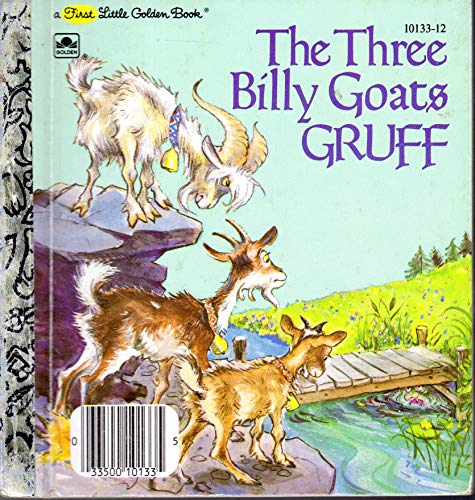
in a “Little Golden Book”—a small children’s book with, as you can see, a single story.  Although I didn’t understand that word “Gruff”, I liked the story which, if you don’t know it, is a simple folktale:

1. three goats of increasing size lived in a meadow by a stream

2. across the stream was a lusher meadow, the stream being crossed by a bridge

3. under the bridge lived a troll

(from the Rolozo Tolkien site—no artist listed—and be careful if you go looking for trolls on the internet or you might end up with this–)

4. the smallest/youngest goat attempts to cross the bridge but is threatened by the troll.  The goat says wait for my brother—he’s larger and therefore will provide a better meal.  The troll agrees, the second goat appears, says the same thing, and the troll—who has yet to catch on, but that’s trolls for you—agrees again.  And, even if you don’t know this story, you being one of my readers (unless, of course, you’re a troll, in which case, although you’re certainly welcome to join us, take notes!) will guess right away that the third, and largest, goat butts the troll into the stream, where he drowns.

But what is a troll, other than a rather dim creature with a taste for goats and a damp residence?

I’ve always assumed that they were Scandinavian and, consulting my Old Norse dictionary (Cleaseby and Gudbrand Vigfusson, 1874—here’s a copy for you here:  https://cleasby-vigfusson-dictionary.vercel.app/ ), I find “A giant, fiend, demon, a generic term”, along with all sorts of expressions, compounds, and place names associated with them, adding this:  “a werewolf, one possessed by demons”.

Giants, fiends, and demons are found everywhere in old stories (in my long-term reading of the whole of The Thousand and One Nights, I meet them on a regular basis), but the ancestry of this particular tale certainly places at least one troll squarely in Norway, as it first appeared in Asbjornsen and Moe’s Norske Folkeeventyr (1841-44)—“Norwegian Folktales”.
(This is the second edition of 1852.)

In turn, selections from this were translated by George Webbe Dasent (1817-1896) as Popular Tales from the Norse (1859)—here’s a copy for you:  https://www.gutenberg.org/cache/epub/8933/pg8933-images.html

And here, as Number XXXVII, we find the story. 

This is where I first met a troll—could that have been true for Tolkien, as well?  Let’s have a look at the possibility.

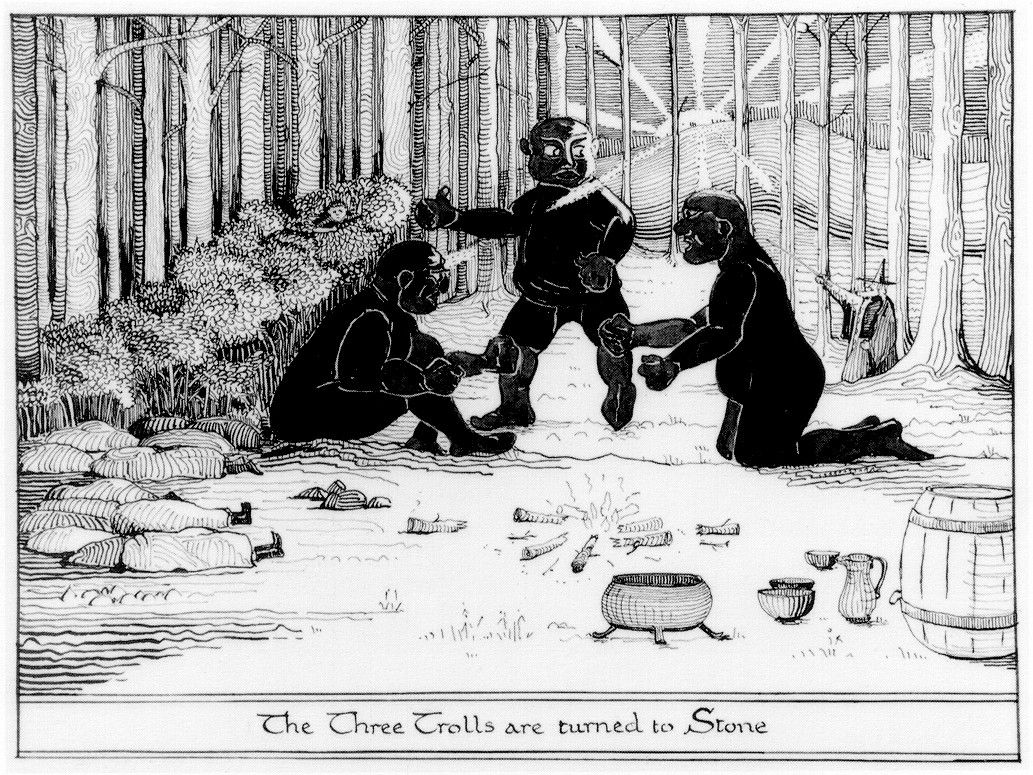
When we think of trolls and JRRT, I imagine the first thing which comes into readers’ minds is the near-disaster of Bilbo and the dwarves with William, Bert, and Tom in a glade—

(JRRT)

“But they were trolls.  Obviously trolls.  Even Bilbo, in spite of his sheltered life, could see that:  from the great heavy faces of them, and their size, and the shape of their legs, not to mention their language, which was not drawing-room fashion at all, at all.”  (The Hobbit, Chapter 2, “Roast Mutton”)

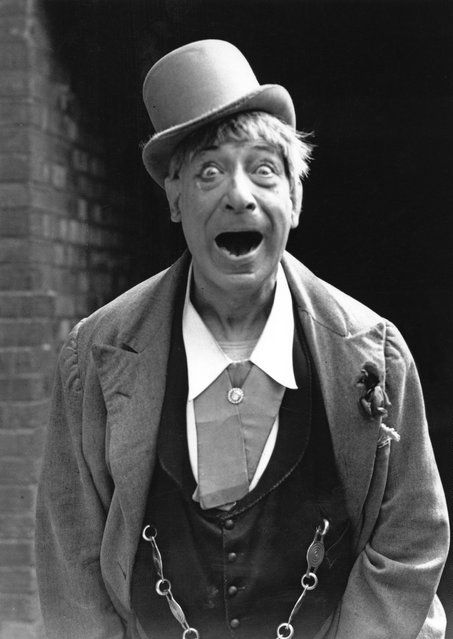
That language was described by Douglas Anderson in his The Annotated Hobbit as “comic, lower-class speech”—but, more specifically, it’s the language of music hall comics, commonly lower-class Londoners, cockneys—

(This is Harry Champion, 1865-1942, a well-known performer in music halls, and, with that expression, half-way to becoming a troll himself.)

which is hardly what we’d expect of creatures William describes as “come down from the mountains”, where we might hear them speaking the kind of rural English you hear in Sean Astin’s Sam in Jackson’s The Lord of the Rings,

based upon southwestern speech, but generalized to a degree and called “mummershire” in England.

Tolkien once described himself as having “a very simple sense of humour (which even my appreciative critics find tiresome)” (from a letter to Deborah Webster, 25 October, 1958, Letters, 412), which might be true in general, but I find the juxtaposition of creatures from Norse mythology doing a kind of music hall routine a wonderfully grimly comic combination, particularly as, during that routine, they were about to kill and eat the dwarves—and Bilbo, too.  (I especially like William’s specific detail that “You’ve et a village and a half between yer, since we come down from the mountains.”)

Sometimes it’s clear that Tolkien’s very early experiences with stories has influenced his later writing—as much as he can be prickly on the subject—as in the case of Moria and “Soria Moria Castle”, of which he says:

“It was there, as I remember, a casual ‘echo’ of Soria Moria Castle in one of the Scandinavian tales translated by Dasent.  (The tale had no interest for me:  I had already forgotten it and have never since looked at it.  It was thus merely the source of the sound-sequence moria, which might have been found or composed elsewhere.)  I liked the sound-sequence; it alliterated with ‘mines’, and it connected itself with the MOR element in my linguistic construction.”  (drafts for a letter to ‘Mr. Rang’, August, 1967, Letters, 541)

For us, however, the important phrase here is “one of the Scandinavian tales translated by Dasent”.  And here, as well, we have a small problem.  A volume we know must have formed part of Tolkien’s reading experience was Andrew Lang’s 1890 The Red Fairy Book,

and “Soria Moria Castle” appears there as the third story in the volume.  (Here’s a copy for you of the first edition:  https://archive.org/details/redfairybook00langiala/redfairybook00langiala/page/n15/mode/2up )  Although, in his introduction, Lang credits the translators of other tales, he doesn’t credit Dasent for this story.  Instead, at the story’s end, there’s a footnote citing “P.C. Asbjornsen”, who, along with Moe, was the source for Dasent’s work.   And yet, when one compares the text in Lang with that in Dasent, although the basic story is the same, there are differences, beginning with the first sentence.

In Lang, it reads:

“There was once upon a time a couple of folks who had a son called Halvor.”

And, in Dasent, that reads:

“Once on a time there was a poor couple who had a son whose name was Halvor.”

What’s going on here?  My guess is that there’s been some editing by Lang or by his wife, who, in reality, quietly took over the series, almost from the beginning, as Lang acknowledges in the introduction to The Lilac Fairy Book, 1910 (for more on this see:  https://en.wikipedia.org/wiki/Lang%27s_Fairy_Books ). 

Reading on, we see that Halvor comes face to face (to face to face to face to face, as the troll has three heads) with a troll—in fact, there are several trolls—the next with six heads and a third with 9,

but these are not in the least like William, Bert, and Tom, being more like the giant in “Jack and the Beanstalk” with his “Fee-Fi-Fo-Fum, I smell the blood of an Englishman”, saying, “Hutetu!  It smells of a Christian man’s blood here!”

One form of “Soria Moria Castle”, even with a differing text, occurs both in Dasent and Lang, but “Three Billy Goats Gruff” only appears in Dasent, leaving us with a puzzle:  did Tolkien read (or have read to him by his loving mother) “Soria Moria Castle” in Lang, in which case his trolls may come from that story, or did he have a copy of Dasent available and the trolls appeared, not only from “Soria Moria Castle”, but might also have done so (in a dimmer form) in “Three Billy Goats Gruff”?

And what about that other troll, the one in

“Troll the ancient Yuletide carol.”?

If we can believe the anti-Christian view of trolls in “Soria Moria Castle”, it’s doubtful that they would be associated with Christmas.  Etymonline says (along with a brief discussion of the use of the word in fishing, which doesn’t seem apropos), “sing in a full, rolling voice”, although one can picture very large trolls with large voices, I wonder what they’d sing?  (See the song of the goblins in Chapter 4 of The Hobbit, “Over Hill and Under Hill” for a possible model?) 

Now all I have to wonder about is who Don Wenow was and how he might be related to Christmas.

As ever, thanks for reading.

Stay well,

If you sing carols, you might consider the identity of Round John Virgin,

And remember that, as always, there’s

MTCIDC

PS

As you’ll recall, William, Bert, and Tom soon have an early morning experience with Gandalf which leaves them petrified.  Have a look at this important contribution to what happens to them and why:  https://hatchjs.com/why-do-trolls-turn-to-stone/

Praeteritio, or, Paraleipsis, Trailer, or Just Teasing?

17 Wednesday Jul 2024

Posted by Ollamh in Uncategorized

≈ Leave a comment

Tags

arthur-conan-doyle, book-review, books, mystery, Sherlock Holmes

As ever, dear readers, welcome.

This posting came about because I was rereading Kipling’s Just So Stories (1902).  In the last of the stories, at the beginning, I found this:

“There are three hundred and fifty-five stories about Suleiman-bin-Daoud:  but this is not one of them.  It is not the story of the Lapwing who found the Water; or the Hoopoe who shaded Sulieman-bin-Daoud from the heat.  It is not the story of the Glass Pavement, or the Ruby with the Crooked Hole, or the Gold Bars of Balkis.  It is the story of the Butterfly that Stamped.” (Rudyard Kipling, Just So Stories, “The Butterfly That Stamped”  You can read the story here:  https://archive.org/details/justsostories00kipl/page/n9/mode/2up in a 1912 American edition.  A word of caution, however:  sometimes Kipling’s language seems, to our ears, casually racist, but that was 1912 and, to my mind, doesn’t mar the stories in general, although, in 2024, it does stand out in an unpleasant way.)

It’s a trick I’ll bet you can spot immediately:  a politician speaking about a rival, will say, “But I will not mention my opponent’s _________”—and you can fill in the blank with anything negative which might come to mind.  It’s a very old rhetorical trick—so old that the Greeks used it (hence that “paraleipsis”, from the verb paraleipein, “to leave aside”) and the Romans, who were careful students of Greek rhetoric, employed it in turn (hence “praeteritio”, from praeter, “beside” and ire, “to go”).

This mentioning, but then withholding information, has a cousin in a form of this trick used by story-tellers in the West since the Greeks and clearly still in use in Victorian/Edwardian times by Kipling.   Consider, for example, Book 11 of the Odyssey.  Here, Odysseus, at the court of Alkinoos, (that’s al-KIH-noe-os),

is relating his visit to the Otherworld

and, at one point, lists a whole series of famous women he sees there, from Tyro, who slept with Poseidon and produced Pelias and Neleus—Pelias being the evil uncle who sends Jason off after the Golden Fleece—

(a wall painting from Pompeii—this is the moment when Pelias recognizes Jason by a prophecy which has warned him to beware of a visitor wearing only one sandal)

to Alkmene, mother of Herakles,

(a South Italian comic pot, in which Zeus, aided by Hermes, is trying to get into Alkmene’s window)

to Ariadne, daughter of Minos, who helped Theseus against the Minotaur in the Labyrinth.

(Ariadne gave Theseus a ball of string to help him get back from the maze.  You can read the whole list here:  Odyssey, Book 11, lines 235-330–https://www.perseus.tufts.edu/hopper/text?doc=Perseus%3Atext%3A1999.01.0136%3Abook%3D11  )

Each time, there’s a mention, but no story is ever gone into in detail.

Each of the women is given a kind of mini-biography (mostly about how the majority of them slept with Zeus), with a little detail, and the whole list resembles a well-known, now-fragmentary work once attributed to the early Greek poet, Hesiod, called “The Catalogue of Women”, also known by the first word of each entry in the catalogue as Eoiai, which we can translate as “[or] her like”.  (You can read an extensive article about this here:  https://en.wikipedia.org/wiki/Catalogue_of_Women  and you can read the collected fragments here:  https://www.theoi.com/Text/HesiodCatalogues.html  )

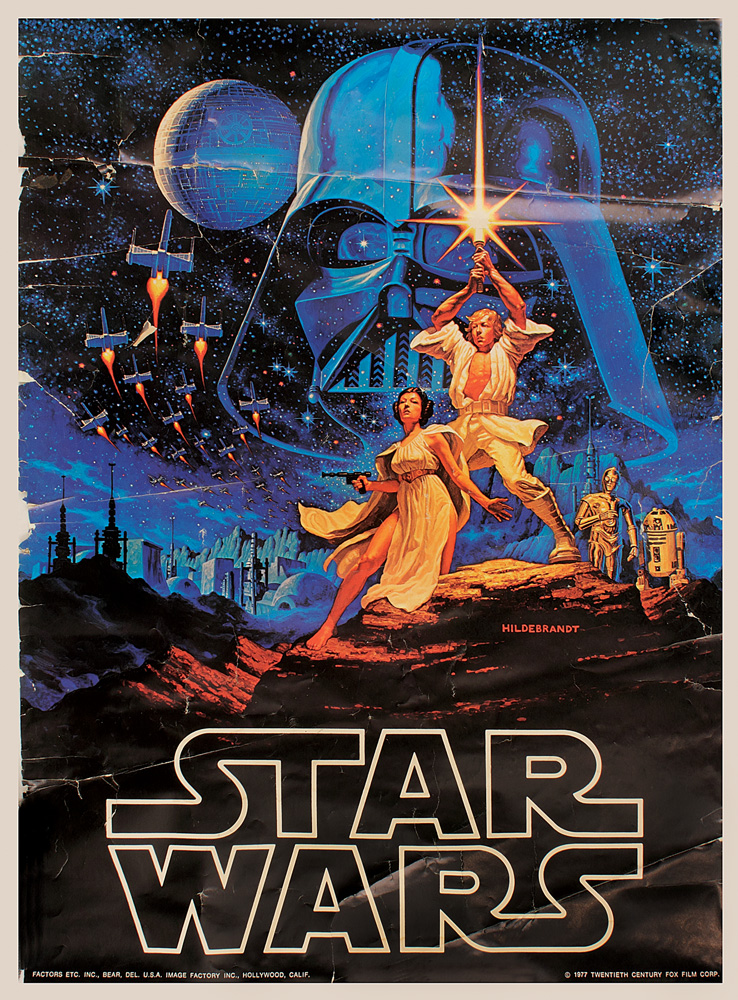
Assembling and preserving the past became an important feature of the later Greco-Roman world, but, thinking about the mini-catalogue in the Odyssey, and the fact the poem itself is a compilation of the works of earlier oral singers, I wonder if what we’re seeing here doesn’t have other purposes, first, the survival of a kind of boast on the part of those early singers—“Look what other cool stories I know”—and, second, a tease—“and wouldn’t you like to hear those next?” as if what we’re reading now wasn’t a sort of “trailer”, like those we still see in movie theatres, as well as on-line.  (As one easy example, here’s the original trailer for Star Wars:  A New Hope, from 1977:  https://www.youtube.com/watch?v=1g3_CFmnU7k   If you haven’t seen this, you’ll be amazed at how “crude” it now seems when, in 1977, it was the beginning of a new age of technological adventure-telling which is still with us, the carefully-built and filmed tiny models of then now replaced by often-astounding CGI now.)

(You’ll notice, by the way, that this poster was designed by the same Hildebrandt brothers who also gave us so many wonderful Tolkien images.)

“The Butterfly That Stamped and the two catalogues from the Greek past brought another “here are stories—but I’m not going to tell you” to mind:

“   One winter’s night, as we sat together by the fire, I ventured to
suggest to him that as he had finished pasting extracts into his
commonplace book, he might employ the next two hours in making
our room a little more habitable. He could not deny the justice of
my request, so with a rather rueful face he went off to his bedroom,
from which he returned presently pulling a large tin box behind him.
This he placed in the middle of the floor, and squatting down upon
a stool in front of it he threw back the lid. I could see that it was
already a third full of bundles of paper tied up with red tape into
separate packages.
   ‘There are cases enough here, Watson,’ said he, looking at me
with mischievous eyes.  ‘ I think that if you knew all that I have in
this box you would ask me to pull some out instead of putting
others in.’
   ‘These are the records of your early work, then?’  I asked.  ‘ I
have often wished that I had notes of those cases.’
   ‘Yes, my boy; these were all done prematurely, before my
biographer had come to glorify me.’  He lifted bundle after bundle,
in a tender, caressing sort of way.
    ‘They are not all successes, Watson,’  said he, ‘but there are some pretty little problems among
them.  Here’s the record of the Tarleton murders, and the case of
Vamberry the wine merchant, and the adventure of the old
Russian woman, and the singular affair of the aluminium crutch,
as well as a full account of Ricoletti of the club foot and his
abominable wife. And here—ah, now ! this really is something a
little recherché.’  “  (Arthur Conan Doyle, “The Musgrave Ritual”—one of my all-time favorite Holmes stories, collected in The Memoirs of Sherlock Holmes, 1894, which you can read in the 1894 edition, with the original illustrations, here:  https://ia801306.us.archive.org/27/items/memoirsofsherloc00doylrich/memoirsofsherloc00doylrich.pdf )

(one of those original illustrations by Sidney Paget)

And here we see again the same trick—and this is only one of a number of occasions in the Sherlock Holmes stories when a subject is mentioned—but there is no story to be found to follow it.  (See for much more:  https://www.ihearofsherlock.com/2016/01/the-unpublished-cases-of-sherlock-holmes.html )

As Conan Doyle came to dislike Holmes and even tried to kill him off in 1893 (see “The Final Problem” in the same volume as “The Musgrave Ritual”)

(another Sidney Paget)

it’s puzzling that he would do this to his readers—why would he suggest more stories to come?–but then, in 1901, he brought Holmes back in The Hound of the Baskervilles (originally published in The Strand Magazine, but you can read it in its 1902 book form here:  https://gutenberg.org/files/2852/2852-h/2852-h.htm ),

so, for all of his mixed feelings about his detective, perhaps that earlier quotation from “The Musgrave Ritual” is appropriate: 

   ‘There are cases enough here, Watson,’ said he, looking at me
with mischievous eyes.  ‘ I think that if you knew all that I have in
this box you would ask me to pull some out instead of putting
others in.’

And, as Conan Doyle’s last Holmes story appeared in 1927 (“The Adventure of Shoscombe Old Place” collected in The Case-Book of Sherlock Holmes, and you can read it here:  https://www.gutenberg.org/cache/epub/69700/pg69700-images.html#chap11 ) perhaps, even to Conan Doyle, there was always the chance for more.

Thanks, as ever, for reading.

Stay well,

For lack of space, I admit that I’ve left out such works as Filbert L. Gosnold’s “The Mystery of the Exploding Pants” as well as many other examples,

But remember that, as always, there’s

MTCIDC

O

PS

In closing, I have what might be a final example, of which there is, alas, no chance of more, as teasing as the initial mention is:

“He is surer of finding the way home in a blind night than were the cats of Queen Beruthiel.”  (The Lord of the Rings, Book Two, Chapter 4, “A Journey in the Dark”)

Although Tolkien never mentioned those felines again in print, we know a little more about the Queen and her cats from what Christopher Tolkien calls “a very ‘primitive’ outline, in one part illegible” (see Unfinished Tales, page 419), including “She had nine black cats and one white…setting them to discover all the dark secrets of Gondor”, but, as the author himself wrote, in a letter to W.H. Auden:

“I have yet to learn anything about the cats of Queen Beruthiel.”

having prefaced that with, “These rhymes and names will crop up; but they do not always explain themselves.”  (letter to W.H. Auden, 7 June, 1955, Letters, 419)

Or is this like Conan Doyle, using Sherlock Holmes to drop a teasing hint of more to come—which never did?

PPS

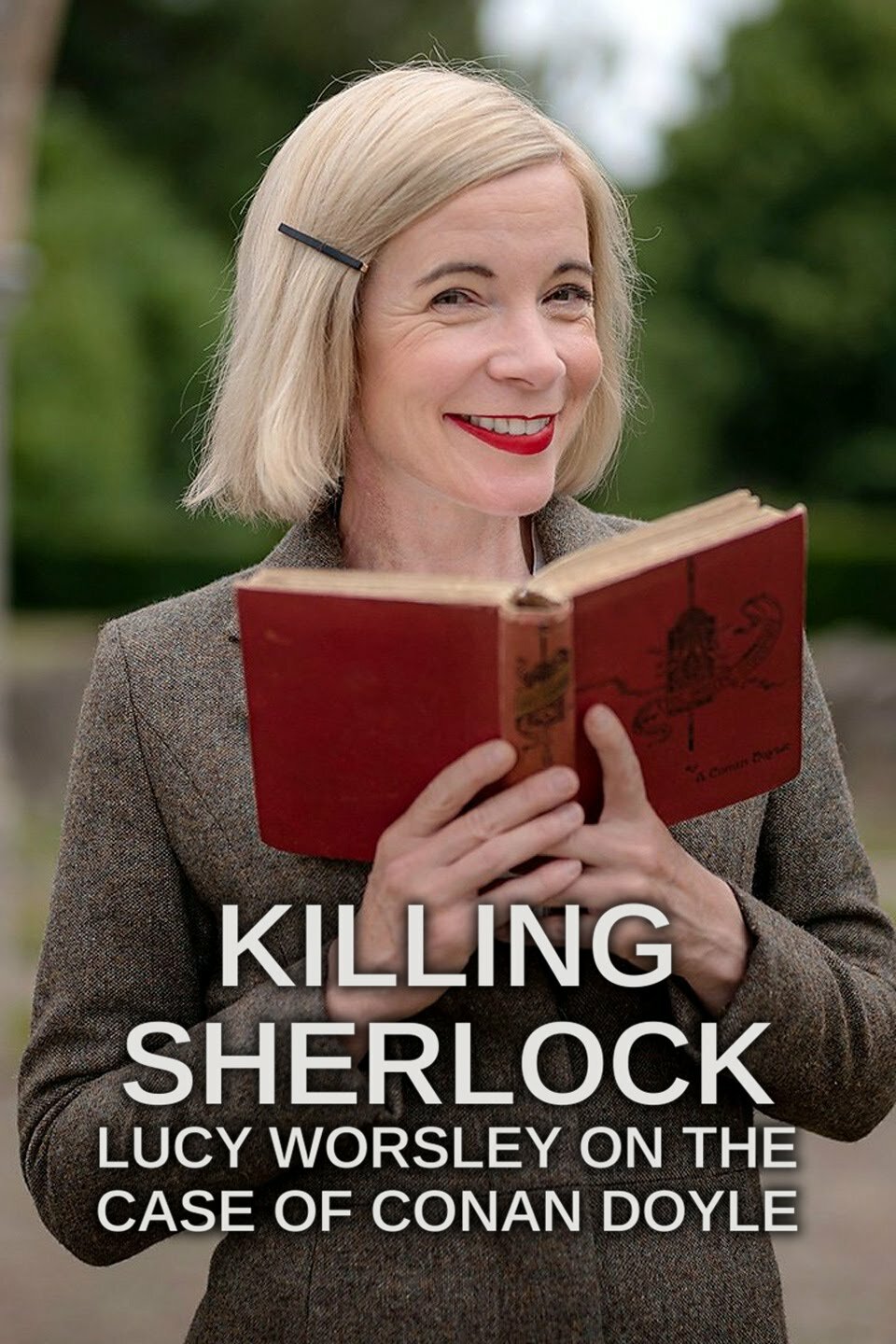
If you have access to it, you might enjoy this lively BBC series by the English historian, Lucy Worsley, on Conan Doyle’s love/hate relationship with Sherlock Holmes–

Grocer or Burglar?

11 Thursday Jul 2024

Posted by Ollamh in Uncategorized

≈ Leave a comment

Tags

books, Fantasy, J.R.R. Tolkien, The Hobbit, Tolkien

As always, dear readers, welcome.

For Bilbo Baggins, what promised to be an easy morning suddenly turned dark with the arrival of “an unexpected party” (this is a Tolkien pun:  “party” in Victorian English could mean “person” as well as “event”—and it’s still available in legal English, as in “the party of the first part”—which turns up in an hilarious scene from the Marx Brothers’ Night at the Opera, 1935—

in which Groucho, a shyster lawyer named “Otis P. Driftwood”, makes an agreement with the manager, played by Chico (say that “CHICK-oh” as he was supposedly always after girls), of an Italian tenor,

the agreement consists of mock legalese and—well, here, see it for yourselves:  https://www.youtube.com/watch?v=G_Sy6oiJbEk ).

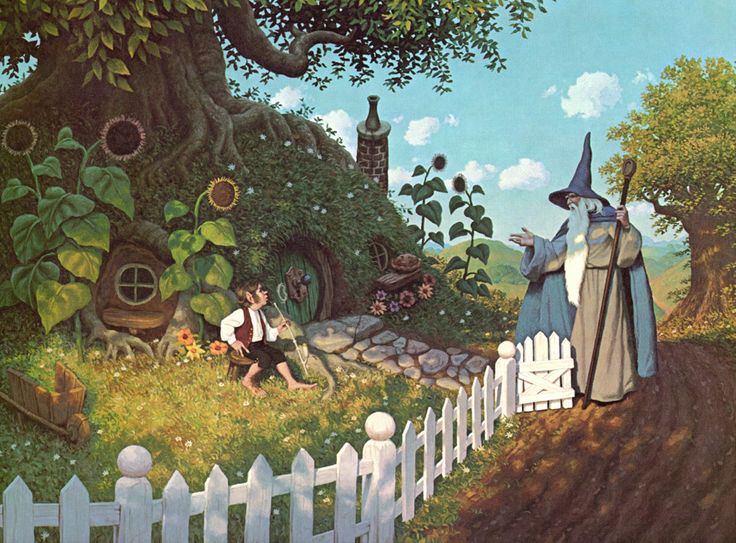
This party is Gandalf

(the Hildebrandts)

and his arrival leads to that second party—the one with all of the dwarves—

(another Hildebrandts)

and the map

(JRRT—with the later addition of the moon letters)

and Bilbo’s reaction to the danger involved in joining the dwarves as a “burglar”:

“At may never return he began to feel a shriek coming up inside, and very soon it burst out like the whistle of an engine coming out of a tunnel…Then he fell flat on the floor, and kept calling out ‘struck by lightning, struck by lightning!’ over and over again…”  (The Hobbit, Chapter One, “An Unexpected Party”)

Needless to say, this did not leave a very good impression upon the dwarves, leading Bilbo to overhearing Gloin say:
“It is all very well for Gandalf to talk about this hobbit being fierce, but one shriek like that in a moment of excitement would be enough to wake the dragon and all his relatives, and kill the lot of us.  I think it sounded more like fright than excitement!  In fact, if it had not been for the sign on the door, I should have been sure we had come to the wrong house.  As soon as I clapped eyes on the little fellow bobbing and puffing on the mat, I had my doubts.  He looks more like a grocer than a burglar!”
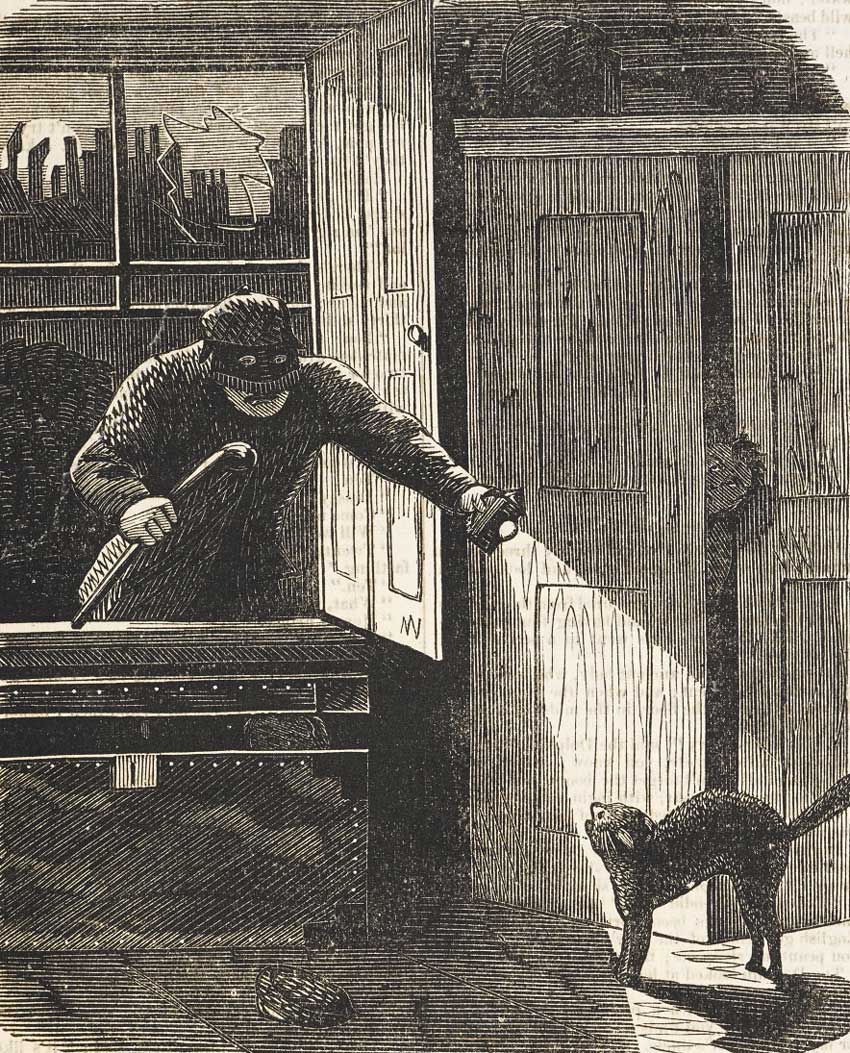
But what does a burglar look like?  I’ve always presumed that Tolkien, if not Gloin, had in mind someone like this—

which certainly differs from Bilbo in every way.

If he doesn’t look like that, does he resemble a grocer?  What does a grocer look like?

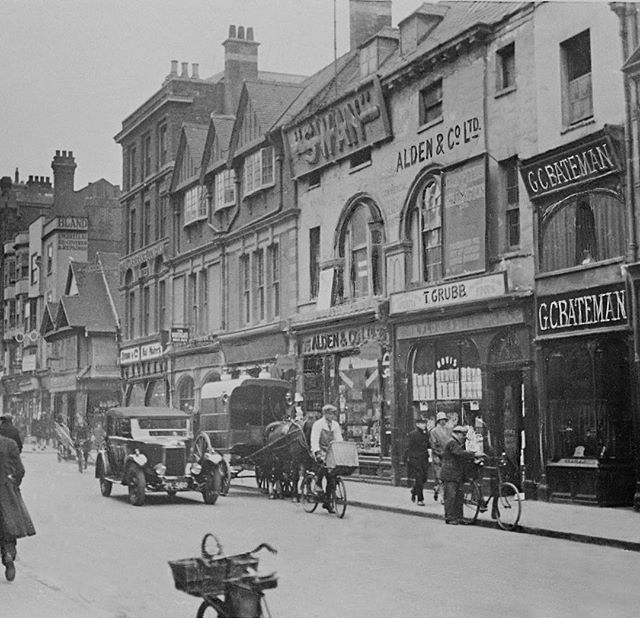
In Tolkien’s England, except for a big city, like London, which had department stores like Whiteley’s,

people bought their necessities along certain streets (sometimes called “the high”), where there were shops for anything and everything (also true in middle and lower class neighborhoods even in big cities).

Thus, for example, you went to the butcher shop for meat,

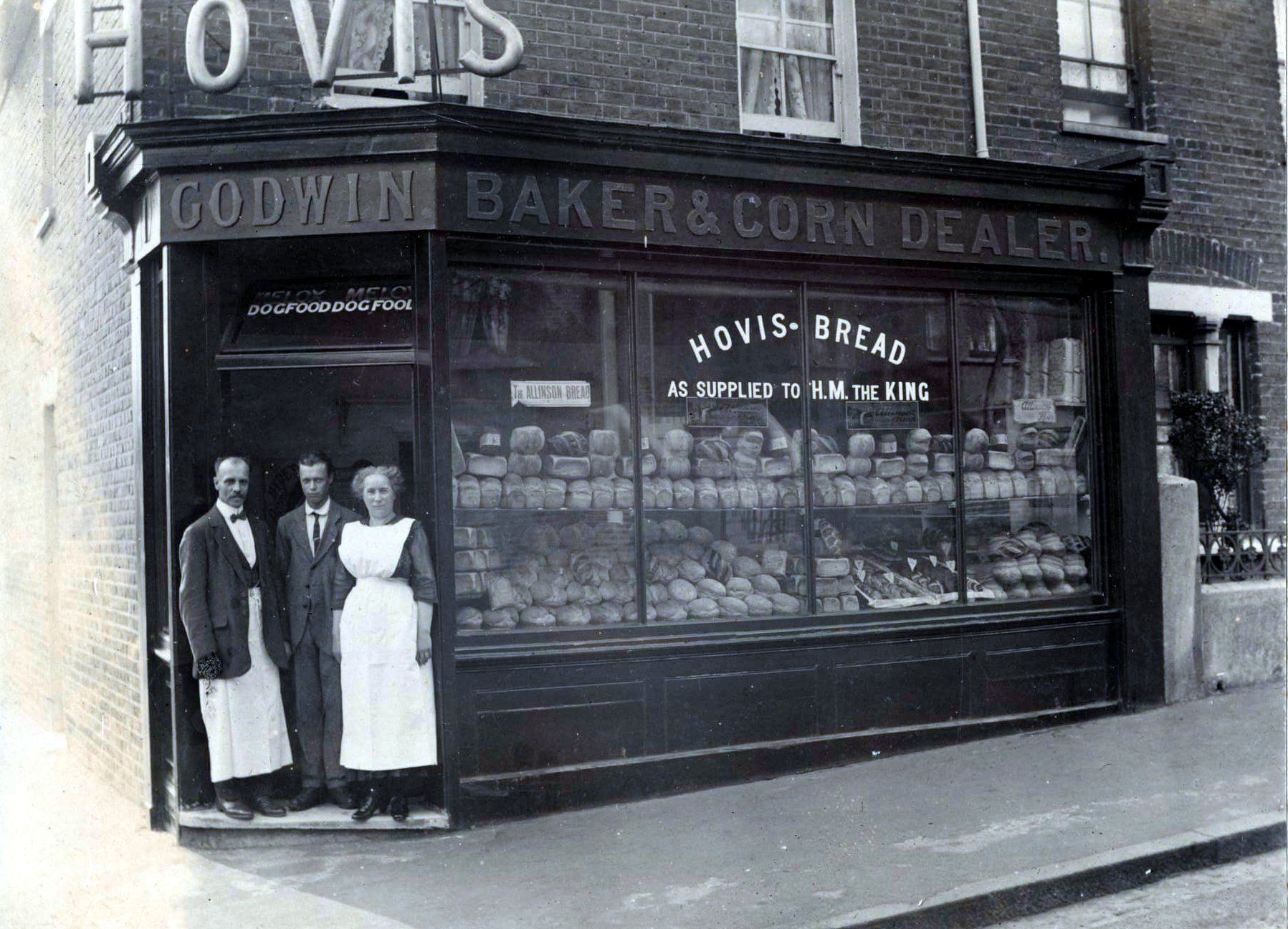
the bakery for bread,

the fruiterer for fruit,

and the greengrocer for vegetables.

(This can still be the case today—I’ve certainly walked down such streets in recent years in what are commonly called “market towns”—

even when, just outside town, there are supermarkets with large parking lots—

Sainsbury’s itself began as a single shop in London in 1869—)

Such shops, and many others, including department stores, as they began to appear in the 1870s and beyond, were not self-service, as most stores are now, but were staffed with clerks, whose job was to take orders from customers, acting as in-store middlemen, like this fellow—

or these

and there could be a kind of obsequiousness to their behavior (where “the customer is always right” must have come from) which is, I think, what JRRT had in mind when he has Gloin say “more like a grocer”, “puffing and blowing”.

That Bilbo was a well-off individual, living in a rather luxurious dwelling, to begin with,

(JRRT)

and then being called “a shop assistant” or the equivalent, we can see why:

“The Took side had won.  He suddenly felt he would go without bed and breakfast to be thought fierce.  As for little fellow bobbing on the mat it almost made him really fierce.”

And so Bilbo was on his way to becoming the burglar Gandalf had advertized him to be. 

(Alan Lee)

Thanks for reading, as ever.

Stay well,

Be wary of eavesdropping on dwarves,

And remember that, as always, there’s

MTCIDC

O

PS

If you’d like to read about a completely different burglar, (someone Tolkien could easily have read about), you might try A.J. Raffles, an “amateur cracksman”—that is, a gentleman burglar–created by E.W. Hornung (1866-1921), the brother-in-law of Arthur Conan Doyle—with The Amateur Cracksman, 1899, here:  https://archive.org/details/amateurcracksma03horngoog/page/n9/mode/2up

Soul Divided

19 Wednesday Jun 2024

Posted by Ollamh in Uncategorized

≈ Leave a comment

Tags

books, Fantasy, Harry Potter, Hogwarts, Writing

As always, dear readers, welcome.

Although I’ve never reread any but the first of them, I enjoyed the “Harry Potter” books when they were originally published, beginning in 1997.

My favorite was that first,

or, by its US title.

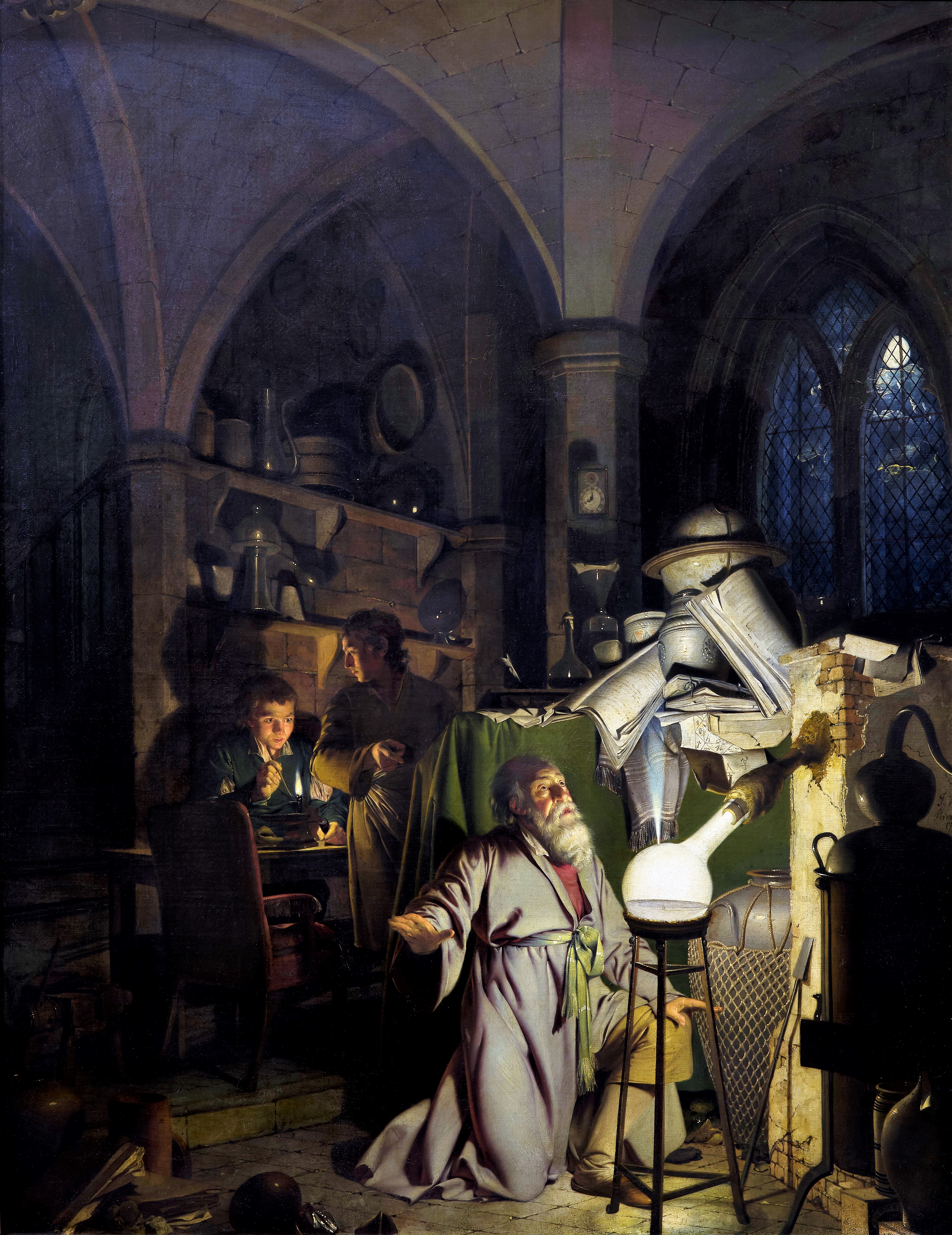
I prefer the original British title because it suggests something magical.  “Sorcerer’s Stone” was a make-shift replacement, with no resonance.  The “philosopher’s stone”, however, was a real (or at least hoped-for) thing, being thought of as a kind of alchemical tool which could turn substances into precious metals, and which seemed very appropriate for a book set mostly in a boarding school for witches and wizards.  (You can read more about it here:  https://en.wikipedia.org/wiki/Philosopher’s_stone   Illustrating the article is a wonderful painting by Joseph Wright of Derby, 1734-1797,

which, although entitled–in short form—the full title is practically a brief lecture–“The Alchymist, in Search of the Philosopher’s Stone…”, has always struck me as potentially being a very useful portrait of Merlin.  If you know T.H. White’s The Once and Future King, you might imagine that that’s the young Wart—aka Arthur—in the background.)

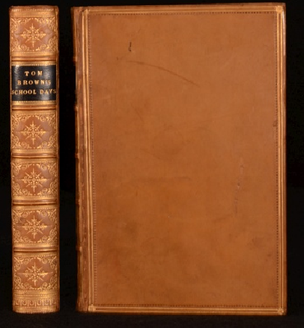
When the series continued, I wondered how far the author would take what was, initially, a clever takeoff on a literary type:  the school story, which dates at least as far back as Thomas Hughes’ 1857 Tom Brown’s School Days and which you can read here:  https://www.gutenberg.org/cache/epub/1480/pg1480-images.html

In fact, although the series progressed with the main protagonists continuing their magical education, it became increasingly entangled with the villain, Voldemort, and a world folktale, classified in the Aarne-Thompson-Uther Index as “The Giant (Ogre) who had no heart in his body” (ATU302).  In this story, of which at least 250 versions exist, the Giant (or his equivalent), to protect himself, removes his heart and conceals it where (he hopes) it cannot be found.   The protagonist (along with helpers) must find that location and destroy the heart—or at least use it as leverage.  (You can read the translation of a Norwegian version of it here, under the title “Cinder-Lad and His Six Brothers”:  https://archive.org/details/fairystoriesmych00shim/page/n7/mode/2up   And you can read more about the tale here:  https://en.wikipedia.org/wiki/The_Giant_Who_Had_No_Heart_in_His_Body )  In the Harry Potter books, it’s not one piece of his heart–here, his soul–but 7, all hidden in what are called “Horcruxes”, and it takes Harry and his friends (along with the headmaster, at one point) to locate and destroy the set, providing for a major plot element beginning with the second book Harry Potter and the Chamber of Secrets.  (For more, see: https://fortheloveofharry.com/list-of-horcruxes/  )

When all of the Horcruxes are gone, so is Voldemort and this brings to mind another complex story.

“The Enemy still lacks one thing to give him strength and knowledge to beat down all resistance, break the last defences, and cover all the lands in a second darkness.  He lacks the One Ring…

…the Nine he has gathered to himself; the Seven also, or else they are destroyed.  The Three are hidden still.  But that no longer troubles him.  He only needs the One; for he made that Ring himself, it is his, and he let a great part of his own former power pass into it, so that he could rule all the others.  If he recovers it, then he will command them all again, wherever they be, even the Three, and all that has been wrought with them will be laid bare, and he will be stronger than ever.”  (The Fellowship of the Ring, Book One, Chapter 2, “The Shadow of the Past”)

If this Ring is so crucial, it would be easy to wonder why Sauron hasn’t been more aggressive in finding it, but Gandalf answers that next:

“…He believed that the One had perished, that the Elves had destroyed it, as should have been done.  But he knows now that it has not perished, that it has been found.  So he is seeking it, seeking it, and all his thought is bent on it…”

In the Norwegian version of “The Giant (Ogre) who had no heart in his body”, the Giant’s heart was concealed in an egg and, when the egg was broken, “the giant burst to pieces”.

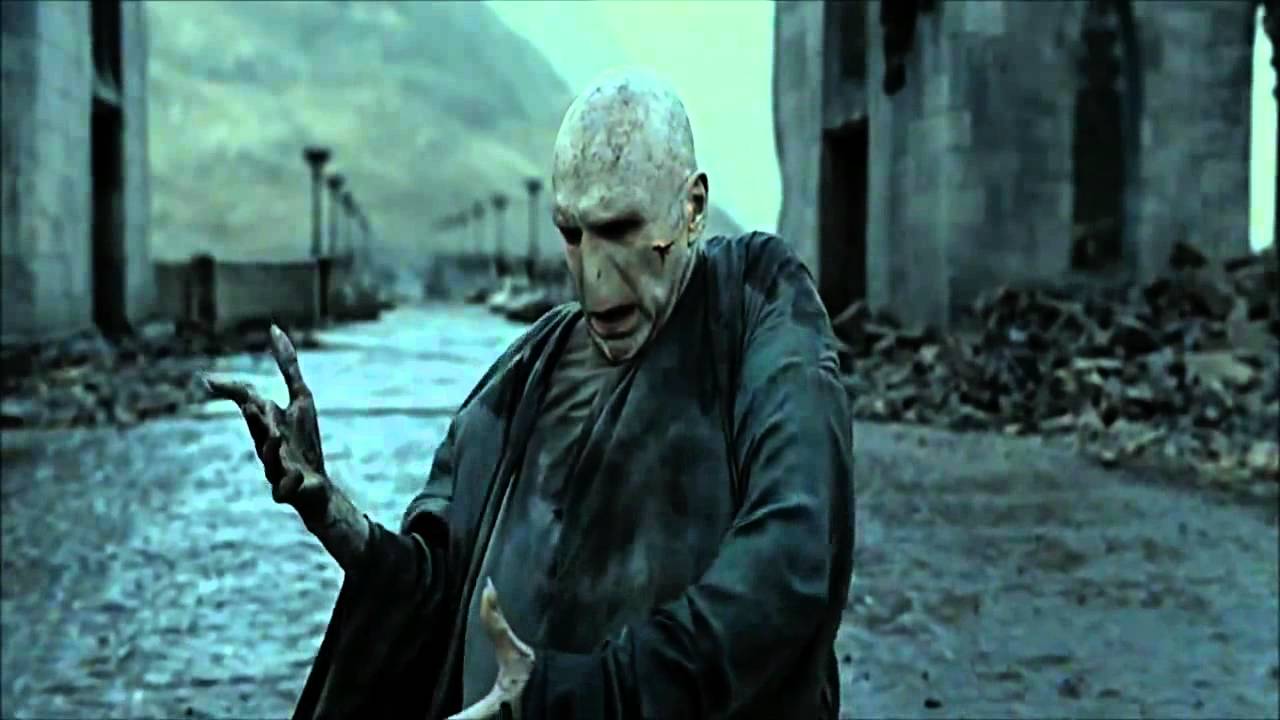
When the last Horcrux is gone, Voldemort seems to melt away,

rather like the demise of the Wicked Witch of the West when she is doused with water.

When the Ring is destroyed, the end is a bit more dramatic:

“And even as he spoke the earth rocked beneath their feet.  Then rising swiftly up, far above the Towers of the Black Gate, high above the mountains, a vast soaring darkness sprang into the sky, flickering with fire.  The earth groaned and quaked.  The Towers of the Teeth swayed, tottered, and fell down; the mighty rampart crumbled; the Black Gate was hurled in ruin; and from far away, now dim, now growing, now mounting to the clouds,  there came a drumming rumble, a roar, a long echoing roll of ruinous noise.

…And as the Captains gazed south to the Land of Mordor, it seemed to them that, black against the pall of cloud, there rose a huge shape of shadow, impenetrable, lightning-crowned, filling all the sky.  Enormous it reared above the world, and stretched out towards them a vast threatening hand, terrible but impotent:  for even as it leaned over them, a great wind took it, and it was all blown away, and passed; and then a hush fell.” (The Return of the King, Book Six, Chapter 4, “The Field of Cormallen”)

(An amazing illustration by Ted Nasmith)

Somehow, in contrast, for all that his end brings a dramatic conclusion to the Harry Potter series, the melting of Voldemort seems more like the melting of Vole de Mort, in comparison.

(by Exifia at Deviant Art—I’m sorry that I can’t say more, but Deviant Art’s website appears to be unavailable at present)

Thanks, as ever, for reading.

Stay well,

When it comes to hiding things, see E.A. Poe, “The Purloined Letter” here:  https://poestories.com/read/purloined

And remember that, as always, there’s

MTCIDC

O

PS

Looking at Vole de Mort, I’m reminded of one of my (many) favorite Terry Pratchett characters,  The Death of Rats (“aka ‘The Grim Squeaker’ “).  Put a black robe on him and perhaps a resemblance?

(credited to Paul Southard)

For more, see:  https://wiki.lspace.org/Death_of_Rats

Speak Friend, or, Open, Sez Me

22 Wednesday May 2024

Posted by Ollamh in Uncategorized

≈ Leave a comment

Tags

books, Fantasy, Gandalf, The Hobbit

As always, welcome, dear readers.

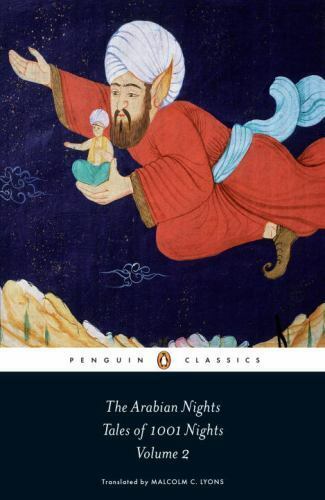
Occasionally, I return to something I’ve already written about, but, this time around, hope to see in a new, or at least newish, light.  The subject of today’s posting first appeared back in “Do What I Say, Not What I Speak”, 13 June, 2018, but, since then, I began my campaign to read all of The Arabian Nights and am now in the second volume of the Penguin edition (for the first volume, see “Arabian Nights for Days”, 31 January, 2024).

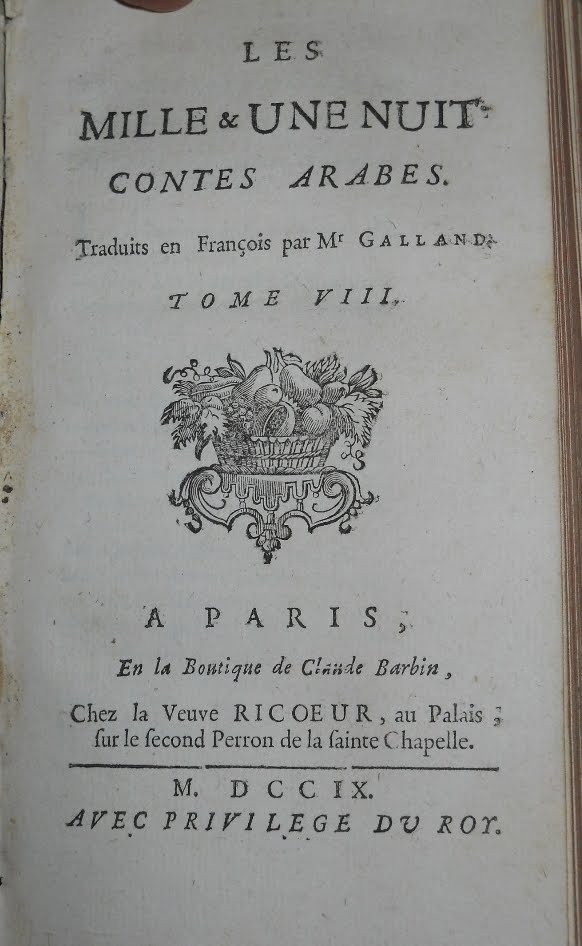
I’ve known some of the stories in this vast collection since childhood, but the first two stories I heard as a child are actually so-called “orphan tales”, being stories which appear to have no early manuscript tradition, first appearing in Antoine Galland’s (1646-1715)

Les Mille et Une Nuits (1704-1717).

and from there into the first edition in English, the anonymous so-called “Grub Street Edition” of 1706-1721.

(This is an image from the earliest edition I can locate—as you can see, it’s from 1781.  Only two copies of the first edition are known to exist, one in the Bodleian Library at Oxford, the other in the rare books collection of Princeton University and clearly they don’t get out much.)

There has been much discussion as to the actual origins of “Aladdin”

and “Ali Baba and the Forty Thieves”–

in particular, that, although they contain standard folktale motifs, they are actually the work of a Syrian storyteller named Antun Yusuf Hanna Diyab (c.1668-post-1763) and were added by Galland to his translation without attribution.  (For more, see:  https://en.wikipedia.org/wiki/Hanna_Diyab ) 

Whatever is the truth of this, these were the stories I carried in my head for years before I came back to them when commencing my “Arabian Nights” reading campaign. 

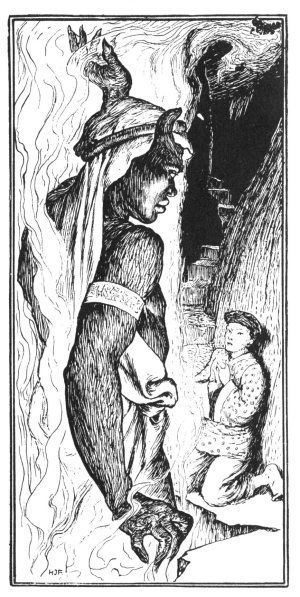
When I was small, they were actually quite scary—the magician who pretends to be Aladdin’s long-lost uncle and who only wants to use him long enough to obtain the lamp, then would let him die in the cave where the lamp was kept, and the merciless thieves, who once they found their cave with its secret password was compromised, cut up Ali Baba’s brother who had discovered the secret but, who, forgetting the password, was trapped until the thieves returned, were among the creepier parts of my childhood, and, as may always be the case with creepy things, not easily forgotten.

At the same time, I was always puzzled by the opening to “Ali Baba”:

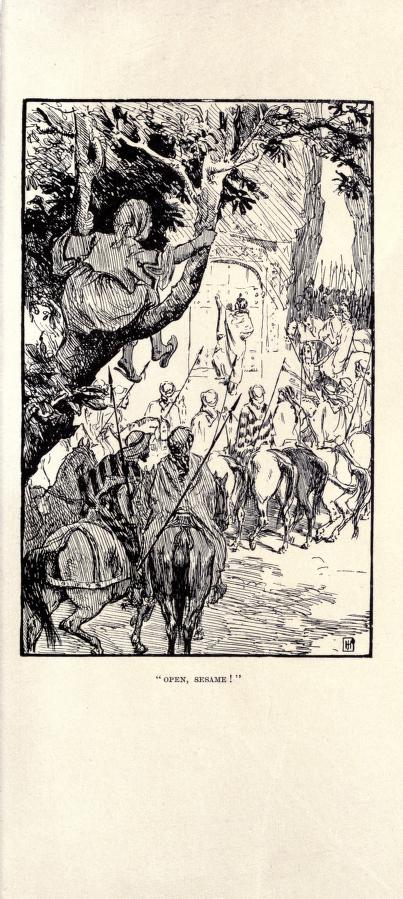
“IN a town in Persia there dwelt two brothers, one named Cassim,

the other Ali Baba. Cassim was married to a rich wife and lived

in plenty, while Ali Baba had to maintain his wife and children by

cutting wood in a neighbouring forest and selling it in the town.

One day, when Ali Baba was in the forest, he saw a troop of men

on horseback, coming towards him in a cloud of dust. He was

afraid they were robbers, and climbed into a tree for safety.  When

they came up to him and dismounted, he counted forty of them.

They unbridled their horses and tied them to trees. The finest man

among them, whom Ali Baba took to be their captain, went a little

way among some bushes, and said: ‘ Open, Sesame!’ so plainly that

Ali Baba heard him. A door opened in the rocks, and having made

the troop go in, he followed them, and the door shut again of itself.”

Why would a door obey a password?  And why that word, which I knew was a kind of seed.

(For more—much more—see:  https://en.wikipedia.org/wiki/Sesame#Allergy )

This sat somewhere in my memory until I read:

“But close under the cliff there stood, still strong and living, two tall trees, larger than any trees of holly that Frodo had ever seen or imagined…

(JRRT)

‘Well, here we are at last!’ said Gandalf.  ‘Here the Elven-way from Hollin ended.  Holly was the token of the people of that land, and they planted it here to mark the end of their domain; for the West-door was made chiefly for their use in their traffic with the Lords of Moria.’ …

…they turned to watch Gandalf.  He appeared to have done nothing.  He was standing between the two trees gazing at the blank wall of the cliff, as if he would bore a hole into it…

 ‘Dwarf-doors are not made to be seen when shut,’ said Gimli.  ‘They are invisible, and their own makers cannot find them or open them, if their secret is forgotten.’

‘But this Door was not made to be a secret known only to Dwarves,’ said Gandalf…’Unless things are altogether changed, eyes that know what to look for may discover the signs.’

He walked forward to the wall.  Right between the shadow of the trees there was a smooth space, and over this he passed his hands to and fro, muttering words under his breath.  Then he stepped back.

‘Look!’ he said.  ‘Can you see anything now?’

…Then slowly on the surface, where the wizard’s hands had passed, faint lines appeared, like slender veins of silver running in the stone…

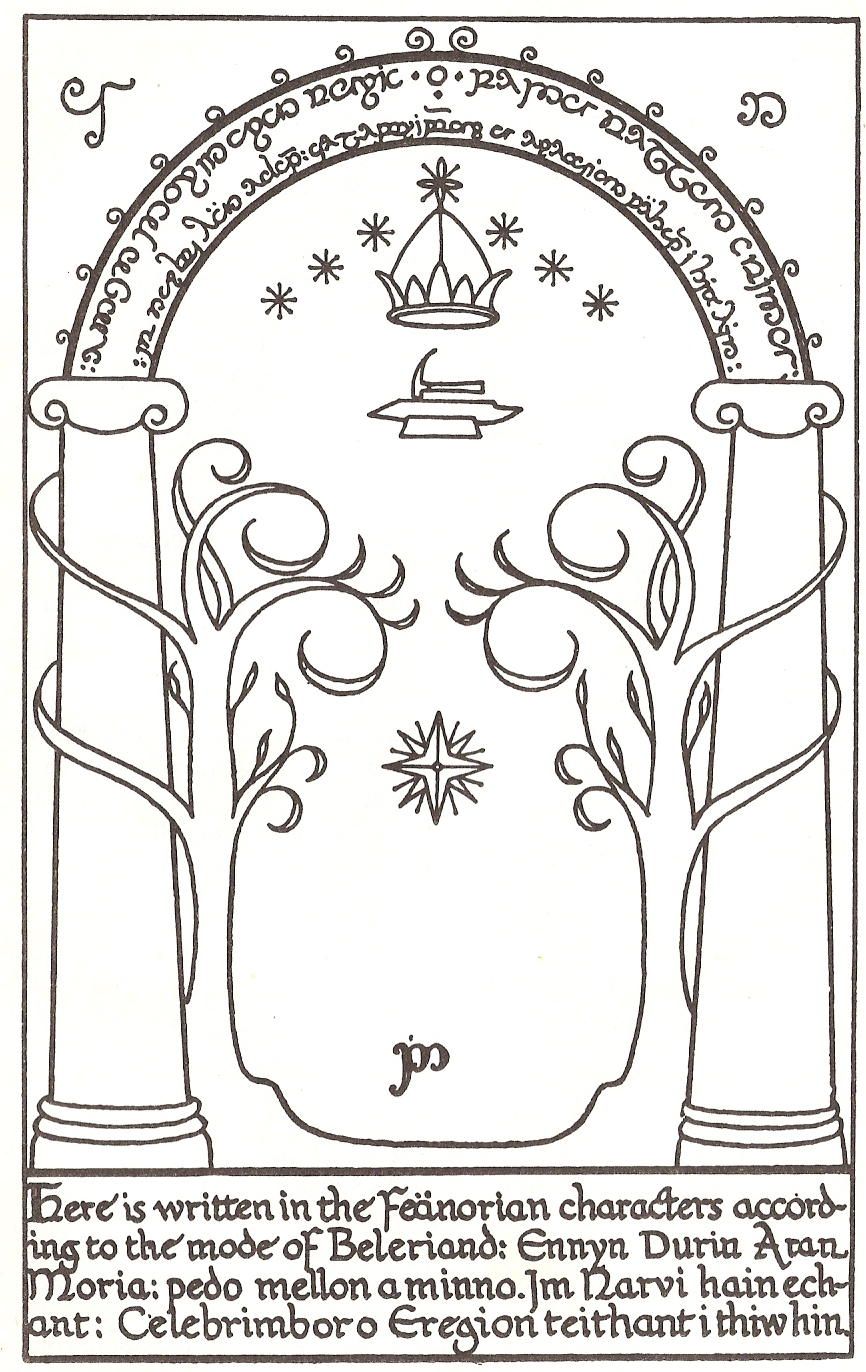
At the top, as high as Gandalf could reach, was an arch of interlacing letters of an Elvish character.

(Ted Nasmith)

Below, though the threads were in places blurred or broken, the outline could be seen…

(JRRT)

‘What does the writing say?’ asked Frodo…

‘…They say only:  The Doors of Durin, Lord of Moria.  Speak, friend, and enter.’

‘What does it mean…?’ asked Merry.

‘That is plain enough,’ said Gimli.  ‘If you are a friend, speak the password, and the doors will open, and you can enter.’ “  (The Fellowship of the Ring, Book Two, Chapter 4, “A Journey in the Dark”)

We know from various clues, like the story title “Storia Moria Castle”, that Tolkien had read—or been read to—from Andrew Lang’s (1844-1912) The Red Fairy Book, 1890,

but, interestingly, “Aladdin” and “Ali Baba” both appear in Lang’s previous The Blue Fairy Book, 1889,

from which both the “Ali Baba” quotation and illustration above, come.  Could Tolkien have been read to from, or read, “Ali Baba” there?  Certainly we see that door, and the need for the password.  But what about that password?

In The Fellowship of the Ring, Gandalf tells us that “ ‘I will tell you that these doors open outwards.  From the inside you may thrust them open with your hands.  From the outside nothing will move them save the spell of command.  They cannot be forced inwards.’   Try as he might, however, Gandalf can’t come up with that word—until he realizes that he’s made a slight mistranslation: 

“ ‘The opening word was inscribed on the archway all the time!  The translation should have been Say “Friend’ and enter.  I had only to speak the Elvish word for friend and the doors opened.’ “

To a linguist with a fine ear, like JRRT’s, the distinction, in English, between the verb “to speak”, as in “to speak a language”, and “to say”, as in “to say the right thing”, can be subtle—in this case, almost too subtle—as Gandalf says:

“ ‘Quite simple.  Too simple for a learned lore-master in these suspicious days.’ “

With the problem solved, the doors swing open—but where they’re about to go is, ultimately, worse than Ali Baba’s thieves’ treasure cave, even as I’m reminded of what happens to Ali Baba’s jealous brother.  Obtaining the password, he easily enters the cave, but, when he tries to leave, he confuses “sesame” with other grains, is trapped, and eventually dismembered by the returning thieves.  (Think Balrog and “Drums in the Dark”…)

And, though “Friend”, says Gandalf, is quite simple, and, adding, “Those were happier times” in which such a pleasant password was all that was necessary,  I’m still puzzled about “sesame” and, in both cases, I wonder about those doors—who or what was doing the opening?  Then again, when I post this,  I’ll need a password and, when I employ it, the site will pop open—who or what is doing the opening there?

Thanks, as always, for reading.

Stay well,

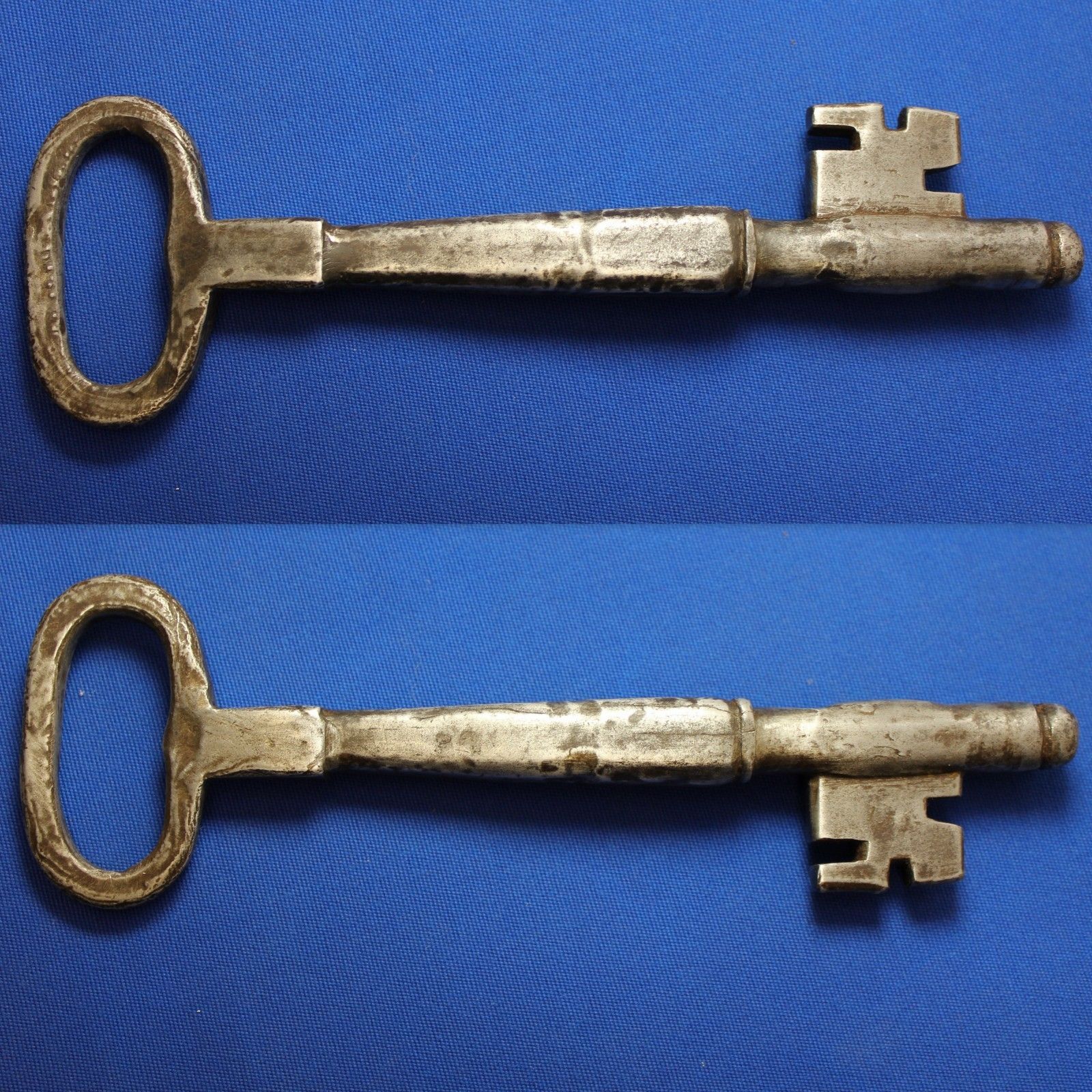
When it comes to locks, I prefer a good, sturdy key,

And remember that, as always, there’s

MTCIDC

O

PS

In case you want to read the two fairy books—and I hope you do—here they are:

The Blue Fairy Book 

https://archive.org/details/bluefairybook00langiala/page/n7/mode/2up

The Red Fairy Book

https://archive.org/details/cu31924084424013/page/n9/mode/2up

Terror Weapon

15 Wednesday May 2024

Posted by Ollamh in Uncategorized

≈ Leave a comment

Tags

books, Fantasy, hiking, J.R.R. Tolkien, lord-of-the-rings

Welcome, dear readers, as always.

If you grew up, as I did, with the 1939 film, The Wizard of Oz,

but had never read the original,

L. Frank Baum’s The Wonderful Wizard of Oz, 1900,

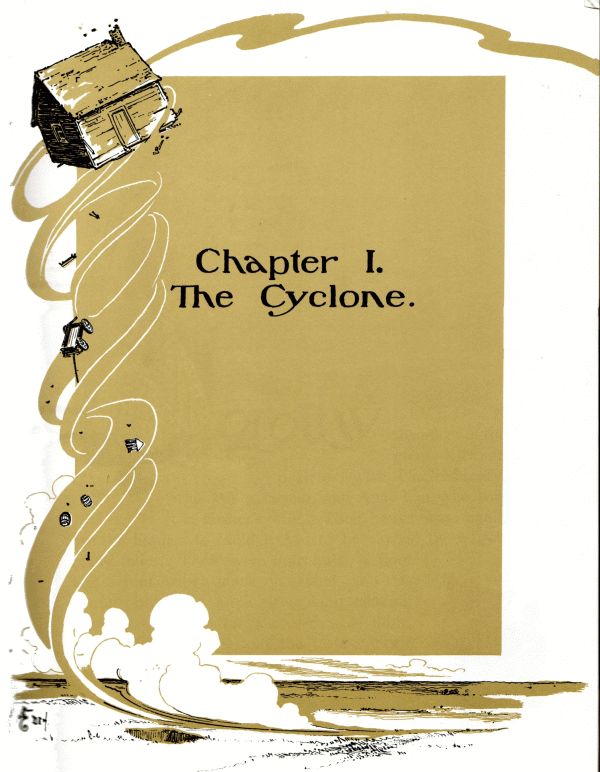
you would be surprised to open the book and find that Chapter 1 is entitled “The Cyclone”,

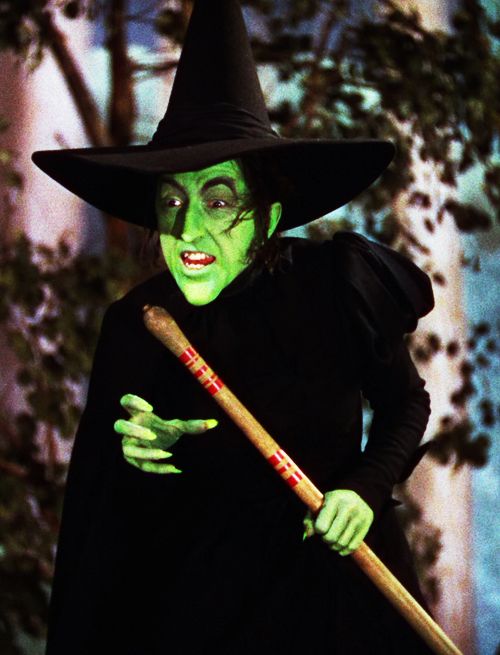
which, considering the use of that terrifying force of nature in the story isn’t surprising, but that “Miss Almira Gulch”, the initial incarnation of the story’s main antagonist, with her wonderful last name (a “gulch” is, as Etymonline tells us, a “deep ravine” suggesting that Miss Gulch is empty—and treacherous, as “ to dry gulch” someone is archaic Wild West slang for “to ambush”) is not to be seen.

As a small child, I found almost everything about her disturbing.  As someone who, initially, wanted to deal with Toto and had the economic power to do it (shades of 1930s social commentary about the 1%), she was bad enough.  It was the green skin of her next incarnation and those dagger-like fingernails, however,

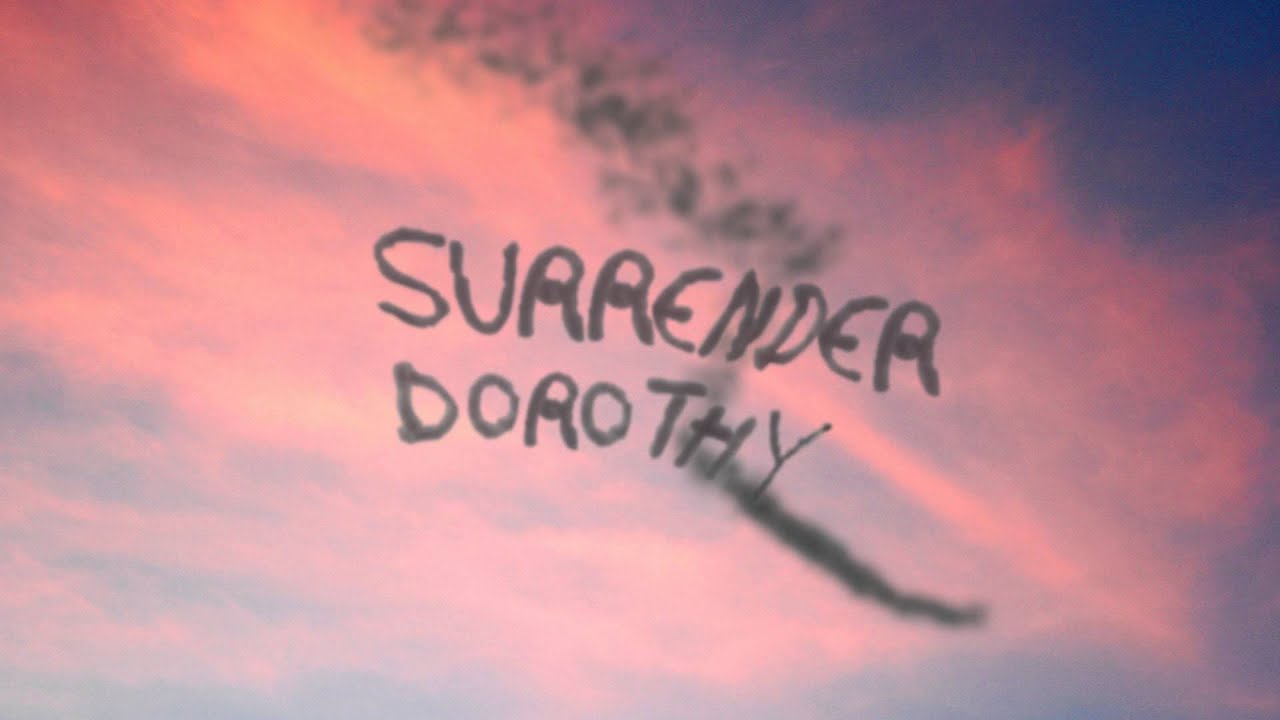
which were at the edge of nightmares, and even more so the menace of flight—not only her own skywriting,

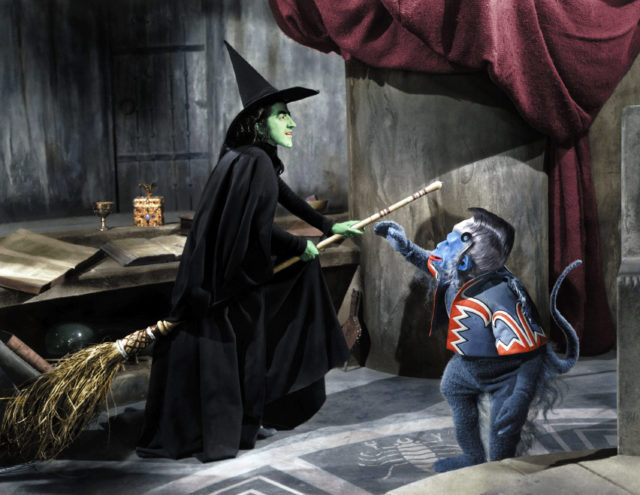
but her nasty little airborne monkeys.

These seemed almost too prescient for what was about to happen in the real world as, on 1 September, 1939, only about two weeks after the Hollywood premiere of the film on 15 August, Germany invaded Poland, and, in less than a year, Denmark, Holland, Norway, and France, major weapons being a deadly form of those flying monkeys—

(by Mike Chappell, a favorite military artist)

paratroopers, and dive bombers, the notorious  Ju87, “Stuka” (short for “Sturzkampfflugzeug”—“dive bomber”).

To add to the effect of having such a thing racing down to drop a bomb on you, sirens were attached to the landing gear or wings, the so-called “Jericho trumpets”  (You can read more about them here:  https://www.warhistoryonline.com/instant-articles/trumpets-jericho-luftwaffe.html And you can hear one here:  https://www.youtube.com/watch?v=80bOdm2P9Y8 ), giving a wailing, screeching sound to the attacker in hopes of destroying morale even before a bomb hit.  Although designed to be support for infantry and armor, numbers were employed in the air campaign against Britain and, although Oxford was never attacked as the great ports and manufacturing centers were, I wonder if Tolkien, as a volunteer air raid warden, ever heard that sound overhead.

Even if it only appeared in a newsreel, it must have been an unforgettable noise and my wondering brought me to this:

“And Minas Morgul answered.  There was a flare of livid lightnings:  forks of blue flame springing up from the tower and from the encircling hills into the sullen clouds.  The earth groaned; and out of the city there came a cry.  Mingled with harsh high voices as of birds of prey, and the shrill neighing of horses wild with rage and fear there came a rending screech, shivering, rising swiftly to a piercing pitch beyond the range of hearing.  The hobbits wheeled round towards it, and cast themselves down, holding their hands upon their ears.”  (The Two Towers, Book Four, Chapter 8, “The Stairs of Cirith Ungol”)

In Minas Tirith, Pippin heard something very similar:

“Suddenly as they talked they were stricken dumb, frozen as it were to listening stones.  Pippin cowered down with his hands pressed to his ears…”

Not Stukas diving out of the clouds to bomb the city,

but

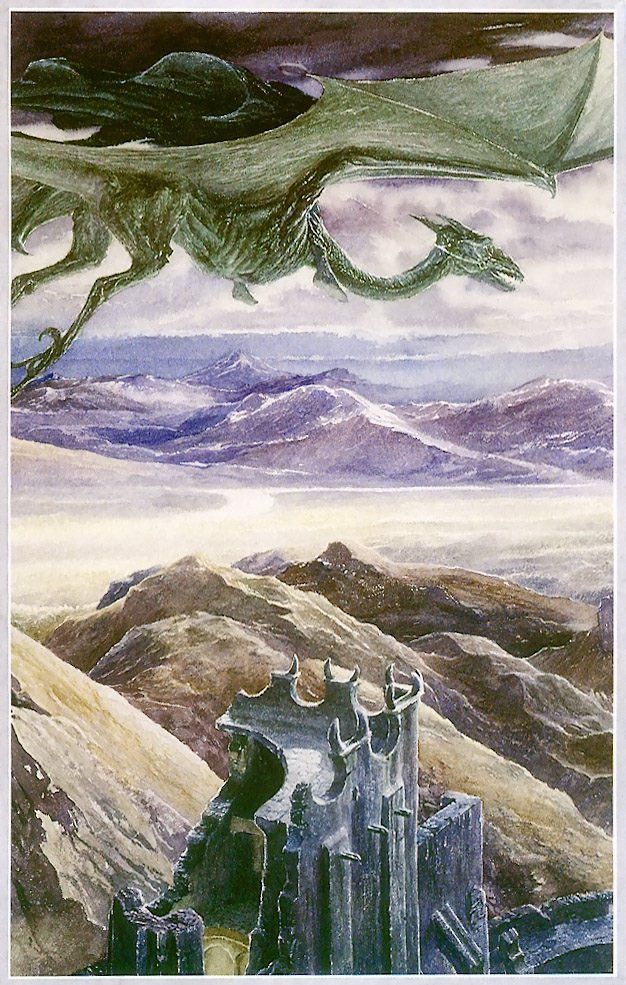
“…now wheeling swiftly across it, like shadows of untimely night, he saw in the middle airs below him five birdlike forms, horrible as carrion-fowl yet greater than eagles, cruel as death.  Now they swooped near, venturing almost within bowshot of the walls, now they circled away.

‘Black Riders!’ muttered Pippin.  ‘Black Riders of the air!’ “

And this was not the first time that any of the hobbits had heard that terrible sound:

“Pippin knew that shuddering cry that he had heard:  it was the same that he had heard long ago in the Marish of the Shire, but now it was grown in power and hatred, piercing the heart with a poisonous despair.”

It’s unclear if Frodo and Sam had heard the same cry at Cirith Ungol, but certainly what Pippin heard and to which he reacted violently:

“Another long screech rose and fell, and he threw himself back again from the wall, panting like a hunted animal.”  (The Return of the King, Book Five, Chapter 4, “The Siege of Gondor”)

(Alan Lee)

had the same effect—and, in fact, the same effect which Stukas were intended to have upon their victims—just as the Wicked Witch, aka, Miss Gulch—had had a similar effect upon me as a little boy,

even without her creepy little simian assistants.

Thanks, as ever, for reading.

Stay well,

When going outdoors, always cast a wary eye upwards,

And remember that, as always, there’s

MTCIDC

O

PS

In case you don’t have a first edition of The Wonderful Wizard of Oz with its original illustrations, here it is for you:  https://www.youtube.com/watch?v=80bOdm2P9Y8

Yarrow

10 Wednesday Apr 2024

Posted by Ollamh in Uncategorized

≈ Leave a comment

Tags

books, english-literature, poetry, reading, Sir Walter Scott

As always, dear readers, welcome.

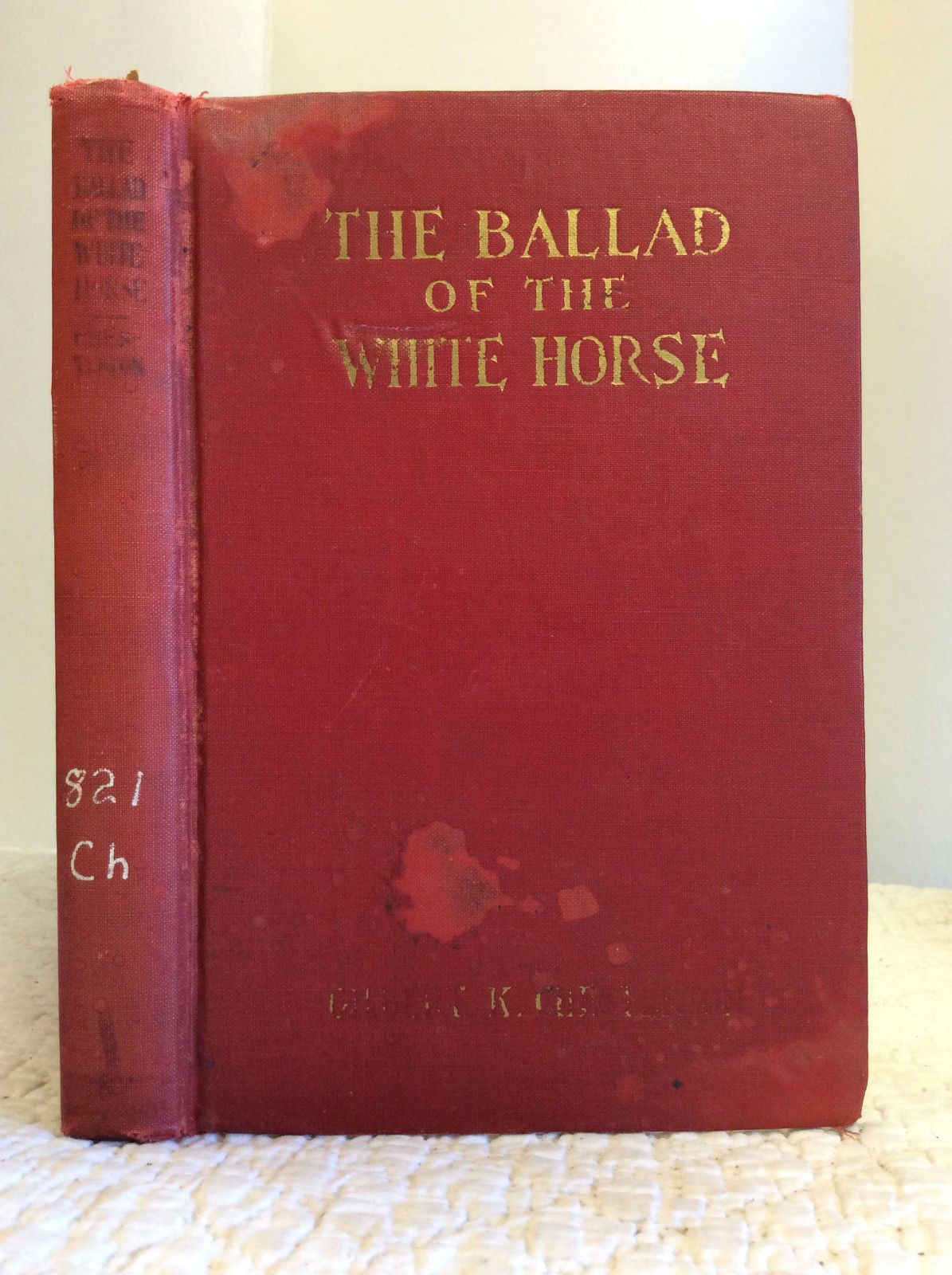
I don’t know how Tolkien thought about ballads in general, but, about what was termed a modern “ballad”, The Ballad of the White Horse, 1911,

by its author, G.K. Chesterton (1874-1936),

he had this to say:

“P[riscilla]…has been wading through The Ballad of the White Horse for the last many nights; and my efforts to explain the obscurer parts to her convince me that it is not as good as I thought.  The ending is absurd.  The brilliant smash and glitter of the words and phrases (when they come off, and not mere loud colours) cannot disguise the fact that G.K.C. knew nothing whatever about the ‘North’, heathen or Christian.”  (from an airgraph to Christopher Tolkien, 3 September, 1944, Letters, 131)

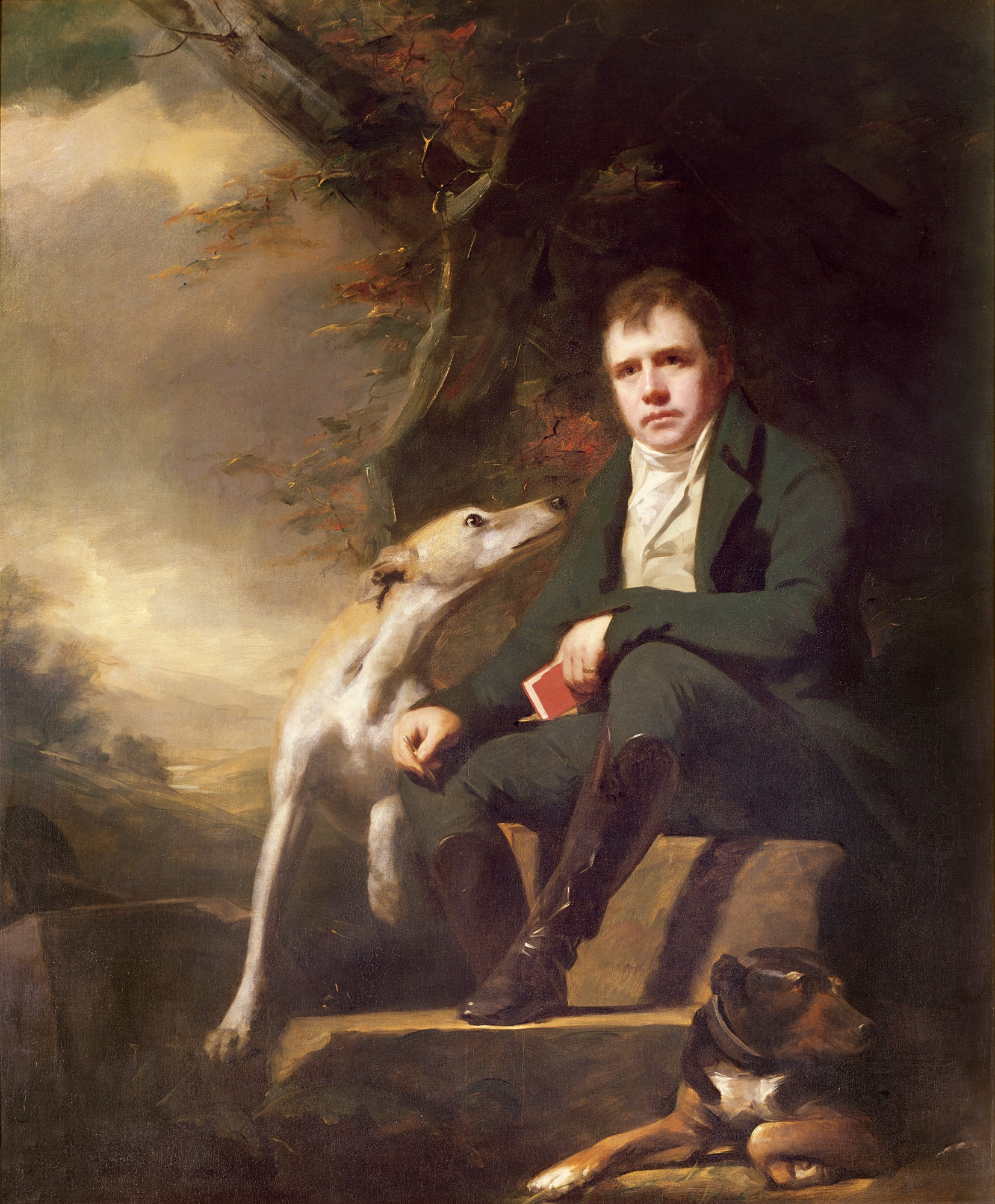
For myself, I would say that, although I’ve been reading (and singing) old ballads for a long time, I don’t think of them as having “smash and glitter”, but rather, at their best, being plain and, often, grim—and perhaps it’s in part why they have the lure they do—and have had, since at least early Romanticism.  I’m presuming that that’s a reason why, for example, following collectors who date back at least to the early 18th century, Sir Walter Scott (1770-1832),

XCF277642 Portrait of Sir Walter Scott and his dogs (oil on canvas) by Raeburn, Sir Henry (1756-1823); Private Collection; (add.info.: Walter Scott (1771-1832);); Scottish, out of copyright

(portrait by Sir Henry Raeburn—who clearly captured Scott as Scott wanted to be remembered—a reader in a romantic atmosphere—with his dogs)

published Minstrelsy of the Scottish Border (1802-1830—Scott kept revising and revising),

which included not only ballads he had personally collected or had from others, but also contemporary imitations of what he admired.  (There’s a very useful article here:  https://en.wikipedia.org/wiki/Minstrelsy_of_the_Scottish_Border on Scott and his working methods and even a site about a combined Scots/German project on the collection here:  http://walterscott.eu/ )

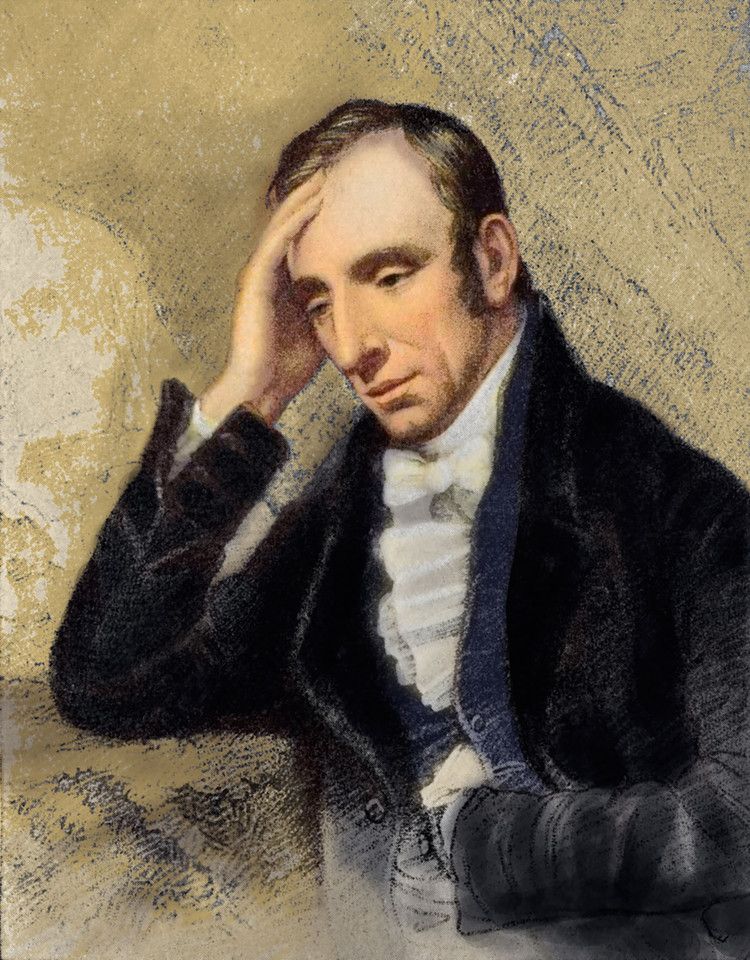
One of the ballads was clearly in the mind of another author, William Wordsworth (1770-1850),

“The Dowie Dens o Yarrow” (in modern English, perhaps something like “The Gloomy/Melancholy Dells of Yarrow”), when he wrote a very interesting poem in 1803, “Yarrow Unvisited”.

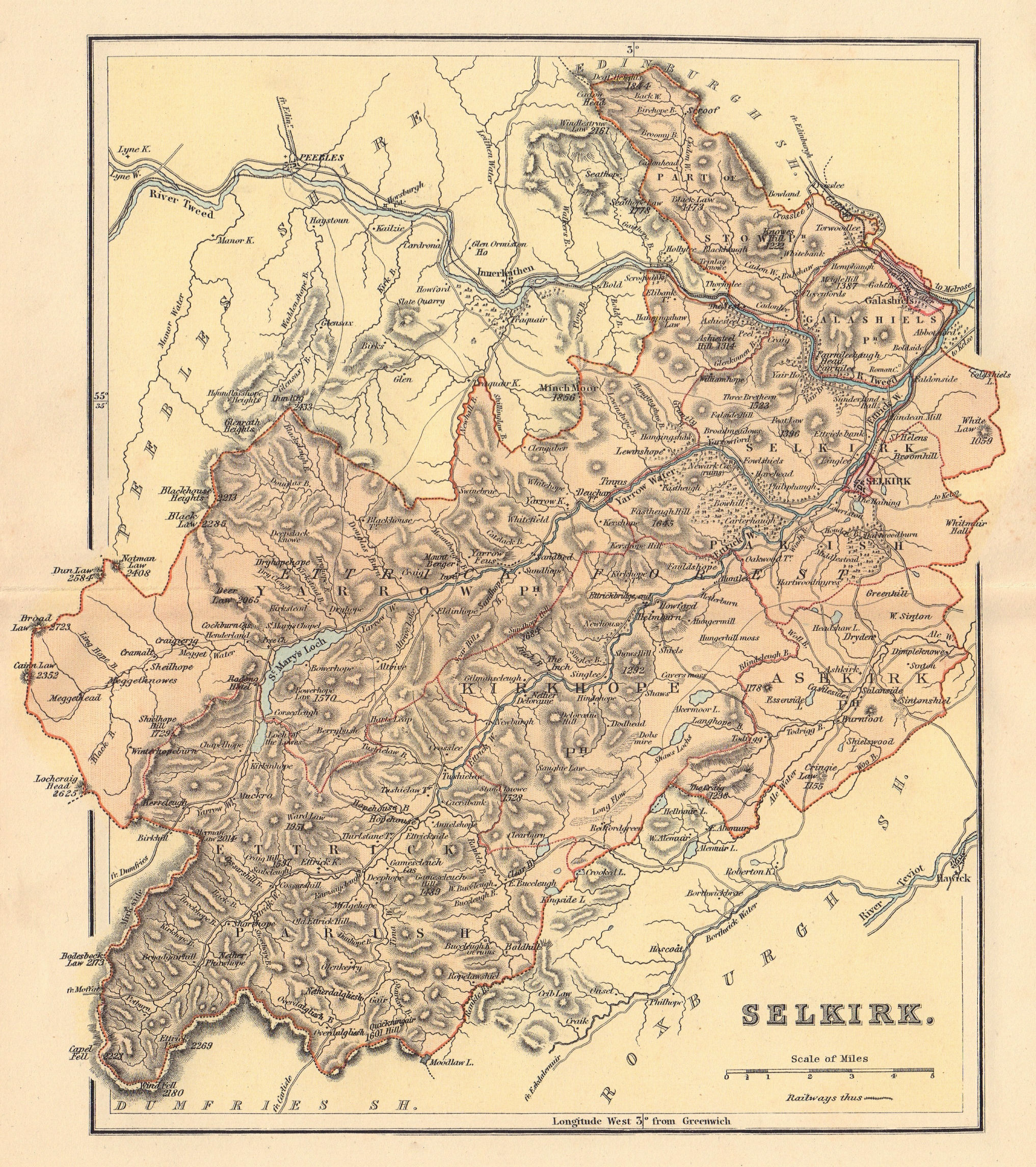
Yarrow itself is a narrow river which is a tributary of the River Tweed.  Here’s a late 19th-century map to help you to locate it—find St Mary’s Loch and follow the river line towards the Tweed.

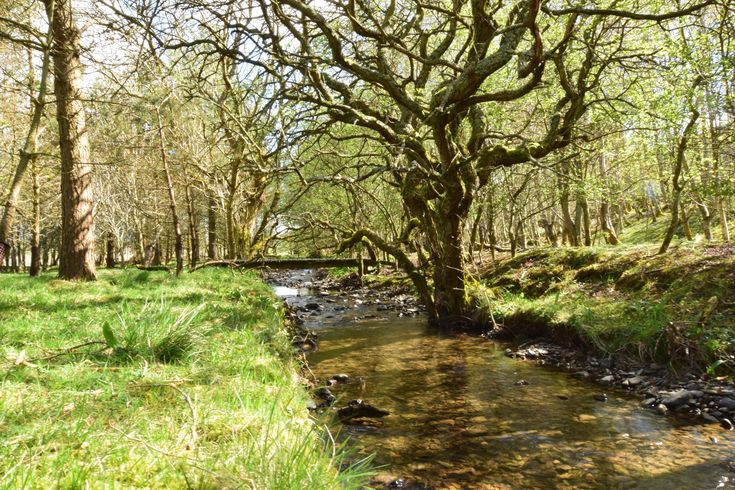
And here’s the Yarrow in full spate—appropriately in a rather stark early 20th-century photo—

The original ballad—and there are a lot of variant forms—tells the story of a lady to be fought over by a series of lords—and  their rival, in some versions, a “plough-boy lad of Yarrow” (to see variants, here are those published in FJ Child’s, 1825-1896, The English and Scottish Popular Ballads, 1882-1898, known as “Child 214” and by the title “The Braes of Yarrow” (that is, “The Hillsides of Yarrow”):   https://sacred-texts.com/neu/eng/child/ch214.htm  )  The rival defeats the lords, but is then treacherously stabbed from behind, often by the lady’s brother.  (You can hear the version I first heard and learned, sung by Ewan McColl, here:  https://www.youtube.com/watch?v=Vfsv8zUdqKM Be warned:  this performance is in line with older traditional performances, which I’ve always preferred, but might be rough, if you’re used to smoother folk singers.) 

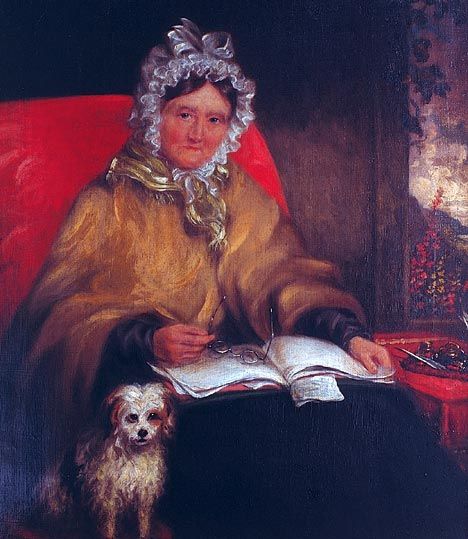
Wordsworth, and his sister, Dorothy, (1771-1855)

had made a brief tour of southern Scotland in the late summer of 1803 and had met Walter Scott there, fresh from publishing the first edition of Minstrelsy.  I suspect that the combination of their tour, that meeting, and Scott’s collection all came together in a poem which Wordsworth then wrote, probably in the early fall of 1803, “Yarrow Unvisited”.  I’ve always liked this poem because it’s not about what Wordsworth and Dorothy did see (this becomes the subject of the later “Yarrow Visited” of 1814—a good background article:  https://en.wikipedia.org/wiki/Yarrow_poems_(Wordsworth) ), but the fact that, because they didn’t see Yarrow, they could still imagine it—perhaps imagination, Wordsworth even suggests, is better, and seeing might spoil it—and because there was always the future possibility of actually seeing it.  (I am a big fan of Dorothy’s work—she had a wonderful eye for the natural world and a shrewd eye for people—and you can read her “Recollections of a Tour Made in Scotland” here:  https://www.gutenberg.org/files/42856/42856-h/42856-h.htm )

Here’s Wordsworth’s poem, the “winsome Marrow” is Dorothy, the word  “marrow” meanIng “equal/match”, being a description of the lady in the ballad:

“FROM Stirling Castle we had seen

The mazy Forth unravell’d,

Had trod the banks of Clyde and Tay

And with the Tweed had travell’d;

And when we came to Clovenford,

Then said my “winsome Marrow,”

“Whate’er betide, we’ll turn aside,

And see the Braes of Yarrow.”

“Let Yarrow folk, frae Selkirk town,

Who have been buying, selling,

Go back to Yarrow, ’tis their own,

Each maiden to her dwelling!

On Yarrow’s banks let herons feed,

Hares couch, and rabbits burrow;

But we will downward with the Tweed,

Nor turn aside to Yarrow.

“There’s Gala Water, Leader Haughs,

Both lying right before us;

And Dryburgh, where with chiming Tweed

The lintwhites sing in chorus;

There’s pleasant Tiviotdale, a land

Made blithe with plough and harrow:

Why throw away a needful day

To go in search of Yarrow?

“What’s Yarrow but a river bare

That glides the dark hills under?

There are a thousand such elsewhere

As worthy of your wonder.”—

Strange words they seem’d of slight and scorn;

My true-love sigh’d for sorrow,

And look’d me in the face, to think

I thus could speak of Yarrow!

“Oh, green,” said I, “are Yarrow’s holms,

And sweet is Yarrow flowing!

Fair hangs the apple frae the rock,

But we will leave it growing.

O’er hilly path and open strath

We’ll wander Scotland thorough;

But, though so near, we will not turn

Into the dale of Yarrow.

“Let beeves and home-bred kine partake

The sweets of Burn-mill meadow;

The swan on still Saint Mary’s Lake

Float double, swan and shadow!

We will not see them—will not go

To-day, nor yet to-morrow;

Enough if in our hearts we know

There’s such a place as Yarrow.

“Be Yarrow stream unseen, unknown!

It must, or we shall rue it:

We have a vision of our own,

Ah! why should we undo it?

The treasured dreams of times long past,

We’ll keep them, winsome Marrow!

For when we’re there, although ’tis fair

’Twill be another Yarrow!

“If Care with freezing years should come,

And wandering seem but folly,—

Should we be loth to stir from home,

And yet be melancholy;

Should life be dull, and spirits low,

’Twill soothe us in our sorrow

That earth has something yet to show,

The bonny holms of Yarrow!”

Although Wordsworth doesn’t use a ballad metre here, he cleverly echoes the sound of the 4-line stanzas in the older poem, keeping that word “Yarrow” at the end of each stanza, and rhyming or suggesting rhyme, in the second line to match it, following this Child version (214Q):

“There lived a lady in the West,

I ne’er could find her marrow;

She was courted by nine gentlemen,

And a plough-boy lad in Yarrow.”

No “smash and glitter” here, but, in the ballad, grimness and plainness and even fierceness, and, in Wordsworth’s poem, a quiet, playful thoughtfulness and, in neither, what Tolkien said of his daughter, Priscilla’s efforts with “The Ballad of the White Horse”, a need to “wade through”—although, one could always wade the Yarrow…

As ever, thanks for reading.

Stay well,

Watch your back,

And remember that there’s always

MTCIDC

O

PS

So that you can decide for yourself about that “smash and glitter”, here’s Chesterton’s poem for you:  https://www.gutenberg.org/files/1719/1719-h/1719-h.htm   It’s interesting that JRRT comments that he doesn’t think that Chesterton knew anything about the “North”—a subject upon which Tolkien himself was passionate—see his anger at the Nazis for their pirating of the subject, in his letter to Michael Tolkien, 9 June, 1941, Letters, 77)—as Chesterton boldly states, in his “Prefatory Note” he’s perfectly willing to admit that what he writes isn’t really historical and that he’s accepting myth even as he is making his own:

“This ballad needs no historical notes, for the simple reason that it does not profess to be historical. All of it that is not frankly fictitious, as in any prose romance about the past, is meant to emphasize tradition rather than history. King Alfred is not a legend in the sense that King Arthur may be a legend; that is, in the sense that he may possibly be a lie. But King Alfred is a legend in this broader and more human sense, that the legends are the most important things about him.”

PPS

If you would like to see Scott’s version of the ballad, it’s here:  https://www.gutenberg.org/ebooks/12882  All three volumes of the Scott are available here at Gutenberg.  They appear to be the 3rd edition of 1806.  For the various Child variants in Vol.3 of his collection, see:  https://archive.org/details/englishandscott07unkngoog/page/n8/mode/2up  This—and all 7 other volumes are available at the Internet Archive. 

PPPS

A “holm” in the Wordsworth is—I’m quoting “Etymonline” here:

“small island in a river; river meadow,” late Old English, from Old Norse holmr “small island,” especially in a river or bay, or cognate Old Danish hulm, from Proto-Germanic *hul-maz, from PIE root *kel- (2) “to be prominent; hill.” Obsolete, but preserved in place names, where it has various senses derived from the basic one of “island:” “‘raised ground in marsh, enclosure of marginal land, land in a river-bend, river meadow, promontory'” [“Cambridge Dictionary of English Place-Names”].”

Setting Boundaries

27 Wednesday Mar 2024

Posted by Ollamh in Uncategorized

≈ Leave a comment

Tags

books, Fantasy, J.R.R. Tolkien, lord-of-the-rings, Tolkien

Welcome, dear readers, as always.

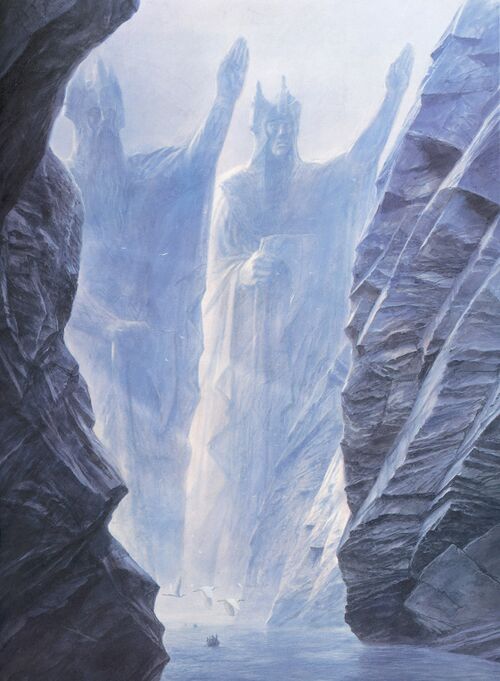
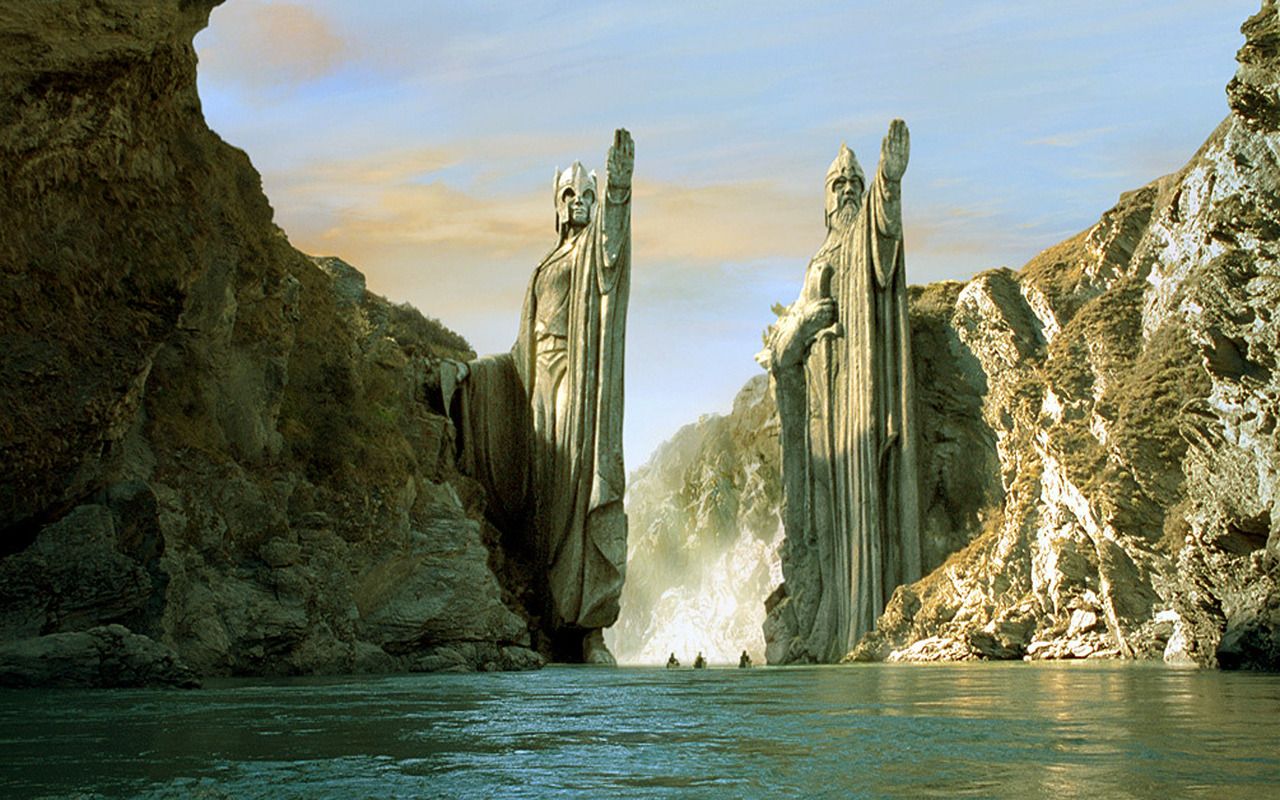
“ ‘Behold the Argonath, the Pillars of the Kings!’ cried Aragorn…

As Frodo was born towards them the great pillars rose like towers to meet him.  Giants they seemed to him, vast grey figures silent but threatening.  Then he saw that they were indeed shaped and fashioned:  the craft and power of old had wrought upon them, and still they preserved through the suns and rains of forgotten years the mighty likenesses in which they had been hewn.  Upon great pedestals founded in the deep waters stood two great kings of stone:  still with blurred eyes and crannied brows they frowned upon the North.  The left hand of each was raised palm outwards in gesture of warning; in each right hand there was an axe; upon each head there was a crumbling helm and crown.  Great power and majesty they still wore, the silent wardens of a long-vanished kingdom…” (The Fellowship of the Ring, Book Two, Chapter 9, “The Great River”)

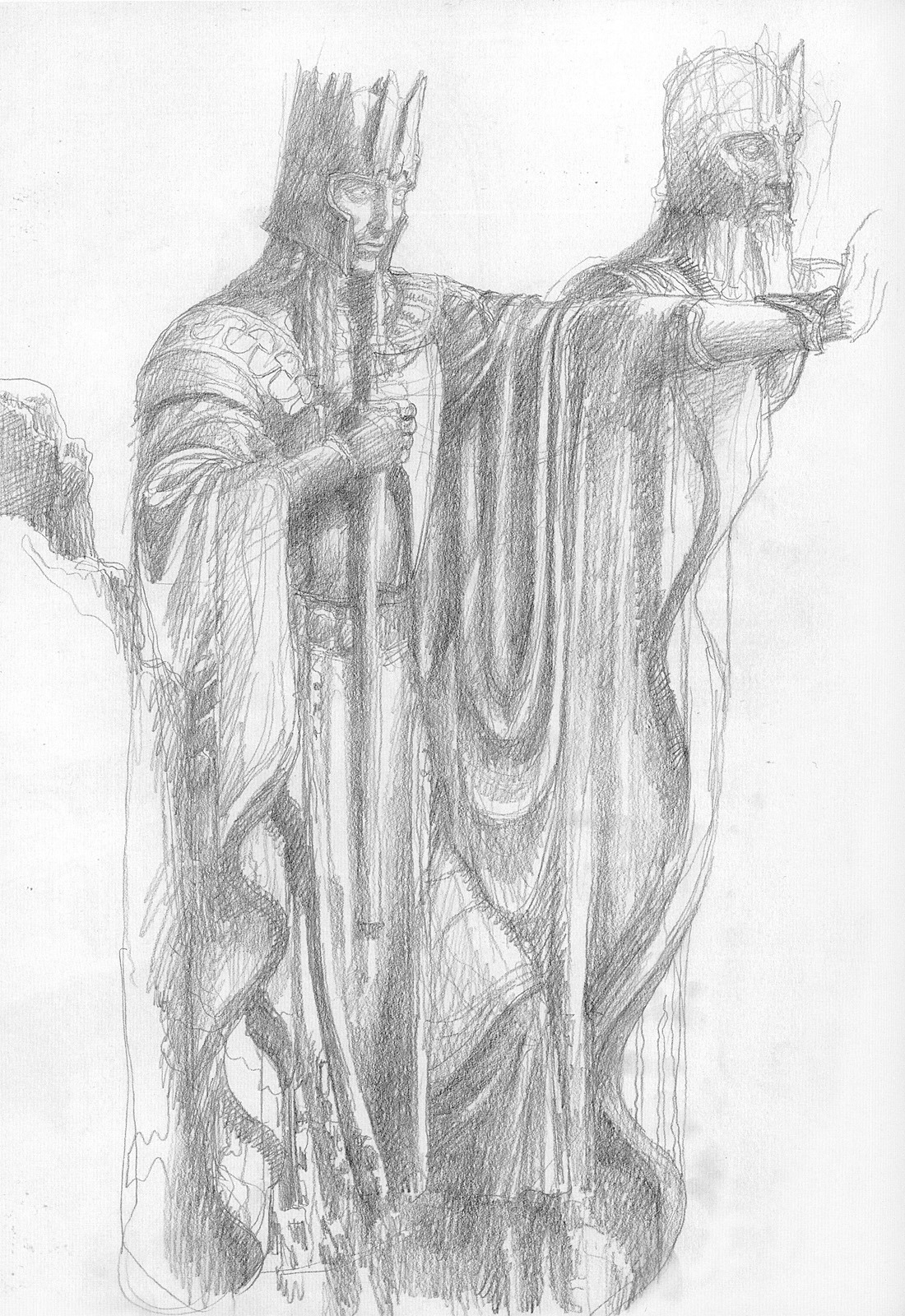
There are a number of illustrations of this, from the Hildebrandts

to John Howe

to Alan Lee

to J.C. Barquet

and more, including in Jackson’s The Lord of the Rings,

where, in the sometimes perverse method of the films, one figure has a sword, rather than the axe which Tolkien had specifically described (true of the Alan Lee sketch, as well).  Reviewing this short list, however, the first two of these seem to portray the kings with a more peaceably raised left hand, whereas the others more clearly portray what the author wanted:  “The left hand of each was raised outwards in a gesture of warning…”

These figures, in fact, are boundary markers, set up by the Gondorian king Minalcar (later crowned as Romendacil II) some time during his regency (TA1240-1304—see The Lord of the Rings, Appendix A, (ii) “The Southern Line[:] Heirs of Anarion” and (iv) “Gondor and the Heirs of Anarion”) and the gesture is clearly meant as a warning to potential invaders.

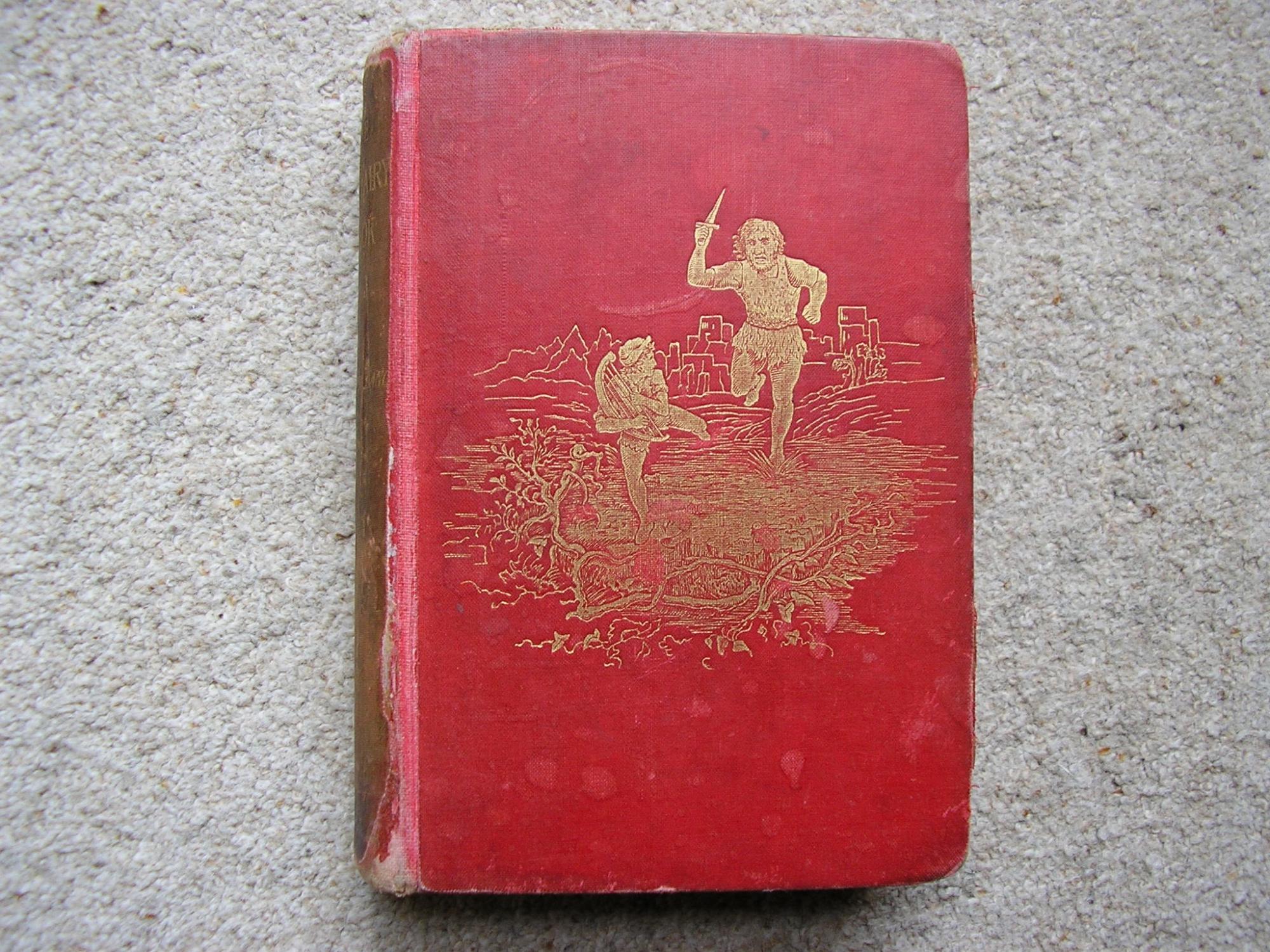
More than once, in past postings, I’ve suggested influences upon Tolkien, from The Red Fairy Book of his childhood,

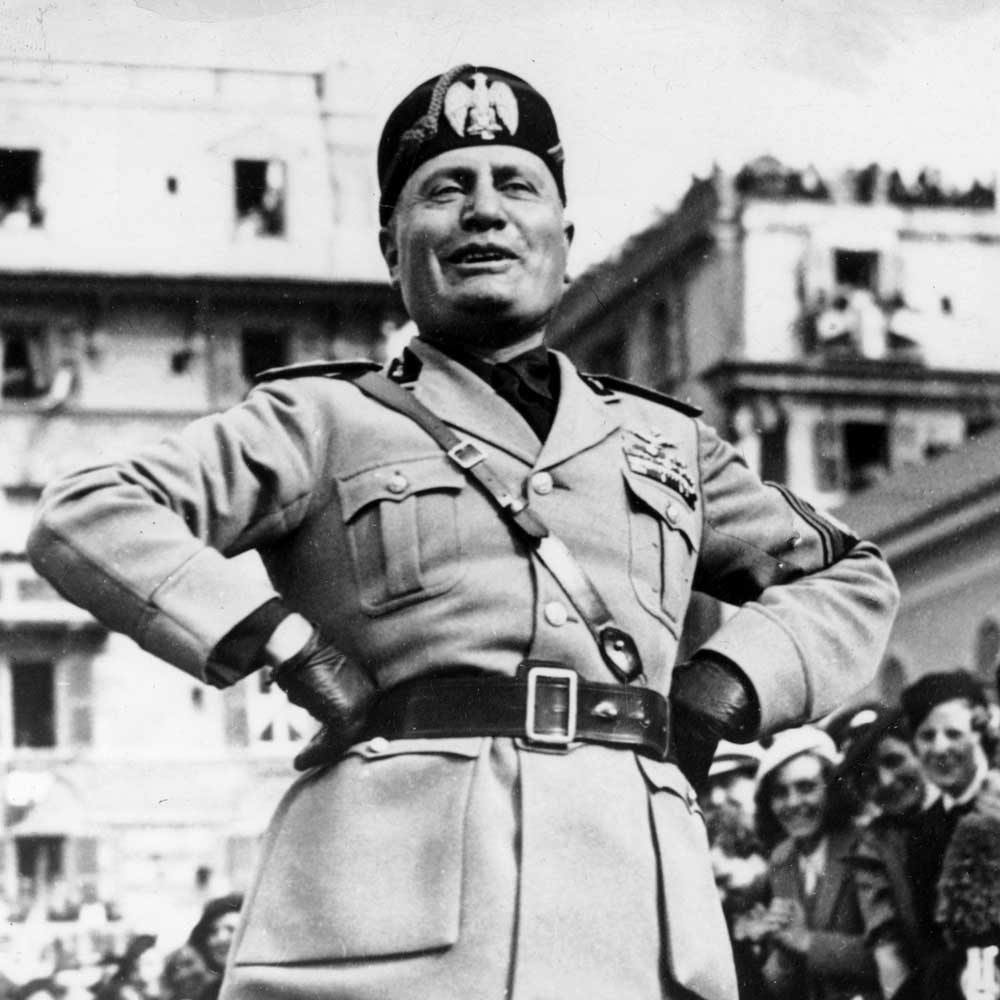
to Mussolini as a possible Saruman model.

In this posting, however, I’m moving forward, perhaps seeing a Tolkien model for something erected long after Tolkien’s death in 1973.

It begins with a bit of history in JRRT’s lifetime.

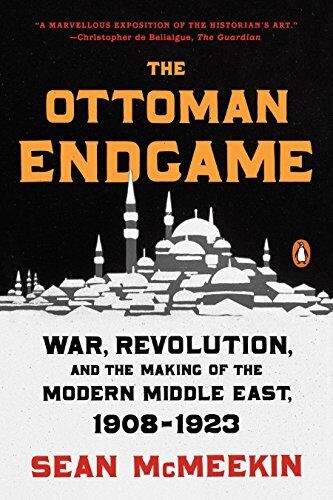
At the end of the Great War (aka “World War I”), the Middle East, the majority of it the fading Ottoman Empire, was very much in flux, with France and Britain struggling diplomatically to extend their influence over Syria, Lebanon, and the area then known as Palestine, as well as farther inland.  (For more on this, see David Fromkin’s The Peace to End All Peace, 1989,

and Sean McMeekin’s The Ottoman Endgame, 2016)

Farther north, and encouraged by the victorious Allies, Greece had invaded Turkey, hoping to expand Greece beyond its current boundaries.

This led to a number of bloody encounters between the two sides, with the Greeks advancing to within 50 miles (80km) of the capital at Ankara in the late summer of 1921 before being stopped at the climactic battle in the area of the Sakarya River.  When the Greeks finally withdrew, they had suffered 23,000 casualties (plus perhaps as many as 15,000 prisoners) against Turkish totals of 22,000 casualties and 1,000 prisoners.  This withdrawal turned into a scorched earth retreat towards the Aegean coast and ultimate evacuation of the Greek army along with thousands of civilians from Asia Minor.  (For more see:  https://www.historynet.com/the-battle-that-made-kemal-ataturk/ ) 

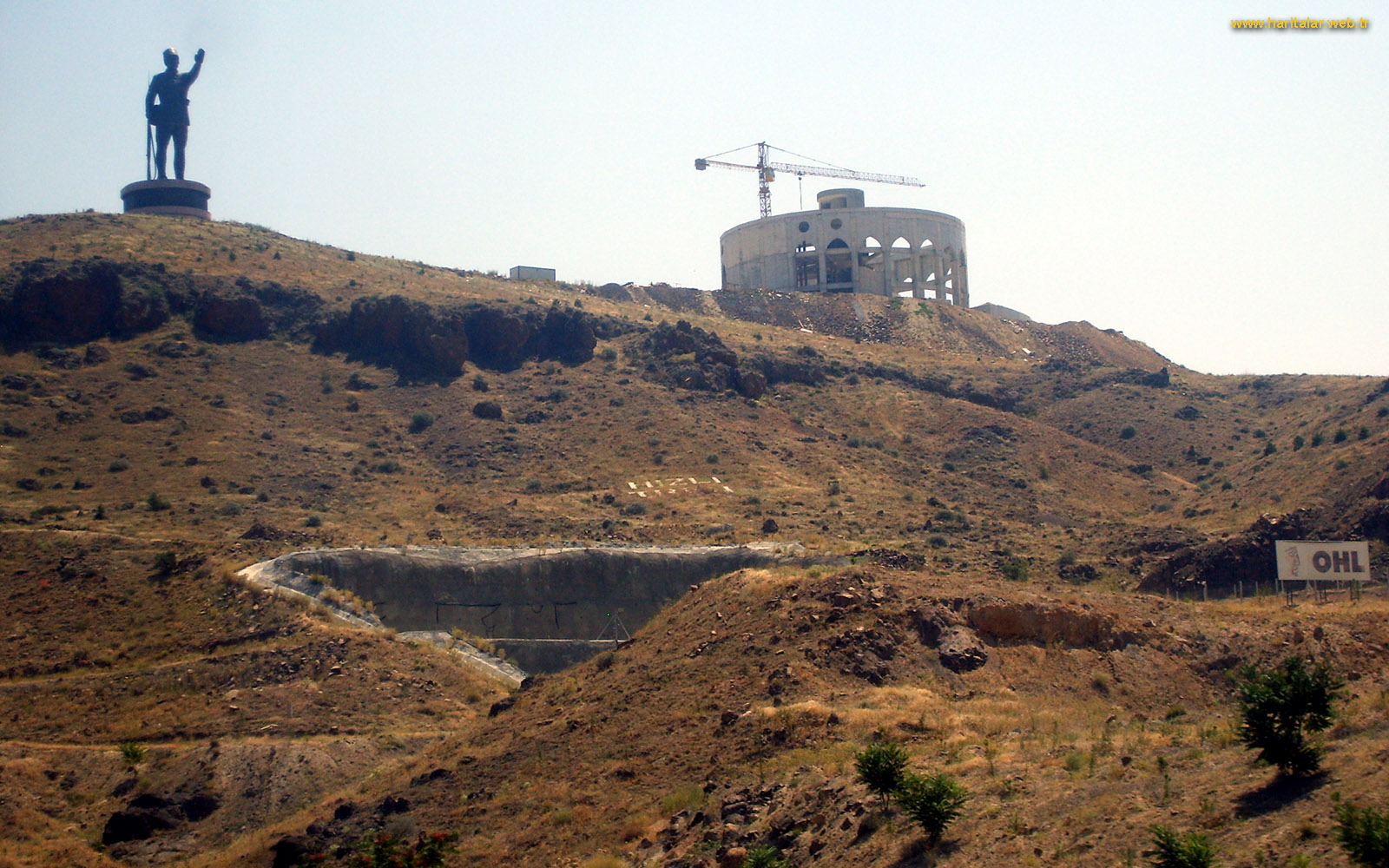
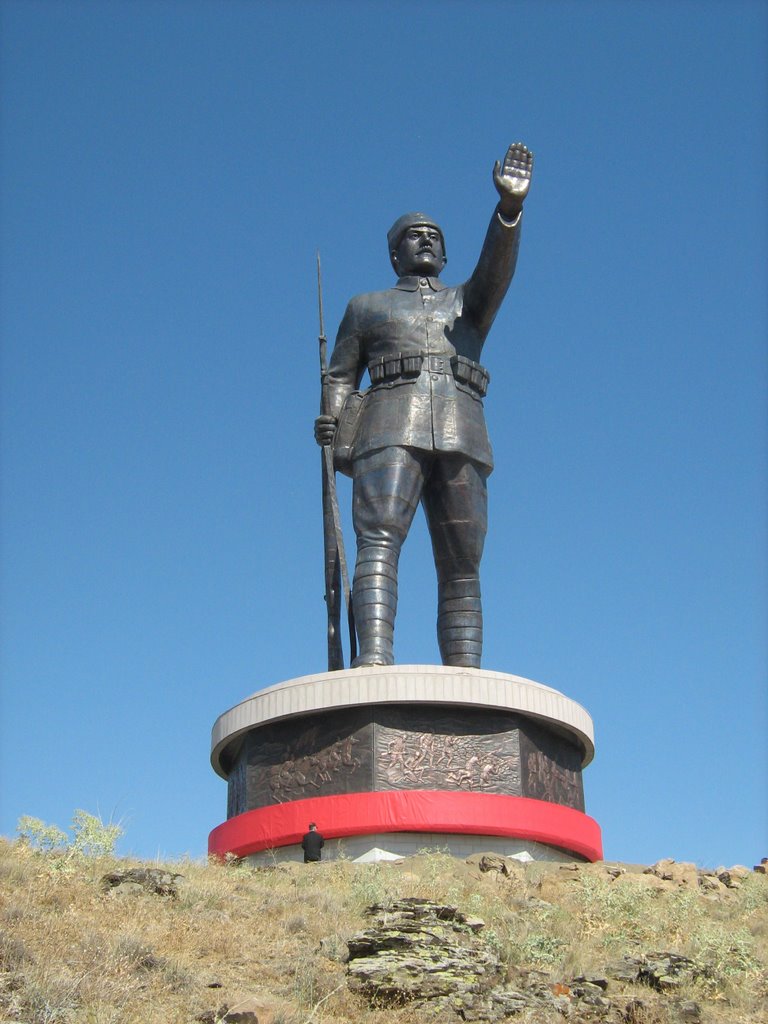
In 2015, the Turkish government established the Battle of Sakarya National Historic Park, but, in 2008, several private companies had already commemorated the battle by commissioning a statue of a Turkish infantryman to be placed on a height (Karaltepe) looking westward in the direction from which the Greek army had come.

 It’s not a boundary marker, per se, as the Argonath is meant to be, but, by marking the line of Turkish resistance to the Greek invasion, it has somewhat of the same effect.  And, though not gigantic, like the Gondorian figures, it’s over 100 feet (31m) tall on its base and the pose certainly reminds me of what Frodo sees in the river ahead,

even if it doesn’t produce the same emotional reaction as it did members of the Fellowship:

“Awe and fear fell upon Frodo, and he cowered down, shutting his eyes and not daring to look up as the boat drew near.  Even Boromir bowed his head as the boats whirled by, frail and fleeting as little leaves, under the enduring shadow of the sentinels of Numenor.”

Had the designers of the Turkish monument read The Fellowship of the Ring, or perhaps had seen the Jackson movie?

Thanks for reading, as ever.

Stay well,

What ancient monument might awe you?

And remember that, as always, there’s

MTCIDC

O

ps

In answer to my own question, I’ve always loved this—

It’s often called “the mourning Athena”, but I imagine that the goddess isn’t grieving, but reading a boundary stone and, armed with helmet and spear, seems ready to defend her city from any who would violate that boundary.  It’s nowhere near the monumental size of those images discussed above, being only about 1 ½ feet (.48m) high, but, with a goddess, does size matter?

*(A)Dun[e]-(aic)

20 Wednesday Mar 2024

Posted by Ollamh in Uncategorized

≈ Leave a comment

Tags

books, dune, Fantasy, frank-herbert, science fiction

Welcome, dear readers, as always.

If you’re a regular reader, you know that I have begun a (definitely!) long-term project to deepen my knowledge of Science Fiction.  I’ve read Sci-Fi since childhood, but totally unscientifically (sorry!), and, being interested in both Fantasy and Sci-Fi, I thought that it was more than time to have a better grasp of it and its (as I’ve found out) complicated history.

Although I’m still reading somewhat haphazardly—when I find an author whose work catches my attention, I catch myself reading more than one representative—see novels by L. Sprague de Camp (1907-2000), including those in collaboration with Fletcher Pratt (1897-1956)—like Lest Darkness Fall, 1941,

or The Castle of Iron, 1950,

I am developing a chronological list, and, so far, have read about three dozen novels and maybe a dozen short stories, my most recent novel being Dune, 1965,

about which I’ve already written one posting (see “No Names, No…”, 10 January, 2024).  It’s an impressive beginning, full of vividly imagined things, especially anything and everything about the desert planet of Arrakis, its native inhabitants, their environment, and their survival in it.  It’s easy to see how some early reviewers compared it to The Lord of the Rings for its depth of detail.  In my earlier posting, I admitted to being less convinced by the names, which sometimes seem rather haphazard—something which Tolkien would never allow (and actually criticized in the work of E.R. Eddison, 1882-1945—see a letter to Caroline Everett, 24 June, 1957, Letters, 372)—and this brings me to the subject of this posting, which is about Chakobsa—not “Shikwoshir”, or “Shikowschir”, or even “Schakobsche” or “Farschipse”, all possible names for a Northwest Caucasian language (or perhaps invented dialect based upon one of the languages—see https://en.wikipedia.org/wiki/Chakobsa )–but one of the principal languages of Dune.

The first film based upon Dune appeared in 1984

and was not a success—I remember seeing it, but have virtually no memory of what I saw.  (For more on the tribulations of making a film of the novel, see:  https://en.wikipedia.org/wiki/Dune_(1984_film) )  If anyone spoke anything other than standard English, I couldn’t say.  There was a difference, however, in Dune, 2021,

where, although English substitutes for Galach, the standard universal language (like the Common Speech of Middle-earth), the language of the natives of Arrakis, the Fremen, is in need of subtitles.  (And there seems to be a bit of confusion here about what they actually speak, which even one of its creators, in an aside in a recording, admits:  https://dune.fandom.com/wiki/%22Neo-Chakobsa%22_(2020s_film_series)?file=Work_Stream_6-_Translating_into_Chakobsa%2C_Part_1 )  The language we hear most about—and which appears even more frequently in Dune 2, 2023,

was named by the original author, Frank Herbert (1920-1986), after that Northwest Causcasian language, Chakobsa, but, linguistically, has nothing to do with it.  Instead, it was a gallimaufry (a wonderful word in itself, meaning “a hodgepodge”—see:   https://www.etymonline.com/word/gallimaufry where you’ll discover that it’s actually one of those etymologies with a question mark after it).  As Herbert’s son, Brian, says of the linguistic constructions in Dune in general:

“  The words and names in Dune are from many tongues, including Navajo, Latin, Chakobsa (a language found in the Caucasus), the Nahuatl dialect of the Aztecs, Greek, Persian, East Indian, Russian, Turkish, Finnish, Old English, and, of course, Arabic.” (Dune, “Afterword”, 878 in the Ace edition)

There is a great difference, however, between Herbert’s approach to language and that of the language created for the Fremen in the two films and the latter approach might be seen as coming directly from JRRT’s method of language construction.

In 1931, Tolkien gave a lecture to the Johnson Society at Pembroke College, Oxford.

Daringly entitled “A Secret Vice”, it was an essay about his own “vice”, the creation of languages.  In it, he used his own early experiences with everything from Esperanto to “Nevbosh”, expressing not only his long interest, but also his ideas about the possibilities to be found in such a hobby, including:

“…various other interests in the hobby.  There is the purely philological (a necessary part of the completed whole though it may be developed for its own sake):  you may, for instance, construct a pseudo-historical background and deduce the form you have actually decided on from an antecedent and different form (conceived in outline); or you can posit certain tendencies of development and see what sort of form this will produce.  In the first case you discover what sort of general tendencies of change produce this a given character; in the second you discover the character produced by given tendencies.  Both are interesting, and their exploration gives one a much greater precision and sureness in construction—in the technique in fact of producing an effect you wish to produce for its own sake.” (Tolkien, A Secret Vice:  Tolkien on Invented Languages, edited by Dimitra Fimi & Andrew Higgins, Harper/Collins, 2016, 25)

I was reminded of this passage when I watched a brief interview with the creators of Chakobsa, Jessie and David Peterson, which you can see here:  https://www.bbc.com/reel/video/p0hg5n6z/dune-and-the-art-of-creating-a-fictional-language  .  David was the creator of Valyrian and Dothraki for A Game of Thrones, as well as the author of a very entertaining and informative book on the subject of constructed languages (“conlang” for short), The Art of Language Invention (Penguin, 2015).

(For more on Valyrian, see:  https://en.wikipedia.org/wiki/Valyrian_languages .  For more on Dothraki, see:  https://en.wikipedia.org/wiki/Dothraki_language )

In the interview, Jessie talks about the “evolutionary method” of designing a language—that is, just like Tolkien, creating an older version of the language which you then “age”, using standard linguistic methods for consistent change over time.  We see an example of this in an interview the Petersons did with IndieWire:

“The most everyday terms in any language — things like “hello” and “goodbye” — are often ones that have the most history behind them. ‘You don’t try to come up with a way to say hello. You try to come up with what would have been a common phrase that was repeated when you saw someone and which ended up getting reduced to a smaller form,’ Jessie Peterson said. “

All of this was trickier, of course, for the Petersons, since, unlike Tolkien, the language they were employed to build already had some chosen, if not invented, elements—words from Herbert’s gallimaufry—which they were obliged to begin with.  In the same interview with IndieWire, David Peterson had this to say about such difficulties:

”Peterson traced the longest existing phrase in Chakobsa, a funeral rite spoken for Jamis (Babs Olusanmokun) as his water is given to the well at Sietch Tabr, to a Romani nursery rhyme. 

‘He just changed the meaning and said that it had something to do with water,’ Peterson told IndieWire. “A lot of [Chakobsa] is just borrowed kind of haphazardly from different languages. We just had to come up with our own system and incorporate it as best we could.”  (You can read the whole interview here:  https://www.indiewire.com/features/craft/dune-fremen-langauge-how-to-speak-1234958145/ )

An interesting feature in Tolkien’s language invention—and perhaps eventually crucial—

“I might fling out the view that for perfect construction of an art-language it is found necessary to construct at least in outline a mythology concomitant.  Not solely because some pieces of verse will inevitably be part of the (more or less) completed structure, but because the making of language and mythology are related functions (coeval and congenital, not related as disease to health, or as by-products to main manufacture); to give your language an individual flavour, it must have woven into it the threads of an individual mythology, individual while working within the scheme of natural human mythopoeia, as your word-form may be individual while working within the hackneyed limits of human, even European, phonetics.  The converse indeed is true, your language construction will breed a mythology.”  (Tolkien, A Secret Vice, 23-24)

So far, David, and now David and Jessie, Peterson have worked to create languages for other people’s stories and mythologies.  I wonder what they might produce if they constructed a language—or languages—for a story of their own?

As always, thanks for reading.

Stay well,

So shiira isim un-rauqizak,

And remember that, as ever, there’s

MTCIDC

O

PS

If creating languages interests you, have a look at Jessie Peterson’s website here:  https://www.quothalinguist.com/about-me/

← Older posts
Newer posts →

The Doubtful Sea Series Facebook Page

The Doubtful Sea Series Facebook Page

  • Ollamh

Categories

  • Artists and Illustrators
  • Economics in Middle-earth
  • Fairy Tales and Myths
  • Films and Music
  • Games
  • Heroes
  • Imaginary History
  • J.R.R. Tolkien
  • Language
  • Literary History
  • Maps
  • Medieval Russia
  • Military History
  • Military History of Middle-earth
  • Narnia
  • Narrative Methods
  • Poetry
  • Research
  • Star Wars
  • Terra Australis
  • The Rohirrim
  • Theatre and Performance
  • Tolkien
  • Uncategorized
  • Villains
  • Writing as Collaborators
Follow doubtfulsea on WordPress.com

Across the Doubtful Sea

Recent Postings

  • Saruman’s Sigh May 13, 2026
  • Silents Are Golden May 7, 2026
  • Planting April 29, 2026
  • Subterranean April 22, 2026
  • Serendipity? April 15, 2026
  • Serendipity April 8, 2026
  • Verisimilitude April 1, 2026
  • Goblins and Goblin March 25, 2026
  • Crowing and Raven March 18, 2026

Blog Statistics

  • 113,375 Views

Posting Archive

  • May 2026 (2)
  • April 2026 (5)
  • March 2026 (4)
  • February 2026 (4)
  • January 2026 (4)
  • December 2025 (5)
  • November 2025 (4)
  • October 2025 (5)
  • September 2025 (4)
  • August 2025 (4)
  • July 2025 (5)
  • June 2025 (4)
  • May 2025 (4)
  • April 2025 (5)
  • March 2025 (4)
  • February 2025 (4)
  • January 2025 (5)
  • December 2024 (4)
  • November 2024 (4)
  • October 2024 (5)
  • September 2024 (4)
  • August 2024 (4)
  • July 2024 (5)
  • June 2024 (4)
  • May 2024 (5)
  • April 2024 (4)
  • March 2024 (4)
  • February 2024 (4)
  • January 2024 (5)
  • December 2023 (4)
  • November 2023 (5)
  • October 2023 (4)
  • September 2023 (4)
  • August 2023 (5)
  • July 2023 (4)
  • June 2023 (4)
  • May 2023 (5)
  • April 2023 (4)
  • March 2023 (5)
  • February 2023 (4)
  • January 2023 (4)
  • December 2022 (4)
  • November 2022 (5)
  • October 2022 (4)
  • September 2022 (4)
  • August 2022 (5)
  • July 2022 (4)
  • June 2022 (5)
  • May 2022 (4)
  • April 2022 (4)
  • March 2022 (5)
  • February 2022 (4)
  • January 2022 (4)
  • December 2021 (5)
  • November 2021 (4)
  • October 2021 (4)
  • September 2021 (5)
  • August 2021 (4)
  • July 2021 (4)
  • June 2021 (5)
  • May 2021 (4)
  • April 2021 (4)
  • March 2021 (5)
  • February 2021 (4)
  • January 2021 (4)
  • December 2020 (5)
  • November 2020 (4)
  • October 2020 (4)
  • September 2020 (5)
  • August 2020 (4)
  • July 2020 (5)
  • June 2020 (4)
  • May 2020 (4)
  • April 2020 (5)
  • March 2020 (4)
  • February 2020 (4)
  • January 2020 (6)
  • December 2019 (4)
  • November 2019 (4)
  • October 2019 (5)
  • September 2019 (4)
  • August 2019 (4)
  • July 2019 (5)
  • June 2019 (4)
  • May 2019 (5)
  • April 2019 (4)
  • March 2019 (4)
  • February 2019 (4)
  • January 2019 (5)
  • December 2018 (4)
  • November 2018 (4)
  • October 2018 (5)
  • September 2018 (4)
  • August 2018 (5)
  • July 2018 (4)
  • June 2018 (4)
  • May 2018 (5)
  • April 2018 (4)
  • March 2018 (4)
  • February 2018 (4)
  • January 2018 (5)
  • December 2017 (4)
  • November 2017 (4)
  • October 2017 (4)
  • September 2017 (4)
  • August 2017 (5)
  • July 2017 (4)
  • June 2017 (4)
  • May 2017 (5)
  • April 2017 (4)
  • March 2017 (5)
  • February 2017 (4)
  • January 2017 (4)
  • December 2016 (4)
  • November 2016 (5)
  • October 2016 (6)
  • September 2016 (5)
  • August 2016 (5)
  • July 2016 (5)
  • June 2016 (5)
  • May 2016 (4)
  • April 2016 (4)
  • March 2016 (5)
  • February 2016 (4)
  • January 2016 (4)
  • December 2015 (5)
  • November 2015 (5)
  • October 2015 (4)
  • September 2015 (5)
  • August 2015 (4)
  • July 2015 (5)
  • June 2015 (5)
  • May 2015 (4)
  • April 2015 (3)
  • March 2015 (4)
  • February 2015 (4)
  • January 2015 (4)
  • December 2014 (5)
  • November 2014 (4)
  • October 2014 (6)
  • September 2014 (1)

Blog at WordPress.com.

  • Subscribe Subscribed
    • doubtfulsea
    • Join 75 other subscribers
    • Already have a WordPress.com account? Log in now.
    • doubtfulsea
    • Subscribe Subscribed
    • Sign up
    • Log in
    • Report this content
    • View site in Reader
    • Manage subscriptions
    • Collapse this bar

Loading Comments...