• About

doubtfulsea

~ adventure fantasy

Tag Archives: Alan Lee

One More River (1)

21 Wednesday Dec 2016

Posted by Ollamh in Artists and Illustrators, Imaginary History, J.R.R. Tolkien, Maps, Narrative Methods

≈ Leave a comment

Tags

Alan Lee, Beorn, Bilbo, bog people, Bombur, Boromir, bridges, causeways, drowsiness, Dwarves, Esgaroth, Great East Road, Greyflood, Gwathlo, Hobbiton-across-the-water, Lethe, Middle-earth, Mirkwood, Rammas Echor, Rivendell, river-crossing puzzle, Roman Roads, Tharbad, The Atlas of Middle-Earth, The Hobbit, The Lord of the Rings, Tolkien, Tollund Man

Welcome, dear readers. Here we are again in Middle-earth, as so often we’ve been over the last couple of years, but, as we said in our last post, one reason why we revere JRRT and his work is that it’s so rich—it seems like one can open it to any page and there is something new to explore. In this post, we began with an odd little detail, just something said almost in passing by Boromir:

“A long and wearisome journey. Four hundred leagues I reckoned it, and it took me many months, for I lost my horse at Tharbad, at the fording of the Greyflood.” (The Fellowship of the Ring, Book 2, Chapter VIII, “Farewell to Lorien”)

Tharbad, we knew from the Companion, was once a river port on the Gwathlo, Boromir’s “Greyflood”. Here’s a description from the extremely helpful introductory section of the Companion called “The Maps of The Lord of the Rings”:

“…with long labour a port capable of receiving seagoing vessels had been made at Tharbad, and a fort raised there on great earthworks on both sides of the river, to guard the once famed Bridge of Tharbad” (lxv)

This “once-famed” bridge was clearly long-gone by the time, at the end of the Third Age, when Boromir reached the river it had once offered passage over, for all of the work done once upon a time, including long causeways—raised approach roads above boggy ground—here’s a Roman example from northern Spain with causeway and bridge—
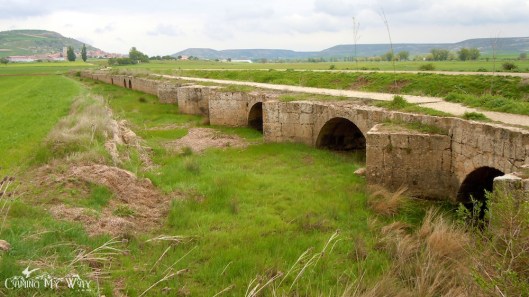
1bridgewithcauseway.jpg

“But in the days of The Lord of the Rings the region had become ruinous and lapsed into its primitive state: a slow wide river running through a network of swamps, pools and eyots [little islands]: the haunt of hosts of swans and other water-birds.” (from a letter of 30 June, 1969, to Paul Bibire, quoted in Companion, 650)

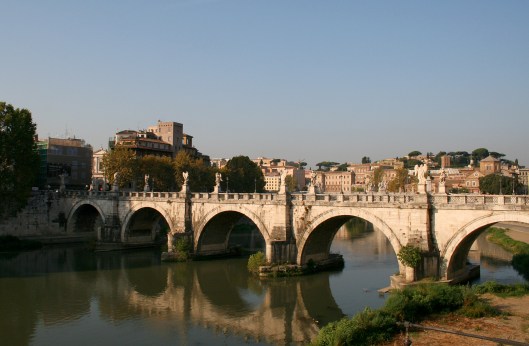
JRRT appears to have left no description of the bridge itself, but we imagine it as looking rather like a Roman one (as JRRT could have seen pictures of surviving ones like this in Portugal

2ponte.jpg

or this in Rome.

3ponteadriano.JPG

Unlike much of the rest of the Roman world, no Roman bridge survives in Britain—only the remains of piers, ramps, and approaches–so we’re assuming that, if he were at all influenced by Roman architecture—and that’s an absolute assumption on our part, we admit, but certainly things like Hadrian’s Wall seem to have been an inspiration—see our earlier posting on the Rammas Echor—it was through photographs.)

This mention, however, sparked us to think about the crossing of bodies of water, both in The Hobbit and in The Lord of the Rings, just how many there were, and the kinds of events which happened at them.

Bilbo’s Bag End, of course, is just down the road from The Water and its mill, as depicted by Tolkien himself.

4imghillandmill.jpg

When he sets off with the dwarves, however, there is little incident involved in running water at first. The party has to cross a river, “swollen with the rains, [which] came rushing down from the hills and mountains in the north.” (The Hobbit, Chapter 2, “Roast Mutton”) They cross this by “an ancient stone bridge” (perhaps like this one at Carrbridge, in Scotland?)

5imagecarbridge.jpeg

but, somehow, they can’t escape the river, as, during the night, “…one of the ponies took fright at nothing and bolted. He got into the river before they could catch him; and before they could get him out again, Fili and Kili were nearly drowned, and all the baggage that he carried was washed away off him.” (The Hobbit, Chapter 2, “Roast Mutton”). So far, when it comes to running water, for all that there was a bridge, it seems difficult for the dwarves to stay out of it.

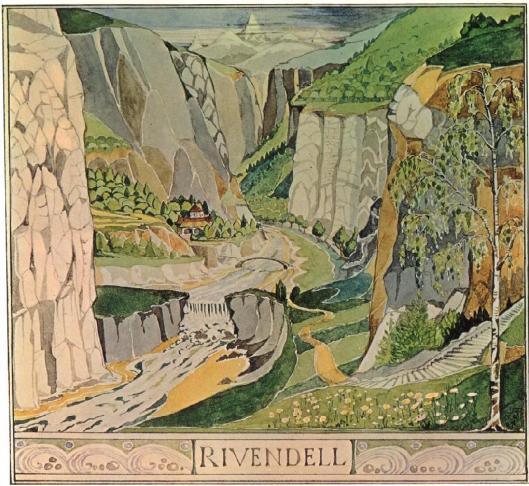
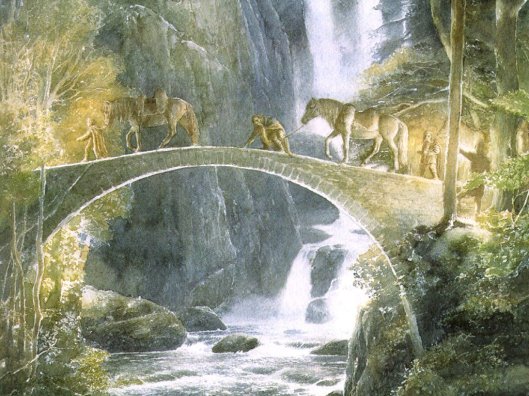
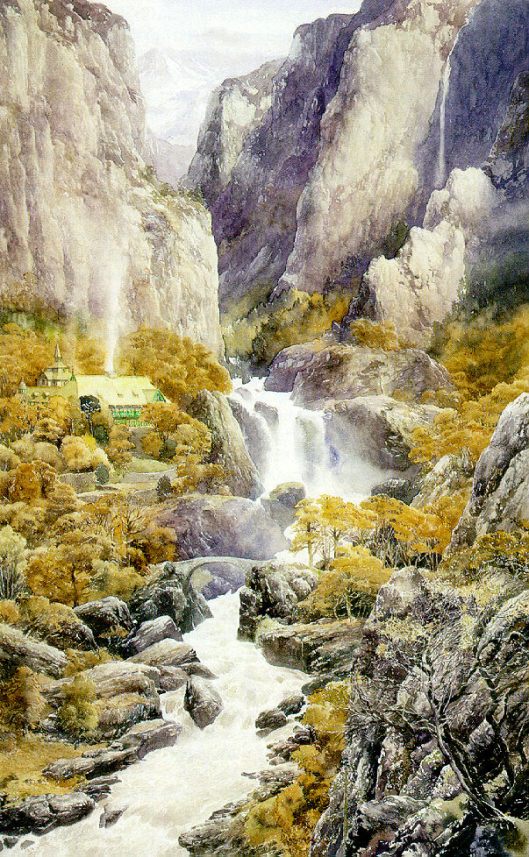
Their second adventure with water is more successful, when they cross the bridge at Rivendell, which we have discussed in a posting on Rivendell architecture, so, for this one, we’ll simply add Tolkien’s illustration of Rivendell, plus a real favorite, Alan Lee’s of the bridge.

6imagerivendelljrrt.jpg

7imagerivendellbridgealanlee.jpg

Beyond Rivendell, it’s into the mountains (literally, when they are pulled into the world of the goblins by a secret door) and, when they come out, their next water barrier is surmounted for them when they’re rescued by eagles and flown to the other side of the northern Anduin.

8eaglerescue.jpg

If they had simply taken the Great East Road (as we presume Bilbo and Gandalf did on the way back), they would have found a ford where the road runs eastward into the Old Forest Road. (see Karen Wynn Fonstad, The Atlas of Middle-earth, 80-81, for a larger view).

9mistymtnsmap.gif

The real problem with a crossing comes at the next water course. They had plunged into Mirkwood

9ajrrtmirkwood.png

and come up across a stream (in fact, the Enchanted River, although they didn’t know it). During their leave-taking at Beorn’s, he had warned them about it:

“There is one stream there, I know, black and strong which crosses the path. That you should neither drink of, nor bathe in; for I have heard that it carries enchantment and a great drowsiness and forgetfulness.” (The Hobbit, Chapter 7, “Queer Lodgings”)

As people with a background in Greek and Roman mythology, we immediately thought of Lethe, the name of which comes from a Greek verb which means “to escape notice/be hidden—therefore, to forget”.

It was one of the rivers of the Underworld and, if you drank from it, you lost all memory of your past. In that part of classical religion which believed in reincarnation, it was one step on the way to returning to earth.

10imagelethe.jpg

Here in Mirkwood, however, the point is to avoid drinking, or even touching, it. The difficulty, of course, is that, if you can’t touch it, how do you get across it, especially when:

“There had been a bridge of wood across, but it had rotted and fallen leaving only the broken posts near the bank.” (The Hobbit, Chapter 8, “Flies and Spiders”)

Providentially, there is a boat drawn up on the opposite shore and we’ve always been reminded here of what is called a “river-crossing puzzle”. There are many variations, but the earliest currently known dates from the 9th century AD, and is found in Propositiones ad Acuendos Juvenes (maybe something like “Puzzles for Sharpening [the Minds of] Young Folk”—which makes it sound rather Victorian). We provide links here for: River crossing puzzle, Fox, goose and bag of beans puzzle, and Propositiones ad Acuendos Juvenes, for anyone interested to learn more.
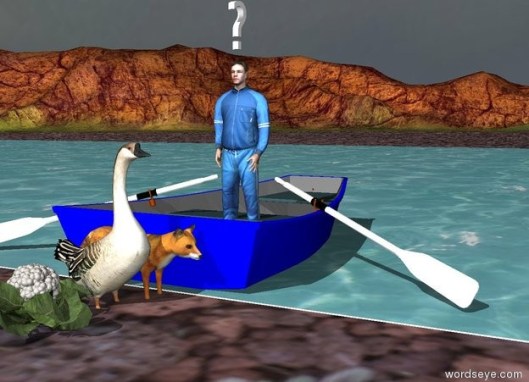
11imagefoxgoose.jpg

In the case of the dwarves, the math goes awry when the largest of them, Bombur, accidentally falls into the water and becomes comatose.

12imageleebombur.jpg

(And this Alan Lee drawing oddly reminds us of “bog people”—that is, the bodies of people, the earliest being from 8000BC, a majority being Iron Age, found in peat bogs throughout northern Europe. Because of the conditions in bogs, some have been amazingly preserved, such as “Tollund Man”—here
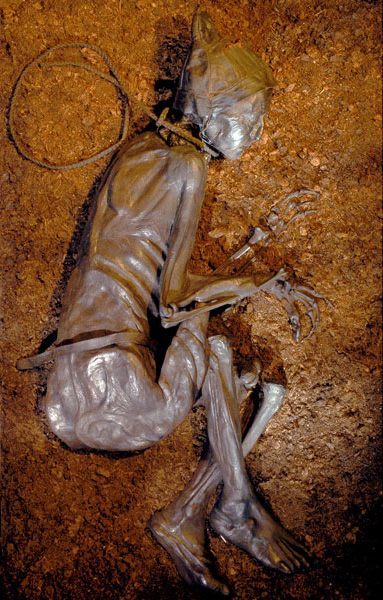
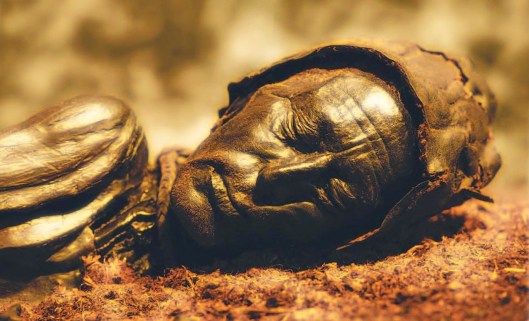
13imagetollund.jpg

14imagetollund.jpg)

He eventually awakes, long before the party’s next river, which acts as a moat to the caves of the Elf king of Mirkwood.

15imagethranduilsgate.jpg

This has a bridge, across which, at various times, Thorin, the dwarves, and Bilbo (wearing the Ring) go.

It is the next bit of water, however, which bears the greater interest. This is the underground stream which comes up in the cave where the elves store empty wine barrels to return to the men of Esgaroth. And this, the dwarves and Bilbo don’t cross, but ride down, packed in (or perched on) those empty barrels.
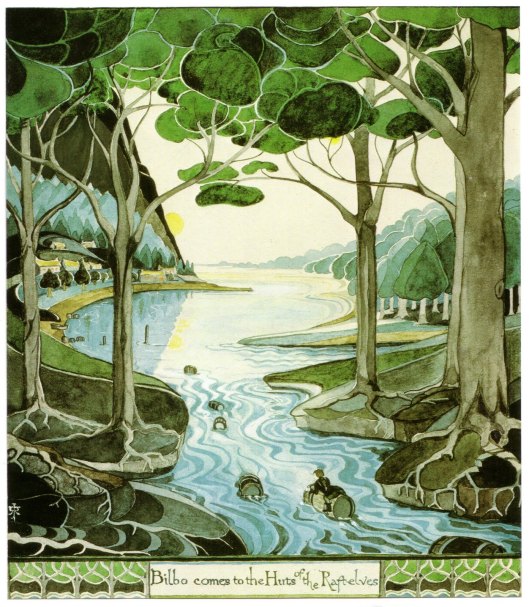
16imagebarrelriding.jpg

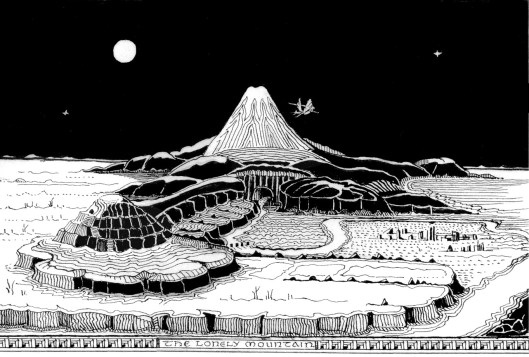
This leads us to the last body of water: the Long Lake, on which Esgaroth stands. From here, the people of Lake Town convey them back north to a landing place from which they will start out for the Lonely Mountain and the climax of their quest.17imageesgaroth.jpg
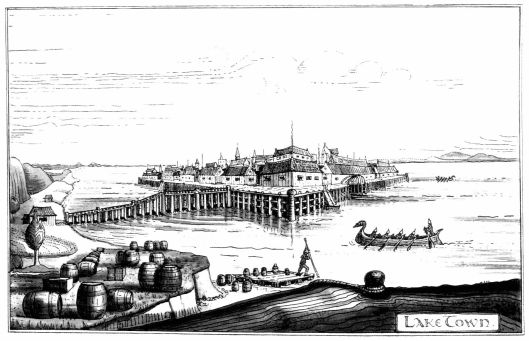
18lonelymountain.jpg

And here we’ll end our quest for water-crossings for this posting, to be continued with one on The Lord of the Rings in our next—along with all of those extras which we can’t help adding, from medieval puzzles to peat bog people.

Thanks, as always, for reading!

MTCIDC

CD

ps

If you celebrate this time of year for any reason, may your celebration be a happy one! We mostly dream of toys…

19imagetoytownsoldiers.JPG

Ugluk Was Here

14 Wednesday Dec 2016

Posted by Ollamh in Artists and Illustrators, J.R.R. Tolkien, Language, Literary History, Military History

≈ Leave a comment

Tags

Alan Lee, Alfred Waud, American Civil War, Angus McBride, Argonath, Belgium, Black Speech, cemeteries, Confederate, Egyptian monuments, First Virginia Cavalry, graffiti, Great War, Greek mercenaries, Greeks, Hildebrandt, John Howe, Journey to the Cross-roads, Kilroy, Kilroy was here, Literacy, Napoleon I, Orcs, Pompeii, quarry at Naours, Sauron, The Lord of the Rings, Tolkien, Union, Virginia, World War I, World War II

Welcome, dear readers, as always.

One of our reasons for holding Tolkien’s work in such high esteem is that it’s so rich: practicing Sortes Tolkienses (see our earlier posting on this), we find innumerable subjects to write about.

In this posting, our eye was caught by this:

“The brief glow feel upon a huge sitting figure, still and solemn as the great stone kings of Argonath. The years had gnawed it, and violent hands had maimed it. Its head was gone, and in its place was set in mockery a round rough-hewn stone, rudely painted by savage hands in the likeness of a grinning face with one large red eye in the midst of its forehead. Upon its knees and mighty chair, and all about the pedestal, were idle scrawls mixed with the foul symbols that the maggot-folk of Mordor used.” (The Two Towers, Book 4, Chapter 7, “Journey to the Cross-roads”)

crossroads.jpg

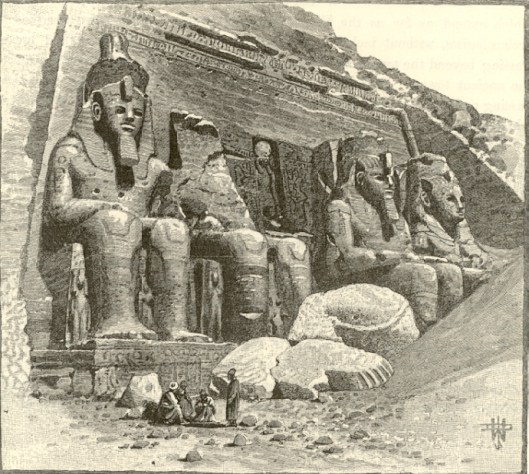
We had the feeling that we’d seen a statue something like this before—and we were curious whether JRRT had, too, and with a little mental rooting-around, we found this:

abusimbelengraving.jpg

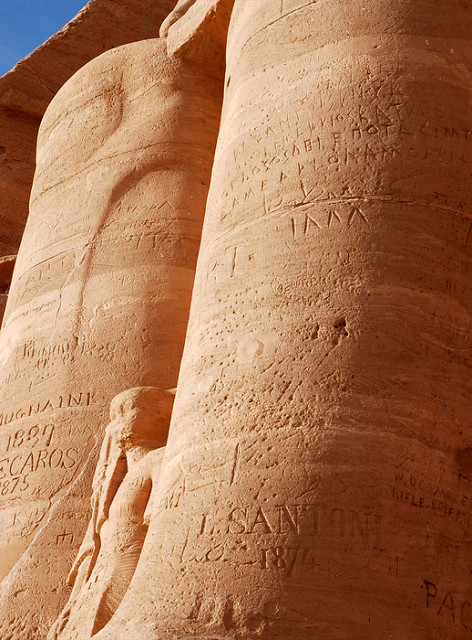
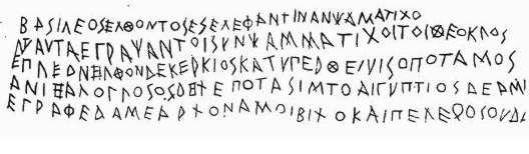
It’s Egyptian (13th century BC), and has a head, but, not only is it monumental, and seated, but it has lots of “idle scrawls” on the bases and lower parts of its legs.

abusimbelgraffiti.jpg

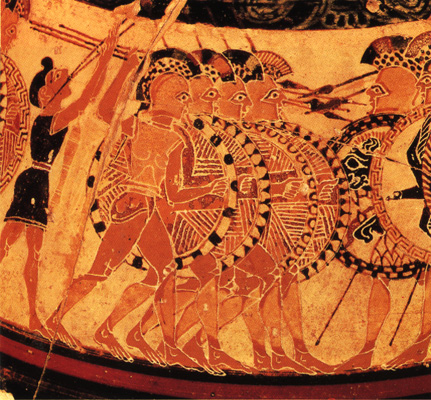
What’s particularly interesting to us is that one piece of the graffiti is actually from some Greek mercenaries c. 600bc

hoplite1.jpg

main-qimg-9eddef3641e25892afa016888b808aa5-c.jpeg

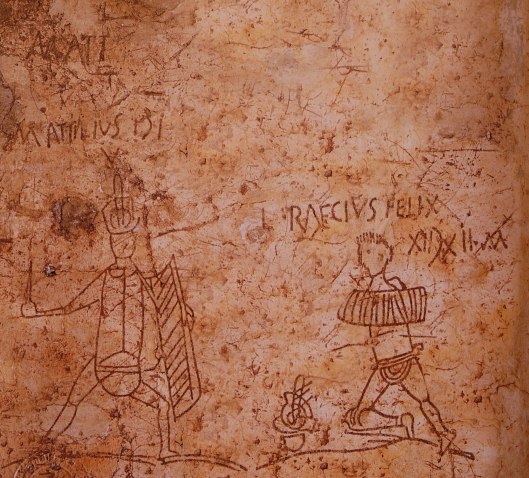
As long as there has been a certain level of literacy, of course, there has been graffiti. The walls of ancient Pompeii (sealed in by the eruption of 79AD) are loaded with everything from election posters to the admiration of gladiators to personal insults.

gladiatorialstats.JPG

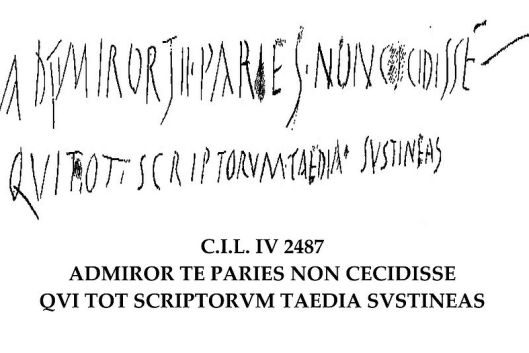
There’s so much, in fact, that this is our favorite:

antigraffiti.jpg

A translation of this might be: “I wonder/am in awe, wall, that, you, who are holding up so much boring writing, haven’t fallen down!”

Soldiers, in particular, seem prone to leaving messages behind—beginning with those 7th-c Greeks, but continuing throughout the centuries. When Napoleon I led an expedition to Egypt in 1798,

napegypt.jpg

his soldiers left their mark in more ways than one upon the landscape.

frenchinegyptgraf2.jpg

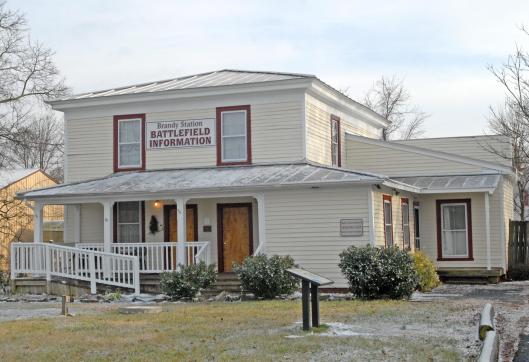
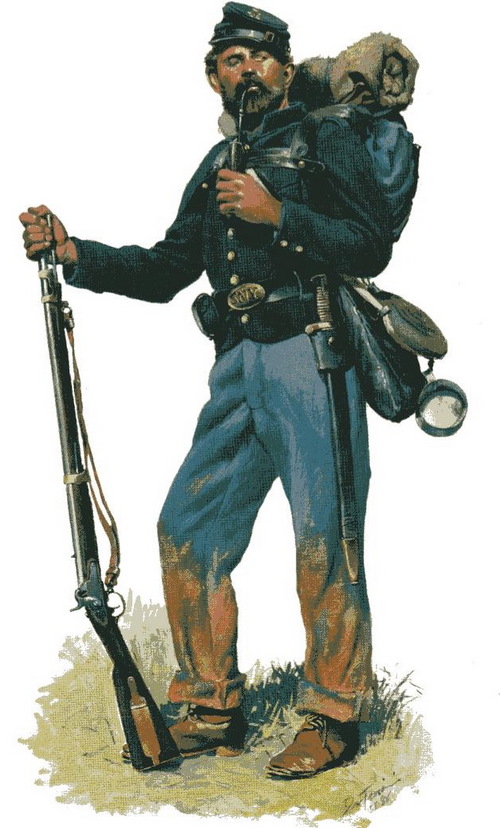
Recently discovered in a house in Virginia was a large collection of inscriptions from the soldiers, Union and Confederate, of the American Civil War.

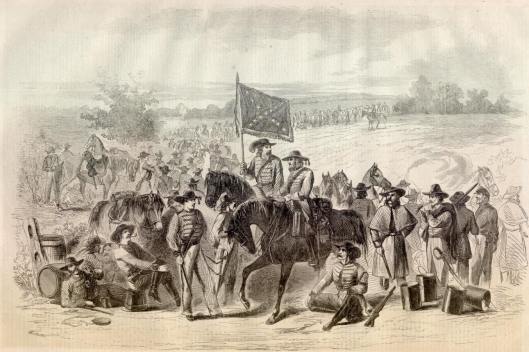
Graffiti-House.jpg Graffiti House Wall and Chair.jpg unionsoldier.jpgAlfred R. Waudfirstva.jpg

(An irresistible footnote: the picture you see of the Confederate cavalry—actually the 1st Virginia—was made by one of the greatest Civil War artists, Alfred Waud (pronounced “woad”). He had been briefly detained by this unit and took the opportunity to sketch them from life. His sketch—with his notes—then went to his publisher in New York, who had a group of engravers ready to turn his sketch into a finished—and publishable—picture.1st-virginia-cavalry-halted-based-on-sketch-by-waud-harpers-sept-27-1862.jpg

For more on the process by which a sketch becomes a magazine illustration, see this link.)

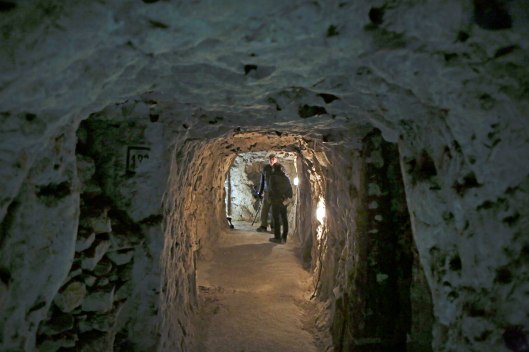
Another recent discovery was a mass of inscriptions (something like 2000 of them) in an abandoned quarry at Naours, in northern France.

quarrynaours.jpg

6XYh68h5xHSK2-3026250-In_this_image_made_on_Feb_20_2015_showing_names_engraved_on_the_-a-32_1428320205858.jpg

These date from the Great War (World War I) and, in a sad way, parallel the epitaphs on the seemingly-endless graves in the seemingly endless military cemeteries in the same region and in southern Belgium.

greatwargraves1.jpg

Tyne Cot 3.jpg

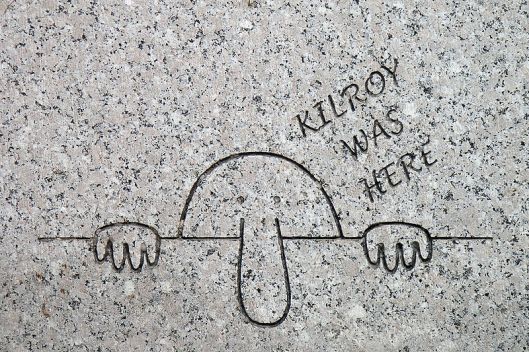
And World War II brought us Kilroy, of the famous (and ubiquitous) “Kilroy was here”.

Engraving-of-Kilroy-on-the-WWII-Memorial-in-Washington-DC.jpg

American prankster soldiers doodled this everywhere they went.

kilroy-was-here-photo.jpg

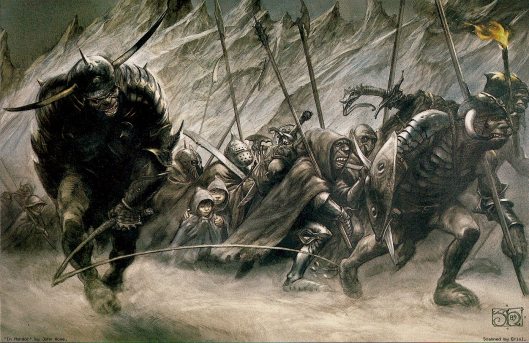
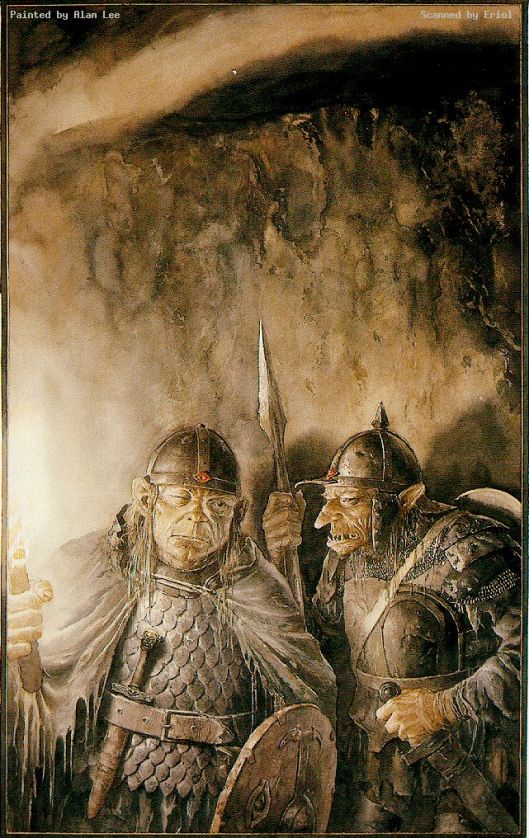
We have written previously about literacy in Middle-earth: not uncommon among hobbits, it would seem, but much less so among the other peoples. As for orcs, be they Hildebrandt

captured_by_orcs.jpg

Mcbride,

mcba_orc.jpg

Howe

John Howe - Merry et Pippin prisonniers des orcs.jpg

Or Lee,

Alan Lee - Orcs (1).jpg

although the Black Speech was created for them and Sauron’s other creatures, we have no evidence (except for the Ring inscription) of any use of it as a writing tool by any of them.

Which leaves us free to imagine just what those “idle scrawls” might read like. How about:

LUGDUSH SMELLS LIKE MAN FLESH!

LAGDUF + MUZGASH = CLUELESS AND SHIRTLESS!

GORBAG LOVES SHELOB

SHAGRAT IS A SNAGA!

And, of course:

UGLUK WAS HERE

Thanks for reading! (And why not submit your own graffiti? We’d be glad to add them to our list!)

MTCIDC

CD

Infrastructure and Architecture in Rivendell

28 Wednesday Sep 2016

Posted by Ollamh in Artists and Illustrators, Films and Music, Imaginary History, J.R.R. Tolkien, Literary History, Narrative Methods

≈ 2 Comments

Tags

Alan Lee, architecture, bridge, Bruinen, footbridge, Illustration, Lauterbrunnental, Middle-earth, Ottoman, packhorse bridge, Peter Jackson, Ring of Silvianus, Rivendell, Roman Britain, Roman villa, Sir Mortimer Wheeler, Stari Most, Ted Nasmith, The Lord of the Rings, Tolkien, Wasdale

Welcome, dear readers, as ever. In our last posting, we looked at the Greenway from a comparative perspective. In this one, we’ve got an idea or two from having looked as closely as we could at one of JRRT’s illustrations of Rivendell, comparing it with various modern conceptions, including that in the films of P. Jackson.

Rivendell, Sindarin, Imladris, “deep valley in a cleft”, is located on the eastern edge of Eriador, at the foot of the Misty Mountains. Set in that deep valley, which was formed by the action of the river Bruinen (“Loudwater”), it was besieged on several occasions throughout its lifetime, but had survived to be the last refuge of the Elves on that side of the mountains.

mapofmewithrivendellpointedout

It is understood that Tolkien based it upon a Swiss valley, Lauterbrunnental, which he had visited on a hiking trip in 1911.

1_lauterbrunnen_valley_2012

(And maybe there’s an echo in the name—which is sometimes translated “Louder Springs”—in Bruinen, “Loudwater”?)

Here is the Tolkien illustration

rivjrrt2

We want to look at two features here. First, in the middle ground, there is that bridge. Here is Alan Lee’s very beautiful version—although you will note that it’s been moved and shortened.The-Hobbit-and-dwarfts-on-the-bridge-alan-lee-18907573-1024-768

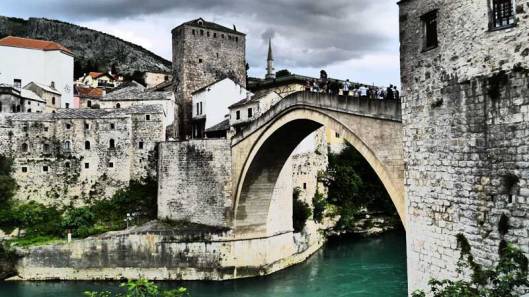
As we examined this bridge as closely as we could, we wondered, where had the idea come from for its shape? And two possibilities came to mind. First, because we’re very much World History people, we thought of those beautiful bridges from the Ottoman world. There are a number of surviving bridges which are more elaborate, but there are also single-arch bridges like these, which bear a strong resemblance to the bridge in Tolkien’s illustration.

otoman_era_bridge_gumushane_province_turkey_photo (1)

hemshin-bridge

1024px-ArchBridgeOverFirtinaDeresi@Rize-Turkey-1

4051359e3eb1f3e0a066f059868152c1

To us, one of the most beautiful is the Stari Most (Bosnian, “Old Bridge”), in Mostar (Bosnian, “Bridge Keeper”), which was built in the 16th century, destroyed in 1993, and rebuilt, and reopened in 2004.

Bosna-Mostar-Stari-Most-800

003

mostar_bg_1

Moving a little closer to home (England, that is, in the case of JRRT), another possibility for a model might be something mentioned in our last posting, when we talked about medieval English roads as mostly packhorse trails. Here’s a perfect example, from Wasdale in the Lake District of northern England, a packhorse bridge.

(n) The pack horse bridge behind the Wasdale Head Inn

Moving upstream from the bridge in Tolkien’s picture, we see a house depicted.

rivjrrt2

It’s hard to make it out, even under magnification, but, when we compare it with:

  1. the buildings in the Jackson films

12887381._SX540_.png

  1. Alan Lee’s Rivendell

leerivendell

  1. or even Ted Nasmith’s,

rivendellTN-Fair_Valley_of_Rivendell

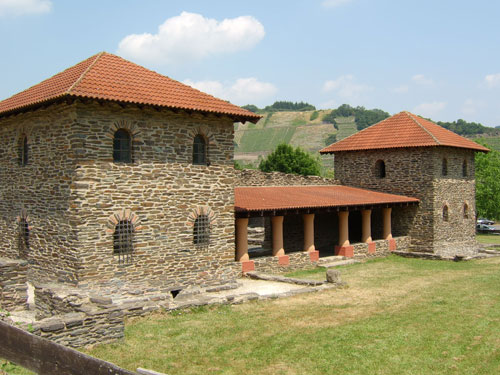
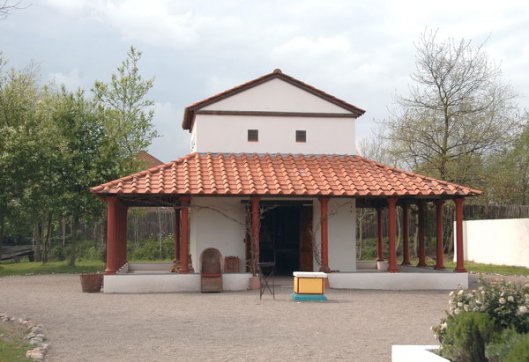
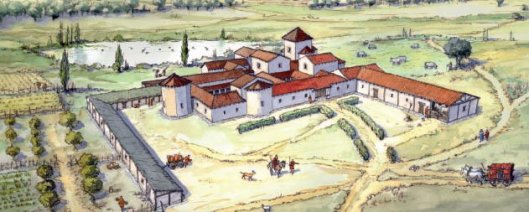
we personally don’t think anyone quite captures what Tolkien drew. To us, there appears to be, as we said before, something closer to home–in the reconstructions of Roman villas and their outbuildings. And, as we said in our last, so much of Roman Britain was still available, either above or below ground, that we can imagine JRRT  being aware of it.  (In fact, in 1929, the archaeologist, Sir Mortimer Wheeler actually consulted him on an ancient curse and the inscription on a Roman-British ring.  See the Ring of Silvianus wiki page).  Possible examples, some from reconstructed sites:

villa_mehring_01villaarcheon_temple_cuijk2delaguiaGayton-Villa-Colour-web

Blow up the Tolkien illustration for yourself, dear readers, and what do you think?

Thanks, as always, for reading.

MTCIDC

CD


The Ring in Question

02 Wednesday Mar 2016

Posted by Ollamh in Artists and Illustrators, Fairy Tales and Myths, Imaginary History, J.R.R. Tolkien, Literary History, Narrative Methods

≈ Leave a comment

Tags

Alan Lee, Allen and Unwin, Angus McBride, casting, forging, Home Alone, literary belief, literary theory, The Lord of the Rings, The One Ring, Tolkien

Dear Readers,

Recently, one of us came up with an interesting question about our friend JRRT and the One Ring: how would such a small thing with such power have been made? In The Silmarillion, Tolkien, as he so often does, has an answer for this:

“And much of the strength and will of Sauron passed into that One Ring… and Sauron forged it in the Mountain of Fire in the Land of Shadow” (The Silmarillion, 287-288).

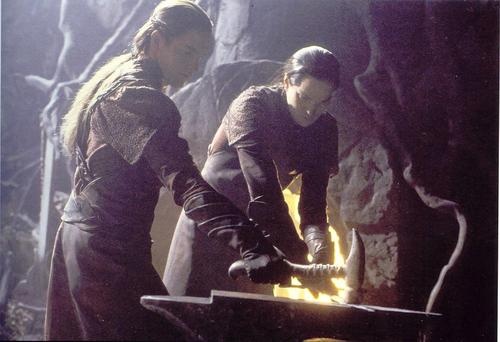
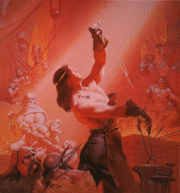
In the histories of Middle-earth, Sauron is said to have “made” and “forged” the One Ring—JRRT uses both words more than once in his letters, LOTR, and The Silmarillion, and this has led us to another question: how would the Ring have been forged? We did a little research, and found that the typical process of forging is (according to the ever-useful wiki page on the subject) a manufacturing process using compressive forces, such as a hammer, to shape metal in a particular way. If Sauron “forged” the One Ring in the fires of Mount Doom, it’s safe to assume that he used the process of “hot forging”, where the metal is heated in a forge (or in this case, very hot fires of a volcano). The last two items of wiki’s “commonly forged” list are weapons and jewelry—both on the list of Middle-earth’s most wanted Christmas gifts of 3018—and we’ve seen weapon-forging before:

6c735f9774332ccb9c7580b226a0f4fc

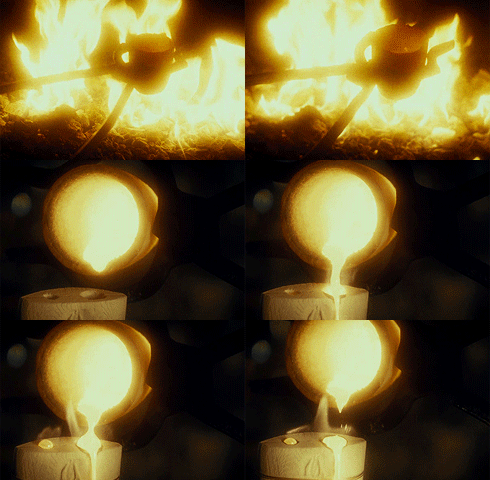
But rings are usually cast, using a mold and molten metal. Peter Jackson’s prologue to The Fellowship of the Ring acknowledges this, although the Ring is still said to have been “forged”:

tumblr_inline_nsok14xlI41sfc6si_500

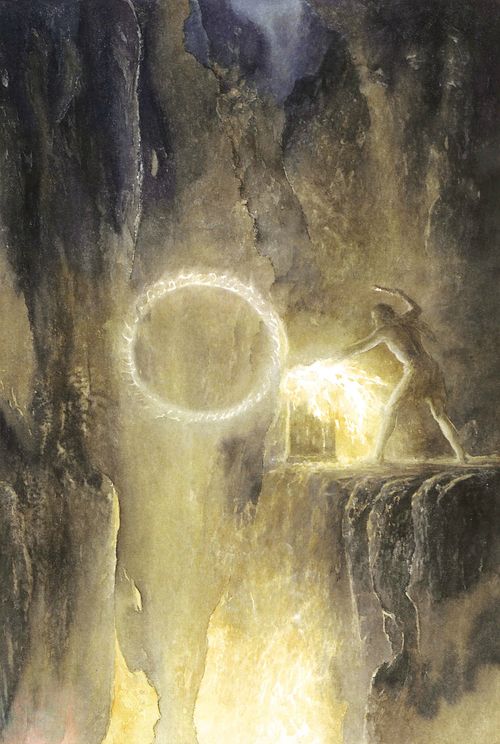
But, in the illustrations of Tolkien illustrators Alan Lee

ea7f4b46a0e0f9fc7e00d1a5aca2eb30

And Angus McBride

180px-Angus_McBride_-_Celebrimbor

This detail—perhaps even an error on Tolkien’s part—has been overlooked. Is it that the artists have made the same error, or are they simply letting it go in favor of the story?

From here, we can ask several questions: what material was the Ring made of? Where did he get the material? How did Sauron make it a magic ring? How did he get the Black Speech/Elvish inscription onto the Ring?

While there may be one or several answers to these questions, we wonder just how far into detail we’re meant to go—and how far JRRT means for us to go. He created a world so intricate that his work has been named a “legendarium”, and in several previous postings, we’ve discussed details of Middle-earth, such as trade and coinage. Could the man who took such care to design Middle-earth’s moon phases have answers to these questions—or should he?

(And here, for those who know the movie Home Alone, we hope not to sound like the little boy from across the street who asks the van driver endless, empty questions!)

The concept of the One Ring begins in Gollum’s cave in The Hobbit. At that point, it was only a magic ring, serving the purpose of a plot device: JRRT had not yet planned a sequel to The Hobbit. In fact, the magic ring was not yet the One Ring in Tolkien’s stories until after JRRT published the book.

Tolkien said himself of the matter in his Letters:

“The Hobbit… was quite independently conceived: I did not know as I began it that it belonged.”(Letters, 145)

And, of the Ring:

“Rayner has, of course, spotted a weakness (inevitable): the linking. … But I don’t feel worried by the discovery that the ring was more serious than appeared… the weakness is Gollum, and his action in offering the ring as a present.” (Letters, 121)

This was a response to publishers Allen and Unwin; Rayner (Unwin’s son) had read the story and commented to the author:

“…. Converting the original Ring into this new and powerful instrument takes some explaining away and Gandalf is hard put to it to find reasons for many of the original Hobbit’s actions…” (letters, 120)

Nowhere in his criticism does Rayner ask what the Ring was made of, how Sauron had made the Elvish script, or how it would have been either forged or cast, and neither does JRRT in his answer; their focus is placed upon converting the magic ring into the One Ring, and using the Ring as a crucial plot element in both The Hobbit and The Lord of the Rings. Tolkien writes in another letter:

“The magic ring was the one obvious thing in The Hobbit that could be connected with my mythology. To be the burden of a large story it had to be of supreme importance. I then linked it with the (originally) quite casual reference to the Necromancer…” (Letters, 346)

Although Tolkien’s work provides a great richness of material to discuss, question, and write about, we suppose that we can forgive JRRT for this small detail. Then again, when JRRT gives us so much, when should we stop asking questions or expecting answers? As we’ve found in writing these postings, JRRT seems to have an inexhaustible amount of material, although even he sets limits to the interpretation of his work; in fact, these “hidden meanings” annoyed him:

“I am honoured by the interest that many readers have taken in the nomenclature of The Lord of the Rings… But I remain puzzled, and indeed sometimes irritated, by many of the guesses at the ‘sources’ of the nomenclature, and theories or fancies concerning hidden meanings… many of them seem to show ignorance or disregard of the clues and information which are provided in notes, renderings, and in the Appendices” (Letters, 379-380).
We don’t believe that this was meant to be a discouragement. Instead, it is a pointing by the author towards the extra material meant to help his readers to understand and study what Tolkien says he wishes he’s achieved: “the ‘literary belief’ in the story as historical” (Letters, 279).

But this leaves us at another crossroads.

If the answers aren’t to be found there, however, should we stop?   We’ve said that we’re haunted by the image from Home Alone:   if we persist, should we be cast in Home Alone 4 as two kids, pestering the English academic with “So how was this Ring really made, mister? Is it really made of gold? Is it really powerful? How powerful? For how long?”

Or should we leave those details about the Ring as they are, accepting that it’s a magic ring forged in the fires of Mount Doom by Sauron—without interrupting JRRT to ask too many questions about details which aren’t essential to the story, believing that it is more important that he masterfully took a simple plot element—a magic ring—and focused on converting it into the crucial element of Frodo’s quest in The Lord of the Rings.

As always, we ask: what do you think, Dear Readers?

Thanks for reading,

MTCIDC,

CD


Personae

15 Friday May 2015

Posted by Ollamh in Artists and Illustrators, Fairy Tales and Myths, J.R.R. Tolkien, Narrative Methods, Villains

≈ Leave a comment

Tags

Alan Lee, Antagonists, Bosch, Bruegel, Christina Rossetti, Corsairs, Easterlings, Gorbag, Gruenewald, Haradrim, Minions, Nazgul, Orc, Sauron, Shagrat, The Wind, Tolkien

A man is known by the company he keeps.

                                                           Old Proverb

Who Has Seen the Wind?

Who has seen the wind?

Neither I nor you:

But when the leaves hang trembling,

The wind is passing through.


Who has seen the wind?

Neither you nor I:

But when the trees bow down their heads,

The wind is passing by.

                                             Christina Rossetti from Sing-Song: A Nursery Rhyme Book (1872)

wind


Dear Readers,

Welcome, as always!

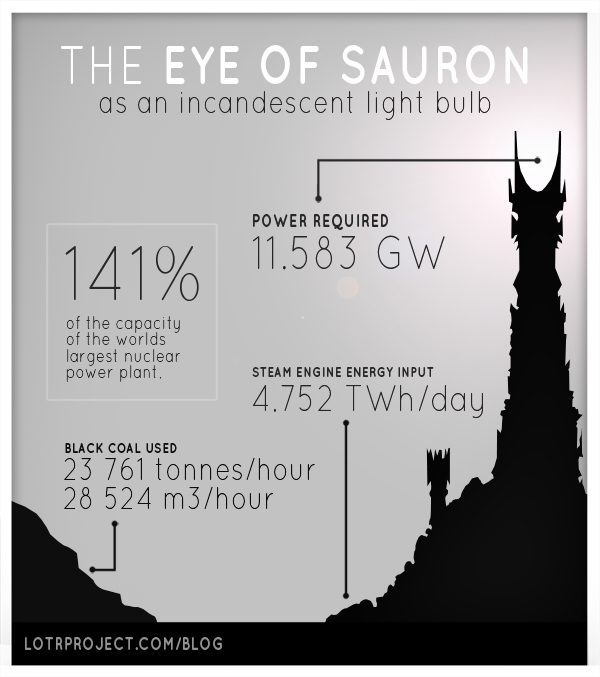
     In our last posting, we talked about villains visible and invisible and suggested that, in the case of Sauron, rather than showing him as a searchlight eye,

sauronbulb2png

(This is from the LOTR Project— a great site, much recommended). 

there were other and more potentially convincing ways to depict such a menacing figure.

One was seeing his reflection in his minions.

minions_2015-wide

(Can you wait for this?)

Imagine that seeing him this way is like seeing the effect a strong wind has on trees.

Palm Tree Nassau Winslow Homer

     Sauron’s minions fall into three main categories: the Nazgul, various humans, most from what appear to be the less-civilized peoples of the south—Corsairs of Umbar, Easterlings, and the Haradrim.

     The Nazgul

eowyn_nazgul

are the most daunting, but we’re told only a limited amount about them, we see them very selectively, and their speech is recorded mainly as threats. We see the humans even less and we really don’t hear them at all. It’s the Orcs of whom we’re shown the most.

     Sauron is described as once being “comely”, but his present condition (except perhaps for his eyes—make that eye) is hard to determine. Tolkien could never quite settle on the origin of the Orcs, but, they are definitely less than attractive.

     Illustrators of Orcs tend, we think, to be strongly influenced by early-Renaissance northern German painters, like Bosch, who depicted devils and demons as hybrids between humans and birds and animals.

Bosch_LJ_Vienna_Music bosch-devil Bosch,_Hieronymus_-_The_Garden_of_Earthly_Delights,_right_panel_-_man_riding_on_dotted_fish_and_bird_creature grunewald_400x478 the-devil-throughout-history-photos-3-horned_pig_devil

     This does not, however, seem to be in line with Tolkien’s thinking. If as Fangorn says, they were created as a mockery of elves, one would presume that they would be much more human in look, but perhaps with exaggerated features, and this seems to be closer to what Tolkien had in mind, although physical description tends to be less detailed.

     Here’s an Alan Lee which we think is more like what Tolkien imagined.

Unknown%20-%20Bilbo%20le%20Hobbit%20(01)%20-%20Les%20orcs

     If they are northern Orcs—those whom Sauron employs—they tend to be smaller and paler. If Uruk-hai, primarily used by Saruman, larger and black. (Although a tracker for Sauron is described as small and black.) Here’s the contrast of the two types in the confrontation between Ugluk and Grishnakh:

“…a large black Orc, probably Ugluk, standing facing Grishnakh, a short crook-legged creature very broad and with long arms that hung almost to the ground.”

     As Orcs may be a mockery of Elves, their speech sounds like it’s derived from the conversations Tolkien heard among his nco’s in the trenches—foul-mouthed (in a modified form), cheerfully abusive, and full of casual threats.

     It’s also instructive to note that there appear to be no Orcs in command positions beyond captain—the rank of Ugluk and Grishnakh, Gorbag and Shagrat. Beyond are the Nazgul, whom the Orcs both dread and envy. (“Those Nazgul give me the creeps…But He likes ‘em; they’re His favorites nowadays, so it’s no use grumbling.”) When we hear these Orcs talk, then, we are being given the mass of Sauron’s soldiery, as below them there is only a babel of cries, cheers, and curses, like a translation of the baying of a pack of hounds.

     Throughout all of the Orc conversation, there runs a joint theme: criticism of superiors (no names—but even up to Sauron himself) and fear of being heard doing so, as when Gorbag says:

     “They don’t tell us all they know, do they? Not by half. But they can make mistakes, even the Top Ones can.” “Sh, Gorbag!” Shagrat’s voice was lowered, so that even with his strangely sharpened hearing could only just catch what was said. “They may, but they’ve got eyes and ears everywhere; some among my lot, as like as not…”

     This suggestion of internal spies reflects a basic uneasiness to be found everywhere under Sauron’s rule: no one trusts anyone else at any level in what Frodo calls “the spirit of Mordor”, leading to murder between rival bands of Orcs and even between individuals, as Sam and Frodo witness, when soldier and tracker trade threats and insults before tracker kills soldier with an arrow.

     So what do Sauron’s minions mirror, which would provide us with any clearer image of the nearly-invisible villain?

   Certainly, we might see that he is incapable of gaining any kind of following at all among the dominant peoples of western Middle Earth.  First, his armies are led by the ancient undead, who frighten their own side as much as they do the enemy. Second, his human recruits are half-civilized people from the far south, plunderers, with no stake in things beyond gain. Third, the bulk of his armies are made up of creatures who are, in a sense, not genuine, but simply mockeries of actual living beings and whose loyalty to their maker is, at best, questionable, even as they fear him.

     Thus, we might imagine that, for all that he is powerful enough to command magic ghosts and armies of primitive men and mutants, Sauron is, ultimately, fearful, suspicious, and divisive and so transparently a source of instability that he can neither convince nor menace any of the free peoples of Middle Earth into having anything to do with him.

     So, as always, we end by asking you, dear readers, what you think? And, as always, we thank you for reading.

MTCIDC

CD

Newer posts →

The Doubtful Sea Series Facebook Page

The Doubtful Sea Series Facebook Page

  • Ollamh

Categories

  • Artists and Illustrators
  • Economics in Middle-earth
  • Fairy Tales and Myths
  • Films and Music
  • Games
  • Heroes
  • Imaginary History
  • J.R.R. Tolkien
  • Language
  • Literary History
  • Maps
  • Medieval Russia
  • Military History
  • Military History of Middle-earth
  • Narnia
  • Narrative Methods
  • Poetry
  • Research
  • Star Wars
  • Terra Australis
  • The Rohirrim
  • Theatre and Performance
  • Tolkien
  • Uncategorized
  • Villains
  • Writing as Collaborators
Follow doubtfulsea on WordPress.com

Across the Doubtful Sea

Recent Postings

  • A Moon disfigured December 17, 2025
  • On the Roads Again—Once More December 10, 2025
  • (Not) Crossing Bridges December 3, 2025
  • On the Road(s) Again—Again November 26, 2025
  • On the Road(s) Again November 19, 2025
  • To Bree (Part 2) November 12, 2025
  • To Bree (Part 1) November 5, 2025
  • A Plague o’ Both—No, o’ All Your Houses! October 29, 2025
  • It’s in Writing (2:  I’st a Prologue, or a Poesie for a Ring?) October 22, 2025

Blog Statistics

  • 103,228 Views

Posting Archive

  • December 2025 (3)
  • November 2025 (4)
  • October 2025 (5)
  • September 2025 (4)
  • August 2025 (4)
  • July 2025 (5)
  • June 2025 (4)
  • May 2025 (4)
  • April 2025 (5)
  • March 2025 (4)
  • February 2025 (4)
  • January 2025 (5)
  • December 2024 (4)
  • November 2024 (4)
  • October 2024 (5)
  • September 2024 (4)
  • August 2024 (4)
  • July 2024 (5)
  • June 2024 (4)
  • May 2024 (5)
  • April 2024 (4)
  • March 2024 (4)
  • February 2024 (4)
  • January 2024 (5)
  • December 2023 (4)
  • November 2023 (5)
  • October 2023 (4)
  • September 2023 (4)
  • August 2023 (5)
  • July 2023 (4)
  • June 2023 (4)
  • May 2023 (5)
  • April 2023 (4)
  • March 2023 (5)
  • February 2023 (4)
  • January 2023 (4)
  • December 2022 (4)
  • November 2022 (5)
  • October 2022 (4)
  • September 2022 (4)
  • August 2022 (5)
  • July 2022 (4)
  • June 2022 (5)
  • May 2022 (4)
  • April 2022 (4)
  • March 2022 (5)
  • February 2022 (4)
  • January 2022 (4)
  • December 2021 (5)
  • November 2021 (4)
  • October 2021 (4)
  • September 2021 (5)
  • August 2021 (4)
  • July 2021 (4)
  • June 2021 (5)
  • May 2021 (4)
  • April 2021 (4)
  • March 2021 (5)
  • February 2021 (4)
  • January 2021 (4)
  • December 2020 (5)
  • November 2020 (4)
  • October 2020 (4)
  • September 2020 (5)
  • August 2020 (4)
  • July 2020 (5)
  • June 2020 (4)
  • May 2020 (4)
  • April 2020 (5)
  • March 2020 (4)
  • February 2020 (4)
  • January 2020 (6)
  • December 2019 (4)
  • November 2019 (4)
  • October 2019 (5)
  • September 2019 (4)
  • August 2019 (4)
  • July 2019 (5)
  • June 2019 (4)
  • May 2019 (5)
  • April 2019 (4)
  • March 2019 (4)
  • February 2019 (4)
  • January 2019 (5)
  • December 2018 (4)
  • November 2018 (4)
  • October 2018 (5)
  • September 2018 (4)
  • August 2018 (5)
  • July 2018 (4)
  • June 2018 (4)
  • May 2018 (5)
  • April 2018 (4)
  • March 2018 (4)
  • February 2018 (4)
  • January 2018 (5)
  • December 2017 (4)
  • November 2017 (4)
  • October 2017 (4)
  • September 2017 (4)
  • August 2017 (5)
  • July 2017 (4)
  • June 2017 (4)
  • May 2017 (5)
  • April 2017 (4)
  • March 2017 (5)
  • February 2017 (4)
  • January 2017 (4)
  • December 2016 (4)
  • November 2016 (5)
  • October 2016 (6)
  • September 2016 (5)
  • August 2016 (5)
  • July 2016 (5)
  • June 2016 (5)
  • May 2016 (4)
  • April 2016 (4)
  • March 2016 (5)
  • February 2016 (4)
  • January 2016 (4)
  • December 2015 (5)
  • November 2015 (5)
  • October 2015 (4)
  • September 2015 (5)
  • August 2015 (4)
  • July 2015 (5)
  • June 2015 (5)
  • May 2015 (4)
  • April 2015 (3)
  • March 2015 (4)
  • February 2015 (4)
  • January 2015 (4)
  • December 2014 (5)
  • November 2014 (4)
  • October 2014 (6)
  • September 2014 (1)

Blog at WordPress.com.

  • Subscribe Subscribed
    • doubtfulsea
    • Join 78 other subscribers
    • Already have a WordPress.com account? Log in now.
    • doubtfulsea
    • Subscribe Subscribed
    • Sign up
    • Log in
    • Report this content
    • View site in Reader
    • Manage subscriptions
    • Collapse this bar
 

Loading Comments...