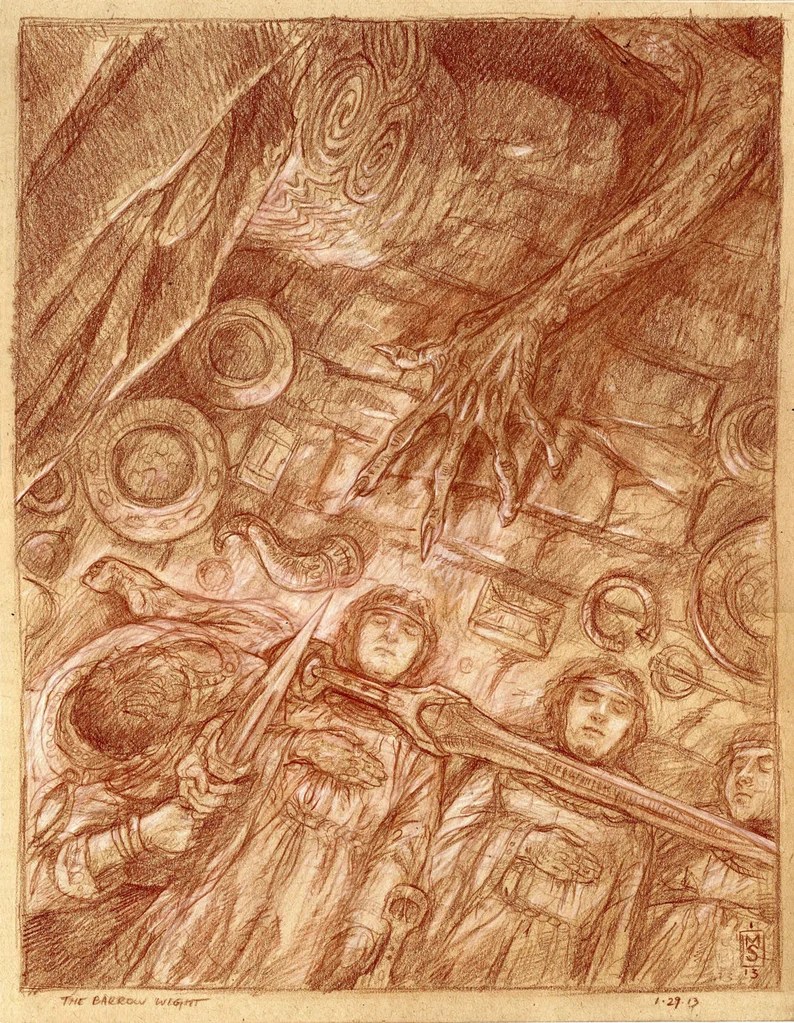
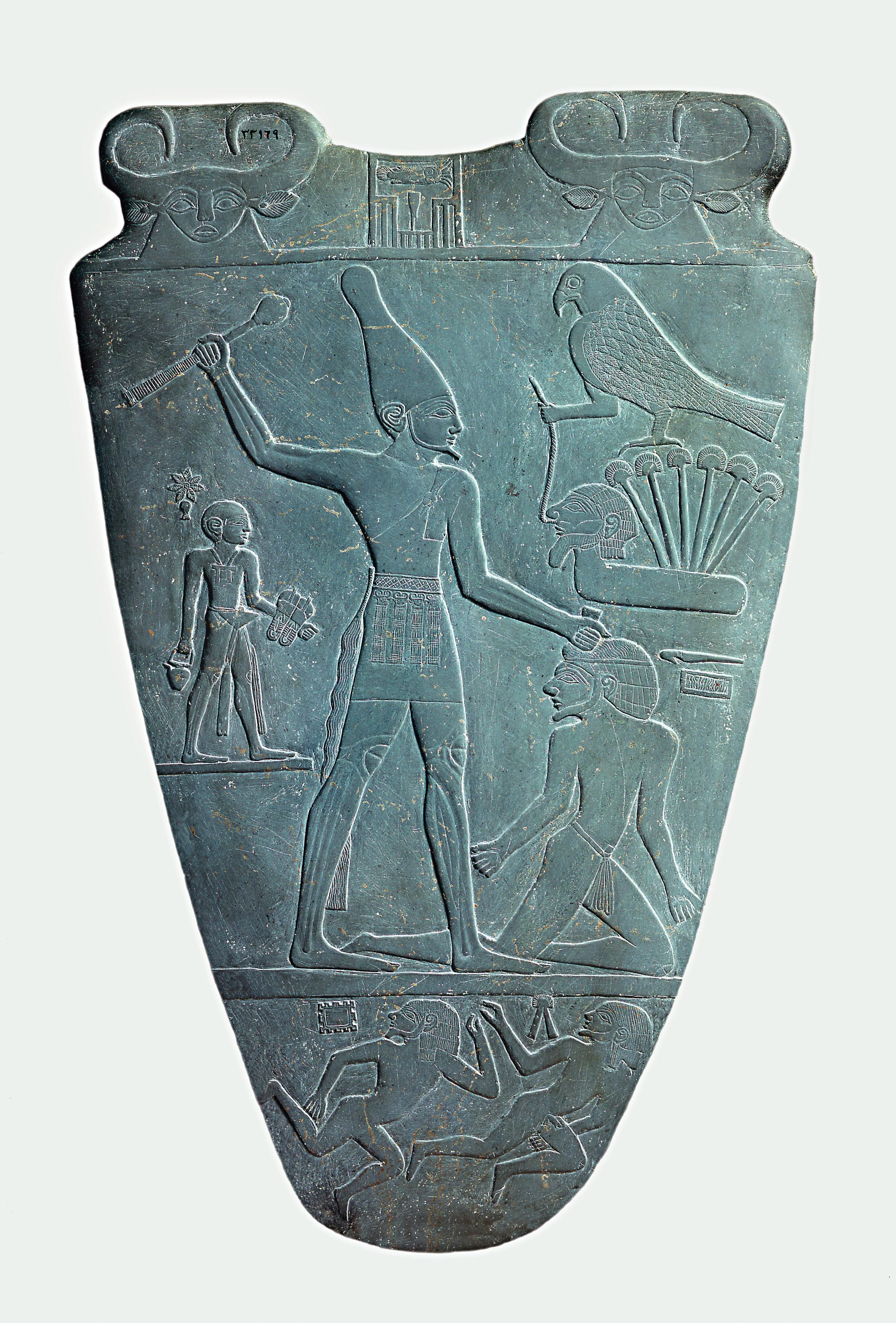
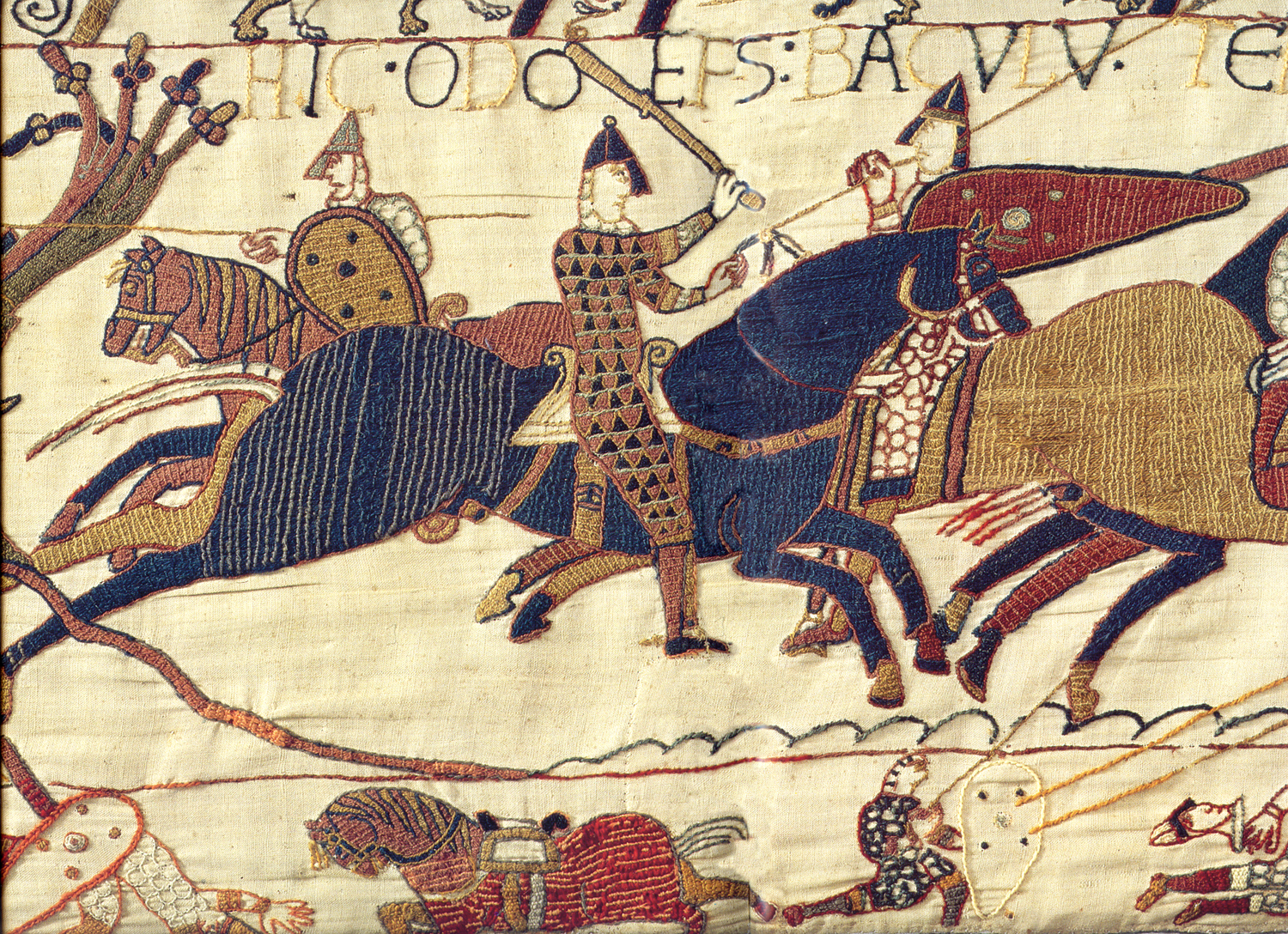
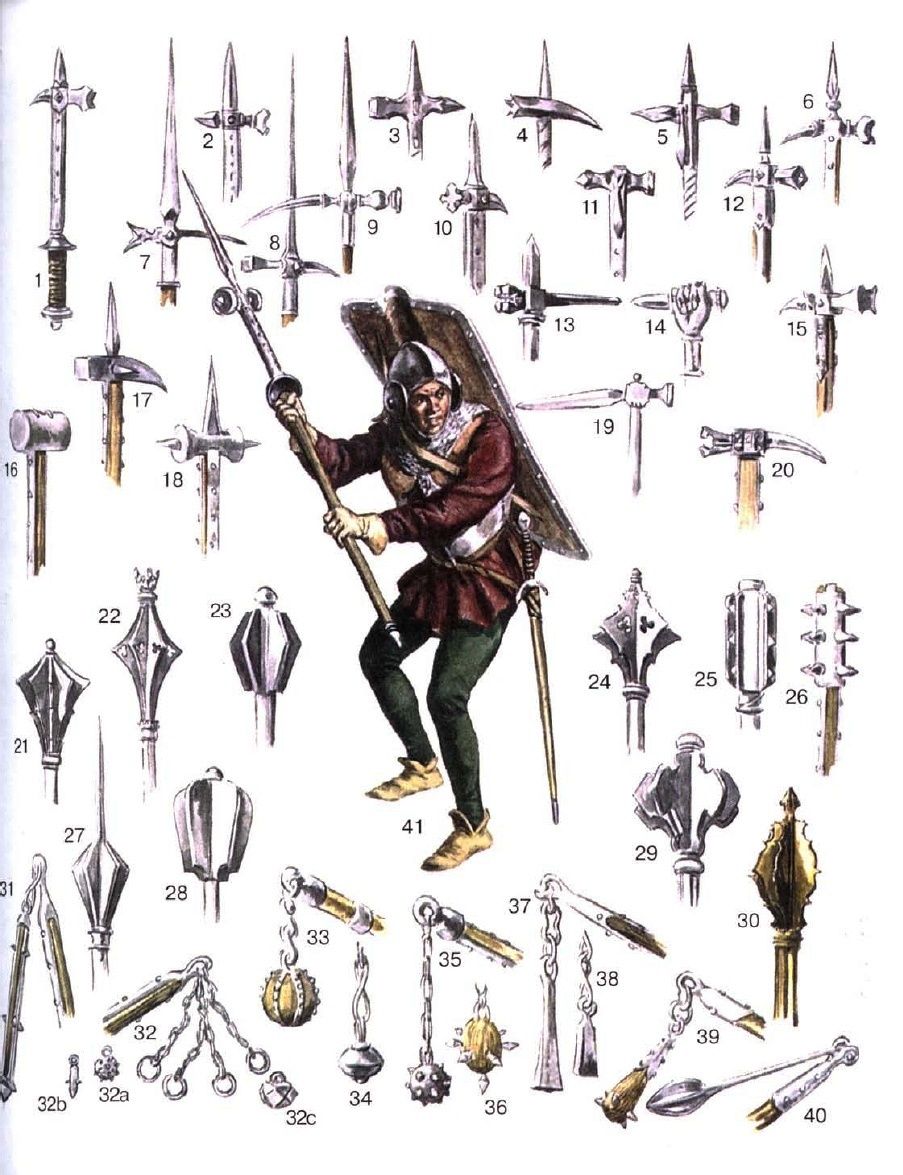
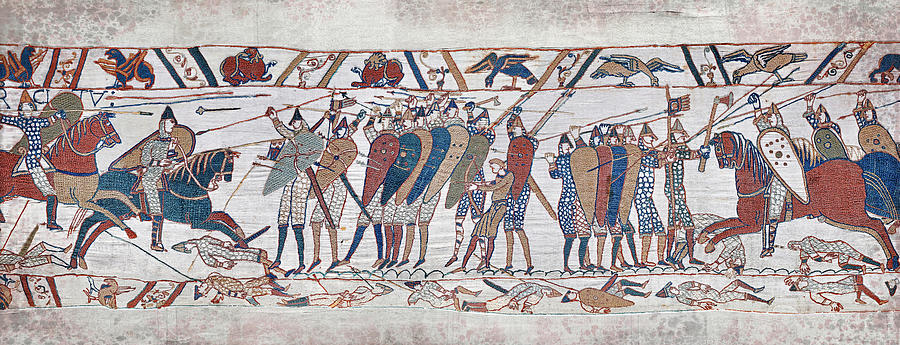
Stratigraphy

Tags

, , , ,

Welcome, as always, dear readers.

If you read this blog regularly, you know that one thing which always interests me is Tolkien’s sources, both direct and indirect.  In my last, for example, you would have read about one which he directly acknowledged, S.R. Crockett’s 1899 historical novel, The Black Douglas.

(See “Wolfing”, 11 September, 2024 for more)

In this posting, however, I want to begin with a source which prompted my writing this.

It is a pair of stanzas from Theophile Gautier’s (1811-1872)   

poem “L’Art”, which I read just the other day (my translation)–

“Toute passe—L’art robuste

Seul a l’eternite;

   Le buste

Survit a la cite.

Et la medaille austere

Que trouve un laboureur

   Sous terre

Revele un empereur.”

“Everything passes–only sturdy art

To eternity;

The bust survives the city

And the austere medallion

Which the workman finds

Under the ground

Reveals an emperor.”

Gautier belonged to the beginnings of a 19th-century movement which was called “Art for Art’s Sake” and this poem is a declaration, directed towards artists themselves, of his belief that art survives—and should survive—the ages. 

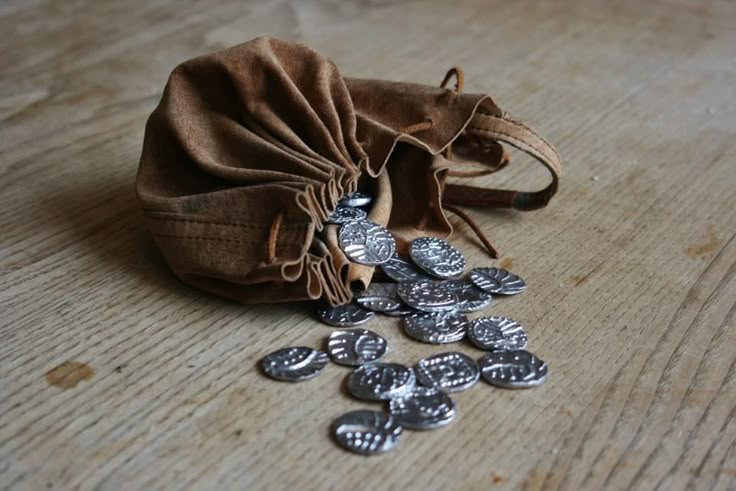
What really caught my attention was the second of these two stanzas, first because the medallion reminded me of this medallion, which I use to teach the Germanification of the later western Roman Empire–

It was minted for the first Ostrogothic king, Theoderic (454-526), who controlled Italy and some areas to the east from 493-526AD, ruling as an ostensible agent of the eastern Roman Empire, but actually a kind of smaller version of the former western Roman emperors.  I’ve always found this image useful because it suggests several things at once:

1. although it’s in Latin (“Theodericus Rex Pius Princi[p]s—for “Princeps”—originally “Headman”—primum caput—in Roman Republican terms, the speaker of the Senate—later an imperial honorific—now the basis of our word “prince”), “Theoderic, king, religious, prince”, underneath that name is the Gothic language which, along with Latin and Greek, Theoderic (or the older spelling, Theodoric) spoke, his Gothic name being something like “Thiudareiks”.  The Greco-Roman name would mean “Gift of God (theo- god, originally Zeus, + dor- gift)”, whereas the Gothic name is a compound of thiuda, “people” and reiks, “ruler”, so “ruler of the people”.   And the name, being in two languages at once, would seem to suggest, perhaps inadvertently, that Theoderic is the ruler of both the older Roman population and the newer Gothic.

2. this message is underlined by the portrait of the king himself–although he has the general look of a later Roman ruler—his lamellar armor (armor made of overlapping metal plates) and the little Nike (not sneaker, but the angelic figure in his left hand, symbolizing victory)—his haircut and the mustache are definitely not, being Germanic.

(For more on this medallion, see:  https://pancoins.org/wp-content/uploads/2018/03/Theorodoric-entire-article.pdf and https://cccrh.org/wp-content/uploads/2021/05/the-coins-of-theoderic-the-ostrogoth.pdf )

The second reason that stanza caught my attention was Gautier’s suggestion that the medallion, along with the bust, are archaeological finds which have survived as emblems of a previous age, itself long lost.

Sometimes, as in the case of Gautier’s workman, finds are simply stumbled upon. The famous Rosetta Stone, for example,

was found built into a wall by French engineers from Napoleon’s 1798 invasion of Egypt,

who were, in fact, not looking for antiquities (although Napoleon’s expeditionary force actually had a scientific element attached—here’s an image of one of the volumes which, eventually, they published),

but were improving some fortifications at the time.

As time went on, however, scientific archaeology developed and began very carefully recording discoveries brought from the ground layer by layer, which is called stratigraphy, and is used by geologists and paleontologists, as well.

The thinking behind this is simply logical:  that which you find below something else is older (unless the ground is disturbed, which can and does happen), that which you find above is newer.

Something I’ve always loved about Tolkien’s work (and Tolkien himself) is the careful, patient way he’s built up Middle-earth, which is, in fact, stratigraphically designed.  For an easy example, look at Appendix A of The Lord of the Rings:

“Annals of the Kings and Rulers”,

which is then divided into:

“I  The Numenorean Kings”

which is then subdivided in turn into:

“(i) Numenor

(ii) The Realms in Exile

(iii) Eriador, Arnor, and the Heirs of Isildur

(iv) Gondor and the Heirs of Anarion

The Stewards”

to which is added

(v) Here Follows a Part of the Tale of Aragorn and Arwen”

before we move on to

“II. The House of Eorl”

Layer by layer, JRRT piles on time and its events—and this isn’t just in annalistic form—that is, a date is provided, then an event is briefly recorded (although we see this form at the beginning of Appendix B in“The Tale of Years”)—instead, we find whole short stories, like that of King Arvedui, which occupies about 2 full pages in the 50th anniversary edition which I use in these postings (1041-1043).

The consequence of this is always a sense that Middle-earth is extremely old, inhabited, colonized, with stratum after stratum of human/elvish/dwarfish activity laid on top of each other—and sometimes standing long after those originally involved are long gone.  Consider, for example, the “Pukel-men”:

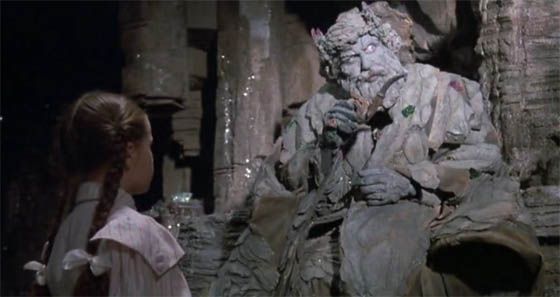
“At each turn of the road there were great standing stones that had been carved in the likeness of men, huge and clumsy-limbed, squatting cross-legged with their stumpy arms folded on fat bellies.  Some in the wearing of the years had lost all features save the dark holes of their eyes that still stared sadly at the passers-by…

Such was the dark Dunharrow, the work of long-forgotten men.  Their name was lost and no song or legend remembered it.  For what purpose they had made this place, as a town or secret temple or a tomb of kings, none in Rohan could say.  Here they laboured in the Dark Years, before ever ship came to the western shores, or Gondor of the Dunedain was built; and now they had vanished, and only the old Pukel-men were left, still sitting at the turnings of the road.” (The Return of the King, Book Five, Chapter 3, “The Muster of Rohan”)

On its own, this careful, detailed building of the past gives tremendous power to present events:  for ages, other people have struggled, built, fought, and perished in Middle-earth and left behind a long record of their deeds—although sometimes only nearly-forgotten monuments are all that survives.

But I think that we might also see a larger picture here, as well.

Middle-earth was not chosen just because Tolkien, as a medievalist, had it in his vocabulary.  As he tells us:

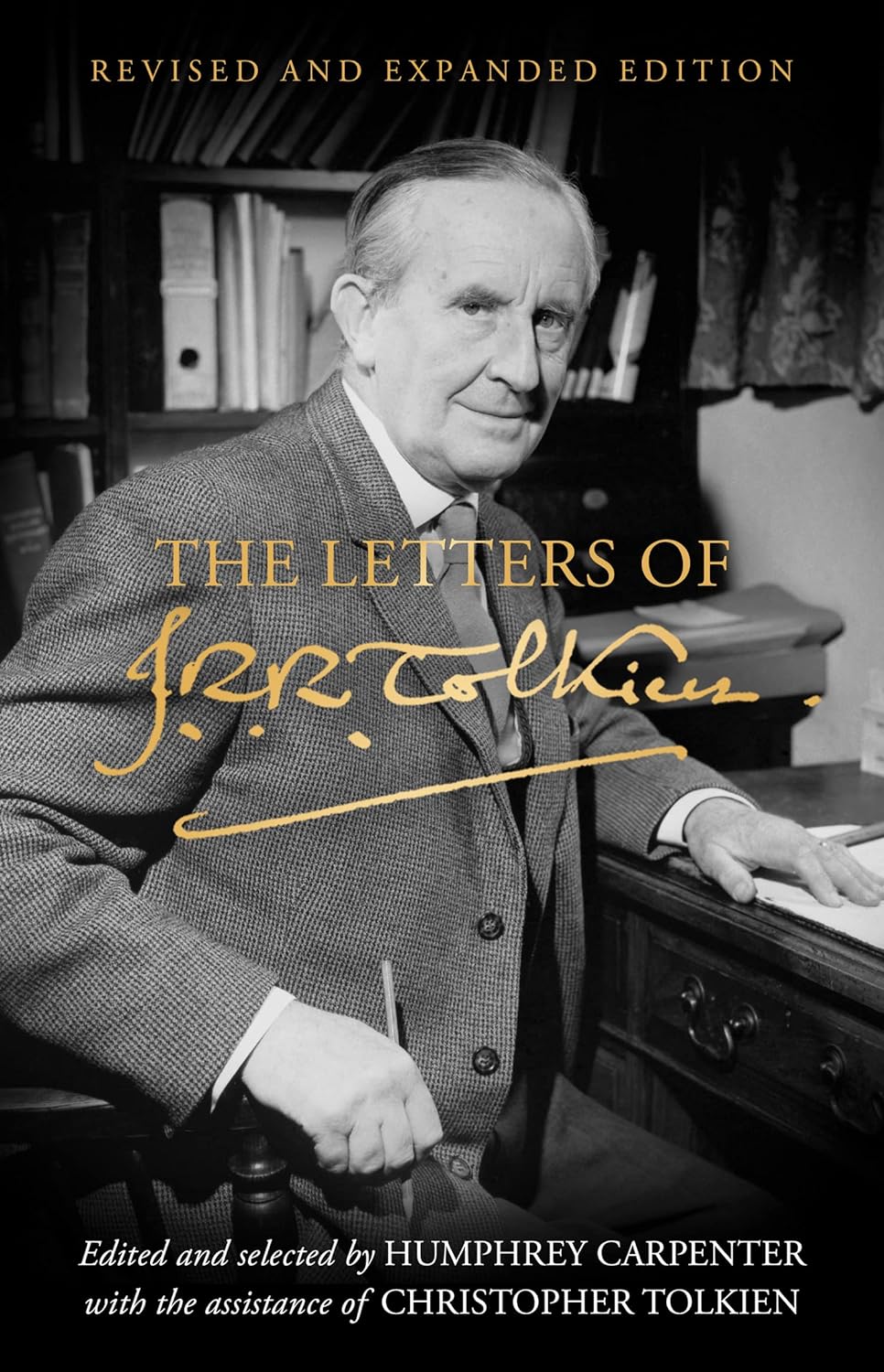
“I am historically minded.  Middle-earth is not an imaginary world.  The name is the modern form (appearing in the 13th century and still in use) of midden-erd >middel-erd, an ancient word for the ‘oikoumene’, the abiding place of Men, the objectively real world, in use specifically opposed to imaginary worlds (as Fairyland) or unseen worlds (as Heaven and Hell).  The theatre of my tale is this earth, the one in which we now live, but the historical period is imaginary.  The essentials of that abiding place are all there (at any rate for inhabitants of N.W. Europe), so naturally it feels familiar, even if a little glorified by the enchantment of distance in time.” (“Notes on W.H. Auden’s review of The Return of the King, 1956?, Letters,345)

To which we might add:

“May I say that all this is ‘mythical’…As far as I know it is merely an imaginative invention, to express, in the only way I can, some of my (dim) apprehensions of the world.  All I can say is that, if it were ‘history’ it would be difficult to fit the lands and events (or ‘cultures’) into such evidence as we possess, archaeological or geological, concerning the nearer or remoter part of what is now called Europe…I could have fitted things in with greater verisimilitude, if the story had not become too far developed, before the question ever occurred to me.  I doubt if there would have been much gain; and I hope the, evidently long but undefined, gap in time between the Fall of Barad-dur and our Days is sufficient for ‘literary credibility’, even for readers acquainted with what is known or surmised of ‘pre-history’. “

And Tolkien has footnoted this with:

“I imagine the gap to be about 6000 years:  that is we are now at the end of the Fifth Age, if the Ages were about the same length as S.A. and T.A.  But they have, I think, quickened; and I imagine we are actually at the end of the Sixth Age, or in the Seventh.”  (Letter to Rhona Beare, 14 October, 1958, Letters, 404)

In other words, what Tolkien has done for his version of our world is to create a simulacrum of what humans in time have done for our version of our world and, as we read The Lord of the Rings, including its appendices, we are acting as something like literary archaeologists, beginning at the surface of the Third Age in its last years and reading slowly down through its strata, just as archaeologists in our world work their way down through the historical layers, recording the strata as they dig.  Although I’m admirer of good fan fiction, I don’t think that I would ever write it, but I can imagine a story which begins with an archaeologist in our world (6000 years after the Third Age) digging more deeply than ever and coming upon

“…a tall pillar loomed up before them.  It was black; and set upon it was a great stone, carved and painted in the likeness of a long White Hand…” (The Two Towers, Book Three, Chapter 8, “The Road to Isengard”)

Where might the story go from there?

Thanks, as ever, for reading.

Stay well,

When excavating always keep a careful record,

And remember that, as always, there’s

MTCIDC

O

Wolfing

Tags

, , ,

Welcome, dear readers, as always.

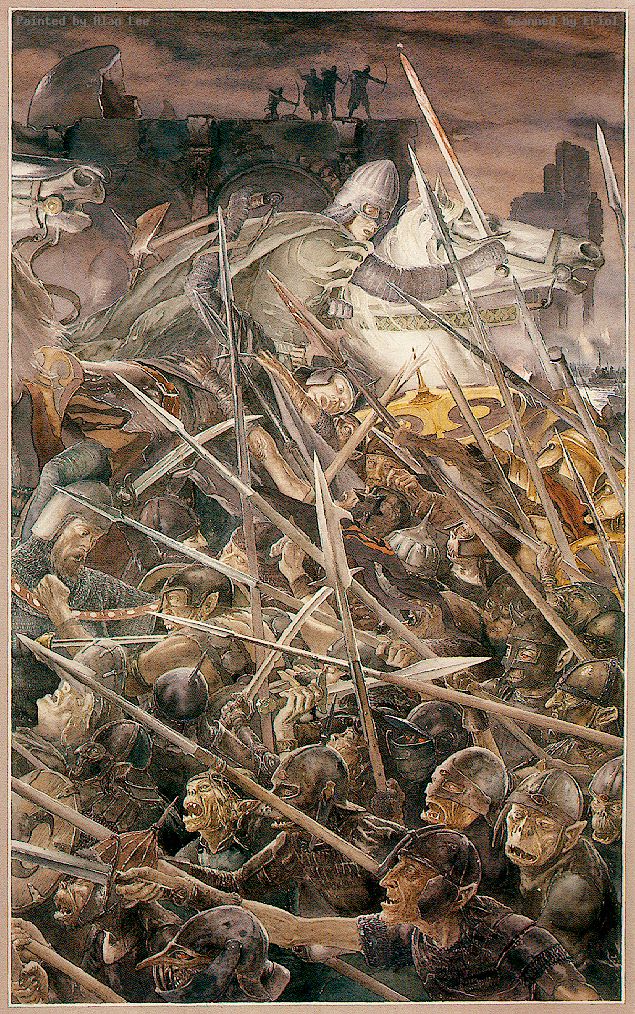
“All of a sudden they heard a howl away down hill, a long shuddering howl.  It was answered by another away to the right and a good deal nearer to them; then by another not far away to the left.  It was wolves howling at the moon, wolves gathering together!”  (The Hobbit, Chapter 6, “Out of the Frying Pan Into the Fire”)

(Alan Lee)

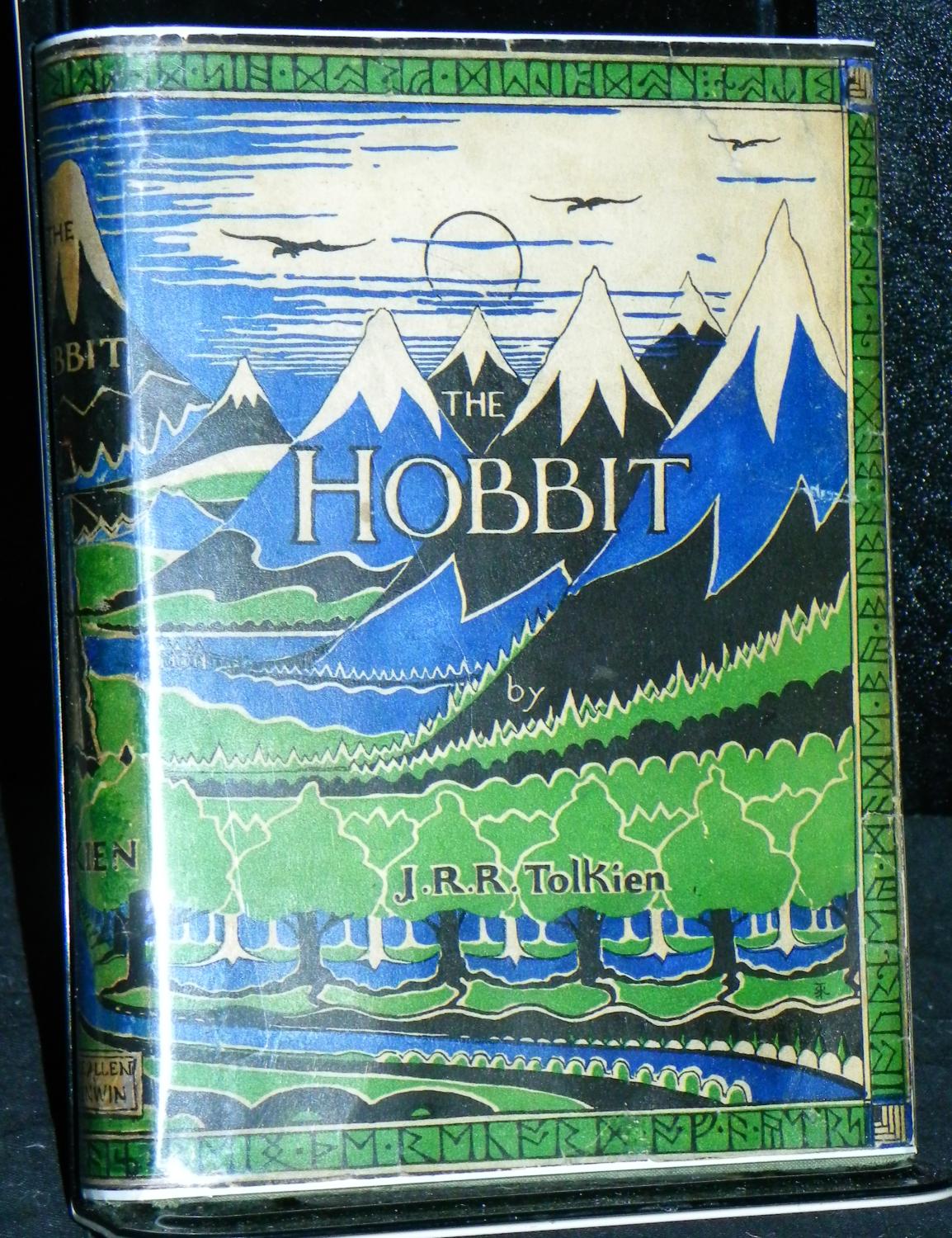
In his invaluable The Annotated Hobbit,

Douglas Anderson points to a letter by Tolkien suggesting an influence, if not inspiration, for this scene of wargs (i.e. wolves) vs treed dwarves (and hobbit), as JRRT tells us:

“Though the episode of the ‘wargs’ is in part derived from a scene in S.R. Crockett’s The Black Douglas, probably his best romance and anyway one that deeply impressed me in school-days, though I have never looked back again.  It includes Gil de Rez as a Satanist.” (“from a letter to Michael Tolkien…sometime after Aug.25, 1967”, Letters, 550)

Published in 1899, The Black Douglas,

Is one of a series of Scots historical novels by S(amuel).R(utherford). Crockett (1859-1914),

based upon actual events—in this case, it has, as a basis, the short life and judicial murder of William, the 6th Earl of Douglas and his younger brother, David, in 1440.  It also has supernatural elements, however, including the sinister (but historical) figure of Gilles de Rais (c.1405-1440–Tolkien was clearly spelling from memory), one-time companion of Joan of Arc, who appears to be a werewolf, and, it’s a scene where the protagonists are attacked by werewolves

to which JRRT was referring—although the three don’t climb trees, but put their backs to them to fight on the ground, killing many of their attackers (and not being rescued by eagles—it’s Chapter XLIX and you can read it here:  https://dn790000.ca.archive.org/0/items/blackdouglas00croc/blackdouglas00croc.pdf ).

Wolves—or wargs—as we see in The Hobbit, are pack animals.

Crockett imagined even werewolves as behaving like the wolves they turn into and this led me to a question which occurred when, recently, as part of an exercise in story-telling, I asked a class to tell me the story of “The Three Little Pigs”. 

I’m sure that you know it, with its typical for Western fairy tales pattern of 3s:   porcine architecture—straw,

sticks, bricks–attempts by the wolf to enter, replies by the pigs, subsequent action by the wolf and his parboiled demise.

 Because of its simplicity and that pattern, it’s very useful as a subject for helping students to learn how stories work and how even such a simple story is built upon such basic narrative principles as foreshadowing and repetition to build tension.

But, the 3 pigs sing mockingly in the 1933 Disney version,

“Who’s afraid of the big, bad wolf,

Big, bad wolf,

Big, bad wolf?

Who’s afraid of the big, bad wolf?

Tra la la la la!”

(There’s actually a much longer song and you can read it here:  https://www.lyrics.com/lyric/27101857/Disney/Who%27s+Afraid+of+the+Big+Bad+Wolf and hear and see it here:  https://www.youtube.com/watch?v=leAh00n3hno )

and that made me notice something odd:  not “Big, bad wolves”—what happened to the pack?

The idea of the “lone wolf” turns up in other fairy tales—think of “Little Red Riding Hood” for example,

(Perhaps my favorite illustration, by Gustave Dore—LRR seems to have a rather skeptical look—perhaps because in the version Dore illustrated, the last line of the story is:  “Et en disant ces mots, le méchant loup se jeta sur le petit Chaperon rouge, et la mangea.”—“And, in saying these words, the wicked wolf threw himself upon Little Red Riding Hood and ate her.”)

where a single wolf meets Red, and the perhaps less familiar “The Wolf and the Seven Kids”.

(This is by a well-known Victorian illustrator, Walter Crane, 1845-1915, from an 1882 collection of the Grimm fairy tales which you can see here:  https://en.wikisource.org/wiki/Household_stories_from_the_collection_of_the_Bros_Grimm_(L_%26_W_Crane)/The_Wolf_and_the_Seven_Little_Goats  You can also read a translation at this site, which is specifically devoted to the works of the Grimms:  https://www.grimmstories.com/en/grimm_fairy-tales/the_wolf_and_the_seven_little_goats )

Traditional fairy tales all have variants—sometimes numerous ones—and some appear even on a world-wide basis, like “Cinderella” (see an ancient Chinese version here:   https://www.ancient-origins.net/news-myths-legends/fish-wish-your-heart-makes-2200-year-old-tale-chinese-cinderella-003506 ), but a little preliminary research has suggested another possibility. 

Unlike other fairy tales, although scholars believe “The Three Little Pigs” to be an old story, I was surprised to learn that its first citation is only to an 1853 volume with a title which would not suggest that such a story would be included:  English Forests and Forest Trees, Historical, Legendary, and Descriptive.  It’s to be found in Chapter IX, “Dartmoor Forest” and, even more surprising, the characters aren’t pigs, but pixies, the villain of the piece isn’t a wolf, but a fox, and the houses are made of wood, stone, and iron.   You can read it here:  https://ia601307.us.archive.org/13/items/englishforestsa01unkngoog/englishforestsa01unkngoog.pdf on pages 189-190.

The version familiar to most of us first appears in the fifth edition of James Halliwell-Phillipps’ The Nursery Rhymes of England (1886), in which the third little pig (who survives, as his two brothers do not) has a lot more to do than in what must have been the simplified version I knew as a child—and this actually closely matches the Dartmoor version (except for the pixies and the fox).  You can read it here:  https://archive.org/details/nurseryrhymesofe00hall/page/36/mode/2up on pages 37-41.  (For an entertaining essay on Halliwell-Phillipps and his work, see:  https://reactormag.com/questionable-scholars-and-rhyming-pigs-j-o-halliwell-phillipps-the-three-little-pigs/  )

It’s admittedly just a guess on my part, Halliwell-Phillipps doesn’t credit a source, and, instead of a fox as the villain, there’s a wolf, but both stories, have the same pattern of threes, although building materials differ, and the three pixies have a different identity, but what we see here is the same story, which made me wonder:

  1. Did “pixies” become (possibly through mishearing of an oral telling) “pigsies”—that is, “little pigs”?
  2. Did the fox become a wolf because wolves can be quite large

(by NatsumeWolf—you can see more of her art here:  https://www.furaffinity.net/gallery/natsumewolf/ )

and therefore more menacing in a story than a diminutive, but tricky, fox?

As well, that wolf in “Little Red Riding Hood” appears in Charles Perrault’s late-17th century story collection, Histoires ou Contes du Temps passe, first translated into English in the early 18th century, appearing, as well, along with “The Wolf and the Seven Kids”, in the Grimms’ early 19th century Kinder und Hausmaerchen, first translated into English in the 1820s, both being, therefore, readily available.  So, could that frightening wolf from other stories perhaps have been leaning over Halliwell-Phillipps’ shoulder, pushing him to replace the fox, even as he turned pixies into pigsies?  After all, he had nothing to lose but his pack…

Thanks, as ever, for reading.

Stay well,

If threatened by a wolf, try to out-fox him,

And remember that there’s always

MTCIDC

O

PS

For another, rather eerie story with—well, no spoiler alert, just read it: https://ia601303.us.archive.org/8/items/thetoysofpeacean01477gut/1477-h/1477-h.htm

This is by HH Munro, 1870-1916, who used the pen name “Saki”.  I’ve mentioned him before, but I’m sure to mention him and his witty and sometimes weird short stories again in the future.

Hey, Hay

As ever, dear readers, welcome.

As I reread The Hobbit for the fall semester, I came across this-

“Far, far away to the West, where things were blue and faint, Bilbo knew there lay his own country of safe and comfortable things…

‘The summer is getting on down below,’ thought Bilbo, ‘and haymaking is going on and picnics.  They will be harvesting and blackberrying, before we even begin to go down the other side at this rate.’ “ (The Hobbit, Chapter 4, “Over Hill and Under Hill”)

Gandalf, the dwarves, and the hobbit are beginning their trip through the Misty Mountains, an increasingly bleak place

(JRRT’s sketch, but from the far side of the Mountains)

which, although they don’t know it yet, will lead the group to goblins

(This is by Justin Gerard and you can see more of his striking work here:  https://www.gallerygerard.com/the-art-of-justin-gerard )

and Bilbo to “Riddles in the Dark”,

(Alan Lee)

so it’s easy to understand why Bilbo is thinking of pleasanter things (being safe in bed and eating bacon and eggs are also daydreaming possibilities for him).  But what about haymaking?  A common older proverb in English is “Make hay while the sun shines”, meaning “do something when you can best accomplish it”, but how do you “make hay”?

From Tolkien’s map of the Shire

and from hints here and there, principally in The Lord of the Rings, it’s clear that much of it is an agricultural landscape (as Tolkien writes to Naomi Mitchison:  “The Shire is placed in a water and mountain situation and a distance from the sea and a latitude what would give it a natural fertility, quite apart from the stated fact that it was a well-tended region when they took it over…” (letter to Naomi Mitchison, 25 September, 1954, Letters, 292)

We know that the South Farthing, for example, has tobacco (“smoke leaf”) plantations,

(although this is an all-too-modern barn—I imagine that hobbit barns would be more medieval-looking

like Prior’s Hall Barn here, built in the mid-15th century.)

Farmer Maggot, in the East Farthing, grows turnips,

and, as it’s probable that he brews his own beer, he’ll be growing barley

and, for flavoring, may grow hops.

(Those odd-looking buildings in the background are oast houses, where the hops are dried before use.)

Hay can be made from any number of plant products and come from fields devoted entirely to the hay-making process, but Farmer Maggot may also set aside some of his barley-fields, which will be cut before quite ripe, to keep as much of the nutrition for cattle-feed in the hay.

This can be a tricky operation as, to preserve the goodness of the hay, it needs to be spread out and dried in the sun before it’s collected (a process called “tedding”).  Sudden wet weather can ruin a crop by dampening it to the point that there will be too much moisture, which can cause rot or encourage disease.  (For a very practical 16th-century description of this process, see pages 33-34 of  Sir Anthony Fitzherbert’s  The Book of Husbandry, 1534, edited by Walter Skeat for the English Dialect Society in 1881, at:  https://archive.org/details/bookofhusbandry00fitzuoft/page/32/mode/2up )  Once the hay is dried on both sides, it’s forked into haycocks (you can see them in the background of the previous image—Fitzherbert recommends doing this twice, gathering the hay into larger cocks the second time–from which it can be loaded onto carts and taken to be stored in a barn–also depicted in this image).

(This is the beautifully-reconstructed interior of the Prior’s Hall Barn.)

What Bilbo thinks he’s missing, then, is the (hopefully) sunny days when hay is mown (late June, early July in the UK) and tedded (not that he, who is a wealthy gentleman, would ever be doing any of that manual labor.)  But what about picnics? 

As is the case with many words in English, there is a scholarly tussle over just when and where this word first appears–probably the 18th century–but I’ll leave it to this article to say more about the word and its usage:  https://www.historytoday.com/archive/historians-cookbook/history-picnic

and, instead, wonder who was doing the picnicking and where?  Is Bilbo actually thinking about a genteel outdoor meal, like this 19th-century painting of an 18th century festivity?

or something more rustic, like this 16th-century image of workers taking time off from the field?

In any event, just as in his longing for the comfort of eggs and bacon, his inclusion of picnics with haymaking

reminds us of a strong trait of hobbits—

“Their faces were as a rule good-natured rather than beautiful…with mouths apt to laughter, and to eating and drinking.  And laugh they did, and eat, and drink, often and heartily, being fond of simple jests at all times, and of six meals a day (when they could get them).”  (The Lord of the Rings, Prologue, I, Concerning Hobbits)

No wonder a dream of far-off comfort includes eating.

Thanks, as always, for reading.

Stay well,

Hope for three sunny days in hay-making time,

And remember that there’s always

MTCIDC

O

PS

In case, after haymaking and picnicking, you feel inclined to join the fiddler,

(Cornelis Dusart, 1660-1704)

here’s a 17th-century dance with an appropriate title (and directions on how to do it)—

And here’s a transcription into modern notation, if that earlier form is a bit puzzling:  https://playforddances.com/dances-2-3/hay-cock-a-hay-cock/

PPS

And I can’t resist adding what seems like an appropriate poem by Robert Frost (1874-1963)

Mowing

There was never a sound beside the wood but one,

And that was my long scythe whispering to the ground.

What was it it whispered? I knew not well myself;

Perhaps it was something about the heat of the sun,

Something, perhaps, about the lack of sound—

And that was why it whispered and did not speak.

It was no dream of the gift of idle hours,

Or easy gold at the hand of fay or elf:

Anything more than the truth would have seemed too weak

To the earnest love that laid the swale in rows,

Not without feeble-pointed spikes of flowers

(Pale orchises), and scared a bright green snake.

The fact is the sweetest dream that labor knows.

My long scythe whispered and left the hay to make.

This comes from Frost’s 1915 collection A Boy’s Will and you can read the whole collection here:  https://archive.org/details/boyswill00fros/mode/2up   A couple of vocabulary words–forgive me if these are already known to you—

Scythe

which you probably know from images of “the Grim Reaper”, who cuts down everyone the way a harvester cuts down all the grain—

Swale

This is defined as a “valley or low place” in a Webster’s An American Dictionary of the English Language from 1865—you can read that definition here:  https://archive.org/details/americandictiona00websuoft/page/1336/mode/2up

As I’m sure that you have seen plenty of those, I include this Eastman Johnson (1824-1906) of a harvester sharpening his scythe.

Orchis

This is somewhat puzzling, as the Orchis is a genus in the Orchid family which doesn’t appear to be native to North America.  I’m presuming that Frost is employing an earlier or perhaps American form of  “orchid” ( in that same Webster’s An American Dictionary of the English Language from 1865, you can see that use:  https://archive.org/details/americandictiona00websuoft/page/918/mode/2up )of which there are a good number of types available in North America.  Using Frost’s clues—“feeble pointed spikes” and “pale”, as clues, I’ve included the image of a “White Fringed Bog Orchid” (Platanthera Blephariglottis) as a guess.

Bon Appetit

As always, welcome, dear readers.

“Still round the corner there may wait

A new road or a secret gate…”

as Frodo and the other hobbits sing, “Bilbo Baggins [having] made the words, to a tune that was as old as the hills” (The Fellowship of the Ring, Book One, Chapter 3, “Three is Company”), and now that I’m about to teach The Hobbit again, I’ve noticed not anything so grand as a new road, but perhaps a new little footpath into the book.  (For a modern setting of this song, of which JRRT approved, see:  https://www.youtube.com/watch?v=YtH6ROfV7WA&t=75s  This is from a cycle of Tolkien’s poems set to music by Donald Swann (1923-1994), who, along with Michael Flanders, was mentioned in my last posting.)

In my last, I was talking about fears—of spiders

and snakes

(and you’ll notice that I haven’t gone on to “and bears, oh my!” although the rhythm is hard to resist.)

but, rereading The Hobbit, where those spiders—and the big cousin of snakes, a dragon–

(JRRT)

appear, I’d been wondering what is it about these creatures which is most threatening?  We might imagine the odd look of spiders, both the compound eyes and those rapidly-moving legs, and, for me, the wriggly motion of snakes (I’ve always thought that you can see, from muscular tension, what an attacking mammal might signal with its legs, but what do you do with something which has no legs?),

but here, I would propose, is a different possibility, consistent with all of the major threats in the book, and which lies in the title of this posting.

This title is, on the surface, just a kind of shorthand French for “May you enjoy your meal”, which I associate with a tv cooking show from long ago—

hosted by a very knowledgeable and enthusiastic Julia Child (1912-2004),

who ended every show by wishing her viewers, “Bon appétit!”

This show, as the title suggests, is all about French cuisine and the sometimes incredibly complex creation of it.  (I myself own the first volume of Child and her collaborators’ Mastering the Art of French Cooking

but the only thing I’ve ever been able to make from it was quiche, as virtually everything else in it would appear to take numerous hours,  a fully-equipped professional kitchen, and the kind of passionate staff we see in Ratatouille.

I note here, by the way, that Tolkien himself had strong views on such:  “I smoke a pipe, and like good plain food (unrefrigerated), but detest French cooking…” from a letter to Deborah Webster, 25 October, 1958, Letters, 411) 

This title also leads to what I think is the real fear in most of The Hobbit, first introduced in Chapter 2—

“ ‘Mutton yesterday, mutton today, and blimey, if it don’t look like mutton again tomorrer,’ said one of the trolls…

William choked.  ‘Shut yer mouth!’ he said as soon as he could.  ‘Yer can’t expect folk to stop here for ever just to be et by you and Bert.  You’ve et a village and a half between yer, since we come down from the mountains.  How much more d’yer want?’ “  (Chapter Two, “Roast Mutton”—we might also note a near-quotation from a book with which Tolkien was familiar, Lewis Carroll’s Through the Looking-Glass and What Alice Found There, 1871—although the title page of the first edition says 1872–

where, in Chapter Five, “Wool and Water”, the White Queen explains to Alice something about Looking-Glass Land:  “The rule is, jam to-morrow and jam yesterday—but never jam to-day.”  You can read this on page 81 of the 1896 Ward Lock edition here:  https://archive.org/details/ThroughTheLookingGlass/page/n77/mode/2up  For Tolkien’s familiarity with Carroll’s works, see his letter to C.A. Furth, 31 August, 1937, Letters, 24-26.)

And this is only the first mention of such a danger—there’s:

“I am afraid that was the last they ever saw of those excellent little ponies…For goblins eat horses and ponies (and other much more dreadful things), and they are always hungry.” (Chapter 4, “Over Hill and Under Hill”)

and

“[Gollum] liked meat too.  Goblin he thought good, when he could get it…

“ ‘Does it guess easy?  It must have a competition with us, my preciouss!  If precious asks, and it doesn’t answer, we eats it, my preciousss.’ ”  (Chapter 5, “Riddles in the Dark”)

and

“ ‘You’ve left the burglar behind again!’ said Nori to Dori looking down…

‘He’ll be eaten if we don’t do something,’ said Thorin…” (Chapter 6, “Out of the Frying-Pan Into the Fire”)

and

“ ‘It was a sharp struggle, but worth it,’ said one.  ‘What nasty thick skins they have to be sure, but I’ll wager there is good juice inside.’

‘Aye, they’ll make fine eating, when they’ve hung a bit,’ said another. “  (Chapter 8, “Flies and Spiders”)

and, finally

“ ‘Very well, O Barrel-rider!’ he said aloud.  ‘Maybe Barrel was your pony’s name; and maybe not, though it was fat enough…Let me tell you I ate six ponies last night and I shall catch and eat all the others before long.  In return for the excellent meal I will give you one piece of advice for your good:  don’t have more to do with dwarves than you can help.’

‘Dwarves!’ said Bilbo in pretended surprise.

‘Don’t talk to me!’ said Smaug.  ‘I know the smell (and taste) of dwarf—no one better.’ “  (Chapter 12, “Inside Information”)

I think that I first met this danger when I was very small and read a comic book version of The Life and Strange Surprizing Adventures of Robinson Crusoe, 1719.

Crusoe had first been alarmed when, living on what he thought was a safely deserted island, he found a human footprint in the sand.  Then, sometime later, he came upon something even more alarming:

“When I was come down the hill to the shore, as I said above, being the S.W. point of the island, I was perfectly confounded and amazed; nor is it possible for me to express the horror of my mind at seeing the shore spread with skulls, hands, feet, and other bones of human bodies; and particularly, I observed a place where there had been a fire made, and a circle dug in the earth, like a cockpit, where it is supposed the savage wretches had sat down to the inhuman feastings upon the bodies of their fellow-creatures.”  (Robinson Crusoe, Chapter XVIII, page 217—you can read this in N.C. Wyeth’s splendidly-illustrated edition of 1920 here:  https://archive.org/details/robinsoncrusoedefo/page/n249/mode/2up )

In other words, like Crusoe’s cannibals, it’s not the outside of trolls, goblins, wolves, spiders, and a dragon which we meet in The Hobbit and which produces the emotion the characters—and readers, too,–at least this reader—feel, but their plan to fill their insides with those characters:  hence the cheerful but ultimately grim title of this posting.

Robinson Crusoe, in succeeding chapters, works his way through his fear and disgust, even, in a sense, trying to see cannibalism as custom of an alien culture (although killing a few cannibals later in the story), and, in The Hobbit, although the fear of being consumed is the major fear, no one is actually eaten, but it’s all left me wondering what recipes an anthropophagen version of Julia Child’s books might include…  (and which might satisfy that bitter critic in Ratatouille, Anton Ego)

Thanks for reading, as always.

Stay well,

If you should see a footprint in the sand,

Head for the nearest exit in an orderly fashion,

And remember that, as always, there’s

MTCIDC

O

PS

And here are Flanders and Swann

again with “The Reluctant Cannibal”:  https://www.youtube.com/watch?v=qjAHw2DEBgw

Hinky Dinky

Welcome, dear readers, as always.

I don’t know if you have it in your memory, but I have this little song (which could be accompanied by finger motions):

“The Hinky Dinky spider

Went up the water spout.

Down came the rain

And washed the spider out.

Out came the sun

And dried up all the rain

And the Hinky Dinky spider

Went up the spout again.”

I’m perfectly blank as to when I first heard it and it stuck, but it must have been pretty early—so early that I never asked myself “what’s a ‘Hinky Dinky spider’ contrasted with any others?”

A little research turned this into “The Itsy Bitsy Spider” (a little more comprehensible than “Hinky Dinky”, certainly), but also showed that it had lots more variants and had originally appeared at least before 1910 (see this WIKI article for more:  https://en.wikipedia.org/wiki/Itsy_Bitsy_Spider  –no explanation of “Hinky Dinky”, however, unless one wants to associate it with the chorus to the Great War song, “Mademoiselle from Armentieres”—that is, “Hinky dinky parlez-vous”–as someone has suggested).

Unlike snakes, which can easily give me the willies—

(I respect them, however, seeing them, as the Romans did, as good luck signs—)

I’ve never seen spiders as anything more than those quiet people who live and work in the dim corners of the house and, if you’re lucky, polish off nasty mosquitoes.  I certainly don’t have the same feeling as the English comic duo of Michael Flanders (1922-1975) and Donald Swann (1923-1994)

expressed in their song “The Spider”–

“I have fought a Grizzly Bear,
Tracked a Cobra to its lair,
Killed a Crocodile who dared to cross my path,
But the thing I really dread
When I’ve just got out of bed
Is to find that there’s a Spider in the bath.

I’ve no fear of Wasps or Bees,
Mosquitoes only tease,
I rather like a Cricket on the hearth,
But my blood runs cold to meet
In pyjamas and bare feet,
With a great big hairy spider in the bath.

I have faced a charging Bull in Barcelona,
I have dragged a mountain Lioness from her cubs,
I’ve restored a mad Gorilla to its owner,
But I don’t dare face that tub …

What a frightful looking beast –
Half an inch across at least –
It would frighten even Superman or Garth!
There’s contempt it can’t disguise,
In the little beady eyes,
Of the Spider sitting glowering in the bath.

It ignores my every lunge
With the backbrush and the sponge;
I have bombed it with ‘A present from Penarth’.
It just rolls into a ball,
Doesn’t seem to mind at all,
And simply goes on squatting in the bath.

For hours we have been locked in endless struggle,
I have lured it to the deep end by the drain.
At last I think I’ve washed it down the plughole,
Here it comes a-crawling up the chain!

Now it’s time for me to shave,
Though my nerves will not behave,
And there’s bound to be a fearful aftermath.
So before I cut my throat,
I shall leave this final note;
Driven to it – by the Spider in the bath!”

(a couple of glosses—Garth—pronounced “Goth” in southern standard British English—was a British comic strip superhero—read about him here:  https://en.wikipedia.org/wiki/Garth_(comic_strip) and Penarth—pronounced “Penahth”—again, no r—is a seaside resort in southern Wales—you can visit it here:  https://en.wikipedia.org/wiki/Penarth  And you can hear Flanders and Swann sing this here:  https://www.youtube.com/watch?v=8z3D5Jutw1Q )

And then there’s Tolkien. 

First, of course, we have the gang of predatory spiders in Mirkwood in The Hobbit:

(Oleksiy Lipatov)

“He had picked his way stealthily for some distance, when he noticed a place of dense black shadow ahead of him, black even for that forest, like a patch of midnight that had never been cleared away.  As he drew nearer, he saw that it was made by spider-webs one behind and over and tangled with another.  Suddenly he saw, too, that there were spiders huge and horrible sitting in the branches above him, and ring or no ring he trembled with fear lest they should discover him.  Standing behind a tree he watched a group of them for some time, and then in the silence and stillness of the wood he realized that these loathsome creatures were speaking one to another.  Their voices were a sort of thin creaking and hissing…” (Chapter 8, “Flies and Spiders”)

and then there’s

“Most like a spider she was, but huger than the great hunting beasts, and more terrible than they because of the evil purpose in her remorseless eyes.  Those same eyes that he had thought daunted and defeated, there they were lit with a fell light again, clustering in her out-thrust head.  Great horns she had, and behind her short stalk-like neck was her huge swollen body, a vast bloated bag, swaying and sagging between her legs; its great bulk was black, blotched with livid marks, but the belly underneath was pale and luminous and gave forth a stench.  Her legs were bent, with great knobbed joints high above her back, and hairs that stuck out like steel spines, and at each leg’s end there was a claw.”  (The Two Towers, Book Four, Chapter 9, “Shelob’s Lair”)

(Ted Nasmith)

In a letter to W.H. Auden, Tolkien had expressed himself this way on the subject of spiders:

“But I did know more or less all about Gollum and his part, and Sam, and I knew that the way was guarded by a Spider.  And if that has anything to do with my being stung by a tarantula as a small child, people are welcome to the notion (supposing the improbable, that any one is interested).  I can only say that I remember nothing about it, should not know it if I had not been told; and I do not dislike spiders particularly, and have no urge to kill them.  I usually rescue those whom I find in the bath!”  (letter to W.H. Auden, 7 June, 1955, Letters, 316)

The innocent Mr. T, arachnophile?  And yet there’s this, from a later interview:

“Spiders,” observed Professor JRR Tolkien, cradling the word with the same affection that he cradled the pipe in his hand, “are the particular terror of northern imaginations.”… Discussing one of his own monsters, a man-devouring, spider-like female, he said, “The female monster is certainly no deadlier than the male, but she is different. She is a sucking, strangling, trapping creature.”  (The Telegraph magazine, 22 March, 1968)

Perhaps JRRT had more of a memory of that tarantula than he admitted?

As ever, thanks for reading.

Stay well,

When attempting to be friendly with spiders, remember that “attercop” is an insult,

And also remember that, as always, there’s

MTCIDC

O

“Hobbit-forming”?

Welcome, dear readers, as always.

Recently, I read a very detailed essay from 2012 by Michael Livingston, entitled, “The Myths of the Author:  Tolkien and the Medieval Origins of the Word Hobbit”, which you can read here:  https://dc.swosu.edu/cgi/viewcontent.cgi?article=1130&context=mythlore  in which he reviews the various past theories for the discovery/invention of the word.  I, for one, have always been perfectly willing to believe JRRT’s “it came out of the blue”—almost in an act of creative self-defense when he was chained to correcting what must have seemed like an endless series of student essays (as a professor, I can empathize—does this distort my judgment?).  In general, it’s clear that JRRT had a Muse to prompt him, perhaps especially when he felt mired in quotidian tasks.  And yet, reading Livingston’s essay, I began to wonder, especially after referring to two Tolkien letters.

In 1938, Tolkien had been asked about the word “hobbit”, when someone signing him/herself “Habit”, published a review of The Hobbit in The Observer, referring to “little furry men” spotted in Africa and mentioning that a friend had a memory of “an old fairy tale called ‘The Hobbit’ in a collection read about 1904’.  Tolkien’s reply at the time was brief:  “I have no waking recollection of furry pygmies…nor of any Hobbit bogey in print by 1904…” (letter to The Observer, 20 February, 1938)

Tolkien returned to this review, however, in a 1971 letter to Roger Lancelyn Green:

“Habit asserted that a friend claimed to have read, about 20 years earlier (sc. c.1918) an old ‘fairy story’ (in a collection of such tales) called The Hobbit, though the creature was very ‘frightening’…  I think it is probable that the friend’s memory was inaccurate (after 20 years), and the creature probably had a name of the Hobberd, Hobbaty class.”  (letter to Roger Lancelyn Green, 8 January, 1971, Letters, 571)

“Hobbit bogey” seems like rather a strange term—a “bogey” is a kind of demonic spirit (the origin of the English—actually, Scots—verb “to boggle”—for more on “to boggle”, see:  “Spooked”, 2 February, 2022 at this blog).  And, in this same second letter in which he refers to “Hobberd” and “Hobbaty”, he also mentions “Hobberdy Dick”—what’s all this about?

Livingston, in his article, cites the work of several earlier scholars, including Donald O’Brien’s “On the Origin of the Name ‘Hobbit’” (Mythlore 16.2, No.60, 1989, 32-28—which you can read here:  https://dc.swosu.edu/cgi/viewcontent.cgi?article=2675&context=mythlore ), and Gilliver, Marshall, and Weiner, The Ring of Words:  Tolkien and the Oxford English Dictionary, OUP, 2006, in both of which the Denham Tracts are named.  Who was Denham?  What was Denham?  And how might he have influenced JRRT?

Let’s go back a step or two.

 Even though he’s more of a dashing grave robber than a scientist, when we—or maybe just I?—think “archaeologist”, the first name which comes to mind is “Indiana Jones”.

The second is Sir Arthur Evans.

The major difference between the two isn’t, of course, that the one is fictional, but that a real archeologist, like Evans, directs patient excavation and documentation at a site, something which can take years and maybe not be completed in the lifetime of that first director (Evans worked at his site, Knossos, from 1900-1913, then again from 1922-1931 and it’s still being worked on today.)

During Evans’ lifetime—and that of Indiana Jones’ (1899-1993?) early years–the modern science of archaeology was only gradually being created, being descended most recently from something called “antiquarianism”.

Long before there were professional archaeologists, antiquaries looked into the past.  In England, although the occasional medieval or renaissance scholar might be curious about the past, the real beginnings are with the rise of the age of science, beginning in the later 17th century.  Many of these men were clergy, a good example being William Stukeley (1687-1765),

who was interested, among other things, in stone circles, like Stonehenge

and Avebury.

These are engravings from Stukeley’s own illustrations—here are modern views for an interesting contrast—

Unfortunately for science, Stukeley’s ideas about these places were less than scientific and he began to see them as:

1. druidic monuments—and, worse, that druids were monotheistic semi-Christians

2. and places like Stonehenge and Avebury were actually proto-Christian sites (for more on this, see:  Stukeley, Stonehenge A Temple Restor’d to the British Druids, 1740, https://archive.org/details/b30448554/page/n7/mode/2up  and Abury A Temple of the British Druids, 1743, https://www.gutenberg.org/files/64626/64626-h/64626-h.htm  For all of this sort of thing, Stukeley also had a more scientific side, visiting many sites—not easy to do in early-18th-century England, when travel by road was difficult, at best—carefully measuring things and thinking stratigraphically.  Because of his work, we also know much more about ancient monuments which have not survived or have suffered damage over time.  In fact, he’s quite admirable in his way and Stuart Piggott, his modern biographer, has given us a detailed portrait of him in William Stukeley An Eighteenth-Century Antiquary

which, if like me, you’re interested in the history of archaeology, I would recommend.)

Antiquaries were not just proto-archaeologists, however, but also proto-folklorists/anthropologists and, as many were clergymen, it was natural to collect from their parishioners everything from folksongs, folktales, and folklore to local vocabulary.  If such collecting had many devotees among the clergy in the UK, ordinary people might also be involved.  One such was John Francis Campbell (1821-1885),

with his Popular Tales of the West Highlands, 1860-2, which you can read here:  https://archive.org/details/populartalesofwe01campuoft/page/n5/mode/2up (Vol.1); https://archive.org/details/cu31924080788676/page/n9/mode/2up (Vol.2); https://archive.org/details/populartalesofwe00campuoft/page/n5/mode/2up (Vol.3); https://archive.org/details/populartalesofwe04camp_0/page/n7/mode/2up (Vol.4) 

Another was Michael Aislabie Denham (1801-1859), who, from 1846 to 1858, produced a series of works with titles like A Collection of Proverbs and Popular Sayings relating to the Seasons, the Weather, and Agricultural Pursuits, gathered chiefly from oral tradition.  These are monographs, some brief, some longer, which were originally printed in small numbers (50 copies, generally), but which were eventually collected and reprinted in two volumes in 1892/95 which you can read for yourself here:  https://archive.org/details/cu31924092530504/page/n7/mode/2up (Vol.1); https://archive.org/details/denhamtractscoll00denh/page/n7/mode/2up (Vol.2)

Something in Volume 2 might link Tolkien to Denham.

 “Hobberd, Hobbaty”, and “Hobberdy Dick” all have that “Hob” and, by employing the index to those tracts, we find, in a long list of supernatural creatures:  “hob-goblins, hobhoulards…hob-thrusts…hob-thrushes…hob-and-lanthorns…hob-headlesses…hobbits…hobgoblins…” (Denham Tracts, Vol.2, 77-79)

“Hobbits?” 

If you are skeptical, Livingston himself admits that there’s no hard evidence, at the moment, that Tolkien had ever opened that 2-volume collection—although Gilliver et al. note that there were copies available in Oxford libraries—but the fact that JRRT mentions other “hobs” in his letter to Green and they, in the list in the Tract, are associated with “hobbit” might suggest that, although he may have long before picked up the word in his reading (we know that he enjoyed folklore) without even remembering that he had done so.  Or, as I had always before believed, had “hobbit” had simply come to him, as he told us, and not only the hobbit, but his home and, in the sentences following, his people and their culture, from pure inspiration (with a touch of desperation)?  For myself, I’ll stick with the Muse.

As always, thanks for reading.

Stay well,

Always cite your sources (unless your inspiration comes from the Muse, in which case, offer a sacrifice),

And, as well, remember that there’s always

MTCIDC

O

ps

Stukeley’s enthusiasms could have gotten him into scholarly trouble when he was deceived into believing that Charles Bertram’s medieval forgery, The Description of Britain by “Richard of Cirencester”, was authentic.  Fortunately for him, although there were some early doubts, the truth about this fake didn’t come out until a century after Stukeley’s death.  You can read more about this at:  https://en.wikipedia.org/wiki/Charles_Bertram  You can read the 1809 translation of this forgery at:  https://archive.org/details/descriptionofbri00bert/page/n7/mode/2up  and read the series of articles from 1866-7, by the splendidly-named Bernard Bolingbroke Woodward, which revealed the work as a forgery here: 

https://archive.org/details/sim_gentlemans-magazine_january-june-1866_220/page/300/mode/2up (Parts 1 &2)

https://archive.org/details/gentlemansmagazi221hatt/page/458/mode/2up (Part 3)

https://archive.org/details/sim_gentlemans-magazine_1867-10_223/page/442/mode/2up (Part 4)

pps

Not only could antiquarianism be the target of fraud:  it could also be the target of mockery.  See Charles Dickens’ The Pickwick Papers, 1837, Chapter XI, “Involving Another Journey, And An Antiquarian Discovery…”  which you can read here:  https://www.gutenberg.org/files/580/580-h/580-h.htm#link2HCH0011

ppps

I admit to a small literary borrowing, by the way:  “hobbit-forming” was something which turns up in a Tolkien letter, but, looking through them, I can’t seem to find where.  Tolkien is actually quoting someone else, so I guess I need to admit to a double-borrowing!

Three Dragons and a Griffon

As always, welcome, dear readers.

Currently, I’m rereading the invaluable Douglas Anderson’s Tales Before Tolkien.

I had first known Anderson’s work through the reason I’ve called him “invaluable”—this—

which I recommend to anyone interested in deepening her/his knowledge of The Hobbit.  In Tales, Anderson provides us with a selection of short stories (one, at least, H. Rider Haggard’s “Black Heart and White Heart:  A Zulu Idyll” being so long as maybe even to be considered a novella) which JRRT might have read or had read to him, based upon his own or other’s testimony, as well as stories with themes which appear in his work and which, although we have no evidence for them, he might have known.

One story which fits the first category is from Andrew Lang’s The Red Fairy Book (1890),

Lang’s retelling of “The Story of Sigurd”.

Initially, we might have a pretty good idea that Tolkien was acquainted with this book from the title of a previous story in it, “Soria Moria Castle”, which he mentions in a letter to “Mr. Rang” (“drafts for a letter to ‘Mr. Rang’, August, 1967, Letters, 541, although there he credits George Webb Dasent’s Popular Tales from the Norse, 1859, from which Lang reprinted and edited it, of which you can read the second edition here:  https://www.gutenberg.org/files/8933/8933-h/8933-h.htm ) but the Sigurd story seems to me the real giveaway:

1. it has a talking dragon, Fafnir, who “wallows” on a mound of gold, as well as a horse with a noble pedigree

2. but perhaps even more convincing, it has a sword which, once broken, its sherds are carefully preserved and reforged and which then prove that dragon’s doom (The sword is called Gram, which, in the Old Norse form, “gramr”, means “wrath”, according to Cleasby and Vigfusson’s 1874 An Icelandic-English Dictionary—in modern German, “Gram” means “grief/sorrow”—clearly what happens when wrath takes action—as in the case of this dragon)

Was it this story which produced this anecdote?

“Somewhere about six years old I tried to write some verses on a dragon about which I now remember nothing except that it contained the expression a green great dragon…”  (taken from notes attached to a letter of 30 June, 1955, written to Houghton Mifflin, Letters, 321—Tolkien adds a little to this in a letter to W.H. Auden, 7 June, 1955, Letters, 313)

Wherever the influence came from, it was a strong one upon Tolkien—but there was a kind of realism attached, as well:

“I desired dragons with a profound desire.  Of course, I in my timid body did not wish to have them in the neighbourhood, intruding into my relatively safe world, in which it was, for instance, possible to read stories in peace of mind, free from fear.  But the world that contained even the imagination of Fafnir was richer and more beautiful, at whatever cost of peril.”  (“On Fairy Stories”—in this edition—The Monsters and the Critics, Harper/Collins, 2006–135)

“Never laugh at live dragons, Bilbo you fool!” (The Hobbit, Chapter 12, “Inside Information”) might have been written by the young JRRT, but the second dragon story in Anderson’s collection is in sharp contrast to the tragedy of the life and death of Sigurd:  E. Nesbit’s “The Dragon Tamers”.    E(dith) Nesbit (1858-1924)

was a popular English children’s author of the late-Victorian/Edwardian era, both an imaginative and witty one (she also wrote for adults) and this story reflects that combination.  As you can read it for yourself here in The Book of Dragons (1901):  https://www.gutenberg.org/files/23661/23661-h/23661-h.htm , I’ll only say that it’s a story in which a dragon is outwitted by a blacksmith and which has writing like this:

“But the dragon was too quick for him—it put out a great claw and caught him by the leg, and as it moved it rattled like a great bunch of keys, or like the sheet-iron they make thunder out of in pantomimes.

‘No, you don’t,’ said the dragon, in a spluttering voice, like a damp squid. [firecracker]

‘Deary, deary me,’ said poor John, trembling more than ever in the clasp of the dragon; ‘here’s a nice end for a respectable blacksmith!’

The dragon seemed very much struck by this remark.

‘Do you mind saying that again?’ said he, quite politely.

So John said again, very distinctly:  ‘Here-Is-A-Nice-End-For-A-Respectable-Blacksmith.’

‘I didn’t know,’ said the dragon.  ‘Fancy now!  You’re the very man I’ve wanted.’

“So I understood you to say before,’ said John, his teeth chattering.

‘Oh, I don’t mean what you mean,’ said the dragon, ‘but I should like you to do a job for me.  One of my wings has got some of the rivets out of it just above the joint.  Could you put that to rights?’ “

At first, I wasn’t sure how “The Dragon Tamers” fit into Anderson’s schema for his selections:  dragon, yes, but a live dragon one might laugh at or at least about?  But then I thought about Tolkien’s  Farmer Giles of Ham (1949).

Besides a pesky giant, the title character has to deal with the splendidly-named “Chrysophylax Dives”—“Goldguard the Wealthy”

and not only do we have a talking dragon (and a blacksmith—although he’s rather a negative minor character), but we have comedy again.  Giles has captured Chrysophylax and made him agree to pay a ransom—which the dragon reneges upon.  Giles is then nominated by the king to track him—and the ransom—down.  Giles does so and the haggling (at least on the dragon’s part) begins–

“ ‘You’re nigh on a month late,’ said Giles, ‘and payment is overdue.  I’ve come to collect it.  You should beg my pardon for all the bother I’ve been put to.’

‘I do indeed!’ said he.  ‘I wish that you had not troubled to come.’

‘It’ll be every bit of your treasure this time, and no market-tricks,’ said Giles, ‘or dead you’ll be, and I shall hang your skin from our church steeple as a warning.’

‘It’s cruel hard!’ said the dragon.

‘A bargain’s a bargain,’ said Giles

‘Can’t I just keep a ring or two, and a mite of gold, in consideration of cash payment?’ said he.” 

Imagine Smaug trying to make a deal! 

And here—as I entitled this “Three Dragons… “ after all—I want to add to Anderson’s list one more comic dragon, an unnamed by very talkative one in a short story by Kenneth Grahame (1859-1932).

You may know him from his The Wind in the Willows (1908).

(And I can’t resist adding that you can acquire your own copy of E.H. Shepard’s illustrated edition—my favorite—here:  https://archive.org/details/the-wind-in-the-willows-grahame-kenneth-1859-1932-sh/mode/2up )

This story, “The Reluctant Dragon”, was published in Grahame’s 1898 collection Dream Days

and I think that the title alone gives you an idea that this is not going to be a Fafnir/Sigurd tragedy any more than “The Dragon Tamers” or “Farmer Giles”.  This is, in fact, a poetry-loving creature who, when accosted by Saint George, absolutely declines to fight—until he collaborates on fixing the match, which the dragon enjoys immensely:

“The dragon was employing the interval in giving a ramping-performance for the benefit of the crowd.  Ramping, it should be explained, consists in running round and round in a wide circle, and sending waves and ripples of movement along the whole length of your spine, from your pointed ears right down to the spike at the end of your long tail.  When you are covered with blue scales, the effect is particularly pleasing; and the Boy recollected the dragon’s recently expressed wish to become a social success.”

Once the match is over and the dragon has “died”, he is revived and Saint George makes a speech to the villagers (some of whom had actually bet on the dragon) about how the dragon is now a repentant beast and promises to be good ever afterwards and there’s a banquet.  Again, a far cry from Fafnir/Sigurd, but certainly in line with “The Dragon Tamers” and Farmer Giles.  (And you can read it here:  https://archive.org/details/dreamdays00grahuoft/page/176/mode/2up )

Now what about that griffon?  It’s in “The Griffon and the Minor Canon” and

Anderson includes it from Frank Stockton’s (1834-1902)

1887 collection, The Beeman of Orn and Other Fanciful Tales, which you’ll find here:  https://www.gutenberg.org/files/12067/12067-h/12067-h.htm

If you recognize the name “Frank Stockton”, you’ve probably read another of his stories “The Lady, Or the Tiger?” from the 1884 The Lady, Or the Tiger? And Other Stories—available here:  https://archive.org/details/ladyortigerando01stocgoog/page/n4/mode/2up

As in the case of “Tamers”, Giles, and “Reluctant”, the monster of the title comes to a small village, but, instead of planning a feast, he is there to view a carving of a griffon over the local church door, which makes him sound more like the unnamed reluctant dragon than the others. 

The villagers are terrified when he makes inquiries and it’s only the minor canon (a kind of junior clergyman) who, even nervous, is willing to talk with the griffon.  The griffon stays in the village and bonds with the canon and even rescues him at one point from a kind of martyrdom in the wilderness, but it’s rather a sad little tale, well told, but this is the one story which I have difficulty in understanding its possible connection with JRRT.  As it’s in the collection for which I’ve posted an address above, read it for yourself and see what you think.

And, as you read, think about what Tolkien had written, and which I cited earlier:

“I desired dragons with a profound desire.  Of course, I in my timid body did not wish to have them in the neighbourhood, intruding into my relatively safe world, in which it was, for instance, possible to read stories in peace of mind, free from fear.  But the world that contained even the imagination of Fafnir was richer and more beautiful, at whatever cost of peril.”  (“On Fairy Stories”—in this edition—The Monsters and the Critics, Harper/Collins, 2006–135)

As ever, thanks for reading.

Stay well,

Remember that, with some dragons, it can be a laughing matter,

And remember, as well, that there’s

MTCIDC

O

PS

With this—posting #521—we begin our eleventh year together, dear readers.  Thank you, as always, for your support.  Together, may we have just as many years of reading and writing about adventure and fantasy—at least—in the future.

Aging Documents

Tags

, , , ,

As ever, dear readers, welcome.

Sometimes, for all of his hard work, something which Tolkien planned simply never appeared, at least in his lifetime.

The biggest and most obvious of these is The Silmarillion,

with which he struggled for years, even flirting with an American publisher, Collins, when his Hobbit publisher, Allen & Unwin, agreeable to The Lord of the Rings, proved unwilling to publish it along with that work, which only appeared, edited by Christopher Tolkien, in 1977.

An earlier disappointment had been a smaller one, but JRRT put the same amount of creative energy and effort into it which he applied to much grander works:

“There were many recesses cut in the rock of the walls, and in them were large iron-bound chests of wood.  All had been broken and plundered; but beside the shattered lid of one there lay the remains of a book.  It had been slashed and stabbed and partly burned, and it was so stained with black and other dark marks like old blood that little of it could be read.  Gandalf lifted it carefully, but the leaves cracked and broke as he laid it on the slab.  He pored over it for some time without speaking.  Frodo and Gimli standing at his side could see, as he gingerly turned the leaves, that they were written by many different hands, in runes, both of Moria and of Dale, and here and there in Elvish script.”  (The Fellowship of the Ring, Book Two, Chapter 5, “The Bridge of Khazad-dum”)

This is the “Book of Mazarbul”, which Gandalf describes as “a record of the fortunes of Balin’s folk”—that is, of the dwarves who followed Balin to repopulate the mines of Moria about 30 years before the beginning of the final adventure of The Ring.  This is a story with an unhappy ending, of course, as Balin and all of his people were eventually killed by orcs who themselves came to repopulate Moria and it ends with those terrible words, “they are coming”.

Had he had the time, I wouldn’t be in the least surprised to find that Tolkien would have reconstructed the entire book, but, in a fit of realism, he confined himself to three pages, including that final page,

hoping to include them among the illustrations (maps, the Hollin gate of Moria, and the lettering on Balin’s tomb).  This page shows his efforts, which including burning the pages with his pipe, punching holes in the margin to indicate where the pages would have been stitched to the binding, and staining them with red (I presume water color) to simulate blood.  For all those efforts, however, the publisher informed him that including them in color would have been too expensive and so, like The Silmarillion, they only appeared after Tolkien’s death.  (For images of all three pages—in color—and more details, see pages 348-9 of the highly informative Catherine McIlwaine Tolkien Maker of Middle-earth, published in 2018 by the Bodleian Library.)

For someone who worked in Early English literature, models for his pages would have been easy to come by.  Here’s the first page of his beloved Beowulf, from the manuscript called “Cotton Vitellius A XV”.

Though not “slashed and stabbed”, it was certainly “partly burned” in a great fire in 1731 which not only damaged this manuscript, but destroyed a number of others.  (For more on the manuscript and on the poem, see:  https://en.wikipedia.org/wiki/Nowell_Codex and         https://en.wikipedia.org/wiki/Beowulf#External_links  This is our only manuscript of the poem and I shake my head at the thought that, had the fire gone a little farther, we would have lost this wonderful piece of English poetry forever.)

So often, these postings are explorations of some of the many various sources which influenced and stimulated Tolkien, but I’ve recently come upon what I suspect might be the opposite.

In 2010, the director of the British Museum, Neil MacGregor, narrated a 100-part series on BBC Radio 4 entitled, A History of the World in 100 Objects, all drawn from the Museum’s vast collections.  That same year, a companion book appeared.

It was a very clever idea (although it takes a moment to imagine how these objects were, initially, unseen, but only described) and soon there were a number of imitations, including this—

which recently came into my hands.  What’s marvelous about this is that, in contrast to the British Museum book, which uses actual historical artifacts, everything in this book, beginning with the idea of Star Wars itself, is something creatively imagined, even if based on things from our own galaxy.  It was, like the MacGregor, a fun read, but my attention was particularly caught by these—

“[Objects Number] 76 Ancient Jedi Texts”. 

With names like “Aionomica” and “Rammahgon” (which immediately reminded me of that magical Indian epic, the Ramayana,

a story of a kidnapping, a demon king, and a rescue–an easy introduction would be this–)

they were, as the book’s text informs us: “Far from those exciting stories of lightsaber adventures…” but, instead, were meant “…to preserve the sacred knowledge of those most in tune with the nature of the galaxy.” 

Interestingly, however, the “Rammahgon”

“…contains four origin stories of the cosmos and the Force…Recovered from the world of Ossus, the pressed red clay cover represents an omniscient eye referenced in a poem within.  But between the wordplay and talk of battling gods, there lies real, indisputable knowledge that saved the galaxy from the Sith Eternal.”

The look of ancient wear and tear of these texts imitates manuscripts the study of which occupied Tolkien’s scholarly work for most of his life

and presented a model for his own imitation of pages from the “Book of Mazarbul”.  Could it, in turn, have provided an inspiration for the creators of the “Jedi Sacred Texts”?  And, considering the kinds of material found in the Silmarillion—foundation and stories of struggles between lesser gods and would-be greater ones and evil as great as the Sith–could we see another bit of earlier Tolkien influencing later Star Wars

As always, thanks for reading.

Stay well,

Consider which texts you find sacred,

And remember that, as ever, there’s

MTCIDC

O
PS

If Neil MacGregor’s original series interests you, you can see/hear it here:

https://www.bbc.co.uk/ahistoryoftheworld/about/british-museum-objects/

Troll the Ancient

Tags

, , , ,

Welcome, dear readers, as always.

When I was very little, many things puzzled me.  Among them was this from a Christmas carol:

“Don we now our gay apparel.

(assorted tra-la-las)

Troll the ancient Yuletide carol.”

(further fa-la-las, etc)

(“Deck the Halls”—for its interesting and fairly recent—1862—history, see:  https://en.wikipedia.org/wiki/Deck_the_Halls )

I suppose I wondered who “Don” was (which I heard as Don Wenow, possibly a Spanish grandee?), but what really confused me was what trolls had to do with Christmas.

I had first met a troll here—

in a “Little Golden Book”—a small children’s book with, as you can see, a single story.  Although I didn’t understand that word “Gruff”, I liked the story which, if you don’t know it, is a simple folktale:

1. three goats of increasing size lived in a meadow by a stream

2. across the stream was a lusher meadow, the stream being crossed by a bridge

3. under the bridge lived a troll

(from the Rolozo Tolkien site—no artist listed—and be careful if you go looking for trolls on the internet or you might end up with this–)

4. the smallest/youngest goat attempts to cross the bridge but is threatened by the troll.  The goat says wait for my brother—he’s larger and therefore will provide a better meal.  The troll agrees, the second goat appears, says the same thing, and the troll—who has yet to catch on, but that’s trolls for you—agrees again.  And, even if you don’t know this story, you being one of my readers (unless, of course, you’re a troll, in which case, although you’re certainly welcome to join us, take notes!) will guess right away that the third, and largest, goat butts the troll into the stream, where he drowns.

But what is a troll, other than a rather dim creature with a taste for goats and a damp residence?

I’ve always assumed that they were Scandinavian and, consulting my Old Norse dictionary (Cleaseby and Gudbrand Vigfusson, 1874—here’s a copy for you here:  https://cleasby-vigfusson-dictionary.vercel.app/ ), I find “A giant, fiend, demon, a generic term”, along with all sorts of expressions, compounds, and place names associated with them, adding this:  “a werewolf, one possessed by demons”.

Giants, fiends, and demons are found everywhere in old stories (in my long-term reading of the whole of The Thousand and One Nights, I meet them on a regular basis), but the ancestry of this particular tale certainly places at least one troll squarely in Norway, as it first appeared in Asbjornsen and Moe’s Norske Folkeeventyr (1841-44)—“Norwegian Folktales”.

(This is the second edition of 1852.)

In turn, selections from this were translated by George Webbe Dasent (1817-1896) as Popular Tales from the Norse (1859)—here’s a copy for you:  https://www.gutenberg.org/cache/epub/8933/pg8933-images.html

And here, as Number XXXVII, we find the story. 

This is where I first met a troll—could that have been true for Tolkien, as well?  Let’s have a look at the possibility.

When we think of trolls and JRRT, I imagine the first thing which comes into readers’ minds is the near-disaster of Bilbo and the dwarves with William, Bert, and Tom in a glade—

(JRRT)

“But they were trolls.  Obviously trolls.  Even Bilbo, in spite of his sheltered life, could see that:  from the great heavy faces of them, and their size, and the shape of their legs, not to mention their language, which was not drawing-room fashion at all, at all.”  (The Hobbit, Chapter 2, “Roast Mutton”)

That language was described by Douglas Anderson in his The Annotated Hobbit as “comic, lower-class speech”—but, more specifically, it’s the language of music hall comics, commonly lower-class Londoners, cockneys—

(This is Harry Champion, 1865-1942, a well-known performer in music halls, and, with that expression, half-way to becoming a troll himself.)

which is hardly what we’d expect of creatures William describes as “come down from the mountains”, where we might hear them speaking the kind of rural English you hear in Sean Astin’s Sam in Jackson’s The Lord of the Rings,

based upon southwestern speech, but generalized to a degree and called “mummershire” in England.

Tolkien once described himself as having “a very simple sense of humour (which even my appreciative critics find tiresome)” (from a letter to Deborah Webster, 25 October, 1958, Letters, 412), which might be true in general, but I find the juxtaposition of creatures from Norse mythology doing a kind of music hall routine a wonderfully grimly comic combination, particularly as, during that routine, they were about to kill and eat the dwarves—and Bilbo, too.  (I especially like William’s specific detail that “You’ve et a village and a half between yer, since we come down from the mountains.”)

Sometimes it’s clear that Tolkien’s very early experiences with stories has influenced his later writing—as much as he can be prickly on the subject—as in the case of Moria and “Soria Moria Castle”, of which he says:

“It was there, as I remember, a casual ‘echo’ of Soria Moria Castle in one of the Scandinavian tales translated by Dasent.  (The tale had no interest for me:  I had already forgotten it and have never since looked at it.  It was thus merely the source of the sound-sequence moria, which might have been found or composed elsewhere.)  I liked the sound-sequence; it alliterated with ‘mines’, and it connected itself with the MOR element in my linguistic construction.”  (drafts for a letter to ‘Mr. Rang’, August, 1967, Letters, 541)

For us, however, the important phrase here is “one of the Scandinavian tales translated by Dasent”.  And here, as well, we have a small problem.  A volume we know must have formed part of Tolkien’s reading experience was Andrew Lang’s 1890 The Red Fairy Book,

and “Soria Moria Castle” appears there as the third story in the volume.  (Here’s a copy for you of the first edition:  https://archive.org/details/redfairybook00langiala/redfairybook00langiala/page/n15/mode/2up )  Although, in his introduction, Lang credits the translators of other tales, he doesn’t credit Dasent for this story.  Instead, at the story’s end, there’s a footnote citing “P.C. Asbjornsen”, who, along with Moe, was the source for Dasent’s work.   And yet, when one compares the text in Lang with that in Dasent, although the basic story is the same, there are differences, beginning with the first sentence.

In Lang, it reads:

“There was once upon a time a couple of folks who had a son called Halvor.”

And, in Dasent, that reads:

“Once on a time there was a poor couple who had a son whose name was Halvor.”

What’s going on here?  My guess is that there’s been some editing by Lang or by his wife, who, in reality, quietly took over the series, almost from the beginning, as Lang acknowledges in the introduction to The Lilac Fairy Book, 1910 (for more on this see:  https://en.wikipedia.org/wiki/Lang%27s_Fairy_Books ). 

Reading on, we see that Halvor comes face to face (to face to face to face to face, as the troll has three heads) with a troll—in fact, there are several trolls—the next with six heads and a third with 9,

but these are not in the least like William, Bert, and Tom, being more like the giant in “Jack and the Beanstalk” with his “Fee-Fi-Fo-Fum, I smell the blood of an Englishman”, saying, “Hutetu!  It smells of a Christian man’s blood here!”

One form of “Soria Moria Castle”, even with a differing text, occurs both in Dasent and Lang, but “Three Billy Goats Gruff” only appears in Dasent, leaving us with a puzzle:  did Tolkien read (or have read to him by his loving mother) “Soria Moria Castle” in Lang, in which case his trolls may come from that story, or did he have a copy of Dasent available and the trolls appeared, not only from “Soria Moria Castle”, but might also have done so (in a dimmer form) in “Three Billy Goats Gruff”?

And what about that other troll, the one in

“Troll the ancient Yuletide carol.”?

If we can believe the anti-Christian view of trolls in “Soria Moria Castle”, it’s doubtful that they would be associated with Christmas.  Etymonline says (along with a brief discussion of the use of the word in fishing, which doesn’t seem apropos), “sing in a full, rolling voice”, although one can picture very large trolls with large voices, I wonder what they’d sing?  (See the song of the goblins in Chapter 4 of The Hobbit, “Over Hill and Under Hill” for a possible model?) 

Now all I have to wonder about is who Don Wenow was and how he might be related to Christmas.

As ever, thanks for reading.

Stay well,

If you sing carols, you might consider the identity of Round John Virgin,

And remember that, as always, there’s

MTCIDC

PS

As you’ll recall, William, Bert, and Tom soon have an early morning experience with Gandalf which leaves them petrified.  Have a look at this important contribution to what happens to them and why:  https://hatchjs.com/why-do-trolls-turn-to-stone/

Praeteritio, or, Paraleipsis, Trailer, or Just Teasing?

Tags

, , , ,

As ever, dear readers, welcome.

This posting came about because I was rereading Kipling’s Just So Stories (1902).  In the last of the stories, at the beginning, I found this:

“There are three hundred and fifty-five stories about Suleiman-bin-Daoud:  but this is not one of them.  It is not the story of the Lapwing who found the Water; or the Hoopoe who shaded Sulieman-bin-Daoud from the heat.  It is not the story of the Glass Pavement, or the Ruby with the Crooked Hole, or the Gold Bars of Balkis.  It is the story of the Butterfly that Stamped.” (Rudyard Kipling, Just So Stories, “The Butterfly That Stamped”  You can read the story here:  https://archive.org/details/justsostories00kipl/page/n9/mode/2up in a 1912 American edition.  A word of caution, however:  sometimes Kipling’s language seems, to our ears, casually racist, but that was 1912 and, to my mind, doesn’t mar the stories in general, although, in 2024, it does stand out in an unpleasant way.)

It’s a trick I’ll bet you can spot immediately:  a politician speaking about a rival, will say, “But I will not mention my opponent’s _________”—and you can fill in the blank with anything negative which might come to mind.  It’s a very old rhetorical trick—so old that the Greeks used it (hence that “paraleipsis”, from the verb paraleipein, “to leave aside”) and the Romans, who were careful students of Greek rhetoric, employed it in turn (hence “praeteritio”, from praeter, “beside” and ire, “to go”).

This mentioning, but then withholding information, has a cousin in a form of this trick used by story-tellers in the West since the Greeks and clearly still in use in Victorian/Edwardian times by Kipling.   Consider, for example, Book 11 of the Odyssey.  Here, Odysseus, at the court of Alkinoos, (that’s al-KIH-noe-os),

is relating his visit to the Otherworld

and, at one point, lists a whole series of famous women he sees there, from Tyro, who slept with Poseidon and produced Pelias and Neleus—Pelias being the evil uncle who sends Jason off after the Golden Fleece—

(a wall painting from Pompeii—this is the moment when Pelias recognizes Jason by a prophecy which has warned him to beware of a visitor wearing only one sandal)

to Alkmene, mother of Herakles,

(a South Italian comic pot, in which Zeus, aided by Hermes, is trying to get into Alkmene’s window)

to Ariadne, daughter of Minos, who helped Theseus against the Minotaur in the Labyrinth.

(Ariadne gave Theseus a ball of string to help him get back from the maze.  You can read the whole list here:  Odyssey, Book 11, lines 235-330–https://www.perseus.tufts.edu/hopper/text?doc=Perseus%3Atext%3A1999.01.0136%3Abook%3D11  )

Each time, there’s a mention, but no story is ever gone into in detail.

Each of the women is given a kind of mini-biography (mostly about how the majority of them slept with Zeus), with a little detail, and the whole list resembles a well-known, now-fragmentary work once attributed to the early Greek poet, Hesiod, called “The Catalogue of Women”, also known by the first word of each entry in the catalogue as Eoiai, which we can translate as “[or] her like”.  (You can read an extensive article about this here:  https://en.wikipedia.org/wiki/Catalogue_of_Women  and you can read the collected fragments here:  https://www.theoi.com/Text/HesiodCatalogues.html  )

Assembling and preserving the past became an important feature of the later Greco-Roman world, but, thinking about the mini-catalogue in the Odyssey, and the fact the poem itself is a compilation of the works of earlier oral singers, I wonder if what we’re seeing here doesn’t have other purposes, first, the survival of a kind of boast on the part of those early singers—“Look what other cool stories I know”—and, second, a tease—“and wouldn’t you like to hear those next?” as if what we’re reading now wasn’t a sort of “trailer”, like those we still see in movie theatres, as well as on-line.  (As one easy example, here’s the original trailer for Star Wars:  A New Hope, from 1977:  https://www.youtube.com/watch?v=1g3_CFmnU7k   If you haven’t seen this, you’ll be amazed at how “crude” it now seems when, in 1977, it was the beginning of a new age of technological adventure-telling which is still with us, the carefully-built and filmed tiny models of then now replaced by often-astounding CGI now.)

(You’ll notice, by the way, that this poster was designed by the same Hildebrandt brothers who also gave us so many wonderful Tolkien images.)

“The Butterfly That Stamped and the two catalogues from the Greek past brought another “here are stories—but I’m not going to tell you” to mind:

“   One winter’s night, as we sat together by the fire, I ventured to
suggest to him that as he had finished pasting extracts into his
commonplace book, he might employ the next two hours in making
our room a little more habitable. He could not deny the justice of
my request, so with a rather rueful face he went off to his bedroom,
from which he returned presently pulling a large tin box behind him.
This he placed in the middle of the floor, and squatting down upon
a stool in front of it he threw back the lid. I could see that it was
already a third full of bundles of paper tied up with red tape into
separate packages.
   ‘There are cases enough here, Watson,’ said he, looking at me
with mischievous eyes.  ‘ I think that if you knew all that I have in
this box you would ask me to pull some out instead of putting
others in.’
   ‘These are the records of your early work, then?’  I asked.  ‘ I
have often wished that I had notes of those cases.’
   ‘Yes, my boy; these were all done prematurely, before my
biographer had come to glorify me.’  He lifted bundle after bundle,
in a tender, caressing sort of way.
    ‘They are not all successes, Watson,’  said he, ‘but there are some pretty little problems among
them.  Here’s the record of the Tarleton murders, and the case of
Vamberry the wine merchant, and the adventure of the old
Russian woman, and the singular affair of the aluminium crutch,
as well as a full account of Ricoletti of the club foot and his
abominable wife. And here—ah, now ! this really is something a
little recherché.’  “  (Arthur Conan Doyle, “The Musgrave Ritual”—one of my all-time favorite Holmes stories, collected in The Memoirs of Sherlock Holmes, 1894, which you can read in the 1894 edition, with the original illustrations, here:  https://ia801306.us.archive.org/27/items/memoirsofsherloc00doylrich/memoirsofsherloc00doylrich.pdf )

(one of those original illustrations by Sidney Paget)

And here we see again the same trick—and this is only one of a number of occasions in the Sherlock Holmes stories when a subject is mentioned—but there is no story to be found to follow it.  (See for much more:  https://www.ihearofsherlock.com/2016/01/the-unpublished-cases-of-sherlock-holmes.html )

As Conan Doyle came to dislike Holmes and even tried to kill him off in 1893 (see “The Final Problem” in the same volume as “The Musgrave Ritual”)

(another Sidney Paget)

it’s puzzling that he would do this to his readers—why would he suggest more stories to come?–but then, in 1901, he brought Holmes back in The Hound of the Baskervilles (originally published in The Strand Magazine, but you can read it in its 1902 book form here:  https://gutenberg.org/files/2852/2852-h/2852-h.htm ),

so, for all of his mixed feelings about his detective, perhaps that earlier quotation from “The Musgrave Ritual” is appropriate: 

   ‘There are cases enough here, Watson,’ said he, looking at me
with mischievous eyes.  ‘ I think that if you knew all that I have in
this box you would ask me to pull some out instead of putting
others in.’

And, as Conan Doyle’s last Holmes story appeared in 1927 (“The Adventure of Shoscombe Old Place” collected in The Case-Book of Sherlock Holmes, and you can read it here:  https://www.gutenberg.org/cache/epub/69700/pg69700-images.html#chap11 ) perhaps, even to Conan Doyle, there was always the chance for more.

Thanks, as ever, for reading.

Stay well,

For lack of space, I admit that I’ve left out such works as Filbert L. Gosnold’s “The Mystery of the Exploding Pants” as well as many other examples,

But remember that, as always, there’s

MTCIDC

O

PS

In closing, I have what might be a final example, of which there is, alas, no chance of more, as teasing as the initial mention is:

“He is surer of finding the way home in a blind night than were the cats of Queen Beruthiel.”  (The Lord of the Rings, Book Two, Chapter 4, “A Journey in the Dark”)

Although Tolkien never mentioned those felines again in print, we know a little more about the Queen and her cats from what Christopher Tolkien calls “a very ‘primitive’ outline, in one part illegible” (see Unfinished Tales, page 419), including “She had nine black cats and one white…setting them to discover all the dark secrets of Gondor”, but, as the author himself wrote, in a letter to W.H. Auden:

“I have yet to learn anything about the cats of Queen Beruthiel.”

having prefaced that with, “These rhymes and names will crop up; but they do not always explain themselves.”  (letter to W.H. Auden, 7 June, 1955, Letters, 419)

Or is this like Conan Doyle, using Sherlock Holmes to drop a teasing hint of more to come—which never did?

PPS

If you have access to it, you might enjoy this lively BBC series by the English historian, Lucy Worsley, on Conan Doyle’s love/hate relationship with Sherlock Holmes–