Tags
Aristotle, Balrog, color-theory, De Coloribus, electromagnetic-spectrum, Fantasy, Gandalf, Isaac Newton, Istari, lotr, Maiar, Radagast, Saruman, Sauron, Shadowfax, the blue wizards, the electromagnetic spectrum, The Lord of the Rings, Tolkien, wizards
As always, dear readers, welcome.
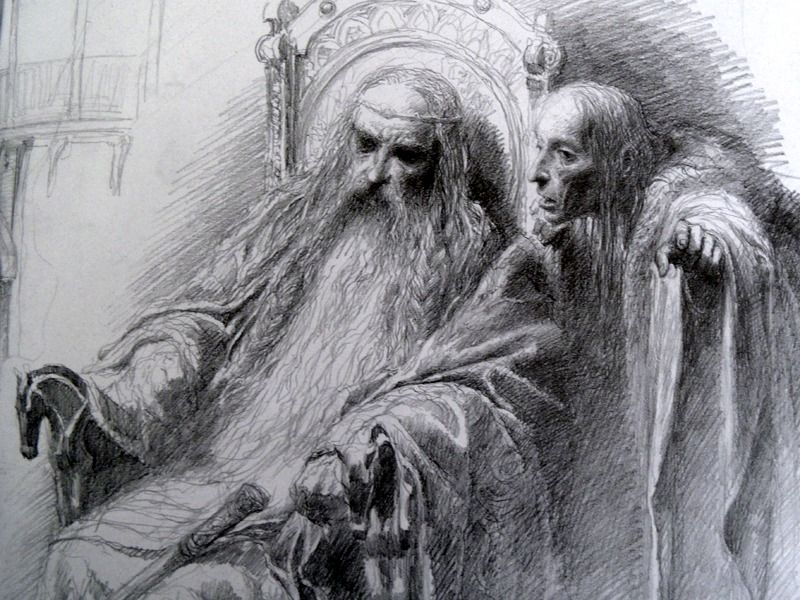
“ ‘So you have come, Gandalf,’ he said to me gravely; but in his eyes there seemed to be a white light, as if a cold laughter was in his heart.
‘Yes, I have come,’ I said. ‘I have come for your aid, Saruman the White.’ And that title seemed to anger him.
‘Have you indeed, Gandalf the Grey!’ he scoffed…”
This seems like an odd bit of dialogue—why such an emphasis on colors? And there’s more—
“ ‘Radagast the Brown!’ laughed Saruman, and he no longer concealed his scorn. ‘Radagast the Bird-tamer! Radagast the Simple! Radagast the Fool!’ “ (The Fellowship of the Ring, Book Two, Chapter 2, “The Council of Elrond”)
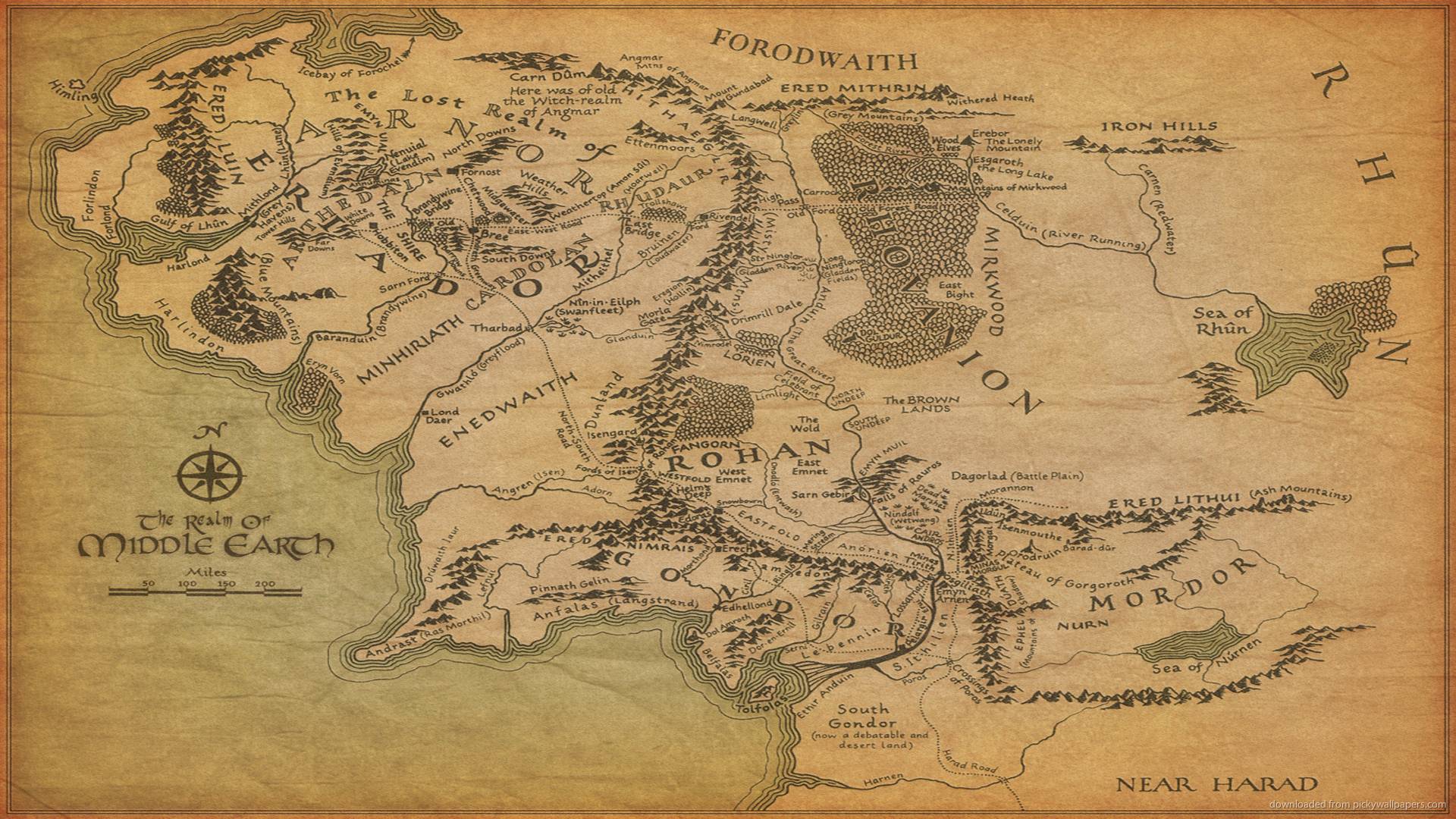
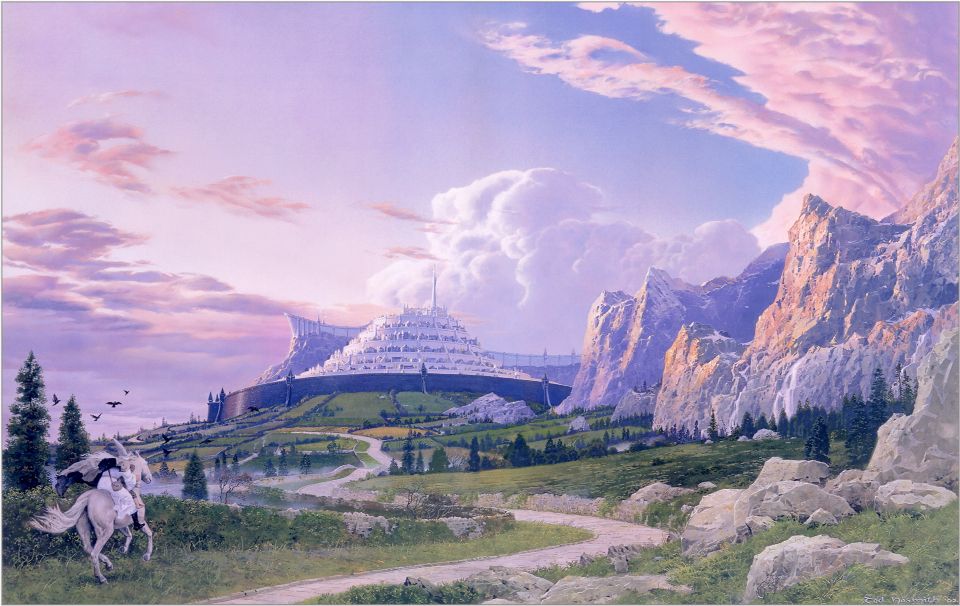
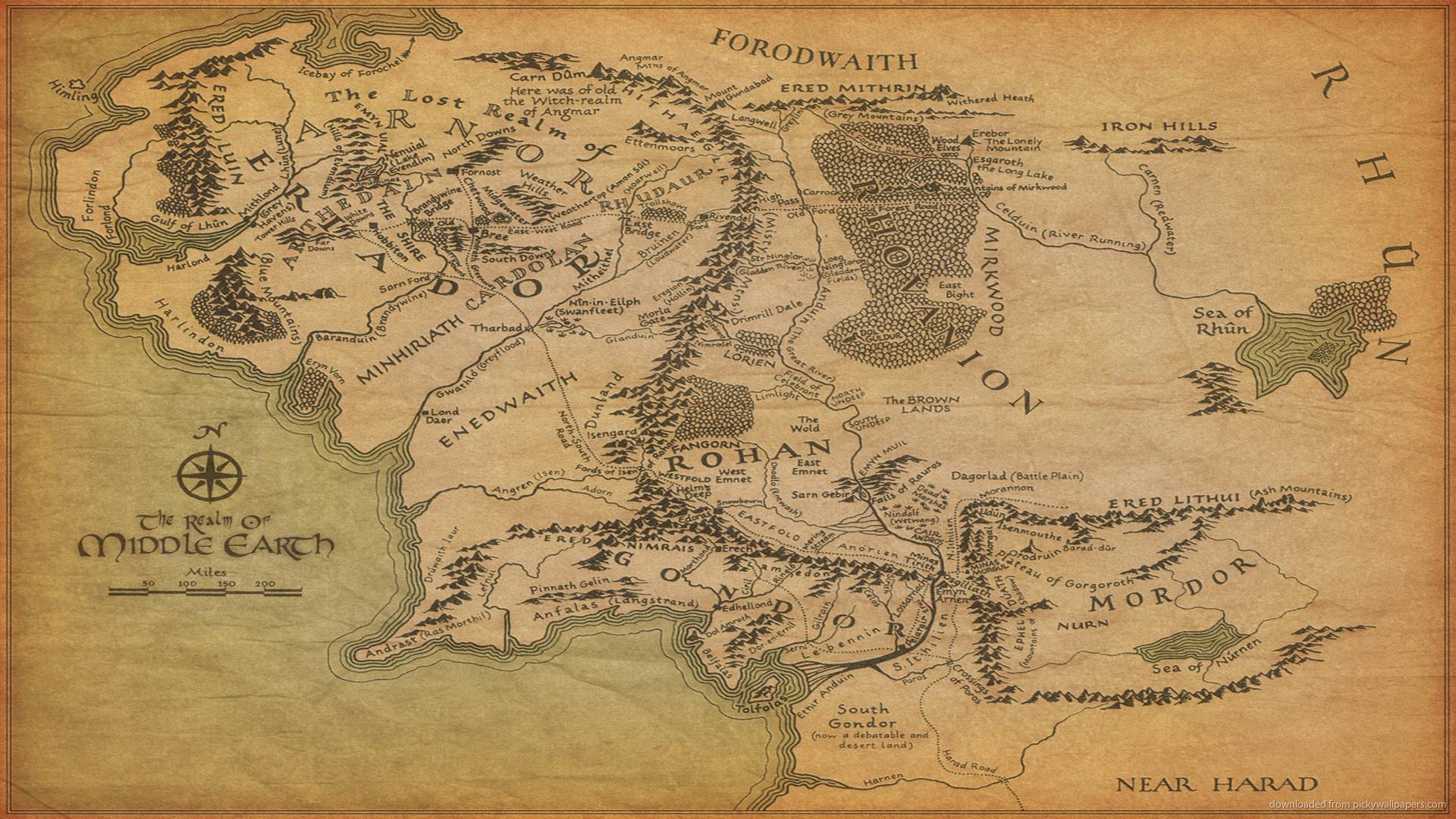
These colors began with the arrival of the 5 “wizards” (Istari) on Middle-earth, a thousand years into the Third Age. They are, in fact, Maiar, which we may think of as a form of “lesser angel”—that is, belonging to the orders of spiritual beings who inhabit Valinor, to the far west of Middle-earth.
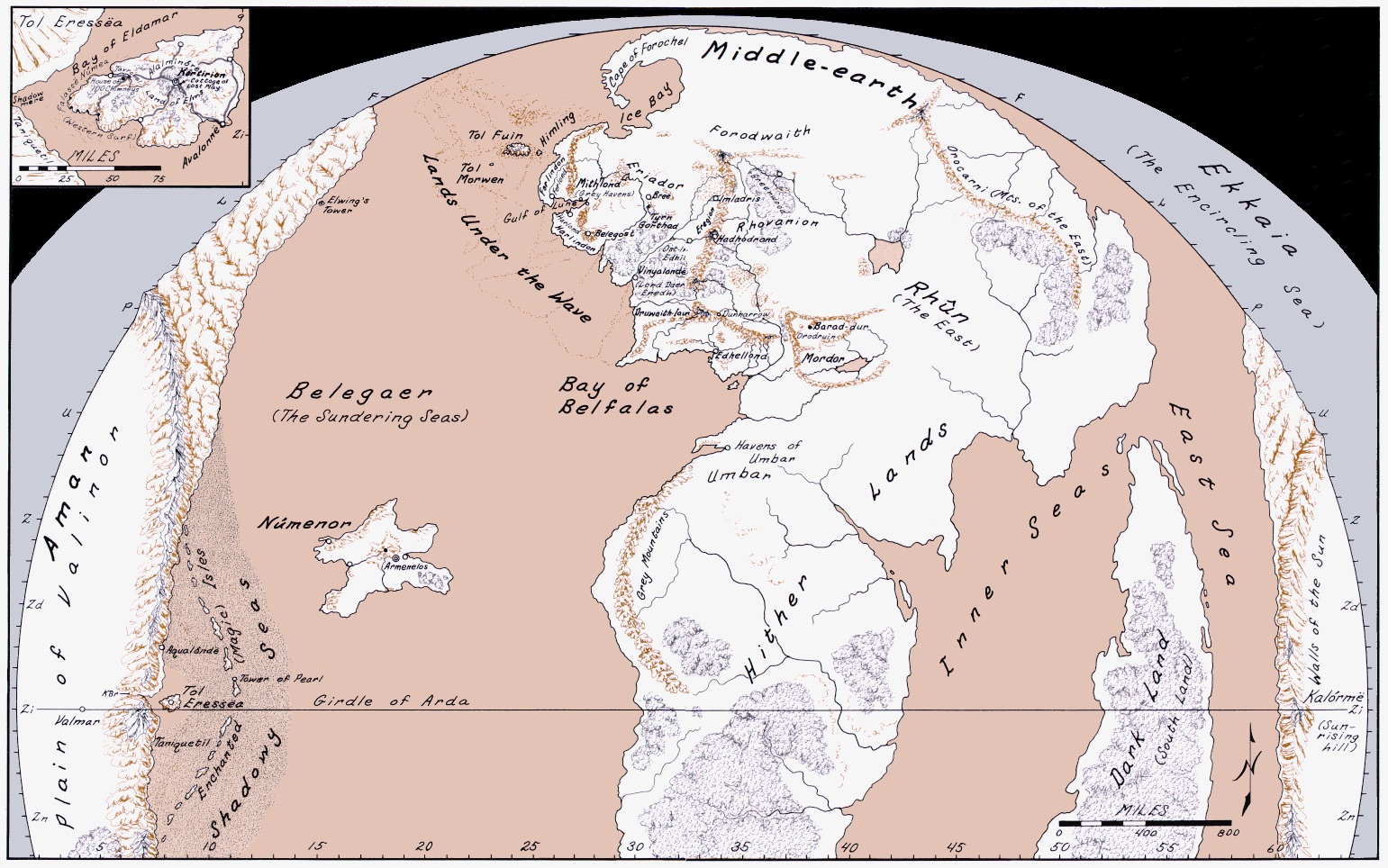
(Karen Wynn Fonstad)
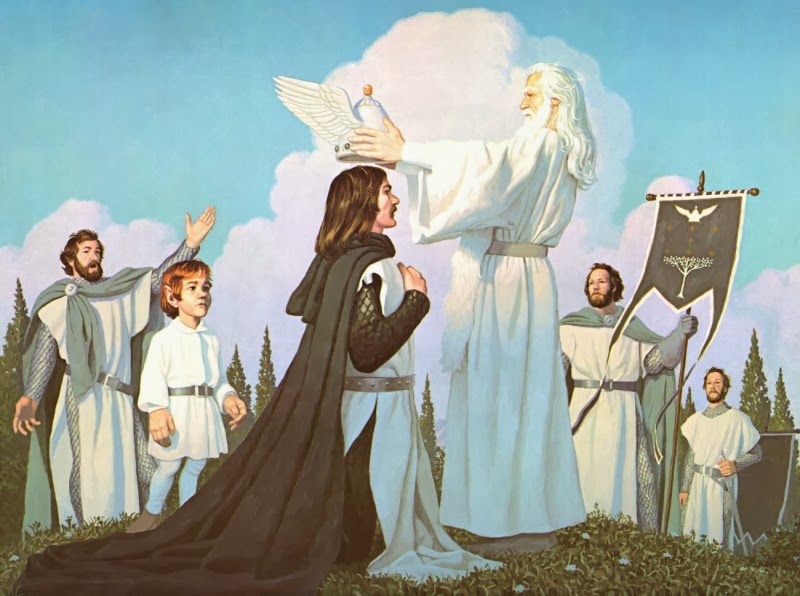
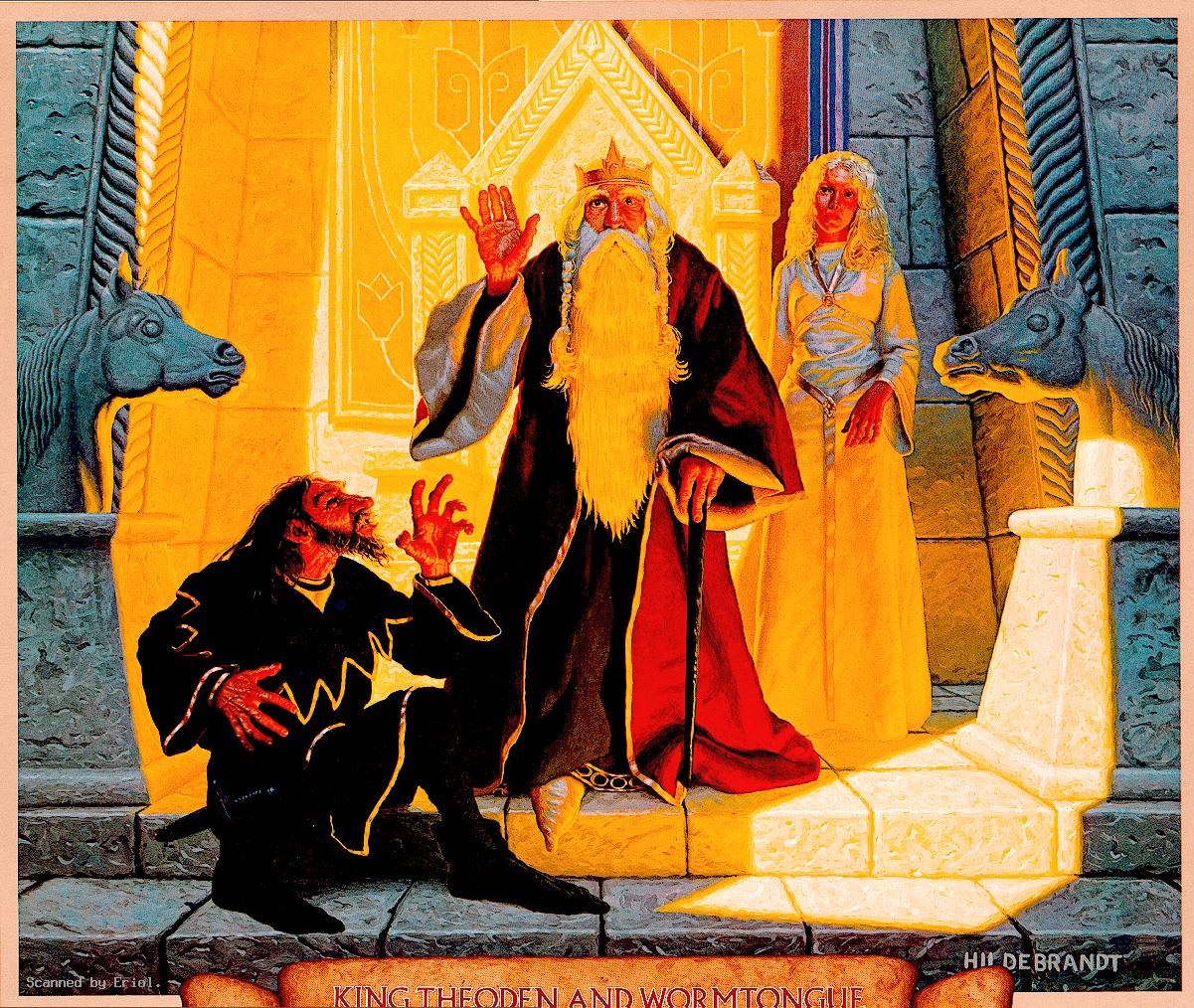
These particular Maiar were intended to be a counterforce to Sauron, who appeared to be once more on the rise. Although there were 5 of them—Saruman, Gandalf, Radagast—and two more who may have been named Alatar and Pallando—and all had colors attached to them—Saruman white,
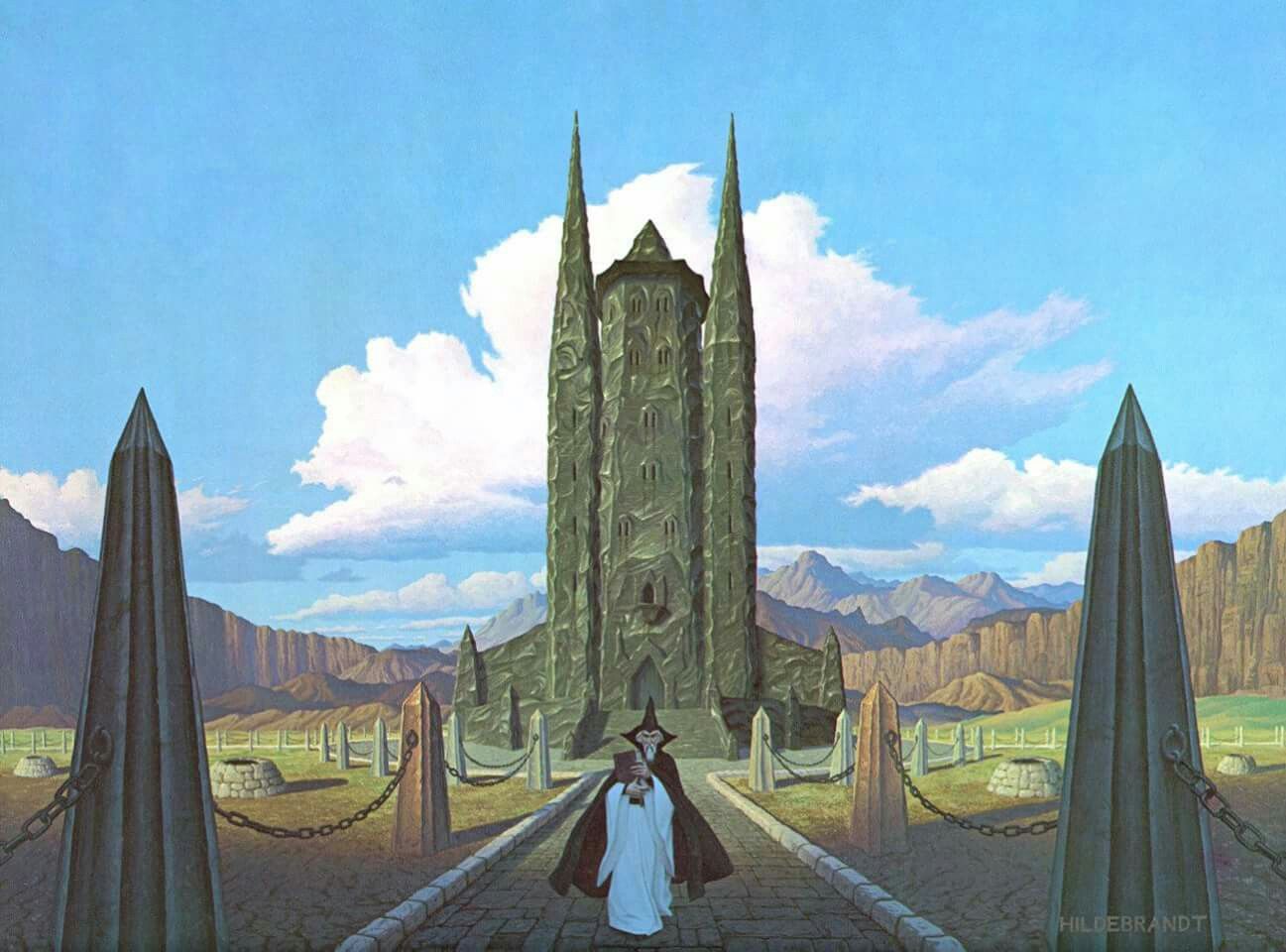
(the Hildebrandts)
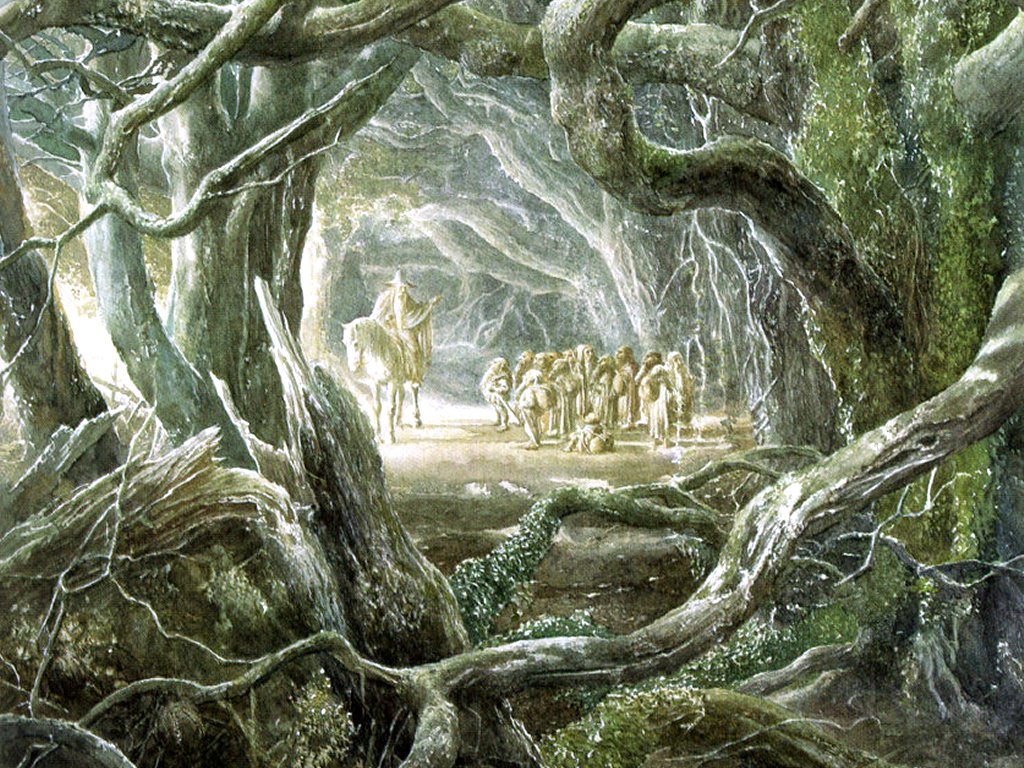
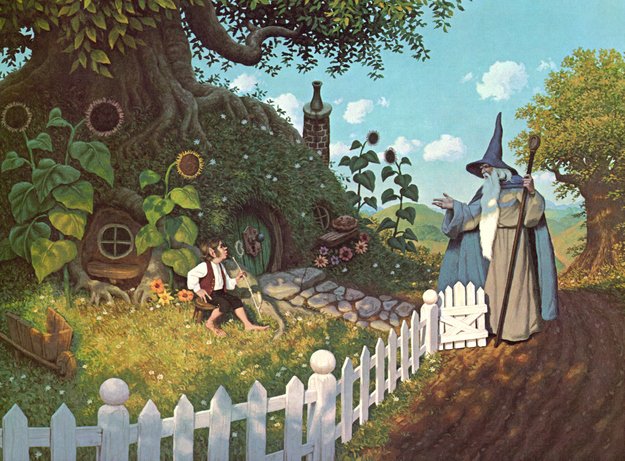
Gandalf grey,
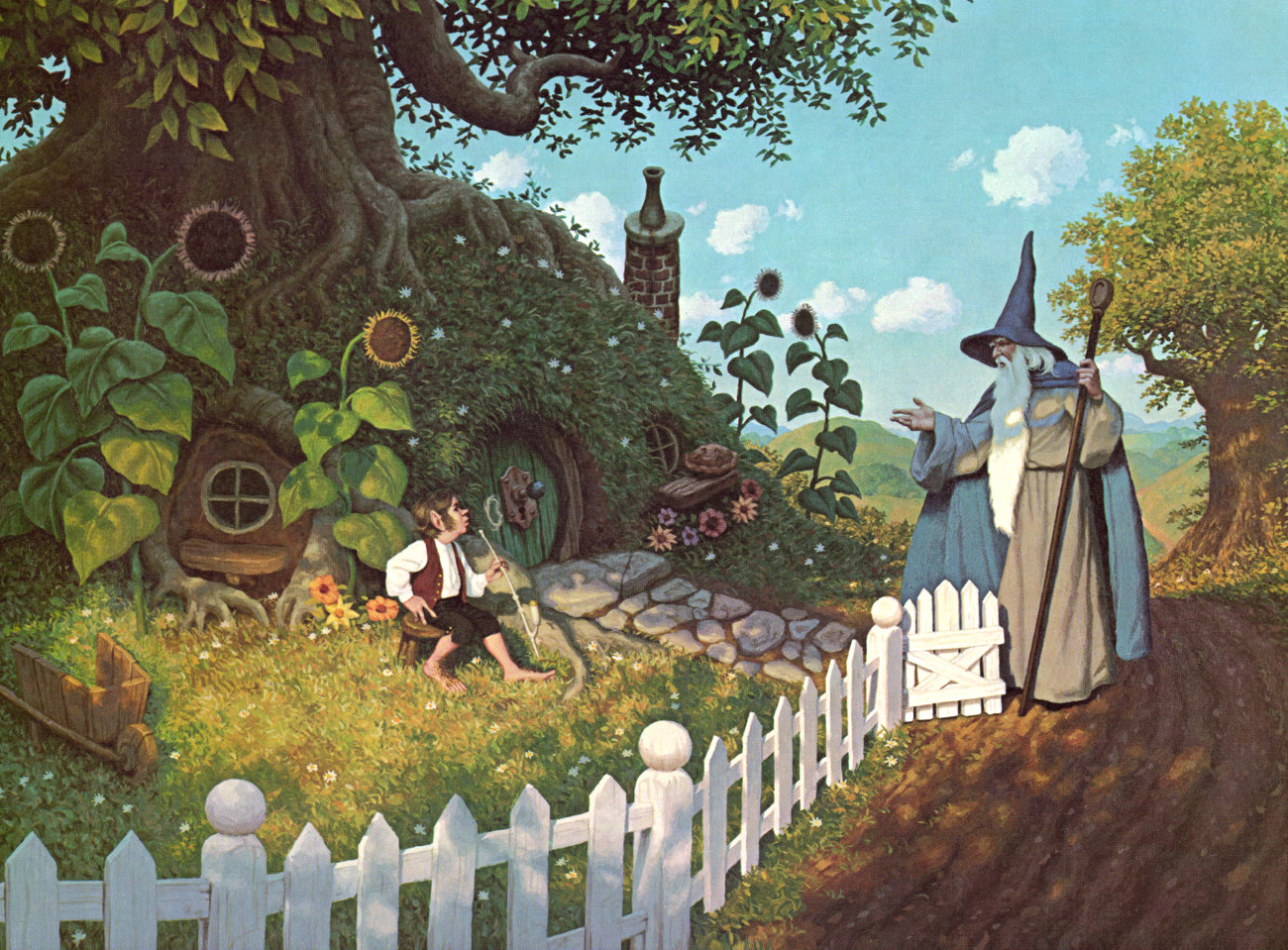
(the Hildebrandts)
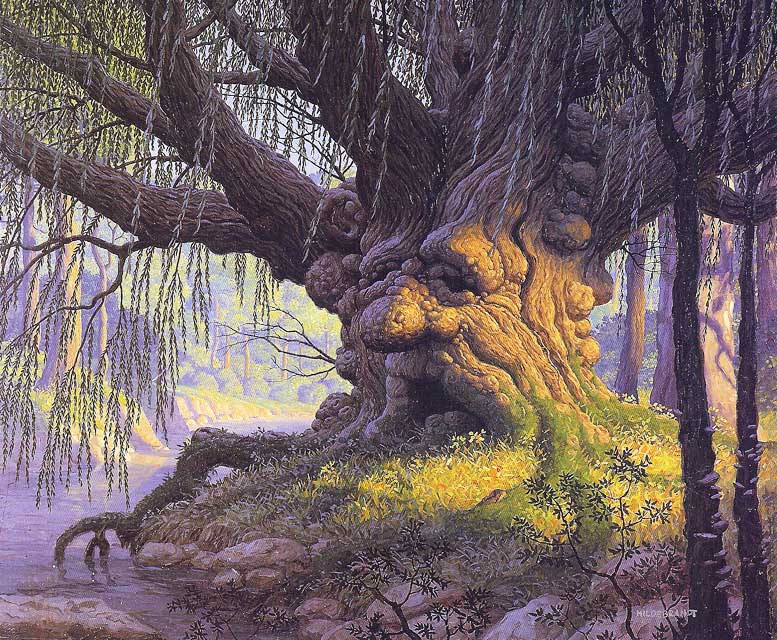
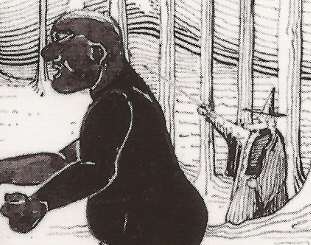
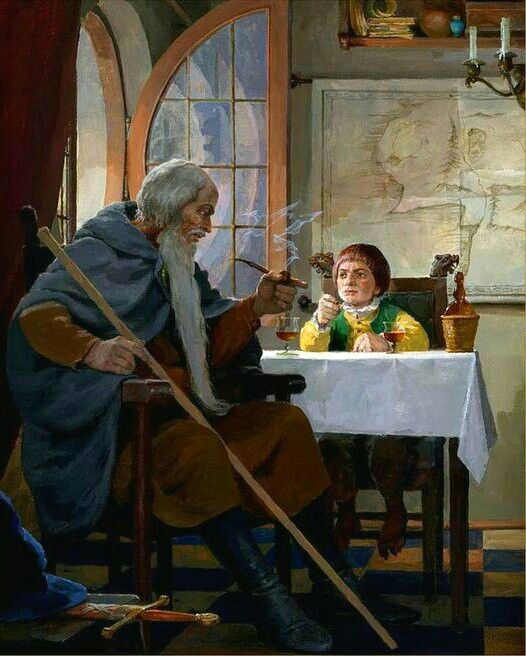
Radagast brown,
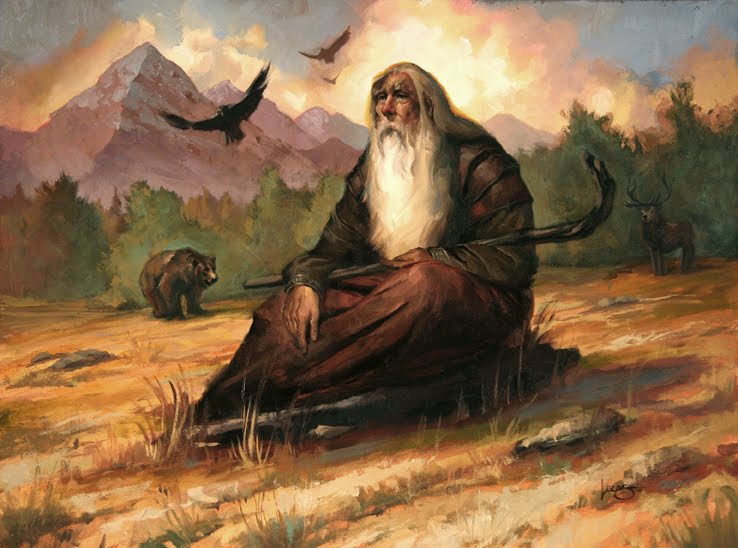
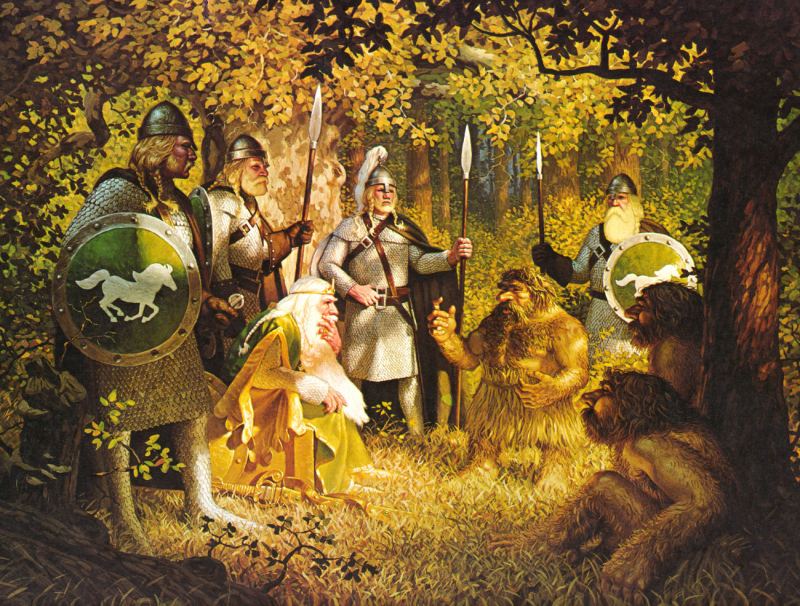
(I can’t find an artist for this, but it strikes me as a much better depiction than that seen in the Jackson Hobbit movies.)
and the other two blue—those last two, only briefly mentioned, go eastwards and disappear entirely from the narrative. (For more details, see Unfinished Tales, 405-420)
As for the other three, their colors appear to have a definite significance: Radagast is an earthy type, with a passion for birds and animals, Gandalf is seen as an elderly man, grey as his garments, and Saruman as “the greatest of my order”, as Gandalf once described him, could be stainless in white.
And this is where color comes in in a different way and we see why Saruman is not pleased at being given his old title—
“ ‘For I am Saruman the Wise, Saruman Ring-maker, Saruman of Many Colours!’
I looked then and saw that his robes, which had seemed white, were not so, but were woven of all colours, and if he moved they shimmered and changed hue so that the eye was bewildered.”
Although Gandalf’s eye might have been bewildered, his mind was clearly not:
‘I liked white better,’ I said.”
White was the color in which Saruman had appeared on his mission to Middle-earth and his behavior at Gandalf’s arrival shows that he has already betrayed that mission:
“ ‘For you have come, and that was all the purpose of my message. And here you will stay, Gandalf the Grey, and rest from journeys.’
“Rest”, of course, is not quite what Saruman has in mind.
‘He was cold now and perilous. ‘Yes,’ he said. ‘I did not expect you to show wisdom, even in your own behalf; but I gave you the chance of aiding me willingly, and so saving yourself much trouble and pain. The third choice is to stay here until the end.’
‘Until what end?’
‘Until you reveal to me where the One may be found. I may find means to persuade you. Or until it is found in your despite, and the Ruler has time to turn to lighter matters: to devise, say, a fitting reward for the hindrance and insolence of Gandalf the Grey.’ “
“The Ruler”, we can suppose, is Sauron, but Saruman has plans of his own, proposing, when the Ring has been discovered, not to turn it over to that “Ruler”, but to keep it:
“ ‘Why not? The Ruling Ring? If we could command that, then the Power would pass to us.’ “
But Gandalf sees through this immediately:
“ ‘Saruman…only one hand at a time can wield the One, and you know that well, so do not trouble to say we!’ “
Thus, not only has Saruman betrayed his mission from the Valar, but he plans to betray the object of that mission, Sauron, as well. It’s no wonder, then, that he no longer wears white—and, in fact, has nothing but contempt for it:
“ ‘White!’ he sneered. ‘It serves as a beginning. White cloth may be dyed. The white page can be overwritten; and the white light can be broken.’ “
And here Tolkien suggests that Saruman has rather advanced information about the science of optics.
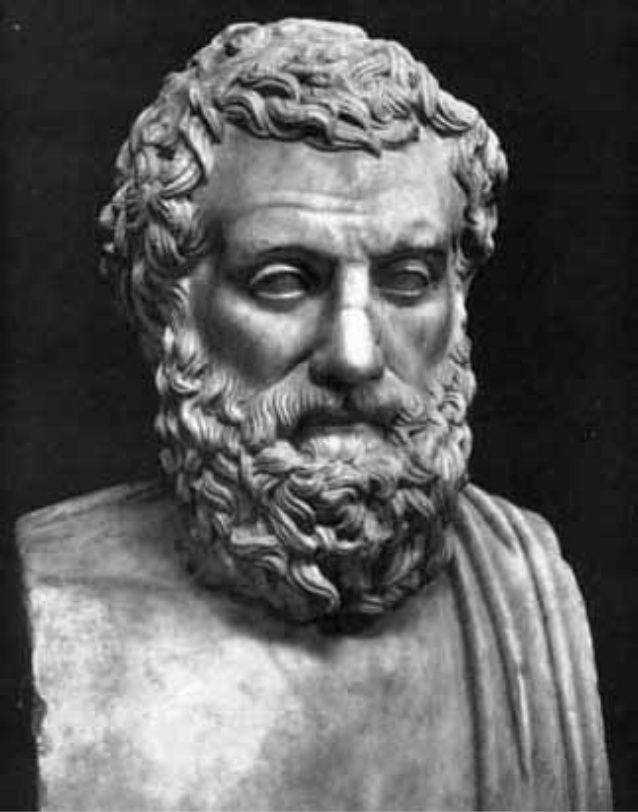
In our Middle-earth, up until at least the beginning of the 18th century, people subscribed to the theory, created perhaps by Aristotle (384-322BC),
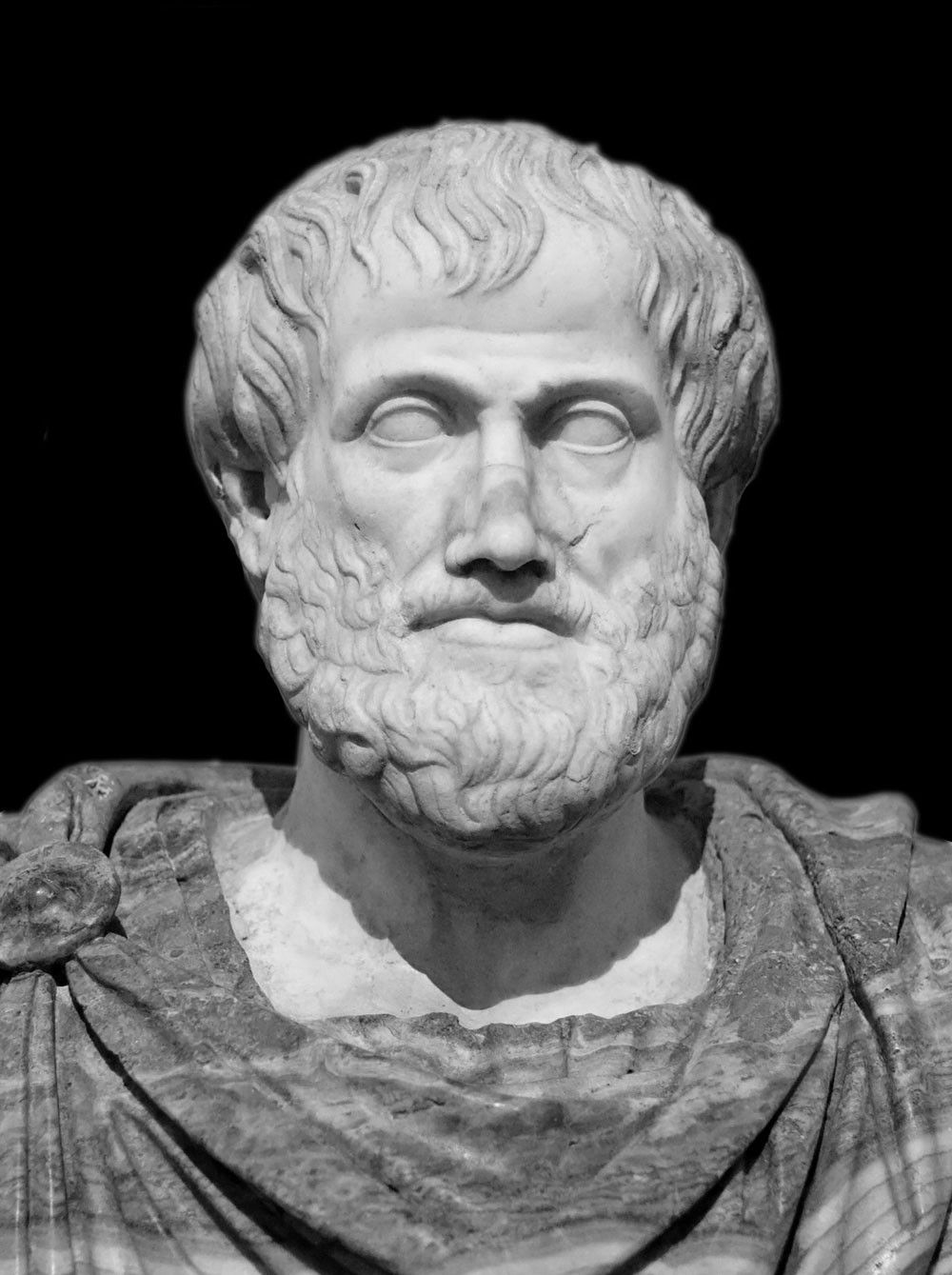
that colors were, in fact, a mixture of certain simpler colors, like black and white (see for more on this: https://en.wikipedia.org/wiki/On_Colors ).
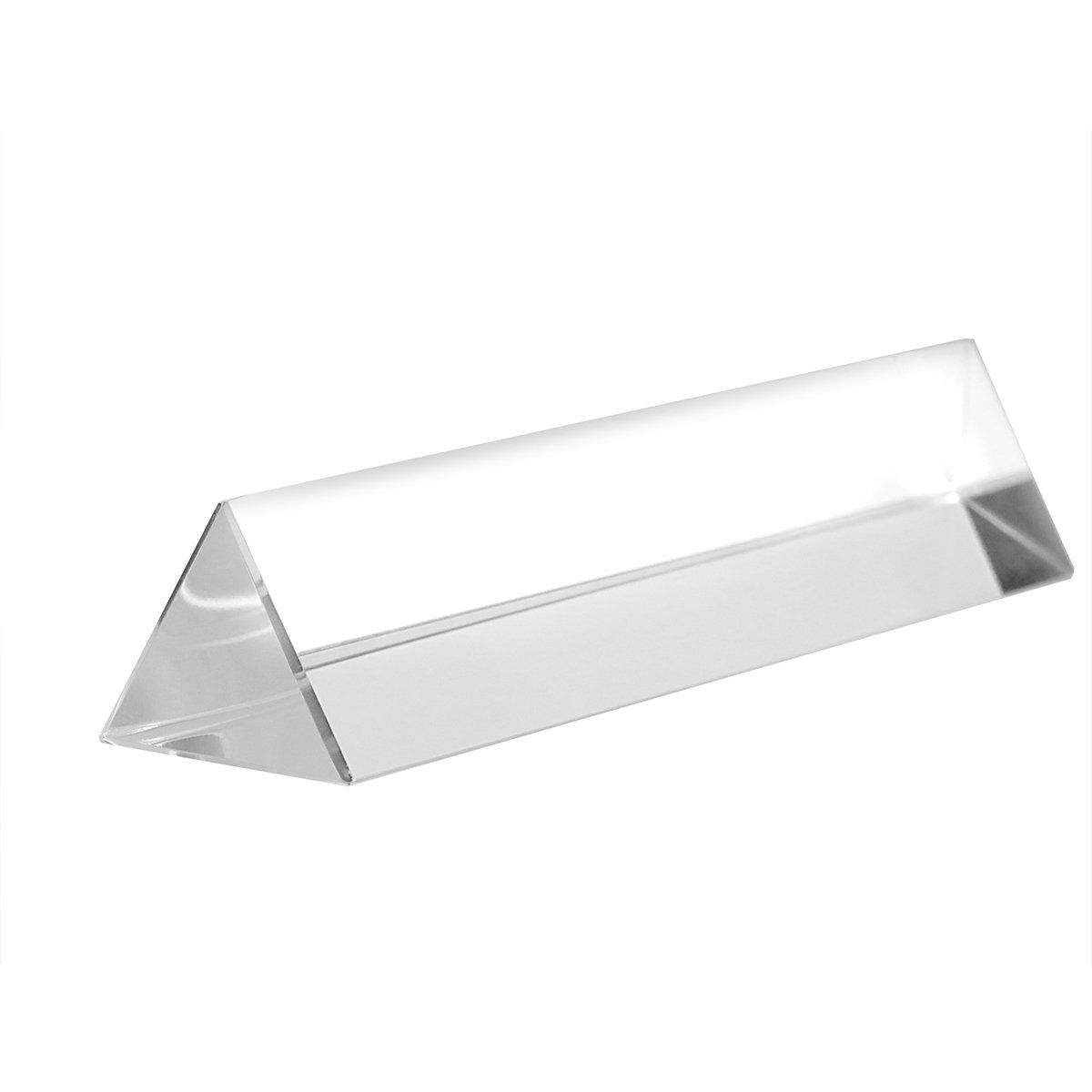
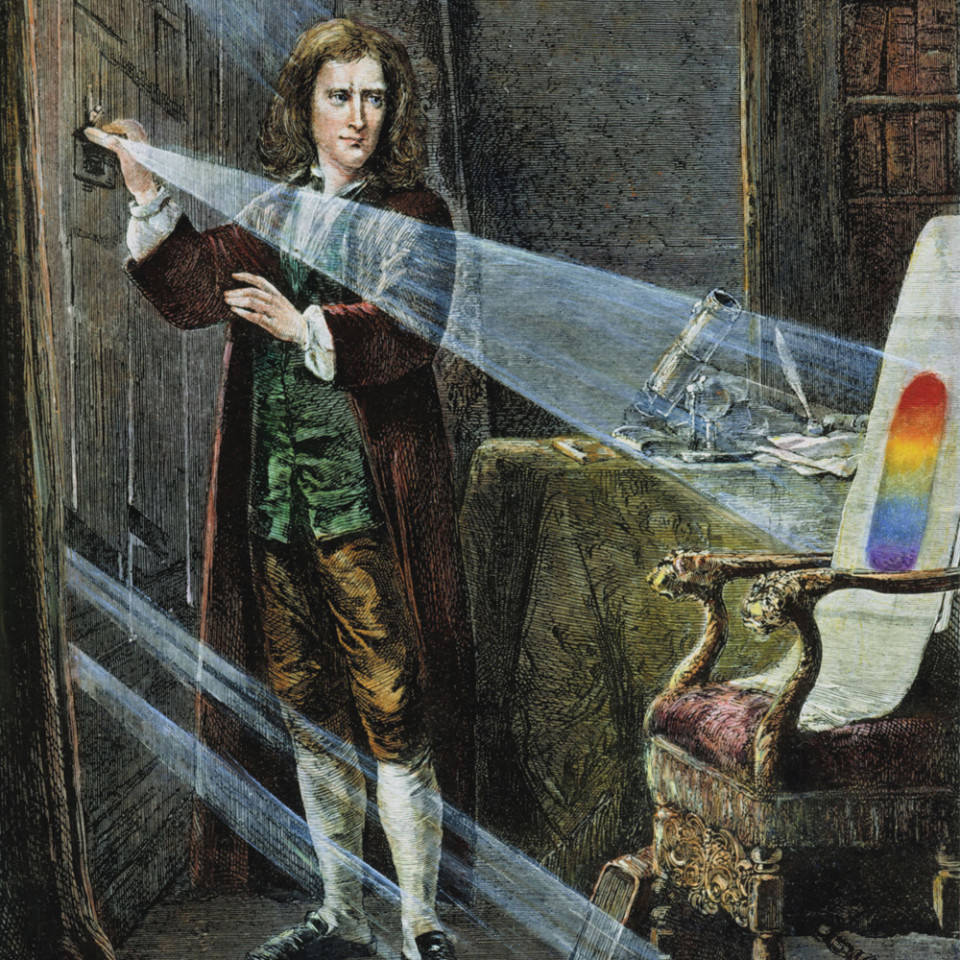
It was Isaac Newton’s (1642-1727) experiments with prisms
which led to a different theory—that the “white” light which he passed through a prism
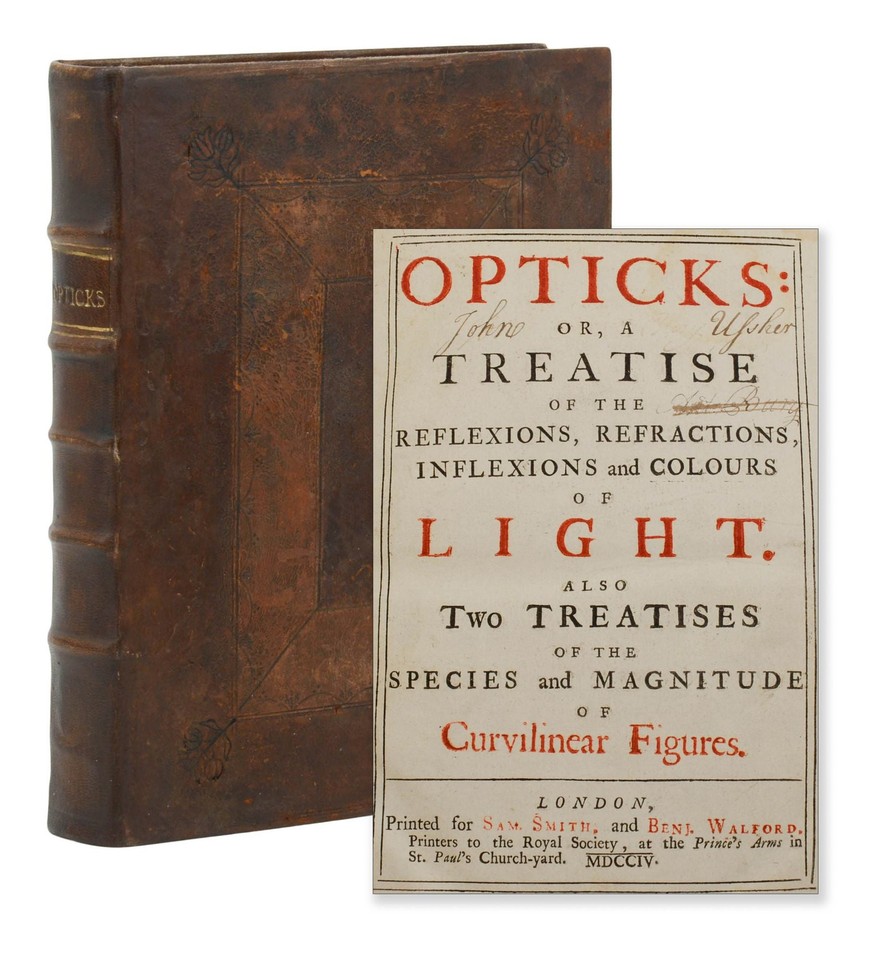
was actually a series of colored lights, a theory which he published in 1704,
and which is the basis of our current understanding of light and color. (For more on the electromagnetic spectrum, see: https://www.youtube.com/watch?v=9Vsl0Iom3S0 This is from a children’s program and about my level of understanding!)
To Gandalf, seeing Saruman’s actions as the betrayal they are, replies:
“ ‘In which case it is no longer white,’ I said.”
Just as Saruman is no longer the leader of the Maiar mission to Middle-earth, but a would-be Sauron, an imitation “Ring-maker”, who will, in time, be overthrown and eventually die a miserable death, murdered by his own agent.
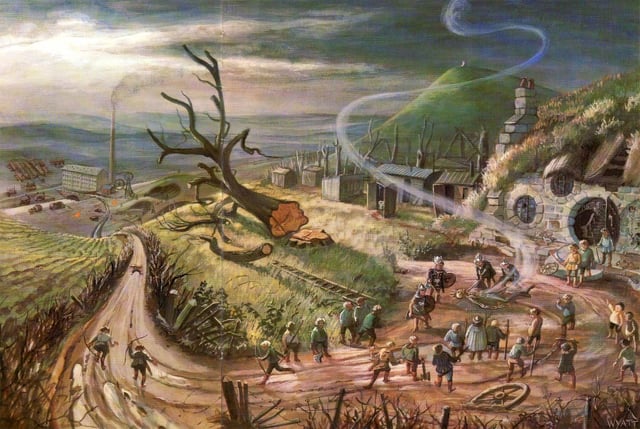
(Joan Wyatt—you can see more of her work here: https://www.artnet.com/artists/joan-wyatt/ )
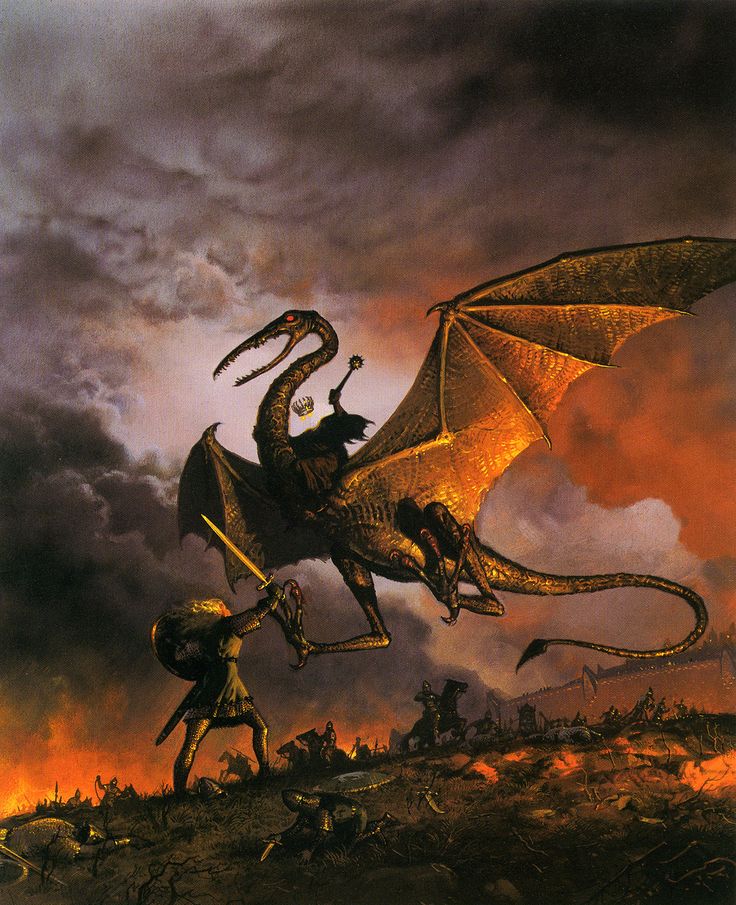
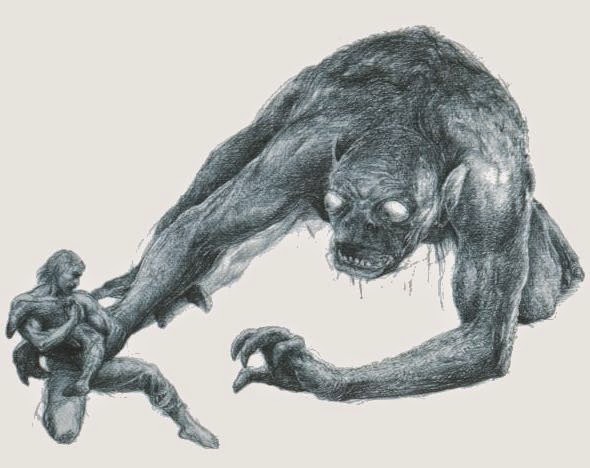
But this is not the end of wizard colors, of course. Gandalf appears to die, dragged down into the depths of Moria along with the Balrog,
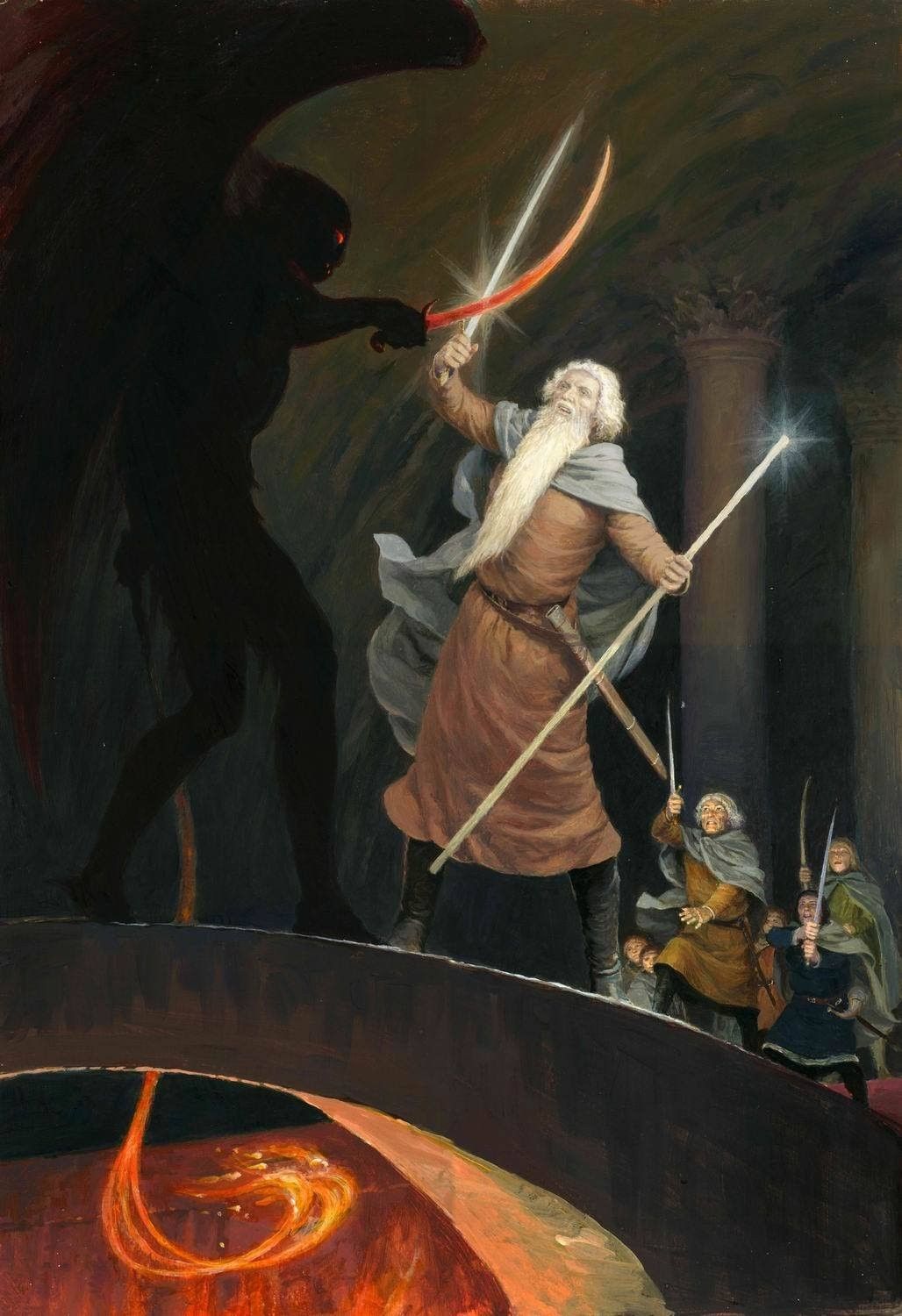
(Denis Gordeev)
but reappears, not as Gandalf the Grey or Gandalf of Many Colors, but as Gandalf the White,
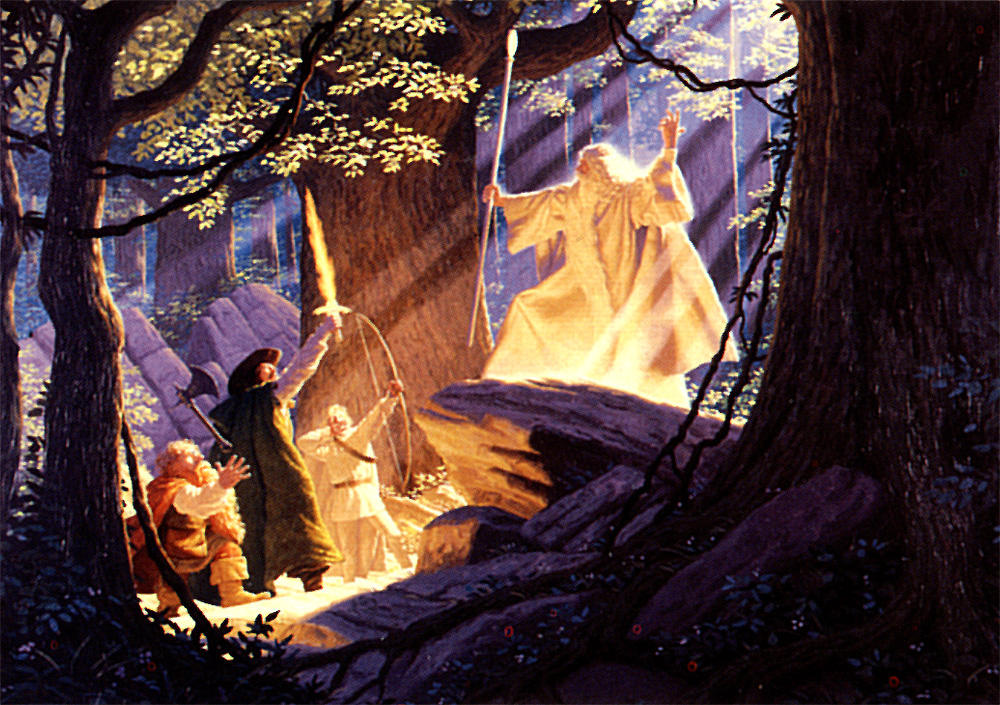
(the Hildebrandts)
and here we see white in a new light (sorry!): as the color of someone who has been purified by his near-death experience and returned to become that leader of resistance to Sauron that Saruman, in breaking that trust, has betrayed.
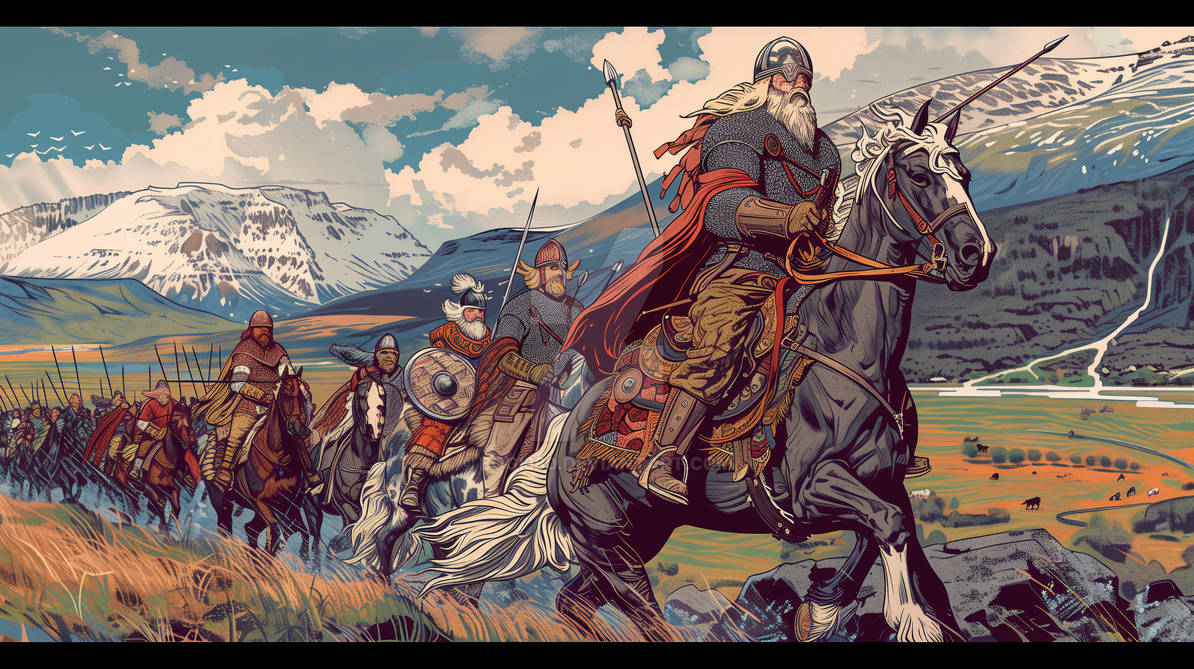
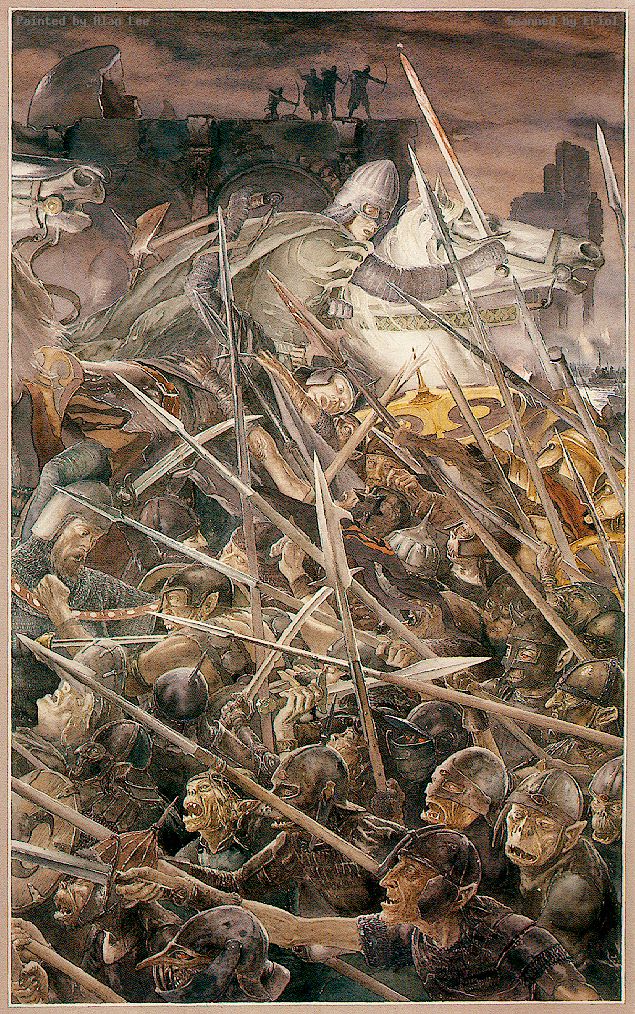
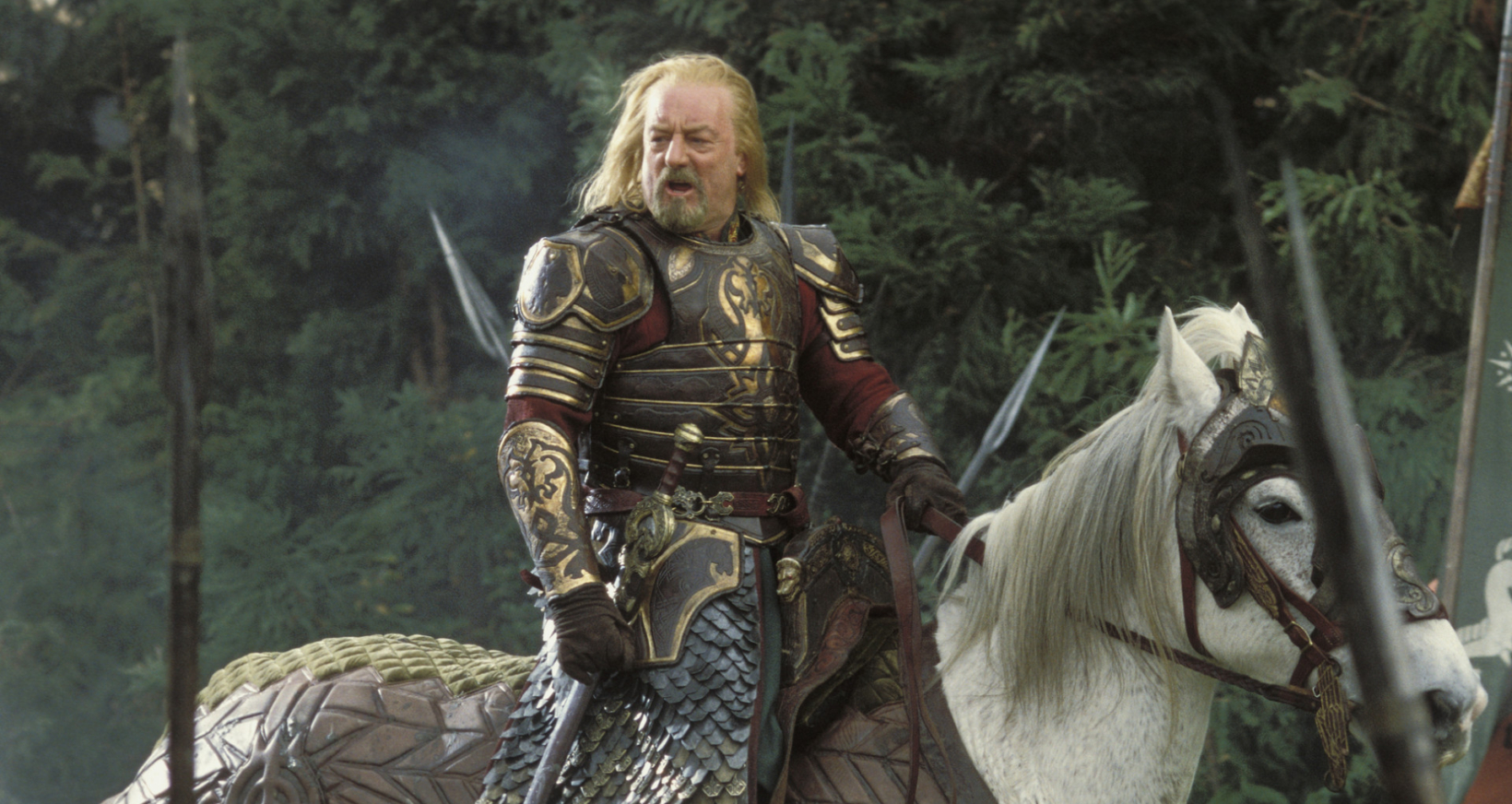
Is it surprising that Shadowfax, his horse, is white, as well?
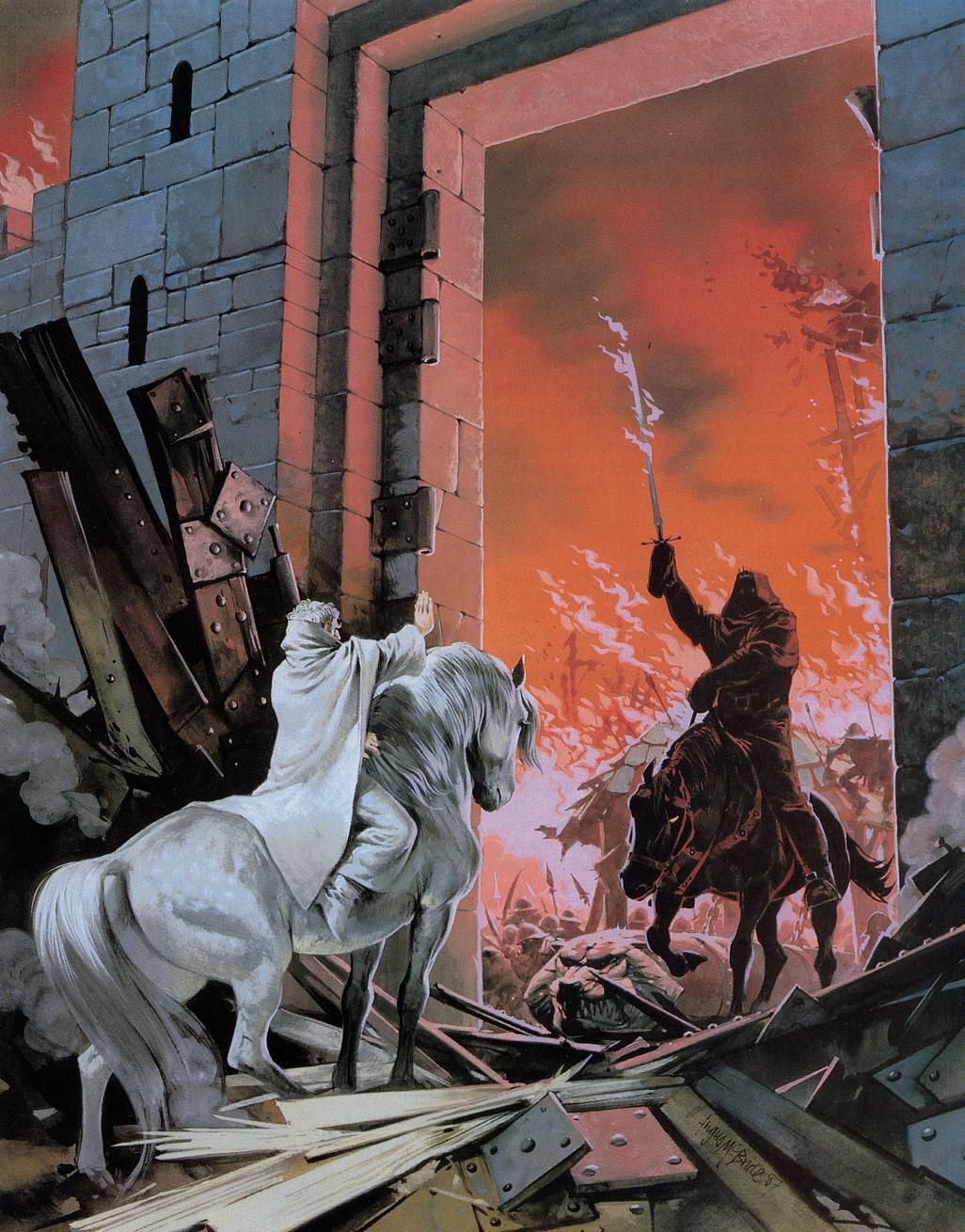
(Angus McBride)
Thanks, as always, for reading.
Stay well,
Imagine a spectrum where we could see all of the other elements, like ultraviolet and gamma-rays,
But, until we can, at least remember that there’s
MTCIDC
O