• About

doubtfulsea

~ adventure fantasy

Category Archives: Narrative Methods

Sugar and Oliphaunts

08 Wednesday Nov 2017

Posted by Ollamh in Imaginary History, J.R.R. Tolkien, Literary History, Narrative Methods

≈ 1 Comment

Tags

Africa, Bag End, Bodleian Library, Boromir, Chanson de Roland, creative misreading, Elephants, Greenway, Harad, horn, Mumakil, Oliphaunt, Oliphaunts, Savanna, sugar cane, sugar loaf, Sunlands, Swanfleet, Swertings, Tharbad, Tolkien, tropical, Umbar, war-horn

Welcome, dear readers, as always.

In our last posting, through a piece of “creative misreading” we saw a hat on Bilbo’s hallway table as a sugar loaf
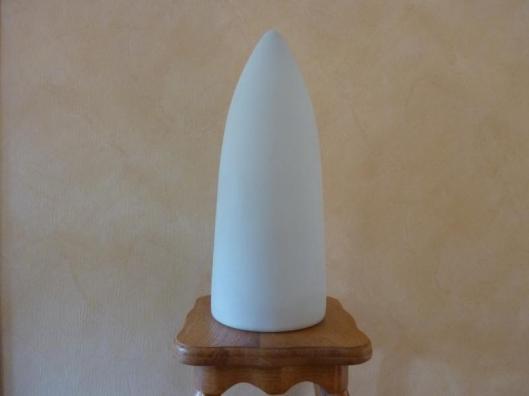
image2sugarloaf

and, before you knew it, we were thinking about where the sugar behind the cakes, seed cakes, and tarts in his pantry came from.

Sugar cane is a tropical plant

image3sugarcanefield

so, logically, we began to consider where, on the Middle-earth maps we have, tropical might be.
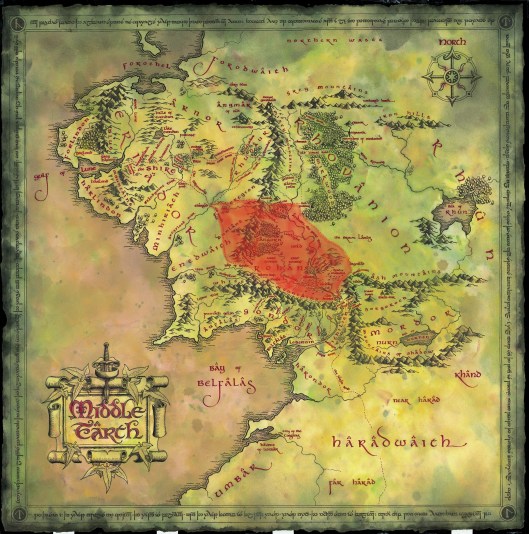
image4memap

In our world, that would be south, of course, and, looking as far south as we can go, we reach Harad, a name which actually means “south” in Sindarin.  It consists of two big regions, Near Harad and Far Harad.

As far as we can find, JRRT has left us no detailed geographic information about this region.  On page 413 of The War of the Ring, we are given the clue that, when the Corsairs of Umbar are driven back,

“all the enemy that were not slain or drowned were gone flying over the [?borders] into the desert that lies north of Harad.”

This would suggest that at least Near (as in “near to Gondor”, as we presume that our cartographers were Gondorians) Harad might be imagined as being like our world’s North Africa—

image5northafrica

with some fertile coastline, backed by the Sahara.  And we can’t resist including this view of the Sahara from space here.
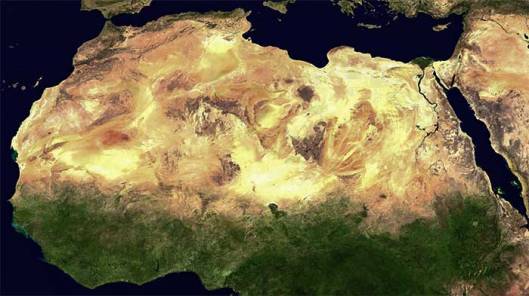
image6saharafromspace

And, just as in our world, the whole south can’t be desert, since people from Harad are associated with elephants—or “oliphaunts”, as Sam says:

“But I’ve heard tales of the big folk down away in the Sunlands.  Swertings we call ‘em in our tales; and they ride on oliphaunts backs and all, and the oliphaunts throw rocks and trees at one another.” (The Two Towers, Book Four, Chapter 3, “The Black Gate is Closed”)
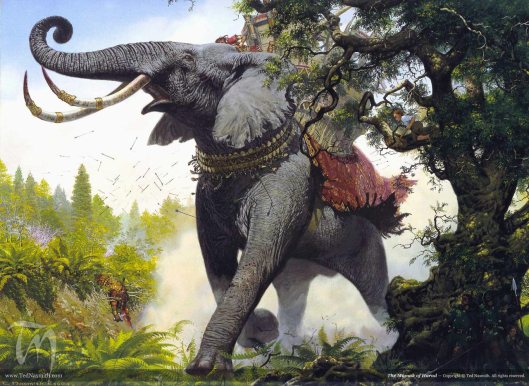
The Mûmak of Harad, by Ted Nasmith

This would suggest more fertile land south of the northern desert, a savanna, or region of great, grassy plains.  Such an area forms one of two habitats for elephants in our Africa.

image8savanna

South of the African savanna lies the rain forest—the other African elephant habitat.

image9rainforestelephants

Sugar cane, a little research tells us, can grow in savanna lands

image10caneinsavanna

as well as in rain forest (which, in our world, is being destroyed to provide more space for growing it—here’s a LINK about that).  Thus, we imagine that this must be the point of origin for Bilbo’s sugar.  From its growing and processing point (for something about those things in our world, please see the previous posting), it might then be shipped to the city of Umbar and from there to Gondor.

As to how it reaches Bilbo, well, we know that there must have been some trade up and down the old North-South Road/Greenway, as Saruman has a supply of pipe-weed from the South Farthing, with “the Hornblower brandmarks on the barrels” (The Two Towers, Book Three, Chapter 9, “Flotsam and Jetsam”), which takes us as far as Isengard.  From Gondor to Isengard?  Packhorse up the Greenway to Bree?  Butterbur tells Frodo & Co that “”There’s a party that came up the Greenway from down South last night” (Fellowship of the Ring, Book One, Chapter 9, “At the Sign of the Prancing Pony”)—though he then says that “that was strange enough to begin with”.

As we said in our last, this is all based upon a “creative misreading”, so we admit that there are some gaps here and there–just as there is a gap in the North-South Road at the Swanfleet, where the great bridge at Tharbad is down, but that’s what we get with such a “creative misreading” of a hat!

Thanks, as ever, for reading.

MTCIDC

CD

PS

But another thought—not based upon a “misreading”, but rather upon The Lord of the Rings, so, at the posting’s end we can have at least something a little less speculative.

There is another medieval spelling of “oliphaunt”—“Olifant/oliphant”, with its own specific meaning:  a horn made from an elephant’s tusk, like this one, which is just over a thousand years old and is in the treasury of York Minster.
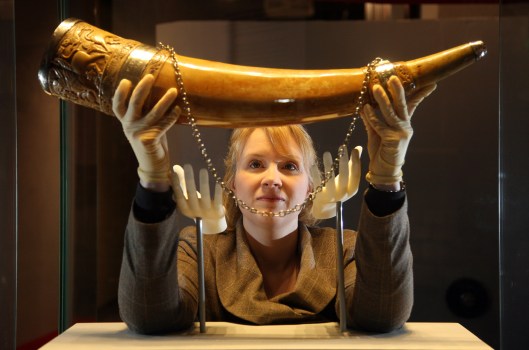
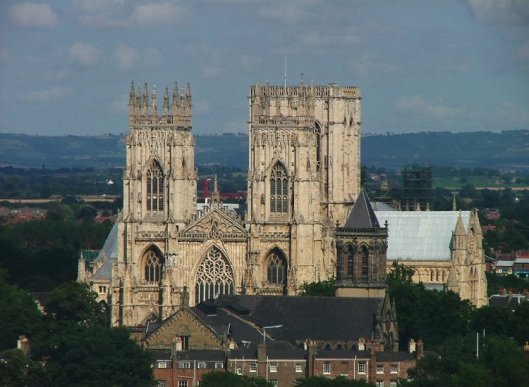
KIPPA MATTHEWS - COPYRIGHT NOTICE

image12york


This is a drinking horn, but such horns could also be used for signaling, the most famous being that of Roland, the hero of the later-11th-century Old French epic poem, the Chanson de Roland. Here is a page from the oldest known ms, now in the Bodleian Library at Oxford.
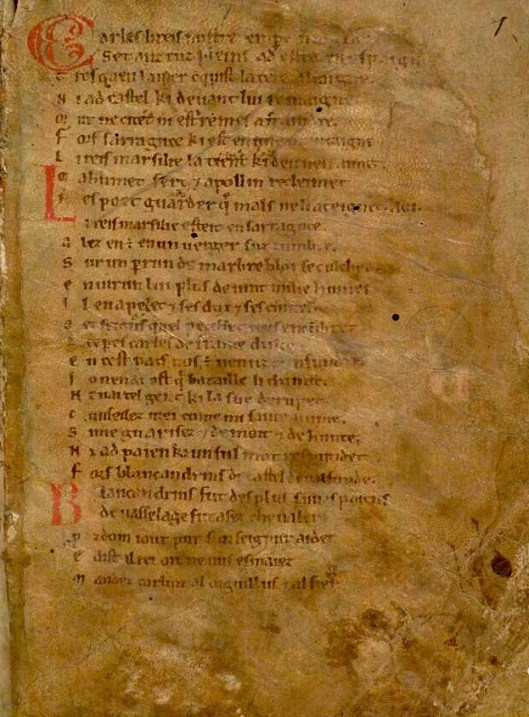
image13chanson

(Here are links to two translations in English, one in prose, one in verse.)  If you don’t know the poem, its main action is a rear guard defense of a pass by a group of Carolingian soldiers commanded by Roland.  He has an olifant and can use it to call for help, but refuses to do so until the last moment because, in his view, asking for reinforcements would be cowardly.  As a consequence, the Carolingians, including Roland, do not survive the battle, as Roland blows the horn only at the last moment (and blows it so hard that he bursts his brains in the process—there would be those who might argue that someone who sacrifices his troops on a point of honor doesn’t have much in the way of brains to begin with!).
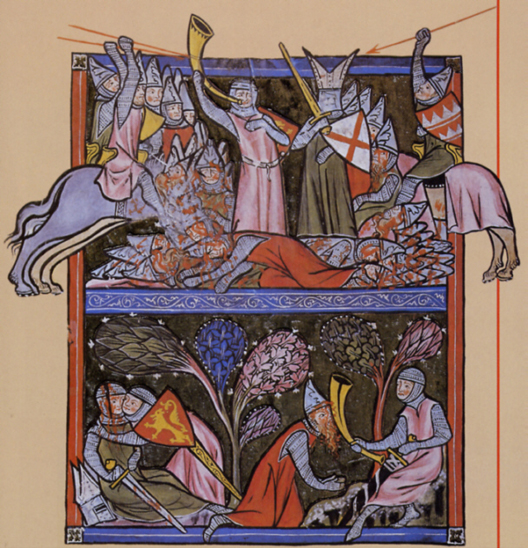
image14roland

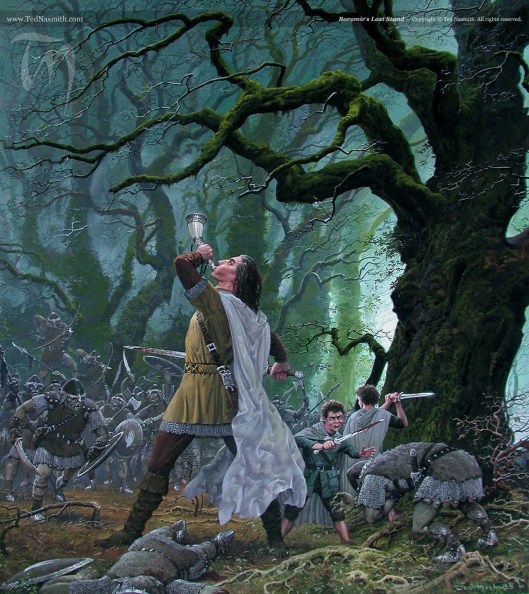
Warriors and horn-blowing immediately make us think of Boromir.
Tolkien, Nasmith, painting, illustration, Lord of the Rings, Silmarillion, Hobbit, Middle-earth

His horn is just called a “war-horn” (The Fellowship of the Ring, Book Two, Chapter 3, “The Ring Goes South”), with no further description, but, as medieval horns in our world can be made of elephant tusk, why mightn’t Boromir’s be made of the equivalent, mumak tusk?
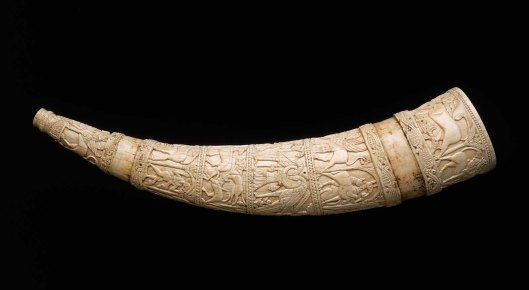
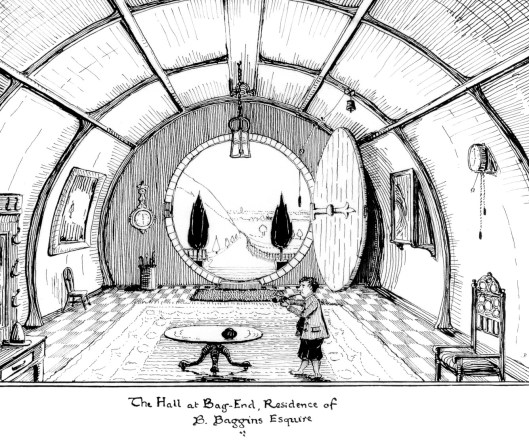
image16oliphant


Sugar Is Sweet, And…

01 Wednesday Nov 2017

Posted by Ollamh in Artists and Illustrators, J.R.R. Tolkien, Military History, Narrative Methods

≈ Leave a comment

Tags

15th-century hat, 15th-century sallet, Across the Doubtful Sea, Bag End, bevor, Bilbo, British Navy uniforms, Caribbean sugar mill, Christopher Columbus, clone helmet, costuming, Darth Vader, Death Star Gunners, French Navy uniforms, hogsheads, honey, John Mollo, Middle-earth, Samurai, science fiction, Star Wars, sugar, sugar cane, sugar loaf, Taters, Ten Views in the Island of Antigua, The Illiad, Tobacco

Welcome, dear readers, as always.

As we continue to explore Bilbo’s entryway, we feel a little like Bilbo himself watching as all of those dwarves gradually pile in until they almost overwhelm their surprised host.

Unlike our earlier postings on barometers and clocks, which are really on the walls, in this posting, we confess to what is called in literary criticism a “creative misread”.  Take a look at the far left of the illustration.

image1bilboshallway.jpg

There is a kind of entryway table, with a mirror and hooks—probably for hats—and those should have tipped us off—but a preconceived notion overwhelmed us, inspired (well, we suppose you could call it that) by how we initially interpreted the object on the right hand corner.

It’s a hat—you can just make out the brim.  It’s a kind of 15th-century hat called a “sugarloaf”, however, because of the crown.

image2sugarloafhat.jpg

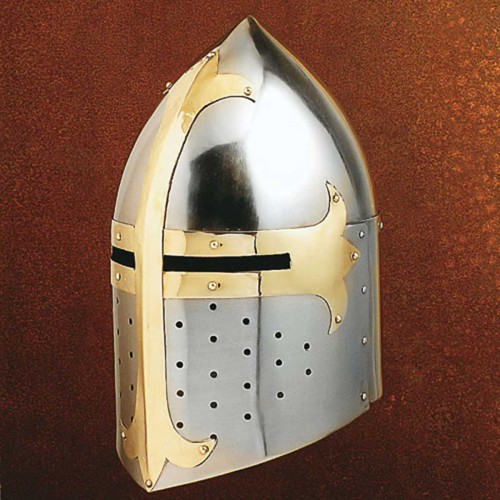
(There is a 13th-14th century helmet given that nickname, as well.

image3asugarloafhelm.jpg

In fact, perhaps there’s a certain similarity with the phase 1 clone helmet, if you add a sort of flange to the lower edge—and a ridge piece?

image3b.jpg

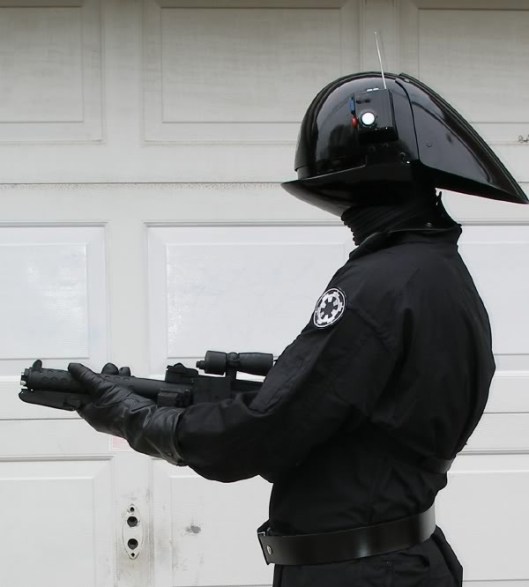
If so, it certainly wouldn’t be the only medieval-influenced helmet in Star Wars—just look at the Death Star gunners

image3cdeathstargunner.jpg

and compare it with a 15th-century sallet with its bevor

image3dsalletwbevor.jpg

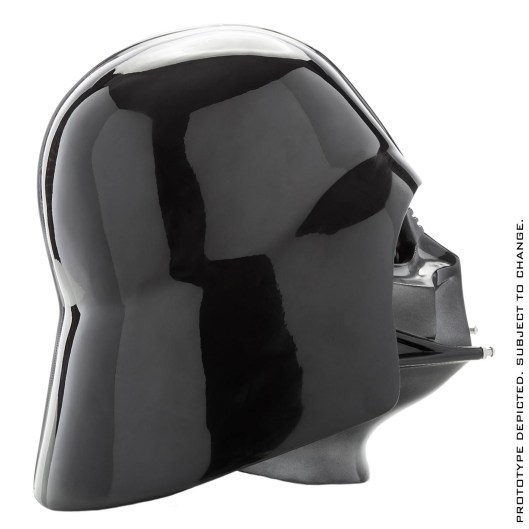
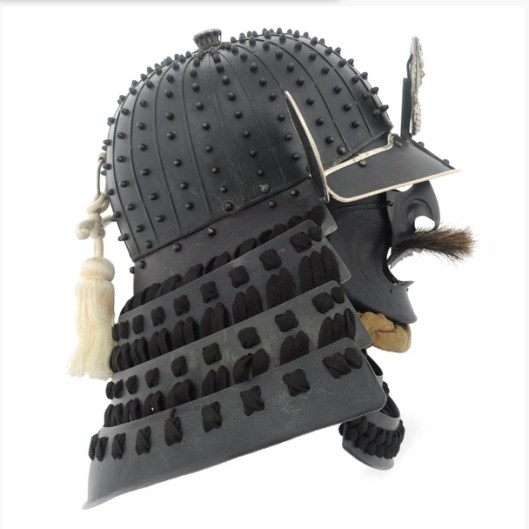
Although Darth Vader’s helmet is a bit more samurai-ish.

image3edv.jpg

image3fsam.jpeg

All of these came to the screen through the work of uniform historian and costume designer John Mollo,

image3gjohnmollo.jpg

who died on 25 October, 2017, at the age of 86.  His work included not only science fiction costuming

image3himps.png

image3irebs.png

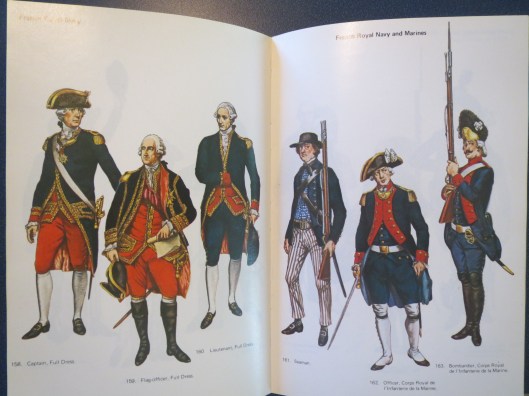
but also the text for works on the history of uniforms.  For our first novel, Across the Doubtful Sea, he and his illustrator for Uniforms of the American Revolution in Color (1975),

image3juniforms.jpg

provided us with an accurate view of the uniforms of the British and French navies of the period.

image3kbrit.jpg

image3lfrench.jpg


But—as we began to say—the crown of that hat bears that nickname because it looks like sugar as it used to be formed, shipped, and sold.

Today, we see sugar in bags

image4sugarbag.jpg

or in little packets in fast food restaurants

image5packet.jpg

or even in cubes.

image6sugarcubes.jpeg

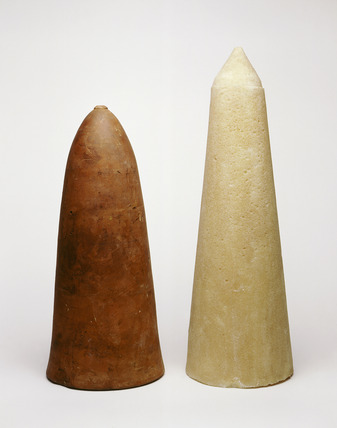
In earlier centuries, sugar came in a very different form:

image7sugarloaf.jpg

and, to use it, you had special tools to snip off or scrape off pieces when you needed them.

image8tongues.jpg

image9sugarwork.jpg

Sugar came like this because of the process by which sugar was extracted from a very tall plant,

image10sugarcanefield.jpg

the sugar being inside the plant.

image11sugarcane.jpg

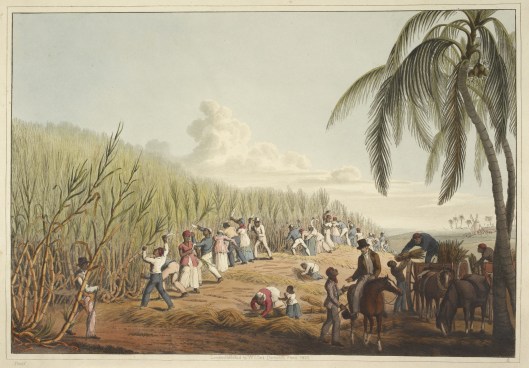
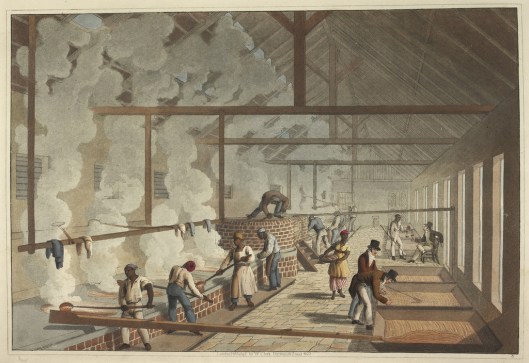
The first step was to cut the plant down.

image12cutting.jpg

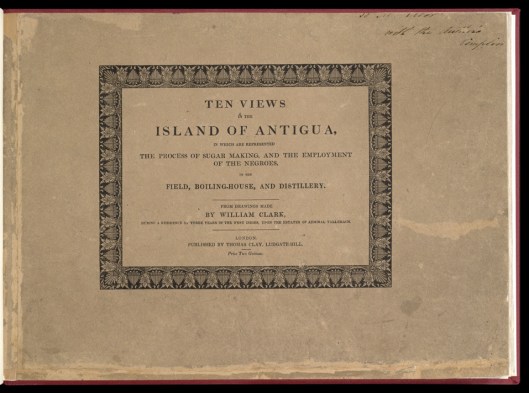
This and some of the following illustrations are drawn from a series of colored engravings published in 1823 and entitled Ten Views in the Island of Antigua.

image13tenviews.jpg

And, as you can see from the subtitle, the collection is devoted to the sugar-production industry, which was an extremely profitable one.  (And it should always be remembered that the great majority of the workers in these images are slaves.)

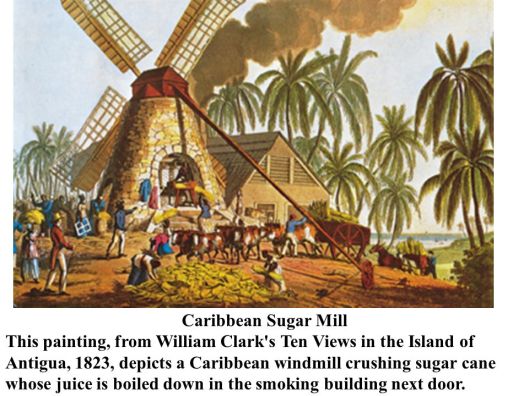
Cutting, however, is just the first stage in the process.  In the next step, the cane has to be crushed to get the pulp out.

image14crushing.jpg

(We note the mistake in the caption—this isn’t a painting, but a colored engraving.)

The pulp then has to be boiled and sieved until it’s a pure liquid.

image15boiling.jpg

Then—initially—it was dried, forming a coarse brown powder, as you can see on the right hand side of this illustration.

This was then packed into huge barrels, called “hogsheads”,

image16packing.jpg

and shipped.

image17shipping.jpg

When it reached its final destination, it was turned back into a liquid and further refined until poured into molds, which is how it was commonly sold, even into the 20th century, apparently.

image18mold.jpg

It is estimated that the average person consumes 53 pounds (24kg) of sugar a year, partly because sugar is mixed in with a huge variety of products where you would have to read the label before you realized that it was even an ingredient.

But what about Bilbo?  So far, as there is no concordance to the complete works of JRRT, as there is for something like the Iliad.

image19concordance.jpg

(A concordance is a complete collection of all the words, in their various forms, in a work, listed alphabetically, with reference to where they may be found.)

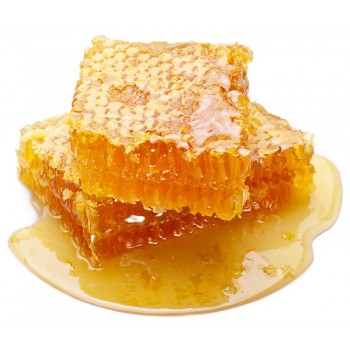
Our research, then, is completely casual—we paged through The Hobbit and, although we found no mention of the word “sugar” per se, we did find, particularly in Chapter One, a number of references to baked goods (“cake”, “seed cake”, and “tarts”).  We might suppose that, as in our medieval times, Bilbo employed honey in his recipes,

image20honeycomb.jpg

but, for the sake of our sugar loaf misread, we’re going to imagine that sugar is the ingredient.  (After all, there are “taters” and tobacco/pipeweed and, in the first edition of The Hobbit, even tomatoes mentioned, so why not?)

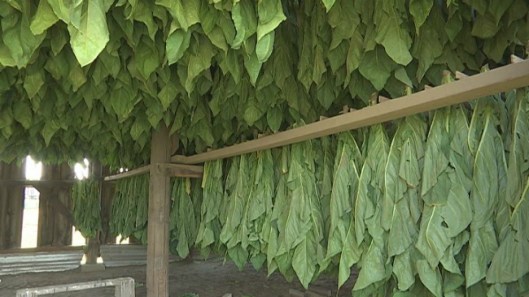
The next question, of course, is where this sugar came from.  Sugar is native to Southeast Asia, growing in tropical regions.  As far as we understand it, the Shire appears to be rather like southern England for climate, which means grains and things like hops, for beer, and perhaps even tobacco (in the United States, tobacco is grown as far north as Massachusetts), but nothing which requires a warmer, moister climate.

image21tobacco.jpg

Europe first began to receive its sugar (after tiny and very expensive exotic imports) in the 16th century from plants descended from cuttings from the Canary Islands and planted in the Caribbean by the agents of Christopher Columbus.  (The Portuguese did something similar in Brazil.)

Looking south on the map of Middle-earth, where would the climate allow for the growth of such plants?

image22map.jpg

Our best guess is to look as far south as we can—which is why, in our next posting, we want visit Harad and chat with those Corsairs of Umbar…

Thanks, as ever, for reading.

MTCIDC

CD

Peace! Count the Clock!

25 Wednesday Oct 2017

Posted by Ollamh in J.R.R. Tolkien, Literary History, Narrative Methods

≈ Leave a comment

Tags

ABC Alphabetical Railway Giude, Agatha Christie, anachronism, Bag End, Bradshaw's Railway Companion, clocks, Egyptian, feudalism, Gros Horloge, hour glases, Liverpool and Manchester Railway, Macbeth, Medieval, Normandy, Pope Sylvester II, railways, Rouen, Salisbury Cathedral clock, Shakespeare, sundial, The Lord of the Rings, Tolkien, Wapping tunnel, water clocks, Wells Cathedral

Welcome, as always, dear readers.

In our last, we puzzled over something in the entryway to Bag End.

image1bagend.png

It’s that thing to the left of the door.   It looks rather like a clock (which is what we thought before examining it more closely), but it is, in fact, a barometer—and a very puzzling thing for Bilbo to have, as we suggested.

On the right hand wall, however, there is another puzzling object:  an actual clock.

In our world, of course, this is no puzzle at all, clocks being so common.  In fact, our major way of indicating time in English is to say, “It’s 11 o’clock”, where “o’clock” is a contracted form of “of the clock”.  Even if, like many in our world, you get your time from your phone, you’ll still say this, won’t you?

image2cell.png

This has been the case since the 16th century, as we can see in Shakespeare’s plays—including moments when characters who live in times before clocks still talk about them, as in Macbeth, Act II, Scene 4, where Macbeth’s cousin, Ross, says to an Old Man, “By th’clock ‘tis day”, when the historical Macbeth lived in the 11th century AD, perhaps 200 and more years before clocks began to appear in western Europe.

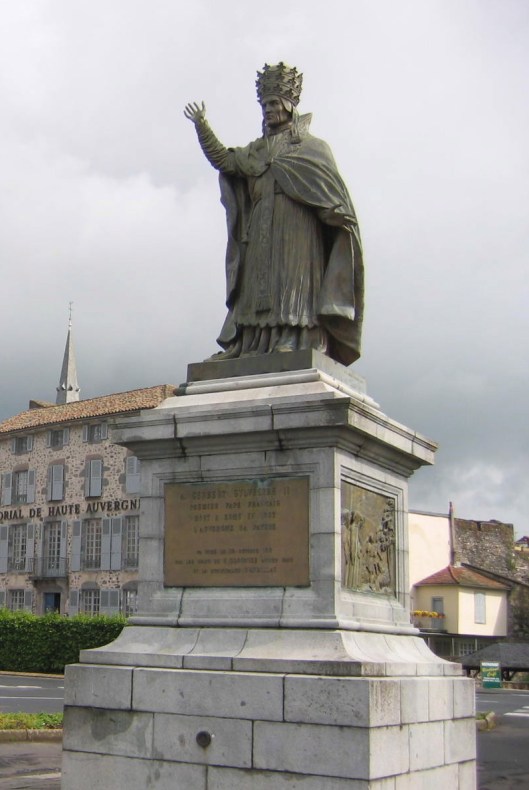
Although we’ve seen it regularly cited that Pope Sylvester II

image3sylvester2.jpg

invented the first mechanical clock in the 990s AD, we have yet to see anything in the way of concrete evidence that this is so.  Rather, we see the first clocks to have appeared in the later 14th century, including the Salisbury Cathedral clock, which perhaps dates from 1386.

image4salisbury

Likewise there is the clock of Wells Cathedral, tentatively dated to about the same time

image5wells.jpg

or the Gros Horloge in Rouen, in Normandy, whose internal workings date from 1389.


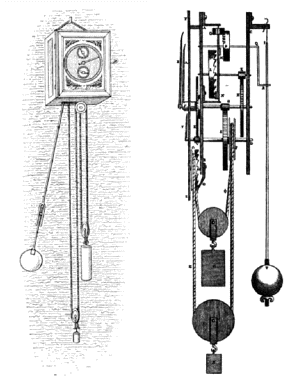
And the pendulum clock—which is what is visible on the right hand wall of Bag End—is an even later invention, credited to the Dutch scientist of the mid-17th century, Christian Huygens.

image7pendulumimage8huygens


Long before such devices, people marked time by such things as hour glasses (possibly medieval? Lots of discussion about this, but there is documentation that medieval ships’ captains began to use them)

image9hourglass.jpg

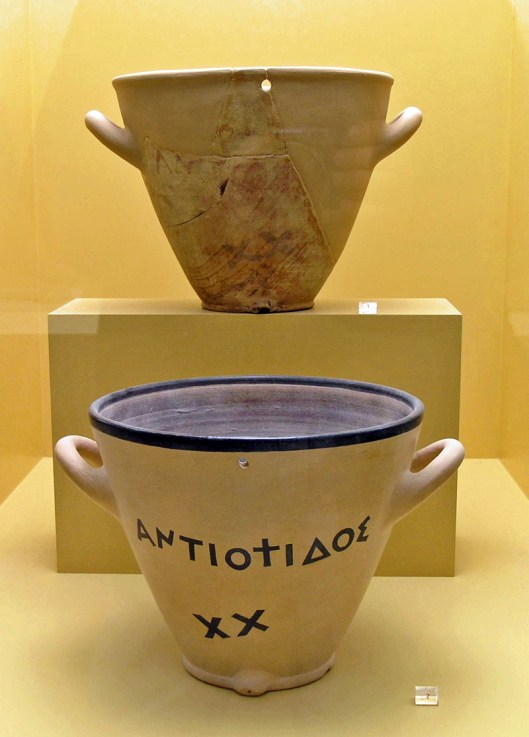
and water clocks (used in Athenian court rooms to control speeches—when citations of established law were read in court, the order was to “stop the clock”, as reading law as evidence clearly wasn’t considered to be part of a speech)

image10clepsydra.jpg

and even put the sun to work, using its moving shadow to tell the time.  (This is the earliest sundial we’ve seen—it’s Egyptian, from the 13th century BC)

image11egyptsundial.jpg

(And just a linguistic footnote on “telling time” as a sort of pun.  On the one hand, we read time off a device—and, if asked, aloud—so that we are “telling—that is reciting—the time”.  At the same time, an older usage of the verb “to tell” was “to count”.  This is preserved in the “teller” in a bank, by someone “telling” a rosary, and by “tolling” a bell.  It can also be seen in other Germanic languages, like Danish, which has the verb “taelle”, “to count”, and German, “zaehlen”.  So, when you “tell” time, you’re both deciphering the information from a device—possibly aloud—and doing so by counting.)

All of which leads us back to Bilbo’s clock, on a wall in the Shire.

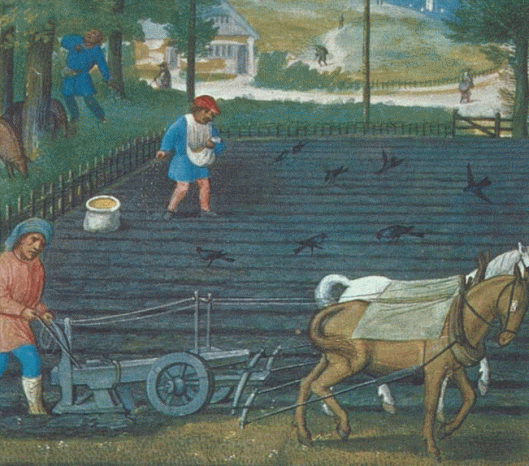
As far as we can tell, at the end of the Third Age, the Shire was primarily a non-feudal medieval agricultural world.

image12medievalplowing.gif

Such worlds are, considering how much the sun is involved in growing things like grain,

image13medreaping.jpg

governed by daylight, which is, on the whole, easy to mark and measure.  (A difficulty for sundials, of course, is that the sun changes position throughout the year and the hours of daylight can vary greatly.  Perhaps this is why there is a famous sundial motto:  “Horas non numero nisi serenas”—“I count only the fair—that is, sunny—hours”.)

image14sundial.jpg

So why is there a pendulum clock on that wall?

A partial answer might be the same as that for the barometer:  JRRT is recreating something from his own past, or even from his present—the big dial looks later to us than the 1890s.  Just as in the case of that reference to Bilbo shrieking “like the whistle of an engine coming out of a tunnel” (The Hobbit, Chapter One, “An Unexpected Party”), it mirrors Tolkien’s own world—a world in which railways in Britain were a major influence on changes in marking time.

Railways had begun to appear in 1830, with the Liverpool and Manchester Railway.

image15earliestrr.jpg

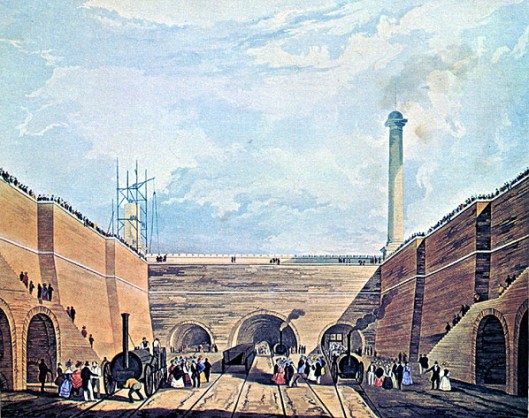
(And here, by the way, is an engineering marvel of the time—the 1.25-mile long Wapping tunnel, dug to allow the railway’s passage into Liverpool and the first such tunnel to be constructed under a city.  Seeing this 1831 illustration, it’s easy to imagine what kind of shriek Bilbo must have made!)

image16wappingtunnel.jpg

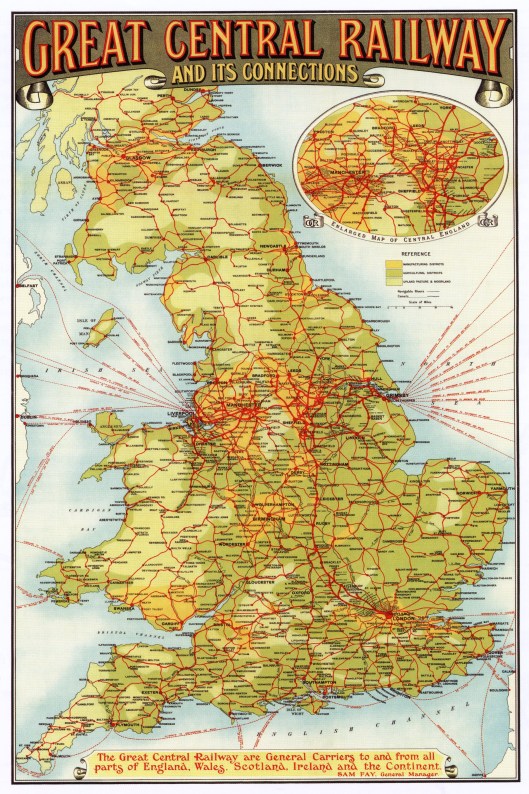
By 1840, building and traffic had increased dramatically and, as the rail lines stretched across England, an awkwardness appeared:  there was no uniform time standard.  Towns close to each other might share the same time, but those between London and Liverpool, say, had their own methods of marking time and so attempting to produce a dependable schedule for a train’s journey was nearly an impossibility along the 178 miles (287km) between the two cities.

image17railwaymap.jpg

Those in charge of the early railways quickly saw the difficulty and began, as early as 1840, to standardize the measurement of time along their routes.  By the late 1850s, standardization had been mainly achieved—although it was only in the 1880s that the government stepped in to complete the progress.

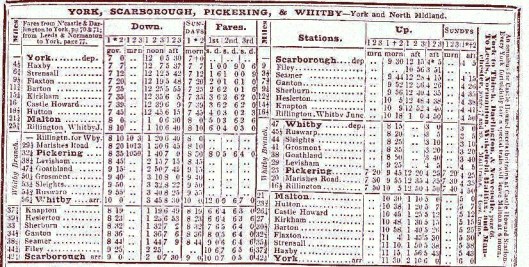
This regularizing of time produced, on the one hand, standard railway timetable books, like Bradshaw’s Railway Companion

image18abradshaw.jpg


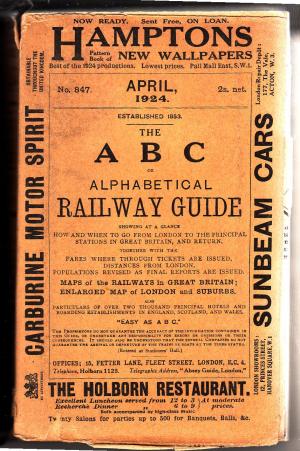
(first published in 1839 and often consulted by Watson and Holmes on their extra-London adventures) and The ABC Alphabetical Railway Guide

image18rrguide1924.jpg


(first published in 1853 and the basis of Agatha Christie’s 1936 novel, The ABC Murders).  On the other hand, it also produced standardized time in general, eventually going global, something which the industrial revolution increasingly demanded as part of its production cycle and now so deeply ingrained that virtually everything we do is influenced by it and we even incorporate it into our bodies, either tying it to our wrists

image19earlywatch.jpg

or wear it as part of our clothing.

image20cellinpocket.jpg

Work, school, even fun (movies begin on time schedules, television is one long schedule, as well as certain elements of the internet—although the internet does offer the subversive possibility of doing things “on your own time”), all of it moves to the measured tick of time.   In 1937, the year after Agatha Christie’s novel based upon railway timetables was published, JRRT would have felt it, from his lecture schedule to the evening radio broadcasts of the BBC.

Almost as if it were a gathering force of the MODERN WORLD, then, the measurement and standardization of time has crept up, from the later medieval world on.  We can see that Shakespeare was influenced by it—in Julius Caesar (1599?), Act II, the jumpy Brutus and Cassius listen to the sound of a clock striking three—in a world where there would be no clocks to strike for almost 1400 years (but providing us with the title of this post).  Is it any wonder, then, that clocks could have slipped into Middle-earth?  And, besides, they do have a use for Bilbo—how else could he shout to the dwarves as he left them, “If ever you are passing my way…don’t wait to knock!  Tea is at four…” (The Hobbit, Chapter Eighteen, “The Return Journey”)?

Thanks, as ever, for reading.

MTCIDC

CD

About That PS

18 Wednesday Oct 2017

Posted by Ollamh in J.R.R. Tolkien, Narrative Methods

≈ Leave a comment

Tags

anachronism, Bag End, banjo clock, barometer, clocks, Edwardian, Evangelista Torricelli, Hobbiton, Lucien Vidie, Middle-earth, Oxford, railway, The Hobbit, The Lord of the Rings, Tolkien, Victorian

Welcome, as always, dear readers.

In a PS to our last posting, we showed this illustration

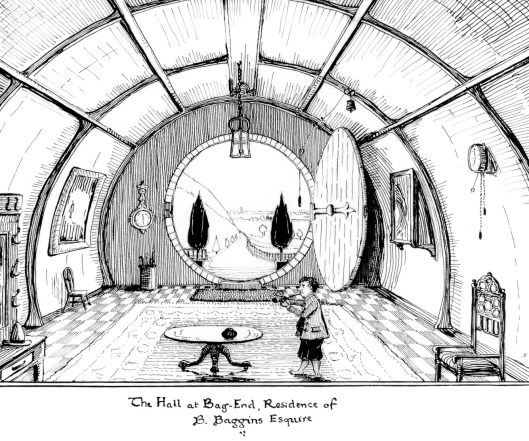
image1bagend.jpg

and asked you if you saw something peculiar about it.

In fact, there are two peculiar things about it.  Look to the left of the door.  What is that?   At first, we were inclined to imagine that it was a clock of a style known as a “banjo clock”.

image2banjoclock.jpg

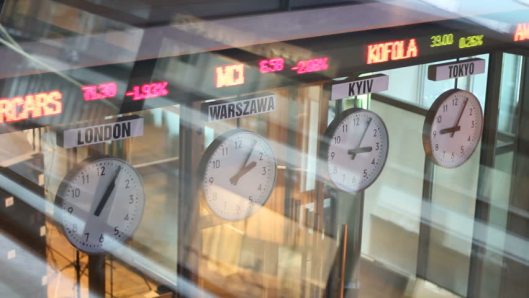
But there was also a clock on the right hand wall, and, unless Bag End was like a stock exchange, with clocks showing various times around the world,

image3stockclocks.jpg

(image the one on the left being “Shire Time”, while the one on the right is “Mordor Time”!)

why would Bilbo have two clocks?

There’s also the technical problem:  banjo clocks—maybe all clocks?—which have pendulums need to use gravity to help in their swing.  If the object on Bilbo’s wall is a clock, it’s upside down and therefore—

and so, after lots of searching to see if we could match it somehow, we were scratching our collective heads when we realized that it wasn’t a clock at all, but a barometer—and a distinctively Victorian one, which fits in with our suggestion in a recent posting that JRRT was using his memories of his Victorian/Edwardian childhood as the basis of Bag End.

image4vicbar.jpg

So, what’s a barometer and why might Bilbo have one?

The simplest answer to the first of those is that a barometer measures atmospheric pressure.  That measurement, in turn, can tell you about changes in weather:  low pressure, it’s more likely to rain, high pressure, not.  Here’s a basic chart to explain.

image5airpressure.jpg

One odd thing about Bilbo’s is that, commonly, barometers are combined with thermometers in patterns of the sort you see on the Bag End wall, whereas this one appears to be by itself.

image6bar.jpg

The really odd thing, however, is that he has one to begin with.  The first barometers date from the 1640s, being an offshoot of trying to understand the concept of a vacuum.

image7aboutvacuums.png

It was only in the 1840s that someone (Lucien Vidie) postulated that air pressure changes—measurable by this device– could signal weather changes.  For Bilbo to have such a thing in a Middle-earth which appears to be almost entirely devoid both of science as we understand it and of mechanical technology, is a puzzle at best.   Who made it?  How did he obtain it?  And last—and hardest—what did he do with it?

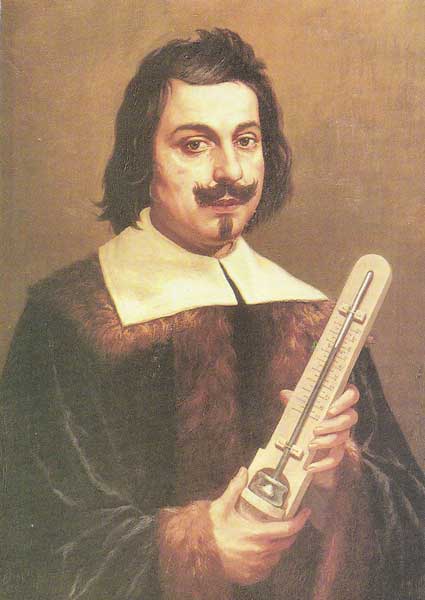
Of course, as we have discussed in past postings, there are whole areas of knowledge about Middle-earth about which we have little or no information and it’s been fun for us to try to reconstruct things using parallels from our own world, combined with the little we do know.  That first barometer was, we presume, handmade by Evangelista Torricelli (1608-1647).

image7atorricelli.jpg


It appears to have been, basically, a long glass tube, attached to a piece of wood by white metal fittings.  The hobbits have glass windows, so the art of glass-blowing exists in their world.  The wood and metal could be used in many other settings.  Once the concept was understood, it would be easy to see someone taking already available techniques and materials and creating the object.

But who made it?  When it came to ingenuity in craft, JRRT suggests the dwarves—with the men of Dale as fellow-workers or perhaps as middlemen.  As Thorin says of the past:

“Altogether those were good days for us, and the poorest of us had money to spend and to lend, and leisure to make beautiful things just for the fun of it, not to speak of the most marvelous and magical toys, the like of which is not to be found in the world now-a-days…the toy market of Dale was the wonder of the North.” (The Hobbit, Chapter One, “An Unexpected Party”)

How did Bilbo acquire it?  He had come to be known in Hobbiton as unlike other hobbits—his mother, after all, was the famous Belladonna Took (for her history—or, rather, her mystery–see The Hobbit, Chapter 1) and, after his travels, “he took to writing poetry and visiting elves”.  Perhaps the barometer came from one of his trips?  Or had it been sent to him?

If we take the preparations for the famous joint-birthday-party at the opening of The Lord of the Rings as a clue, there must have been at least a small degree of commerce between the Shire and the dwarves of the Lonely Mountain and the rebuilt town of Dale:

“On this occasion the presents were unusually good…There were toys the like of which they had never seen before, all beautiful and some obviously magical.  Many of them had indeed been ordered a year before, and had come all the way from the Mountain and from Dale, and were of real dwarf-make.” (The Fellowship of the Ring, Book One, Chapter 1, “A Long-Expected Party).

But then there is that third question:  what did he do with it?  As far as we can currently determine from The Hobbit and The Lord of the Rings, neither Bilbo nor Frodo nor even Gandalf ever mentions a barometric reading, or is concerned that the pressure is dropping.

So what are we to make of this?

For all that JRRT was increasingly careful about this, there a few anachronisms in his work.  In The Hobbit, there is the well-known one of Bilbo’s reaction to Thorin’s explanation of the dangers of future burglary:

“At may never return he began to feel a shriek coming up inside, and very soon it burst out like the whistle of an engine coming out of a tunnel.” (The Hobbit, Chapter One, “An Unexpected Party”)

Although JRRT himself considered changing this for the 1966 revision, Douglas Anderson, in The Annotated Hobbit, 47-48, argues that this doesn’t have to be an anachronism at all:

“…for Tolkien as narrator was telling this story to his children in the early 1930s, and they lived in a world where railway trains were a very important feature of life.”

In fact, built in 1844, the first railway station in Oxford was almost a century old when The Hobbit was published in 1937.

image8grandpointstation.JPG

(And we can’t resist this quotation from Jackson’s Oxford Journal for 15 June, 1844, which describes the arrival of the first train as “one of those rampageous, dragonnading fire-devils”.  Clearly, dragons and railroads have a long history together!)

So, is this just a slip on JRRT’s part?  Perhaps he had a barometer in his past, next to a door, and, in his urge to fill up the wall space of Bag End, he simply filled in what he already knew?  We can only shrug—and, in our next, wonder about that clock on the wall to the right:  what’s it doing in Middle-earth?

Thanks, as ever, for reading.

MTCIDC

CD

Are You Sitting Down?.2 (Some Thrones, but No Games)

11 Wednesday Oct 2017

Posted by Ollamh in Economics in Middle-earth, J.R.R. Tolkien, Literary History, Narrative Methods

≈ Leave a comment

Tags

A Game of Thrones, Bag End, basins, Bree, British monarchs, Buckland, canopy, cart, Cirith Ungol, Coronation Chair, Coronation Throne, Crick Hollow, Edoras, Edward I, Edward VII, Edward VIII, Edwardian, Elizabeth II, Elrond's house, Furniture, George V, George VI, Gondor, high table, Iron Throne of Westros, Lia Fail, Lothlorien, Medieval, Middle-earth, Minas Tirith, monopodium, Moot Hill, parlor, pubs, Rivendell, Rohan, Shire, Stone of Scone, Tara Ireland, The Hobbit, The Lord of the Rings, The Prancing Pony, the Stone of Destiny, throne, Tolkien, Tom Bombadil, UK pubs, Victorian Bedroom, Victorians, washstand

Welcome, dear readers, as always.

In our last, we were talking about furniture in Middle-earth—in that post our subject was The Hobbit.  We continue with The Lord of the Rings and conclude with one specialized piece of furniture.

We begin where we began last time, with Bag End.

image1bagend.jpg

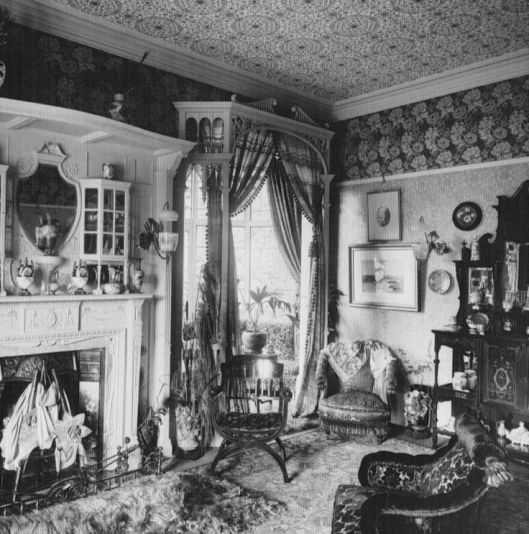
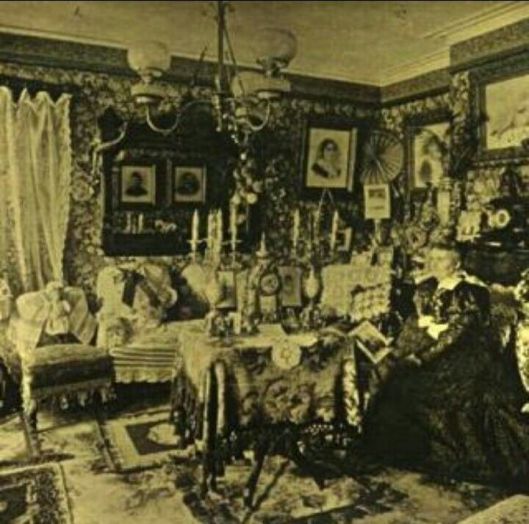
With all of its rooms and the stuff in them, we suggested then that what JRRT was really doing was depicting the kind of overcrowded place later Victorians and Edwardians—the people with whom he, born 1893, would have grown up around—would have preferred.

image2vicparlor.jpg

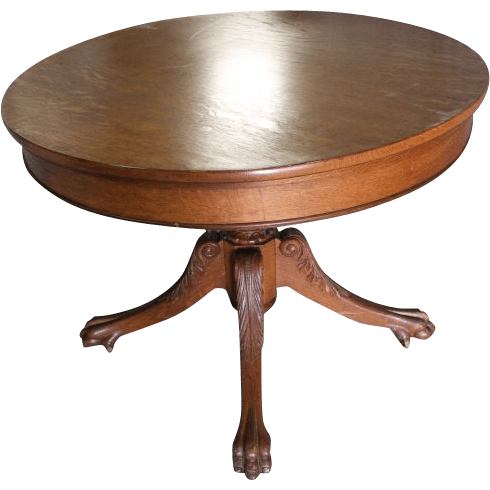
[Note, by the way, the table in the middle of the entryway in Tolkien’s picture of Bag end, and compare it with this “monopodium” table with claw feet, which could be seen in such a parlor.]

image3monopodium.png

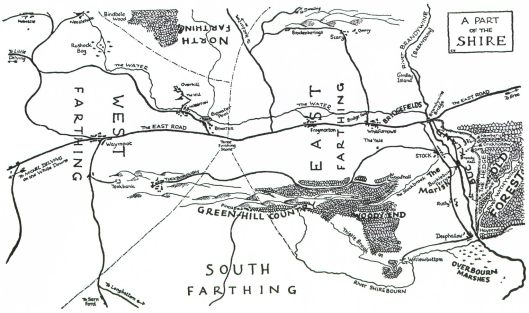
Once the three Hobbits leave Bag End for their journey to Crick Hollow,

image4shiremap.jpg

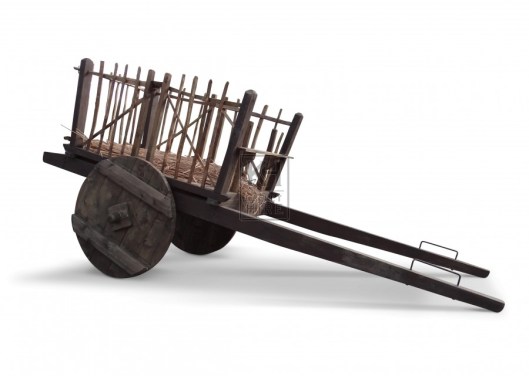
having sent “two covered carts…to Buckland, conveying the goods and furniture…” (and the next day sending off another) (The Fellowship of the Ring, Book One, Chapter 3, “Three is Company), they will spend a great deal of time walking (and paddling and riding), but will enter few buildings.  Here, by the way, is a cart—we imagine “covered” simply means that a blanket of some tough coarse fabric, like canvas, (called a “tilt”) would have been pulled over the load.

image5cart.jpg

Our chances of getting much furniture detail are not high, then, but let’s see what we find.

Beyond Buckland, the first indoors for the hobbits is Tom Bombadil’s house.  As the hobbits enter, they are in:

“…a long low room, filled with the light of lamps swinging from the beams in the roof; and on the table of dark polished wood stood many candles, tall and yellow, burning brightly.

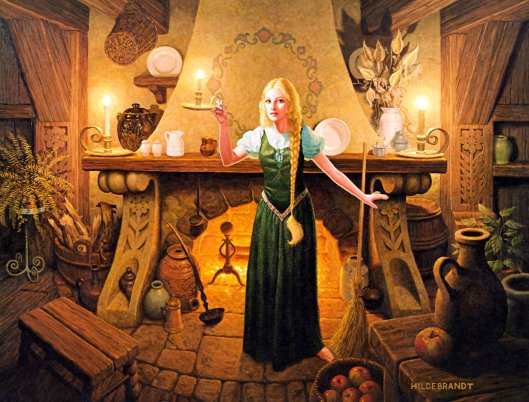
In a chair, at the far side of the room facing the outer door, sat a woman…” (The Fellowship of the Ring, Book One, Chapter 7, “In the House of Tom Bombadil”)

image6agoldberry.jpg

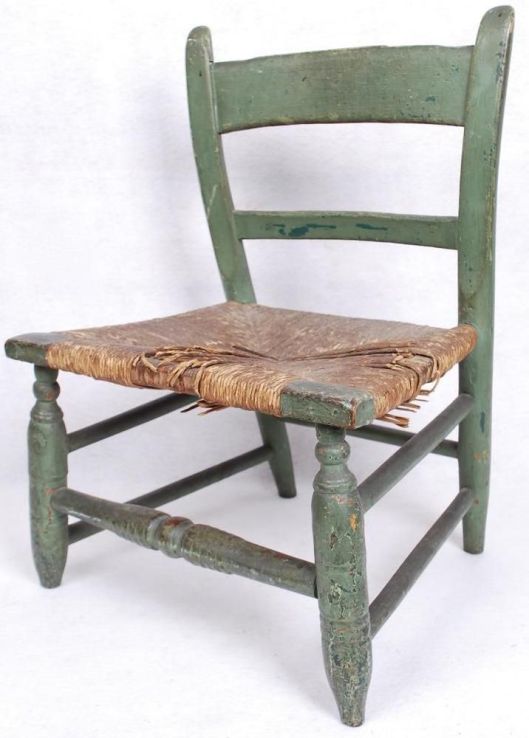
The hobbits are given “low rush-seated chairs”.

image6rushseatchair.jpg

And, shortly, are shown their bedroom:

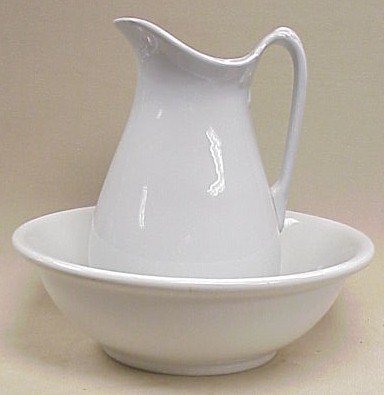
“They came to a low room with a sloping roof…There were four deep mattresses…laid on the floor along one side.  Against the opposite wall was a long bench laden with wide earthenware basins, and beside it stood brown ewers filled with water…”

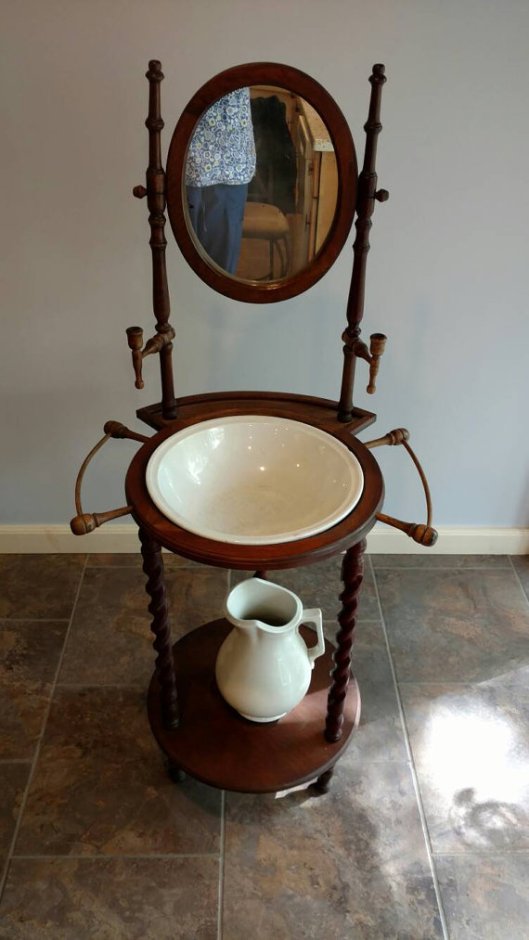
Not much to go on here.  We’ll presume that the bench is wooden and plain, and the basins and ewers (a big pitcher—ultimately from Latin aquarius, “having to do with water”) are of the kind one would have seen in a Victorian bedroom, when indoor bathrooms were still only a wish—or were only in the homes of the extremely wealthy.

image7ewer.jpg

[Victorians, by the way, could have specialized places for such pitcher/basin combinations.  They’re called “washstands” and here’s a simple but functional one.]

image8awashstand.jpg

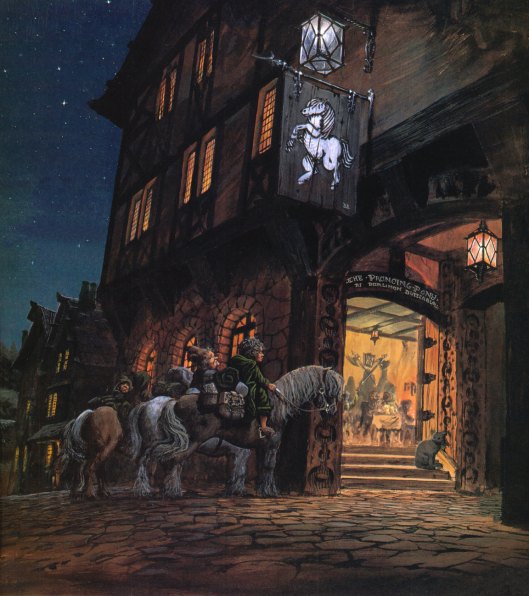
Next on their journey (we won’t count the barrow—although the Wight does mention a “stony bed”) is the Prancing Pony.

image8prancingponey.jpg

Again—what we have is functional.  The hobbits are initially led to what the landlord, Barliman Butterbur, calls “a nice little parlour” where “There was a bit of bright fire burning on the hearth, and in front of it were some low and comfortable chairs” and “a round table, already spread with a white cloth”. (The Fellowship of the Ring, Book One, Chapter 9, “At the Sign of the Prancing Pony”)

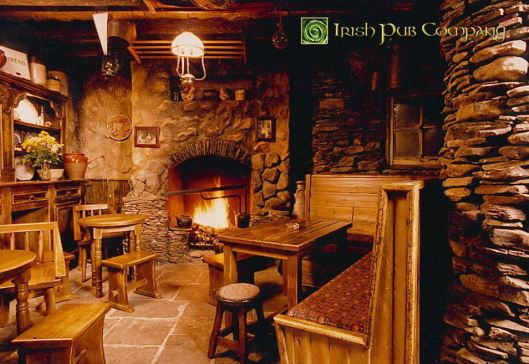
This sounds like a small, private room, found in some UK pubs, and called a “snug” (etymology unclear—but used to mean “comfy” as early as the 1620s).  Here’s one, in fact, from an Irish pub.  (We don’t advertise—this was simply the image which fit best with both our impression and the book.  And “fit best” does a double duty here, as “snug” can also mean “fitting tightly”.)

image9snug.jpg

The same will be true of the bedroom the hobbits don’t use—and just as well!—plain and nondescript.

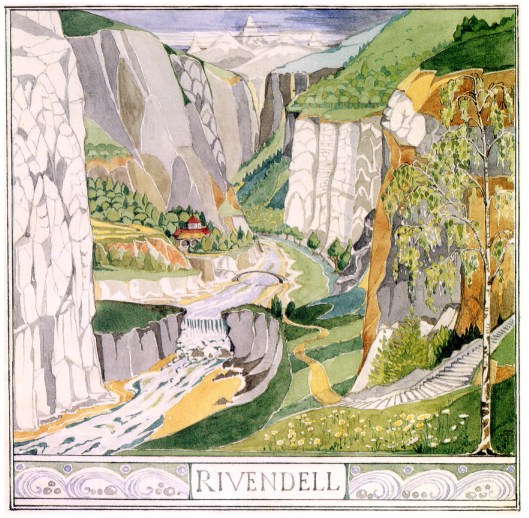
So when, if ever, are we given something with more detail?  If not in Bree, perhaps in Rivendell?

image10rivendell.jpg

Frodo comes to in a generic bed, but the “hall of Elrond’s house” is a bit more promising:

“Elrond, as was his custom, sat in a great chair at the end of a long table upon a dais…In the middle of the table there was a chair under a canopy…” The Fellowship of the Ring, Book Two, Chapter 1, “Many Meetings”)

A “dais” is a raised platform.  If you’re a Harry Potter fan, you’ll remember it at “High Table” (as it’s called in English schools), where the students of the four different colleges meet to dine and the faculty sit on such a platform.

image11hightable.jpg

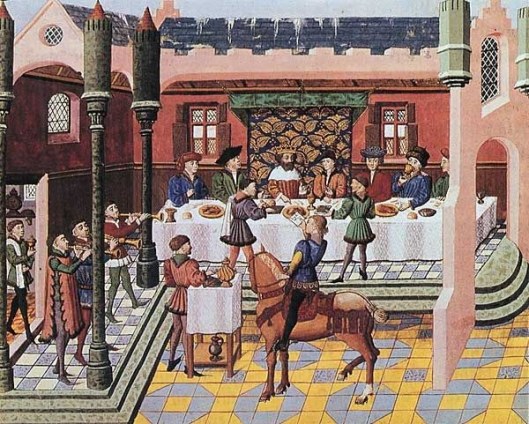
This is a left-over medieval custom, when royalty/nobles sat on a kind of stage, above the lesser folk, for formal meals.

image12feast.jpg

(Oh—and don’t ask about the horse—but it wasn’t required.  Horse and rider do appear at a banquet, of course, in the 14th-century poem “Sir Gawain and the Green Knight”—which JRRT once edited.)

image13agawaingreen.jpg

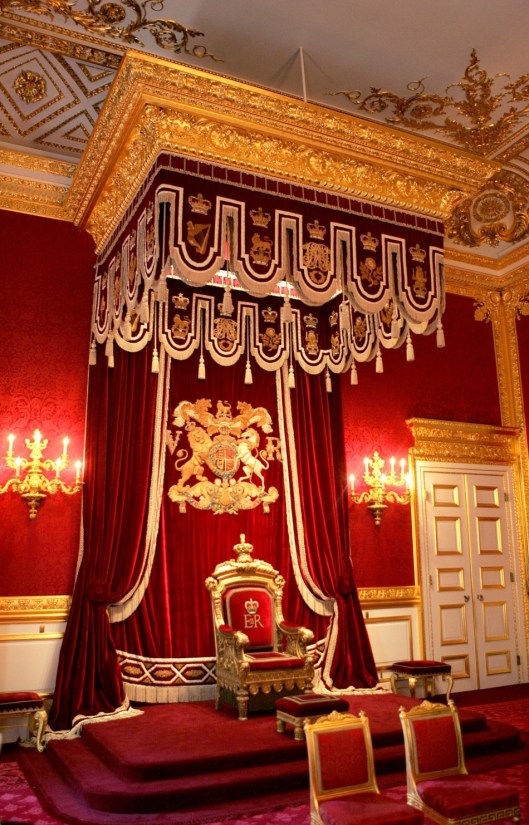
And that “chair under a canopy” reminds us of thrones with canopies, like this at the Palace of St. James, in London.

image13thronecanopy.jpg

Which brings us to the subject of thrones, in general.  After Rivendell, indoors will consist of Lothlorien

image14lorien.jpg

for the fellowship, then nothing for Sam and Frodo till Faramir’s cave hide-out and, beyond, the Tower of Cirith Ungol

image15towercirithungol.jpg

Hardly places to find any furniture beyond the functional!

For the others, we have Edoras

image16edoras.jpg

and Minas Tirith.

image17minastirith.jpg

And here we want to conclude by discussing a similar piece of furnishing in each—those thrones.

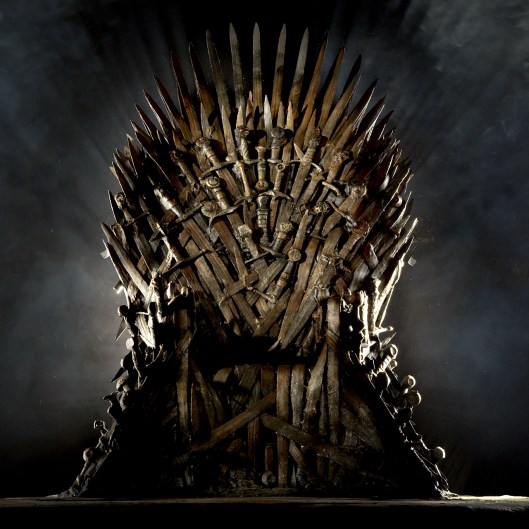
These days, when we say or write “thrones”, well, what comes immediately?  A Game of Thrones and the Iron Throne of Westeros.

image18ironthrone.jpg

The thrones of Rohan and Gondor are a bit less complicated.

Theoden’s is described simply as “a great gilded chair” on a “dais with three steps”.  (The Two Towers, Book Three, Chapter 6, “The King of the Golden Hall”).

Here’s Allen Lee’s interpretation

image19alee.jpeg

and here is the Hildebrandts’.

image19bhild.jpg

The throne of Gondor is just a tiny bit more elaborate:

“At the far end upon a dais of many steps was set a high throne under a canopy of marble shaped like a crowned helm…” (The Return of the King, Book Five, Chapter 1, “Minas Tirith”)

Here’s an image from the film.

image19cthroneroom.jpg

But wait—there’s no one on it.  Let’s look lower:

“At the foot of the dais, upon the lowest step which was broad and deep, there was a stone chair, black and unadorned, and on it sat an old man gazing at his lap.”image19ddenethor.jpg

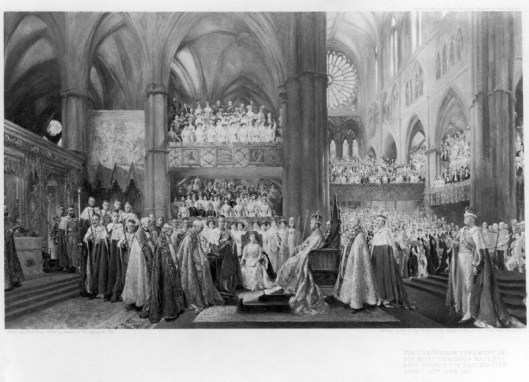
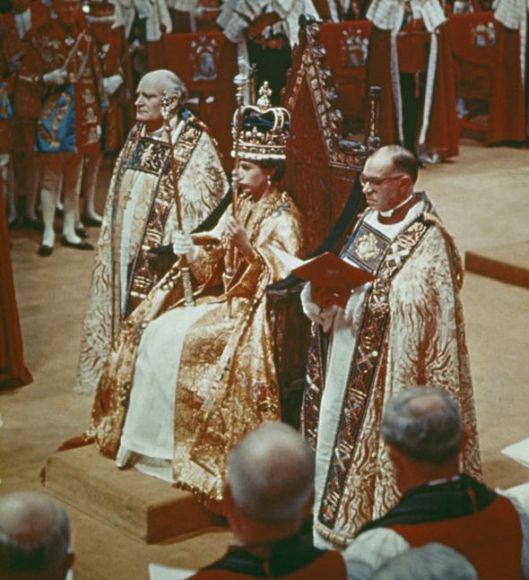
During his lifetime, JRRT would have seen the coronation of five British monarchs:

Edward VII

image19ed7.jpeg

George V

image20geo5.jpg

Edward VIII

image21ed8.jpg

George VI

image22ageo6.jpg

and the current monarch, Elizabeth II.

image22liz2.jpg

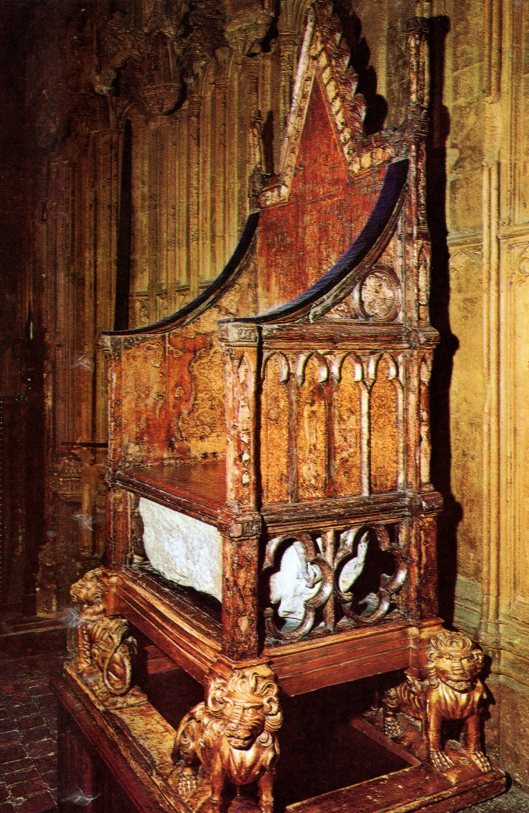
You’ll notice that, in every case, the throne is the same.

image23throne.jpg

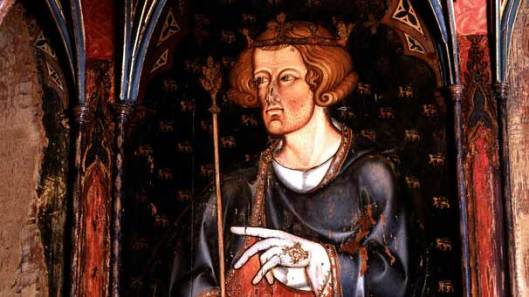
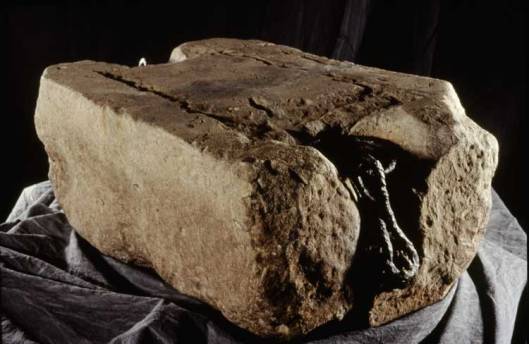
This is the so-called “Coronation Chair”, built between 1297 and 1300 and used since for crowning English monarchs.  It was especially commissioned so that it could hold the “Stone of Scone” (pronounced “skoon”—not like the pastry).  This was an ancient piece of Scottish royal history which Edward I,

image24ed1.jpg

in an effort to control Scotland, had stolen from its place on Moot Hill, near the Abbey of Scone.

image25sconeabbey.jpg

Supposedly, it was a stone used in the crowning of Scottish kings back to the time of the first one, or that it was even older, having been lugged from Tara, in Ireland, where, under the name “Lia Fail”, “the Stone of Destiny” it was used in coronation ceremonies there.  Its purpose was confirmation:  tradition had it that, when the true king bestrode it (a great old verb form), it gave a great shout.

image26liafail.jpg

As far as we know, no shouting has been reported, over the centuries—perhaps because it’s being used for English kings and therefore the stone is holding its tongue till it’s taken back to wear it belongs?

What do you think, dear readers?

Thanks, as ever, for reading.

MTCIDC

CD

PS

And did you notice something(s) out of place in JRRT’s drawing of Bag End?  We’ll talk about it in our next…

image1bagend


Are You Sitting Down.1?

04 Wednesday Oct 2017

Posted by Ollamh in Imaginary History, J.R.R. Tolkien, Narrative Methods

≈ Leave a comment

Tags

19th Century, An Introduction to Old Norse, Bag End, Beorn, Charles Dodgson, E.V. Gordon, Edwardian, Elvenking, Furniture, Goblins, Hildebrandts, House, Iron Age Farmhouse, Lewis Carroll, Listen with Mother, Master of Laketown, Monty Python, Norse house, Sackville-Bagginses, The Hobbit, Through the Looking-Glass, Tolkien, Victorians

Welcome, dear readers, as always.

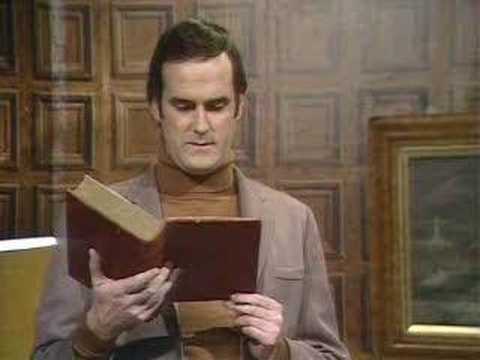
Several times, Monty Python skits included the pattern, “Are you sitting comfortably?  Then I’ll begin.”

image1a.jpg

It was clear, when we first heard it, that, like so much of Python material, it was one of those references which an audience in Britain in the early 1970s would have understood immediately and chuckled at, but it was only with the advent of the all-knowing Wikipedia that the reference came clear to us.  (Here’s a LINK, so that, if you don’t know it already, you, too, can be suitably enlightened.)

But it made us think—not everything does, we promise!—of Tolkien and what must sound like a very odd subject—furniture.

Furniture?

Consider Bilbo’s Bag End:

“The Door opened on to a tube-shape hall like a tunnel:  a very comfortable tunnel without smoke, with paneled walls, and floors tiled and carpeted, provided with polished chairs, and lots and lots of pegs for hats and coats…The tunnel wound on and on, going fairly but not quite straight into the side of the hill—The Hill, as all the people for many miles round called it—and many little round doors opened out of it, first on one side and then on another.  No going upstairs for the hobbit:  bedrooms, bathrooms, cellars, pantries (lots of these), wardrobes (he had whole rooms devoted to clothes), kitchens, dining-rooms, all on the same floor, and indeed on the same passage…” (The Annotated Hobbit, Chapter 1, “An Unexpected Party”)

Here is JRRT’s version of the entryway–with Bilbo—or is that JRRT himself?  There appears to be a strong resemblance…

image2a.jpg

image2bilbo.jpg

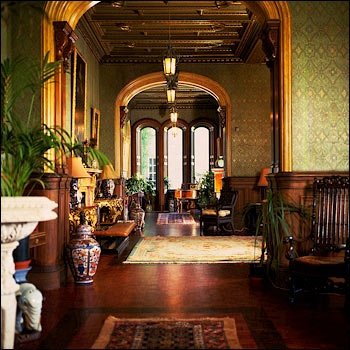
As the narrator tells us, “This hobbit was a very well-to-do hobbit…”, but, at the same time, we could easily see this description (ignoring the fact that it’s about a hole, albeit “not a nasty, dirty, wet hole…nor yet a dry, bare, sandy hole…it was a hobbit-hole, and that means comfort”) applied to the kinds of late-Victorian/Edwardian interiors with which Tolkien was familiar.

image3hall.jpg

People of this world—middle-class England—seem to have loved to live among piles of possessions—heavy furniture, thick carpets, heavy drapes, and knickknacks galore.

image4.jpg

(Oh–and swords, apparently.)

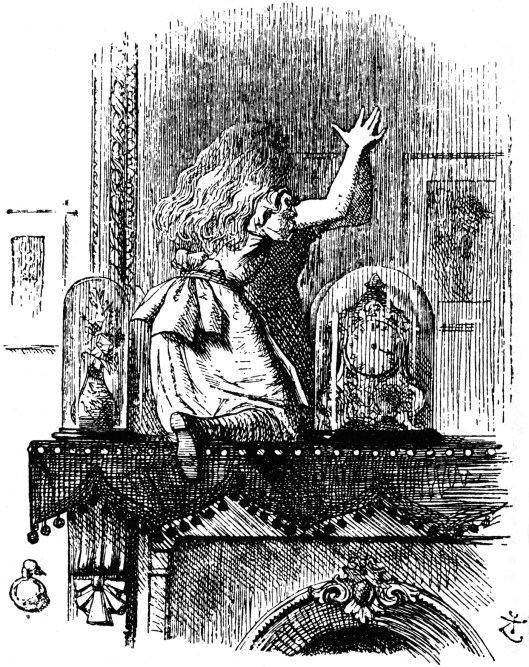
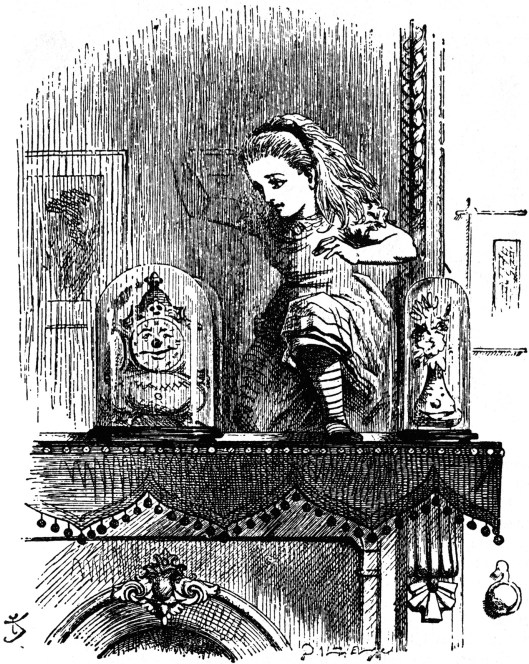
To us, this has a slightly claustrophobic effect—and we imagine that it may be why Alice in Through the Looking-Glass (1871) attempts to escape it–

image5lookingglasshere.jpg

only to find herself in a distorted version of the same room on the other side of the mirror.

image6lookingglassthere.jpg

[Here’s the actual mirror, from the childhood home of the real Alice, which is said to have inspired Charles Dodgson/Lewis Carroll to write a sequel to the first Alice book.]

image7alicemirror.jpg

What about other Middle-earth interiors, beginning in The Hobbit?

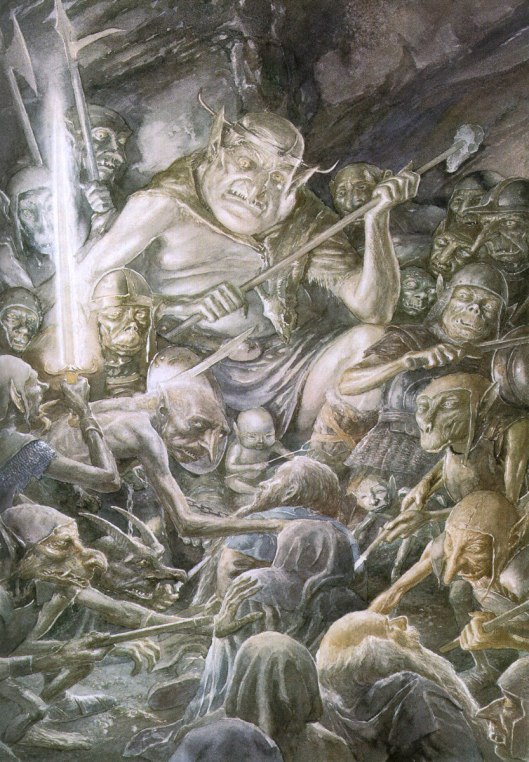
Surprisingly, there is really nothing before the Dwarves and Co. reach Beorn’s house.  There is no description of any inside in Rivendell and, beyond that, the only “indoors” we see before Beorn is the main cave of the goblins and the only “furniture” is this:

“There in the shadows on a large flat stone sat a tremendous goblin…”  (The Hobbit, Chapter 4. “Over Hill and Under Hill”)

image8goblinstone.jpg

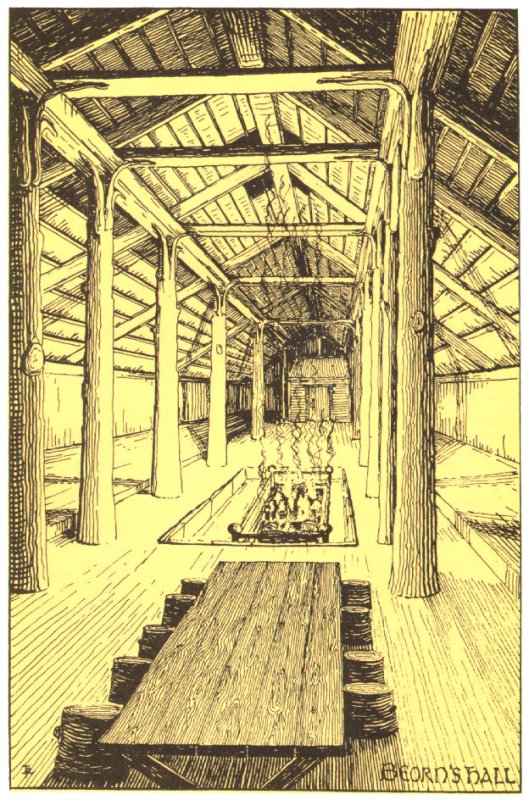
Beorn’s house, as we see in Anderson’s The Annotated Hobbit (170-171), appears to be based upon an illustration to be found in E.V. Gordon’s An Introduction to Old Norse (1927) (with an older history yet—see Anderson, 171).

image9beornshall.jpg

The Hildebrandts saw Beorn’s house as rather like a giant log cabin,

image10aabeornshouse.jpg

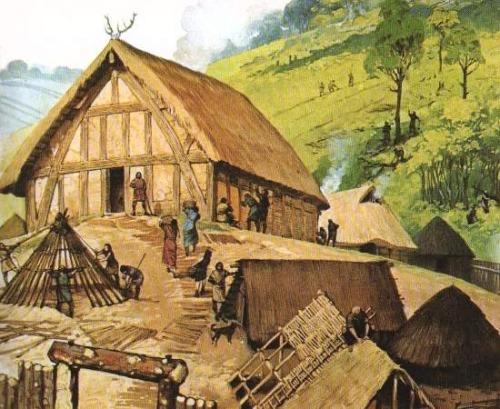
but we imagine the outside of Beorn’s house to look rather more like this view of an Iron Age farmhouse

image10bb.jpg

And here’s a reconstruction of a Norse house interior which is a little more “lived-in”, to give you the idea of what Beorn’s house might look like day-to-day (without the magic animals, unfortunately).

image10bvikinghall.jpg

As Tolkien’s illustration shows, however, this is hardly based upon a Victorian parlor!  As the narrator describes it (with magic animals as the kitchen staff):

“Quickly they got out boards and trestles from the side walls and set them up near the fire…Beside them a pony pushed two low-seated benches with wide rush-bottoms and little short thick legs for Gandalf and Thorin, while at the far end he put Beorn’s big black chair of the same sort…These were all the chairs he had in his hall…What did the rest sit on?…The other ponies came in rolling round drum-shaped sections of logs, smoothed and polished, and low enough even for Bilbo…” (The Hobbit, Chapter 7, “Queer Lodgings”)

Beyond Beorn’s house, there is mention that the Elvenking sat “on a chair of carven wood” (The Hobbit, Chapter 9, “Barrels Out of Bond”) and the Master of Laketown has a “great chair” (The Hobbit, Chapter 10, “A Warm Welcome”), but we have come deeper into the Middle-earth/medieval world, it seems, where furniture (at least in the narrator’s view) is sparse and we will only begin to see more abundance, at least in a general way, when we return to the Shire and the unwelcome event of the auction of Bilbo’s possessions on June 22nd:

“The legal bother, indeed, lasted for years…and in the end to save time Bilbo had to buy back quite a lot of his own furniture.” (The Hobbit, Chapter 19, “The Last Stage”)

“Furniture” is, unfortunately, a vague word, mentioned just previously in relation to the Sackville-Bagginses who were “busy measuring his [Bilbo’s] rooms to see if their own furniture would fit.”  We’ll have to make do here with our original idea of Bilbo the Middle-earth Victorian’s house,

image10vicparlor.jpg

but, in our next, we’ll have a look at households (and palaces) in The Lord of the Rings, to see what we may find (and we have a hunch the inventory will include a quantity of thrones…)

Thanks, as ever, for reading!

MTCIDC

CD

The Nazgul Brothers?

27 Wednesday Sep 2017

Posted by Ollamh in J.R.R. Tolkien, Military History, Military History of Middle-earth, Narrative Methods

≈ Leave a comment

Tags

aircraft, anti-aircraft gun, Aviation, Bellerophon, bombers, British Army, dogfights, Dragons, early airships, flight, flying machines, Great War, harpies, Hermes, machine gun, manoeuvres, military intelligence, Nazgul, Paris, Pegasus, Schlieffen Plan of 1914, Sir Douglas Haig, Sir James Grierson, The Blitz, The Lord of the Rings, Tolkien, trench fever, trenches, Wraiths, Wright Brothers, WWI Trenches

Welcome, dear readers, as ever.

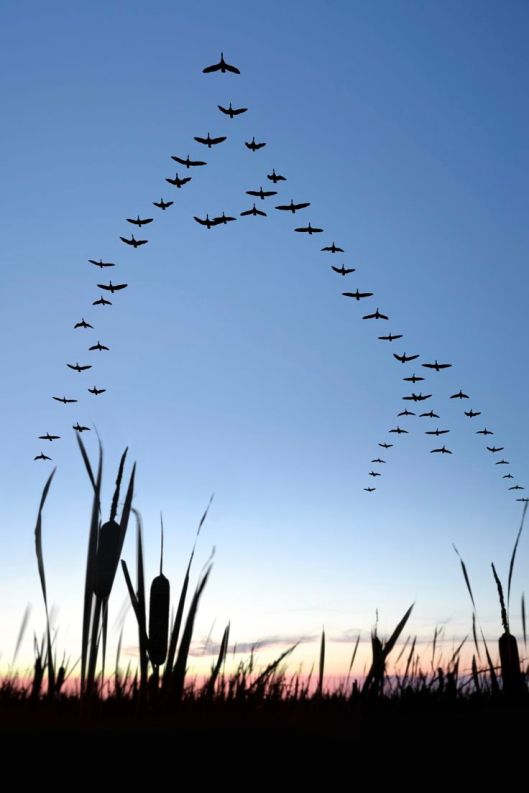
Imagine a world where there were no airports, no contrails, no roar of engines, no small silver objects crossing the skies, the sound of their flight trailed behind them.  The only flying things would be birds and those in different seasons, some permanent, some migratory (or used to be—where we live in North America the Canada Geese, whose great chevrons across our skies used to be powerful signs of winter to come or spring soon to appear, now squat here year round).

image1geese.jpg

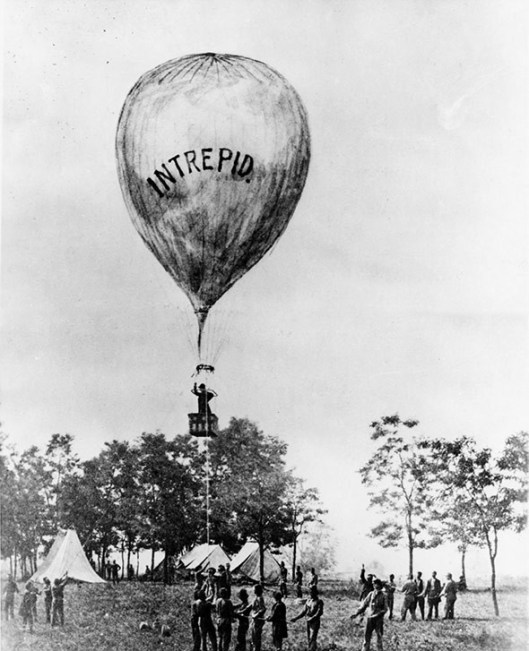
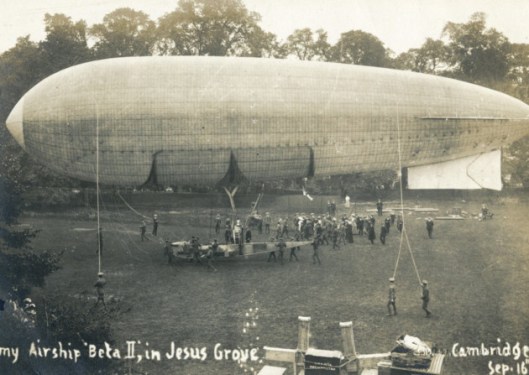
This would have been England in 1892, the year JRRT was born.  There were early airships—basically big balloons of various sorts, but they were primarily stationary and used for (limited) military intelligence.

image2intrepid.jpeg

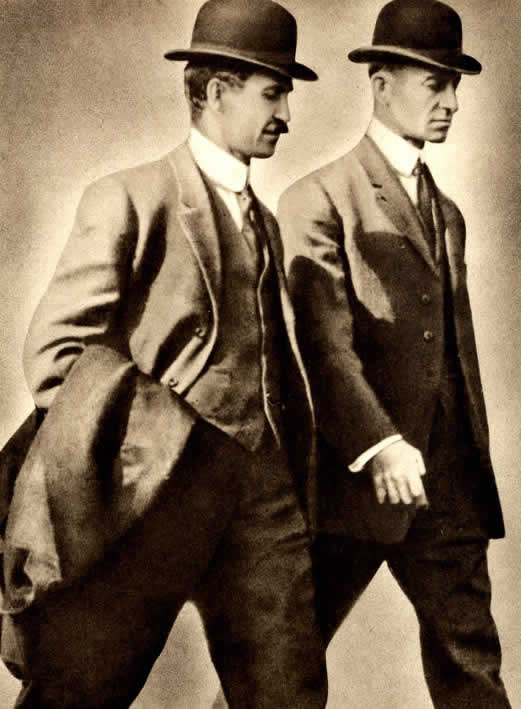
Then came the Wright brothers

image3wrights.jpg

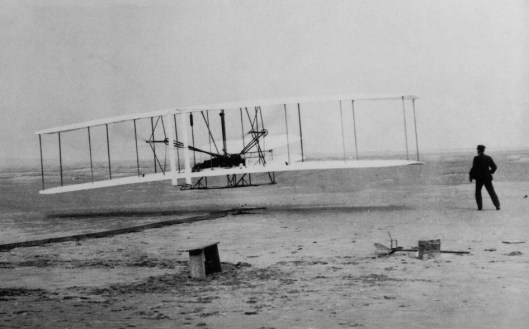
who, in December, 1903, produced the first engine-propelled, manned flight in their enlarged kite.

image4kittyhawk.jpg

Thereafter, flight would, literally, take off, but the Wrights, who were idealistically inclined, believed that such an invention would actually end war by making it too terrible.

The British army thought differently, however, and there were soon aerial observation units attached to military formations.  In fact, Sir James Grierson

image5grierson.jpg

tactically outfoxed his rival, Sir Douglas Haig,

image6haig.jpg

not only by his skillful use of aircraft for observation, but also by his keen understanding of how to conceal his own movements from Haig’s aircraft

image7airship.jpg

in the army manoeuvres of 1912.

image8manoeuvres.jpg


The Great War, when it came, two years later, would then be the proving ground for all sorts of aerial experimentation.

First, it was just observation.

image9be2.jpg

A British aviator, flying north of the army, first spotted the massive German columns which were designed to outflank the British and French armies and capture Paris in the Schlieffen Plan of 1914.

image10schlieffenplan.gif

Because observation was their task, the earliest aircraft were unarmed, but this changed and soon there was aerial combat, the so-called “dog fights”, the popular images being “knights of the sky” who jousted with manoeuvres and machine guns, rather than with lances, maces, and swords.

image11joust.jpeg

image12dogfight.jpg

Next came the use of aircraft to disrupt enemy formations and their movements, bombing and strafing, sometimes as part of major attacks, the whole idea being to dominate the sky over the enemy’s trenches, while protecting your own.

image13dogfightingovertrenches.jpg

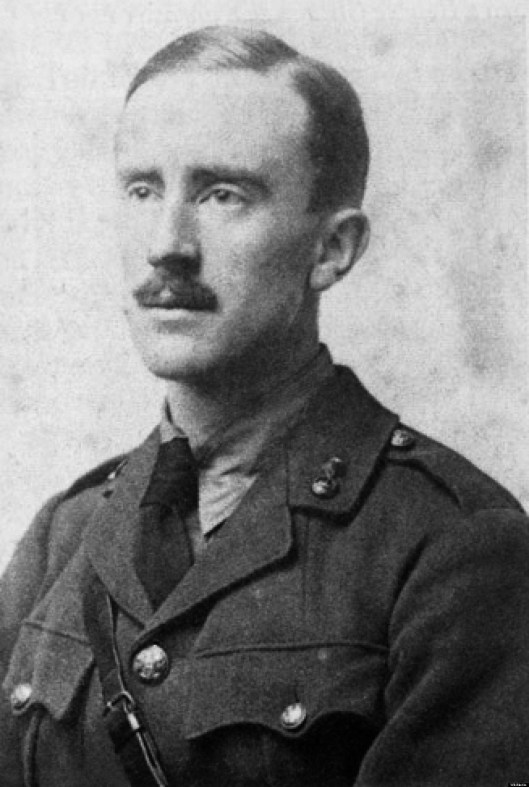
And this is where we imagine 2nd Lieutenant JRR Tolkien

image14jrrt.jpg

in the summer of 1916, standing in such a trench,

image15atrench.jpg

looking up, and thinking…

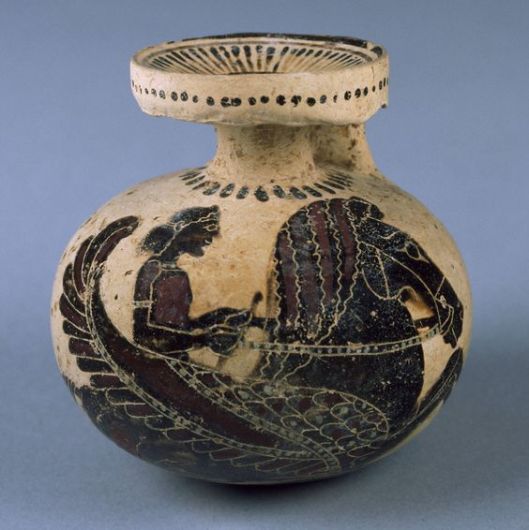
We can also imagine him imagining—not seeing flying machines, but something much earlier.  After all, with his education, background, and interests, it would have been difficult not to think of classical harpies

image15harpies.jpg

or Hermes

image16hermes.jpg

or Bellerophon, mounted on Pegasus.

image17bellerophon.jpg

And, with his Norse passion, there would also, of course, be dragons…

image18smaug.jpg

And, perhaps a combination:  a Bellerophon mounted on a miniature dragon?

image19nazgul.jpg

In the world of the trenches, there were two defences against aircraft:  friendly aircraft in the air

image20dogfight.jpg

and anti-aircraft guns on the ground.

image21aagun.jpg

But the war ended fairly quickly for the scholarly lieutenant, laid low by a more primitive enemy than Industrial Age Germans with bombs:  lice.

image22lice.jpg

JRRT became sick with what was then called “trench fever”, an illness conveyed, like typhus, by the bite of the tiny insects who colonized the clothing and bodies of soldiers in every dugout in Europe.  Wracked with recurring fevers, headaches, and complete exhaustion, among other complaints, men ill with trench fever were brought to base hospitals and, if sick enough, were sent home, as there was no cure, to recover as best they could.  Tolkien spent the rest of the war in the hospital or in garrison in England and thus escaped the last and perhaps worst years of the war in the trenches.

At home, he became Professor Tolkien, taught his classes, fathered four children, and then a second war came, one in which the primitive air war of the first war was intensified by more sophisticated aircraft, more powerful explosives, and plans to bomb Britain into ruin and submission in what was called “The Blitz”.

image23blitz.jpg


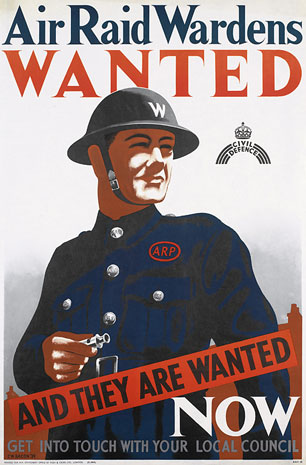
JRRT went back into service, this time as an air raid warden, even as two of his sons were more directly involved in the war.

image24airraidwarden.jpg

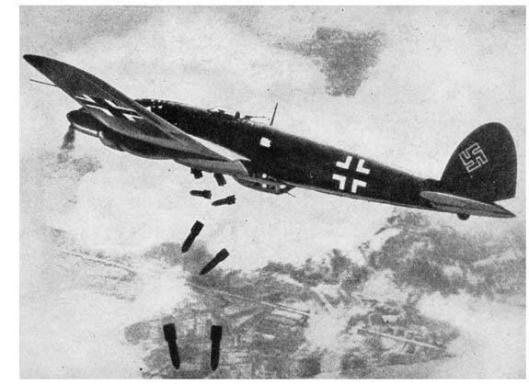
Night after night, the bombers came,

image25bomber.jpg

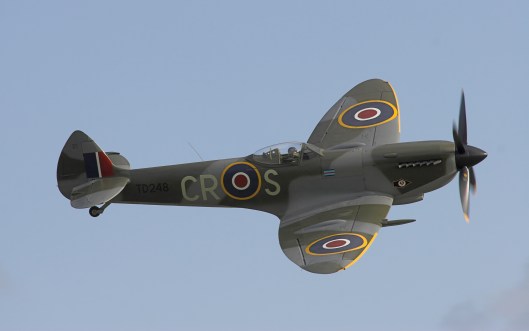
to be met with the same weapons as the previous war:  aircraft,

image26spit.jpg

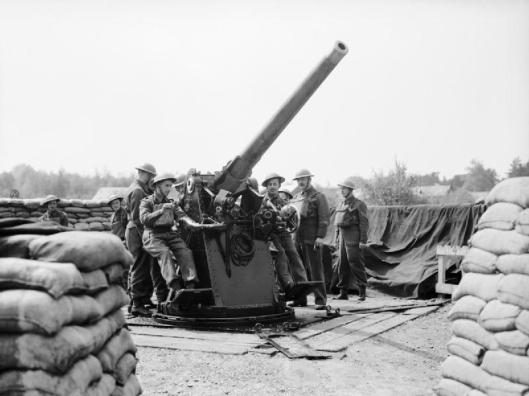
anti-aircraft guns

image27aagun.jpg

and, because the enemy began to attack at night,

searchlights.

image28searchlight.jpg

And this brings us back to our imaginings.  Working on The Lord of the Rings, staring into the night sky, listening for enemy bombers, would Tolkien have thought of danger to Middle-earth in the form of flying things, not machines but terrible figures mounted on even more loathsome creatures—and what could be done about them?  Magic, perhaps?

image29gandalf.jpg

Thanks, as always, for reading!

MTCIDC

CD

Crowning Achievement

20 Wednesday Sep 2017

Posted by Ollamh in Artists and Illustrators, J.R.R. Tolkien, Literary History, Narrative Methods

≈ Leave a comment

Tags

Alexander the Great, Alice in Wonderland, Barrow-downs, Barrow-wights, Bayeux Tapestry, Brunhilde, Charlemagne, Cheshire Cat, circlet, Cleopatra VII, diadem, Egypt, Egyptian crowns, Elightenment France, Eowyn, French Revolution, Gondor, Gondorian crown, Greek, Greek coins, Hildebrandts, Imperial Crown of the Holy Roman Empire, Julius Caesar, Lupercalia, Marcus Antonius, Medieval, Napoleon I, Nazgul, Octavian Augustus, Pharoahs, Philip II, Pontifex Maximus, Ptolemy I, Queen Elizabeth I, Queen Elizabeth II, Queen Victoria, Richard Wagner, Rohan, Romans, Tenniel, The Lord of the Rings, Theoden, Tolkien, William Shakespeare, Witch-King of Angmar, wreaths

Welcome, dear readers, as ever.

Recently, one of us was lecturing on ancient Egypt, a country of two lands, in fact, Upper and Lower, and each could be represented in the crown worn by the pharaoh.

image1crownsof-egypt.jpg

Within in blink, we began to think about JRRT’s illustration of the traditional crown of Gondor,

image2jrrtcrown.jpg

of which Tolkien says:

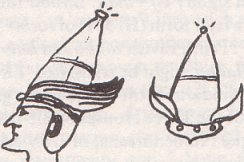
“I think that the crown of Gondor (the S. Kingdom) was very tall, like that of Egypt, but with wings attached, not set straight back but at an angle.

The N. Kingdom had only a diadem (III 323).  Cf. the difference between the N. and S. kingdoms of Egypt.”

(Letters, letter to Rhona Beare, 10/14/58, 281)

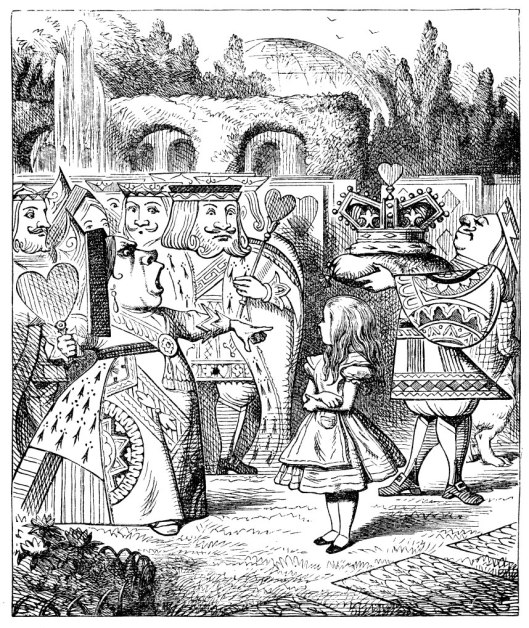
For us, the first crown we believe we ever saw as children was either one in an illustrated fairy tale (here’s a Tenniel illustration from Alice)

image3atenniel.jpg

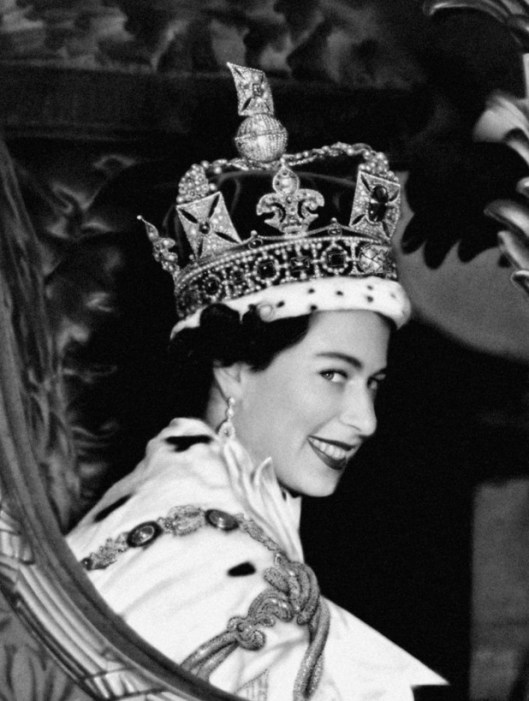
or the actual one of Queen Elizabeth II, and that hardly fits JRRT’s idea about the southern crown—or the northern one

image3er2.jpg

or that of her ancestor, Queen Victoria

imaage4vr.jpg

or that of their distant ancestor, Elizabeth I.

image5er1.jpg

When we think of a “diadem”, however, we are reminded of the earliest western European crowns, which, in contrast to Elizabeth’s, is barely there at all.

Here is the first type of crown we know of being depicted—it’s that “diadem” in a Greek form, being on a coin of Philip II, King of Macedon and father of Alexander the Great (the reverse—the back side—the front side is called the “obverse”—shows Philip’s Olympic victory horse and Philip’s name in the genitive—possessive—case, “of Philip”—showing not only possession of the horse, but of the victory, of the coin, and, by implication, the right to issue coins).


This became a regular pattern, both of coin and of crown for those who followed Philip, and, thinking about Philip’s victory, we can imagine that the original of the crown was based upon the wreath athletic game victors wore.


And coins like Philip’s set the pattern for classical coins—and crowns—for centuries.  Here’s the crown pattern on the head of Ptolemy I, one of Alexander’s generals.


At Alexander’s death, Ptolemy seized Egypt, making it a family possession for the next nearly three hundred years, all the way down to his greatgreatgreat etc granddaughter Cleopatra VII.

image9cleo.jpg

The pattern was not confined to Greece or Egypt, however—Julius Caesar wore something similar—

CaesarCoin_Wikipedia_960.jpg

although, unlike Ptolemy and other such rulers, Caesar might have hoped to muddy people’s perceptions of what such a thing symbolized and what position (dictator for life) he’d forced the Senate to give him.   Rome had hated monarchs, after all, since they’d kicked out their last king 450 years before.

(And see Act I, Sc.2 of Shakespeare’s Julius Caesar in which, at the festival of the Lupercalia, Marcus Antonius publically offers him a crown and Caesar rejects it, much to the loud delight of the mob.)

In the Greco-Roman world, wreaths had many purposes:  besides Greek kings and winners at games, people at parties and weddings and other festive occasions wore them, as well as celebrants at religious rites.

image12symposium.jpg

Perhaps Caesar hoped that, appearing in one, he might appear less like a Hellenistic king and more like anything from an Olympic victor or party-goer to a priest (he was Pontifex Maximus, head of religion in Rome, so there was a certain credibility to the latter).

image13pm.jpg

Malicious people in Rome also suggested another reason for the wreath:  Caesar was sensitive about his thinning hair.

image14jc.jpg

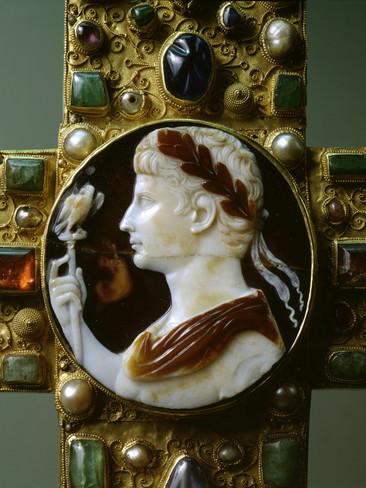
Caesar’s grandnephew and successor, Octavian/Augustus, continued the tradition,

Augusts-in-Ancient-Roman-Cameo.jpg

as did following emperors for several centuries—and even Charlemagne, hundreds of years after the last western emperor, revived it.

image16charlemagne.jpg

At some point, just after Charlemagne’s time or thereabout (c1000ad), a new pattern appeared, which you can see in the famous “Imperial Crown of the Holy Roman Empire”.

image17impcrown.jpg

Instead of a wreath, this was a built-up circlet, with lots of “bits and bobs” on top.

This newer look persisted in various more or less complicated forms in the west for centuries

image18king.jpgimage19king.jpgimage20king.jpgimage21king.jpg

and seems to underlie the crowns seen in more recent times (often with what appears to be a red velvet balloon in the middle).

image22er1.jpgimage23chas2.jpgimage24geov.jpg

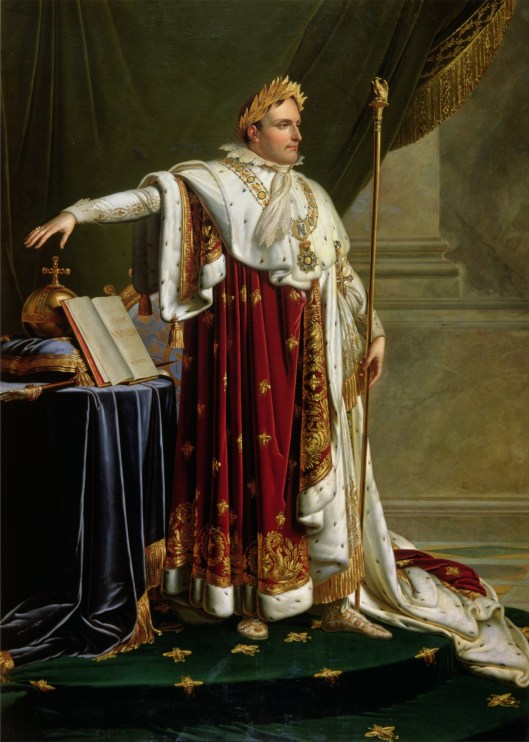
There is a throwback, however:  Napoleon I.  He had grown up in Enlightenment France, in a world which idealized classical learning and art, and so, when he made himself emperor in 1804, his model wasn’t medieval and Germanic, but Augustine.

image25agus.jpg

image25nappy.jpg

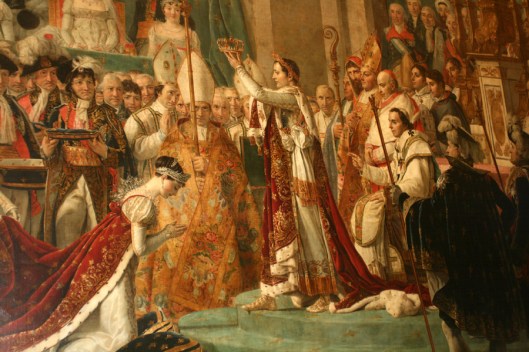
This doesn’t mean that he wasn’t aware of that other model and he would have used it—the so-called “crown of Charlemagne”–at his self-coronation

image26napcoron.jpg

had it not suffered the fate of many medieval treasures and been destroyed during the French Revolution (the famous Bayeux Tapestry was almost converted to wagon covers by revolutionaries).  In fact, a “crown of Charlemagne” did turn up for the ceremony—“recreated” by a clever Paris jeweler.

image27charlcrown.jpg

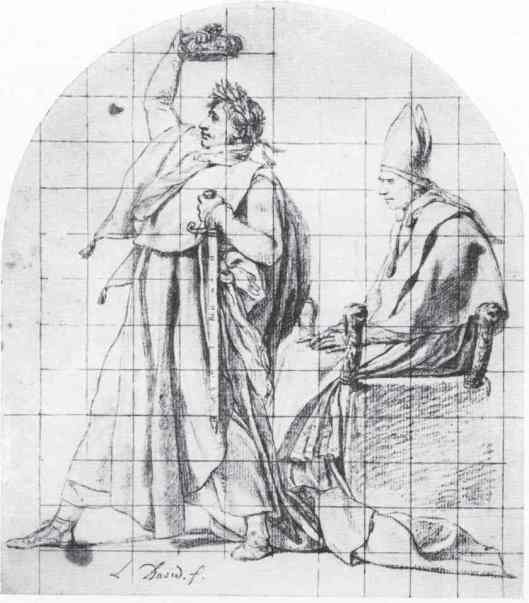
[A footnote about the coronation.  In the painter David’s sketches for it, he shows the pope (Pius VII) with his hands in his lap.

image28pope1.jpg

Napoleon saw the drawing and said to David that the pope should be blessing the occasion—after all, that’s why Napoleon had dragged him all the way from Rome.  David redid his sketch, of course!]

image29pope2.jpg

Beyond the Crowns of Gondor, most of the crowns seen in The Lord of the Rings are described as “circlets”—

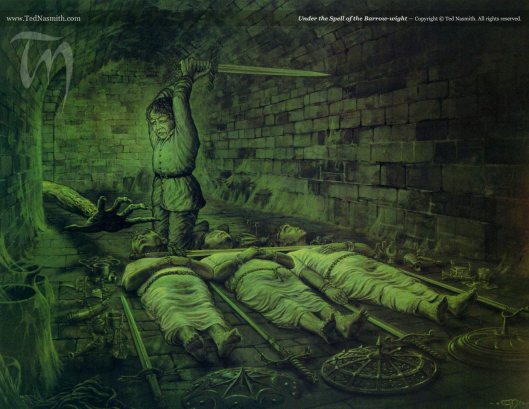
  1. Sam, Merry, and Pippin, laid out in the barrow:

“About them lay many treasures of gold maybe, though in that light they looked cold and unlovely.  On their heads were circlets, gold chains were about their waists, and on their fingers were many rings.”(The Fellowship of the Ring, Book One, Chapter 8, “Fog on the Barrow-Downs”)

image30barrow.jpg

  1. Theoden:

“Upon it sat a man so bent with age that he seemed almost a dwarf; but his white hair was long and thick and fell in great braids from beneath a thin golden circlet set upon his brow.” (The Two Towers, Book Three, Chapter 6, “The King of the Golden Hall”)

image31theoden.jpeg

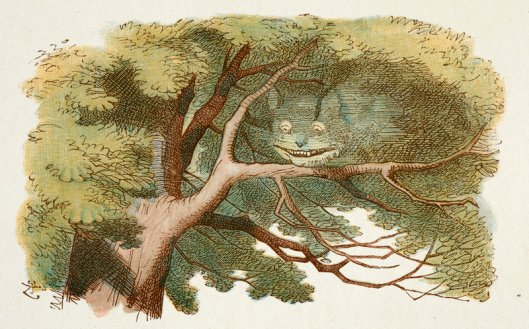
But there is one which, well, looking at the various illustrations of its wearer, reminds us of Alice’s comment upon the Cheshire Cat:

“Well! I’ve often seen a cat without a grin…but a grin without a cat!  It’s the most curious thing I ever saw in my life!” (Alice’s Adventures in Wonderland, Chapter 6, “Pig and Pepper”)

image32cheshirecat.jpg

On the Fields of the Pelennor, a “great shadow descended like a falling cloud.  And behold! It was a winged creature.”

This might be bad enough, but:

“Upon it sat a shape, black-mantled, huge and threatening.  A crown of steel he bore, but between rim and robe naught was there to see, save only a deadly gleam of eyes:  the Lord of the Nazgul.” (The Return of the King, Book Five, Chapter 6, “The Battle of the Pelennor Fields”)

image33eonaz.jpg

We are aware of at least half-a-dozen professional renderings of this scene (and we plan to discuss them all in a future post), but it seems to us that those eyes, seeming to float in space, make it extremely difficult to illustrate it, no matter what crown—simply described as “steel”—he’s wearing.  And that brings us back to our original crown.  As JRRT described it:

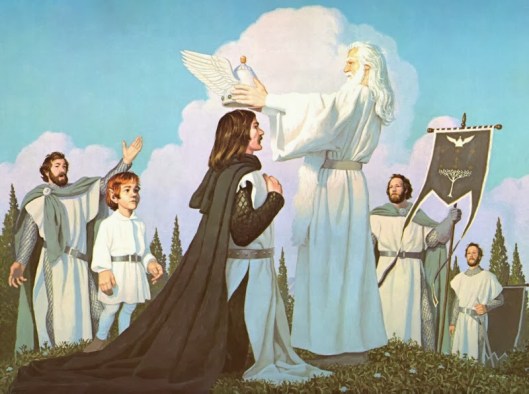
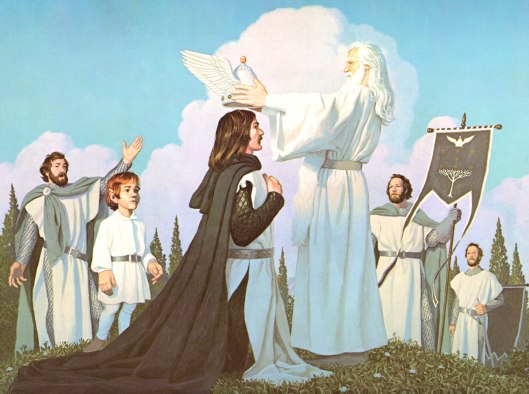
“It was shaped like the helms of the Guards of the Citadel, save that it was loftier, and it was all white, and the wings at either side were wrought of pearl and silver in the likeness of the wings of a sea-bird, for it was the emblem of kings who came over the Sea; and seven gems of adamant were set in the circlet, and upon its summit was set a single jewel the light of which went up like a flame.” (The Return of the King, Book Six, Chapter 5, “The Steward and the King”)

If his drawing (seen at the beginning of this post) is what he had in mind, then the only professional illustration we’ve seen of it, by the Hildebrandts, is only an approximation.

image34coronation.jpg

And, in fact, reminds us all-too-easily of Brunhilde, the Walkuere, from Wagner’s operas.

image35brunhilde.jpg

If illustrators as good as the Hildebrandts struggle, this must be a tough one.  The designers of the P. Jackson films are even farther away from the original, as so often.

image36aragorn.jpg

Here, however, we have some sympathy!  Somehow the medieval world of Middle-earth can not easily assimilate an Egyptian artifact.  And so, we suspect that they thought “circlet” and “wings” and left it there.  What do you think, readers?  How do you imagine the crown?

Thanks, as ever, for reading.

MTCIDC

CD

In the Future, Use the Past

13 Wednesday Sep 2017

Posted by Ollamh in Artists and Illustrators, Fairy Tales and Myths, Films and Music, Heroes, J.R.R. Tolkien, Literary History, Narrative Methods

≈ Leave a comment

Tags

A New Hope, A Princess of Mars, Ages of Middle-earth, Death Star, Edgar Rice Burroughs, Emperor Palpatine, Frank Schoonover, George Lucas, Hildebrandt, Mos Eisley, Oxford, Percival Lowell, Return of the Jedi, Sauron, science fiction, special effects, Star Wars, Stonehenge, Tatooine, The Empire Strikes Back, The History of Middle-earth, The Last Jedi, The Lord of the Rings, Tolkien, tower of St Michael

Welcome, as always, dear readers.

As The Last Jedi (Star Wars 8) approaches (and Star Wars Rebels, season 3 has appeared via the postman—season 4 premieres in mid-October—sadly the last season, as Disney has canceled season 5), we’ve been thinking about the original Star Wars of 1977.

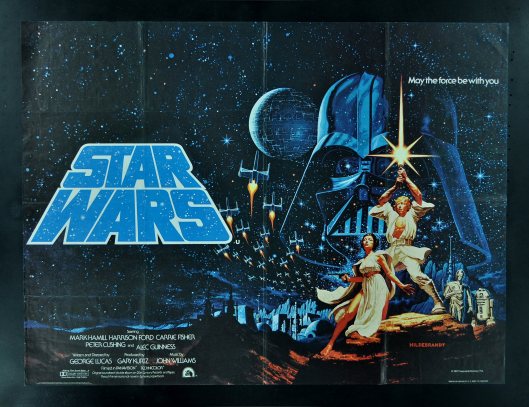
image1poster.jpg

This poster—the second ever Star Wars poster, in fact (used by 20th Century Fox in the UK)– is a great link to JRRT—as if we don’t seem to make such links every time we write!  It’s by two of our favorite Tolkien illustrators, the Hildebrandt brothers.  Here’s a picture of the surviving twin, Greg, with that very poster (his brother, Tim, died in 2006).

image2gh.png

(Clink here for a LINK to an interesting little piece from 2010 about the Hildebrandts and George Lucas.)

We believe, however that there may be a deeper link.

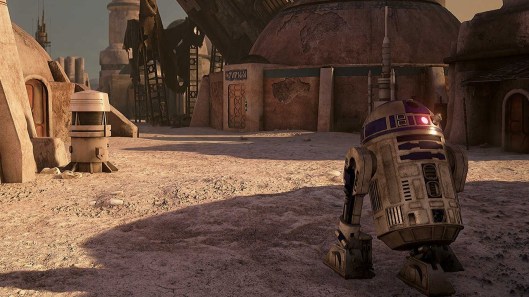
The original reviews (here’s a LINK to summaries of some of them) were a mixture, with some critics enthusiastic about what they saw and others (in our view the stodgier ones) calling the film things like “puerile”.  One element which was occasionally commented upon was the look of the picture—and not just the (for the time) dazzling special effects—but the fact that all the worlds depicted were lived-in, not shiny and new—well, almost.  Consider Mos Eisley, for example,

image3moseisley.jpg

which looks dusty and battered, suggesting the passage of time as well as the effects of the harsh desert climate of Tatooine.

Or the Jawa sandcrawler, old and clearly rusting–

image4jawasandcrawler.jpg

We said “almost” shiny and new because there’s one part of this galaxy with a different look:  the Death Star.

image5insidedeathstar.jpg

It looks like it’s dusted and waxed hourly, doesn’t it?  And the outside appears to be just as neat.

image6falconenteringdeathstar.jpg

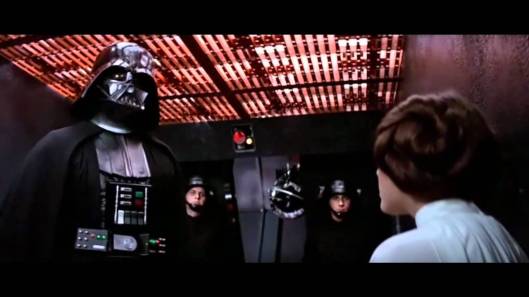
What does this say about the nature of those who inhabit it?  For us, thinking about the spotless Darth Vader,

image7vader.jpg

immediately suggests that the old proverb should be changed to “Cleanliness is next to Un-godliness”!  (Okay—we’re not the neatest and most organized people we know.)

It has been pointed out, more than once and beginning with the director himself, that George Lucas was influenced by Edgar Rice Burroughs’ John Carter series, beginning with A Princess of Mars (first published serially in The All-Story, February to July, 1912).

image8princess.jpg

(And here’s another connection—this cover and the illustrations for its first publication in book form, in 1917, were by Frank Schoonover, 1877-1972, who was the student of another of our favorite illustrators, Howard Pyle, whom we have occasionally mentioned in previous postings.  The convincing detail in this cover painting shows that, just like his teacher, Schoonover did his research—in his case, by very carefully going through the text and taking note of any technical information the author might have mentioned.)

In A Princess of Mars and subsequent books,  Mars has a civilization which is old and in decline (the inspiration for which, in turn, may have come from the work of the amateur astronomer, Percival Lowell, 1855-1916, whose telescopic observations of Mars had convinced him that the planet was—or had been—the home of a dying civilization which had constructed a vast network of canals to supply themselves with water from the polar ice caps—unfortunately, numerous NASA missions have found no evidence of the desperate Martians or their canals).   It would be easy, then, to say that Lucas was just following his source material, but we would suggest that there are two better explanations for showing wear.

The first comes from something Lucas is quoted as having said to his production designers:  “What is required for true credibility is a used future.” In Lucas’ view, then, the story’s believability comes in part from its look:  if things appeared not shiny, but worn, then viewers would be more likely to accept the narrative as somehow “true”, we presume because things in our world so often look used.

There is then, we think a further presumption:  if things look worn, then they have a past, which implies that the here-and-now of the story is a small part of bigger things and, certainly, just looking at the “crawl” at the beginning of the original Star Wars,

star-wars-crawl-163729.jpeg

which leads us to  our second explanation.  This one deals with something deeper, something which we would say might provide another possible link with JRRT and is, in fact, suggested by the titles of the first three Star Wars films made and even in their sequence:  A New Hope, The Empire Strikes Back, The Return of the Jedi.

In two earlier postings, we talked about the condition of Middle-earth at the beginning of The Lord of the Rings, in which everything, from the trees to the houses of Minas Tirith, has grown old and weary—and even potentially hostile, in the case of the trees.  Part of this comes from the fact that Middle-earth is old:  one has only to turn to Appendix B, subtitled “The Tale of Years”, in The Lord of the Rings to see that, in the Second and Third Ages alone, nearly 6000 years have passed.   (In terms of our earth, that’s moving from the late Neolithic Era to modern times, 4000bc to 2017ad.)  This also emphasizes the age and depth of evil, as well as its power to corrupt in the present:  Sauron began to build Barad-dur c. SA1000—5000 years before the main narrative of The Lord of the Rings opens and, in the present, the world is crumbling.

Of course, JRRT lived surrounded by the past.  The oldest surviving building in his daily Oxford is the tower of St Michael at the North Gate, dating from 1040ad, nearly a thousand years before his time,

image9stmichaels.jpg

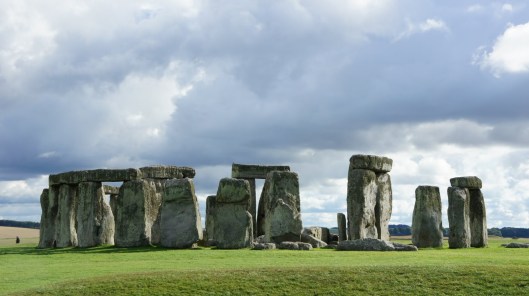
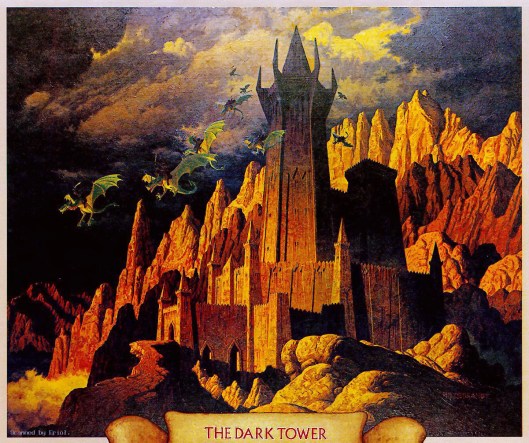
but Neolithic Stonehenge is only 58 miles (93km) southwest of the city and that’s 5000 years old, taking us back to the time when, in Middle-earth, Sauron had begun the Barad-dur.

image10stonehenge.JPG

image11baraddur.jpg

In contrast, Lucas was born in 1944 in Modesto, California, a town only founded in 1870, and grew up in a post-World War II world, where the key was “the future”.  It is a tribute, then, to his story-telling gift that he realized how useful in telling his story the past—even an imagined one—could be and it is interesting to see how he shares that understanding with JRRT and perhaps shares a goal, as well.

We’ve said that our second explanation may be seen in the titles of Lucas’ three films, so let’s consider them in comparison with the general shape of Tolkien’s work to see what that shared goal might be.   (In an interview, Lucas even described the three as being like a three-act play, suggesting the dramatic progress inherent in the movement from one to another.)

At the beginning of the first film, it is a dark time in the galaxy:  the repressive regime of the evil Emperor Palpatine dominates and resistance is confined to “The Rebel Alliance”, which has scraped together a fleet (and, presumably an army—we see elements in Rogue One, which takes place before this film) to resist, but seems to spend most of its time running and hiding.  The past is only implied, but the fact that there is an Empire and a resistance suggests much, just as the run-down condition of places like Tatooine might suggest both age and that the galaxy has become run-down because of that Empire.

image12palpatine.jpg

At the beginning of The Lord of the Rings, we find ourselves in a place with a long history, as we see from the many pages of the “Prologue”.  It has been a quiet place, but the world outside is becoming less so, with sinister forces growing, as Frodo hears from passing dwarves:

“They were troubled, and some spoke in whispers of the Enemy and of the Land of Mordor.” (The Fellowship of the Ring, Book One, Chapter 2, “The Shadow of the Past”)

In time, readers are brought to see that the dwarves are grossly understating the case:  the Enemy is real, Sauron, and that he has not only huge armies, but the Nazgul and a would-be ally in his enemies’ camp, Saruman.  The same may be said for the Empire:  not only do they have huge fleets and armies, but they have the “ultimate weapon”, the Death Star.

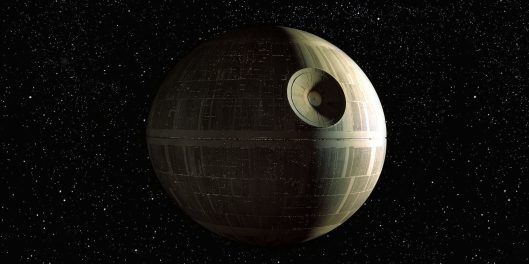
image13deathstar.jpeg

We will learn, as well, that, for all his great age and might, Sauron has an Achilles’ heel:  to give the One Ring its power, he has had to pour most of his power into it.  Thus, if he regains the ring, he will be much more powerful than he is at present, but, should the ring be destroyed, Sauron will be virtually destroyed with it.  As this struggle has been going on in Middle-earth for thousands of years, the idea that Sauron is vulnerable could easily be termed “a new hope”, just as Luke, the son of the Enforcer of the Galaxy, Darth Vader/Anakin Skywalker, will provide a new hope for the Rebels (especially when we are told about “the Chosen One”—for whom he can be taken).

For a time, things do not go well for those opposed to Sauron:  he combines psychological/meteorological attacks with the march of huge armies, and even pirate raids on Gondor’s south coast. Gondor is overrun and Minas Tirith is assaulted.  This is clearly The Empire Strikes Back, just as the pursuit of the Rebel fleet to Hoth and the destruction of Echo Base disperses the Rebels and casts a shadow over the hope felt after the destruction of the Death Star.

This is not the end, however, for the Rebels or for the good people of Middle-earth.  Not only is the Ring destroyed and Sauron disembodied, but this paves the way for The Return of the King, with all of the reflowering-to-come, as we have suggested in a previous posting.

image14crowning.jpg

And there is a strong echo in the title of Lucas’ third film, The Return of the Jedi, in which the Emperor is destroyed and balance brought back to the Force—and the galaxy.  (Of course, with Star Wars 7, we see that the happy ending is only temporary, but we have hopes that, by the conclusion of 9, there will come a final rebalancing and peace at last.)

image15return.jpg

Lucas’ acknowledges many sources but, so far, we have yet to locate a quotation from an interview or anywhere else in which he says, “Yes, I’ve read Tolkien closely and, indeed, there is a strong affinity between my work and his”, but we believe that we can suggest, at least, that he, like JRRT, is following the same path in creating a world in turmoil, a visibly-aging world.  Into this world, he places his protagonist who provides a new hope, faces the might of a not-easily-defeated enemy, but, by his bravery and determination, finally brings about the destruction of that enemy (interesting in both cases he does not do so himself—Gollum inadvertently destroys the ring, just as Anakin, not his son, kills the Emperor) and the promise of renewal in the return of the Jedi—and the King.

And what do you think, dear readers?

Thanks, as ever, for reading!

MTCIDC

CD

Re: Tree Two

06 Wednesday Sep 2017

Posted by Ollamh in Fairy Tales and Myths, J.R.R. Tolkien, Narrative Methods

≈ Leave a comment

Tags

decay, Ents, Entwives, Fangorn, Fangorn Forest, Laurelindorenan, Lothlorien, Minas Tirith, Ronald Foerster, Samwise Gamgee, Ted Sandyman, The Green Dragon, The Lord of the Rings, Tolkien, trees

Welcome, dear readers, as ever.
A posting or two ago, we had been talking about the symbolic uses of trees in Middle-earth, mostly as symbols of decay and regeneration.
Without going into a lengthy essay, we thought we had said what we could. But we had forgotten something—or, rather, someone.
While gossiping in The Green Dragon, Sam, slowly becoming annoyed at Ted Sandyman’s skepticism about the out-of-the-ordinary, replied to Ted’s “There’s only one Dragon in Bywater, and that’s Green”, by asking:
“But what about these Tree-men, these giants, as you might call them? They do say that one bigger than a tree was seen up away beyond the North Moors not long back.”
Ted is not convinced, and Sam presses on: “But this one was as big as an elm tree, and walking—walking seven yards to a stride, if it was an inch.””
“Then I bet it wasn’t an inch. What he saw was an elm tree, as like as not.”
Undaunted, Sam continues: ‘But this one was walking, I tell you; and there ain’t no elm on the North Moors.’ “ (The Fellowship of the Ring, Book 1, Chapter 2, “The Shadow of the Past”)
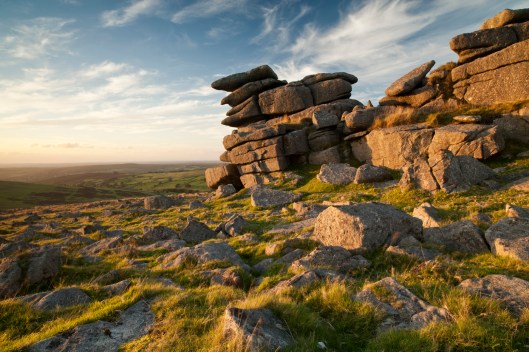
The topic shifts in another direction, with Ted still not persuaded, but we readers were struck by what Sam just said. As always with JRRT, the texts are so rich that one is always falling upon something read sometimes many times before, but somehow not seen, and this was one of them. (And, as always, we can hear Sherlock Holmes disdainfully commenting, “You see, but you do not observe.”) If the North Moors are like moors in our world, they are wild and windswept
image1dartmoor.jpg
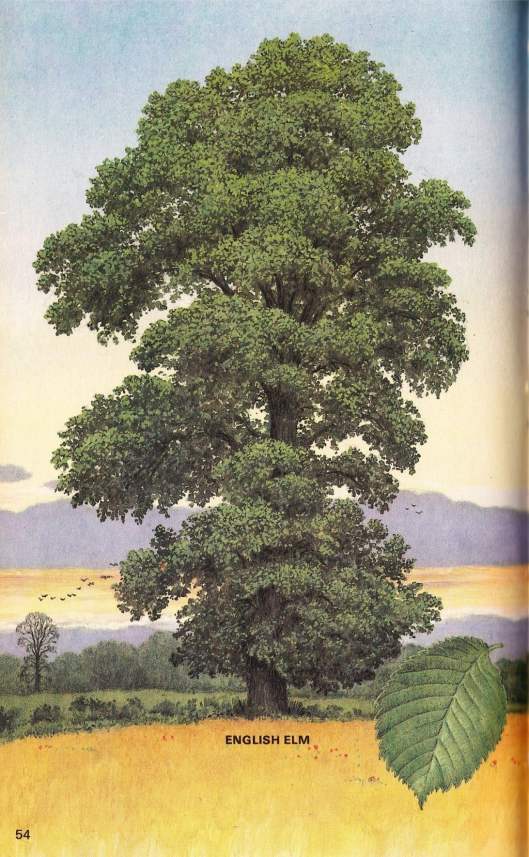
with virtually no trees, except in hollows and streambeds. And certainly no elms
image2engelm.jpg
as Sam says. Ted Sandyman dismisses Sam’s assertion, suggesting that it was an illusion or maybe an elm, but we know better: it was an Ent.
When Merry and Pippin meet their first, he is very vividly described:
“They found that they were looking at a most extraordinary face. It belonged to a large Man-like, almost Troll-like figure, at least fourteen feet high, very sturdy, with a tall head, and hardly any neck. Whether it was clad in stuff like green and grey bark, or whether that was its hide, was difficult to say. At any rate the arms, at a short distance from the trunk, were not wrinkled, but covered with a brown smooth skin. The large feet had seven toes each. The lower part of the long face was covered with a sweeping grey beard, busy, almost twiggy at the roots, thick and mossy at the ends. But at the moment the hobbits noted little but the eyes. These deep eyes were now surveying them, slow and solemn, but very penetrating. They were brown, shot with a green light.” (The Two Towers, Book Three, Chapter 4, “Treebeard”)
image3treebeard.jpg
We are not so mathematically sophisticated as to be able to determine, from those fourteen feet of height, the length of the Ent’s stride, unfortunately, but we are later told that this Ent, who is, of course, Treebeard, can move at quite a ground-eating speed, having, by the time he brings the two hobbits to Wellinghall, come “about seventy thousand ent-strides.”
(Actually, if, as Sam says above, an Ent’s stride was 7 yards, with 3 feet in a yard times 70,000, Treebeard has brought them about 280 miles (450 km) in a few hours!)
Treebeard formed part of our previous discussion, suggesting not only was his forest, Fangorn, in decline, but likewise Lothlorien:
“Do not risk getting entangled in the woods of Laurelindorenan! That is what the Elves used to call it, but now they make the name shorter: Lothlorien they call it. Perhaps they are right: maybe it is fading, not growing…They are falling rather behind the world in there, I guess…Neither this country, nor anything else outside the Golden Wood, is what it was when Celeborn was young.”
The decline of Treebeard’s world appears to come from two causes. First, there is an elderly and declining population of Ents:
“We are tree-herds, we old Ents. Few enough of us are left now…Some of my kind look just like trees now, and need something great to rouse them; and they speak only in whispers…
Hence, part of the Entish population is fading into the trees they herd. The other reason is more delicate. The Ents, although deeply attached to the trees, are, in fact, more like humans: they have two genders, suggesting that they reproduce the way mammals do. Unfortunately, something has gone wrong and the female half of the species has disappeared. As Treebeard explains:
“When the world was young…the Ents and the Entwives…walked together and they housed together…But our hearts did not go on growing in the same way: the Ents gave their love to things that they met in the world, and the Entwives gave their thought to other things…So the Entwives made gardens to live in. But we Ents went on wandering, and we only came to the gardens now and again…”
After ages pass, the Ents try to see the Entwives again, but:
“We crossed over Anduin and came to their land; but we found a desert: it was all burned and uprooted, for war had passed over it. But the Entwives were not there.”
And, from that time, the Ents have been without the Entwives and the implication must be that, although some of the trees, as Fangorn says, are “getting Entish”, unless the Entwives are found, there will be no young Ents to continue their line into the future. As Treebeard says, “…there were never many of us and we have not increased. There have been no Entings—no children, you would say, not for a terrible long count of years.”
All of this fits in with the theme we suggested in our previous posting: trees can symbolize the decline of Middle-earth, not only in their hostility, but, in the case of the Ents (who are almost trees), through what amounts to infertility, just like Minas Tirith, with half its buildings empty.
Treebeard holds little hope of the future, as well:
“We believe that we may meet [the Entwives] again in a time to come, and perhaps we shall find a land where we can live together and both be content. But it is foreboded that that will only be when we have both lost all that we now have…”
In that previous posting, we also suggested that the defeat of Sauron and the return of the rightful king brought about new growth and regeneration, something seen in the vegetation from the White Tree sapling in Minas Tirith to the phenomenal new fertility of the Shire. In the case of the Ents, however, there appears to be no happy ending, as, taking his farewell of Merry and Pippin, Treebeard says wistfully:
“Fare you well! But if you hear news up in your pleasant land, in the Shire, send me word! You know what I mean: word or sight of the Entwives.” (The Two Towers, Book Three, Chapter 10, “The Voice of Saruman”)
And yet—if we return to that conversation between Ted Sandyman and Sam, perhaps there is news for Treebeard. As far as we know, what Ents there are now in Middle-earth—including the three eldest, Fangorn, Finglas, and Fladrif—all seem to live in the forest of Fangorn—so who is that “Tree-man, giant, one bigger than a tree…big as an elm tree and walking—walking seven yards to a stride” which Sam’s cousin Hal saw “up away beyond the North Moor not long back”? The Lord of the Rings ends without our ever finding out, so we guess we can only hope that, one day, Merry and Pippin sent word.
Thanks, as always, for reading.
MTCIDC
CD
PS
We happened upon this illustration by Ronald Foerster of an Entwife—what do you think?
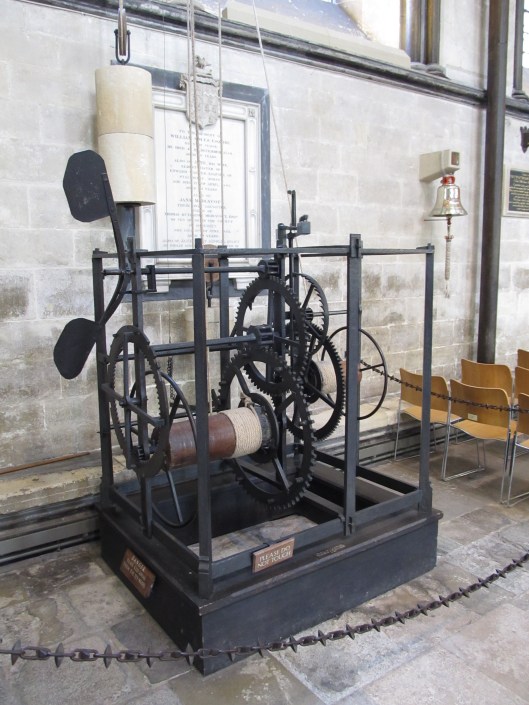
image4entwife.jpg

← Older posts
Newer posts →

The Doubtful Sea Series Facebook Page

The Doubtful Sea Series Facebook Page

  • Ollamh

Categories

  • Artists and Illustrators
  • Economics in Middle-earth
  • Fairy Tales and Myths
  • Films and Music
  • Games
  • Heroes
  • Imaginary History
  • J.R.R. Tolkien
  • Language
  • Literary History
  • Maps
  • Medieval Russia
  • Military History
  • Military History of Middle-earth
  • Narnia
  • Narrative Methods
  • Poetry
  • Research
  • Star Wars
  • Terra Australis
  • The Rohirrim
  • Theatre and Performance
  • Tolkien
  • Uncategorized
  • Villains
  • Writing as Collaborators
Follow doubtfulsea on WordPress.com

Across the Doubtful Sea

Recent Postings

  • Through a glass… January 7, 2026
  • Heffalumps? December 31, 2025
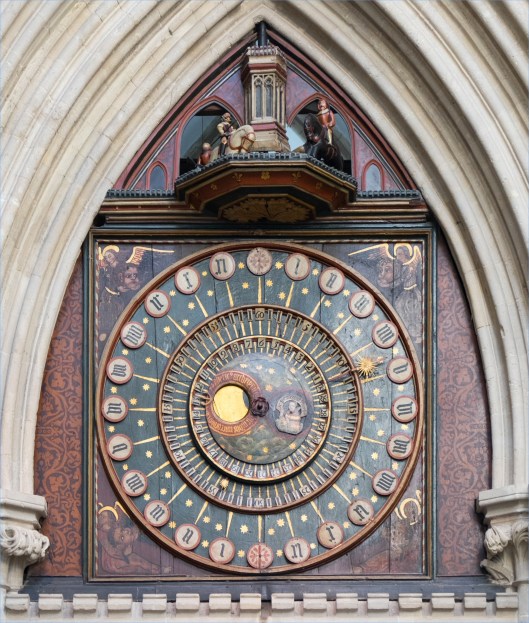
  • We Three Kings December 24, 2025
  • A Moon disfigured December 17, 2025
  • On the Roads Again—Once More December 10, 2025
  • (Not) Crossing Bridges December 3, 2025
  • On the Road(s) Again—Again November 26, 2025
  • On the Road(s) Again November 19, 2025
  • To Bree (Part 2) November 12, 2025

Blog Statistics

  • 104,200 Views

Posting Archive

  • January 2026 (1)
  • December 2025 (5)
  • November 2025 (4)
  • October 2025 (5)
  • September 2025 (4)
  • August 2025 (4)
  • July 2025 (5)
  • June 2025 (4)
  • May 2025 (4)
  • April 2025 (5)
  • March 2025 (4)
  • February 2025 (4)
  • January 2025 (5)
  • December 2024 (4)
  • November 2024 (4)
  • October 2024 (5)
  • September 2024 (4)
  • August 2024 (4)
  • July 2024 (5)
  • June 2024 (4)
  • May 2024 (5)
  • April 2024 (4)
  • March 2024 (4)
  • February 2024 (4)
  • January 2024 (5)
  • December 2023 (4)
  • November 2023 (5)
  • October 2023 (4)
  • September 2023 (4)
  • August 2023 (5)
  • July 2023 (4)
  • June 2023 (4)
  • May 2023 (5)
  • April 2023 (4)
  • March 2023 (5)
  • February 2023 (4)
  • January 2023 (4)
  • December 2022 (4)
  • November 2022 (5)
  • October 2022 (4)
  • September 2022 (4)
  • August 2022 (5)
  • July 2022 (4)
  • June 2022 (5)
  • May 2022 (4)
  • April 2022 (4)
  • March 2022 (5)
  • February 2022 (4)
  • January 2022 (4)
  • December 2021 (5)
  • November 2021 (4)
  • October 2021 (4)
  • September 2021 (5)
  • August 2021 (4)
  • July 2021 (4)
  • June 2021 (5)
  • May 2021 (4)
  • April 2021 (4)
  • March 2021 (5)
  • February 2021 (4)
  • January 2021 (4)
  • December 2020 (5)
  • November 2020 (4)
  • October 2020 (4)
  • September 2020 (5)
  • August 2020 (4)
  • July 2020 (5)
  • June 2020 (4)
  • May 2020 (4)
  • April 2020 (5)
  • March 2020 (4)
  • February 2020 (4)
  • January 2020 (6)
  • December 2019 (4)
  • November 2019 (4)
  • October 2019 (5)
  • September 2019 (4)
  • August 2019 (4)
  • July 2019 (5)
  • June 2019 (4)
  • May 2019 (5)
  • April 2019 (4)
  • March 2019 (4)
  • February 2019 (4)
  • January 2019 (5)
  • December 2018 (4)
  • November 2018 (4)
  • October 2018 (5)
  • September 2018 (4)
  • August 2018 (5)
  • July 2018 (4)
  • June 2018 (4)
  • May 2018 (5)
  • April 2018 (4)
  • March 2018 (4)
  • February 2018 (4)
  • January 2018 (5)
  • December 2017 (4)
  • November 2017 (4)
  • October 2017 (4)
  • September 2017 (4)
  • August 2017 (5)
  • July 2017 (4)
  • June 2017 (4)
  • May 2017 (5)
  • April 2017 (4)
  • March 2017 (5)
  • February 2017 (4)
  • January 2017 (4)
  • December 2016 (4)
  • November 2016 (5)
  • October 2016 (6)
  • September 2016 (5)
  • August 2016 (5)
  • July 2016 (5)
  • June 2016 (5)
  • May 2016 (4)
  • April 2016 (4)
  • March 2016 (5)
  • February 2016 (4)
  • January 2016 (4)
  • December 2015 (5)
  • November 2015 (5)
  • October 2015 (4)
  • September 2015 (5)
  • August 2015 (4)
  • July 2015 (5)
  • June 2015 (5)
  • May 2015 (4)
  • April 2015 (3)
  • March 2015 (4)
  • February 2015 (4)
  • January 2015 (4)
  • December 2014 (5)
  • November 2014 (4)
  • October 2014 (6)
  • September 2014 (1)

Blog at WordPress.com.

  • Subscribe Subscribed
    • doubtfulsea
    • Join 78 other subscribers
    • Already have a WordPress.com account? Log in now.
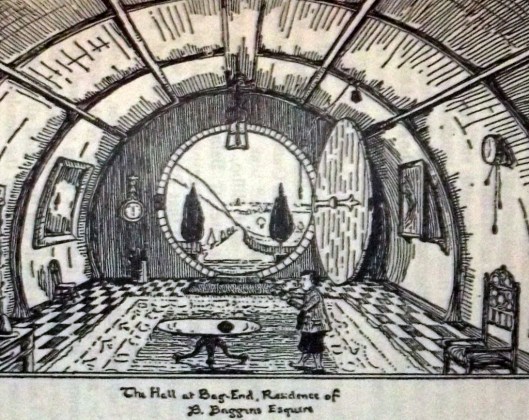
    • doubtfulsea
    • Subscribe Subscribed
    • Sign up
    • Log in
    • Report this content
    • View site in Reader
    • Manage subscriptions
    • Collapse this bar
 

Loading Comments...