• About

doubtfulsea

~ adventure fantasy

Author Archives: Ollamh

How Do We Get There?

22 Wednesday Jul 2020

Posted by Ollamh in Uncategorized

≈ Leave a comment

Welcome, as always, dear readers.

One reason why we love teaching—and which we’ve really missed since everything went on-line here in mid-March—is the daily contact with students and the really stimulating questions which they so often ask.  There’s been some discussion by correspondence, but it’s just not the same as when things pop up in class and we suddenly have to consider something from a new (and sometimes surprising) angle.

Take, for example, the idea of maps in Tolkien—not the ones you’ll find in your copy of The Lord of the Rings, or in Karen Wynn Fonstad’s The Atlas of Middle-earth

image1afonstad.jpg

or Barbara Strachey’s equally excellent Journeys of Frodo—

image1bstrachey

but the ones employed in the text by the characters—or not…

For JRRT, maps were always a subject of great interest and might even form the basis of the narrative itself, as he wrote to Rayner Unwin in 1953:

“…in such a story one cannot make a map for the narrative, but must first make a map and make the narrative agree.” (Letters, 168)

“Even at a little cost,” he wrote to his publishers about those in The Lord of the Rings, “there should be picturesque maps, providing more than a mere index to what is said in the text.  I could do maps suitable to the text.  It is the attempt to cut them down and omitting all their colour (verbal and otherwise) to reduce them to black and white bareness, on a scale so small that hardly any names can appear, that has stumped me.” (Letters, 171)

At an earlier time in his own life, proper maps had even been a literal matter of life and death.  In the Great War,

Tolkien-WW1-Soldier-photo

his and his fellow soldiers depended upon good maps, showing not only where they were, but also where the enemy was, and the Army spent a great deal of time collecting information from many sources, including deserters and prisoners,

image4prisoners.jpg

the bodies of enemy casualties,

image5casualty.jpg

trench raids, to acquire prisoners and possibly documents,

image6trenchraid

and aerial photography,

image8aerial.jpg

to create maps as detailed as this—

image9map

A bad map could cause no end of confusion or even get you killed, as ANZAC (Australian/New Zealand) soldiers found to their grief at Gallipoli in 1915, when incomplete intelligence led to a fatal ignorance both of local geography and the location of their Ottoman opponents.

image10gallipoli.jpg

image11gallipoli

So, one day, before the world went crazy, our class was in the middle of discussing the early chapters of The Hobbit, and one bright student (in a class full of bright students, in fact), asked, “But how would the dwarves know how to get to the Lonely Mountain?”

Another student said, “Well, there’s that map.”

Thrors+Map.jpg

But then a third student, who’d been flipping through the text, raised his hand and said, “But it wasn’t very complete” and read:

“ ‘This was made by Thror, your grandfather, Thorin,’ he said in answer to the dwarves’ excited questions.  ‘It is a plan of the Mountain.’

‘I don’t see that this will help us much,’ said Thorin disappointedly after a glance.  ‘I remember the Mountain well enough and the lands about it.  And I know where Mirkwood is, and the Withered Heath where the great dragons breed.’ “ (The Hobbit, Chapter One, “An Unexpected Party”)

“So,” said the first student, “if that map wasn’t useful, what were they going to use?”

In answer, we said that, because no other map was mentioned, we had always assumed that they used their memories, as Thorin had said that he remembered the Lonely Mountain and Mirkwood, to which the first student replied, “But when was the last time the dwarves saw it?  And how far away was it?”

And then class ended and we went off to do a little research.

Using the always-helpful The Atlas of Middle-earth , we found that the trip was about 950 miles, one way, and some browsing in the appendices of The Lord of the Rings provided the necessary time scheme:   Smaug arrived at the Mountain in TA2770 and The Hobbit begins in TA2941, so Smaug had occupied the Lonely Mountain for 171 years before the opening of the story.

Of the dwarves, Thorin, born in TA2746, was the oldest (the Jackson films have, for unexplained reasons, made him seem much younger), and therefore was about 24 when Smaug appeared.  The next oldest dwarf, Balin, was born in TA2763 (but whom the films make to appear much older than Thorin), and would therefore have been about 7.  None of the rest of the company had been born when the Lonely Mountain fell to the dragon.  We doubted that Balin, at 7, would have had much memory of the events of the few surviving dwarves’ early exile, which meant that they must be relying upon whatever Thorin could bring back from his own brutal experience at 24, 171 years before.  Dwarves clearly have very long memories, we said to ourselves.

And the more we thought about this question of how do people find their way around Middle-earth, the more the only explanation in general appeared to be that:  memory, not maps. Just the other day, for example, we were working on a posting on a subject from The Lord of the Rings, and it occurred to us that there were no maps employed at all by any of the characters in any of those three volumes—and the story entails tremendous amounts of travel, from Hobbiton to Bree to Rivendell to Moria to Lorien to Fangorn to Rohan to Minas Tirith, the Paths of the Dead, the Dead Marshes, the Morannon, Cirith Ungol, and Orodruin (which, when we read it back, sounds like a railroad conductor announcing stops on the local line—or end of the line, when it comes to Mordor!)

image12aconductor

The Hobbit itself tells us that other maps existed, the author saying of Bilbo that:

“He loved maps, and in his hall there hung a large one of the Country Round with all his favourite walks marked on it in red ink.”  (The Hobbit, Chapter One, “An Unexpected Party”)

This was a local map, however, and in that way rather like Thror’s map.  It might have guided you to the edge of the Shire, but what then?  Certainly, Bilbo didn’t know:

“One morning they forded a river at a wide shallow place full of the noise of stones and foam.  The far bank was steep and slippery.  When they got to the top of it, leading their ponies, they saw that the great mountains had marched down very near to them.  Already they seemed only a day’s easy journey from the feet of the nearest.  Dark and drear it looked, though there were only patches of sunlight on its brown sides, and behind its shoulders the tips of snow-peaks gleamed.

‘Is that The Mountain?’ asked Bilbo in a solemn voice…

‘Of course not!’ said Balin.  ‘That is only the beginning of the Misty Mountains, and we have got to get through, or over, or under those somehow…” (The Hobbit, Chapter Three, “A Short Rest”)

We might explain this narrowness of mapping by that fact that there doesn’t appear to be a need for maps (which would all have been made and copied by hand, after all).  In general, people simply don’t travel much in the Middle-earth of the Third Age, places like Bree—or Rivendell or Lorien, for that matter–being like islands in a nearly-empty landscape:

“In those days no other Men had settled dwellings so far west, or within a hundred leagues of the Shire.”  (The Fellowship of the Ring, Book One, Chapter 9, “At the Sign of the Prancing Pony”)

And–

“But the Northern Lands had long been desolate, and the North Road was now seldom used:  it was grass-grown and the Bree-folk called it the Greenway.”

Exceptions are rare.  There is Gandalf, of course,

image12bgandalf.jpg

who has crisscrossed the landscape for centuries, having arrived in Middle-earth nearly 2000 years earlier, and whose endless traveling has earned him the Elvish name Mithrandir, “the grey wanderer”.

As well:

“…in the wild lands beyond Bree there were mysterious wanderers.  The Bree-folk called them Rangers, and knew nothing of their origin…They roamed at will southwards and eastwards even as far as the Misty Mountains…”

image12strider

And then there is a third experienced traveler, Gollum,

image13gollum.jpg

whose seemingly extensive knowledge of the darker east of Middle-earth both aids and nearly dooms Frodo and Sam.

We are so used to having the world at our (electronic) fingertips

middle-earth-google-map-full

and so lucky to have the painstaking efforts of the Tolkiens, Fonstad, Strachey—and of our friend, Erik, of course, to whose future efforts we look with great anticipation—that it’s good to be reminded that, for all they help us readers, the principal geographical help for the characters is the experience of their own feet and the clearness of their memories—and for which reminding, we, personally, thank our students.

Thanks, as ever, for reading.

Stay well

and

MTCIDC

CD


ps

If you’d like to learn a bit more about time and distance in Tolkien, here’s an interesting LINK:

http://lotrproject.com/timedistance/

A Turning Point

15 Wednesday Jul 2020

Posted by Ollamh in Uncategorized

≈ Leave a comment

Welcome, dear readers, as always.

If someone says the word “trophy”, does an image like this spring into your mind?

image1trophy.JPG

or this?

image2stanley

or perhaps this?

image3ashes.jpg

If so, we wouldn’t be surprised:  these and many similar objects are what we now call by that name.

Once, though, the word had a very different meaning, a much darker meaning than a sporting victory—although it did involve victory.

Battles fought in historical times in ancient Greece were not of the sort you might read about in the Iliad, where, often, warriors square off and challenge each other, sometimes even indulging in menacing speeches before attacking each other.

35-duelhectorajax.jpg

Instead, in the period between, say, 700 and 400BC, armored men, called hoplites

image5hoplites

after their broad shields,

image6hoplon.jpg

fought in a dense group, called a phalanx.

image7phalanx

Each side formed up into one of these and the two sides then collided and the battle consisted of stabbing, pushing, and shoving until one side managed to break open the other side’s formation.

image8battle.jpg

This was the turning point of the struggle.  Once the phalanx was broken, that side’s choices were limited:  usually, to fight to the death, or to drop that shield—three feet (about 1 metre) wide, it was thought an incumbrance if a getaway was planned—and run.  The Greek poet, Archilochus, who lived in the middle of the 7th century BC and whose unit appears to have suffered defeat at the hands of Saians, a people of Thrace, in northeastern Greece, seems almost proud to have done this:

“On the one hand, some man of the Saians is happy with a shield,

A decent one, which, unwillingly, I left by a bush,

On the other hand, I saved myself.  What do I care about that shield?

Let it go!  In the future, I’ll own one no worse.”

(our translation)

When the enemy was dead or fled, the victors would mark the spot on the battlefield where that turning point had taken place.  The ancient Greek verb “to put to flight” was trepo (TREP-oh) and, on that spot, they would raise a kind of victory monument, which they called a tropaion (troh-PYE-on).  The earliest depiction we can locate so far is from the middle of the 4th century BC, from one of the carved panels of a hero-shrine (heroon—heh-ROE-on) in Lycia, in Asia Minor.

image9tropaion

This is from a 19th-century engraving or early photograph, so it’s a bit fuzzy, but, basically, we hope that you can see that it’s a post on which the victors have hung armor, presumably taken from the bodies of the defeated enemy.

Either the Romans borrowed the custom, like so much else, from the Greeks, or came up with their own version, based upon the same idea:  commemorating a victory on the battlefield.

image10tropaeum.jpg

We have many more Roman images:  there appear to be lots of coins, for instance, which feature what the Romans called a tropaeum (troh-PYE-um)—which, clearly adapted from the Greek word, might suggest that the custom, as well as the word, came from the Greeks.  Here’s a coin with a tropaeum which dates from the brief dictatorship of Julius Caesar (44BC) and which shows what appears to be Gallic armor and several captives, reminding his fellow Romans that Caesar conquered the Celtic peoples of Gaul.

image11jc

As you can see from this coin and from the previous modern illustration, the basis was rather like a kind of crude scarecrow:  an upright with a crosspiece, which would allow for the armor to be displayed in a more lifelike fashion.  Trajan’s (53-117AD) column, in Rome, provides us with an even more detailed illustration—

image12trajan.JPG

This column, which is extremely rich in imagery of a Roman army on campaign, c.100 AD, commemorates the emperor’s victories against the Dacians at the beginning of the second century.  For all that it is a victory monument, and although it depicts a tropaeum among its many images, it is not on a battlefield, but in downtown Rome, and so it is not, itself, a tropaeum.  Trajan did leave us one such, however, on or near the site of the battle of Adamclisi, fought in the winter of 101-102AD, in modern Romania.  It had fallen into ruin over the centuries, but was reconstructed in 1977.

image13trop

Originally, there had only been an altar on the site, but, a few years after the final campaign, this splendid monument was erected.  This reconstruction is only one of several suggested, but we should point out that, somewhere, originally was placed a statue which would have reminded any Roman of the origins of this more sophisticated construction.  It is preserved in the site museum—

image14site.JPG

As you can see, it has that familiar shape:  upright with what appears to be a crosspiece, all covered in armor.

If we say that such things were placed on battlefields by both Greeks and Romans, what was the purpose or what were the purposes?  The Adamclisi tropaeum has a fragmentary inscription, which mostly gives us Trajan’s many names and titles, but also mentions the defeat of the Dacians and their allies, the Sarmatians.  It is dedicated to Mars, the Roman war god, which is not surprising,

image15mars.jpg

It’s not just to Mars, however, but to Mars Ultor, “Mars the Avenger” (no—not one of those Avengers)

endgame.jpg

and this makes us wonder what message was being sent by such a monument at such a place.  Obviously, at one level, it says:  we won—and you ran away—or you should have–but you left valuable things behind.  After all, armor and weapons were all hand-made, and, even if Archilochus pretended to be indifferent to the loss of his shield, someone had to make another, cutting the boards, gluing them together, covering the outside with a shell of bronze—

image17shield

certainly medieval people knew the value of what was left on a battlefield, as the lowest band illustration from the Bayeux Tapestry here clearly displays.

image18bayeux.png

At another level, it looks like it might be a thank offering to a god—in the case of the Adamclisi tropaeum, Mars.

At a third level, two things interest us:  first, it might be that the basic shape—that of a stretched-out man—was simply an easy way to hang up armor and helmets.  Then again, we were reminded of the Assyrians and the display they left outside captured towns, as a warning about the consequences of resisting them


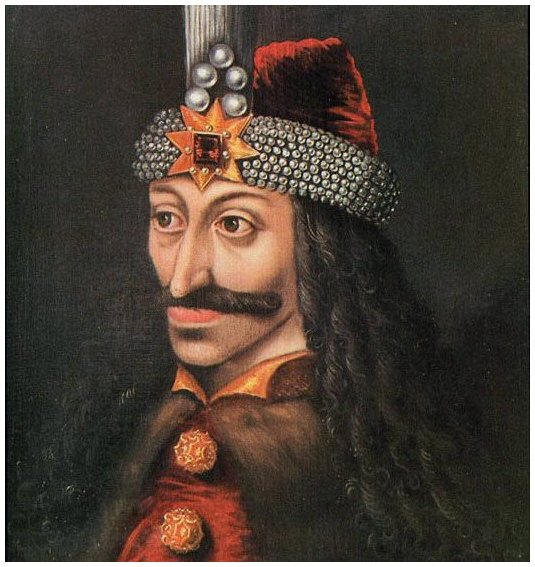
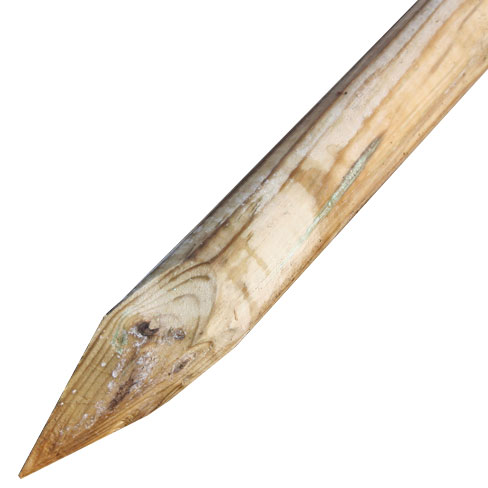
Vlad, the 15th-century border lord who provided Bram Stoker with inspiration for his Dracula, was nicknamed tepes  (TEH-pets) “impaler”, for doing the same thing to prisoners.


Secondly, remembering the Ultor in the Adamclisi inscription, we wonder if such things, besides commemoration, possible mockery, and a thank-you to the divine, might have one more use:  as a warning, especially if, before that basic shape, an actual enemy warrior—dead—or perhaps alive? was set up, as if to say:  invade our land and this is what will happen to you and to all of your fellow soldiers, too.  Mars (in the form of our spears) will avenge your attack.

With that in mind, we remembered a scene in The Lord of the Rings:

“At last as the afternoon was waning they came to the eaves of the forest, and in an open glade among the first trees they found the place of the great burning:  the ashes were still hot and smoking.  Beside it was a great pile of helms and mail, cloven shields, and broken swords, bows and darts and other gear of war.  Upon a stake in the middle was set a great goblin head; upon its shattered helm the white badge could still be seen.”  (The Two Towers, Book Three, Chapter 2, “The Riders of Rohan”)

image21head.jpg

And what was the message of that head, we wonder?

As ever, thanks for reading.  Stay well and know that there’s

MTCIDC

CD

Towering

08 Wednesday Jul 2020

Posted by Ollamh in Uncategorized

≈ Leave a comment

The story of the publication of The Lord of the Rings is complicated, dear readers, and one element in that complication is the dividing of what JRRT thought of as a single book, into three.  This entailed, among other things, creating titles for all three volumes and it’s interesting to see the discussion between Tolkien and Rayner Unwin, the publisher’s son, on the subject.  (See Letters, 166-171 for particulars.)

Even as he was still thinking about volume three, however, JRRT had come to believe that volume two’s title had been found:

“The Two Towers gets as near as possible to finding a title to cover the widely divergent Books 3 and 4; and can be left ambiguous—it might refer to Isengard and Barad-dur, or to Minas Tirith and B; or Isengard and Cirith Ungol.” (Letters, 170)

Towers might appear to be everywhere in Tolkien’s early life.  From works like Andrew Lang’s (1844-1912)

image1al.jpg

The Red Fairy Book (1890),

image2fairy

he would have seen Rapunzel in her tower.

rapunzel-1200

In church, he would have heard about the Tower of Babel (from Genesis 11.1-9 in the Hebrew Bible),

image4babel

and with his curiosity about language (which we can trace as far back as when he was seven, as he tells WH Auden—see Letters, 213-214), the explanation given there of how different languages came to be and how they spread must have readily caught his attention.

As a devout Catholic, he would have heard the Virgin Mary described as an “ivory tower” (turris eburnea)

image5bvm

in the 16th-century “Litany of the Blessed Virgin Mary”.

He might have been taken to London, for a visit, or at least seen a postcard of the Norman keep, the “White Tower” at the center of the Tower of London.

image6awhitet

And then, of course, on any day at Oxford, either as student or professor, he might have strolled past the remains of Oxford Castle and seen the surviving St George’s Tower.

image6stg

Places like St George’s tower, however, were reminders of a long-gone military past.  2nd Lieutenant Tolkien

image7lt

would have been well aware of the change.

Gunpowder weapons had begun to appear on battlefields in the mid-14th century and, once early cannon began to develop into increasingly large tubes called bombards, no stone castle, town, or tower was as safe as it might once have been thought to have been.

image8abombard.jpg

The most telling early example of the power of such things must have been their use at the final siege of Constantinople, in the spring of 1453, where elaborate walls which had stood for many centuries

image8bconstant.jpg

were pounded to pieces by Ottoman artillery.

image8cotto.jpg

Military architects adapted, turning from the higher, thinner walls of castles to low fortifications banked with earth to absorb the power of huge stone or iron balls.

image8dlucca.jpg

But, when it came to battle in the field, by the early 20th century,

image8maxim

machine guns

and heavy artillery

image9gun.jpg

had forced soldiers who had customarily (with the exception of sieges) fought above ground to dig into the earth to save themselves, even if only temporarily, from the quick and sure destruction of such weapons.

image10trench

The castles of the Great War were now not towering stone structures, but elaborate below-ground fortifications

image11fort.jpg

and concrete and iron bunkers were the closest thing to medieval towers.

image12bunker

For those going above ground, there were reminders, as well, that height meant being an easy target, like this famous church spire, with its drooping figure, hit repeatedly by artillery fire until it finally collapsed.

image13spire.jpg

We have written several times in the past about gunpowder, or its equivalent, in Middle-earth (see, for instance:  “Fourth Age:  Big Bang Theory”, 17 February, 2016), and it certainly appears in some form in The Lord of the Rings, at Helm’s Deep and again at the Rammas Echor, the great wall which surrounds the fields and farms below Minas Tirith.  Other than its use at these two places, however, this is a world in which the 20th-century Industrial Age violence into which JRRT had been pulled in 1916 was entirely absent.  Instead, we have those towers Tolkien mentions in his letter about the title of the second volume:  Isengard,image14isen

the Barad-dur,

image15barad.jpg

Minas Tirith,

image16mt

and Cirith Ungol.

image17cu.jpg

Having seen what he did of modern war,

image18slaughter

is it any wonder that Tolkien, in his wonderfully elaborate fiction, would retreat to the comparative safety of those towers of his past?

As always, thanks for reading and

MTCIDC

CD

ps

For Andrew Lang’s Red Fairy Book, as well as all of the other Fairy books, and other good things, too, here’s a LINK to a site you’ll want to visit:  https://www.worldoftales.com/fairy_tales/Andrew_Lang_red_fairy_tale_book.html#gsc.tab=0

pps

We apologize, by the way, for the second appearance of the stave church illustration in our last posting.  Our site was not happy about accepting illustrations last Wednesday for some reason and, though we gently encouraged it, it seems that it had a final moment of stubbornness and with a “So there!” it added a second copy of the image, which we didn’t notice till we’d uploaded the posting.

One Man’s Mead

01 Wednesday Jul 2020

Posted by Ollamh in Uncategorized

≈ Leave a comment

Welcome, as ever, dear readers.

Because we so dislike the huge amount of electronic criticism which exists—what does it help, after all?– with very rare exceptions, we’ve always made it our policy to write about things we admire and they are, we are thankful to say, so many that we don’t think that we will ever run out—or at least we hope not!

In the past, our rare exceptions have included Jackson’s Hobbit films, of which a friend once said, “Might have been fun as films, but only if you had never read Tolkien’s The Hobbit.”  And that’s about what we now would say about them, but there is, as well, a scene in the film of The Two Towers which we’ve always found out of place.  It occurs after the great victory at Helm’s Deep, in which Saruman’s forces are defeated by a combination of Rohirrim and Ents.

image1ego.jpg

(This is an absolutely amazing Lego version—see this LINK for a little more:  https://www.hollywoodreporter.com/heat-vision/lego-battle-helms-deep-is-647177 )

The main protagonists return to Edoras, the Rohirrim capital,

image2edoraslee

(image by Alan Lee)

to Theoden’s hall, Meduseld.

image3meduseld.jpg

(another Lee—what wonderful details—and you can immediately see one of his inspirations, the so-called “stave churches” now found almost entirely in Norway—here’s the reconstructed  Gol Stave Church from the 12th century.  If you’d like to learn and see more, here’s a LINK:   https://en.wikipedia.org/wiki/Stave_church  )

image4stave.jpg

In the original novel, this is a time for counsel and planning, as everyone is well aware that the defeat of Saruman is not the defeat of evil in the world, but the film shows us a giant party, including a drinking bout between Gimli and Legolas, which ends with Gimli drunk and passed out, while Legolas doesn’t appear to be in the least affected.

image4stave

We imagine that the director and writers included this scene because they wanted to release some of the tension from what had been, previously, a very fraught situation, but, for us, the usually grim Gimli, belching and falling over with crossed eyes, seemed completely out of character.

image5drunk.jpg

Drinking in a place like Meduseld, however, could seem very appropriate, given its name, which is based, as so often when it comes to Rohirric, upon two Old English words,  medu, “mead” and sele, “hall”.

This, of course, brought us immediately to another Old English source for Tolkien, Beowulf and Hrothgar, the Danish king’s, mead hall (in the poem, it’s called a medoærn, which combines “mead” with a word meaning lots of things in Old English, including “house”).

magodriht micel·      him on mód bearn   into a mighty battalion;      it came into his mind
þæt healreced      hátan wolde   that a hall-house,      he wished to command,
medoærn micel      men gewyrcean   a grand mead-hall,      be built by men
þone yldo bearn      aéfre gefrúnon 70 which the sons of men      should hear of forever,
ond þaér on innan      eall gedaélan   and there within      share out all
geongum ond ealdum      swylc him god sealde   to young and old,      such as God gave him,
búton folcscare      ond feorum gumena·   except the common land      and the lives of men;
ða ic wíde gefrægn      weorc gebannan   Then, I heard, widely      was the work commissioned
manigre maégþe      geond þisne middangeard· 75 from many peoples      throughout this middle-earth,
folcstede frætwan.      Him on fyrste gelomp   to furnish this hall of the folk.      For him in time it came to pass,
aédre mid yldum      þæt hit wearð ealgearo   early, through the men,      that it was fully finished,
healærna maést·      scóp him Heort naman   the best of royal halls;      he named it Heorot,
sé þe his wordes geweald      wíde hæfde·   he whose words weight      had everywhere;
hé béot ne áléh·      béagas daélde 80 he did not lie when he boasted;      rings he dealt out,
sinc æt symle.      Sele hlífade   riches at his feasts.      The hall towered,
héah ond horngéap· high and horn-gabled…

(This is from Benjamin Slade’s Beowulf website (https://heorot.dk/beowulf-rede-text.html ), which is rich in annotation, as well as having a very interesting attempt to translate not only the words of the poem, but the feel.  We have no idea, by the way, why, when we move the text from that site to our blog, it turns into this box thing.)

This place is named Heorot, which means a “stag”—that is, a male deer.  We can certainly understand why it would be named something like “drinking hall”, but why “stag”?(Another word for a doe, a female deer, is a “hind”, in case you’d like take match them.)

image6stag.jpg

In the annotations to Slade’s version of the poem, he suggests that the hall is named that because stags are a symbol of royalty in the ancient Germanic world, and cites this object, from the 6th-century Sutton Hoo ship burial, where the top of it is clearly a stag.

image7whetstone

We call it an “object” because there’s a good deal of scholarly discussion as to what it actually is.  Two suggestions:  a whetstone (a stone used to sharpen blades)

image8whet.jpg

and a sceptre (the baton royalty carries to show that they are, indeed, royalty).

image9sceptre.jpg

We have no opinion, but would add that the poem says that the hall “towers” (from the verb hlifian) “high” and is what Slade translates as “horn gabled”.  We are not Old English scholars, but others have translated this “wide/broad between the gables”, seeing geap as meaning “wide” (among other things—see the modern English word, “gap”—as well as its cousin, “gape”)—so “horn wide” perhaps?  Thinking about what this would look like, however, we prefer Slade’s idea—as in this rather dramatic illustration—

image10heorot

or in this lower-key illustration of an Iron Age house, with its trophy—

image11house.jpg

or this reconstruction of a Viking longhouse.

image12house

As this is a “mead hall”, it would seem that the drink of choice is mead, which is made from a combination of fermented honey and water.

image13mead.jpg

It’s a very old word (just look at the entry in Etymonline:  https://www.etymonline.com/search?q=mead  ), suggesting that, once people tried it, they never put it down.  (We confess to being partial to it ourselves, but you have to be careful—the sweetness conceals the fact that it can be pretty powerful!)

It’s also a very appropriate word for Beowulf, if his name means what has been suggested.  “The “wulf” part is easy, of course, but the “beo”?  Some scholars suggest that it’s derived from beadu “war/fighting”, so the hero is “warwolf”.  For us, however, there is another possibility, easily linked with mead and its main ingredient:  beo means “bee”, suggesting that, rather than being a “warwulf”, our man is a “beewolf”—that is, a bear.

image14hunny

Thanks, as always, for reading, stay well in our current mad world, and know that there’s

MTCIDC

CD


ps

If you’d like to have a little Old English dictionary fun,  use this LINK:  https://www.oldenglishtranslator.co.uk/  Type in modern English words and see their equivalent, if any.  An endlessly interesting site, in our opinion!

Dreaming?

24 Wednesday Jun 2020

Posted by Ollamh in Uncategorized

≈ Leave a comment

Last Friday was Midsummer’s Eve and it never comes round but we think of Shakespeare’s A Midsummer Night’s Dream (our modern spelling—its first printing—The First Folio, 1623—spells it A Midsommer Nights Dreame).

image1first.jpg

If you don’t know it, it’s exactly what “dreame” could mean to an Elizabethan besides our modern understanding of the word, that of “a series of scenes we see in our sleep”:  a fantasy, and a crazy fantasy, at that.  Without more than dipping into the plot (more than a dip and you plunge straight to the bottom), it has a wide cast of characters, including the ancient Athenian hero, Theseus, and his bride-to-be, the Amazon queen, Hippolyta (here as we might have seen them in a late Victorian production),

image2theseus.jpg

the fairy king and queen, Oberon and Titania (also called “Mab”),

image3ob

some workmen, who plan to present a tragic play (they think) as part of Theseus and Hippolyta’s wedding party,

image4mechs.jpg

some lovers who love the wrong people (this and the previous illustration are from a famous 1935 film of the play),

image5lovers.jpg

and a mischievous sprite, Puck, or “Robin Goodfellow”, who is the servant of Oberon and who enchants various characters.

image6puck.jpg

image7lovers.jpeg

These last two images, as well as that of Oberon and Titania, are from Arthur Rackham’s 1908 heavily- illustrated edition of the play, which we very much love.  Here’s a LINK so that you can have your own copy:  https://ia800909.us.archive.org/7/items/midsummernightsd00shak/midsummernightsd00shak.pdf

At the play’s end, Puck appears and, turning to the audience (this is the spelling of the 1623 printing), says:

Robin. If we shadowes haue offended,

Thinke but this (and all is mended)

That you haue but slumbred heere,

While these visions did appeare.

And this weake and idle theame,

No more yeelding but a dreame,

Centles, doe not reprehend.

For us, it’s always seemed like an unnecessary intervention on Puck’s part.  In seven lines, he takes away the whole story:  the characters aren’t real, only shadows, which seems to echo what Macbeth has to say in Act V, Scene 5, of his play:

Life’s but a walking shadow, a poor player,

That struts and frets his hour upon the stage,

And then is heard no more.

As well, Puck suggests that the plot is shaky and worthless (“weake and idle”) and that the whole thing is not a “dreame”—fantasy—but “dreame”, a series of scenes the audience has seen in a doze (“that you have but slumbred heere”)—is he suggesting that the quality of the work is so low that it’s put the whole audience to sleep?

This could, of course, be a sort of false modesty:  we all know that this was a wonderful combination of overlapping, mirroring plots, lovely poetry, and wonderful silly slapstick comedy (grin, grin, wink, wink, nudge, nudge).

We could imagine, however, that there is another possibility, that the idea of coming into contact with such a powerful fantasy is almost too much for humans, and so it has to be explained away, if not actually denied:  enchantment?  fairies?  you must have been dreaming!

We certainly know other stories which show a certain anxiety about fantasy.  Both Alice books, for example, end with Alice waking up.  In Wonderland, she is dreaming that she’s being attacked by the playing cards of the Red Queen’s court, only to awakened to her sister brushing dead leaves off her.

image8cards

In Through the Looking-Glass, Alice is awakened by her kitten, Dinah.

image9dinah.jpg

Rip Van Winkle wakes up twenty years later after encountering—and drinking with—Henry Hudson’s long-dead crew in Washington Irving’s story.

image10aarvw

image10arvw.jpg

Although, in the original 1900 book, The Wonderful Wizard of Oz, Dorothy, using her silver—not ruby—slippers to carry her back to Kansas, lands wide awake in a field near her aunt and uncle’s house, in the film version, she wakes from what might have been a coma, having been injured in a cyclone near the story’s opening.

image10woz

(If you don’t have your own copy of the book, here’s a LINK with the original Denslow illustrations: https://archive.org/details/wonderfulwizardo00baumiala/page/254/mode/2up )

But we’re forgetting one thing:  it’s not just any night’s dream, it’s a midsummer night’s dream and midsummer is a tricky time, being a moment when the year’s day is at its greatest length, but, when the day is over, the days will become shorter and shorter until the winter solstice, in late December, the shortest day of the year.  All over the western world, it’s a time for special customs and ceremonies

midsummer-celebration.jpg.990x0_q80_crop-smart

and, virtually everywhere, for enormous bonfires.

image11bonfire

It has long been suggested that certain customs and those fires, in particular, may date from long before the modern world and even from the gradual Christianization of the west, where, in so many places, the day has become attached to John the Baptist, thought to be the first Christian martyr.

image12john

There are complicated theological explanations for this attachment, but, as John was executed, perhaps, this suggests a pre-Christian sacrifice to make certain that the sun, even if it spends less and less time in the sky each day afterwards, will return in full some day?  Certainly the bonfires on the day when the sun is about to begin to appear for briefer times each day could seem like an attempt at magically encouraging its power.

Shakespeare’s original audience was much closer to earlier worlds than we and the dramatist himself came from the country, where folk belief was much stronger than in London.  Perhaps, then, Puck’s words are meant in several senses at once:  on the one hand, we are modest (really!) about our play, but, on the other, it’s better to imagine that this is only a dream—something you saw in your sleep—than there could ever be a world where supernatural creatures could exist—and interfere in human affairs—at least at Midsummer.

Thanks for reading, as always, happy belated Midsummer’s Day, and

MTCIDC

CD

ps

Here’s a LINK to the play in its original 1623 publication—we enjoy the look of it—somehow to us it’s chewier than a modern text–file:///E:/posts1/dreming/A%20Midsummer%20Night’s%20Dream%20(Folio%201,%201623)%20Internet%20Shakespeare%20Editions.html

pps

In 1826, at the age of seventeen, Felix Mendelssohn (1809-1847),

image13felix

composed an overture based upon his impressions of Shakespeare’s play and, in 1843, followed this with a full score to accompany a performance of the play (in German) in Berlin.  Here’s a LINK to a recording with original instrumentation, which we prefer, conducted by Frans Brueggen, with the Orchestra of the 18th Century.  This contains the overture, plus the numbers added for the 1843 production. We hope that you like it as much as we do.

To Goon on Pilgrimages

17 Wednesday Jun 2020

Posted by Ollamh in Uncategorized

≈ Leave a comment

Welcome, dear readers, as ever.

We’ve often written about earlier English worlds and how they influenced Tolkien’s depiction—often, his basic imagining—of Middle-earth.  When it comes to Roman influence, we once posted an essay about the Rammas Echor—the great wall surrounding the Pelennor, the fields below Minas Tirith—and the possible use of Hadrian’s Wall in northern Britain as a model (“Where Did It Go—And Why?” 17 June, 2015)

image1ahadrians

At another time, we devoted a posting to the subject of Roman roads and those of Middle-earth (see “The Road (No Longer) Taken”, 21st September, 2016).  When it comes to the actual Roman roads, there is a lot of really interesting discussion about their survival and use in Britain after the last troops were pulled out in 410AD.  One theory is that, although the roads continued in service, perhaps for centuries, Roman bridges began to collapse in time and, when they did, new routes to fords began to appear and gradually supplanted at least some of the old roads.

Hadrian's Wall Chesters Bridge Abutment J980130

image5bridge

This is a fairly recent theory, but Tolkien appears to have come to the same conclusion years before as we see in his description of a great city which had once stood on that North-South Road, Tharbad, and its bridge over the river Greyflood—Gwathlo:

“…both kingdoms shared an interest in this region, and together built and maintained the Bridge of Tharbad and the long causeways that carried the road…When Boromir made his great journey from Gondor to Rivendell…the North-South Road no longer existed except for the crumbling remains of the causeways, by which a hazardous approach to Tharbad might be achieved, only to find ruins on dwindling mounds, and a dangerous ford formed by the ruins of the bridge…”  (Unfinished Tales, 277)

Before the return of the King, then, it appears that travel within whole sections of Middle-earth had almost dried up:

“But the Northern Lands had long been desolate, and the North Road was seldom used:  it was grass-grown, and the Bree-folk called it the Greenway.” (The Fellowship of the Ring, Book One, Chapter 9, “At the Sign of the Prancing Pony”)

We’ve always visualized the North Road,

image1greenway

when it was in general use, as looking like a Roman road, when it was in use:  laid out directly across the countryside, carefully built, fitted with flat stone on multiple layers of smaller stone and gravel.

image2abuilding

image2romanroad

And we can also then see the Greenway as looking like a Roman road when that went out of use.

image3broad

The Romans had used their roads as direct passage for troops,

image6romans

but there was a commercial use, as well,

image7road

and it seems natural that, long after the Romans had left, or become part of the general Romano-British (or Sub-Roman) population, those paved, straight roads were still a part of the transport/trade system, and maybe for a long time beyond.

6860741186_cf6307a712_b

(And, yes, that is a monkey driving that cart.  This is from one of our favorite illuminated manuscripts, the Luttrell Psalter, from the mid-14th century.  If you’d like to learn more about it, here’s a LINK:  https://www.bl.uk/collection-items/the-luttrell-psalter )

From the talk in The Prancing Pony, however, it appears that about the only people using the road at the time of the War of the Ring were refugees:

“There was trouble away in the South, and it seemed that the Men who had come up the Greenway were on the move, looking for lands where they could find some peace.” (The Fellowship of the Ring, Book One, Chapter 9, “At the Sign of the Prancing Pony”)

As we said above, we’ve very often written about past Britain and how it may have influenced Tolkien’s Middle-earth.  JRRT is wonderfully creative in what he uses, everything from clothing and weapons to manuscripts and architecture.  In our last posting, however, we thought that it might be interesting to look at something common in our medieval “Middle Earth” which doesn’t turn up in Tolkien’s.  Our first choice was churches.   As JRRT wrote in a footnote to a 1954 letter which we quoted in our last posting:  “There are thus no temples or ‘churches’ or fanes in this ‘world’ among ‘good’ peoples.” (Letters, 193)  In that posting, we used a mid-16th-century image of London to illustrate just how common such buildings (and what went on inside them) were in our Middle Earth.

image8wyngaerde

As you can see, everywhere you look, there are church towers and steeples.  This is the biggest city in the kingdom at the time, of course, but, across the countryside, in virtually every village, there was a church.  In fact, in places where there might not be a church itself, there was a chapel-of-ease, a separate little building which could serve as one.

image9achapel

Those churches, along with what Tolkien calls “fanes”, which means shrines (religious sites, but not necessarily in churches), were sometimes more than often-impressive buildings and the services held within them.  They could also be a major reason for medieval people, thousands of them, to be on what roads there were, not only in Britain, but across Europe.  As they are attached to medieval religious life, about which we talked in our last posting, we thought that we’d add them to it as a sort of ps.

image9broutes

Centuries before the Romans built their roads, people had made journeys, sometimes long journeys, to religious sites in the western world, usually either to hear about their future from the lips of a god, at places like Delphi,

image9delphi

where the priestess of Apollo told you in verse something which might please or frighten you,

or to look for a cure, at shrines like Epidauros, for what ailed them.

image10epidauros

With the gradual change from the classical to the early medieval world, people continued to make such journeys, but now, instead of traveling to shrines dedicated to various ancient gods, people visited Christian shrines, like Jerusalem

image11jerusalem

or Rome.

image12rome

Finding out about the future was no longer an option, but people certainly traveled to find cures and this is where our title comes in.  It’s taken from the “General Prologue” to Geoffrey Chaucer’s (c.1340s-1400)

image13gc

The Canterbury Tales, a collection of stories, almost entirely in verse, told by a group of travelers on their way to the medieval shrine of Canterbury, as Chaucer explains (that, in April):

“…Thanne longen folk to goon on pilgrimages,

And palmeres for to seken straunge strondes,

To ferne halwes, kowthe in sondry londes;

And specially from every shires ende

Of Engelonde to Caunterbury they wende

The hooly blisful martir for to seke,

That hem hath holpen when that they were seeke.”


That “hooly, blissful martir” was Thomas Becket (1119-1170), Archbishop of Canterbury,

Thomas_A_Beckett1_2184366a

who was murdered in his own cathedral by 4 knights possibly sent by his one-time friend, Henry II.

image15hank2

Becket’s tomb

image16tomb

(this is a more modern version—the original was destroyed during the period when Henry VIII was taking over the churches and monasteries and appointing himself head of a new English Church in the 1530s) had quickly gained a reputation for wonder-working and therefore drew people like Chaucer’s pilgrims.

image17pilgrims

To reach Canterbury, they traveled southeast, along the southern side of the Thames, and the road on which they traveled, shown on this map as “Watling Street”,

image18map

was an ancient track, but was later converted into a paved road by the Romans to provide easier access to their southeast coastal ports—and clearly still in use nearly a thousand years after the departure of the pavers.

Canterbury was hardly the only such shrine in England.  People also traveled to churches and shrines at Walsingham, Holywell, Glastonbury, Winchester, Durham, and St Alban’s, among many other places, sometimes along the same roads the Romans had built, like Watling Street, and sometimes on later medieval ones.

image19travelers

But if you saw a group of pilgrims, or even one, on the road, what would tell you what you were looking at?   The answer is a souvenir.

image20badge

This is a medieval pilgrim’s badge, cast from lead and sold at the site.  You purchased this at the church or shrine, pinned it on your hat or clothing, and it told anyone you met that you’d made a journey to a religious location.  They could be very specific to a shrine. This one, in fact, might have been attached to Chaucer’s cloak or hat, as it comes from Canterbury and has an idealized image of Archbishop Becket on it to prove it.  (For more on pilgrims’ badges, see this LINK:  https://collections.museumoflondon.org.uk/online/group/19998.html for the Museum of London, an absolute treasure house of British history.)

In Tolkien’s extensive letter of 1954, cited above, he mentions the lack of religious places in Middle-earth, but says only in explanation that, “They had little or no ‘religion’ in the sense of worship.” and that “this is a ‘primitive age’”, although judging by its great antiquity and the complexity of the civilization which has survived so much turmoil in its struggles, particularly with Sauron, we find that a little hard to understand.  We wonder, however, thinking of his wonderful ability to create new from old, what Tolkien would have given us, had he used not only the religious buildings, but the customs, including pilgrimage, of the medieval English world as models, in his Middle-earth?  Imagine Butterbur, at the Prancing Pony, telling the hobbits that:

“There’s a party that came up the Greenway from down South last night and then there’s a travelling company of dwarves going West come in this evening, and then there’s that troop of pilgrims on their way to the shrine of St Amandil the Numenorean…”

Thanks, as ever, for reading.  Stay well and know that there will be

MTCIDC

CD


ps

If you know us, you know that we can never resist a temptation to add something more.  When we were doing a little research on pilgrimage in England, we came across what is now thought to be the oldest medieval map of Britain.  It’s called the “Gough Map”, after its last owner, who donated it to the Bodleian Library at Oxford in 1809, and dates probably from the mid-14th century (but may be based upon an older map yet).

image21map

Going one step farther, we came upon a BBC documentary series entitled “In Search of Medieval Britain”, hosted by a medieval art historian, Alixe Bovey, which follows the map to explore various parts of medieval Britain, which we thought was a brilliant idea.  We very much enjoyed the series and so we post this LINK to the first episode, in case you’d like to see it for yourself:  https://www.youtube.com/results?search_query=in+search+of+medieval+britain+episode+1

Ships, Towers, Domes, Theatres, and Temples

10 Wednesday Jun 2020

Posted by Ollamh in Uncategorized

≈ Leave a comment

As always, dear readers, welcome.

If you’re a fan of English Romantic poetry, you’ll recognize our title:  it’s from the sixth line of William Wordsworth’s (1770-1850)

image1wordsworth

sonnet, “Upon Westminster Bridge, September 3, 1802”, first published in 1807 and long known to have been inspired by an entry in his sister, Dorothy’s, journal.   (here’s a LINK to the rest of the poem, if you don’t know it:  https://www.poetryfoundation.org/poems/45514/composed-upon-westminster-bridge-september-3-1802 )

In this posting, we are not going to talk about Wordsworth or the poem or even about the ships, domes, and theatres, but we will talk about towers and temples—or, really about their absence—in Middle-earth.

Way back in 2016, in a posting (our 100th) called “Stepping Westward” (a title also based upon a Wordsworth poem), we talked a bit about religion in Middle-earth, but we’ve thought more about the subject since then and, in particular, about Middle-earth as based in a great part, on earlier forms of England.

JRRT, in a September, 1954 letter to Peter Hastings, wrote, in a footnote:

“There are thus no temples or ‘churches’ or fanes [an archaic word meaning “shrines”] in this ‘world’ among ‘good’ peoples.  They had little or no ‘religion’ in the sense of worship.”  (Letters, 193)

For us, who have spent a good deal of time, both in medieval England and in modern-day England, this seems to leave a large gap in the landscape.  Just look at this mid-16th-century drawing of Old London Bridge and across London by Anton van der Wyngaerde (1525-1571)—

image2wyngaerde

(And do we imagine that JK Rowling had him somehow in mind with the spell “Wingardium Leviosa”?)

image3hermione

At a rough count, we spot about thirty church towers

image4tower

and steeples

Naseby Church

within this image, one for each parish within that part of the city visible.

And here’s a map showing London’s parishes before the Great Fire of 1666 to show you just how many existed a century after that drawing—

image6amap

We’re not experts at Church history, but we know that a parish is the smallest unit of Church of England governance (the Catholic Church uses the same system, from which the C of E system was derived) and it indicates not only the church itself, but a certain quantity of land around it.  In the medieval world, as in the Renaissance world depicted in the drawing, parishes could be quite small—just look at this map of parishes in Hastingleigh, in Kent, just south of Canterbury.

image6parishes

In rolling countryside in England, in fact, it’s sometimes possible to stand on a hill and see more than one church at a time, each potentially a parish center.  Imagine what Hobbiton might look like

image7hobbiton

with the addition of an ancient church, like this at Kirk Hammerton.

image8church

(Notice the cemetery, too—we know where the important people in places like Edoras

image9edoras

or Minas Tirith

image10stewards

were buried, but what about important hobbits, or even ordinary ones?  In the medieval world, the latter would simply have been buried on church ground in normal circumstances, only the very well-to-do would have had markers of any sort and those more likely inside the church.)

There is nothing like a church, then, even though so much of Middle-earth is medieval England, but is there any other possible influence from that far-off ecclesiastical world?  Perhaps–and it rather surprised us when we thought of it.

Along with parish churches and catherdrals, the homes of the ruling authorities, bishops, (so called because those larger churches held the bishops’ headquarters, marked by a throne, a cathedra—here’s a very famous one, from Ravenna, in northeastern Italy)

image11ravenna

there arose in the West, beginning in the 4th century AD, a series of religious communities, in which men—and then women—lived and worshipped together.  For men, these were called monasteries and for women, convents.  Such places were intentionally removed from cities and towns (many of the very first were established in the Egyptian desert).

image12astsimeons

The lives of people who lived in them were intentionally very basic and strictly ruled, but they developed into complex societies, some with very elaborate buildings, like this monastery at Cluny, in eastern central France.

image12clunyiii

Such a place provided not only living and worship space for its inhabitants, but perhaps the only medical facility for anyone for many miles, an infirmarium.

image13infirmary

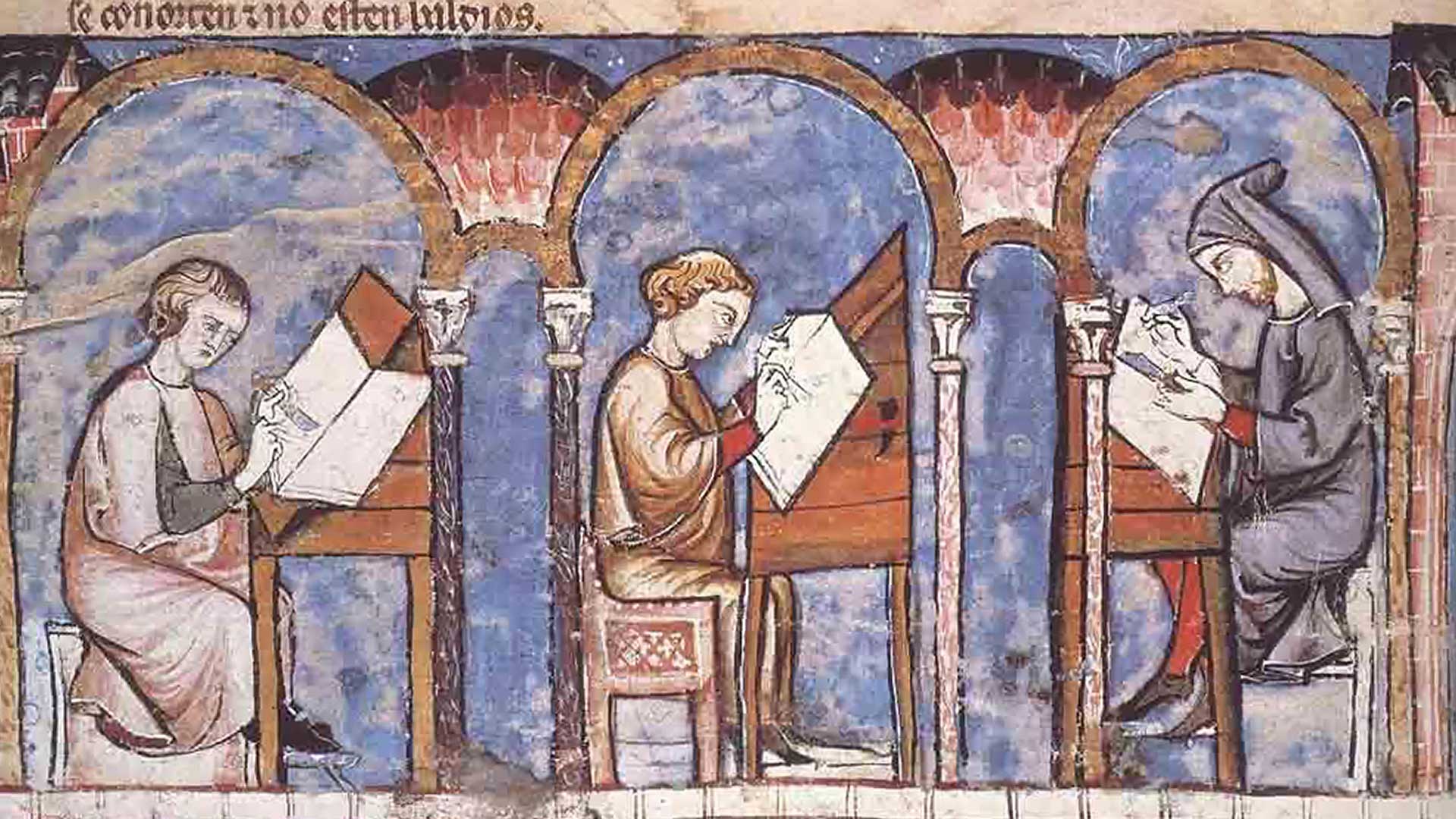
As well, there might be a school, a library, and a copy center, a scriptorium,

image14scriptorium

where books would be copied—the only way a book would be multiplied in the West until the invention of the printing press in the middle of the 15th century.

After Frodo is wounded on Weathertop by the morgul knife,

image15howeweathertop

Aragorn and the hobbits flee as best they can to Rivendell,

image15rivendell

where Frodo is healed by Elrond, after a tricky operation.  As Frodo recovers, he finds Bilbo, who has been working on his book.  Rivendell seems to be a repository of knowledge—when Bilbo had visited with the dwarves some eighty years before, it had been Elrond who had discovered and translated the moon runes on Thror’s map,

image16runes

and, while staying there eighty years later, Bilbo had not only worked on what would become There and Back Again, but also completed “three books of lore that he had made at various times, written in his spidery hand, and labelled on their red backs: Translations from the Elvish, by B.B.”  (The Return of the King, Book Six, Chapter 6, “Many Partings”)

Rivendell might not have been a religious community, but it is removed (and rather tricky to find, at least as far as Gandalf is concerned in chapter 3 of The Hobbit), it acts as an infirmary for Frodo, and it appears to be a place of learning for Bilbo—perhaps, if Middle-earth has no churches, it might have the suggestion of a monastery?

Thanks, as ever, for reading and stay well, with

MTCIDC

CD


ps

Based at the remains of the monastery at Cluny is a wonderful musical group, Odo, which takes its name from one of the early abbots (directors) of the community.  They mix Western medieval with Middle Eastern music in all sorts of interesting ways.  Here they are in this LINK performing an Egyptian lullaby, “Nami, Nami”.

And here’s a second and smokier performance by Azam Ali and her ensemble.

https://www.youtube.com/watch?v=FuGhF_FhWKw

We hope you enjoy both as much as we do!

Smoke—and Caterpillars

03 Wednesday Jun 2020

Posted by Ollamh in Uncategorized

≈ Leave a comment

Welcome, dear readers, as ever.

Recently, we’ve been rereading Lewis Carroll’s (1832-1898)

image1lc

Alice’s Adventures in Wonderland (1865).

image2first

We’d come to the very end of Chapter IV, “The Rabbit Sends in a Little Bill”, about to begin Chapter V, “Advice from a Caterpillar”, and there, in the original publication, is this illustration, by Sir John Tenniel (1820-1914),

image3tenniel

of, as the text tells us:

“…a large blue caterpillar, that was sitting on the top [of a mushroom] with its arms folded, quietly smoking a long hookah…”

image4cater

If you read us regularly, you know that the first thing which would strike us isn’t necessarily the image, but that word, “caterpillar”.  Where in the world did the term “caterpillar” come from?  The answer you might see in this image—

image5wooly

Here in the US, this is commonly called a “wooly-bear” or “wooly-worm”, although it is not really wooly, and certainly not a bear, although perhaps a little wormy.  In fact, it’s the larva of a Pyrrarchtia Isabella, the Isabella tiger moth.  These are a North American creature, but there are similar hairy caterpillars in Europe.

image6moth

Well, we know the life stages of butterflies and moths from a biology class long ago,

image7moth

so, if this is a caterpillar, what’s the next step?  Imagine that someone long ago, instead of calling it a “wooly bear” thought that it looked more feline—a kind of very fuzzy feline.  And that person, who spoke (late) Latin, called it a “catta pilosa”, a “hairy cat” which, through Old North French “caterpilose”  into Middle English “catyrpel” became, yes, a “caterpillar”.  To help to see how that pronunciation changed, think of southern English dialects which don’t pronounce those R’s and you immediately get “cat-uh-pill-uh”, which is just on the edge of that older word.

Now that we have that straightened out, more or less, the next question is:  what is a caterpillar doing in the text—and, further, why is it smoking a hookah?  Or, if you’re not familiar with that gadget,

image8hookah

perhaps we should also ask, what’s a hookah?

To begin, we can only guess why there’s a caterpillar there.  It’s in the manuscript version which Carroll presented to the original Alice in 1864, (although in Chapter III and without a chapter title), so it appeared sometime in the early process of composition.

image9ms

As we understand it, the story began as a piece of oral creation, a story told on a boating trip with the original Alice, her two older sisters, and an Oxford friend, on 4 July, 1862.  We might imagine then, that, somewhere along the way, a caterpillar appeared, perhaps dropping into the boat?  Certainly there are various common caterpillars which appear at this season in England.  (Here’s a LINK for you to explore them:  https://www.wildlifetrusts.org/wildlife/how-identify/identify-caterpillars )

So, if we have a caterpillar appear, what might it be doing?  It will probably talk—most creatures in Wonderland do—but could it perhaps be doing something exotic, as well?  Carroll’s illustration, although the text says that he was smoking a long hookah, depicts the caterpillar as smoking something different, a chibouk, a kind of very long-stemmed Turkish tobacco pipe.

image10chibouque

A hookah, as you can see both from our photos above and below and from Tenniel’s illustration, consists of a smaller bowl, in which the tobacco is placed and lighted, on top of a bigger flask of water, through which the smoke is sucked and “purified” as the smoker inhales it through a long hose, then blows it out again, as we see in Tenniel’s version of the scene.

image11ahookah

The point, however, is that, hookah or chibouk, this suggests a Middle Eastern theme, especially if we imagine that the mushroom upon which he is seated is an ottoman, a kind of backless sofa/couch

image11ottoman

the very name of which tells us where it comes from.

A further clue might be found in the Tenniel illustration:  the caterpillar appears to be wearing something with long, loose sleeves, rather like the kinds of robes worn by Middle Eastern gentlemen in Victorian fantasy paintings of that world

image12fantasy

as well as Victorian “smoking jackets”—actually more like a bathrobe in this 1840s fashion illustration–

image13smoking

which gentlemen wore in leisure moments at home, complete with a distinctive “smoking cap”,

image14fez

often, as here, modeled upon another Middle Eastern garment, the headwear called a fez.  (Although this gentleman seems to prefer a cigar to a hookah of chibouk.)

So, if we put these various bits together, we would offer the following:   that we have the suggestion that Alice, in this strange place, has come upon a gentleman caterpillar, lounging on an ottoman in somewhat “Middle Eastern” dress, idly smoking an exotic kind of pipe.

We might indicate one more detail, one which we’re a little reluctant to add, but there may be a clue in the description of the caterpillar’s speech and actions:

“…at last the Caterpillar took the hookah out of its mouth, and addressed her in a languid, sleepy voice.”

And, in the final moments of their conversation, the caterpillar:

“…took the hookah out of its mouth, and yawned once or twice, and shook itself.”

Perhaps this is just a very lazy sort of creature, but, other things were smoked besides tobacco in hookahs and, of course, there have always been readers who have attached so-called “drug culture” ideas to Wonderland—as if the whole thing is based upon some hallucinatory dose.  To us, who spend a lot of time in Victorian and later fantasy worlds, this is completely unnecessary and actually does a disservice to the author’s wonderful imagination—and yet, there is that sleepy quality…

We’ll leave this to you, dear readers, with thanks for reading, with a wish that you will stay well, as well as our reassurance that there will be

MTCIDC

CD


ps

If you would like to see the hand-written early version of Alice, which Carroll gave to Alice, it is now in the British Library, and here’s the LINK:  https://www.bl.uk/collection-items/alices-adventures-under-ground-the-original-manuscript-version-of-alices-adventures-in-wonderland


A QUICK POST

27 Wednesday May 2020

Posted by Ollamh in Uncategorized

≈ Leave a comment

Welcome, as ever, dear readers.

We begin this posting with the Persians

image1persians

and a post office.

image2nypo

This might seem a very odd pairing, but the inscription over the front of the 8th Avenue post office building in New York City (opened 1914) offers a connection.

image3po

This is only a part of the inscription, which reads, in full:

“Neither snow nor rain nor heat nor gloom of night stays these couriers from the swift completion of their appointed rounds.”

Persian?  This doesn’t look like Persian.  Now this looks like Persian—

image4persian

This is one of a pair of inscriptions, called the “Ganjnameh Inscriptions”, “Ganjnameh” in Farsi meaning “Treasure Book”, the locals believing that, if you could read what was written on this pair,

image5inscriptions

you would be given the instructions to find ancient buried treasure.  Instead, they are about two Persian kings, Darius I (550-486BC—he’s the one sitting down) and his son, Xerxes I (c.518-465BC)

image6dandx

and, as good Zoroastrians, their patron god, Ahura Mazda.

image7am

Darius, often called “Darius the Great”, was an early and very ambitious Persian monarch, who extended his empire beyond its previous boundaries

image8empire

and is known in Western history for being the king whose expeditionary force was defeated by the Athenians and their allies, the Plataeans, at the battle of Marathon, in 490BC.

image9marathon

The story of this monarch and that of his son, Xerxes, who led a second expedition against Greece 10 years later, are told in the Greek Heroodotus’ (c.484-c.425) Histories, a 9-book account of Greek relations with Asia Minor and particularly with Persia, seeking to explain, in part, why the two were at odds through several centuries.

As empire-builders, the Persians were easy rulers.  They never had the troops to occupy their huge territories, once they had conquered them, but, instead, appointed a governor (satrap) and demanded two major items:  troops, when required,

image10troops

and taxes (always required).

image11daric

To keep control of such a huge stretch of land, Darius and his successors maintained a direct route of communication from the western edge of Asia Minor to one of their capitals, at Susa.  This route was called the “Royal Road” and stretched for nearly 1700 miles.

image12road

If it took months to walk the distance one way, but, with a long series of stations, each with fresh horses, a relay of messengers might travel the same distance in a week—and this is where that inscription on the post office comes in.  Herodotus describes this road and its government service here:

“Now there is nothing mortal that accomplishes a course more swiftly than do these messengers, by the Persians’ skillful contrivance. It is said that as many days as there are in the whole journey, so many are the men and horses that stand along the road, each horse and man at the interval of a day’s journey. These are stopped neither by snow nor rain nor heat nor darkness from accomplishing their appointed course with all speed. [2] The first rider delivers his charge to the second, the second to the third, and thence it passes on from hand to hand, even as in the Greek torch-bearers’ race in honor of Hephaestus. This riding-post is called in Persia, angareion.” (Herodotus, Histories, Book VIII, 98, from the 1920 Godley translation)

And here’s an illustration of what Herodotus suggests is a Greek parallel—

image13torchbearer

(If the message was by word of mouth, there could be a real danger of miscommunication—follow this LINK to such a danger by the wonderful Horrible Histories folk:  https://www.youtube.com/watch?v=QKqkq4hGpgo )

You can see, then, that the builders of that New York post office, borrowing from (and adapting) Herodotus, wanted to suggest that the US Postal Service was as imposing (and as unbeatable?) as the Persian Imperial Post.

Long before the US Postal Service, however, the idea of something as speedy for government use as this was not lost upon the Romans.

The emperor Augustus, about the year 20BC, founded a Roman version of this service, called the cursus publicus, using the increasingly-elaborate Roman road network (ultimately 50,000 miles—80,000km–of paved roads).

image14road

We have a good description of this official service from a much later source, the Historia Arcana (“Secret History”) of Procopius (c.500-after c.565AD), a Byzantine court official at the time of the emperor Justinian (482-565AD):

“For the Roman Emperors of earlier times, by way of making provision that everything should be reported to them speedily and be subject to no delay, — such as the damage inflicted by the enemy upon each several country, whatever befell the cities in the course of civil conflict or of some unforeseen calamity, the acts of the magistrates and of all others in every part of the Roman Empire — and also, to the end that those who conveyed the annual taxes might reach the capital safely and without either delay or risk, had created a swift public post extending everywhere, in the following manner.  3 Within the distance included in each day’s journey for an unencumbered traveller2 they established stations, sometimes eight, sometimes less, but as a general thing not less than five. 4 And horses to the number of forty stood ready at each station. And grooms in proportion to the number of horses were detailed to all stations. 5 And always travelling with frequent changes of the horses, which were of the most approved breeds, those to whom this duty was assigned covered, on occasion, a ten-days’ journey in a single day…”  (Procopius, Historia Arcana, xxx—translator, HB Dewing, 1935)

Remarkably, we can even trace the routes taken by couriers by using an extremely interesting piece of geographical charting, the so-called Tabula Peutingeriana, the”Peutinger Map”.

image15map

Named for Konrad Peutinger (1465-1547),

image16kp

a scholar in whose hands it lay in the 16th century, it is 13th century copy of a map which may date all the way back to the time of Augustus himself.  (If you’d like to read more about the map and theories of origin, here’s a LINK:  https://en.wikipedia.org/wiki/Tabula_Peutingeriana )

The original was a 22-foot long scroll which, leaving out Britannia and Hispania, charts the thousands of miles of Roman roads.  (See the LINK above for a roll-out of the whole map.)

The use of such a speedy service was not lost upon someone else, in a much later time.  In the 3rd section of the “Prologue” to The Lord of the Rings, we see:

“The only real official in the Shire at this date was the Mayor of Michel Delving (or of the Shire)…the offices of Postmaster and First Shirriff were attached to the mayoralty, so that he managed both the Messenger Service and the Watch.  These were the only Shire-services, and the Messengers were the most [sic] numerous, and much the busier of the two.  By no means all Hobbits were lettered, but those who were wrote constantly to all their friends (and a selection of their relations) who lived further off than an afternoon’s walk.”  (The Lord of the Rings, Prologue, Section 3—the word “sic” is inserted in brackets above because there’s a grammatical error in the text here.  JRRT names only two groups, the Messenger Service and the Watch, which means that one should use the comparative form of “much/many”, which is “more”, here, instead of the superlative “most”, which would be used for more than two groups.)

This establishes a postal service in the Shire—but what about the speedy part?  We turn to the next-to-the-last chapter of The Return of the King, “The Scouring of the Shire”, and listen to Robin Smallburrow speaking with Sam:

“We aren’t allowed to send by it now, but they use the old Quick Post service, and keep special runners at different points.” (The Return of the King, Book Six, Chapter 8, “The Scouring of the Shire”)

And, as this posting was entitled “A Quick Post”, we’ll end here, saying, as always, thanks for reading and MTCIDC,

CD

ps

That post office motto turns up in a comic form (with missing letters), more or less, in Terry Pratchett’s Going Postal (2004),

imagegoingpostal

where, on the central post office in Ankh-Morpork, may be read the inscription:  “Neither rain nor snow nor glo m of ni  t can stay these mes sengers abo t their duty”.

We recommend not only this (one of our favorite Pratchett novels), but also recommend the film adaptation, which really captures much of the feel of the book.

imagefilm


A Policeman’s Lot, or, Guards! Guards!

20 Wednesday May 2020

Posted by Ollamh in Uncategorized

≈ Leave a comment

As always, welcome, dear readers.

It’s clear that, before the advent of Sharkey and his “big men”, the Shire had little need of law enforcement:

“The Shirriffs was the name that the Hobbits gave to their police, or the nearest equivalent that they possessed.  They had, of course, no uniforms (such things being quite unknown), only a feather in their caps; and they were in practice haywards than policemen, more concerned with the strayings of beasts than of people.  There were in the Shire only twelve of them, three in each Farthing, for Inside Work.  A rather large body, varying at need, was employed to ‘beat the bounds’, and to see that Outsiders of any kind, great or small, did not make themselves a nuisance.” (The Lord of the Rings, Prologue 3)

That Sharkey and his thugs were able not only to take over the Shire, but reorganize and expand these Shirriffs into their own hobbit enforcers, suggests how nearly useless they could be—unlike the body which we suspect they may have been modeled upon, Hitler’s notorious private police force, the SA (SturmAbteilung—“Storm(trooper)Detachment”).

image1asturm

The consequence occurs when Merry, Pippin, Frodo, and Sam return to the Shire (a wonderfully atmospheric depiction by Allen Lee)

image1bscour

and their fearlessness so shakes this ersatz-SA that they quickly collapse, leaving only those “big men” to deal with an improvised army of angry hobbits.

A Tolkien illustration by Ted Nasmith

(by Ted Nasmith—always one of our favorite illustrators)

If the subsequent violence weren’t there to darken the picture (along with the deaths of Sharkey/Saruman and Grima), the plight of the Shirriffs would be almost silly, as the hobbits they attempt to take prisoner turn the tables, almost making the Shirriffs into prisoners:

“It was rather a comic cavalcade that left the village, though the few folk that came out to stare at the ‘get-up’ of the travelers did not seem quite sure whether laughing was allowed.  A dozen Shirriffs march in front, while Frodo and his friends rode behind.  Merry, Pippin, and Sam sat at their ease laughing and talking and singing, while the Shirriffs stumped along trying to look stern and important.” (The Return of the King, Book Six, Chapter 8, “The Scouring of the Shire”)

These Shirriffs in their haplessness (you can see “Shire”—from Old English scir—said “sheer”—here, combined with gerefa—something like “yeh-REH-fuh”—“official”) reminded us of the Ank-Morpork City Watch in the novels of Terry Pratchett (1948-2015),

image1tp

and, if you’re a fan, as we are, you’ll immediately recognize our subtitle as a borrowing from his 1989 novel.

image2guards

The City Watch are the police

image3watch

of the city of Ankh-Morpork, on Discworld, Pratchett’s personal planet.

image4map

As the City Watch, they are not actually guards, but, rather, what, in our world, would be early policemen.

image5constables

In their general look and behavior, however, they’re not like the City Watch of King’s Landing,

image6citywatch

but a bit more simple-minded, like the Keystone Cops (1912-1917) of silent film.

image7keystone

Comedy and the constabulary go back a very long time.  Ancient Athens employed mercenaries from north of the Black Sea, the Scythians, as the muscle in their police force.

image8aascythian

The Athenian comic dramatist, Aristophanes (c446-c386), saw the comedy in such foreigners who seemed not too bright—mostly because they spoke Greek badly—and yet represented the state.

There was a kind of combined watch and fire department, called the Cohorts of the Watch (Cohortes Vigilum), in Rome, but we don’t know of anything in surviving Roman literature which portrays them as figures of fun.  Shakespeare, however, has given us a constable, Dogberry, whose name alone is ridiculous.  He is head of the Watch in the town of Messina in Much Ado About Nothing (1598-9?)

image9dogberry

and his instructions to his men will give you an idea of how Shakespeare wants us to view this officer of the law:

DOGBERRY

You shall also make no noise in
the streets; for, for the watch to babble and to
talk is most tolerable and not to be endured.

Watchman

We will rather sleep than talk: we know what
belongs to a watch. 

DOGBERRY

Why, you speak like an ancient and most quiet
watchman; for I cannot see how sleeping should
offend: only, have a care that your bills be not
stolen. Well, you are to call at all the
ale-houses, and bid those that are drunk get them to bed.

Watchman

How if they will not?

DOGBERRY

Why, then, let them alone till they are sober: if
they make you not then the better answer, you may
say they are not the men you took them for.

Watchman

Well, sir.

DOGBERRY

If you meet a thief, you may suspect him, by virtue
of your office, to be no true man; and, for such
kind of men, the less you meddle or make with them,
why the more is for your honesty.

Watchman

If we know him to be a thief, shall we not lay
hands on him?

DOGBERRY

Truly, by your office, you may; but I think they
that touch pitch will be defiled: the most peaceable
way for you, if you do take a thief, is to let him
show himself what he is and steal out of your company.

(Much Ado About Nothing, Act III, Scene 3)

Here we see a combination of kinds of comedy:

  1. misuse of words (these are called “malapropisms” from Mrs. Malaprop, a character in WB Sheridan’s The Rivals, 1775, who constantly garbles meanings—“malaprop” is from French mal a propos, “inappropriate”)—as when Dogberry says “to talk is most tolerable and not to be endured”, where Dogberry means intolerable
  2. opposite meaning—when the unnamed watchman says “We will rather sleep than talk: we know what belongs to a watch.”—one of the meanings of “to watch” is “to stay awake”! And Dogberry agrees with him:  “for I cannot see how sleeping could offend.”
  3. giving oneself away—the tasks of the Watch are clearly to include enforcing curfew hours for taverns and catching thieves and Dogberry’s response to questions about drunks (“let them along till they are sober”) and thieves (“the less you meddle or make with them, why the more is for your honesty”), where “meddle or make” means “have to do with them” give us the picture of an officer who will sleep on duty and avoid his duties when awake. (We would also point out that line about sleeping on duty: “only, have a care that your bills be not stolen”.  “Bills”, here, doesn’t mean records of debt, but a medieval weapon, a billhook,

image10abill

suggesting that these constables are so inept that, not only will they be sleeping on duty, but also they will be in danger of losing their weapons while doing so.)

Constables, competent or note, were the norm in the Renaissance and beyond, policemen in the modern sense being an early modern invention.  For us, with our interest in the Victorian world, this means the London Metropolitan Police, founded by Sir Robert Peel in 1829 (and hence, in slang, called “bobbies” or “peelers”).

OLYMPUS DIGITAL CAMERA

With their distinctive uniforms and, in time, helmets, as well as their truncheons (clubs), rather than firearms, they quickly became familiar figures in 19th-century Britain, so much so that it was easy for WS Gilbert to introduce them as comic opponents for his pirates in his and Arthur Sullivan’s 1879/80 operetta, The Pirates of Penzance.

image11penzance

Like Dogberry and his watchmen, they are depicted as timid, but Gilbert does something more:  he makes them sentimental, as the sergeant

image12rbarrington

tells us:

WHEN a felon’s not engaged in his employment,
  Or maturing his felonious little plans,
His capacity for innocent enjoyment
  Is just as great as any honest man’s.
Our feelings we with difficulty smother         5
  When constabulary duty’s to be done:
Ah, take one consideration with another,
  A policeman’s lot is not a happy one!
When the enterprising burglar’s not a-burgling,
  When the cut-throat isn’t occupied in crime,         10
He loves to hear the little brook a-gurgling,
  And listen to the merry village chime.
When the coster’s finished jumping on his mother,
  He loves to lie a-basking in the sun:
Ah, take one consideration with another,         15
A policeman’s lot is not a happy one!  

(We have no idea why there is this bracketing around our quotation, but, when we tried to get rid of it, it stubbornly remained.  Rather than struggle with it, since it has given us the quotation, we decided to leave it, with apologies for our rather primitive computer skills!  A “coster”, by the way, is, basically, a city pushcart salesman.  The word is short for “costermonger” = “apple seller”.)

Costermonger's barrow purchased by Lord Shaftesbury when he was enrolled as a costermonger, 1875

You can see what will happen when such constables attempt to subdue anyone, let alone pirates.

image13subdue

This brings us back to those Shirriffs, and we leave you with the idea that, although the sergeant in The Pirates of Penzance sings that a policeman’s lot is not a happy one, in literature, from Aristophanes to Tolkien, it is sometimes a comic one.

As ever, thanks for reading, with

MTCIDC,

of course,

and stay well!

CD

← Older posts
Newer posts →

The Doubtful Sea Series Facebook Page

The Doubtful Sea Series Facebook Page

  • Ollamh

Categories

  • Artists and Illustrators
  • Economics in Middle-earth
  • Fairy Tales and Myths
  • Films and Music
  • Games
  • Heroes
  • Imaginary History
  • J.R.R. Tolkien
  • Language
  • Literary History
  • Maps
  • Medieval Russia
  • Military History
  • Military History of Middle-earth
  • Narnia
  • Narrative Methods
  • Poetry
  • Research
  • Star Wars
  • Terra Australis
  • The Rohirrim
  • Theatre and Performance
  • Tolkien
  • Uncategorized
  • Villains
  • Writing as Collaborators
Follow doubtfulsea on WordPress.com

Across the Doubtful Sea

Recent Postings

  • Subterranean April 22, 2026
  • Serendipity? April 15, 2026
  • Serendipity April 8, 2026
  • Verisimilitude April 1, 2026
  • Goblins and Goblin March 25, 2026
  • Crowing and Raven March 18, 2026
  • The Damage of Dragons March 11, 2026
  • Encouragement March 4, 2026
  • Eavesdropping February 25, 2026

Blog Statistics

  • 112,271 Views

Posting Archive

  • April 2026 (4)
  • March 2026 (4)
  • February 2026 (4)
  • January 2026 (4)
  • December 2025 (5)
  • November 2025 (4)
  • October 2025 (5)
  • September 2025 (4)
  • August 2025 (4)
  • July 2025 (5)
  • June 2025 (4)
  • May 2025 (4)
  • April 2025 (5)
  • March 2025 (4)
  • February 2025 (4)
  • January 2025 (5)
  • December 2024 (4)
  • November 2024 (4)
  • October 2024 (5)
  • September 2024 (4)
  • August 2024 (4)
  • July 2024 (5)
  • June 2024 (4)
  • May 2024 (5)
  • April 2024 (4)
  • March 2024 (4)
  • February 2024 (4)
  • January 2024 (5)
  • December 2023 (4)
  • November 2023 (5)
  • October 2023 (4)
  • September 2023 (4)
  • August 2023 (5)
  • July 2023 (4)
  • June 2023 (4)
  • May 2023 (5)
  • April 2023 (4)
  • March 2023 (5)
  • February 2023 (4)
  • January 2023 (4)
  • December 2022 (4)
  • November 2022 (5)
  • October 2022 (4)
  • September 2022 (4)
  • August 2022 (5)
  • July 2022 (4)
  • June 2022 (5)
  • May 2022 (4)
  • April 2022 (4)
  • March 2022 (5)
  • February 2022 (4)
  • January 2022 (4)
  • December 2021 (5)
  • November 2021 (4)
  • October 2021 (4)
  • September 2021 (5)
  • August 2021 (4)
  • July 2021 (4)
  • June 2021 (5)
  • May 2021 (4)
  • April 2021 (4)
  • March 2021 (5)
  • February 2021 (4)
  • January 2021 (4)
  • December 2020 (5)
  • November 2020 (4)
  • October 2020 (4)
  • September 2020 (5)
  • August 2020 (4)
  • July 2020 (5)
  • June 2020 (4)
  • May 2020 (4)
  • April 2020 (5)
  • March 2020 (4)
  • February 2020 (4)
  • January 2020 (6)
  • December 2019 (4)
  • November 2019 (4)
  • October 2019 (5)
  • September 2019 (4)
  • August 2019 (4)
  • July 2019 (5)
  • June 2019 (4)
  • May 2019 (5)
  • April 2019 (4)
  • March 2019 (4)
  • February 2019 (4)
  • January 2019 (5)
  • December 2018 (4)
  • November 2018 (4)
  • October 2018 (5)
  • September 2018 (4)
  • August 2018 (5)
  • July 2018 (4)
  • June 2018 (4)
  • May 2018 (5)
  • April 2018 (4)
  • March 2018 (4)
  • February 2018 (4)
  • January 2018 (5)
  • December 2017 (4)
  • November 2017 (4)
  • October 2017 (4)
  • September 2017 (4)
  • August 2017 (5)
  • July 2017 (4)
  • June 2017 (4)
  • May 2017 (5)
  • April 2017 (4)
  • March 2017 (5)
  • February 2017 (4)
  • January 2017 (4)
  • December 2016 (4)
  • November 2016 (5)
  • October 2016 (6)
  • September 2016 (5)
  • August 2016 (5)
  • July 2016 (5)
  • June 2016 (5)
  • May 2016 (4)
  • April 2016 (4)
  • March 2016 (5)
  • February 2016 (4)
  • January 2016 (4)
  • December 2015 (5)
  • November 2015 (5)
  • October 2015 (4)
  • September 2015 (5)
  • August 2015 (4)
  • July 2015 (5)
  • June 2015 (5)
  • May 2015 (4)
  • April 2015 (3)
  • March 2015 (4)
  • February 2015 (4)
  • January 2015 (4)
  • December 2014 (5)
  • November 2014 (4)
  • October 2014 (6)
  • September 2014 (1)

Blog at WordPress.com.

  • Subscribe Subscribed
    • doubtfulsea
    • Join 75 other subscribers
    • Already have a WordPress.com account? Log in now.
    • doubtfulsea
    • Subscribe Subscribed
    • Sign up
    • Log in
    • Report this content
    • View site in Reader
    • Manage subscriptions
    • Collapse this bar

Loading Comments...