• About

doubtfulsea

~ adventure fantasy

Tag Archives: William Morris

Tolkien Among the Indians

21 Wednesday Jan 2026

Posted by Ollamh in Uncategorized

≈ Leave a comment

Tags

Dickon Among the Indians, Fantasy, Ghan-buri-Ghan, James Fenimore Cooper, Native Americans, On Fairy-Stories, Orcs, Sam Gamgee, The Last of the Mohicans, The Lord of the Rings, Thte Last of the Mohicans, Tolkien, William Morris, Wose

Welcome, as always, dear readers.

I’ve borrowed the title of this posting from a 1938 book by M.R. Harrington, Dickon Among the Lenape Indians (shortened for a reprint to Dickon Among the Indians),
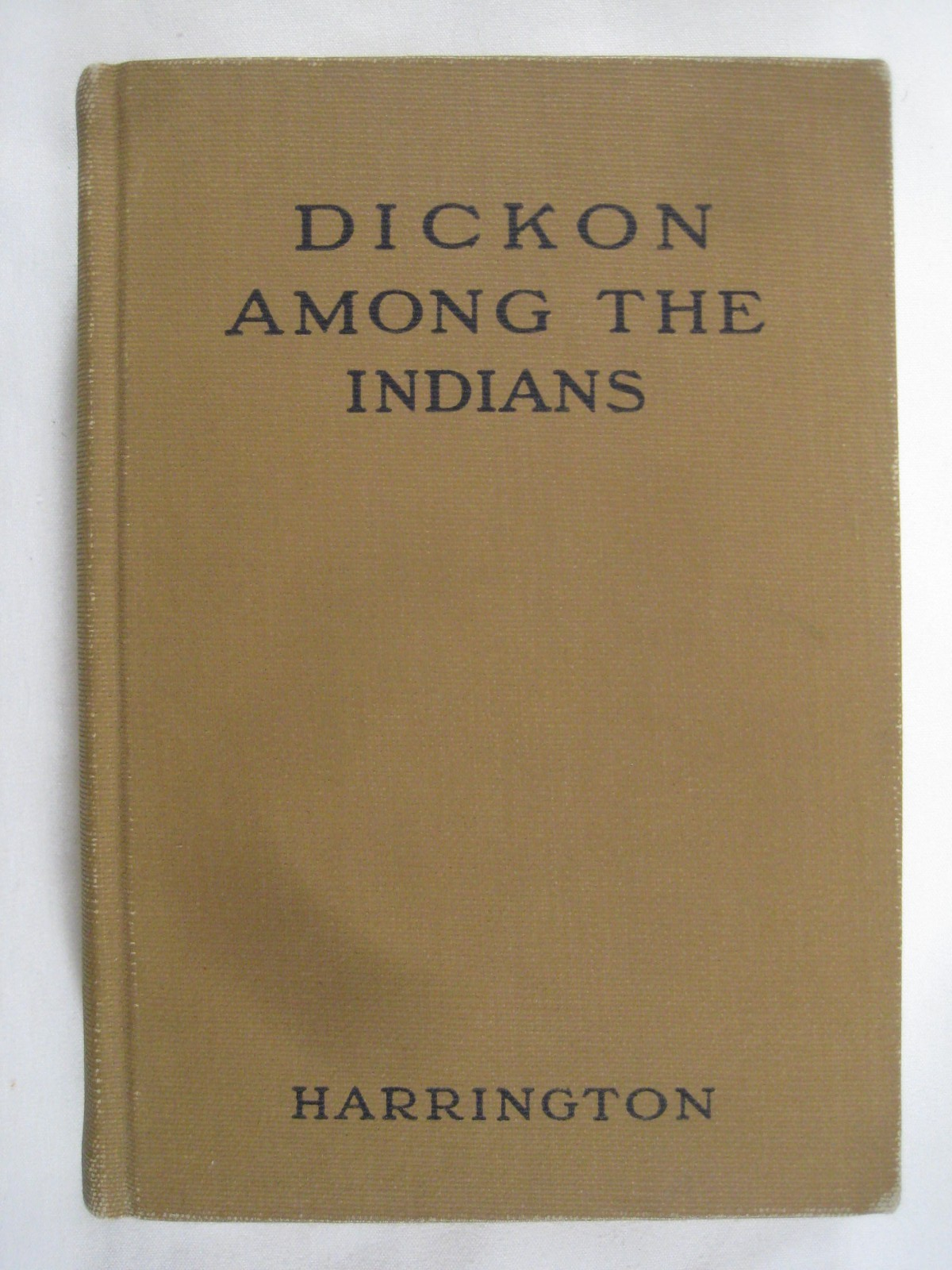
a very interesting attempt to recreate the lives of Algonkian-speaking Native Americans in New Jersey and eastern Pennsylvania at the beginning of colonization.  (Harrington was fortunate in having local Native Americans to help him in his research.  For more on Harrington, see:  https://en.wikipedia.org/wiki/Mark_Raymond_Harrington , himself a very interesting man.  Please note, by the way, that, although I will use “Indians” occasionally in this piece, when appropriate, I commonly employ the now-standard “Native Americans”.)

The subject of early Native Americans is worth many postings in itself, but where does JRRT fit in? 

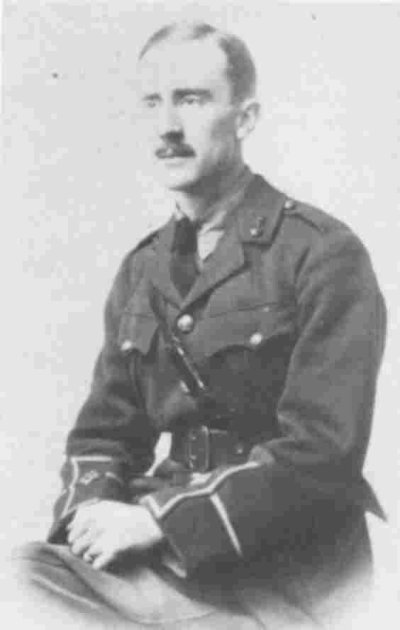
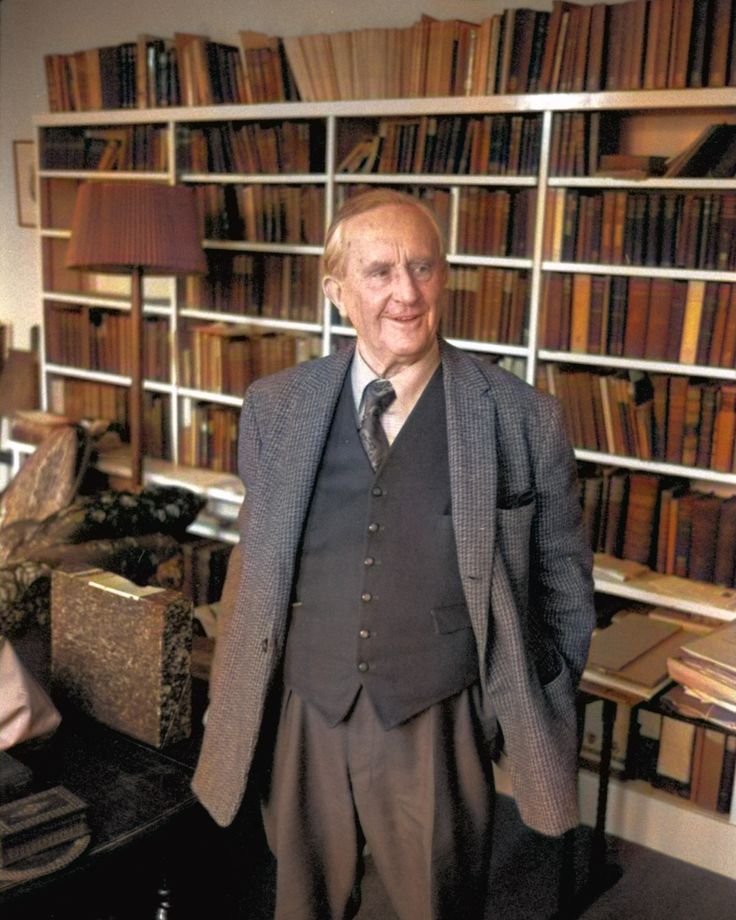
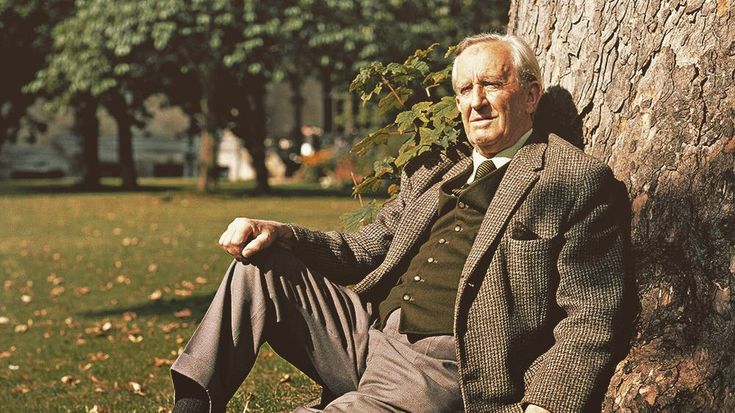
Well, when you visualize Tolkien, what do you think of?

The schoolboy?
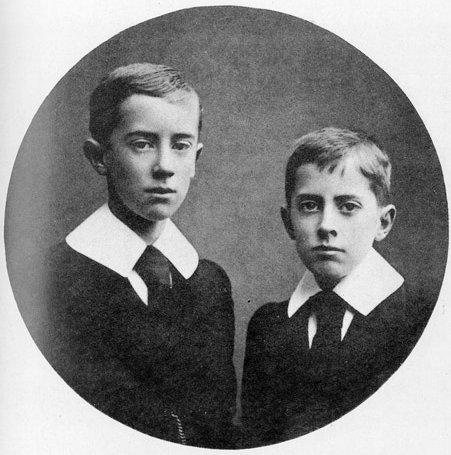
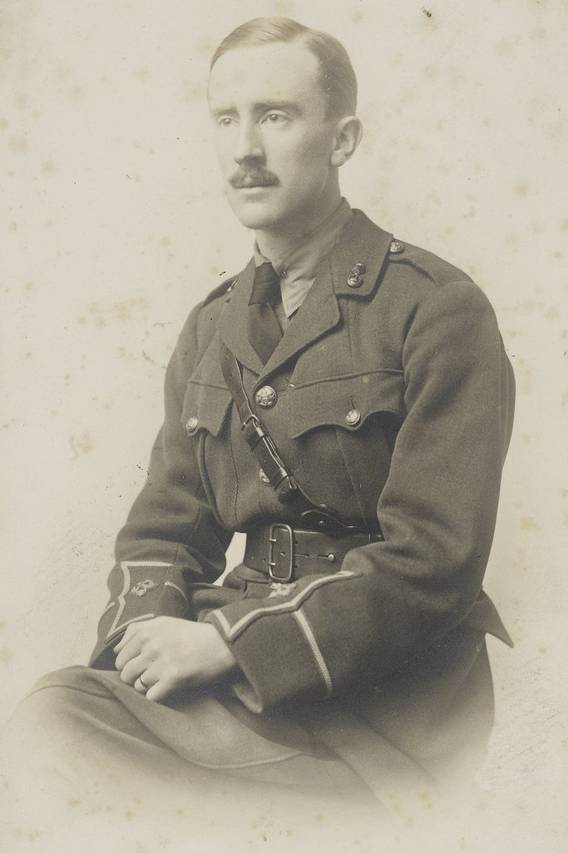
The 2nd lieutenant?
The serious professor?
The man who loved trees?
Suppose, however, instead of military caps
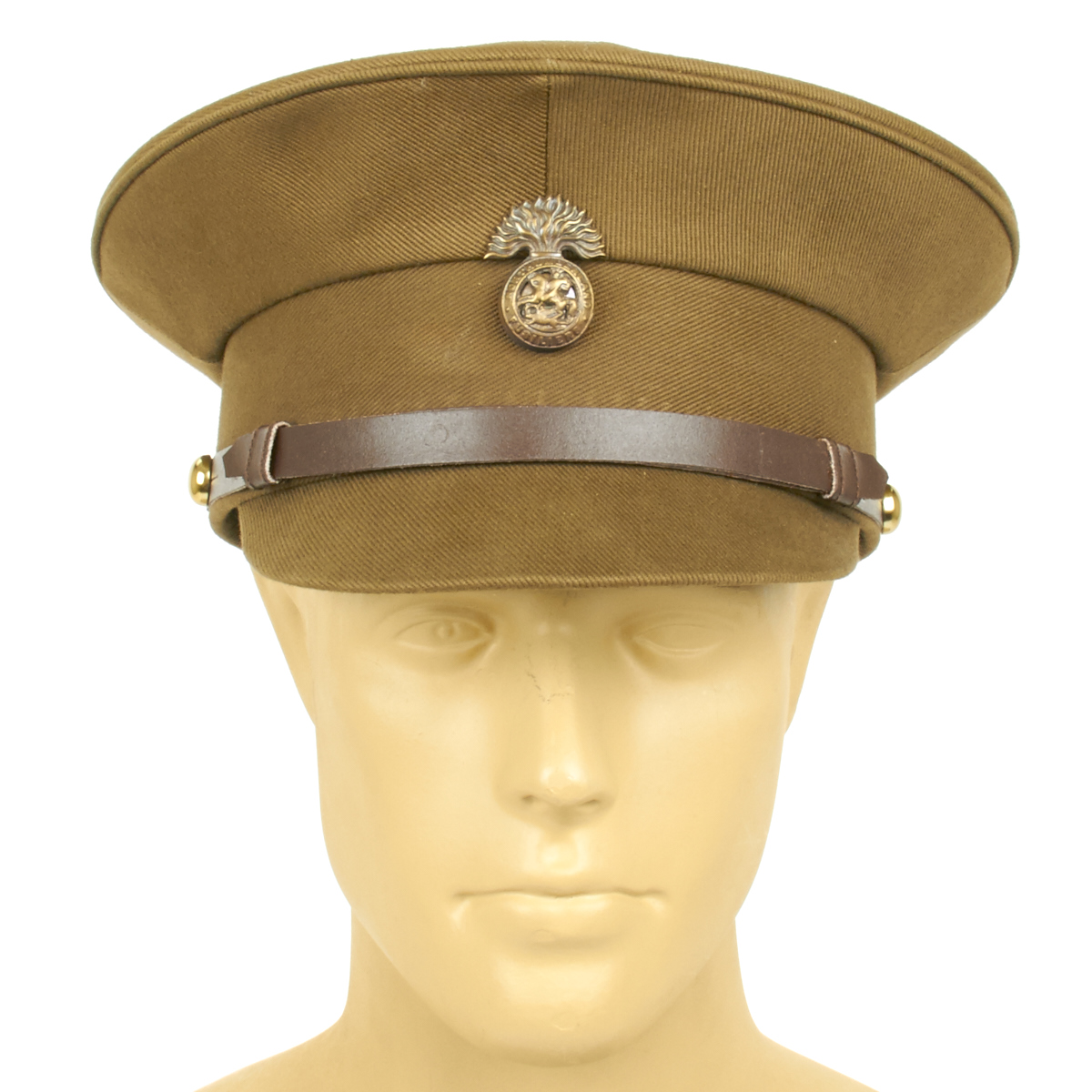
or the shapeless thing we see on his head in later pictures,

we provide him with something as splendid as this—
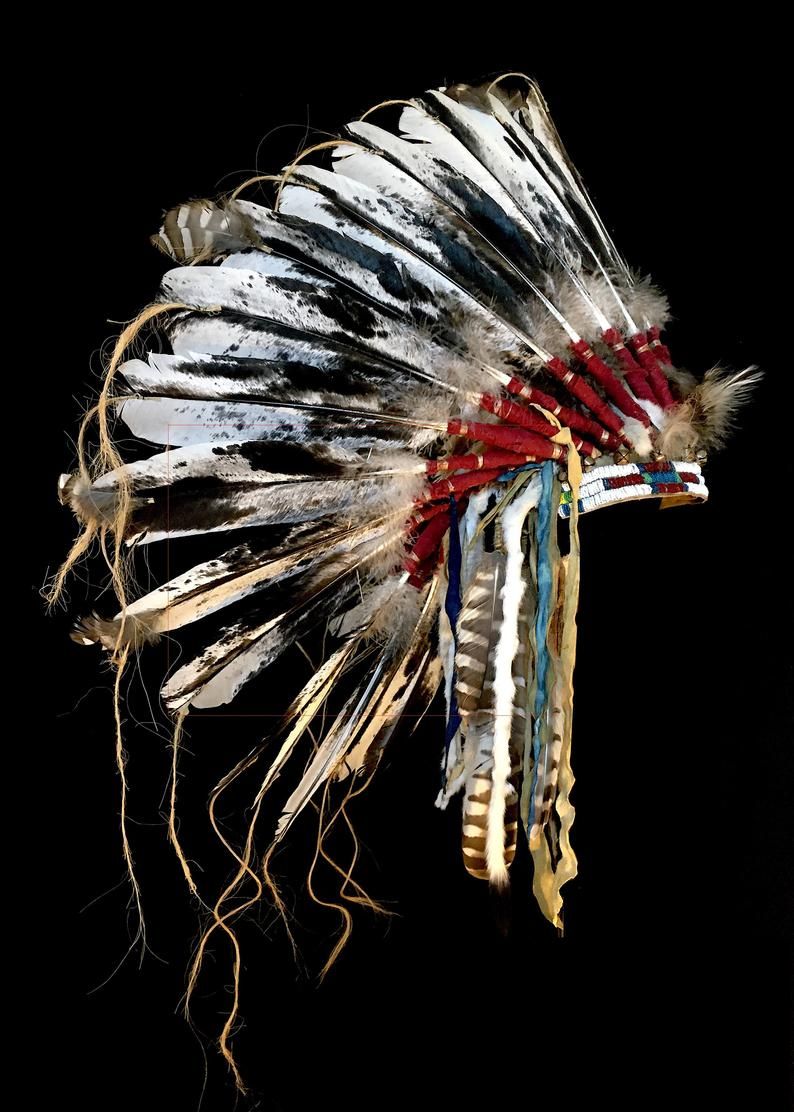
(A recreation of a Lakota war headdress)

As a man obsessed (a radical term, perhaps, but really accurate, I would say) with language and languages, Tolkien had set himself a problem, when it came to his approach to The Lord of the Rings.  It was meant to be a translation, and he himself the editor/translator.  Although he would mix in bits of several languages he had invented, the main body of the text would be in English—but English would, in fact, substitute for what he called the “Common Speech”.   And yet, because of his passion for language, he wouldn’t allow for complete uniformity of speech, especially as not everyone in his Middle-earth spoke the Common Speech as their first language.  One possibility would be to approximate the Common Speech with marks for different accents—the speech of the Rohirrim, for instance, as speakers of what was actually a Germanic language (Old English), might be depicted with the effects of English-speaking Germanic speakers in Tolkien’s day.  There was definitely a danger in this, of course—the effect is easily overdone and Tolkien would have been well aware of things like what was—and is—called “stage Irish” with lots of “sure an begorras!  and “top of the mornin’s”, caricaturing, in fact, Anglo-Irish.  As far as I know, JRRT never considered this approach (although we notice that Sam speaks in a different dialect from Frodo—imitated in the Jackson films by having him speak what in the UK is called “Mummershire”, based upon the distinctive sound of West Country English).  Were there other possible models?  And, if so, what might be useful?  Consider the Orcs, for instance.  As Pippin notices, to his surprise, he can understand the Orcs who have captured him and Merry because the first who speaks to him speaks “in the Common Speech, which he made almost as hideous as his own language.”  (The Two Towers, Book Three, Chapter 3, “The Uruk-hai”)  The Orcs, then, although they use the Common Speech with outsiders, have their own distinctive language (actually languages, but use the Common Speech as their lingua franca—for more, see The Lord of the Rings, Appendix F, “Of Other Races”).

What, then, might Tolkien employ as a model for an Orc leader giving a speech, one which would be in the Common Speech, but yet distinctively Orcish—and yet not “stage Orchish”?

And here is where I suggest that Tolkien turned to his childhood reading and his interest in Native Americans—at least those he found in books.

If we go by something which he himself once remarked, perhaps this isn’t so far-fetched a theory as it might appear at first:

“I had very little desire to look for buried treasure or fight pirates, and Treasure Island left me cool.  Red Indians were better:  there were bows and arrows (I had and have wholly unsatisfied desire to shoot well with a bow), and strange languages, and glimpses of an archaic mode of life, and, above all, forests in such stories.”  (On Fairy-Stories in The Monsters and the Critics, 134  For those who might like to see if they remain cool to Treasure Island, see https://archive.org/details/treasureisland00stev/mode/2up  with its beautiful illustrations by N.C. Wyeth—and, if you do open it, be sure to read the epigraph:  “To the Hesitating Purchaser” as a kind of response to JRRT, although Tolkien would have been a toddler when Stevenson died in 1894.)

We know that William Morris (1834-1896)
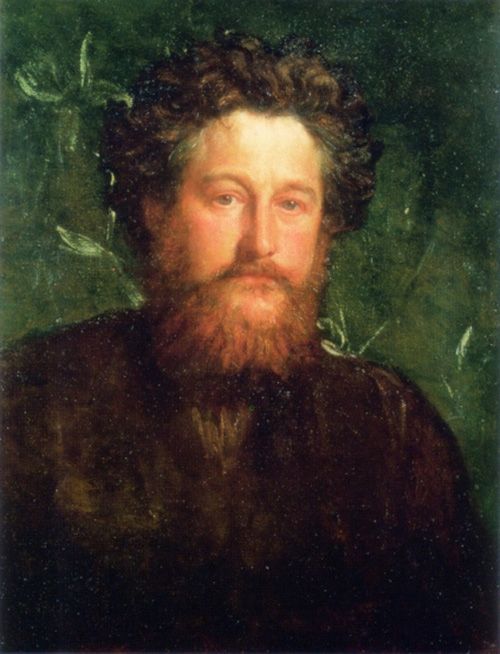
 was a strong influence on Tolkien’s writing, inspiring medieval elements in JRRT’s work, but there may have been another influence we can detect, which provided a model, using Tolkien’s “strange languages, and glimpses of an archaic mode of life” as a clue—at least for speech:  the work of James Fenimore Cooper (1789-1851), a once-famous author of historical fiction about the 18th-century US, and, probably, the first author to present Native Americans to Tolkien.
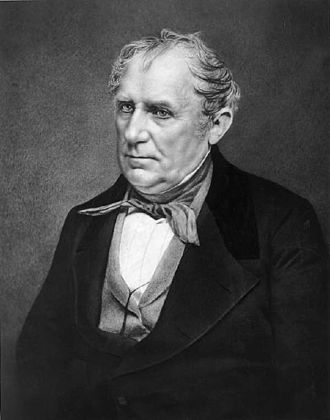
So, how does an Orc leader speak?—sometimes collectively in a highly rhetorical fashion :

“We are the fighting Uruk-hai!  We slew the great warrior.  We took the prisoners.  We are the servants of Saruman the Wise, the White Hand:  the Hand that gives us man’s-flesh to eat.  We came out of Isengard and led you here, and we shall lead you back by the way we choose.  I am Ugluk.  I have spoken.”  (The Two Towers, Book Three, Chapter 3, “The Uruk-hai”)

Compare it, then, with this:

“We came from the place where the sun is hid at night, over

great plains where the buffaloes live, until we reached the big

river. There we fought the Alligewi, till the ground was red with

their blood. From the banks of the big river to the shores of the

salt lake, there was none to meet us. The Maquas followed at a

distance. We said the country should be ours from the place

where the water runs up no longer on this stream, to a river

twenty suns’ journey toward the summer. The land we had

taken like warriors, we kept like men. We drove the Maquas

into the woods with the bears. They only tasted salt at

the licks; they drew no fish from the great lake; we threw them

the bones.”

This is Chingachgook, a Mohican (the last, in fact), speaking to another major character, Natty Bumpo, in James Fenimore Cooper’s The Last of the Mohicans, 1826 (Chapter III—you can read the novel—again illustrated by N.C. Wyeth—here:   https://dn720005.ca.archive.org/0/items/lastofmohicansna00coop/lastofmohicansna00coop.pdf  I should add a small warning:  Cooper is a man of his time and therefore racism slips in here and there.  As well, he is not the world’s best prose stylist, but he was once a best-selling author and the first famous US novelist, so worth your time—and his basic story is still, as far as I’m concerned, a good one.  For comic criticism of him, however, see Mark Twain’s “Fenimore Cooper’s Literary Offences”,1895, here:  https://www.gutenberg.org/files/3172/3172-h/3172-h.htm ).
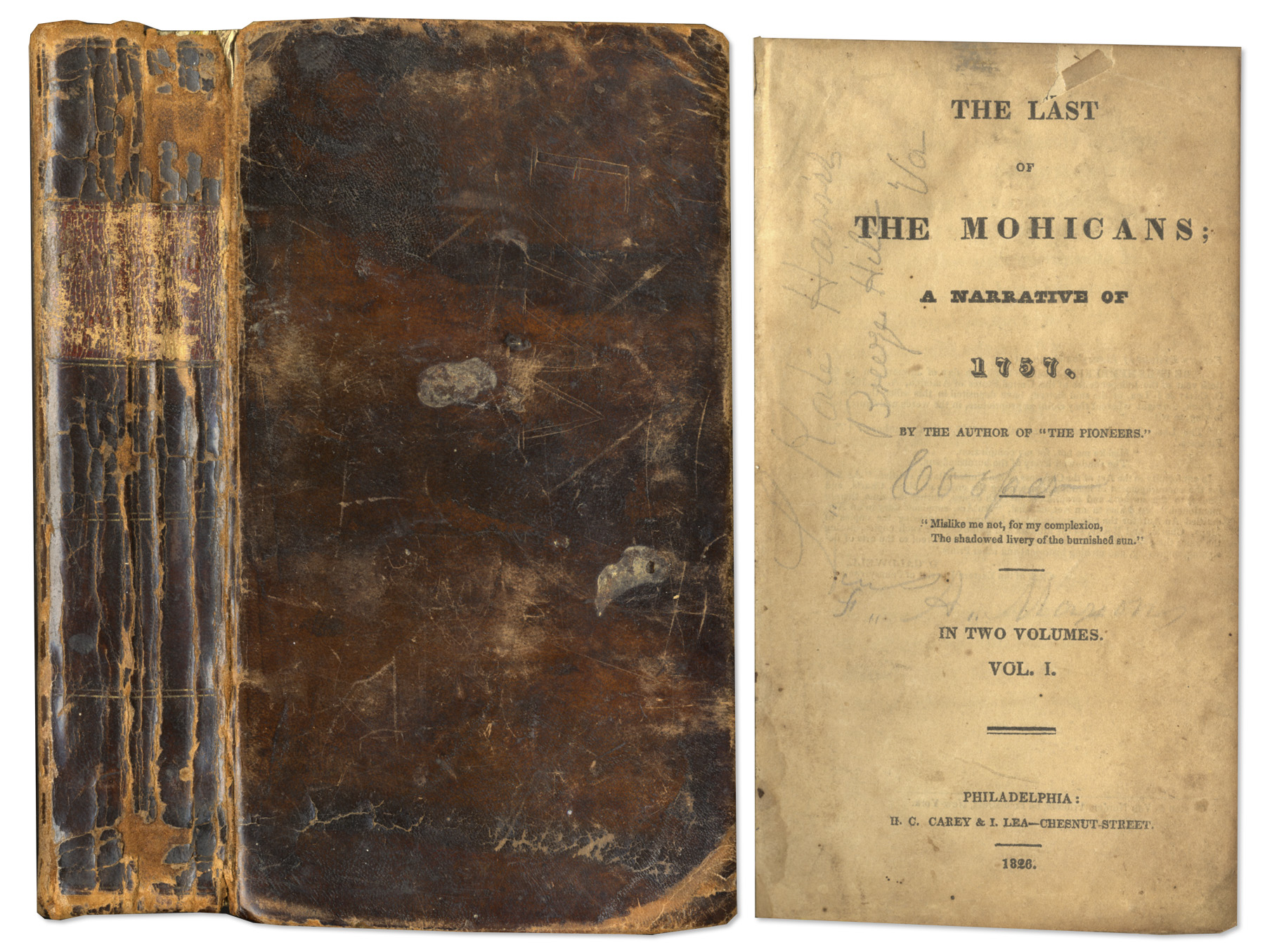
And such a manner of speaking might be adapted to other “strange languages, and glimpses of an archaic mode of life”–

“ ‘Let Ghan-buri-Ghan finish!…More than one road he knows.  He will lead you by road where no pits are, no gorgun walk, only Wild Men and beasts.  Many paths were made when Stonehouse-folk were stronger.  They carved hills as hunters carve beast-flesh.  Wild Men think they ate stone for food.  They went through Druadan to Rimmon with great wains.  They go no longer.  Road is forgotten, but not by Wild Men.  Over hill and behind hill it lies still under grass and tree, there behind Rimmon and down to Din, and back at the end to Horse-men’s road.  Wild Men will show you that road.  Then you will kill gorgun and drive away bad dark with bright iron, and Wild Men can go back to sleep in the wild woods.” (The Return of the King, Book Five, Chapter 5, “The Ride of the Rohirrim”)
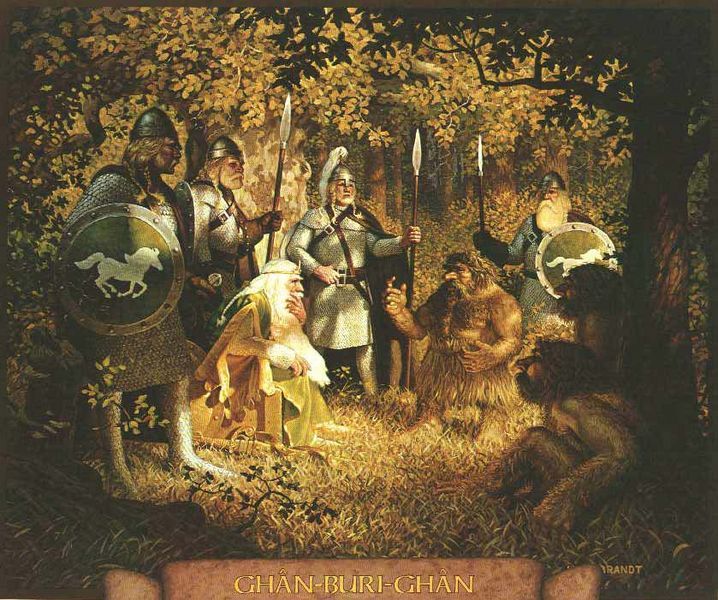
(the Hildebrandts)

This is, in fact, the chief of the Woses, an early people of Middle-earth now confined to a forest area not far from Minas Tirith.  His home language (of which JRRT tells us very little) is clearly not the Common Speech and so his address to Theoden and his lieutenants follows that of Ugluk and, in fact, of Chingachgook, suggesting, once more by the use of the model provided long before by James Fenimore Cooper, that Tolkien has earned his own place “among the Indians”.

As ever, thanks for reading.

Stay well,

If someone from many centuries before the time of The Lord of the Rings, the chief Nazgul, speaks in what is meant to be an archaic dialect, what would Sauron, older yet, sound like?

And remember that, as always, there’s

MTCIDC

O

Swords Drawn

02 Wednesday Jul 2025

Posted by Ollamh in Uncategorized

≈ Leave a comment

Tags

Anduril, arthur-hughes, bent-swords, Fafnir, George Macdonald, Glamdring, Goblins, great-goblin, Howard Pyle, King Edward's Horse, NC Wyeth, Orcrist, Scimitar, Sigurd, Sigurd Portal, swords, The Hobbit, Tolkien, William Morris

Welcome, dear readers, as always.

Every time I read or teach The Hobbit, I come to this passage:

“There in the shadows on a large flat stone sat a tremendous goblin with a huge head, and armed goblins were standing round him carrying the axes and the bent swords which they use.”  (The Hobbit, Chapter 4, “Over Hill and Under Hill”)

and I wonder: what does Tolkien mean by “bent swords”?

As a medievalist, and as someone who grew up in the world of illustrators like Howard Pyle (1853-1911)

and NC Wyeth (1882-1945),

as well as an avid reader of the stories of William Morris (1834-1896),

it’s not surprising that Tolkien’s works so often include swords, although perhaps the first sword he met may have been in Andrew Lang’s (1844-1912) The Red Fairy Book, 1890, where, in the last chapter, he would have found Sigurd and a, to us, strangely-familiar sword—

“ONCE upon a time there was a King in the North who had won many wars, but now he was old. Yet he took a new wife, and then another Prince, who wanted to have married her, came up against him with a great army. The old King went out and fought bravely, but at last his sword broke, and he was wounded and his men fled. But in the night, when the battle was over, his young wife came out and searched for him among the slain, and at last she found him, and asked whether he might be healed. But he said ‘ No,’ his luck was gone, his sword was broken, and he must die. And he told her that she would have a son, and that son would be a great warrior, and would avenge him on the other King, his enemy. And he bade her keep the broken pieces of the sword, to make a new sword for his son, and that blade should be called Gram.”  (“The Story of Sigurd”, 357  If you don’t have your own copy of Lang’s collection, here it is for you:  https://archive.org/details/redfairybook00langiala/redfairybook00langiala/mode/2up courtesy of the invaluable Internet Archive.  If  you don’t know this source, and you enjoy this blog, you should check it out.  It has the most remarkable things, even including a very good selection of silent films and film classics, like Kurosawa’s “The Seven Samurai”, 1954, which, for me—and for George Lucas—is a model for adventure films and you can see it here for free:  https://archive.org/details/seven-samurai-1954_202402 )

Yes, “the sword that was broken”—Anduril—and Sigurd has it reforged—and uses it to kill Fafnir, the dragon.

(This is from the “Sigurd Portal” of a  lost stave—wooden—church from Hylestad, in Norway, dating c1200AD.  Fortunately, the doorway carvings were saved and they show in detail the story of Sigurd.  Here’s where you can read more:  https://sites.pitt.edu/~dash/sigurddoor.html#location and here:  https://en.wikipedia.org/wiki/Hylestad_stave_church )

In his own life, Tolkien would have been personally familiar with swords.  When he was a member, briefly, of King Edward’s Horse,

in 1912, he would have been issued with this, the Pattern 1908 cavalry sword.

To me, it’s rather a strange weapon, seemingly designed only to stab,

whereas earlier cavalry blades might be used both to stab and to slash (very useful in chasing off enemy infantry)

Then, a new 2nd lieutenant in 1915,

JRRT would have had to buy himself the Pattern 1897 infantry officer’s sword

(as there were an increasing number of new officers from families who couldn’t afford it, there was a kind of subscription created to help such officers acquire a required piece of equipment.  For more on just what was required of officers, who had to provide their own kit, see Field Service Manual 1914, pages 16-18, here (and yes, again, it’s from the Internet Archive):  https://archive.org/details/fieldservicemanu00greauoft/page/n11/mode/2up )

These, as you can see, are straight-bladed swords, however.

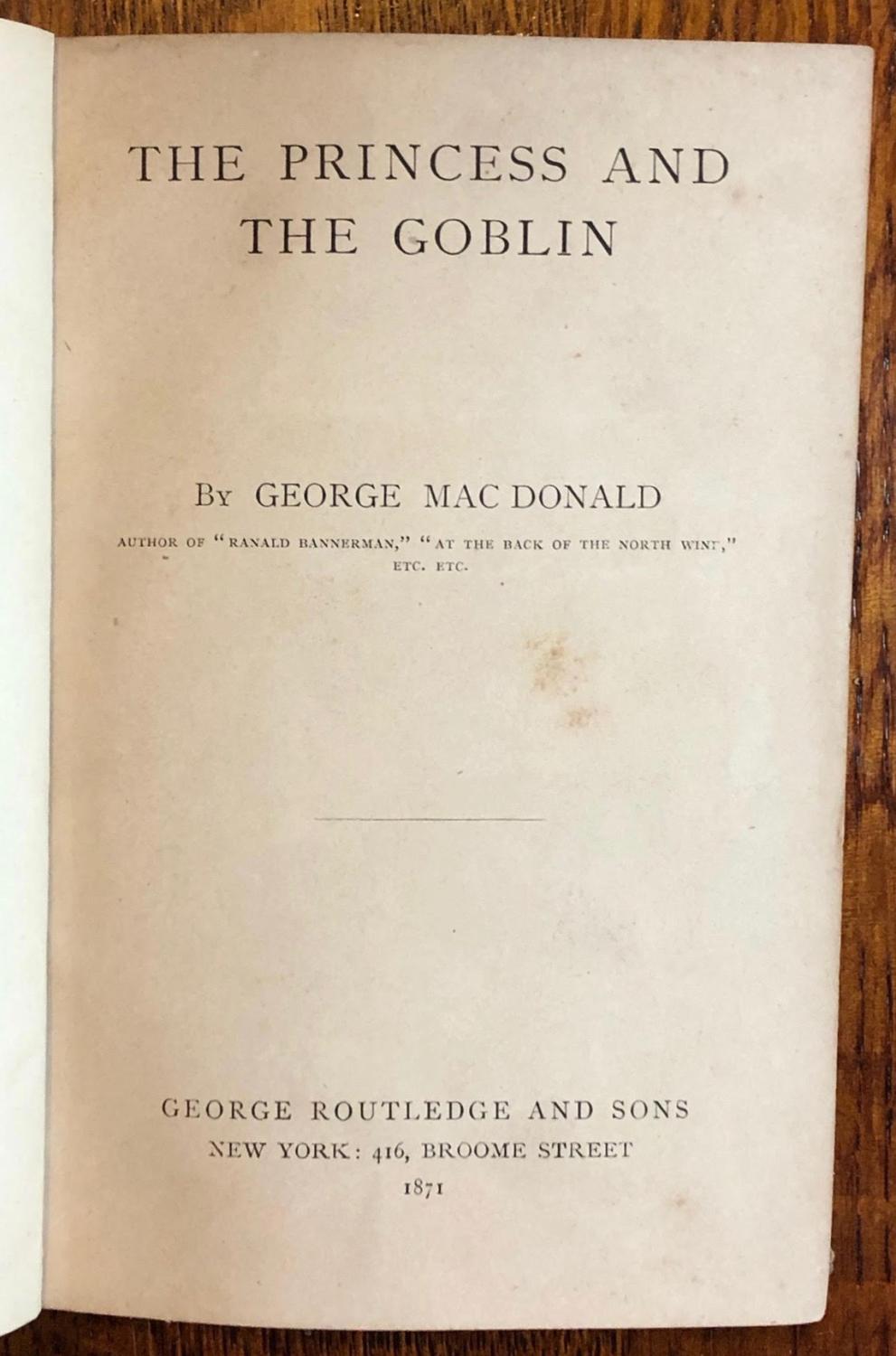
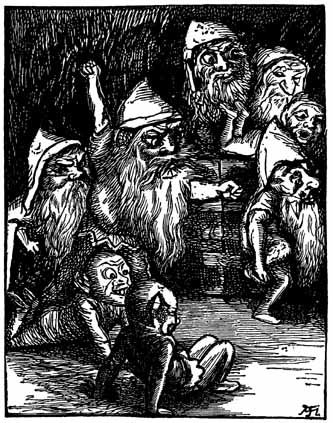
Tolkien’s earliest experience with goblins was probably with George MacDonald’s (1824-1905) The Princess and the Goblin (1871/2), and he likens his own later goblins/orcs to them (see Letters, 267, 279).

The illustrations are by Arthur Hughes (1832-1915) and, as far as I can see, there’s not a bent sword among them  (If you don’t know the story, here’s the text, but without its original illustrations, alas: https://www.gutenberg.org/cache/epub/708/pg708-images.html )

If we try some Tolkien goblin illustrators, we find Justin Gerard’s version of the scene with the Great Goblin, where there are a few pole arms off to the left, but the only sword must be Orcrist.

(Justin Gerard—you can see more of his work here:  https://www.artstation.com/justingerardillustration and here:  https://www.justingerard.com/the-art-of-justin-gerard )

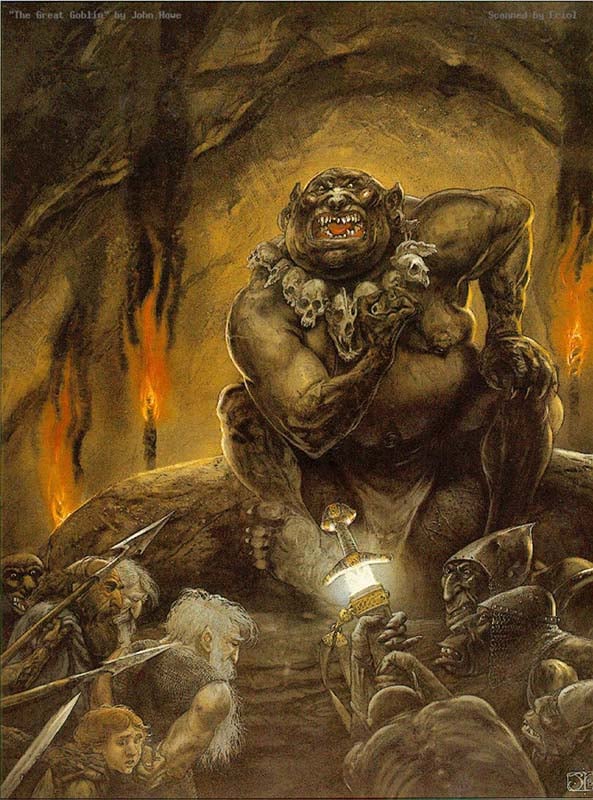
Here’s John Howe’s version of the scene—

with Orcrist peeking out of its scabbard and a straight sword and a couple of spears off to the left.

Then there’s Alan Lee’s, with the seemingly inevitable Orcrist, but with, just below it, perhaps a sabre—a curved sword

and we see this again in Lee’s depiction of Bilbo’s encounter with the goblin door guards.

In Michael Hague’s illustration for the escape from the Great Goblin’s throne room,

we see both Orcrist and Glamdring, along with one more seemingly curved sword.

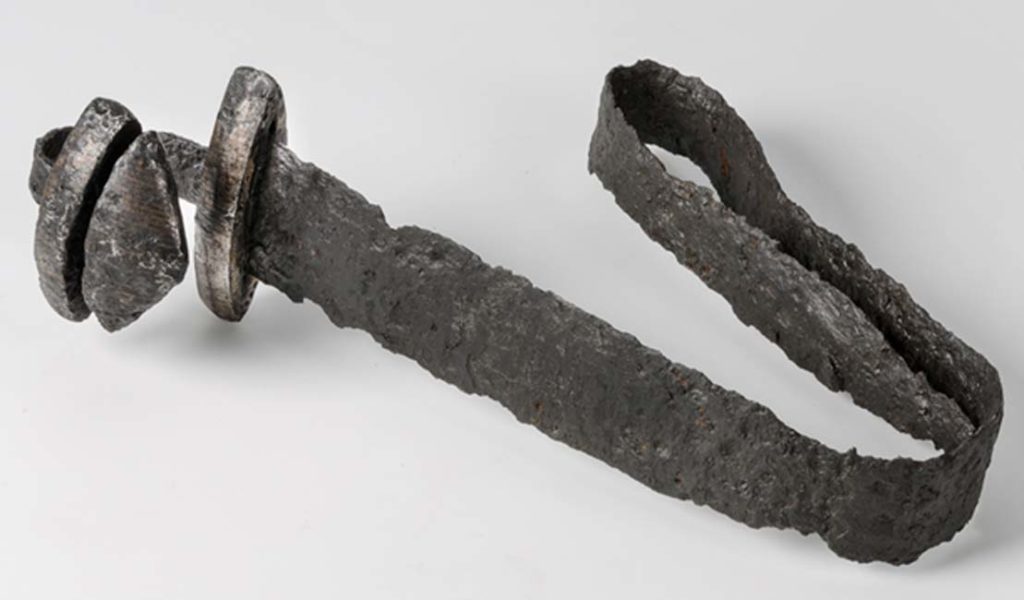
Are any of these, however, an example of a “bent sword”?  Archaeologists have discovered numerous ancient swords which appear to have been “sacrificed” by being bent–

but this is hardly what Tolkien meant.  Then there is what might be taken literally for a “bent sword”—

from Jackson’s The Lord of the Rings, but I must say, this looks pretty improbable as a sword—if you see how the grip is shaped, that spike at the end if pointing upwards:  what could it possibly be for?  In fact, when one sees a chart of swords from the films, I’m not sure about many of them as useful weapons—

Those to the left share patterns with swords from our Middle-earth, both those on the right look like they might be dramatic over a fireplace, but I’d question their use as practical weapons.

So what might this “bent sword” be?  Some of the swords in the illustrations above would suggest that their artists believed that, by “bent”, Tolkien meant “curved”.  One possibility:  we know that Tolkien had read or had read to him at least one of Andrew Lang’s fairy books (the Red Fairy Book, as mentioned above), but perhaps he had also seen Lang’s Arabian Nights Entertainments (1898) in which there are a number of illustrations with scimitars in them—

(Here’s a copy of the book for you:  https://archive.org/details/arabiannightsent00lang/page/n9/mode/2up )

Scimitars are curved and, barring silly ones like those in Disney’s Aladdin—which look more like something used for carving meat–

are both deadly and would seem very exotic, if not alien,

in contrast to very medieval swords like Orcrist and Glamdring.

I doubt that we’ll ever know exactly what JRRT had in mind, but, if I had to illustrate “armed goblins…carrying axes and the bent swords…” I might consider drawing—in both senses—such blades.

Stay well,

Avoid inviting caves, even if Stone Giants are playing dodge ball outside,

And remember that, as always, there’s

MTCIDC

O

PS

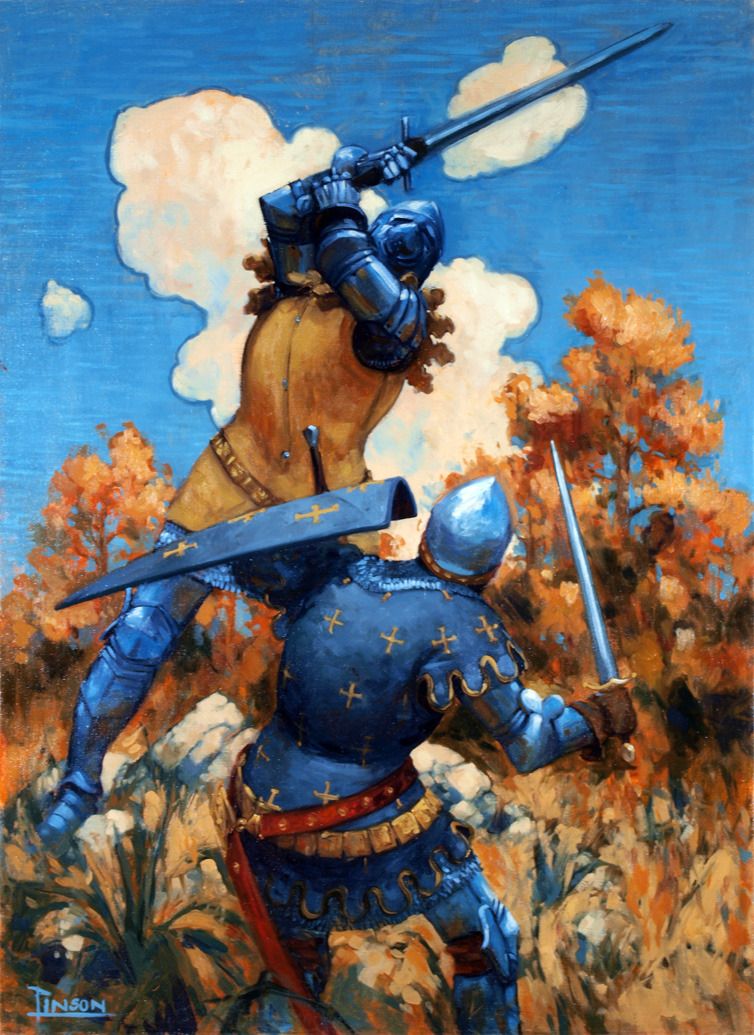
I’ve just discovered a contemporary illustrator who clearly enjoys the dramatic style of artists like Pyle and Wyeth, as well as French historical artists, like Meissonier (1815-1891).  This is Ugo Pinson (1987-) and here is a sample of his work.

He has illustrated book covers as well as several graphic novels and done illustrations for the “Witcher” series.  His sketches alone show his skill and talent.  You can see more samples here:  https://duckduckgo.com/?q=ugo+pinson&iar=images&iai=http%3A%2F%2Fbdzoom.com%2Fwp-content%2Fuploads%2F2016%2F07%2F13427953_10154226704759687_4371726455862878086_n.jpg 

Knowledge, Rule, Order

06 Wednesday Jan 2016

Posted by Ollamh in Fairy Tales and Myths, Imaginary History, J.R.R. Tolkien, Military History, Military History of Middle-earth, Narrative Methods

≈ 2 Comments

Tags

Adolf Hitler, Anduin, Benedict Cumberbatch, Benito Mussolini, British Government, Charlie Chaplin, dictatorships, England, Gandalf, George V, Germany, Gondor, gothic script, Government, History, India, Isengard, Kaiser Willhelm II, Lenin, Mehmed VI, Middle-earth, monarchs, Mordor, Nazis, newsreel, Numenor, Ottoman Empire, Oz, Peter Jackson, Queen Mary, Queen Victoria, Rohan, Saruman, Sauron, Scott, Smaug, Stalin, Stock Market Crash of 1929, Sultan, The Great Dictator, The Lord of the Rings, Tolkien, Treaty of Versailles, Valar, Victoria Louise, Weimar Republic, William Morris, Writing

Dear Readers,

Welcome, as always.

Have you ever wondered what Middle Earth would have been like if the Fourth Age had begun on a calendar written by Sauron?

That of the Third Age was hardly a democratic paradise: a king rules Rohan, a stand-in for king rules Gondor. Elrond and Celeborn/Galadriel behave and are treated like royalty and Thranduil, as we learn from The Hobbit, is the king of Mirkwood. The dwarves have hereditary rulers.   Only the outliers—communities like Bree and the Shire and the earlier inhabitants like Tom Bombadil and Fangorn—appear to be completely independent. (The Shire even has elections and a mayor, although the actual government, except for the shire reeves, appears to bemostly token—you wonder who’s running their seemingly-efficient postal service.)

This is not surprising, not only for an author born during the later years of Victoria,

queenvic.jpg

but also for someone powerfully influenced by the medievalist interests of everyone from Scott

Sir_William_Allan_-_Sir_Walter_Scott,_1771_-_1832._Novelist_and_poet_-_Google_Art_Project.jpg

to William Morris.

William_Morris_age_53.jpg

(We might add that the world of fairy tales, full of princes and princesses, queens and kings, was also a powerful influence at the time—and not only on story-tellers born in monarchies—after all, even Oz is ruled by a queen—

OzmaOz.jpg

Yet, after Smaug—who could better be a medieval fantasy villain (especially with the voice of the incomparable Benedict Cumberbatch attached)?

p8204516_n279079_cc_v4_aa.jpg

—something changed in Tolkien’s world. In fact, something changed in the whole outside world. With the end of World War One, monarchs toppled all over Europe and beyond, from:

Kaiser Wilhelm II of Germany

KAISER-WILHELM_2994889b.jpg

to Mehmed VI, last Sultan of the Ottoman Empire.

mehmed6.jpg

In place of the former, there appeared the always-troubled Weimar Republic, full of good intentions, but badly crippled, not only by the war which had sapped its manpower and resources, but by all kinds of social unrest and then by the Crash of 1929, which notoriously destroyed the value of its currency.

weimar currency.jpg

As early as 1919, there had been clashes among the forces of different ideologies—

CombatesEnBerlín19190903.jpg

And, amidst all of the unrest, there was a failed coup attempt in 1923 by the man in the overcoat in this picture.

Bundesarchiv_Bild_102-00344A,_München,_nach_Hitler-Ludendorff_Prozess.jpg

He, of course, was only following the footsteps of this man, who had pushed his way into power the year before—

March_on_Rome.jpg

to be followed, in turn, by the man on the left, from the mid-1920s.

stalinandfriends.jpg

That first man, having failed at obvious violence, tried again through more complicated means (although still employing violence, if it suited his purposes) and succeeded in 1933.

Hitler-Papen-First-Reichstag-1933.jpg

He was, so we are told, a riveting public speaker, but, if the newsreels we’ve seen are evidence, we guess you would have had to have been there.

hitlerspeaking.jpg

Some people thought the style exaggerated in the 1930s and caricatured it even then.

chaplin2.jpg

He had a definite social agenda, which he outlined at length and often, although concealing certain of the most horrible aspects. And he liked big words and big concepts, like:

einfolk.jpg

It would have been impossible for someone as intelligent and generally well-informed as Tolkien not to have been very much aware of this man and all of the other like men, busy oppressing as much of the world as they could. And this would have been especially true in a time when radio and film were changing how people received news—and how those interested in influencing others might shape what people saw. As early as 1911, the British government was using newsreel film to show the might and reach of its empire (2/5 of the globe was in their hands) when the king, George V, and his wife, Queen Mary, visited India.

Delhi_Durbar,_1911.jpg

Not to be outdone, Kaiser Wilhelm II encouraged a grand—and filmed–event in 1913, for the wedding of his daughter, Victoria Louise—and some of the film was even in color.

vlouisekaiser.jpg

The Marriage of Victoria Louise Color Film

It would be easy to imagine, then, that the weight of such public figures might have influenced Tolkien in his depiction of late-3rd-Age villains. We can see it in Saruman’s unsuccessful attempt to persuade Gandalf to join him:

“ ‘He drew himself up then and began to declaim, as if he were making a speech long rehearsed. ‘The Elder Days are gone. The Middle Days are passing. The Younger Days are beginning. The time of the Elves is over, but our time is at hand: the world of Men, which we must rule. But we must have power, power to order all things as we will, for that good which only the Wise can see.” (The Fellowship of the Ring, Chapter 2, “The Council of Elrond”)

Thus, unlike the script of Jackson’s version, there is no plan to wipe out men and replace them with orcs. Instead, men are to survive: to be ruled—perhaps under what definitely sounds like it should be a translation from something written in Fraktur—the fake Gothic script favored by the Nazis–

die-schöne-deutsche-Schrift-detail1.jpg

“ ‘We can bide our time,’” says Saruman, “ ‘we can keep our thoughts in our hearts, deploring maybe evils done by the way, but approving the high and ultimate purpose: Knowledge, Rule, Order; all the things that we have so far striven in vain to accomplish…’ ”

Such abstract, but somehow menacing, words sound like a translation of something from Hitler’s Germany: Kenntnisse, Herrschaft, Ordnung. They do not sound in the least like Gandalf’s goals, ever, and he, in fact, replies by implying that not only are they not really Saruman’s words, but that Saruman is foolish for believing them:

“ ‘Saruman,’ I said, ‘I have heard speeches of this kind before, but only in the mouths of emissaries sent from Mordor to deceive the ignorant.’ “

As really the words of Sauron, however, they give us an idea of what to expect in a world under his control. Knowledge would be for Sauron alone, we suppose, perhaps after regaining his lost ring? Certainly he wouldn’t share it with Saruman, whom, it will become clear, he never trusted. As for Rule and Order, the world would be a place full of rules and those watching that they be obeyed. And here we can remember Sharkey’s Shire, with its “by order of the Chief” signs—and its gangs of human enforcers. As well, we can think of its grey, industrial character, as we’ve discussed in a previous post, a universal Mordor, devoted to production. To this, we can add the Mouth of Sauron’s recitation of surrender conditions, delivered to the allies before the Morannon:

“ ‘These are the terms…The rabble of Gondor and its deluded allies shall withdraw at once beyond the Anduin, first taking oaths never again to assail Sauron the Great in arms, open or secret. All lands east of the Anduin shall be Sauron’s for ever, solely. West of the Anduin as far as the Gap of Rohan shall be tributary to Mordor, and men there shall bear no weapons, but shall have leave to govern their own affairs. But they shall help to rebuild Isengard which they have wantonly destroyed, and that shall be Sauron’s, and there his lieutenant shall dwell: not Saruman, but one more worthy of trust.’ “ (The Return of the King, Chapter 10, “The Black Gate Opens”)

In keeping with the influence of current events in this world, we might see this as being a parallel with the 1919 Versailles Treaty, in which Germany was to be forced to make huge territorial concessions, to disarm almost entirely, and to pay massive amounts in reparation to the victorious allies.

Treaty_of_Versailles,_English_version.jpg

The Treaty of Versailles– Wiki Article

Such terms as Sauron offers would also destroy Rohan as an ally and set up a permanent garrison between it and the north. We might also expect the restored Isengard to be a staging area for an assault upon Fangorn and the ents, to their ultimate destruction. As well, “west of the Anduin” is a very vague expression—does it include Gondor, as well as Rohan?

Religion in The Lord of the Rings has always been the subject of debate: how much or how little? Of what kind? Tolkien is quoted as saying that it was monotheistic, although, when attacked by the Mumak, Faramir’s men called on the (plural) Valar. There is no mention, in what is often extremely detailed landscape description, of any kind of temple or shrine, however. Nevertheless, we would like to conclude with an eerie thought about religion in this alternative Fourth Age. The Mouth of Sauron, aka, The Lieutenant of the Tower of Barad-dur, is described as:

“…a renegade, who came of the race of those that are named the Black Numenoreans; for they established their dwellings in Middle-earth during the years of Sauron’s domination, and they worshipped him, being enamoured of evil knowledge.”

Could we imagine that, in this other Fourth Age, a new and horrible religion might have appeared, one dedicated to the worship of Sauron—and to that Knowledge which Saruman finds so important? What do you think, dear readers?

As always, thanks for reading.

MTCIDC

CD

JRRT: Editorial Comment

22 Wednesday Apr 2015

Posted by Ollamh in J.R.R. Tolkien, Narrative Methods

≈ 2 Comments

Tags

Andrew Lang, de Montesquieu, Hawthorne, Hobbit, Persian Letters, The Lord of the Rings, The Scarlet Letter, Tolkien, William Morris

Dear Readers,

Welcome, as always. We had intended to go on with our discussion of villains, which looks like it will form a series, but we were distracted for a moment by the following– so more on villains to come. 

“This book is largely concerned with Hobbits, and from its pages, a reader may discover much of their character and a little of their history. Further information will also be found in the selection from The Red Book of Westmarch, that has already been published, under the title of The Hobbit.” 

So begins The Lord of the Rings, a novel. But a novel which pretends not to be a novel at all, but, rather, an edited version of a true history of someplace and sometime else: Middle-earth, the Third Age.

It’s hardly a new ploy, to pretend to be only presenting something already written by others. Often, it’s done to deflect attention from the sensitive matter within the novel: de Montesquieu’s criticism of France in Persian Letters or Hawthorne’s use of the theme of adultery in The Scarlet Letter. 

The adventures in The Lord of the Rings, or, for that matter, The Hobbit, are hardly controversial, however, so why go through this pretense, we wondered?

As we thought about and discussed this, we came up with a whole series of possible reasons– and none of them necessarily excludes any of the others. 

First, and perhaps most obvious, was that being an editor and translator formed a major part of what JRRT did in his academic life. What would seem more natural? 

Second, he lived in the academic world of Oxford, among academic friends, who formed a large part of his initial readership, and who themselves could be editors and translators. 

Third, based in part on one and two above, it fits into Tolkien’s and the Inklings’ desire to produce more of what they liked to read: an adventure, but in the guise of a “scholarly” work, yet one wholly invented.

Fourth, unlike real scholarly work, this one was not bound– and never would be– by the limits of available knowledge. There is only one Beowulf manuscript, after all. Because the only bounds placed upon the “research” for The Hobbit and The Lord of the Rings were the limits of the author’s imagination, this material was, potentially, endless, and every point within could be infinitely expanded, as we see in the twelve volume edited by Christopher Tolkien. One might imagine that JRRT, frustrated at how little Old English verse there was, felt enormously freed– and, should there be criticism, well, at one level at least, he had no need to respond, not being the author. 

This leads, in turn, to a less comfortable idea: suppose JRRT wasn’t completely at ease with his own creation. After all, he was a professor who was spending a great deal of his time and energy fabricating a fictional world rather than doing research and writing about literary/linguistic activities in the actual world of academia. Could this have been a kind of subconscious defense– I am doing scholarship– see? 

And then there’s reason five, which one might see as informing, at some level, all of the others. JRRT had been drawn, from childhood, towards stories from Lang’s Fairy Books through the prose and poetry of William Morris. He was also an active literary scholar. By playing editor and creating a second scholarly shell around the primary adventure, he could neatly combine the two halves of his life into one and, in the process, produce works which please reader and scholar alike– and combined. 

As always, we ask for your opinion. 

Thanks for reading!

MTCIDC,

CD

The Doubtful Sea Series Facebook Page

The Doubtful Sea Series Facebook Page

  • Ollamh

Categories

  • Artists and Illustrators
  • Economics in Middle-earth
  • Fairy Tales and Myths
  • Films and Music
  • Games
  • Heroes
  • Imaginary History
  • J.R.R. Tolkien
  • Language
  • Literary History
  • Maps
  • Medieval Russia
  • Military History
  • Military History of Middle-earth
  • Narnia
  • Narrative Methods
  • Poetry
  • Research
  • Star Wars
  • Terra Australis
  • The Rohirrim
  • Theatre and Performance
  • Tolkien
  • Uncategorized
  • Villains
  • Writing as Collaborators
Follow doubtfulsea on WordPress.com

Across the Doubtful Sea

Recent Postings

  • Towering January 28, 2026
  • Tolkien Among the Indians January 21, 2026
  • Thin and Stretched January 14, 2026
  • Through a glass… January 7, 2026
  • Heffalumps? December 31, 2025
  • We Three Kings December 24, 2025
  • A Moon disfigured December 17, 2025
  • On the Roads Again—Once More December 10, 2025
  • (Not) Crossing Bridges December 3, 2025

Blog Statistics

  • 105,537 Views

Posting Archive

  • January 2026 (4)
  • December 2025 (5)
  • November 2025 (4)
  • October 2025 (5)
  • September 2025 (4)
  • August 2025 (4)
  • July 2025 (5)
  • June 2025 (4)
  • May 2025 (4)
  • April 2025 (5)
  • March 2025 (4)
  • February 2025 (4)
  • January 2025 (5)
  • December 2024 (4)
  • November 2024 (4)
  • October 2024 (5)
  • September 2024 (4)
  • August 2024 (4)
  • July 2024 (5)
  • June 2024 (4)
  • May 2024 (5)
  • April 2024 (4)
  • March 2024 (4)
  • February 2024 (4)
  • January 2024 (5)
  • December 2023 (4)
  • November 2023 (5)
  • October 2023 (4)
  • September 2023 (4)
  • August 2023 (5)
  • July 2023 (4)
  • June 2023 (4)
  • May 2023 (5)
  • April 2023 (4)
  • March 2023 (5)
  • February 2023 (4)
  • January 2023 (4)
  • December 2022 (4)
  • November 2022 (5)
  • October 2022 (4)
  • September 2022 (4)
  • August 2022 (5)
  • July 2022 (4)
  • June 2022 (5)
  • May 2022 (4)
  • April 2022 (4)
  • March 2022 (5)
  • February 2022 (4)
  • January 2022 (4)
  • December 2021 (5)
  • November 2021 (4)
  • October 2021 (4)
  • September 2021 (5)
  • August 2021 (4)
  • July 2021 (4)
  • June 2021 (5)
  • May 2021 (4)
  • April 2021 (4)
  • March 2021 (5)
  • February 2021 (4)
  • January 2021 (4)
  • December 2020 (5)
  • November 2020 (4)
  • October 2020 (4)
  • September 2020 (5)
  • August 2020 (4)
  • July 2020 (5)
  • June 2020 (4)
  • May 2020 (4)
  • April 2020 (5)
  • March 2020 (4)
  • February 2020 (4)
  • January 2020 (6)
  • December 2019 (4)
  • November 2019 (4)
  • October 2019 (5)
  • September 2019 (4)
  • August 2019 (4)
  • July 2019 (5)
  • June 2019 (4)
  • May 2019 (5)
  • April 2019 (4)
  • March 2019 (4)
  • February 2019 (4)
  • January 2019 (5)
  • December 2018 (4)
  • November 2018 (4)
  • October 2018 (5)
  • September 2018 (4)
  • August 2018 (5)
  • July 2018 (4)
  • June 2018 (4)
  • May 2018 (5)
  • April 2018 (4)
  • March 2018 (4)
  • February 2018 (4)
  • January 2018 (5)
  • December 2017 (4)
  • November 2017 (4)
  • October 2017 (4)
  • September 2017 (4)
  • August 2017 (5)
  • July 2017 (4)
  • June 2017 (4)
  • May 2017 (5)
  • April 2017 (4)
  • March 2017 (5)
  • February 2017 (4)
  • January 2017 (4)
  • December 2016 (4)
  • November 2016 (5)
  • October 2016 (6)
  • September 2016 (5)
  • August 2016 (5)
  • July 2016 (5)
  • June 2016 (5)
  • May 2016 (4)
  • April 2016 (4)
  • March 2016 (5)
  • February 2016 (4)
  • January 2016 (4)
  • December 2015 (5)
  • November 2015 (5)
  • October 2015 (4)
  • September 2015 (5)
  • August 2015 (4)
  • July 2015 (5)
  • June 2015 (5)
  • May 2015 (4)
  • April 2015 (3)
  • March 2015 (4)
  • February 2015 (4)
  • January 2015 (4)
  • December 2014 (5)
  • November 2014 (4)
  • October 2014 (6)
  • September 2014 (1)

Blog at WordPress.com.

  • Subscribe Subscribed
    • doubtfulsea
    • Join 78 other subscribers
    • Already have a WordPress.com account? Log in now.
    • doubtfulsea
    • Subscribe Subscribed
    • Sign up
    • Log in
    • Report this content
    • View site in Reader
    • Manage subscriptions
    • Collapse this bar
 

Loading Comments...