• About

doubtfulsea

~ adventure fantasy

Tag Archives: The Ring

It’s in Writing (2:  I’st a Prologue, or a Poesie for a Ring?)

22 Wednesday Oct 2025

Posted by Ollamh in Uncategorized

≈ Leave a comment

Tags

Belshazzar, Bilbo, Daniel, Darius, Frodo, Gandalf, inscription, Isildur, Kilroy, Literacy, Orcs, posy ring, Sam Gamgee, Sauron, Shakespeare, The Black Speech, The Ring

As always, dear readers, welcome.

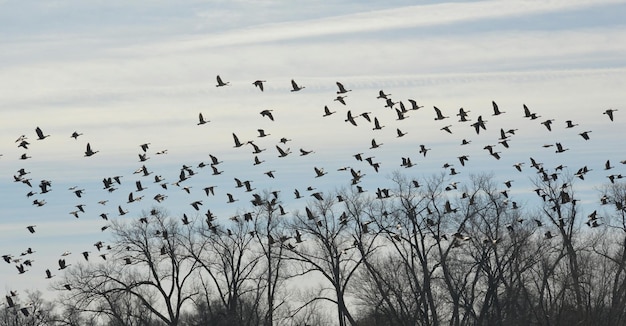
The first part of this posting began as far from Middle-earth and its history as possible:  the Biblical lands of our Middle-earth and the story of the ancient prophet, Daniel and specifically the event which gained Daniel his position in the court first of Belshazzar, the Babylonian king, and then in that of his conqueror/successor, Darius the Persian.  Uniquely for early prophecy, Belshazzar hadn’t been warned that he would be deposed by any of the accepted means—the reading of the flight of birds

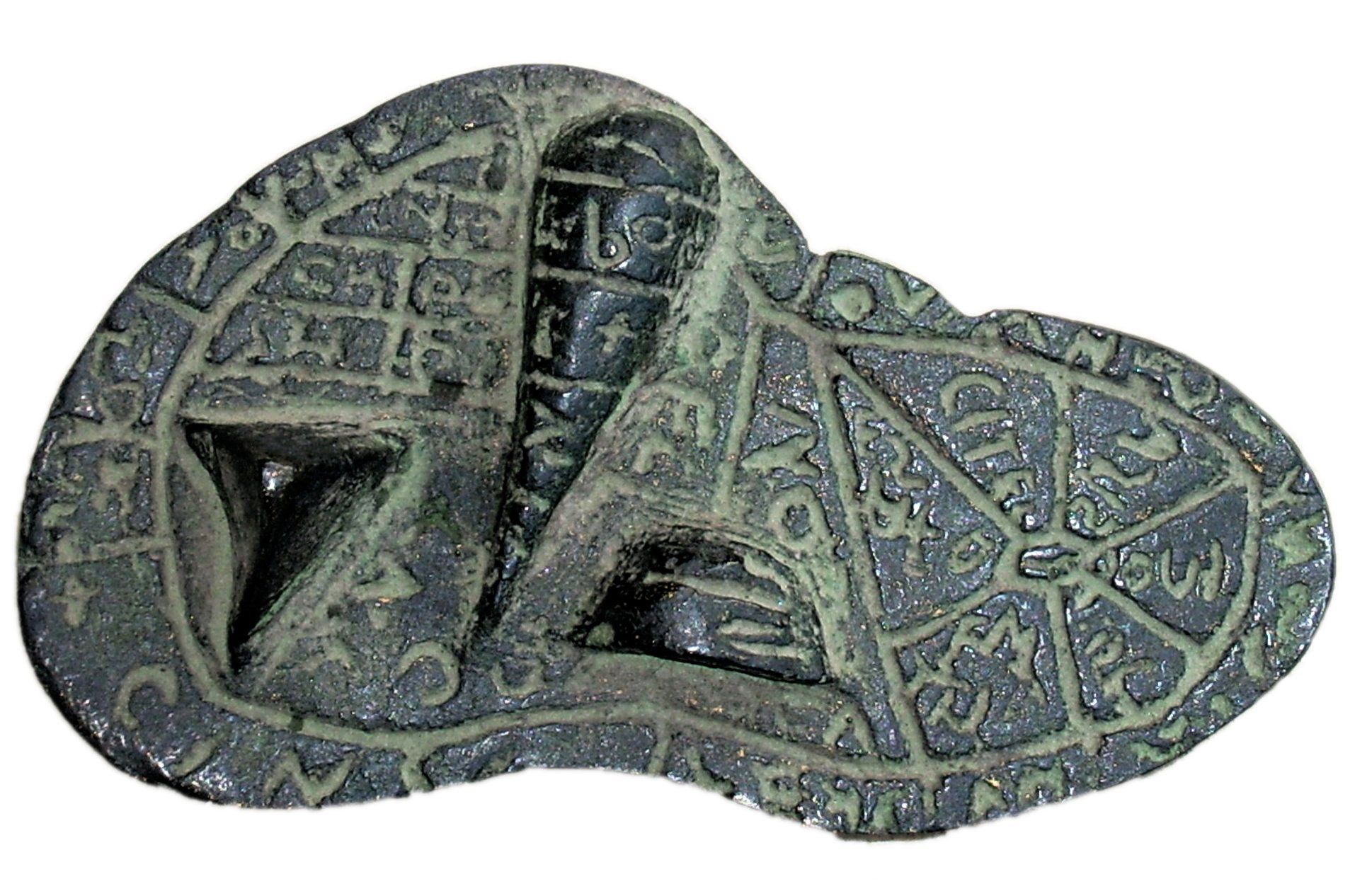
or the reading of animal intestines, for example,

(This is a bit of Etruscology, being a bronze model of a sheep’s liver believed to be used as a guide to interpreting what an Etruscan priest might find on an actual sheep’s liver.  For more, see:  https://en.wikipedia.org/wiki/Haruspex )

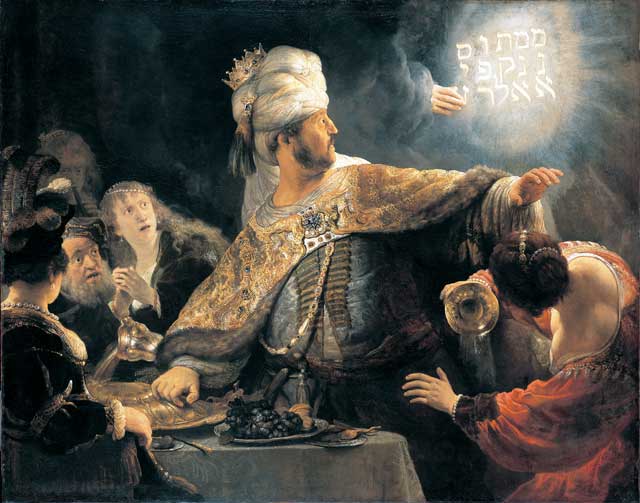
but by a message written by a detached hand on an interior wall of his palace.

(Rembrandt—as I said in the first part of this posting, having no idea of what real Babylonians looked like, the artist went for the Magi look)

When Belshazzar’s own scribes and prophets could make nothing of it, Daniel was brought in as a consultant and delivered the grim message that the words—which were potentially chillingly ambiguous—signalled not only the end of Belshazzar’s reign, but of his kingdom.  (For more on this, see:  https://www.christianitytoday.com/2024/11/andrew-wilson-spirited-life-daniel-writing-on-wall-babylon/   For a wonderful 12th-century version of the story and a little on Daniel’s experience in the court of Darius, see:  https://www.youtube.com/watch?v=Djf0DFkH7mA&list=RDDjf0DFkH7mA&start_radio=1 )

In that posting, I suggested that Daniel’s story not only confirmed his role as prophet, but, for the posting, that he was literate, which would have marked him out in a world in which literacy was a specialized skill, like being a boatwright.

(This is from one of my favorite medieval mosaics, the story of Noah and the Ark from the cathedral of Monreale in Palermo—for more see:  https://www.christianiconography.info/sicily/noahBuildsArkMonreale.html )

This, in turn, had led to considering literacy in Middle-earth, chiefly among hobbits, and, in particular, the literacy of one rather unlikely hobbit, Sam Gamgee.

(Robert Chronister)

For more on this, see that earlier posting, “It’s in Writing (1)” 15 October, 2025, but my conclusion, based upon the final chapter of The Lord of the Rings, “The Grey Havens”, was that, as the story of Daniel makes Daniel literate in order to elevate him to a level of prophetic importance, so JRRT makes Sam literate in order to allow him to be the author who will complete the story of the Ring.  

That posting briefly examined hobbits and even suggested some evidence of literacy among dwarves, but it was never meant to be a full inventory of mentions of literacy in Middle-earth—although I think that that would be a very interesting project and well worth doing—and one thing it omitted entirely was any mention of literacy in Mordor. 

Did Orcs read and write, for example?

(Alan Lee)

Considering the conversation of people like Ugluk and Grishnakh, it would seem that they were mainly oral, as much of their and other talk is based upon what they hear, rather than read. (“ ‘What are they wanted for?’ asked several voices.  ‘Why alive?  Do they give good sport?’ ‘No!  I heard that one of them has got something, something that’s wanted for the war…”  The Two Towers, Book Three, Chapter 3, “The Uruk-hai”—for more on Orcs and gossip, among other things, see “Scuttlebutt”, 27 October, 2021)

And yet there’s this:

“The brief glow fell upon a huge sitting figure, still and solemn like the great stone kings of Argonath.  The years had gnawed it, and violent hands had maimed it..Upon its knees were idle scrawls mixed with the foul symbols that the maggot-folk of Mordor used.”  (The Two Towers, Book Four, Chapter 7, Journey to the Cross-roads”)

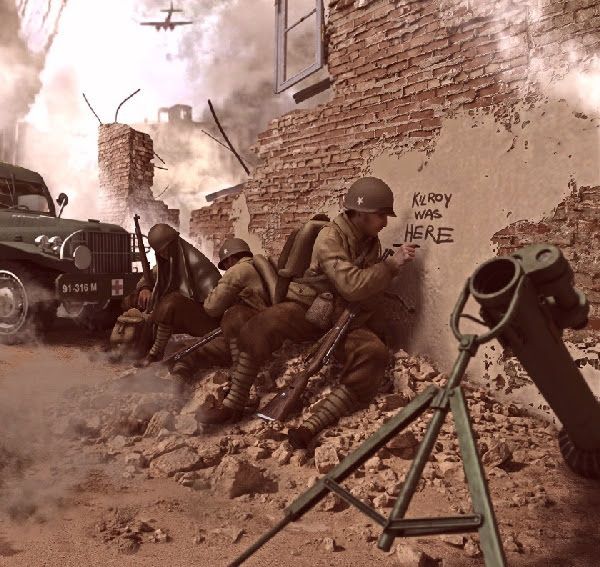
The “maggot-folk of Mordor” must certainly be the Orcs and “idle scrawls” suggests graffiti, like the World War 2-era favorite–

(For more on orcs and graffiti, see “Ugluk was Here”, 14 December, 2016—for more on Kilroy see:  https://en.wikipedia.org/wiki/Kilroy_was_here )

So what did they write in?  Pippin, while a prisoner of the Orcs, notices that they seem to speak different languages—or at least dialects—but employ the Common Speech to understand each other:

“To Pippin’s surprise he found that much of the talk was intelligible; many of the Orcs were using ordinary language.  Apparently the members of two or three quite different tribes were present, and they could not understand one another’s orc-speech.”  (The Two Towers, Book Three, Chapter 3, “The Uruk-hai”)

Can we presume, then, that the “idle scrawls” were in the writing system called the Tengwar, as “[its letters] had spread over much of the same area as that in which the Common Speech was known” (The Lord of the Rings, Appendix E, II, “Writing”)?  Or possibly the runic Cirith, as “[it] became known to many peoples, to Men and Dwarves, and even to Orcs, all of whom altered it to suit their purposes and according to their skill or lack of it.”

But what about the Black Speech?

“It is said that the Black Speech was devised by Sauron in the Dark Years, and that he had desired to make it the language of all those that served him…”

however—

“…after the first overthrow of Sauron this language in its ancient form was forgotten by all but the Nazgul.  When Sauron arose again, it became once more the language of Barad-dur and of the captains of Mordor.”

It was the formal language of the top of the chain of command, then, but, as JRRT had written earlier of Sauron’s first attempt to make it the official language, “he failed in that purpose” and the Orcs picked and chose what they found useful and nothing more.  (See The Lord of the Rings, Appendix F, “Of the Other Races”)

Save for what might be the Black Speech in a curse (“Ugluk u bagronk sha pushdug Saruman-glob bubhosh skai”, says one menacing Orc to Pippin– The Two Towers, Book Three, Chapter 3, “The Uruk-hai”), when we hear it, it’s Gandalf, reciting what he read when he “set the golden thing in the fire a while” (The Fellowship of the Ring, Book Two, Chapter 2, “The Council of Elrond”). 

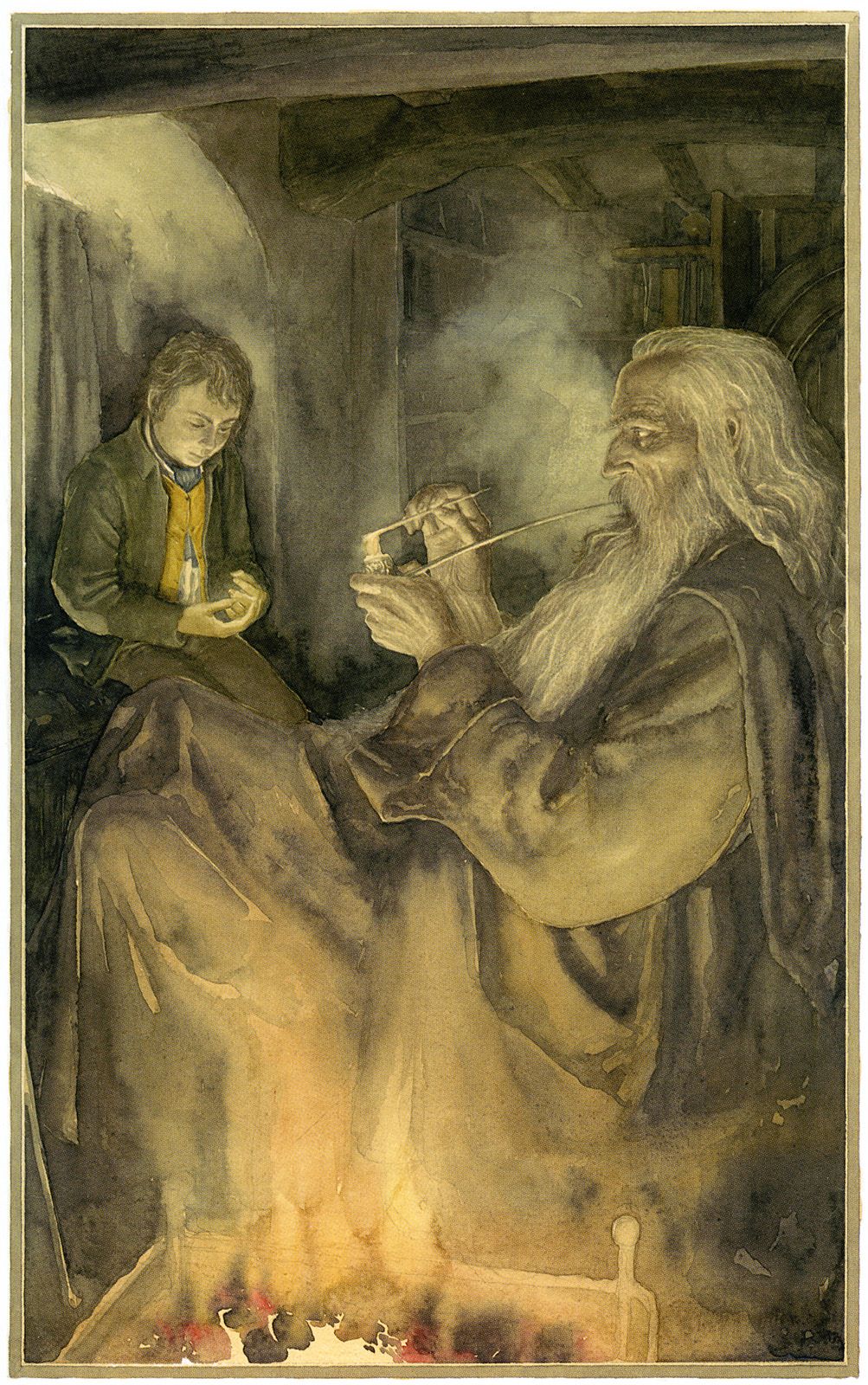
And this brings us back to reading and writing.  Why was there writing on that particular ring? 

Not being a party to its maker’s mind, this is only my guess, but I think that it may have had several possible purposes.

First—and this seems the most obvious—comes from something Gandalf says, repeating a remark made by Saruman:

“ ‘The Nine, the Seven, and the Three…had each their proper gem.  Not so the One.  It was round and unadorned, as it were one of the lesser rings; but its maker set marks upon it that the skilled, maybe, could still see and read.”  (The Fellowship of the Ring, Book Two, Chapter 2, “The Council of Elrond”). 

Thus, Sauron had written on it to distinguish it from the other rings—and this writing was seemingly to be seen only by Sauron, as Isildur suggests:

“It was hot when I first took it, hot as a glede [a hot coal], and my hand was scorched, so that I doubt if ever again I shall be free of the pain of it.  Yet even as I write it is cooled, and it seemeth to shrink, though it loseth neither its beauty nor its shape.  Already the writing upon it, which at first was as clear as red flames, fadeth and is only barely to be read.”

Isildur’s explanation for this fading was:

“The Ring misseth, maybe, the heat of Sauron’s hand, which was black and yet burned like fire.” (The Fellowship of the Ring, Book Two, Chapter 2, “The Council of Elrond”). 

The second purpose, then, might be that The Ring mirrored, in a way, its master, the inscription legible to him because it took its heat from his hand and, with that removed, it cooled, eventually, into silence.  Isildur had guessed that heat might revive it (“…maybe were the gold made hot again, the writing would be refreshed”) but it was Gandalf, having read Isildur’s suggestion, who did, by placing it into an environment like to its original.  That it would lose that inscription if the Ring were removed from its owner’s hand might also suggest a third purpose, which lies in what the writing actually said:

“One Ring to rule them all, One Ring to find them,

One Ring to bring them all and in the darkness bind them.”  (The Fellowship of the Ring, Book One, Chapter 2, “The Shadow of the Past”)

Although Gandalf says that this formed part of “a verse long known in Elven-lore”, the Ring itself was meant to be the master ring:

“He only needs the One; for he made that Ring himself, it is his, and he let a great part of his own former power pass into it, so that he could rule all the others.”

Thus, though it may have been part of a “verse long known in Elven-lore”, it sounds to me like a kind of spell Sauron would have chanted as he made the Ring, not only putting “a great part of his own former power” into it, but binding the lesser rings to it, as the words written on the Ring may have eventually been part of later tradition, but, logically, must have been his words long before they became part of that tradition.

These might have been Sauron’s purposes, but they also serve the narrative.  As Bilbo’s ring, passed down traumatically to Frodo, is “round and unadorned”, Gandalf has to have some way to prove to himself and to Frodo that this ring is the Ring.

(Alan Lee)

When Gandalf begins explaining to Frodo in detail about it and about Bilbo’s connection to it, he first mentions that

“A mortal…who keeps one of the Great Rings, does not die, but he does not grow or obtain more life, he merely continues, until at last every minute is a weariness.”

and Bilbo, says Gandalf, “…was getting restless and uneasy.  Thin and Stretched, he said.”

He speaks further about his worries about Bilbo and then tells Frodo that “There is a last test to make”, meaning in his confirmation that this is the Ring.

That last test takes place when, reluctantly, Frodo hands the Ring to Gandalf, and Gandalf throws it into the fire on Frodo’s hearth, where, when Frodo picks it up, he spots “fine lines, finer than the finest pen-strokes, running along the ring, outside and inside:  lines of fire that seemed to form the letters of a flowing script” and that script says:

“Ash nazg burbatuluk, ash nasz gimbatul, ash nazg thrakatuk agh burzum-ishi krimpatul.”

“One Ring to rule them all, One Ring to find them, One Ring to bring them all and in the Darkness bind them.”  (translation by Gandalf—earlier quotations from The Fellowship of the Ring, Book One, Chapter 2, “The Shadow of the Past”, the Black Speech from Book Two, Chapter 2, “The Council of Elrond”  For more on the Black Speech, see:  https://en.wikipedia.org/wiki/Black_Speech )

For Gandalf, that inscription is the final element in his understanding of just what, long ago, Bilbo picked up in the tunnels under the Misty Mountains.  He explains that it’s “only two lines of a verse long known in Elven-lore”, but those two lines are apparently all that’s necessary.

But where might the idea for an inscription have come to JRRT from originally?  I have no proof, but, as a medievalist, Tolkien might have been aware of what we find in medieval bling and is later picked up in Hamlet.

If you, like me, are a Shakespeare fan, you may recognize the subtitle of this posting as a sharp little remark by Hamlet in Act III, Scene 2 (you can read it here in the First Quarto of 1603:      https://internetshakespeare.uvic.ca/doc/Ham_Q1/complete/index.html ).  Hamlet is making fun of a very brief prologue before The Murder of Gonzago, the “play within a play” (renamed “The Mousetrap” by Hamlet) by which he hopes to force his uncle, Claudius, to reveal his guilt in the death of Hamlet’s father, but it’s the second half of that line, “a Poesie for a Ring” which provides an answer to my question.

What Hamlet is suggesting is that the prologue is as clumsy as the poetry found within a ring (although occasionally on the outside) usually given by one lover to another in the late medieval era at least into the 18th century, like this one—

where inside is written “When this you see, remember me.”

(For more, see:  https://web.archive.org/web/20080611125813/http://www.wartski.com/Posy%20ring%20messages.htm )

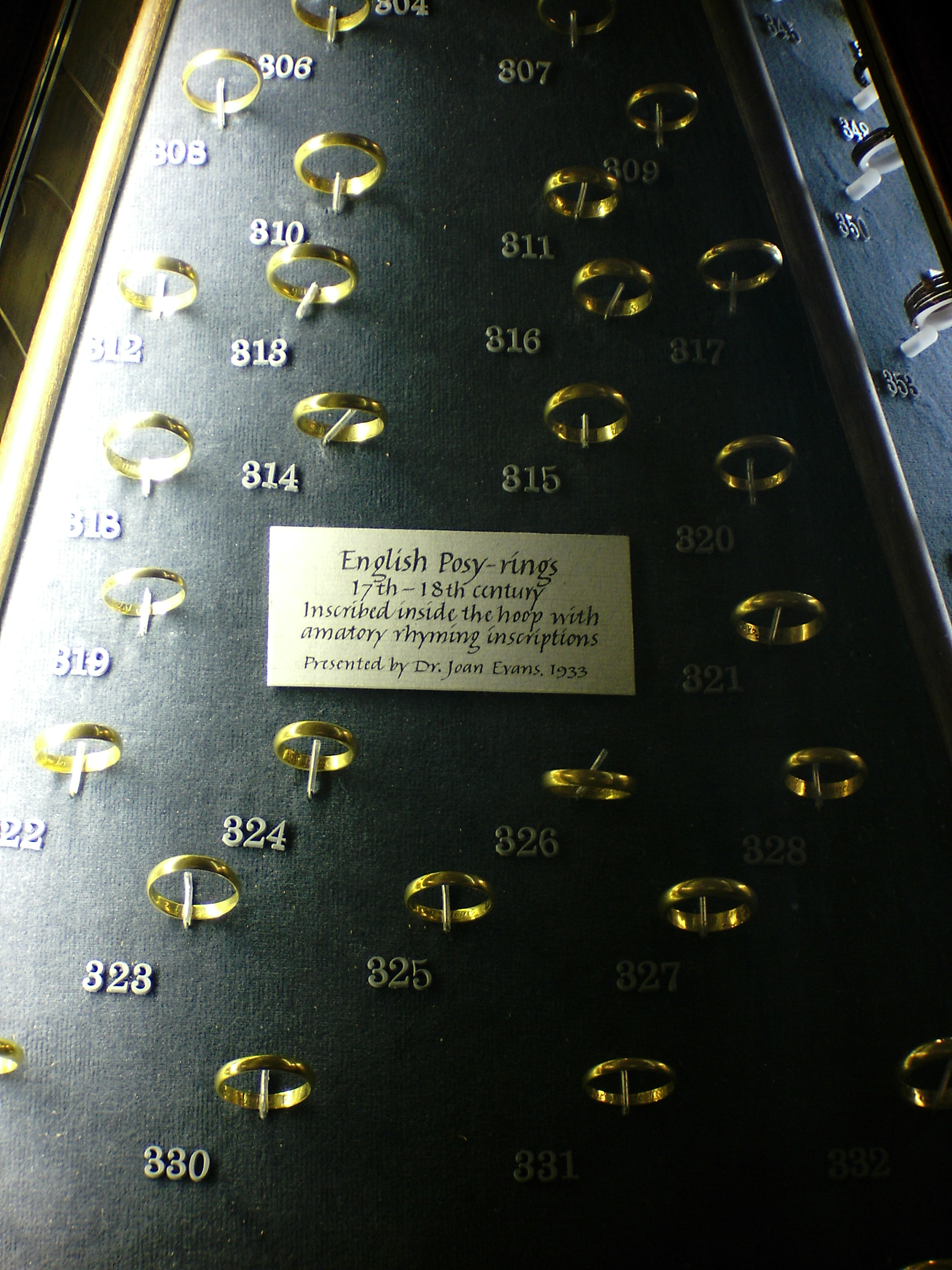
Often called “posy rings” (a contracted form of “poesie”, as in the Shakespeare quotation), there are hundreds of surviving examples—here are only a small number from the Ashmolean Museum in Oxford—

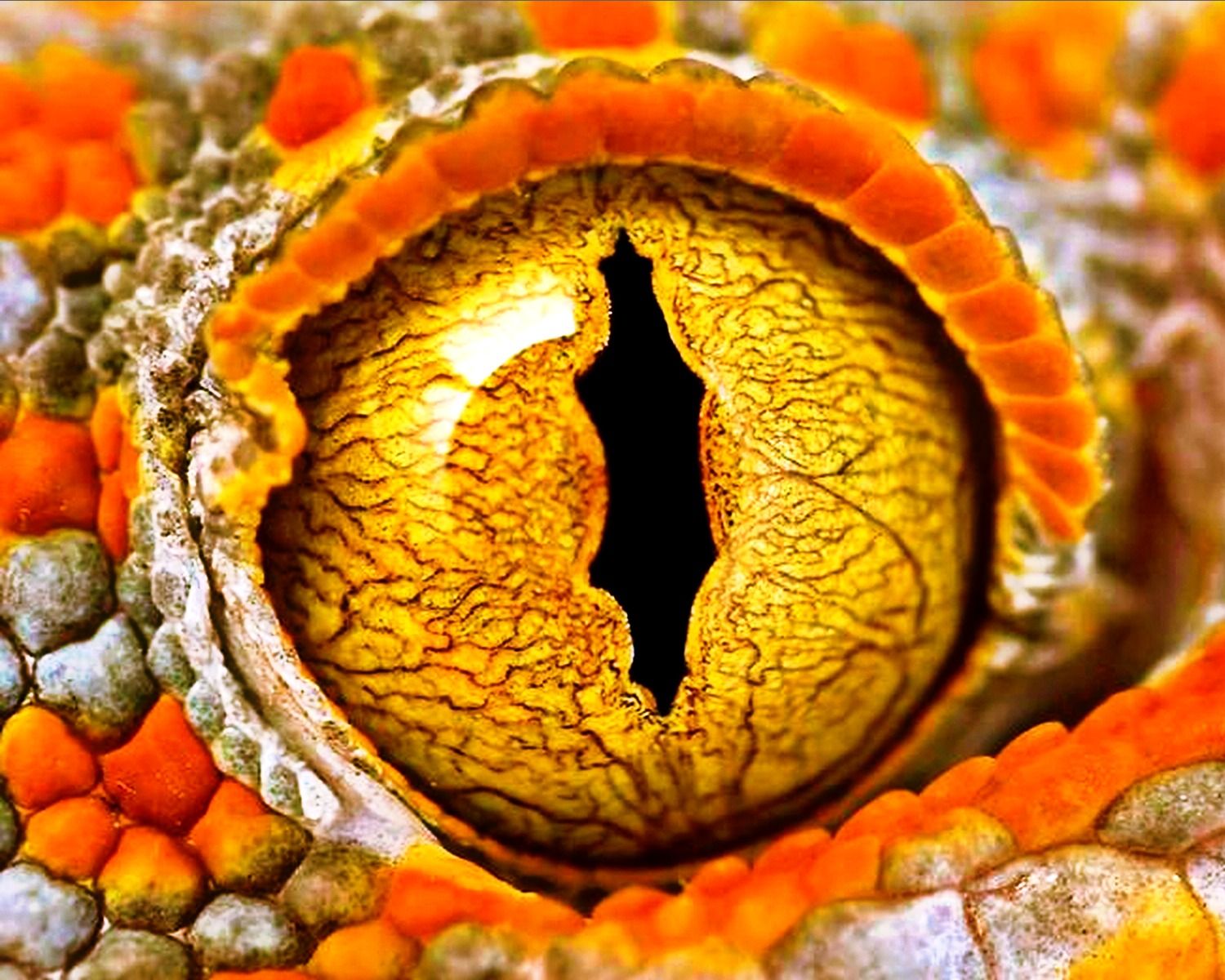
The texts vary, from what appears confident–“In thee my choice I do rejoice”—to the less so:  “I live in Hope”, but the general purpose of these little gifts is clear, if less sinister than Sauron’s.  They are meant to remind someone that someone else is thinking of them.  The difference, however, is that, if there’s one thing you wouldn’t want, it would be to have the Eye of Sauron looking in your direction.

Thanks, as always, for reading.

Stay well,

Consider what Orcs might write on their rings,

(Alan Lee)

And remember that, as ever, there’s

MTCIDC

O

PS

For a little more on posy rings, see the monograph by John Evans, “Posy-Rings” (1892) at https://ia800704.us.archive.org/5/items/PosyRingsEvans/evans-j-posy-1892-00011597.pdf

Jolly Tom.2

16 Wednesday Sep 2015

Posted by Ollamh in Fairy Tales and Myths, Imaginary History, J.R.R. Tolkien, Narrative Methods

≈ Leave a comment

Tags

Barrow-downs, Barrow-wights, Bree, Dagger, Dorset, Eowyn, Fangorn, Frodo, Gandalf, Middle-earth, Nazgul, Neolithic, Old Forest, Old Man Willow, Peter Jackson, Sauron, The Hobbit, The Lord of the Rings, The Ring, Tolkien, Tom Bombadil, Weaponry, Westernesse, Witch-King of Angmar

Dear Readers,

Welcome, as always!

As you can see from the title, this is a continuation of the previous posting, in which we began a discussion of a two-part question: 1. What would be the advantage of keeping Tom Bombadil in a recorded (audio or film) version of The Lord of the Rings? 2. What would you need to keep?

To summarize the previous posting, we suggested that:

  1. he, along with Fangorn/Treebeard, represents the great age of Middle Earth—something very important to the author–and a continuity of living things, which leads us to
  2. he might also be seen as a form of hope: the Ring has no effect upon him and he remembers a time before the arrival of Sauron, suggesting that there might be a time after him, as well, and that the Ring has limits
  3. as it seems out of place even in the current text, the bulk of Tom’s verse and the sometimes rhythmicized prose could be removed, leaving only the character himself and his part in the plot

We believe, however, that there is a more pressing reason for keeping him in the text, and it has to do with something Gandalf says to Frodo when Frodo, panicked at the prospect of having to deal with the Ring, demands, “Why did it come to me? Why was I chosen?” LotR 61.

“’Such questions cannot be answered,’ said Gandalf, ‘You may be sure that it was not for any merit that others do not possess: not for power or wisdom, at any rate. But you have been chosen, and you must therefore use such strength and heart and wits as you have.’” LotR 61.

This is a continuation of Gandalf’s earlier statement that:

“Behind that there was something else at work, beyond any design of the Ring-maker. I can put it no plainer than by saying that Bilbo was meant to find the Ring, and not by its maker. In which case you also were meant to have it.” LotR 56.

Thus, there is a level of intentionality at work in Middle-earth, something beyond Sauron. And, when we see Bombadil next, he will prove to be an instrument of the intention.

The Hobbits have left his house and, following his directions, have passed onto the Barrow-downs.

Breeland_breetobarrowdowns

A down is a piece of rolling countryside, often bare at the top, with trees in its folds—as here in Dorset.

dorset_3287278k

The Dorset Downs have lots of Neolithic remains, including numbers of barrows or tumuli, grave mounds commonly covering an interior structure, not uncommonly made of stone—

OLYMPUS DIGITAL CAMERA

image4

Wakeman_Newgrange_tumulus_chamber_cross_section

Such tumuli once contained the body or bodies usually of high-status persons

Unknown

and all sorts of grave goods, either as a display of wealth or perhaps for some sort of afterlife use.

gordion1957

Bombadil has been careful, however, to say “more than once” (LotR 134) that the Hobbits are to avoid the barrows themselves, telling them not to meddle with them or “cold Wights” (LotR 133). (He also says that they should pass them “on the west-side”—there have been lots of guesses about this—we would add our guess that it might have to do with the orientation—literally—of the entry. If entries faced east and the rising sun, it would be wise of the Hobbits to skirt the barrows’ potential blind side, on the west. And there is also the rather obvious point, once you’ve looked at a map of the area, that, if they kept the barrows to the right and the Old Forest to the left, they would be heading north towards the road to Bree, as they intended.)

il_570xN.743473219_bxv9

Those Barrow-wights are not the original inhabitants of the mounds, but agents of the Witch-king of Angmar, who sends them to take possession (The Lord of the Rings Companion, 144-145), long after their original occupation—but, what’s interesting is that, at least one of these tumuli appears not to have been plundered and this leads us to our next point about Tom Bombadil. After he rescues the Hobbits (showing again his mastery over at least the minor forces of evil), he does a little plundering of his own, including:

“For each of the hobbits he chose a dagger, long, leaf-shaped, and keen, of marvellous workmanship, damasked in serpent forms in red and gold…Then he told them that these blades were forged many long years ago by Men of Westernesse: they were foes of the Dark Lord, but they were overcome by the evil king of Carn Dum in the Land of Angmar.” LotR 146.

damascene-sword

Here are a few ideas of what, at least, the leaf shape might have looked like:

leaf.2bronzeageblades leaf.1

And we include this third one just because it looks so cool—

leaf.3

Bombadil, of course, has actually seen all of this happen, and here we see that theme of great age appear again. And there’s the pedigree of those blades. Unlike the sack ‘o swords slung without any more explanation than “These are for you. Keep them close.” to the Hobbits in the film, these were weapons made by heroic men of the past, doomed men, but who fought evil until they were overcome (a strong theme throughout the history of Middle-earth).

Late in the story, one of those blades seems to be the instrument of intentionality once more. When Eowyn faces the Witch-king of Angmar, now the chief of the Nazgul—

lord_of_the_nazgul_2

and he is about to kill her with his mace, Merry strikes him from behind, stabbing him in what, on a living man, would have been a vulnerable spot, the back of the knee. (LotR 842.)

eowyn_vs_the_nazgul_by_arteche-d3ggm8g

Distracted and, surprisingly, in pain, the Nazgul stumbles and Eowyn destroys him and here, once more, we may see intentionality, and all because of Tom Bombadil. Merry’s sword, from its contact with the undead flesh of the Nazgul, withers away, but—

“So passed the sword of the Barrow-downs, work of Westernesse. But glad would he have been to know its fate who wrought it slowly long ago in the North-kingdom when the Dunedain were young, and chief among their foes was the dread realm of Angmar and its sorcerer king. No other blade, not though mightier hands had wielded it, would have dealt that foe a wound so bitter, cleaving the undead flesh, breaking the spell that knit his unseen sinews together.” LotR 844.

So, for everything from Old Man Willow (whom the script writers couldn’t resist completely, transposing him to an improbable scene with Fangorn/Treebeard) to showing the great age of Middle-earth to suggesting other powers untouched by the Ring to offering possible hope to showing something of the intentionality behind certain actions in the story to providing the ancient and magical weapon which could finally bring down the Witch-king of Angmar and save Eowyn at the same time, might we suggest that, next production—audio or visual—of The Lord of the Rings, Jolly Tom might have a place in the cast?

Thanks, as always, for reading.

MTCIDC

CD

PS

If you would like to read more about Tom, see, for example, Dorathea Thomas, “He Is: Tom Bombadil and His Function in The Lord of the Rings” at Academia.edu.

The Doubtful Sea Series Facebook Page

The Doubtful Sea Series Facebook Page

  • Ollamh

Categories

  • Artists and Illustrators
  • Economics in Middle-earth
  • Fairy Tales and Myths
  • Films and Music
  • Games
  • Heroes
  • Imaginary History
  • J.R.R. Tolkien
  • Language
  • Literary History
  • Maps
  • Medieval Russia
  • Military History
  • Military History of Middle-earth
  • Narnia
  • Narrative Methods
  • Poetry
  • Research
  • Star Wars
  • Terra Australis
  • The Rohirrim
  • Theatre and Performance
  • Tolkien
  • Uncategorized
  • Villains
  • Writing as Collaborators
Follow doubtfulsea on WordPress.com

Across the Doubtful Sea

Recent Postings

  • A Moon disfigured December 17, 2025
  • On the Roads Again—Once More December 10, 2025
  • (Not) Crossing Bridges December 3, 2025
  • On the Road(s) Again—Again November 26, 2025
  • On the Road(s) Again November 19, 2025
  • To Bree (Part 2) November 12, 2025
  • To Bree (Part 1) November 5, 2025
  • A Plague o’ Both—No, o’ All Your Houses! October 29, 2025
  • It’s in Writing (2:  I’st a Prologue, or a Poesie for a Ring?) October 22, 2025

Blog Statistics

  • 103,198 Views

Posting Archive

  • December 2025 (3)
  • November 2025 (4)
  • October 2025 (5)
  • September 2025 (4)
  • August 2025 (4)
  • July 2025 (5)
  • June 2025 (4)
  • May 2025 (4)
  • April 2025 (5)
  • March 2025 (4)
  • February 2025 (4)
  • January 2025 (5)
  • December 2024 (4)
  • November 2024 (4)
  • October 2024 (5)
  • September 2024 (4)
  • August 2024 (4)
  • July 2024 (5)
  • June 2024 (4)
  • May 2024 (5)
  • April 2024 (4)
  • March 2024 (4)
  • February 2024 (4)
  • January 2024 (5)
  • December 2023 (4)
  • November 2023 (5)
  • October 2023 (4)
  • September 2023 (4)
  • August 2023 (5)
  • July 2023 (4)
  • June 2023 (4)
  • May 2023 (5)
  • April 2023 (4)
  • March 2023 (5)
  • February 2023 (4)
  • January 2023 (4)
  • December 2022 (4)
  • November 2022 (5)
  • October 2022 (4)
  • September 2022 (4)
  • August 2022 (5)
  • July 2022 (4)
  • June 2022 (5)
  • May 2022 (4)
  • April 2022 (4)
  • March 2022 (5)
  • February 2022 (4)
  • January 2022 (4)
  • December 2021 (5)
  • November 2021 (4)
  • October 2021 (4)
  • September 2021 (5)
  • August 2021 (4)
  • July 2021 (4)
  • June 2021 (5)
  • May 2021 (4)
  • April 2021 (4)
  • March 2021 (5)
  • February 2021 (4)
  • January 2021 (4)
  • December 2020 (5)
  • November 2020 (4)
  • October 2020 (4)
  • September 2020 (5)
  • August 2020 (4)
  • July 2020 (5)
  • June 2020 (4)
  • May 2020 (4)
  • April 2020 (5)
  • March 2020 (4)
  • February 2020 (4)
  • January 2020 (6)
  • December 2019 (4)
  • November 2019 (4)
  • October 2019 (5)
  • September 2019 (4)
  • August 2019 (4)
  • July 2019 (5)
  • June 2019 (4)
  • May 2019 (5)
  • April 2019 (4)
  • March 2019 (4)
  • February 2019 (4)
  • January 2019 (5)
  • December 2018 (4)
  • November 2018 (4)
  • October 2018 (5)
  • September 2018 (4)
  • August 2018 (5)
  • July 2018 (4)
  • June 2018 (4)
  • May 2018 (5)
  • April 2018 (4)
  • March 2018 (4)
  • February 2018 (4)
  • January 2018 (5)
  • December 2017 (4)
  • November 2017 (4)
  • October 2017 (4)
  • September 2017 (4)
  • August 2017 (5)
  • July 2017 (4)
  • June 2017 (4)
  • May 2017 (5)
  • April 2017 (4)
  • March 2017 (5)
  • February 2017 (4)
  • January 2017 (4)
  • December 2016 (4)
  • November 2016 (5)
  • October 2016 (6)
  • September 2016 (5)
  • August 2016 (5)
  • July 2016 (5)
  • June 2016 (5)
  • May 2016 (4)
  • April 2016 (4)
  • March 2016 (5)
  • February 2016 (4)
  • January 2016 (4)
  • December 2015 (5)
  • November 2015 (5)
  • October 2015 (4)
  • September 2015 (5)
  • August 2015 (4)
  • July 2015 (5)
  • June 2015 (5)
  • May 2015 (4)
  • April 2015 (3)
  • March 2015 (4)
  • February 2015 (4)
  • January 2015 (4)
  • December 2014 (5)
  • November 2014 (4)
  • October 2014 (6)
  • September 2014 (1)

Blog at WordPress.com.

  • Subscribe Subscribed
    • doubtfulsea
    • Join 78 other subscribers
    • Already have a WordPress.com account? Log in now.
    • doubtfulsea
    • Subscribe Subscribed
    • Sign up
    • Log in
    • Report this content
    • View site in Reader
    • Manage subscriptions
    • Collapse this bar
 

Loading Comments...