• About

doubtfulsea

~ adventure fantasy

Tag Archives: Scythians

Hybrids

01 Wednesday Jan 2025

Posted by Ollamh in Uncategorized

≈ Leave a comment

Tags

anglo-saxons, Boudica, chariots, eurasian-steppe, Huns, hybrds, Hybrids, Jacksons The Lord of the Rings, jacksons-lord-of-the-rings, Julius Caesar, Mongols, Normans, Rohirrim, Sarmatians, Scythians, Tacitus, Tolkien, Wainriders

As always, dear readers, welcome.

The title of this piece might suggest electric cars, and it definitely will mention several different wheeled vehicles, but it is actually what I hope is a little study in something Tolkien does wonderfully well:  taking different elements from different times and cultures and so blending them that they become believable new wholes.

Although I don’t always agree with elements in Jackson’s The Lord of the Rings, one thing has always given me pleasure:  the Rohirrim, whether en masse

or a small grouping.

And this is true for Edoras

as well as for Meduseld.

And yet they appear to be a kind of combination of peoples:  on the one hand, Tolkien imagined them to be Anglo-Saxons,
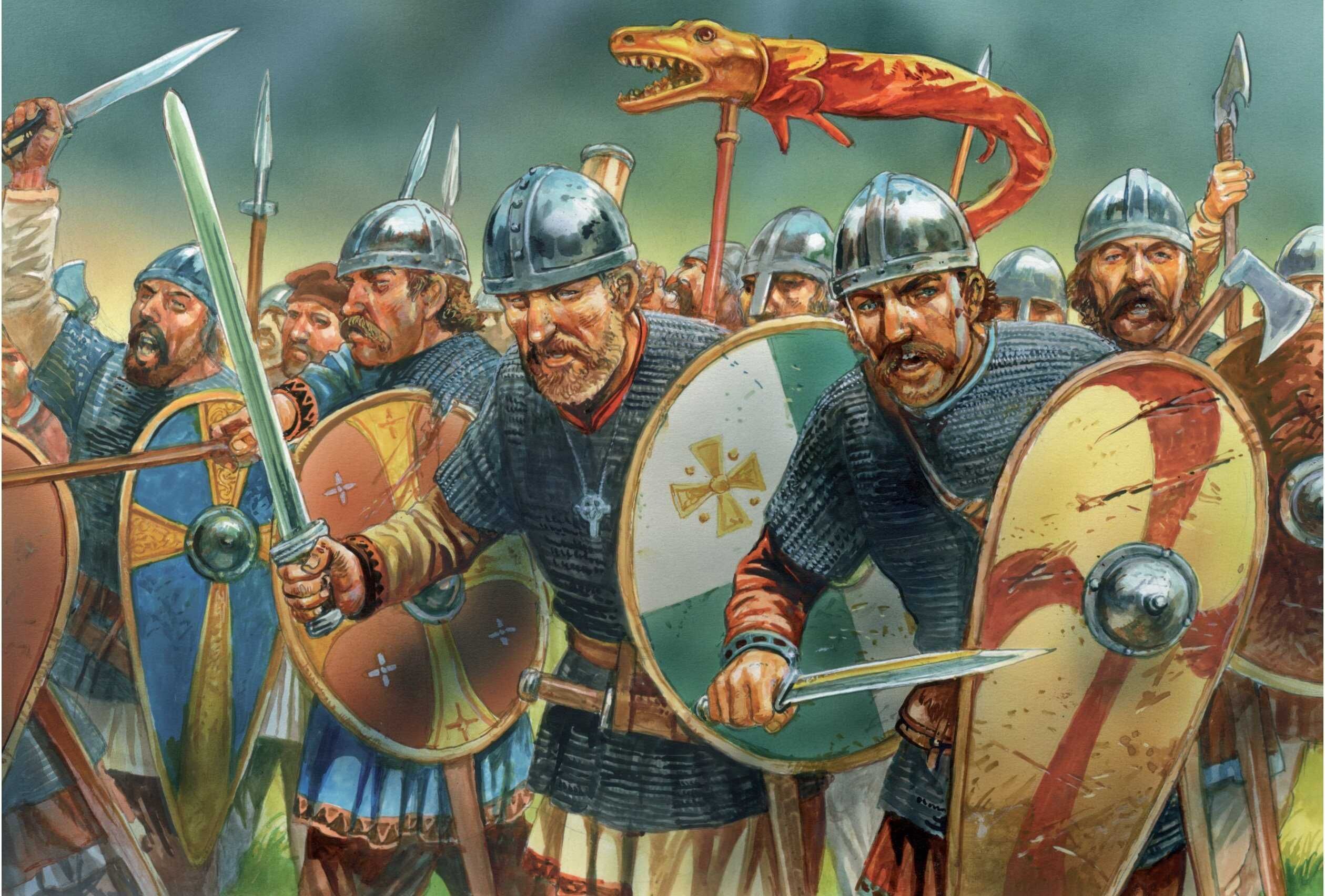
(Peter Dennis)

a people who primarily fought on foot, as at their last two major battles, Stamford Bridge,
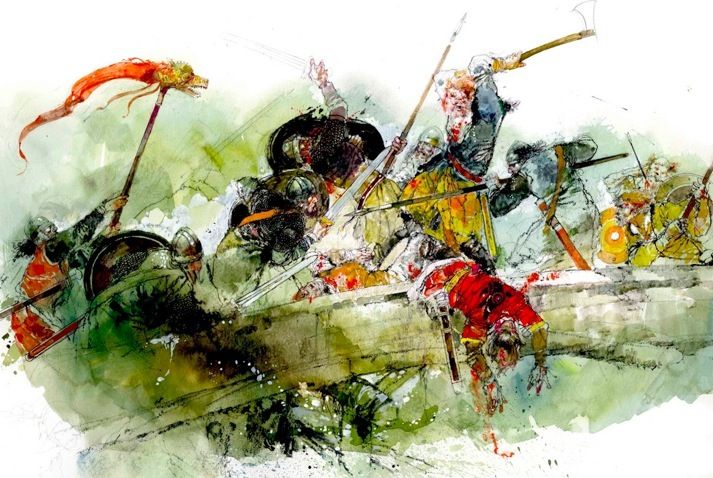
(Victor Ambrus—who worked for years with the popular British archeology series, Time Team—which is available on YouTube and much recommended)

where they defeated another infantry force, the Vikings, and Hastings,
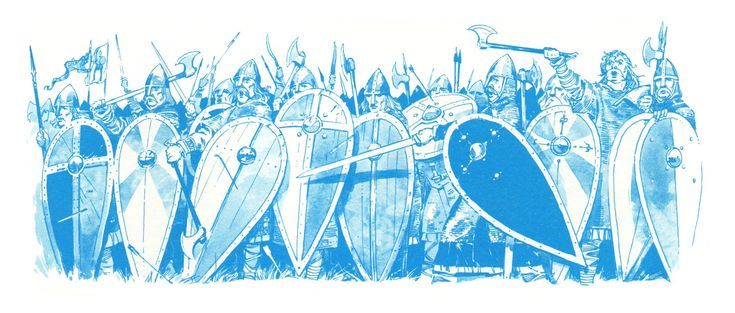
(Artist?)

in which they were overwhelmed at the battle’s conclusion by Norman cavalry.
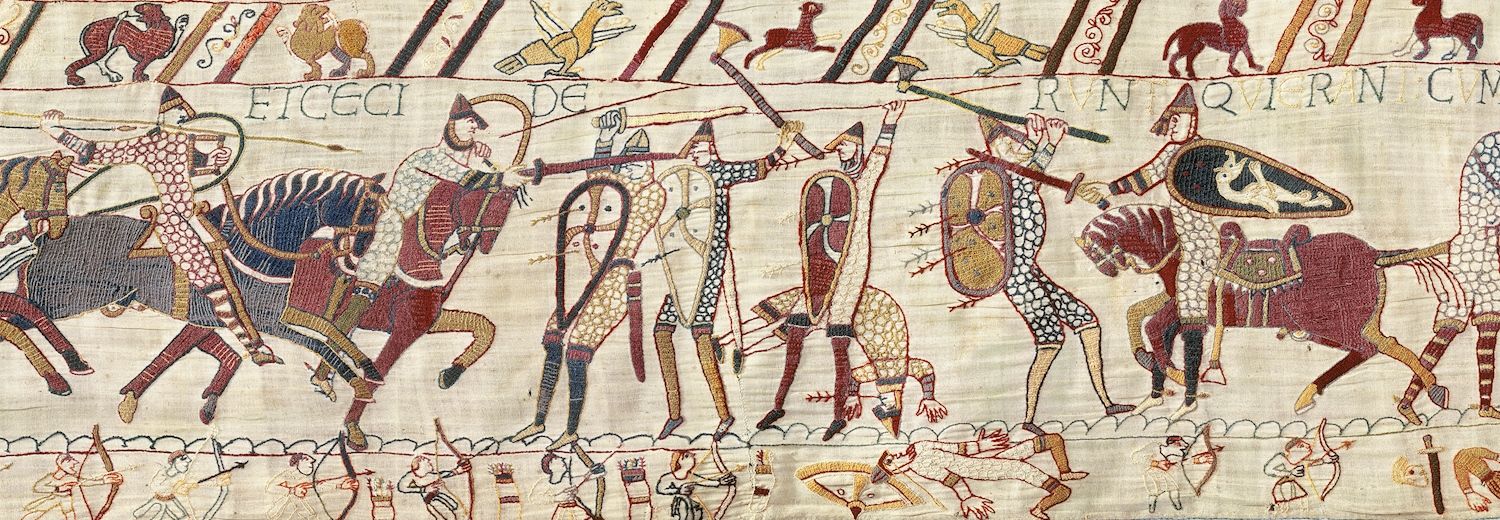
(From the wonderful “Bayeux Tapestry”—actually the “Bayeux Embroidery”—if you’d like to see the whole thing, look here:  https://www.bayeuxmuseum.com/en/the-bayeux-tapestry/discover-the-bayeux-tapestry/explore-online/  To my knowledge, there’s nothing like it from the Middle Ages for depicting a specific series of events in the medieval world.)

On the other hand, the Rohirrim were mounted, more like those Normans who defeated the Anglo-Saxons,

although the language they speak is, basically, a form of Old English, the language of the Anglo-Saxons.  Tolkien imagined them, in fact, as looking like the Normans, as well, describing them in a letter to Rhona Beare:

“The styles of the Bayeux Tapestry (made in England) fit them well enough, if one remembers that the kind of tennis-nets [the] soldiers seem to have on are only a clumsy conventional sign for chain-mail of small rings.”  (letter to Rhona Beare, 14 October, 1958, Letters, 401)

That is, their armor actually can look like this—
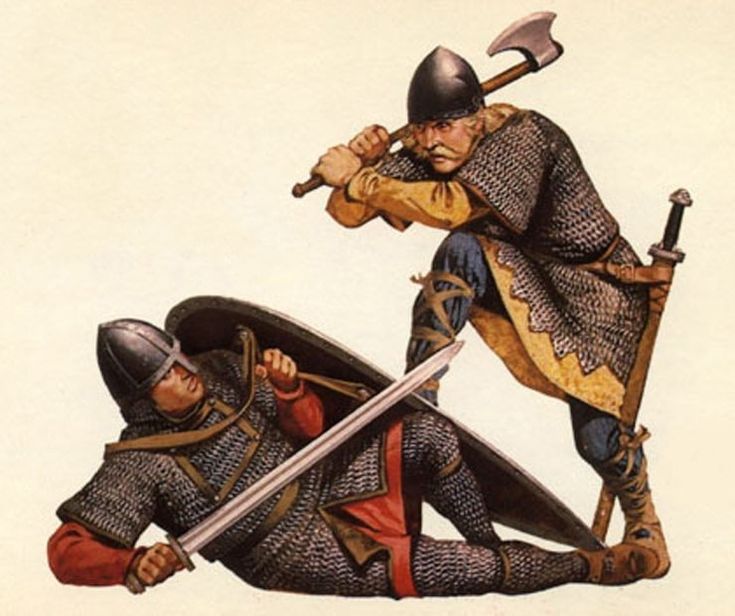
(By Angus McBride—and ironic, as, for all that McBride must have painted dozens of figures in chain mail, he once confessed in an interview that it was his least favorite part of illustrating, as the mail took so long to do.)

It’s also interesting to think about them as a people.  Anglo-Saxons were descended from a combination of locals (Romano-British) and various groups of west-Germanic tribesmen who had either been early post-Roman invaders of Britain or Germanic tribesmen brought to Britain to protect the locals from those invaders and who had become colonizers in turn.

But who were the Rohirrim and where did they come from?

“Eorl the Young was lord of the Men of Eotheod.  That land lay near the sources of Anduin, between the furthest ranges of the Misty Mountains and the northernmost parts of Mirkwood.”

(JRRT)

They had not always lived there, however:

“The Eotheod [from Old English, “Horsefolk”] had moved to those regions in the days of King Earnil II [TA 1945-2043] from lands in the vales of Anduin between the Carrock and the Gladden, and they were in origin close akin to the Beornings and the men of the west-eaves of the forest.  The forefathers of Eorl claimed descent from kings in Rhovanion, whose realm lay beyond Mirkwood before the invasions of the Wainriders…They loved best the plains and delighted in horses and in all feats of horsemanship…” (The Lord of the Rings, Appendix A II “The House of Eorl”)

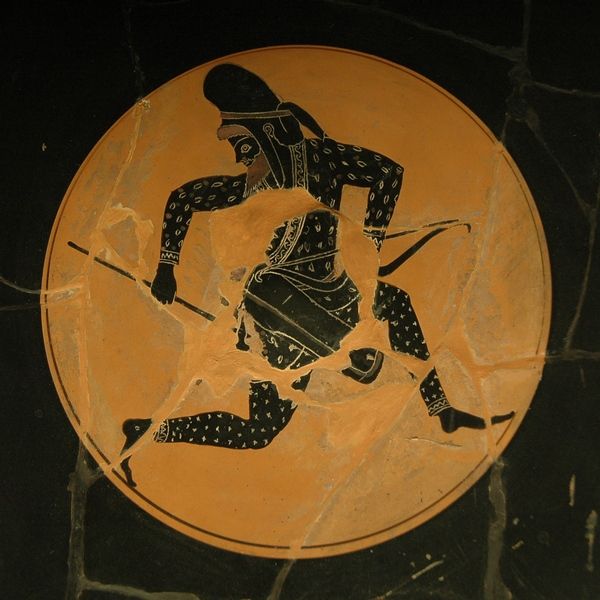
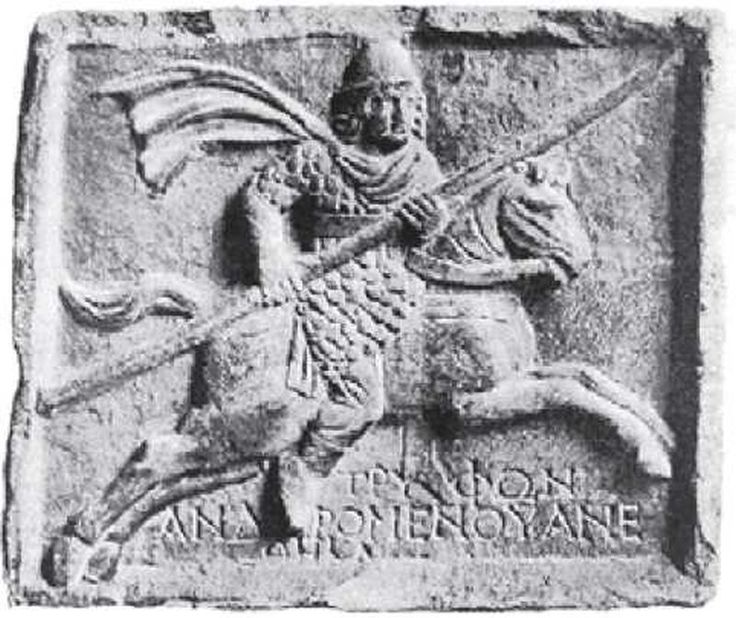
The combination of “They loved best the plains and delighted in horses” makes perfect sense when one thinks about comparative history in our Middle-earth.  Consider the Eurasian Steppe, stretching from western China all the way to the Hungarian puszta.

This is an immense belt of grassland,

some 5000 miles (8000km) wide,

and has been the homeland of numerous horsefolk throughout history, from the Scythians
to the Sarmatians
to the Huns
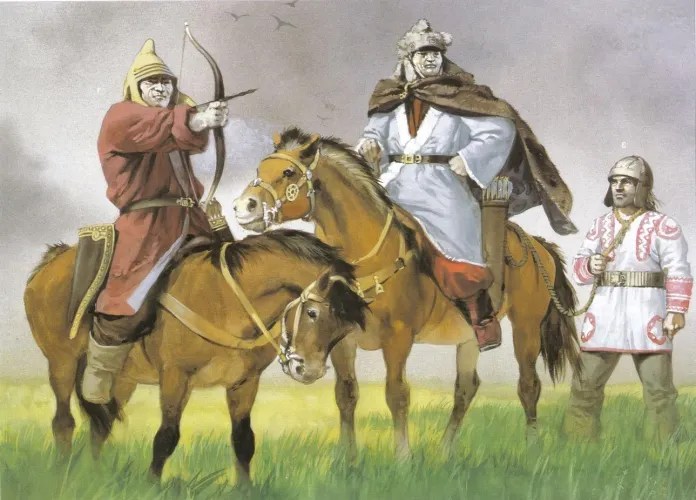
(Angus McBride)

to the Mongols.
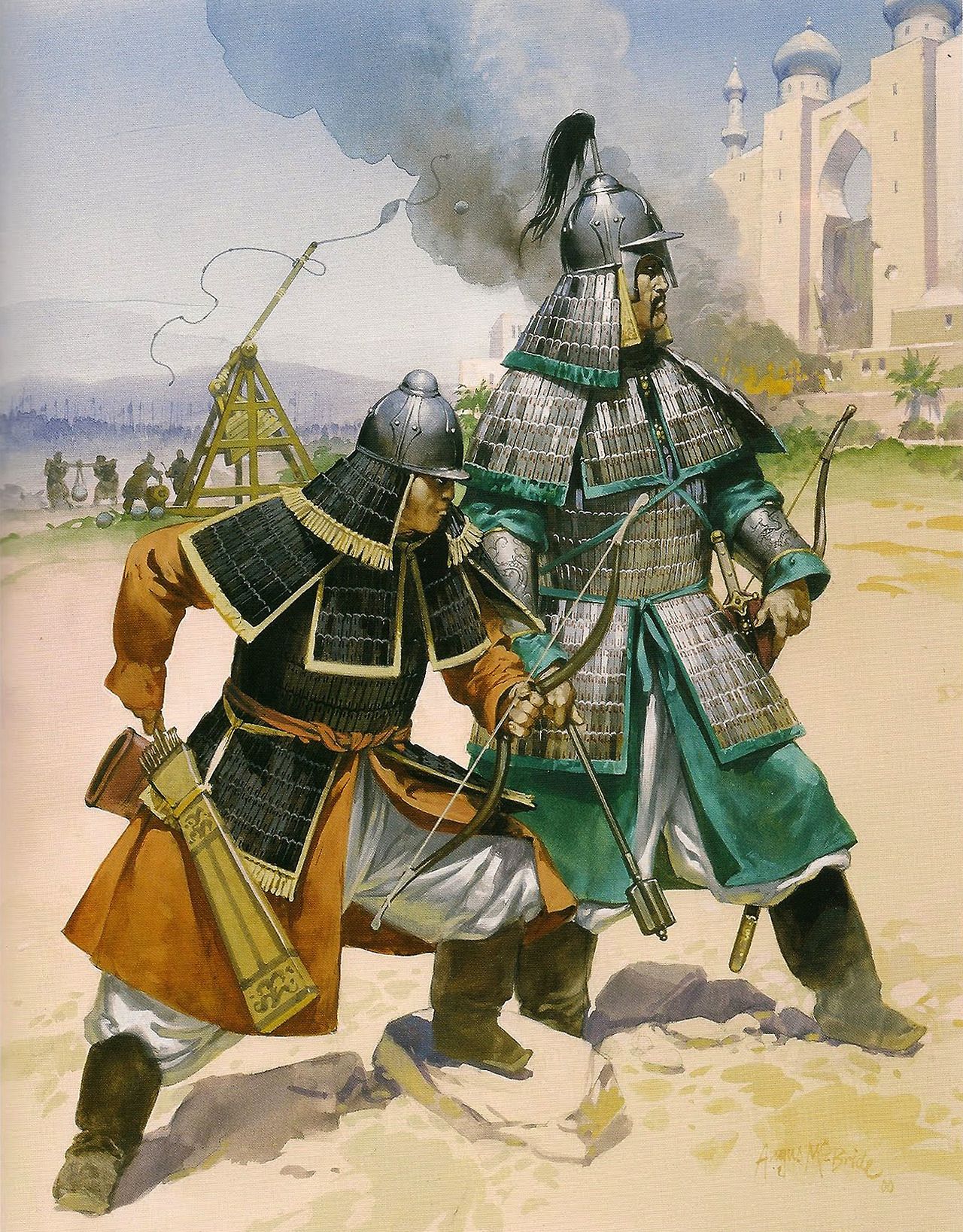
(another McBride)

All of these peoples have used the Steppe to graze their herds of horses, sometimes moving west for grazing, sometimes moving west when pressured by others further east, and sometimes as predators, like the Huns, moving west to seek new plunder.
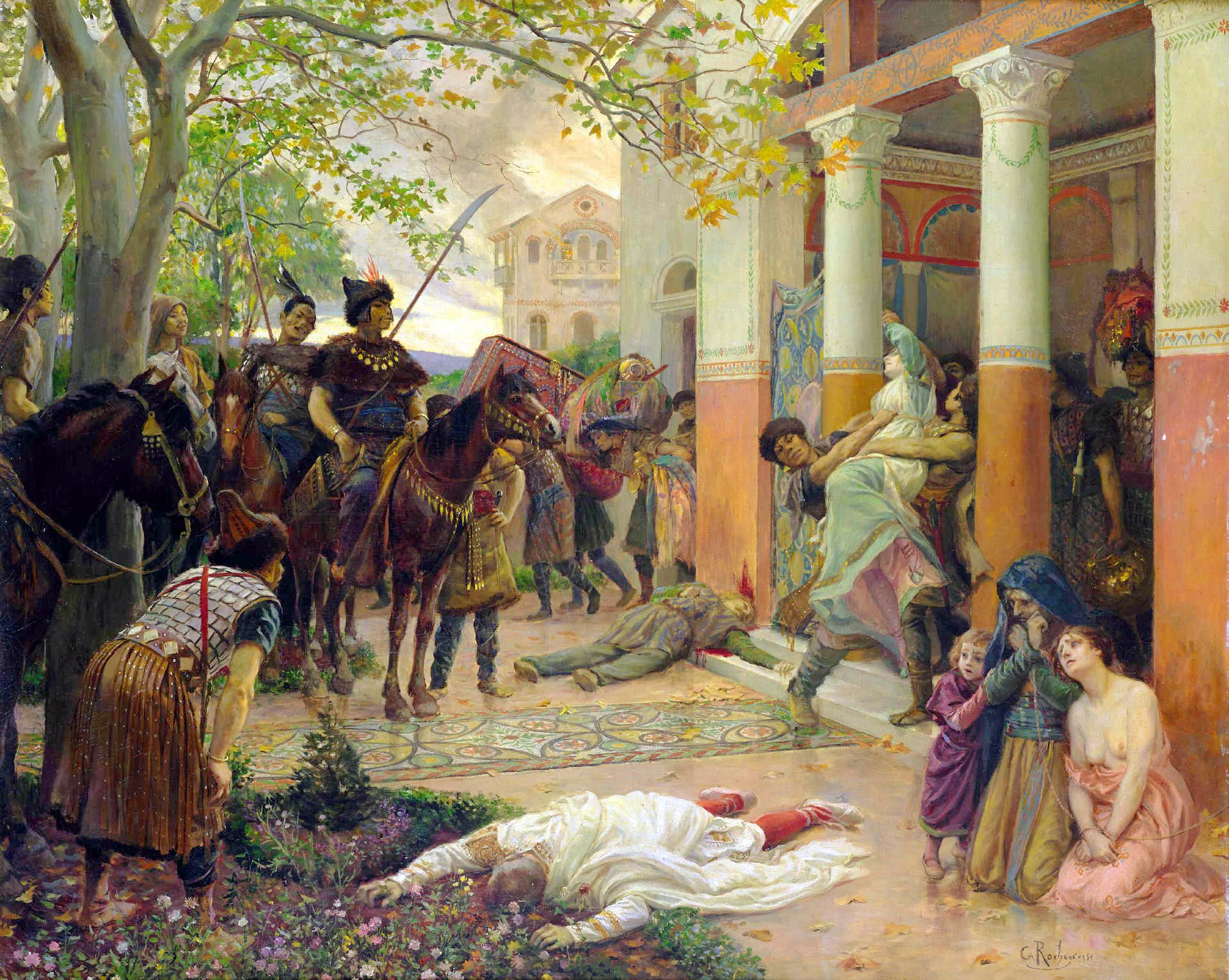
(I haven’t been able to identify an artist for this–it has the look of late-Victorian.)

In two of these cases, whole peoples might be on the move and this is perhaps where Tolkien has gotten part of his description of those Wainriders he mentions:

“The Wainriders were a people, or a confederacy of many peoples, that came from the East; but they were stronger and better armed than any that had appeared before.  They journeyed in great wains, and their chieftains fought in chariots…” 

So, we can imagine that the Eotheod, pressured by the Wainriders, were forced west, as one steppe people is pushed westward by another to the east. 

But Tolkien gives us another—or perhaps additional–possibility:

“Stirred up, as was afterwards seen, by the emissaries of Sauron, they made a sudden assault on Gondor…The people of eastern and southern Rhovanion were enslaved; and the frontiers of Gondor were for that time withdrawn to the Anduin and the Emyn Muil.” (The Lord of the Rings, Appendix A, IV “Gondor and the Heirs of Anarion”)

The Wainriders, then, might be both steppe peoples moving westwards, but also predators, like the Huns, or like the Mongols, who were both predators and empire-builders, and here we might see Mongols with their characteristic ger (a large round tent)—on a wagon—perhaps like the Wainriders?
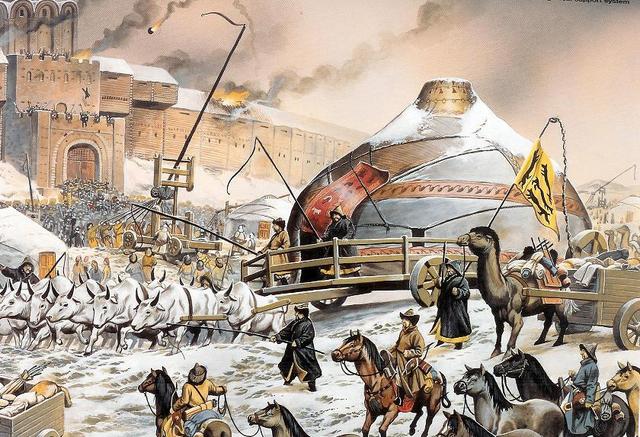
(Wayne Reynolds)

Although there is no mention in our text of the Rohirrim migrating with wagons, it’s clear from parallels in our world that the peoples who crossed the Eurasian Steppe appear to have used them regularly.  But here, like the Rohirrim, we have another odd juxtaposition.  The Rohirrim are Anglo-Saxons on horseback:  cavalry, which was true for all of those migrants across the Steppe in our world.  Chariots, however, although Tolkien says that the Wainrider chiefs fought in them (of which fact this is the only mention) were not part of those other horsefolks’ arsenals.  Where did they come from?

The answer, I think, lies in the period of British history before the Anglo-Saxons and almost before the Romans, among the earlier Celtic settlers of England.  Julius Caesar encountered chariots there and described their use:

Genus hoc est ex essedis pugnae. Primo per omnes partes perequitant et tela coiciunt atque ipso terrore equorum et strepitu rotarum ordines plerumque perturbant, et cum se inter equitum turmas insinuaverunt, ex essedis desiliunt et pedibus proeliantur. 2 Aurigae interim paulatim ex proelio excedunt atque ita currus conlocant ut, si illi a multitudine hostium premantur, expeditum ad quos receptum habeant. 3 Ita mobilitatem equitum, stabilitatem peditum in proeliis praestant, ac tantum usu cotidiano et exercitatione efficiunt uti in declivi ac praecipiti loco incitatos equos sustinere et brevi moderari ac flectere et per temonem percurrere et in iugo insistere et se inde in currus citissime recipere consuerint.

“This is the kind of fighting from chariots.  At first, they ride around in all directions and throw spears and often, by the very frightfulness of the horses and the roar of the wheels, they shake the ranks [of the enemy] and, when they have slipped themselves among the troops of [enemy] cavalry, they leap from the chariots and fight on foot.  Meanwhile, the charioteers move out a little way from the fighting and so place their vehicles that, if they [the dismounted fighters] should be pressed by a large number of the enemy, they may have an easy retreat to them.  Thus, they provide the mobility of cavalry [as well as] the steadiness of infantry in [their] battles and they accomplish so much by daily practice and exercise that they are accustomed to control their stirred-up horses on a sloping and steep place and rein [them] in quickly and to turn [them] and to run along the yoke pole and to stand on the yoke and from there to take themselves back into the vehicles extremely speedily.”  (Caesar, De Bello Gallico, Book IV, Chapter 33—my translation)

(Angus McBride)

Tolkien may have remembered this from his schooldays, when he would first have encountered the text—and he might have found those wagons there, too, although slightly later.  When, in 60-61AD, the Iceni queen, Boudica, led a revolt against Roman rule,

(Peter Dennis)

in the final battle, when the tribesmen advanced towards the Roman formation, as Tacitus (c.56-c.120AD) tells us, their families watched from their wagons, placed behind the battle line (De Vita et Moribus Iulii Agricolae, Chapter 34).  And, as a prelude to the battle, Boudica had ridden among the ranks in a chariot (Chapter 35).

(another Peter Dennis—in fact, if you’d like to know more about this amazing woman, who, for a brief time, had been a real threat to the Romans, you might invest in: 
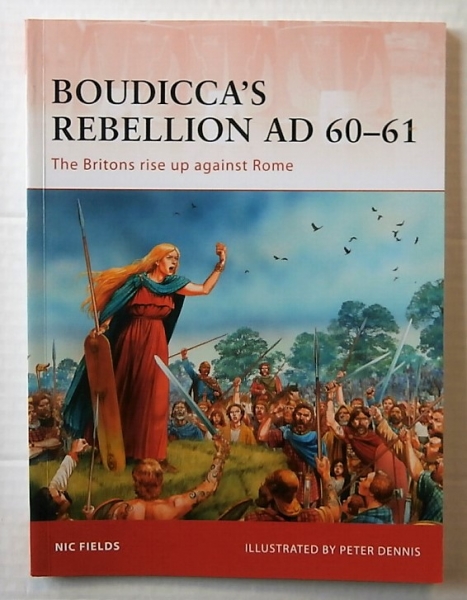
And so, as in combining Anglo-Saxon and Norman to create the Rohirrim, Tolkien may have taken Steppe people, added Celtic Britons, and produced the Wainriders. 

Thanks, as always for reading.

Stay well,

Remember that a horse will drink, on average, between 5 and 10 gallons (19-38 litres) of water a day,

And remember, as well, that there’s always

MTCIDC

O

Hoards of the Things

28 Wednesday Jun 2017

Posted by Ollamh in Fairy Tales and Myths, Imaginary History, J.R.R. Tolkien, Literary History, Narrative Methods

≈ Leave a comment

Tags

A Christmas Carol, A Visit to William Blake's Inn, Aeetes, Alexander Deruchenko, Alice and Martin Provensen, Argo, Barrow-downs, Barrow-wights, Beowulf, Bilbo, Charles Dickens, Cinderella's Dress, Colchis, Collyer Brothers, David Gwillim, dragon-sickness, Dragons, Dwarves, Ebenezer Scrooge, Eurystheus, Hera, Heracles, Hoard, hordweard, Jack Gwillim, Jane Dyer, Jason and the Argonauts, Jason and the Golden Fleece, Kinder und Hausmaerchen, Ladon, Lonely Mountain, magpie, Nancy Willard, Neolithic, Scrooge McDuck, Scythians, Ted Nasmith, The Hobbit, The Lord of the Rings, Tolkien, Treasure

Welcome, dear readers, as always.

Recently, we’ve had a couple of posts on dragons and hoards, but, having done a certain amount of research and thinking and writing, we’ve come back once again to the subject, with the question: why would a dragon want a hoard to begin with?

The earliest Western European stories we know in which dragons (or serpents—the Greek word can apply to either) are associated with valuables are:

  1. the 11th labor of Heracles, in which his cousin, Eurystheus, demands that Heracles bring him the Golden Apples of the Hesperides (“children of the evening star”)—which are on an island guarded by a 100-headed (in some versions of the story) dragon/serpent called Ladon

image1hesperides.jpeg

  1. the story of Jason and the Argo, in which Jason must bring back to Greece the Golden Fleece, also guarded by a dragon/serpent (a sleepless one this time)

image2jason.png

In both of these stories, the dragon is the agent for someone else—Hera, in the case of the Golden Apples,

image3hera.jpg

and Aeetes, the king of Colchis, in that of the Golden Fleece.

image4aaetes.jpg

(We’ve always loved the curly beard of Jack Gwillim in Jason and the Argonauts—1963. His son, David, by the way, was a perfect Prince Hal and Henry V in BBC productions from 1979—if you can find them, we highly recommend them.)

image5dgwillim.png

After these, we see the dragon of Beowulf.

18lrnlrjcbonijpg.jpg

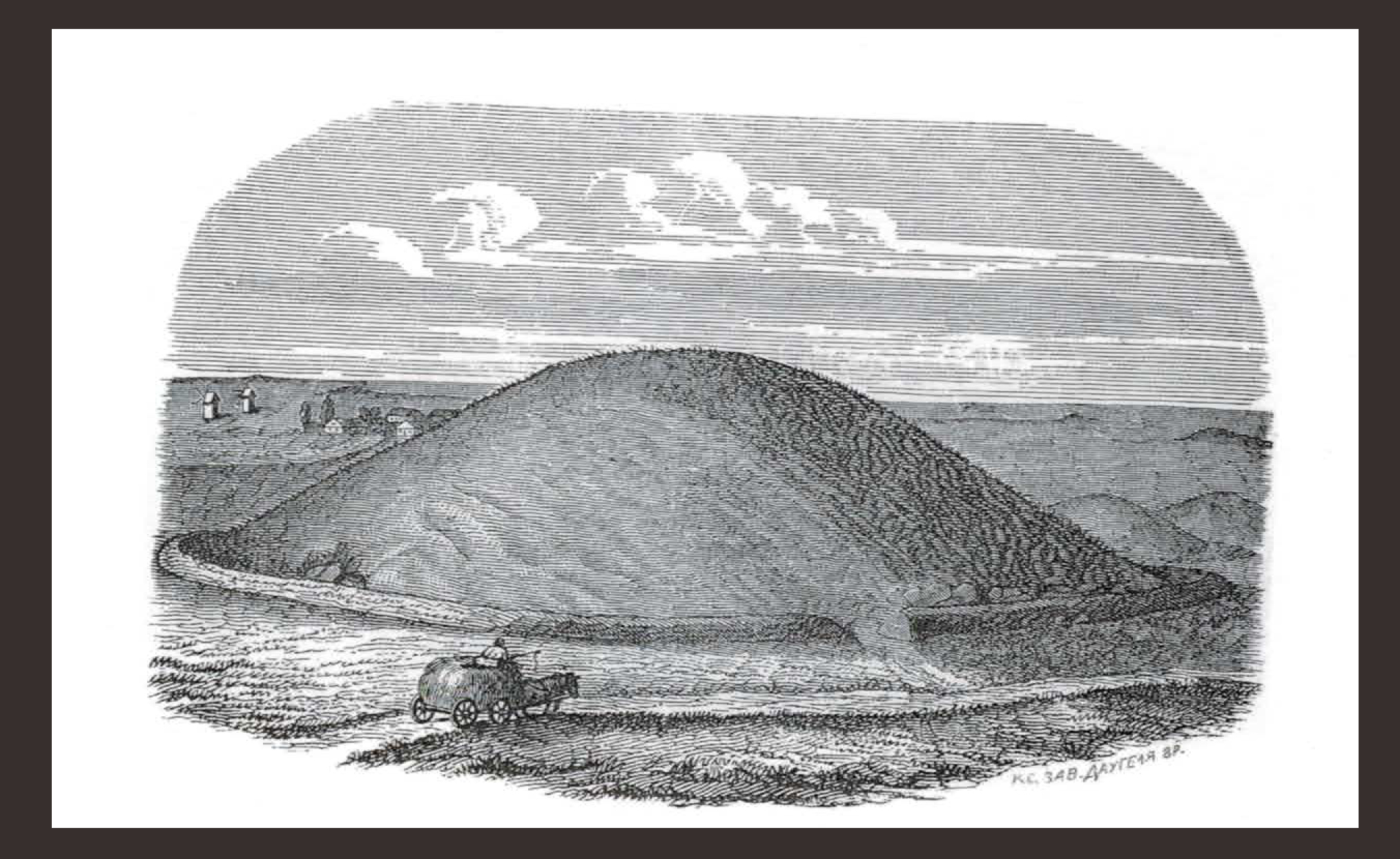
In his case, although he’s called hordweard, “hoard guardian/watchman”, we are told that he has come upon a treasure in a barrow, piled in for safe-keeping several hundred years before. Europeans in the Neolithic Period and long beyond buried high-status people in such places—like this, in Denmark.

image6barrow.jpg

As it was the custom for high-status people to be buried with at least some of their riches, it’s easy to see how singers might be inspired to create a barrow like that of the Beowulf dragon. Some of our favorite grave goods come from the Scythians, a horse-people who once lived north of the Black Sea, and who had buried them in grave mounds with their dead.

image7ascyth.jpg

(A wonderfully atmospheric picture by Alexander Deruchenko.)

image7bscythia.jpg

image8scyth.jpg

image9scyth.jpg

image10scyth.jpg

The Beowulf dragon is not the proper owner of the hoard: rather, he has taken possession (the poem may even be suggesting that dragons—or this dragon, at least– have a special affection for barrows (2270-2278), rather as the barrow wights have taken over the tumuli on the Barrow Downs, both places being much older and long-abandoned. You may remember this striking image by one of our favorite Tolkien artists, Ted Nasmith–

image11barrowwight.jpg

In contrast, Smaug has taken possession of the Lonely Mountain by force, burning out the rightful owners.

image12smaug.jpeg

In both cases, however, the latest owner is very sensitive about his new property: the removal of one object, as Beowulf and Bilbo find out.

image13cuptheft.jpg

(And we can’t resist this item—it’s copy of a cup used in the 2007 Beowulf film. We don’t see that it would be very useful for drinking from, but it’s certainly fun to look at!)

image14bewulfcup.jpg

It’s one thing if it’s your job to guard gold: you’re like a sheepdog with a flock. (Here’s a Maremma, in fact, with a flock.)

image15maremma.jpg

It’s another if you are occupying, seized or not, someone else’s gold. In the latter case, however, we are still left with our initial question: why is this important to a dragon?

Perhaps they just like the look of it. After all, Smaug seems quite proud of what he sees as a waistcoat of precious things. When Bilbo says: “What a magnificence to possess a waistcoat of fine diamonds!” Smaug replies “Yes, it is rare and wonderful, indeed.” (The Hobbit, Chapter 12, “Inside Information”) Yet there is the darker side:

“To say that Bilbo’s breath was taken away is no description at all. There are no words left to express his staggerment, since Men changed the language that they learned of elves in the days when all the world was wonderful. Bilbo had heard tell and sing of dragon-hoards before, but the splendor, the lust, the glory of such treasure had never yet come home to him. His heart was filled and pierced with enchantment and with the desire of dwarves; and he gazed motionless, almost forgetting the frightful guardian, at the gold beyond price and count.”   (The Hobbit, Chapter 12, “Inside Information”)

Just seeing such wealth brought on “lust” and “the desire of dwarves” and it’s clear that this is what infects Thorin after Smaug’s death and eventually brings on the “dragon-sickness” which leads to the end of the Master of Laketown (The Hobbit, Chapter 19, “The Last Stage”). As this “lust” for beautiful, valuable things seems inherent in the dwarves, it strikes us that we might imagine dragons as somehow enablers or carriers—like anopheles mosquitoes and malaria—

image16anopheles.jpg

rather than originators of the disease and that the name is derived from that combination of acquisitiveness and sensitivity we noted earlier and which so clearly disturbs Thorin’s judgement.

But perhaps there is something in the idea of hoarding itself. In our world, “hoarding” has come to have a different meaning, being a kind of psychological condition in which a person acquires and acquires and has lost the ability to discard anything for complex internal reasons. In literature, one might imagine that misers have something of this—think of Ebenezer Scrooge, in Charles Dickens’ A Christmas Carol (1843).

image17scrooge.jpg

Or, Uncle Scrooge McDuck, from Walt Disney comics. Who, as you can see, takes this to an extreme even Dickens’ Scrooge might find a bit excessive.

image18smcduck.jpg

Underneath this, however, is the sad side: those who become imprisoned by their possessions, a famous case being that of the Collyer brothers in New York, whose apartment, after their joint deaths in 1947, was a subject both of curiosity and of mild horror in the New York newspapers of the time.

image19collyer.jpg

Is it possible that the Beowulf dragon and Smaug both suffer from this condition? Is that why the theft of a single piece from an uncountable hoard seems to mean so much?

We never want to shy away from serious subjects—after all, all of the best fantasy/adventure writers never did—but it’s an early summer day where we live—just after Midsummer’s Day, in fact, and so we’d like to end with another kind of acquisitor—the magpie.

image20magpie.jpg

Traditionally, magpies are famous for being attracted to—and collecting—shiny objects. Our favorite magpie story, however, isn’t about obsession, but about generosity. It’s a beautiful children’s book by Nancy Willard and Jane Dyer, entitled Cinderella’s Dress.

image21cind'sdress.jpg

In this book, told in light, easy verse, we see a magpie couple as fairy godparents for Cinderella, using their cache of shiny things to—but we’ll leave that to you to discover (although the title is a bit of a give-away). Here’s another page to tease you…

image22csdresspage.jpg

Thanks, as ever, for reading.

MTCIDC


PS

Another Nancy Willard book you might enjoy is A Visit to William Blake’s Inn (1981), illustrated by Alice and Martin Provensen.

image23blakesinn.jpg

Where From the Rohirrim?

10 Wednesday Jun 2015

Posted by Ollamh in Heroes, J.R.R. Tolkien, Military History, Military History of Middle-earth, Narrative Methods, The Rohirrim

≈ 1 Comment

Tags

Amazons, Anglo-Saxon, Bayeux Tapestry, Burial mounds, Cavalry, Charge of the Light Brigade, descendants, Edoras, Eotheod, Horse people, Indo-European, Kurgan, language, Middle-earth, Normans, Rohan, Rohirric, Rohirrim, Scythians, The Lord of the Rings, The Mark, Tolkien, Tom Shippey

Dear Readers, welcome!

In this post, we want to think out loud a bit about the Rohirrim.

ghan Rohirrim-by-Angus-McBride-kacik-rohanskiej-adoracji-36841491-473-477 maxresdefault

Everyone knows where their language is from, as Tolkien says in a letter to “one Mr. Rang”:

“…’Anglo-Saxon’…is the sole field in which to look for the origins and meaning of words and names belonging to the speech of the Mark.” LT 381

And yet they are horse people (their own name for themselves, in fact, is Eotheod, “horse people”), which the Angles and Saxons who went to make up the Anglo-Saxons, were not.   Tolkien was well aware of this difference, saying in Appendix F of The Lord of the Rings:

“…this linguistic procedure does not imply that the Rohirrim closely resembled the ancient English otherwise, in culture or art, in weapons or modes of warfare, except in a general way due to their circumstances…” L1136

Tom Shippey, in The Road to Middle Earth, suggests that

“The Rohirrim are nothing if not cavalry. By contrast the Anglo-Saxons’ reluctance to have anything militarily to do with horses is notorious…How then can Anglo-Saxons and Rohirrim ever, culturally, be equated? A part of the answer is that the Rohirrim are not to be equated with the Anglo-Saxons of history, but with those of poetry, or legend.” (112)

Or, could there have been other models?

Tolkien may have been suggesting one when, in a letter to Rhona Beare of 14 October, 1958:

“The Rohirrim were not ‘mediaeval’ in our sense. The styles of the Bayeux Taptestry (made in England) fit them well enough, if one remembers that the kind of tennis-nets [the] soldiers seem to have on are only a clumsy conventional sign for chain-mail of small rings.” Ltr 280-281.

The Bayeux Tapestry depicts both Normans and their allies, on the one hand, and the Anglo-Saxons, on the other, but Tolkien doesn’t appear to distinguish between them. The Normans themselves are mounted, the Anglo-Saxons on foot, as was their custom (they did use horses to move rapidly from place to place, as in the race north to Stamford Bridge and then back south to face the Normans).

5191623_orig

Here, to the left, we see those mounted Normans and, to the right, the Anglo-Saxons behind their shield wall. The “tennis-nets” are clearly visible and would actually have looked like this:

huscarl

In this further illustration, by the way, it’s easy to see the consequences of having the shield wall crumble: men on horseback can have a significant advantage when their opponents lose cohesion.

34small-1000

This, however, is only their look . What about those horses and an entire culture based around them?

For a clue, we look to another element in the culture of the Rohirrim, the use of burial mounds. Here they are at Edoras.

Simbelmyne_Mounds

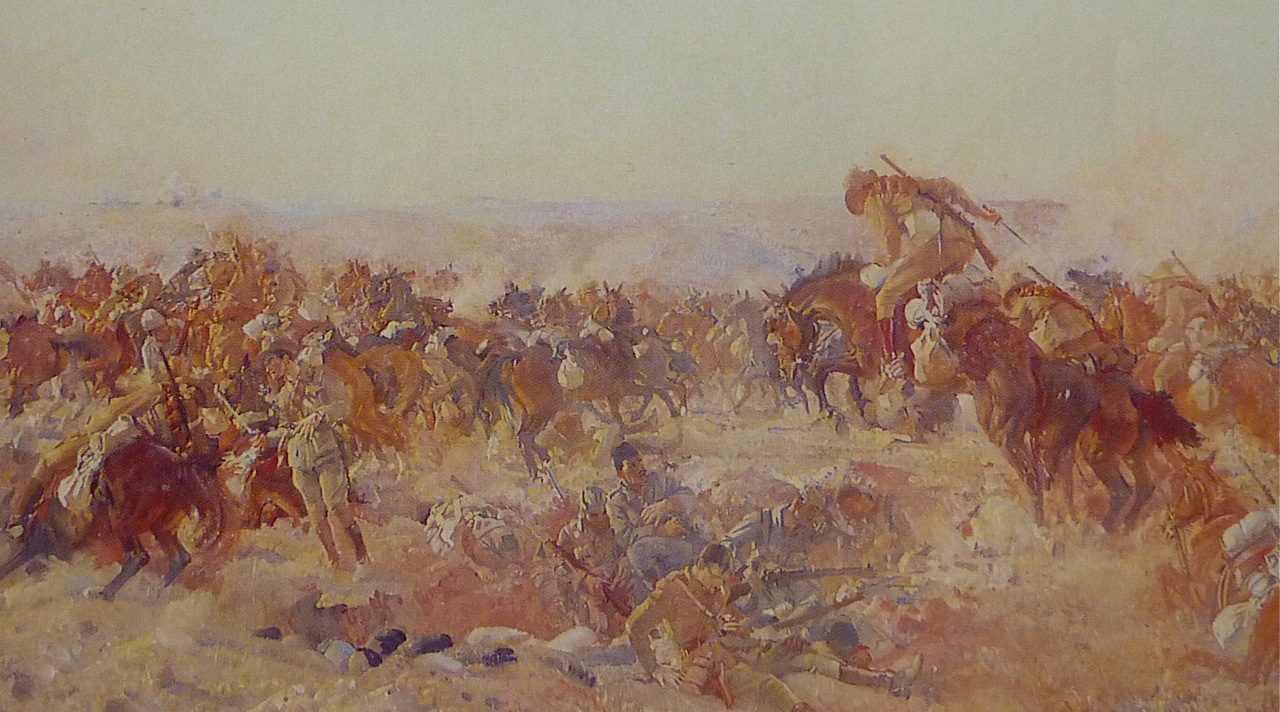
(We can’t resist, by the way, saying that our absolute favorite part of the Jackson movies is anything to do with the Rohirrim—to us, absolutely inspired and we see the depiction of the charge of the Rohirrim against the army besieging Minas Tirith as being right up there with the Charge of the Light Brigade at Balaclava in 1854 and the charge of the Australian Light Horse at Beersheba in 1917–

Rohancharge

(c) National Trust, Tredegar House; Supplied by The Public Catalogue Foundation

beersheba lambert

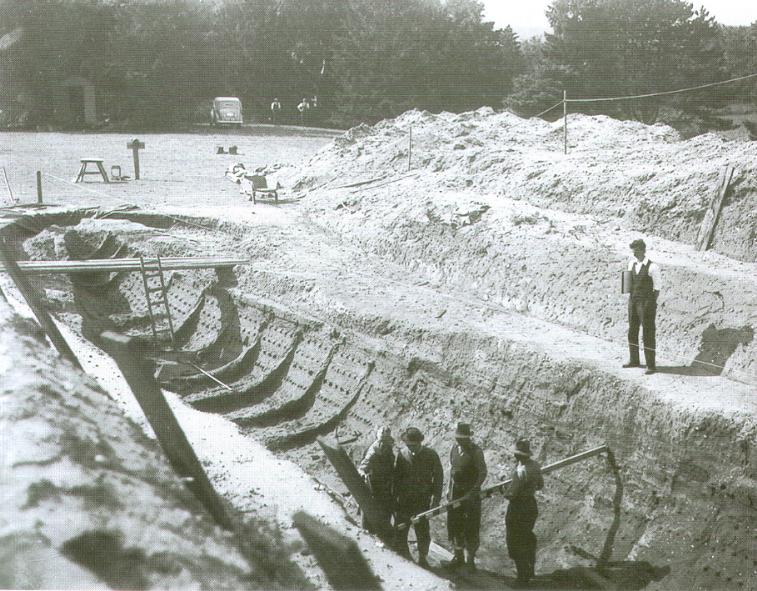
One might say, in reply, that there are Anglo-Saxon mounds—like the famous Sutton Hoo ship burial.

c52a1bf535

But that leaves us where we started, in the land of foot soldiers.

huscarl1

So, let’s go farther afield, to the north of the Black Sea.  

WRLH034-H

Here, we see the so-called “Kurgan Culture”, with its burial mounds

02161200-1 02161200

[This, by the way, is not to be confused with The Kurgan from the first Highlander movie

The Kurgan]

movie-villain-kurgan

These were a people who:

  1. are believed by many linguists (and some archeologists) to be the direct ancestors of the Indo-Europeans who gradually invaded Asia Minor and western Europe (including, eventually, the Anglo-Saxons) as well as moving east, to India and beyond
  2. buried their dead (at least what appear to be the high status ones) in mounds
  3. were a horse culture

And, in fact, were seemingly the forerunners of the Scythians, a later well-known Indo-European horse people

Scythia Rod-Scythian-Horseback

angus-mcbride-scythia-1

And the Scythians, in turn, may have been the model for those mythical horse folk, the Amazons.

72303amazon

In the 19th century, when the idea of Indo-Europeans began to circulate, there was a preference for a northern European origin (a theory no longer held), but the idea of an eastern home was also circulating and we would suggest that Tolkien would have known about this, as well as, from his early classical training, Scythians and Amazons, their actual and mythical descendants.

Imagine, then, that what we see in the Rohirrim is, in fact, an interesting mixture of people sprung from an earlier people (as Tolkien tells us, the Rohirrim were descended from the Edain of the First Age—see LOTR, Appendix F 1129), both in our world and in Middle Earth, who based their culture upon horses, and bury their dead in mounds, combined with people who may also bury their dead in mounds, who speak a version of Anglo-Saxon and who dress like the Normans and Anglo-Saxons of the 11th century AD.

What do you think, dear readers?

Thanks for reading, as always.

MTCIDC

CD

The Doubtful Sea Series Facebook Page

The Doubtful Sea Series Facebook Page

  • Ollamh

Categories

  • Artists and Illustrators
  • Economics in Middle-earth
  • Fairy Tales and Myths
  • Films and Music
  • Games
  • Heroes
  • Imaginary History
  • J.R.R. Tolkien
  • Language
  • Literary History
  • Maps
  • Medieval Russia
  • Military History
  • Military History of Middle-earth
  • Narnia
  • Narrative Methods
  • Poetry
  • Research
  • Star Wars
  • Terra Australis
  • The Rohirrim
  • Theatre and Performance
  • Tolkien
  • Uncategorized
  • Villains
  • Writing as Collaborators
Follow doubtfulsea on WordPress.com

Across the Doubtful Sea

Recent Postings

  • On the Roads Again—Once More December 10, 2025
  • (Not) Crossing Bridges December 3, 2025
  • On the Road(s) Again—Again November 26, 2025
  • On the Road(s) Again November 19, 2025
  • To Bree (Part 2) November 12, 2025
  • To Bree (Part 1) November 5, 2025
  • A Plague o’ Both—No, o’ All Your Houses! October 29, 2025
  • It’s in Writing (2:  I’st a Prologue, or a Poesie for a Ring?) October 22, 2025
  • It’s in Writing (1) October 15, 2025

Blog Statistics

  • 103,120 Views

Posting Archive

  • December 2025 (2)
  • November 2025 (4)
  • October 2025 (5)
  • September 2025 (4)
  • August 2025 (4)
  • July 2025 (5)
  • June 2025 (4)
  • May 2025 (4)
  • April 2025 (5)
  • March 2025 (4)
  • February 2025 (4)
  • January 2025 (5)
  • December 2024 (4)
  • November 2024 (4)
  • October 2024 (5)
  • September 2024 (4)
  • August 2024 (4)
  • July 2024 (5)
  • June 2024 (4)
  • May 2024 (5)
  • April 2024 (4)
  • March 2024 (4)
  • February 2024 (4)
  • January 2024 (5)
  • December 2023 (4)
  • November 2023 (5)
  • October 2023 (4)
  • September 2023 (4)
  • August 2023 (5)
  • July 2023 (4)
  • June 2023 (4)
  • May 2023 (5)
  • April 2023 (4)
  • March 2023 (5)
  • February 2023 (4)
  • January 2023 (4)
  • December 2022 (4)
  • November 2022 (5)
  • October 2022 (4)
  • September 2022 (4)
  • August 2022 (5)
  • July 2022 (4)
  • June 2022 (5)
  • May 2022 (4)
  • April 2022 (4)
  • March 2022 (5)
  • February 2022 (4)
  • January 2022 (4)
  • December 2021 (5)
  • November 2021 (4)
  • October 2021 (4)
  • September 2021 (5)
  • August 2021 (4)
  • July 2021 (4)
  • June 2021 (5)
  • May 2021 (4)
  • April 2021 (4)
  • March 2021 (5)
  • February 2021 (4)
  • January 2021 (4)
  • December 2020 (5)
  • November 2020 (4)
  • October 2020 (4)
  • September 2020 (5)
  • August 2020 (4)
  • July 2020 (5)
  • June 2020 (4)
  • May 2020 (4)
  • April 2020 (5)
  • March 2020 (4)
  • February 2020 (4)
  • January 2020 (6)
  • December 2019 (4)
  • November 2019 (4)
  • October 2019 (5)
  • September 2019 (4)
  • August 2019 (4)
  • July 2019 (5)
  • June 2019 (4)
  • May 2019 (5)
  • April 2019 (4)
  • March 2019 (4)
  • February 2019 (4)
  • January 2019 (5)
  • December 2018 (4)
  • November 2018 (4)
  • October 2018 (5)
  • September 2018 (4)
  • August 2018 (5)
  • July 2018 (4)
  • June 2018 (4)
  • May 2018 (5)
  • April 2018 (4)
  • March 2018 (4)
  • February 2018 (4)
  • January 2018 (5)
  • December 2017 (4)
  • November 2017 (4)
  • October 2017 (4)
  • September 2017 (4)
  • August 2017 (5)
  • July 2017 (4)
  • June 2017 (4)
  • May 2017 (5)
  • April 2017 (4)
  • March 2017 (5)
  • February 2017 (4)
  • January 2017 (4)
  • December 2016 (4)
  • November 2016 (5)
  • October 2016 (6)
  • September 2016 (5)
  • August 2016 (5)
  • July 2016 (5)
  • June 2016 (5)
  • May 2016 (4)
  • April 2016 (4)
  • March 2016 (5)
  • February 2016 (4)
  • January 2016 (4)
  • December 2015 (5)
  • November 2015 (5)
  • October 2015 (4)
  • September 2015 (5)
  • August 2015 (4)
  • July 2015 (5)
  • June 2015 (5)
  • May 2015 (4)
  • April 2015 (3)
  • March 2015 (4)
  • February 2015 (4)
  • January 2015 (4)
  • December 2014 (5)
  • November 2014 (4)
  • October 2014 (6)
  • September 2014 (1)

Blog at WordPress.com.

  • Subscribe Subscribed
    • doubtfulsea
    • Join 78 other subscribers
    • Already have a WordPress.com account? Log in now.
    • doubtfulsea
    • Subscribe Subscribed
    • Sign up
    • Log in
    • Report this content
    • View site in Reader
    • Manage subscriptions
    • Collapse this bar
 

Loading Comments...