• About

doubtfulsea

~ adventure fantasy

Tag Archives: Hadrian’s Wall

Bordering (.1: The Landscape)

29 Wednesday Mar 2017

Posted by Ollamh in Economics in Middle-earth, J.R.R. Tolkien, Literary History, Maps, Military History, Military History of Middle-earth, Narrative Methods

≈ 2 Comments

Tags

Anglo-Scots border, Black Middens Bastle, blackmail, Border Marches, Border Reivers, Border Wardens, Charlemagne, Debatable Lands, Emyn Beraid, Fairbairns, Hadrian's Wall, Hermitage Castle, hot trod, John Philip Sousa, Marca Hispanica, Marches, Monty Python, Offa's Dyke, Robert Carey, Scots Dike, Smailholm Tower, Ted Nasmith, The Liberty Bell, The Lord of the Rings, The Shire, Tolkien, Tower Hills, West March

Welcome once more, dear readers.

In this posting, we want to return to a recent one about “marches”—that is, not pieces for military bands (although we are partial to those of John Philip Sousa—1854-1932–
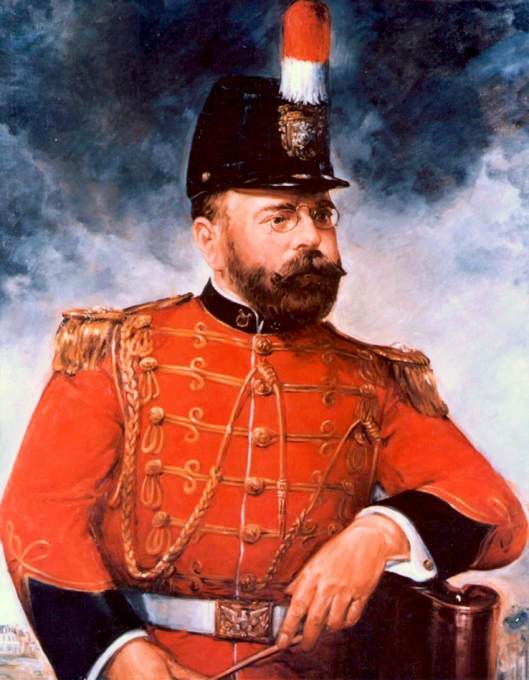
image1jpsousa.jpg

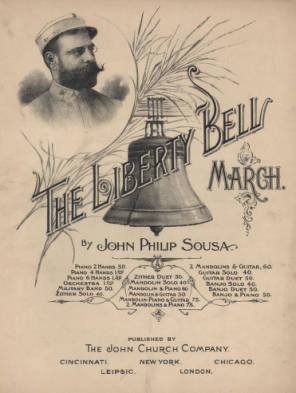
especially “The Liberty Bell”—1893—

digital.gonzaga.edu.jpeg

mostly because it was used by Monty Python. We provide a link here for what might have been its first recording, by the “Edison Grand Concert Band” in 1896. Watch out for the big foot!)

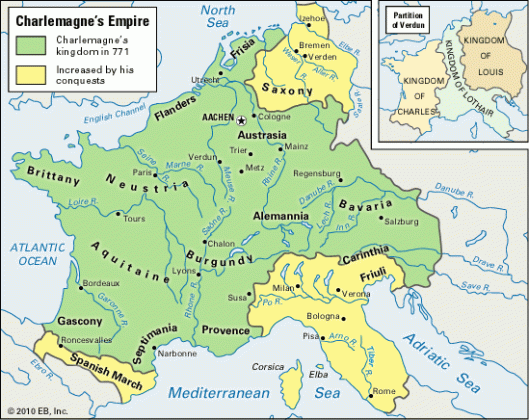
but border areas, usually sensitive ones, which might have been militarized, like that at the southern edge of Charlemagne’s empire.
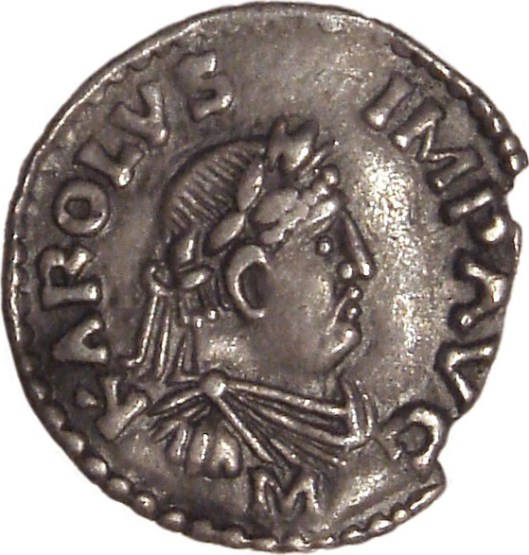
Charlemagne_denier_Mayence_812_814.jpg

charlemagnesempire.gif

This, the Marca Hispanica, existed as a buffer state between the Moorish Caliphate to its south and the Holy Roman Empire to the north.

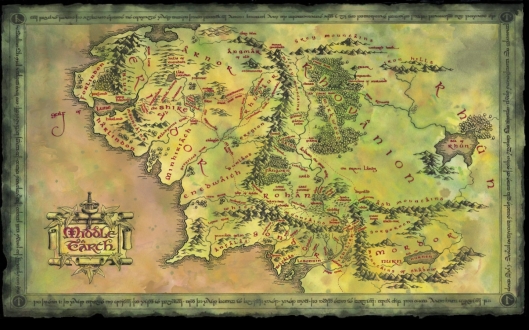
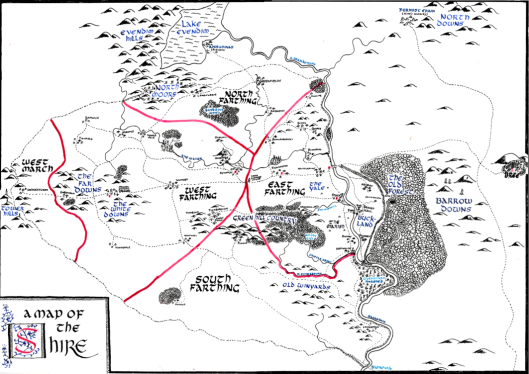
In contrast, we have the West March, to the west of the Shire, as we’ve discussed before.
map_of_the_shire_by_astrogator87-d8h3y1k.png

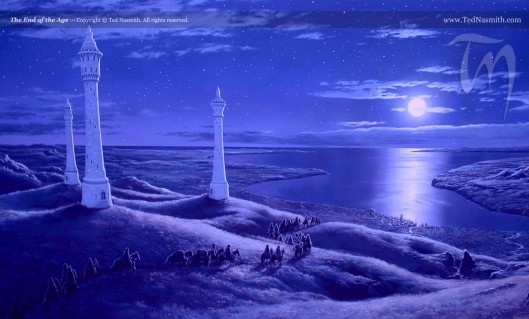
At its far western edge are the Tower Hills (here illustrated by one of our favorite Tolkien artists, Ted Nasmith)
nasmith_elben-meer.jpg

on which are perched three white towers, described in the Prologue to The Lord of the Rings:

“Three Elf-towers of immemorial age were still to be seen on the Tower Hills beyond the western marches. They shone far off in the moonlight. The tallest was furthest away, standing alone upon a green mound. The Hobbits of the Westfarthing said that one could see the Sea from the top of that tower; but no Hobbit had ever been known to climb it.” (Gandalf adds to this that there was a palantir, Elendil’s Stone, located there—The Two Towers, Book Three, Chapter 11, “The Palantir”.)

The difference is, those towers don’t seem defensive and the West March is not a military zone—although it is the site of Hobbit-expansion, as Appendix B tells us:

“1452 The Westmarch, from the Far Downs to the Tower Hills (Emyn Beraid) is added to the Shire by the gift of the King. Many hobbits remove to it.

1462 …the Thain makes Fastred Warden of Westmarch. Fastred and Elanor make their dwelling at Undertowers on the Tower Hills, where their descendants, the Fairbairns of the Towers, dwelt for many generations.”

Talk of marches and wardens and towers, however, immediately brought to mind for us something from our world (doesn’t it always?).

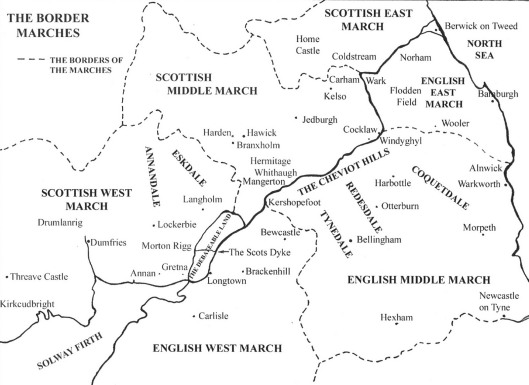
This is the border area between England and Scotland, an area of conflict for several centuries, but culminating in the struggles of the 16th century.
BorderMarches9.jpg

The border area had been divided, on both sides, into three marches, with a subset for that area on the southwest side called the “Debatable Lands”, because both England and Scotland claimed it. In 1552, the decision was mutually made to put up an earthen barrier, the so-called “Scots Dike”, to split it.
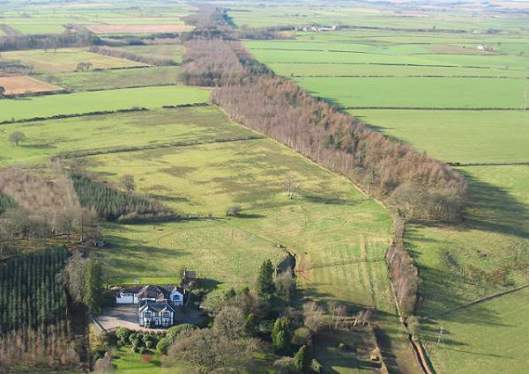
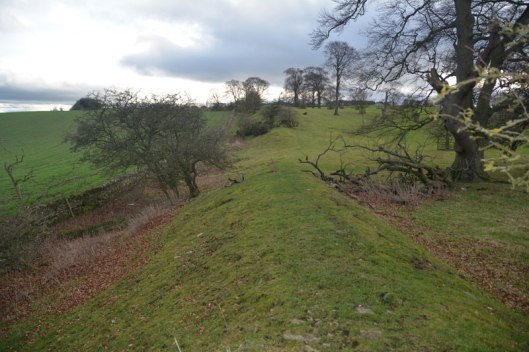
scotsdike.jpg

19thFebruary2017ScotsDykeOlliverBankDSC_1238.jpg

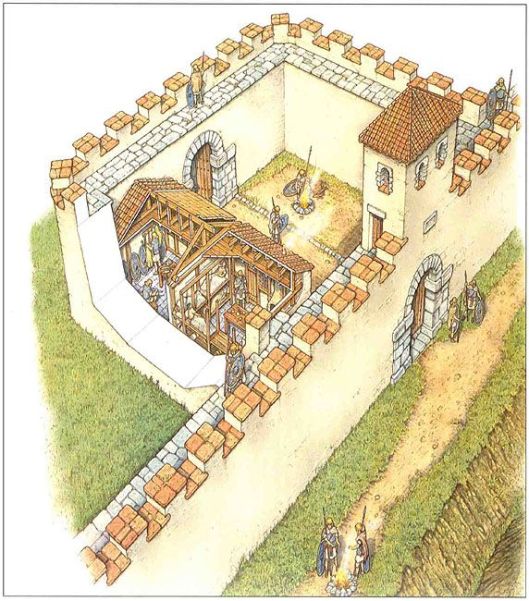
Unlike Hadrian’s Wall, farther to the south, with its system of walls and towers and gates and little forts and big army camps, this was never an elaborate military structure, or even like Offa’s Dike between England and Wales,
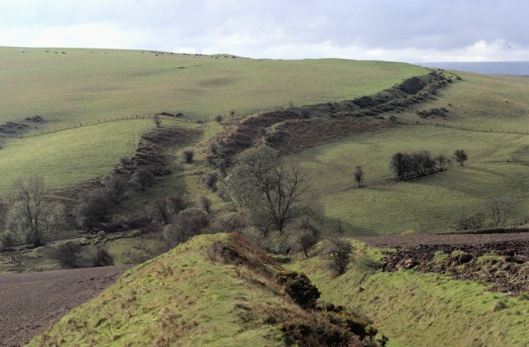
as_offas_dyke.jpg

but simply a boundary marker in low-lying land (and only 3.5 miles long– 5.6km).

When it came to the border towards the east, and the center of the region and beyond, however, the land rises into the characteristic twisty hills with long, narrow valleys.

14.PennineWay-CNN2NJ-1680x1050

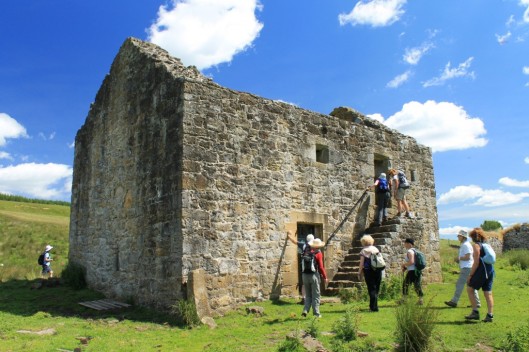
In this wild world, there are no long walls, of stone, wood, or earth to protect anyone, but castles, towers, and fortified farmhouses called bastles (possibly from the same root as “Bastille”?). Here we see Hermitage Castle, Smailholm Tower, and Black Middens Bastle.
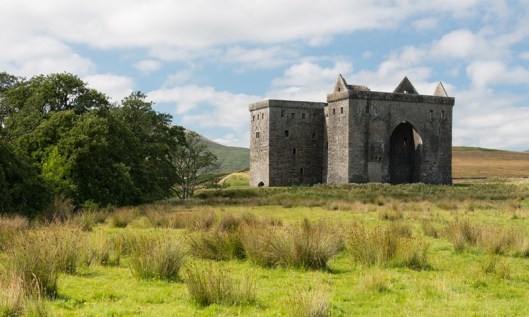
dp_hc270814014

Smailholm-tower1

Black-Middens-Bastle-1024x683.jpg

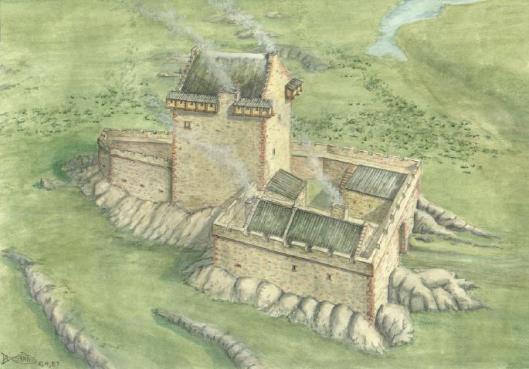
Although we see these now as gaunt ruins, we should always imagine them—as in this reconstruction of Smailholm—as living spaces, as well as refuges in an often lawless land.
smailholm.jpg

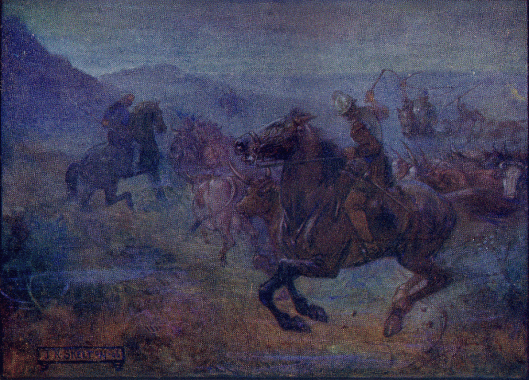
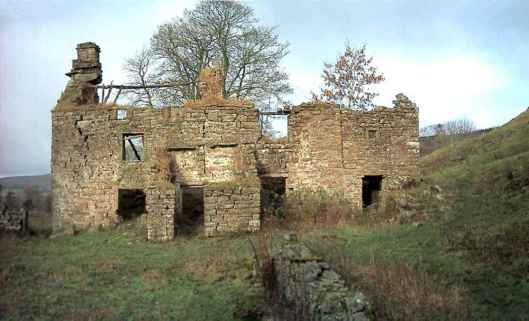
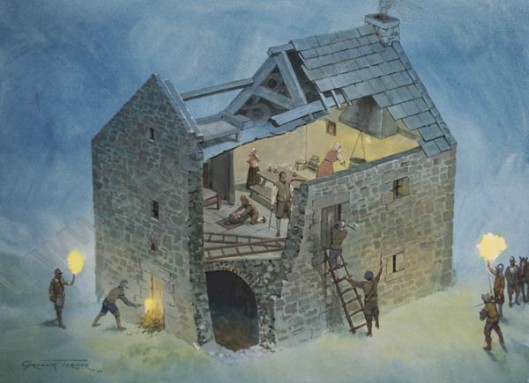
One has only to see the thick walls of a bastle and, originally, no door at ground level (stairs appear to be a later convenience for a more peaceable time), to imagine the danger from reivers, raiders from either side of the Anglo-Scots border and sometimes, as there was a certain amount of intermarriage, from both.
reiversatwork.gif

loveladybastle2.jpg

As can be seen in this reconstruction, these walls might be all that would stand between the inhabitants and destitution or even death, should the reivers come raiding.
large_orig_reivers_g_bastle_attack.jpg

There was also the possibility of buying them off, by paying them blackmail, a word whose origin is contested, but whose purpose is clear: protection money. If you paid them, in coin or cattle, you were safe—at least until the price went up.

Curbing such behavior was the job of the Border Wardens, there being six, one for each March on each side of the border. Theirs was a difficult job: too much territory, too few men, and too few resources to back them up. Wonderfully, one of these Wardens, Robert Carey, has left us a memoir, which is available on-line: memoirsrobertca00orregoog.

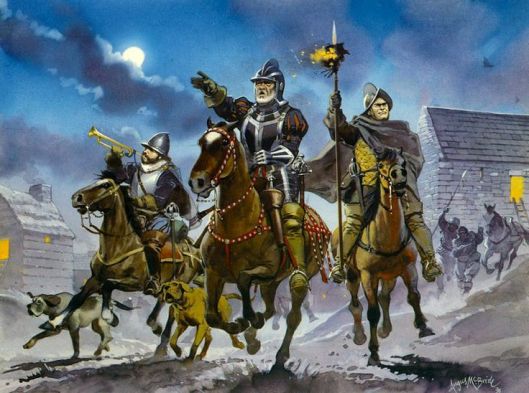
If you were attacked and you survived, you might send word to the Warden or one of his officers, who could organize a posse to pursue the raiders. By law, all able-bodied locals were supposed to turn out to help when the organizer—Warden or officer—rode by with trumpeter and a rider who carried a flaming bit of peat on his “staff” (local word for “lance”).
e7c88732c6aa3165565c64cf094a182c.jpg

This was called the “hot trod” and, under its conditions, the pursuers were allowed to cross the border. Such occasions could be very dangerous, however, as those raiders would be chased back across their own territory, giving them the chance to delay or destroy those in pursuit in an ambush on familiar ground.

We were originally drawn to this part of the world and of Anglo-Scottish history because of our interest in the musical literature of the region, the so-called “border ballads”, and, in our next, “Bordering (.2 Blackmail, Battle, and Song”) we’ll talk a bit about them—and perhaps a bit more about borders and heroic behavior, as well.

Thanks as ever, for reading!

MTCIDC

CD
Shire Portrait (4): On the March

01 Wednesday Mar 2017

Posted by Ollamh in Economics in Middle-earth, Imaginary History, J.R.R. Tolkien, Narrative Methods

≈ Leave a comment

Tags

ancient Chinese, borders, Buckland, Germanic tribes, Great Wall, Hadrian's Wall, hawthorns, High Hay, Hobbits, Marches, Offa's Dyke, Picts, Pyrenees, Rio Grande, Roman Empire, Shire, The Lord of the Rings, Tolkien, US-Canada Border, Westmarch

Welcome once more, dear readers.

Today’s posting continues our writing on the Shire, being the last in the geographic series, as we might call it, of which the earlier are:

Shire Portrait (I)

Shire Portrait (2)

Shire Portrait (3a)

Shire Portrait (3b)

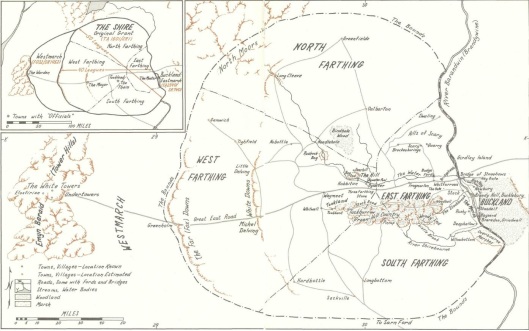
In this posting, we want to look at the East March and the West March of the Shire.

1mapofshire.jpg

JRRT doesn’t give us much to go on, there being only a single reference in the Prologue to The Lord of the Rings to these:

“Outside the Farthings were the East and West Marches: the Buckland…and the Westmarch added to the Shire in S.R. 1452.”

“March” or “mark”, is related, in English, to margin, “the edge of something” and means a borderland. A border can be a natural feature, like the Pyrenees which (now) separate France and Spain.

2pyrenees.jpg

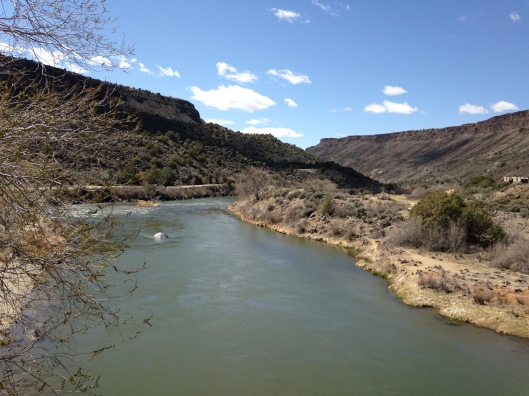
Or a river, such as the Rio Grande, between much of the US and Mexico.

3riogrande.JPG

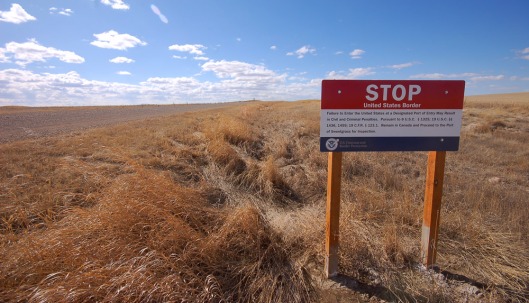
It can be simply a concept, such as much of the border between the US and Canada.

4uscanada.jpg

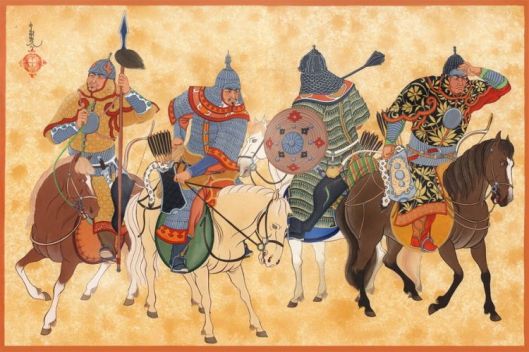
The ancient Chinese marked the border between their world and that of the pastoral nomads to the north

5mongols.jpg

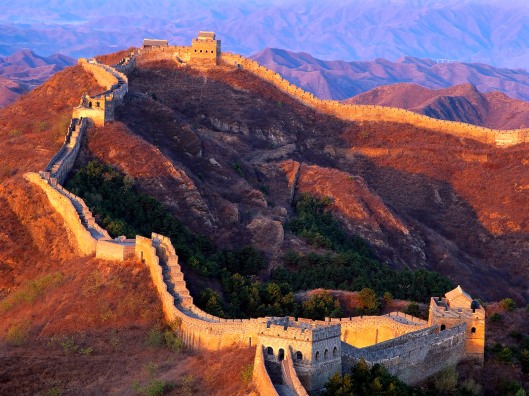
with the Great Wall.

6greatwall.jpg

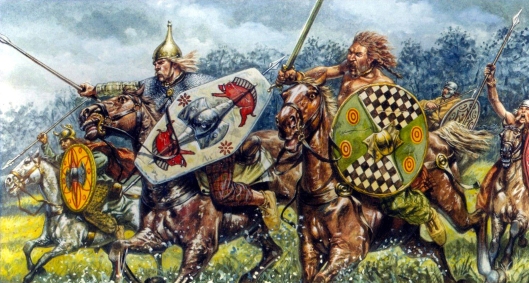
The Romans set up two walls in Britain, both (in part?—there’s always scholarly argument over such things) to block the northern tribes of Picts from central and southern Britain.

7antonwallcallendar8hadwall9picts

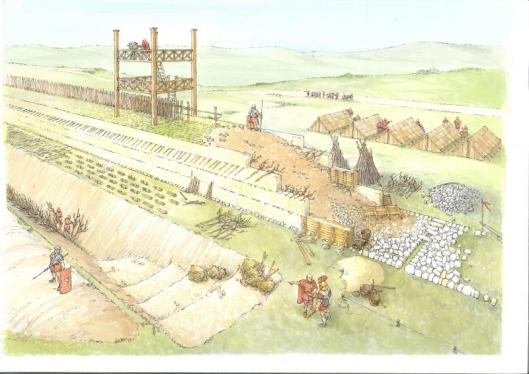
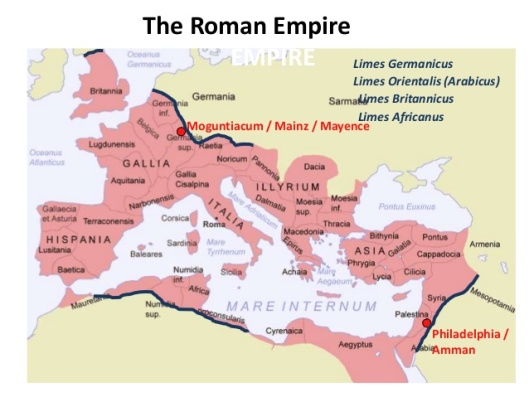
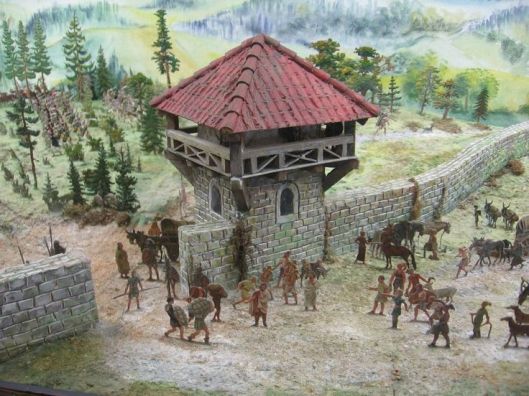
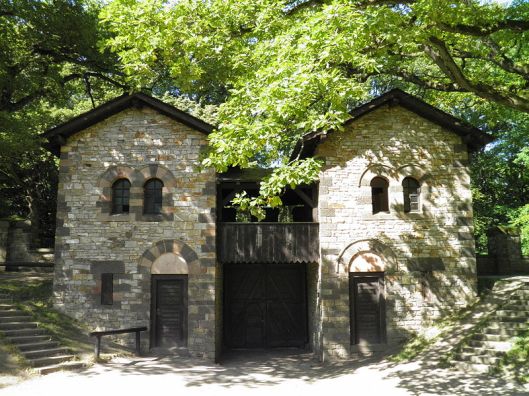
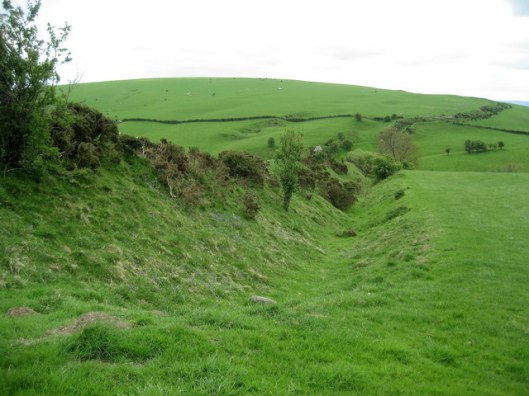
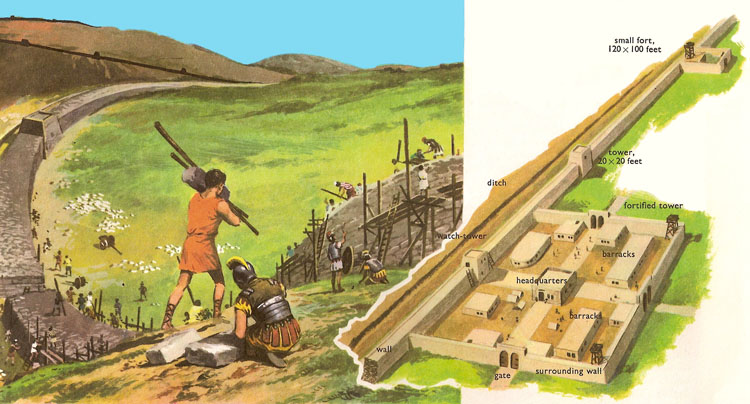
And this was only part of a much bigger defensive system: the Romans also had an extensive network of ditches, walls, watch towers, and forts from the mouth of the Rhine southeast across western Germany and beyond to keep out the Germanic tribes who lived, often, just beyond.

10map11watchtower12fort

In the centuries after the decay of Roman control, the locals in Britain built several ditch and wall barriers, most notably at Offa’s Dyke, which seems to mark a section of the border between England and Wales.

13offasdyke.jpg

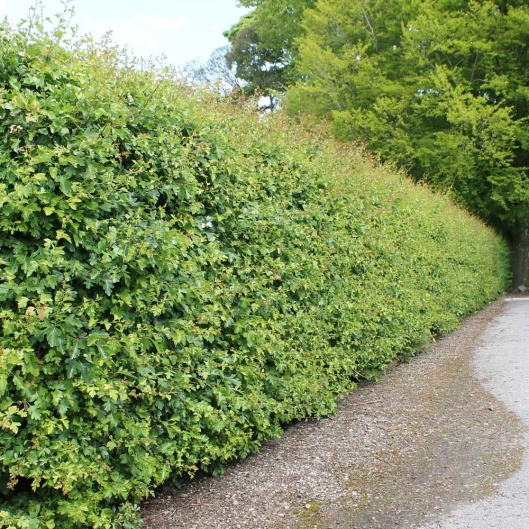
In the case of Tolkien’s marches, however, there are neither walls nor works, except, we suppose, if we include the High Hay, a dense hedge which separates the Old Forest from Buckland:

“Their land was originally unprotected from the East; but on that side they had built a hedge: the High Hay. It had been planted many generations ago, and was now thick and tall, for it was constantly tended. It ran all the way from Brandywine Bridge, in a big loop curving away from the river, to Haysend…well over twenty miles from end to end.” (The Fellowship of the Ring, Book 1, Chapter 5, “A Conspiracy Unmasked”)

So far, we have been unable to discover an illustration of this, but we guess that the Hay may have been a hawthorn hedge, as:

  1. hawthorns—as you might guess—have thorns and can be trained to grow densely
  2. they can grow up to about 50 feet (15 metres) tall

14hawspine15hawhedge

As the old word “hay” means a hedge– as does the “haw” in hawthorn–we offer this to our readers as a possibility.

A hawthorn hedge might keep out marauding beasts, but it’s hardly the equivalent of Hadrian’s Wall or the Great Wall, and the West March doesn’t appear to have any fortification at all, underscoring the nearly-complete defenselessness of the Shire, as well as the generally-peaceable nature of the Hobbits. As JRRT writes in the prologue:

“At no time had Hobbits of any kind been warlike, and they had never fought among themselves…So, though there was some store of weapons in the Shire, these were used mostly as trophies, hanging above hearths or on walls, or gathered into the museum at Michel Delving.”

As a consequence:

“…they heeded less and less the world outside where dark things moved, until they came to think that peace and plenty were the rule in Middle-earth and the right of all sensible folk.”

We shall see in our next posting what happens when some of those “dark things” move—into the Shire.

Thanks, as always, for reading.

MTCIDC

CD
Winter is Coming

29 Wednesday Jun 2016

Posted by Ollamh in Fairy Tales and Myths, J.R.R. Tolkien, Military History, Narnia, Narrative Methods, Villains

≈ 3 Comments

Tags

C.S. Lewis, Frozen, Game of Thrones, George R.R. Martin, Hadrian's Wall, Hans Christian Andersen, Kay, Middle-earth, Mile castle, Puddleglum, Queen Elsa, Rammas Echor, The Chronicles of Narnia, The Lion The Witch and the Wardrobe, The Lord of the Rings, The Night Watch, the Pevensies, The Snow Queen, The White Witch, Tolkien, Westeros, White Walkers, Winter is Coming

Dear Readers,

Welcome, as ever.

We were playing Sortes Tolkienses yesterday. That’s the game where we close our eyes, open The Lord of the Rings to any page, then put our finger on a line to see if we can write about it.

On page 1042 of our edition, our finger fell upon:

“…you may stay here till the Witch-king goes home. For in the summer his power wanes, but now his breath is deadly, and his cold arm is long.” (The Lord of the Rings, Appendix A)

The Witch-king? Oh, we thought—that Witch-king.

angmar.jpg

He has a very long history in Middle-earth, being “probably (like the Lieutenant of Barad-dur) of Numenorean descent” (from Hammond and Scull, The Lord of the Rings: A Reader’s Companion, 20, Note 5) and, in the quoted context rules Angmar

arnorangmar.jpg

with a command to destroy the northern Numenorean kingdom of Arnor.

What caught our attention, however, was that idea of a “cold arm”. This might be metaphorical—except for that “in summer his power wanes”, suggesting that, if he can’t control the weather, he can at least use it to his advantage.  And this set us thinking about stories in which winter was either controlled by someone or was, itself, the antagonist.

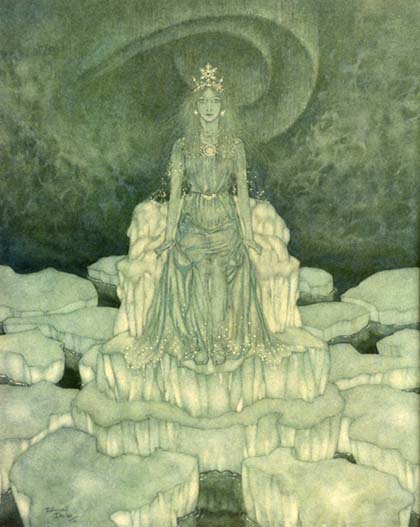
First, there is Hans Christian Andersen’s The Snow Queen (1845).   Although this shares a title with a 2013 Disney film, there is really nothing else to link them. The Disney film has, of course, the Princess Elsa, whose enchanted hands can turn the world into winter (perhaps like the Witch-king?).

69147-Elsa-The-Snow-Queen.jpg

elsasicepalace.jpg

Andersen’s long fairy tale (in seven parts, or “stories”, historier, in Danish) is about the abduction of a boy and his rescue by his friend, a girl. The boy is being held by the Snow Queen, who lives in a far-off palace made of snow, the windows and doors of icy wind, lit by the Northern Lights.

snowqueen.JPEG

northern-lights-large.jpg

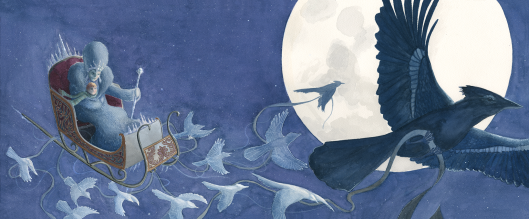
What particularly caught our attention here was the manner by which the boy, Kay, was stolen. He hitched his sled to the back of a sleigh, only to find that it was driven by the Snow Queen, who takes him under her robe.

lizbobzinsnowqueen.png

Liz Bobzin, “The Snow Queen and Kay”

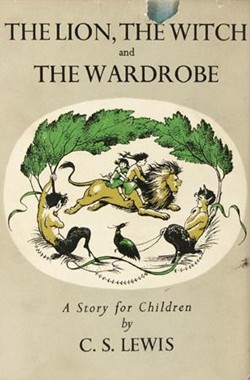
This took us to the White Witch of The Lion, the Witch and the Wardrobe (1950), the first of C.S. Lewis’ Narnia books.

TheLionWitchWardrobe(1stEd).jpg

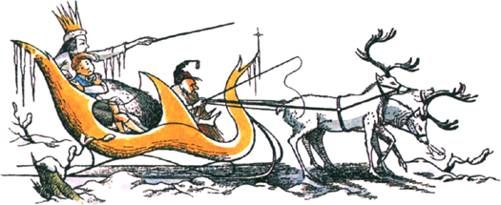
She picks up one of the Pevensie children, Edmund, in her sleigh and, while she doesn’t abduct him physically, she corrupts him by playing upon his greed and vanity.

bayneswhitewitch.jpg

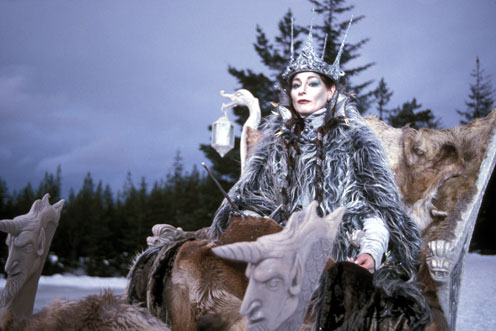
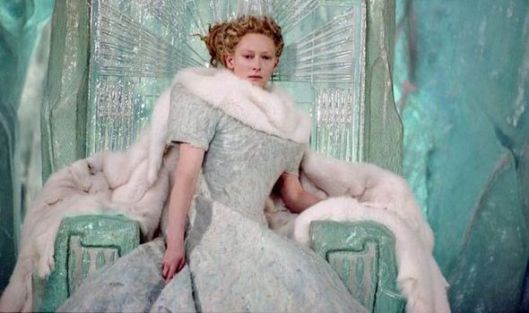
This is an illustration of the Witch from the original 1950 book, and here are two later interpretations—the first is from the 1988 BBC production

whitewitchbbc1.jpg

the second from the 2005 film.

tildaswinton.jpg

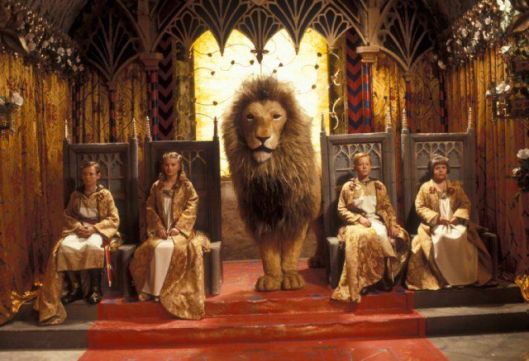
(We like both versions—we don’t mind the Steiff Aslan in the BBC production

bbcaslan.jpg

502613_l__13430.1384493387.1280.1280.jpg

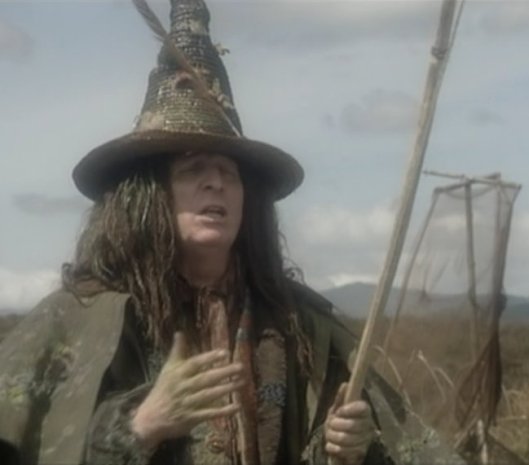
and who could ever be a better Puddleglum than Tom Baker, the fourth incarnation of Dr. Who, in the BBC The Silver Chair, 1990?

bakeraspuddleglum.jpg

We do worry a bit, however, about the changes made to the film versions of Prince Caspian, 2008, and The Voyage of the Dawn Treader, 2010. They’re not so drastic as those we’ve come to expect from P. Jackson’s writers, but, especially in Prince Caspian, there is a tendency to change things for what appear to be marketing reasons…)

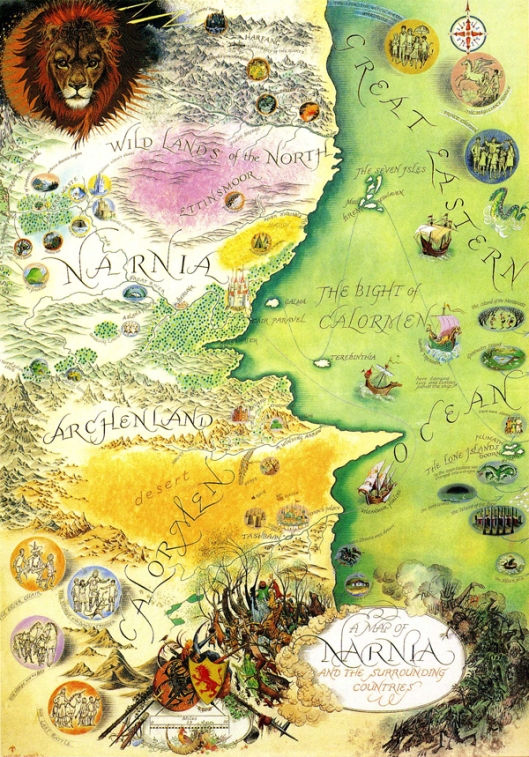
As in what appears to be the case of the Witch-king, the White Witch can control the weather and has imprisoned all of Narnia

baynesmapofnarnia.jpg

in snow and ice for a century—“always winter, never Christmas”.

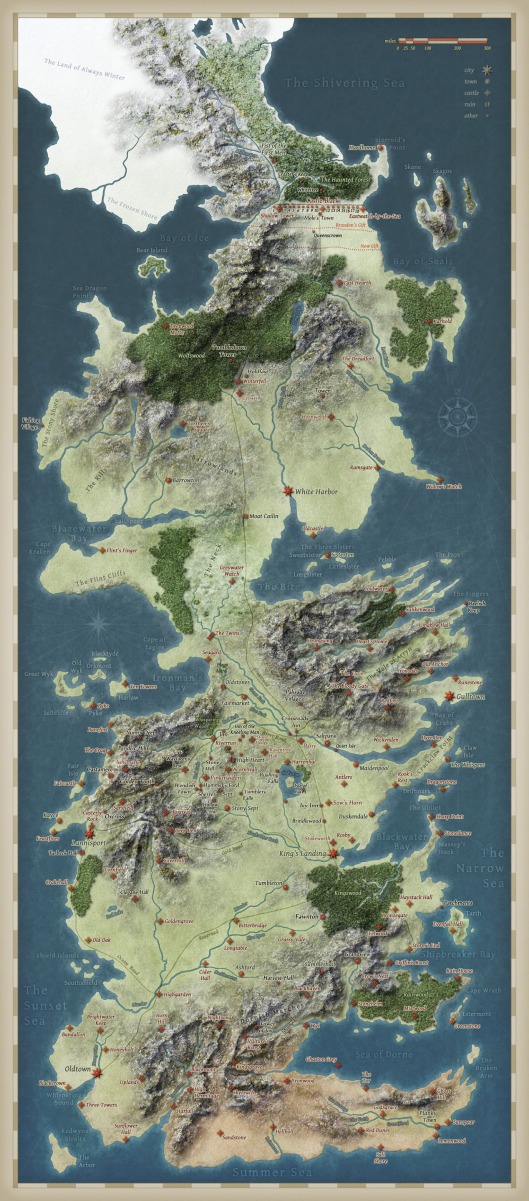
The idea of a world of winter then brought us to George R.R. Martin’s A Game of Thrones, both the novels and the impressive (and addicting) television series. In the world of Thrones, the large island of Westeros—

Map_of_westeros.jpg

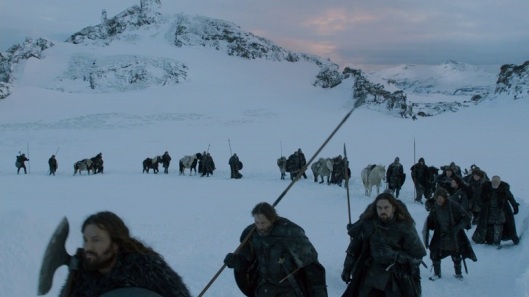
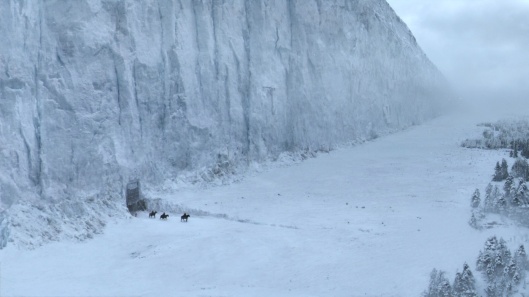
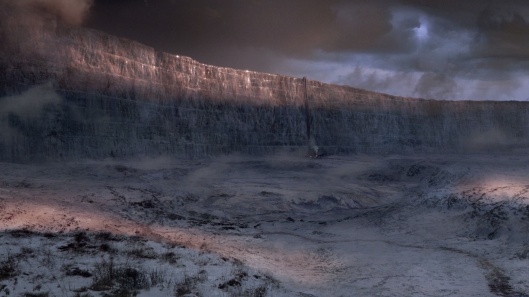
and the whole world, for that matter, has once suffered a winter which lasted for a generation and the fear of its return always casts a shadow over the present. During that time, the creatures known as the White Walkers appeared from the north, with armies of animated dead, and were only driven back at great cost. To prevent their return, the surviving humans built an immense wall, 700 feet high, 300 miles long, which effectively blocks entry to the lower two thirds of Westeros.

Thewallfromthenorth.jpg

The_Wall_from_the_south.jpg

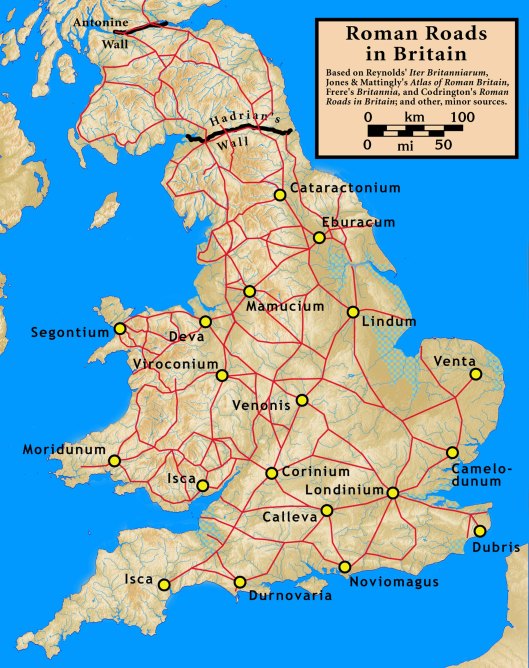
In an earlier posting, we discussed the Rammas Echor, the outer boundary wall which protects the Pelennor and Minas Tirith, and what we believe to be a major influence upon Tolkien’s idea, Hadrian’s Wall, which divides England from the lands to the north.

Roman.Britain.roads.jpg

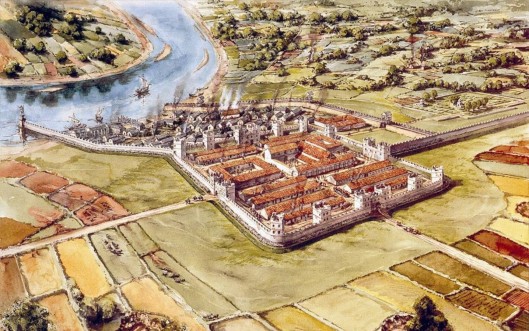
Unlike The Wall in Thrones, it is under a hundred miles long, was never more than 16 to 20 feet high, and was built of turf, timber, and stone, not solid ice. It was, however, a complex construction, with 17 forts behind it

romanfortress.jpg

and a smaller fort (now called a “mile castle”) at the end of each mile,

milecastle.jpg

with small towers set in between the mile castles.

turretonhadrianswall.jpg

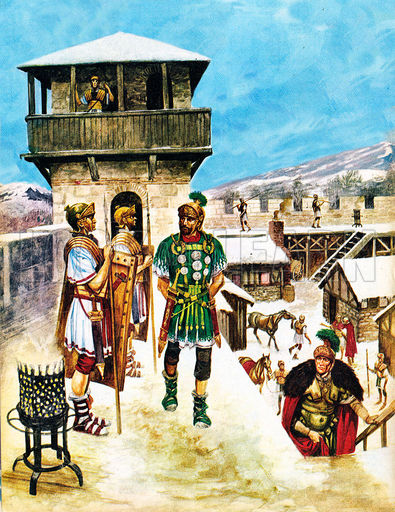
It was garrisoned with thousands of soldiers over its years of occupation (begun 122AD, finally abandoned in the 5th century).

romangarrison.jpg

In Thrones, this job has been taken on by The Night Watch, a rather haphazard collection of volunteers and conscripts.

nightwatch.jpg

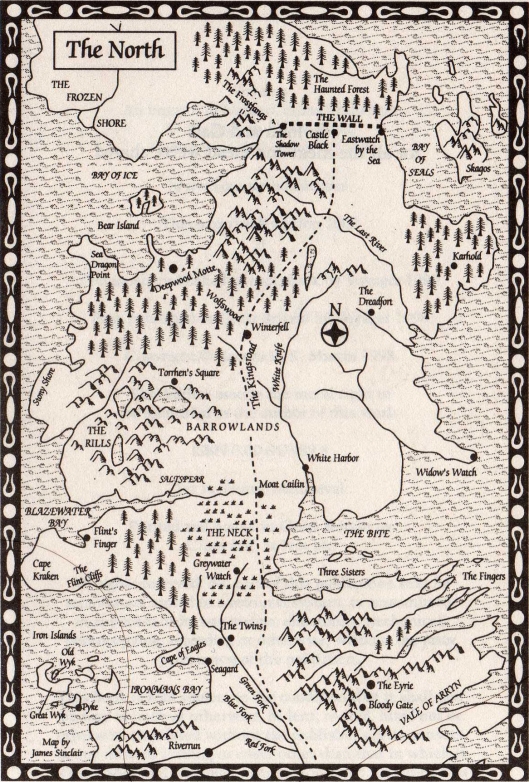
And, south of them, the lands of the Stark family, Wardens of the North, whose motto—a warning of the dreaded future—forms the title of this posting.

the_north_a_clash_of_kings.jpg

Thanks, as always, for reading.

MTCIDC

CD
What’s In A Name?

26 Wednesday Aug 2015

Posted by Ollamh in Imaginary History, J.R.R. Tolkien, Narrative Methods

≈ 1 Comment

Tags

Anglo-Saxon, artefacts, Balin, Beaumaris, Bladorthin, Gandalf, Girion, Hadrian's Wall, Hoard, Middle-earth, Raedwald, Ship burial, Sigeberht, spears, Staffordshire Hoard, Stonehenge, Suffolk, Sutton Hoo, The Argonath, The Hobbit, Thorin, Thror, Tolkien, weapons

Dear Readers, welcome, as ever.

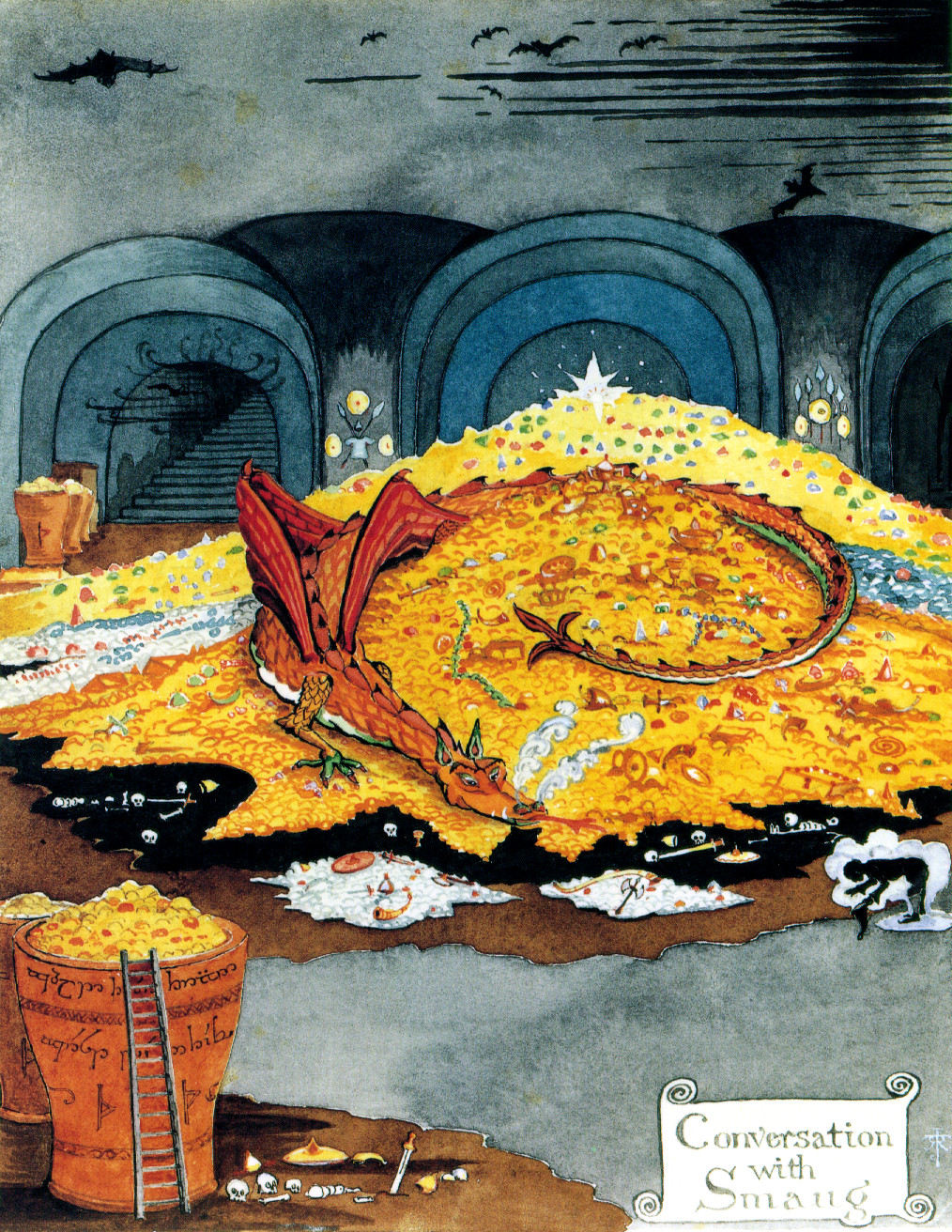
If you look for the name “Bladorthin” in The Annotated Hobbit (our standard source), you will find it only once, on page 287, where Thorin and Balin discuss what they can remember of the great hoard of the Lonely Mountain.

bilbowithsmaug

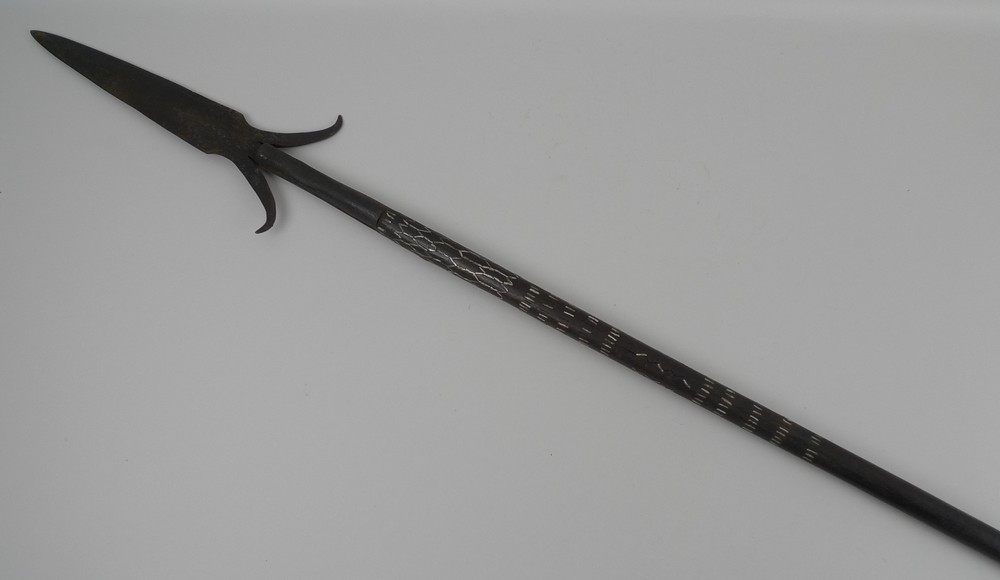
This includes not only the usual golden items and jewels, but also what appears to have been a military consignment, “the spears that were made for the armies of the great King Bladorthin (long since dead), each had a thrice-forged head and their shafts were inlaid with cunning gold, but they were never delivered or paid for.”

IMG_1566

thames spearhead1 img01

292_183

Who this king was and why he was arming his men with what appear to be deluxe weapons is a mystery and probably forever unsolved. This is likewise true for the original Bladorthin, who exchanges his name for that of the head dwarf in the first drafts, Gandalf, just as the head dwarf loses his name, Gandalf, to become Thorin. Why does Tolkien make the shift?

If neither of these can be answered, perhaps we can step back a little to wonder why Bladorthin, the king, is in The Hobbit at all?

A strongly-marked feature of The Lord of the Rings is the sense of age, of great time having passed. Part of this comes from Tolkien’s own sense of history, part from living in a place where things like stone circles

stonehenge

and Roman fortifications

hadrianswallL_tcm4-553745

let alone more recent things, like castles

Beaumaris_Castle

Beaumaris Aerial North Castles Historic Sites

are everywhere to be seen every day.

Part of it, too, comes from Tolkien’s seemingly-unquenchable desire to add to what he had created, providing more and more and more context practically per page.

What might be seen as obsessive, or nearly, however, adds what we might call convincing texture, and in two ways: on the one hand, it makes the story that much more vivid because it’s so much more detailed, and, on the other, it gives it weight: this is not a tale of yesterday, but of a long ago, even if not a long ago from the world of the Neolithic or Romans or Edward I.

This sense of age comes from a number of elements, including not only the idea that the text has been translated from a manuscript, a handwritten text from a pre-Gutenberg age, but also from the landscape which, like Tolkien’s own mid-20th-century Britain, is full of visible reminders of the past–

argonath+hildebrandt

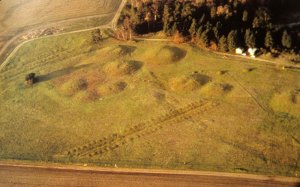
In fact, not long after the publication of The Hobbit, in 1937, a major uncovering of the English Anglo-Saxon past took place near the coast, in Suffolk, at a place called Sutton Hoo. Here, a series of mounds

03 Sutton Hoo, several mounds, c_1983_jpg

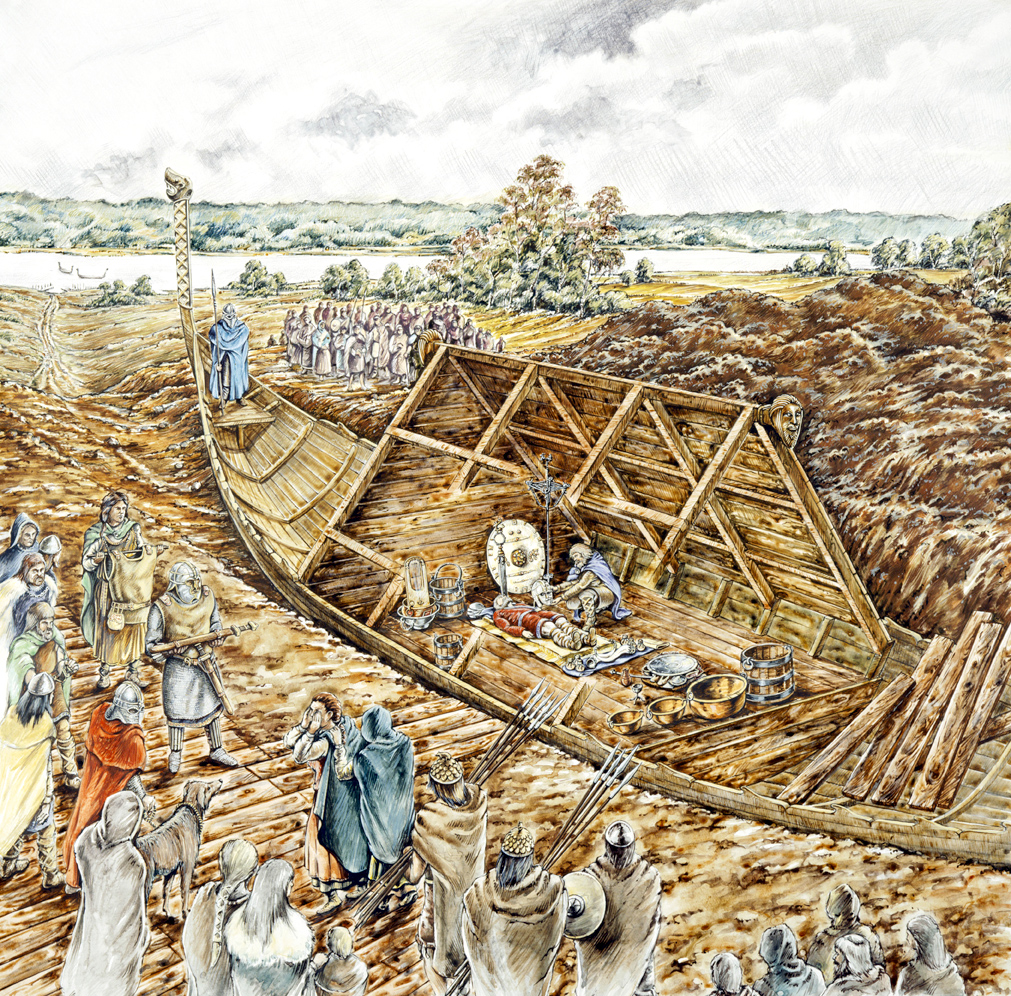
yielded a ship burial

sutton_h

Sutton Hoo, Woodbridge, Suffolk.  Reconstruction drawing of the Sutton Hoo ship burial in 620 or 630 - by Peter Dunn (English Heritage Graphics Team).     Date: circa 620

with nothing short of a hoard, including such items as these pieces from a purse

0523787e795fd30ca6116541512926f0

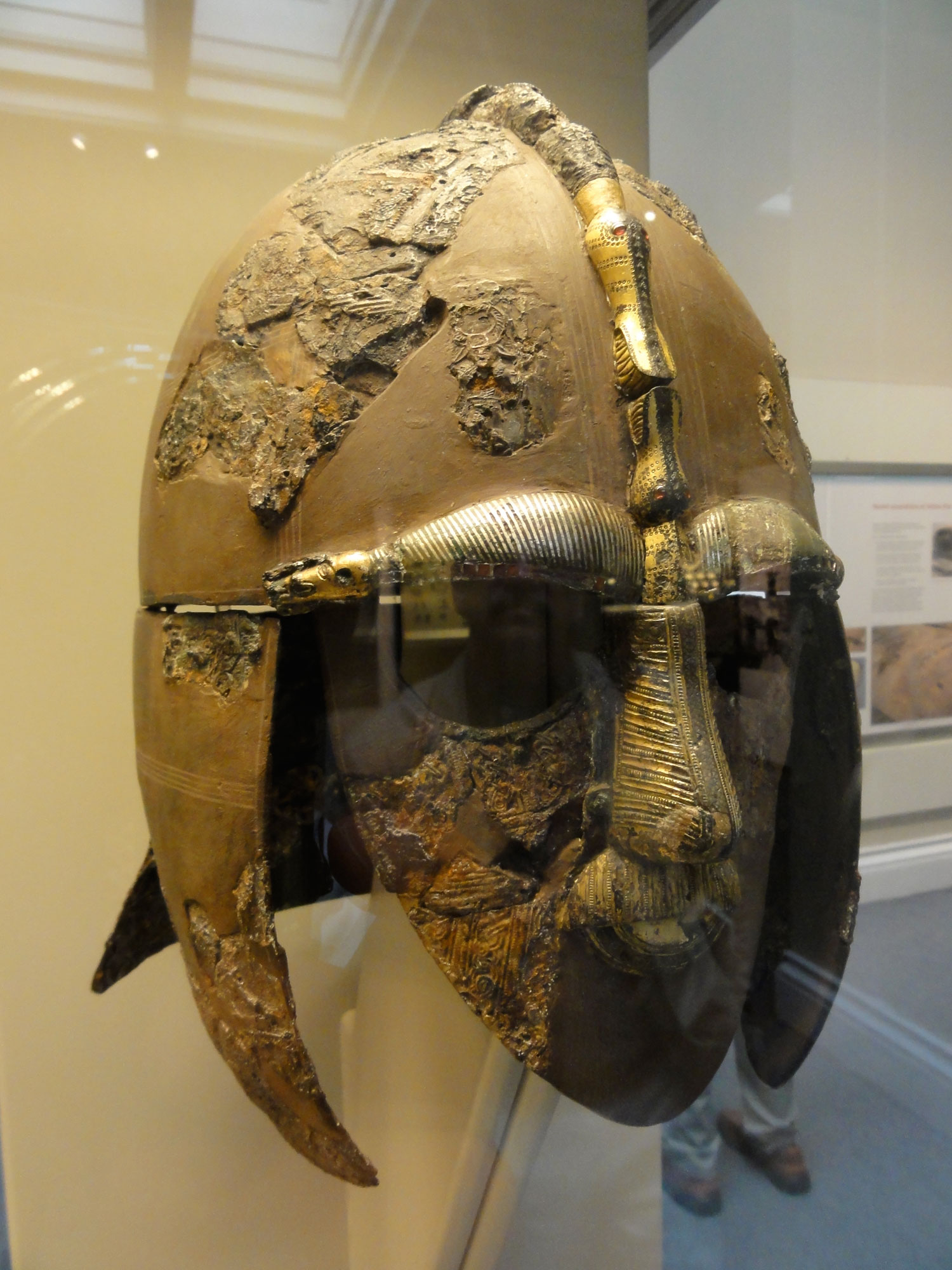
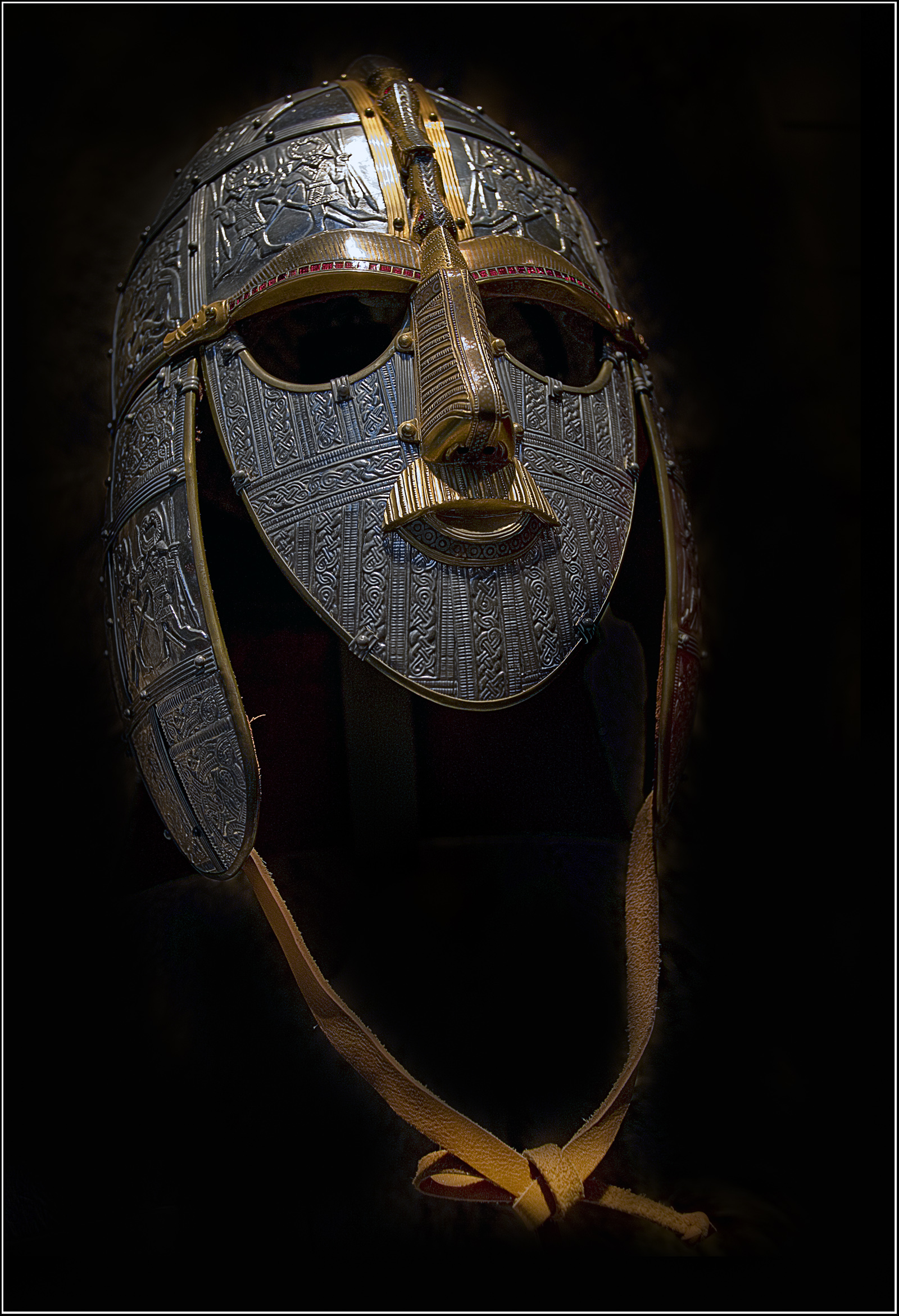
and a helmet.

sutton-hoo

2008-05-17-SuttonHoo.2

(And, since then, it turns out that the area is an extensive cemetery, which, though much plundered, has yielded many other finds.)

athelstan-albums-general-picture2865-sutton-hoo-1

Although Tolkien doesn’t mention this discovery in his selected letters, it would be difficult to imagine that he hadn’t seen something about it: it was even featured in the US National Geographic, in the year of discovery, 1939. Unfortunately, who the man buried there was appears impossible to say, leaving one aspect unknown, and all of the valuables simply generic Anglo-Saxon. (The theory now is that he is the early 7th-c AD ruler, Raedwald, or his son/step-son, Sigeberht.)

The Hobbit, written earlier in terms of years and even earlier, perhaps, in terms of literary sophistication, has, in comparison, much less depth. Much of the backdrop is, particularly in comparison, fairy-tale flat, without all of those levelsl of history.

But then there is Bladorthin.

That mound of wealth, extending beyond the sleeping Smaug is initially described as:

“…on all sides stretching away across the unseen floors, lay countless piles of precious things, gold wrought and unwrought, gems and jewels, and silver red-stained in the ruddy light.” TH 270

This is impressive enough to wake a kind of primal greed in Bilbo:

“His heart was filled and pierced with enchantment and with the desire of dwarves; and he gazed motionless, almost forgetting the frightful guardian, at the gold beyond price and count.” TH 271

Imagine, then, that such a hoard—like Sutton Hoo, or the more recent—and astonishing—Staffordshire Hoard (see the link here)

stafforshire hoard

could have names attached to some of its pieces, if not to the hoard in general. Thorin and Balin, in their reminiscing, combine general description with some specific detail, as well as identifying several one-time object owners:

“…shields made for warriors long dead; the great golden cup of Thror, two-handed, hammered and carven with birds and flowers whose eyes and petals were of jewels; coats of mail gilded and silvered and impenetrable; the necklace of Girion, Lord of Dale, made of five hundred emeralds green as grass, which he gave for the arming of his eldest son in a coat of dwarf-linked rings the like of which had never been made before, for it was wrought of pure silver to the power and strength of triple steel. But fairest of all was the great white gem, which the dwarves had found beneath the roots of the Mountain, the Heart of the Mountain, the Arkenstone of Thrain.” TH 287

Just as places in Middle-earth, by having history, are deepened, the same would be true for artefacts: not just a necklace, but Girion’s necklace, not just a golden cup, but Thror’s cup, and not just spears, but spears commissioned by Bladorthin, a king of long ago.

Thus, although Bladorthin’s history may remain a mystery outside The Hobbit, what history there is gives greater depth, narrative texture, to this early vision of Middle-earth and to the story of Bilbo, in particular.

Thanks, as ever, for reading.

MTCIDC

CD
Where Did It Go– And Why?

17 Wednesday Jun 2015

Posted by Ollamh in J.R.R. Tolkien, Military History, Military History of Middle-earth

≈ Leave a comment

Tags

Arbeia, Boromir, Cavalry, Denethor, England, Faramir, Film, Gondor, Hadrian's Wall, Helm's Deep, Iliad, Minas Tirith, Offa's Dyke, Osgiliath, Pelennor, Peter Jackson, Rammas Echor, Script, The Great Wall, The Lord of the Rings, Tolkien, Wansdyke

Dear Readers,

Welcome, as always!

     In this post, we want to consider the Rammas Echor, which, in the original, had holes blown in it by the invading army of Sauron, but was demolished completely by the script writers for Peter Jackson’s LOTR.

The%20Siege%20of%20Minas%20Tirith

     We first meet it when Gandalf and Pippin, in their rapid journey to Minas Tirith, are briefly stopped at what appears to be a sally port in it (rather than a major gate, as Shadowfax is said to have “passed through a narrow gate in the wall” 749). Gandalf briefly trades remarks with an officer named Ingold (who appears briefly later in the story to report that the northern section has fallen, 821) before he and Pippin continue their journey.

     It is described thus:

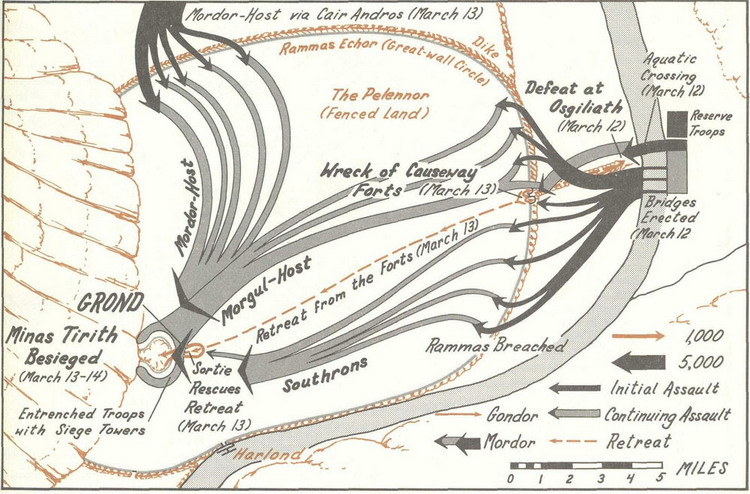
   “Gandalf passed now into the wide land beyond the Rammas Echor. So the men of Gondor called the out-wall that they had built with great labour, after Ithilien fell under the shadow of their Enemy. For ten leagues [about 30 miles in the English system—about 48 km in the metric] or more it ran from the mountains’ feet and so back again, enclosing in its fence the fields of the Pelennor: fair and fertile townlands on the long slopes and terraces falling to the deep levels of the Anduin. At its furthest point from the Great Gate of the City, north-eastward, the wall was four leagues [12 miles—about 19 km] distant, and there from a frowning bank it overlooked the long flats beside the river, and men had made it high and strong; for at that point, upon a walled causeway, the road came in from the fords and bridges of Osgiliath and passed through a guarded gate between embattled towers… “ 750.

     With so much of Tolkien, one can find illustrations from the usual artists—the Hildebrandts, Howe, Nasmith, and Lee—but for this particular—and important—architectural feature, we haven’t discovered—so far—a single illustration.

     It’s made of stone and has evidently not been well-maintained: “Many tall men heavily cloaked stood beside him [Shadowfax], and behind them in the mist loomed a wall of stone. Partly ruinous it seemed, but already before the night was passed the sound of hurried labour clould be heard: beat of hammers, clink of trowels, and the creak of wheels.” 748 And, as mentioned above, it has gates, but, beyond that, what does it look like?

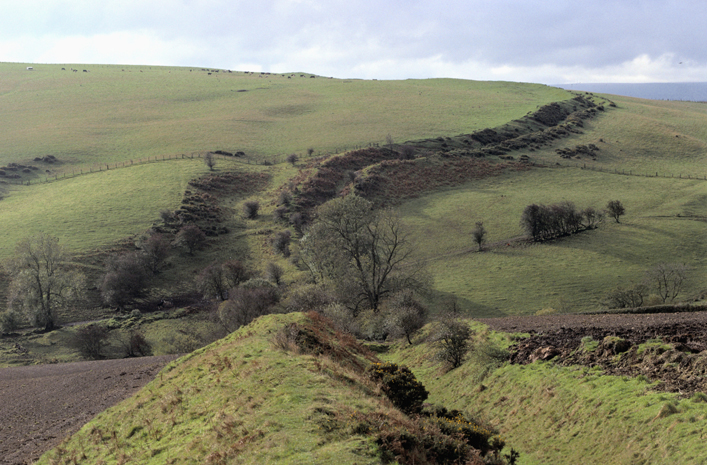
     England has a long history of long walls. There are the surviving earthen walls and ditches of the Dark Ages or early medieval Offa’s Dyke

Offa's_Dyke_near_Yew_Tree_Farm_-_geograph_org_uk_-_450420

1990s, Near Knighton, Wales, UK --- Offa's Dyke near Knighton in Wales. The dyke was created by Offa the King of Mercia from 757 to 796 AD and roughly formed the boundary between England and Wales. --- Image by © Homer Sykes/CORBIS

and Wansdyke

wansdyke

and, of course, the well-known 2nd –century AD work, Hadrian’s Wall, with its surviving stone work and its elaborate series of mile castles, gates, and supporting forts and camps.

Hadrians_Wall Hadrian's Wall phase 1 Central sector

   We might also cast further afield and in time. In Book 7 of the Iliad, the Greeks dig a ditch, fill it with sharpened stakes, and build a stone wall behind it to protect their ships from Trojan attack.

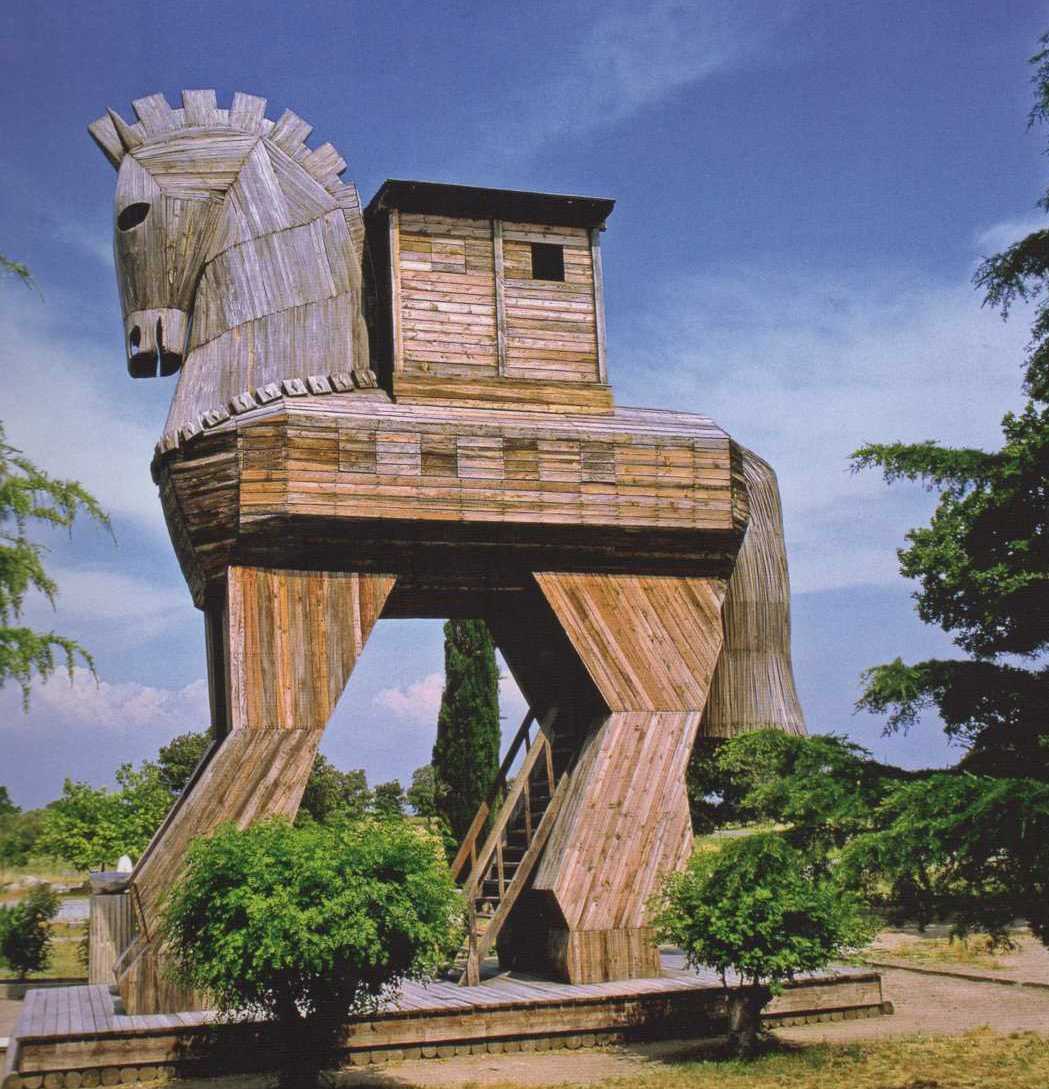
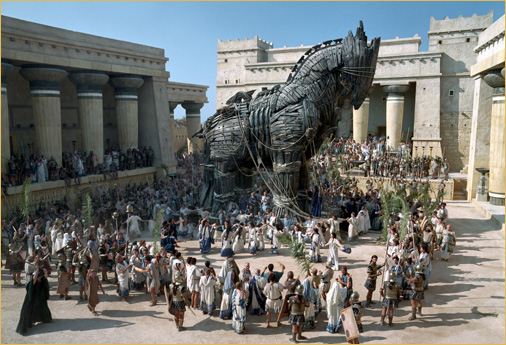
[We can’t find an image of that, but here’s a picture of one of our favorite features of today’s Truva/Hisalik, just to remind you of a later feature of the Trojan War—along with a still from the 2004 Brad Pitt film, known to those of us who love Homer for its rather casual attitude towards the traditional story.]

617-5-horse1

trojan-horse%20troy%20the%20movie

And how can we fail to mention the Great Wall of China?

thegreatwall_rcv

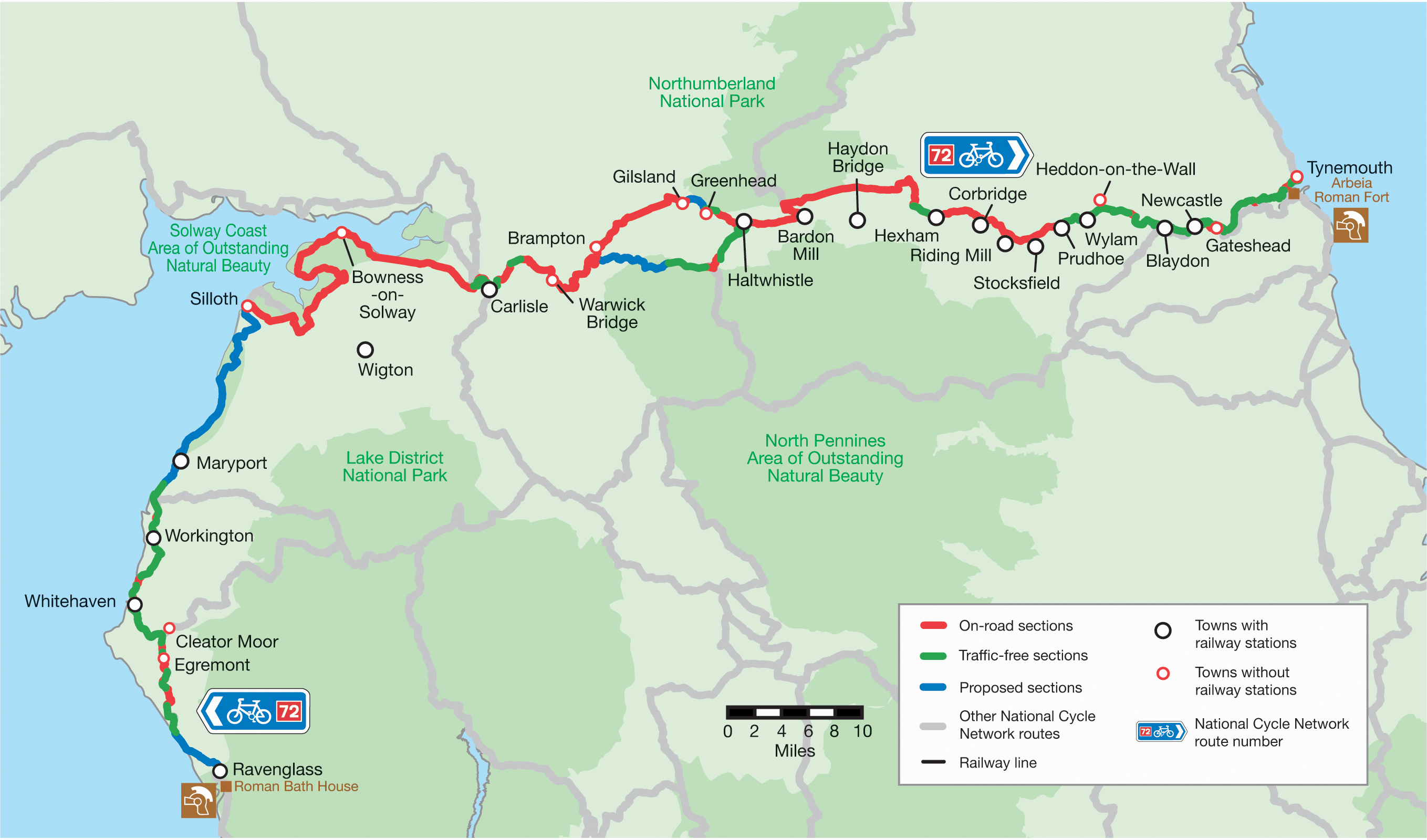
     For us, Hadrian’s Wall might do, with its stretch of stonework across the entire width of England (73 miles, 117.5 kilometres).

map-hadrians-wall

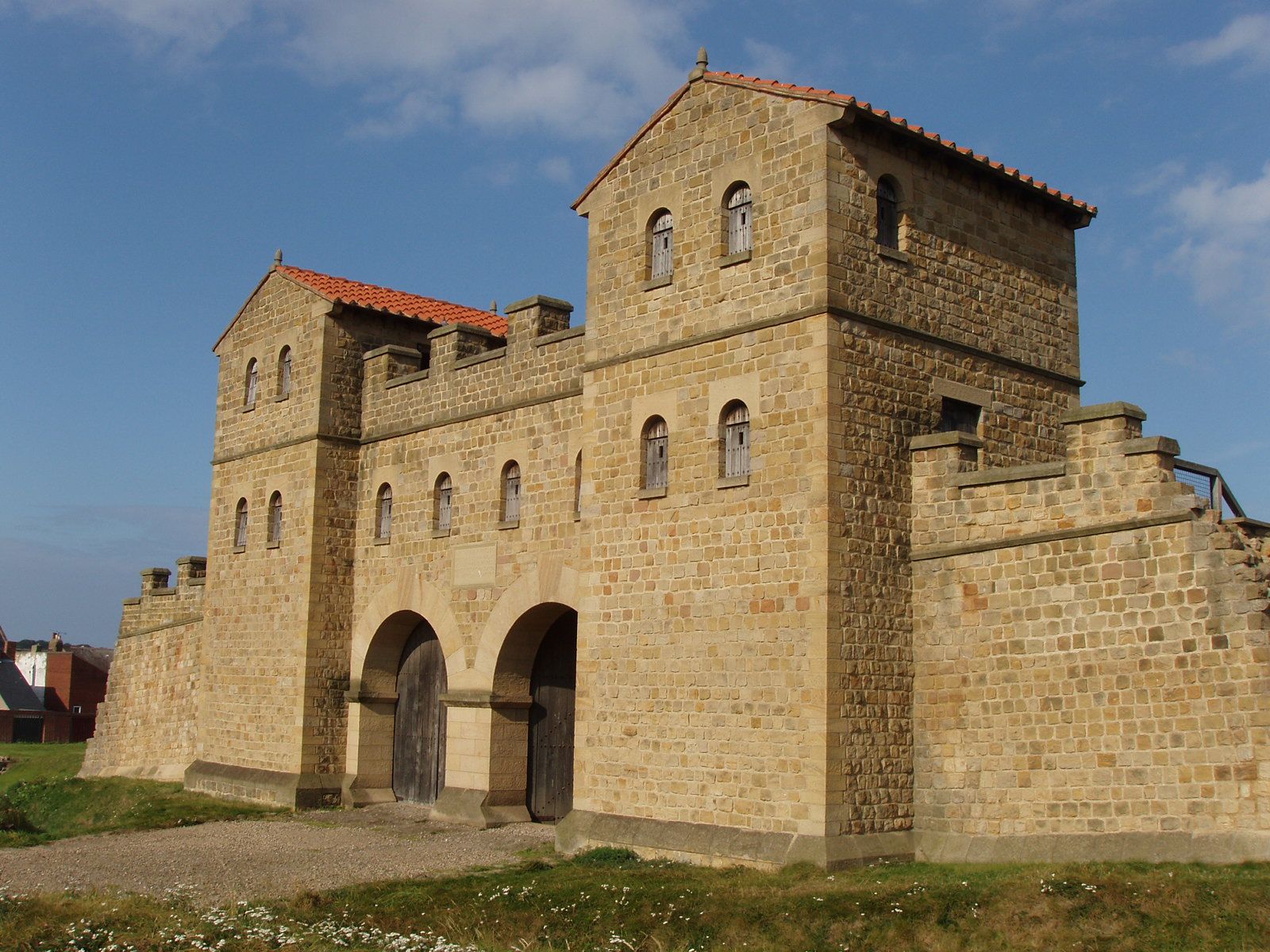
It even has the requisite main gate, which will be defended by Faramir.

This is actually from the Roman fort of Arbeia, South Shields—a great site—but it gives you an idea of what something a little grander—after all, it connected the Pelennor with Osgiliath—might look like.

F00638REW

     That event, however, is in The Lord of the Rings, where Faramir maintains his reputation as a brave and far-sighted commander, as Beregond says to Pippin:

     “But things may change when Faramir returns. He is bold, more bold than many deem; for in these days men are slow to believe that a captain can be wise and learned in the scrolls of lore and song, as he is, and yet a man of hardihood and swift judgement in the field.” 766

FaramirCaptainGondor

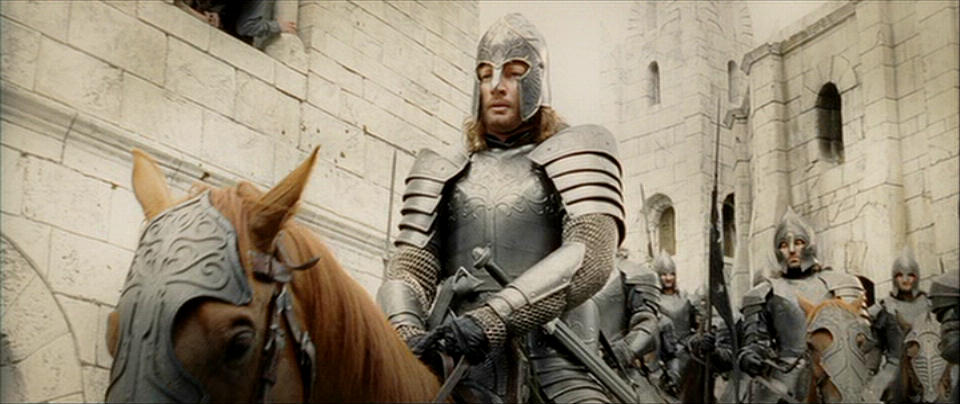
     In the film, it is quite a different matter. There is no Rammas Echor and Faramir, in contrast, is badly wounded in a cavalry charge against the walls of Osgiliath while his father, Denethor, has a rather messy and all-too-symbolic lunch.

maxresdefault

gondorianerritt-cb182208

gifdenethoreating

     What has happened here? First, no intelligent—maybe even foolish—commander would attack a stone wall with cavalry, and we know that Faramir is, indeed, intelligent. Second, what has happened to the Rammas, where Faramir actually had been just before he fell, commanding the rearguard?

     First, we would suggest that the script writers took their cue from the final scene between father and son, in which Faramir, already told by his father that his father had preferred his elder son, Boromir, volunteers to direct the defense of Osgiliath:

“But at length Faramir said: ‘I do not oppose your wil, sire. Since you are robbed of Boromir, I will go and do what I can in his stead—if you command it.’

     ‘I do so,’ said Denethor.

     “Then farewell!’ said Faramir. ‘But if I should return, think better of me!’

     ‘That depends upon the manner of your return,’ said Denethor.

     Gandalf it was that last spoke to Faramir ere he rode east. ‘Do not throw your life away rashly or in bitterness,’ he said. ‘You will be needed here, for other things than war. Your father loves you, Faramir, and will remember it ere the end. Farewell!’” 816-817

     To them, this might have indicated that Faramir—who had clearly been Gandalf’s pupil, as his father has said:

“See, you have spoken skillfully, as ever; but I, have I not seen your eyes fixed on Mithrandir, seeking whether you said well or too much? He has long had your heart in his keeping.” 812

does not listen to his tutor and deliberately sets out to get himself killed. In the text, however, Faramir is actually acting responsibly, fighting in the rearguard of the retreating detachment driven from the Rammas:

“Even as the Nazgul had swerved aside from the onset of the White Rider, there came flying a deadly dart, and Faramir, as he held at bay a mounted champion of Harad, had fallen to the earth.” 821

     (And we might add that Prince Imrahil, who brings the wounded Faramir back, says, “Your son has returned, lord, after great deeds…” 821, which, of course, could easily be understood to be ironic and is perhaps meant to be so on the part of Imrahil, considering Fararmir’s last words to his father and Denethor’s reply.)

     Thus, we see Faramir’s wounding completely changed, but what about the wall he had been defending?

     When one reads through the various chat sights, there was once a considerable amount of discussion about the Rammas Echor, but all was speculation, it seems, as we were unable to find anything said by the writers themselves. In the text, instead of concentrating on the main gate, Sauron’s engineers detonate explosions to each side and the troops then pour through the breaches to take the defenders in flank. This could be seen as a repetition of a similar earlier event at Helm’s Deep, in which Saruman’s forces blew a hole in the defenses.

blowingupthewallathelmsdeep

     As well, we think that, for the director, the big visual attraction was the attack on Minas Tirith. This means that it could simply have been a matter of where to spend time—and/or possibly money—and so the Rammas was sacrificed. If the decision had already been made to change—we will say misinterpret– the story of Faramir, simplifying it drastically and shifting the focus (just think of that dripping mouth!), then the choice to discard this defense would have been an easy one.

     So, suppose you were script writer or director, what would you have done, dear readers?

     Thanks, as always, for reading (and, we hope, speculating).

     MTCIDC

     CD
The Doubtful Sea Series Facebook Page

The Doubtful Sea Series Facebook Page

  • Ollamh

Categories

  • Artists and Illustrators
  • Economics in Middle-earth
  • Fairy Tales and Myths
  • Films and Music
  • Games
  • Heroes
  • Imaginary History
  • J.R.R. Tolkien
  • Language
  • Literary History
  • Maps
  • Medieval Russia
  • Military History
  • Military History of Middle-earth
  • Narnia
  • Narrative Methods
  • Poetry
  • Research
  • Star Wars
  • Terra Australis
  • The Rohirrim
  • Theatre and Performance
  • Tolkien
  • Uncategorized
  • Villains
  • Writing as Collaborators
Follow doubtfulsea on WordPress.com

Across the Doubtful Sea

Recent Postings

  • Heffalumps? December 31, 2025
  • We Three Kings December 24, 2025
  • A Moon disfigured December 17, 2025
  • On the Roads Again—Once More December 10, 2025
  • (Not) Crossing Bridges December 3, 2025
  • On the Road(s) Again—Again November 26, 2025
  • On the Road(s) Again November 19, 2025
  • To Bree (Part 2) November 12, 2025
  • To Bree (Part 1) November 5, 2025

Blog Statistics

  • 103,987 Views

Posting Archive

  • December 2025 (5)
  • November 2025 (4)
  • October 2025 (5)
  • September 2025 (4)
  • August 2025 (4)
  • July 2025 (5)
  • June 2025 (4)
  • May 2025 (4)
  • April 2025 (5)
  • March 2025 (4)
  • February 2025 (4)
  • January 2025 (5)
  • December 2024 (4)
  • November 2024 (4)
  • October 2024 (5)
  • September 2024 (4)
  • August 2024 (4)
  • July 2024 (5)
  • June 2024 (4)
  • May 2024 (5)
  • April 2024 (4)
  • March 2024 (4)
  • February 2024 (4)
  • January 2024 (5)
  • December 2023 (4)
  • November 2023 (5)
  • October 2023 (4)
  • September 2023 (4)
  • August 2023 (5)
  • July 2023 (4)
  • June 2023 (4)
  • May 2023 (5)
  • April 2023 (4)
  • March 2023 (5)
  • February 2023 (4)
  • January 2023 (4)
  • December 2022 (4)
  • November 2022 (5)
  • October 2022 (4)
  • September 2022 (4)
  • August 2022 (5)
  • July 2022 (4)
  • June 2022 (5)
  • May 2022 (4)
  • April 2022 (4)
  • March 2022 (5)
  • February 2022 (4)
  • January 2022 (4)
  • December 2021 (5)
  • November 2021 (4)
  • October 2021 (4)
  • September 2021 (5)
  • August 2021 (4)
  • July 2021 (4)
  • June 2021 (5)
  • May 2021 (4)
  • April 2021 (4)
  • March 2021 (5)
  • February 2021 (4)
  • January 2021 (4)
  • December 2020 (5)
  • November 2020 (4)
  • October 2020 (4)
  • September 2020 (5)
  • August 2020 (4)
  • July 2020 (5)
  • June 2020 (4)
  • May 2020 (4)
  • April 2020 (5)
  • March 2020 (4)
  • February 2020 (4)
  • January 2020 (6)
  • December 2019 (4)
  • November 2019 (4)
  • October 2019 (5)
  • September 2019 (4)
  • August 2019 (4)
  • July 2019 (5)
  • June 2019 (4)
  • May 2019 (5)
  • April 2019 (4)
  • March 2019 (4)
  • February 2019 (4)
  • January 2019 (5)
  • December 2018 (4)
  • November 2018 (4)
  • October 2018 (5)
  • September 2018 (4)
  • August 2018 (5)
  • July 2018 (4)
  • June 2018 (4)
  • May 2018 (5)
  • April 2018 (4)
  • March 2018 (4)
  • February 2018 (4)
  • January 2018 (5)
  • December 2017 (4)
  • November 2017 (4)
  • October 2017 (4)
  • September 2017 (4)
  • August 2017 (5)
  • July 2017 (4)
  • June 2017 (4)
  • May 2017 (5)
  • April 2017 (4)
  • March 2017 (5)
  • February 2017 (4)
  • January 2017 (4)
  • December 2016 (4)
  • November 2016 (5)
  • October 2016 (6)
  • September 2016 (5)
  • August 2016 (5)
  • July 2016 (5)
  • June 2016 (5)
  • May 2016 (4)
  • April 2016 (4)
  • March 2016 (5)
  • February 2016 (4)
  • January 2016 (4)
  • December 2015 (5)
  • November 2015 (5)
  • October 2015 (4)
  • September 2015 (5)
  • August 2015 (4)
  • July 2015 (5)
  • June 2015 (5)
  • May 2015 (4)
  • April 2015 (3)
  • March 2015 (4)
  • February 2015 (4)
  • January 2015 (4)
  • December 2014 (5)
  • November 2014 (4)
  • October 2014 (6)
  • September 2014 (1)

Blog at WordPress.com.

  • Subscribe Subscribed
    • doubtfulsea
    • Join 78 other subscribers
    • Already have a WordPress.com account? Log in now.
    • doubtfulsea
    • Subscribe Subscribed
    • Sign up
    • Log in
    • Report this content
    • View site in Reader
    • Manage subscriptions
    • Collapse this bar
 

Loading Comments...