• About

doubtfulsea

~ adventure fantasy

Tag Archives: Frodo

Ringed In

05 Wednesday Aug 2015

Posted by Ollamh in J.R.R. Tolkien

≈ Leave a comment

Tags

Anglo-Saxon, Bilbo, Deagol, Dwarves, Elves, Faramir, Frodo, Gandalf, Gollum, Gondor, Isildur, Kenning, Lorien, Men, Nazgul, Ring, Ring-bearer, Roman senator, Romans, Sam, Sauron, Silmaril, The Hobbit, The Lord of the Rings, Tolkien, Tom Bombadil

Dear Readers, as always, welcome!

permcol5tn

Everyone at all interested in the works of Tolkien knows this passage (and many could recite it by heart, we’re sure):

“Three Rings for the Elven-kings under the sky,

     Seven for the Dwarf-lords in their halls of stone,

Nine for Mortal Men doomed to die,

     One for the Dark Lord on his dark throne

In the Land of Mordor where the Shadows lie.

     One Ring to rule them all, One Ring to find them,

     One Ring to bring them all and in the darkness bind them

In the Land of Mordor where the Shadows lie.” LoTR 50.

But why a ring? Since the Ring is about power, why not something which looks like power:

a sword, for example
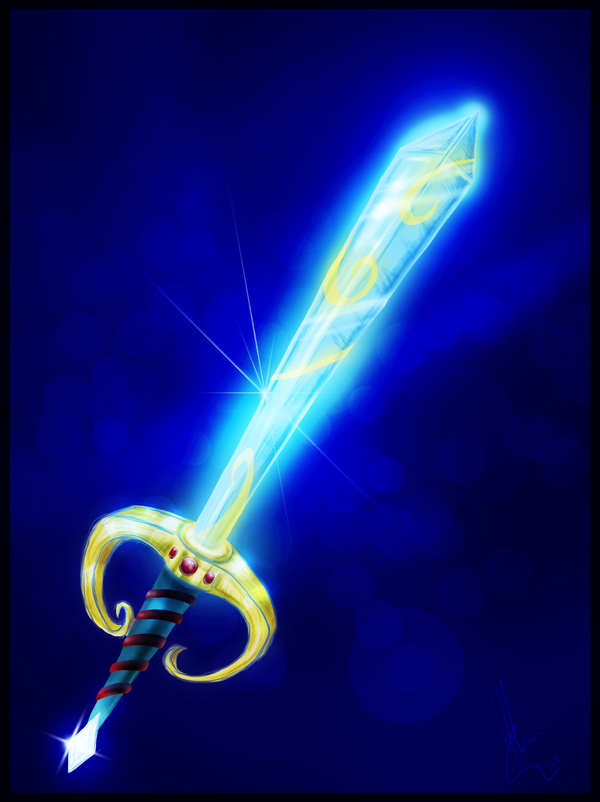
ferb__s_magic_sword_by_kicsterash-d4clz45

or a crown

WingedAphroditeCrown_front

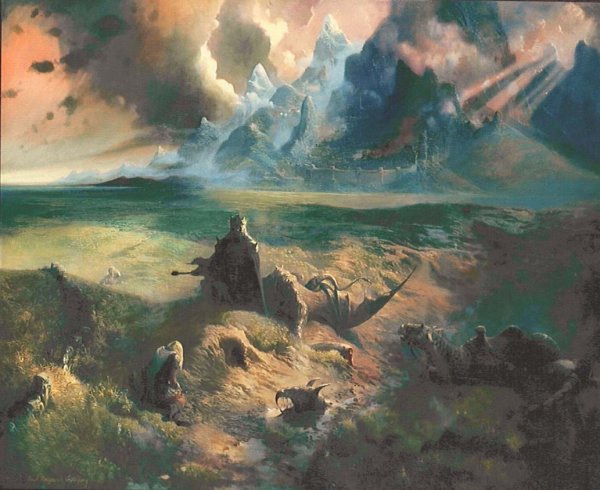
or even, considering Tolkien’s own mythology, a silmaril.
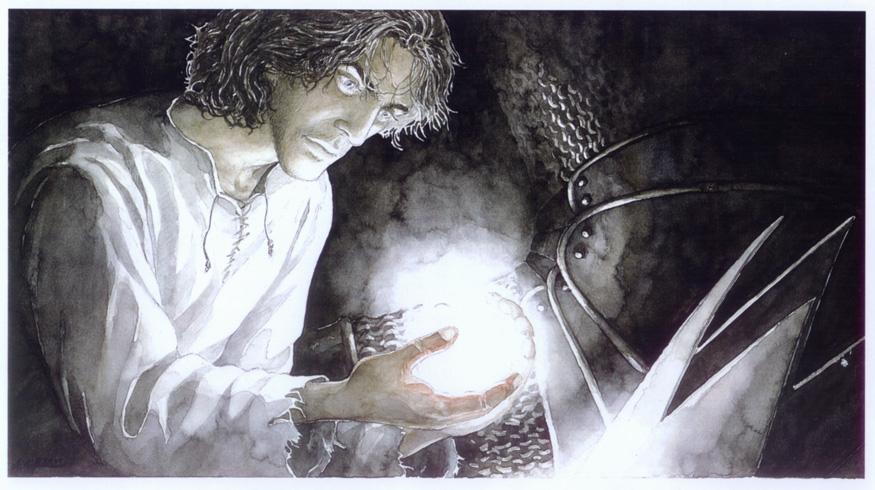
Beren_silmaril

In The Hobbit of 1937, the Ring was originally simply a magic ring right out of folk and fairy tales, with apparently one gift, invisibility, for which Gollum treasures it.
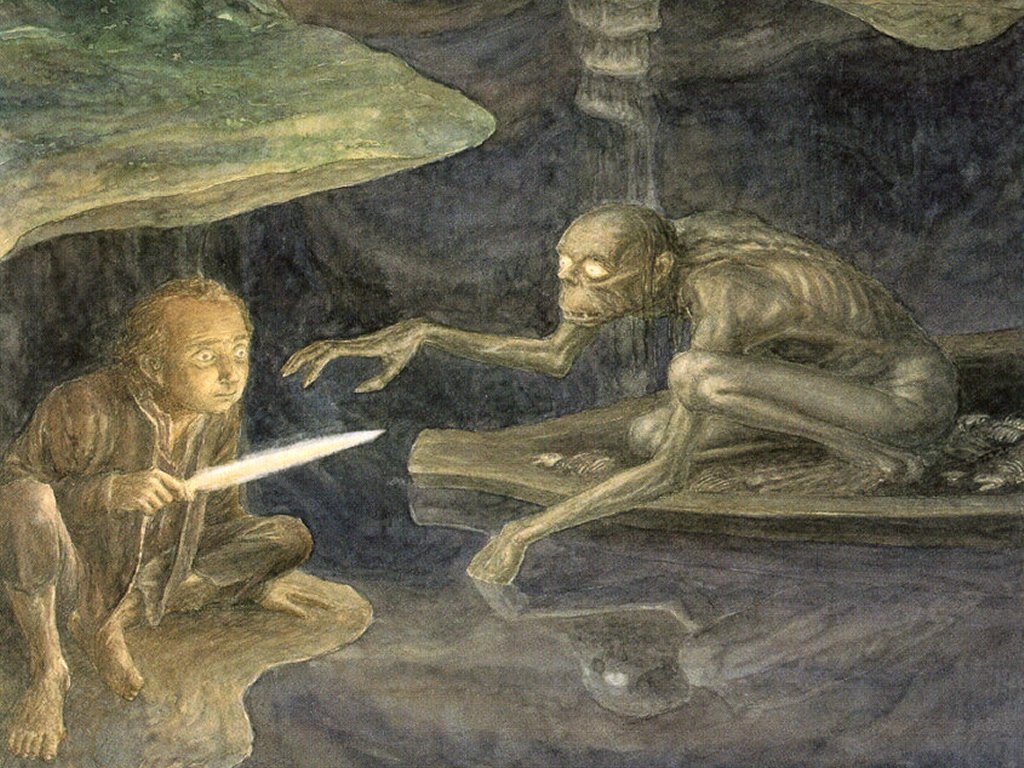
Alan%20Lee%20-%20The%20Hobbit%20-%2019%20-%20Riddles%20in%20the%20dark

As is well known, Tolkien reconsidered its powers and, as The Lord of the Rings grew, the ring became the Ring, and the central focus of the sequel to the earlier book. By the beginning of the 1950s, he states (in a letter to Milton Waldman dated by Carpenter/C. Tolkien as “probably written late in 1951” LTR 143):

“the primary symbolism of the Ring, as the will to mere power, seeking to make itself objective by physical force and mechanism, and so also inevitably by lies…” LTR 160.

(by “mere” we imagine that Tolkien is using the word here in its original Latin—merus –a –um— sense of “pure/unmixed”)

Although this tells us something about the force within the Ring, it doesn’t really explain why a ring.

Rings are an ancient status symbol, certainly. The Romans used them as one of the ways to show the class of a person: senators wore gold ones (although there is an old story that, originally, Roman senators wore rings made of iron)

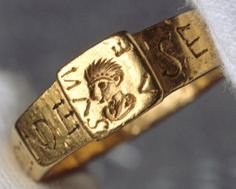
RomeSenators2romanring

and the other free classes wore any metal they chose.   Tolkien would have had a vivid idea of the inherent status in a ring from Old English, as one of the kennings (poetic metaphorical phrases) for a great lord was “ring-giver”

asring

—just as Sauron gives rings to the ancient kings and so holds their allegiance long after their natural lives should have ended.    

bwnazgul

This is echoed in “and in the darkness bind them” , which brings us back to those verses with which we began.

In them, the Ring’s powers are clearly laid out (rather like Saruman’s claimed goals, “Knowledge, rule, order”): rule, find, bring, bind.

As Gandalf tells us, the primary reason for the creation of the Ring was, in fact, to rule, both the other rings and, through them, Middle-earth and its peoples: Elves, Dwarves, Men. To do so, Sauron endowed the Ring with much of his own power, a perfect example of his arrogance, depriving himself of power he might need, clearly convinced that he would suffer no harm from its lack.

As he endows the Ring, it seems that he—intentionally?—passed on to it a small bit of his self-will. Unlike inanimate objects in our world (and we presume in Middle-earth, too), the Ring not only shows purpose, but can act upon it.

As Gandalf tells Frodo:

“A Ring of Power looks after itself…It was not Gollum, Frodo, but the Ring itself decided things. The Ring left him…The Ring was trying to get back to its master.” LotR 55.

To do so, it uses another of its powers, it brings people to use as vehicles, discarding them when they have served its purpose.

“It had slipped from Isildur’s hand,” says Gandalf (a hand already under the Ring’s control, as it couldn’t force itself to destroy the Ring when it had the chance) and betrayed him; then when a chance came it caught poor Deagol, and he was murdered and after that Gollum, and it had devoured him. It could make no further use of him: he was too small and mean…So now, when its master was awake once more…it abandoned Gollum, only to be picked up by…Bilbo.” LotR 55-56.

To acquire such vehicles, the Ring uses a third power, finding. Gandalf’s list suggests that that power entails some innate ability to sense who will be most attracted to it. They appear to be rather a wide assortment, from the heir to the throne of Gondor to two proto-hobbits. And there are also those not on Gandalf’s list: Saruman and even, to some degree, Galadriel. As for Gandalf himself, he, like the Lady of Lorien, is wise enough to avoid the ultimate temptation, as is Faramir, perhaps because, as his father accuses him, he has been Gandalf’s pupil and has acquired some of his awareness both of events and of himself.

Our list would not be complete, however, without Frodo and Sam. It is hard to imagine that the Ring has picked them: Frodo, after all, has inherited it. This doesn’t mean that he is not influenced by it, even, at the end, sounding more like Isildur than himself in his refusing to destroy it, suggesting that, even by inheritance, someone can be found, brought, and ruled. And Sam? He holds it only briefly, but surrenders it so easily that it appears to have little ultimate power over him, something which he shares with Tom Bombadil, perhaps because both are grounded—quite literally—in Middle-earth. It is no surprise that Galadriel gives him a gift for growing things and that, in his consolation of Sam, Frodo says that he will be “the most famous gardener in history” (LoTR 1029). As for Bombadil, it would appear that the same sort of protection which keeps Sam from being found, brought, and ruled keeps him safe. When he holds up the Ring and looks through it, for a moment we might see that, for him, the symbolism of the “will to mere power” means nothing and, instead, he sees it only as an empty metal band.

For others, from the Nazgul to Frodo, who never feels whole again, the fourth power, binding, has done its job and also perhaps, in doing so, answers the question, why a ring?

Heavy-6mm-D-Shape-18k-Yellow-Gold-Wedding-Ring

What better binder than a perfect circle, seemingly blank, but with a hidden message, almost a spell, and which, when put on, pulls you from the daylight world and, which, worn too long, can keep you there forever?

Thanks, as ever, for reading.

MTCIDC

CD

Dead Ringers?

01 Wednesday Jul 2015

Posted by Ollamh in Fairy Tales and Myths, J.R.R. Tolkien, Narrative Methods, Poetry

≈ 1 Comment

Tags

Daydreaming, Dragon, Eagles, Ford of Bruinen, Frigates, Frodo, Kites, Nazgul, Pterodactyl, Red-Tailed Hawk, Ring Wraiths, Robert Burns, Shire, Tam O'Shanter, The Legend of Sleepy Hollow, The Lord of the Rings, Tolkien, Washington Irving, Witches' Sabbath

Welcome! In this posting, we plan to talk about the Ring Wraiths (probably in hushed voices).

This entry was initially inspired by looking out the window (and no, we weren’t daydreaming—really!).

There was a harsh call from the sky.

Red-Tailed Hawk Scream (YouTube)

Peering out, we saw the local hawks, who are nesting on a tall building across the road, circling, balancing high on a thermal in that amazing way, something like a kite

Ancient-China-kites-2

combined with the nimbleness of an 18th-c. frigate.

l'hermione

Red-Tailed Hawks Circling (YouTube)

And suddenly we were looking up at something completely different—

7affeea5ca3551eddd3ae8bc4abd7b47

Nazgul!

In contrast to those very convenient Tolkien eagles, traditionally admired as a fierce and noble bird

tumblr_inline_mvvy21Tf9e1rnrk68

the Wraiths appear to be riding a cross between a flying dragon

Fantasy_In_the_clouds_flying_dragon_067388_

and a pterodactyl.

Pterodactyl_2_(PSF)

nazgul_by_daroz-d5hdnn9

Of course, we first encounter the Nazgul on the ground

nazgul_by_jarrettonions-d47wvdd

in their invasion of the Shire and their subsequent pursuit of Frodo.

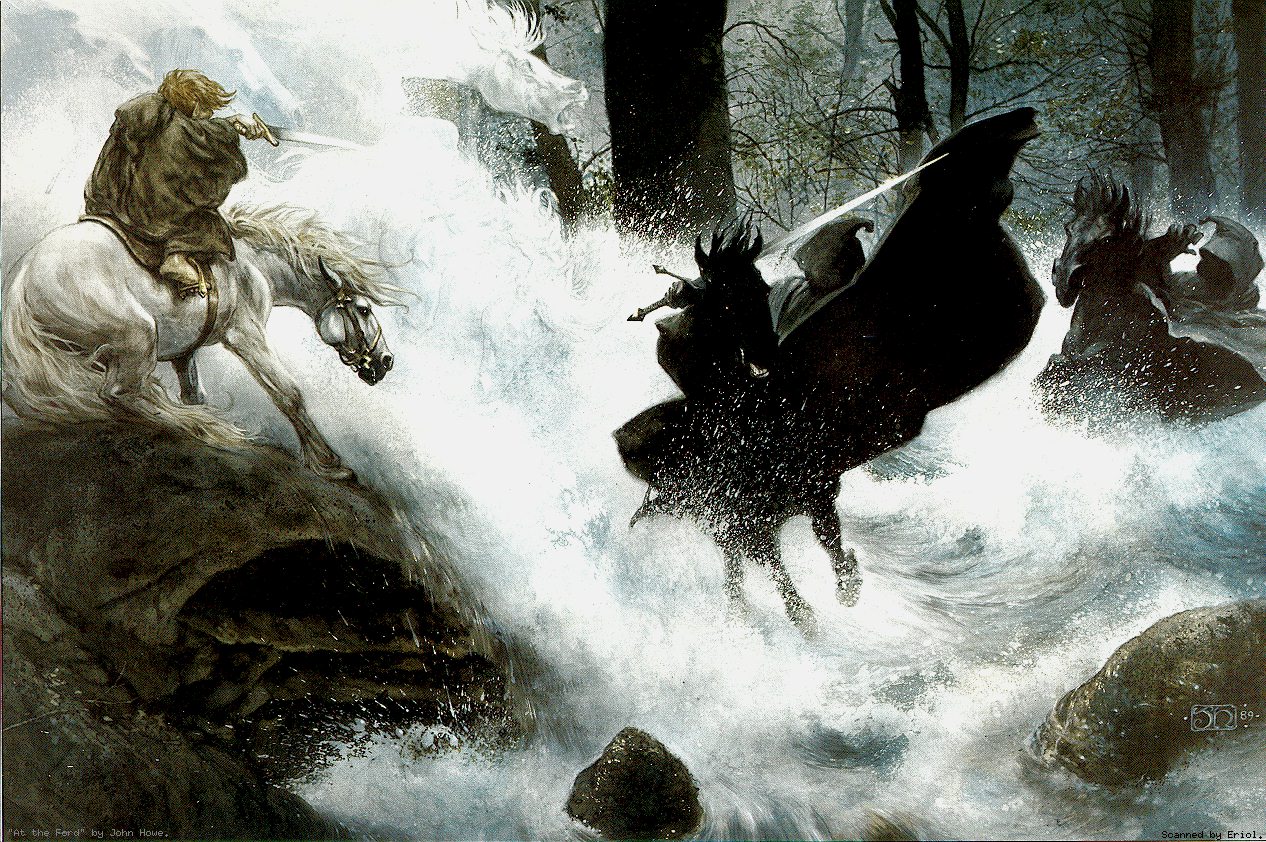
And here, at the final moment, at the Ford of Bruinen, where the Wraiths are swept away,

ford

perhaps we can catch a glimpse of one of the origins of a very dramatic scene.

The Scots poet, Robert Burns

burnshead1

wrote “Tam O’Shanter” in 1790 and published it the following year.

Tam O’Shanter Poem and Translation

It’s the story in verse of a farmer who stays too late at his local.

Tam_o'_Shanter_and_Souter_Johnny_at_Kirkton_Jean's

Then, on the way home, he is attracted by light in a local abandoned (and, of course, haunted) church

Alloway_Kirk

where a witches’ Sabbath is going on.

(c) City of Edinburgh Council; Supplied by The Public Catalogue Foundation

Still quite tipsy, he cheers it on and, of course, the witches and other otherworldly creatures are immediately in hot pursuit.

(c) Cutty Sark Trust; Supplied by The Public Catalogue Foundation

Tam can escape, but only if he can reach the nearby river Doon and cross its bridge.

bridgeofdoune

He just manages to do this, but his poor horse, Meg, loses her tail.

four

If this plot has a familiar ring, it’s because the American author, Washington Irving,

Portrait of Washington Irving

used the poem as a major source for his short story, “The Legend of Sleepy Hollow” (published in 1820). We begin with a very different story: in 1790, a poor schoolmaster with the poetic name of Ichabod Crane comes to the Hudson River valley town of Sleepy Hollow and, in the course of his stay, becomes such an annoyance to the local bravo, that he uses the local legend of a headless horseman to frighten Crane off.

keller_sleepyhollow

To do this, he convinces Crane that, should he be pursued by such a creature, he can only escape it by crossing running water. (And here we can see the strong influence of Burns.) In the subsequent narrative, as the horseman, the bravo chases Crane to a bridge, and there the story stops. Crane disappears, never to be seen in Sleepy Hollow again. Irving_Sleepy 

John_Quidor_-_The_Headless_Horseman_Pursuing_Ichabod_Crane_-_Google_Art_Project

Unfortunately, neither the Carpenter letters nor the Hammond/Scull volumes provides any reference to Burns or Irving, but the idea that crossing the ford might stop the unearthly has, to us, a definite suggestion that, somewhere in the leaf mould, there may have been a tiny acorn of memory…

Thanks, as ever, for reading!

MTCIDC

CD

ps

You might know “The Legend of Sleepy Hollow” from this–

legendofsleepyhollow-chase

Powerplay

12 Friday Jun 2015

Posted by Ollamh in J.R.R. Tolkien, Military History, Military History of Middle-earth, Villains

≈ Leave a comment

Tags

Barad-Dur, Beer Hall Putsch, Black Country, Charlie Chaplin, Christopher Lee, Edwin Butler Bayliss, Ents, Fangorn, Franco, Frodo, Gandalf, Grima, Hitler, Isengard, Maiar, Merry, Middle-earth, Mordor, Mosley, Mussolini, O'Duffy, Orcs, Orthanc, Pippin, Rohan, Saruman, Sauron, Spode, The Great Dictator, The Lord of the Rings, The Shire, Theoden, Tolkien, Treebeard, Valar

Welcome, as always, dear readers!

We’ve discussed the nearly-invisible Sauron in an earlier posting, but now we’d like to think out loud about the all-too-visible Saruman. And, as we’ve just heard that we’ve lost our own Saruman, Christopher Lee, we would like to dedicate it to his memory.

McBrideTreebeard

Pippin and Merry have been filling Fangorn in about all of their adventures up to the moment when he found them in his forest.

Saruman, in particular, has caught his attention, being his neighbor and, it seems, an increasingly distant one—

“There was a time when he was always walking about my woods. He was polite in those days, always asking my leave (at least when he met me); and always eager to listen. I told him many things that he would never have found out by himself; but he never repaid me in like kind. I cannot remember that he ever told me anything. And he got more and more like that; his face, as I remember it—became like windows in a stone wall: windows with shutters inside.” 473

At that moment, everything comes together for the Ent.

“I think that I now understand what he is up to. He is plotting to become a Power.” 473

And not a friendly power, as Gandalf, during his last visit to Isengard, has learned to his dismay, having heard Saruman alternately wheedle and threaten him. Saruman’s initial words, however, were not about himself, but about someone else, to the east:

“A new Power is rising. Against it the old allies and policies will not avail us at all. There is no hope left in Elves or dying Numenor. This then is one choice before you, before us. We may join with that Power.” 259

So far, this must sound like the Sauron party line—and Saruman is actually described “as if he were making a speech long rehearsed”, (259), the tone of which Gandalf recognized immediately, replying:

“I have heard speeches of this kind before, but only in the mouths of emissaries sent from Morder to deceive the ignorant.” 259

If we pause for a moment and consider the era in which this was written, we might catch a glimpse of something from the history of our world in this, something from the period beginning in 1922 and extending at least through 1945, when Tolkien was beginning to write The Lord of the Rings.

JRRT always denied that his work was allegorical, although, sophisticated man that he was, he was well aware that the world around him would impinge upon his consciousness. Thus, when we see numerous sinister figures rising in power in our world, it would be difficult to imagine that they might not, even if only very distantly, exert some small influence on his work.

The lesser figures include Franco, in Spain,

d950ed6b46c3317df212938ada08510f

Eoin O’Duffy in Ireland,

eoin-oduffy-blueshirts

Sir Oswald Mosley in England, (mocked as “the amateur dictator “ by P.G.Wodehouse in the persona of Sir Roderick Spode—brilliantly played by John Turner in the 1990s Wodehouse “Jeeves and Wooster” television series)

mosley03

0

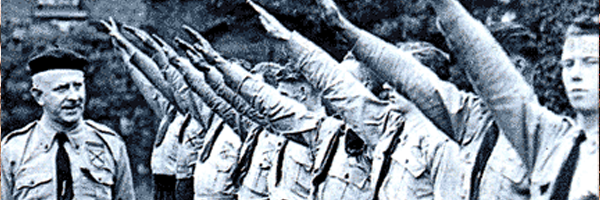
and the most menacing of all, Mussolini and Hitler.

hitler-mussolini

Mussolini had begun his rise to power just after World War One, achieving his position of Il Duce in 1922,

Il%20Duce

while Hitler, after a false start in 1923, in emulation of Mussolini,

beerhallputsch

finally reached the ultimate position of authority in 1933.

hitler_hind

Although Hitler was a relative late-comer in comparison with Mussolini, it seems that Mussolini looked up to Hitler, even taking German lessons (although there is no mention of Hitler reciprocating) so that they could talk more easily (and, doubtless, securely).

Thus, it might be possible to see Saruman, in his position as lesser of two evils, looking up to and wanting to imitate Sauron, the greater of two evils, as Mussolini attempting to emulate Hitler. (And this odd partnership is sharply satirized in Charley Chaplin’s The Great Dictator, 1940.)

chaplinoakey

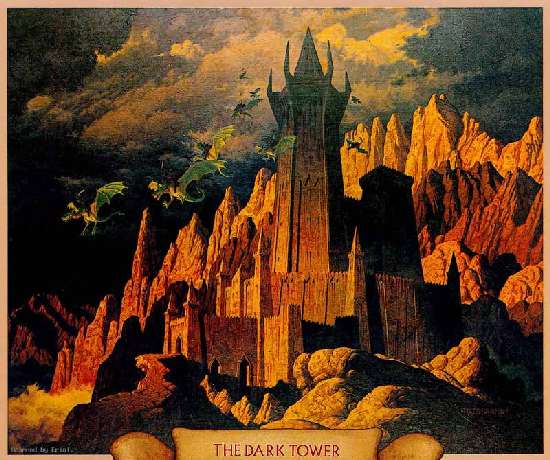
So, as Sauron has the Barad-dur,

hildebrandtsbaraddur

so Saruman has Orthanc.

greg-hildebrandt-isengard-orthanc-saruman-607429-1300x962.1

As Sauron has Orcs

morderorcs

so Saruman has Orcs.

uruk

Worst of all, just as Sauron has the vast wasteland of Mordor

L1003926

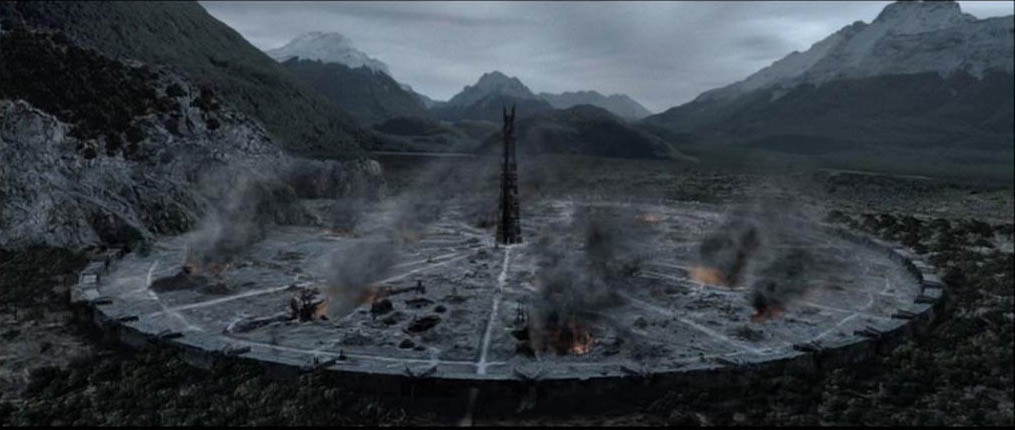
Saruman takes the once-green and beautiful Isengard

greg-hildebrandt-isengard-orthanc-saruman-607429-1300x962

and turns it into a mini-Mordor.

isengard_by_nagzuku

All of this is swept away by Fangorn and his fellow Ents, of course,

The Wrath of the Ents, by Ted Nasmith

and it appears that Saruman will remain within the tower, but we know that he slips away, taking the former counselor of Theoden, Grima, with him.

Or, at least, that’s what Tolkien intended. Unfortunately, the makers of The Lord of the Rings films simply dropped this theme here, with the deaths both of Saruman and Grima on Orthanc. We say unfortunately because, although we have portrayed Saruman as a wanna-be Sauron (even to the point of thinking that he might gain control of the Ring), which is certainly one of his roles, his is a greater role as he was once a greater figure. He is the eldest of the Maiar in Middle Earth, those spirits whom Tolkien once described as “near equivalent in the mode of these tales of Angels, guardian Angels”, LTR 159. That he can be corrupted by Sauron (as Sauron himself had been corrupted by Morgoth), shows just how great Sauron’s power (and the lure of the Ring) really is. As well, in his fall, we see that that corruption, like Sauron’s, is complete. Offered the chance to return to the good, he spurns it and slips away—but not out of the story, and it’s here that we feel that the writers of the films missed a great opportunity.

In what might, at first, seem like an act of petty revenge, Saruman goes to the Shire, that green and so-far-safe land far west of all of evil of Middle Earth,.

The-Hill-Hobbiton-across-the-Water

TN-The_Shire_A_View_of_Hobbiton_From_The_Hill

and industrializes it. After all, Fangorn has said of Saruman that “He has a mind of metal and wheels; and he does not care for growing things, except as far as they serve him for the moment.” 473

So, just as at Isengard, trees must go, if only to feed his industrial plans. When we think of Saruman’s ultimate vision for the Shire, we imagine that it would look like the work of Edwin Butler Bayliss (1874-1950) who painted the industrial landscapes of England’s West Midlands, the “Black Country”, an area Tolkien himself thought of as his home region.

 op6301

(c) Dr Christopher R. Bayliss; Supplied by The Public Catalogue Foundation

(c) Dr Christopher R. Bayliss; Supplied by The Public Catalogue Foundation

The end comes quickly, however, when the Hobbits return and we see, in “The Scouring of the Shire”, on the one hand, the new maturity of Merry and Pippin, and, on the other, the deep humanity of Frodo.

storming_the_ban scouring

And Saruman would have been allowed to go free again—but there is an irony here in what happens. He had sought to overturn Theoden and Rohan through having subverted Grima and, instead, he himself is killed by that very agent—

scouringshire

61%20-%20The%20scouring%20of%20the%20shire

and we have wondered about that. If Saruman is of the same substance as the Valar, merely inhabiting a human body, can he, in fact, be killed, any more than Sauron? We assume that Sauron, who had poured so much of his spiritual power into the Ring, would be seriously weakened by its loss, enough so that his empire collapses on him. In Saruman’s case, the end is less dramatic, but at the same time, poignant:

“To the dismay of those that stood by, about the body of Saruman a grey mist gathered, and rising slowly to a great height like smoke from a fire, as a pale shrouded figure it loomed over the Hill. For a moment it wavered, looking to the West; but out of the West came a cold wind, and it bent away, and with a sigh dissolved into nothing.” 1020

Although the withered remains are then described, they seem unnecessary. That was only the borrowed flesh. The tragedy lies in that wavering look, the bending away, the sigh. In the final chapter, “The Grey Havens”, we see Gandalf departing towards that very West which was denied to Saruman and here we see, as well, what it was that the spirit of Saruman had lost: the reward of being allowed, at last, to return home, to go back towards Valinor. Instead, the Valar have rejected one of their own and, though his spirit may not have been destroyed, something seems to have left him forever.

By leaving the final chapters out of the film, then, the script writers lost the chance not only to show us Merry and Pippin, at the end of their long adventure, grown into figures to rival the Old Took, both in deeds and in stature. As well, they denied us the potential contrast with the end of such figures as Hitler—a suicide—and Mussolini—executed by his own people, and that of Saruman the White, murdered by his own follower and, at the end, nothing but sadness and grey smoke.

_SARUMAN__by_SilentDeath007

Thanks, as always, for reading. And thank you, Christopher Lee, for acting.

MTCIDC

CD

The Sadness of a Second Reading

27 Wednesday May 2015

Posted by Ollamh in Artists and Illustrators, J.R.R. Tolkien, Narrative Methods, Villains

≈ Leave a comment

Tags

Aragorn, Arwen, Canterbury Tales, Chaucer, Ents, Fangorn, Frodo, Gandalf, Herblore, Hildebrandt, Hobbits, Isengard, Meduseld, Merry and Pippin, Ring, Saruman, Sauron, Smaug, The Lord of the Rings, Theoden, Tolkien, Villains

Welcome again, dear readers!

We’re sure to return to villains—Orcs first, we think—but, as we reread material for the last posting, we came across a passage which so struck us that we had to sit down and write a posting about it…

   Isengard is ruined. So much of what Tolkien described in such vivid detail in “The Road to Isengard”, both before Saruman decided to be a rival to Sauron and after, has been destroyed—here is the Hildebrandts’ version of it in Saruman’s early days

greg-hildebrandt-isengard-orthanc-saruman-607429-1300x962

And here it is when Saruman’s ambition overcame his sense of mission as one of the Istari and he could tell Gandalf that their job was to strive for “Knowledge, Rule, Order”—

Isengard_by_Nagzuku

But Fangorn and his Ents have changed all of that—

The Wrath of the Ents, by Ted Nasmith

So that, when Gandalf and his company appear, they see

“…And all about, stone, cracked and splintered into countless jagged shards, was scattered far and wide, or piled in ruinous heaps.” 

On top of one of those heaps                  

ruins 

“…two small figures…at their ease. One seemed asleep; the other, with crossed legs and arms behind his head leaned back against a broken rock and sent from his mouth long wisps and little rings of thin blue smoke.”

     Not tiny Smaugs sunning, it is, of course Merry and Pippin making themselves comfortable in the wreckage of Saruman’s palace/fortress/factory. That comfort is an affront to Gimli—or, at least, he pretends that it is—but it is a source of amusement to the rest of the company and the Hobbits themselves are a source of amazement to Theoden:

     “The days are fated to be filled with marvels. Already I have seen many since I left my house; and now here before my eyes stand yet another of the folk of legend. Are these not the Halflings, that some among us call the Holbytlan?” 

     But Theoden’s wonder is greater: not only are these figures from distant legend, but, “I had not heard that they spouted smoke from their mouths.”

     This sets Merry off on a lecture, which prefigures, of course, his later treatise, Herblore of the Shire, but which Gandalf stops in its tracks, saying,

“You do not know your danger, Theoden…These hobbits will sit on the edge of ruin [ironic here, as they are, in fact, doing so—it’s Saruman’s ruin] and discuss the pleasures of the table, or the small doings of their fathers, grandfathers, and great-grandfathers and remoter cousins to the ninth degree, if you encourage them with undue patience.” 

     Theoden, however, shows that, in the future, at least, he will encourage them with that patience—

“Farewell, my hobbits! May we meet again in my house! There you shall sit beside me and tell me all that your hearts desire: the deeds of your grandsires, as far as you can reckon them; and we will speak also of Tobold the Old and his herb-lore. Farewell!”

     Merry and Pippin, usually less-than-respectful, are quite charmed by this and behave better than usual:

     “The Hobbits bowed low. ‘So that is the King of Rohan!’ said Pippin in an undertone. ‘A fine old fellow. Very polite.’”

      If this is your first reading, there is something to look forward to—or, if you are Gandalf, to dread. For the more experienced, we already see the splitting up of Merry and Pippin, Pippin’s whirlwind ride with Gandalf to Minas Tirith, and Merry’s equally grueling ride to the Pelennor and his part in the last heroic moments of Theoden’s life and his final words on the subject of that earlier promise:

“Live now in blessedness; and when you sit in peace with your pipe, think of me! For never now shall I sit with you in Meduseld, as I promised, or listen to your herb-lore.” 

deathoftheoden

   And this brings us to the point: if you know what’s going to happen—in detail—why read this again?

     The answers are many and here are only a few from an entire spectrum: it’s such a rich story that you can easily read it again and find something new every time; you’d like to escape to Middle Earth because, even troubled as it is with Sauron, it makes more sense than Here and Now; you don’t read it all, but there are scenes and/or characters you like to revisit; it has become a kind of happy yearly ritual, as Chaucer fans reread The Canterbury Tales every spring. For us, among all of the other reasons (and we would say that probably every one makes sense, in its way) there is another reason and it has to do with that knowing.

     Wherever the sun shines directly on an object, a person, there is a shadow. Shadows can be knife-edge precise or vague, still or moving, smaller than that which casts them or greater. Knowing what’s to come in Tolkien is like seeing each event with its outcome, its shadow, all at the same moment and, as so often in The Lord of the Rings, what’s to come is compromised—if there’s happiness, it’s happiness of the moment: Sauron is defeated, but the Elves fade; Arwen marries Aragorn at last, but, he being mortal, even if a long-lived one, she is left a widow for many years; Frodo survives the Ring quest, but somehow is never healed. Events cast shadows in our current life, but we only see the shadows in retrospect in this world. In Middle Earth, on second and subsequent readings, events cast their shadows before as well as after themselves. And there is a pleasure in this. One might say, “Hmph. Adolescent thinking. Really self-pity in literary disguise.” We would disagree.

     One of the most powerful enhancers of emotion is contrast, beginning with the very idea of human mortality. As so many religions and philosophical systems advise: live now, in the moment, because there are just so many moments and then…?

     Thus, to read Theoden’s affectionate promise to the hobbits and to know, at that same moment, that it will be broken, and very dramatically, with Theoden’s death, is, potentially, to see that shadow, which is the contrast between what is said now and what will happen then.

     So, dear readers, what do you think? We imagine that you’re like us, with favorite books about which it doesn’t matter in the least that you know them practically by heart—surprise is only the first sensation—like opening a wonderful present which, once opened, you’ll use and love again and again, always grateful to the giver.

MTCIDC

CD

Newer posts →

The Doubtful Sea Series Facebook Page

The Doubtful Sea Series Facebook Page

  • Ollamh

Categories

  • Artists and Illustrators
  • Economics in Middle-earth
  • Fairy Tales and Myths
  • Films and Music
  • Games
  • Heroes
  • Imaginary History
  • J.R.R. Tolkien
  • Language
  • Literary History
  • Maps
  • Medieval Russia
  • Military History
  • Military History of Middle-earth
  • Narnia
  • Narrative Methods
  • Poetry
  • Research
  • Star Wars
  • Terra Australis
  • The Rohirrim
  • Theatre and Performance
  • Tolkien
  • Uncategorized
  • Villains
  • Writing as Collaborators
Follow doubtfulsea on WordPress.com

Across the Doubtful Sea

Recent Postings

  • Towering January 28, 2026
  • Tolkien Among the Indians January 21, 2026
  • Thin and Stretched January 14, 2026
  • Through a glass… January 7, 2026
  • Heffalumps? December 31, 2025
  • We Three Kings December 24, 2025
  • A Moon disfigured December 17, 2025
  • On the Roads Again—Once More December 10, 2025
  • (Not) Crossing Bridges December 3, 2025

Blog Statistics

  • 105,541 Views

Posting Archive

  • January 2026 (4)
  • December 2025 (5)
  • November 2025 (4)
  • October 2025 (5)
  • September 2025 (4)
  • August 2025 (4)
  • July 2025 (5)
  • June 2025 (4)
  • May 2025 (4)
  • April 2025 (5)
  • March 2025 (4)
  • February 2025 (4)
  • January 2025 (5)
  • December 2024 (4)
  • November 2024 (4)
  • October 2024 (5)
  • September 2024 (4)
  • August 2024 (4)
  • July 2024 (5)
  • June 2024 (4)
  • May 2024 (5)
  • April 2024 (4)
  • March 2024 (4)
  • February 2024 (4)
  • January 2024 (5)
  • December 2023 (4)
  • November 2023 (5)
  • October 2023 (4)
  • September 2023 (4)
  • August 2023 (5)
  • July 2023 (4)
  • June 2023 (4)
  • May 2023 (5)
  • April 2023 (4)
  • March 2023 (5)
  • February 2023 (4)
  • January 2023 (4)
  • December 2022 (4)
  • November 2022 (5)
  • October 2022 (4)
  • September 2022 (4)
  • August 2022 (5)
  • July 2022 (4)
  • June 2022 (5)
  • May 2022 (4)
  • April 2022 (4)
  • March 2022 (5)
  • February 2022 (4)
  • January 2022 (4)
  • December 2021 (5)
  • November 2021 (4)
  • October 2021 (4)
  • September 2021 (5)
  • August 2021 (4)
  • July 2021 (4)
  • June 2021 (5)
  • May 2021 (4)
  • April 2021 (4)
  • March 2021 (5)
  • February 2021 (4)
  • January 2021 (4)
  • December 2020 (5)
  • November 2020 (4)
  • October 2020 (4)
  • September 2020 (5)
  • August 2020 (4)
  • July 2020 (5)
  • June 2020 (4)
  • May 2020 (4)
  • April 2020 (5)
  • March 2020 (4)
  • February 2020 (4)
  • January 2020 (6)
  • December 2019 (4)
  • November 2019 (4)
  • October 2019 (5)
  • September 2019 (4)
  • August 2019 (4)
  • July 2019 (5)
  • June 2019 (4)
  • May 2019 (5)
  • April 2019 (4)
  • March 2019 (4)
  • February 2019 (4)
  • January 2019 (5)
  • December 2018 (4)
  • November 2018 (4)
  • October 2018 (5)
  • September 2018 (4)
  • August 2018 (5)
  • July 2018 (4)
  • June 2018 (4)
  • May 2018 (5)
  • April 2018 (4)
  • March 2018 (4)
  • February 2018 (4)
  • January 2018 (5)
  • December 2017 (4)
  • November 2017 (4)
  • October 2017 (4)
  • September 2017 (4)
  • August 2017 (5)
  • July 2017 (4)
  • June 2017 (4)
  • May 2017 (5)
  • April 2017 (4)
  • March 2017 (5)
  • February 2017 (4)
  • January 2017 (4)
  • December 2016 (4)
  • November 2016 (5)
  • October 2016 (6)
  • September 2016 (5)
  • August 2016 (5)
  • July 2016 (5)
  • June 2016 (5)
  • May 2016 (4)
  • April 2016 (4)
  • March 2016 (5)
  • February 2016 (4)
  • January 2016 (4)
  • December 2015 (5)
  • November 2015 (5)
  • October 2015 (4)
  • September 2015 (5)
  • August 2015 (4)
  • July 2015 (5)
  • June 2015 (5)
  • May 2015 (4)
  • April 2015 (3)
  • March 2015 (4)
  • February 2015 (4)
  • January 2015 (4)
  • December 2014 (5)
  • November 2014 (4)
  • October 2014 (6)
  • September 2014 (1)

Blog at WordPress.com.

  • Subscribe Subscribed
    • doubtfulsea
    • Join 78 other subscribers
    • Already have a WordPress.com account? Log in now.
    • doubtfulsea
    • Subscribe Subscribed
    • Sign up
    • Log in
    • Report this content
    • View site in Reader
    • Manage subscriptions
    • Collapse this bar
 

Loading Comments...