• About

doubtfulsea

~ adventure fantasy

Tag Archives: Taran Wanderer

Bring Back Your Dead!

12 Wednesday Apr 2017

Posted by Ollamh in Literary History, Narrative Methods

≈ 1 Comment

Tags

Arawn, Arthur Rackham, Badb, Branwen, Celtic Association of North America, Christopher Williams, Dallben, Disney, Fflewddur Fflam, Gundestrup Cauldron, Hercules, King Arthur, Lady Charlotte Guest, Lloyd Alexander, Lord of Annwn, Mabinogi, Mabinogion, Macbeth, Moirai, Morrigan, Norns, Princess Eilonwy, Pwyll, Shakespeare, Taran Wanderer, The Black Cauldron, The Castle of Llyr, The Chronicles of Prydain, the Fates, The First Two Lives of Lukas-Kasha, The High King, The Iron Ring, The Marvelous Misadventures od Sebastian, The Wizard in the Tree, The Xanadu Adventure, Time Cat, Walking Dead, Westmark, World War Z, zombies

Welcome, dear readers, as always.

In our last posting, we said that we intended to talk about otherworlds and also about one of our favorite YA (“Young Adult”) authors. That author is Lloyd Alexander (1924-2007)

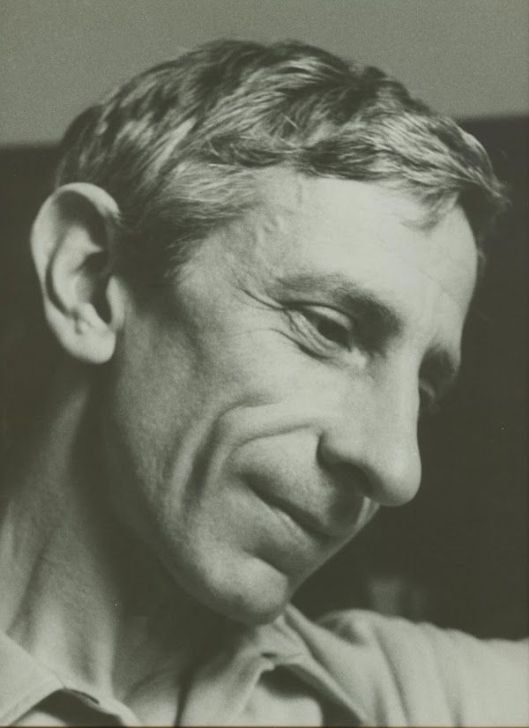
image1alawithcat.jpg

image1lalexander.jpg

and we thought we’d open our exploration with one aspect of otherworlds: the dead, and with one aspect of them as seen in the second volume of Alexander’s pentalogy, The Chronicles of Prydain (1964-1968),
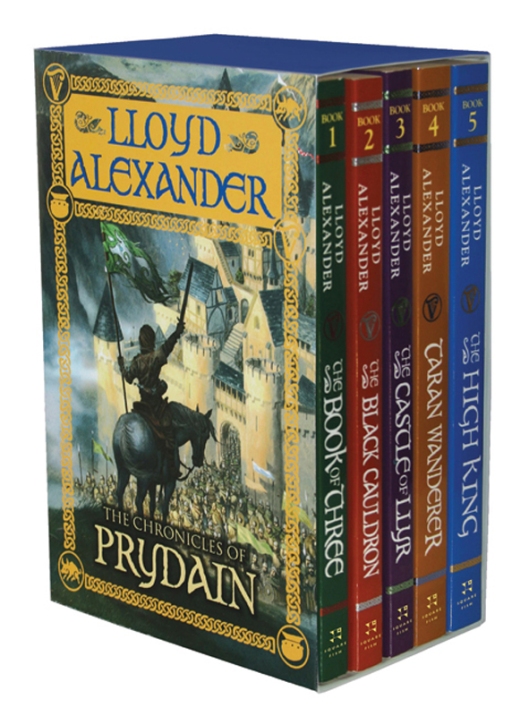
image2chronicles.jpg

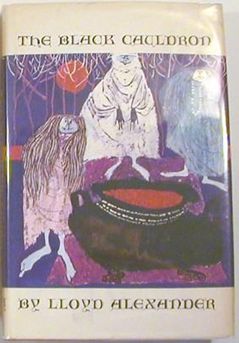
The Black Cauldron.

image3blackc.JPG

Alexander wrote more than forty books, mostly YA.

image4timecatimage5sebastianimage6westmarkimage7theironringimage8lukaskashaimage9wizardimage10illyrian

Some are series, like “Westmark” and “Vesper Holly”, and some are one-offs, like The Iron Ring, and we’ve enjoyed them all, but those we have returned to most often are the books which make up The Chronicles: The Book of Three, The Black Cauldron, The Castle of Llyr, Taran Wanderer, The High King. These are lighter books than their Tolkien cousins, but they are equally serious, with genuinely unhappy moments, and a feel which might, at times, seem like a combination of The Hobbit and “The Grey Havens”, which is why we return to them. The characters can be familiar, like Taran the Assistant Pig Keeper, who is a foundling, but much more, and Dallben the very quiet wizard, but also unusual, like the Princess Eilonwy, a chatterbox with a practical mind, or Gurgi, who is somewhere between human and something else, and who talks in a distinctly rhythmic way, or the would-be minstrel, Fflewddur Fflam, who has trouble with the truth—something which his harp points out on a regular basis.

All of these characters and more have their home in “Prydain”,
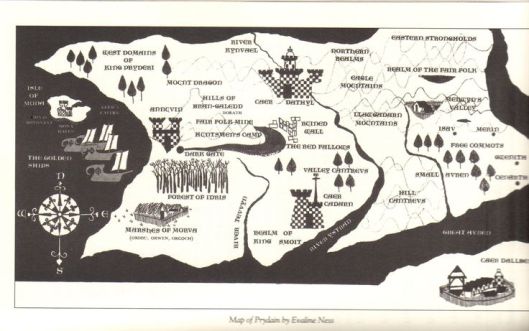
image11prydain.jpg

which is a kind of imaginary Wales, just as names and story elements in the pentalogy are derived from Welsh mythology and, in particular, from the medieval collection now called The Mabinogi (or Mabinogion—the title being the subject of much discussion). The first complete English translation was that of Lady Charlotte Guest (1838-1845) and it’s available at Sacred Texts. Here’s the link for the second edition of 1877).

In an interview with Scholastic, Alexander tells us that he spent a little time in Wales during World War II and fell in love with it and that the mythological part of the story came from a childhood love of King Arthur. (Here’s a link to the text of the interview—as well as one to the filmed interview, and, as a bonus, a separate film on Alexander.)

The general thread of the stories is derived, in part, from the story of Pwyll. (Yes—it looks unpronounceable, but it’s really not—go to this link from the Celtic Studies Association of North America to hear—for English speakers, that ll at the end would be the hardest—it’s said out of the corner of your mouth as a kind of musical hiss—if you know Sylvester the Pussycat from the old Warner Brothers cartoons,

image12sylvester.jpg

you can get a rough idea of the sound when he says—as everybody in the 1930s and 1940s appears to have said nearly constantly, if you believe their movies– “Say!”)

Pwyll is a prince who, when out hunting, has an encounter with Arawn (AH-ruhn, more or less), the Lord of Annwn (AH-nuhn), which is the name for the Otherworld. In the Alexander books, Arawn plans to conquer this world and Taran and his friends are brought into combat with his allies and Arawn himself again and again until Arawn’s final defeat.

One element in Arawn’s plans is a magical cauldron,
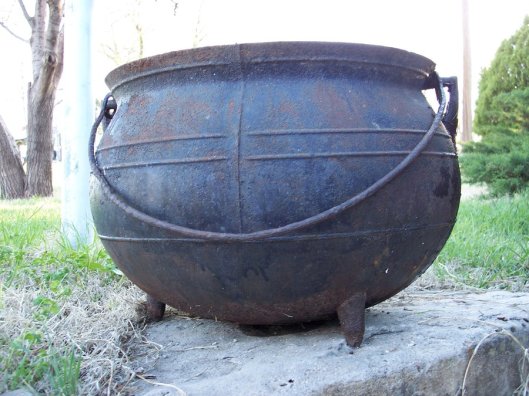
image13cauldron.jpg

which can bring back the dead. This is an idea which Alexander borrowed from another of the Mabinogi stories, that of Branwen, here depicted in a 1915 painting by Christopher Williams.
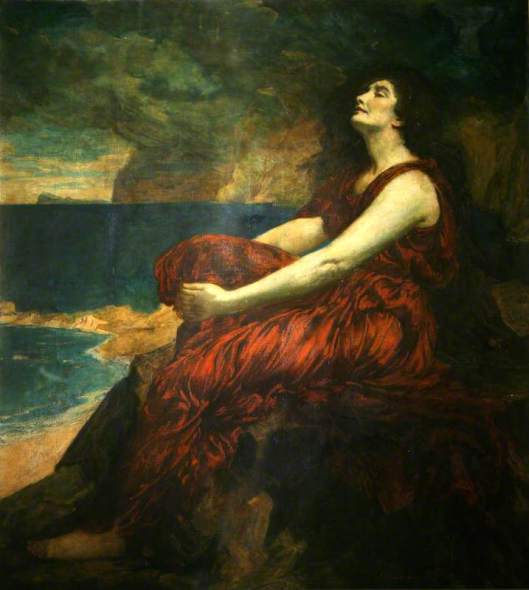
image14branwen.jpg

It has been suggested that the use of this cauldron can be seen upon the “Gundestrup Cauldron”, a silver vessel discovered in a peat bog at Gundestrup, Denmark, in 1891.

image15gundestrup.jpg

It’s a mysterious thing with lots of academic argument over who made it, where, and when, with dates between 200bc and 300ad, besides its purpose, but, among its many puzzling scenes is this:

image16gunddetail.jpg

In The Black Cauldron, although Arawn had once controlled it, the vessel really belongs to three mysterious figures—Orddu, Orwen, Orgoch—who live in a hut in the Marshes of Morva. Three haglike figures around a cauldron suggest another such trio—the three weird sisters in Shakespeare’s Macbeth.

image17macbeth.jpg

We believe, in fact, that these (in the play) are the three incarnations of the Irish goddess, the Badb (“Crow”). This image comes from a weird and interesting site called “Mygodpictures.com”.)

image18badb.jpg

She was also known as the Morrigan (“Great Queen”), who was thought to appear on battlefields, before, during, and after conflict.

These hags also remind us of the three figures of fate from the Norse tradition, the Norns (seen here in an especially ghostly picture by Arthur Rackham)

image19norns.jpg

and, beyond those, the Moirai, the three fates of Greco-Roman religion

image20moirai.jpg

as well as the Fates from Disney’s Hercules

image21disneyfates.jpg

to go from the serious to the nearly-silly.

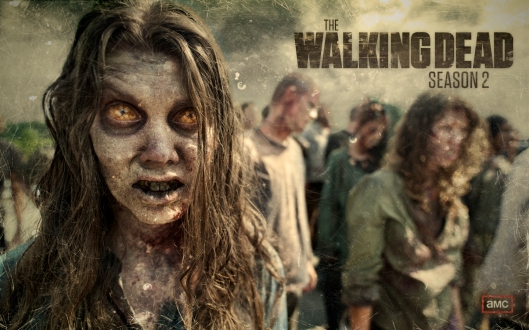
In recent years, popular entertainment has used the re-animated, from World War Z
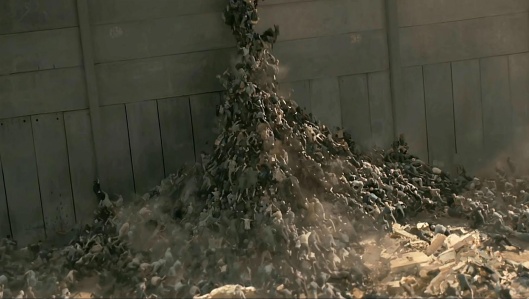
imag22worldwarz.jpg

to The Walking Dead,

image23walkingdead.jpg

and can we ever escape zombies?

image24zombies.jpg

For us, however, perhaps the most powerful of images lies not in the gross graphics of decaying flesh, but that, in the story of Branwen, the dead can be brought back, but cannot speak. Why is this? It’s a haunting question: is it that death—or rebirth—is so terrible that they are blocked from talking about it? Is it that no one is alive who cannot communicate, in some form or other? What do you think about the mute dead, dear readers?

Thank you, as always, for reading and definitely

MTCIDC

CD

Shire Portrait (2)

08 Wednesday Feb 2017

Posted by Ollamh in Economics in Middle-earth, Imaginary History, J.R.R. Tolkien, Maps, Narrative Methods

≈ 2 Comments

Tags

An Unexpected Party, Bad End, Baggins, ceramics, clay bank, coal, coins, cork, crafts, cutlery, Dwarves, Esther Forbes, Gondorian money, Hobbits, Isengard, Johnny Tremain, lead, Lloyd Alexander, Longbottom Leaf, Mayor, Michel Delving, mines, Postal Service, pottery, realien, Renaissance, Robert II of Scotland, Saruman, Shirriffs, silica, Silver, Taran Wanderer, Thain, The Green Dragon, The Hobbit, The Lord of the Rings, The Shire, Tolkien

Welcome, dear readers, as always.

In our last post, we began a series responding to the question:   what makes the Shire the Shire?

1theshire

We began with the government, which turned out to be very rudimentary: a Thain (hereditary), a Mayor (elected), a postal service (not known how chosen), Shirriffs (a kind of border patrol—volunteer). Since the Thain and Mayor were principally honorary positions, there was perhaps no salary attached. As for the postal service (called “Messengers”) and the Shirriffs, we presume that there must have been some sort of payment, although we are not told so. Since, in our world, we pay for the police and the post office through taxes, we wondered how the same services in the Shire were paid. This led us to the question of the Shire economy in general.

In a letter of 25 September, 1954, JRRT wrote to Naomi Mitchison:

“I am more conscious of my sketchiness in the archaeology and realien [“physical facts/things of real life”] than in the economics: clothes, agricultural implements, metal-working, pottery, architecture and the like…I am not incapable of or unaware of economic thought; and I think as far as the ‘mortals’ go, Men, Hobbits, and Dwarfs, that the situations are so devised that economic likelihood is there and could be worked out…” (Letters, 196)

The Shire would appear to be an agriculturally-based economy:

“The Shire is placed in a water and mountain situation and a distance from the sea and a latitude that would give it a natural fertility, quite apart from the stated fact that it was a well-tended region when they [hobbits] took it over.” (Letters, 196)

He adds to this that, when the hobbits took control of the Shire, that included “a good deal of older arts and crafts”, suggesting that the solution to the problem of the production of “clothes, agricultural implements, metal-working, pottery”—all the Realien, as he calls them, is assumed. How and from whom such things were taken over is not explained and such production, in any community, is not a small matter: “things of real life” are many and complicated.

Consider, for example, just one moment at Bag End. The Baggins appear to have been well-to-do, even without the treasure Bilbo brought back from his trip. His house is extremely well-furnished and the Baggins certainly don’t want for provisions, as we know from descriptions both in The Hobbit and The Lord of the Rings, as well as Realien, as the Dwarves’ clean-up song reminds us:

Chip the glasses and crack the plates!

Blunt the knives and bend the forks!

That’s what Bilbo Baggins hates—

Smash the bottles and burn the corks!

(The Hobbit, Chapter 1, “An Unexpected Party”)

1bilbodwarves.jpg

If we take this line by line, we come up with the following: glasses, plates, knives, forks, bottles, corks.

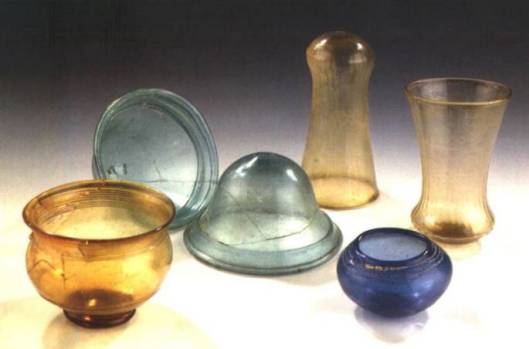
Glasses and bottles (as well as the window panes at Bag End) require a glassblower and perhaps a glazier.

2latemedglass.jpg

Plates require a potter.

3potter.JPG

Knives and forks were once made by cutlers (and forks are very advanced for a Middle-earth which is mostly medieval—although classical people used them in food preparation, it was only during the Renaissance that they began to appear as an eating utensil—western Medieval people ate with knives, spoons, and fingers).

4feast.jpg

5renfork.jpg

(And next is a Renaissance fork, found in the foundations of the Rose Theatre)

Corks come from vintners and brewers (in our world, vintners only began using cork as a sealant in the 17th century, we have read).

6awinebottles.jpg

Take those objects a step farther back and you find:

  1. glasswear, bottles, and window panes require silica and something to make it more stable, like lime (from limestone) or lead, which leads us to the question of where the ingredients come from. Silica is sand and can be found in many places—perhaps it might come from the west coast of Middle-earth? If all of the Shire is like the White Downs, where Michel Delving is located, it may be situated upon a vast deposit of chalk (more about Shire geography in our next posting). Lime would then have to be imported. As we have no record of mines in the Shire, the same would be true for lead.

6medievalglass.jpeg

7silica.jpg

8chalk.jpg

9limestone.jpg

10leadmine.jpg

  1. ceramics, like plates, are made of clay and all sorts of clay are used to make pottery, but all need to be dug out, usually from beds found near streams, rivers, or places like canyons or ravines. The Shire seems fairly well-watered, so we presume that the clay used to make Bilbo’s dishes was local.

11claybank.jpg

  1. knives and forks would be made of iron, early steel, or silver (with silver, plus an alloy to make them stronger)—here, again, we would need mines, for the iron ore and silver

12ironmine.jpg

  1. cork in our world is actually tree bark from the cork trees which grow in hot, dry southwest Europe (Spain/Portugal) and northwest Africa

13corkharvest.jpg

1, 2, 4 (and possibly 3) require raw materials of which no mention is made in the Shire and 1, 2, and 3 all need especially hot fires to make them, possibly using charcoal (made locally?) or coal (again, no mines discussed). And this is just, basically, four items.

14coalmine.jpg

So many import possibilities: what about export? We have solid evidence for one, which Merry and Pippin have discovered at Isengard:

“My dear Gimli, it is Longbottom Leaf! There were the Hornblower brandmarks on the barrels, as plain as plain. How it came here, I can’t imagine. For Saruman’s private use, I fancy. I never knew that it went so far abroad.” (The Two Towers, Book 3, Chapter 9, “Flotsam and Jetsam”)

It should always be remembered that these are works of fantasy, of course, and, unless there is some novelistic purpose which employs a potter as a character (in Taran Wanderer,15taranwanderer.JPG

by Lloyd Alexander, book 4 of The Chronicles of Prydain, for example, the hero, Taran, spends a little time as an apprentice potter, among other trades) or the making of silverware (something one might read about in Esther Forbes’ Johnny Tremain,16johnnytremain.jpg

where Johnny is an apprentice to a silversmith), it would seem completely unnecessary to spend narrative time discussing raw materials, imports, exports, or the manufacture of day-to-day items. We have taken the time, however, because, where, sometimes, we write about the parallels between Middle-earth and something here in our world, here the complexity of ordinary things in our world is completely forgotten in Middle-earth, or simply taken for granted, as JRRT implies in the letter cited above. If we are to examine Shire economics, however, we must, at least, consider them. As well, although we may keep saying, “No evidence for”, we think that, even if there is no potter or tin mine in the text, prompting readers to remember that, in the real world, there would have been one is a useful exercise and, for us, at least, makes the story that much more real.

But now we come to the subject of paying for Realien, or for anything else in the Shire, be it for the Shirriffs or for a pint at The Green Dragon.

In a totally rural economy many things might be obtained through barter: in return, for payment, please take 10 chickens, or a sack of grain. (And perhaps we see something like this in “The Scouring of the Shire”, when Hob Hayward tells Merry that, “We grows a lot of food, but we don’t rightly know what becomes of it. It’s all these ‘gatherers’ and ‘sharers’, I reckon, going round counting and measuring and taking off to storage.”—this looks like taxes, “paid in kind”).  Such might work for, say, trading a hen for a bowl, but would certainly not do for that pint—or for the bill at The Prancing Pony. Coins and their values are not mentioned in Tolkien, but their effect is felt, all the same: when Frodo buys a house in Crickhollow, we doubt he does it with cows!

17aeastfarthingmap.png

(We discussed Middle-earth money in an earlier posting and it seems to us that it would be fun to create, say, Gondorian money—here’s one possibility

17robert21316-1390.jpg

It’s actually a coin of Robert II of Scotland—1316-1390—but, changing the crown, could you imagine this as something issued earlier in the Third Age, say?)

This has been perhaps a rather long-winded and prosy posting (perhaps not for nothing did Thomas Carlyle, in 1849, call economics “the dismal science”?), for which we ask our readers’ pardon, but, if it helps to flesh out our portrait of the Shire, it was worth it, we feel. Our next, we hope will be a bit lighter, being on the physical “look” of the Shire, from its geography to its geology to its architecture.

Thanks, as ever, for reading.

MTCIDC

CD

The Doubtful Sea Series Facebook Page

The Doubtful Sea Series Facebook Page

  • Ollamh

Categories

  • Artists and Illustrators
  • Economics in Middle-earth
  • Fairy Tales and Myths
  • Films and Music
  • Games
  • Heroes
  • Imaginary History
  • J.R.R. Tolkien
  • Language
  • Literary History
  • Maps
  • Medieval Russia
  • Military History
  • Military History of Middle-earth
  • Narnia
  • Narrative Methods
  • Poetry
  • Research
  • Star Wars
  • Terra Australis
  • The Rohirrim
  • Theatre and Performance
  • Tolkien
  • Uncategorized
  • Villains
  • Writing as Collaborators
Follow doubtfulsea on WordPress.com

Across the Doubtful Sea

Recent Postings

  • A Moon disfigured December 17, 2025
  • On the Roads Again—Once More December 10, 2025
  • (Not) Crossing Bridges December 3, 2025
  • On the Road(s) Again—Again November 26, 2025
  • On the Road(s) Again November 19, 2025
  • To Bree (Part 2) November 12, 2025
  • To Bree (Part 1) November 5, 2025
  • A Plague o’ Both—No, o’ All Your Houses! October 29, 2025
  • It’s in Writing (2:  I’st a Prologue, or a Poesie for a Ring?) October 22, 2025

Blog Statistics

  • 103,201 Views

Posting Archive

  • December 2025 (3)
  • November 2025 (4)
  • October 2025 (5)
  • September 2025 (4)
  • August 2025 (4)
  • July 2025 (5)
  • June 2025 (4)
  • May 2025 (4)
  • April 2025 (5)
  • March 2025 (4)
  • February 2025 (4)
  • January 2025 (5)
  • December 2024 (4)
  • November 2024 (4)
  • October 2024 (5)
  • September 2024 (4)
  • August 2024 (4)
  • July 2024 (5)
  • June 2024 (4)
  • May 2024 (5)
  • April 2024 (4)
  • March 2024 (4)
  • February 2024 (4)
  • January 2024 (5)
  • December 2023 (4)
  • November 2023 (5)
  • October 2023 (4)
  • September 2023 (4)
  • August 2023 (5)
  • July 2023 (4)
  • June 2023 (4)
  • May 2023 (5)
  • April 2023 (4)
  • March 2023 (5)
  • February 2023 (4)
  • January 2023 (4)
  • December 2022 (4)
  • November 2022 (5)
  • October 2022 (4)
  • September 2022 (4)
  • August 2022 (5)
  • July 2022 (4)
  • June 2022 (5)
  • May 2022 (4)
  • April 2022 (4)
  • March 2022 (5)
  • February 2022 (4)
  • January 2022 (4)
  • December 2021 (5)
  • November 2021 (4)
  • October 2021 (4)
  • September 2021 (5)
  • August 2021 (4)
  • July 2021 (4)
  • June 2021 (5)
  • May 2021 (4)
  • April 2021 (4)
  • March 2021 (5)
  • February 2021 (4)
  • January 2021 (4)
  • December 2020 (5)
  • November 2020 (4)
  • October 2020 (4)
  • September 2020 (5)
  • August 2020 (4)
  • July 2020 (5)
  • June 2020 (4)
  • May 2020 (4)
  • April 2020 (5)
  • March 2020 (4)
  • February 2020 (4)
  • January 2020 (6)
  • December 2019 (4)
  • November 2019 (4)
  • October 2019 (5)
  • September 2019 (4)
  • August 2019 (4)
  • July 2019 (5)
  • June 2019 (4)
  • May 2019 (5)
  • April 2019 (4)
  • March 2019 (4)
  • February 2019 (4)
  • January 2019 (5)
  • December 2018 (4)
  • November 2018 (4)
  • October 2018 (5)
  • September 2018 (4)
  • August 2018 (5)
  • July 2018 (4)
  • June 2018 (4)
  • May 2018 (5)
  • April 2018 (4)
  • March 2018 (4)
  • February 2018 (4)
  • January 2018 (5)
  • December 2017 (4)
  • November 2017 (4)
  • October 2017 (4)
  • September 2017 (4)
  • August 2017 (5)
  • July 2017 (4)
  • June 2017 (4)
  • May 2017 (5)
  • April 2017 (4)
  • March 2017 (5)
  • February 2017 (4)
  • January 2017 (4)
  • December 2016 (4)
  • November 2016 (5)
  • October 2016 (6)
  • September 2016 (5)
  • August 2016 (5)
  • July 2016 (5)
  • June 2016 (5)
  • May 2016 (4)
  • April 2016 (4)
  • March 2016 (5)
  • February 2016 (4)
  • January 2016 (4)
  • December 2015 (5)
  • November 2015 (5)
  • October 2015 (4)
  • September 2015 (5)
  • August 2015 (4)
  • July 2015 (5)
  • June 2015 (5)
  • May 2015 (4)
  • April 2015 (3)
  • March 2015 (4)
  • February 2015 (4)
  • January 2015 (4)
  • December 2014 (5)
  • November 2014 (4)
  • October 2014 (6)
  • September 2014 (1)

Blog at WordPress.com.

  • Subscribe Subscribed
    • doubtfulsea
    • Join 78 other subscribers
    • Already have a WordPress.com account? Log in now.
    • doubtfulsea
    • Subscribe Subscribed
    • Sign up
    • Log in
    • Report this content
    • View site in Reader
    • Manage subscriptions
    • Collapse this bar
 

Loading Comments...