• About

doubtfulsea

~ adventure fantasy

Tag Archives: Nazgul

To Bree (Part 2)

12 Wednesday Nov 2025

Posted by Ollamh in Uncategorized

≈ Leave a comment

Tags

Barrow-downs, Barrow-wight, Bilbo, Bree, bridge-of-strongbows, Fantasy, Frodo, Great East Road, Nazgul, Shire, The Bridge of Stonebows, The Lord of the Rings, The Prancing Pony, Tolkien, Tom Bombadil, travel

As always, welcome, dear readers.

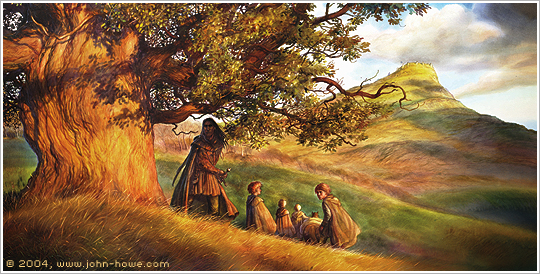
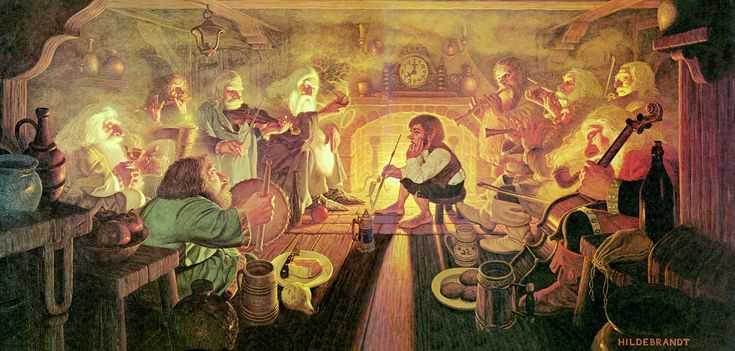
In “To Bree (Part 1)”, we had followed Bilbo & Co.

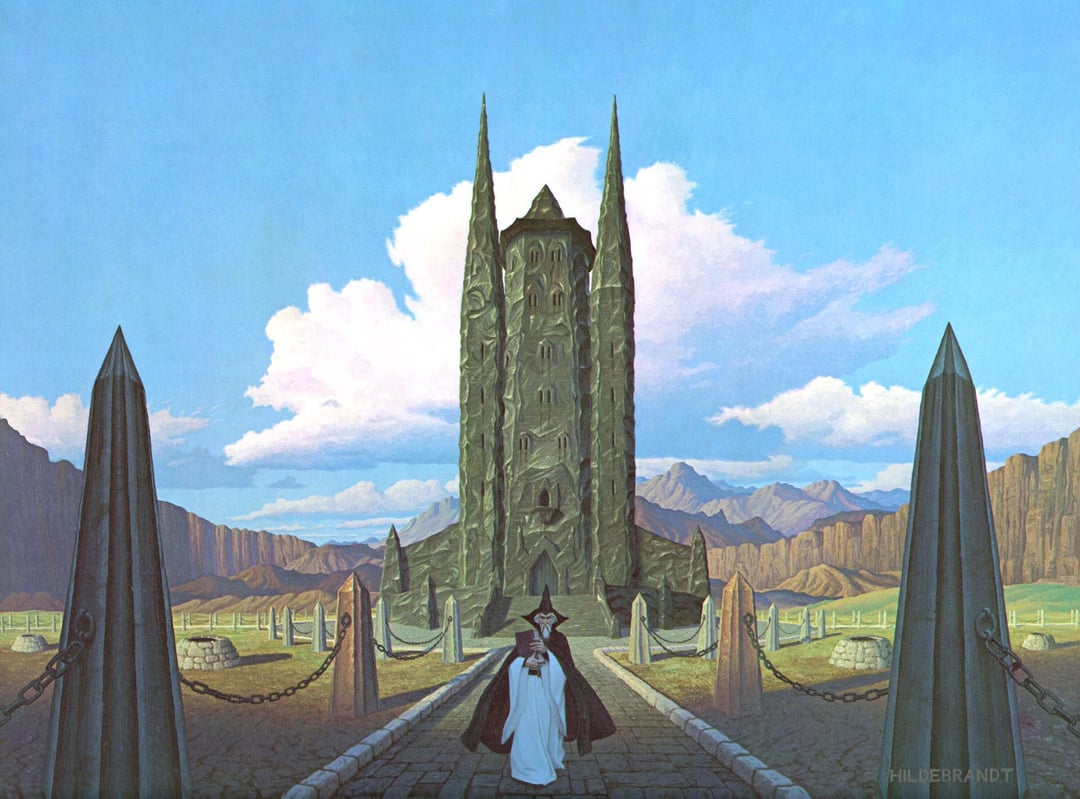
(Hildebrandts)

(Hildebrandts)

eastwards,

but only as far as Bree, echoing the remark in The Lord of the Rings:

“It was not yet forgotten that there had been a time when there was much coming and going between the Shire and Bree.” (The Fellowship of the Ring, Book One, Chapter 9, “At the Sign of the Prancing Pony”)

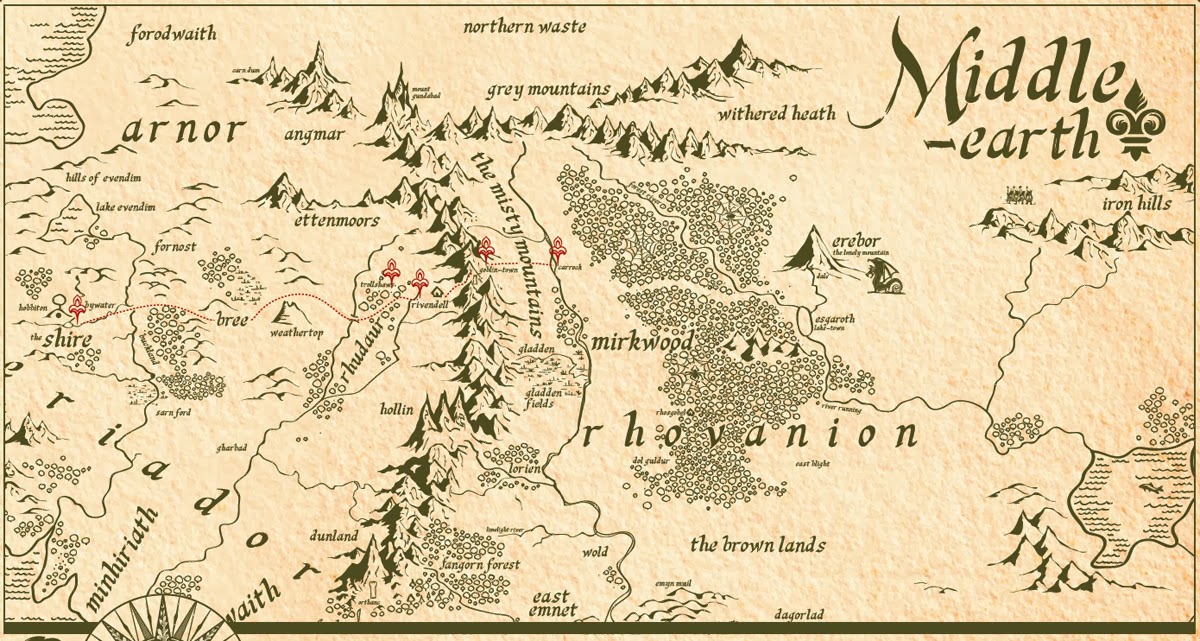
Oddly, however, although I supposed that we were traveling through the East Farthing

(Christopher Tolkien)

through Frogmorton and Whitfurrows,

to the Bridge of Strongbows,

(Stirling Bridge, actually—for more see:  https://www.historicenvironment.scot/visit-a-place/places/stirling-old-bridge/ )

the description in The Hobbit was wildly different:

“Then they came to lands where people spoke strangely, and sang songs Bilbo had never heard before.  Now they had gone on far into the Lone-lands, where there were no people left, no inns, and the roads grew steadily worse.  Not far ahead were dreary hills, rising higher and higher, dark with trees.  On some of them were old castles with an evil look, as if they had been built by wicked people.”  (The Hobbit, Chapter 2, “Roast Mutton”) 

with, eventually, a surprise for us Bree-bound folk:  no Bree.

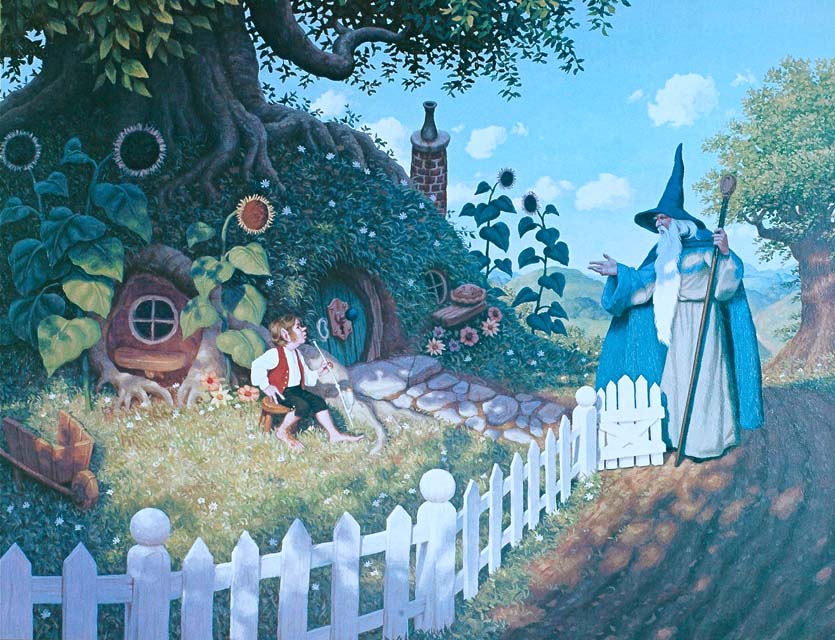
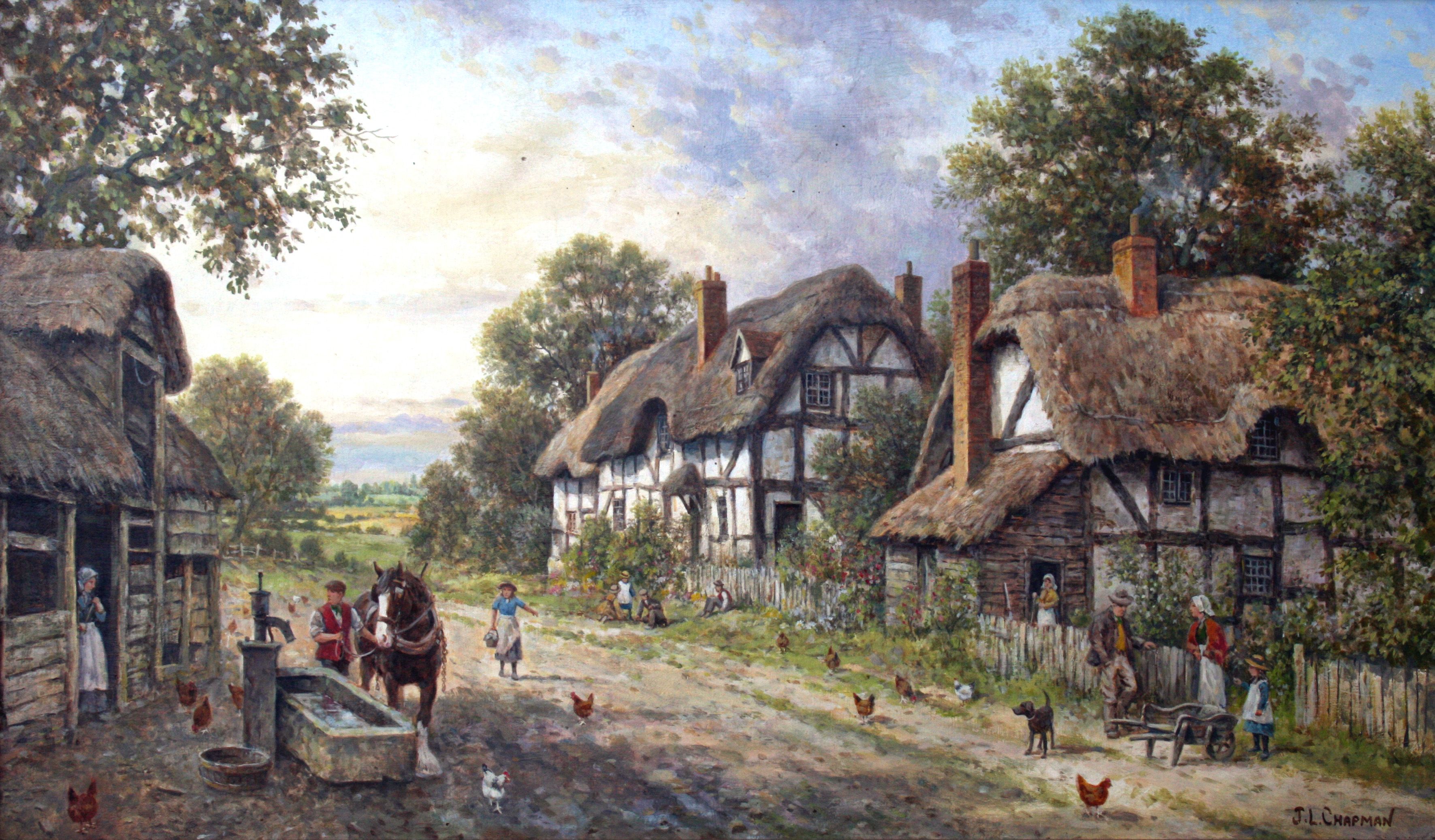
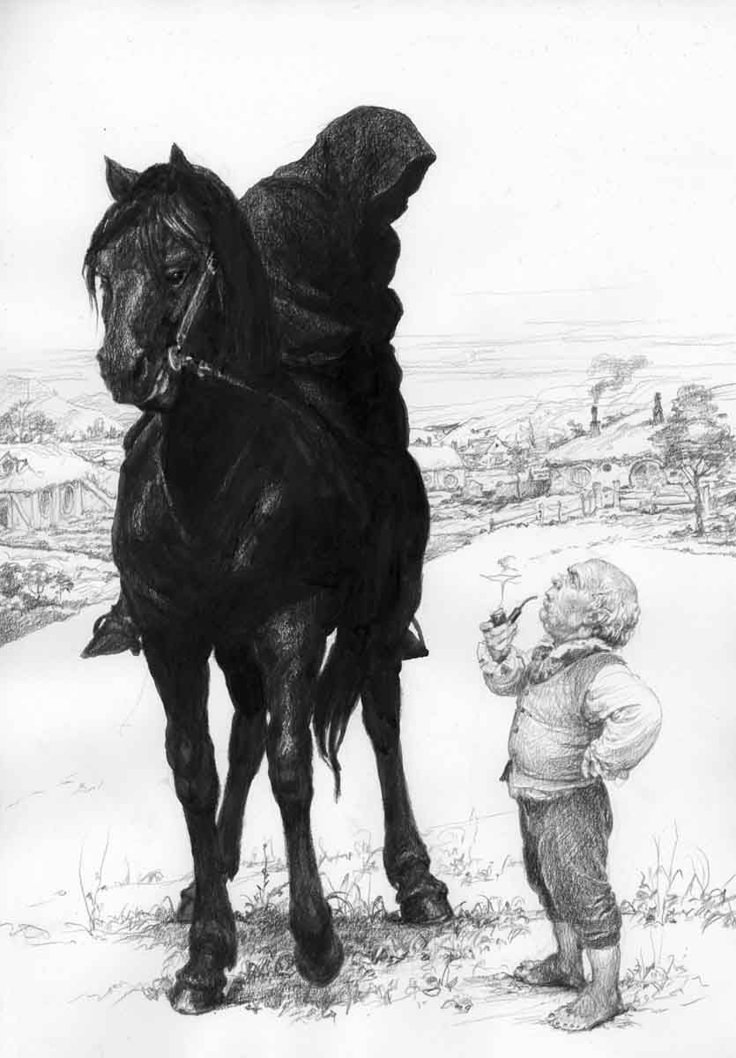
So, back we went to the Green Dragon, in Bywater, where Bilbo started and now we begin again, with Frodo.  Times have changed, however, and unlike the innocent Bilbo, we are in a different world, where Mordor isn’t just a distant place name and its servants are looking for Baggins.

(Denis Gordeev)

Frodo doesn’t take the Great East Road,

(Christopher Tolkien)

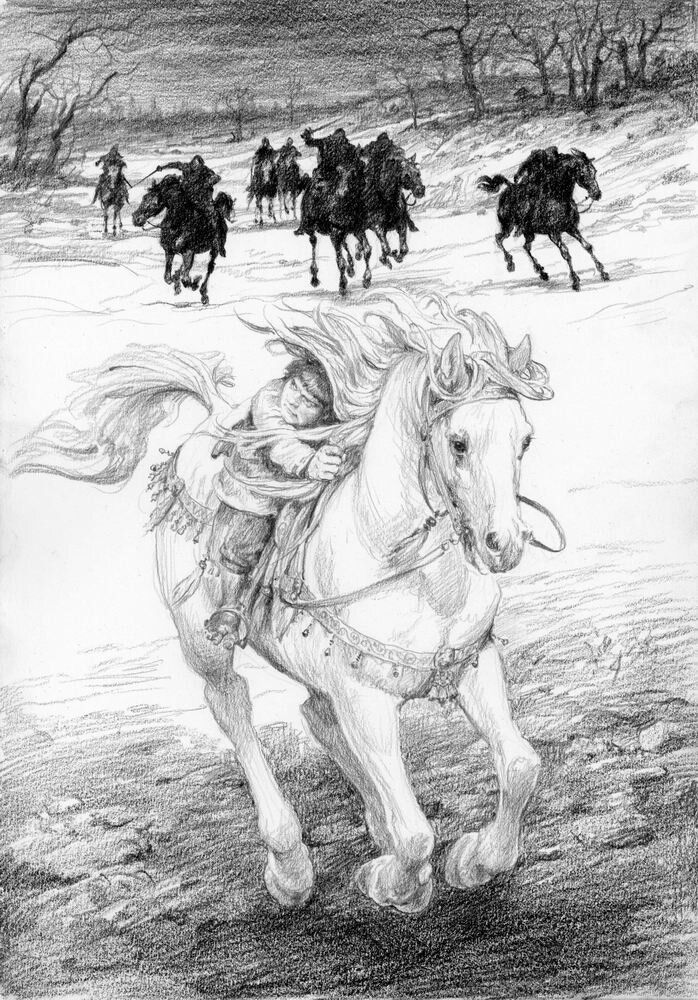
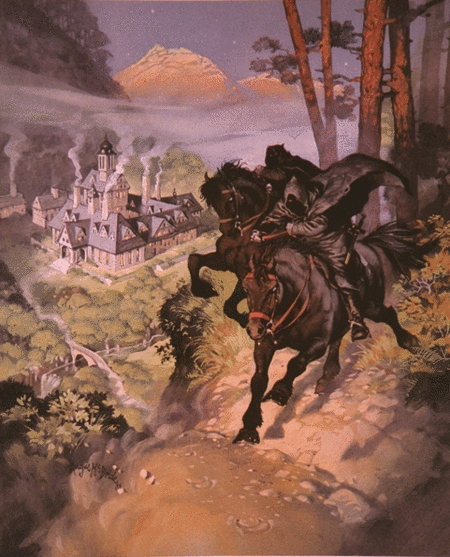
but cuts across country, narrowly avoiding one of the searchers,

(Angus McBride)

taking shelter with a local farmer, and finally reaching the ferry across the Brandywine just ahead of his pursuers.

Although this is a very indirect route, Frodo and his companions eventually reach Bree, but even though I would love to meet Tom Bombadil,

(the Hildebrandts)

I prefer a direct route, so we’ll continue on the Great East Road, cross the Bridge of Strongbows, and head eastwards. 

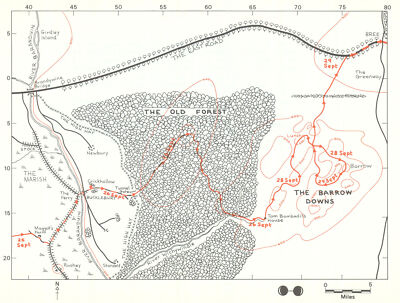
(from Barbara Strachey, The Journeys of Frodo, a much-recommended book, if you don’t have a copy)

So what do we see?  

Over the bridge—and here’s another possibility for it, the Clopton Bridge at Stratford-upon-Avon—

(you can see more of Stratford and the shire—Warwickshire, that is—here:  https://www.ourwarwickshire.org.uk/content/catalogue_wow/stratford-upon-avon-clopton-bridge-2 )

the road runs, not surprisingly, due eastwards and here, consulting our map,

 is the Old Forest to our right,

described, by our narrator, as Frodo and his friends see it on their detour away from the Great East Road:

“Looking ahead they could see only tree-trunks of innumerable sizes and shapes:  straight or bent, twisted, leaning, squat or slender, smooth or gnarled and branched; and all the stems were green or grey with moss and slimy, shaggy growths.” (The Fellowship of the Ring, Book One, Chapter 6, “The Old Forest”)

Keep in mind, however, that we’re seeing it through a long line of trees planted alongside the road, probably as a windbreak.
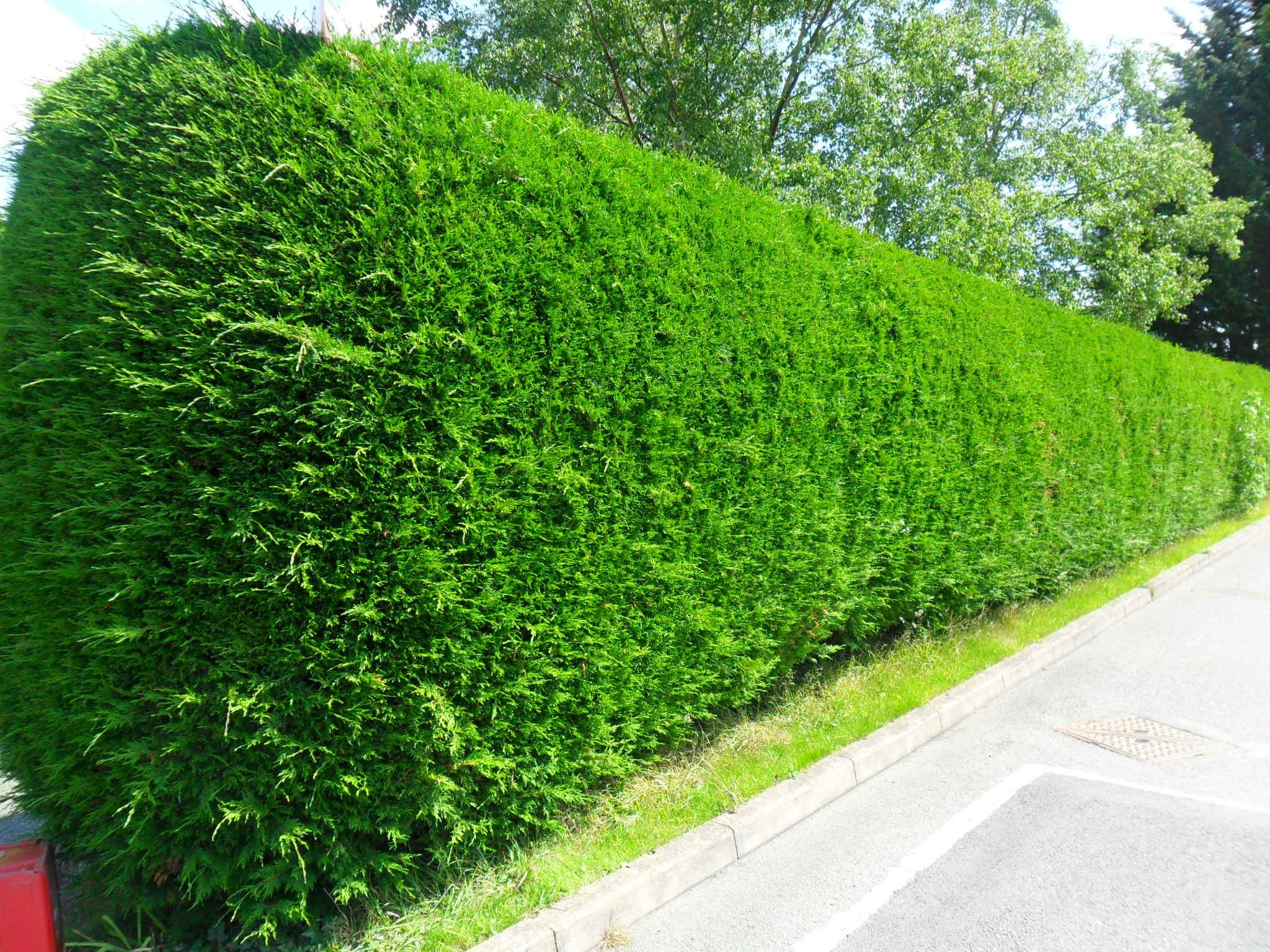
We know that they’re there because Merry says:

“ ‘That is a line of trees,’ said Merry, ‘and that must mark the Road.  All along it for many leagues east of the Bridge there are trees growing.  Some say they were planted in the old days.’ “ (The Fellowship of the Ring, Book One, Chapter 8, “Fog on the Barrow-downs”)

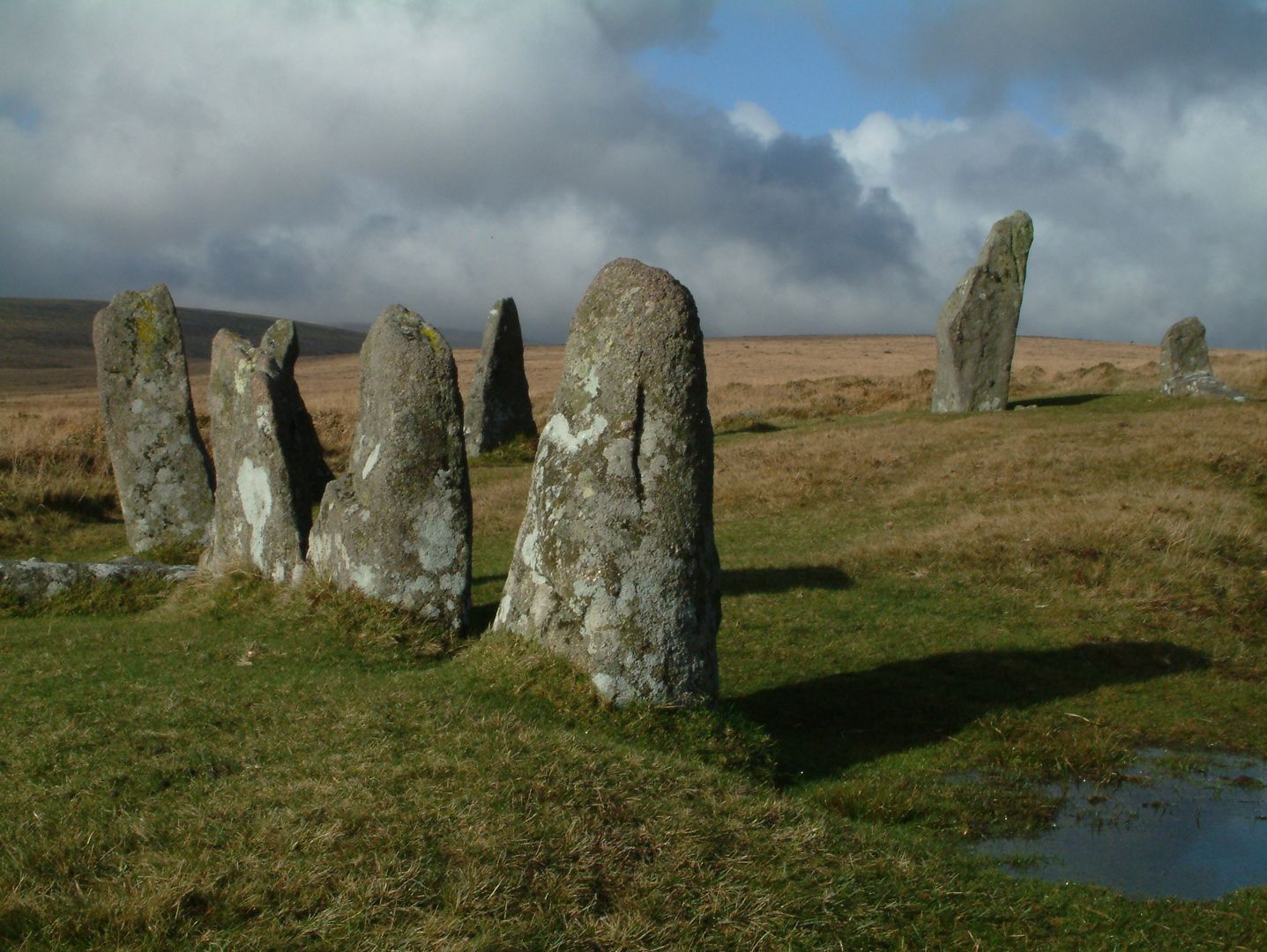
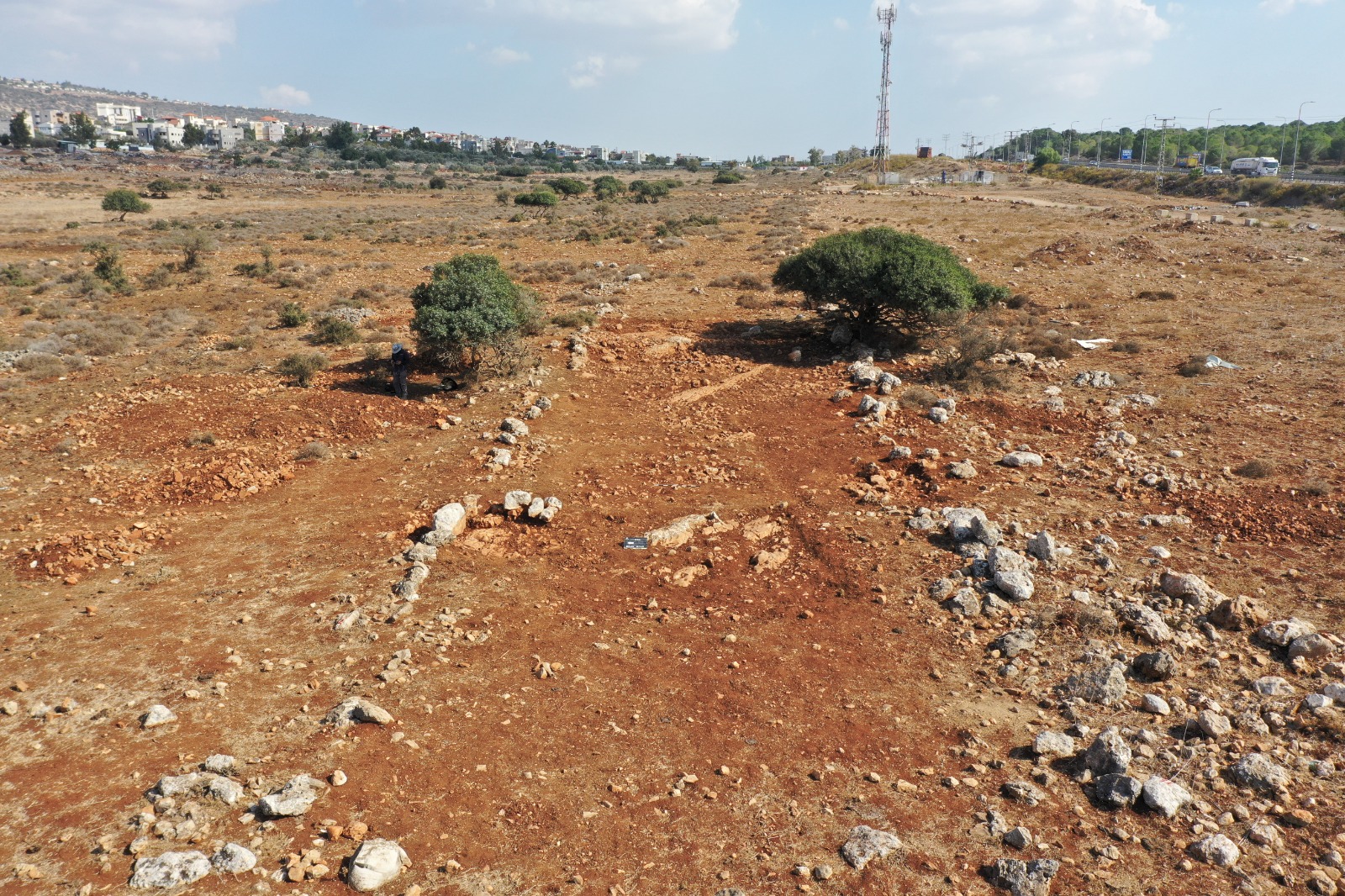
As we travel farther along the road, if we look to our right, through the trees, we then come to the edge of the Barrow-downs,

with their ancient standing stones

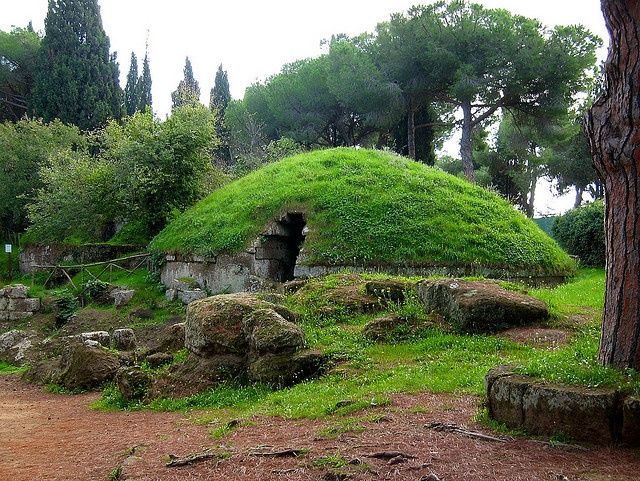
and tumuli—

where Frodo and his friends almost end their trip.

(Matthew Stewart)

But we haven’t strayed, as they did, and, passing the Downs, we see, again on our right:

“The dark line they had seen was not a line of trees but a line of bushes growing on the edge of a deep dike, with a steep wall on the further side.”

A dike is a ditch, usually with an earthen embankment made from the spoil of the ditch.  There are several of these in England, like Offa’s Dyke—

The narrator adds:

“…with a steep wall on the further side”

and I’m presuming that that is the earthen embankment, with:

“…a gap in the wall” through which Frodo and friends rode and

…when at last they saw a line of tall trees ahead…they knew that they had come back to the Road.”

If you’re read the first part of this posting, you will know that I’ve been assuming that that Road, laid in ancient times to a stone bridge and beyond, would be like a Roman road, and be paved,

if a bit weedy, but now we find:

“…the Road, now dim as evening drew on, wound away below them.  At this point it ran nearly from South-west to North-east, and on their right it fell quickly down into a wide hollow.  It was rutted and bore many signs of the recent heavy rain; there were pools and pot-holes full of water.”

Does this suggest that it was, at best and in the past, simply a dirt road, through well-kept?  Or is it a very run-down road, worn and covered over with leaves and dirt, the ancient blocks gradually becoming separated under the weight of centuries, allowing for pot-holes?

In any event, we now continue our journey with Frodo and his compantions until–

“…they saw lights twinkling some distance ahead.

Before them rose Bree-hill barring the way, a dark mass against misty stars; and under its western flank nestled a large village.  Towards it they [and we] now hurried desiring only to find a fire, and a door between them and the night.”

We’re not in Bree yet, however, as:

“The village of Bree had some hundred stone houses of the Big Folk, mostly above the Road, nestling on the hillside with windows looking west.  On that side, running in more than half a circle from the hill and back to it, there was a deep dike with a thick hedge on the inner side.  Over this the Road crossed by a causeway; but where it pierced the hedge it was barred by a great gate.  There was another gate in the southern corner where the Road ran out of the village.  The gates were closed at nightfall; but just inside them were small lodges for the gatekeepers.”  (The Fellowship of the Ring, Book One, Chapter 9, “At the Sign of the Prancing Pony”)

We’ve seen a dike just now, at the Great East Road, but now we have to add a hedge

and a gate.

Once inside, however, lies the Prancing Pony

(Ted Nasmith)

and one more pint before bed.

As always, thanks for reading.

Stay well,

Read road signs carefully,

And remember that, as always, there’s

MTCIDC

O

Going Around in Cycles

17 Wednesday Sep 2025

Posted by Ollamh in Uncategorized

≈ Leave a comment

Tags

Barrow-wight, Finnegans Wake, Giambattista Vico, goblin king, James Joyce, La Scienza Nuova, lotr, Mirkwood spiders, Nazgul, Ouroboros, Palantir, runes, Shelob, swords, The Hobbit, The Lord of the Rings, The Return of the King, Tolkien, Tom Bombadil, Yogi Berra

“It’s déjà vue all over again.”

(attributed to Yogi Berra, US baseball player, but see:  https://quoteinvestigator.com/2013/10/08/deja-vu-again/ )

Dear readers, as always, welcome.

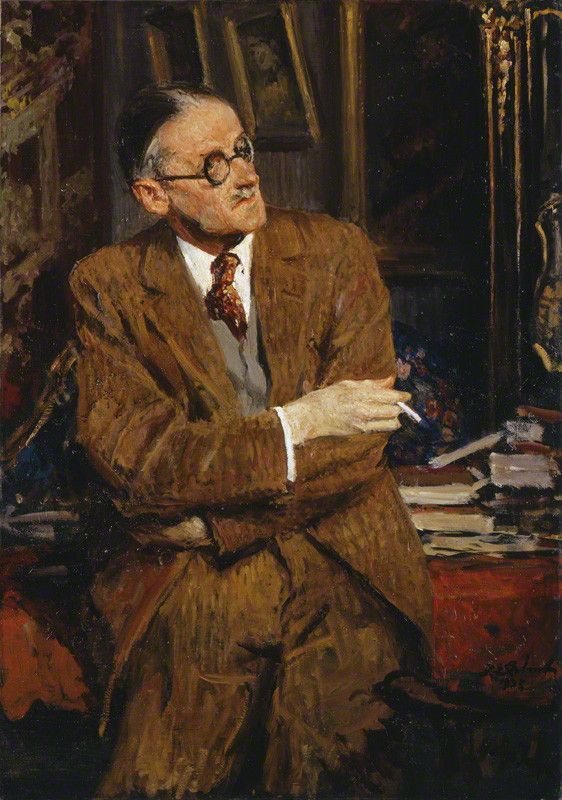
In later life, James Joyce, 1882-1941,

was interested in the work of the 17-18th-century philosopher (among other things) Giambattista Vico, 1668-1744,

and his idea that history followed a definite repeated pattern in three ages, Divine, Heroic, and Human, posited in his 1725-1744 work, La Scienza Nuova (“the new understanding, knowledge, learning”).

(For more on Vico, see:  https://www.philosopheasy.com/p/the-eternal-return-giambattista-vicos  This is, potentially, a very large subject, and even more so when Joyce is combined with Vico.  For an introductory view, see:  https://archive.org/details/vicojoyce00vere_0/page/n5/mode/2up ) 

Joyce incorporated his understanding of Vico in his last work, Finnegans Wake, 1939, in which

the idea of repeated patterns cycling throughout appears in the very opening—and closing– lines of the book:

“A way a lone a last a loved a long the / riverrun, past Eve and Adam’s, from swerve of shore to bend of bay, brings us by a commodius vicus of recirculation back to Howth Castle and Environs.” 

which, in fact, are reversed, the opening of the book being:

“…riverrun, past Eve and Adam’s, from swerve of shore to bend of bay, brings us by a commodius vicus of recirculation back to Howth Castle and Environs…”

and the last words of the book are:

“A way a lone a last a loved a long the…”

so that, by joining them, we have the effect of the serpent Ouroboros, tail/tale joined to mouth—and the book can begin again.

(For more on Finnegans Wake, see:  https://en.wikipedia.org/wiki/Finnegans_Wake  For more on the serpent, see:   https://en.wikipedia.org/wiki/Ouroboros )

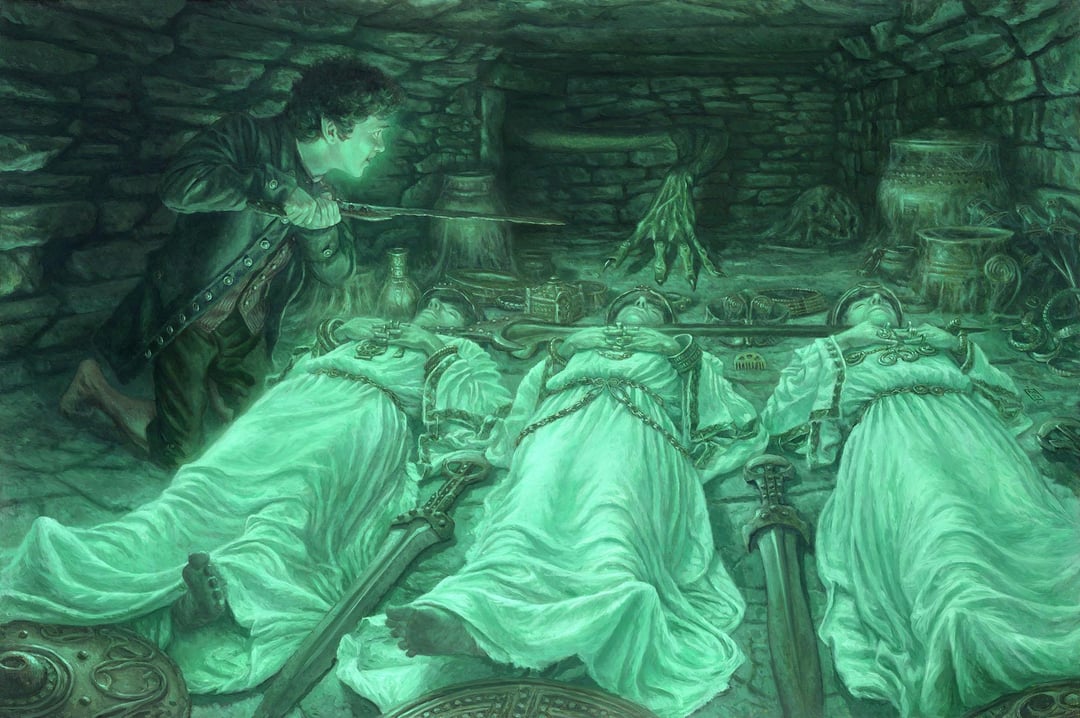
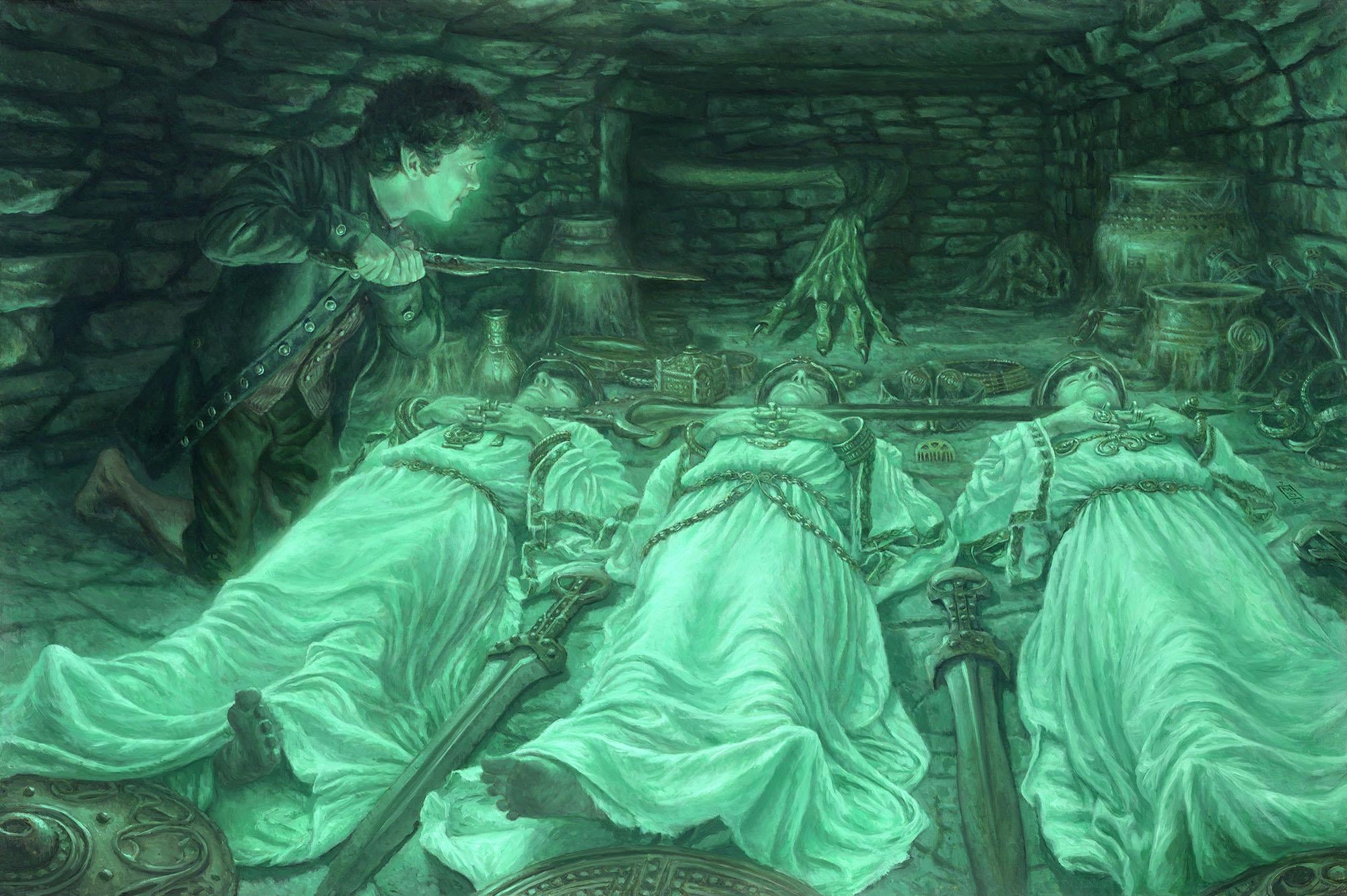
I’ve always thought that leaving Tom Bombadil and the Barrow-wight

(Matthew Stewart—see more of his work here:  https://www.matthew-stewart.com/  See, in particular, his Middle-earth work, but then go through his other galleries to view his impressive ability to capture other imaginary worlds.)

out of the first Lord of the Rings film was a mistake, even though Tolkien himself once wrote:

“Tom Bombadil is not an important person—to the narrative.”  (letter to Naomi Mitchison, 25 April, 1954, Letters, 268—but read on, as JRRT has much more to say and, to my mind, justifies his position in the narrative, in fact, in a spiritual way.)

Tom is interesting in himself, being a kind of parallel for Treebeard, among other things (and the writers of the Rings of Power series thought highly enough of him to include him in their telling), but, for me, in the narrative, it’s what he gives them, particularly Merry, which is important—

“For each of the hobbits he chose a dagger, long, leaf-shaped, and keen, of marvelous workmanship…”

(probably something like this, but more elaborately-worked)

‘Old knives are long enough as swords for hobbit-people,’ he said…Then he told them that the blades were forged many long years ago by Men of Westernesse:  they were foes of the Dark Lord, but they were overcome by the evil king of Carn Dum in the Land of Angmar.”  (The Fellowship of the Ring, Book One,  Chapter 8, “Fog on the Barrow-downs”)

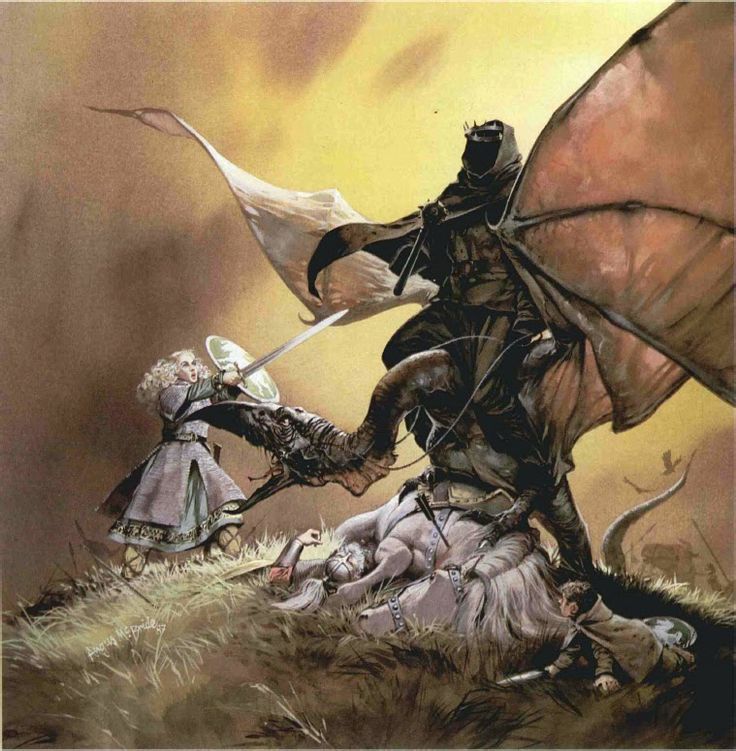
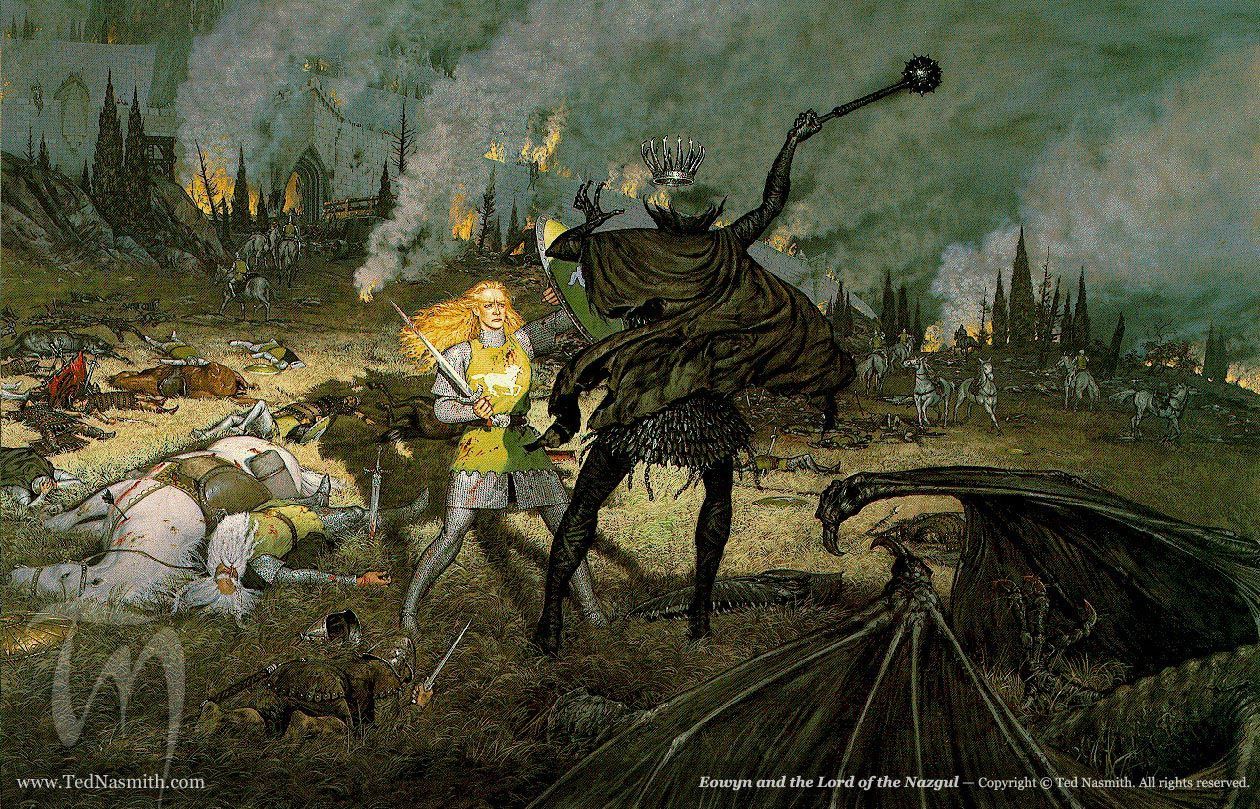
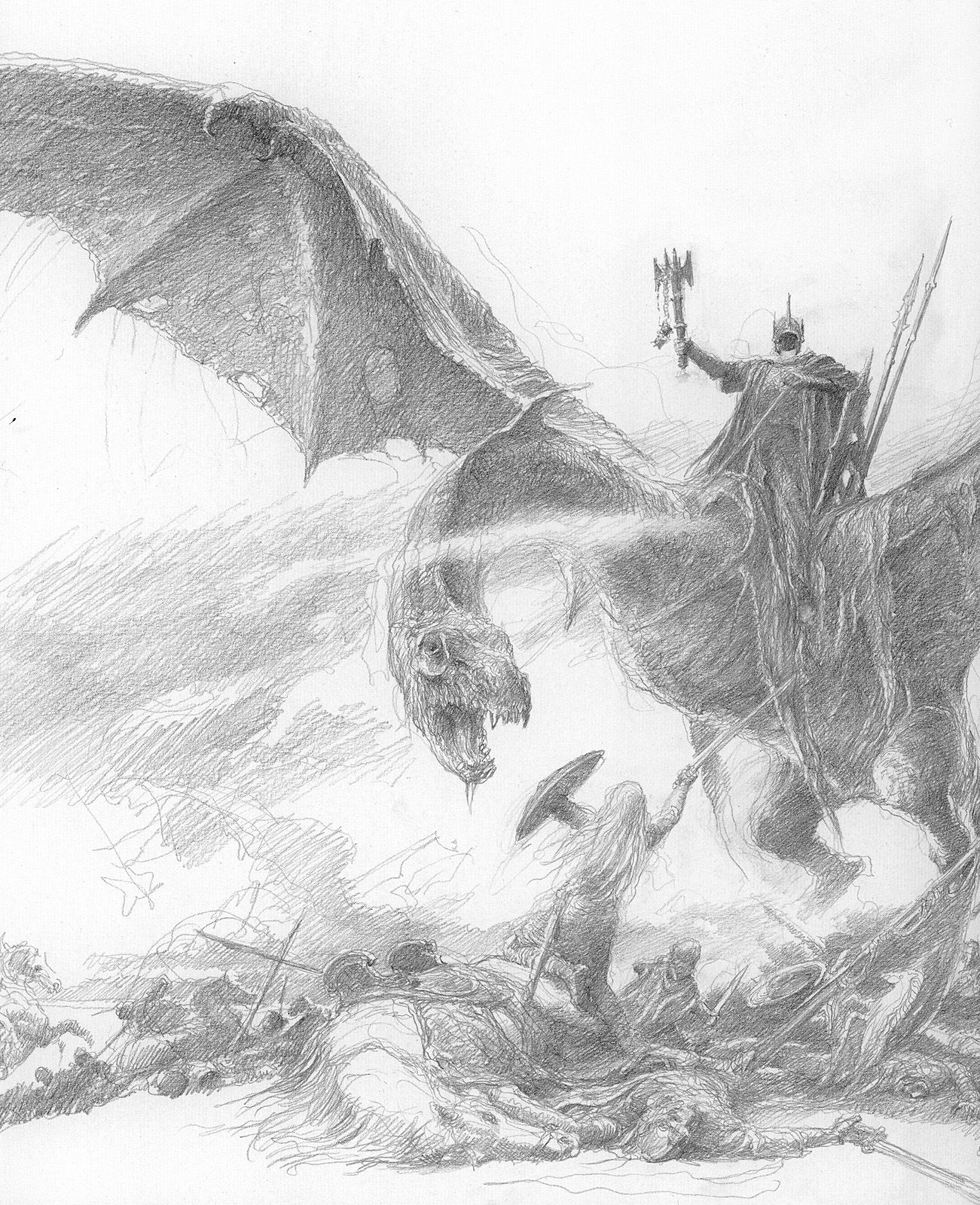
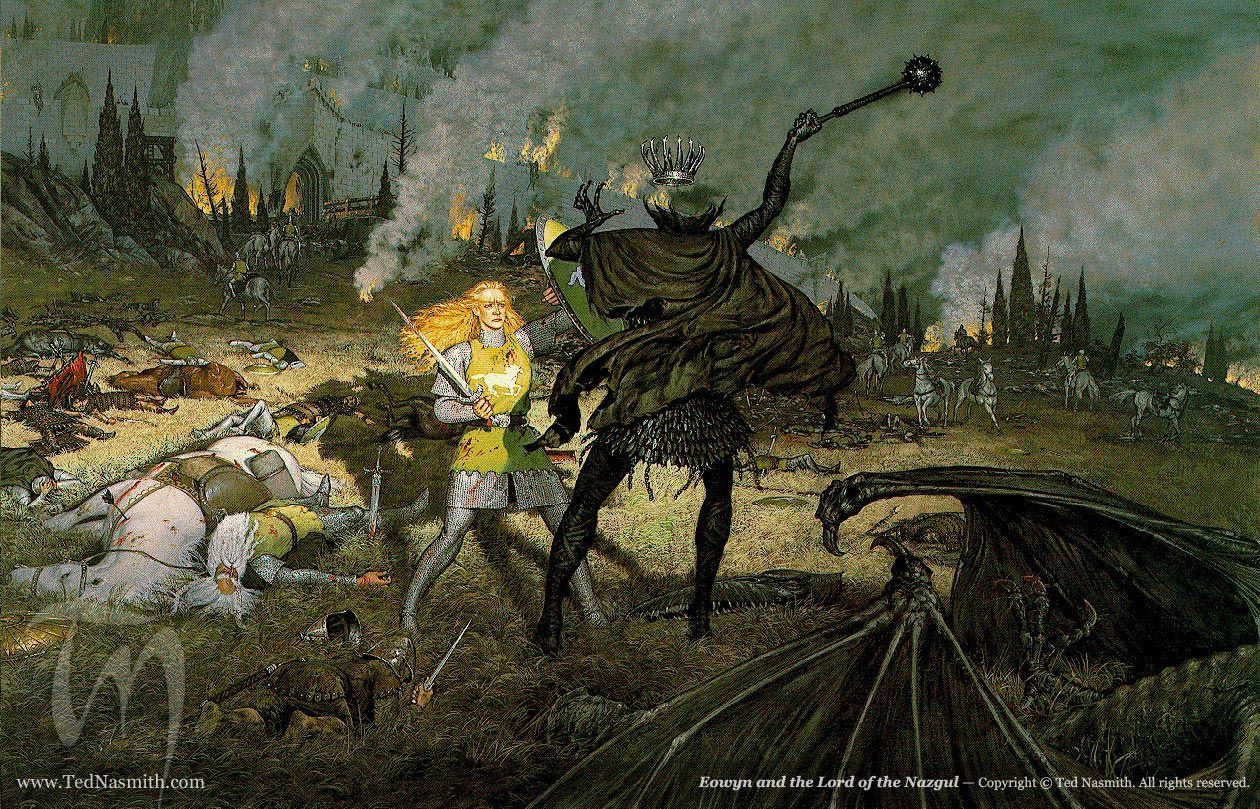
This is, of course, the weapon  which Merry uses to stab the chief of the Nazgul while he’s attacking Eowyn, the Nazgul being the very witch-king who had overcome the Men of Westernesse so long before.

(Ted Nasmith)

To keep Tom and the Barrow-wight in the film is then to underline the cyclic nature of much of the story.

 This unnamed but crucial sword is only one of the swords scattered throughout the later story of Middle-earth, however, and there is a cyclic potential for others, as well.

Think of the swords which Gandalf and Co. find in the trolls’ hideout in The Hobbit—

“…and among them were several swords of various makes, shapes, and sizes.  Two caught their eyes particularly, because of their beautiful scabbards and jeweled hilts…

‘These look like good blades,’ said the wizard, half drawing them and looking at them curiously.  ‘They were not made by any troll, nor by any smith among men in these parts and days; but when we can read the runes on them, we shall know more about them.’ “ (The Hobbit, Chapter Two, “Roast Mutton”)

In the next chapter, Elrond then identifies them:

“Elrond knew all about runes of every kind.  That day he looked at the swords they had brought from the trolls’ lair, and he said:  ‘These are not troll-make.  They are old swords, very old swords of the High Elves of the West, my kin.  They were made in Gondolin for the Goblin-wars.  They must have come from a dragon’s hoard or goblin plunder, for dragons and goblins destroyed that city many ages ago.  This, Thorin, the runes name Orcrist, the Goblin-cleaver in the ancient tongue of Gondolin; it was a famous blade.  This, Gandalf, is Glamdring, a Foe-hammer that the king of Gondolin once wore.’ “ (The Hobbit, Chapter Three.  “A Short Rest”)

And you’ll remember that Gandalf runs the king of later goblins through in the next chapter with that very sword:

“Suddenly a sword flashed in its own light.  Bilbo saw it go right through the Great Goblin as he stood dumb-founded in the middle of his rage.  He fell dead, and the goblin soldiers fled before the sword shrieking into the darkness.”  (The Hobbit, Chapter Four, “Over Hill and Under Hill”)

(Alan Lee)

The knife which Bilbo picks up from the trolls’ hoard “only a tiny pocket-knife for a troll, but it was as good as a short sword for the hobbit”, comes in handy later in The Hobbit, when Bilbo uses it to kill some of the spiders of Mirkwood,

(Oleksiy Lipatov—you can see more of his work here:  https://www.deviantart.com/lipatov/gallery/85631839/old-comic  )

but it will reappear many years later in The Lord of the Rings, when Frodo and Sam use it against another ancient evil, Shelob–

(Ted Nasmith again—and, unusually for his work, just plain weird—but vivid!)

Perhaps the most consequential sword  to return, however, is that which maimed Sauron many centuries ago, causing him to lose the Ring, and which, reforged, Aragorn shows him in Saruman’s palantir

(the Hildebrandts)

(itself appearing from a far older world, being as Aragorn says, “For this assuredly is the palantir of Orthanc, from the treasury of Elendil, set here by the Kings of Gondor.”  The Two Towers, Book Three, Chapter 11, “The Palantir”):

“…The eyes in Orthanc did not see through the armour of Theoden; but Sauron has not forgotten Isildur and the sword of Elendil.  Now in the very hour of his great designs the heir of Isildur and the Sword are revealed; for I showed the blade re-forged to him.  He is not so mighty yet that he is above fear; nay doubt ever gnaws him.”  (The Return of the King, Book Five, Chapter 2, “The Passing of the Grey Company”)

And there are more cyclings.

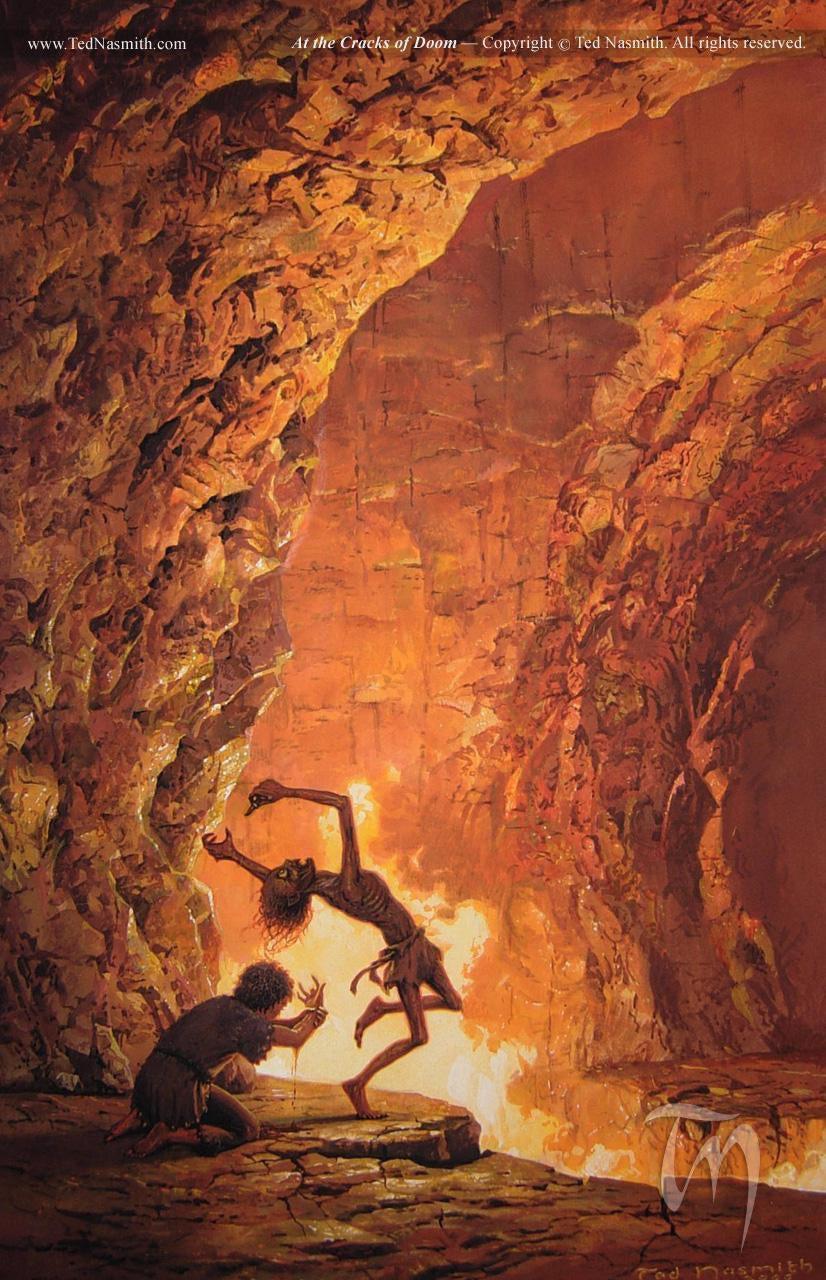
Consider the Ring itself:  forged in the fires of Mt Doom, it is eventually returned there and destroyed,

(another Ted Nasmith)

which causes the final end of Sauron, after several ages of struggle,

(and one more Ted Nasmith–and who better to paint a cataclysm?)

and which, in turn, brings the—return of the King.

(Denis Gordeev–and note that the artist has painted Aragorn’s crown as depicted by Tolkien in a letter to Rhona Beare, 14 October, 1958, see Letters, 401.)

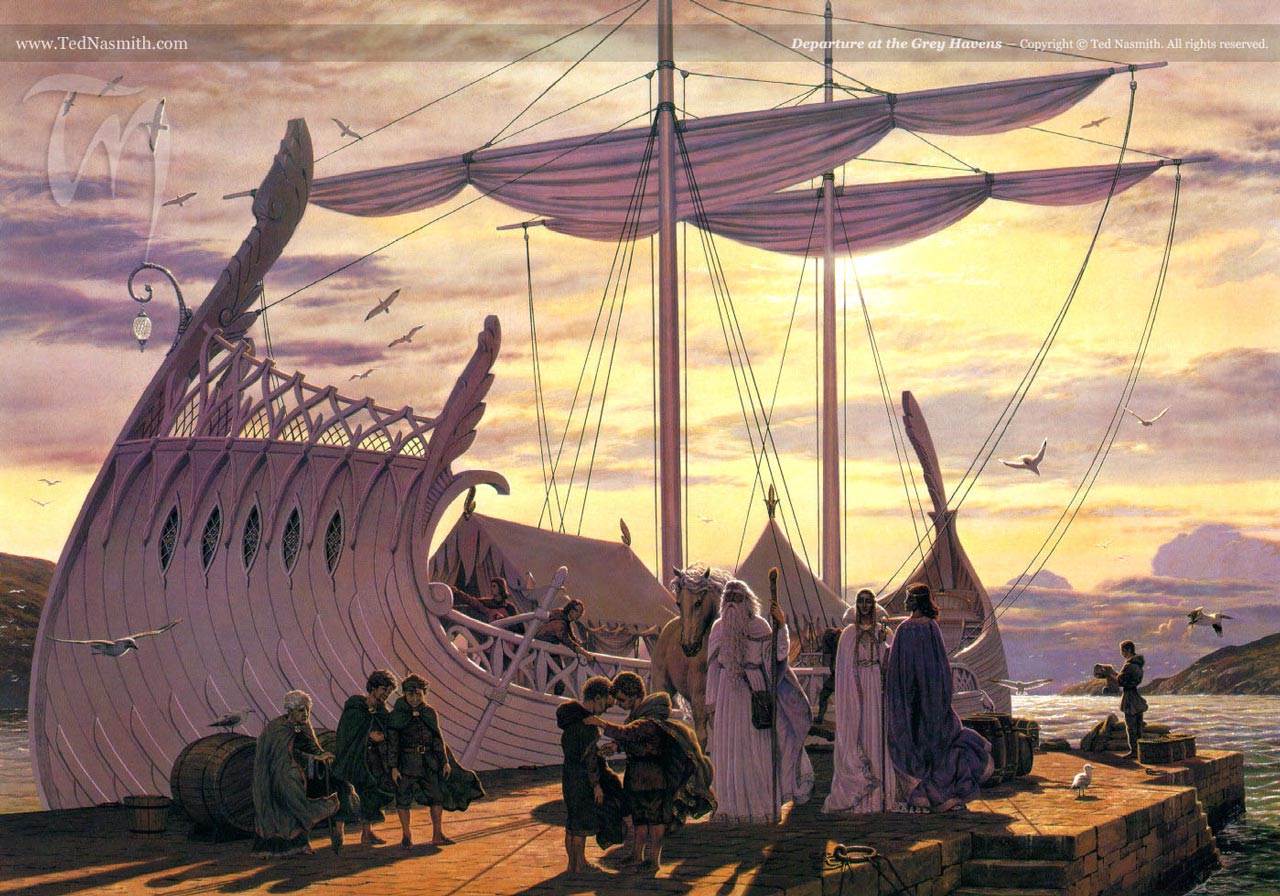
After thinking about this, I can see that there are even more cyclic events, like the movement of the elves westwards, and  Gandalf traveling the same way, originally sent eastwards to oppose Sauron,

(one more Ted Nasmith)

but I think that this is enough for one posting—though considering all of the cycles I’ve already identified,  I’ll end with another (supposed) quotation from Yogi Berra:

Thanks, as always, for reading.

Stay well,

Remember one more piece of Yogi wisdom

And remember, as well, that there’s always

MTCIDC

O

Horse, Two

03 Wednesday Sep 2025

Posted by Ollamh in Uncategorized

≈ Leave a comment

Tags

Achilles, Alexander the Great, Balios and Xanthus, Bucephalus, Grani, Nazgul, Podarge, Richard III, Shadowfax, Shakespeare, Sleipnir, The Lord of the Rings, the-iliad, Tolkien, Volsunga Saga, Zephyrus

Welcome , dear readers, as always, and, as always, I’m interested in Tolkien’s inspirations…

Enter Richard

King    A horse, a horse, my kingdome for a horse.

Cates   Withdraw my lord, ile helpe you to a horse.

King   Slaue I haue set my life vpon a cast,

And I will stand the hazard of the die,

I thinke there be sixe Richmonds in the field,

Fiue haue I slaine to daie in stead of him,

A horse, a horse, my kingdome for a horse.  (Wm Shakespeare, Richard III, Act V,  Scene 4,  First Quarto, 1597  You can read it here at the excellent Internet Shakespeare site: https://internetshakespeare.uvic.ca/doc/R3_Q1/index.html    )

(artist?)

Richard III is clearly not having a good day:  one of his allies has waited out the battle until a fatal moment, then changed sides.  And Richard has lost his horse, which, as a good horseback soldier, gives him an advantage, in terms of mobility on the battlefield, height over enemy infantry,

(Adam Hook)

and even a better chance of escape.  Without it, surrounded by enemy soldiers, he’s about to be dead.  (In the Shakespeare play, he’s killed by the Earl of Richmond, Henry Tudor, who, in turn, is about to become Henry VII, but, in reality, we don’t know who did him in, but see here for more:  https://le.ac.uk/richard-iii/identification/osteology/injuries/how-richard-iii-died )

Soldiers in the West didn’t begin on horseback.  The Sumerians first had yoked wild asses to their battle cars.
The ancient Egyptians had, by the New Kingdom (1550-1070BC), yoked horses to chariots.

(Rameses II, c.1303-1213BC)

The Assyrians, breeding bigger horses, began to sit soldiers upon their backs.

Greeks in the Iliad went to battle in and sometimes fought from their chariots (sometimes called by classical scholars “battle taxis” under the mistaken impression that they used those chariots only for transportation, which a close reading of the text shows not to be the case), although cavalry, as cavalry, are briefly mentioned, though never shown in action.

But cavalry, when it finally appeared in the Greek world, was meant for scouting and pursuit.

(Angus McBride)

All of this changed with Philip II of Macedon. 382-336BC, and his son, Alexander.  Macedon was prime horse-breeding country and Philip was a military innovator, so, with chariots long gone, Philip trained real battle cavalry, which Alexander then led to victory.

(Peter Connolly)

Alexander had a famous horse, Bucephalus (“Ox Head”),

whom he alone could tame. (see Plutarch’s life of Alexander here—section.6:    https://www.lexundria.com/plut_alex/1-77/prr )

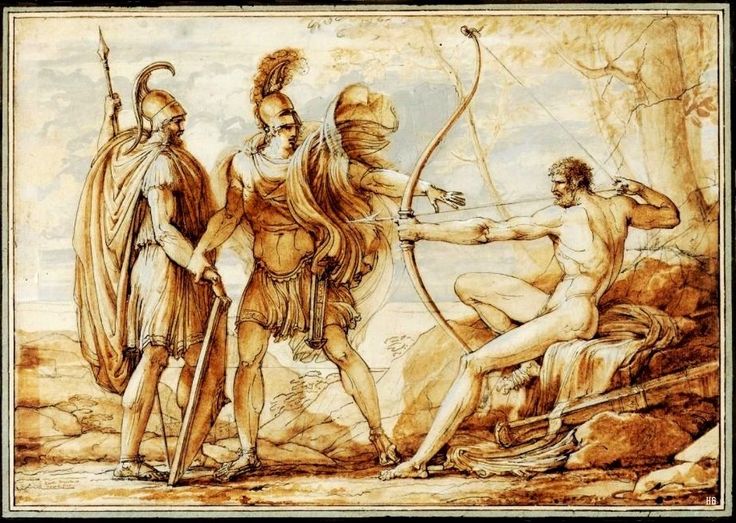
He also fancied himself a kind of descendent of the Trojan War hero Achilles, who had two famous horses, Balios (“Dapple”)  and Xanthus (“Palomino”), born of a Fury, Podarge (“Swiftfoot”), and Zephyrus, the god of the West Wind.

This divine lineage for horses made me think about a famous horse in another adventure story:  Shadowfax.

(Luca Michelucci—you can see more of his work here:  https://www.artnet.com/artists/luca-michelucci/  I like especially his image of Gwaihir rescuing Gandalf from Orthanc)

Shadowfax, according to Gandalf, is the chief of the Mearas, horses descended from one Felarof,  the horse of Eorl, the founder of Rohan.  Felarof was said to have understood the speech of men (Rohirric, we can presume) and may have been brought by Orome, the huntsman of the Valar, from across the sea, suggesting a horse of the Valar themselves.  (See The Lord of the Rings, Appendix A, II, “The House of Eorl”)

Mearas is the plural of mearh, one of the Old English words for “horse” and this might suggest that, with his  interest in things early Germanic, we might imagine that Tolkien would have looked towards Grani,

(from the Ramsund Carving—for more:  https://en.wikipedia.org/wiki/Sigurd_stones )

the horse of Sigurd, descended from Odin’s 8-legged steed, Sleipnir

(on the Tjaengvide image stone—you can read more about it here:  https://en.wikipedia.org/wiki/Tj%C3%A4ngvide_image_stone     For the story of how Sigurd found Grani, see the Icelandic Volsunga Saga  in this bilingual edition, pages 23-24:   https://archive.org/details/vo-lsungasaga-text-translation-finch/page/n89/mode/2up

And I can’t resist this very clever way of producing a modern Sleipnir—

Lachlan Templar—his work appears at Deviant Art, but, when I try to find out more, the site is blocked.)

as an inspiration, but, remembering that Tolkien had begun his formal education in the traditional way:   studying Classics at King Edward’s School in Birmingham,

and, initially, continuing  in Classics at Oxford,

I wonder—and return to Balios and Xanthus.  These are horses with as distinguished a lineage as Grani, coming from a Fury

and the god of the West Wind.

As well,  Felarof—and, in turn, Shadowfax–understand human speech and Balios and Xanthus show emotion more human than equine, weeping when their temporary master and charioteer, Patroclus, is killed in battle by the Trojan hero, Hector, refusing to return to battle, but, instead—

“…but as a monument remains firmly in the ground, one set up on a tomb

For a dead man or woman,

So they remained, immobile, holding the very beautiful chariot [still],

Leaning [their] heads to the earth, and their hot tears

Flow down from under [their] eyelids to the ground

In longing for [their] charioteer.”  (Iliad, Book 17.434-439—my translation]

And  there’s more.   Felarof and Shadowfax may understand human speech, and Balios and Xanthus may grieve, in a human way for the death of Achilles’ friend and charioteer, Patroclus, but, in an eerie moment, one of them, Xanthus, actually speaks to Achilles, warning him of his own impending doom:

“We will still keep you safe for now, mighty Achilles,

But a deadly day is near to you.”  (Iliad, Book 19.408-409—my translation)

Could there be another link here?

“But lo!  suddenly in the midst of the glory of the king his golden shield was dimmed.  The new morning was blotted from the sky.  Dark fell about him.  Horses reared and screamed.  Men cast from the saddle lay groveling on the ground…Snowmane wild with terror stood up on high, fighting with the air, and then with a great scream he crashed upon his side; a black dart had pierced him.  The king fell beneath him…” 

(Ted Nasmith)

Although we have no idea of Snowmane’s lineage except that he’s “Lightfoot’s foal”, and he never speaks a word, he’s certainly involved in a death and, as Balios and Xanthus might have inspired Shadowfax, could this horse-speech be related to Theoden’s horse, Snowmane?

(Joona  Kujanen, aka Tulikoura, a bit more of whose work you can see here:  https://hole-intheground.blogspot.com/2012/03/fridays-at-mathom-house-joona-kujanen.html )

We have no idea of the fate of Achilles’ horses, though we are told that Achilles himself was buried in a mound—

as Agamemnon says to him in the Underworld, speaking of the cremated remains of Achilles and his friend, Patroclus (over whom Achilles’ horses mourned):

“And over them then we, mighty army of the Argive spearmen,

Heaped up a tumulus…”  (Odyssey, Book 24.81-81—my translation)

Just as Snowmane received a similar grave:

“And afterwards when all was over men returned and made a fire there and burned the carcase of the beast; but for Snowmane they dug a grave and set up a stone upon which was carved in the tongues of Gondor and the Mark:

‘Faithful servant yet master’s bane,

Lightfoot’’s foal, swift Snowbane.’

Green and long grew the grass on Snowmane’s Howe…”  (The Return of the King, Book Five, Chapter 6, “The Battle of the Pelennor Fields”)

All coincidence?   Or were JRRT’s many years of classical training still at work, when he’d long abandoned it for Germanic, Finnish, and Welsh?

As ever, thanks for reading.

Stay well,

Horses are wonderful, but remember that they, like us, have their limits—what would you do if a Nazgul on a frightful thing came down upon you?

(Craig J. Spearing—you can read more about him and his work here:  https://pathfinderwiki.com/wiki/Craig_J_Spearing )

And remember that, as ever, there’s

MTCIDC

O

To Horse!

18 Wednesday Jun 2025

Posted by Ollamh in Uncategorized

≈ Leave a comment

Tags

Agincourt, bicycle, Boer War, cavalry charges, Charge of the Light Brigade, Cu Chulainn, Dwarves, Fredegunda, Gregory of Tours, heavy artillery, Historia Francorum, Hobbits, horses, King Edward's Horse, lotr, machine gun, machine-guns, Nazgul, Normans, Pegasus, Rohirrim, Russian Civil War, signals officer, Sleipnir, The Hobbit, Tolkien, Valkyries

In a colleague’s office, I once saw this on his wall—

“Proletariat, to horse!”

It’s a recruiting poster from the Russian civil war (1918-1922), showing the Reds trying to raise cavalry for their armies, but, at the time this call came, the military world was changing and, although horsemen would still appear, very sporadically, on battlefields, for some years to come, the day of events like this—

was rapidly coming to a close.

It didn’t happen all at once, however.  As you can imagine, traditional cavalrymen—those who believed that swinging a sword in a valiant charge was the point of cavalry—

fought back.  The evidence was against them, however, in two ways.

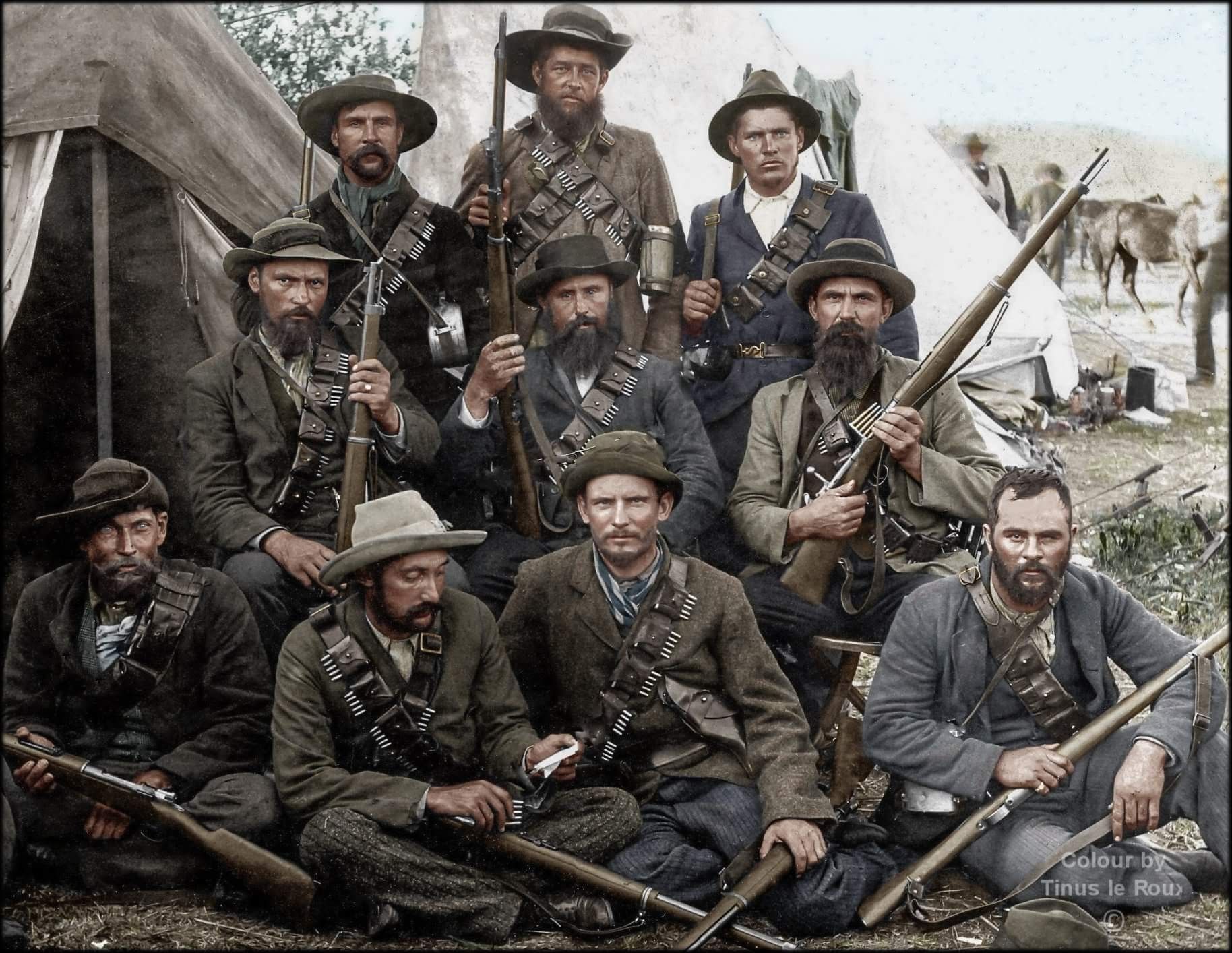
First, in the case of the British, there had been the Boers,

with whom the British had fought a war, from 1899-1902.  The Boers (Dutch for “farmers”) had been militia—men obliged by law to defend the state upon demand.  Across the wide open spaces of so much of South Africa, they had fought as mounted infantry, using horses as a means of moving from place to place, then dismounting for combat and, if things didn’t go their way, mounting up and escaping.

To counter this, especially in the later phases of the war, the British were forced to develop their own mounted infantry,

which suggested to some military theorists at the time that the wave of the future was not in sword-swingers, but in riflemen, who could rapidly move to where they were needed, but employ horses for transport, not for gallant charges.  (This also led to the rise of units mounted entirely on bicycles,

but we can imagine the off-road difficulties for early machines and, although there were bicycle units as late as WW2, they never had the popularity—or the dash—of horsemen.)

The second piece of evidence lies in technological change. 

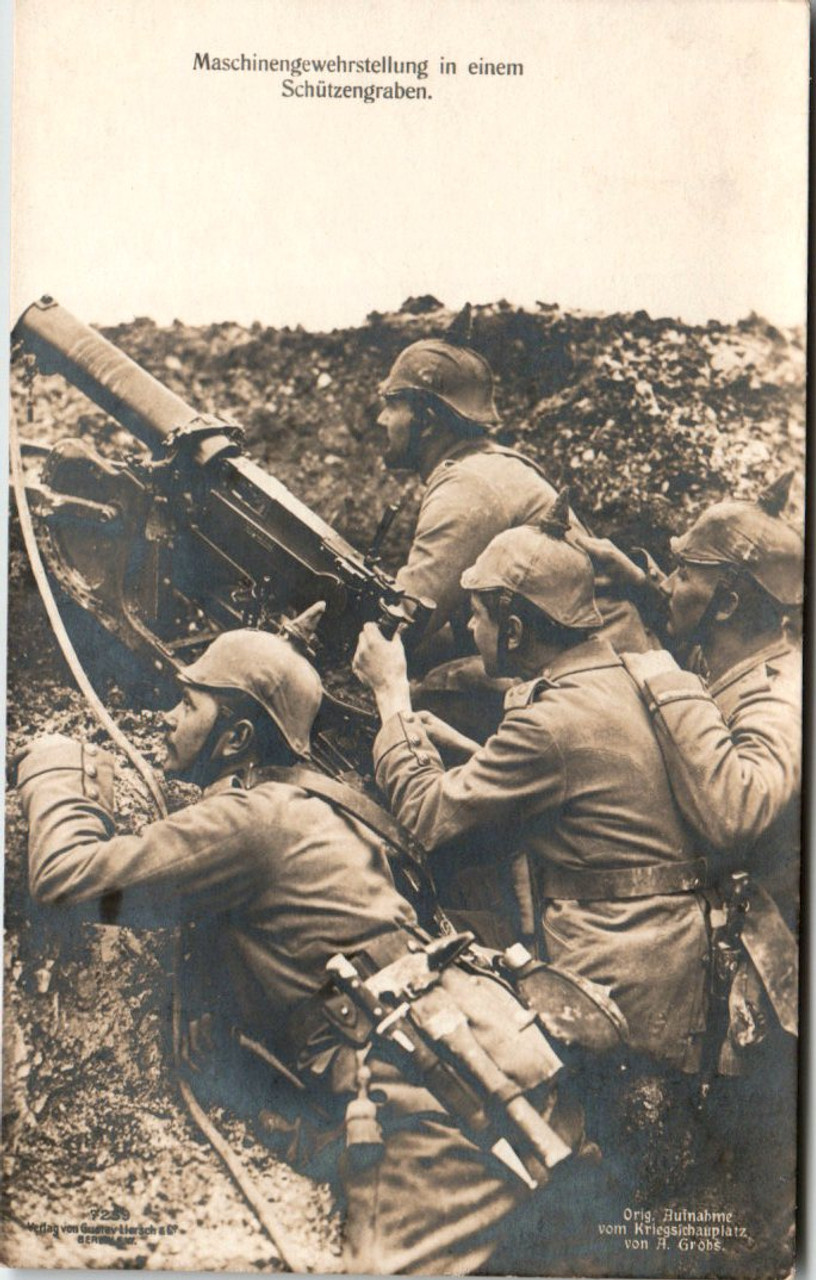
With the coming of the 20th century, machine guns, sometimes firing as many as 600 rounds (shots) per minute,

appeared in increasing numbers and artillery was developed to become more accurate at greater distances.

In self-defense, soldiers would be forced to take cover wherever they could,

at first in holes simply scraped out of the ground, but, in time, in very sophisticated lines, shored up with wood and metal and sandbags.

On the Western Front, where everyone was dug into the ground, and being in the open could mean instant destruction, there simply wasn’t a place for old-fashioned cavalry, for all that there were still lots of old-fashioned cavalrymen in the army—like the first commander of the British in France in 1914, Sir John French.

Imagine, then, that this was all happening when Tolkien was very young—when the Boer War ended, in 1902, for instance, he would have been only 10.

(JRRT and his brother, Hillary, in 1905)

His own military career had begun at King Edward’s School in Birmingham, when he entered the new Cadet Corps in 1907.

(For more, see this essay by John Garth: https://johngarth.wordpress.com/2014/03/05/tolkien-at-fifteen-a-warrior-to-be/ )

Then, in the summer of 1912, he was briefly a member of a territorial (a sort of national guard unit) cavalry regiment, King Edward’s Horse.  (The reference here is to Carpenter’s J.R.R.Tolkien, 66.  John Garth later added detail to this, but subsequently qualified it, saying that his evidence was faulty.  See:  https://oxfordinklings.blogspot.com/2009/06/tolkien-and-horses.html )

(Officers of the regiment about 1916)

It was clearly an indication of the drop in the use of cavalry, however, when JRRT began his second enlistment not in a cavalry, but an infantry regiment, the Lancashire Fusiliers, in which he was commissioned as a 2nd Lieutenant in 1915.

In his brief battlefield career, he was the signals officer for his battalion, the 11th.  In the advance into the Somme in July, 1916, Tolkien, although armed with a revolver,

would have been too busy to do any fighting as his work involved

“More code, flag and disc signaling, the transmission of messages by heliograph and lamp, the use of signal rockets and field-telephones, even how to handle carrier pigeons…” (Carpenter, 86)

To ask for reinforcements, as well as to avoid artillery fire which could be called in to fend off German counterattacks, but which might hit friendly troops instead, it was extremely necessary for attacking units to let their positions and situations be known as often as possible, so JRRT would have been more than a little occupied during the months (1 July-18 November, 1916) of the very costly (nearly 58,000 British casualties the first day alone) offensive.  Fortunately for him—and for us—he fell ill with so-called “trench fever” and left France for good early in November, going home to England and, ultimately, to Middle-earth.

Although his military service in the field was relatively brief, and his career with cavalry even briefer (he resigned from King Edward’s Horse in January, 1913), we see horses everywhere in Middle-earth, from the ponies of the dwarves in The Hobbit

(from Painting Valley—no artist listed)

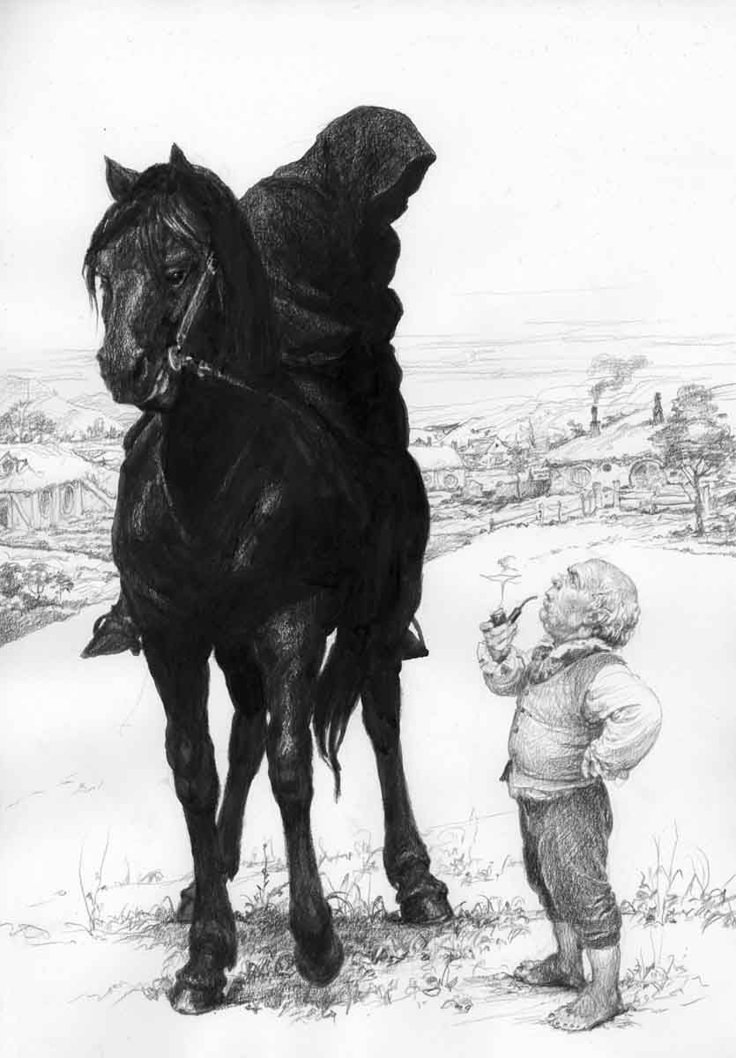
to the horses of the Nazgul in The Lord of the Rings.

(with the Gaffer, one of my favorite illustrations by Denis Gordeev)

But, although cavalry might have been only a brief flirtation for Tolkien, horses had been part of his life since its beginnings.  Part of this would have been mundane—it was only after the Great War that the internal combustion engine really began to dominate the streets.  When JRRT was young, Birmingham and London, as well as Berlin, Paris, and New York, would have looked like this—

His early reading would have given him Bellerophon on Pegasus,

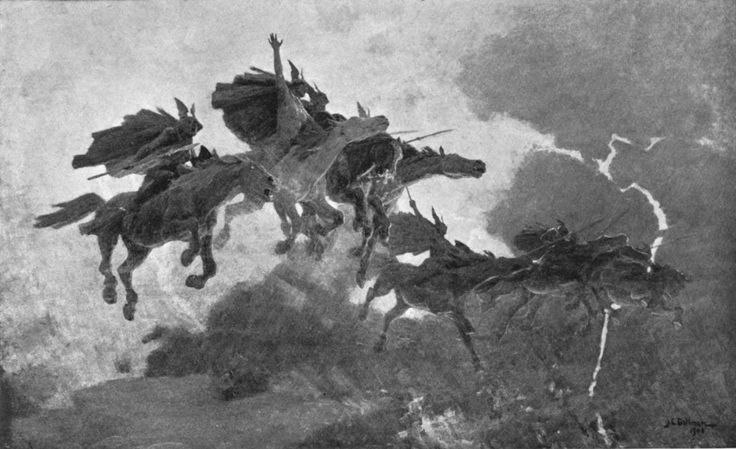
to which would have been added the Valkyries,

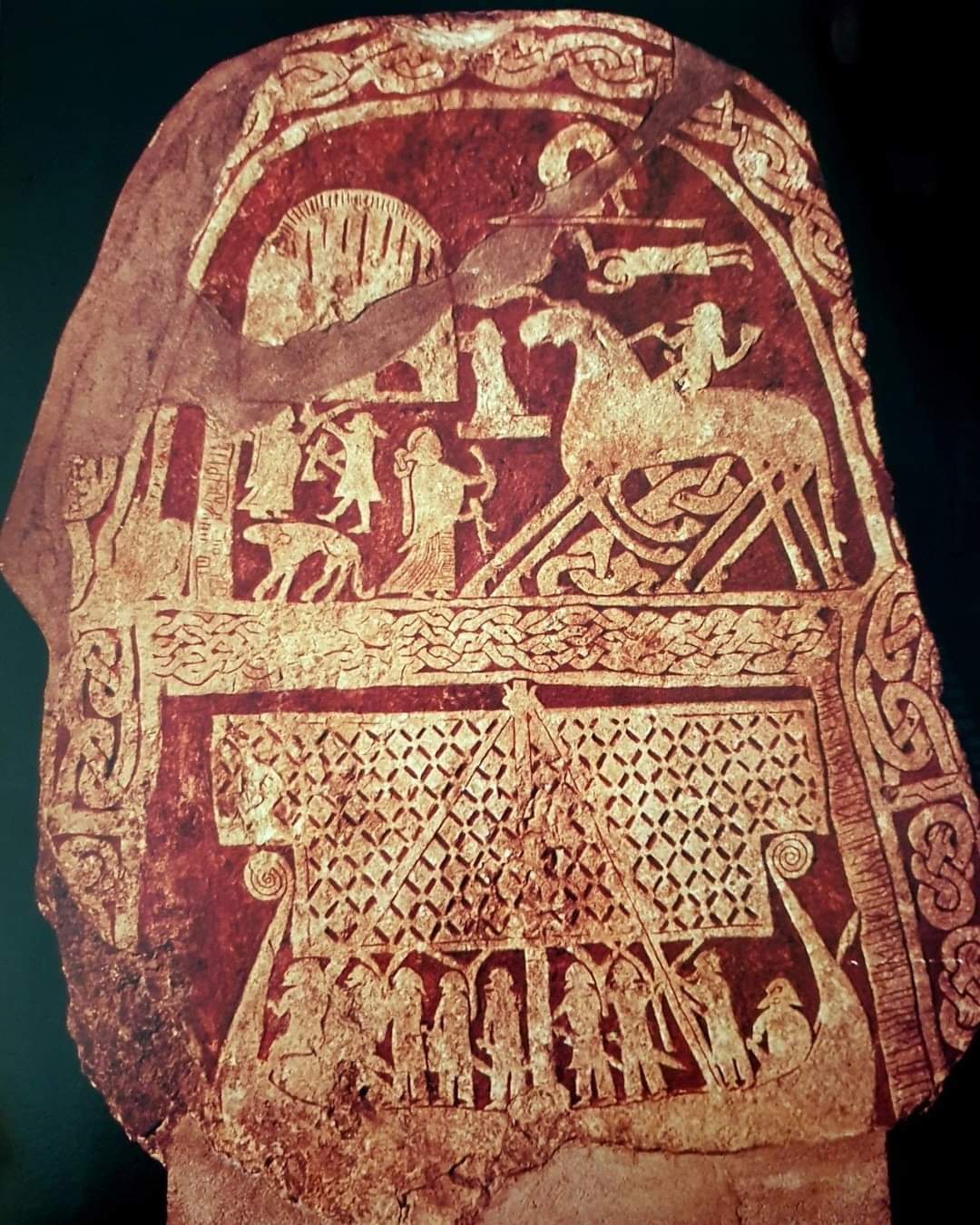
and, in time, Sleipnir, Odin’s 8-legged steed,

(This is the Tjaengvide image stone, one of a group of runic stones, called the “Sigurd stones”, found in Sweden and dated to between 700 and 1100AD.  You can read more about it here:  https://en.wikipedia.org/wiki/Tj%C3%A4ngvide_image_stone You can read about the other stones here:  https://en.wikipedia.org/wiki/Sigurd_stones  Tolkien would first have heard about Sigurd from Andrew Lang’s The Red Fairy Book, 1890, which you can find here:   https://archive.org/details/redfairybook00langiala/redfairybook00langiala/mode/2up  Sigurd himself possessed the offspring of Sleipnir, Grani, which you can read about here:  https://en.wikipedia.org/wiki/Grani )

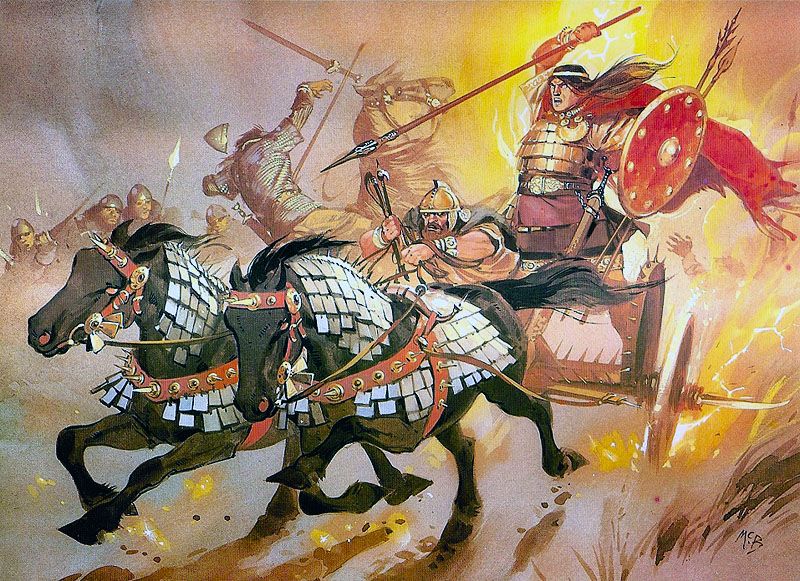
and further medieval reading would have filled his mind with mythic and magic horses, like Cu Chulainn, the Irish hero’s, chariot pair, water horses named Liath Macha and Dub Sainglend (although he wasn’t very enthusiastic about Old Irish literature which, I suspect, he found much wilder and stranger and more disturbing than, say, the Welsh Mabinogion, which you can read about here:    https://en.wikipedia.org/wiki/Mabinogion )

(a rather over-the-top image by the usually dependable Angus McBride—someone should have mentioned to him that, although “Dub” means “black”, Liath means “grey”.  Cu Chulainn is one of my favorite ancient berserkers—to mix cultures—and, if you don’t know him, you can begin to read about him here:  https://en.wikipedia.org/wiki/C%C3%BA_Chulainn )

But there are magical horses in many places—see https://en.wikipedia.org/wiki/List_of_horses_in_mythology_and_folklore for many more, with at least many of the medieval, he would have been familiar. 

And while we’re speaking of Middle-earth and horses, we need to mention the Normans, who, combined with the Anglo-Saxons for language, were the basis of the Rohirrim–

“The Rohirrim were not ‘medieval’ in our sense.  The styles of the Bayeux Tapestry…fit them well enough…” (letter to Rhona Beare, 14 October, 1958, Letters, 401)

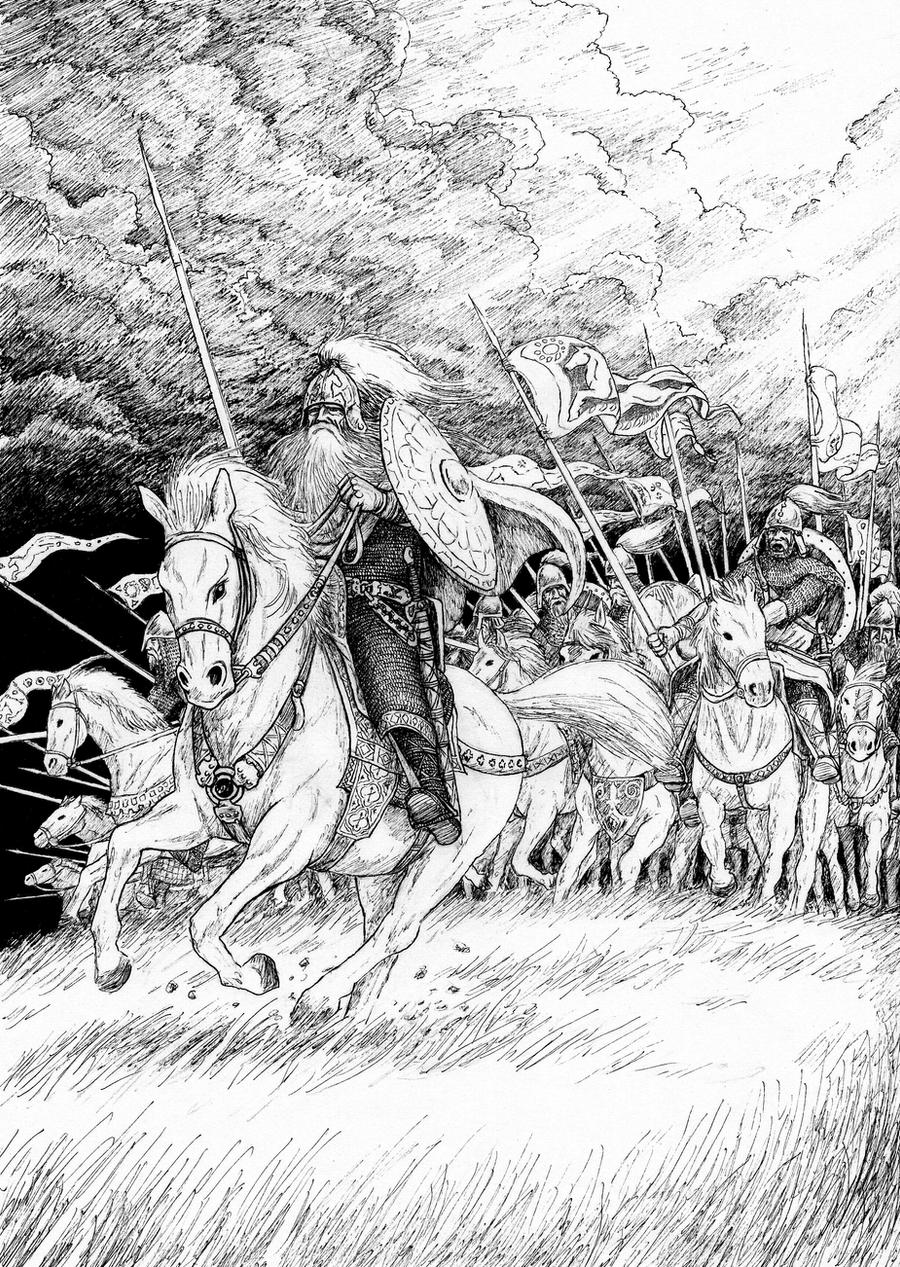
The Rohirrim, in turn, lead us back to the opening of this posting.  Although, in Tolkien’s day, cavalry and glorious charges,

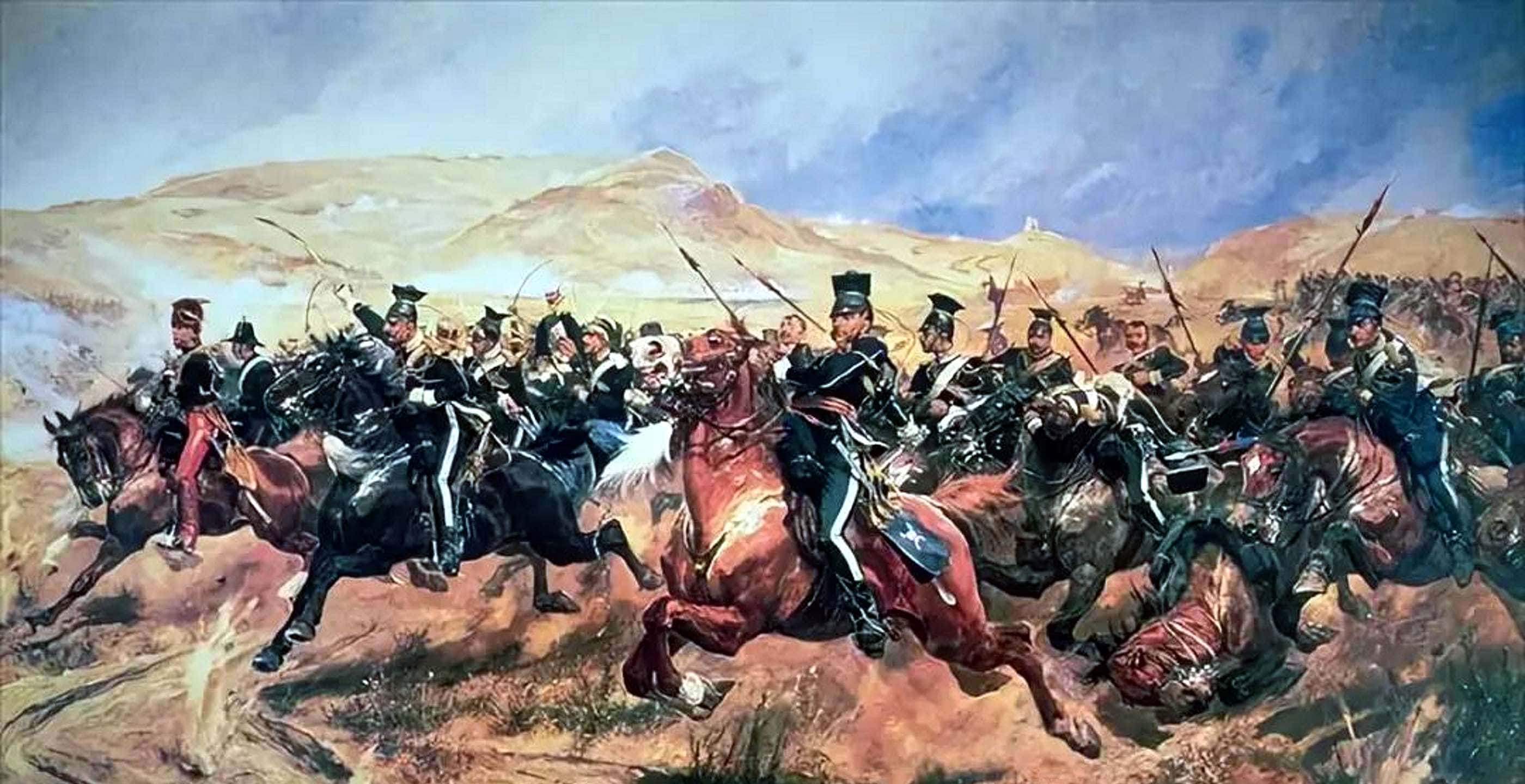
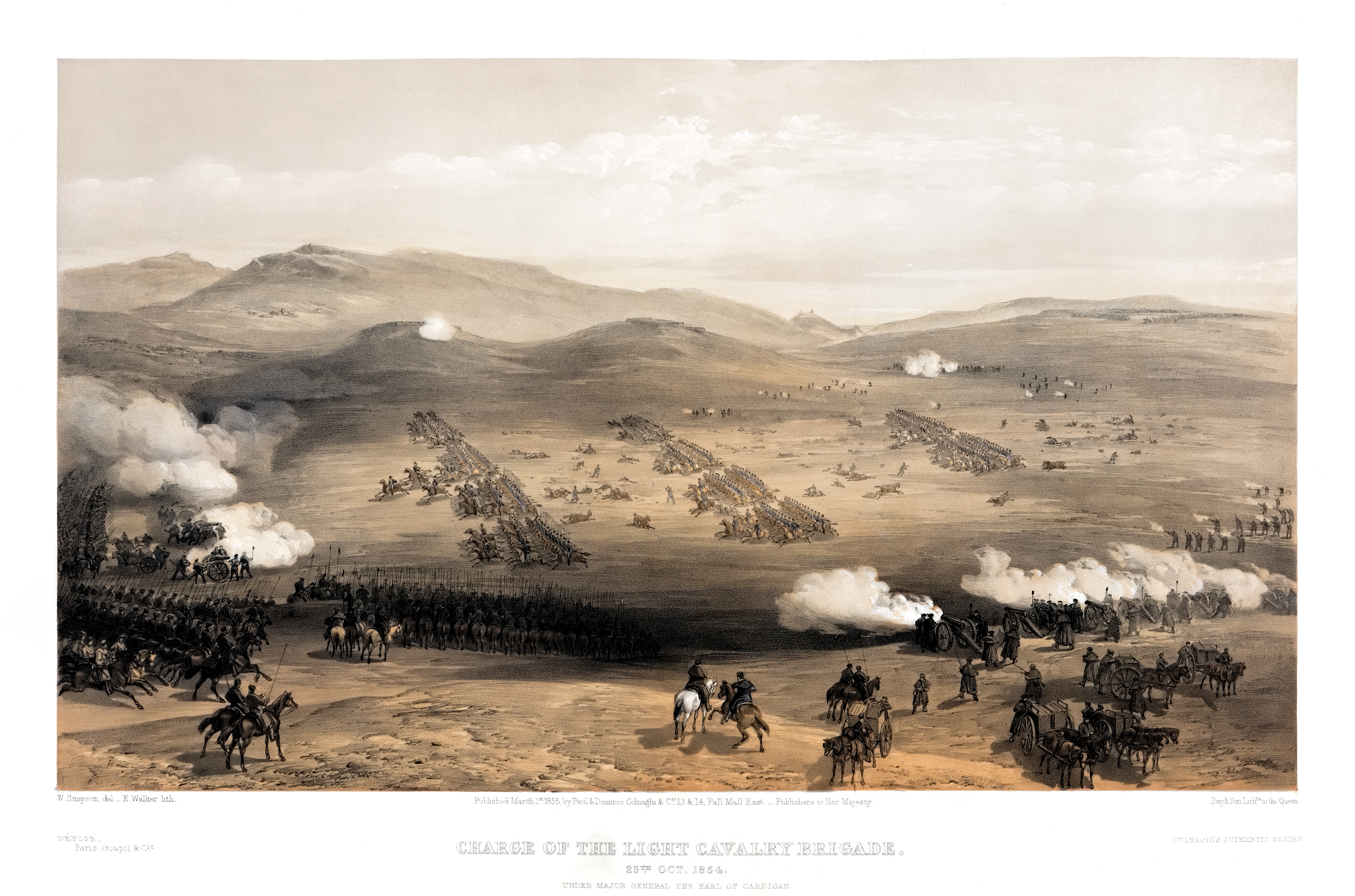
like that of the British Light Brigade at Balaclava in 1854, commemorated in Tennyson’s poem, were almost at the end of their military usefulness, for a Romantic, like Tolkien, the idea of such a charge was still a powerful image and one he couldn’t resist, depicting the heroic Rohirrim assembling

(from the Jackson film)

and roaring down on the unsuspecting orcs. 

(Abe Papakhian)

JRRT was writing medieval fantasy, however, but, as I’m always interested in “what if’s”, here I’m remembering what actually happened to that Light Brigade charge, an attack made in the teeth of Russia artillery.

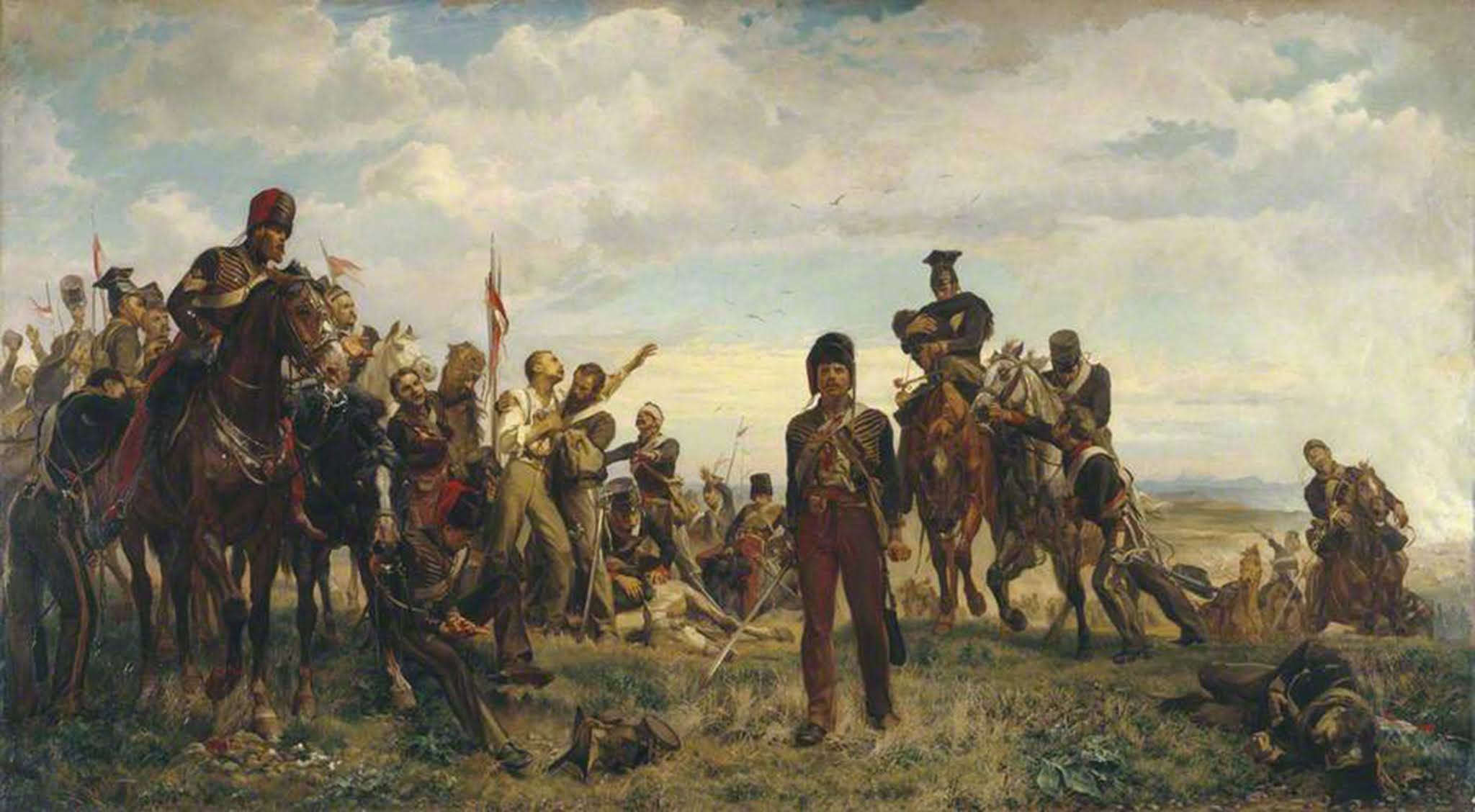
The consequence was that, out of 609 men who rode towards the Russians, only 198 returned, and Lady Butler’s picture, “Balaclava the Return 25 October 1854” (1911) sums up the actual aftermath of that charge.

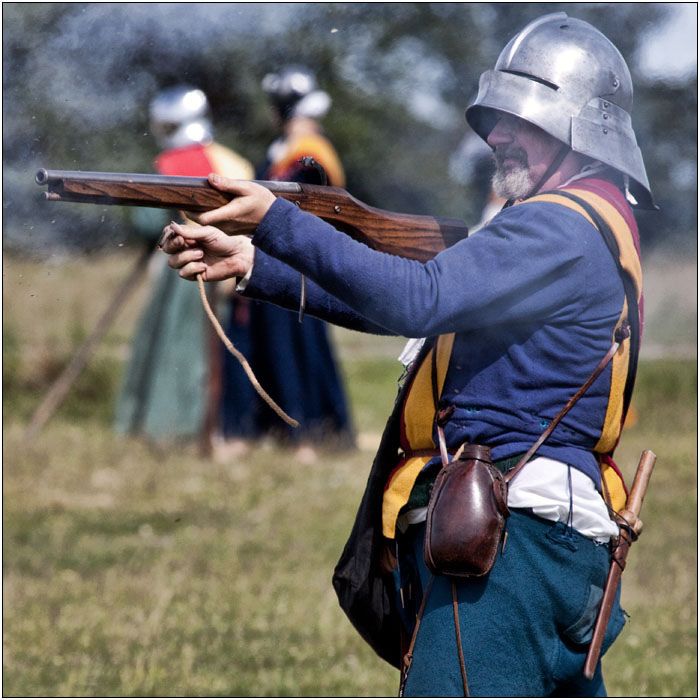
There’s evidence in the destruction of the Causeway Forts that Sauron’s army had some sort of blasting powder—suppose, instead of using it just as a siege tool, it had been employed with some sort of projectile propelled by it out of a tube—what might that have done to the Rohirrim’s valiant attack? 

Or even using the technique of the English army against the French at Agincourt, in our medieval world of 1415AD:  pointed stakes to threaten horses, behind which stood massed bowmen:  what would have been the outcome of that?

(Angus Mcbride)

475 horses were lost in the Charge of the Light Brigade.  Military progress so often just means more killing, but the replacement of horses with machines seems to me, who loves horses, a turn for the better.   At the same time, with Tolkien, I can feel the attraction for wild charges with swords at top speed (although cavalry did better when, at most, it went in at the canter—galloping causes loss of formation which can blunt the effect of such an attack), but, as in the charge of the Rohirrim, I’m glad if they only appear in fiction—and far from modern weaponry.

Thanks, as ever, for reading,

Stay well,

Remember that there’s a special spot, just behind the poll (top of the head), which, if scratched in the right place, makes many horses happy,

And remember, as well, that there’s always

MTCIDC

O

PS

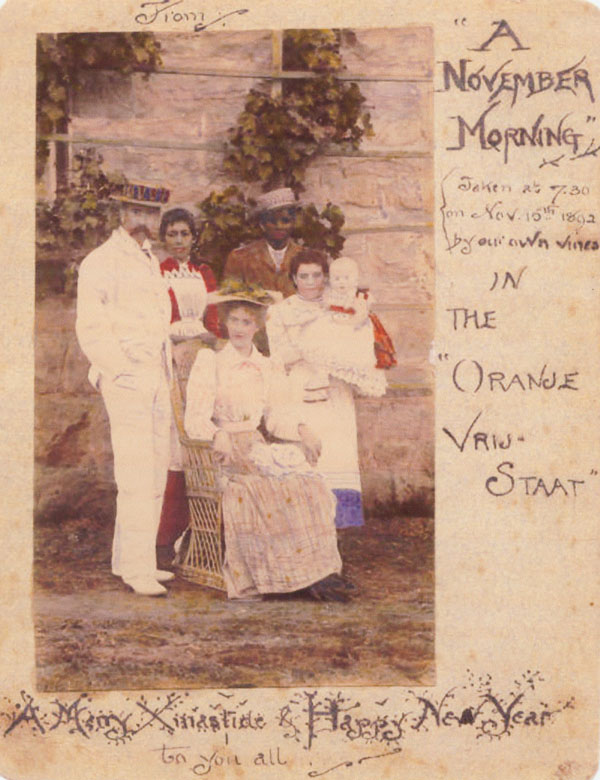
One of those little “what if” quirks of history–Tolkien’s immediate family had been in the Orange Free State at the time of his birth, in 1892.  Tolkien’s father, Arthur, was manager of the Bloemfontein branch there of the Bank of Africa.  The Orange Free State was one of the Boer republics attacked by Britain in the Boer War of 1899-1902. If Tolkien’s mother hadn’t brought JRRT and his brother, Hilary, back to England, in 1895, and Arthur hadn’t died of the effects of rheumatic fever in 1896,

Tolkien might have been in the Orange Free State when Bloemfontein was occupied by the British on 13 March, 1900.  (You can see early film of the Scots Guards marching in here:  https://www.youtube.com/watch?v=DHy2cEFwlIo )

PPS

In last week’s posting, I mentioned the story of the wonderfully bloodthirsty Frankish queen Fredegunda, as she appears in Gregory of Tours Historia Francorum.  I wrote there that you might read about her assassination of Bishop Praetextatus and her cold-blooded visit to him on his deathbed afterwards—but it required reading Gregory’s 6th-century Latin, as I didn’t provide a translation.  It seemed lazy of me not to include one of that scene, however, so here it is with the original Latin.  As always, I could smooth this out, but I prefer to stick as close as I can to the text, to give you a better feel for what’s actually been written.

Advenientem autem dominicae resurrectionis diae, cum sacerdos ad implenda aeclesiastica officia ad aeclesiam maturius properasset, antefanas iuxta consuetudinem incipere per ordinem coepit. Cumque inter psallendum formolae decumberet, crudelis adfuit homicida, qui episcopum super formolam quiescentem, extracto baltei cultro, sub ascella percutit. Ille vero vocem emittens, ut clerici qui aderant adiuvarent, nullius ope de tantis adstantibus est adiutus. At ille plenas sanguine manus super altarium extendens, orationem fundens et Deo gratias agens, in cubiculo suo inter manus fidelium deportatus et in suo lectulo collocatus est. Statimque Fredegundis cum Beppoleno duce et Ansovaldo adfuit, dicens: ‘Non oportuerat haec nobis ac reliquae plebi tuae, o sancte sacerdos, ut ista tuo cultui evenirent. Sed utinam indicaretur, qui talia ausus est perpetrare, ut digna pro hoc scelere supplicia susteneret’. Sciens autem ea sacerdos haec dolose proferre, ait: ‘Et quis haec fecit nisi his, qui reges interemit, qui saepius sanguinem innocentem effudit, qui diversa in hoc regno mala commisit?’ Respondit mulier: ‘Sunt aput nos peritissimi medici, qui hunc vulnere medere possint. Permitte, ut accedant ad te’. Et ille: ‘Iam’, inquid, ‘me Deus praecepit de hoc mundo vocare. Nam tu, qui his sceleribus princeps inventa es, eris maledicta in saeculo, et erit Deus ultur sanguinis mei de capite tuo’. Cumque illa discederit, pontifex, ordinata domo sua, spiritum exalavit. 

“However, with the coming of the day of [Our] Lord’s resurrection, when the priest [Praetextatus] had hurried early to the church to fulfill [his] ecclesiastical duties, he started to begin [the] antiphons according to custom [in their proper] order.  And when, between the psalms, he was lying on a bench, a cruel murderer appeared, who, when a knife had been pulled from [his] belt, struck the bishop, resting on the bench, under the armpit.  He [the bishop], however, [although] shouting so that the clergy who were present might help him, was aided with help of none from so many being present.  Yet he, stretching his hands, full of blood, above the altar, pouring [out] a prayer and thanking God, was carried off into his bedchamber by the hands of [his] faithful [followers] and placed on his bed.  And straightaway Fredegunda, with the Duke Beppolenus and Ansovaldus, appeared, saying, ‘Oh holy priest, this was not right for us and for the rest of your people that such things should happen in your worshipping.  But would that it would be revealed who had dared to carry out such things that he should suffer punishment worthy of this crime.’  The priest, knowing, however, that she was speaking of these things deceptively, said, ‘And who has done these things if not [the one] who has killed kings, who very often has poured out innocent blood, who has committed many evil deeds in this kingdom’  The woman replied:  ‘There are in our household highly experienced doctors who would be able to heal this wound.  Allow [it] that they may come to you.’  And he [said]:    ‘God has decreed to call me from this world.  On the other hand, you who have been exposed as chief in these crimes, you will be cursed in the future and God will be the avenger of my blood on your head.’  And when she had left, the bishop, affairs arranged in his house, breathed out his spirit.”

And how could I not include Alma-Tadema’s illustration?

Lingua Orca

16 Wednesday Apr 2025

Posted by Ollamh in Uncategorized

≈ Leave a comment

Tags

Black Speech, Fantasy, lingua franca, lotr, Merry and Pippin, Native American sign language, Nazgul, Orcs, Orkish, the-black-speech, Tok Pisin, Tolkien

Welcome, dear readers, as always.

I begin this posting with a riddle:  how are Tolkien and Sauron alike? 

But we’ll come back to that.

Before that, I want to talk about the title of this posting. 

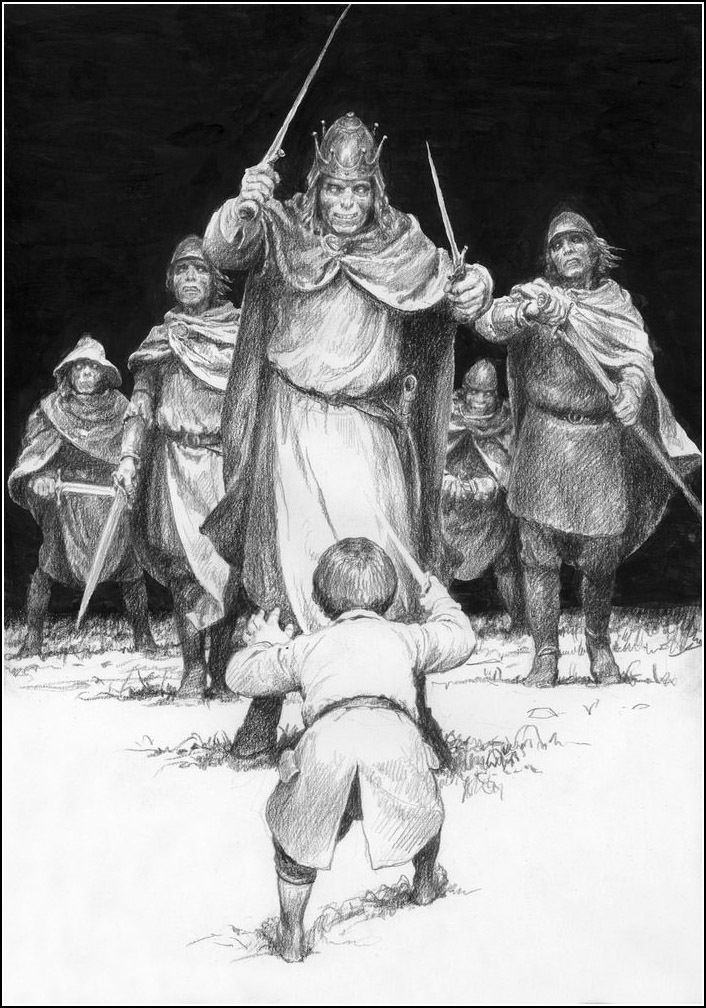
When Boromir is killed by the Orcs.

(Ted Nasmith)

Merry and Pippin are captured and carried off across country,

(Denis Gordeev)

Pippin waking eventually to this—

“He struggled a little, quite uselessly.  One of the Orcs sitting near laughed and said something to a companion in their abominable language..  ‘Rest while you can, little fool!’ he then said to Pippin, in the Common Speech, which he made almost as hideous as his own language.”

But what does that “abominable language” sound like?  Another Orc, equally gentle, gives us an example.

“ ‘If I had my way, you’d wish that you were dead now,’ said the other….’Don’t draw attention to yourself, or I may forget my orders,’ he hissed.  Curse the Isengarders!  Ugluk u bagronk sha pushdug Saruman-glob bubhosh skai’:  he passed into a long angry speech in his own tongue that slowly died away into muttering and snarling.”

One word is easy to pick out, of course—Saruman—but the rest calls for translating, something which Tolkien doesn’t provide in The Lord of the Rings, but there are, in fact, at least three translations:

1. “Ugluk to the cesspool, sha!  the dungfilth; the great Saruman-fool, skai!”  which comes from a draft of Appendix F of The Peoples of Middle-earth

2. “Ugluk to the dung-pit with stinking Saruman-filth—pig-guts, gah!”  which is a translation by Carl Hostetter in Vinyar Tengwar 26

3. “Ugluk to torture(chamber) with stinking Saruman-filth.  Dung-heap.  Skai!”  which is from Parma Eldalamberon XVII

(You can see the whole reference here:  https://tolkiengateway.net/wiki/Ugl%C3%BAk_u_bagronk_sha_pushdug_Saruman-glob_b%C3%BAbhosh_skai   For a bit more, including JRRT’s comment on Orkish, suggesting that he has bowdlerized this a bit in that 3rd translation, see:  https://glaemscrafu.jrrvf.com/english/ugluk.html )

Pippin can’t understand a word of this—

“Terrified Pippin lay still, though the pain at his wrists and ankles was growing, and the stones beneath him were boring into his back.  To take his mind off himself he listened intently to all that he could hear.  There were many voices round about, and though orc-speech sounded at all times full of hate and anger, it seemed plain that something like a quarrel had begun, and was getting hotter.” 

but still senses that there is strong emotion behind the Orcs’ words and part of how that “hate and anger” was conveyed to Pippin probably from the very sounds of the language—full of the hissing SH—sha, push-dug, bub-hosh—and words of only one or two syllables—Ug-luk, ba-gronk, sha, push-dug, bub-hosh, skai, making it sound abrupt.  And you can then see that 3-syllable “Saruman” was clearly a foreign word, which was then turned into an Orkish compound with that final single-syllable “glob”.

And yet:

“To Pippin’s surprise he found that much of the talk was intelligible; many of the Orcs were using ordinary language.”

“ordinary language” here is Pippin’s tongue—the Common Speech of Middle-earth (“Westron”)—which is also the language in which The Lord of the Rings was supposed  originally to have been written.

Dazed as he might be (“I suppose I was knocked on the head” he says to himself when he first wakes), Pippin, listening, comes to a clever conclusion as to why the Common Speech is employed by the Orcs who, after all, appear to have their own language:

“Apparently the members of two or three quite different tribes were present, and they could not understand one another’s orc-speech.”  (all of the above quotations from The Fellowship of the Ring, Book Two, Chapter 3, “The Uruk-hai”)

It’s interesting to see what the Orcs are doing here:  finding a way to converse because their own languages—or at least their dialects—are not mutually intelligible.

This has been a problem throughout history, wherever one people meets another with which it doesn’t share a language.

Several different approaches have been created.

On the Great Plains of the US West, for example,

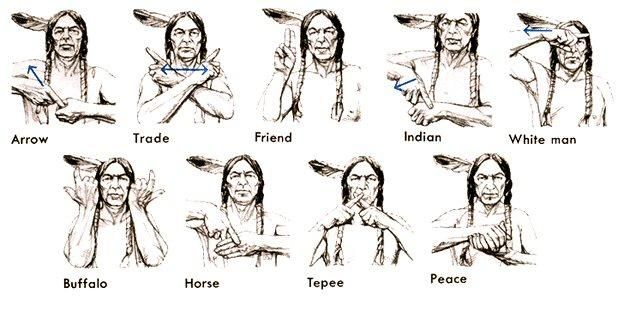
Native Americans produced a kind of universal sign language, which employed standardized gestures for common concepts and ideas.  Here’s a chart of a few of those gestures—

and here’s a possible extension—although I must say that it strikes me that it would take two very linguistically talented people, with a wide gesture vocabulary, to convey all of this.

(You can read about it here, which includes a wonderful piece of film in which various Native Americans and a seemingly-fluent US Government representative converse in gesture:  https://en.wikipedia.org/wiki/Plains_Indian_Sign_Language )

Besides gesture, people have constructed what’s called a “lingua franca”—literally “French tongue”—that is, a kind of trade tongue, which might have a base in one language, but which then borrows words from other regional languages to build its working vocabulary.  The term comes from such a language employed from the early medieval period up into the 19th century in the Mediterranean, “franca” being used really to mean not “French” so much as “foreign”.    (You can read more about it here:  https://en.wikipedia.org/wiki/Lingua_franca )

In contemporary Papua/New Guinea,

there is the English-based Tok Pisin, which has become so useful that it has become the first language of some groups.  (For more, see:  https://en.wikipedia.org/wiki/Tok_Pisin , which includes a demonstration of TP as spoken, although the background noise makes it a little difficult to hear.  Fortunately, there are a fair number of YouTube videos, should you want to hear more—and I hope you do.  YouTube is full of languages, both living and now no longer in use—I won’t say “dead”, because, if any language is still comprehensible, even if the last speakers are gone, I wouldn’t write an epitaph for it, myself– and we’re so lucky to be given so much to learn and understand.)

The Orcs, however, have simply resorted to employing another language entirely—although it would be interesting to see whether, had we more of their speech, we might find elements from other languages—there’s a clue in that “Saruman-glob”, where the speaker takes a word from another language and simply attaches an Orc word to it.

What was that “orc-speech”, which Pippin couldn’t understand?

“The Orcs were first bred by the Dark Power of the North in the Elder Days.  It is said that they had no language of their own, but took what they could of other languages and perverted it to their own liking, yet they made only brutal jargons, scarcely sufficient even for their own needs, unless it were for curses and abuse.  And these creatures, being filled with malice, hating even their own kind, quickly developed as many barbarous dialects as there were groups or settlements of their race, so that their Orkish speech was of little use to them in intercourse between different tribes.”

And so what we’re seeing is that the Orcs were actually developing a series of languages rather like linguae francae—basing them on whatever other language was locally available, then adding the odd curse or form of abuse which appealed to them, all of which turned their speech, even if once based upon a common borrowed language, into something incomprehensible to others from the same race.

It’s clear that Sauron, from whom Saruman got his definition of what Saruman claimed was always the goal of the Istari:  “Knowledge, Rule, Order”, wished Rule and Order to be at the heart of his dominion and therefore:

“It is said that the Black Speech was devised by Sauron in the Dark Years, and that he desired to make it the language of all those who served him…”

but the power of the Linguae Orcae, as we can call them, won out:

“…but [Sauron] failed in that purpose.  From the Black Speech, however, were derived many of the words that were in the Third Age wide-spread among the Orcs, such as ghash, ‘fire’, but after the first overthrow of Sauron this language in its ancient form was forgotten by all but the Nazgul.” 

And so even their master’s invention became nothing more than a vocab pool, from which to draw that which the Orcs fancied—and we know their preferences.

It’s no wonder, then, that

“So it was that in the Third Age Orcs used for communication between breed and breed the Westron tongue; and many indeed of the older tribes, such as those that still lingered in the North and in the Misty Mountains, had long used the Westron as their native language…”—just like those for whom Tok Pisin had moved from a trade tongue to a first tongue—but here’s an Orkish difference:  “though in such a fashion as to make it hardly less lovely than Orkish.” (all quotations from “The Orcs were first bred…” on from The Lord of the Rings, Appendix F)

And the answer to the riddle—I think that you’ve guessed it already:  “How are Tolkien and Sauron alike?”  Both were creators of languages, the difference being that it seems that virtually everyone in Middle-earth, from Elves to Dwarves to Ents to Orcs, speaks Westron, while no one speaks the Black Speech but Sauron’s last and soon to be lost, enslaved kings, the Nazgul.

(Denis Gordeev)

Thanks, as always, for reading.

Stay well,

Consider the endless borrowings which English has made from world languages,

And remember that, as always, there’s

MTCIDC

O

Out of Touch

26 Wednesday Jun 2019

Posted by Ollamh in Economics in Middle-earth, J.R.R. Tolkien

≈ 1 Comment

Tags

Barliman Butterbur, Bayeux Tapestry, Beacons, call box, Cell Phones, communication, Eagles, Gondor, Great War, messenger dog, messenger pigeon, military post, Moth, motorcycle messenger, Nazgul, Palantir, pay phone, Postal Service, Postmen, runner, semaphore, signal lamp, telegrams, telegraphy, The Lord of the Rings, The Prancing Pony, Tolkien, wireless telegraphy

Welcome, as always, dear readers.

Recently, we were charging our cell/mobile phone and completely forgot it when we walked out of the house.

image1cell


We were down the road when we realized it and the thought came to us:  how times have changed!  Before people could carry their little, flat phones in their pockets, away from home, if you had an emergency, you looked for a pay phone/call box.

image2payphone.jpg

image3callbox.jpg

When JRRT was born, in 1893, the main forms of long-distance communication were the post

image4post.jpg

and the telegram—brought to your house by a specially-uniformed messenger.

image5telegraph.jpg

The telephone had been invented in 1875, but was still far from common–

image6earlyphone.jpg

London’s first telephone directory, issued in 1880, listed about 300 customers in a city of 5,000,000 and, when the first actual phone book arrived, in 1896, it had 81,000 numbers for the whole of Britain, with a population of perhaps 30,000,000.  (To give you a literary example, Bram Stoker’s Dracula was published in 1896 and, although telegrams are common in the book, no one ever mentions or uses a telephone.)

When Second Lieutenant Tolkien

image7ltjrrt.jpg

became his battalion’s signals officer in 1916, there were, in fact, a surprising number of forms of communication available, although most of them would not have ever appeared in civilian form.

There was the telephone, which, with its miles of wire, could be extremely vulnerable to enemy shellfire.


image8telephone

There was what would be called “wireless telegraphy”, an early form of radio, but not very dependable.

image9radio


There was actual telegraphy which, again, used miles of wire.

image10telegraph.jpg

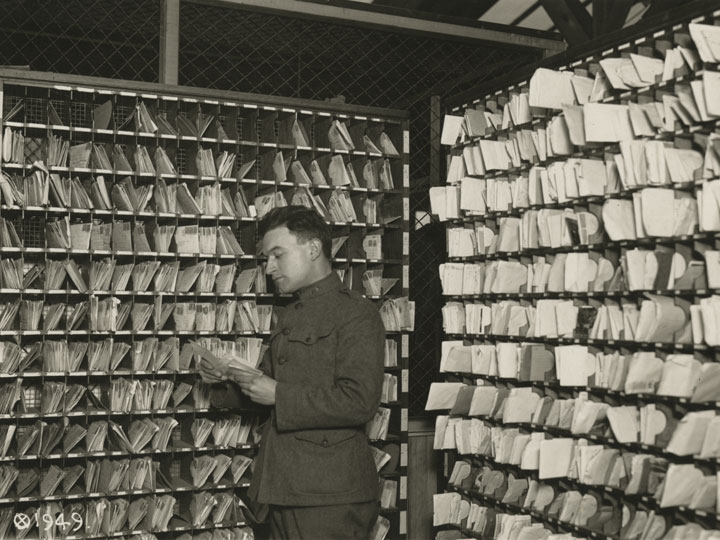
There was the military post—mostly used not to transmit orders, but to maintain contact with home.

image11militarypost


And then there were the more specifically military methods.  At the most basic, there was the runner.

image12runner

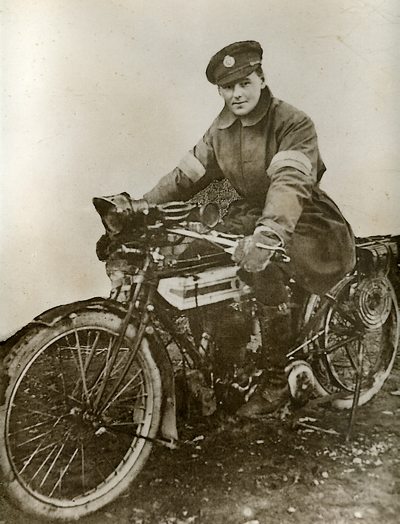
Then there was the motorcycle messenger,

image13motorcycle

the signal lamp,

image14lamp

and even the semaphore.

image15semaphore

Beyond the human, there were the messenger dog,

image16dog.jpg

and the messenger pigeon.

image17pigeon.jpg

So, we asked ourselves, what were Tolkien’s Middle-earth equivalents?  First of all, we see Bilbo in Chapter One of The Hobbit, reading his morning’s mail when Gandalf appears.

image18bandg.jpg

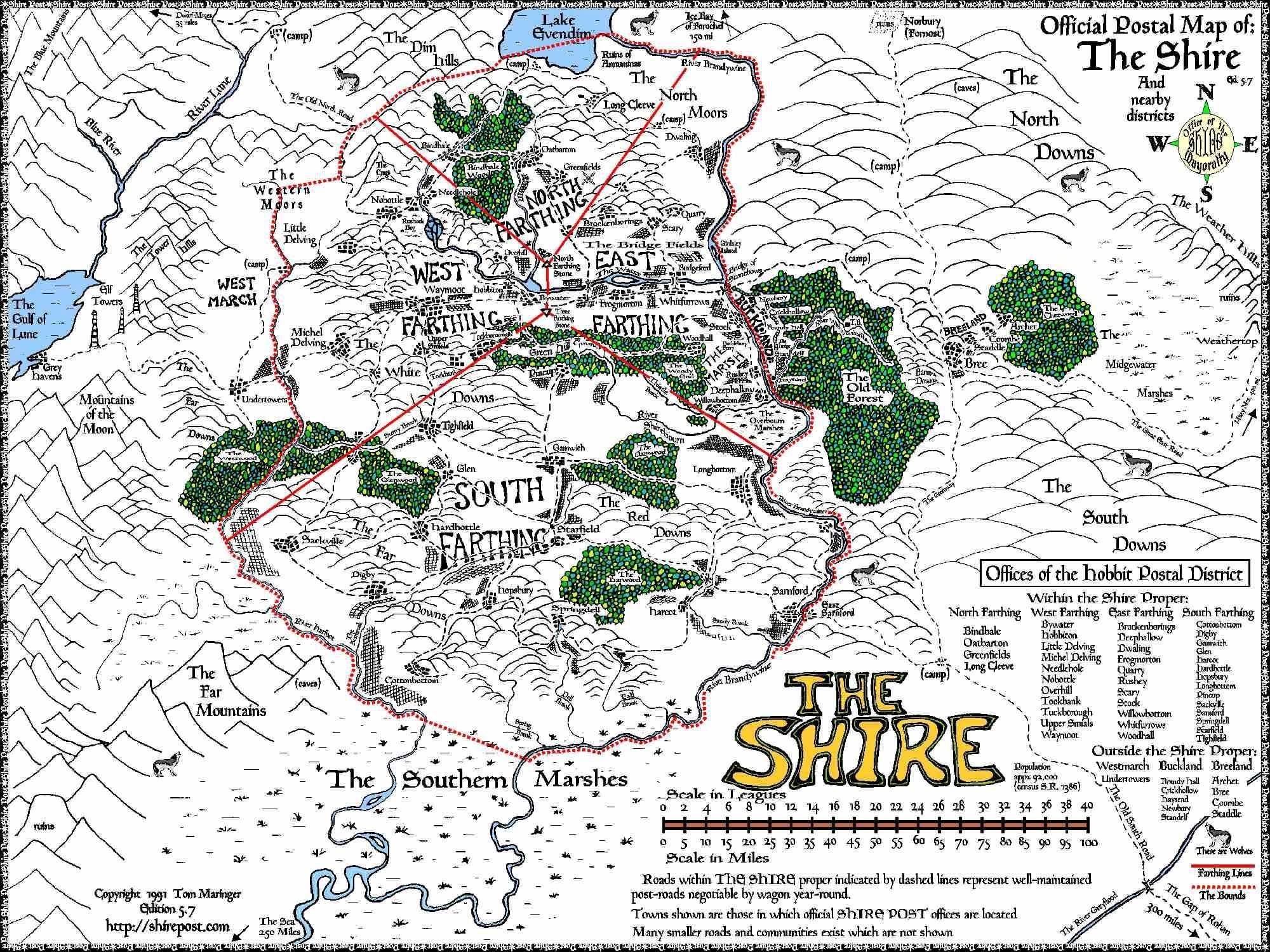
This is expanded upon in the Prologue to The Lord of the Rings, where we hear about the post as being one of the few actual public services in the Shire.  (Here’s someone’s wonderful creation of a postal map of the Shire, complete with regional divisions.)

image19postalmap.jpg

This service clearly doesn’t extend beyond the Shire as Gandalf is forced to leave a letter for Frodo at The Prancing Pony

image20pony.jpg

in Bree, to be given to the first person going westwards.  The innkeeper, Butterbur, completely forgets it, with serious consequences.

Because this is a pre-industrial world, none of the electronic means would be available, of course.  Gondor used mounted messengers, as two are discovered ambushed by the Rohirrim on the road to the Rammas Echor (The Return of the King, Book Five, Chapter 5,“The Ride of the Rohirrim”).

image21nuntii.jpg

(This image is, of course, from the Bayeux Tapestry, the caption saying “Nuntii Wilielmi”, “William’s Messengers”, but the only illustrations of Gondorian mounted men we’ve found are all heavily-armored, something you wouldn’t expect a courier to be, so we’re suggesting this possibility, instead.)

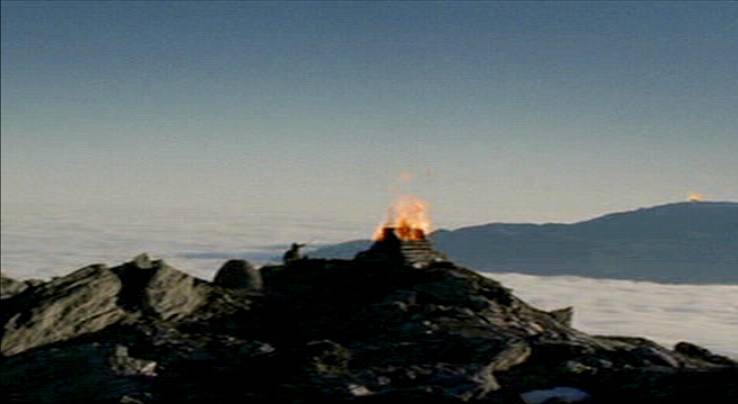
A second method is by the chain of beacon fires along the mountains to the west of Gondor.

image22beacon.jpg

As for their opponents, we suppose that one might imagine the Nazgul as the airborne equivalent of mounted messengers, since they seem, when not pursuing Frodo and leading attacks on Gondor, to be couriers for Sauron.

image23naz.jpg

Sauron’s main communication device, however, appears to be the palantir, whereby he controls the actions of Saruman and, to a degree, of Denethor, the Steward.

image24sar.jpg

image25den.jpg

It’s rather surprising, we suppose, that Gandalf, who is powerful enough to deal with a palantir (although it’s Aragorn who is its rightful owner), can be so easily trapped by Saruman and left on top of Orthanc, completely isolated when he is so needed in the north.

image26orthanc.jpg

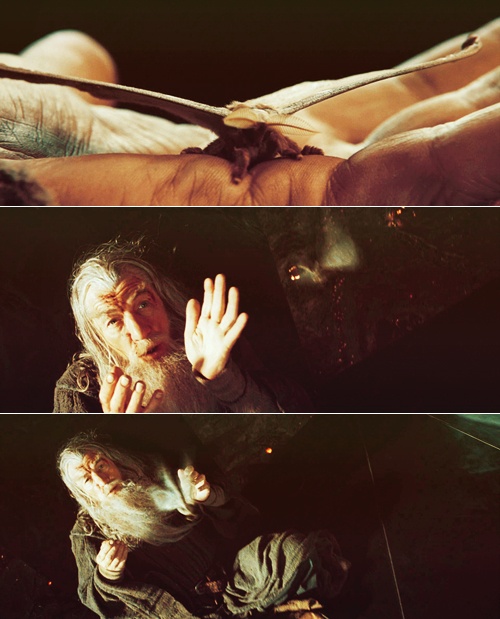
In P. Jackson’s film, he uses what looks like a fancy moth to call for help,

image27moth.jpg

which appears in the form of one of those eagles, so conveniently available when someone really gets into trouble (Bilbo, Gandalf, and the dwarves in The Hobbit, as well as dwarves, elves, and men vs goblins and Wargs, Frodo and Sam on the edge of Mt Doom in The Return of the King).  Suppose, instead, if Gandalf had reached into this robe and pulled out his cell phone–

image28cell.jpg

which he would never have left behind after charging it…

Thanks for reading and

MTCIDC

CD


Unhealing

23 Wednesday Jan 2019

Posted by Ollamh in Fairy Tales and Myths, Heroes, J.R.R. Tolkien, Literary History

≈ Leave a comment

Tags

Achilles, Frod, Greeks, Morgul Knife, Mysia, Nazgul, Neoptolemus, Odysseus, Philoctetes, Telephus, The Grey Havens, The Lord of the Rings, Tolkien, Tristan and Iseult, Troy, Weathertop, wound, wounded

As always, dear readers, welcome.

The war around Troy was a very complicated thing, with traditions stretching in all directions.  In one, the Greeks actually sailed to Troy twice, the first time missing it entirely and landing in Mysia, to the east of Troy.

image1mysia.png

There, the Greeks were met by local defenders under their king, Telephus, who was wounded by Achilles

image2achilles.jpg

before the Greeks realized their mistake and withdrew.

After they’d gone, Telephus’ wound simply wouldn’t heal, but, after consulting oracles, he was told that there was a cure:  rust from the spear which had wounded him.  The Greeks had gone back to Greece to regroup and to try again, so Telephus went after them to request that Achilles treat the wound which he had made.  For some reason, Achilles refused, so Telephus grabbed the High King Agamemnon’s baby son, Orestes, and threatened to kill him if Achilles didn’t grant his request.

image3telorest.jpg

(This  scene bordered on the edge of hilarious to the Greeks and was the subject of parodies in ancient times—here’s a pot with one, Orestes being replaced by a wineskin.)

image4parody.jpg

The threat worked and Achilles healed Telephus.

image5healing.jpg

This isn’t the only example of the wound which won’t heal to be found in the Trojan material.  Philoctetes, who had inherited Heracles’ bow (given to him by Heracles because he helped with Heracles’ funeral pyre), was on his way with the other Greeks to Troy when he was bitten by a snake.  The wound wouldn’t heal and smelled so bad that the Greeks left him—and the bow—behind (this is one version—there are others).

image6phil.jpg

Later in the story, however, a prophecy told the Greeks that they wouldn’t take Troy without the bow.  (By late in the Troy tradition, there had piled up  a number of these conditions—rather like the horcruxes in the Harry Potter books—all to keep the story going.)  Odysseus and Achilles’ son, Neoptolemus, went off to persuade—or steal—the bow (in one version—there are lots of others) and eventually persuaded Philoctetes to come to Troy with the bow, where he was healed and used the bow to aid the Greeks.

image7bowmission.jpg

The theme of the unhealing wound reappears in western medieval literature in several places.  In the story of Tristan and Iseult,

image8trist.jpg

Tristan is wounded fighting an Irish giant

image9irishgiant.jpg

and, as in the Greek stories of Telephus and Philoctetes, the wound won’t heal.  The theme appears again in the story of the Holy Grail—and like the Troy tradition, it has many versions.  In some, the last guardian of the Grail is a wounded king (sometimes called the “Fisher King”) .

image10fisherking.jpg

But, if you’re a regular reader, you know where this is leading.  On Weathertop, Frodo is attacked by the Nazgul.

image11weather.jpg

He is wounded with a morgul knife

image12morgul.jpg

and the tip of the blade not only remains in the wound, but begins to travel towards Frodo’s heart.  He is saved by Elrond’s healing powers, but, somehow, things are never quite the same and, some time after the hobbits return to the Shire–

“One evening Sam came into the study and found his master looking very strange.  He was very pale and his eyes seemed to see things far away.

‘What’s the matter, Mr. Frodo?’ said Sam.

‘I am wounded,’ he answered, ‘wounded; it will never really heal.’” (The Return of the King, Book Six, Chapter 9, “The Grey Havens”)

We began with Greeks and the complex epic of Troy, then passed through a pair of medieval stories to The Lord of the Rings, but something in all of these tales interested us in what seemed a common theme:  protecting something, keeping something, can bring long-lasting harm to the protector/keeper, even if done for the best of reasons.  It’s less clear if this pertains to Philoctetes, but Telephus was defending his country, as was Tristan in fatally wounding the Irish giant, who was leading an invasion force to Cornwall, where Tristan lived.  The Fisher King is the guardian of the Grail.

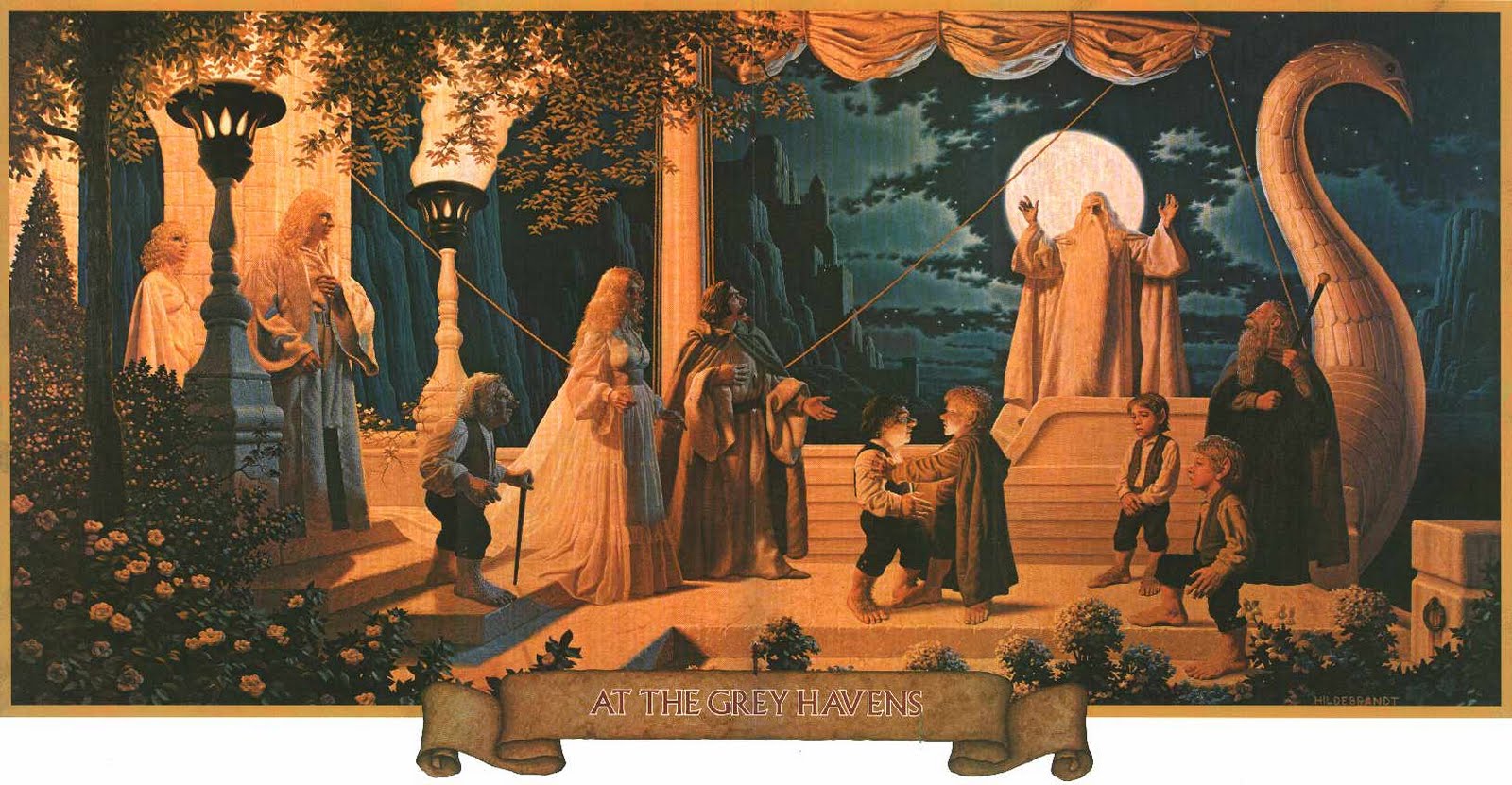
Frodo clearly has come to understand this and, when the time comes, he goes with Bilbo and Gandalf and others to the Grey Havens and beyond, saying to Sam:

“…But I have been too deeply hurt, Sam.  I tried to save the Shire, and it has been saved, but not for me.  It must often be so, Sam, when things are in danger:  some one has to give them up, lose them, so that others may keep them.”image13grey.jpg

image14grey.jpg

(These are two very different versions of the leave-taking at the Grey Havens—first, the Hildebrandts’, second, Alan Lee’s.)

Thanks, as always, for reading.

MTCIDC

CD

A Little Ring, the Least of Rings

02 Wednesday Jan 2019

Posted by Ollamh in J.R.R. Tolkien, Military History, Military History of Middle-earth

≈ Leave a comment

Tags

Aladdin, Alexandre Dumas, Barad-Dur, Chateau d'If, Edmond Dantes, Elba, French Revolution, Galadriel, Harad, Hitler, Jinghiz Khan, Louis XVI, Morannon, Mordor, Napoleon, Nazgul, Ring Wraiths, St Helena, The Count of Monte Cristo, The Lord of the Rings, Tolkien, Toulon, Umbar, Waterloo

Welcome, readers, as always, and, if it’s part of your culture, Happy New Year!

We’ve recently been reading a book about Napoleon

image1nappy.jpg

and his first fall, in 1814.  He was forced to abdicate,


thereby losing the massive empire he had built up in the early 19th century.

image3napemp.jpg

His many enemies had a number of possibilities as to what to do with him.  They could, for example, have imprisoned him, as Edmond Dantes is in Dumas’ The Count of Monte Cristo (serialized 1844-46), in a fortress like the Chateau d’If.

image4chateaudif.jpg

Or, more radically—but certainly very effectively—they could have permanently removed him by the same means by which revolutionary France removed his predecessor, Louis XVI.

image5louisheadless.jpg

Instead, they allowed him not only to live, but even to continue to be a kind of monarch—although only of a tiny island, Elba, off the west coast of Italy.

image6napelba.jpg

They thought they’d seen the last of him, leaving him to spend the rest of his life as a sovereign of a ragged collection of fishermen and farmers.

image7napelba.jpeg

For Napoleon, however, who always saw himself as destined for only the greatest things, being king of Elba must have felt to him rather like the way the genie in Disney’s Aladdin (1992) expresses the contrast in his life–

image8genie.png

That being the case, Napoleon lived on Elba for less that a year before he planned and accomplished his escape.

image9napescapes.jpg

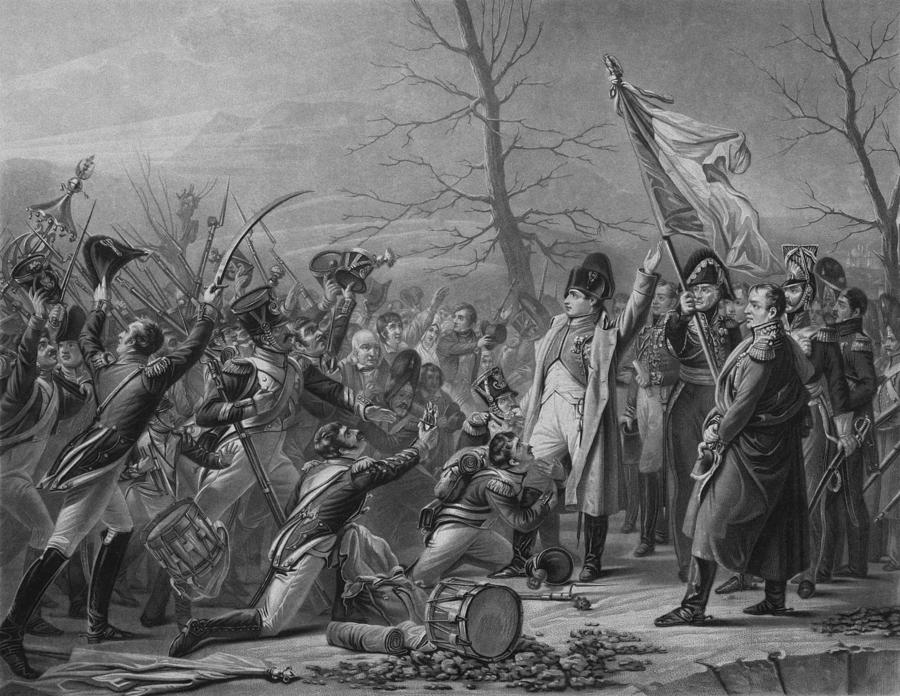
Back in France, he was welcomed by the very soldiers sent to stop him,

image10fifth


raised new armies,

image11napog


marched north to deal with his nearest enemies, Prussia and England, and was finally—and permanently—defeated at Waterloo, 18 June, 1815.

image12waterloo


This time, his enemies, having learned their lesson, sent Napoleon as far away from Europe as they could and to a much less hospitable place, the island of St Helena, in the South Atlantic,

image13sthel.jpg

where he died in 1821.

image14napsthel.jpg

From his first success, at the siege of Toulon in 1793,

image15toulon.jpg

Napoleon had climbed and climbed until, by 1801, he was the real ruler of France (as “First Consul”)

image16first.jpg

and then, in 1804, Emperor.

image17emp.jpg

And yet, it was never enough, which reminds us of so many of the “great conquerors” of history, from Alexander,

image18al.jpg

image19emp.jpeg

to Jinghiz Khan and his successors,

image20khan.jpg

image21map.gif

to Hitler.

image22hit.jpg

image23map.jpg

In every case throughout history, no conqueror has ever had enough and, if we move out of this earth to Middle-earth, we find Sauron, a figure in many ways like all of these earthly conquerors, who, although defeated by an alliance of Elves and Men in the past, has returned and, in time, reacquired immense power.  To begin with, he has the entire realm of Mordor.

image24mordor.gif

He has also somehow gained the means to create giant fortifications (sometimes based upon older constructions), like the Barad-dur

image25bd.jpg

and the Morannon and all of the other inner and outer works of Mordor.

image26morannonimage27mordimage28cirithungol

He also controls the Nazgul,

image29nazgul.jpg

massive armies of orcs,

image30orcs.jpg

as well as allies from the Harads and Umbar.

image31harad.jpg

All of which he has done, it seems, by whatever innate powers he possesses—without the Ring.  And this made us wonder:  what is it that the Ring actually does for its wearer that Sauron wants it back?

Certainly, the only power Gollum appears to have gotten from the Ring is that of invisibility (and the side-effect of longevity).

image32gol.jpeg

This is true for Bilbo, as well,

image33bilgol.jpg

and for Frodo–

image34frogan.jpg

although, when Frodo puts on the Ring on Weathertop, he is plunged into a kind of alternate dimension, seeing the Nazgul as they really are

image35weather.jpg

and, again, on Ammon Hen, he is put into direct contact with the Ring’s real owner.

image36ammon.jpg

Does this suggest that the Ring’s power is only as powerful as the Ring’s current wearer? Galadriel confirms this when Frodo asks her about the other rings: “why cannot I see all the others and know the thoughts of those that wear them?”

To which she replies:

“Did not Gandalf tell you that the rings give power according to the measure of each possessor?”

(The Fellowship of the Ring, Book Two, Chapter 7, “The Mirror of Galadriel”)

This then accounts for Gandalf’s almost violent explanation when Frodo offers it to him:

“’No!’ cried Gandalf, springing to his feet. ‘With that power I should have power too great and terrible. And over me the Ring would gain a power still greater and more deadly.’ His eyes flashed and his face was lit as by a fire within. ‘Do not tempt me! For I do not wish to become like the Dark Lord himself. Yet the way of the Ring to my heart is by pity, pity for weakness and the desire of strength to do good. Do not tempt me! I dare not take it, not even to keep it safe, unused. The wish to wield it would be too great, for my strength. I shall have such need of it. Great perils lie before me.’” (The Fellowship of the Ring, Book One, Chapter 2, “The Shadow of the Past”)

Or when Frodo offers it to Galadriel:

“You will give me the Ring freely! In place of the Dark Lord you will set up a Queen. And I shall not be dark, but beautiful and terrible as the Morning and the Night! Fair as the Sea and the Sun and the Snow upon the Mountain! Dreadful as the Storm and the Lightning! Stronger than the foundations of the earth. All shall love me and despair!” (The Fellowship of the Ring, Book Two, Chapter 7, “The Mirror of Galadriel”)

image37gala.jpg

Sauron has been able to accomplish so much without the Ring—what would happen should he ever wear it again?  In “The Shadow of the Past”, Gandalf tells Frodo that it controls the other rings—even the three long-concealed from Sauron:

“The Three are hidden still.  But that no longer troubles him. He only needs the One; for he made that Ring himself, it is his, and he let a great part of his own former power pass into it, so that he could rule all the others.  If he recovers it, then he will command them all again, even the Three, and all that has been wrought with them will be laid bare, and he will be stronger than ever.”

And, just as important—maybe even more so—Sauron has based his place of power and refuge, his sure foundation in Middle-earth, upon it, as Elrond tells the council:

“Sauron was diminished, but not destroyed.  His Ring was lost but not unmade.  The Dark Tower was broken, but its foundations were not removed; for they were made with the power of the Ring, and while it remains they will endure.” (The Fellowship of the Ring, Book Two, Chapter 2, “The Council of Elrond”)

So, then, just as Napoleon, exiled on Elba, could plot and accomplish return, given the Ring, Sauron, defeated before, could return and, with a greed for conquest as insatiable as that of the French emperor, reappear again and again in Middle-earth, where there was no St Helena to keep him for good.

image38sthel.jpg

Thanks for reading!

MTCIDC

CD


Thrones or Dominions (2)

07 Wednesday Nov 2018

Posted by Ollamh in Economics in Middle-earth, Imaginary History, J.R.R. Tolkien, Maps, Military History, Military History of Middle-earth

≈ Leave a comment

Tags

1984, Adolf Hitler, Barad-Dur, Benito Mussolini, Big Brother, Denethor, dictatorships, Elf Kingdom, Eye of Sauron, Gondor, Maiar, map, Middle-earth, Minas Tirith, Mouth of Sauron, Nazgul, Ornthanc, Rohan, Saruman, Sauron, Steward of Gondor, The Lord of the Rings, Theoden, Tolkien, Uruk-hai

As always, dear readers, welcome.

In our last, we began to discuss what we called the governments of Middle-earth at the time of the War of the Ring, making a kind of Grand Tour using the plot movement of The Lord of the Rings to loosely shape our itinerary.  (And here we’re borrowing from a witty idea, on a site called brilliantmaps.com, where we found “If Frodo and Sam had Google Maps of Middle-earth”.)

image1memap.png

Our first stop was the Shire, where we proposed that this was a “government by the few”:  that is, an oligarchy, a certain number of old and established families controlling the state.  From there, we moved on to Bree, where there was so little information that our best guess was that it, too, was probably an oligarchy, some sort of loose-knit one among—or perhaps uniting—the four villages which made up the general area.

Next, we grouped together what we suggested were two Elf kingdoms, Rivendell and Lorien, where Elrond and Galadriel (along with the nearly-invisible Celeborn), clearly were in charge, although neither would claim the title of monarch.

At our next stop, Isengard, Saruman,

image2orthanc.jpg

who had begun as one of the five Maiar sent to oppose the annoyingly-persistent Sauron, had moved from being what Gandalf called “the chief of my order” (The Fellowship of the Ring, Book One, Chapter 2, “The Shadow of the Past”), to being a kind of dictator—but one in the shadow of Sauron, just as Mussolini (1883-1945), who, from 1922, had been a model for such figures,

image3march.jpg

had fallen, by the later 1930s, into being the shadow of another, more powerful, dictator.

image4mushit.jpg

Like Elrond and Galadriel, he carries no title, but his captain, Ugluk, calls him “the Wise, the White Hand:  the Hand that gives us man’s-flesh to eat”, which probably tells us more than we want to know about his rule. (The Two Towers, Book Three, Chapter 3, “The Uruk-hai”)

We believe that this shadow may have been created by Saruman’s growing arrogance (which Gandalf points out to Frodo in “The Shadow of the Past”) combined with his overconfidence in using a palantir he has found in Orthanc and which puts him into communication with Sauron—and Sauron’s ability to seduce.

image5palantir.jpg

Sauron himself seems like the primal dictator, but a dictator before the 20th century, when dictators began to have a growing media world to employ to make themselves omnipresent in the lives of their citizens.

image6hitradio.jpg

image7hitmovie.jpg

Instead, he’s  remote—sitting in the Barad dur, yet

image8baraddur.jpg

(and we can’t resist this image by “Rackthejipper”)

image9baradsnow.jpg

represented as being like 1984’s Big Brother, always watching.

image10bb.jpg

Or, as it is crudely represented in the Jackson films, literally a giant eye on a tower.

image11jack.jpg

When one thinks of modern dictators, however, one imagines them backed by huge bureaucracies, like the ministries in 1984:

“The Ministry of Truth–Minitrue, in Newspeak [Newspeak was the official

language of Oceania. For an account of its structure and etymology see

Appendix.]–was startlingly different from any other object in sight. It

was an enormous pyramidal structure of glittering white concrete, soaring

up, terrace after terrace, 300 metres into the air. From where Winston

stood it was just possible to read, picked out on its white face in

elegant lettering, the three slogans of the Party:


WAR IS PEACE

FREEDOM IS SLAVERY

IGNORANCE IS STRENGTH


The Ministry of Truth contained, it was said, three thousand rooms above

ground level, and corresponding ramifications below. Scattered about London

there were just three other buildings of similar appearance and size. So

completely did they dwarf the surrounding architecture that from the roof

of Victory Mansions you could see all four of them simultaneously. They

were the homes of the four Ministries between which the entire apparatus

of government was divided. The Ministry of Truth, which concerned itself

with news, entertainment, education, and the fine arts. The Ministry of

Peace, which concerned itself with war. The Ministry of Love, which

maintained law and order. And the Ministry of Plenty, which was responsible

for economic affairs. Their names, in Newspeak: Minitrue, Minipax, Miniluv,

and Miniplenty. (George Orwell, 1984, Chapter 1)


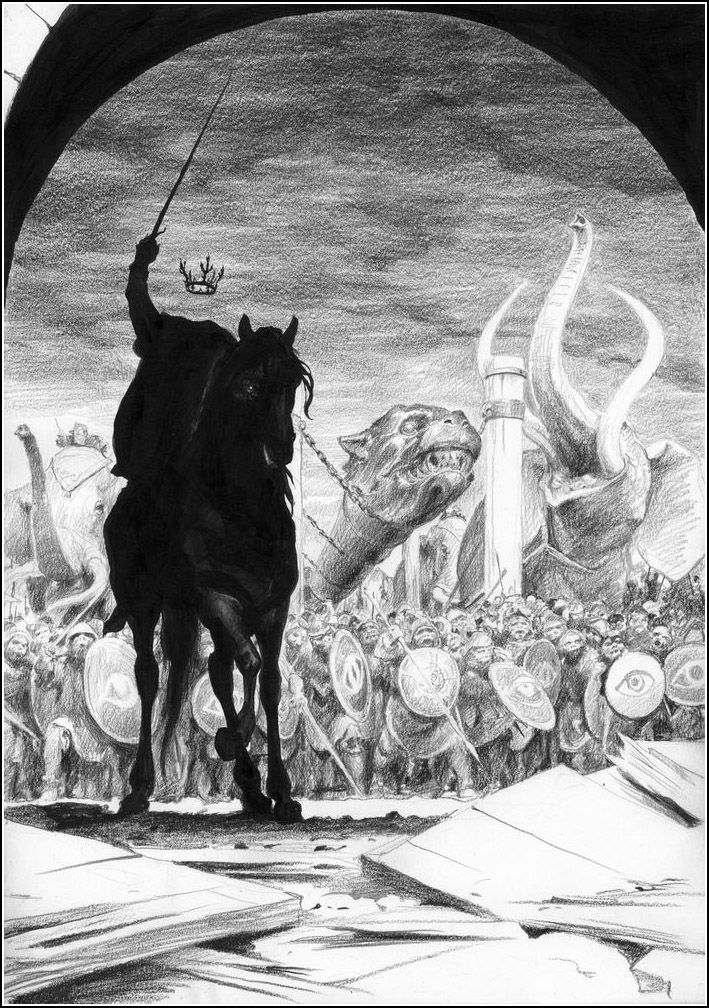
Instead, what we can see of Sauron’s government is much more medieval, beginning with the Nazgul, who were once human kings,

image12nazgul.jpg

who would be like the barons, the chief feudal deputies  of a king in a feudal world of the sort medieval England was and upon which much of Middle-earth, as we’ve suggested in many earlier postings, was based.  The chief of these was then the commander of Sauron’s main attack on Minas Tirith.

image13naz.jpg

To which we would add “the Voice of Sauron” (reminding us, of course, that he is only the spokesperson and Sauron would be presumed to have his eye on him, as well).  If you look for images of him, you will commonly find this:

image14jack.jpg

But, like certain other depictions in the Jackson films (that eye, for example), it is a very literal interpretation for someone JRRT described as:

“The rider was robed all in black, and black was his lofty helm; yet this was no Ringwraith but a living man…it is told that he was a renegade, who came of the race of those that are named the Black Numenoreans…” (The Return of the King, Book Five, Chapter 10, “The Black Gate Opens”)

Here’s an image possibility which comes a bit closer to the text, in our opinion.

image15lieutenant.jpg

From dictators, we make a final stop at two actual feudal  kings, the first, the ruler of Rohan, Theoden,

image16theoden.jpg

is clearly the descendant of earlier kings, as we are told in Appendix A, of The Lord of the Rings, “The Kings of the Mark”, where the line begins with Eorl the Young and continues for about five hundred years.

In the case of our other monarchy, Gondor, the kings who ruled for so many centuries (from SA3320 to TA 2050), have disappeared and, though the fiction is maintained that they will someday return, the actual ruler is their deputy, the Steward, and his role as lieutenant is symbolized literally by his position in the old throne room:

“At the far end, upon a dais [a kind of raised platform] of many steps was set a high throne under a canopy of marble shaped like a crowned helm; behind it was carved upon the wall and set with gems an image of a tree in flower.  But the throne was empty.  At the foot of the dais, upon the lowest step which was broad and deep, there was a stone chair, black and unadorned, and on it sat an old man gazing at his lap.”  (The Return of the King, Book Five, Chapter 1, “Minas Tirith)image17throne.jpg

At the same time, Denethor, and all of the previous Stewards, were kings in all but name, having ruled Gondor for twenty-five generations (see Appendix A, “The Stewards” for details).

So, in sum we have:

  1. 2 possible oligarchies (the Shire, Bree)
  2. 4 kingdoms (or at least sort of, in the case of the Elves—Rivendell, Lorien, plus Rohan and Gondor)
  3. 2 dictatorships (eastern Rohan, extending from Isengard, Mordor)

And, just when we were summarizing, the thought came to us:  what about the dwarves?  We can imagine that, considering Thorin’s family, there have been the equivalent of kings among the dwarves, but that’s a posting for another day!

Thanks, as ever, for reading.

MTCIDC

CD

The Nazgul Brothers?

27 Wednesday Sep 2017

Posted by Ollamh in J.R.R. Tolkien, Military History, Military History of Middle-earth, Narrative Methods

≈ Leave a comment

Tags

aircraft, anti-aircraft gun, Aviation, Bellerophon, bombers, British Army, dogfights, Dragons, early airships, flight, flying machines, Great War, harpies, Hermes, machine gun, manoeuvres, military intelligence, Nazgul, Paris, Pegasus, Schlieffen Plan of 1914, Sir Douglas Haig, Sir James Grierson, The Blitz, The Lord of the Rings, Tolkien, trench fever, trenches, Wraiths, Wright Brothers, WWI Trenches

Welcome, dear readers, as ever.

Imagine a world where there were no airports, no contrails, no roar of engines, no small silver objects crossing the skies, the sound of their flight trailed behind them.  The only flying things would be birds and those in different seasons, some permanent, some migratory (or used to be—where we live in North America the Canada Geese, whose great chevrons across our skies used to be powerful signs of winter to come or spring soon to appear, now squat here year round).

image1geese.jpg

This would have been England in 1892, the year JRRT was born.  There were early airships—basically big balloons of various sorts, but they were primarily stationary and used for (limited) military intelligence.

image2intrepid.jpeg

Then came the Wright brothers

image3wrights.jpg

who, in December, 1903, produced the first engine-propelled, manned flight in their enlarged kite.

image4kittyhawk.jpg

Thereafter, flight would, literally, take off, but the Wrights, who were idealistically inclined, believed that such an invention would actually end war by making it too terrible.

The British army thought differently, however, and there were soon aerial observation units attached to military formations.  In fact, Sir James Grierson

image5grierson.jpg

tactically outfoxed his rival, Sir Douglas Haig,

image6haig.jpg

not only by his skillful use of aircraft for observation, but also by his keen understanding of how to conceal his own movements from Haig’s aircraft

image7airship.jpg

in the army manoeuvres of 1912.

image8manoeuvres.jpg


The Great War, when it came, two years later, would then be the proving ground for all sorts of aerial experimentation.

First, it was just observation.

image9be2.jpg

A British aviator, flying north of the army, first spotted the massive German columns which were designed to outflank the British and French armies and capture Paris in the Schlieffen Plan of 1914.

image10schlieffenplan.gif

Because observation was their task, the earliest aircraft were unarmed, but this changed and soon there was aerial combat, the so-called “dog fights”, the popular images being “knights of the sky” who jousted with manoeuvres and machine guns, rather than with lances, maces, and swords.

image11joust.jpeg

image12dogfight.jpg

Next came the use of aircraft to disrupt enemy formations and their movements, bombing and strafing, sometimes as part of major attacks, the whole idea being to dominate the sky over the enemy’s trenches, while protecting your own.

image13dogfightingovertrenches.jpg

And this is where we imagine 2nd Lieutenant JRR Tolkien

image14jrrt.jpg

in the summer of 1916, standing in such a trench,

image15atrench.jpg

looking up, and thinking…

We can also imagine him imagining—not seeing flying machines, but something much earlier.  After all, with his education, background, and interests, it would have been difficult not to think of classical harpies

image15harpies.jpg

or Hermes

image16hermes.jpg

or Bellerophon, mounted on Pegasus.

image17bellerophon.jpg

And, with his Norse passion, there would also, of course, be dragons…

image18smaug.jpg

And, perhaps a combination:  a Bellerophon mounted on a miniature dragon?

image19nazgul.jpg

In the world of the trenches, there were two defences against aircraft:  friendly aircraft in the air

image20dogfight.jpg

and anti-aircraft guns on the ground.

image21aagun.jpg

But the war ended fairly quickly for the scholarly lieutenant, laid low by a more primitive enemy than Industrial Age Germans with bombs:  lice.

image22lice.jpg

JRRT became sick with what was then called “trench fever”, an illness conveyed, like typhus, by the bite of the tiny insects who colonized the clothing and bodies of soldiers in every dugout in Europe.  Wracked with recurring fevers, headaches, and complete exhaustion, among other complaints, men ill with trench fever were brought to base hospitals and, if sick enough, were sent home, as there was no cure, to recover as best they could.  Tolkien spent the rest of the war in the hospital or in garrison in England and thus escaped the last and perhaps worst years of the war in the trenches.

At home, he became Professor Tolkien, taught his classes, fathered four children, and then a second war came, one in which the primitive air war of the first war was intensified by more sophisticated aircraft, more powerful explosives, and plans to bomb Britain into ruin and submission in what was called “The Blitz”.

image23blitz.jpg


JRRT went back into service, this time as an air raid warden, even as two of his sons were more directly involved in the war.

image24airraidwarden.jpg

Night after night, the bombers came,

image25bomber.jpg

to be met with the same weapons as the previous war:  aircraft,

image26spit.jpg

anti-aircraft guns

image27aagun.jpg

and, because the enemy began to attack at night,

searchlights.

image28searchlight.jpg

And this brings us back to our imaginings.  Working on The Lord of the Rings, staring into the night sky, listening for enemy bombers, would Tolkien have thought of danger to Middle-earth in the form of flying things, not machines but terrible figures mounted on even more loathsome creatures—and what could be done about them?  Magic, perhaps?

image29gandalf.jpg

Thanks, as always, for reading!

MTCIDC

CD

← Older posts

The Doubtful Sea Series Facebook Page

The Doubtful Sea Series Facebook Page

  • Ollamh

Categories

  • Artists and Illustrators
  • Economics in Middle-earth
  • Fairy Tales and Myths
  • Films and Music
  • Games
  • Heroes
  • Imaginary History
  • J.R.R. Tolkien
  • Language
  • Literary History
  • Maps
  • Medieval Russia
  • Military History
  • Military History of Middle-earth
  • Narnia
  • Narrative Methods
  • Poetry
  • Research
  • Star Wars
  • Terra Australis
  • The Rohirrim
  • Theatre and Performance
  • Tolkien
  • Uncategorized
  • Villains
  • Writing as Collaborators
Follow doubtfulsea on WordPress.com

Across the Doubtful Sea

Recent Postings

  • Heffalumps? December 31, 2025
  • We Three Kings December 24, 2025
  • A Moon disfigured December 17, 2025
  • On the Roads Again—Once More December 10, 2025
  • (Not) Crossing Bridges December 3, 2025
  • On the Road(s) Again—Again November 26, 2025
  • On the Road(s) Again November 19, 2025
  • To Bree (Part 2) November 12, 2025
  • To Bree (Part 1) November 5, 2025

Blog Statistics

  • 104,001 Views

Posting Archive

  • December 2025 (5)
  • November 2025 (4)
  • October 2025 (5)
  • September 2025 (4)
  • August 2025 (4)
  • July 2025 (5)
  • June 2025 (4)
  • May 2025 (4)
  • April 2025 (5)
  • March 2025 (4)
  • February 2025 (4)
  • January 2025 (5)
  • December 2024 (4)
  • November 2024 (4)
  • October 2024 (5)
  • September 2024 (4)
  • August 2024 (4)
  • July 2024 (5)
  • June 2024 (4)
  • May 2024 (5)
  • April 2024 (4)
  • March 2024 (4)
  • February 2024 (4)
  • January 2024 (5)
  • December 2023 (4)
  • November 2023 (5)
  • October 2023 (4)
  • September 2023 (4)
  • August 2023 (5)
  • July 2023 (4)
  • June 2023 (4)
  • May 2023 (5)
  • April 2023 (4)
  • March 2023 (5)
  • February 2023 (4)
  • January 2023 (4)
  • December 2022 (4)
  • November 2022 (5)
  • October 2022 (4)
  • September 2022 (4)
  • August 2022 (5)
  • July 2022 (4)
  • June 2022 (5)
  • May 2022 (4)
  • April 2022 (4)
  • March 2022 (5)
  • February 2022 (4)
  • January 2022 (4)
  • December 2021 (5)
  • November 2021 (4)
  • October 2021 (4)
  • September 2021 (5)
  • August 2021 (4)
  • July 2021 (4)
  • June 2021 (5)
  • May 2021 (4)
  • April 2021 (4)
  • March 2021 (5)
  • February 2021 (4)
  • January 2021 (4)
  • December 2020 (5)
  • November 2020 (4)
  • October 2020 (4)
  • September 2020 (5)
  • August 2020 (4)
  • July 2020 (5)
  • June 2020 (4)
  • May 2020 (4)
  • April 2020 (5)
  • March 2020 (4)
  • February 2020 (4)
  • January 2020 (6)
  • December 2019 (4)
  • November 2019 (4)
  • October 2019 (5)
  • September 2019 (4)
  • August 2019 (4)
  • July 2019 (5)
  • June 2019 (4)
  • May 2019 (5)
  • April 2019 (4)
  • March 2019 (4)
  • February 2019 (4)
  • January 2019 (5)
  • December 2018 (4)
  • November 2018 (4)
  • October 2018 (5)
  • September 2018 (4)
  • August 2018 (5)
  • July 2018 (4)
  • June 2018 (4)
  • May 2018 (5)
  • April 2018 (4)
  • March 2018 (4)
  • February 2018 (4)
  • January 2018 (5)
  • December 2017 (4)
  • November 2017 (4)
  • October 2017 (4)
  • September 2017 (4)
  • August 2017 (5)
  • July 2017 (4)
  • June 2017 (4)
  • May 2017 (5)
  • April 2017 (4)
  • March 2017 (5)
  • February 2017 (4)
  • January 2017 (4)
  • December 2016 (4)
  • November 2016 (5)
  • October 2016 (6)
  • September 2016 (5)
  • August 2016 (5)
  • July 2016 (5)
  • June 2016 (5)
  • May 2016 (4)
  • April 2016 (4)
  • March 2016 (5)
  • February 2016 (4)
  • January 2016 (4)
  • December 2015 (5)
  • November 2015 (5)
  • October 2015 (4)
  • September 2015 (5)
  • August 2015 (4)
  • July 2015 (5)
  • June 2015 (5)
  • May 2015 (4)
  • April 2015 (3)
  • March 2015 (4)
  • February 2015 (4)
  • January 2015 (4)
  • December 2014 (5)
  • November 2014 (4)
  • October 2014 (6)
  • September 2014 (1)

Blog at WordPress.com.

  • Subscribe Subscribed
    • doubtfulsea
    • Join 78 other subscribers
    • Already have a WordPress.com account? Log in now.
    • doubtfulsea
    • Subscribe Subscribed
    • Sign up
    • Log in
    • Report this content
    • View site in Reader
    • Manage subscriptions
    • Collapse this bar
 

Loading Comments...