• About

doubtfulsea

~ adventure fantasy

Tag Archives: Mabinogion

Bring Back Your Dead!

12 Wednesday Apr 2017

Posted by Ollamh in Literary History, Narrative Methods

≈ 1 Comment

Tags

Arawn, Arthur Rackham, Badb, Branwen, Celtic Association of North America, Christopher Williams, Dallben, Disney, Fflewddur Fflam, Gundestrup Cauldron, Hercules, King Arthur, Lady Charlotte Guest, Lloyd Alexander, Lord of Annwn, Mabinogi, Mabinogion, Macbeth, Moirai, Morrigan, Norns, Princess Eilonwy, Pwyll, Shakespeare, Taran Wanderer, The Black Cauldron, The Castle of Llyr, The Chronicles of Prydain, the Fates, The First Two Lives of Lukas-Kasha, The High King, The Iron Ring, The Marvelous Misadventures od Sebastian, The Wizard in the Tree, The Xanadu Adventure, Time Cat, Walking Dead, Westmark, World War Z, zombies

Welcome, dear readers, as always.

In our last posting, we said that we intended to talk about otherworlds and also about one of our favorite YA (“Young Adult”) authors. That author is Lloyd Alexander (1924-2007)

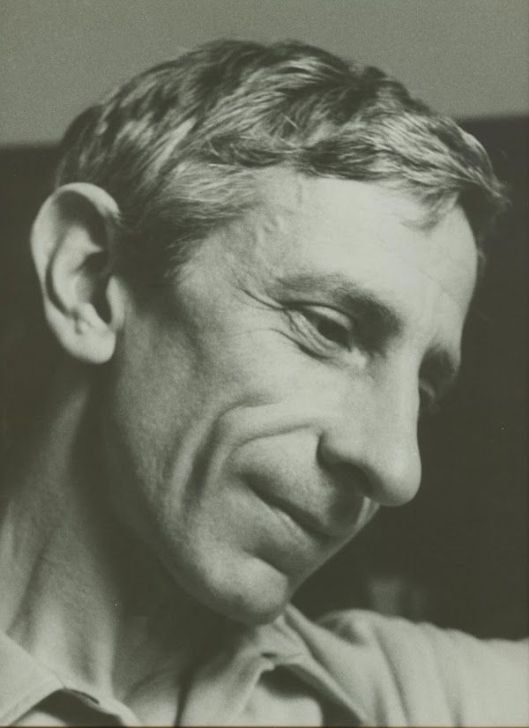
image1alawithcat.jpg

image1lalexander.jpg

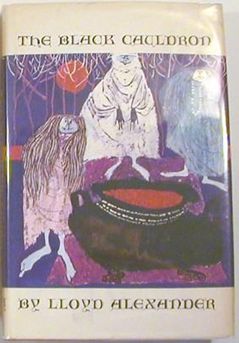
and we thought we’d open our exploration with one aspect of otherworlds: the dead, and with one aspect of them as seen in the second volume of Alexander’s pentalogy, The Chronicles of Prydain (1964-1968),
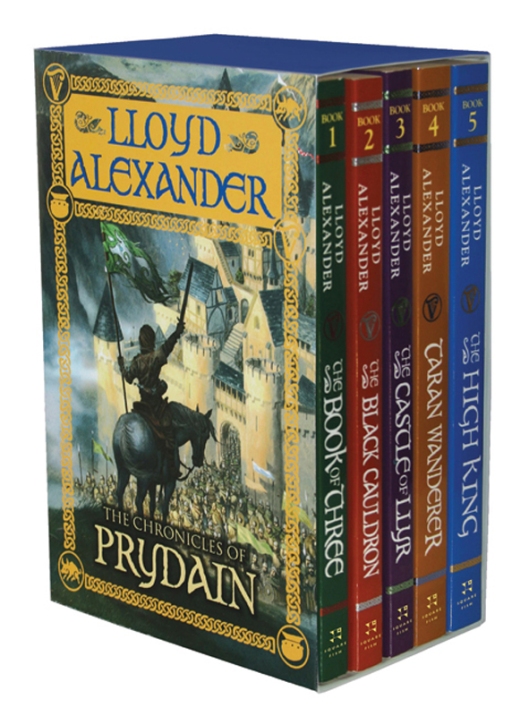
image2chronicles.jpg

The Black Cauldron.

image3blackc.JPG

Alexander wrote more than forty books, mostly YA.

image4timecatimage5sebastianimage6westmarkimage7theironringimage8lukaskashaimage9wizardimage10illyrian

Some are series, like “Westmark” and “Vesper Holly”, and some are one-offs, like The Iron Ring, and we’ve enjoyed them all, but those we have returned to most often are the books which make up The Chronicles: The Book of Three, The Black Cauldron, The Castle of Llyr, Taran Wanderer, The High King. These are lighter books than their Tolkien cousins, but they are equally serious, with genuinely unhappy moments, and a feel which might, at times, seem like a combination of The Hobbit and “The Grey Havens”, which is why we return to them. The characters can be familiar, like Taran the Assistant Pig Keeper, who is a foundling, but much more, and Dallben the very quiet wizard, but also unusual, like the Princess Eilonwy, a chatterbox with a practical mind, or Gurgi, who is somewhere between human and something else, and who talks in a distinctly rhythmic way, or the would-be minstrel, Fflewddur Fflam, who has trouble with the truth—something which his harp points out on a regular basis.

All of these characters and more have their home in “Prydain”,
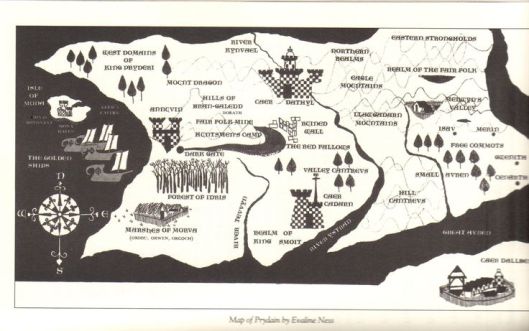
image11prydain.jpg

which is a kind of imaginary Wales, just as names and story elements in the pentalogy are derived from Welsh mythology and, in particular, from the medieval collection now called The Mabinogi (or Mabinogion—the title being the subject of much discussion). The first complete English translation was that of Lady Charlotte Guest (1838-1845) and it’s available at Sacred Texts. Here’s the link for the second edition of 1877).

In an interview with Scholastic, Alexander tells us that he spent a little time in Wales during World War II and fell in love with it and that the mythological part of the story came from a childhood love of King Arthur. (Here’s a link to the text of the interview—as well as one to the filmed interview, and, as a bonus, a separate film on Alexander.)

The general thread of the stories is derived, in part, from the story of Pwyll. (Yes—it looks unpronounceable, but it’s really not—go to this link from the Celtic Studies Association of North America to hear—for English speakers, that ll at the end would be the hardest—it’s said out of the corner of your mouth as a kind of musical hiss—if you know Sylvester the Pussycat from the old Warner Brothers cartoons,

image12sylvester.jpg

you can get a rough idea of the sound when he says—as everybody in the 1930s and 1940s appears to have said nearly constantly, if you believe their movies– “Say!”)

Pwyll is a prince who, when out hunting, has an encounter with Arawn (AH-ruhn, more or less), the Lord of Annwn (AH-nuhn), which is the name for the Otherworld. In the Alexander books, Arawn plans to conquer this world and Taran and his friends are brought into combat with his allies and Arawn himself again and again until Arawn’s final defeat.

One element in Arawn’s plans is a magical cauldron,
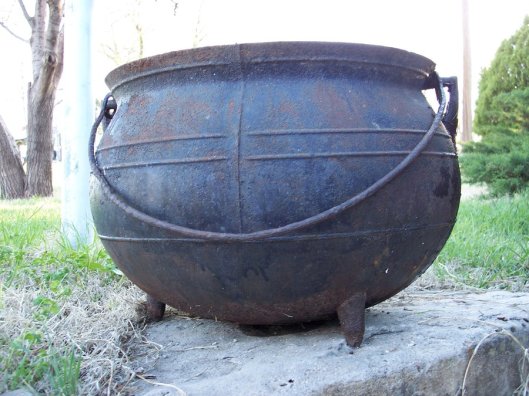
image13cauldron.jpg

which can bring back the dead. This is an idea which Alexander borrowed from another of the Mabinogi stories, that of Branwen, here depicted in a 1915 painting by Christopher Williams.
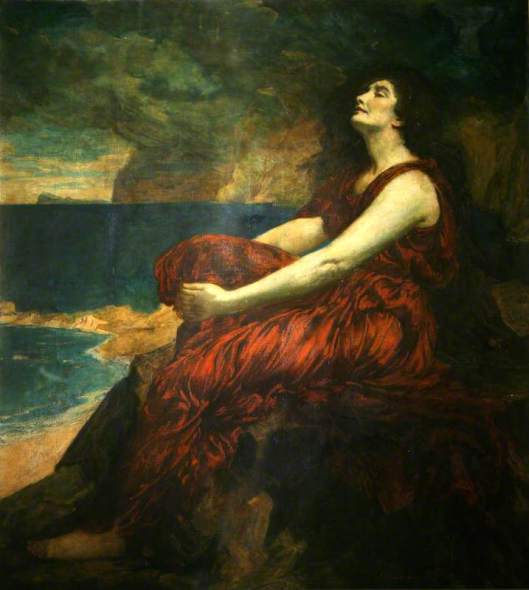
image14branwen.jpg

It has been suggested that the use of this cauldron can be seen upon the “Gundestrup Cauldron”, a silver vessel discovered in a peat bog at Gundestrup, Denmark, in 1891.

image15gundestrup.jpg

It’s a mysterious thing with lots of academic argument over who made it, where, and when, with dates between 200bc and 300ad, besides its purpose, but, among its many puzzling scenes is this:

image16gunddetail.jpg

In The Black Cauldron, although Arawn had once controlled it, the vessel really belongs to three mysterious figures—Orddu, Orwen, Orgoch—who live in a hut in the Marshes of Morva. Three haglike figures around a cauldron suggest another such trio—the three weird sisters in Shakespeare’s Macbeth.

image17macbeth.jpg

We believe, in fact, that these (in the play) are the three incarnations of the Irish goddess, the Badb (“Crow”). This image comes from a weird and interesting site called “Mygodpictures.com”.)

image18badb.jpg

She was also known as the Morrigan (“Great Queen”), who was thought to appear on battlefields, before, during, and after conflict.

These hags also remind us of the three figures of fate from the Norse tradition, the Norns (seen here in an especially ghostly picture by Arthur Rackham)

image19norns.jpg

and, beyond those, the Moirai, the three fates of Greco-Roman religion

image20moirai.jpg

as well as the Fates from Disney’s Hercules

image21disneyfates.jpg

to go from the serious to the nearly-silly.

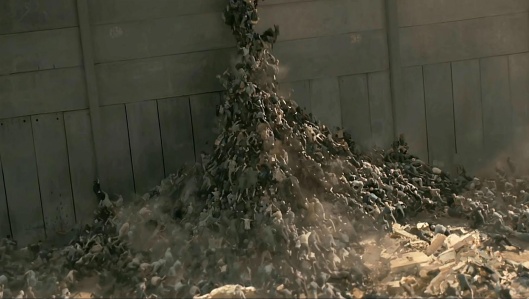
In recent years, popular entertainment has used the re-animated, from World War Z
imag22worldwarz.jpg

to The Walking Dead,

image23walkingdead.jpg

and can we ever escape zombies?

image24zombies.jpg

For us, however, perhaps the most powerful of images lies not in the gross graphics of decaying flesh, but that, in the story of Branwen, the dead can be brought back, but cannot speak. Why is this? It’s a haunting question: is it that death—or rebirth—is so terrible that they are blocked from talking about it? Is it that no one is alive who cannot communicate, in some form or other? What do you think about the mute dead, dear readers?

Thank you, as always, for reading and definitely

MTCIDC

CD

Red Books, Black Books, Yellow Books

24 Wednesday Jun 2015

Posted by Ollamh in J.R.R. Tolkien, Language, Narrative Methods

≈ Leave a comment

Tags

Bilbo, Black Book of Carmarthen, Book of Ballymote, Book of Leinster, Book of Lismore, Book of Taliesin, Book of the Dun Cow, Dwarves, Geoffrey of Monmouth, Gollum, Mabinogion, Manuscript, Medieval books, Red Book of Hergest, Red Book of Westmarch, Scriptorium, The Hobbit, The Lord of the Rings, The Shire, Tolkien, White Book of Rhydderch, Yellow Book of Lecan

Dear Readers,

Welcome back! This posting is devoted to a look at what lies behind that famous imaginary document The Red Book of Westmarch.

     As Tolkien says of The Lord of the Rings in the section of the prologue entitled “Note on the Shire Records”:

“This account of the end of the Third Age is drawn mainly from the Red Book of Westmarch. That most important source for the history of the War of the Ring was so called because it was long preserved at Undertowers, the home of the Fairbairns, Wardens of the Westmarch. It was in origin Bilbo’s private diary, which he took with him to Rivendell. Frodo brought it back to the Shire, together with many loose leaves of notes, and during S.R. 1420-1 he nearly filled its pages with his account of the War. But annexed to it and preserved with it, probably in a single red case, were the three large volumes, bound in red leather, that Bilbo gave to him as a parting gift. To these four volumes there was added in Westmarch a fifth containing commentaries, genealogies, and various other matter concerning the hobbit members of the Fellowship.” 14

redbookfacsimile

     This is not the end of the material on the Red Book, of course,—that takes up another paragraph and then is continued in several more paragraphs about copies and about other pertinent written sources. This is JRRT having fun, of course: after all, for him, what is more satisfying after creating languages than building contexts for them?

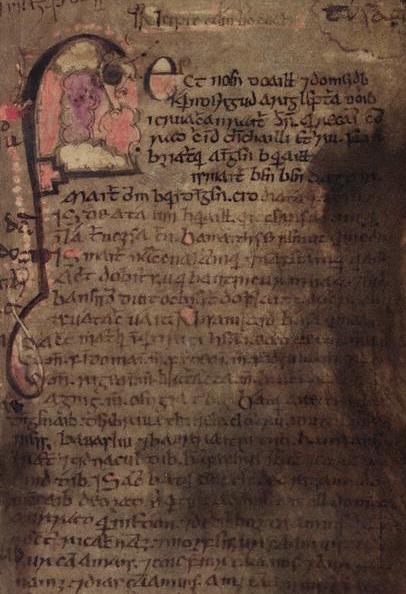
     This particular context is based upon material from his own specialty, medieval literature, and it’s always been said that The Red Book of Westmarch was inspired by the late 14th-century Welsh Red Book of Hergest. This famous manuscript contains one of the major texts of the cycle of legendary material called the Mabinogion, but for Tolkien its importance may have been simply that

  1. it’s a medieval manuscript familiar to him and a model-ready-to-hand for what he created in what he thought of as his own medieval world
  2. as the Wiki entry says, “The manuscript derives its name from the colour of its leather binding and from its association with Hergest Court between the late 15th and early 17th century.”

redbookofhergest

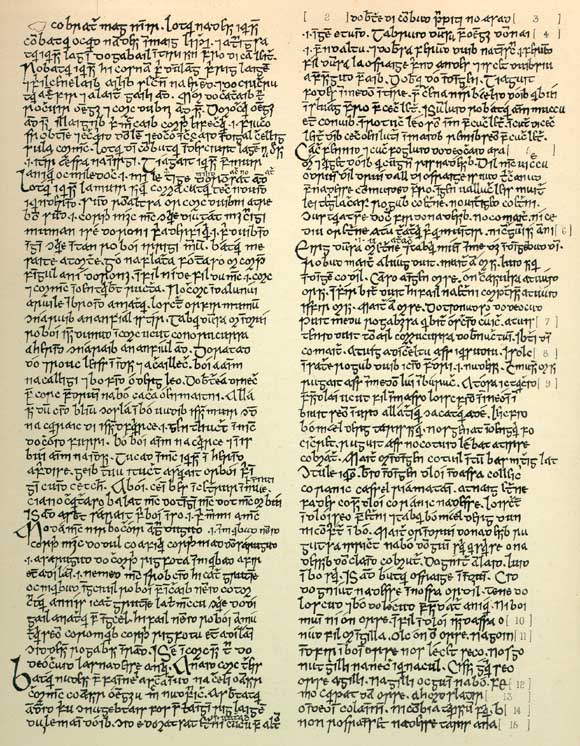
     This manuscript and others like it, both Welsh (Black Book of Carmarthen,White Book of Rhydderch, Book of Taliesin) and Irish (Book of the Dun Cow, Yellow Book of Lecan, Book of Leinster, Book of Ballymote, Book of Lismore)

blackbookofcarmarthen

Book_of_Taliesin_facsimile

whitebookof rhydderch

lebornauidre

Book_of_Lecan_p2

Book_of_Leinster,_folio_53

were created in the scriptoriums (Latin plural: scriptoria), the medieval equivalent of a copy center, in various monasteries. The following images will give you an idea of how they worked.

scriptorium

 BL_Royal_Vincent_of_Beauvais

gregory

In the world before Gutenberg

792px-Pressing-16th_century%20copy

everything was written—and then copied—by hand, a fact which Tolkien faithfully reproduces in his world when he writes that:

“The most important copy, however, has a different history. It was kept at Great Smials, but it was written in Gondor, probably at the request of the great-grandson of Peregrin, and completed in S.R. 1592 (F.A. 172). Its southern scribe appended this note: Findegil, King’s Writer, finished this work in IV 172.” 14

     There are, of course, no monasteries in Middle Earth, but, in our world, there were clerks, educated in monasteries, who worked as secretaries and copyists for kings and their nobility, so it’s quite logical that a copy of the Red Book in Middle Earth was the work of a so-called “King’s Writer”.

     Comparing an actual manuscript with the Red Book of Westmarch, we find several other differences. For one, the RBW’s four main volumes appear to contain nothing but material relating to the events surrounding Bilbo, Frodo, and the Ring. In contrast, the actual medieval manuscripts are more like compilations. The Red Book of Hergest, for example, has not only the Mabinogion, but also unrelated poetry, and a Welsh translation of Geoffrey of Monmouth’s History of the Kings of Britain, among other works. The Irish Book of the Dun Cow has religious texts and secular, all mixed together, and this appears to be common. The closest the RBW comes to this is volume 5, with its “commentaries, genealogies, and various other matter concerning the hobbit members of the Fellowship” and this is still material pertaining to the main subject, not something as removed as the method for determining the correct date for Easter to be found in the Book of Leinster.

     Another difference brings us to a puzzle and the conclusion of this posting.  Tolkien has told us that the core of the RBW is Bilbo’s diary. The Welsh and Irish manuscripts discussed above are collections of literary and religious texts, with nothing personal in them at all, as he would have been well aware.  As well, we might wonder when and where and how Bilbo kept that diary. There’s no mention of it in The Hobbit—after all, Bilbo ran out of his house to join the dwarves without even a pocket handkerchief. And, even if the dwarves had provided one (along with the handkerchief–although that does not seem terrifically likely–the dwarves who visit Bilbo seem more attuned to orality than literacy), surely it would have been lost with all of the other baggage when the company fell into the goblin world and Bilbo met Gollum.

Alan Lee - The Hobbit - 19 - Riddles in the dark

Other than assuming that Bilbo, although he had forgotten his handkerchief, had remembered his Blackberry and was constantly dictating to the Cloud for later transcription, what do we have here?  (And, while we’re wondering, if The Hobbit was based upon that mysterious diary, what do we know of the adapter/narrator who turned it from a diary into a continuous narrative–another “King’s Writer”?)

Obviously, MTCIDC!

Thanks, as always, for reading.

CD

The Doubtful Sea Series Facebook Page

The Doubtful Sea Series Facebook Page

  • Ollamh

Categories

  • Artists and Illustrators
  • Economics in Middle-earth
  • Fairy Tales and Myths
  • Films and Music
  • Games
  • Heroes
  • Imaginary History
  • J.R.R. Tolkien
  • Language
  • Literary History
  • Maps
  • Medieval Russia
  • Military History
  • Military History of Middle-earth
  • Narnia
  • Narrative Methods
  • Poetry
  • Research
  • Star Wars
  • Terra Australis
  • The Rohirrim
  • Theatre and Performance
  • Tolkien
  • Uncategorized
  • Villains
  • Writing as Collaborators
Follow doubtfulsea on WordPress.com

Across the Doubtful Sea

Recent Postings

  • Through a glass… January 7, 2026
  • Heffalumps? December 31, 2025
  • We Three Kings December 24, 2025
  • A Moon disfigured December 17, 2025
  • On the Roads Again—Once More December 10, 2025
  • (Not) Crossing Bridges December 3, 2025
  • On the Road(s) Again—Again November 26, 2025
  • On the Road(s) Again November 19, 2025
  • To Bree (Part 2) November 12, 2025

Blog Statistics

  • 104,044 Views

Posting Archive

  • January 2026 (1)
  • December 2025 (5)
  • November 2025 (4)
  • October 2025 (5)
  • September 2025 (4)
  • August 2025 (4)
  • July 2025 (5)
  • June 2025 (4)
  • May 2025 (4)
  • April 2025 (5)
  • March 2025 (4)
  • February 2025 (4)
  • January 2025 (5)
  • December 2024 (4)
  • November 2024 (4)
  • October 2024 (5)
  • September 2024 (4)
  • August 2024 (4)
  • July 2024 (5)
  • June 2024 (4)
  • May 2024 (5)
  • April 2024 (4)
  • March 2024 (4)
  • February 2024 (4)
  • January 2024 (5)
  • December 2023 (4)
  • November 2023 (5)
  • October 2023 (4)
  • September 2023 (4)
  • August 2023 (5)
  • July 2023 (4)
  • June 2023 (4)
  • May 2023 (5)
  • April 2023 (4)
  • March 2023 (5)
  • February 2023 (4)
  • January 2023 (4)
  • December 2022 (4)
  • November 2022 (5)
  • October 2022 (4)
  • September 2022 (4)
  • August 2022 (5)
  • July 2022 (4)
  • June 2022 (5)
  • May 2022 (4)
  • April 2022 (4)
  • March 2022 (5)
  • February 2022 (4)
  • January 2022 (4)
  • December 2021 (5)
  • November 2021 (4)
  • October 2021 (4)
  • September 2021 (5)
  • August 2021 (4)
  • July 2021 (4)
  • June 2021 (5)
  • May 2021 (4)
  • April 2021 (4)
  • March 2021 (5)
  • February 2021 (4)
  • January 2021 (4)
  • December 2020 (5)
  • November 2020 (4)
  • October 2020 (4)
  • September 2020 (5)
  • August 2020 (4)
  • July 2020 (5)
  • June 2020 (4)
  • May 2020 (4)
  • April 2020 (5)
  • March 2020 (4)
  • February 2020 (4)
  • January 2020 (6)
  • December 2019 (4)
  • November 2019 (4)
  • October 2019 (5)
  • September 2019 (4)
  • August 2019 (4)
  • July 2019 (5)
  • June 2019 (4)
  • May 2019 (5)
  • April 2019 (4)
  • March 2019 (4)
  • February 2019 (4)
  • January 2019 (5)
  • December 2018 (4)
  • November 2018 (4)
  • October 2018 (5)
  • September 2018 (4)
  • August 2018 (5)
  • July 2018 (4)
  • June 2018 (4)
  • May 2018 (5)
  • April 2018 (4)
  • March 2018 (4)
  • February 2018 (4)
  • January 2018 (5)
  • December 2017 (4)
  • November 2017 (4)
  • October 2017 (4)
  • September 2017 (4)
  • August 2017 (5)
  • July 2017 (4)
  • June 2017 (4)
  • May 2017 (5)
  • April 2017 (4)
  • March 2017 (5)
  • February 2017 (4)
  • January 2017 (4)
  • December 2016 (4)
  • November 2016 (5)
  • October 2016 (6)
  • September 2016 (5)
  • August 2016 (5)
  • July 2016 (5)
  • June 2016 (5)
  • May 2016 (4)
  • April 2016 (4)
  • March 2016 (5)
  • February 2016 (4)
  • January 2016 (4)
  • December 2015 (5)
  • November 2015 (5)
  • October 2015 (4)
  • September 2015 (5)
  • August 2015 (4)
  • July 2015 (5)
  • June 2015 (5)
  • May 2015 (4)
  • April 2015 (3)
  • March 2015 (4)
  • February 2015 (4)
  • January 2015 (4)
  • December 2014 (5)
  • November 2014 (4)
  • October 2014 (6)
  • September 2014 (1)

Blog at WordPress.com.

  • Subscribe Subscribed
    • doubtfulsea
    • Join 78 other subscribers
    • Already have a WordPress.com account? Log in now.
    • doubtfulsea
    • Subscribe Subscribed
    • Sign up
    • Log in
    • Report this content
    • View site in Reader
    • Manage subscriptions
    • Collapse this bar
 

Loading Comments...