• About

doubtfulsea

~ adventure fantasy

Tag Archives: Hobbiton

Wains, Carts, and… (2)

14 Wednesday Feb 2018

Posted by Ollamh in Economics in Middle-earth, J.R.R. Tolkien

≈ Leave a comment

Tags

Boudica, Carts, Cassius Dio, Celts, chariots, Conestoga, Farmer Maggot, Gandalf, gur, Hobbiton, Iceni, Iron Age, Medieval, Mongols, Oregon Trail, Roman History, Romans, The Lord of the Rings, Tolkien, vikings, Wagons, Wainriders, Wains

Welcome, as always, to our blog, dear readers.

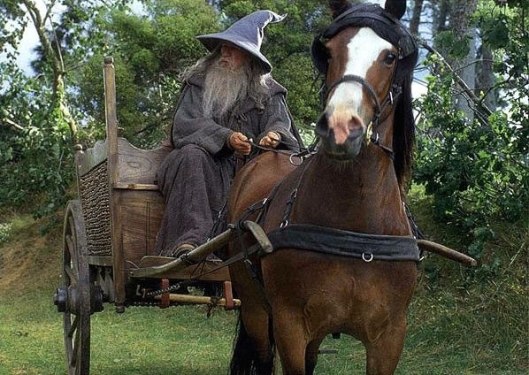
In our last, we began discussing wheeled transport in The Lord of the Rings.  We began with Gandalf’s cart, mentioned in Chapter 1.
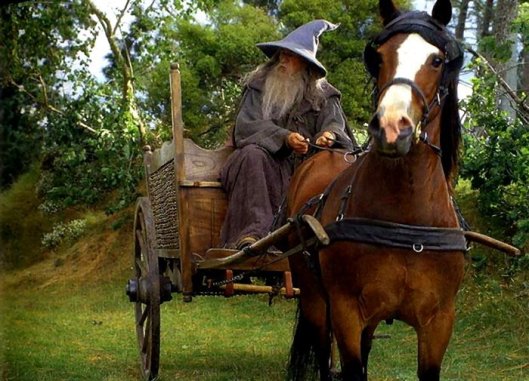
im1gscart.jpg

The posting took us from the first traces of wheeled vehicles in western Europe, circa 3600BC (literally traces—just a pair of tracks in the clay)

im2tracks.jpg

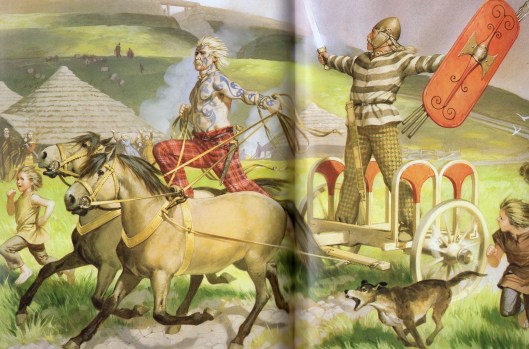
through chariots

im3chariot.jpg

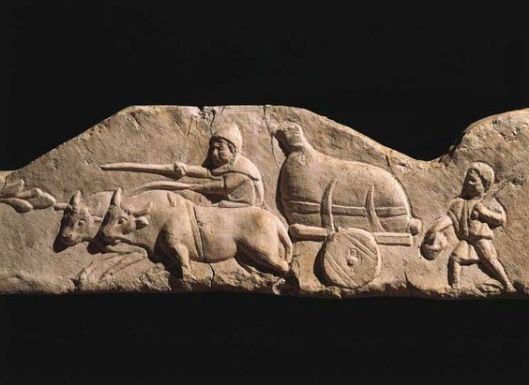
to Roman carts

im4romcart.jpg

to their descendants, medieval carts,
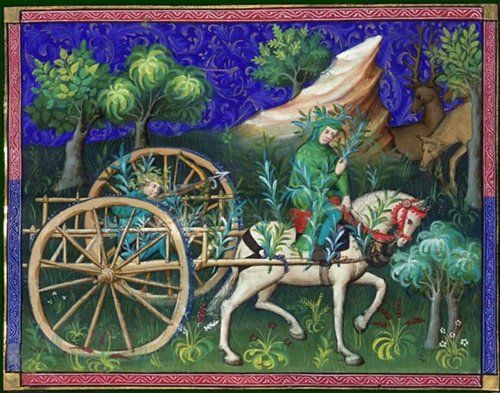
im5medcart.jpg

which led us back to Gandalf.

im6gcart.jpg

Continuing our discussion, we move from carts (2 wheels) to wagons (4 wheels) with the wagon Farmer Maggot uses to carry the hobbits to Bucklebury Ferry:

“I was going to say:  after a bit of supper, I’ll get out a small wagon, and I’ll drive you all to the Ferry.” (The Fellowship of the Ring, Book One, Chapter 4, “A Short Cut to Mushrooms”)

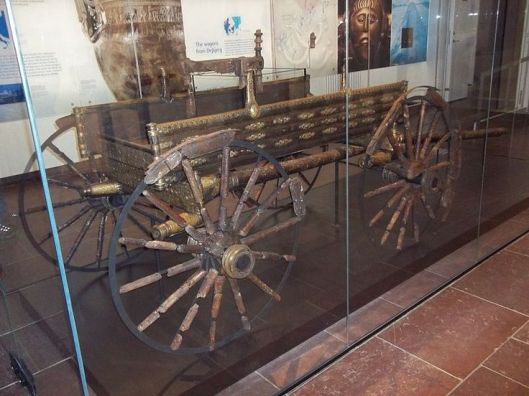
There is no description beyond that, really, but wagons are pretty generic things.  We have a few examples of early (600-500BC) Iron Age wagons—very fancy ones, too—from burials,

im7celtwag.jpg

im8celtwag.jpg

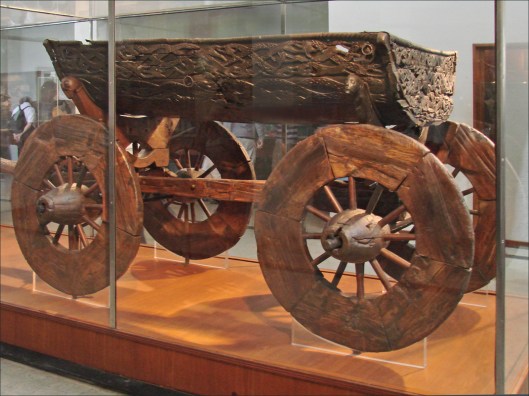
as well as this later Viking wagon.

im9oseberg.jpg

And, in between, we have Roman wagons
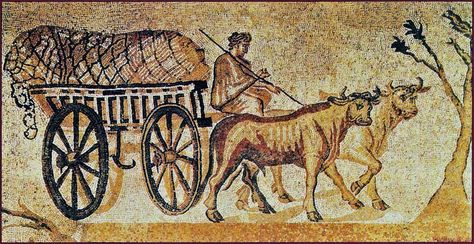
im10romwag.jpg

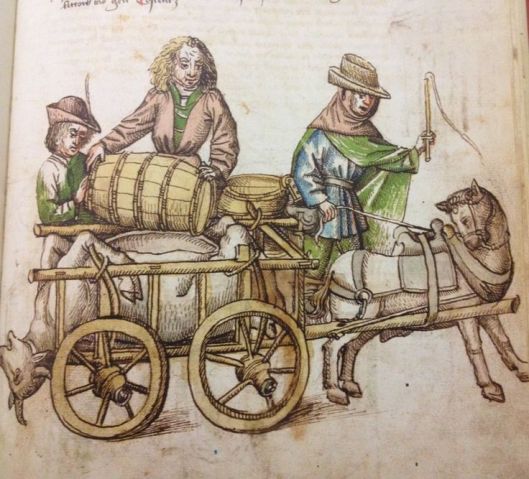
and their medieval descendants.

im11medwag.jpg

Farmer Maggott’s wagon, would probably have looked something like this (without the arms).
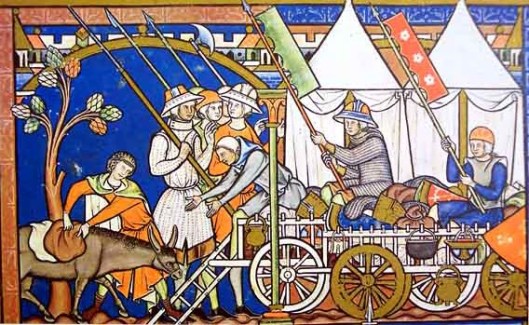
im12amedwag.jpg

Of course, those Roman wagons were meant for paved Roman roads.
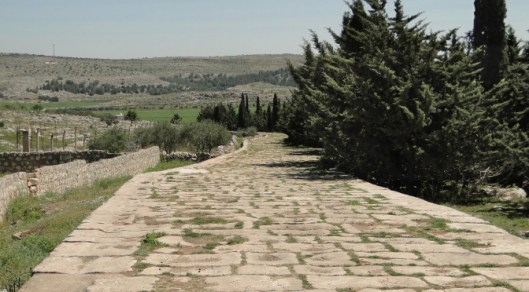
im12romroad.jpg

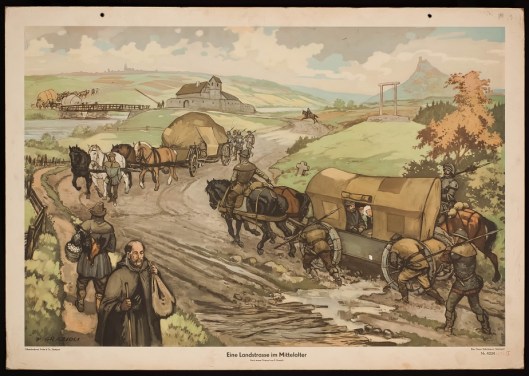
Although some Roman roads remained on the surface and continued to be used, most medieval roads were merely dirt and stones—as JRRT illustrates in that picture of the Hill

im13hobbiton.jpg

and as we see in this picture.

im14medroad.jpg

In which case, medieval people relied upon pack horses to transport many of their goods.

im15sumpter.jpg

(Think of Bill the pony as a modest example.)

An old word for wagon is wain and we would like to end this brief exploration with something about wains and Wainriders.  In Appendix A, we find this:

“The third evil was the invasion of the Wainriders, which sapped the waning strength of Gondor in wars that lasted for almost a hundred years.  The Wainriders were a people, or a confederacy of many peoples, that came from the east; but they were stronger and better armed than any that had appeared before.  They journeyed in great wains, and their chieftains fought in chariots.”

We’ve been puzzled by that combination of “great wains” and “their chieftains fought in chariots”.  The only immediate reference we could think of was to the Iceni, a tribe of ancient Britain, who, led by a female chieftain named Boudica, revolted against Roman occupation in 60-61AD.  At the final battle, where they were defeated by Roman troops, they had parked wagons in a crescent formation to their rear, then advanced with their chariots and infantry against the Romans. (See Cassius Dio, Roman History, LXII.12 for a description of this battle—here’s an easy LINK to that portion of his extensive writing.)
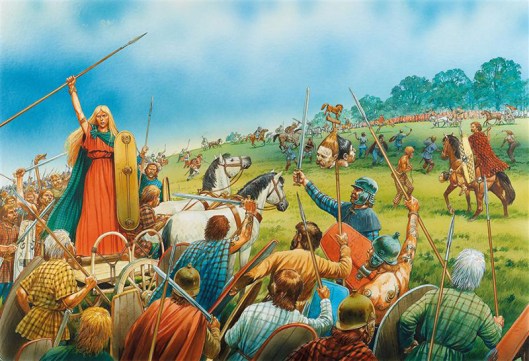
im16boudica.jpg

There is a problem here, however.  The Britons were not migratory and their wagons were probably no more than farm wagons and carts, hardly the great wains of JRRT’s description.  If we removed the chariots, another candidate for the Wainriders might be the Mongols, however, who were migratory and traveled in something even more splendid than a wagon—a gur—like this one—

im17ger.jpg

The Mongols certainly came from the east and, in a short time, swallowed up territory from China all the way to eastern Europe.

im18mongolconquest.jpg

It is more likely, however, that JRRT combined things–it wouldn’t be the first time he synthesized—so much of his so-called legendarium is a mixture of this and that in brilliant profusion.  So, in the same spirit, we asked ourselves what we thought wains might look like and immediately saw the big wagon which was instrumental in colonizing the western part of the US, the Conestoga.

im19conestoga.jpg

Great, long lines of these and other wagons, packed with people and supplies, crossed the plains from the 1840s on.
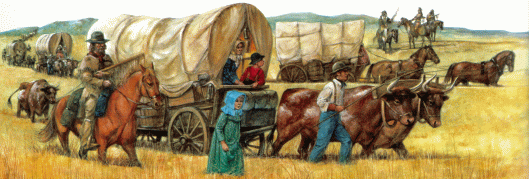
im20wagtrain.gif

Could we then remove the 19th-century settlers and add Celts and their chariots, say?
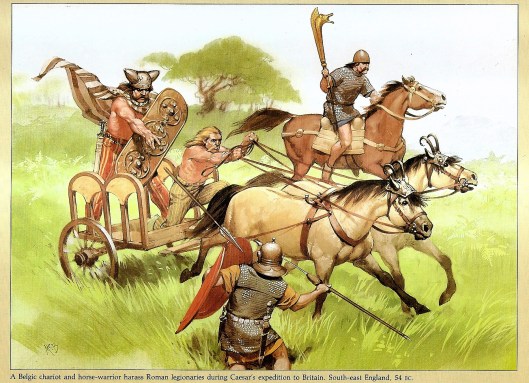
im21celtchar.jpg

What do you think, dear readers?

Thanks, as ever, for reading.

MTCIDC

CD

Contraption

27 Wednesday Dec 2017

Posted by Ollamh in Economics in Middle-earth, J.R.R. Tolkien, Narrative Methods

≈ Leave a comment

Tags

Bag End, Barbegal, Birmingham, Caillebotte, contraptions, haymows, Hobbiton, machines, mill, plowing, reaping, Roman bread, Sandyman's Mill, Sarehole, Sarehole Mill, Saruman, sowing, The Lord of the Rings, The Shire, Tolkien, water mill, wheels, winnowing

Welcome, as always, dear readers.

Although we think we might have another post or two on things in Bilbo’s hall, we thought it would be fun to take a break and look elsewhere in Middle-earth.

In a posting long ago now, we looked at Saruman and his attempt to ruin the Shire.  Cutting down trees was certainly part of his plan, as Farmer Cotton tells the hobbits:  “They cut down trees and let ‘em lie” (The Return of the King, Book Six, Chapter 8)  There was much worse, however, as he continues:

“Take Sandyman’s mill now.  Pimple knocked it down, almost as soon as he came to Bag End.  Then he brought in a lot o’ dirty-looking men to build a bigger one and fill it full o’ wheels and outlandish contraptions.”

“Wheels” made us think of two things:

  1. Fangorn’s description of Saruman himself: “He has a mind of metal and wheels” (The Two Towers, Book Three, Chapter 4, “Treebeard”)
  2. and, secondly, just what level of technology Middle-earth actually has

JRRT himself wrote of Hobbits, in the Prologue to The Lord of the Rings:

“They do not and did not understand or like machines more complicated than a forge-bellows, a water-mill, or a hand-loom, though they were skilful with tools.”

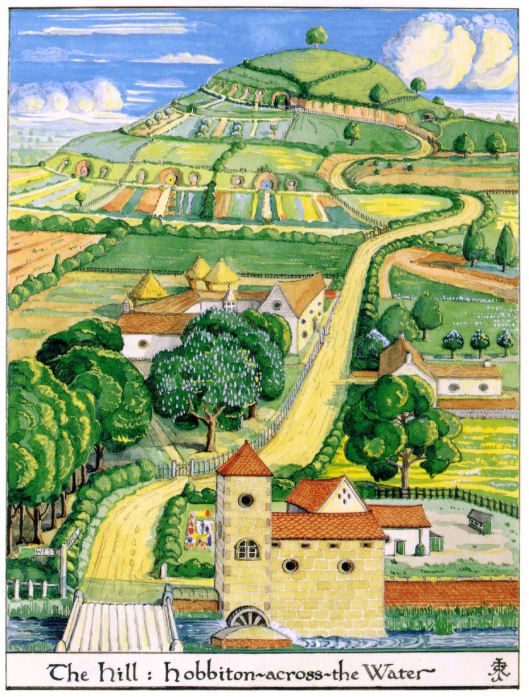
As far as authentic depictions, we have one, by Tolkien himself, in this picture of Hobbiton.

image1hobbitonmill.jpg

Presumably, that’s the Sandyman mill in the foreground.  You can see in the left middleground what appear to be hay stacks (also called “haymows”) which rather resemble these from a painting by Caillebotte (whose work appeared in our posting on umbrellas) and are where the material saved from the growing/reaping cycle is stored.

image2haystackscaillebotte.jpg

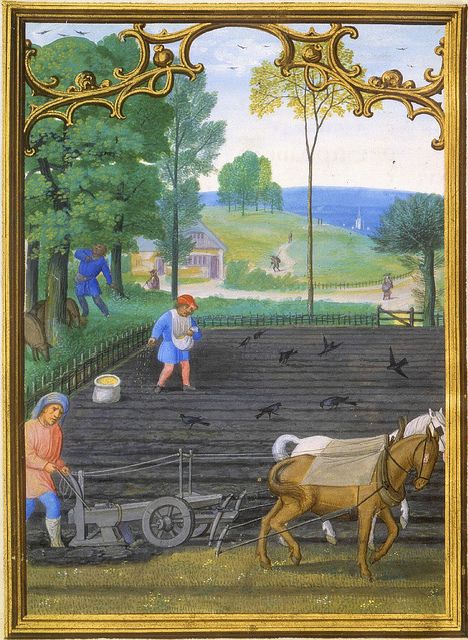
The whole process for what eventually gets to the mill begins with plowing the land and sowing the seed (and keeping off the birds, if possible).

image3plowing.jpg

Then, when the grain is ripe, it is reaped and stacked.

image4reapingstacking.jpg

At this point, the grain is still on the stalk and needs to be detached.  This is done by flailing it.

image5flailing.jpg

At that point, however, it’s still in its beard

image6wheatinbeard.jpg

and the kernels of wheat need to be shaken free by the process called winnowing.  This can be done by a number of methods, but the easiest includes using the air currents to help remove the hull (the chaff—and, if you know the expression “to separate the wheat from the chaff”, now you also know where it comes from).

image7winnowing.jpg

Now, when you finally have the pure grain, the next step is to grind it to a powder.  The most ancient method (still used for crushing grain in some parts of the world) is this—

image8quernstone.jpg

But the Romans sped this up with a kind of early machine, both slave-driven and animal-propelled—

image9slave.jpg

image10animal.jpg

The flour (pretty coarse and gritty, we understand—which wore down people’s teeth) was then mixed with water and baked

image11bakingprocess.jpg

and sold as this.image12.jpg

(This is real Roman bread—abandoned in an oven when Vesuvius exploded and found many centuries later, still in the oven.)  Some bakers liked to label their bread, as you can see, with a special name stamp.

image13breadstamp.jpg

In time, some clever Roman got the idea that there might be a more efficient method than slaves and animals and harnessed water as a power source and even occasionally harnessed it more than once, as here, at Barbegal, in southern France.

image14multiplemill.jpg

This technology does not appear to have been lost along with so much else of the Roman world and continued to be used in later centuries.

image15irishmill.jpg

As you can see from this illustration, the basic idea is simple:  the water is channeled to pour over the paddles of the wheel, thus turning it.  The turning motion is then conveyed through a series of gears until it spins the upper stone of the two millstones, thus grinding the grain.

image16romanmill.jpg

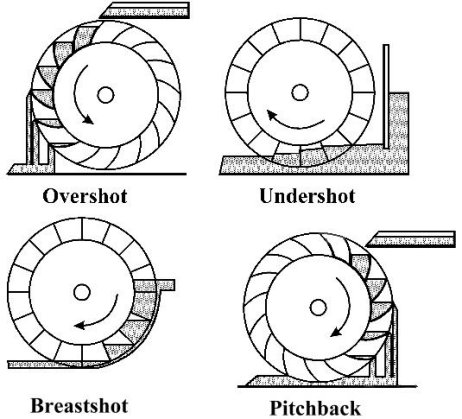
There are several types of wheel:  overshot, breast, undershot, and pitchback.

image17typesofwheel.jpg

Our research suggests that the overshot is the most powerful—but, as you can see in JRRT’s illustration, the Hobbiton mill is of the undershot variety.

image18hobbiton.jpg

Tolkien’s model for this is assumed to have been the Sarehole Mill, in the village of Sarehole, south of Birmingham, where his mother took him and his brother to live, for about 4 years in the late 1890s, in this house.

image19tolkienhouse.jpg

From its front door, he could look across and see this mill—here’s a 1905 postcard of the mill.

image20sareholemill1905.jpg

After a certain amount of searching, we still can’t tell what kind of wheel Sarehole had in Tolkien’s day, but there are certainly some other strong differences visible between it and the Hobbiton mill.  First, of course, there’s that chimney on Sarehole, which was installed in 1852 as part of the addition of a steam engine to the mill’s older water-driven system.  (Is this one of the “outlandish contraptions” Farmer Cotton complains about?)  But perhaps this suggested the tower on the left of the Hobbiton mill?  Second, and a little stranger, might be those round windows—although we might see these as a quiet joke:  just as an older Hobbit hole, like Bag End, had such windows, so it might be fitting for a Hobbit mill to have them, too?

Thanks, as ever, for reading.

MTCIDC

CD

ps

Here’s a LINK, by the way, to a 1966 interview with JRRT about his early years in Sarehole.

About That PS

18 Wednesday Oct 2017

Posted by Ollamh in J.R.R. Tolkien, Narrative Methods

≈ Leave a comment

Tags

anachronism, Bag End, banjo clock, barometer, clocks, Edwardian, Evangelista Torricelli, Hobbiton, Lucien Vidie, Middle-earth, Oxford, railway, The Hobbit, The Lord of the Rings, Tolkien, Victorian

Welcome, as always, dear readers.

In a PS to our last posting, we showed this illustration

image1bagend.jpg

and asked you if you saw something peculiar about it.

In fact, there are two peculiar things about it.  Look to the left of the door.  What is that?   At first, we were inclined to imagine that it was a clock of a style known as a “banjo clock”.

image2banjoclock.jpg

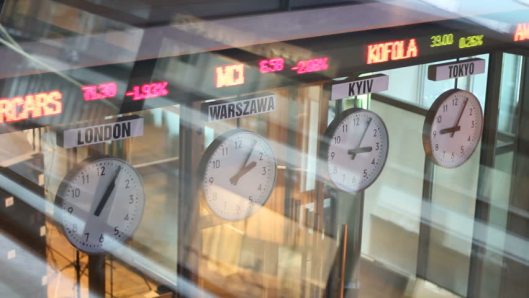
But there was also a clock on the right hand wall, and, unless Bag End was like a stock exchange, with clocks showing various times around the world,

image3stockclocks.jpg

(image the one on the left being “Shire Time”, while the one on the right is “Mordor Time”!)

why would Bilbo have two clocks?

There’s also the technical problem:  banjo clocks—maybe all clocks?—which have pendulums need to use gravity to help in their swing.  If the object on Bilbo’s wall is a clock, it’s upside down and therefore—

and so, after lots of searching to see if we could match it somehow, we were scratching our collective heads when we realized that it wasn’t a clock at all, but a barometer—and a distinctively Victorian one, which fits in with our suggestion in a recent posting that JRRT was using his memories of his Victorian/Edwardian childhood as the basis of Bag End.

image4vicbar.jpg

So, what’s a barometer and why might Bilbo have one?

The simplest answer to the first of those is that a barometer measures atmospheric pressure.  That measurement, in turn, can tell you about changes in weather:  low pressure, it’s more likely to rain, high pressure, not.  Here’s a basic chart to explain.

image5airpressure.jpg

One odd thing about Bilbo’s is that, commonly, barometers are combined with thermometers in patterns of the sort you see on the Bag End wall, whereas this one appears to be by itself.

image6bar.jpg

The really odd thing, however, is that he has one to begin with.  The first barometers date from the 1640s, being an offshoot of trying to understand the concept of a vacuum.

image7aboutvacuums.png

It was only in the 1840s that someone (Lucien Vidie) postulated that air pressure changes—measurable by this device– could signal weather changes.  For Bilbo to have such a thing in a Middle-earth which appears to be almost entirely devoid both of science as we understand it and of mechanical technology, is a puzzle at best.   Who made it?  How did he obtain it?  And last—and hardest—what did he do with it?

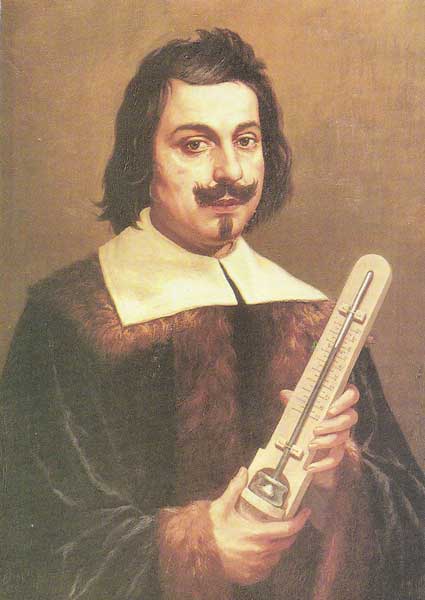
Of course, as we have discussed in past postings, there are whole areas of knowledge about Middle-earth about which we have little or no information and it’s been fun for us to try to reconstruct things using parallels from our own world, combined with the little we do know.  That first barometer was, we presume, handmade by Evangelista Torricelli (1608-1647).

image7atorricelli.jpg


It appears to have been, basically, a long glass tube, attached to a piece of wood by white metal fittings.  The hobbits have glass windows, so the art of glass-blowing exists in their world.  The wood and metal could be used in many other settings.  Once the concept was understood, it would be easy to see someone taking already available techniques and materials and creating the object.

But who made it?  When it came to ingenuity in craft, JRRT suggests the dwarves—with the men of Dale as fellow-workers or perhaps as middlemen.  As Thorin says of the past:

“Altogether those were good days for us, and the poorest of us had money to spend and to lend, and leisure to make beautiful things just for the fun of it, not to speak of the most marvelous and magical toys, the like of which is not to be found in the world now-a-days…the toy market of Dale was the wonder of the North.” (The Hobbit, Chapter One, “An Unexpected Party”)

How did Bilbo acquire it?  He had come to be known in Hobbiton as unlike other hobbits—his mother, after all, was the famous Belladonna Took (for her history—or, rather, her mystery–see The Hobbit, Chapter 1) and, after his travels, “he took to writing poetry and visiting elves”.  Perhaps the barometer came from one of his trips?  Or had it been sent to him?

If we take the preparations for the famous joint-birthday-party at the opening of The Lord of the Rings as a clue, there must have been at least a small degree of commerce between the Shire and the dwarves of the Lonely Mountain and the rebuilt town of Dale:

“On this occasion the presents were unusually good…There were toys the like of which they had never seen before, all beautiful and some obviously magical.  Many of them had indeed been ordered a year before, and had come all the way from the Mountain and from Dale, and were of real dwarf-make.” (The Fellowship of the Ring, Book One, Chapter 1, “A Long-Expected Party).

But then there is that third question:  what did he do with it?  As far as we can currently determine from The Hobbit and The Lord of the Rings, neither Bilbo nor Frodo nor even Gandalf ever mentions a barometric reading, or is concerned that the pressure is dropping.

So what are we to make of this?

For all that JRRT was increasingly careful about this, there a few anachronisms in his work.  In The Hobbit, there is the well-known one of Bilbo’s reaction to Thorin’s explanation of the dangers of future burglary:

“At may never return he began to feel a shriek coming up inside, and very soon it burst out like the whistle of an engine coming out of a tunnel.” (The Hobbit, Chapter One, “An Unexpected Party”)

Although JRRT himself considered changing this for the 1966 revision, Douglas Anderson, in The Annotated Hobbit, 47-48, argues that this doesn’t have to be an anachronism at all:

“…for Tolkien as narrator was telling this story to his children in the early 1930s, and they lived in a world where railway trains were a very important feature of life.”

In fact, built in 1844, the first railway station in Oxford was almost a century old when The Hobbit was published in 1937.

image8grandpointstation.JPG

(And we can’t resist this quotation from Jackson’s Oxford Journal for 15 June, 1844, which describes the arrival of the first train as “one of those rampageous, dragonnading fire-devils”.  Clearly, dragons and railroads have a long history together!)

So, is this just a slip on JRRT’s part?  Perhaps he had a barometer in his past, next to a door, and, in his urge to fill up the wall space of Bag End, he simply filled in what he already knew?  We can only shrug—and, in our next, wonder about that clock on the wall to the right:  what’s it doing in Middle-earth?

Thanks, as ever, for reading.

MTCIDC

CD
One More River (2)

28 Wednesday Dec 2016

Posted by Ollamh in Heroes, Imaginary History, J.R.R. Tolkien, Literary History, Maps, Military History of Middle-earth, Narrative Methods

≈ 2 Comments

Tags

Amon Hen, Anduin, Bilbo, Blondin, Bombur, Boromir, Brandywine, bridges, Bruinen, Bucklebury Ferry, Celebrant, Dwarves, Elrond, Elves, Enchanted river, Esgaroth, Fangorn, ferry, flight to the ford, Frodo, Gandalf, Gondorians, Hoarwell, Hobbiton, Isen, Khazad-dum, Niagara Falls, Nimrodel, Old Forest, Old Man Willow, Orcs, Prince Valiant, Rivendell, Rivers, Rohirrim, Sam, Tharbad, The Hobbit, The Long Lake, The Lord of the Rings, Theodred, Tolkien, Tom Bombadil, Weathertop, Withywindle, Wraiths

Welcome, dear readers, as always. In our last post, we had turned our attention to water-crossings in The Hobbit. In this, we want to continue our study with The Lord of the Rings.

We were first prompted to look at such crossings by something Boromir said, almost in passing:

“Four hundred leagues I reckoned it, and it took me many months, for I lost my horse at Tharbad, at the fording of the Greyflood.” (The Fellowship of the Ring, Book 2, Chapter 8, “Farewell to Lorien”)

Tharbad had once been famous for its elaborate defenses and bridge, but, symbolic of so much of Middle-earth at the end of the Third Age, it had fallen into decay and was abandoned, the water of the Gwathlo, the Greyflood, spreading wide—an easy place to lose a horse—or a man.

And perhaps Boromir’s loss is also symbolic of the higher level of stress involved in crossing water in the later work. The most Bilbo and the dwarves had to deal with was a water of forgetfulness, whose effect wore off in a relatively short time. There is much worse to come.

The first crossing (after The Water in Hobbiton)

1hobbiton.jpg

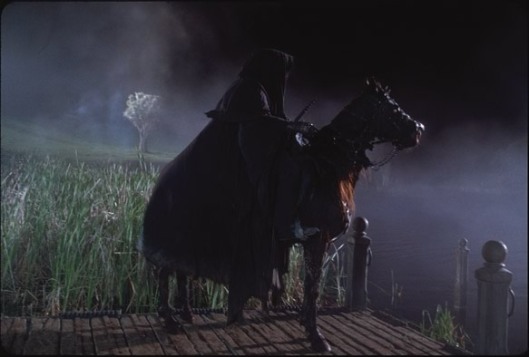
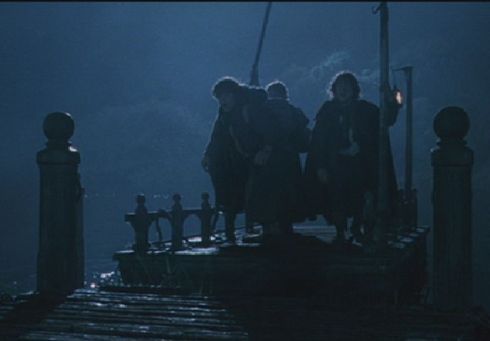
has danger attached, but it’s a danger which pursues the hobbits at the Bucklebury ferry. Here, pursued by one—or more—wraiths,

2wraithatferry.jpg

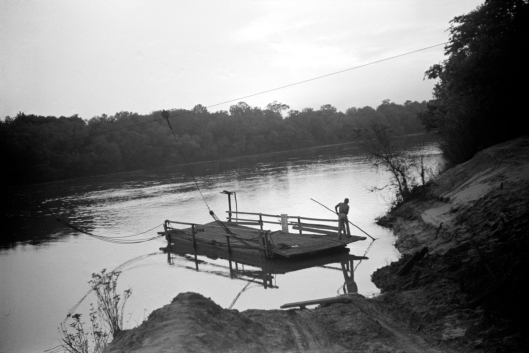
they cross over by what is a kind of do-it-yourself ferry, where the ferry runs on a cable, which keeps it available and on course, while the passengers pole to add propulsion.

3cableferry.jpg

4ferry.jpg

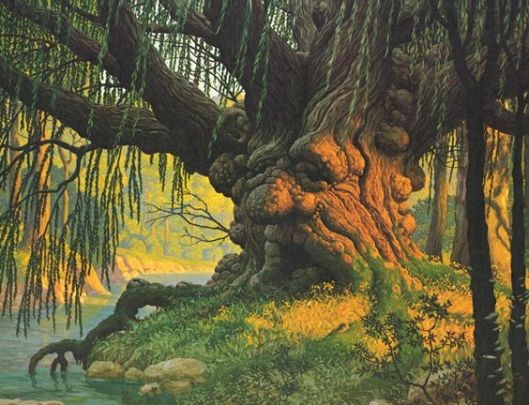
There is a puzzle at their next crossing—because the hobbits don’t appear to have crossed at all! This is the River Withywindle, on whose bank the hobbits meet up with Old Man Willow (not as in the film, where he’s been pulled violently out of context and replanted, for no good reason we can see, in Fangorn’s forest).

5oldmanwillow.jpg

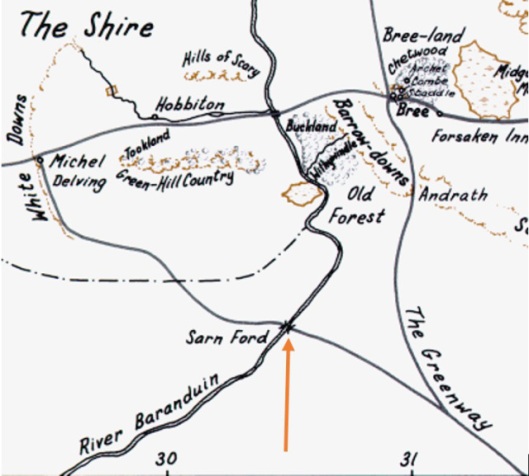
Until we began to study water-crossings, we had never really thought about what happens then. The hobbits come to the river, having become lost in the Old Forest. Pippin and Merry are swallowed by the tree. Tom Bombadil comes to the rescue: but how do they cross the Withywindle? We just couldn’t remember! So we went back to the text, saw Tom lead the four hobbits through the forest, where they almost lose him, then they hear: “Hop along, my little friends, up the Withywindle!” (The Fellowship of the Ring, Book 1, Chapter 6, “The Old Forest”)

And so they never actually ford across or are ferried across. Instead, they walk up its course to Tom’s house, which seems to be near the source.

6withywindlemap.jpg

The next crossing is many miles away—over the Barrow Downs, through Bree, past Weathertop, to the Last Bridge, over the Hoarwell. Although Aragorn is anxious that the Wraiths will have gotten there before them, they pass safely and keep moving southwards, towards Rivendell, until, near the ford over the Bruinen, the Nazgul catch up with them at last.

7bruinen.jpg

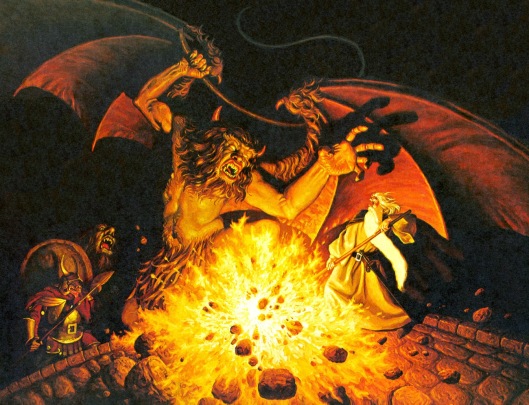
There is a bridge, of course, at Khazad-Dum, although, as far as we can tell, there is no water even in the depths far below it.

8khazaddum.jpg

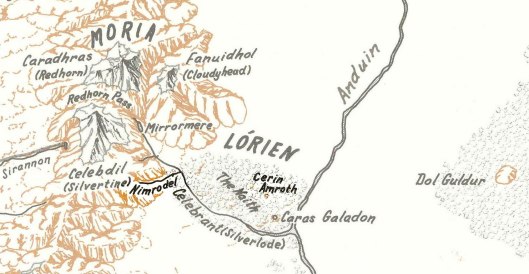
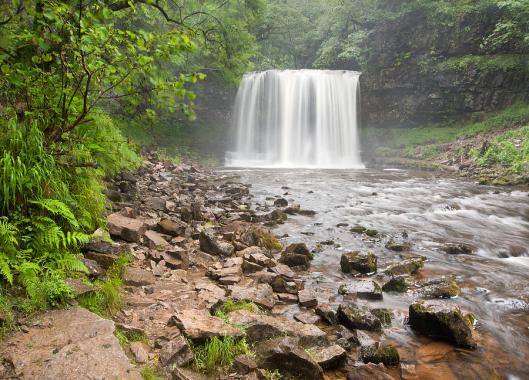
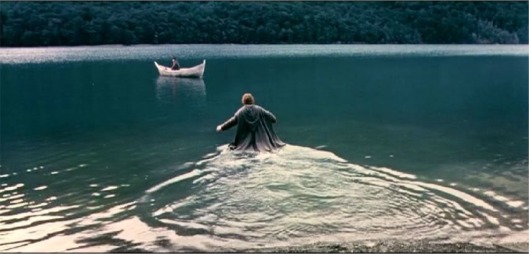
Escaping from Moria, the Fellowship reaches two streams in a row and, as far as we know, none of the prominent illustrators has given us pictures, either of the tributary Nimrodel or the main river, the Celebrant, so we provide a rather generic picture to offer a rather general idea.

9nimrodel.jpg

10nimrodel.jpg

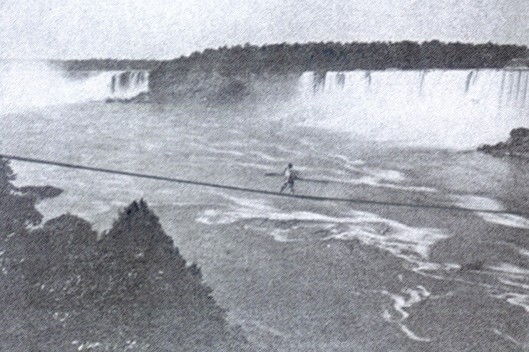
The Nimrodel is shallow enough to wade across, but the Celebrant is wider and deeper and the Elves provide a rather iffy method of transport: a single line of rope to balance on, making us imagine something like the famous Blondin crossing Niagara Falls in 1859—well, a little!

11blondin.jpg

The next crossing is almost inadvertent, or, at least happens sooner than expected: the Fellowship has been paddling down the Anduin, but, putting in at Amon Hen, things go disastrously wrong. Boromir tries to take the Ring, the orcs appear, Boromir is mortally wounded, and Merry and Pippin are carried off (in our edition—the 50th Anniversary, One Volume Edition—this takes all of 12 pages—quite a narrative feat for JRRT!), before Frodo (and Sam) cross the river to the east and story begins its major split.

12samandfrodo.jpg

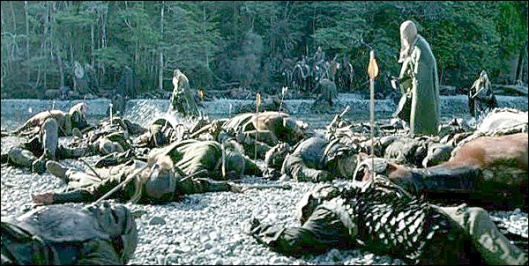
[We might insert here, although, in The Lord of the Rings, it’s only a footnote that at the crossing of the Isen, during this time, Theodred, son of Theoden, is killed.]

12aTTTIsenFord2.jpg

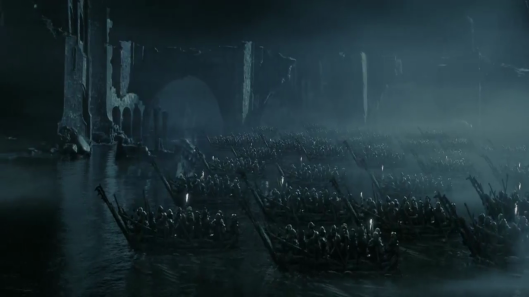
After this, there is only one more crossing of any significance, but it’s not by the main characters: rather, it’s by the orcs, who use boats to assault and capture west Osgiliath, which is the subject of one of our earlier postings.

13orcsosgiliath.png

To which we would add the return crossing, days later, of the Forlorn Hope of Gondor and Rohan, on their way to challenge Sauron (and to distract him from Frodo and Sam).

14marchonmordor.jpg

To finish up this posting, we provide a chart below (clearly now one of a series, after the earlier one on doorways and passages) of the water-crossings found in the two books.

Crossing Characters Outcome Source
Tharbad Boromir Loses horse The Lord of the Rings
The Water Bilbo Joins Dwarves The Hobbit
 An unnamed river Bilbo, Dwarves, and Gandalf Lose baggage The Hobbit
Rivendell Bilbo Dwarves, and Gandalf Helped by Elves The Hobbit
Anduin Bilbo, Dwarves, and Gandalf Transported by eagles The Hobbit
Enchanted River Bilbo and Dwarves Bombur drugged The Hobbit
Underground river Bilbo and Dwarves Using barrels, Bilbo and Dwarves escape The Hobbit
The Long Lake Bilbo and Dwarves Gain help from Esgaroth The Hobbit
The Brandywine (Bucklebury Ferry) Frodo, Sam, Merry, Pippin Escape Wraith The Lord of the Rings
Withywindle Frodo, Sam, Merry, Pippin Reach Tom Bombadil’s house (never actually cross river) The Lord of the Rings
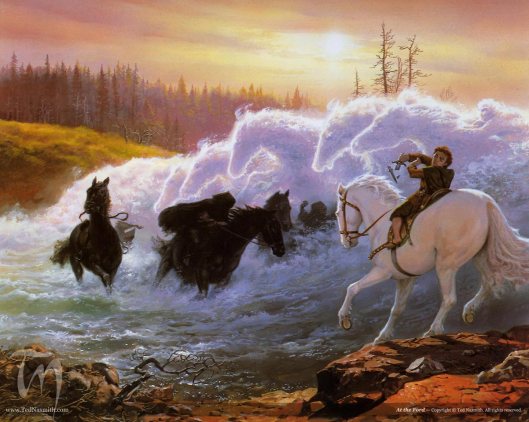
The Bruinen Frodo and Wraiths Elrond causes river surge, Nazgul driven off The Lord of the Rings
Khazad-Dum Balrog and Gandalf Gandalf defeats Balrog, but falls down with him The Lord of the Rings
Nimrodel/

Celebrant

Fellowship and Elves Fellowship brought into Lorien The Lord of the Rings
Anduin Frodo and Sam Set out on journey to the east The Lord of the Rings
Isen Rohirrim and Orcs Rohirrim driven back, Theodred, son of Theoden, killed The Lord of the Rings
Anduin Gondorians vs Orcs Gondorians driven back from West Ogsiliath The Lord of the Rings


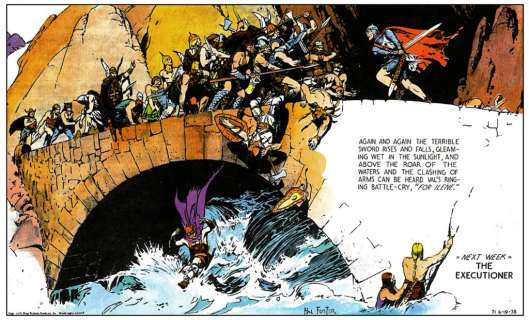
This is our last posting for the year 2016 and we close the year with thanks to all who follow our blog or simply stop in for a visit. In 2017, we plan to continue our Tolkien travels, sometimes employing the Sortes Tolkienses, as well as to use Tolkien’s world to visit others, beginning with a posting on “Famous Bridge Battles”, from Boromir and Faramir jumping off one to escape the orcs, to Napoleon at Arcola, and beyond. Here’s a taste…

15princeval.jpg

We also plan to explore other worlds and perhaps to add a review section for books and films we think you might enjoy.

In the meantime, thanks, as ever, for reading. Happy New Year!

MTCIDC

CD

ps

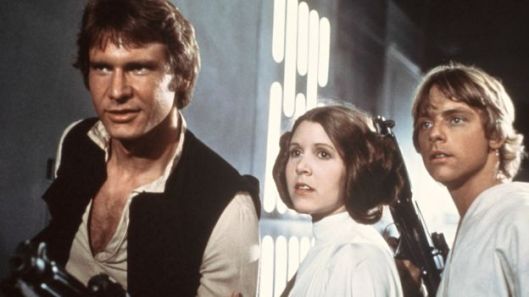
What sad and surprising news! Princess Leia is no more– but no– Princess Leia will always be with us, just like the Force.

_87060782_starwarsap3

Like Smoke From a Fire: Sharkey’s End

04 Wednesday Nov 2015

Posted by Ollamh in Fairy Tales and Myths, Imaginary History, J.R.R. Tolkien, Maps, Narrative Methods, Research

≈ Leave a comment

Tags

Adventure, Birmingham, Branywine, Bywater, Coketown, Dickens, Dol Amroth, England, Ents, factory, Fangorn, feudalism, Galadriel, Gandalf, Grima, Hard Times, Hobbiton, Idylls, industrial, Industrial Revolution, Isengard, King Edward School, Medieval, Merry, Midlands, Mordor, Morris, Oxford, Palantir, Pippin, poetry, pre-industrial, Saruman, Sauron, Scouring of the Shire, Sharkey, Southfarthing, Tennyson, The Lord of the Rings, The Shire, Tolkien

Dear Readers,

Welcome, as always.

In a previous posting, we talked about Saruman as a kind of imitation Sauron and Isengard as a mini-Mordor.

sarum1

In this posting, we want to consider the implications of Gandalf’s remark about him in “Many Partings”, from The Return of the King: “I fancy he could do some mischief still in a small mean way.”

The mischief, when we see it, is definitely mean, but not small, even though confined to the limits of the Shire.

The world of The Lord of the Rings is a pre-industrial one. The most advanced technology, on the one hand, is the palantir (actually perhaps a magical, rather than mechanical, device)

palantir

and , on the other hand, a watermill.

j-r-r-_tolkien_-_the_hill_-_hobbiton-across-the-water_colored

Beyond that, it’s a medieval world, but without, it seems, feudalism, although there are, for example, castles and knights in the form of the Prince of Dol Amroth.

We can easily see why JRRT wanted this regression. On the one hand, like so many boys of his age, he had grown up reading Tennyson

John_everett_millais_portrait_of_lord_alfred_tennyson firstedition1859idylls

and William Morris

Morris-Portrait1

morris_tapestry

who had created a world of Victorian medievalism, Tennyson in poetry, Morris in many different art forms.

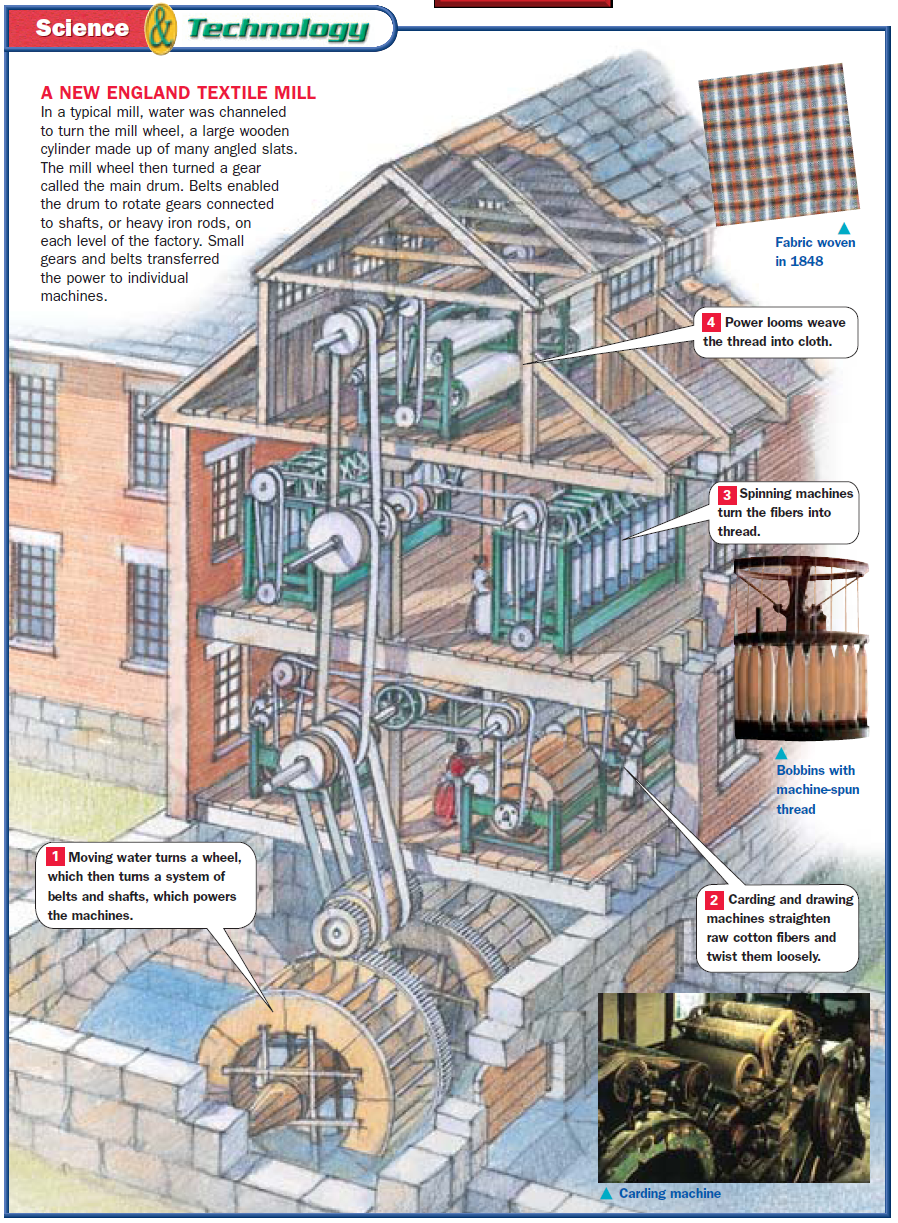
On the other, Tolkien had grown up in Birmingham, in the English Midlands, where there had been massive development throughout the era of the Industrial Revolution.

Textile Mill Diagram McConnel_&_Company_mills,_about_1820

Here’s Charles Dickens’ description of such a place from Hard Times (1856):

(Excerpt Describing Coketown)

Needless to say, although Tolkien kept a strong affection for King Edward School, where he was educated before Oxford,

KingEdwardsSchoolinBirmingham

he was less enthusiastic about the industrial world which surrounded it and this clearly colors his picture of Saruman. Look, for instance, at Fangorn’s description of him:

“He has a mind of metals and wheels; and he does not care for growing things, except as far as they serve him for the moment.” (The Two Towers, Book 1, Chapter 4, “Treebeard”) (It’s revealing, by the way that this is almost a quotation of something which Saruman later says of Gandalf, “When his tools have done their task he drops them.” The Return of the King, Book 2, Chapter 8, “The Scouring of the Shire”)

Saruman, then, with his metal mind, has turned the once-beautiful Isengardgreg-hildebrandt-isengard-orthanc-saruman-607429-1920x1080

into an arms factory

kruppworks

another Midlands,

isengardasfactory

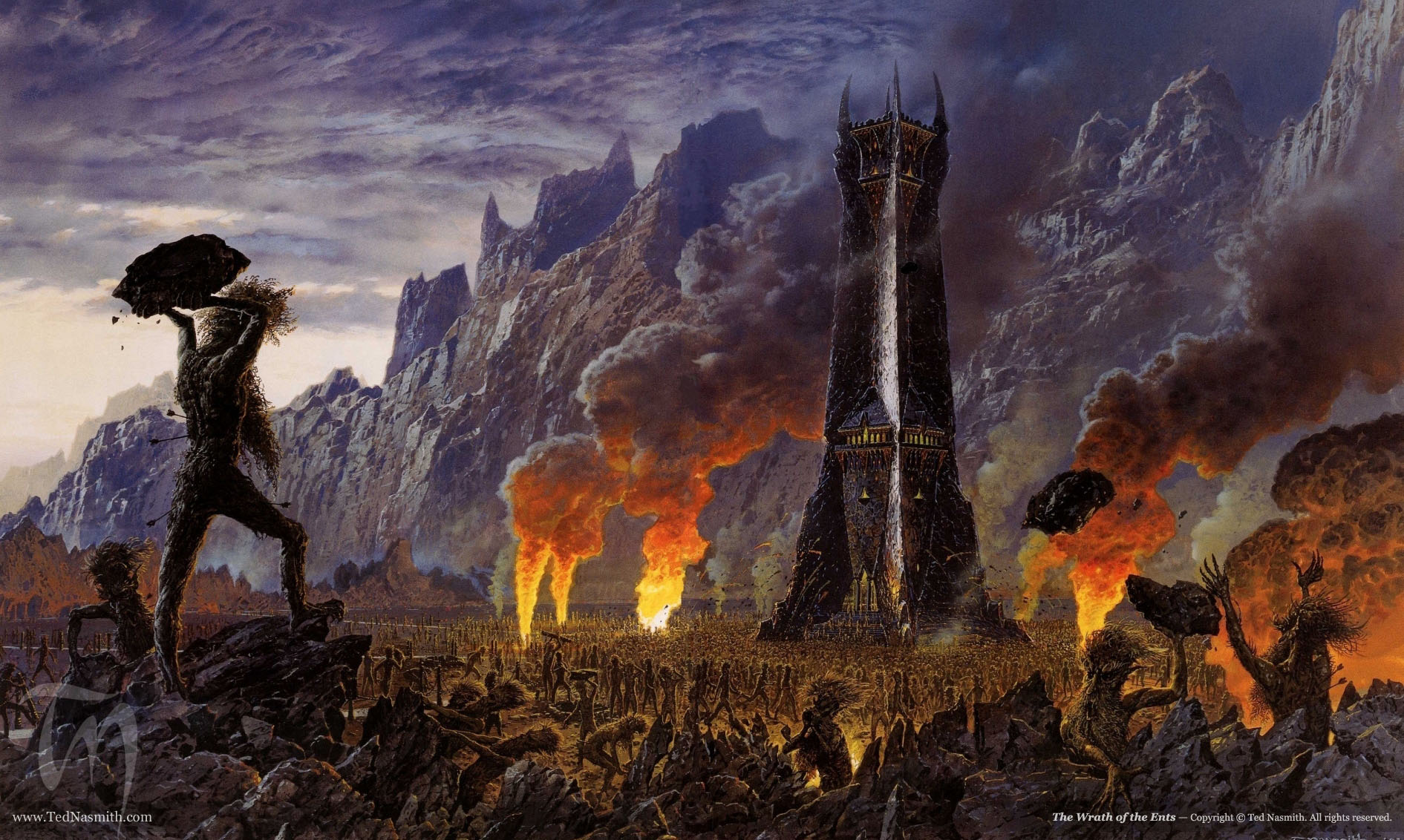
and has angered the Ents, as well, by the wanton destruction of trees, not just for fuel, it appears, but just out of sheer spitefulness.

The Wrath of the Ents, by Ted Nasmith

As we wrote earlier, all of this has remade Isengard into a mini-Mordor—as Frodo says: “Yes, this is Mordor…just one of its works. Saruman was doing its work all the time, even when he thought he was working for himself.” (The Return of the King, Book 2, Chapter 8, “The Scouring of the Shire”)

So, when Saruman, Grima in tow, leaves his ruined factory, one could almost imagine just what he might have in mind when he says to the hobbits:

“Well, it will serve you right when you come home, if you find things less good in the Southfarthing than you would like.” (The Return of the King, Book 2, Chapter 6, “Many Partings”)

We know from Merry and Pippin’s experience at the gate of Isengard that Saruman has been importing pipe-weed, a main export of the Southfarthing.

merrypippinisengard

But when the hobbits, having forced the gate at the Brandywine, are making their way towards Hobbiton, they begin to have a feeling that much more has been damaged than the South Farthing: “Still there seemed an unusual amount of burning going on, and smoke rose from many points round about. A great cloud of it was going up far away in the direction of the Woody End.” (The Return of the King, Book 2, Chapter 8, “The Scouring of the Shire”)

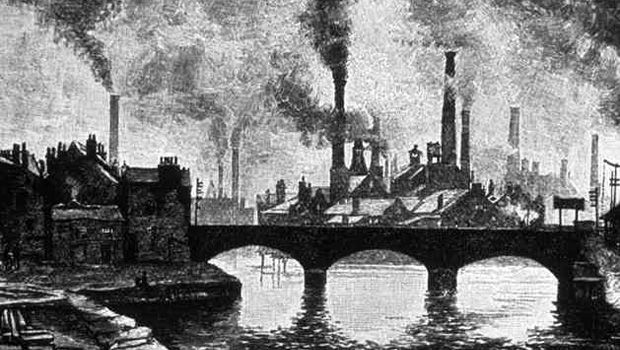
This smoke bears an ominous resemblance to the Midlands (and, in fact, to all of industrial England):

7ad841d6d5852b586a78fc03df7d64259715bddd.jpg__846x0_q80

There is worse to come, however: Bywater. “Many of the houses that they had known were missing. Some seemed to have been burned down. The pleasant row of old hobbit-holes in the bank on the north side of the Pool were deserted, and their little gardens that used to run down bright to the water’s edge were rank with weeds. Worse, there was a whole line of ugly new houses all along the Pool Side, where the Hobbiton Road ran close to the bank. An avenue of trees had stood there. They were all gone. And looking with dismay up the road towards Bag End they saw a tall chimney of brick in the distance. It was pouring out black smoke into the evening air.” (The Return of the King, Book 2, Chapter 8, “The Scouring of the Shire”)

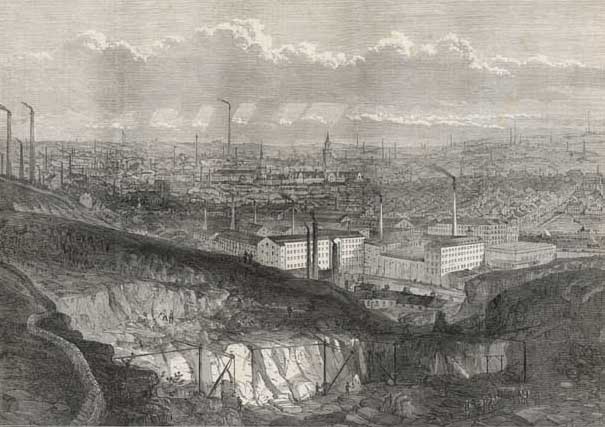
And here, we move from a single smoking mill to a smoking mill town.

BRADFORD/YORKSHIRE/1873

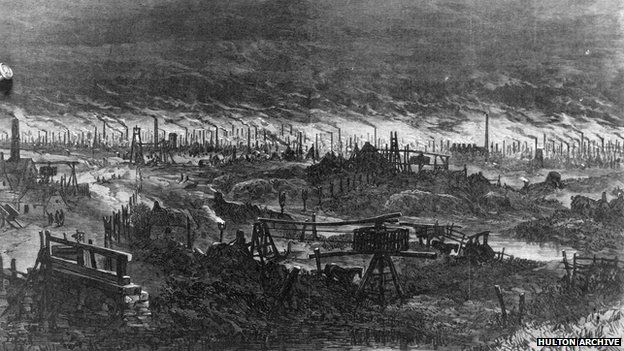
Saruman’s revenge has been more than small and mean, especially in terms of the industrial world which The Lord of the Rings rejects: the Shire is on its way to becoming another Midlands,

_77710962_3322454

even to the workers’ miserable housing.

preston

And the cutting down of trees (including, as we will find out, the Party Tree) insures the truth of Saruman’s sneering statement to the hobbits:

“…I have done much that you will find it hard to mend or undo in your lives.” (The Return of the King, Book 2, Chapter 8, “The Scouring of the Shire”)

But, as we know, Saruman, even in his moment of triumph, has no more than a moment to enjoy it. He is murdered by Grima and here we see the final irony. As Saruman has turned the medieval, bucolic Shire into a smoky horror, so he himself is turned to smoke:

“To the dismay of those that stood by, about the body of Saruman a grey mist gathered, and rising slowly to a great height like smoke from a fire, as a pale shrouded figure it loomed over the Hill. For a moment it wavered, looking to the West; but out of the West came a cold wind, and it bent away, and with a sigh dissolved into nothing.” (The Return of the King, Book 2, Chapter 8, “The Scouring of the Shire”)

61 - The scouring of the shire

A final thought, however. Might we see Saruman’s gesture towards the West, in which he clearly feels that he has been rejected by that which sent him to Middle Earth, as a mirror Galadriel’s gesture of rejection towards the East, when she refuses the Ring?

“She lifted up her hand and from the ring that she wore there issued a great light that illuminated her alone and left all else dark. She stood before Frodo seeming now tall beyond measurement, and beautiful beyond enduring, terrible and worshipful. Then she let her hand fall, and the light faded, and suddenly she laughed again, and lo! she was shrunken: a slender elf-woman, clad in simple white, whose gentle voice was soft and sad.” (The Fellowship of the Ring, Book 2, Chapter 7, “The Mirror of Galadriel”)

galadriel

Thanks, as always, for reading.

MTCIDC

CD

The Doubtful Sea Series Facebook Page

The Doubtful Sea Series Facebook Page

  • Ollamh

Categories

  • Artists and Illustrators
  • Economics in Middle-earth
  • Fairy Tales and Myths
  • Films and Music
  • Games
  • Heroes
  • Imaginary History
  • J.R.R. Tolkien
  • Language
  • Literary History
  • Maps
  • Medieval Russia
  • Military History
  • Military History of Middle-earth
  • Narnia
  • Narrative Methods
  • Poetry
  • Research
  • Star Wars
  • Terra Australis
  • The Rohirrim
  • Theatre and Performance
  • Tolkien
  • Uncategorized
  • Villains
  • Writing as Collaborators
Follow doubtfulsea on WordPress.com

Across the Doubtful Sea

Recent Postings

  • A Moon disfigured December 17, 2025
  • On the Roads Again—Once More December 10, 2025
  • (Not) Crossing Bridges December 3, 2025
  • On the Road(s) Again—Again November 26, 2025
  • On the Road(s) Again November 19, 2025
  • To Bree (Part 2) November 12, 2025
  • To Bree (Part 1) November 5, 2025
  • A Plague o’ Both—No, o’ All Your Houses! October 29, 2025
  • It’s in Writing (2:  I’st a Prologue, or a Poesie for a Ring?) October 22, 2025

Blog Statistics

  • 103,201 Views

Posting Archive

  • December 2025 (3)
  • November 2025 (4)
  • October 2025 (5)
  • September 2025 (4)
  • August 2025 (4)
  • July 2025 (5)
  • June 2025 (4)
  • May 2025 (4)
  • April 2025 (5)
  • March 2025 (4)
  • February 2025 (4)
  • January 2025 (5)
  • December 2024 (4)
  • November 2024 (4)
  • October 2024 (5)
  • September 2024 (4)
  • August 2024 (4)
  • July 2024 (5)
  • June 2024 (4)
  • May 2024 (5)
  • April 2024 (4)
  • March 2024 (4)
  • February 2024 (4)
  • January 2024 (5)
  • December 2023 (4)
  • November 2023 (5)
  • October 2023 (4)
  • September 2023 (4)
  • August 2023 (5)
  • July 2023 (4)
  • June 2023 (4)
  • May 2023 (5)
  • April 2023 (4)
  • March 2023 (5)
  • February 2023 (4)
  • January 2023 (4)
  • December 2022 (4)
  • November 2022 (5)
  • October 2022 (4)
  • September 2022 (4)
  • August 2022 (5)
  • July 2022 (4)
  • June 2022 (5)
  • May 2022 (4)
  • April 2022 (4)
  • March 2022 (5)
  • February 2022 (4)
  • January 2022 (4)
  • December 2021 (5)
  • November 2021 (4)
  • October 2021 (4)
  • September 2021 (5)
  • August 2021 (4)
  • July 2021 (4)
  • June 2021 (5)
  • May 2021 (4)
  • April 2021 (4)
  • March 2021 (5)
  • February 2021 (4)
  • January 2021 (4)
  • December 2020 (5)
  • November 2020 (4)
  • October 2020 (4)
  • September 2020 (5)
  • August 2020 (4)
  • July 2020 (5)
  • June 2020 (4)
  • May 2020 (4)
  • April 2020 (5)
  • March 2020 (4)
  • February 2020 (4)
  • January 2020 (6)
  • December 2019 (4)
  • November 2019 (4)
  • October 2019 (5)
  • September 2019 (4)
  • August 2019 (4)
  • July 2019 (5)
  • June 2019 (4)
  • May 2019 (5)
  • April 2019 (4)
  • March 2019 (4)
  • February 2019 (4)
  • January 2019 (5)
  • December 2018 (4)
  • November 2018 (4)
  • October 2018 (5)
  • September 2018 (4)
  • August 2018 (5)
  • July 2018 (4)
  • June 2018 (4)
  • May 2018 (5)
  • April 2018 (4)
  • March 2018 (4)
  • February 2018 (4)
  • January 2018 (5)
  • December 2017 (4)
  • November 2017 (4)
  • October 2017 (4)
  • September 2017 (4)
  • August 2017 (5)
  • July 2017 (4)
  • June 2017 (4)
  • May 2017 (5)
  • April 2017 (4)
  • March 2017 (5)
  • February 2017 (4)
  • January 2017 (4)
  • December 2016 (4)
  • November 2016 (5)
  • October 2016 (6)
  • September 2016 (5)
  • August 2016 (5)
  • July 2016 (5)
  • June 2016 (5)
  • May 2016 (4)
  • April 2016 (4)
  • March 2016 (5)
  • February 2016 (4)
  • January 2016 (4)
  • December 2015 (5)
  • November 2015 (5)
  • October 2015 (4)
  • September 2015 (5)
  • August 2015 (4)
  • July 2015 (5)
  • June 2015 (5)
  • May 2015 (4)
  • April 2015 (3)
  • March 2015 (4)
  • February 2015 (4)
  • January 2015 (4)
  • December 2014 (5)
  • November 2014 (4)
  • October 2014 (6)
  • September 2014 (1)

Blog at WordPress.com.

  • Subscribe Subscribed
    • doubtfulsea
    • Join 78 other subscribers
    • Already have a WordPress.com account? Log in now.
    • doubtfulsea
    • Subscribe Subscribed
    • Sign up
    • Log in
    • Report this content
    • View site in Reader
    • Manage subscriptions
    • Collapse this bar
 

Loading Comments...