• About

doubtfulsea

~ adventure fantasy

Tag Archives: History

A Plague o’ Both—No, o’ All Your Houses!

29 Wednesday Oct 2025

Posted by Ollamh in Uncategorized

≈ Leave a comment

Tags

Black Death, Black Plague, black ship rat, flea, Great Fire of London, great-london-fire, Halloween, History, miasma, plague, plague doctor, plague pits, Roger Bacon, Romeo and Juliet, Shakespeare, Trick or Treat, Yersinia Pestis

As always, dear readers, welcome.

It’s almost Halloween again, one of my favorite holidays, when children dress up in various costumes and wander the streets in groups, demanding treats and threatening tricks,

while older people, themselves in costume, attend parties.

People dress up as monsters, vampires, and superheroes, but, recently, I’ve also seen a few of these—
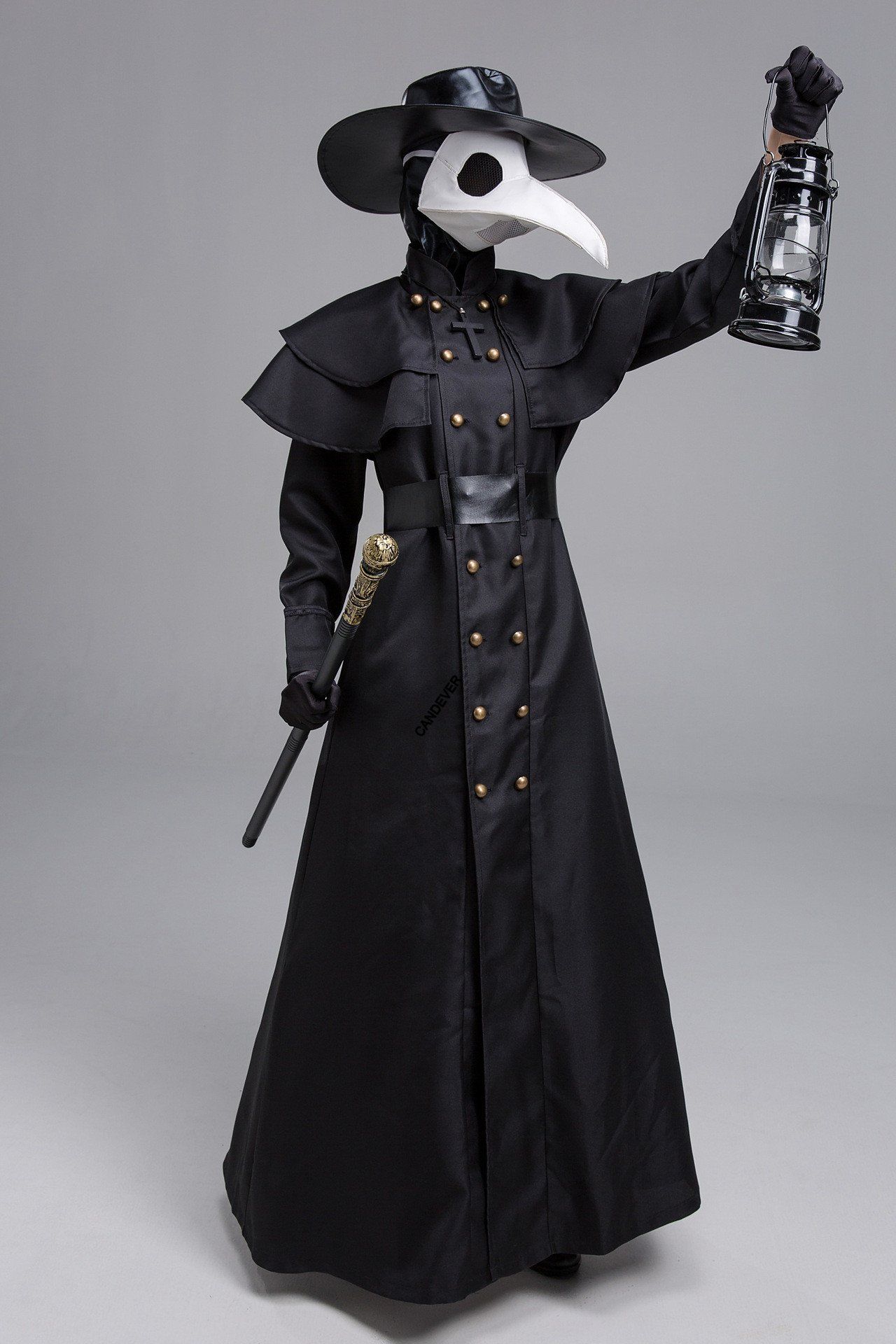
a costume which you can actually buy on Amazon.
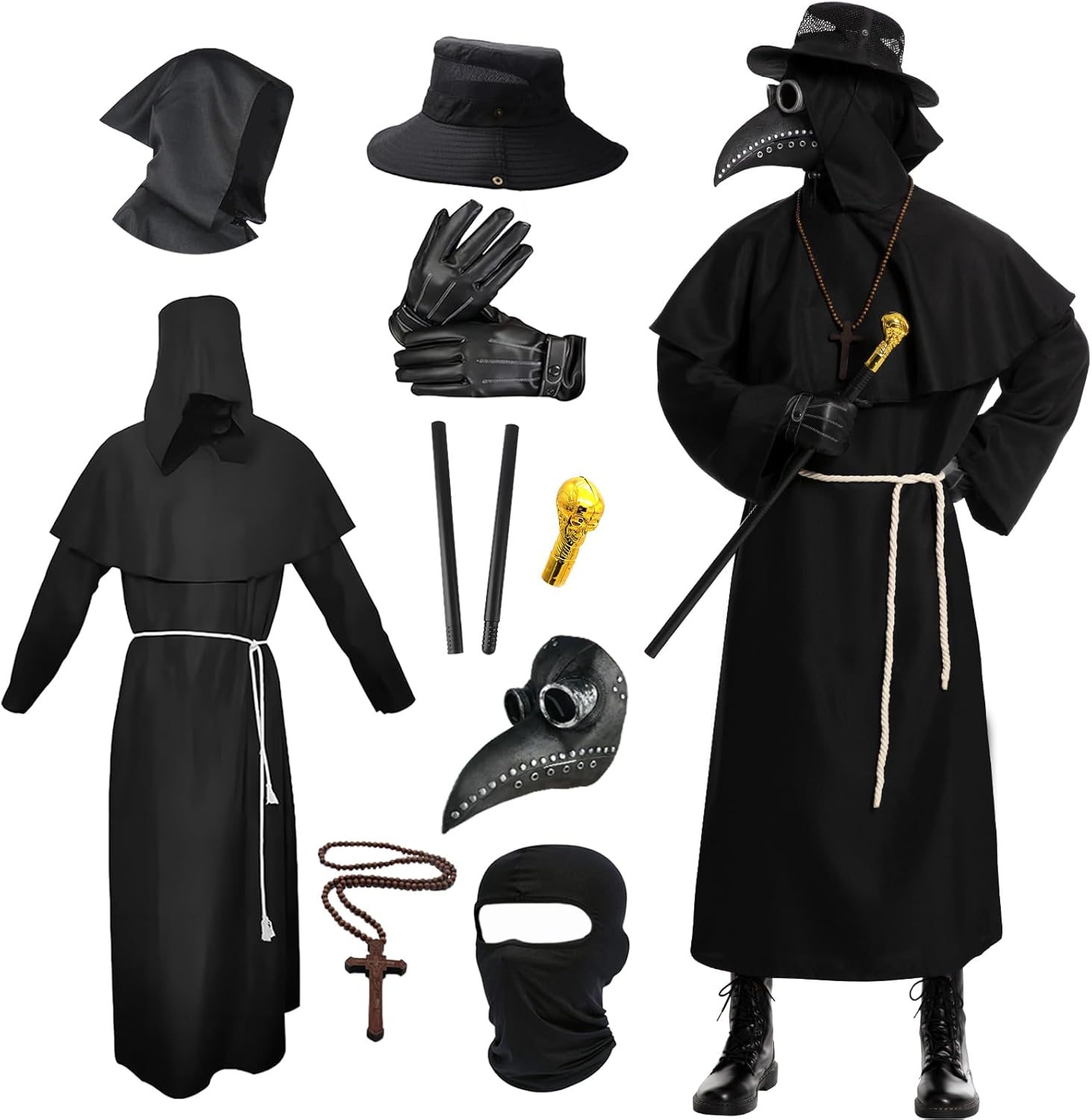
It’s a very haunting image:  crowlike, and yet not, and it struck me as an interesting basis for this year’s Halloween posting.

But what is it?

If you don’t know, I’ve given you a clue in that (modified) quotation I’ve used as a title.

In Act III, Scene 1, of Shakespeare’s The Most Excellent and Lamentable Tragedy of Romeo and Juliet, 1591/95, as the 2nd Quarto (1599) has it,
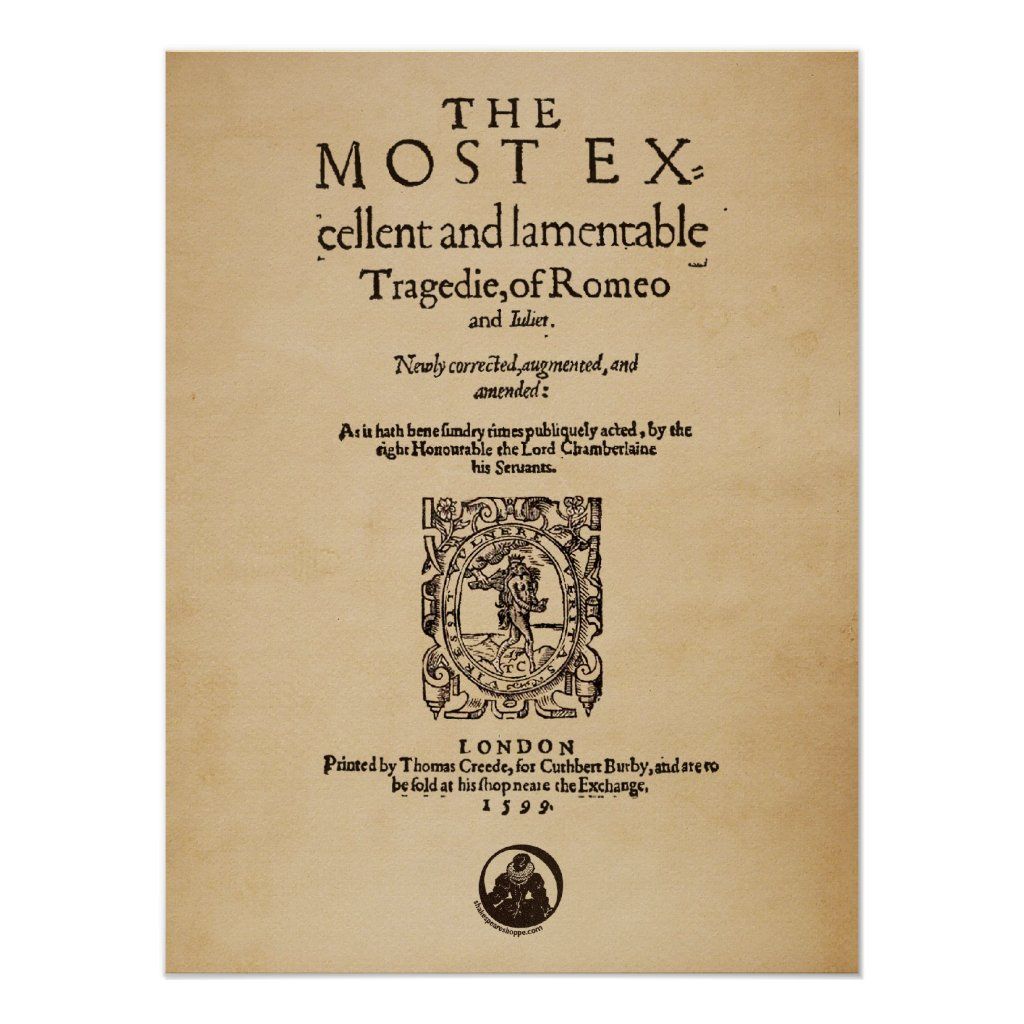
Romeo’s best friend and perhaps the sanest character in the play, Mercutio, has been mortally wounded.  Dying, he curses both of the feuding families, wishing that a plague would take them both.

In Shakespeare’s England, this was not a random remark.  Since its original appearance, in 1348, when it may have killed as many as 40-60% of the population, the Black Plague (aka the Black Death) had

reappeared over the next couple of centuries, killing 30,000 in London, in 1603 alone,
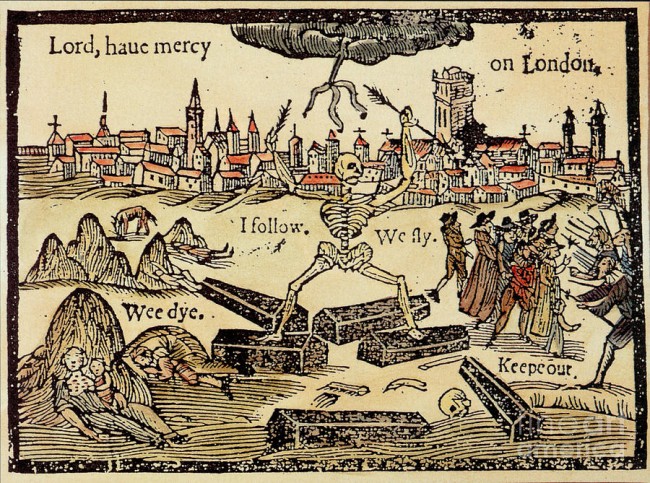
before its grand finale (or nearly), in 1665-6,when it was responsible for perhaps 100,000 deaths there.
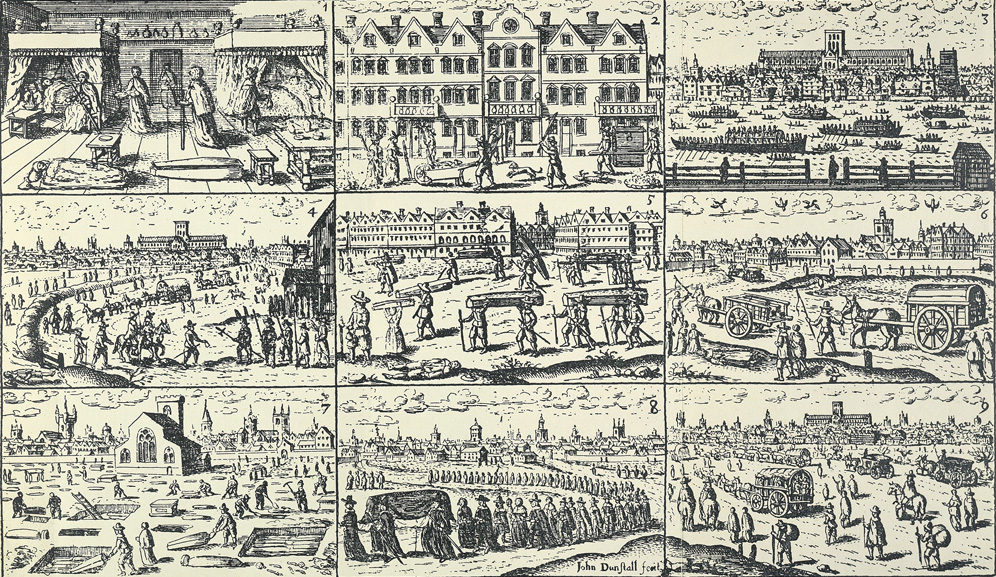
(And, in 1666, came the great fire, which destroyed much of the city—it’s a wonder that everyone surviving didn’t attempt to flee to anywhere as far away as they could.

For the fire, I recommend J. Draper’s short presentation here:  https://www.youtube.com/watch?v=4bvB_gJThYk   with one correction.  She says that the artist/engraver Wenceslaus Hollar was Dutch when, in fact, he was a Czech.  See:  https://en.wikipedia.org/wiki/Wenceslaus_Hollar  Otherwise, I have nothing but praise for Draper, who does proper research and wanders the London area , looking for odd and interesting aspects of London’s—and English—history which she then presents in creative ways.  For her grim and striking view of the Black Death, see:  https://www.youtube.com/watch?v=Ybh1jSZLIKY  )

Medieval science was not really even in its infancy—although there were highly intelligent and thoughtful men struggling to look at the world without superstition or religion, like Friar Roger Bacon, 1214-1294.

(an imaginary image—we have no known portrait)

Medical science, such as existed, followed the classical world and believed that communicable diseases were spread through miasma—that is, through “bad air”,

which isn’t such a far-fetched idea:  rotting things, dead things, stink, so death and bad smells are easily associated.

In fact, the Black Plague was—and is–a bacterium, Yersinia Pestis,

which lives in the gut of fleas,

which inhabited what was called the “black ship rat”,

which traveled on trading vessels from the Far East in the 14th century,

and eventually came, either directly on rats, or indirectly by a human carrier, to England, causing havoc on and off, for several centuries.

Needless to say, in a packed city, like London,

rats and their passengers could easily spread out and, in doing so, would spread the bacterium through the bites of those fleas. 

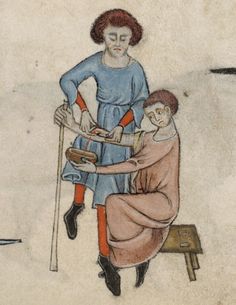
Medical men of that world, however, could make no such connections.  They only saw the horrible symptoms—including the swelling of the lymph nodes, attempting to defend the body—the buboes of bubonic plague—

(This is such a gross image that I almost didn’t include it, but it’s very helpful in explaining what exactly was going on in the body, so…)

The plague produced fever, chills, vomiting, violent headaches—and all that doctors could do was what they did for almost anything:  try to balance the humors—the basic elements of the body—which included bleeding, a treatment which actually weakened the body.
Because the real agent of contagion wasn’t understood, doctors could only be brave and deal with their patients as best they could—and contract the disease themselves—or could attempt to protect themselves, which brings us to this image again—
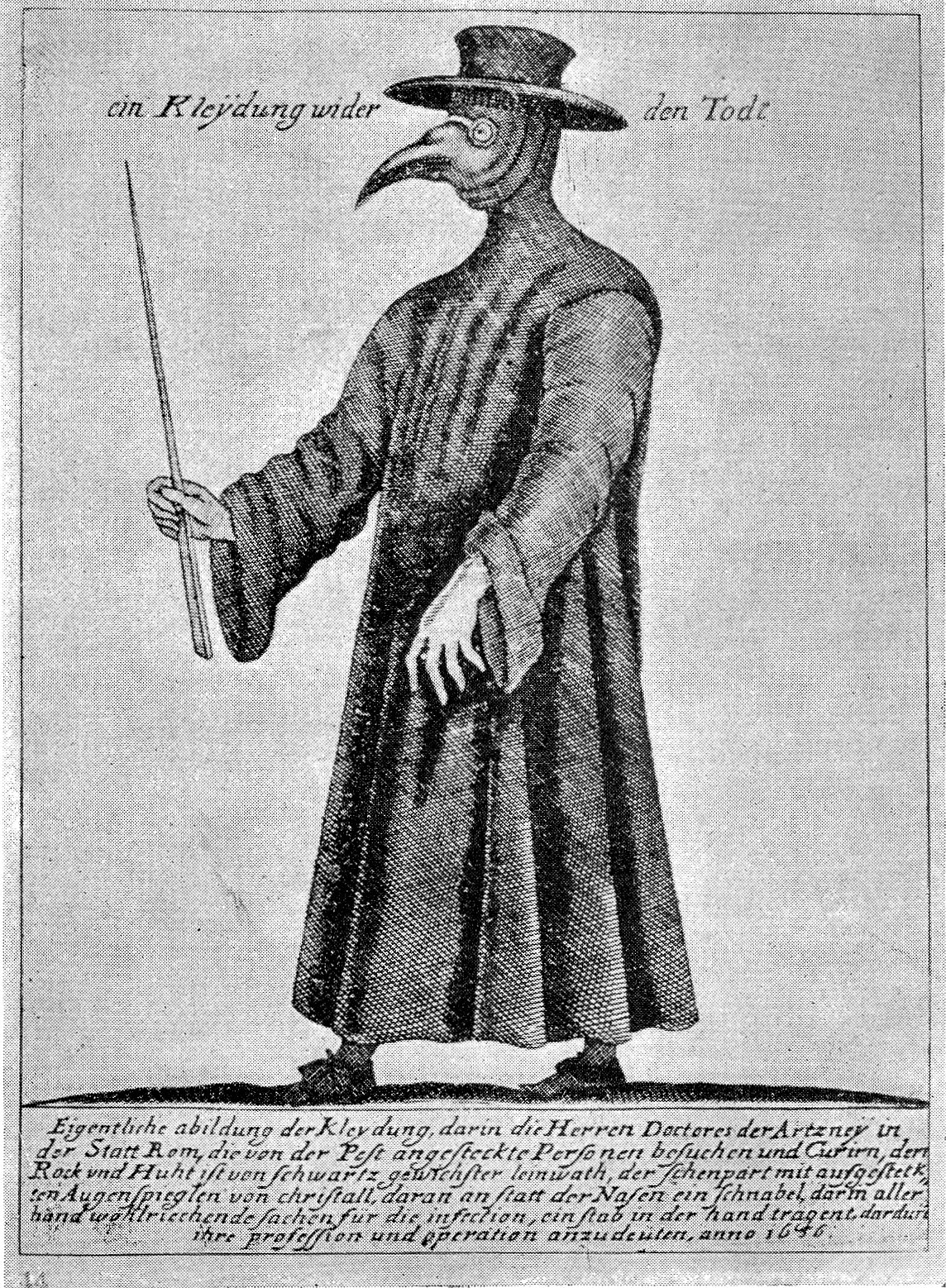
(appropriately titled “the clothing against death”, implying the Black Death)

This diagram

(with some strange English—it appears to be a translation—I’ve seen one copy in which the text is in Russian– gives you a general idea of how a doctor might attempt to ward off infection, including basics which had to do with bad air, like carrying a pomander—a little vessel containing strong-smelling herbs to fend off that air—

which someone might carry simply to ward off the bad smells of a time when streets in cities often had the equivalent of open sewers, as well as might be employ ed as a fashion accessory—for more on pomanders, see:   https://en.wikipedia.org/wiki/Pomander )

as well as that beaky thing—which is really a kind of early surgical mask

combined with a pomander—the beak being stuffed with those protective herbs.  And, as who knows what can get in through the eyes, add crystalline lenses to the beak.

Gloves and a long coat, sometimes waxed, probably as much for water-proofing as against floating miasma, and a broad-brimmed hat to cover the head, complete the outfit.  Oh—and a rod for probing the infected, plus a light source—medieval/Renaissance houses being notoriously dim. 

Note, however, that, whoever designed this modern version hadn’t done quite enough research:  that’s a 19th-century kerosene lantern.  Here’s a lantern of a sort which would be likely—

(This is an Elizabethan image of a city watchman, armed with a spear, followed by a dog, and carrying a bell to sound the hours.)

And so, when you see someone dressed like this at a party, you can confidently ask, “Tell me, doctor, is the plague spreading and should I flee the city?”

although he may respond by offering you not a pomander, but one of these, instead.

Thanks, as always for reading.  Happy Halloween, if you celebrate it.
Stay well,

Avoid miasma like the plague,

And remember that, as always, there’s

MTCIDC

O

PS

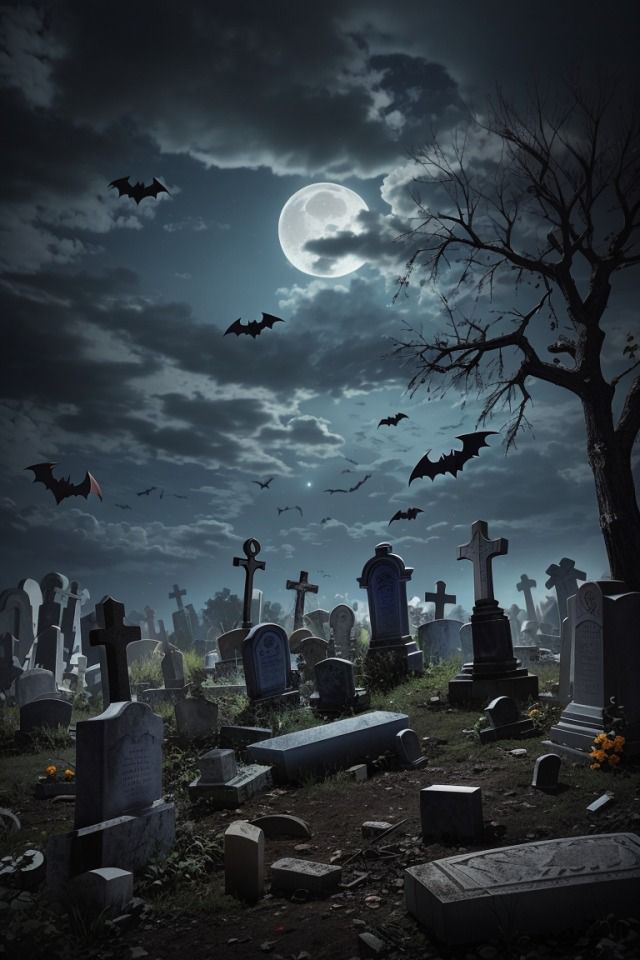
There is now some argument about the gear of such doctors.  See:  https://en.wikipedia.org/wiki/Plague_doctor  and https://www.livescience.com/plague-doctors.html   Plague could actually take several forms.  See:  https://www.britannica.com/science/plague   Because cemeteries—and grave-diggers were often overwhelmed, mass graves in unconsecrated ground began to be common—and now are sometimes happened upon unexpectedly.  See recent London plague pit discoveries:  https://www.cityam.com/after-crossrails-gruesome-discovery-weve-mapped-every-one-londons-plague-pits-do-you-work/
Doom

19 Wednesday Mar 2025

Posted by Ollamh in Uncategorized

≈ Leave a comment

Tags

anglo-saxons, Dialogus, Domesday Book, Errantry, Gothic, History, janissaries, Janissary, literature, lotr, Mazarbul, Normans, Tolkien, William Duke of Normandy

As ever, dear readers, welcome.

If nothing else would tell us that Tolkien had a fine ear for rhythm and rhyme, just take this stanza from “Errantry”, first published in The Oxford Magazine, Vol.52, No.5–

“Of crystal was his habergeon,
His scabbard of chalcedony;
With silver tipped at plenilune
His spear was hewn of ebony.
His javelins were of malachite
And stalactite – he brandished them
And went and fought the dragon flies
Of Paradise, and vanquished them.”

In his rhyming, JRRT has used some rather specialized words:

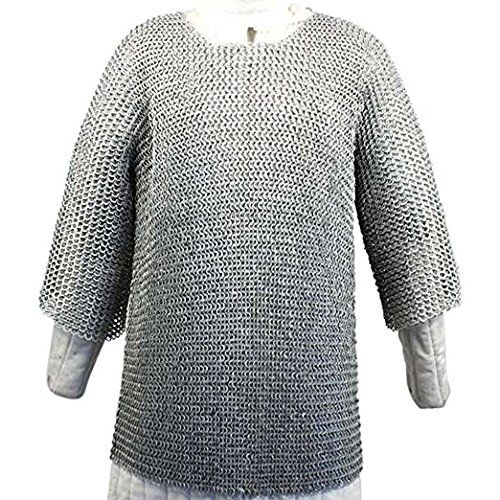
habergeon  an (often-half-sleeved) chain mail shirt—usually made of steel, not something as fragile as crystal might be

chalcedony   a kind of silica which comes in a number of varieties and colors—here’s one—

plenilune    full moon—the idea being that his spear was given its tip/blade at the full moon, suggesting perhaps a magical making? 

ebony      a dark hardwood which can be turned into a glossy black

malachite   another stone, which is copper-bearing

stalactite   this isn’t a stone, but a stone deposit which hangs down in caves

and is probably there for the internal rhyme with malachite, although malachite can be discovered in stalactites, so possibly JRRT is using two different possibilities at once

brandish     to wave—something heroic warriors sometimes do with their weapons, in a boasting or threatening manner

(I haven’t been able to find an artist for this one, alas.)

For the “dragon flies of Paradise”, you’re on your own—although–

So, when it came to the soundscape of The Lord of the Rings (a subject which could use a lot of exploring—there are cues everywhere), I wasn’t surprised to see him play a little game with an unlikely toy, a drum.

(a traditional Turkish drum—with two sticks, the larger for the top, the smaller for the underside, which gives it a distinctive double sound—you can hear—and see—some here:  https://www.youtube.com/watch?v=2eaxzv6obf8  These musicians are dressed as Janissaries, members of the Sultan’s elite troops

 and you can see why such bands then influenced later 18th-century-early-19th-century composers like Mozart and Beethoven—and frightened defenders when they heard this music coming.  Here’s Beethoven’s impression:     https://www.youtube.com/watch?v=Nd0OjCO9x5Y   )

Here’s a passage of that scape which recently caught my eye:

“Gandalf had hardly spoken these words, when there came a great noise:  a rolling Boom that seemed to come from depths far below, and to tremble in the stone at their feet.  They sprang towards the door in alarm.  Doom, doom it rolled again, as if huge hands were turning the very caverns of Moria into a vast drum.  Then there came an echoing blast:  a great horn was blown in the hall, and answering horns and harsh cries were heard further off.  There was a hurrying sound of many feet.”  (The Fellowship of the Ring, Book Two, Chapter 5, “The Bridge of Khazad-dum”)

You see what I mean about soundscape:  everything described, except the movement of the Fellowship, is a sound—and notice that even the place name in the chapter title, which has, in the original, a circumflex over the –u- in “dum” , lengthening  the sound of the word, echoes  that drum and its message:  doom!

And “doom”  is an interesting word. 

A quick look at its past can take us as far back as Gothic, the ancestral cousin of the Germanic languages and our oldest surviving sample of such ancestors.  Etymonline has “Gothic doms, ‘discernment, distinction’”– https://www.etymonline.com/word/doom  but, using my on-line Gothic dictionary, we find domjan and afdomjan, where the basic sense seems to be “to establish”, from which comes the meaning “to judge” and possibly even “to condemn”.  (Here’s the page:  http://www.wulfila.be/gothic/browse/search/?find=domjan&mode=1  at the very helpful  “Wulfila” site—Wulfila was the 4th-century AD translator of the Judeo-Christian Bible from Greek into Gothic.  It’s interesting that, often the original Greek word is a form of krino, which probably original meant to “separate”, but came, in time to be used to mean “to judge, decide”, and even “to condemn”—see the Perseus page here:  https://www.perseus.tufts.edu/hopper/morph?l=kri%2Fnw&la=greek&can=kri%2Fnw0#lexicon )

This brings us to what, I imagine, was a strong influence on Tolkien whenever he wrote that word:  that oppressor of the conquered Anglo-Saxons, the so-called “Domesday Book”.

After the defeat of Harold Godwinson and his army at Hastings, in October, 1066,

Duke William of Normandy drove a ruthless campaign of conquest throughout England, giving out land to his chief followers, who then built early castles, which we call “motte and bailey”, to protect themselves and to dominate the landscape.

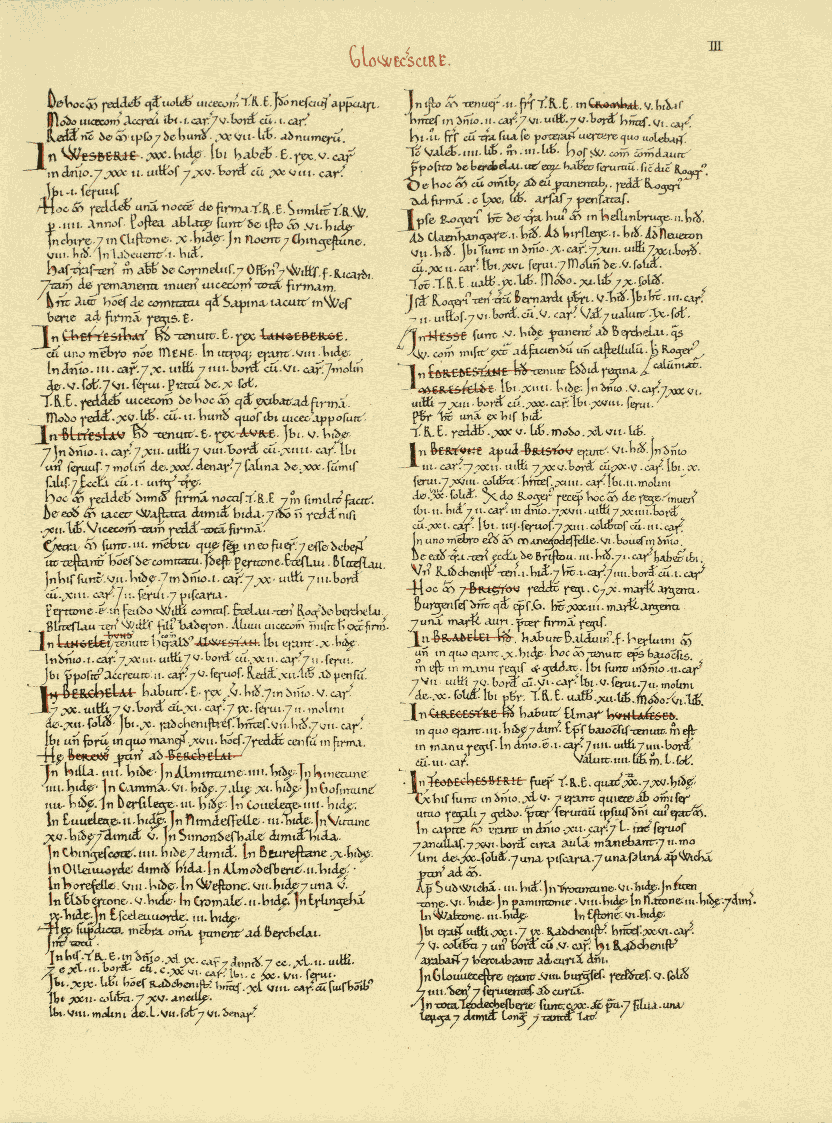
As well, perhaps helped by previous Anglo-Saxon tax records (easily accessible to the Norman officials because both they and their predecessors would have written in Latin), the Normans created a massive census, both of people and places, detailed practically down to the last chicken, asking, basically, “who is the owner? what does he own?  what’s it worth?  how much tax does he pay?”  It had no name, originally, as such, being called Liber de Wintonia—“the Winchester Book”—because that’s where the manuscript was originally stored.  (There were originally two volumes and you can read much more about them here:  https://en.wikipedia.org/wiki/Domesday_Book   And you can see the work itself here:  https://opendomesday.org/

The name by which we know it seems to have been a grim local joke, first known reference being in the 12th-century Dialogus de Scaccario, “Dialogue Concerning the Exchequer” (“scaccarium” being  a chess board, because the table used for accounting was gridded like one—it’s explained, in fact, in the “Dialogue”, but you can read about it here:  https://en.wikipedia.org/wiki/Exchequer ). 

In the text, the author (thought to have been Richard FitzNeal, the bishop of Ely, c.1130-1198), wrote:

“Hic liber ab indigenis ‘Domesdei’ nuncupatur id est dies iudicii per metaphoram.”

“This book is called by the locals ‘Doomsday’” : that is, as a metaphor, the Day of Judgment.”

(Dialogus de Scaccario, Book 1, Section 16B, which you can read here:  https://archive.org/details/cu31924021674365/page/n119/mode/2up in Latin, or here, in English:  https://avalon.law.yale.edu/medieval/excheq.asp#b1p16   This is a wonderfully practical text, explaining in enormous detail things like the vocabulary of the exchequer.  As is so often the case with medieval Latin, it’s a very pleasant read, written in plain, straightforward language and being just what it says it is, a dialogue between a “magister” and a “discipulus” .) 

Considering the choice of phrase, it isn’t surprising that that it was the choice of the “indigeni” .  One part of William’s master plan of conquest was to take the land away from its original Anglo-Saxon (indigenous) land-holders

and hand it over to his own followers, thus dispossessing most of the former—and, because those owners had no recourse, it must have seemed very like the Last Judgment—the original Doomsday.

Thus, when the members of the Fellowship hear “boom” turn into “doom”, it can suggest not only a play with sound, but the same kind of catastrophic event, trapped, as they seem to be, in the record room of Mazarbul—

(Angus McBride)

And we can take this one step farther.   As Tolkien’s income grew from the sale of his books, his frustration at the amount which disappeared into tax-paying grew, as he writes:

“A Socialist government will pretty well reduce me to penury on retirement!  As it is socialist legislation is robbing me of probably ¾ of the fruits of my labors, and my ‘royalties’ are merely waiting in the bank until  the Tax Collectors walk in and bag them.  Do you wonder that anyone who can gets out of this island?  Though soon there will be nowhere to go to escape the rising tide of ‘orquerie’.”  (letter to Michael Tolkien, 6 November, 1956, Letters, 367) 

So, when JRRT thought of “doom”, as a medievalist, might he also have been equating himself with those Anglo-Saxons, not only losing their homes, but forced to hand over their hard-earned cash

to those grim Normans, as well?

Thanks for reading, as always.

Stay well,

We’re only a month away, here in the US, from 15 April, our own “Domesday” for taxes owed,

And remember that, as ever, there’s

MTCIDC

O

Sally—and Harry

22 Wednesday Jan 2025

Posted by Ollamh in Uncategorized

≈ Leave a comment

Tags

Alesia, Aragorn, Ents, Eomer, Fantasy, harry, Helm's Deep, History, sally, siege

Welcome, as always, dear readers.

If you’d seen the title of an earlier posting, “You’ve Got Mail”,

you might believe that I’m beginning to specialize in romcoms from the 1980s-90s with this title—

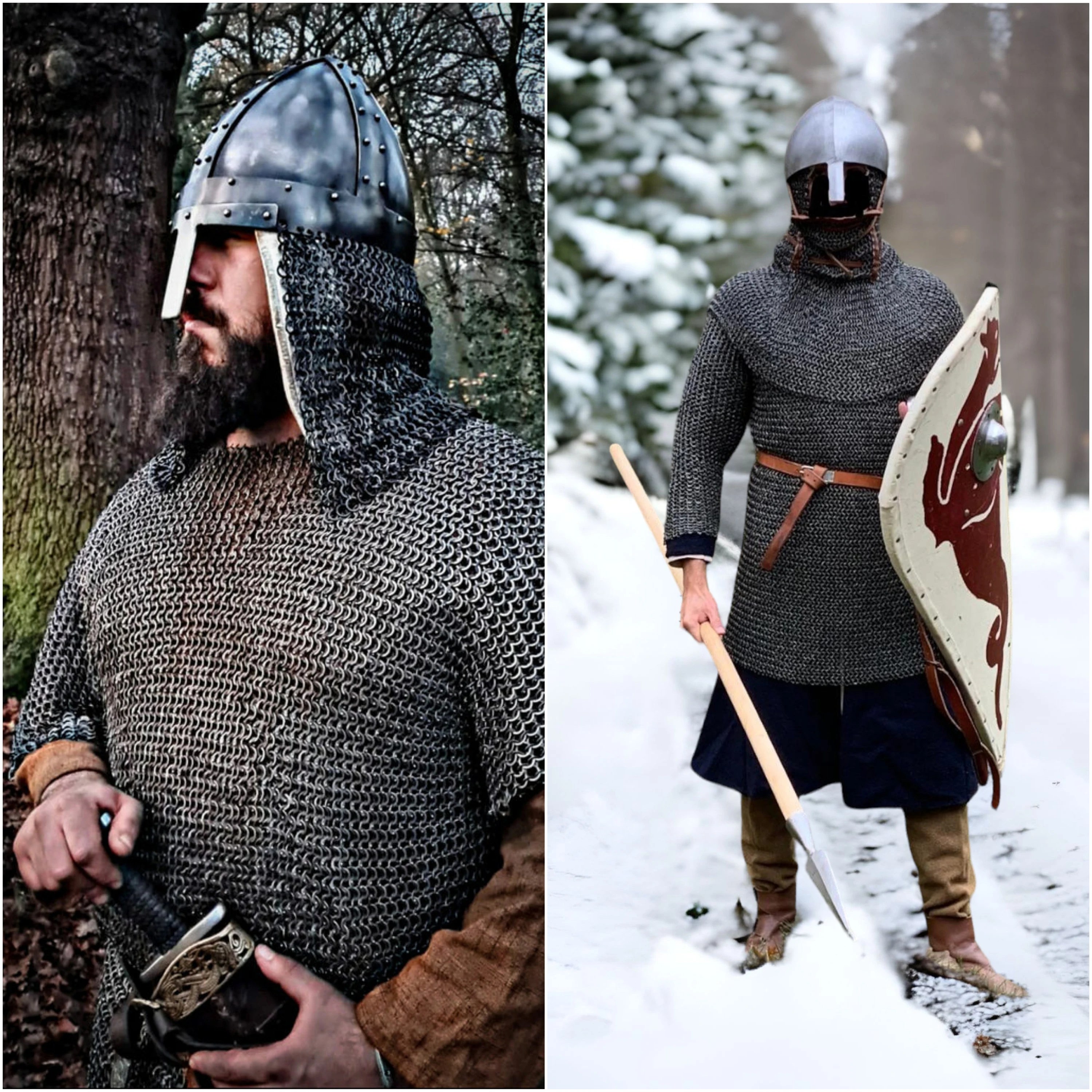
but, although some of the characters might be wearing mail in this posting,

(Denis Gordeev)

there’s no romance and no comedy.  Instead, it involves “sally” and “harry” not as nicknames for “Sarah” and “Henry”, but as verbs and nouns of destruction.

The war to which 2nd LieutenantTolkien

arrived in mid-1916

(Peter Dennis—a real favorite of mine for his ability to recreate scenes from the past, always with small, useful details.)

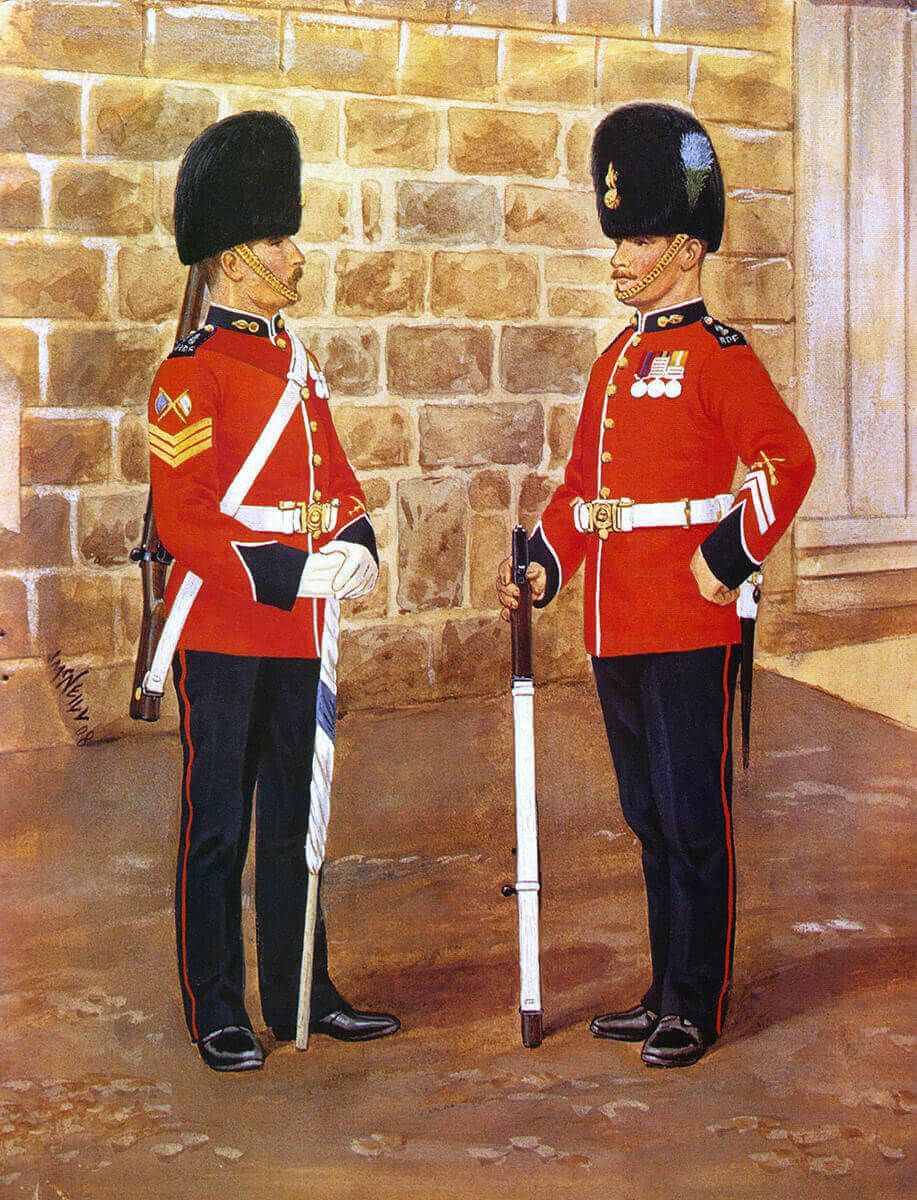
was not the war planned in 1913.  Into a world in which soldiers still wore fancy dress for parades—

(artist:  possibly Brian Fosten?)

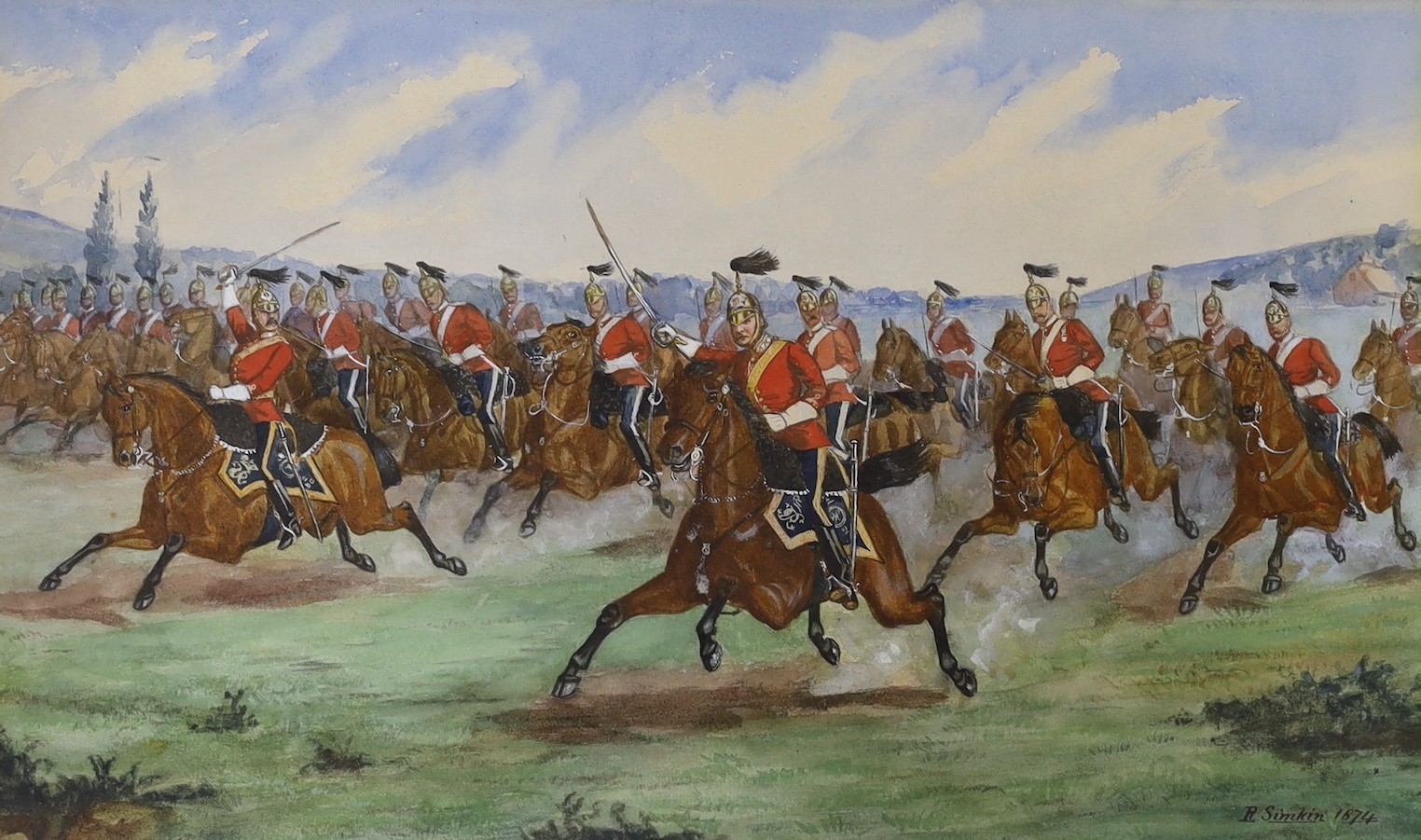
and cavalry officers still dreamed of heroic charges,

(Richard Simkin)

came these

and this sort of thing

with many other horrors to come and soldiers did the only sensible thing, given that they couldn’t just run for their lives, and began to dig in.

(another Peter Dennis)

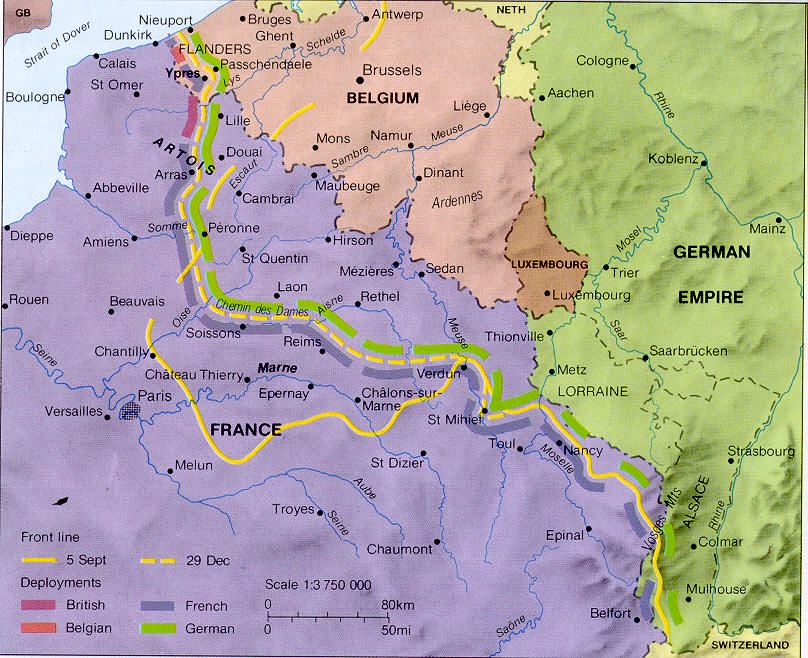
On the Western Front, where Tolkien served, this eventually meant 500 miles of such digging, from Switzerland to the North Sea, until, ultimately, there were two lines of trenches, one German, one Allied, now facing each other.

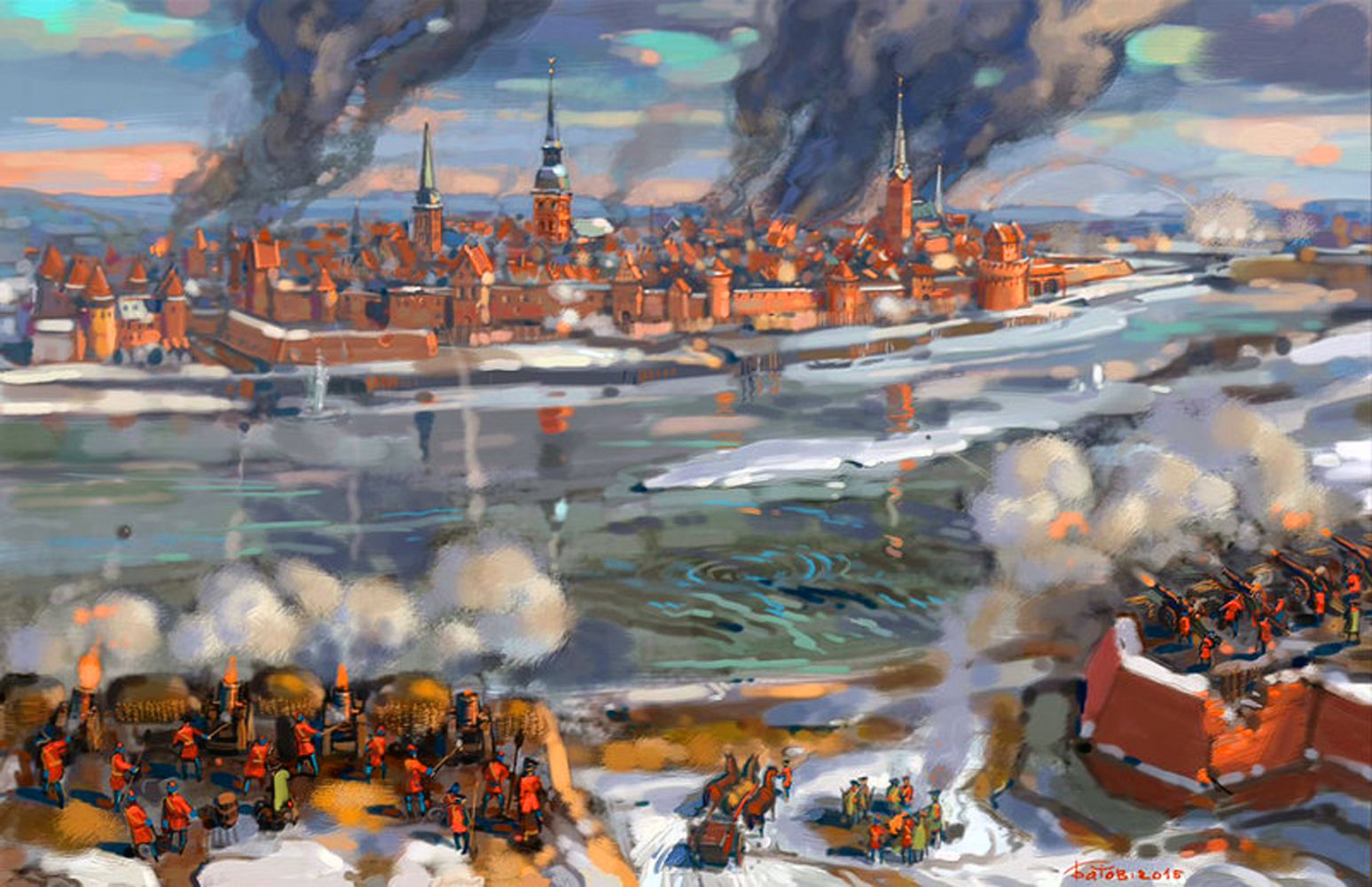
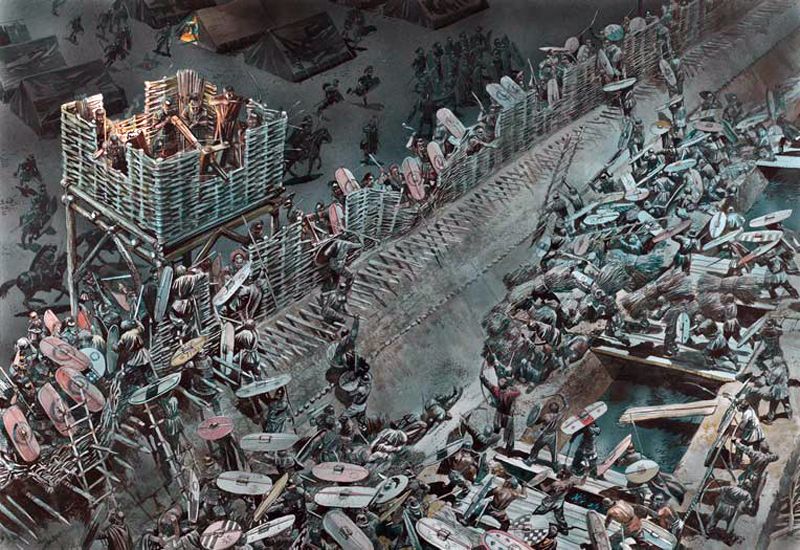
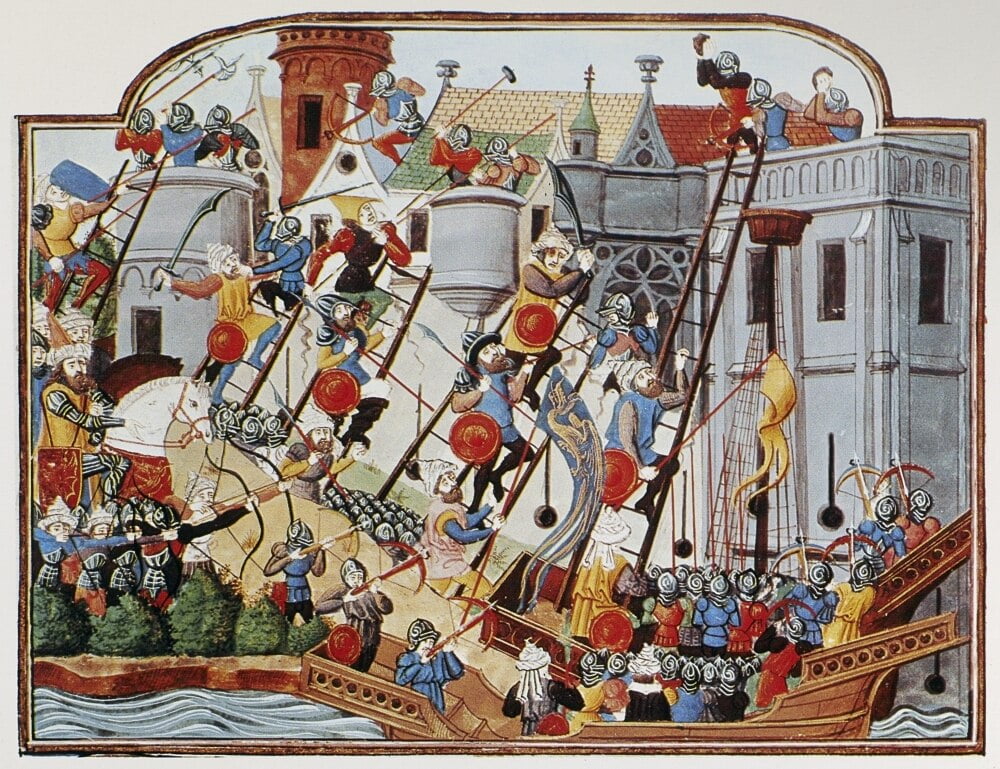
People at the time were reminded of what was called siege warfare, which, in the past had meant that an army surrounded a town or a fortress, blocking access to it from the outside, usually dug trenches to mark off the area and to protect their own soldiers and, depending upon the era and its weaponry, use various war machines against the walls and those inside.

(Julius Caesar’s siege of the Gallic stronghold of Alesia, 52bc)

(a kind of idealized medieval siege by Liliane and Fred Funcken)

(the siege of Swedish-occupied Riga by the Russians in 1710, by an artist whose name appears to be “Batov”)

The difference, in this case, being that both sides seemed to be besieging the other and neither was surrounding or surrounded.

During his stay on the Western Front in 1916, Tolkien participated in a massive assault on sections of the German lines—the Battle of the Somme—in which the British suffered over 50,000 casualties on the first day alone.

(and another Peter Dennis

Big battles like this were relatively rare, however, as they required so much planning and such great resources, but, in between them, soldiers raided each other’s trenches, both to keep their own soldiers busy and to keep the enemy off balance, as well as to gain intelligence from prisoners and captured documents.

(and a further Peter Dennis)

In older, traditional sieges, the besieged might try to do the same, as well as ruin the besiegers’ siege artillery and trenches, even carrying off the enemy’s entrenching tools.  This was called a “sally”, and here we can see the besieged Gauls trying this maneuver out at Caesar’s siege of Alesia in 52BC

(and yet another Peter Dennis)

and here are Texian volunteers sallying from the Alamo to destroy shacks (jacales) being used by Mexican skirmishers in 1836.

(Gary Zaboly)

“To sally” comes from French saillir, “to leap/jump”, and clearly implies “to jump out at someone”, preferably unexpectedly, and that’s why some fortresses have sally ports—

(this is at Fort Mifflin, on the Delaware River south of Philadelphia)

smaller gates which could be used for surprise attacks on attackers.  And, when you sally, your job is to harry the enemy, “to harry” coming from Old English hergian (HAIR-yee-an), “to harass/plunder/ravage”, among other warlike definitions.

Tolkien, perhaps with a strong memory of trench warfare, along with a reminiscence of the desperate Gauls at Alesia, recreates one of these attacks at Helm’s Deep, where Saruman’s army of orcs and Dunlendings has begun its assault upon the outer wall.

(the artist listed for this is “Brokenhill”, but the only one I could find was an art commune in Australia, which I’m hoping is correct and which you can visit here:  https://artofbrokenhill.com/ )

Strictly speaking, this isn’t really a siege, any more than the attack on Minas Tirith is really a siege, even though that’s the chapter title.  Rather, it’s an escalade—an assault by ladder, which has always struck me as about the last siege attack I’d join—look at what’s happening in this one—would you want to be on the top of a rickety ladder?

Included in the escalade is an attempt to break through the main gates:

“Again the trumpets rang, and a press of roaring men leaped forth.  They held their great shields above them like a roof, while in their midst they bore two trunks of mighty trees.  Behind them orc-archers crowded, sending a hail of darts against the bowmen on the walls.  They gained the gates.  The trees, swung by strong arms, smote the timbers with a rending boom.” 

That “like a roof” is, basically, a Roman formation called a “turtle”—a testudo—used in exactly the same way in Roman assaults.

(from the column of Trajan, showing Roman infantry attacking a Dacian town)

The tree trunks are improvised battering rams—although classical ones could be tipped with metal to make them more effective—

In response, Aragorn and Eomer, with “a handful of stout swordsmen”, attempt a sally: 

“There was a small postern-door that opened in an angle of the burg-wall on the west, where the cliff stretched out to meet it…Together Eomer and Aragorn sprang through the door, their men close behind.  The two swords flashed from the sheath as one.”

Initially, this harrying of the enemy is successful, driving them back from the gate, but then there are too many of them and Eomer is grabbed by two of the Orcs, only to be rescued by the sudden appearance of Gimli, as the sally party dodges back inside the postern/sally port, which is closed behind them.

(Donato Giancola—I’ve recommended his site before—and here it is:  https://donatoarts.com/ )

But this is only the first sally—Theoden, fretting at the rapidly decaying defensive situation, as Saruman’s early blasting powder blows holes in the ancient walls of the Deep, makes a second attack, although, this time, it seems more like the action of despair, rather than a good tactic:

“But I will not end here, taken like an old badger in a trap.  Snowmane and Hasufel and the horses of my guard are in the inner court.  When the dawn comes, I will bid men sound Helm’s horn and I will ride forth.  Will you ride with me then, son of Arathorn?  Maybe we shall cleave a road, or make such an end as will be worth a song—if any be left to sing of us hereafter.”  (this, as well as all of the previous quotations, are from The Two Towers, Book Three, Chapter 7, “Helm’s Deep”)

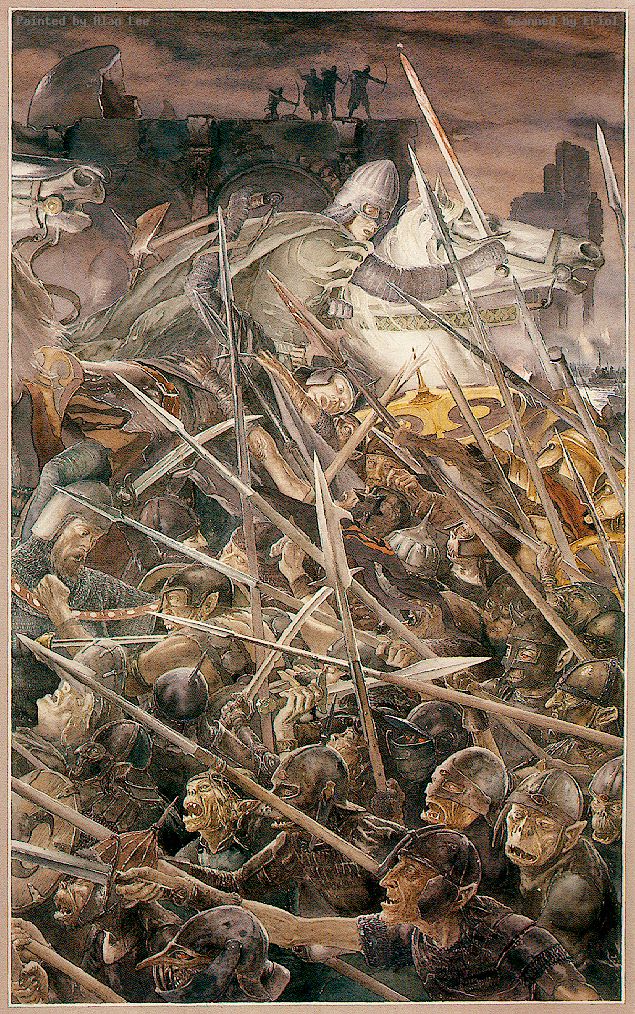
(Alan Lee)

It’s not, of course, a suicidal charge, as Gandalf arrives with re-enforcements and then there are the Ents, so the sally harries the Orcs to their doom among the trees

and, although there is, as I said at the beginning, neither comedy nor romance, this sally, like the romcom, has a happy ending.

As always, thanks for reading.

Stay well,

When deep in a forest, never sneer at the trees—someone might be listening,

(Alan Lee)

And remember that, also as always, there’s

MTCIDC

O

Feudal

03 Wednesday Jul 2024

Posted by Ollamh in Uncategorized

≈ Leave a comment

Tags

anglo-saxons, Fantasy, History, literature, lord-of-the-rings

As always, dear readers, welcome.

As Gondor prepares to meet Sauron’s massive assault, it calls in troops from the south:

“And so the companies came and were hailed and cheered through the Gate, men of the Outlands marching to defend the City of Gondor in a dark hour…The men of Ringlo Vale behind the son of their lord, Dervorin striding on foot:  three hundreds…From the Anfalas, the Langstrand far away, a long line of men of many sorts…scantily equipped save for the household of Golasgil their lord…” (The Return of the King, Book Five, Chapter 1, “Minas Tirith”)

When the text repeatedly says, “their lord”, what, precisely, does that mean?

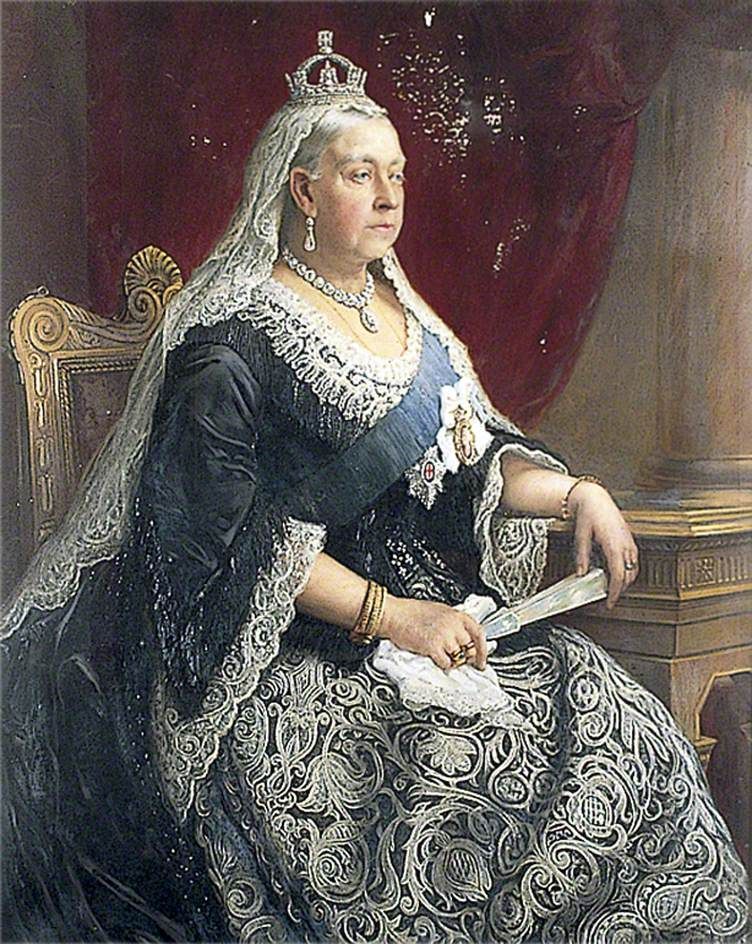
Although born in 1892, during the last years of the reign of Victoria (1819-1901),

Tolkien was not a convinced monarchist, writing to his son, Christopher:

“Give me a king whose chief interest in life is stamps, railways, or race-horses; and who has the power to sack his Vizier (or whatever you care to call him) if he does not like the cut of his trousers.”  (letter to Christopher Tolkien, 29 November, 1943, Letters, 90)

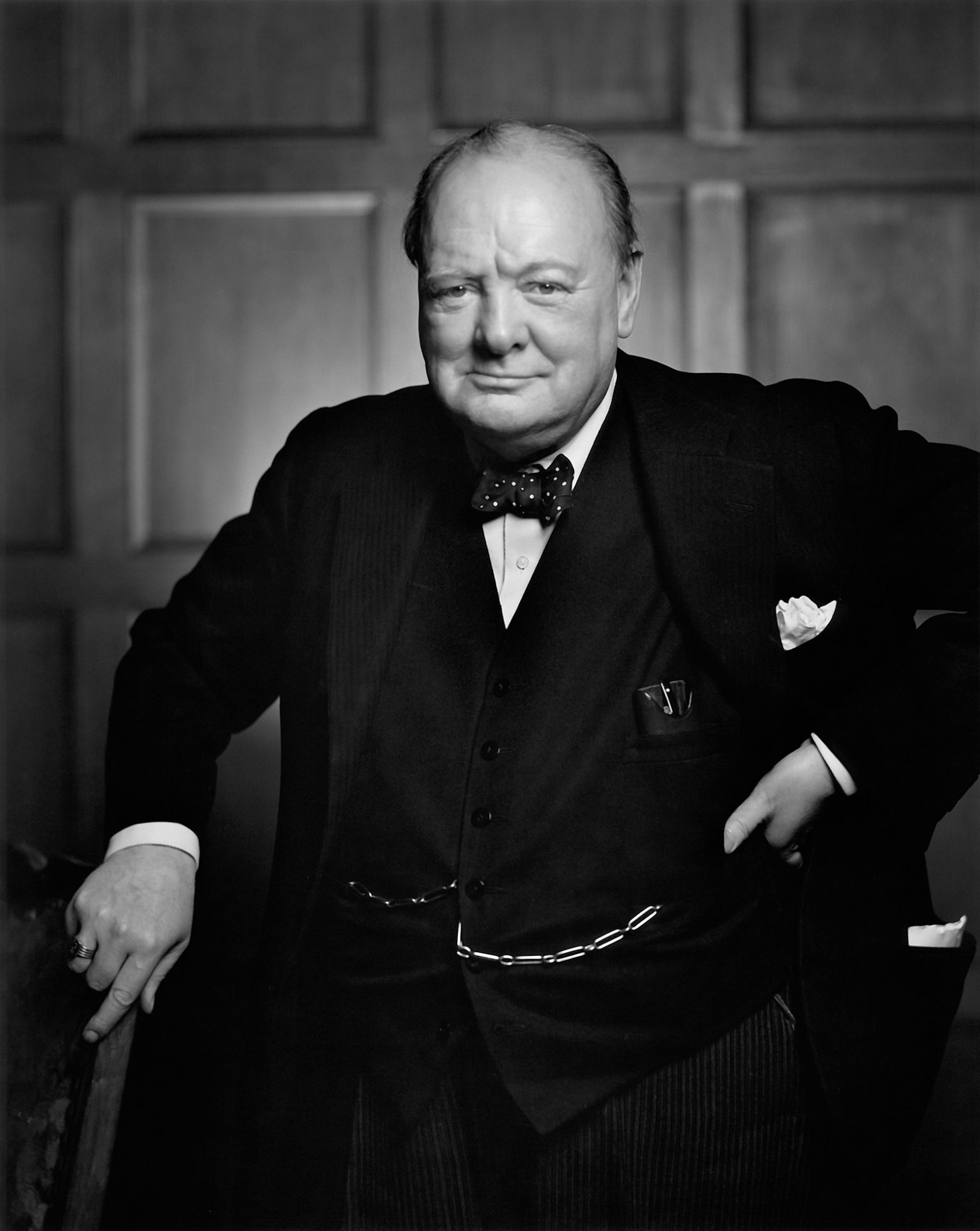
At the same time, he was not a passionate democrat, either, referring to the Prime Minister, Winston Churchill (1874-1965),

in the same letter as ‘Winston and his gang’,

having said that his own “…political opinions lean more and more to Anarchy (philosophically understood, meaning abolition of control not whiskered men with bombs)”.

And yet, in creating Middle-earth, he shows a preference for a medieval world, and, for his homeland, England, this means the form of government from which the Victorian government descended, feudalism.

Feudalism comes from Anglo-Norman French fe, which, at base, means “trust/faith”, and, in a secondary meaning, is the basis for “fief”—that is, an estate, a parcel of land given in trust.  (For more on meanings and forms, see the extremely useful Anglo-Norman French dictionary here:  https://anglo-norman.net/entry/fe ) 

It comes from Anglo-Norman because it was the Normans under Duke William of Normandy (c.1028-1087)

who introduced the concept to their newly-conquered country after 1066AD. 

The foundation of the concept is that:

1. all the land in a kingdom belongs to the king—who has received it from God

2. he then parcels the land out to his chief followers, who then

3. parcel it out to their main followers

In return, all the followers in #3 owe military service to those in #2, who, in turn, owe military service to #1.  This creates a kind of pyramid, like this–

(correct the spelling of “fife” to “fief”)

Those in #3 would then collect those below them to form the units they would bring with them when their overlords, at the king’s demand, would gather forces for whatever the king had in mind.

(by Eugene Leliepvre, one of my favorite 20th century French military illustrators)

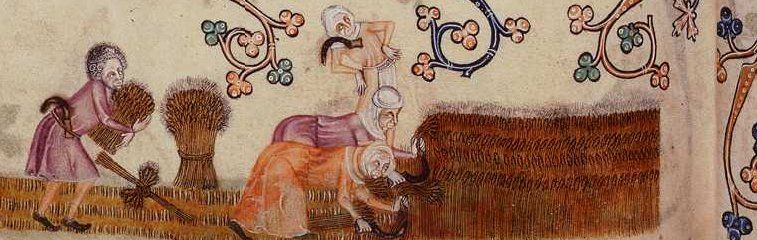
You’ll notice, of course, that those at the bottom of the pyramid—the 99% in modern terms—had no say in any of this:  when called, they were forced to go.

This was because they were the conquered.  When the Normans invaded and defeated the previous government, in the form of the death of the Anglo-Saxon king, Harold Godwinson,

they then spread out across the landscape, ousting the previous Anglo-Saxon owners and setting up forts, called “motte and baileys”,

to control the land and the locals, who, at first at least, were simply possessions.  (Feudalism became much more complicated over time, including grades of the 99%, who could be freemen, but who still had feudal obligations.)

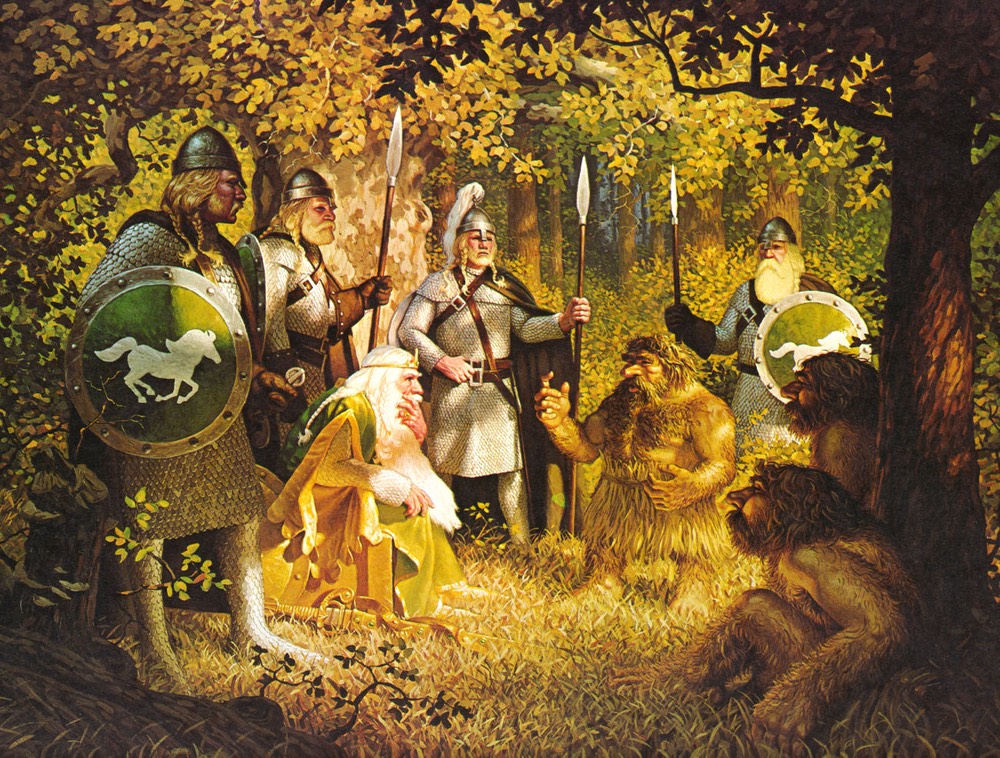
The same idea of conquest, in some sense, must have been true of the ancestors of the men of Gondor, who were not indigenous to Middle-earth, but had come from the wreckage of Numenor and who gradually came to dominate the western lands, driving the older peoples—the Dunlendings and the Woses–

(the Hildebrandts)

into exile in mountain and forest, rather than enslaving them, as the Normans did the Anglo-Saxons.

From those words “their lord”, however, it’s clear that lesser Gondorians had become part of a similar socio-economic system.

In a letter to Naomi Mitchison, JRRT has this to say about such:

“I am not incapable of or unaware of economic thought; and I think as far as the ‘mortals’ go, Men, Hobbits, and Dwarfs, that the situations are so devised that economic likelihood is there and could be worked out:  Gondor has sufficient ‘townlands’ and fiefs with a good water and road approach to provide for its population…”  (letter to Naomi Mitchison, 25 September, 1954, Letters, 292)

And there’s that word “fief”and all that it implies about rulers and ruled, both in Norman England and Gondor:  a comfortable life for those at the top,

but endless hard work, taxes, and military service for those—the great majority—at the bottom.

The British troops who surrounded Tolkien in the trenches in 1916

were, in a sense, the descendants of that feudal 99% and, although, when called upon, could be fearsomely brave, they were also well aware that they were still peasants to many of those in charge and so had songs with lyrics like:

“If you want to find the colonel,

I know where he is.

If you want to find the colonel,

I know where he is.

He’s sitting in comfort, stuffing his bloody gut.

I saw him.  I saw him,

Sitting in comfort, stuffing his bloody gut.”

(from “Hanging on the Old Barbed Wire”—you can hear a recording of some of the many mocking verses to this by the English group “Chumbawamba” here:  https://www.youtube.com/watch?v=zZhzV68U48w )

So, although Tolkien describes

“…Imrahil, Prince of Dol Amroth…and a company of knights in full harness riding grey horses; and behind them seven hundreds of men at arms, tall as lords, grey-eyed, dark-haired, singing as they came.”

we might wonder if JRRT, self-described as leaning “more and more to Anarchy”, could still hear the privates of 1916, and, if so, just what those men slogging along on foot behind “knights in full harness riding grey horses”  might actually have been singing?  Could it have been something as subversive as “Hanging on the Old Barbed Wire”, or maybe this couplet from an actual English peasant revolt in 1381:

“When Adam delved [dug]

And Eve span [spun],

Who was then

The gentleman?” 

Thanks, as ever, for reading.

Stay well,

Remember the Golden Rule,

(from the comic strip “The Wizard of Id”)

And remember, as well, that there’s

MTCIDC

O

Istanbul, not…

12 Wednesday Jun 2024

Posted by Ollamh in Uncategorized

≈ Leave a comment

Tags

Byzantium, History, istanbul, travel, Turkey

Welcome, dear readers, as always. Last’s weeks visit to Harry Turtledove’s Videssos (aka Byzantium) brought a certain song to mind and so the title of this posting comes from a 1953 pop hit by a Canadian vocal group called “The Four Lads”.

It’s perhaps an “ear worm”, based pretty much on the rhythm IS-tan-BUL, not CON-stan-ti-NOP-le, repeated throughout, so parental caution.  Here’s the whole lyric—

“Istanbul was Constantinople
Now it’s Istanbul, not Constantinople
Been a long time gone, Constantinople
Now it’s Turkish delight on a moonlit night

Every gal in Constantinople
Lives in Istanbul, not Constantinople
So if you’ve a date in Constantinople
She’ll be waiting in Istanbul

Even old New York was once New Amsterdam
Why they changed it I can’t say
People just liked it better that way

So, take me back to Constantinople
No, you can’t go back to Constantinople
Been a long time gone, Constantinople
Why did Constantinople get the works?
That’s nobody’s business but the Turks

Istanbul, Istanbul

Istanbul, Istanbul

Even old New York was once New Amsterdam
Why they changed it I can’t say
People just liked it better that way

Istanbul was Constantinople
Now it’s Istanbul, not Constantinople
Been a long time gone, oh Constantinople
Why did Constantinople get the works?
That’s nobody’s business but the Turks

So, take me back to Constantinople
No, you can’t go back to Constantinople
Been a long time gone, Constantinople
Why did Constantinople get the works?
That’s nobody’s business but the Turks

Istanbul!”

(from a site called “Songfacts”—although they credit it to the 1990 cover by They Might Be Giants.  You can hear the original here:  https://www.youtube.com/watch?v=Wcze7EGorOk )

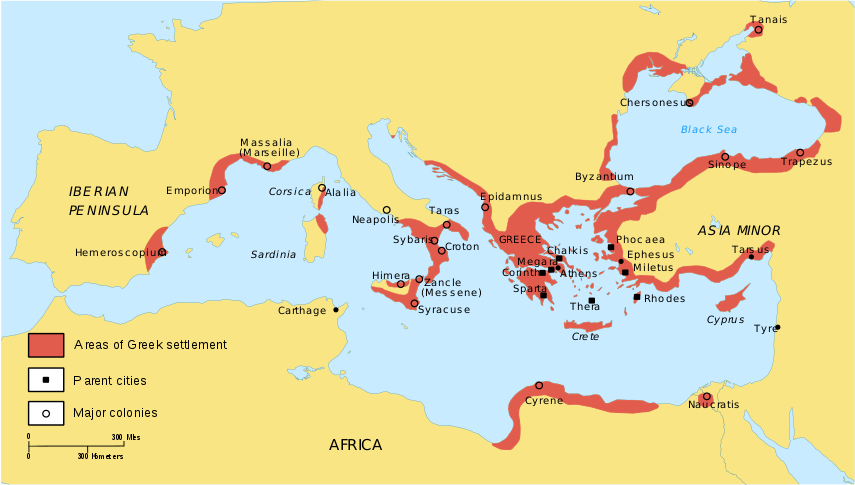
“Constantinople” was originally “Byzantium”,  meaning of the name unknown.  It was a 7th-century BC Greek settlement based upon an earlier Thracian one.

In 330AD, the Roman emperor whom we call Constantine I (c272-337AD),

to be closer not only to the goods and raw materials which came from the Black Sea region, but also to keep an eye on the Empire’s latest eastern threat, the Sassanids.

Constantine, clearly intending to indicate the continuity of his choice of capital, even if it was far from the old heartland of Italy, called it Nova Roma, but the inhabitants tended to call it “the city of Constantine” or “Constantinoupolis”—or, for short, simply “the city” “he polis” (say “he” as “hay”—it’s the definite article “the”—and the custom of shortening can even be seen here in the US:  people who live around New York City never call it “New York City”, but always “the City”). 

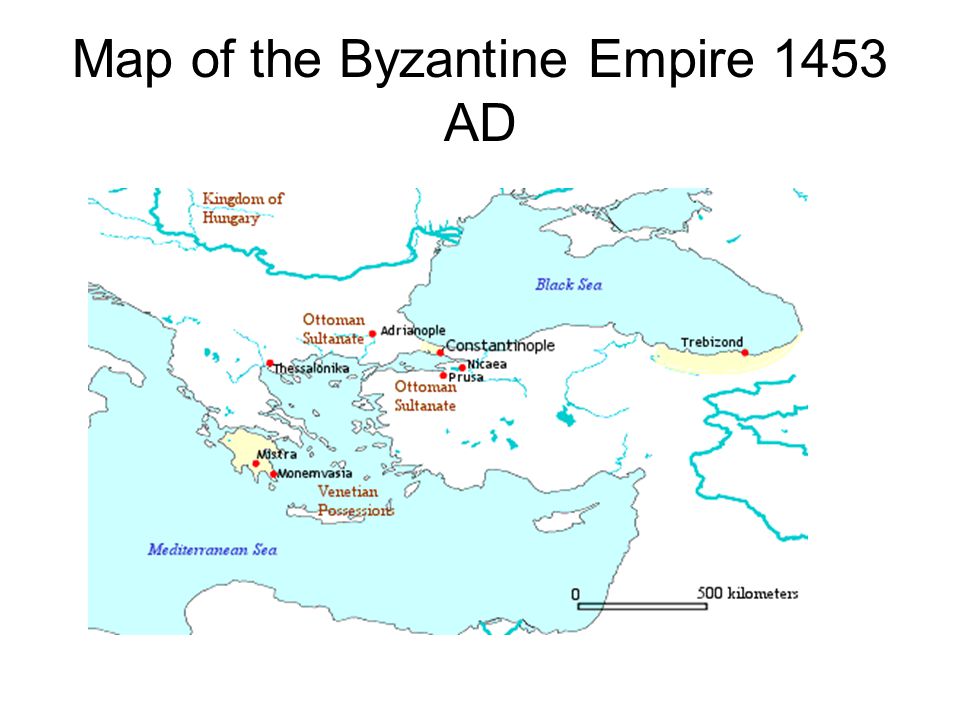
As if Constantine’s name for it had a charm, this “new Rome”, successfully weathered the changes which turned the western empire, with its ancient capital of “old Rome”, into a series of Germanic kingdoms, surviving into the mid-15th century AD.  By its later years, however, its territory, like its power, shrank and shrank

to a couple of small enclaves and the City itself.  

And this is what Tolkien was thinking of when he wrote

“In the south Gondor rises to a peak of power, almost reflecting Numenor, and then fades slowly to decayed Middle Age, a kind of proud, venerable, but increasingly impotent Byzantium.”  (from a letter to Milton Waldman, “probably written late in 1951”, Letters, 219)

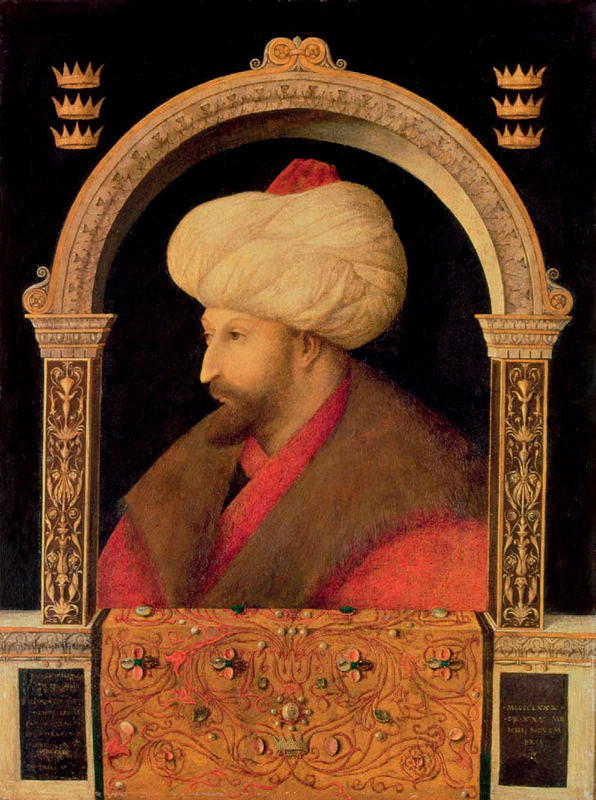
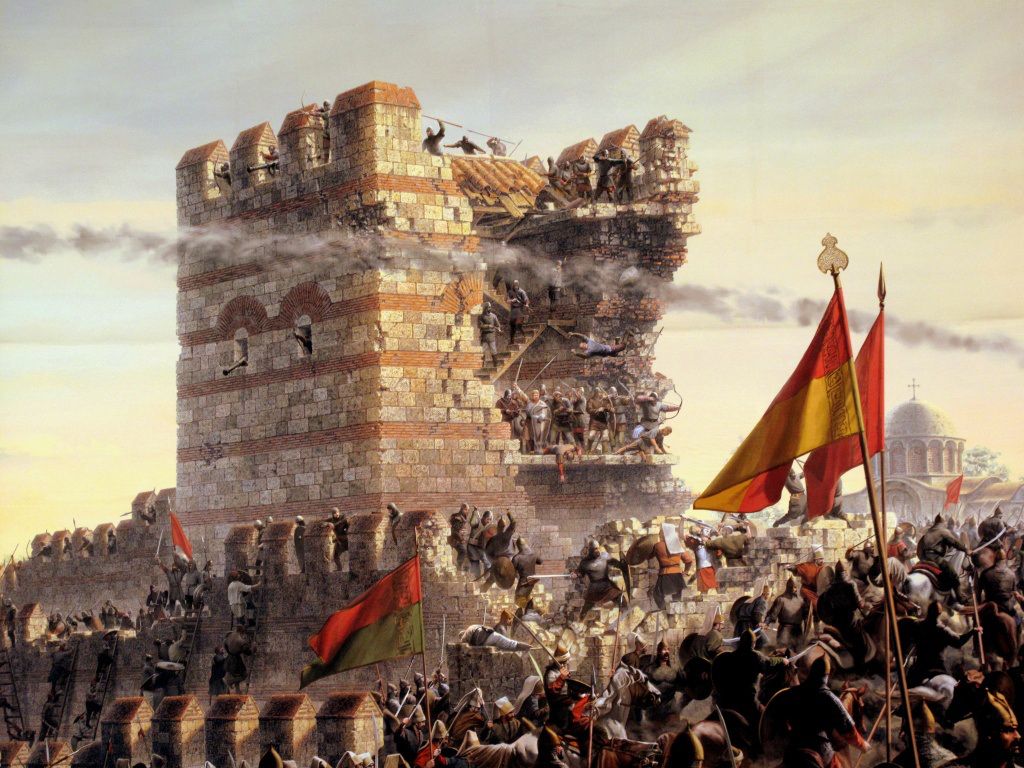
This impotence finally came to an end, at least for “New Rome”, on 29 May, 1453, when a huge Ottoman army, under Mehmet II,

using that very modern weapon, the bombard,

broke into the city and captured it.

In earlier postings, I went into a comparison of the two, Byzantium and Minas Tirith, their look and their sieges, in some detail (see “The Fall of Two Cities?”, 9 March, 2016, and “A Kind of Proud, Venerable, But Increasingly Impotent Byzantium”, 1 June, 2016), but as JRRT himself went to some lengths in more than one letter to discuss toponymy (place names and their study) and the proper translation of place names (see, for instance, the letter to Rayner Unwin, 3 July, 1956, Letters, 359-361), I find it interesting to see what happened to Byzantium/New Rome/Constantinople.

The song says that it’s “Istanbul, not Constantinople”, but, surprisingly, this isn’t an Ottoman Turkish name and here we see that, although the Ottoman Sultan may have captured the city, he somehow never captured what it was called.  As I wrote above, the locals had called it “Constantinoupolis”, or simply “he Polis”.  Thus, when someone might ask, “Where are you going?” you might reply, “Eis ten Polin”—“to/towards the City” and that form, spoken casually, probably became “Is-tan-bul”, thus retaining part of its ancient Byzantine nomenclature—which it retains to this day, the name being legalized as the name in 1930.

But this brings me to an interesting point.  Minas Tirith, “the Tower of Guard” (formerly Minas Anor, “the Tower of the Sun”—even in Middle-earth names move around, depending upon historical circumstance) survived Sauron’s attack, which Byzantium/New Rome/Constantinople did not—and yet its name survived.

(Ted Nasmith)

When Sauron’s forces captured Minas Tirith/Anor’s matching fortress, Minas Ithil (“the Tower of the Moon”), its name was changed to the grim-sounding Minas Morgul (“the Tower of Dark Sorcery”).

(and another Ted Nasmith)

Had Minas Tirith fallen to Sauron, what might have happened to its name—or is that nobody’s business but the orcs’?

Thanks, as ever, for reading.

Stay well,

Imagine what maps and signposts would look like in the Black Speech (“One Road to Rule Them All, One Road to Lose Them”?).

And remember that, as always, there’s

MTCIDC

O

PS

Reading about “Istanbul” by the Four Lads, I noted that a jazz critic suggested that it was actually written in reply to a 1928 song, “Constantinople”, which you can listen to (warning:  it’s catchy) here:  https://www.youtube.com/watch?v=OFDdPT9H_dQ

Battering Ram or…Wolf?

01 Wednesday May 2024

Posted by Ollamh in Uncategorized

≈ Leave a comment

Tags

Dracula, Gothic, History, horror, reviews

Ad haec Caesar respondit: se magis consuetudine sua quam merito eorum civitatem conservaturum, si prius quam murum aries attigisset se dedidissent;

“Caesar replies to these things that he would preserve their town, more by his own custom than by [their] deserving it, if they would have surrendered before the ram had touched the [town] wall.” (Caesar, De Bello Gallico, 2.32.  My translation.)

The Aduatuci (or Atuatuci) were a Germanic tribe in what is now eastern Belgium and they were in trouble.  Involved in resisting Julius Caesar’s conquest of their region, they found themselves besieged by a Roman army long-experienced in dealing with fortified towns like this one.  Appalled by the preparations they could see being made, they quickly agreed upon terms with Caesar—on his condition, as stated above, the idea being that, once the ram had touched the wall, it would knock it down and everyone inside would be at the mercy of the Romans (murdered on the spot or sold into slavery.  We have no idea what the town looked like, but if its walls were of the sort called murus gallicus,

as Caesar himself describes the building technique, it was his obvious preparations and chilly threat which caused the capitulation,  Caesar admitting that such walls would have stymied Roman rams.  See for more:  https://en.wikipedia.org/wiki/Murus_gallicus    Just after their surrender, the Aduatuci made the mistake of trying to trick the Romans and paid dearly for it.  See:   https://www.livius.org/articles/battle/oppidum-aduatucorum-57-bce/   )

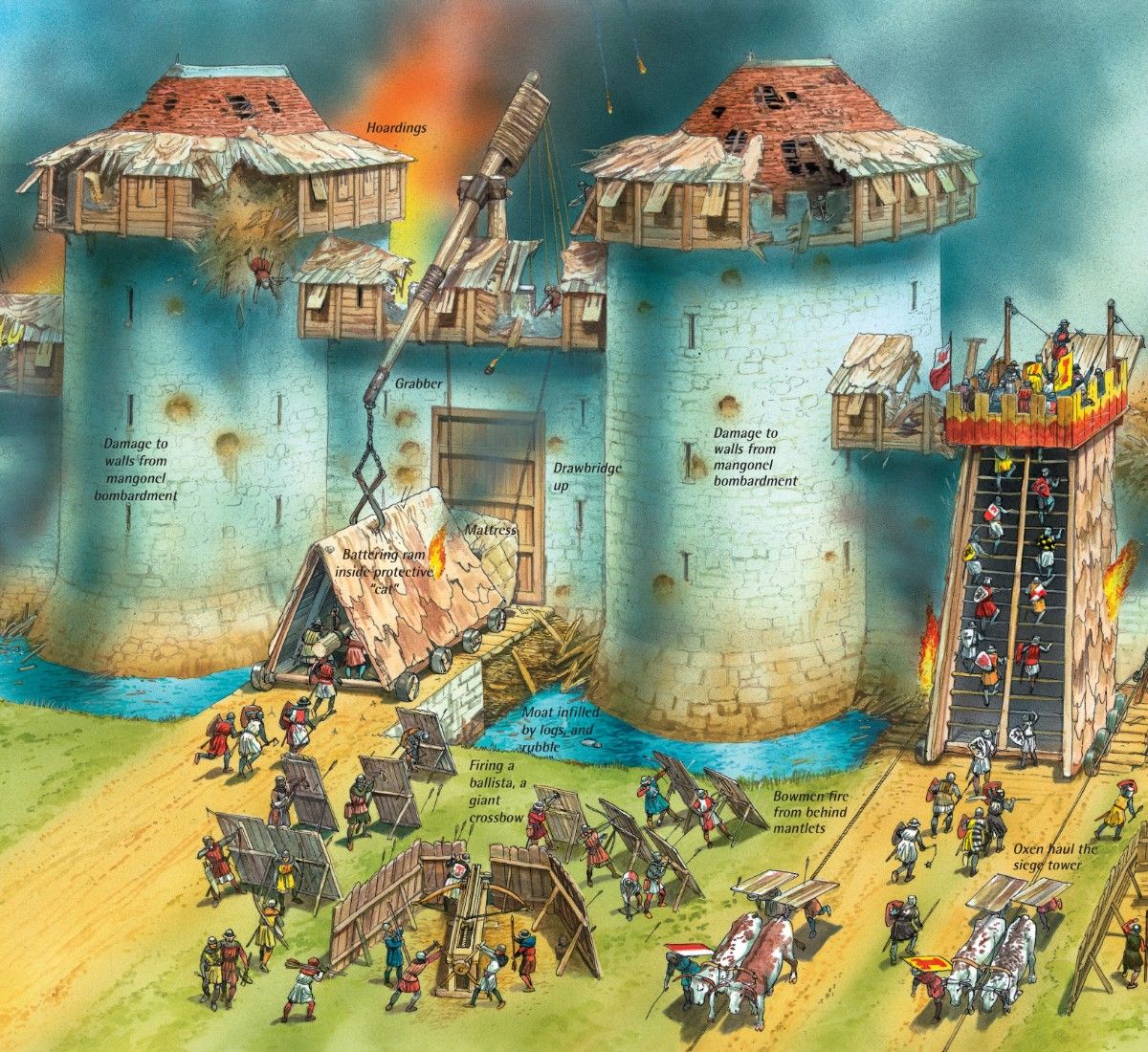
Among those preparations would have been a siege weapon in use at least as far back as the Neo-Assyrians (10th through 7th century BC), as this relief from the edge of a bronze vessel demonstrates.

Caesar’s threat suggests that his weapon would be aimed at a wall, but, the Assyrian relief is aimed at what, I think, we’ve come to expect from medieval illustrations—

and from adventure movies—see this scene from Braveheart (1995) as an example:  https://www.youtube.com/watch?v=7PXrVUaoEEc  —

a gate, it being the weakest part of a defensive wall.

As always, welcome, dear readers.

What’s going on here, that we begin, as Horace (65-8BC) put it in his Ars Poetica, 146-149, when cautioning poets about trying to tackle bigger subjects that they can possibly manage, in medias res, “in the middle of the action”?

Because this posting is really about being in mediam portam, “in the middle of the gate”, as Tolkien says of the main gate of Minas Tirith:

“Very strong it might be, wrought of steel and iron, and guarded with towers and bastions of indomitable stone, yet it was the key, the weakest point in all that high and impenetrable wall.”  (The Return of the King, Book Five, Chapter 4, “The Siege of Gondor”)

What’s attacking that gate is a monstrous ram:

“…in the midst was a huge ram, great as a forest-tree a hundred feet in length, swinging on mighty chains.  Long had it been forging in the dark smithies of Mordor, and its hideous head, founded of black steel, was shaped in the likeness of a ravening wolf, on its[,] spells of ruin lay.  Grond they named it, in memory of the Hammer of the Underworld of old.”

(from Jackson’s Return of the King, and, as usual, it varies from the text—this time, instead of simply having a wolf’s head, the whole thing appears to be a wolf—and it seems to have ingested a George Forman grill, as well)

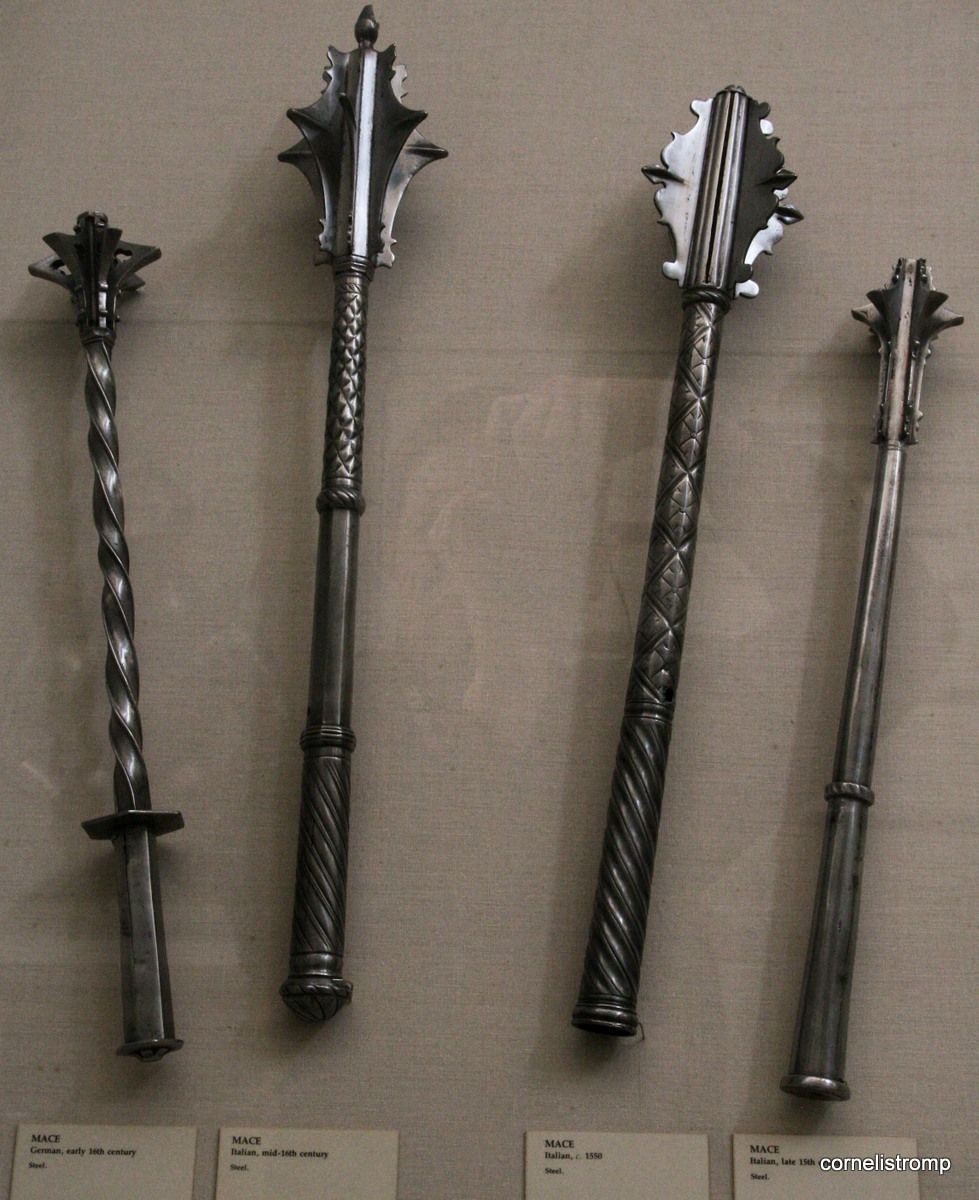
“Grond” is glossed as “the Hammer of the Underworld” and, elsewhere, as Morgoth’s mace—

but I’ve wondered about two non-Middle-earth influences upon its creation.

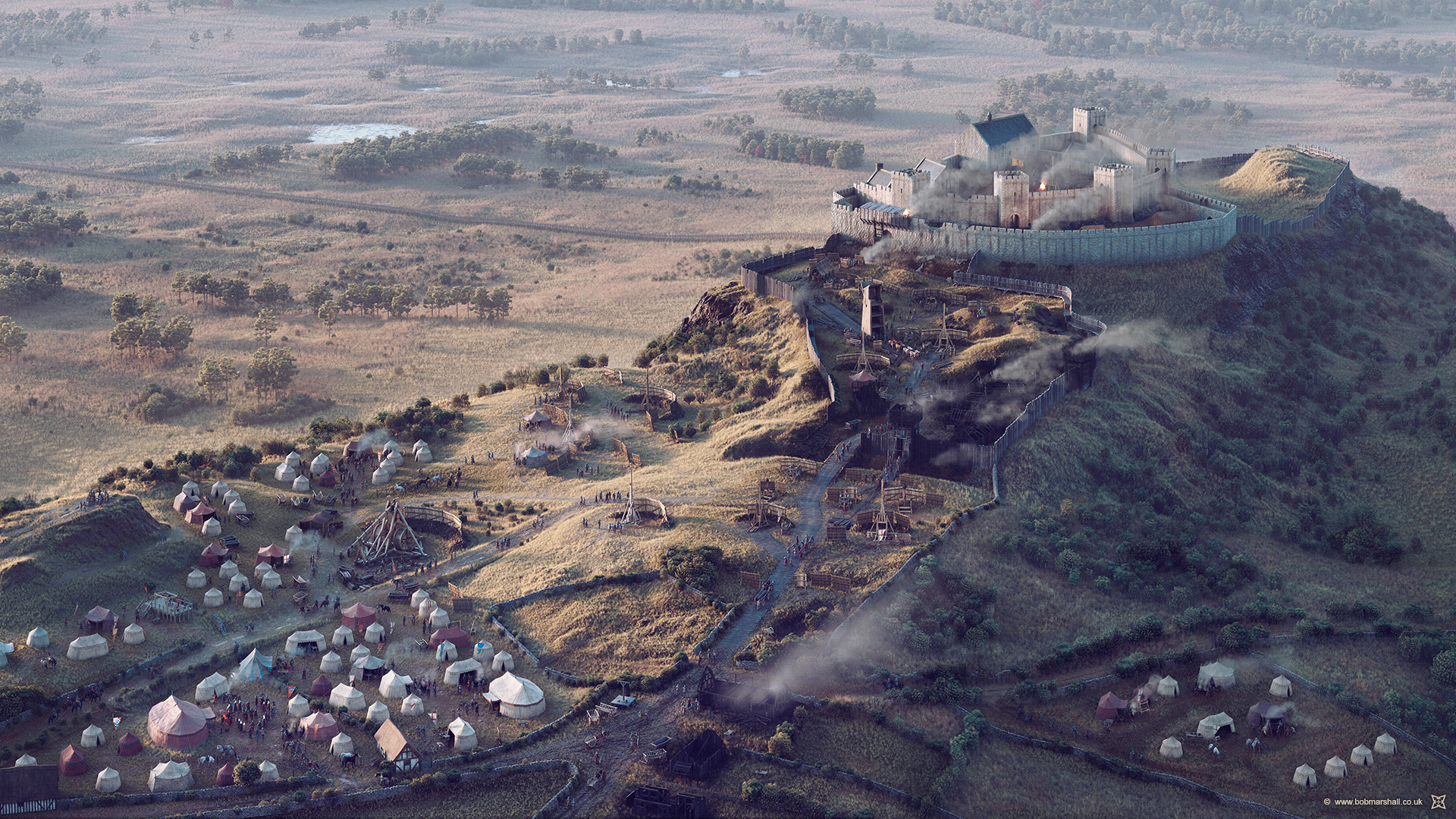
The first is to be found in something I suspect JRRT could have read at some point in his academic career, the Chronicle of Piers de Langtoft.  This is a early 14th-century compilation of earlier English history, combined with what is thought to be “Peter of Langtoft’s” own work, written in Norman French verse.  In his narration of events, the author includes an account of Edward I’s siege of Stirling Castle in 1304.

(This breathtaking reconstruction of the siege is by Bob Marshall, whose site is here:  https://www.bobmarshall.co.uk/stirlingcastle/   I recommend this site for:  a. the wonderful artwork; b. the excellent research and thinking behind it.  You can see more of his work—and it’s all as impressive as this—here:  https://bobmarshall.co.uk/)  Among the siege weapons Edward employed was something of which Piers/Peter writes:

“Entre ses aferes le reys fet carpenter

Une engine orrible, et Ludgar appeler

Et cel a son hurtir crevant le mur enter.”

“Among these events, the king had made of wood

A terrible device, and to be called ‘Ludgar’

And that [one] at its hit breaking down the whole wall.”

(my translation)

This “Ludgar” has been interpreted as being a large stone-thrower, called a trebuchet,

but it’s not its function which interested me, but what “Ludgar” is actually a shortened form of:  “Loup de Guerre”—“War Wolf”.  Could this have sparked Tolkien’s imagination to combine that name with another siege weapon?

(You can have your own copy of the text here:  https://ia801500.us.archive.org/5/items/chronicleofpierr02pete/chronicleofpierr02pete.pdf )

And that wolf leads me to my second possible influence, perhaps rather more unusual than the first.

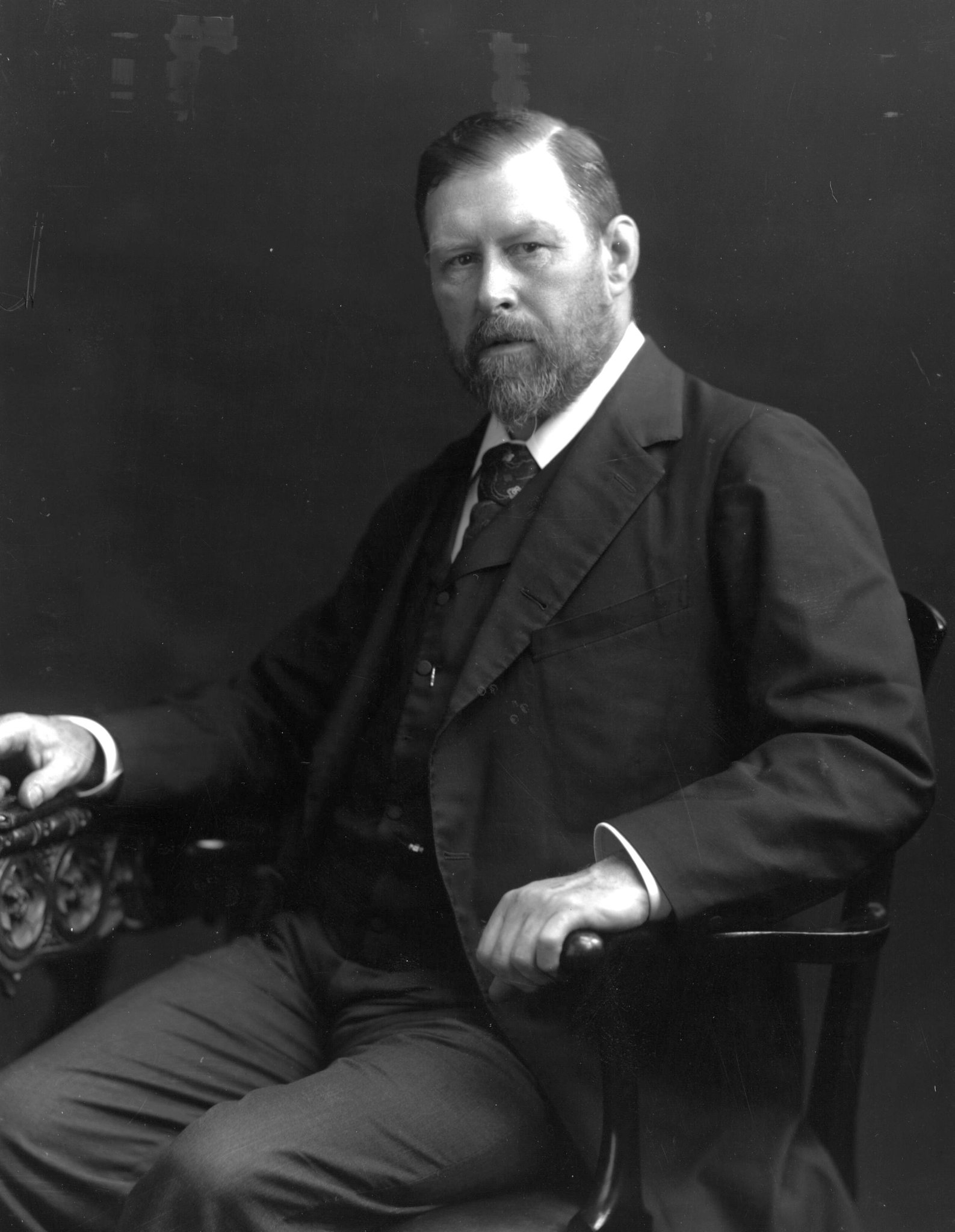
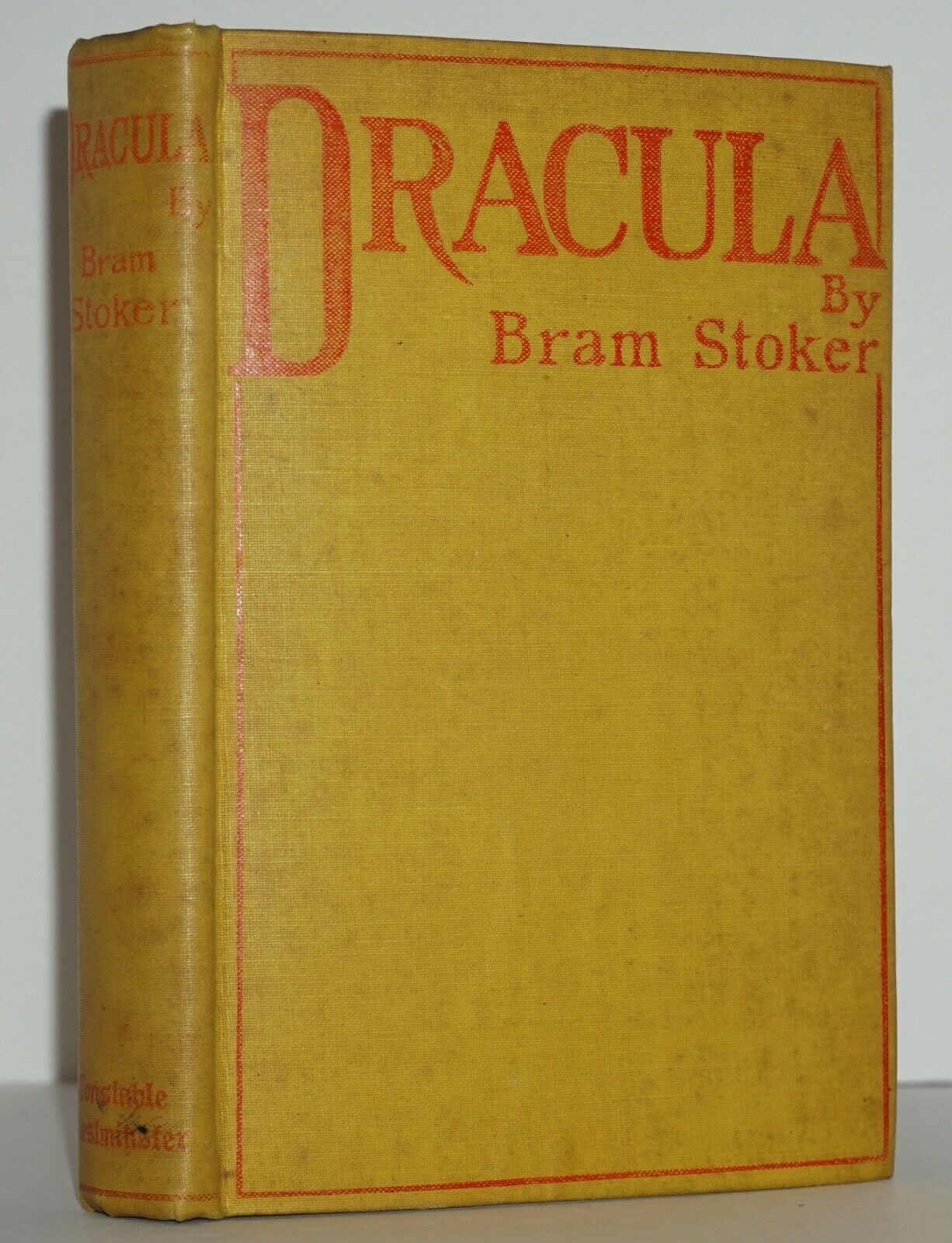
Neither The Letters of JRR Tolkien nor Oronzo Cilli’s impressive Tolkien’s Library has any mention of Bram Stoker (1847-1912)

or his 1897 masterpiece, Dracula,

but, as I’m currently finishing reading it with a class, I noticed another wolf—with a similar task to that of Grond—in Stoker’s novel.

Please pardon the quick plot summary, if you’ve read the book.

Lucy Westenra is Dracula’s first victim in his one-man invasion of England.  To protect her, Dr Van Helsing surrounds her with garlic, including among other things, a garland for her neck and for the window of her first floor bedroom.  Lucy feels safe and her mother, who has a weak heart, comes to join her in bed.

Thwarted by Van Helsing’s work, Dracula picks a weapon from the London Zoological Gardens and–

“After a while there was the low howl again out in the shrubbery, and shortly after there was a crash at the window, and a lot of broken glass was hurled on the floor. The window blind blew back with the wind that rushed in, and in the aperture of the broken panes there was the head of a great, gaunt grey wolf. Mother cried out in a fright, and struggled up into a sitting posture, and clutched wildly at anything that would help her. Amongst other things, she clutched the wreath of flowers that Dr. Van Helsing insisted on my wearing round my neck, and tore it away from me. For a second or two she sat up, pointing at the wolf, and there was a strange and horrible gurgling in her throat; then she fell over—as if struck with lightning, and her head hit my forehead and made me dizzy for a moment or two. The room and all round seemed to spin round. I kept my eyes fixed on the window, but the wolf drew his head back, and a whole myriad of little specks seemed to come blowing in through the broken window, and wheeling and circling round like the pillar of dust that travellers describe when there is a simoon in the desert. I tried to stir, but there was some spell upon me, and dear mother’s poor body, which seemed to grow cold already—for her dear heart had ceased to beat—weighed me down; and I remembered no more for a while.”  (Dracula, Chapter XII, “Memorandum left by Lucy Westenra”)

(Abigail Rorer from the Folio Society edition)

Perhaps not so grand as:

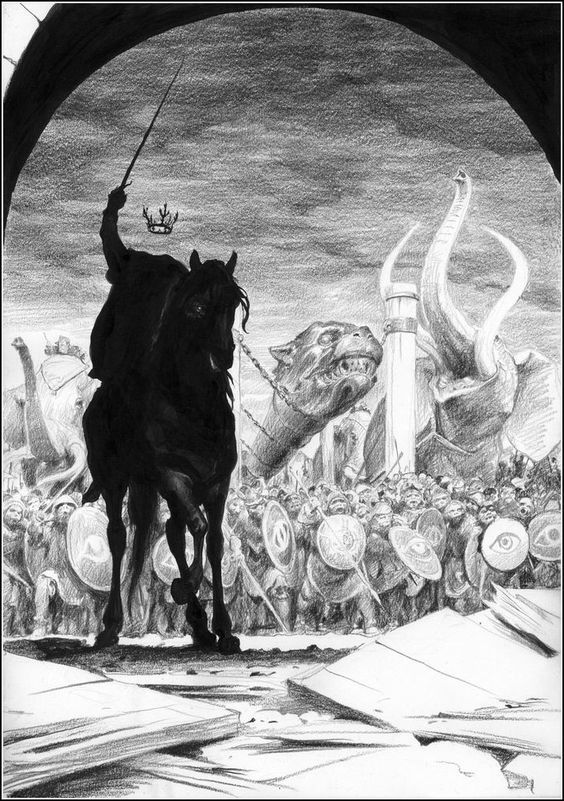
“…Thrice the great ram boomed.  And suddenly upon the last stroke the Gate of Gondor broke.  As if stricken by some blasting spell it burst asunder:  there was a flash of searing lightning, and the doors tumbled in riven fragments to the ground.

In rode the Lord of the Nazgul.”

(Denis Gordeev)

but equally effective and, as the Witch King of Agmar stands at the ruined gate, so Dracula stands at the broken window.  The difference is, the Witch King is thwarted by the advent of the Rohirrim,

(Julia Alexeeva)

while Dracula slips in and begins Lucy’s final transformation into a vampire.

So, could an early 14th century text and a late 19th-century horror novel have given Tolkien inspiration?  If an 1890 children’s book can offer him a talking dragon (“The Story of Sigurd” in Andrew Lang’s The Red Fairy Book, which you can read here:  https://archive.org/details/redfairybook00langiala/redfairybook00langiala/ )

why not?

Thanks, as ever, for reading.

Stay well,

Even if garlic might not keep out vampires, it’s good in bread,

And remember that, as always, there’s

MTCIDC

O

PS

In case you haven’t read Dracula, here’s your chance in a copy of the first American edition of 1897:  https://www.gutenberg.org/cache/epub/345/pg345-images.html

A Corking Tale?

24 Wednesday Apr 2024

Posted by Ollamh in Uncategorized

≈ Leave a comment

Tags

Elizabeth I, english-history, History, Sir Francis Drake, Spanish Armada

Welcome, as always, dear readers,

I’m about to teach The Hobbit again, which is, as always, a pleasure—and also a repeated source of new things to think—and write—about. 

Take this, for example:

“Chip the glasses and crack the plates!

Blunt the knives and bend the forks!

That’s what Bilbo Baggins hates—

Smash the bottles and burn the corks!” 

(The Hobbit, Chapter One, “An Unexpected Party”)

Seven years ago, this formed a small part of an earlier essay, “Shire Portrait (2)” (8 February, 2017), in which the subject was the economy of the Shire.

JRRT was himself aware of just how much lay underneath that economy which he didn’t depict, writing:

“I am more conscious of my sketchiness in the archaeology and realien [“actualities/realities”] than in the economics:  clothes, agricultural implements, metal-working, pottery, architecture and the like…I am not incapable of or unaware of economic thought; and I think as far as the ‘mortals’ go, Men, Hobbits, and Dwarfs, that the situations are so devised that economic likelihood is there and could be worked out…”  (letter to Naomi Mitchinson, 25 September, 1954, Letters 291-292)

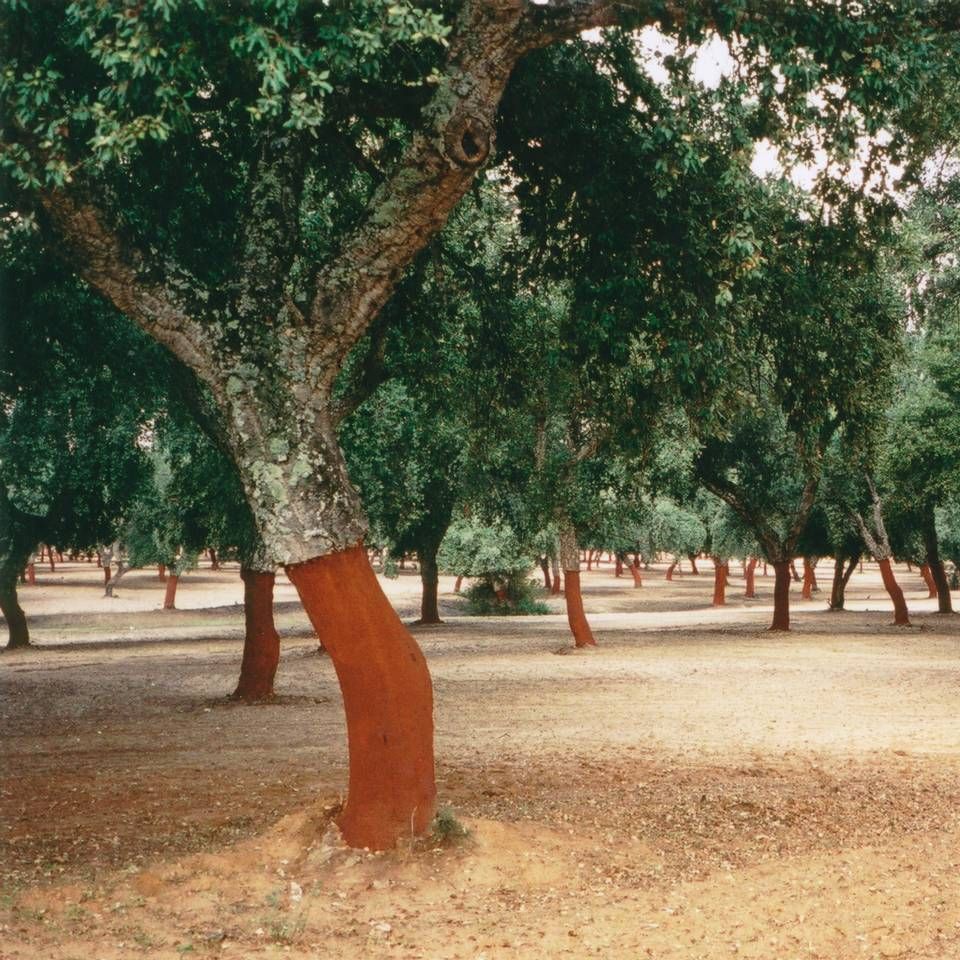
In that essay, I pointed out that, in Tolkien’s world, those threatened corks came primarily from Portugal, from the Quercus suber,

which, as the Wiki articles tells us, actually “is native to southwest Europe and northwest Africa”, suggesting, perhaps, that, in Middle-earth, it might be imported as far away as from Umbar, say, far to the south, had Tolkien bothered to go that far in expressing “economic likelihood”.

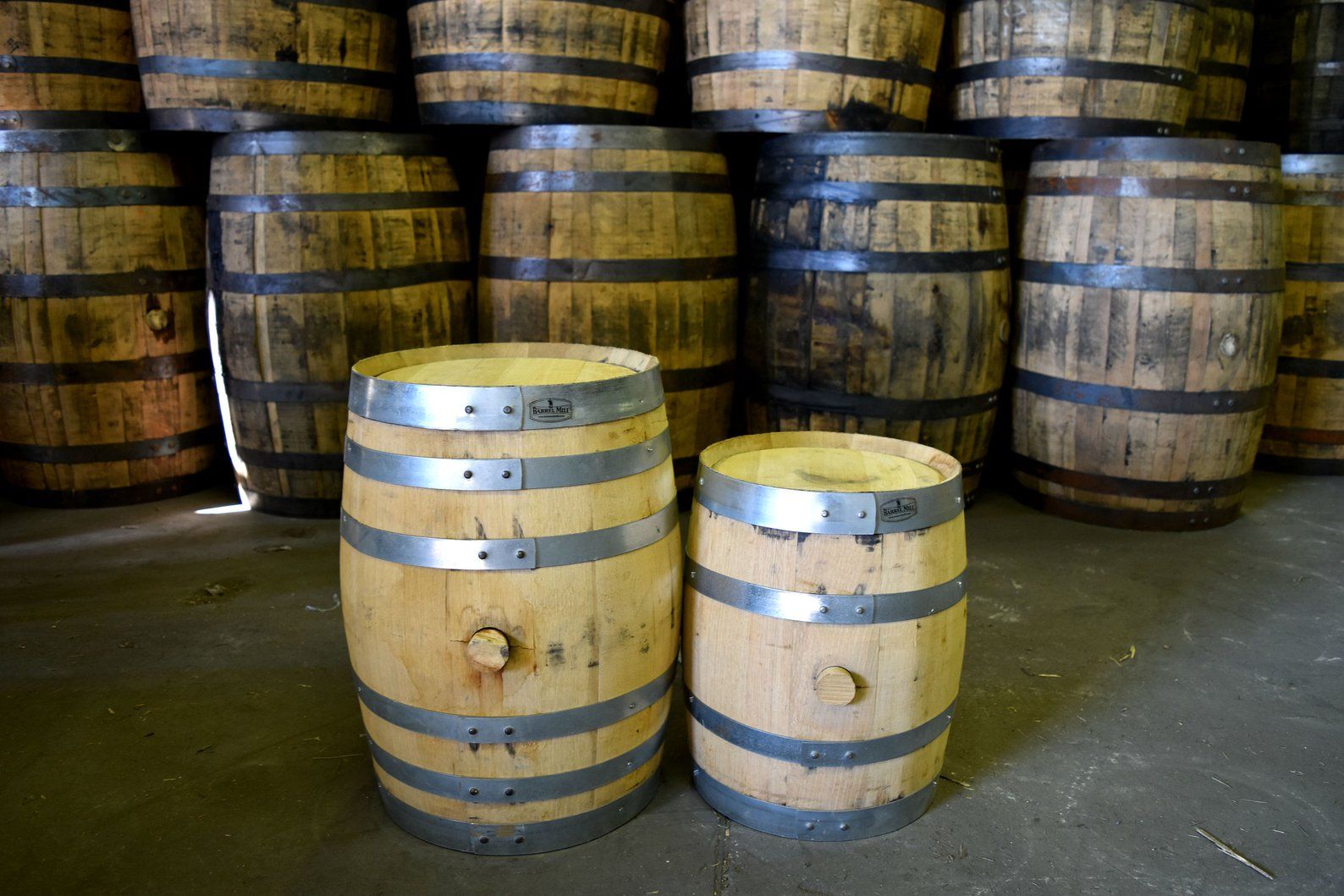
This cork bobbed up (they do, don’t they?) in my mind associated with something completely different, however, but certainly naturally:  barrels.

And this led me to what was, in fact, a mistaken idea.

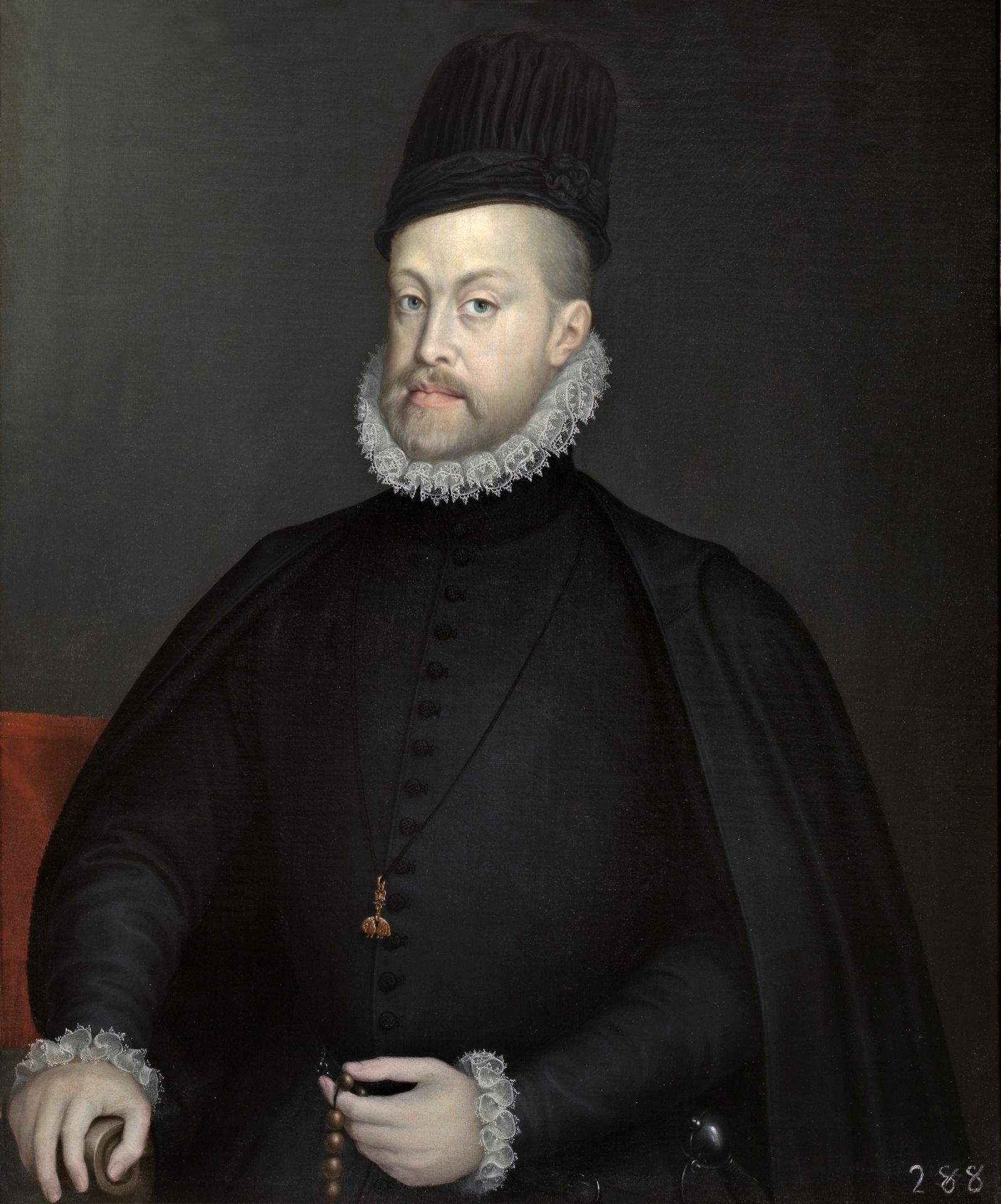
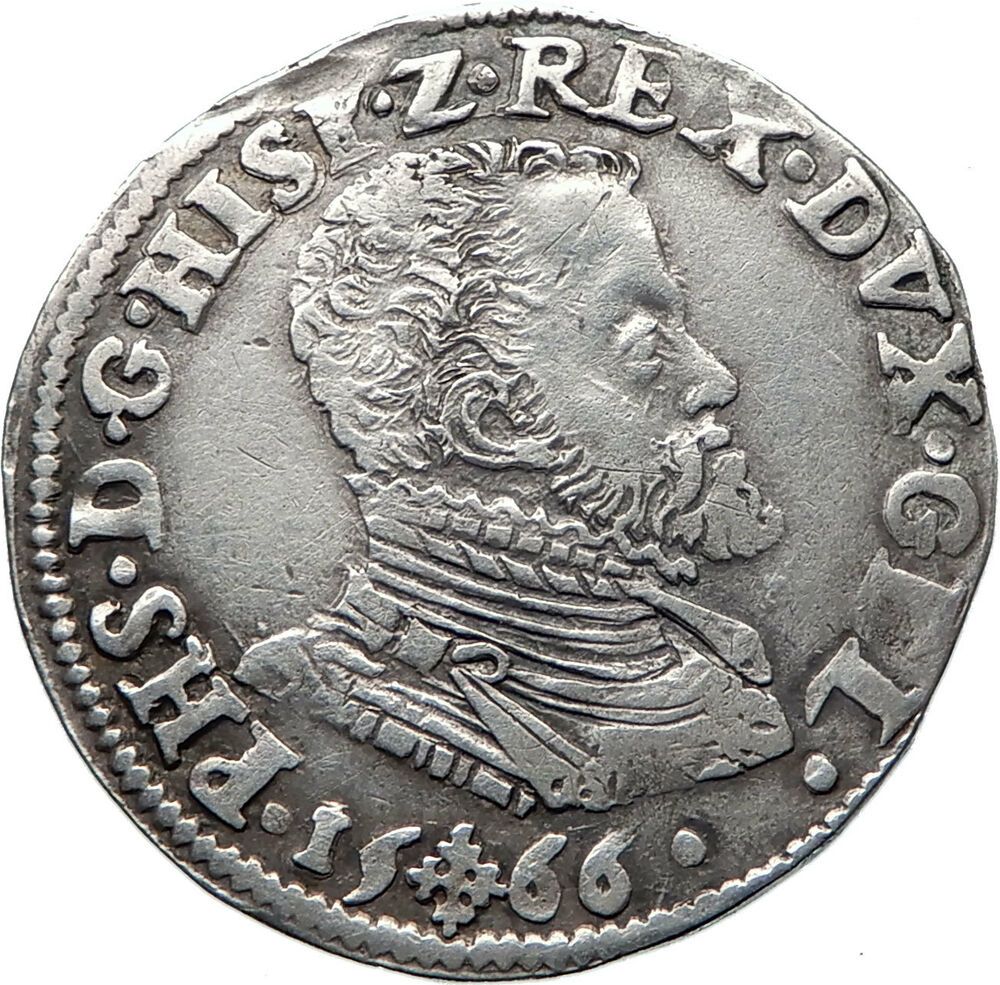
In the mid-1580s, Philip II of Spain,

a man for whom the term “religious obsessive” could have been coined, set his sights upon an attack on England.  As “His Most Catholic Majesty”, he was already fighting what seemed like an endless war against his (to his mind) rebellious Protestant subjects in the Netherlands—the so-called “80 Years War” (1568-1648), or “Dutch Revolt”.

England, now a Protestant country under its queen, Elizabeth,

was helping that revolt.  (Philip may also have been annoyed that, as he had once been married to Elizabeth’s half-sister, Mary, 1515-1558,  queen of England, 1553-1558,

he probably thought that, after her death, he should have been king.)

As Spain, because of its looting of its New World possessions, was extremely rich,

it could afford a long war and, having lots of troops already across from England,

it seemed only a matter of:

1. building lots of landing craft for an invasion army

2. assembling a fleet—an armada, in Spanish, to protect those craft till they hit the beaches of England.

Such a fleet, sailing from Spain at least to the coast of France, where the invasion army was being assembled, as were the landing craft, would need large supplies of food and water to survive on the high seas. 

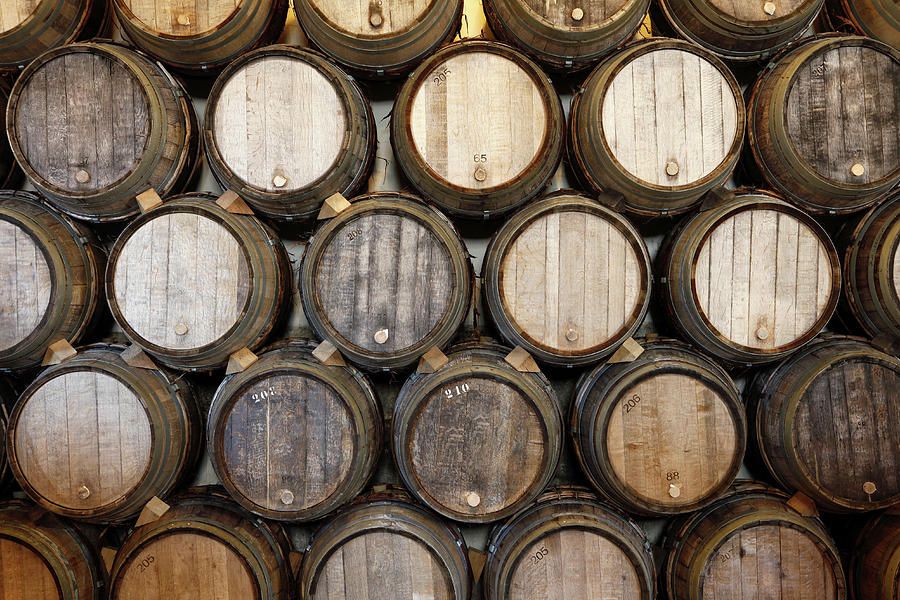
Such supplies would be carried in a vast number of barrels.

Enter now one of Elizabethan England’s most dashing characters, Sir Francis Drake (1540-1596).

When it came to sailing, Drake seems to have done it all, including surviving a circumnavigation of the globe (1577-1580), but he was, from the Spanish view, a good reason to conquer England along, as Drake had, for years, but a challenge to their (in their minds) domination of the oceans, raiding their possessions in the New World, capturing and looting their treasure ships.  (Under the Spanish form of his name, el Draque, he even supposedly had a significant price on his head:  20,000 ducats which, if I’ve got my figures right, would be almost $2,500,000.00 in today’s money—but the buying power would be substantially more—and I mean substantially.)

In 1587, Drake, with an English fleet, raided the Spanish coast, capturing and destroying ships and generally wreaking mayhem—and here’s where my mistaken idea comes in.  I thought that he had, among other things, ruined the Spanish supply of corks and hence slowed down the Armada’s ability to supply itself with those barrels.  (And I’m not the only one to have thought so—see this wonderfully silly Horrible Histories skit:  https://www.youtube.com/watch?v=w6_UkLHcdJk )

In fact, during his raid on the Spanish coast, Drake’s men not only burned perhaps as many as 37 ships, but also not corks, but 1600-1700 tons of barrel staves,

enough to make 25-30,000 barrels,

barrels which would have held the Armada’s vital supplies. 

This raid delayed the setting off for England by a year.  New staves were made, and other ships replaced the ruined ones, however, and the Armada set off the next year, in 1588, but the staves were not the usual dried wood used for barrels, but green wood and often split, allowing the contents to be spoiled.  As well, the English navy, though small, was superior to the Armada both in seamanship and its ability to deliver firepower,

and the Spanish fleet was driven to flee north, eventually, many ships being lost on a circumnavigation of Britain,

and Philip’s planned invasion never took place.

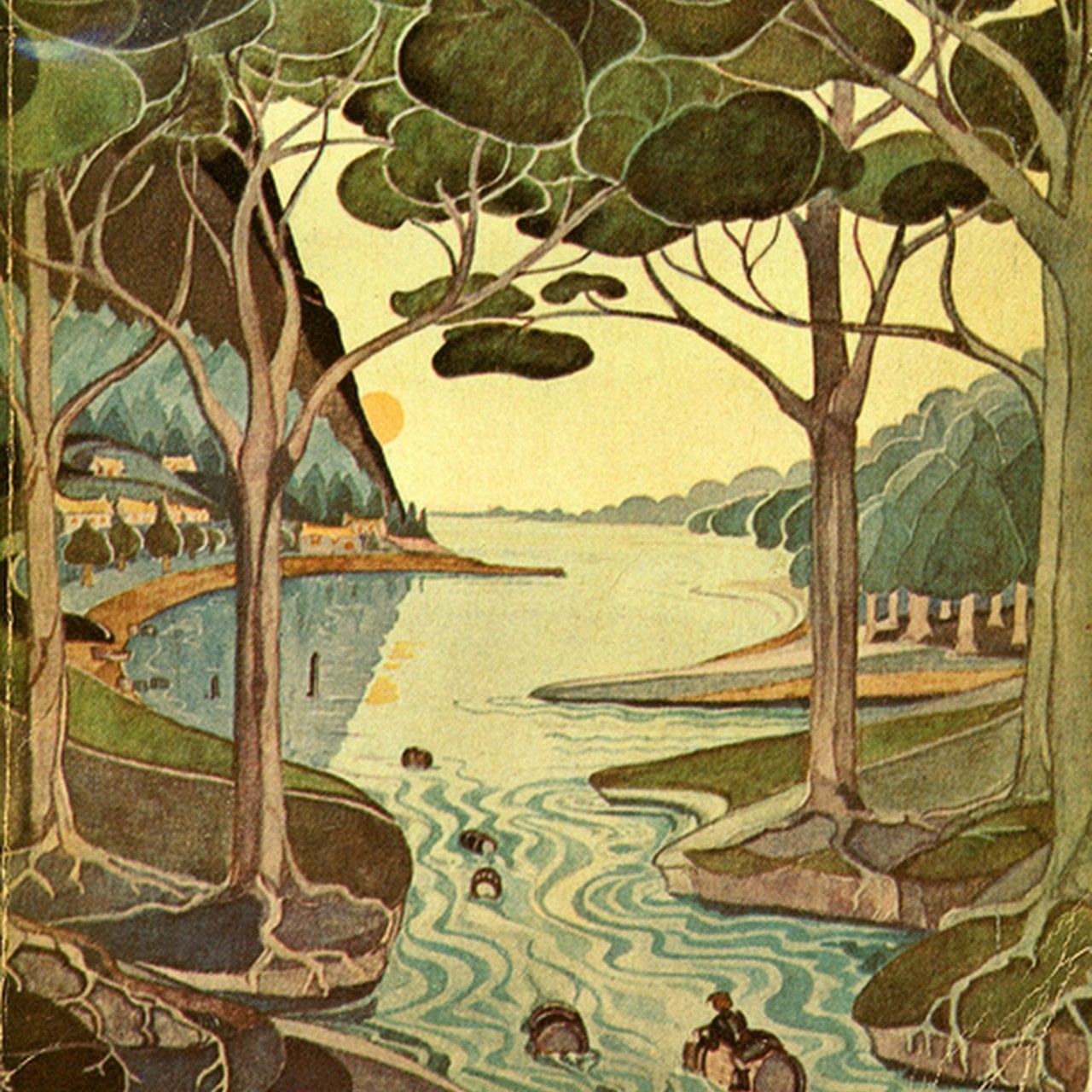
And so, considering England’s escape and those barrels, perhaps I should have been thinking about another part of The Hobbit altogether…

(JRRT)

Thanks, as ever, for reading.

Stay well,

Avoid delusions of grandeur—remember what happened to the Armada,

Image20:  armada

And remember that, as always, there’s

MTCIDC

O

ps

For a traditional view of Drake, see Julian Corbett’s 1899 2-volume work Drake and the Tudor Navy:  https://archive.org/details/corbett-drake-and-the-tudor-navy-v-1/page/n5/mode/2up ;  https://archive.org/details/corbett-drake-and-the-tudor-navy-v-2    For a still-cited work on the Armada, I would recommend Garrett Mattingly’s The Armada, 1959.

pps

For more on cork, see:  https://en.wikipedia.org/wiki/Cork_(material)

ppps

“Corking”, meaning something like “first rate”, is first cited, as far as is presently known, as appearing in 1895 in Outing, An Illustrated Monthly Magazine of Recreation.  Unfortunately, the OED (Oxford English Dictionary)  doesn’t mention which issue, so, if you feel like a search, look here to begin with:  https://archive.org/details/sim_outing-sport-adventure-travel-fiction_october-1894-march-1895_25_contents/page/n1/mode/2up

Weathered Top

03 Wednesday Apr 2024

Posted by Ollamh in Uncategorized

≈ Leave a comment

Tags

Castle, History, travel, united-kingdom, wales

Welcome, as always, dear readers.

Although he denies, in an annoyed letter to Allen & Unwin, that “…I never walked in Wales or the marches in my youth…” (response to Ake Ohlmarks’ introduction to The Lord of the Rings, in which Ohlmark appears to have created an entire fictitious biography of JRRT, letter to Allen & Unwin, 23 February, 1961, Letters, 437), Tolkien did say that “I am very untraveled, though I know Wales…” and “I love Wales (what is left of it, when mines, and the even more ghastly sea-side resorts have done their worst)…” (letter to Deborah Webster, 25 October, 1958, Letters, 412).

And these remarks came readily to mind when, last evening, I discovered Snodhill Castle, while watching an archeology program, Digging for Britain, on YouTube.  One of its segments took us to the borderland between England and Wales, where the Norman conquerors of England had sought to expand their territory, eventually building a large number of castles as strongpoints during their several centuries of takeover.

(This is from the Royal Commission on the Ancient and Historical Monuments of Wales website:  https://rcahmw.gov.uk/2018-year-in-review-our-improvements-to-coflein/ )

The early fortifications were once thought to have been what are called “motte and bailey”—

that is, a mound (“motte” is a late Latin word, mota, meaning “mound”) with a wooden tower on it with the addition of a palisaded lower court (“bailey” has a vaguer etymology, but I’m betting that behind it, ultimately, is Latin palus, “stake”, just as it is behind “palisade”).  For invaders who need an instant fort, this would be easy and quick to build—especially if you rounded up the locals (non-Normans, either Anglo-Saxons or Welsh, depending on your area of conquest) and made them build it for you under watchful Norman eyes.

In the 12th century, these were gradually converted to stone, as you can see at Launceston, in Cornwall.

Recent archeological work (including that done for Digging for Britain—which you can watch here:  https://www.youtube.com/watch?v=wM_jnNSpOoI ), however, suggests that Snodhill may have been built from stone, dating from its earliest beginnings, c.1067AD (?  the first documentary evidence appears to be from 1136—for more, see the wonderfully detailed report from Historic England here:  https://historicengland.org.uk/research/results/reports/7209/SnodhillCastlePeterchurchHerefordshireArchaeologicalArchitecturalandAerialInvestigationandSurvey   For a quick overview, see:  https://historicengland.org.uk/research/results/reports/7209/SnodhillCastlePeterchurchHerefordshireArchaeologicalArchitecturalandAerialInvestigationandSurvey ).

Here’s what it looked like in 1848, long after its eventual abandonment,

when most of the stone had been robbed out and used, in part, to build Snodhill Court Farm—

(this is from British History Online, which you can see here:  https://www.british-history.ac.uk/rchme/heref/vol1/plate-192  And, for more on the site, see:  https://www.snodhillcastle.org/history/ )

Here’s a recent photo of part of the site—

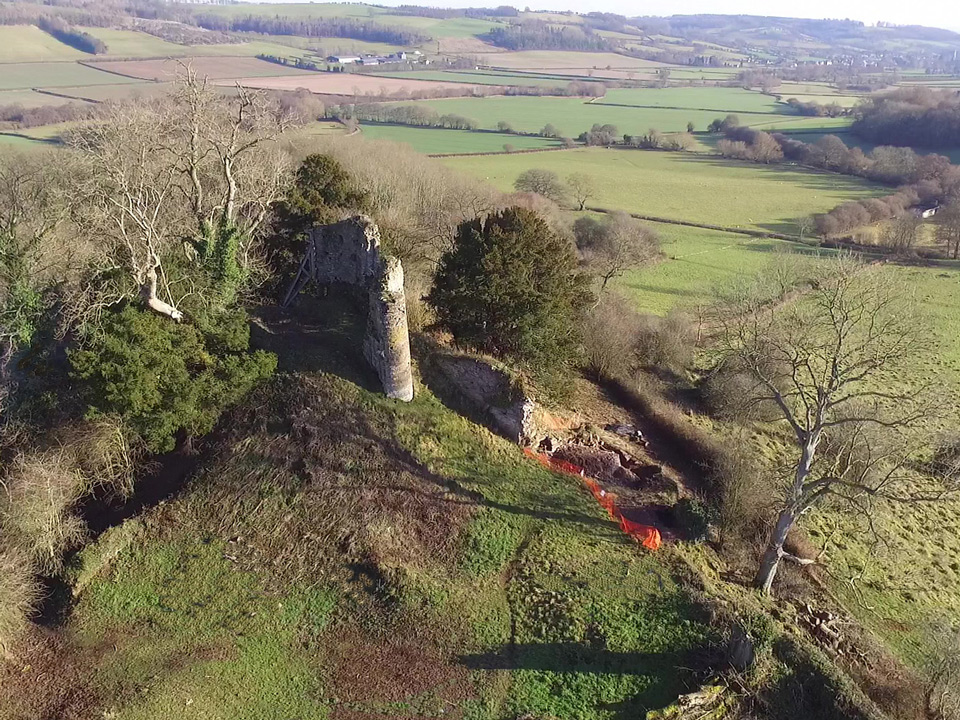
interesting, if you love castles, as I do, but more interesting, it seemed to me, was this aerial view—

which reminded me of:

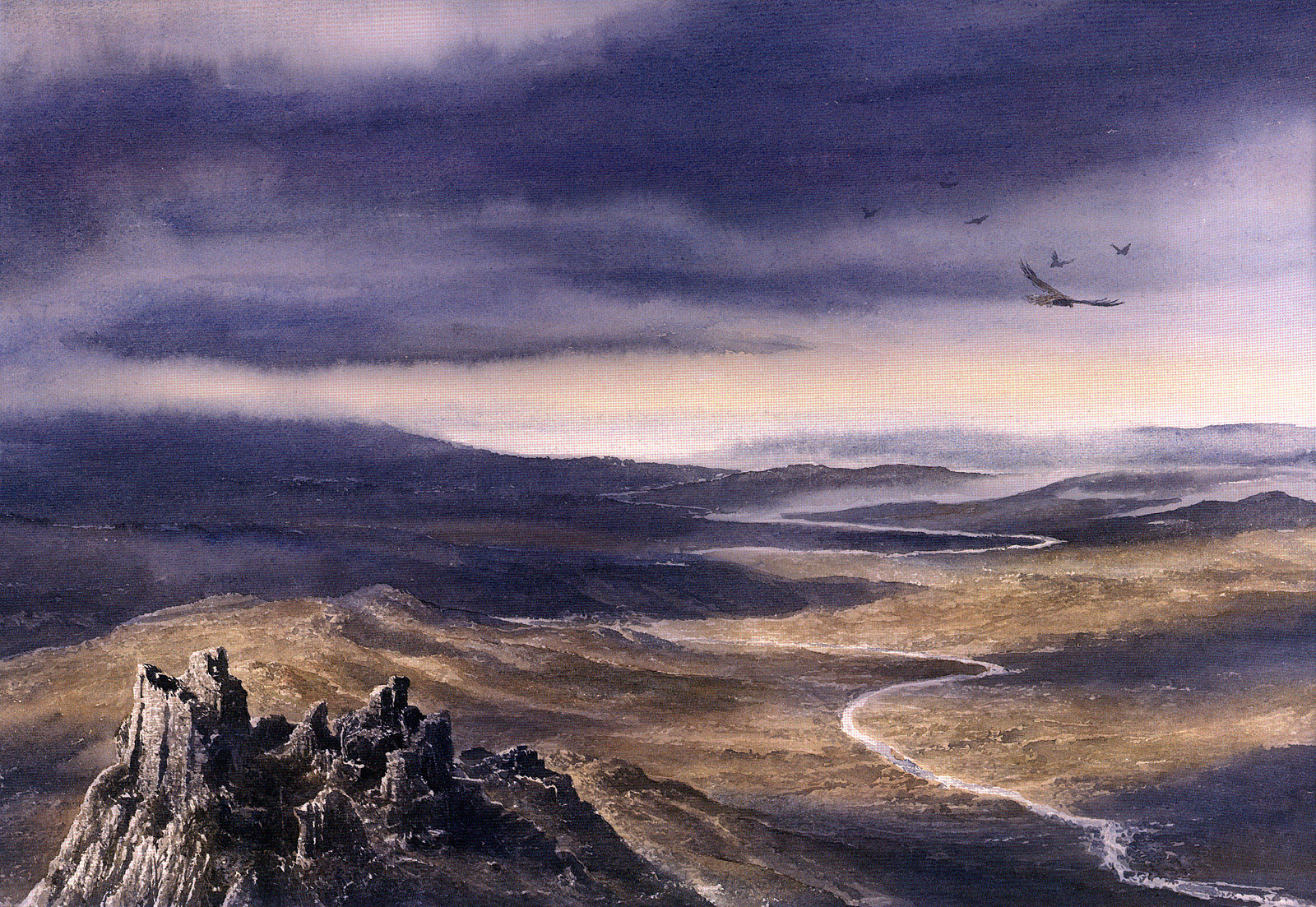
“But long before, in the first days of the North Kingdom, they built a great watch-tower on Weathertop, Amon Sul they called it.  It was burned and broken, and nothing remains of it now but a tumbled ring, like a rough crown on the old hill’s head.  Yet once it was tall and fair.”  (The Fellowship of the Ring, Book One, Chapter 11, “A Knife in the Dark”)

Aragorn is reassuring Merry, who has expressed an unease about the place—“It has a—well, rather a barrow-wightish look.  Is there any barrow on Weathertop?”—his reassurance being that it was never lived in and that it had once, in fact, been an important defensive feature from the early days of the northern realm of Arnor, “for the Tower of Amon Sul held the chief Palantir of the North…” (The Lord of the Rings, Appendix A, I, “The Numenorean Kings”, (iii) “Eriador, Arnor, and the Heirs of Isildur”)

(the Hildebrandts)

Here’s Alan Lee’s interpretation of Weathertop–

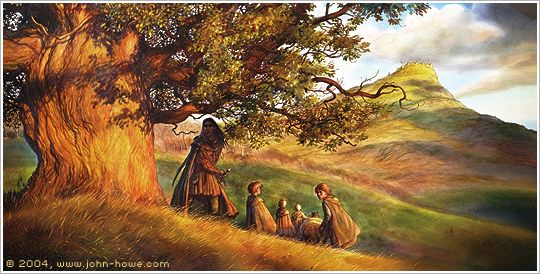
and John Howe’s greener, more “English” version—

and a second view from the air of Snodhill—

At the moment, I have no documentation that Tolkien ever walked or motored through western Herefordshire and spotted Snodhill off in the distance at the top of a long valley, but, combining his self-proclaimed love for, and knowledge of, Wales, I wonder—had he seen it once, on a tall hill, in its ruined state, and would he have remembered it and placed it on his growing mental map of Middle-earth and its long and troubled history?

Thanks, as ever, for reading.

Stay well,

When thinking of castles, remember this:

“The splendor falls on castle walls
And snowy summits old in story:
The long light shakes across the lakes
And the wild cataract leaps in glory.
Blow, bugle, blow, set the wild echoes flying,
Blow, bugle; answer, echoes dying, dying, dying.

O hark, O hear! how thin and clear,
And thinner, clearer, farther going!
O sweet and far from cliff and scar
The horns of Elfland faintly blowing!
Blow, let us hear the purple glens replying,
Blow, bugle; answer, echoes dying, dying, dying.

O love they die in yon rich sky,
They faint on hill or field, or river:
Our echoes roll from soul to soul,
And grow forever and forever.
Blow, bugle, blow, set the wild echoes flying,
And answer, echoes, answer, dying, dying, dying.”

(from Alfred Tennyson’s The Princess, 1847—this lyric added to the 1850 edition—which you can read here:  https://archive.org/details/tennysonprincess/page/n5/mode/2up )

And remember that, as always, there’s

MTCIDC

O

Sunstand

27 Wednesday Dec 2023

Posted by Ollamh in Uncategorized

≈ Leave a comment

Tags

christmas, History, saturnalia, yule

Welcome, as ever, dear readers.

In Narnia, when does The Lion, the Witch and the Wardrobe actually take place?   In the outside, historical world of England, all we’re told is that the children who are the main characters, Peter, Edmond, Susan, and Lucy, are sent into the country “because of the air-raids”.  (The Lion, the Witch and the Wardrobe, I, “Lucy Looks into a Wardrobe”), which could have been any time between September, 1940 and May, 1941.  I would suggest that C.S. Lewis has quietly offered us an answer to my question– in the season we’re currently in.

At least two members of the Inklings, the informal Oxford literary group which met regularly at various places in town and the university in the 1930s and 1940s, mention Christmas in their fiction.  One, Tolkien, following, perhaps, his later plan to keep overt religion out of his work, calls it “Yule” in The Hobbit, the other, C.S. Lewis, mentions it boldly and in a very interesting way which combines his Christianity with a very different set of beliefs, of which I’m sure he was aware, in The Lion, The Witch, and the Wardrobe (1950).

Narnia is ruled by Jadis, the White Witch (and remember that name—Jadis is French jadis, “formerly”)

(Pauline Baynes)

and, to keep it under her sway, it is (literally) frozen in time—and this is where that mention comes in, as Mister Tumnus, a faun,

(another Baynes)

explains to Lucy, who has accidentally strayed into Narnia:

“Why, it is she that has got all Narnia under her thumb.  It’s she that makes it always winter.  Always winter and never Christmas; think of that!”  (The Lion, the Witch and the Wardrobe, II, “What Lucy Found There”)

As Jadis’ power wanes, with the resurrection of Aslan, the great lion,

(and a third Baynes)

this is embodied in two events:

1. the world begins to thaw

2. Father Christmas appears at last (and, significantly, brings tools for the fight against Jadis and her allies)

(and a final Baynes)

With Father Christmas appears Christmas and time, which has seemingly come to a halt, can begin to function again, as winter once more has its Christmas in its proper place, which would signal, along with the thaw, that the year was no longer blocked by Jadis.

For Christians, of course, the coming of Christmas means the coming of Jesus, when time begins all over again—hence the older “B.C/” (“Before Christ”) and “A.D.” (Anno Domini, “In the Year of the Master/Lord”) used in Western countries to mark the centuries of earthly existence—for much more on this see:  https://en.wikipedia.org/wiki/Anno_Domini .  For early Christians, then, Jesus’ birthday should happen at a moment which signals a major change in the year, just as the coming of Aslan means a major change both in the season and the governing of Narnia.  The date ultimately selected by early Christians first appears in The Chronograph of 354, a collection of late-Roman calendar information.  In Part 8, there is an extensive list of the original chief officers of the Roman state, the consuls (who were elected in pairs), by whose 1-year term in office Romans commonly dated events during the Republic.  Here, under the consulship of “Caesar” and “Paulus” it reads:

Hoc cons. dominus Iesus Christus natus est VIII kal. Ian…

“At this time/date, [these being] the consuls, the lord Jesus Christ was born 8 days before the kalends of January…”  (that is, 25 December—the consuls for that year—which would become 1AD—were Gaius Caesar, the Emperor Augustus’ grandson, 20BC-4AD, and Lucius Aemilius Paullus, before 29BC-14AD, married to the Emperor Augustus’ granddaughter, Julia—my translation)

(You can read the dating here:  https://www.tertullian.org/fathers/chronography_of_354_08_fasti.htm  There is a further identification of this birthday in Part 12, in a calendar of early Christian martyrs, as well.)

In Tolkien’s Yule, and even in that 25 December, however, we see the celebration of change older than the date established in the Chronograph.  (For more on Yule see: https://en.wikipedia.org/wiki/Yule   For more on Tolkien and Yule, see: https://doubtfulsea.com//?s=yule&search=Go )

In Part 6 of this same Chronograph, which is a general yearly calendar, we find, for the 25th of December, a day devoted to “Invicti”–“of the Unconquered”–and here may lie an explanation as to why this day in particular was chosen.

I’m writing this on the day of the Winter Solstice, which gives the title to this posting in a translation of an Old English term for this time of year, sunstede, linguistic cousin to the Latin term, solstitium, from sol, “sun” and the verb sisto, “come to a stand, make to stand”.  Today is the shortest day of the year and perhaps, because night seems to stay forever and day seems so short, the name was originally based upon a lingering fear that the sun would freeze in place, having come to a permanent standstill.

(Traditional people around the world once imagined that something like that might have happened to the sun during solar eclipses and performed all sorts of rituals to make the sun continue to perform as it should.  See:  https://blogs.loc.gov/folklife/2017/08/solar-eclipse-awe-wonder-and-belief/  for an interesting article on folk beliefs and practices around eclipses.)

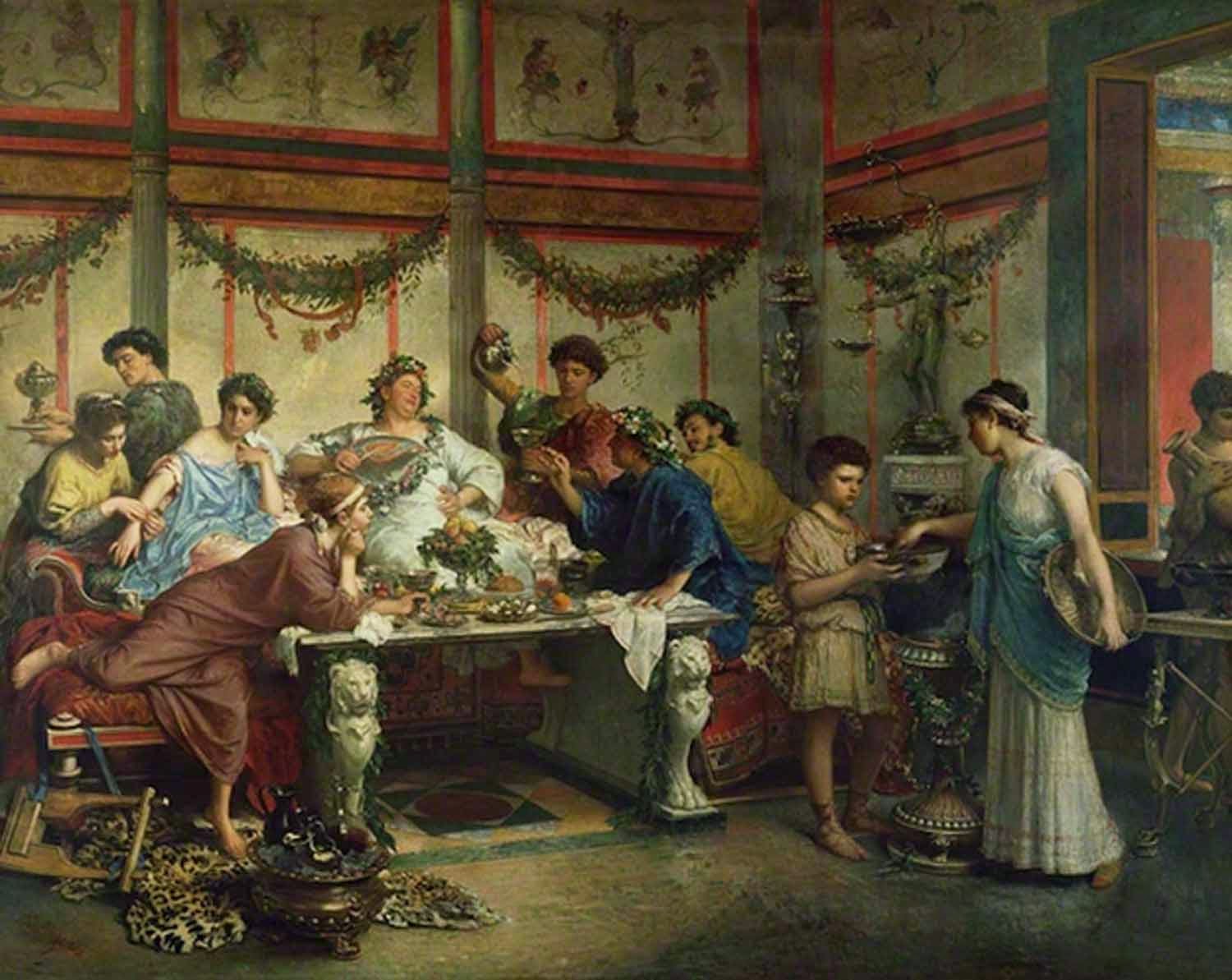
For the Romans, the Solstice appeared in the midst of a major holiday, the Saturnalia, celebrated from the 17th to the 23rd of December (although the number of days varied in different periods of the Roman empire),

a festival in honor of the ancient god, Saturn.

Because he was so ancient, the Romans had all sort of ideas about him and his history and even what his name was derived from.  One definition comes from Cicero’s (106-43BC) De Natura Deorum, linking Saturn with the Latin word satis, meaning “enough”, implying that Saturn, being somehow  the consumer of time, was its controller,and that seems to fit him and his holiday very nicely in with the Solstice:

Saturnum autem eum esse voluerunt qui cursum et conversionem spatiorum ac temporum contineret…

“They wished Saturn to be the one, moreover, who preserves/holds back the movement and change/rotation of intervals and of seasons…” (Cicero, De Natura Deorum, Book II, XXV—you can read that here:  https://archive.org/details/denaturadeorumac00ciceuoft/page/184/mode/2up  –my translation)

The Saturnalia, then, was a celebration of the shift from one season to another as the sun, rather than stopping, would continue to move towards spring.

In 274AD, the late Roman emperor, Aurelian (c.214-275AD),

attempted to refocus polytheistic Romans upon a single god, Sol Invictus, “the Unconquerable Sun”.

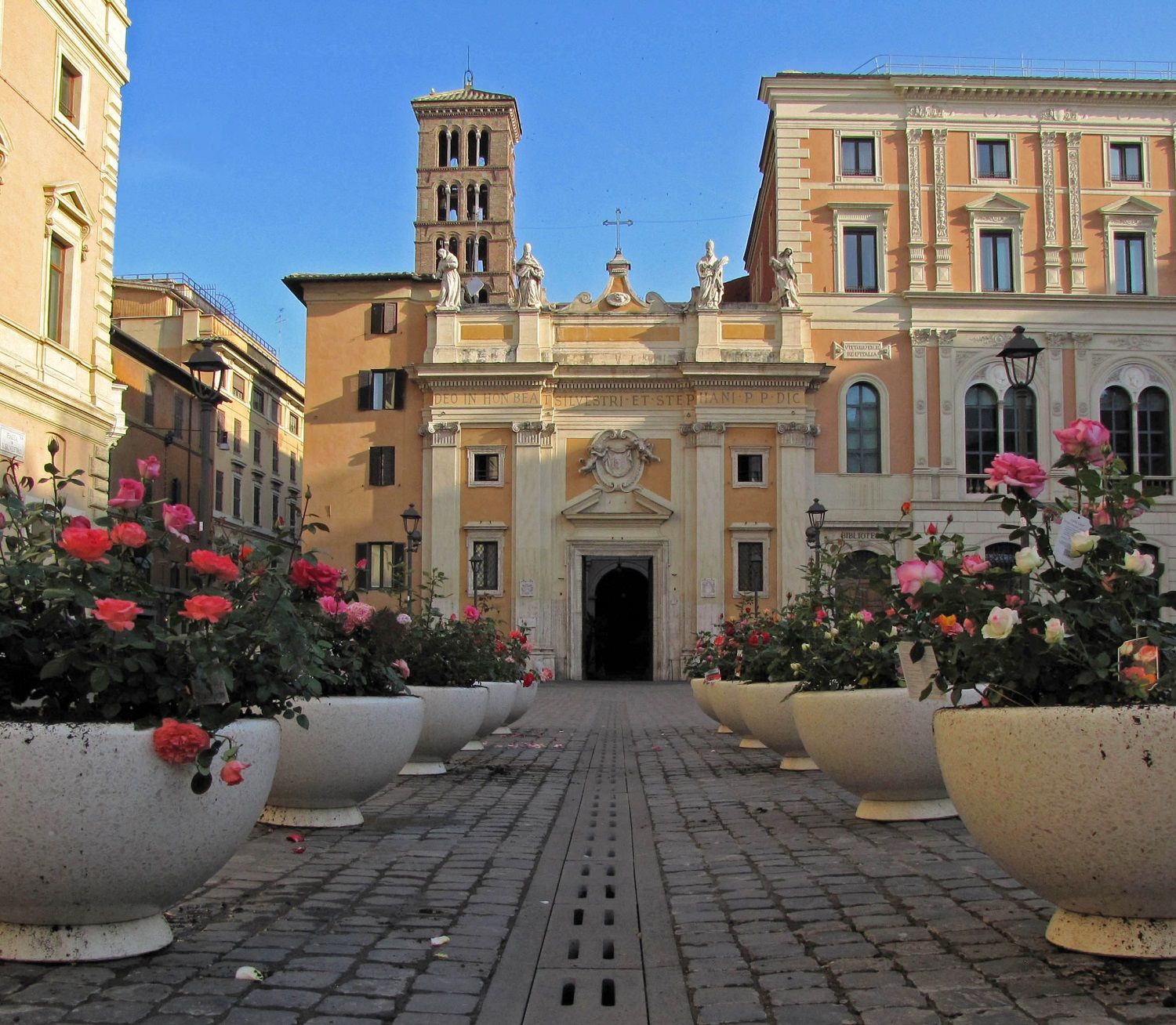
He built an immense elaborate temple, perhaps a little bit of which survives in the crypt of the Church of San Silvestro

 in the heart of Rome, and declared that 25 December was the god’s official birthday—a convenient day as it was just at the end of that big winter festival, the Saturnalia, in which a god of change and, at that time of year, seasonal change, were celebrated, Aurelian placing the sun he wanted Romans to focus upon in their worship right at the end of that festival and just after the beginning of that change (the actual solstice is on or about 21 December).  For early Christians, then, what better day to pick for their special birthday?

C.S. Lewis, then, thinking in Christian terms (he once suggested that stories like the Narnia books might be a way to present Christianity to children—see his essay:  “Sometimes Fairy Stories May Say Best What’s to be Said” , to be found in the collection Of Other Worlds ), brought together winter, Jadis, (and remember that her name means “formerly/in the past”, indicating her soon-to-be position in time), Father Christmas, and Aslan to rewrite, in his fairy tale, the celebration of an seasonal event by the Romans in a festival in the time of the solstice, as well as a late (soon, to Christians and to Rome in general, jadis) Roman deity’s birthday and perhaps to answer my initial question, as well:  in Narnia, it may be Christmas.

Thanks, as ever, for reading.

Stay well,

Io Saturnalia!

And remember that, as always, there’s

MTCIDC

O

The Road (No Longer) Taken

21 Wednesday Sep 2016

Posted by Ollamh in J.R.R. Tolkien, Literary History, Maps, Military History, Narrative Methods

≈ Leave a comment

Tags

Adventure, Fornost, History, Isengard, Medieval, Middle-earth, Numenorean road, pack horses, Ridgeway, Roman bridges, Roman occupation of England, Roman Roads, Stonewain Valley, the Greenway, The Lord of the Rings, the North Road, The Salt Road, Tiber River, Tolkien, Via Salaria

Dear Readers, welcome, as always. In this posting, we’ve been thinking about the subject of roads in Middle-earth and, in particular, the North Road, also called the Greenway.

middle-earth-map.jpg

This was the North-South Road, which ran, once upon a time, from Isengard to Fornost, described by Christopher Tolkien as “the great Numenorean road linking the Two Kingdoms, crossing the Isen at the Fords of Isen and the Greyflood at Tharbad and then on northwards to Fornost”. (Unfinished Tales, 314, n.32)

Mostly, the roads of Middle-earth seem to be what you’d expect in a text which is based upon the actual medieval world: dirt tracks.

medievalroad.jpg

In the real English medieval world, most of these were not really for carts or carriages,

medievalcart.jpg

canvas.png

but rather for pack horses and their loads, which only required the narrowest of paths.

packhorsetrain1

The_Marsden_pack_horse_road,_Marsden_-_geograph.org.uk_-_826758

Bridge in Marsden, West Yorkshire

Bridge in Marsden, West Yorkshire

There had been simple pathways in Britain since earliest times, like the Ridgeway.

Ivinghoe Beacon seen looking north from The Ridgeway.

Ivinghoe Beacon seen looking north from The Ridgeway.

And yet there were still the remains of a different sort of road in Britain, those built under the Roman occupation of England, from 43 to 410AD.

Roman.Britain.roads

The Romans had begun their rise to power in Italy by controlling a road, the Via Salaria, which ran inland from the Mediterranean. A major purpose of this road (you can see it in its name, “The Salt Road”) was to further the salt trade.

The salt came from salt pans on the Mediterranean coast.

saltblocks

saltpans

The early Romans had been lucky (or wise) in founding their city at a major ford of the Tiber River, where the Via Salaria crossed it.

archaicrome

And out from Rome spread a network of roads.

roman-roads-italy-map

In time, the main roads were not simply dirt tracks, but very-carefully-constructed, well-laid-out stone-paved roadways.

Eli dis 2

These included sturdy bridges, as well, some of them still in place.

alcantara-bridge

Over these roads marched Roman armies

romantroopsonroad

and Roman commerce, as well.

plaustrum2

Eventually, there were over 50,000 miles (80,500 km) of paved roads, as well as many miles more yet of unpaved.roman_empire_117_ad

As far as our current research goes, we have no actual proof that the Greenway was paved like Roman roads. One road for which there is a hint of evidence is that which runs through the Stonewain Valley:

“Through the gap the forgotten wain-road long ago had run down, back into the main horse-way from the City through Anorien; but now for many lives of men trees had had their way with it, and it had vanished, broken and buried under the leaves of uncounted years.” (The Return of the King, Book 5,   Chapter 5, “The Ride of the Rohirrim”)

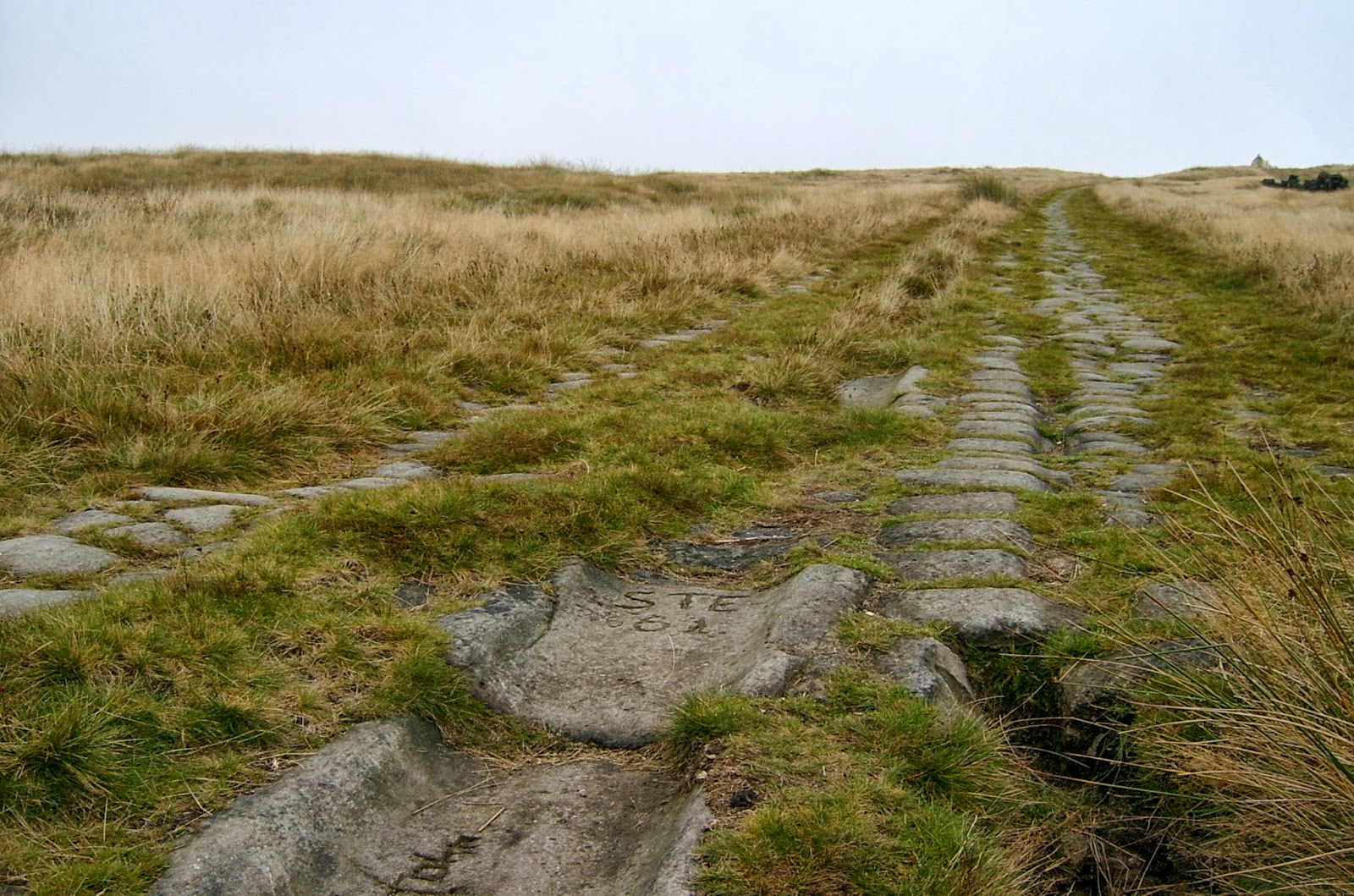
A comparable illustration—with grass instead of trees and leaves—is this of a Roman road in Lancashire, in northeastern England.

Roman Road walk Lancashire

The idea of a road nearly abandoned and covered with grass—therefore “the Greenway”—seems to fit both this modern photo and JRRT’s idea, though, doesn’t it?

One of the spooky, but wonderful things about the ancient Roman world is that, for all that it’s been gone for 1500 years or more, there is so much of it still there for us, above ground and below—as it was for Tolkien. Thus, when we think about what was once one of the major thoroughfares of Middle-earth, we imagine that he, like us, saw a Roman road, decaying, but still useful.

Thanks, as always, for reading.

MTCIDC

CD

← Older posts

The Doubtful Sea Series Facebook Page

The Doubtful Sea Series Facebook Page

  • Ollamh

Categories

  • Artists and Illustrators
  • Economics in Middle-earth
  • Fairy Tales and Myths
  • Films and Music
  • Games
  • Heroes
  • Imaginary History
  • J.R.R. Tolkien
  • Language
  • Literary History
  • Maps
  • Medieval Russia
  • Military History
  • Military History of Middle-earth
  • Narnia
  • Narrative Methods
  • Poetry
  • Research
  • Star Wars
  • Terra Australis
  • The Rohirrim
  • Theatre and Performance
  • Tolkien
  • Uncategorized
  • Villains
  • Writing as Collaborators
Follow doubtfulsea on WordPress.com

Across the Doubtful Sea

Recent Postings

  • Through a glass… January 7, 2026
  • Heffalumps? December 31, 2025
  • We Three Kings December 24, 2025
  • A Moon disfigured December 17, 2025
  • On the Roads Again—Once More December 10, 2025
  • (Not) Crossing Bridges December 3, 2025
  • On the Road(s) Again—Again November 26, 2025
  • On the Road(s) Again November 19, 2025
  • To Bree (Part 2) November 12, 2025

Blog Statistics

  • 104,088 Views

Posting Archive

  • January 2026 (1)
  • December 2025 (5)
  • November 2025 (4)
  • October 2025 (5)
  • September 2025 (4)
  • August 2025 (4)
  • July 2025 (5)
  • June 2025 (4)
  • May 2025 (4)
  • April 2025 (5)
  • March 2025 (4)
  • February 2025 (4)
  • January 2025 (5)
  • December 2024 (4)
  • November 2024 (4)
  • October 2024 (5)
  • September 2024 (4)
  • August 2024 (4)
  • July 2024 (5)
  • June 2024 (4)
  • May 2024 (5)
  • April 2024 (4)
  • March 2024 (4)
  • February 2024 (4)
  • January 2024 (5)
  • December 2023 (4)
  • November 2023 (5)
  • October 2023 (4)
  • September 2023 (4)
  • August 2023 (5)
  • July 2023 (4)
  • June 2023 (4)
  • May 2023 (5)
  • April 2023 (4)
  • March 2023 (5)
  • February 2023 (4)
  • January 2023 (4)
  • December 2022 (4)
  • November 2022 (5)
  • October 2022 (4)
  • September 2022 (4)
  • August 2022 (5)
  • July 2022 (4)
  • June 2022 (5)
  • May 2022 (4)
  • April 2022 (4)
  • March 2022 (5)
  • February 2022 (4)
  • January 2022 (4)
  • December 2021 (5)
  • November 2021 (4)
  • October 2021 (4)
  • September 2021 (5)
  • August 2021 (4)
  • July 2021 (4)
  • June 2021 (5)
  • May 2021 (4)
  • April 2021 (4)
  • March 2021 (5)
  • February 2021 (4)
  • January 2021 (4)
  • December 2020 (5)
  • November 2020 (4)
  • October 2020 (4)
  • September 2020 (5)
  • August 2020 (4)
  • July 2020 (5)
  • June 2020 (4)
  • May 2020 (4)
  • April 2020 (5)
  • March 2020 (4)
  • February 2020 (4)
  • January 2020 (6)
  • December 2019 (4)
  • November 2019 (4)
  • October 2019 (5)
  • September 2019 (4)
  • August 2019 (4)
  • July 2019 (5)
  • June 2019 (4)
  • May 2019 (5)
  • April 2019 (4)
  • March 2019 (4)
  • February 2019 (4)
  • January 2019 (5)
  • December 2018 (4)
  • November 2018 (4)
  • October 2018 (5)
  • September 2018 (4)
  • August 2018 (5)
  • July 2018 (4)
  • June 2018 (4)
  • May 2018 (5)
  • April 2018 (4)
  • March 2018 (4)
  • February 2018 (4)
  • January 2018 (5)
  • December 2017 (4)
  • November 2017 (4)
  • October 2017 (4)
  • September 2017 (4)
  • August 2017 (5)
  • July 2017 (4)
  • June 2017 (4)
  • May 2017 (5)
  • April 2017 (4)
  • March 2017 (5)
  • February 2017 (4)
  • January 2017 (4)
  • December 2016 (4)
  • November 2016 (5)
  • October 2016 (6)
  • September 2016 (5)
  • August 2016 (5)
  • July 2016 (5)
  • June 2016 (5)
  • May 2016 (4)
  • April 2016 (4)
  • March 2016 (5)
  • February 2016 (4)
  • January 2016 (4)
  • December 2015 (5)
  • November 2015 (5)
  • October 2015 (4)
  • September 2015 (5)
  • August 2015 (4)
  • July 2015 (5)
  • June 2015 (5)
  • May 2015 (4)
  • April 2015 (3)
  • March 2015 (4)
  • February 2015 (4)
  • January 2015 (4)
  • December 2014 (5)
  • November 2014 (4)
  • October 2014 (6)
  • September 2014 (1)

Blog at WordPress.com.

  • Subscribe Subscribed
    • doubtfulsea
    • Join 78 other subscribers
    • Already have a WordPress.com account? Log in now.
    • doubtfulsea
    • Subscribe Subscribed
    • Sign up
    • Log in
    • Report this content
    • View site in Reader
    • Manage subscriptions
    • Collapse this bar
 

Loading Comments...