• About

doubtfulsea

~ adventure fantasy

Tag Archives: Errol Flynn

Light on Their Feet

02 Wednesday Oct 2019

Posted by Ollamh in Literary History, Military History

≈ Leave a comment

Tags

Alfred Tennyson, Austrian, Balaclava, British Cavalry, chasseurs a cheval, Crimean War, Errol Flynn, Flashman, French, Gallic, gendarmes, George Macdonald Fraser, Heavy Brigade, Hungarian, Hussars, jinetes, lancers, Light Brigade, Light Dragoons, Napoleonic, North Africans, Olivia deHavilland, Renaissance cavalry, Romans, Russian Artillery, Spanish, St Helena, The Charge of the Light Brigade, Thomas Hughes, Tom Brown's School Days

As ever, dear readers, welcome.

Recently, someone asked us about the Light Brigade—that is, the collection of regiments of British cavalry who fought in the Crimean War (1854-56).
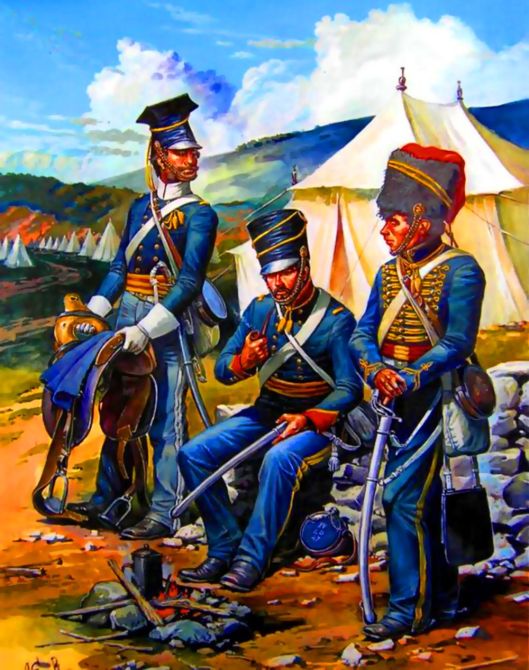
image1ltbrig.jpg

These are the troopers who mistakenly charged Russian artillery in the series of battles fought on 25 October, 1854, called, collectively, Balaclava.

image2simkin.jpg

The question was, “Why was it called ‘the Light Brigade’?  Were the soldiers thin?  And was there a Heavy Brigade, where they were all fat?”

It seemed to us a very reasonable question and our answer began, “Over many centuries, cavalry has had a number of uses, but they could probably be broken down into two groups by those uses:  1. raids, skirmishes, scouting, and pursuit; 2. attacking enemy cavalry and infantry formations—and pursuit.  The former (#1) is the job of light cavalry, the latter (#2) of heavy cavalry.”

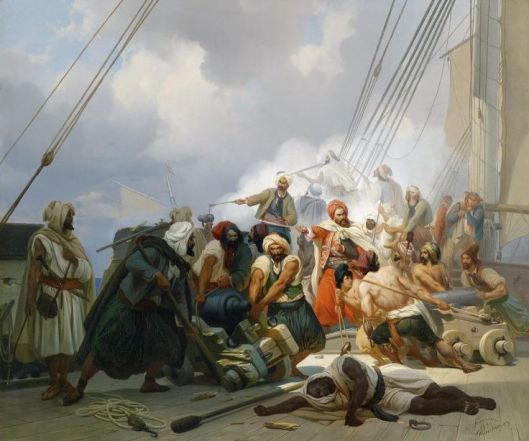
The Romans, who themselves only produced cavalry early in their history, quickly preferring to hire the job out, might, for example, use North Africans as light cavalry.

image3nub.jpg

If heavy cavalry were needed, then the task might go to Spanish or Gallic soldiers.

image4gallic.jpg


And this would be true throughout military history—Renaissance cavalry might have heavily-armored gendarmes
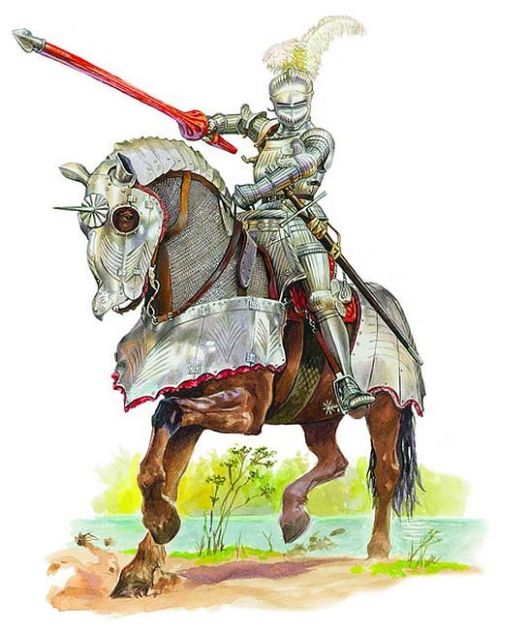
image5gendarme.jpg

to break up an enemy unit (or more) with the weight of its charge, but would also use lightly-armed jinetes

image6jinete


to find out the enemy’s positions, or attack their supply routes.

In the 18th century, most cavalry were heavy—although armor had almost disappeared.
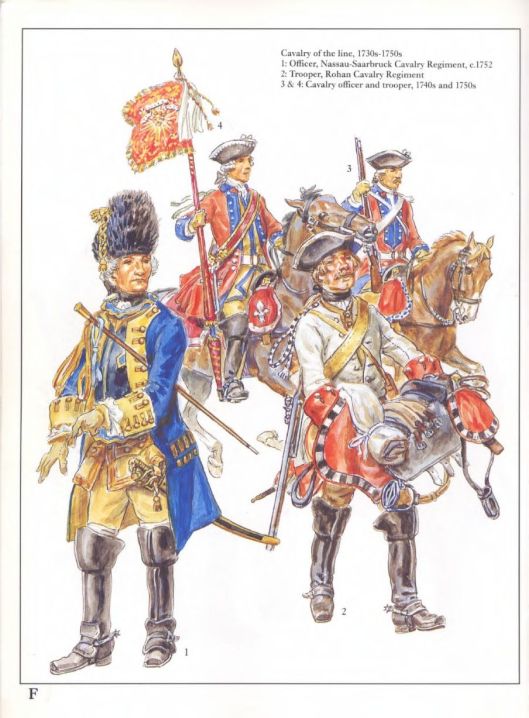
image7heavy.jpg

The Austrians and then the French added to those heavies light cavalry originally from the Hungarian world, hussars.
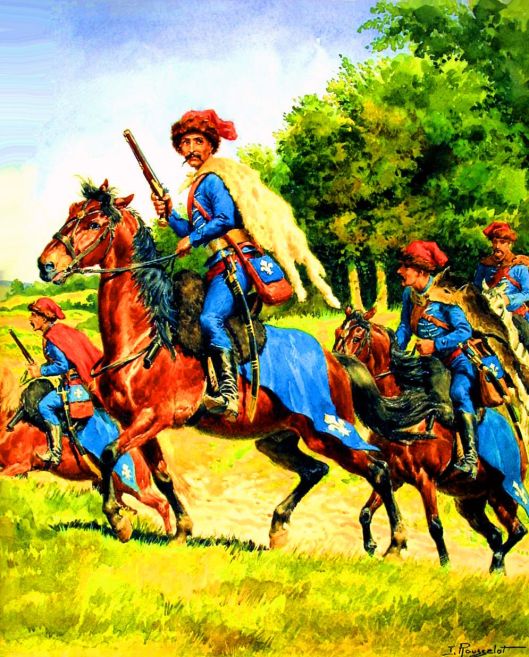
image8bercheny.jpg

Not to be outdone, the English fleshed out their heavy cavalry

image9drag.jpg

not with hussars, but something they called “light dragoons”.
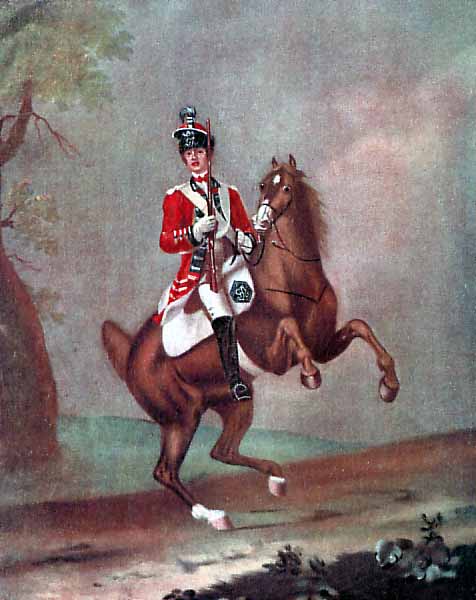
image10ld.jpg

Dragoons had originally been mounted infantrymen, who rode to battle on horseback, then dismounted to fight,
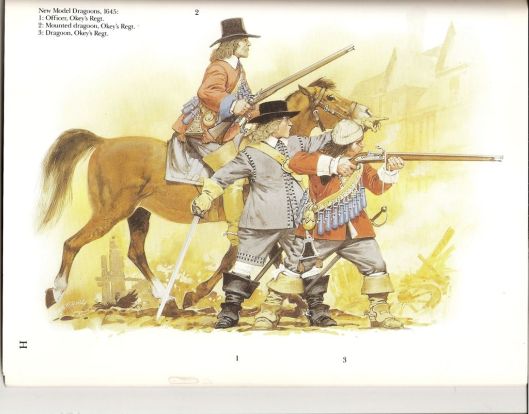
image11okey.jpg

but, by the mid-18th century, dragoons were just heavy cavalry—bigger men on bigger horses—and light dragoons were smaller men on smaller horses, with mostly different functions.

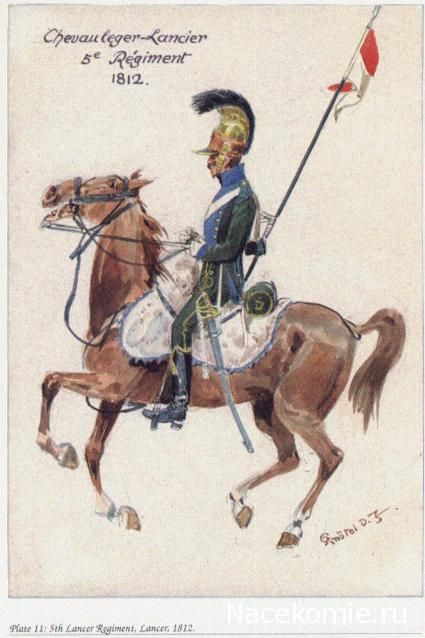
By the end of the century and just beyond, during the Napoleonic era, the French, in particular, had developed a whole series of light cavalry types—hussars,
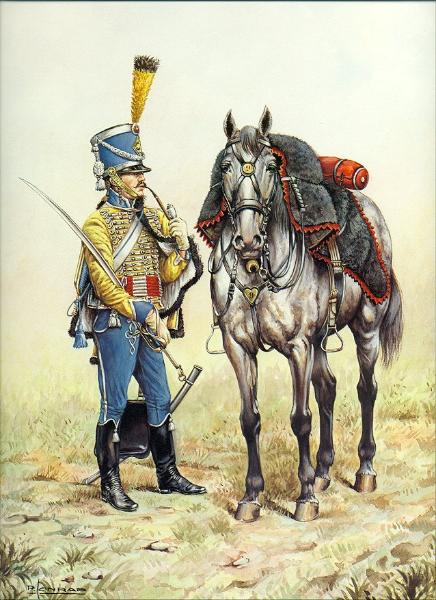
image12hussars.jpg

chasseurs a cheval (literally, “hunters on horseback”),

image13chasseurs.jpg

and lancers, as well.

image14lancers.jpg

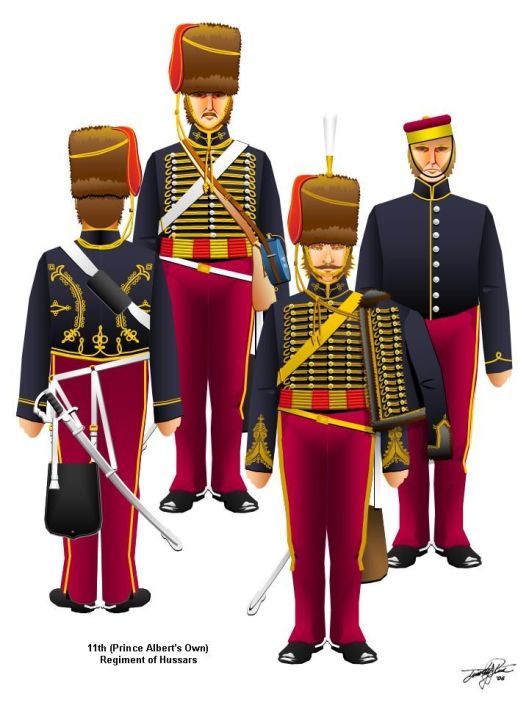
The English, to match the French, converted some regiments to hussars,
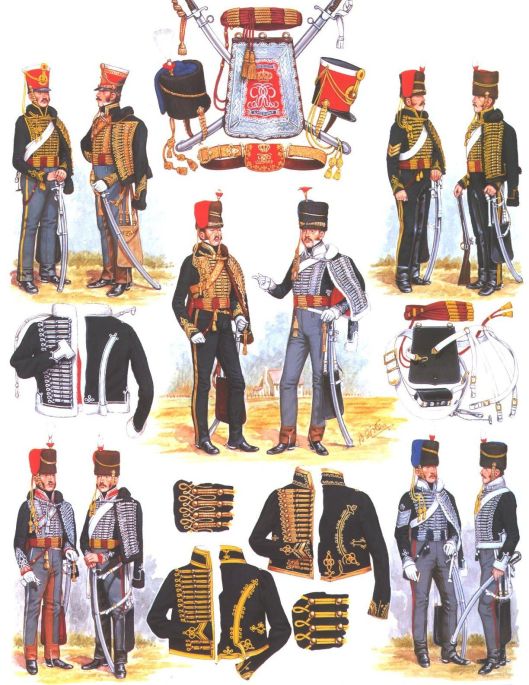
image15hussars.jpg

but only after 1820, when Napoleon was in his second and final exile on St. Helena, did they convert several other regiments to lancers.
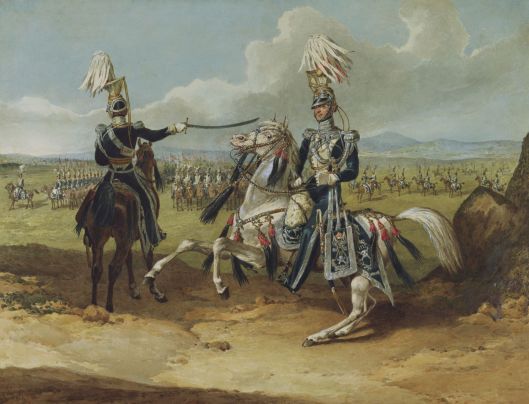
image16lancer.jpg

(You can see that they borrowed their style of dress from that of Polish lancers in Napoleon’s armies.)
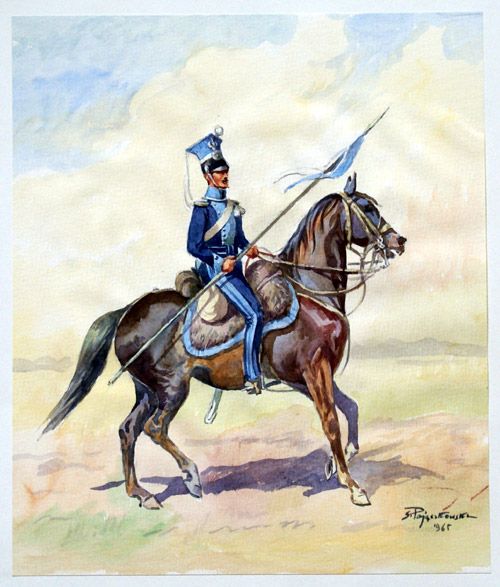
image17lancer.jpg

These lancers

image18lancers.jpg

along with hussars

image19hussars.jpg

and light dragoons

image20ld.jpg

made up the famous Light Brigade of Alfred Tennyson’s (1809-1892)

image21at


1854 poem, “The Charge of the Light Brigade”.

image22charge.png

This, in turn, inspired one of our favorite adventure movies, the 1936 The Charge of the Light Brigade.
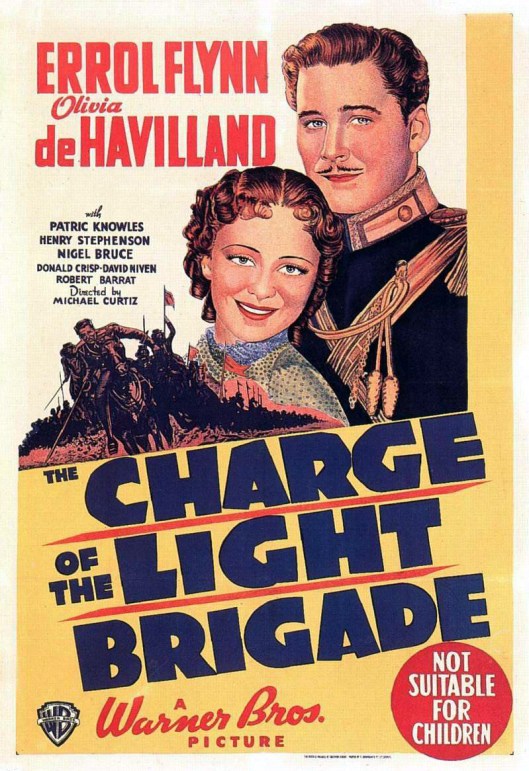
image23charge.jpg

(We wonder how different children must have been in 1936—we loved that movie as kids!)

And this film, in turn, inspired a 20th-century adventure writer, George Macdonald Fraser (1925-2008),

image24gmf.jpg

who wrote a series of 12 books detailing the life of one Harry Flashman, beginning with Flashman (1969).

image25flashman.jpg

In part, these are a parody of the life of a typical Victorian officer, who eventually becomes General Sir Harry Flashman.  He appears at many of the famous military events in mid-Victorian British history, from the First Afghan War (1839-1842) to the Zulu War (1879), along with appearances at later events, including a cameo appearance at the British declaration of war against Germany on 4 August, 1914.  The joke is, although he wins all sorts of honors, including that knighthood, he is, in fact, a complete coward and it’s only amazing luck that he manages to survive as long and as well as he does.  And there is a second joke within the first:  Flashman is actually the school bully in a very famous earlier novel, Tom Brown’s School Days (1857),

image26tbrown.PNG

by Thomas Hughes (1822-1896), a book which is the ancestor not only of many later such novels and short stories, but also of the Harry Potter books.

image27hughes.jpg

The fourth novel in the Flashman series, entitled Flashman at the Charge (1973),
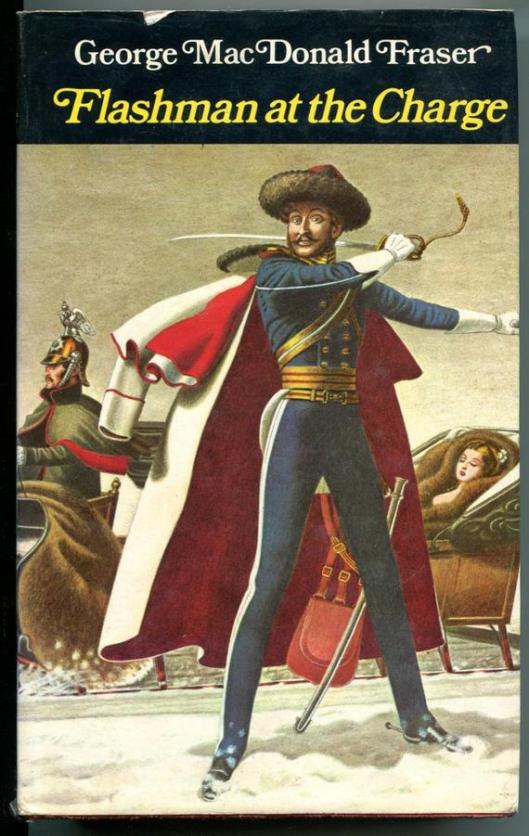
image28charge.jpg

gives us Fraser’s hero as actually leading that famous attack by accident, an accident which leads to his capture by the Russians—and many further adventures.

So, our answer to the original question is:  “No.  The Light Brigade wasn’t skinny, but was called that because it was smaller men on smaller horses with very specific jobs which required rapid movement and greater flexibility than heavy cavalry.”

And, with that answer, we say thank you for reading and

MTCIDC

CD

ps

There was, in fact, a Heavy Brigade,
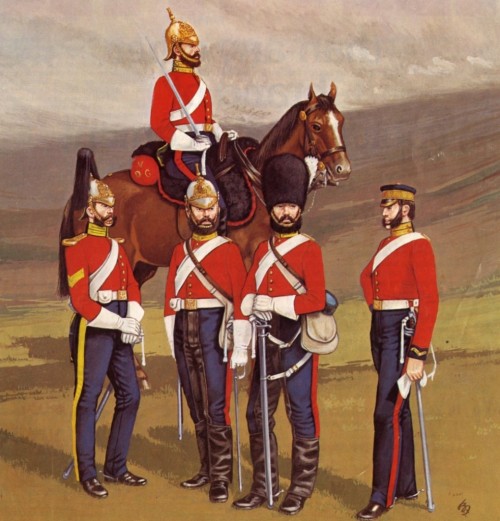
image29heavy.jpg

who made their own equally-heroic, but more successful, attack on the same day as the more famous Light Brigade charge.  Bigger men on bigger horses, they drove advancing Russian cavalry out of the Heavy Brigade camp.
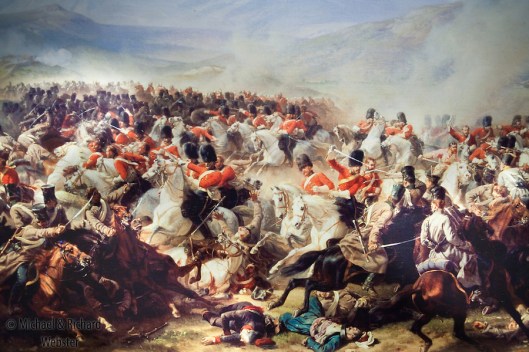
image30charge.jpg

Tamsin

05 Wednesday Jun 2019

Posted by Ollamh in Literary History, Military History, Narrative Methods

≈ Leave a comment

Tags

Algernon Blackwood, billyblind, boggart, Captain Blood, cat, Catherine of Braganza, Charles I, Charles II, Dorchester, Dorset, Errol Flynn, George Jeffreys, ghost, Glastonbury Abbey, Glastonbury Tor, James, King Arthur, Lucy Walter, M.R. James, Maiden Castle, Monmouth, Nell Gwynn, Peter Beagle, rebellion, Sedgemoor, Somerset, Tamsin, Two Men in a Trench

If you had never seen a ghost and probably didn’t believe in them, what would convince you?  How about a ghost cat?

image1ghostcat.jpg

In Peter Beagle’s

image2pb.jpg

Tamsin (1999),

image3tamsin.jpg

13-year-old Jenny Gluckstein encounters one and it’s only the beginning of a wonderfully rich and, this being a novel by Peter Beagle, a little melancholy, ghost story.

We don’t do spoilers, but what we’d like to do—oh, and, by the way, Welcome, dear readers, as ever!—is, first, to recommend this novel, which begins in New York City, but is mainly set in Dorset,

image4dorset.jpg

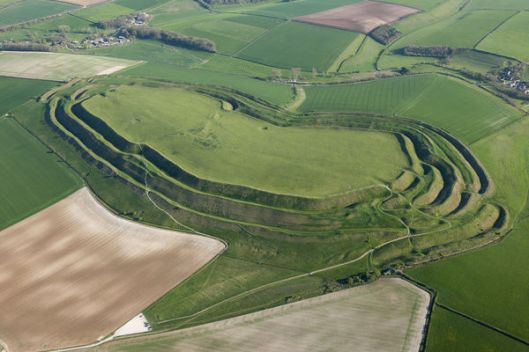
in the southwest of England.  If you’re interested in spooks and spirits of all kinds, England is a wonderful place to explore, and the southwest is especially haunted (if you believe in such things—we’re neutral, ourselves, but love a good ghost story).  Just look at this massive Iron Age hill fort near Dorchester, called locally, “Maiden Castle”—what lives there at night?

image5maidencastle.jpg

[And speaking of good ghost stories, some of our favorites are by M.R. James (1862-1936) and Algernon Blackwood (1869-1951).  Click on the names to access the links so that you can sample their work for yourself, if you don’t know them already.]

Jenny is transplanted from New York to Dorset because her mother’s second husband is an English agricultural specialist who is hired to rebuild a 350-year-old farm in Dorset.  Jenny is, initially, very unhappy with the move—especially when her closest friend, Mr. Cat, must spend 6 months quarantined before being allowed into England.  Things slowly begin to change, however, as she makes friends with her two new stepbrothers and finds that the ancient house holds more than her new family, including a boggart, the billyblind, and four ghosts (including that cat).

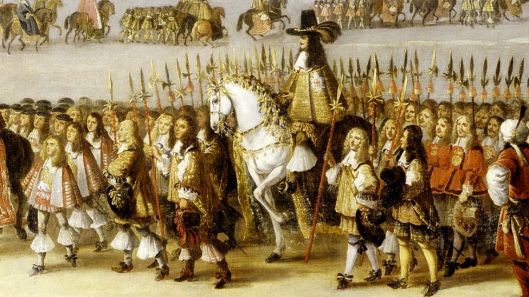
The ghosts are ectoplasmic survivors of a tragic period in the history of southwest England which all begins with Charles II (1630-1685).

image6chas2.jpg

After his father, Charles I, had been executed in London in January, 1649,

image7chas1.jpg

his son, Charles, had led an exile’s life until, in 1660, he was invited to return to Britain and reign as Charles II.

image8chas2.jpg

Unfortunately for the country, although Charles was married to the Portuguese princess, Catherine of Braganza (1638-1705),

image9catty.jpg

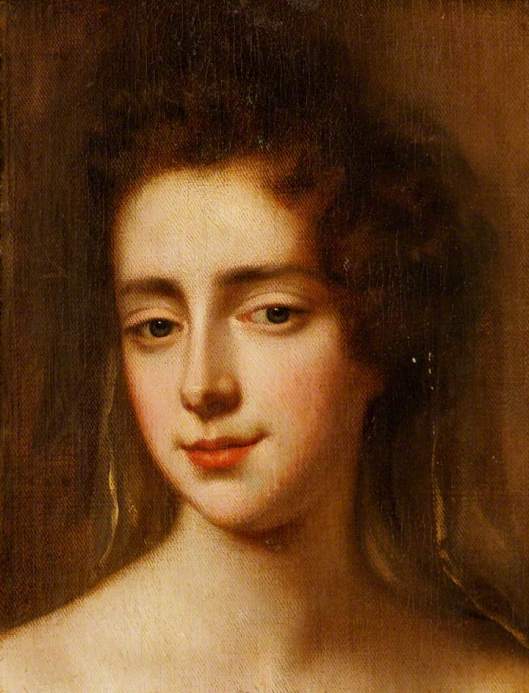
they produced no heirs.  Charles also had a long string of mistresses, including the most famous, Nell Gwynn (1650-1687),

image10nell.jpg

and one of them, Lucy Walter (c1630-1658)

image11lucywalter.jpg

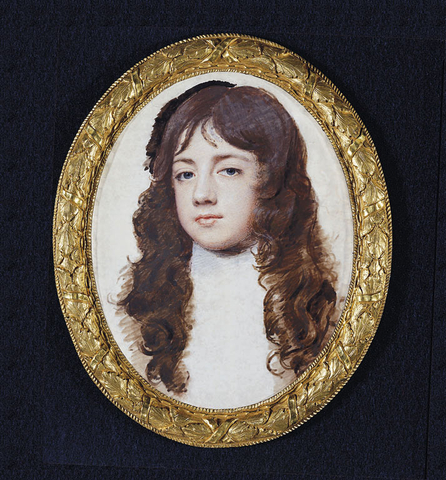
gave him a son, James (1649-1685),

image12monmouthboy.jpg

whom Charles not only acknowledged, but made, among other things, the Duke of Monmouth.

image13jimmy.jpg

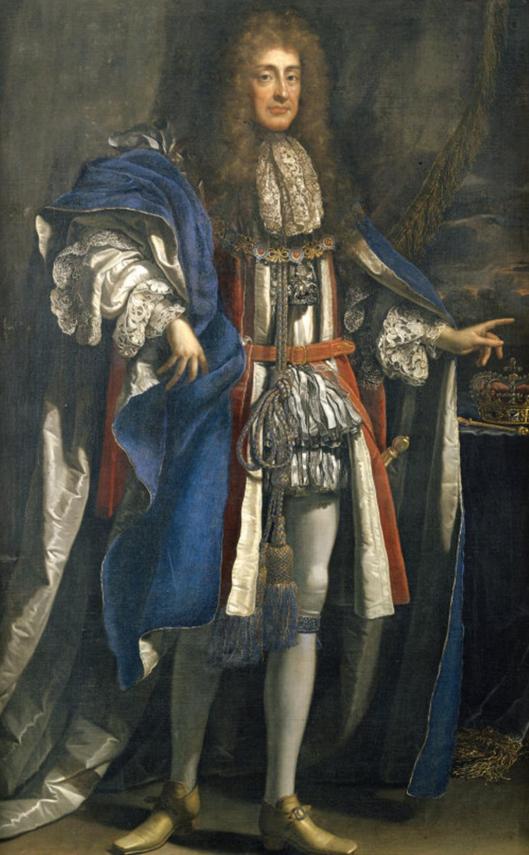
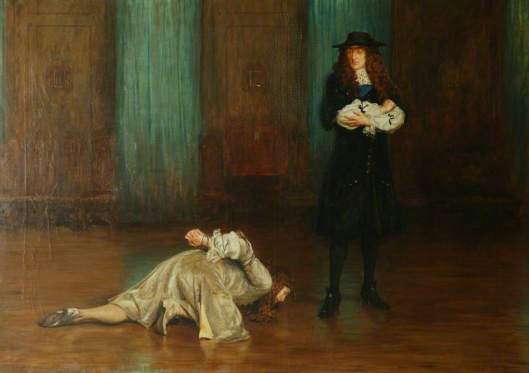
This James had somehow come to believe that his father, Charles, had secretly married his mother, thereby making him the legitimate heir to the throne of England.  His uncle, also named James (1633-1701),

image14jas.jpg

asserting that his older brother, Charles, appeared to have no legitimate heir, claimed the throne for himself upon his brother’s death.  This did not please the Duke of Monmouth, who, believing that he had support in the southwest of England, raised a rebellion there against his uncle.  He had only very limited resources, and much of his little army was armed with improvised weapons, many of them repurposed farm equipment.

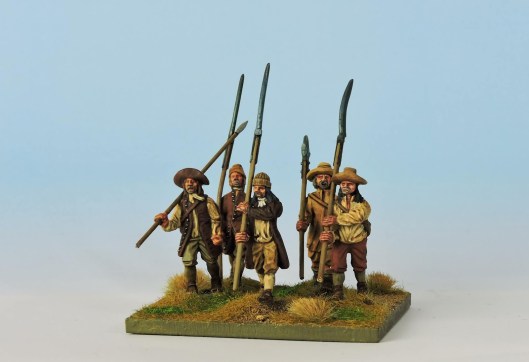
image15scythemen.jpg

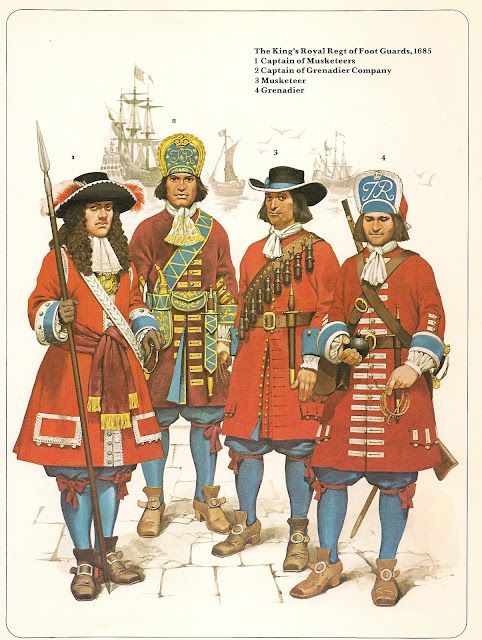
Opposing these was a detachment of the Royal Army,

image16redcoats.jpg

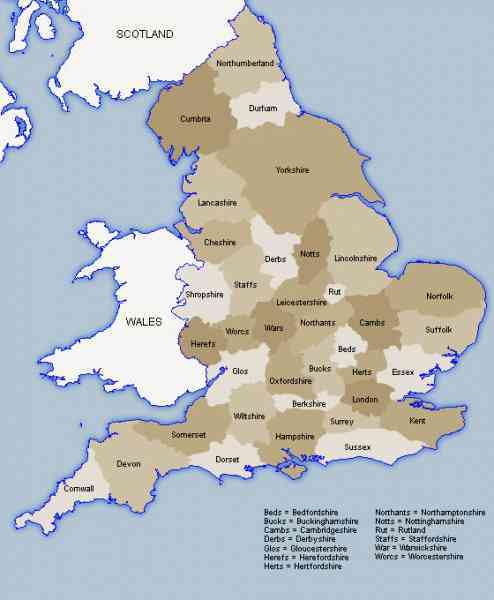
trained professional soldiers.  The only battle of this brief campaign occurred not in Dorset, but in the shire to the northwest, Somerset,

image17somerset.jpg

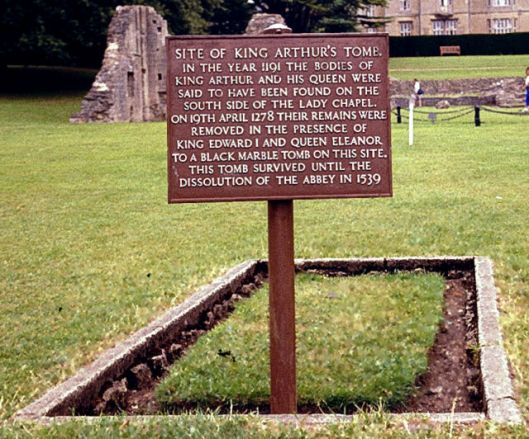
which, in itself is a rather spooky place.  After all, in the 12th century, the monks of Glastonbury Abbey claimed that they had happened upon the grave of King Arthur

image18arthur.jpg

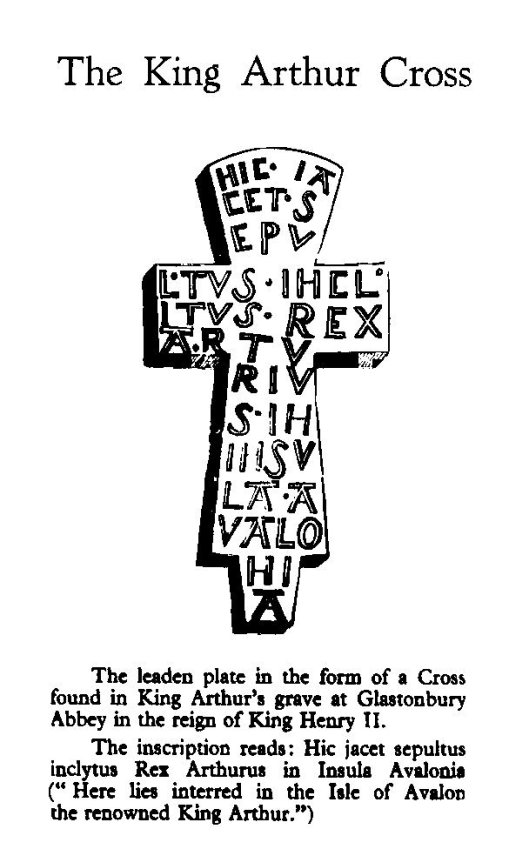
and they had a lead cross (from the coffin) to prove it.

image19cross.jpg

Even if it’s not spooky, Glastonbury is an impressive place—just look at Glastonbury Tor, with the remains of the 14th-century church of St Michael atop it.

image20tor.jpg

Monmouth knew that, to have any chance of raising more support, he would have to deal with that detachment of redcoats sent to stop him, but, with his own army’s limitations, the best way to even the odds was to attempt a night attack, one of the most difficult maneuvers possible.  Unfortunately, although the Royal Army was initially surprised, the mist which covered the battlefield, along with an uncertain knowledge of the terrain, and the lack of discipline among Monmouth’s troops,

image21troops.jpg

as well as the steadiness of the King’s soldiers,

image22redcoats.jpg

led to a complete defeat of Monmouth’s army, which immediately disintegrated, while Monmouth and his chief followers fled for their lives.

Monmouth was soon captured and brought before his uncle, James, who was less than avuncular in his reaction

image23jasandjas.jpg

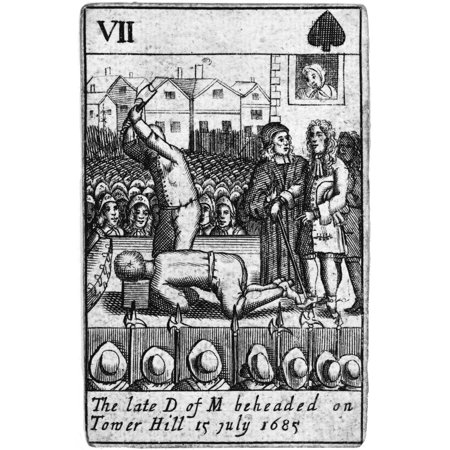
and, very soon afterward, Monmouth was beheaded.

image24exec.jpeg

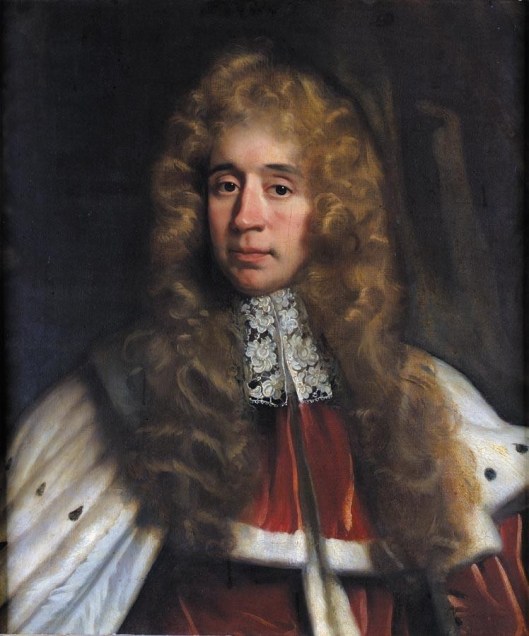
Not content with ending the rebellion, James sent a five-man commission of judges to the region to rout out all opposition to his reign.  This commission was headed by the Lord Chief Justice, George Jeffreys, First Baron Jeffreys (1645-1689).

image25jeffreys.jpg

Jeffreys, from the records, was a very thorough man, but a very biased one, as well, and several hundred people across the region were executed after brief trials,

image26.png

others being shipped as virtual slaves to the Caribbean.  (The swashbuckling adventure film, Captain Blood (1935), with Errol Flynn, is about one of the latter—a doctor who helps a wounded escapee from Sedgemoor and suffers for it.)

image27blood.jpg

Jeffreys then becomes the villain of Tamsin, having developed a passion for Tamsin Willoughby, whose family farm is the one which Jenny’s stepfather is hired to restore, during the period now known as the “Bloody Assizes”.  Tamsin and Jeffreys and Tamsin’s lover, Edric, are trapped in a kind of terrible time warp and it’s Jenny who—but wait—we said no spoilers, and we mean it!

This is a book to read and reread and now, with a little historical background from us, we hope you enjoy it as much as we have.

MTCIDC

CD

ps

If you would like to know more about the Battle of Sedgemoor, the Two Men in a Trench team of Tony Pollard and Neil Oliver have a fun battlefield archaeology program on it.  Here’s the LINK.


Camouflaged

27 Wednesday Mar 2019

Posted by Ollamh in Films and Music, Heroes, J.R.R. Tolkien, Military History, Military History of Middle-earth

≈ Leave a comment

Tags

camouflage, Disney, Douglas Fairbanks Sr., Errol Flynn, Faramir, feldgrau, Great War, Ithilien, jaeger, khaki, Men in Tights, Richard Knoetel, Robin Hood, The Lord of the Rings, Tolkien, trenches, uniforms

As ever, dear readers, welcome.

After standing and reciting his “party piece”, and stewing two rabbits, Sam is about to see his first—and only—oliphaunt.

image1.jpg

Before he does, however:

“Four tall Men stood there.  Two had spears in their hands with broad bright heads.  Two had great bows, almost of their own height, and great quivers of long green-feathered arrows.  All had swords at their sides, and were clad in green and brown of varied hues, as if the better to walk unseen in the glades of Ithilien.  Green gauntlets covered their hands, and their faces were hooded and masked with green, except for their eyes, which were very keen and bright.”  (The Two Towers, Book Four, Chapter 4, “Of Herbs and Stewed Rabbit”)

image2.jpg

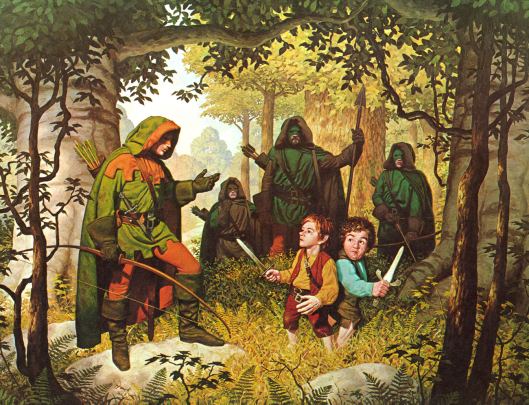
The chief of these men soon identifies himself as “Faramir, Captain of Gondor” and the men with him are rangers, a term which first appears in 14th-century English to mean “game keeper”, which seems appropriate for Faramir and his men, as far as their dress is concerned.  One might expect that those who spend their days in the woods would only naturally want to blend in, especially if part of their job is to apprehend poachers—trespassers who illegally hunt game.  Faramir’s and his men’s clothing could also be that of poachers, if we match that description—the green and brown part—with some very familiar figures from another famous story—

image3ncw.jpg

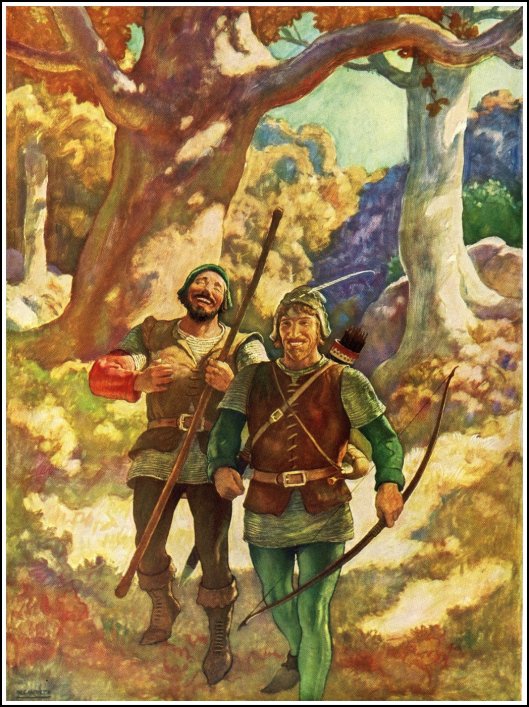
If you read us regularly, you will probably recognize them, especially if we add one of our favorite illustrations.

image4rob.jpg

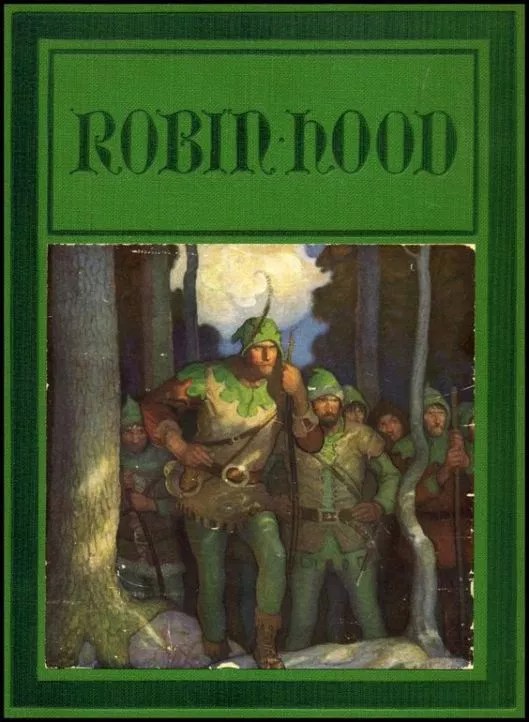
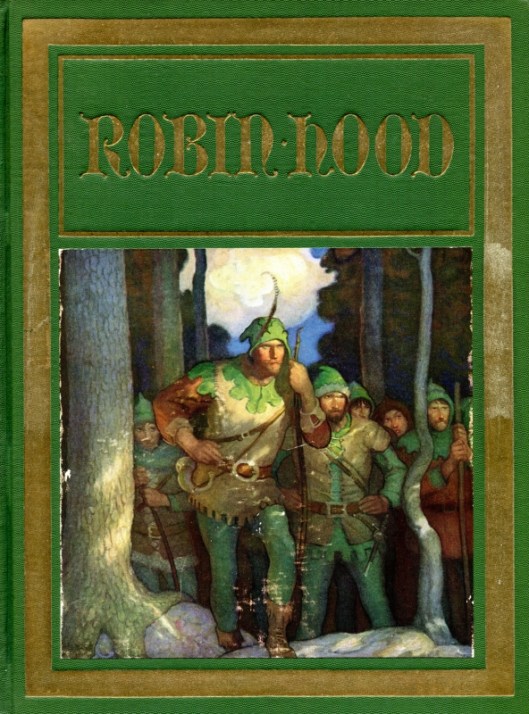
If you still don’t recognize them, we’ll add a book cover.

image5rh.jpg

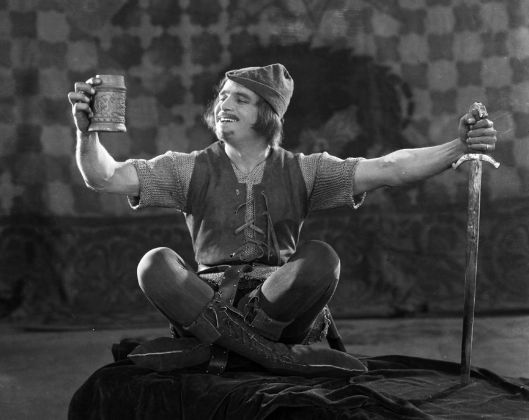
This is the 1917 publication of the retelling of the Robin Hood stories, with illustrations by NC Wyeth and it’s clear that his depictions of Robin and his men—just like his illustrations of pirates—have influenced story-tellers and costume-designers long after that initial 1917 publication.  Just look at Douglas Fairbanks Sr.’s 1922 Robin Hood,

cbe9537043957223ed32b027acbd3812

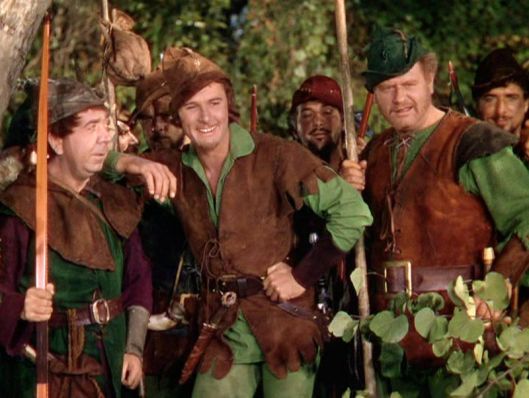
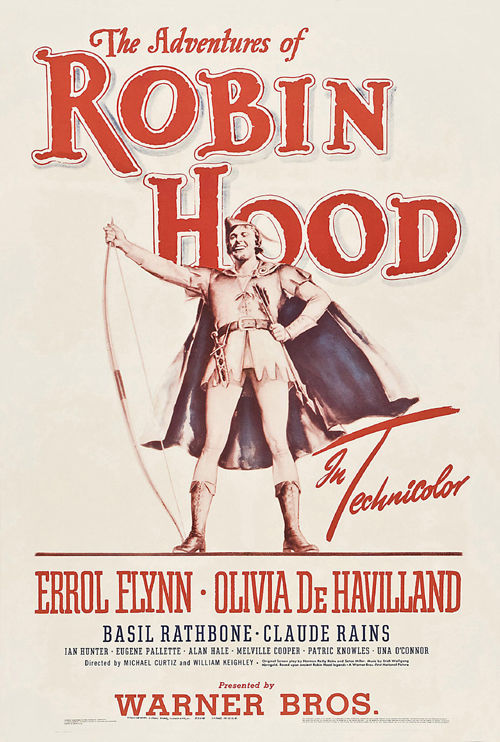
or the 1938 Errol Flynn The Adventures of Robin Hood


image7rh.jpg

image8rh.jpg

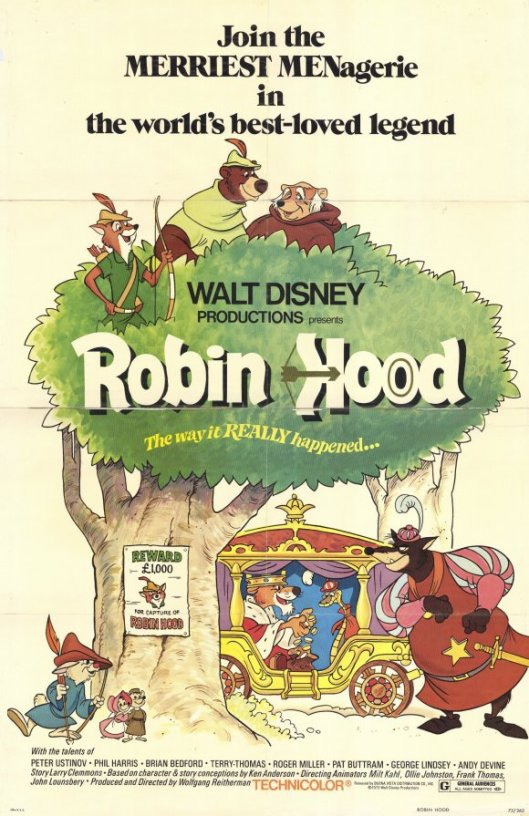
or even Disney’s 1973 animated Robin Hood

image9rh.jpg

and even the 1993 parody, Robin Hood:  Men in Tights.

image10rh.jpg

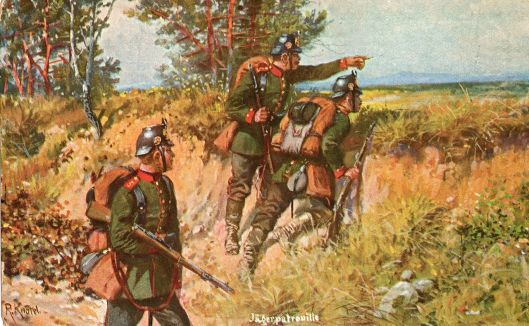
Tolkien, we presume, would have known the Wyeth illustrations and perhaps the Errol Flynn, and might have had them in mind when he was describing the basic dress of Robin and his men.  Beyond the basic outfit, however, these men are clearly dressed for more than poaching and apprehending—and it isn’t just the weapons, but also the gloves and the face-coverings.  These men are soldiers and rangers have been soldiers, or the models for them, since at least the 18th century, when certain German states, including Prussia and Hesse Kassel, employed forest rangers as light infantry—men trained as sharpshooters and skirmishers, called jaeger (“hunter” in German).

image11jaeger.jpg

In the 19th century, increasing numbers of ordinary troops of many western nations were given similar training, but the jaeger continued to be allowed special uniforms, usually green.

image12jaeger1910.jpg

This is an illustration by one of the greatest (and one of our favorite) German military/historical artists of the late 19th-early-20th centuries, Richard Knoetel, dated 1910.

When the Great War began in 1914, all the soldiers of many of the countries involved were already moving away from the bright-colored uniforms of past years and dressing more like hunters.  The British put off their parade uniforms

image13homeservice.jpg

and dressed in a mud-color, that color being called “khaki” (originally a Persian word meaning “dust”).

image14khaki.jpg

The Germans, whose parade dress was blue,

image15parade.jpg

dressed in a color called feldgrau (“field grey”).

image16feld.jpg

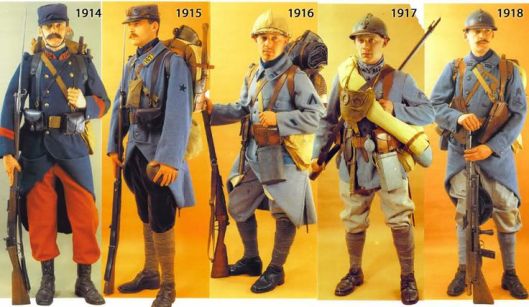
Only the French began the war still on parade,

image17french.jpg

but even they gradually changed into something which blended in better with the terrain.

image18french.jpg

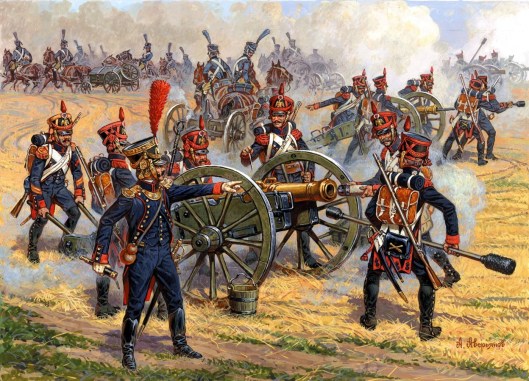
And blending in was absolutely necessary in a world in which war was being fought not with muskets and cannon, as in Napoleon’s days

image19gun.jpg

but with machine guns which could fire 600 rounds per minute

image20mg.jpg

and guns so big that some had to be transported on railroad trains.

image21rr.jpg

Whenever possible, soldiers dug in, spending their days below ground level, in trenches.

image22trench.jpg

When they had to go above ground level, they wanted to be as inconspicuous as possible.  Here’s what 2nd Lieutenant Tolkien might have looked like in 1916 (notice that, by 1916, British soldiers had put aside caps in the trenches and used helmets which looked positively medieval).

image23jrrt.jpg

image24kettle.jpg

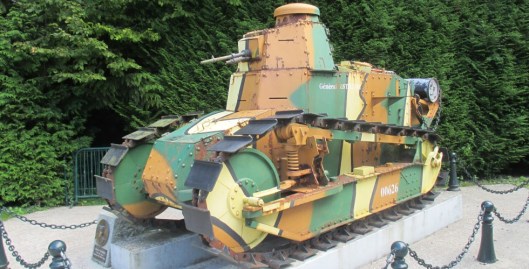
The term for this blending-in was “camouflage”, which entered English from French in 1917 and it was used not only by infantry, but the practice was extended to everything on the battlefield and beyond– to the new tanks

image25tank.jpg

and even to ships, where the goal was to conceal or sometimes simply to confuse the eye.

image26ship.jpg

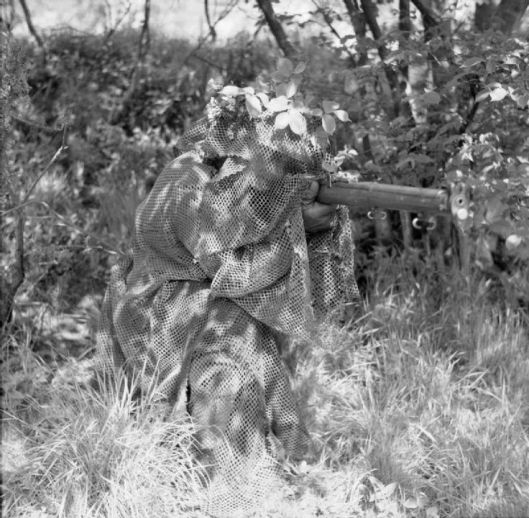
Some of the most extreme varieties take us back to the rangers of South Ithilien, like this sniper, whose job was to pick off unsuspecting soldiers (officers were a special prize) from complete concealment.

image27sniper.jpg

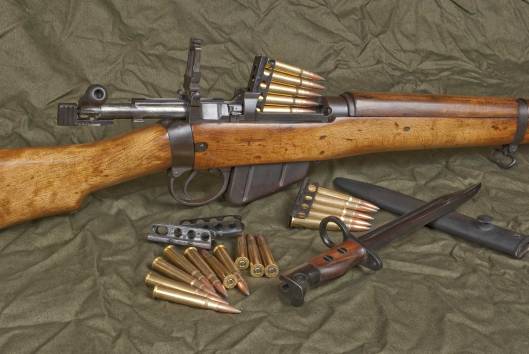
This makes us wonder what Faramir and his men would have done if they had been armed with magazine rifles,

image28smle.jpg

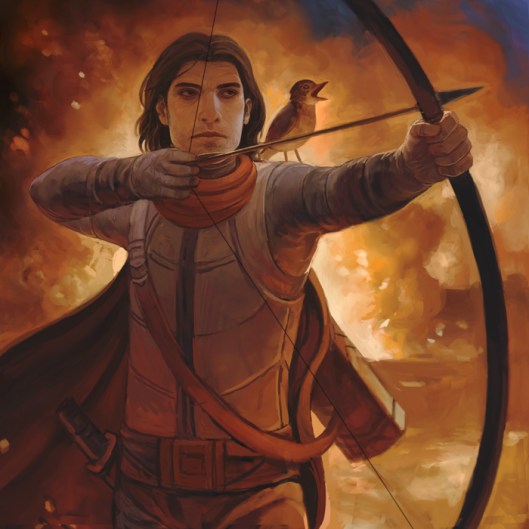
instead of bows as, after all, they are there for an ambush…

image29faramir.jpg

As always, thanks for reading and

MTCIDC

CD

A Longer Stretch

19 Wednesday Jul 2017

Posted by Ollamh in Fairy Tales and Myths, Heroes, Imaginary History, J.R.R. Tolkien, Literary History, Narrative Methods

≈ Leave a comment

Tags

Achilles, Angelica Kauffmann, Athena, Bard the Bowman, Circe, cyclops, Dora Wheeler, English Longbowmen, Errol Flynn, Greek, Henry VIII, Heracles, His Dark Materials, John William Waterhouse, Laertes, Lord Asriel, N.C. Wyeth, Odysseus, Paris, Patroclus, Penelope, Philip Pullman, Philoctetes, Portsmouth, Priam, Robin Hood, Sparta, Stelmaria, Telemachus, The Amber Spyglass, The Golden Compass, The Illiad, The Mary Rose, The Odyssey, The Subtle Knife, Tolkien, Troy

Welcome, dear readers, as always.
In our last posting, our central focus was upon Bard the Bowman and what he might have looked like.
image1bardjeffchang.jpg
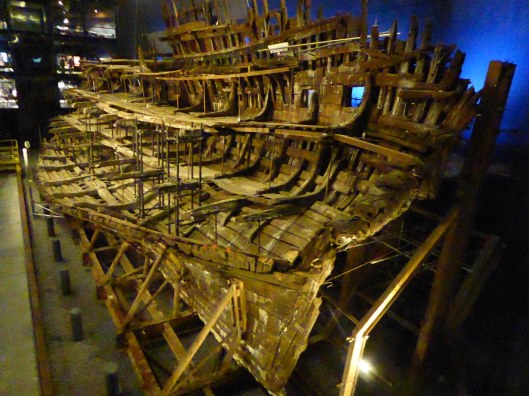
As we do so often, we tried to use something from the history of our world to help us to flesh out JRRT’s description. In this case, we looked at Henry VIII’s battleship (a carrack, in the vocabulary of the period), the Mary Rose, which sank during a naval battle with the French on 19 July, 1545.
image2amrsinks.jpg
The ship was raised in 1982 (you can see the large surviving section of the hull in the Mary Rose museum, in Portsmouth, England).
image3amr.jpg
It was full of artifacts—and of crew.
Because she sank so suddenly—and in the middle of a battle—almost none of the crew of 400 and more escaped. One of those trapped was this man.
image3mrarcher.jpg
His was among the roughly 90 skeletons well-enough preserved to allow for forensic exploration. That exploration, and the subsequent brilliant reconstruction, brought back to life a man about 6 feet (182cm) tall, with a powerfully-developed upper body. His build, certain characteristic marks of stress, and the fact that over 130 longbows and several thousand arrows were found in the wreck, led the archaeologists to see this man as an archer. We, in turn, then used him as the body-model for Bard.
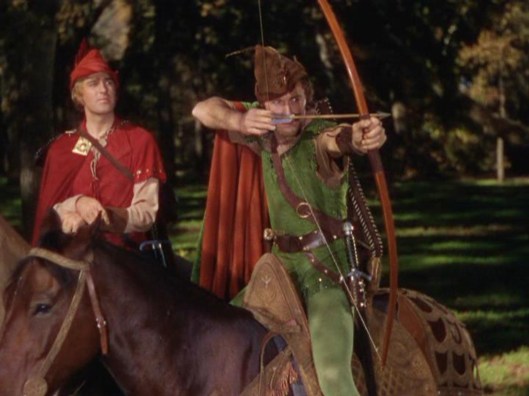
But “bowman/archer” to us, who are crazy for adventure, immediately brought back Robin Hood, first in what we believe to be his best 20th-century incarnation, Erroll Flynn,
image3eflynrhood.jpg
in the classic 1938 film.
image4poster.jpg
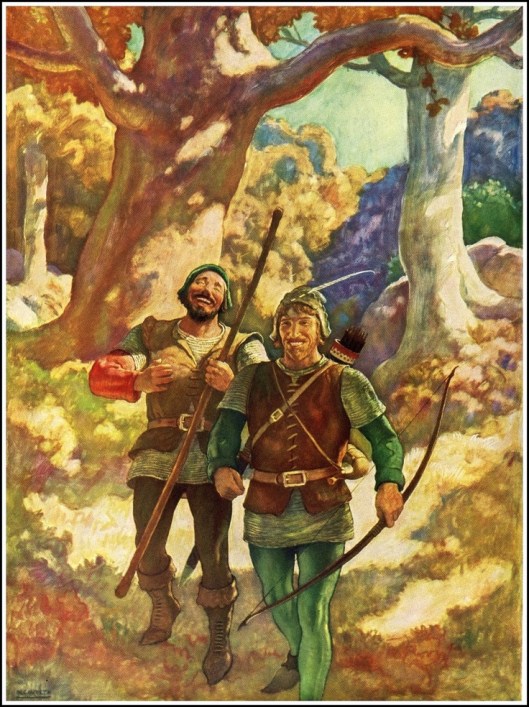
To which we would add N.C. Wyeth’s illustrations
image5wyeth.jpg
for the 1917 Robin Hood.
image6bookcover.jpg
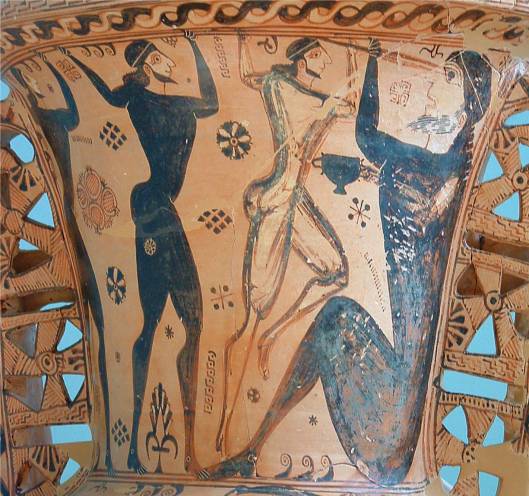
Thinking about bowmen in adventure stories then took us back to the first big adventure story in western literature, the Odyssey, and its hero, Odysseus, who has two associations with bows, but who, oddly enough, is never depicted as an archer, but rather as a trickster, who uses his brains to escape everything from a one-eyed giant
image7.jpg
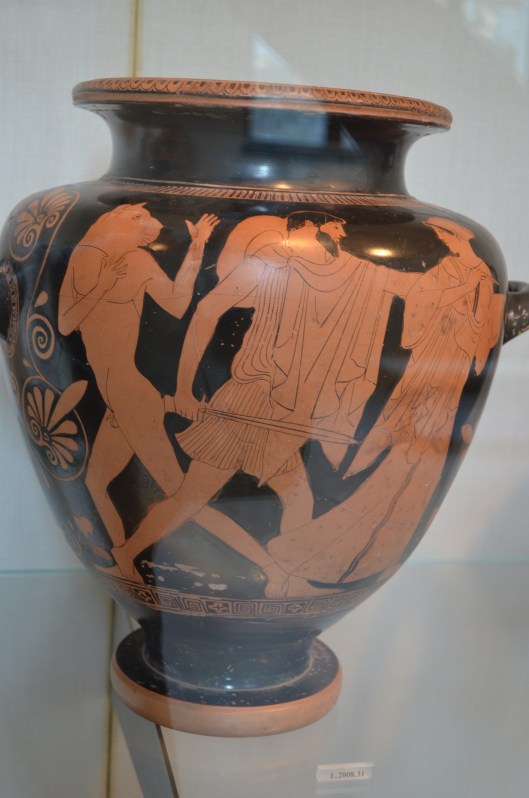
to an enchantress, Circe, who has already turned a good number of his crewmen into ham-on-the-hoof.
image8herccirce.jpg
One of our favorite illustrations of Circe is by John William Waterhouse, which he worked on from 1911 to 1915.

image9jwwaterhousecirce.jpg

The leopards in this version of the painting (in another, apparently, they are bears) reminded us of the snow leopard which is Lord Asriel’s demon, Stelmaria,
image10goldcomposter.jpg
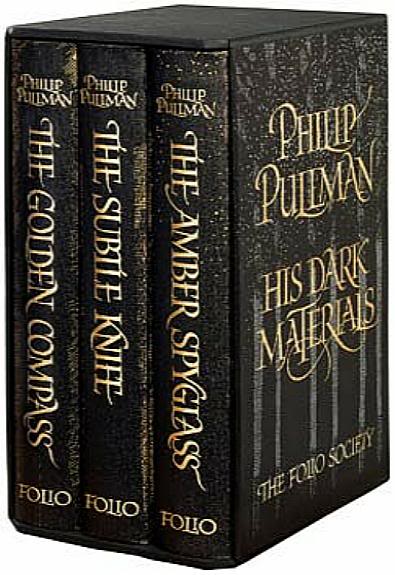
in Philip Pullman’s trilogy
image13pullman.jpg
His Dark Materials, the three books being The Golden Compass (in the British edition, Northern Lights), 1995, The Subtle Knife, 1997, and The Amber Spyglass, 2000.
image12hisdarkmaterials.jpg
These are remarkable books—full of vivid characters and places-other-than-here-and-now, and we have read and reread them since they first appeared. If you haven’t read them, we would add only one proviso: there is a strong anti-religious theme throughout and some devout readers might have difficulty with Pullman’s views. If you are willing to imagine that this is a critique of beliefs in other worlds than our own, however, we would unqualifiably recommend them. (Our favorite characters are Lyra, the fierce and fearless heroine, and Iorek Byrnison, a panserbjorn, or armored bear. There is a film version, released in 2007, based upon The Golden Compass, which we enjoy, although it has simplified and changed certain elements in the original story.)
image14aposter.jpg
But back to Odysseus the archer…
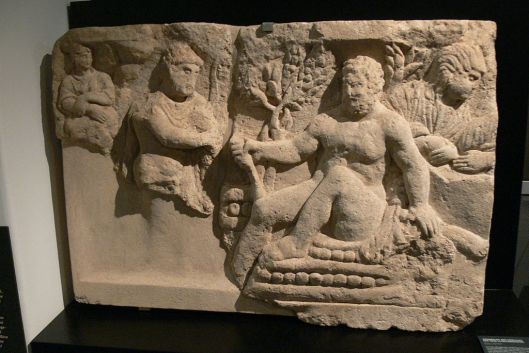
In the story of Troy, the famous archer is Paris, the son of Priam, the king of Troy, who uses his skill to kill Achilles, the most famous and powerful hero on the Greek side (in this pot illustration, almost by accident!).
image14parisshootsachilles.jpg
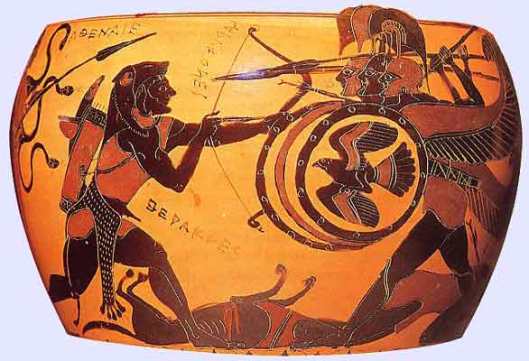
Paris, according to some accounts (there are a number of them and they can differ in all sorts of details), is then killed by Philoctetes, who has inherited Heracles’ bow. A prophecy lies behind that bow: it seems that it is a necessary element in the conquest of Troy.
image15hercger.jpg
When Heracles is suffering from a poisoned shirt, and builds a pyre to cremate himself
image16herconpyre.jpg
it is Philoctetes who is willing to light it and, in return, he receives Heracles’ bow. On the way to Troy, however, Philoctetes is bitten by a snake and left behind on an island.
image17philoct.jpg
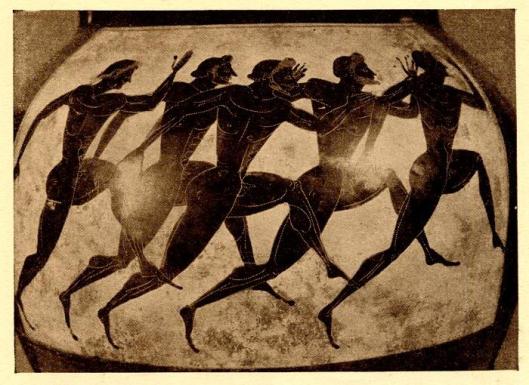
In some versions of the story (including Sophocles’ play), Odysseus acts as the main agent for, initially, bringing the bow to Troy, and then for bringing Philoctetes himself. So far, that is Odysseus’ only connection with archery. He is depicted as clever—being part of a successful scouting expedition in which a Trojan ally is killed and possibly the creator of the wooden horse—but, otherwise, his main accomplishments lie in beating up a trouble-maker at a public meeting and, at the funeral games which Achilles holds at the end of the Iliad for his companion, Patroclus, winning a footrace.
This footrace, however, leads us from Troy westward, as well as backward in time.
For all that there are these two huge things called the Iliad and the Odyssey, they are not all of the Troy story. They themselves are just collections of smaller stories stitched onto a plot outline. In the case of the Iliad, that outline is very basic: a. Achilles leaves war; b. Greeks substitute other warriors for Achilles; c. Achilles returns to war. The Odyssey is actually even more basic: man tries to find a way to sail home from Troy. Along with these, there are fragments from other parts of the tradition and lots of separate tales which often act as back-stories, probably invented when the popularity of the Troy tale in general caused a demand for singers to supply more material—the ancient equivalent of fan fiction!
One of these back-stories explains why Odysseus wins at the funeral games: he must already have been a famous foot racer, as he wins his bride, Penelope, from her father, the king of Sparta, in a footrace.
image20footrace.jpg
Not long after that, having gotten Penelope pregnant, he is off to Troy and won’t return for twenty years.
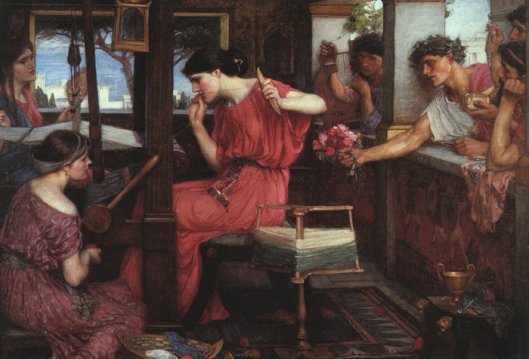
In the meantime, Penelope gives birth to a son, Telemachus, who grows up fatherless and in a household increasingly besieged by young men who claim that Odysseus must be dead and demand that Penelope must marry again.
image19jwwpenelope.jpg
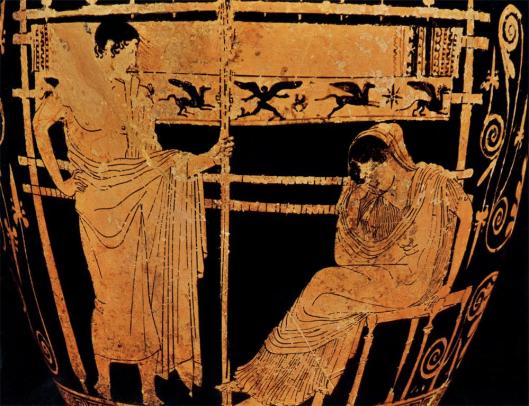
To delay being forced to accept one of these obnoxious toads, Penelope (our favorite in the story, along with Athena) claims that, before she can choose, she has to finish a shroud she is weaving for Odysseus’ father, Laertes. (That’s Telemachus, on the left.)
image20aapenandtel.jpg
In fact, although she weaves by day, she un-weaves by night and continues to do so for three years before one of her maids tells the suitors what’s going on.
image20penrav.jpg
(This is a remarkable piece of work designed by the painter/designer, Dora Wheeler, 1856-1940.
image21dorawheeler.jpg
It is not a painting, but, in fact, an embroidery—silk stitched into silk cloth—and a remarkable artifact—and, unfortunately, the only surviving one of its kind.)
In year 19, Odysseus comes home—disguised by Athena as an old beggar, to keep him safe until he can plot his revenge and gather allies. In the meantime, Penelope (who, to us, is as quick-witted as her wandering husband) announces an archery contest, the winner to—win her. Besides the trickiness of the target (having something to do with shooting through axes—scholars have argued over just how that works for years), there is the bow: it has such a pull that only her husband, she says, has ever been able to string it.
image22penelopebowangelicakauffmann.jpg
(This illustration is by another wonderful woman artist, Angelica Kauffmann, 1741-1807. Here’s a self-portrait.)
image23.jpg
Needless to say, the suitors are unable to do it, but that dirty old beggarman can—and does—and then, with a little help from Telemachus and a servant or two—not to mention Athena—proceeds to slaughter the suitors and clean house.
image25connolly.jpg
image26deathofsuitors.jpg
So, remembering the Mary Rose archer (as well as Bard), can we now imagine Odysseus’ build? And, for that matter, Robin Hood’s?
image27rharchcontest.jpg
Thanks, as ever, for reading!
MTCIDC
CD

A Pirate’s Life

24 Wednesday Feb 2016

Posted by Ollamh in Artists and Illustrators, Imaginary History, J.R.R. Tolkien, Literary History, Military History, Military History of Middle-earth, Villains

≈ Leave a comment

Tags

Barbary Coast, Captain Blood, Captain Hook, Corsairs, Errol Flynn, Gilbert and Sullivan, Howard Pyle, Jack Sparrow, Jolly Roger, mariners, Napoleonic Wars, Narnia, Peter Jackson, Pirates, Scharb, shipbuilding, Tamora Pierce, The Black Pearl, The Lord of the Rings, Tolkien, Tortall, Treasure Island, Umbar, USS Philadelphia, xebec

“Oh, a pirate’s life is a wonderful life,

A-rovin’ over the sea,

Give me a career as a buccaneer

It’s the life of a pirate for me…”

Wallace/Penner, Peter Pan (1953)


Dear readers, welcome, as ever.

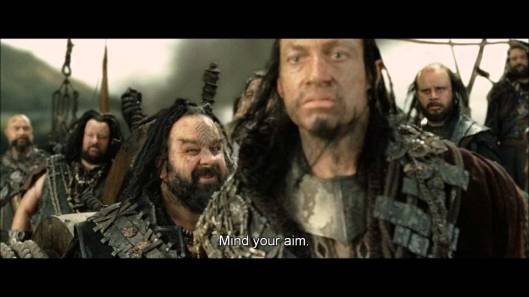
Being clever, you can tell immediately where this posting is going to go. Yep, the corsairs of Umbar.

A corsair is another word for pirate. And, when we think “pirate”, first there’s the late-19th-early-20th-century work of Howard Pyle.

Pyle_pirate_handsome.jpg


And the silly pirates from Gilbert and Sullivan’s The Pirates of Penzance.

piratesofpenzance.jpg


And Long John Silver, from Treasure Island.

longjohnsilver.jpg


And then there is Captain Hook and the Jolly Roger.

TigerLilyandHook.jpg


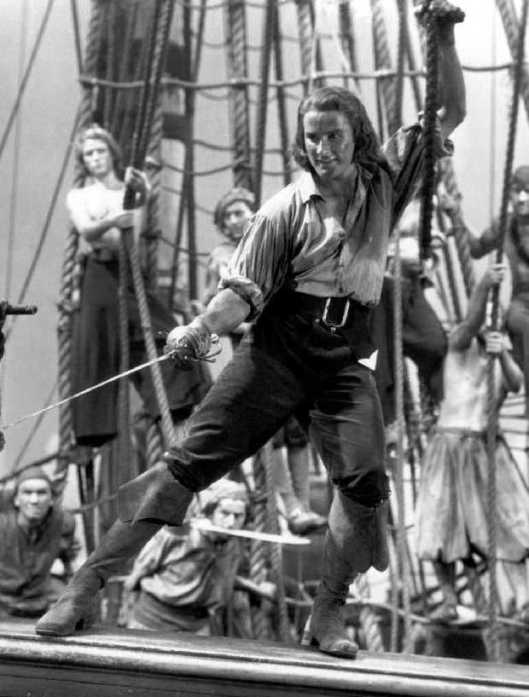
And Errol Flynn in the 1935 movie, Captain Blood.

1023_captblood.jpg


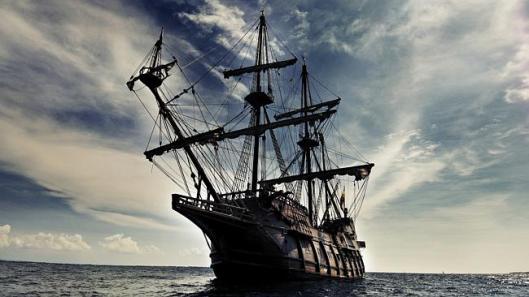
And who could forget Jack Sparrow and The Black Pearl?

Captain-Jack-captain-jack-sparrow-14117613-1242-900.jpg

blackpearl.jpg

We think that Tolkien has something rather different in mind, however. Let’s start with a little history.

Umbar’s past in relation to Gondor is summed up by Damrod in “Of Herbs and Stewed Rabbit”:

“ ‘Aye, curse the Southrons!’ said Damrod. ‘Tis said that there were dealing of old between Gondor and the kingdoms of the Harad to the Far South; though there was never friendship. In those days our bounds were away south beyond the mouths of Anduin, and Umbar, the nearest of their realms, acknowledged our sway. But that is long since. ‘Tis many lives of Men since any passed to and fro . Now of late we have learned that the Enemy has been among them, and they are gone over to Him, or back to Him—they were ever ready to his Will—“ (The Two Towers, Book 4, Chapter 4,“Of Herbs and Stewed Rabbit”)

Damrod’s mistrust is confirmed by what Beregond says to Pippin in “Minas Tirith”:

“…There is a great fleet drawing near to the mouths of Anduin, manned by the corsairs of Umbar in the South. They have long ceased to fear the might of Gondor, and they have allied them with the Enemy, and now make a heavy stroke in his cause. For this attack will draw off much of the help that we looked to have from Lebennin and Belfalas, where folk are hardy and numerous.” (The Return of the King, Chapter 1, “Minas Tirith”)

As Damrod has said, Umbar is to the far south.

map-of-gondor-and-neighbors2.jpg

Here is a view of it as imagined by the Czech artist, Scharb.

thecityofumbar.jpg

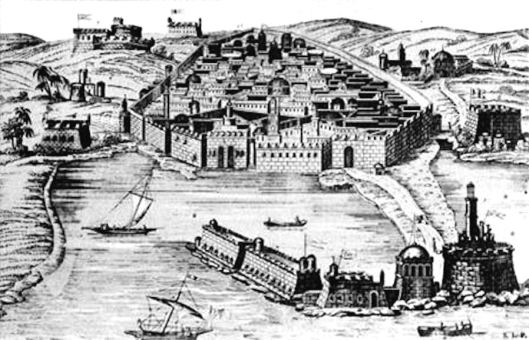
To us, this resembles cities along the southern Mediterranean coast, especially as seen in old engravings of the Barbary Coast.

Old_algiers_16th_century.jpg

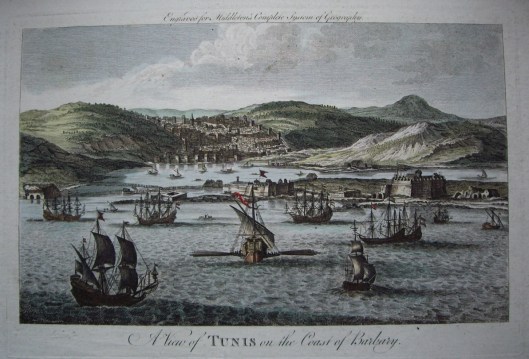
Take, for example, this copperplate of Tunis, from 1778.

tunisengraving.JPG


There are all kinds of ships depicted here, from three-masters to a galley, in the center, to a small xebec, to the far right.

The galley seemed once to be the characteristic ship of the pirates of the Barbary Coast, coming from earlier Turkish galleys.

Galley1500ca.jpg


What the Czech artist appears to have picked up upon, however, is something from P. Jackson’s third The Lord of the Rings film, in which the xebec

Xebec L80 - 01.jpg_0_1024x769.jpg


is the model for the corsairs’ vessels.

corsairMastSails.jpg


Jackson’s corsairs look like this (including Jackson himself, mugging to the left).

jacksonandcorsairs.jpg

The crews of actual Barbary ships probably looked more like this:

21c27fb9a0a7cdf4d123d6e12bcbbd83.jpg

This makes perfect sense, as these are North Africans, and very tough people, as European mariners came to know. Their swift, daring ships attacked any vessel which might bring them profit.

barbary-pirate-galleon.jpg

The young United States first paid them tribute to keep them away from US ships.

tribute.jpg

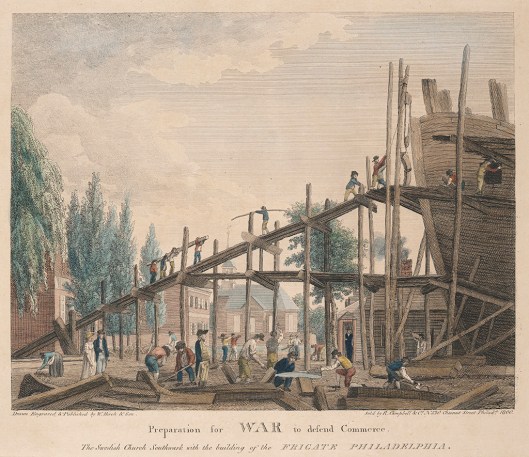
But, as the government somewhere found the money, it began a shipbuilding program to provide the country with its first national navy.

buildingthephiladelphia.jpg

This particular ship was the ill-fated USS Philadelphia, which ran aground and was captured by the pirates.

philly.jpg

captureofthephiladelphia.jpg

It was destroyed, however,

destructionofthephiladelphia.jpg

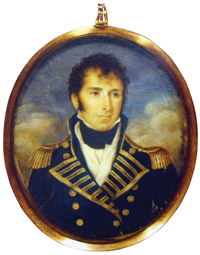
in a daring raid by Stephen Decatur, seen in this miniature.

stephendecatur.jpg

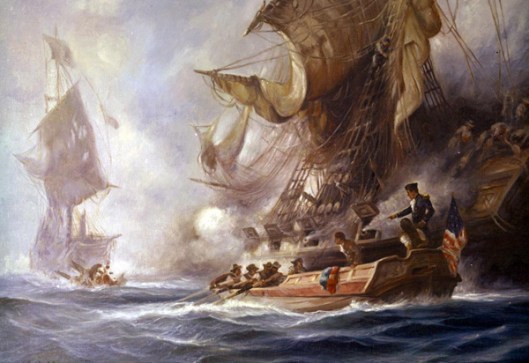
The United States fought two wars against the Barbary pirates, 1801-5 and 1815, doing a great deal of damage to the pirates.

USS-Enterprise-barbary-war.jpg

Ultimately, however, it was a combination of governments and navies, including the US, the British, and the Dutch, which put a stop to piracy in the southern Mediterranean after the end of the Napoleonic Wars in 1815.

Decatur_Boarding_the_Tripolitan_Gunboat.jpg

So, like Scharb, we took the idea from JRRT that Umbar was in the far south and, influenced by our experience, not only of the Barbary pirates, but of Narnia and the country called Calormen

Baynes-Map_of_Narnia.jpg

and of Tamora Pierce’s “Tortall” with its Carthaki southland,

Tortall_1.gif

we imagined the corsairs to look like this.

barbarypirates.jpg

So, dear readers, what do you think?

Thanks, as always, for reading.

MTCIDC

CD


The Doubtful Sea Series Facebook Page

The Doubtful Sea Series Facebook Page

  • Ollamh

Categories

  • Artists and Illustrators
  • Economics in Middle-earth
  • Fairy Tales and Myths
  • Films and Music
  • Games
  • Heroes
  • Imaginary History
  • J.R.R. Tolkien
  • Language
  • Literary History
  • Maps
  • Medieval Russia
  • Military History
  • Military History of Middle-earth
  • Narnia
  • Narrative Methods
  • Poetry
  • Research
  • Star Wars
  • Terra Australis
  • The Rohirrim
  • Theatre and Performance
  • Tolkien
  • Uncategorized
  • Villains
  • Writing as Collaborators
Follow doubtfulsea on WordPress.com

Across the Doubtful Sea

Recent Postings

  • A Moon disfigured December 17, 2025
  • On the Roads Again—Once More December 10, 2025
  • (Not) Crossing Bridges December 3, 2025
  • On the Road(s) Again—Again November 26, 2025
  • On the Road(s) Again November 19, 2025
  • To Bree (Part 2) November 12, 2025
  • To Bree (Part 1) November 5, 2025
  • A Plague o’ Both—No, o’ All Your Houses! October 29, 2025
  • It’s in Writing (2:  I’st a Prologue, or a Poesie for a Ring?) October 22, 2025

Blog Statistics

  • 103,215 Views

Posting Archive

  • December 2025 (3)
  • November 2025 (4)
  • October 2025 (5)
  • September 2025 (4)
  • August 2025 (4)
  • July 2025 (5)
  • June 2025 (4)
  • May 2025 (4)
  • April 2025 (5)
  • March 2025 (4)
  • February 2025 (4)
  • January 2025 (5)
  • December 2024 (4)
  • November 2024 (4)
  • October 2024 (5)
  • September 2024 (4)
  • August 2024 (4)
  • July 2024 (5)
  • June 2024 (4)
  • May 2024 (5)
  • April 2024 (4)
  • March 2024 (4)
  • February 2024 (4)
  • January 2024 (5)
  • December 2023 (4)
  • November 2023 (5)
  • October 2023 (4)
  • September 2023 (4)
  • August 2023 (5)
  • July 2023 (4)
  • June 2023 (4)
  • May 2023 (5)
  • April 2023 (4)
  • March 2023 (5)
  • February 2023 (4)
  • January 2023 (4)
  • December 2022 (4)
  • November 2022 (5)
  • October 2022 (4)
  • September 2022 (4)
  • August 2022 (5)
  • July 2022 (4)
  • June 2022 (5)
  • May 2022 (4)
  • April 2022 (4)
  • March 2022 (5)
  • February 2022 (4)
  • January 2022 (4)
  • December 2021 (5)
  • November 2021 (4)
  • October 2021 (4)
  • September 2021 (5)
  • August 2021 (4)
  • July 2021 (4)
  • June 2021 (5)
  • May 2021 (4)
  • April 2021 (4)
  • March 2021 (5)
  • February 2021 (4)
  • January 2021 (4)
  • December 2020 (5)
  • November 2020 (4)
  • October 2020 (4)
  • September 2020 (5)
  • August 2020 (4)
  • July 2020 (5)
  • June 2020 (4)
  • May 2020 (4)
  • April 2020 (5)
  • March 2020 (4)
  • February 2020 (4)
  • January 2020 (6)
  • December 2019 (4)
  • November 2019 (4)
  • October 2019 (5)
  • September 2019 (4)
  • August 2019 (4)
  • July 2019 (5)
  • June 2019 (4)
  • May 2019 (5)
  • April 2019 (4)
  • March 2019 (4)
  • February 2019 (4)
  • January 2019 (5)
  • December 2018 (4)
  • November 2018 (4)
  • October 2018 (5)
  • September 2018 (4)
  • August 2018 (5)
  • July 2018 (4)
  • June 2018 (4)
  • May 2018 (5)
  • April 2018 (4)
  • March 2018 (4)
  • February 2018 (4)
  • January 2018 (5)
  • December 2017 (4)
  • November 2017 (4)
  • October 2017 (4)
  • September 2017 (4)
  • August 2017 (5)
  • July 2017 (4)
  • June 2017 (4)
  • May 2017 (5)
  • April 2017 (4)
  • March 2017 (5)
  • February 2017 (4)
  • January 2017 (4)
  • December 2016 (4)
  • November 2016 (5)
  • October 2016 (6)
  • September 2016 (5)
  • August 2016 (5)
  • July 2016 (5)
  • June 2016 (5)
  • May 2016 (4)
  • April 2016 (4)
  • March 2016 (5)
  • February 2016 (4)
  • January 2016 (4)
  • December 2015 (5)
  • November 2015 (5)
  • October 2015 (4)
  • September 2015 (5)
  • August 2015 (4)
  • July 2015 (5)
  • June 2015 (5)
  • May 2015 (4)
  • April 2015 (3)
  • March 2015 (4)
  • February 2015 (4)
  • January 2015 (4)
  • December 2014 (5)
  • November 2014 (4)
  • October 2014 (6)
  • September 2014 (1)

Blog at WordPress.com.

  • Subscribe Subscribed
    • doubtfulsea
    • Join 78 other subscribers
    • Already have a WordPress.com account? Log in now.
    • doubtfulsea
    • Subscribe Subscribed
    • Sign up
    • Log in
    • Report this content
    • View site in Reader
    • Manage subscriptions
    • Collapse this bar
 

Loading Comments...