• About

doubtfulsea

~ adventure fantasy

Tag Archives: Common Tongue

Who Goes There? (3)

28 Wednesday Nov 2018

Posted by Ollamh in J.R.R. Tolkien, Military History, Military History of Middle-earth, The Rohirrim

≈ Leave a comment

Tags

Argonath, Common Tongue, Doorward Hama, Eomer, Ephraimites, Gileadites, Great War, language, Language of Rohan, patrol, Rohirrim, Shibboleth, The Lord of the Rings, Tolkien, Wulfgar

Welcome, as always, dear readers.

We’re in the third installment of a little series about sentries and patrols in Middle-earth.

We had begun in the first installment in the Shire, with the shirriffs, then the watchman in Bree, then the watcher in the lake at the western gates of Moria, then the Elves of Lorien under Haldir, finishing with the Argonath, the biggest sentries of all.
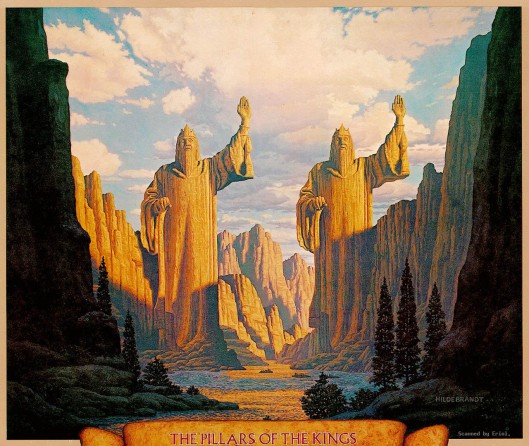
image1argonath.jpg

Now, as we move south, we encounter our first patrol.  From his experience in the Great War,
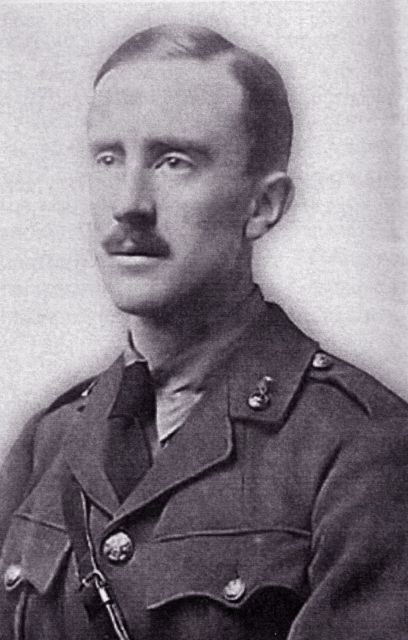
image2ltjrrt.jpg

JRRT would have been very familiar with groups of armed men spreading out across the countryside, either slipping into enemy territory or simply guarding the edges of their own.
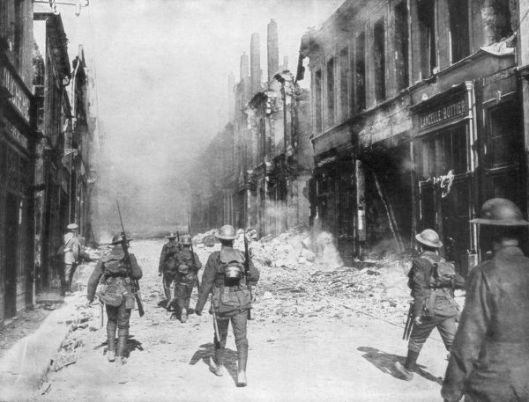
image3patrol.jpg

And patrols could be on horseback, as well as on foot—and not necessarily friendly, either.
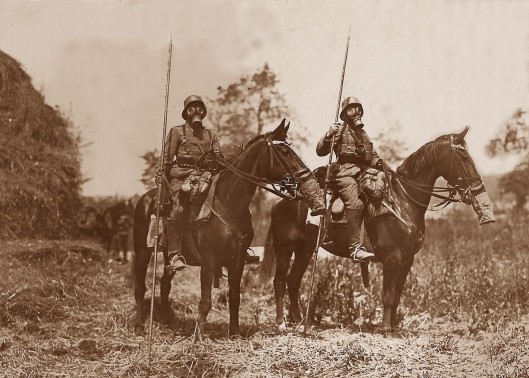
image4gpat.jpg

As Aragorn, Legolas, and Gimli cross northern Rohan in their attempt to rescue Merry and Pippin, they run into one of these patrols:  Eomer and his Rohirrim.
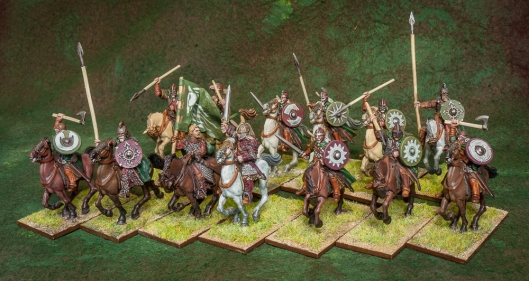
image5rohirrim


As we mentioned in our second installment, when it comes to The Lord of the Rings, encounters with watchers of any sort often lead to developments in the plot and this is certainly true when the three meet with Eomer.  They have pursued the Orcs for days in hopes of rescuing Merry and Pippin, only to be told that the band in which the two hobbits were being kept prisoner has been destroyed completely:

“ ‘Did you search the slain?’” Aragorn asks, explaining, “ ‘Were there no bodies other than those of orc-kind?  They would be small, only children to your eyes, unshod but clad in grey.’

‘There were no dwarves nor children,’ said Eomer.  ‘We counted all the slain and despoiled them, and then we piled the carcasses and burned them, as is our custom.  The ashes are smoking still.’” (The Two Towers, Book Three, Chapter 2, “The Riders of Rohan”)

Aragorn is unshaken in his belief that the two may still be alive, however, and the three will continue their search, but now, as Eomer has loaned them horses, so he has lain an obligation upon Aragorn:

“ ‘You may go; and what is more, I will lend you horses.  This only I ask:  when your quest is achieved, or is proved vain, return with the horses over the Entwade to Meduseld, the high house in Edoras where Theoden now sits.  Thus you shall prove to him that I have not misjudged.  In this I place myself, and maybe my very life, in the keeping of your good faith.  Do not fail.’ “

And so, rather than to continue to Minas Tirith, as Aragorn had planned, he and his two companions are to be diverted to the capital of Rohan, instead.  Meeting Gandalf in their search,
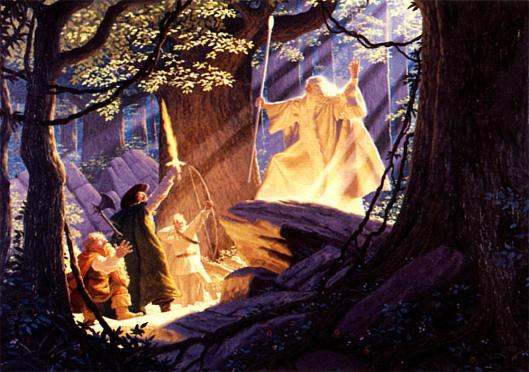
image6gandalf

they fulfill Aragorn’s promise and are met by two separate sets of watchmen.  First, at the gates of Edoras:

“There sat many men in bright mail, who sprang at once to their feet and barred the way with spears. ‘Stay, strangers here unknown!’ they cried in the tongue of the Riddermark, demanding the names and errand of the strangers.” (The Two Towers, Book Three, Chapter 6, “The King of the Golden Hall”)

In his reply, Gandalf speaks in the language of Rohan, but wonders “Why do you not speak in the Common Tongue, as is the custom in the West, if you wish to be answered?”

To which one of the guards replies:  “It is the will of Theoden King that none should enter his gates, save those who know our tongue and are our friends.”

[This use of language as a screening test, by the way, reminds us of a well-known story from the Hebrew Bible, in which, when the Ephraimites were defeated in battle and attempted to escape over the Jordan River, their opponents, the men of Gilead, stood at the crossings and, whenever a strange man tried to ford  the river, the Gileadites would demand that he pronounce the word “shibboleth” (which means “a stalk of grain”, among other things).  In the Ephraimite dialect of Hebrew, the consonant combination “sh” was said “s”, and so, at least as the story goes, every Ephraimite warrior who slipped and said “shibboleth” was immediately revealed to be an enemy soldier and was captured and killed.  (See The Book of Judges, Chapter 12)]

Aragorn has already been warned by Eomer that all is not well in Edoras, as he has said about Saruman, who has become an enemy of Rohan, “His spies slip through every net, and his birds of ill omen are abroad in the sky.  I do not know how it will all end, and my heart misgives me; for it seems to me that his friends do not all dwell in Isengard.”

This confrontation between guards and Gandalf immediately makes Gandalf wary, especially when he hears from one of the sentries that:

“It is but two nights ago that Wormtongue came to us and said that by the will of Theoden no stranger should pass these gates.”

Knowing from this that Wormtongue is inserting himself into Theoden’s actions prepares Gandalf to deal with the next sentry, the Doorward Hama.

“Then one of the guards stepped forward and spoke in the Common Speech.

‘I am the Doorward of Theoden…Hama is my name.  Here I must bid you lay aside your weapons before you enter.’ “

[If you read us regularly, you’ll recognize this figure from Beowulf.  There he is named Wulfgar, and he is the herald of King Hrothgar.  See Beowulf, 330-355.]

Although Legolas easily puts aside his weapons, Aragorn is a bit stiff-necked, refusing, at first, to put down Anduril until Gandalf offers his sword, Glamdring, followed by Gimli, who places his axe with the other weapons.  Hama hasn’t finished, however:

“The guard still hesitated.  ‘Your staff,’ he said to Gandalf.  ‘Forgive me, but that too must be left at the doors.’ “

Gandalf appears to object, on the grounds of his age:

“Foolishness!…Prudence is one thing, but discourtesy is another.  I am old.  If I may not lean on my stick as I go, then I will sit out here, until it pleases Theoden to hobble out himself to speak with me.”

Hama has a moment of proper doubt—“  ‘The staff in the hand of a wizard may be more than a prop for age.’ “—but he still allows Gandalf to carry his staff, which he then uses to disarm Grima Wormtongue and break the spell which has prematurely aged Theoden.

We have now added three more watchmen or groups to our growing list, all from Rohan and each meeting having had an effect upon those involved.  In the final installment of our series, we’ll leave the grassy plains of the Riddermark for Gondor, then cross the Anduin into a very different world.

Till then, thanks, as ever, for reading and

MTCIDC

CD

When One Door Closes.3

23 Wednesday Nov 2016

Posted by Ollamh in J.R.R. Tolkien, Language, Literary History, Narrative Methods

≈ Leave a comment

Tags

Common Tongue, doors, Doorward, Edoras, Elvish, Fangorn Forest, Gandalf, Gondor, Hama, Helm's Deep, Isengard, John Ruskin, Meduseld, Minas Tirith, Moria, passages, Paths of the Dead, The Hobbit, The King of the Golden Hall, The King of the Golden River, The Lord of the Rings, Tolkien, Witch-King of Angmar

Welcome, dear readers, to the third part of our series on doors and entryways in JRRT’s The Hobbit and The Lord of the Rings.

We began, several postings ago, by writing that we were intrigued by Bilbo’s statement to Frodo: “It’s a dangerous business, Frodo, going out your door.” (The Fellowship of the Ring, Book 1, Chapter 3, “Three is Company”)

It made us want to look at doors (to which we quickly added entryways of all sorts) in Tolkien and, in doing so, we’ve come up with a very crude classification system, in which there were two kinds of doors, those which seemed to promise safety and those through which you might be in danger. And a major component of such places seems to be a challenge, and a challenger of some sort.

At the end of our second posting, we had come to the breaking up of the Fellowship and now we want to continue, having a look at what could be seen as good examples of what we mean along the way.

Because of the major split in the story, we decided to follow Aragorn, Gimli, and Legolas first.

The first part of their adventure takes place across open country or in Fangorn Forest. It’s only when they, with Gandalf, arrive at Edoras that we see the pattern fall into place.

But here we wondered if we should add an extra subcategory, linguistic challenge. We’ve already seen the western gates of Moria and the need to read Elvish and to know the word for friend, and now we have the gates of Edoras

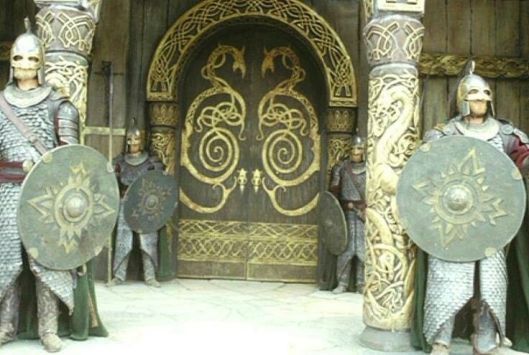
Edoras.jpg

and a suspicious guard of Rohirrim:

“There sat many men in bright mail, who sprang at once to their feet and barred the way with spears. ‘Stay, strangers here unknown!’ they cried in the tongue of the Riddermark.” (The Two Towers, Book 3, Chapter 6, “The King of the Golden Hall”)

[We wonder, by the way, if the chapter’s title owes something to John Ruskin’s 1841/51 fairy tale “The King of the Golden River”, in which a major figure has been changed through evil magic, but is freed and eventually helps the underdog hero…]

King_of_the_Golden_River_-_Title_page.jpg

As he was (eventually) up to the challenge of the gate of Moria, so is Gandalf up to this and challenges them in return:

“ ‘Well do I understand your speech,’ he answered in the same language; ‘yet few strangers do so. Why then do you not speak in the Common Tongue, as is the custom in the West, if you wish to be answered?’ “

After a little parleying in this manner, Gandalf and his companions are allowed to enter and sent up to Meduseld, where there is a second challenger, the Doorward Hama.

Golden_Hall_of_Meduseld.png

meduseld.jpg

Here, after a brief repetition of the previous language challenge, things relax: “Then one of the guards stepped forward and spoke in the Common Speech.” After a tussle about leaving weapons behind (and Gandalf escapes this with his staff), they are permitted into the hall and the scene continues.

After the battle of Helm’s Deep, Denethor, Gandalf, and the rest of the company ride to Isengard, only to find there:

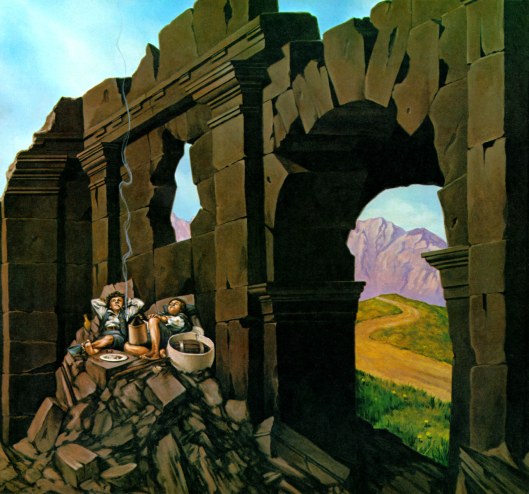
“…ruined gates. There they saw close beside them a great rubble-heap; and suddenly they were aware of two small figures lying on it at their ease, grey-clad, hardly to be seen among the stones. There were bottles and bowls and platters laid beside them…” (The Two Towers, Book 3, Chapter 8, “The Road to Isengard”)

merryandpippinatisengarde.jpg

It’s Merry and Pippin, of course, who describe themselves as “doorwardens”, just as Hama was at Meduseld. The difference is, instead of barring the door and challenging those who would enter, they are welcoming and comical in their lordly self-indulgence. This seems to turn the pattern on its head, and, although it’s the only time such a thing appears, we believe that it is an example of another subcategory, that of parody. It has the elements of other occasions, but, here, the door is a ruin and the guards seem slightly tipsy, rather than menacing, as well as very glad to see those who come to their ward.

In contrast to this merriness, there is stony silence at the next door:   The Paths of the Dead.

EntrancePathsDead-port.jpg

The challenge seems to be in the very air itself:

“And so they came at last deep into the glen; and there stood a sheer wall of rock, and in the wall the Dark Door gaped before them like the mouth of night. Signs and figures were carved above its wide arch too dim to read, and fear flowed from it like a grey vapour.” (The Return of the King, Book 5, Chapter 2, “The Passing of the Grey Company”)

It is Aragorn who accepts the challenge and leads the group through what, in the film, is a kind of funhouse of skulls and greenish figures,

dead.jpg

But, to us readers, what we think is much more disturbing is that there is no more than a restless murmur, which we hear through the dauntless, but quivering Gimli—

“…but if the Company halted, there seemed an endless whisper of voices all about him, a murmur of words in no tongue he had ever heard before.”

And, at the end of their passage, it is Aragorn who is the challenger—not to block those murmurers, but to invite them:

“ ‘Keep your hoards and your secrets hidden in the Accursed Years! Speed only we ask. Let us pass, and then come! I summon you to the Stone of Erech!’ “

We can see in this multiple ends: first, it fits the pattern of confrontations at doors (all feel the sense of Something There and must rise to the challenge, conquering their fear); second, it provides a route for Aragorn’s strategy: to gain supernatural allies on the way to natural ones along the southern seacoast; third, it underlines Aragorn’s right to the kingship: only he has the knowledge and authority to call up the long-dead for his purposes.

Our last challenge of this posting is at what is perhaps the most dramatic moment in the attack upon Minas Tirith. Grond the ram has, with the aid of the Lord of the Nazgul, burst open the great gate and the Wraith is about to enter when he encounters:

“…Gandalf upon Shadowfax…

‘You cannot enter here,’ said Gandalf, and the huge shadow halted. ‘Go back to the abyss prepared for you! Fall into the nothingness that awaits you and your Master. Go!’ ” (The Return of the King, Book 5, Chapter 4, “The Siege of Gondor”)

gandalfgate2.jpg

But—then? We admit it—we shamelessly want a cliffhanger here. And so we’ll stop—till our next, in which we’ll finish the story—we promise!—and provide a breakdown of all of the doors and entryways in a chart, as well.

Thanks, as always, for reading—and we’re sorry that we gave in to temptation, but, as novelists ourselves, we couldn’t resist!

MTCIDC

CD

The Doubtful Sea Series Facebook Page

The Doubtful Sea Series Facebook Page

  • Ollamh

Categories

  • Artists and Illustrators
  • Economics in Middle-earth
  • Fairy Tales and Myths
  • Films and Music
  • Games
  • Heroes
  • Imaginary History
  • J.R.R. Tolkien
  • Language
  • Literary History
  • Maps
  • Medieval Russia
  • Military History
  • Military History of Middle-earth
  • Narnia
  • Narrative Methods
  • Poetry
  • Research
  • Star Wars
  • Terra Australis
  • The Rohirrim
  • Theatre and Performance
  • Tolkien
  • Uncategorized
  • Villains
  • Writing as Collaborators
Follow doubtfulsea on WordPress.com

Across the Doubtful Sea

Recent Postings

  • A Moon disfigured December 17, 2025
  • On the Roads Again—Once More December 10, 2025
  • (Not) Crossing Bridges December 3, 2025
  • On the Road(s) Again—Again November 26, 2025
  • On the Road(s) Again November 19, 2025
  • To Bree (Part 2) November 12, 2025
  • To Bree (Part 1) November 5, 2025
  • A Plague o’ Both—No, o’ All Your Houses! October 29, 2025
  • It’s in Writing (2:  I’st a Prologue, or a Poesie for a Ring?) October 22, 2025

Blog Statistics

  • 103,216 Views

Posting Archive

  • December 2025 (3)
  • November 2025 (4)
  • October 2025 (5)
  • September 2025 (4)
  • August 2025 (4)
  • July 2025 (5)
  • June 2025 (4)
  • May 2025 (4)
  • April 2025 (5)
  • March 2025 (4)
  • February 2025 (4)
  • January 2025 (5)
  • December 2024 (4)
  • November 2024 (4)
  • October 2024 (5)
  • September 2024 (4)
  • August 2024 (4)
  • July 2024 (5)
  • June 2024 (4)
  • May 2024 (5)
  • April 2024 (4)
  • March 2024 (4)
  • February 2024 (4)
  • January 2024 (5)
  • December 2023 (4)
  • November 2023 (5)
  • October 2023 (4)
  • September 2023 (4)
  • August 2023 (5)
  • July 2023 (4)
  • June 2023 (4)
  • May 2023 (5)
  • April 2023 (4)
  • March 2023 (5)
  • February 2023 (4)
  • January 2023 (4)
  • December 2022 (4)
  • November 2022 (5)
  • October 2022 (4)
  • September 2022 (4)
  • August 2022 (5)
  • July 2022 (4)
  • June 2022 (5)
  • May 2022 (4)
  • April 2022 (4)
  • March 2022 (5)
  • February 2022 (4)
  • January 2022 (4)
  • December 2021 (5)
  • November 2021 (4)
  • October 2021 (4)
  • September 2021 (5)
  • August 2021 (4)
  • July 2021 (4)
  • June 2021 (5)
  • May 2021 (4)
  • April 2021 (4)
  • March 2021 (5)
  • February 2021 (4)
  • January 2021 (4)
  • December 2020 (5)
  • November 2020 (4)
  • October 2020 (4)
  • September 2020 (5)
  • August 2020 (4)
  • July 2020 (5)
  • June 2020 (4)
  • May 2020 (4)
  • April 2020 (5)
  • March 2020 (4)
  • February 2020 (4)
  • January 2020 (6)
  • December 2019 (4)
  • November 2019 (4)
  • October 2019 (5)
  • September 2019 (4)
  • August 2019 (4)
  • July 2019 (5)
  • June 2019 (4)
  • May 2019 (5)
  • April 2019 (4)
  • March 2019 (4)
  • February 2019 (4)
  • January 2019 (5)
  • December 2018 (4)
  • November 2018 (4)
  • October 2018 (5)
  • September 2018 (4)
  • August 2018 (5)
  • July 2018 (4)
  • June 2018 (4)
  • May 2018 (5)
  • April 2018 (4)
  • March 2018 (4)
  • February 2018 (4)
  • January 2018 (5)
  • December 2017 (4)
  • November 2017 (4)
  • October 2017 (4)
  • September 2017 (4)
  • August 2017 (5)
  • July 2017 (4)
  • June 2017 (4)
  • May 2017 (5)
  • April 2017 (4)
  • March 2017 (5)
  • February 2017 (4)
  • January 2017 (4)
  • December 2016 (4)
  • November 2016 (5)
  • October 2016 (6)
  • September 2016 (5)
  • August 2016 (5)
  • July 2016 (5)
  • June 2016 (5)
  • May 2016 (4)
  • April 2016 (4)
  • March 2016 (5)
  • February 2016 (4)
  • January 2016 (4)
  • December 2015 (5)
  • November 2015 (5)
  • October 2015 (4)
  • September 2015 (5)
  • August 2015 (4)
  • July 2015 (5)
  • June 2015 (5)
  • May 2015 (4)
  • April 2015 (3)
  • March 2015 (4)
  • February 2015 (4)
  • January 2015 (4)
  • December 2014 (5)
  • November 2014 (4)
  • October 2014 (6)
  • September 2014 (1)

Blog at WordPress.com.

  • Subscribe Subscribed
    • doubtfulsea
    • Join 78 other subscribers
    • Already have a WordPress.com account? Log in now.
    • doubtfulsea
    • Subscribe Subscribed
    • Sign up
    • Log in
    • Report this content
    • View site in Reader
    • Manage subscriptions
    • Collapse this bar
 

Loading Comments...