• About

doubtfulsea

~ adventure fantasy

Tag Archives: Charge of the Light Brigade

To Horse!

18 Wednesday Jun 2025

Posted by Ollamh in Uncategorized

≈ Leave a comment

Tags

Agincourt, bicycle, Boer War, cavalry charges, Charge of the Light Brigade, Cu Chulainn, Dwarves, Fredegunda, Gregory of Tours, heavy artillery, Historia Francorum, Hobbits, horses, King Edward's Horse, lotr, machine gun, machine-guns, Nazgul, Normans, Pegasus, Rohirrim, Russian Civil War, signals officer, Sleipnir, The Hobbit, Tolkien, Valkyries

In a colleague’s office, I once saw this on his wall—

“Proletariat, to horse!”

It’s a recruiting poster from the Russian civil war (1918-1922), showing the Reds trying to raise cavalry for their armies, but, at the time this call came, the military world was changing and, although horsemen would still appear, very sporadically, on battlefields, for some years to come, the day of events like this—

was rapidly coming to a close.

It didn’t happen all at once, however.  As you can imagine, traditional cavalrymen—those who believed that swinging a sword in a valiant charge was the point of cavalry—

fought back.  The evidence was against them, however, in two ways.

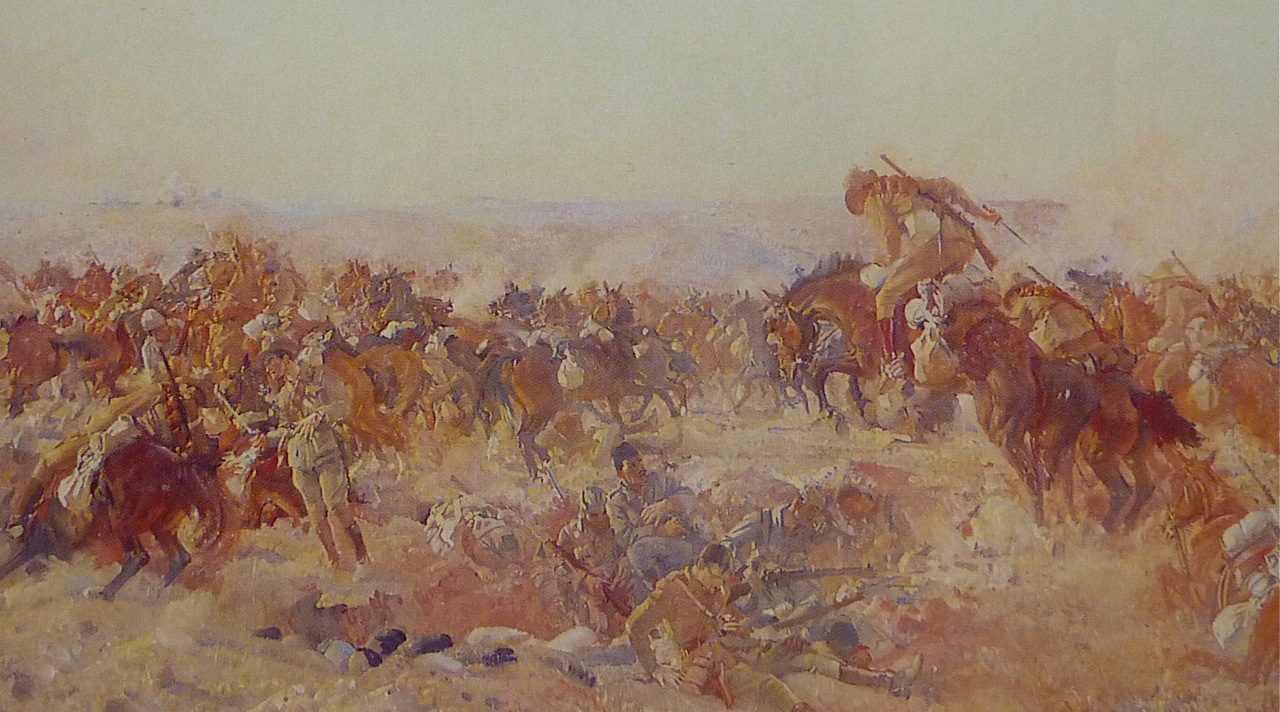
First, in the case of the British, there had been the Boers,
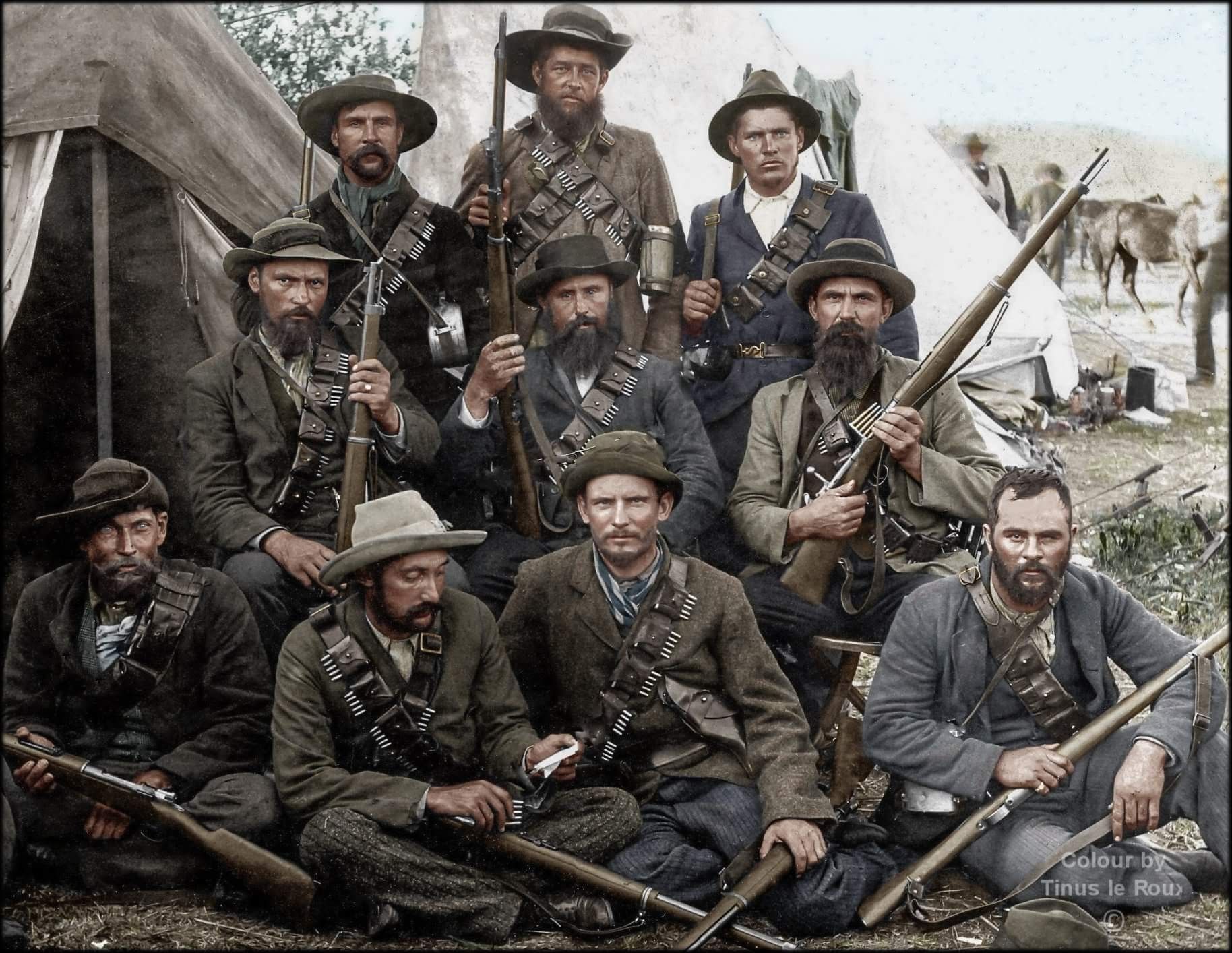
with whom the British had fought a war, from 1899-1902.  The Boers (Dutch for “farmers”) had been militia—men obliged by law to defend the state upon demand.  Across the wide open spaces of so much of South Africa, they had fought as mounted infantry, using horses as a means of moving from place to place, then dismounting for combat and, if things didn’t go their way, mounting up and escaping.

To counter this, especially in the later phases of the war, the British were forced to develop their own mounted infantry,

which suggested to some military theorists at the time that the wave of the future was not in sword-swingers, but in riflemen, who could rapidly move to where they were needed, but employ horses for transport, not for gallant charges.  (This also led to the rise of units mounted entirely on bicycles,

but we can imagine the off-road difficulties for early machines and, although there were bicycle units as late as WW2, they never had the popularity—or the dash—of horsemen.)

The second piece of evidence lies in technological change. 

With the coming of the 20th century, machine guns, sometimes firing as many as 600 rounds (shots) per minute,
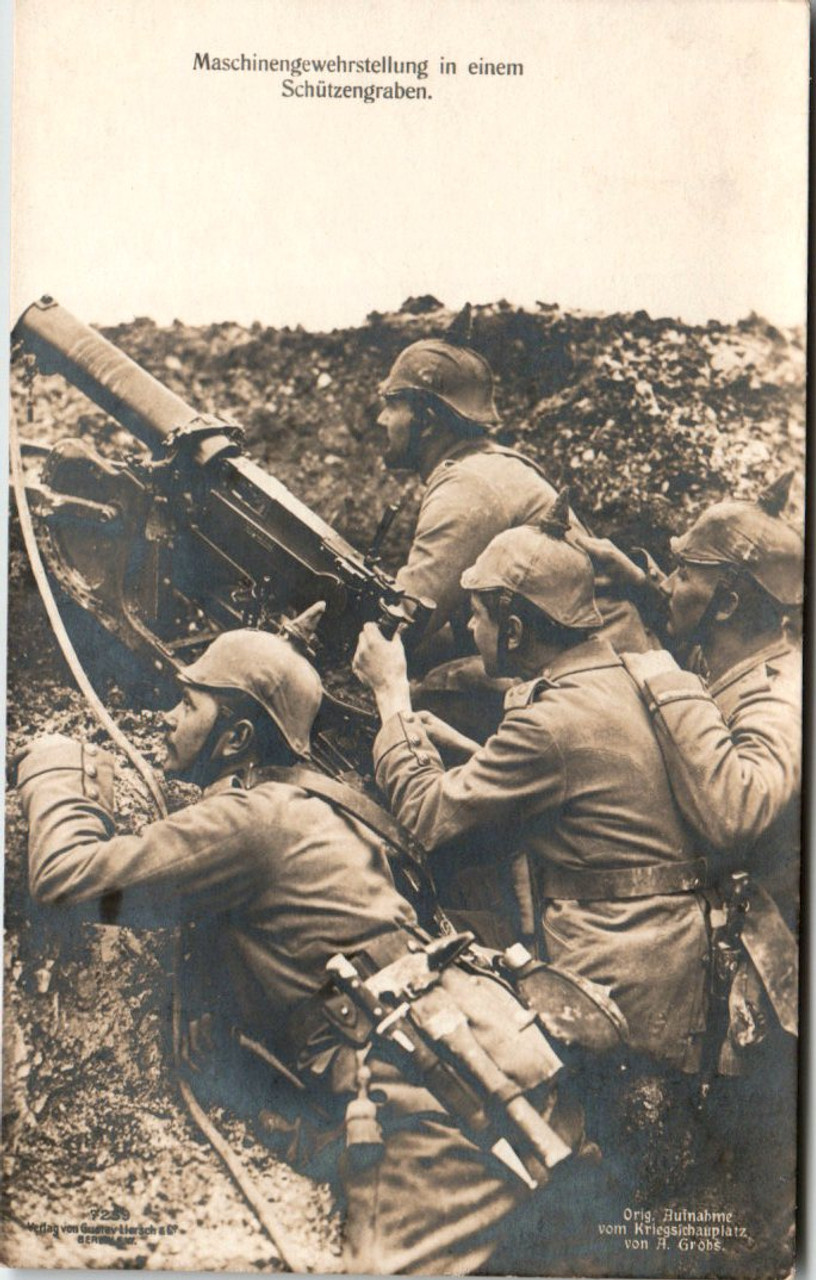
appeared in increasing numbers and artillery was developed to become more accurate at greater distances.

In self-defense, soldiers would be forced to take cover wherever they could,

at first in holes simply scraped out of the ground, but, in time, in very sophisticated lines, shored up with wood and metal and sandbags.

On the Western Front, where everyone was dug into the ground, and being in the open could mean instant destruction, there simply wasn’t a place for old-fashioned cavalry, for all that there were still lots of old-fashioned cavalrymen in the army—like the first commander of the British in France in 1914, Sir John French.

Imagine, then, that this was all happening when Tolkien was very young—when the Boer War ended, in 1902, for instance, he would have been only 10.

(JRRT and his brother, Hillary, in 1905)

His own military career had begun at King Edward’s School in Birmingham, when he entered the new Cadet Corps in 1907.

(For more, see this essay by John Garth: https://johngarth.wordpress.com/2014/03/05/tolkien-at-fifteen-a-warrior-to-be/ )

Then, in the summer of 1912, he was briefly a member of a territorial (a sort of national guard unit) cavalry regiment, King Edward’s Horse.  (The reference here is to Carpenter’s J.R.R.Tolkien, 66.  John Garth later added detail to this, but subsequently qualified it, saying that his evidence was faulty.  See:  https://oxfordinklings.blogspot.com/2009/06/tolkien-and-horses.html )
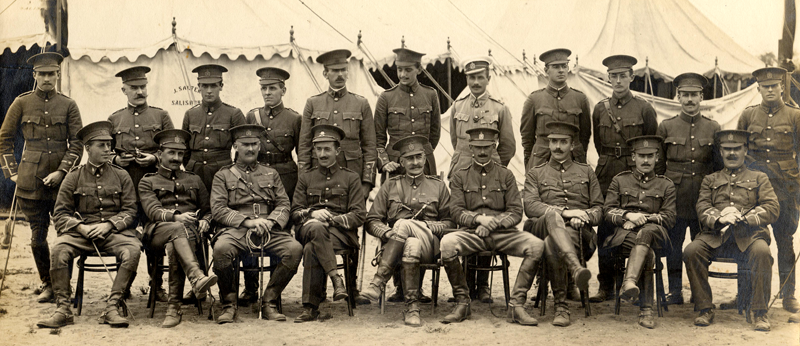
(Officers of the regiment about 1916)

It was clearly an indication of the drop in the use of cavalry, however, when JRRT began his second enlistment not in a cavalry, but an infantry regiment, the Lancashire Fusiliers, in which he was commissioned as a 2nd Lieutenant in 1915.

In his brief battlefield career, he was the signals officer for his battalion, the 11th.  In the advance into the Somme in July, 1916, Tolkien, although armed with a revolver,

would have been too busy to do any fighting as his work involved

“More code, flag and disc signaling, the transmission of messages by heliograph and lamp, the use of signal rockets and field-telephones, even how to handle carrier pigeons…” (Carpenter, 86)

To ask for reinforcements, as well as to avoid artillery fire which could be called in to fend off German counterattacks, but which might hit friendly troops instead, it was extremely necessary for attacking units to let their positions and situations be known as often as possible, so JRRT would have been more than a little occupied during the months (1 July-18 November, 1916) of the very costly (nearly 58,000 British casualties the first day alone) offensive.  Fortunately for him—and for us—he fell ill with so-called “trench fever” and left France for good early in November, going home to England and, ultimately, to Middle-earth.

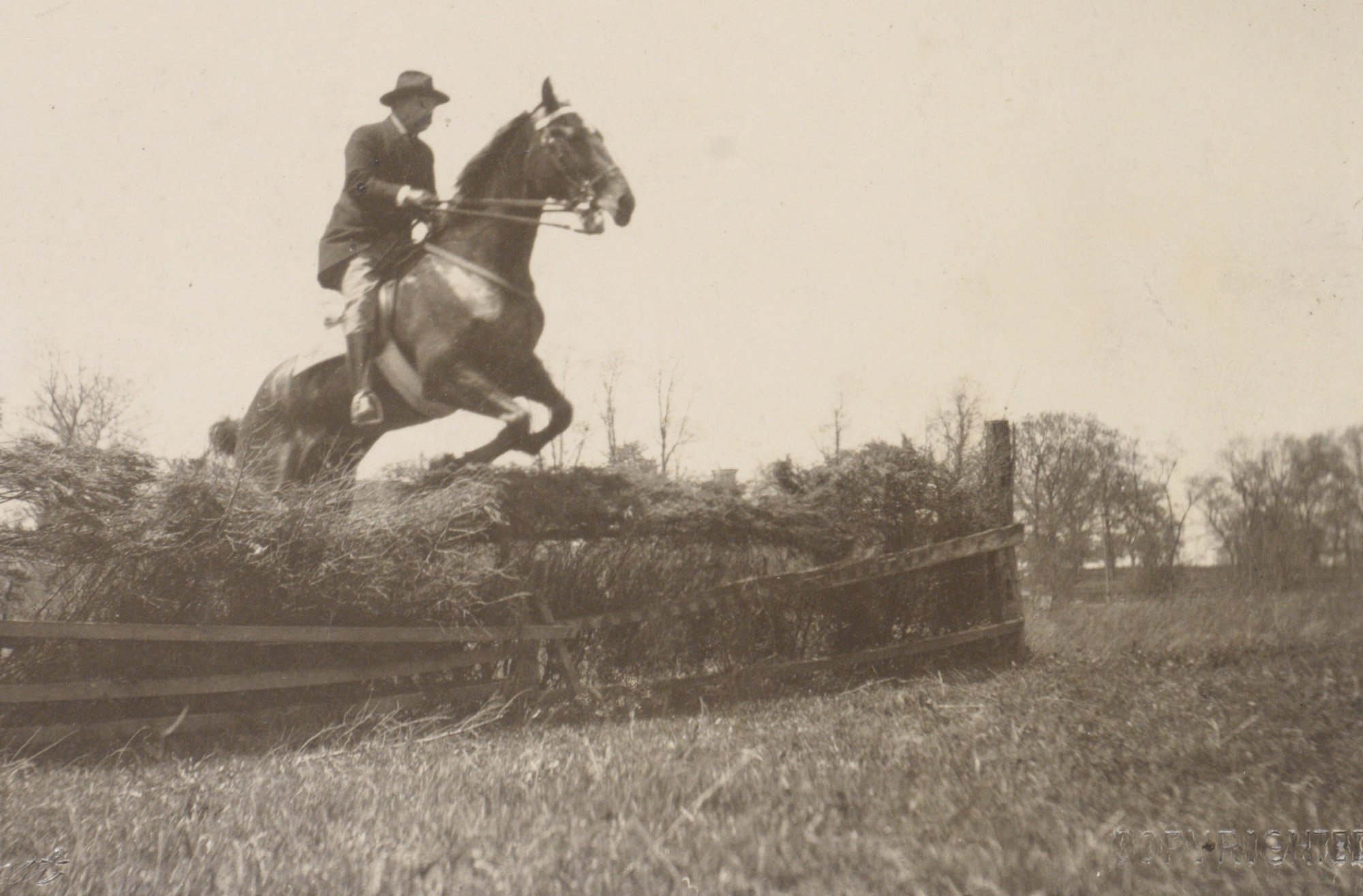
Although his military service in the field was relatively brief, and his career with cavalry even briefer (he resigned from King Edward’s Horse in January, 1913), we see horses everywhere in Middle-earth, from the ponies of the dwarves in The Hobbit

(from Painting Valley—no artist listed)

to the horses of the Nazgul in The Lord of the Rings.

(with the Gaffer, one of my favorite illustrations by Denis Gordeev)

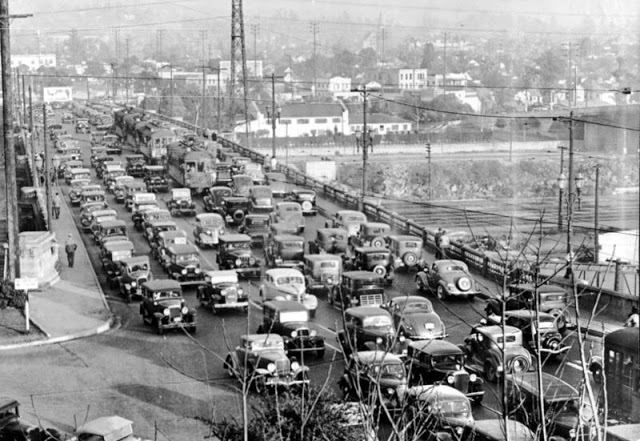
But, although cavalry might have been only a brief flirtation for Tolkien, horses had been part of his life since its beginnings.  Part of this would have been mundane—it was only after the Great War that the internal combustion engine really began to dominate the streets.  When JRRT was young, Birmingham and London, as well as Berlin, Paris, and New York, would have looked like this—

His early reading would have given him Bellerophon on Pegasus,

to which would have been added the Valkyries,
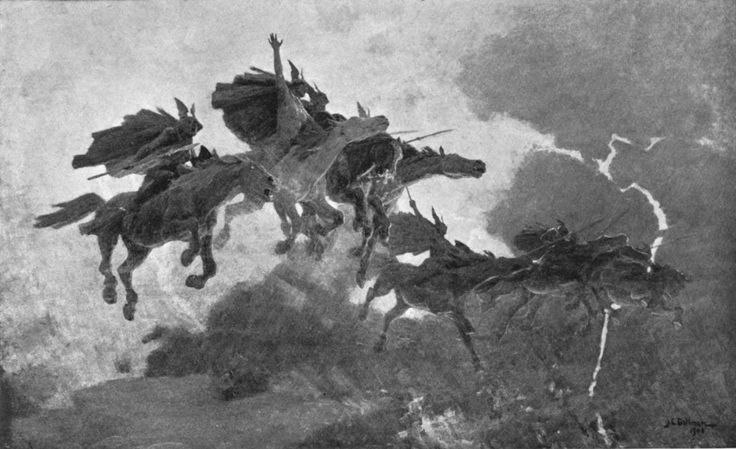
and, in time, Sleipnir, Odin’s 8-legged steed,
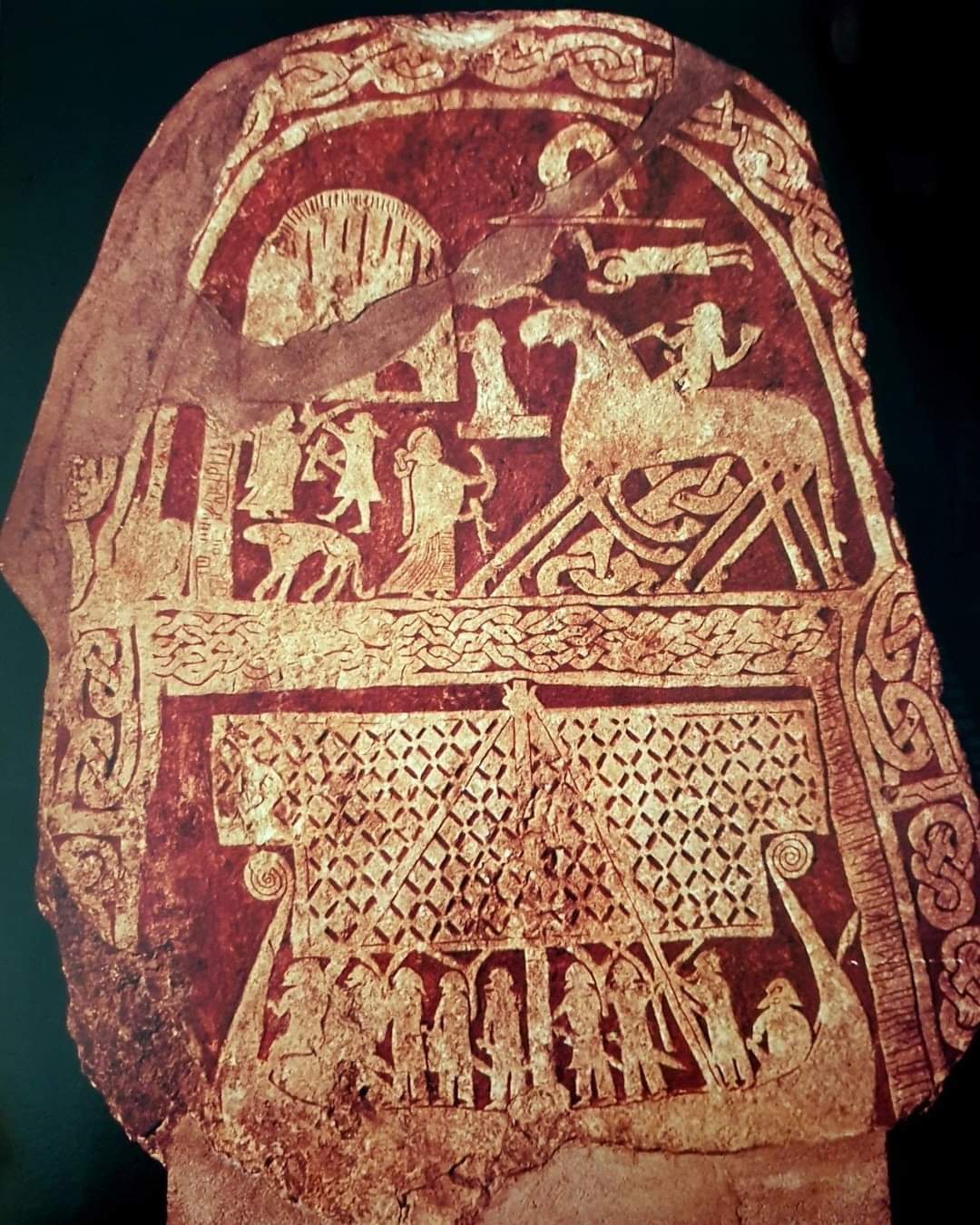
(This is the Tjaengvide image stone, one of a group of runic stones, called the “Sigurd stones”, found in Sweden and dated to between 700 and 1100AD.  You can read more about it here:  https://en.wikipedia.org/wiki/Tj%C3%A4ngvide_image_stone You can read about the other stones here:  https://en.wikipedia.org/wiki/Sigurd_stones  Tolkien would first have heard about Sigurd from Andrew Lang’s The Red Fairy Book, 1890, which you can find here:   https://archive.org/details/redfairybook00langiala/redfairybook00langiala/mode/2up  Sigurd himself possessed the offspring of Sleipnir, Grani, which you can read about here:  https://en.wikipedia.org/wiki/Grani )

and further medieval reading would have filled his mind with mythic and magic horses, like Cu Chulainn, the Irish hero’s, chariot pair, water horses named Liath Macha and Dub Sainglend (although he wasn’t very enthusiastic about Old Irish literature which, I suspect, he found much wilder and stranger and more disturbing than, say, the Welsh Mabinogion, which you can read about here:    https://en.wikipedia.org/wiki/Mabinogion )
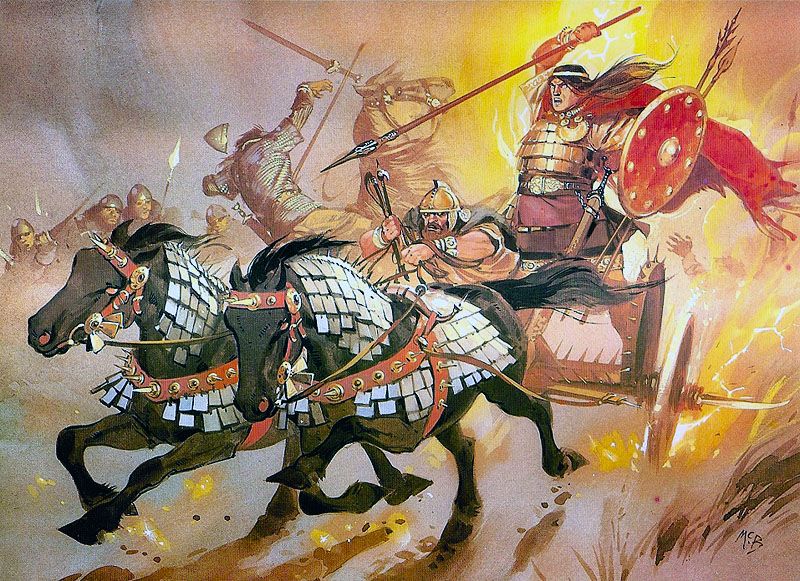
(a rather over-the-top image by the usually dependable Angus McBride—someone should have mentioned to him that, although “Dub” means “black”, Liath means “grey”.  Cu Chulainn is one of my favorite ancient berserkers—to mix cultures—and, if you don’t know him, you can begin to read about him here:  https://en.wikipedia.org/wiki/C%C3%BA_Chulainn )

But there are magical horses in many places—see https://en.wikipedia.org/wiki/List_of_horses_in_mythology_and_folklore for many more, with at least many of the medieval, he would have been familiar. 

And while we’re speaking of Middle-earth and horses, we need to mention the Normans, who, combined with the Anglo-Saxons for language, were the basis of the Rohirrim–

“The Rohirrim were not ‘medieval’ in our sense.  The styles of the Bayeux Tapestry…fit them well enough…” (letter to Rhona Beare, 14 October, 1958, Letters, 401)

The Rohirrim, in turn, lead us back to the opening of this posting.  Although, in Tolkien’s day, cavalry and glorious charges,
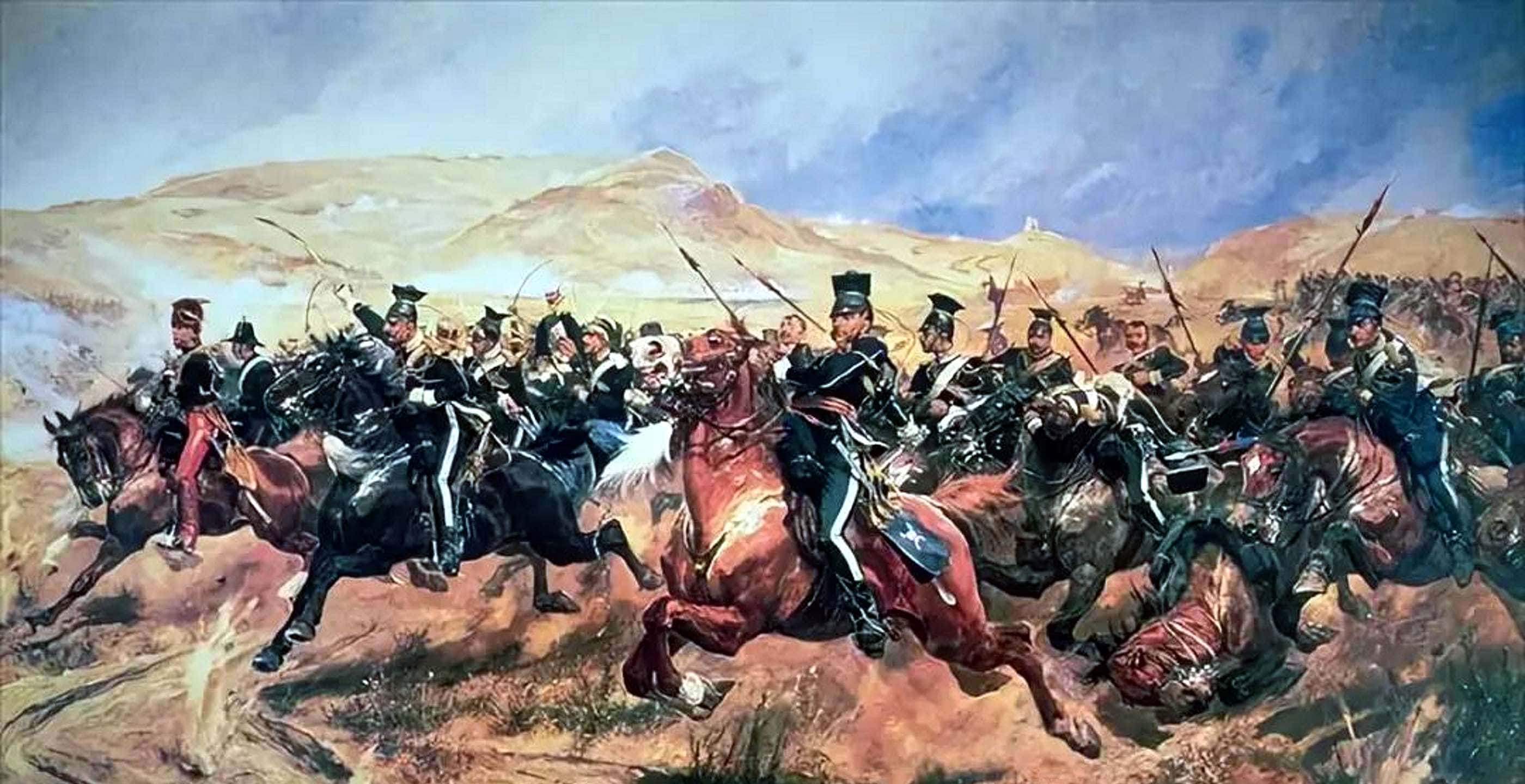
like that of the British Light Brigade at Balaclava in 1854, commemorated in Tennyson’s poem, were almost at the end of their military usefulness, for a Romantic, like Tolkien, the idea of such a charge was still a powerful image and one he couldn’t resist, depicting the heroic Rohirrim assembling

(from the Jackson film)

and roaring down on the unsuspecting orcs. 

(Abe Papakhian)

JRRT was writing medieval fantasy, however, but, as I’m always interested in “what if’s”, here I’m remembering what actually happened to that Light Brigade charge, an attack made in the teeth of Russia artillery.
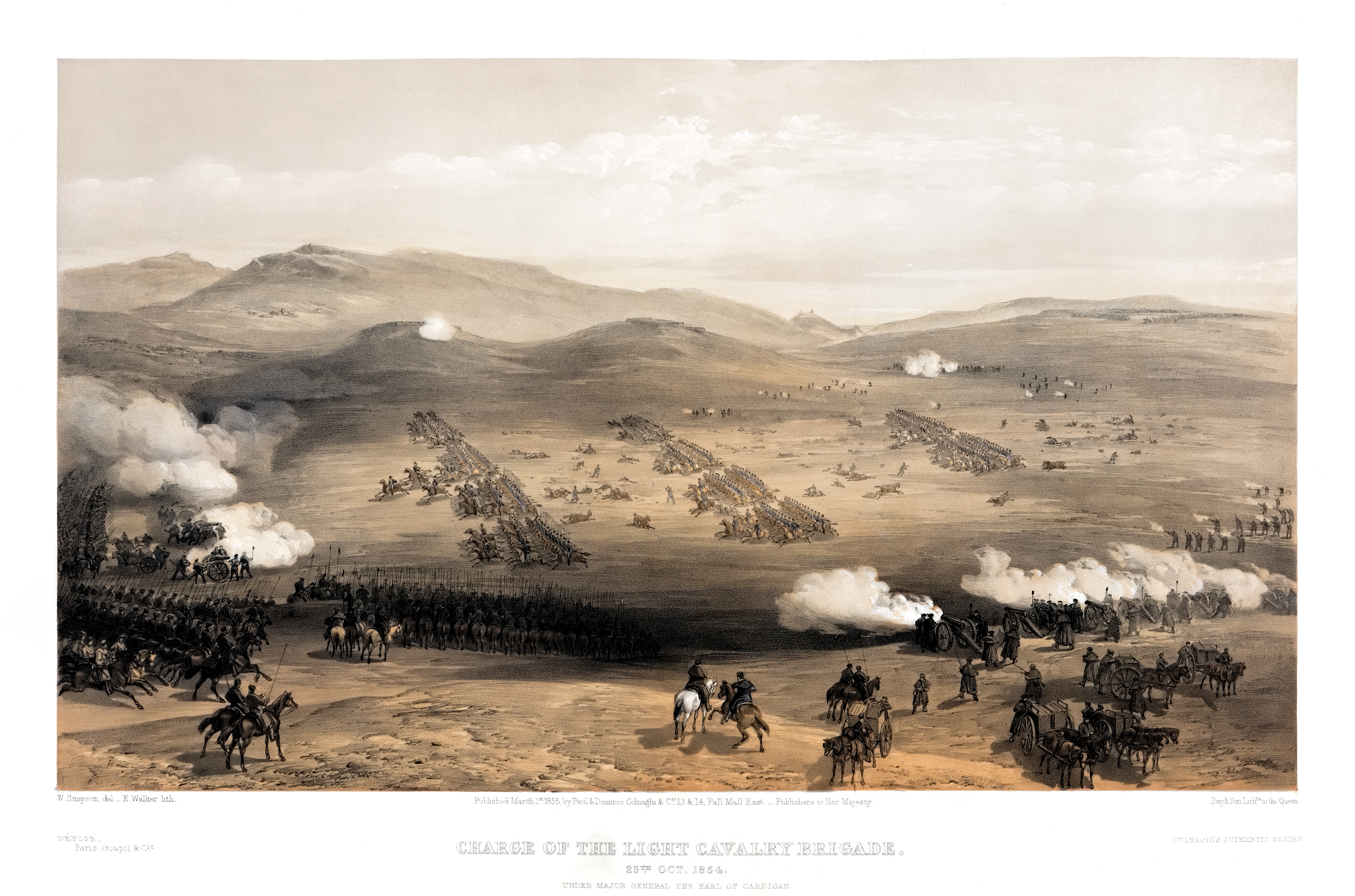
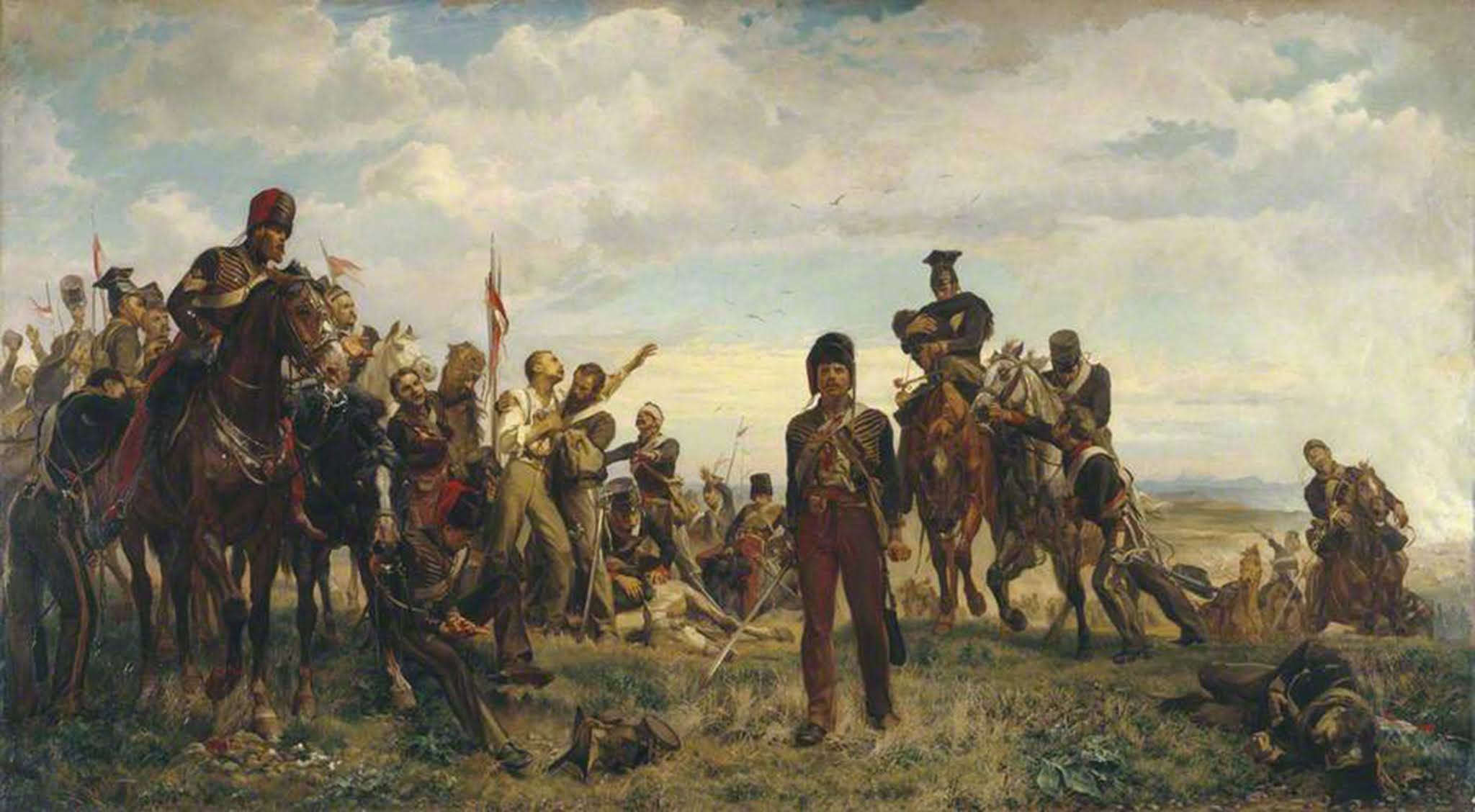
The consequence was that, out of 609 men who rode towards the Russians, only 198 returned, and Lady Butler’s picture, “Balaclava the Return 25 October 1854” (1911) sums up the actual aftermath of that charge.
There’s evidence in the destruction of the Causeway Forts that Sauron’s army had some sort of blasting powder—suppose, instead of using it just as a siege tool, it had been employed with some sort of projectile propelled by it out of a tube—what might that have done to the Rohirrim’s valiant attack? 
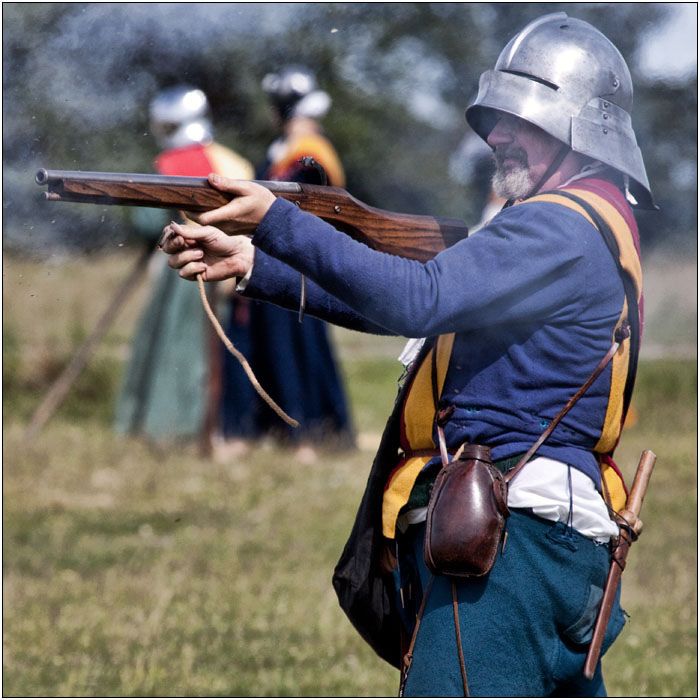
Or even using the technique of the English army against the French at Agincourt, in our medieval world of 1415AD:  pointed stakes to threaten horses, behind which stood massed bowmen:  what would have been the outcome of that?

(Angus Mcbride)

475 horses were lost in the Charge of the Light Brigade.  Military progress so often just means more killing, but the replacement of horses with machines seems to me, who loves horses, a turn for the better.   At the same time, with Tolkien, I can feel the attraction for wild charges with swords at top speed (although cavalry did better when, at most, it went in at the canter—galloping causes loss of formation which can blunt the effect of such an attack), but, as in the charge of the Rohirrim, I’m glad if they only appear in fiction—and far from modern weaponry.

Thanks, as ever, for reading,

Stay well,

Remember that there’s a special spot, just behind the poll (top of the head), which, if scratched in the right place, makes many horses happy,

And remember, as well, that there’s always

MTCIDC

O

PS

One of those little “what if” quirks of history–Tolkien’s immediate family had been in the Orange Free State at the time of his birth, in 1892.  Tolkien’s father, Arthur, was manager of the Bloemfontein branch there of the Bank of Africa.  The Orange Free State was one of the Boer republics attacked by Britain in the Boer War of 1899-1902. If Tolkien’s mother hadn’t brought JRRT and his brother, Hilary, back to England, in 1895, and Arthur hadn’t died of the effects of rheumatic fever in 1896,
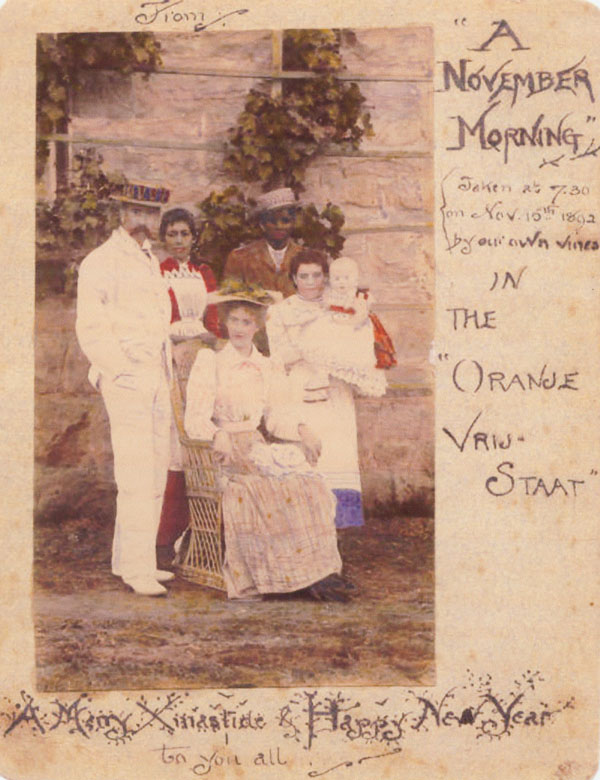
Tolkien might have been in the Orange Free State when Bloemfontein was occupied by the British on 13 March, 1900.  (You can see early film of the Scots Guards marching in here:  https://www.youtube.com/watch?v=DHy2cEFwlIo )

PPS

In last week’s posting, I mentioned the story of the wonderfully bloodthirsty Frankish queen Fredegunda, as she appears in Gregory of Tours Historia Francorum.  I wrote there that you might read about her assassination of Bishop Praetextatus and her cold-blooded visit to him on his deathbed afterwards—but it required reading Gregory’s 6th-century Latin, as I didn’t provide a translation.  It seemed lazy of me not to include one of that scene, however, so here it is with the original Latin.  As always, I could smooth this out, but I prefer to stick as close as I can to the text, to give you a better feel for what’s actually been written.

Advenientem autem dominicae resurrectionis diae, cum sacerdos ad implenda aeclesiastica officia ad aeclesiam maturius properasset, antefanas iuxta consuetudinem incipere per ordinem coepit. Cumque inter psallendum formolae decumberet, crudelis adfuit homicida, qui episcopum super formolam quiescentem, extracto baltei cultro, sub ascella percutit. Ille vero vocem emittens, ut clerici qui aderant adiuvarent, nullius ope de tantis adstantibus est adiutus. At ille plenas sanguine manus super altarium extendens, orationem fundens et Deo gratias agens, in cubiculo suo inter manus fidelium deportatus et in suo lectulo collocatus est. Statimque Fredegundis cum Beppoleno duce et Ansovaldo adfuit, dicens: ‘Non oportuerat haec nobis ac reliquae plebi tuae, o sancte sacerdos, ut ista tuo cultui evenirent. Sed utinam indicaretur, qui talia ausus est perpetrare, ut digna pro hoc scelere supplicia susteneret’. Sciens autem ea sacerdos haec dolose proferre, ait: ‘Et quis haec fecit nisi his, qui reges interemit, qui saepius sanguinem innocentem effudit, qui diversa in hoc regno mala commisit?’ Respondit mulier: ‘Sunt aput nos peritissimi medici, qui hunc vulnere medere possint. Permitte, ut accedant ad te’. Et ille: ‘Iam’, inquid, ‘me Deus praecepit de hoc mundo vocare. Nam tu, qui his sceleribus princeps inventa es, eris maledicta in saeculo, et erit Deus ultur sanguinis mei de capite tuo’. Cumque illa discederit, pontifex, ordinata domo sua, spiritum exalavit. 

“However, with the coming of the day of [Our] Lord’s resurrection, when the priest [Praetextatus] had hurried early to the church to fulfill [his] ecclesiastical duties, he started to begin [the] antiphons according to custom [in their proper] order.  And when, between the psalms, he was lying on a bench, a cruel murderer appeared, who, when a knife had been pulled from [his] belt, struck the bishop, resting on the bench, under the armpit.  He [the bishop], however, [although] shouting so that the clergy who were present might help him, was aided with help of none from so many being present.  Yet he, stretching his hands, full of blood, above the altar, pouring [out] a prayer and thanking God, was carried off into his bedchamber by the hands of [his] faithful [followers] and placed on his bed.  And straightaway Fredegunda, with the Duke Beppolenus and Ansovaldus, appeared, saying, ‘Oh holy priest, this was not right for us and for the rest of your people that such things should happen in your worshipping.  But would that it would be revealed who had dared to carry out such things that he should suffer punishment worthy of this crime.’  The priest, knowing, however, that she was speaking of these things deceptively, said, ‘And who has done these things if not [the one] who has killed kings, who very often has poured out innocent blood, who has committed many evil deeds in this kingdom’  The woman replied:  ‘There are in our household highly experienced doctors who would be able to heal this wound.  Allow [it] that they may come to you.’  And he [said]:    ‘God has decreed to call me from this world.  On the other hand, you who have been exposed as chief in these crimes, you will be cursed in the future and God will be the avenger of my blood on your head.’  And when she had left, the bishop, affairs arranged in his house, breathed out his spirit.”

And how could I not include Alma-Tadema’s illustration?

Green and Quiet.2

12 Wednesday Sep 2018

Posted by Ollamh in Heroes, J.R.R. Tolkien, Military History

≈ Leave a comment

Tags

21st Lancers, Bataclava, Cavalry, Charge of the Light Brigade, Edwardian, Great War, horses, King Edward, Medieval, Omdurman, Oxford, Pelennor, railways, Rohirrim, Romans, Scots Greys, Tolkien, Victorian, Waterloo

Welcome, as ever, dear readers.

The late-Victorian/Edwardian world of JRRT’s childhood and youth was full of stirring stories and illustrations of military adventure, from the 1815 charge of the Scots Greys at Waterloo

image1scot.jpg

to the disastrous (but glorious) charge of the Light Brigade at Balaclava in 1854

image2.jpg

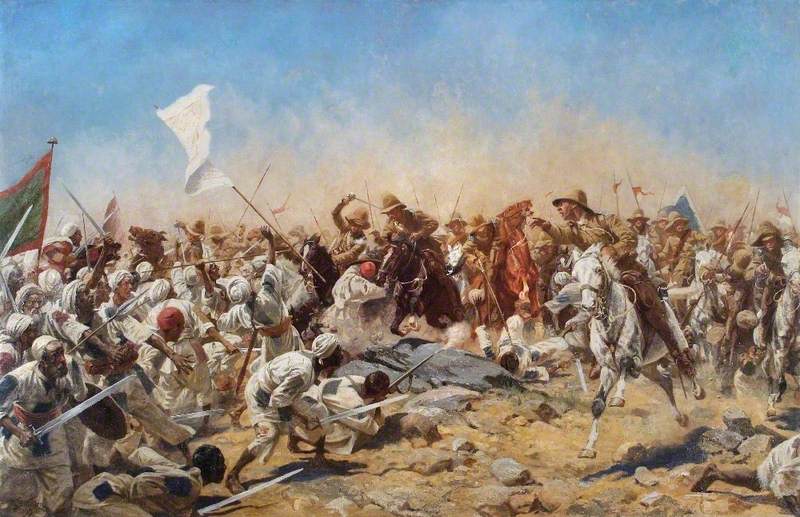
to the near-disastrous (but also glorious) charge of the 21st Lancers at Omdurman (1898)

image3omdurman.jpg

to the expectation of more glorious attacks in the event of a Great War on the continent.

image4eleventhhus.jpg

Such images may have inspired him to join a volunteer cavalry unit at Oxford, King Edward’s Horse,

image5keh.jpg

and may even lie behind the charge of the Rohirrim at the Battle of the Pelennor Fields.

image6pel.jpg

To us, however, it also symbolizes something else:  the role of the horse in Tolkien’s world.  Its military role was more than simply carrying the glamorous cavalry, however.

image7hussars.jpg

It also pulled the guns,

image8rha.jpg

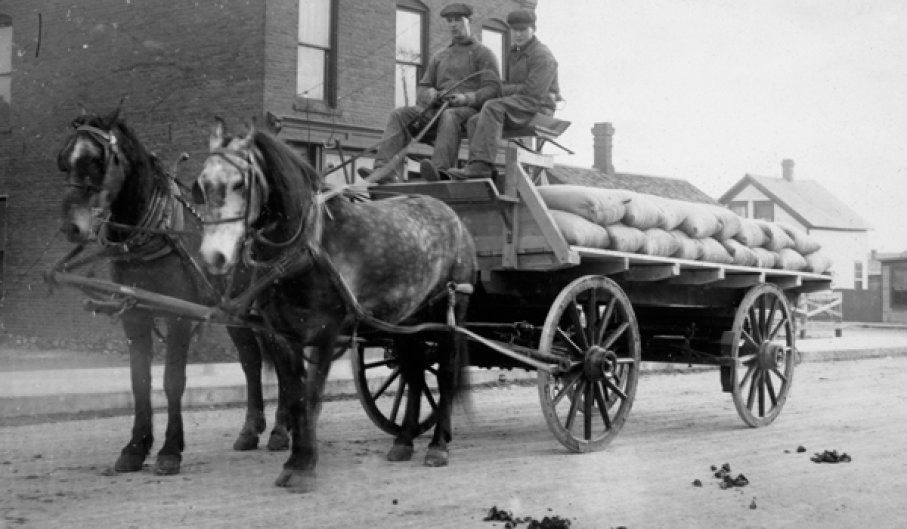
the supply wagons,

image9gsw.jpg

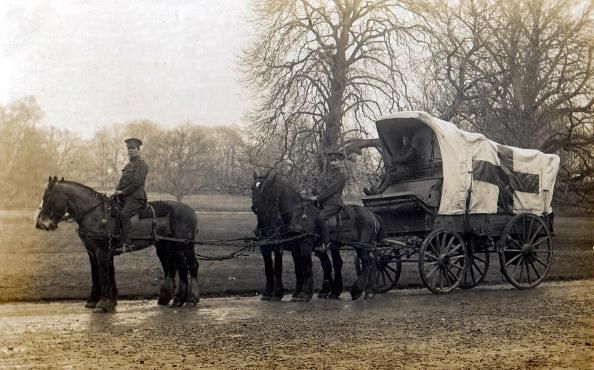
the ambulances,

image10ambulance.jpg

as well as carried those in control of it all, from the Kings (after 1901)

image11ed7.jpg

image12geo5.jpg

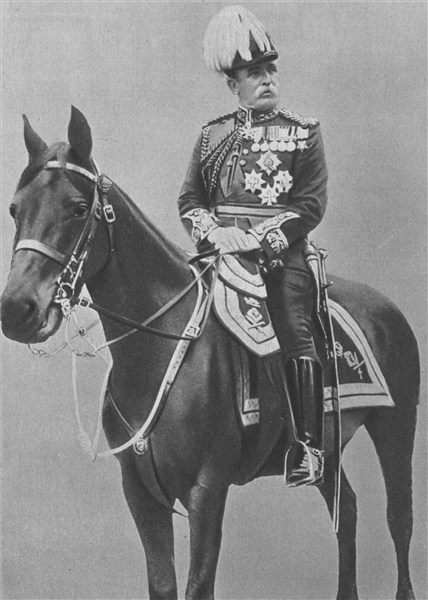
to the generals,

image13french.jpg

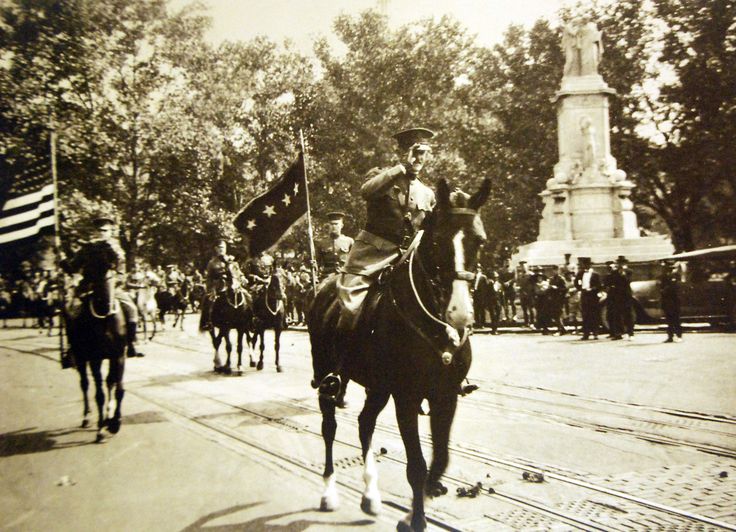
and it was the same for all of Europe and the US, as well.

image14kaiser.png

image15tr.jpg

image16pershing.jpg

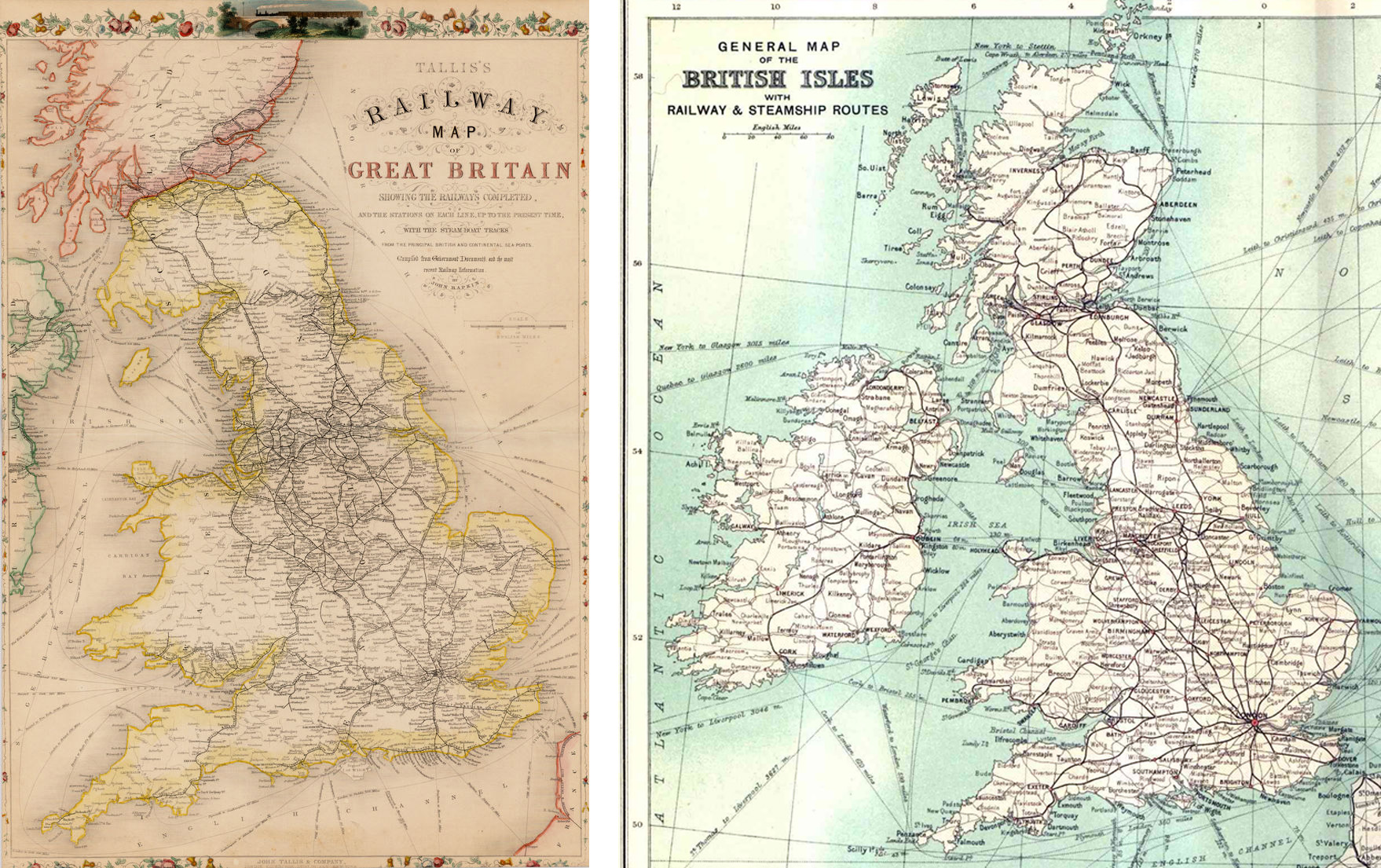
All of which simply reflected that, for all that there were railroads

image17railway.jpg

and the West was crisscrossed with railway tracks,

image18rrmaps.jpg

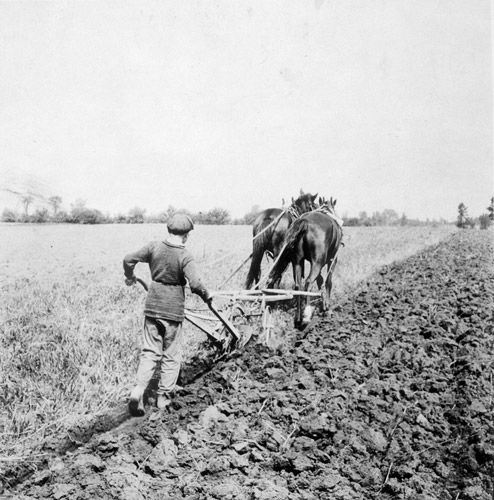
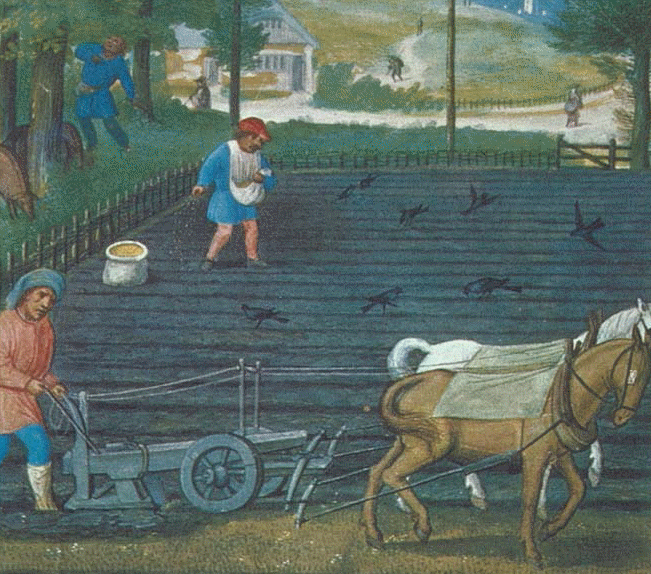
horses still pulled the world,

image19plowing.jpg

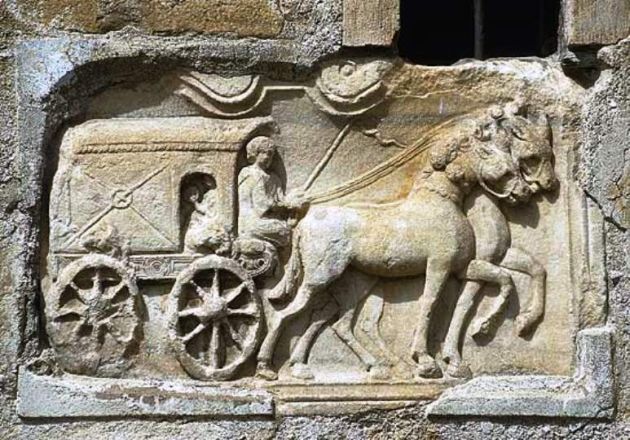
as they had from Roman times

image20roman.jpg

through medieval

image21medplow.gif

and still did, even beyond the Great War.

image22london.jpg

In our last posting, we discussed a line from The Hobbit :  “By some curious chance one morning long ago in the quiet of the world, when there was less noise and more green…”

We suggested that, with that phrase “long ago” and that imperfect tense verb form, “was”, all was no longer so quiet or green and that goblins/orcs, or their modern equivalent in the Industrial Revolution, were eating up the green of the world, as well as the quiet, but we would like to add to that that a major change in transport, which removed the horse almost entirely from the picture, also contributed greatly.

First, of course, it was those railways which cut through everywhere, steaming and smoking and hooting.

image23rr.png

These greatly reduced the use of horses for carrying things—and people—over distances.

image24wagon.jpg

image25stage.jpg

At the turn of the century, however, a new invention would come to so diminish the employment of horses eventually to the point where they would be thought obsolete.

image26duryea.JPG

At first, they were few and far between, available only to the rich for personal use.

image27richcar.jpg

The massive production needed for the Great War (1914-1918),

image28atruck.jpg

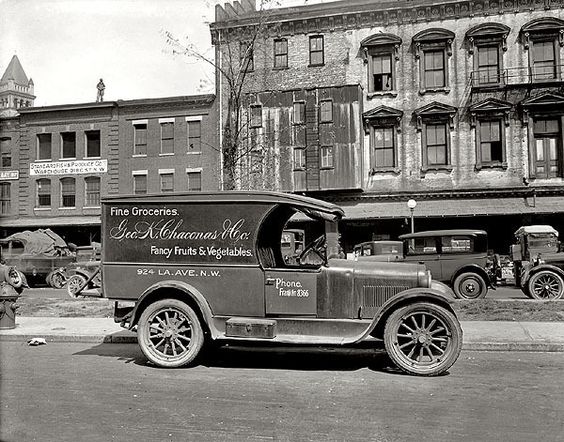
however, encouraged both post-war demand and supply.

image28car.jpg

image29van.jpg

As we’ve discussed in previous postings, the Romans had been masters of the paved road.

image30romanroad


After the Romans, however, the secret (and the massive amounts of cash, as well as the numbers of workers) to such roads was lost and roads declined into, at best, wide paths—dust baths in summer, swamps in winter.

image31greatnorth.jpg

At best, a road might be “metalled”—that is, covered in loose stone (from Latin “metallum”—here, meaning “quarry”).

image32metalled.jpg

In the 1820s, the Scots engineer, JL McAdam, created roads with a crushed stone surface over larger inlaid stones.

image33mcadam


Each of these was an improvement over a dirt track,

image34track.jpg

but, about 1900, the next process arrived, with the use of bitumen and then various petroleum substances to cover the surface and, along with the use of concrete, these produced the roads we still drive on today.

image35highway.jpg

Unfortunately for green and quiet, this rapidly multiplied the decay of both, as cars and trucks and the roads they needed began to spread across the landscape.  Imagine, for a man who had been born into the greener and quieter and horsier world of 1892, what this 1930s traffic jam would have been like and you can easily see why he would have believed that goblins and orcs could so harm the peaceful world!

image36jam.jpg

Thanks, as ever, for reading.

MTCIDC

ps

Recently, we happened upon this very interesting story, which we had never seen before, from the online BBC New, 3 July, 2006.  The author mentions “Tolkien’s son” by whom he means JRRT’s second son, Michael.

Many years ago I corresponded with Tolkien’s son, a schoolmaster like myself. He said the Dark Riders in his novel were based on a real recurring nightmare from the Forst World War. Tolkien, riding a good cavlary horse, had somehow got lost behind the German lines,and, imagining he was behind his own trenches, rode towards a group of mounted cavalrymen standing in the shade of a coppice.

It was only when he drew nearer he realised his mistake for they German Ulhans, noted for their atrocities and taking no prisoners. When they saw him they set off in pursuit with their lances levelled at him. He swung his horse round and galloped off hotly pursued by the Germans. They had faster steeds but Tolkien’s horse was a big-boned hunter.

They got near enough for him to see their skull and crossbone helmet badges. Fortunately for Tolkien (and us, his readers)he raced towards some old trenches which his horse, used to hunting, took in its stride. The Uhlans’ horses weren’t up to it and they reined in leaving Tolkien to get away to his own side.

He was terrified and the cruel faces of those Uhlans and their badges haunted him in nightmares for a long time afterwards. Years later, when he was writing his novel, the Dark Riders were the result of that terrifying chase.
Revd John Waddington-Feather, Shrewsbury

There are some odd typos, but we think that the basic story might be true except for the details about the German cavalry.  Uhlans are lancers, but lancer cap badges looked like this.

image37czapska.jpg

German hussar busbies, however, could have the famous “death’s head” badge.

image38vonm.jpg

And German hussars also could carry lances as in this picture from 1915.

image39hussars.jpg

German cavalry went to war with covers over their headgear (as in the photo of the hussars), but, if the story is accurate, we might presume that the hussars, for some reason, have shed those covers.

Where From the Rohirrim?

10 Wednesday Jun 2015

Posted by Ollamh in Heroes, J.R.R. Tolkien, Military History, Military History of Middle-earth, Narrative Methods, The Rohirrim

≈ 1 Comment

Tags

Amazons, Anglo-Saxon, Bayeux Tapestry, Burial mounds, Cavalry, Charge of the Light Brigade, descendants, Edoras, Eotheod, Horse people, Indo-European, Kurgan, language, Middle-earth, Normans, Rohan, Rohirric, Rohirrim, Scythians, The Lord of the Rings, The Mark, Tolkien, Tom Shippey

Dear Readers, welcome!

In this post, we want to think out loud a bit about the Rohirrim.

ghan Rohirrim-by-Angus-McBride-kacik-rohanskiej-adoracji-36841491-473-477 maxresdefault

Everyone knows where their language is from, as Tolkien says in a letter to “one Mr. Rang”:

“…’Anglo-Saxon’…is the sole field in which to look for the origins and meaning of words and names belonging to the speech of the Mark.” LT 381

And yet they are horse people (their own name for themselves, in fact, is Eotheod, “horse people”), which the Angles and Saxons who went to make up the Anglo-Saxons, were not.   Tolkien was well aware of this difference, saying in Appendix F of The Lord of the Rings:

“…this linguistic procedure does not imply that the Rohirrim closely resembled the ancient English otherwise, in culture or art, in weapons or modes of warfare, except in a general way due to their circumstances…” L1136

Tom Shippey, in The Road to Middle Earth, suggests that

“The Rohirrim are nothing if not cavalry. By contrast the Anglo-Saxons’ reluctance to have anything militarily to do with horses is notorious…How then can Anglo-Saxons and Rohirrim ever, culturally, be equated? A part of the answer is that the Rohirrim are not to be equated with the Anglo-Saxons of history, but with those of poetry, or legend.” (112)

Or, could there have been other models?

Tolkien may have been suggesting one when, in a letter to Rhona Beare of 14 October, 1958:

“The Rohirrim were not ‘mediaeval’ in our sense. The styles of the Bayeux Taptestry (made in England) fit them well enough, if one remembers that the kind of tennis-nets [the] soldiers seem to have on are only a clumsy conventional sign for chain-mail of small rings.” Ltr 280-281.

The Bayeux Tapestry depicts both Normans and their allies, on the one hand, and the Anglo-Saxons, on the other, but Tolkien doesn’t appear to distinguish between them. The Normans themselves are mounted, the Anglo-Saxons on foot, as was their custom (they did use horses to move rapidly from place to place, as in the race north to Stamford Bridge and then back south to face the Normans).

5191623_orig

Here, to the left, we see those mounted Normans and, to the right, the Anglo-Saxons behind their shield wall. The “tennis-nets” are clearly visible and would actually have looked like this:

huscarl

In this further illustration, by the way, it’s easy to see the consequences of having the shield wall crumble: men on horseback can have a significant advantage when their opponents lose cohesion.

34small-1000

This, however, is only their look . What about those horses and an entire culture based around them?

For a clue, we look to another element in the culture of the Rohirrim, the use of burial mounds. Here they are at Edoras.

Simbelmyne_Mounds

(We can’t resist, by the way, saying that our absolute favorite part of the Jackson movies is anything to do with the Rohirrim—to us, absolutely inspired and we see the depiction of the charge of the Rohirrim against the army besieging Minas Tirith as being right up there with the Charge of the Light Brigade at Balaclava in 1854 and the charge of the Australian Light Horse at Beersheba in 1917–

Rohancharge

(c) National Trust, Tredegar House; Supplied by The Public Catalogue Foundation

beersheba lambert

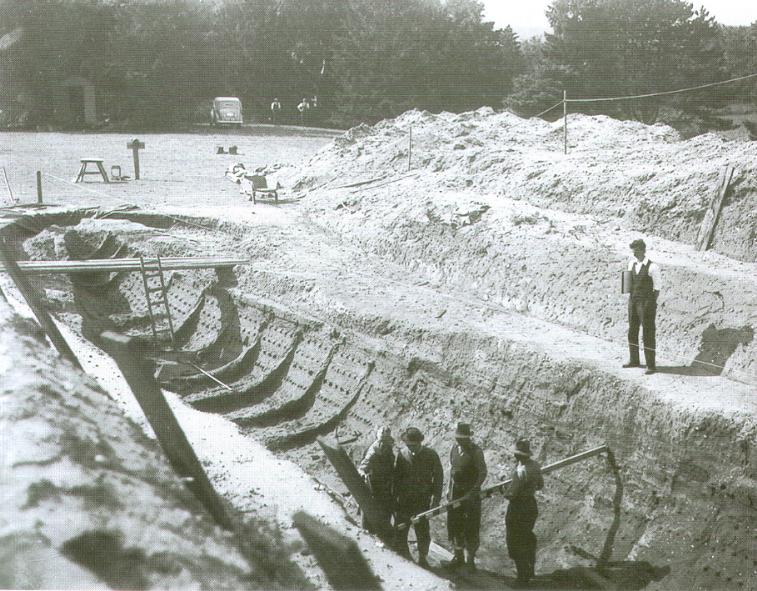
One might say, in reply, that there are Anglo-Saxon mounds—like the famous Sutton Hoo ship burial.

c52a1bf535

But that leaves us where we started, in the land of foot soldiers.

huscarl1

So, let’s go farther afield, to the north of the Black Sea.  

WRLH034-H

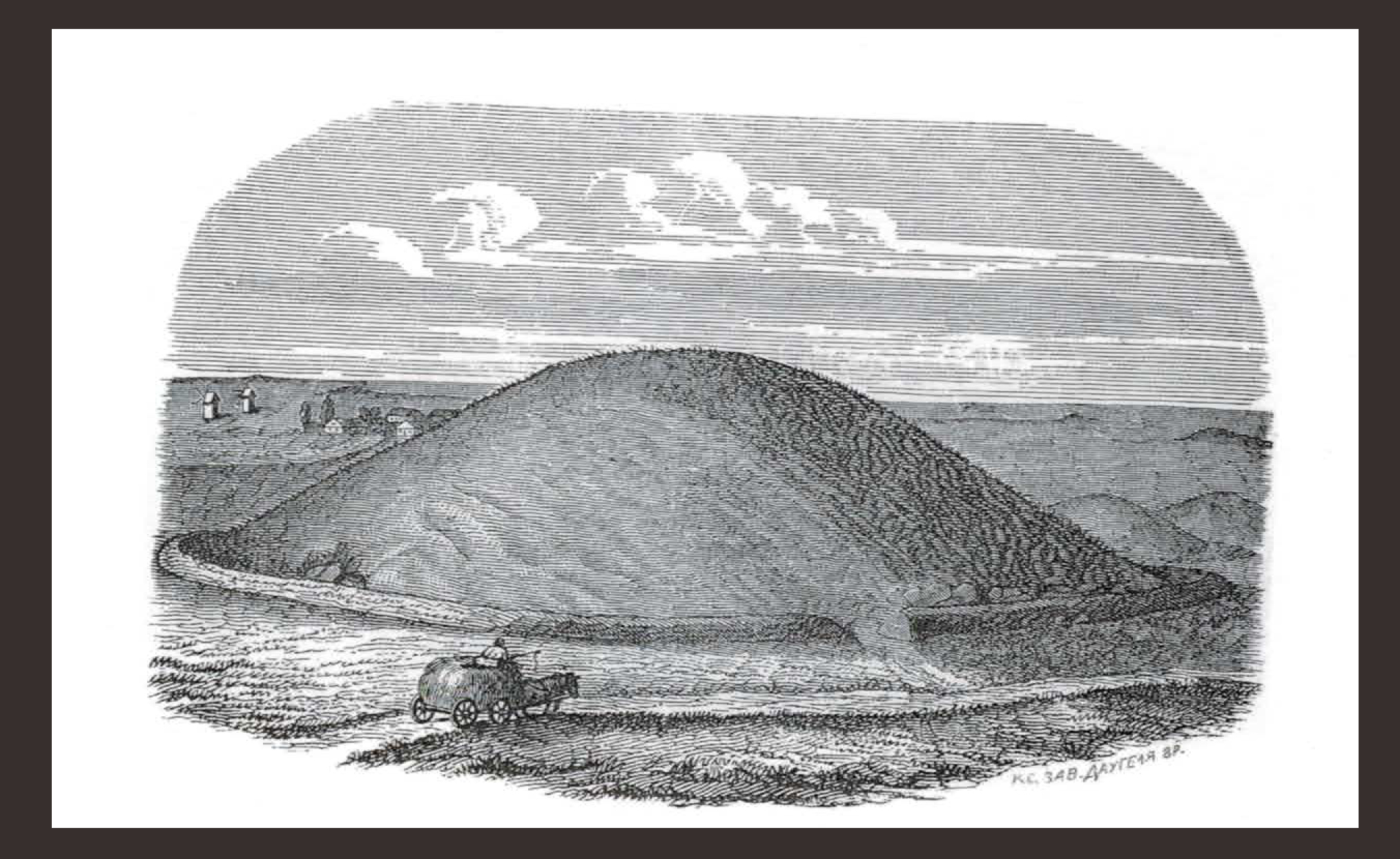
Here, we see the so-called “Kurgan Culture”, with its burial mounds

02161200-1 02161200

[This, by the way, is not to be confused with The Kurgan from the first Highlander movie

The Kurgan]

movie-villain-kurgan

These were a people who:

  1. are believed by many linguists (and some archeologists) to be the direct ancestors of the Indo-Europeans who gradually invaded Asia Minor and western Europe (including, eventually, the Anglo-Saxons) as well as moving east, to India and beyond
  2. buried their dead (at least what appear to be the high status ones) in mounds
  3. were a horse culture

And, in fact, were seemingly the forerunners of the Scythians, a later well-known Indo-European horse people

Scythia Rod-Scythian-Horseback

angus-mcbride-scythia-1

And the Scythians, in turn, may have been the model for those mythical horse folk, the Amazons.

72303amazon

In the 19th century, when the idea of Indo-Europeans began to circulate, there was a preference for a northern European origin (a theory no longer held), but the idea of an eastern home was also circulating and we would suggest that Tolkien would have known about this, as well as, from his early classical training, Scythians and Amazons, their actual and mythical descendants.

Imagine, then, that what we see in the Rohirrim is, in fact, an interesting mixture of people sprung from an earlier people (as Tolkien tells us, the Rohirrim were descended from the Edain of the First Age—see LOTR, Appendix F 1129), both in our world and in Middle Earth, who based their culture upon horses, and bury their dead in mounds, combined with people who may also bury their dead in mounds, who speak a version of Anglo-Saxon and who dress like the Normans and Anglo-Saxons of the 11th century AD.

What do you think, dear readers?

Thanks for reading, as always.

MTCIDC

CD

The Doubtful Sea Series Facebook Page

The Doubtful Sea Series Facebook Page

  • Ollamh

Categories

  • Artists and Illustrators
  • Economics in Middle-earth
  • Fairy Tales and Myths
  • Films and Music
  • Games
  • Heroes
  • Imaginary History
  • J.R.R. Tolkien
  • Language
  • Literary History
  • Maps
  • Medieval Russia
  • Military History
  • Military History of Middle-earth
  • Narnia
  • Narrative Methods
  • Poetry
  • Research
  • Star Wars
  • Terra Australis
  • The Rohirrim
  • Theatre and Performance
  • Tolkien
  • Uncategorized
  • Villains
  • Writing as Collaborators
Follow doubtfulsea on WordPress.com

Across the Doubtful Sea

Recent Postings

  • A Moon disfigured December 17, 2025
  • On the Roads Again—Once More December 10, 2025
  • (Not) Crossing Bridges December 3, 2025
  • On the Road(s) Again—Again November 26, 2025
  • On the Road(s) Again November 19, 2025
  • To Bree (Part 2) November 12, 2025
  • To Bree (Part 1) November 5, 2025
  • A Plague o’ Both—No, o’ All Your Houses! October 29, 2025
  • It’s in Writing (2:  I’st a Prologue, or a Poesie for a Ring?) October 22, 2025

Blog Statistics

  • 103,228 Views

Posting Archive

  • December 2025 (3)
  • November 2025 (4)
  • October 2025 (5)
  • September 2025 (4)
  • August 2025 (4)
  • July 2025 (5)
  • June 2025 (4)
  • May 2025 (4)
  • April 2025 (5)
  • March 2025 (4)
  • February 2025 (4)
  • January 2025 (5)
  • December 2024 (4)
  • November 2024 (4)
  • October 2024 (5)
  • September 2024 (4)
  • August 2024 (4)
  • July 2024 (5)
  • June 2024 (4)
  • May 2024 (5)
  • April 2024 (4)
  • March 2024 (4)
  • February 2024 (4)
  • January 2024 (5)
  • December 2023 (4)
  • November 2023 (5)
  • October 2023 (4)
  • September 2023 (4)
  • August 2023 (5)
  • July 2023 (4)
  • June 2023 (4)
  • May 2023 (5)
  • April 2023 (4)
  • March 2023 (5)
  • February 2023 (4)
  • January 2023 (4)
  • December 2022 (4)
  • November 2022 (5)
  • October 2022 (4)
  • September 2022 (4)
  • August 2022 (5)
  • July 2022 (4)
  • June 2022 (5)
  • May 2022 (4)
  • April 2022 (4)
  • March 2022 (5)
  • February 2022 (4)
  • January 2022 (4)
  • December 2021 (5)
  • November 2021 (4)
  • October 2021 (4)
  • September 2021 (5)
  • August 2021 (4)
  • July 2021 (4)
  • June 2021 (5)
  • May 2021 (4)
  • April 2021 (4)
  • March 2021 (5)
  • February 2021 (4)
  • January 2021 (4)
  • December 2020 (5)
  • November 2020 (4)
  • October 2020 (4)
  • September 2020 (5)
  • August 2020 (4)
  • July 2020 (5)
  • June 2020 (4)
  • May 2020 (4)
  • April 2020 (5)
  • March 2020 (4)
  • February 2020 (4)
  • January 2020 (6)
  • December 2019 (4)
  • November 2019 (4)
  • October 2019 (5)
  • September 2019 (4)
  • August 2019 (4)
  • July 2019 (5)
  • June 2019 (4)
  • May 2019 (5)
  • April 2019 (4)
  • March 2019 (4)
  • February 2019 (4)
  • January 2019 (5)
  • December 2018 (4)
  • November 2018 (4)
  • October 2018 (5)
  • September 2018 (4)
  • August 2018 (5)
  • July 2018 (4)
  • June 2018 (4)
  • May 2018 (5)
  • April 2018 (4)
  • March 2018 (4)
  • February 2018 (4)
  • January 2018 (5)
  • December 2017 (4)
  • November 2017 (4)
  • October 2017 (4)
  • September 2017 (4)
  • August 2017 (5)
  • July 2017 (4)
  • June 2017 (4)
  • May 2017 (5)
  • April 2017 (4)
  • March 2017 (5)
  • February 2017 (4)
  • January 2017 (4)
  • December 2016 (4)
  • November 2016 (5)
  • October 2016 (6)
  • September 2016 (5)
  • August 2016 (5)
  • July 2016 (5)
  • June 2016 (5)
  • May 2016 (4)
  • April 2016 (4)
  • March 2016 (5)
  • February 2016 (4)
  • January 2016 (4)
  • December 2015 (5)
  • November 2015 (5)
  • October 2015 (4)
  • September 2015 (5)
  • August 2015 (4)
  • July 2015 (5)
  • June 2015 (5)
  • May 2015 (4)
  • April 2015 (3)
  • March 2015 (4)
  • February 2015 (4)
  • January 2015 (4)
  • December 2014 (5)
  • November 2014 (4)
  • October 2014 (6)
  • September 2014 (1)

Blog at WordPress.com.

  • Subscribe Subscribed
    • doubtfulsea
    • Join 78 other subscribers
    • Already have a WordPress.com account? Log in now.
    • doubtfulsea
    • Subscribe Subscribed
    • Sign up
    • Log in
    • Report this content
    • View site in Reader
    • Manage subscriptions
    • Collapse this bar
 

Loading Comments...