• About

doubtfulsea

~ adventure fantasy

Tag Archives: anti-aircraft gun

Bard

09 Wednesday Jul 2025

Posted by Ollamh in Uncategorized

≈ Leave a comment

Tags

Agincourt, anti-aircraft gun, Archery, Arthur Machen, Bard, Bilbo, black arrow, Crecy, Dwarves, Fafnir, Fantasy, Howard Pyle, James Fenimore Cooper, Le Cateau, NC Wyeth, Poitiers, Robert Louis Stevenson, Robin Hood, Sigurd, Smaug, The Bowmen, The Hobbit, Tolkien

Welcome, as ever, dear readers,

When Bilbo and the dwarves

(the Hildebrandts)

set out on their quest, they’re aware that, at its end, they must face the reason the dwarves’ forebears died or fled Erebor, the “Lonely Mountain”.

(JRRT)

And yet they go, suggesting an almost foolhardy shrug of an attitude, particularly as Gandalf has suggested that they need someone right out of myth to help them:

“ ‘That would be no good…not without a mighty Warrior, even a Hero.’ “

But:

“ ‘I tried to find one; but warriors are busy fighting one another in distant lands, and in this neighbourhood heroes are scarce, or simply not to be found.’ “ (The Hobbit, Chapter 1, “An Unexpected Party”) 

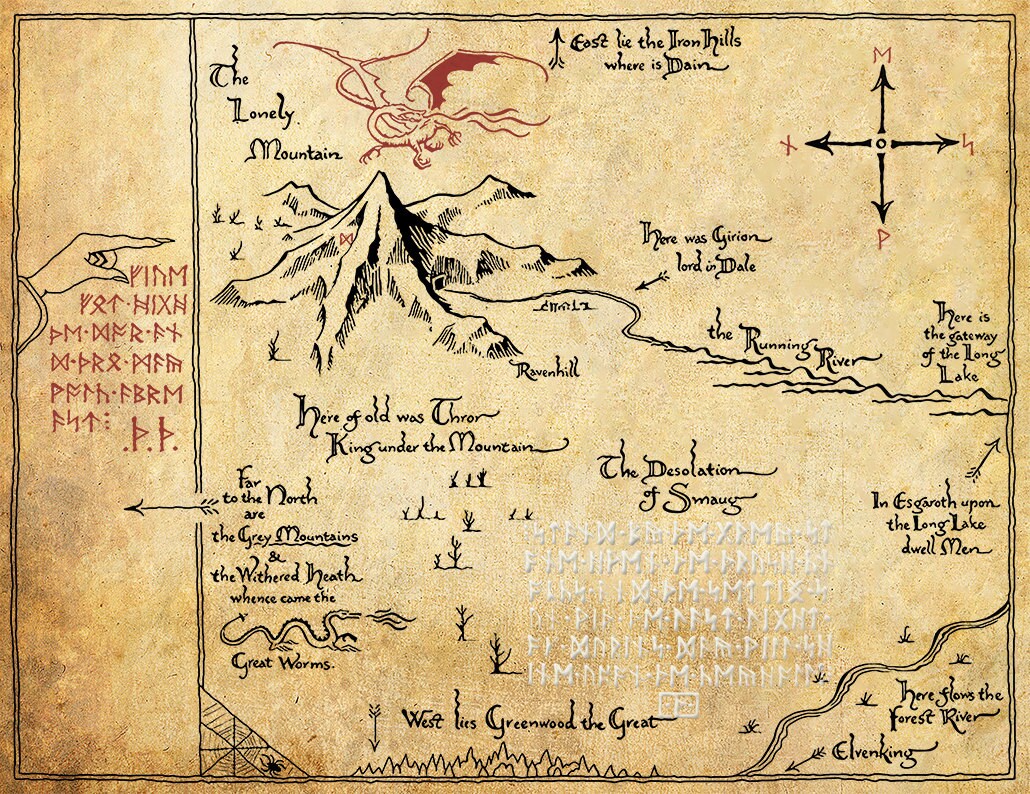
Everything about this trip already seems haphazard, having no map of their destination, till Gandalf furnishes them with one,
(JRRT)

and even then they have no idea of another, secret entrance until Elrond spots the inscription which describes it—and how to open it.  Clearly, then, this is a case of “we’ll cross that bridge when we come to it.”

Uh oh.

There’s also no clue in the text as to who or what may destroy the destroyer—until Bilbo, flattering Smaug, spots that fatal weak point:

“ ‘I’ve always understood…that dragons were softer underneath, especially in the region of the—er—chest…’ “

The dragon stopped short in his boasting.  ‘Your information is antiquated,’ he snapped.  ‘I am armoured above and below with iron scales and hard gems.  No blade can pierce me.’ “

There’s a clue here, if not for Bilbo, for readers who are aware of something in Tolkien’s own past reading: 

“Then Sigurd went down into that deep place, and dug many pits

in it, and in one of the pits he lay hidden with his sword drawn.

There he waited, and presently the earth began to shake with the

weight of the Dragon as he crawled to the water. And a cloud of

venom flew before him as he snorted and roared, so that it would

have been death to stand before him.

But Sigurd waited till half of him had crawled over the pit, and

then he thrust the sword Gram right into his very heart.”  (Andrew Lang, ed., The Red Fairy Book, 1890, “The Story of Sigurd”, page 360)

And Bilbo persists, goading Smaug to turn over, where Bilbo sees—and says:

“ ‘Old fool!  Why, there is a large patch in the hollow of his left breast as bare as a snail out of its shell!’ “ (The Hobbit, Chapter 12, “Inside Information”)

Still, although we might have a target now, who will make use of it and how and with what?  Sigurd is just what Gandalf says is not locally available, a Hero, and it’s clear that neither Bilbo nor the dwarves are capable of taking on that role.

And here we can bring in another clue from Tolkien’s past.

In “On Fairy-Stories”, he writes:

“I had very little desire to look for buried treasure or to fight pirates, and Treasure Island left me cool.  Red Indians were better:  there were bows and arrows (I had and have a wholly unsatisfied desire to shoot well with a bow)…”  (“On Fairy Stories”, 134)

This suggests that Tolkien may have been exposed to the works of James Fenimore Cooper, 1789-1851, who, beginning with The Pioneers, 1823, wrote a series of novels set on the 18th-century western Frontier (much of it what is now central and eastern New York State), called the “Leatherstocking Tales”,

the best known, even now, being The Last of the Mohegans, 1826. 
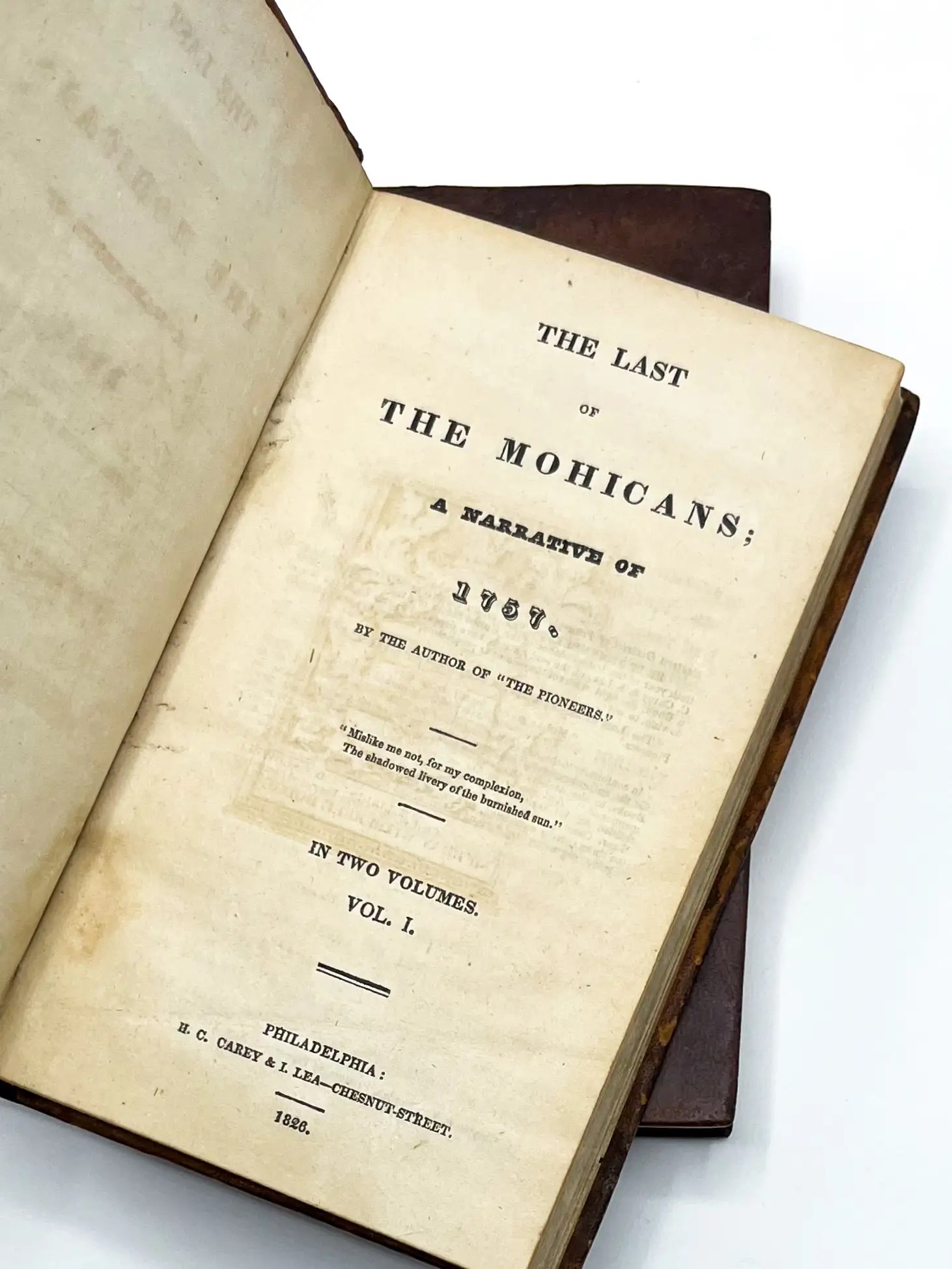
These books were filled with battles between the British and French, with Native Americans on both sides and I wonder if it’s from the adventures depicted there that JRRT was inspired with his passion for bows and arrows?

(artist?  A handsome depiction and I wish I could identify the painter.)

Another clue might lie in British history.  During the medieval struggle for English control of France, the so-called “Hundred Years War” (1337-1453), the English enjoyed three great victories, at Crecy (1346), Poitiers (1356), and Agincourt (1415), where companies of English longbowmen shot their French opponents to pieces.

(Angus McBride)

Tolkien would have read about this as a schoolboy, but, in an odd way, he might have had his knowledge of these long-ago events refreshed in 1914.

Outnumbered and in danger of being outflanked by massive German columns, the small BEF (British Expeditionary Force), in the early fall of 1914, retreated, one unit (2nd Corps) fighting a desperate battle to slow the Germans at Le Cateau.
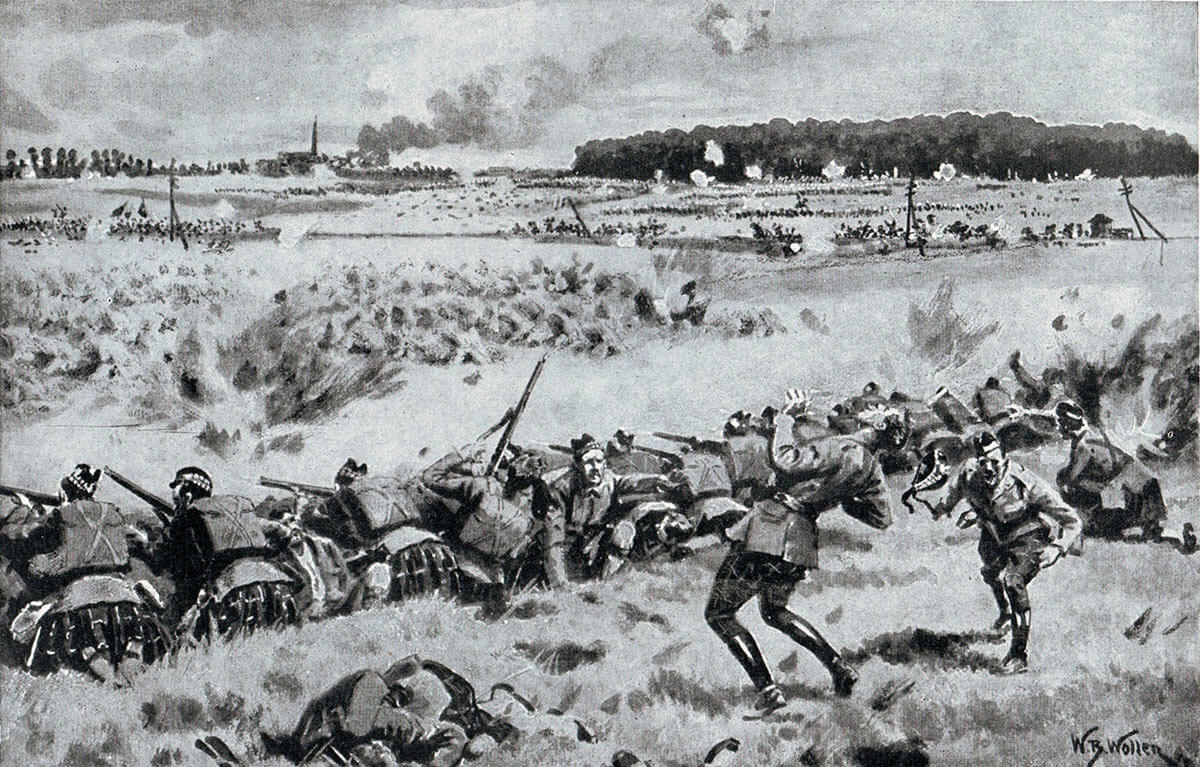
The British managed to fend off the enveloping Germans and, considering the odds against them, some might have believed their escape miraculous. 

Enter the fantasist Arthur Machen, 1863-1947. 

In the September 29th,  1914,  issue of The Evening News, Machen published a short story which he entitled “The Bowmen”.  This was a supposed first-hand account of a British soldier who had seen a line of ghostly British longbowmen shooting down German pursuers, just as they had shot down the French, centuries before.
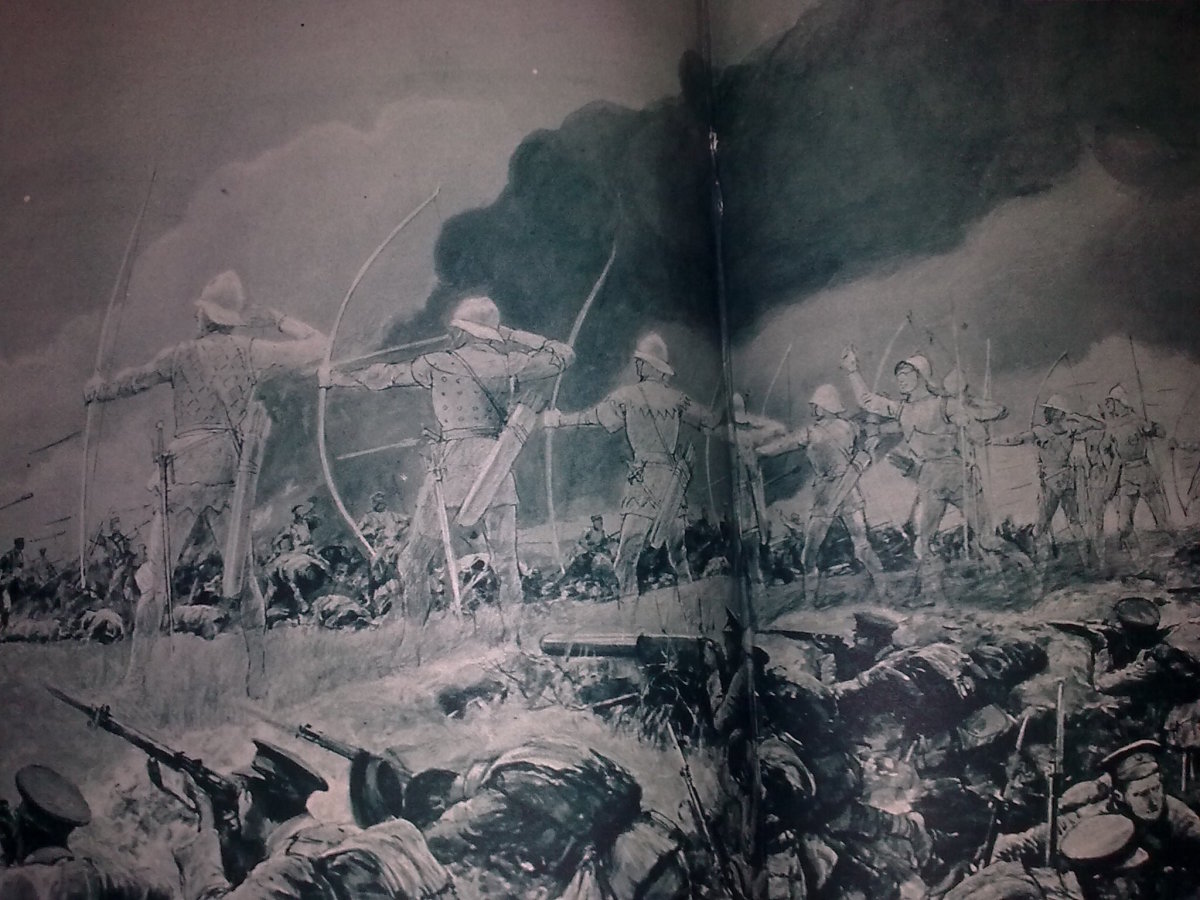
Machen subsequently republished it with other stories in 1915—

but was astonished when his fiction was believed to have been true, and widely circulated as such. We don’t have any evidence that JRRT actually read this story, but it was extremely widespread at the time and, once more, we see men with bows. (For more on this, see:  https://en.wikipedia.org/wiki/Angels_of_Mons And you can read the stories in Machen’s volume here:  https://en.wikipedia.org/wiki/Angels_of_Mons )

I think we can add to this the legends of Robin Hood, which could appear in any number of sources—our first known reference being in William Langland’s (c.1330-c.1386) late 14th-century Piers Plowman, where Sloth—a priest deserving of his name, doesn’t seem to have any religious knowledge, but says,

“Ich can rymes of Robyn Hode” (that is, “I know rhymes/songs about Robin Hood”—see the citation at:  https://robinhoodlegend.com/piers-plowman/ at the impressively rich Robin Hood site:  https://robinhoodlegend.com/ )

Then there is the collection of poems/songs from about 1500, A Gest of Robyn Hode,

which JRRT might have encountered in F.J. Child’s (1825-1896) The English and Scottish Popular Ballads, 1882-1898,

where it appears as #117.  (If you don’t know the so-called “Child Ballads”, here’s a beginning:  https://en.wikipedia.org/wiki/Child_Ballads  And, for a massive one-volume edition:  https://archive.org/details/englishscottishp1904chil/page/n11/mode/2up The texts are interesting in themselves, but, for me, they’re even better as songs.  To hear one, you might try one of my favorite folk singers, Ewan McColl’s version of “The Dowie Dens o’ Yarrow here:  https://www.youtube.com/watch?v=Vfsv8zUdqKM&list=RDVfsv8zUdqKM&start_radio=1 For more on Yarrow, see “Yarrow”, 10 April, 2024.

For lots more on Robin Hood, see:  https://en.wikipedia.org/wiki/Robin_Hood )

In more recent times, perhaps Tolkien had seen Howard Pyle’s (1853-1911) The Merry Adventures of Robin Hood, 1883,

 or Paul Creswick’s (1866-1947) 1917 Robin Hood,

with its wonderful illustrations by N.C.Wyeth (1882-1945).
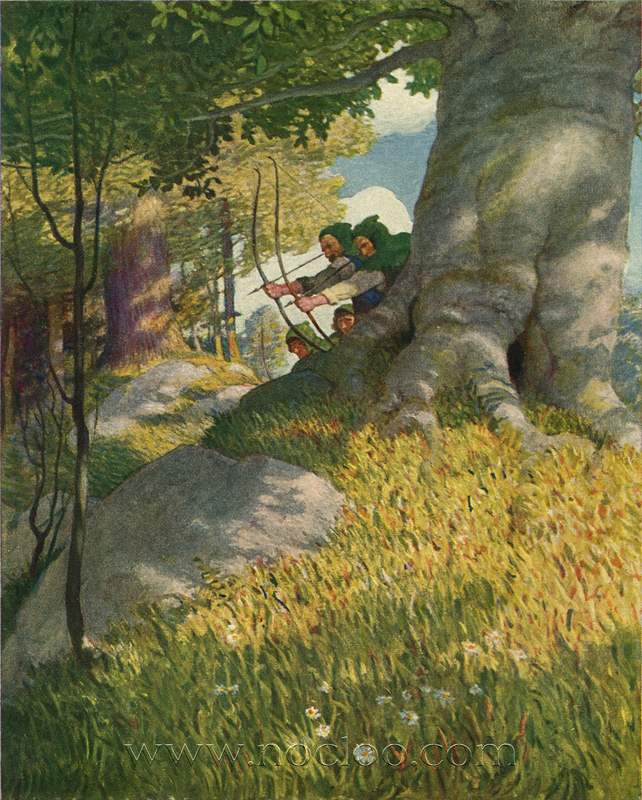
(If the Tolkien journal Amon Hen, is available to you–but, alas, not to me–you might also have a look at Alex Voglino’s “Middle-earth and the Legend of Robin Hood” in issue 284.)

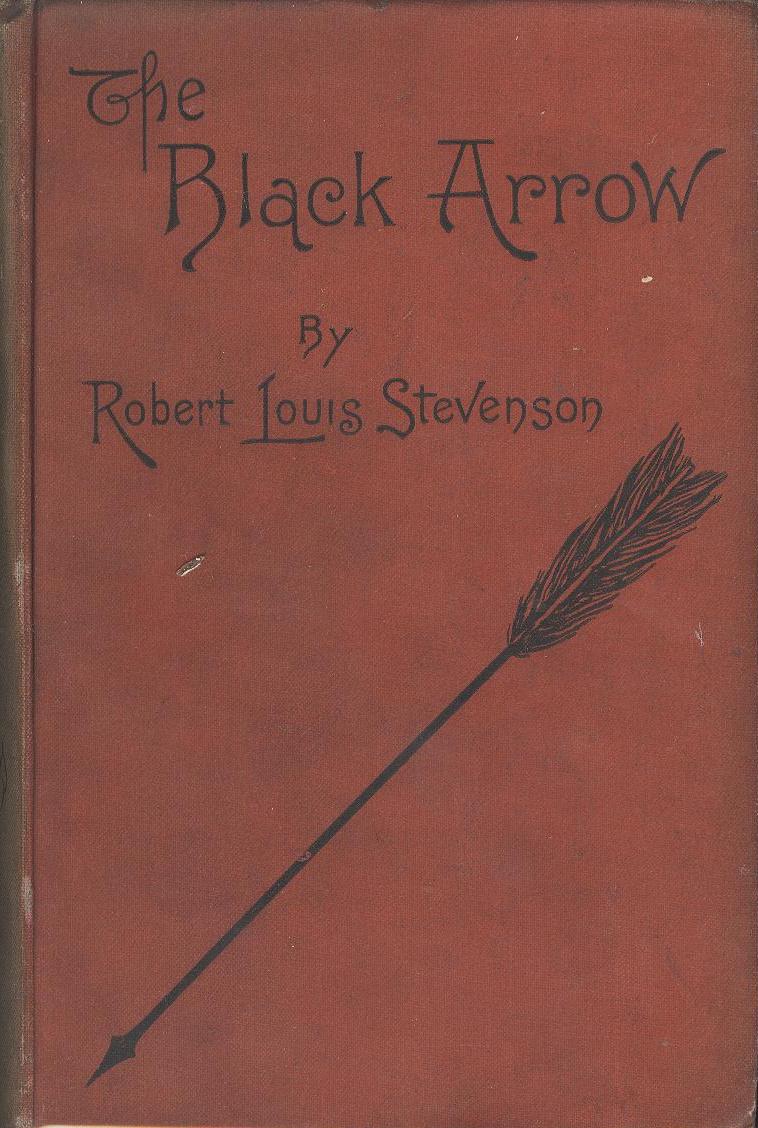
And, although Tolkien may not have liked Treasure Island, we might add to this possible influence Robert Louis Stevenson’s (1850-1894) The Black Arrow (serialized 1883, published as a book in 1888).

An adventure story set during the Wars of the Roses, you can read it here:  https://archive.org/details/blackarrowatale02stevgoog/page/n1/mode/2up

Although there are more possibilities (Tolkien might have read Sir Walter Scott’s (1771-1832) Ivanhoe, 1819, where Robin Hood makes an appearance, for instance—and here’s the book:  https://archive.org/details/ivanhoe-sir-walter-scott/page/n7/mode/2up )

that title suggests something else:

“ ‘Arrow!’ said the bowman.  ‘Black arrow!  I have saved you to the last.  You have never failed me and always I have recovered you.  I had you from my father and he from of old.  If ever you came from the forges of the true king under the Mountain, go now and speed well!’ “ (The Hobbit, Chapter 14, “Fire and Water”)

(Michael Hague, one of my favorite Hobbit illustrators)

So, we’re about to see that the Hero to kill Smaug is a Lake-town local, Bard, and his weapon of choice is Tolkien’s special favorite, the bow.  But how to attack?

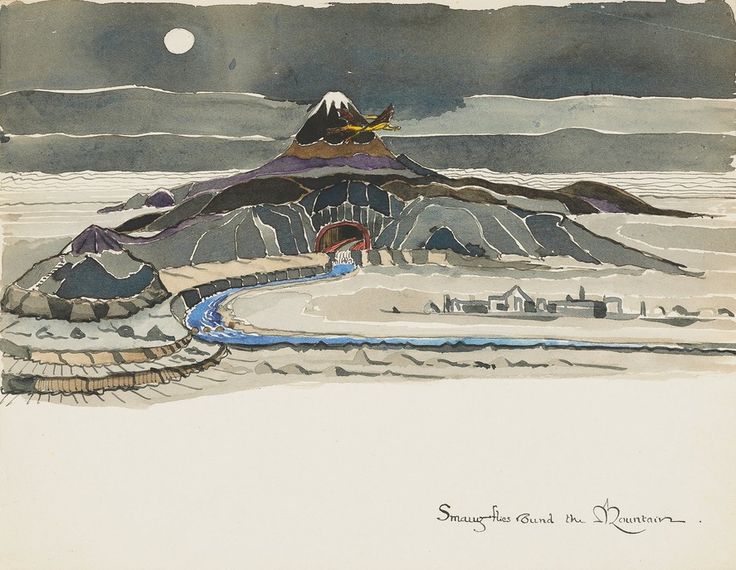
We first see Smaug on the ground, lying on his hoard.

(JRRT)

Angered at Bilbo’s teasing, he gets up long enough to attempt to flame him, but his real method of destruction is to take to the air.

(Ted Nasmith)

Fafnir was never airborne, dragging himself along the ground.  Sigurd solved the problem of his scaly protection by digging a pit and attacking him from below with his sword.  It makes good sense, then, with all of the possible bowman influences upon him, that Tolkien would imagine that the way to deal with a flying dragon would be an arrow from below.
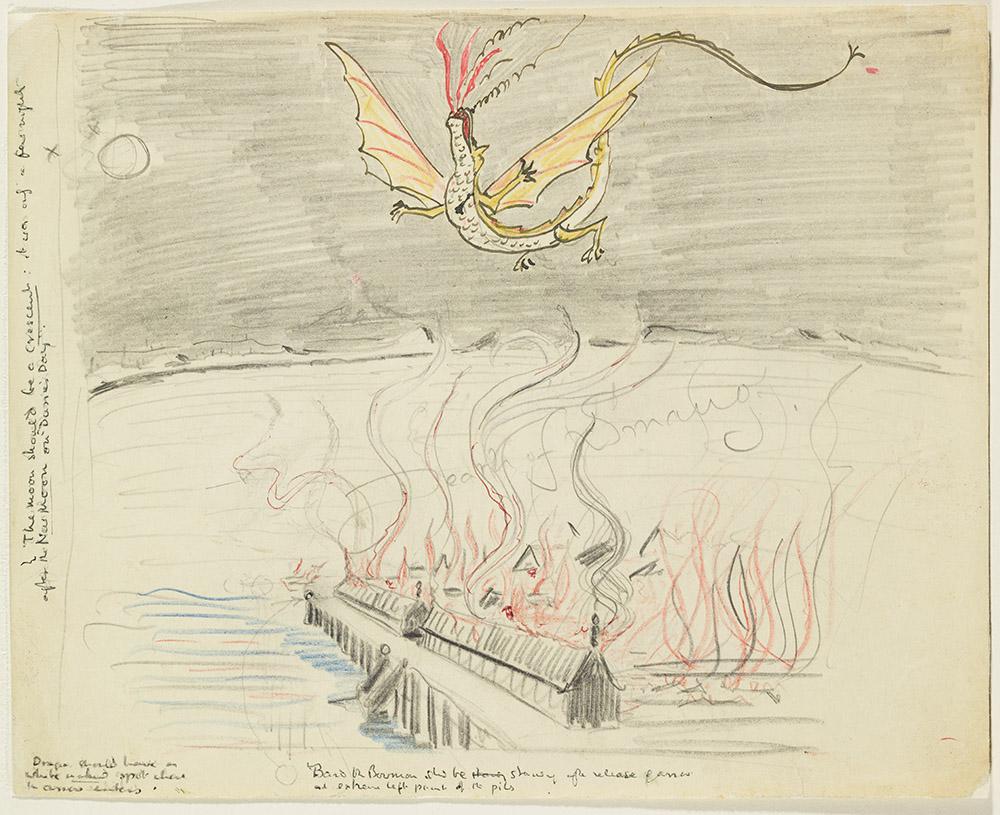
(JRRT)

To which we might add one more potential influence from JRRT’s own experience. 

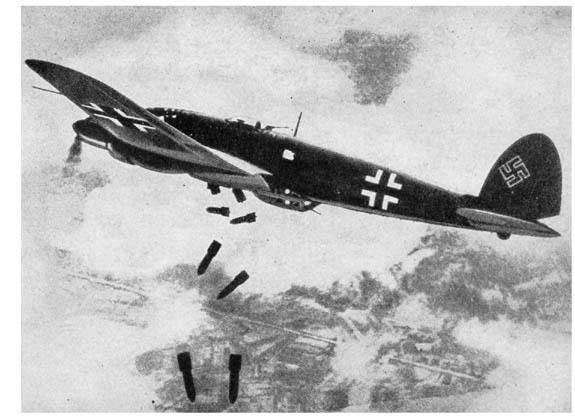
In 1914, there were few military aircraft and their main task was reconnaissance.

By 1918, there were many different models, with different tasks, including heavy bombers.

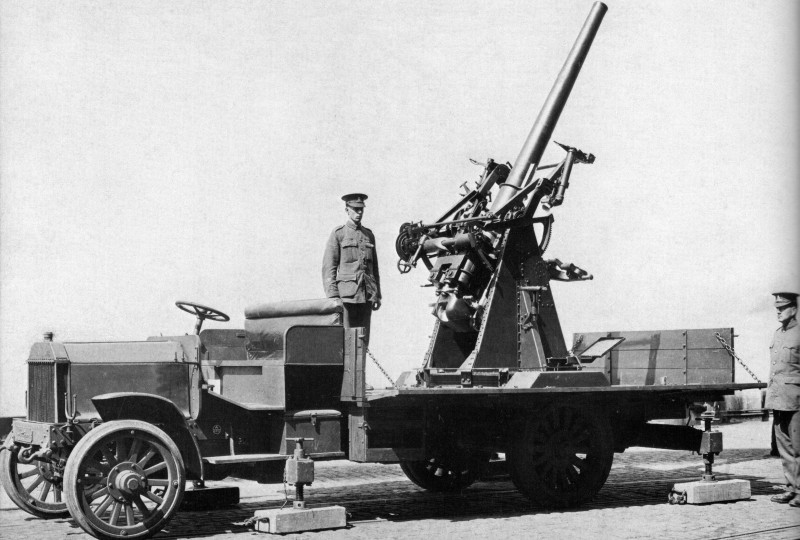
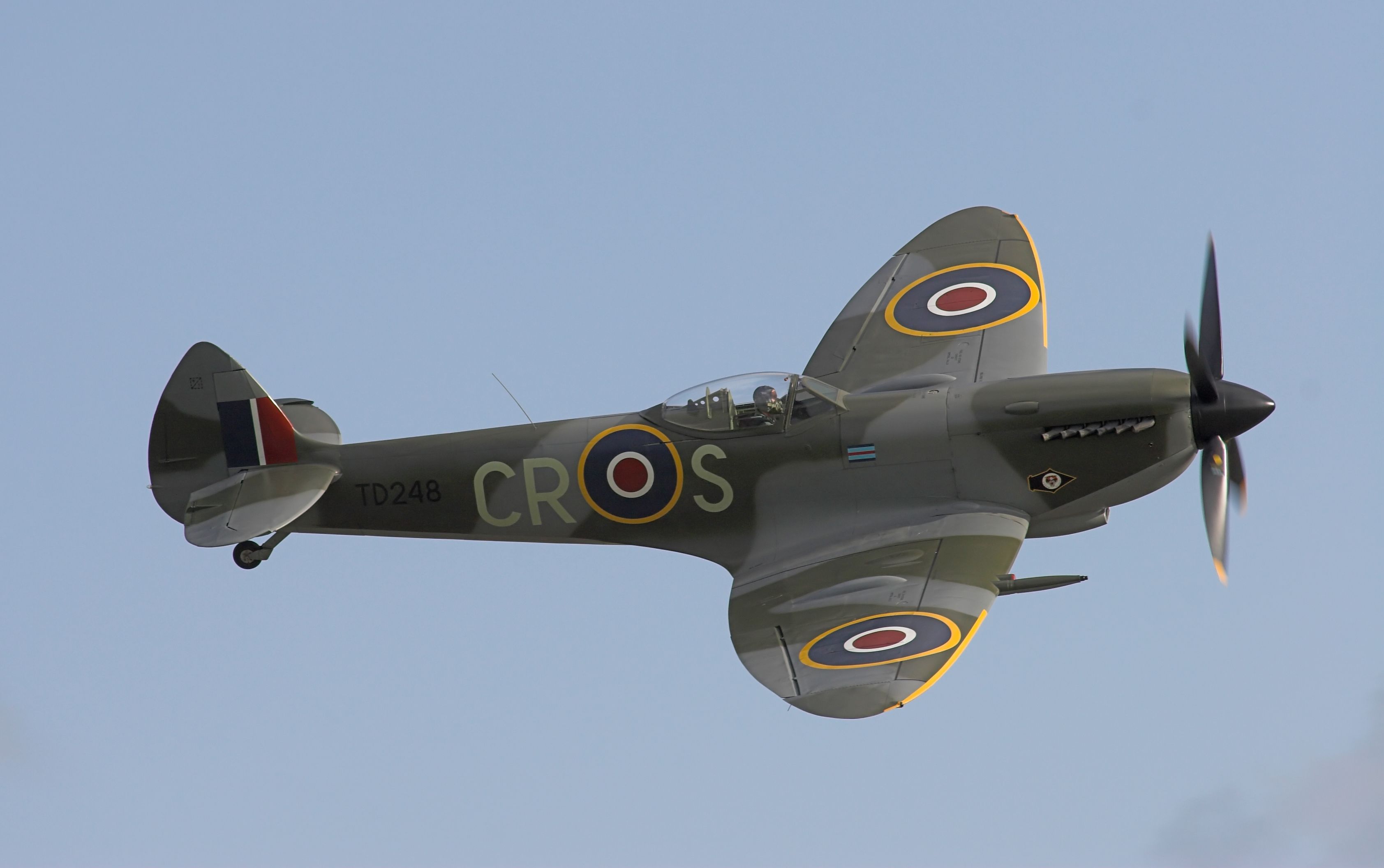
To protect their troops on the ground, all of the warring nations developed the first artillery defenses:  anti-aircraft guns, designed to shoot down threats from above. 
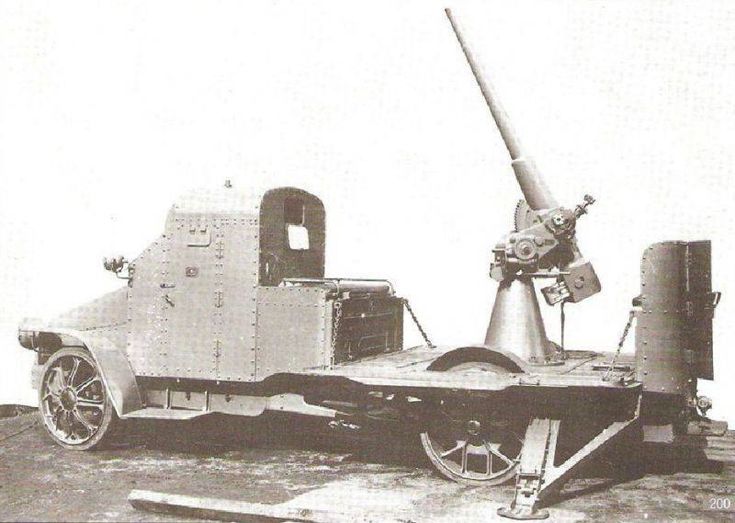
JRRT would certainly have seen such guns and possibly even in action, attempting to knock flying danger out of the sky.

Some of those guns were rapid-firing, spraying the air with metal, hoping to guarantee the success of their defense.  Bard, in turn, has his black arrow—and not just any black arrow, but one seemingly created perfectly for revenge:  “  ‘I had you from my father and he from of old.  If ever you came from the forges of the true king under the Mountain, go now and speed well.’ “

That is, this is an arrow created by the dwarves, whom Smaug had driven out or killed—or eaten—and it’s also an heirloom from the days before Smaug destroyed Dale:  what better weapon to deal vengeance to the wicked creature who had ruined so much?  To take out such a flying danger, but with a glaring vulnerability below, what means of propulsion, especially one known to have defeated whole medieval armies?  And, as the seemingly last descendant of the last lord of Dale, Girion, who better to take that revenge? 

As ever, thanks for reading.

Stay well,

Always monitor the skies—who knows what’s watching from above?

And remember that, as always, there’s

MTCIDC

O

PS

For more on birds, Bard, and Smaug, see “Why a Dragon?” 28 May, 2025.

PPS

While looking for just the right Smaug images, I came upon this, entitled, “Dante aka Smaug on his hoard” and couldn’t resist.

The Nazgul Brothers?

27 Wednesday Sep 2017

Posted by Ollamh in J.R.R. Tolkien, Military History, Military History of Middle-earth, Narrative Methods

≈ Leave a comment

Tags

aircraft, anti-aircraft gun, Aviation, Bellerophon, bombers, British Army, dogfights, Dragons, early airships, flight, flying machines, Great War, harpies, Hermes, machine gun, manoeuvres, military intelligence, Nazgul, Paris, Pegasus, Schlieffen Plan of 1914, Sir Douglas Haig, Sir James Grierson, The Blitz, The Lord of the Rings, Tolkien, trench fever, trenches, Wraiths, Wright Brothers, WWI Trenches

Welcome, dear readers, as ever.

Imagine a world where there were no airports, no contrails, no roar of engines, no small silver objects crossing the skies, the sound of their flight trailed behind them.  The only flying things would be birds and those in different seasons, some permanent, some migratory (or used to be—where we live in North America the Canada Geese, whose great chevrons across our skies used to be powerful signs of winter to come or spring soon to appear, now squat here year round).

image1geese.jpg

This would have been England in 1892, the year JRRT was born.  There were early airships—basically big balloons of various sorts, but they were primarily stationary and used for (limited) military intelligence.

image2intrepid.jpeg

Then came the Wright brothers

image3wrights.jpg

who, in December, 1903, produced the first engine-propelled, manned flight in their enlarged kite.

image4kittyhawk.jpg

Thereafter, flight would, literally, take off, but the Wrights, who were idealistically inclined, believed that such an invention would actually end war by making it too terrible.

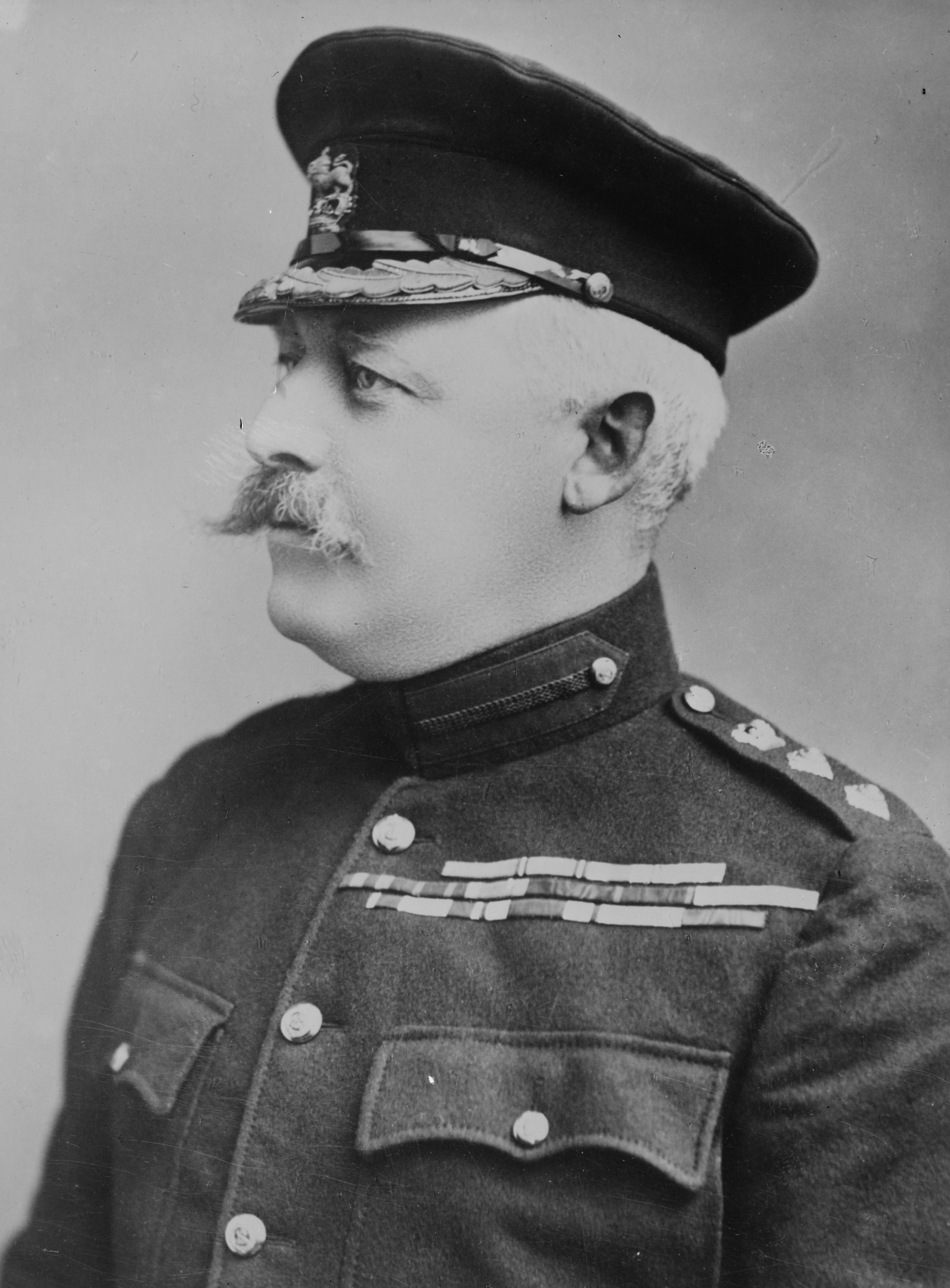
The British army thought differently, however, and there were soon aerial observation units attached to military formations.  In fact, Sir James Grierson

image5grierson.jpg

tactically outfoxed his rival, Sir Douglas Haig,

image6haig.jpg

not only by his skillful use of aircraft for observation, but also by his keen understanding of how to conceal his own movements from Haig’s aircraft

image7airship.jpg

in the army manoeuvres of 1912.

image8manoeuvres.jpg


The Great War, when it came, two years later, would then be the proving ground for all sorts of aerial experimentation.

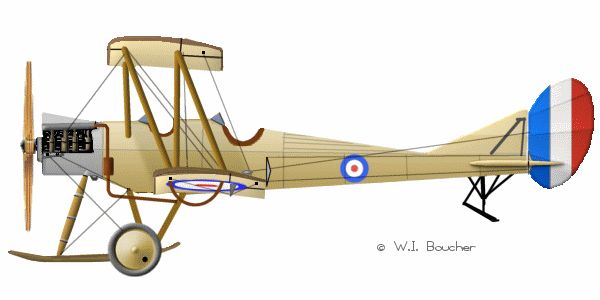
First, it was just observation.

image9be2.jpg

A British aviator, flying north of the army, first spotted the massive German columns which were designed to outflank the British and French armies and capture Paris in the Schlieffen Plan of 1914.

image10schlieffenplan.gif

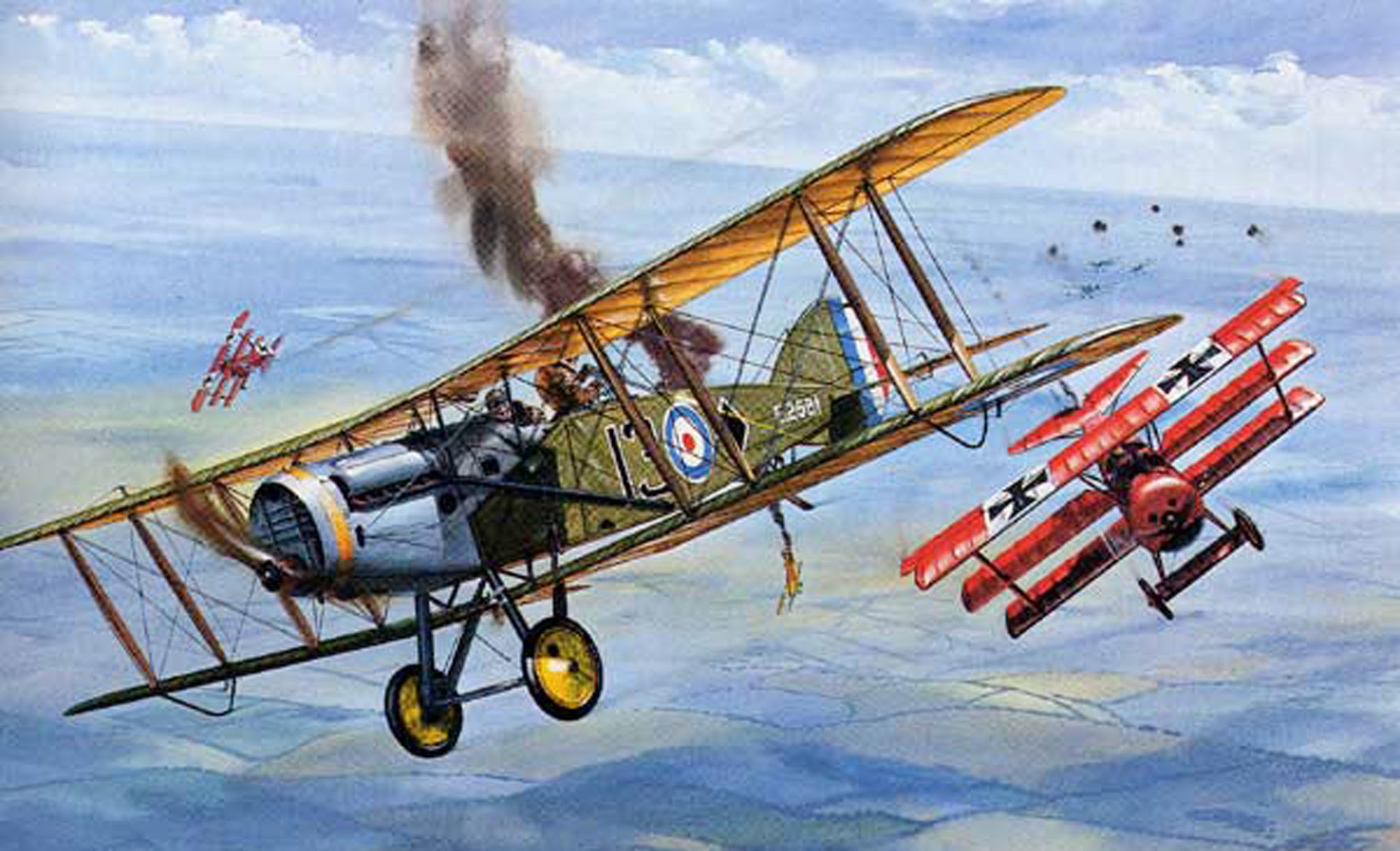
Because observation was their task, the earliest aircraft were unarmed, but this changed and soon there was aerial combat, the so-called “dog fights”, the popular images being “knights of the sky” who jousted with manoeuvres and machine guns, rather than with lances, maces, and swords.

image11joust.jpeg

image12dogfight.jpg

Next came the use of aircraft to disrupt enemy formations and their movements, bombing and strafing, sometimes as part of major attacks, the whole idea being to dominate the sky over the enemy’s trenches, while protecting your own.

image13dogfightingovertrenches.jpg

And this is where we imagine 2nd Lieutenant JRR Tolkien

image14jrrt.jpg

in the summer of 1916, standing in such a trench,

image15atrench.jpg

looking up, and thinking…

We can also imagine him imagining—not seeing flying machines, but something much earlier.  After all, with his education, background, and interests, it would have been difficult not to think of classical harpies

image15harpies.jpg

or Hermes

image16hermes.jpg

or Bellerophon, mounted on Pegasus.

image17bellerophon.jpg

And, with his Norse passion, there would also, of course, be dragons…

image18smaug.jpg

And, perhaps a combination:  a Bellerophon mounted on a miniature dragon?

image19nazgul.jpg

In the world of the trenches, there were two defences against aircraft:  friendly aircraft in the air

image20dogfight.jpg

and anti-aircraft guns on the ground.

image21aagun.jpg

But the war ended fairly quickly for the scholarly lieutenant, laid low by a more primitive enemy than Industrial Age Germans with bombs:  lice.

image22lice.jpg

JRRT became sick with what was then called “trench fever”, an illness conveyed, like typhus, by the bite of the tiny insects who colonized the clothing and bodies of soldiers in every dugout in Europe.  Wracked with recurring fevers, headaches, and complete exhaustion, among other complaints, men ill with trench fever were brought to base hospitals and, if sick enough, were sent home, as there was no cure, to recover as best they could.  Tolkien spent the rest of the war in the hospital or in garrison in England and thus escaped the last and perhaps worst years of the war in the trenches.

At home, he became Professor Tolkien, taught his classes, fathered four children, and then a second war came, one in which the primitive air war of the first war was intensified by more sophisticated aircraft, more powerful explosives, and plans to bomb Britain into ruin and submission in what was called “The Blitz”.

image23blitz.jpg


JRRT went back into service, this time as an air raid warden, even as two of his sons were more directly involved in the war.

image24airraidwarden.jpg

Night after night, the bombers came,

image25bomber.jpg

to be met with the same weapons as the previous war:  aircraft,

image26spit.jpg

anti-aircraft guns

image27aagun.jpg

and, because the enemy began to attack at night,

searchlights.

image28searchlight.jpg

And this brings us back to our imaginings.  Working on The Lord of the Rings, staring into the night sky, listening for enemy bombers, would Tolkien have thought of danger to Middle-earth in the form of flying things, not machines but terrible figures mounted on even more loathsome creatures—and what could be done about them?  Magic, perhaps?

image29gandalf.jpg

Thanks, as always, for reading!

MTCIDC

CD

Bolts and Arrows

06 Wednesday Apr 2016

Posted by Ollamh in Films and Music, Heroes, J.R.R. Tolkien, Military History, Military History of Middle-earth, Narrative Methods, Uncategorized

≈ Leave a comment

Tags

Agincourt, anti-aircraft gun, ballista, Bard the Bowman, Battle of Crecy, Battle of Poitiers, Border Reivers, Boromir, crossbow, Crossbow Bunnies, English Longbowmen, harpoon, Hundred Years War, John Singer Sargent, latch, Maximus, N.C. Wyeth, Peter Jackson, Richard the Lionheart, Robert Louis Stevenson, Robin Hood, Roman d'Alexandre, Siege of Chalus, Smaug, Tangled, The Black Arrow, The Hobbit, The Lord of the Rings, The Mary Rose, Tolkien, Towton

In our review of the third Hobbit film, we questioned the use by Bard of something a little larger in the way of a missile than Tolkien had intended:

“Then Bard drew his bow-string to his ear. The dragon was circling back, flying low, and as he came the moon rose above the eastern shore and silvered his great wings.

‘Arrow!’ said the bowman. ‘Black Arrow! I have saved you to the last. You have never failed me and always I have recovered you. I had you from my father and he from of old. If ever you come from the forges of the true king under the Mountain, go now and speed well!’ ” (TH 307).

As Bard was firing this himself, we always envisioned him as an English longbowman.

englishlongbowman1330-15151.jpg

And this led us to think a bit about Tolkien’s possible sources, not only for Bard and his bow, but for that arrow–the real one, not the monster dart used in the film.

From any children’s history of England, Tolkien would have learned that longbowmen like the one shown above destroyed three brave French armies in the Hundred Years War, at Crecy (1346), Poitiers (1356), and Agincourt (1415).

hf54d67201.jpg

In the film, however, although Bard was depicted as an archer,

Bard-the-Bowman-bard-the-bowman-37670604-1920-1200.jpg

his weapon of choice looks like this.

bardwithharpoon.jpeg

This reminds us of either a Roman ballista

b0370394e429c42631f520182c155a34.jpg

or an anti-aircraft gun

strandgun01.jpg

or, most especially,  a harpoon gun.

WhaleHarpGun1.jpg

Especially when you look at this Bard’s arrow.

bard.jpg

Although we currently have no evidence for Tolkien’s sources, we can imagine that they might have included, among others, Robin Hood,

5616567327_fc899be2f1_b.jpg

the actions of actual Medieval archers like those at Agincourt or Towton (1461),

towton3.jpg

and a book, perhaps from boyhood, Robert Louis Stevenson’s The Black Arrow (1883/1888).  Stevenson (here in an 1880s portrait by John Singer Sargent)

rlsjss2.jpg

had originally published the story serially in a children’s magazine in 1883

ba1.jpg

before its publication in book form in 1888.

Blackarrowcoverscribners1888.jpg

The classic illustrations are by one of our all-time favorite illustrators, NC Wyeth, from 1917.

309642.jpg

We can’t resist showing you a few:

tumblr_l4istbR1JZ1qamjklo1_1280.jpgillus08.jpg09_blackarrow_alittlebeforedawn_wyeth.jpg

Although the bow is the weapon of choice of those who use the black arrow of the title (it’s employed for revenge), the hero  in fact, has a crossbow.

5616566731_49d251a1fc_b.jpg

The longbow requires years of training and great upper-body strength, leaving its mark on bowmen, as can be seen from this skeleton (and its reconstruction) brought up from the English warship, the Mary Rose,

sinking_3.jpg

which sank with most of its crew in 1545 and was brought up from the mud of the ocean floor in 1982.

130530121104-mary-rose-skeleton-horizontal-gallery.jpg

The crossbow is a mechanical weapon, which uses much less strength to draw

the_old_crossbow_archer_by_renum63-d8aaovo.jpg

and, in the more developed versions, even uses a crank to produce the necessary string tension.

8f106fadbe86ed34e5567bc7a90b89e2.jpg

(And, just as in the case of NC Wyeth illustrations, we can’t resist medieval manuscript illustrations. Look at this pair of crossbow… bunnies from a copy of the Roman d’ Alexandre, circa 1340.)

romandalexandrec1340.jpg

This makes it a less romantic weapon, but equally deadly:  Richard the Lionheart was killed with a bolt/quarrel (what one calls a crossbow arrow) at the siege of Chalus in 1199.

Richard1TombFntrvd.jpg

(This creates another aside–about the hand weapon used as late as the 16th century by the Border Reivers of the land between northern England and southern Scotland–called a “latch”, it was the weapon of choice for those who couldn’t afford early hand guns but wanted to fire easily from the saddle.

Reiver-on-Horse.jpg

The soldiers in Disney’s wonderful movie, Tangled, carry them–notice the off-hand side pouch with a handful of bolts  for one on Maximus’ saddle–)

maxtangled.jpg

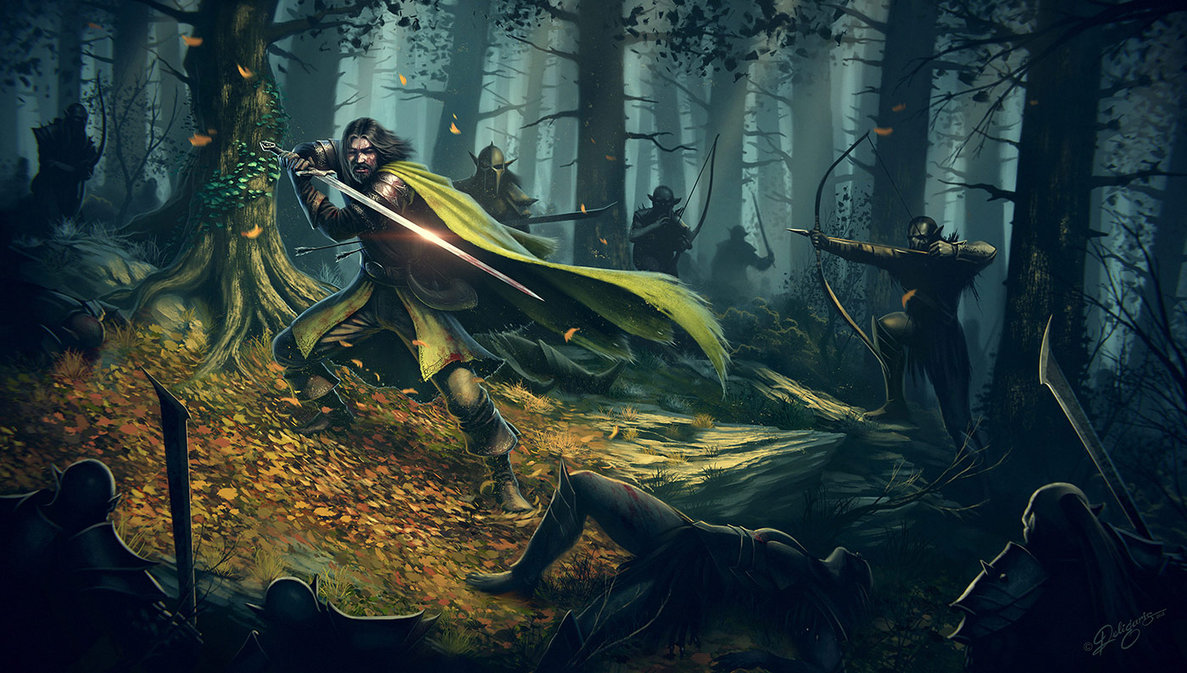
But we would  like to conclude with one more use of that black arrow.  A flight of them kills Boromir in The Lord of the Rings.

boromirarrows1.jpg

boromirearrows.png

Just as we began by pointing to the text and the actual bow and arrow which kill Smaug, and not the harpoon of the film, so we would criticize this scene.  In our opinion, it is stretched beyond believability, as well as beyond the text, taking away something of Boromir’s valor in combat with dozens of the enemy, in which he is gradually overcome.

boromir_by_deligaris-d5po92u.jpg

This is just as true for the brief scene of Aragorn at Boromir’s death.  What was simple in the text, thus making it more moving–just Boromir’s confession and Aragorn’s comforting him–becomes a soppy scene in which Boromir swears loyalty and calls Aragorn “my brother”, a liberty Aragorn-the-king-t0-be, would hardly have welcomed.  In the theatrical world, this is called “milking the scene” and here, we think it curdled.

Thanks, as always, for reading.

MTCIDC,

CD

The Doubtful Sea Series Facebook Page

The Doubtful Sea Series Facebook Page

  • Ollamh

Categories

  • Artists and Illustrators
  • Economics in Middle-earth
  • Fairy Tales and Myths
  • Films and Music
  • Games
  • Heroes
  • Imaginary History
  • J.R.R. Tolkien
  • Language
  • Literary History
  • Maps
  • Medieval Russia
  • Military History
  • Military History of Middle-earth
  • Narnia
  • Narrative Methods
  • Poetry
  • Research
  • Star Wars
  • Terra Australis
  • The Rohirrim
  • Theatre and Performance
  • Tolkien
  • Uncategorized
  • Villains
  • Writing as Collaborators
Follow doubtfulsea on WordPress.com

Across the Doubtful Sea

Recent Postings

  • A Moon disfigured December 17, 2025
  • On the Roads Again—Once More December 10, 2025
  • (Not) Crossing Bridges December 3, 2025
  • On the Road(s) Again—Again November 26, 2025
  • On the Road(s) Again November 19, 2025
  • To Bree (Part 2) November 12, 2025
  • To Bree (Part 1) November 5, 2025
  • A Plague o’ Both—No, o’ All Your Houses! October 29, 2025
  • It’s in Writing (2:  I’st a Prologue, or a Poesie for a Ring?) October 22, 2025

Blog Statistics

  • 103,201 Views

Posting Archive

  • December 2025 (3)
  • November 2025 (4)
  • October 2025 (5)
  • September 2025 (4)
  • August 2025 (4)
  • July 2025 (5)
  • June 2025 (4)
  • May 2025 (4)
  • April 2025 (5)
  • March 2025 (4)
  • February 2025 (4)
  • January 2025 (5)
  • December 2024 (4)
  • November 2024 (4)
  • October 2024 (5)
  • September 2024 (4)
  • August 2024 (4)
  • July 2024 (5)
  • June 2024 (4)
  • May 2024 (5)
  • April 2024 (4)
  • March 2024 (4)
  • February 2024 (4)
  • January 2024 (5)
  • December 2023 (4)
  • November 2023 (5)
  • October 2023 (4)
  • September 2023 (4)
  • August 2023 (5)
  • July 2023 (4)
  • June 2023 (4)
  • May 2023 (5)
  • April 2023 (4)
  • March 2023 (5)
  • February 2023 (4)
  • January 2023 (4)
  • December 2022 (4)
  • November 2022 (5)
  • October 2022 (4)
  • September 2022 (4)
  • August 2022 (5)
  • July 2022 (4)
  • June 2022 (5)
  • May 2022 (4)
  • April 2022 (4)
  • March 2022 (5)
  • February 2022 (4)
  • January 2022 (4)
  • December 2021 (5)
  • November 2021 (4)
  • October 2021 (4)
  • September 2021 (5)
  • August 2021 (4)
  • July 2021 (4)
  • June 2021 (5)
  • May 2021 (4)
  • April 2021 (4)
  • March 2021 (5)
  • February 2021 (4)
  • January 2021 (4)
  • December 2020 (5)
  • November 2020 (4)
  • October 2020 (4)
  • September 2020 (5)
  • August 2020 (4)
  • July 2020 (5)
  • June 2020 (4)
  • May 2020 (4)
  • April 2020 (5)
  • March 2020 (4)
  • February 2020 (4)
  • January 2020 (6)
  • December 2019 (4)
  • November 2019 (4)
  • October 2019 (5)
  • September 2019 (4)
  • August 2019 (4)
  • July 2019 (5)
  • June 2019 (4)
  • May 2019 (5)
  • April 2019 (4)
  • March 2019 (4)
  • February 2019 (4)
  • January 2019 (5)
  • December 2018 (4)
  • November 2018 (4)
  • October 2018 (5)
  • September 2018 (4)
  • August 2018 (5)
  • July 2018 (4)
  • June 2018 (4)
  • May 2018 (5)
  • April 2018 (4)
  • March 2018 (4)
  • February 2018 (4)
  • January 2018 (5)
  • December 2017 (4)
  • November 2017 (4)
  • October 2017 (4)
  • September 2017 (4)
  • August 2017 (5)
  • July 2017 (4)
  • June 2017 (4)
  • May 2017 (5)
  • April 2017 (4)
  • March 2017 (5)
  • February 2017 (4)
  • January 2017 (4)
  • December 2016 (4)
  • November 2016 (5)
  • October 2016 (6)
  • September 2016 (5)
  • August 2016 (5)
  • July 2016 (5)
  • June 2016 (5)
  • May 2016 (4)
  • April 2016 (4)
  • March 2016 (5)
  • February 2016 (4)
  • January 2016 (4)
  • December 2015 (5)
  • November 2015 (5)
  • October 2015 (4)
  • September 2015 (5)
  • August 2015 (4)
  • July 2015 (5)
  • June 2015 (5)
  • May 2015 (4)
  • April 2015 (3)
  • March 2015 (4)
  • February 2015 (4)
  • January 2015 (4)
  • December 2014 (5)
  • November 2014 (4)
  • October 2014 (6)
  • September 2014 (1)

Blog at WordPress.com.

  • Subscribe Subscribed
    • doubtfulsea
    • Join 78 other subscribers
    • Already have a WordPress.com account? Log in now.
    • doubtfulsea
    • Subscribe Subscribed
    • Sign up
    • Log in
    • Report this content
    • View site in Reader
    • Manage subscriptions
    • Collapse this bar
 

Loading Comments...