• About

doubtfulsea

~ adventure fantasy

Tag Archives: uniforms

A Moon disfigured

17 Wednesday Dec 2025

Posted by Ollamh in Uncategorized

≈ Leave a comment

Tags

Elizabeth I, herald, Heraldry, livery, Middle-earth, Minas Ithil, Minas Morgul, Orcs, puzzle, Sam, Saruman, Sauron, Sir Roger de Trumpington, The Great War, The Lord of the Rings, Tolkien, uniforms

As always, dear readers, welcome.  And perhaps welcome to a little Tolkien puzzle.

On parade, soldiers of the early 20th century could be peacocks for finery.
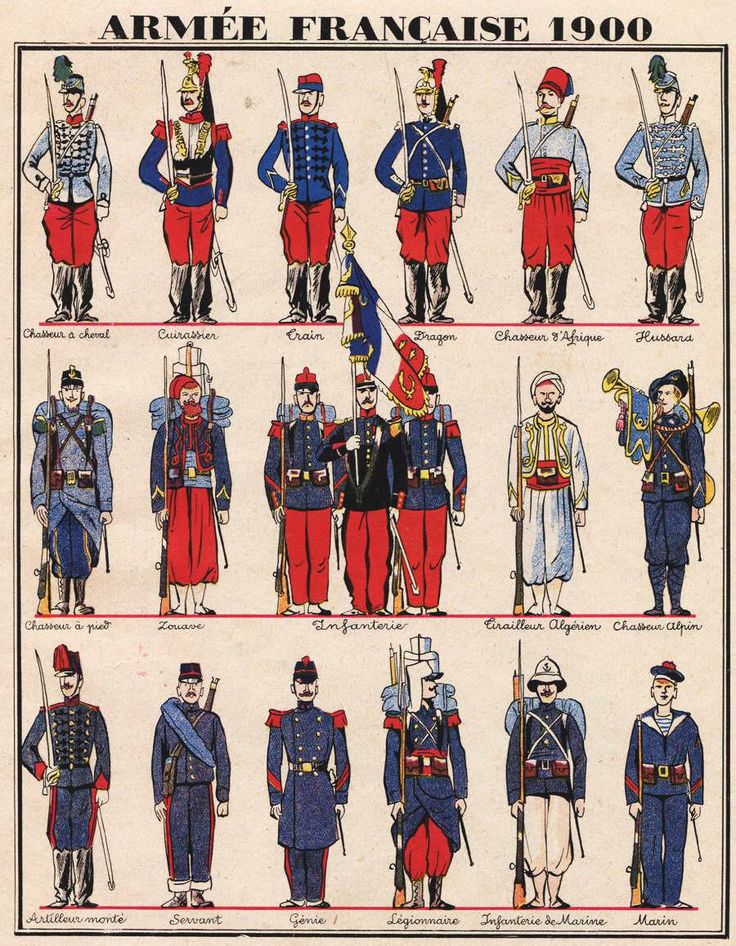
But then they met the new technological reality of heavy machine guns

and increasingly heavy artillery

and, in time, even the danger of being spotted from the air,
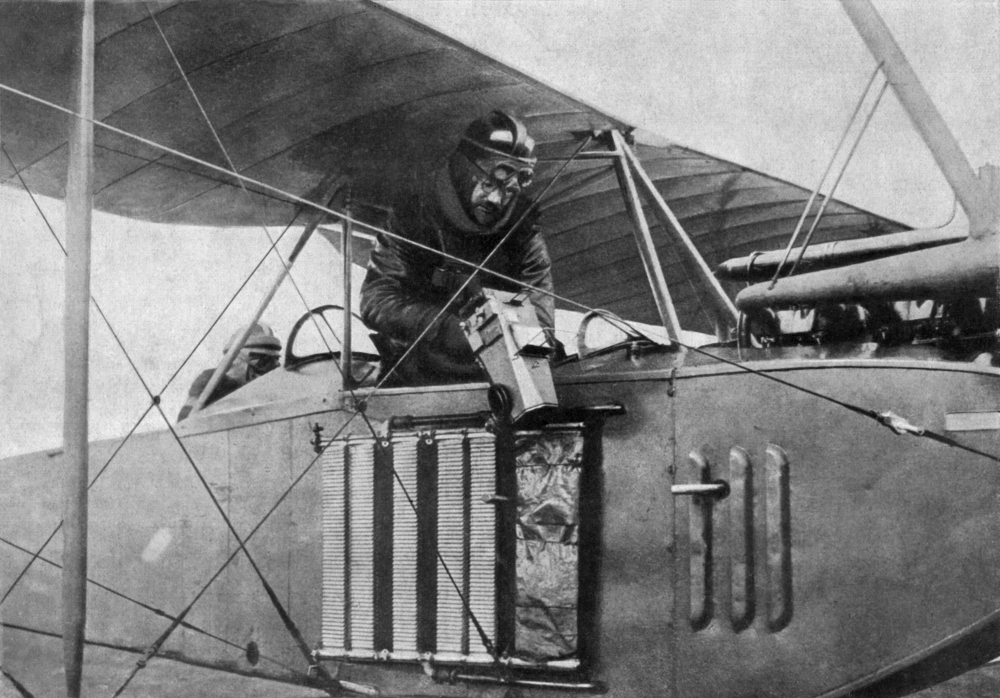
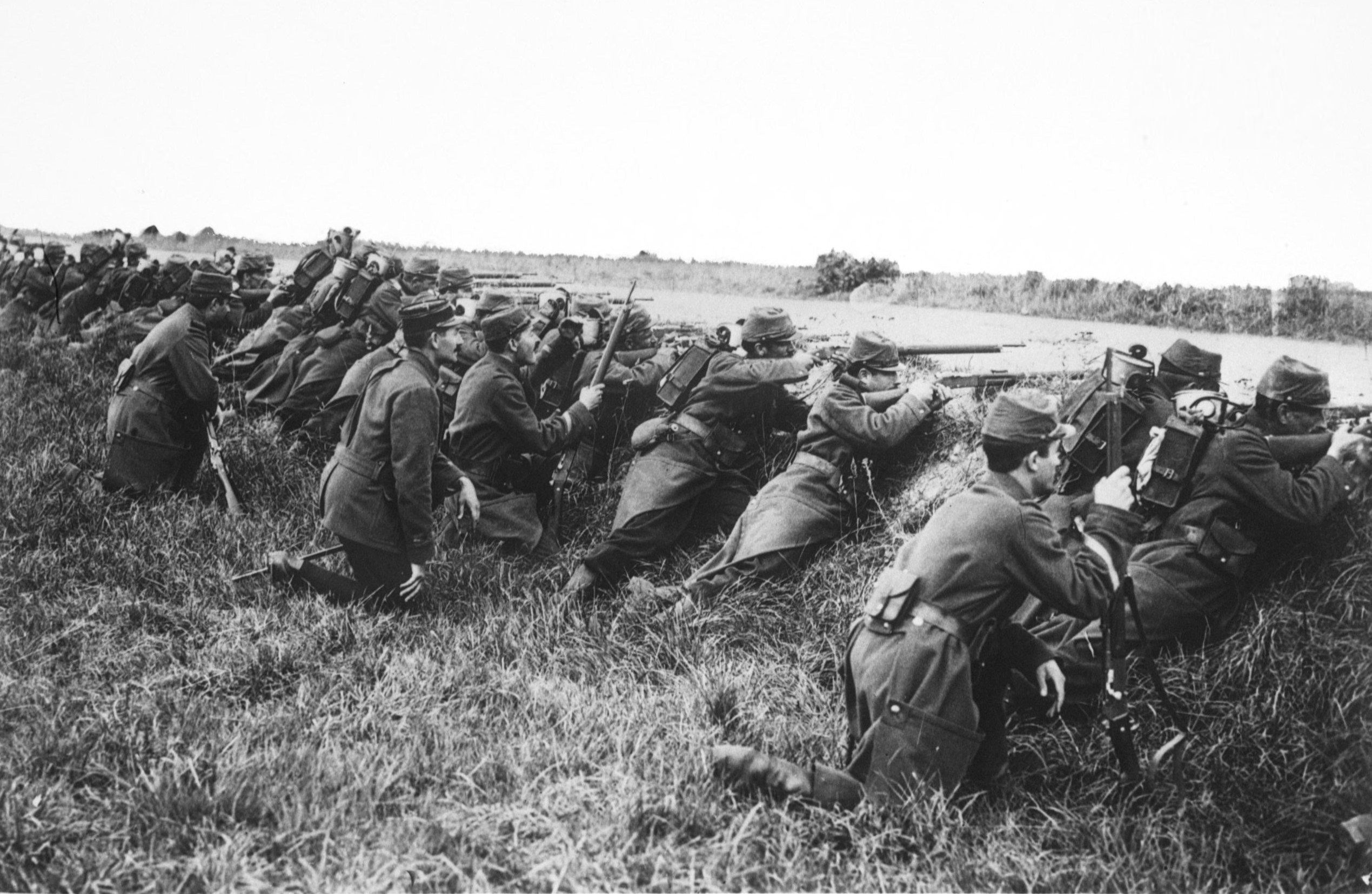
so soldiers not only dug in,
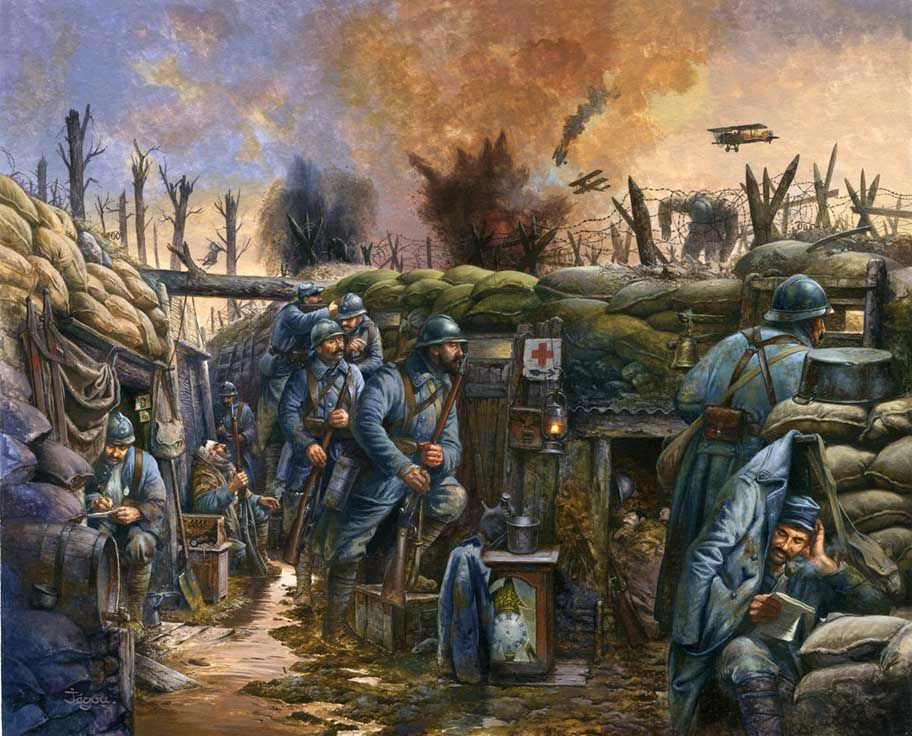
but modified their uniforms, making themselves less visible.

(Gerry Embleton)

After the war, most armies, except for special guard units,

 never went back to being peacocks, abandoning a bright tradition which went back to the 17th century.
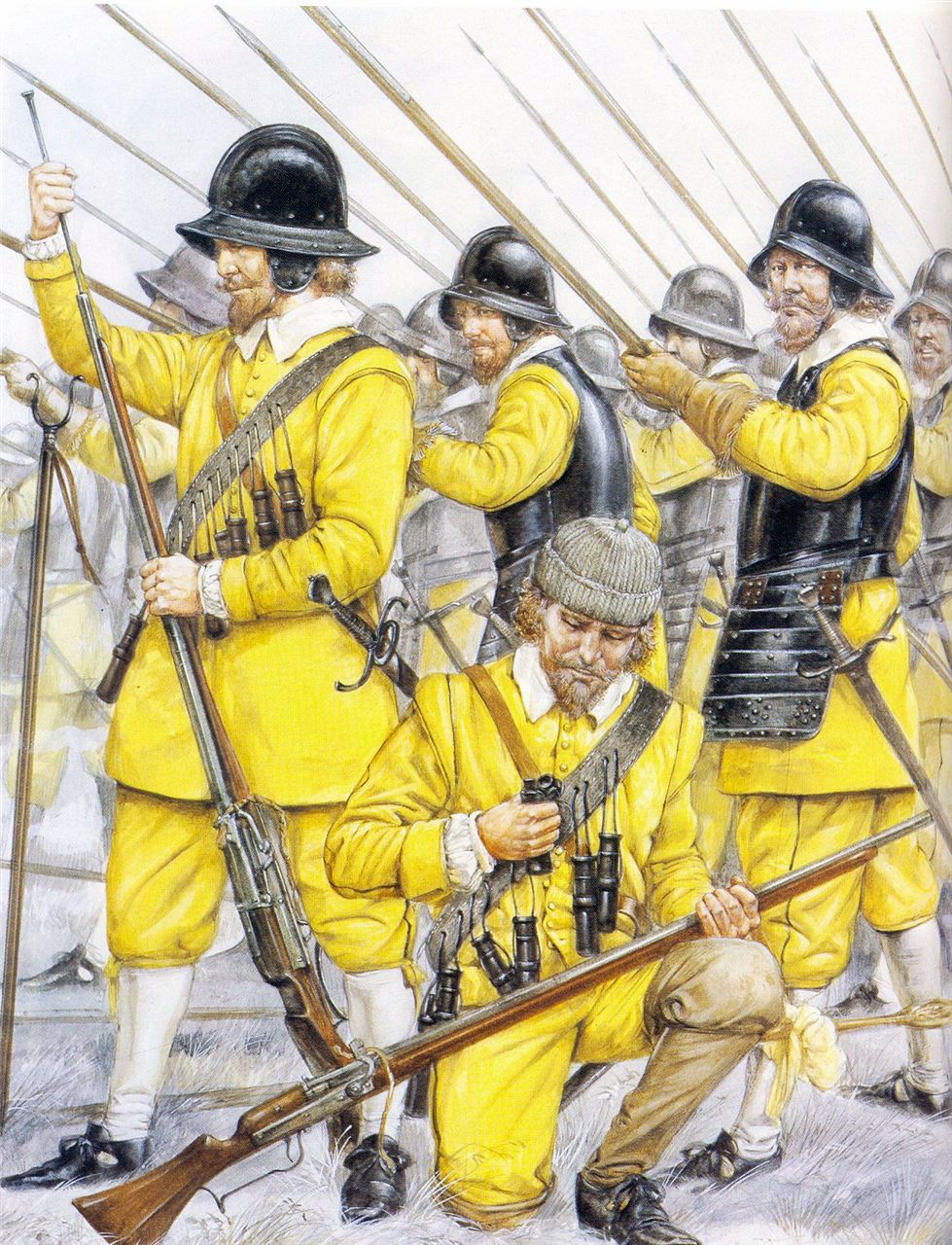
(Richard Hook)

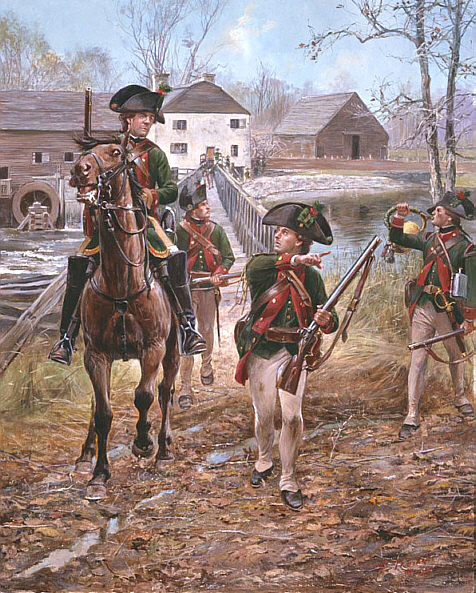
Even in the 17th century, soldiers not wearing the same-colored clothing might distinguish themselves from their enemies by what would be called “field signs”, like wearing a strip of cloth on one arm, or sticking a particular piece of a plant or even a scrap of paper in your hatband.

(Henri IV, 1553-1610, king of France, was famous for the white plume he always wore in his hat.)

Before this, soldiers might wear the distinctive colors of their commanders (usually noblemen), called “livery”—
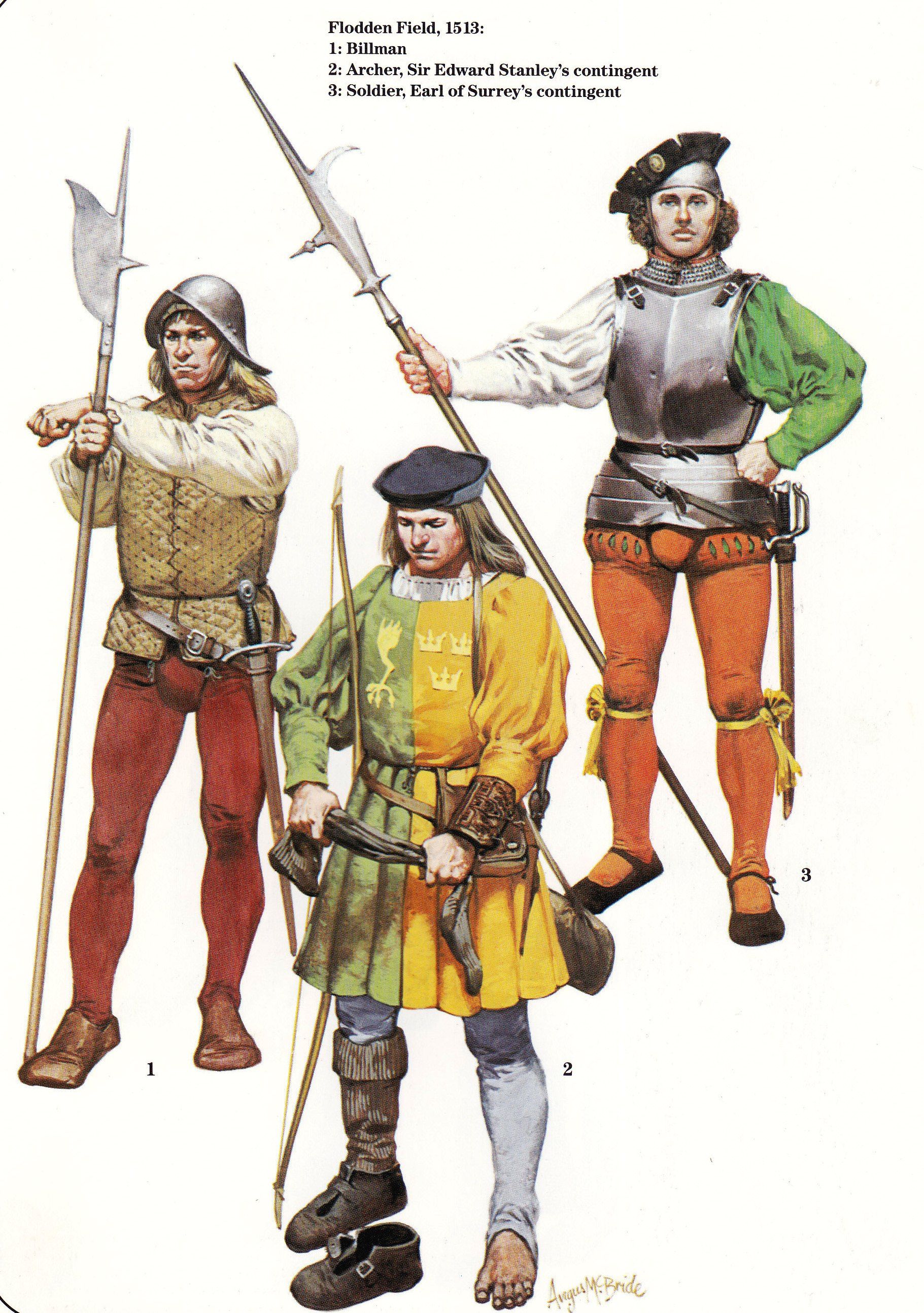
(Angus McBride)

Here we can see that Sir Edward Stanley has given this archer clothing in his colors of green and mustard-yellow, while the Earl of Surrey provided his soldiers with his colors of green and white.  You’ll also notice that the archer has some distinctive badges on the front of his coat—an eagle’s claw and crowns.  These are personal indicators of Sir Edward, heraldic markers to indicate to whom the archer belonged.

In the days before distinctive military dress, heraldry—the use of emblems to mark out one knight, and perhaps his followers, from another—had been developed to a high level.  When everyone was covered in metal,

such emblems were a way to identify a knight—and if he had issued similar emblems to his soldiers, a way to identify the troops he had brought and commanded at a battle.

As emblems developed, there also developed a person with a specialized skill to identify them—a herald.
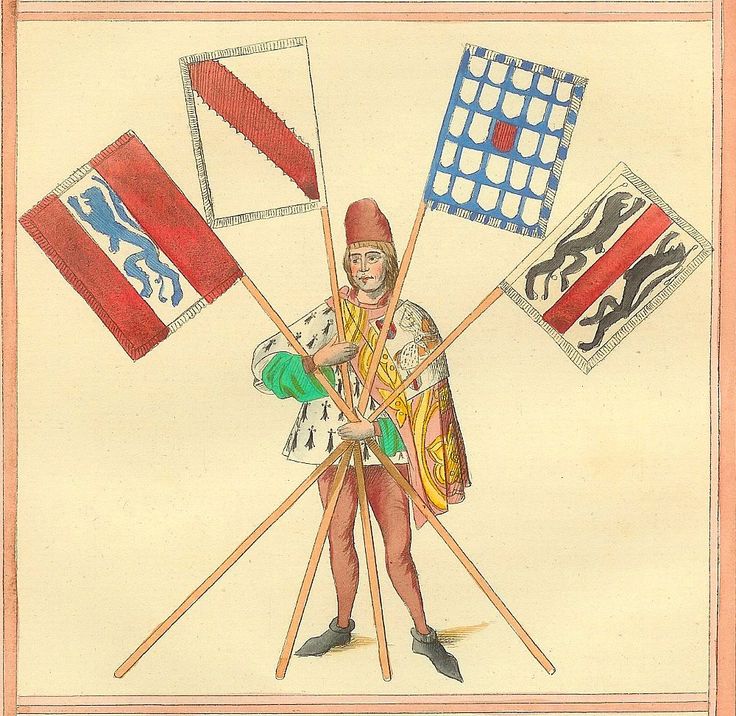
He himself, as you can see, wore distinctive clothing, which also helped him in his other role as messenger between military opponents—he was considered as a neutral and could therefore pass freely.  (For more on heralds, see “Herald-ry in Middle-Earth”, 30 March, 2016 here:  https://doubtfulsea.com//?s=herald&search=Go )

Tolkien himself belonged to the age of drab—

(Here’s what that uniform would have looked like in color—although this is a much higher level officer—looks to be a major—JRRT was commissioned as a second lieutenant and eventually promoted to first lieutenant )

but was well aware of earlier flashiness and we can see it in his description of the guards at Denethor’s gate—even though he sees their outfits as a throwback, just like British soldiers ever returning to bright red uniforms—except for the monarch’s guards:

“The Guards of the gate were robed in black, and their helmets were of strange shape, high-crowned, with long cheek-guards close-fitting to the face, and above the cheek-guards were set the white wings of sea-birds; but the helms gleamed with a flame of silver, for they were indeed wrought of mithril, heirlooms from the glory of old days.  Upon the black surcoats were embroidered in white a tree blossoming like snow beneath a silver crown and many-pointed stars.  This was the livery of the heirs of Elendil, and none wore it now in all Gondor, save the Guards of the Citadel before the Court of the Fountain where the White Tree had grown.”  (The Return of the King, Book Five, Chapter 1, “Minas Tirith”)

(from the Jackson films—as you can see, the helmet fits the description, but the surcoat has disappeared and, instead, the Tree, stars, and crown have been shifted to the breastplate, removing the dramatic contrast between the black cloth and white embroidered emblems which JRRT intended)

As well, although the orcs wear no livery—no uniforms or even part-colored clothing—they do have badges—the white hand of Saruman

(perhaps suggesting that he has his hand over everything?  I think of the “Armada Portrait” of Queen Elizabeth the First here—just look at the quiet statement in her hand)

and the red eye of Sauron,
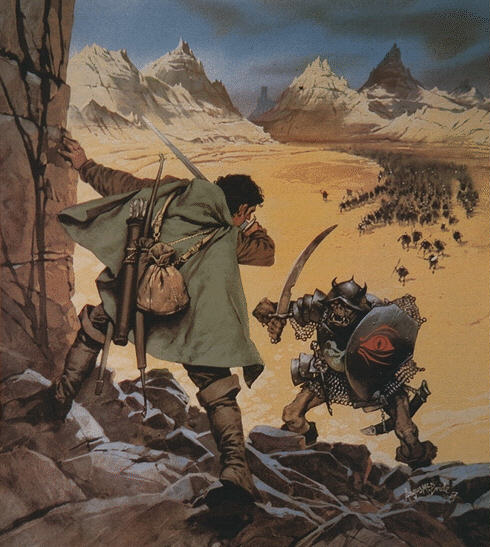
(Angus McBride—perhaps implying that, like Big Brother, Sauron has his eye on you?)

but then there’s a new one, only mentioned once, which provided the title for this posting and the puzzle—

“Two liveries Sam noticed, one marked by the Red Eye, the other by a Moon disfigured with a ghastly face of death…” (The Return of the King, Book Six, Chapter 1, “The Tower of Cirith Ungol”)

What is JRRT up to here?  Minas Morgul,  the “Tower of Black Sorcery”, the center of this gateway into Mordor,
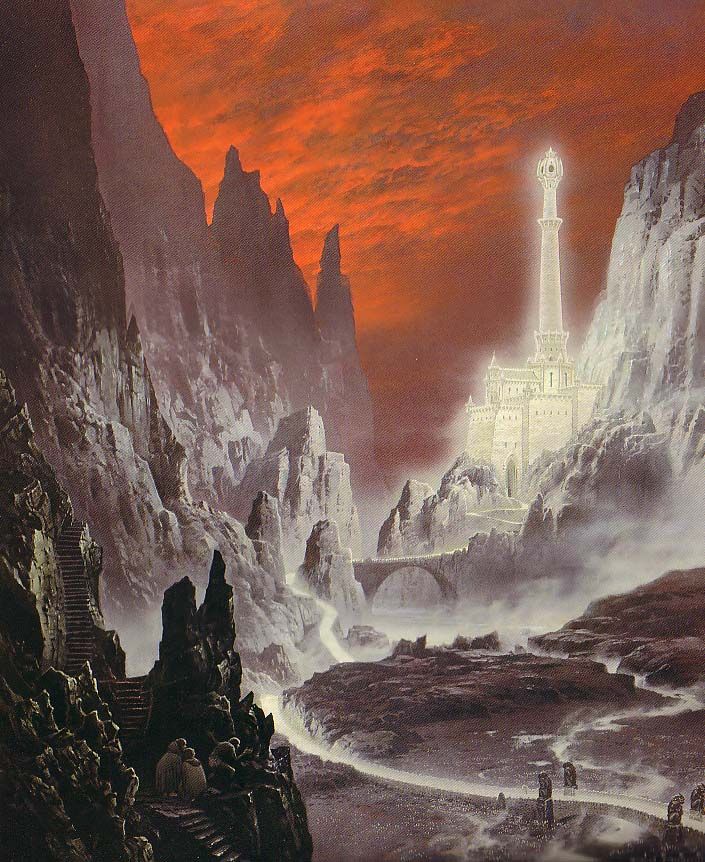
(Ted Nasmith)

had been built as Minas Ithil, “the Tower of the Moon” and it’s clear that those having that badge must come specifically from that place, and a mockery of its previous Gondorian name, which is interesting because the rest of Sauron’s forces appear to wear only the Red Eye.  Yet, if we can trust an orc, we may have the sense that Sauron doesn’t appreciate deviation, as Grishnakh asks rhetorically of Ugluk:

“They might ask where his strange ideas came from.  Did they come from Saruman, perhaps?  Who does he think he is, setting up on his own with his filthy white badges?  They might agree with me, with Grishnakh their trusted messenger; and I Grishnakh say this:  Saruman is a fool, and a dirty treacherous fool.  But the Great Eye is on him.”  (The Two Towers, Book Three, Chapter 3, “The Uruk-hai”)

So what’s going on here?  Certainly there’s rivalry between Saruman’s orcs and Sauron’s, but just how deep does orc rivalry go?  When Sam arrives at the Tower of Cirith Ungol, he finds it a battleground and, climbing into the tower itself he hears two orcs arguing, Shagrat, the captain of the Tower, and Snaga, one of his men.  Snaga says:

“You won’t be a captain long when They hear about all these goings-on.  I’ve fought for the Tower against those stinking Morgul-rats, but a nice mess you two precious captains have made of things, fighting over the swag.” (The Return of the King, Book Six, Chapter 1, “The Tower of Cirith Ungol”)

So, seeing that emblem on a shield, with “a Moon disfigured with a ghastly face of death”, just whose face is that?  And whose death?

As ever, thanks for reading.

Stay well,

If you were to come up with your own livery, what would it be?—sometimes knights made visual puns—like Sir Roger de Trumpington—

Think about that, pencil in hand, and remember that there’s always

MTCIDC

O

PS

For more on livery, see:  https://en.wikipedia.org/wiki/Livery

There has been some wonderfully imaginative work done on heraldry in Tolkien.  Here’s a link to get you started:  https://en.wikipedia.org/wiki/Heraldry_of_Middle-earth   

Helm (but not deep)

28 Wednesday Aug 2019

Posted by Ollamh in J.R.R. Tolkien, Military History

≈ Leave a comment

Tags

British, Constantinople, French, Great War, Helmet, Julius Caesar, kepi, Medieval, Neo-Assyrians, pickelhalben, Plevna, Port Arthur, Prussians, Sebastien Le Prestre de Vauban, sieges, Tolkien, uniforms, WWI

Welcome once more, dear readers.

In our last, we talked about Tolkien as a very junior officer in 1916-17.

image1jrrt.jpg

We discussed much of the detail of his kit, including this very important item, first introduced to the British army on the Western Front in 1916.

image2brodie.jpg

The war had begun in 1914, however, and the British soldiers of 1914

image3dubfus.jpg

although they had shed their red coats for anything but parades,

image4redcoats.jpg

having learned in many colonial wars that khaki was more practical on campaign,

image5khaki.jpg

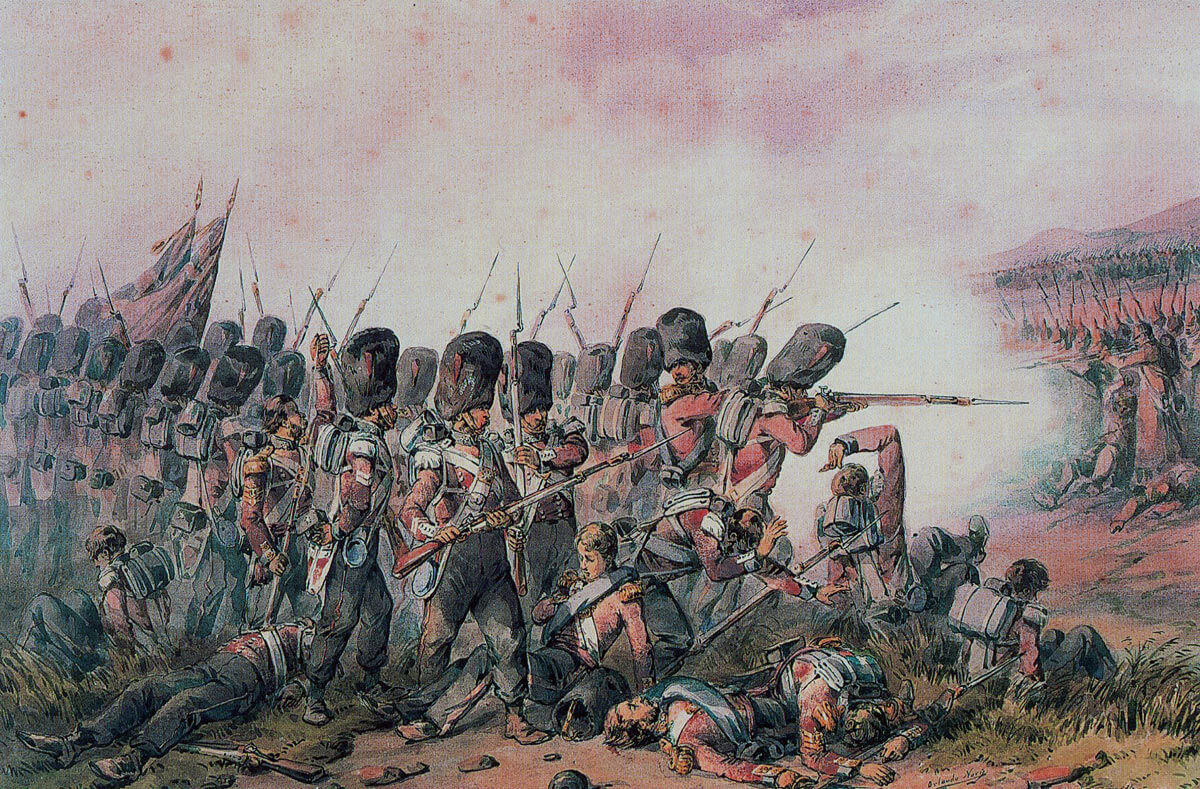
were still, at heart, ready for the kind of open-battlefield fighting which their ancestors had practiced at Waterloo, a century before.

image6waterloo.jpg

Infantry might not fight in long solid lines any longer,

Battle of The Alma

image7mons.jpg

And might even seize upon temporary cover,

image8mons.jpg

but battle would still be a sort of stand-up affair with artillery in support

image9arty.png

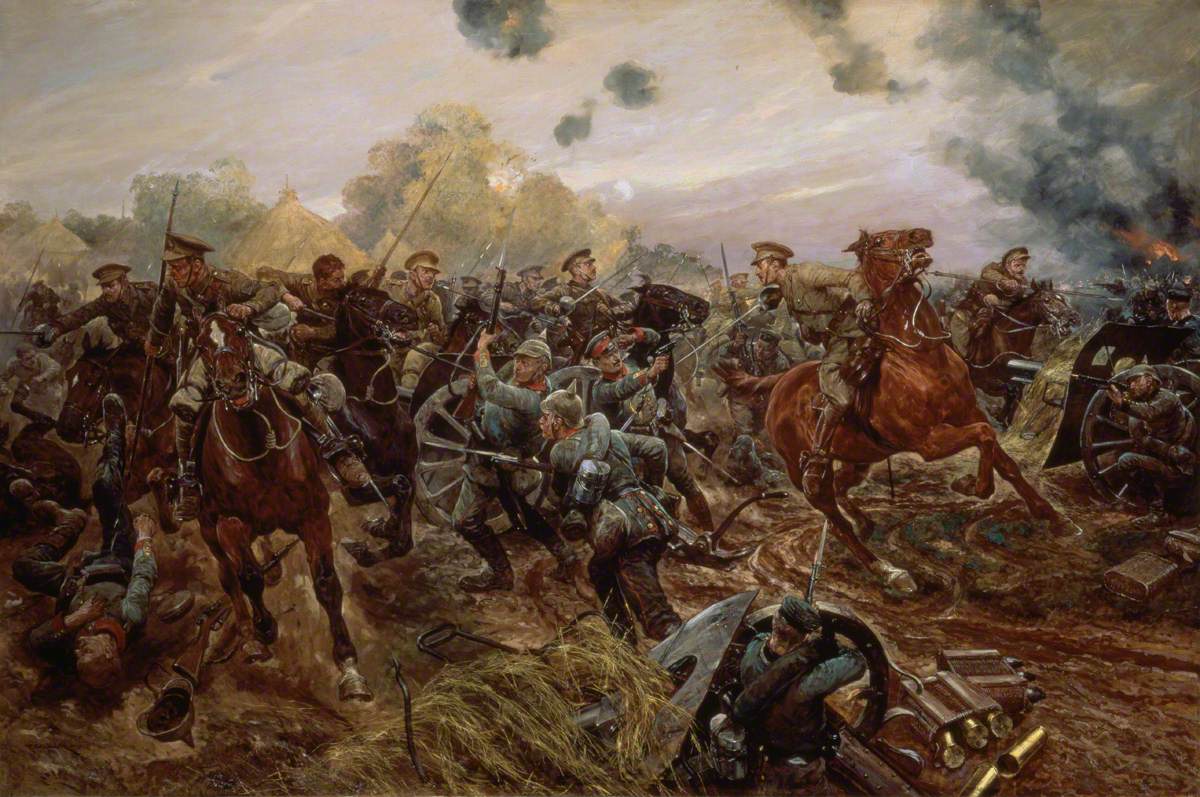
and cavalry ready to charge even enemy artillery,

image10cav.jpg


just as they had at Balaclava, 60 years before.

image11bala.jpg


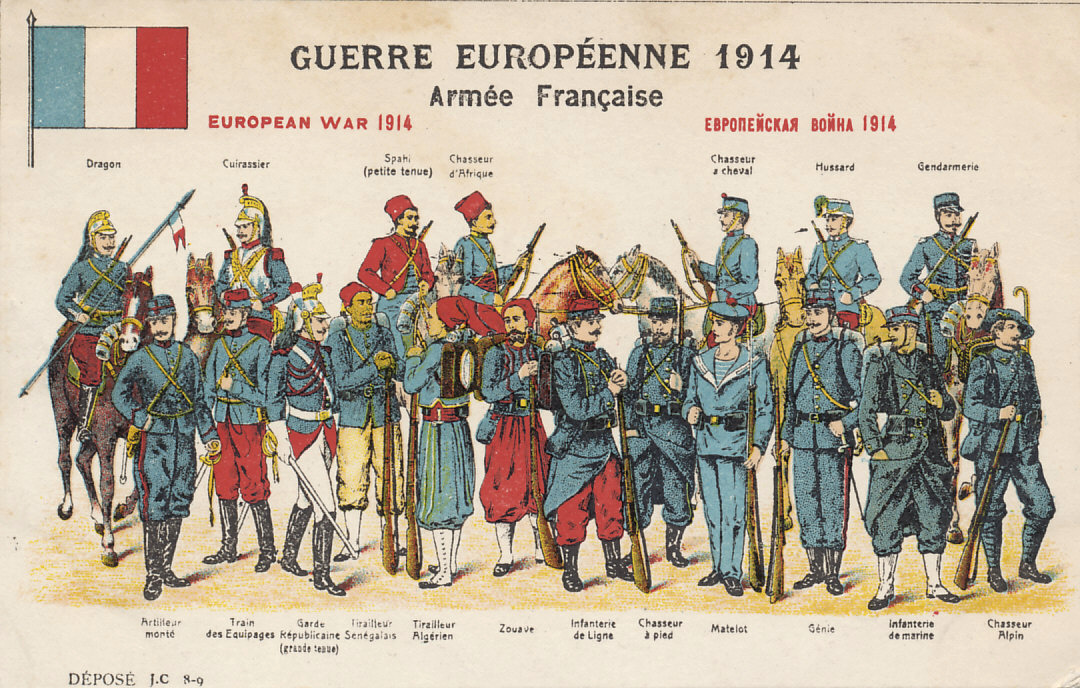
The British were not alone in imagining modern war as being like this.  Across the Channel, the French were still wearing the same red trousers they had first put on in the 1830s, while discussing attacks made solely with the bayonet.

image12french.jpg

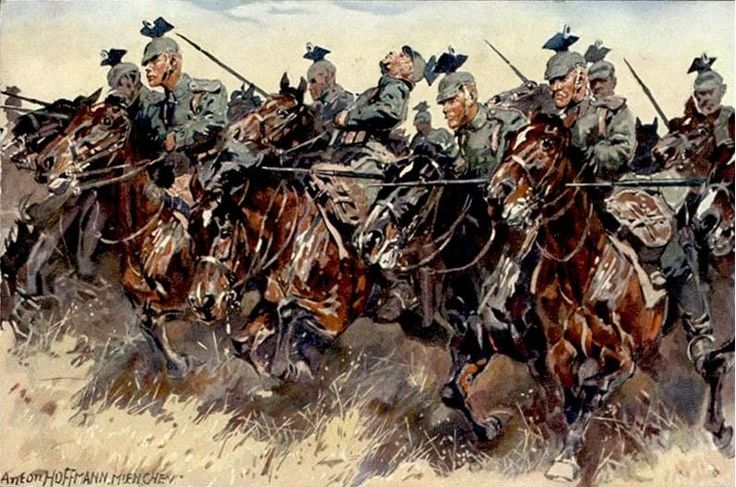
And the Germans, although more sensibly dressed in grey, could still see themselves as pounding across the battlefield like medieval knights, lances lowered.

image13uhlans.jpg

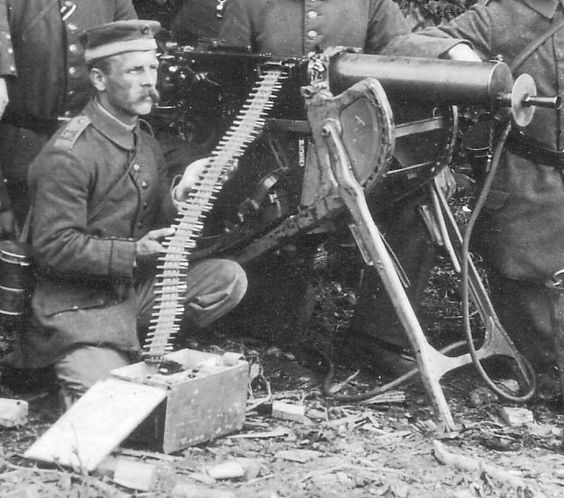
Unfortunately for such dreams, weapons technology in 1914 had far outstripped fashion and tradition, with machine guns having firing rates of as much as 600 rounds per minute

image14maxim.jpg

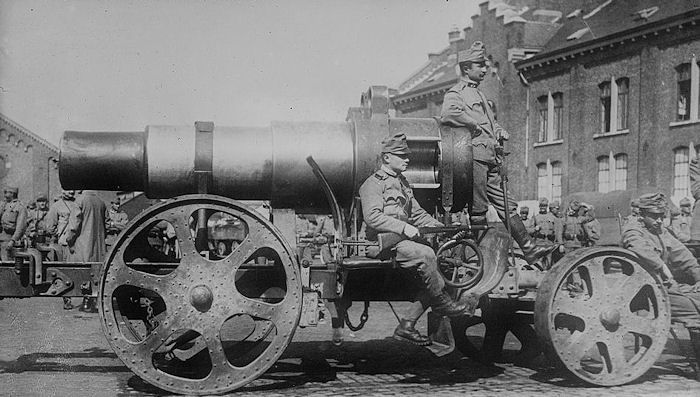
and increasingly heavy artillery.

image15skoda.jpg

image16bigb.jpg

Soldiers on both sides, therefore, instinctively began to seek more shelter.

image17ditch.jpg

And more shelter.

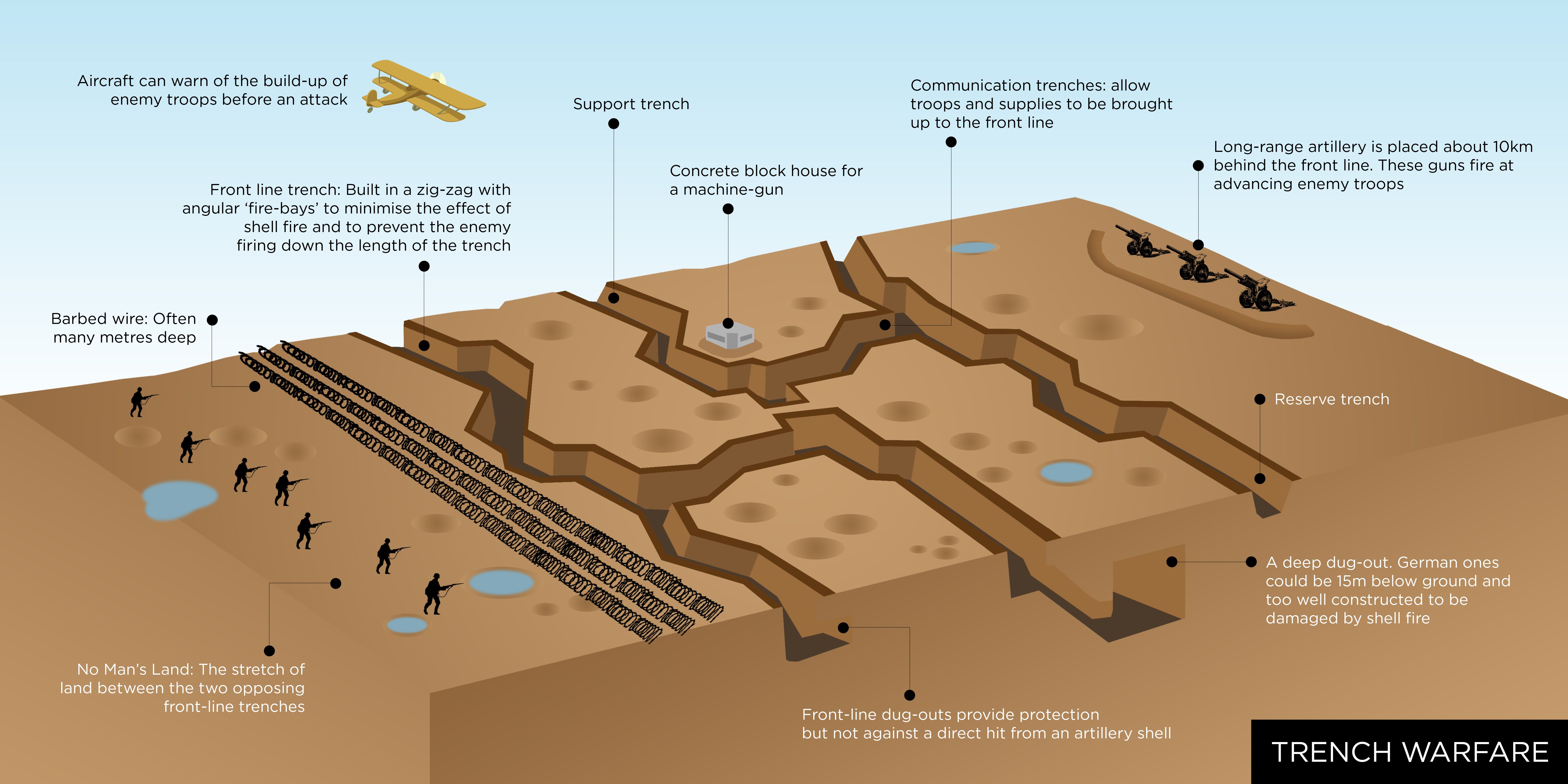
image18trench.jpg

What happened next was a kind of military retrograde motion:  what was planned as open-field warfare turned into a giant, 500-mile-long siege.

image19map.jpg

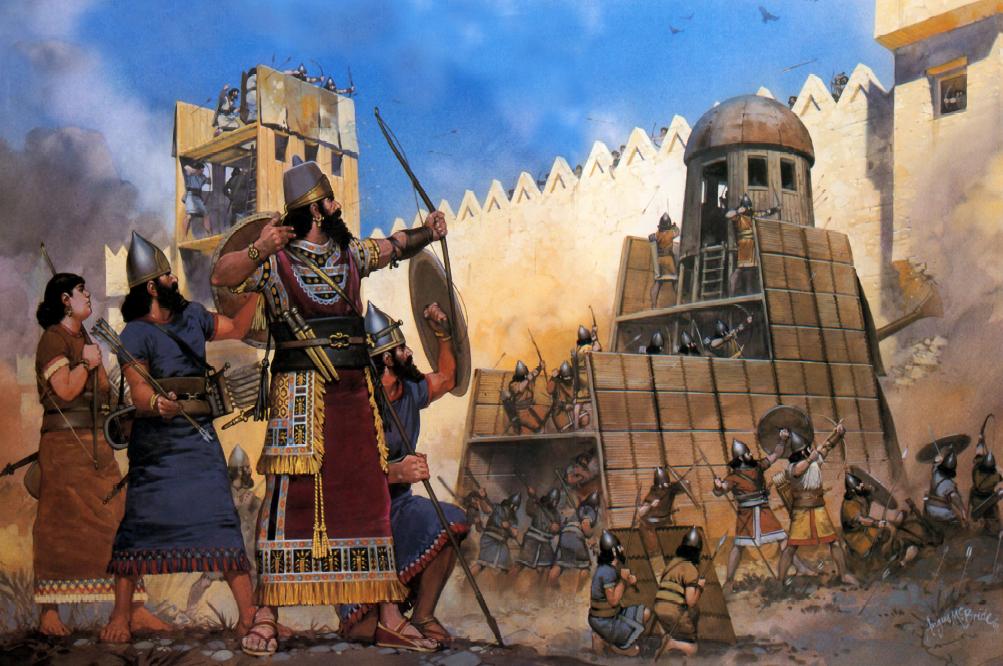
There had, of course, been sieges forever.  The ancient Neo-Assyrians were fierce proponents.

image20assyrians.jpg

In 332bc, Alexander the Great, frustrated by the defiance of the city of Tyre, conducted a famous siege across open water to make the Tyrians submit.

image21tyre.gif

Julius Caesar had crushed Celtic power in Gaul in part by besieging their major settlement at Alesia in 52bc.

image22alesia.jpg

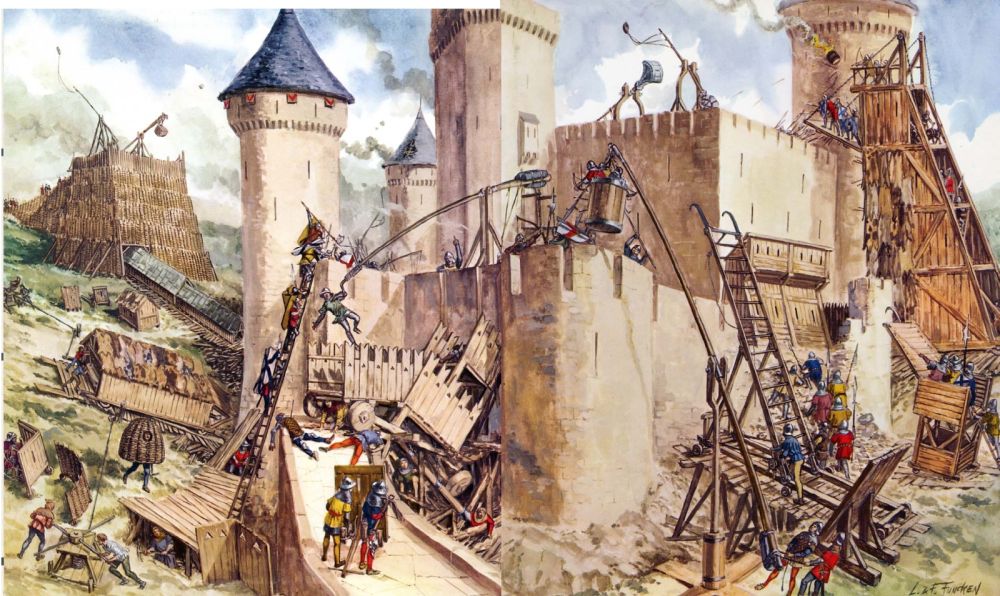
During the western Middle Ages, sieges were more common than pitched battles.

image23medsiege.jpg

By the 14th century, however, big siege weapons, like the massive stone-throwing trebuchet,

image24trebuchet.jpg

were fated to be replaced by a new and more effective weapon, the bombard, or cannon.

image25bombard.jpg

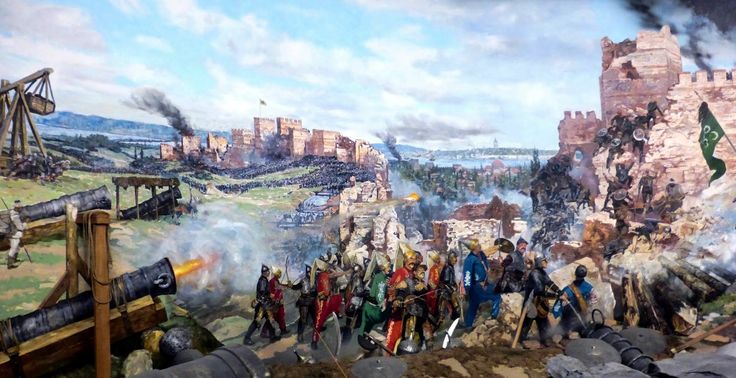
And, with the expansion of the use of artillery to pound enemy defenses, siege warfare became that much more deadly—as in the relatively short time (53 days) it took for the guns of Mehmet II to knock holes in the ancient but massive walls of Constantinople in 1453.

image26constant.jpg

Over time, the practice of siege craft became an art, as did that of fortification, and, for western armies, the theoretician was Louis XIV’s military engineer, Sebastien Le Prestre de Vauban (1633-1707).

image27vauban.jpg

Vauban designed fortresses to resist sieges, but he also said that every fortress could be taken in time and proved it by directing methodical attacks upon a number of them.  Step one was to gradually move trenches—and guns—closer and closer to the enemy fortress or town, attempting to make a hole in its walls.  Then, when the hole was judged big enough to provide entry into that town or fortress, infantry would be sent in to try to break through.

image28siege.jpg

Vauban’s method, with its lines of moving trenches and gun emplacements, became the standard and older soldiers in 1914 and those who read military history would have seen that method in the later 19th century, when the Prussians and their allies besieged Paris in late 1870,

image29paris.jpg

or when the Russians laid siege to the Turkish garrison of Plevna in 1877,

image30plevna.jpg

or, more recently, when the Japanese besieged the Russians at Port Arthur in 1904-5.

image31porta.jpg

Thus, there was a long tradition for such things for the armies of western Europe to follow in 1914, but the difference lay in those modern weapons, which made the life of besiegers—and, in this war, both sides were really besieging each other simultaneously—that much more dangerous.  If the basis of that tradition was bombardment followed by a successful infantry assault, then the generals of 1914 would follow that pattern.

image32bomb.jpg

image33assault.jpg

If the enemy used machine guns and heavy artillery to stop the attackers,

image34maxim.jpg

image35arty.jpg


it took some time before those generals realized that old-fashioned methods usually produced huge numbers of casualties

image36casualties.jpg

and little success.

Change took time, but one element was to improve soldiers’ chances to survive in the trenches and that meant reviving something from the medieval world, the metal helmet.

image37medhelm.jpg

The French were the first to replace the soldiers’ kepi

image38kepi.jpg

with a metal helmet, in 1915.

image39adrian.jpg

(The kepi picture, by the way, isn’t colorized, but is an actual early color photograph, using what was called “autochrome”.)

The Germans replaced their leather helmets, called pickelhalben,

image40pickelhaube


with their own version of a steel helmet, in 1916.

image41stahl.jpg

Also, in 1916, the British replaced the service dress cap

image42sd.jpg

with the very piece of kit with which JRRT would have been equipped, and with which we began.

image43helm.jpg

Thanks, as ever, for reading

and

MTCIDC,

CD

Camouflaged

27 Wednesday Mar 2019

Posted by Ollamh in Films and Music, Heroes, J.R.R. Tolkien, Military History, Military History of Middle-earth

≈ Leave a comment

Tags

camouflage, Disney, Douglas Fairbanks Sr., Errol Flynn, Faramir, feldgrau, Great War, Ithilien, jaeger, khaki, Men in Tights, Richard Knoetel, Robin Hood, The Lord of the Rings, Tolkien, trenches, uniforms

As ever, dear readers, welcome.

After standing and reciting his “party piece”, and stewing two rabbits, Sam is about to see his first—and only—oliphaunt.

image1.jpg

Before he does, however:

“Four tall Men stood there.  Two had spears in their hands with broad bright heads.  Two had great bows, almost of their own height, and great quivers of long green-feathered arrows.  All had swords at their sides, and were clad in green and brown of varied hues, as if the better to walk unseen in the glades of Ithilien.  Green gauntlets covered their hands, and their faces were hooded and masked with green, except for their eyes, which were very keen and bright.”  (The Two Towers, Book Four, Chapter 4, “Of Herbs and Stewed Rabbit”)

image2.jpg

The chief of these men soon identifies himself as “Faramir, Captain of Gondor” and the men with him are rangers, a term which first appears in 14th-century English to mean “game keeper”, which seems appropriate for Faramir and his men, as far as their dress is concerned.  One might expect that those who spend their days in the woods would only naturally want to blend in, especially if part of their job is to apprehend poachers—trespassers who illegally hunt game.  Faramir’s and his men’s clothing could also be that of poachers, if we match that description—the green and brown part—with some very familiar figures from another famous story—

image3ncw.jpg

If you read us regularly, you will probably recognize them, especially if we add one of our favorite illustrations.

image4rob.jpg

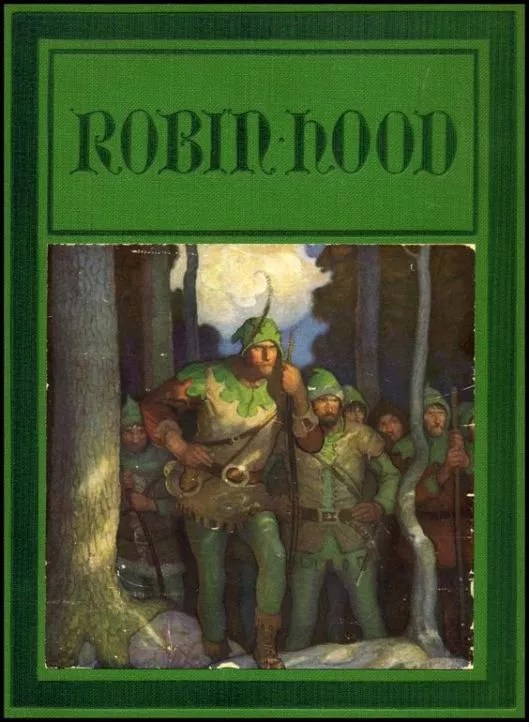
If you still don’t recognize them, we’ll add a book cover.

image5rh.jpg

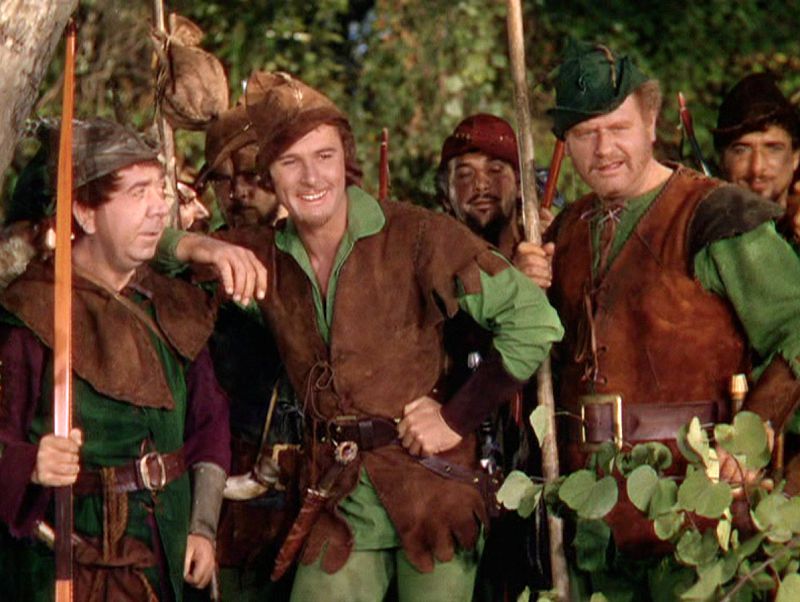
This is the 1917 publication of the retelling of the Robin Hood stories, with illustrations by NC Wyeth and it’s clear that his depictions of Robin and his men—just like his illustrations of pirates—have influenced story-tellers and costume-designers long after that initial 1917 publication.  Just look at Douglas Fairbanks Sr.’s 1922 Robin Hood,

cbe9537043957223ed32b027acbd3812

or the 1938 Errol Flynn The Adventures of Robin Hood


image7rh.jpg

image8rh.jpg

or even Disney’s 1973 animated Robin Hood

image9rh.jpg

and even the 1993 parody, Robin Hood:  Men in Tights.

image10rh.jpg

Tolkien, we presume, would have known the Wyeth illustrations and perhaps the Errol Flynn, and might have had them in mind when he was describing the basic dress of Robin and his men.  Beyond the basic outfit, however, these men are clearly dressed for more than poaching and apprehending—and it isn’t just the weapons, but also the gloves and the face-coverings.  These men are soldiers and rangers have been soldiers, or the models for them, since at least the 18th century, when certain German states, including Prussia and Hesse Kassel, employed forest rangers as light infantry—men trained as sharpshooters and skirmishers, called jaeger (“hunter” in German).

image11jaeger.jpg

In the 19th century, increasing numbers of ordinary troops of many western nations were given similar training, but the jaeger continued to be allowed special uniforms, usually green.

image12jaeger1910.jpg

This is an illustration by one of the greatest (and one of our favorite) German military/historical artists of the late 19th-early-20th centuries, Richard Knoetel, dated 1910.

When the Great War began in 1914, all the soldiers of many of the countries involved were already moving away from the bright-colored uniforms of past years and dressing more like hunters.  The British put off their parade uniforms

image13homeservice.jpg

and dressed in a mud-color, that color being called “khaki” (originally a Persian word meaning “dust”).

image14khaki.jpg

The Germans, whose parade dress was blue,

image15parade.jpg

dressed in a color called feldgrau (“field grey”).

image16feld.jpg

Only the French began the war still on parade,

image17french.jpg

but even they gradually changed into something which blended in better with the terrain.

image18french.jpg

And blending in was absolutely necessary in a world in which war was being fought not with muskets and cannon, as in Napoleon’s days

image19gun.jpg

but with machine guns which could fire 600 rounds per minute

image20mg.jpg

and guns so big that some had to be transported on railroad trains.

image21rr.jpg

Whenever possible, soldiers dug in, spending their days below ground level, in trenches.

image22trench.jpg

When they had to go above ground level, they wanted to be as inconspicuous as possible.  Here’s what 2nd Lieutenant Tolkien might have looked like in 1916 (notice that, by 1916, British soldiers had put aside caps in the trenches and used helmets which looked positively medieval).

image23jrrt.jpg

image24kettle.jpg

The term for this blending-in was “camouflage”, which entered English from French in 1917 and it was used not only by infantry, but the practice was extended to everything on the battlefield and beyond– to the new tanks

image25tank.jpg

and even to ships, where the goal was to conceal or sometimes simply to confuse the eye.

image26ship.jpg

Some of the most extreme varieties take us back to the rangers of South Ithilien, like this sniper, whose job was to pick off unsuspecting soldiers (officers were a special prize) from complete concealment.

image27sniper.jpg

This makes us wonder what Faramir and his men would have done if they had been armed with magazine rifles,

image28smle.jpg

instead of bows as, after all, they are there for an ambush…

image29faramir.jpg

As always, thanks for reading and

MTCIDC

CD

Legionnaire, But No Disease

28 Wednesday Mar 2018

Posted by Ollamh in Films and Music, Heroes, Military History

≈ Leave a comment

Tags

Africa, Alexandre Dumas, Algeria, Beau Geste, Beau Hunks, Camels, Chasseurs d'Afrique, Film, Flying Deuces, Follow that Camel, French Conquest of Algeria, French Foreign Legion, Garde Suisse, Genoese, Laurel and Hardy, Legions, Louisa de Ramee, military, Ouida, P.C. Wren, Sahara, The Last Remake of Beau Geste, The Three Musketeers, Under Two Flags, uniforms, Zouaves

As always, dear readers, welcome!

Although we do a lot of Tolkien, we set up this blog for adventure in general and, in this posting, we’ve gone to a completely different world—as you’ll see.

When we think of the Sahara, we immediately see:

a. a satellite map, which shows us just how huge it is

image1sahara.jpg

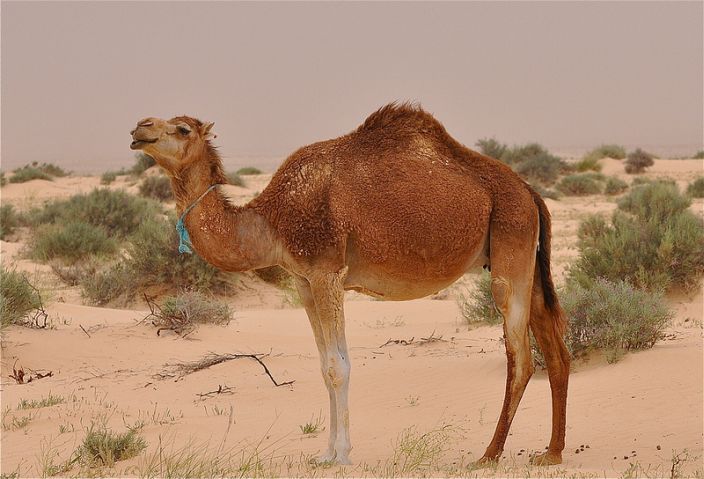
b. and camels—although they aren’t native, they’ve been there a long time, having been introduced from Arabia perhaps about 300Ad

image2camel.jpg

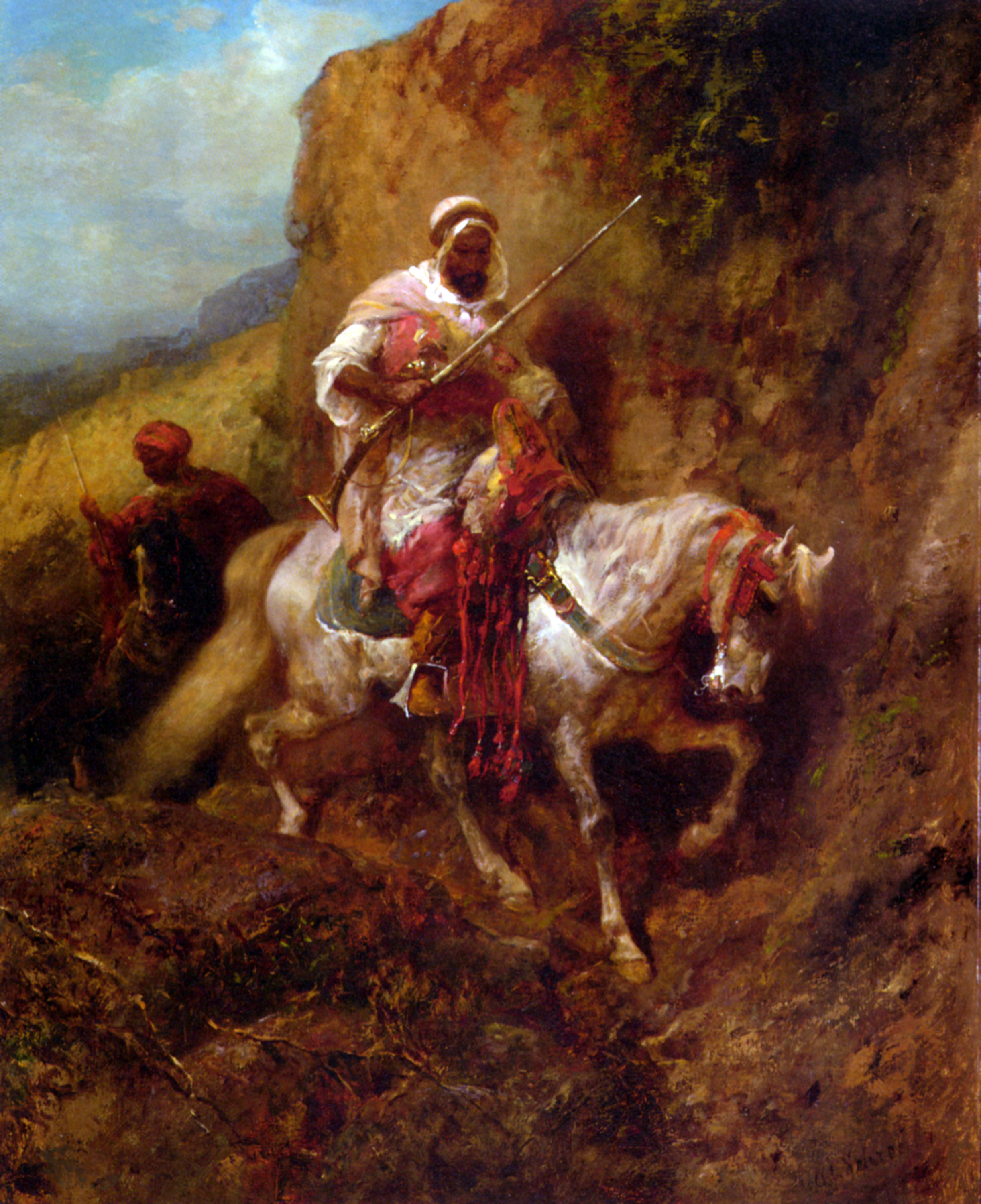
c. and, of course, desert warriors

image3desertwarrior.jpg

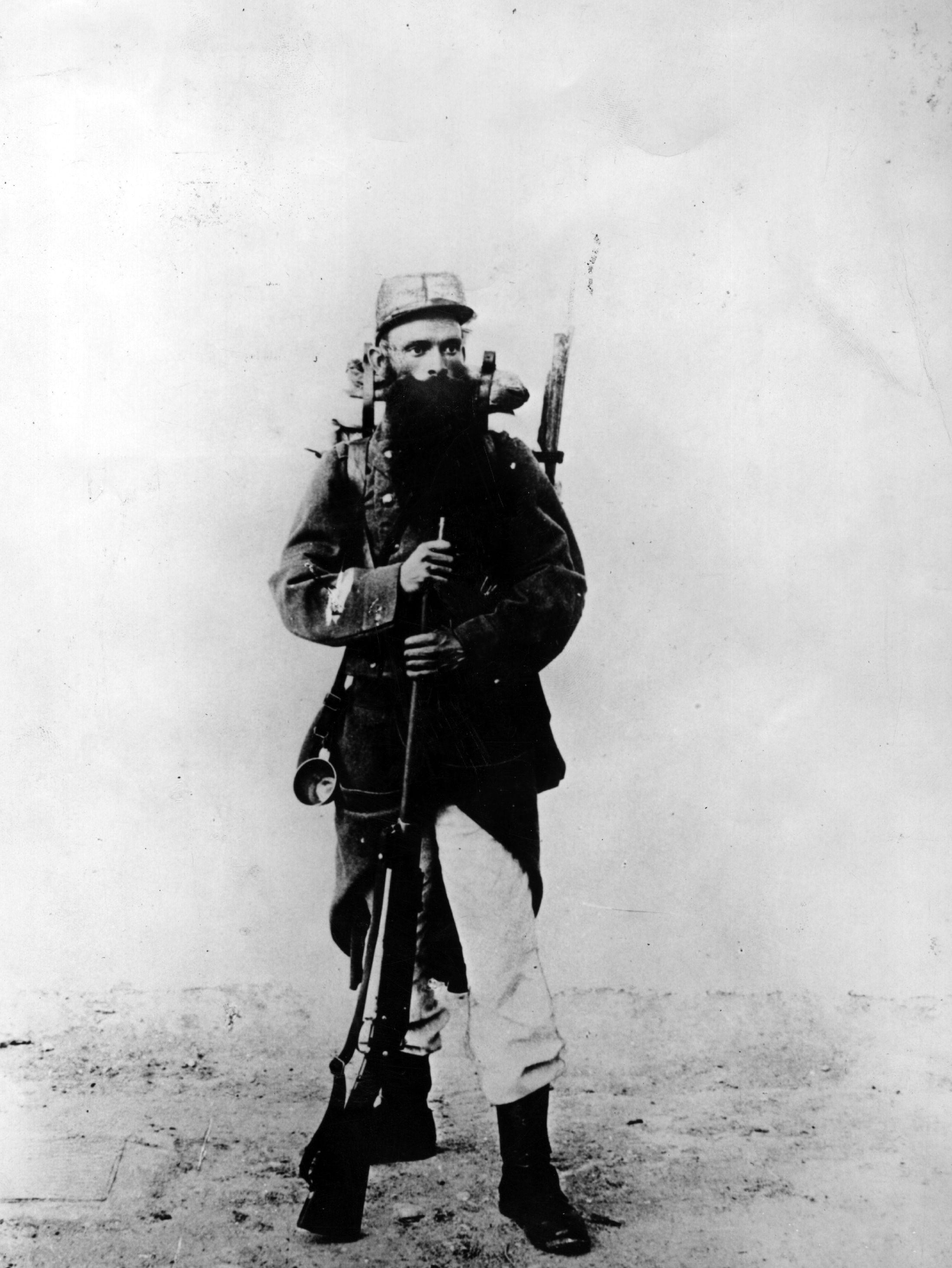
d. and, also, of course, their opponents, the French Foreign Legion

image4ffl.jpeg

e. or, with a bit of a trim—and in color—

image5fflcolor.jpg

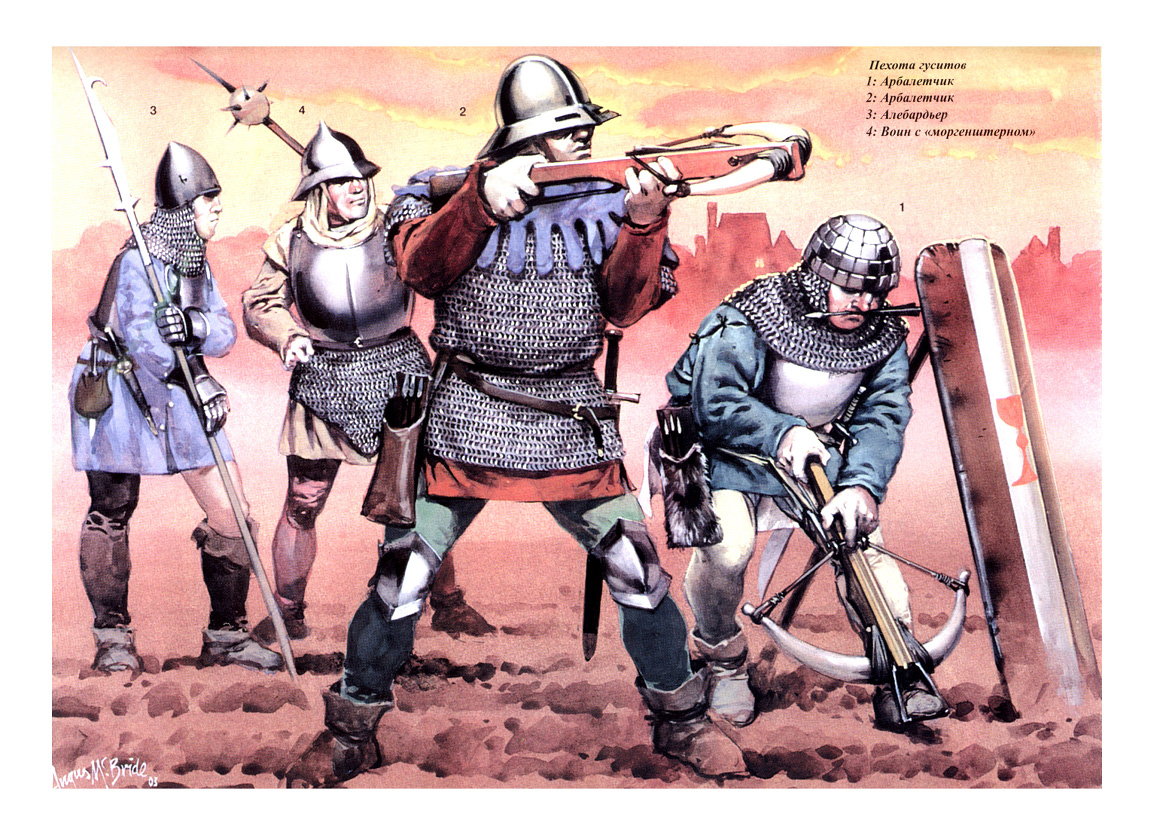
The Foreign Legion were hardly the first foreigners in the service of France.  Medieval French kings had used Genoese crossbowmen.

image6genoesecrossbowmen.jpg

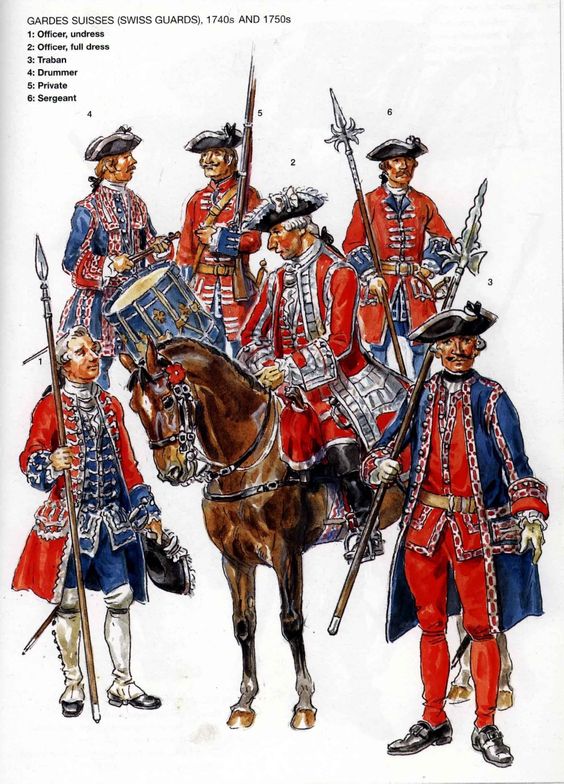
And the later kings of France had, as part of their household guards, the Garde Suisse.

image7gardesuisse.jpg

The Foreign Legion was raised in 1831 and used, at first, during the French conquest of Algeria.

image8firstuniform.jpg

image9frinvasionalgeria.jpg

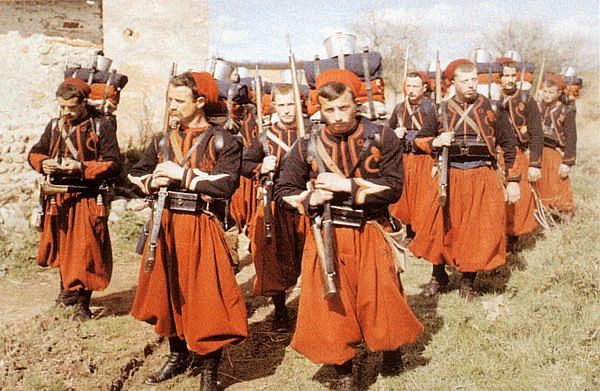
As Algeria was exotic, so were the soldiers there, beginning with the dashing Zouaves, originally locals, but gradually mostly French.

image10zouave.jpg

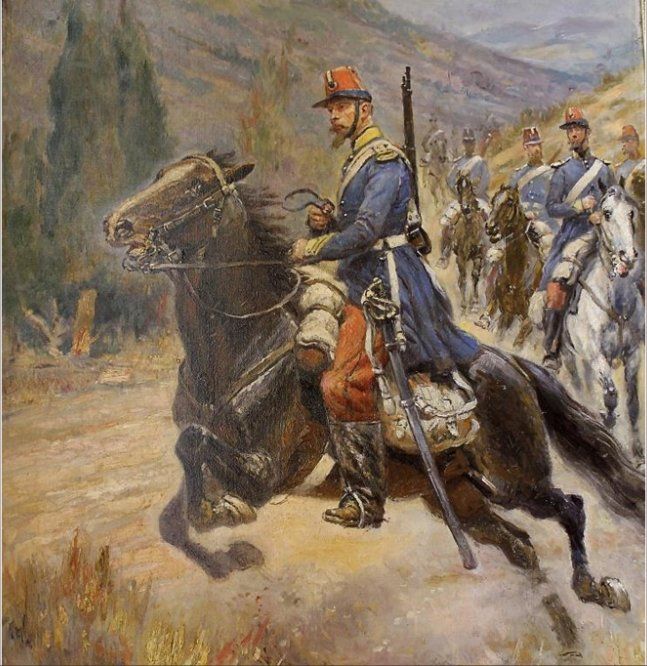
Along with these were the Chasseurs d’Afrique,

image11chass.jpg

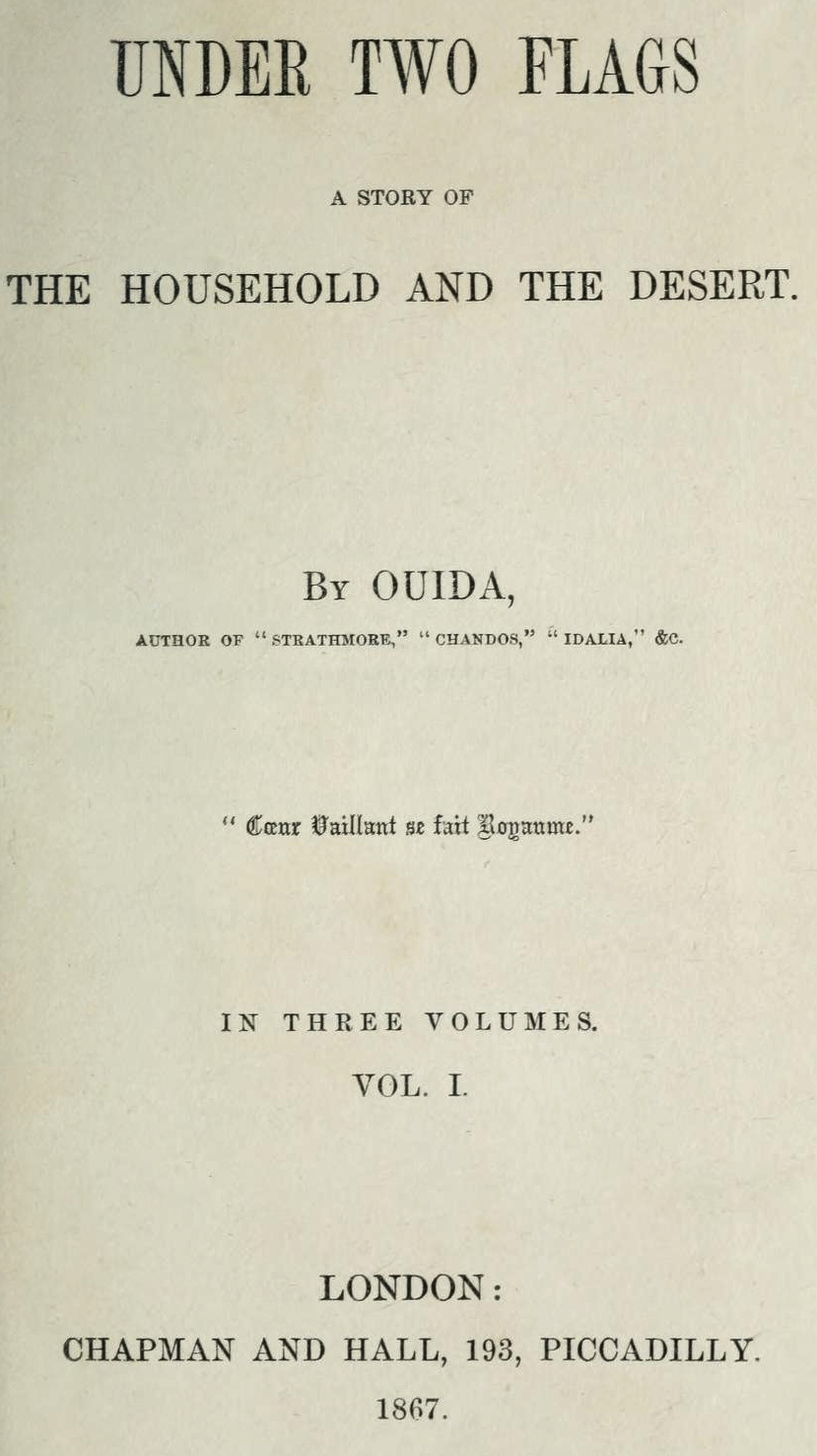
who formed the background for what we think is the first North African adventure novel in English, Ouida (Louisa de Ramee)’s Under Two Flags (1867)

image12louisa.jpg

image13book.jpg

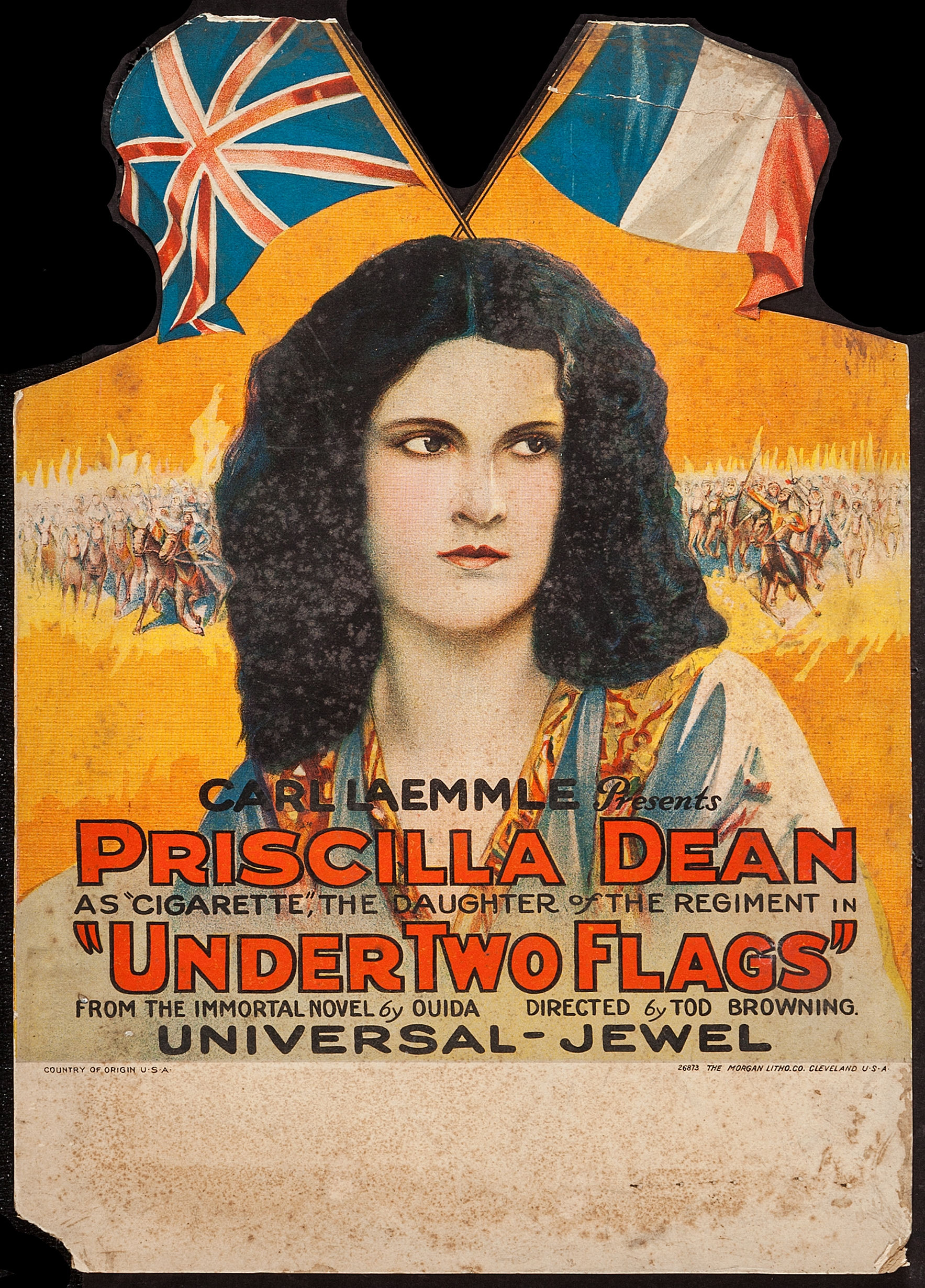
which became a film twice, in 1922

image14nineteentwentytwo.jpg

And in 1936.

image15nineteenthirtysix.jpg

Oddly, the Chasseurs d’Afrique of the novel were replaced, in the 1936 film by the Foreign Legion—perhaps because the script writers thought that the Foreign Legion would have been a more familiar unit to their audience?

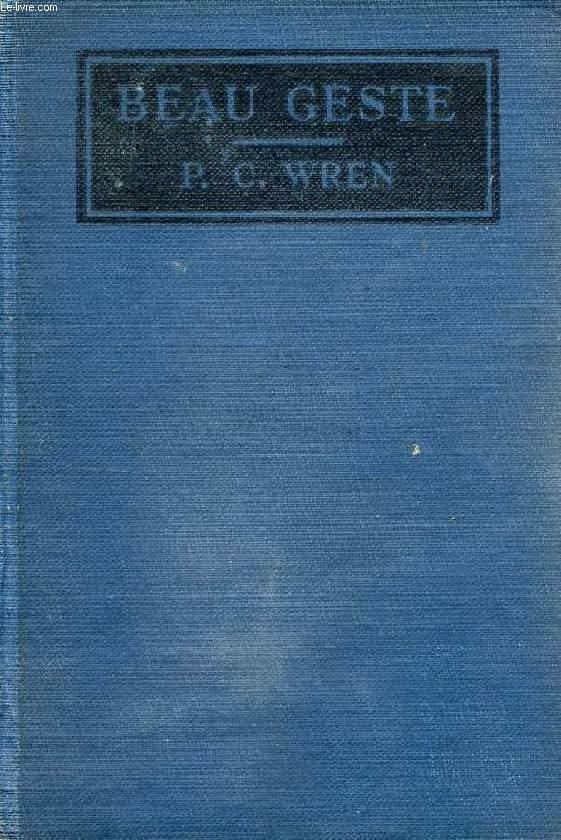
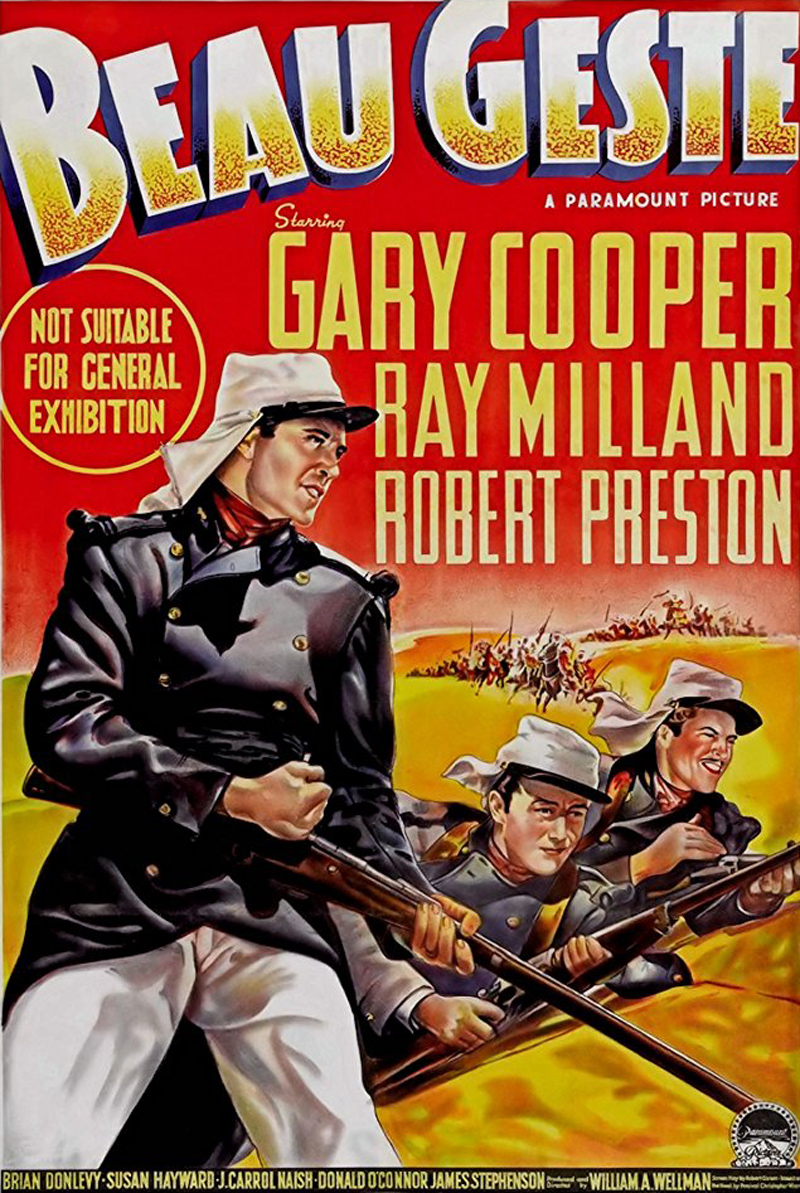
If so, it may have been because of P.C. Wren’s 1924 novel, Beau Geste,

image16bg1924.jpg

which has appeared a number of times on the screen, initially in silent form in 1926,

image17bg1926.jpg

and again as a “talkie” in 1939

image18bg1939.jpg

and again in full color in 1966.

image19bg1966.jpg

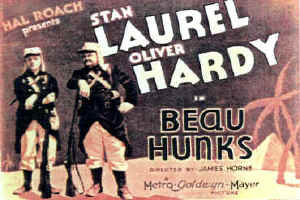
The book—and the film’s—popularity—the story was all about noble sacrifice—and exotic desert adventure—did not escape satire.  As early as 1931, two of our favorite early film comedy stars, Stan Laurel and Oliver Hardy,

image20laurelandhardy.jpg

appeared in their longest short (37 minutes—but it which sounds like a contradiction in terms), Beau Hunks.

image21hunks.jpg

This title is based upon what appears to be a double ethnic slur, Bo- from “Bohemian” + Hunk- from “Hungarian”, so a disparaging reference to a central European—a lower class one, at that.  (It makes us thankful that it appears to have disappeared entirely as a slang term:  in our current world, we don’t need any more ethnic attacks—we have plenty already.)

This was remade in 1939 as Flying Deuces.

image22flying.jpg

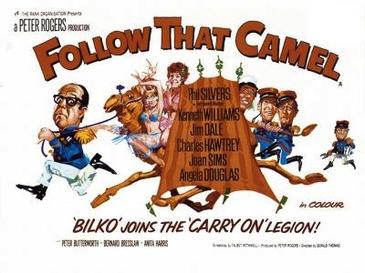
This wasn’t the end of such cheerful assaults, however.  In 1967, there was Follow That Camel (from the British comedy series “Carry On…)

image23follow.jpeg

and, appropriately, in 1977, came The Last Remake of Beau Geste.

image24lastremake.jpg

All the same, we still love the old movie, with its last-ditch defense of Fort Zinderneuf,

image25ftz.jpg

where, borrowing from Dumas’ The Three Musketeers,

image26three.jpg

image27dumas.jpg

in desperation, the defenders prop up dead legionnaires to make their numbers appear greater than they are.

How could people with a passion for adventure not find that appealing?

Thanks, as ever, for reading

and, as always,

MTCIDC

CD


The Doubtful Sea Series Facebook Page

The Doubtful Sea Series Facebook Page

  • Ollamh

Categories

  • Artists and Illustrators
  • Economics in Middle-earth
  • Fairy Tales and Myths
  • Films and Music
  • Games
  • Heroes
  • Imaginary History
  • J.R.R. Tolkien
  • Language
  • Literary History
  • Maps
  • Medieval Russia
  • Military History
  • Military History of Middle-earth
  • Narnia
  • Narrative Methods
  • Poetry
  • Research
  • Star Wars
  • Terra Australis
  • The Rohirrim
  • Theatre and Performance
  • Tolkien
  • Uncategorized
  • Villains
  • Writing as Collaborators
Follow doubtfulsea on WordPress.com

Across the Doubtful Sea

Recent Postings

  • A Moon disfigured December 17, 2025
  • On the Roads Again—Once More December 10, 2025
  • (Not) Crossing Bridges December 3, 2025
  • On the Road(s) Again—Again November 26, 2025
  • On the Road(s) Again November 19, 2025
  • To Bree (Part 2) November 12, 2025
  • To Bree (Part 1) November 5, 2025
  • A Plague o’ Both—No, o’ All Your Houses! October 29, 2025
  • It’s in Writing (2:  I’st a Prologue, or a Poesie for a Ring?) October 22, 2025

Blog Statistics

  • 103,189 Views

Posting Archive

  • December 2025 (3)
  • November 2025 (4)
  • October 2025 (5)
  • September 2025 (4)
  • August 2025 (4)
  • July 2025 (5)
  • June 2025 (4)
  • May 2025 (4)
  • April 2025 (5)
  • March 2025 (4)
  • February 2025 (4)
  • January 2025 (5)
  • December 2024 (4)
  • November 2024 (4)
  • October 2024 (5)
  • September 2024 (4)
  • August 2024 (4)
  • July 2024 (5)
  • June 2024 (4)
  • May 2024 (5)
  • April 2024 (4)
  • March 2024 (4)
  • February 2024 (4)
  • January 2024 (5)
  • December 2023 (4)
  • November 2023 (5)
  • October 2023 (4)
  • September 2023 (4)
  • August 2023 (5)
  • July 2023 (4)
  • June 2023 (4)
  • May 2023 (5)
  • April 2023 (4)
  • March 2023 (5)
  • February 2023 (4)
  • January 2023 (4)
  • December 2022 (4)
  • November 2022 (5)
  • October 2022 (4)
  • September 2022 (4)
  • August 2022 (5)
  • July 2022 (4)
  • June 2022 (5)
  • May 2022 (4)
  • April 2022 (4)
  • March 2022 (5)
  • February 2022 (4)
  • January 2022 (4)
  • December 2021 (5)
  • November 2021 (4)
  • October 2021 (4)
  • September 2021 (5)
  • August 2021 (4)
  • July 2021 (4)
  • June 2021 (5)
  • May 2021 (4)
  • April 2021 (4)
  • March 2021 (5)
  • February 2021 (4)
  • January 2021 (4)
  • December 2020 (5)
  • November 2020 (4)
  • October 2020 (4)
  • September 2020 (5)
  • August 2020 (4)
  • July 2020 (5)
  • June 2020 (4)
  • May 2020 (4)
  • April 2020 (5)
  • March 2020 (4)
  • February 2020 (4)
  • January 2020 (6)
  • December 2019 (4)
  • November 2019 (4)
  • October 2019 (5)
  • September 2019 (4)
  • August 2019 (4)
  • July 2019 (5)
  • June 2019 (4)
  • May 2019 (5)
  • April 2019 (4)
  • March 2019 (4)
  • February 2019 (4)
  • January 2019 (5)
  • December 2018 (4)
  • November 2018 (4)
  • October 2018 (5)
  • September 2018 (4)
  • August 2018 (5)
  • July 2018 (4)
  • June 2018 (4)
  • May 2018 (5)
  • April 2018 (4)
  • March 2018 (4)
  • February 2018 (4)
  • January 2018 (5)
  • December 2017 (4)
  • November 2017 (4)
  • October 2017 (4)
  • September 2017 (4)
  • August 2017 (5)
  • July 2017 (4)
  • June 2017 (4)
  • May 2017 (5)
  • April 2017 (4)
  • March 2017 (5)
  • February 2017 (4)
  • January 2017 (4)
  • December 2016 (4)
  • November 2016 (5)
  • October 2016 (6)
  • September 2016 (5)
  • August 2016 (5)
  • July 2016 (5)
  • June 2016 (5)
  • May 2016 (4)
  • April 2016 (4)
  • March 2016 (5)
  • February 2016 (4)
  • January 2016 (4)
  • December 2015 (5)
  • November 2015 (5)
  • October 2015 (4)
  • September 2015 (5)
  • August 2015 (4)
  • July 2015 (5)
  • June 2015 (5)
  • May 2015 (4)
  • April 2015 (3)
  • March 2015 (4)
  • February 2015 (4)
  • January 2015 (4)
  • December 2014 (5)
  • November 2014 (4)
  • October 2014 (6)
  • September 2014 (1)

Blog at WordPress.com.

  • Subscribe Subscribed
    • doubtfulsea
    • Join 78 other subscribers
    • Already have a WordPress.com account? Log in now.
    • doubtfulsea
    • Subscribe Subscribed
    • Sign up
    • Log in
    • Report this content
    • View site in Reader
    • Manage subscriptions
    • Collapse this bar
 

Loading Comments...